Review: Good Dog (Green Door Theatre Co)

Venue: Kings Cross Theatre (Kings Cross NSW), Nov 1 – 16, 2019
Playwright: Arinzé Kene
Director: Rachel Chant
Cast: Justin Amankwah
Images by Jasmin Simmons

Theatre review
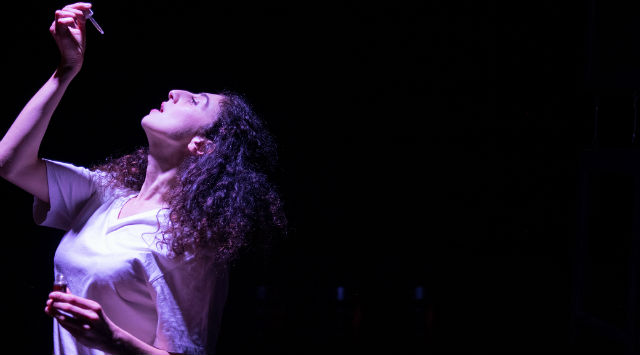
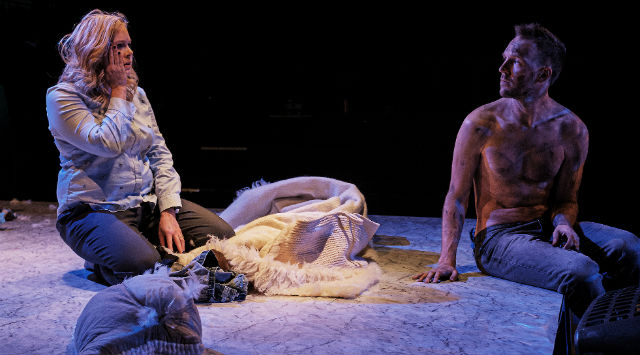
Good Dog by Arinzé Kene, details the life of a young black man in working class England. We watch him from childhood, an innocent boy like any other who dreams of owning a bicycle, but who learns instead, the harsh realities of poverty. It is a story about race and class, and how people can be depleted of patience and naivety, in the face of unremitting injustice. Years of deprivation sets our unnamed protagonist on a course of rebellion, that the play appropriately depicts as a valid response to systematic failures of modern economies.

Kene’s writing is intriguing, in a linguistic style faithful to the cultural contexts from which it emerges. Directed by Rachel Chant, the production is sensitive, and dignified, in its portrayals of prejudice and disparity in a foreign land. Sound design by Melanie Herbert is particularly subtle in how it conveys psychological shifts for the one-man show. Kelsey Lee’s lights are an elegant feature, and a set by Maya Keys provides just enough visual cues to spark our imagination. Actor Justin Amankwah is extraordinarily charismatic, but insufficiently inventive and overly naturalistic in the role. Good Dog requires a more expository approach to speak to an Australian audience, and at over two hours long, a stronger sense of theatricality is necessary to sustain our interest.

The power of white supremacist capitalism lies in the way it is able to subjugate so many, for so long. Those of us who are oppressed, not only buy into their myths about hard work and meritocracy, we further sympathise with their prescriptions of politeness and civility. They keep us asking for better, over generations, knowing that their continual denials are only met with perpetual compliance. Once in a blue moon however, a revolution will arise, with people tired of waiting, finally pressed to claim back their due by force. How and when this is going to happen, is as always, anyone’s guess.

www.greendoortheatreco.com

Review: Rosaline (Little Trojan Theatre Co)

Venue: Kings Cross Theatre (Kings Cross NSW), Oct 11 – 26, 2019
Playwright: Joanna Erskine
Director: Sophie Kelly
Cast: Alex Beauman, Jeremi Campese, David Lynch, Aanisa Vylet
Images by Marnya Rothe

Theatre review
Shakespeare never let us see Rosaline, when he wrote about her in Romeo & Juliet. We knew her to be Juliet’s cousin, the girl who had rejected Romeo’s advances, before the famous lovers’ fateful meeting at the Capulet ball. Joanna Erskine’s Rosaline takes what is ostensibly a stock character, and makes her the central figure of an alternate teenage love story. We are reminded that it was only Rosaline’s efforts at chastity that stood in the way, and discover that she too, was completely enamoured, just as Juliet had been head over heels in love with Romeo. Erskine’s play represents justice not only for a silenced woman, but asserts female perspectives in a culture that is too accepting of the Bard’s persistent and pervasive misogyny.

The work is however, only marginally radical with its revisions of the legendary saga. It concerns itself mainly with supplementing the original tale, rather than daring to argue for a completely different, wholly more palatable version of events. Directed by Sophie Kelly, the show can tend to feel excessively earnest, and therefore needlessly reverential toward Shakespeare’s old creation. The production is nonetheless a good-looking one, made lustrous and polished by Martin Kinnane’s lighting design.

Actor Aanisa Vylet is an alluring leading lady, with an easy confidence that makes believable Rosaline’s new-found existence. When given the opportunity, Vylet demonstrates herself to be a remarkably spirited performer, as does Jeremi Campese, who brings a valuable vibrancy to the piece. Romeo is played by Alex Beauman, passionate and appropriately naive in his portrayal of the juvenile romantic, and David Lynch surprises with the intricacies he is able to locate for his interpretation of the Friar.

It is certainly a valid choice to create a lovelorn Rosaline, but some would find it disheartening that centuries later, the young woman is still being defined so resolutely against a man who loves another. Even though we had come to know Rosaline through Romeo, there is certainly no need to remain within his doomed narrative. We are all bit parts in someone’s story, playing minuscule roles for people we could very well have forgotten. At the centre of each personal universe, is an undeniable responsibility to create a rich life, and to ensure a meaningful existence. Rosaline’s story might have begun with Romeo, but where she went thereafter, is still anyone’s guess.

www.facebook.com/littletrojantheatre

Review: A Girl In School Uniform (Walks Into A Bar) (Futura Productions)

Venue: Kings Cross Theatre (Kings Cross NSW), Sep 20 – Oct 5, 2019
Playwright: Lulu Raczka
Director: Hannah Goodwin
Cast: Michelle Ny, Caitlin Burley
Images by Jarryd Dobson, Indiana Kwong

Theatre review
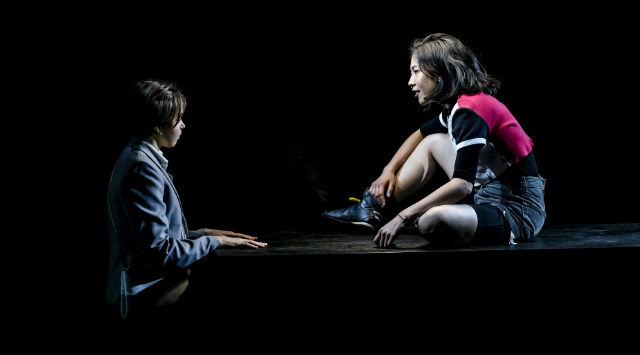
The city has been experiencing frequent blackouts, during which women and girls would disappear, many of whom would be subsequently found murdered. 16-year-old Steph is out looking for her best friend who has gone missing. She is certain that Bell, a young woman working in a bar, is withholding valuable information. Lulu Raczka’s A Girl In School Uniform (Walks Into A Bar) sees those two characters imagining the fate of a vanished girl. They play out scenarios by pretending to be male perpetrators of violence, thereby revealing the dangers that women know themselves to be subject to.

In the many blackouts that occur during the course of the production, the audience is repeatedly thrust into a state of anxiety, made even more unnerving by Hannah Goodwin’s very taut direction. Fear is always in the air, with the audience positioned to confront the constant threat that defines daily reality for most women. It is that sensation of when we walk into a bar, and our awareness of being looked upon as a piece of meat, is instantly heightened. The show is incredibly well designed, with Sophie Pilcher’s lights and Jessica Dunn’s sound wonderfully precise in manipulating our visceral responses for this gritty journey. Ella Butler’s work on set and costumes too, is highly accomplished. There is a sharpness to the aesthetic of A Girl In School Uniform that translates as a certain brutal coldness in how the world can be, even for young girls.

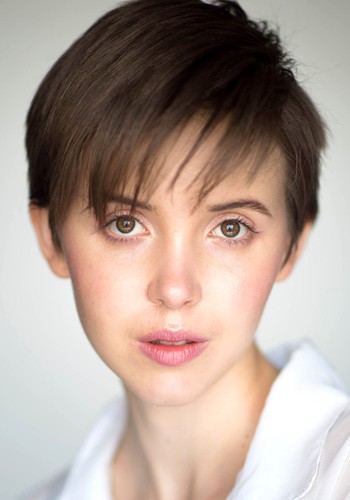
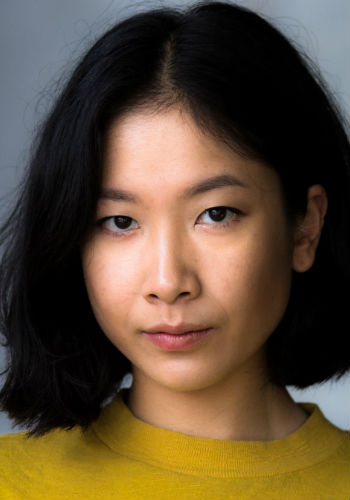
Actor Michelle Ny brings sass as well as dramatic intensity to the part of Bell, demonstrating impressive versatility in a role that requires of its performer, a wide range of attitudes and emotions. Steph is brought to life by the strong stage presence of Caitlin Burley, marvellous in conveying both innocence and fortitude for the role. The pair is exceptionally well rehearsed. Their chemistry and timing for this extremely technical two-hander has us agape in amazement, leaving us firmly persuaded by all that they present.

In the play we observe the dark to be infinitely more harrowing for women, but the incessant power failure is allowed to become a new status quo, exposing the ease with which society disregards our safety. We are comfortable with the idea that there is a weaker sex, and continue to foster behaviour and beliefs to reinforce that repugnant imbalance. We make things harder for women, often through the disinformation that women are naturally more challenged, usually due to bogus notions of biology or religion. The system will insist that we accept our fate, that we must respond to blatant injustice with resignation. Realising that acquiescence is almost always a choice, is how we can begin to address these issues of gender.

www.futurafilms.co

5 Questions with Caitlin Burley and Michelle Ny

Caitlin Burley

Michelle Ny: How similar were you to your character when you were in high school?
Caitlin Burley: Fairly similar to be honest. High school is a wild ride, and I tried a few different hats, some closer to Steph than others. I definitely shared her optimism and her desire to believe that people, especially those in charge, are honest and concerned about everyone’s best interest. And I am aware of the disillusionment that this can bring.

What was the naughtiest thing you ever did when you were a teenager?
I was pretty tame. Naughtiest thing I ever did in high school was probably just lying about going to the movies, and instead drinking in parks, ovals, backyards or on the streets. But
that phase was short lived, and never more than a few mouthfuls…

How would you cope with dealing with the blackouts in this world?
Well it would change our world drastically. It wouldn’t just be an ‘inconvenience’. Blackouts that plunge entire cities into darkness are catastrophic and do happen. There was a 25 hour blackout in New York in 1977 that resulted in a huge spike of crime and looting and more than 1000 intentional fires. Our world would be more dangerous. We would all be more vulnerable. I
would feel more powerless and night-time would be scarier. But I hope I would emerge with a survival plan, re-tweak my lifestyle and build a community so that we could survive off the grid
when needed, have an incredible emergency kit that I would never leave home without, torch, whistle, pepper spray, nuts and build a huge network of like-minded people with friends and family.
At night, I would always be ready to run, but to be honest, I seldom wear heels or tight skirts for that reason anyway.

How do think this play appeals to other young women?
It centres on two young women who take the narrative, that so often places women as victims, into their own hands and in the darkness imagine and negotiate a better future. It also breaks down heaps of stereotypes and divides that don’t serve us and that’s appealing. I think people will find it empowering and hopeful see it as a rallying call to stick together and rewrite the way forward. We will make mistakes, but we will get there together. I hope this play will play a small part getting us there.

Would you rather have an 8 hour blackout every week or a month long blackout every 12 months? And why.
Definitely an 8 hour blackout every week. Overall it’s much less time and I think that if our society were to face a month long blackout anarchy would break loose. We do have some back-ups in place; hospitals are supposed to have backup power for 96 hours, there is fuel in storage tanks, but a lot of these require electricity to access. If we all knew that come Sunday we would have 8 hours without electricity we could prepare ourselves, with resources and safety. It might actually force us all to slow down and interact with one another more. And surely it would mean being closer to hitting our carbon budgets. A month would be hard to recover from. Our society is dependent on electricity at every level, and unfortunately we are a selfish species. But I think conscience makes us kinder. Come see the show!

Michelle Ny

Caitlin Burley: In this play, you give a lot of (often unsolicited) free-advice. What is a piece of advice you would give to your 16 year old school girl self?
Michelle Ny: Hey 16 year old, Michelle. I’m sorry but there will be things in your life which are monumentally shit so I can’t say life will be better. BUT, you will grow up and be able to handle things with more emotional maturity and grow with each new obstacle that is thrown at you. So keep feeling things at 1000% (even if this is overwhelming) and keep being weird. x

Tell us about a real-life blackout you’ve experienced.
This isn’t an ~actual~ blackout but once when I was a kid, my parents left for a little while and my brother and I psyched ourselves into fear so we turned off all the lights and sat in
silence in chairs with our back towards the entrance of the room. Then when we heard people coming home we hid underneath the dining table but of course, it was just my family arriving!

What is one of your favourite moments in the play?
This is probably a favourite moment in rehearsals but, because the play has references to the UK, we had to change small references to become Australian, and we have gone through a big debate on what biscuit brand to use. Tim Tams, Tic Tocs, Honey Jumbles, Chit Chats, Coles brand chocolate chip cookies, Chocolate Thins, Gingernuts, Mint Slice, Digestives, Oreos etc… I like cookies.

This play deals with violence against women, is there anything in the play that you find empowering?
The women in this play are not victims and I think they are never portrayed as victims. A lot of awful things happen in their lives but both Bell and Steph take ownership of their issues and seek to find ways to tackle them. I think it’s interesting to see young women who are traditionally vulnerable act on their own means to break the trope of ‘damsel in distress.’

What were you like at school? Did you have a fake ID?
I was pretty high energy and annoying when I was at school but I was also kind of an ~”emo”~. A lot of walking around the corridors with extremely loud teen punk music blasting through my headphones. In my last year of high school we didn’t have to wear a uniform, so I exercised that privilege by skipping almost every chemistry class and lying somewhere on the waterfront. And I only borrowed my sisters ID once to get into a venue which was hosting our wrap party for a web series I was in. Other than that, I was pretty good and the first time I went clubbing was on my 18th birthday!

Caitlin Burley and Michelle Ny can be seen in A Girl In School Uniform (Walks Into A Bar), by Lulu Raczka.
Dates: 20 Sep – 5 Oct, 2019
Venue: Kings Cross Theatre

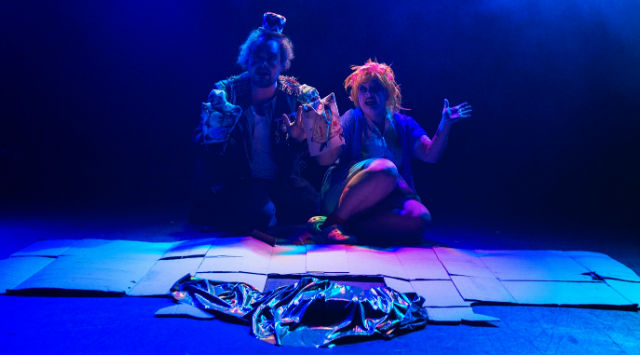
Review: U.B.U: A Cautionary Tale Of Catastrophe (Tooth And Sinew)

Venue: Kings Cross Theatre (Kings Cross NSW), Sep 10 – 21, 2019
Playwright: Richard Hilliar
Director: Richard Hilliar
Cast: Tristan Black, Lib Campbell, Rachael Colquhoun-Fairweather, Emily Elise, Sam Glissan, Gideon Payten-Griffiths, Shane Russon, Idam Sondhi, Nicole Wineberg
Images by Ross Waldron

Theatre review
The prime minister has a secret plan to depose the king, and have him replaced by a civilian best described as a lazy idiot, in Richard Hilliar’s U.B.U: A Cautionary Tale Of Catastrophe. PM Fuller Bjullshitt owns mines, and wants to make sure that his personal interests are protected by laws of the land that continue to be neglectful of environmental concerns. Given the preposterous state of politics today, the play’s premise is entirely within the realm of possibility, but written in an absurdist style, we are confronted with the lines between fiction and truth, except there is no hiding the fact that many of the worst things being depicted are no different from the news that we are subjected to in real life.

Hilliar’s exuberant consolidation of current affairs and contemporary ideals, is a pertinent representation of Australian culture as it stands, turned satirical by its colourful wit, base but clever, in appropriate alignment with popular notions of our national identity. Having brought his own considerable skills as director to U.B.U, Hilliar’s show is rambunctious, fun-filled and campy, a highly entertaining work that facilitates discussions about doing the right thing, beyond left and right conceptions of politics. Costumes by Tanya Woodland, along with Ash Bell’s hair and makeup design, are a visual feast, powerfully enhanced by Ryan McDonald’s imaginative lights.

Extraordinary passion from all nine of its ensemble cast, makes it an occasion to remember. Sam Glissan and Emily Elise are as mad as each other, playing Pa and Ma Ubu with an incredible wildness that creates a grotesque quality, so reflective of what we feel to be happening right now all over the world. Lib Campbell and Idam Sondhi are another formidable couple, with exquisite timing and chemistry, making us laugh at all the ugliness that we know ourselves to be capable of. Tristan Black’s incisiveness and precision as Bjullshitt ensures that we are attentive to both the meanings and hilarity of U.B.U; his “Mr. Segue’s Song” is an unequivocal highlight.

The show ends with a heavy-handed, earnest call to action. An uncontainable need to appeal to the body politic disrupts the entertainment, as the urgency to make its point finally exceeds its commitment to theatrical magic. Resignation is perhaps too easy, and U.B.U wants to help us avoid it. As we sit and watch everything crumble, the urge to submit to that seemingly inevitable extinction of our kind, can indeed feel irresistible. Humans however will always be defined by our activity and conduct, and for as long as we are here doing something, there is always the inescapable decision between good and bad.

www.toothandsinew.com

5 Questions with Idam Sondhi and Nicole Wineberg

Idam Sondhi

Nicole Wineberg: You play 4 characters, 3 of which are puppets… what’s that like?
Idam Sondhi: It’s both a great challenge and rewarding playing several characters. 3 of which are puppets – it’s something I’ve never done. However, the nature of the play and the amount of time we got to improvise and try different things out was very liberating. The time allowed me to get comfortable in the skin and souls of our fabric friends.

Why is U.B.U relevant to today’s audiences?
U.B.U touches upon some extremely important issues which effect each individual on this planet. Our environment is sacred and a home we often take for granted. U.B.U deals with the repercussions of neglect which are caused by human tendencies such as greed, power and money. We need to have more self awareness and work at getting better and sharing vital knowledge to the future generation at restoring what’s broken about our environment. It takes each and everyone one of us to make a change and take care of the planet.

Is U.B.U just potty humour or is there something in there for the more discerning of tastes?
U.B.U is for everyone! It allows us to self-reflect and does it in a tasteful way (even though all the flavours might not taste good). It’s theatre you’ve never seen before!

What’s your favourite character and line in the play?
I love all the characters so much! Especially because we explored each one individually! But Bob and Bill (the royal twins) have a special place in my heart – played wonderfully by Shane and Rachel. My favourite line is “grotty, snotty, spottibots!” You will only know what that means if you come and watch the play!

Could you please sum up our version of U.B.U in 5 words?
Grotesque, truthful, hilarious, experiential, memorable!

Nicole Wineberg

Idam Sondhi: Tell us a bit about your character.
She’s a princess who has never faced anything resembling hardship who then is thrust into a horrible situation by Ubu and his followers. She also has a really good wig. The Sansa Stark of white privilege! 

What was it like being part on an ensemble cast like this?
Exciting, entertaining, terrifying and educational, all rolled into one spicy burrito. It was invigorating working with a group of people who were so willing to look foolish and grotesque for the sake of storytelling and humour.

What should people take away from the messages in U.B.U?
a) Take climate change seriously and do something about it! It doesn’t matter how little or insignificant it is, just make a start and commit to making a change!
b) There’s a fart joke to suit every taste!

What was your most memorable moment during the rehearsal process?
It was actually the audition process! We were stunned with the sheer amount of talent and weirdness Sydney actors have! The stuff we saw will haunt us till the day we die, that’s for sure!

If you could eat any dish every day for the rest of your life what would it be and why?
A medley of deep fried potato: your standard hand-cut chip, crinkle-cut and shoestring fries, gems and wedges. Delish. If you have to ask why, you’re an idiot.

Catch Idam Sondhi and Nicole Wineberg in U.B.U A Cautionary Tale Of Catastrophe, by Richard Hilliar.
Dates: 10 – 21 Sep, 2019
Venue: Kings Cross Theatre

Review: Betty Breaks Out (Life After Productions)

Venue: Kings Cross Theatre (Kings Cross NSW), Aug 27 – Sep 7, 2019
Playwright: Liz Hobart (after Maurice G. Kiddy)
Director: Ellen Wiltshire
Cast: Tommy Misa, Annie Stafford
Image by Jasmin Simmons

Theatre review
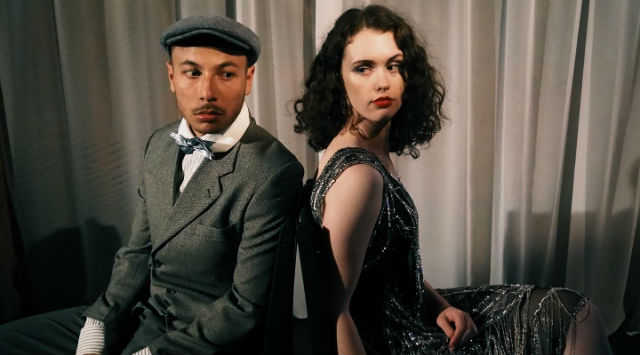
Betty and Fred are kidnapped, locked up in adjoining rooms to ponder their fate. Both are actors, trying to take control of a situation in which there is little hope of autonomy. Set in 1919 England, when moving pictures were silent, and damsels were always in distress, Liz Hobart’s Betty Breaks Out is a quaint piece that gives voice to characters that were previously one dimensional and mute. Whimsical and experimental, it resists clear narrative structures in favour of something offbeat and playful.

Directed by Ellen Wiltshire, the show is an effervescent, if slightly puzzling, exercise in theatre making. Without a straightforward plot, it is perhaps surprising that the staging takes a naturalistic approach, instead of a more abstract mode of expression, especially with a writing style that seems intent on creating a poetic experience. It is noteworthy however, that music by Alexander Lee-Rekers is an enjoyable aspect of the production, able to enhance mood and rhythm to keep us engaged. The performing duo too, brings a gratifying charm. Tommy Misa and Annie Stafford are delightful presences, even if they do seem somewhat restrained by a presentation that feels insufficiently adventurous.

It is true that much of how we face the public, can be described as performative. We all have to operate within structures that do not always make room for what our individual beings might think to be authentic. We are urged to play along with the game, to adopt pre-determined codes and languages, so that a semblance of harmony can be attained. We rarely feel at liberty to deviate, as ostracism is a threat that few can bear to endure. When it becomes clear that the notion of a greater good, is almost certain to only benefit communities disproportionately, our commitment to obedience must then be questioned. There will always be people who want us to stay in our narrow lanes, but the second that we begin to identify our own complicity in this oppression, is the moment that we begin to set the self free.

www.lifeafterproductions.com

5 Questions with Tommy Misa and Annie Stafford

Tommy Misa

Annie Stafford: If you were to be trapped in a room with someone, who would it be? (And you can’t say me.)
Tommy Misa: I spend a lot of time alone and tend to figure things out solo so I would prefer to have a doggo with me! Humans are unreliable.

Betty Breaks Out deals with stereotypes and breaking forth from those roles, what stereotype or role are you currently enjoying breaking out of?
In my own life I am very comfortable in my self. In my acting I am enjoying breaking free of the stereotypes of what masculinity can look like, it comes in so many different expressions and different genders and finding ways to show what exists outside of what society deems “masculine” is freeing and sexy!

Who were the heroes and heroines of your childhood?
Growing up I didn’t see many queer or brown characters on screen or stage so my heroes were those I knew. My mother, my grandmothers and all the strong women who taught me what I know… oh and Queen Latifah.

Through watching silent Films for research and inspiration, what are the top 3 things you’ve taken away that you want to implement into your performance?
1. Physicality was so camp and melo-dramatic! I’m here for that.
2. Show, Don’t tell – We are told this so often but when you have no dialogue you really have to bring it back to basics.
3. The way men/women navigated power dynamics of characters depending on gender, I want to flip all that shit on its head.

Have you ever met someone (famous or not) that you had a perceived idea of what they would be like due to their roles or public persona, and have them either confirm your idea of them or completely dash it? Without naming names. Or name names.
Yes – I had seen you all up in my socials all booked and blessed and I was all like “Who is Annie Stafford she seems so together and friendly” turns out you’re both those things plus more and share my same love of boiled eggs.

Annie Stafford

Tommy Misa: Annie, your grandmother was an actor in the 40s/50s, what has changed since then for women in the industry and what things still need to change?
A voice. On and off the stage I would say. My grandmother was an incredibly headstrong woman, and no doubt would have brought that to any stage, but not all female roles were written as such. Women characters were more often than not merely facilitators of the male characters story, the beautiful detailing around the edges of the pages of their life. I believe we have a long way to go in regards to accurate but also interesting representation (of everyone) for I feel we are still suck in a stereotypical idea of what and how we represent.

Betty is a strong and spirited character who voices struggles of that era. What are some of her obstacles that you resonate with?
Betty is bold and ambitious and I think both those traits even now are tough to navigate which feels absolutely ridiculous. Boldness being seen as entitled , rude or aggressive instead of strong, assertive or impressive (I just rhymed and I’m totally okay with that). Ambition being seen as cold, harsh and selfish, instead of brave, determined and inspired. And so in fear of being seen as dominating or pushy, Betty (and myself from time to time) squash this radiating drive that gives us purpose and a sense of fulfilment just to remain approachable, likeable, accepted. Well to hell with that Betty ol gal. Ambition is hot!

If Betty had a song from the 00’s what would it be?
Oooo Poker Face by Lady Gaga. And yes that was in the 00’s. 2008!!!!!!

What are you most excited about audiences seeing in Betty Breaks Out that may be new to audiences?
The fact that we’ve picked up form and thrown it at a wall. And I’m going to leave it there…

What have you enjoyed/struggled with in the rehearsal process?
I’ve really enjoyed the physical work we’ve been doing. As a wise legend once said “Show, Don’t Tell” – Tommy Misa 2019, and I think we’ve found a lot of freedom and inspiration in that. Also having the playwright, Liz Hobart, in the room has been a dream and Ellen Wiltshire (our director) with her divine energy, has given us so much room to play. Struggle… nope. Its been a dream. You’ve been a dream Tommy, especially with your boiled eggs.

Catch Tommy Misa and Annie Stafford in Betty Breaks Out, by Liz Hobart.
Dates: 27 Aug – 7 Sep, 2019
Venue: Kings Cross Theatre

Review: Wink (Wheels & Co Productions)

Venue: Kings Cross Theatre (Kings Cross NSW), Aug 2 – 24, 2019
Playwright: Jen Silverman
Director: Anthony Skuse
Cast: Eloise Snape, Matthew Cheetham, Graeme McRae , Sam O’Sullivan
Images by Robert Catto

Theatre review
Gregor has skinned his wife’s cat alive, so clearly things are not going well at home. Jen Silverman’s Wink begins at the point of heteronormative ruination, when Gregor and Sophie’s unsatisfying cookie-cutter life together is at breaking point, and something has got to give. Too bad about the cat. Radical transformations happen following Wink’s demise, even the couple’s psychotherapist Frans, undergoes drastic existential alterations. The plan all along to keep things buried, in order to achieve an appearance of success, has failed miserably; something more authentic emerges to take over these lives, but it looks as though this surge of humanity might have come too late.

Silverman’s writing is deliciously wild, with a strong point of view that makes her surreal and irreverent approach sing with purpose. It is a work about the complicated nature of freedom, and the difficulty in returning to one’s true self, after a lifetime of conditioning and conformity. Directed by Anthony Skuse, the show is replete with subtle humour, and its social commentary, informed by a queer feminist sensibility, is delightfully acerbic.

It is a macabre world that we are plunged into, with lights by Phoebe Pilcher and a set by Siobhan Jett O’Hanlon, cleverly conceived to help us situate the action in a range of spaces between real and fantasy. Ben Pierpoint’s sound design impresses with its intricacy, highly effective in how our collective energy is calibrated for every distinct theatrical moment.

Actor Eloise Snape is marvellous as Sophie, delivering the most understated yet powerful comedy through a narrative of frustrated despondency. Her ability to simultaneously convey tragedy and hilarity, whilst performing with deliberate restraint, is extraordinary. Graeme McRae’s portrayal of Gregor is unexpectedly delicate, remarkable for the empathy that he manages to elicit, as the feline murderer. Matthew Cheethan and Sam O’Sullivan play, respectively, the shrink and the cat, both actors wonderfully quirky, for a couple of deeply amusing characters that fascinate at every appearance.

Humans have an insatiable desire for truth, but that impulse is manifested in a million unique ways. We can see the personalities in Wink giving up the external, then turning inward in hope of exchanging their worldly delusions for something genuine. It is tempting to think that our skin is the barrier between truth and lies, that somehow, deep inside, contains something unequivocal and real. This is all conjecture of course, as the human mind, insignificant as it is, will believe what it wishes, and for any of us to think that we are capable of a comprehensive godlike truth, is in itself illusory. We can however, look instead for peace, but how we interpret that concept is, it seems, another million conundrums.

www.facebook.com/wheelscoproductions

5 Questions with Sam O’Sullivan and Eloise Snape

Sam O’Sullivan

Eloise Snape: In Wink you play the titular character, who is a cat. Seeing as you are slightly obsessed with your own cat, Terry, have you enjoyed observing his behaviour and what has been the most interesting part of your research for this role?
Sam O’Sullivan: First of all, great use of the word “titular”. Second, as you know, I always enjoy observing, photographing, playing with, talking about and hanging out with Terry. I think the best thing about him, and cats in general, is that despite their small stature, they have the attitudes and the instincts of larger cats. When we say someone has the heart of a lion, we mean that they’re brave, determined and loyal. Well, Terry actually has the heart of a lion, its just unfortunate that the rest of him is a British Short Hair.

Jen Silverman has an incredibly unique voice. As a fellow writer, what’s your favourite thing about the way she tells this story and why do you think she is an important contemporary voice?
This play is funny. So right away, you know that Silverman knows what she’s doing. What I love about Wink is the way the humour in the play evolves to carry her message. Things that initially feel like a gag or just plain weirdness over time become incredibly potent metaphors. This play is about a lot of things, but for me what resonates and what makes it important is that it interrogates our ideas and preconceptions about what is “normal” and how unhealthy it can be to cling to those ideas. There is a lot of talk about how civilised people should behave in Wink, but ultimately, for the characters to survive they need to destroy that way of thinking.

You’ve worked with Anthony Skuse and Graeme McRae before, many moons ago in Punk Rock. What has been the most enjoyable thing about working together again, now you are all kinda old?
Way harsh, Tai. This is my forth time working with Skusie (previously Punk Rock, Constellations and Platonov) and third with Graeme (Punk Rock and Platonov). Practically speaking, the more you work with people, the more you develop a short hand which means you can get more work done. You can trust each other to be direct with feedback if something isn’t working and you know nothing’s personal. At the end of the day, we’re all friends, we all respect each other’s work and we’re just trying to make the best show possible. With Skusie, I always feel like we’re exploring and discovering the play together. He has an incredible amount of experience and knowledge but on day one of rehearsals I always feel like where starting from the same spot and that we’re collaborating. Once you’ve started from that place, later when you’re alone on stage, you feel like your director has got your back. Graeme just really likes his job. And that enthusiasm is infectious, especially when it’s backed up by someone who’s done the work and is raising the standard in rehearsals every day. All plays need a Graeme.

Wink explores a very unhappy marriage. What lessons have you learnt from Gregor and Sofie’s failed relationship to ensure the same things won’t happen in your own?
Two things: tolerance and patience. Your partner will never be as perfect as you and the sooner you accept that the happier you’ll be. However, the question now is, which one of us is the imperfect one and which one is being patient? Perhaps that’s something you need to answer for yourself. I’ll wait…

You are a movie buff and have your own movie club which is just you and the cat watching movies. What’s your all time favourite movie and why?
For the record, Movie Club is open to everyone. Terry and I are just more committed than the rest of you. I always find questions about a favourite movie difficult because honestly, I just like movies. They’re my happy place. I don’t like absolutely everything, but I like a lot of stuff, even “bad” movies. My go-to answer for this question is usually Trainspotting because it’s the first movie that I remember having a profound effect on me. I would have been about twelve when I saw it and I think at the time it redefined a lot of what I thought cinema had to be. The narration, the structure, a guy diving into a toilet to retrieve his suppositories. I grew up watching things like Star Wars and Back to the Future and I love those films but Trainspotting broke so many conventions that it opened up a whole new world of storytelling for me.
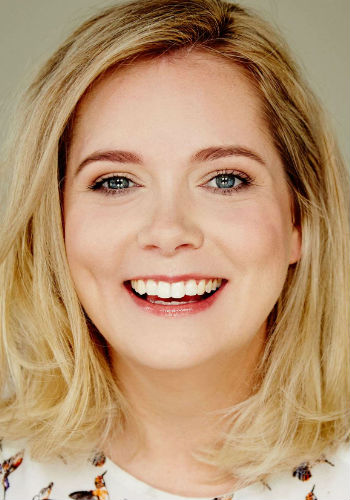
Eloise Snape

Sam O’Sullivan: Why do you watch so much reality television? Is it because you hate art?
Ok first of all, I am very picky with my reality TV viewing. I would call myself a Survivor fan, but I’m not nek level. I was recently invited into the Survivor Super Fan Facebook group and those people are FANS. I am a rookie floating around in there. I also enjoy The Bachelor for the pure lobotomy. When I truly want to switch my brain off and literally dribble, mouth open in front of the television, I watch The Bach. It’s also highly amusing. Everyone has their thing, yours is video games, mine is shit television.

In Wink, your character is struggling with a selfish and uncommunicative partner. How did you prepare for this, given that your real partner is so generous?
As surprising as this may sound, I have dated other people before you, Sam O’Sullivan.

Your character’s cat also goes missing. In a Sophie’s Choice type situation where you had to pick between me and our cat, Terry, honestly, who would you pick and why?
Tricky question. The best thing about cats is they love you unconditionally as long as you can provide them with a quality can of cat food. You on the other hand require more than cat food to keep happy. BUT, Terry doesn’t bring ME food. You are very generous with your feeding of me and you aren’t a shabby cook either. So I choose you. Sorry Terrence.

Wink could be interpreted in a number of different ways. In just three words, what is Jen Silverman’s play actually about?
Identity. Desire. Transformation.

You’ve acted in and produced a lot of Sydney theatre. Is there a production that holds a special place in your heart?
This is super tricky. I have done a lot of independent theatre and the nature of indie productions is that people work above and beyond to create something special and because everyone ends up doing multiple jobs you really all become a family. Also the run never feels long enough – so it’s always hard to say goodbye at the end. But Amy Herzog’s play, 4000 Miles, also directed by Skusie, which I did back in 2013 is the first show I produced and acted in after drama school and it was with my bestie, Stephen Multari. That was why we started MopHead and the show toured around Australia and the rest is history.

Catch Sam O’Sullivan and Eloise Snape in Wink by Jen Silverman.
Dates: 2 – 24 Aug, 2019
Venue: Kings Cross Theatre