Review: #Lads (Kings Cross Theatre)

kxtVenue: Kings Cross Theatre (Kings Cross NSW), Jan 13 – 14, 2017
Director: Danny Ball
Cast: Callan Colley, Ryan Morgan, Ben Schumann, Ross Walker

Theatre review
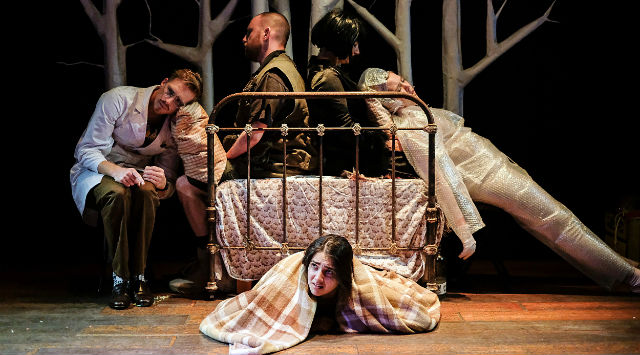
Presented early in its developmental stages, #Lads is unpolished and unresolved, but like any work of art fuelled by conviction, it is ready to be interacted with. Longstanding ideas about masculinity and youth are framed within contemporary, and trendy, concepts of entitlement and privilege, for a slightly updated look at the perennial problem of manhood, as seen through social distinctions of money, race, gender and sexuality.

The show sets up contexts that are perhaps too familiar, but the questions it inspires are nonetheless potent. We are always worried about the young, because their mistakes are always spectacularly glaring. The team is thankfully very conscious of its generation’s failures, and spends the entirety of the presentation expressing all that is undesired. There is no hint however, at what a better life would look like. The rebel without a cause, it seems, is here to stay.

A more refreshing perspective that #Lads touches on, is the dysfunction friendship that exists between the four boys. We want to know what keeps them together, and what they require of each other, to satisfy their individual twenty-first century narcissisms. We are interested to know how each of their impairments differ, and the extent to which they are isolated within their fragile facade of unity.

As Australians become increasingly wealthy, the problems and difficulties of bring up our children take on new dimensions. As our lives become more liberated and autonomous, our middle-classes are able to decide to procreate only when we become confident in our ability to provide, but offspring that have never witnessed poverty and other forms of struggle, cannot be expected to understand easily, the nature of hardship, and its accompanying qualities of humility and compassion. The millennials, like everyone else, will come into their own, and as always, time is the only one who holds the key to that revelation.
www.kingsxtheatre.com

Review: Tiny Remarkable Bramble (Kings Cross Theatre)

impendingroomVenue: Kings Cross Theatre (Kings Cross NSW), Nov 6 – 25, 2016
Playwright: Jessica Tuckwell
Director: Cathy Hunt
Cast: Thomas Campbell, Lucy Suze Taylor, Catherine Terracini, Contessa Treffone, Geraldine Viswanathan, Michael Whalley
Image by Clare Hawley

Theatre review
Joy is the emotion that manifests as protagonist in the 2015 Pixar film Inside Out, which explores emotions as separate entities in a human child. Jessica Tuckwell’s Tiny Remarkable Bramble can be seen to be similar in approach, with the quality of melancholy instead taking centre stage. The play is cryptic, and surreal in style, allowing the viewer a certain amount of freedom for the creation of meanings that could lead to personal interpretations that resonate with power, or could simply be an absurdist comedy that proves itself inconsequential, depending on the viewer’s tastes.

Smart, snappy dialogue is inventively formulated for the creation of six very quirky characters. There is considerable profundity in Tuckwell’s writing, in spite of a less than gripping plot line that leads us to a predictable end. Cathy Hunt’s direction of the piece is vibrant, playful and energetic in its thorough excavation of erudite gems, submerged in the densely fertile text. The show is fun-filled, featuring a group of actors that seem to be in a state of complete merriment, thrilled to be delivering ripples of laughter in a series of brilliantly humorous sequences.

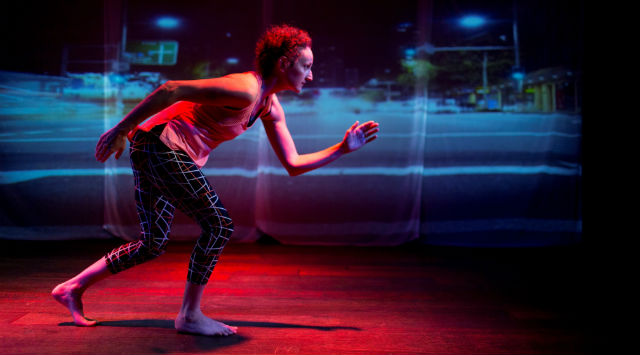
Central figure Alice is played by Geraldine Viswanathan, appropriately apathetic for a sarcastic depiction of dispassionate and hopeless lethargy. Thomas Campbell steals the show as the belligerent Brigadier, fantastic in all his flamboyant flourishes, with a deeply charming presence that has us mesmerised and wanting more. Equally endearing is the memorable Contessa Treffone, desperately adorable as Pipkin, fragile and literally bubble-wrapped, representing a part of ourselves that can be too delicate and overprotected. The cast’s excellent chemistry and confident timing are the production’s strongest features, responsible for a night of theatre simultaneously challenging and entertaining.

Much of life involves wrestling with negativity. Personal insecurities, fear and despondency are constant threats that prevent the development of each of our own potentials. Many of us find it difficult to participate in society because pessimism is crippling, and always just a membrane away from stifling our creative energies. In privileged societies, we have everything that we could possibly need, but our materialism forms the basis of many constraints that we so frequently encounter. We think we have so much to lose, until we remember the transience of being, and start to appreciate the possibilities that can only come before death.

www.facebook.com/theimpendingroom

Review: The Angelica Complex (Kings Cross Theatre)

siren1Venue: Kings Cross Theatre (Kings Cross NSW), Nov 5 – 27, 2016
Playwright: Sunny Grace
Director: Priscilla Jackman
Cast: Naomi Livingstone, Lucia May, Kym Vercoe
Image by Phil Erbacher

Theatre review
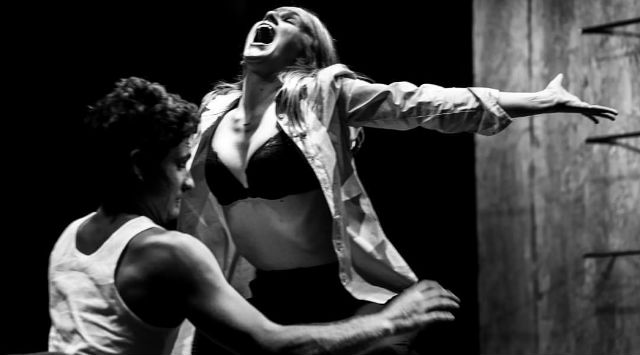
Angelica is under tremendous pressure, having recently given birth to her first baby. The responsibilities of caring for a newborn, and the accompanying social expectations of being a perfect mother, are more than she can bear. Sunny Grace’s The Angelica Complex is about a woman’s painful struggle to cope with the idea of perfection, derived from the prevalence of social media and unrealistic parenting advice. We witness Angelica trying hard to get things under control, but she thinks herself a failure, putting blame on herself, her baby, and society. The entire play has her working through a process of internalised guilt and anger, while ignoring the fact that her husband is almost completely omitted from the narrative.

Angelica blames herself for believing in the myth that “women can have it all” but strangely, and frustratingly, forgets to take the baby’s father to task. While he is out doing whatever that is more important than taking care of his family, absolving himself of paternal duties, Angelica absorbs everything at home, drowning under self-hate and paranoia. She spends her time resenting the yummy mummies on Instagram who make things look a breeze, but accepts her spouse’s abandonment.

Angelica is played by Kym Vercoe, an actor full of energy, magnetism and acuity. Under Priscilla Jackman’s direction, Vercoe delivers an astonishing performance rich with insight and emotion, giving us the opportunity to understand and to feel, what it is like to be in those circumstances. The show’s rhythms shift dynamically and beautifully through the duration, even though the character’s state of mind remains fairly static. Sophisticated video projections by Velinda Wardell are introduced judiciously to add texture, and to inspire our imaginations. It is an involving production that speaks carefully and clearly to its audience, although its arguments are not always poignant.

Angelica does not tell us why she had wanted to have a baby in the first place. It is of course, much too late for her to change her mind, now that she discovers that the truth of parenthood is too overwhelming to cope on her own. The Angelica Complex asks several questions but one of its most potent, is the often unexplained desire to bring new life to the universe. The root of Angelica’s problems may well be the misogynistic manner in which women are told how they should look and act, but the play’s inability to address a rational person’s need to give birth is symptomatic of how our society can take the issue too lightly. Whenever the answer is “just because” or “it’s always been this way”, an opportunity for radical investigation emerges.

www.sirentheatreco.com

Review: After The End (The Kings Collective)

thekingscollectiveVenue: Kings Cross Theatre (Kings Cross NSW), Oct 8 – 22, 2016
Playwright: Dennis Kelly
Director: Michael Abercromby
Cast: Josh Brennan, Grace Victoria
Image by Rupert Reid

Theatre review
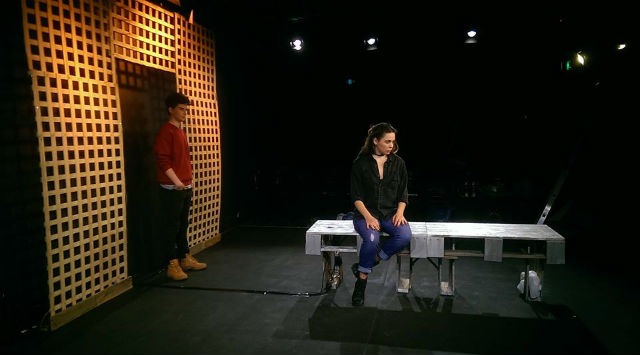
Louise and Mark are locked in a bunker. We are not quite sure how they got there, but we know that it is the male of the pair who is calling the shots. It could be the apocalypse, and the end of the world is a complex matter for those who survive. Dennis Kelly’s After The End is a quirky, but dark, story about the atrocities that happen in a world where nobody thinks that they’re the bad guy.

Although its contexts are dramatic, its plot is simple and unfortunately, a predictable one. There is discernible concerted effort put into creating tension for the staging, but only its later sequences are able to captivate, and when we do become engaged, it is the portrayal of violence that draws us in, rather than inherent ideas that can seem superficial, with insufficient provocative power. Some of the play’s mysteries could be more effectively manipulated, but both performers (Josh Brennan and Grace Victoria) are remarkably focused, well-rehearsed and enthusiastically present.

In After The End, a woman is made victim when she finds herself waking up in an environment completely controlled by a man. Unable to negotiate a renewal of circumstances that will provide a level playing field, Louise is forced into combat for the top dog position, squarely on Mark’s terms. Determined for his desires to dominate their microcosm, Mark’s impositions are a representation of the obstacles that feminists are up against, and reason for the deterioration of advancements that had been made. It is a pessimistic view that the play proffers, but an accurate depiction of a state of affairs where everybody loses, if we perpetuate that status quo.

www.thekingscollective.com.au

Review: Transience (Leftofcentre Theatre Co)

leftofcentreVenue: Kings Cross Theatre (Kings Cross NSW), Sep 13 – 18, 2016
Playwright: Clare Hennessy
Director: Clemence Williams
Cast: Julia Christensen, Kate Pimblett, Eve Shepherdson Beck
Image by Charlie O’Grady

Theatre review
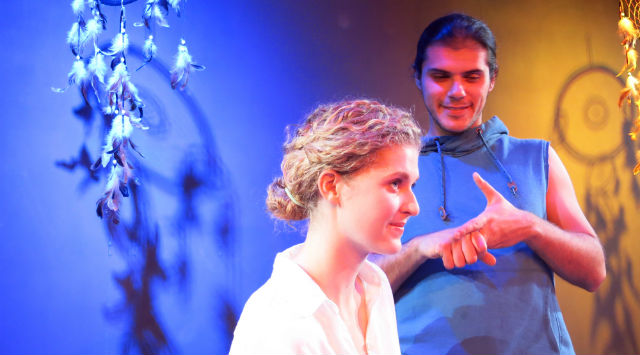
Gender has always been a means of policing behaviour. We look at one’s genitals at birth and assign a whole universe of expectations that have nothing to do with the individual’s own nature and desires. The world is split in two halves, male and female, and any deviation that threatens to transgress that dichotomy is traditionally prohibited.

In Clare Hennessy’s pseudo sci-fi Transience, society continues to monitor us through gender expression, but this time only one mode of existence is permitted. The script is rich with modern ideas, and memorable for its progressive and discerning attitude. Although its concepts are deeply contemplated and well articulated, its plot does not develop far enough to create a stronger sense of narrative. A quirky comedy is effectively manufactured throughout, but its character’s emotions are depicted too gently to elicit a more empathetic response.

An accomplished cast of youthful actors is impressively connected with the material at hand. Passionate and accurate with the play’s messages, their portrayals convey an inspiring and firm sense of purpose. There are issues however, with conversational rhythms causing the show’s pace to feel excessively ambling, but proficient work from lighting designer Liam O’Keefe and composer Nick Turton offer valuable variance to the production’s mood that helps retain our attention.

Transience is concerned not only with gender. It is also a discussion on matters of free speech and social cohesion. With the advent of information technology and social media, democracy has evolved into a new beast that demands a constant evaluation on how our voices are heard. As individuals gain ever-increasing access to platforms for their unitary thoughts and politics, it is tempting to see humankind as being fractured and divided. Our egos want to feel special and we want always to be recognised as different from the rest, but in fact, our humanity is only, if ever, slightly divergent. Unity of life is an ultimate truth, but our minds do not easily come to terms with it.

www.leftofcentreau.com

Review: Atlantis (Subtlenuance Theatre)

subtlenuanceVenue: Kings Cross Theatre Kings Cross NSW), Sep 6 – 10, 2016
Playwright: Paul Gilchrist
Director: Kit Bennett
Cast: Sylvia Keays, Antony Talia, Madeleine Withington

Theatre review
A meaningful existence can only ever be understood from a position of subjective experience. In Paul Gilchrist’s Atlantis, things may contain inherent value, but it is up to us to bring interpretation to them, and we have a choice in how we read the world and how we immerse ourselves in the inevitable living of it. We all rely on tall tales to get us through each day and night, calling them mythologies, religion, science or mathematics, for it is intrinsically human to want to make sense of things. Our consciousness must be shaped, but what form it may take is subject to the mind’s plasticity, and in Atlanits, Gilchrist demonstrates a kind of self-determining fate that results from the stories we create for ourselves.

Of course, the play’s events can only happen in a place like Australia where a vast majority of us are rich and free. It is Gilchrist’s point, to make the best of our privilege. We are in a position to dream big, and to disregard cultural restrictions and social fears, so that we can have better lives, and do good for the world, in ways that are perhaps original and trailblazing. If we followed every rule, our evolution will never take momentous leaps forward. Anomalous advancements require people who dare be radical; whether Mahatma Gandhi or Elizabeth I, it is always the maverick who establishes a legacy.

Atlanits is a soulful work, full of spirit, but with its feet planted firmly on the ground. Its words take hold of our imagination, and argue convincingly for perspectives that are only optimistic and inspiring. Actor Antony Talia does a splendid job of helping us navigate between reality and idealism, with his remarkably engaging presence and an impressive commitment to authenticity. There is excellent humour written into early sections of the play, but they are unfortunately lost in the production’s overly square focus on the deeper lessons, that could probably be left until later in the piece.

The work is staged with poignancy in mind, but more adventurous exploration of physicality would drive its message more effectively. Attention is placed on Gilchrist’s beautiful words, but our other senses need to be manipulated more for a richer theatre, as we commune to share space and ideas. It might be an exaggeration to say that “if you build it, they will come,” but magic must start somewhere, and it never comes from fear.

www.subtlenuance.com

Review: Rhinoceros (Jetpack Theatre Collective)

jetpackVenue: Kings Cross Theatre (Kings Cross NSW), Jul 26 – 31, 2016
Playwright: Eugène Ionesco
Director: Jim Fishwick
Cast: Jade Alex, Madeleine Baghurst, Robert Boddington, Kate Coates, Rebecca Day, Jim Fishwick, Emilia Higgs, Johnathon Lo, Madeline Parker, Alexander Richmond, Julia Robertson, Cheng Tang, Luke Tisher
Image by Julia Robertson

Theatre review
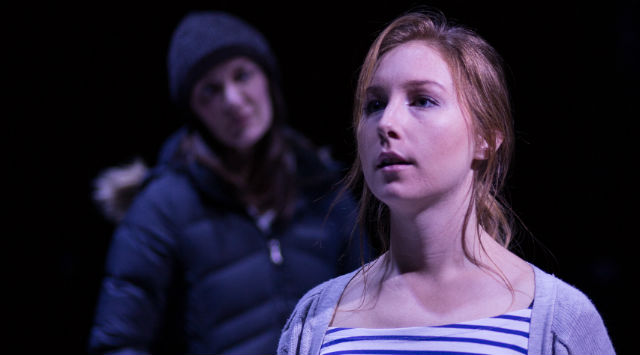
The show begins with Frenchman Berenger having an impassioned existential discussion with his friend at an al fresco café, before being interrupted by a rhinoceros charging through the streets to everyone’s surprise. We try to return to a sense of normalcy from the strange phenomenon, but the rhinoceros rushes past again and patrons of the establishment begin arguing if it was the same beast that had appeared twice, or if they had in fact witnessed two entirely different breeds. Eugène Ionesco’s play has an absurd start, but transforms into something altogether more contemplative, interrogating issues of social conformity and ostracism, along with political ideas relating to justice and otherness. The writing can certainly be dense in parts, but it is to a greater extent, reflective and enlightening, with an amusingly eccentric plot that is quite fascinating.

Director Jim Fishwick brings an exciting visceral dimension to the intellectual work, with an avant-garde spirit that injects a sense of adventure and daring to the oft too polite Australian stage. A subversive attitude and its corresponding sense of humour make the production a memorable one, although Act III could benefit from a more textured approach to achieve greater nuance with Ionesco’s pointed assertions. Experimental and sensitive use of a chorus is a highlight, brilliantly executed by an ensemble of dedicated and enthusiastic players. Alexander Richmond as Berenger is, within the play’s bizarre context, strangely believable, and even though he lacks the bolder qualities of a leading man, the fluency of his enunciation and the solid integrity that he brings to dialogue, are key to preventing the show from disintegrating into mere farce. Julia Robertson impresses as Daisy, animated yet authentic, with a magnetic presence that secures our attention effortlessly.

No person is an island. We are herd animals that insist on acquiescence from fellow beings, only allowing minor deviations from socially constructed notions of what is acceptable. In Rhinoceros, people go with the tide, allowing dominant currents of their time to determine the way we live. Resistances such as Berenger’s can arise, but we question their efficacy. We wonder how it is that new movements in our evolution come to be, and consider the possibility that we may engineer those trajectories to suit our ideas of change for a better world. Berenger’s actions may prove futile, but if we acknowledge that the world is in need of a revolution, his solitary politic represents the only hope, and the threat of its defeat is a reminder of our moral volatility.

www.jetpacktheatre.com

Review: Leaves (Bakehouse Theatre Company)

kxtVenue: Kings Cross Theatre (Kings Cross NSW), Jul 9 – 23, 2016
Playwright: Lucy Caldwell
Director: Rachel Chant
Cast: Harriet Gordon-Anderson, Bobbie-Jean Henning, Poppy Lynch, Simon Lyndon, Amanda Stephens-Lee

Theatre review (of a preview performance)
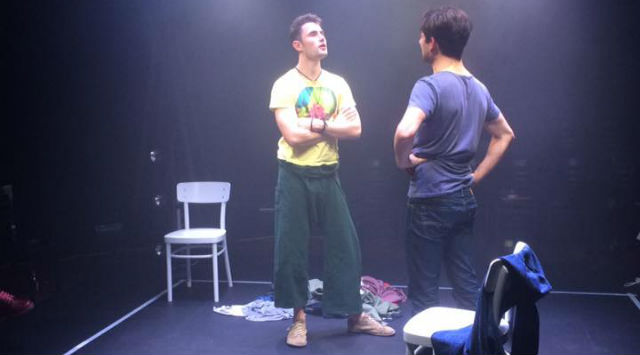
When news broke several months ago that a 10 year-old Aboriginal girl had taken her own life in Western Australia, our nation was stunned into a moment of grief and rare self-reflection, searching for reasons to help us understand what had happened. We knew that it was the fault of a wider community, but struggled to find a way to take responsibility for the deeply unfortunate incident. In Lucy Caldwell’s Leaves, a teenager attempts suicide and we must again investigate the causes of her calamity. The play takes place in Lori’s home, where everything is healthy and normal, bringing us to the conclusion that family is unable to shield us from all the failings of society. It is a tender script, confidently quiet but with subtle fluctuations in tone that provide unexpected hints of drama and comedy.

Situations in Leaves are volatile, so corresponding emotions are kept under tight containment by director Rachel Chant for a work that is elegant, melancholic and extremely thoughtful. It is a production full of nuance, aided by the considerable talents of music composer Nate Edmondson and lighting designer Sian James-Holland, both providing unobtrusive but essential elements of movement and tension to the piece. A strong cast provides the show with a cohesive and unique flavour (too rich and ephemeral to put to words), with each actor compelling in their respective parts. Poppy Lynch is especially memorable playing a 12 year-old, adorable and authentic in her emulation of childlike qualities, but complex in the relationships she harnesses with co-actors. Bobbie-Jean Henning plays the feisty Clover, rebellious in demeanour but innocent by nature. The actor is convincing and dynamic in her characterisations, effectively adding sprightliness to a largely sombre production.

Places have problems, and sometimes leaving is the best answer. Forming attachment with community is human, but where we call home might not be nurturing or gratifying. The grass is greener on the other side, but when given the opportunity, we must make the effort to discover the truth in what was once only imagined. Taking chances can mean win or lose, but to truly live requires motion. When Lori chose to give up on life, she gave in to stasis and hopelessness. The solution for her problems may not be concrete or certain, but the only way to find it is to get moving.

www.kingsxtheatre.com

Review: Straight (Brilliant Adventures)

brilliantadventuresVenue: Kings Cross Theatre (Kings Cross NSW), Jun 16 – Jul 2, 2016
Playwright: D.C. Moore
Director: Shane Bosher
Cast: Danielle Cormack, Sean Hawkins, Simon London, Madeleine Jones

Theatre review
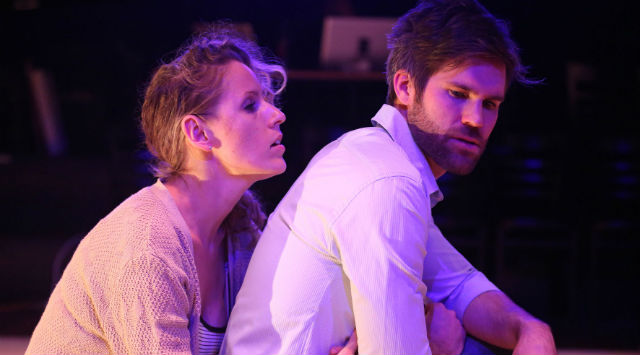
Lewis and Waldorf are old friends from university days, reunited several years after their lives have taken different turns. While intoxicated, they decide to make an amateur porn film with each other. Lewis is married, with a history of just 2 sexual partners, and the happily single Waldorf is more experienced with 71, but neither have had encounters with men. Based on the 2009 film Humpday by Lynn Shelton, D.C. Moore’s Straight is about transgression. It explores issues around the constraints of sexual identity, along with an investigation into boundaries of friendship, and takes a look at the rules of monogamy in modern marriages.

Taboos are confronted with a vehement directness in Straight, which locates our cosy assumptions of human sexuality and puts them through a series of thorough and provocative interrogations. The script is a gripping one, made even more enthralling by director Shane Bosher’s very effective delivery of plot tension and believability for what is actually an absurd context. A brilliantly awkward sense of humour permeates Moore’s consistently nuanced writing, but the production has an air of unrelenting seriousness that compromises its potential for comedy. The mischievous Danielle Cormack delivers the biggest number of laughs as Steph, and leaves an excellent impression even though the actor only appears once in an early scene. Also noteworthy is Madeleine Jones who performs the role of Morgan with excellent psychological accuracy and a sharp intuition.

Lead role Lewis is played by Simon London whose thoughtful and intelligent approach creates a character that we are able to connect with, in spite of his quite incredible decisions. Sean Hawkins is the charming Waldorf, who keeps proceedings buoyant with an unpredictable and aggressive energy. The two turn up the sexual heat in the show’s crucial moments, creating an exceptionally libidinous stage that many will find titillating, while some others will be left embarrassed. Their work demonstrates pure conviction, but it is the ambiguity of their characterisations that inspire the biggest questions.

Art is eternally preoccupied with sex as a topic because it is universal, and one that can be examined extensively, and ceaselessly. The diversity of individual experiences and the plurality of our beliefs mean that new perspectives can always be added to the ever-expanding discussion and hence, comprehension of the nature of sex. We however, live in societies that suppress these interchanges, so we become accustom to presuming an uniformity in our hidden sexualities. We fool ourselves into thinking that we know how other people do sex, and furthermore we often place those same limitations on our own individual sex lives. Straight is about people who give themselves a chance, and who dare to go into the unknown, in the voyage of self-discovery that we call life. It is about defining identities by first experiencing what one is not, before settling on what one is.

www.facebook.com/…

Review: Smudge (The Kings Fools)

thekingsfoolsVenue: Kings Cross Theatre (Kings Cross NSW), May 27 – Jun 11, 2016
Playwright: Rachel Axler
Director: Stephen Lloyd-Coombs
Cast: Danielle Connor, Kieran Foster, Nick Hunter
Image by Liam O’Keefe

Theatre review
The curve balls that we encounter make life frustrating, and sometimes unbearable. We cannot exist without envisioning the future, but nature insists on disrupting our plans to make destiny something that we can never truly be masters of. In Rachel Axler’s Smudge, Colby and Nick give birth to a severely disabled baby. As the young couple tries to come to terms with the unexpected turn of events, we witness their struggles and disappointment, and measure them against a new life that we have little understanding of but whose rights are unequivocal. It is a brutal set of circumstances, but the play takes a less than obvious approach, avoiding melodrama at all costs in its exploration of relevant issues and of human behaviour.

The play is quirky and often comedic, with director Stephen Lloyd-Coombs maintaining a sensitive, delicate tone over proceedings, but the show is most effective at its darkest moments when characters are intense and irrational. Danielle Connor and Kieran Foster work well at creating believable presences and convincing emotion, but the production’s mildness of demeanour restricts how much it is able to convey on a visceral level. It is a story of considerable gravity, and although powerful in parts, Smudge can seem slightly detached from its own sorrow.

Accomplished work by Liam O’Keefe on lights and sound by Michael Toisuta give tension to the piece, and both conspire to add a dimension of supernaturality and of horror when appropriate. Theatrical pleasure is derived from a quality of surrealness created by O’Keefe and Toisuta’s atmospheric manipulations, and along with Elia Bosshard’s set, leave a strong impression with the show’s aesthetic and technical proficiencies.

We do not talk enough about disability. There is little understanding in mainstream communities about what people’s needs may be, when living with unique challenges. Colby and Nick are isolated, left to nurture a baby that is of them but also radically different from their realm of reality. Their story is an allegory about every person’s conflict with the unpredictability of life, but the specific experience of disabilities, physical and otherwise, must not be overlooked. Conversations needs to be had in order that societies can work towards becoming more inclusive, and we must learn about disadvantages that exist in our communities to bring about equity for all. The new family in Smudge are unable to cope on their own, but with our support, things can only get better.

www.facebook.com/…