Review: Daddy Developed A Pill (Snatched Theatre Collective)

Venue: Kings Cross Theatre (Kings Cross NSW), Jun 8 – 18, 2022
Playwright: Cassie Hamilton
Director:
LJ Wilson
Cast:  Sarah Greenwood, Clay Crighton, Jack Francis West
Images by Snatched Theatre Collective

Theatre review
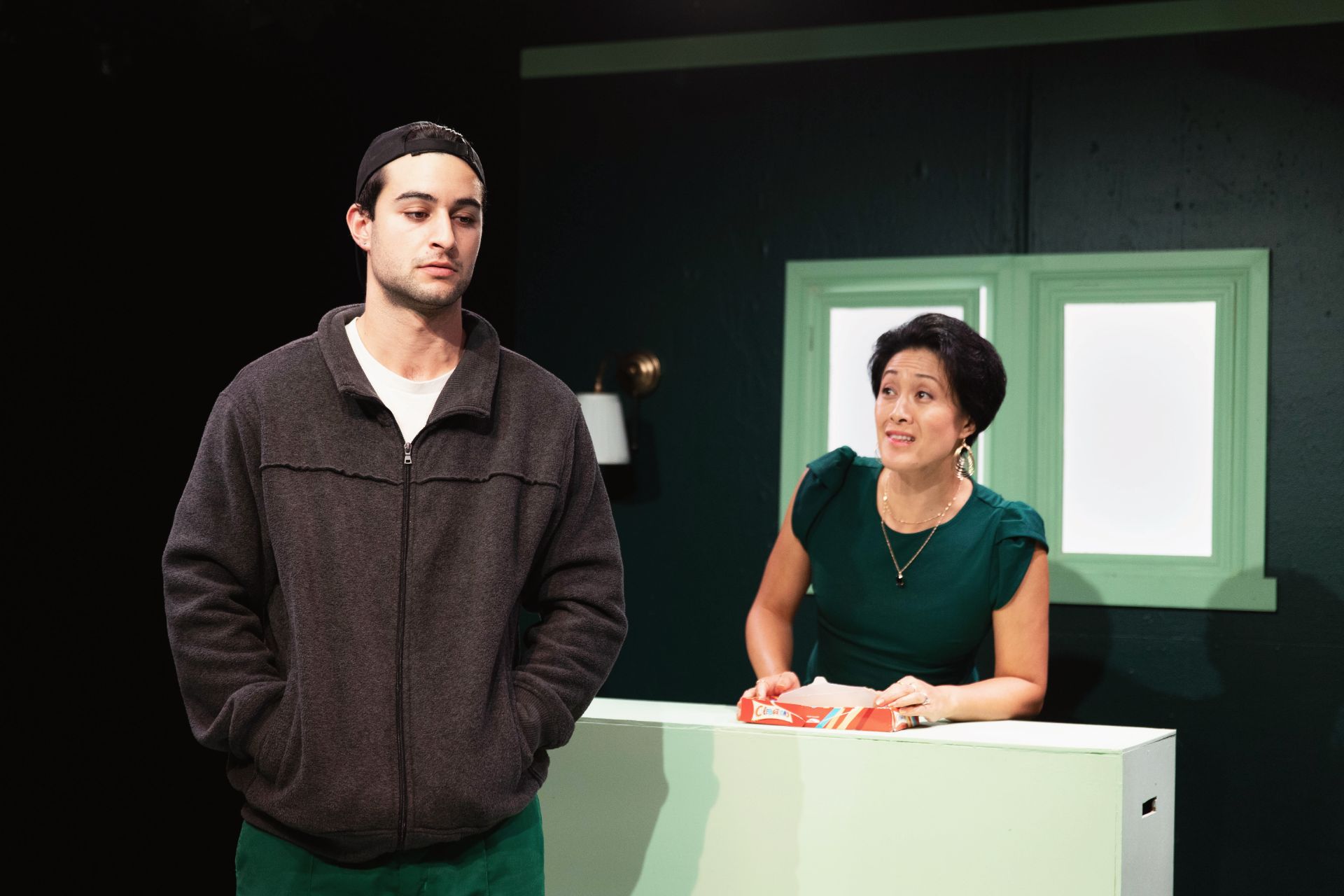
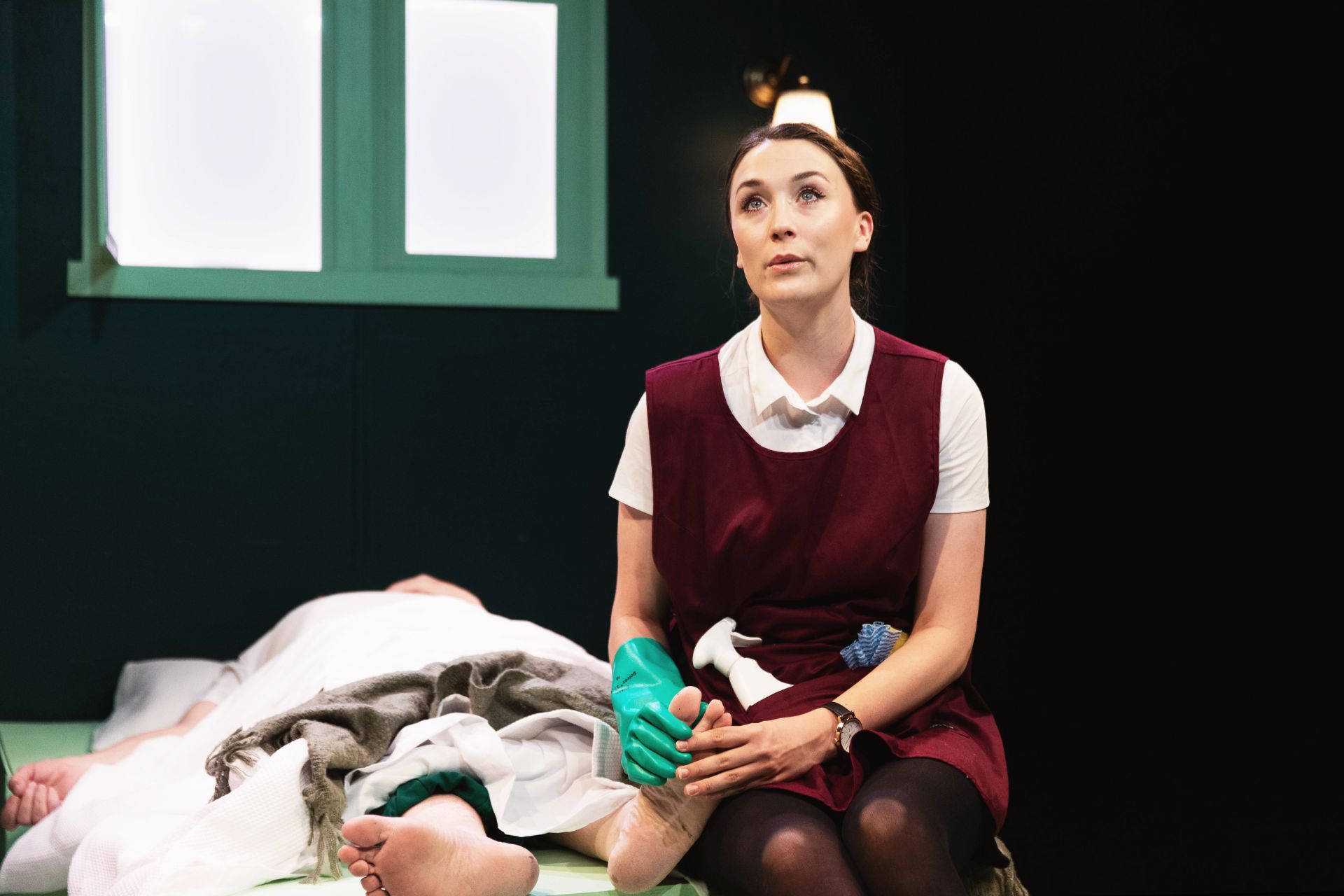
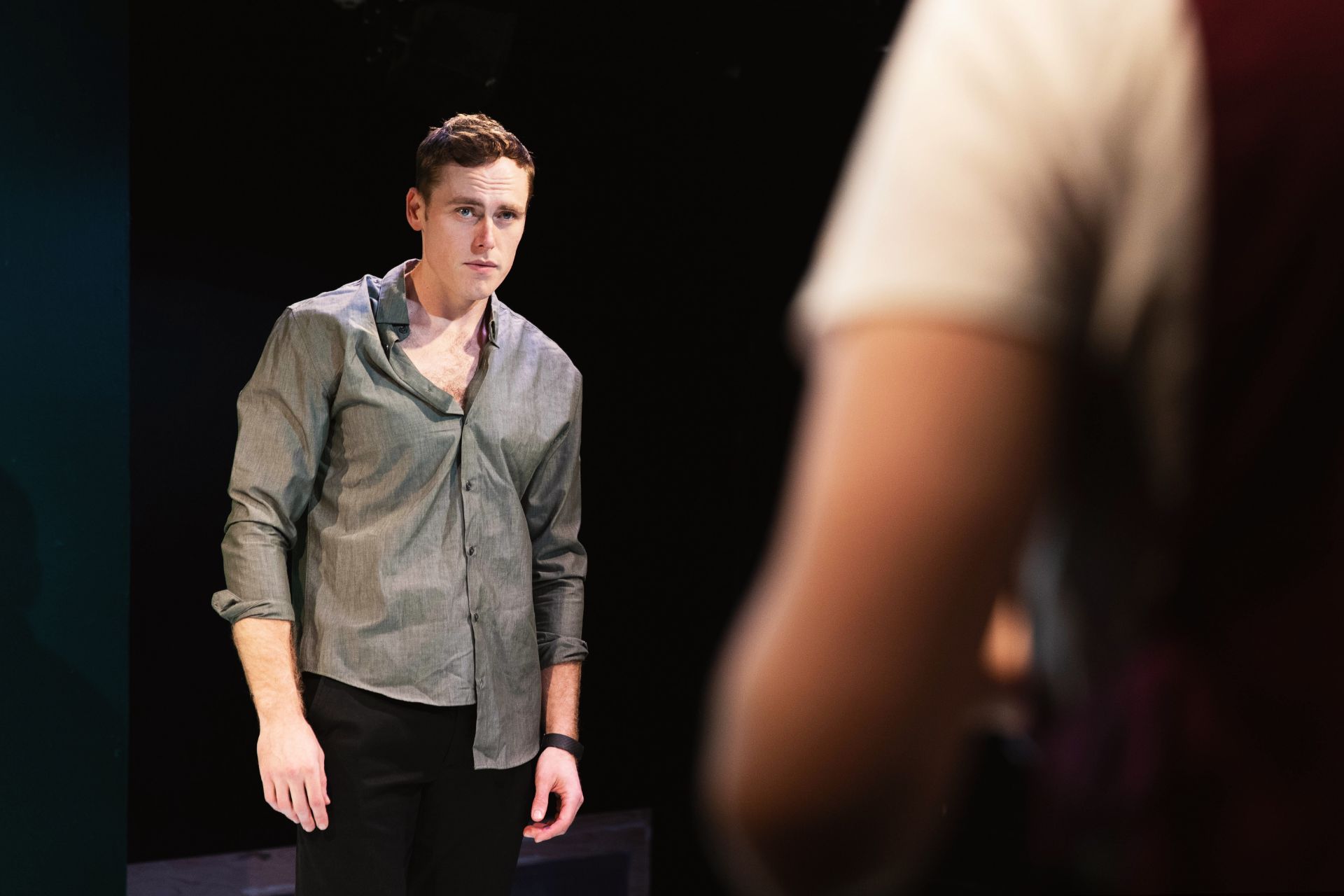
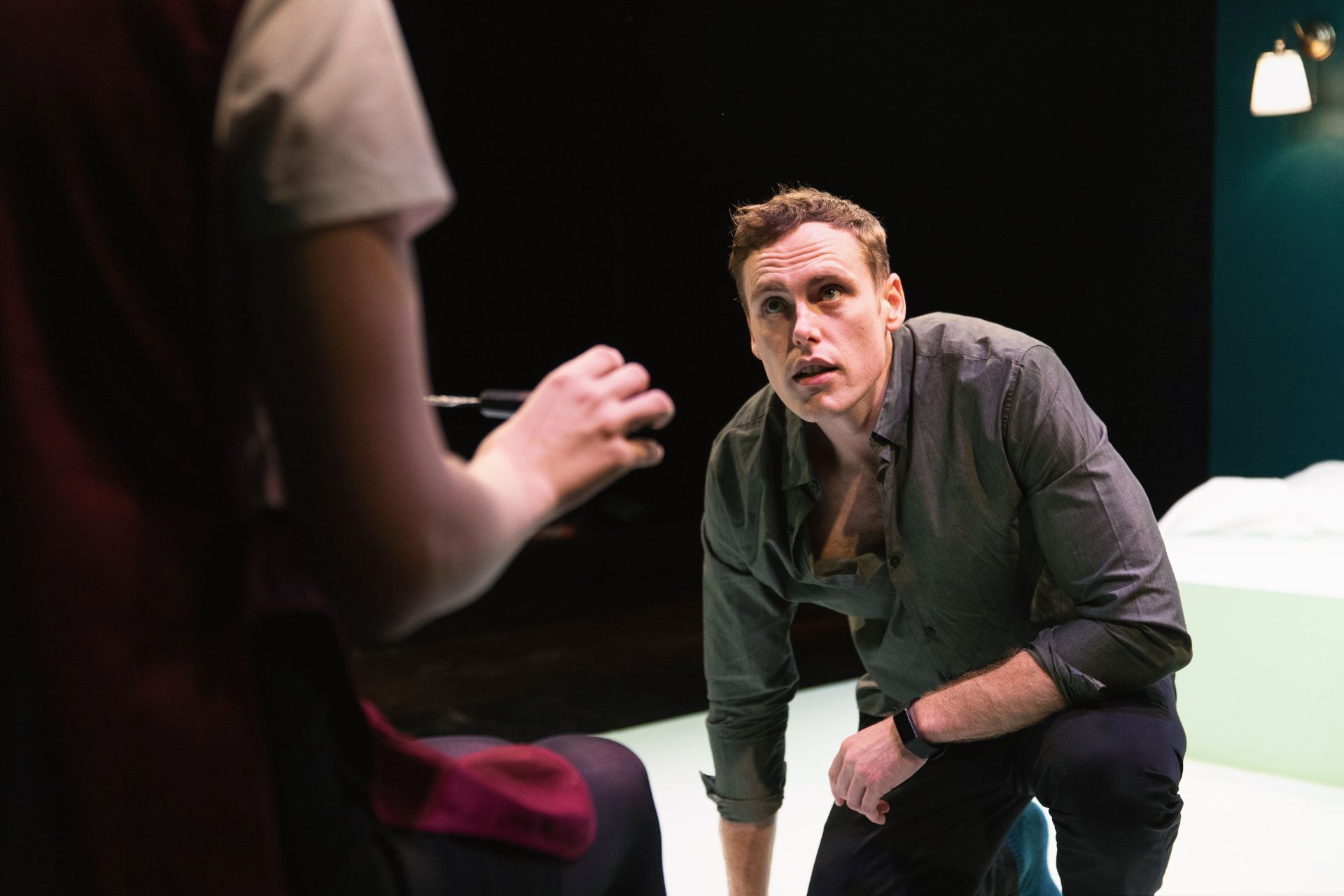
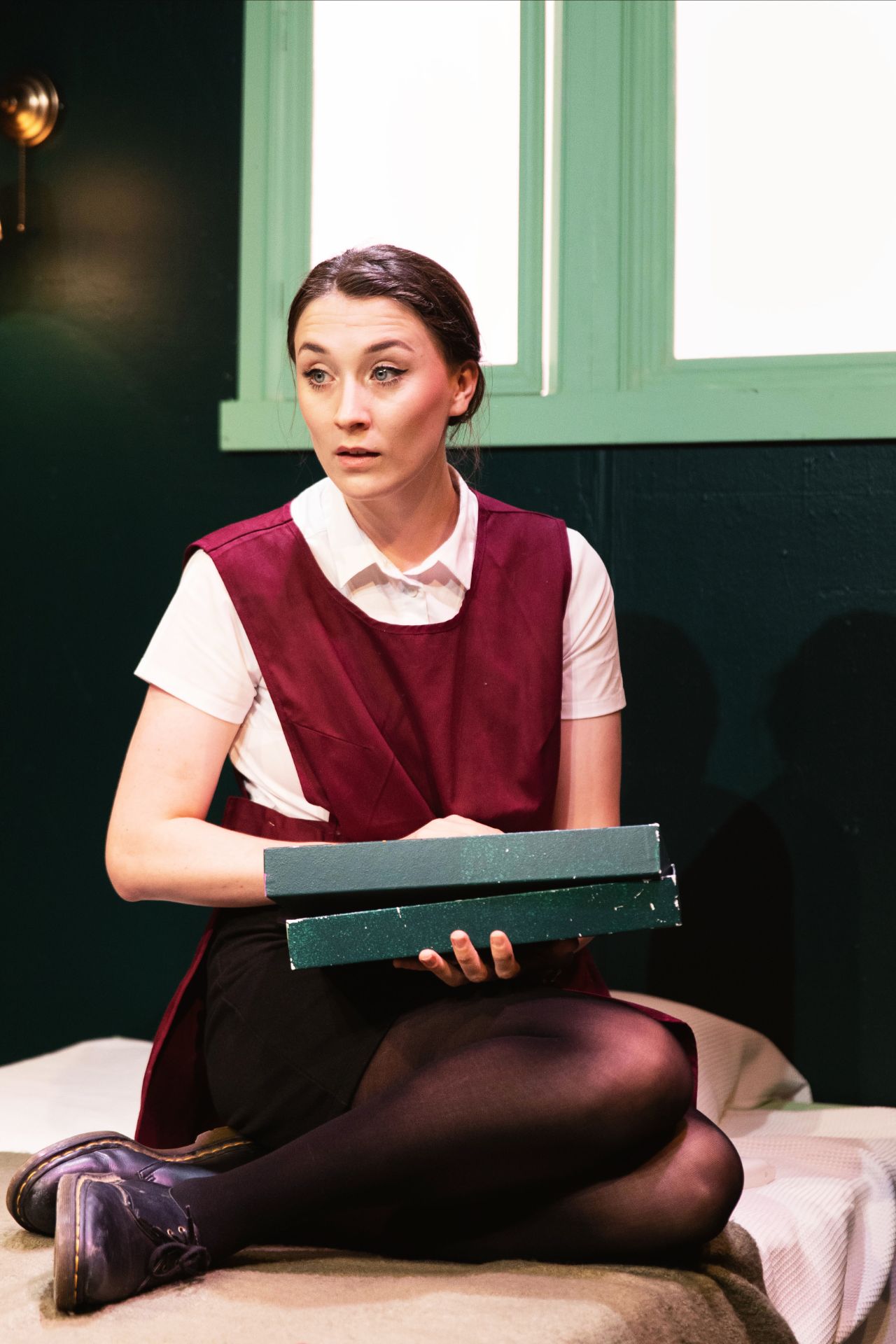
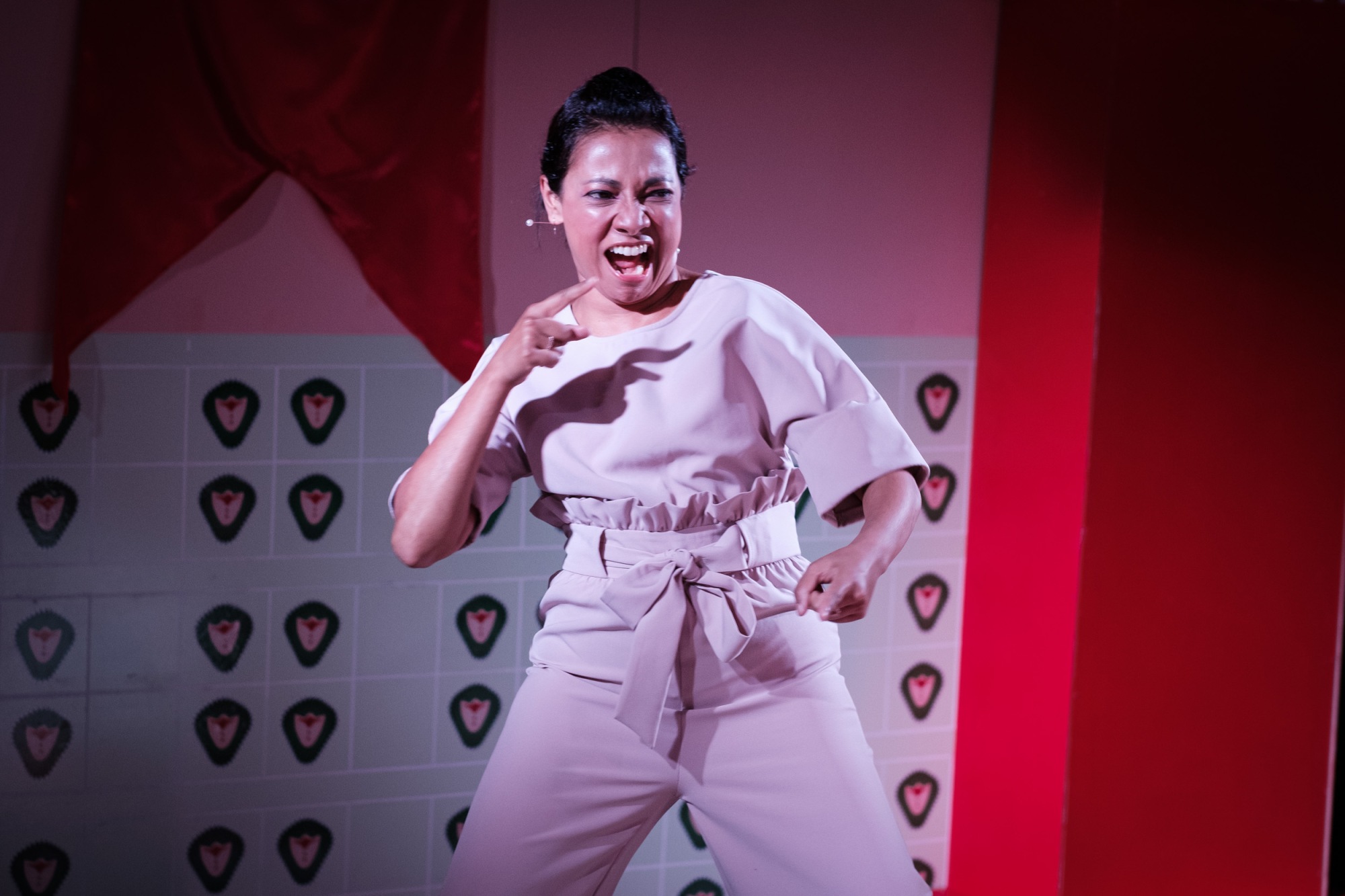
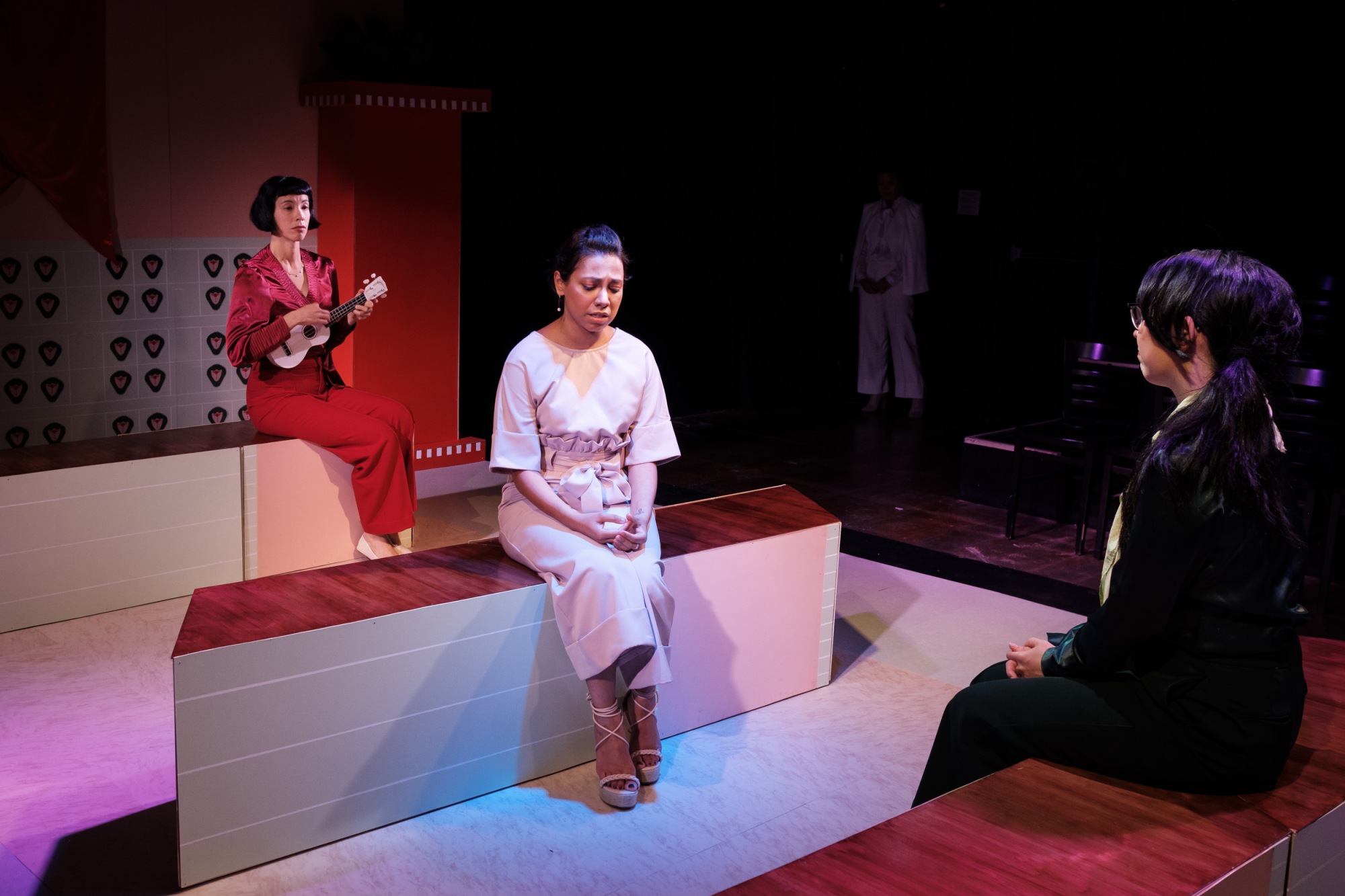
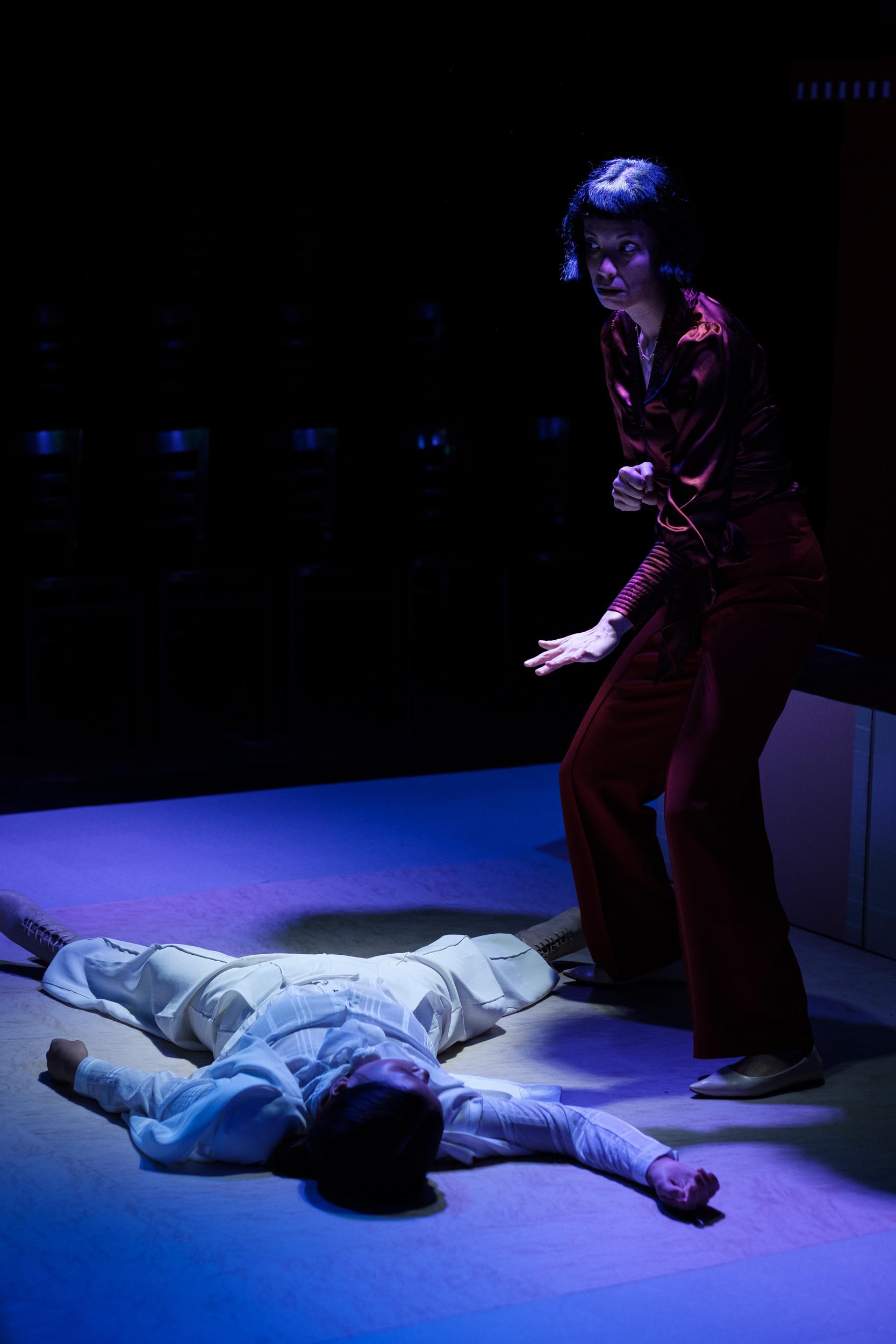
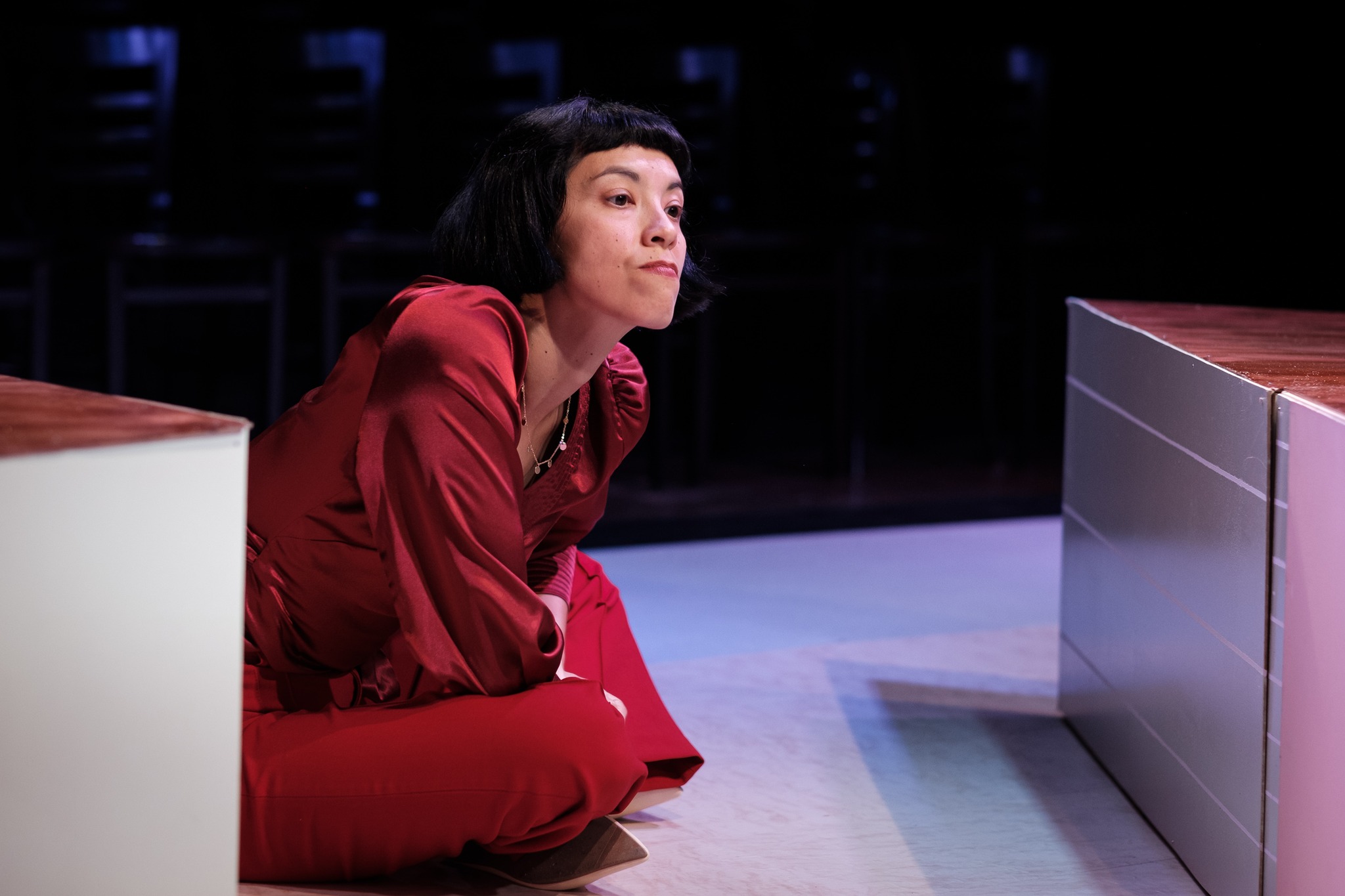
In Cassie Hamilton’s Daddy Developed a Pill, Cynthia’s father strikes it rich, after inventing a drug that becomes hugely popular. The sudden change in lifestyle means that Cynthia no longer gets to see her father regularly. Feeling neglected, she grows into adulthood desperately trying to win his approval, and forms the belief that by creating a pill of her own, she would be speaking her father’s language, and thus able to regain his attention.

It might be a relatively simple narrative, but the plot of Hamilton’s play is complicated. 16 characters weave in and out, in an intentionally chaotic melange of short sequences, with rapid fire dialogue of which the audience is likely to only retain a small portion. The chronology of action seems erratic, but we are not the only ones confused. Cynthia is at the centre of all the hullaballoo, and she too is bewildered. Indeed, her existence is one of alienation and uncertainty. She stands outside, as though in a state of dissociation, whilst lovers, family and work associates, are fussing over her, caught up in dramas about Cynthia, while all she wants is her father.

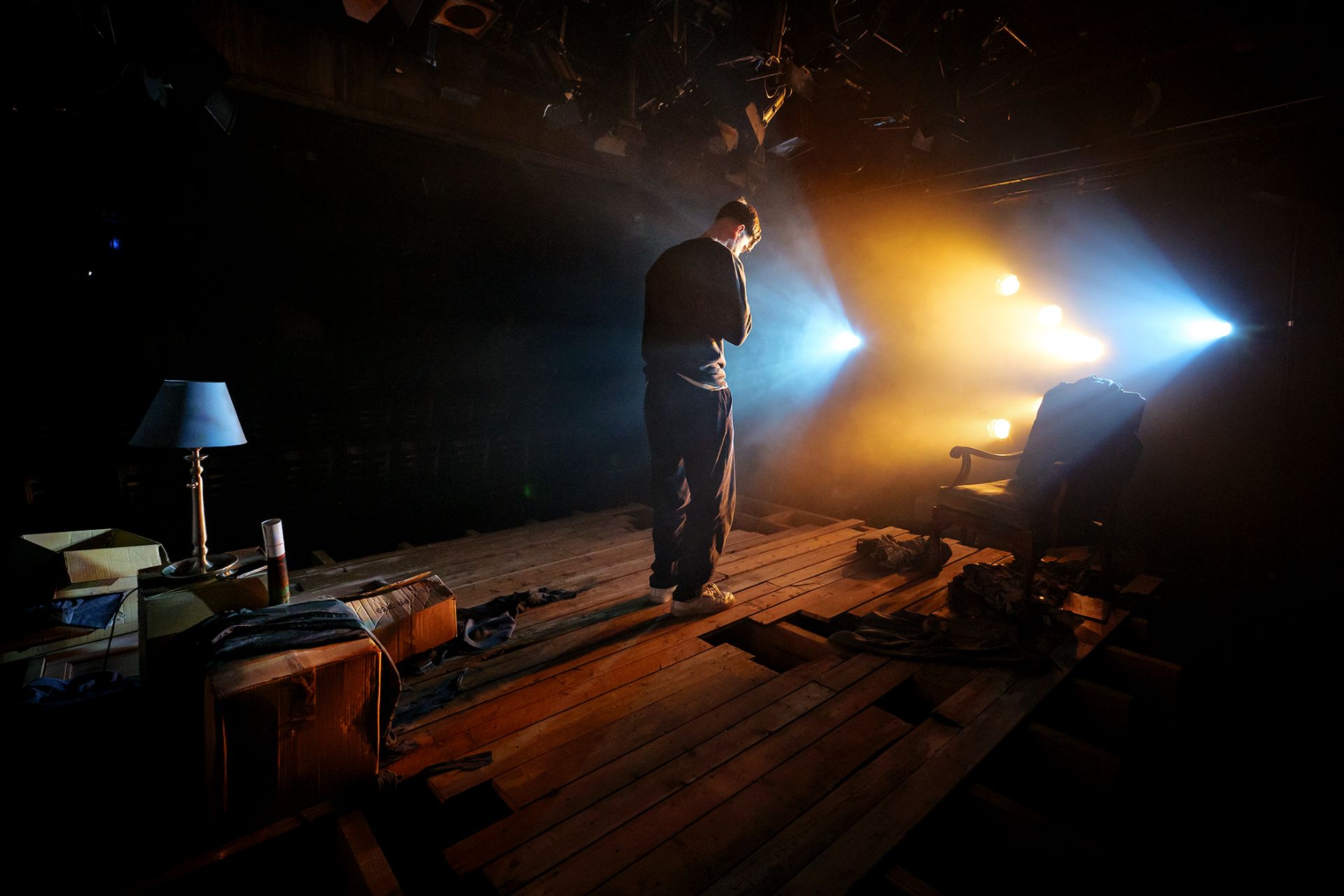
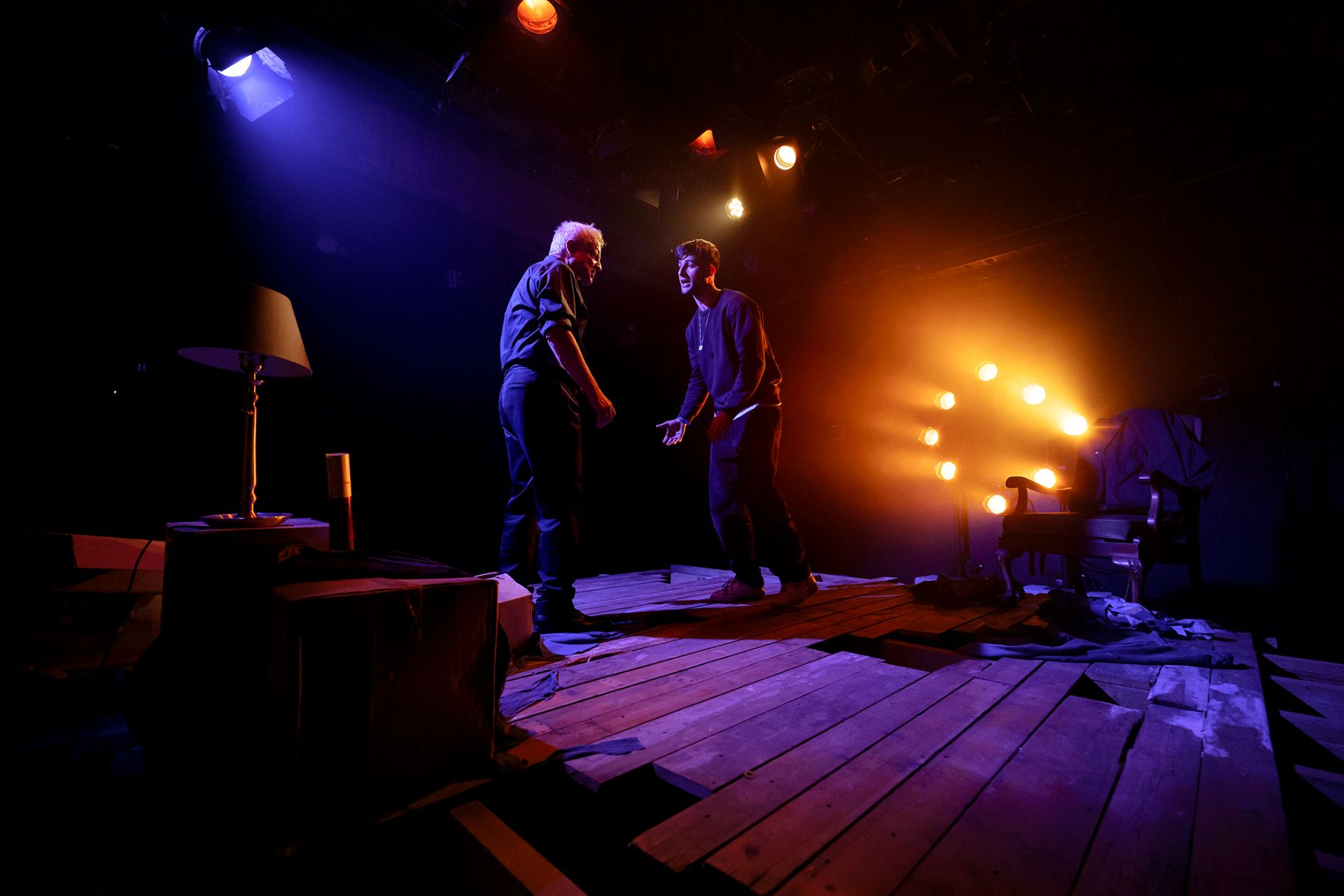
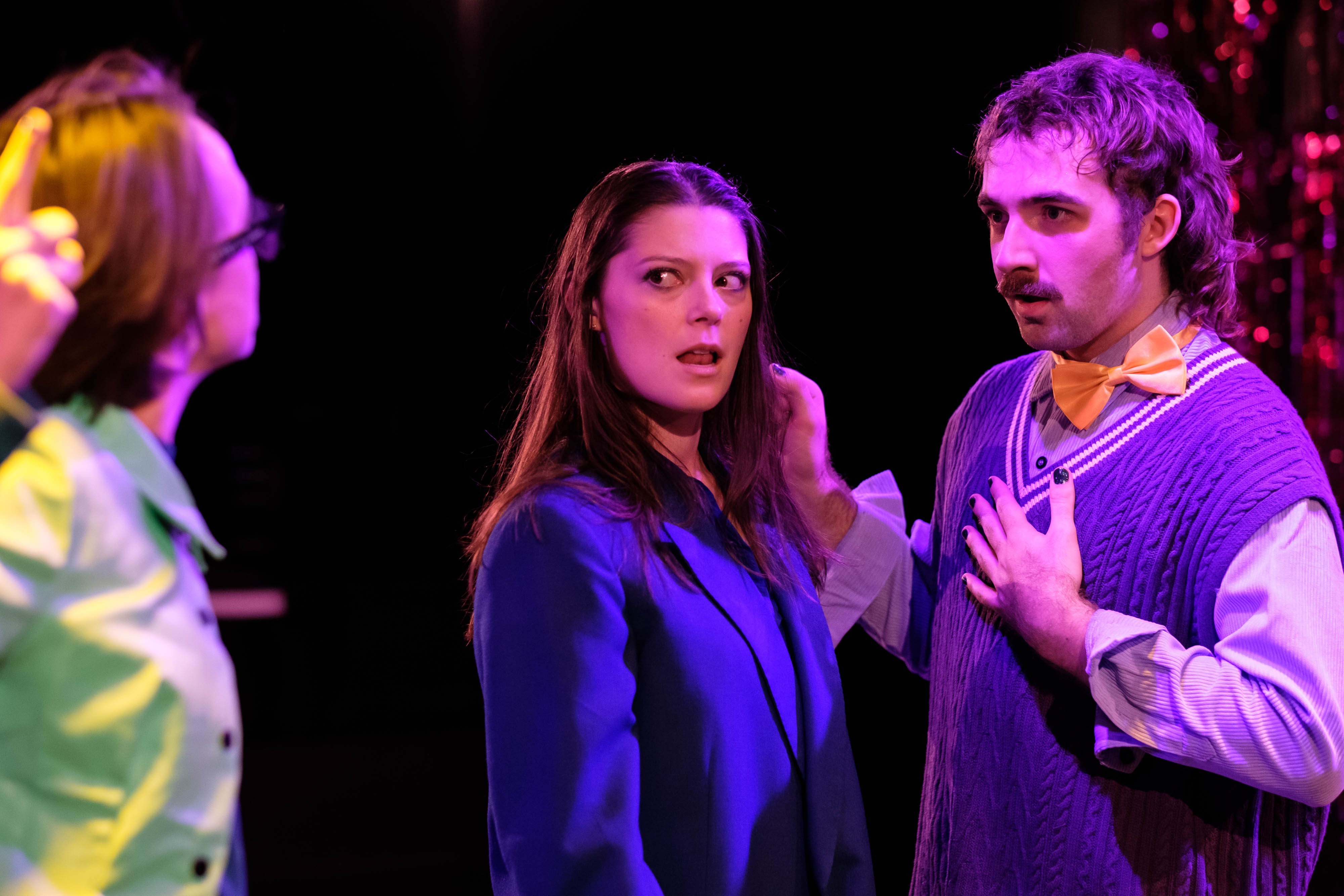
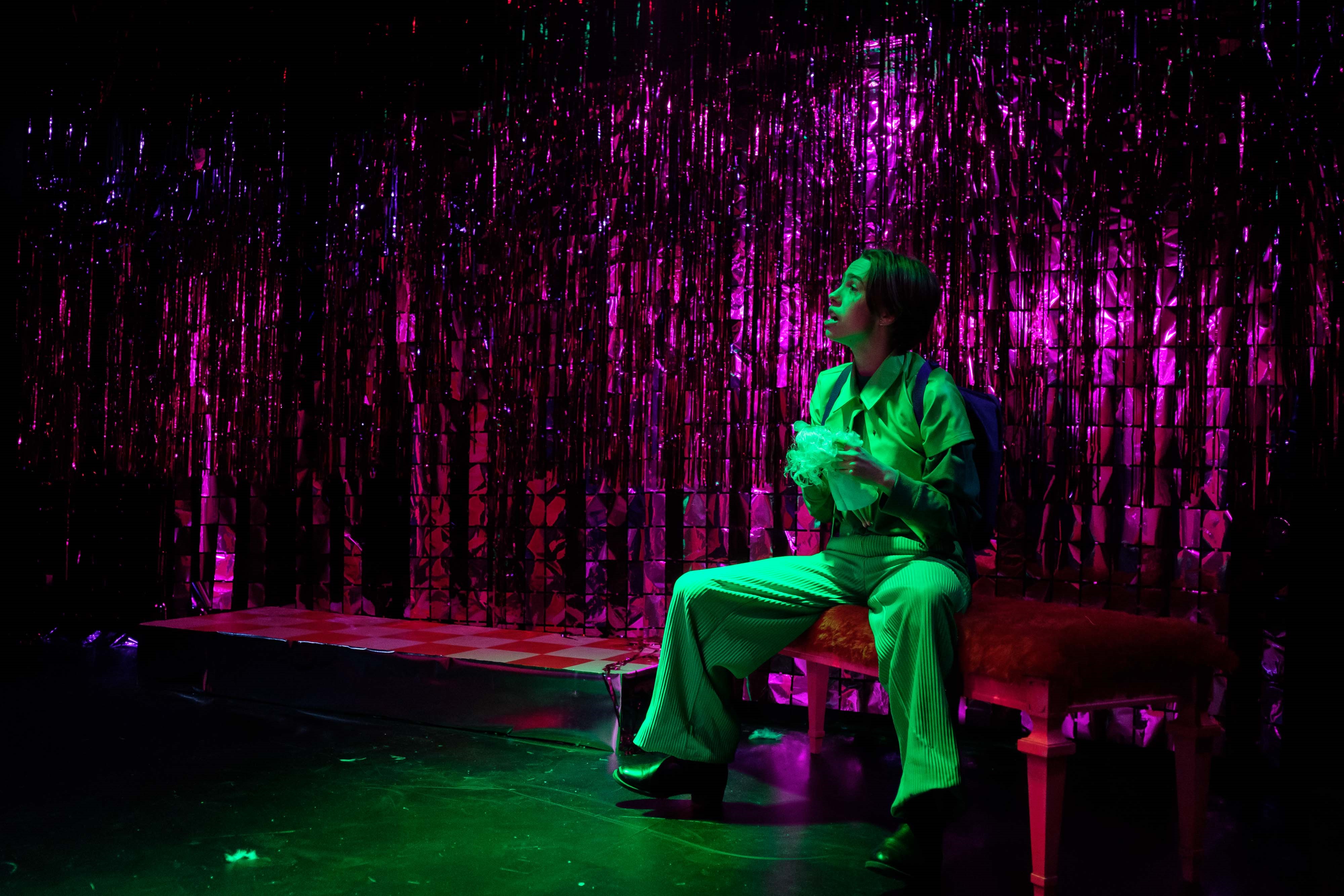
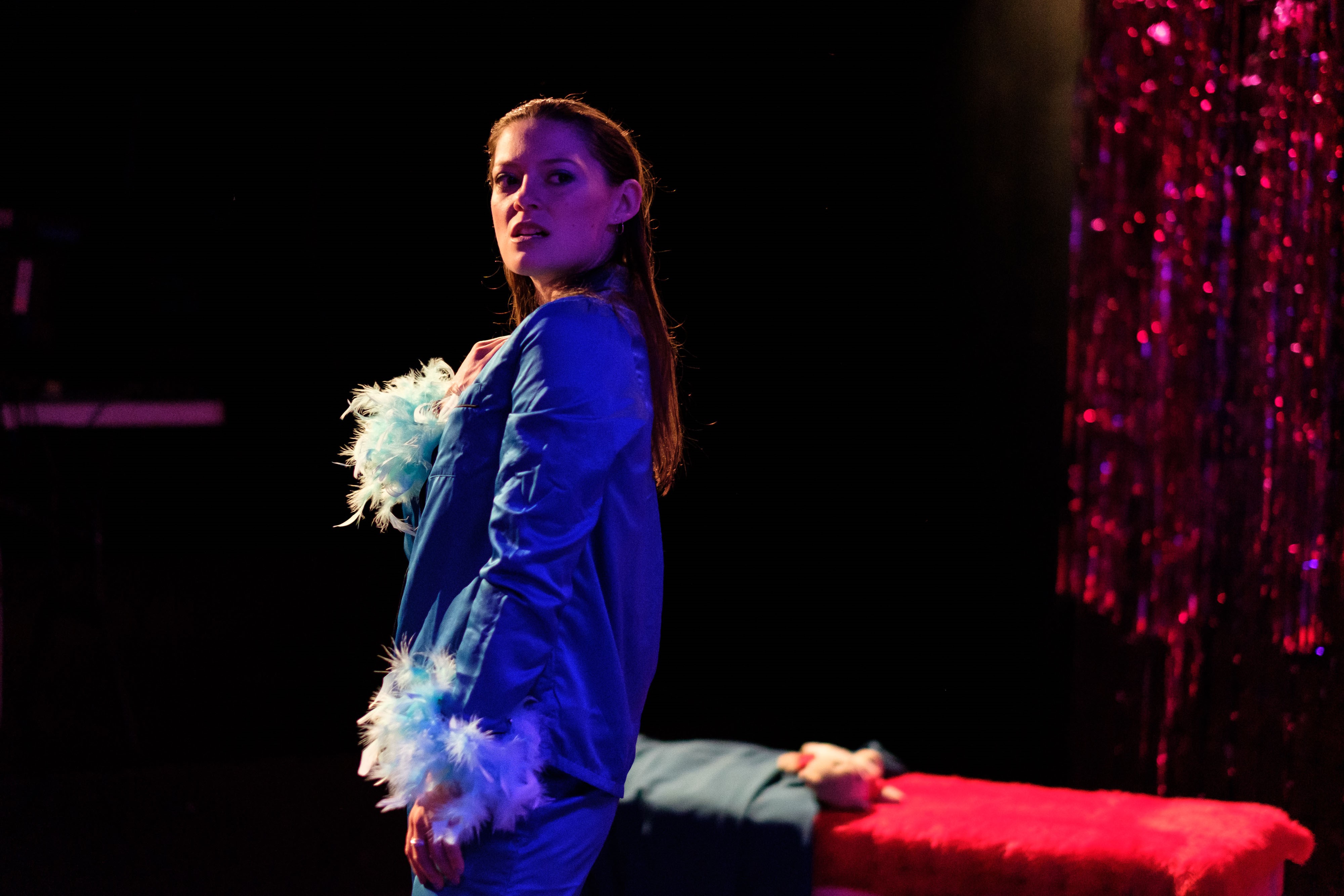
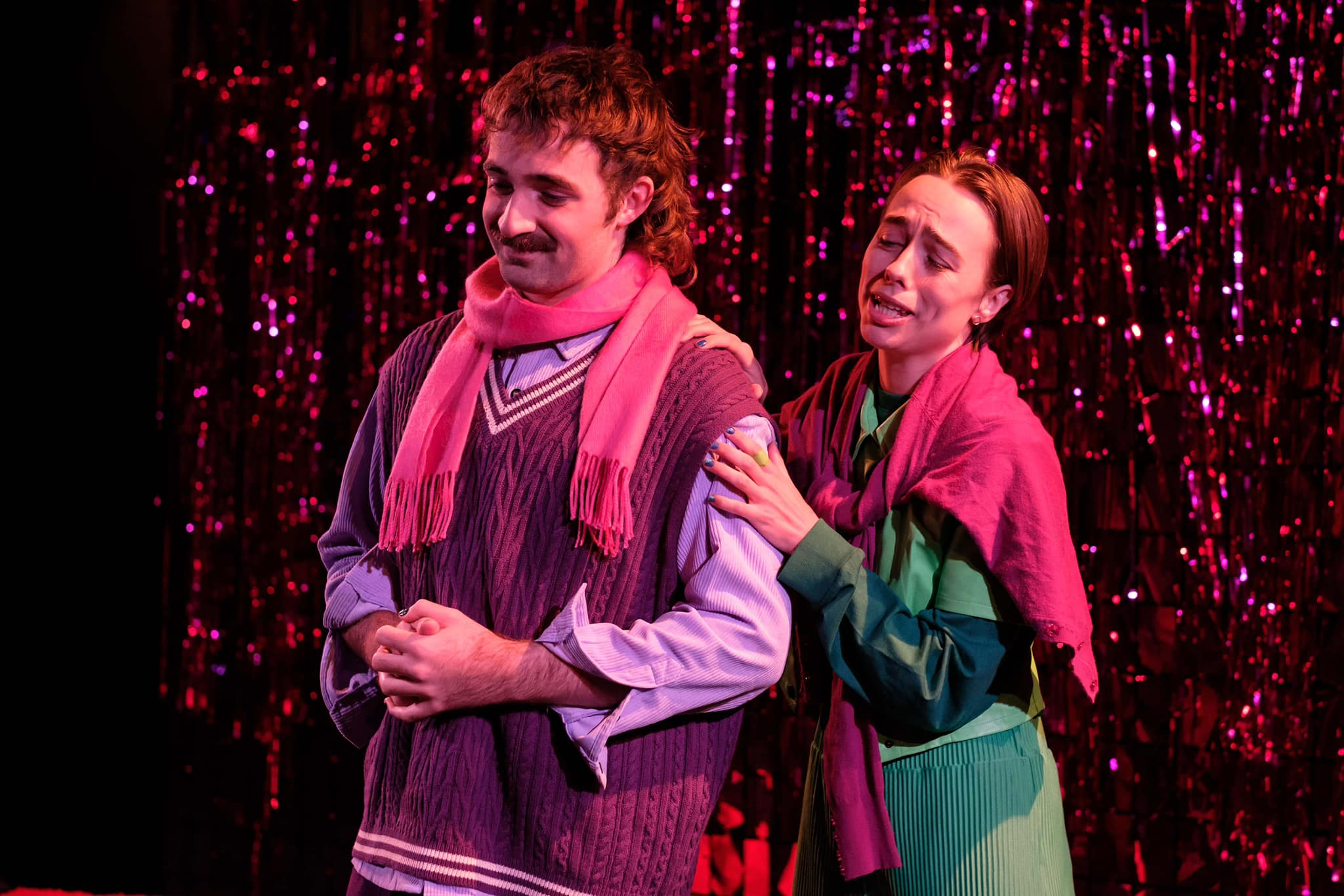
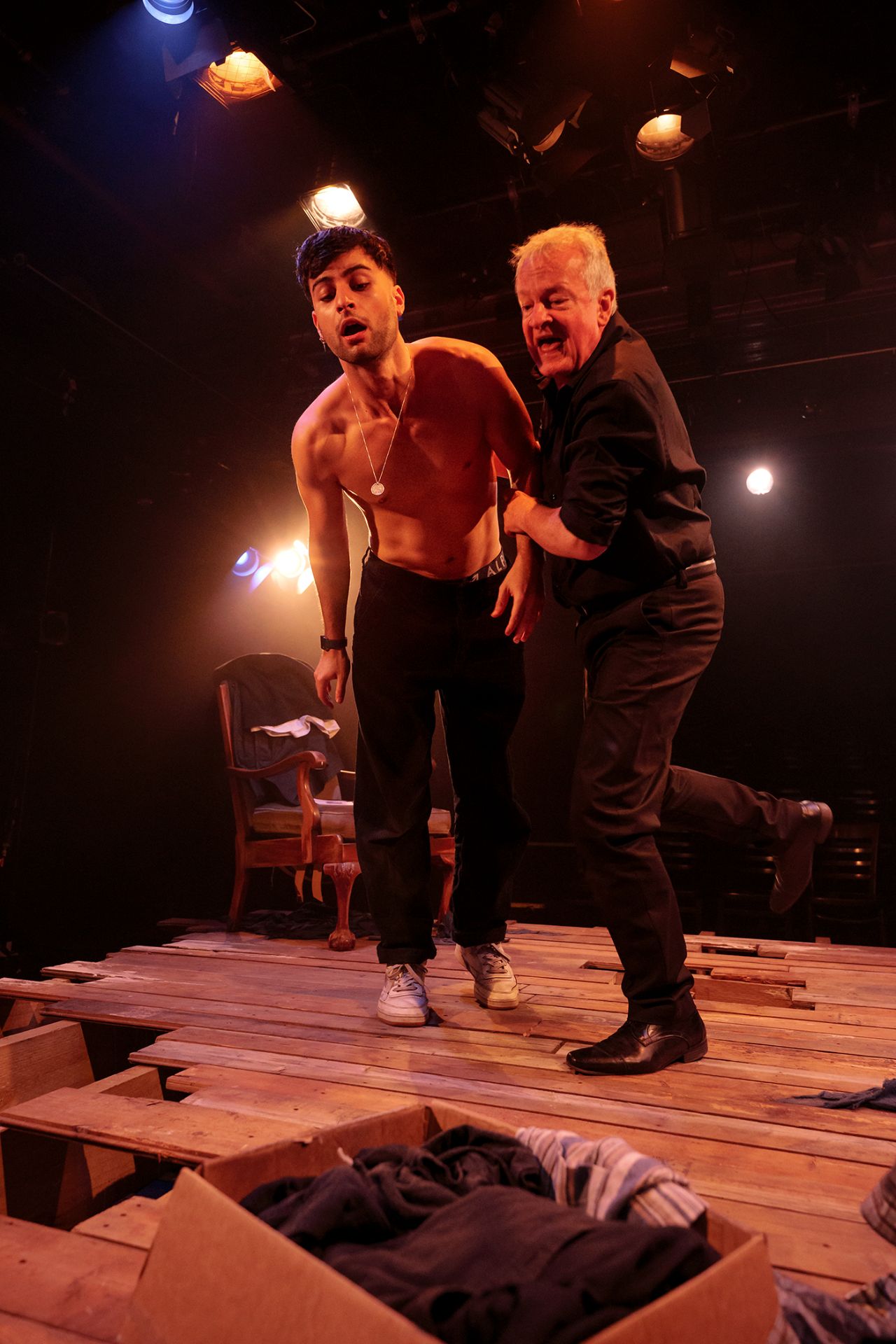
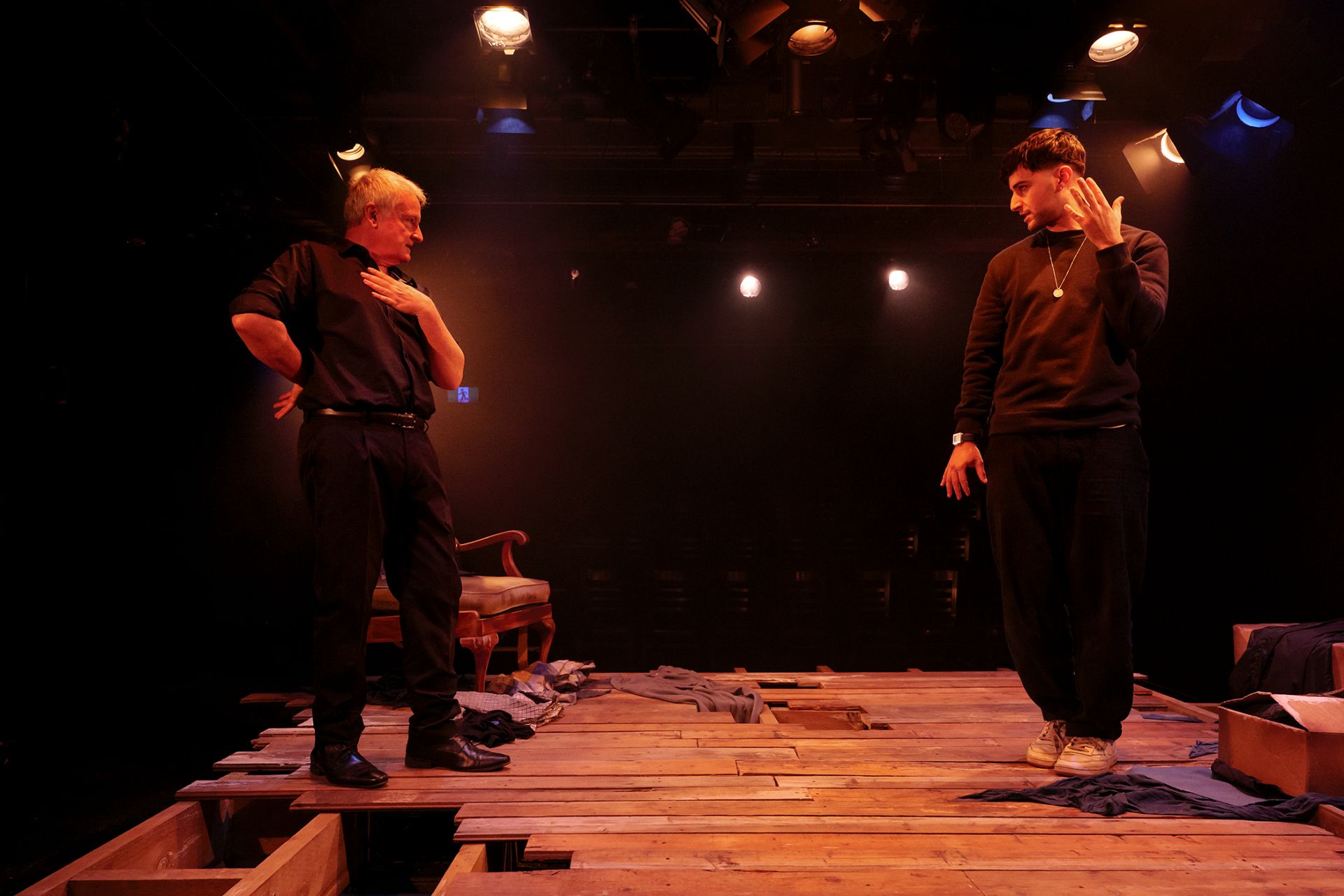
Direction by LJ Wilson is relentlessly raucous. The entire show takes on the tone of a riotous comedy, but it is never truly funny. Even though the laughs are sporadic, much of the presentation proves captivating. The sheer energy of the staging sustains our interest, if only out of curiosity, for this rare occurrence of outrageously exuberant absurdism.

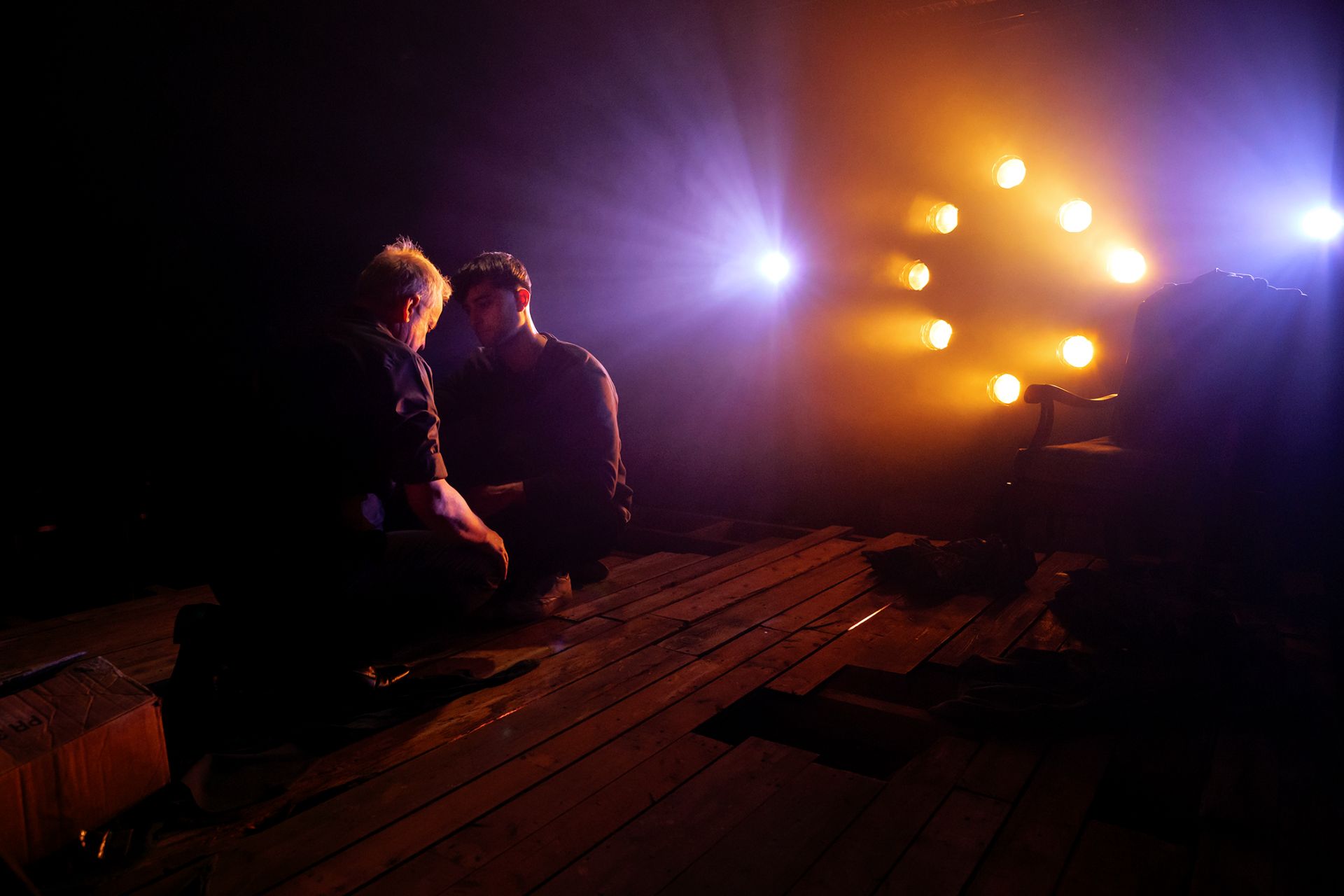
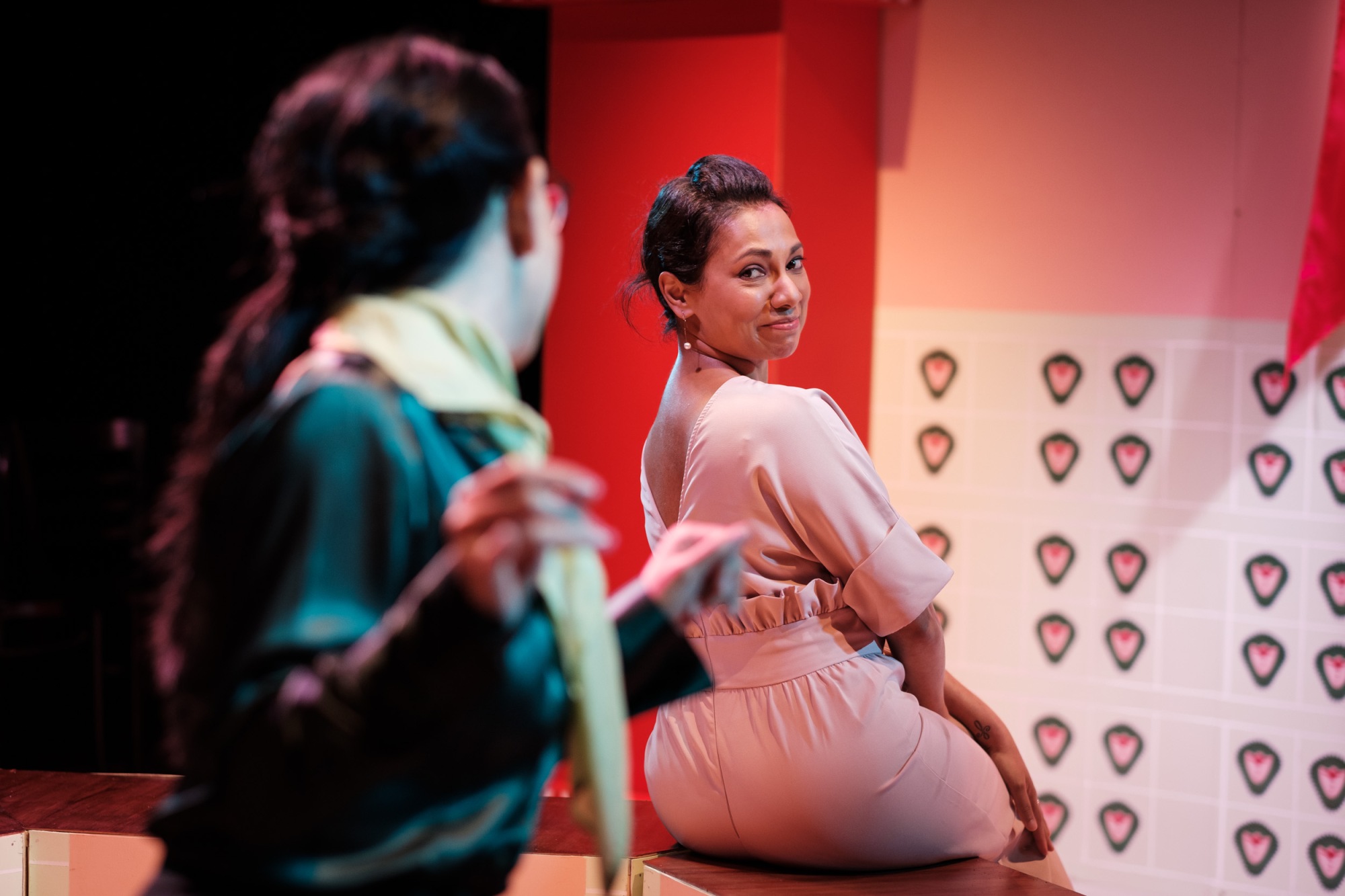
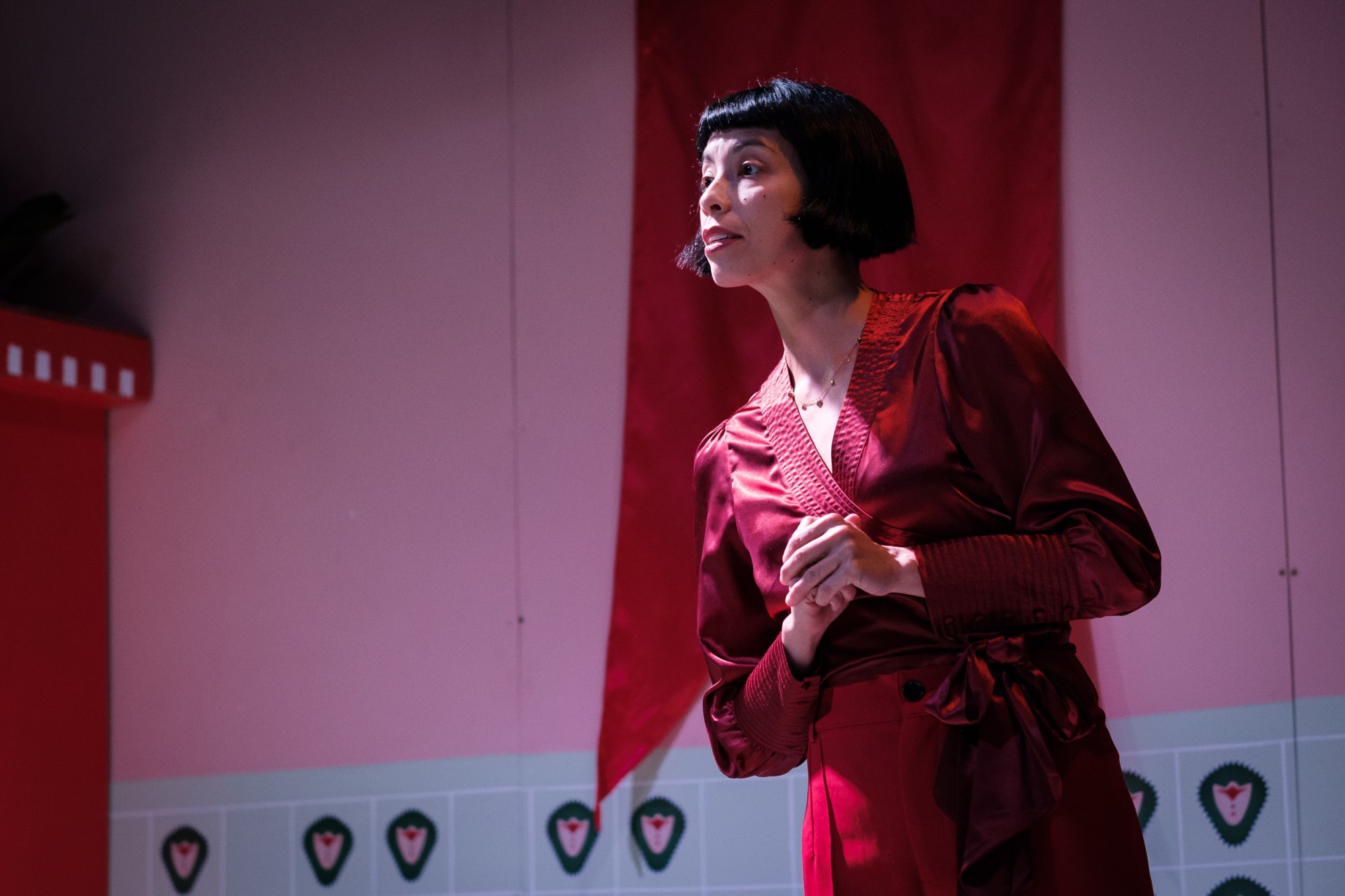
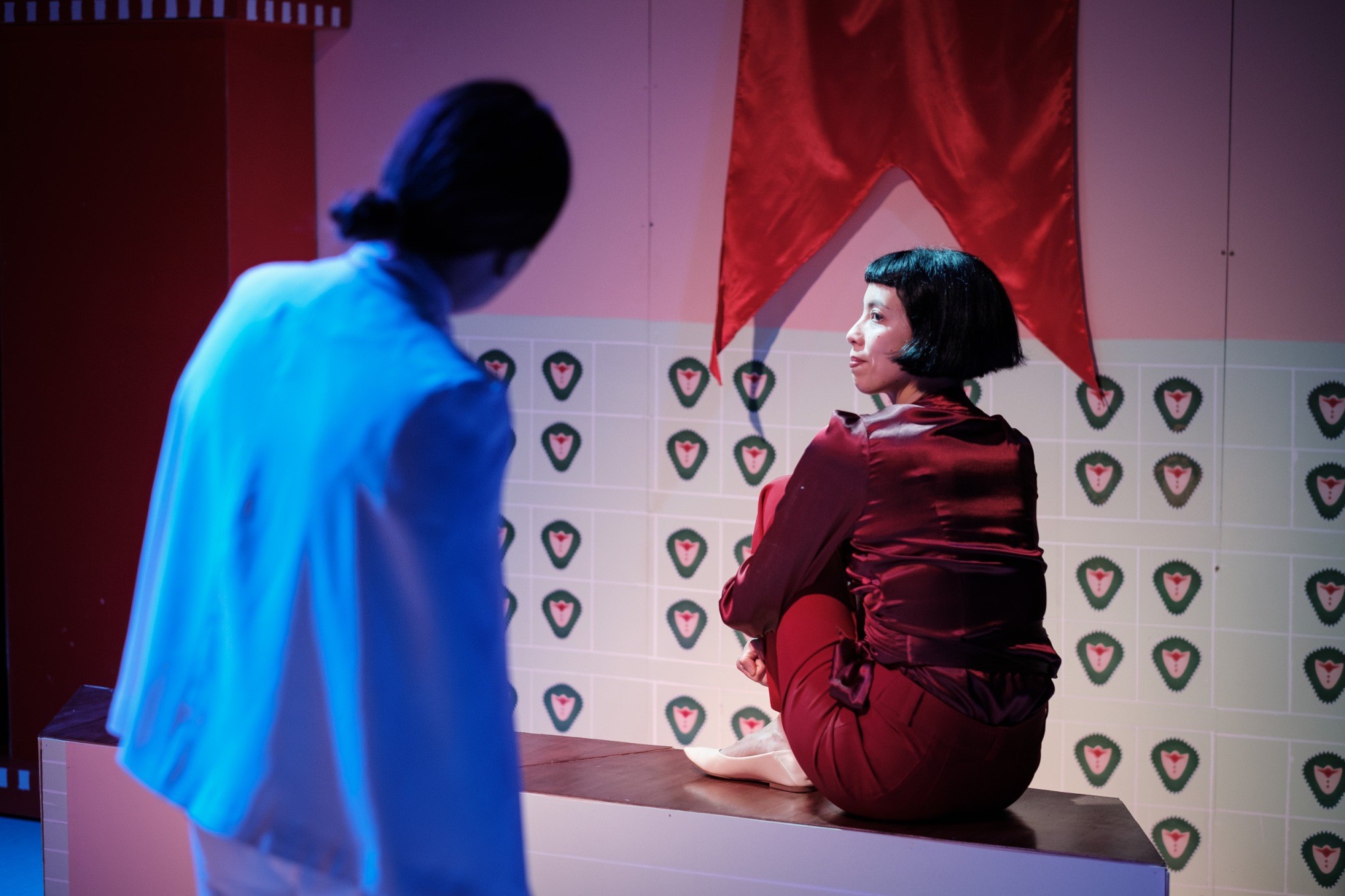
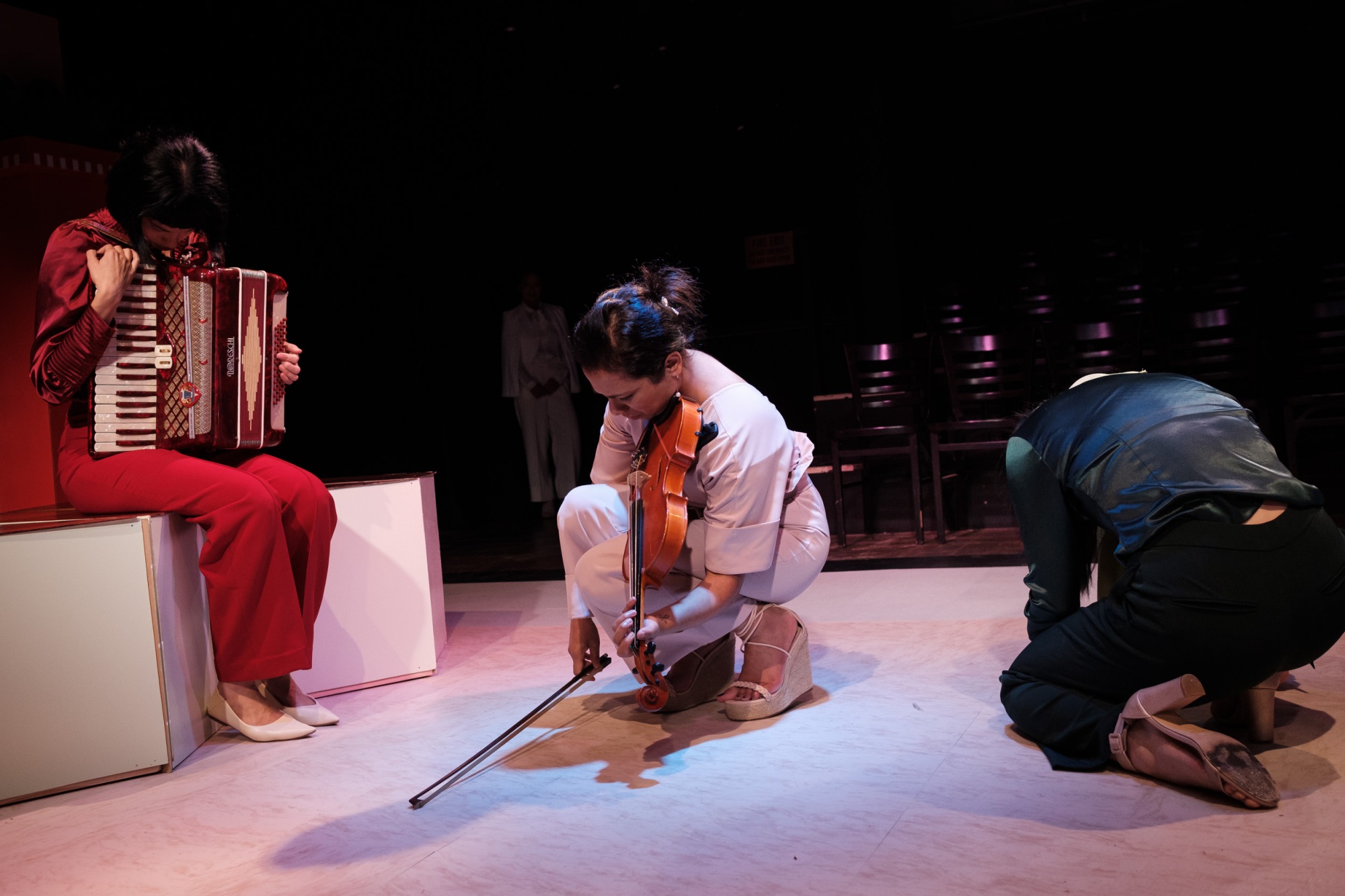
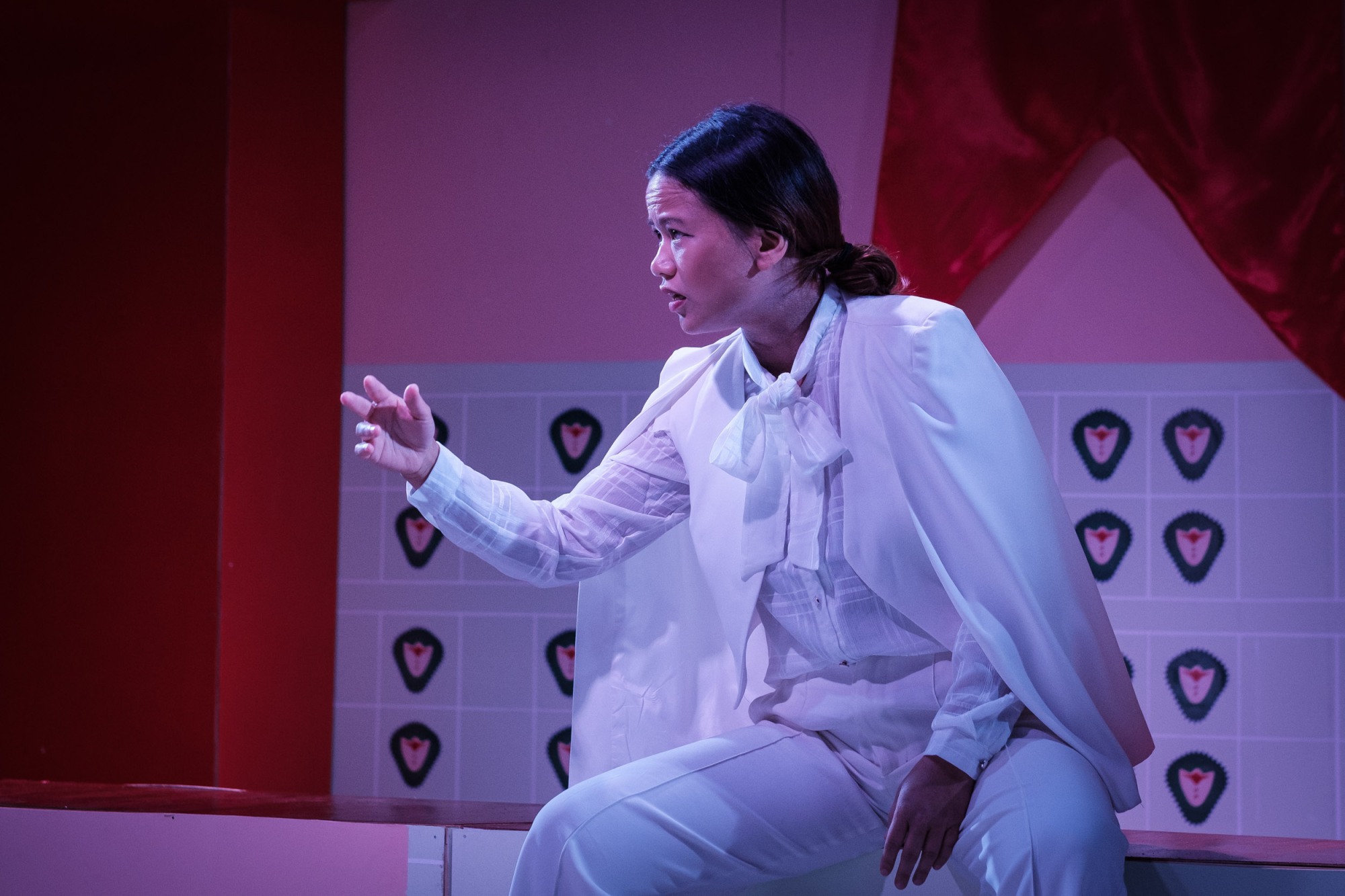
Rowan Yeomans’ sound and music are consistently lively, with a penchant for manufacturing an atmosphere of euphoria, to accompany the madcap performance style. Production design by Kate Beere is all glitz and camp, to invoke the vaudeville tradition. Jesse Grieg’s lights are flamboyant and colourful, adding great visual dynamism to proceedings.

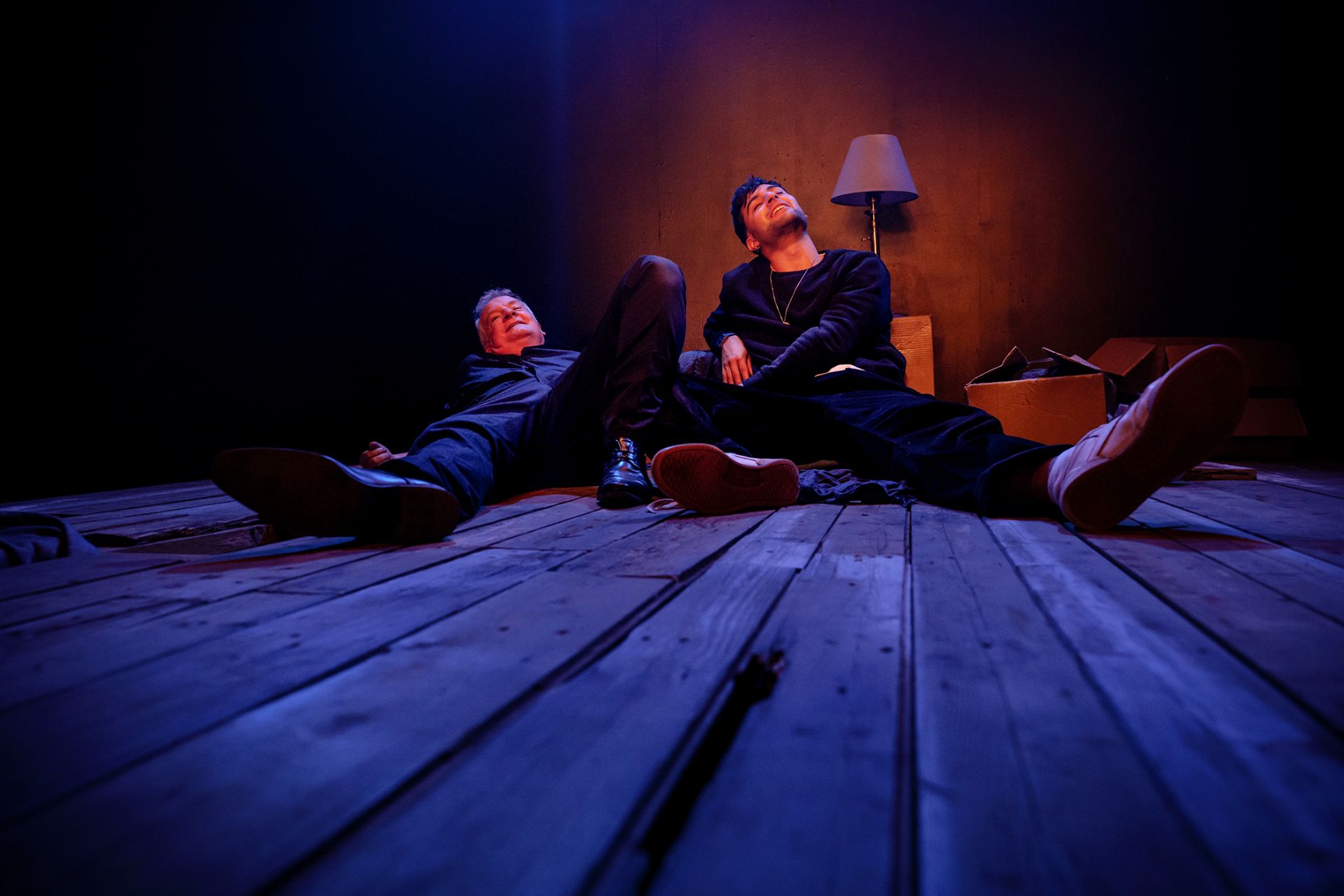
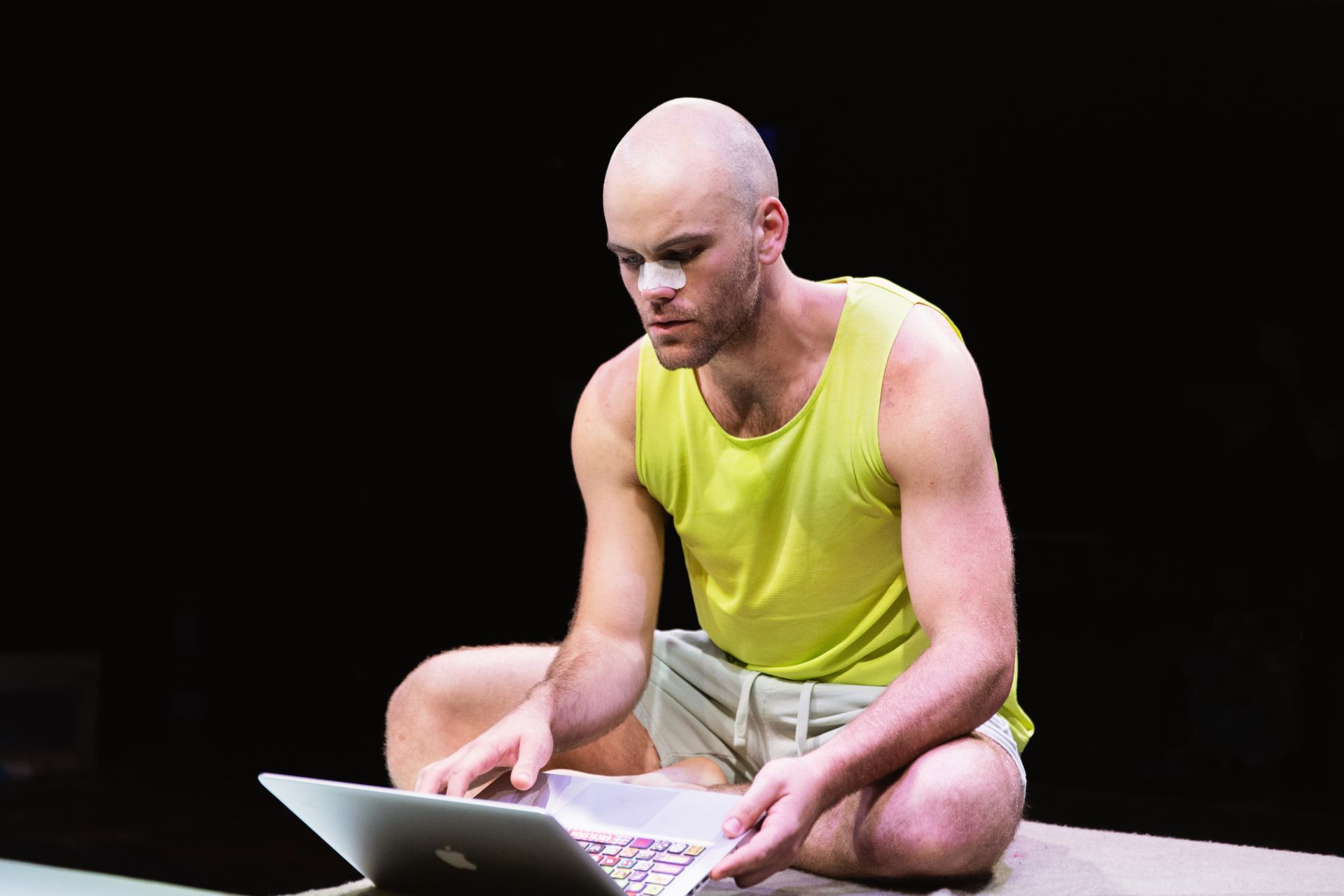
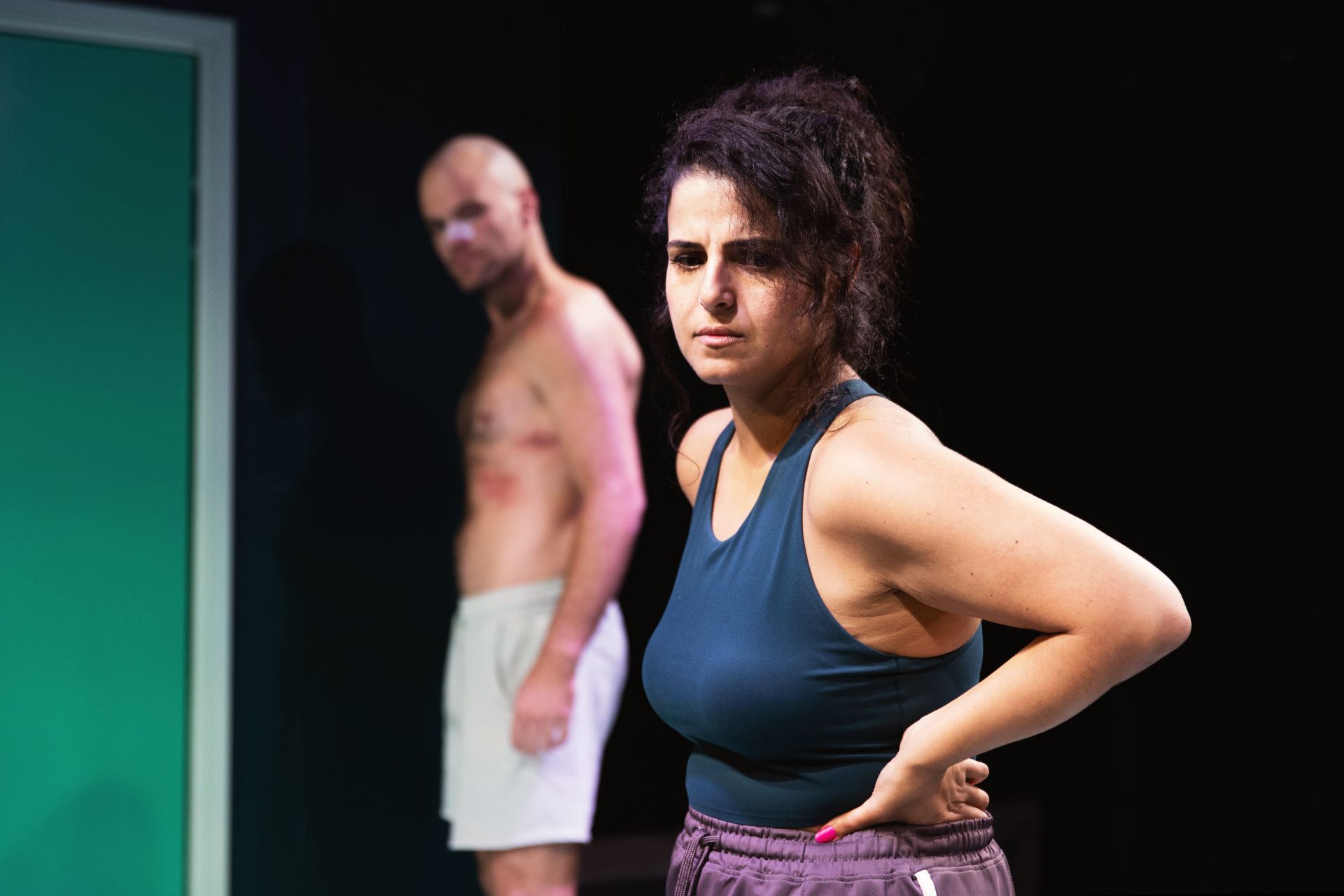
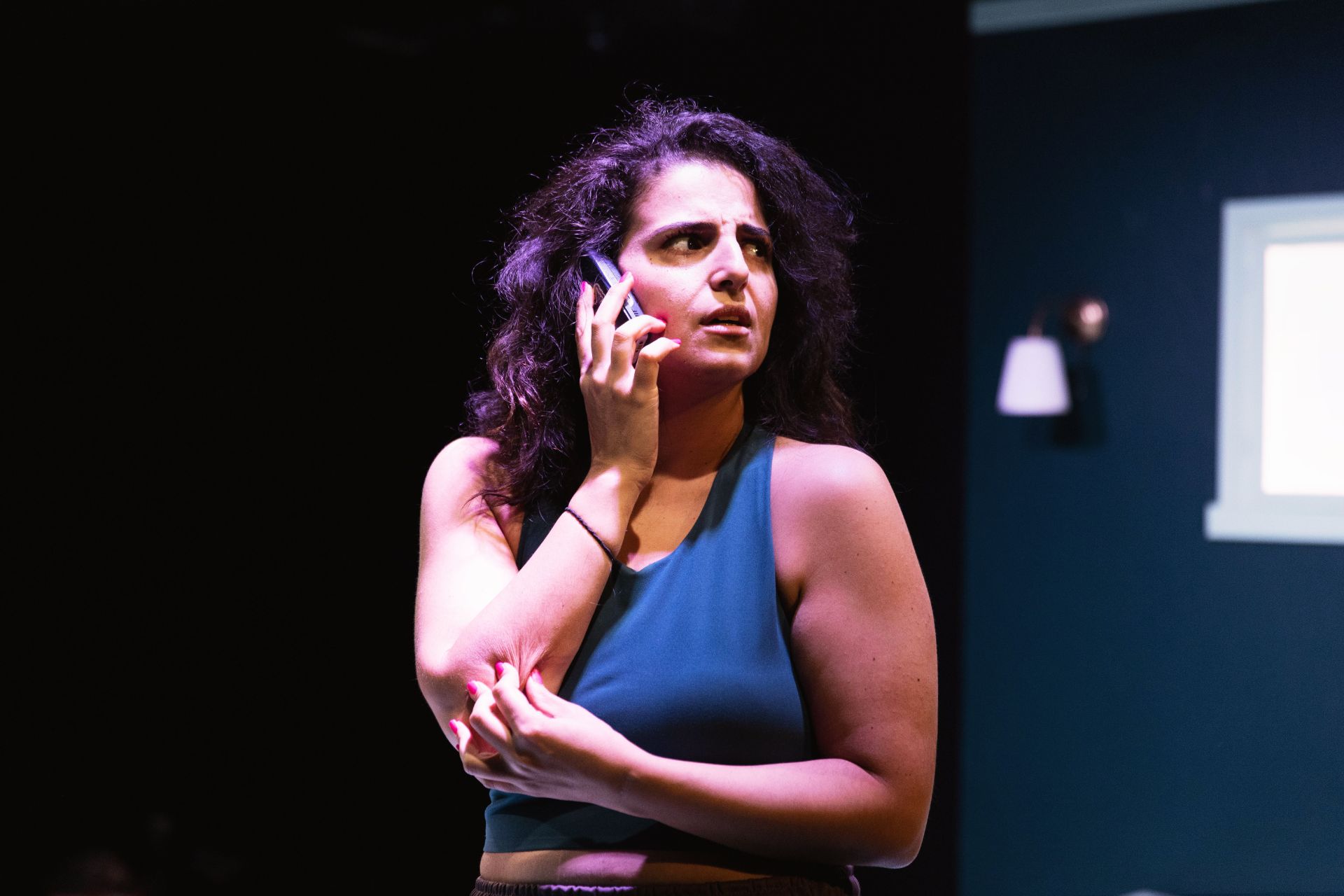
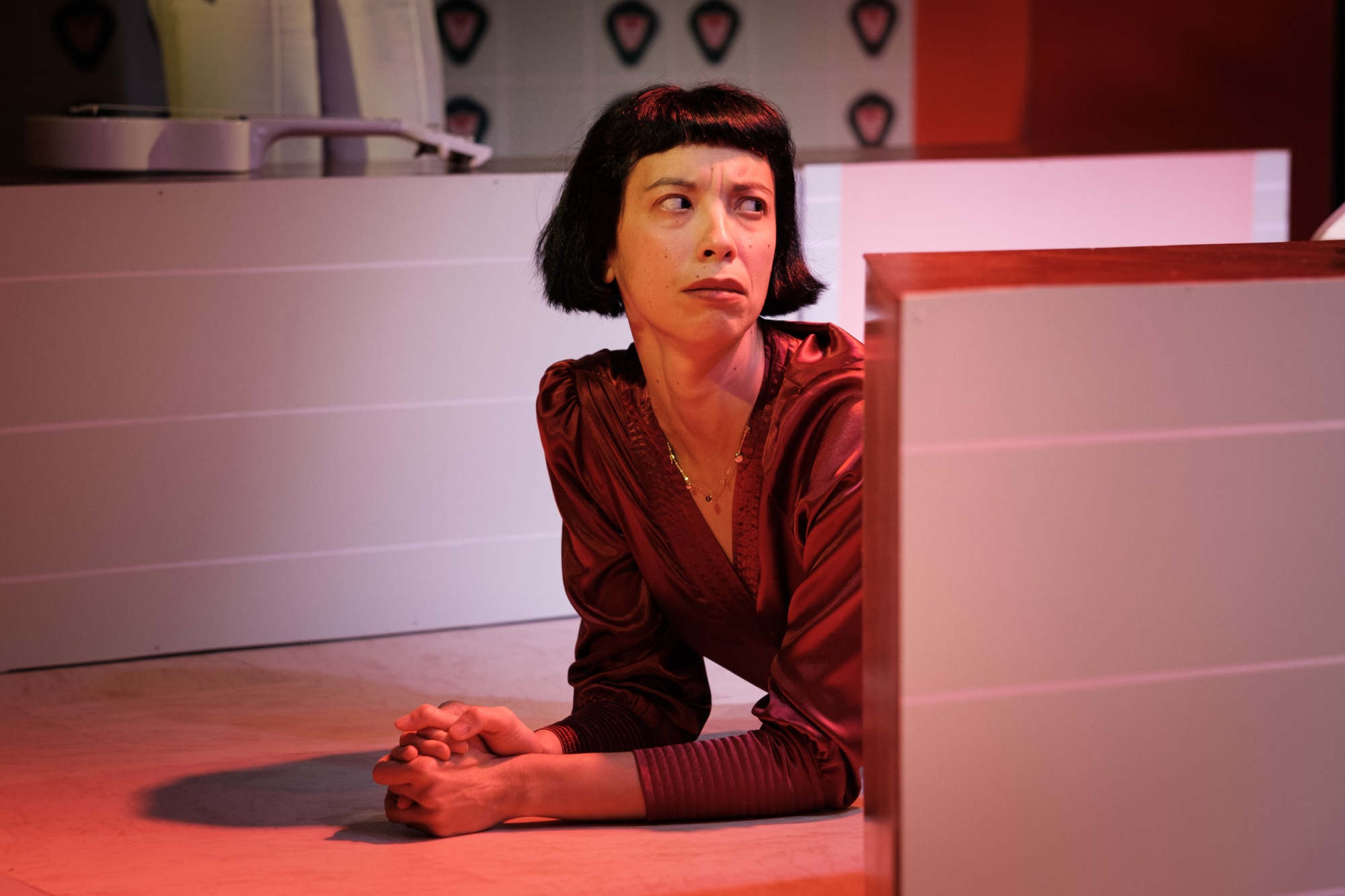
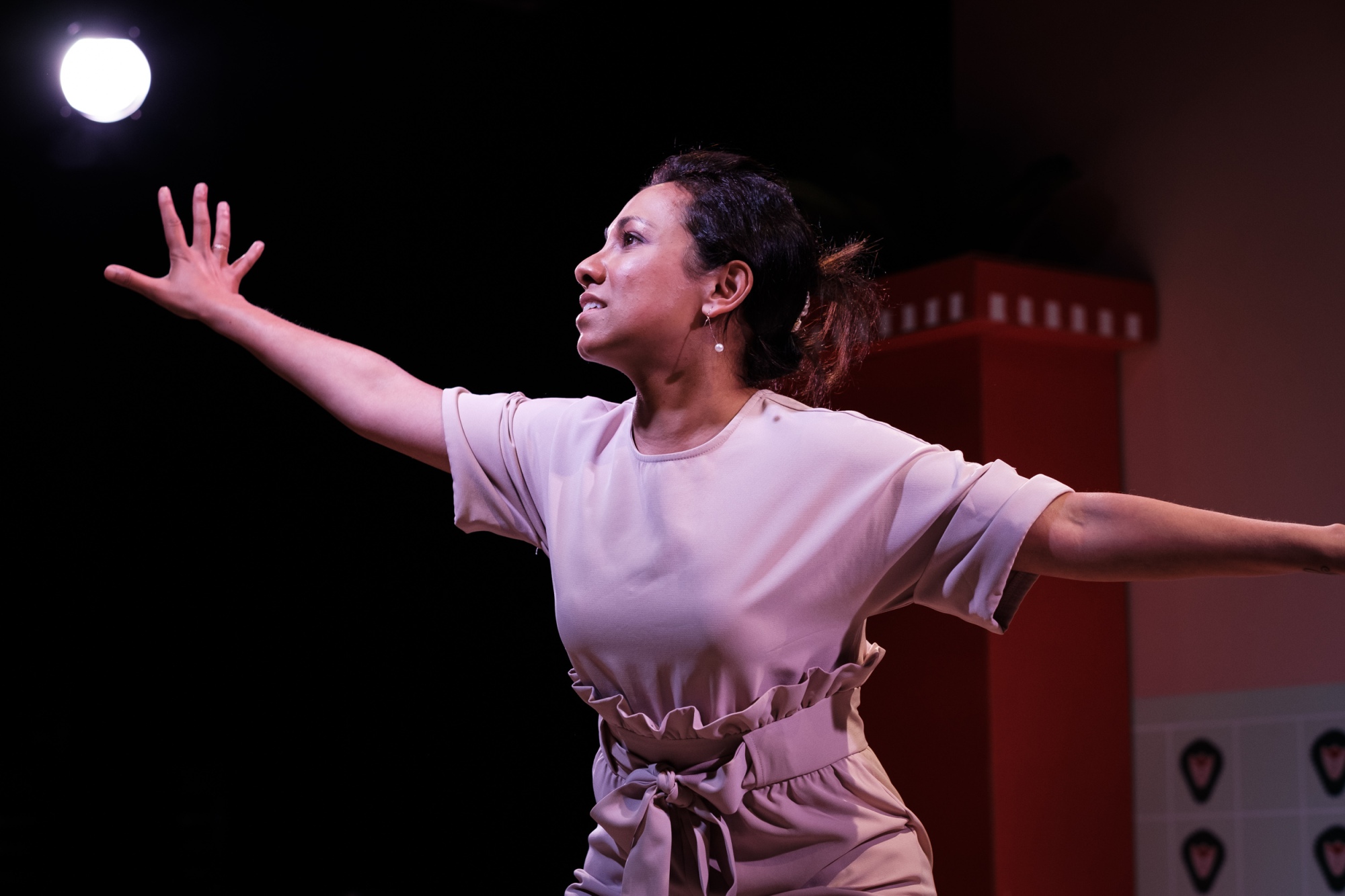
Actor Sarah Greenwood as Cynthia is to be commended for conveying emotional authenticity, throughout the 95 minutes of ceaseless pandemonium. Clay Crighton and Jack Francis West are wonderfully animated with their extensive repertoire of roles, both impressive with the vigour they bring to the stage, and with the irrepressible mischievousness that accompany all the surreal hijinks they deliver. This team of three is remarkably well-rehearsed; the fluency with which they execute this intricate and convoluted work, is quite a sight to behold.

Cynthia struggles to find herself, because she feels unloved. Her father’s absence creates a hole that she seems unable to fill, yet life goes on. In Daddy Developed a Pill, it is the daughter who is left broken, and for those of us who recognise ourselves in that state of ruin, it is that honest depiction of a lack of closure, that resonates. Too much of our storytelling wants to offer catharsis, with sweet endings to sad tales. What seems more truthful on this occasion, is to see that we often experience no closure, only a hope that resilience accrues with each blow, and we simply keep going.
www.facebook.com/snatchedcollective

Review: Tell Me Before The Sun Explodes (Rock Bottom Productions)

Venue: Kings Cross Theatre (Kings Cross NSW), May 4 – 14, 2022
Playwright: Jacob Parker
Director:
Hayden Tonazzi
Cast: Tim McGarry, Joshua Shediak
Images by Philip Erbacher

Theatre review
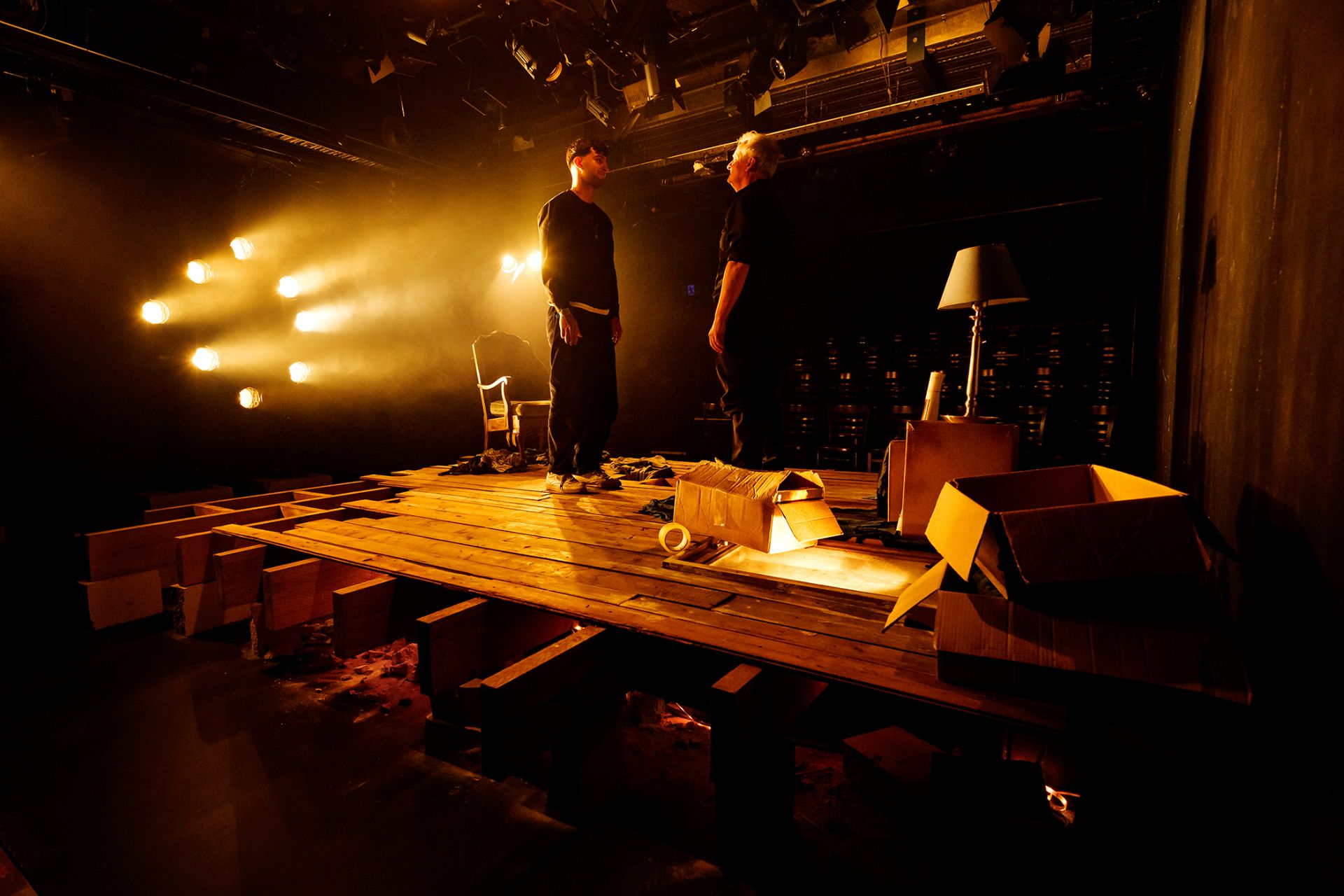
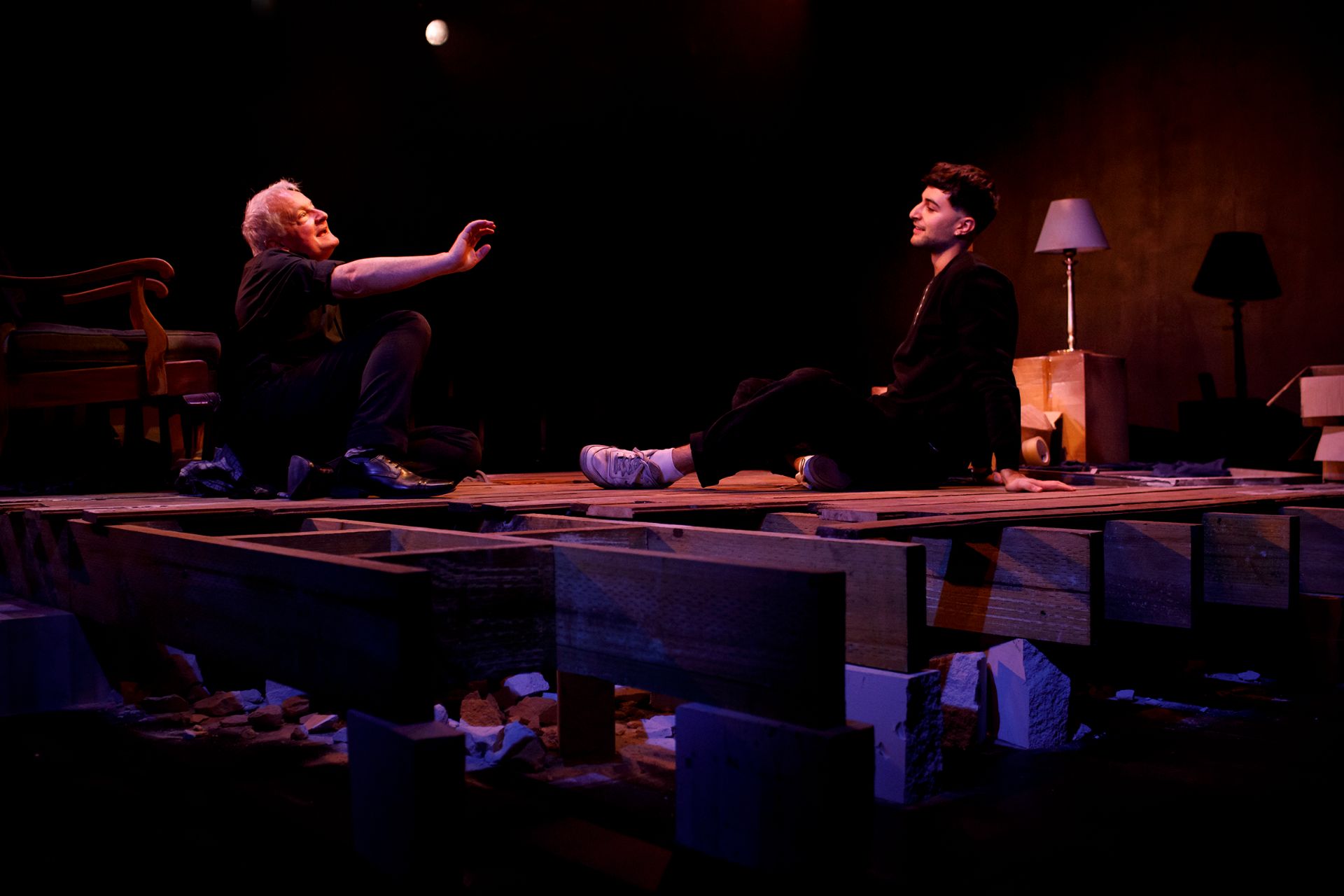
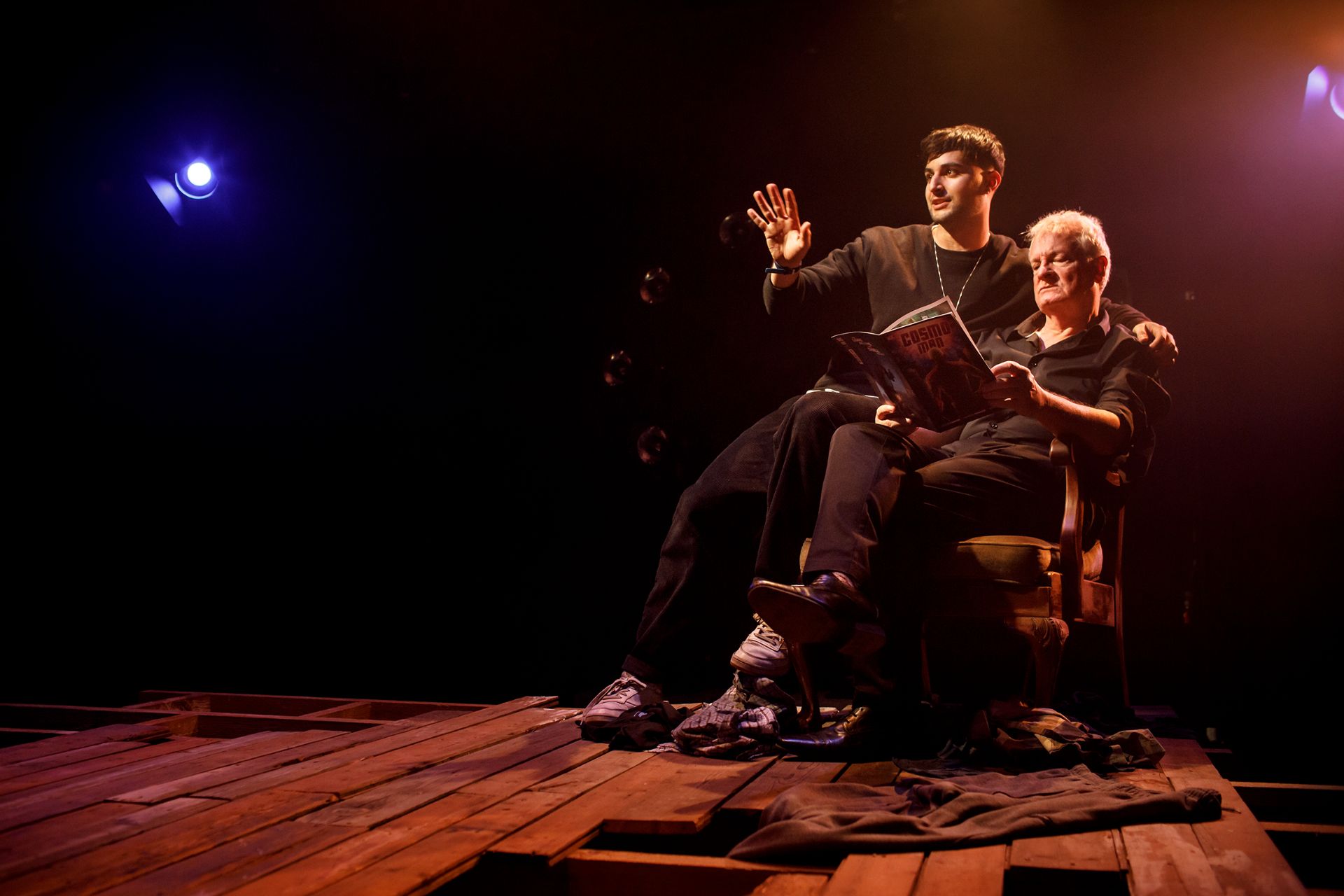
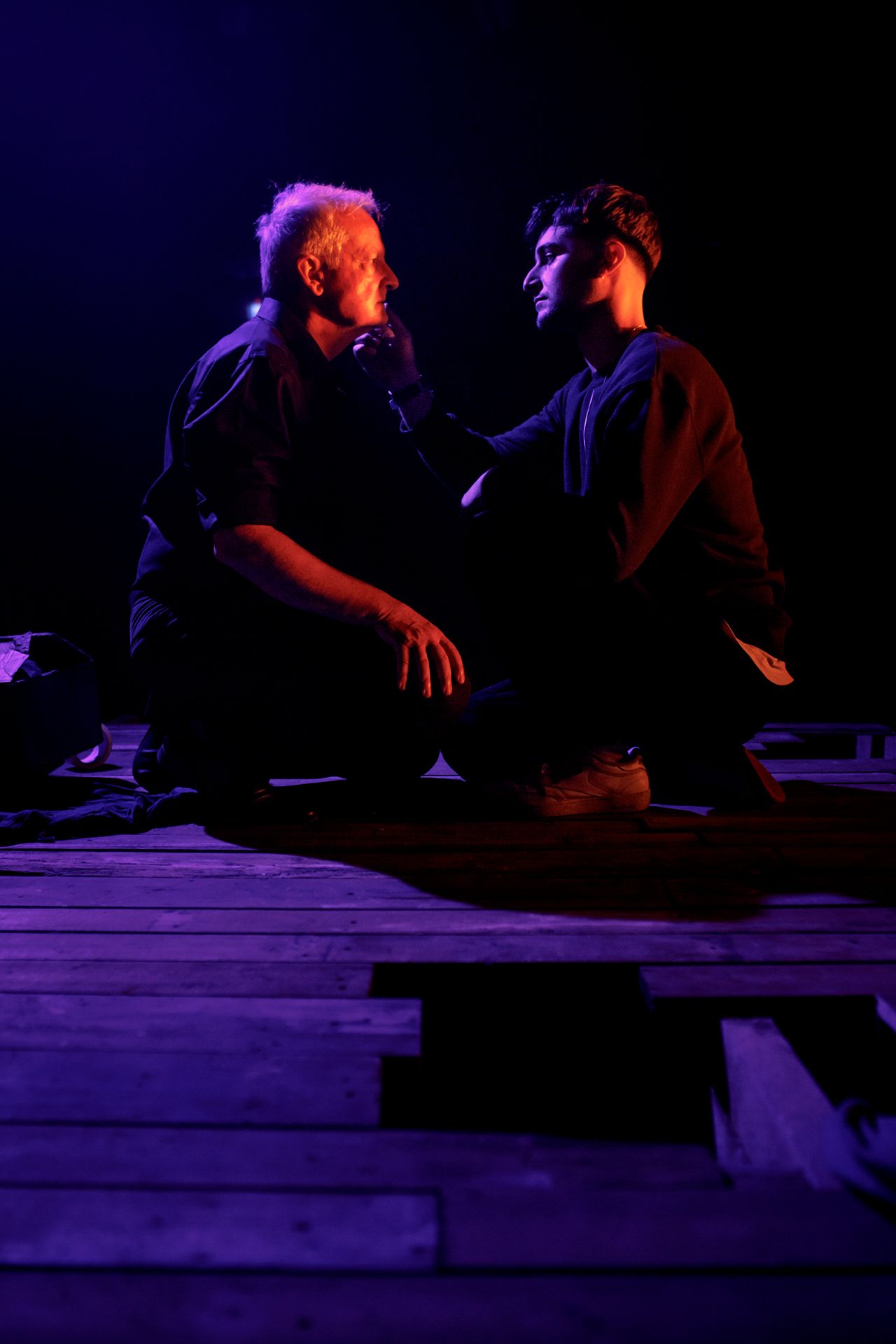
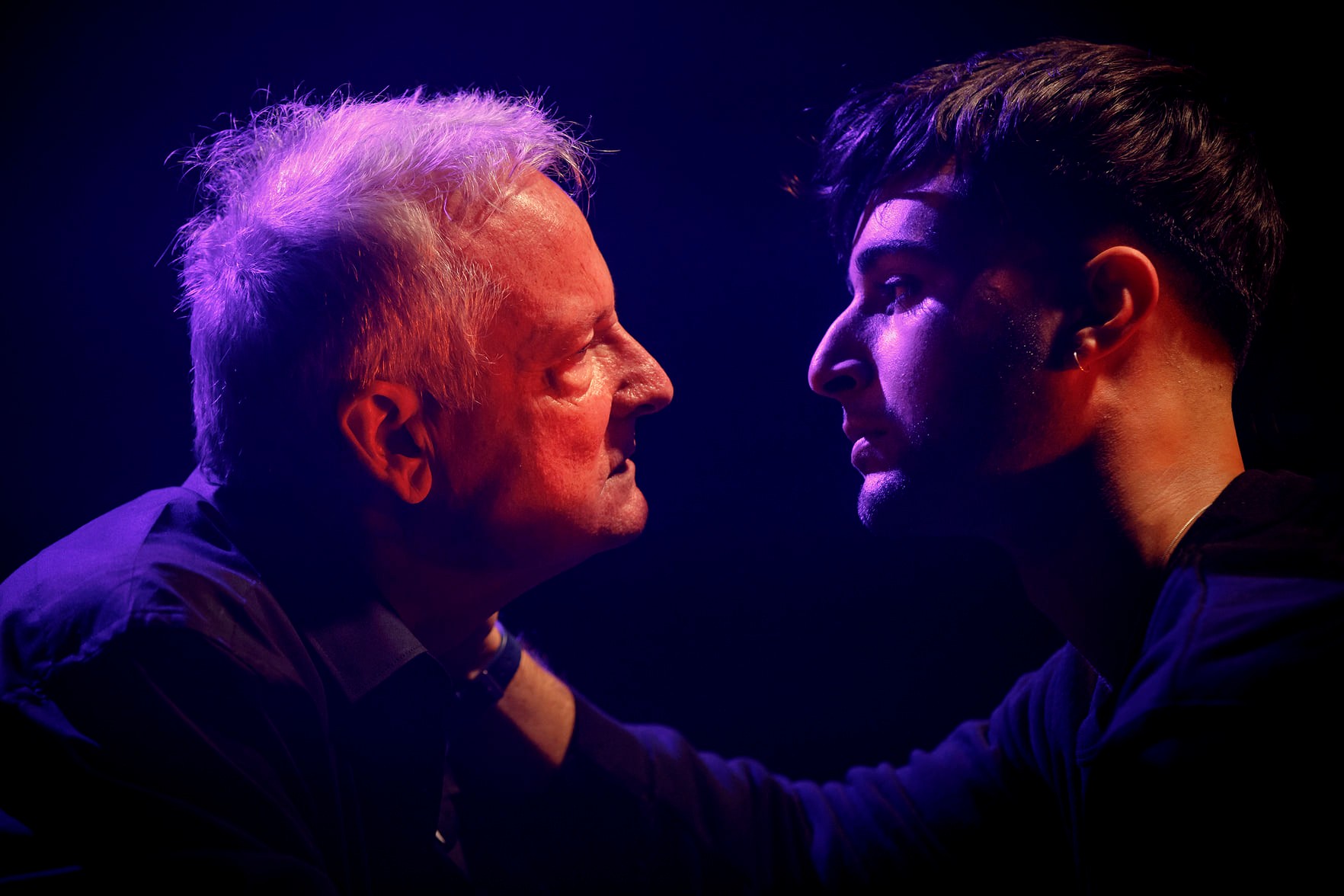
Even though Andrew and Chris are no longer lovers, their bond continues to be a strong and passionate one. In Jacob Parker’s Tell Me Before the Sun Explodes, we meet the couple at various points of their relationship, flashing back and forth in time, to observe how things change and how things stay the same. It is a portrait of rare intimacy, the kind of which any person would count themselves lucky to have experienced once in a lifetime.

Parker’s dialogue is witty and incisive, revealing an uncanny ability to observe the world with inordinate sensitivity. Director Hayden Tonazzi turns Parker’s words into 70 minutes of short, sharp scenes for which our minds race to put the pieces together, as our hearts feel the involuntary pull of Parker’s ephemerally meaningful musings on desire and death (a significant age gap exists between the characters).

The production feels poetic, with a pretty wistfulness that is quite charming in its delicacy. Soham Apte’s set design is an intriguing manifestation of what our emotions become, after years of wear and tear; it is ambitiously conceived, and accomplished with an admirable eye for detail. Lights by Ryan McDonald do the practical work of moving us through the linear and the circular dimensions of time, whilst keeping us connected to the heart of the story. Sound design by Chrysoulla Markoulli is stunning in its intricacy, and highly effective in guiding us through the complex and vacillating feelings that are being aroused.

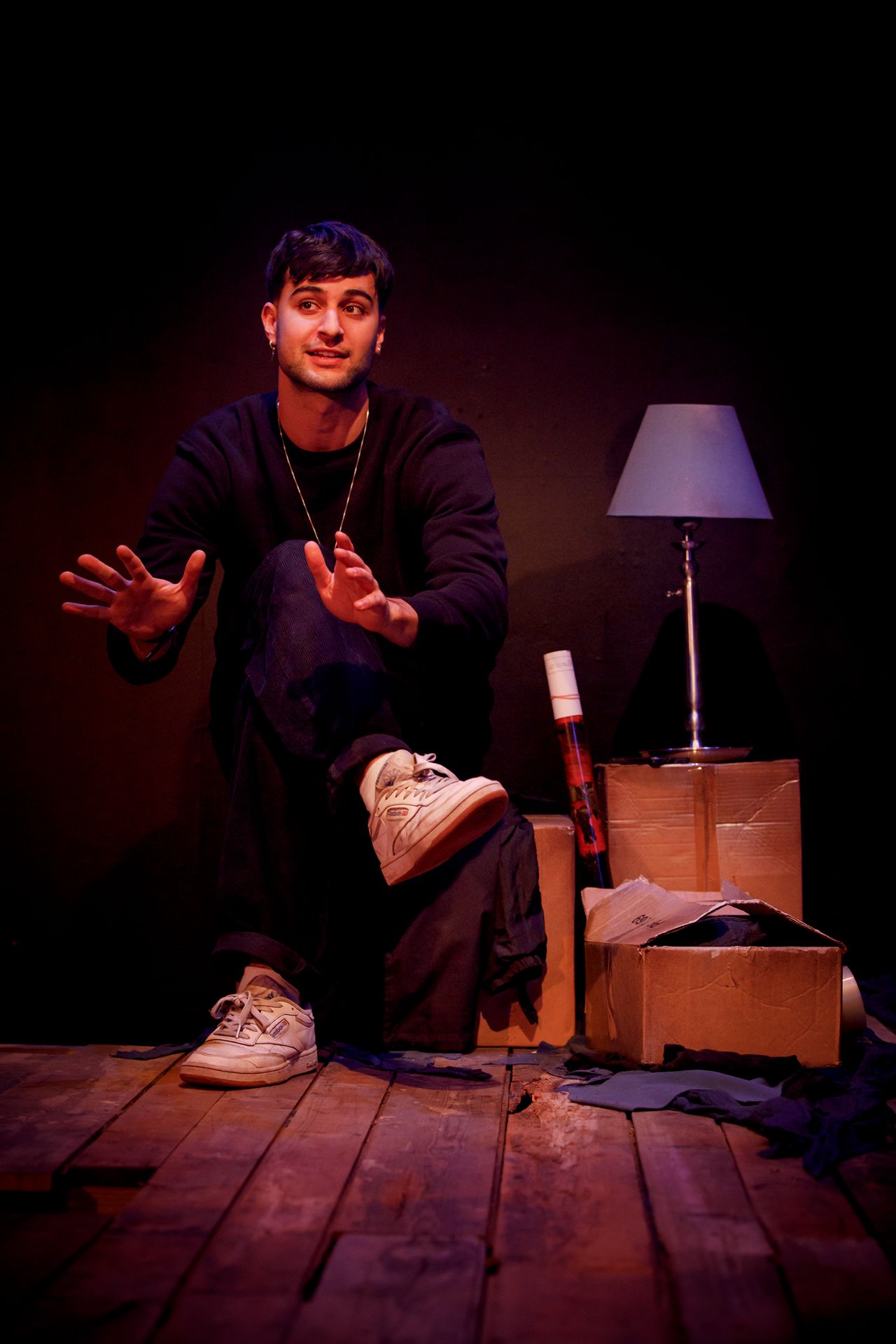
Actor Tim McGarry delivers exceptional technical proficiency in the role of Andrew, with a performance memorable for its precision, both in terms of design and of implementation. As Chris, Joshua Shediak impresses with his presence and his authentic impulses. There is a clarity to his depictions that allow us to understand instinctively, the many internal fluctuations he goes through, so quickly yet so convincingly.

The wonder of love is that it feels eternal. The truth of it though, is that its beauty is completely contingent on the fact that nothing is forever. It is in the knowing that an end will come, that love becomes so precious, and so overwhelming in its allure. The threat of its absence can be so palpably harrowing, that it makes us invest in it, so unfathomably immensely. We are also capable however, of taking people for granted, of forgetting that all our human connections hang by a thread. The union of Andrew and Chris starts, and it ends. That inevitable conclusion only makes their time together even more special.

www.rockbottomproductions.com.au

Review: Breathing Corpses (Eye Contact Theatre Company)

Venue: Kings Cross Theatre (Kings Cross NSW), Apr 8 – 23, 2022
Playwright: Laura Wade
Director:
Jess Davis
Cast: Nisrine Amine, Xavier Coy, Zelman Cressey-Gladwin, Mark Langham, Monica Sayers, Joshua Shediak, Emma Wright
Images by Becky Matthews

Theatre review
A hotel maid discovers a dead body, when she opens the door, to one of the rooms that require her daily attention. Several people die in English writer Laura Wade’s Breathing Corpses, and it is the macabre quality of those lingering presences, that gives the play’s three disparate stories, a sense of danger and tension. Like in real life, there is a certain evasion in attitudes pertaining to the unassailable fact of death, and an inability to look death in its eye, to deal with it honestly, that underscore everything that we see unfold.

Directed by Jess Davis, the production bears an intensity that sustains our engagement, from start to end. Although some of the playwright’s humour seems lost in the staging’s focus on high-stakes drama, the 90-minute journey is nonetheless an enjoyable one. Sam Cheng’s sound design is a noteworthy element, that effectively, and elegantly, amplifies the gravity of situations being explored. Production design by Kate Beere, along with Sophie Parker’s lights, are accomplished with notable restraint, both contributing to a chilly atmosphere, that is characteristic of this staging.
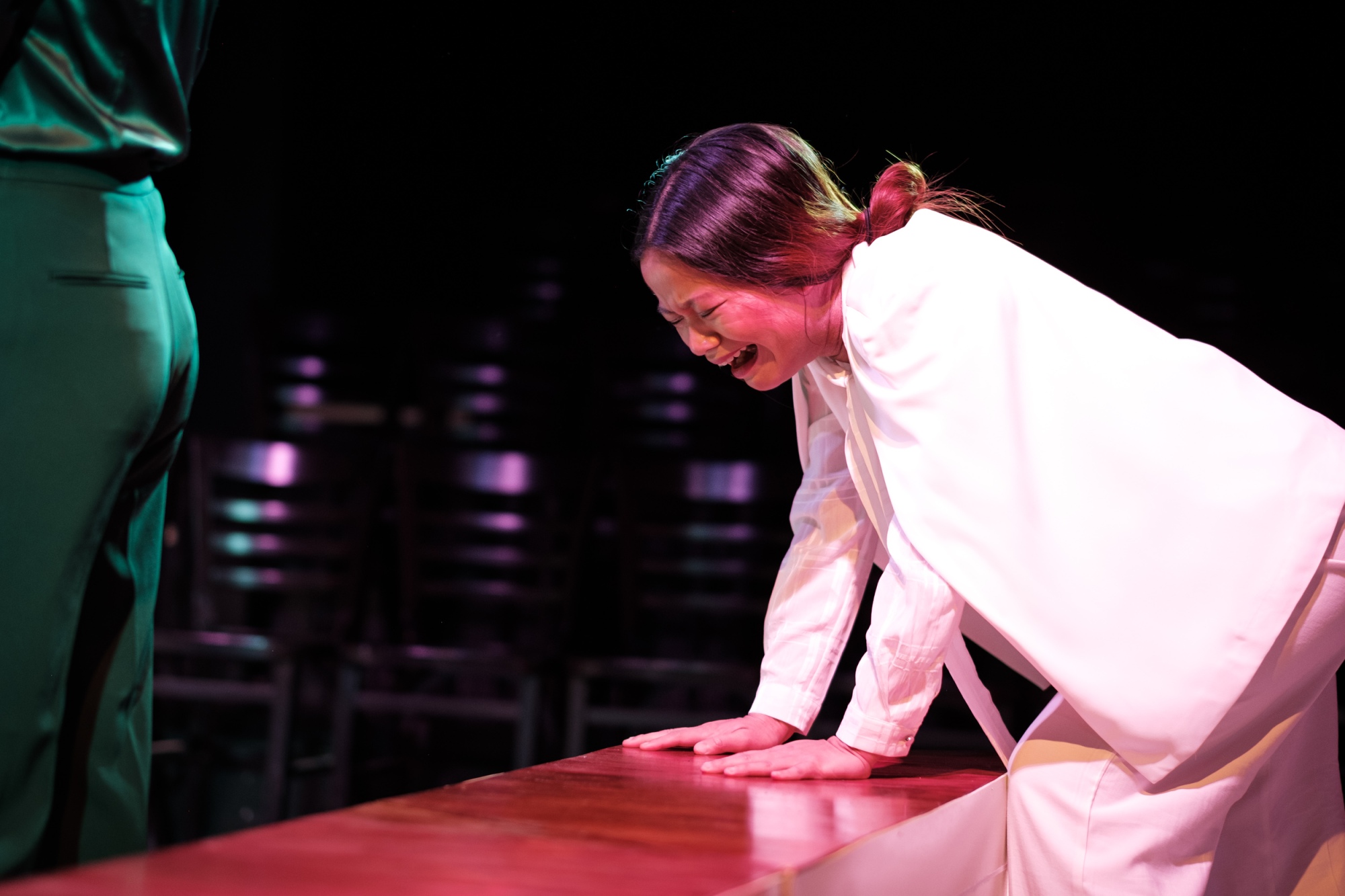
A well-rehearsed cast of seven, deliver strong performances that ensure our investment in all of their narratives. Emma Wright plays hotel maid Amy, with great concentration and sensitivity; she sets the tone beautifully for a contemplative experience. Nisrine Amin and Zelman Cressey-Gladwin are excellent as the abusive couple Kate and Ben, both actors powerful in their convincing depiction of a terrifyingly destructive relationship.

People go about their lives, as though death will never come. So much of what we do, depends upon the certainty of a tomorrow. It is so easy then to devalue the time that we do have today, and leave what really matters for imaginary futures. Today then is only ever comprised perennially of inferior interludes, rarely allowing life to reach their fullest potential. Appreciating death, is to let every second count, which also means that one can finally learn, to live in the moment.

https://www.facebook.com/eyecontacttheatreco/

Review: Pollon (Little Eggs Collective)

Venue: Kings Cross Theatre (Kings Cross NSW), Dec 14 – 18, 2021
Creator and Performer: Eliza Scott
Director and Dramaturg:
Craig Baldwin
Images by Yannick Jamey

Theatre review
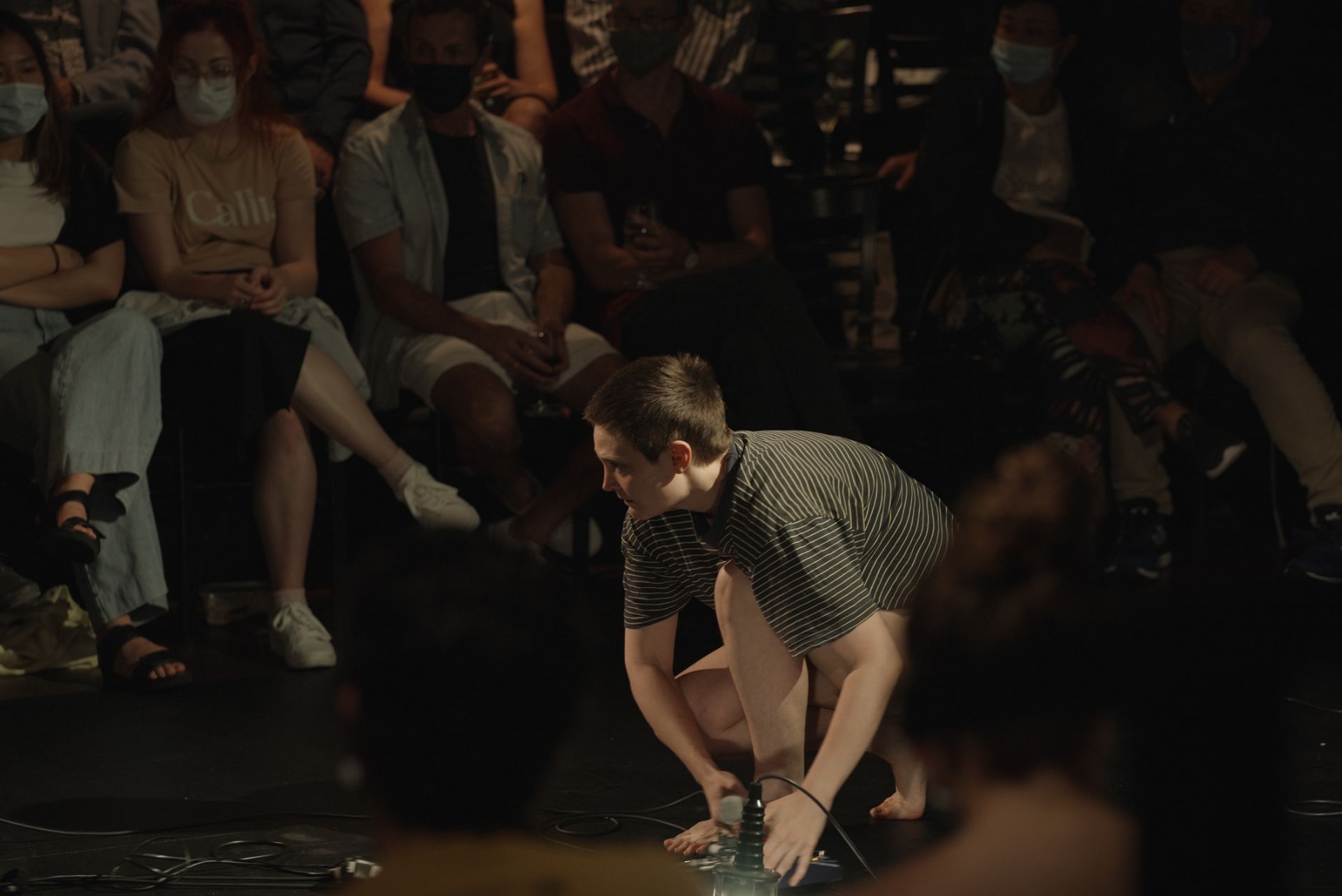
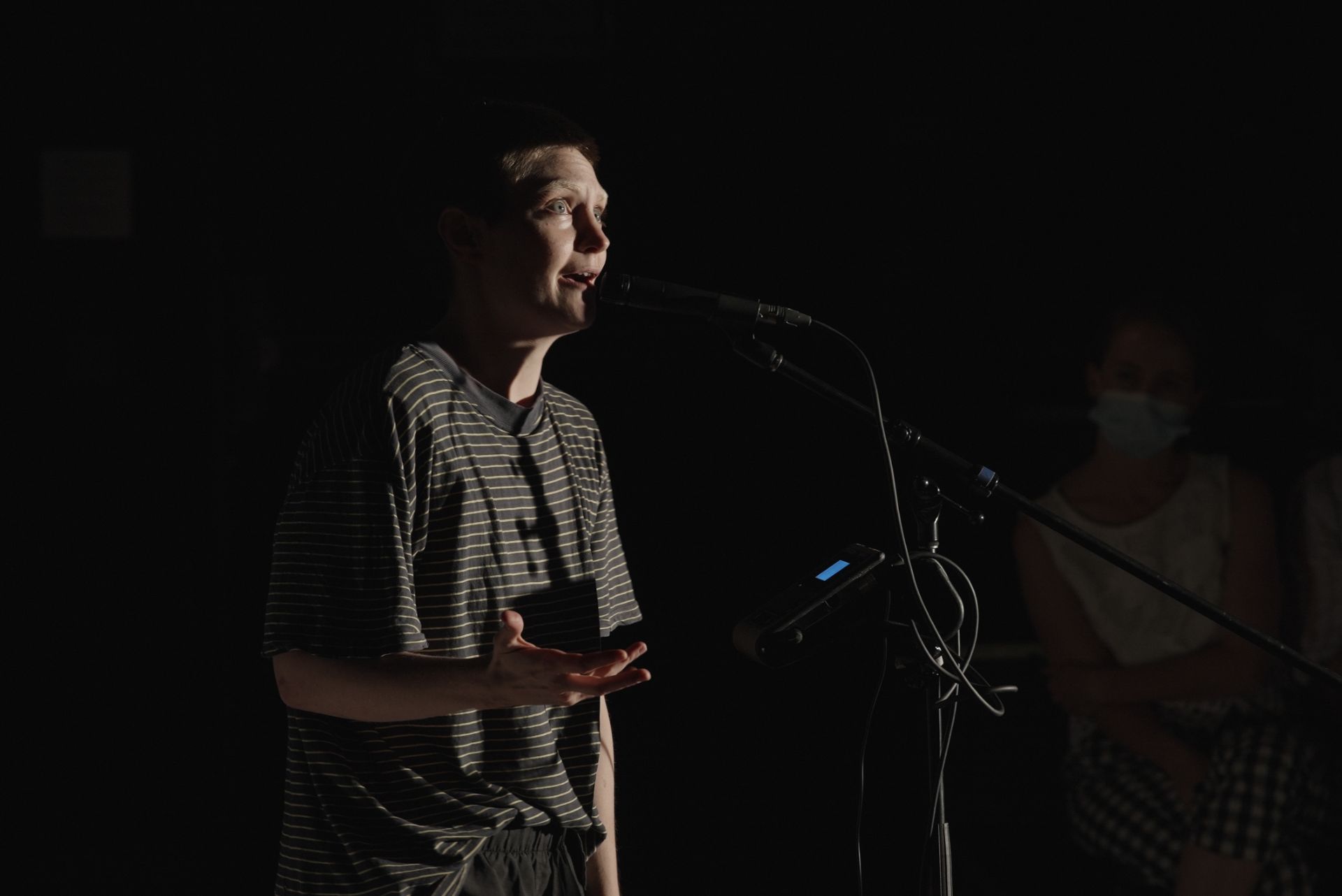
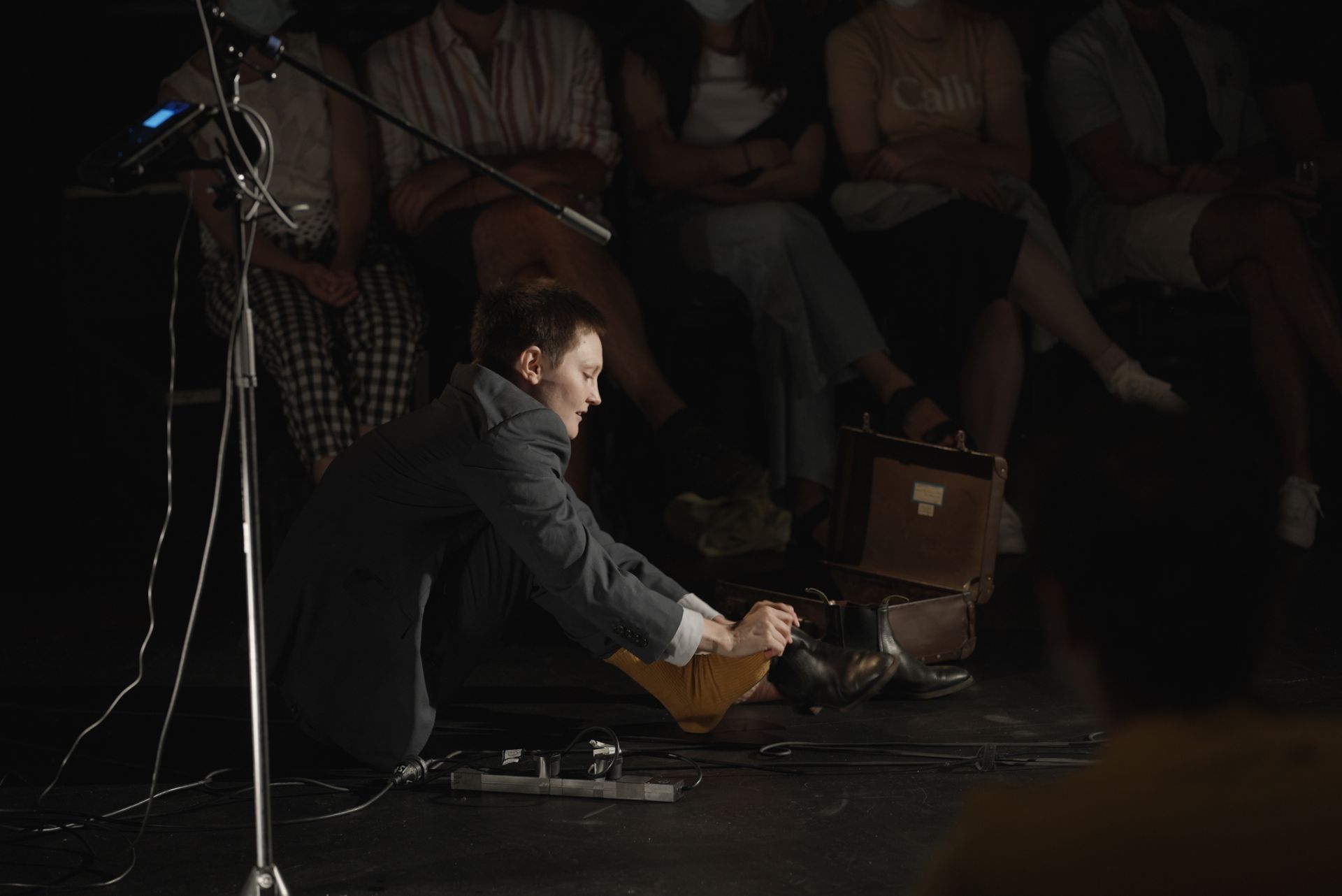
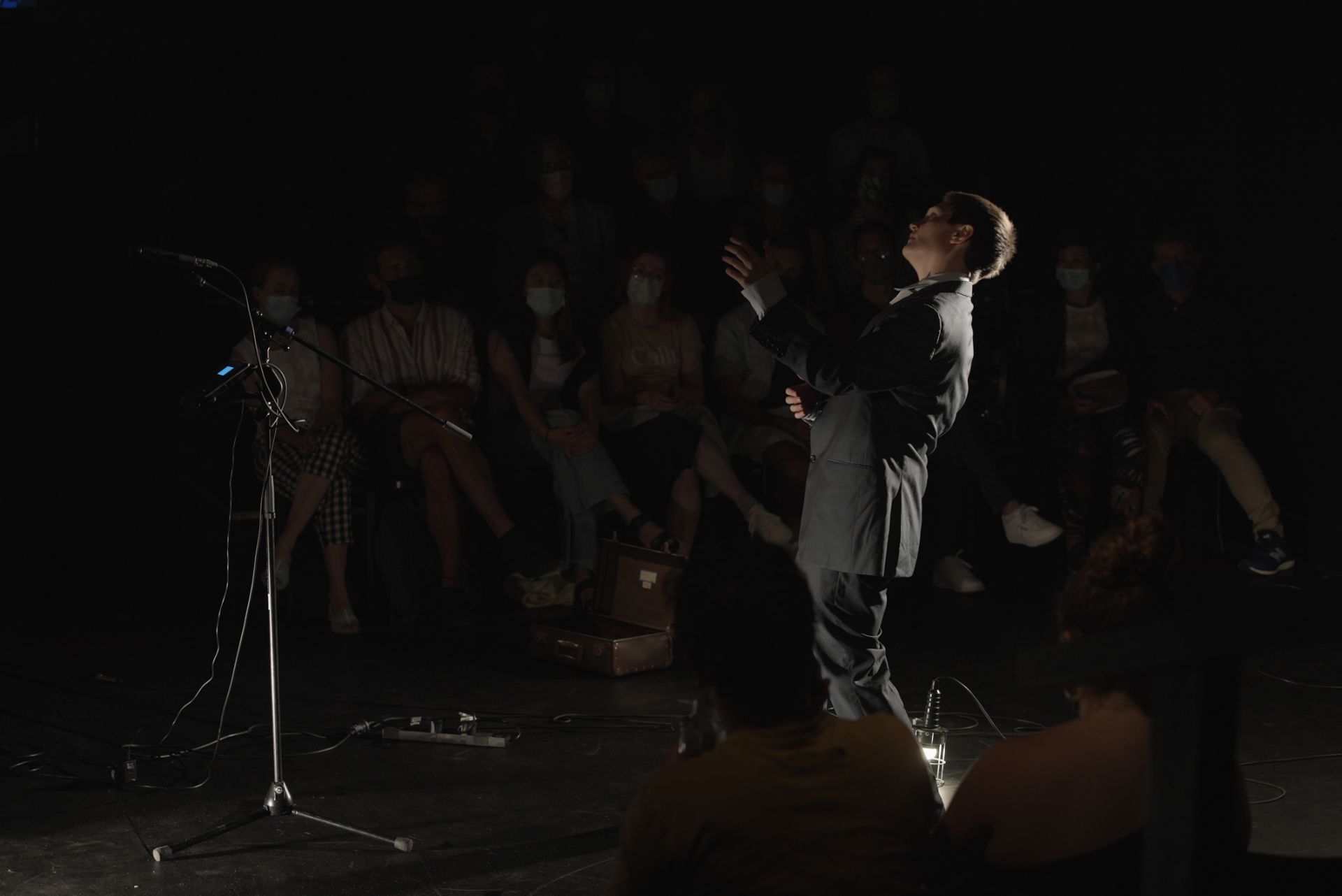
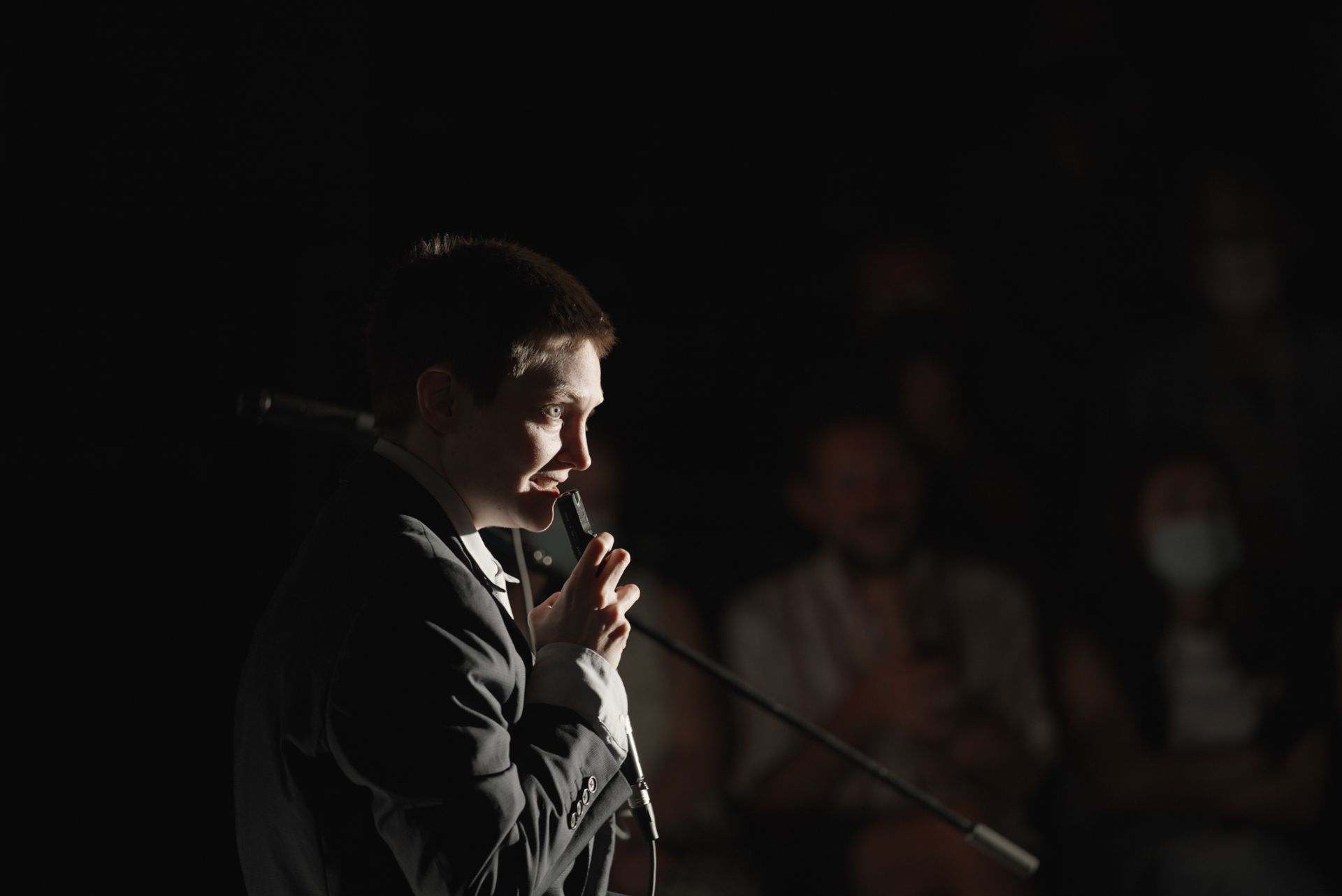
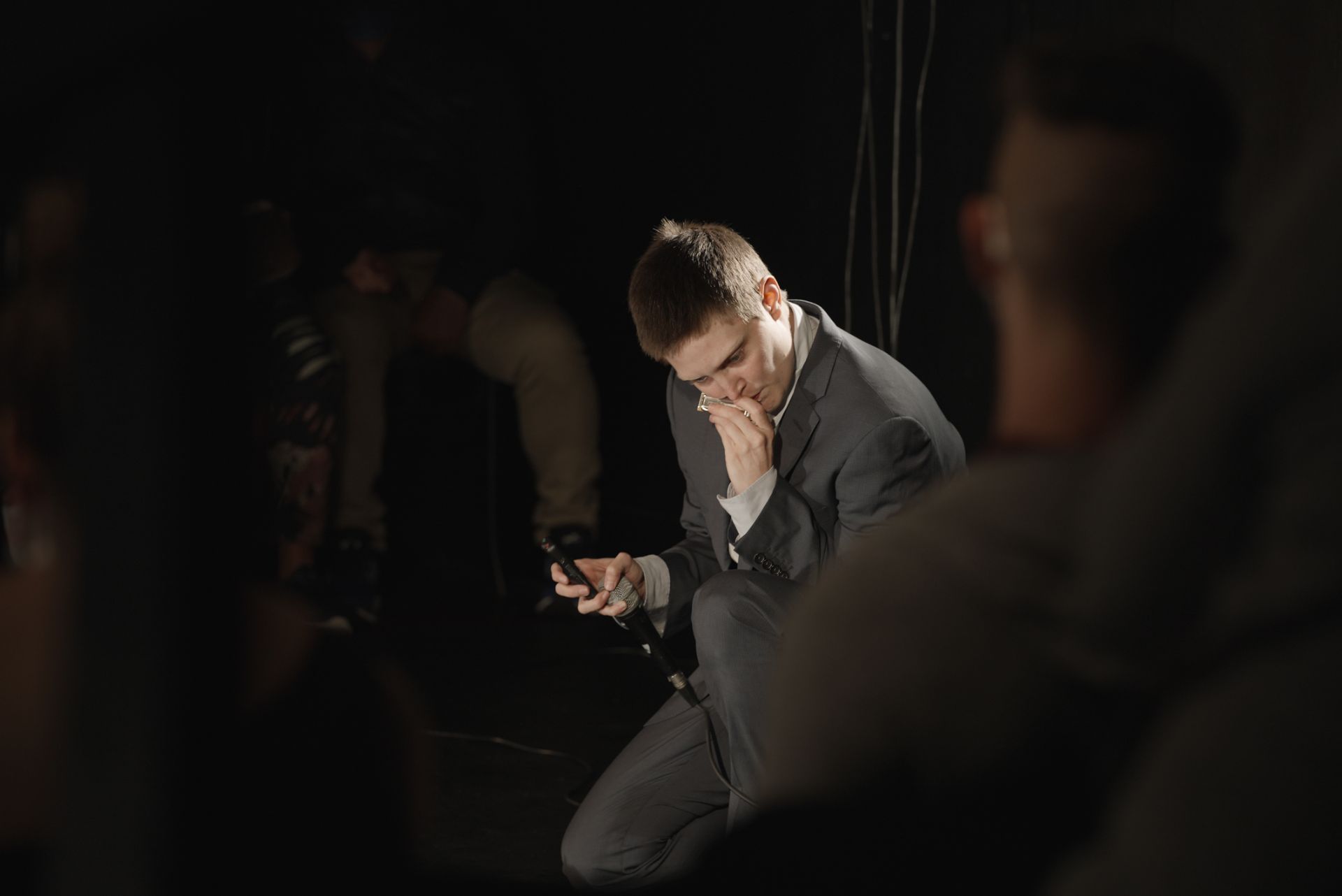
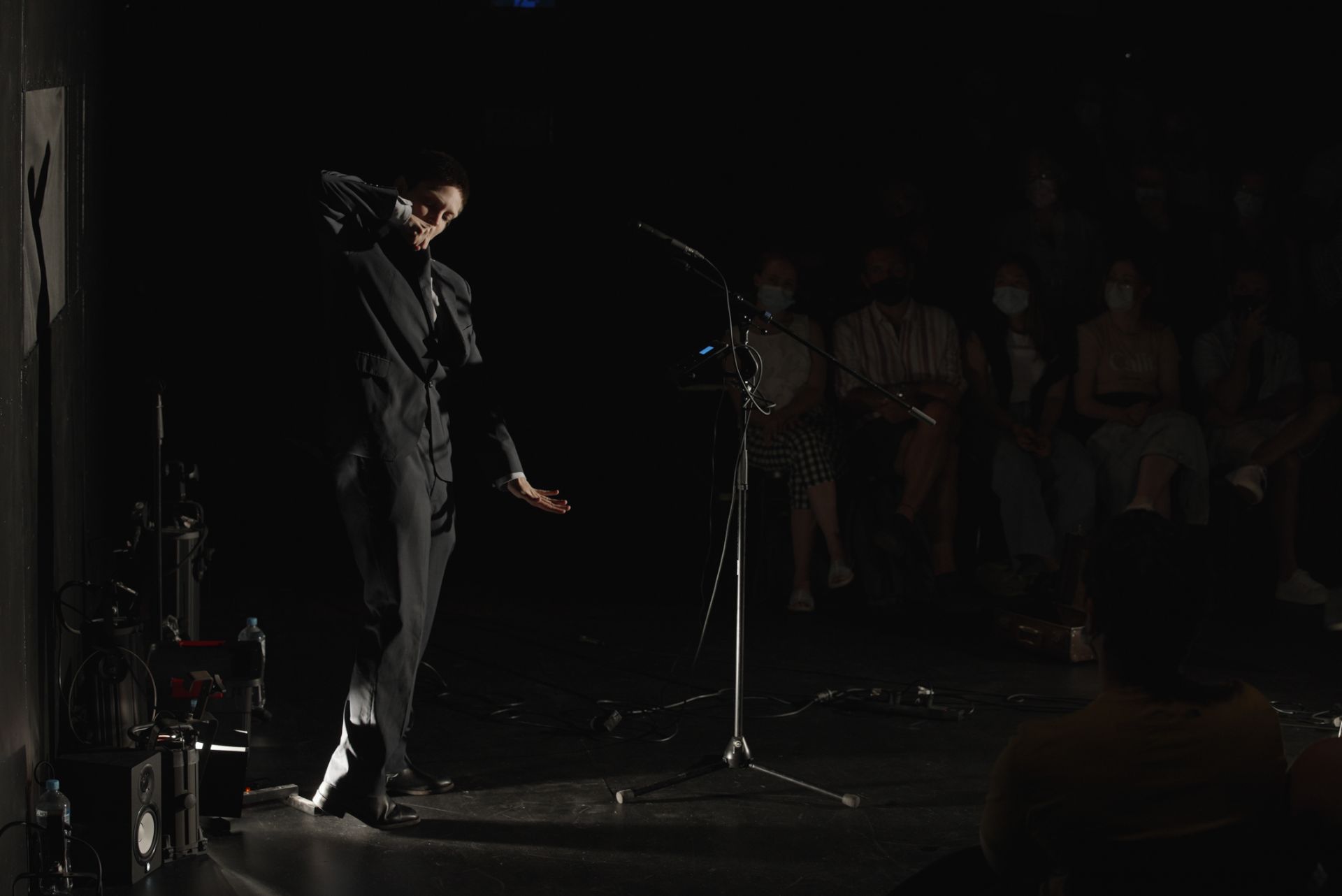
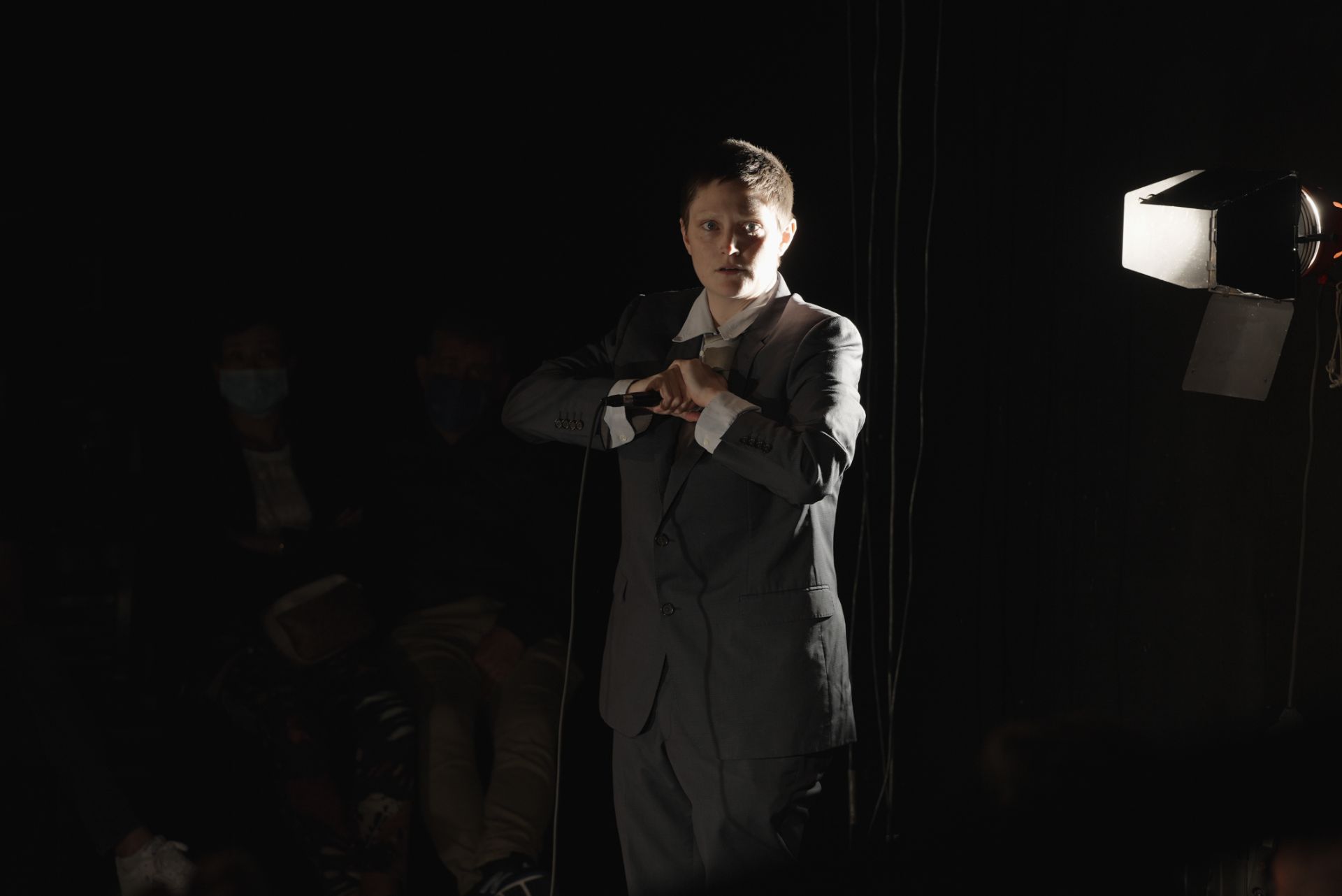
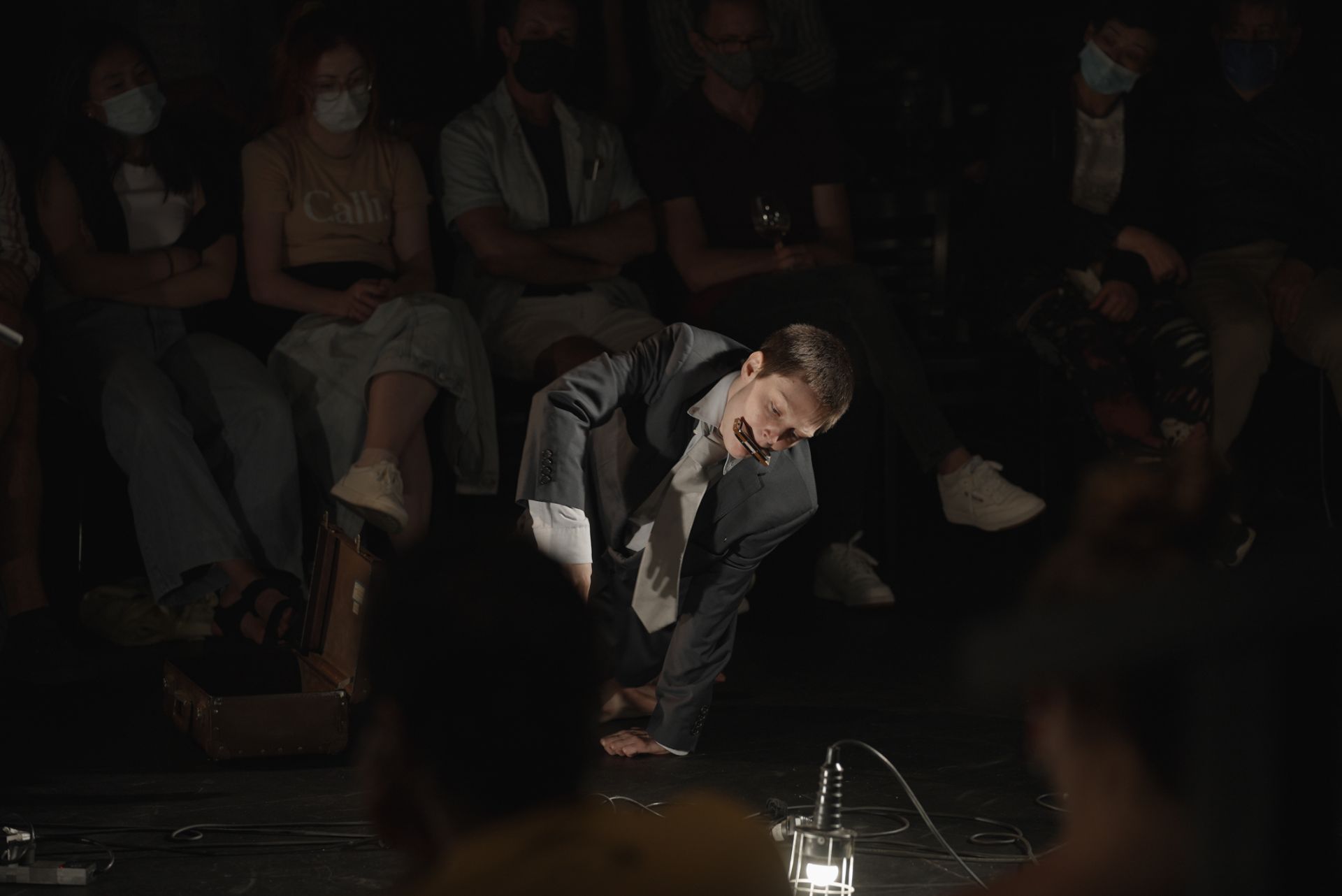
In Pollon, we witness Eliza Scott attempting to recreate the presence, of someone no longer present. An older man maybe Scott’s father, has fallen critically ill or perhaps died, and the artist, like all who are left behind, has to grapple with the nature of grief and of memory, in ways that are utterly personal. In Pollon, it is that process of mourning that reveals the things that we hold dear, that often do not come into true consciousness until too late.

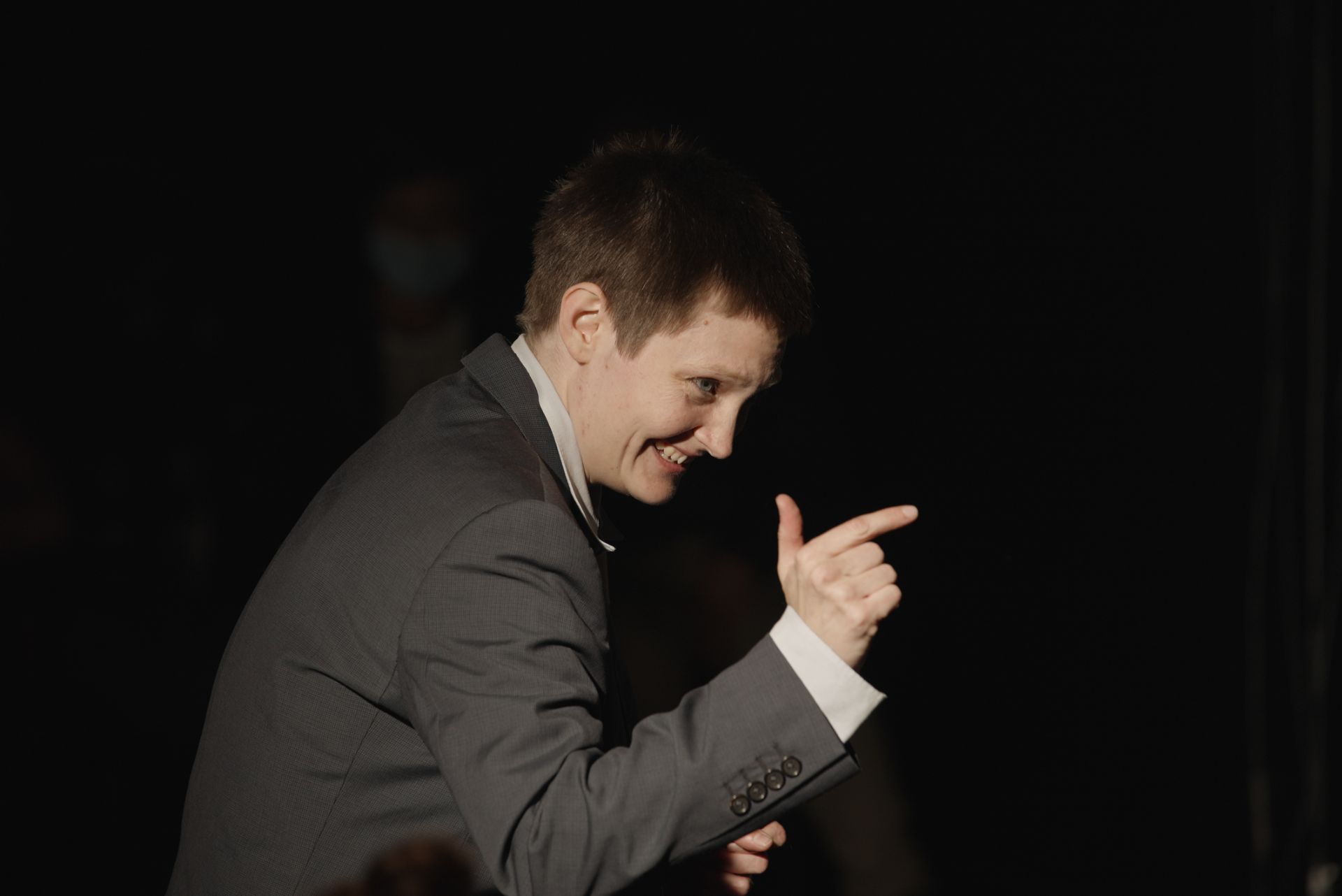
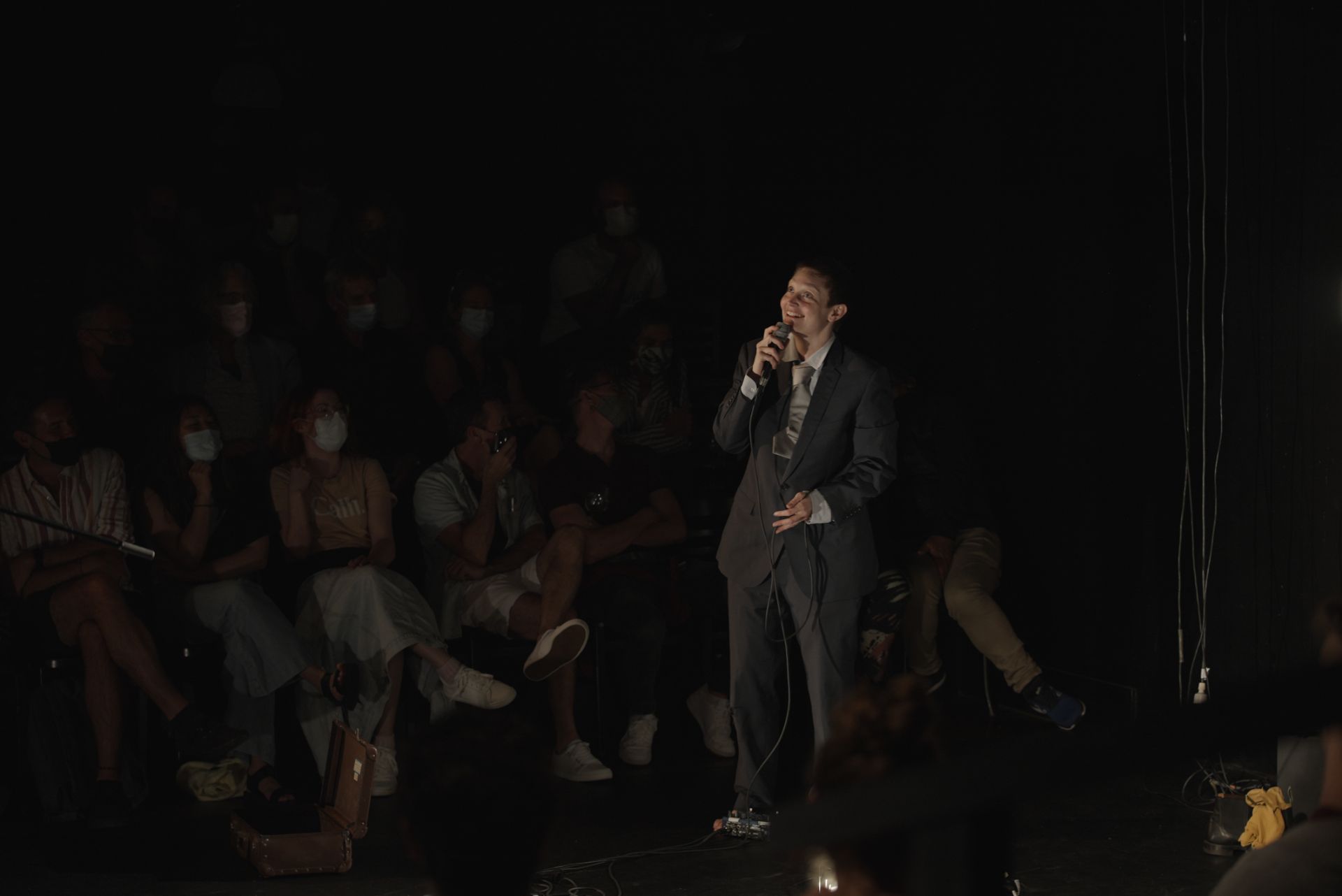
The memory of a lost love is retrieved, most notably in this staging, through the sense of sound. Scott’s reminiscences are based heavily on old utterances that might have been fleeting or indeed, repeated time and again. That search for yesterday’s intimate moments, are made material by the performer’s various constructions of sonic presentations. Utilising the simple combination of a microphone with two loop stations, impromptu “songs” are created to fascinating effect.

Directed by Craig Baldwin, visual aspects are even more pared back, with minimal costumes and light changes, on a set that looks almost perfunctory by design. The result however is commendably elegant, in its rendering of a kind of essentialist aesthetic. As performer, Scott is irresistibly charming, with an intense vulnerability that makes everything they serve up, seem captivating and important. For an abstract work about presence, Scott’s sheer star quality is a convincing ingredient, that keeps us completely at ease and attentive.

Nobody can remember the days before they were born, but to think that one’s existence on this plane, in the posthumous, might become equally imperceptible and intangible, is unbearable. If we do not wish to contend with the idea that we simply vanish into thin air, it must be true then, that humans are concerned with legacy. Yet, we do so little to ensure that what we leave behind, is good and fair. The remnants of a generation will always inform how subsequent lives will conceive of the world. One can only hope that all the bad that lingers, can somehow be transformed into something better.

www.littleeggscollective.com

Review: Three Fat Virgins Unassembled (Kings Cross Theatre)

Venue: Kings Cross Theatre (Kings Cross NSW), Nov 24 – Dec 4, 2021
Playwright: Ovidia Yu
Director: Tiffany Wong
Cast: Denise Chan, Sabrina Chan D’Angelo, Happy Feraren, Caroline George
Images by Clare Hawley

Theatre review
In Ovidia Yu’s 1992 play, characters are referred to as virgins, mostly because they have been stripped of their sexuality, conceptually de-sexed, in a Confucian society that sternly refuses individuals of their idiosyncratic potentialities. The stories of Three Fat Virgins Unassembled take place in Singapore where women, like those of the West, are divided into madonnas and whores, except in this Eastern colonial city, the notion of women being sexually permissive or simply sexually autonomous, is so unthinkable and preposterous, that they are almost always reduced and relegated to a singular celibate stereotype.

By inference therefore, Singaporean women can often be thought of as beings without agency. The same restrictions that curb sexual expression, are extended to all other aspects of identity. Socially, economically and politically, they can only ever place nation and family before self, becoming cogs in the machine that serve a larger purpose, with no space left for personal fulfilment. Deviations are stringently prohibited.

Yu calls these women fat, because their lives are bound to a certain mode of passivity, as a result of the tight limitations they face in virtually every moment of existence. They become versions of “ladies who lunch”, gorging on high tea and consumerism, always with their mouths stuffed with food that function not as nourishment, but as silencing devices. Like fetishistic “feeders”, Singapore systematically fattens up their women, so that they may lose agility, consequently unable to escape their master, and his instruments of oppression.

Directed by Tiffany Wong, this Sydney production preserves all the humour and poignancy of the 29 year-old original. Wong does wonderfully to bridge cultural and temporal distances, so that we may perceive the relative foreignness of a play that comes from another time and place, yet apply its ideas to contemporary Australian experiences. Also noteworthy is Esther Zhong’s costume designs, blending hard and soft aspects of femininity, for beautiful representations of modern Asian women. A set by Sarah Amin addresses effectively, the frequent scene transitions of Three Fat Virgins Unassembled, as well as providing tongue-in-cheek visual cues to the “exotic” nature of staging such a work in colonised Australia.

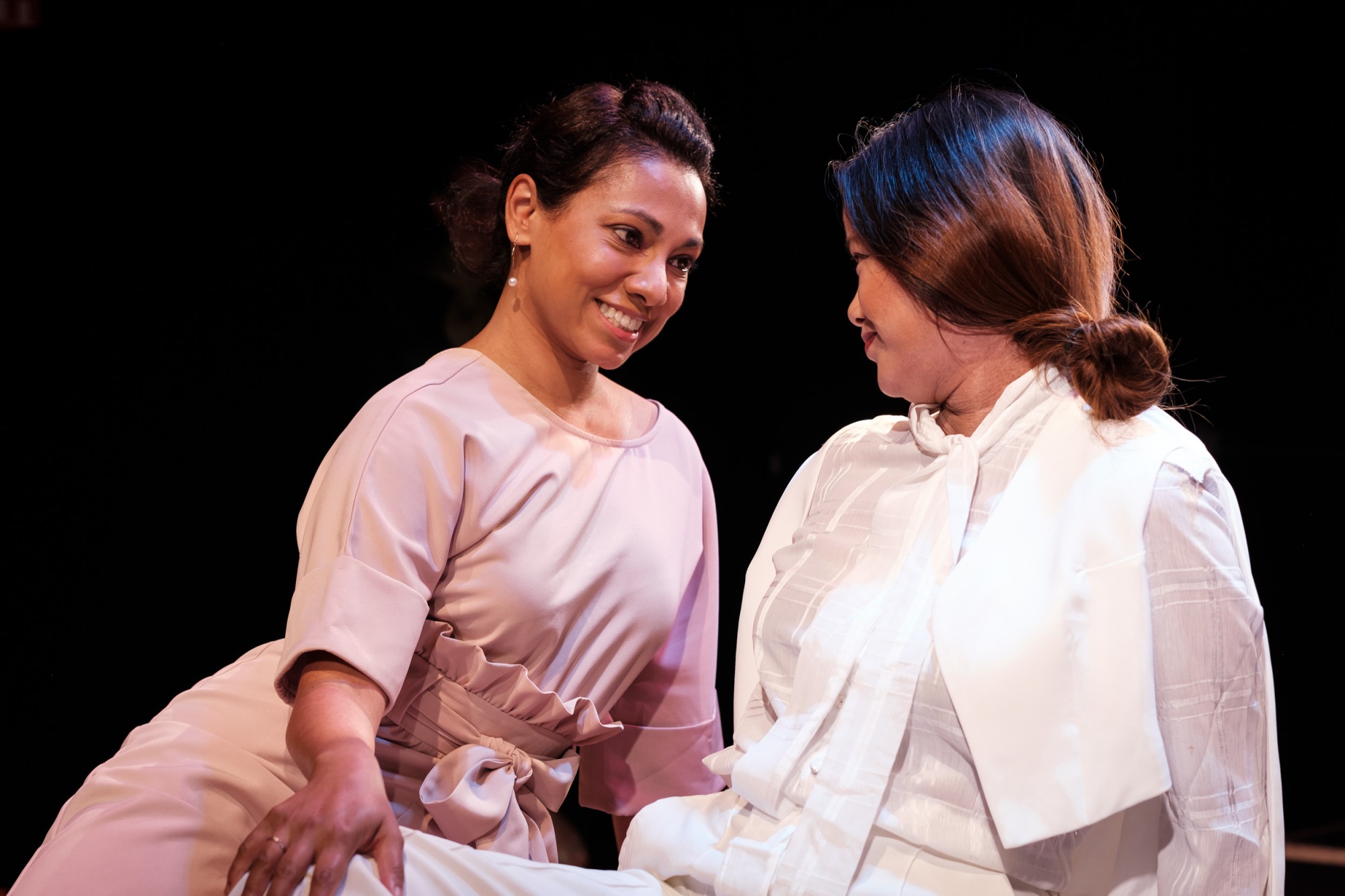
Four very committed and charismatic actors play these fat virgins, and their antagonists, with splendid aplomb.  Denise Chan, Sabrina Chan D’Angelo, Happy Feraren and Caroline George are all funny women, able to convey both comedic and tragic aspects of the storytelling. The gravity they bring to the stage, often with an undeniable sense of melancholy, emphasises the point being made, but the ubiquitous air of irony the team is able to harness, gives their show its subversive and very pleasurable theatricality.
Women everywhere, it seems, are all humans, united by a very particular form of oppression. So much of our lives exist in relation to patriarchies, that rob us of our agency, our desire, our sovereignty. Those patriarchies may on occasion appear to celebrate and elevate us, but what they are championing, are  invariably only qualities of their determination. Moreover in their endorsement of particular females, it is clear that their habit of picking one above the rest, is a reinforcement of their modus operandi; through which we learn that we will forever feel comparatively inadequate, and that we are to be divided and separated, if we are to be properly handled.

Singaporean patriarchy is always shrouded in a deceptive benevolence. It talks about duty, framing its impositions in familial and communal terms, whether wistfully or staunchly, and it will deny any attempt to redefine the status quo; the powerful will never concede. One hopes that three decades on, conditions would have improved since the initial conception of Three Fat Virgins Unassembled, but the work’s resonances remain, and everything still looks convincing, real and truthful.

www.slantedtheatre.com

Review: The Linden Solution (Kings Cross Theatre)

Venue: Kings Cross Theatre (Kings Cross NSW), May 26 – Jun 5, 2021
Playwright: Alexander Lee-Rekers
Director: Camilla Turnbull
Cast: Lib Campbell, Patrick Cullen, Laura Djanegara, Mason Phoumirath
Images by Clare Hawley

Theatre review
Hannah Marr is an ambitious local government staffer, in the fictitious Australian town of Linden. As residents prove themselves unwaveringly apathetic, worn down by decades of disappointment in rural politics, Hannah takes the opportunity to implement a host of initiatives, surreptitiously and perhaps not entirely by the book. Things seem to be working out according to plan, but as life begins to improve, white supremacist powermonger Aaron Boorman identifies in the amenable and acquiescent populace, an opportunity for his perilous narcissism to flourish.

The Linden Solution by Alexander Lee-Rekers is concerned with complacency, in the face of obvious and significant threats from nefarious forces. In this epoch of social media proliferation, with fascists always seeming to be at the ready to pounce, Lee-Rekers makes a strong argument for vigilance. The construction of his narrative however, is not entirely persuasive. The “slippery slope” scenario that he paints, does bear logic, but the story unfolds in a manner that feels exaggerated and abrupt. It is prudent to note that there is no denying its socio-political value, even if the work lacks an adequate sense of theatricality to instigate greater emotional investment.

Camilla Turnbull’s direction of the piece, although unvaried and overly naturalistic, conveys a gravity that is commensurate with the subject matter’s indubitable urgency. Set design by Tess Burg features a dominant but unnecessarily high platform that makes for inconvenient movement of performers, but lights by Sophie Pekblimli, along with Cameron Smith’s video projections, provide excellent texture to the imagery being depicted. Sound and music by Chrysoulla Markoulli are judiciously formulated, to help punctuate the experience with appropriate dramatic enhancements.

Actor Laura Djanegara impresses with her solid grasp of some very verbose text, but her Hannah is perhaps slightly deficient on vulnerability, thereby preventing the audience from connecting sufficiently with the story’s central character. Her friend and colleague Daniel Lemmey is played by Mason Phoumirath, who brings wonderful nuance and sensitivity to the show. The pair demonstrates good chemistry, prompting us to question the absence of dialogue about race between the two people of colour, in a play that attempts to provoke discussions about race in this country.

Patrick Cullen is very strong, and convincingly frightening, as the neo-Nazi antagonist, giving us the singular most spine-chilling moment towards the end of the show. Lib Campbell plays a range of whacky characters, all of whom are confidently rendered, and often genuinely funny.

There is something about The Linden Solution that is too black and white, in its analyses of right and wrong. It skates very close to making false equivalences between Hannah who tries to do good for her community, and Aaron who is only ever evil and destructive. We are made to look at the idea of democracy in absolute terms, when we know from lived experience and from history, that absolute democracy can itself deliver unfavourable results.
It is admittedly terrifying to dare think up alternatives to simple notions of democracy, but we have to be cautious of naivety and idealism, when dealing with situations that can be so immense in their complexity. There are times in the play when Hannah is being chastised, and it begins to feel as though we are urged to always play by the rules, even after the rules have failed us over and over again. Many minorities have learned, most notably from the work of poet Audre Lorde, that “the master’s tools will never dismantle the master’s house”. The challenge therefore, is to forge new systems, that aim to leave no one behind.

www.facebook.com/ratcatchtheatre

Review: Yellow Face (Dinosaurus Productions)

Venue: Kings Cross Theatre (Kings Cross NSW), Jan 23 – May 8, 2021
Playwright: David Henry Hwang
Director: Tasnim Hossain
Cast: Jonathan Chan, Helen Kim, Adam Marks, Kian Pitman, Whitney Richards, Idam Sondhi, Shan-Ree Tan
Images by

Theatre review
It is not such a strange move that a playwright should make themself the central character in their own work, but in David Henry Hwang’s Yellow Face, it is an obviously absurd conceit, that the Asian-American writer should commit the theatrical cardinal sin, of mistakenly casting a white man to play one of his Asian characters. Hilarity does ensue, perhaps unsurprisingly, in this quirky comedy, about race relations in America, and racial representation in the arts.

Much has changed in these political discussions, since the play’s original 2007 premiere, and some of its arguments can seem slightly dated, as do some of its humour, but the essence of what it wishes to impart, remains valuable. The current resurgence of anti-Asian sentiment, most notably in post-Trump USA, and in the middle of the Covid-19 pandemic, have brought back analysis and commentary around the concept of the “model minority”, which Hwang certainly embodies, being one of the biggest success stories of Asians who have made it on Broadway.

When people from marginalised cultures are given mainstream recognition for remarkable achievements, we are celebrated for having triumphed in spite of particular challenges. We also become intractably associated with those limitations, and unlike our white, straight, cisgender, non-disabled counterparts, we struggle to be perceived as whole persons, and as being more than the narrow identities ascribed upon us. Hwang laments that he too, has to play “yellow face”, that it is perhaps an inescapable fate to have to always be thought of, as the good Asian.

Yellow Face is a complicated work. It begins fairly innocuously with the farce surrounding an actor’s mistaken identity, but develops quite unexpectedly, with its core subject of prejudice, into deeper and more consequential spaces. The play is both fictional and autobiographical, with elements of both featuring prominently, although not always distinct, in the storytelling. The audience instinctively wishes to separate fact from fantasy, but we eventually realise that it is the moral of the story that matters.

The production is directed by Tasnim Hossain, who brings unmistakable passion to the project. Her sense of mischief, proves a good fit with Hwang’s sardonic voice, and the combination delivers for the stage, a confident wit that many will enjoy. Also noteworthy is Prema Yin’s sound design, able to manufacture subtle tonal shifts in atmosphere, to guide us through each scene, for emotional responses that may be conscious or subconscious. Visual elements are less inventive, but adequately implemented nonetheless.

Actor Shan-Ree Tan is extraordinary in the role of David Henry Hwang, comically pompous yet tragically self-deprecating in equal measure. It is a highly detailed rendering of both personality and narrative, with a steely focus that as leading man, keeps us attentive to all that is unfolding. Jonathan Chan is memorable as Hwang’s father Henry, a highly idiosyncratic character, very rough around the edges but ultimately an endearing figure.

The white guy masquerading as Asian, is played by a delightful Adam Marks, who brings wonderful vibrancy to the pivotal role of Marcus G. Dahlman. Equally charming are Whitney Richards and Idam Sondhi, ensemble players who leave excellent impressions with their remarkable versatility and dynamism. Helen Kim and Kian Pitman are more restrained in their approach, and although not as powerful as a result, both performers are unquestionably committed and very well rehearsed.

What the idea of a “model minority” implies, is that there are minorities whose presences are less than ideal. We are judged with more severity than any other citizen, and have to live by standards higher than others are subjected to. Hwang does not wish to bear the burden of being a famous writer from an Asian background, but is unsure if it will ever be possible for him to simply be a famous writer. There is a resentment in having to overcome challenges that are unique to being Asian-American, but concurrently, there is also a sense of pride that must accompany the ability to surmount those difficulties, unjust as they may be.

Today we seem to be more aware of difference, than we ever did before. For some, identity politics is bothersome, but for others it is liberating and empowering. We can no longer be complacent, and assume that all individuals experience the world in the same way. As we endeavour to improve lives, it is important that we understand deeply, the nature of our communities, with all their nuances and divergences. Above all, we need to find ways to manifest into reality, the old adage that although we are all different, we are all equal.

www.facebook.com/DinosaurusProd

Review: Dead Skin (White Box Theatre)

Venue: Kings Cross Theatre (Kings Cross NSW), Apr 2 – 17, 2021
Playwright: Laneikka Denne
Director: Kim Hardwick
Cast: Ruby Maishman, Sarah Jane Kelly, Abe Mitchell, Laneikka Denne, Camila Ponti-Alvarez
Images by Jasmin Simmons

Theatre review
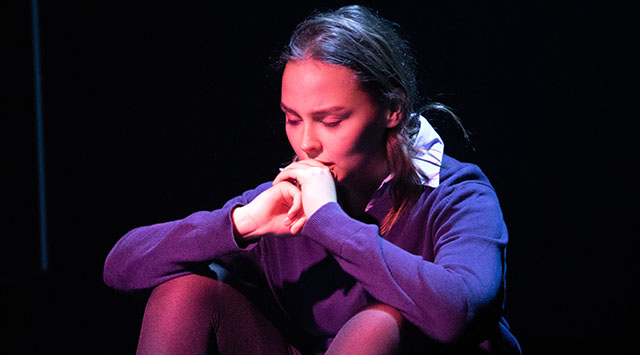
When high schooler Andie falls in love, it is not only her new girlfriend Maggie who occupies her mind. Visions of her mother Andrea come flooding relentlessly in. Laneikka Denne’s Dead Skin talks about teenage love, in tandem with the complications of a girl coming of age, without the presence of her mother. Young Andie needs to know what it is to become a woman, and in that transitionary process, the urge to understand a mother she never knew, becomes irresistible.

Much of the story is about the things we suppress, in order that we may survive, and the breaking points that occur, to open the gates for the confrontation of truth. As a child, Andie never received satisfactory information about Andrea’s disappearance, only knowing that life has to go on, imperfect as it may be. Things change however, when she is no longer able to experience the world as a child, and the truth of a woman’s being, must come to the fore.

Denne’s ideas are expressed meaningfully in her piece. Abstract concepts are juxtaposed comfortably against naturalistic scenes, using the theatrical form cleverly to explore curious facets of human psychology. The fragmented nature of the writing’s structure however, has a tendency to work against the audience’s capacity to sufficiently invest in its characters. Dialogue for Dead Skin whilst charming in its authentic representation of contemporary youth culture, can expose a superficiality in its efforts to capture painful aspects of emotional growth.

As performer, Denne is intense in the role of Andie. Very believable, if slightly monotonous, in her depiction of the awkward teenager; we never question the authentic voice she brings to the stage. Her new love is played by Ruby Maishman, charismatic and confident as the comical Maggie. Camila Ponti-Alvarez leaves a strong impression as Audrey, an unlikely maternal figure, especially captivating in moments of heightened drama. Sarah Jane Kelly and Abe Mitchell are mother Andrea and father Harry, respectively, both demonstrating excellent commitment, for somewhat perfunctorily conceived personalities.

Production design by Angus Consti offers clean lines on a very black stage, to denote a space that is about accuracy in the mind, rather than somewhere more tangibly material. Lights by Martin Kinnane provide much needed variation to atmosphere, but Chrysoulla Markoulli’s near constant drone for sound design, proves challenging.

Much of the show, directed by Kim Hardwick, feels like a dream state. We fluctuate between different levels of lucidity, with resonances that hit and miss. Dead Skin ebbs and flows, more interested in its own discoveries, than in driving home a point. Let artists do their art, and be grateful in our participation from the perimeters, as we observe and glean what we can. Together at the theatre, let us delight in curiosity, and hold each other safe, in an inevitable evolution of our species, whichever direction it may take us.

www.whiteboxtheatre.com.au

Review: You’re Not Special (Rogue Projects)

Venue: Kings Cross Theatre (Kings Cross NSW), Mar 5 – 20, 2021
Playwright: Sam O’Sullivan
Director: Samantha Young
Cast: Arkia Ashraf, Kate Skinner, Ariadne Sgouros
Images by Kate Williams and Australian Theatre Live

Theatre review
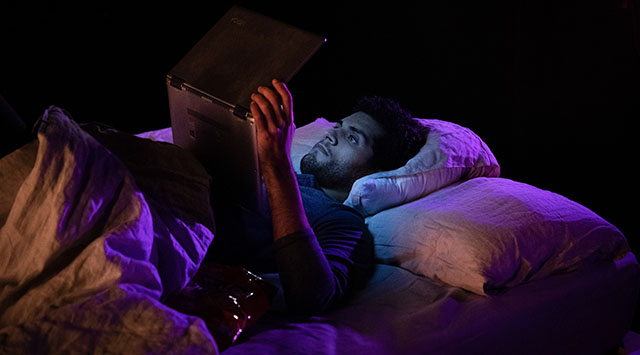
Dan and Ellie are moving in together, as is the convention when humans decide to couple up. They expect to become closer as a matter of course, but like many others, these new living arrangements begin to test their mettle. You’re Not Special by Sam O’Sullivan is thankfully, not another rom-com on the humorous pitfalls of heteronormativity, but an intensely thought-provoking work about the tensions between organic and synthetic, in our age of unprecedented technological advancement. Characters in the play are caught up in their virtual lives on all their electronic devices, and at varying degrees, struggle to negotiate the nature of reality as it stands in the twenty-first century.

O’Sullivan’s writing is wonderfully engaging, with an intellectual curiosity that sustains our keen interest. There is a passion in the way its ideas are disseminated, that gives You’re Not Special a delicious sense of urgency, even though what it wishes to effect can feel somewhat didactic. Director Samantha Young does a splendid job of bringing to life, these concepts of right and wrong, in scenes featuring dramatic confrontations that always feel authentic and powerful. The show is very persuasive.

Arkia Ashraf’s uncompromising naturalism in his approach to the depiction of central character Dan, conveys a valuable quality of the everyman, one that invites the viewer to relate his story to each of our own lives. It is a solid, heavily introspective performance, that benefits tremendously from the intimacy of the space. Ellie is played by an exquisite Kate Skinner, scintillating in moments of vigour, and genuinely delightful when delivering comedy. In the enigmatic and pivotal role of April, is Ariadne Sgouros, who demonstrates excellent capacity for complexity. She revels in the many layers offered by the unusual personality, and challenges us to bring interpretations that are as expansive as the work she presents.

Design aspects are comparatively low-key, although appropriately so. Set and costumes by Anna Gardiner evoke a familiarity that helps us place the action at close psychological proximity. Martin Kinnane’s lights contribute a sense of dynamism to the narrative’s unfolding turmoil, and Kaitlyn Crocker’s sound design is memorable for surprising touches that hint at the surreal.

You’re Not Special asks important questions, but is perhaps too strident in its need to provide answers. Its default position of honouring an imagined point of human origin, and of what is traditionally thought of as “natural”, puts restrictions on the efficacy of its own artistic possibilities. The discussion of humanity and technology, when framed strictly as a duelling dichotomy, can feel mundane and old-fashioned. Technology can be thought of as essentially human, and at this point of our evolution, one could argue that a more futurist appreciation of lifestyles could be beneficial.

Quite certainly, truths often reside in all factions of our debates, and to participate in society, should not require that we must take sides on all issues, all the time. In 2021, it seems we have been conditioned to be irrepressibly opinionated over every matter. Maybe to remain impartial on some things, especially when the ethics involved are not cut-and-dried, means to keep an open mind.

www.rogueprojects.com.au

Review: Symphonie Fantastique (Little Eggs Collective)

Venue: Kings Cross Theatre (Kings Cross NSW), Feb 17 – 27, 2021
Director: Mathew Lee
Cast: Lloyd Allison-Young, Alex Beauman, Cassie Hamilton, Clare Hennessy, Annie Stafford, Nicole Pingon, Chemon Theys, LJ Wilson
Images by Patrick Boland, Julia Robertson

Theatre review
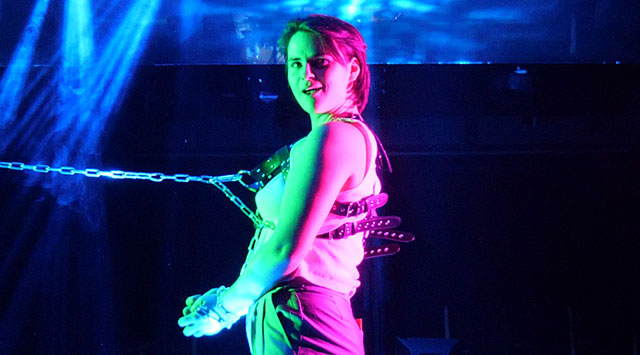
In 1830, French composer Hector Berlioz created Fantastical Symphony: Episode in the Life of an Artist… in Five Sections, a work from the Romantic period that is now considered seminal in what is known to be the Program music genre. The piece involves obsessive love and morbid fantasies, which the Little Eggs Collective, under the direction of Mathew Lee, extracts to use as central themes in their 45-minute theatrical presentation, named Symphonie Fantastique after the original French. Examined through contemporary eyes, Berlioz is less romantic, and a lot more rapey.

Transformed into a genderless protagonist, the reimagined maestro is frustrated, cowardly, out of control. Grandiose and insufferable, their story is reminiscent of Fellini’s , in which we see an artistic genius trapped inside their own paranoia-filled process, filtering everything they encounter into a self-serving narrative, as though the world has been created in their own image. The play Symphonie Fantastique is virtually wordless, with deconstructed interpretations of Berlioz’s music (by Oliver Shermacher’s inventive and inspired musical direction) forming a foundation, on which the show is built.

The ensemble of eight are called on to dance, act, sing and even to play musical instruments, for a multidisciplinary exploration of the performing arts, that audiences will find captivating, at least on sensorial levels. Director Lee has a tendency to be overly literal with his storytelling, but the unfettered impulse to surprise, makes for an enjoyable experience. Performer LJ Wilson offers a strong portrayal of the lead character; not always detailed with emotions being conveyed, but certainly a magnetic presence. As a team, the eight are tightly rehearsed, and extraordinarily cohesive with the constantly undulating energies they bring to the stage.

Visual concepts are ambitiously concocted, and manufactured, for this Symphonie Fantastique. Costumes, hair and makeup by Aleisa Jelbart are marvellously assembled, with an impressive eye for sophistication and finish. Lighting and set designer Benjamin Brockman’s combination of mirrored surfaces and bold colours, insist on firing up our synapses, for unforgettably transcendent moments that are nothing less than electric.

There is a considerable amount of gender bending in this iteration of Symphonie Fantastique, and if the dissolution of gender parameters is essential in approaching, or perhaps advancing, a feminist theatre, then this production is on the right path. There are conundrums, of course, as is the case whenever we attempt to address problems of a sexual nature, whilst working simultaneously to dismantle old frames of thought. We want to bring justice to victims, yet we wish to deny hierarchical power structures their persistence. Feminism is the key to a future where no one is powerless, but it also presents the greatest challenge, for us to understand our world, without tops and bottoms.

www.littleeggscollective.com