Review: Arlington (Seymour Centre)

Venue: Seymour Centre, Reginald Theatre (Chippendale NSW), Aug 2 – 24, 2024
Playwright: Enda Walsh
Director: Anna Houston
Cast: Phaedra Nicolaidis, Jack Angwin, Georgina Symes, Emma Harrison
Images by Phil Erbacher

Theatre review
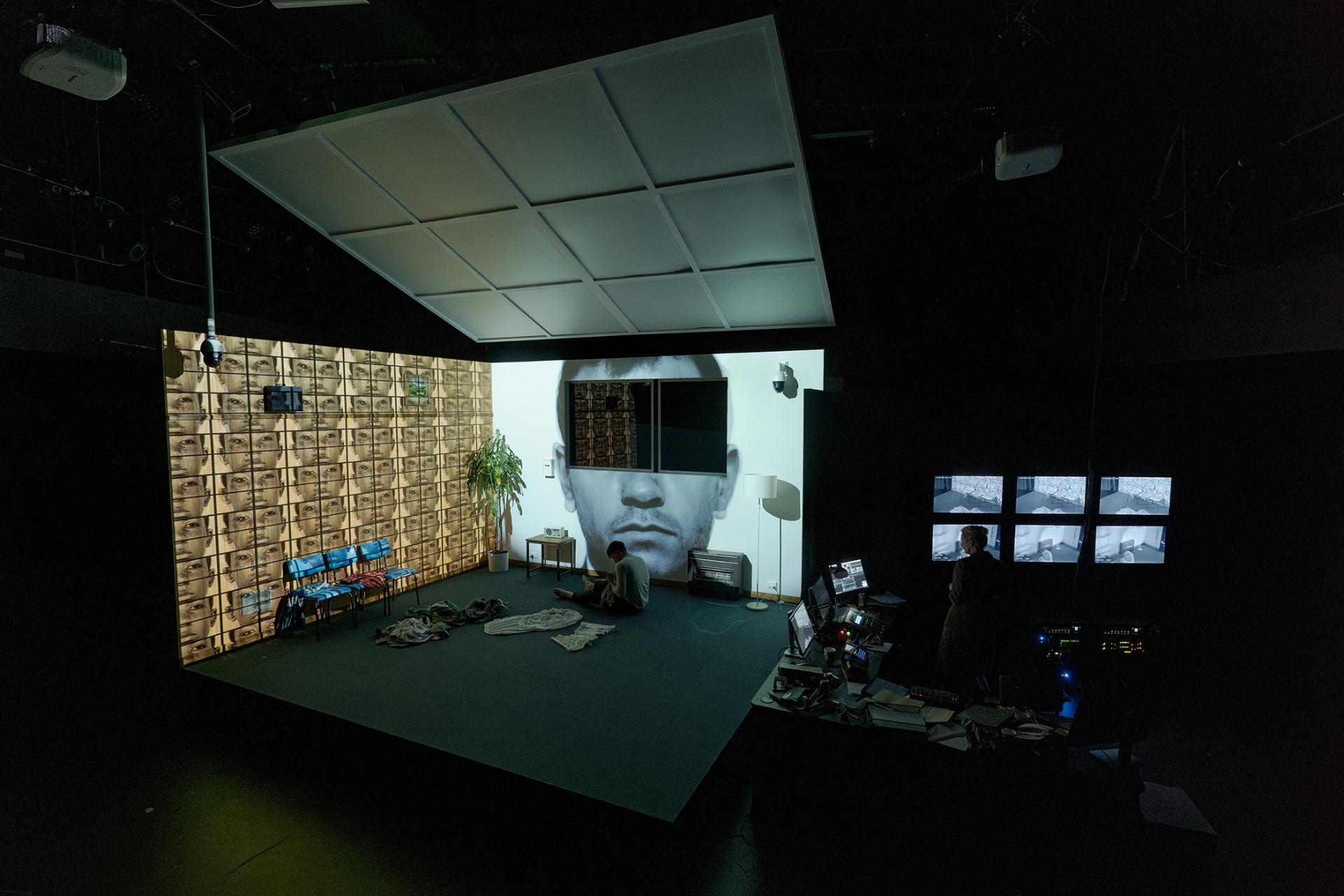
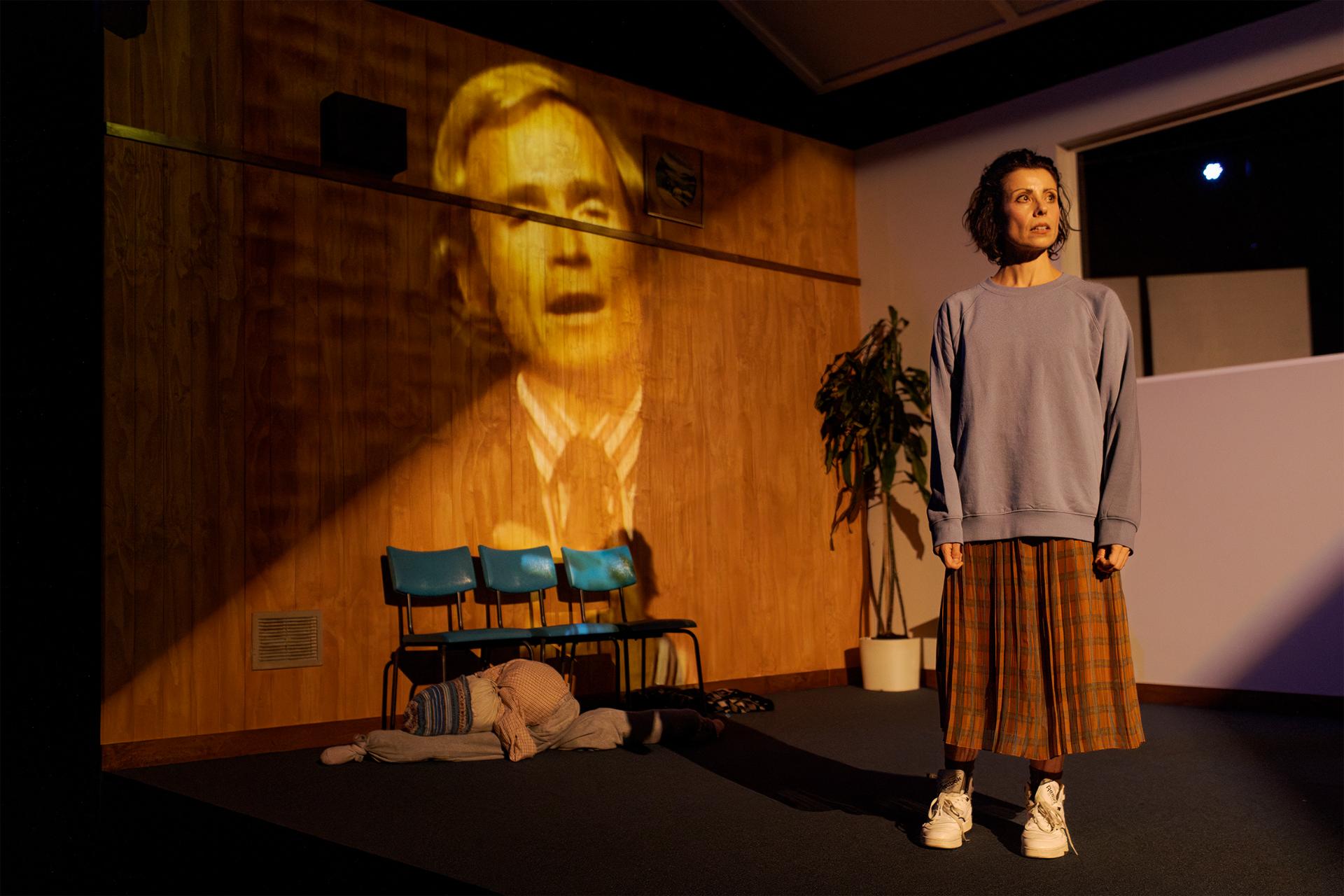
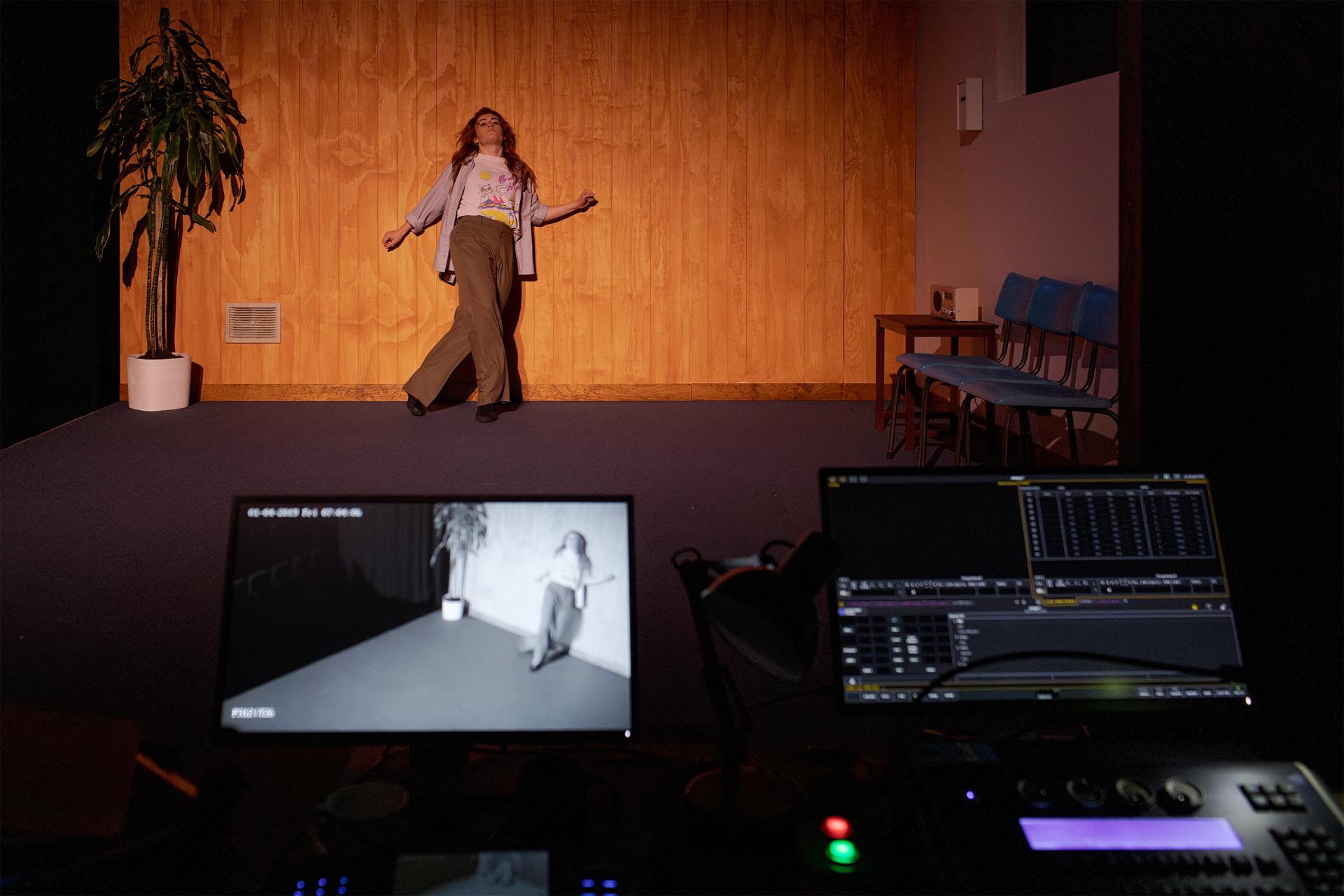
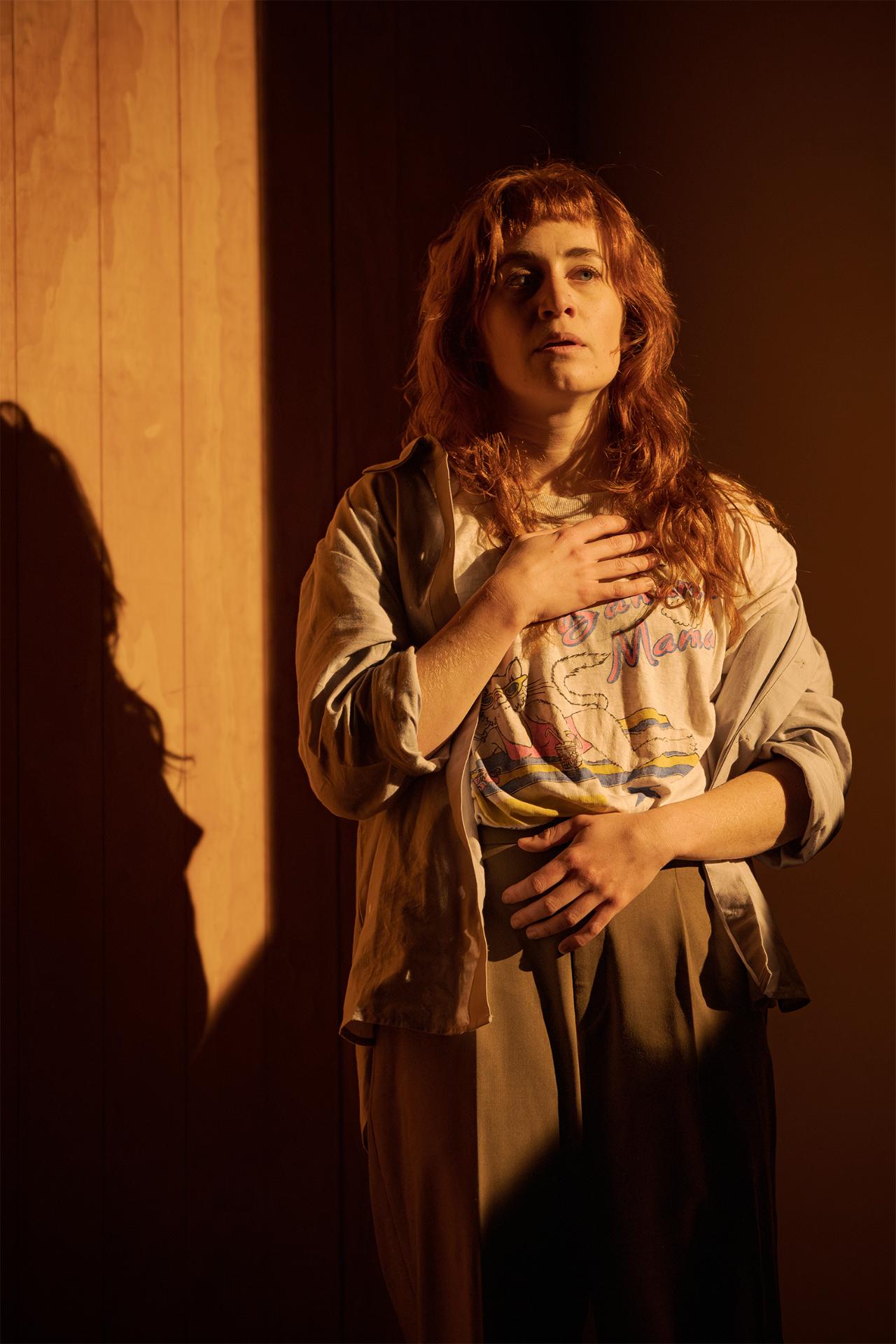
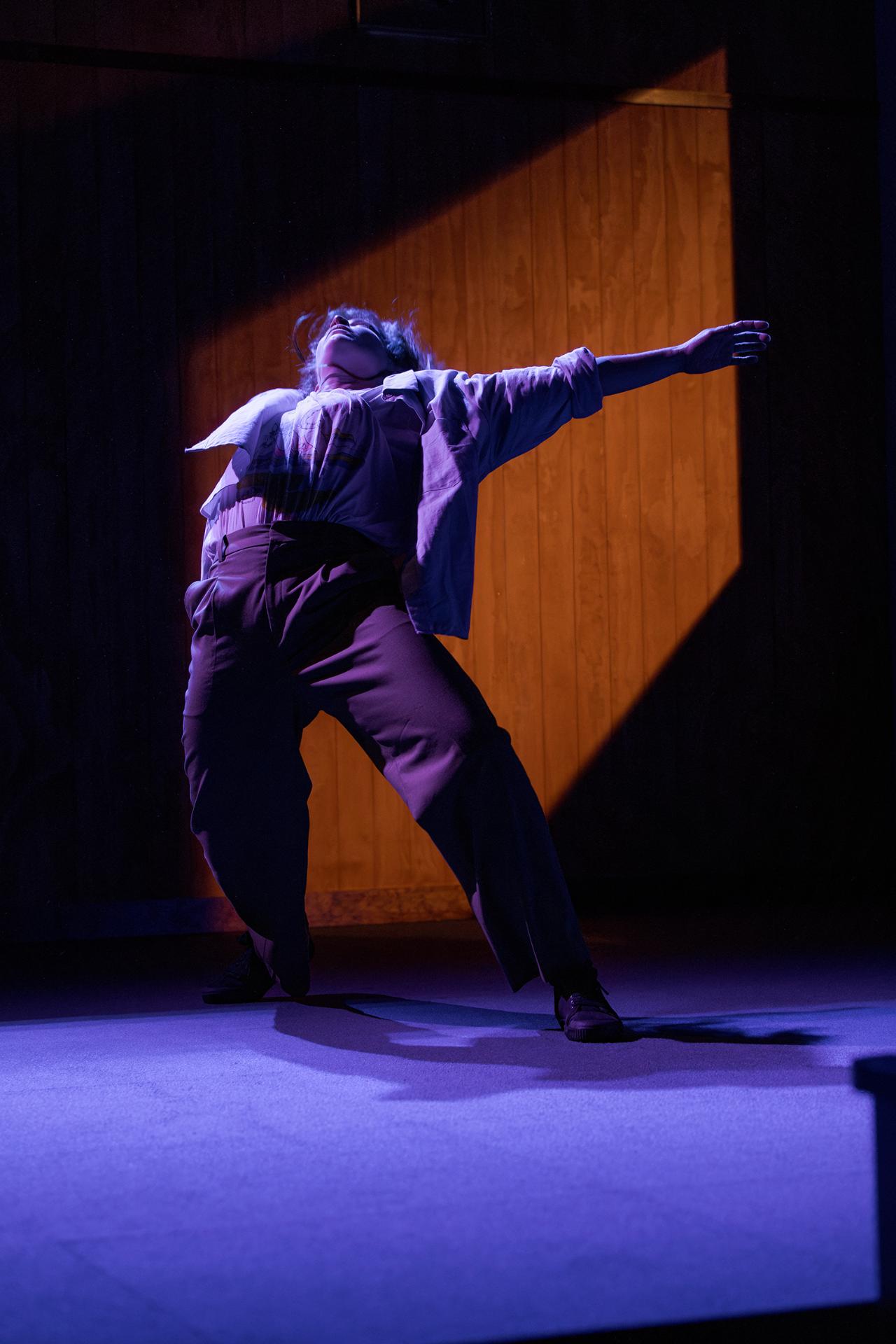
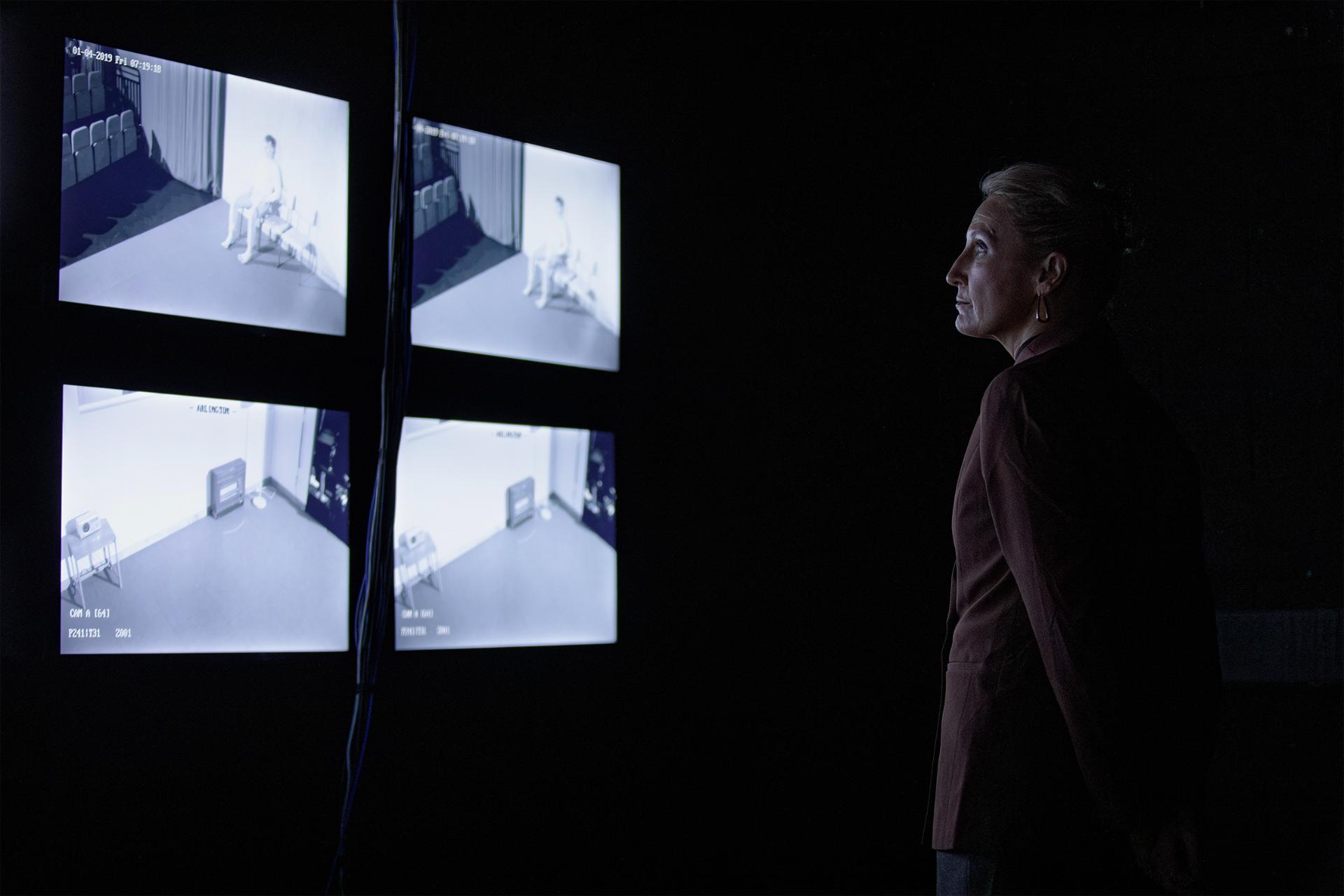
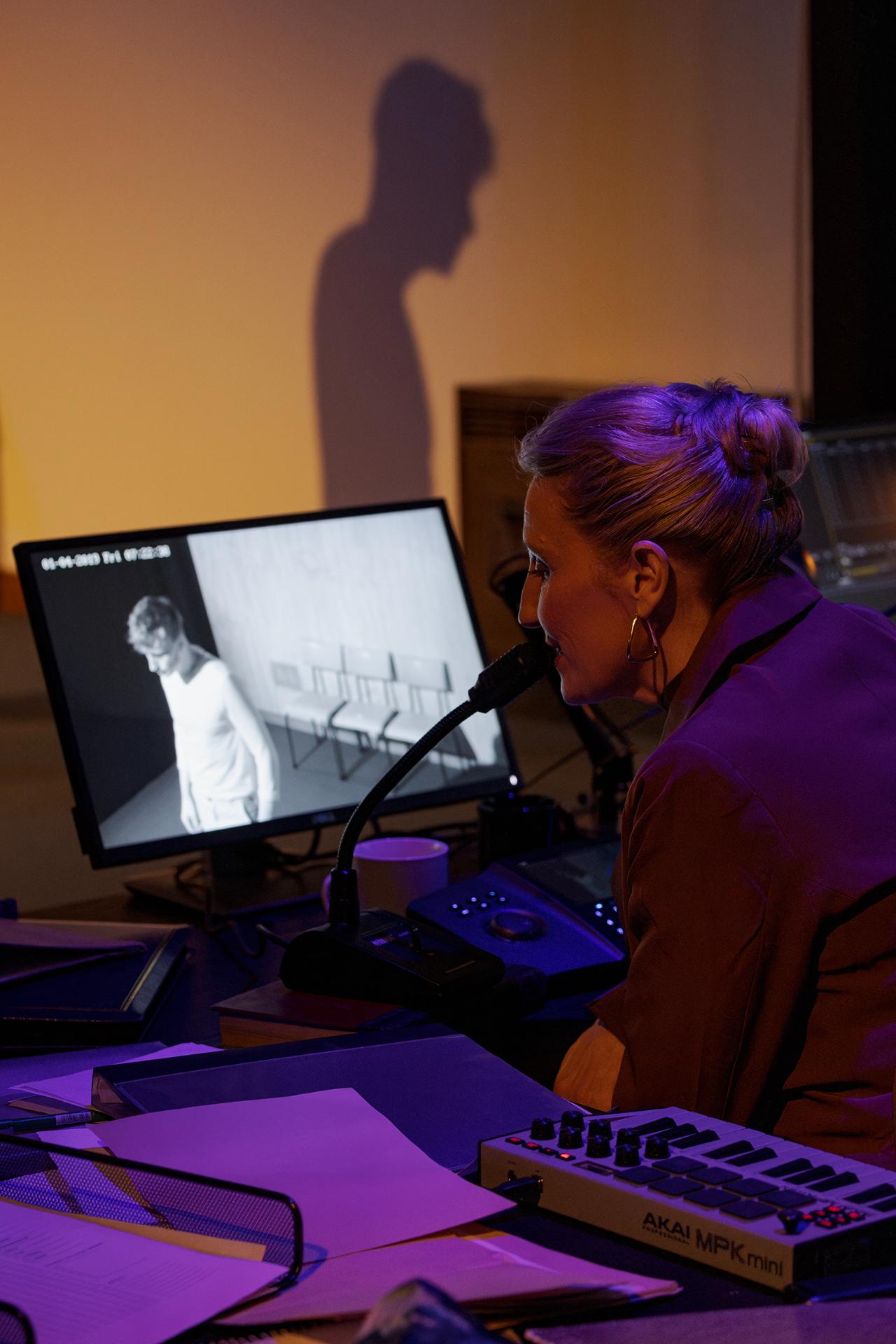
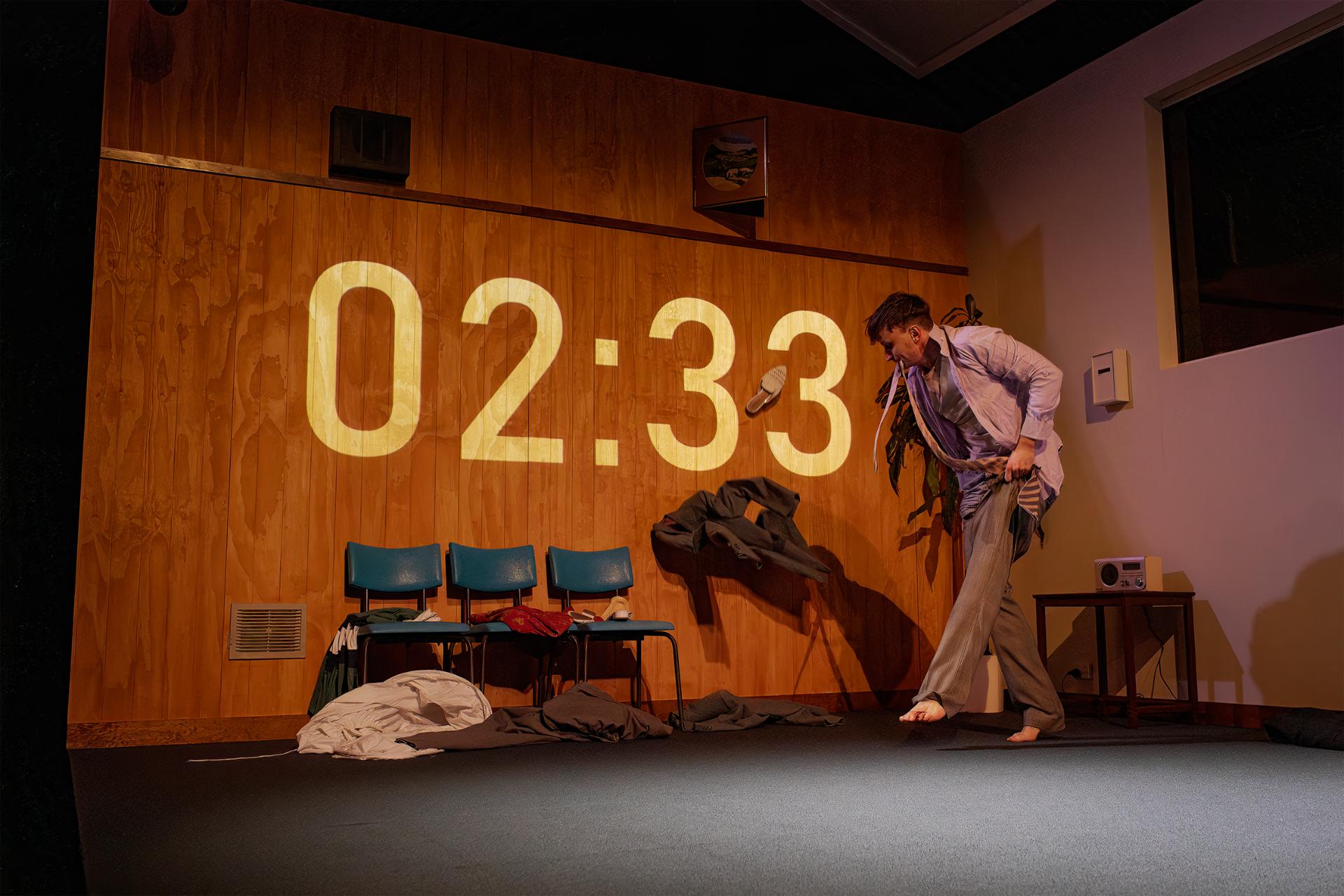
A large display flashes random numbers, very much akin to a bureaucratic queue management system, in an inhospitable room designed only with practical considerations in mind. Three individuals take their turn, under strict surveillance, to express their anguish and desperation, about ambiguous incidents, that we know only by inference to be interrelated. In Enda Walsh’s Arlington, we can be forgiven for never really knowing the narrative that runs through the play, as its concerns are with the fallout of trauma, rather than the precipitating events that have brought us here.

Direction by Anna Houston demands that we focus on the present. In lieu of sufficient understanding about contexts, we are required to expend imagination, alongside an investigative curiosity, to create interpretations of the abstract renderings that we encounter. The work can feel impenetrable, but it also speaks with integrity, always with an air of certainty and commitment, to its mysterious sequences exploring the human condition at its most painful and vulnerable.

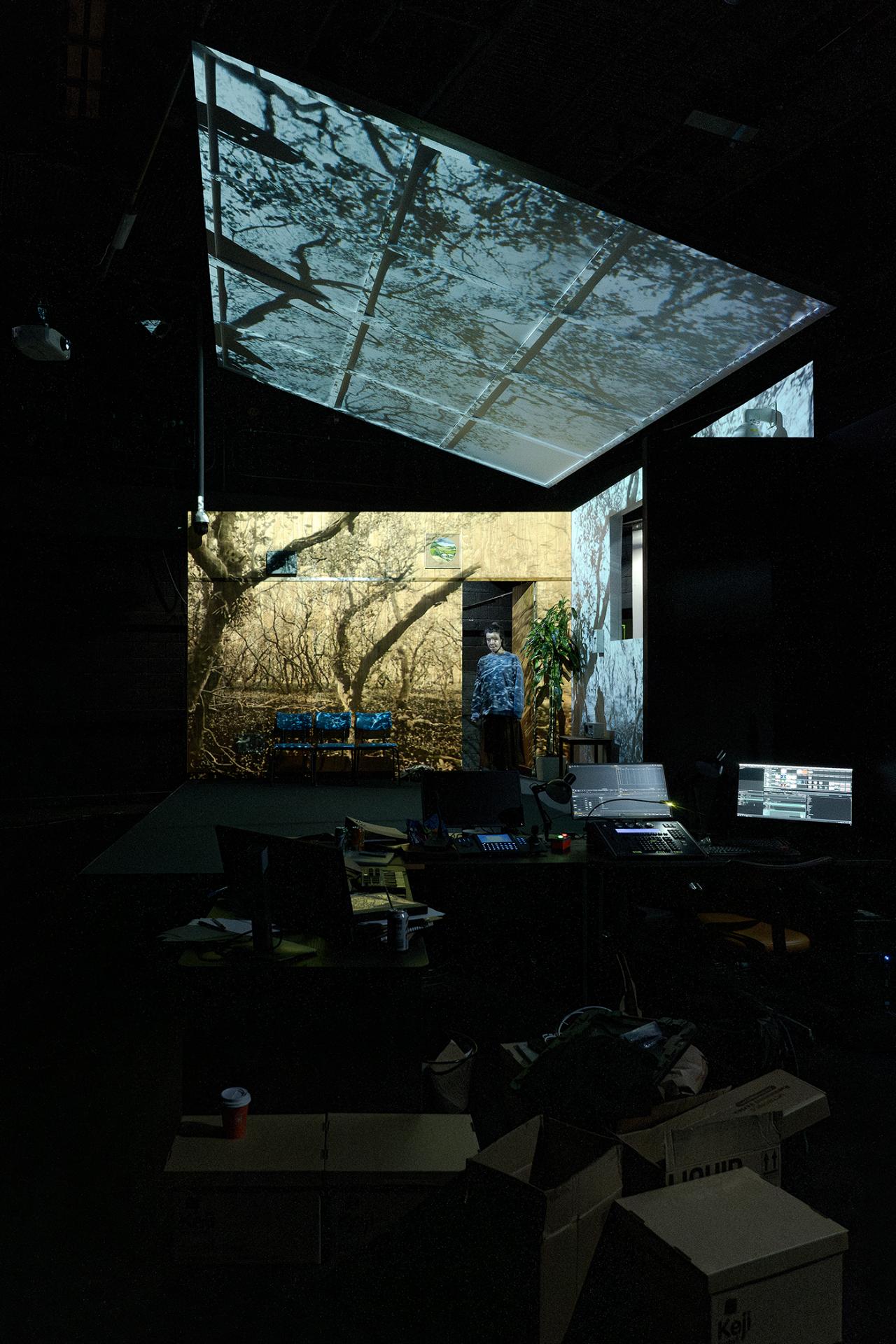
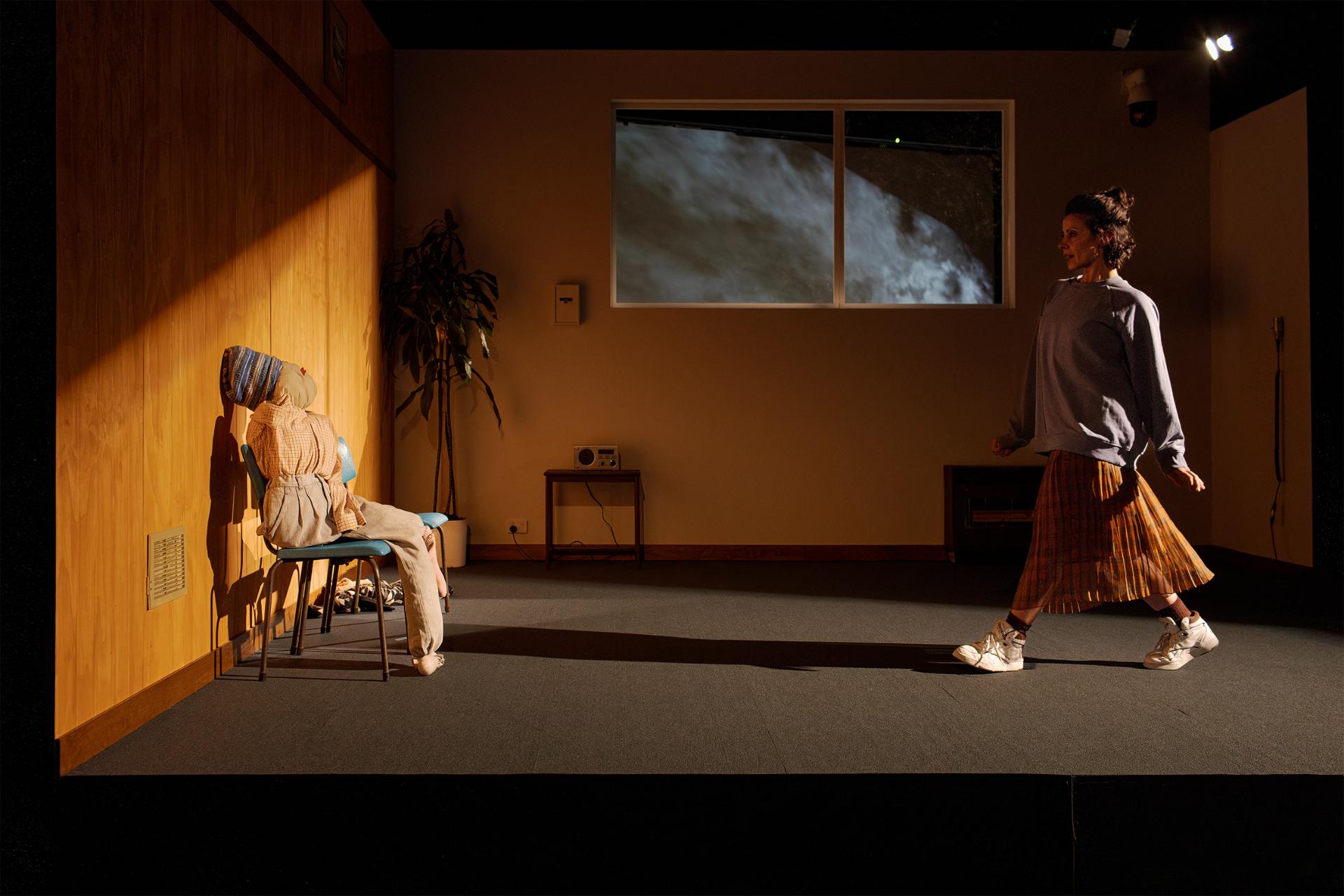
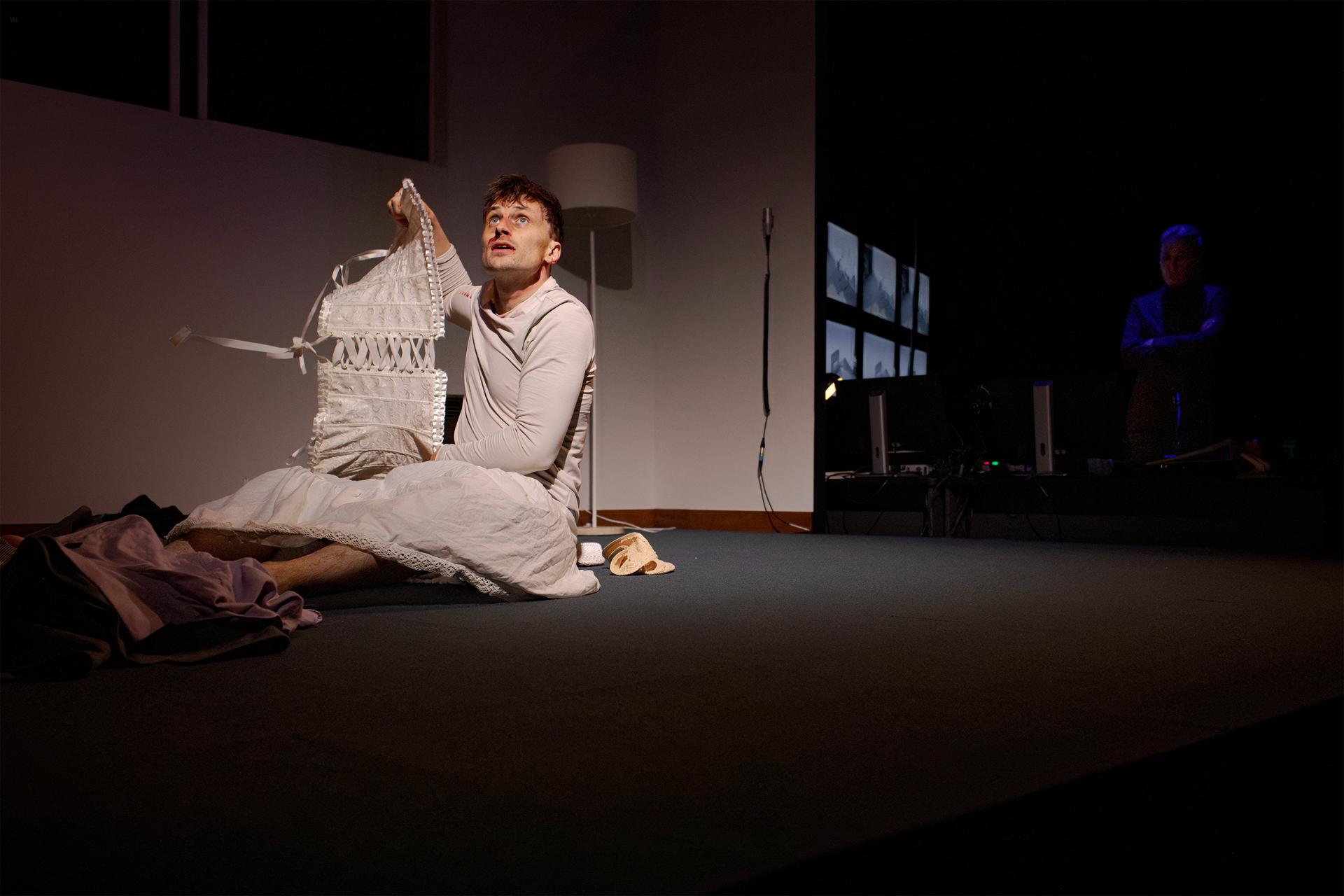
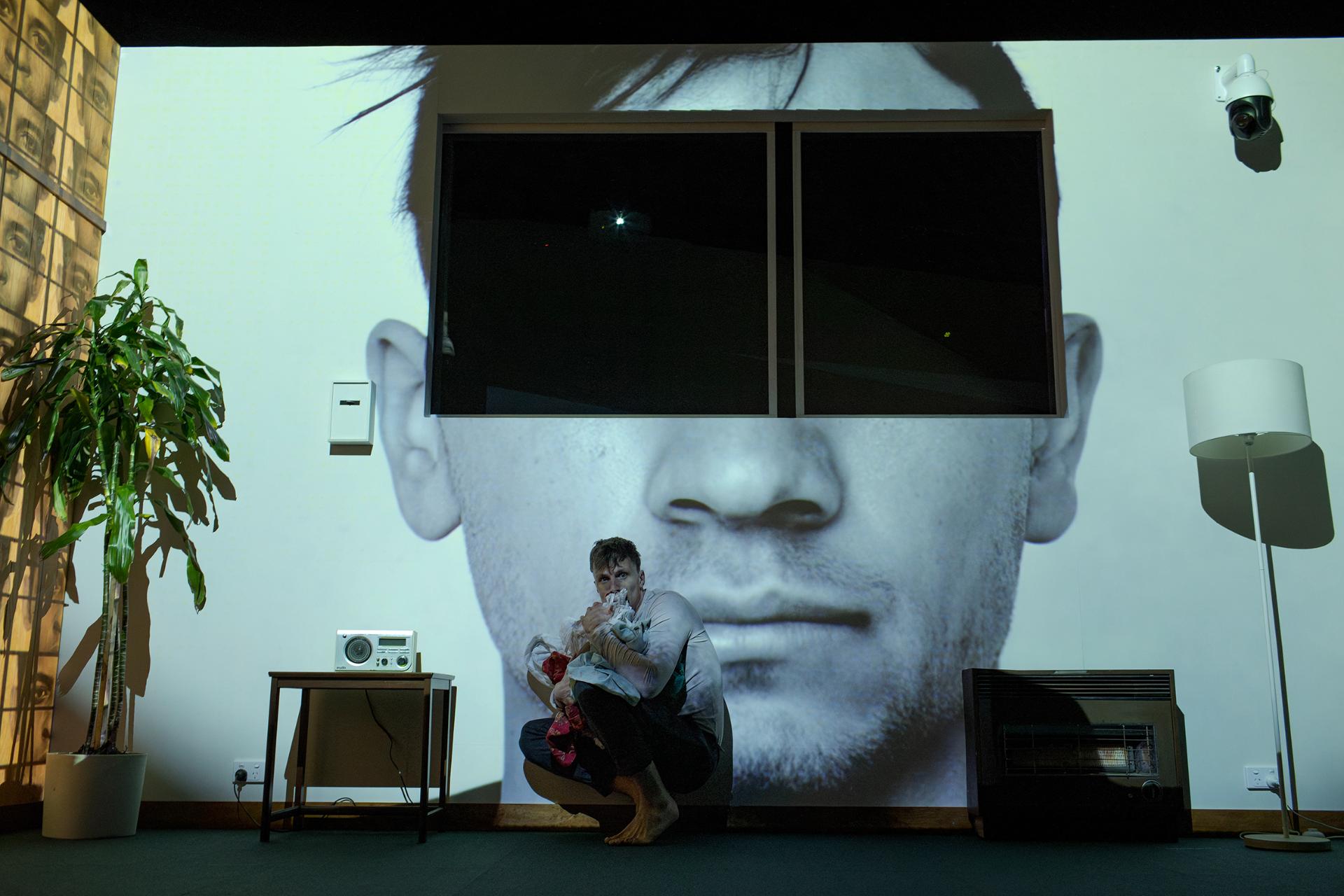
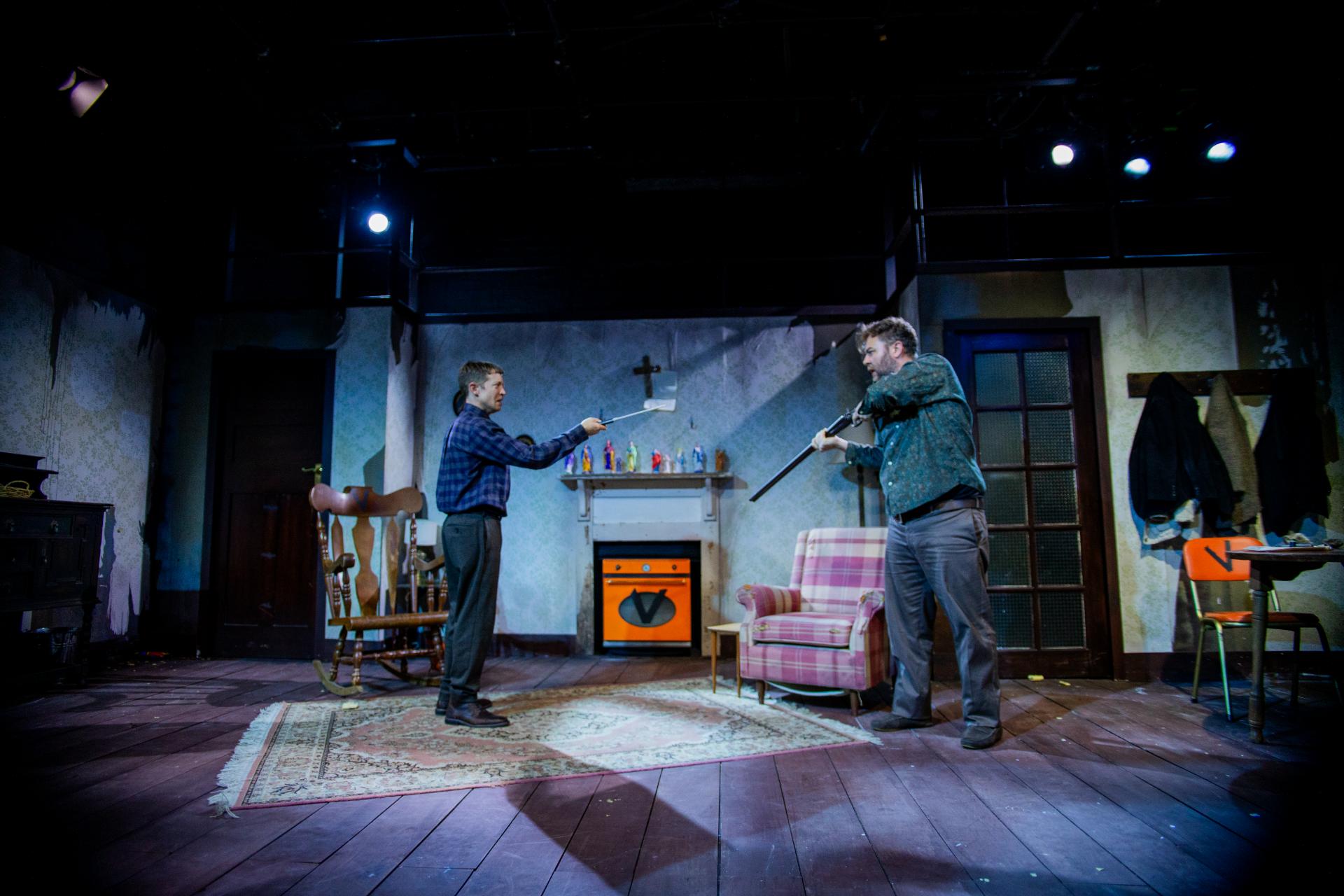
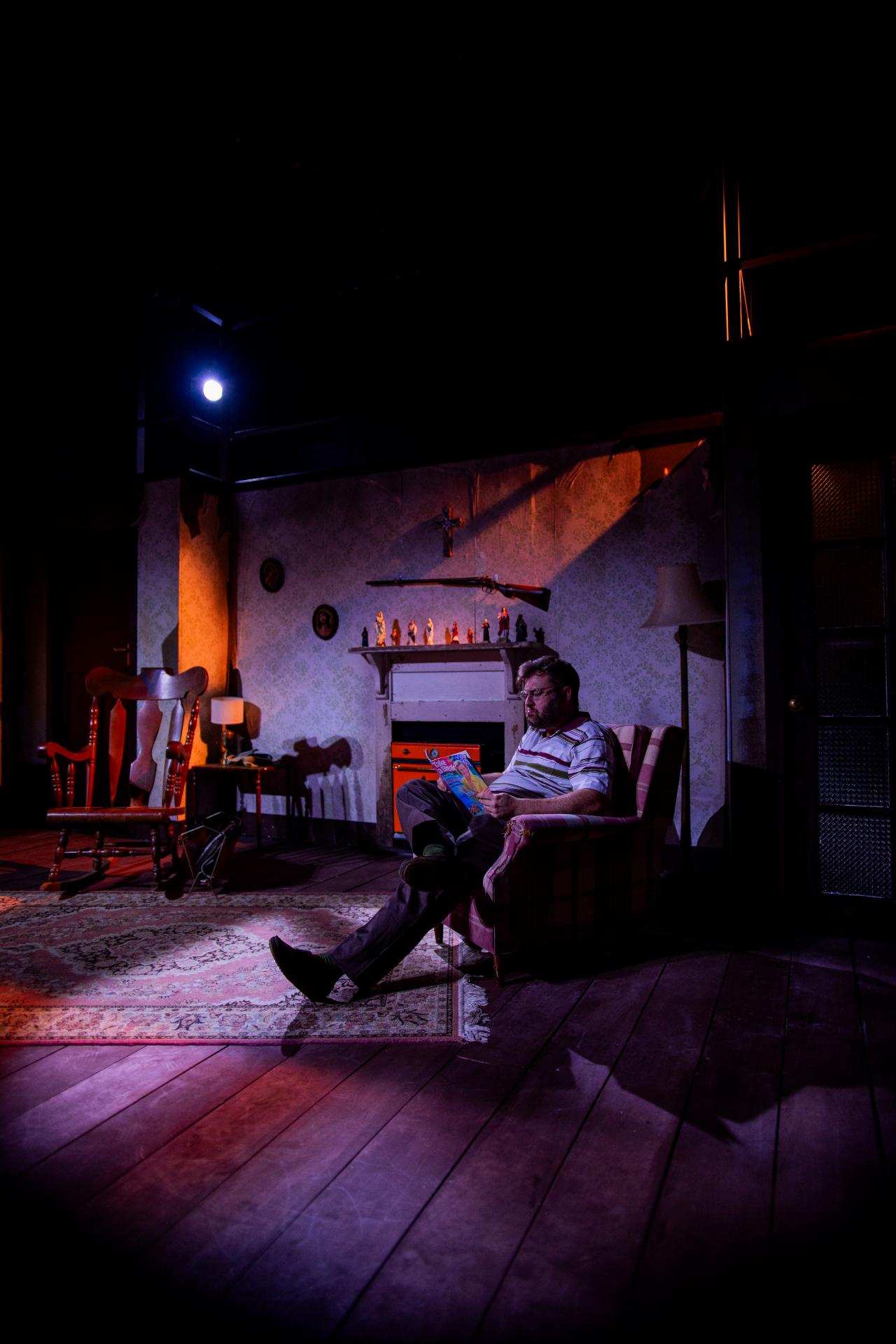
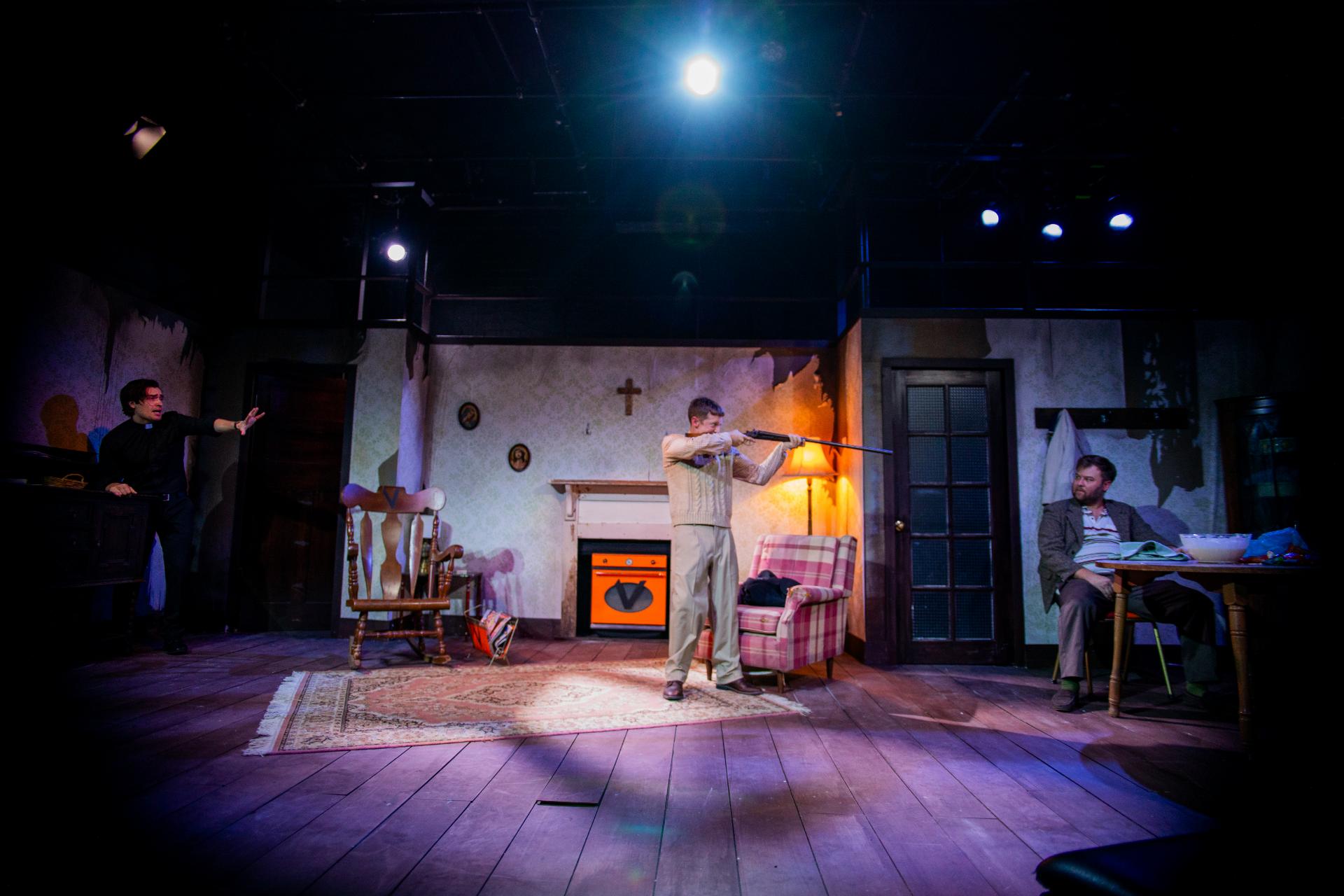
A key feature of this staging is its remarkable design. An impressive set by the ambitious Kate Beere, delivers a sense of apocalyptic dread, through an ironic representation of something that could be thought of as our mundane modernity, with skewed perspectives offering an enjoyable visuality that is decidedly theatrical. Lights and video by Aron Murray are appropriately foreboding, but also sensual, to consistently guide our sensibilities somewhere inexplicably dangerous. Sounds by Steve Toulmin are highly dramatic, and intricate, for an Arlington memorable for its sensory overload.

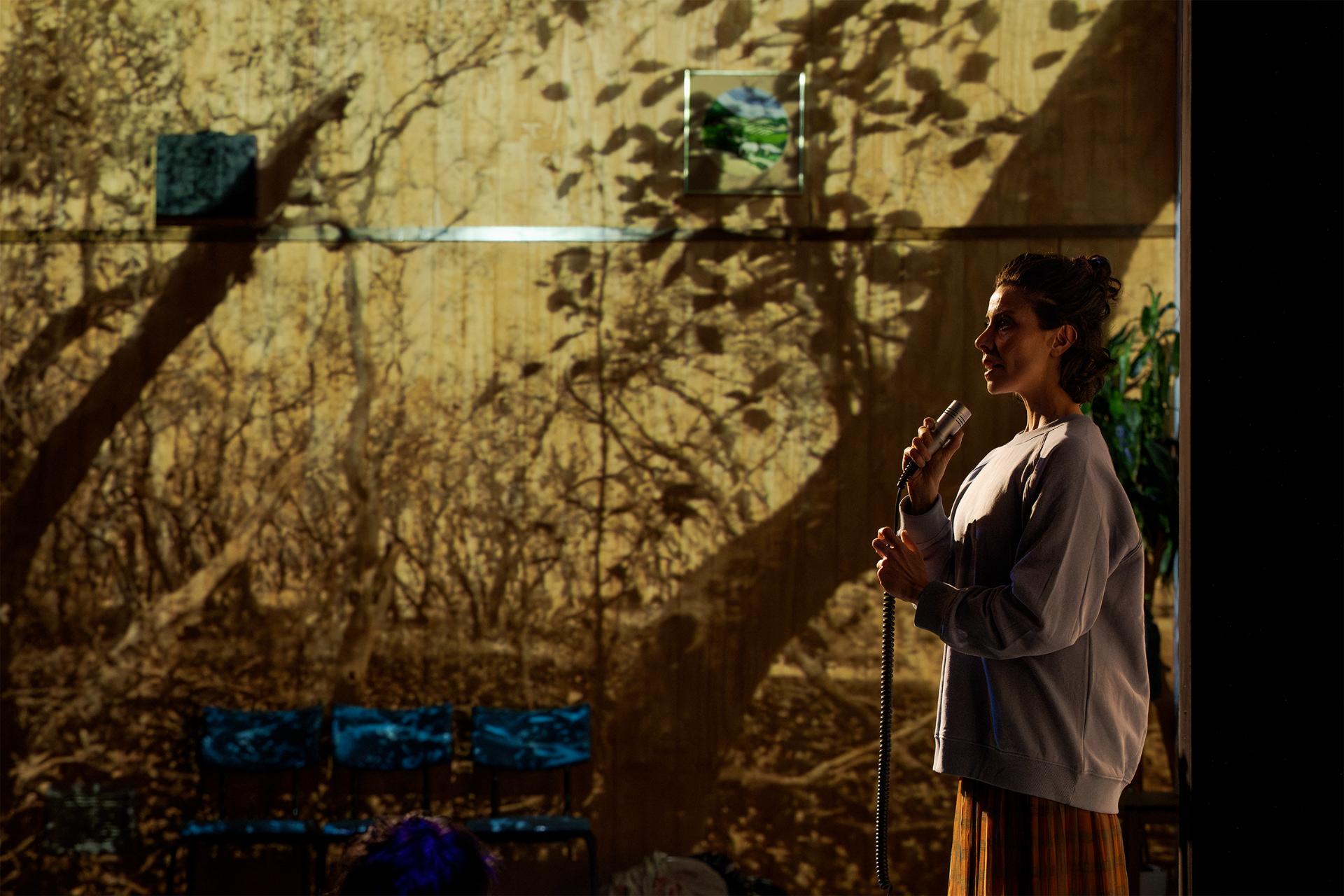
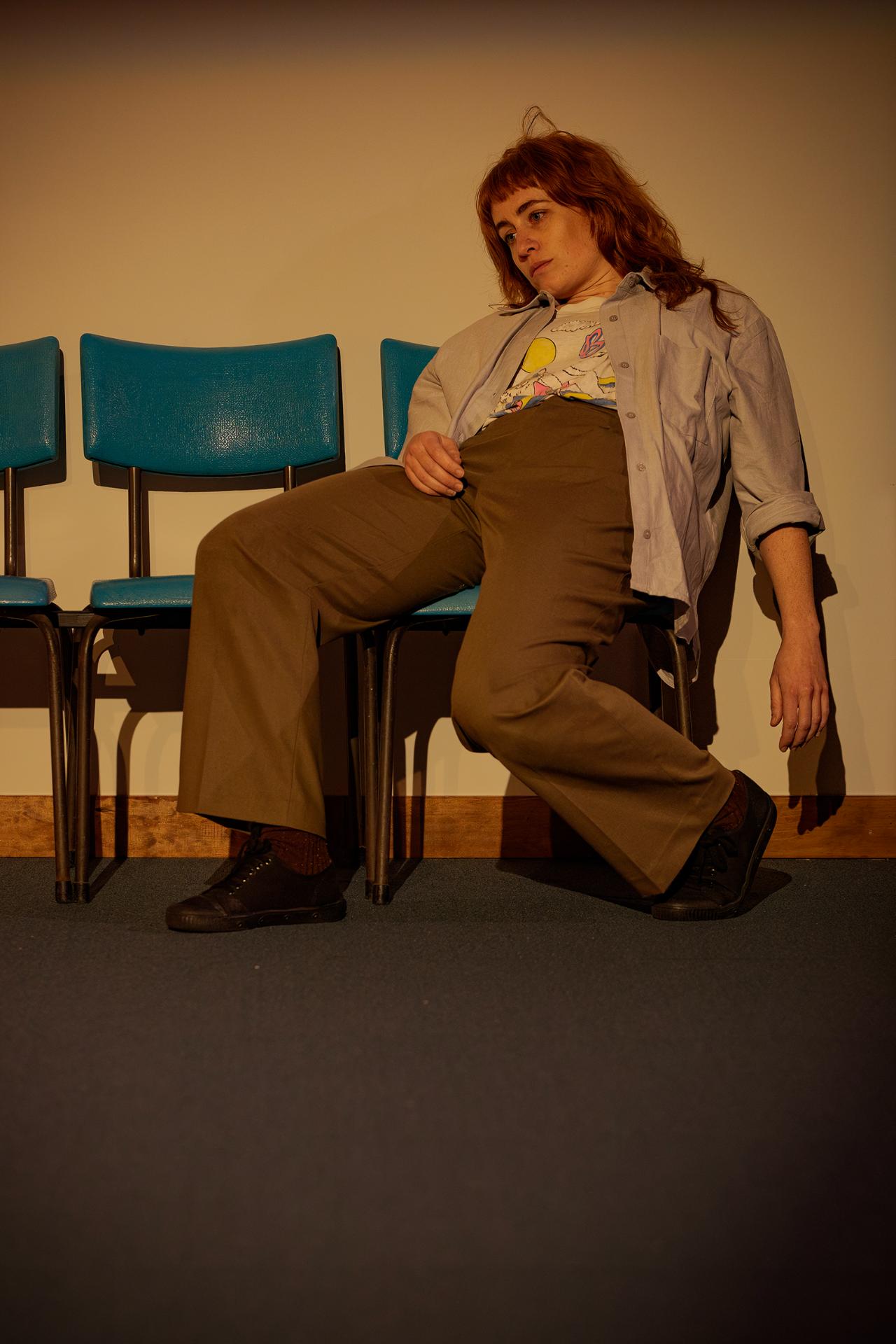
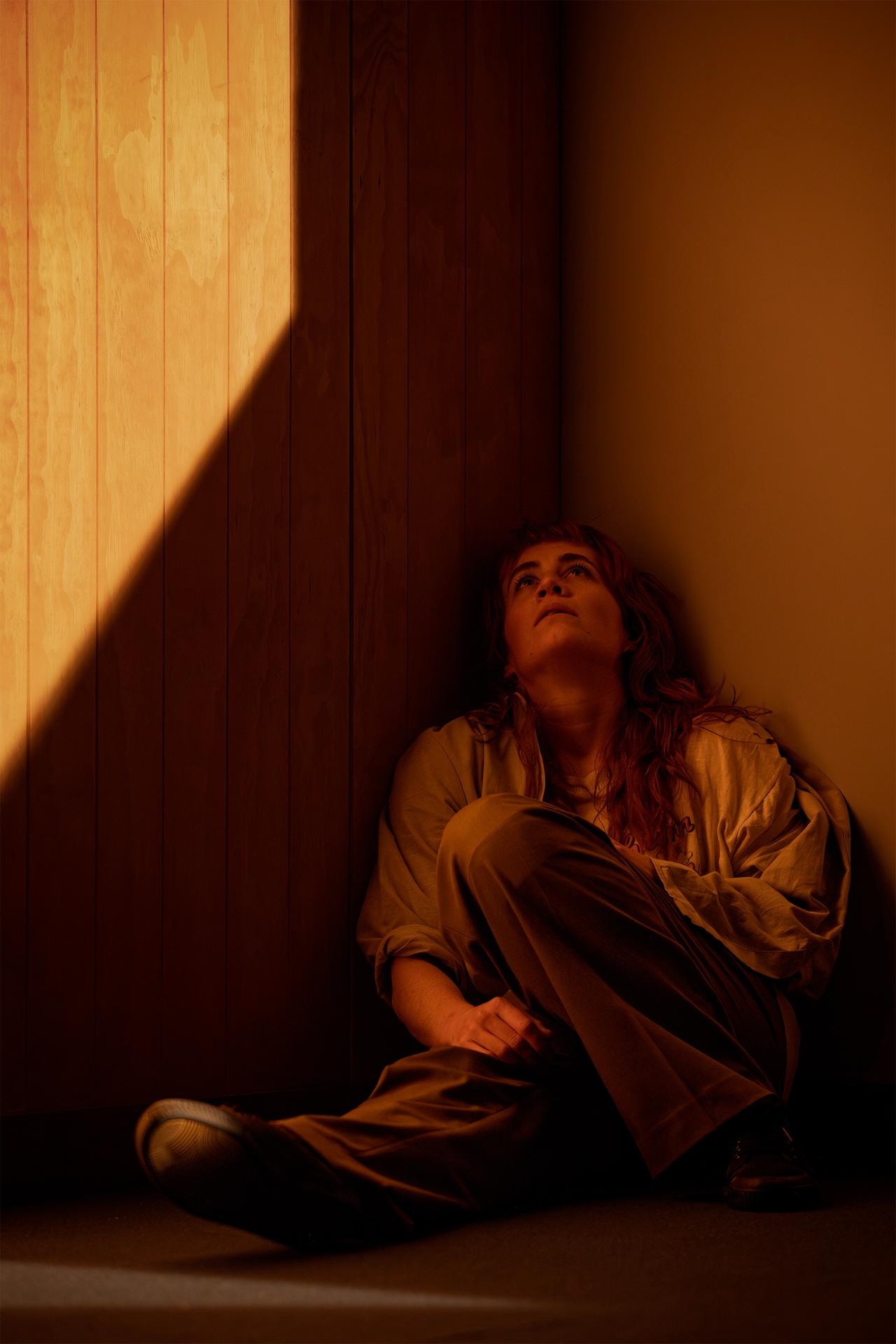
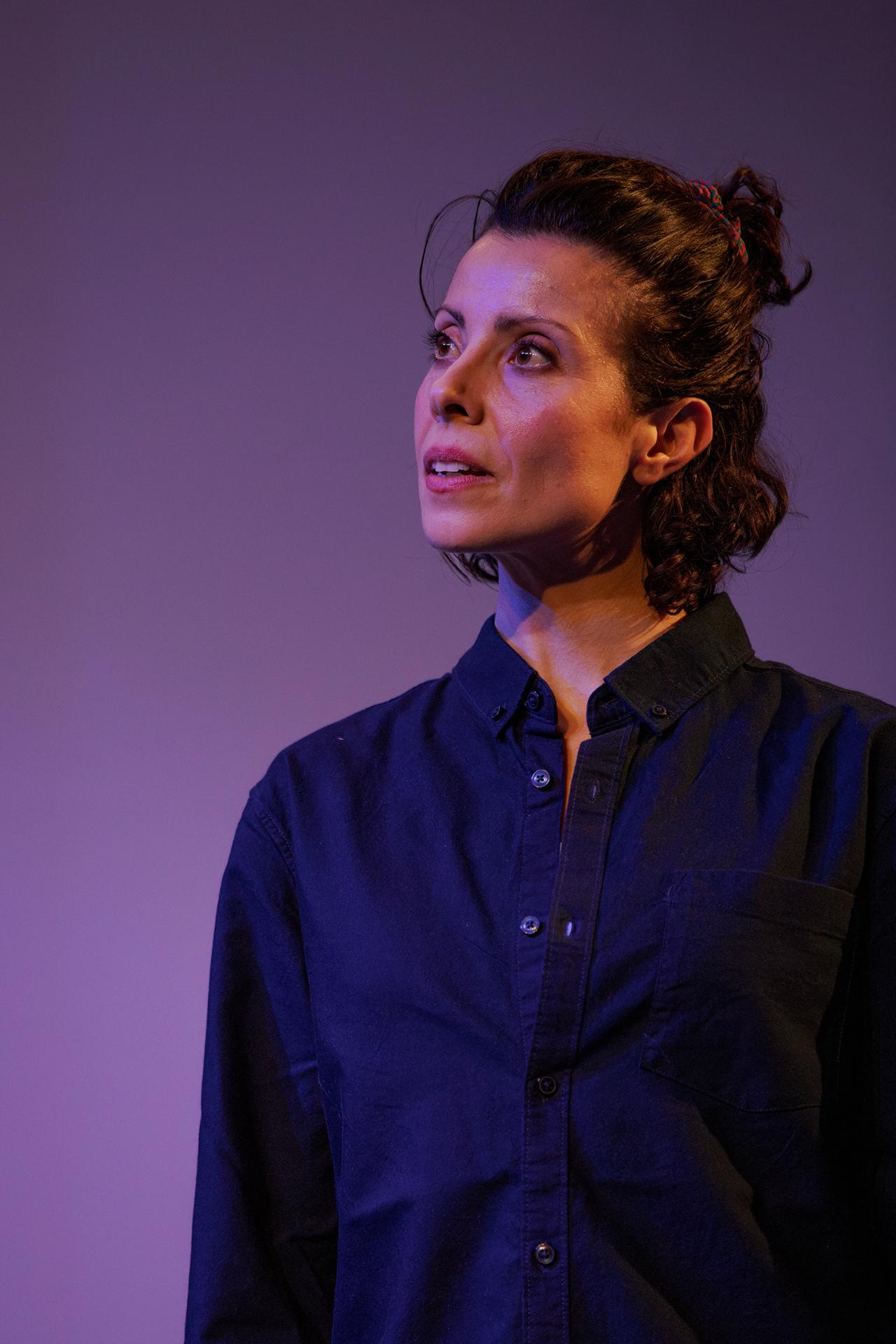
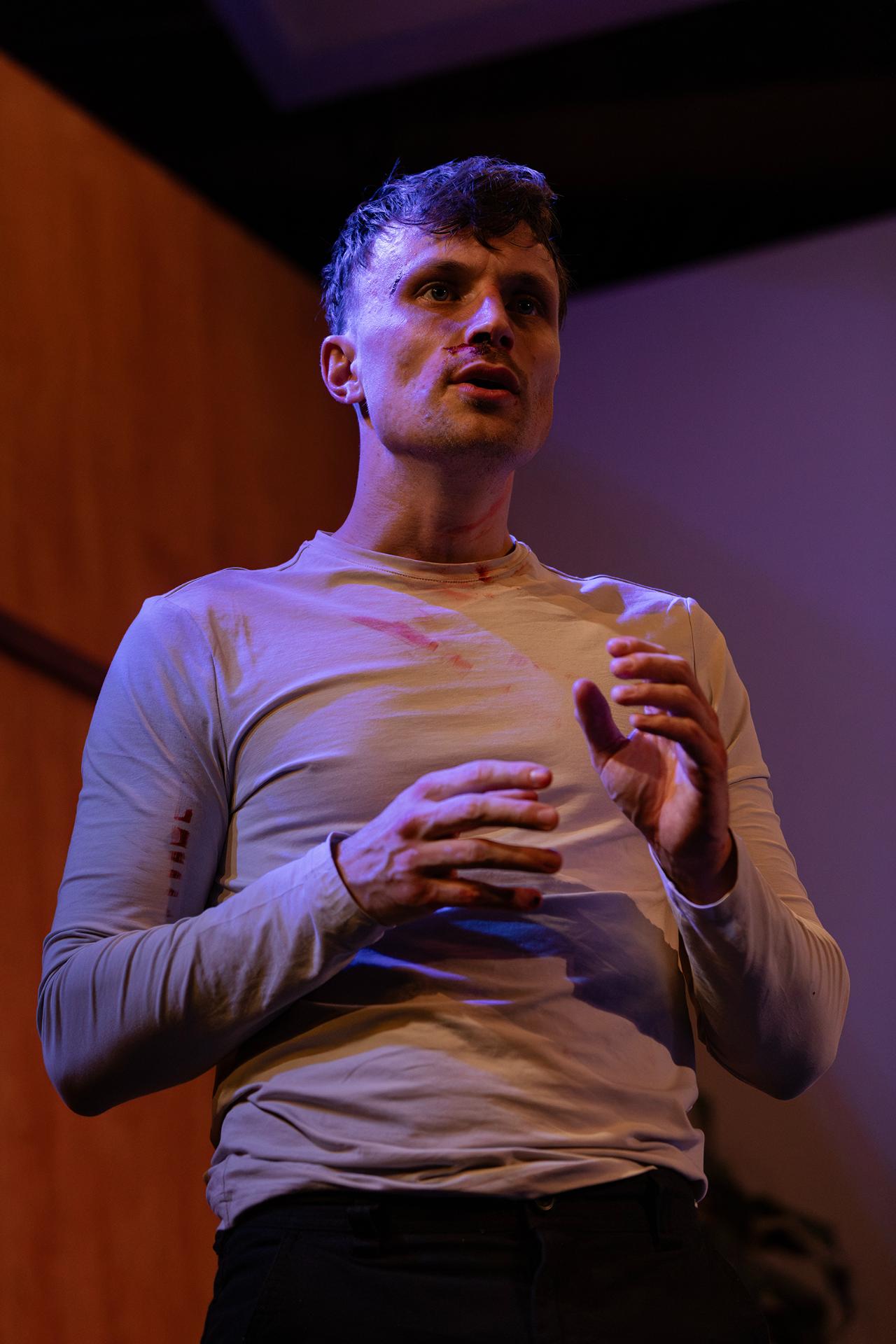
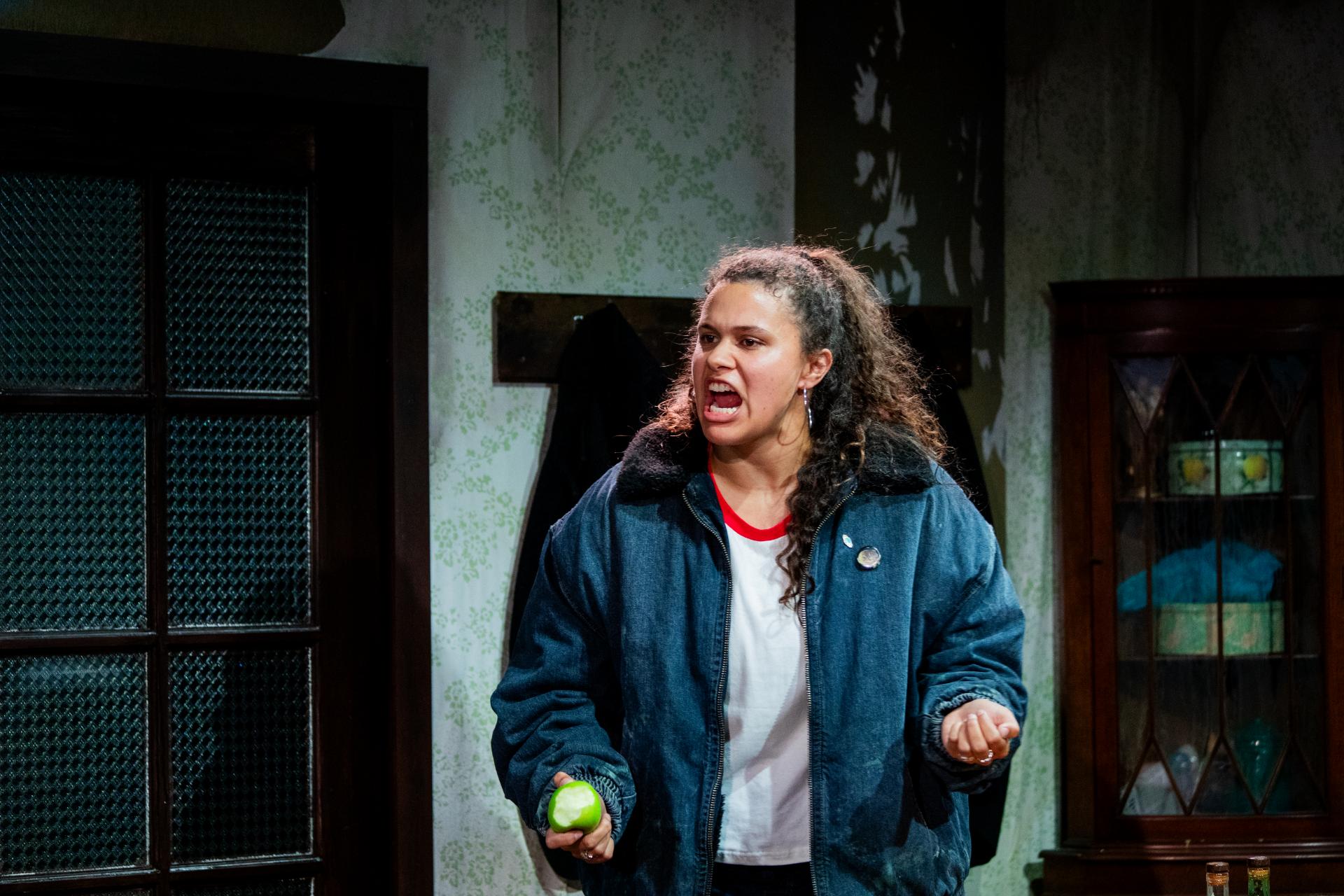
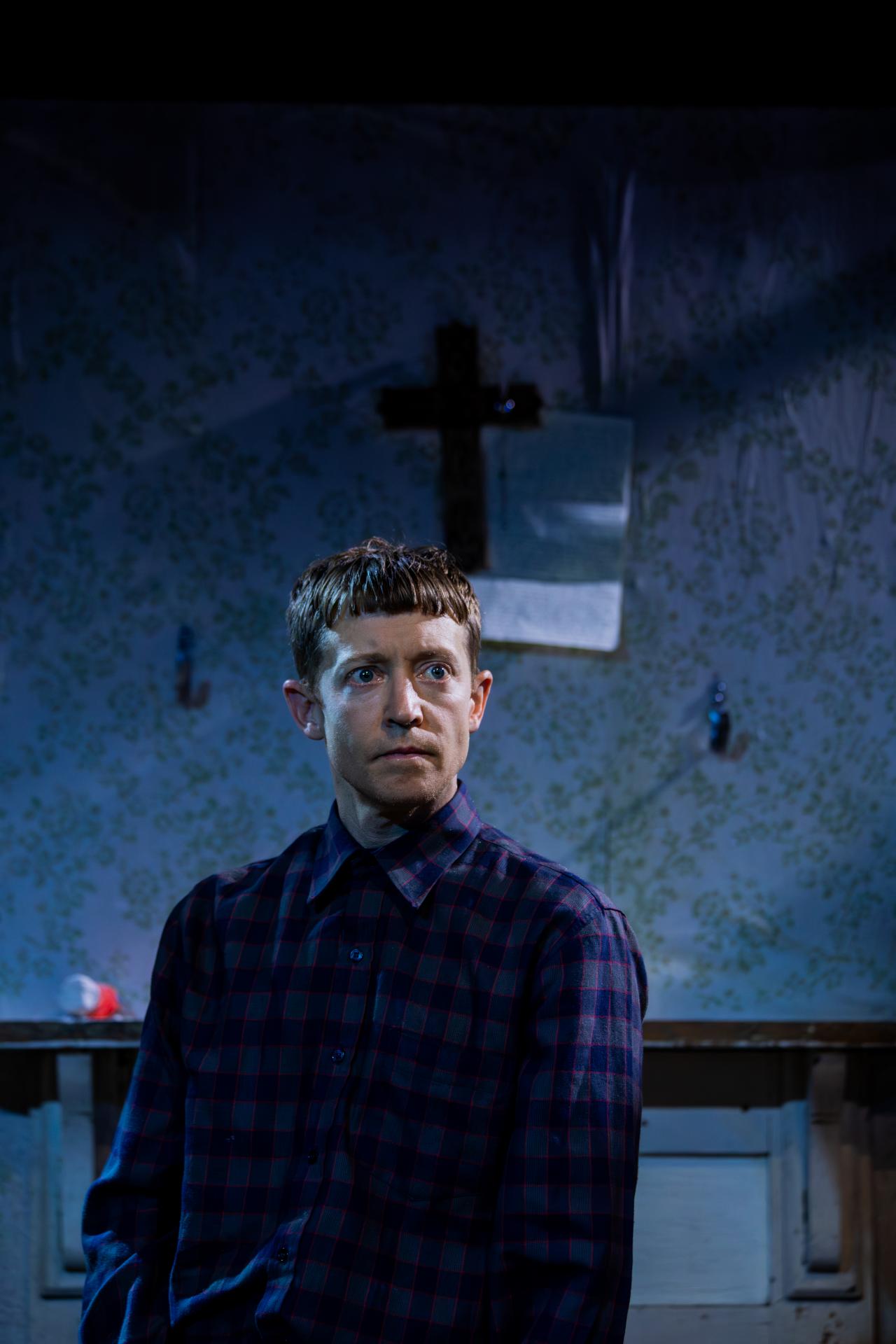
A powerful cast of four comprising Phaedra Nicolaidis, Jack Angwin, Georgina Symes and Emma Harrison, is to be commended for providing something intense and uncompromising. We always believe them, even when we feel kept in the dark about what goes on. Their depictions of anguished terror make for a confronting experience. In this observation of people with no control over their own destinies, trapped in unbearable circumstances, we can only respond with revulsion. When characters reach for notions of hope, it is futility that we recognise instead. Arlington does not give everything that our instincts seek, but its insistence on authenticity cannot be denied.

www.seymourcentre.com | www.empresstheatre.com.au

Review: The Lonesome West (Old Fitz Theatre)

Venue: Old Fitzroy Theatre (Woolloomooloo NSW), Jan 13 – Feb 10, 2024
Playwright: Martin McDonagh
Director: Anna Houston
Cast: Lee Beckhurst, Andre de Vanny, Ruby Henaway, Abe Mitchell
Images by Saz Watson

Theatre review
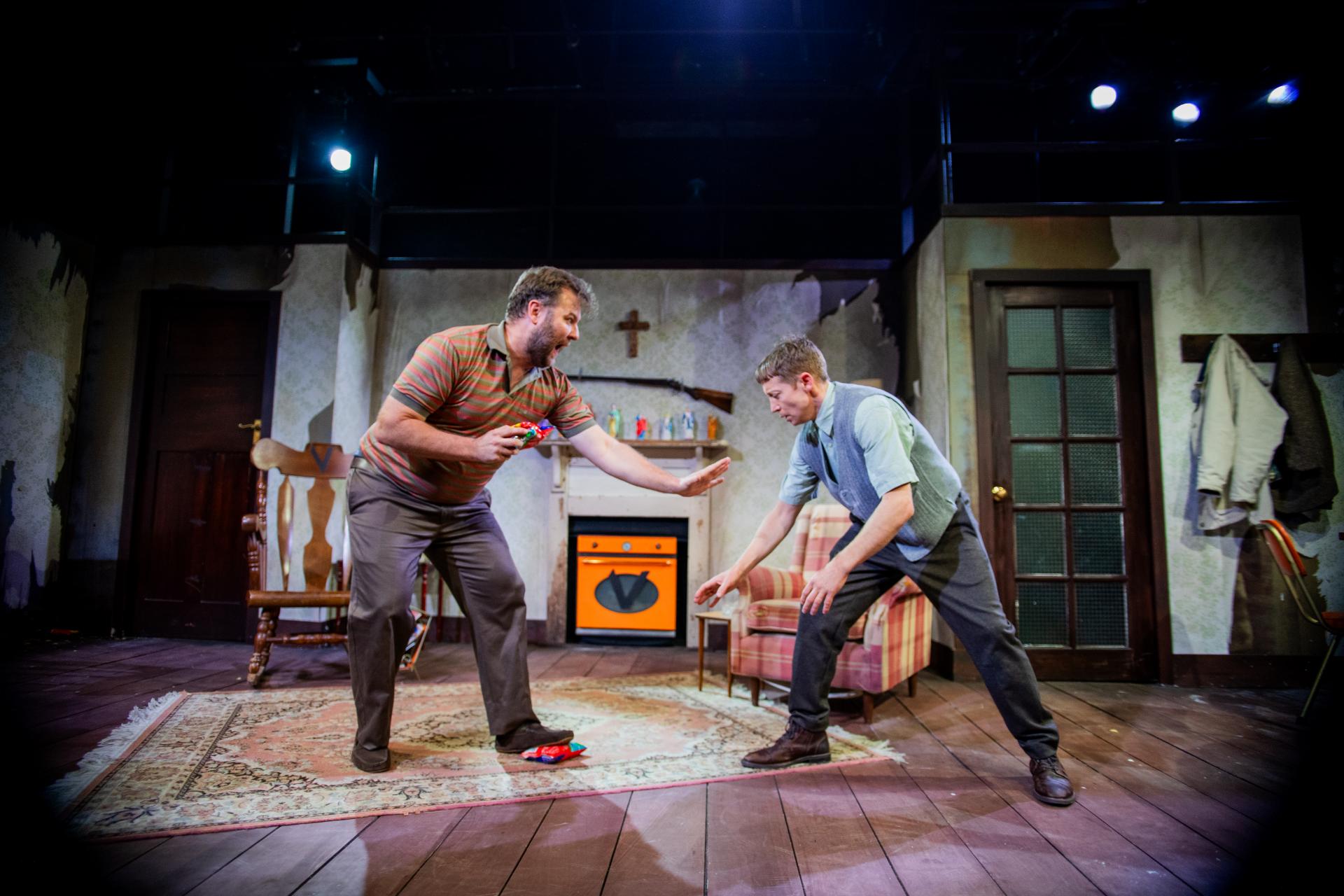
Coleman and Valene are brothers who fight all day, over the pettiest of things like crisps and religious figurines. Local priest Father Welsh is at the end of his wits, trying to be peacemaker, whilst fulfilling his duties for a parish that seems to be beyond redemption. Martin McDonagh’s 1997 play The Lonesome West is set in the western Irish town of Leenane, where resources are limited, and hope even more scarce. The humour is absurd and very dark, about a couple of ne’er-do-wells who never hesitate to use language that is misogynist, homophobic and racist. Contemporary audiences might find those instances quite jarring, but the fact remains, that we are not supposed to ever regard the men as anything but undesirables.

Directed by Anna Houston, the show is relentlessly hilarious, never missing a beat with its comedy. Whether broad or nuanced, Houston goes into remarkable detail, in order that the theatrical experience is persistently engrossing and rib-tickling. Her cast rises to every challenge, keeping us thoroughly enthralled for the surprisingly swift two-and-a-half hour duration.

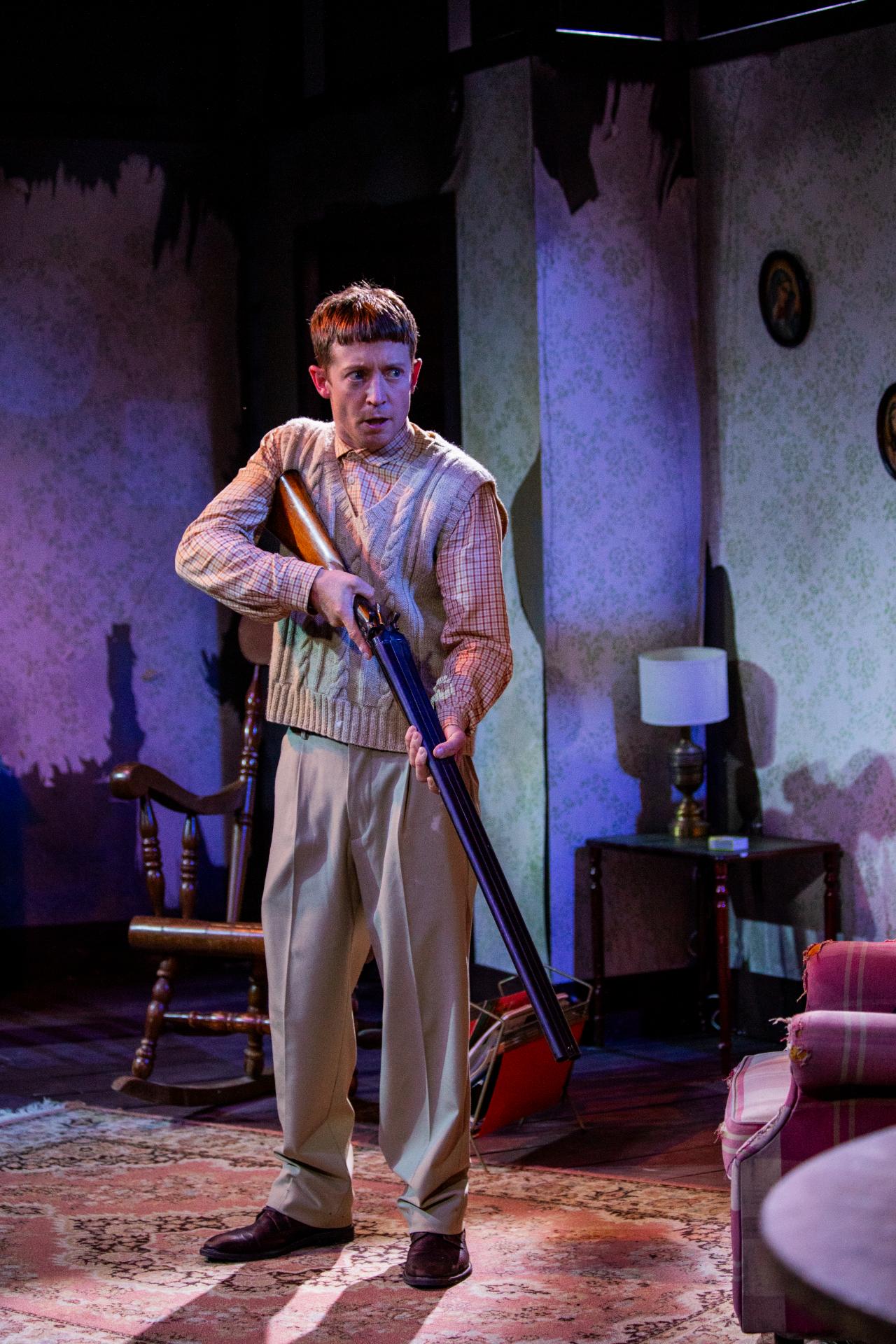
Andre de Vanny is masterful in the role of Valene, delivering for the character every shade of human response, from naturalistic to bizarre, in his astonishing depictions of a parochial type. Coleman is played by Lee Beckhurst, whose acerbic approach makes for a thrilling rendition of a despicable yet charismatic personality. The pair’s ignitable chemistry and flawless timing, ensure that we are always amused, even if The Lonesome West takes place somewhere quite alien to where we are, in our here and now. Additional performers Ruby Henaway and Abe Mitchell demonstrate great dedication, as they each bring meaning, as well as amusement, to their respective parts.

Set and costumes by Kate Beere offer a sense of accuracy to whom and where we visit, giving further visual resonance to the storytelling. Lights by Spencer Heard, along with music by Zachary Saric, provide subtle enhancements to the staging, very measured and intentional with every gesture they introduce to the action.

The essence of how people battle, and how our hate manifests, points to the unyielding self destructiveness of our very nature. Coleman and Valene are kin, but they can never stop finding ways to identify every point of discord and division, unable to be content with any notion of harmony and unity that should come naturally by virtue of their familial bond. Much of the comedy in The Lonesome West relies on the obvious stupidity of their war. If only it is quite as easy to laugh in real life, as we agonise every day, about all the annihilation we seem mercilessly determined to inflict on ourselves.

www.oldfitztheatre.com.au | www.empresstheatre.com.au

Review: Cyprus Avenue (Empress Theatre)

Venue: Old Fitzroy Theatre (Woolloomooloo NSW), May 15 – Jun 8, 2019
Playwright: David Ireland
Director: Anna Houston
Cast: Lloyd Allison-Young, Roy Barker, Branden Christine, Jude Gibson, Amanda McGregor
Images by Yure Covich

Theatre review
Even though Eric does not run around in a white conical hood, and he takes every opportunity to make grand declarations that he is not a racist, there is no question that our protagonist is the worst kind of bigot. David Ireland’s Cyprus Avenue is a confronting, if slightly exploitative, play about a sad old man trapped in the traumatic days of The Troubles. Habitually putting everyone in identity categories, his hate for “the others” seems to know no bounds; even his five-week old granddaughter is not spared. Playwright Ireland makes a powerful statement about prejudice, with his flamboyantly brash approach offering a style of theatre that is full of dramatic tension, as well as ample opportunity for intellectual stimulation.

Direction by Anna Houston appropriately emphasises the quirky quality of Cyprus Avenue‘s comedy, bringing valuable balance to its otherwise brutal nature. Difficult concepts are left undiluted, so that the audience cannot help but examine its challenging provocations. Leading man Roy Barker embodies beautifully, contradictory dimensions of Eric. He is deplorable, but also charming; tender yet full of evil. Unfortunately, the actor’s constant stumbling over lines puts a damper on proceedings, with the disruptions of speech rhythms causing considerable distraction. Other cast members are much more polished with what they present, each remarkable in their respective roles, all of them compelling with what they bring to the stage.

There is profoundly objectionable behaviour in Cyprus Avenue that we must attempt to analyse. The show’s controversial situations make it an imperative that we find ways to process, not only the violence that happens in Eric’s fictitious world, but also the equally heinous hate crimes, of all descriptions, in real life. People will have justifications for every horror they commit, but as a society, we will always have to weigh up compassion and punishment, in our strategies for prevention. Eric has been driven mad by circumstance, and as a result, he perpetuates grievous harm, in a circle of violence that tempts us to keep shifting blame from one to another. There are no easy answers in Cyprus Avenue, perhaps no answers at all, but it allows us to see, in what feels to be a thoroughly honest way, how terrifying humans can be. What we do with that information thereafter, is anybody’s guess.

www.empresstheatre.com.au | www.redlineproductions.com.au

5 Questions with Lloyd Allison-Young and Branden Christine

Lloyd Allison-Young

Branden Christine: You’ve played an Irish character before, was that a blessing or a curse in developing your character for Cyprus Avenue? 
It’s a little from column A and a little from column B! Last year I had the chance to play Padraig in a production of The Lieutenant Of Inishmore; considering the tonal similarities between David Ireland and Martin McDonagh, slipping back into that world was an absolute blessing; the rebellion, the desperation and ideology-through-paramilitary, it’s all been very enjoyable to revisit. On the other hand, wrangling the dialect has been a battle. Slim is a die-hard northern unionist; unlearning the lilting, lyrical southern and wrapping my mind around the more brash and broad northern has been a fantastic challenge.
 
Were any unexpected political or social aspects of Cyprus Avenue revealed during the rehearsal process?
I’m surprised by how broadly and wholeheartedly I’ve always accepted the story of the Republican Irish as the total Irish meta-narrative. That is to say, when I think of Irish cultural identity, sure it may conjure all the tropes and clichés associated with the Emerald Isle, but part and parcel of those ideas are those of ‘the freedom fighter’ and ‘liberation armies’, the rebel songs and the glory of fighting the unfair oppression of northern occupation. I’d never bent an ear in any significant way to the perspective of the Unionists. I’d always subconsciously cast them as the villains. This play has given me a terrific excuse to really dive into the finer motivations of this ‘other side’ and it has been most illuminating.
Slim actually explores this idea of this narrative ownership on stage and it is absolutely one of my favourite moments in the play.
 
This play employs a unique balance of absurdity, tragedy, and comedy. Did any of these themes in particular attract you to this play?
All three! David Ireland has written play that manages to intertwine all three together so closely, and each scene is written with such agility that more often than not I find myself toeing the line between two or more major thematic elements. And this is the mark of a brilliantly written play! Each moment reflecting and refracting through other moments. The lines that are the funniest are often the most heartbreaking, the situations that are the most absurd are the most revealing.

I found the need for both objectivity and emotional investment from my character quite challenging. Did any juxtaposing traits come up for your character? 
Without going too deep into the philosophy of Slim, I’m compelled by his particular hierarchy of values, which are as rigid and as furious as they are convenient. A violent and volatile scholar of film and philosophy, with a romantic nostalgia for a truly terrible time in his country’s history he never had the opportunity to experience. 
 
During the arduous rehearsal process of Cyprus, did you rely on any specific food groups to get you through?
Fuji apples, almonds, black tea!

Branden Christine

While preparing for the role, you had the opportunity to spend time with a forensic psychologist. Can you describe one or some of the more surprising/insightful takeaways?  
Getting the inside scoop from a forensic psychologist was fascinating for many reasons. For one thing I was quickly made aware of all my preconceived notions based on watching too much Criminal Minds and Law And Order (my personal fave) and thought being judicious and scientific when portraying a psychologist would be a way in. I came to find out, it’s those things but so much more. A criminal psychologist’s job is also about building a relationship, being open to possibilities, and staying curious — a kind of empath who takes on other people’s feelings and energy, while also being still objective and scientific. This insight gave me a nuanced motivation with which to shape my character.  

You play the character of Bridget, a psychiatrist tasked with treating the play’s prejudiced protagonist Eric. Are there any particular qualities that you recognise in Bridget that you would like to integrate into your own life? 
Totally! Bridget has a kind of courageousness that I would love to be able to embrace in my own life. To do the kind of work she does, working with extreme forms of pathology, she must be self-assured enough to let go of ego, i.e., her own beliefs in order to take the plunge and walk hand in hand with Eric down the path of recovery. Although she’s just as fallible as any other character, and is not always successful, the effort alone requires an enormous amount of confidence to face the dark sides of humanity and ask questions that I personally would find too confronting.  

What was the most surprising thing you learned about the conflict in the Northern Ireland while exploring and researching for this production? 
I went in somewhat ignorant about the conflict in Northern Ireland and had a bit of a learning curve in rehearsal. What primarily astounded me in the process, despite the particulars of this story, is the universality and insidious toxicity of nationalism, prejudice, and ideology. I’m from the U.S. so these themes are very present at the moment and hugely relevant given our current political leadership or lack thereof in the States and many parts of the world. 

What are some of the best experiences you’ve had in a theatre over the last twelve months? 
I haven’t been to many shows lately, but I have a good excuse, a new baby and the being in the cosiness of motherhood. So, I’m going to be cheeky and say that working with the wonderful creative team on Cyprus Avenue is the best theatre experience I’ve had in years, let alone the last twelve months. 

Favourite line from the show? 
“How can a baby have a beard?”

Lloyd Allison-Young and Branden Christine can be seen in Cyprus Avenue, by David Ireland.
Dates: 15 May – 8 Jun, 2019
Venue: Old Fitz Theatre