Review: City Of Gold (Griffin Theatre Co / Queensland Theatre Co)

Venue: SBW Stables Theatre (Kings Cross NSW), Jul 26 – Aug 31, 2019
Playwright: Meyne Wyatt
Director: Isaac Drandic
Cast: Jeremy Ambrum, Mathew Cooper, Maitland Schnaars, Shari Sebbens, Anthony Standish, Christopher Stollery, Meyne Wyatt
Images by Brett Boardman

Theatre review
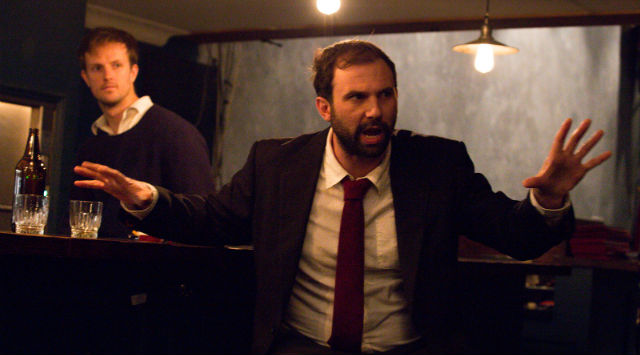
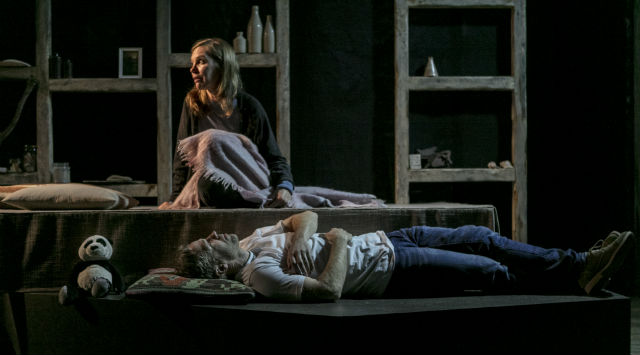
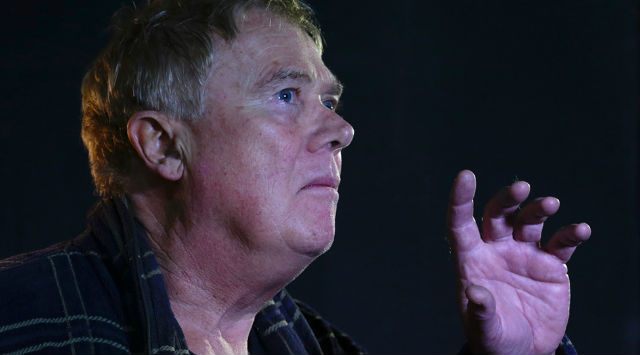
Upon the death of his father, Breythe walks off the set of a television commercial, and returns to Kalgoorlie to be with family. The medical establishment’s neglectful treatment of his father sparks a reaction that sees Breythe and his siblings wrestle with difficult discussions, about surviving racism as Indigenous Australians. Meyne Wyatt’s City Of Gold moves between city and bush, to examine one young man’s fight on colonised land. It is a story about the deep prejudice, and of surreptitious genocide, that pervade this country, inescapable no matter where Breythe may go.

Wyatt’s writing is passionate and urgent, able to entertain while it gradually builds intensity. The fury that it contains is an invaluable expression, often hidden away from so-called civilised, Western modes of exchange, where the oppressed must communicate with polite subservience, only to be routinely ignored. Directed by Isaac Drandic, the production pulls no punches, to make a powerful statement about the woeful state of race relations all across this land. Notable work on sound design by Tony Brumpton adds richness to the piece, deftly emphasising the complex emotional dimensions that City Of Gold aims to convey.

As leading man, Wyatt is a compelling presence, entirely persuasive with all that he brings to the stage. Charming in humorous sections, but it is in explicit moments of political confrontation that he absolutely devastates. Wyatt’s monologue at the beginning of Act 2 ranks as one of the most important theatrical moments in our stage history. His siblings are played by Shari Sebbens and Mathew Cooper, both actors captivating with their sincere portrayals, able to demonstrate a resolute dignity alongside their characters’ experiences of adversity and injustice. We are moved by the performances of Jeremy Ambrum and Maitaland Schnaars, who share an unexpected delicacy in their divergent depictions of Aboriginal identities. Dramatic flourishes by Anthony Standish and Christopher Stollery help to provide tension, as a series of unsavoury types who exemplify so much of what is wrong with our societies.

It is the most generous of gestures when our Indigenous artists choose to embody the trauma and pain of their communities. They put themselves through a state of virtual torment, using bodies that know little difference between real and make believe, so that a predominantly white audience can understand the harm that is being inflicted upon legitimate owners of this land. City Of Gold is an extraordinarily difficult story, one that its storytellers have seen, heard and lived for generations. It is regrettable that the responsibility falls upon those who suffer, to educate the rest of us, but there is nothing more profound than the lessons being dispensed here.

/www.griffintheatre.com.au | /www.queenslandtheatre.com.au

Review: Table (White Box Theatre)

Venue: Seymour Centre (Chippendale NSW), Jul 25 – Aug 17, 2019
Playwright: Tanya Ronder
Director: Kim Hardwick
Cast: Charles Upton, Stacey Duckworth, Mathew Lee, Julian Garner, Danielle King, Chantelle Jamieson, Annie Stafford, Brendan Miles, Nicole Pingon
Images by Danielle Lyonne

Theatre review
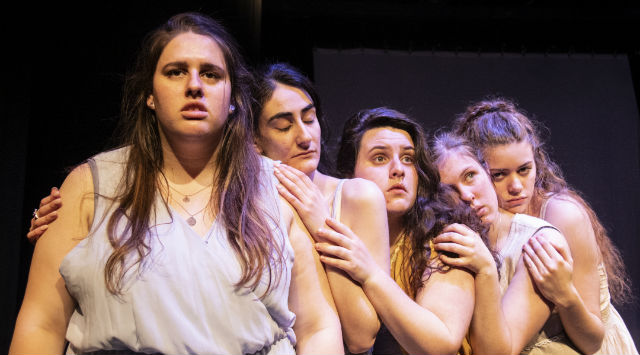
It was over a hundred years ago, that David Best built a table on the occasion of his marriage. Six generations of Bests later, the table still stands, modestly and in the background, accumulating scars inevitably derived from the passage of time. A substantial portion of Tanya Ronder’s Table centres around the globe-trotting Gideon Best, whom we meet at various points through the years, from his conception in Africa in 1951, to his return to England at 62 years old. The play features scintillating dialogue and fascinating characters, to explore the dynamics of a family that, for all their adventurous diversions, are ultimately no more than regular people.

The production is exceedingly elegant, with Isabel Hudson’s set and Martin Kinnane’s lights offering consistently sumptuous imagery, if slightly too insistent in creating a sense of moodiness. Nate Edmondson contributes two hours of music and sound, intricately magnifying every sensory peak and trough, highly effective in helping us find focus for all of Table‘s deliberately abrupt plot shifts. Director Kim Hardwick’s sensitive approach can at times seem too quiet, but the psychological and emotional accuracy that she is able to convey, for every aspect of the story, makes for a staging that sings with authenticity from beginning to end.

Actor Julian Garner brings an understated complexity to Gideon, for a convincing and empathetic portrait of a flawed individual. It is an often inventive performance by Garner, who also plays Gideon’s father Jack, oscillating effortlessly between humour and sentimentality, to deliver some of the show’s more powerful moments. Danielle King demonstrates a wonderful versatility in three roles, particularly impressive when taking the production to a satisfying crescendo at its final sequences. Also memorable is Chantelle Jamieson, an effervescent presence who introduces exceptional vitality, whether playing a carefree sixties commune member, or a nun.

The table is left behind by person after person. We watch it outlive its owners, roughed up but still sturdy, able to withstand centuries more trials and tribulations. Not all of us are leaving children behind, but personal legacies, big or small, good and bad, will have resonances that linger after our headstones are concreted. When Gideon comes back hoping for reconciliation, we see an older man finally recognising the magnitude of his actions, and the simultaneous insignificance of his egotistical self, and we wonder if it is only wishful thinking when we say that it is never too late turning over a new leaf.

www.whiteboxtheatre.com.au

Review: Lord Of The Flies (Sydney Theatre Company)

Venue: Roslyn Packer Theatre at Walsh Bay (Sydney NSW), Jul 23 – Aug 24, 2019
Playwright: William Golding (adapted by Nigel Williams)
Director: Kip Williams
Cast: Joseph Althouse, Justin Amankwah, Nyx Calder, Yerin Ha, Daniel Monks, Mark Paguio, Rahel Romahn, Eliza Scanlen, Contessa Treffone, Nikita Waldron, Mia Wasikowska
Images by Zan Wimberley

Theatre review
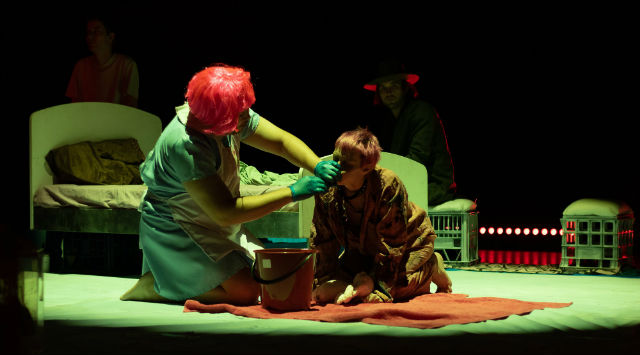
The boys are sent away from war, but their plane crashes and they land on an uninhabited island, having to fend for themselves, using instinct, along with their memories of civilisation. In Nigel Williams’ stage adaptation of William Golding’s Lord Of The Flies, the question of nature versus nurture once again comes to the fore. Jack is the unequivocal villain of the piece, a horrific specimen of mankind, hell-bent on causing death and destruction. His quick ascent to position of warlord tempts us to interpret the child’s evil tendencies as learned behaviour, although there is no denying the parts of ourselves that seem naturally drawn to causing harm.

The pessimistic tale is given a modern staging by director Kip Williams, who brings new dimensions to Golding’s concerns of 1954. Where many had in the past regarded Lord Of The Flies as a work about being human, Williams’ vision allows us to interrogate the text from perspectives of culture and gender, that had been routinely neglected. The diversity of cast (but alas, not of creatives) inspires discussions about whiteness and masculinity, as we ponder on the meanings of women playing boys, and of people of colour playing the colonials. Indeed, the production rarely lets us look away from the Brechtian artifice of its presentation, always consciously involving itself with a stylised design aesthetic that never tries to fool us with attempts at naturalism. The experience becomes one of theatre as commentary, rather than art as representation.

Instead of manufacturing a landscape of delusive vegetation, set design by Elizabeth Gadsby exposes the stage’s bare bones, for a chilling Brutalist effect, that establishes from the outset an appetite for subversion. Intensive work on lights by Alexander Berlage may lack restraint, but is undoubtedly spectacular with its many bold manoeuvres. James Brown’s sound design guides us through the story’s legendary descent into savagery, particularly impressive when it operates in conjunction with actors at their most dramatic and vivid.

There are moments when stagecraft overwhelms, but the ensemble proves nonetheless to be engaging, with Daniel Monks especially memorable in the role of Roger. Vile, vicious and thrilling in his depiction of a boy’s darkest inclinations, Monks delivers moments that are quite genuinely terrifying, and enormously powerful in what he has to say about our capacity for cruelty. The purest one is played by Rahel Romahn, who gives us a Piggy that is completely adorable, and in his nuanced demonstration of what virtue looks and sounds like, the actor ensures that all the show’s arguments can only be won by the good side. As the democratically elected leader of the pack, Mia Wasikowska is a passionate Ralph, but the actor tends to be too subtle in approach for the vast and cacophonous stage. Much more persuasive is Contessa Treffone as the big bad Jack, made resonant by Treffone’s intricate mimicry of masculine voice and gesture, for a portrait of male toxicity at its most despicable.

It is easy to get lost in discussions about how the boys have turned out so awfully, but more worthwhile is to find ways we can improve, or indeed reverse, this dreadful state we are in. Whether a result of genetics or of social conditioning, the characters in Lord Of The Flies are broken, and while one can choose to take a fatalistic reading of the text, the show certainly encourages a more hopeful interpretation. Boys will be boys, if we accept the status quo. Racism will remain a component of our structures, if we persist with them. Golding suggests that an intrusion is necessary for the lost ones to be rescued, but to sit and wait, is no solution for those who proclaim to be young and free.

www.sydneytheatre.com.au

Review: Relative Merits (El Rocco Room)

Venue: El Rocco Room (Potts Point NSW), Jul 10 – 25, 2019
Playwright: Barry Lowe
Director: Porter James
Cast: Isaac Broadbent, Samuel Welsh
Images by Joseph Issa

Theatre review
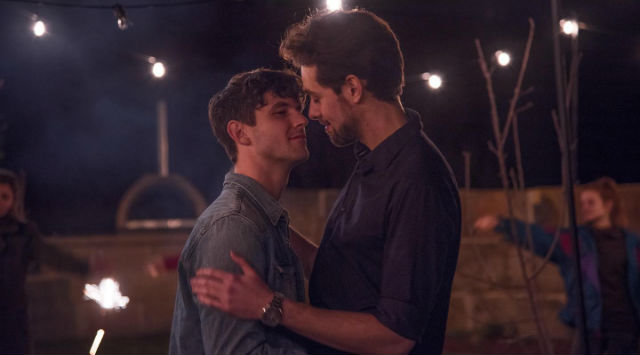
Clay has come to Sydney looking for his brother, just when Adam announces his retirement from footy stardom. It is not a convenient time, made even more difficult by Clay’s over-the-top homophobia, as he discovers Adam to be in the process of coming out as gay. Relative Merits by Barry Lowe describes some of the hardest experiences for LGBTQI people, when we have to deal with conflict between family members who are almost always ignorant of our challenges. The story takes place 30 years ago, and even though much of our social contexts have changed, what happens at home can still feel much the same.

Young Clay has to go through an extensive learning process over a short period, to undo a lifetime of programming. He is presented with a situation that goes against bigoted values he had inherited, but the love for his brother compels a process of rehabilitation, like many families have had to experience. Actor Isaac Broadbent convincingly portrays that transformation in Clay, with co-star Samuel Welsh adept at expressing Adam’s various states of torment. Performances often feel exaggerated, as a result of some very unsubtle writing, but director Porter James ensures that the narrative is conveyed with clarity, for an hour of nostalgic theatre that is not without its charms.

Queer babies are born everyday to straight parents. This is our history, and will continue to be our reality, as long as that binary of straight and queer persists. It is however possible to imagine a future in which people are not defined thus, that sexuality rejects those categories, so that we will no longer be able to be segregated by useless notions of difference. If we do preserve those differences, we must better appreciate the equality that exists within those differences, that we may be diverse and unpredictable, but human lives should not be ranked in arbitrary hierarchies that prioritise some over others. It may not always be our natural impulse to love all, but if there is anything that is worth indoctrination, it is that message of love thy neighbour that we must insist to come above all else.

www.lhe-agency.com

Review: Omar And Dawn (Apocalypse Theatre Company / Green Door Theatre Company)

Venue: Kings Cross Theatre (Kings Cross NSW), Jul 12 – 27, 2019
Playwright: James Elazzi
Director: Dino Dimitriadis
Cast: Maggie Blinco, Antony Makhlouf, Lex Marinos, Mansoor Noor
Images by Robert Catto

Theatre review
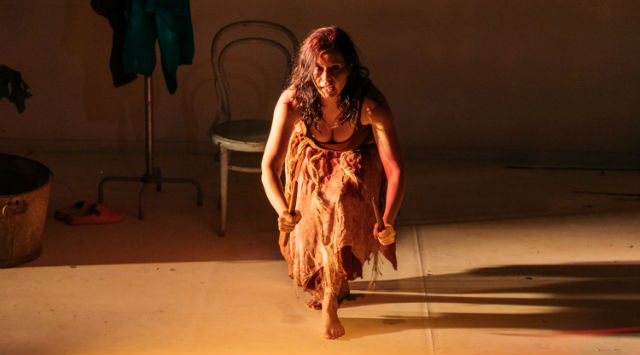
Dawn is 80 years of age, and a passionate foster carer. Omar is her latest ward, a wayward teenager who has little but frustration and anger to fill his days. Omar often joins Ahmed on a bridge, unwillingly selling sex to local closet cases. The two boys share an intimate relationship, bonded by homelessness, and similar cultural backgrounds that relegate them as outsiders. James Elazzi’s Omar And Dawn tells the story of gay teens from Lebanese-Australian and Muslim sections of our community. Along with its simultaneous focus on the ageing population of white Australians, the play brings together these two neglected groups, for an unexpected theatrical juxtaposition that reveals a facet of our national identity usually kept under wraps. There is a lot of shame here, but none of it is of our protagonists’ doing. The invisible character in Elazzi’s play is Australia, the part of us that is ignorant, heartless, and wholly responsible for the suffering that people like Omar and Dawn have to endure.

Elazzi’s writing is deeply insightful, exquisite in its ability to put to action, and to words, parts of life that we habitually avoid. There is a fearlessness in its interrogation of the taboo, that makes Oman And Dawn so fascinating; although it sits right under our noses, real talent is required to make us see it properly. Directed by Dino Dimitriadis, the show is extraordinarily tender, and even though sentimental in its rendering, it communicates succinctly, bringing to light with little fuss, that which we have long needed to acknowledge. The production offers an emotional experience, but there is no mistaking the coldness upon which our empathy is drawn. Lights by Benjamin Brockman and sound by Ben Pierpoint portray the steely and pitiless qualities of being Australian, with Aleisa Jelbart’s stage design of grey gravel further asserting the needlessly harsh conditions that some of us are subjected to.

Actor Antony Makhlouf is an energetic presence, and although repetitive with his expressions of Omar’s angst, an unmistakable sincerity in his performance keeps us sympathetic to his plight. Maggie Blinco plays a very dignified Dawn, to provide an elegant, and deceptively quiet, study of a self-assured woman determined to do what is right. Effervescence is brought by Lex Marinos, who is convincing, and wonderfully entertaining, as Dawn’s mechanic brother Darren. It is surprising perhaps, that the most poignant moments come from supporting actor Mansoor Noor, whose powerful depiction of Ahmed’s turmoil, has us spellbound and devastated. The authenticity in Noor’s display of despondency shows remarkable skill, and although profoundly heartbreaking, delivers some seriously delicious drama.

When people become homeless, our impulse is to question the individual, as though our lives are so conveniently detached. Many of us have faced abandonment, by people whose duty it is to love and care for us. How we move from a broken nest, to find a new space of security, will only ever be hard. Omar is always on the verge of giving up, but Dawn has enough resilience for the both of them. She understands that to give of herself, is the only way to escape emptiness. It looks very much like unconditional love, but the reciprocity of that relationship is unequivocal, even if it is not immediately evident.

www.apocalypsetheatrecompany.com | www.greendoortheatreco.com

Review: This Bitter Earth (New Theatre)

Venue: New Theatre (Newtown NSW), Jul 11 – 27, 2019
Playwright: Chris Edwards
Director: Riley Spadaro
Cast: Mitchell Bourke, Michael Cameron, Matthew Predny, Elle Mickel, Sasha Simon, Ariadne Sourgos
Images by Bob Seary

Theatre review
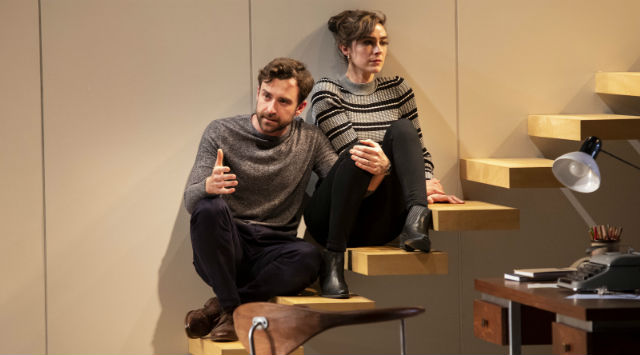
Comprising six scenes, This Bitter Earth by Chris Edwards is essentially a series of short plays about being young, queer and white in Sydney. Although not particularly profound, Edwards’ writing is ultimately insightful, with an absorbing balance of light and dark to keep us intrigued and entertained. A refreshing addition to the legacy of queer playwriting, This Bitter Earth deviates from the tradition of torment and trauma, for a theatre that presents the hardship of coming-of-age as humorous and strikingly natural. The oppressive closet is conspicuously missing in action.

The staging is polished, elegant and very attractive, assembled by an excellent design team, who all but steal the show with their remarkable sense of style. Set and costumes by Grace Deacon are inventive and sophisticated, beautifully considered in each of its spatial transformations between scenes. Phoebe Pilcher and Morgan Moroney’s lights are sensual and poetic. There is a passion in their practice that proves to be quite captivating.

Riley Spadaro’s confident direction gives This Bitter Earth a gravity that helps it sing with purpose. His ability to convey nuance prevents the show from turning flimsy, even at moments when the narrative shifts to frivolous concerns. The show is performed by a charming cast, including an effervescent Elle Mickel whose comic timing is a real asset to the production. Matthew Predny introduces palpable vulnerability to his characters, along with a dynamism that is satisfyingly disarming. Also impressive is Mitchell Bourke, whose portrayal of the classic but tricky combination of camp and despair, resonates with surprising authenticity.

Generations of LGBTQI people have worked hard for today’s social and legal advancements; the equality that we do have are hard-won, to say the least. Watching our young, privileged ones in This Bitter Earth go through their 2019 version of rites of passage, is a joyous exercise, even as we watch them suffer through their growing pains. Coming out stories have dramatically changed, as we had hoped. Our tribe can now begin to experience early adulthood in a way that is no longer exponentially harder than their straight counterparts. Their challenges remain different from the mainstream, but the additional labour of having to deal with structural prejudice, is quickly vanishing. Understanding sex will never be easy, but there is no need for the process to be made more difficult by anyone’s ignorance.

www.newtheatre.org.au

Review: We Are The Himalayas (Brave New Word Theatre)

Venue: Fringe HQ (Potts Point NSW), Jul 3 – 21, 2019
Playwright: Mark Langham
Director: Richard Cornally
Cast: Charlotte Chimes, Steve Corner, James Gordon, Chelsea Hamre, Ben Mathews, Emilia Stubbs Grigoriou
Images by David Hooley

Theatre review
It was 1938 when Anna Larina was first incarcerated. With her husband Nikolai Bukharin charged with treason against the Soviet Union, Larina found herself similarly persecuted by the paranoid state, for simply being a wife. Mark Langham’s We Are The Himalayas tells the tale of the individual versus an oppressive regime, featuring characters from a specific point of history, but is timeless in its relevancy. Scintillating dialogue is the work’s greatest pleasure. Its narrative can be slightly lacklustre, but there is much to enjoy in the dynamics between characters, and in Langham’s words themselves.

Leading lady Charlotte Chimes offers focus and intensity, although a greater exploration of range and depth for Larina would create a stronger sense of empathy for her audience. A more complex rendering of personality comes from Ben Mathews who gives a Bukharin that feels layered, and hence intriguing. As secret police apparatus Lavrentiy Beria, is the exceptional Steve Corner, whose nuanced dramatics has us enthralled. His scenes with Chimes and Mathews have them lifting their game, for a second half of We Are The Himalayas that quite suddenly turns explosive.

Not every actor is able to deliver with enough resonance for the show to be consistently meaningful, but director Richard Cornally keeps his storytelling disciplined, with a considered approach that successfully accumulates tension over the duration. Sound design by Patrick Howard is especially noteworthy for its impressive precision, guiding us across time and space with remarkable sensitivity.

There is strength in numbers, although our collectivism can easily turn evil when left unchecked. The greater good is always a noble consideration, but the autonomy of singular entities must never be conveniently disregarded. In 2019, we can see with great clarity, the corruptible nature of power, with those in high places becoming increasingly wanton in the way they execute their affairs. It is tempting to think that our Western democracy is a world away from Stalin’s communism, but the second we ease pressure on the brakes, our ruling class will no doubt drive us to a destination that few will appreciate.

www.bnwtheatre.com.au

Review: Once (Darlinghurst Theatre Company)

Venue: Eternity Playhouse (Darlinghurst NSW), Jun 26 – Aug 4, 2019
Book: Enda Walsh
Music & Lyrics: Glen Hansard, Markéta Irglová
Director: Richard Carroll
Cast: Joe Accaria, Stefanie Caccamo, Cameron Daddo, Victoria Falconer, Toby Francis, Conrad Hamill, Drew Livingston, Abe Mitchell, Rupert Reid, Alec Steedman, Joanna Weinberg
Images by Robert Catto
Theatre review
Guy meets girl, and girl decides to spend all her days helping insecure guy fulfil his dreams. Once is only about a decade old, but already feels like a story from an archaic era. The musical is however not unappealing, with an avalanche of beautiful melodies, and the now famous concept of having its cast double up as musicians for the show’s entirety. It is quite a spectacle, watching eleven performers playing instruments, singing and acting. Entertainment value for Once is predictably high, even with all of its unrelenting cliches.

Directed by Richard Carroll, the production is thoroughly sentimental, to emphasise the romantic nature of the central relationship, although it does seem to diminish the potential for greater humour through the plot. Set design by Hugh O’Connor elegantly transforms the stage into a very believable Irish pub, with Peter Rubie’s lights bringing a dusty melancholia to proceedings. Remarkable work by sound engineer Dylan Robinson translates all the live music into honey for our ears, making the sounds of Once a truly memorable feature.

Lead performers Stephanie Caccamo and Toby Francis are exceptional singers, both deeply impressive with their renditions of these saccharine show tunes; we are left wanting to hear their voices forever. Their acting however is rarely convincing, with chemistry between the two a conspicuous absence. Charisma is compensated by several of its supporting performers, most notably, Victoria Falconer and Drew Livingstone, who create adorable characters that try to bring a sense of effervescence to the stage. On occasions where movement director Amy Campbell has the opportunity to work her magic, everything comes to life, but those moments are few, in this frequently sombre presentation.

Once allows us to celebrate the extraordinary talent of those who live amongst us. There is so much that our artists are capable of, if only they have all the platforms necessary to demonstrate what they do best. When we first meet the protagonist, he had all but given up hope of finding an audience for his wonderful songwriting. This is sadly an all too common truth for so many. Humans are creative by nature, but the way we live today, so often negates those capacities, in favour of conventional systems that require the repression and impediment of our best tendencies. Artists need self-belief, and they need to be supported, especially when the going gets tough, as it invariably does.

www.darlinghursttheatre.com

Review: I Hope It’s Not Raining In London (Bearfoot Theatre)

Venue: PACT Centre for Emerging Artists (Erskineville NSW), Jun 26 – 29, 2019
Playwright: Nicholas Thoroughgood
Director: Riley McLean
Cast: Daniel Cottier, Cassie Hamilton, Nicholas Thoroughgood, Zoe Walker
Images by Riley McLean

Theatre review
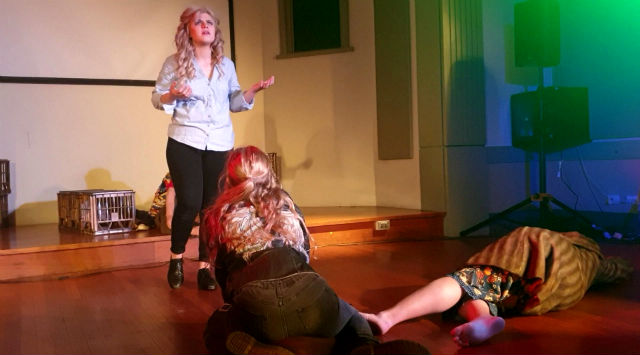
It begins with two young people in a mysterious room, both of whom are not quite sure who or where they are. The amnesia gradually fades away, as they proceed to recollect memories explaining how they got here. We learn soon enough, that Nicholas Thoroughgood’s I Hope It’s Not Raining In London is about these protagonists’ relationships with their parents. They look back at the warm and the chilling, and try to figure out, where to from here. It is a sensitive piece of writing, well considered but perhaps not quite as powerful as it wishes to be. The structure elicits a healthy dose of intrigue, although we find ourselves arriving at its climax with insufficient dramatic tension.

Directed by Riley McLean, the production is elegantly styled, with an emphasis on chemistry between actors that keeps our attention on the story. Daniel Cottier and playwright Thoroughgood perform the central characters, both persuasively naturalistic, with an ease and familiarity with the material that allows them to bring sizeable confidence to the stage. Also noteworthy is McLean’s lighting design, simple but varied, efficient with the management of scene transitions, and effective in conveying atmospheric transformations.

Some say that heaven, hell and purgatory are not about the afterlife, but are allegorical concepts for the here and now. Indeed, it is helpful to always think about today as a consequence of yesterday, in order that we may learn to make improvements. In our storytelling too, causation, of one thing leading to another, shapes all our narratives. We can however, disconnect from the past, or at least, formulate new beginnings, so that we can experience radical reconstructions, when so desired. What’s done cannot be undone, but what we do with the future is only restricted by imagination.

www.facebook.com/bearfoottheatreaus

Review: The Happy Prince (Little Ones Theatre)

Venue: SBW Stables Theatre (Kings Cross NSW), Jun 25 – Jul 6, 2019
Director: Stephen Nicolazzo
Cast: Catherine Davies, Janine Watson
Images by Robert Catto

Theatre review
It is the perfect symbiotic relationship, when the swallow meets the statue and they see deep into each other, not through some mutually obsessive infatuation, but by a shared fervour for bringing peace unto others. In this adaptation of Oscar Wilde’s short story The Happy Prince, we observe selflessness as the ultimate joy and fulfilment. Independently, each entity can do little, but together, they are able to help people in need, and it is only in bringing happiness to strangers, that they themselves are at their most exultant.

Directed by Stephen Nicolazzo, the show is correspondingly generous. Its messages are earnest, fiercely so, and it stringently disallows any room for our customary cynicism. A profound sense of melancholia works almost as its guiding light, taking us down a journey of meditative reflection, to facilitate an examination of the values we use to navigate this thing called life. The swallow and the statue exist in a concurrent state of joy and pain, and we feel every nuanced articulation of emotion depicted by this extraordinary staging. Poetic, with a sublime beauty that transcends all manner of convention, The Happy Prince speaks its truth with remarkable clarity, to deliver an hour of theatre that is as moving an experience as any fairy tale could wish to be.

Music by Daniel Nixon holds us tight, keeping us firmly in the grasp of a show determined to connect with the best of our humanity. Nixon’s work is tender, tremendously stirring, and we respond only with an attitude of pure benevolence. Katie Sftekidis’ lights have a similar effect, drawing us into a sentimental dreamscape, gently pushing away inhibitions so that our capacities know to welcome all the warmth, and wistfulness, of Wilde’s story.

Catherine Davies and Janine Watson are our players, both enchanting and majestically impassioned, full of soul in their performance of a piece that all our broken hearts need to encounter. Watson is the statue, the eponymous Happy Prince who shows us that glory means nothing when left enshrined and static. The actor communicates powerfully, the best of human nature, with a stylistic restraint that barely contains the urgency of what she wishes to convey. Davies takes flight as the swallow, giving us comedy and pathos in equal potent measure, precise at every point in the illustration of her character’s vacillating transformation, from apathetic to spirited. The robust couple is inventive, with an extraordinary charisma that demands our attention. Their sensuality adds a dimension of eroticism to the work, that operates to enhance the theme of compassion, as the play’s central concern.

It is easy to think of sacrifice in terms of loss. In The Happy Prince however, we are reminded that the purpose of sacrifice is to attain something greater, that more often than not, paying a price will lead us to a reward. We watch the statue and her swallow go through considerable suffering, but we are left without doubt as to the immense satisfaction they experience as a result of their pain. Pleasure does not always involve the sting of its cost, but when one is compelled to give until it hurts, what returns is usually from the realms of the divine.

www.littleonestheatre.com.au