Review: The Goat Or Who Is Sylvia? (King Street Theatre)

goatVenue: King Street Theatre (Newtown NSW), Sep 7 – 12, 2015
Playwright: Edward Albee
Director: Barry Walsh
Cast: Jeremy Burtenshaw, Kiki Skountzos, Johnny Nolan, Mathew Rope

Theatre review
Examining the relationship between morals and sex is a boundless task, but also an exceedingly rewarding one. Looking closely at our attitudes surrounding the most fundamental of desires reveals almost everything there is to know about being human, especially the way we formulate beliefs and ideals. In Edward Albee’s The Goat Or Who Is Sylvia?, we encounter at close range, one of the most shocking of our taboos, and are forced to evaluate the rules of society, sexual and otherwise, along with the ways in which we uphold them. The script is outrageous and wild, transgressive and radical. It ignores notions of taste and belligerently challenges its audience, but grounds its arguments firmly in logic. The combination of intellect and sensationalist amusement in the play addresses the nature of theatre perfectly; we are captivated and entertained, but it refuses to let our participation in the work be a passive one. Questions are raised, and whether we like it or not, it pushes our boundaries to get us to the appropriate answers.

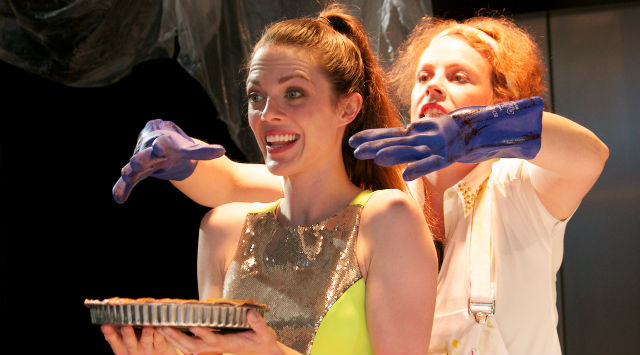
Barry Walsh’s direction lacks refinement, but his flamboyant and fearless approach to the material conveys the text’s progressive ideologies charmingly. There is an infectious joyfulness in the subversive tone that pervades the work, but Walsh takes care in preventing its aggression from becoming unbearable for regular audiences. When the production is at its strongest, we are uplifted by its refreshing philosophy and daring suggestions, but at its weakest, performances can feel stilted and its comedy underdeveloped. Cast members are full of conviction, with Kiki Skountzos’ work as Stevie leaving the strongest impression. Energetic and precise, her ability to blend light and dark in the blackest of comedies is perhaps the most polished aspect of this staging. Jeremy Burtenshaw’s kooky interpretation of his role Martin, is an enjoyable one, but the actor is not always convincing playing a man twice his own age. There is insufficient depth in the presentation of his character’s predicament, but its very absurd and unnerving nature helps the actor’s performance connect firmly with our attention.

Great artists have the courage and eloquence to speak up and tell society what it does wrong. They show us the arbitrariness and the irrationality of our beliefs and conventions, and aim to find restoration based on ideas that are truer, kinder and more inclusive of the different types of people that we inevitably are. The issues that The Goat Or Who Is Sylvia? discusses are difficult and messy. We are not allowed to respond with convenient and tired pre-made solutions, but are encouraged to go through a process of deliberation that is often agonising and disarming. This show is the furthest possible thing from boring, and its ridiculous comedy is the absolute antithesis of stupidity. It requires an adventurous spirit and an open mind to tackle, which explains why it finds itself tucked away in the obscure depths of Sydney’s independent theatre.

www.kingstreettheatre.com.au

Review: 6 Degrees Of Ned Kelly (Melita Rowston’s Shit Tourism)

melitarowstonVenue: Erskineville Town Hall (Erskineville NSW), Sep 2 – 6, 2015
Playwright: Melita Rowston
Director: Melita Rowston
Cast: Melita Rowston

Theatre review
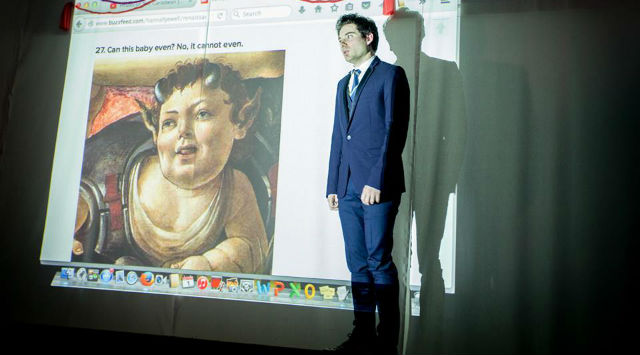
The persistence of Ned Kelly’s legend in the consciousness of many Australians is symptomatic of the anti-authoritarian culture that we have inherited, since the dawn of European settlement. We are highly suspicious of governments and law enforcers, so it follows that myths about outlaws bear an eternal appeal. Melita Rowston’s 6 Degrees Of Ned Kelly is an exploration of her ties to that distinguished history, and an exercise in defining and aligning herself with an underdog characterised by his famed qualities of integrity and struggle. Rowston’s presentation takes the form of a relatively straightforward talk, with the support of a very well assembled slideshow. Her research is incredibly extensive, and the tales that she spins are surprising and fascinating, with fresh approaches to the Ned Kelly mystique that reveal how he remains relevant today.

Rowston’s presence is often tentative and nervous, but she relies on a warm enthusiasm to attain a comfortable connection with her audience, and the environment she creates is unquestionably inviting and accessible. We are not required to be aficionados, or indeed fans, of the Kelly gang, for we can all relate to the stories about family, and to that intuitive longing for a meaningful affiliation with the land on which we reside. Modernity has a propensity to keep people apart, and Rowston’s preoccupation with finding personal links that converge at a point of unity, is an admirable one. Fashion comes and goes, but the stuff that inspires us to be true and good, will resist annihilation.

www.melitarowston.com

Review: The Book Club (Ensemble Theatre)

ensembleVenue: Ensemble Theatre (Kirribilli NSW), Aug 26 – Oct 3, 2015
Playwright: Roger Hall (adapted by Rodney Fisher)
Director: Rodney Fisher
Cast: Amanda Muggleton
Image by Tom Blunt

Theatre review (of a preview performance)
The Book Club by Roger Hall takes a light-hearted look at the follies of a middle aged, middle class Australian woman, who without the stresses of a career or financial uncertainty, occupies her time by indulging in love affairs with books and sex. It is a joyful life, and while her story is mostly inconsequential, it does offer a refreshing way of looking at marriage in contemporary times. Traditional notions of monogamy and fidelity persist, but what actually happens in secret is anybody’s guess. Husbands and books are entirely different things but the effort required to remain faithful to either, can be equally onerous under certain circumstances.

Hall’s script has several disparate focuses, and runs at approximately 90 minutes, which is a longer duration than most monologues can sustain. This production by director Rodney Fisher struggles to establish a comfortable plot trajectory, and the play takes a lot of time before getting to the crux of its own existence, but it is fortunately able to deliver more than a few laughs along the way to keep us entertained. Star of the show Amanda Muggleton is an exuberant and affable presence as Deb, with a natural innate ability to charm as the sole performer of the piece, but on the occasion of this final preview before opening night, it is clear that further rehearsal time is required. In sections of the play where the actor is confident, the rhythms and nuances she creates are completely delightful, but in her many unsure moments, tensions are lost and concentration proves challenging. There were 5 requests for line prompts, which demonstrate quite obviously the prematurity of the work, and we are prevented from engaging with the show at any valuable depth.

Marriage and art are constantly under scrutiny. There is an idea of success that we apply not only from within but that we also invite from the public. Our social nature means that we crave approval for the things we do, no matter how personal, and we want things to always work out. When writing a book, the process can be intensely insular, but ultimately, the finished product goes out into the big wide world, and the author opens themselves to criticisms of all kinds. In a marriage, a couple works in private to find harmony and happiness together, and then present to society the best image of unity they can muster. Not every book will be deemed a success, and not every day in married life is perfect, but it is in the doing, not the accolades, that true meaning is found, successful or not.

www.ensemble.com.au

Review: The Aliens (Outhouse Theatre Co)

outhouseVenue: Old Fitzroy Theatre (Woolloomooloo NSW), Aug 25 – Sep 19, 2015
Playwright: Annie Baker
Director: Craig Baldwin
Cast: James Bell, Jeremy Waters, Ben Wood
Image by Rupert Reid

Theatre review
Social outcasts are a sad fact of life. Communities are built upon identities that will inevitably exclude “undesirables”, some of whom can form sub-cultures, and others are left to their own devices. Annie Baker’s extraordinary The Aliens features the invisible and ignored; people judged to be of no value to economies, and are indeed, a burden to our gross domestic product. We refuse to acknowledge their contributions to society, because they contradict our definitions of what is valuable, and are considered to be of no benefit to our selfish needs. Baker’s writing is the most sensitive and tender piece of theatre one can wish to encounter. It presents downtrodden lives with an effortless humanity, looking at its neglected personalities and all their open wounds that fail to heal, with a persuasive compassion. Baker turns her strangers into intimately familiar beings, by revealing their pains and desires in a way that we can immediately recognise, and by her deft transformations of peculiarities into charming eccentricities.

Direction by Craig Baldwin is idiosyncratic and powerful. Every line of dialogue is replete with poignancy, along with the many purposeful silent pauses that occur to disarm and entrance. The play is rich with subtexts and references that resonate with great effectiveness, to communicate its message of acceptance and social inclusion. The vulnerability of its characters is portrayed with an unexpected dignity, so that their foibles and weaknesses cease to be strange or reprehensible. There is little in terms of narrative in the piece, but the relationships between its three men are carefully harnessed and perfectly realised. The unusual and intense representation of platonic love between men may be rarely seen on stage, but we believe every second of their intimate friendship, and it moves us from beginning to end.

KJ masks his sorrows with substances and laughter. Played by Ben Wood, the role ranges from being very silly to deeply sorrowful, and the actor runs that entire gamut of emotive and technical demands with wonderful fluency. There is a playfulness in Wood’s approach that urges us to meet KJ’s stories with an open heart, and the results are marvellously affecting. Jeremy Waters as Jasper, is heartbroken and heartbreaking. Coupling a beautiful innocence with impressive presence, Waters’ performance is irresistible, and also completely arresting. His style is understated yet robust, and charismatic beyond belief. In the role of awkward teenager Evan is James Bell, who lifts our spirits with a simple but accurate depiction of purity, and whose gentle approach provides a dimension of aching sentimentality that gives the show its exquisite melancholia.

Also noteworthy are the production’s visual design. Hugh O’Connor’s work on set and costumes is restrained but transportative. Its Americaness is convincing without being deafening, and his vibrant use of colour is a necessary and welcome counterbalance to an otherwise depressive environment. Lighting designer Benjamin Brockman’s adventurous engagement with the incessant atmospheric shifts of the text, is a potent element that expertly guides us through the complex quandary of emotions that is The Aliens.

Anyone can fall, because nobody is invincible. In Annie Baker’s play, we see the kindness that people can have for each other, but also the care that is missing in much of our lives. It discloses the nature of how we do or do not look after each other, and evokes notions of unconditional love that many have forgotten. The outsiders of The Aliens connect in the most meaningful way possible, and watching their story unfold brings to mind our own interactions with the world; where we are successful, and where we flounder. As Australia’s attention to economic development becomes more obsessive than ever before, our interest in the ones who fall behind must grow accordingly. Instead, our political votes go to those who claim to protect our financial well being, and those who demonstrate consciousness beyond money, are struggling more and more with each passing election.

www.oldfitztheatre.com | www.outhousetheatre.org

Review: Dancendents (PACT Centre For Emerging Artists)

pactVenue: PACT Theatre (Erskineville NSW), June 17 – 20, 2015
Choreographers: Flatline, Leah Landau, Rhiannon Newton
Cast: Flatline, Leah Landau, Rhiannon Newton
Image by Matt Cornell

Theatre review
In the search for a definition of art, Flatline’s work Drawn To Move relies on the exposure of process in dance choreography to give meaning to a completed work. Two pencil scribblings are displayed on a wall, emulating archetypal notions of the art establishment. From a fine art perspective, the pieces are primitive and ugly, but in the live drawing of the third, the creators reveal the rationale behind the pieces, rendering irrelevant the commodified hanging objects, and shifting attention to the dance, and time, behind the inanimate finished products.

In a charming parallel, Rhiannon Newton’s Assemblies For One Body is concerned with using the rehearsal process quite literally, to present a performance piece. Newton goes through repetitive movements, with facial expressions and an eyeline that demonstrates an inward focus, as she seeks to unlock motion and gesture for reaching an intangible target of perfection. Without the presentational vocabulary of a conventional show, Newton relies on an enduring vitality to keep her audience engaged. We are drawn in by the energy of her tenacious commitment in exploring body and space, and she fascinates us with an intelligent juxtaposition of sounds (rhythmic and otherwise) with her physicality. We can never fully grasp Newton’s mental processes in each moment, but she certainly encourages us to form personal narratives and interpretations in the presence of her visual elucidations.

Leah Landau’s approach in Summer Bone is decidedly different. Inspired by ideas about nature, wildlife, farming and food, the work is underlined by a serious and earnest environmental concern, but with manifestations on stage that are humorous and thoroughly whimsical. Landau creates language with her body, and communicates persuasively, basic concepts of conservation, that would otherwise struggle to find sophistication in more conventional paradigms. It is hard to find new perspectives on long-standing issues, but art can establish new depictions so that we understand them with refreshed interest. Beyond its political message, Landau’s is a delightful piece of physical theatre that captures imagination, and amuses sight. It is dance that breaks a few rules, so that we come to a renewed appreciation of the artist’s passions.

When theatre abandons narrative, we see more clearly, why we do the things we do, and what it means to make art. Modern life is all but usurped by capitalism, and we forget our humanity outside its gluttonous and all-consuming monetary imperatives. Reading abstract dance, is to explore reasons behind human behaviour. Allowing incoherence to transpire, within the restrain of truth, will deliver a kind of beauty and transcendental pleasure that is unique to the art form, and it is in its embrace that we are reminded of the deeper and more rewarding facets of life.

www.pact.net.au

Review: Mothers And Sons (Ensemble Theatre)

ensembleVenue: Ensemble Theatre (Kirribilli NSW), Aug 21 – Sep 27, 2015
Playwright: Terrence McNally
Director: Sandra Bates
Cast: Tim Draxl, Thomas Fisher, Jason Langley, Anne Tenney
Image by Clare Hawley

Theatre review
In Mothers And Sons, Terrence McNally uses the simplest of stories to present a range of thoughtful and provocative themes that are relevant to both our contemporary concerns, and to perennial troubles of human nature. Katharine comes to visit an impossibly perfect gay couple, Cal and Will, at their apartment in Manhattan. Andre (Katharine’s son and Cal’s previous partner) had died of AIDS 20 years ago, and it is only now that Katharine decides to pick up the pieces, and to find resolution with demons of the past that continue to haunt her. McNally’s writing is emotional, intelligently meaningful, and striking in its lyrical beauty. There is also an engaging humour in its dry wit and dark comedy that underscore the tormented relationships being dissected.

Sandra Bates’ direction of the piece explores with sensitivity, the many social issues and personal afflictions characteristic of the play. There is a deliberate gravitas that gives the production its integrity, and whether dealing with intimate matters like resentment and regret, or wider subjects of kinship and homophobia, Bates is able to give them all a reverential emphasis that encourages its audience to handle with care. The play tends however, to be too serious in tone, especially at its early stages, where our encounter with personalities require a lighter touch.

Played by Anne Tenney, Katharine is a staunch figure, a mean old woman whose incessant use of the word “hate” reveals as much about herself as it does her pessimistic view of, well, everything. Tenney’s portrayal is psychologically convincing and ultimately a moving one, but the comical eccentricities of her character’s melancholic despair are not embraced with enough power. The actor delivers a few laughs over the course of the show, but the exuberance of the text is frequently downplayed to accommodate a more literal interpretation of Katharine’s depressed experience of the world. Jason Langley is an extremely gentle Cal, very amiable and authentic, but insufficiently agitated in his tensions with Katharine, and often too subtle with his passion for his gay rights and lovers. Both actors create together, a stunning final scene of breathtaking sentimentality, but the arduous journey towards the play’s conclusion could be managed with greater, and more entertaining, turbulence. Adding a dimension of liveliness to proceedings is Tim Draxl in the supporting role of Cal’s husband Will. Draxl sustains an impressive energy through sequences of shifting temperaments, and is relied upon to provide breaths of fresh air at each entrance, to a very restrained stage.

We all feel the trajectory of time and the way it moves things forward, with or without our selves. Katharine is deeply unhappy, but she refuses to accept the transformations that occur around her, and withdraws from participating in the joys of life that are easily within reach. The feelings of being hard done-by are familiar to everyone, and Mothers And Sons illustrates with excellent clarity, the anguish of being enslaved by one’s own obstinacy. It also persuades us on the changing nature of the family unit; how we conceive of same-sex marriages and the bearing of children within those unions. A woman unable to reconcile her homophobia with her son’s sexuality punishes much more than herself. Hate tries to contaminate its environment, and often it succeeds, but truth and the human conscience has a way of defeating its poison, even if the process needs to drudge through generations of struggle and wasted lives.

www.ensemble.com.au

Review: The Tempest (Bell Shakespeare)

bellshakespeare
Venue: Sydney Opera House (Sydney NSW), Aug 19 – Sep 18, 2015
Playwright: William Shakespeare
Director: John Bell
Cast: Robert Alexander, Matthew Backer, Felix Gentle, Brian Lipson, Arky Michael, Hazem Shammas, Maeliosa Stafford, Damien Strouthos, Eloise Winestock
Image by Prudence Upton

Theatre review
Shakespeare’s fantastical masterpiece The Tempest, with all its mystique and magic, is almost an allegory for the transportative and imaginary qualities of the world of theatre. On Prospero’s island, anything can happen, and on the stage, it is precisely that boundless unpredictability that makes it a special, and for many, sacred space. Whether it is the stories of everyday that are being presented, or manifesting scenarios beyond the wildest of dreams, theatre has the ability to provide something extraordinary to all its participants.

Like Prospero abandoning the magical arts at the play’s end, John Bell directs his last production with this rendition of The Tempest. The cast he has amassed is an impressive one, and Bell’s extensive acting background is clear to see, in the fascinating and intricate characters being brought to life. Every player is detailed, energetic and palpably present, yet the resultant show is oddly placid. Themes of the text fail to resonate. Ideas such as the distinctions we draw between nations, between nature and civilisation, between freedom and confinement, struggle to find illumination, even though their presences in modern life remain relevant. Exoticism is explored well in the show, but its sense of adventurous fantasy is not always established with sufficient dynamism. Music by Alan John and sound design by Nate Edmondson are outstanding features; helping to drive the production through atmospheric transformations and exquisite moments of ethereality. Less successful are its visual elements that seem to lack whimsy and ambition. The story being told is celestial and outlandish, but what we see is staid and dated. Even exits and entrances are awkwardly managed to accommodate the inconvenient access to stage wings of the uninspired set.

Prospero is played by Brian Lipson, whose nuanced and vibrant performance provides sustenance for the entire plot, and whose sharp focus keeps us compelled. The production suffers from an overall lack of poignancy, but Lipson depicts emotions with gravitas and complexity that assist with some level of audience identification. Arky Michael and Hazem Shammas are a show-stealing couple whose mischievous antics are a persistent source of amusement. They create some of the most memorable sequences with brilliantly broad comedic interpretations of their dual roles (Michael plays Sebastian and Trinculo, and Shammas is Antonio and Stephano), captivating us with what looks to be an updated, and improved, Laurel and Hardy act.

The story is about kingdoms, sorcery, and heavenly creatures, but the show does not bear the majesty of the famed text. With its delicate and sincere approach, it is easy to be disappointed by the production’s simplicity, even though the thoroughness of its thespian executions are evident. William Shakespeare’s imagination is a genius that is unparalleled, and it seems that our meagre capacities in the dark auditorium requires greater facilitation, in order to achieve the same vision he had intended.

www.bellshakespeare.com.au

Review: The Women (New Theatre)

Venue: New Theatre (Newtown NSW), Aug 11 – Sep 12, 2015
Playwright: Clare Boothe Luce
Director: Deborah Jones
Cast: Heidi Baleisis, Melissa Burgess , Kailey Higgins, Jordan Keyes-Liley, Celia Kelly, Susan M Kennedy, Jess Loudon, Emma Louise, Joy Miller, Nell Nakkan, Lauren Orrell, Alexandra Plim, Jade Potts, Eleanor Ryan, Annie Schofield, Helen Stuart , Vola Vandere, Sandy Velini
Photography © Bob Seary

Theatre review
The play first appeared in 1936, with film versions following in 1939 and in 2008. Clare Boothe Luce’s The Women features a big roster of characters, all female, but it does not fit conveniently into notions of feminism. Arriving several years before the first World War, the play embraces life in the post-Great Depression era, reflecting no concern for big social issues of the day. Girls grew up to become heterosexual wives, and success was measured by her ability to keep a happy home. By today’s standards, the stakes in the play are incredibly low, but Boothe Luce’s exaggerations of domestic upheaval remains amusing, even though much of its regressive politics are undoubtedly irritating, notwithstanding its many outspoken and bold characters.

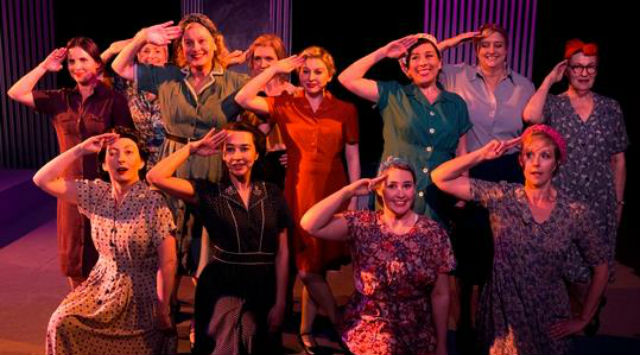
Direction by Deborah Jones pays homage to films and stars of the era, with outlandish performances and vaudeville humour pitched at an ideal where bigger is better. It is a welcome revisit to an almost forgotten style of theatre that proves to be unexpectedly refreshing and often very funny indeed. The production is not completely successful at bringing clarity to all depictions of characters and narratives, but every sequence is entertaining, with impressive power from a cast that is determined to play hard.

The very enthusiastic Jessica Loudon is Sylvia Fowler, a shallow and narcissistic troublemaker who fans every flame only to feign agony when lives are burnt to ashes. Loudon’s brand of brazen sass is a seductive combination of Mae West and Lucille Ball, and her persistently vibrant presence is an infectious one, which grabs our attention and demands that we engage in the party, of which she is the scintillating life of. Also outstanding is Helen Stuart who plays Mary Haines, the jilted misérables. It is not a particularly attractive role, but the actor brings grace and a beautiful authenticity to her depiction of heartbreak, desperation and betrayal that can only be met with empathy. Her focus needs greater tenacity, but she makes us believe, and understand, the far-flung world of privilege that she inhabits. Jade Potts plays a smaller role but leaves an excellent impression with a charming portrayal of a feisty and intelligent young girl.

It must be remarked upon that although the production makes the wise decision of not casting black women in the roles of servants, actors who are not of Caucasian appearance, are noticeably absent from the very large group of 18. We must celebrate a production that features talented women of all ages and sizes, but monoethnicity at this particular juncture of time and space, is an uncomfortable issue that requires attention.

In The Women, characters are split into madonnas and whores, and all of them are defined against unseen men who wield control over their emotions and destinies. We have, thankfully, evolved far enough to be able to recognise its many archaic and disappointing representations of womanhood, but the production needs to acknowledge more distinctly, this distance created by feminist developments over the decades, for a more meaningful approach to the text, and potentially, for greater comic effect. We have travelled a great distance from “there’s only one tragedy for a woman; losing her man!” of Boothe Luce’s script, and although it is certainly true that social equity remains a struggle, we can at least be grateful to be able to quote instead, the immortal Joan Crawford’s words in Mommie Dearest, “Don’t fuck with me, fellas. This ain’t my first time at the rodeo.”

www.newtheatre.org.au

Review: Ruby Moon (Samsonite Productions)

samsoniteproductionsVenue: The Factory Theatre (Marrickville NSW), Aug 12 – 23, 2015
Playwright: Matt Cameron
Director: Johann Walraven
Cast: Pash Julian, Samantha Lee
Image by Jacob Strong

Theatre review
Matt Cameron’s Ruby Moon is a dark exploration into the human condition at extraordinarily difficult times. The Moon family experiences a profound loss, and we witness the manifestations that follow, in psychological and behavioural terms. Cameron’s writing is morbidly fascinating and very entertaining, with an unusual approach to the way we express bereavement. The script finds a beautiful balance between humour and anguish that allows for a thoroughly amusing theatrical experience in spite of its undeniable gravity. The strange dialogue and quirky characters are brilliantly constructed for a unique experience that can still engage our emotions.

Direction of the work by Johann Walraven brings an intrigue to the stage that befits the mysterious nature of Cameron’s play, and the unpredictability of the plot is successfully preserved in this incarnation. There are good attempts at offbeat comedy, but the haunting qualities of the text are not sufficiently explored. Design aspects are elegantly executed but they need to be pushed further for a stronger gothic feel to take hold that will help to provide greater drama. Also lacking in drama are its performances, which present insufficiently, the fundamental elements of sorrow and desperation that should feature prominently in the trauma that the Moons go through. However, both players Pash Julian and Samantha Lee show good focus, and demonstrate ability at versatility in the wide range of characters they inhabit.

The dark side of humanity is full of potential for any artist to create work that would communicate with satisfying depth, but we all have a special familiarity with personal pain that disallows any hint of falseness or inaccuracy when theatre decides to confront those inner demons. Ruby Moon is at its best when we catch glimpses of the unbelievable horrors that life is capable of delivering, but its lighter sections are also charming enough to retain our attention at other times, even if we do hanker for the nightmares to continue more powerfully for everyone concerned.

www.samsoniteproductions.com

Review: The Present (Sydney Theatre Company)

Venue: Roslyn Packer Theatre at Walsh Bay (Sydney NSW), Aug 4 – Sep 19, 2015
Playwright: Andrew Upton (after Anton Chekhov’s Platonov)
Director: John Crowley
Cast: Anna Bamford, Cate Blanchett, Andrew Buchanan, David Downer, Eamon Farren, Martin Jacobs, Jacqueline McKenzie, Brandon McClelland, Marshall Napier, Susan Prior, Richard Roxburgh, Chris Ryan, Toby Schmitz
Images by Lisa Tomasetti

Theatre review
What is now known to be Anton Chekhov’s Platonov, was an unpublished manuscript discovered a decade after the playwright’s 1904 death. His sister had called it “a long play without a title”, and it remains an obscure component of the master’s oeuvre. Andrew Upton’s The Present is an adaptation of the aforementioned work by the young Chekhov, and is significantly transformed from its original manifestation. The play is now updated, with events moved to the mid 1990’s, and its structure and language thoroughly altered to address our sensibilities in the early twenty-first century.

The play reads like a tribute to Chekhov, with his distinctively dry sense of humour and his legacy in Russian realism featuring prominently in its style and tone, but The Present is much more powerful and immediately provocative than its predecessor. Act One begins with Anna Petrovna firing a pistol into the audience, an act of aggression that warns us of the exhilarating ride that is to follow. Scenes are short and sharp, with vibrant characters full of intriguing quirk engaging in intense dialogue. Even in its early moments before “shit went down” (Upton’s words), tension is palpable and we always sense that an eruption is imminent. In fact, the play is repeatedly explosive, and at three hours, its ability to keep us on the edge of our seats is a remarkable achievement.

Directing the production is John Crowley, who introduces a wild and ferocious energy to the typically Chekhovian setting of gentries, then enforcing an air of restraint over its characters to create a sense of agonising oppression, that threatens to burst at the seams with every hint of conflict and confrontation. Crowley’s astounding ability to sustain the very satisfying comedy of the production throughout its increasingly disastrous and painful chain of revelations, creates a rare viewing response that is strangely potent. The tragicomedy manages to elicit feelings that alternate between mirthfulness and dread, almost to reflect the complexity of lived experience, and surprises us with the unexpected sensation of having these seemingly incompatible emotions co-exist singularly.

The philosophical aspects of The Present are undeniable, but they are presented with subtlety and benevolence, frequently through metaphor and symbolism not unlike Chekhov’s preferred mode of expression. Often with a playful, but ultimately poignant approach, we are urged to consider its universal themes from a personal perspective. Love and loss, honesty and delusion, hope and despair, all become resonant dichotomies, no matter our distance from the Russian summer of 1993. Design elements of the show are elegant and fairly minimal, but space is dutifully manipulated to frame performance and to aide the projection of its actors’ work, so that our attention falls squarely on their unbelievably nuanced portrayals. There are no distractions from what the play wishes to convey, but its central construct of materialism versus truth, might be a bitter pill for some regardless of the clarity at which the message is laid on stage.

Cate Blanchett attacks her role, and the tenets of the text, with a forceful conviction that can only emerge from the extremely talented. The star’s undisguisable passion for her craft is a coherent match for the determination and fortitude of Anna, a woman coming very close to the end of her tether. Her portrayal of drunken and unhinged abandonment in Act Two is sheer theatrical delight, and a beautiful blend of studied precision with courageous impulse. Blanchett’s incredible allure keeps us spellbound, and she uses it to deliver the many thoughtful intentions of the play, which we absorb with enthusiastic acquiescence. Mikhail, the self-loathing cad brimming with regret, is played by the equally stellar Richard Roxburgh, with magnificent comedic aplomb. His flawless timing and uncanny capacity to intuit his audience’s temperament at all times, ensures that we are fascinated, entertained, shocked and moved, at his will. Roxburgh amuses us with outrageous frivolity, while lucidly communicating his character’s experiences and troubles at impressive depth. We identify intimately with Mikhail’s destruction, and the actor’s work leaves us wanting for nothing.

Questioning life, is not a daily preoccupation for many, but it is the business of artists to investigate and challenge the way we view our world, and then present to us, all that they discover. Andrew Upton’s The Present is concerned with contemporary life, and the choices we make as individuals. It is interested in the definitions of fulfilment, success and happiness, and Upton gifts us with the urgent encouragement for the pursuit of enlightenment while time rushes past. Life is meaningless without death, and while the end is always nigh, it is the now that must be cherished, and it is in the now that we must find redemption.

www.sydneytheatre.com.au