Review: Orpheus (Lies, Lies And Propaganda / Suspicious Woman Productions)

liesliesVenue: Blood Moon Theatre (Potts Point NSW), Aug 18 – 27, 2016
Director: Michael Dean
Dramaturg: Jasper Garner Gore
Cast: Dymphna Carew, Curly Fernandez, Victoria Greiner, Lana Kershaw, Daniel Monks, Bodelle de Ronde, Michael Yore
Image by Sasha Cohen

Theatre review
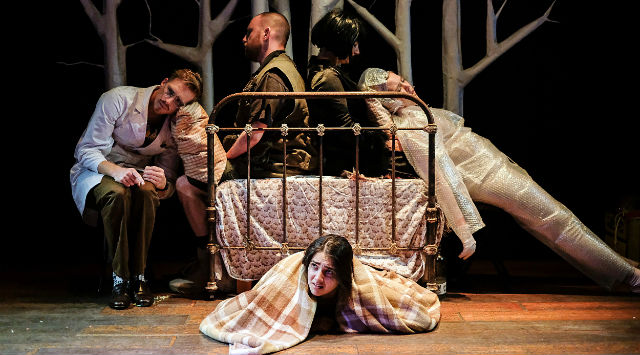
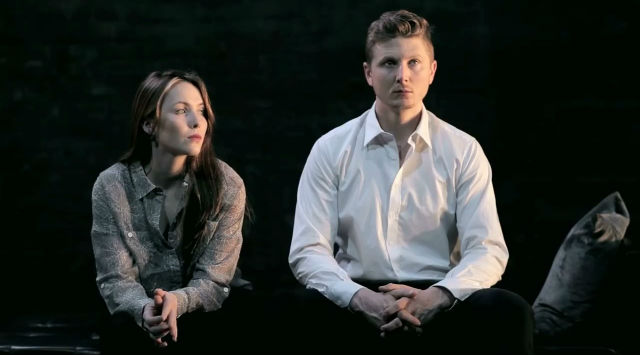
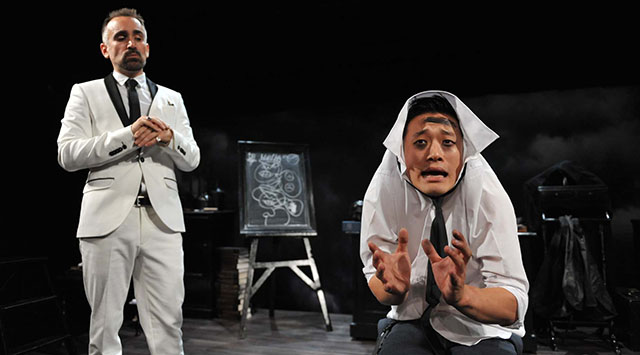
Orpheus’ story is often told with emphasis on a husband’s drudgery in trying to rescue his wife from the mouths of danger, but in Michael Dean’s revision, we explore the possibility of Eurydice being a more provocative character, whose own desires are more complicated and less convenient for her husband’s legend. Hell is an Australian outback hick town, from which Eurydice finds herself unable to leave, but Orpheus is determined to bring her back to their life in the city, where a previously shared reality seems to be fading with the passage of time.

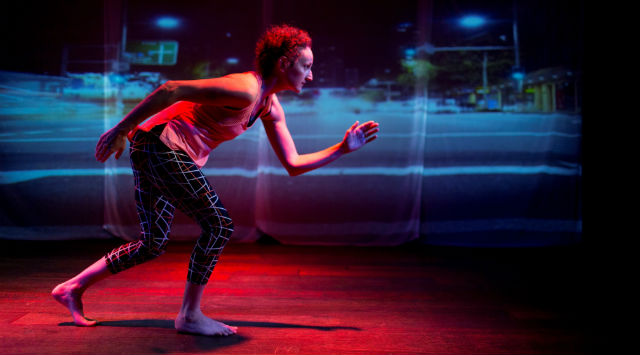
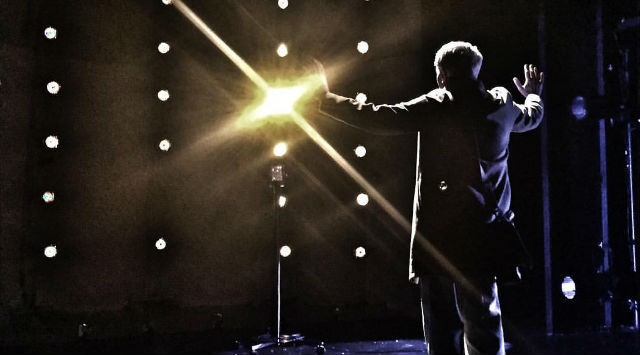
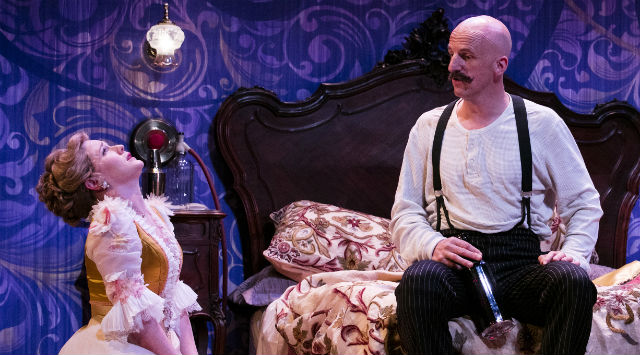
Similarities with David Lynch’s surrealism where “this whole world is wild at heart and weird on top” can be observed in Dean’s portrayal of an ugly yet seductive foreboding, set within a seedy bar where the drawing of raffle tickets is “the moment we’ve all been waiting for.” Michael Yore’s music and Liam O’Keefe’s lights provide splendid transportative atmospherics for an operatic expression of an ancient mystery suited to contemporary times, and Rachel Weiner’s illuminative choreography, although excessively demanding at certain points, demonstrates a healthy instinct for space as a fundamental device of communication.

With little in terms of dialogue that could be employed, the depiction of characters relies heavily on movement and presence, which the cast accomplishes with dexterity, but there is a gentleness to the overall approach that contradicts some of the darker elements in the piece. A greater sense of gravity and perhaps bigger personalities would generate a more sinister edge to fortify its enigmatic tone. Daniel Monks leaves a strong impression in the title role, authentic and captivating with his ability to meaningfully embody Orpheus’ sentimental qualities. The actor’s unequivocal focus and connection with all who are on and off stage, is the basis on which the production addresses its emotional dimensions.

Michael Dean’s vision of theatre as a dynamic and unpredictable art form is marvellously realised in Orpheus. Adventurous, playful and iconoclastic, Dean’s presentation is a surprising and delightful show that challenges not only notions of storytelling, but also conventions of our cultural endeavours. It is a virtuous exercise, made even more wonderful by sheer, undeniable talent and exquisite taste. There is exceptional work to be found here, the kind that makes us want more of the same from every stage, but it is the utter unorthodoxy and subversive nature of its appeal that provides its avant-garde lustre.

www.liesliesandpropaganda.com | www.suspiciouswomanproductions.com

Review: Bijou (Smallshows / The Depot Theatre)

smallshowsVenue: The Depot Theatre (Marrickville NSW), Aug 17 – 27, 2016
Playwright: Chrissie Shaw
Director: Susan Pilbeam
Cast: Alan Hicks, Chrissie Shaw
Image by Lyndel Arnett

Theatre review
Bijou has lived through a lot. Now in her autumn years, she looks back and recounts stories, with the aide of abounding song and dance, to share her experiences as a woman on the fringes of Parisian society. Chrissie Shaw’s script is charming, with surprising revelations that are guaranteed to delight, and even though it shies away from a stronger sense of drama that could deliver greater poignancy, it is certainly not afraid to touch on the raunchier aspects of Bijou’s past.

As performer, Shaw’s vocal abilities are her greatest asset. Interpretations of yesteryear songs are consistently enchanting, and the sharp focus she maintains in her one-woman show format is thoroughly impressive. Alan Hicks is on the piano providing accompaniment, with tremendous style and effortless flair. His voice and humour make only brief appearances, but they are very memorable indeed.

The elders of every community are truly the most valuable in terms of the wisdom they can offer, yet we relegate them to minor roles, often forgetting to include them in our ways of life. In Bijou, we are shown that many of the answers we seek, have already been found by those who had come before us. The seniors are ignored at our own peril, and the beauty of Bijou’s story, and of Shaw’s work, demonstrates how much there is to lose, if we persist with that ignorance. We can learn from going through firsthand, every high and low of life, but we must also listen to those who had taken the hard road, so that we may explore newer, more peaceful ones.

www.bijoucabaret.com

Review: Tribunal (Powerhouse Youth Theatre / Griffin Theatre Company)

pytVenue: SBW Stables Theatre (Kings Cross NSW), Aug 12 – 20, 2016
Concept: Karen Therese
Collaborators/text/performers: Sarah Coconis, Paul Dwyer, Iman Etri, Katie Green, Rhonda Grovenor Dixon, Bilal Hafda, Mahdi Mohammadi, Karen Therese, Jawad Yaqoubi
Image by Gracie Partridge

Theatre review
Any story can be told at the theatre, whether exaggerated or realistic, but to create something convincing is often a struggle for practitioners. In Tribunal, key personalities play themselves, leaving no room for us to doubt their authenticity. The presentation is a discussion of colonialism in Australia, with a particular focus on our habitual mistreatment through the years, of groups that are systematically subjugated and persecuted by a rapacious government, and its complicit populace. The production places side by side, an Aboriginal elder and an Iranian refugee, not only to convey the injustices inflicted upon them, but also to emphasise the delusionary insistence by White Australia of the land’s Westernness and its racist exclusion of all that it considers “other”.

Our weathered sensibilities may no longer be able to react with shock at the show’s revelations, but its verbatim, anecdotal format is unquestionably powerful, due especially to the sheer presence of those who have suffered under our cruelty. The act of putting on display their pain and damage, creates a palpable state of emergency and crisis that we simply cannot extricate ourselves from. In the guise of a tribunal hearing, the production turns its passive audience into the awakened body politic; we are all implicated in these harrowing recounts, no matter how long ago or how far away these events had taken place. Powerless individuals who shirk responsibility are, for the moment at least, given passionate idealism, and the audience begins to think about its part, as citizens involved in the machinations contributing to the humanitarian catastrophes that must be addressed.

We may not all run off into the night with radical courses of action inspired by Tribunal, but it sows the seeds required for a nation to evolve stronger morals and to inculcate better humanitarian values into its every decision, especially the tough ones. Bringing people from abstract consciousness, into a real life sharing of space, is theatrical magic that can do wonders to how we experience society. It is easy being inhumane to those who only live in imagination, but when confronted face to face, we can only be guided by compassion and love, which are after all, the most valued of all our qualities as the earth’s beings.

www.pyt.com.auwww.griffintheatre.com.au

Review: House Of Games (New Theatre)

newtheatreVenue: New Theatre (Newtown NSW), Aug 9 – Sep 10, 2016
Playwright: Richard Bean (based on the film by Jonathan Katz, David Mamet)
Director: Louise Fischer
Cast: Ben Brock, Hannah Day, Cheyne Fynn, Charles Jones, Mark Langham, Rebecca Levy, Colin McCarlie, Katherine Shearer, Benjamin Vickers, Cindy Wang
Image by Bob Seary

Theatre review
House Of Games features a psychiatrist and a group of con artists. It wishes to be full of surprises and unexpected twists, but the unsophisticated writing relies on the unbelievable gullibility of its protagonist, as well as a gullible audience, for any of its plot to be effective. Its premise is interesting, with a straitlaced academic type finding herself embroiled in the underground activities of the Chicago lowlife, but there could not be a more predictable way to tell the story. Every revelation aims to deliver thrills, but is only disappointing in its failure to offer anything more than what is obviously anticipated ahead of every juncture.

Leading lady Katherine Shearer shows good conviction, in spite of a frankly ridiculous role that seems to take pleasure in depicting a woman’s status and accomplishments as an esteemed doctor, only to take her down more than a few notches by turning her suddenly, and unreasonably, stupid and naive. The actor’s impressive presence almost holds the show together, but we struggle to reconcile her character Margaret’s undeniable intelligence with the absurd predicament in which she finds herself. Co-star Ben Brock displays enough charm for initial scenes of flirtation to work, but to make Margaret “blinded by love” and be so thoroughly entangled in his deceptions, is a tall order that is beyond any sensible performance.

Names of three male writers are attached to this play. It is arduous, and deeply boring, to take them to task for a misogynist creation, but the show offers little else worthy of discussion. It is to their credit however, that the driving force behind House Of Games is Margaret’s ambitions, but it seems that diminishing those very desires is the only way to make sense of things. Feminist readings do not require that every woman comes out on top, but the masochistic treatment of “a strong female” here is reprehensible, because her degradation results from weak logic and too little plausibility, a figment of the imagination of a boys’ club, intimated, perturbed and panicked.

www.newtheatre.org.au

Review: A Nest Of Skunks (Collaborations Theatre Group)

depotVenue: The Depot Theatre (Marrickville NSW), Aug 3 – 13, 2016
Playwright: James Balian, Roger Vickery
Director: Travis Green
Cast: Peter Condon, Jeannie Gee, Penelope Lee, Amanda Maple-Brown, Brendan Miles, Aanisa Vylet

Theatre review
It is the future, and the slang word for refugees is “skunks”. Even though there is no indication as to how far ahead in time A Nest Of Skunks is set, our imagination does not have to work very hard at all to believe that society has disintegrated to that level, where we liken asylum seekers to an animal known for its repulsive stench. In fact, we often forget that events in the play are not actually taking place in the here and now, being so used to prevailing sociopolitical attitudes towards the needy that are already full of contempt.

The script, by James Balian and Roger Vickery, is taut, confrontational and stimulating. It appeals to our decency, demanding that we think about the repercussions of political decisions with compassion and rationality. Convincing parallels are drawn between Nazism and how public ideology is currently evolving, and in its dystopic vision, we see that it takes only a few small steps before fascism ascends again. A Nest Of Skunks is gripping drama, with compelling twists and turns that provide food for thought, along with excellent entertainment. Director Travis Green creates a powerful statement with the text, and although a couple of crucial plot revelations require greater clarity, his storytelling is nonetheless affecting.

There are accomplished performances in the piece, most notably by Brendan Miles whose robust presence and emotional authenticity, ensure that the show is held together by our tremendous empathy for his character Stephen. There are slight issues with the portrayal of language barriers between cultures in the play, but they do not dampen our enthusiasm for Miles’ very moving interpretation of a man in turmoil and desperation.

Refugees are used as pawns in the quest for power by those in the business of government. We are made to fear the weak. Instead of providing help, we turn against the innocent, employing harsh and cruel measures in the name of protecting our self-interest. A Nest Of Skunks demonstrates that resistance is the only instrument we have that could turn the tide. Characters in the play make radical decisions to do the right thing, but what is required of us is only reason, so that we may triumph against lies and greed, and all the irrationality peddled by fear-mongers who wish to undermine the best of our immortal human spirit.

www.facebook.com/CollaborationsTheatreGroup

Review: Who Am I (The Old 505 Theatre)

old505Venue: The Old 505 Theatre (Newtown NSW), Aug 2 – 20, 2016
Playwright: Russell Cheek
Director: Stephen Abbott
Cast: Russell Cheek

Theatre review
Watching game shows on television is perhaps one of the most frivolous ways to spend time. Obscure questions might be asked of its contestants, but what it offers viewers is mind-numbing entertainment that does little more than to help soothe away the day’s worries. None of it holds meaning for us after the 25 minutes have past, and we scarcely remember anything that had secured our undivided attention previously. This is not the case for Russell Cheek, who in 1993 participated in Sale Of The Century, one of the countless game shows to have appeared on our screens since the early days of broadcast technology. It was a life changing experience for Cheek, and in Who Am I, memories of that special time is presented to us, by a protagonist still spirited and surprisingly engaging in his one man show.

Cheek’s show entices with nostalgia, humour and a rare optimism. The prospect of sitting through 70 minutes of a man recollecting an event that is of consequence only to himself, seems farcical and banal at the outset, but we soon find ourselves investing in his tale. It is a story that appeals to our insatiable thirst for hope, and proves itself to be buoyant to a remarkable degree. Cheek is here to share in his joy, and it is terribly infectious. The script is simple but rigorously worded, so that its imagery is vivid, and the punchlines it delivers are definite. Stephen Abbott brings a discerning approach to direction that gives the show a delightful and relentless playfulness, while maintaining an air of elegance to proceedings. Cheek wins us over with charisma and a genuine eagerness to connect, and even though certain sequences seem slightly under-rehearsed, his ability to put all at ease makes for a pleasurable time at the theatre.

It is a turning point in life, with talent and chance coinciding to provide Russell Cheek with not just a unique anecdote for the ages, but also financial rewards and the associated freedoms that many of us can only dream of. We discover a comfort in the knowledge that dreams do come true and fairy tales can happen, and when it is a good person who has reaped the benefits, we are all the happier.

www.old505theatre.com

Review: Twelfth Night Or What You Will (Belvoir St Theatre)

belvoirVenue: Belvoir St Theatre (Surry Hills NSW), Jul 23 – Sep 4, 2016
Playwright: William Shakespeare
Director: Eamon Flack
Cast: Peter Carroll, Anita Hegh, John Howard, Lucia Mastrantone, Amber McMahon, Anthony Phelan, Keith Robinson, Damien Ryan, Nikki Shiels, Emele Ugavule
Image by Brett Boardman

Theatre review
Characters in Shakespeare’s Twelfth Night Or What You Will are drunk with infatuation. They chase after that sweet sensation of being overcome by the notion of love, obsessed with finding reciprocation from the object of their desire. It is an escape from the harsher realities of life, this frivolous respite. Taking us away from stories of war, of incarcerated children, or of religious schism. Countering the dark with light, we can go to the theatre for mirth, seeking refuge in its momentary illusions so that our souls can rest and be comforted, like a baby, safe in her mother’s womb.

The production understands the joy it has to deliver, in order that it may bear any meaning at all. Director Eamon Flack’s approach takes things back to basics, creating a show that looks and feels as if presented by a troupe of Elizabethan travelling players, who have little more than their bodies and voices to tell the story with. Flack’s experimentation with working from a script that is virtually unedited, means that we rely on the actors to make every line of dialogue count, including the many instances of “archaic nonsense” (Flack’s words) that only the scholarly would appreciate. It is a tall order, and the results are predictably mixed. The very accomplished and esteemed cast delivers three hours of wonder, amusement and laughter, along with interludes of bewilderment and boredom. Anthony Phelan’s camp humour is outrageous, completely gleeful in its tenacious need to tickle our funny bone. Keith Robinson is charming as Feste, breaking through the fourth wall for a firm connection with his audience, daring to improvise beyond Shakespeare’s words. Peter Carroll and Lucia Mastrantone impress with their energy and precision, both inventive in their surprising artistic choices.

The world can spin too fast, too manic for mere humans to cope. Retreating into the classics can help us regain composure, and with the old-fashioned Twelfth Night, we can hope to find our feet again, in everything that is placid and familiar. Tradition is valuable in the way it reminds us of what is good and time-honoured, giving us an understanding of humanity’s nature, helping us define our place in the world, but it is also the basis on which we decide what needs to change, and how we can progress and become better. Shakespeare is a past that continues to haunt us, but we can make of him what we will.

www.belvoir.com.au

Review: Rhinoceros (Jetpack Theatre Collective)

jetpackVenue: Kings Cross Theatre (Kings Cross NSW), Jul 26 – 31, 2016
Playwright: Eugène Ionesco
Director: Jim Fishwick
Cast: Jade Alex, Madeleine Baghurst, Robert Boddington, Kate Coates, Rebecca Day, Jim Fishwick, Emilia Higgs, Johnathon Lo, Madeline Parker, Alexander Richmond, Julia Robertson, Cheng Tang, Luke Tisher
Image by Julia Robertson

Theatre review
The show begins with Frenchman Berenger having an impassioned existential discussion with his friend at an al fresco café, before being interrupted by a rhinoceros charging through the streets to everyone’s surprise. We try to return to a sense of normalcy from the strange phenomenon, but the rhinoceros rushes past again and patrons of the establishment begin arguing if it was the same beast that had appeared twice, or if they had in fact witnessed two entirely different breeds. Eugène Ionesco’s play has an absurd start, but transforms into something altogether more contemplative, interrogating issues of social conformity and ostracism, along with political ideas relating to justice and otherness. The writing can certainly be dense in parts, but it is to a greater extent, reflective and enlightening, with an amusingly eccentric plot that is quite fascinating.

Director Jim Fishwick brings an exciting visceral dimension to the intellectual work, with an avant-garde spirit that injects a sense of adventure and daring to the oft too polite Australian stage. A subversive attitude and its corresponding sense of humour make the production a memorable one, although Act III could benefit from a more textured approach to achieve greater nuance with Ionesco’s pointed assertions. Experimental and sensitive use of a chorus is a highlight, brilliantly executed by an ensemble of dedicated and enthusiastic players. Alexander Richmond as Berenger is, within the play’s bizarre context, strangely believable, and even though he lacks the bolder qualities of a leading man, the fluency of his enunciation and the solid integrity that he brings to dialogue, are key to preventing the show from disintegrating into mere farce. Julia Robertson impresses as Daisy, animated yet authentic, with a magnetic presence that secures our attention effortlessly.

No person is an island. We are herd animals that insist on acquiescence from fellow beings, only allowing minor deviations from socially constructed notions of what is acceptable. In Rhinoceros, people go with the tide, allowing dominant currents of their time to determine the way we live. Resistances such as Berenger’s can arise, but we question their efficacy. We wonder how it is that new movements in our evolution come to be, and consider the possibility that we may engineer those trajectories to suit our ideas of change for a better world. Berenger’s actions may prove futile, but if we acknowledge that the world is in need of a revolution, his solitary politic represents the only hope, and the threat of its defeat is a reminder of our moral volatility.

www.jetpacktheatre.com

Review: A History Of Falling Things (Ensemble Theatre)

ensembleVenue: Ensemble Theatre (Kirribilli NSW), Jul 7 – Aug 20, 2016
Playwright: James Graham
Director: Nicole Buffoni
Cast: Eric Beecroft, Merridy Eastman, Sophie Hensser, Brian Meegan, Sam O’Sullivan
Image by Phil Erbacher

Theatre review
It is like a long distance love affair, except Jacqui and Robin live just 30 minutes apart. They have only ever seen each other via the internet, as both suffer from severe phobias that keep them indoors. James Graham’s A History Of Falling Things is a quirky love story about two perfectly ordinary and charming individuals who happen to be limited by mental illness, although it must be acknowledged that it is precisely their irrational fears that provide a point of connection for the two. A union of idiosyncrasies is perhaps how love happens. What sets each person apart from the rest of the world finds solace in an other, whose own oddity can cohere to form harmony.

Nicole Buffoni’s very wistful direction of the piece brings an exceptional sensitivity and tenderness to the couple’s story (with excellent help from Tim Hope’s incredibly delightful illustrated projections). Some of the very British humour requires greater creativity to involve an Australian audience, and although at times too resolutely gentle in her approach, Buffoni’s staging captures our imagination, to inspire deep interesting ideas about modern life and our primitive need for affection.

Eric Beecroft and Sophie Hensser are the leads, both impressive in their portrayals of innocence, completely convincing in the childlike quality they manifest for the story. Beecroft is animated and buoyant as Robin, while Hensser is a delicate and nuanced Jacqui, for a combination that although not overflowing with chemistry, provides the show with a dynamic balance of energies. Also noteworthy is Merridy Eastman, compelling and perfectly adorable in her support role, playing Robin’s very understanding mother.

In the play, we wonder if love conquers all. Our romantic selves want to know if we can be rescued from our dysfunctions, by someone extraordinary and beautiful. We get by with a little help from our friends, but some of us have the good fortune of meeting a special someone for a transformative experience that could make life that much easier. Jacqui and Robin find in each other, the strength that is absent within themselves. Life requires us to be self-sufficient, but it is rarely an easy journey and the promise of romance can alleviate those troubles, even if only for a moment of theatrical fantasy.

www.ensemble.com.au

Review: Betrayal (Ensemble Theatre)

ensembleVenue: Ensemble Theatre (Kirribilli NSW), Jul 16 – Aug 20, 2016
Playwright: Harold Pinter
Director: Mark Kilmurry
Cast: Guy Edmonds, Ursula Mills, Matthew Zeremes
Image by Clare Hawley

Theatre review
In Harold Pinter’s Betrayal, everyone cheats on their spouses. The play first appeared in 1978, with a plot that moves in reverse chronological order, and in some ways, we do have to go back many years in time to find an appreciation of the work. Its drama relies on a sense of scandal and taboo that is no longer scintillating. We may still hold the concept of marriage in high regard, and still be hurt by infidelity, but as a dramatic device, we have clearly become jaded and immune to its effects. Nevertheless, Pinter’s dialogue remains delightful, almost mesmerising in its lexical beauty. His sardonic expressions bear a seductive power that keeps us eager to hear more, if only for the richly evocative, and ironic, words that the characters say to each other.

The production is saturated with tension from the very beginning. Director Mark Kilmurry’s ability to engage our thirst for intrigue is put to good use here, as we find ourselves keenly following the plot, in anticipation of dramatic revelations, which unfortunately, the script does not always deliver. A minimal approach to its staging ensures that all attention is placed on its cast of three very attractive players, each with their own allure, but all skillful and committed in their respective characterisations.

The radiant Ursula Mills plays serial adulterer Emma, conflicted yet libidinous, with an impressive confidence that makes her part in the show powerful and surprisingly believable. Emma’s husband Robert is given excellent nuance by Guy Edmonds, whose dynamic depiction of a man betrayed, is perfectly measured and consistently entertaining. Robert’s best friend Jerry, who sleeps with Emma for seven years, is an energetic and affable presence in actor Matthew Zeremes, whose caddish but sincere approach protects the production from descending into melodrama. Comprised mainly of two-hander scenes, the actors manufacture great chemistry on stage for a cohesive and compelling experience, even if the play’s age does work against them.

Jerry’s wife and best friend both fail him, but he sticks around, accepting the betrayals with little resistance. Keeping calm and carrying on, the British gentleman is dejected but does not seem to demand more of life; it is not the end of the world, after all. His tolerance is perhaps not uncommon. We imagine married couples to be monogamous, but what happens behind closed doors is anyone’s guess. Jerry has to keep up appearances, because everyone else does. We maintain a certain image required of us by society, even when under great hardship, because there are few things as painful as ostracism. We see the characters in Betrayal live their own lies, and think about the price of truth. An authentic existence is an extravagance that many do not wish to pay for, but what we are left with at the end, will only be tainted with regret.

www.ensemble.com.au