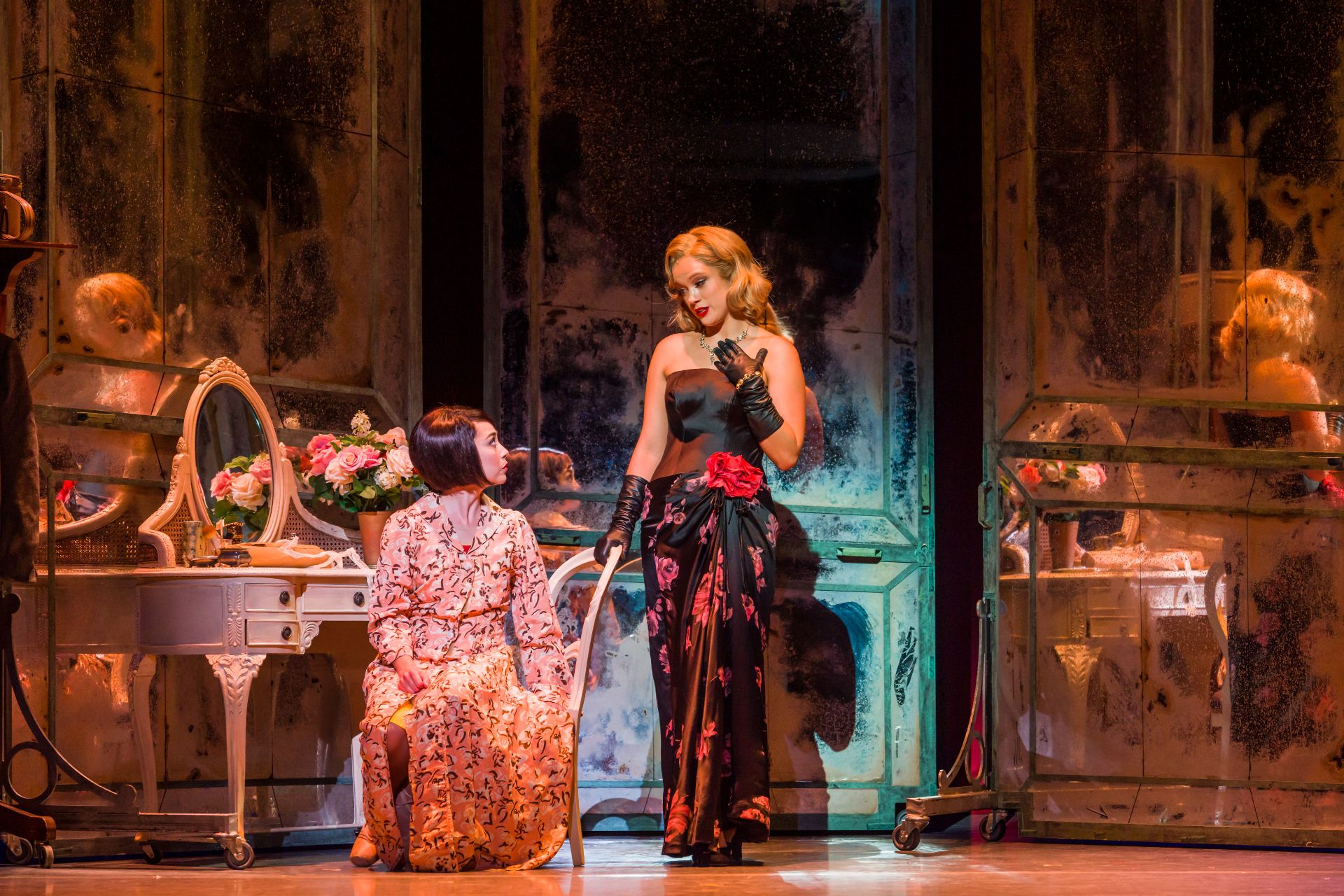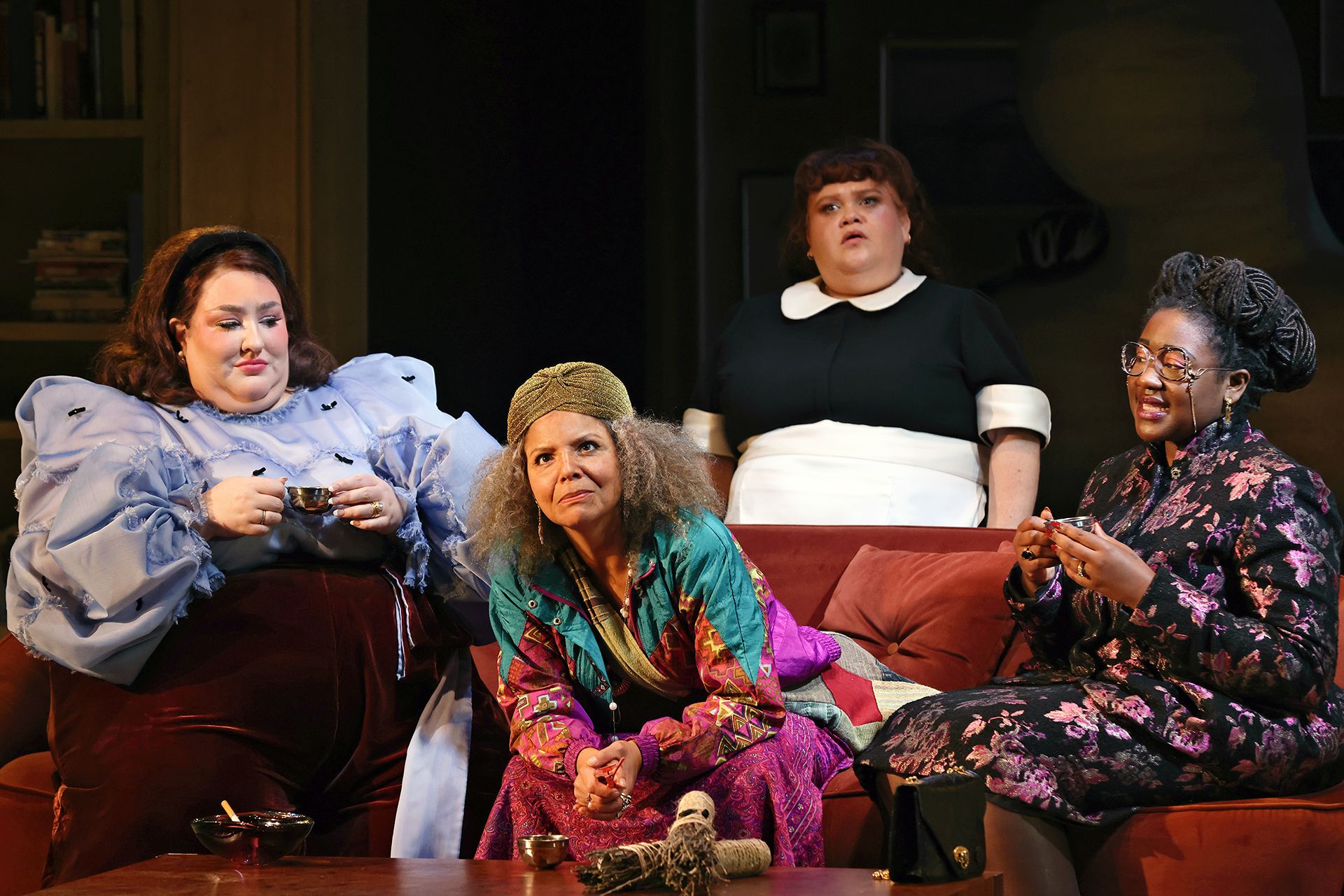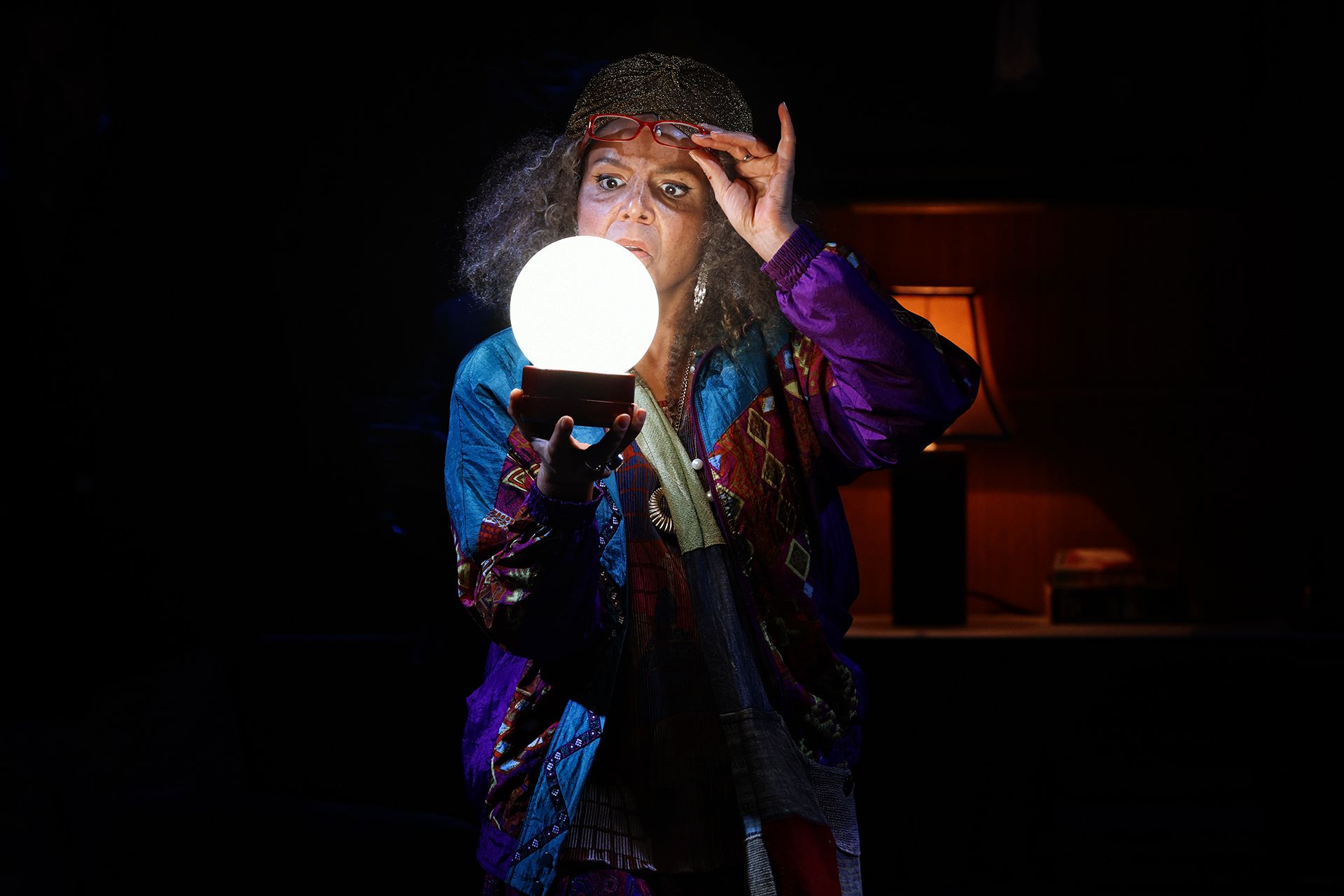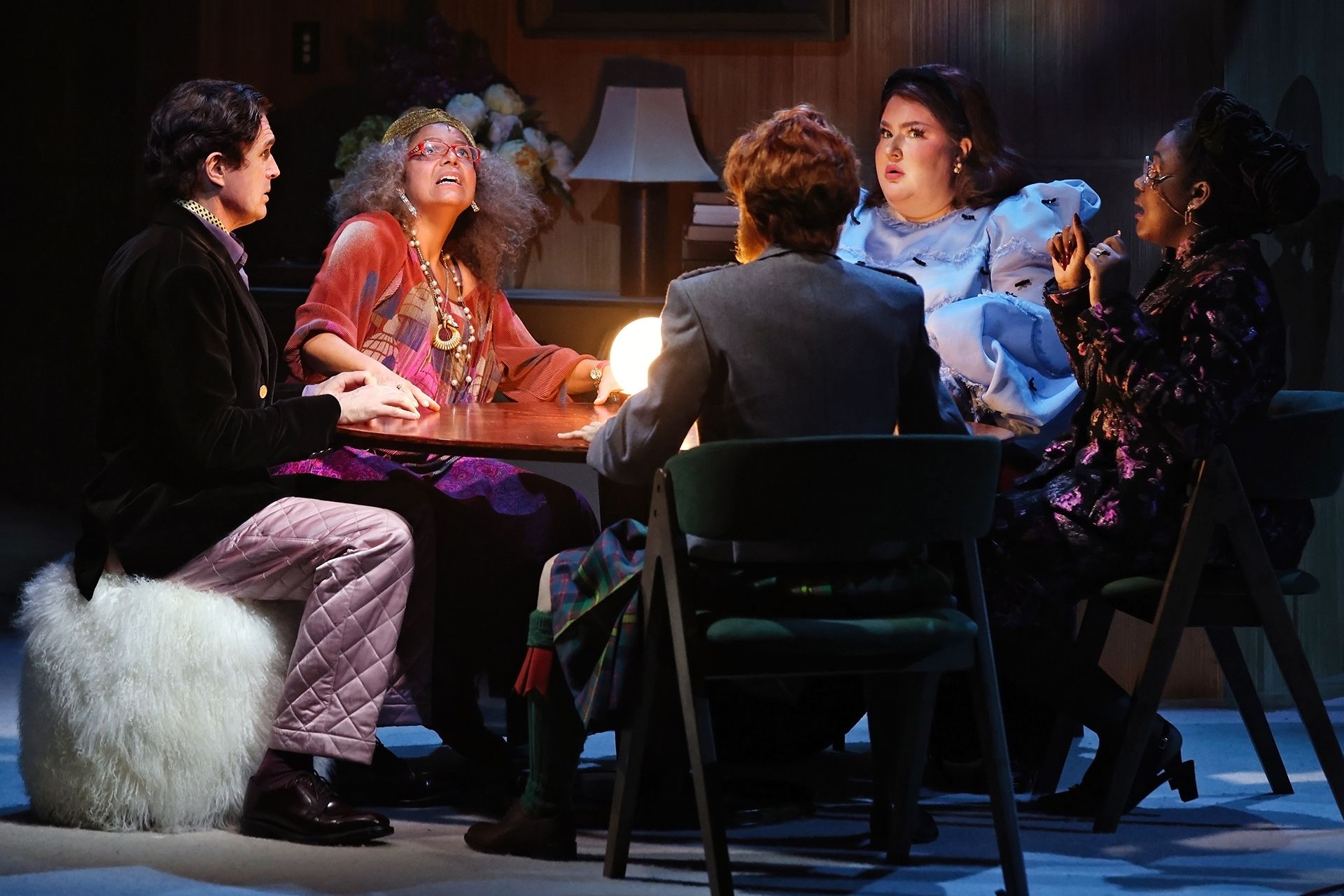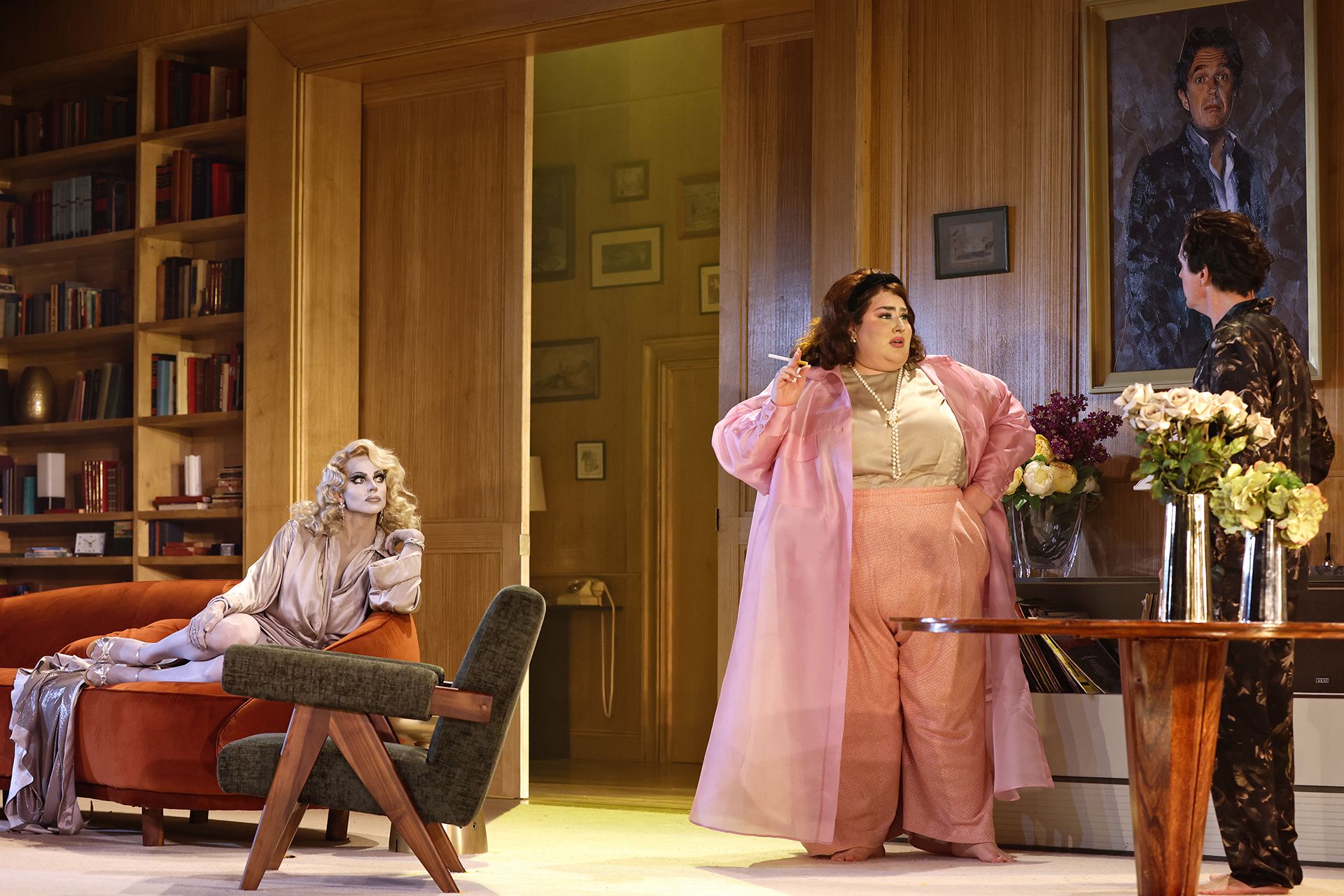
Review: Unqualified 2: Still Unqualified (Ensemble Theatre)

Venue: Ensemble Theatre (Kirribilli NSW), Apr 29 – Jun 4, 2022
Playwrights: Genevieve Hegney, Catherine Moore
Director: Janine Watson
Cast: Genevieve Hegney, Catherine Moore
Images by Prudence Upton

Theatre review
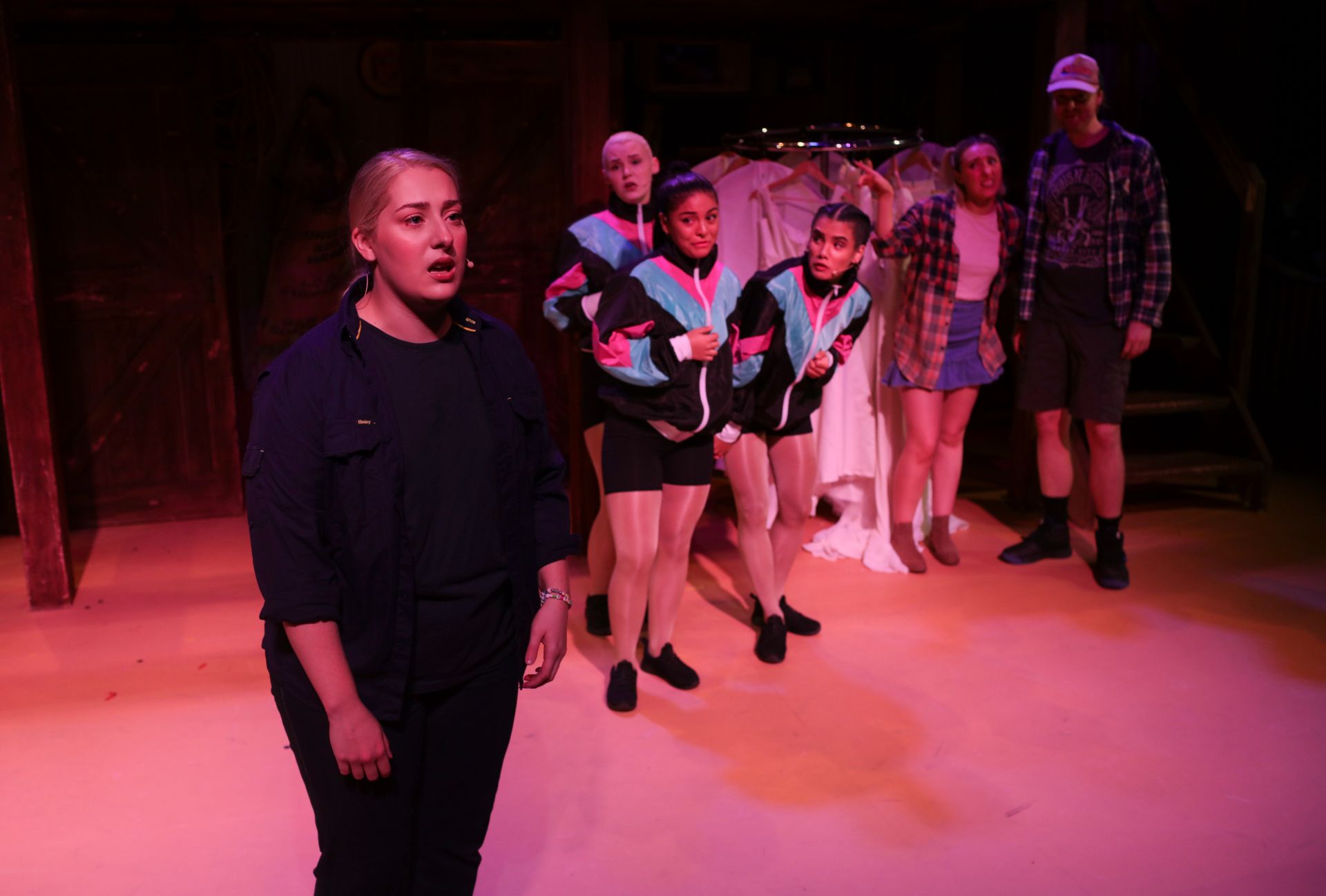
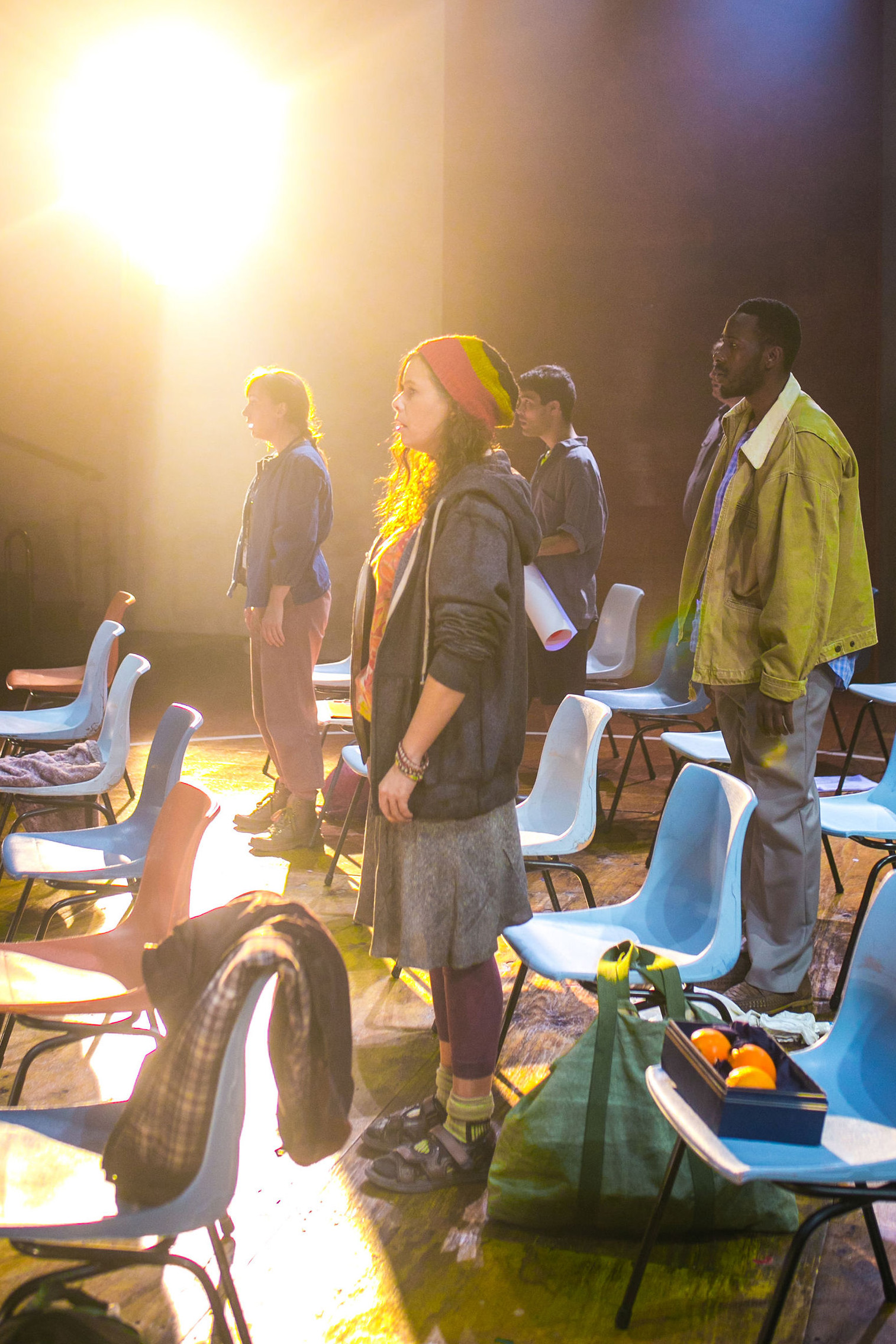
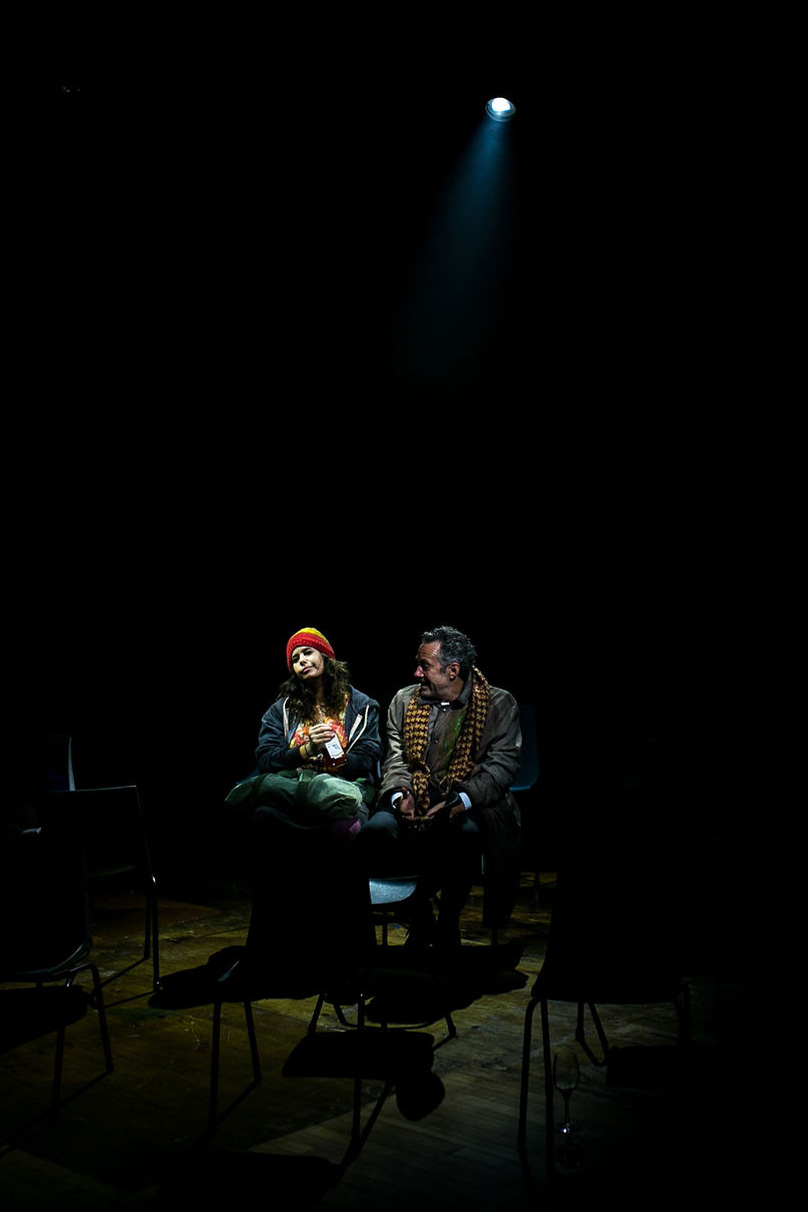
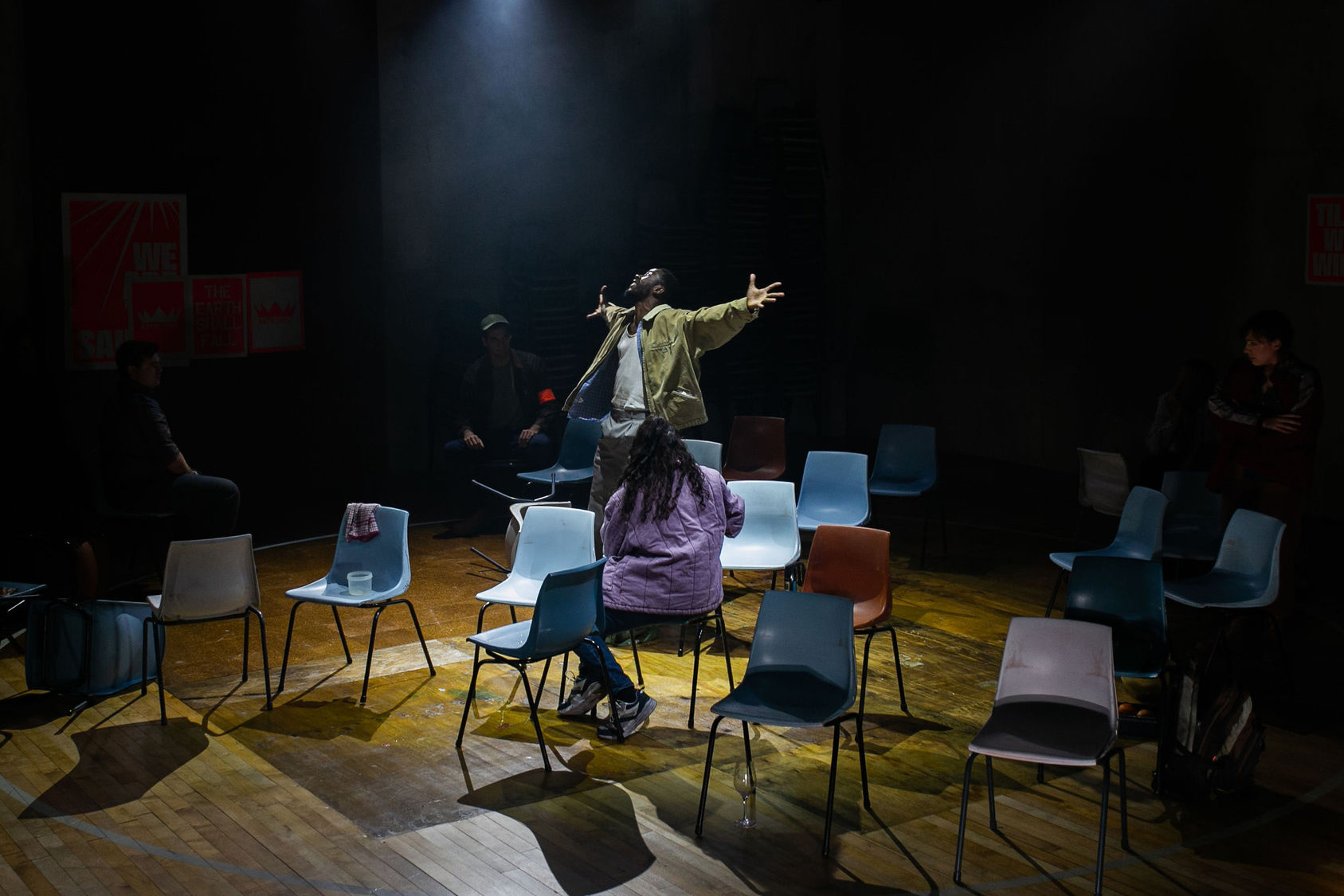
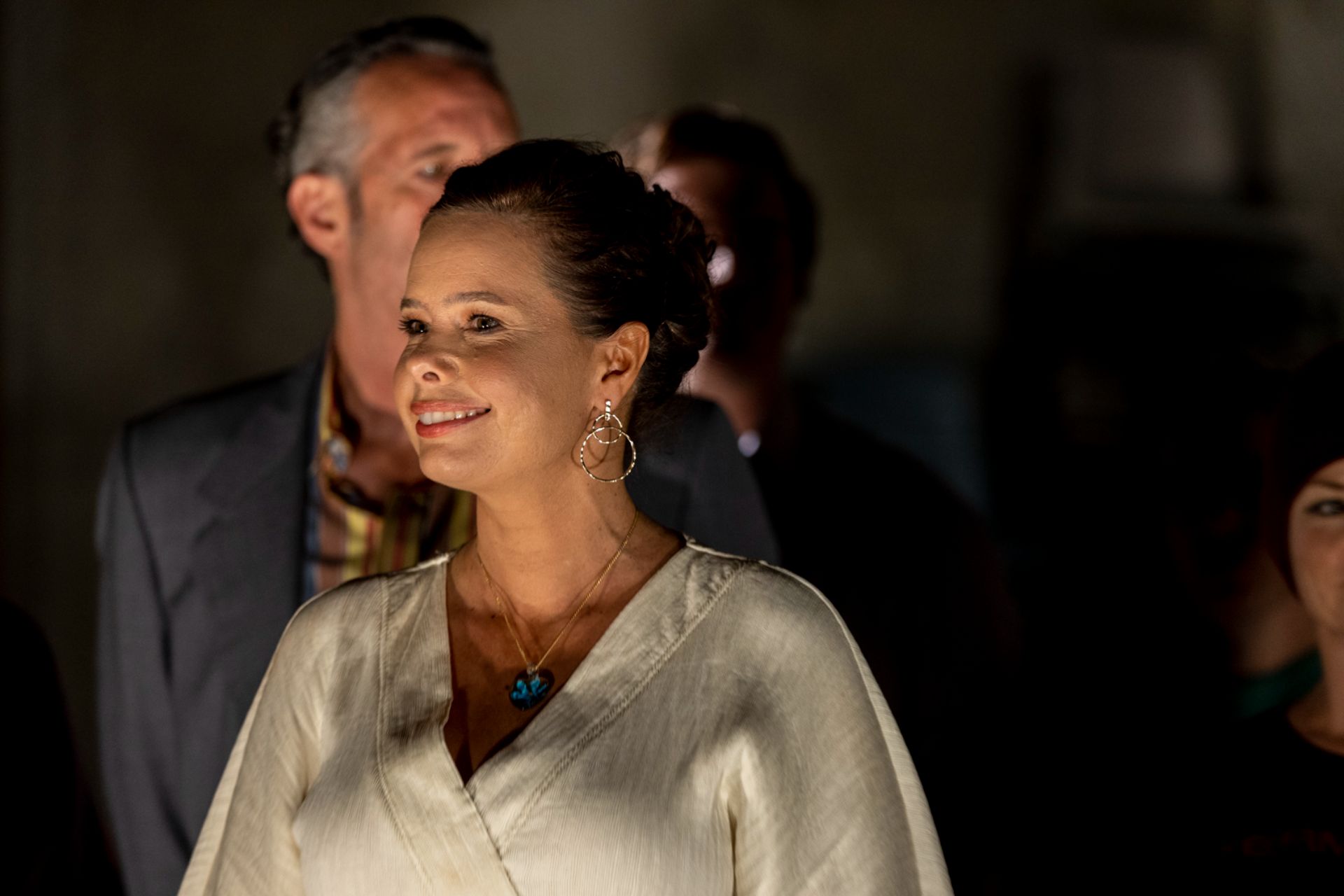
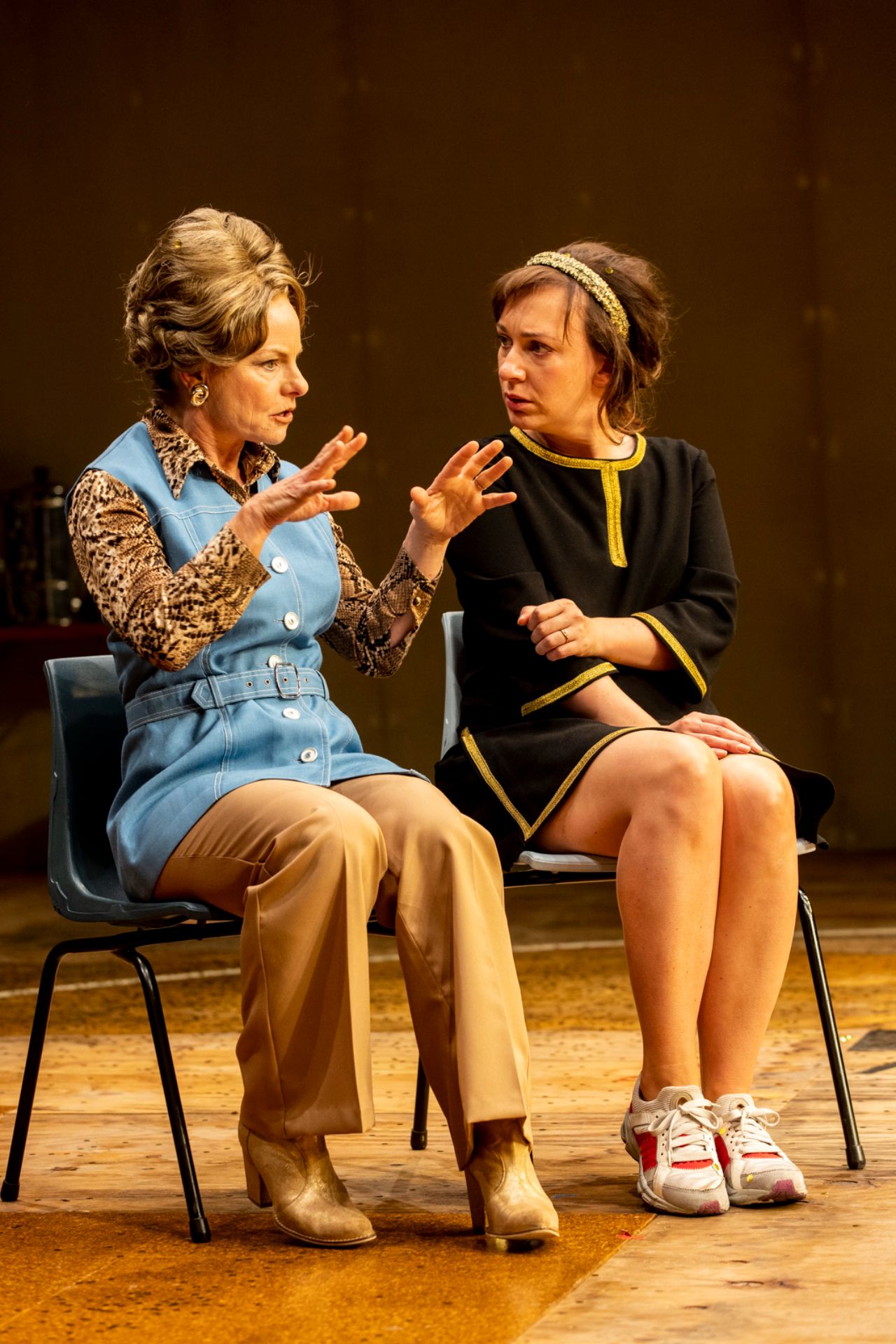
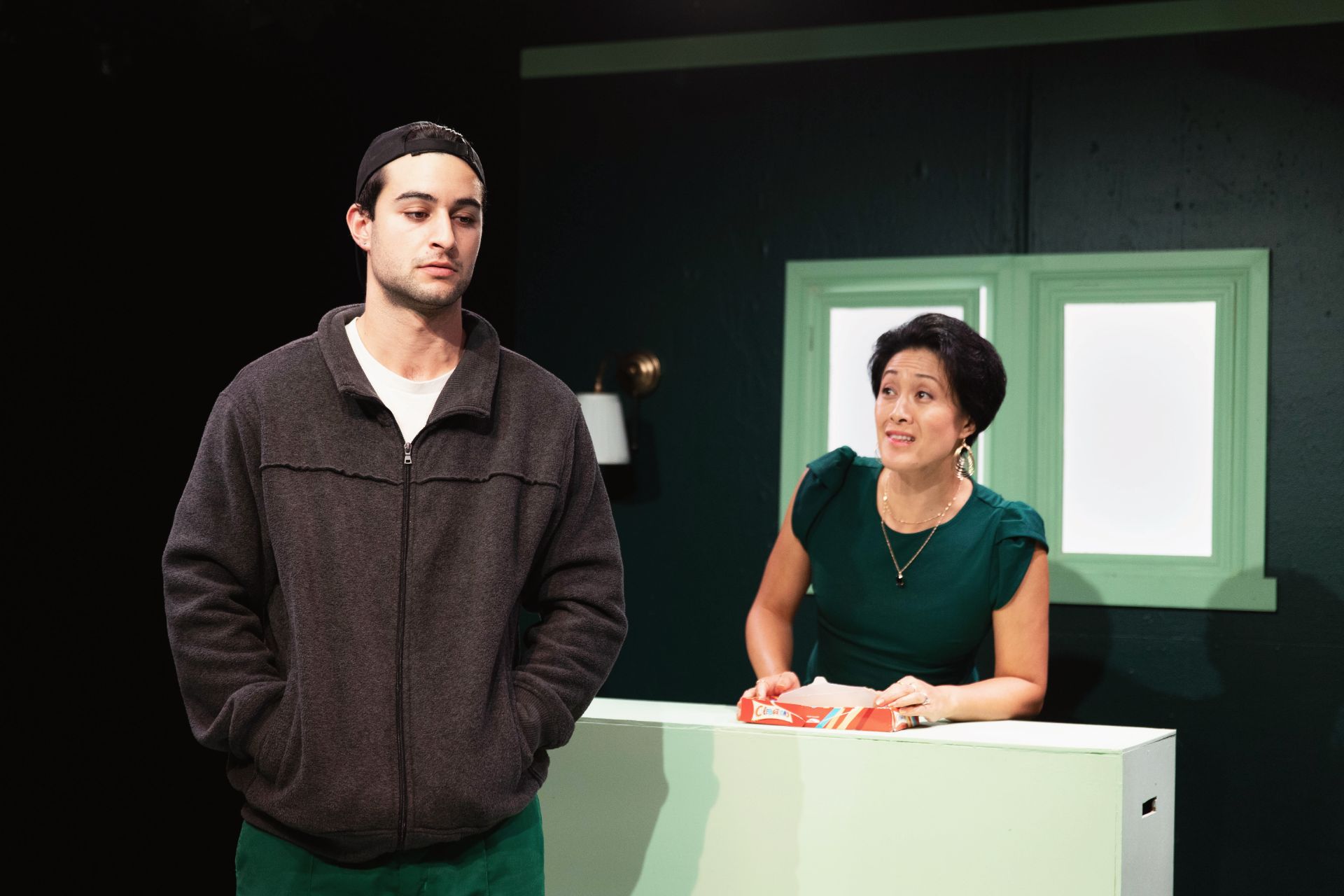
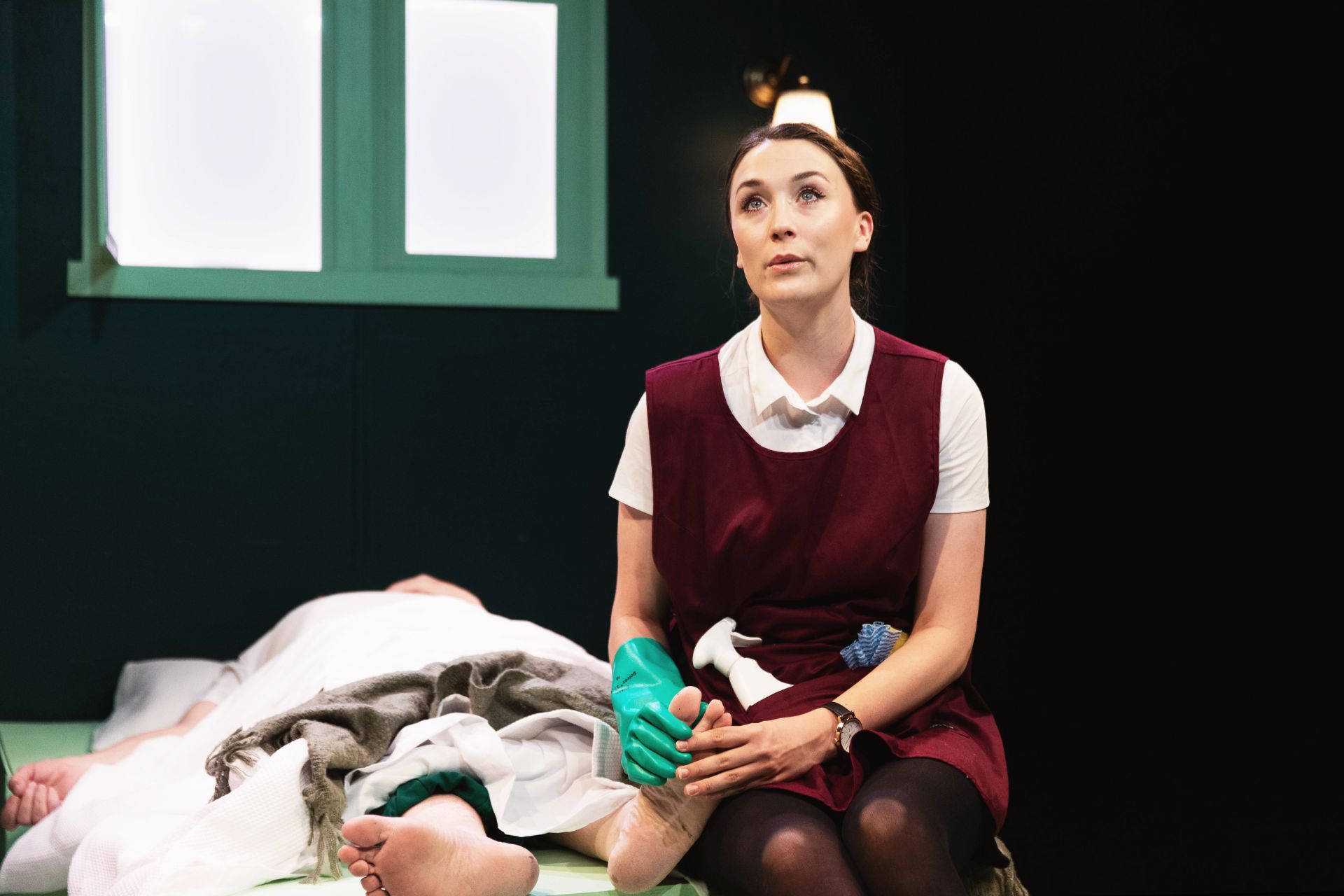
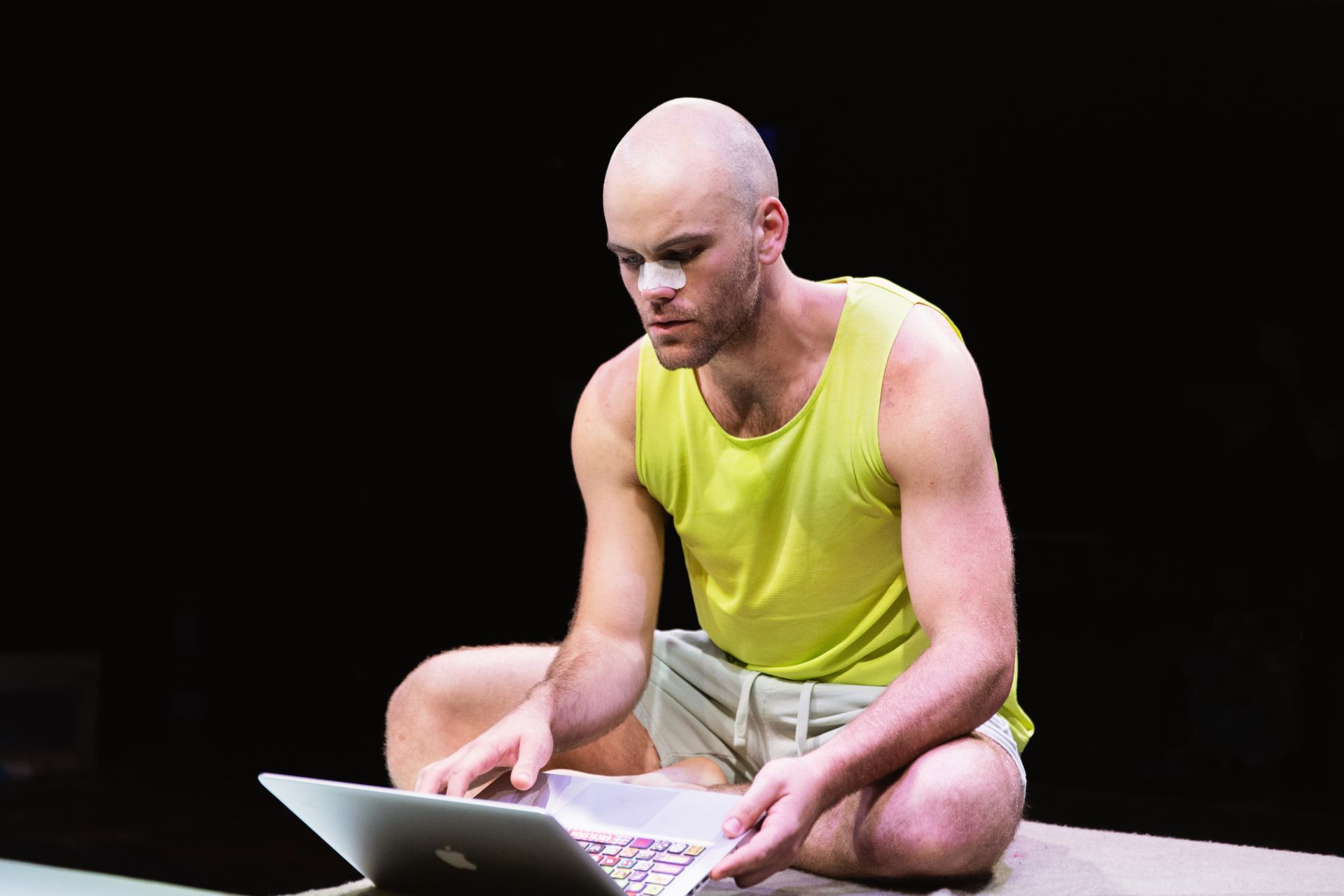
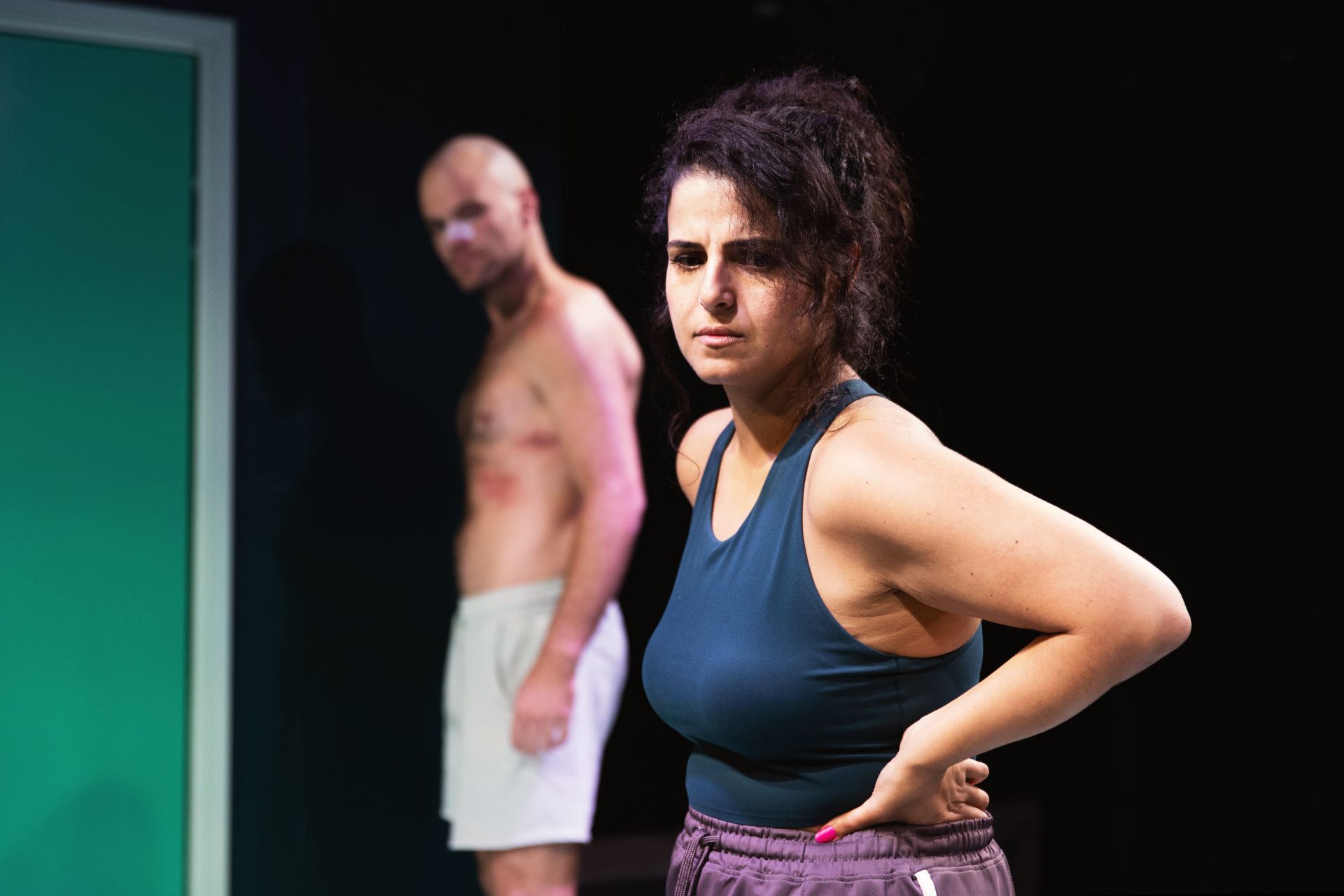
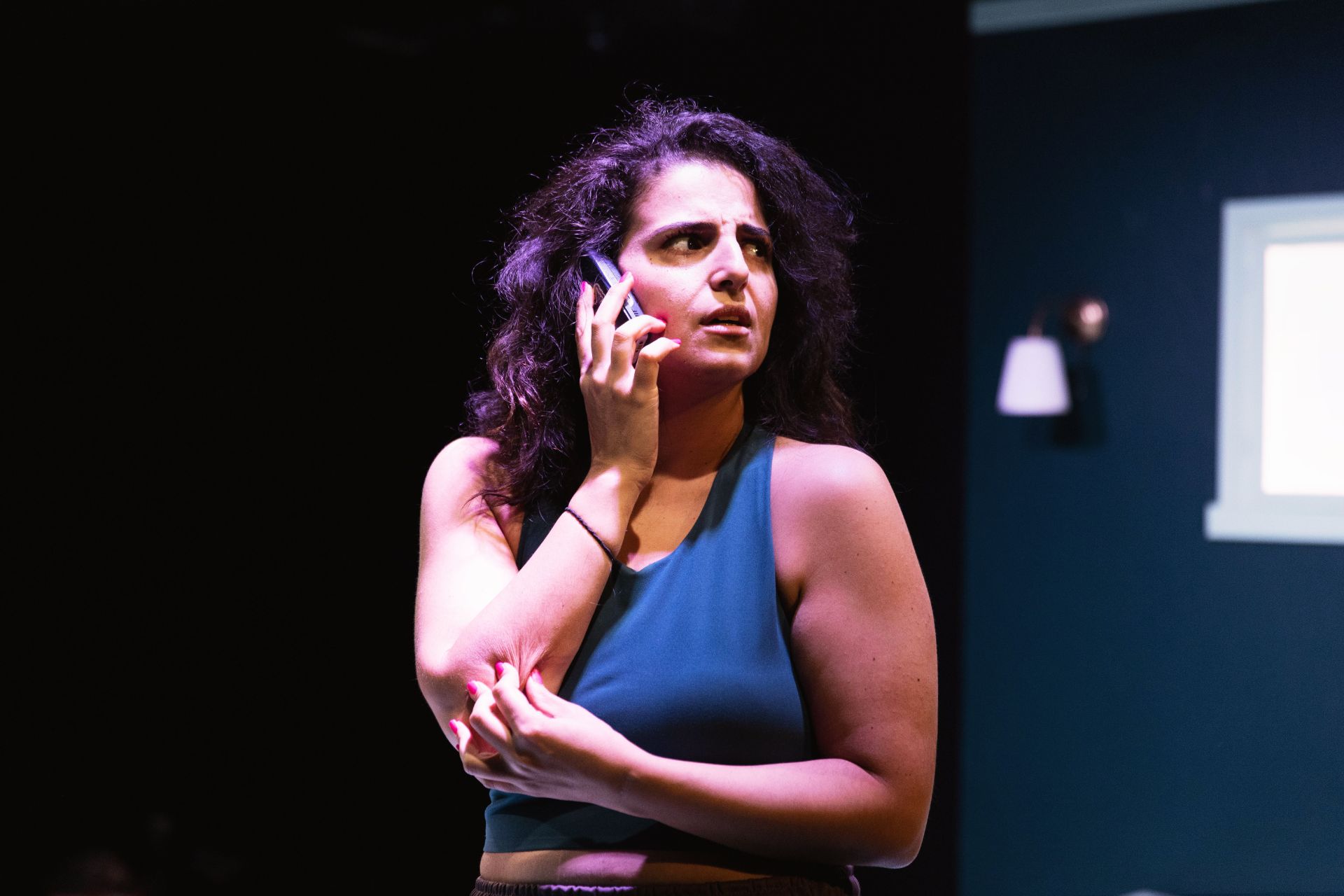
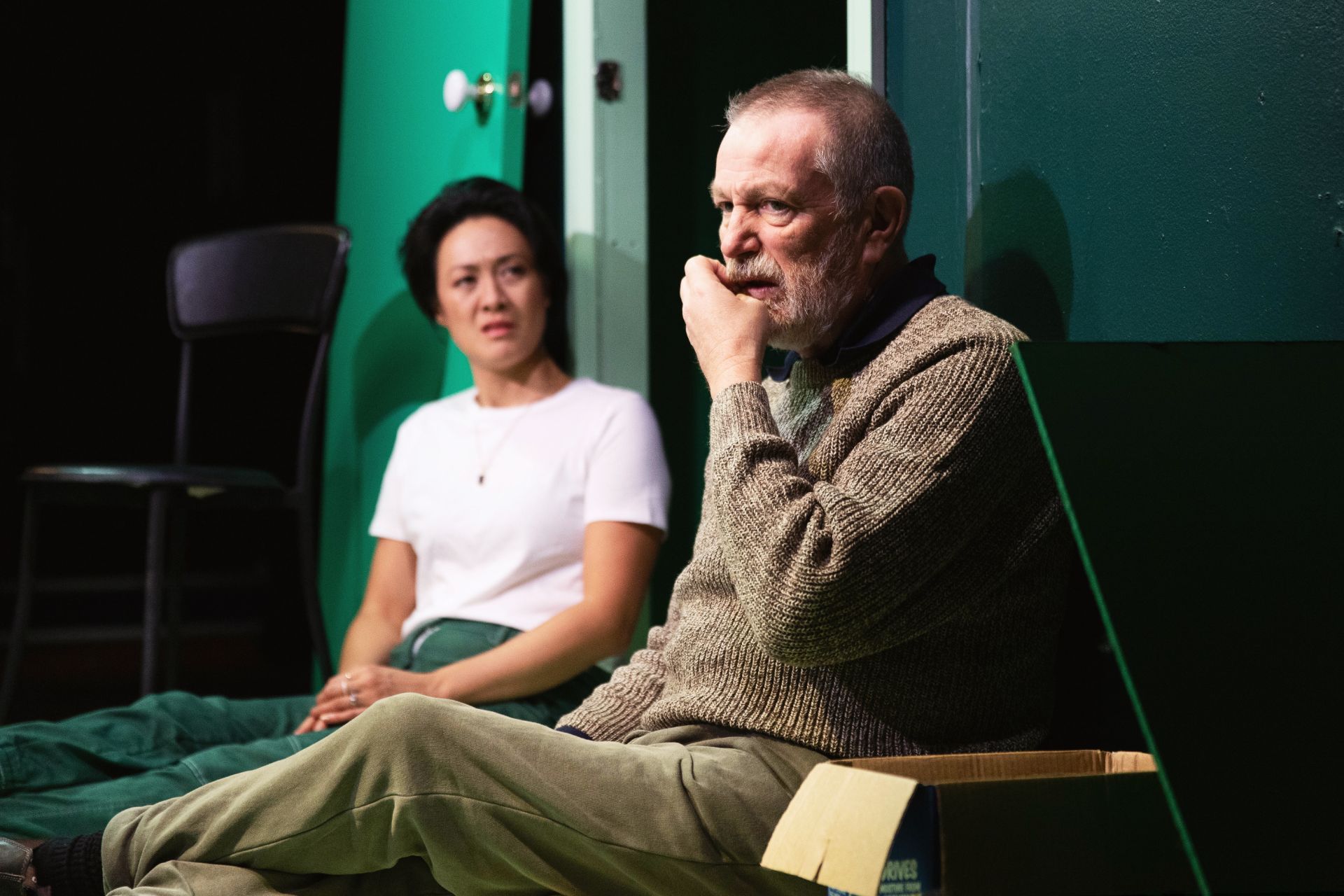
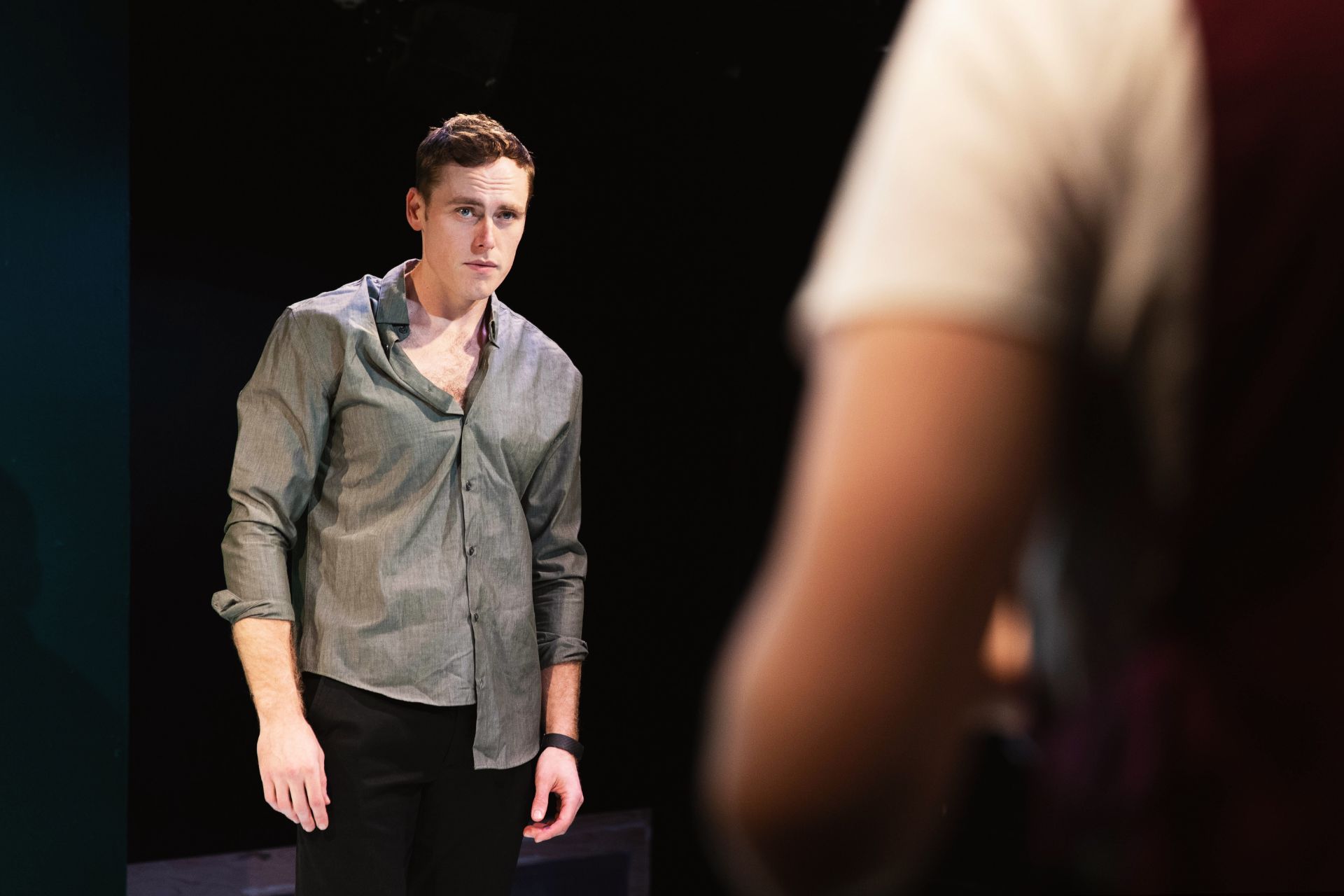
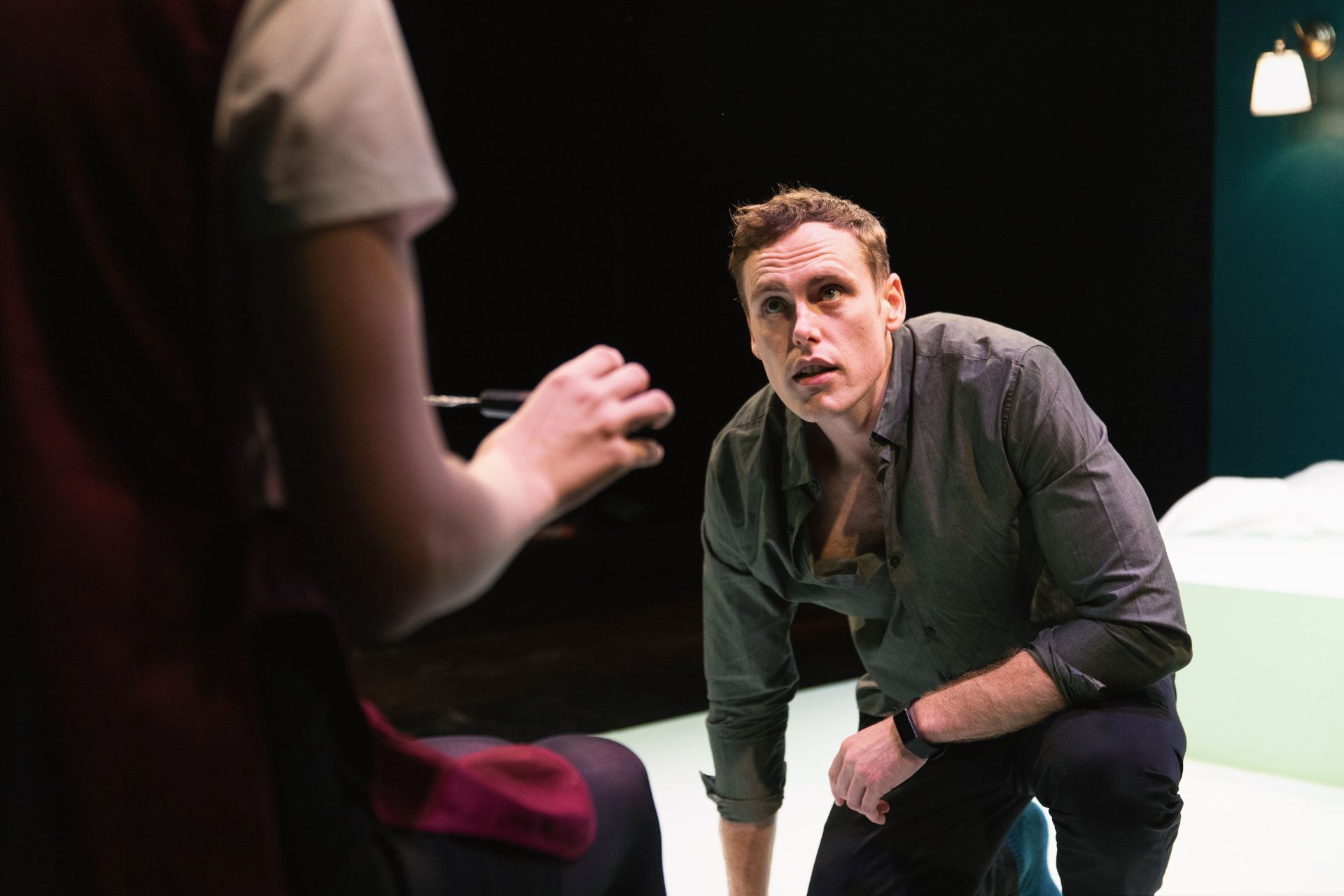
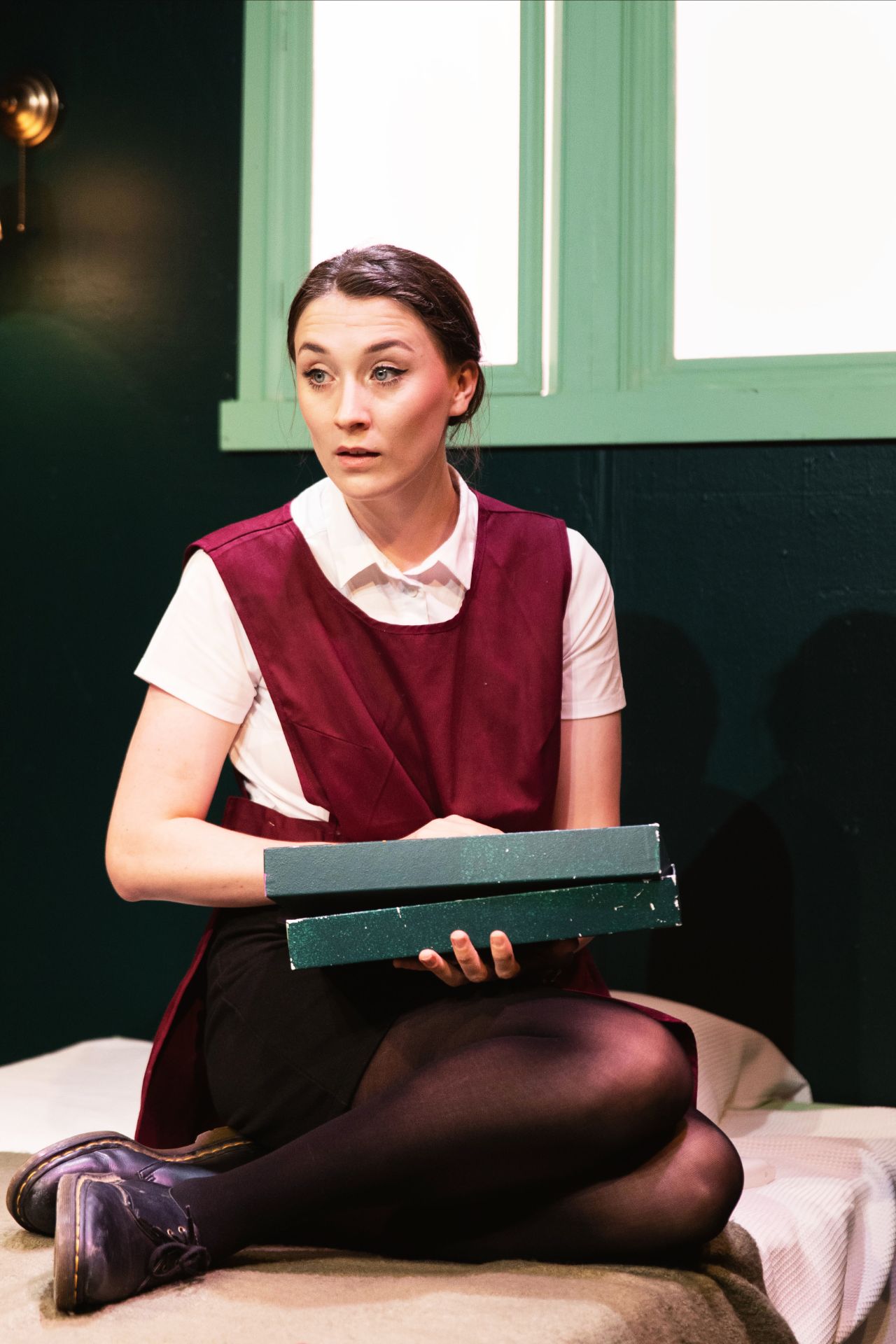
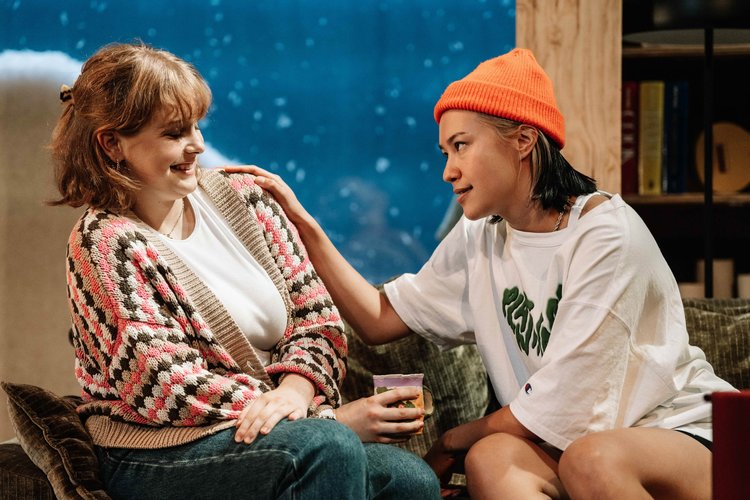
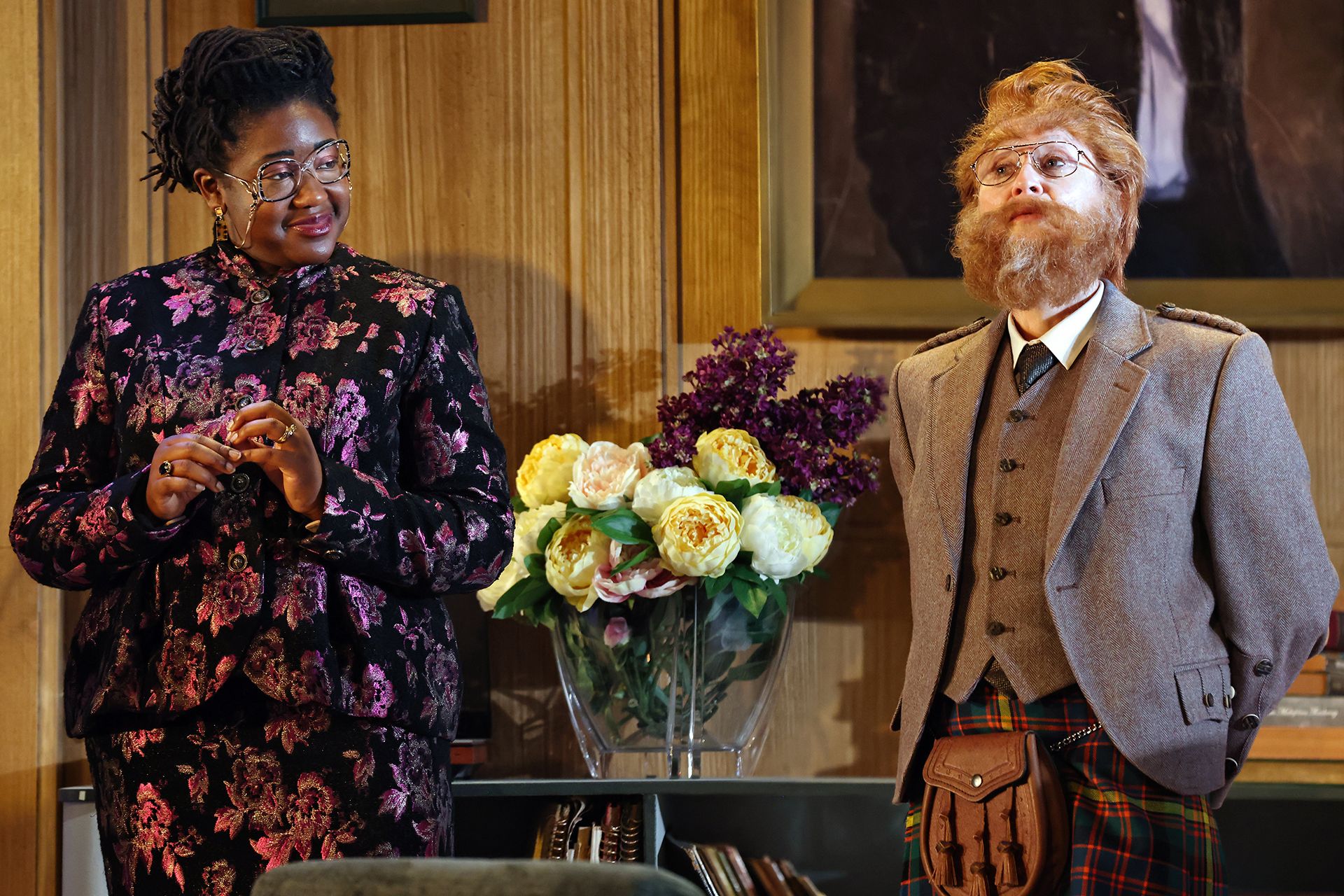
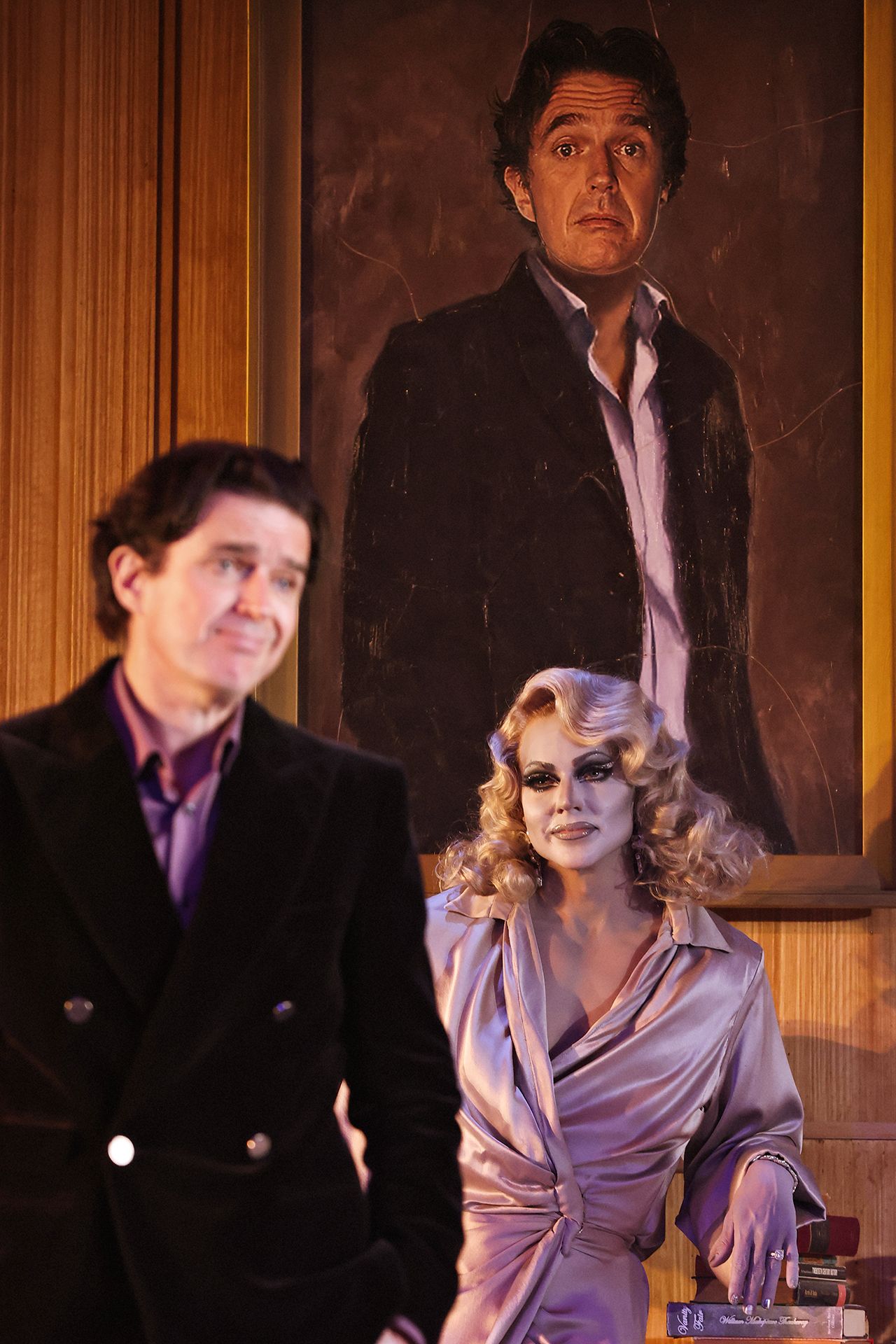
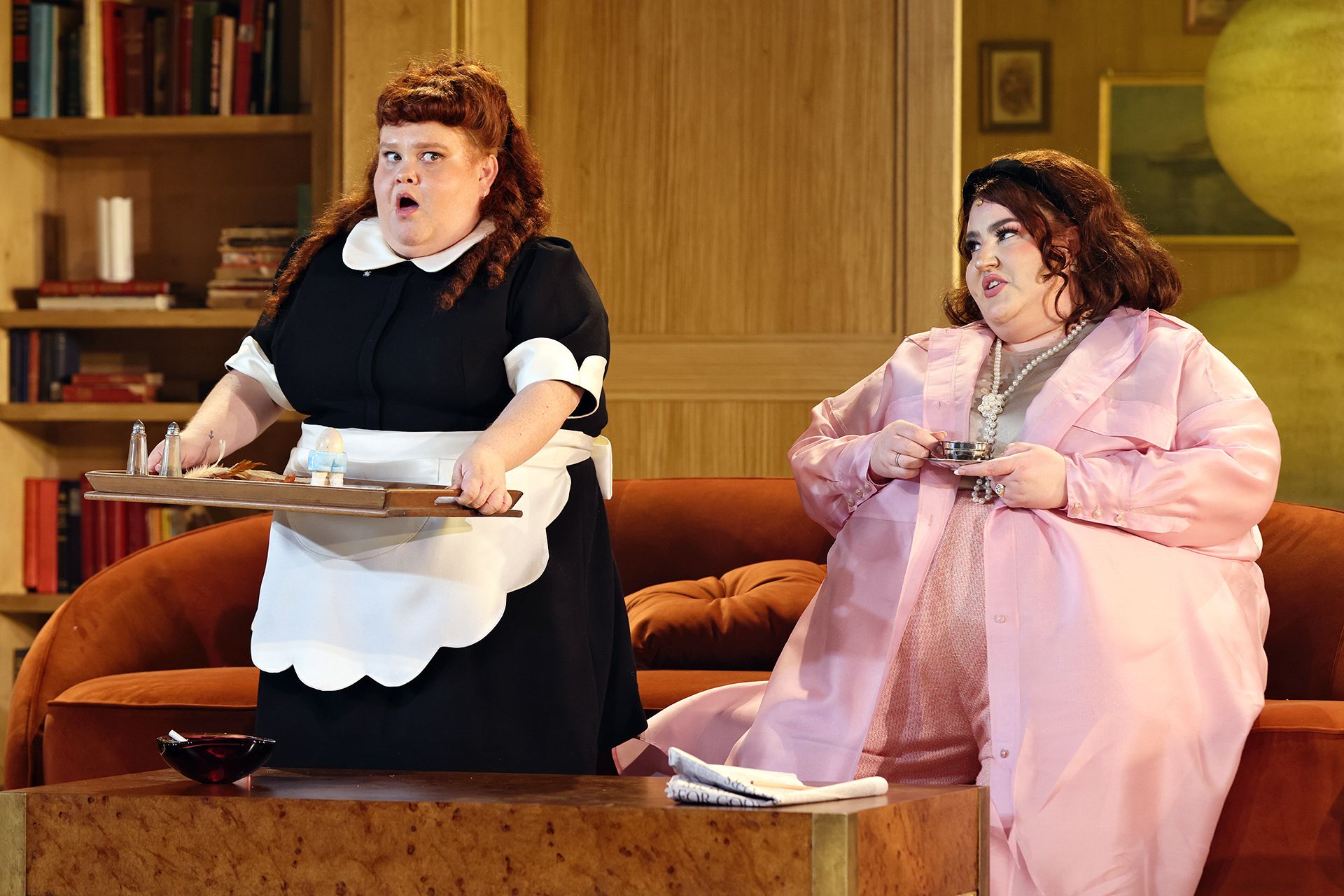
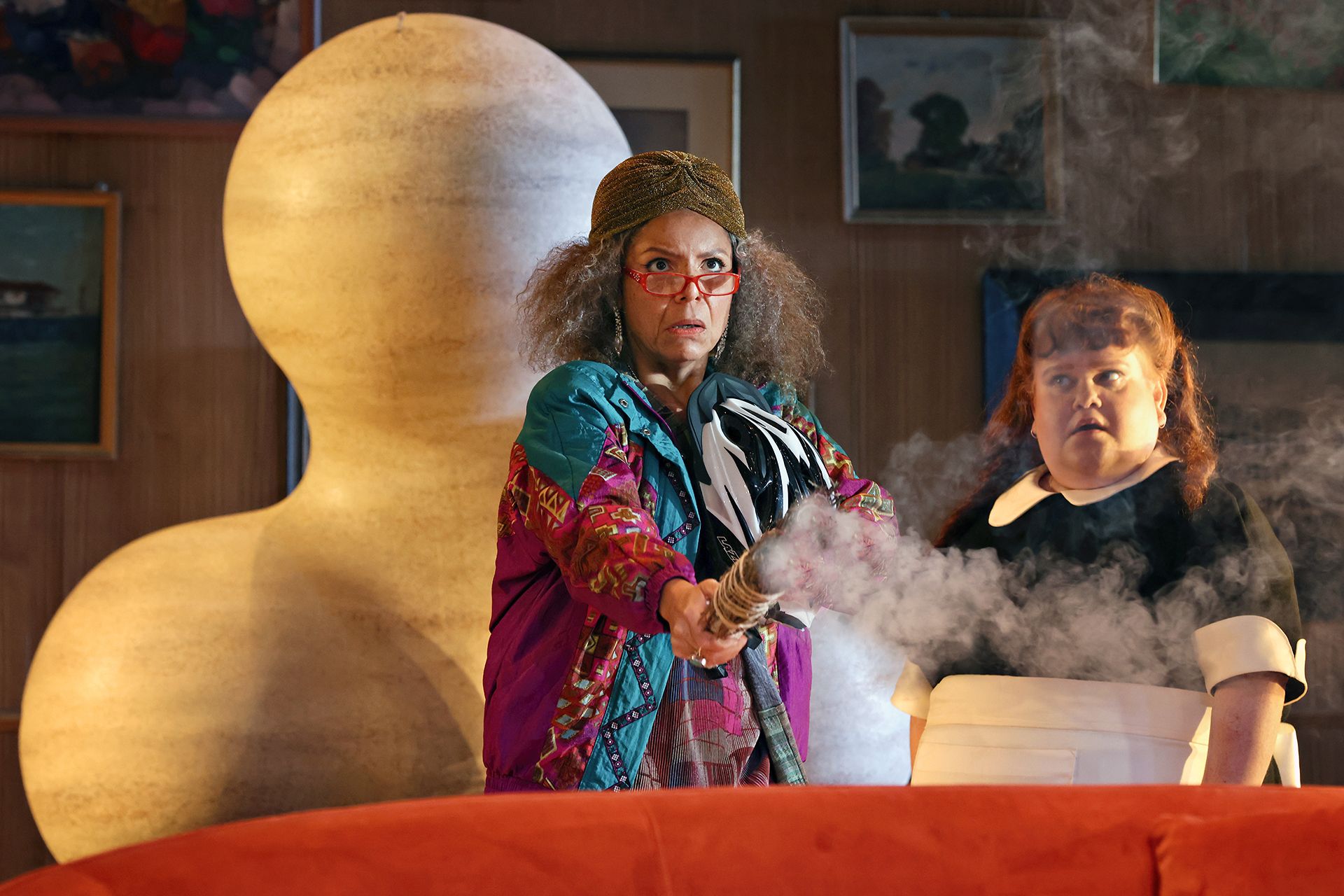
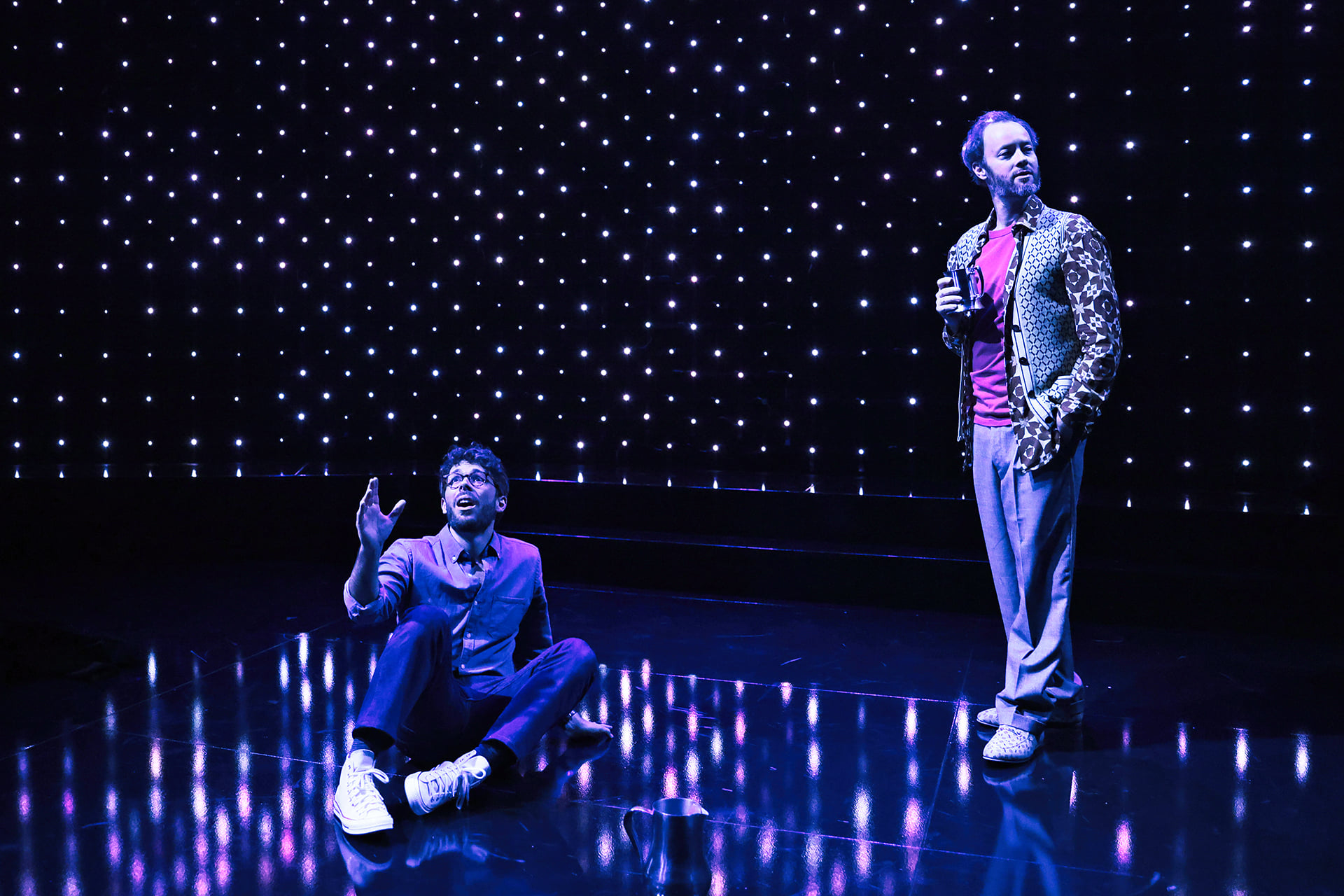
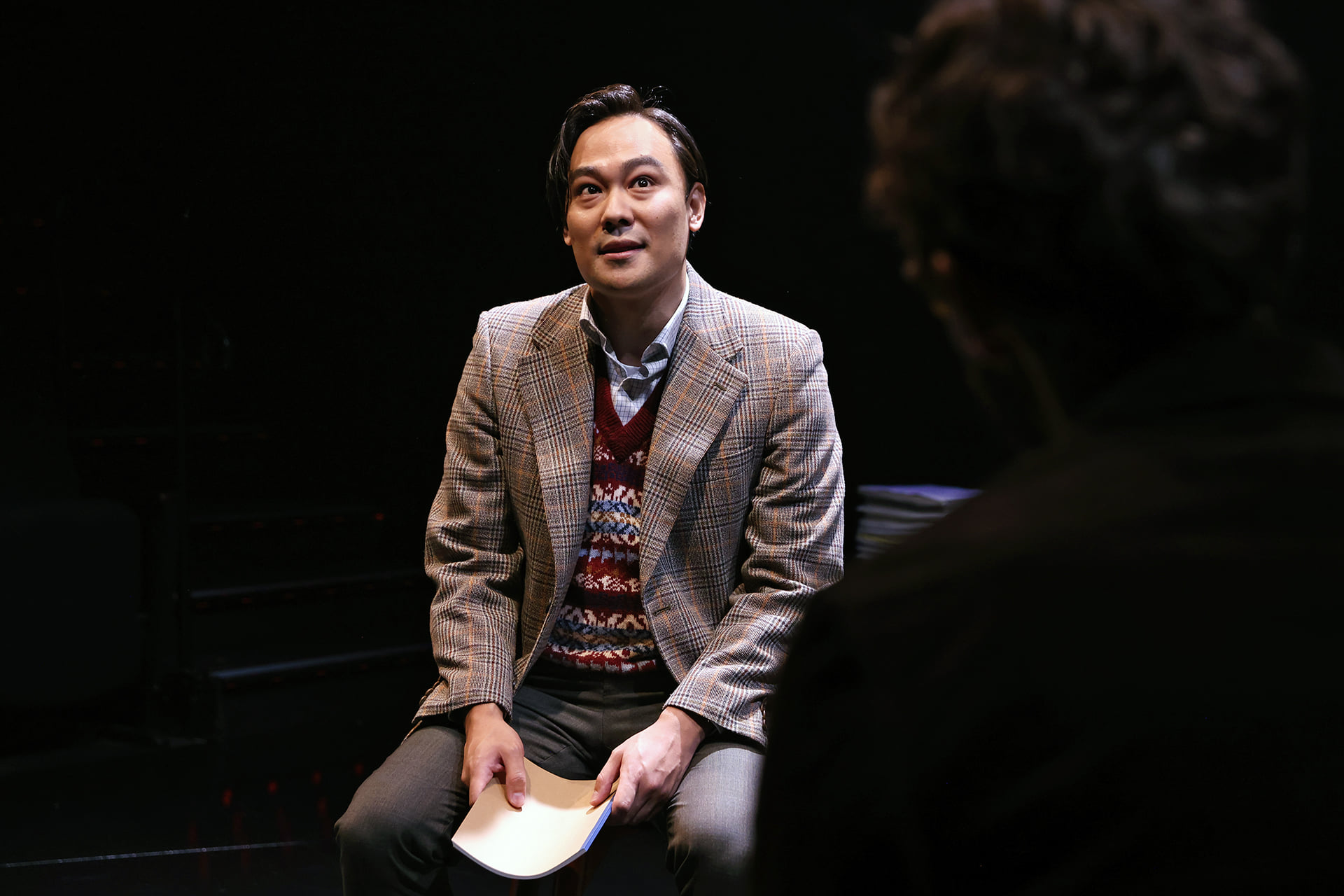
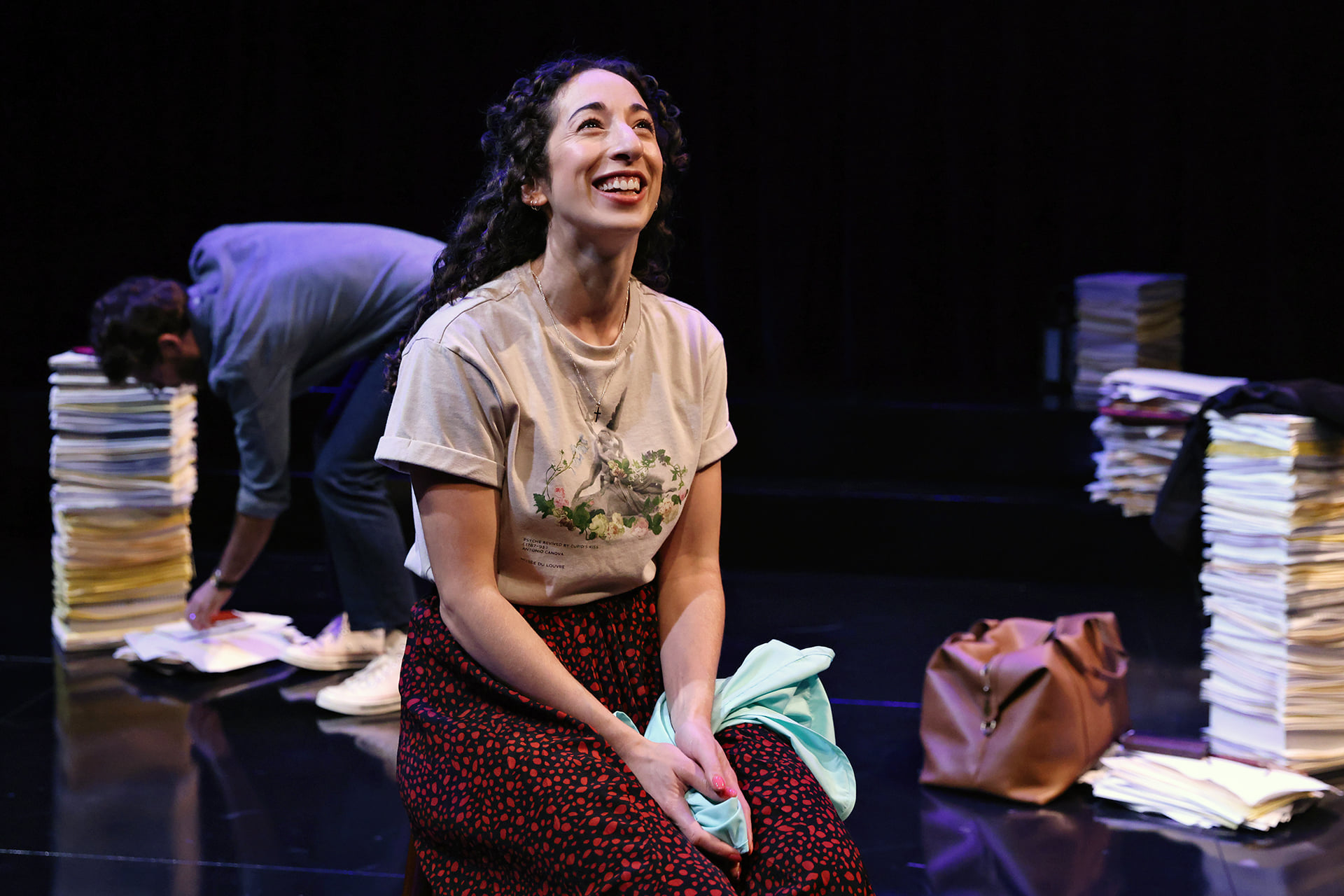
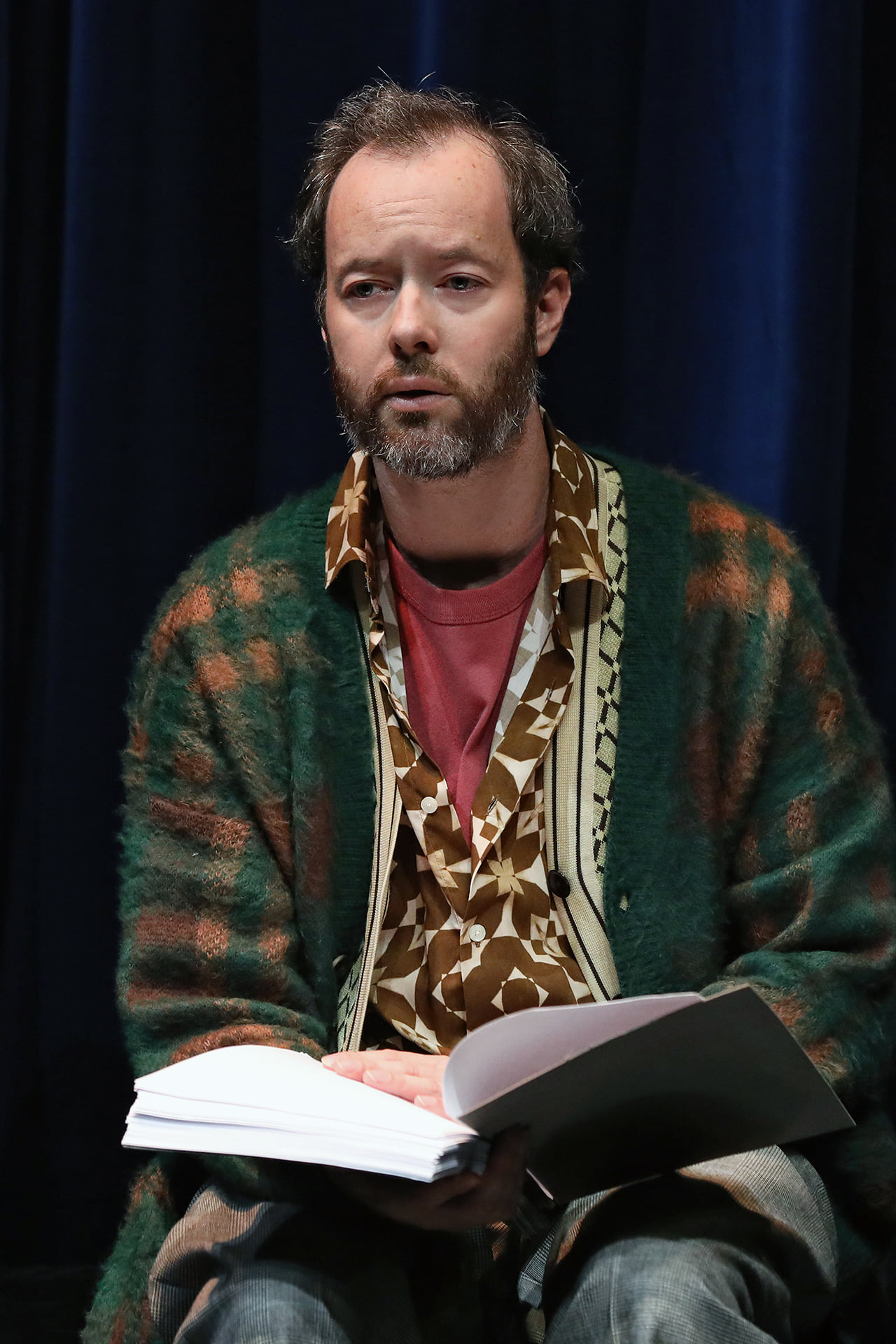
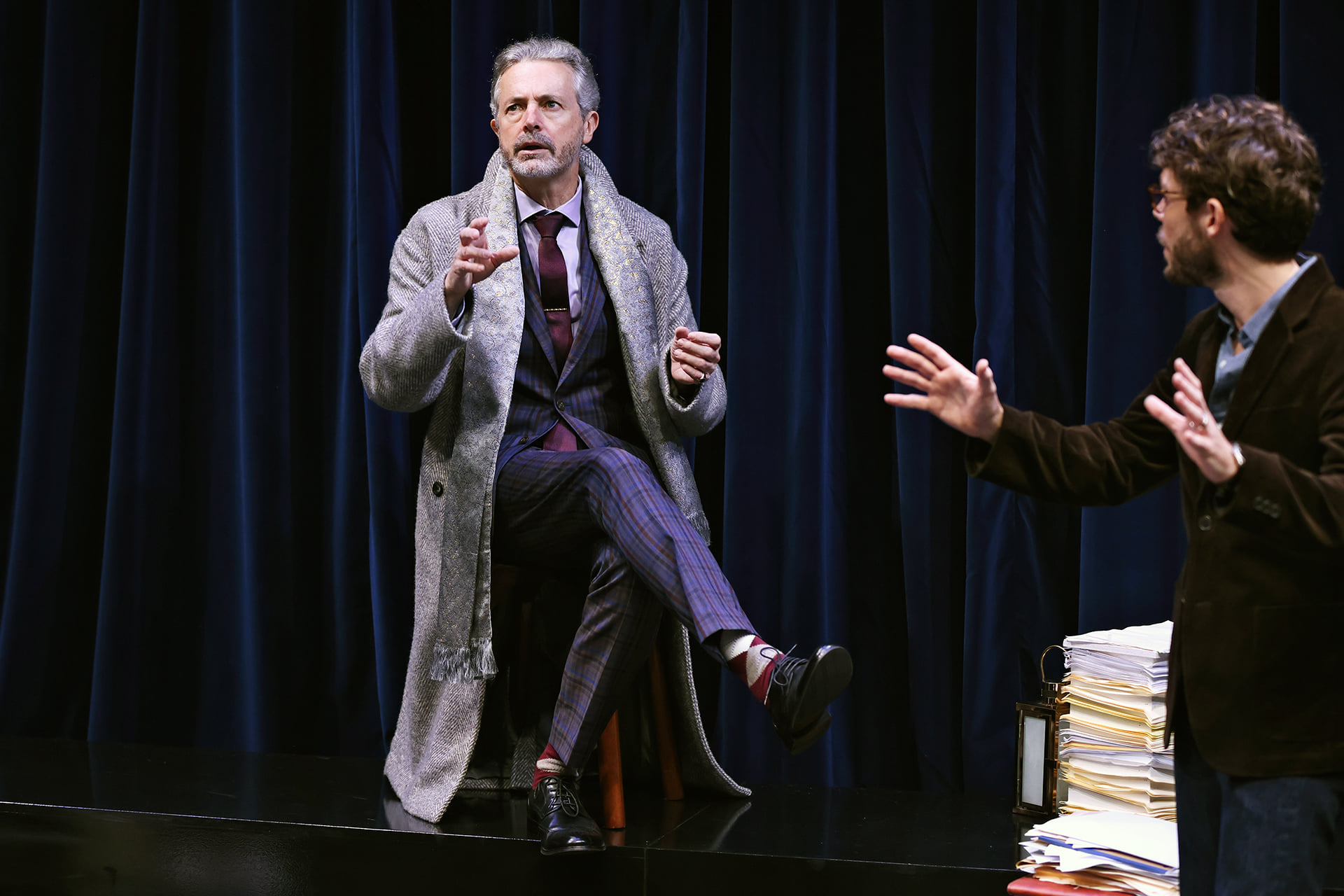
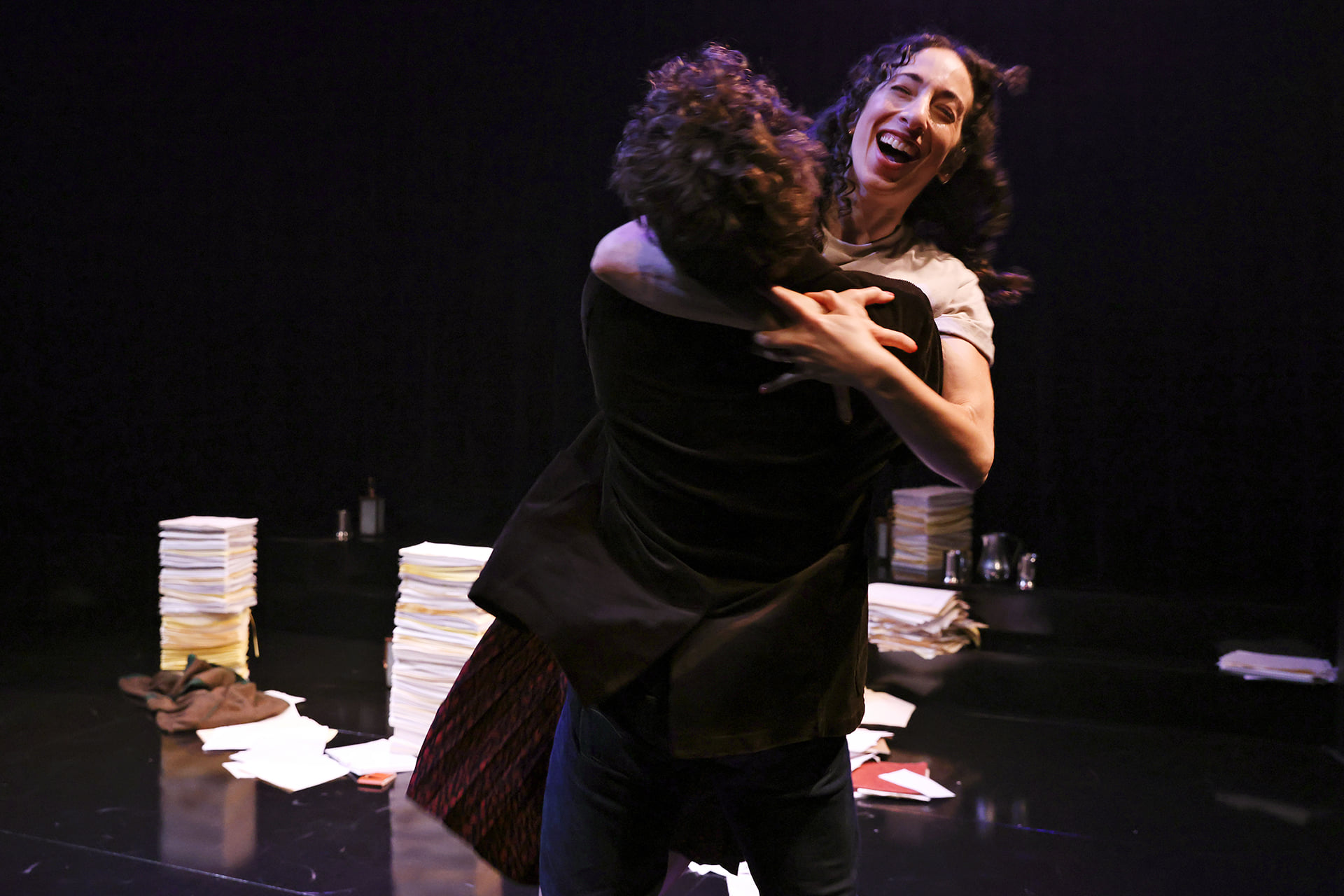
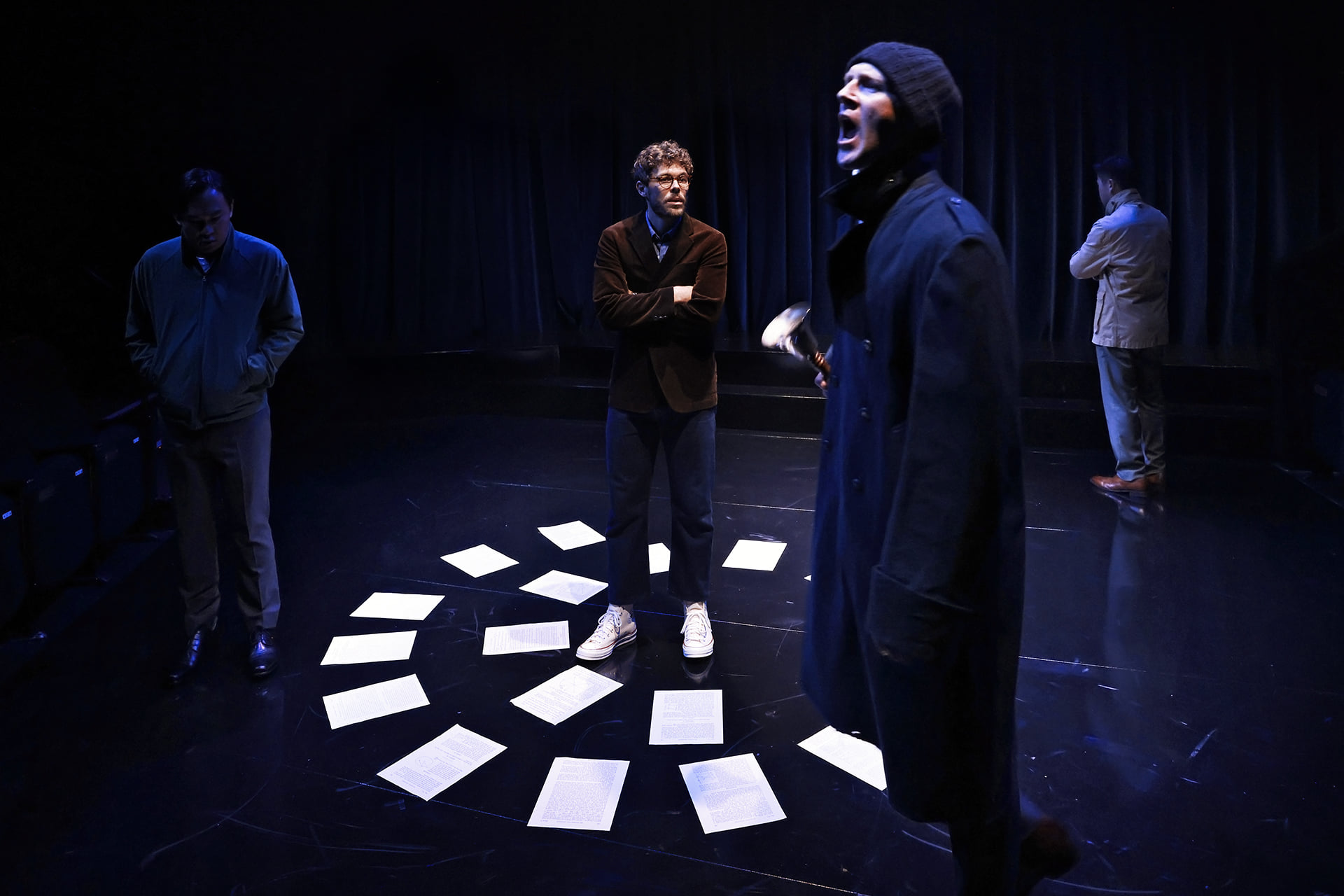
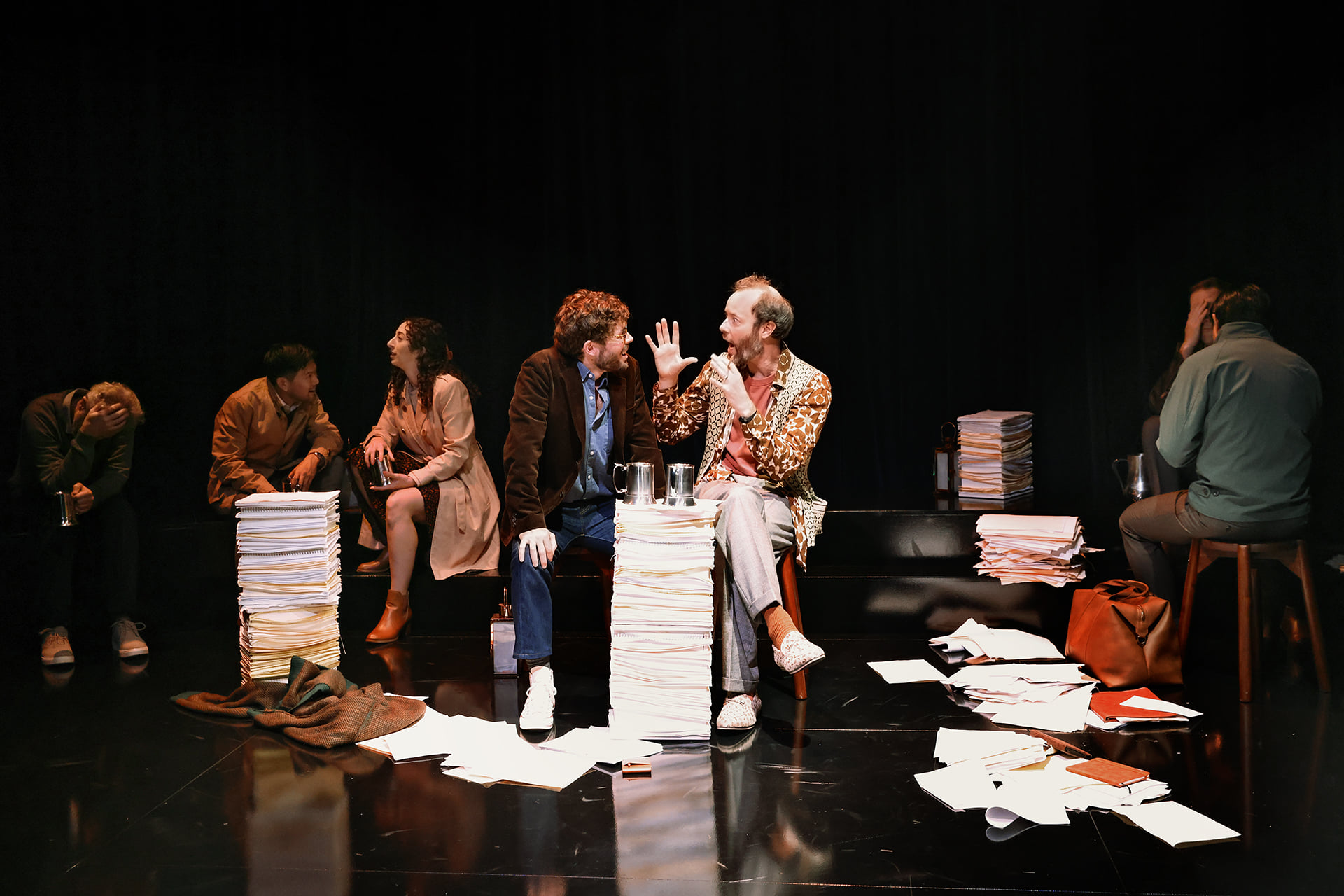
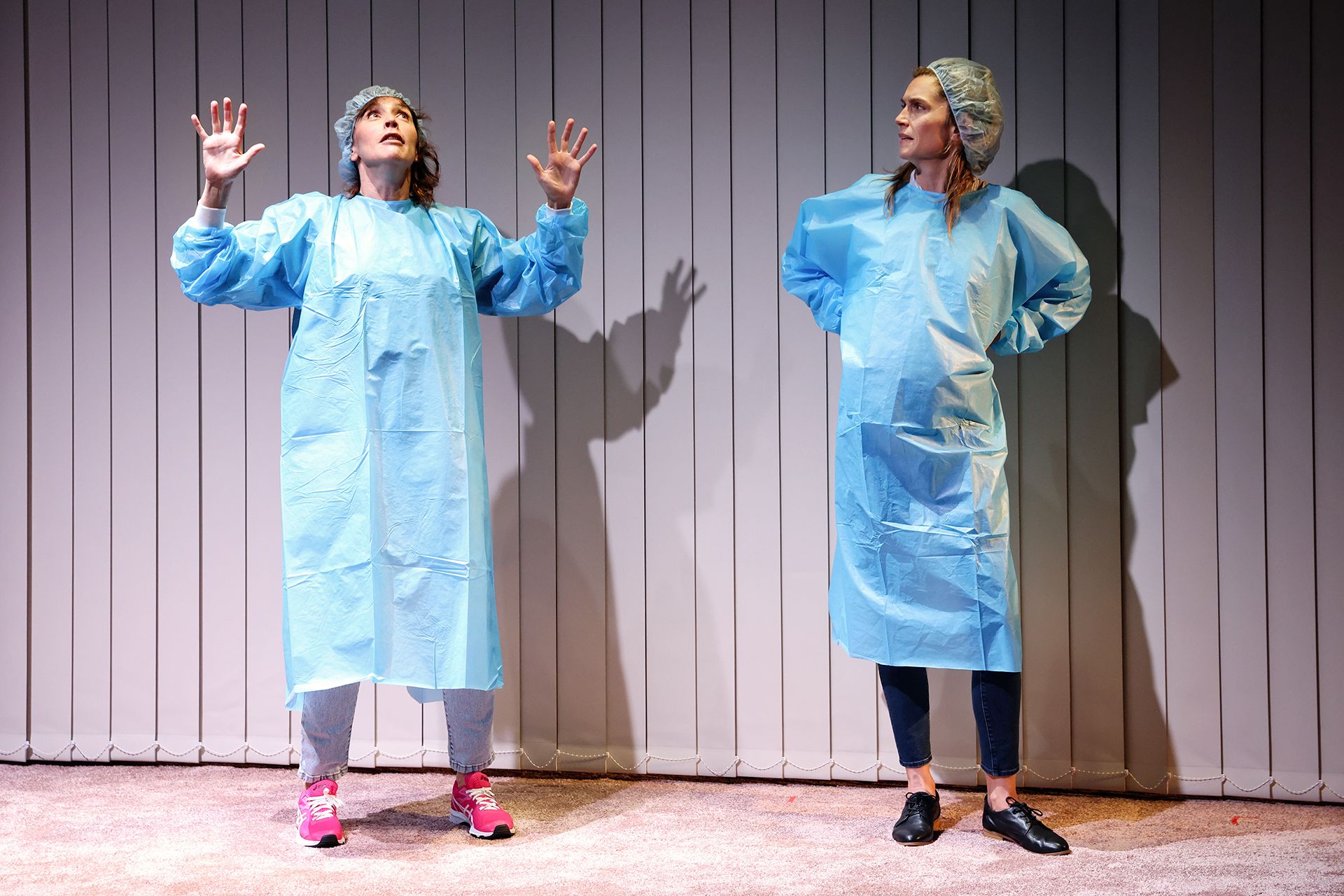
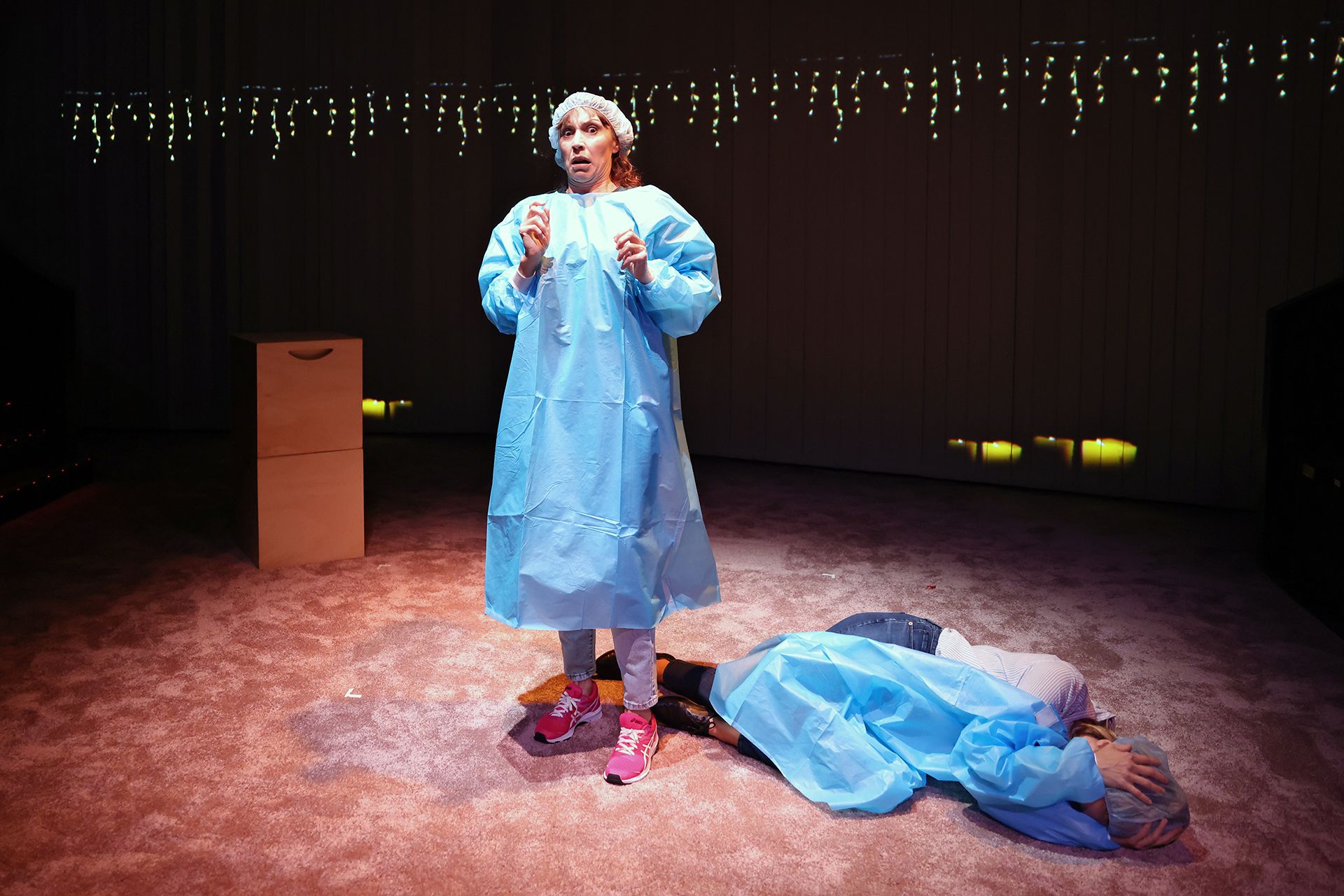
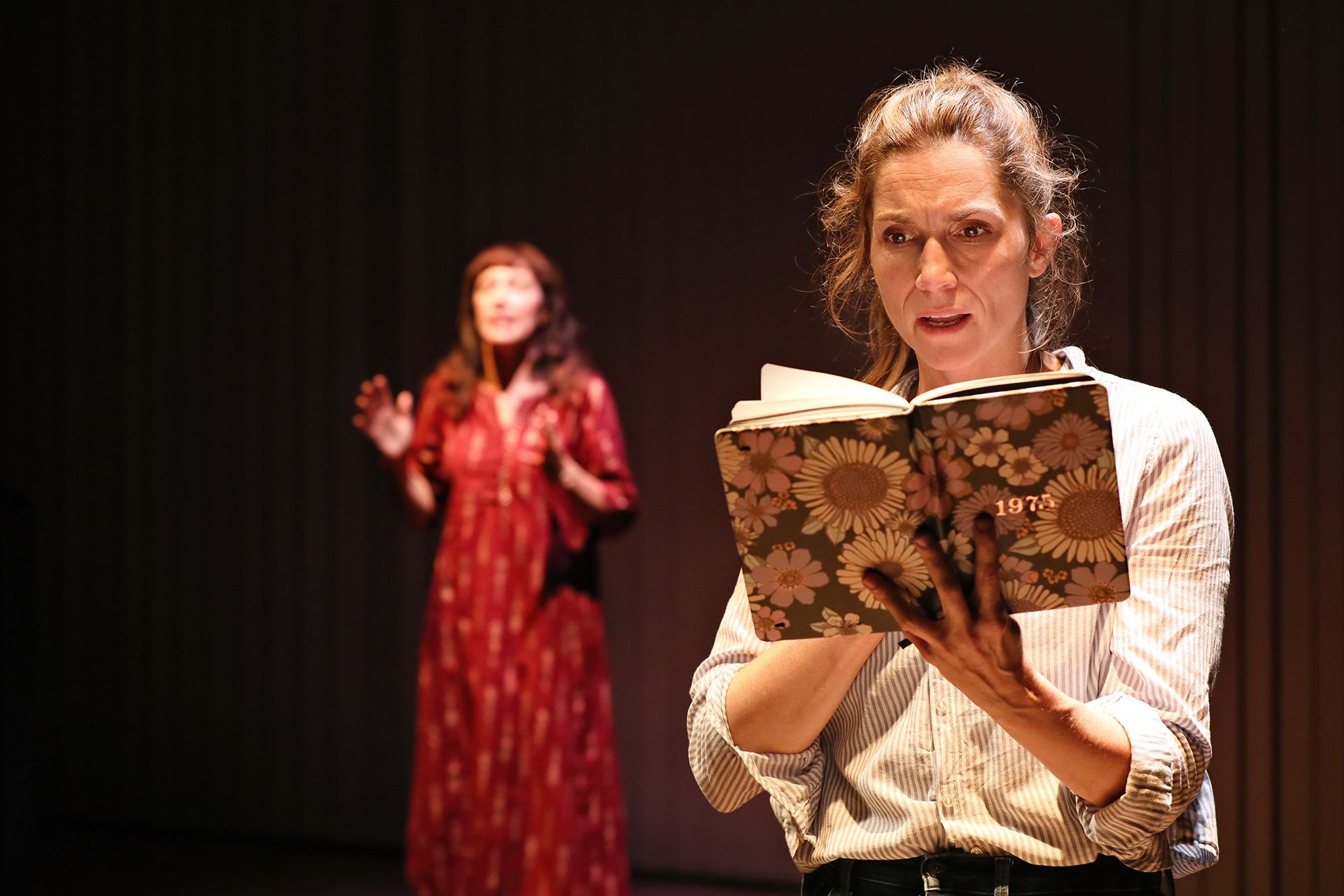
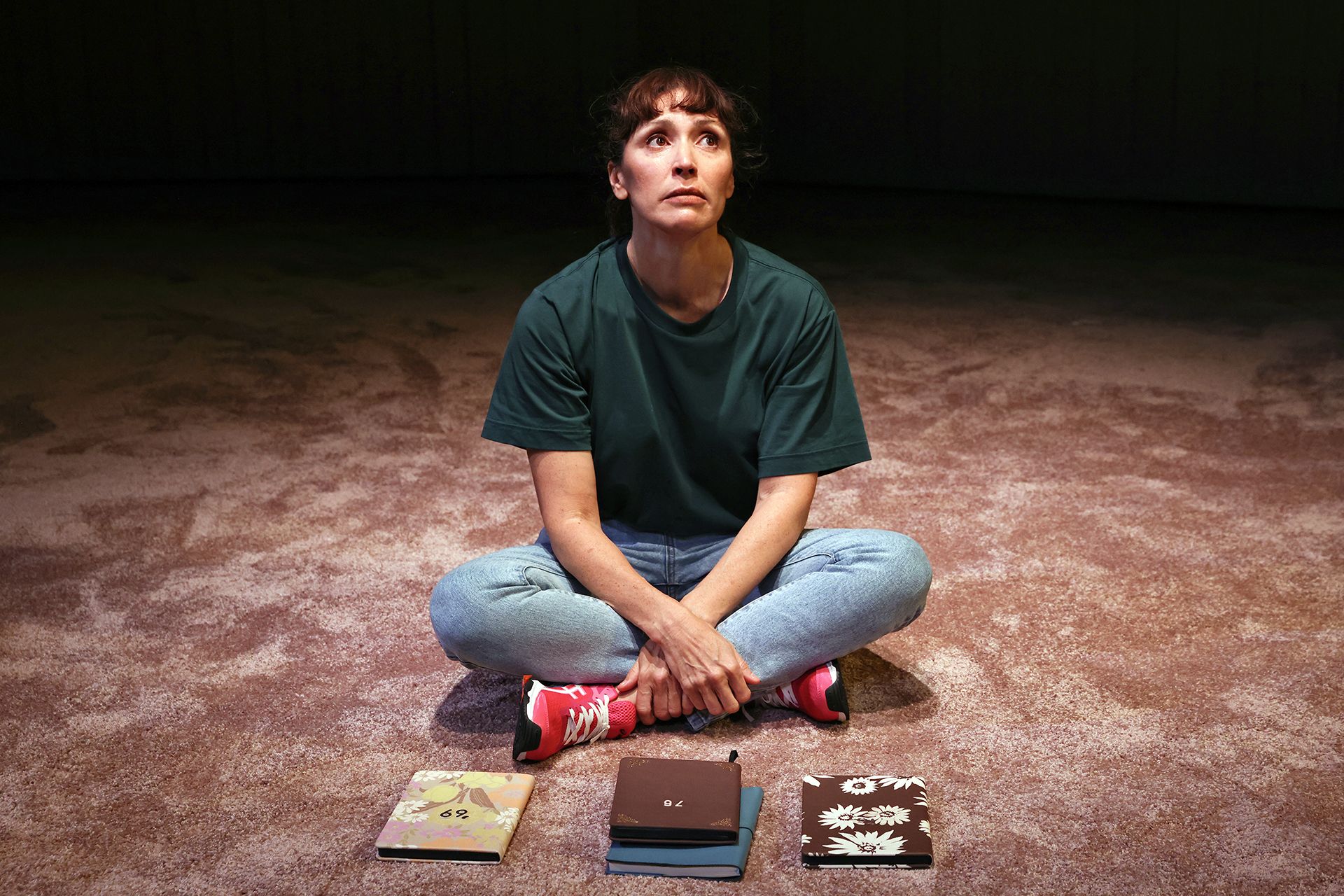
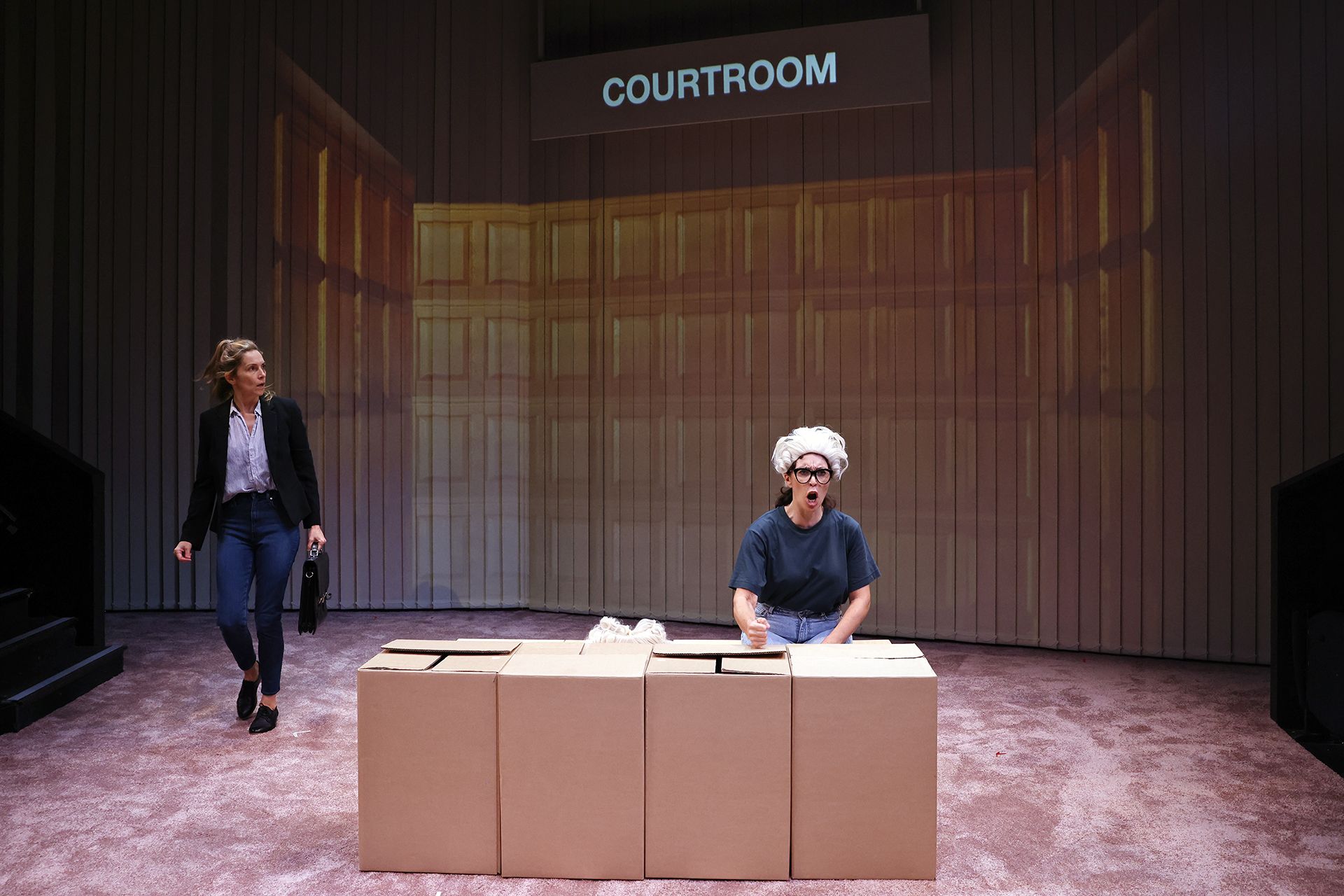
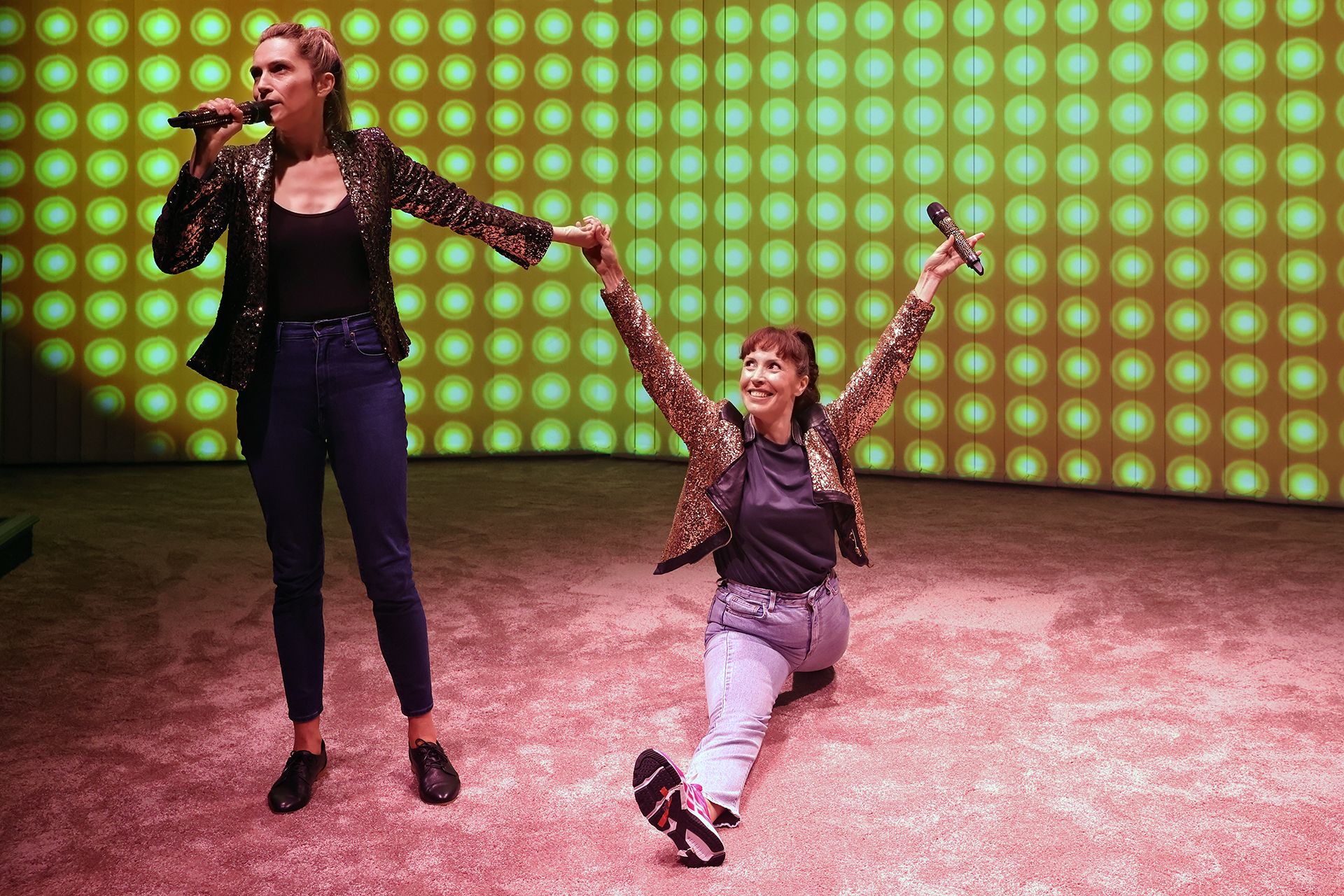
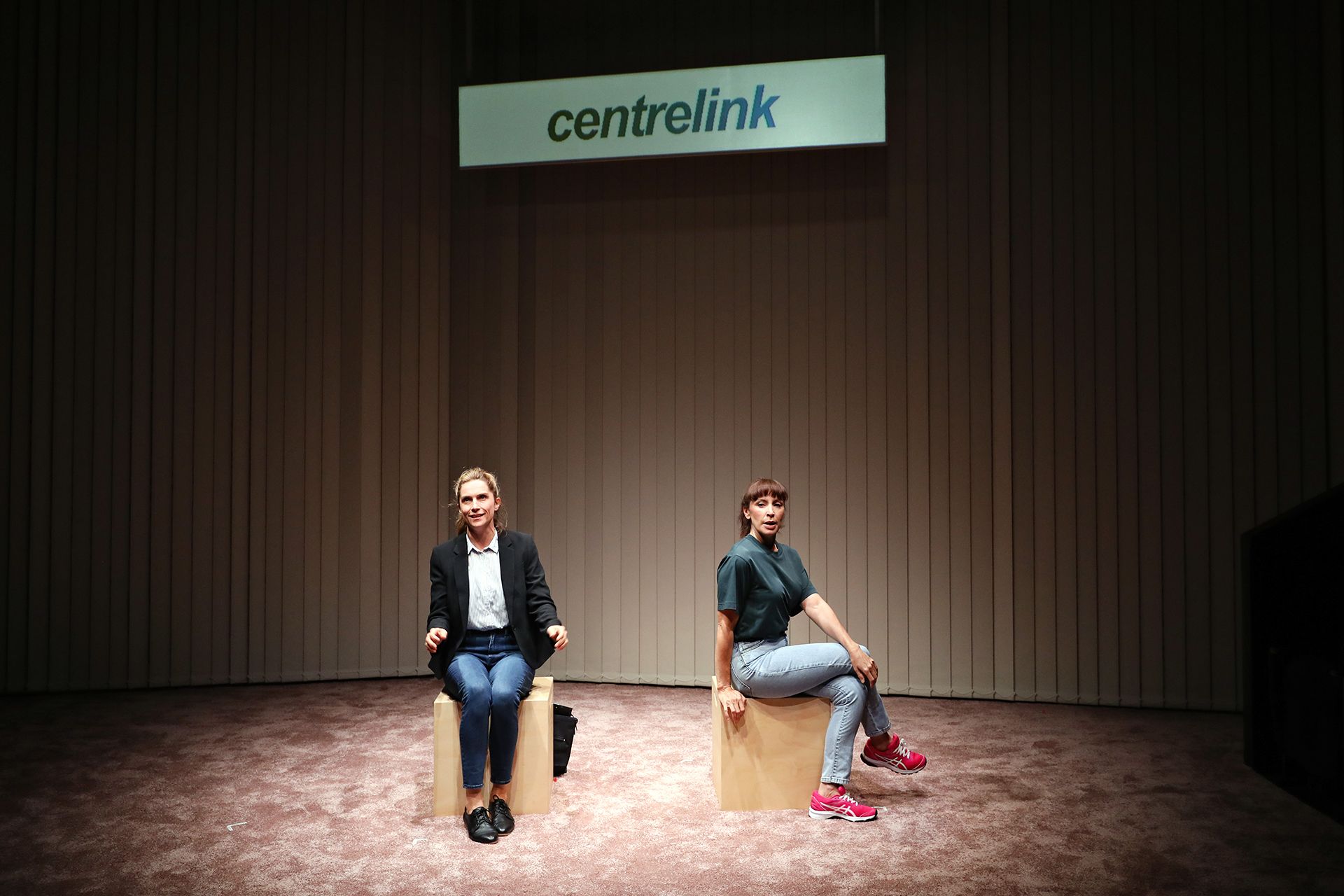
Felicity and Joanne have progressed from being business partners, to now being housemates. In Unqualified 2: Still Unqualified, the pair is back with more shenanigans, which is entirely unsurprising, as their first outing three years ago at the very same theatre, had proven an unequivocal blast. Creators Genevieve Hegney and Catherine Moore seem a bottomless pit of jokes, and in this sequel we again encounter a barrage of hearty laughter, about a fictitious temping agency, and the desperate ineptitude that sustains it.

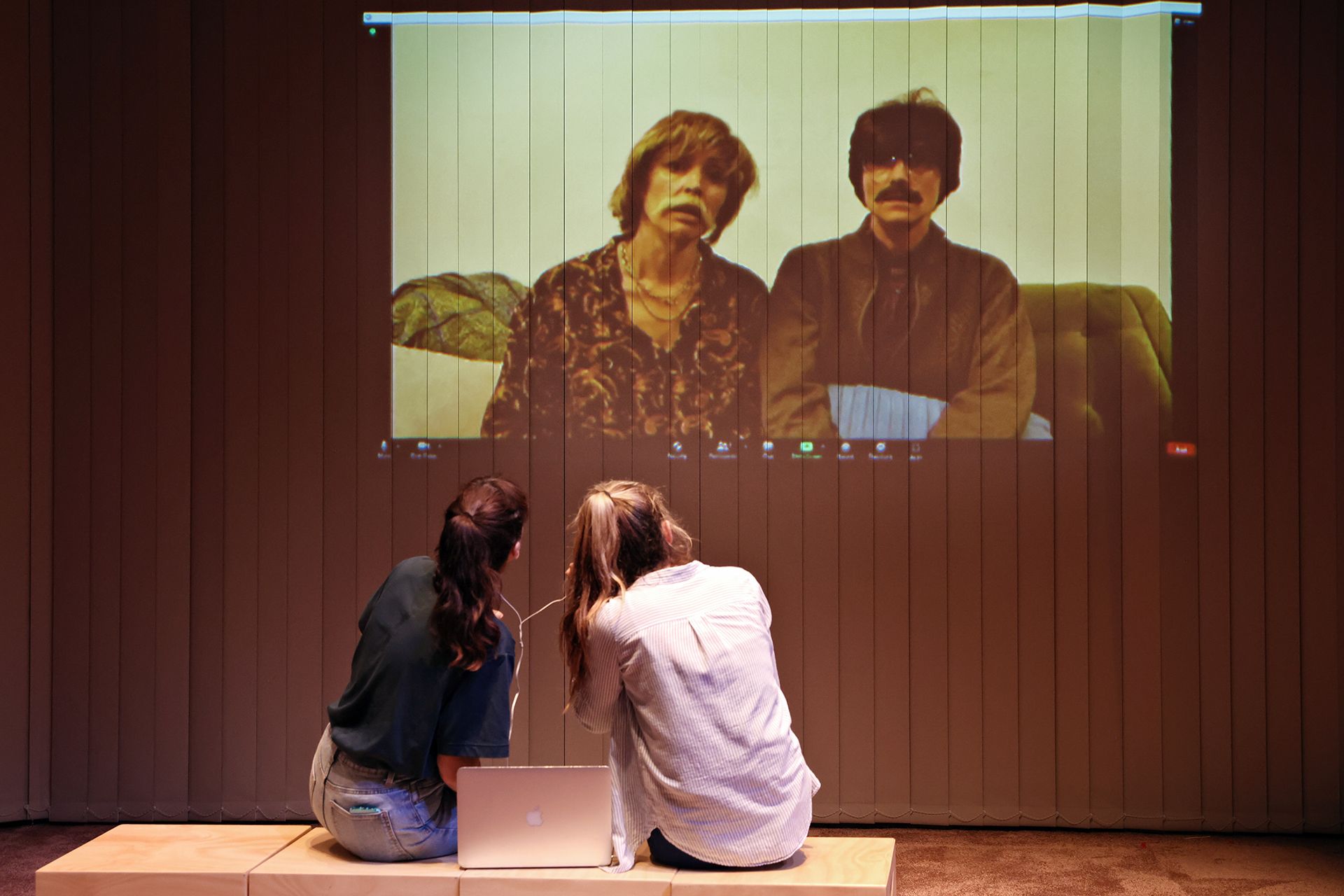
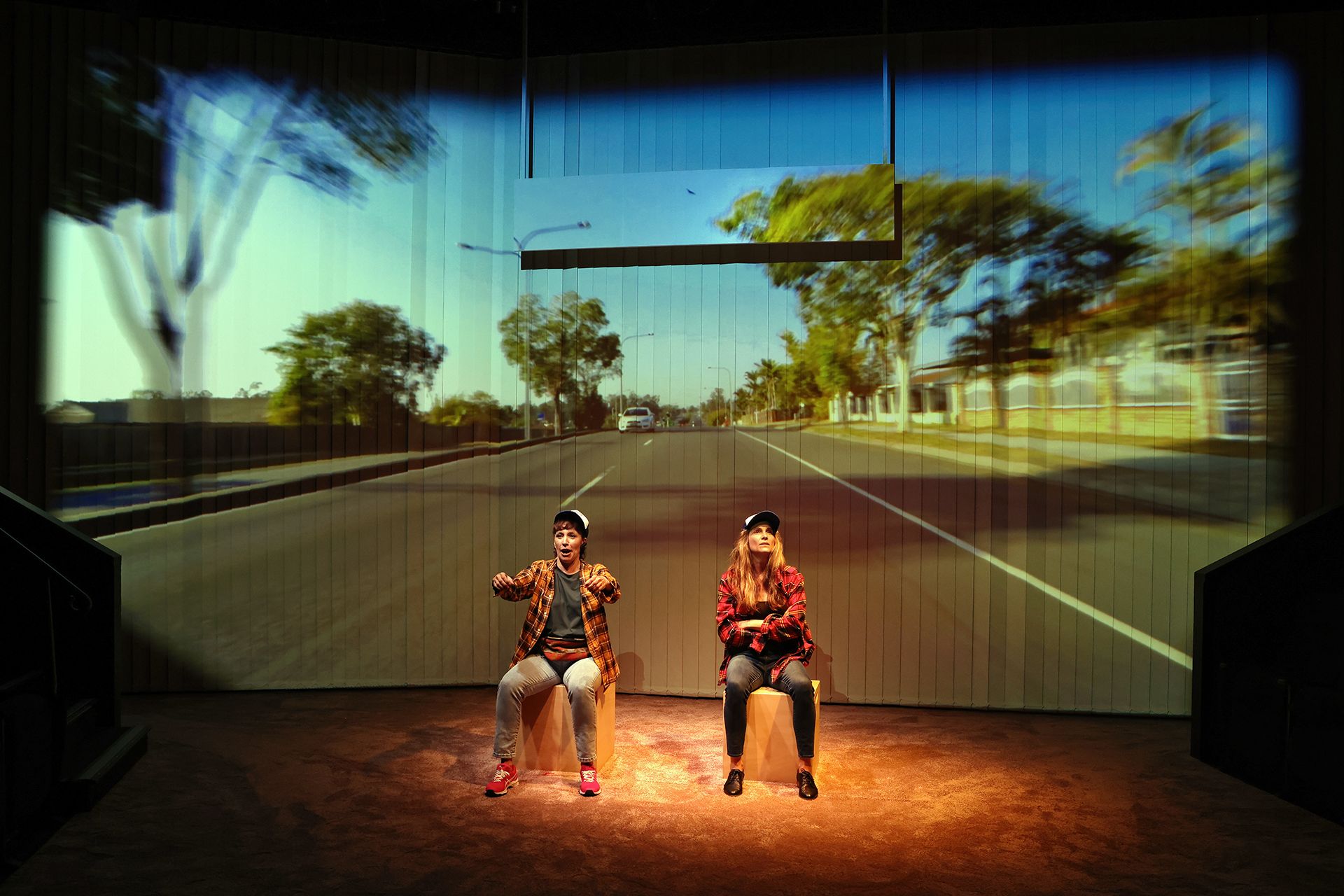
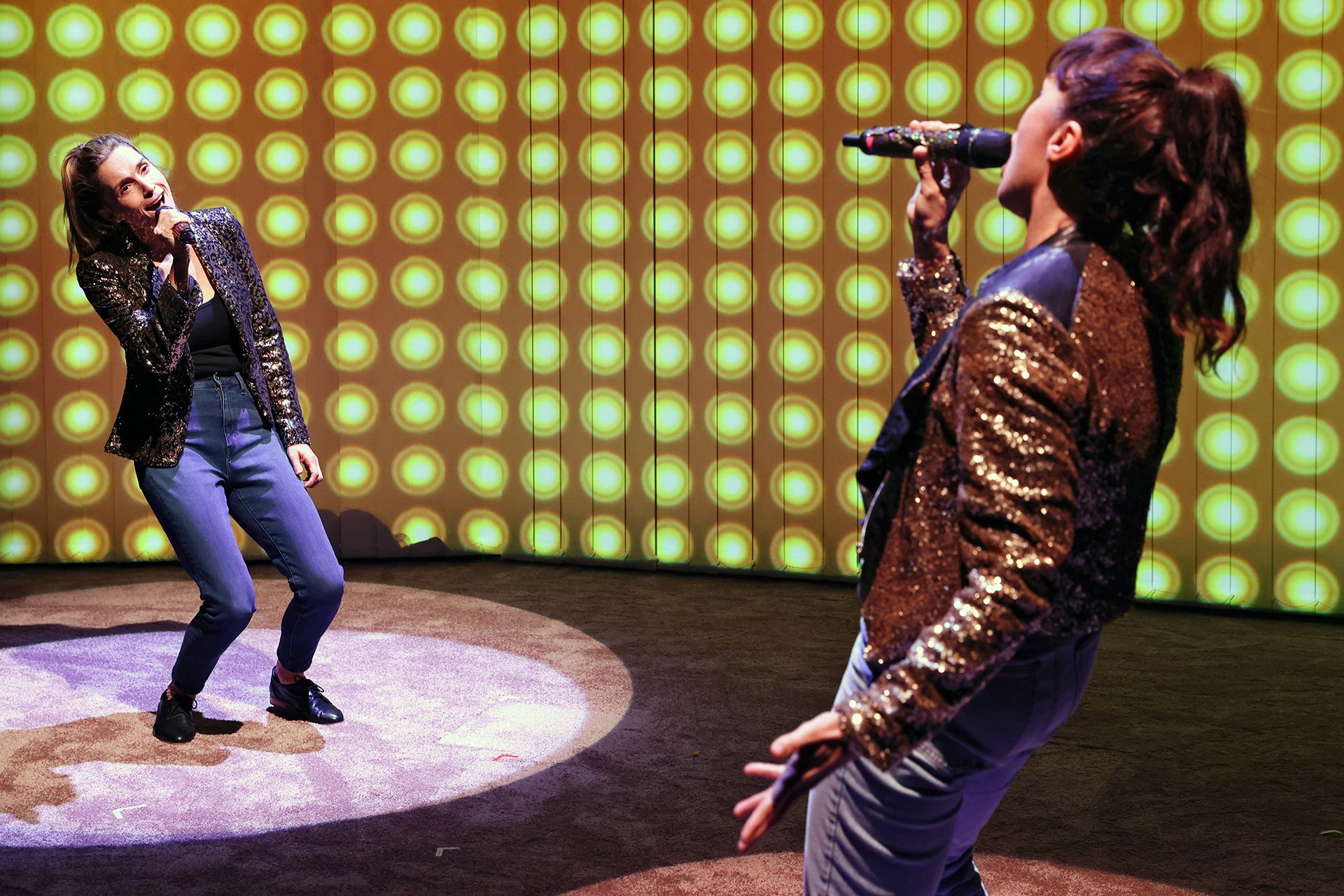
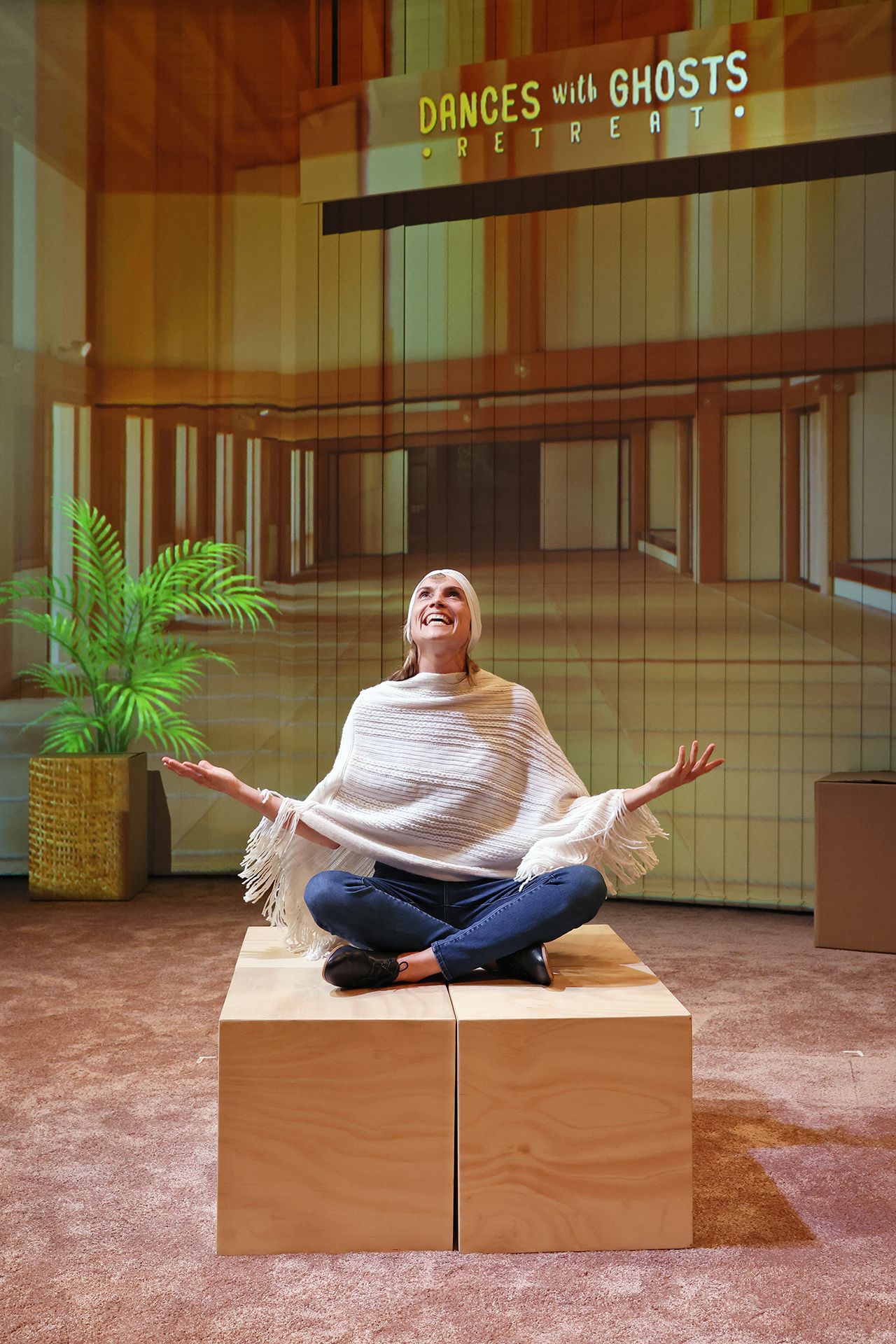
Directed by Janine Watson, the show is relentlessly exuberant, and extremely light hearted. Its sense of humour comes from a profound understanding of grace; ambitious women are given little room to fail, but in Unqualified 2, we delight in the knowledge that none of us need to be superwomen, to feel deserving. Design aspects of the production are accomplished in unassuming ways, with video projections by Morgan Moroney playing an integral part, in taking us from one unlikely place to another, as the women try to earn a buck.

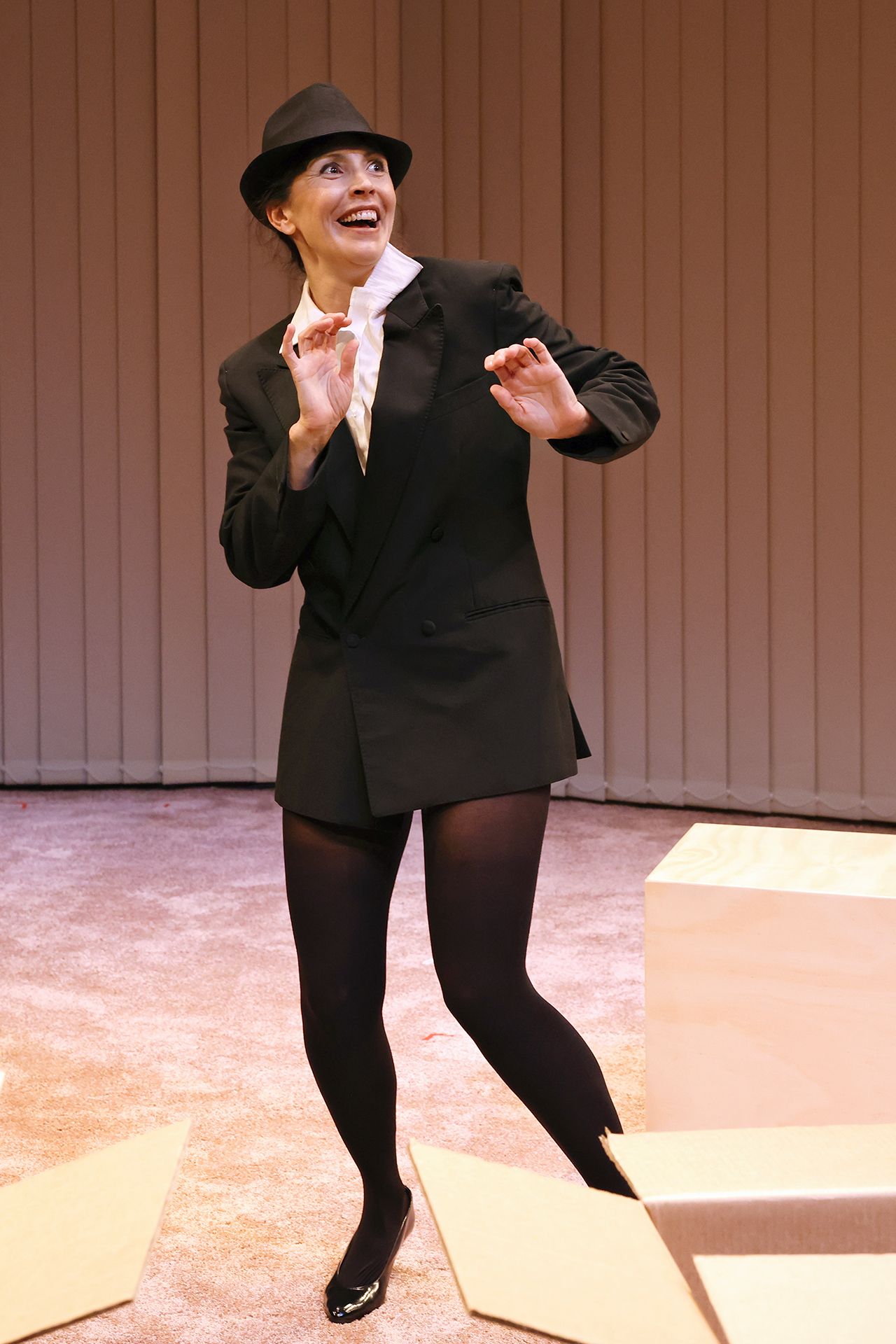
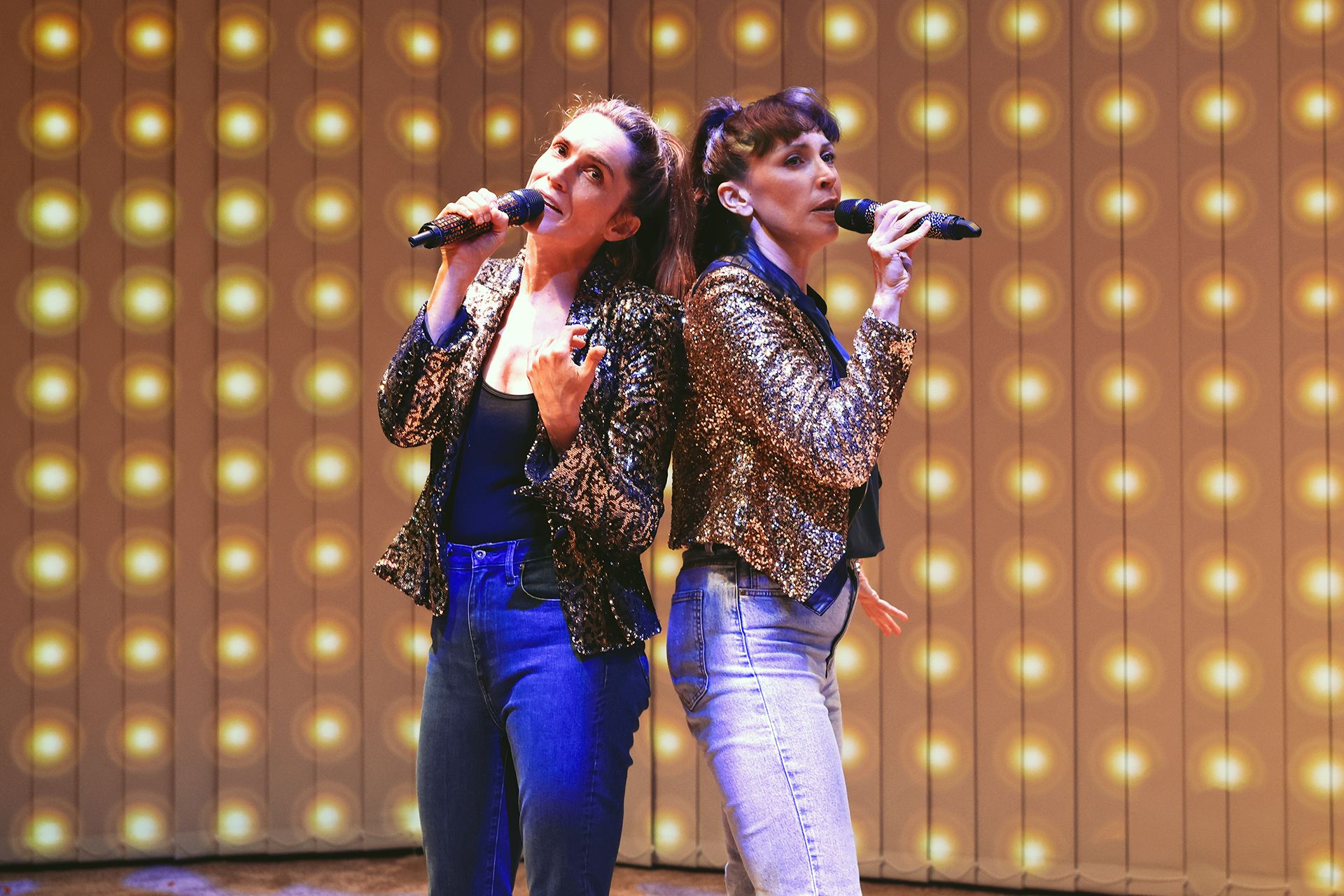
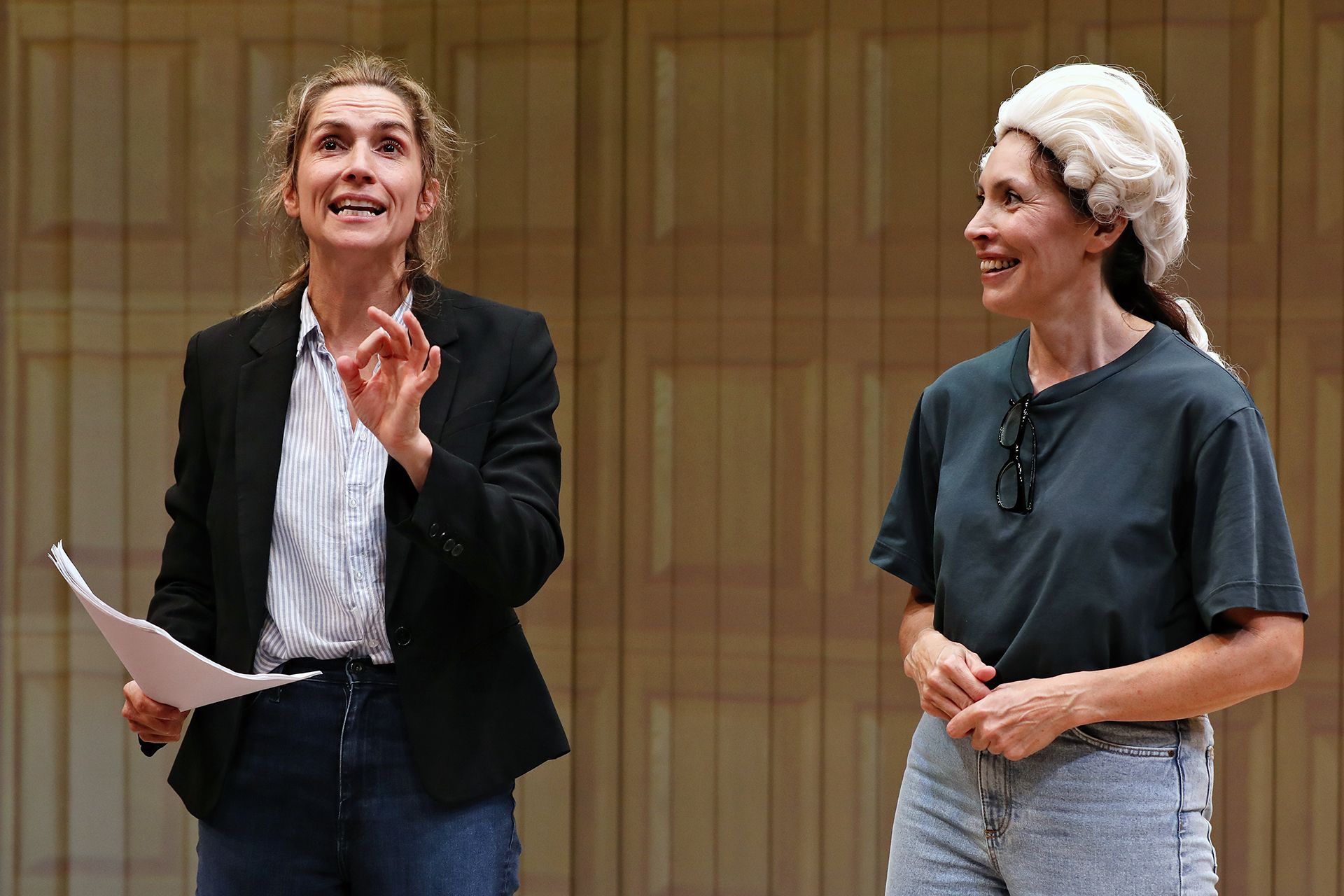
Watching Hegney and Moore on stage, is an absolute treat. Both performers have commanding presences and an unassailable confidence, that make us putty in their hands. The chemistry between these two powerhouses, is a rare gift, and a reminder that theatre at its best, is about an ephemeral magic that is often hard to pinpoint, and impossible to replicate.

It almost becomes irrelevant what the story is, that Hegney and Moore are telling, but it is certainly apt that the essence of what they present, is a statement about friendship. Dynamics between women often involve a sense of competition. We observe that spaces for women can be scarce, and are taught tacitly, that only one of us can rise, which means celebrating other women often becomes complicated and challenging. In Unqualified 2 however, we see that success only comes when both (Felicity and Joanne, as well as Hegney and Moore) are completely in support of each other. Moreover, one comes to the realisation, that a success that cannot be shared, is not success at all.
www.ensemble.com.au

Review: An American In Paris (Theatre Royal Sydney)

Venue: Theatre Royal Sydney (Sydney NSW), 29 Apr – 12 Jun, 2022
Book: Craig Lucas (inspired by the Motion Picture)
Music & Lyrics: George Gershwin, Ira Gershwin
Director: Christopher Wheeldon
Cast: Leanne Cope, Robbie Fairchild, Jonathan Hickey, Ashleigh Rubenach, Sam Ward, David Whitney, Anne Wood
Images by Darren Thomas

Theatre review
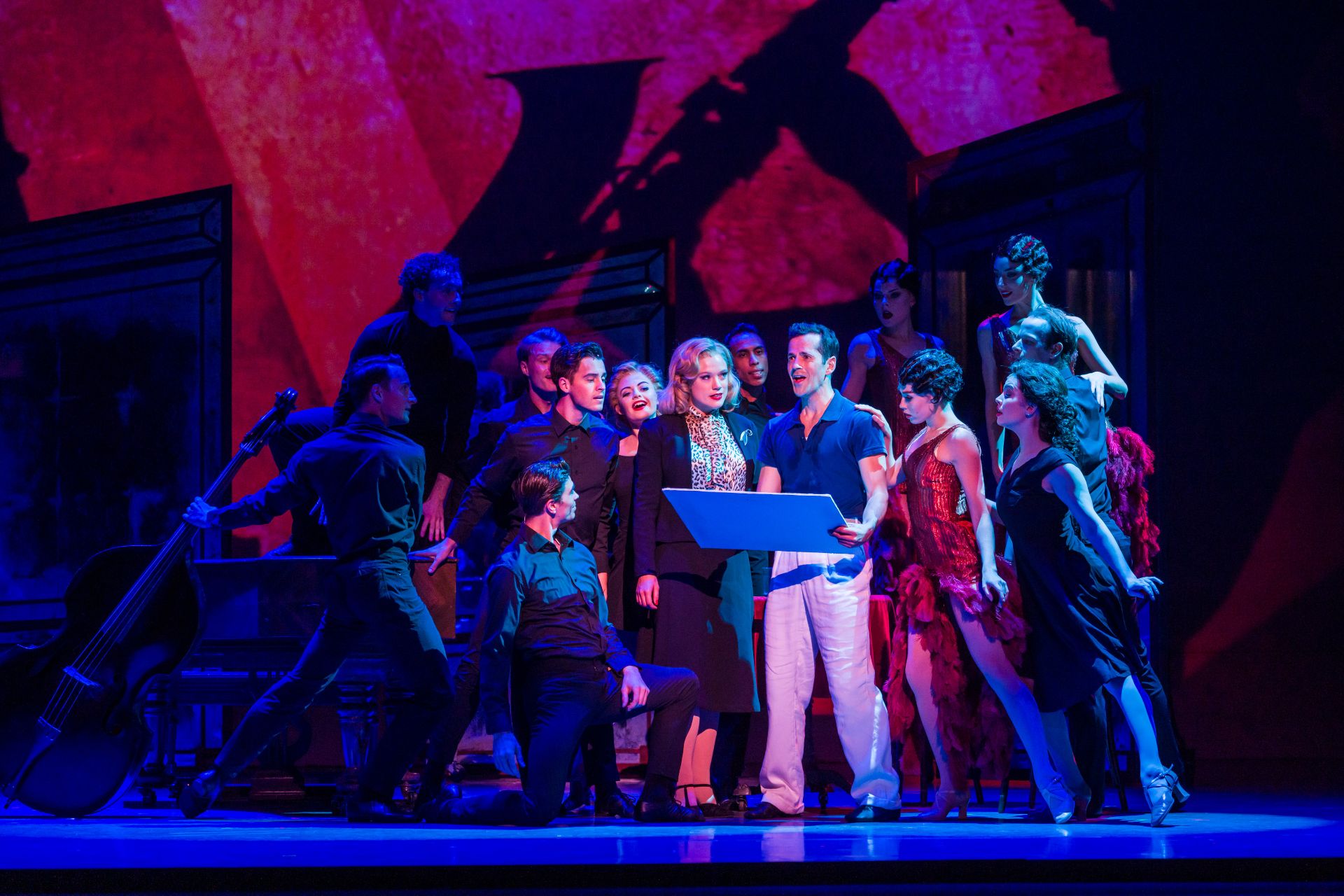
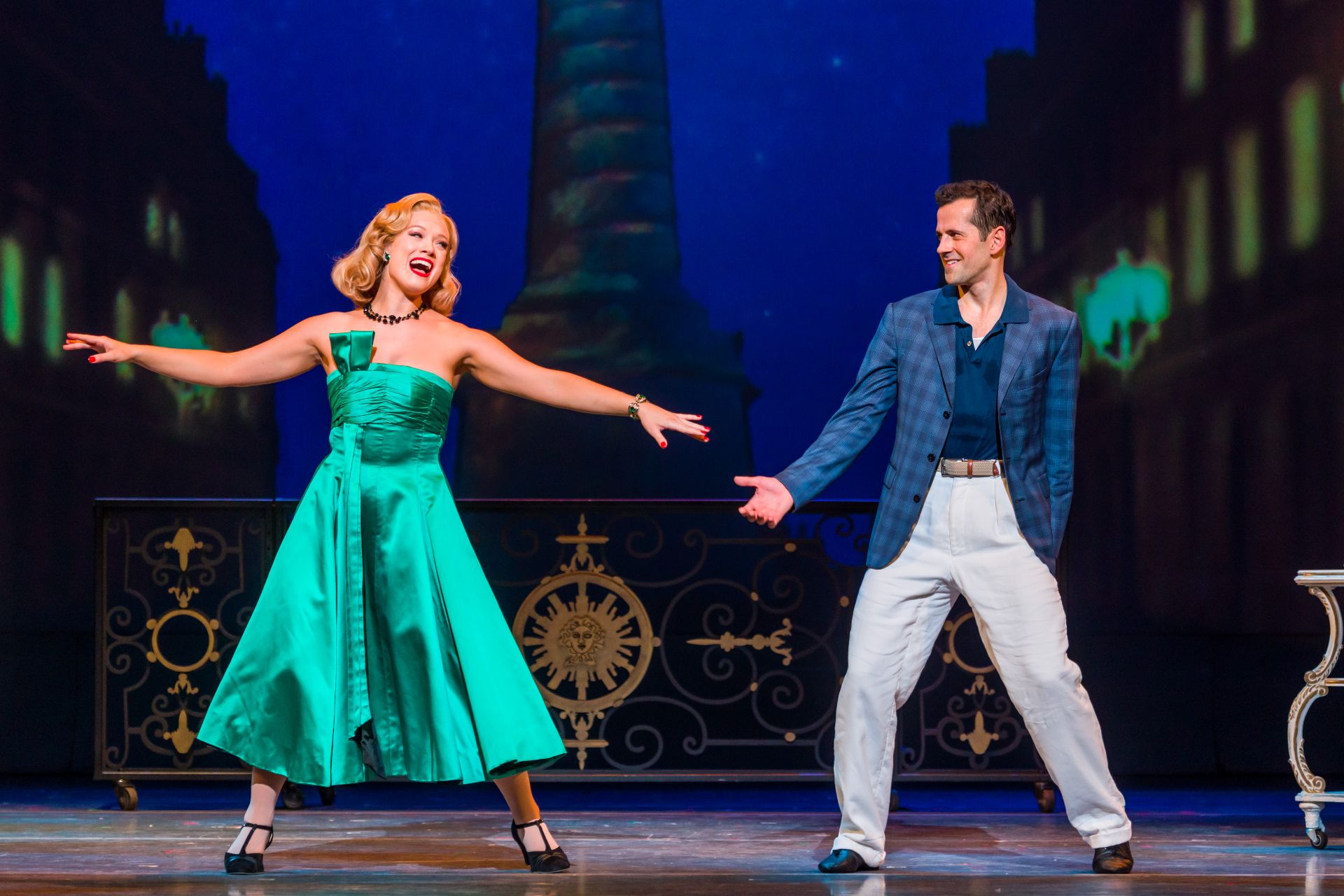
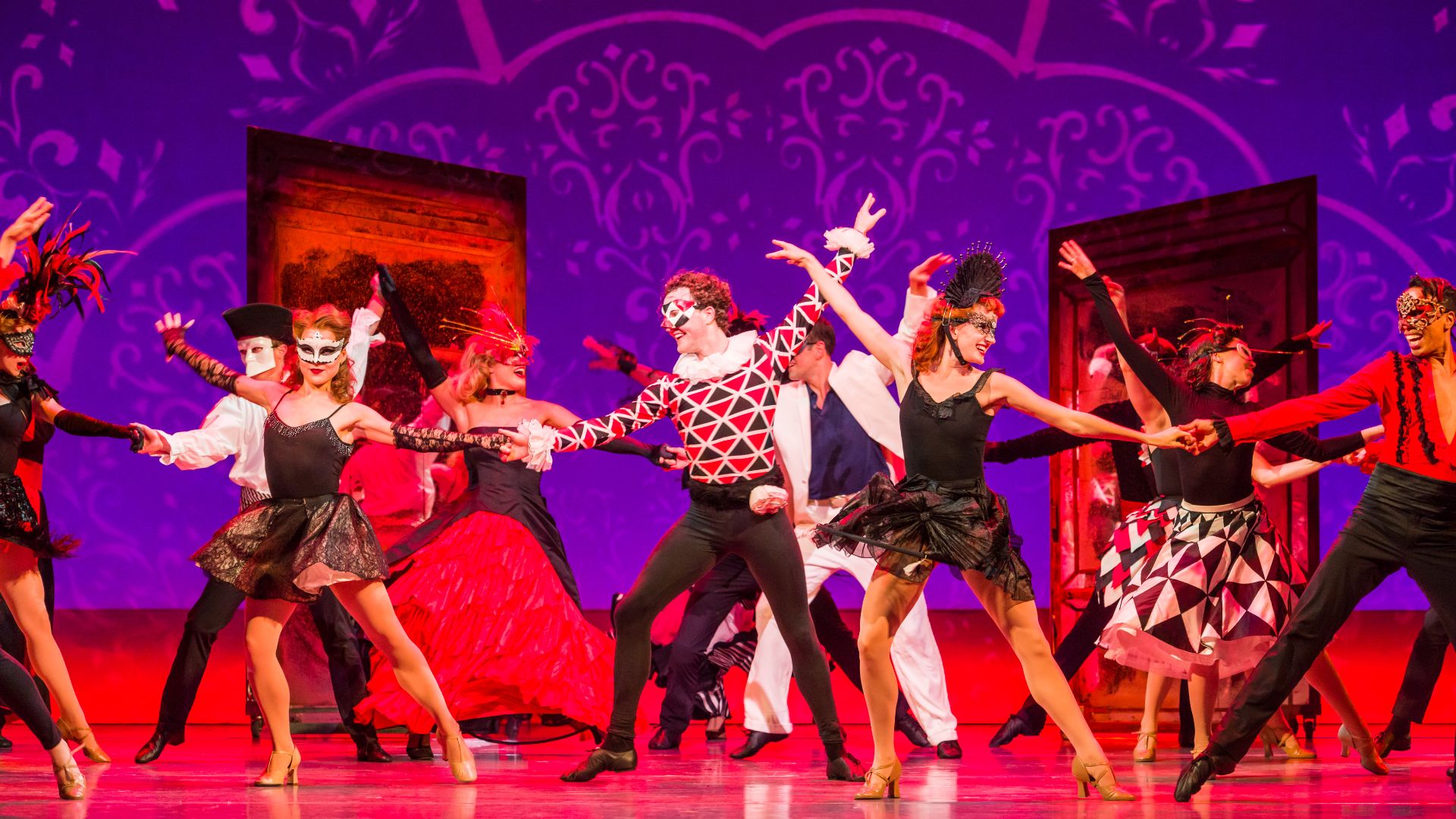
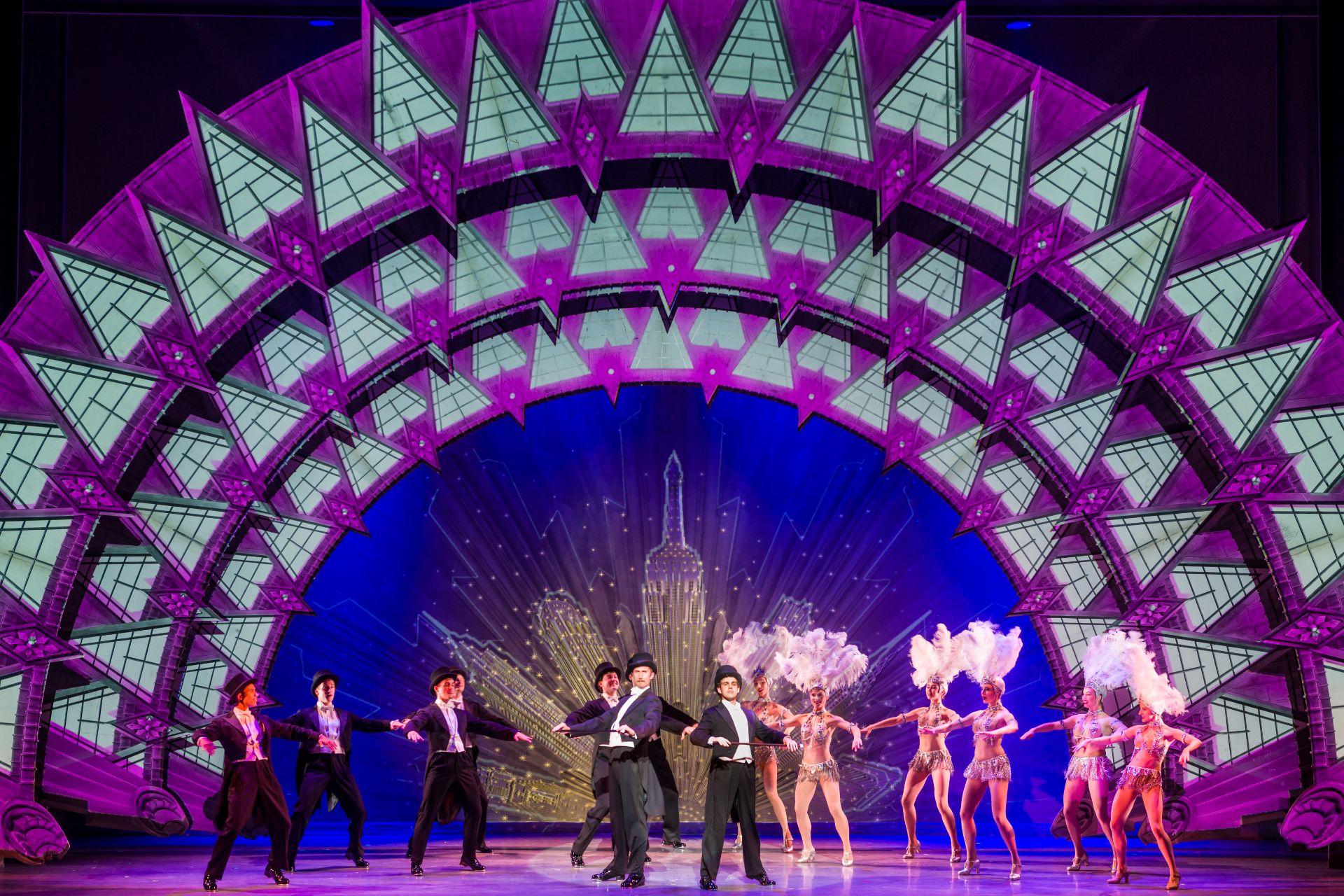
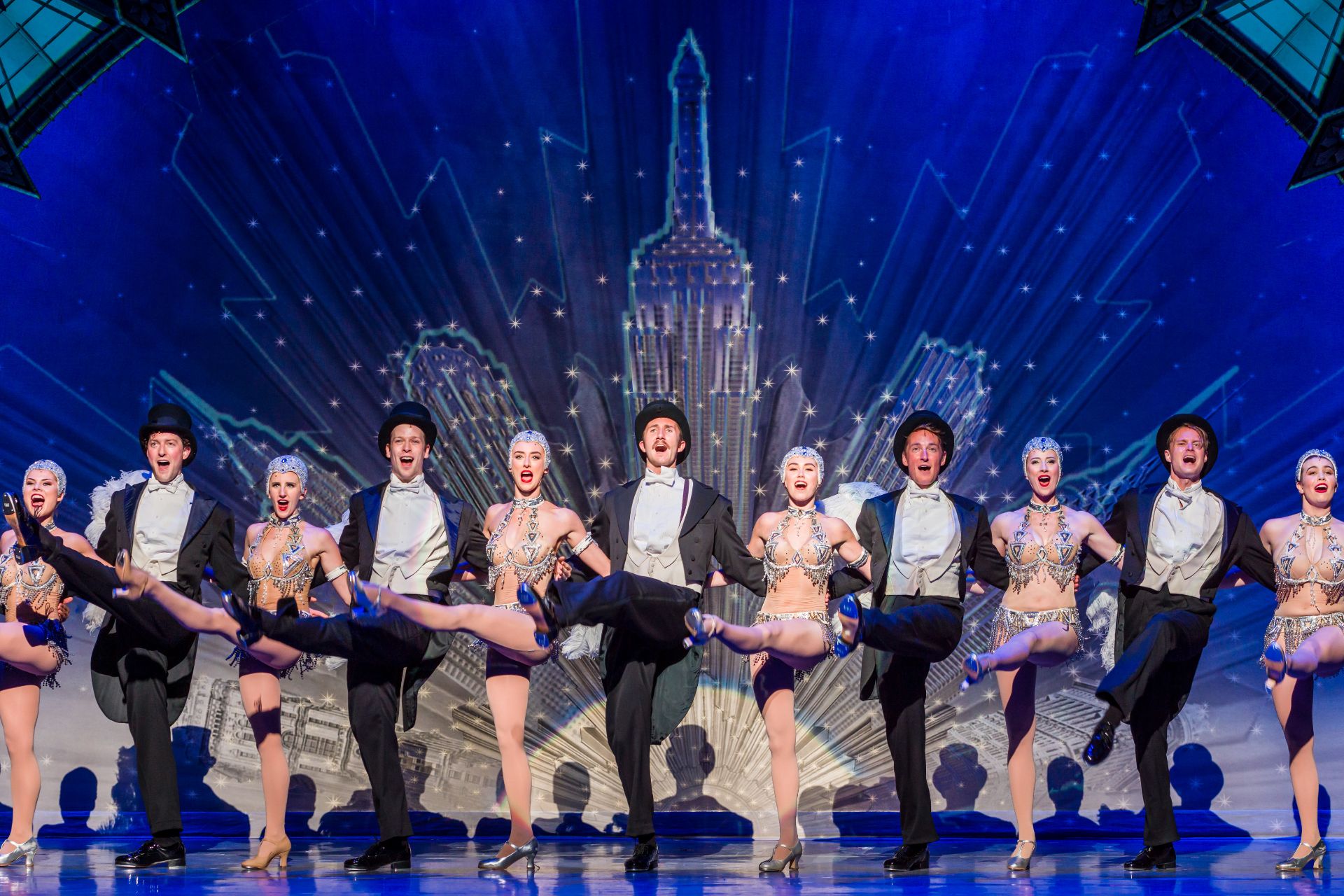
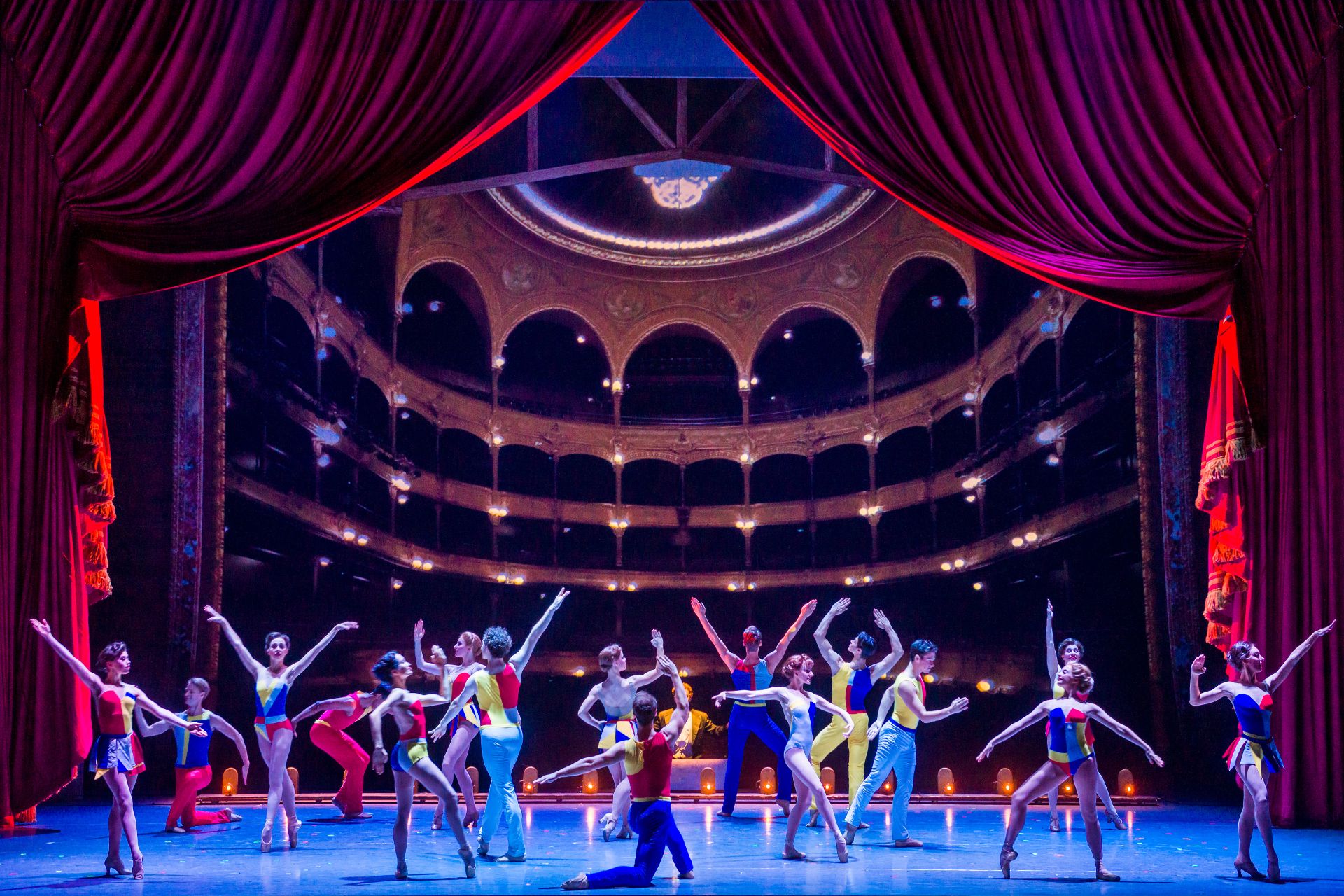
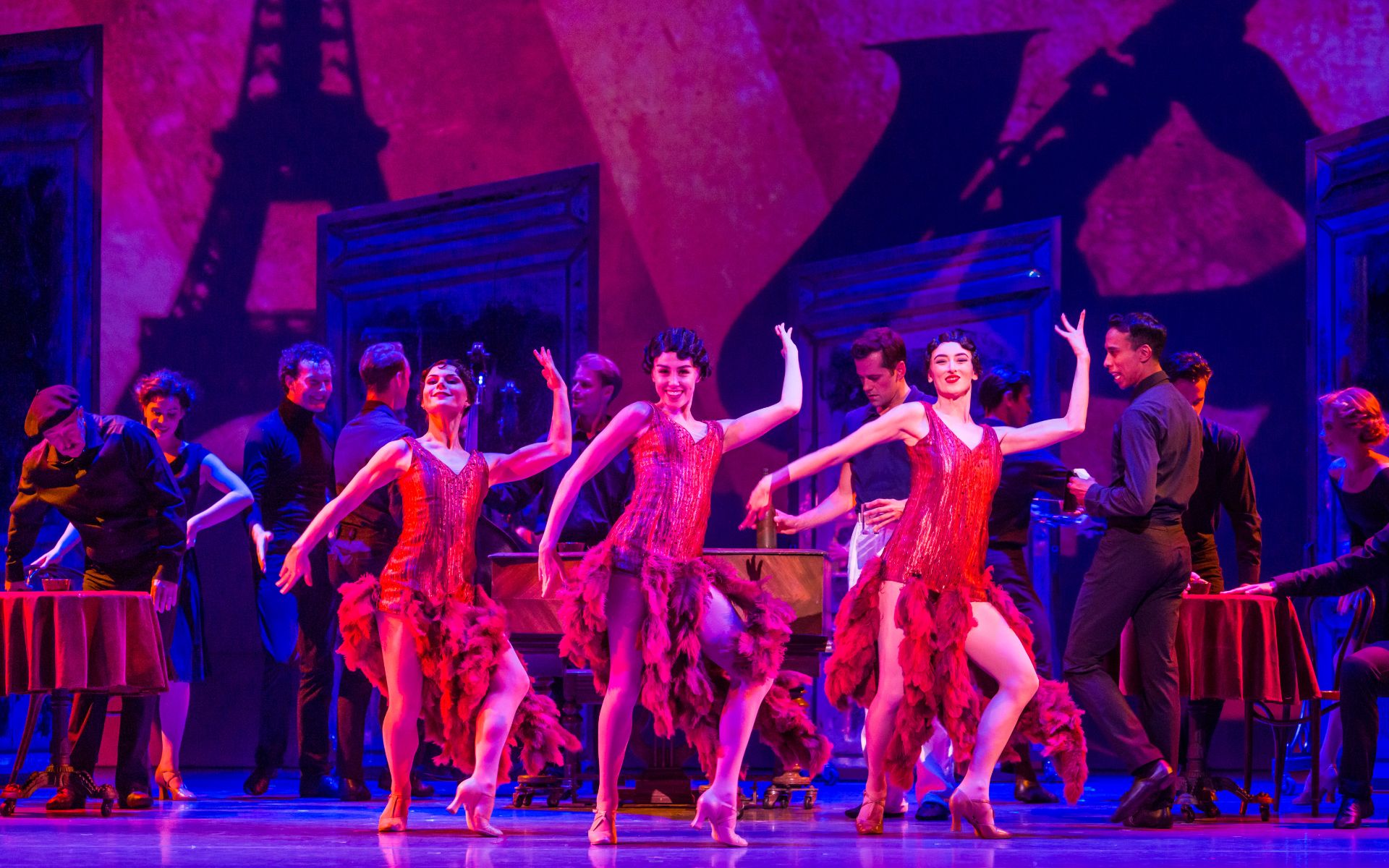
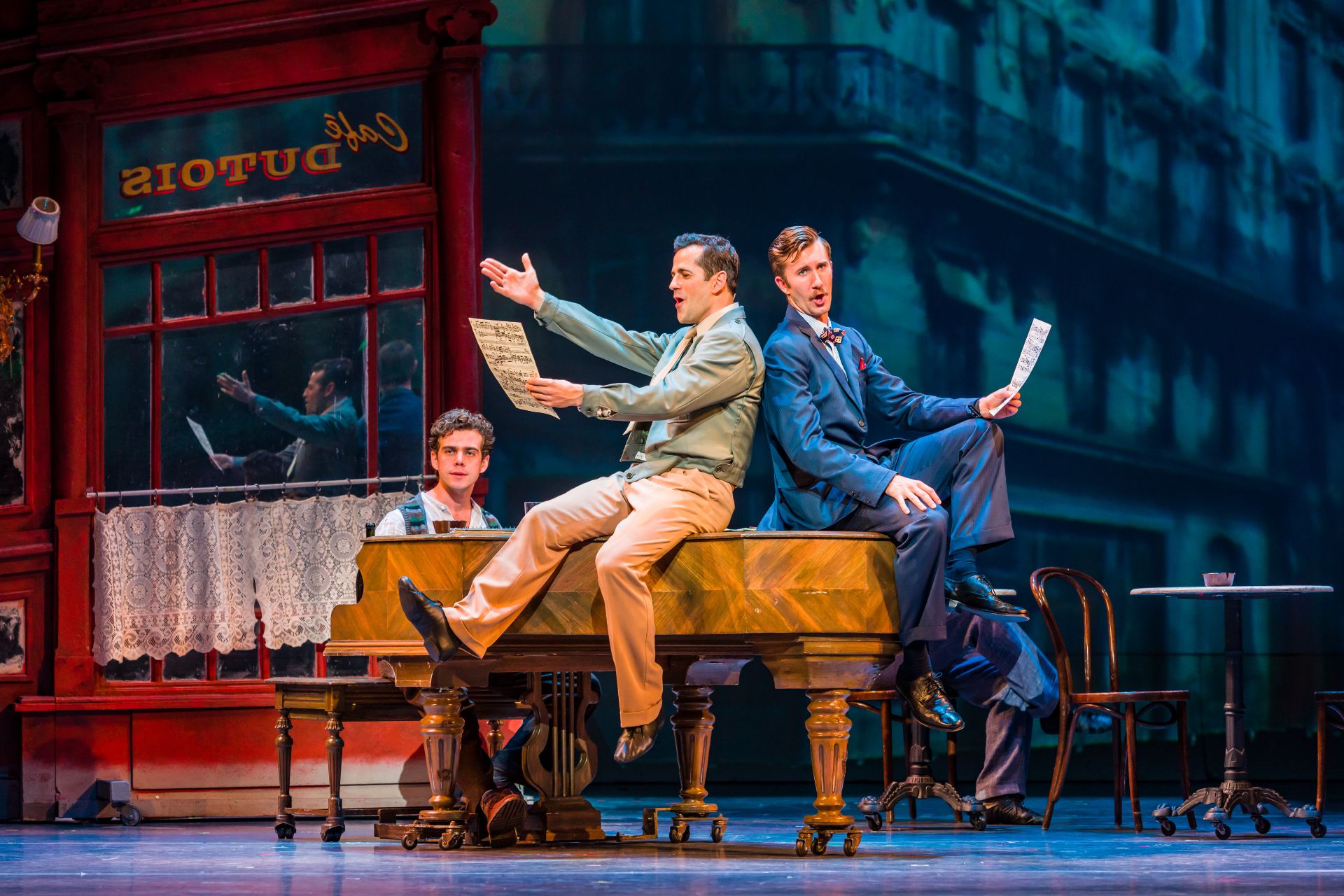
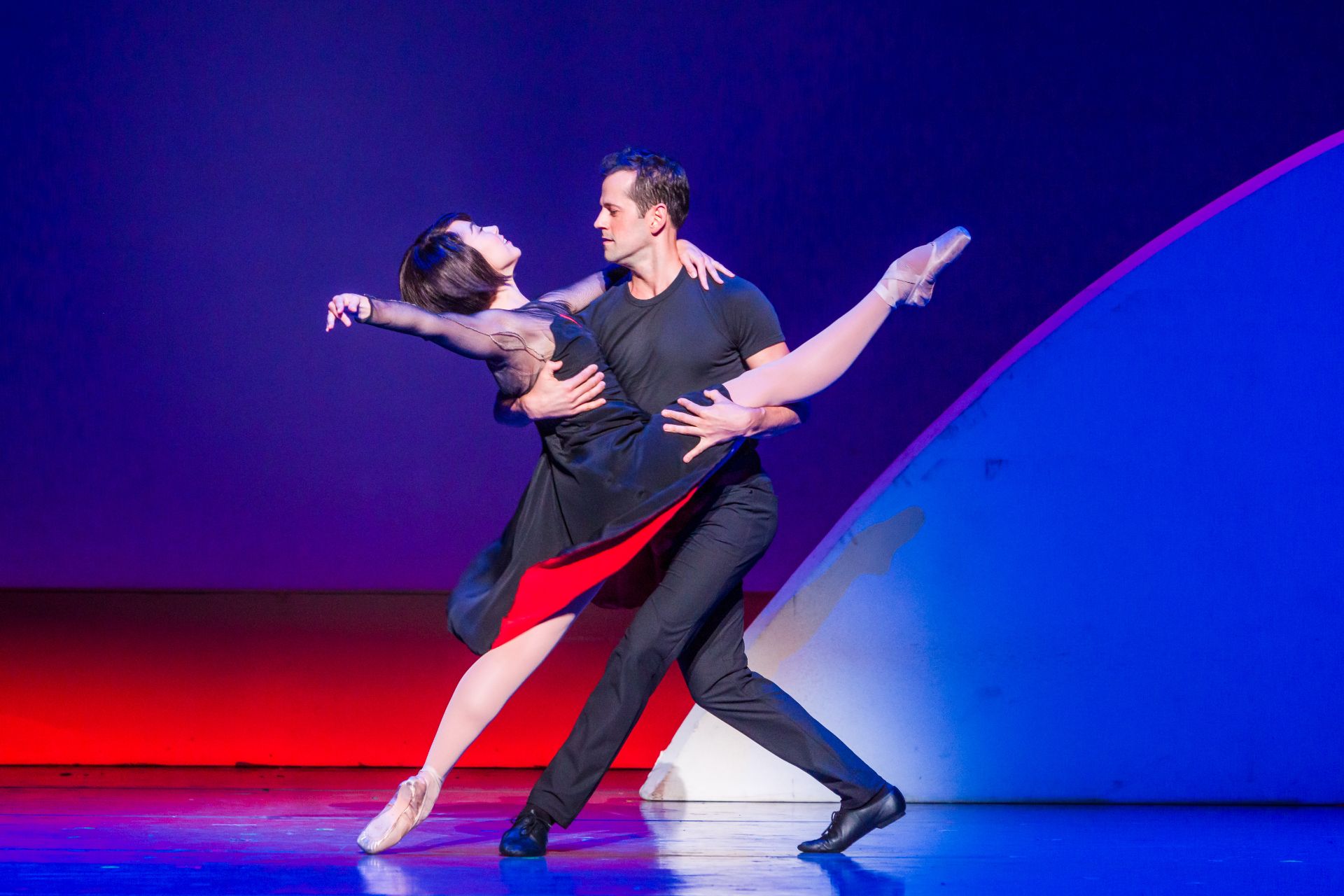
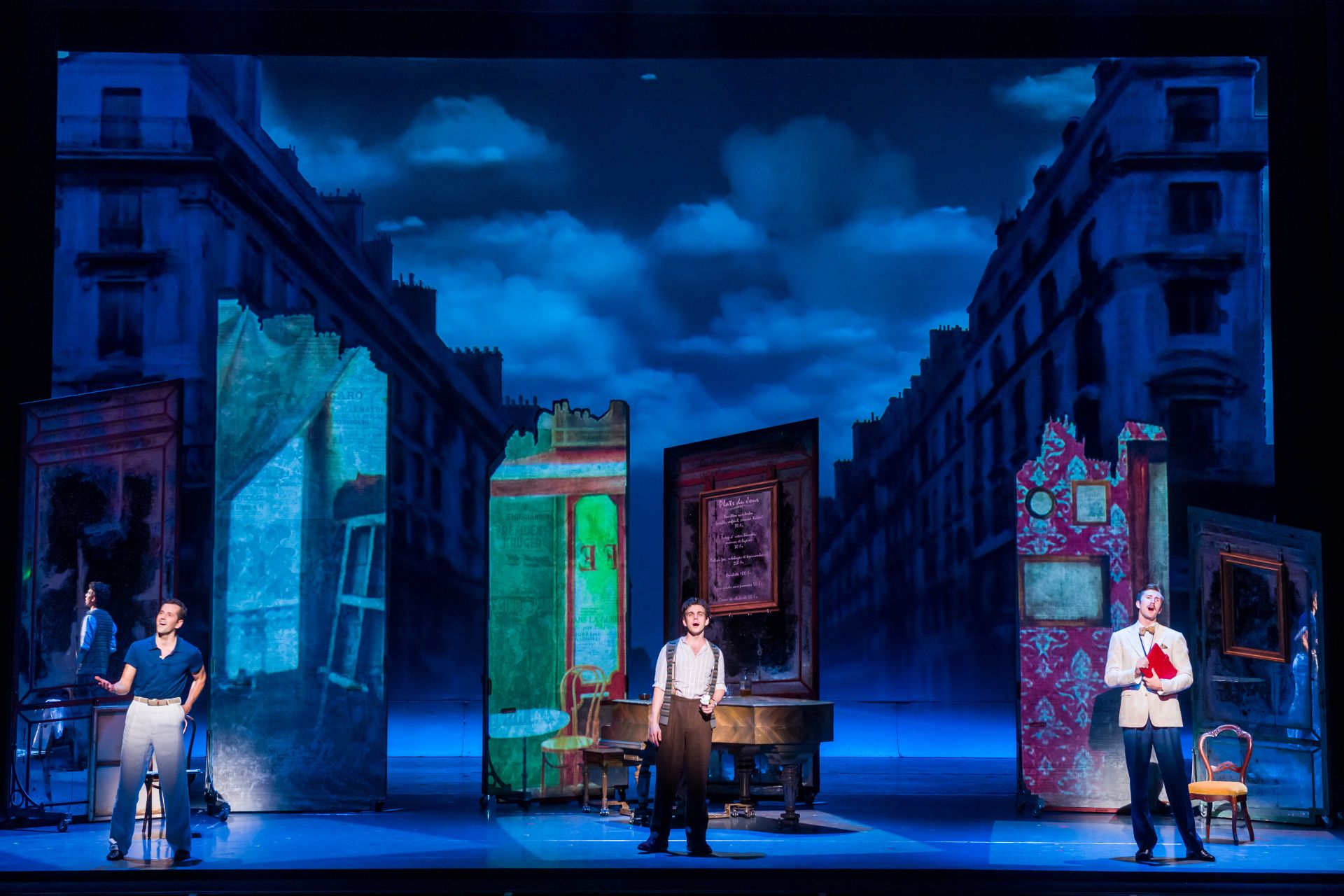
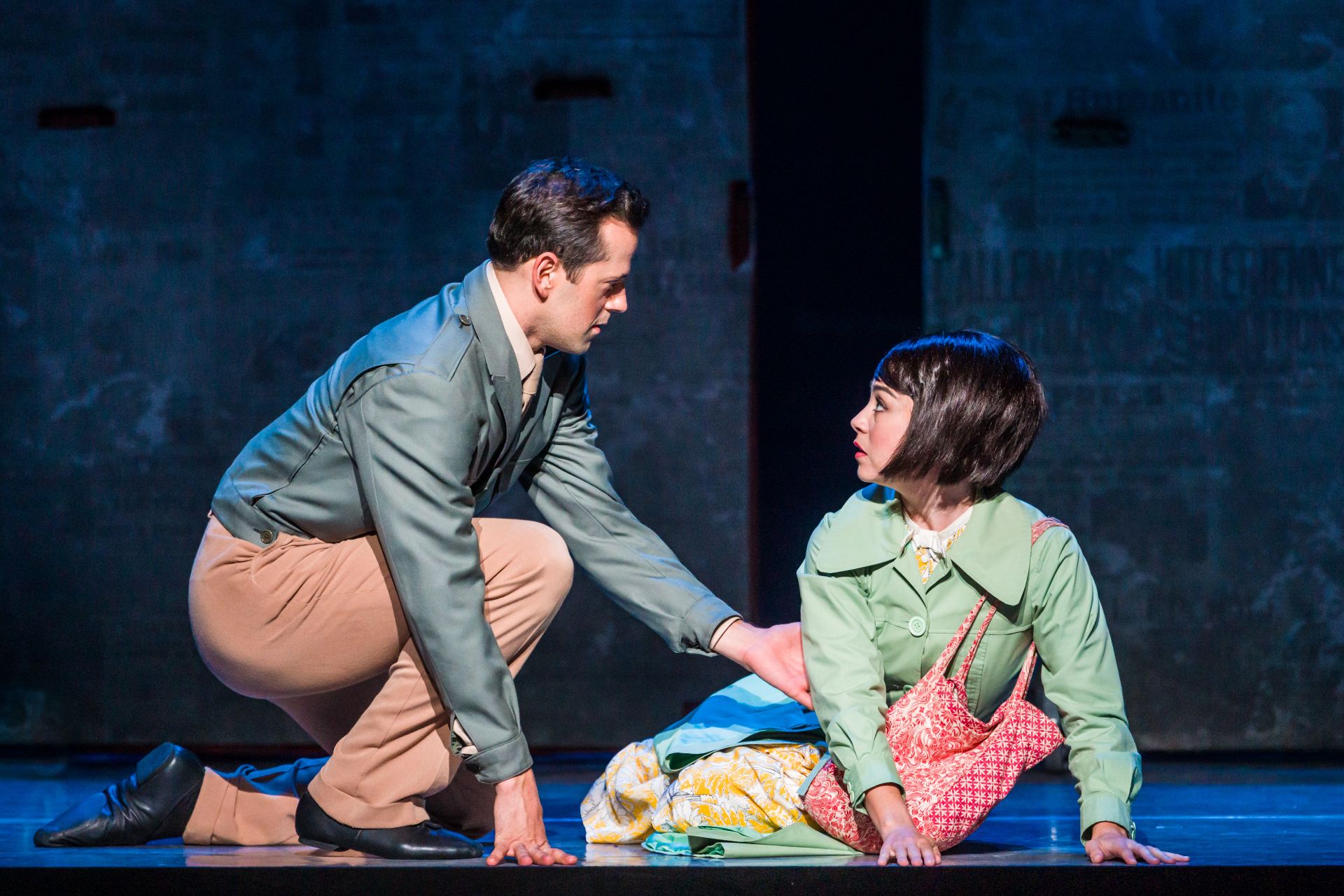
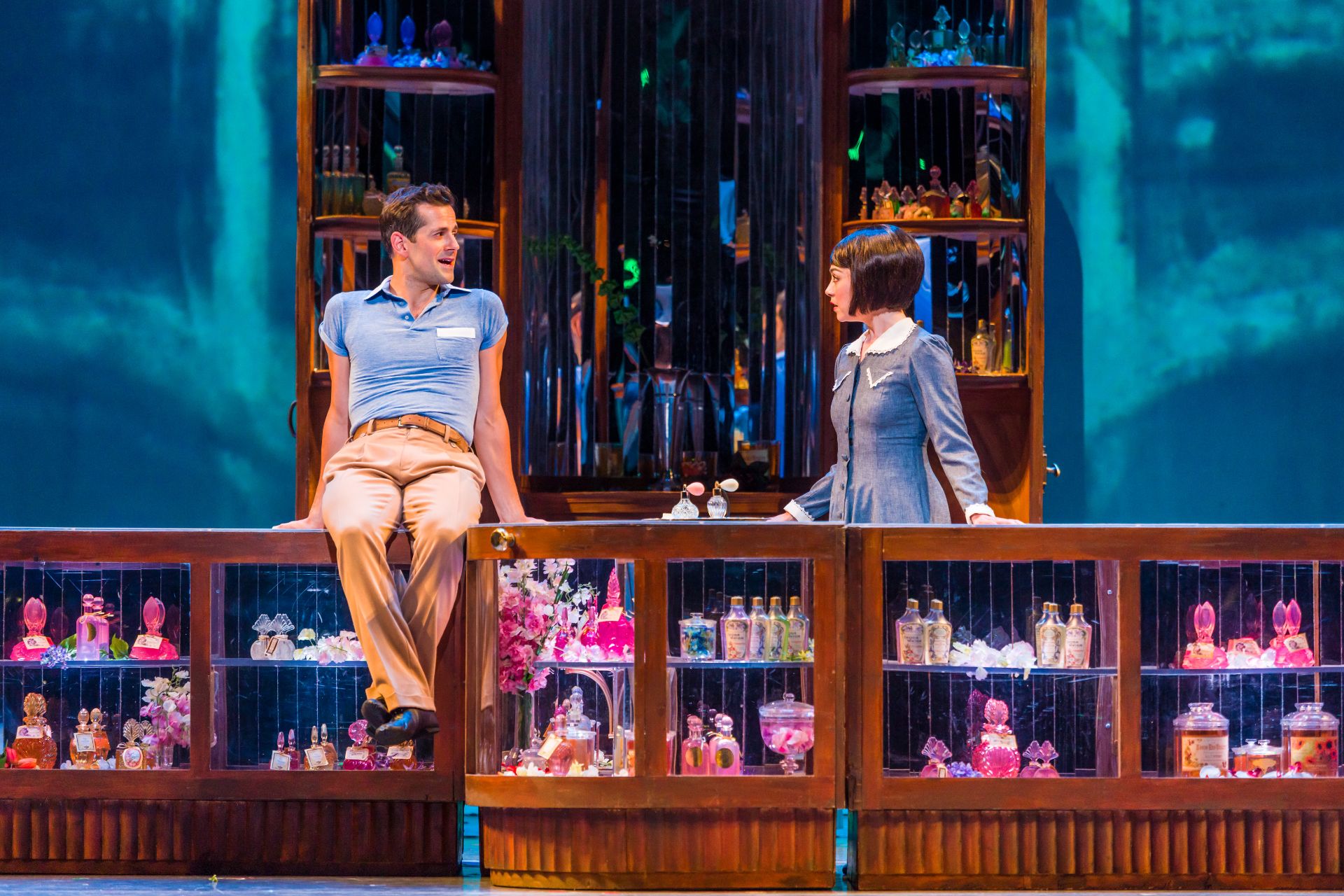
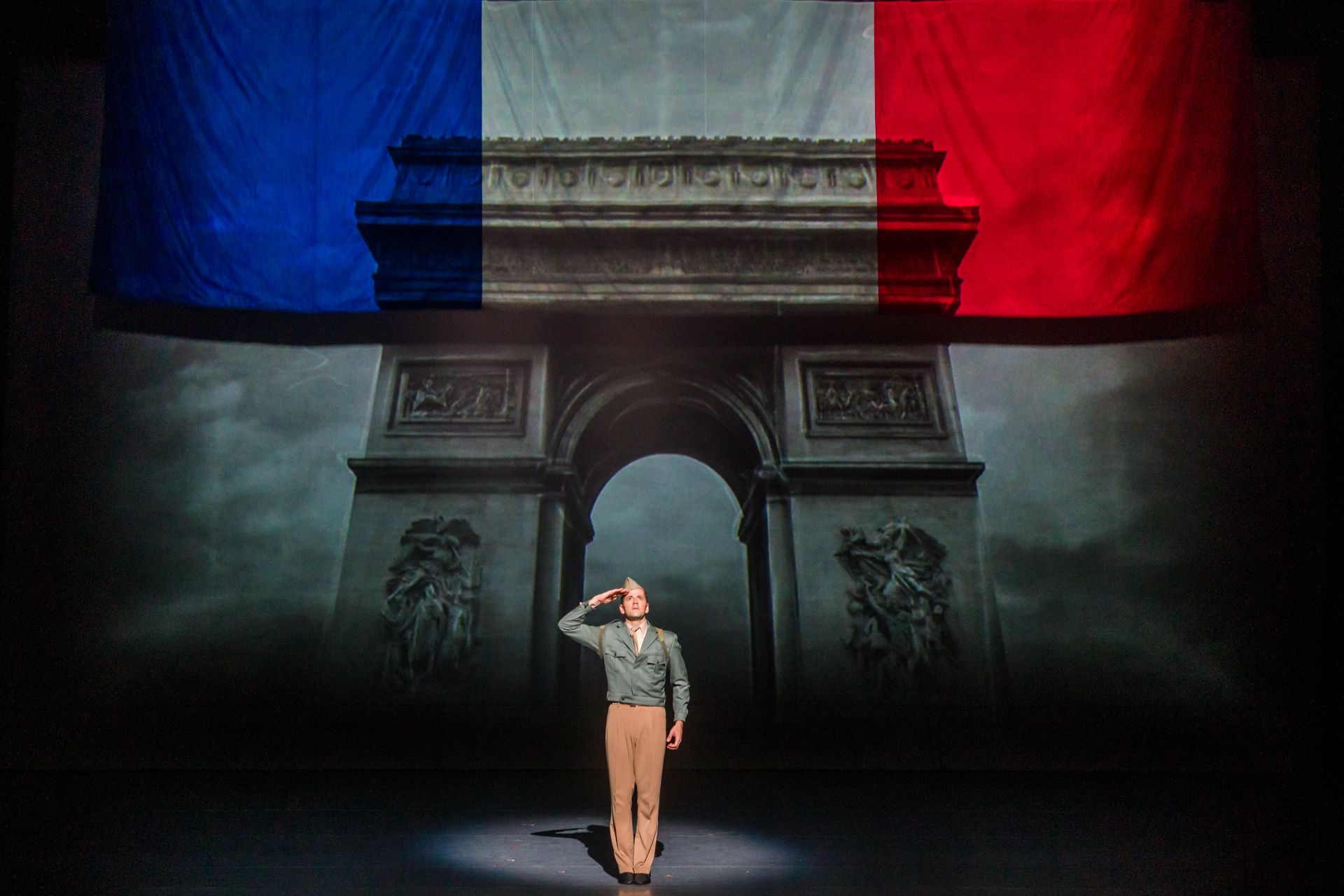
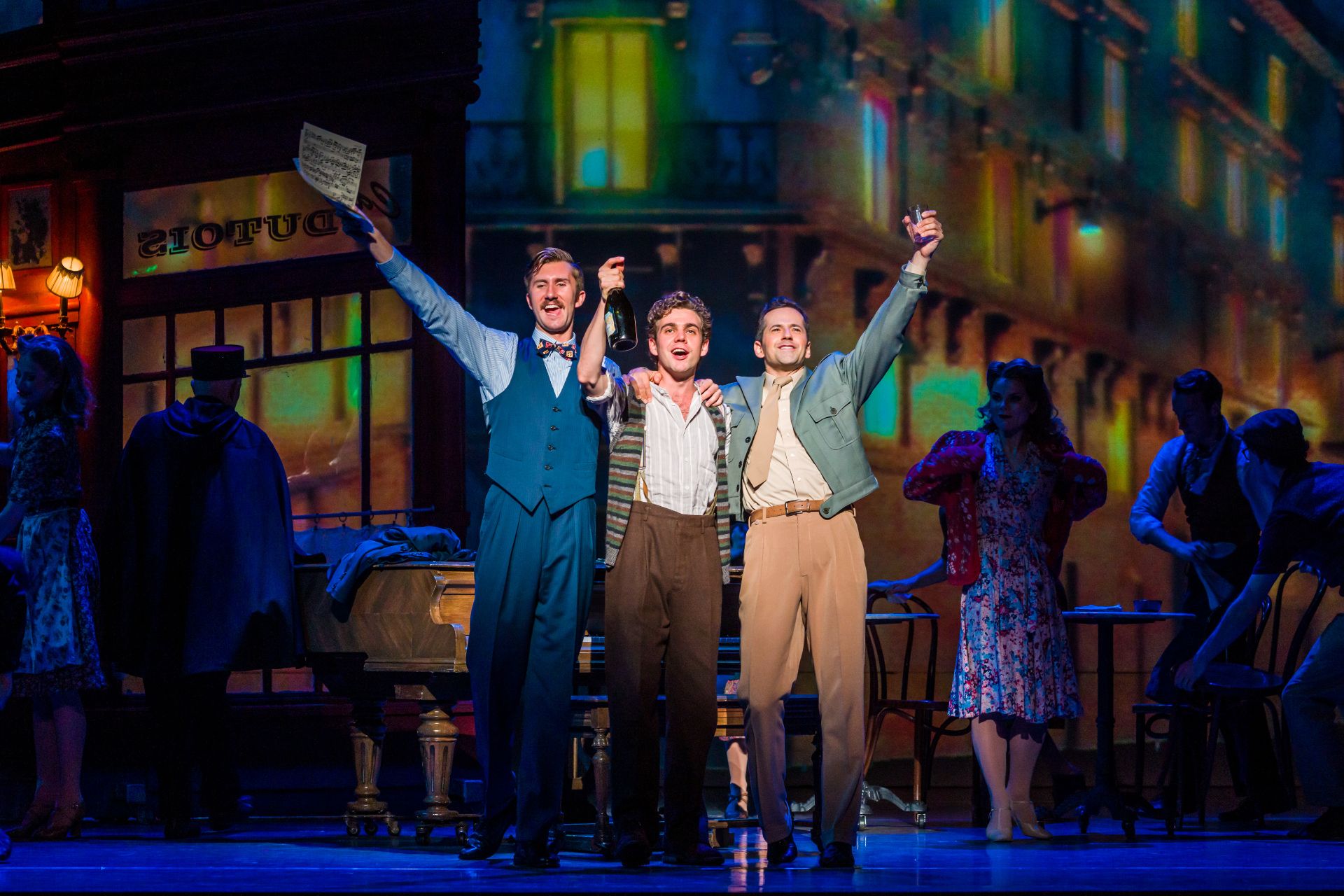
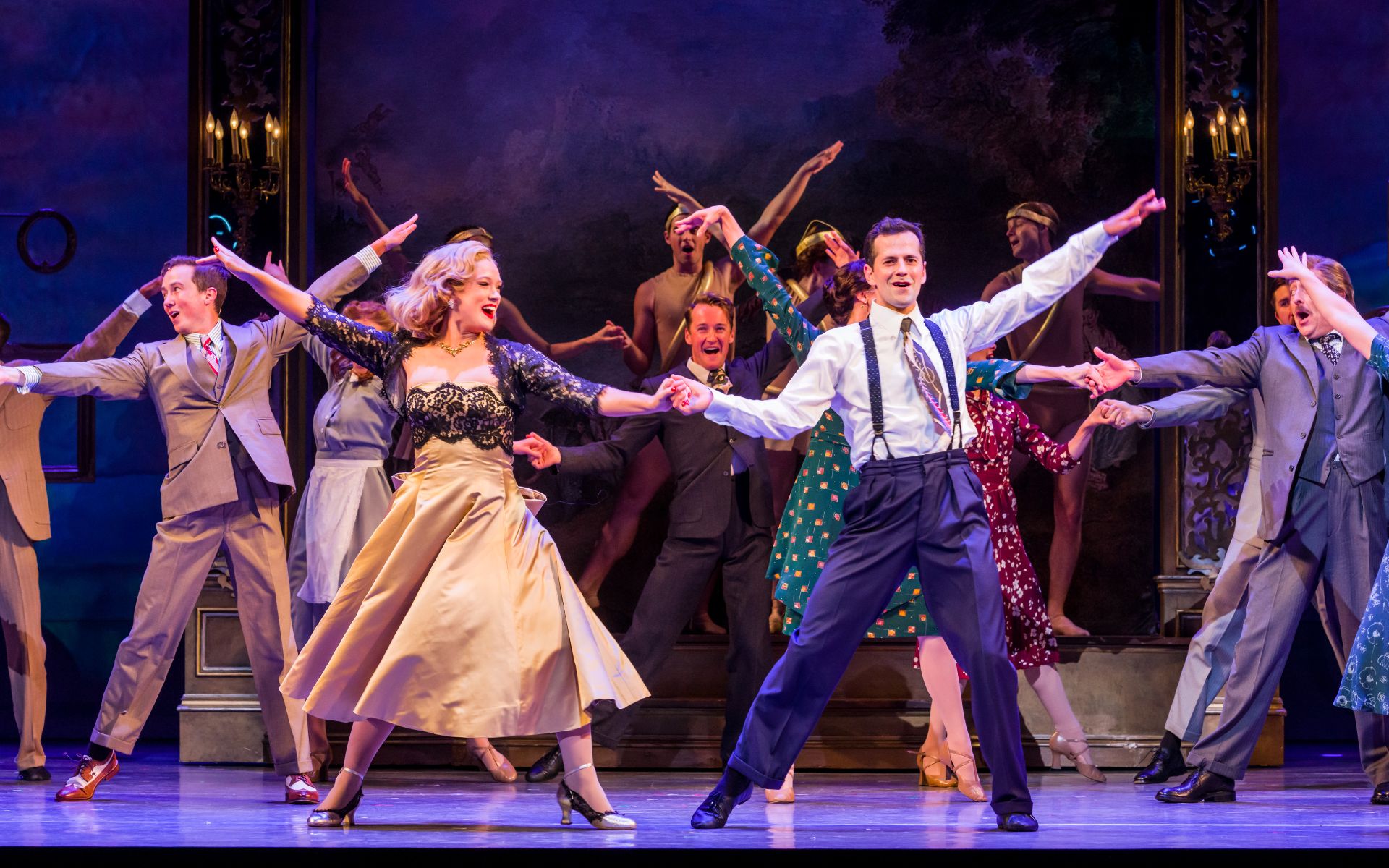
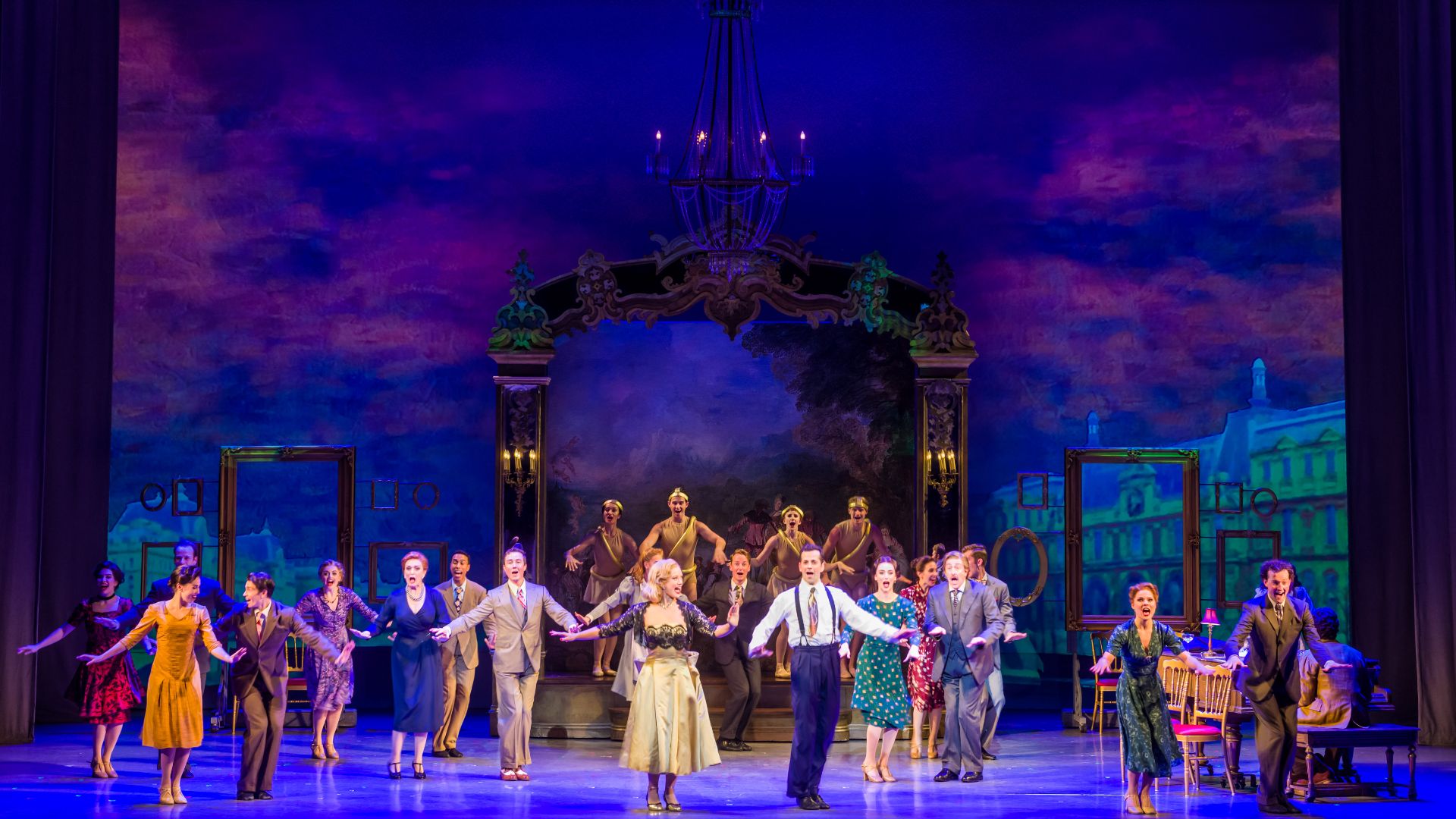
Jerry is a World War II veteran, experiencing art and love in a foreign land, a few short years after arms have been laid down. More than ever before, freedom seems a phenomenon not to be taken for granted. The stage musical An American in Paris is based on the legendary 1951 Vincente Minnelli film of the same name, known for its visual splendour and inventive use of music by the Gershwin brothers. This adaptation, although replete with nostalgia, is tailored for a more contemporary sensibility. Beautifully positioned between past and present, it connects us with the genius of a bygone era, delivering divine inspiration to a generation at risk of losing artistic treasures that had been gifted decades before.

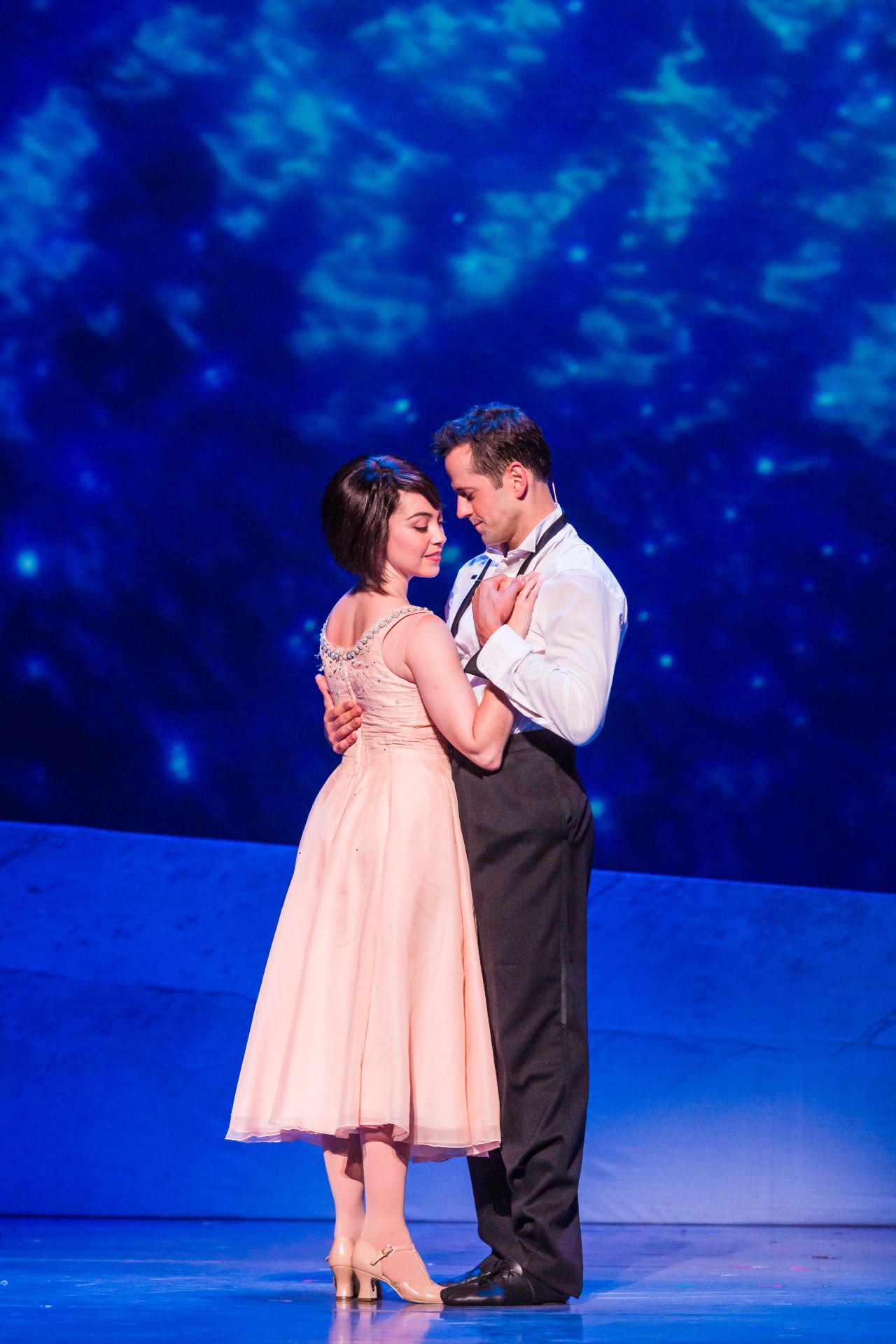
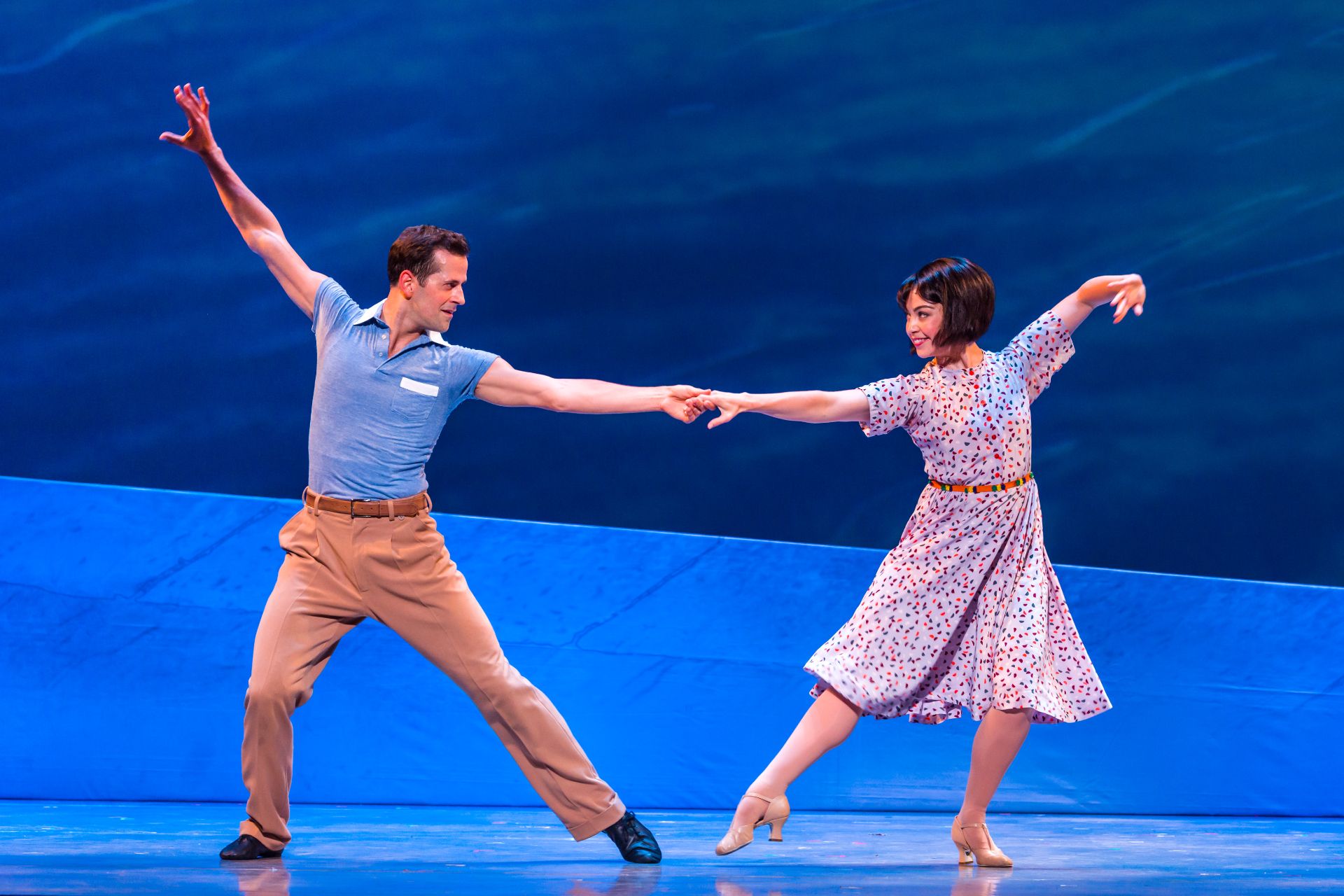
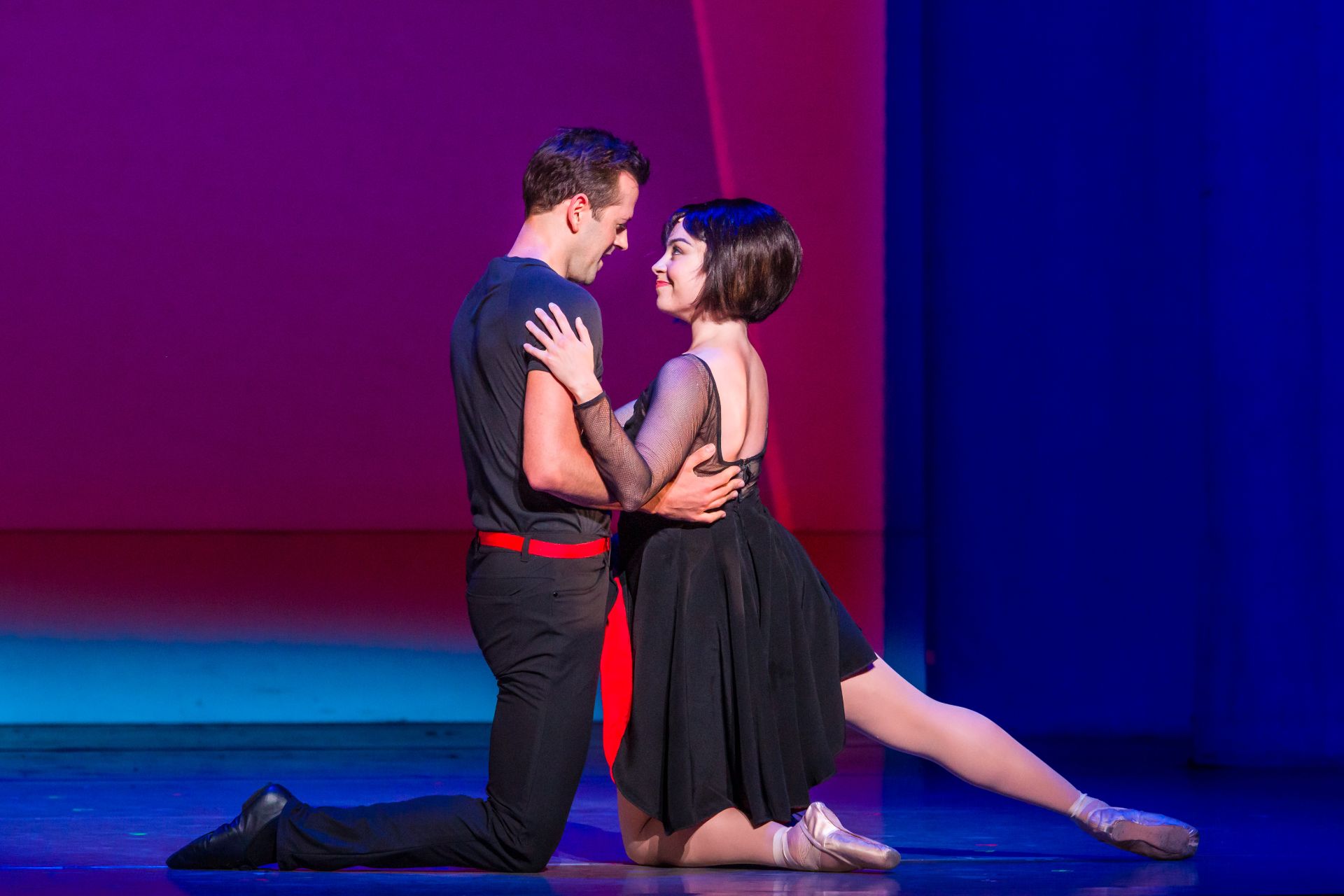
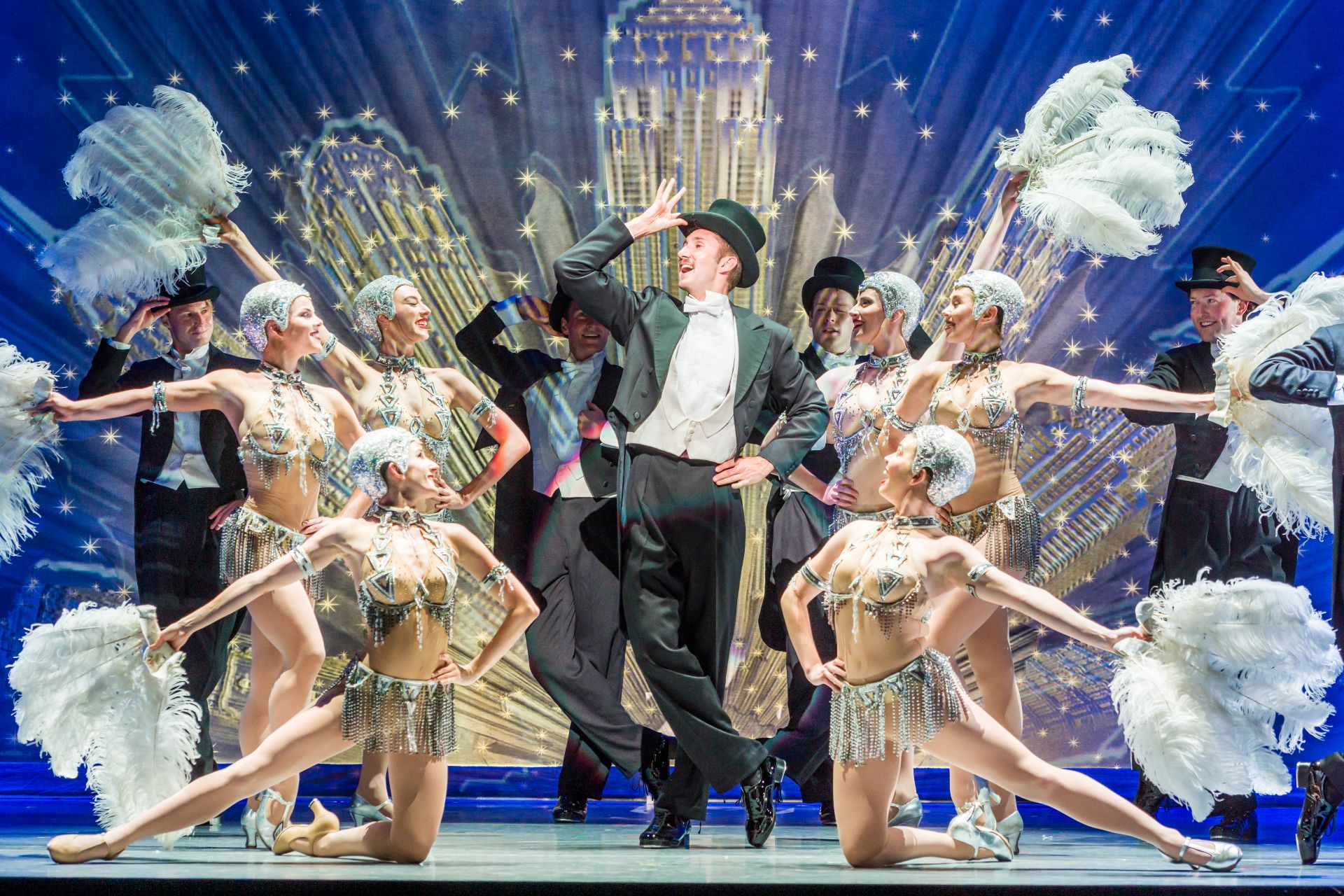
Gene Kelly’s original choreography is transposed to perfection by Christopher Wheeldon, whose re-creation of mid-century modern ballet proves to be nothing short of sublime. Spellbindingly performed by a cast that is at once whimsical yet disciplined, the audience is impressed and dumbfounded, capable only to gawk and lose ourselves in the theatrical magic being presented. Robbie Fairchild and Leanne Cope are the leads, individually swoonsome but as a pair, their extraordinary synchronicity is flabbergasting, in a series of breathtaking pas de deux that are simply unforgettable.

Gershwin’s iconic score is given wonderful revitalisation by Rob Fisher, who provides for the production a taut rendition of familiar evergreen melodies. Musical direction by Vanessa Scammell is dynamic and spirited, interpreted by a fastidious orchestra that moves us to spaces rarefied and hopelessly romantic. Visual design aspects are somewhat restrained, and not particularly lavish, but sonic dimensions of An American in Paris induce a sense of grandeur that insists on our luxuriation.

The danger of nostalgia is its inherent denial of negative aspects, in our wilful idealisation of the past. Longing for a history that never really existed, undermines the progress that time has achieved. When we say that things used to be better, we imply a rejection of improvements that have been made, and that continue to be made. The fact is, so much of what he have today, is better than how they used to be. In stolen moments however, lingering briefly in fantasies of a different world, is a respite all humans require.

www.americaninparis.com.au

Review: The Deb (ATYP)

Venue: The Rebel Theatre (Sydney NSW), Apr 8 – May 22, 2022
Writer: Hannah Reilly
Music: Megan Washington
Director: Hannah Reilly
Cast: Georgia Anderson, Carlo Boumouglbay, Jeffrey Dimi, Mariah Gonzalez, Catty Hamilton, Katelin Koprivec, Jay Laga’aia, Drew Livingston, Charlotte MacInnes, Tara Morice, Quinton Rich, Monique Sallé, Amin Taylor, Jake Tyler, Jenna Woolley, Jack Wunsch
Images by Tracey Schramm

Theatre review
Taylah really wants to go to the debutante ball, in her country town of Dunburn. Not being one of the cool kids however, is making things very challenging. Her cousin Maeve too, is finding herself ostracised, and has travelled from the city to seek refuge. In The Deb, we watch an unlikely pairing of personalities, each from vastly different parts of Australian life, united by their common experience of being made social outcasts.

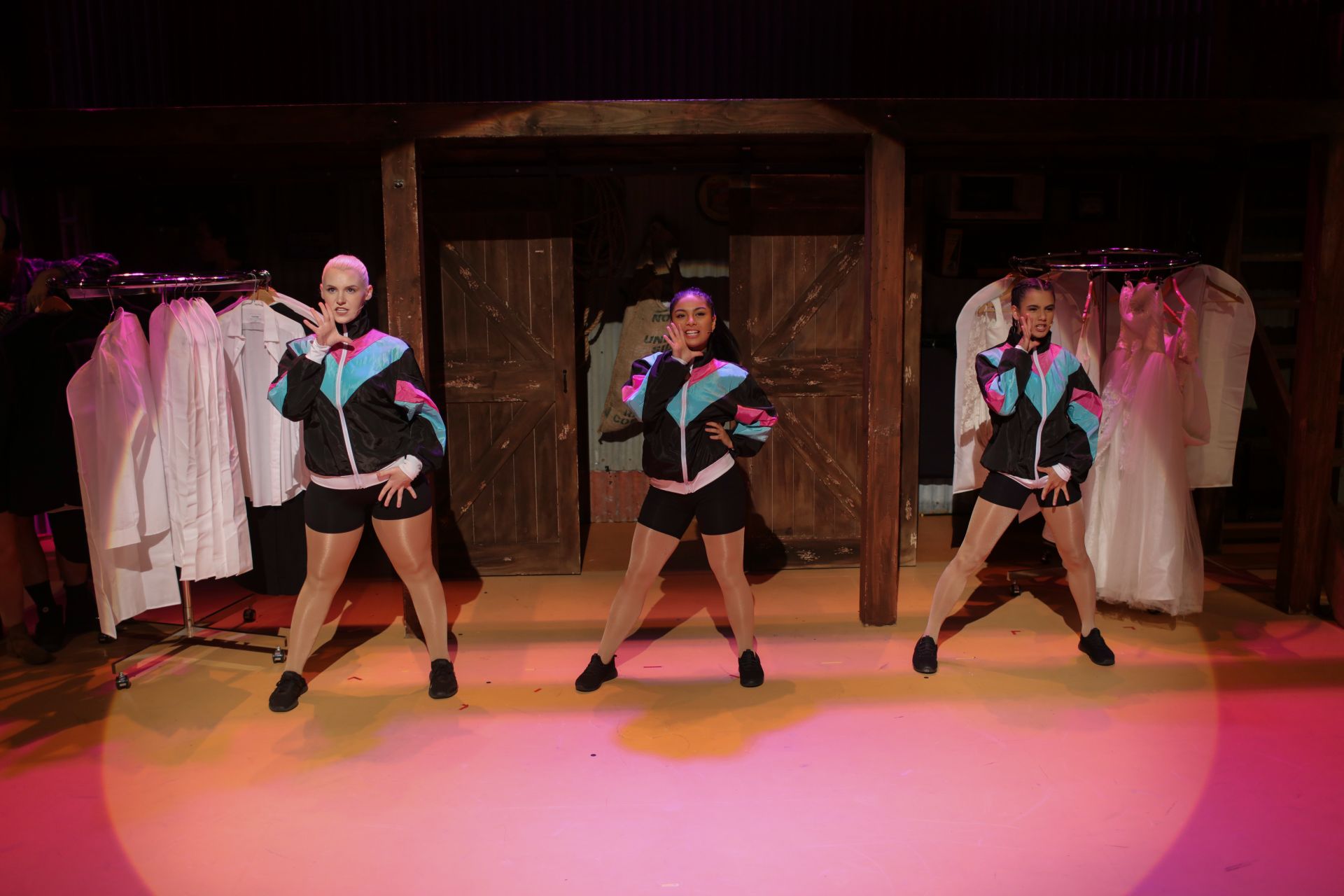
The musical, by Hannah Reilly and Megan Washington, is a comedic juxtaposition of the bush against the metropolis, with a familiar propensity to romanticise life in the outback, as is often the convention, when telling stories about our rural counterparts. Whilst the characters in The Deb and their accompanying jokes may not be to everyone’s tastes, each of its original songs is certainly innovative and highly satisfying. Along with exuberant choreography by Sally Dashwood, all the musical sequences prove a triumphant delight, for our eyes and ears.

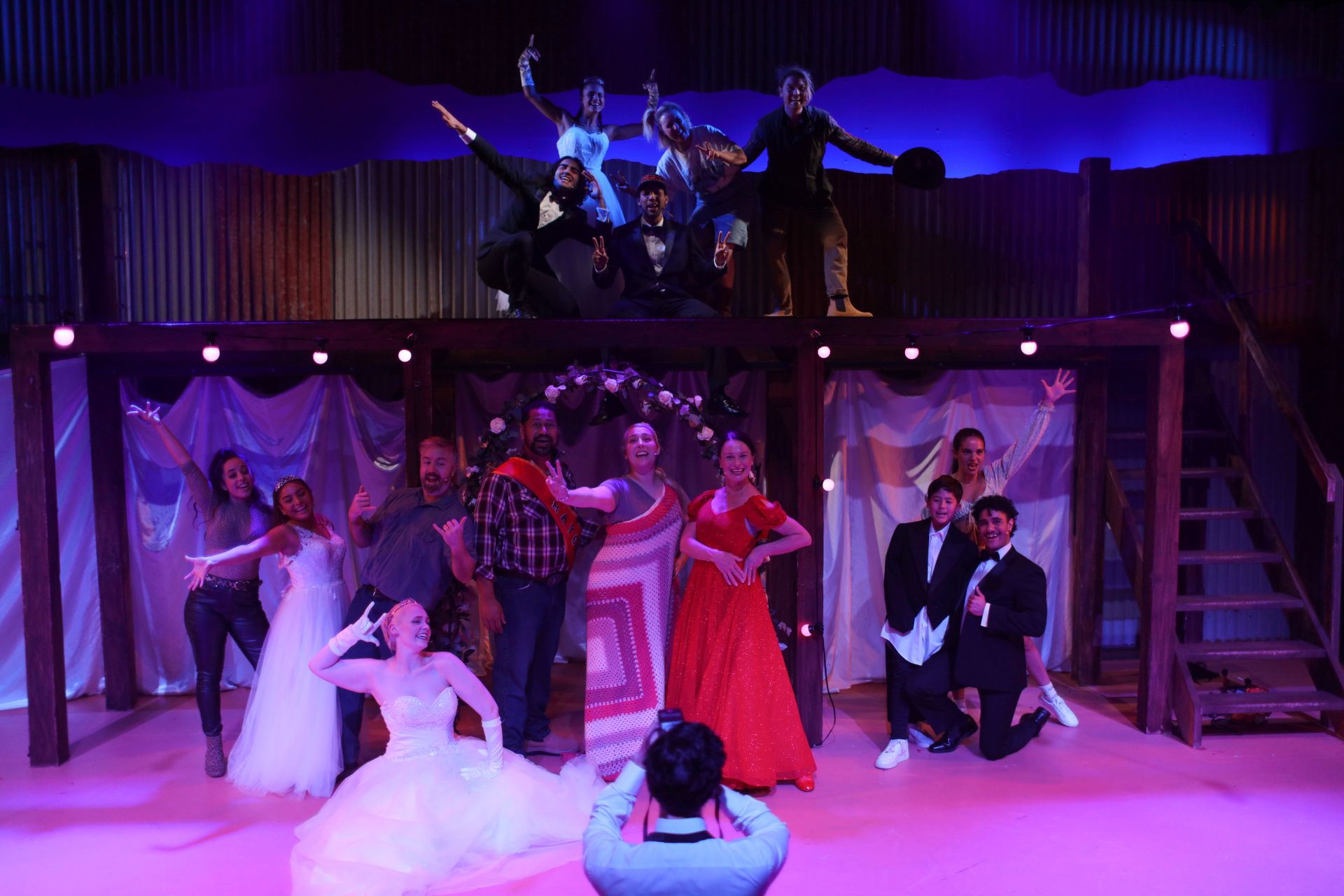
Emma White’s double-tier set design helps provide a visual sense of variation, facilitated through the dynamic placement of performers and their activity. Mason Browne’s costumes and Martin Kinnane’s lights, further provide for the Sydney audience, an evocation of what country life must feel like. The production can look rough around the edges, which is of course entirely commensurate with its themes and aesthetics.

Playing Taylah is Katelin Koprivec, who brings to the stage, unmistakeable precision and an admirable technical proficiency. Charlotte MacInnes is excellent in the role of Maeve, portraying with amusing accuracy, the rich and self-indulgent Zoomer, but always able to keep us on her side, with an abundance of natural charisma. Other memorable performances include Jay Laga’aia and Tara Morice, both confidently understated in their approaches, delivering great warmth to a show that wants so much to explore the goodness in people.

 An overwhelming need to present country folk as affable, diminishes the darkness inherent in the many disparate narratives of The Deb. What could have been a complex examination of contemporary Australia, ends up looking quite the Hallmark greeting card, but it is doubtless that the show can be tremendously enjoyable for appreciative audiences. Some might say that things as they stand in the outback, are worse than ever, but it is true that only with optimism, can we weather all these storms.

www.atyp.com.au

Review: Light Shining In Buckinghamshire (Belvoir St Theatre)

Venue: Belvoir St Theatre (Surry Hills NSW), Apr 7 – May 28, 2022
Playwright: Caryl Churchill
Directors: Eamon Flack, Hannah Goodwin
Cast: Arkia Ashraf, Rashidi Edward, Marco Chiappi, Emily Goddard, Sandy Greenwood, Rebecca Massey, Brandon McClelland, Angeline Penrith
Images by Teniola Komolafe

Theatre review
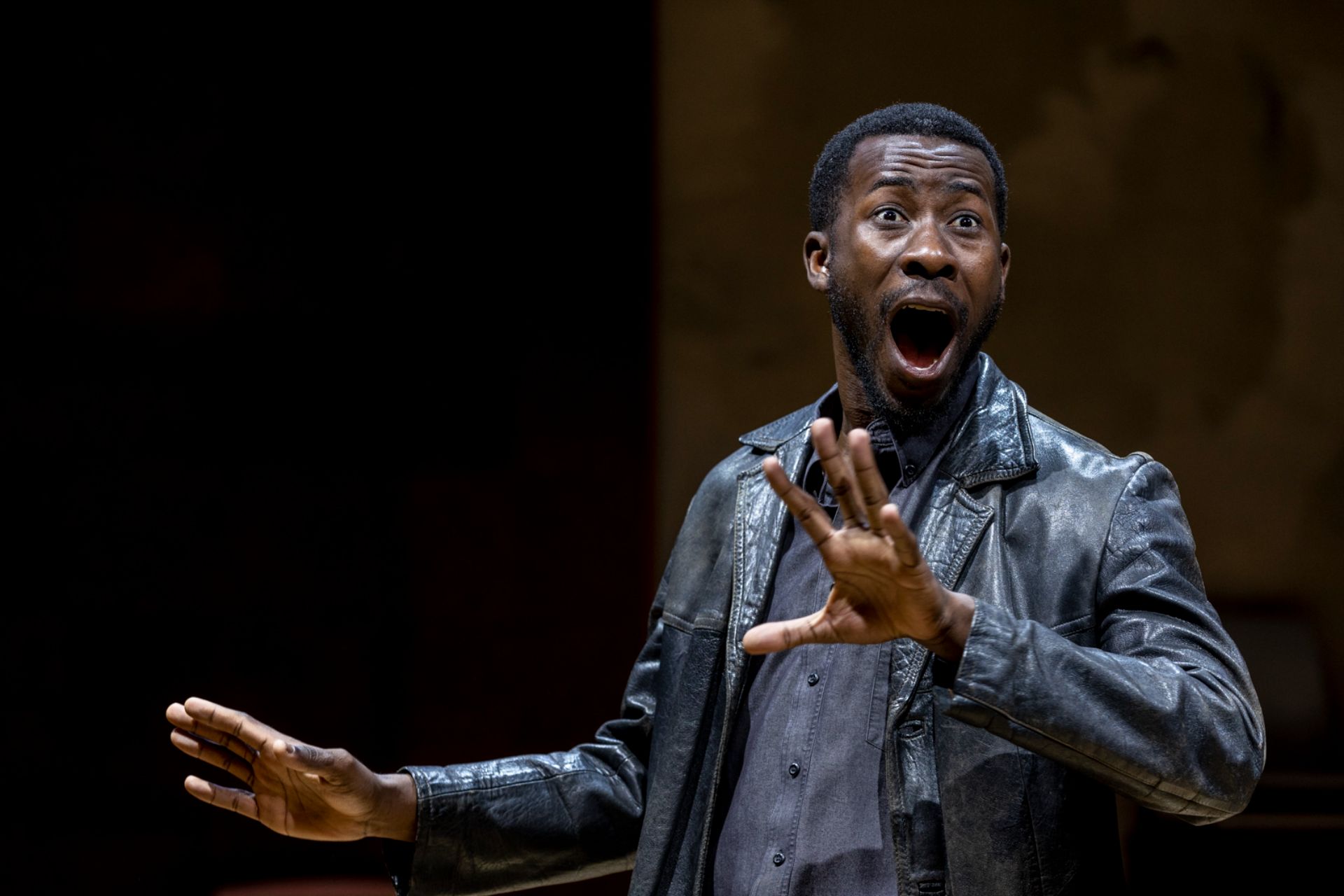
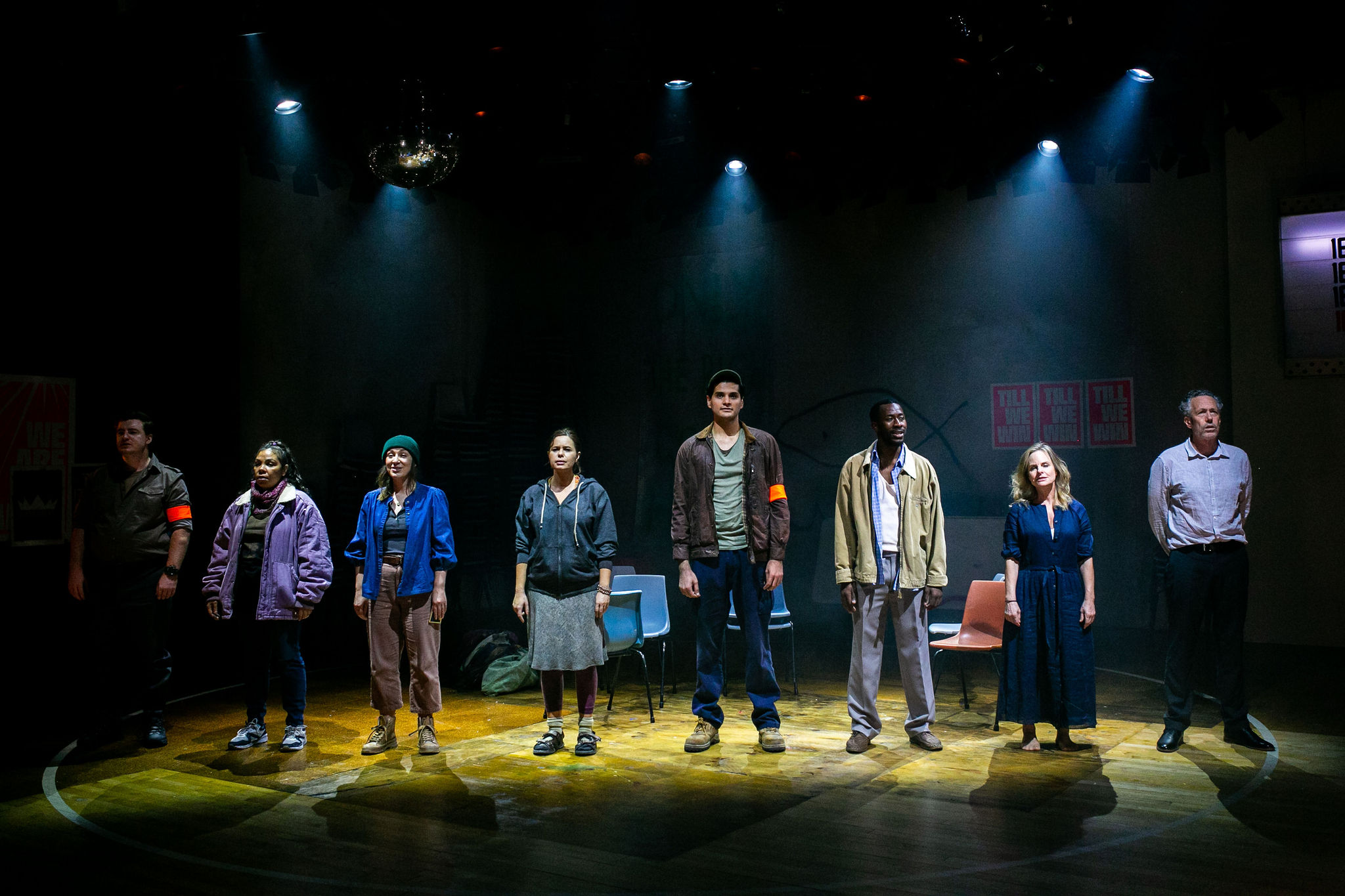
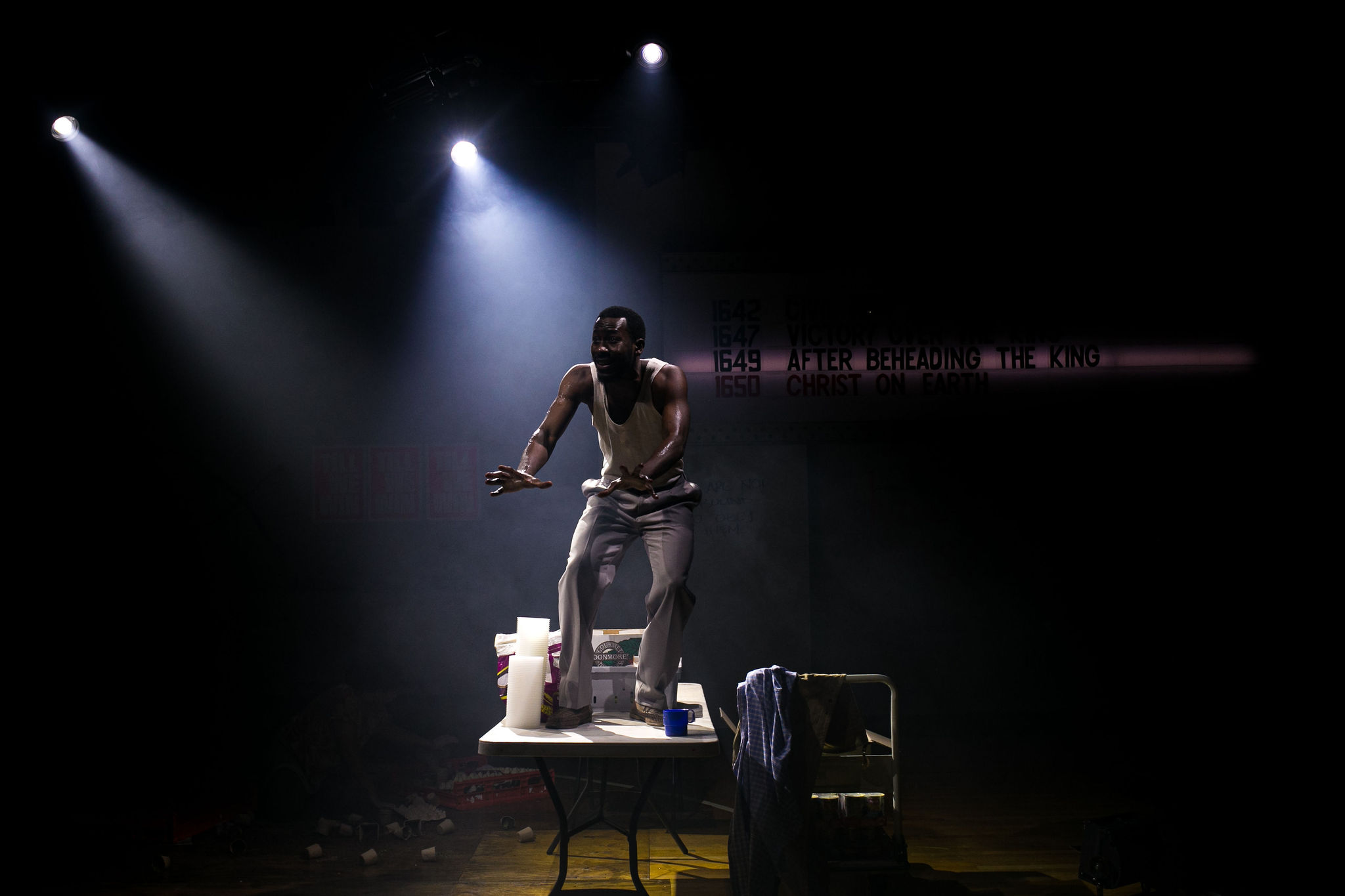
Caryl Churchill’s 1976 play Light Shining in Buckinghamshire is based on what is known as the Putney Debates in England, that had taken place immediately after their civil war of 1647. Churchill frames those discussions in terms of a search for a new democracy, in relation to preconceived ideas that are mainly about religion, and property ownership. In these historical re-evaluations of events leading up to the establishment of the Commonwealth of England, Churchill focuses our attention, not on how a revolution could be won, but what the challenges might be thereafter, to formulate a renewed system for the distribution of resources, and to generate new and improved ideologies.

46 years after its Edinburgh premiere, Churchill’s pre-Thatcher concerns are more pertinent than ever. We have replaced monarchies with oligarchic plutocracies, with the wealthiest men spending unimaginable sums of money to rocket into space for a meagre few minutes, in the middle of a pandemic that continues to destroy incalculable livelihoods. It seems we are still unable to figure out meaningful revolutionaries, only knowing to reinstall one bad system after another.

The verbose play is directed by Eamon Flack and Hannah Goodwin, who convey an air of importance for these philosophical explorations, but clear and detailed elucidations are disappointingly sporadic. Much of the exchanges are muddled and perplexing, sometimes even coming across abstract or detached, when what we need is a political theatre that speaks with considerable force.

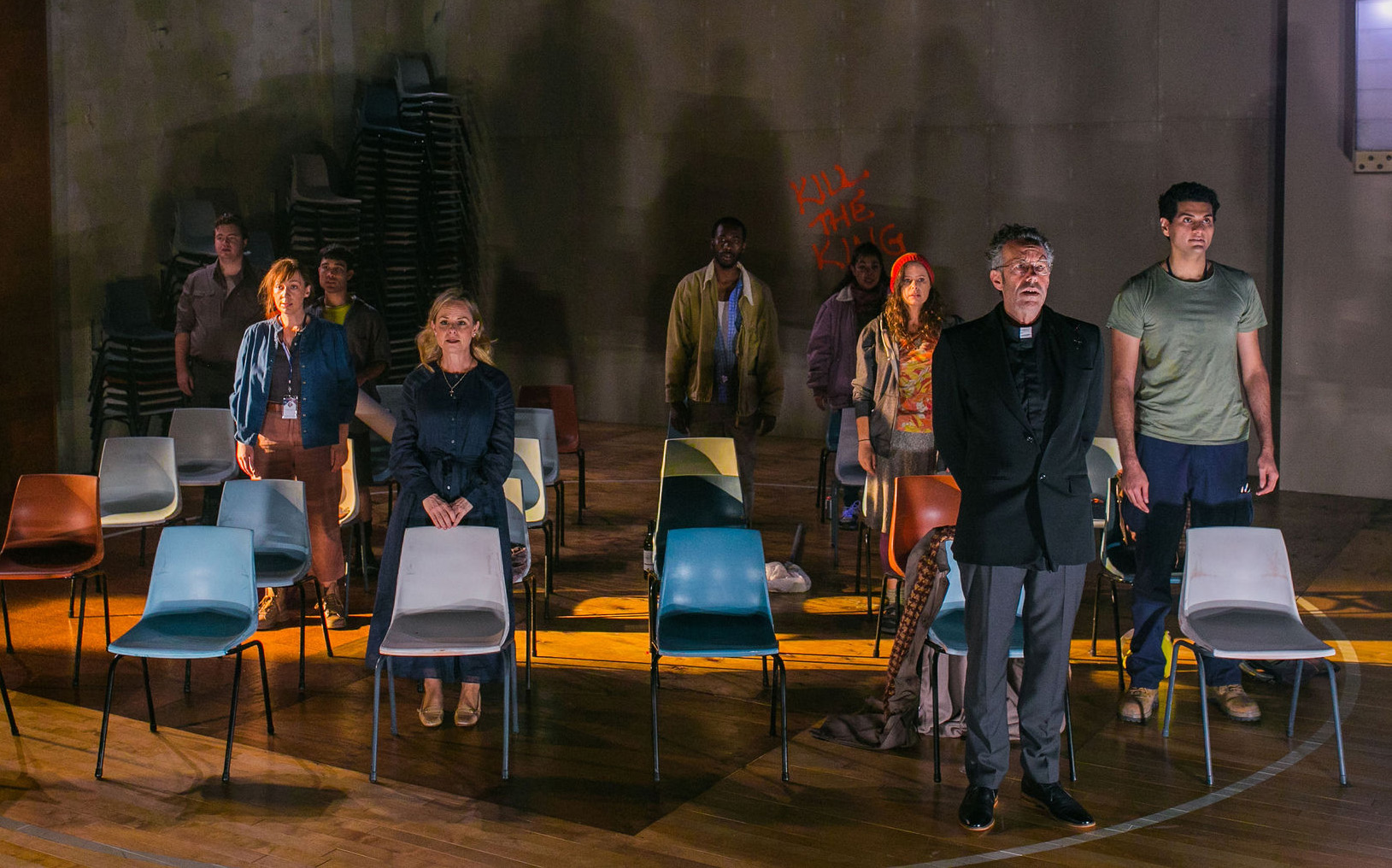
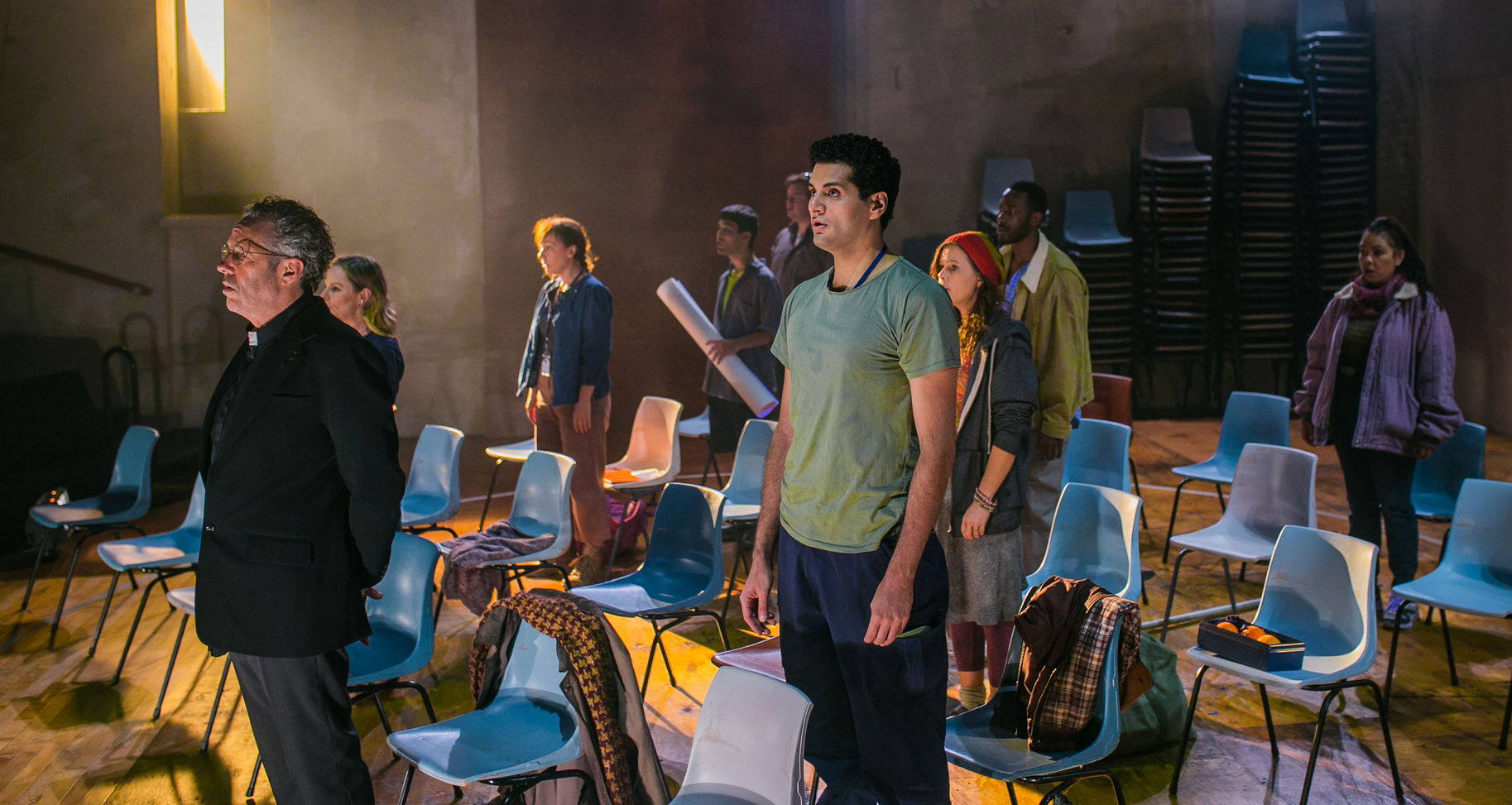
Set design by Michael Hankin is appropriately minimal and rustic, for the depiction of post-war purgatory. Ella Butler’s costumes are equally pared down, so that we may perceive realistic bodies at a time of great adversity. Lit by Damien Cooper, imagery in Light Shining in Buckinghamshire is full of melancholy, able to evoke the disappointment that inevitably comes after a war is lost and won. Live music by Alyx Dennison and Marcus Whale is a highlight, and an unequivocal visceral treat, even if their severe percussion is used repeatedly to cause alarm.

The ensemble of eight actors demonstrates an admirable dedication for the material, and although not always able to communicate with great coherence, they are certainly an inviting presence that encourages us to participate in their various deliberations.

Revolutions are still needed, even if we are yet to have real certainties about how a new world should be. Knowing that we have had endless failed attempts, does not negate the fact that many things have improved through the ages. Perhaps we need to contend with the idea, that our efforts, no matter how radical, can only effect minor adjustments within the grand scheme. We should know by now, that overnight rehabilitations are impossible, much as our hearts desire them. Things seem to only get better in small increments, and the price for them are disproportionately high, which explains why the business of systemic change, has always only been for the brave.

www.belvoir.com.au

Review: Wayside Bride (Belvoir St Theatre)

Venue: Belvoir St Theatre (Surry Hills NSW), Apr 2 – May 29, 2022
Playwright: Alana Valentine
Directors: Eamon Flack, Hannah Goodwin
Cast: Arkia Ashraf, Maggie Blinco, Rashidi Edward, Marco Chiappi, Emily Goddard, Sandy Greenwood, Sacha Horler, Rebecca Massey, Brandon McClelland, Angeline Penrith 
Images by Brett Boardman

Theatre review
It was in the mid-1970s that the Methodist minister Ted Noffs was charged with heresy by his own church. Having gone rogue in his efforts to serve the downtrodden in Sydney, through his founding of the Wayside Chapel in King Cross, Noffs was singled out to be made an undesirable, such is the Christian establishment’s penchant for ostracism and condemnation.

In Alana Valentine’s Wayside Bride, we are provided anecdotes from a wide range of sources, as testification for Noff’s incomparable social work. Replete with fascinating narratives and charming characters (many of whom were marginalised women unable to find other ministers willing to marry them), the play honours Noff along with his wife Margaret, with rigour and reverence. A prominent feature of Wayside Bride is Valentine’s own frustrations with the church, which gives additional dimensions of verve to the show, but which also has a tendency to make things feel somewhat alienating to secular audiences. We are after all, half a century lapsed, and the earnestness in depicting religious inanity, can seem outmoded at a time when Christianity is so resoundingly rejected or moderated, and no longer the dominant influence it had been.

Jointly directed by Eamon Flack and Hannah Goodwin, the production is a vibrant one, and an appropriately sentimental tribute to people who have contributed a great deal to this city. Its jokes may not always hit their mark, but the people it showcases are consistently endearing. 

Michael Hankin’s set design conveys both the spiritedness and the struggles, of those who have encountered Wayside Chapel through the years. Ella Butler’s costumes are rendered with a sense of nostalgic warmth, as well as humour. Lights by Damien Cooper and sound by Alyx Dennison are fairly restrained, but certainly effective in modulating atmosphere for every nuanced shift in tension and mood.

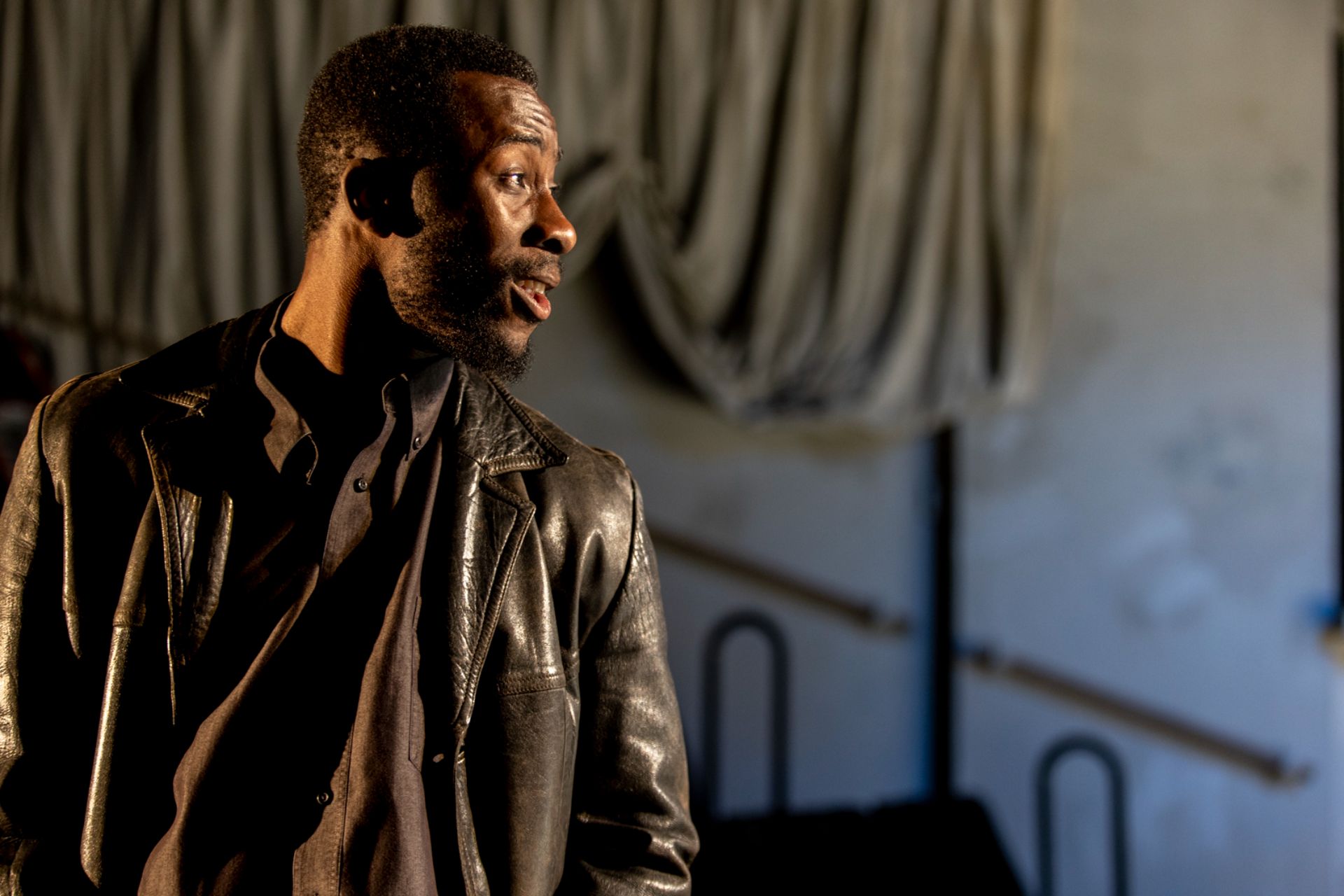
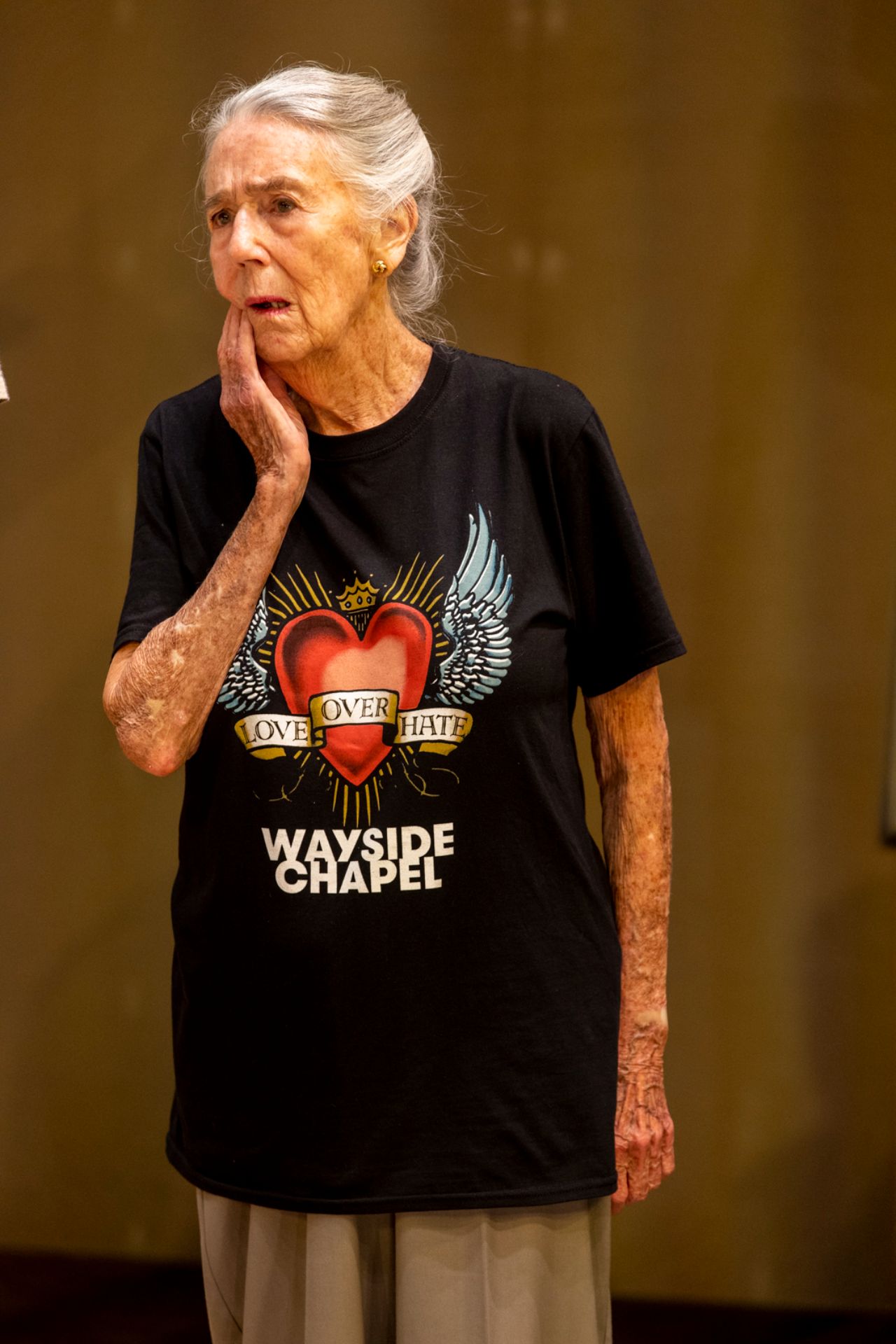
Actor Brandon McClelland is a convincing Ted Noffs, taking us back to a simpler time, when being virtuous seemed much less complicated. Sacha Horler is splendid as Margaret Noffs and also as Janice, playing both roles with exquisite timing and a brilliant imagination. Playwright Valentine is given physical omnipresence on the stage by Emily Goddard who demonstrates beautifully, the veneration that permeates all of Wayside Bride. Highly notable is Marco Chiappi in several memorable roles, each one colourful and engrossing, with a joyful sense of mischief yet always imbued with dignity, for these real-life characters.

It is true, that we should all do good for the world, regardless of one’s faith or lack thereof. It is also true, however, that some are simply unable to be good, without the help of religion. Doctrines written by men of faith have inflicted harm, knowingly and unknowingly, on all kinds of people everywhere in every epoch, yet there is no denying the efficacy of religion on those who need it. The Noffs were right, in holding firm to the fundamental belief in love, and in the universality of God’s creations. The mission is always simple, but the distractions are unceasing.

www.belvoir.com.au

Review: Breathing Corpses (Eye Contact Theatre Company)

Venue: Kings Cross Theatre (Kings Cross NSW), Apr 8 – 23, 2022
Playwright: Laura Wade
Director:
Jess Davis
Cast: Nisrine Amine, Xavier Coy, Zelman Cressey-Gladwin, Mark Langham, Monica Sayers, Joshua Shediak, Emma Wright
Images by Becky Matthews

Theatre review
A hotel maid discovers a dead body, when she opens the door, to one of the rooms that require her daily attention. Several people die in English writer Laura Wade’s Breathing Corpses, and it is the macabre quality of those lingering presences, that gives the play’s three disparate stories, a sense of danger and tension. Like in real life, there is a certain evasion in attitudes pertaining to the unassailable fact of death, and an inability to look death in its eye, to deal with it honestly, that underscore everything that we see unfold.

Directed by Jess Davis, the production bears an intensity that sustains our engagement, from start to end. Although some of the playwright’s humour seems lost in the staging’s focus on high-stakes drama, the 90-minute journey is nonetheless an enjoyable one. Sam Cheng’s sound design is a noteworthy element, that effectively, and elegantly, amplifies the gravity of situations being explored. Production design by Kate Beere, along with Sophie Parker’s lights, are accomplished with notable restraint, both contributing to a chilly atmosphere, that is characteristic of this staging.

A well-rehearsed cast of seven, deliver strong performances that ensure our investment in all of their narratives. Emma Wright plays hotel maid Amy, with great concentration and sensitivity; she sets the tone beautifully for a contemplative experience. Nisrine Amin and Zelman Cressey-Gladwin are excellent as the abusive couple Kate and Ben, both actors powerful in their convincing depiction of a terrifyingly destructive relationship.

People go about their lives, as though death will never come. So much of what we do, depends upon the certainty of a tomorrow. It is so easy then to devalue the time that we do have today, and leave what really matters for imaginary futures. Today then is only ever comprised perennially of inferior interludes, rarely allowing life to reach their fullest potential. Appreciating death, is to let every second count, which also means that one can finally learn, to live in the moment.

https://www.facebook.com/eyecontacttheatreco/

Review: Stay Woke (Darlinghurst Theatre Company / Malthouse Theatre)

Venue: Eternity Playhouse (Darlinghurst NSW), Mar 26 – Apr 17, 2022
Playwright: Aran Thangaratnam
Director: Bridget Balodis
Cast: Rose Adams, Brooke Lee, Dushan Philips, Kaivu Suvarna
Images by Phoebe Powell

Theatre review
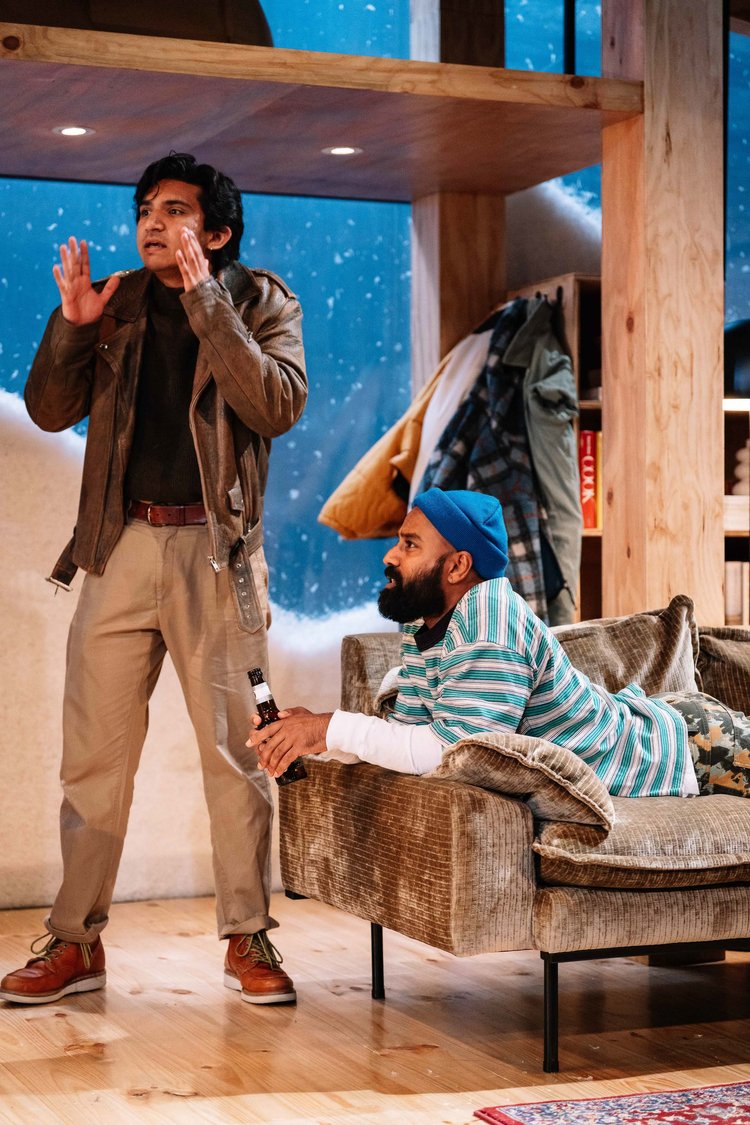
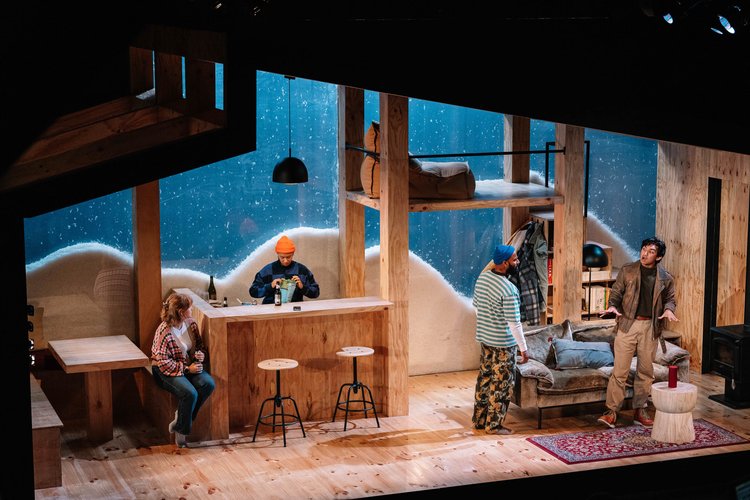
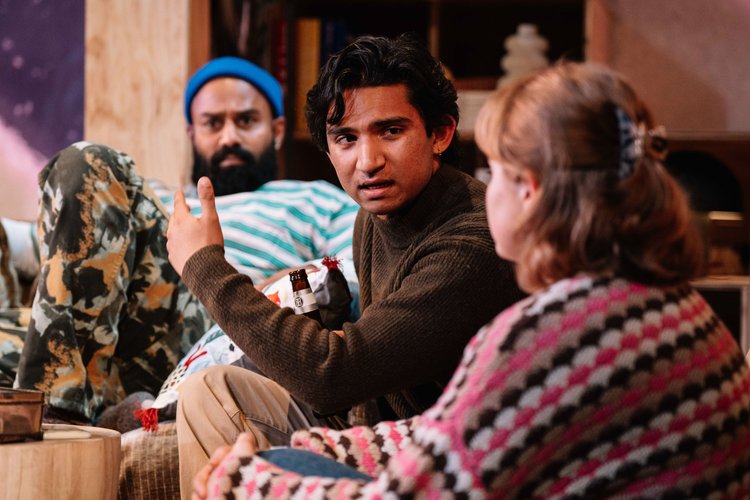
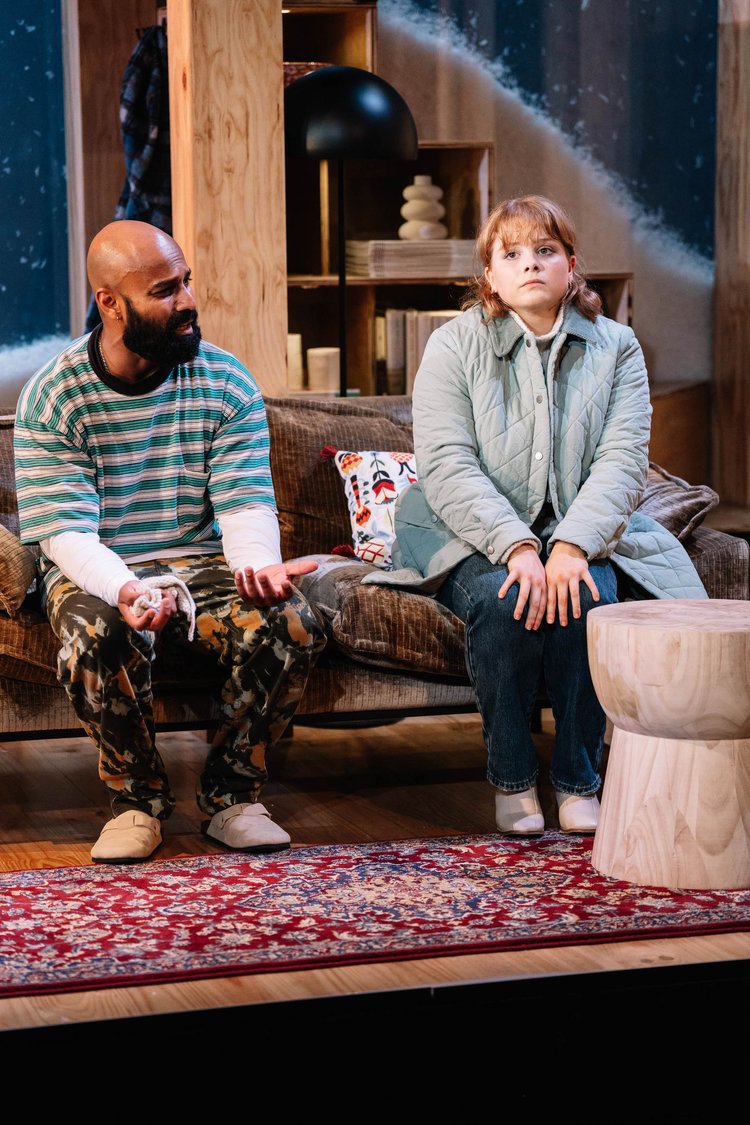
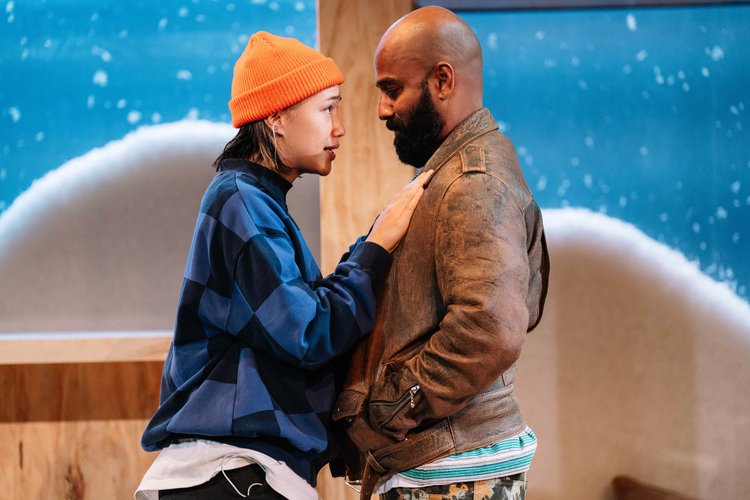
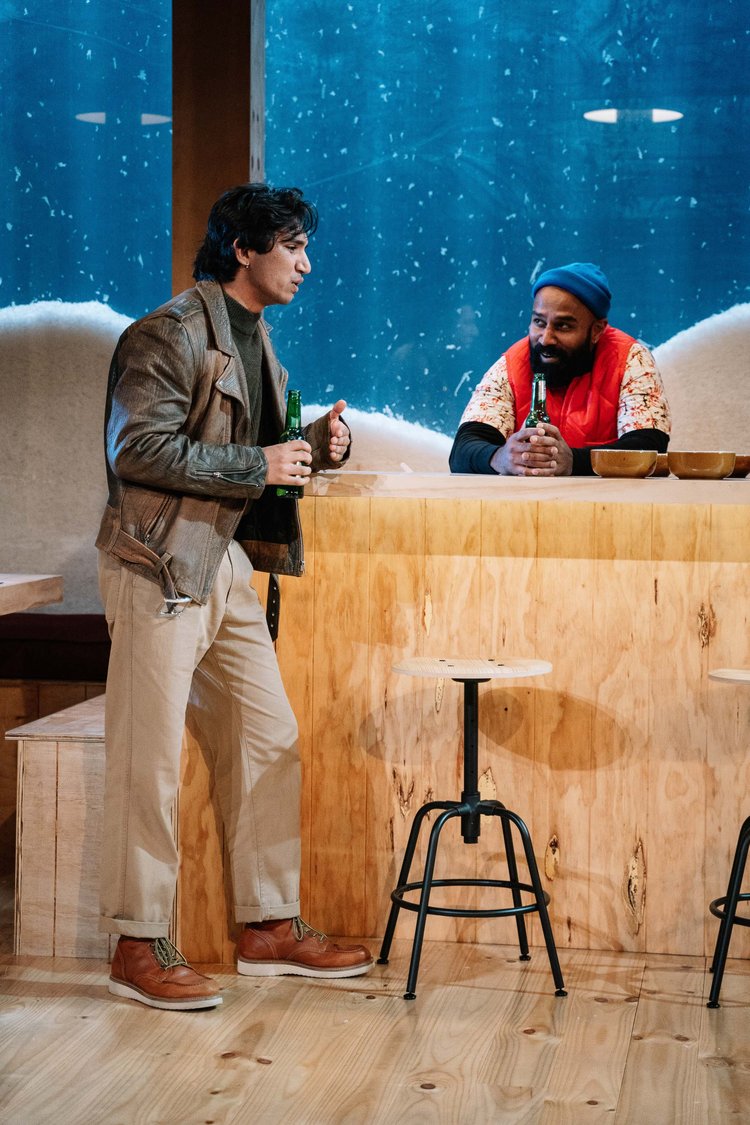
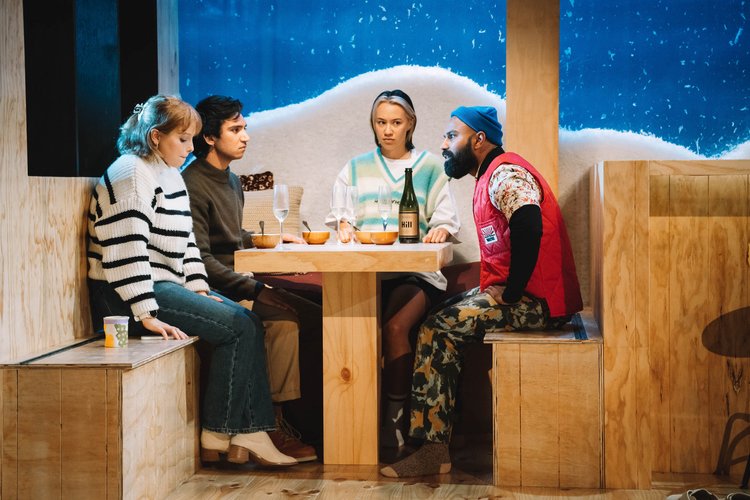
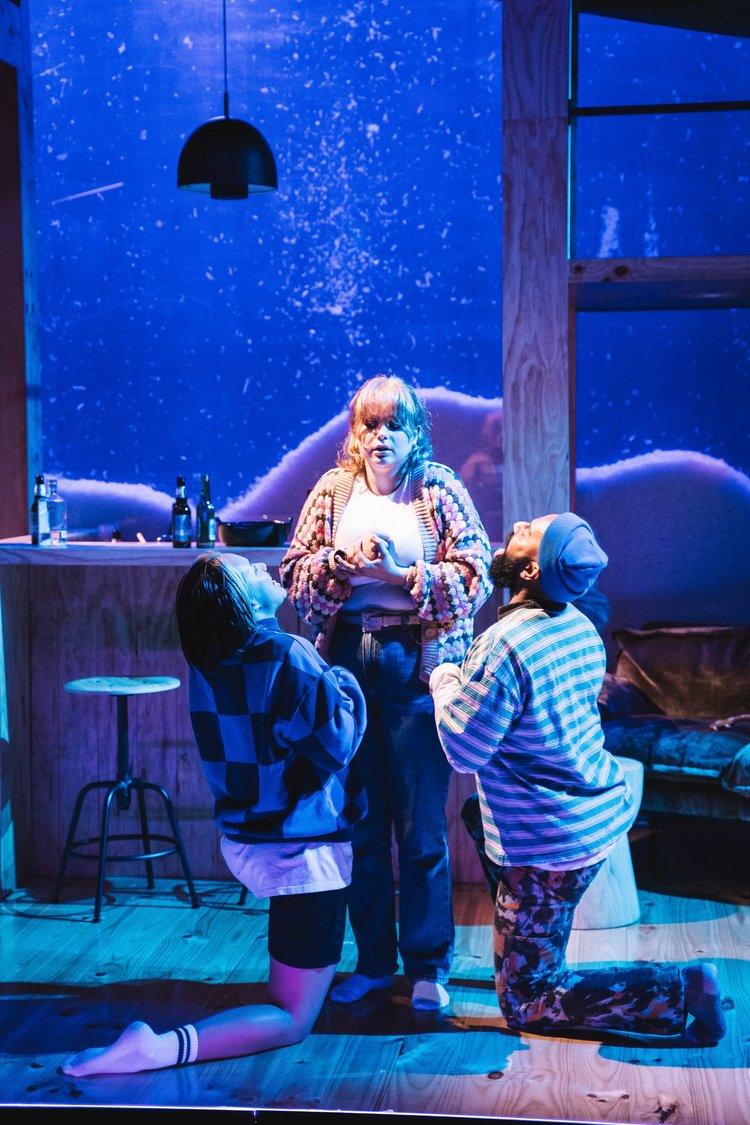
Sai is joining his brother Niv at a snow resort. The two have always had a difficult relationship, but introducing Sai’s girlfriend Kate to the mix for the first time, is only making things worse. The young men are Asian-Australian with roots in Sri Lanka, and Kate is white, with very little familiarity about cultures beyond her ethnocentric existence. Niv has no tolerance for ignorance, so even though Kate means well, her social illiteracy causes incessant altercations to occur inside the chalet.

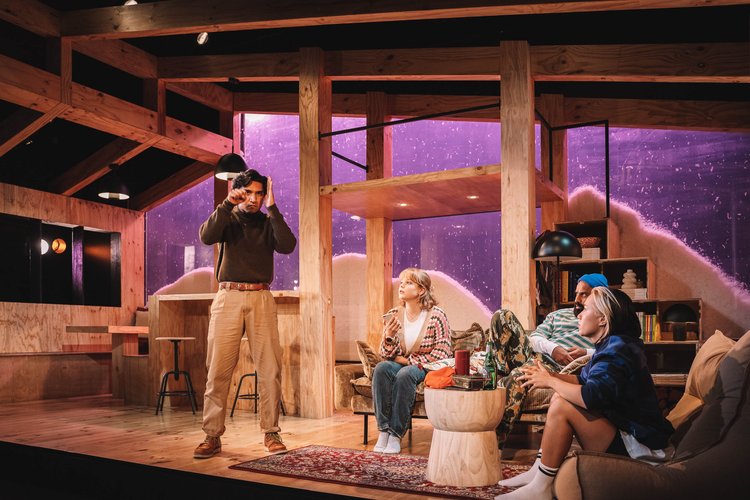
Aran Thangaratnam’s Stay Woke brings focus to the current process of reckoning, as we find ways to understand and undermine the white supremacy that has faced scant opposition these last few centuries. The comedy places one white character in tight quarters with three people of colour (including Niv’s romantic partner Mae), who now know better than to just let things slide. It is a challenging time, and the play helps make tangible, the difficult conversations that are taking place, as minorities devise strategies to confront the hegemony.

Thangaratnam’s writing is generous in spirit (there is no real vilification of Kate or any other white people), but its passion is unmistakable. The politics in Stay Woke are carefully considered, and its humour is well rendered, although some of its dialogue could benefit from being more conversational. Direction by Bridget Balodis too, lacks a convincing naturalism in early scenes, but as the stakes escalate, tensions are marvellously harnessed, in this mesmerising theatrical work about race relations and familial connections.

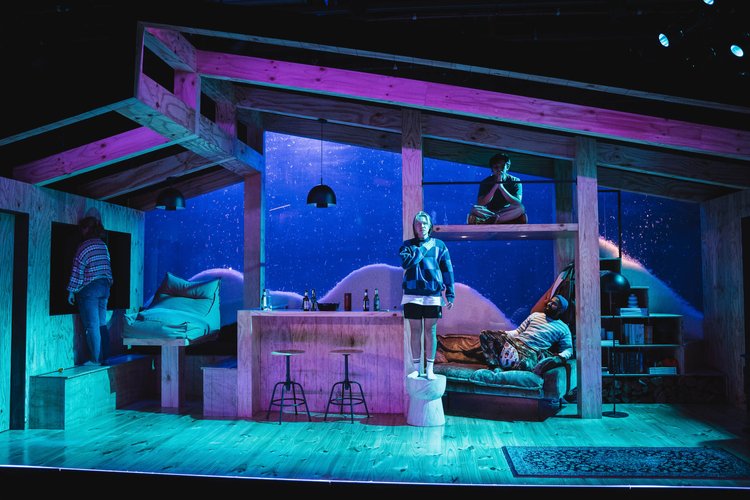
Production designer Matilda Woodroofe delivers a stunning set, complete with oversized windows revealing falling snow. Rachel Lee’s lights are invitingly warm, beautiful and nuanced, as they quietly transform with the show’s oft shifting moods. Sound design by Daniella A Esposito is ambitious, and perhaps too detailed in what it tries to establish for the staging, frequently drawing undue attention to itself, instead of providing gentle enhancement to the story being told.

Actor Dushan Philips brings great intensity to Niv, with a brand of overwrought expressiveness that feels entirely appropriate for the bombastic character. Kaivu Suvarna is a more subdued presence, but effective in cultivating an air of authenticity for the stage, as the more diplomatic Sai. Playing Kate is Rose Adams, who can be exaggerated with some of her comedy, although excellent at providing a clear interpretation of her role’s qualities. Brooke Lee is perhaps the most convincing of the cast, able to convey a sense of truthfulness for all their moments, whether comical or dramatic.

Stay Woke makes good points about who we are and how we should evolve, but there is a politeness to its pronouncements, that feels strangely conservative. For our art to be politically effective, it is necessary that we have the capacity to accommodate chaotic disruptions and unpleasurable assertions. We live in an awkward time, when so much of normalcy is being interrogated and deconstructed. For those who are used to experiencing big changes, we know that discomfort is a sensation that needs to be embraced, for without it, the old status quo remains triumphant.

www.darlinghursttheatre.com | www.malthousetheatre.com.au

Review: Blithe Spirit (Sydney Theatre Company)

Venue: Sydney Opera House (Sydney NSW), Mar 21 – May 14, 2022
Playwright: Noël Coward
Director: Paige Rattray
Cast: Courtney Act, Matt Day, Nancy Denis, Bessie Holland, Tracy Mann, Megan Wilding, Brigid Zengeni
Images by Prudence Upton

Theatre review
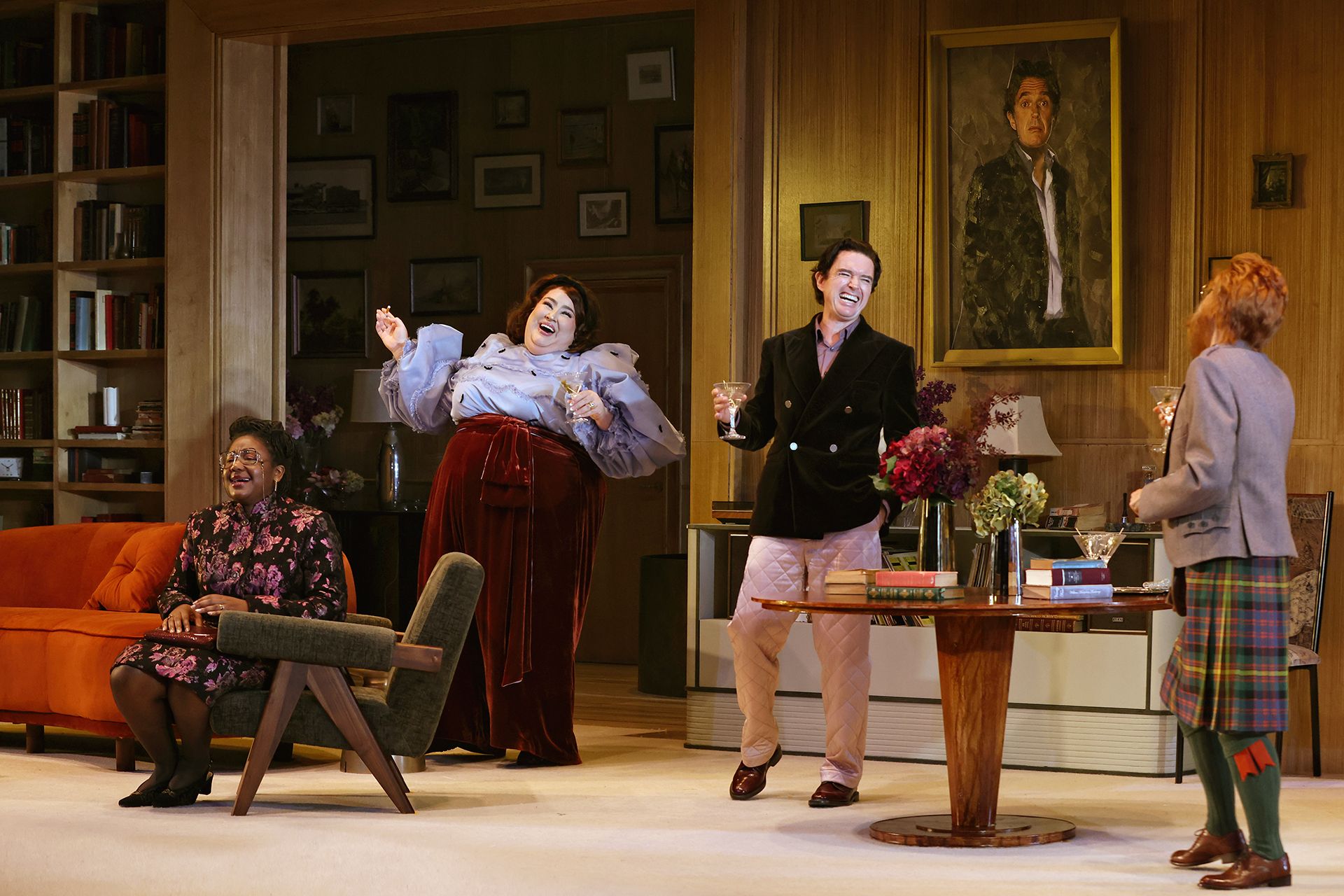
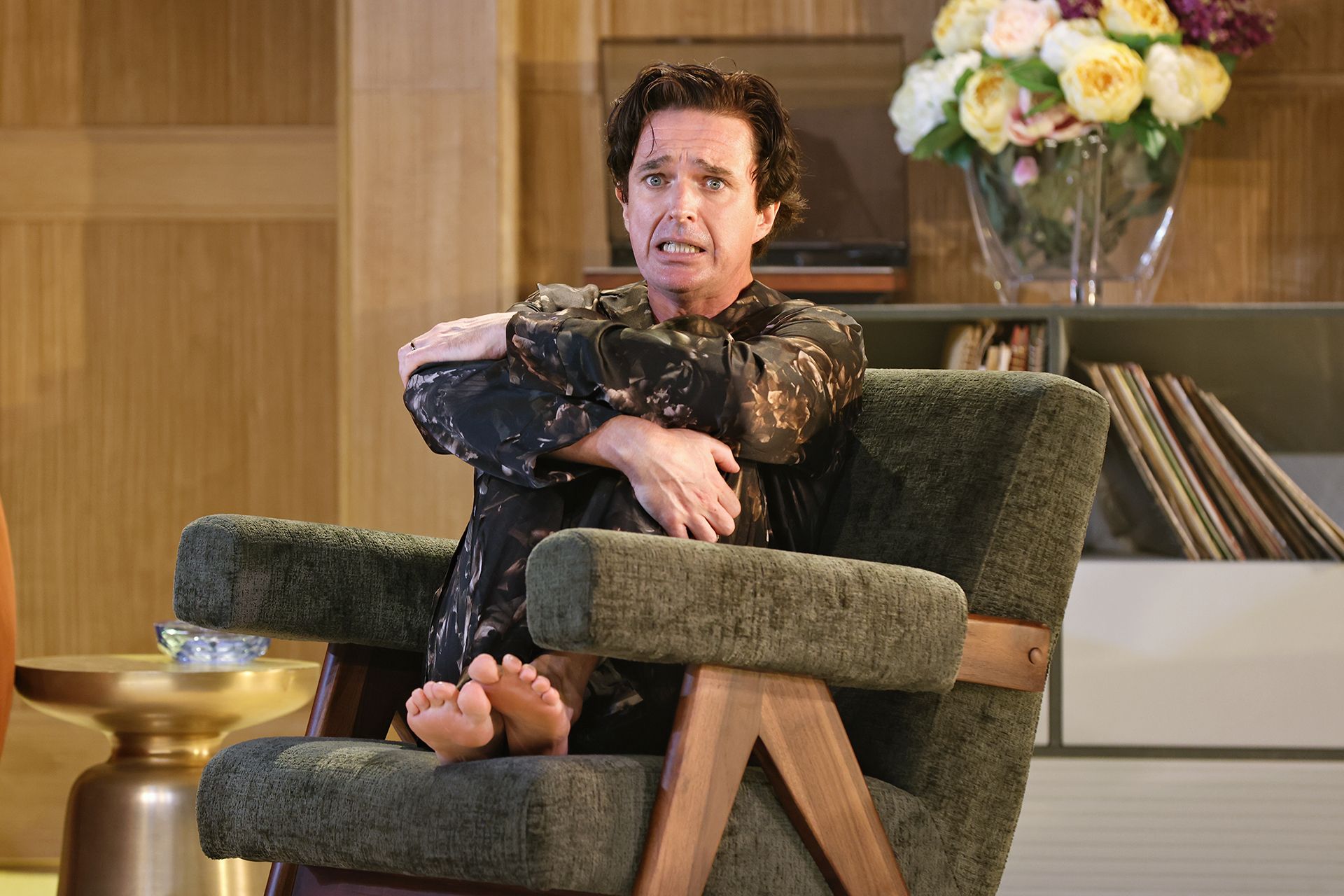
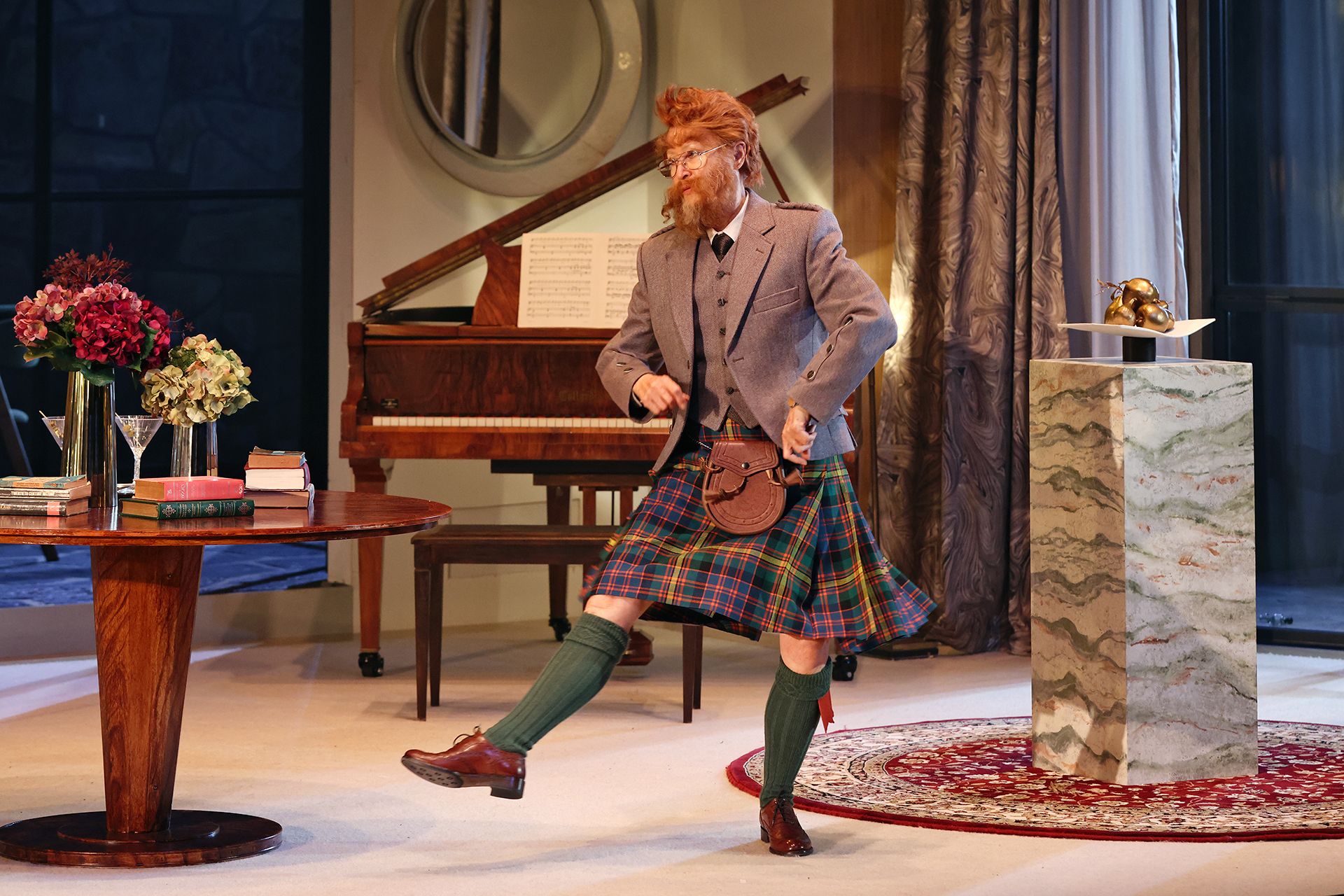
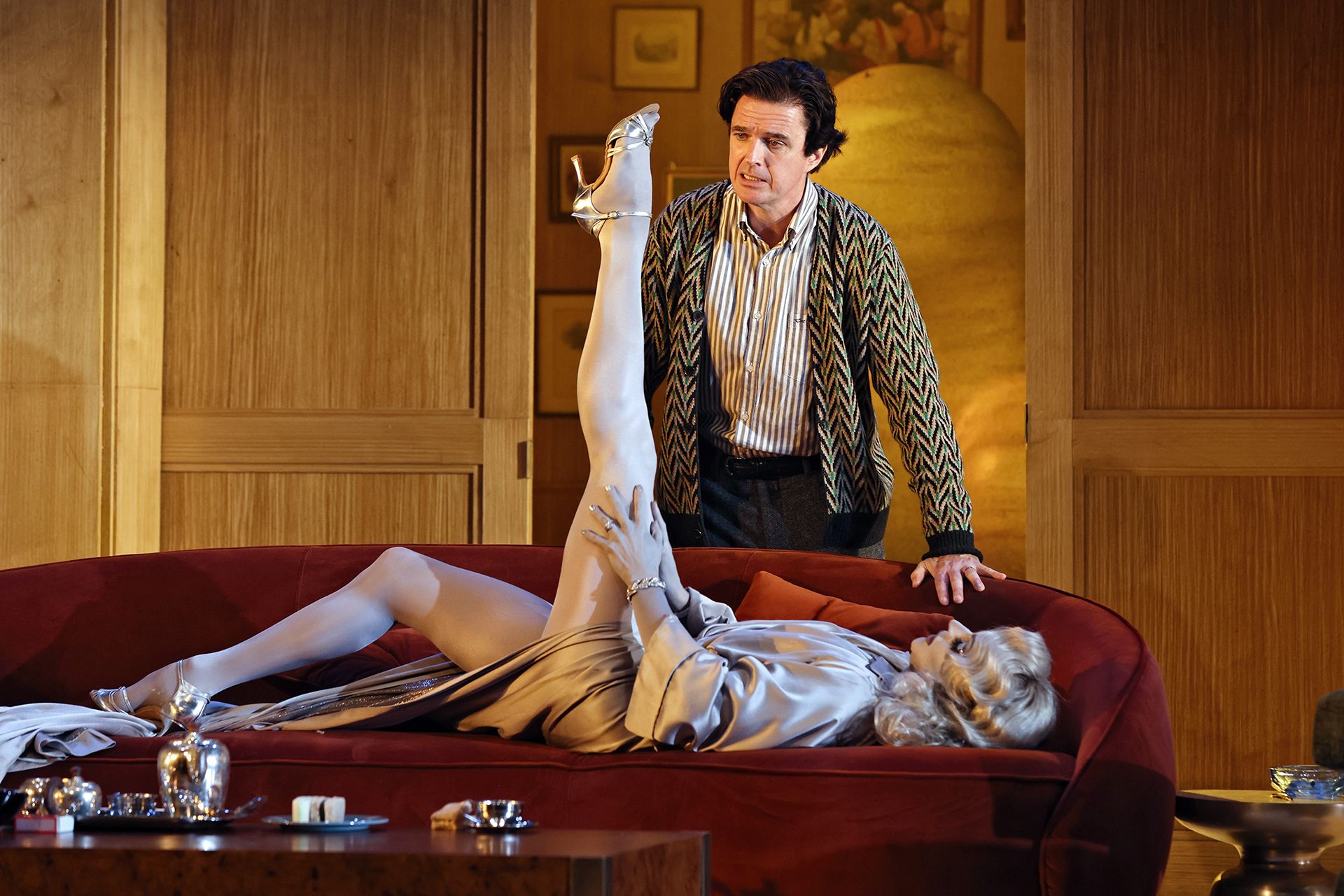
Ruth and Charles are a wealthy couple who have run out of earthly pleasures to occupy themselves with, and are now toying with paranormal phenomena, for shits and giggles. What was originally meant to be the Condomines’ moment of disingenuous flirtation with the netherworld however, turns into a living nightmare when Charles’ ex-wife Elvira returns from the dead to haunt the household. Noël Coward’s 1941 comedy Blithe Spirit is a bit of harmless nostalgic English fun, the usual appeal of which resides almost entirely with its writer’s extraordinary wit.

With the passage of time, it is unsurprising that Coward’s work, now almost 80 years old, might have waned in its ability to tickle. Fortunately, the transcendental magic of theatre is ageless, and under the directorship of Paige Rattray, we find a renewed appreciation of the old play, and even though her contemporary production may not share very much in common, in terms of methodology, with the original creation, there is no denying that rapturous laughter was always the central intention.

It is a tremendously successful rendition, that relies upon Rattray’s uncanny ability to parody not only what Coward found worthy of satire, but also to lampoon old English sensibilities, such as those of Coward’s own, that represent so much of what many Australians today wish to establish distance from. Blithe Spirit has always made fun of the bourgeoisie, but now it is additionally useful in aiding in the ridicule of our colonial history.

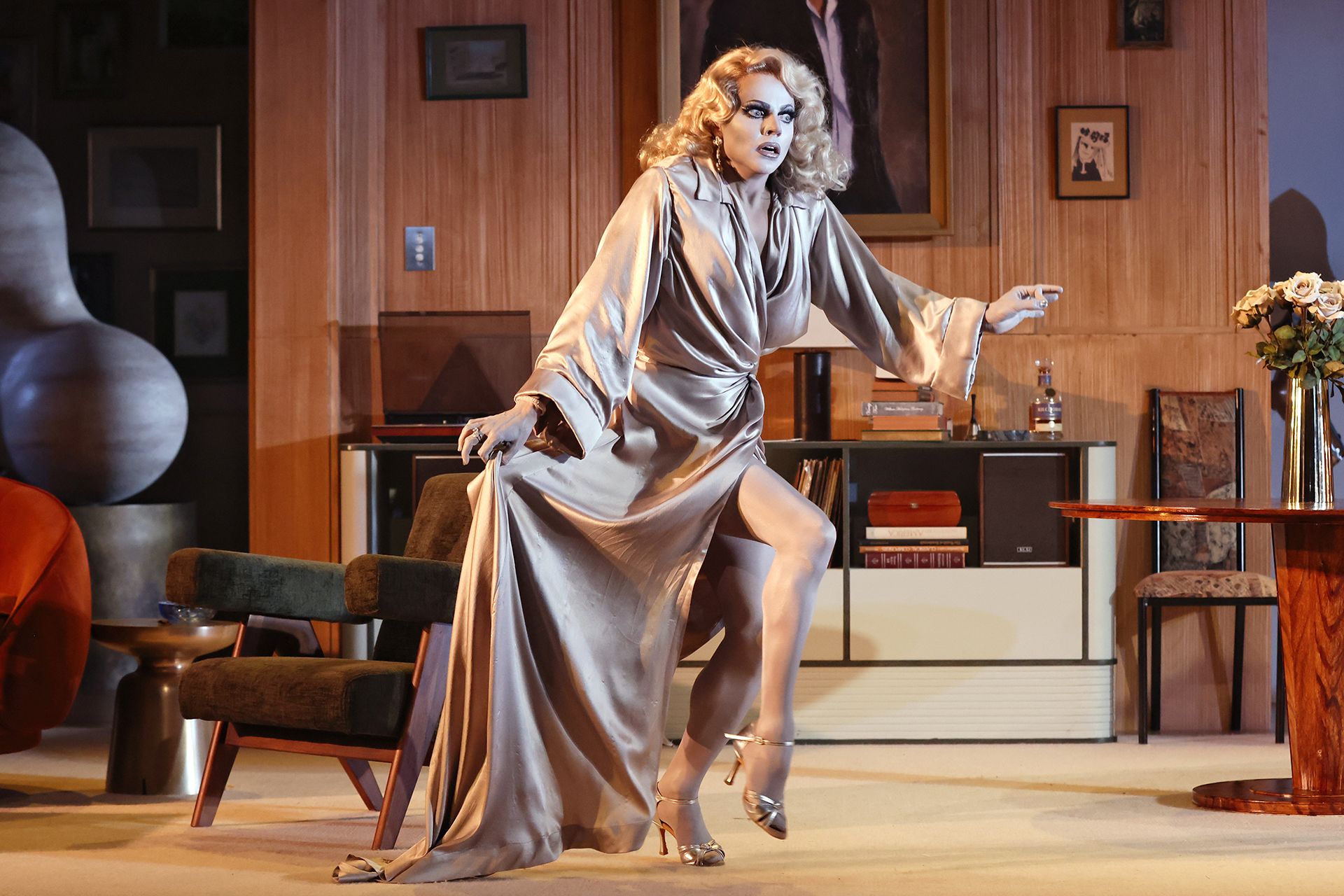
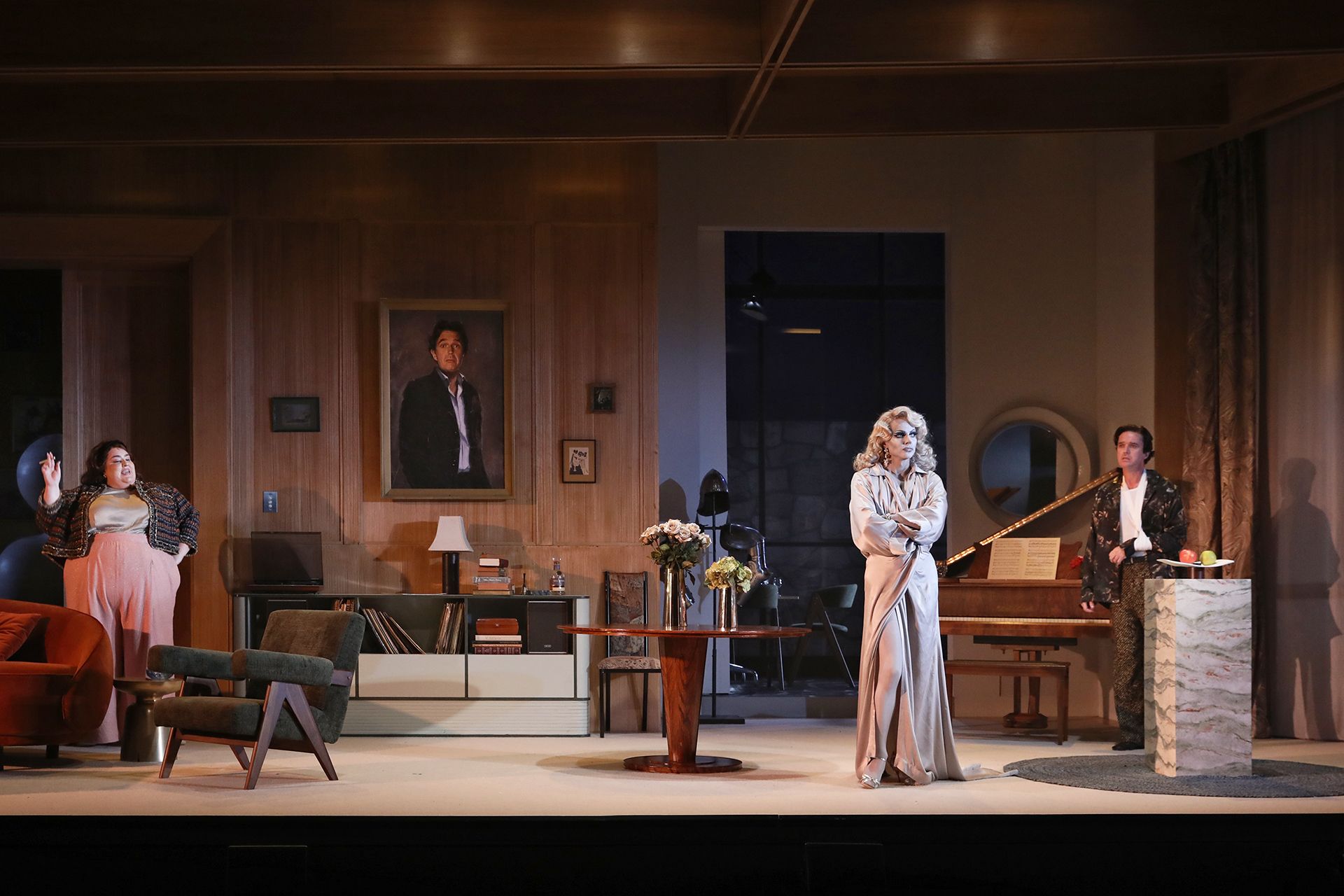
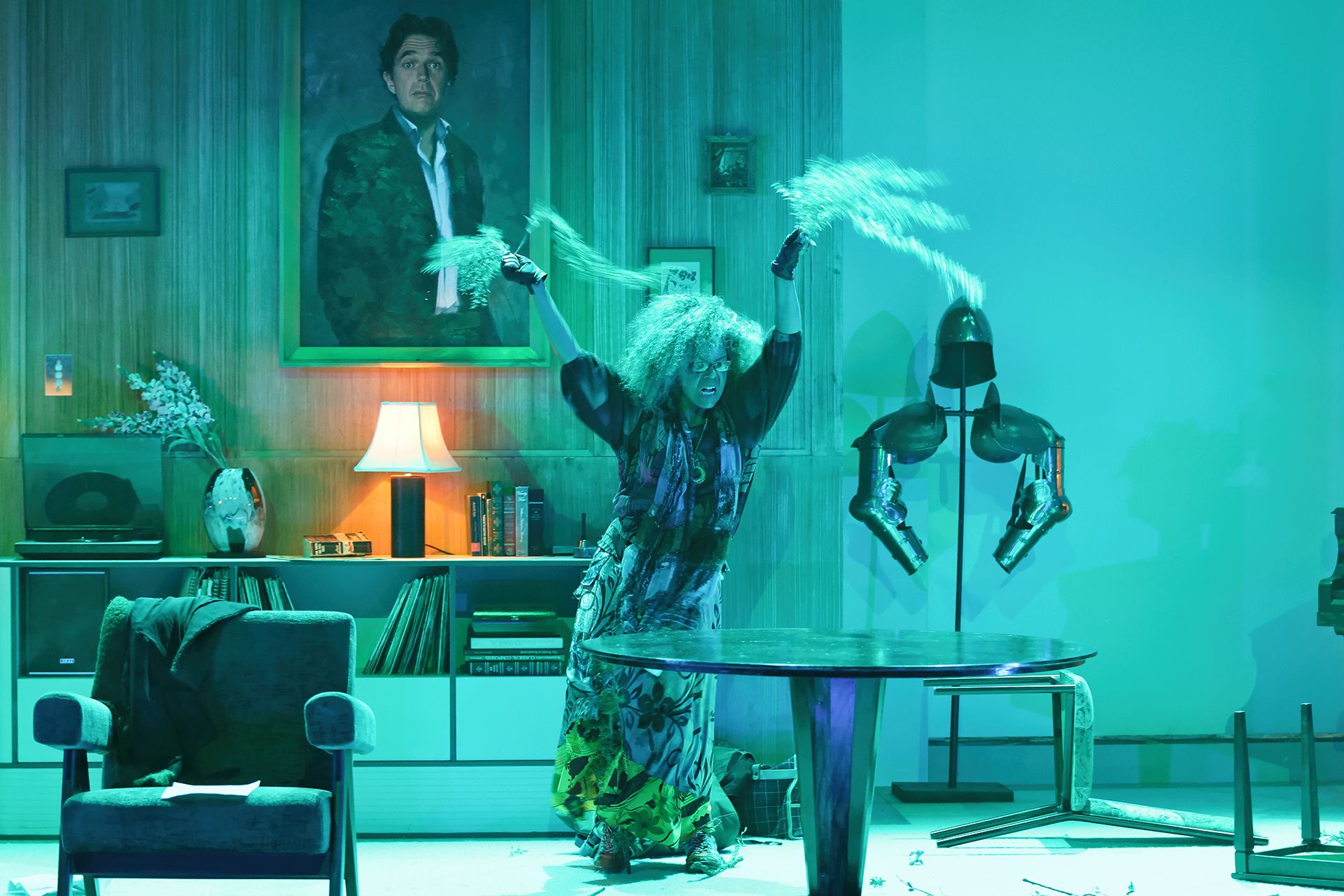
Indeed it is that familiar English pomp that forms the basis of Rattray’s sarcastic and camp humour. Production design by David Fleischer involves conspicuous display of white money and class, for a sardonic rendering of the Condomines’ home and attire that look every bit the epitome of rich people nonsense. Sound design by Clemence Williams memorably adds to the cheekiness of attitude, as does Damien Cooper’s lighting design, which is additionally called upon to enhance the show’s cartoonish moments of supernaturality.

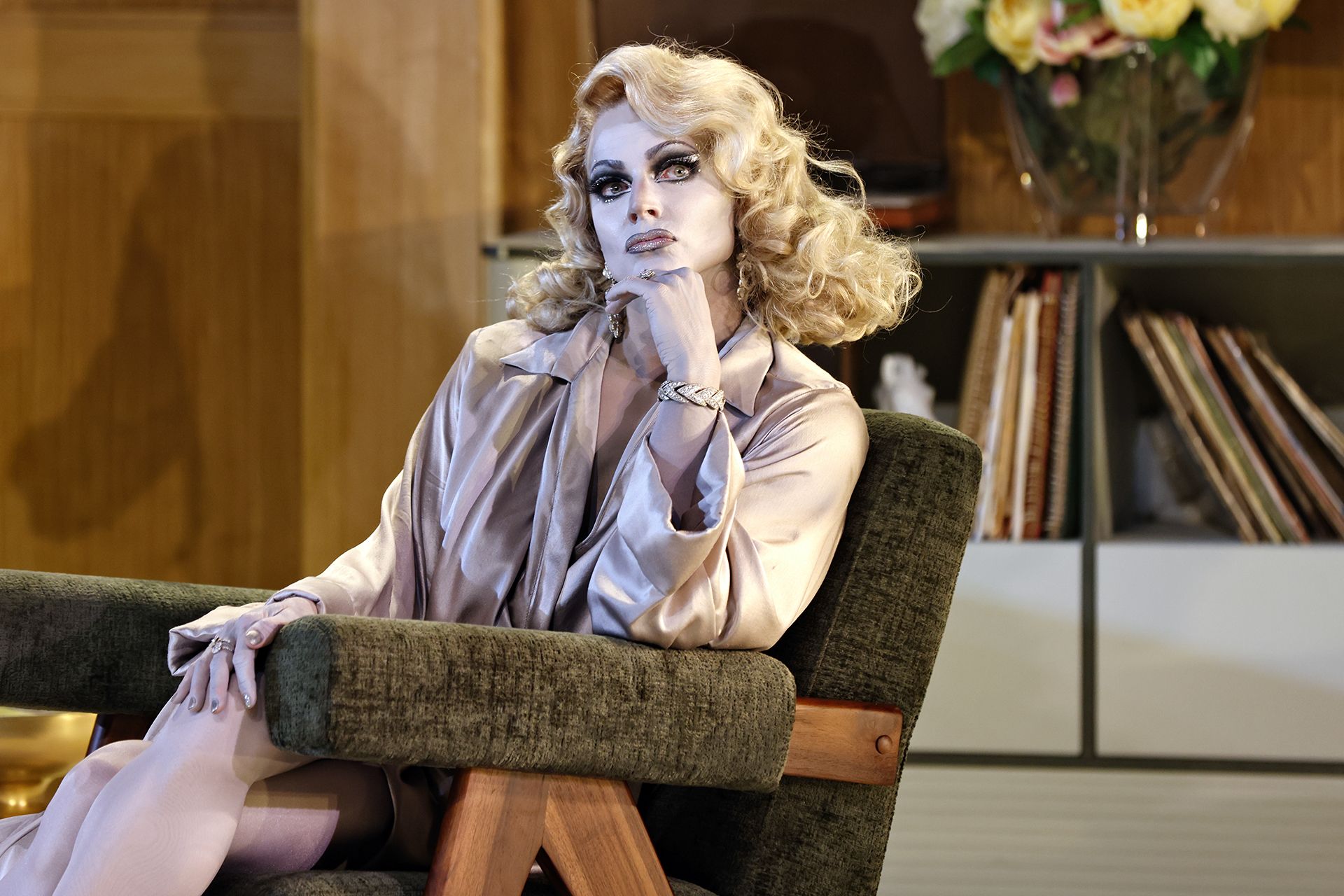
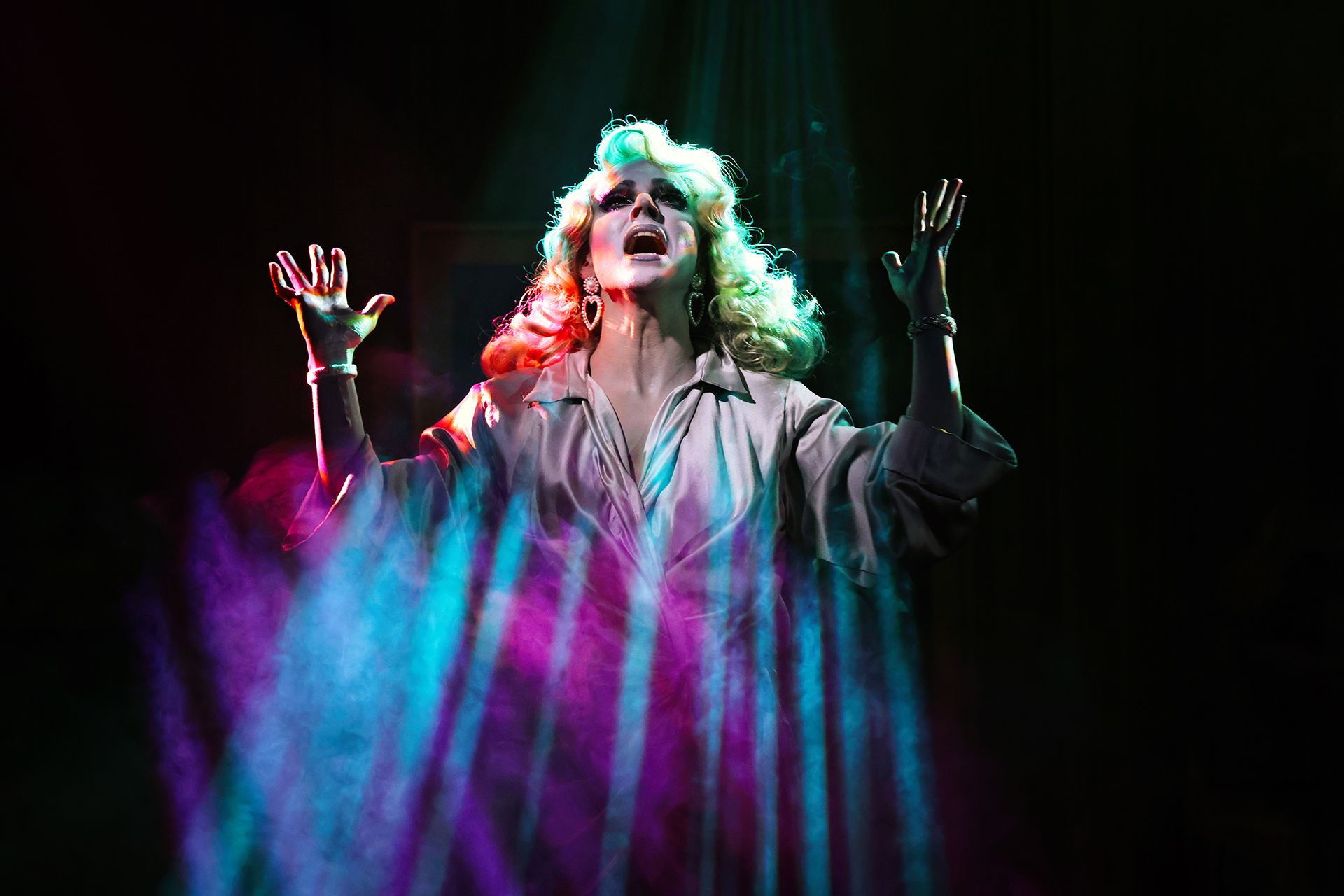
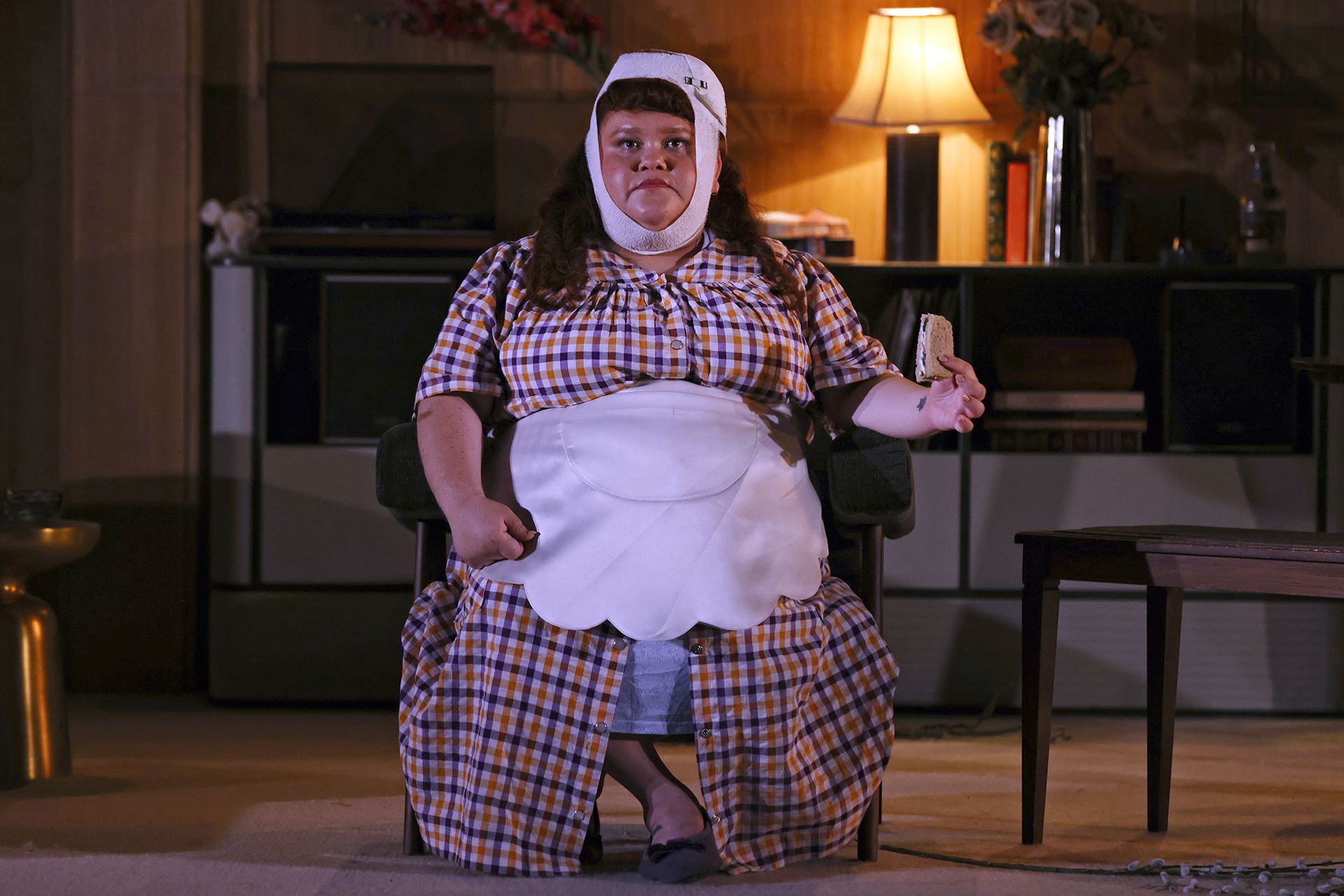
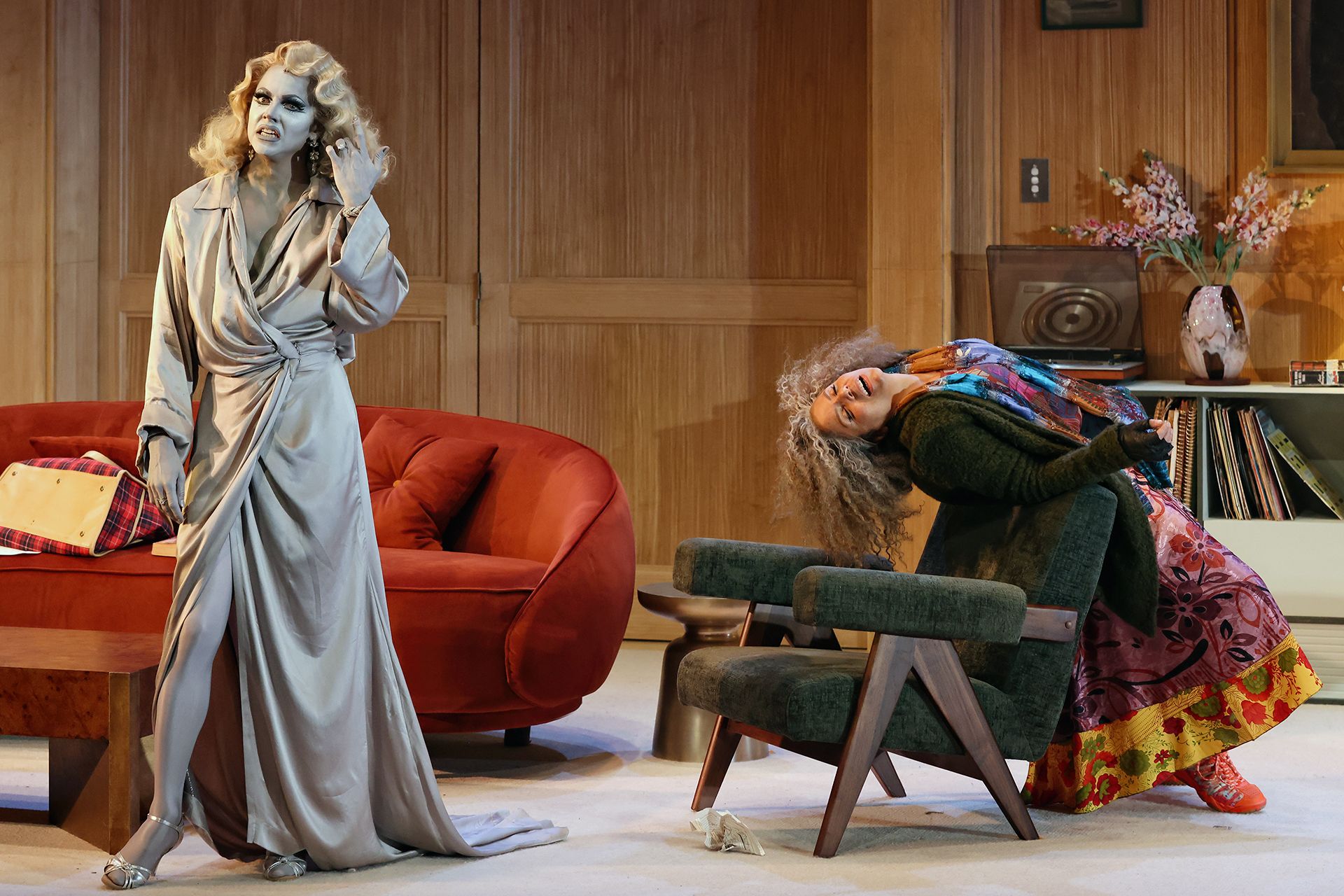
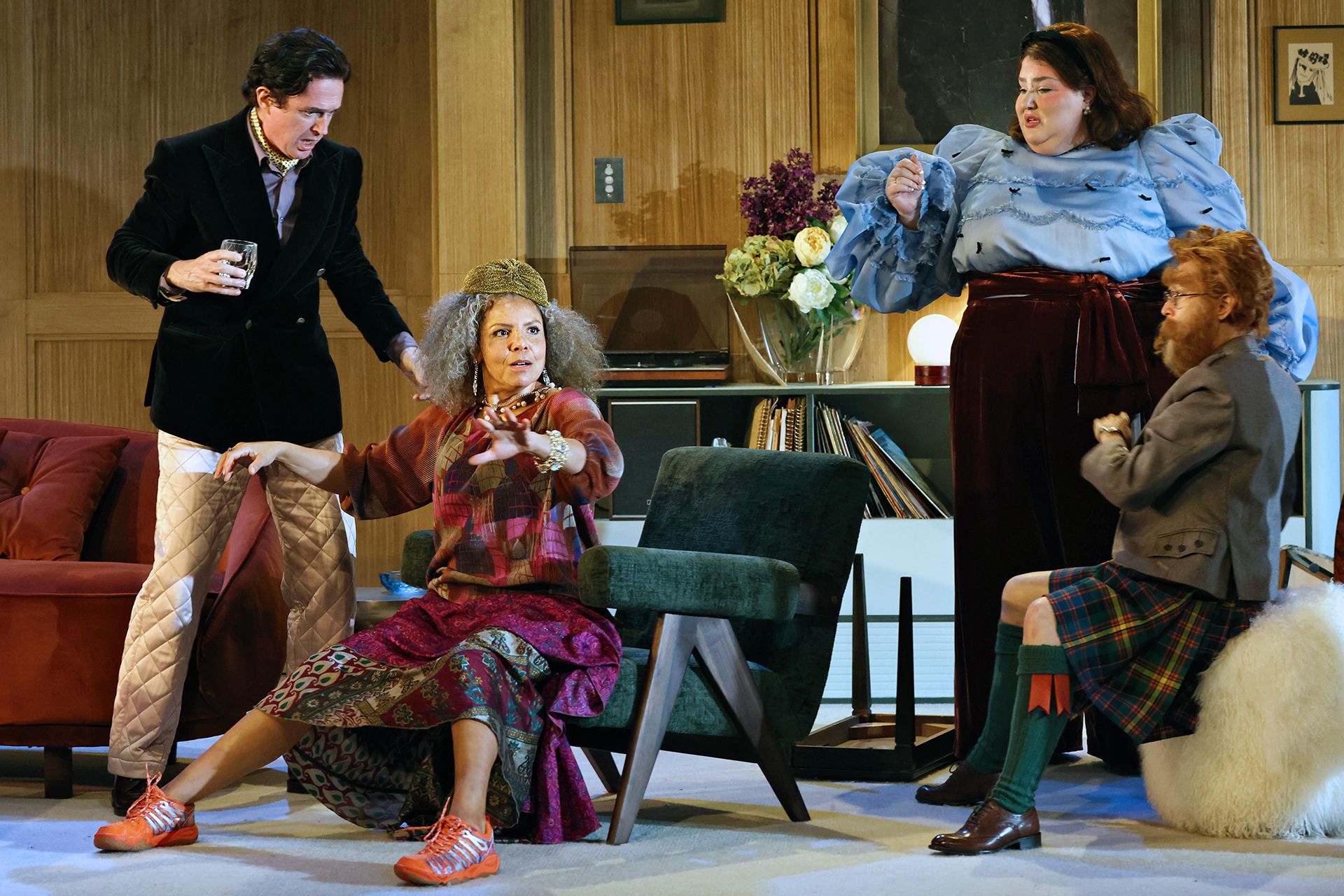
Performer Courtney Act brings excellent presence to the phantasmal role of Elvira, although a lack of nuance and depth in interpretation, tends to result in a regretful vapidity for the prominent part. Charles is played by Matt Day, admirably sure-footed and detailed with his contributions. The housemaid Edith is made larger than life by Megan Wilding’s creativity, the nature of which is undeniably inventive and mischievous. The wonderfully robust Brigid Zengeni portrays the clairvoyant Madame Arcati, as simultaneously kooky yet dignified. Nancy Denis and Tracy Mann are whimsical as family friends the Bradmans, both bringing considerable charm to the staging.

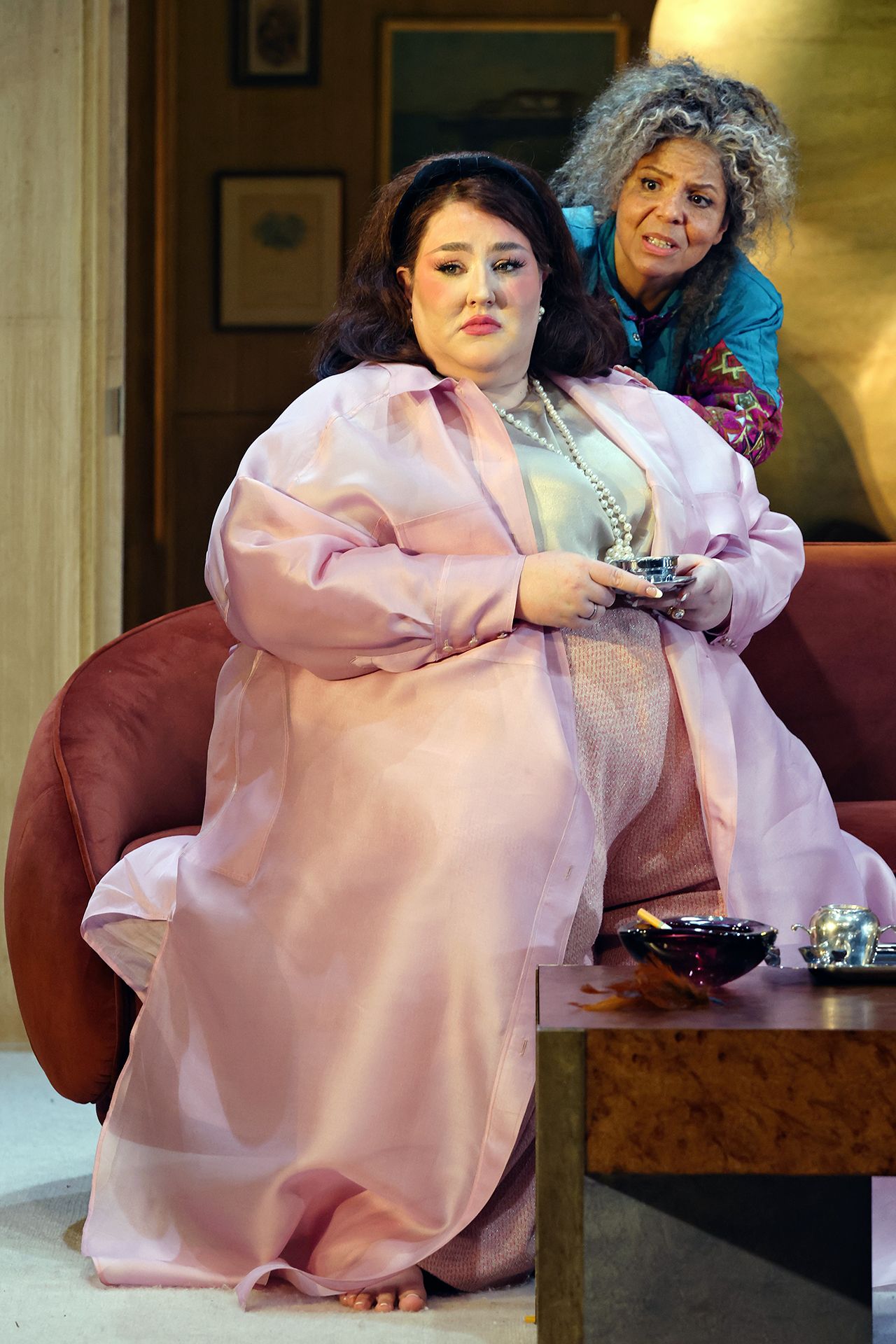
All theatre productions are collaborative efforts, but rare instances do occur, where a single star on the stage shines so bright, everything else can only settle for being mere witness to that magnificence. Playing Ruth, is actor Bessie Holland, who delivers nothing short of a masterclass, in a performance that exceeds even the greatest of expectations. It is a fearless embodiment of a great love for live comedy, replete with faultless instincts and exhaustively considered manoeuvres. Not only does Holland offer us crystal clarity with regards character and story, she has an ability to connect with her audience as though through a direct link to our viscera, so that an impossible joy is emitted, with every aural and visual punchline she precisely, and spiritedly, executes. It is a marvel that such talent is real, and an even greater miracle that we can attest to its existence in this very lifetime, with our own eyes.

www.sydneytheatre.com.au

Review: North By Northwest (Sydney Lyric Theatre)

Venue: Sydney Lyric Theatre (Sydney NSW), Mar 9 – Apr 3, 2022
Adaptation: Carolyn Burns
Director: Simon Phillips
Cast: David Campbell, Amber McMahon, Bert Labonté, Genevieve Lemon, Berynn Schwerdt, Dorje Swallow, Kaeng Chan, Lachlan Woods, Nicholas Bell, Sharon Millerchip, Tony Llewellyn-Jones, Wadih Dona 
Images by Daniel Boud

Theatre review
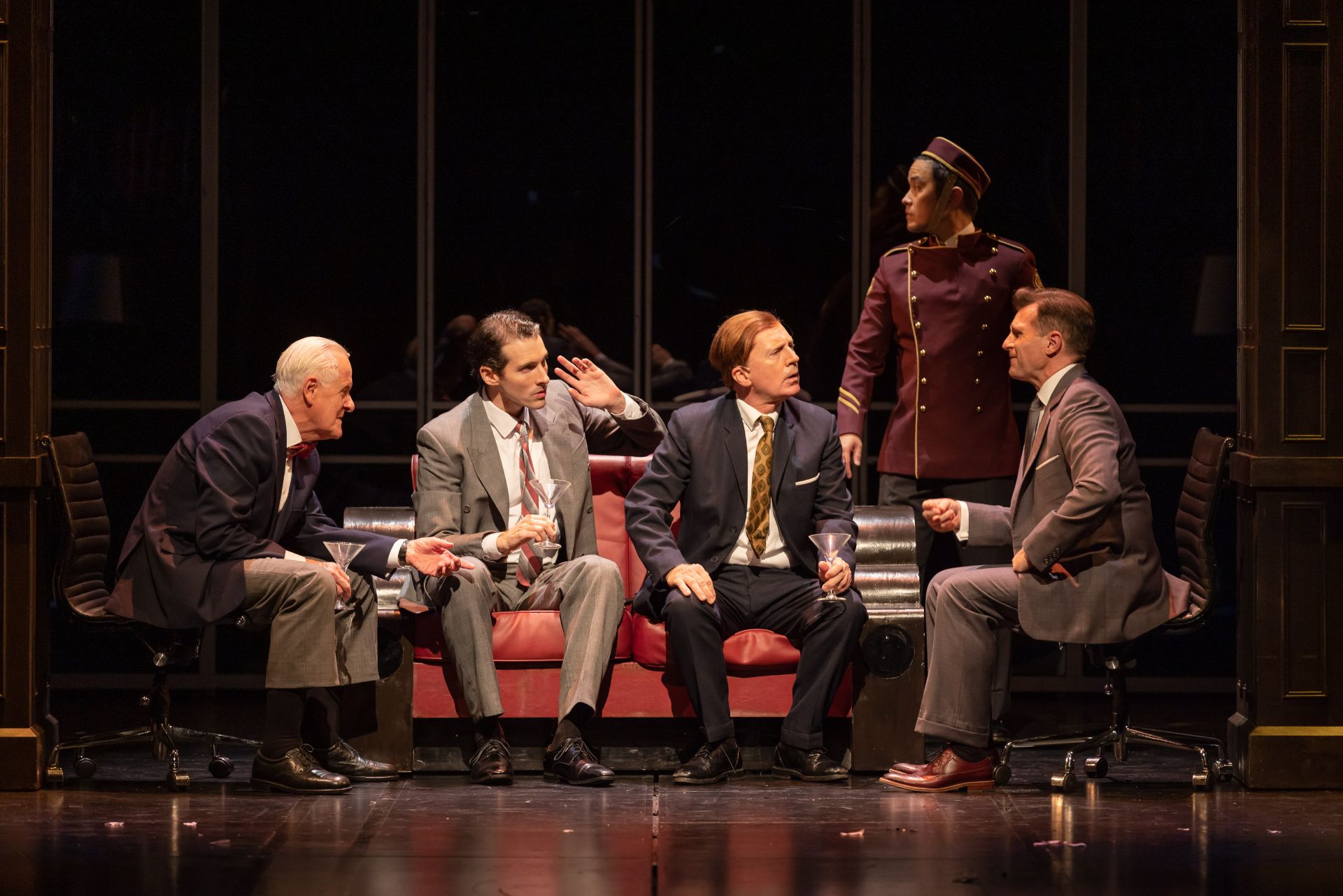
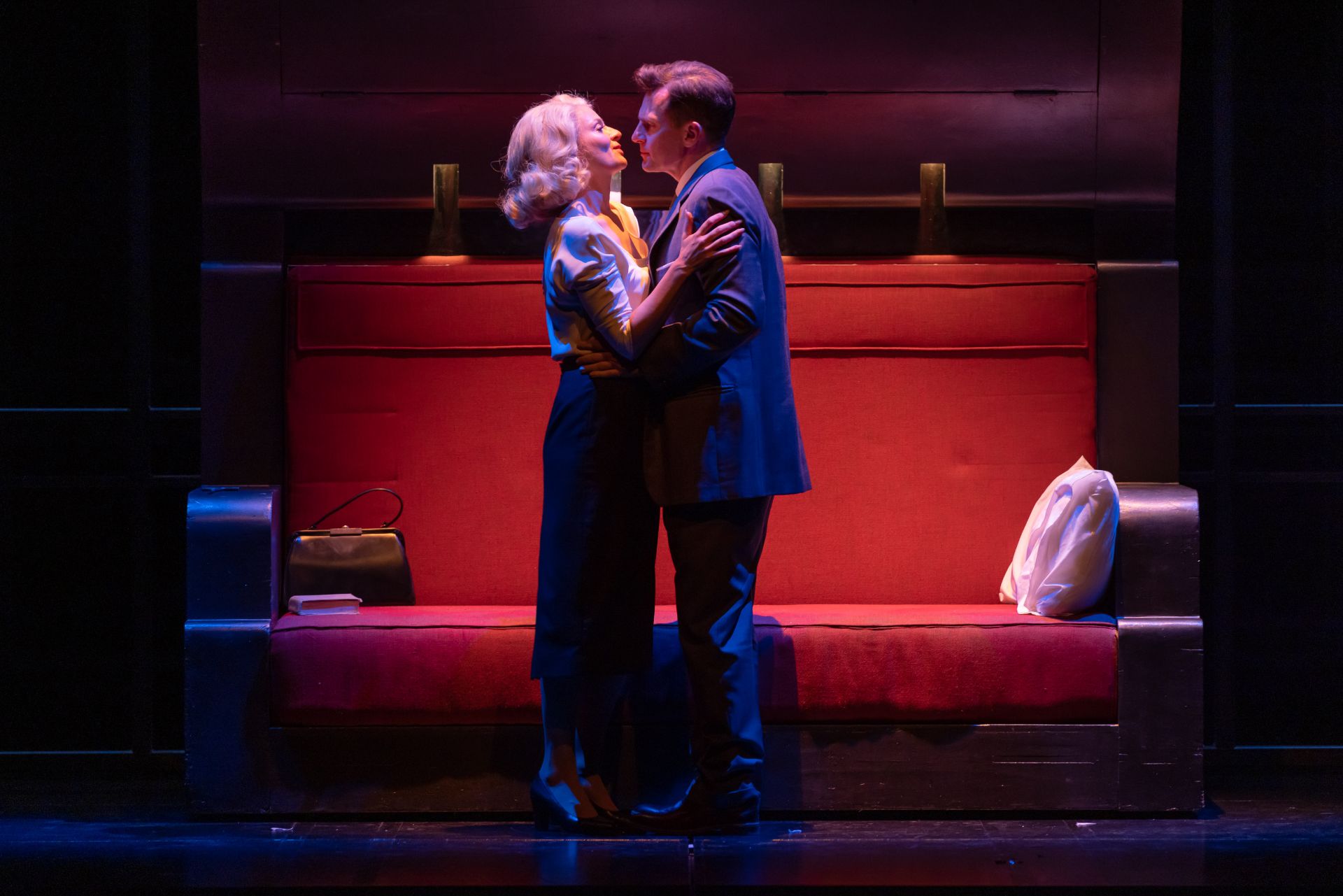
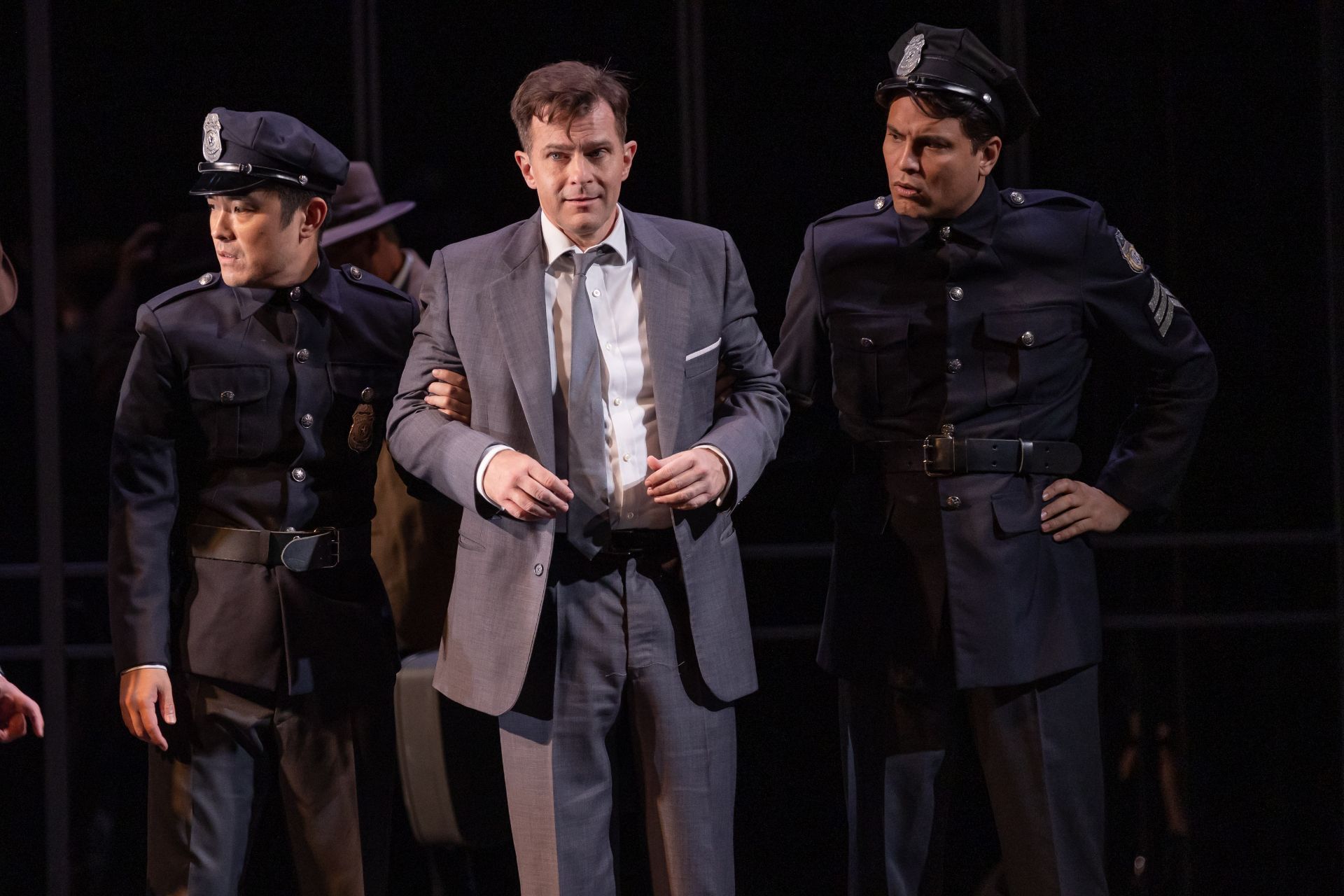
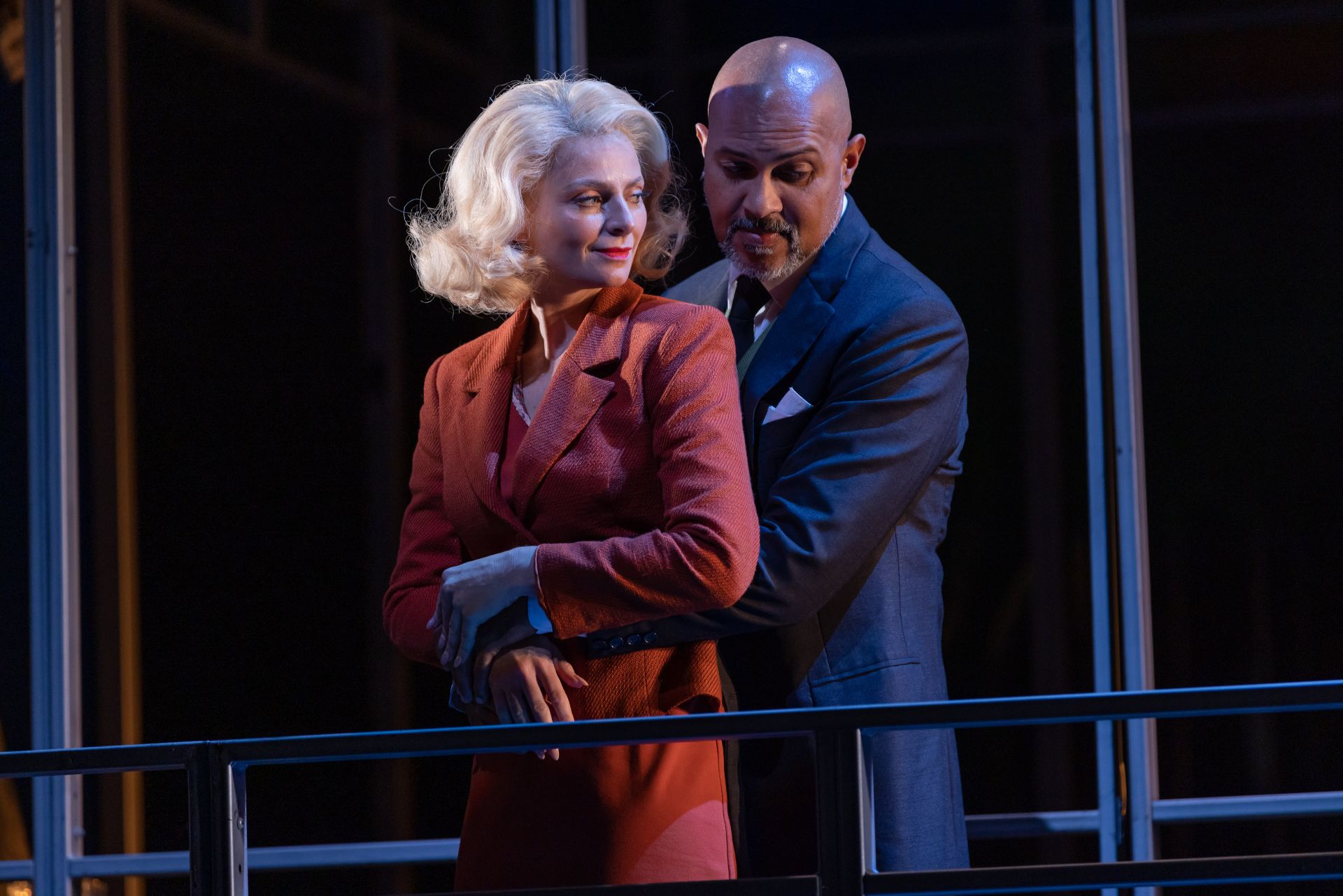
Alfred Hitchcock’s 1959 masterpiece involves espionage, mistaken identities, and an innocent fugitive on the run. It is however, not the story of North by Northwest that is responsible for it being regarded as one of cinematic history’s greatest instalments, but Hitchcock’s virtuosic manipulation of form, that had made the film a monumental achievement.

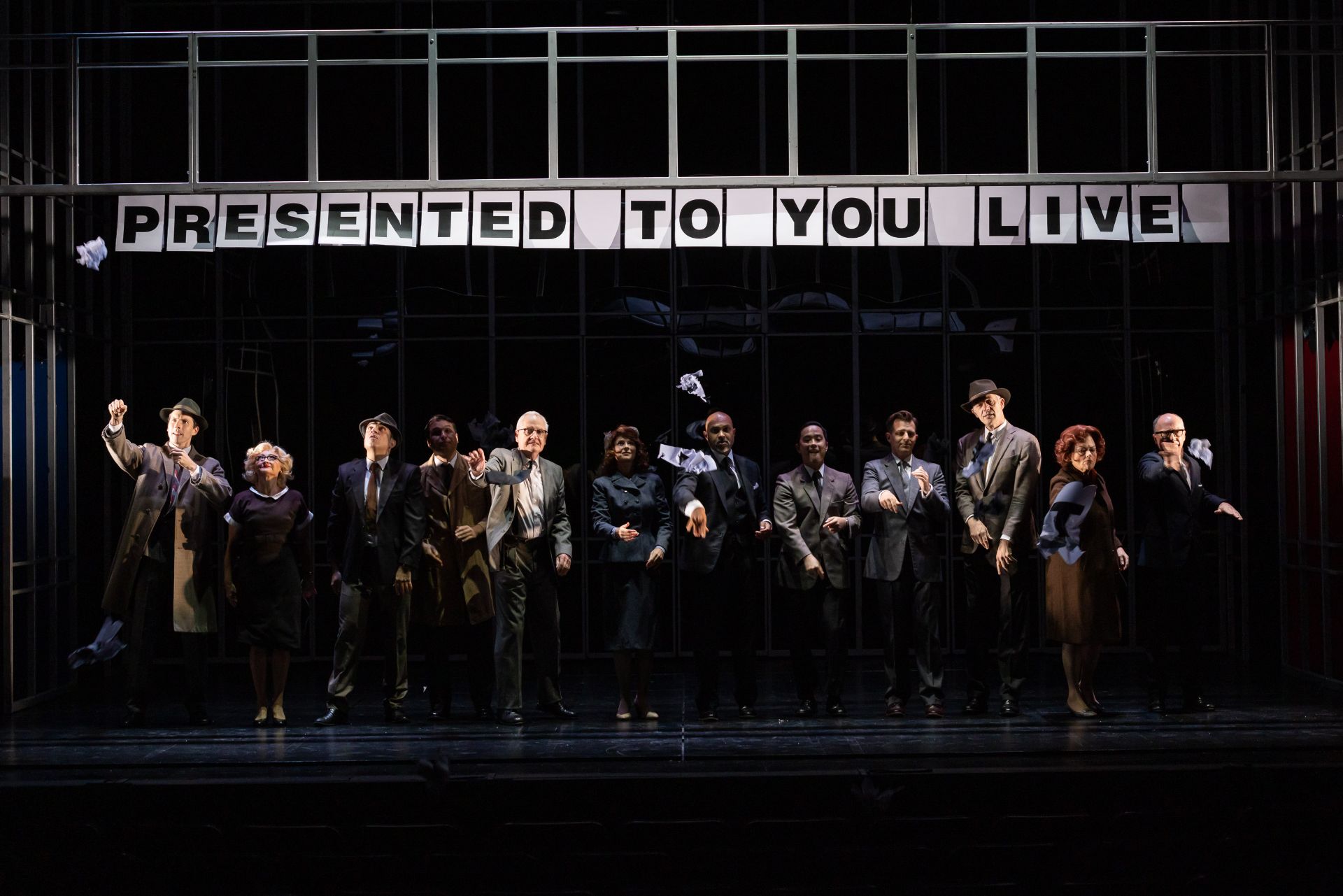
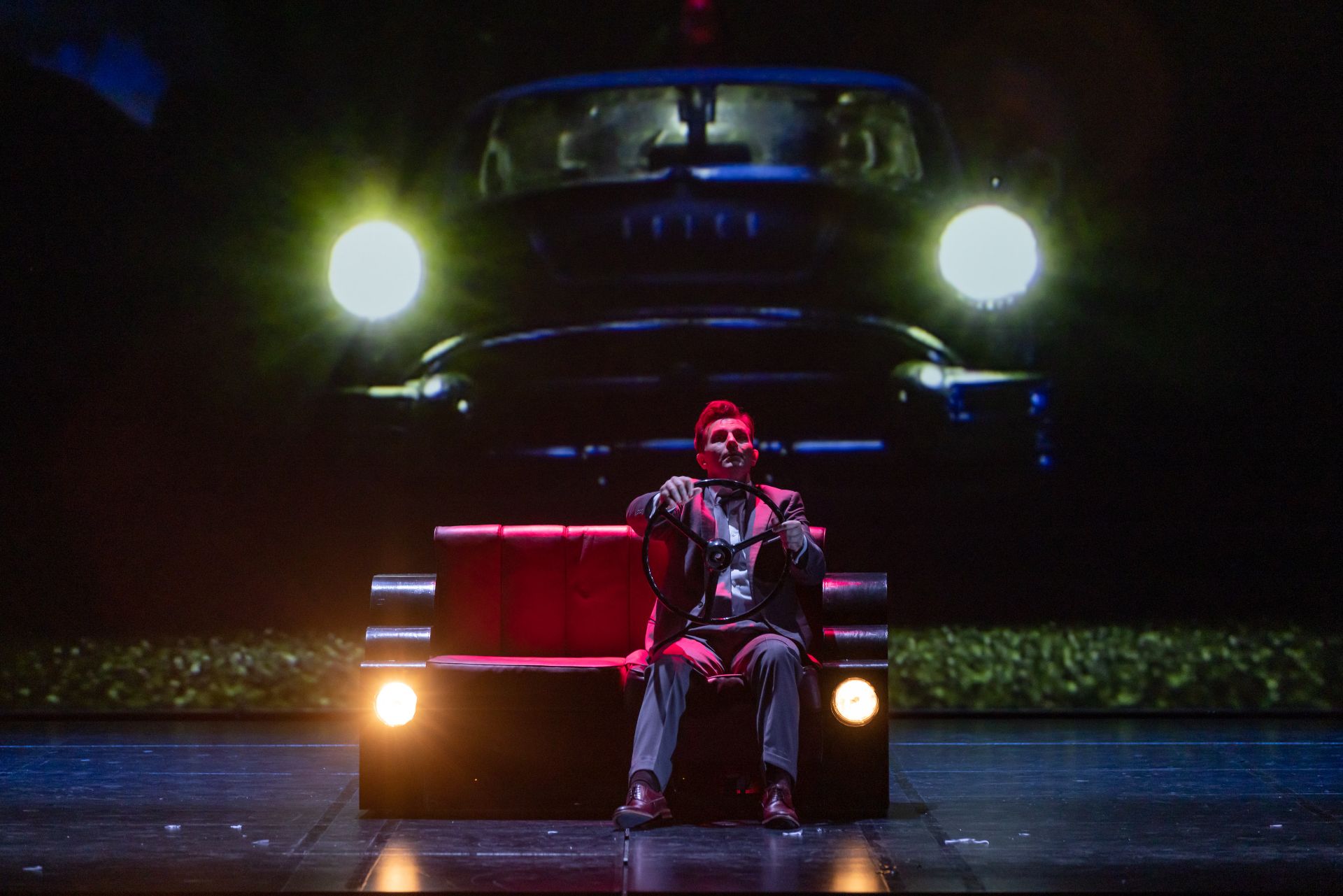
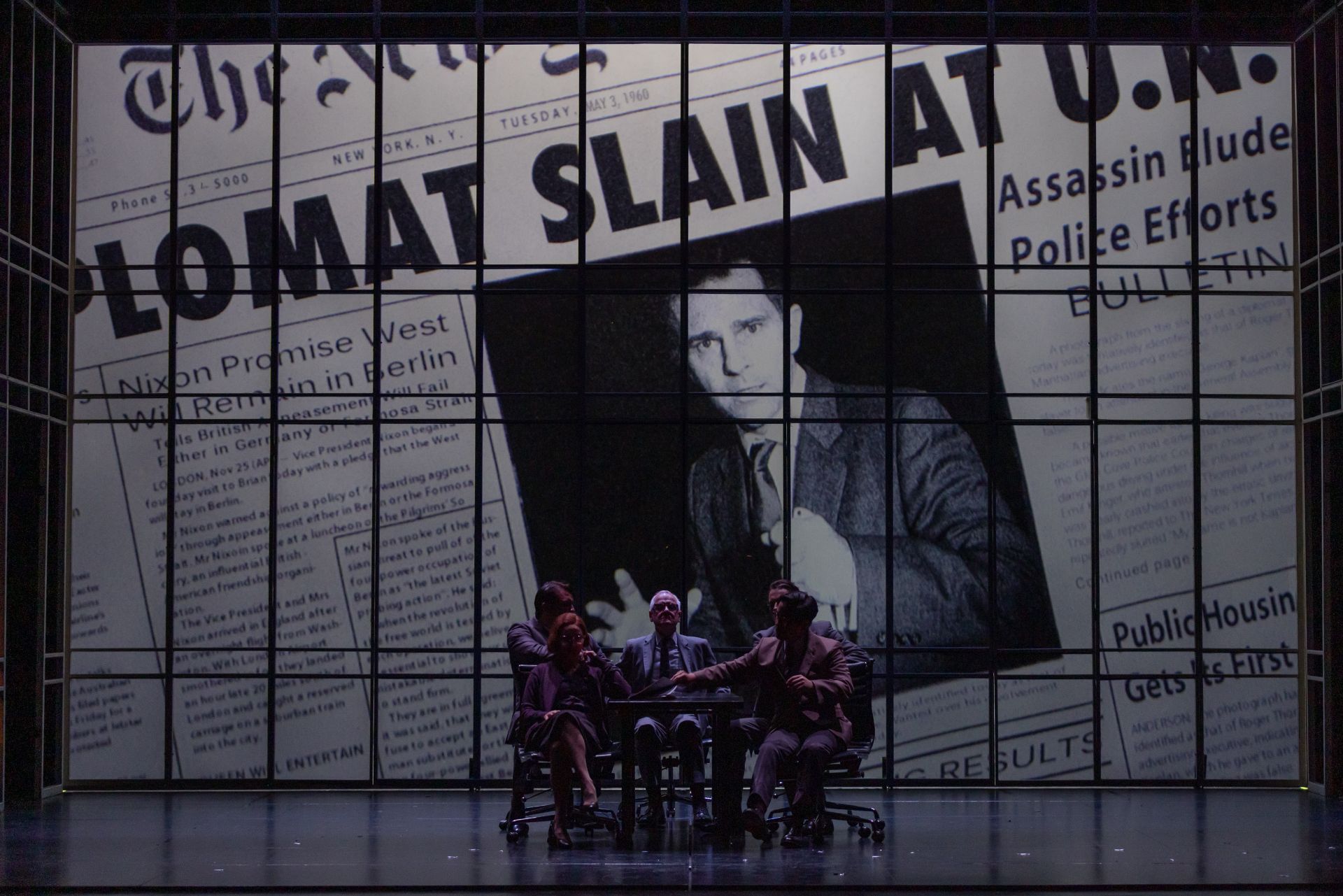
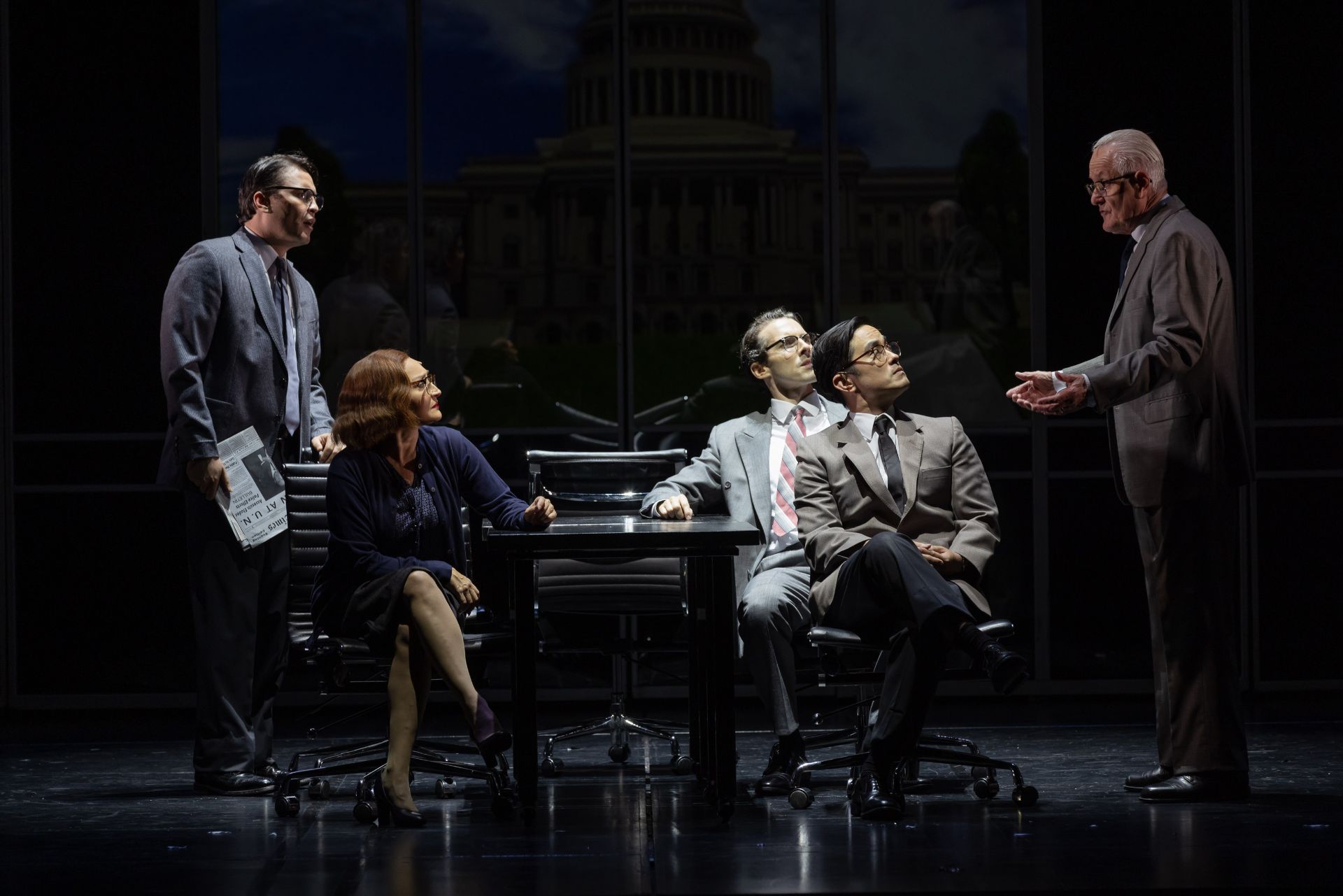
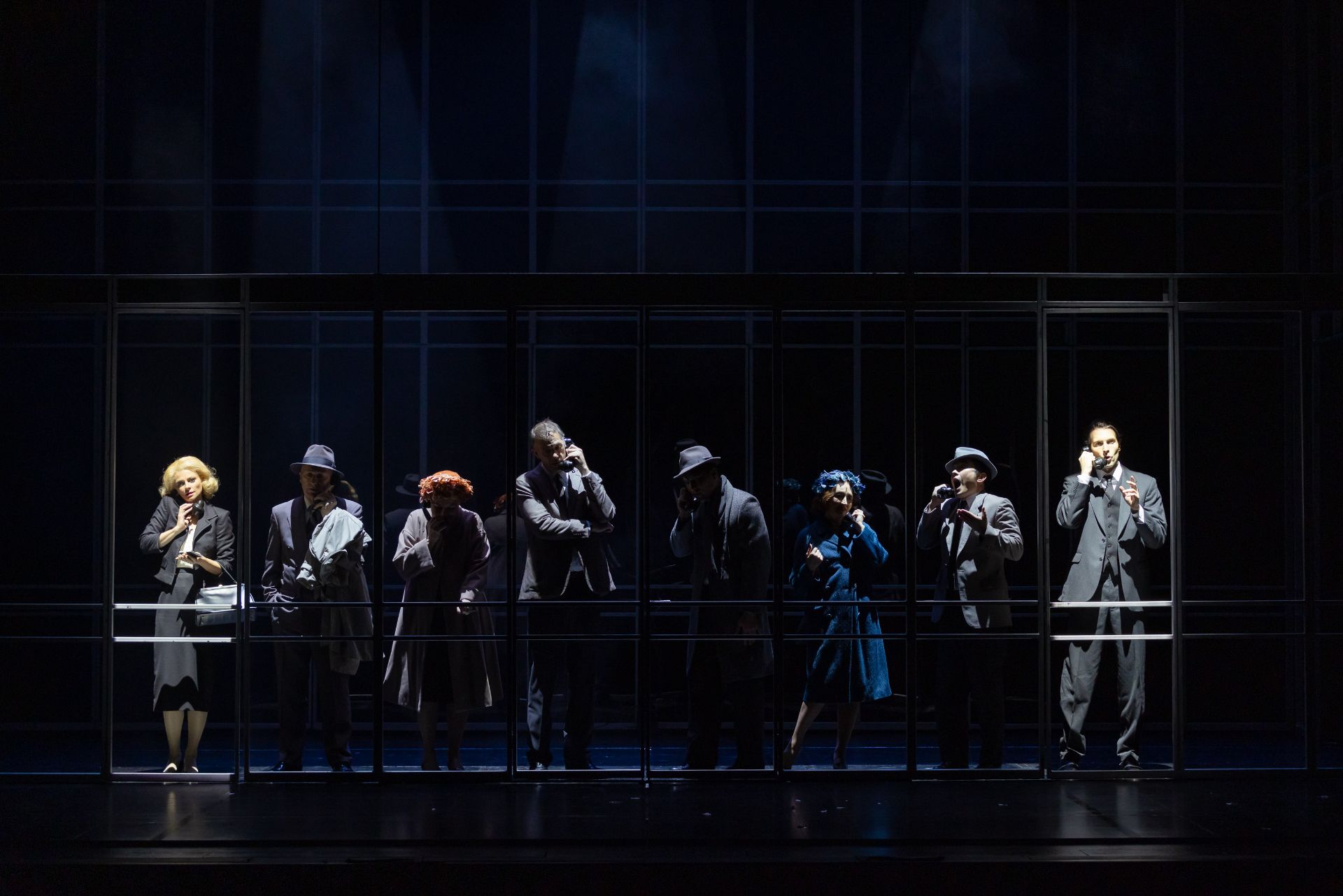
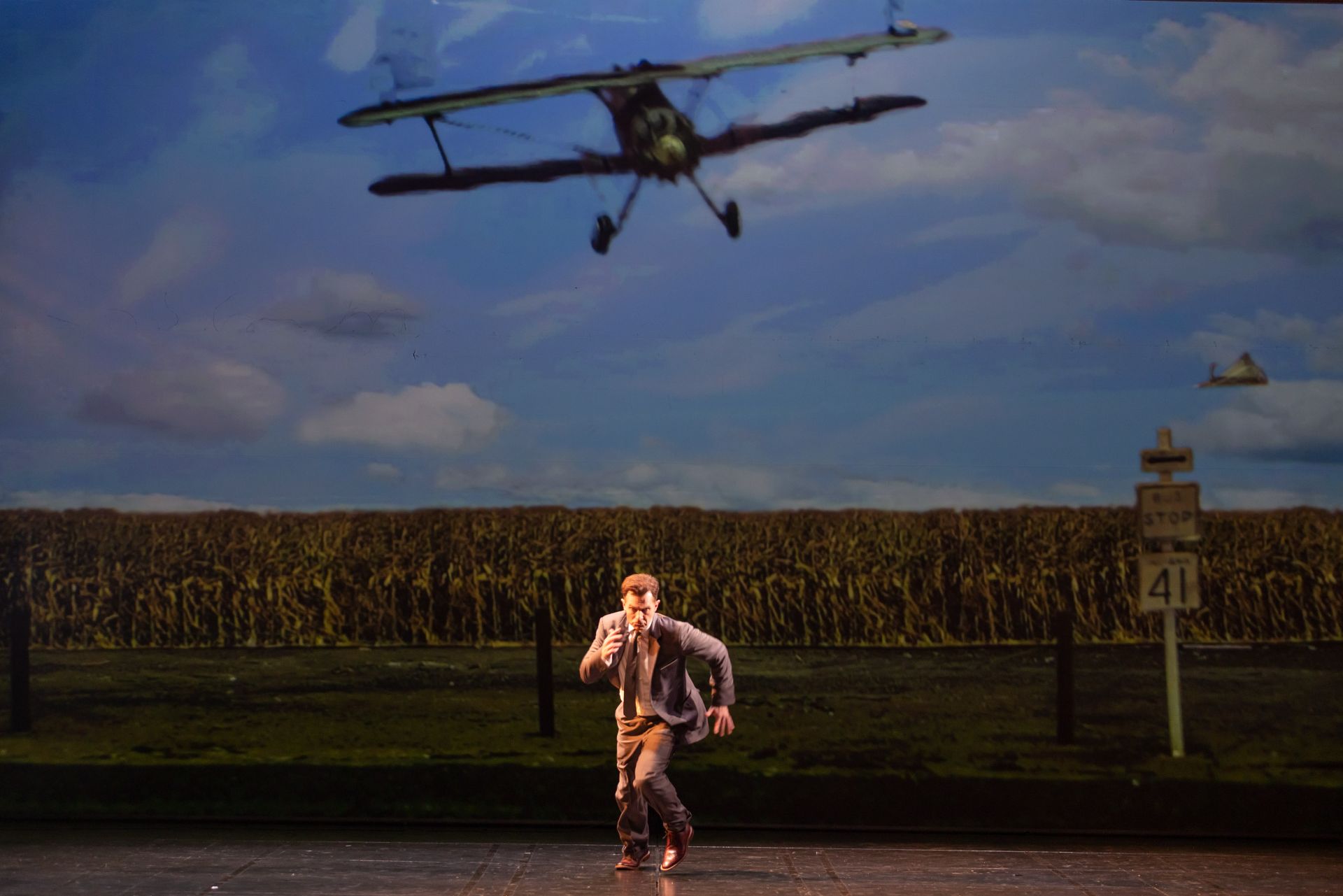
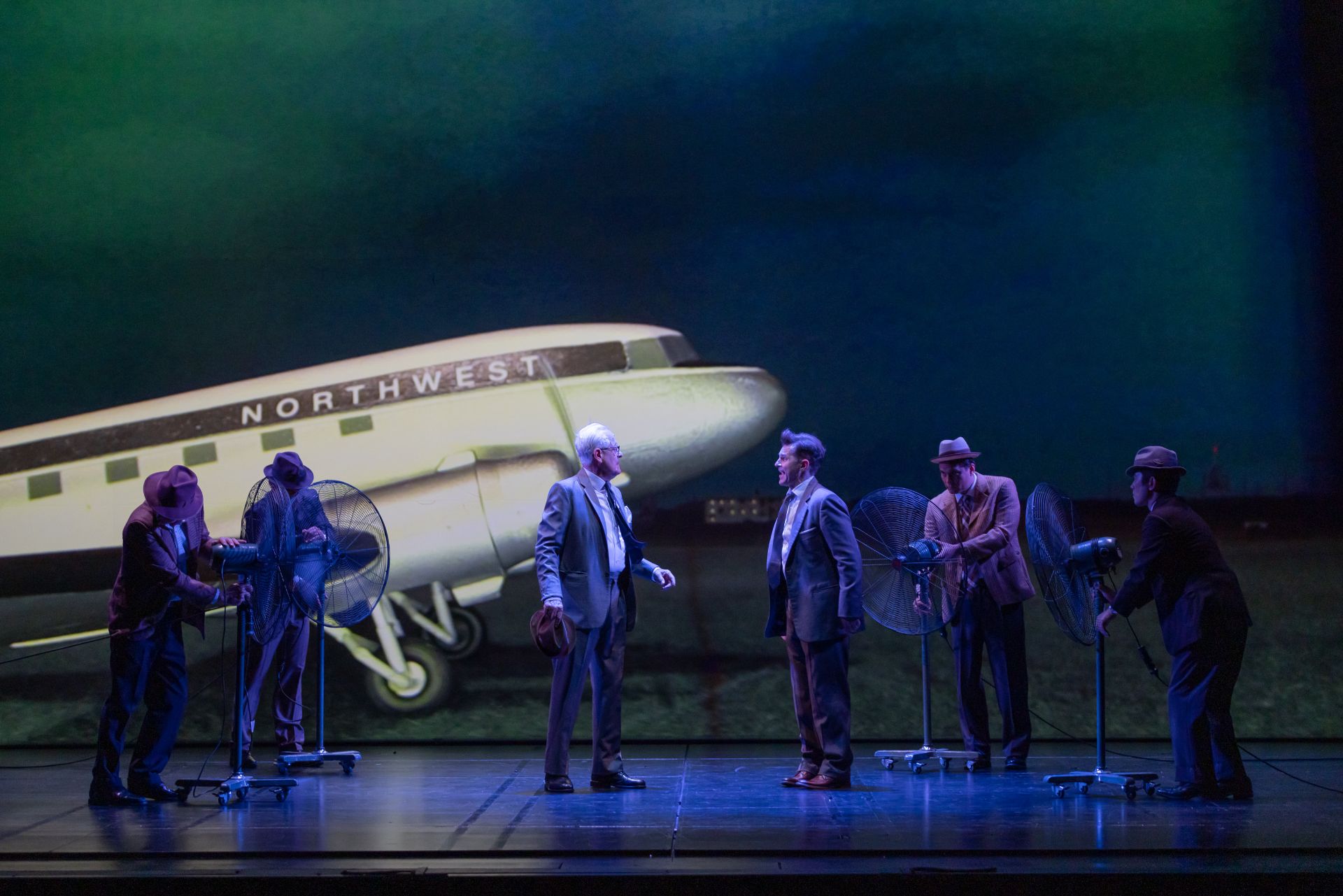
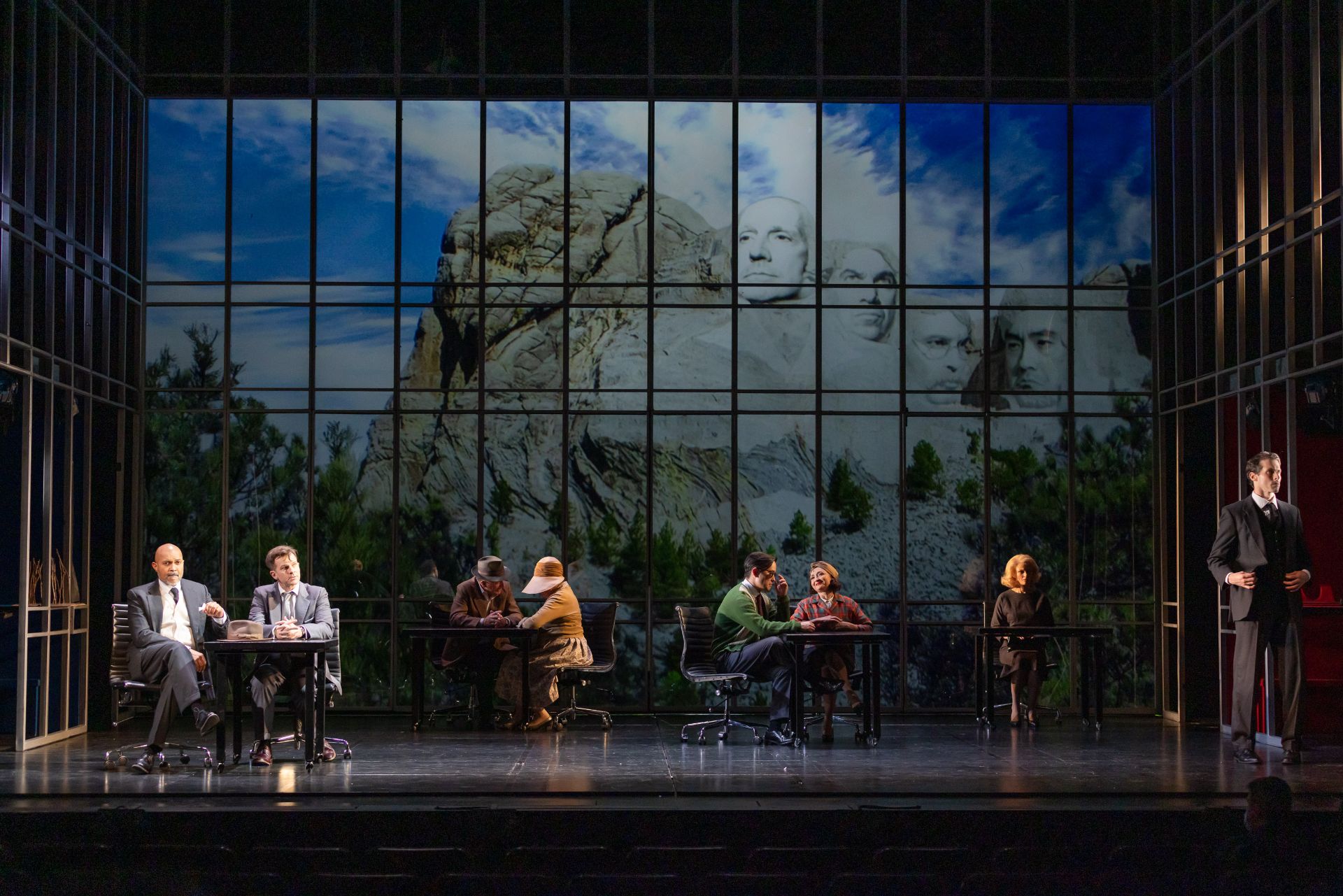
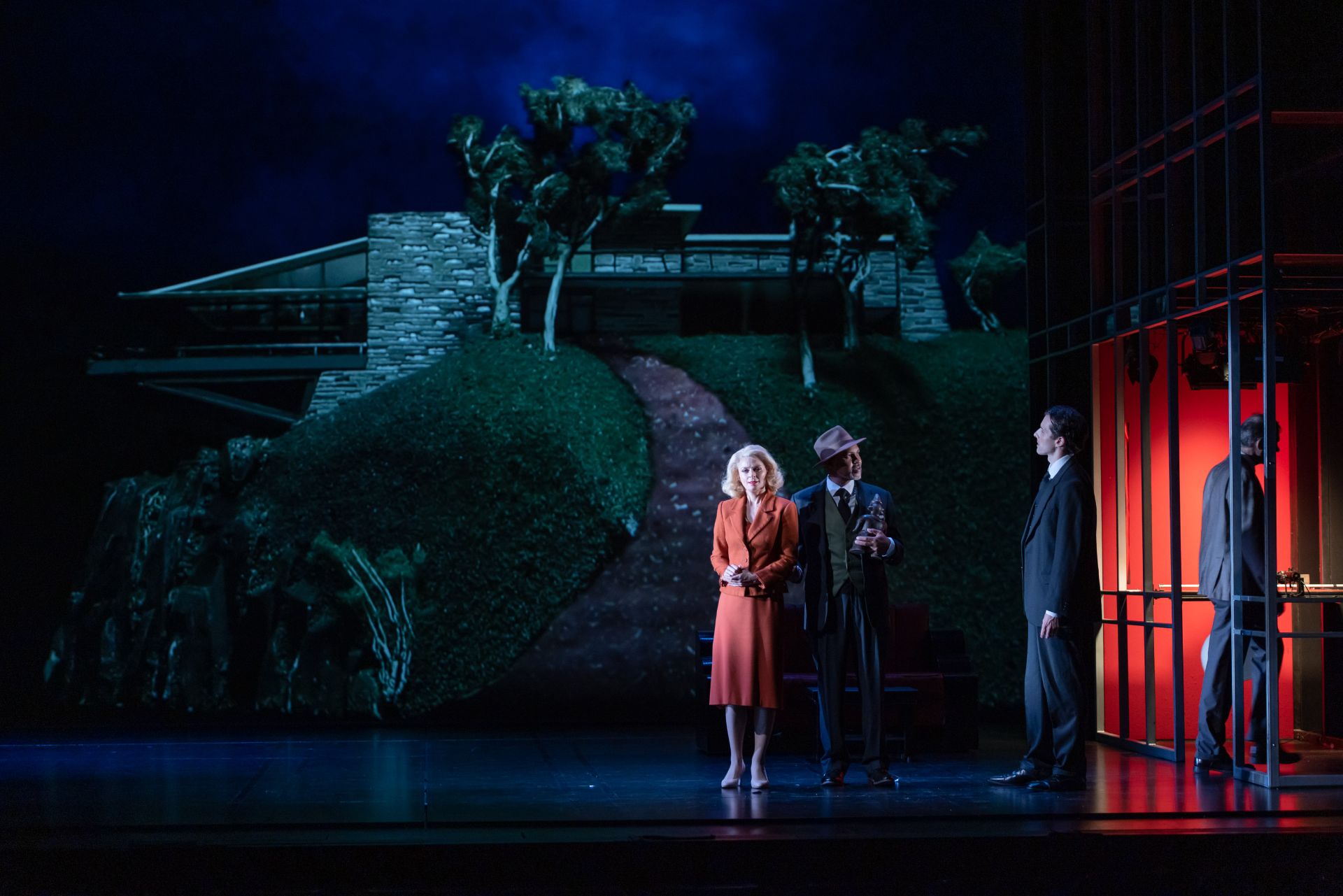
Transposing to the stage, a movie experience known for its visual trickery, is a formidable task. and this 2015 creation, by director Simon Philips and writer Carolyn Burns, is certainly ambitious. With a heavy reliance on video projections throughout the production (designed by Josh Burns), this theatrical reinvention of North by Northwest begins very much like a tribute to the great Hitchcock, with a tone of reverence that almost drowns out the parodic quality, of both the original and the intentions of this new iteration.

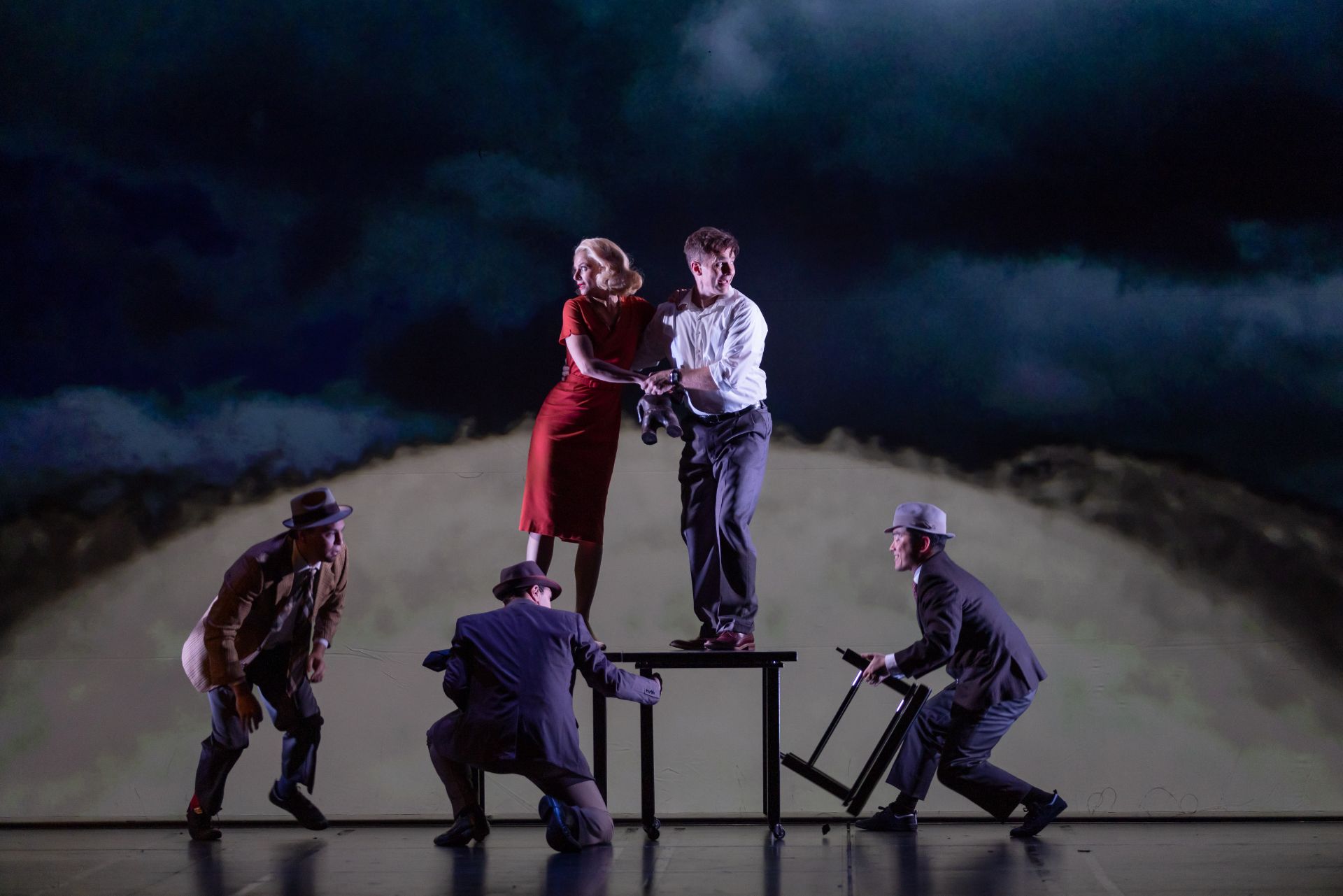
An abrupt shift occurs midway, when the humour becomes decidedly more pronounced. The show gets gradually funnier, as things get more farcical. The pastiche of North by Northwest can range from the very clever to the slightly misguided, but by its second half, the hilarity is undeniable.

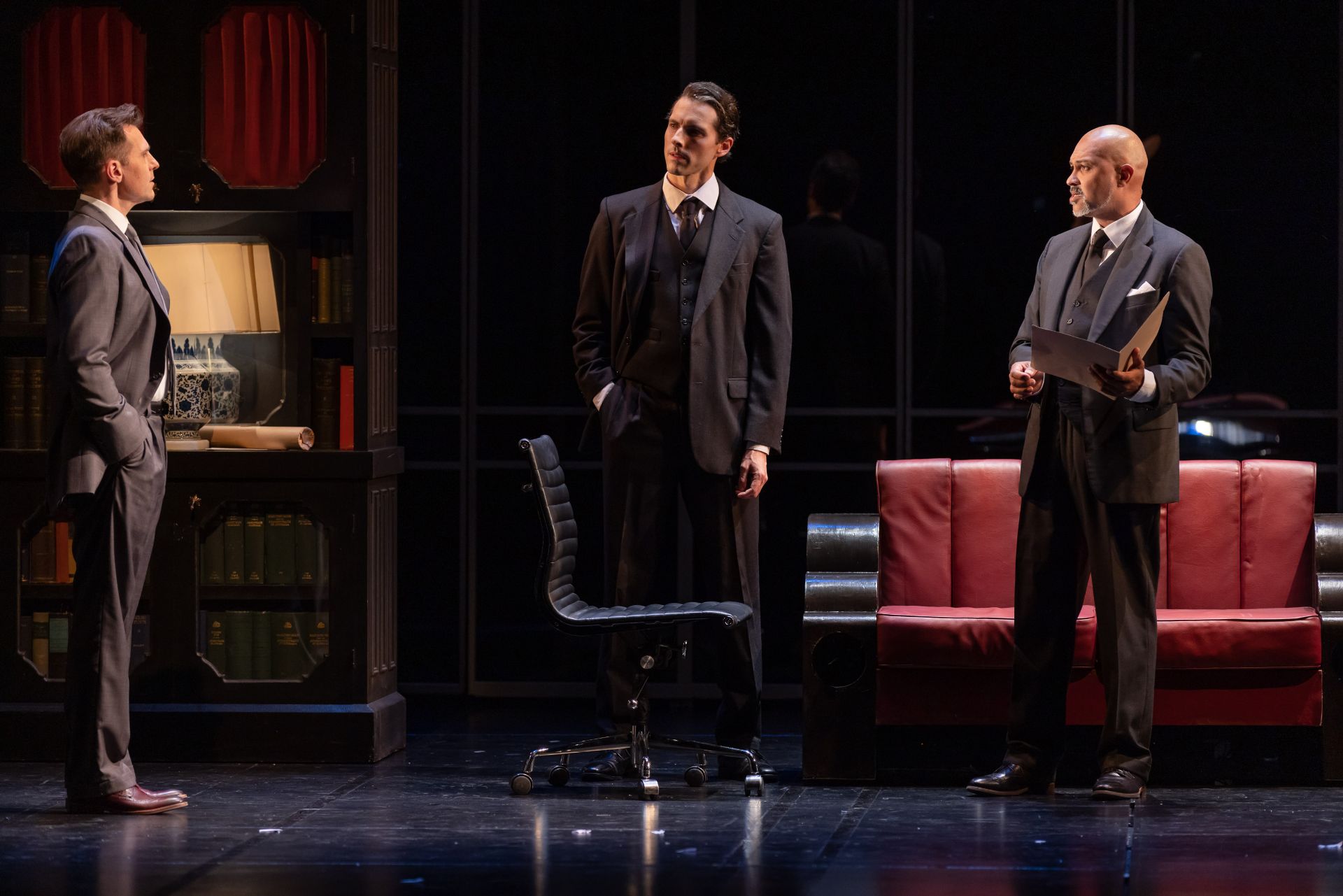
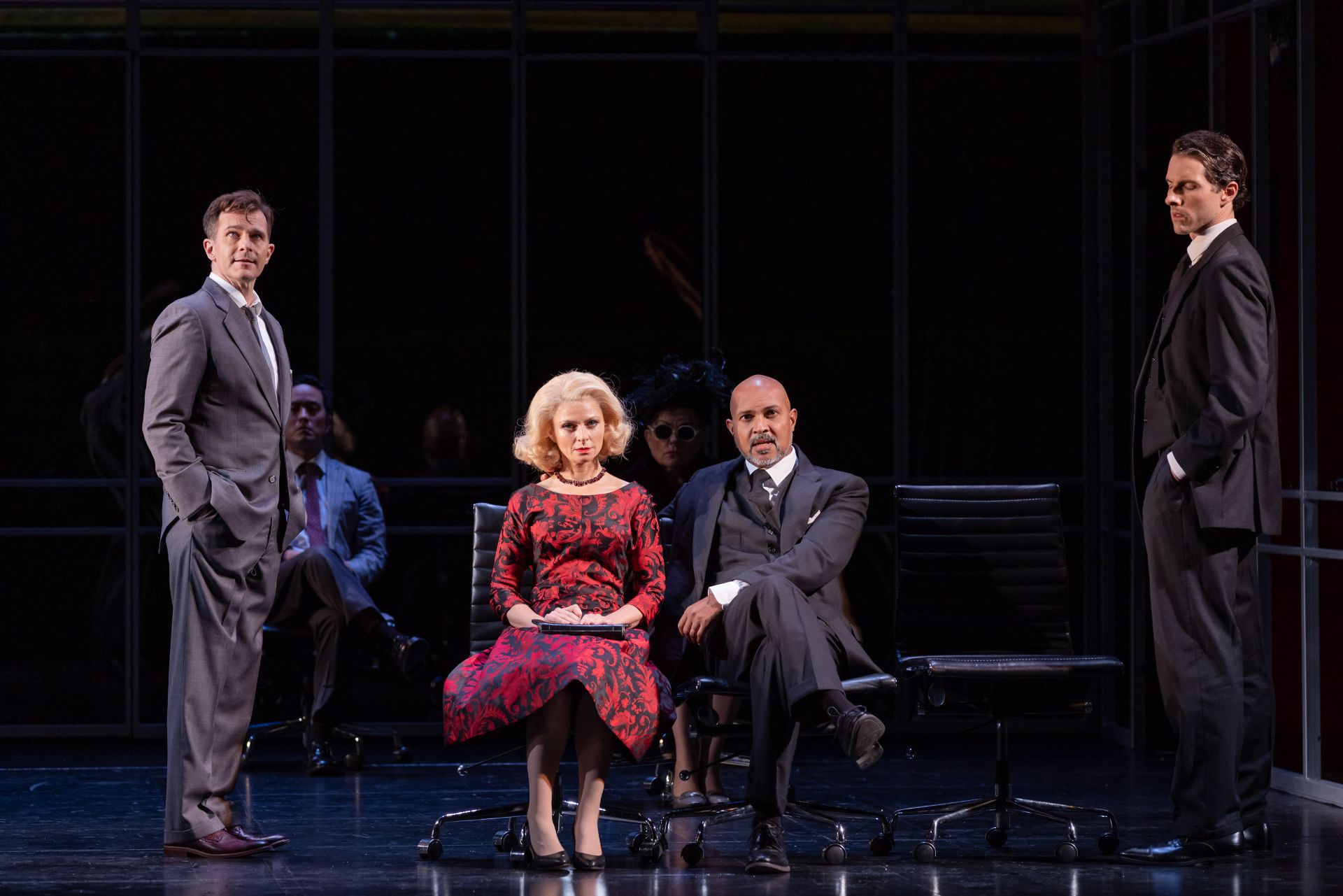
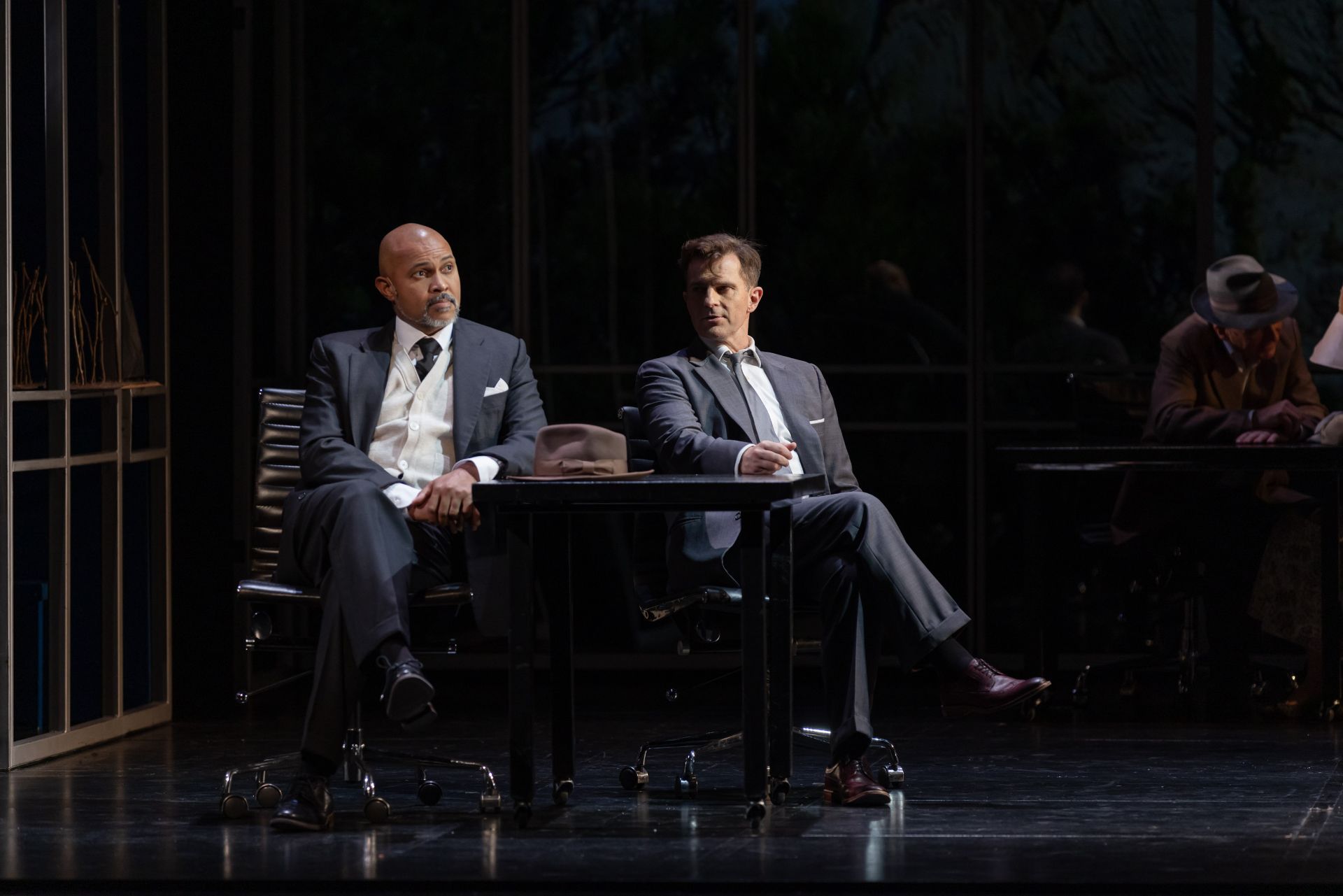
Set design by Philips and Nick Schlieper feels more an object of function than of beauty, although Schlieper’s very dynamic lights are definitely an aesthetic pleasure. Together with Esther Marie Hayes’ costumes and Ian McDonald’s soundscapes (based on Bernard Herrmann’s original soundtrack compositions), design aspects of the staging take us back, effectively and pleasurably, to a much more elegant time.

Performer David Campbell is characteristically brimming with charisma, and demonstrates admirable agility for the physical requirements of playing a version of Roger Thornhill without the benefit of close ups, but he never quite delivers the nostalgic sensibilities that we crave. Memories of Cary Grant’s unrivalled suavity remains out of reach.

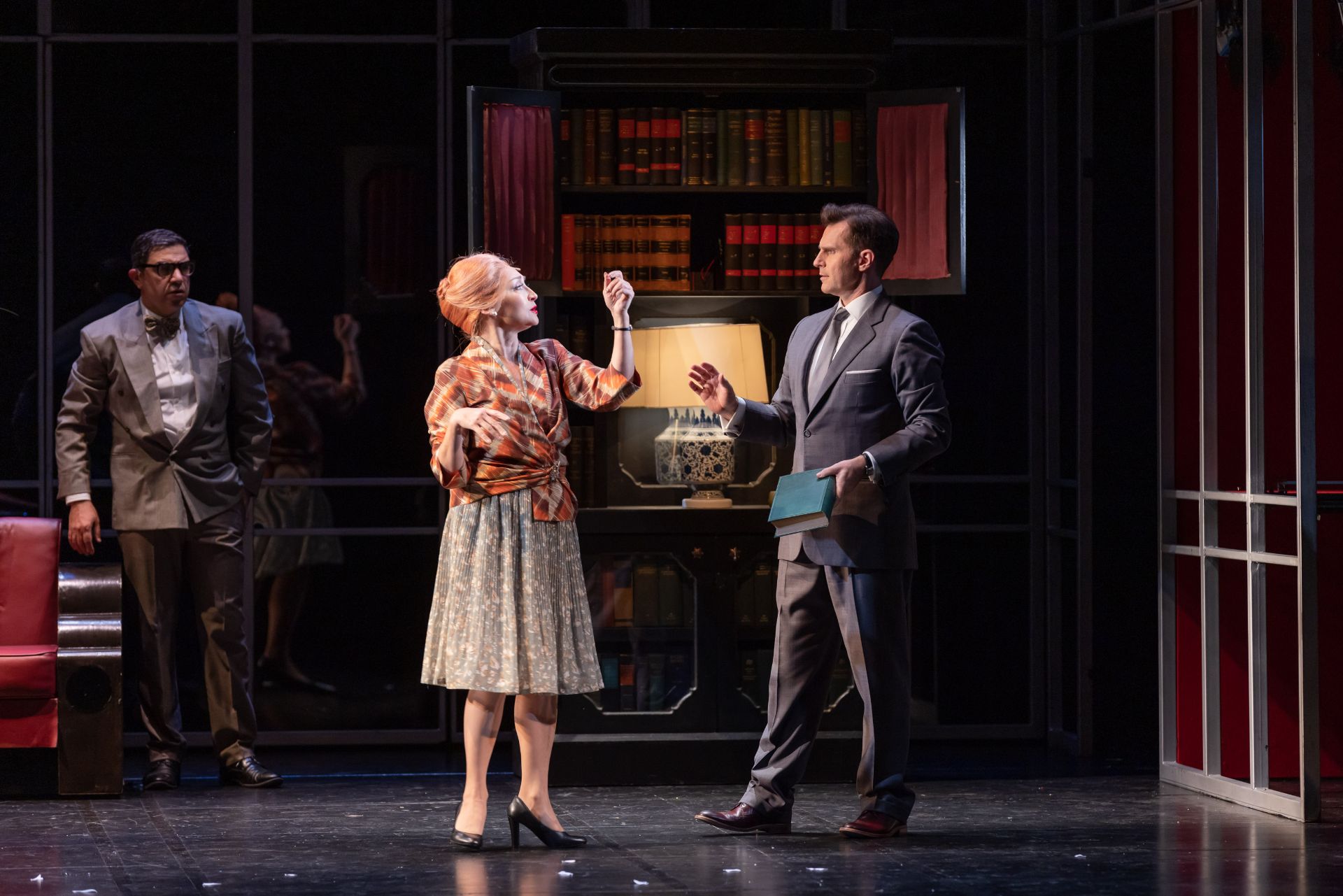
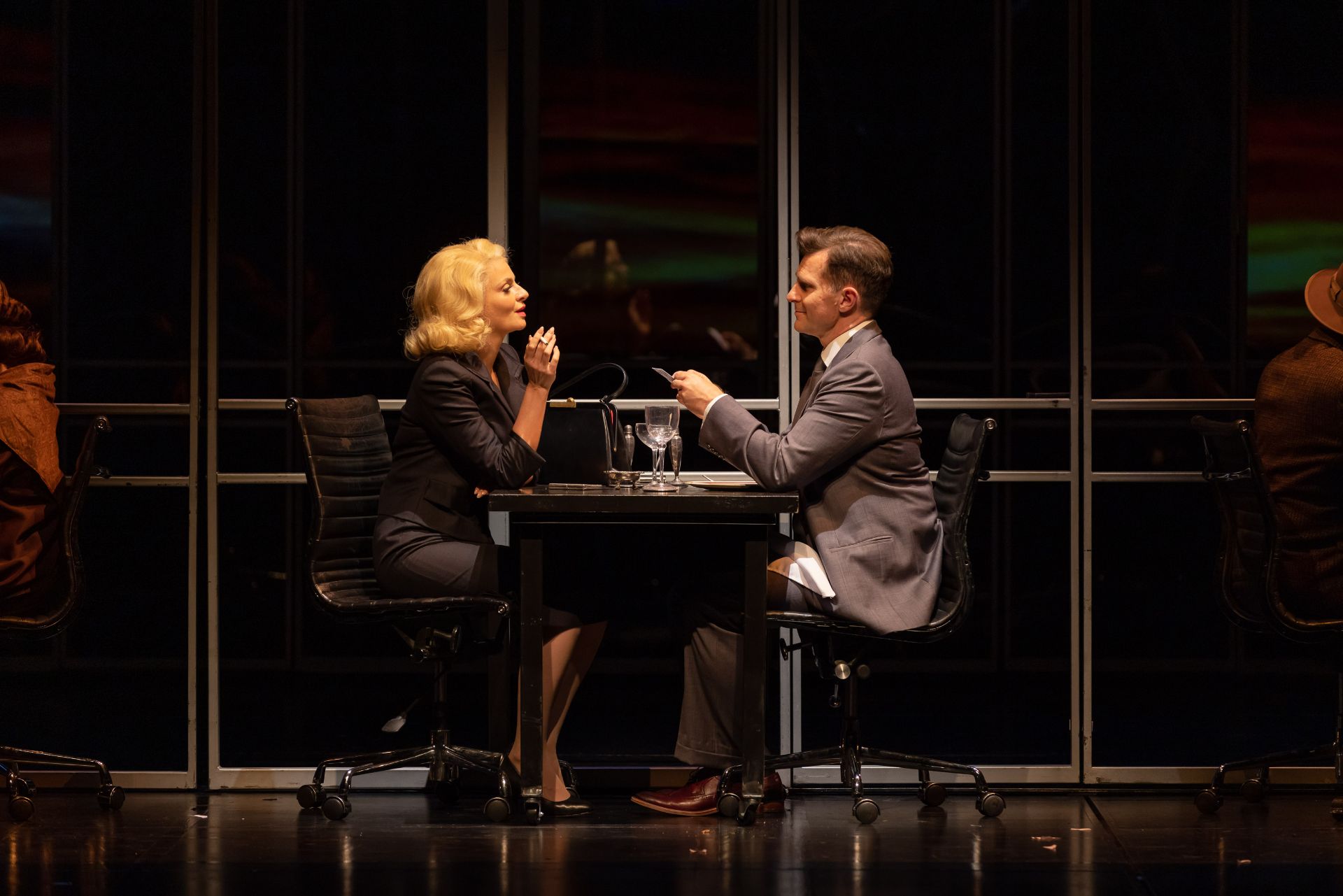
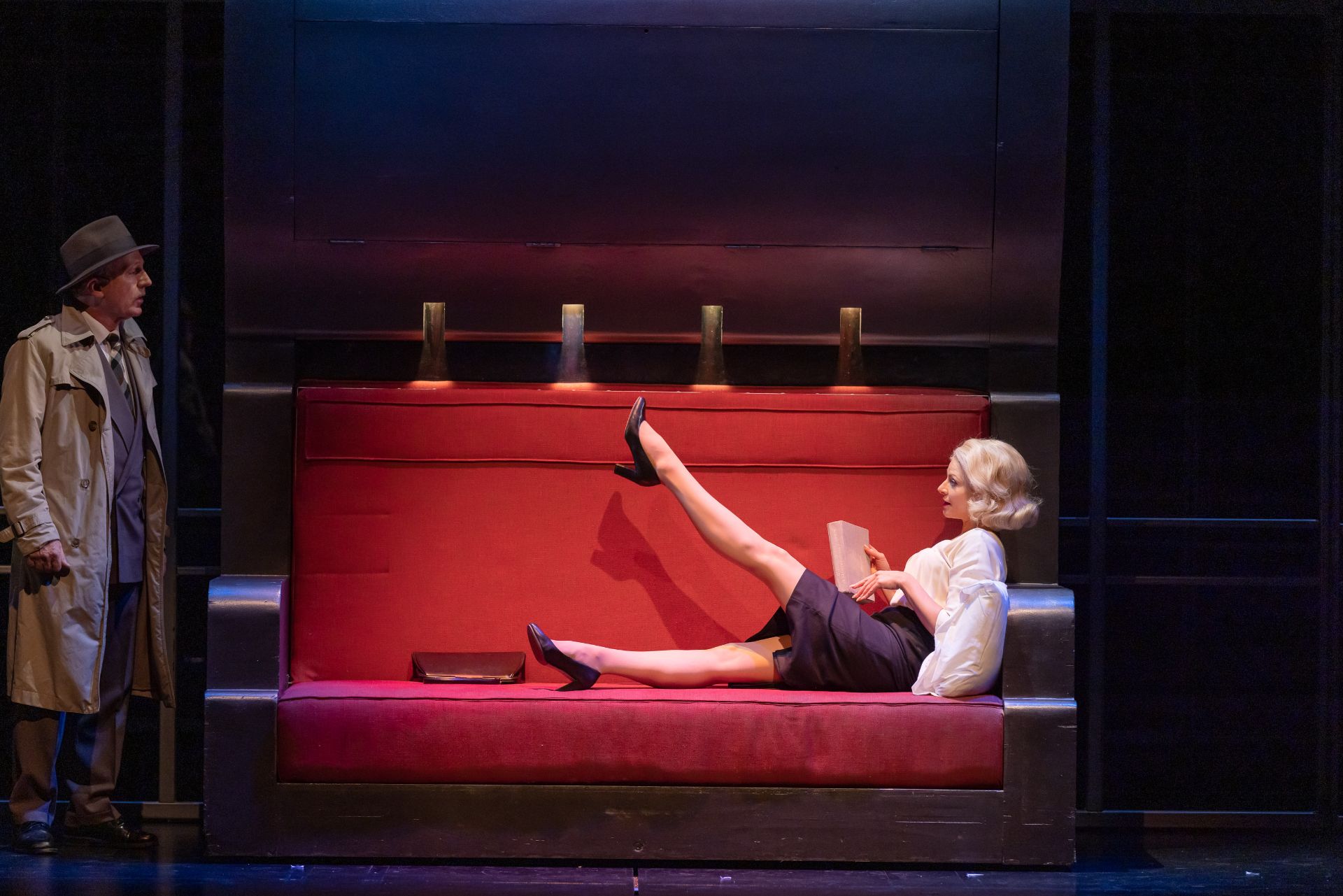
Leading lady Amber McMahon however is every bit the Hitchcockian femme fatale. As Eve Kendall, she is enigmatic and alluring, but also strangely believable, in this heightened revision of an iconic story and its archetypes. The supporting cast playfully tackle an endless number of small parts, along with manufacturing comically awkward visual gags for the video element. The energy that they emanate, in all their hustle and bustle, is invaluable in sustaining our attention.

It is now 7 years since this work of theatre first appeared in Melbourne, and it seems already to have  been superseded slightly by technocultural advancements. The increased reliance of multi-screens in everyday life, and the proliferation of drone technology, are but two examples of how quickly our senses have grown in sophistication. The simplicity of video in this rendition of North by Northwest, although a fundamental aspect, can seem too quaint and slightly twee. The majesty of Hitchcock’s 63-year-old original persists however, and being able to recall those sensations at this live event, is a real thrill.
www.northbynorthwesttheplay.com

Review: Nearer The Gods (Ensemble Theatre)

Venue: Ensemble Theatre (Kirribilli NSW), Mar 4 – Apr 23, 2022
Playwright: David Williamson
Director: Janine Watson
Cast: Violette Ayad, Jemwel Danao, Rowan Davie, Gareth Davies, Sean O’Shea, Sam O’Sullivan, Claudia Ware
Images by Prudence Upton

Theatre review
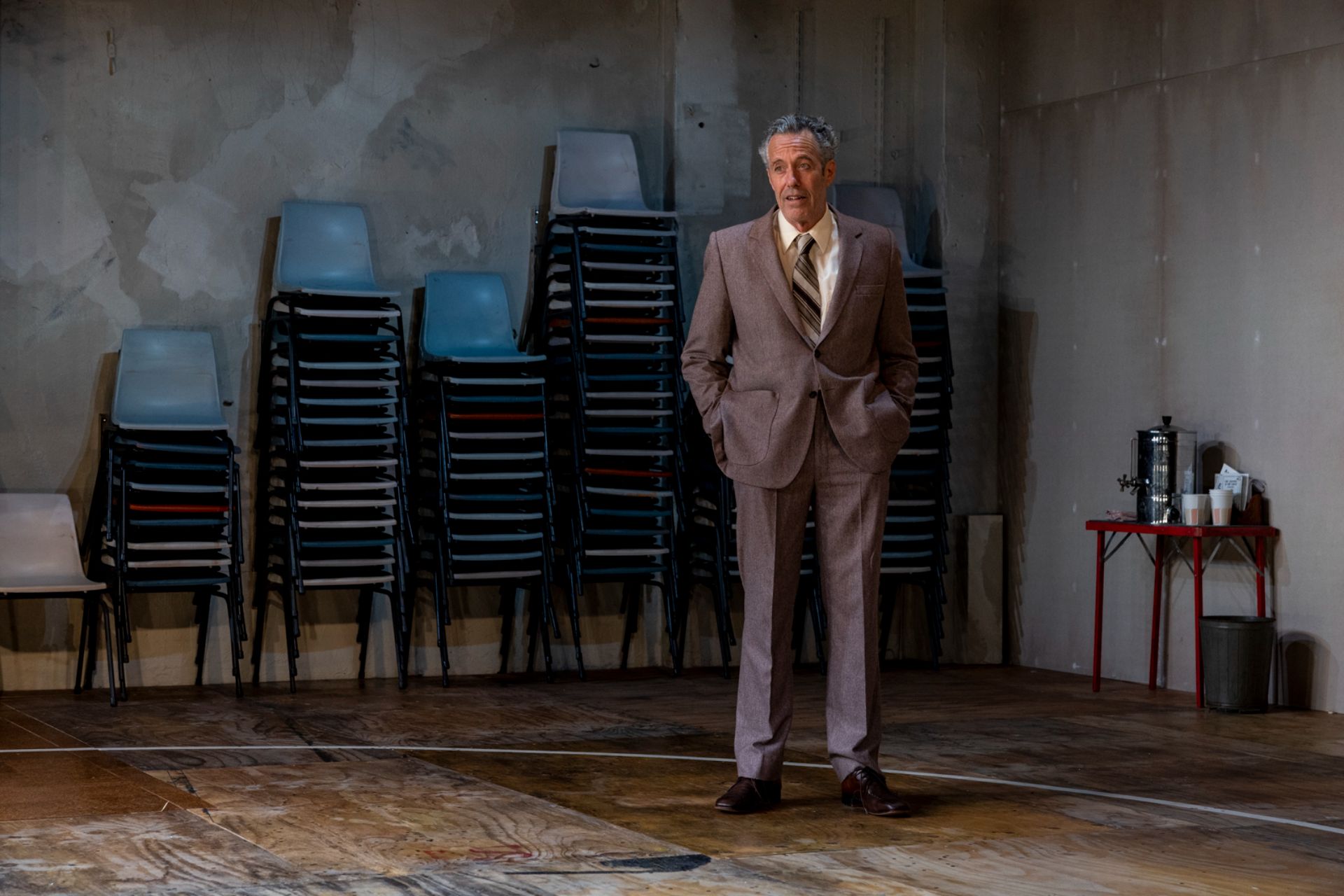
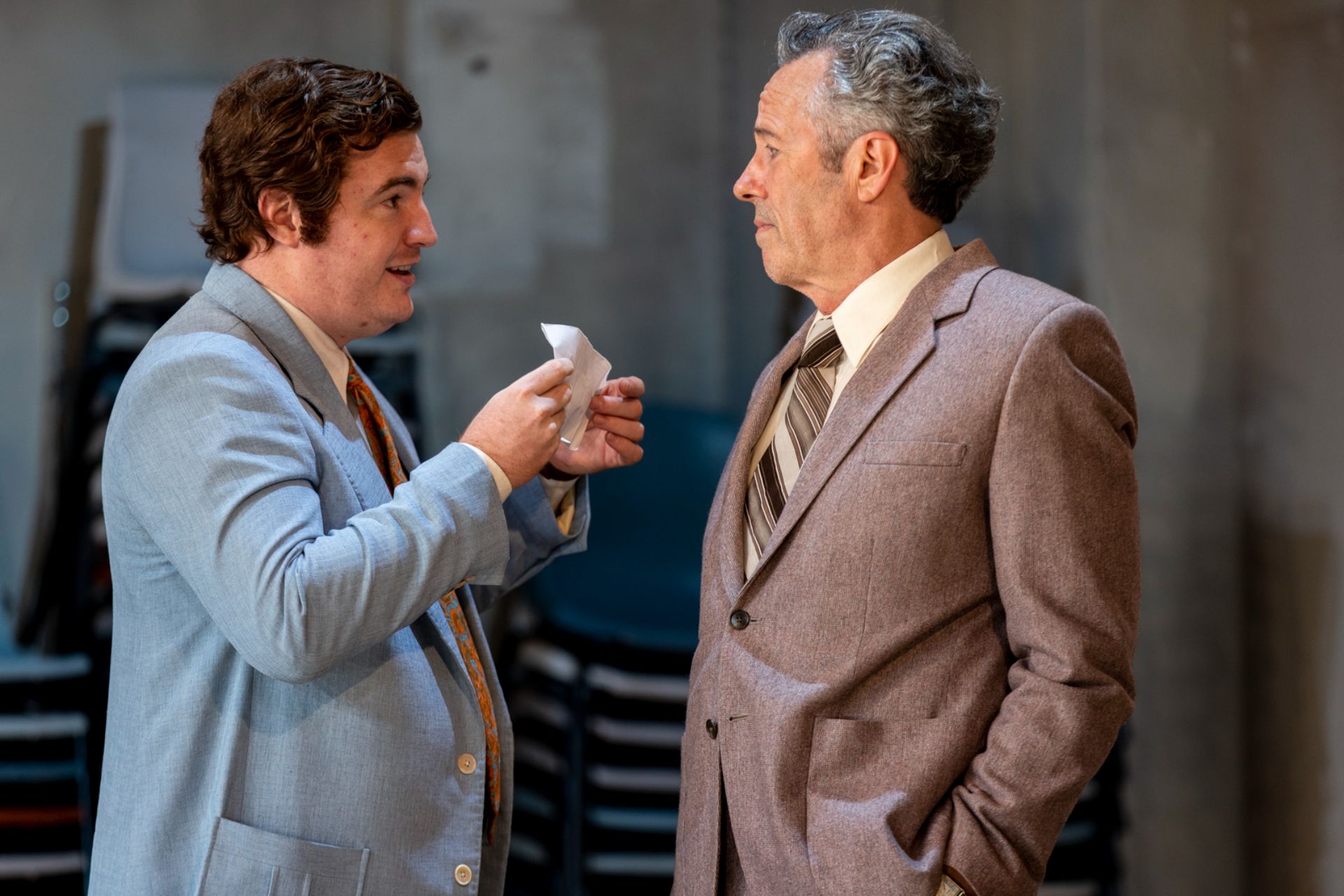
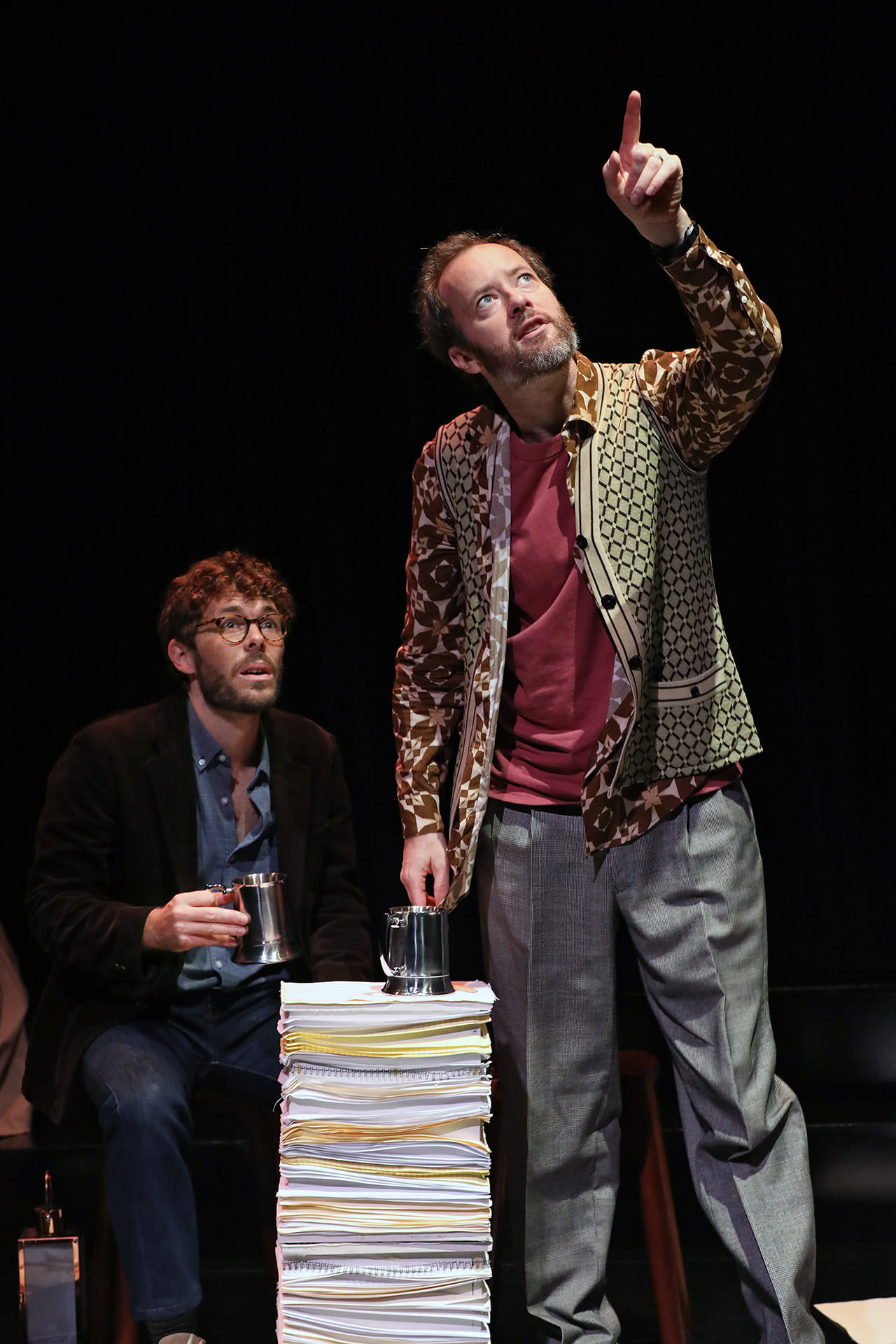
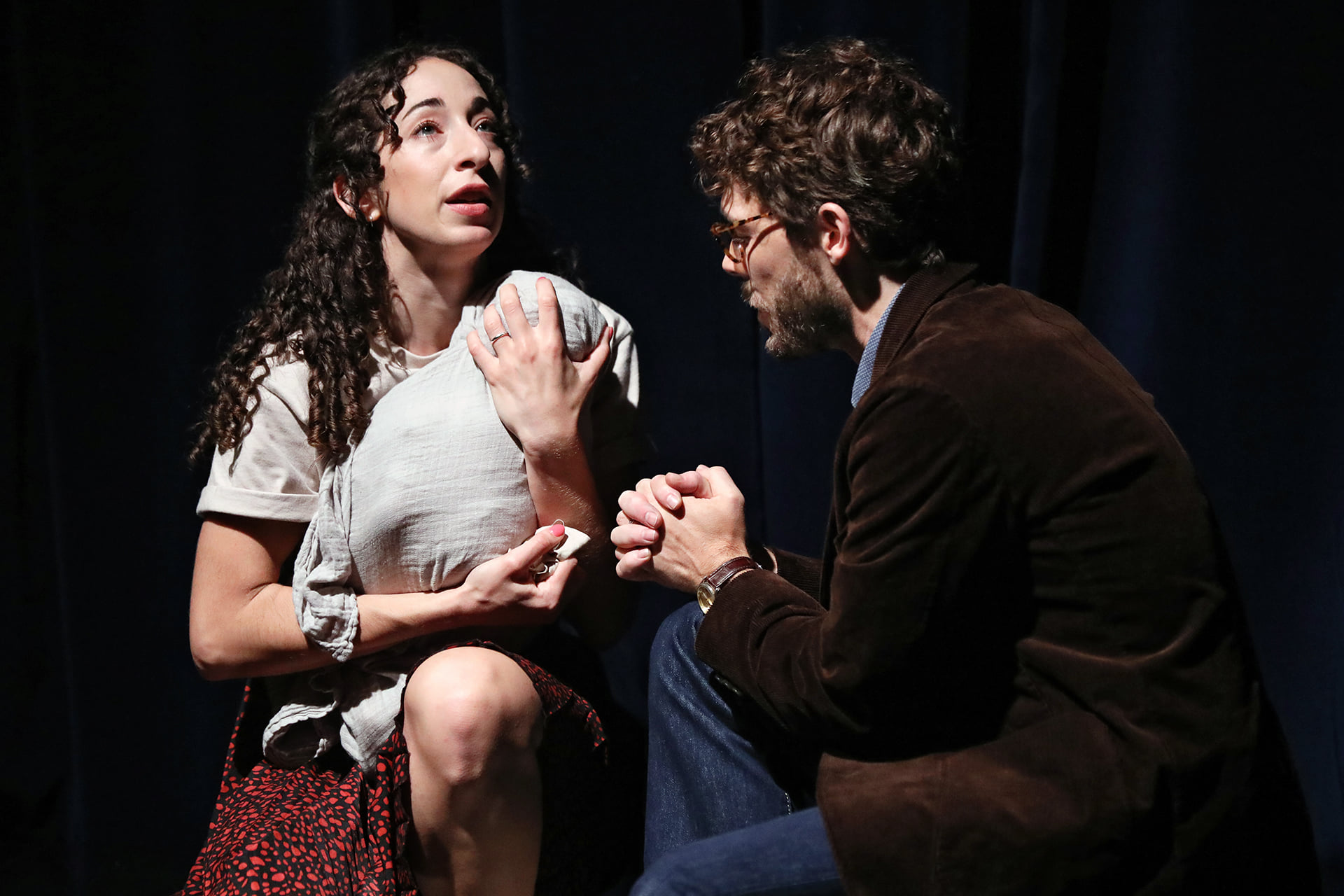
It was the age of Enlightenment, and the beautiful mind of Isaac Newton held volumes of pivotal information, if only they could all be transformed into ink on paper. David Williamson’s Near the Gods pays particular attention to Newton’s seminal Principia, and the arduous three-year process by which the astronomer Edmund Halley had to coax the book into materiality. A somewhat quirky work of theatre, Williamson’s narrow focus on that singular historical incident, is unexpectedly idiosyncratic, although unlikely to be widely appealing.

The soporific subject matter of Near the Gods may not feel a natural fit for the modern stage, but director Janine Watson’s detailed and nuanced handling of the play, helps ensure that the audience is able to stay the course, whether or not we are ever able to really invest, in any part of the antiquated story.

Hugh O’Connor’s production design is extremely restrained, with the rejection of any faithful-to-period renderings, proving to be a wise and elegant decision. Lights by Matt Cox, along with Clare Hennessy’s sound design, too are conceived with an appropriate sense of minimalism, able to help move the narrative along effectively, with only slight embellishments introduced during opportune moments.

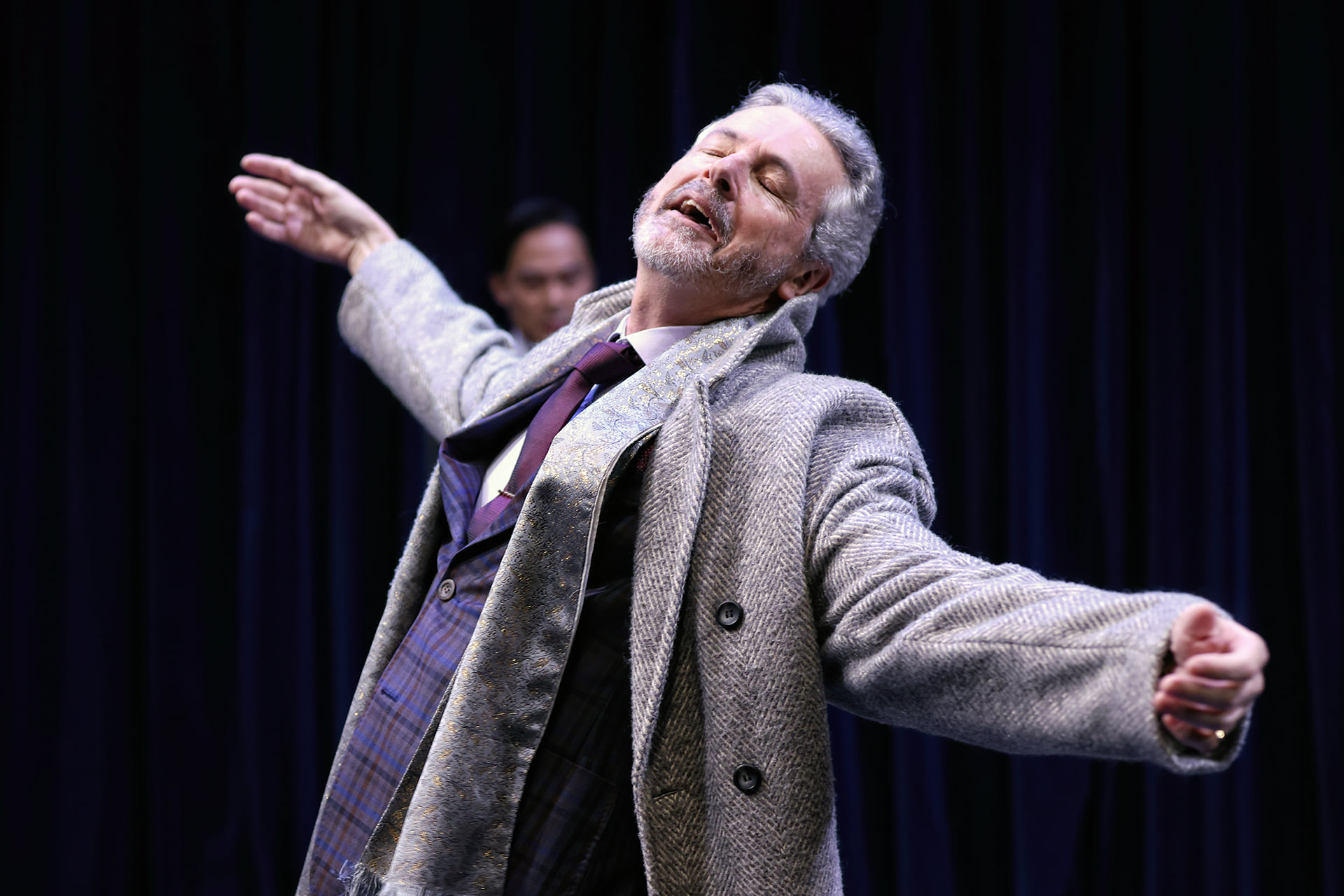
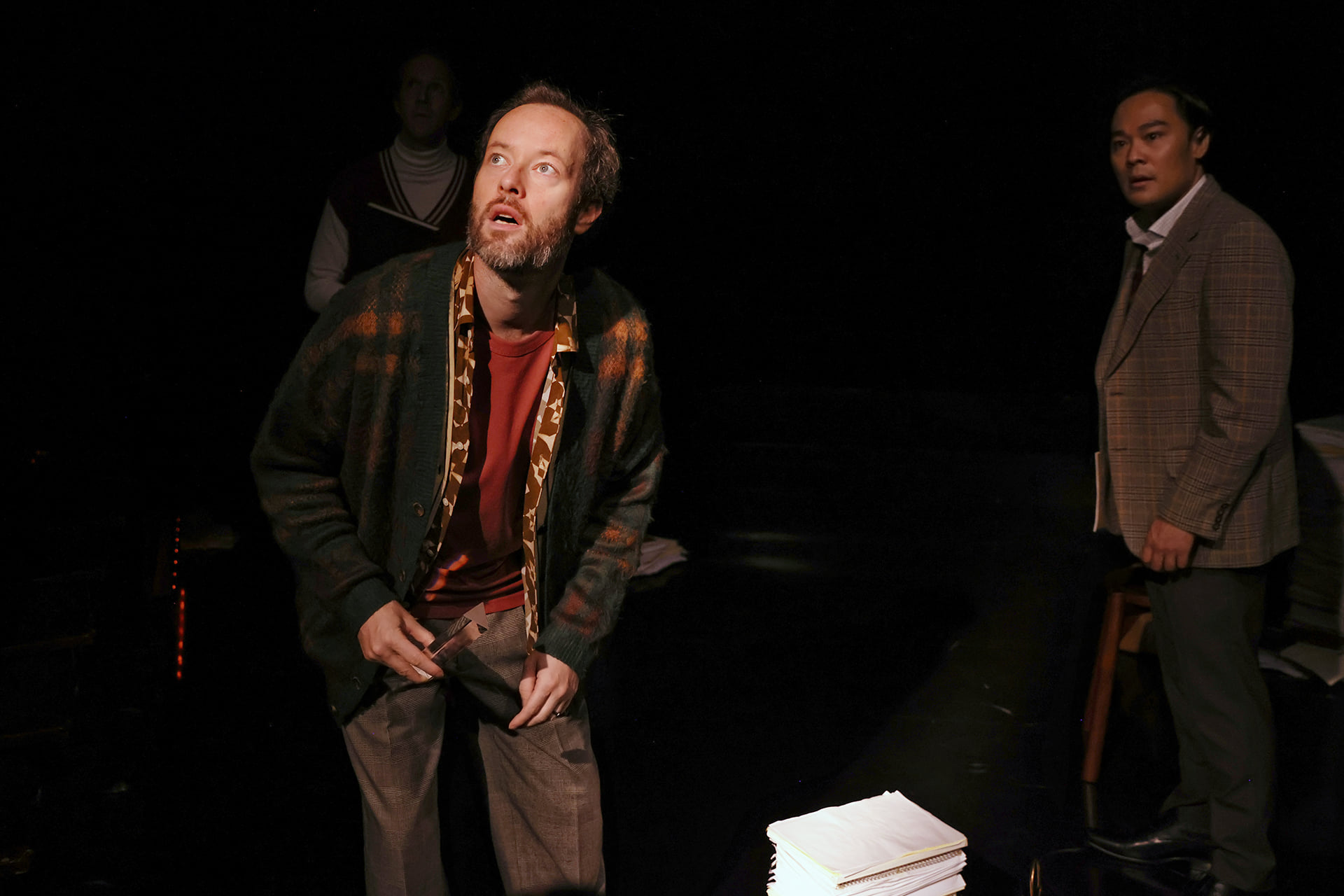
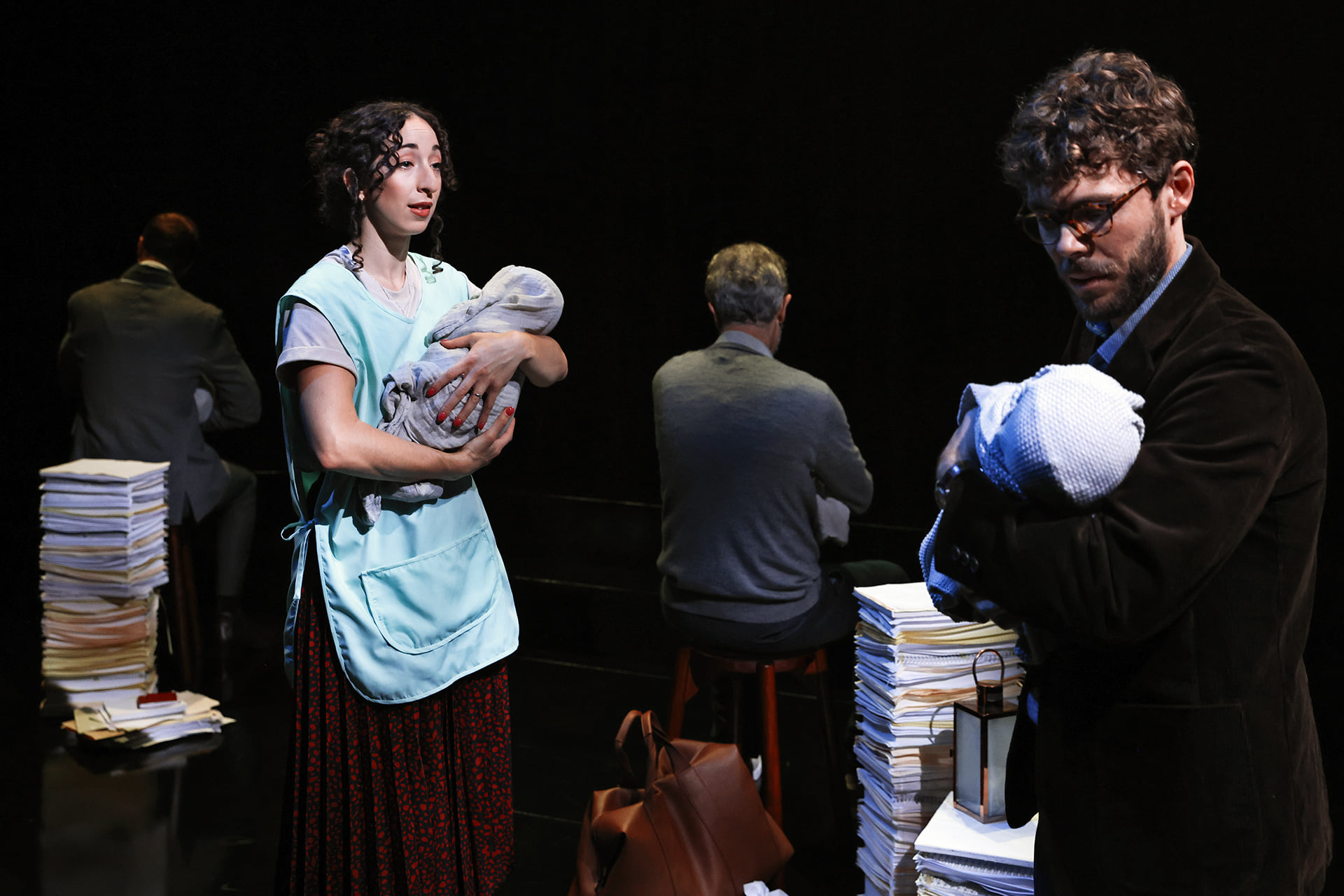
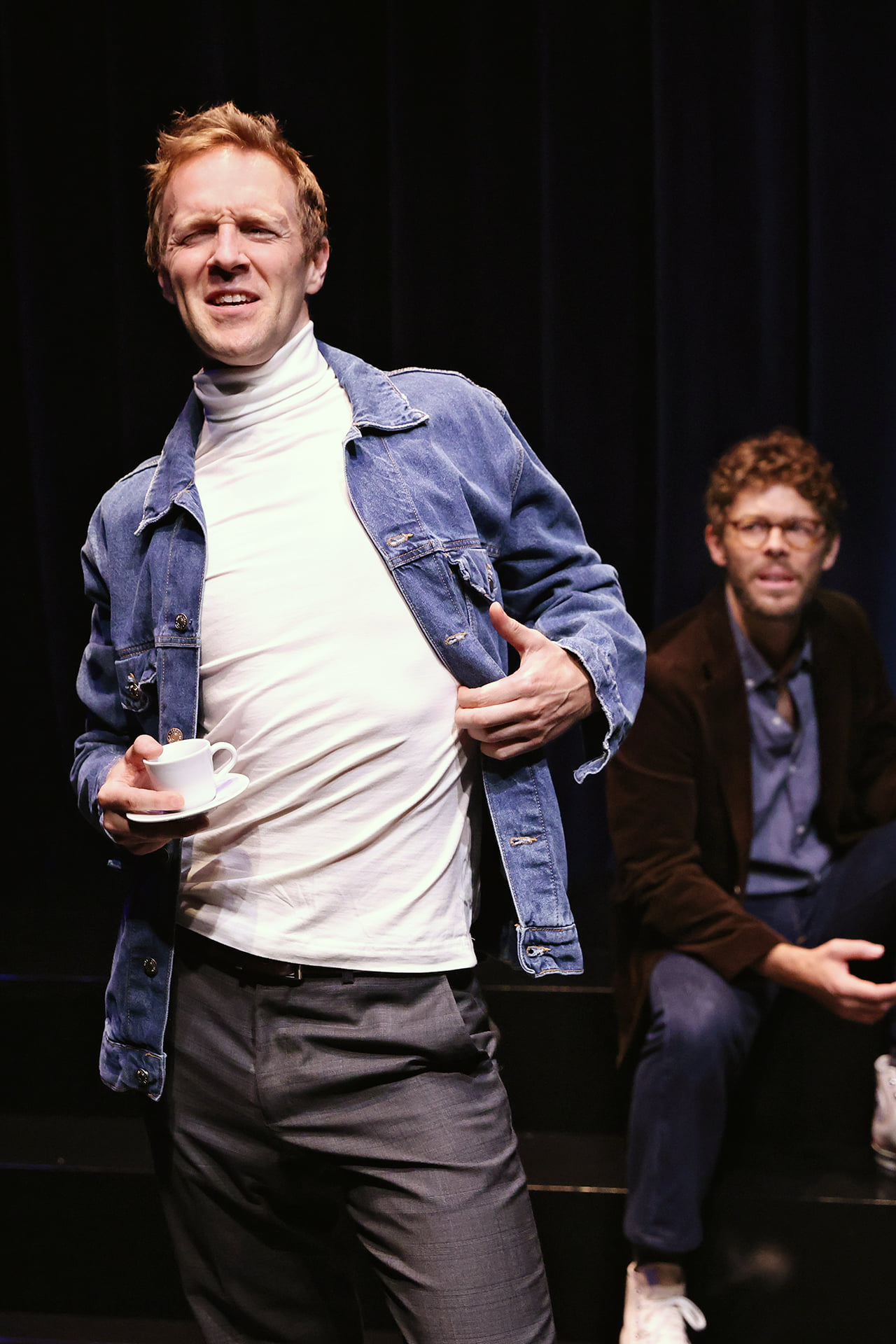
Actor Gareth Davies is amusing as the mad genius Newton, adept at bringing valuable liveliness to proceedings, even though the role is written with an excess of dry reverence. Halley is played with admirable commitment by a very passionate Rowan Davies, whose determination to entertain helps keep us engaged. Also noteworthy are Violette Ayad as Mary Halley, who offers flashes of genuine emotion in an otherwise distant and stolid affair, and Sean O’Shea’s flamboyance as King Charles II is an irresistibly funny element, if not always cohesive with the rest of the show.

It is arguable that creative people are only worth their salt, when something actually comes to be, as a result of their talent. Newton was at risk of having all the brilliance kept only on the inside of his mind. So many of us hold within ourselves, great insight and perspectives, that could benefit and inspire others, if only we knew how to make tangible, all that remains mere potential. Having written well over 50 plays, the writer Williamson is clearly not lacking in capacity for expression; if only this proficiency was available to more of us.
www.ensemble.com.au