Review: The Glass Menagerie (Belvoir St Theatre)

Venue: Belvoir St Theatre (Surry Hills NSW), Sep 20 – Nov 2, 2014
Playwright: Tennessee Williams
Director: Eamon Flack
Cast: Harry Greenwood, Luke Mullins, Pamela Rabe, Rose Riley
Images by Brett Boardman

Theatre review (originally published at Auditorium Magazine)
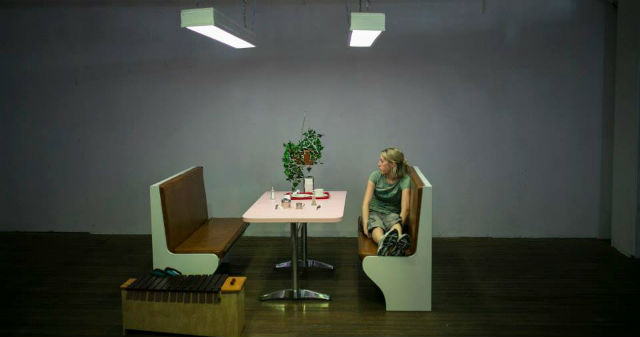
Tennessee Williams refers to The Glass Menagerie as a memory play. The work is semi-autobiographical, inspired by events, people and recollections from his own life. The making of art often involves the search for an understanding of the artists’ self and their immediate environment, through the expression of subjects that are familiar and intimate. Williams’ story examines the home life he had shared with an overbearing mother and a “crippled” sister. Seventy years have past since its initial staging, but their life together remains intriguing and poignant, covering timeless and universal themes that resonate with audiences today the world over. Film adaptations from India and Iran in the last decade demonstrate the wide appeal of the play’s premise and characters.

Williams’ language is romantically evocative of the American South in the 1930s, with old fashioned values that seem quaint and charming to our modern sensibilities, but that same regressiveness in attitude can prove to be harmful, as witnessed in the Wingfield family’s tribulations. Amanda has a definite, and narrow, view of the world and expects her children’s adherence to her every imagined obligation to society. It is a small mind that rules the household, and its painful repercussions are felt by all its members, including the matriarch herself. Eamon Flack’s direction is punctuated by inventive touches, but it is his effective exploration of the original’s concepts that strikes a chord.

A key feature of the production involves two large screens flanking the set, and several video cameras on tripods positioned on the periphery of the stage. Close ups of live action are periodically projected in black and white, shifting the audience between modes of theatre and cinema. This mechanism is slightly gimmicky, but it enriches the viewing experience by allowing an intrusion into more private spaces. Sean Bacon’s work on video design manages to bring elegance to the technology, finding a beautiful balance between stage and screen, rarely causing conflict or confusion for our eyes. Flack’s decision to have faces enlarged for our viewing pleasure enhances emotion and empathy for the piece, but it also brings into doubt the strength of performances that require that augmentation.

Also intensified in Flack’s direction is Tom Wingfield’s homosexuality. Before Williams’ lines are able to reveal the source of Tom’s disquiet, we observe from the very beginning, actor Luke Mullins’ purposeful flamboyance eagerly presenting an image of repressed and hidden gayness. The negation of that obsolete taboo inherent in the text, is an interesting and politically appropriate move for our times, and we are glad to see Tom, our narrator, approach us with fresh honesty. In terms of dramatic structure however, the build up of frustration and tension resulting from his gradual and inevitable disclosures is thus omitted.

Mullins is delightfully spirited in the role. He finds many opportunities for playfulness that helps maintain an electric atmosphere, regardless of moods being portrayed. The staidness of his home is placed alongside a confident showmanship that ensures entertainment in spite of the play’s many grim turns. Within the script’s shrewd treatment of secret sexuality, Mullins exercises a surprising range of nuance that conveys as much as Williams had tried to conceal.

The role of Amanda, the Wingfield mother and faded Southern belle, is played by Pamela Rabe who excels at locating authenticity in a highly dramatised character. Obsessive concern becomes comprehensible in Rabe’s depiction, thereby giving the tale its emotion and meaning. The woman’s severity leads to her own anguish, both qualities delivered by the actor with firm conviction. Amanda’s neurosis is strangely subdued at the play’s early stages, which slightly dampens the drama surrounding family dynamics, but when her hysteria sets in, its theatrical effects are quite wonderful.

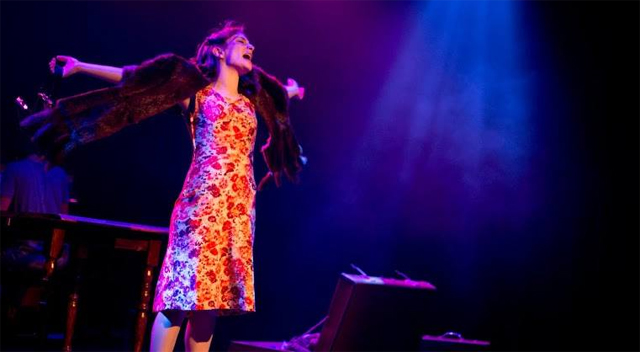
Rose Riley’s interpretation of Laura is a fascinating one. Her family believes her to be disabled, but we do not see much evidence for it. The ambiguity surrounding Laura’s impairment sheds light on the changes in attitude over time that societies hold for notions of health and normalcy. Riley puts on an intense but introspective performance and her best moments occur when the camera catches her face in tight shots, revealing very strong and genuine outpouring of emotion. She is the perfect counterpoint to the loudness of her mother and brother, but a lengthy scene with a romantic interest Jim (Harry Greenwood) is unduly quiet and both actors’ subtlety leaves a blemish on an otherwise dexterously paced show.

Set design by Michael Hankin manufactures a sense of claustrophobia with the very small Wingfield home. An unbearable pressure exists together with their poverty, and their dysfunction becomes logical. The aesthetics of the production is fairly muted, with an emphasis on accuracy over theatricality, but Damien Cooper finds opportunities with his lighting design to implement instances of creative flair that add sensual and shifting textures to the plot.

Tom, like his father and his author, escapes oppression in search of a greater truth. The most significant of America’s patriotic qualities is freedom, and The Glass Menagerie gifts us a portrait of its opposite. Enslaved by archaic beliefs and antiquated values, the play’s characters endure a continuance of suffering and painful delusion. Today, the story looks to be a relic of a bygone era, but in fact, that same denial of liberty persists in our personal and social spheres, albeit in insidiousness. The play’s optimistic conclusion sees Tom taking action to remove his psychological shackles. The act seems at once desperately painful, and plainly simple.

www.belvoir.com.au

Review: 4 Sydney Fringe Shows (PACT)

pactfringeVenue: PACT (Erskineville NSW), Sep 24 – 27, 2014
Images by PACT

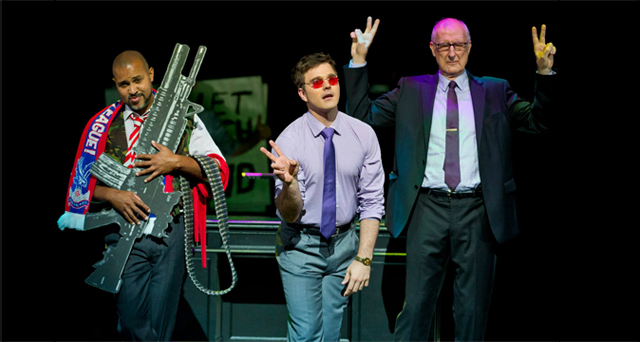
All The Single Lad(ie)s
Company: The Cutting Room Floor
Writer: Zoe Hollyoak
Director: Scott Corbett
Cast: Braiden Dunn, Verity Softly, Jack Walker
www.tcrftheatre.com

Fire Twirling
Company: Circaholics Anonymous
www.circaholicsanonymous.com

Him
Devisor: Coleman Grehan
Cast: Coleman Grehan
www.facebook.com/colemangrehan

Bodyscapes
Composer: Mary Mainsbridge
www.deprogram.net

Theatre review
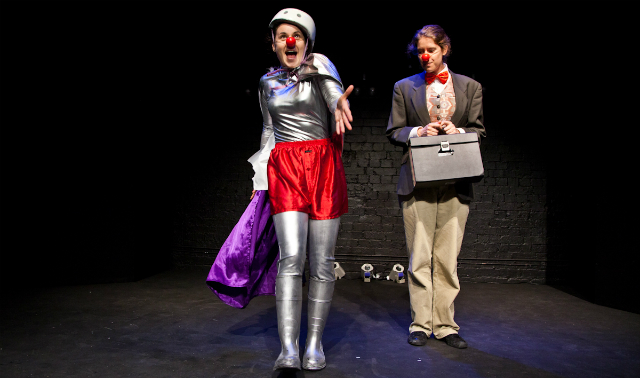
The night begins with All The Single Lad(ie)s, a play about gender politics, featuring a woman and a man in a BDSM fantasy scenario that turns sour, with interludes by a drag queen Tammy Packs who gives lectures on gender in between performing the greatest hits of Beyoncé Knowles. The production and its concepts lack complexity, but actor Verity Softly’s performance is committed and energetic. The production discusses the futility of a feminism that wishes to usurp debates about gender and sex, and explores the meaning of power and consent against the backdrop of a scenario extrapolating sexual domination and rape. Its perspective is aggressive but feels one-sided and therefore, a little convenient.

In the courtyard outside, members of Circaholics Anonymous perform a series of stunts and sequences featuring the art of fire twirling. There is a power to the flames that affects the crowd on a visceral level, beyond the visual. The team present many thrilling moments where the act gets too close to danger, eliciting cheers and yelps from its audience. The show does not have a strong sense of narrative, and things can feel repetitive at times, but there is a hypnotic quality to their performance that can prove captivating especially for the very young. The cast needs to find greater charisma to allow us to connect with their personalities, but they are well-trained and energetic. Their amazing skills do not fail to impress.

Coleman Grehan’s Him is a performance art / dance piece inspired by the Japanese Butoh discipline. Grehan uses his body, saliva and paint to illustrate human emotion and experience. Beautiful moments involving audience members painting directly onto Grehan’s body are impossibly tender and poignant, proving the efficacy of visual and time-based art over the use of words in representing humanity. Music is integral to the magic of the piece, and while they are not created specifically for the presentation, each track is selected with great sensitivity and circumspection.

Bodyscapes features Mary Mainbridge with cords hanging off her clothing, singing and dancing behind a translucent screen. Her body is used to operate “a movement-controlled instrument called the Telechord”, and computer graphic imagery is projected onto the screen that keeps her partially obscured. The visuals are fascinating, and confusing. To the side of the space is another screen displaying a different set of image projections, and three men in collaboration, illuminated only by their computer monitors. The synergy of technology and human is wonderful to observe, and Mainbridge’s brand of intelligent dance music is simultaneously ethereal and sophisticated.

The temporary division of the PACT space into three small studios is very well conceived. The program is at its strongest when there is a focus on the avant garde, and on this occasion, the intimacy of the tiny black boxes are perfectly suited to each unconventional production. In its 50th year, the centre for emerging artists remains a vital part of our artistic landscape.

www.pact.net.au

Review: Gruesome Playground Injuries (The Kings Collective)

thekingscollectiveVenue: TAP Gallery (Darlinghurst NSW), Sep 23 – 28, 2014
Writer: Rajiv Joseph
Director: Anthony Gooley
Cast: Aaron Glenane, Megan McGlinchey
Image by Kate Williams Photography

Theatre review
The beauty of love is most potent when its departure is close at hand. Rajiv Joseph’s Gruesome Playground Injuries is about a relationship defined by absence. Its characters spend short periods together, sharing brief moments of intensity through each significant age, and then disappear from each other’s lives for years after. Kayleen and Doug’s romance is an eternal flower that does not bear fruit. They do not become partners, spouses or lovers but their bond grows stronger with each passing year. Their story is a tragic one, and Joseph’s script is filled with poignancy, shifting from the very light to the deeply sorrowful, constantly alternating between laughter and tears to tell a moving tale that no person can react with indifference. The events may not have happened to any of us, but we understand all the feelings involved, and this is a production that allows us to luxuriate in all the joy and pain that the couple has experienced.

The outrageously accident-prone Doug is played by Aaron Glenane, whose magnificence in the role cannot be overstated. His authenticity is immediate and thorough, and whether performing slapstick or catastrophe, he always remains believable and compelling. The brightness of the actor’s energy gives the stage a liveliness that captivates us, and his warm presence creates a likability in his character that holds our empathy from scene one to the end. Glenane is perfect in the part, and his work here is impeccable. Also engaging is Megan McGlinchey who takes on the role of Kayleen with a fierce sense of commitment and remarkable focus. McGlinchey is less effective in sequences that require her to portray her character’s later years, but the honesty in her acting provides an integrity to her work that sustains our empathy even when her narrative is missing the purity of Doug’s. The actors form a formidable pair, with an extraordinary chemistry between them that makes the production gleam with magic.

Anthony Gooley’s direction places emphasis on extracting brave and extravagant creative choices from his cast. The piece has a sense of grandness in the volume at which it portrays human emotion that comes from the sheer corporeality that is presented before our eyes. What Gooley has delivered is more than an accurate implementation of Joseph’s writing, it is an amplification, one that is dramatic, powerful and uncompromisingly visceral. The story spans thirty years, and the sentiments represented are correspondingly deep. Passion is conspicuous on this stage, and the director’s efforts at making its presence felt are commendable. The inventive use of space shows creative flair, and along with an accomplished design team comprising Toby Knyvett (lights) and Tyler Hawkins (set and costumes), visual design is noticeably elegant. The variation in atmosphere between scenes is efficiently and sensitively executed, with imaginative input from sound designers David Stalley, David Couri and Philip Orr.

This is an exceptional production that showcases brilliant acting, tells an exciting story, and issues a reminder of what heartbreak feels like. Love cannot be explained in words, but it can be enacted in the theatre, as Gruesome Playground Injuries does, to enormous satisfaction.

www.thekingscollective.com.au

Review: The Motherfucker With The Hat (Workhorse Theatre Company / Darlinghurst Theatre Company)

workhorseVenue: Eternity Playhouse (Darlinghurst NSW), Sep 19 – Oct 19, 2014
Playwright: Stephen Adly Guirgis
Director: Adam Cook
Cast: John Atkinson, Troy Harrison, Megan O’Connell, Zoe Trilsbach, Nigel Turner-Carroll
Image by Kurt Sneddon

Theatre review
Few would claim to have experienced a perfect childhood. We sustain damage from the carelessness of parents, the cruelty of peers, and the dysfunctions of society. In The Motherfucker With The Hat, characters are seen to grapple with their individual histories, some trying to overcome agents of hindrance, and others submitting to destruction. Through themes of infidelity and disloyalty, we observe the way mistreatment of friends and lovers is rationalised, and through those betrayals, the demons that people carry within are exposed in the play’s violent narratives.

Stephen Adly Guirgis’ script is colourfully detailed. Interchanges are deep and revealing, and dialogue is relentlessly exciting. The characters speak the language of New York’s lower classes, with a rich idiosyncratic flavour derived from a passionate city and its spirited residents. The story is a compilation of altercations between personalities who do not shy away from confrontation. They express an exhaustive gamut of emotions, which makes for excellent drama, but whether their sentiments encourage empathy, depends largely on the audience’s ability to relate to each character. Direction of the work by Adam Cook is suitably rambunctious. The show is a lively one, always able to provide something amusing, even controversial, to spark the senses. Even though his work can at times feel emotionally distant, Cook extracts consistently brilliant performances from his cast.

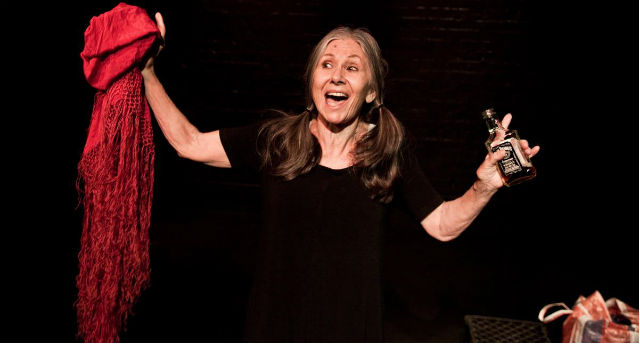
In the role of Jackie is Troy Harrison whose spectacular presence anchors the production in a wild and turbulent space that resonates with an unusual authenticity. Through an extraordinary complexity, Harrison conveys a sense of profundity to the proceedings, in which his commitment to creating both entertainment and meaning is clear. Harrison’s portrayal of aggression is not always effective but the vulnerability he displays is powerful. Zoe Trilsbach plays Veronica, an unapologetic addict dependent on alcohol, drugs and lies. The actor has a fierce dynamism that gives her character a willfulness, and she paints an intriguing portrait of hypocrisy and delusion with the character’s determination. There is a vehemence to Trilsbach’s voice and physicality that gives accuracy to the play’s social context, and grants a fascinating insight into the role’s mental and emotional states. It is certainly an outstanding and memorable performance.

Supporting players too, are impressive. Nigel Turner-Carroll’s comedy is confident, mischievous and unpredictable, adding a necessary lightness to the production with the part of Julio. The role of Ralph experiences the greatest transformation in the plot, and John Atkinson’s depiction of that journey is delightfully dramatic. Both Atkinson and Megan O’Connell, who plays his wife Victoria, deliver very solid and captivating soliloquies that stay with us for their intense and palpable humanity. The couple’s desperately flawed relationship is presented with an unflinching honesty that is quite chilling.

Production design is marvelously conceived. The many set changes are handled with great elegance, and every setting is sensitively constructed. Dylan Tonkin’s set and costumes, and Ben Brockman’s lights are not attention-grabbing, but their work allows us to be transported effortlessly to a land far away. Composer and sound designer Marty Hailey is responsible for the urgent pulse that drives us from one explosive scene to another. His music is a metaphysical representation of the story’s progression, and a perfectly executed dimension of the show that finds beautiful harmony with its more tangible elements.

The play talks a lot about sobriety. It is concerned with how a person can grow and improve, through the search for honesty and self-awareness. Julio is the only character in the piece who does not suffer from addiction issues, and he is presented on stage as the only one who finds happiness and fulfillment. He is also the clown. There is an artifice and implausibility to Julio that signifies the absurdity of completeness as a state of being. To err is human, and to struggle, it seems, is evidence for being alive.

www.workhorsetheatreco.comwww.darlinghursttheatre.com

Review: Aunt Agony (New Theatre)

auntagonyVenue: New Theatre (Newtown NSW), Sep 15 – 22, 2014
Director: Michael Campbell
Playwright: Richard Black
Cast: Sasha Dyer, Dave Kirkham, Taylor Owynns

Theatre review
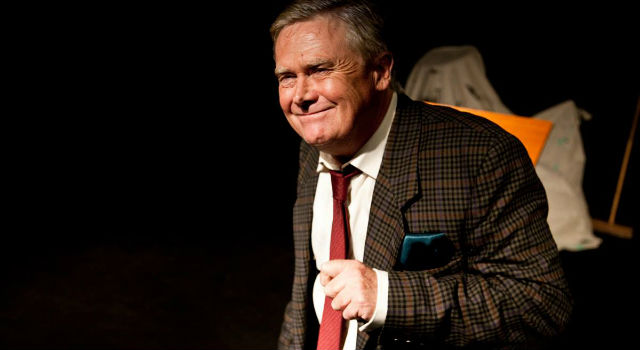
In a society that overvalues youth, we often forget that quirky old people are much more amusing and fascinating creatures than their offspring. Richard Black’s Aunt Agony is a farcical black comedy that imagines the secret wild life of Aunt Lynn from the conservative Upper North Shore of Sydney. Lynn is an eccentric and flamboyant lady who lives with a cat and a dark side. Her niece Christine has just ended a relationship and seeks refuge in Lynn’s apartment. Their love-hate relationship reveals a series of antics, funny and sinister, that forms the plot of this surprisingly textured show. Black’s characters are vibrant and his scenarios whimsically formulated, with punchy dialogue and timely sociopolitical references.

The work becomes tighter in pace after the halfway point. Early scenes move a little slow, preventing tension from taking form satisfactorily. Perhaps some edits to the script can provide some energy. The actors’ rhythms can also benefit from an increase in speed, but Michael Campbell’s direction is quite accomplished. He injects a wonderful playfulness to the production, and makes brave choices that befit the idiosyncrasy of the lead character. The play’s more nefarious elements are handled with just enough seriousness to retain their sobering reverberations, but they do not get in the way of the overall joviality of the show.

Lynn is played by the effervescent Taylor Owynns who is endearing from her very first entrance. She has a likability that keep us on her side no matter how abhorrent her shenanigans become. Owynns performs a charming madness, but some of her techniques can feel slightly repetitive. The show requires a high level of energy from her, and she delivers on most occasions especially when in close collaboration with Sasha Dyer who takes on the role of Christine. Dyer comes to life when the show’s brashness escalates. She is a spirited performer who works well with physical comedy, and there are many opportunities for her talents to shine through on this stage. Dyer’s firm commitment and focus makes substantial what is essentially a supporting part. Also providing effective support is Dave Kirkham whose good humour makes his brief appearances delightful and memorable.

Design of the show is pleasant and efficient, but the set leaves empty space in the down stage area, which is not often utilised. Moving set pieces closer to the audience would allow more intimacy and hence create greater impact. The production leaves a lasting impression with meaningful morsels littered through its text. It is often hilarious with a giddy silliness, but its entertainment value is sometimes coupled with poignancy, proving itself to be the kind of madcap comedy that refuses to underestimate its audience.

www.newtheatre.org.au

Review: This Is Our Youth (The Kings Collective)

thekingscollectiveVenue: TAP Gallery (Darlinghurst NSW), Sep 16 – 21, 2014
Writer: Kenneth Lonergan
Director: Dan Eady
Cast: Joshua Brennan, Scott Lee, Georgia Scott
Image by Kate Williams Photography

Theatre review
Not all stories are universal. There will be characters we are interested in, and others that we do not give two hoots about. Kenneth Lonergan’s This Is Our Youth is a lamentation of sorts about spoilt rich kids. It is concerned with the neglected offspring of wealthy baby boomers, providing a perspective of new money in 1980’s Manhattan and the repercussions on its subsequent generation. Lonergan’s script is full of mischief and energy, but embodies the pointlessness of the characters it portrays. Their lives are lost, frivolous and sordid. Everything is dazed and confused, but the writing provides a rich and colourful inventory of drama and jokes for an electrifying work of theatre, and this is what The Kings Collective delivers.

The cast is extraordinary. Three young actors, sublime as a group but individually sensational, give a performance that is quite literally flawless. They all make bold choices that delight and surprise us, but are always thoughtful and sensitive to the creation of depth in their characters. We are enthralled by the dynamism in their work but never lose sight of contexts and circumstances. Joshua Brennan is Dennis, the misguided alpha male, whose bravado, anger and aggression are the only things getting him through life that do not come in small self-sealing plastic bags. Brennan’s range begins at bombastic, and then escalates further. His work is outrageously flamboyant but completely engaging, and one is able to sense a lot of substance behind his delicious madness. The material gives him many opportunities for comedy and he executes them brilliantly, but poignant moments at the end are slightly less effective even though his portrayal continues to be convincing.

Georgia Scott transforms the supporting role of Jessica into a memorable one. She fools us with a Barbie-esque appearance and surreptitiously shifts the play into intellectual gear. Scott brings a palpable complexity with strength, humour and tenderness, creating an authentic sentimentality that gives the production its humanistic aspect. Her romantic scenes with Warren are beautiful and real, allowing the play to speak compassionately, albeit fleetingly. The feminine voice is only secondary in the play, but Scott’s work is disproportionately impressive.

Warren is a clever young man who suffers from a lack of confidence and direction. He allows his father and friends to dominate him, and seeks refuge in drugs to silence his intelligence. Scott Lee’s moving depiction of that impotency gives the play its weight, and his comedic flair sets the tone of the production. Lee’s phenomenal chemistry with both colleagues shows an openness in approach that gives theatre its sizzle, and every second is kept lively by his marvelous commitment and presence.

Direction of the piece by Dan Eady ensures excellent entertainment and precise storytelling, without an instance of misplaced focus or loss of energy. This is the tightest of ships that any captain can hope to deploy. Audiences will laugh, be touched, and be provoked into thought, but the play’s social message is not a particularly potent one. It is hard to summon up any empathy for the very rich, even if they are innocent young adults. This Is Our Youth is thrilling and amusing, and while it does have some depth, they can be tenuous. Fortunately, theatre is about the craft as much as it is about meanings, and on this occasion, the artists are alchemists that have turned lead into gold.

www.thekingscollective.com.au

Review: Four Dogs And A Bone (Brief Candle Productions / Sydney Independent Theatre Company)

briefcandleVenue: Old Fitzroy Theatre (Woolloomooloo NSW), Sep 16 – 27, 2014
Playwright: John Patrick Shanley
Director: Kate Gaul
Cast: Amanda Collins, Melinda Dransfield, Paul Gerrard, Sonny Vrebac
Image by Katy Green-Loughrey

Theatre review
There are four actors and only four scenes in John Patrick Shanley’s Four Dogs And A Bone. It is a work about horrible people trying to make a film, and their self-serving manipulations to change the film to their advantage. The personalities are thoroughly caricatured, and the script derives its humour from their absurd behaviour.

Performances are uneven in the production. The first scene features the stronger players Melinda Dransfield and Sonny Vrebac kicking off with some promise. Brenda is a starlet who lies and sleeps her way up the career ladder. Dransfield has moments of brilliance in the role and delivers laughter with a more subtle approach than her cohorts. Sonny Vrebac plays the film’s penny-pinching producer Bradley, who is so highly strung that he develops a canker sore the size of a jumbo shrimp in his rectum. Vrebac’s comedy is the most consistent in the piece, and the personal narrative he is able to communicate for his character is clearest in the group. Vrebacg’s vibrancy is an asset to the production, and the slump in energy levels is noticeable in scenes without him.

Chemistry between actors is an issue that seems to arise from their focus on individual styles. We do not see a sense of cohesion, which results in missed opportunities for laughter and amusement. Amanda Collins focuses her efforts on creating a snake-like persona for Collette but does not manufacture enough substance for her story to resonate. It is noteworthy however, that she displays good commitment and focus, and leaves a memorable impression with a flamboyant display of devastation from being described as a “character actor”. Paul Gerrard as Victor, the screenwriter for the film, tends to underplay his role, allowing his more extravagant colleagues to overwhelm his work, but he does have a solid presence that gives the show a firm grounding.

This is a staging that does not quite take off until its final scene. Economic realities mean that much of what we see in the theatre can be revealed too early in the creative process, and opening night of Four Dogs And A Bone feels prematurely presented. Art strives for an imagined notion of perfection, but no art of great merit is created in an idealistic environment without challenges that need to be overcome. The factor of time and the practicalities of money can be cruel to artists, but they are also what compels us to hold their work in great esteem.

www.sitco.net.au | www.briefcandleproductions.com

Review: Europe (Slip Of The Tongue)

slipofthetongueVenue: Seymour Centre (Chippendale NSW), Sep 10 – 27, 2014
Playwright: Michael Gow
Director: James Beach
Cast: Pippa Grandison, Andrew Henry
Image by Kurt Sneddon

Theatre review
Making sense of humanity requires that we look at history. History gives us meaning and inspiration, it tells us how we should progress. The same follows for the concept of nationhood. The conceit of nations is a discussion about identity in relation to histories. Australia is thought of by many as a derivation of sorts. Its European settlement and ancestry has shaped its public image into one that is invariably referential. It constantly negates its first cultures and its recent migrations, to place emphasis on its ties with the European continent. We are spurned, forgotten and disparaged, yet we are desperate, supplicant and nostalgic. We define ourselves in European terms, and our score cards are created in their image. We wait for acceptance and approval like abandoned babies suffering from developmental retardation. We live in the shadows of parents who no longer remember our birth.

Douglas sacrifices every dollar on flights to Europe. He seeks to rekindle a week long romance with Barbara who had visited Australia briefly. Douglas believes that his life would be perfect if he wins her over. Barbara is perplexed that a flippant moment from the past has returned to haunt her. Douglas is surprised by her reaction and says repeatedly that he would leave, but misses every train. Michael Gow’s script is a comical love story, and a meditation on Australian whiteness. It examines tenuous connections with a motherland, and the existential angst of the castaway. James Beach’s direction is thoughtful and gentle. The duplicitous nature of the narrative is conveyed successfully, and the minimalism of his staging creates a tenderness that reflects Douglas’ internal complexion. There is a languidness that detracts from humour in the early scenes, but the resulting show is an elegant one that speaks intelligently, with an openness that welcomes interpretation.

Pippa Grandison is suitably continental in her approach. She succeeds in portraying the foreignness of Barbara, and her conscious efforts at creating a sense of exotic otherness is well considered and entertaining. Barbara is a stage actor, and Grandison could benefit from playing up her theatricality further, especially in the early segments where more energy could be put into the comedy of the characters’ encounters. Aussie country boy Douglas is played by Andrew Henry who uses just enough stereotyped conventionality to depict cultural relevance, but more appealing is the authentic naiveté he brings to the role. Henry’s work is confidently simple, which ensures that small gestures speak volumes, and dialogue is allowed to resonate. It must also be noted that his performance of intoxication at the play’s conclusion is completely delightful.

Romance provides spice to life. We long for attention and adoration to be reciprocated, so that some kind of affirmation can be established, but that attainment is only temporarily satisfactory, for romance is a need that can never be sated. As long as we keep thinking of ourselves as a chip off the old block, or as the apple that has fallen a little too far from the tree, we will forever be an inferior echo that fails to be its own self determining entity. There is much to love about our own place on earth. We need to acknowledge our histories but we need to make the best of the here and now, wherever we may be.

www.slipofthetongue.com.au

Review: Other Desert Cities (Ensemble Theatre)

ensembletheatreVenue: Ensemble Theatre (Kirribilli NSW), Sep 4 – Oct 18, 2014.
Playwright: Jon Robin Baitz
Director: Mark Kilmurry
Cast: Lisa Gormley, Deborah Kennedy, Diana McLean, Stephen Multari, Ken Shorter

Theatre review
It is Christmas time and we visit the home of an older Californian couple, both prominent figures from the right wing of politics. Polly and Lyman Wyeth are not always politically correct, but their self awareness gives them an air of relaxed charm. Their children Brook and Trip have arrived for the festivities, but we soon discover that all is not well. Brook is set to publish a tell-all memoir and takes the opportunity to reveal the book to her family. Jon Robin Baitz’s Other Desert Cities, is a tale about the damage our closest ones inflict upon us, family secrets, and the stories we dream up in place of missing pieces. We keep the truth from one another because we think that people need to be protected, and also because of shame. We can choose our friends, and run away from them when intimate revelations become problematic, but family ties are hard to break, so we keep the peace, by perpetuating lies.

Baitz’s script is classically structured. It is amusing, gripping and surprising, with the potential to be incredibly moving. Its themes of family disintegration, mental illness, regret and guilt are all loaded with sentimentality, and when handled well, could be heartbreaking. Mark Kilmurry’s direction brings out the dramatic conflicts of the story with some success, but tension does not build up sufficiently. It is an energetic show, with good amounts of shouting and crying, but the plot does not always engage. The cast seems to be discordant, each finding separate emphases, and their chemistry does not quite convince.

Lisa Gormley invests heavily into her character’s depression and her torment is clear to see. Her early scenes before confrontations begin, feel forced and inauthentic, but her work in the second act is the show’s saving grace. Ken Shorter’s naturalism is a joy to watch. His presence is genuine and strong, but he brings a warmth to the role that does not always serve the narrative well.

Ailsa Paterson’s set design confines the Wyeths in the 1970s. Their home is dated, and we see that they have not moved on for over twenty years. We live the consequences of our decisions, good or bad. There is no assurance that doing the right thing would lead to brighter days, but the Wyeths’ story gives hope that resolutions can be found if you try hard enough.

www.ensemble.com.au

Review: Children Of The Sun (Sydney Theatre Company)

Venue: Sydney Opera House (Sydney NSW), Sep 8 – Oct 25, 2014
Playwright: Maxim Gorky (adapted by Andrew Upton)
Director: Kip Williams
Cast: Valerie Bader, James Bell, Justine Clarke, Yure Covich, Jay Laga’aia, Jacqueline McKenzie, Hamish Michael, Julia Ohannessian, Chris Ryan, Helen Thomson, Contessa Treffone, Toby Truslove
Images by Brett Boardman

Theatre review (originally published at Auditorium Magazine)
In Andrew Upton’s adaptation of Maxim Gorky’s Children Of The Sun, 12 characters of distinct and diverse personalities intermingle in the privileged Protasov household, each with their own sets of concerns and each holding world views that struggle to find cohesion and alliance. Written in 1905, but set 50 years earlier, Gorky’s play looks to the past in order that we may speak of the now. Created at a time of great political and social unrest, a fictional history was used to illustrate the disquiet of the day. The work is about the anxieties and uncertainties inherent in the process of revolution, and the troubling consequences of fragmentation in communities. In our age of technological modernity, we relate instinctively to its theme of individualistic narcissism, and the increasingly fracturing nature of our local and world affairs allows us to empathise with the writer’s angst and trepidation in the face of social upheaval.

The disharmony of relationships is strikingly enhanced in Upton’s version. Its farcical comedy is relentlessly witty and often surprisingly clever, but always subservient to the greater tension of unrest that gradually unfolds. The language we hear is modern, almost colloquially Australian, which not only makes for sharper punchlines, but also allows us to readily identify personality archetypes and status structures. The disconnect between the household’s apolitical characters and the political movement that intensifies on the outside is fascinating to observe. Upton’s dialogue portrays the insularity of daily life, with the characters unknowingly providing reverberations for a larger context. It is classic social commentary that seems immortal, because its necessity never seems to diminish.

Kip Williams’ marvelous direction of the piece works with all the nuances and philosophies of the script to deliver an irresistible production that is both entertaining and thought-provoking. Every character is intriguing and authentic, and Williams injects in each a dimension of dignity, refusing to make convenient fools of anyone. Herein lies the poignancy of work. The range of personalities is diverse, and even though we are unable to identify with everyone, we recognise the humanity in all of them. The vulnerability that they display is familiar, which means that the danger they encounter rings true for us.

Williams achieves a deliciously precarious balance between comedy and drama, effectively vacillating between frivolity and severity throughout the production. It is an intensely engaging show that manipulates our responses almost at will. There is an unpredictability to its plot that takes us off the beaten track and rejects our expectations, but it always enthralls our senses. Its rhythm is perfectly orchestrated in collaboration with our fluctuating emotions, and we become utterly lost in all its trials and tribulations.

Giving the narrative an impressive clarity is its extremely colourful and dynamic cast, many of whom exhibit extraordinary theatrical abilities that look very much like genius. Helen Thomson gives an unforgettable performance as Melaniya, a blundering seductress whose desperation is matched only by her beauty. Thomson’s work is precise and studied, but her instinctive timing creates a deceptive sense of spontaneity. Hilarious, playful, and larger than life, her every entrance is commanding and powerful. Thomson finds comedy in unexpected places, making us laugh while leaving us stupefied at the magnitude of her talents. Even more flamboyant is Hamish Michael, who is delightfully hammy as the painter Dimitri. His humour is unfettered and extravagant, always keen to highlight the vacuous pretensions of his role. Michael relishes the opportunity to play jester, with a wildness to his performance that is certainly amusing, and absolutely suited to the grand scale of the venue.

Pavel is the childlike patriarch, whose devotion to science renders him feckless in all other areas. Toby Truslove embodies the character’s eccentricity perfectly. The actor is slightly betrayed by his youthful appearance but his use of voice and physicality is very well-considered. Truslove’s ability to aggrandise what is basically an introspective personality helps establish Pavel as the charming man who finds himself the object of two women’s affections. Pavel’s sister Liza is his opposite. She is a creature of intuition and emotion, whose ill health is a symbolic manifestation of all the worries she carries for the world. Actor Jacqueline McKenzie is sensitive, elegant and tremendously affecting in the role. She demonstrates excellent range and an acute intellect that carves out the most intricate character on this stage.

Production design is restrained but highly evocative. David Fleischer’s big revolving stage holds several minimal structures that demarcate spaces, but all are in full view for the duration. The aesthetic is modern, but its sentiment is traditional. Significant plot devices like rain and fire are introduced gently, without causing a distraction from the story. Costumes and props are beautifully coordinated, with a sense of historical accuracy. Time and space is manufactured efficiently with minimal fuss, but every moment looks harmonious and beautiful.

This production of Children Of The Sun gives theatre lovers everything their hearts desire. It entertains, educates and thrills us, and it gives us so much to admire in the talent and skills that it showcases, but it does not provide answers to its own pressing questions. It is a quietly controversial work that makes statements about community, equity and political action. It makes us recognise the importance of social advancement, but seeks not to be divisive. It leaves with us a plea for progress and perhaps a yearning for a new revolution, but it relies on our own benevolence and intelligence to find a way.

www.sydneytheatre.com.au