Review: Leaves (Bakehouse Theatre Company)

kxtVenue: Kings Cross Theatre (Kings Cross NSW), Jul 9 – 23, 2016
Playwright: Lucy Caldwell
Director: Rachel Chant
Cast: Harriet Gordon-Anderson, Bobbie-Jean Henning, Poppy Lynch, Simon Lyndon, Amanda Stephens-Lee

Theatre review (of a preview performance)
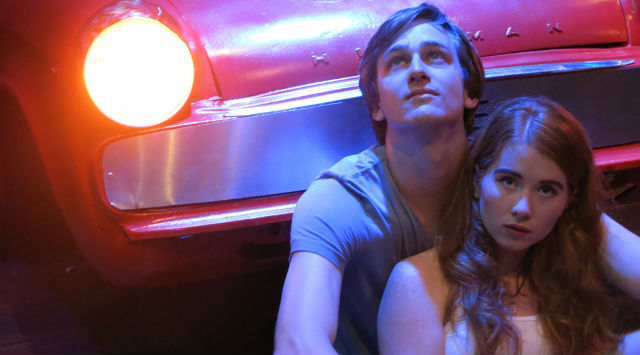
When news broke several months ago that a 10 year-old Aboriginal girl had taken her own life in Western Australia, our nation was stunned into a moment of grief and rare self-reflection, searching for reasons to help us understand what had happened. We knew that it was the fault of a wider community, but struggled to find a way to take responsibility for the deeply unfortunate incident. In Lucy Caldwell’s Leaves, a teenager attempts suicide and we must again investigate the causes of her calamity. The play takes place in Lori’s home, where everything is healthy and normal, bringing us to the conclusion that family is unable to shield us from all the failings of society. It is a tender script, confidently quiet but with subtle fluctuations in tone that provide unexpected hints of drama and comedy.

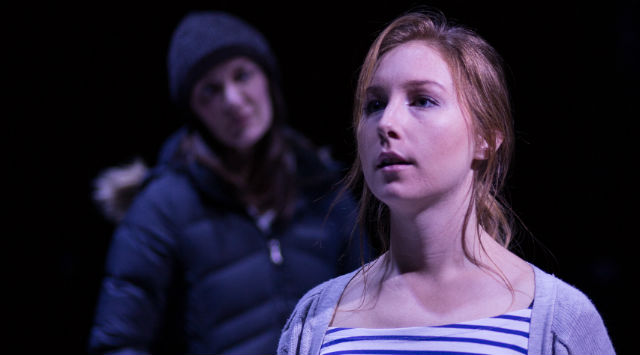
Situations in Leaves are volatile, so corresponding emotions are kept under tight containment by director Rachel Chant for a work that is elegant, melancholic and extremely thoughtful. It is a production full of nuance, aided by the considerable talents of music composer Nate Edmondson and lighting designer Sian James-Holland, both providing unobtrusive but essential elements of movement and tension to the piece. A strong cast provides the show with a cohesive and unique flavour (too rich and ephemeral to put to words), with each actor compelling in their respective parts. Poppy Lynch is especially memorable playing a 12 year-old, adorable and authentic in her emulation of childlike qualities, but complex in the relationships she harnesses with co-actors. Bobbie-Jean Henning plays the feisty Clover, rebellious in demeanour but innocent by nature. The actor is convincing and dynamic in her characterisations, effectively adding sprightliness to a largely sombre production.

Places have problems, and sometimes leaving is the best answer. Forming attachment with community is human, but where we call home might not be nurturing or gratifying. The grass is greener on the other side, but when given the opportunity, we must make the effort to discover the truth in what was once only imagined. Taking chances can mean win or lose, but to truly live requires motion. When Lori chose to give up on life, she gave in to stasis and hopelessness. The solution for her problems may not be concrete or certain, but the only way to find it is to get moving.
www.kingsxtheatre.com

Review: Straight (Brilliant Adventures)

brilliantadventuresVenue: Kings Cross Theatre (Kings Cross NSW), Jun 16 – Jul 2, 2016
Playwright: D.C. Moore
Director: Shane Bosher
Cast: Danielle Cormack, Sean Hawkins, Simon London, Madeleine Jones

Theatre review
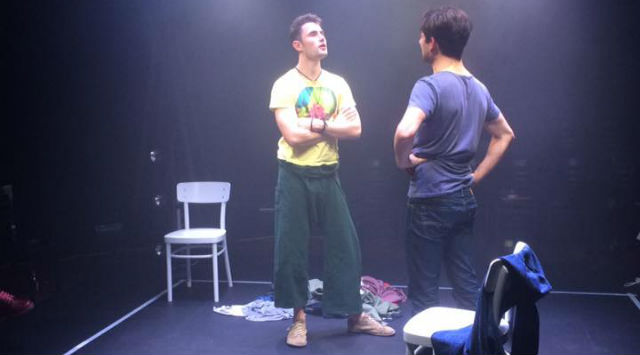
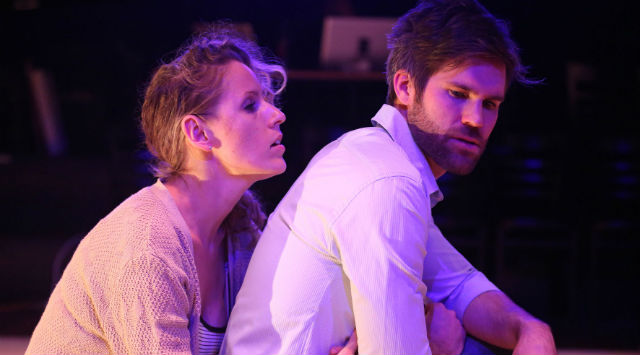
Lewis and Waldorf are old friends from university days, reunited several years after their lives have taken different turns. While intoxicated, they decide to make an amateur porn film with each other. Lewis is married, with a history of just 2 sexual partners, and the happily single Waldorf is more experienced with 71, but neither have had encounters with men. Based on the 2009 film Humpday by Lynn Shelton, D.C. Moore’s Straight is about transgression. It explores issues around the constraints of sexual identity, along with an investigation into boundaries of friendship, and takes a look at the rules of monogamy in modern marriages.

Taboos are confronted with a vehement directness in Straight, which locates our cosy assumptions of human sexuality and puts them through a series of thorough and provocative interrogations. The script is a gripping one, made even more enthralling by director Shane Bosher’s very effective delivery of plot tension and believability for what is actually an absurd context. A brilliantly awkward sense of humour permeates Moore’s consistently nuanced writing, but the production has an air of unrelenting seriousness that compromises its potential for comedy. The mischievous Danielle Cormack delivers the biggest number of laughs as Steph, and leaves an excellent impression even though the actor only appears once in an early scene. Also noteworthy is Madeleine Jones who performs the role of Morgan with excellent psychological accuracy and a sharp intuition.

Lead role Lewis is played by Simon London whose thoughtful and intelligent approach creates a character that we are able to connect with, in spite of his quite incredible decisions. Sean Hawkins is the charming Waldorf, who keeps proceedings buoyant with an unpredictable and aggressive energy. The two turn up the sexual heat in the show’s crucial moments, creating an exceptionally libidinous stage that many will find titillating, while some others will be left embarrassed. Their work demonstrates pure conviction, but it is the ambiguity of their characterisations that inspire the biggest questions.

Art is eternally preoccupied with sex as a topic because it is universal, and one that can be examined extensively, and ceaselessly. The diversity of individual experiences and the plurality of our beliefs mean that new perspectives can always be added to the ever-expanding discussion and hence, comprehension of the nature of sex. We however, live in societies that suppress these interchanges, so we become accustom to presuming an uniformity in our hidden sexualities. We fool ourselves into thinking that we know how other people do sex, and furthermore we often place those same limitations on our own individual sex lives. Straight is about people who give themselves a chance, and who dare to go into the unknown, in the voyage of self-discovery that we call life. It is about defining identities by first experiencing what one is not, before settling on what one is.

www.facebook.com/…

Review: Smudge (The Kings Fools)

thekingsfoolsVenue: Kings Cross Theatre (Kings Cross NSW), May 27 – Jun 11, 2016
Playwright: Rachel Axler
Director: Stephen Lloyd-Coombs
Cast: Danielle Connor, Kieran Foster, Nick Hunter
Image by Liam O’Keefe

Theatre review
The curve balls that we encounter make life frustrating, and sometimes unbearable. We cannot exist without envisioning the future, but nature insists on disrupting our plans to make destiny something that we can never truly be masters of. In Rachel Axler’s Smudge, Colby and Nick give birth to a severely disabled baby. As the young couple tries to come to terms with the unexpected turn of events, we witness their struggles and disappointment, and measure them against a new life that we have little understanding of but whose rights are unequivocal. It is a brutal set of circumstances, but the play takes a less than obvious approach, avoiding melodrama at all costs in its exploration of relevant issues and of human behaviour.

The play is quirky and often comedic, with director Stephen Lloyd-Coombs maintaining a sensitive, delicate tone over proceedings, but the show is most effective at its darkest moments when characters are intense and irrational. Danielle Connor and Kieran Foster work well at creating believable presences and convincing emotion, but the production’s mildness of demeanour restricts how much it is able to convey on a visceral level. It is a story of considerable gravity, and although powerful in parts, Smudge can seem slightly detached from its own sorrow.

Accomplished work by Liam O’Keefe on lights and sound by Michael Toisuta give tension to the piece, and both conspire to add a dimension of supernaturality and of horror when appropriate. Theatrical pleasure is derived from a quality of surrealness created by O’Keefe and Toisuta’s atmospheric manipulations, and along with Elia Bosshard’s set, leave a strong impression with the show’s aesthetic and technical proficiencies.

We do not talk enough about disability. There is little understanding in mainstream communities about what people’s needs may be, when living with unique challenges. Colby and Nick are isolated, left to nurture a baby that is of them but also radically different from their realm of reality. Their story is an allegory about every person’s conflict with the unpredictability of life, but the specific experience of disabilities, physical and otherwise, must not be overlooked. Conversations needs to be had in order that societies can work towards becoming more inclusive, and we must learn about disadvantages that exist in our communities to bring about equity for all. The new family in Smudge are unable to cope on their own, but with our support, things can only get better.

www.facebook.com/…

Review: Black Jesus (Bakehouse Theatre Company)

bakehouseVenue: Kings Cross Theatre (Kings Cross NSW), Apr 29 – May 21, 2016


Playwright: Anders Lustgarten
Director: Suzanne Millar
Cast: Jarrod Crellin, Belinda Jombwe, Dorian Nkono, Elijah Williams
Image by Nick McKinlay

Theatre review (of a preview performance)
Parochialism is a problem that many of us can fall into, no matter where we live. We are citizens of the world but rarely acknowledge that fact, choosing instead to identify with narrow constructs of identity, based on immediate interests and geographic restrictions. When we talk about Australian stories, it is easy to make mistaken assumptions about what our collective thinks we are. In choosing to stage Anders Lustgarten’s Black Jesus, the audience’s perspective is broadened. The characters and situations are oceans away, but we cannot divorce ourselves from their concerns. We have to realise that our roots extend to unexpected places, and stories from foreign lands are relevant not only for our migrant histories, but also for the plain fact that humanity is ultimately unifying, even if man insists on perpetual combat.

After every war, people find themselves picking up the pieces as the dust begins to settle. Black Jesus is about investigations into abuses by the Mugabe government after its fictional fall in Zimbabwe. Gabriel is a young man accused of many atrocities while in a position of leadership, and Eunice is appointed to determine the truths of Gabriel’s story in the midst of confusion and ambiguities. The play explores the vulnerability of innocence in times of trouble, to question the culpability of individuals when fighting to survive. They are all grey areas, even if the bloodshed and brutality is irrefutable.

Lustgarten’s writing is confronting, vivid and often powerful, but plot details are not always clearly defined. Even though it is unnecessary to have a thorough understanding of every context in order to appreciate all its main themes and ideas, it is a challenge not to feel distracted by moments of confusion while trying to follow its narrative. Direction by Suzanne Millar is energetic and very animated. The production is passionately expressive in its portrayal of every personality and their intentions, fuelled by the enchanting live drums of Alex Jalloh.

Leading man Elijah Williams impresses with his immense agility in both physical and emotional terms. It is a vigorous but measured performance, magnetic in its allure, and disarming in its authenticity. Williams’ ability to engross with an extravagant sense of theatricality while keeping us convinced of the psychological accuracy that he depicts, is the highlight of the show and delightfully thrilling to witness. Equally dramatic is Dorian Nkono, full of colour in his interpretation of the unscrupulous government official Moyo. Humorous and deeply charming, Nkono’s confident and creative approach to his work is remarkable, and very entertaining indeed.

As we spend our days fretting over Sydney property prices and closing times of our watering holes, Black Jesus arrives to wake us to a bigger reality. We are grateful to be spared calamities that other nations have to endure, but cannot help but recognise the connections we share as a species regardless of borders and circumstances. Like many tragedies we hear about in our advanced state of information plenitude, we can only respond with despair and helplessness. We may not yet have answers to world peace, but ridding ourselves of ignorance is the crucial starting point.

www.kingsxtheatre.com

5 Questions with Belinda Jombwe and Elijah Williams

Belinda Jombw

Belinda Jombw

Elijah Williams: How has it been working with the Black Jesus cast?
Belinda Jombwe: I’ve had the pleasure to work with three talented actors who each have very different approaches to the rehearsal process. It has been exciting, challenging and overall a great learning experience.

What is your greatest fear in life?
Oh that’s deep Elijah, ha! I guess my greatest fear in life would be not living life to its fullest potential. By not being present and by not seeing and enjoying the true value in everyday things.

If you had a million dollars now what would you do with it?
Well, that wouldn’t even buy me a house in Sydney. So… I’m sure it would be invested in a bank somewhere. Well, what’s left of it would be invested in a bank somewhere. I would first move to Madrid with my husband and then travel all around Europe!

Where do you see yourself in 10 years’ time within the arts?
I see myself as being an integral part of a vibrant, diverse and strong arts industry that is inclusive of all cultures, persuasions and physical abilities.

You walk into a store and see Beyoncé. If you could say two words only what would it be?
Guuuuuurl Lemonade!

Elijah Williams

Elijah Williams

Belinda Jombwe: If you could pick any actor to play yourself, who would it be and why?
Elijah Williams: I would pick Denzel Washington purely because he is my favourite actor and he somehow manages to adapt to play any character well and uniquely.

What’s your stance on diversity in the Australian arts industry?
I don’t think there is nearly enough diversity. Personally there is a bit happening but there could be far more showcases, for instance. I think cultural theatre is unique and vitally important to gain an understanding of the many backgrounds in our society today.

Do you have any similarities with your character?
Green bomber, Gabriel Chibamu? I would like to think I don’t have any similarities to Gabriel! Apart from the fact that he is incredibly good looking – which is obviously a trait that we both share…

What is the last film you saw and what do you rate it?
The last film I saw was Deadpool. And I rate it a 9.99 out of 10. It was AWESOME!!

Cats or dogs?
I don’t like pets or animals. I resent both cats and dogs – so neither!

Belinda Jombwe and Elijah Williams can be seen in Black Jesus by Anders Lustgarten.
Dates: 29 April – 21 May, 2016
Venue: Kings Cross Theatre

Review: Shut Up And Drive (Subtlenuance Theatre)

subtlenuanceVenue: Kings Cross Theatre Kings Cross NSW), Apr 9 – 23, 2016
Playwright: Paul Gilchrist, Daniela Giorgi
Director: Paul Gilchrist
Cast: Kit Bennett, Bonnie Kellett, Sam Glissan, Sonya Kerr, Jordie MacKinnon, Maddy McWilliam, Tom Nauta, Robert Roworth, Eli Saad, Michael Smith

Theatre review
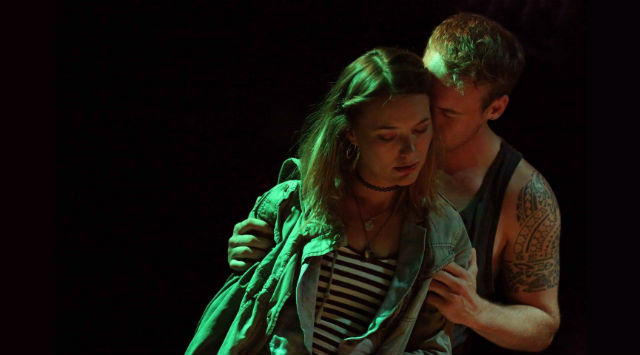
It is hard to care for the environment. Lives in developed countries have grown to depend on an exploitation of our planet that now requires much more than giving up aerosol cans and recycling newspapers to offer reparation. Paul Gilchrist and Daniela Giorgi’s Shut Up And Drive talks about our love/hate relationship and dependence on cars, examining the extent at which we have allowed the automobile to become indispensable. It looks at the way we blind ourselves to its negative impact, so that we may indulge in a sordid affair with the metal beast.

Gilchrist and Giorgi’s writing is about social and environmental responsibility, but it comes from a place of generosity that acknowledges human fallibility. It points out the things that we do wrong, but it is forgiving of our actions. It shows us how we can be better custodians of earth, but the choice is ours to make. Shut Up And Drive is often funny, and sometimes touching. Its intents are serious, and can sometimes fall into a didactic tone, but its short scenes and colourful characters ensure that the play always has a sense of intrigue and enjoyment. At every step, the plot provides something to think about, but is also consistently amusing.

Gilchrist does excellent work as director for the show’s many intimate scenes. He establishes strong chemistry between players, and brings a delightful variation in tone between moments to keep us attentive. Liam O’Keefe’s lights make a significant contribution in achieving those atmospheric transitions with great efficacy and minimal fuss.

Actors Tom Nauta and Eli Saad partner up for two memorable sequences that employ their individual and divergent comedic styles. Nauta’s ostentation and Saad’s wryness meet like hot oil and water for riveting and combustible results. Also very funny is Sam Glissan, a quirky individual with an idiosyncratic approach to performance that tickles all the funny bones. On the other end of the spectrum is Kit Bennett who leaves a remarkable impression with her sensitive portrayal of loss and regret. Her work is delicate and understated but disarmingly captivating, with an intense emotional power.

When we talk about environmentalism, conservation and sustainability, we are in fact talking about the future. Shut Up And Drive has a caring heart, and does its best to connect with our conscience. It makes us question how we feel about all this degradation, and presents a test of our selfishness. The car represents comfort, convenience and luxury, but it is also undoubtedly harmful on many levels. Life’s decisions are full of complications, but often, we actually do know right from wrong.

www.subtlenuance.com

Review: Year Of The Family (Tooth And Sinew Theatre)

toothsinewVenue: Kings Cross Theatre Kings Cross NSW), Feb 10 – 20, 2016
Playwright: Anthony Neilson
Director: Richard Hilliar
Cast: Peter-William Jamieson, Brendan Miles, Brooke Ryan, Nicole Wineberg, David Woodland

Theatre review
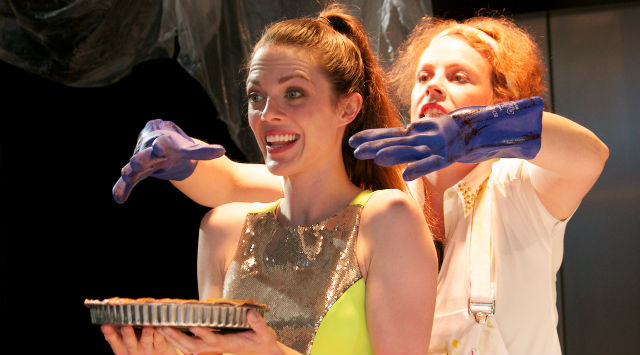
Human sexuality is a fascinating subject. Each individual’s bedroom inclinations vary as widely as the way we eat our food. No two appetites are exactly the same, yet we think of sex as a universal experience, and its taboo nature means that we rarely discuss its nitty-gritty at depth, choosing instead to imagine simple paradigms that would apply to every person. In Anthony Neilson’s Year Of The Family, sex is anything but normative. Its characters indulge in secret intimacies, and as we observe the functioning of each libido, connections are made with the unfolding dysfunctions of their family lives. Neilson appropriates the theatrical quality of that relationship between family and sex for a text that is tragic, comedic, and many shades in between, to reveal the repercussions that can occur as a result of familial breakdowns. His writing is playful and dynamic, but also surprisingly delicate. It broaches difficult subjects, but refuses to be exploitative or sensationalist.

Richard Hilliar’s powerful direction brings intensity to a staging that seeks to simultaneously entertain and provoke. There is an adventurous streak reflected in the clever use of space, especially in scene transitions (with the help of Liam O’Keefe’s very effective lighting design), along with a relentless and captivating energy to his creation that makes for compelling viewing. Hilliar’s sensitivity to dramatic tension is the production’s greatest strength, and the results are very satisfying indeed.

The cast is uniformly lively and focussed, but some roles are interpreted with more resonance than others. Brendan Miles provides intrigue and an appropriate restraint to the mysterious Henry. It is an understated, and literally quiet, performance that offers a counterpoint to the other larger than life parts, but Miles leaves a strong impression with the presence and precision he brings to the stage. As the manic Felicity, Nicole Wineberg is responsible for the more euphoric portions of the show. The actor presents a wildness that alternates between comical and terrifying, and provides the production with its delightful yet volatile spirit, but the role could benefit from greater emotional complexity.

The people in the play are troubled. They are trapped in heartache, unable to be released from the past. They form their own re-enactments of broken histories in cathartic attempts to move forward, but are as yet unsuccessful. Nevertheless they continue to strive, even if wallowing is part of the process. It is fact that we do not choose our families, but debatable whether we can be free of them. There is little happiness in Year Of The Family, but it is us who must decide where and how the matter of choice figures in their respective narratives, and then in our own lives, reflect on the ways we are entrapped, voluntarily or otherwise.

www.toothandsinew.com

Review: Roadkill Confidential (Lies, Lies And Propaganda)

liesliesVenue: Kings Cross Theatre Kings Cross NSW), Nov 11 – 28, 2015

Playwright: Sheila Callaghan
Director: Michael Dean
Cast: Alison Bennett, Sinead Curry, Michael Drysdale, Jasper Garner Gore, Nathaniel Scotcher
Image by Emily Elise

Theatre review
Trevor is not a happy artist. She watches the doom and gloom on the news to stay in touch with things so that her very high profile work in the field of visual art may be relevant to her public. In fact, her studio is highly secretive, maybe she is insecure about the unfinished product, or maybe she is trying to control the reaction to her controversial art. Meanwhile, a government agent is investigating her, and everything begins to look sinister. Sheila Callaghan’s Roadkill Confidential is however, no straightforward cop drama. It is an abstract and often surreal piece of writing that celebrates the dramatic art form by prioritising the stage’s unique abilities of relating to its audience. Beyond the use of a narrative to satisfy, the play features sequences that resonate independent of characters and stories. Its free form allows actors to create moments of wonder, in service of theatre and all its possibilities.

Michael Dean’s exuberant direction is concerned with creating an experience that fascinates and intrigues. The show’s plot is not always coherent, and we leave with uncertainty about the moral of the story, but there is much to get involved with at every step of the way. Lights by Richard Neville and Mandylights, along with Benjamin Garrard’s sound are playful and dynamic elements of a production that is determined to deliver whimsy and extravagance. Creativity is in abundance here, and there is little that holds it back from making its ubiquity felt in every nuance.

Performances are suitably colourful, from a committed ensemble, unified in style and tone. The charming Michael Drysdale plays the unnamed agent with a quirky flair, and a confident physicality that brings life to the stage. His work needs better polish to reflect a more precise grasp of the text, but Drysdale’s execution of the show’s anti-realistic scenes are consistently amusing, and memorable. The artist Trevor is depicted with admirable strength and vigour by Alison Bennett who introduces an alluring severity to the mysterious role. Her piteous neighbour Melanie becomes a force to be reckon with under Sinead Curry’s surprising interpretation. The actor’s flamboyant approach and magnetic presence provide her character with excellent entertainment value, and offers good balance to a show that has a tendency to bewilder.

There is no discussion about whether Trevor’s new work will be understood, yet its effects are gravely anticipated. We need to talk about theatre in a similar way; to allow it to do more than just telling stories. There is no fear of abstraction in this production of Roadkill Confidential because it believes in affecting its audience in a more inventive or perhaps, sophisticated manner. At the theatre, we share a space for a couple of hours, and when we go our separate ways, we will depart having grown a little. It is by that amount of extension that we can measure an artist’s worth.

www.liesliesandpropaganda.com

Review: His Mother’s Voice (Bakehouse Theatre Company)

rsz_attachmentVenue: ATYP (Walsh Bay NSW), Apr 30 – May 17, 2014
Director: Suzanne Millar
Playwright: Justin Fleming
Actors: Alice Keohavong, Angela Tran, Arisa Yura, Dannielle Jackson, Harry Tseng, John Gomez Goodway, Jonathan Lourdes, Michael Gooley, Monica Sayers, Renee Lim, Isaiah Powell
Image by Tessa Tran, Breathing Light Photography

Theatre review
China’s Cultural Revolution ended officially in October 1976, but its after-effects are felt everyday the world over. Today, China’s influence on the global economy develops rapidly, and the country is now widely known to be Australia’s largest trading partner. According to the 2011 census, 4 percent of Australians identify themselves as having Chinese ancestry, and that number continues to grow. Justin Fleming’s His Mother’s Voice is a story about the Cultural Revolution, and the defection of a Chinese pianist to Australia.

Fleming’s script is colourfully structured. With the story of Qian Liu as a young boy, it sets out to provide a dramatic background of the Cultural Revolution that would assist audiences who might be unfamiliar with that slice of history. When Qian matures and becomes a successful pianist, he takes an opportunity to defect to Australia, and the story takes a turn that allows a more direct connection with its intended audience. Fleming’s focus however resides with the relationship between Qian and his mother Yang Jia, who struggles against all odds to teach her son the piano, in the firm belief that music is integral to their family identity and survival. The universal ties between parent and child is rightly central to the story, as it is a theme that we all have an affinity for.

Director Suzanne Millar’s sensitive creation of scenes from the revolution are dynamic and fascinating. Her talent in the use of space and sounds crafts a show that is relentlessly engrossing (lighting designer Christopher Page and sound designer James Colla execute Millar’s vision with great elegance). She has a deep understanding of the audience’s senses, and we are kept entirely under her spell. The stage is kept very busy, but our minds are always carefully guided through all the action with clarity. The show she has built is an entertaining one, but casting issues prevent it from being the moving experience it wishes to be.

Henry Tseng is a perfect visual fit for the lead role, but a lack of authenticity in his characterisation disrupts the crucial relationships Qian has with his mother, and his wife. Without a believable emotional centre, the story is one we hear, but do not feel. Qian’s Australian wife is Emma Fielden, played by Dannielle Jackson. Jackson has a delightful effervescence that brings a necessary lightness to the often heavy going narrative, but can be slightly distracting when scenes require more gravity.

Renee Lim as Qian’s mother Yang Jia, is star of the show. Her performance is powerful yet varied, and her strong presence is consistently engaging. The level of commitment she exhibits is impressive, and it is noteworthy that she exercises restraint effectively on many occasions, although her emotional scenes are unmistakably remarkable. John Gomez Goodway and Michael Gooley both play their paternal roles with excellence, and Alice Keohavong and Monical Sayers are memorable in a humorous scene as bumbling officials negotiating Qian’s farcical reconciliation.

His Mother’s Voice is earnest, and beautiful. It does not always resonate, but it is fiercely captivating. The exoticism involved in dealing with foreign cultures is often tricky, but this production handles matters with respect and dignity. Fleming and Millar are to be commended for looking abroad in their search for artistic inspiration, and for a show that tells us who we are by finding the similarities that lie in the seemingly drastic differences between us and them.

www.bakehousetheatrecompany.com.au

5 Questions with Monica Sayers

rsz_1386076465What is your favourite swear word?
F#$%ING…. that’s fishing right? 😉

What are you wearing?
Yoga gear; lime green Lululemon singlet top and 3/4 length black leggings.

What is love?
Sing it, “baby don’t hurt me, don’t hurt me, no more!” Ah, good old Haddaway said it best in 1993 with this dance track. I believe love is multi-faceted. It can take on different forms of love like friendship, family, or a committed relationship, but ultimately it involves listening from your heart and acting out of loving kindness to the other or even to yourself.

What was the last show you saw, and how many stars do you give it?
Just saw a comedy on Friday night last week, Heaven Help Us at the Bordello. It was fantastic! Clever witty writing with a solid cast. 4 out of 5 stars.

Is your new show going to be any good?
Is it? Well… you’ll just have to come check it out for yourself and see! You’ll never never know unless you do. Personally, I think it’s going to be FAB!

Monica Sayers is appearing in His Mother’s Voice, from Bakehouse Theatre Company.
Show dates: 30 Apr – 17 May, 2014
Show venue: ATYP