Review: The Verbatim Project (Canberra Youth Theatre)

Venue: ATYP (Walsh Bay NSW), Jul 19 – 22, 2017
Director: Katie Cawthorne
Cast: Jean Bennett, Jasper Kilby, Denise Druitt, Jack Hubner, Katie Hubner, Merilyn Jenkins, Carol Mackay, Charlotte Palmer, Sao Hom Palu, Yarno Rohling, Diana Sandeman, Kate Sherren, Elektra Spencer, Ted Stewart, David Turbayne, Quinten Van Rooy

Theatre review
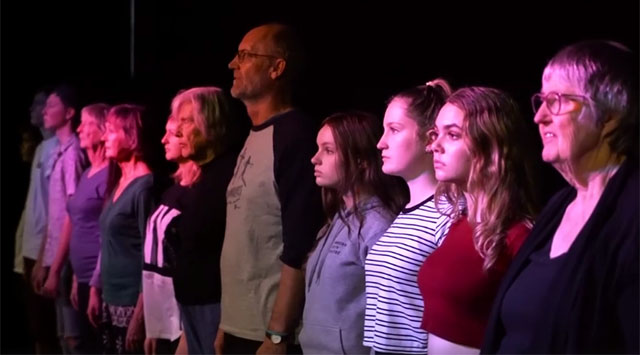
The cast is comprised of ten young Canberrans, from 14 to 16 of age, and six seniors, 65 to 80 years old. The Verbatim Project is a conversation across generations, offering an opportunity to look at how we contrast, and how we are consistent, within this unusual juxtaposition of peoples.

In their show, we hear thoughts about things that matter to Australians today, political, social and personal, through a wide variety of theatrical devices that help keep things interesting. Sound and video recordings, accompany the live physicality of its performers, consciously presented in movement and installation; using a multi-faceted approach to speak, without the use of a conventional narrative.

Director Katie Cawthorne and lighting designer Brynn Somerville, have structured a show that reveals the best of its cast. It is not a professional troupe, but all their strong suits are sensitively emphasised, with no distractions permitted to shift us away from a tightly assembled production. The text can sometimes be refreshing, but is generally predictable, with nothing controversial ever finding itself in the mix. It is a middle class look at middle class Australia, polite and well-meaning, and very civilised indeed.

There is a rigidity in The Verbatim Project that prevents anything from going wrong, but because nothing is left to chance, we are rarely able to discern the genuine connections between the personalities we meet. They are all too busy following instructions to let us in, on something more impulsive or spontaneous. Behind smoke and mirrors, we never really discover if the chasm of half a century can be bridged. Age can be made irrelevant, or it can mean everything.

www.cytc.net

5 Questions with Blake Erickson and Nicholas Starte

Blake Erickson

Nicholas Starte: The process of stepping into the role of such an iconic member of Australia’s history must be confronting. Has that affected your process compared to previous characters you’ve played?
Blake Erickson: I’ve played historical figures before and I find the process easier than creating a character from scratch, to be honest. Their life history is laid out before you, first-hand accounts of who they are and how they responded to events exist so you have a kind of blueprint for a character before you even begin. That said, this isn’t a historical re-enactment. This is a dramatic story based on real events. Cook is a colossal figure in British history, but in Australia and elsewhere his legacy is often linked with the tragedy of European invasion and imperialism. Between those extremes existed a human being and that’s what I’m interested in.

Why do you think this relatively unknown part of Cook’s history is important to Australian audiences today?
Absolutely. Australia has a lot of soul searching to do, the process of reconciling our history is ongoing. Cook didn’t discover Australia, New Zealand, the islands of the South Pacific or anywhere else inhabited by people. He was the point of first contact between the British and indigenous peoples across the world. What’s significant about Between Worlds is it allows this first-contact story to be heard from the side of indigenous Hawaiians. I think it’s really important that Australians don’t think of British explorers as “us” and indigenous people as “them”. I hope this show makes Australians pause and consider the side of history they’ve perhaps automatically aligned themselves with.

As an actor, what is your favourite part of developing new works?
It’s pretty darn cool when you’re the first person to perform new material, or better yet have material written especially for you. But more than that you get to help own the production in a way that you can’t when you receive the final script and get directed and choreographed into it. It’s the difference between wearing something tailor made and buying something off the rack.

Having been involved in a number of workshops of this piece, how has it developed from your first experience, to now?
I’ve worked on the development of many, many, many new Australian musicals. This is probably my tenth workshop of a new musical, this is my third on Between Worlds alone and I knew from the very beginning that Between Worlds was special. The marriage of musical styles between European music theatre and traditional Polynesian harmonies was utterly captivating from the get-go. The show is also a study in the frailty of people, and how a relentless desire to secure a legacy can prove lethal. I’m thrilled that with each workshop it just has gone from strength to strength and I’m so excited for people to see the show. Something I do not say about every show. Ahem.

How can you relate to this portrayal of Cook?
I’ve spent a lot of time in the Pacific region. I’ve travelled through French Polynesia, New Caledonia, Fiji, Hawaii, Wallis et Futuna, and spent a bit of time in Papua New Guinea as a kid. It’s a part of the world that is extremely close to my heart. Cook loved the Pacific, he literally idolised Polynesian culture in a way no European had ever done before. He’s also a man who feels that he has unfinished business, and I think any actor if they’re honest would tell you that no matter what you may have done it’s all about what’s coming up over the horizon. I’m just fortunate that what lies ahead is this beautiful show. Now, Nic, some questions for you…

Nicholas Starte

Blake Erickson: In a workshop how much influence does a performer have over the development of a new show?
Nicholas Starte: I think, like it or not, just having a work spoken out loud by actors for the first time brings out a whole new dimension. Fortunately for us, Nick, Gareth and Jason have given us a rare opportunity; a workshop space that feels extremely safe, where ideas are encouraged. I love this way of working and I think actors can be an author’s greatest resource, because it’s a chance to hear their characters fought for individually and not just looked at as a whole.

What’s been your favourite part of the process of workshopping a new Australian work like Between Worlds?
I love discussion. And anyone who has been in one of these workshops with me will know, this is easily my favourite part of the process. Talking about themes, coming up with ideas, problem solving, it’s just the best! I just have to reign in my excitement from time to time.

What do you see as the relevance of a musical about the death of captain cook to contemporary Australian audiences?
It really comes from the fact that this is not just a story about Captain Cook, at least, not the Cook we know from primary school. This story is about cultural conflict, seeing other cultures through the gaze of our own and the need for empathy, something that, frankly, is lacking today. We may be more exposed to other cultures and ways of life than ever before, but if anything, we’ve grown more ignorant of them. This play is a chance to see both sides of the story and also hear the part of Cook’s story we never heard as kids.

Just how difficult is the Hawaiian language component of the role?
Look, I’m not gonna lie, it’s a struggle, not just because it’s a foreign language, but it’s a dialect that has very little material for reference. While the language is still alive, the way it is spoken and the way many Hawaiians speak English has become very diluted. We’ve been taking accent inspiration from Polynesian and Maori accents and used the rules of the language itself to dictate the way we speak, but mate… those single syllable diphthongs are doing my head in!

How familiar were you with the historical events that form the basis for our play?
I was in the position I think most Australian audiences will be on first seeing this show. No bloody idea mate.

Blake Erickson and Nicholas Starte are appearing in the rehearsed workshop performances of Between Worlds the musical.
Dates: 15 – 16 July, 2017
Venue: ATYP

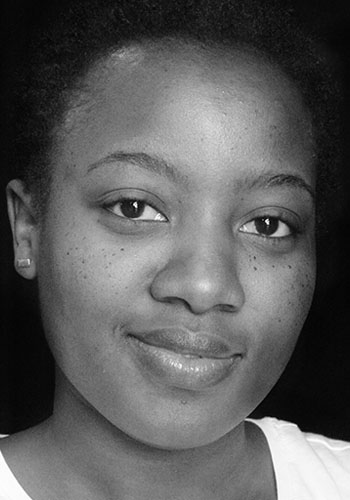
Review: Oedipus Doesn’t Live Here Anymore (ATYP)

Venue: ATYP (Walsh Bay NSW), Jun 7 – 24, 2017
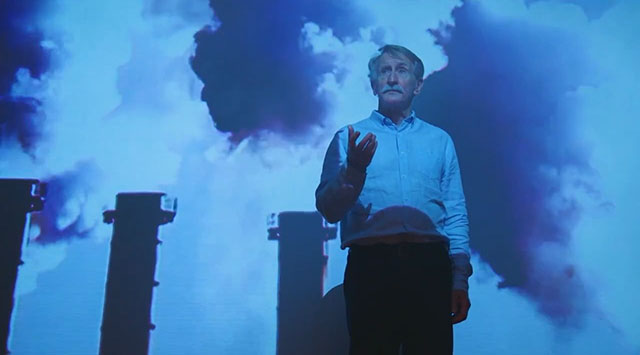
Playwright: Daniel Evan (after Sophocles)
Director: Fraser Corfield
Cast: Caitlin Burley, Jeremi Campese, Mia Evans Rorris, Joshua McElroy
Images by Tracey Schramm

Theatre review
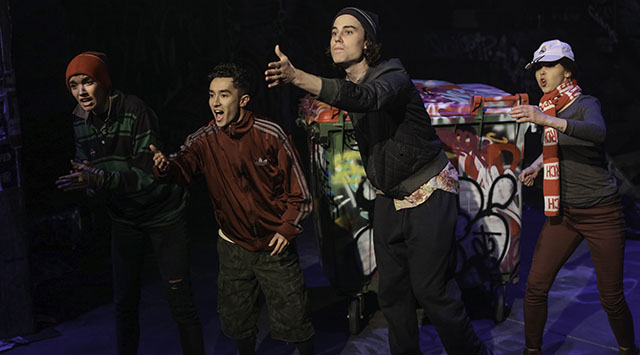
The story of Oedipus and his mother/wife Jocasta has remained in our consciousness over the centuries. The resonance that it provides, whether emotional, moral or simply shocking, is unquestionably deep, but in Daniel Evan’s rendition, it is the tangents departing from the classic narrative that are its real concern. In Oedipus Doesn’t Live Here Anymore, the familiar tale of taboo and tragedy, provides the framework for a passionate and somewhat erratic theatrical experience. Less drama, more experimentation, Evan’s elaborate embellishments reflect a barrage of contemporary ideas that give an unmistakable impression of rejuvenation, although the sense of turmoil so characteristic of Sophocles’ creation is certainly missed.

Director Fraser Corfield uses the intricacies of the text, to formulate a dynamic staging memorable for its quick and vibrant episodes, featuring a host of colourful and surprising characters. The cast of four demonstrates extraordinary focus and conviction, along with an exciting inventiveness that gives their show texture, dimension and depth. Caitlin Burley and Jeremi Campese are confident players who connect effortlessly with the audience, both actors charming and entertaining with the diverse range of personality types they put forth. Mia Evans Rorris and Joshua McElroy provide stable grounding to the production, sensitive and considered in their approach to the many roles they inhabit.

The show is remarkably well designed. The formidable set, evocative of urban dilapidation is as dazzling as it is dangerous; Melanie Liertz’s transformation of the challenging space is quite an achievement. Emma Lockhart-Wilson’s lights address the play’s unrelenting movement of time and space, with excellent certitude and power. Sound by Steve Francis and Chrysoulla Markoulli’s music, give the show a splendid sophistication and cohesion.

It is not a particularly poignant retelling of Oedipus’ life, but we certainly come away gratified by the evidence of a successful collaboration, that showcases some very significant talent.

www.atyp.com.au

Review: 2071 (Seymour Centre)

Venue: Seymour Centre (Chippendale NSW), May 26 – Jun 10, 2017
Playwrights: Duncan Macmillan, Chris Rapley
Director: Tim Jones
Cast: Lucy Brownlie, John Gaden, Heath Jelovic, Ellery Joyce, Jacqueline Morrison, Sasha Rose, Matthew Simmons

Theatre review
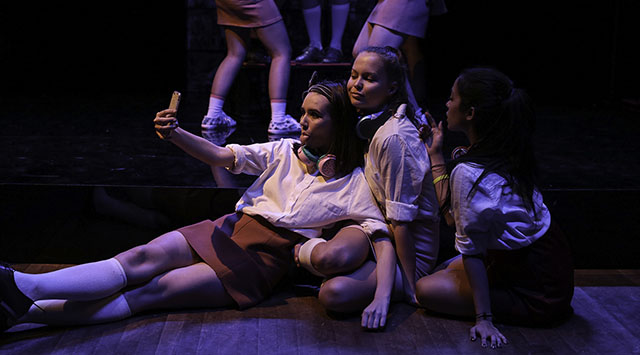
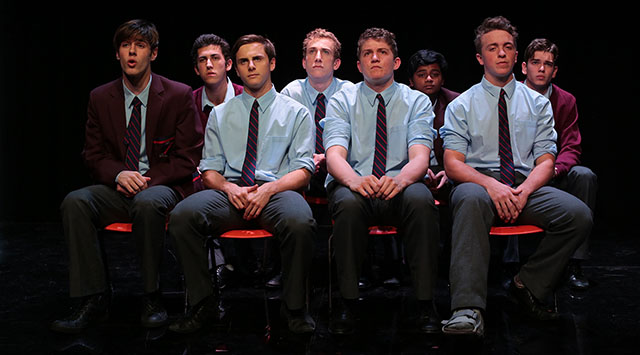
In 2071: a performance about climate change, we have to listen closely to a lesson about the science of our climate. There are projections to look at, and children forming occasional tableaux to help illustrate the point, but it is only the words that we should pay close attention to. Clearly a very serious matter, and for those of us less keen on scientific study, the details are challenging. It is an issue that requires tremendous focus, but when we invest, with determination, to hear what is being said, 2071 is undoubtedly rewarding.

Essentially a monologue, the writing feels no different from a lecture, dense with facts and evidence. The layperson would struggle to absorb every sentence uttered, but there will certainly be pertinent points that resonate for each individual who is present. It contains no surprises, but the production does communicate a sense of urgency to drive home the message. Music by Andrée Greenwell, and actor John Gaden’s delivery, are responsible for the hastened air of impulsion at conclusion.

The science points to an impending ecological disaster. Whether or not one wishes to accept the causes that lead to this state of devastation, every citizen of the world must commit to improving the conditions in which we have to live. Only the most masochistic and nihilistic will choose to persist with the status quo, but it must surely be a very small minority that wants to watch everything come to a painful ruin. Now is the time to be fearful of complacency and inaction.

www.seymourcentre.com

Review: Homeroom Series (ATYP)

Venue: ATYP (Walsh Bay NSW), May 10 – 19, 2017
Images by Tracey Schramm

Girls Like That
Playwright: Evan Placey
Director: Robert Jago
Cast: Annika Bates, Claire Giuffre, Ella Hosty-Snelgrove, Rashie Kase, Michelle Khurana, Molly Kyriakakidis-Costello, Miranda Longhurst, Emily Longville, Natasha Pontoh-Supit, Cara Severino, Emily Simmons, Lucy Valencic, Lara Wood

Michael Swordfish
Playwright: Lachlan Philpott
Director: Tamara Smith
Cast: Ashutosh Bidkar, Eden Bradford, Fergus Finlayson, Jason Hartill, Tim Kenzler, Louis Nicholls, Angus Powell, Daniel Steel, Gus Watts

Theatre review
Two plays about teenagers in high schools, both utterly contemporary, and equally relevant to the Australian experience. Evan Placey’s Girls Like That makes a powerful statement about feminism for the young, and Lachlan Philpott’s Michael Swordfish offers unconventional observations about teenage masculinity. Uncompromisingly complex, they each offer an unusual opportunity to explore adolescence in ways that might be surprising, through themes that are confronting but pertinent to all our lives. We watch the young, and learn about ourselves.

Robert Jago’s exquisite direction of Girls Like That is powerful, deeply engaging and thrilling in its combativeness. Michael Swordfish takes a gentler approach, with director Tamara Smith offering a poetic perspective to our young men’s lives. Designers, too many to mention, do an excellent job for an impressive pairing of shows that look and sound as vibrant as they are polished.

The actors are uniformly compelling and enthusiastic, with many displaying very fine potential for serious careers in performance. Cara Severino’s ebullience is unforgettable, while Rashie Kase has an unshakeable authenticity that can convince us of anything. Louis Nicholls portrays his character with a sense of creative freedom and adventure, and Gus Watts captures our attention with a confident hand at subtle comedy. These fledgling artists, all 22 of them, should feel greatly encouraged by the outstanding quality of work here.

The characters are in their formative years, so what they acquire now, could well stay with them for the rest of their days. What happens to them, and how they react, are depicted in both plays with a degree of honesty, that does not allow us to detach. For their contexts of juvenility, it is easy to diminish these experiences and consider them trivial, but contained within their microcosms, are truthful interrogations about our shared existence. Through these kids, we discern right from wrong, and decide how we must evolve.

www.atyp.com.au

Review: Political Children (ATYP)

innerwestyouthVenue: ATYP (Walsh Bay NSW), Mar 1 – 3, 2017
Playwright: Felicity Nicol
Director: Felicity Nicol
Cast: Sebastian Cutcherwirth, Emma Hooton, Elodie Jake, Lola Rose van Overdam, Theo Tunks
Image by Michael Snow

Theatre review
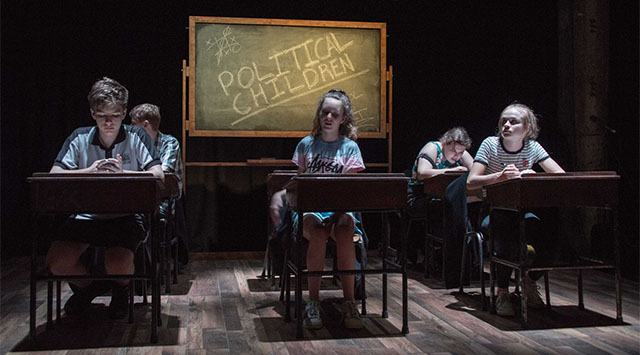
Felicity Nicol’s Political Children emerges from the Safe Schools debacle, that saw a national program designed to protect LGBTQI children, turn into a battle ground, on which members of government and the media were able to focus their hateful rhetoric for political gain. A pretense of public debate allowed prejudice and misinformation free rein, culminating in a state of hysteria that saw ignorance and idiocy triumph.

An opportunity to educate new generations on the true nature of human sexuality and gender expressions, was quickly shut down by forces of bigotry. Fearful of enlightenment and the consequential benefits to society, the disdainful have severely hindered what was to be the end of our worst prejudices. Not only are there people who want to live in lies, it seems that they are the ones who have the power to preserve a particular modus operandi that relies of the systematic subjugation, vilification and abuse of parts of our community.

It is a piece of verbatim theatre, of sorts. Composed of material from Australia’s vast media landscape, what we hear in Political Children are things people have said, previously documented on different platforms, now collated and presented on this stage. Nicol as both writer and director, is exacting and forceful. There is nothing ambiguous in what the play wishes to express.

Lights by Benjamin Brockman and music by Nate Edmondson are employed with a deft touch to guide us boldly through every unequivocal statement; technical design for the production is heavily relied upon not just to cue emotional responses, but also to help us with all the character and plot details we need to know. It is a very young cast of actors, teenagers full of gumption, ready to discover the wondrous magic of the art form, along with a deep exploration into the complex social aspects of sexual and gender diversity.

When it comes to pleasures of the flesh, there is nothing to fear but fear itself, yet our consciousness is filled with taboos and prohibitions, oppression and suppression, and a whole lot of guilt, in relation to the experience and conception of sex. Our practice of gender too, is informed by wholly arbitrary and harmful rules that wish to limit each person’s potential, all of which seek to control, and to persecute. Nobody stands to benefit from the persistence of this utter and cruel stupidity, not even its most fervent advocates.

www.atyp.com.au

Review: Intersection (ATYP)

atypVenue: ATYP (Walsh Bay NSW), Feb 1 – 18, 2017
Playwrights: Peter Beaglehole, Angela Collins, Thomas De Angelis, Isabella Jacob, Suzannah Kennett-Lister, Louis Klee, Laura Lethlean, Isabelle McDonald, Kevin Ngo, Charles O’Grady, Eliza Oliver, Farnoush Parsiavashi, Zoe Ridgway, Anita Sanders, Michelle Sewell, Jordan Shea, Brenden Snow, Lewis Treston, Mark Tripodi, Jackson Used, Honor Webster-Mannison
Director: Katrina Douglas
Cast: Tamara Bailey, Asha Boswarva, Alex Chalwell, Alex Chorley, Sonia Elliott, Elliott Falzon, Rebecca Gulia, Monica Kumar, Steffan Lazar, Ingrid Leighton, Hudson Musty, Kurt Pimblet, Esther Randles, Iris Simpson, Adam Stepfner, Ilai Swindells, May Tran, Darius Williams, Jackson Williams
Image by Tracey Schramm

Theatre review
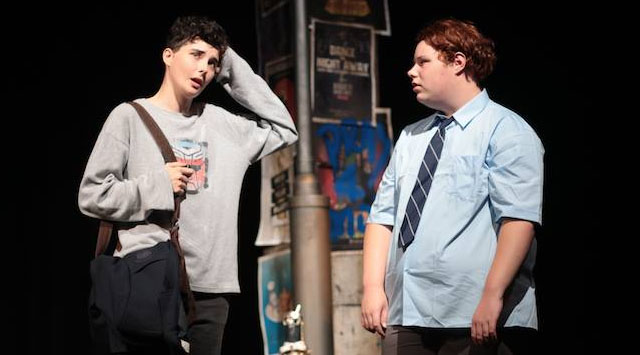
Somewhere in the background there exists a high school formal, but what we see on stage are ten stories written and performed by young people, about young people who may or may not be connected with each other. Intersection is an earnest and wholesome collection of personalities, reflecting interests and concerns of today’s middle-class Australian youth.

Jordan Shea’s Little Differences is perhaps the most consciously political, in its passionate investigation of teenagers negotiating differences in religious and cultural backgrounds. Also significant is Charles O’Grady’s subtle depiction of queer identities in Pray 4 Mojo, whereby two lonely souls form a charming bond of friendship through their shared ostracism. Actors Kurt Pimblet and Adam Stepfner prove themselves sensitive and intelligent, offering up great insight into adolescence with their very charming tale.

Excellent performances can be found in Lewis Treston’s Starlight Plaza, in which romantic leads Ingrid Leighton and Steffan Lazar establish spectacular chemistry, transforming a sweet love story into the most engaging vignette of the production. Eminently memorable comedian Monica Kumar brings the laughs in Cassie And Saoirse by Suzannah Kennett Lister, a quirky piece involving an urn and the tricky business of mourning. Asha Boswarva is equally impressive with her delicately balanced portrayal of the recently bereaved.

There is an unmistakable warmth that comes through every one of the show’s segments. Director Katrina Douglas instils a soulful quality that translates as a sense of truth for the audience, even when the stories turn obscure. Creativity materialises in an infinite number of ways, and in Intersection we witness different dispositions and approaches, all finding their way to voice the things that matter. We may not always connect or indeed, agree on all of those things, but to be able to meet at a space of artistic expression, is a moment of harmony that is undeniably precious.

www.atyp.com.au

5 Questions with Asha Boswarva and Ilai Swindells

Asha Boswarva

Asha Boswarva

Who are the characters you play in Intersection and how are they similar to you?
Asha Boswarva: I play Saoirse a girl who is grieving over the first death in her family. She’s unsure how to deal with the situation and is trying to escape from the claustrophobic weight of the family’s heartache. During rehearsals for Intersection, my grandfather died and my feelings of loss became very similar to my character. I realised that, I too would do anything to make a loved one happy.

What has been the weirdest/funniest bonding moment with one of your fellow cast mates?
There have been many hilarious bonding moments, some which can’t be shared ‘what happens in rehearsals, stays in rehearsals’ but recently Steffan, again who plays Stuart forgot his costume prop in our full rehearsal run. He grabbed a denim jacket not knowing it was mine and came on stage wearing a size 6 girl’s jacket. It looked like a crop top on a 6ft guy and it cracked up the whole cast.

The show is a big amalgamation of unique coming of age stories, will you share one of your most significant coming of age moments from your life?
Working on Intersection is a significant coming of age moment for me. At 15, it’s the first time I’ve been in a production with a large cast that is significantly older than me. We’re telling Australian stories that include swearing, drug and sexual references but they are genuine and could be happening around Australia on any given Friday or Saturday night.

If you could work with any artists in the world who would be at the top of your list?
Matt Damon would be top of my list. He’s written his own stories – Good Will Hunting, produced movies – Manchester By The Sea and is now directing. He does funny, serious and action and seems like a genuine guy. I also would have loved to work with Audrey Hepburn and Robin Williams both incredible actors.

What has been the most valuable thing you’ve learnt from working in an ATYP production?
Sounds simple but to listen. I’ve learnt different styles and techniques from each of the cast members and director Katrina Douglas. There’s a bit of swearing in my scene and I’ve managed to pick up a few tips on that front too. Essentially, an ATYP production is like no other. It gives young actors a chance to work as professionals.

Ilai Swindells

Ilai Swindells

Who are the characters you play in Intersection and how are they similar to you?
Ilai Swindells: I play Hassan in Intersection and in the play we watch him lose his best friend, get his heart broken and be absolutely reduced to nothing. Can’t say I’ve had my heart broken just yet but I have definitely had many low points in my life where I’ve been reduced to nothing whether that was because of a friend or a tough situation I found myself in, I can relate! Also the characters all live in this super small town and having grown up in a small town myself with not much to do, I can relate to the boredom and dangers that come with too much idle time.

What has been the weirdest/funniest bonding moment with one of your fellow cast mates?
For Australia Day this year I spent the day randomly signing up to Chatswood RSL and spending some time there with another cast mate Steffan Lazar who plays Stuart and is hilarious. We basically took advantage of the cheap RSL prices and watched people play the pokies with intense fascination.

The show is a big amalgamation of unique coming of age stories, will you share one of your most significant coming of age moments from your life?
So many come to mind and so many are not appropriate to share I bet! I think finishing school is a pretty liberating experience especially since I grew up in rural central Queensland so moving to big and better places like Sydney is little life changing in its own right.

If you could work with any artists in the world who would be at the top of your list?
Quentin Tarantino. But I hear he is only making a certain number of movies and he’s almost reached that number. So sadly I don’t see that happening…

What has been the most valuable thing you’ve learnt from working in an ATYP production?
The opportunity to work with such a large cast of young people has been a fun first for me especially one with such a broad age range has presented its own unique insights. Having not done much theatre work, ATYP has been great and made the transition from screen to stage a comfortable one and Katrina Douglas (Director) who is very much a team player and takes on board your offers which allows the process to be a team effort.

Asha Boswarva and Ilai Swindells can be seen in Intersection by the writers of ATYP’s 2016 National Studio.
Dates: 1 – 18 Feb, 2017
Venue: ATYP

Review: Journey’s End (Cross Pollinate Productions)

crosspollinateVenue: ATYP (Walsh Bay NSW), Oct 12 – 22, 2016
Playwright: R.C. Sherriff
Director: Samantha Young
Cast: Alex Beauman, Luke Carson, Alex Chalwell, Jack Crumlin, Oliver Crump, Patrick Cullen, George Kemp, Dean Mason, Sam O’Sullivan, Govinda Röser, Aaron Tsindos, Michael Wood
Image by Mansoor Noor

Theatre review
There are always battles being fought somewhere in the world, but we keep this knowledge compartmentalised, out of sight, out of mind. Horrific thoughts are crippling, and for most of us, to keep on living is to forget the atrocities that are happening in faraway lands. When we hear about them on the news, they can seem abstract and alienating, and we think about them as events that happen to other people.

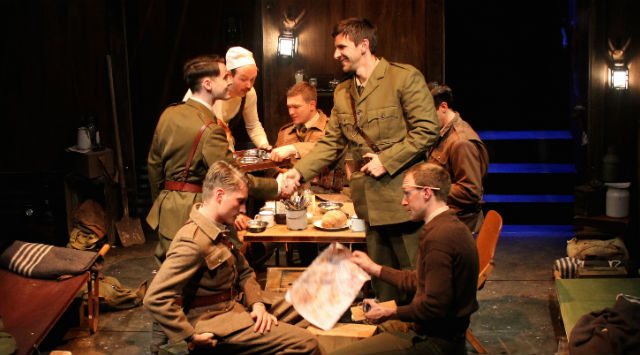
Journey’s End brings us into the intimate setting of the WWI British trenches, where we encounter regular, good men, as they try to keep calm and carry on with the business of war. In R.C. Sherriff’s play, the soldier’s stories and memories feel like personal accounts that can only help to humanise sacrifices made on the front line. It is easy to send young lives off to war, until our own children are the ones being called up.

Drama is punctuated effectively by Samantha Young’s direction, for an engaging plot that belies its age. A clarity of emotion is introduced into the all-male setting, allowing us to perceive the turmoil that the troops try to hide. Actor Sam O’Sullivan is a highlight in the role of Osborne, authentic with his speech and physicality, and tender in his portrayal of the senior officer. Michael Wood is similarly impressive as Hibbert, charming and sympathetic for a boy too immature to be fighting for his country. Jack Crumlin is suitably volatile in the substantial part of Stanhope, although transitions between emotional states can seem abrupt.

The subject matter is important for as long as we continue to participate in warfare, and as was Sherriff’s intention, it is crucial that we look at soldiers, not as concepts, but as palpable individuals. We need these stories to be real, and we need those who survive to tell their truths. Journey’s End is approaching a century old, and bears the look and feel of a period drama. There is a need for today’s equivalent, so that we can get even closer to the abhorrence, in order that we may learn to take greater care in how we treat our neighbours, and ourselves.

www.crosspollinate.com.au

Review: Drift (Two Peas)

twopeasVenue: ATYP (Walsh Bay NSW), Jul 20 – 30, 2016
Playwrights: Tara Clark, Kieran Foster
Director: Tara Clark
Cast: Ayeehsa Ash, Challito Browne, Olivia Jubb, Adam Kovarik, Alex Packard, Lauren Pegus

Theatre review
Six friends, tightly bonded, navigate the challenges of early adulthood together. When one of them is diagnosed with a terminal illness, their lives begin to unravel. Tara Clark and Kerian Foster’s Drift looks at friendship for twentysomethings, and the effect death has on them as individuals and as a group. There is a charming simplicity to the writing that presents the nature of relationships with a graceful honesty. The dynamics between friends, lovers, and siblings are depicted accurately and intimately in a series of small scenes, many of them meaningfully mundane.

The production however, charts a haphazard emotional journey that does not deliver us to its desired conclusion accurately. We struggle to connect sufficiently with appropriate personalities and narratives for a focused enough experience that would arouse the sentiments necessary for what the show tries to achieve. In the absence of lead roles, our attention is spread thin, and unable to find suitable empathy for appropriate characters, we are kept outside of their microcosm. Performances are accomplished, although the players seem to take time to settle, only able to establish chemistry and energy after several minutes of imprecision. Adam Kovarik impresses in the role of Harrison, bringing much needed exuberance and authenticity to a play that is essentially about our raw emotions. The actor’s vigour brings life to the stage, and with a distinct sense of theatricality, relays his part of the story with clarity and ironic humour.

Death is the end of suffering, but is also agony for loved ones left behind. Time is key in the process of mourning. Nothing can speed it up, but one has to find ways to fill that time. Theatre is the most ancient form of time-based art, and in Drift, we spend moments with its characters counting the minutes as they contemplate the future after being inflicted with an abrupt end. For a life well lived, there must be movement forward, but for motion to matter, stillness must be embraced. While we are alive, heaven and hell are the here and now, both inescapable and both requiring our complicity, in order that our brief existences may become rich, and loved.

www.thetwopeas.com