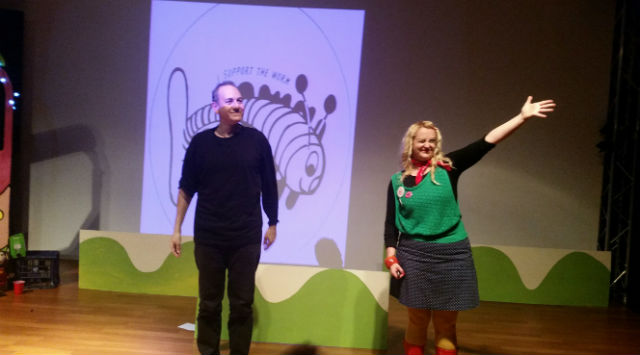
Review: The Giant Worm Show (Melita Rowston’s Shit Tourism)

melitaVenue: The Old 505 Theatre (Newtown NSW), Sep 6 – 10, 2016
Playwright: Melita Rowston
Director: Melita Rowston
Cast: Benito Di Fonzo, Melita Rowston

Theatre review
Melita Rowston remembers a giant pink worm she had once seen in a parade, and goes on a wild goose chase to recover memories from her childhood. In the process, nostalgic tales of a small country town are brought to light, along with quirky personalities who steal our hearts, through strange anecdotes that are as surprising as they are moving. Rowston’s production is a charming one, unabashedly sweet but also revelatory in its portrayal of country people, their challenges, and their passions.

Presented in the form of a parody of a faux children’s tv programme from Saturday nights of a bygone era, Rowston is joined on stage by 2 puppets, confidently operated by Benito Di Fonzo. It is a basic and completely unpretentious setup, but its humour is effective, with a palpable quality of sincerity that is key to The Giant Worm Show‘s poignancy. There is an unmistakable melancholy that comes with Rowston’s regard for a time and place she had left behind, inconspicuous but powerfully resonant for city folk with tendencies of romanticising rural life.

When the going gets rough, we hark back to days of innocence, longing for the peaceful and secure existence of infants; wrapped up in cotton wool, merry and oblivious to all troubles of the world. Life is never perfect, but we often access the past through a kind of psychological filter that only allows the best to return. The pleasure of nostalgia is delusive, but also necessary. We need to know the sensation of peace and optimism in order to forge ahead, in search of an ideal future, informed by imagined pasts.
www.melitarowston.com

Review: Who Am I (The Old 505 Theatre)

old505Venue: The Old 505 Theatre (Newtown NSW), Aug 2 – 20, 2016
Playwright: Russell Cheek
Director: Stephen Abbott
Cast: Russell Cheek

Theatre review
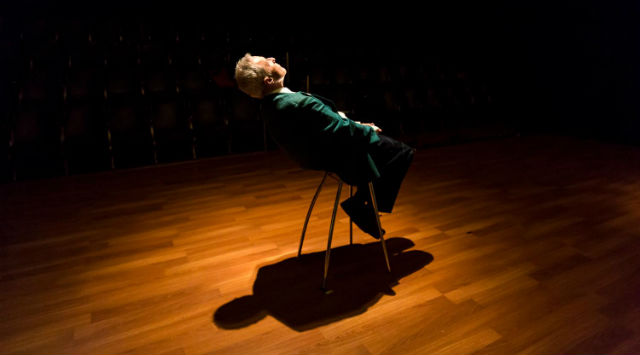
Watching game shows on television is perhaps one of the most frivolous ways to spend time. Obscure questions might be asked of its contestants, but what it offers viewers is mind-numbing entertainment that does little more than to help soothe away the day’s worries. None of it holds meaning for us after the 25 minutes have past, and we scarcely remember anything that had secured our undivided attention previously. This is not the case for Russell Cheek, who in 1993 participated in Sale Of The Century, one of the countless game shows to have appeared on our screens since the early days of broadcast technology. It was a life changing experience for Cheek, and in Who Am I, memories of that special time is presented to us, by a protagonist still spirited and surprisingly engaging in his one man show.

Cheek’s show entices with nostalgia, humour and a rare optimism. The prospect of sitting through 70 minutes of a man recollecting an event that is of consequence only to himself, seems farcical and banal at the outset, but we soon find ourselves investing in his tale. It is a story that appeals to our insatiable thirst for hope, and proves itself to be buoyant to a remarkable degree. Cheek is here to share in his joy, and it is terribly infectious. The script is simple but rigorously worded, so that its imagery is vivid, and the punchlines it delivers are definite. Stephen Abbott brings a discerning approach to direction that gives the show a delightful and relentless playfulness, while maintaining an air of elegance to proceedings. Cheek wins us over with charisma and a genuine eagerness to connect, and even though certain sequences seem slightly under-rehearsed, his ability to put all at ease makes for a pleasurable time at the theatre.

It is a turning point in life, with talent and chance coinciding to provide Russell Cheek with not just a unique anecdote for the ages, but also financial rewards and the associated freedoms that many of us can only dream of. We discover a comfort in the knowledge that dreams do come true and fairy tales can happen, and when it is a good person who has reaped the benefits, we are all the happier.

www.old505theatre.com

Review: Hurt (White Box Theatre)

old505Venue: Old 505 Theatre @ 5 Eliza St (Newtown NSW), Jul 5 – 23, 2016
Playwright: Catherine McKinnon
Director: Kim Hardwick
Cast: Ivan Donato, Meredith Penman, Gabrielle Scawthorn

Theatre review
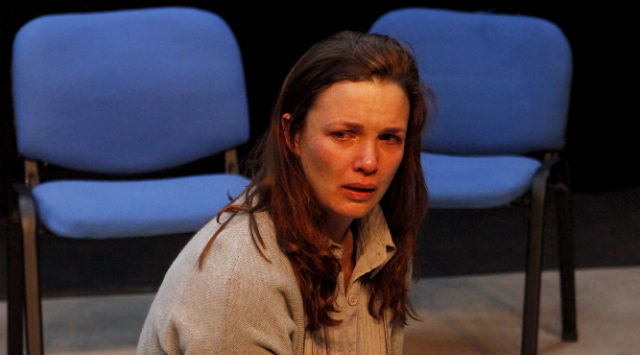
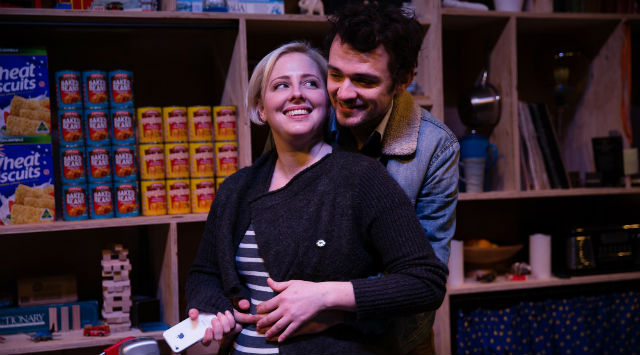
A horrific road accident brings the breakdown of a relationship to its accelerated boiling point. Surrounded by trauma, Mel and Dom are in a state of anguished disintegration, trying to make sense of marriage and family amidst the smithereens. Catherine McKinnon’s Hurt is ruthless in its depiction of human frailties. Through themes of parenthood and misfortune, her play illustrates life at its most difficult moments, asking us to consider the importance of empathy and compassion, not only for others but also for ourselves. There is a complexity to the writing that demands of us, deep analysis as well as a humane response, bringing attention to the nature of our collective ethics and values. Hurt is both controversial and mundane, exposing highly contentious issues within a context of common occurrences, to orchestrate great dramatic tension for the theatre, and to challenge the ways we think about life and the way we treat one another.

Director Kim Hardwick brings a lethal combination of operatic emotionality and psychological acuity to a production that enthrals from start to finish. The interplay of characters constantly fluctuates to keep us mystified and on edge, but a sense of truth prevails no matter which way the show’s tone oscillates. An unrelenting and dark intensity drives the plot through its surprising revelations, with a seductive force, impossible to resist, drawing us further and further into its agonising quagmire. Production design adheres to Hardwick’s powerful but subtle aesthetic approach. Set design by Isabel Hudson, lights by Martin Kinnane, and Katelyn Shaw’s soundscapes provide the cast with elegantly effective backdrops against which their magic happens.

Meredith Penman plays Mel, the troubled mother of two, with a delicious daring that complicates our need to sympathise and deride. Resisting the temptation to turn her character into a convenient victim, Penman’s ability to portray convincing fallibility is key to the show’s brilliance. No parent can ever be perfect, but we hold them to a certain standard that Mel’s story shows to be impossible for many. The role of Alex is performed by the very impressive Gabrielle Scawthorn, whose work in Hurt is nothing short of spectacular. Perfectly measured and delicately balanced, Scawthorn’s creation is simultaneously brutal and tender, displaying an extraordinary vulnerability in her undeniably painful process. Ivan Donato provides excellent support as Mel’s husband Dominic, with a focused conviction that helps sustain the protracted and mesmerising hysteria of Mel’s world.

When it all comes tumbling down, we are faced with the choice of surrender or struggle. We watch the people in Hurt fight through incredible hardship, and worry if their spirit can pull them through. We want to believe that our fortitude can surmount anything, but the truth is that weakness co-exists with strength, and can sometimes be the element that defeats. It is in trauma, that one’s mettle gets tested, and even though every successful attempt to overcome must be celebrated, it is necessary that our failures are afforded forgiveness.

www.whiteboxtheatre.com.au

Review: The Block Universe (Or So It Goes) (The Old 505 Theatre / Cross Pollinate Productions)

crosspollinateVenue: Old 505 Theatre @ 5 Eliza St (Newtown NSW), Jun 6 – 25, 2016
Playwright: Sam O’Sullivan
Director: Dominic Mercer
Cast: Briallen Clarke, Jacob Warner
Image by Kate Williams

Theatre review
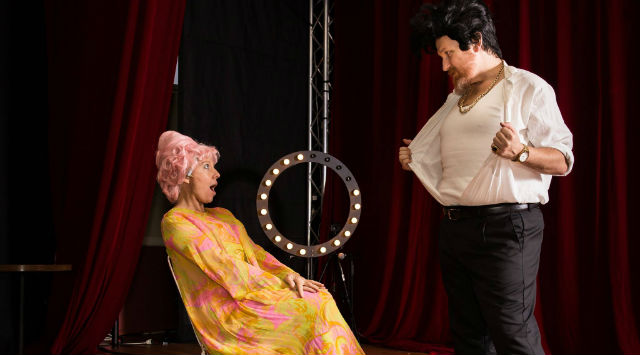
Andrew the philosopher tells his love story the only way he knows how. He believes that our time in the world is predetermined, and that our past does not simply disappear but exists in a different realm. He tries to access history to relive happier times, but finds his intellectual idealism unable to provide the comfort he requires. Sam O’Sullivan’s The Block Universe is about a man’s heartache, and his fascination with time. The play takes the thematic opportunity to build upon itself a thoroughly interesting structure, based on Andrew’s theories of determinism, for an unusual plot trajectory that depicts time in an unconventional manner. The boy-meets-girl story that it contains is however, nothing out of the ordinary, and although charming in its mundanity, is insufficiently dramatic for us to engage more deeply with Andrew’s anguish.

The play is directed with an understated elegance by Dominic Mercer, who brings surprising clarity to the text’s philosophical interests. Isabel Hudson’s work on set design is thoughtful and artistic, providing ease of functionality to actors and evocative symbolism to the audience. Further visual sophistication comes from lighting designer Alex Berlage, who creates a large number of scene transitions and a wide range of atmospheric manipulations with little resource other than sheer ingenuity. Equally accomplished is Alistair Wallace’s work on sound that guides us through the play’s complicated timeline with a penetrating sensitivity that accompanies its auditory dynamism.

The stars of the show are its captivating actors, both charismatic, and thoroughly authentic with what they present. Playing Andrew is Jacob Warner, vulnerable and truthful in every moment, with a subtlety that draws us in but delightfully energetic in his stage presence. Briallen Clarke impresses with a performance full of nuance and intensity, while maintaining excellent humour in her very vibrant interpretation of Kristiina. The duo’s chemistry, and the timing that results, is flawless and the relationship they portray is utterly believable.

Our emotions are shielded from Andrew’s heartache in The Block Universe. We see him crumbling before our eyes, but the play prevents us from responding with feelings, choosing instead to elicit an analytical acknowledgement of his pain. Indeed, philosophy and analysis can often ease our suffering, and the transference from heart to brain, can be an effective means to dealing with loss and mourning, but as demonstrated by Andrew’s experience, the solution is only temporary. There is no escaping the fact that matters of the heart need to be treated at the origin of their hurt, and Andrew will not be able to think himself out of his troubles. If we refuse to address the real issues that eat at us, we will be trapped in a perpetual cycle of agony, obstructed from resolution and emancipation, blocked from salvation and peace.

www.crosspollinate.com.auwww.venue505.com/theatre

Review: Oh My God I Have Been Kidnapped & I Hate What I Am Wearing (The Old 505 Theatre)

old505Venue: Old 505 Theatre @ 5 Eliza St (Newtown NSW), May 10 – 28, 2016
Playwright: Drew Fairley
Songs: Mikey Lira
Director: Liesel Badorrek
Cast: Drew Fairley, Kate Smith
Image by Michael Bourchier

Theatre review
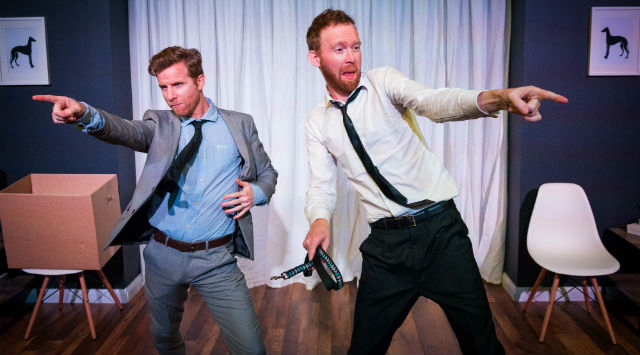
It is a comedy show with generous doses of cabaret, burlesque and musical theatre elements added to the mix. Completely frivolous and silly, Drew Fairley’s Kidnapped is pure entertainment that avoids serious themes and poignant emotional narratives, but impresses with the quality of talent that it showcases. Sugar is the aspiring artist at the centre of our attention, but it is the artists involved in telling her story that are remarkable.

Mikey Lira’s songs are charming and surprising, each with a strong sense of character that enriches the scenes in which they appear. Sound quality in the auditorium requires improvement (as does lighting design), but musical numbers in the show are a joy nonetheless. Choreography and other physical aspects of performance are cleverly devised, utilising every muscle of its actors to fill the space with movement and lively presence.

Formidable leading lady Kate Smith struts her stuff from head to toe, delivering comedy of the highest calibre, immense in its dexterity and inventiveness. Hilarious throughout, and deeply endearing, she has us in the palm of her hand and we find ourselves swept away into waves of laughter with her supreme, indomitable confidence. We never stop wanting more and she never ceases to amaze. Not content with being playwright, producer and musical director, Drew Fairley appears on stage with Smith, with similarly gleeful results. Fairley keeps the limelight squarely and appropriately on his co-star, but is himself more than a capable supporting actor. His work is full of sharp humour and extravagant flourishes, informed by a kooky sensibility that gives the show its irresistibly unique flavour. Chemistry between the two is flawless and stands as the key ingredient to Kidnapped‘s success.

There are few shows as funny as this, because convergence of talents are rarely as perfect as on this occasion. From its writing, to performance, to Liesel Badorrek’s very brave and instinctual direction, a beautiful harmony is established for a small but very special theatrical moment. It delights us, having us grin from ear to ear and cackle with joy, and it inspires us by showing us what artists can do when given the opportunity to demonstrate the best of their abilities. We have trouble giving artists what they are due in Australia, and although Kidnapped has today materialised gloriously in our fragile artistic landscape, we must think of other missed opportunities, and consider our priorities and responsibilities as a society, and we must decide to spend that investment on a little thing we call our soul.

www.venue505.com/theatre

Review: The Best Brothers (The Old 505 Theatre)

old505Venue: Old 505 Theatre @ 5 Eliza St (Newtown NSW), Apr 13 – 30, 2016
Playwright: Daniel MacIvor
Director: Gareth Boylan
Cast: Sean Lynch, Johann Walraven

Theatre review (of a preview performance)
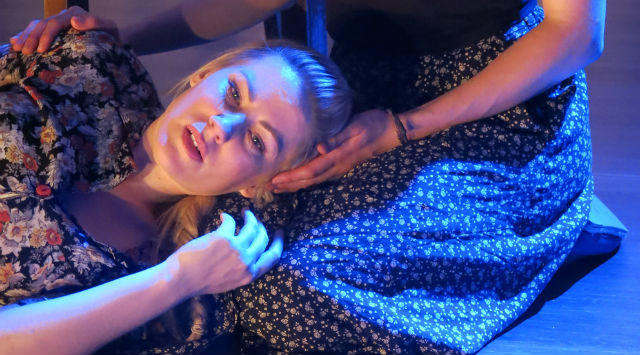
Like many other brothers, Hamilton and Kyle Best are not an affectionate pair. There is something about the closeness of siblings that can often prevent them from expressing tenderness for each other; a kind of certainty and confidence resides in their bond that renders physical and verbal assurances of love unnecessary. Of course, there is also the issue of maleness, of always assuming a hard exterior in the daily practice of gender, that ensures minimal sentimentality between men. Canadian playwright Daniel MacIvor’s The Best Brothers is a quirky look at family dynamics and a witty depiction of contemporary masculinity. Its comedy is subtle and unconventional, but deeply charming.

Gareth Boylan’s quiet, almost stoic approach as director provides a stylish framework for our enjoyment of the Bests. There is a story to be followed, but the play’s real concern is its characters and relationships, and Boylan’s unique aesthetic is a delightful aperture through which we explore the brothers, their mother and her dog. It is a smartly designed production, with just enough lighting and sound embellishment adding interest, in order that our senses may engage meaningfully. Set design is sleek and effective, although greater care should probably go into the masking of wings to minimise distraction from backstage activity.

Playing Kyle is Sean Lynch, dynamic and affable, with a charismatic presence bringing authenticity to the show’s artfully minimalist aura. The performer has strong instincts that allow him to connect well with viewers, and is often very entertaining with minute flourishes revealing an inventive mind. Equally enthusiastic is Johann Walraven as Hamilton, memorable for demonstrating a strong conviction but is perhaps less suited to the material at hand. There is good chemistry to be found between the two, and although their show is a well-rehearsed one, more nuance could be developed for greater emotional response. At the centre of The Best Brothers is a process of mourning, but sorrow seems to be missing from the men’s antics and high jinks. They spend all their energy taking care of things on the surface, so that no time is left for grief, allowing us only glimpses of truth behind their shiny exteriors. The Bests never wallow. Eruptions are left to subside on their own, while they keep calm and carry on.

www.venue505.com/theatre

Review: The Poor Kitchen (Subtlenuance / The Old 505 Theatre)

subtlenuanceVenue: Old 505 Theatre @ 5 Eliza St (Newtown NSW), Feb 2 – 6, 2016
Playwright: Daniela Giorgi
Director: Paul Gilchrist
Cast: Mark Langham, Samantha Meisner, Katrina Rautenberg, Randa Sayed, Benjamin Winckle

Theatre review (of a preview performance)
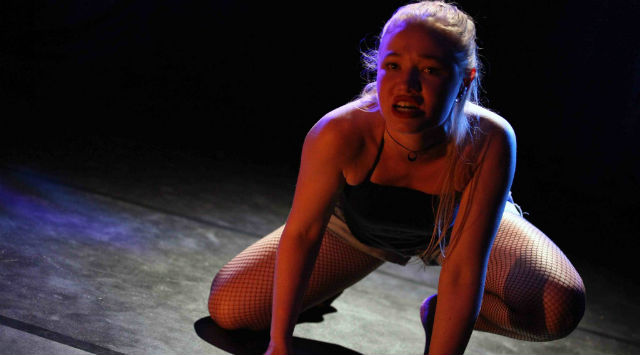
Elle inherits a farm in Italy, so she flies there with plans to sell up and return with cash for a piece of the Sydney property market. To our Australian sensibilities, the proposition is straightforward, but what Elle experiences is a set of unforeseen and complicated circumstances involving a foreign culture, to which she is intrinsically entwined, by blood and history. Modern life for most of us holds a strange and contradictory duality. We identify with the place and culture that we immediately belong, but are aware also of ties to other faraway places. We think of ourselves as one thing, but are really much more internationally connected than we care to admit. Geographical boundaries are real, but also arbitrary. This is an inconvenient and problematic truth that challenges our inevitably parochial ways of living, one that confronts how we think about migration, ecology and politics, all topics that The Poor Kitchen is keen to tackle. It shatters the “us and them” oppositions set up to justify our capitalism, so we keep it under wraps, choosing to subscribe instead to nationalistic notions of being that our small minds find manageable.

Daniela Giorgi’s script is both thoughtful and insightful. Its narrative can be structured more engagingly, but its attempts at bringing big ideas into a realm of domesticity, and hence intelligibility, are successful. There are colourful characters that keep us entertained, and even though performances are of a good standard, chemistry between actors is sometimes lacking, causing the show to lose tension at various points. Randa Sayed is thoroughly charming as Anna, with an energy and dynamism that light up the stage each time she makes an appearance. In the role of Carlo is Benjamin Winckle, who impresses with a consistent and precise approach in his creation of what is perhaps the most convincing character in the production. Leading lady Katrina Rautenberg is strong when emotions gets intense, but is less effective in portraying the more light-hearted parts of Elle. We take some time to warm up to her, so the events surrounding our protagonist can feel slightly distanced in earlier scenes.

The production’s minimal design is appropriate for the rustic quality it depicts, but sections that take us through dramatic shifts in time require greater atmospheric support from the team of creatives. Paul Gilchrist’s direction makes excellent use of space, and he often finds the best to showcase in each performer, allowing individuals to find their own captivating moments and to deliver a certain level of depth from each personality. The story of The Poor Kitchen is an interesting one, but in its resistance of conventional melodrama, our emotions are kept in check. It is true that family matters can easily cause aggravation, and soap operas all over the world exploit that indulgence, but level-headedness is probably the only means to rid us of those heartaches, so that we may begin to see the bigger picture.

www.subtlenuance.comwww.venue505.com/theatre

Review: Femme Fatale (Leftofcentre Theatre Co)

leftofcentreVenue: Old 505 Theatre @ 5 Eliza St (Newtown NSW), Jan 19 – 23, 2016
Playwright: Clare Hennessy
Director: Carissa Licciardello
Cast: Rebecca Day, Tiffany Hoy, Henriette Tkalec

Theatre review
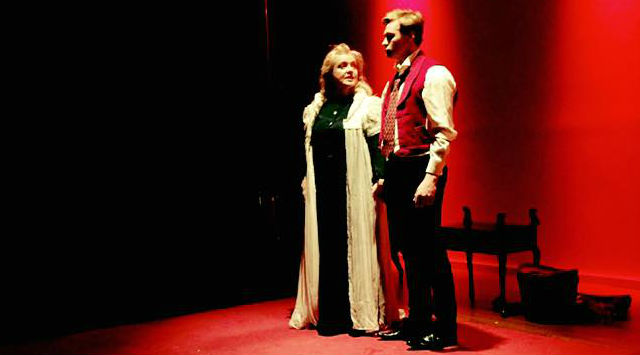
The femme fatale is a figure usually conjured up as a source of threat to the masculine of our species. She seems sexual, devious and powerful, but only exists in opposition, having no meaning independent of her male counterparts. In Clare Hennessy’s Femme Fatale, we look at humankind’s first three women according to Western mythology; Eve, Lilith and Pandora, and their conception as originators of evil and sin. Each were made responsible for releasing to the world a perpetuity of harm. Their myths have framed womanhood as initiator in the eradication of purity and goodness, and the feminine is forever tainted with malice.

The writing is unabashedly poetic, and although full of passion, its structure is insufficiently dramatic. Its abstraction has a deliberate and obscure beauty, but is of the sort that can be too alienating for emotional connection. The production’s atmosphere of foreboding is effectively orchestrated, although greater variation in style and tone between scenes could prove to be more rewarding. The cast is well-rehearsed and each actor shows excellent commitment, with Henriette Tkalec’s intense presence leaving the strongest impression.

It is not the most communicative of works, but its intentions are thoughtful and sincere. We can always rely on politics to give theatre its fire, and Femme Fatale is certainly spirited, buoyed by its many exciting, sometimes repetitious, ideas and inspirations. It makes an unambiguous feminist statement with what it attempts to say, but more so in how the show is put together. These young women have pooled their talents in collaboration for a piece that exists against all odds, in a landscape that is tenaciously patriarchal. No matter how we look at it, Australian theatre is still a boys’ club, but the bad girls are here to stay, and their ripple effect has begun.

/www.leftofcentreau.com

Review: Dot Dot Dot (The Old 505 Theatre)

old505theatreVenue: Old 505 Theatre @ 5 Eliza St (Newtown NSW), Nov 10 – 28, 2015
Playwright: Drew Fairley
Director: Gareth Boylan
Cast: Matt Bell-King, Gerard Carroll, Lucy Miller, Natalie Venettacci

Theatre review
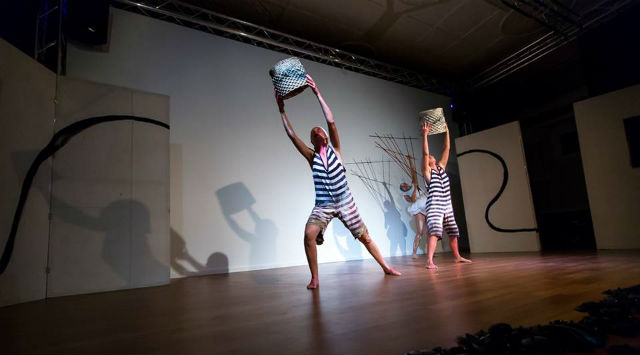
Dot Dot Dot involves a Victorian era prostitute getting high, a psychic medium speaking with ghosts, a serial killer on the loose, and a newspaperman with dubious intentions. The ingredients are certainly spicy, but the concoction is not always an easy one to digest. In its efforts to provide both entertainment and social commentary, the play struggles with its balancing act, and falls short on both counts. There are interesting characters and fascinating scenarios to be found, but for a show in the mystery/suspense/thriller genre, its plot struggles to deliver the tension and intrigue it sets out to achieve.

The cast of four is not sufficiently cohesive, but actors are individually accomplished. Lucy Miller is captivating as Babette, with a solid and seductive presence that helps sustain our attention. There is a quality of natural and sultry darkness in the actor’s approach that gives the production its eerie, Gothic flavour. Equally appealing is Matt Abel-King, whose portrayal of young men in the late 19th century provides a sense of accuracy to the time and space his characters inhabit. Abel-King is a charming performer, with a whimsical edge that enlivens the stage.

The play talks about democracy today, and the impact upon it by the disparity in power and wealth of our classes. Our media landscape is being sequestered slowly but surely, by a rich few, and their insidious control over the information we receive has unquestionably changed the way we perceive and live our lives. Political decisions are made through a semblance of democracy, but what we believe to be true, and therefore the way we exercise our voting rights and consumer decisions, are largely doctored by the powers that be. It is a grim situation we find ourselves today, and there seems no solution in sight, except for a healthy dose of cynicism, and prudent vigilance.

www.venue505.com/theatre

Review: We, The Lost Company‏ (Clockfire Theatre Company)

clockfireVenue: Old 505 Theatre @ 5 Eliza St (Newtown NSW), Oct 13 – 31, 2015
Devisors: Emily Ayoub, Madeline Baghurst, Alicia González, Kate Worsley, Arisa Yura
Director: Emily Ayoub
Cast: Madeline Baghurst, Alicia González, Arisa Yura
Image by Geoff Magee Photography

Theatre review
Since time immemorial, we have danced in honour of the gods that watch over us. It is an acknowledgement of our vulnerabilities and reflects our hopes for better days during this time on earth. We, The Lost Company is an intertextual exploration into our relationship with water, finding inspiration from the paintings of Brett Whiteley to create a work of physical theatre informed by the disciplines of mime and dance. It is gently humorous but wildly imaginative. It touches on subjects of migration, ecology, community and ageing, revelling in the beauty of abstraction but powerfully connecting with its audience, if not in terms of meaning, then certainly with the level of engagement it manages to instil into what is usually a challenging form of performance art.

Music and sound by Ben Pierpoint is complex, evocative and spirited. His work controls our imagination, and leads us to grand and eccentric spaces within our minds that provide a context for the three dancers on stage. Charming anecdotes about water obtained from interviews with mature members of Sydney communities are woven into the soundtrack to anchor the production with a warm authenticity that keeps our shared humanity firmly inside what is being developed.

The dancers’ weird and wonderful physical language is a thoroughly amusing one that sustains a sense of intrigue and holds our attention for its entire fifty-minute duration. Their poetry is whimsical but ruggedly sincere, allowing us to understand its intentions from a drastically unconventional kind of theatrical expression. Arisa Yura’s very memorable but very short monologue in Japanese about childhood, the forces of nature, ice cream and beach balls, extends the theme of memory from the audio recordings, and touches us unexpectedly with its dramatically emotive and nostalgic pseudo drama. The production is full of adventure and sensitive innovation, but its lighting feels inadequate within the extravagance of its multi-disciplinary articulations. The space requires greater depth and colour to achieve a stronger sense of visceral lift off that is always just within reach.

To know something, does not necessitate the ability to put it into words. Call it a feeling, intuition, or a soul thing, art is fundamentally about communication and the modes through which communication happens. We, The Lost Company has vocabularies of its own that are refreshing, unique and dare we say, original, but what it speaks can be understood by all, and like the themes that it is concerned with, we are all embroiled in this mysterious undertaking as one.

www.venue505.com/theatre | www.clockfiretheatre.com