Review: Baby Doll (Ensemble Theatre)

Venue: Ensemble Theatre (Kirribilli NSW), Oct 18 – Nov 16, 2019
Playwright: Tennessee Williams (adapted by Pierre Laville, Emily Mann)
Director: Shaun Rennie
Cast: Kate Cheel, Maggie Dence, Socratis Otto, Jamie Oxenbould
Images by Prudence Upton
Theatre review
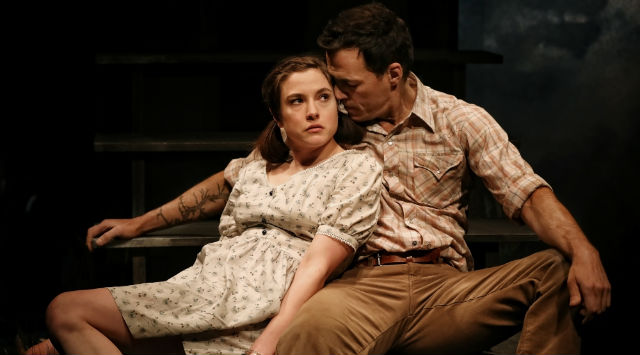
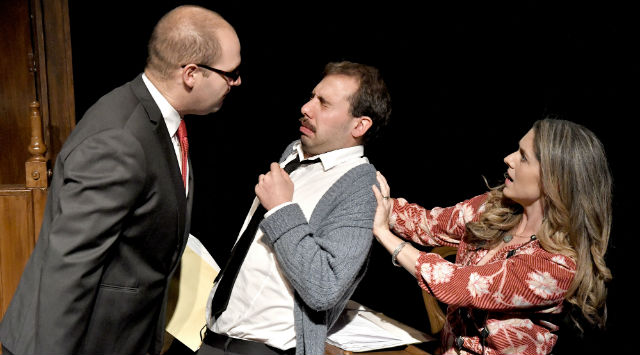
A young woman finally has to consummate her marriage, on her twentieth birthday, after two years of being with a much older husband. On the eve of that fateful night however, a tall, dark and handsome stranger appears, as though poised to rescue the girl from the event she has long dreaded. Tennessee Williams’ Baby Doll takes place in Mississippi Delta, at a time when women, even those who were young, white and beautiful, had few rights and opportunities to speak of. We observe the restrictive circumstances faced by the protagonist, and how her choices are limited to just two men, neither of whom have her best interests at heart, but in this adaptation by Pierre Laville and Emily Mann, we are able to see her desires and fortitude come to the fore, and it becomes evident that the girl is not giving up without a fight.

Directed by Shaun Rennie, the scintillating production grips us, not only with the exciting paradigm shifts deliberately introduced to the old story, but also with its exhaustive efforts at imbuing every theatrical moment with a rich sensuality, able to have us captivated on levels beyond character and narrative. Lights by Verity Hampson convey an intense sexuality, oppressed yet untameable, a wild undercurrent emerging from all sides of this lustful triangle. Sound and music by Nate Edmondson moves effortlessly from episodes of rhapsodic extravagance, to sequences filled with hushed precarity. We always know what the people on stage are thinking and feeling, even if their words are designed to disguise the truth.

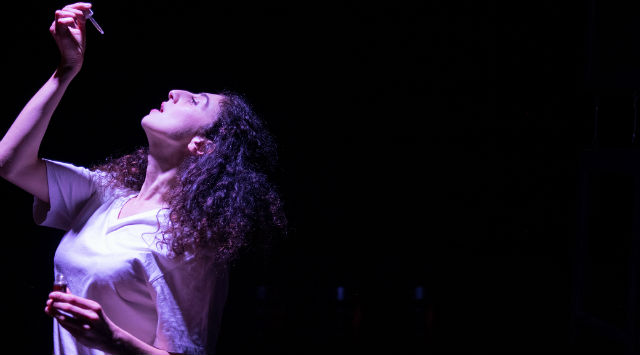
Actor Kate Cheel plays the girl named Baby Doll, with a delicious intellectual aplomb that powerfully resists the relentless sexual objectification imposed upon her from all directions. The character we see is libidinous, seductive and strategic, courageously using everything she owns to make the best of a terrible situation. The shrewd defiance being portrayed by Cheel elevates the entire exercise, for a surprisingly modern take of an otherwise outdated Lolita tale.

The repellent husband Archie Lee is depicted in full bigoted glory, by an exuberant Jamie Oxenbould, who keeps us engaged by his bold embodiment of the deplorable antebellum hangover. Stoking the fire as Silva Vacarro, is Socratis Otto who manipulates levels of authenticity for a deceptive type who seems only to have ulterior motives. Otto makes every line of dialogue believable and enthralling, so that we may follow Baby Doll as she falls hopelessly under his spell. Maggie Dence is memorable in the subsidiary role of Aunt Rose, absolutely charming and humorous at each appearance.

There is little Baby Doll could do to make things better for herself, but she pulls out all the stops. Women today do not experience the same level of subjugation, but we certainly do have to rely on ingenuity and resourcefulness, to navigate a world that continues to be unjust and dangerous. Most of us can now walk away from failed marriages, but few of us can turn our backs on a culture determined to limit our identities, and an economy built on our servitude. Our survival requires that we participate within structures that routinely place us at a disadvantage. We may feel duplicitous and hypocritical, when we bite the hand that feeds, but there is no escaping that which we wish to demolish. As demonstrated in Baby Doll, we can never be prevented from being instigators for change, no matter how small a part we play in whatever revolution that may be brewing.

www.ensemble.com.au

Review: Natives Go Wild (Sydney Opera House)

Venue: Sydney Opera House (Sydney NSW), Oct 22 – 27, 2019
Playwright: Rhoda Roberts
Music: Damian Robinson
Director: Chelsea McGuffin
Cast: Waangenga Blanco, Mika Haka, Beau James, Josephine Mailisi, ‘SistaNative’ Seini Taumoepeau, Samuela Taukave aka Skillz
Images by Anna Kucera

Theatre review
There is probably nothing more objectifying than being part of the display at a human zoo. To be placed in that position can of course be an entirely voluntary enterprise, but in the 19th century, it is likely that circumstances at fairs and carnivals were less than dignified, with the acquisition and misrepresentation of Indigenous peoples for the pleasure of gawking colonials, forming a crucial feature of the circus industry.

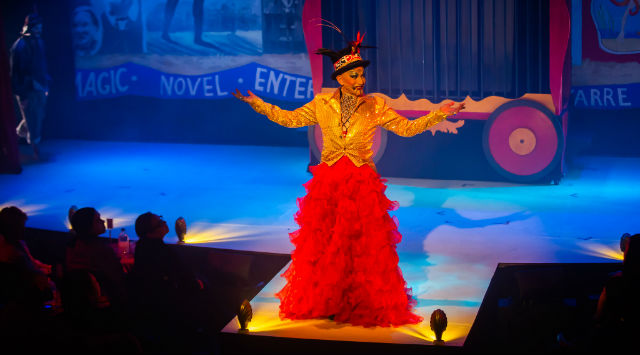
Rhoda Roberts’ Natives Go Wild is critical of that tradition of humiliation, of a West obsessed with exoticism, depriving people of colour their agency. In this show however, identities are reclaimed, and tables are turned, as Indigenous performers from various Antipodean regions, take charge of their narratives, telling us precisely what we need to know, about who they are and what they do.

It is a glamorous production, featuring excellent work by designers Mark Howett (set and lights) and Tim Chappel (costumes). Original songs and music by Damian Robinson are full of inspiration, contributing a sense of transcendental elevation to the staging, with singer Seini SistaNative Taumoepeau bringing remarkable soul to these refreshing compositions. Director Chelsea McGuffin is charged with the responsibility of assembling disparate elements into a cohesive whole, for a vaudeville style of presentation that asks all the right questions.

Ringmaster Mika Haka is high camp personified, but in an acerbic and confrontational style, never letting us easily off the hook. Waangenga Blanco and Samuela Skillz Taukave are mesmerising dancers, both portraying a series of legendary Indigenous figures from circus history. Aerial artist and contortionist Josephine Mailisi conveys true beauty with a physicality full of strength and discipline. The interminably charming clown Beau James delivers some of the funniest and most moving sequences, proving himself a real star we cannot get enough of.

Some might argue that colonisation has improved lives, but there is no question that the inherent cruelty of Western values, has had negative impacts on Indigenous communities that remain significant today. The persistent inability of white people to prioritise Indigenous voices have meant that their needs are consistently ignored, and their wisdom disregarded. Even as we watch the world crumble under instruments of white supremacy, it refuses to cede power, tenaciously holding on to reins that have failed economies and the environment. Unless the next stage of our collective evolution is to better incorporate those who have demonstrated actual skills of survival, the future can only be bleak.

www.sydneyoperahouse.com

Review: Rosaline (Little Trojan Theatre Co)

Venue: Kings Cross Theatre (Kings Cross NSW), Oct 11 – 26, 2019
Playwright: Joanna Erskine
Director: Sophie Kelly
Cast: Alex Beauman, Jeremi Campese, David Lynch, Aanisa Vylet
Images by Marnya Rothe

Theatre review
Shakespeare never let us see Rosaline, when he wrote about her in Romeo & Juliet. We knew her to be Juliet’s cousin, the girl who had rejected Romeo’s advances, before the famous lovers’ fateful meeting at the Capulet ball. Joanna Erskine’s Rosaline takes what is ostensibly a stock character, and makes her the central figure of an alternate teenage love story. We are reminded that it was only Rosaline’s efforts at chastity that stood in the way, and discover that she too, was completely enamoured, just as Juliet had been head over heels in love with Romeo. Erskine’s play represents justice not only for a silenced woman, but asserts female perspectives in a culture that is too accepting of the Bard’s persistent and pervasive misogyny.

The work is however, only marginally radical with its revisions of the legendary saga. It concerns itself mainly with supplementing the original tale, rather than daring to argue for a completely different, wholly more palatable version of events. Directed by Sophie Kelly, the show can tend to feel excessively earnest, and therefore needlessly reverential toward Shakespeare’s old creation. The production is nonetheless a good-looking one, made lustrous and polished by Martin Kinnane’s lighting design.

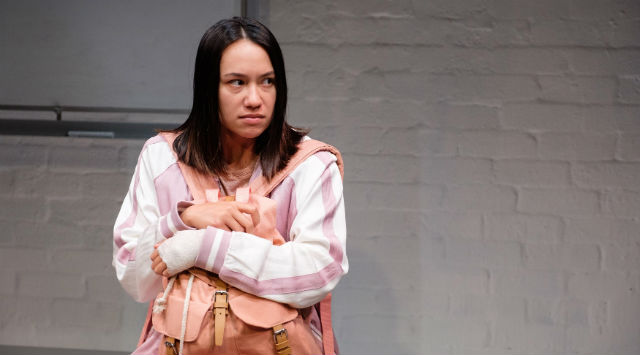
Actor Aanisa Vylet is an alluring leading lady, with an easy confidence that makes believable Rosaline’s new-found existence. When given the opportunity, Vylet demonstrates herself to be a remarkably spirited performer, as does Jeremi Campese, who brings a valuable vibrancy to the piece. Romeo is played by Alex Beauman, passionate and appropriately naive in his portrayal of the juvenile romantic, and David Lynch surprises with the intricacies he is able to locate for his interpretation of the Friar.

It is certainly a valid choice to create a lovelorn Rosaline, but some would find it disheartening that centuries later, the young woman is still being defined so resolutely against a man who loves another. Even though we had come to know Rosaline through Romeo, there is certainly no need to remain within his doomed narrative. We are all bit parts in someone’s story, playing minuscule roles for people we could very well have forgotten. At the centre of each personal universe, is an undeniable responsibility to create a rich life, and to ensure a meaningful existence. Rosaline’s story might have begun with Romeo, but where she went thereafter, is still anyone’s guess.

www.facebook.com/littletrojantheatre

Review: Slaughterhouse (25A Belvoir)

Venue: Belvoir St Theatre (Surry Hills NSW), Oct 16 – Nov 2, 2019
Playwright: Anchuli Felicia King
Director: Benita de Wit
Cast: Romy Bartz, Adam Marks, Tom Matthews, Brooke Rayner, Stephanie Somerville
Images by Clare Hawley

Theatre review
The action takes place at a tech start up, where Bianca is trying to expose the meat industry for cruel practices at its abattoirs. Slaughterhouse by Anchuli Felicia King talks about the upsurge of ethical products being offered at the marketplace, by companies that continue to be breeding grounds for mercenary corporate cannibals. We see personalities who have little concern for for what is right, building careers out of peddling apparently wholesome concepts that exploit our desire for responsible consumption.

Consisting of five monologues, Slaughterhouse is a dark comedy, often wildly imagined, and edgy with its humour. It is a spirited work, passionate with its moral stance, but is simultaneously pessimistic in its understanding of the world. Directed by Benita de Wit, the show is energetic and appropriately boisterous, accurate in its depiction of us as a culture that is overfed with noise, but always failing to listen. Extensive use of video projections foregrounds the fact that in the selfie era, everybody wants to say something but nobody is paying any meaningful attention.

Bianca is played by a very earnest Brooke Rayner, who performs with great vigour, the ever-escalating mania that perfectly reflects the state of anxiety that we experience, as individuals and as collectives today. As Hannah the unscrupulous entrepreneur, Romy Bartz captivates with a persuasive combination of ruthlessness and vulnerability, able to portray complexities that prevent us from relegating the monster to otherness. Tom Matthews’ enthusiastic embrace of the bizarre in the role of DJ is a delight, for a character that demonstrates pointedly, the social consequences of unadulterated hedonism. Also noteworthy are Brendan De La Hay’s costumes, polished and flamboyant, for a series of striking looks that provide a sense of theatricality to proceedings.

Like Bianca, most of us know right from wrong, but are unable to find ways to operate in clear conscience, within pervasive structures that are inherently harmful. We watch Bianca turn into the very devil she despises, as she tries to push an honourable agenda, inside a system that seems only able to deliver evil. Deciphering good and bad is the easy part. To dismantle the bad, when it is long-established, and when it has become the very definition of ‘normal’, calls for a courage and an imagination that few are capable of.

www.belvoir.com.au

Review: Billy Elliot (Sydney Lyric Theatre)

Venue: Sydney Lyric Theatre (Sydney NSW), Oct 10 – Dec 15, 2019
Music: Elton John
Book and Lyrics: Lee Hall
Director: Stephen Daldry
Cast: Kelley Abbey, Gabrielle Daggar, Vivien Davies, Danielle Everett, Robert Grubb, Drew Livingston, Jamie Rogers, Justin Smith, Aaron Smyth, James Sonnemann, Dean Vince
Images by James D. Morgan

Theatre review
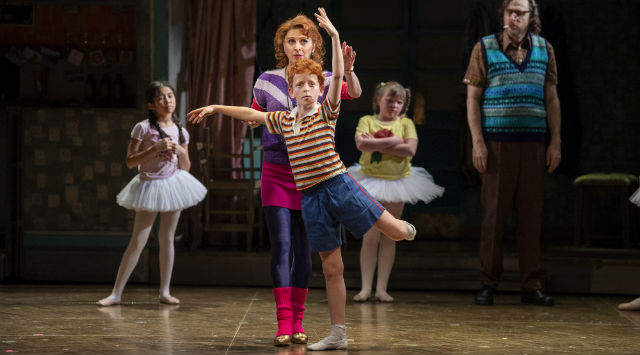
An eleven-year-old boy from the North-East of England decides to learn ballet. Billy Elliot takes place in the mid 80’s with County Durham in the throes of the devastating coal miners’ strike, and Billy’s decision to dance could not seem more flippant or extravagant. There is of course, the additional concern that ballet is a wholly inappropriate activity for any male person, especially in regards a small boy during his formative years. The fragility of masculinity is a central theme in the musical; machismo and gayness are delicate subjects in virtually all our societies, hardly spoken about until the notion of manhood finds itself severely threatened. Billy’s simple act of ditching boxing for ballet, causes more than a slight kerfuffle, thereby exposing our culture for its toxic attitudes around gender roles.

Not quite as moving as the 2000 film, but certainly no less entertaining, Billy Elliot is a sumptuous delight on the live stage. All its visual aspects are marvellously rendered, from scenic design, lighting, costumes, to choreography, there is brilliance everywhere we look. Music by Elton John, with book and lyrics by Lee Hall, tell the story with humour and elegance. Its depictions of childhood are particularly charming. Billy and his friends are allowed to be playful and rambunctious, their more than occasional use of mild profanity presents an innocence that feels resonantly, and unusually, authentic.

Performer Jamie Rogers proves himself technically accomplished in the title role, with countless pirouettes and chaînés turns keeping us amazed and thrilled. Billy’s best friend Michael is played by James Sonnemann, a hugely charismatic actor whose precise comic timing has us eating out of his hand, at every appearance. Gabrielle Daggar is another child star who delivers the laughs, very endearing as the mischievous Debbie. The grown-ups too are excellent, in this quintessential work about art and its challenges. Billy’s father is given effervescent life by Justin Smith, and Kelley Abbey’s idiosyncratic warmth as dance teacher Mrs Wilkinson makes convincing, this unexpected and unlikely tale from the English working class.

It is an appealing thought that one’s station in life could be illusory, but the truth is that few of us can transcend barriers, to become something more than has been assigned. Humans may be capable of infinite things, but cultural restrictions are just as real as those natural potentialities. Immense and immeasurable forces abound, that tell us what we cannot do, and it takes superhuman ability to recognise the truth, and surmount social constructs. Defiance is hard, but without it, autonomy can only be elusive.

wwww.billyelliotthemusical.com.au

Review: Wit (Seymour Centre)

Venue: Seymour Centre (Chippendale NSW), Oct 16 – 26, 2019
Playwright: Margaret Edson
Director: Helen Tonkin
Cast: Matt Abotomey, Nyssa Hamilton, Chantelle Jamieson, Jan Langford-Penny, Yannick Lawry, Hailey McQueen, Shan-Ree Tan, Cheryl Ward
Images by Alison Lee Rubie

Theatre review
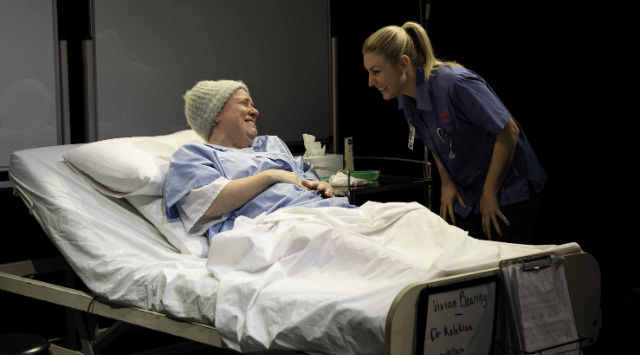
Vivian has a brilliant mind, but as she dies of cancer, she finds her mental capacities inadequate in dealing with the experience of a body being ravaged by sickness. Having excelled in academia all her adult life, she is suddenly confronted by a very real mortality that demands more than was ever asked of her. In Margaret Edson’s Wit, we meet a prideful personality who must learn to understand defeat. After an extensive career of being celebrated for her intellectual mastery, we watch Vivian try to mobilise all that she knows, so that even on the occasion of her own death, she may emerge victorious.

The lesson of course, is about humility, in the face of the inevitable. The production, directed by Helen Tonkin, demonstrates with remarkable resonance, that tension between power and loss, as our heroine puts up a gallant fight as many others have done. Wit is the story of a literary scholar, and Tonkin’s work is appropriately sensitive and detailed, in its careful treatment of Edson’s writing. Also noteworthy is Victor Kalka’s lighting design, elegant yet dynamic enough to facilitate gentle shifts in the audience’s emotional responses.

Actor Cheryl Ward does outstanding work in the lead role, intricate with her renderings and persuasive with her assertions. It is a hugely challenging piece for any actor, and Ward rises to the occasion, impressively flexing her muscles, cerebral and sentimental, to ensure that we connect with all of Wit‘s meaningful dimensions. Nurse Susie is played memorably by Hailey McQueen, confident and strong as the character who helps guide us to a state of catharsis, for this often dispiriting play.

There is a hint of regret when Vivan looks back at her life, alone in hospital with no friends and family, aware that the end is nigh. It may be true that she comes to the conclusion that more effort could have been put into relationships, but her extraordinary contribution as thinker and professor constitutes a legacy that will endure long beyond her time on earth. Although not her explicit intention, what Vivian leaves behind, is likely to be far more generous than if she had endeavoured to be a kinder, more loving person. In the end, she suffers a tremendous amount, but the darkness of those final few months do not tarnish what is ultimately, a glorious existence.

www.clockandspielproductions.com

Review: Fangirls (Belvoir St Theatre)

Venue: Belvoir St Theatre (Surry Hills NSW), Oct 12 – Nov 10, 2019
Book, Music & Lyrics: Yve Blake
Director: Paige Rattray
Cast: Aydan, Yve Blake, Kimberley Hodgson, Chika Ikogwe, Ayesha Madon, James Majoos, Sharon Millerchip
Images by Brett Boardman

Theatre review
Edna is head over heels in love with Harry, except Harry is miles away in the UK, and a member of a boy band oblivious to Edna’s existence. Yve Blake’s Fangirls details the experience shared by many, ever since the advent of pop music in the middle of the twentieth century, where teenagers develop crushes on stars the intensity of which can often be overwhelming. They had fainted at Beatles concerts in the 60’s, thrown panties at Tom Jones in the 70’s, and now they write fan fiction as a manifestation of their fantasies, and a declaration of love, to share with vast communities of like-minded youth.

Fiction and reality however, become dangerously blurred in Fangirls, as Edna’s obsession grows completely out of hand. It is admittedly surprising, that what seems to be a pedestrian premise for a show, would emerge being the foundation for one of the cleverest and most entertaining musicals to grace our stages. Its dialogue is inexhaustibly witty, partnered by songs that are as inventive as they are powerful, with a plot structure that casts a hypnotic spell over our heads and hearts. Proving that storytelling does not always require subject matter that obviously resonate, Fangirls enthrals with its colourful yet authentic characters, who navigate the modern world in a way that can be thought of as peculiar, but also unequivocally essential in our understanding of humanity. Perhaps it is precisely in these instances of insanity, that we can locate our true nature.

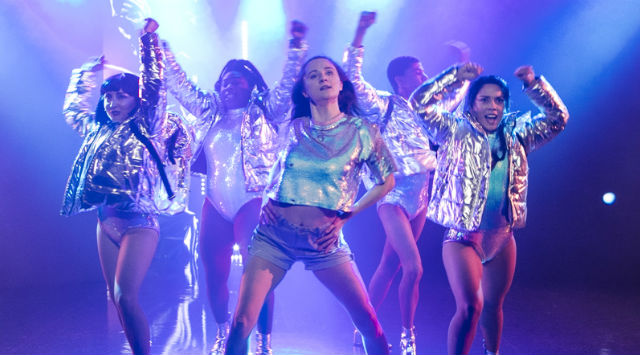
Directed by Paige Rattray, the show is a joyful exercise in feminine vivacity, deliciously exuberant as it celebrates the foibles of adolescence that define us all. Fangirls is hilarious, even at its darkest moments, always insisting that we laugh heartily at situations that evoke memories that were once deathly embarrassing, but are now freshly endearing. Music direction by Alice Chance and music production by David Muratore, draw inspiration from recent trends in pop, for a remarkably exciting score replete with energy, surprise and fabulous irony. Leonardo Mickelo’s choreography is similarly accomplished, making every number a visual thrill. Video by David Fleischer and Justin Harrison help depict the new media environment that informs the sensibilities of our youth, but it is Emma Valente’s lighting design that delivers spectacle and atmospheric augmentation, which really get us in the mood.

Edna is triumphantly portrayed by Blake, whose skills in acting, singing and dancing, are quite astonishingly on par with what she achieves as songwriter and playwright. She is simultaneously heartbreaking and comical, persistently nuanced even if the performance is relentlessly extravagant in tone. The mononymous Aydan is thoroughly convincing as the object of desire, a marvellous caricature who is clearly in on the joke. Five extraordinary supporting players in a wide variety of roles, leave us hopelessly thrilled by their impressive talents. Chika Ikogwe is absolutely glorious with the sassy humour and parodic hip hop stylings she brings, in addition to the moments of piercing poignancy she introduces as the less than best friend Jules.

Caroline, the mother at wits end, is played by an impossibly versatile Sharon Millerchip. James Majoos is unforgettable as Saltypringl, and for dialling up the camp factor in all his scintillating representations of gender diversity. Very big laughs are delivered by Kimberley Hodgson, who is brilliantly incisive as the naive Briana, and Ayesha Madon takes every opportunity to tickle us with excessive vocal flourishes, along with multiple absurd appearances as an overzealous ribbon gymnast.

We can give our children everything they need and want, and still have to live with the idea that they will inevitably go out and court trouble. In fact, it is probably more accurate to say that when we leave them with nothing to want, is when they would find ways to create havoc. People need to feel in control of their own existences. Adults take it upon themselves to provide every kind of order, so that the young can have peaceful and rewarding lives, but without experiencing chaos and failure, it is hard to imagine that anyone could truly welcome everything that should be cherished. We dread our kids ever having to hit rock bottom, but we know that that is in many ways, absolutely necessary.

www.belvoir.com.au | www.atyp.com.au | www.queenslandtheatre.com.au

Review: Fully Committed (Ensemble Theatre)

Venue: Ensemble Theatre (Kirribilli NSW), Oct 11 – Nov 16, 2019
Playwright: Becky Mode
Director: Kate Champion
Cast: Contessa Treffone
Images by Prudence Upton
Theatre review
Sam is a struggling actor, working full-time as a reservations clerk at one of Sydney’s swankiest restaurants. It is a difficult job, not only because the joint seems to be at perpetual full capacity, but also due to some extraordinarily difficult personalities, who insist on talking to Sam with no regard at all for any common courtesy.

Becky Mode’s Fully Committed is about life at the bottom rung of a revered institution, where labour is cheap and human dignity is non-existent. It is an entertaining work, that deals with the class divide in a humorous, if slightly disillusioned way. Instead of questioning Sam’s compliance, the play is concerned only with how and when she is going to be able to move up the social order. Fully Committed is about our inevitable participation in a broken economic system, reflecting the acceptance of something that causes as many problems as it solves, and our general sense of impotence in the face of all its failings.

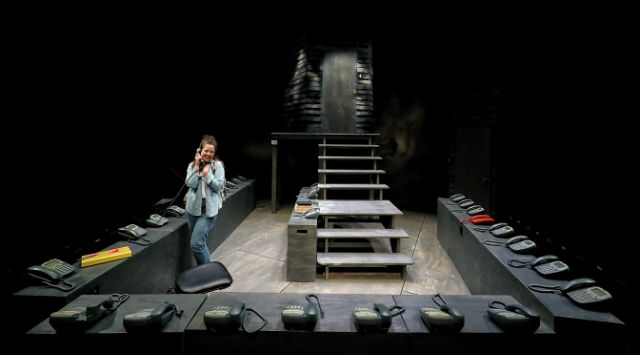
Under Kate Champion’s direction and Jane Fitzgerald’s dramaturgy, Sam’s story of disadvantage is told with unexpected poignancy. In Champion’s efforts to elevate the writing beyond its tendency for surface comedy however, the show lacks the manic energy that could have us further invested. The decision to have a conventional switchboard stylistically transformed into thirty separate telephones, makes for a powerful visual (set design by Anna Tregloan), but often requires the performer of this one-woman piece to delay her delivery of lines.

Contessa Treffone plays Sam, and all the other, more than thirty, characters on the other end of the line, each of them thoughtfully crafted, and vividly depicted. Treffone makes the extremely demanding work look a walk in the park, for a performance remarkable in its elegance and clarity. Although effortlessly comical, the performer can at times feel insufficiently confident, for a script that seems naturally inclined to be madcap and quite hammy in tone. Nevertheless, the production remains tremendously enjoyable, and Treffone’s ability to hold us captive for the entire duration is indeed commendable.

Sam finds herself in an awful situation, but blames no one for her predicament. She has bought into the myth of capitalism, of hard work, of upward mobility, and convinces herself that literally mopping up other people’s shit, is but par for the course, if she is determined to put everything into making her dreams come true. Becky Mode’s play is approaching twenty years old, and it is tempting to now think of the new generation, as young people who know better.

Maybe when we criticise them for being entitled, spoilt and delicate, we neglect to recognise the unjust, unreasonable and sometimes inhumane conditions we have come to accept of our lives. For many years we believed that the system we build, would reward us with fairness, but time has revealed many fallacies. No wonder then, that many of Sam’s age are now turning their backs, and refusing to play by rules that make little sense.

www.ensemble.com.au

Review: Don’t Hate The Player (Old Fitz Theatre)

Venue: Old Fitzroy Theatre (Woolloomooloo NSW), Oct 8 – 12, 2019
Playwright: Laura McDonald
Director: Laura McDonald
Cast: Atharv Kolhatkar, Madelaine Osborn, Cassius Russell, Rhiannon Watson

Theatre review
Darcy and Gabby are involved with big time drug dealers, and although the sisters’ illicit activity happens only in the virtual reality world of computer gaming, the emotions being toyed with are completely genuine. Laura McDonald’s Don’t Hate The Player is a clever piece of writing, with thoughtful ideas and a well-considered plot structure. The play however, is likely to be remembered for its humour, rather than the philosophy it suggests. It is a very funny work, fuelled by McDonald’s wonderfully quirky imagination, that delivers a great number of laughs without ever underestimating its audience.

As director, McDonald does not quite render with sufficient intensity, the poignancy inherent in her piece at its conclusion, but there is no question that the jokes being presented from start to end, are entertaining and impressively idiosyncratic. Four performers, each with a distinctive style, are made cohesive by McDonald’s specific approach to comedy. Madelaine Osborn and Rhiannon Watson play the sisters, both actors delightful with the surprising nuance they unearth from within the script, and marvellously inventive with the highly distinctive characters they inhabit. Chemistry between the two is an absolute joy to watch. Atharv Kolhatkar is energetic as Ashan, man of mystery in this story about mutable identities, and Cassius Russell’s intricate manifestations of Reg the cyber facilitator are an unequivocal pleasure.

As the lines between real and virtual continue to blur, what we deem to be organic and synthetic too, begin to meld. What were once easily differentiated, is now increasingly ambiguous, as we come to terms with humanity’s indivisibility from the thing we call technology. Everything that we dream up, originates from us, no matter how wildly alien they eventually evolve. Nature is never stagnant, and being a part of it, we are always learning to live with all its new permutations. There is no need to try figuring out what is natural and what is not, but to know the difference between good and bad, is an endeavour we must forever persist with.

www.redlineproductions.com.au

Review: Bondi Legal (Bondi Theatre Company)

Venue: Bondi Pavilion (Bondi NSW), Oct 11 – 26, 2019
Playwright: Tony Laumberg
Director: Richard Cotter
Cast: Valentino Arico, Michael Arvithis, Jadie Bastow, David Evan Samuels, Tricia Youlden
Images by Lightbox Photography

Theatre review
Brad thinks himself an average lawyer at best, and when he has to fight a court case at short notice, we see him quite literally fall in a heap, overwhelmed by fear of failure. His client Frances however, has enough confidence for the both of them, and proceeds to be a formidable driving force that pushes Brad to do his very best work. Written by Tony Laumberg in 2009, based on personal experiences from the mid 90’s, Bondi Legal is an unremarkable narrative presented in an old-fashioned style, but its humour, although obvious, could certainly appeal to those with a taste for something traditional.

Directed by Richard Cotter, the production is appropriately rambunctious, and thankfully fast-paced. In the absence of an engaging story, Cotter aims to keep us invested by foregrounding some very broad comedy. Michael Arvithis demonstrates himself to be a reliable performer; skilful, agile and extremely energetic in the lead role. His determination to entertain, forms the anchor of the show, keeping things buoyant and amusing. Frances is played by Jadie Bastow, a prudent counterpart who provides steady, and generous, support to her irrepressible co-star.

Theatre is often more about how a story is told, than what the story actually is. The court case at the centre of Bondi Legal is unlikely to resonate with many, but the rowdy goings on make for a stage that holds our attention. When artists work together to assemble elements that could make large groups of people laugh as one, they are both reflecting and defining our culture. They identify who we are, and then have the opportunity to shape us into what we should be. Theatre can be regressive or progressive. It can hold us back, or move us forward, even if in the moment, all we can perceive is harmless laughter.

www.bonditheatrecompany.com.au