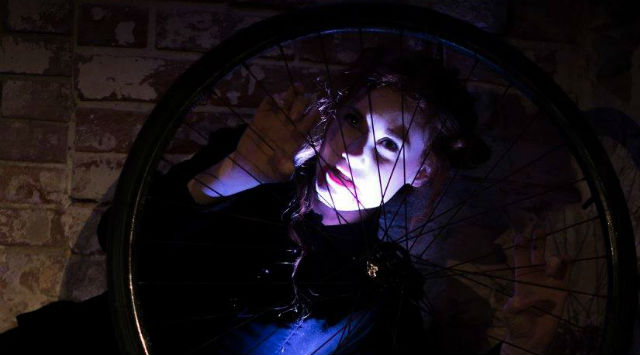
Review: Bicycle (Lies, Lies And Propaganda)

liesliespropagandaVenue: Old Fitzroy Theatre (Woolloomooloo NSW), Jun 21 – Jul 2, 2016
Playwright: Danielle Baynes
Director: Michael Dean
Cast: Danielle Baynes, Pip Dracakis

Theatre review
It is one woman against the world in Danielle Baynes’ Bicycle. The odds are stacked against our 19th century protagonist as she discovers not only her life’s passion, but also the injustices that women face when trying to carve out a self-determined existence. Coming of age in Baynes’ play means realising the discrimination that is systematically entrenched in a world that had previously seemed innocent. An awakening of desires demands that her eyes are open to truths, and her story of tragic enlightenment is told in a way that disallows us from denying its persisting relevance. The nameless Lady’s feelings and experiences, her perspective of the world, and her hunger for what is right, all find connection with our 21st century sensibilities, and shock us into seeing the intimate parallels between what we had considered to be bygone history and what we continue to retain. It is a passionate piece of writing, insightful and brilliantly elucidating through a narrative that is at once personal and universal. At the core of its many colourful permutations of form, is its unmistakeable feminist advocacy that many will find irresistibly inspiring.

Baynes plays the Lady in the hour-long monologue, with Pip Dracakis providing an added female omnipresence with her person and violin. Space is restrictive, and the production relies squarely on the leading lady’s ability to keep our attention and imagination engaged, which she accomplishes remarkably well. Scenes are thoughtfully demarcated and given distinct flavour by director Michael Dean, but some sequences are more effective than others, resulting in a plot trajectory that can feel uneven in its resonance. Dracakis’ live music gives the show a dynamism that works seamlessly alongside Baynes’ actorly endeavours for a powerful statement about art, and the struggles in its creation.

Sex and art are linked in Bicycle, both are appetites ferocious in nature and indomitable. The Lady’s liberties are completely usurped by a patriarchy that is determined to diminish her wishes and talents. We live in a world where powerful people go to great lengths to maintain the status quo, for their position necessitates the subjugation of many. This seems to be part of human nature, never to change, but processes where disenfranchised groups work to destabilise and subvert oppressive forces are always ongoing. Not all will succeed, but the battle continues for the human spirit is at its most potent when the downtrodden are left with nothing else to lose. Her rights as a sexual being and an artist, are a threat to her father and his conspirators, who do all they can to disempower her, but we are glad to see her fight to the end, whether or not she comes out on top.

www.liesliesandpropaganda.com

Review: Hot Brown Honey (Sydney Opera House)

hotbrownhoneyVenue: Sydney Opera House (Sydney NSW), Jun 22 – 26, 2016
Creators: Kim “Busty Beatz” Bowers, Lisa Fa’alafi
Original concept: Candy Bowers, Kim ‘Busty Beatz’ Bowers, Lisa Fa’alafi
Director: Lisa Fa’alafi
Cast: Kim “Busty Beatz” Bowers, Juanita Duncan, Lisa Fa’alafi, Ofa Fotu​, Materharere Hope “Hope One” Haami, Crystal Stacey
Image by Dylan Evans

Theatre review
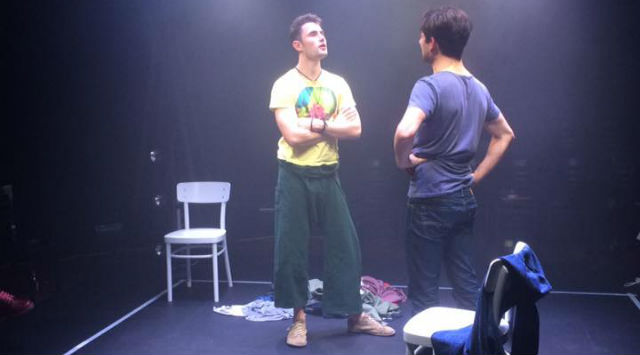
Six women take to the stage in a sensational update of the cabaret format, to confront big political issues of the day, and to entertain in the most spectacularly decadent ways possible. The women’s mantra is to “stand up and make noise”, and although deadly serious with their message, Hot Brown Honey‘s sense of humour is always an underlying and critical presence that keeps us engrossed even when the going gets tough. At the intersection of racism, sexism, homophobia and body fascism, the stars create theatrical representations that are crucial to our nation’s discussions about justice and equity as applied to women of colour in particular. On a relentlessly vibrant and glamorous stage, we see stories that allow identification, but also confrontational statements that speak directly to those of us in positions of privilege. If live theatre’s most valuable feature is its dimension of danger that comes from the unpredictability of conscious individuals sharing space, then Hot Brown Honey is a triumph of magnificent proportions.

These women are powerful, emotional and aggressive, each with blinding talents gloriously showcased in sequences that aim to simultaneously seduce and repulse, with the formidable MC Busty Beatz bringing harmony and cohesion to the night. The programme features some of the most jaw-dropping beat-boxing ever to be heard (by Hope One) and massive notes from Ofa Fotu’s classic torch songs interpreted with acerbic irony, against a backdrop of musical production irresistible from start to finish, comprising mainly of hip hop, soul and funk influences. There are subversive stripteases, same-sex orientated twerking, mesmerising bridal aerial silk acrobatics, all passionately imbued with social commentary to deliver a show memorable for being uniquely dignified and progressive. Hot Brown Honey is wild and vivid in its expression of feminine disobedience and unapologetic with its pointed perspectives on cultural colonisation, giving voice to an under-represented but large segment of our population, and reshaping the way we think about identities for the purpose of empowering every darker skinned woman and girl.

Where power imbalances exist, politeness serves to deepen those inequities. When we let sleeping dogs lie, our problems become further fortified. The six ladies of Hot Brown Honey will disrupt and antagonise, using their bodies, minds and spirit to create pandemonium where a faulty establishment resides, but they have also made room for conversation, and participation therein is not exclusive. The subjects broached here are difficult ones, which means that many of us will try to avoid them, but this is a Pandora’s box that we desperately need, and some very loud noises have initiated the process. We can run but we cannot hide, from this yet another new wave of feminism, and the tenacious efforts currently under way for a paradigm shift.

www.hotbrownhoney.com

Review: Straight (Brilliant Adventures)

brilliantadventuresVenue: Kings Cross Theatre (Kings Cross NSW), Jun 16 – Jul 2, 2016
Playwright: D.C. Moore
Director: Shane Bosher
Cast: Danielle Cormack, Sean Hawkins, Simon London, Madeleine Jones

Theatre review
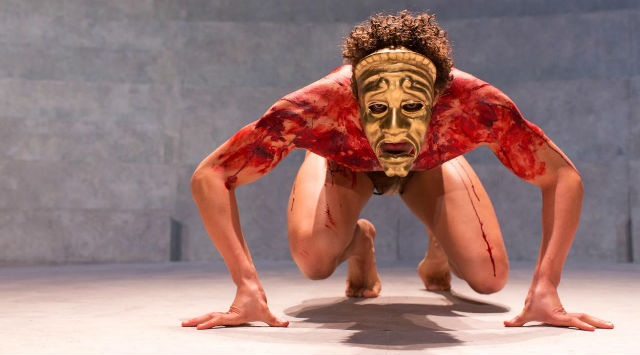
Lewis and Waldorf are old friends from university days, reunited several years after their lives have taken different turns. While intoxicated, they decide to make an amateur porn film with each other. Lewis is married, with a history of just 2 sexual partners, and the happily single Waldorf is more experienced with 71, but neither have had encounters with men. Based on the 2009 film Humpday by Lynn Shelton, D.C. Moore’s Straight is about transgression. It explores issues around the constraints of sexual identity, along with an investigation into boundaries of friendship, and takes a look at the rules of monogamy in modern marriages.

Taboos are confronted with a vehement directness in Straight, which locates our cosy assumptions of human sexuality and puts them through a series of thorough and provocative interrogations. The script is a gripping one, made even more enthralling by director Shane Bosher’s very effective delivery of plot tension and believability for what is actually an absurd context. A brilliantly awkward sense of humour permeates Moore’s consistently nuanced writing, but the production has an air of unrelenting seriousness that compromises its potential for comedy. The mischievous Danielle Cormack delivers the biggest number of laughs as Steph, and leaves an excellent impression even though the actor only appears once in an early scene. Also noteworthy is Madeleine Jones who performs the role of Morgan with excellent psychological accuracy and a sharp intuition.

Lead role Lewis is played by Simon London whose thoughtful and intelligent approach creates a character that we are able to connect with, in spite of his quite incredible decisions. Sean Hawkins is the charming Waldorf, who keeps proceedings buoyant with an unpredictable and aggressive energy. The two turn up the sexual heat in the show’s crucial moments, creating an exceptionally libidinous stage that many will find titillating, while some others will be left embarrassed. Their work demonstrates pure conviction, but it is the ambiguity of their characterisations that inspire the biggest questions.

Art is eternally preoccupied with sex as a topic because it is universal, and one that can be examined extensively, and ceaselessly. The diversity of individual experiences and the plurality of our beliefs mean that new perspectives can always be added to the ever-expanding discussion and hence, comprehension of the nature of sex. We however, live in societies that suppress these interchanges, so we become accustom to presuming an uniformity in our hidden sexualities. We fool ourselves into thinking that we know how other people do sex, and furthermore we often place those same limitations on our own individual sex lives. Straight is about people who give themselves a chance, and who dare to go into the unknown, in the voyage of self-discovery that we call life. It is about defining identities by first experiencing what one is not, before settling on what one is.

www.facebook.com/…

Review: The Olympians (NIDA)

nidaVenue: NIDA Parade Theatres (Kensington NSW), June 11 – 18, 2016
Playwright: Stephen Sewell
Director: Jeff Janisheski
Cast: Saxon Blackett, Callan Colley, Laura Djanegara, Megan Hind, Imogen Morgan, Wil Ridley, Louis Seguier, Emele Ugavule, Ross Walker

Theatre review
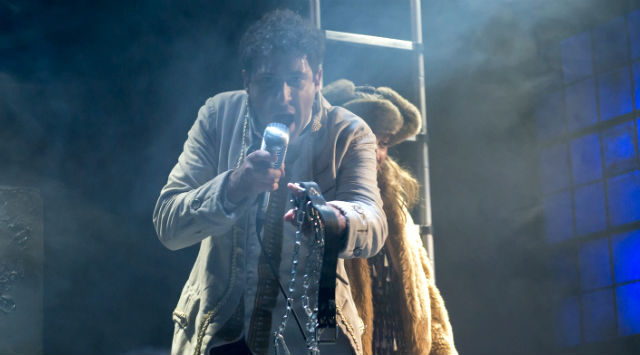
We take sport very seriously in Australia. Billions of dollars have been generated from the industry, and countless personalities have attained national iconic status over the years. Stephen Sewell’s The Olympians attempts to deconstruct the sporting hero, with a story set in the Olympic village of the 2016 Rio games. It is a piece of writing highly critical of sporting and popular culture, using a narrative about a fallen star lost in sex and drugs, appealing to the same need in our audienceship that keeps tabloid journalism in business. Its characters are familiar but caricatured, and although hugely ambitious in scope, the play would probably be more effective if scaled down to its simple essence. Greek tragedy meets television realism in The Olympians for a curious exploration of dramatic form, but the play would make a stronger point if its many subtexts are trimmed down to a more succinct articulation of its thoughtful message.

Direction by Jeff Janiesheski is equally adventurous and imaginative with its approach. The very generously sized stage poses a challenge that Janiesheski responds by delivering amplified theatrical expressions for every scene, resulting in a work that can often feel too obvious with how it chooses to communicate, leaving little room for nuance or irony. The production’s humour is rarely effective but energy from a tireless cast and vigorous lighting effects by Ross Graham help retain our attention. Lead actor Wil Ridley shows good precision and discipline as the dishonoured Porter, especially proficient in some of the play’s more heightened sequences of sentimentality. Imogen Morgan is memorable as Jess, a bimbo type who encounters the goddess Aphrodite. Morgan’s ability to convey consistent authenticity in her role sets her apart in a group that seems to work more intently on exterior presentations than on emotional efficacy and psychological believability.

In an arena where individuals are ruthlessly pitted against each other, the sporting field allows only one winner at a time. Perhaps it is the idea of making concrete the abstract concept of “the best” that gives sport an allure that art has been unable to compete with. Awards are given out in artistic communities the world over, but there is nothing definitive about the good and bad in art, and certainly, the judgements we may bestow upon them are almost never more than irrelevant privileged perspective. People are drawn to the certainties of sport, and the creation of winners and losers in its equations. The nature of art resists that singular objectivity. Great art dismantles systems of segregation and exclusion to speak with universality as though at the Olympics, except all are to emerge victorious.

www.nida.edu.au

Review: Inner Voices (Don’t Look Away Theatre Company)

dontlookawayVenue: Old Fitzroy Theatre (Woolloomooloo NSW), Jun 15 – Jul 9, 2016
Playwright: Louis Nowra
Director: Phil Rouse
Cast: Annie Byron, Julian Garner, Emily Goddard, Nicholas Papademetriou, Anthony Gooley, Francesa Savige, and Damien Strouthos
Image by Ross Waldron

Theatre review
Ivan VI lived 23 short years in Russia, but in Louis Nowra’s Inner Voices, his destiny is transformed dramatically to tell a story about how kings are made, and how countries are ruled. Originally published in 1977, Nowra’s words in the play remain fresh and humorous, and although its political edge seems to have worn with time, Inner Voices‘ punk sensibility is still evident today in its iconoclastic characterisations and anti-authoritarian outlook.

It is a very exuberant production that Phil Rouse has directed. Notwithstanding our unfamiliarity with its context, the unrelenting and spirited acerbity of his style keeps us engrossed. The thoroughness at which the text’s comedy is explored, is not only endlessly amusing, it also helps provide depth of meaning to an outlandish narrative. Thoughtfully designed, the production’s aesthetic values are textured and powerful. Anna Gardiner’s set and Katelyn Shaw’s sound design are especially remarkable in the degree to which they are able to consistently add surprising dimension to the play.

Inner Voices‘ cast of seven is an exceptionally dynamic bunch. Ivan is played by Damien Strouthos, whose uncanny ability to portray eccentricity is a perfect fit for the quirky role. The actor takes the opportunity to showcase excellent range in a part that goes through several significant transformations, and we see various facets to Strouthos’ talents, all equally accomplished. Anthony Gooley is absolutely memorable as Mirovich, with razor sharp wit and a flamboyant theatricality that knows no bounds. Enthralling and hilarious, Gooley is outstanding on this stage and we are kept amazed by the genius inventiveness he injects into every line of dialogue.

It is the eve of another federal election in Australia, and we think about the likely candidates who will rule us for another three years. Inner Voices reflects our prevailing cynicism, and exposes the falsities associated with the state of our politics and governments. We want truth and honesty from those who represent us, but we have become all too aware of the hypocrisies and cunning that are required for people to attain positions of power. If good people cannot win in a broken system, all we have are at best, compromised and substandard. Nowra’s play does not offer us any solutions, but it certainly is a reminder that we should want to do better.

www.facebook.com/dontlookawaytc

Review: Our: Land People Stories (Bangarra Dance Theatre)

bangarraVenue: Sydney Opera House (Sydney NSW), Jun 16 – Jul 9, 2016
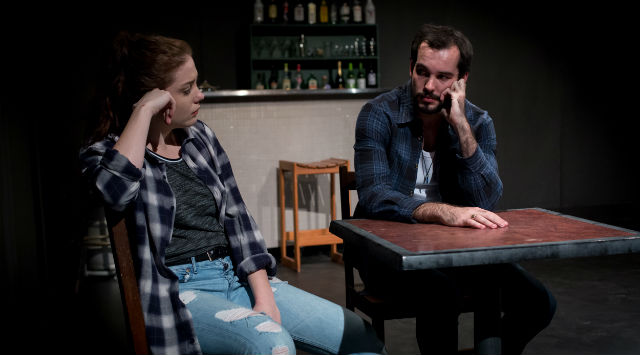
Choreographers: Stephen Page, Daniel Riley, Beau Dean Riley-Smith, Jasmin Sheppard
Cast: Waangenga Blanco, Deborah Brown, Luke Currie-Richardson, Tyrel Dulvarie, Tara Gower, Rikka Hamaguchi, Elma Kris, Yolanda Lowatta, Rikki Mason, Leonard Mickelo, Daniel Riley, Beau Dean Riley-Smith, Tara Robertson, Nicole Sabatino, Jasmin Sheppard, Kaine Sultan-Babij, Glory Tuohy-Daniell
Image by Wendell Teodoro

Theatre review
Three separate works are featured in Bangarra Dance Theatre’s Our: Land People Stories, each with a distinct flavour but unified by discipline, culture and history. Independently striking in style, they tell different stories of the Indigenous experience through the medium of dance at its most progressive and adventurous. Sumptuously designed by the formidable trio of Matt Cox (lights), Jennifer Irwin (costumes) and Jacob Nash (sets), the production is a feast for the eyes, brilliantly polished, with a level of sophistication that any theatre company would be envious of.

Jasmin Sheppard’s Macq is an analysis of the 1816 massacre of D’harawal people at Appin, 75km south of Sydney, and Governor Lachlan Macquarie’s complicity in the incident. It is an expression of British imperialism, specific to the carnage of two hundred years ago, but also serves as representation of the ongoing invasion of Aboriginal land and peoples that our society struggles to rectify. Imagery of death, sorrowfully depicted, provides the piece with an intense poignancy, and Daniel Riley’s performance as the governor amplifies its question of humanity by bringing an unexpected complexity to the tale.

Miyagan is about kinship, inspired by the cultural heritage of the Wiradjuri nation, of which its choreographers Daniel Riley and Beau Dean Riley-Smith belong. Mythology is given redefinition. Through this new manifestation, age-old stories are offered new life, and we see current generations relating to those ancient themes and ideas from a time and space that is real and personal. The dancers experience those narratives in their flesh and in their minds, and the audience shares in their ephemeral theatrical inhabitation of the Wiradjuri ethos. Also remarkable is music by Paul Mac, sensitively blending traditional with contemporary sounds, for a perfect accompaniment to an exciting movement vocabulary that contains more than a hint of hip hop.

Nyapanyapa Yunupingu is one of Aboriginal art’s biggest stars, and her story is put to dance in Stephen Page’s Nyapanyapa. Inspired by her paintings and set to oral stories thoughtfully incorporated into the soundtrack of the 44 minute epic, we are presented a work about the wondrous relationship between woman and nature, as observed through the life of the respected Yolngu elder from the Gumatj clan of North East Arnhem Land. Dancer Elma Kris is deeply endearing in the lead role, full of vital spirituality and an irresistible stage presence. The ensemble’s cohesiveness and their unity of message are a hallmark of the company, and luminously apparent in the piece.

In Australia, we rely on Indigenous cultures to give our art its soul. There is nothing that can replace history and age when we wish for art to be rich in essence and meaning, and it is people like those in the Bangarra company who are uniquely able to bring to materiality something bigger than economics, politics and even science. Theirs is a philosophy that is beyond the constraints of time, and speaks only with truth and depth. What they put on stage is sacred, but how the audience chooses to interpret is an important part of that equation, and it is that very act of listening that is crucial to the path of our collective civilisation.

www.bangarra.com.au

Review: Flame Trees (Tunks Productions)

tunksVenue: The Depot Theatre (Marrickville NSW), Jun 15 – Jul 2, 2016
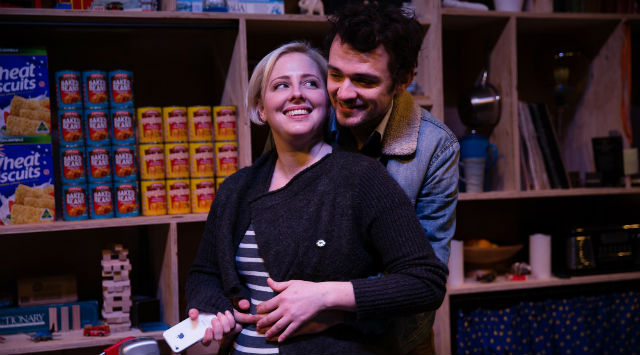
Playwright: Wayne Tunks
Director: Simeon Yialeloglou
Cast: Ryan Bown, Karina Bracken, Rebecca Clay, Isabel Dickson, Jace Pickard, Wayne Tunks
Image by Isobel Markus-Dunworth

Theatre review (of a preview performance)
Wayne Tunks’ Flame Trees is a lot like soap opera. Its characters are highly emotional, and all their families get entangled in the melodrama, which involve moral conflict, infidelity and bushfires. Unlike the most popular tv shows of the genre however, we do not have years of history with the personalities of Flame Trees, and consequently, their grievances are of little concern to us. Causing further alienation is the lack of authenticity that comes from the play’s desperation to arrive at heightened emotion without first engaging us appropriately with the high stakes that it sets up for itself. The script is unoriginal, and hollow where it attempts to induce passion, but is thankfully fast-paced in getting to its conclusion.

Staging of the work is appropriately cheesy, with every creative decision going with the conventional and obvious. Actors put on unnatural voices and indulge in extravagant eruptions of passion and anger, in service of a narrative that is devoid of depth and often unbearably silly. The cast shows conviction nevertheless, and is fairly well-rehearsed, with Rebecca Clay leaving a good impression by finding nuance in her role despite its inherent incoherences.

Emotion must emerge from meaning, and it is a storyteller’s responsibility to locate resonance with the audience. A work can achieve a lot with its surfaces, but without truth at its foundation, big gestures on the exterior will only appear pretentious and absurd. Going to the theatre is a sacred event for communities to share and connect. Commerce will no doubt be a part of its equation, but it must never be the overriding factor, or our participation will only leave us empty and resentful. Theatre is not the idiot box, and the audience deserves much better.

www.tunks.com.au

Review: The Block Universe (Or So It Goes) (The Old 505 Theatre / Cross Pollinate Productions)

crosspollinateVenue: Old 505 Theatre @ 5 Eliza St (Newtown NSW), Jun 6 – 25, 2016
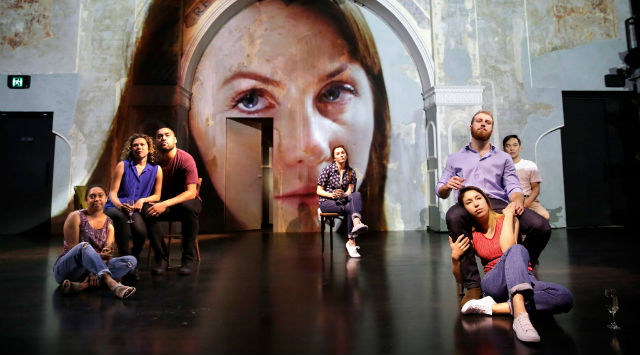
Playwright: Sam O’Sullivan
Director: Dominic Mercer
Cast: Briallen Clarke, Jacob Warner
Image by Kate Williams

Theatre review
Andrew the philosopher tells his love story the only way he knows how. He believes that our time in the world is predetermined, and that our past does not simply disappear but exists in a different realm. He tries to access history to relive happier times, but finds his intellectual idealism unable to provide the comfort he requires. Sam O’Sullivan’s The Block Universe is about a man’s heartache, and his fascination with time. The play takes the thematic opportunity to build upon itself a thoroughly interesting structure, based on Andrew’s theories of determinism, for an unusual plot trajectory that depicts time in an unconventional manner. The boy-meets-girl story that it contains is however, nothing out of the ordinary, and although charming in its mundanity, is insufficiently dramatic for us to engage more deeply with Andrew’s anguish.

The play is directed with an understated elegance by Dominic Mercer, who brings surprising clarity to the text’s philosophical interests. Isabel Hudson’s work on set design is thoughtful and artistic, providing ease of functionality to actors and evocative symbolism to the audience. Further visual sophistication comes from lighting designer Alex Berlage, who creates a large number of scene transitions and a wide range of atmospheric manipulations with little resource other than sheer ingenuity. Equally accomplished is Alistair Wallace’s work on sound that guides us through the play’s complicated timeline with a penetrating sensitivity that accompanies its auditory dynamism.

The stars of the show are its captivating actors, both charismatic, and thoroughly authentic with what they present. Playing Andrew is Jacob Warner, vulnerable and truthful in every moment, with a subtlety that draws us in but delightfully energetic in his stage presence. Briallen Clarke impresses with a performance full of nuance and intensity, while maintaining excellent humour in her very vibrant interpretation of Kristiina. The duo’s chemistry, and the timing that results, is flawless and the relationship they portray is utterly believable.

Our emotions are shielded from Andrew’s heartache in The Block Universe. We see him crumbling before our eyes, but the play prevents us from responding with feelings, choosing instead to elicit an analytical acknowledgement of his pain. Indeed, philosophy and analysis can often ease our suffering, and the transference from heart to brain, can be an effective means to dealing with loss and mourning, but as demonstrated by Andrew’s experience, the solution is only temporary. There is no escaping the fact that matters of the heart need to be treated at the origin of their hurt, and Andrew will not be able to think himself out of his troubles. If we refuse to address the real issues that eat at us, we will be trapped in a perpetual cycle of agony, obstructed from resolution and emancipation, blocked from salvation and peace.

www.crosspollinate.com.auwww.venue505.com/theatre

Review: A Man With Five Children (Darlinghurst Theatre Company)

darloVenue: Eternity Playhouse (Darlinghurst NSW), Jun 3 – 26, 2016
Playwright: Nick Enright
Director: Anthony Skuse
Cast: Jemwel Danao, Chenoa Deemal, Charlotte Hazzard, Jody Kennedy, Ildiko Susany, Anthony Taufa, Aaron Tsindos, Jeremy Waters, Taylor Wiese
Image by Helen White

Theatre review
Like the “Up Series” from British television, Gerry in Nick Enright’s A Man With Five Children begins documenting the lives of five Australian seven year-olds in 1964 with his camera. Initially revisiting the group once a year, he becomes increasingly embroiled with his subjects, and the films he produces begin to lose their objectivity. The nature of Gerry’s art and his relationships are constantly transforming. We think about his responsibilities as film-maker, the validity of his work, and consequently, our collusion as a public that encourages intrusions of this nature. Enright’s play is highly sophisticated, with a big number of themes running through its stories, all thoughtful and sensitive, but its admirable complexity comes at a sacrifice of dramatic tension and focus. Several plot twists are revealed too abruptly, and its ambition to feature all five children with equal weight creates a narrative structure that our emotions struggle to find suitable empathy for.

The work is directed with excellent ingenuity by Anthony Skuse whose combination of live action and film expresses beautifully the way time and space is intertwined in the text (Christopher Page’s lights and Tim Hope’s AV design work together in perfect harmony for a presentation that will be remembered for its precise and elegant aesthetic iterations). Humanity is at the foreground, and Skuse’s remarkable compassion for every character is clear to see, but the ambiguous interpretation of Gerry’s traits and motives is ultimately too mild for its audience to respond with greater passion. Actor Jeremy Waters’ solid stage presence anchors the show appropriately with Gerry’s experiences, regardless of the character’s dubious attributes. It is a performance with power and sincerity, and although not a likeable role, we cannot help but be impressed by Waters’ professionalism and the obvious refinement of his craft.

The cast of nine forms a cohesive and engrossing ensemble. Every scene is lively and authentic, and every line of dialogue is delivered with wonderful conviction. Jemwel Danao plays the innocence and tragedy of Roger to great effect, creating the most poignant moments on stage with an approach that is unique in its subtlety, but also emotionally rich. He speaks directly to our sentimental sides, bringing us back to the play’s tender heart amidst its complications of ideas and incidents. Similarly heartbreaking is Jody Kennedy as Zoe, the girl who believes herself to be “ordinary”. The actor takes her character through many distinct transformations, each one striking in their accuracy, and is consistently charming with every portrayal. The “five children” perform to us not only in the flesh but also through the camera lens, and it is noteworthy that their work on screen is equally accomplished.

The media has played a major part of our lives for decades, but its increasing ubiquity from year to year cannot be understated. A Man With Five Children first appeared before the era of social media, so its major concerns are dealt with in ways that are perhaps slightly outmoded. Gerry is in a position of power that influences lives, in a way not dissimilar to how our own lives are being manipulated by corporations that seduce and insist on our reliance. On the surface, it is a love-hate relationship, but the play leaves little doubt as to the damage that any media can cause when we invite it into personal realms. Gerry’s children would have escaped his domination if their parents had not volunteered their participation but we can scarcely withdraw from the gaze of the modern world through the prevalence of smartphones and their infinite applications. There was a time before screens, and we all fall into the trap of yearning for those simpler days, but the truth is that humans have never been pure and life has never been easy. We have to identify the challenges of our times and their prevailing evils, and do our best to turn things for the better, even in the knowledge that the next malice is just around the corner.

www.darlinghursttheatre.com

Review: The Heidi Chronicles (New Theatre)

newtheatreVenue: New Theatre (Newtown NSW), Jun 7 – Jul 9, 2016
Playwright: Wendy Wasserstein
Director: Alice Livingstone
Cast: Sarah Aubrey, Matt Charleston, Lauren Dillon, Caroline Levien, Olivia O’Flynn, Amelia Robertson-Cuninghame, Darren Sabadina, Benjamin Winckle
Photography © Bob Seary

Theatre review
Wendy Wasserstein’s The Heidi Chronicles first appeared at the end of the 1980’s when American women were beginning to crack the glass ceiling, and when second-wave feminism was approaching its last days. The play examines the life of Heidi Holland from high school to middle age, beginning in 1964 through to 1989, charting the progress of white middle-class women through those three decades of the second-wave. Another thirty years (almost) have past, and we wonder how much has progressed since. “Can we have it all?” remains a question that only one of the genders asks herself, and the ambiguous conclusion to Heidi’s story confronts our contemporary sensibilities, leaving us to meditate on our place in society today.

Director Alice Livingstone presents a vibrant production that wears its heart on its sleeve, with an unmistakeable affection for the play’s nostalgia guiding us through Heidi’s years of development. It is a work painted with broad strokes, and although nuance is not always delivered, the staging of each scene is crisp and impactful. Refreshing and inventive use of space, along with Livingstone’s choice of projections help elevate the visual content of its otherwise basic design aspects.

Performers demonstrate an earnest conviction that encourages us to get involved with their stories. Leading lady Lauren Dillon does not seem to possess sufficient maturity for the portrayal of Heidi’s life in later sequences, but her confident presence stands her in good stead with the audience, and her passionate interpretation of a crucial monologue gives the poignant work its heart and soul. Darren Sabadina and Sarah Aubrey leave remarkable impressions with their exuberant and adventurous approach to their respective roles, both detailed with their characterisations and humorous at every appropriate opportunity. There are moments in the show of great chemistry between actors, but also scenes in which people do not seem to connect. Nevertheless, this production of The Heidi Chronicles is consistently enjoyable, and many will find its explorations meaningful.

Heidi lives a feminist life because she is in charge of her own destiny. The rules are her own, and she does not seek approval for her decisions. No one lives in a bubble, and we all find inspiration from other lives, but self-determination for every individual should be afforded and supported by our civilisations. A feminist does not have to look a certain way or prescribe to any particular doctrine, but she needs to be aware of her power, where it comes from and the battles that were fought for it to exist.

www.newtheatre.org.au