Review: A Doll’s House (Sport For Jove Theatre)

sportforjoveVenue: Seymour Centre (Chippendale NSW), Jul 17 – Aug 2, 2014
Playwright: Henrik Ibsen (adapted by Adam Cook)
Director: Adam Cook
Cast: Annie Byron, Barry French, Anthony Gooley, Douglas Hansell, Matilda Ridgway, Francesca Savige
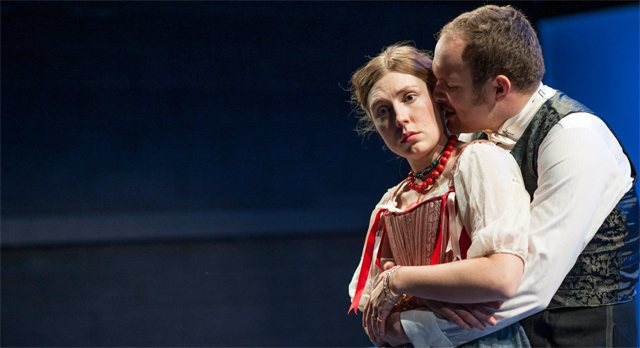
Image by Seiya Taguchi

Theatre review
It has been well over a century since Henrik Ibsen’s A Doll’s House first appeared on a Copenhagen stage in 1879, but the play is still a popular choice in Australia today. Its story and characters continue to resonate, and its social commentary remains relevant to many of our lives. The themes of gender politics, marriage and self-actualisation are no less significant than they were in Ibsen’s day. The sexual revolution might have come and gone, but judging by the power of Sport For Jove’s current production, the societal dysfunctions illustrated in A Doll’s House are not yet a relic of the past. Indeed, we face the question of whether these injustices can ever be eradicated, or if it is human nature that insists on power structures that subjugate and oppress.

Adam Cook’s adaptation gives the language a vernacular update, which allows Nora’s world to be accessible by contemporary Australian audiences. There is a familiarity to their speech that positions them as our peers rather than historical literary figures, and we are encouraged to relate to the unfolding events on a personal level. Cook’s flair as a director makes the issues at hand feel immediate and palpable. The realism he creates on stage is a nod to Ibsen’s legacy, and an effective avenue to communicate a sense of the everyday realities that we share with the personalities on stage. Cook is especially thoughtful in his handling of the more politically biting portions of the script. He makes sure that meanings are highlighted, and we are never allowed to ignore the elements that make this a landmark work.

Set and costumes are designed by Hugh O’Connor, who turns in excellent work on both fronts. Set pieces are elegantly selected and coordinated, and the space created is appropriately quaint. The sense of a nouveau riche class is gently evoked in its purposefully elegant blend of blues, greys and wood. The doors in Ibsen’s script are frequently cited, and they do come into focus often but unfortunately, the ones chosen are too modern for the context and can appear disharmonious with the established aesthetic. Costumes are beautiful and flattering, and every ensemble helps with character portrayals. They inspire postures and mannerisms for the actors, and also ignite our imagination with notions of time, space and personalities. It must be noted though, that Torvald’s tuxedo in the final scenes is severely ill-fitted and a disruption to the otherwise charming visuals that O’Connor has created.

Nora is played by Matilda Ridgway with outstanding dynamism and depth. Her delivery is a thorough study of one of Western theatre’s most celebrated characters. Ridgway’s deep understanding of the work’s nuances as well as her intelligent awareness of the audience’s expectations, contribute to a compelling and impressive performance. Her decision to play up Nora’s twee qualities is an interesting one. It pulls into sharp focus the falsity of her marriage, but loses somewhat, the dimension of someone of great fortitude, and someone who is capable of cunning when necessary. Nevertheless, Ridgway’s work in the penultimate scene of upheaval will be fondly remembered for its sheer dramatic force and emotional impact.

Douglas Hansell is an entertaining actor who creates a Torvald that is lively and intriguing. Humour always bubbles under his surface, which makes Torvald’s objectionable features amusing to observe, but by the same token, the presence Hansell provides tends to feel slightly flippant. Anthony Gooley is magnetic when he exhibits Krogstad’s menacing side. The danger he unleashes is thrilling and seductive, but his depiction of desperation is uneven. His love scene with Kristine (played with an alluring stoicism by Francesca Savige) is a little lacking in polish, but it ends on a high note with ardently moving results.

The audacity of the play’s conclusion will never fade. Nora’s eventual decisions are simultaneously controversial and heroic. She justifies her actions with great conviction, and even though Ibsen leaves us little room for doubt, the play ends with a stinging hint of discomfort. Adam Cook and Matilda Ridgway have achieved something quite remarkable. We rejoice in their Nora’s exaltation, but we do not forget the dangers that lie ahead. Like their Nora, we too choose to risk everything, for everything counts for nothing, if all that is lived is a lie.
www.sportforjove.com.au

Review: This Is My Box (Rue de la Rocket)

ruedelarocketVenue: Bondi Pavilion Theatre (Bondi NSW), Jul 16 – 19
Playwrights: Karli Evans, Erin Taylor, Karena Thomas
Director: Erin Taylor
Cast: Karli Evans, Karena Thomas

Theatre review
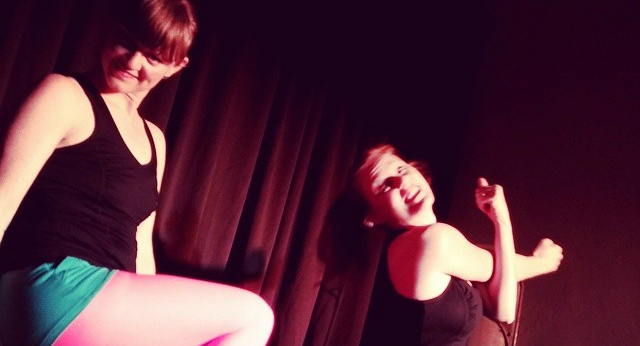
This Is My Box features two women in very colourful exercise gear exorcising demons. Their costumes do not change, but the actors go through many different characters in this hour long piece. They portray familiar everyday personalities from different walks of life, but they are all unified by their inanities. This is a work about the people we are afraid of becoming. They come from every social class, but are all less than intelligent. Their lives are filled with mundanity and they do not seem to have any mental capacity to escape their respective hells. This is probably a work about all of us, even though it may initially seem to be about “those people”.

The script is superb. It has all the hallmarks of a thoroughly devised work, relying on much more than words, where every moment is made absurd, and with a plot trajectory that is never predictable, yet everything seems to make sense. The narrative is about instincts and emotional reactions, rather than logic and story. Characters and scene changes are distinct, which gives the production a formal grounding, and its theatrical structure. There is a lot of fooling around, but the disciplines that conspire to create this coherent whole are clear to see.

Both performers are compelling, and all their roles are hilarious. Their use of voice, movement and face are exaggerated but appropriately so. It is almost like clown work, except with social commentary. Karli Evans is slightly more proficient with her physicality, while Karena Thomas tickles our funny bone with some very dynamic facial expressions. It is a high energy performance, by women with impressive and confident presences.

Erin Taylor’s direction is sensitive to the strengths of the players. She appears to have a deep understanding of the women’s abilities, and strives to expose all of their best features in these manic 60 minutes. Taylor commits to a specific sense of humour that is probably not of the widest appeal, but the conviction harnessed on stage is absolutely euphoric. The work is critical of many Australian women, but it is never mean spirited. It embodies a kind of sisterhood that is self conscious but generous. It is about girls who do not want to turn into their mothers but are wise enough to realise some inevitabilities.

www.ruedelarocket.com

Review: It’s Been A While (Smoking Gum Theatre)

smokinggumVenue: King Street Theatre (Newtown NSW), Jul 16 – 19, 2014
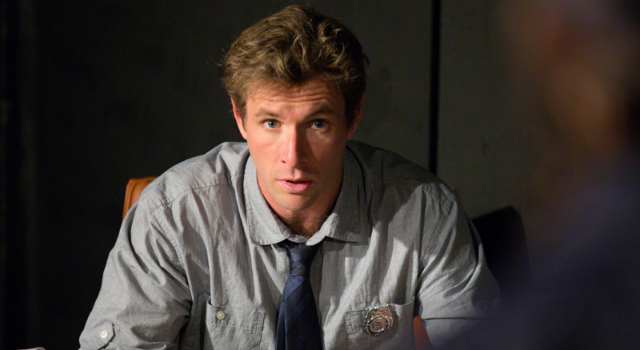
Playwright: Jordy Shea
Director: Lucinda Vitek
Cast: Stephen Bracken, Chris Circosta, Luke Holmes, Zara Stanton, Kathryn Wenborn

Theatre review
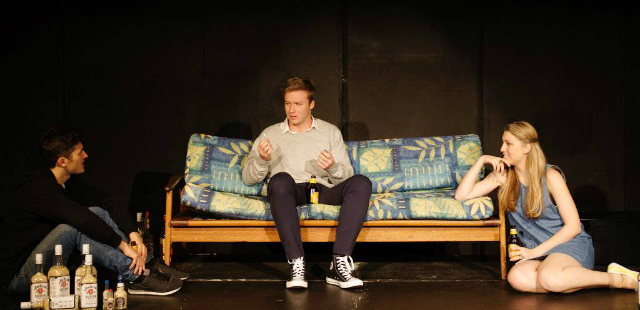
It’s Been A While is a story about youth, friendship and sexual awakenings. It centres around the suicide of an 18 year-old, and a group of five friends who come to terms with adulthood and death. Jordy Shea’s script is structurally ambitious, with separate timelines interweaving in a constant state of flashing backwards and forwards. Its frank portrayal of our youth’s interests and concerns is refreshing, and the work provides an important voice to the diversity of our artistic landscape. The production is just over an hour long and although everyone enjoys a succinct piece, Shea’s script needs deeper exploration of its themes and personalities. He sets up interesting premises but they require more thorough excavation for scenes to sizzle. The writing could also benefit with more varied speaking patterns. There is some effort put into individualising characters, but they need to have more distinct voices to create greater colour for the stage.

Performances are earnest and energetic. The cast is green, but it is clear that they put their all into the show. Luke Holmes is a lively Tom. He is a slightly grown up class clown, who is always keen to contribute a sense of lightheartedness. Kathryn Wenborn is effective when her character Maddy becomes introspective, and memorable for her heartfelt delivery of an emotional sequence at the play’s conclusion. Dean is played by Stephen Bracken who has a strong presence and good focus, but as with the entire group, more training and stage experience would be helpful.

The plot’s complexity present a challenge. It is frequently unclear which of the two chronologies is being depicted, and the confusion that transpires is distracting. Scene transitions require further finessing, and design elements while adequate, could be more adventurous. Lucinda Vitek’s direction is tightly paced, but an extended rehearsal period would make the friendships more believable and cast chemistry more exhilarating. The subject of teen suicide is interesting, and probably one that many can relate to. We feel like we know what the characters are going through, which also means that our imaginations are vivid, and our expectations need to be met. It’s Been A While does not hit every note right, but it is a gallant effort that tells a meaningful story.

www.smokinggumtheatre.com

Review: Ruthless! (The Theatre Division)

theatredivisionVenue: Seymour Centre (Sydney NSW), Jun 19 – Jul 12, 2014
Book & Lyrics: Joel Paley
Music: Marvin Laird
Director: Lisa Freshwater
Cast: Katrina Retallick, Meredith O’Reilly, Margi de Ferranti, Caitlin Berry, Madison Russo, Geraldine Turner

Theatre review
The value of camp is found in its affiliation with irony and black comedy, but its inherent darkness is masked by insolent loudness, and often, political meanings are so extensively subverted that they become near invisible. Camp heroes like Carmen Miranda, Liza Minnelli, Bob Downe and seventies pop star Sylvester (to name just a few), are all iconic figures remembered for a certain frivolity, but they each represent something far more serious, which we can choose either to acknowledge, or ignore. Joel Paley and Marvin Laird’ Ruthless! is utterly and irrevocably camp, but it is also highly intelligent and sophisticated in its approach. Its themes of feminism, family and the American dream are key impetuses for its jokes and plot development, even if they are not explicitly dissertated. Instead, front and centre are the wittiest of lines, the most charming of show tunes, and the savagest of stories. This is a musical that has all the constituents of a cult hit, which is to say that it is not for everyone, but for those with whom it resonates, Ruthless! is a very special show indeed.

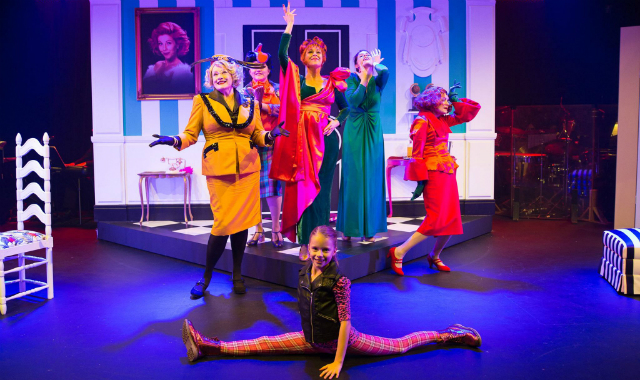
Lisa Freshwater’s direction is suitably bold. The material needs a brazen and fearless attitude, and Freshwater is certainly no shrinking violet. Wickedness lurks in every corner, and the director is never afraid to take full advantage of it for our benefit. The writing is a minefield of laughter, and she detonates at every opportunity. The characters have few redeeming features, but Freshwater manages to make each one bewitching. By ensuring that these women never seem realistic, their misdeeds are prevented from descending into too dark and threatening a space. Instead, they are always beguiling and glamorous, like the women in Disney films, only more animated.

Choreography by Christopher Horsey is dynamic and astute. He is always in on the joke, and provides a rich suite of tools for the performers to articulate in movement. The stage is always vibrant, and the women are always confident. Each gesture and posture is full of flair and calculated, forming part of the rich visual language that establishes the production’s brilliant effervescence. Also noteworthy is Mason Browne’s work as set and costume designer. His use of colour is exemplary, and the vividness he achieves with quite minimal elements is truly inspired.

The lead role Judy Denmark is played by Katrina Retallick with inconceivable talent and flair. It is sublime to witness an elite performer at the top of her game, and this is such an occasion. The performer glows throughout the show, with supreme grace, a flawless voice and a surprising mastery over the dark humour at hand. The role is a tricky one. It is challenging, technical, unconventional and confronting, and Retallick achieves it all with flying colours and devastating splendour.

Young performer Madison Russo is a revelation as the scene stealing Tina Denmark. Her vocal and dance abilities are impressive, and crucial to the effectiveness of the narrative. Caitlin Berry’s versatility is showcased perfectly, along with a stunning singing voice and a keen sense of acerbic humour. Margi de Ferranti plays both Miss Block and Myrna Thorn with exuberance, and claims the biggest laugh of the show with a gag about Miss Block’s sexuality and dress sense. Geraldine Turner is positively terrifying as the theatre critic who “hates anything to do with the theatre, that’s my job”, Lita Encore. Her performance of “I Hate Musicals” is reason enough to buy a second ticket for another viewing. Meredith O’Reilly as Sylvia St Croix displays professional savvy and a stage presence that are impossible to ignore.

As Les Misérables celebrates its umpteenth opening in Melbourne this month, it is important to remember that popularity in the arts might mean fame and fortune, but excelling in smaller theatres under ridiculous constraints of all kinds is a greater glory. Ruthless! will never see the financial success of Phantom and Saigon (“if I want helicopters, I’d go to the airport!” says Lita Encore), but for those of us who yearn for something with bite, and that provides its cast with nowhere to hide but to rely only on sheer talent, this is a show to ruthlessly champion for.

www.thetheatredivision.com

Review: Lobby Hero (Dudley St Productions)

lobbyheroVenue: TAP Gallery (Darlinghurst NSW), Jul 8 – 26, 2014
Writer: Kenneth Lonergan
Director: Kevin Jackson
Cast: Tom Oakley, Dorian Nkono, Shari Sebbens, Jeremy Waters
Image by Rupert Reid

Theatre review
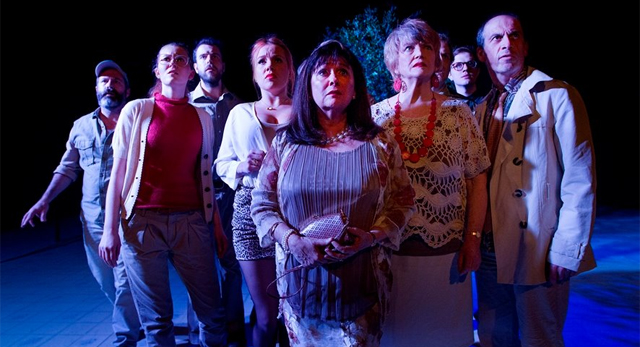
Kenneth Lonergan’s Lobby Hero is about morals, honour and lies. The play features two security guards and two police officers, and through the instability of their friend-foe relationships, it deals with human mistakes, telling the truth, and facing consequences. Kevin Jackson’s direction reveals a thorough enjoyment of words and their nuances. His work is almost entirely focused on the cast, ensuring that Lonergan’s writing is explored exhaustively in voice and movement, which results in a story told with precision and impressive detail.

The actors are strong, but in divergent ways. Jackson ensures that their performances are authentic, and gives them the freedom to portray each character to their best abilities. Jeremy Waters as Bill defines the term “show stealing”. His presence is commanding, and his work is wild and completely rambunctious. Waters is incredibly impressive and possibly faultless as the ignorantly immoral cop, and the vibrance he brings to the stage is irresistible. Dorian Nkono is an excellent comic. He plays William with hilarious irony, and delivers many moments of laughter. His timing is flawless, and his creative embellishments with speech and physicality are quite entrancing.

The two Bills are big characters played by flamboyant actors, and they are magnificent. The play however, relies on two other characters to drive home its central message. Jeff and Dawn are key to providing gravity to the work but are unfortunately often eclipsed on this stage. Tom Oakley accurately embodies the aimlessness and innocence of Jeff, but his performance is often thrown off balance by his colleagues. There is a great deal of emotional authenticity to his work, but he sometimes pitches at too subtle a level. Dawn is played by Shari Sebbens whose strengths as a dramatic actor are unquestionably alluring, but they outweigh her comedic talents. Sebben’s interpretation of her character is a truthful one, but she misses opportunities of levity that would endear her further with her audience. More light would create more contrast, so that the weightier portions of her narrative would resonate stronger.

Visual design is kept at a minimum. Costumes add to characterisations, but set and lights are merely functional. Sound design provides some effective cues to entrances, but it is also distracting at times. Some of the music choices are unsuitable, creating unnecessary discord with the action on stage. We hear the story clearly in Lobby Hero, but its moral is not articulated loud enough. More memorable are its actors and their craft. Shows are often about stars, and on this occasion, the show stealers are victorious and they have escaped scot free.

www.tapgallery.org.au

Review: Book Of Days (New Theatre)

newtheatreVenue: New Theatre (Newtown NSW), Jul 8 – Aug 9, 2014
Playwright: Lanford Wilson
Director: Elsie Edgerton-Till
Actors: Amelia Cuninghame, Gael Ballantyne, Simon Davey, Kate Fraser, Jeannie Gee, Mark Langham, Brendan Miles, Alex Norton , Alyssan Russell, Geoff Sirmai, Joel Spreadborough, Kyle Walmsley
Photograph © Bob Seary

Theatre review
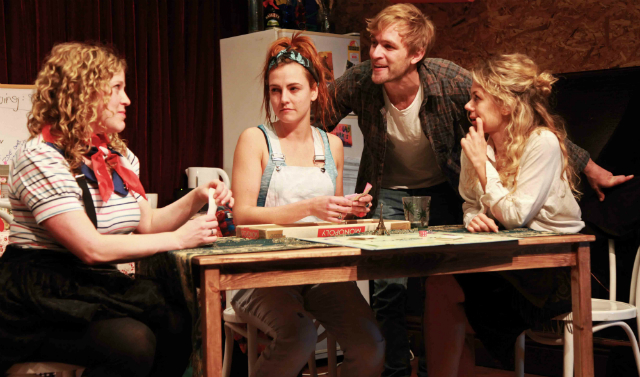
David Lynch’s Blue Velvet is referenced in the play. Lynch’s film opens with idyllic shots of a country town with smiling firemen and little children crossing the road under the guidance of a lollipop lady. Very soon after, the camera zooms into a decapitated ear, stranded on a field, and we burrow into the dark and sodden world that lurks just beneath the blissful provincial life, complete with menacing bugs and sopping dirt. Lanford Wilson’s Book Of Days is about the beautiful township of Dublin, Missouri, where its residents’ Caucasian appearance are made even whiter by a hundreds shades of beige and khaki (thoughtful costuming by Jacqui Schofield), and everybody lives in states of tranquil ignorance, reveling in the comfort and tradition provided by the local church. Dublin’s peace is disrupted only when a production of George Bernard Shaw’s Saint Joan comes to their community theatre. Its leading lady experiences an awakening that leads to unprecedented conflict within its community, and true colours emerge.

Elsie Edgerton-Till’s direction of the work is inspired and innovative. Each character is distinctly established, but they function as a harmonious team, and all 12 are individually interesting and memorable. The use of space is instinctive and dynamic. Georgia Hopkins’ set design is minimal, but actors are always cleverly positioned in the background to create subtle tableaux that add energy and dimension to scenes, and to manufacture an elegant aesthetic for the production. The show is entertaining, provocative and intriguing. Edgerton-Till speaks intelligently to her audience, but she has also successfully put together a production that is consistently, and surprisingly, engaging.

The ensemble is formidable. Every role is vivid, and every actor is accomplished. There are a number of moments that would benefit from additional rehearsals, but this is a very polished team, with a feeling that each personality is just right for their part. Simon Davey is a fantastic villain, with evil motivations and a desperate emotional world. His James Bates is a convincing creation, but the actor is careful to prevent any hint of endearment that could arise from his sometimes childlike behaviour. We believe he is horrible, and we wish the worst for him. His mother Sharon is played by Jeannie Gee with charming buoyancy and a painful naiveté. Her performance is lively and amusing, and her sense of humour plays at the dangerous precipice where the divergence between sincerity and irony are not always clear. Ruth Hoch is the Dublin woman who takes on the role of Joan of Arc. Kate Fraser’s portrayal of Ruth is precise and exciting, although her personality shift from encountering Joan could be more pronounced. The role has some complex and abstract scenes, and Fraser shines in those. The clarity at which she conveys the script’s meanings is commendable and delightful.

Book Of Days contains big ideas, but they do not come down on us like a sledgehammer. Its plot is classically structured, and we are swept away, completely captivated by its host of fascinating characters and their narratives. Edgerton-Till resists the temptation to turn the show into an edgy piece of theatrical experimentation, and lets Wilson’s concepts speak for themselves. What happens in Dublin implicates religion, sexism, and parochial hypocrisy, but the play’s politics are detailed gently. The main thing is the story, and it is a hugely satisfying one. All the other important stuff come a little later, but they stick around for a good while.

www.newtheatre.org.au

Review: Of Monopoly And Women (Brave New Word)

brandnewwordVenue: Exchange Hotel (Balmain NSW), Jul 9 – 24, 2014
Playwright: Pamela Proestos
Director: Sascha Hall
Actors: Ainslie Clouston, Bianca Raess, Victoria Greiner, Mark Taylor
Image by David Hooley

Theatre review
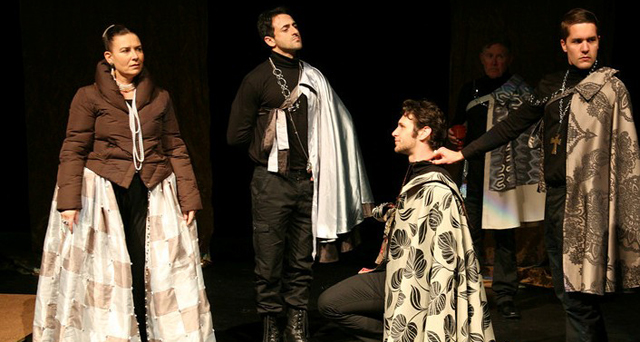
Relationships between siblings are often neglected by storytellers. They seem too mundane for the stage, and are a part of life that many take for granted. Pamela Proestos’ script places focus on a trio of sisters and demonstrates that there is much to be explored. Each woman has distinct qualities, and as a collective, they are complex and fascinating. Their bond is exceptionally tight, and within that closeness, they relate to one another with great humour, as well as unbearable cruelty. This calls to mind a quote from spiritual writer Marjorie Pay Hinckley, “home is where you are loved the most, and act the worst.”

In Of Monopoly And Women, we see the machinations of sibling rivalry in all its glory. In the security of their home, our leading ladies live, eat and breathe together, with a no holds barred attitude. They are always their true selves, allowing Proestos to reveal facets of human nature, good and bad, that are universal and unerringly reflective of our own lived experiences. With brutal honesty, she shows us how we treat the people we love, sometimes with unbelievable impertinence, but always amusing.

Production design is thoughtfully executed although its shoestring budget is evident. Demitra Sealy’s set efficiently creates levels and spaces that assist with scene transitions, and adds visual interest with colour and texture that feel homely while also providing a look that is delightfully theatrical. Lighting by Luke Holmes is sensitively created, turning a challenging venue into an effective performance space that provides fluctuating moods.

All performances are accomplished, and the chemistry between actors are well harnessed by director Sascha Hall. It is crucial that the family ties being portrayed are believable, and the production succeeds on this level. The symbiosis of love and hate is delicately balanced and deeply interesting. There is however, a deficiency in some scenes that require a greater range of emotion and comedy. The script allows for quite extreme quarreling on one hand, and hilarity on the other, but a few of these opportunities are missed. The action is fast paced, but charming lines are sometimes not given enough emphasis for them to work more powerfully. Supporting actor Mark Taylor is memorable for giving the most natural performance in the cast, playing one of the women’s boyfriend. His character is simplest to handle, but it is noteworthy that Taylor’s work is consistently compelling.

This is a production that has its heart in the right place. The team has identified the script’s essence accurately, and they present it well, but the show needs a few more dramatic turns in performance tone to prevent its domestic scenarios from descending into a space of mundanity. Ella, Kate and Zoe are multi-dimensioned and likeable women, with inter-playing dynamics that are thoroughly explored and beautifully written. The play and its themes are enjoyable and easy to identify with, even if it exposes us for being so careless with the people we love the most.

www.bnwtheatre.com.au

Review: An Unexpected Execution (Factory Space Theatre Company)

factoryspaceVenue: Star On The Sea Theatre (Manly NSW), Jul 4 – 19, 2014

Writer: Emma Willis (based on Mary Stuart by Schiller)
Director: Roz Riley
Cast: Daniel Csutkai, Deborah Mulhall, Dimity Raftos, Luke Middlebrook, Melissa Kathryn Rose, Michela Carattini, Roberto Zenca, Ross Scott, Samantha Beames

Theatre review
The story of Queen Elizabeth I and her cousin Mary, Queen of Scots is a well-known one. Torn apart by politics and religion, their feud remains a poignant tale about the ties that bind, and the ways they can break. Emma Willis’ script is an update of Schiller’s play from 1800. The language feels contemporarised, but still poetic and nuanced. The narrative is well structured, and detailed. The complex sequence of events and relationships are relayed to dramatic effect, but it works also as a history lesson for those might be unfamiliar with the saga.

The show is put together with enthusiasm, but the material is challenging. The team is not an experienced one, and the production does not produce enough nuance or creativity for their show to captivate. Queen Mary is played by Michela Carattini who looks half the age of her character. Carattini provides delightful balletic lines with her physicality, but lacks the maturity required for portraying such dire and ominous circumstances. Dimity Raftos is a regal Queen Elizabeth, and we feel her frustration about the state of affairs, but the range of emotions depicted needs to be expanded for the Queen’s perspective to hit home. Notable supporting players include Samantha Beames who demonstrates solid authenticity as Hanna, and Daniel Csutkai who stands out with playful flamboyance, but he could benefit from a little restraint.

The tale is dramatic, but the show’s direction is simple and direct. In the hands of stronger members of the cast, we follow the plot adequately, but scenes become confusing when performances falter. Not all who love the theatre receives opportunities for formal training, but they should not be discouraged from participation. The selection of text is crucial, and on this occasion, the discrepancy between the group’s ability and the script’s demands is significant. Every moment on stage is a learning experience, and there is no doubt that these thespian talents will continue to flourish.

www.craftwaresolutions.com.au

Review: Love And Death And An American Guitar (Highway Run Productions)

highwayrunVenue: Hayes Theatre Co (Potts Point NSW), Jun 4 – 6, 2014
Playwright: Toby Francis
Director: Neil Gooding
Musical Director: Andrew Worboys
Cast: Toby Francis, Noni McCallum, Andrew Worboys

Theatre review
Jim Steinman is a living American rock legend. Best known for power ballads made famous by the likes of Meatloaf, Bonnie Tyler, Air Supply and Celine Dion, his music is deeply ingrained into pop culture the world over. Like many song writers responsible for the most popular music ever recorded, his fame has never matched those who are centre stage. Toby Francis’ new script is mainly a monologue that incorporates the cabaret format. He performs it with an accompanist, along with a support vocalist who provides a female voice for several numbers. The story gives us some background into Steinman’s work and subsequent estrangement with Meatloaf, then goes on to an imagined depiction of Steinman pitching to us, an idea for a rock opera. Neverland was the precursor to Steinman’s seminal Bat Out Of Hell, but Francis’ vision is assembled like a concerto of greatest hits.

The song list is selected wisely, with many of Steinman’s crowd-pleasers included. Francis is on stage, dressed in denim, wielding a guitar and a microphone stand. On his right is musical director Andrew Worboys on a grand piano. It seems an awkward arrangement, but the rock cabaret works. The glam quality in Steinman’s songs provide a romantic flamboyance that makes sense for the context. Pre-programmed backing tracks give the songs their arena style volume, but all vocals are sung live. There is no doubt that the strongest element of Love And Death And An American Guitar is its standard of singing. The notes that emerge from Francis and his female counterpart Noni McCallum’s voices are astounding. One of the great joys of live performance is to be in the presence of superhuman talent, and these singers’ abilities are beyond what any combination of iPod and earphones can encapsulate. Also accomplished is Francis’ storytelling and the script he has prepared for the show. There is a beautiful lyricism to his writing, although the story does lack vividness at times. His skills as an actor are persuasive enough for the production, but the command over his physicality requires training.

Much as Steinman is one of the greatest song writers ever to surface, he does not have the makings of a rock god. Successful rock stars lend style, attitude and personality to the stage. They need to resonate sexuality, danger, confidence and power. In his show, Francis is positioned somewhere between cabaret, musical theatre and rock. He has a vulnerability that is alluring, but there is a politeness that belongs to the more formal world of musicals. The songs belong to stadiums that seat thousands, but Love And Death And An American Guitar translates them for a much smaller venue, and an entirely different genre of show. Francis sheds new light on these classic tunes, allowing their many fans to fall in love all over again. To borrow from the man himself, “it’s so hard to resist and it’s all coming back…”

www.hayestheatre.com.au | www.highwayrunproductions.com

Review: La Ronde (Enigma)

enigmaVenue: Coronation Hall (Newtown NSW), Jul 2 – 12, 2014
Writer: Arthur Schnitzler
Director: Steven Hopley
Cast: Amy Scott-Smith, Peter Jamieson, Alison Lee Rubie, Jasper Garner Gore, Emily Elise, Leigh Scully, Emilia Stubbs Grigoriou, Brendon Taylor, Amanda Maple-Brown, Jaymie Knight

Theatre review
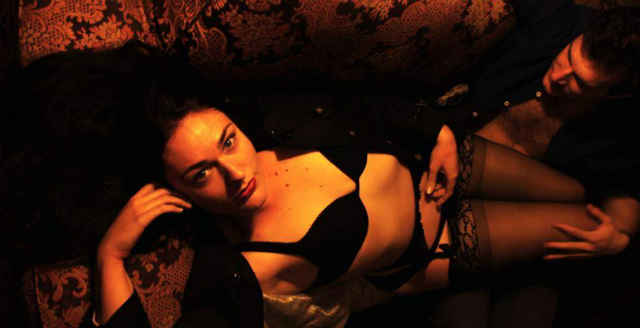
Arthur Schnitzler’s La Ronde was written over a hundred years ago. It is mainly about sex, but it is also about hypocrisy, deception and promiscuity. Not everything in the play has stood the test of time, which is an excellent signifier that the sexual revolution had successfully propelled civilisation forward. Schnitzler’s writing has an aura of scandal and taboo about the sex that happens in every scene, but this feels antiquated and childish by today’s standards. Fortunately, the text contains plenty more to explore that is timeless and universal.

Steven Hopley’s direction is straightforward, but the decision to stage the work, theatre-in-the-round, is a highlight. The intimacy he creates is fascinating. We are a fly on the wall, privy to the secret lives and exposed bodies of these comedic fornicators. We only see what happens before and after sex acts, of course, but Hopley manages to light up enough libidinal fire between actors so that we experience something quite unusual. It is certainly not everyday that we feel tension and energy of this nature without being a direct participant. The most entertaining feature of the show however, is its comedy. Hopley identifies the play’s irony well, but how effectively the laughs are delivered, depends largely on the proficiency of the players, which varies wildly on this stage. The director’s approach is too gentle. These characters inhabit a bawdy world, but the production is polite. Even though we do see some skin, and people kiss a lot, there is never a sense of transgression, which one would argue is necessary for dealing with taboo subjects.

With a flamboyance that is indulgent and delicious, Amanda Maple-Brown steals the show as The Actress. She has pitched her performance at just the right tone for the material, and the laughter she inspires is quite euphoric. The dramatic transformation of personality in two short scenes cannot be more extreme, but Maple-Brown is entirely convincing. Her performance is intelligent and brave, and the chemistry she creates with both her bedfellows is as madcap as it is sizzling. Also memorable is Emilia Stubbs Grigoriou as The Sweet Girl. The actor has marvelous presence, and delivers a surprisingly truthful performance. She can appear over earnest at times, which can obscure some funny lines, but the conflicting qualities of innocence and lust that define her character are balanced well. Brendon Taylor as The Writer is dynamic and precise. It is good to see him enjoy a joke about Belvoir as much as we do. Leigh Scully is a little coy in his portrayal of The Husband, but the energy he brings to the stage is valuable. His animated physicality provides a theatricality to a show that is sometimes oddly tranquil.

La Ronde does not comment on the implications of promiscuity. It merely puts it on display. We observe deception at every turn, but the production is not antagonistic towards any of its characters. The hypocrisy we recognise is infuriating, but that emotion is not imposed upon us. There are many ingredients that could be added to make the show a spicier experience, but what it serves up is clearly hot enough.

www.facebook.com/…