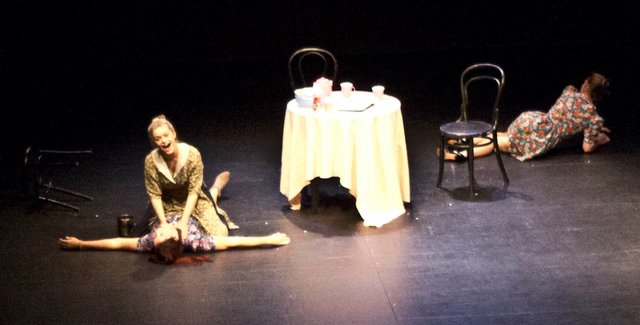
Review: Possessions (Escape Artists)

rsz_possessions_imgp9656Venue: King Street Theatre (Newtown NSW), Mar 27 – Apr 5, 2014
Playwrights: Jane Bergeron, Carrie Ann Quinn
Directorial Support: Luke Mullins, Anna Kamarali
Actors: Jane Bergeron, Carrie Ann Quinn, Frances Attard, Morgan Davis, Shane Waddell, Samantha Stewart

Theatre review
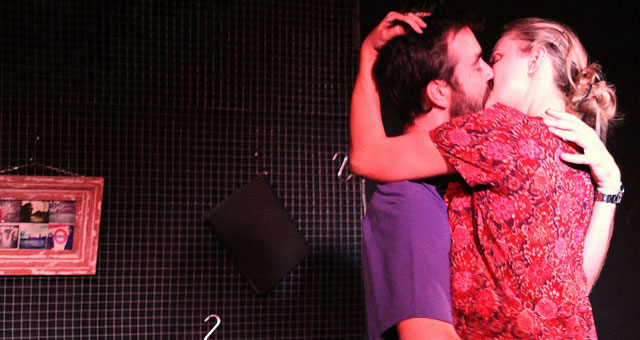
Possessions is about the aristocratic Mancini sisters, Hortense and Marie, from 17th century Italy. The script is based on their memoirs, published in an era where female memoirs were a revolutionary concept. There is a distinct appeal in featuring unusual historical figures, especially ones who had broken moulds and lived extraordinary lives, but it can be a challenging task finding a way to relate past stories of nobility to our modern times.

Often, comedy is the key to telling courtly tales. Absurdities abound and it is natural to respond with incredulity and humour. Those lives are so thoroughly alien to what we experience today, that laughter is the most direct reaction. The production is consciously directed towards finding comic elements in the Mancinis stories, and significant effort is put into creating a Black Adder type tone to the proceedings, but the performers’ skills seem to lie in areas other than comedy, such as melodrama and musical theatre. Fortunately, both Jane Bergeron and Carrie Ann Quinn both have opportunities to showcase these skills in the concluding scenes, even if they do appear too late.

There are a number of instances where an actor plays herself and interacts with a Mancini sister across time and space. These moments suggest the feminist theme, but they are fleeting. We do sense in the play’s undercurrent, the creators’ interest in the evolution of women’s statuses, but they miss the opportunity to explore and expound things further. The production needs a certain aggression. The Mancinis’ story develops to a point where the women are forced by circumstance to show courage and conviction. In order to progress, they found a belligerence to push their lives forward, and that seems to be the lesson we have to learn from many who have left their mark.

www.escapeartiststheatreco.com

Review: Twelfth Night, Or What You Will (Sport For Jove Theatre)

rsz_1941449_10152310338275729_1124735746_oVenue: Seymour Centre (Chippendale NSW), Mar 27 – Apr 12, 2014
Playwright: William Shakespeare
Director: Damien Ryan
Actors: Abigail Austin, Anthony Gooley, Bernadette Ryan, Christopher Stalley, Christopher Tomkinson, Damien Strouthos, Edmund Lembke-Hogan, Eloise Winestock, Francesca Savige, George Banders, James Lugton, Megan Drury, Michael Pigott, Robin Goldsworthy, Sam Haft, Teresa Jakovich, Terry Karabelas, Tyran Parke
Image by Seiya Taguchi

Theatre review
There are many ways to stage a Shakespearean play, and the discussion on the different approaches that artists take, is also a discussion on the nature of theatre. Sport For Jove’s production of Twelfth Night is about spectacle and entertainment. It is about skills and techniques from different theatrical disciplines collaborating for a live event that fascinates the senses and amuses the mind. This cast and crew are immersed in a wonderland of freedom, where the best of their talents are drawn out by a spirit of wild playfulness inspired by Shakespeare’s writing, resulting in a work overflowing with conviviality and colour.

There are no deep meanings and big messages in this story, in fact it is very silly. Director Damien Ryan takes the opportunity to remove himself from conventional emphasis on moralistic learnings, politics and intellectualism, and gives us a show that challenges the limits of artistic creativity and the use of the imagination. He seeks to impress not with what is being said, but how things can be said. It is about performance, and presentation. In other words, it is about exploring theatre in the ways it is distinct from other art forms and other media, using theatre to work in a way that nothing else can emulate.

Actor Robin Goldsworthy as Malvolio is quite frankly, faultless. Here is an actor with a very big hat full of comic devices, and he pulls everything out of it for a performance that tickles every funny bone in every conceivable way. Goldsworthy gives a simple character the most complex of treatments that surprises and outsmarts us at every turn. He works hard to regale us, and we are simply and thoroughly enthralled. The range and conviction he displays in this role, along with his extraordinary energy and timing, are breathtaking. This is a Malvolio not to be missed.

Megan Drury as Olivia is delightful. She finds a balance between glamour and absurdity, creating a character that makes us laugh and fall in love simultaneously. Drury’s stage presence is powerful, and there is a boldness in her demeanour that effectively prevents Olivia’s femininity from ever being seen as weak or twee. Anthony Gooley plays Orsino with extraordinary flamboyance, and a sex appeal that is both alluring and hilarious. There is a sense of danger that comes with Gooley’s brave impulsive style, which always seems to be ready for the unexpected, that in turn keeps us riveted and on our toes. Sir Andrew Aguecheek is played by Michael Piggott, who is an extremely physical actor. It is a joy to see the combination of agility and wit in his mode of performance, and the refreshing modern sensibility he introduces, gives the show a very cool edge.

All design elements in the production are terrific. From sound and lights, to sets and costumes, all details are cleverly considered and beautifully executed. They do not upstage the actors, but they do not play second fiddle either. Nothing we see or hear is left to chance. Each moment is crafted with a desire for richness, if not perfection. This is a show that does not take us for fools, and we are never asked to make allowances for anything.

If theatre is about the live experience, of being in a space with artists firing on all cylinders, and having all our senses intrigued and brought to life, Sport For Jove’s accomplishment is outstanding. Shakespeare is revered the world over, but it should not only be about celebrating the playwright’s words. A playwright’s work is only as great as the best physical manifestation it can inspire, and this production of Twelfth Night shows just how much amazing possibility resides in his legacy.

www.sportforjove.com.au

Review: A Moment On The Lips (Mad March Hare Theatre Company / Sydney Independent Theatre Company)

madmarchhareVenue: Old Fitzroy Theatre (Woolloomooloo NSW), Mar 4 – 22, 2014
Playwright: Jonathan Gavin
Director: Mackenzie Steele
Actors: Beth Aubrey, Sarah Aubrey, Claudia Barrie, Lucy Goleby, Sonya Kerr, Ainslie McGlynn, Sabryna Te’o
Image by Katy Green Loughrey

Theatre review
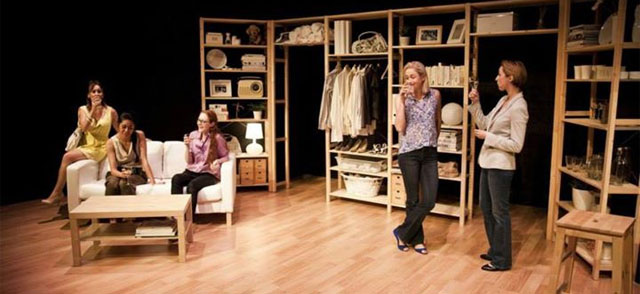
A Moment On The Lips is a play about the relationships between seven women in Sydney. Entangled as spouses, lovers, friends and sisters, they navigate a multitude of complex discordances, all of which are familiar and reflective of our personal lives. Jonathan Gavin’s script interweaves issues from personal and social spaces, with themes like ethnic and sexuality discrimination, converging with family and professional lives.

It is a tricky work to direct. The play seems to be about “first world problems”, so while we relate to the emotions being portrayed, there is a lack of gravity that makes the characters’ circumstances seem somewhat trivial. Mackenzie Steele succeeds in extracting passionate performances from his cast, and some of the tearful and emotional moments are excellent viewing, but the action always seems a little detached. The scenes are short, resulting in a fast-paced show that is entertaining and thoroughly engaging, but this also presents a challenge for creating depth in scenarios and personalities, making empathy difficult to establish.

Sabryna Te’o’s naturalistic portrayal as Bridget is a stand out in the cast. Her performance is a reactive one, which allows her to connect well with the other women. The importance of an actor who emphasises listening over speaking is demonstrated well here. The quality of understated authenticity Te’o brings to her role is refreshing. Ainslie McGlynn is a very funny actor. Her comic ability is truly excellent, giving a jolt of excitement whenever she appears to light up the stage as Anne. Her interpretation of mental illness is well handled. MGlynn loves to entertain, but takes care to give her character a sense of dignity through her multiple break downs. Lucy Goleby as Rowena is memorable in a scene where she confronts her homophobic sister. It is the single most powerful moment in the show, and a real visceral treat.

We are reminded several times, that “it is the little things”. The play wants us to realise not just the importance of relationships but also the subtleties within them. The things we say to each other may seem fleeting, but the words that sit a moment on our lips have effects that last beyond any intention. The destruction that comes from thoughtlessness can often be unpredictably severe. Relationships are hard, but it only takes a little care to turn love into a thing of nourishment.

www.madmarchtheatreco.com

Review: All’s Well That Ends Well (Sport For Jove Theatre)

rsz_img_63263574684765Venue: Seymour Centre (Chippendale NSW), Mar 27 – Apr 12, 2014
Playwright: William Shakespeare
Director: Damien Ryan
Actors: Christopher Stalley, Christopher Tomkinson, Damien Strouthos, Edmund Lembke-Hogan, Eloise Winestock, Francesca Savige, George Banders, James Lugton, Megan Drury, Michael Pigott, Robert Alexander, Robin Goldsworthy, Sam Haft, Sandra Eldridge, Teresa Jakovich
Image by Seiya Taguchi

Theatre review
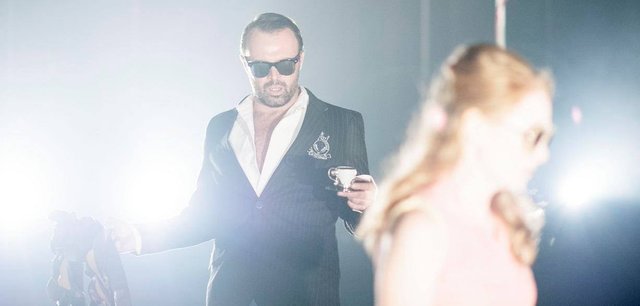
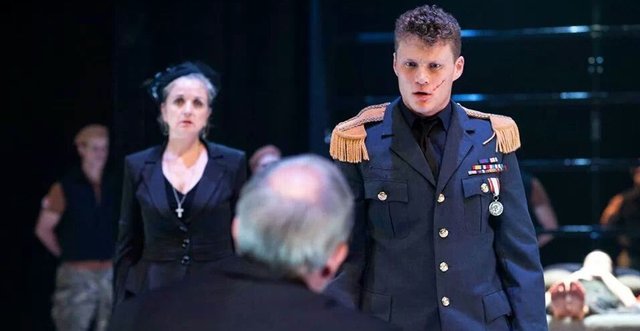
Sport For Jove’s production of Shakespeare’s All’s Well That Ends Well is sleek and action-packed. Damien Ryan’s direction makes every effort to reach out to his audience to keep us mesmerised and entertained. Like a Hollywood film, everything is made to be seductive, but Ryan has the fortunate knack of giving things a sense of sophistication, including full frontal nudity and a completely insane love story.

One of the Bard’s “problem plays”, it is both a tragedy and a comedy. Ryan takes advantage of its “dramedy” quality and forms a creation full of texture and surprise, maneuvering around the text with a freedom that flaunts his artistic genius and courage. His interpretation is utterly contemporary, frequently fantastical and flamboyant, but never inappropriately so. Shakespeare’s outlandish writing meets its match in Ryan’s wildness. Acutely aware of the pleasure derived from visceral responses in the theatre, Ryan magnifies elements of eroticism, humour, tension and shock that are found in the original text, but also has the talent to keep the central story engaging and plot lines coherent. In other words, his direction leaves nothing more to want.

Shakespeare’s male characters are generally more interesting, and that is certainly the case here. The men in the cast have much more room to play, and their work dominates this stage. Edmund Lembke-Hogan is perfectly cast as Bertram. He has the good looks that make the ludicrous love story almost believable. His performance is spirited but precise, with commanding energy that fills the venue and a disciplined focus that keeps his character defined in spite of the often chaotic settings. Conversely, George Banders shines with the looseness in his acting style. Banders is a thoroughly funny and charming man whose character Parolles is easily the most liked of the show. He reads the audience well, and times his delivery impeccably to get us laughing at every opportunity. The production’s comedy makes its three hours feel a mere breath, and Banders is responsible for the best of it. The King of France is played by Robert Alexander who exemplifies charisma and experience. The meticulous detail in his portrayal turns a smaller role into a spellbinding one. His chemistry with co-actors is excellent but the gravity he brings on stage prevents him from ever being outshone.

Set, lighting and sound design are incredibly impressive. Ambitious in scale and scope, the creatives have outdone themselves with a show that is glorious in its look and feel. Its physical environment seems to be perpetually changing, and except for some mechanical noise issues, stage management is executed quite flawlessly. The versatility of Antoinette Barboutis’ set is a real marvel, but costume design is the one blemish in this grand visual experience.

The story is not an appealing one. A woman going to extremes for the love of a man who had shown her only disdain and humiliation is hardly a great idea for today’s stages, but Sport For Jove Theatre’s magical endeavour has transformed a 500 year-old script into a night of glorious theatre. Shakespeare was their starting point, but where they have ended up is a place beyond his wildest dreams.

www.sportforjove.com.au

Review: Stitching (Little Spoon Theatre Co)

stitchingVenue: TAP Gallery (Darlinghurst NSW), Mar 26 – Apr 12, 2014
Playwright: Anthony Neilson
Director: Mark Westbrook
Music: Chelsea Reed
Actors: Lara Lightfoot, Wade Doolan

Theatre review
Stitching by Anthony Neilson is cleverly written. It includes many ingredients that makes for great theatre; entertainment, shock value, emotional depth, realistic characters, an unusual story, and a brilliantly structured timeline. Neilson’s script is irresistible, and it is to Little Spoon Theatre Co’s great credit that they have identified and imported it from the UK for the Sydney audience.

Mark Westbrook’s direction anchors the production in a space of grief. A heavy aching permeates, and the atmosphere he creates is dark and severe. It feels authentic, but the narrow range of moods can be a little fatiguing. The thoroughness at which he has excavated the text with his cast is impressive. Every word is charged with intention and imagery, keeping us completely enthralled for the entire duration. The use of music (composed and performed live by Chelsea Reed) lets us breathe and reflect between scenes. Reed’s work adds beauty and helps release the suppressed sentimentalities of the characters. Westbrook paces the show well and his handling of the unusual timeline is marvellous work, but misses an opportunity at the crucial climax to shock the audience as the script obviously intends. Opening night jitters perhaps?

Both actors are wonderful in this production. Lara Lightfoot’s moments of subtlety and verve are perfectly apportioned. She is a naturally exuberant performer, but knows how to work with restraint to create a palpable intensity that is unforced and captivating. Her Abby is a remarkably intriguing character who is also convincing and realistic. Wade Doolan’s delicate performance as Stuart is a thoughtful and touching one. The sense of loss he portrays is readily identifiable, and the generous complexity in his characterisation gives the play its humanity. The chemistry between both actors is superb. A rare level of trust exists that creates an environment allowing no stone to be unturned, and their extensive exploration as players in this work makes for extraordinarily rich theatre.

www.littlespoontheatre.com

Review: Six Characters In Search Of An Author (Sydney University Dramatic Society)

sixcharactersVenue: University of Sydney Studio B (Camperdown NSW), Mar 26 – 29, 2014
Director: Saro Lusty-Cavallari
Playwright: Luigi Pirandello, adapted by Saro Lusty-Cavallari
Actors: Laura Barandregt, Sam Brewer, Jacinta Gregory, Joshua Free, Zerrin Craig-Adams, Lucinda Vitek, Stella Ktenas, Tansy Gardam, Nick Welsh, Alexander Richmond, Melissa McShane, Geneva Gilmour, Alex Magowan, Meg McLellan

Theatre review
Luigi Pirandello’s original was first created almost a century ago. It explores philosophical concepts of identity, and the nature of the theatrical arts. Saro Lusty-Cavallari’s update of Six Characters In Search Of An Author for the Sydney University Dramatic Society demonstrates that the central mechanics of Pirandello’s work contains fundamental truisms that retain their resonance, in spite of time’s passage and the gimmicky structure of the play.

Lusty-Cavallari’s brave decision in staging this text pays off. It is obviously a challenging proposition, and there are several sections in the first act that lack clarity, but he has created something fascinating and strangely engaging. Big questions about self-identity are presented with complexity and intrigue. We think about the meaning of personalities, how they are formed, and their elasticity. It is always a pleasure examining existentialist open-ended questions, and Lusty-Cavallari clearly has a flair in dealing with them in a delicate manner.

The director’s elegant use of space shows a good aesthetic eye, and his management of actors is also accomplished. The cast is a strong one, with Sam Brewer’s performance as The Father giving the show an excellent sense of confidence and finesse. Brewer’s love for words shines through, and our attention is firmly held by it. He is not the most agile of artistes, but the physical vocabulary he does have is perfectly suited to the task on hand. Laura Barandregt plays the role of the Assistant Director, and gives the show a necessary lightness that the audience is unquestionably grateful for. Her conviction for the stage is obvious, but the casualness of her demeanour can be distracting at times. Zerrin Craig-Adams is an effervescent character, with energy that brings a lot of life to the stage. She is an ambitious actor, and will no doubt develop her techniques to greater refinement in time.

To tackle challenging art is noble. It is a hallmark of civilisation when people take on things that seem too difficult and uncertain. Six Characters In Search Of An Author is about asking questions, and trusting that providing answers is only secondary if at all relevant. This show might not always make sense but it is tautly composed. It is colourful and entertaining, even as its intellectualism seeps out of every pore.

www.sudsusyd.com

Review: To Kill A Mockingbird (New Theatre)

rsz_1393776_612820905463443_633420420_nVenue: New Theatre (Newtown NSW), Mar 18 – Apr 19, 2014
Playwright: Christopher Sergel (from the novel by Harper Lee)
Director: Annette Rowlison
Actors: Khadija Ali, Katy Avery, Claudette Clarke, Sarah Carroll, Teagan Croft, Cheyne Fynn, Steve Donelan, Christine Greenough, John Keightley, Dave Kirkham, Kai Lewins, Craig Meneaud, Hudson Musty, David Ross, Donna Sizer, Lynden Jones, Peter Maple, Ryan Whitworth
Image by Bob Seary

Theatre review
Harper Lee’s book was published in 1960, and has since become one of the most popular novels in modern times. Its central theme of social injustice remains poignant and the depiction of its characters’ courage to oppose them, is no less powerful half a century later. New Theatre’s staging is mindful of the story’s significances and director Annette Rowlison’s work pays reverence to our collective memory of To Kill A Mockingbird, whether in the form of book, film or theatre.

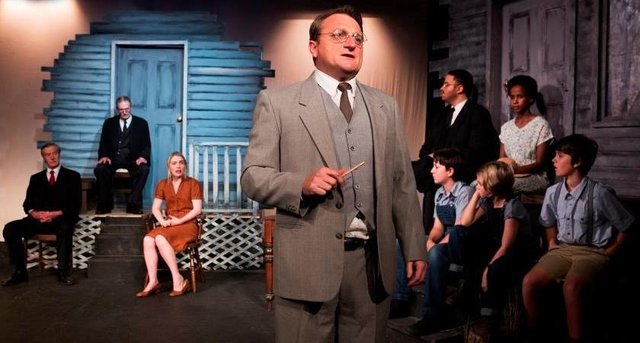
Rowlinson’s rendering of the American South in the 1930s has a charming and sentimental beauty. There is a joyfulness in watching children play outside, and neighbours going about their daily business on their porches and front lawns. The trio of child actors, led by Teagan Croft as Scout, bring magic to the stage with their undeniable talent, and Rowlinson’s ability to create chemistry between these vibrant children and their adult counterparts is central to the success of the show. In fact, the show only falters in the court scenes where the children are not in prominence.

Atticus Finch is played by Lynden Jones with great integrity. The subtlety in his performance is an intelligent choice for a character that audiences know so well. There is no need to explain who Atticus is. He takes into account our familiarity, and saves his dramatics only for a handful of emotional scenes. Jones’ most heightened moment happens in the courtroom, and his powerful delivery rescues that scene from being otherwise slightly low on energy.

The support cast is uniformly strong. In fact all actors bring something special and each have memorable moments in the production. Katy Avery as Mayella Ewell transforms her simple role into a riveting one, and the intensity at which she attacks her part is a highlight. Claudette Clarke’s Calpurina is grounded and tender. She has a relaxed confidence that is very enjoyable. Sarah Carroll plays Maudie Atkinson, who is the Finchs’ neighbour and our narrator. She brings an air of upbeat optimism that is comforting, and also provides an effective voice of reason that is a crucial mechanism of the plot.

Boo Radley’s appearance towards the conclusion can be tricky to handle, but Rowlinsons’ artistic sensitivity shines through and the scene is a triumph. A moving crescendo is delivered, and the moral of the tale is brought home. It is impossible to not love To Kill A Mockingbird. We have all experienced ostracism, and we have all witnessed discrimination. Boo Radley lives in all of us, and to see him materialise and lovingly depicted on stage, is profound.

www.newtheatre.org.au

Review: Quack (Sydney University Dramatic Society)

rsz_1img_5842Venue: University of Sydney Studio B (Camperdown NSW), Mar 19 – 22, 2014
Director: Zach Beavon-Collin
Playwright: Ian Wilding
Actors: Nick Welsh, Alexander Richmond, Melissa McShane, Geneva Gilmour, Alex Magowan, Meg McLellan

Theatre review
Ian Wilding’s fantastical script is action-packed, funny, and satirical. Its influences are genre film and popular television, which makes it a natural choice for the young theatre makers at University of Sydney. Using the western and zombie genres, and taking inspiration from the Australian adversarial political system, Wilding creates a strange bygone world in which everything seems to be an analogy for the state of our world today.

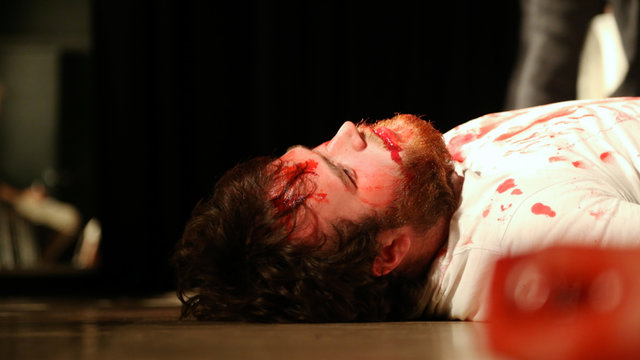
The Sydney University Dramatic Society’s production is as playful as the script allows. Zach Beavon-Collin’s direction makes lovely use of the atmospherics, greatly assisted by lighting and music design, and indulges heavily in the gory details of all the zombie action. His work will be remembered for blood and pus that overtakes the stage for a good half of the show, which is unfortunate for the actors whose performances are subsumed by the theme park quality of the experience.

The cast is a committed one, but the humour of Wilding’s writing proves to be challenging. Alex Magowan is an exception, leaving an impression with consistently effective comedy. His portrayal of Gunner as an overblown caricature is exaggeratedly brash but a very welcome presence to scenes in the first act that tend to be lacking in energy. Meg McLellan is another supporting actor who shines in each of her appearances. She plays Rodney with a sense of precision, and provides an authenticity that sets her apart as being the most polished of the group. Alexander Richmond is strongest of the leads. His Dr Littlewood takes some time to develop, but in zombie form, the actor is impressive (and repulsive).

As mentioned before, some of the technical elements and music are crucial to the more successful aspects of this production. Josie Gibson’s original score is an accomplished one and often steals the show. Lighting designer Chrysanti Chandra works with minimal facilities, but does well to manufacture a lushness in the show’s moodier sections. These artists might be young and hungry for experience, but they prove themselves to be anything but a bunch of quacks.

www.sudsusyd.com

Review: Short+Sweet Theatre 2014 (Short+Sweet)

rsz_1529736_585635138198747_2022174908_oVenue: King St Theatre (Newtown NSW) and Seymour Centre (Chippendale NSW), Jan 8 – Mar 22, 2014
Festival Director: Pete Malicki

Theatre review
Short+Sweet Theatre in Sydney featured 160 ten-minute plays this year. After 10 weeks of performances at the King Street Theatre in Newtown, a Gala event was held on Mar 21 at the larger Seymour Centre, featuring 12 of the best and most memorable. The selection is fairly varied, and would appeal to a wide range of audience types, but unsurprisingly, most of the work that have made the cut are comedic, with only two exceptions.

The Blue Balloon, written by Angie Farrow is a surrealist piece that uses visual design and physical theatre to tell its story. Direction is a little lacking in focus, but the team’s radical approach to the short play format is admirable. Late For School is the only work of tragedy at the Gala. Written by Iain Moss and directed by Lisa Eismen, the play stands out not only for being entirely different in tone, it was also the only monologue of the night. Its structure uses suspense, tension and drama beautifully, and actor Patricia Rowling does a splendid job taking us from curiosity to sadness in a very short time.

The night featured many fine performances including Lynda Leavers in Moonage Daydream by Vee Malnar, in which she plays a very drunk David Bowie fan. Her comic timing is exceptional, and so is Richard Carwin’s in Therapist by John Lombard, who captivates with a performance based on gay and straight stereotypes. In the work Nana, conventions are broken. Writer Micah Joel and director Tom Richards have created a thoughtful piece about sexuality in the elderly. Ros Richards’ daring and playful performance as the sexually liberated Nana is a rare treat. A hint of sadness appears towards the end of her story, which seems to add more complexity than the short format allows, but it is a nice touch nonetheless, to try to keep things in a realistic space.

It is noteworthy that through the entire Short+Sweet season, which also includes Short+Sweet Dance and Short+Sweet Cabaret, the rate of participation by women is significantly high. This is a festival that women are drawn to, and one where they do brilliantly. Some Other Toy by Fleur Beaupert features more sexual liberation, this time in a young woman, and a young female robot. It features some of the more original and fascinating concepts in the program, but its innovation is cleverly paired with a lot of laughs, making it a surprising crowd-pleaser. Wild Flowers (deftly directed by Alexandra Hines, pictured above) is another work helmed by funny women. Lauren O’Rourke’s performance as Violet is the most outrageous of the night and her ten minutes of incredible comedy is glorious.

After 12 years of growth, the Short+Sweet festival has produced around 2,500 plays and now finds itself in six different countries. Its success demonstrates that the demand and need for it is real. Practitioners want to participate in it, whether as a means to some other end, or as a destination in its own right, and audiences flock to it to see what our artists are cooking up. The cream of this year’s crop is undoubtedly excellent, but it is also the sheer volume of artists involved (750+ writers, directors and actors) that is impressive. The theatrical arts are indeed thriving in Sydney.

List of prize winners below:

Best Actress runner up
LAUREN O’ROURKE (WILD FLOWERS)

Best Actor runner up
RICHARD CARWIN (THERAPIST)

Best Actress
LYNDA LEAVERS (MOONAGE DAYDREAM)

Best Actor
NAT JOBE (GUIDED BY VOICES)

Best Script
BLABBERMOUTH by Cerise de Gelder (VIC)

Best Director
TOM RICHARDS (MOONAGE DAYDREAM and NANA)

Best Newcomer (Male)
DREW HOLMES of Newcastle (Star of ADVANCED by Jo Ford)

Best Newcomer (Female)
ROBYN PATERSON (writer, director and star of one-woman show THE SOUTH AFREAKINS)

Overall People’s Choice Winner
THERAPIST – writer-directors Rob White & Leah White, starring Richard Carwin & Rowena McNicol

Overall People’s Choice Winner
GUIDED BY VOICES by Mark Konik (ACT) directed by Florence Kermet and Rosemary Ghazi, starring Jamie Merendino, Nat Jobe, Kat Hoyos and Aimee Timmins

Overall Wildcards Winner
THE BLUE BALLOON by Angie Farrow, directed by Cecile Payet and starring Daniel Gorski, Rachael Williams, Hannah Zaslawski, Anthony White, Lyna Collins, Ethan Lowinger, Olga Pagrati, Brooke Doherty and Ivan Kurnia

Best Production
MOONAGE DAYDREAM by Vee Malnar, directed by Tom Richards, starring Greg Wilken and Lynda Leavers

www.shortandsweet.org
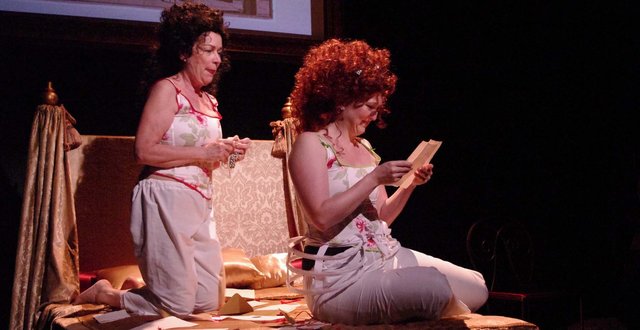
Review: High Windows Low Doorways (Subtlenuance)

subtlenuanceVenue: TAP Gallery (Darlinghurst NSW), Mar 19 – 30, 2014
Playwrights: Jonathan Ari Lander, Noelle Janaczewska, Katie Pollock, Alison Rooke, Mark Langham, Ellana Costa, Melita Rowston
Director: Paul Gilchrist
Actors: Alice Keohavong, Helen Tonkin, Peter McAllum, Matt Butcher, Kit Bennett, Gavin Roach, Naomi Livingstone
Image by Zorica Purlija

Theatre review
Subtlenuance’s new production features seven monologues by seven different actors and seven different playwrights. The monologues are presented as a cohesive whole by director Paul Gilchrist, although it is always clear where each story begins and ends. The theme that binds them is the concept of spirituality, with a focus on the actors’ personal experiences, rather than their beliefs.

Common themes emerge. We hear revelations about family, religion and the metaphysical. We also see a sense of struggle that often comes into play in these reflections on spiritual lives. Naomi Livingstone’s piece starts in a space of hopelessness and pain. Her performance is heartfelt and sincere, with a powerful emotional quality that she tends to slightly over-indulge in. Nevertheless, the authenticity in her expression invites us in and helps us connect with her story. Ellana Costa’s interpretation of her story is well structured, and the imagery they create is vivid and uplifting. Gavin Roach’s style is vibrant and camp. The actor’s enjoyment of the stage and his eagerness in keeping his audience engaged, makes him the most entertaining of the group. Mark Langham’s script for Roach’s story is probably the most complex in the show, which helps the performer craft a segment that is more elaborate, physical and livelier than the others.

Matt Butcher’s piece about his grandmother is one of loss and longing. He craves an impossible meeting with her, and finds solace in his memories of their time together. Jonathan Ari Lander does a good job putting those recollections to words, and Butcher uses them to paint a bitter sweet picture of reminiscence and love. In a similar vein, Helen Tonkin recalls her father, further illustrating the link between family and spirituality. Assisted by Peter McAllum’s performance, their depiction of the father and daughter relationship tenderly demonstrates the depth at which childhood experiences affect our lives.

The trouble with monologues is that they are too often written without keeping in mind the other senses that an audience brings with it to the theatre. There must be a difference between reading a poem or a memoir on paper, and going to see a staged performance. There are instances in this production that feel as though the writing would have worked better in a book, but the personal nature of the material helps make the production feel earnest and accessible. There is a resonance that exists where people dig deep to tell personal stories, and in High Windows Low Doorways, the cast wants us to hear them, but the commonality of our experiences also makes us feel heard.

www.subtlenuance.com