5 Questions with Ben Winspear

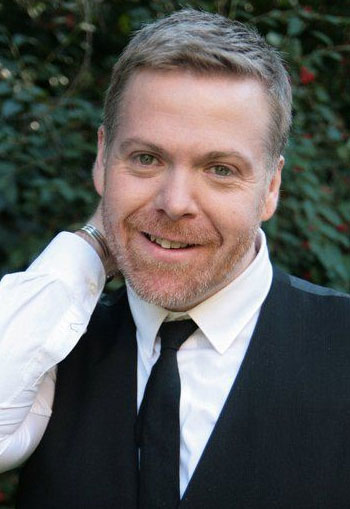
rsz_benwinspearWhat is your favourite swear word?
Aaghfufuuugenwhoputthatbloodythere?The noise you make when you step on a toy with bare feet in the dark.

What are you wearing?
I lost my favourite tracky dacks… So I’m rehearsing in something that looks a lot like a pair of old Qantas pyjamas.

What is love?
When you hear your daughter say in her sleep “I have the best dad in the whole world.”

What was the last show you saw, and how many stars do you give it?
Jump For Jordan, Griffin Theatre. There are six wonderful performers in this beautiful, funny mirage, all of them stars.

Is your new show going to be any good?
If you enjoy your demonic possession, WWE wrestling and pole dancing with a dash of Daoism, you’ll probably feel right at home.

Ben Winspear is directing UNSW students in their production of Monkey – An Epic Tale of Cosmic Struggle.
Show dates: 11 – 15 Mar, 2014
Show venue: Io Myers Studio, UNSW

Review: Desperate Houseboys (Matthew Management / Neil Gooding Productions)

despboysVenue: Seymour Centre (Chippendale NSW), Feb 18 – 28, 2014
Playwrights: Cole Escola, Jeffery Self
Directors: Christian Coulson
Performers: Cole Escola, Jeffery Self

Theatre review
It takes a certain amount of gall and audacity to present a work that is entirely frivolous. Theatre practitioners are rarely able to look at their work as purely entertainment, while having no concern for conventions and audience expectations. Cole Escola and Jeffery Self’s Desperate Houseboys is creative, original, irreverent and wild. It is Generation Y post-modernism, attacking the notion of comedy with constant references to popular, theatre and gay culture, with the aide of theatrical structures that shift throughout the hour. It is like John Waters, only a lot younger.

Cole Escola and Jeffery Self do not seem to take themselves seriously. There are no discernible politics, and no obvious ambition to their work, but their supreme confidence in their niche is rare and admirable. Their undeniable talent is thoroughly utilised in this production, but it is within their comfort zones that the action takes place. It is high camp and highly amusing, without a need to try being too clever. Maybe because these young men are already extremely clever.

Their performance is energetic, with a manic silliness that characterises their persona and show. Like all great comic duos, the chemistry that exists between Escola and Self is bewilderingly powerful. Escola is more animated of the two, but Self is hardly the Dean Martin in this relationship. Both are outlandish and ridiculous, and it is this meeting of likeness that creates their success. It can be argued that their work requires these same qualities from its audience. This is a show about inside jokes, not necessarily with its themes, but in tone. Desperate Houseboys appeals to a specific sense of humour, one which is neither mainstream nor common. This would then mean that what Escola and Self have here is pure comedy gold for the right audience, but for others, quite possibly the opposite.

Presented as part of the Mardi Gras festival, the question remains whether Escola and Self are too offbeat for the target audience. With LGBT liberation in Sydney entering its fifth decade, and so many advances made in our sociopolitical lives, has the “gay community” become something too mainstream for this brand of madness? Have the Sydney gays gone too straight for a show about lube closets and overgrown twinks?

www.twitter.com/HouseBoysOz

Review: The Dead Ones (Vitalstatistix)

thedeadonesVenue: Seymour Centre (Chippendale NSW), Feb 18 – 22, 2014
Playwright: Margie Fischer
Directors: Catherine Fitzgerald
Performers: Margie Fischer

Theatre review
In The Dead Ones, Margie Fischer presents a live reading of her own diary entries from a time of profound loss. Through her reflections, memories and experiences of the mourning process, we are offered an insight into some of the true fundamentals of life. Accompanied by photographs of family members and their home, Fischer’s story is inviting, engaging and universal. Beginning with her parents’ plight in Nazi Austria, through their migration to Shanghai, and eventual settlement in Australia, details of their struggles, as well as happier times, allow us to relate intimately and emotionally.

Fischer’s performance is a generous one. The catharsis resulting from her work is as much for her audience as it is for herself. Death touches everyone but it does not live in everyday discourse. Through Fischer’s meditations about losing all of her immediate family, we see what is of real value in life, and the meanings that are held in images, possessions, relations and places. We think about the things discarded when a person dies, and what is preserved by those left behind. Every mundane thing is turned sacred.

Witnessing a person mourn from close proximity and in detail, we cannot help but contemplate our own relationships. For the good ones we have, we think about gratitude and appreciation. For the others, we are inspired to re-examine circumstances and consider improvements. People often debate on art’s purpose. If art does indeed have a purpose, Margie Fischer’s contribution here is a noble one.

www.vitalstatistixtheatrecompany.blogspot.com.au

5 Questions with Orlena Steele-Prior

orlenasteelepriorWhat is your favourite swear word?
‘Chupalo conchetumadre!!’ It’s one of the few phrases I know in Spanish.

What are you wearing?
100 denier opaque tights with reeboks and a stripy skirt and cardigan.

What is love?
Love is like a gentle sunny breeze on your face – it’s nurturing, compassionate and light.

What was the last show you saw, and how many stars do you give it?
I last saw Cat On A Hot Tin Roof and enjoyed it – was demanding in parts though. I’d give it 3.5 stars.

Is your new show going to be any good?
My new show is going to be awesomeness! Funny, endearing, insightful, charming and sexy. Ooops did I just describe myself? 😉

Orlena Steele-Prior stars as the angel Michaela in Heaven Help Us.
Show dates: 12 – 29 Mar, 2014
Show venue: Bordello Theatre

Review: The Embroidery Girl (China Wuxi Performing Arts Group)

embroiderygirl2Venue: State Theatre (Sydney NSW), Feb 18 – 19, 2014
Choreographer: Zhang Jiwen
Music: Zou Hang
Dancers: Zhang Yashu, Tang Chenglong, Liu Xin, Mi Xia

Theatre review
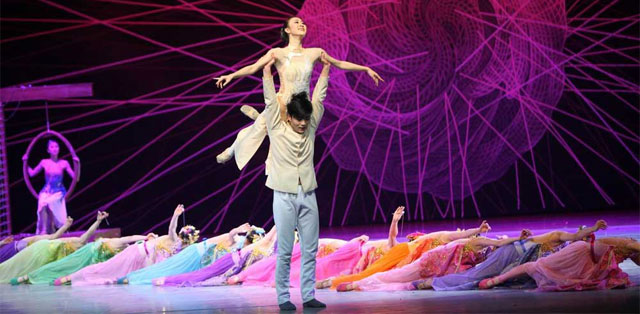
The Embroidery Girl is a balletic work that encompasses traditional Chinese forms of performance, along with a narrative based on a fable set at the end of the Qing dynasty in the 1910s. While its basic premise is a tragic love story, there is a pervasive and fundamental theme of freedom that provides a solemn resonance that grounds the production. The work does not consciously present itself as a Westernised theatrical form. Instead, we see a show that is thoroughly Chinese, but with a sense of evolution that is shaded by international influences. The work reflects the opening up of societies in China to external cultures, but without an urgency to lose their own.

The company’s style is operatic. The performers on stage do not sing, but there is a strong emphasis on portraying emotional intensity, not just with physicality but also with their faces. To Australian eyes, these are highly exaggerated expressions and do take a little getting used to. The production features four principal dancers, all of whom are charismatic and technically proficient. Leading lady Zhang Yashu is heart and soul of the show, and plays the tortured Xiu Niang whose predicaments are illustrated with rich and dynamic choreography over the 90 minute program. Zhang’s work is precise and powerful, with a luminescence that not only lights up the majestic State Theatre, but also supremely commanding. The ensemble is relegated to playing slightly more than scenery when supporting Zhang. The images she creates with her body and spirit, are sublimely beautiful.

Visual design is accomplished. Lighting is especially thoughtful, giving the show mood, romance and emotion, as well as efficiently and cleverly depicting time and spacial transitions. Costumes are not always elegant but they are effective at providing context and assist greatly with characterisations. Music is expertly created and performed but sadly, not live. Choreography is particularly strong in partner work where lyricism is blended with sharp, abrupt movement for a modern twist. Sections tend to be short, which makes the show feel energetic and exciting.

The Embroidery Girl is grand and fascinating. For Western audiences, its cultural difference possesses an exoticism that reads as colourful and distinctive. Beyond the allure of the unfamiliar, we relate to the universal themes of romantic love, and the pursuit of personal emancipation. Aristotle wrote that the purpose of tragedy is to evoke a wonder born of pity and fear, the result of which is cathartic. Xiu Niang receives very little of what she desires, but Zhang Yashu’s dance for us is inspiring and uplifting.

www.wxsyyjt.com

5 Questions with Sarah Hodgetts

sarahhodgettsWhat is your favourite swear word?
Malakas (my one fluent word in Greek).

What are you wearing?
Brown sandals and a long floral dress with jelly beans in the pockets.

What is love?
Watching someone vomit and not wanting to find someone else to deal with the mess.

What was the last show you saw, and how many stars do you give it?
Empire. 4 1/2 stars. It has everything: bendy people, bananas and a strong man balancing a feather.

Is your new show going to be any good?
Define ‘good’… if you mean a slick production then yes, but if you mean a well behaved show then absolutely not.

Sarah Hodgetts stars in Tidy Town Of The Year, from Sydney Independent Theatre Co’s 2014 season.
Show dates: 4 – 22 Mar, 2014
Show venue: The Old Fitzroy Hotel

5 Questions with Wayne Tunks

waynetunksWhat is your favourite swear word?
I do love the F word, it is useful for so many things. And as a writer I love to give the C word to women, for me it sounds best when said angrily by a woman.

What are you wearing?
I’m about to head to a Hawaiian themed birthday party so wearing a very dodgy shirt that could burst into flames if I go near an open fire.

What is love?
A great 90’s song by Haddaway and also the theme of my new show. In fact one of the Madonna lyric quotes I use near the front of the show is, “I’m going to tell you about love”.

What was the last show you saw, and how many stars do you give it?
James And the Giant Peach that I directed at Christmas featuring 24 students aged 8 – 12 years. I give it 5 wines.

Is your new show going to be any good?
Well the Melbourne audiences seemed to enjoy it for Midsumma at La Mama. And most of the show is set in Sydney, it’s going to be great to come home with this show!

Wayne Tunks stars in Everything I Know I Learnt From Madonna, part of the Sydney Gay & Lesbian Mardi Gras 2014 season.
Show dates: 18 – 22 Feb, 2014
Show venue: The Old Fitzroy Hotel

Review: Once In Royal David’s City (Belvoir St Theatre)

rsz_auditorium-onceinroyaldavidscityThis review first published in Auditorium Magazine (Spring 2014)

Venue: Belvoir St Theatre (Surry Hills NSW), Feb 8 – March 23, 2014
Playwright: Michael Gow
Director: Eamon Flack
Actors: Helen Buday, Brendan Cowell, Maggie Dence, Harry Greenwood, Lech Mackiewicz, Tara Morice, Helen Morse, Anthony Phelan

Theatre review
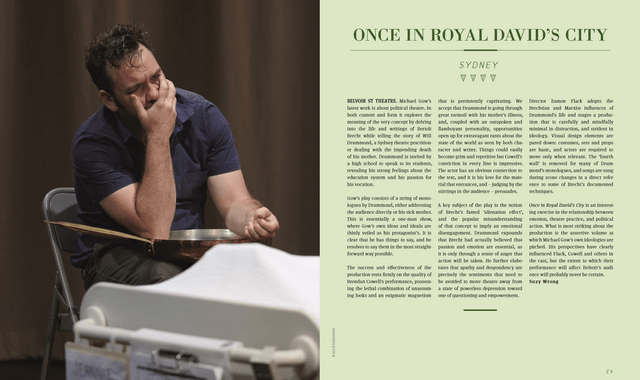
Michael Gow’s latest work is about political theatre. In both content and form, it explores the meaning of the very concept by delving into the life and writings of Bertolt Brecht, and by telling the story of Will Drummond, a Sydney theatre practitioner dealing with the impending death of his mother. Drummond is invited by a high school to speak to its students on the very topic of political theatre, revealing to us Drummond’s strong feelings about the education system and his passion for his vocation.

Gow’s play consists of a string of monologues by Drummond, either addressing the audience directly, or his sick mother who sleeps through his speeches. Minor characters appear sporadically to assist with plot trajectories, but they exist mostly to illustrate Drummond’s points of discussion. This is essentially a one-man show, where Gow’s own ideas and ideals are thinly veiled as his protagonist’s. It is clear that he has things to say, and he resolves to say them in the most straightforward way possible.

Brendan Cowell is the leading man, and the success and effectiveness of the production rests firmly on the quality of his performance. Cowell possesses the lethal, and contradictory, combination of unassuming looks and enigmatic magnetism. He plays the down-to-earth regular guy with ease, but has a star quality that is persistently captivating.

Cowell plays up his character’s theatricality. We accept that Drummond is going through great turmoil with his mother’s illness, and coupled with an outspoken and flamboyant personality, opportunities open up for impassioned and extravagant rants about the state of the world as seen by both character and writer. Things could easily become grim and repetitive but Cowell’s conviction in every line is impressive, and believable. The actor has an obvious connection to the text, and it is his love for the material that makes us listen, and judging by some of the stirrings in the audience, possibly even persuasive.

A key subject of the play, is the notion of Brecht’s famed “alienation effect” from the original “verfremdungseffekt”, and the popular misunderstanding of that concept to imply an emotional disengagement. Drummond, in his school lecture, expounds that Brecht had actually believed that passion and emotion are in fact important, as it is only through a sense of anger that action will be taken. He further elaborates that apathy and despondency are precisely the sentiments that need to be avoided, and that theatre needs to move away from a state of powerless depression, toward one of questioning and empowerment.

Director Eamon Flack adopts the Brechtian and Marxist influences of Drummond’s life, and stages a production that is carefully and self-awaredly minimal in distraction, and strident with its ideology. Visual design elements are pared down. Lighting is fairly sophisticated, but costumes, sets and props are basic, and only engaged when necessary. Actors are required to be still, only moving when relevant. The “fourth wall” is removed for many of Drummond’s monologues, and songs are sung during scene changes as direct reference to some of Brecht’s documented techniques.

Once In Royal David’s City is an interesting exercise in the relationship between emotion, theatre practice, and political action. We see a theatre director gradually becoming more socially active through his work, as his personal circumstances turn increasingly emotional. This is not entirely convincing as a storyline, but what is most striking about the production is the assertive volume at which Michael Gow’s own ideologies are pitched. His perspectives have clearly influenced Flack, Cowell and others in the cast, but the extent to which their performance will affect Belvoir’s audience can probably never be certain.

www.belvoir.com.au

Review: Privates On Parade (New Theatre)

rsz_1069838_594783037267230_490878940_nVenue: New Theatre (Newtown NSW), Feb 11 – Mar 8, 2014
Playwright: Peter Nichols
Music: Denis King
Director: Alice Livingstone
Choreographer: Trent Kidd
Actors: Matt Butcher, Jamie Collette, Peter Eyers, David Hooley, Morgan Junor-Larwood, James Lee, Henry Moss, David Ouch, Diana Perini, Martin Searles, Gerwin Widjaja
Image by Bob Seary

Theatre review
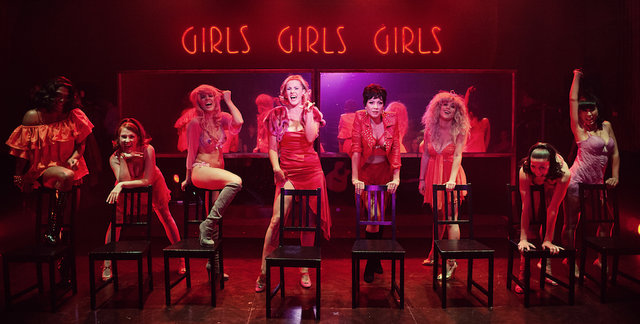
Written in 1977, this “play with music” appeared just two years before the inaugural Sydney Gay & Lesbian Mardi Gras parade. It contains some of the earliest progressive depictions of same sex relationships, and is an excellent choice for the New Theatre to present it in conjunction with the Mardi Gras festival this year. The work comes from a time before political correctness, and includes many references to ethnicity, gender and sexual preference that could make contemporary audiences cringe, but director Alice Livingstone is mindful of the change in context and deals with those awkward moments shrewdly and with sensitivity.

Livingstone’s decision to add a prologue featuring the “Boogie Woogie Bugle Boys” is a stroke of genius. Gerwin Widjaja, Henry Moss and David Ouch play a trio of drag queens in cheongsams inviting the audience to 1948 Singapore, and providing a side of the fictitious SADUSEA (Song And Dance Unit South East Asia) that is missing from Peter Nichols’ show. More importantly, it showcases the talents of Widjaja and Ouch, who would otherwise have been completely mute as the multiple “oriental men” in the original work.

The greatest strength of this production is its cast. Diana Perini in particular rises to the challenge, and does almost everything one could possibly ask of a performer. She plays comedy and tragedy, sings in ensemble and solo, dances en pointe and on tap heels, gets her top off, and does a mean Indian accent. Her role is not terribly interesting, but she sure makes a jaw-dropping one-woman tour de force out of it. James Lee plays Terri Dennis, the most flamboyant character imaginable. He masters all his song and dance routines, and endears himself as a crowd favourite from his very first appearance. Lee is also very effective in creating chemistry, always bringing out the best in his co-actors when appearing together. There is an effortless warmth to this man that most performers can only dream of. David Hooley is polished and disciplined as Steven Flowers. He seems slight in stature but his singing is big and confident, and his tap dancing is thoroughly impressive. His dreamy “Fred and Ginger” style sequence with Perini is most memorable.

Politics shift constantly, and ideologies evolve. Old works of art can be left behind and buried, but creativity can unearth and shine new light on them. We need not be afraid of mistakes past, if we learn to deal with them at every developed age. A 1977 comedy about British forces in 1948 Singapore, has crossed many borders, time and geographical, to reach this point. It is with refreshed enlightenment and a sense of progressiveness that should mark our approach to it today.

www.newtheatre.org.au

Review: Sweet Charity (Luckiest Productions / Neil Gooding Productions)

rsz_sc_0005_bps4219Venue: Hayes Theatre Co (Potts Point NSW), Feb 7 – Mar 9, 2014
Book: Neil Simon
Music: Cy Coleman
Lyrics: Dorothy Fields
Director: Dean Bryant
Choreography: Andrew Hallsworth
Musical Direction: Andrew Worboys
Actors: Verity Hunt-Ballard, Martin Crewes, Debora Krizak, Lisa Sontag

Theatre review
Bob Fosse directed and choreographed the iconic Sweet Charity, on stage and on film, in the late 1960s. The dance sequences are some of the most striking moving images ever seen, so one of the main challenges in staging the work today would be the treatment given to the re-creation of those scenes.

The current production at Hayes Theatre Co, helmed by director Dean Bryant and choreographer Andrew Hallsworth straddles between faithfulness and innovation. There is an acknowledgment that times and audiences have changed, but also an awareness that the immortal is a hard act to follow. Bryant’s adaptation uses the theatre’s spacial limitations to his advantage, and turns the work into an intimate and emotionally rich experience. There is a sense of things being scaled down, but for the most part, he achieves a good intensity on stage that results from the distillation of something conceptually grander. Hallsworth’s thankless task of re-interpreting Fosse’s choreography is surprisingly effective, even if the numbers “Hey Big Spender” and “Rich Man’s Frug” do leave us pining desperately for the film.

Visual elements are especially noteworthy. Ross Graham’s lighting is varied, dynamic and sensually appealing, providing the minimal set an aura of tragic beauty. It also gives logic to time and place, making the innumerable scene transitions happen flawlessly. Tim Chappel’s costumes and Ben Moir’s wigs are thoughtful and impactful without being overwhelming. They tell the story of the characters even before they begin to speak.

Martin Crewes plays a trio of Charity’s men, and delights with every role. The energy he brings to the stage is staggering, and he possesses a headstrong determination that is seductive and commanding. Crewes impresses with his powerful and creative song interpretations, and is responsible for both the funniest and saddest moments of the show in his role of Oscar. Debora Krizak shines as Nickie, one of the more jaded dance hall hostesses, and is easily the raunchiest and most colourful of characters. Krizak’s ability to portray earthiness and pathos is a real highlight. Verity Hunt-Ballard is the star of the show, with a vocal talent that makes Charity’s songs more meaningful than ever. The comic elements of the role are difficult (it’s not the funniest of scripts), but Hunt-Ballard is deeply moving at every tragic turn.

Sweet Charity can be thought of as pre-feminist. It constantly defines its women in terms of their relationships with men, and depicts their work in the adult industry as unquestionably pessimistic. All efforts are made for them to appear vivacious and intelligent, but their desires are left unexamined and unevolved. Unlike Fosse’s film, this production does not leave you with thoughts of glitz, glamour and glossy dance routines. Instead, it makes you ponder the big questions in our lives… and the meaning of love.

www.hayestheatre.com.au


www.facebook.com/luckiestproductions


www.goodingproductions.com