Review: Hamlet (Montague Basement)

montaguebasementVenue: PACT Centre for Emerging Artists (Erskineville NSW), Dec 1 – 5, 2015
Playwright: William Shakespeare
Director: Saro Lusty-Cavallari
Cast: Zach Beavon-Collin, Robert Boddington, Christian Byers, Lulu Howes, Patrick Morrow
Image by Zaina Ahmed

Theatre review
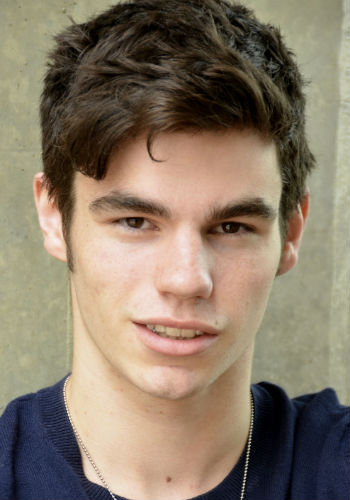
If Hamlet lives today, his claims about seeing the ghost of his recently deceased father would probably not be taken very seriously at all. In Saro Lusty-Cavallari’s adaptation, the Prince of Denmark deals with his bereavement by locking himself away with Disney films, and spends too much time online. We also only ever see the apparition in Hamlet’s presence (through television sets), which allows us to bring his sanity to question. This version of Hamlet explores youth and its detachment from reality, especially in the context of modern technology. It is about isolation, delusion, and that sense of entitlement often attributed to the privileged lives of children born in the economic boom of late twentieth century.

Lusty-Cavallari’s vision is focused and powerful. Substantial omissions are made to serve his reinterpretation, but his choices are interesting and thoughtful ones that challenge our preconceived notions about the text, and urges us to look with fresh eyes. We are made to consider if this Hamlet presents the same man in a different light, or whether this rendition is indeed an entirely different character from the one we had known. Performances do not always live up to the demands of Shakespeare’s writing, but Christian Byers brings good tension and drama with the title role, even if there is little variation in his approach to the prince’s temperament or gesticulations. Supporting player Patrick Morrow leaves a strong impression as Polonius, with effortless charm and a natural pace that help him stand out on a stage that does not shy away from outlandish theatrics.

Set design is beautifully executed, with components of media and technology strewn across the space, representing Hamlet’s room, and illustrating the disposable nature of our contemporary lives. “To be or not to be” almost becomes a flippant statement for a generation that struggles to find meaning, but the team in this production of Hamlet is determined to locate, in Shakespeare, relevance and resonance for themselves, and subversion it seems, is the only way.

www.montaguebasement.com

5 Questions with Ryan Henry and Cherilyn Price

Cherilyn Price

Cherilyn Price

Ryan Henry: If you could sum up your character Zoe in three words, what would they be and why?
Cherilyn Price: Steadfast – someday we’ll find it, the rainbow connection, the lovers, the dreamers and me. Pugnacious – willing to march into hell for a heavenly cause. Passionate – open your heart to me, baby, I hold the lock and you hold the key.

What’s the most challenging and rewarding part about playing a character who has a younger self played by another actor in Through A Beaded Lash?
Most challenging: having a gorgeous young actor like Emily play the younger version, gee she must have really let herself go!!! Most rewarding: working out some shared mannerisms and vocal intonations so, hopefully, it’s not a total stretch for the audience to believe that it’s the same person 30 years later.

What excites you most about this production?
Lots of things about the play excite me, I spent the early 80’s nearly living on Oxford St, dancing the night away on the strip with my friends and so this is a very nostalgic experience for me. But my favourite part is that the play is written by a very dear friend of mine and I know this play is very close to Robert’s heart, so it’s a thrill to see it come to life.

If Zoe had a reality TV show, what would it be called and what would it entail?
Australia’s Next Top Fag Hag. A fly on the wall expose of Zoe’s teaching methodology as she puts fag hag wannabes through their paces!

In regards to acceptance of the LGBT community, what’s the biggest change you’ve noticed over time?
From my perspective, a big physical change is the decentralisation of gay bars. There used to be that large concentration of pubs and clubs along lower Oxford Street, like a beacon, and people would bar hop and run into friends and acquaintances along the way. The strip has now been diminished, not sure how many of the original clubs remain. Then of course over time there’s been increased legal recognition for same-sex couples and families and of course the push for marriage equality (um wake up Australia!) and the increased introduction of LGBT characters on television. These are all massive changes from the Sydney I first encountered when moving here in the 80’s.

Ryan Henry

Ryan Henry

Cherilyn Price: Your character Brent performs a drag routine within the play, how was that and how did you prepare for the scene? And how do you walk in those heels?
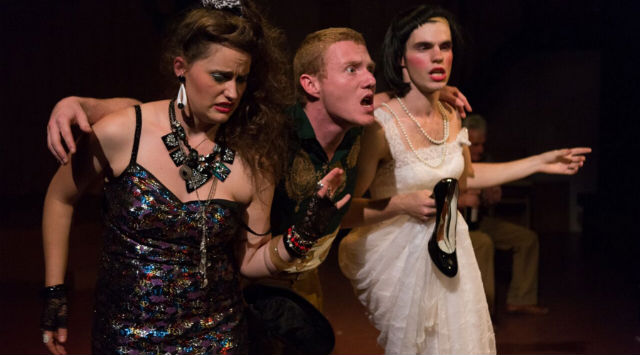
I’d be lying if I said that that particular process was a walk in the park. It really all came down to confidence and the right mindset. Knowing that when I walked on stage that I had to believe I was the most fabulous person in the room. That when I sang, every word sung was the only truth to be heard. With that in mind, cockiness and a narcissistic attitude are your best friend as a drag queen. As for the heels; countless hours of practice in rehearsals and realising beauty really is pain.

Who’s your favourite – Judy, Barbra or Bette?
Oh thats a tough one. As much as I adore this entire trio of performers, I’m going to have to say my heart lies with Barbra. I can’t deny my love for a broadway musical and it wouldn’t feel right to say someone could top the queen of the stage herself.

The play talks about the gay community of the 80’s, do you have sense of community where you live?
It’s difficult to answer this. I come from the western suburbs out in Penrith where there is a lot of stigma about people from their being very narrowed minded. I wouldn’t say that’s 100% accurate but there isn’t a sense of community for me personally as opposed to when I travel east and hit the city. I’m fortunate enough to be surrounded by friends and family who do bring about a sense of community, but I’m always reminded of a lack of community the moment you step beyond friendship and family ties.

What’s the worst thing you’ve ever done?
That depends if you included the things I haven’t been caught for! I’m kidding… sort of. I guess I would have to say, lying to work about a family illness to get out of a shift, which is awful I know! I just really didn’t feel like working and that was the first thing that popped into my head.

Who would you throw yourself under a bus for?
The obvious answer would be my family, friends and partner. No question. But if it was a choice between them and say, Meryl Streep, I honestly doing know who would survive that situation. I mean… Meryl is basically god, am I right?

Ryan Henry and Cherilyn Price can be seen in Through A Beaded Lash by Robert Allan.
Dates: 25 Nov – 12 Dec, 2015
Venue: The Depot Theatre

Review: Through A Beaded Lash (The Depot Theatre)

depotVenue: The Depot Theatre (Marrickville NSW), Nov 25 – Dec 12, 2015
Playwright: Robert Allan
Director: Julie Baz
Cast: Leo Domigan, Ryan Henry, Emily McGowan, Cherilyn Price, Oliver Rynn, Roger Smith

Theatre review
Robert Allan’s Through A Beaded Lash jumps between today and the early 80’s, to look at the AIDS epidemic and its effect on Sydney’s gay community over the last 30 years. Stories of this nature are in abundance, but published works seem to be predominantly American, and to have a new Australian voice for this issue is not only refreshing, it is deeply important. Our concerns and ideas may not be much different, but we must remember that that period of fear and devastation is a significant part of our local histories, and not just a chain of events that happened only at a distant time and space.

Allan’s script is deliberately light in tone, but its heavy heart is palpable and unambiguous. The play’s nostalgic quality will appeal to many, not only to those who experienced that era first-hand, but also to young ones who recognise their connection with that legacy of pride and pain. As a work of comedy, its wit is not razor sharp and several of its jokes require revision, but its genuine and powerful sentimentality is irresistible. That pathos is effectively orchestrated by Julie Baz, whose direction ensures that not a dry eye leaves the venue. There are issues with chemistry in the cast, and the production is, on the whole, lacking in elegance, but ultimately, Through A Beaded Lash is a remarkably moving play.

Performances are not particularly refined, but Leo Domigan and Roger Smith provide memorable moments that surprise with their extraordinary authenticity. Oliver Rynn creates the most believable character in the show, delighting us with a natural approach that outshines the oft too affected style of several cohorts.

When the worst is gone, we find ourselves grappling with the trauma it leaves behind. People become stronger after horrific events, and they can only do their best to move on, with scars that become invisible over time but the damage will not be eradicated. Dangers exist in our ability to pretend that every dark day is over, and it is on occasions like this, that a truthful story can provide remembrance that will expose the vulnerability that we live with, and we see that the healing process must continue.

www.thedepottheatre.com

Review: King Lear (Sydney Theatre Company)

Venue: Roslyn Packer Theatre at Walsh Bay (Sydney NSW), Nov 24, 2015 – Jan 9, 2016
Playwright: William Shakespeare
Director: Neil Armfield
Cast: Simon Barker, Wade Briggs, Helen Buday, Max Cullen, Alan Dukes, Eugene Gilfedder, Jacek Koman, Nick Masters, Colin Moody, Robyn Nevin, Eryn Jean Norvill, Geoffrey Rush, Phillip Slater, Helen Thomson, Mark Leonard Winter, Meyne Wyatt
Images by Heidrun Löhr

Theatre review
Lear finds himself rejected by all his daughters, and loses his mind. Redemption is eventually found, when he discovers grace and purity, but what remains of interest, is the rationale behind his torment. In King Lear, we look at issues surrounding mortality, kinship and honour, and examine how it is that good people can turn bad. The provocative difference between the elder “vicious sisters” Goneril and Regan, and the youngest Cordelia with a heart of gold, along with our observations of the king’s narcissism reflected in his immoral daughters’ greed, are pertinent to this discussion of evil and its roots. In the glaring absence of a maternal figure, a direct correlation can be made between Lear’s downfall and the depravity he had encouraged in his children. The tragedy is karmic, and Shakespeare’s morality play warns of the consequences one has to to reap from the seeds that are sowed.

The play is long and complex, with characters and narratives that can be explored endlessly. Finding a focus for a production of King Lear is crucial, and although Neil Armfield’s rendition is not short of drama and energy, its scope seems to be too wide, with too ambitious an approach. In its earnest efforts at unearthing nuance, it loses sight of elements that deliver poignancy, and the show is only able to resonate sporadically. Armfield’s trust in actors is evident. Personalities on stage are idiosyncratic, and the formidable lead players are certainly vibrant and appealing, but their work would benefit from greater manipulation by their director.

Geoffrey Rush’s vulnerability takes centre stage in his portrayal of Lear. His descent into madness is not particularly startling, but we are drawn into the authentic humanity that Rush reveals in states of devastation. He puts on a spirited performance, but bodily positions are often overly crouched, obscuring facial and physical expressions from view of the very large auditorium, making audience connection challenging at many points. Lear’s most theatrical scenes are interpreted with insufficient power, including an underwhelming death, but Rush’s way with words remains unquestionable and a real highlight of the production.

Stealing the show is Mark Leonard Winter who spends a majority of his stage time as Edgar completely naked. Nudity is difficult for any actor (and audience), but Winter overcomes the issue beautifully by arresting our attention, away from his body, onto a captivating performance that is dynamically varied and emotionally compelling. The actor displays a tenacious and magnetic conviction, as well as a commanding presence, balanced by extraordinary sensitivity, all outstanding qualities conspiring to create the most memorable supporting role of the play.

Also impressive are Robert Cousin’s sets and Nick Schlieper’s lights. The visions they create are breathtaking, and truly fascinating. Act Two in particular, begins with actors seemingly floating in a vast white of nothingness, where for a few seconds, no end and no beginning to space can be perceived. The manufacture of a storm, complete with an oversized wind machine and water falling incessantly from above, provide a sensational spectacle and additional dimension to what the actors work hard to achieve. The aesthetic is best described as minimal. We can sense the purposeful subtraction that has taken place to leave the various empty spaces for activity to occur, but the effectiveness of this bareness is clearly debatable. The production proves that King Lear‘s story can be told with few objects and visual symbols, but it will never be known if all that has been taken away is indeed redundant.

We hurt the ones we love most, and family is where the thin line between love and hate is most pronounced. It is because the people are important, that our emotions cannot disengage. Betrayal can only come from trust, and it is both sides of that same coin that Lear’s story addresses. The end is deeply pessimistic, but all tragedies leave behind a future, and the audience is an unequivocal part of it. How we move away from each tragic ending matters, but not every ending will bring elevation to life. Cordelia dies in her father’s arms after a period of sorrowful estrangement. Her demise is bittersweet, but for those who witness it, time is on our side, and we hold on to the belief that better is always possible.

www.sydneytheatre.com.au

Review: Ochres (Bangarra Dance Theatre)

bangarraVenue: Carriageworks (Eveleigh NSW), Nov 27 – Dec 5, 2015
Choreographers: Russell Page, Stephen Page, Bernadette Walong-Sene (with traditional choreography by Djakapurra Munyarryun)
Cast: Elma Kris, Yolande Brown, Deborah Brown, Waangenga Blanco, Tara Gower, Leonard Mickelo, Daniel Riley, Jasmin Sheppard, Tara Robertson, Kaine Sultan-Babij, Luke Currie-Richardson, Nicola Sabatino, Beau Dean Riley Smit, Rikki Mason, Yolanda Lowatta, Rika Hamaguchi
Image by Zan Wimberley

Theatre review
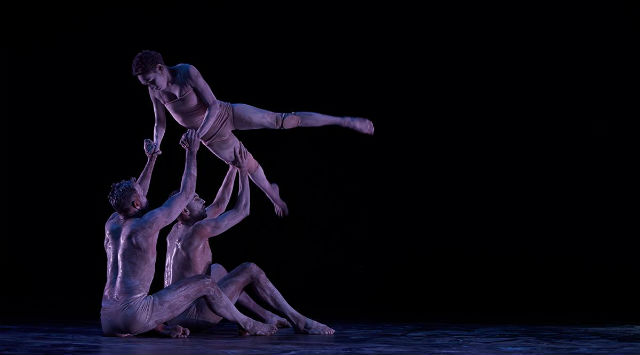
Traditional Aboriginal practices often involve ochre, a material of great cultural significance most notably used as a colouring substance in art and ceremony. In Bangarra Dance Theatre’s four-act production Ochres, the substance is applied on bodies to represent a connection with ancestry and culture; the same bodies communicate with impressive presence and energy, powerful meanings about the land on which we live. As a non-narrative theatrical form, dance is often inseparable from spirituality. It is concerned with establishing meaning through a language that often circumvents the cerebral, to reach a universal faculty of purity, regardless of experience and creed.

Ochres was first performed 21 years ago. Its choreography (by Djakapurra Munyarryun, Russell Page, Stephen Page and Bernadette Walong-Sene) is informed by traditional Aboriginal dance and by contemporary, balletic Western styles, reflecting the dual nature of modern Aboriginal Australia. At the centre of the work is a meditation on time, with its evocation of the past blended into a portrayal of the present, and positioned alongside an inquiry into the future.

It is a confident and proud work that imposes on the stage, an identity characterised by qualities of fortitude, strength and intelligence, performed sensitively by a captivating ensemble, cohesive in technique and sensibility. A harmony in the group provides the work with its quiet but resolute poignancy, beautifully supported by a highly-accomplished design team. Jennifer Irwin’s costumes, Jacob Nash’s set and Joseph Mercurio’s lights, all contribute to the visual excellence of Ochres. Music by David Page brims with soulful creativity, magnificently showcased by superior technical facilities of the Carriageworks auditorium.

In the years between Ochres‘ première and its revival today, Bangarra Dance Theatre has gradually moved into the mainstream, bringing its unique voice to audiences far and wide, entertaining and enlightening us no matter who we are, or where we have come from. Its message of peace is inherent in its artistic ideology, and the part it plays in continuing efforts of reconciliation is not to be underestimated. Our response to a seminal work like Ochres must be correspondingly celebratory, and with all the support and respect that it rightfully deserves.

www.bangarra.com.au

Review: Debris (Red Line Productions)

redlineVenue: Old Fitzroy Theatre (Woolloomooloo NSW), Nov 24 – 28, 2015
Playwright: Dennis Kelly
Director: Sean Hawkins
Cast: Felix Jozeps, Megan McGlinchey

Theatre review
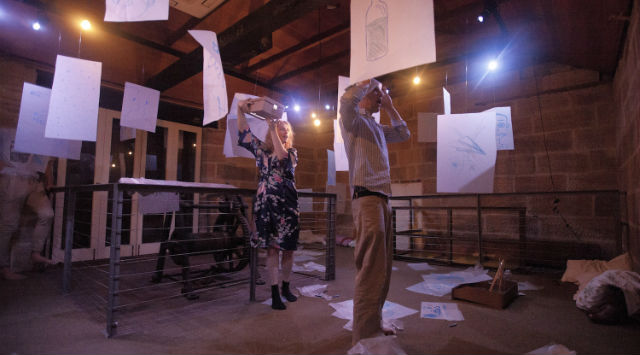
Two small children, isolated and severely neglected, completely unaware about how the rest of the world lives. Their normal is in fact horrific, but they are none the wiser. We bring innocent lives to be, and imagine that every baby is given love and care because the alternative is unfathomable and simply unbearable. Dennis Kelly’s Debris illustrates a truth that we know exist but rarely acknowledge. It exposes the ugliest of humanity, and amplifies their brutality by having them voiced by the very young, removing any possibility of moral justification on our part as viewers.

The script is highly evocative and poetic in its surreal, or perhaps fantastical approach, inspired by the minds of children, and their unbridled way of interpreting things that they encounter, but the production is a simple one, with emphasis on performance by two fine actors and not much else. Our own artistry is called upon to visualise a more vivid experience than what is actually presented on stage. Lighting has a tendency to be too obvious in its creative choices, but sound design by Tom Hogan is delicate, thoughtful and effective. Felix Jozeps and Megan McGlinchey play the forsaken children with an enormous energy that keeps the show fast paced and taut. Their roles are harrowing but ultimately straightforward, with insufficient complexity built into the performance that could deliver nuances beyond the predictable.

Debris is an intense and emotionally violent show that demands our attention, but has nothing unusual to say. It is an excellent platform for actors who wish to flex their dramatic muscles, and we are certainly entertained by the display of extraordinary passion, but for all the pain that we see unleashed, we feel little of it. The fact that there are children suffering is not news to anyone, but it is information that bears repeating. We can think about how to make lives better, but it is also true that we do not need to create more lives at all.

www.oldfitztheatre.com

Review: We Are The Ghosts Of The Future (Blancmange Productions)

ghostsofthefutureVenue: The Rocks Discovery Museum (The Rocks NSW), Nov 12 – 28, 2015
Playwright: Donna Abela, Vanessa Bates, Hilary Bell, Noëlle Janaczewska, Verity Laughton, Ned Manning, Catherine Zimdahl
Director: Harriet Gillies
Cast: Ali Aitken, Darcy Brown, Emily Eskell, Alicia Gonzalez, Robbie King, Leofric Kingsford-Smith, Michael McStay, Celine Oudin, Laurence Rosier-Staines, Cody Ross, Eleni Schumacher, Eliza Scott, Donna Sizer, Pierce Wilcox
Image by Phyllis Photography

Theatre review
The event takes place in an 1835 warehouse. We wander from room to room in the 3 storey building, eavesdropping on the inhabitants of a boarding house. It is 1935, and in the privacy of their own spaces, we encounter their intimate divulgements and dark secrets. We Are The Ghosts Of The Future, transported 80 years back in time, to discover morsels of Australian life, but there are no indigenous characters in sight and we soon realise that this is yet another history lesson about the European experience of the land that we share.

Written by a group of seven, the scripts are diverse in style, each one brief but scintillating in its own way, with intriguing characters and scandalous revelations to hold our attention. A cross dressing policeman, a primitive abortion clinic, and an “idiot savant” ensure that the goings-on are kept spicy and exciting. We may not witness every segment in its entirety due to the unusual format of presentation, but Harriet Gillies’ direction is intuitive and energetic, with an excellent use of space that fascinates our senses. Hugh O’Connor’s production design and Alex Berlage’s lights are simple but highly effective in their creation of a mysteriously evocative atmosphere. The work is beautifully performed by a committed cast whose confident and idiosyncratic presences provide an engaging, often fascinating show.

It is now the twenty-first century. Telling stories of our past must no longer exclude the original inhabitants of Australia. Their invisibility in our historical memories is a problem that must be addressed, and productions like this are a perfect way to re-frame our self-image as a nation that will acknowledge and encompass the truths as understood by our Aboriginal counterparts. European histories are important in how we see ourselves, but there is a pressing need to react against the ethnic heterogeneity in our theatres, especially when dealing with issues of identity and history. For a brighter future, there is a need for our collective memories to derive from diverse cultures, not least of which are stories by the traditional owners of this land. The ghosts that haunt us should be given a voice, so that the wrongs of the past may begin to be exorcised, and our path forward can then be lived with greater dignity.

www.facebook.com/blancmangeproductions

Review: Grey Gardens (Squabbalogic Independent Music Theatre)

Venue: Seymour Centre (Sydney NSW), Nov 18 – Dec 12, 2015
Book: Doug Wright
Music: Scott Frankel
Lyrics: Michael Korie
Director: Jay James-Moody
Cast: Sienna Arnold, Caitlin Berry, Maggie Blinco, Kelly Callaghan, Beth Daly, Blake Erickson, Sian Fuller, Jenna Keenan, Simon McLachlan, Russell Newman, Timothy Springs
Images by Michael Francis

Theatre review
The legendary Edies made their way into public consciousness through the now classic Maysles documentary film of 1975, Grey Gardens. It was an instant hit, but unlike many documentaries that seem to lose relevance beyond the time of their emergence, this is a story that has captivated every subsequent generation. The last decade especially has been particularly illustrious for the mother-daughter pairing, with the Maysles releasing a second documentary about the same subjects on home video, along with a prominent feature film by HBO, and a Broadway musical paying tribute to the famous eccentrics.

The musical commences in the heyday of Grey Gardens, a time when glitzy parties at the East Hamptons property saw the rich and important mingle, and where social status was the greatest of currencies. It is soon revealed however, that all is not well in the Beale household. Big Edie has been abandoned by a philandering husband, and finds herself left with nothing but the mansion and a daughter desperate to be married off to a Kennedy. In Act Two, we return thirty-three years later to discover the two women in their famous dilapidation. We are bewildered by their spectacular descent from glory to squalor, and the failure of the Edies to explain the predicament only makes us more intrigued.

Their allure is beautifully encapsulated by the writing. Larger than life personalities, frightful circumstances, piercing humour and cruel social realities; all the best ingredients of the beloved documentary have made their way into the musical. There is an abundance of wit for endless amusement and enjoyable tunes that have us entranced, inspired by the stranger than fiction characters and their delightfully curious ways.

The songs are performed marvellously under Jay James-Moody’s direction. Every musical number is conceived with flair, creativity and nuance, utilising the cast’s considerable talents to great effect. Sequences between songs are less successfully realised, with chemistry between performers faltering in the absence of choreography and singing. The production suffers from an overall lack of precision and polish, but it is a show with spirit, buoyed by Beth Daly’s astonishing portrayal of middle-aged Little Edie. Breathtakingly accurate re-enactments of iconic film moments and a thorough understanding of her character’s traits, allow Daly to create a theatrical marvel that is deeply endearing and incredibly impressive. The effect her Little Edie has on us, is little different from what the real McCoy delivers in the original film. We are shocked, confused, saddened but powerfully moved by her extraordinary story. Maggie Blinco and Caitlin Berry play the other Edies (at different ages), both accomplished and compelling with their respective interpretations. Blake Erickson is memorable in the supporting role of George Gould Strong, providing a dramatic but subtly comical performance, accentuated by a remarkable singing voice that never fails to seize our attention.

The production is ambitious with its visual elements but does not quite hit the mark. Lighting design by the inventive Benjamin Brockman is heavily relied upon to depict time and spacial shifts in the presence of a domineering yet inflexible set. Costumes are charming when imitating the documentary’s looks, but they fall short at delivering the extravagant decadence necessary in Act One. On a brighter note, the show’s sound design by Jessica James-Moody and music direction by Hayden Barltrop are executed with great fervour and brilliant sensitivity. The aural landscape of the show is the chief element that takes us through every step of the plot, and it does so thoughtfully, with an effortless elegance.

What the Edies represent, is the notion of freedom, or more accurately the lack thereof. Grey Gardens insists that we consider how the women had arrived at their disappointing state of affairs, and through that discussion, to go on and think about issues of personal volition, kinship and the consequences of forsaken responsibilities. Big Edie’s father, husband and sons had all but discarded our protagonists, and what we encounter is the harsh truth of what remained. We wish that the Edies had been stronger and more resourceful, but the irrefutable fact is that they were deserted and destroyed. We all have a right to live the lives we dream, but we are also bound by the people who need us. We can simply walk away, but the price to pay can sometimes be too great.

www.squabbalogic.com.au

Review: Dinkum Assorted (New Theatre)

newtheatreVenue: New Theatre (Newtown NSW), Nov 17 – Dec 19, 2015
Playwright: Linda Aronson
Director: Sahn Millington
Cast: Debra Bryan, Melissa Burgess, Colleen Cook, Emily Crotti, Bodelle De Ronde, Alison Eaton, Sonya Kerr, Denise Kitching, Gemma Laffan, Amanda Laing, Cassady Maddox, Lois Marsh, Patricia McLoughlin, Hannah Raven Smith, Alizon Vosburgh
Photography © Bob Seary

Theatre review
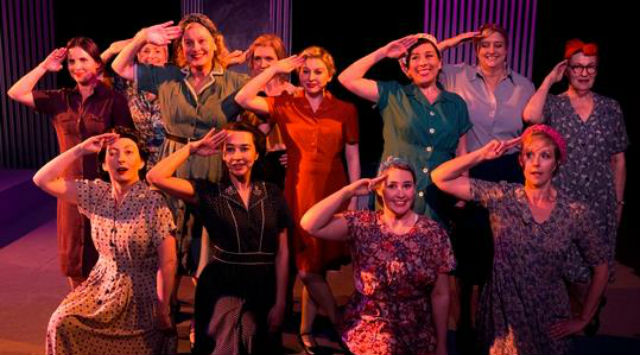
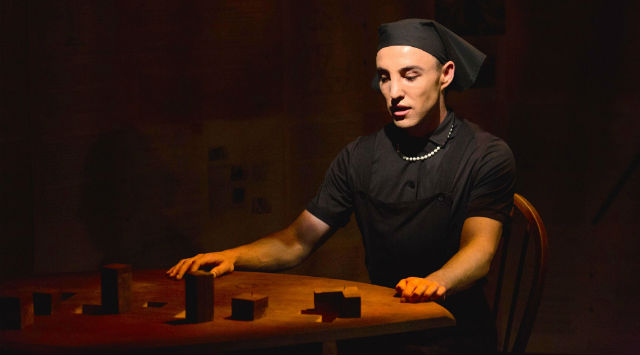
It is wartime 1942, and the fictional Australian country town of Warrabadanga is left with only its womenfolk to fend for themselves. They find plenty to keep busy with, and thankfully, spend little time worrying about the ones who have gone to battle. They are a spectacularly confident group determined to make the most of their situation, and go about their business in fine form. Linda Aronson’s Dinkum Assorted is an idealistic portrait of our country women. Dynamic, fun-loving , resourceful and optimistic, their strengths encompass the best of humanity, and represent an excellent example of how communities should view themselves.

Although written in the late 1980’s, the script is a predictably old fashioned one that feels faithful to language and presentational styles of the time it depicts. It is nostalgic and quaint, with a sense of humour that would appeal to those who have a taste for more traditional types of theatre. Direction by Sahn Millington brings out the vibrant spirit of all its characters, but the show struggles to captivate. The players are raucous but rarely meaningful, unable to deliver nuance or authenticity to help us locate points of identification or emotional involvement.

There are however, smaller scenes that feature pairings of actors that work well to offer glimpses of poignancy. Amanda Laing and Hannah Raven play wannabe showgirls, whose friendship is portrayed with good chemistry, along with a purity that resonates endearingly. Bodelle de Ronde and Debra Bryan create memorable characters who connect in a scene about being outsiders, both thoughtful and sensitive in their approaches.

It is in hardship that the best in humanity shines through. War takes on a different form in the twenty-first century, but we must only face it with that same bravery and positive outlook. The women in Dinkum Assorted are undefeated because they are engrossed in life, and they shun thoughts of demise. They are constructive in their own town, while the ravages of destruction take hold overseas. It is this simple lesson that our real lives need today. The purpose of war is destruction, and we must respond with the most vibrant and spirited ways of living out our each and every day.

www.newtheatre.org.au

Review: I Am My Own Wife (Oriel Group / Red Line Productions)

orielVenue: Old Fitzroy Theatre (Woolloomooloo NSW), Nov 17 – Dec 5, 2015
Playwright: Doug Wright
Director: Shaun Rennie
Cast: Ben Gerrard
Image by Rupert Reid

Theatre review
There is something unique about representing queer life on stage. Like many minority groups who have experienced persecution, LGBT stories need to create a legacy from hardship and struggles, so that injustices are prevented from recurring, and also for future generations to understand the histories from which they emerge. Unlike issues around ethnicity and religion that can have greater levels of visibility, LGBT identities have a tendency to be subsumed by a sense of normativity. The more gender and sexual diversity becomes accepted, the more it disappears from public discourse. A tension exists between the attainment of equality and the loss of nuances in individual differences.

Doug Wright’s I Am My Own Wife documents the controversial life of Charlotte von Mahlsdorf, a German museum curator and transgender celebrity, through the tumultuous years of the Third Reich and East Berlin. The play takes the form of a monologue, but does feature a multitude of minor characters, including the playwright himself. As von Mahlsdorf’s story unfolds, we are reminded of Wright’s presence as an interpretor of events, and correspondingly, the ambiguities between truth and fiction in the details being uncovered. The writing is full of charm and humour, with a plot that intrigues at every juncture. Vividly descriptive, we find ourselves immersed effortlessly in its slightly alien but seductive narrative.

Direction is provided by Shaun Rennie, whose outstanding use of space keeps our senses engaged and active, astutely controlling our perceptions of the show’s frequent contextual transformations, in terms of personalities, time and place. Excellent work on lighting by Hugh Hamilton and a subtle but highly effective set by Caroline Comino add greatly to the quality of unpredictability of the viewing experience. Nate Edmondson’s complex sound design is executed with impressive refinement and is noticeably adventurous with its concepts.

The play could however, benefit from a graver exploration into the darker aspects of von Mahlsdorf’s story. There seems a reluctance to portray her duplicitous nature with a stronger sinister edge, and we are kept somewhat distanced by that jovial artifice, perhaps just the way she would have wanted. Ben Gerrard is marvellous in the production. The speed and clarity at which he alters voice and physicality to depict all his different characters, whilst maintaining psychological accuracy and an air of authenticity through every change, is astounding, and very satisfying theatre. The actor exhibits wonderful commitment, along with an exquisite creativity that is remarkably intelligent and sensitive.

I Am My Own Wife entertains and fascinates. It is strangely lighthearted, given the brutalities that appear in the text. The production should hold more poignancy in its observations of war, Nazism and queerness, but as though borrowing from Charlotte von Mahlsdorf’s strength of character, unpleasant parts of the story are diminished with an unconscious ease. There certainly are lessons to be learned here, that may pertain to personal identity or to social concerns, but they require an investment of thought and attention. Alternatively, a very pleasant jaunt is offered by the show, with resonances that last until the inevitably enthusiastic curtain call.

www.iammyownwife.com.au | www.oldfitztheatre.com