Review: 80 Minutes No Interval (Thread Entertainment)

redlineVenue: Old Fitzroy Theatre (Woolloomooloo NSW), Mar 8 – Apr 9, 2016
Playwright: Travis Cotton
Director: Travis Cotton
Cast: Jacob Allan, Robin Goldsworthy, Sheridan Harbridge, Ryan Johnson, Julia Rorke
Image by Rupert Reid

Theatre review
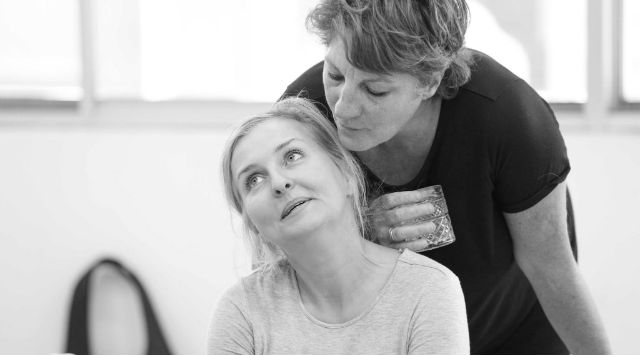
Travis Cotton’s play is as much an analysis on the creative process as it is about entertainment. 80 Minutes No Interval interrogates its own writer’s abilities, ambitions and approach to art and life, but its self-indulgence is very consciously altered to accommodate Cotton’s awareness of a paying crowd’s expectations of enjoyment and fulfilment. A brilliant wit provides coherence between the simultaneous, and usually divergent, needs of being innovative and crowd-pleasing, with an unabashed lust for laughter that determines its every stage moment.

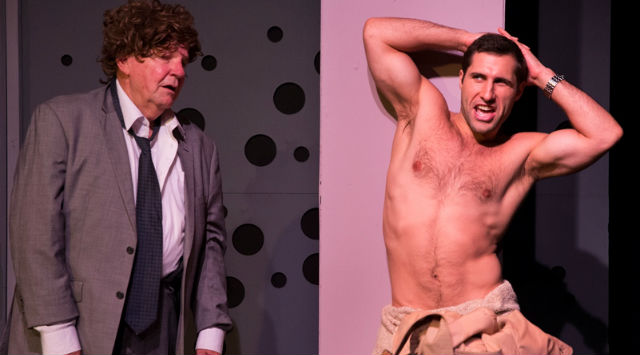
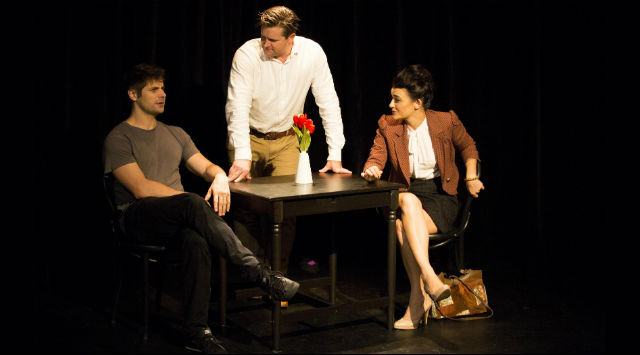
When the show is not delivering unadulterated and outrageous hilarity, it is at least piercingly amusing. Constantly alternating between juvenile and sophisticated tones of humour, it tickles our funny bone relentlessly, and aggressively, insisting on our immersion into its worlds of humour. Robin Goldsworthy and Sheridan Harbridge play a range of supporting characters, and are linchpins to the effectiveness of this fun factory. Both gloriously adventurous and bold, the actors are faultless in their precise comedy, no matter how broad or how subtle they choose to attack the material. Their work here is unmissable. Leading man Ryan Johnson has the hard task of playing straight man in the midst of a lot of hysteria, and although not quite as funny, he certainly holds his own with graceful charm and an ever-present all-knowing glint in his eyes. The role of Louis is perhaps too unsentimental a creation for the play to establish poignancy, but Johnson is nonetheless able to introduce a valuable humanity that elevates it from mere farce.

The production is designed with ingenuity and admirable exactitude. Sound and music by Hamish Michael and Hue Blanes are crucial to how the audience’s emotions respond at every plot juncture, and Ross Graham’s dynamic lights create unexpected variety and dimension to what is essentially a small and blank black space. Beautifully executed by stage manager Liam Murray, the show’s technical accuracy contributes significantly to the way we are kept persuaded and engrossed.

80 Minutes No Interval is a study of negotiations between art and entertainment in theatre. The joy it provides is undeniable, and it makes statements about art that are acute and intelligent. Using autobiography as a point of departure, but disallowing the ego from getting in the way of a good time, Travis Cotton finds himself in a space that is both critical of the art world, and also deeply self-deprecating. It is hard to imagine better ways of spending eighty minutes than with this gleeful concoction of silly and smart, whether just for laughs or food for thought.
www.oldfitztheatre.com

Review: Bully Boy (Blood Moon Theatre)

nightofplayVenue: Blood Moon Theatre (Potts Point NSW), Mar 10 – 26, 2016
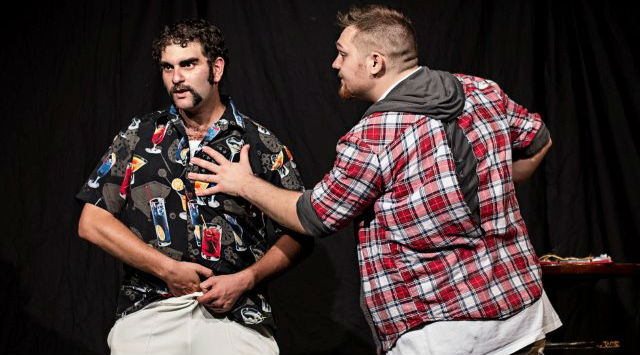
Playwright: Sandi Toksvig
Director: Deborah Mulhall
Cast: Patrick Cullen, Jaymie Knight

Theatre review
Plays about the consequences of war appear frequently, because their message never seems to speak loudly enough to overwhelm what governments are able to have us believe. On any given day, it only takes a two-minute news report on any broadcast media to convince us of sending troops to fight in places we know virtually nothing about, for reasons that are contentious at best. Rich or poor, East or West, cultures everywhere engage in warfare as though a completely natural part of human nature. We send young people away, understanding the risks but convinced that the honour of the exercise makes it all worthwhile.

Sandi Toksvig’s Bully Boy reveals the damage inflicted on our soldiers, as well as the camaraderie built under circumstances of trauma and suffering. Its context might not be original, but this is a piece of writing that provides access to a deeper psychological understanding of the destruction being continuously dispensed. Toksvig’s characters are British, but they represent the humanity of military personnel everywhere, beyond exteriors of stoic infallibility.

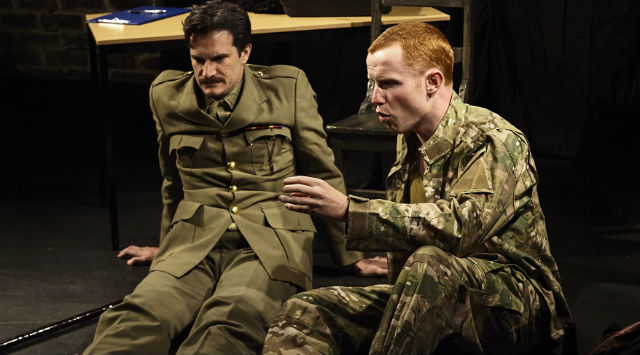
Barely an adult, Private Eddie Clark is already surrounded by death. Played by Patrick Cullen, the character is authentic, complex and moving. Cullen’s powerful performance provides heart and soul to a production that relies on little more than its two actors to tell its story. Jaymie Knight looks to be half the age of his role, and takes time to make Major Oscar Hadley a convincing presence. The actor is stronger in scenes of intense emotion, but the challenge of truthfully depicting someone under decades of anguish is evident. Nevertheless, the couple is energetic and compelling, with director Deborah Mulhall keeping things lively and pacey. Mulhall’s clever use of space liberates the simple two-hander format, but emotions can be portrayed with greater specificity, and scene transitions could be managed with better flair for stronger plot and narrative effectiveness.

It is hard to imagine a world where we no longer deliver our young to the battlefield. Horrors are a fact of life, and we learn to co-exist, but one of the things that art can do, is to wake the sleeping dogs. Art prevents us from indulging in delusions and convenient misbeliefs, while others lay victimised by our ignorance. Bully Boy and other tales of tragedy may not be able to bring us world peace, but they are sometimes the only thing we can count on to remind us of truths that many want to keep buried.

www.facebook.com/bloodmoontheatre | www.anightofplay.com

Review: The Local (Insomniac Theatre)

insomniacVenue: Exchange Hotel (Balmain NSW), Mar 8 – 20, 2016
Playwright: Richie Black
Director: Maggie Scott
Cast: Jamie Collette, Steve Maresca, Andrew Mead, Cecilia Morrow, Michael Wood
Image by GiGee Photography

Theatre review
It is not an original set up, with the larrikin underdog bemoaning the loss of community and the over-development of his favourite watering hole. We cannot resist the sentimentality of an Australian story that capitalises on our longing for innocent times, but Richie Black’s The Local offers more than the predictable. The playwright spares us the funny guy with a heart of gold narrative, and with brilliant wit, creates an entertaining work of bright, biting humour. There are hints of social commentary in The Local, but its main intention is to amuse, which results in an unusually light perspective of the subject matter, but the production is nonetheless satisfying.

Design aspects are virtually absent, giving the impression of an uncomfortable roughness, but the show is tightly rehearsed, and director Maggie Scott’s attention to detail with characterisations make for a vibrant and energetic staging. The cast establishes a confident and spirited chemistry that delivers consistently delightful comic timing, with Steve Maresca and Cecilia Morrow especially memorable for a sense of playfulness they bring to their roles. Both actors are vivacious, each with bold approaches to performance that keeps us attentive. As Ben Munro, Jamie Collette is required to play a more grounded part in the ensemble, but he takes every opportunity to bring animation to his interpretation, while single-handedly maintaining plot coherence. The comedy in The Local is big and brash, and although not without sophistication, the play does not call for understated performances, and the actors’ extravagances prove to be infectious.

It is a parochial Sydney story, but told with intelligent dialogue and sharp humour. The personalities could not be more ordinary, but their individual quirks are amplified to form the core of an effective comedy that accurately reflects a slice of contemporary life. The Local can afford to be more poignant in what it is able to say about our culture, our economy and our ambitions, but perhaps it is its insistence at declaring the glass half full that makes it true blue Australian.

www.facebook.com/insomniact.page

Review: Machu Picchu (Sydney Theatre Company / State Theatre Company Of South Australia)

STCVenue: Wharf 1 Sydney Theatre Company (Walsh Bay NSW), Mar 3 – Apr 9, 2016
Playwright: Sue Smith
Director: Geordie Brookman
Cast: Elena Carapetis, Darren Gilshenan, Luke Joslin, Annabel Matheson, Lisa McCune, Renato Musolino
Image by Brett Boardman

Theatre review
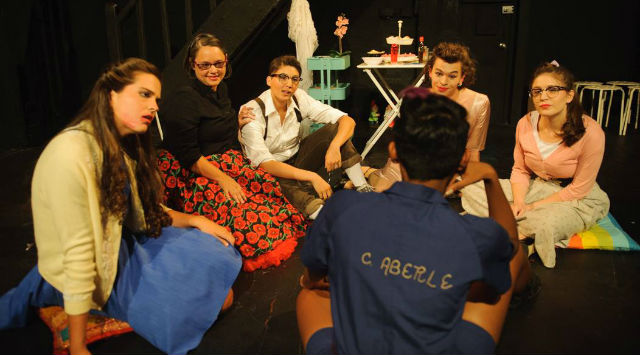
What we understand mid-life crises to be, seems relevant only to the privileged. Gabby and Paul are a middle class couple, both independently established and intelligent, reaching a point in time where their mortality suddenly comes into focus. Machu Picchu is about their reassessment of priorities and values, and although the threat of death is thankfully more than an abstract construct in Sue Smith’s play, the problems they face can often feel hyperbolic. Their struggles are honest, but also indulgent. Where others have had to just keep calm and carry on, Smith’s characters have the luxury of excessive rumination, which in turns disallows much drama or comedy to transpire. There are opportunities for philosophy, but those tend to be subsumed by domestic situations that prevent intriguing ideas from developing with satisfactory depth. Although emotionally distancing, the text has an enjoyable and innovative plot structure that reveals flair in the way its non-chronological timeline is formed. Scenes unfold unpredictably to keep us attentive, with surprising elements appearing at regular intervals for added variety.

We never quite warm to the characters in Machu Picchu. Director Geordie Brookman maintains an understated tone to proceedings, which gives an air of sophistication but also detracts from the story’s gravity. Gabby and Paul’s catastrophic state is comprehensible, but only intellectually so. The fears and trauma that they experience do not connect beyond the cerebral, and the work’s inability to encourage greater empathy gives the impression that its concerns are probably less meaningful than it wishes to be. Dramatic tension never becomes taut enough for us to feel strongly about the characters’ woes, and themes surrounding relationships and ageing, although earnestly portrayed, are not presented with sufficient ingenuity. The only people who are surprised by the effects of time seem to be on stage, and they add little to our own understanding of those ravages.

Lisa McCune’s performance as Gabby is focused and intense. There are many moments of authenticity in her depictions of disappointment, frustration and anguish, and her energetic approach helps sustain interest in her narrative, which can at times be lacklustre. The role of Paul is tackled by Darren Gilshenan who introduces an instinctive levity to the production. Gilshenan is a charming actor with tongue always firmly in cheek, but who proves capable of more serious material with this character’s adversity. It is not an entirely convincing coupling of actors, but the pair finds good rhythm with dialogue and together create imagery evocative of a bourgeois Australian identity that many will find familiar.

Clichés persist for their truth. Life is about the journey, not the destination. The Machu Picchu in Peru represents an ideal that exists in Gabby and Paul’s imagination, a place they have never experienced but that they believe to be special. In our lives, we often long for what we have yet to encounter, thinking that salvation lies therein. It is human to dream, but how much of dreams we allow to interfere with reality, is deeply personal, and determines the shape of each individual’s existence. It is ultimately inconsequential whether the protagonists get themselves to the location of their aspirations. What they are able to create and discover in their time before that fateful day is of great value, if they choose to recognise it as such.

www.sydneytheatre.com.au | www.statetheatrecompany.com.au

Review: The Ultimate Lesbian Double Feature (Old Fitzroy Theatre)

ultimatelesbianVenue: Old Fitzroy Theatre (Woolloomooloo NSW), Feb 23 – Mar 4, 2016
Playwright: Zoe Brinnand
Director: Lucy Hotchin
Cast: Kristen Adriaan, Kristina Benton, Joseph Lai, Tamara Natt, Shamita Sivabalan, Lana Woolf
Image by Sarah Walker

Theatre review
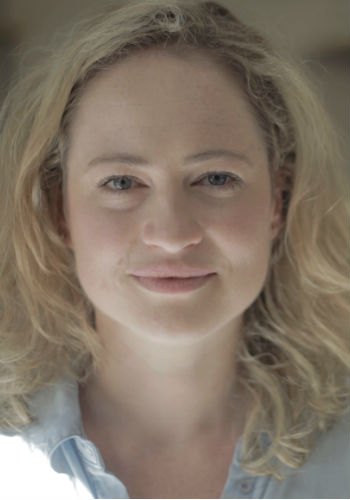
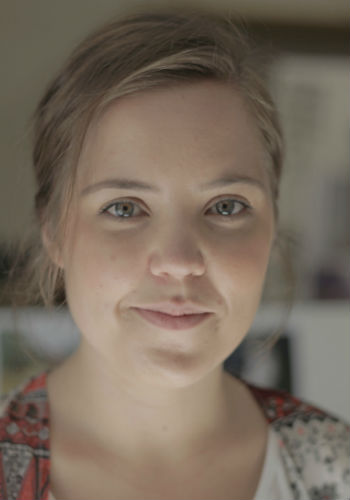
Zoe Brinnand’s half-hour plays Love In The Time Of Sexting and The Party traverse past and present in their examination of feminine desire and lesbian politics, to reflect a modern sensibility about queer identities in contemporary Australia. What the playwright presents is sassy, bold and funny, but most memorable for its celebratory spirit and a knowing rejection of tragedy and victimhood that tend to figure prominently in literary works about gay life.

Attempts at plot coherence are somewhat perfunctory, but Lucy Hotchin does a marvellous job of engineering amusing and lively episodes, while challenging conventional representations of gender and sexuality. The women in the work are neither consistently feminine nor masculine, and that fluidity extends to the way their libidos find expression. They are not one thing, and refuse to be restrained. Indeed, it is the freedom manifest in all their thoughts and actions that keeps us seduced and fascinated. Strong performances by Kristina Benton and Francis Lai bring excellent vibrancy to the production, both introducing a quality of passionate abandon that connects well with their audience.

The Ultimate Lesbian Double Feature may be radical but it is not pedantic with its world view. It is an inspiring work that can liberate, but one must remain open to the daring propositions it expounds especially when they seem much too boundless in relation to our prohibitive real lives. Theatre must spark our imagination, and provide a vision of what things might be. Utopia will always be found in the stories that we tell, but it is when they feel close to home that they are at their most powerful.

www.oldfitztheatre.com

5 Questions with Lucy Goleby and Contessa Treffone

Lucy Goleby

Lucy Goleby

Contessa Treffone: What is Unfinished Works about in one sentence?
Lucy Goleby: It’s the story of a successful artist, her agent, and an architect student with artistic ambition wrestling with the question of whether good art demands self-sacrifice and suffering.

Frank was originally written to be a male role. How have you found playing a role specifically written for a man?
It’s been a fascinating process. Although we changed the pronouns on day one, it’s taken me a while longer to wean myself off relying on a hyper-masculine energy. Male roles are inherently different from female roles and yet this is where I think we’ll eventually reach gender equality in performance – by writing complex and contradictory characters who are human first and gendered as a changeable afterthought.

Isabel has a bit of a talent crush on Frank in the play. Who is someone you have a talent crush on?
I think we all have a talent crush on Meryl Streep. The woman is superhuman in every way.

Rumour has it you are quite the jack of all trades. Tell us three hidden talents of Lucy Goleby, in 15 seconds, go!
1) I recently assembled, and now work at, a treadmill desk. 2) I play an excellent game of hide and seek. 3) I mend most things with dental floss.

Who would win in a battle, one hundred duck sized horses or one horse sized duck?
I’ll go with the 100 duck-sized horses – the more brain power, the better!

Contessa Treffone

Contessa Treffone

Lucy Goleby: What excites you about Unfinished Works?
Contessa Treffone: 1) The people. There is way too much talent in the one room not to get excited. 2) Creatively exploring the fundamental questions that I believe any artist asks themselves everyday; What is good art? And how does one make good art? 3) Deborah Galanos’ rehearsal snacks.

Who would play you in the biopic of your life?
Abbi Jacobson or Kristen Wiig. They can battle it out for the role.

If you could change one thing about the world, what would it be?
Eliminate guns and plastic.

If you could claim any piece of art or invention as your own, what would you choose?
It would be so delicious to say that I actually painted Gustav Klimts, The Virgin. Or to be the brain behind batteries that store solar energy would be pretty brill!

What temptation can’t you resist?
Sean Connery and good gin. Preferably together.

Lucy Goleby and Contessa Treffone are appearing in Unfinished Works by Thomas De Angelis.
Dates: 23 Mar – 2 Apr, 2016
Venue: Seymour Centre

Review: The Killing Of Sister George (G.bod Theatre)

gbodtheatreVenue: King Street Theatre (Newtown NSW), Feb 24 – Mar 4, 2016
Playwright: Frank Marcus
Director: Peter Mountford
Cast: Deborah Jones, Sarah Jane Kelly, Natasha McNamara, Helen Stuart
Image by Richard Hedger

Theatre review
Sister George is a real piece of work. A radio star adored by many who know only her fictitious persona, George is insufferable for those who have to be in her actual presence. Fame gets to people’s heads, and our protagonist is a self-obsessed monster who uses and abuses all in sight, especially her doll-like lover Childie, a feeble woman struggling to discern love from exploitation in their codependency in 1964 London.

Under Peter Mountford’s direction, the sexual nature of that relationship is emphasised. Homosexuality is not swept under the carpet, and we are confronted by the overt BDSM quality of George and Childie’s union with its depiction of consensual and subversive eroticism. Although fascinating, there are issues with plot consistency as a result, and the production is a couple more days from being well-rehearsed. The show does however, pick up pace gradually for an experience memorable for its thorough unconventionality.

In taking on the responsibility of playing George, Deborah Jones is required to portray villainy in a way that is both repulsive and compelling. Jones does not quite reach that level of starry charisma demanded of her role, but it is a believable performance which brings up the right issues of contention and asks appropriate questions regarding power imbalances in same-sex relationships. Natasha McNamara’s work as Childie is authentic and complex, with a conflicting duality that provokes us into considering the meaning of love, and the many scandalous forms of its manifestations.

The women in The Killing Of Sister George explain the way they treat themselves and each other, but they do not explain their lesbianism. Peter Mountford has ingeniously reached back 52 years to find a text that allows an expression of gayness that is above the need for justification, and beyond our tired boundaries of sexual differences. This is no “tragiporn” that feels emburdened by its mere existence to make itself accountable to some vague authority of social expectation, but gives voice to real personalities who rarely find their way into our run-of-the-mill narratives. It is a juicy story about love, sex, power and fame, except believe it or not, there are no men in it.

www.gbodtheatre.com

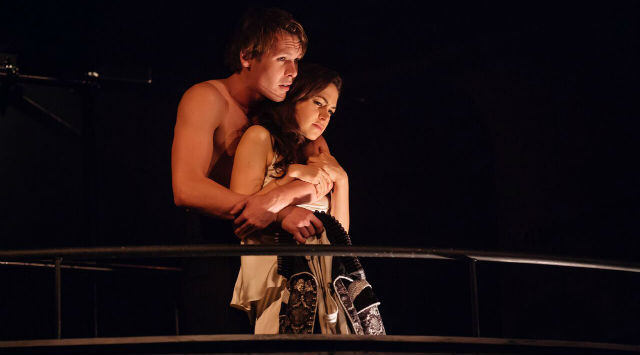
Review: Romeo And Juliet (Bell Shakespeare)

bellshakespeareVenue: Sydney Opera House (Sydney NSW), Feb 20 – Mar 27, 2016
Playwright: William Shakespeare
Director: Peter Evans
Cast: Cramer Cain, Justin Stewart Cotta, Michelle Doake, Michael Gupta, Angie Milliken, Kelly Paterniti, Hazem Shammas, Tom Stokes, Damien Strouthos, Jacob Warner, Alex Williams
Image by Daniel Boud

Theatre review
Youth is wasted on the young, but romance is best experienced at a tender age. Shakespeare’s Romeo And Juliet is the most romantic of stories, which by the same token, would mean that it is a play that can seem completely ludicrous to some. A pair of teenagers meet at a party, decide to get married hours later and over the next few days go through hell and high water to stop their families from prying them apart. Human attraction and the sexual impulse are often mysterious, but instantly recognisable when present. In Peter Evans’ iteration, we see an abundance of sophistication and polish, but chemistry is in scarcity.

The production’s first half sees several energetic performers providing effective comedy and lively interaction. Notable supporting players include Michelle Doake and Damien Strouthos who delight with flamboyant theatrics that help us engage with nuances of the plot, while delivering surprising swells of laughter. Stars of the show Kelly Paterniti and Alex Williams bring passion to the narrative, but we are never quite convinced enough about the relationship to invest our emotion into their dilemma. In the tragic second half, an unravelling seems to occur, and we become even less involved in the lovers’ plight despite their catastrophic fate. Kelly Ryall does marvellous work with music, and even though wonderfully executed throughout, does not help the concluding melodrama take flight, and the greatest of love stories leaves us cold.

Juliet and Romeo are in love with strangers. Like many things in life, their connection defies logic but are indisputably real. Something magical happens between the two, but we are not privy to it. They are overwhelmed and moved to extremes, while we observe with slight curiosity, wondering how it is that innocent love can fade without warning. Time does strange things to people, but we must be there to witness its power. Our protagonists have seen little, but we can find solace in the fact that they had only ever experienced purity, if nothing much else.

www.bellshakespeare.com.au

Review: Little Shop Of Horrors (Luckiest Productions / Tinderbox Productions)

Venue: Hayes Theatre Co (Potts Point NSW), Feb 18 – Mar 19, 2016
Book & Lyrics: Howard Ashman
Music: Alan Menken
Director: Dean Bryant
Choreography: Andrew Hallsworth
Musical Direction: Andrew Worboys
Cast: Angelique Cassimatis, Tyler Coppin, Esther Hannaford, Brent Hill, Scott Johnson, Dash Kruck, Josie Lane, Kuki Tipoki, Chloe Zuel
Images by Jeff Busby

Theatre review
When Roger Corman’s original film of Little Shop Of Horrors appeared in 1960, it was seen mainly as a science fiction comedy about aliens from outer space invading planet earth, a popular genre believed to represent the USA’s anxieties about the spread of communism in the middle of the twentieth century. By the time of its evolution into an off-Broadway musical in 1982, and the many subsequent revivals, Little Shop Of Horrors had taken on greater poignancy. It is now ironically a story about the horrors of capitalism, and the insatiable voracity of money. Seymour’s sacrifices for fame and fortune begin cautiously but they are soon beyond his control, and Audrey II literally takes on a life of its own to usurp much more than Seymour had ever intended. It is debatable if economies anywhere were ever as innocent in purpose as our protagonist, but Audrey II is a clear and unexaggerated parallel for the seemingly incessant threats of financial crises that we are warned about in the daily news.

Dean Bryant’s vision for this 2016 staging is wildly imagined and beautifully realised. There is great sophistication to be found alongside his exuberant showmanship, offering a night of sensational entertainment, the quality of which is admittedly rare. Bryant’s boldness in attitude meets with the material’s unbridled extravagance for a production that enchants and excites. Although fundamentally a very dark tale, its theatrical executions here aim for a wide appeal, ensuring that musical enthusiasts and general audiences alike would be equally captivated. Aided by a phenomenal team of designers (most remarkably Owen Phillips’ set and puppetry by Erth Visual & Physical Inc), the show is a visual feast resulting from daring dreams and big ambitions that the intimate space has very clearly failed to hamper.

Thoughtful casting brings together a group of vivacious personalities who fire up the stage with vibrant humour and immense energy. There are bigger voices to be found in the industry for sure, but prioritising characterisations over technical ability pays off in spades. Brent Hill is an endearing Seymour, with a convincing purity that connects well with his audience. Leading lady Esther Hannaford’s comic timing is outstanding, and the Audrey that she manifests is a real and irresistible joy. It is a coupling that we cannot resist championing for, and that ensures the plot’s effectiveness from start to end. Supporting players Angelique Cassimatis, Tyler Coppin and Scott Johnson too, leave excellent impressions with brilliantly funny performances in their respective roles. It must be noted that sound designer Jeremy Silver’s achievements in finding the perfect sonic balance for the show is quite an accomplishment, helping the ensemble provide an engrossing and exhilarating experience that will prove to be unforgettable.

Revisiting classics is always a tricky exercise. Having to live up to standards set by two classic films and innumerable stage adaptations, is without a doubt a formidable task, but this version of Little Shop Of Horrors is quite possibly the best rendition that this generation can hope to see, and maybe for several years thereafter. It exceeds not just expectations, but also our fantasies of what the show could possibly look like before our own eyes. The artists have created a work of great spirit and surprising poignancy, and along with a good deal of wonderful singing and dancing, this is a show that will have you suddenly falling in love with musical theatre all over again.

www.hayestheatre.com.au

Review: The Ritz (New Theatre)

newtheatreVenue: New Theatre (Newtown NSW), Feb 16 – Mar 5, 2016
Playwright: Terrence McNally
Director: David Marshall-Martin
Cast: Les Asmussen, Meagan Caratti, Samuel Christopher, Jarryd Clancy, Ricci Costa, John Edwards, John Farndale, Lisa Franey, Ivan Hui, William Koutsoukis, Adam Kovarik, Rosane McNamara, Marty O’Neill, David Ross, James Smithers, Barton Williams
Photography © Bob Seary

Theatre review
It may be argued that there was only a small window of time in LGBT history, when stories were being published and told in theatres about vibrant queer experiences. The emergence of the gay rights movement alongside the sexual revolution of late 1960’s opened the doors to artistic expression that began to take queer lives out of the closet, but before much momentum was able to be achieved, the AIDS epidemic of the early 1980’s signalled the return of oppressive powers, and although LGBT stories continued to be produced, they were turned much darker to reflect the sombre times of death and community destruction.

Terrence McNally’s The Ritz first appeared on Broadway in 1975, and although its protagonist Proclo is heterosexual, the action takes place in a gay bathhouse in Manhattan, with a host of vivacious gay men providing the core structure to its narrative, along with an endless stream of campy punchlines. Their proud and exuberant sexuality is its central appeal, in fact Proclo’s story is almost ancillary, existing only as an excuse for the rambunctious humour to unfold. The infamy of pre-AIDS bathhouse culture finds itself represented here in all its shame-free glory, in the form of a classic American farce (admittedly not to everyone’s tastes), complete with accents, stereotypes and show tunes.

Director David Marshall-Martin brings to the production a potent nostalgia that many will appreciate, and an energetic madcap style of comedy perfect for the script. The old-fashioned quality of the show takes some getting used to, but it does get increasingly charming through the course of the evening, aided by the bawdiness of the writing that Marshall-Martin is able to present with a surprising edginess, despite its use-by date.

Leading man Les Asmussen is an endearing and effervescent presence, with an ability to communicate and connect with his audience effortlessly. The actor’s strong instincts ensures that on-stage chemistry is consistently buoyant, and his generous nature as a performer keeps us engrossed. Similarly engaging is Samuel Christopher in the role of Chris, an extremely flamboyant character who has a joke ready for every situation. Christopher’s comedic skills are a highlight of the show, leaving a lasting impression with bold choices and immaculate timing. Also very funny is Meagan Caratti, who embraces the boisterous tone of the show to deliver some of its biggest laughs. Her passionate commitment is paralleled by an emotional warmth that allows her character Googie to become one of the more believable personalities in this outlandish presentation.

The style of The Ritz might not be innovative, but the portrayal of unbridled joy by its community of gay men is refreshing. We might be in a new century, but we remain burdened by the darkest days of AIDS and its indelible negative impact on sexual freedoms. The rampant sex and promiscuity of The Ritz was a result of emancipation that was meant to be celebratory. Its intention was to welcome a new era of equality and acceptance, but we now look at those behaviour as an archaic oddity. It is a vision of pride that we have lost, replaced by something less assertive, maybe even slightly ordinary.

www.newtheatre.org.au