5 Questions with Meg Hyeronimus and Danen Young

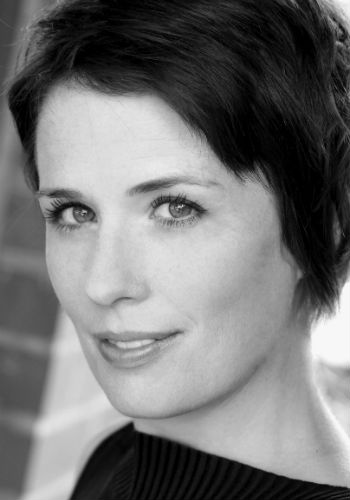
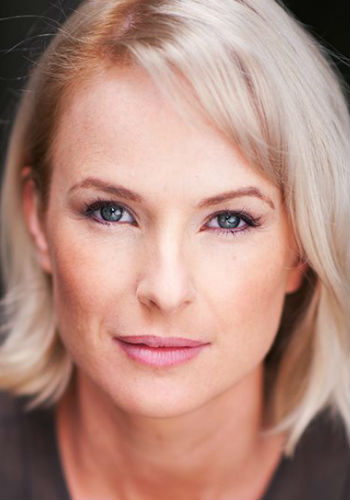
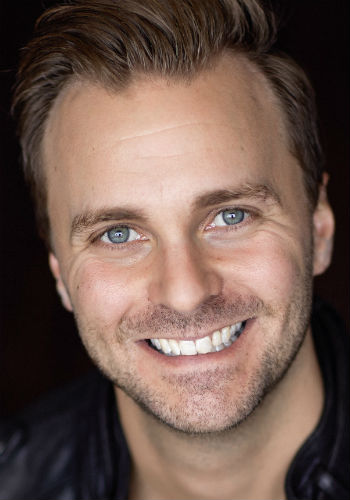
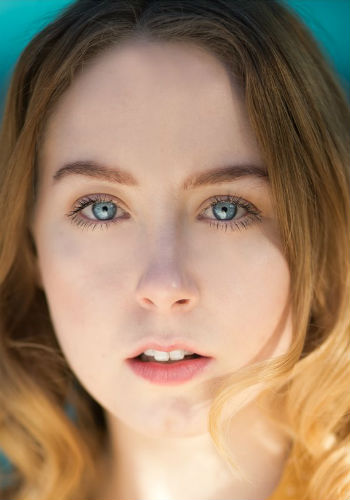
Meg Hyeronimus

Danen Young: How does it feel to play such an iconic figure as Marilyn?
Meg Hyeronimus: Initially, terrifying. I didn’t really know much about her other than the typical “blonde bombshell” character and that she’s the most famous blonde of all time or at least the 20th Century. So yeah, completely overwhelmed. I dove into my research, gathered everything I could find and found her to be so incredibly extraordinary and complex. As Arthur Miller said in an interview “whatever anybody was she had a little of it”. I also quickly accepted that I’d never be Marilyn. That took some stress away. I think the script definitely helps with that – with the breaking down of her public persona, and portrays a more real and human version of her. My relationship to her has become incredibly personal, I find myself fighting for her in whatever way possible – in everyday life or during rehearsal (I suppose that’s a real driving force for me in the show) and I love her a lot. I feel her pain and her hope. It’s also opened a lot up for me as an actor, I feel more confident in myself and owning my power. I’m very grateful for the whole process. 

How is it different this time round? 
I think there is an obvious shift in each of us, it feels like we’ve matured as actors/theatre-makers. Don’t get me wrong, we very much are still those excited passionate kids – but the approach to our work is more direct and fast paced. The vision for what we want is clearer; for Alec (playing Arthur) and I as actors making choices for our characters and for Danen and his directorial vision. There is a lot more freedom for me as Marilyn now. I’m not trying as hard to be a certain way. I think I have a better understanding of her, or rather MY Marilyn and all that character stuff (which the first time round plagued me for a while). It now comes second nature, leaving me with so much more room to PLAY! It’s so FUN, even when it tears my heart apart. 

What is your favourite thing about the rehearsal room? 
Well, that I get to work with two of my best friends. Also the silly characters that are always floating around. Alec has one whose name is Timothy Panknell. He’s from somewhere in Brooklyn. And never ever fails to make me laugh. Danen and Alec both take on who they think Arthur Miller’s mother would sound and be like. It’s probably the funniest thing I’ve witnessed first hand. 
We have so many stupid jokes and outbursts of nonsense, and it’s generally Alec saying something so absurd and ridiculous that Danen and I lose it for a good 5 mins. 
It’s a good base for us to be open and just play around with the script, despite the work being so sincere and somewhat philosophical.

If you could have dinner with any famous person from the past, who would it be? 
Is it annoying to say Marilyn, because honestly that would be my first choice. I’m desperate to speak to her. Other than that, Hatshepsut. She’s one boss ass bish! 

Marilyn’s from LA and Arthur’s from New York, so where would you rather live, LA or New York?
Young Meg would say New York in a heartbeat. And I would say present Meg would say it too, just a little more hesitant. I need space and love nature, so I’ll say LA. That is my final answer. Which is lucky considering I’m moving there in 3 weeks, HA!
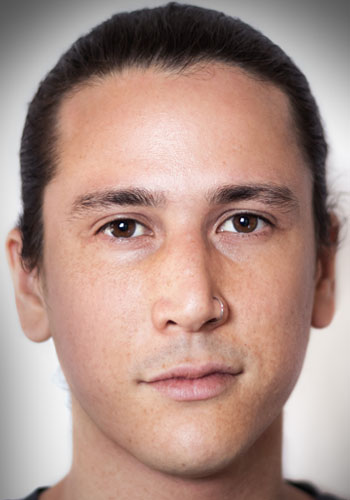
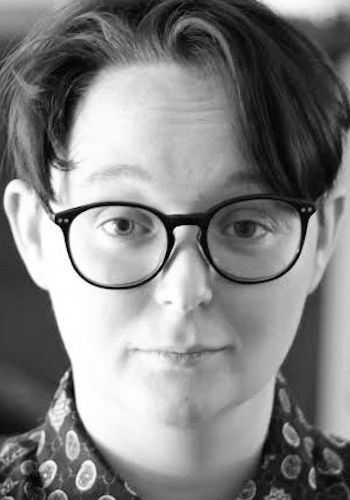
Danen Young

Meg Hyeronimus: LA or NY?
Danen Young: Oooooh that’s tough. I’d have to say NYC in terms of a city to live in. There is sooooooooo much happening in such a small amount of area, and it literally never sleeps. Which is absolutely perfect for a night owl like myself!!

Dinner guest?
I would have to say Nikola Tesla. Such an incredible mind that was not as successful and far reaching as he should have been. The memory of his great work was stomped on by Thomas Edison and I would just want to say sorry for that!!

How different has it been directing this time around?
There have actually been a lot of things that are similar about directing this time around. The difference mainly being the length, and the challenges we’ve faced in terms of developing a rhythm for the show. The short and sweet version of the play was probably a bit nailed into us, so breaking free of this emotional and muscle memory was the first big hurdle. In terms of staging, lighting, and sound the show is coming together fairly in the same, but on a larger scale; so the lighting plots are more complex, there are more sound cues, and more blocking to figure out. But being on a small budget, and having restrictions on how much set we can have, means that we’ve kept the set minimal, to focus on the characters, relationships and memories that Jasper has so beautifully written into his script. Rehearsals are still super fun and full of cheeky banter!

Why produce this play?
Firstly, because the script is amazing. For actors, the words just pull you along, and it’s a beautiful thing to watch. But I think it’s also a very interesting take on memory, and celebrity culture in this highly connected world of social media. How can we really know who these people were? Whose word can you trust as an authority on what these people were like? Does it really matter? Is it possible to know someone if you’ve never met them? I can’t really answer these questions, but I want to say that the overwhelming feeling I’ve had whilst directing this play, is that our memories are who we are, but in the end, it’s the memory of us in the minds of other people that define who we are.

Describe the show in 3 words.
Sincere. Ethereal. Heartbreaking.

Meg Hyeronimus plays Marilyn Monroe, and Danen Young directs Arthur & Marilyn, by Jasper Lee-Lindsay.
Dates: 29 May – 2 Jun, 2018
Venue: Blood Moon Theatre
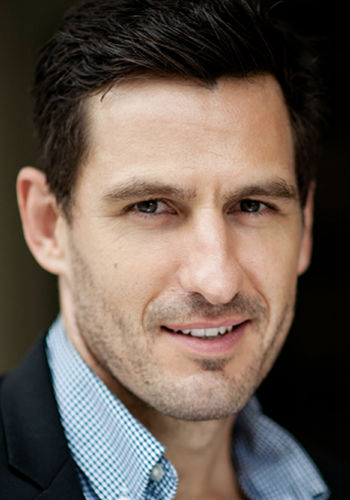
5 Questions with Radek Jonak and Anne Tenney

Radek Jonak

Anne Tenney: You are a joy to have in the rehearsal room, endlessly entertaining and very funny, how did your teachers survive your school days, or, did they?
Radek Jonak: No teachers were harmed in the process! At school, I was actually quiet subdued, I was an overweight kid just blending in. When I get to know people then I relax and be myself.

When you first read Stalking The Bogeyman, what were your initial thoughts about the character, and have you played a similar role in your career to date?
Initial thought was, this guy is everything I stand against, as a human being. Never played a similar role, usually get cast as a cop or a criminal.

In one of your other lives you are a fitness instructor and personal trainer, so you mostly begin your day around 4 am, how do you work this in with a nightly performance schedule?
This will be the first time I will be doing it! Hope to get a lot of naps in.

If you won an all expenses paid trip to anywhere in the world where would you head off to?
Maldives, that island is slowly sinking, and it just looks amazing.

In your career, have you worked on any projects that have given you the opportunity to display your comedic talents?
With my mates, yes! Short films, web series etc. But professionally in a comedic role? No, never had the chance.

Anne Tenney

Radek Jonak: Watching you in this show, you bring along such ease and fun, when you are on stage. When was the first time you remember that you thought, I want to do this for a living?
Anne Tenney: Thank you, Radek. I was acting in a production of The Ballad Of The Sad Cafe during my NIDA years, and, such a beautiful, magical world had been created on the stage, atmospheric lighting etc, etc, it was one of those theatrical experiences where
everything came together. I felt at home , I was collaborating with a group of people all working towards the same end. And that was, to tell a story. So, I was bitten!

If you didn’t end up doing acting, what would have been your back up plan?
Still thinking about that one… Any back up plan I have flirted with inevitably has something to do with the arts, Painting (not houses), writing, so fairly impractical but would love to work with children, or the elderly, and that could be still on the cards.

Name three other actors (dead or alive) you would invite to have dinner with.
OK, first person that comes to mind is Judi Dench, then Deborah Mailman, and Ben Mendelsohn.

Your agent just rang and said, Anne you have been offered to do any part you like… what would it be?
Well, I am too old for her now, but I have always wanted to have a crack at playing Masha from Chekhov’s The Seagull, maybe something similarly comically mournful.

Cat or dog? Warm or cold? Day or night? Sweet or sour? Film or theatre? Skydive or bungee? Early riser or sleep in?
Well, I like them both, depending upon personality, but will say dog. Cold… warm if I can be immersed in cold water. Sour. Day. Film or theatre, mmmm, that’s a toughy, have to sit on the fence, and say a little bit of both. Skydive. ONLY if a gun was being held to my head . And definitely… an early riser.

Radek Jonak and Anne Tenney are appearing in Stalking The Bogeyman, by Markus Potter and David Holthouse.
Dates: 23 May – 23 Jun, 2018
Venue: Old Fitz Theatre

5 Questions with Alana Birtles and Alec Ebert

Alana Birtles

Alec Ebert: Describe Troilus And Cressida in a haiku.
Alana Birtles: Blood-stained earth in Troy / A massacre on both sides / Two lovers parted

Why is Shakespeare, and this play in particular still relevant to us today?
I believe Shakespeare is still relevant today because he deals with humanity and universal themes that we still easily relate to. This is evident in the numerous modern adaptations of Shakespeare today. Troilus And Cressida in particular deals with love and war and the question, ‘What is it that we are actually fighting for? Is all the bloodshed worth it?’ I believe this question still rings true today.

What character do you relate to the most from Troilus And Cressida and who is your secret crush out of all the characters?
I think I would say I relate to Ullyses as he seems to see the sense (or nonsense of war). My secret crush would be Hector I think, because he is such an infamous warrior. I also can’t help
thinking of Eric Bana’s ‘Hector’ because he was pretty fine!

What have you learnt most about yourself on this production, working with 18 other cast members?
I think working with such a big cast teaches you team work and helps you make fast friends. You really are part of an ensemble and it everyone plays their part in making the show great. I have
met some amazing people working on this production and I would love to work with each of them again. I also like to learn from watching other actors in rehearsals and on stage, and this cast has given me many talented people to look to.

If you could invent a superstition that, in 400 years would be religiously followed by actors, what would it be?
That you have to make an offering to the ‘theatre gods’ or playwright before opening night… a song and dance with the entire cast.

Alec Ebert

Alana Birtles: Hector! How do you see him and how do you connect with such an iconic and ancient hero/warrior?
I see Hector as a family man as well as a man of order and honour. I really think he sees war as a necessary evil, needing to be waged in order for life to continue. He doesn’t fight to be
the best warrior there ever was (though he is very good at it); he fights for his wife, his young son, his people and his family… having said all that, he is a proud man with a very healthy ego, so is prone to the fits that pride and ego bring out in even the best of us. I connected with Hector through reading mostly. The Iliad by Homer was my obvious source of most information – there’s some beautiful passages of Hector with his son, Scamandrius and his wife, Andromache. These family elements have helped me to understand Hector beyond an archetypal warrior-leader and is the secret to my forming a connection with him. In saying this, he is meant to be the only mortal warrior said to make Achilles himself afraid, so I needed to ground myself with some martial and physical work. I also took up sword fighting classes (shout out to Action Acting Academy – highly recommended) and an intense training programme to get pretty fit.

You have performed in numerous Shakespeare productions… what is it about Shakespeare that draws you in? Why does it need to be performed?
I asked you a pretty similar question! I think Shakespeare draws me in personally because I love the life in the characters, by which I mean their psychic complexity, mass of contradictions and bewildering actions! Also the stories rock – they are big but unmistakably real – themes of love, war, sex, passion, lust, race, racism, misogyny, pride, gender, revenge… the list goes on and on and on. These themes are current today, many are universal and a necessary condition for human beings and, while we might wish a lot of them weren’t, will be for a very long time to come. I think I’ve just answered why they need to be performed.

Who is your favourite Shakespeare character of all time that you would love to play and why?
I suspect in ten years’ time I’ll look back at this and have a different answer. It’s also grossly unfair: like asking me to pick my favourite puppy in a room full of puppies. I’m going to answer 3. Younger Alec loves Mercutio because he’s a force of nature, elemental and mercurial. Middle Alec loves Hamlet because, well, he is the ultimate human and I want to work with him before I’m too old. Finally old Alec loves Prospero, mostly because I love wizards, and when you combine Shakespeare’s words with a wizard, it’s like cheese goes with pizza. It’s amazing.

If you could play another character in Troilus and Cressida, who would it be and why?
I think Thersites. He’s probably the only honest character in the play and he’s a fascinating mix of narrator, comedian, cynic, wit and outsider that would be a blast to play. At least, Danen,
who plays him in this production, makes it look like a blast.

What’s the most embarrassing thing that has happened to you during a show?
I was quite emotional in the last scene of a performance of The Two Gentlemen Of Verona, and I was standing right in front of the audience and blew a huge snot out of my nose. It was just obscene.

Alana Birtles and Alec Ebert can be seen in Troilus And Cressida by William Shakespeare.
Dates: 9 – 19 May, 2018
Venue: The Depot Theatre

5 Questions with Yerin Ha and Mark Paguio

Yerin Ha

Mark Paguio: Who has been your biggest influence in your career so far?
Yerin Ha: My biggest influence would have to be my Mum. I’m very grateful that she has not once questioned my career path but instead, always supported me in every way that she can. She even convinced me that I should study acting in Korea because of my Asian background. Even though those were some of the toughest years of my life, I don’t regret it one bit as it made me learn more about who I am, my culture, my language and potential opportunities for me overseas. She has also been the biggest support in my life and has played a major role in moulding me into the performer and woman that I am today.

What do you think is missing in the Australian performing arts sector right now?
Authentic stories, especially for people with culturally diverse backgrounds. If we want to see more people of color on stage and screen, it begins with the writing and producing. But if
there are no writers to write these authentic stories and no producers willing to take risks, it’s just going to be the same stories done by the same people. It would be nice to close the gap
with new voices, new faces and new stories. If you weren’t acting, what field would you be pursuing? I think I would be a baker/patisserie chef. Weirdly enough I get such a satisfaction from
watching/actually putting icing on cakes until it’s smooth with no bumps, and decorating it with whatever you want. The options are endless.

If you had the opportunity to play a role you would never be able to see yourself play, what would it be and why?
It would have to be Debbie Reynold’s role in Singin’ In The Rain. One of my all time favourite movies. I would love to be able to play alongside Gene Kelly and Donald O’Connor who are two of the most amazing actors back in that time. The songs and the dances just fill me with such joy when I watch the film, but I couldn’t see the industry accepting that role being played by an Asian women (still to this day).

What attracts you to the headphone verbatim technique and does it differ from a conventional play – from an actor’s point of view?
The process and art form of collating the material for headphone verbatim, and being able to share real stories told by real people intrigues me. These are stories from people you see on
the streets and the technique of headphone verbatim reminds the audience that everybody has their own history and stories, which I feel like we tend to forget as we get caught up with our own lives. I think it does differ for an actor when working on a conventional play, as you’re not bringing options to the floor about how you think the character would behave or talk. Headphone verbatim is a technique that requires you to find character nuance and gesture through voice and intonation. It is a form with so much potential to tell authentic stories, yet is so scarcely seen in Australia.

Mark Paguio

Yerin Ha: What are some of the challenges you face being an Asian actor?
Mark Paguio: I could write a whole essay on this, but given I hate writing essays I won’t. Other than the usual things such as lack of opportunities, prejudice, lack of trust in the bankability of Asian actors etc., I think the lack of accessibility of audiences outside of the white, middle-aged sector to theatre presents a huge problem. It’s a beautiful thing to see yourself or your culture being represented, but when you simply don’t have the funds for – or exposure to – inclusive theatre, it hinders the ability for the industry to grow in a way that addresses the other issues which I have stated. We need more Asian audiences, too! Of course, this issue extends to other actors of colour, actors with disabilities, trans actors etc.

If you could rewind time and change one thing what would it be and why?
There is an infinite amount of things that I would go back in time to change, that would either be beneficial to me in my adult life (i.e. forcing my younger self to play more sports so that I can learn to catch a damn ball in my drama classes), or beneficial to the world (i.e. stopping colonisation because I’m capable of that apparently). But the first thing that comes to my head would be to go back to a particular day in primary school, where the savagery of my 12-year-old self lead to a friend crying because he felt ridiculed from a joke I had made. I felt awful, but this was the first time, to my knowledge, that my words had severely hurt another person, and because of this I was frozen with shame. So I walked off, while my other friends consoled him, without a proper apology. The guilt of that still haunts me to do this day. Let’s make things clear, though. Realistically, I wouldn’t go back to stop myself from making the joke. I would go back to make sure that I apologised.

If you could spend one day with your favourite actor what would you do?
I would spend a day pampering myself because I am my own favourite actor. Kidding. I wouldn’t say I have a favourite actor because there are so many to choose from, but I would love to go to an all you can Korean BBQ with Timothée Chalamet. Firstly, because I would love to pick his brain as a young actor who is killing the game. Secondly, because he seems like a pretty energetic, humble, and intelligent dude that would chat the night away (and chatting over great food with my friends is my favourite pastime). Thirdly, he’s a huge Cardi B fan and I think we’d really vibe together.

What aspects of headphone verbatim do you find most appealing?
Finding the character from text is a process. A huge process where you get to explore and play. Once you get to show it in front of the audience, all the work becomes so rewarding. Naturally, with any process like that it comes with its trials and tribulations. The beauty of this work, and hearing these voices being played in your ear in real time means you get to just dive into their rhythms, energy and lives with ease. All you have to do is connect.

What excites you most about having a career in the arts?
Other than living in fear about when my next paycheck will be, the most exciting thing about having a career in the arts, at least right now, is that the zeitgeist is heading towards an industry that wants to tell stories that reflects the people within the society and the world we live – or that it now wants to tell stories that go beyond the world we live, but is inclusive of the people within our world – despite race, religion, sexual/gender identity, ability etc.

Yerin Ha and Mark Paguio are appearing in I Walk In Your Words, directed by Kristine Landon-Smith.
Dates: 9 – 11 May, 2018
Venue: ATYP

5 Questions with Chris Miller and Jacqui Robson

Chris Miller

Jacqui Robson: What are five words you’d use to describe Lennie Lawson and five words to describe Hugh Lusk?
Chris Miller: Lennie Lawson – Charming, boyish, manipulative, adaptive, psychotic. Hugh Lusk – Determined, confident, altruistic, ambitious, stubborn.

Where on the spectrum of human behaviour would these two men overlap?
More than likely, narcissism. Lawson is pathological and most definitely at the disordered end of the spectrum, lacks empathy and is a slave to his delusions. Lusk is empathetic, yet has a swagger of arrogance to him. Where they overlap is they both suffer from ‘magical thinking’: Lawson in the way he justifies his abhorrent acts of cruelty and Lusk in the way he clutches at straws to build a defence for Louisa Collins when the odds are stacked against him. Where they differ is Lusk has empathy and control whilst Lawson definitely does not.

What has been the hardest thing about playing Lennie?
I’ve done a hell of a lot of research on personality disorders and the Dark Triad (psychopathy, narcissism and Machiavellianism). It’s really heavy stuff. I’ve been exploring which spectrums I sit on, and ramping them up and walking around in public to get a feel for it… and it’s crook. I’m a naturally empathetic kid, so switching into psycho mode and exploring egocentric, sadistic magical thinking is not without its detriment. I’ve had to counterbalance with meditation and positive affirmations, which has actually been awesome as well. So it’s double edged. That, and I have to be consciously aware of not creeping out the cast and crew because I’m in so deep. Either way… it’s real juicy.

What’s it like being in these two productions at the same time?
Awesome! I freakin’ love it. Two totally different characters, pushed to the max, and a sensational team of directors, cast and crew. Jacqui (and the rest of the cast) are so talented, giving and supportive. Also, it’s a different experience playing real people of history. The back story is done for me; it almost feels like I’m allowing them in to possess me and, of course, I get to decorate the cake with Miller-isms. The main thing is just vehemently telling the truth.

Would Hugh Lusk take on Lennie Lawson as a client?
Hmmm, as ambitious as Lusk is, and although he fights for the underdog, Lawson is an abhorrent violent criminal with zero chance of redemption. The evidence is so stacked against him and cut and dry. So, my answer is no. It would be morally incongruent for Lusk to take the case.

Jacqui Robson

Chris Miller: What draws you to playing characters such as Jean Turnbull, June Dally Watkins and Louisa Collins?
Jacqui Robson: Each of these real-life women were caught up in extreme circumstances and I am grateful for the chance to explore their behaviours, and creatively make choices based on what I can only guess at why they did what they did. They are all complex and, in these stories, they experience terrible tragedies in different ways. I get to play with their strengths and vulnerabilities, but hopefully also honour their experiences.

Tell us about your process to delve deeper to find the truth and embody these characters.
I started with imagining how I would behave in their circumstances, and then try to understand why they acted the way they did. Then I looked into the research. For the Lennie Lawson story, there were helpful articles about the Lennie Lawson attack on SCEGGS that gave me some clues into Headmistress Jean Turnbull’s character and choices. There’s also plenty of content on June Dally Watkins around to give a guideline into her personality. How they behaved with Lennie Lawson is how I imagine I would have in those circumstances. (I might not have been as hardcore heroic as Jean Turnbull, though I’d like to think so.)

Louisa Collins is more difficult. She’s enigmatic. Playwright Gina Schien loaned me her copy of The Last Woman Hanged by Caroline Overington. It’s a brilliant collection of primary research with many contradictions in observations about how Louisa behaved, so I’ve found it challenging to make any decisions about her. She constantly surprises me. I’m making the best choices I can, so I just hope that I represent her as truthfully and compassionately as possible.

What’s the difference that you find in playing imaginary characters compared to actual women of history?
Playing real women of history brings with it a great amount of responsibility to represent them and their actions truthfully and accurately. History is decided by others so maybe it’s impossible to ever really do this, but I still try. Fictional characters are a lot more freeing and I care a lot less about what others’ think of my interpretation. If people don’t like my choices, I can’t do much about it and can’t worry about it.

Why act?
I bloody wish I knew. It’s like being on drugs. The creative highs are amazing. The lows – the poverty, rejection, artistic failure, bad reviews, objectification, inability to plan life – all suck immensely. Honestly, if I could get my creative kicks some other way, I bloody would.

What is your dream role and why?
I just like to be doing something, chasing something, acting in pursuit of that something. Give me a role in which I have a job to do. Preferably in a great ensemble piece with amazing dialogue. My favourite plays and shows are the ones where there are at least five people talking. I love to contribute to a symphony of fantastic dialogue in an electric scene where everyone is fighting for something (e.g. an episode of The West Wing, or Tracy Lette’s August: Osage County). My creative north star is probably Allison Janney playing CJ Cregg in The West Wing.

Chris Miller and Jacqui Robson are appearing in Deadhouse: Tales Of Sydney Morgue.
Dates: 24 April – 19 May, 2018
Venue: The Rocks Discovery Museum

5 Questions with Priscilla Jackman and Charles O’Grady

Priscilla Jackman

Charles O’Grady: What’s the most significant or surprising thing you’ve learned about trans people and gender identity through the process of making this show?
Priscilla Jackman: I’ve learnt so much on this journey but probably the most obvious thing has been correcting my previous misconception about the homogeneity of the trans community. In my
ignorance as a cisgender white woman, I assumed that trans people share common ground, common values, options etc. Of course, just like all facets of society there is enormous range and diversities within the trans community. Getting to know Catherine McGregor has been such an extraordinary revelation, because her experience and her journey has made me think, quite deeply about humanity and the commonality of our experience, as much as those aspects of her life which are so different to my own.

I find that every time I do a show like this – this one in particular! – I come away having learned or re-evaluated something about myself. Is there anything you’ve discovered over the course of this production that’s changed how you understand your own identity?
I guess a chief understanding and development for me has been an affirmation of the extraordinary collaborative process that making theatre is all about. Often as a director in the past, I have felt solely responsible for overseeing every aspect of a project, feeling I should have all the answers to everything. The most wonderful and humbling experience of working on this show has been to realise that in terms of my identity as a director, actually, the creative solutions have often been born through a deep and rich collaboration with all my team. Recognising the power of this collaboration and the creative strength and collective experience in the room has led to some of the most important creative break-through moments during rehearsals.

You and I have talked a lot about how beautiful and resonant Cate’s voice is. If you could have her read one book or play aloud to you, what would it be?
Apart from cricket, Catherine’s chief obsession is language – her love and faculty for language and storytelling is precisely what captivated and inspired me in the first place. She loves Shakespeare, the Greeks, can rattle off any number of famous military and political speeches verbatim, in a heartbeat. I love to hear her recount famous speeches – Robert Kennedy is a favourite. I love her love of poetry. But perhaps my favourite is her rendition of St Crispin’s Day speech from Henry V. So to answer your question, I would love her to read Henry V to
me.

What element of this show are you most proud of?
There is so much to be grateful for, being involved in bringing this production to life. For me, one of the greatest gifts has been to work with the team. I have never felt as supported and connected to my design team and have absolutely loved and adored working with Michael Scott Mitchell and Nick Schlieper. I have learnt so much from them both. Working with Heather Mitchell has also been one of the most inspiring experiences of my professional life – all members of our team have given so much heart and soul to the work, it has been extraordinary. The day Cate arrived at our rehearsal room, unexpectedly and played cricket with the cast, was one of the proudest days of the rehearsal process – because in that moment everything made sense – the journey that
we have been on together, the importance of telling this extraordinary story, the grace and generosity of both Cate and the cast and the team. I think we all walked away from that day feeling very affirmed that this is indeed, a very special project and special opportunity.

How has making this show differed to other shows you’ve directed in the past?
There are many differences and many similarities. Differences lie in the experience of the team I have around me – including working with you Charles – my first ever Assistant Director! I have created new work in the past using adaptation processes, but this is the first play I have written using a verbatim methodology.

Charles O’Grady

Cate talks frequently about her idol and ‘talisman’, Indian cricketer Rahul Dravid. Do you have a ‘Dravid’ in your professional or personal life, and if so, who?
I feel like I have several Dravids – most of whom would hate to be mentioned by name here! – in the sense that there are a lot of people in my life who have directly or indirectly kept me going, pulled me back from the edge in darker periods, reminded me there are reasons to keep surviving, or just been there when I needed calm and clarity. They all know who they are and they’re all rolling their eyes because, as Dravid says to Cate, “it was nothing” for them to show me kindness and support. I think often we don’t know who the “still points” in our chaos and turmoil are going to be until we find them and we’re clinging on for dear life. In terms of celebrity talismans I’ve carried with me in my life as a gender diverse person, Laura Jane Grace (lead singer of Against Me!) was a big one, as her album Transgender Dysphoria Blues was what gave me the courage to come out to my family. One time she tweeted me saying we were “BFFs”. It was amazing.

What about the text or the concept most excited you when we first discussed it?
There were two things that most got my blood running when reading the script and chatting to you about it. The first thing was that, despite our very different lives and worlds, I found a surprising number of similarities in my story and Cate’s story – something I wouldn’t have necessarily expected from someone who transitioned later in life, and who is involved in sports and the military! There’s so many moments in the script – some big, some minute – that felt to me like a hand reaching out and touching mine, like someone saying “I was there too, you’re not alone”. The second and possibly greater thing was that I saw a nuanced and complex portrayal of a trans person whose opinions I often disagree with. I love that I’ve been forced to re-examine some of my own pre-conceptions, that this is a play that constantly demands more from me, that gets me fired up and passionate. As a younger queer person, I can sometimes fall into the trap of forgetting there are multiple views within my community. Engaging with the words of someone who sees certain things differently to me, who also expresses her views so eloquently, has been as much an intellectual challenge as an emotional one.

Cate talks about cricket being a space for her where “everything just dissolves” and she feels congruent in her identity. Do you have any passions that have the same effect on you?
For me it’s always been dancing. I did ballet from age five to eighteen – I was never very technically proficient but I knew a lot about dance and loved every moment of it. For me, ballet, and dance generally, became a space free of gender – odd, as I was in classes exclusively with girls and we were constantly feminised. But the physical act of dancing was always about being a body moving in a space, and not being a gender – it was about making shapes and evoking stories, and I didn’t need to be a girl OR a boy to do that. Now, though, I find that I get the same euphoria of congruence when I sing.

What’s your favourite iconic ‘cricket sledge’?
Now that I’ve quite literally read the book on the noble Art of Sledging, I’d have to say my fave sledge is by Stephen Harold Gascoigne, better know as ‘Yabba’, who said to a fumbling batsman: “Bowl the bastard a grand piano and see if he can play that instead!”

Sum up this play in five words or less.
Chaos. Congruence. Cry-inducing. Cursing. Cate.

Priscilla Jackman is director, and Charles O’Grady is Assistant Director for Still Point Turning: The Catherine McGregor Story.
Dates: 21 April – 26 May, 2018
Venue: Wharf 1 Theatre

5 Questions with Anna Cheney and Eliza Sanders

Anna Cheney

Eliza Sanders: What’s the first show you ever saw?
Anna Cheney: Romeo And Juliette the ballet… oh no it wasn’t, it was 7 Little Australians. I felt really privileged to be taken to the theatre as child, because it has shaped me and I bloody love live theatre because it is visceral, it causes you to think and ask questions of life and humans and I think it can change lives.

What was your first acting experience?
I used to do magic shows. I used to learn magic tricks from a book and then create a show and then take them into primary school and perform them in front of the class. Then when my classmates learned how to do the tricks they teased me.

What did you do then?
I cried all night then went back the next day and did it again, but better. Fuck you school kids!

Why are you passionate about this show?
I’ve never read a play that is quite as radical and unusual as this play and this theatre company is the perfect company to take it on. The director has a very clear vision regarding his desire for both equality and great theatre. House of Sand has brought together a diverse range of professionals to undertake this ‘everistic’ task (is that a word?… climbing theatrical mountains) Now, a week away from opening I can see even more how much of a genius Alice Birch is because we have a kick ass production from what seamed like a very strange conglomeration of words on a page, vignettes and abstract provocations regarding women and language. I don’t know how this writer has done it, but fuck, she’s amazing.

What’s your favourite female body part?
This bit (gestures to place above belly button below breast. It’s got a name but I can’t think what it’s called. Solar plexus? It’s soft and smooth and close to your heart. On my body, my hands, but not aesthetically, just what I can do with them.

Why do we need feminism?
A million thoughts rage in my head! Feminism has a long way to go but, fuck, it’s important. If we didn’t have it, the world would be in a worse place. True equality or the aim for true equality is something that I believe would help every person on the planet.

Eliza Sanders

Anna Cheney: What is the answer to the patriarchy?
Eliza Sanders: Fuck knows.

AC: What do you think about shows that use sexy women to sell them?
ES: Depends if that has anything to do with the content on the show. I don’t think it is bad to use women’s bodies for marketing if it is justified and consensual. But I think men’s bodies should be used more often for marketing, but maybe that just because I personally love the look of men’s bodies.

As a professional dancer, what is it like acting in a play?
Not as physical. Haha. It is more different than I thought it would be. The communication around language is much more considered which makes for a different pace in the rehearsal room which has taken some adjusting. It’s slower in the moment but somehow the whole work seems to come together much quicker. There is also more work that you have to do outside of the studio like learning lines and investigating character choices, and less rolling all over your collaborators.

How is Sydney going to respond to this play?
That is something I really can’t predict, Sydney audiences are not particularly familiar to me. I think they will be amused and entertained primarily and hopefully it will cause then to question and reassess their perspectives on feminism and language.

How is live theatre relevant in a world of screens?
It’s about building communities and bringing people together in physical space. Giving people a reason to leave the house and socialise and interact with ideas without being able to press pause whenever they want. There is a different energetic charge in a live room that you don’t get from a screen. The reason I do it is because it affects your body in a physical way and that allows intellectual and emotional understanding to be gained in a different capacity. Primarily it is about sharing. You can’t do it on your own.

Anna Cheney and Eliza Sanders are appearing in Revolt. She Said. Revolt Again. by Alice Birch.
Dates: 2 – 19 May, 2018
Venue: The Old 505 Theatre

5 Questions with Gloria Bose and Nikita Waldron

Gloria Bose

Nikita Waldron: What are some obstacles you have had to face as a person of your background coming in the industry?
Gloria Bose: Easy – diversity and representation, not only within my race but class, age, education, sexuality and being of this time. It can be quite disheartening when I do find monologues and it’s either an African American woman suffering from domestic violence or a Rwandan prostitute raising her bastard child in the civil war. Like, those are my choices?… (I used the above monologues to get into drama school)

What’s your favourite warm up tongue twister?
I don’t do tongue twisters, but rattling off consonants, sirening and Y-buzzing (Arthur Lessac) are my go-tos.

If you could swap careers with any actor who would it be and why?
Eddie Murphy! I’m particularly interested in his longevity and variety of his career. From stand-up in the 80s, to movies, he’s released an album, produced his own films, voice overs for the Shrek instalments, playing numerous characters in The Nutty Professor and then all those swing & a miss movies – building a career to have agency to create.

What’s the best thing about working with such an eclectic bunch of young actors?
Difference of opinion and having insight from all walks of life. It’s been great to hear all these offers, some come to fruition and others get left on the rehearsal room floor.

What’s it been like to work with a brand new piece of writing?
Challenging in all the best ways. It’s funny because I don’t find it brand new. James has been working on this play for about 3-4yrs and I remember going to readings in 2015, 16, 17 and now
2018 I’m in it – I think it’s spent enough time on paper and I’m excited for its time onstage.

Nikita Waldron

Gloria Bose: Are you the type of person, who’s about the journey or the destination?
Nikita Waldron: Someone once told me that if I was going to embark on an acting career, I’d have to enjoy the journey otherwise I’d be deeply disappointed by the destination, and it’s probably the most valuable advice I’ve ever gotten. Having said that…a good destination is hugely motivating. Especially on a path like this.

Describe your youth in three words?
Redskins. Literature. Daydreaming.

If you could have one thing change tomorrow, what would it be?
I’d change the President of the United States. Or I’d end global warming. But I think the first issue would definitely put us on track to combat the second.

What is one misconception of being a woman of colour?
The biggest misconception? That I think of it as a disadvantage in this industry. Or worse as an advantage. The truth is, I don’t really think about my skin colour that often. I’ve grown up in a household where it was drilled into me that with hard work almost anything is possible. Period. I’ve got my parents to thank for that. While I’m thrilled that there are more opportunities in the arts for people who look different, I hope that one day it’ll be so normal that we won’t have to talk about it.

If you had to take me on a date, what/where would it be?
I’d fly you to Queenstown in New Zealand (near where my Dad grew up) for a Fergburger. They’re the best burgers in the world – you can quote me on that.

Gloria Bose and Nikita Waldron are appearing in Youth & Destination, by James Raggatt.
Dates: 27 April – 12 May, 2018
Venue: Kings Cross Theatre

5 Questions with Liz Arday and Daniela Haddad

Liz Arday

Daniela Haddad: You’ve made the decision to cast a woman in this play instead of a man. Why did you make that decision?
Liz Arday: When I first read this piece I couldn’t really justify it focalised through a male lens. I know the original production utilised a male performer in the solo role, at the time the discussions around objectification of the female body were forefront, so that was an incredibly clever choice. How brilliant to place a man on stage and challenge an audience to objectify him in the same way they objectify women. But in 2018 and in the wake of “Me Too” and “Time’s Up”, reclamation and amplification of the female voice in the discussion around consent is paramount. Young women have begun to reclaim their bodies through platforms like YouTube and Instagram and in doing so have rejected the mainstream media’s damaging narratives, but we still have a way to go in having our voices heard… and believed. Our production therefore is about challenging an audience to believe our voice, our story, over that of a man’s. Which is why I felt it was important to cast a women in the solo role.

How has working with only women in the rehearsal room impacted the creative process for you?
This is wonderfully not the first time I’ve run a female only room. When I directed A Woman Alone in London last year I also closed the room for most of the process allowing only female creatives in. It creates a very safe space that allows for more honest and in-depth discussions around female sexuality, identity and the sharing of personal experience which culminates in a more truthful, brave and defiantly feminist performance. I think it’s a powerful process tactic and has proven to be both super successful and liberating for all involved.

There’s been a wave of female monologues on Sydney stages this year, including A Girl Is A Half-formed Thing at KXT and Lethal Indifference at STC. What do you think the appeal is?
I think “Me Too” has empowered female makers to stand up and tell their stories, and has also given audiences permission to engage with them. I think a female monologue piece is the pinnacle of that empowerment as it demands a raw, honest and virtuoso performance from it’s solo actor, and denies a masculine voice in the space (unless embodied through a female form). It’s the ultimate finger to the theatre establishment and traditions on which our industry is built.

What skills can you take from this project to apply to your Sandra Bates assistant directorship at the Ensemble?
One of the shows I’m working on is Unqualified, which is a female comedy written by and starring Genevieve Hegney and Catherine Moore. It’s Tina Fey level hilarious, and is a brilliant example of a work that scene after scene passes the Blechdel test. I think knowing the value of cultivating a safe feminist space in the rehearsal room and encouraging open discussion will serve well. Also it’s a play that travels to many different spaces and places without elaborate sets to frame it, much like our piece, so I’ll be ready to tackle those challenges!

Why do you think people should come to see this show?
Because it’s absolutely stunning piece of award winning Australian writing by one of our greatest assets, Fleur Kilpatrick. Because it’s articulating the seismic cultural shifts that are happening internationally and here at home. Because you’ll be supporting a team of talented and passionate independent theatre makers getting work up without co-production or funding support. Because it’ll be powerful punch of theatre we promise won’t disappoint!

Daniela Haddad

Liz Arday: What was it about the play that made you want to audition?
Daniela Hadda: The script and these characters drew me in and I was attracted to the idea of how models are inherently actors themselves. I was interested to see how this would play out on the theatre stage. Models also contribute hugely to the definition of ‘beauty’ given their influence in the digital sphere. So, this was a really important opportunity to explore the meaning of beauty for myself on a more personal level. The added challenge of a double role excited me as an actor, because of the opportunities it gave me to stretch my skills to the limit.

Throughout the piece you are often playing two characters (Emmy the model and Peter the photographer) who are often on stage together at the same time. What challenges have you come up against in creating these moments and how have you gone about overcoming them?
I had to find ways to create two distinct characters in voice, movement, body language – two very different people with two very different energies who are conveying a different story through their perspectives. From the beginning, I eased into Peter’s character quite nicely. There was a high level of comfort there with his overall energy, grounded nature and of course being Australian. Emmy, I found to be a bigger challenge as she’s an American model and certainly more reserved and calculated compared to the transparent Peter. She is living this idea of what she’s supposed to be according to the modelling industry. This concept paired with her intricate layers of life experience makes for an interesting story but also for the huge challenge on my end to tell this story in all its truth. There are no costumes changes to indicate the shifts between Emmy and Peter. Although there are different accents involved, the physicality speaks volumes in this piece. However the impact of that is only felt when the transitions are swift and seamless. At times, that really can be tiresome to critique, but the pay off of refined theatre is well worth working towards. Plus, the added fun of having that creative freedom to explore within the space and all of that wonderfully paired with the projections Liz has been working on. A grand gesture of art installation and theatre.

As part of our research we’ve been watching some pretty interesting YouTube videos on how to be an alpha male. Can you share any hot tips?
It’s just hilarious that there are entire YouTube channels dedicated to ‘how to be an alpha male’! They were helpful in giving me some physicality choices to experiment with for Peter. Three of my favourites are: 1) Stand straight. The best way to check your alpha posture is to stand against a wall, heels, calves, bum and shoulders should all touch. Step away from the wall but keep those points projected. 2) Use physical reinforcements, touch the person you’re speaking with at the high points of conversation. 3) Smirk, don’t smile.

Emmy is written as a model, but we’ve been re-framing her a bit as an influencer. How would you describe the difference between the two?
The concept of beauty is becoming increasingly blurred. In the 90’s for example a fashion model was typically someone exceedingly tall with a unique look, usually including sharp cheekbones, paired with a memorable walk or iconic pose or gaze. Nowadays, that particular mould of a fashion model is in decline due to the rising prominence of digital influencers. A digital beauty influencer being someone who produces online content that strays from the traditional ideas of fashion and aims to create something more accessible to their mass following. Today beauty is more than just physicality. It’s definitely got a personality edge to it.

In five words how would you describe this production?
Confronting, honest, hilarious, insightful, relevant.

Liz Arday and Daniela Haddad are presenting Yours The Face, by Fleur Kilpatrick.
Dates: 1 – 12 May, 2018
Venue: Blood Moon Theatre
5 Questions with Stefanie Jones and Andrew Kroenert

Stefanie Jones

Andrew Kroenert: Who do you think should have a fictional lovechild?
Stefanie Jones: Of all our most loved and most famous cultural icons, a child between Marilyn Monroe and Joe DiMaggio (once they’d separated) would have been pretty cool. She would have made a great mother, and we know how much he loved her. On top of all that, what a gene pool! So all the right ingredients, I say.

If it were the last day of your life, how would you spend it?
Without a doubt, Brisbane. My parents created the most beautiful family home there for us to grow up in, with an outdoor terrace and a pool surrounded by palm trees to watch the sun go down over. Being able to sit there with a glass of wine in my hand, with my mother’s cooking on the table and surrounded by family and friends would be absolutely perfect.

If you could play any role of the opposite gender, what would it be?
The Emcee in Cabaret would be oodles of fun! He is confused, in some ways debased, yet he is intelligent and has that rare ability to turn tragedy into satire / comedy. Cabaret is a very smart, important and relevant story so any role in that show would be a dream and also a great way to continue talking about our political and social history.

Any pre-show rituals or superstitions?
No, although I wish I had a few to help with my nerves sometimes! Mainly I just like to not feel rushed, to have the time to check in with fellow cast mates and to get ready at a comfortable pace, unlike Andrew Kroenert.

If you could have written any pop song, what would it be?
‘Never Give Up On The Good Times’ by The Spice Girls. It just came to me, and I’m sold on this choice.

Andrew Kroenert

Who do you think should have a fictional lovechild?
Doesn’t everyone want Tina Fey and Amy Poehler to have a ridiculously funny, quirky (and most likely wonderfully camp) little boy? He would be absolute heaven.

If it was the last day of your life, how would you spend it?
Last day on earth I would probably host a BBQ at my house with all my family during the day, hang out with the nephews and have a few beers with my siblings and parents. Then I’d send them home and have a quiet evening with my partner, Jess. Maybe split a bottle of wine, play some cards listen to all my favourite music.

If you could play any role of the opposite gender, what would it be?
I think it would be super fun to play Cathy in The Last Five Years. It would be interesting to see how the themes and people’s feelings towards those characters would hold were they played by members of the opposite sex.

Do you have any pre-show rituals?
I don’t have any pre-show rituals but I’m never in costume before the 5 minute call, in fact I try to stay out of costume for as long as possible before a show starts! And I’ll always have a coffee before a show.

If you could acquire any one skill to add to the strings of your bow, what would it be?
I would like to be fluent in another language. Having just been to Mexico currently that language is Spanish although I have long wished to be fluent in French.

Stefanie Jones and Andrew Kroenert can be seen in Carmen, Live Or Dead , by Craig Harwood and iOTA.
Dates: 28 Apr – 6 May, 2018
Venue: Hayes Theatre