5 Questions with Emma Chelsey and Gabe Fancourt

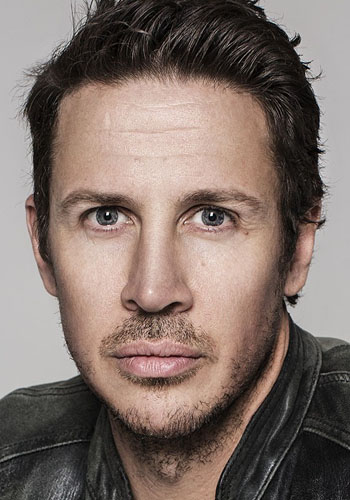
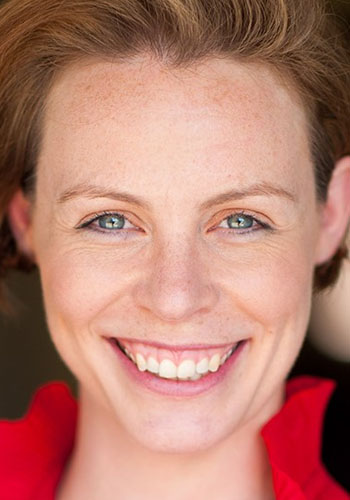
Emma Chelsey

Gabe Fancourt: What’s the most challenging aspect of revisiting a character you’ve already played?
Emma Chelsey: I think it’s always important not to bring judgements or preconceived ideas of the character or comparisons to what you have done previously and just start again with a fresh set of eyes. This was challenging to do but I feel it was helpful. There was a lot of development to the script so a lot of it was new and hadn’t been investigated yet so I was able to go deeper having explored this person before and learn a lot more about her the second time around. It’s also easy to fall into a previous way of delivering lines so you have to break that vocal pattern and discover it again as if for the first time!

What did you learn about the play getting it in front of an audience the first time?
That it’s silly, funny, absurd and a thrill!

What is your character’s spirit animal?
Abby is a horse for sure. Flighty, skittish, easily affected by the energy around her, sensitive and can display both dominant and submissive behaviour depending on the situation!

How do you prepare for/ approach scenes that are sexual or intimate in nature?
With laughter. Literally that’s all you can do. You obviously make sure you and your scene partner are comfortable, you rehearse very specifically, everything is choreographed and then you laugh about it a lot…

What’s the strangest/ most unconventional thing about this play?
Sex on stage. It’s confronting and quite foreign to see in theatre and I am intrigued by what the audience reaction will be. Also, the sexual fantasies are strange and wonderful!

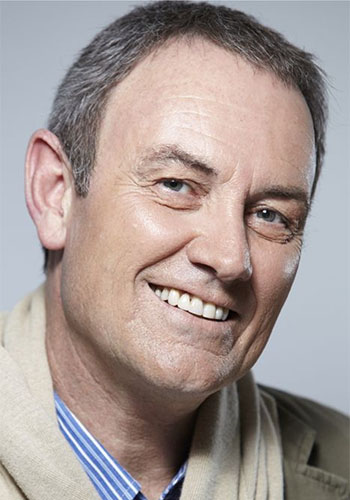
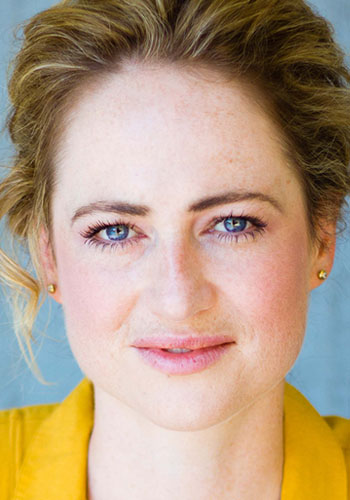
Gabe Fancourt

Emma Chelsey: Describe the play This Is Not Mills And Boon in five words.
Gabe Fancourt: Irreverent, playful, honest, dynamic, fun.

What is one of the questions you hope this play asks or answers?
I think with a large part of itself this play is grappling with the extent to which our identity, and in particular our sexual identity, is shaped by our sense of shame. How can we connect with our tastes and preferences when those impulses are met with reflexive shame?

What is the craziest acting related thing you’ve ever done?
In my first school play I was cast as a question mark. For research I interrogated people relentlessly with questions. I also hurt my back trying to get the physicality right.

What has been your favourite part of the process so far?
It sounds nerdy, but I really love the dramaturgical element involved in the development. Sitting down with a script and really sharpening in on how the scenes function and how the story is told in a clear and compelling way is something I find very satisfying.

What do you think is the naughtiest part of this production?
Definitely the fish on fish sex scene. (Spoiler alert)

Emma Chelsey and Gabe Fancourt can be seen in This Is Not Mills And Boon by Erica J Brennan.
Dates: 23 May – 3 June, 2017
Venue: Old 505 Theatre

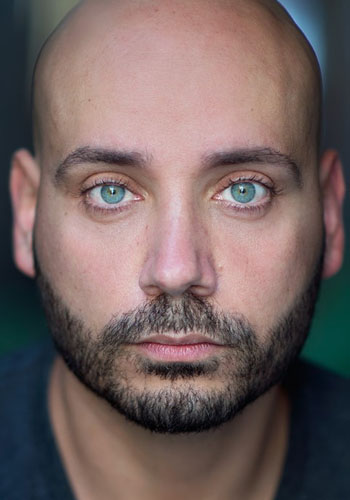
5 Questions with Charmaine Bingwa and Belinda Giblin

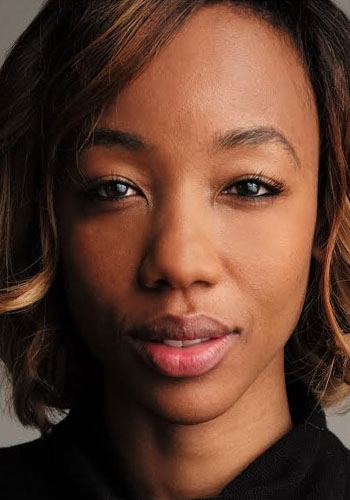
Charmaine Bingwa

Belinda Giblin: Who is Charmaine Bingwa?
Charmaine Bingwa: I am such an amalgam, but will try to be concise. I was born in Australia and am the youngest of the three children born to my Zimbabwean parents. I grew up in Perth and moved to Sydney on my own when I was 18. In terms of job titles, besides actor I have also turned my hand as director, producer, composer, singer, guitarist, writer, amongst other things. I’m a Scorpio, I don’t sleep very much, I prefer character over comfort, I pretty much always have a script or book in my hand, I like to lead by example, I don’t drink alcohol, I care too much, I love to sing, I value sincerity, I work stupid-hard and I am addicted to making those around me laugh.

Tell us a bit about your journey into the acting profession?
It was quite serendipitous really. I was studying music, I decided to take acting as an elective to help with public speaking. But I loved it and was almost immediately hooked. I got permission to do the acting course in addition to my music degree and here I am!

What is it that draws you to a particular role? What drew you to this particular play?
I like playing complex individuals. I believe that personality traits lie on a spectrum, where the same trait that helps someone, can also hurt or hinder them. For me, that is humanity. For me, that is where the gold lies in characterisation. For me, that is the crux of Doubt: A Parable. I love the investigative process of finding a character. I’ve always been fascinated by how things work; as a kid, I even used to pull apart computers and rebuild them just for shits and giggles.

And at risk of sounding otherworldly, I believe that roles choose me. Certain roles find me at critical junctures of my life when I need to learn or experience something on a deeper level. I also feel like roles gift me, more than I gift them. I’m fastidious in my preparation, so I come away learning so much more about history, people, moments in time, disorders, human nature, personality types or whatever it may be. For a nerd like me, that’s Christmas.

Doubt is set in the Bronx in 1964, if Mrs. Muller were to live under the Trump presidency, would she be a Republican or a Democrat? What would be her political agenda?
I think she would be a Democrat for sure. She would have loved that there had been a President Obama! All this woman wants is progress, and she is willing to put aside short-term well being in exchange for long-term advancement. For her, a Trump presidency would be a hard pill to swallow.

I think Ava DuVernay’s Academy award nominated documentary The 13th puts forward the hypothesis perfectly that the persecution of African American people just reappears in different permutations throughout history; slavery turned into convict leasing, which turned into lynchings and Jim Crow, which turned into the war on drugs and mass incarceration, which turned into police brutality and institutionalised racism. I think she would be heavily involved in the Black Lives Matter movement.

Actors prepare for their roles in different ways. Do you have a “process” that enables you to inhabit a role?
The preparation I do is always dictated by the role. For Mrs Muller I did extensive research as I felt in order to temper the words that come out of her mouth, the audience needs to feel her history. The answers lie in the generations that have gone before her – so backstory was key.

I just keep asking questions – what bible verses does she love, what were her formative years like, what is the one secret she is taking to the grave? I’m always fascinated by what I find. But my most important step is to throw all the technical work I’ve done away and just tell the truth, or tell their truth rather. The rest of my process is a secret!
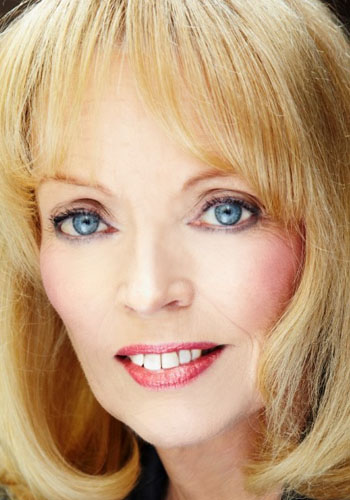
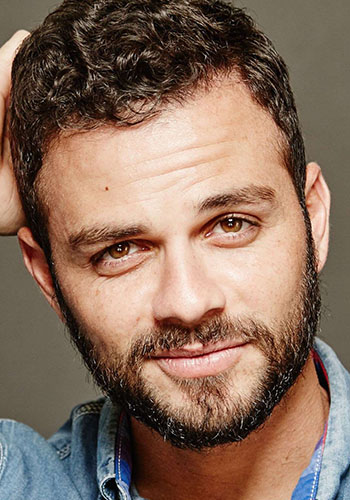
Belinda Giblin

Charmaine Bingwa: What made you first want to get into acting?
Belinda Giblin: Both my parents and siblings were involved in the Performing Arts in one way or another so I was surrounded by a lot of singing and dancing and acting from an early age. I’ve always had an instinctive need to perform, to put on that “mask” if you like, so the acting profession was a very natural choice for me.

Mind you, I did a few things before I got there, including an Arts degree and a short stint at NIDA. They threw me out of NIDA after one year. I was described as “laconic” and it was suggested that “trial and error” may be my better training! My first job was in the TV series Matlock… in black and white!

John Patrick Shanley says Doubt is the “age-old practise of the wise”. Do you agree and how is this evident in your life?
Absolutely. When I was 16 I thought I knew everything! Nothing had been tested too much at that age. But now, in my 60’s, I am more circumspect because, of course, life keeps changing, the goal posts get moved, nothing is certain and we never stop learning and growing. Therein lies the wisdom I guess. Pretty exciting!

If you and Sister Aloysius had a dinner party and could invite 2 guests each-who would you each bring and why? And yes, they all have to get along!
Oh dear! Well…. Sister Aloysius would invite the Pope of course because she would wish to get his opinion on the “Boys’ Club hierarchy” of the Roman Catholic church and have a few words to say to him about that! And because she is an educated woman and a great lover of words she would invite that famous 19th Century poet Gerard Manley Hopkins, to discuss his religious doubt-filled sonnets, particularly the one about “God’s Grandeur”. Please explain!

I would invite Germaine Greer and that fabulous camp American satirist, Randy Rainbow, to throw into the mix! Sister Aloysius would have a lot in common with Germaine Greer and Randy Rainbow would cheer Gerard up no end! The Pope would sit and smile benignly and fall asleep!

Is there a dream role you are still yet to play?
I’ve never hankered after roles that have been done before, to put my particular stamp on them. There will always be comparisons. I tend to favour something new, as long as the writing is wonderful! Oh what?….did Meryl Streep do Doubt? Why didn’t someone tell me?

We’ve seen you play so many amazingly crafted characters, but what are Belinda Giblin’s defining qualities?
Optimism; humour; resilience; curiosity; tenacity; self-determination; obsessiveness; dedication; compassion…what? Oh, I’m sorry… is that enough? OK.

Charmaine Bingwa and Belinda Giblin can be seen in Doubt: A Parable by John Patrick Shanley.
Dates: 10 May – 3 June, 2017
Venue: Old Fitz Theatre

5 Questions with Joanna Downing and Ben McIvor

Joanna Downing

Ben McIvor: Jo, what do you love about your character Dominique?
Joanna Downing: I love that she can be so dry. I love her intelligence. I love that she is so considered – the way that she looks at the world, and art.

If Dom was an animal, what would she be, and why?
Cat. All lithe and bendy and somewhat mindless of other people’s space.

How do you prepare for a role?
Read the play as many times as humanly possible. Films and books invariably come up in conversation in the rehearsal room, so I try to watch/read as many as I can. I’m reading the Female Eunuch at the moment because of this one! I also started an image collection… Dom knows so much more about art and artists than I do, so I needed to familiarise myself with the images. Oh and of course, the French. I’ve been practising daily to get it up to scratch.

How has this play affected your understanding of art?
Well I hope it’s made me more conscientious. It’s definitely made me want to go to Musee D’Orsay and Marmottan to spend time with the real pieces. I think the play has given me an emotional attachment to the works, simply through Dom’s love of them, that I didn’t have before.

What’s it like working with Anthony Skuse?
Heaven! He is so considered and very open. The tone of the room was always warm and comfortable, but he also cuts through any extraneous bullshit. I have a sneaking suspicion that he can read me better than I can read myself.

Ben McIvor

Joanna Downing: What do you like most about the space at KXT (Kings Cross Theatre)?
I hope this doesn’t sound too weird, but I absolutely love the foyer! The art, the furniture, the typewriter, that stunning lamp, the egg timer, the books, that creepy dream catcher blowing around in the air conditioning under the glow of the exit sign… it feels like you’ve stepped into a strange dream.

What’s the biggest point of difference between you and your character?
I tend to think ahead a lot, whereas the thing I admire most about Barry is he lives moment to moment. He doesn’t think, he just does.

Who is your favourite artist and why?
Oooh, good question! This is particularly hard to answer because doing this play with Mr Skuse has really opened up a world that seemed so foreign to me. I’m going to go with Scottie Marsh, though. Growing up in the Inner-West, Hip-hop and graffiti played a big part in shaping my youth, and “fine art” seemed like something so far away from street art. Sipping nice wine in white-walled galleries was a world away from Posca’d train cabins and “Bombed” walls. I think Mr Marsh seems to do a great job of blurring the line between graffiti and fine art… and if I was a youth in 2017 who was into street art, this type of work might spark my interest into the world of fine art. I hope that makes sense!?

Do you have any pre-show ‘rituals’ to get you into character?
I guess it depends on the role. I like to do character work early on in the rehearsal process and I have a long list of questions that I ask my character to discover more about how they view themselves and their world… I read some of the responses before each show, and think about the images they create.

What’s your favourite music and what’s your character’s favourite music?
I think Barry is very much a jazz man. I think when he paints, he doesn’t like typically structured songs with lyrics, a beginning, middle, and end. I think he likes improvisation- instruments talking with each other. Me? At the moment I’m really into Bossa Nova. It’s the kinda stuff you can relax to, dance to, cook to, drive to or jam to. I love the variety of instruments that are used in Bossa… the sound has a certain “charm” to it.

Joanna Downing and Ben McIvor can be seen in Between The Streetlight And The Moon by Melita Rowston.
Dates: 5 – 27 May, 2017
Venue: Kings Cross Theatre

5 Questions with David Jeffrey and Emily McGowan

David Jeffrey


Emily McGowan: What do you and your character Frank (your character in Educating Rita) have in common and what sets you both apart?
David Jeffrey: We’re both mad, I currently have too much hair on my head and I do like going to the pub, though I seldom get to enjoy this pleasure. The obvious difference between us is that Frank loves poetry and I love plays.

Tell us how Frank would spend his day if he could do anything, no expenses spared?
Frank would take Rita by the hand and time travel back to late 18th century London to invite William Blake for a pint at the Lamb & Flag.

I have hired you a private 3 hat Michelin chef for the night, what do you ask them to make you and why?
Love my classics. Shrimp Cocktail, Duck a l’Orange, followed by Baked Alaska.

What is one of the greatest challenges you have found working on Educating Rita?
Knowing what scene is coming next. Sounds simple but not in this play.

If you were an animal what would you be?
A Blue Dragon.

Emily McGowan

David Jeffrey: What do you like the most and the least about your character Rita in Educating Rita?
Emily McGowan: What I like the most about Rita is her heart. She is passionate about justice – she loves people! I love that she isn’t crippled or trapped by her inequities, but rather, she is a go-getter and takes every opportunity. Something I don’t like about Rita is that she can sometimes be a bit clueless, I often feel like saying “Come on girl! Screw your head on.” But really she is hard not to love.

If you could live and work anywhere in the world, where would it be and why?
This is a hard one as I have two bucket list places (in which I have never been to). It would be either Paris or New York. Both places seem to steam with possibility and culture – quite different ends of the spectrum, and they both embrace art so much. Paris might win though as I am addicted to croissants.

How do the challenges Rita faces to become ‘educated’ compare to your own life challenges to date?
I think Rita gets put in a box by many of the people around her – they label her as simple and at times stupid. Frank however believes in her and unlocks those boxes, showing her that if she puts her mind to it she can be educated. I had a teacher in high school, who very similarly believed in me and empowered me to case my dreams

You produce your own work as well as act. How does that work for you?
It’s great! Honestly, you can’t just sit around and wait for other people to hand you opportunities on a silver platter. I think being able to create a piece and bring people together really empowers me – more people should try. My big thing is don’t micro manage. I have my skill sets, you have yours. I’m not going to tell you how to do a job I know nothing about. But that is why I love making theatre so much, collaborating as a creative team is such a rewarding experience.

You’ve just been told you will become deaf and blind in 24 hours time. What do you do?
That’d be a nightmare! Spend all that time with my family, locking into the memory bank what they look and sound like.

David Jeffrey and Emily McGowan are appearing in Educating Rita by Willy Russell.
Dates: 10 – 20 May, 2017
Venue: The Depot Theatre

5 Questions with Gabriel Egan and William Jordan

Gabriel Egan

William Jordan: What one book would you go to the ends of the Earth to track down, and why?
Gabriel Egan: Berossus’s Babyloniaca. It’s been lost since the third century BC. I’d require an open cheque book for a thorough investigation, and with little to no hope of recuperation it would be an advantageous way to travel the world.

If you were locked in a room for an entire night, who would you choose to be locked up with?
Donald Trump. I’d like to talk US green cards and a scholarship to study at the Susan Batson Studio in New York. He seems like a reasonable man, maybe we could come to some type of arrangement. I’ve always been lucky with fiery redheads.

Your character, Simon, is a self-professed adventurer; what’s your most memorable adventure?
I slipped into Arq night club once. It was like Narnia’s wardrobe. What a jungle – it took me three days to find the revolving porthole to the outside world…

Simon can’t survive without a cigarette, what’s your worst habit?
Acting. It takes up all my time and pays nothing!

If you were caught with your pants down, would you be wearing briefs or boxers?
Free-balling baby! Everyone’s just hanging loose these days… right..? Or I have always been partial to a leopard print g-string!

William Jordan

Gabriel Egan: What book would be your first choice to throw right out a second story window?
William Jordan: The Oxford English Dictionary! Cause it’s on Google now.

If you were locked in a room for an entire night, what would you need with you to survive until morning?
Coffee and keilbasa. A deadly combination. Also like the book by Harry Houdini to churn the mix.

Your character, Timothy, owns a bookstore – what kind of store would you own?
I would love to own a little second hand book shop like Glee Books. That’s something Timothy and I have in common!

Do you think you’d get along well with a guy like Timothy?
He would definitely be my drop in mate.

If you had to hide a dead body, how would you do it?
Cut it up and put it in a fridge? YUCK!! My vomit trail would give me away… I know, sit it on a toilet and lock the door! People would be too polite to enter.

Gabriel Egan and William Jordan can be seen in Down An Alley Filled With Cats by Warwick Moss.
Dates: 25 Apr – 13 May, 2017
Venue: King Street Theatre

5 Questions with Eli Saad and Sana’a Shaik

Eli Saad

Sana’a Shaik: You play multiple roles in Future Seekers, how did you find tackling each character?
Eli Saad: I love a challenge so I was really excited by the idea of having 5 characters to play in one show. It’s given me an opportunity to showcase something different, and also go really extreme and do something unexpected with some of the characters. I’m excited for audiences to see them.

If you were able to invite anyone in the world to come watch you perform, who would it be?
Max Mutchnick – I love his work. I’d also take the opportunity to convince him to add me into the Will & Grace cast!

What thrills you more, drama or comedy?
I would have to say drama. I do love comedy and I enjoy making people laugh, but making people cry is far better, haha. No really, there is something about being able to really move someone with a performance on a deeper level and taking them on a journey with you.

Future Seekers takes us from Russia to Australia, where is the best place you’ve travelled to?
Definitely Kenya. I first went in 2011 and a 5 week trip turned into a 3 month stay. I then came back to Sydney in March 2012 and returned to Kenya again in December 2012. It’s just a stunning country, I really did feel like I was home being there. The people, the culture, the animals – by far one of the greatest experiences of my life. I also volunteered with an organisation called Tushinde who do amazing work in the Mathare slums, so it also taught me a lot about the world and myself. Working with Tushinde also connected me to my sponsor child, Shadrack, who has now been in school for 5 years, which is just incredible. I can’t wait to go back and visit him again.

Are you more a sweet or savoury kind of guy?
Most definitely sweet. Just ask the cast/crew of Future Seekers. I show up to rehearsals with a different cake I’ve baked each time! Delicious but dangerous.

Sana’a Shaik

Eli Saad: When you’re not acting what are you doing?
Sana’a Shaik: The polar opposite! I work in funds management. The silver lining is that I get an endless supply of paper to print all my scripts!

What excites you about being part of the Future Seekers production?
Being able to explore multiple characters and different storylines all in one play. I’ve never been a part of anything like this script, its exciting. One minute I’m a Russian/English immigrant the next i’m a pregnant pubescent teen in Australia. It’s been challenging working my way through each individual character. Making each role separate from the last has been something the entire cast has worked very hard on. Also being able to work with my Beirut Adrenaline family again has been wonderful. Everyone in the production brings something special to the show.

If you could play any role, who would it be?
Princess Jasmine from Aladdin!

Which of your characters in Future Seekers is your favourite, and why?
Linda is probably my favourite. She’s been dealt some really unlucky cards but she never uses that as an excuse. She’s determined, ballsy and optimistic.

What is your favourite line/moment in the show?
Oh I have two! First is when Mr Brown (Eli Saad) has a semi-breakdown and needs to escape the theatre for some smokes. Second is the banter between Sally (Neveen Hana) and Marta (Me). Sally tries to explain to Marta it’ll be social suicide to not go into the company sweep!

Eli Saad and Sana’a Shaik can be seen in Future Seekers by Carol Dance.
Dates: 20 – 30 Apr, 2017
Venue: Sydney Philharmonia Choirs Hall

5 Questions with Tyler De Nawi and Aanisa Vylet

Tyler De Nawi

Aanisa Vylet: I have been watching you play Uday Hussein. He is quite a cruel man and you as a person have the demeanour of a teddy bear. How do you channel his cruelty?
Tyler De Nawi: When I am behind closed doors in my own space I experiment with how far I can take something. I can have quite a lot of fun with myself… (I know that sounds dirty) but I know how to entertain myself. When I am alone, I can actually push myself to those extremes, to those states of anger, distress. I can drop my mask of Mr Nice Guy and play. It comes from play, playing at home, really taking time to understand what the text is saying. The play is written so well. I just try to let the text breathe on stage.

What is your relationship to Iraq as an Arab Australian?
I grew up with Iraqis and Asyrians in Western Sydney. The word ‘Saddam’ was thrown around loosely at school. Some loved Saddam, some hated Saddam, some didn’t even know how to feel about it… After more research, I have started to see the Husseins as ordinary people. Even though people considered him to be crazy, Uday Hussein was a boy who grew up with a father who would kill his own friends if they betrayed him. His father was unfaithful to his mum and Uday loved his mum. He was product of his own environment. Uday used to own tigers. To me, if he was an animal, he would be a tiger – a predator in captivity.

What is your favourite thing about your Uday Hussein costume?
He is like an “Arab Hugh Hefner”. He wears a three-piece suit with gold buttons on it and a gold tie. It is something else. We are so lucky to have found it. I am still trying to get my hands on a ring, a gold pinky ring. I think that will be my favourite part.

Have you ever been to Iraq?
Never. I have been to Lebanon, Syria, Egypt, Turkey… Wow, all the countries around Iraq but I never been there, no.

Do you feel targeted as an Arab?

I am proud to be Muslim. I am proud to be from an Arab background. We are complex just like every one else. We are messy. We are passionate. We are beautiful, just like everyone else. It is time to stop assuming you can label anyone. Just because I am Arab-Muslim does not mean you know me.

I believe art is the best way to help a society overcome these assumptions.

When I was a kid growing up, driving down the highway I saw big banners from world vision that showed an African child suffering. 20 years later, there are now Syrian kids on banners in the rubble that was once their city. How did we get to this? We haven’t even resolved what is happening in Africa. People from my own heritage have become a charity case. What is next?

Aanisa Vylet

Tyler De Nawi: In this play you are playing two characters – an Iraqi civilian whose home is being raided and a leper. I watch you embody these characters very well. To what extent do you go to embody a character?
Aanisa Vylet: I can inhabit distressed states of being very easily. I don’t know where it comes from. Perhaps it is in my blood, an ancestral pain. When I access those states I think about everyone who is currently suffering in Arab countries and the world right now. I channel anyone I know who is an outsider due to their health as the leper.

I also work in colours and through the physicality of that character. For the Iraqi woman, my feet are bare and I am trying to put on my scarf. As a person from an Islamic background, I understand the vulnerability and nakedness that she would feel when those parts of her body are bare in the presence of foreign military.

With the leper, my body is diagonal and made of sand. The leper is the color grey – the black moves inward, the white tries to reach out. The Iraqi woman is red – passionate and explosive.

If you were stranded in the middle of the desert as an outsider, decaying, what is the food that you would be wishing for?
My mother’s homemade vine leaves. Even though my mum hates cooking, her food is always made with love and makes me feel like I am at home. And Lebanese vine leaves with yoghurt and mint? That is the dish that describes my life. It takes forever to make but tastes so delicious you fight for the last mouthful.

What is your mission as an artist and why were you interested in telling this story?
My mission is to tell stories that are difficult to tell, stories that express the voices of people who are silenced who cannot tell their stories themselves. I aim to tell provocative and engaging stories that don’t exist yet.

And as for Bengal, when I first read the script I thought – “Fuck yes!” and then… “Thank God!” The writing hits the primal part of ourselves that we often forget in our daily life. We need writing like this. We need to be moved in our seats before our brain kicks in.

On top of that I was keen to share a narrative that dealt with “Operation Iraqi Freedom” and to work with the wonderful Mad March Hare Theatre Co.

If you had three wishes from a lamp what would they be?
I would wish that we had proper world leaders again, like Nelson Mandela, leaders who perform not for themselves but for the people they represent. My second wish would be that we respect and improve our treatment of animals and the environment… and I would want my mum to get the operations she needs and my brother, who has Down Syndrome to receive the best and most inclusive life possible.

Why should someone pay $40 to come and see this play?
Because it is incredibly moving, everyone involved is generously bringing themselves and their hearts to the work. Because this play is so relevant to our lives today. Because the play is funny – it is a wonderful and entertaining night at the theatre. This isn’t a close and open your eyes “why the hell did I watch this?” show. At this show you will see artists at play, trying new things. This is ground-breaking, brave theatre. Do yourself a favour – go.

Tyler De Nawi and Aanisa Vylet can be seen in Bengal Tiger At The Baghdad Zoo by Rajiv Joseph.
Dates: 12 Apr – 6 May, 2017
Venue: Old Fitz Theatre

5 Questions with Alison Bennett and Dymphna Carew

Alison Bennett

Dymphna Carew: What’s the best thing about devising your own work? What’s the worst thing?
Alison Bennett: Best thing would be letting your imagination run off to different places. Worst, is getting stuck and having no idea what to do.

If you weren’t an actor, what would you be?
A journalist or a bird.

What has been the highlight of creating and performing Trade so far?
Honestly, the highlight of Trade so far is seeing people turn up even when it’s really hard. Also, once we get into performance it is really fun.

Are you a romantic or a realist and why?
I am definitely a romantic but sometimes I think I’m a realist. It’s because I love to escape into my own world. When I was little I had an imaginary place called Ali Land. Not much room for realism in Ali Land.

During the creation of Trade, the biggest question we have had to ask ourselves is “how responsible are you?” What are some of the things you have discovered about yourself? Are you responsible? Have you changed after confronting yourself with this question?
This can get really dark because you start to think that the world can never change. Then I realised that I am responsible. I’m really responsible and I realised what a weird relief that was because that is something that can change. I had trouble seeing the light of the subject matter of change and I think that that’s it. If we can just put our hands up and recognise our own responsibility, then we can change. If it’s always bigger and scarier than us than it can’t.

Dymphna Carew

Alison Bennett: What would be your perfect Monday?
Dymphna Carew: My perfect Monday would be enjoying another day off after the weekend! Escaping for a long weekend and doing something active and adventurous.

What was the last dream you remember?
I had a really vivid dream a few nights ago and dreamt there was someone at my window trying to climb in. I remember desperately trying to move and call out to my partner, but I was paralysed. Then apparently I started to make some strange sounds and screamed, waking myself and my partner up. It was all a bit scary and weird. We probably watched too much Homeland before going to bed. Ooops.

What gets you really excited in the theatre?
I love live theatre and experiencing something so intimate with other people. When the space is used in an innovative and surprising way, that really gets me going. I appreciate experimentation and love original, imaginative and daring pieces of theatre. Any show that uses different art forms to make a story come to life and take the audience on a journey makes my heart sing.

How do you feel about being nude on stage?
Hmm. I don’t personally have a huge issue with being nude on stage, however I wouldn’t be getting my kit off for any old reason.

Skinny dipping? Love or hate?
I don’t mind a little skinny dip now and then.

Alison Bennett and Dymphna Carew can be seen in Trade .
Dates: 4 – 15 Apr, 2017
Venue: Old 505 Theatre

5 Questions with Lucy Goleby and Moreblessing Maturure

Lucy Goleby

Moreblessing Maturure: Fallen is a new Australian work. Why do we need new work and why did you choose this new work?
Lucy Goleby: I think it’s really important that theatre reflects, questions and challenges its social, geographical and political context. New work speaks to audiences with an immediacy, an urgency and a familiarity that makes an audience’s experience inside the theatre change the way they interact with the world outside it. This play, Fallen, allows audiences to do some of that metaphorical work themselves, asking them to draw conclusions and discover points of similarity and difference between London in 1848, we create for them onstage, and the world of Sydney in 2017, as they create for themselves offstage. Fallen seeks to explore the role of women in a patriarchy, how their relationships within a patriarchy are constructed and destroyed, and what, ultimately, empowerment looks like.

Is working in the female-led space that She Said Theatre encourages different to your previous acting experiences? If so, how?
Working with She Said and the incredible company of women has been challenging and empowering. I talk of Facebook and social media as an echo chamber, with my own opinions and passions reverberated back at me by like-minded individuals. In this room, I am surrounded by opinions and passions as fervent as my own. In simultaneously supporting and challenging each other, we have been strengthening ourselves as women to support and challenge the society we live in. Knowing that these remarkable women are conducting themselves with poise, passion, determination, intelligence and love makes me feel stronger and safer in my pursuit to do the same.

How can today’s 21st century society hope to relate to this text and its characters?
I think today’s audiences are smart story-recipients. They’re clever and quick with metaphor and symbolism, and easily capable of drawing comparisons between their own lives and experiences and those presented to them. Beyond that, the enormous revolution in television in the last five-odd years has created an audience that understands how to invest in multiple characters and multiple plotlines. Stories matter to us when we can see ourselves in them. This play and its women are both deeply familiar and uncomfortably confronting to the experience of 21st century Australian women. And men who’ve ever met a woman.

What would your character, Matron, think of 21st Century Australia?
I think Matron would be entirely overwhelmed and relieved. She is in the unenviable position of upholding and maintaining the very system that disenfranchises and devalues her. We’ve been talking a fair bit in rehearsal about the perpetuation of bad advice, and the insidious inheritance of unconscious bias. I believe in that idea that you can only dream what’s seen, and Matron’s capacity to make any kind of difference for the girls in her care is fundamentally flawed because she can’t dream a life for them that’s any different from her own.

Who should I invite to come and see this show?
Anyone who cares about what it means to be human. And those who like a stunning multimedia, fragile soundscape, emotionally rich direction, clever, detailed language, an intricate flexible set or a fully boned corset complete with hand-sewn period dresses. And your mum.

Moreblessing Maturure

Lucy Goleby: Describe the world of the play Fallen in five words.
Moreblessing Maturure: Precarious. Tense. Measured. Full. Live

What is one of the questions you hope this play asks or answers?
This is probably the thing I look forward to the most about this play- the foyer conversations before the play, during the intermission and in pubs, cars and trains after the curtain call. I asked a lot of questions after my first reading and I’d be more than content if the audience was also curious after watching the play, curious enough to read up about the history of Urania Cottage, the history of Australia, the herstory of women and particularly, these women. One burning question I’d hope this play asks is “where are we know?” Compared to 1846- where are we as a society when it comes to our relationship with our history, with femininity and liberation.

What has been the most unexpected moment or discovery of the process so far?
Aside from the phone call from Penny (the director) telling me I was going to play Julia, realising how noticeably different working in an unapologetically female-led and centred space was. Not only for myself as an individual but also as an artist, realising that “the norms” of a theatre space, which I’d learnt to be the ‘rules’ of theatre making-didn’t have to be so- that there was a different way to approach, to analyse to process to imagine stories- and that way was equally as valid . #suchdeep #muchwow

How is your character, Julia, similar to and different from you and what have you learned from her?
Julia, unlike myself, has a steadfast faith in the system she finds herself, in meritocracy- the notion that hard work leads to success (however that manifests) and thus any failure is due to individual inadequacy. That was the first big obstacle i had to work through in understanding Julia, as to WHY someone who has been wronged by her society in so many ways, continues to obey by the rules that actively maintain her lowly position. Julia also manages to be very similar to me in the way she navigates her world, in her ability to master the act of appeasing and knows how to keep-up-appearances when all she wants to do is yell to the heavens..yeah, we’re pretty Kool Kats

How will this play have changed you, as an actor and a person?
As a testament to Penny’s incredible ability, It’s introduced me to a new way to approach, discover and understand a character. This play has also set a precedent for myself as an artists as to the amount of complexity and nuance I am will accept in a role. Female roles aren’t accessories to adorn a male centric narrative- they deserve to be written with truth and dimension and dare I say: virility.

Lucy Goleby and Moreblessing Maturure can be seen in Fallen by Seanna van Helten.
Dates: 6 – 22 Apr, 2017
Venue: Seymour Centre

5 Questions with Curly Fries and Tim Kemp

Curly Fries

Tim Kemp: Did you ever imagine you’d start your own company?
Curly Fries: Oh god that’s an interesting question. When I was younger I always fantasized about having a Shakespeare company that was contemporary. But then, the more I got into acting, and acting school, it was seen that Shakespeare or classic verse was ‘daggy’ or ‘not that exciting’. So, I steered away from it even though I really liked it. Looking back now there was a real push at acting school (or maybe actually something that the students put on themselves) that we would be working in the popular culture and Shakespeare wasn’t part of that. It was only last year when I got really pissed off with the situation that I
decided to use Shakespeare as a way of making some sort of connection and use political theatre. ‘The leftovers’ was born. I can’t imagine my life without it and our team behind it.

If you had an infinite budget what would change about the way you make work?
Definitely I’d want to pay my actors triple the award rate because what they give me and the collective, apart from their time and their work, what they give me is their artistry which has no price. I’ve always been totally blown away by the sheer magnitude and interpretation of the work. I would hope to one day be able to give the artists that. I would probably also have a fancier set. Haha! I don’t know maybe not…actually, maybe not. Actually, definitely not. AND – it will always be free to the public.

How many business calls have you taken dressed as a clown doctor?
… erm …Probably each round I’m a clown doctor, and they can range from 1-3 a week. So maybe about 1 call per shift, 5 texts and a couple of emails. The funny thing is having that clown nose on me during those calls gives me a different way of treating the business. It gives me a different slant on it. It reminds me of the bigger picture. The hospital is really great for that. Every time I come out of the hospital after entertaining the patients (children) I’m just so grateful that I have what I have.

Could a Leftovers’ experiment ever be a failure in your eyes, if so, how?
Absolutely. Part of our manifesto is that our experiment can fail. And each experiment sometimes turns a certain way. It can go from looking at the body to ownership of art in one experiment which was a total surprise for us. It can go from a piece about language becoming a piece about guilt of Australian culture, again a total surprise. It can go from a Jacobean ‘who-dunnit’ to questioning the need for gender binary identification. So, each work experiment morphs into something. I used to be scared of failure and now I totally embrace it because it means that we, the artists and the audience, all learnt something together. So, you could say that potentially every experiment thus far has been an absolute failure – and success.

Encounter My Heart was inspired by an execution. How do you separate your own opinions from your experiments to ask unbiased questions?
You need a really pretty fucking good team behind you. You need people that are not afraid of taking your idea, ripping it up and throwing it on the floor in front of your feet. I have a handful of exquisite artists that I trust implicitly with my artistic life. Anytime I have an idea, especially with this last one, Encounter My Heart, I take it to them and I ask them for the honest authentic and visceral response. It is the team behind the yellow ‘X’ that does make the work fair, unbiased and experiential. It is them. Wholly it is them.

Tim Kemp

Curly Fries: We were at dinner once and I said, “take a seat…” You said, “I am.” What’s it like being so tall?
Tim Kemp: I thought that was a joke. I can’t believe that’s one of your 5 questions you absolutely gorgeous fool of a man. At 6ft 1 I’m hardly especially tall? You’re the kind of person that would waste a Genie in a Bottle. To try to take it seriously, one thing that I had to learn at ACA was that you can be big and have good intentions. People will read that and not fear you. I came to Sydney with a lot of baggage from Newcastle as a footballer – that I’d be identified as a thug. It was a kind of self-fulling prophecy because I was so physically guarded it read as stand-offish? To summarise – I think my biggest journey at acting school was learning to be comfortable in my own body.

Why do you work for The Leftovers Collective?
I mean there’s a whole a series of reasons why I do work for the leftovers collective. I think my major motivator is your respect for individual artistry. If I help you make a promotional video, or a document or devise with you on a show, it’s a true collaboration and the product is something I’m proud of. I feel agency and I’m actually more proud of how much we throw away in our artmaking. The objective of the works are always to ask a question and we make sure that we do that.

Encounter My Heart deals with confessions, do you have something small you’d like to
share?

I’m a fiddler. Anytime I’m thinking deeply my hands are busy. I think in all honesty it was a very lame attempt to be cool at 16. Showing off to the ladies my speed records for 3×3 and 4×4 cubes. It is still a great icebreaker though.

Does the strong nature of our work concern you?
In a word no. To take Adonis Procedure for example – our provocations were Greek ideals of beauty and how we still subscribe so much worth to those physical ideals. Yet the night was a carnival of fake cash and glamour and laughter. It wasn’t until AFTER the experiment was over that we talked about the questions the work brought up. People were allowed to experience the work without judgement. I think that’s the key. I think we’re interested in witnessing a true response to our works – ugly, beautiful or indifferent. We’re not at all interested in making a judgement or a statement on those responses.

What’s your take on the conviction, trial and execution of Myu and Andrew?
I think in true “Leftovers’ fashion – I’m unsure. I don’t think there is a simple answer. It is a question of humanity and mercy. Also I understand the fear that leads a community to be uncompromising. It’s a search for security. I think there’s nothing to be gained by vilifying either side. I think the tragedy is sometimes there’s no right answer to a moral dilemma.

Catch Curly Fries and Tim Kemp in Encounter My Heart.
Dates: 21 – 29 Apr, 2017
Venue: The Two Wolves, Broadway