Review: Dirty People (Doonbrae Productions / Jackrabbit Theatre)

depotVenue: The Depot Theatre (Marrickville NSW), May 4 – 8, 2016
Playwright: Charlie Falkner
Director: Michael Abercromby
Cast: Charlotte Devenport, Sam Delich, Charlie Falkner, Sam Davenport, Zoe Jensen
Image by Tom Cramond

Theatre review
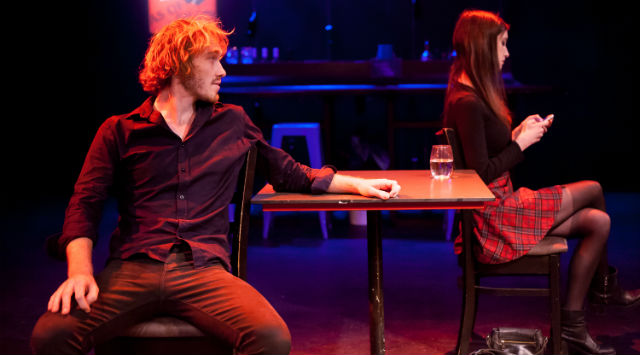
Charlie Falkner’s Dirty People is a delightful romp about the selfie generation. Its dialogue is clever and idiosyncratic, with hints of originality that gives the work remarkable character. There are moments of self-conscious social commentary that attempt to add a sense of gravity, but Michael Abercromby’s direction is more memorable for astutely delivering every nuance of comedy discoverable in the script. Abercromby’s style is vibrant and adventurous, with an infectious sense of humour that ensures an enjoyable time in the theatre for all concerned.

Although slightly rough around the edges, the youthful ensemble performs the work with excellent conviction. Their presentation is well-rehearsed, and chemistry is strong in every scene. They craft distinct personalities that convey the plot effectively, each one bringing their own charm to the stage. As an actor, Falkner demonstrates good timing and creates a rich interpretation of his part using a wealth of unexpected subtleties. Sam Delich brings a broader approach to get the laughs, and proves himself to be an endearing presence in both his roles. There is a good sense of cohesion in the cast, which is a pleasant surprise considering the diverse comedic tones they each embody.

Although Dirty People misses the opportunity for a more critical take on the state of the world today, it offers effervescent entertainment that is often silly but never stupid. Its satire is fun-loving, and even though thoughtfully conceived, it does not burden us with the disappointments of real life that are its inspiration. The nature of people is full of dirt, but how we aspire to find grace and decency is the key to an enlightened existence.
www.facebook.com/JackRabbitTheatre

Review: We Will Rock You (Sydney Lyric Theatre)

wewillrockyouVenue: Sydney Lyric Theatre (Sydney NSW), Apr 20 – Jun 26, 2016
Music & Lyrics: Queen
Story & Script: Ben ELton
Director: Ben Elton
Cast: Erin Clare, Casey Donovan, Jaz Flowers, Gareth Keegan, Brian Mannix, Thern Reynolds, Simon Russell
Image by Jeff Busby

Theatre review
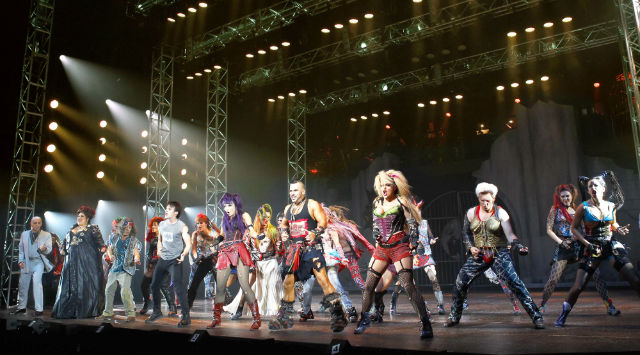
There is a scene in which the Bohemians declare that they do not know what rock and roll is. Ben Elton, writer and director of We Will Rock You evidently suffers from that same predicament. The production showcases some of the greatest rock tunes ever written, but in the interest of the musical theatre genre, builds characters and a narrative around them that unfortunately serve no real purpose except to dilute and dumb down the genius of Freddie Mercury and his Queen legacy.

Elton’s show features an endless series of dad jokes, and a tenuous context of anti-establishment that reads more like anti-progress and narrow minded, greying conservatism. It attempts to make jokes of pop culture icons such as Australian Idol, without acknowledging the fact that the strongest performer in its cast had been a prominent winner of that very franchise. It uses names like Britney Spears and Katy Perry as punchlines, as though we would all share its appetite in humiliating those women and obliterating their undeniable achievements. The show finds it energy from the music it is authorised to use, but unlike the musicians it attempts to pay tribute to, We Will Rock You is spiritless and banal.

The story is yet another take on the messianic allegory. Like Jesus from the Bible or Neo from The Matrix, Galileo is sent from the heavens to save us all. Whether or not one is concerned with the political incorrectness, and tastelessness, of creating opportunities for another white man to deliver us from evil, the trope is frankly, very desperately tired. As though its format is not already archaic enough, a female “lead character” is included for no discernible reason except to provide Galileo with a love interest, presumably to assure us of his hetero-masculinity in case, god forbid, Freddie Mercury’s gayness would befall him by association.

It is a well-performed show nonetheless, with an excellent band, and a strong cast that traverses the rock and musical genres effortlessly. The aforementioned Idol winner Casey Donovan steals the show as the villainous Killer Queen, winning us over to the dark side where everything is much more appealing and infinitely more rock and roll; very ironic indeed. Brian Mannix, frontman of 1980s rock bad Uncanny X-Men, is also on hand to bring hints of authentic flavour to a stage that is ostensibly tailored for a “family-friendly” type crowd. They may all be stars that we see having their glitzy moment in We Will Rock You, but it is certainly not rock heaven that they have taken us.

wwww.wewillrockyou.com.au

Review: Black Jesus (Bakehouse Theatre Company)

bakehouseVenue: Kings Cross Theatre (Kings Cross NSW), Apr 29 – May 21, 2016

Playwright: Anders Lustgarten
Director: Suzanne Millar
Cast: Jarrod Crellin, Belinda Jombwe, Dorian Nkono, Elijah Williams
Image by Nick McKinlay

Theatre review (of a preview performance)
Parochialism is a problem that many of us can fall into, no matter where we live. We are citizens of the world but rarely acknowledge that fact, choosing instead to identify with narrow constructs of identity, based on immediate interests and geographic restrictions. When we talk about Australian stories, it is easy to make mistaken assumptions about what our collective thinks we are. In choosing to stage Anders Lustgarten’s Black Jesus, the audience’s perspective is broadened. The characters and situations are oceans away, but we cannot divorce ourselves from their concerns. We have to realise that our roots extend to unexpected places, and stories from foreign lands are relevant not only for our migrant histories, but also for the plain fact that humanity is ultimately unifying, even if man insists on perpetual combat.

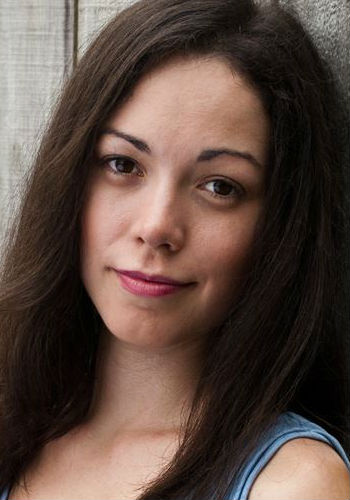
After every war, people find themselves picking up the pieces as the dust begins to settle. Black Jesus is about investigations into abuses by the Mugabe government after its fictional fall in Zimbabwe. Gabriel is a young man accused of many atrocities while in a position of leadership, and Eunice is appointed to determine the truths of Gabriel’s story in the midst of confusion and ambiguities. The play explores the vulnerability of innocence in times of trouble, to question the culpability of individuals when fighting to survive. They are all grey areas, even if the bloodshed and brutality is irrefutable.

Lustgarten’s writing is confronting, vivid and often powerful, but plot details are not always clearly defined. Even though it is unnecessary to have a thorough understanding of every context in order to appreciate all its main themes and ideas, it is a challenge not to feel distracted by moments of confusion while trying to follow its narrative. Direction by Suzanne Millar is energetic and very animated. The production is passionately expressive in its portrayal of every personality and their intentions, fuelled by the enchanting live drums of Alex Jalloh.

Leading man Elijah Williams impresses with his immense agility in both physical and emotional terms. It is a vigorous but measured performance, magnetic in its allure, and disarming in its authenticity. Williams’ ability to engross with an extravagant sense of theatricality while keeping us convinced of the psychological accuracy that he depicts, is the highlight of the show and delightfully thrilling to witness. Equally dramatic is Dorian Nkono, full of colour in his interpretation of the unscrupulous government official Moyo. Humorous and deeply charming, Nkono’s confident and creative approach to his work is remarkable, and very entertaining indeed.

As we spend our days fretting over Sydney property prices and closing times of our watering holes, Black Jesus arrives to wake us to a bigger reality. We are grateful to be spared calamities that other nations have to endure, but cannot help but recognise the connections we share as a species regardless of borders and circumstances. Like many tragedies we hear about in our advanced state of information plenitude, we can only respond with despair and helplessness. We may not yet have answers to world peace, but ridding ourselves of ignorance is the crucial starting point.

www.kingsxtheatre.com

5 Questions with Krystiann Dingas and Emilia Stubbs Grigoriou

Krystiann Dingas

Krystiann Dingas

Emilia Stubbs Grigoriou: What are the best and what are the most difficult aspects of Ros and Guil?
Krystiann Dingas: The best aspect has been challenging myself and reaching a point in the process that I never thought I’d reach. I’ve also loved delving into this play and discovering just how much is there – being immersed in it has made me truly appreciate the ingenuity of Stoppard’s work.

The most difficult aspect has been remembering all my lines. There have been so many times I’ve turned up to a rehearsal thinking I’ve got everything down and then soon realise that I have a bit to go before I’m off book.

What do you love about Ros?
His ambition to make something happen; he spends much of the play refusing to give up on the desire to make progress. His attempts may falter or bring him back to his starting point, but he tries, and that counts. I also find those little moments when Ros tries to make Guil happy very endearing. He considers his friend’s feelings and tries to cheer him up within circumstances that make it far too easy to remain fixated on his own thoughts and emotions.

What animal would you be and why?
I would be a fox so that I can roam the lands looking fabulous – they’re such majestic creatures.

If you could put anything on stage what would it be?
A H.P Lovecraft classic – he’s a master of horror and I’d love to bring one of his great works to life.

Why theatre?
Akin to Ros and Guil, I found myself caught-up in all the action and have had no impetus to leave. Oh, and I love performing to live audiences.

Emilia Stubbs Grigoriou

Emilia Stubbs Grigoriou

Krystiann Dingas: Why Rosencrantz And Guildenstern Are Dead?
Emilia Stubbs Grigoriou: It’s actually my favourite play and I was always devasted that I could never play Ros or Guil. When our director and good friend Chris McKay came to us with the idea we couldn’t say no. The gender reversal of this play is a very interesting way to talk about the marginalisation of females/female roles in plays.

What have you loved about the process?
Working with an amazing cast and crew to create a very tricky world. I have also really loved making discoveries in the play. Reading and saying something a million times and then it finally hits you in the face. It’s quite satisfying.

If you could meet Tom Stoppard what would you say to him?
Is this a test?

What’s the most challenging aspect of running a theatre company?
Keeping many things in your mind at once, maintaining order and creating on a non existent budget..these are also the best parts in a way.

If you could spend the day with one character from literature, who would it be and why?
Oh I can’t lie, it would be Harry Potter. I want to go to Hogwarts. There I said it!

Krystiann Dingas and Emilia Stubbs Grigoriou can be seen in Rosencrantz And Guildenstern Are Dead by Tom Stoppard.
Dates: 10 – 21 May, 2016
Venue: Blood Moon Theatre

5 Questions with Belinda Jombwe and Elijah Williams

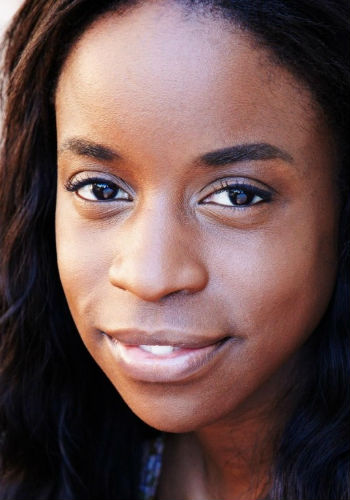
Belinda Jombw

Belinda Jombw

Elijah Williams: How has it been working with the Black Jesus cast?
Belinda Jombwe: I’ve had the pleasure to work with three talented actors who each have very different approaches to the rehearsal process. It has been exciting, challenging and overall a great learning experience.

What is your greatest fear in life?
Oh that’s deep Elijah, ha! I guess my greatest fear in life would be not living life to its fullest potential. By not being present and by not seeing and enjoying the true value in everyday things.

If you had a million dollars now what would you do with it?
Well, that wouldn’t even buy me a house in Sydney. So… I’m sure it would be invested in a bank somewhere. Well, what’s left of it would be invested in a bank somewhere. I would first move to Madrid with my husband and then travel all around Europe!

Where do you see yourself in 10 years’ time within the arts?
I see myself as being an integral part of a vibrant, diverse and strong arts industry that is inclusive of all cultures, persuasions and physical abilities.

You walk into a store and see Beyoncé. If you could say two words only what would it be?
Guuuuuurl Lemonade!

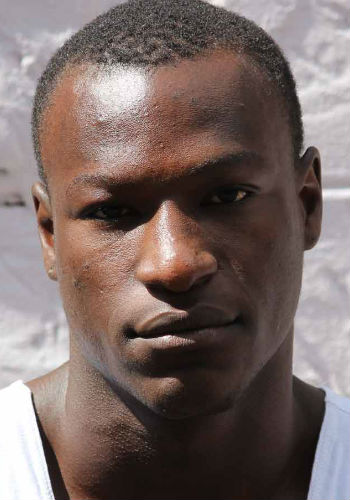
Elijah Williams

Elijah Williams

Belinda Jombwe: If you could pick any actor to play yourself, who would it be and why?
Elijah Williams: I would pick Denzel Washington purely because he is my favourite actor and he somehow manages to adapt to play any character well and uniquely.

What’s your stance on diversity in the Australian arts industry?
I don’t think there is nearly enough diversity. Personally there is a bit happening but there could be far more showcases, for instance. I think cultural theatre is unique and vitally important to gain an understanding of the many backgrounds in our society today.

Do you have any similarities with your character?
Green bomber, Gabriel Chibamu? I would like to think I don’t have any similarities to Gabriel! Apart from the fact that he is incredibly good looking – which is obviously a trait that we both share…

What is the last film you saw and what do you rate it?
The last film I saw was Deadpool. And I rate it a 9.99 out of 10. It was AWESOME!!

Cats or dogs?
I don’t like pets or animals. I resent both cats and dogs – so neither!

Belinda Jombwe and Elijah Williams can be seen in Black Jesus by Anders Lustgarten.
Dates: 29 April – 21 May, 2016
Venue: Kings Cross Theatre

Review: The Maids (Phable Productions)

phableVenue: The Depot Theatre (Marrickville NSW), Apr 27 – 30, 2016
Playwright: Jean Genet (translated by Bernard Frechtman)
Director: Angelo Samolis
Cast: Jessica Saras, Chantelle Von Appen, Louise Harding

Theatre review
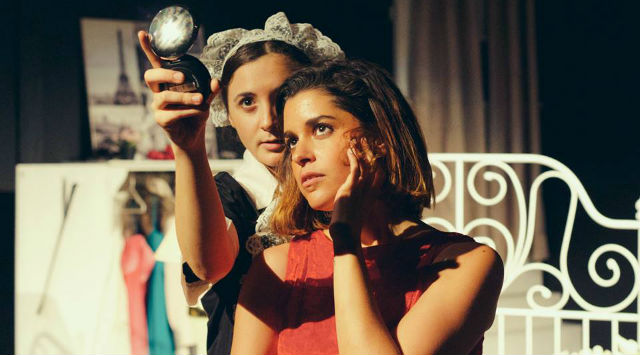
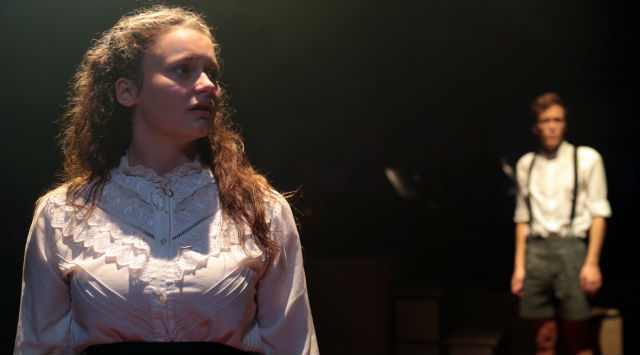
The women are suffering an acute case of cabin fever. They are maids who live and work in their employer’s home, cut off from the world, with only bitter resentment as company. Fuelling each other’s appetite for destruction, they go about their days imagining scenarios of retribution towards their Madame, a lady of leisure whose narcissism makes her increasingly unbearable to the weird sisters.

Jean Genet’s ideas in The Maids are provocative, but Bernard Frechtman’s translation, although poetic is not particularly theatrical. The language’s floridness does not lend itself easily as dialogue, and even though director Angelo Samolis ensures that meaning is conveyed in a broad sense, it is a challenge trying to find nuance in the text. We follow the plot, but are unable to explore its controversial concepts at much depth. The three actors are energetic and focussed, with an adventurous approach to physicality that provides buoyancy to the production. Design aspects are simple but thoughtful, with an appealing visual aesthetic achieved through a fairly minimal touch.

There is good work in how the show conveys emotions, but we receive little in terms of psychology. The women go on outlandish rambles without providing sufficient insight to hold our interest. The maids do not appear to have a hard life, but their jealousy has become overwhelming. Without resources or ability to withdraw themselves from their predicament, their journey becomes a downward spiral into disaster. People can create lemonade out of lemons, but we can also make the worst out of any situation. We observe the characters in the play make poor decisions, but also wonder how else they could have lived.

www.facebook.com/PhableProductions

Review: Spring Awakening (ATYP)

atypVenue: ATYP (Walsh Bay NSW), Apr 27 – May 14, 2016
Book and Lyrics: Steven Sater (based on the original by Frank Wedekind)
Music: Duncan Sheik
Director: Mitchell Butel
Cast: James Raggatt, Jessica Rookeward, Josh McElroy, Alex Malone, Patrick Diggins, Kate Cheel, Joe Howe, Bardiya McKinnon, Henry Moss, Caitlin Rose Harris, Taylor Howard Anthony, Alexandra Fricot, Julia Dray, Lochie Kent, Julian Kuo, Thomasin Litchfield, Richard Sydenham
Image by Tracey Schramm

Theatre review
Teenagers discovering sex is among the most intense experiences that a person can go through. It is simultaneously delightful, frustrating, embarrassing and intractable, full of complexity and obsessive power in the way it dominates one’s body and mind. Adolescence is difficult and the consequences of sexual miseducation can be catastrophic, yet offering appropriate guidance and accurate information remains a challenge. Recent debates over the “Safe Schools” initiative to broaden the consciousness of high school students beyond a heteronormative scope and traditional religious values, have revealed conservative and harmful beliefs about sex that persist in Australia today. The story of Spring Awakening is over a century old but is based on those same tensions that still exist in our inability to be honest with the young about the pleasures and responsibilities associated with their sexualities. This 2006 musical incarnation is an edgy expression of the subject that exposes how we fail the young and the dire consequences that follow.

It is a spirited production, helmed by promising young performers. Watching them explore ideas around sex with exuberant openness, without a modicum of coyness or shame, is a truly remarkable experience. Each individual brings a confident presence and as a group, the ensemble delivers a passionate and bold staging that demonstrates their enthusiastic appreciation for the themes of discussion. Jessica Rookeward impresses as the naive Wendla, with a convincing and tender performance made prominent by a strong singing voice. The cast is emotionally compelling, but the overall standard of singing is adequate at best, which tarnishes their otherwise strong work. Choreography is effective in its ability to bring energy and excitement, but can sometimes be overbearing for the intimate space. Set design is kept minimal, with lights employed to do all the heavy lifting of conveying time and place. Damien Cooper and Ross Graham, co-lighting designers, contribute greatly to the vibrancy and variety of visuals. Direction by Mitchell Butel highlights all that is appealing about his zealously youthful actors, and creates a show with great optimism in spite of its dark narrative. There is a tendency to favour pathos over humour, which makes the production feel excessively heavy, but it achieves a beautiful authenticity that helps with the story’s poignancy.

The talents in Spring Awakening are in control. They surprise us with their maturity and their strength of resolve in taking over a stage to communicate what they believe to be real and valuable. We must never underestimate the capacities of our youth, and we must certainly never forget that much of our weaknesses have not yet befallen them. They need our protection but they deserve the truth. Our social problems, especially those pertaining to discrimination, are a product of ignorance that we continue to harness through false information and archaic belief systems. Spring Awakening represents the struggle against oppressive orthodoxies, and for the truth that sets us free.

www.atyp.com.au

Review: The Cherry Orchard (New Theatre)

newtheatreVenue: New Theatre (Newtown NSW), Apr 26 – May 28, 2016
Playwright: Anton Chekhov (adapted by David Mamet)
Director: Clemence Williams
Cast: Alex Bryant-Smith, Sarah Chadwick, Finn Davis, Miranda Daughtry, Bella Debbage, Jasper Garner Gore, Brett Heath, Cecilia Morrow, Nicholas Papademetriou, Eliza Scott, Josephine Starte, Sam Trotman, Benjamin Vickers
Photography © Bob Seary

Theatre review
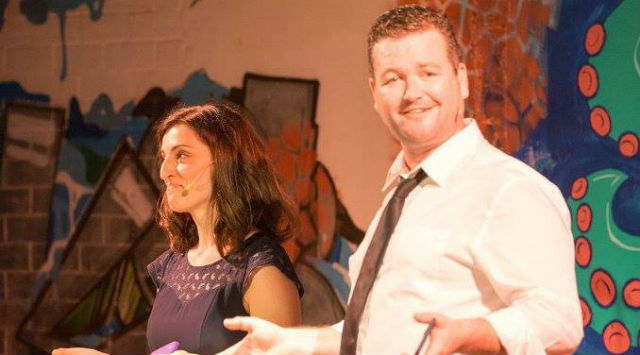
Ranevskaya is at the brink of losing her family estate. She is understandably distressed but does nothing to prevent the worst from happening. All her people go about their usual petty business, unable to find ways to remedy the situation. In David Mamet’s adaptation, the aristocracy’s complacency is a representation of lives not irrelevant to how we live today, especially in our era of unprecedented wealth. Our fearless leader very famously said not too long ago that “there has never been a more exciting time to be an Australian,” indeed we are a nation that finds itself in possession of so much, yet we are no longer known to be a progressive people; we are stuck in old ways, overrun by new waves of conservatism.

It is a big cast of characters in The Cherry Orchard, and in this case, depicted by individuals with diverse strengths that never seem to find cohesion. They all tell their own stories, but insufficient attention is paid to appropriate tensions for its central concerns to engage. The show is often a confusion of personalities and intentions that never become interesting, and we find ourselves left struggling to make sense of who these people are and what they are trying to say. It is acceptable that plays can involve portrayals about the meaninglessness of existence, but they should at least find a point and drive it through with some level of conviction. Nevertheless, it is a good looking presentation, with Jonathan Hindmarsh’s set and costumes bringing to the stage an air of wealth and decadence, and Benjamin Brockman’s lights providing structure to sequences that would otherwise bleed into one another with little rhyme or reason. It must be noted however, that the use of sound is counter-intuitive and completely confounding in the way it works against the emotions and energies that actors try to harness. Even though pleasantly performed, the music is almost always a bothersome distraction.

Firs is the very old servant, senile but charming, played memorably by Nicholas Papademetriou who, with accidental irony, brings the most lively presence to a lustreless experience. His decay symbolises the dismantling of the old Russian order, but also serves as reflection on how we think of the poor today. Although at the very bottom of the pecking order, Firs had felt part of the family and was reliant on their care all his life, but eventually finds himself forgotten and abandoned. His plight is a poignant indictment of Australian society today, where we seek to diminish the indispensable ones who prop up the rich and the glorious. We continually find ways to redistribute money away from the have nots, blissfully unaware of the damage caused by advanced capitalism, but as the roots are left to rot away, it is only a matter of time before the magnificent plantation begins to crumble.

www.newtheatre.org.au

Review: There’s No One New Around You: A Tinder Musical (Sydney Comedy Festival)

tindermusicalVenue: The Factory Theatre (Marrickville NSW), Apr 27 – 29, 2016
Book: Keira Daley, Mark Simpson
Music and Lyrics: Keira Daley, Steven Kreamer, and Mark Simpson
Director: Beth Daly
Cast: Keira Daley, Mark Simpson
Image by Gina Jenkins

Theatre review
Online dating is a modern phenomenon, and Tinder is the current leader of a very saturated app market. With reports suggesting 50 million users, its increasing presence in our storytelling is not at all surprising. There’s No One New Around You by Keira Daley and Mark Simpson is probably the first musical to be staged that is entirely about Tinder, compiling anecdotes, impressions, inventions and humour, relevant to the uniquely contemporary experience. Its songs and jokes may not always be fresh or edgy, but there are many moments of cutting social commentary that keeps us excitable and engaged. In the show’s efforts to find verisimilitude, the audience is offered realistic reflections of our attitudes towards romance, sex and loneliness that can be powerful, perhaps embarrassingly so, in its accuracy. The characters we see are very silly, but they are unquestionably real, and whether or not one is familiar with the phone app in question, their thoughts and behaviour bear a closeness to modern life that cannot be denied.

The production is assembled with minimal fuss, and our attention is placed squarely on the two performers playing out stand-alone scenes that make light of all the absurdities associated with dating in the digital era. Daley and Simpson are perfectly exuberant, and very well-rehearsed, hitting every mark they have set in a playfully conceived but ultimately simple vehicle of entertainment. Adding an extra dimension of comedy is a film element crucial to the show’s effectiveness, cleverly edited by Simpson and seamlessly integrated with the live action. There’s No One New Around You is about clichés, and although there is nothing new in what it says, its observations are thoroughly amusing.

Humans cannot go without food, but our voracious appetite for love and affection reveals what it is that truly provides sustenance. Science tells us that eating and drinking keep us alive, but we know that life cannot be without intimacy and connection. We worry about technology keeping people apart, and lament the disintegration of community at the hands of accelerating capitalism, but the need to reach out and find affirmation refuses to be dampened by increasingly utilitarian ways of thinking about life. Even as electronics and money continue their never-ending encroachment into our persons, we will not abandon love and lust, but they will morph into new forms appropriate for the times. There is clearly no elegance in courtship Tinder style, but whether it can deliver any old fashioned romance, is anybody’s guess.

/www.tindermusical.com

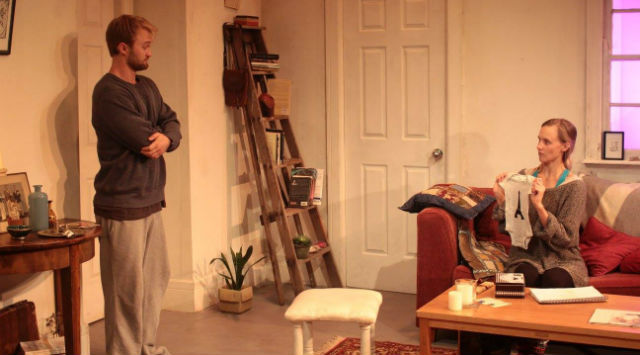
Review: Belleville (Mad March Hare Theatre Company)

madmarchhareVenue: Old Fitzroy Theatre (Woolloomooloo NSW), Apr 30 – May 12, 2016
Playwright: Amy Herzog
Director: Claudia Barrie
Cast: Josh Anderson, Taylor Ferguson, Chantelle Jamieson, Mansoor Noor

Theatre review
Whether or not one believes in “happily ever after”, there is little doubt in the truth that relationships are never completely smooth-sailing. When people are bonded together, what keeps them from breaking up are not always snowdrops and daffodils. Amy Herzog’s Belleville is about the poison that can fester in romantic unions, observed through a married American couple, Abby and Zack, disquieted and displaced in Paris. We see them trying to make things work, but the only thing they share is a chronic anxiety about being together, the causes of which the playwright keeps concealed until the end. In our efforts to explain the mystery of their circumstance, we access our own understandings of how things can go awry between two people who have grown so close, thereby reflecting an unfortunate universality of the experience.

It is a play full of intrigue and danger, brought to the stage by director Claudia Barrie who creates a disarming tension from the unrelenting but subtle details of the couple’s relationship collapse. Their unnamed dysfunction is made palpable by Barrie’s flair for manufacturing suspense, and our minds are kept racing in response to the mysterious plot. The production is confidently designed by a team who taps into the undercurrents and subtexts of the writing, to address the less deliberate parts of our consciousness. The characters struggle to say what they mean, but their feelings are manifest in the atmosphere that we share. Performances are committed and thoughtful, with all actors proving to be dynamic and entertaining, although some moments could be less tentative. Abby is played by Taylor Ferguson who does a marvellous job of expressing physically what her role is unable to put in words, and Josh Anderson’s volatility as Zack keeps us on tenterhooks, wondering if and when he is going to reach a point of nervous breakdown.

Paris is the city of love, and many dream of its enchanting and exotic perfection, without ever having stepped foot in it. Indeed, Paris represents a kind of quixotic approach to romance that is fundamental to its appeal. We want what we have never experienced, certain of the fulfilment it will deliver without knowing what it actually contains and entails. Abby and Zack arrive at their point of difficulty because of decisions made on a basis of weakness, conformity and resignation. They went after something they knew nothing of, and find themselves stranded in a space of destruction and hopelessness. If they get out of it alive, they can leave ignorance behind and head into the future with brighter minds, but if they remain trapped, the end can only be calamitous.

www.madmarchtheatreco.com