Review: A Midsummer Night’s Dream (Sydney Theatre Company)

stcVenue: Sydney Opera House (Sydney NSW), Sep 12 – Oct 22, 2016
Playwright: William Shakespeare
Director: Kip Williams
Cast: Paula Arundell, Matthew Backer, Rob Collins, Honey Debelle, Emma Harvie, Jay James-Moody, Brandon McClelland, Josh McConville, Robert Menzies, Susan Prior, Rose Riley, Rahel Romahn, Bruce Spence
Images by Brett Boardman

Theatre review
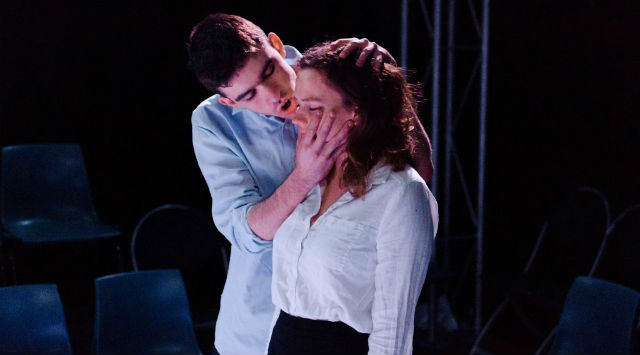
Characters get up to a lot of mischief in A Midsummer Night’s Dream, but what can be construed as humorous, can also be seen as menacing. The play features deception, sabotage, humiliation and misogyny, subversively, and surreptitiously, framed within a category of conventional comedy, leaving the depths of its darkness unacknowledged. One of Western theatre’s most well-known pieces, it is often regarded as light and frothy, fun for the whole family, with themes of romance and fantasy taken to their greatest extremes for hours of harmless entertainment.

Centuries on, it can be argued that much of Shakespeare’s comedy is no longer funny. Some insist that everything Shakespeare had penned can stand the test of time, but others will hold a more objective attitude. Kip Williams looks at the text with modern eyes, judging it with today’s values, and in exposing all that is archaic in the piece, creates something imaginative, powerful and irreverently spectacular. Turning A Midsummer Night’s Dream into a twisted nightmare, it is suddenly mesmerising. Williams’ concept might seem basic, but his detailed execution of a macabre and provocative utopia/dystopia is as sensitive as it is scandalous. Consistently fascinating, and frankly eye-opening, this is some of the most astonishing and iconoclastic theatre, full of spirit; adventurous, brave and ostentatious.

Actor Paula Arundell is unforgettable as Titania, queen of the fairies, via Donatella Versace. Regal, austere and decadent, her creation is strikingly sensual, full of danger and drama, compelling and beguiling in every moment. Arundell attacks her role with a fierce solemnity, resolutely playing against the comedy that we have become used to, in order that a fresh theatricality may be delivered; poetic, surreal, and irrevocably powerful. Also deadly serious are all the production’s design aspects. Chris Williams’ music and Nate Edmondson’s sound design hold us firmly in their dictatorial insistence for dramatic tension, and Alice Babidge’s costumes dare us to look away from the grotesque glamour reminiscent of Leigh Bowery and Cindy Sherman’s brutal legacies.

On stage is a morbid world, resplendently manufactured to satisfy our need for an art that is carnal, wild and audacious. It must be noted however, that the show closes with an abruptness that betrays its fundamental and delicious sophistication. The final transition from a scene of brilliant black humour to its concluding gravitas occurs with surprising carelessness, leaving us disoriented and prematurely awoken from what had been a deeply luscious reverie. Nevertheless, what is achieved here is an instance of magic rarely witnessed, and unlikely to be seen very soon again. Wonderful for its uniqueness, and its gutsy approach to the most time-honoured of classics, this is excellent theatre that reminds us how good it is to be alive, at a time when the ephemeral art form can thrive so brilliantly, and we are here to catch it.

www.sydneytheatre.com.au

Review: Metamorphoses (Montague Basement)

montaguebasementVenue: Erskineville Town Hall (Erskineville NSW), Sep 13 – 17, 2016
Creators: Imogen Gardam, Lulu Howes, Saro Lusty-Cavallari (based on the poem by Ovid)
Dramaturg: Pierce Wilcox
Cast: Lulu Howes, Saro Lusty-Cavallari
Image by Zaina Ahmed

Theatre review
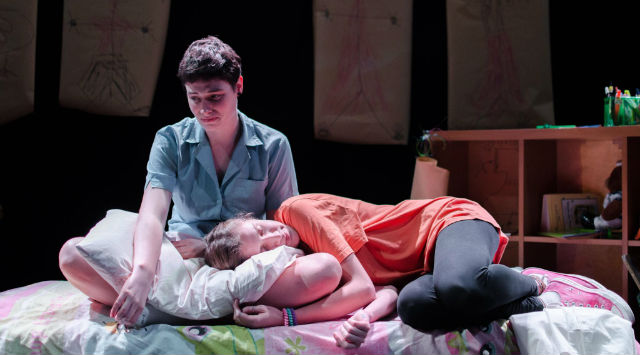
Turning Ovid’s two thousand year-old poem into a work for the theatre in Sydney today, is an exercise in adaptation full of possibilities. Every choice is a reflection of the interpreters’ relationship with the world, and with the art form itself. The very decision to take on a project of this nature, is indicative of a desire to experiment with the social aspects of both; theatre, and that immortal classic being interrogated. Imogen Gardam, Lulu Howes and Saro Lusty-Cavallari explore what a work represents when it refuses to be forgotten, and what it means in contemporary society when individuals meet at the theatre to relive it.

Each scene that corresponds to Ovid’s fifteen books, is given its own distinct identity and stylistic genre. Even though there is a conscious effort in manufacturing something quite erratic as inspired by the original, the use of only two actors with infrequent alterations to their appearance limits our ability to perceive the staging with as much variety as is evidently attempted. Our minds give in to a habitual need to create a sense of consistency with the faces we see before us, and the big range of characters is often conflated into a simplification of understanding involving one man and one woman. Perhaps the performers bring along a passion to their performance that has a tendency to appear homogeneous. It can also be said that although energetic in their approach, an ambiguity to their engagement with the work delivers an experience that can be elusive and frustrating. We wish for greater finesse either in the poetic nature of what is being created, or in the meanings that it is able to evoke.

There is abstract beauty to be found in this version of Metamorphoses, as well as political ideas that hold importance and relevance, but neither is willing to become concrete enough for us to grasp with a greater sense of enthralment. If a work aims to alienate, it should keep our feelings at bay but our minds captivated. Art is not always about earning likes, but it should secure attention, especially when it actively rejects the conventional and banal. Little of what we do can endure millennia, but the promise of a resonant instant is all it takes to keep us striving.

www.montaguebasement.com

Review: Tammy & Kite (Montague Basement)

montagueVenue: Erskineville Town Hall (Erskineville NSW), Sep 13 – 17, 2016
Creators: Hannah Cox, Caitlin West
Cast: Hannah Cox, Caitlin West
Image by Zaina Ahmed

Theatre review
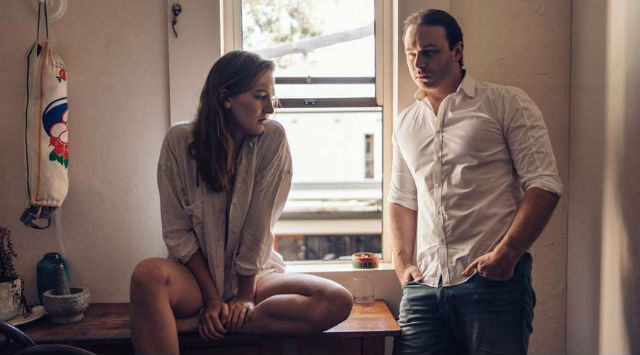
We are at home with two very funny sisters. Kite is in year three, and although Tammy is seven years older, the siblings are extremely close, spending almost all of their stage time making each other, and their audience, laugh with joyful glee. We watch the playful pair weather thick and thin, and when things get rough, Tammy & Kite shows us that life can be cruel even for the very young. Hannah Cox and Caitlin West’s play is remarkably sensitive in its portrayal of childhood and innocence, with an impressive authenticity that lets any person, of any age or background, relate to its characters and all its situations. Their feelings are real, and we cannot help but share in them, happy or sad.

Our protagonists find it difficult to express their emotions through words, but the play accurately depicts their inner world through imaginative means. The show’s creators assemble precise and powerful manipulations of atmosphere to communicate through signs and symbols, helped by excellent work from lighting designer Saro Lusty-Cavallari and sound designers Josephine Gibson and Alexis Weaver. The audience’s instincts are called upon to find an understanding of the sisters’ story beyond what is being said to one another. In Tammy & Kite, important information is conveyed through everything that happens in the room, not just the words that manage to find their way out of the girls’ mouths.

Some things you can never be prepared for, no matter how old you may be, but to witness children deal with deep losses is truly heartbreaking. It must be noted that the production makes it a point not to wallow in the story’s dark sides, but the delicate glimpses of sorrow it does provide, are very moving indeed. We discover a love in Tammy & Kite that is wonderfully pure, uplifting and life-affirming. The special moments of togetherness enacted by Cox and West, are a reminder of the most important kind, but also the very simplest; to cherish and to hold, everything else can wait.

www.montaguebasement.com

Review: Keep Calling (PACT Centre for Emerging Artists)

keepcallingVenue: PACT Centre for Emerging Artists (Erskineville NSW), Sep 13 – 17, 2016


Playwright: Chelsea Ingram
Director: Herman Pretorius
Cast: Chelsea Ingram, Luke Edward Smith
Image by Isabelle Munhos

Theatre review
Chelsea Ingram’s Keep Calling is about an unusual relationship, and the agony of existence when taboo becomes an integral element to one’s identity. The play presents a valuable opportunity to take a rare look at something deemed objectionable, and even though it stops short of advocating any specific ethical perspective, it nonetheless confronts the way we think of the themes being portrayed. For some, the material might prove controversial, but for others, its depictions can seem coy; it is a delicate balance that Ingram tries to maintain, but an edgier approach would make the show more memorable.

There is an undeniable mystery built into the plot, even though the production struggles to effectively manufacture a sense of intrigue. Its characters are vulnerable, but Keep Calling‘s immersion in their suffering is insufficiently convincing for us to respond with empathy. The style of presentation is wild and loud, allowing us to access the emotional upheavals taking place, but we rarely make contact with an authentic foundation on which the drama should be built upon, and the play leaves us feeling somewhat detached.

We can all understand Stacey and Sam’s desolation even though few of us have experienced their circumstance. Their story is unique, but only a flimsy membrane away from our realities. How we formulate rules for living is often arbitrary, and Keep Calling</em is a reminder of the ambiguity that can exist in what we wish to be incontrovertibly true. Societies have come to accept that love can take many forms, but there are limits to what they can accept. What is considered illicit in a particular time and place, is legitimate in another. It is easy to say "as long as nobody gets hurt," but how we define and detect damage is yet another quandary.

www.pact.net.au

5 Questions with Gavin Roach

Gavin Roach

Gavin Roach

Gavin Roach: Hi Gavin, thanks for joining me today. Right, I’m going to jump straight in, what is The Measure Of A Man?
Gavin Roach: Um ok well, The Measure Of A Man is my latest one man show. It is the second instalment of the Anxiety Trilogy and it deals with my own fears and insecurities as I plunge deep into the heart of my own sexual anxieties and dare to ask , “If you’re a gay man who can’t have sex, what worth do you have?”

Hmmm deep. So audiences can expect a draining 50 minutes of exhausting, over emotional acting?
Eh no, I’m funny too. I mean the show is funny. It has a lot of light moments too. I think it’s a healthy mix of light and shade and really takes the audience through some pretty personal experiences that are both funny and tragic.

Right, right, I see. So you are performing at the New Theatre in Newtown and, if I am right, you debuted your very first one man show, Confessions Of A Grindr Addict there in 2011. Are you excited to be coming home, so to speak.
I am super excited to be performing at the New Theatre again. It’s been five years since I stepped onto that stage and three years since I performed in Sydney, so I am really excited to see some new and friendly faces looking back at me.

Oh so you’re an attention whore then, cute. So, is there anything you are looking forward to doing while you are in Sydney?
Well besides the show, I’m really looking forward to seeing how the city has changed while I have been away. Sydney is one of those cities that feels like it is a constant state of change, which I find really interesting. But I think what I am mostly looking forward to is the many, many, many…..many bowls of laksa I am going to have. I have been craving a chicken laksa with extra bean curd from Happy Chef in Newtown ever since I moved to Melbourne, so I can see myself hanging out there quite a bit while I’m in town.

Fascinating. Well one last question, do you have a process when you are preparing for a show?
I’d like to be one of those performers who has a really profound process and relationship to the work, but really my approach consists of day drinking gin while I stress eat peanut M&M’s and try my hardest to remind myself that I am talented as I wonder if it is too late to be the hairdresser my mother always wanted me to be…

Gavin Roach’s one-man show The Measure Of A Man is presented as part of the Sydney Fringe 2016.
Dates: 13 – 18 September, 2016
Venue: New Theatre

Review: This Modern Coil (Upper Crass Theatre Company)

moderncoilVenue: Erskineville Town Hall (Erskineville NSW), Sep 9 – 10, 2016
Playwright: James Hartley
Director: James Hartley
Cast: Atlas Adams, Tom Green

Theatre review
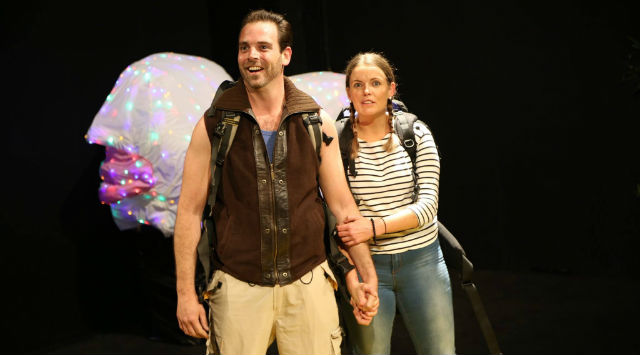
Two soldiers are trapped on a minefield, forced to confront death and each other’s beliefs about death. Intelligent, humorous and charming, James Hartley’s This Modern Coil explores our relationship with mortality, through a process that is inevitably philosophical, for an existentialist work that is simultaneously universal and challenging.

The writing operates at several levels of intellect, with some moments proving to be more accessible than others, but even at its most demanding, performers Atlas Adams and Tom Green are able to provide a sense of authenticity that keeps us engaged in their cerebral drama. Both men are gregarious and charismatic, effortlessly funny in a show that is almost always entertaining. Their impressive chemistry secures not only our attention, but also our empathy. They are very likeable characters that never fail to let us see ourselves reflected in all their anxieties and fantasies.

Hartley’s own direction of the work is accomplished, with effective manufacturing of tension through much of the piece, although the show is quite clearly more gripping in its first half. Set and costume design by Ara Steel is creatively and proficiently rendered, but the dim lighting does take away from some of the actors’ more subtle efforts.

There is a depth to This Modern Coil that is very admirably courageous, and balanced with a confident sense of comedy and storytelling, we are lured into a meaningful exchange about the biggest and hardest questions of life, only without the usual feelings of intimidation and alienation. No two people are the same but it is the certainty of death that reveals our individual, fervent pursuits of disparity to be futile. We may wish to be special, but at the humble juncture before turning to dust, there is no denying the simple essence of humanity that binds us all.

www.facebook.com/uppercrass

Review: Reflections Of A Cause (On The Cusp Productions)

onthecuspVenue: The Depot Theatre (Marrickville NSW), Sep 7 – 10, 2016
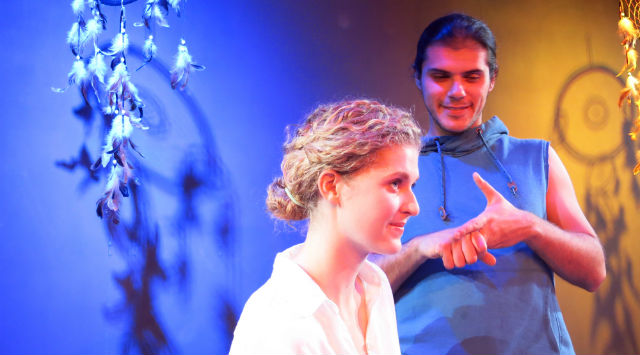
Playwright: Sage Godrei
Director: Joy Roberts
Cast: Ivan Chew, Macushla Cross, Emma Dalton, Benjamin Hanly, Chris Miller, Anthony Yangoyan

Theatre review
It is a simple story that looks at a pair of lovers as they begin their relationship, and also at their deteriorated state twenty years later. Made more substantial by a wide range of ideas, the play unfortunately becomes a complicated one that struggles to find focus and clarity. Scenes vary from the very basic, to the very obtuse, and although the show’s experimental spirit is commendable, it suffers from appearing hesitant and irresolute in what it wishes to achieve.

There are certainly passionate assertions to be found, especially in Chris Miller’s performance, but the message of Reflections Of A Cause is largely lost. Its characters’ experiences might appear familiar, but a weak narrative structure prevents us from connecting with any of its drama, and the tenuous inclusion of social issues into the couple’s journey only serves to confuse and alienate.

The play contains elements that could certainly be made interesting. It may be too raw and immaturely presented, but it is neither mindless nor frivolous. In any of the art that we make, it is crucial that we identify what it is we wish to say, and then do all we can to communicate those ideas. There will always be noise that interfere, but it is the artist’s discipline that makes sure what they consider most important, be the most indelible of each experience.

www.onthecuspprod.com

Review: Atlantis (Subtlenuance Theatre)

subtlenuanceVenue: Kings Cross Theatre Kings Cross NSW), Sep 6 – 10, 2016
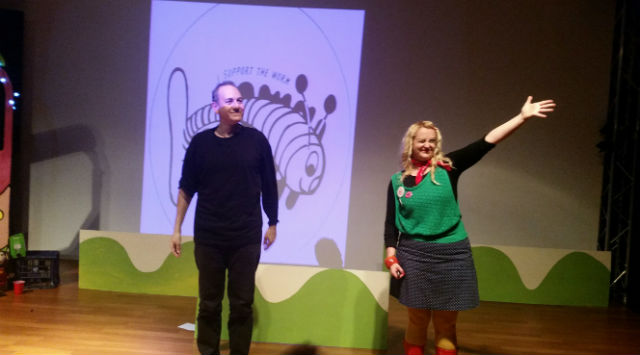
Playwright: Paul Gilchrist
Director: Kit Bennett
Cast: Sylvia Keays, Antony Talia, Madeleine Withington

Theatre review
A meaningful existence can only ever be understood from a position of subjective experience. In Paul Gilchrist’s Atlantis, things may contain inherent value, but it is up to us to bring interpretation to them, and we have a choice in how we read the world and how we immerse ourselves in the inevitable living of it. We all rely on tall tales to get us through each day and night, calling them mythologies, religion, science or mathematics, for it is intrinsically human to want to make sense of things. Our consciousness must be shaped, but what form it may take is subject to the mind’s plasticity, and in Atlanits, Gilchrist demonstrates a kind of self-determining fate that results from the stories we create for ourselves.

Of course, the play’s events can only happen in a place like Australia where a vast majority of us are rich and free. It is Gilchrist’s point, to make the best of our privilege. We are in a position to dream big, and to disregard cultural restrictions and social fears, so that we can have better lives, and do good for the world, in ways that are perhaps original and trailblazing. If we followed every rule, our evolution will never take momentous leaps forward. Anomalous advancements require people who dare be radical; whether Mahatma Gandhi or Elizabeth I, it is always the maverick who establishes a legacy.

Atlanits is a soulful work, full of spirit, but with its feet planted firmly on the ground. Its words take hold of our imagination, and argue convincingly for perspectives that are only optimistic and inspiring. Actor Antony Talia does a splendid job of helping us navigate between reality and idealism, with his remarkably engaging presence and an impressive commitment to authenticity. There is excellent humour written into early sections of the play, but they are unfortunately lost in the production’s overly square focus on the deeper lessons, that could probably be left until later in the piece.

The work is staged with poignancy in mind, but more adventurous exploration of physicality would drive its message more effectively. Attention is placed on Gilchrist’s beautiful words, but our other senses need to be manipulated more for a richer theatre, as we commune to share space and ideas. It might be an exaggeration to say that “if you build it, they will come,” but magic must start somewhere, and it never comes from fear.

www.subtlenuance.com

Review: The Giant Worm Show (Melita Rowston’s Shit Tourism)

melitaVenue: The Old 505 Theatre (Newtown NSW), Sep 6 – 10, 2016

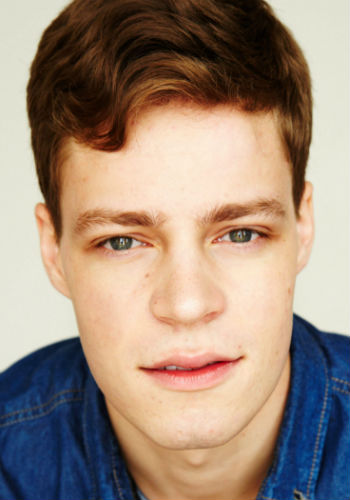
Playwright: Melita Rowston
Director: Melita Rowston
Cast: Benito Di Fonzo, Melita Rowston

Theatre review
Melita Rowston remembers a giant pink worm she had once seen in a parade, and goes on a wild goose chase to recover memories from her childhood. In the process, nostalgic tales of a small country town are brought to light, along with quirky personalities who steal our hearts, through strange anecdotes that are as surprising as they are moving. Rowston’s production is a charming one, unabashedly sweet but also revelatory in its portrayal of country people, their challenges, and their passions.

Presented in the form of a parody of a faux children’s tv programme from Saturday nights of a bygone era, Rowston is joined on stage by 2 puppets, confidently operated by Benito Di Fonzo. It is a basic and completely unpretentious setup, but its humour is effective, with a palpable quality of sincerity that is key to The Giant Worm Show‘s poignancy. There is an unmistakable melancholy that comes with Rowston’s regard for a time and place she had left behind, inconspicuous but powerfully resonant for city folk with tendencies of romanticising rural life.

When the going gets rough, we hark back to days of innocence, longing for the peaceful and secure existence of infants; wrapped up in cotton wool, merry and oblivious to all troubles of the world. Life is never perfect, but we often access the past through a kind of psychological filter that only allows the best to return. The pleasure of nostalgia is delusive, but also necessary. We need to know the sensation of peace and optimism in order to forge ahead, in search of an ideal future, informed by imagined pasts.

www.melitarowston.com

5 Questions with Kate Cheel and Felix Johnson

Kate Cheel

Kate Cheel

Felix Johnson: What was your initial reaction to, and what piqued your interest most about the story of the play?
Kate Cheel: On first read of the play, I was immediately compelled by the way the play interrogates two particular things; the long-standing culture of victim blaming and slut-shaming with regard to crimes of sexual assault against women, and the immediacy and mass-audience reach of sharing content online. Where these two intersect is so dark and so dangerous – especially surrounding teenagers and the increasing pressure on young people to share intimate or nude photographs only to have their privacy violated on social media, and then be blamed for it!

What are your go-to methods for discovering a character? How do you like to work?
I’m not sure that I have any go-tos, every job requires something different. For this project it was really important to me that I sought out the stories and voices of survivors of sexual assault and how as a society we are dealing with these instances. If I’m going to be part of the conversation and any kind of decent representative for these women I need to be informed, thoughtful and active in my participation. In terms of discovering my character, the play takes place in Croydon, West London – a world away from Sydney, Australia and a completely different scene for young people. I found immersing myself in the music, fashion and pop culture of her world really useful in getting to know who this girl is and how she exists in the world.

To what extent do you think people have control over how they are perceived online and the images and information that is shared about them?
I’m just realising… we actually have NO control. Holy cheese balls! Thank you Felix, now I’m terrified. Any person can publish any thing about you. And you can request to have it taken down or you can take them to court, but to properly police all activity would be near impossible. The other end of the spectrum is of course the curated self via social media and self-produced content. You can shape how people perceive you online by essentially telling them who you are and what you think through the select imagery and info you choose to share. But there’s no total control.

Do you think revenge is ever justified?
I believe in retribution absolutely, but I don’t think revenge does any good. And it begs the question, what is justice and can it ever truly be served? To steal from someone far wiser than me, Mr Martin Luther King Jr, “The old law of ‘an eye for an eye’ leaves everybody blind.”

If you could know the answer to one of the world’s unsolved mysteries, what would you most like to know?
I’d like to know what happens after death. Are past lives a legit thing? Are ghosts real? Spirits? Angels? Reincarnation? Is there a puffy cloud somewhere up there with everyone I love looking over me? Do they have to wear what they died in for eternity? Eternity is ages. How would you not get bored? Where do plants and animals go when they die?

Felix Johnson

Felix Johnson

Kate Cheel: I’m stealing this question from you because it’s good. What was your initial reaction to, and what piqued your interest most about the story of the play?
To be honest, I’m just a fan of a good story. I loved the twists and turns that the play took me on when I first read it; bringing that to life and sharing it with an audience is the most exciting thing about being an actor for me. But then on top of that, the content of the play is so immediately relevant and relatable – I couldn’t help thinking how I and the people closest to me might behave if we ever found ourselves in a similar situation.

What’s one thing you’ve learned about working on this project and one thing that has surprised you?
I guess I’ve learned (again) to maintain a positive scepticism. People and situations aren’t always what they appear to be no matter how familiar we think we are with them. It’s important to consider everything to find out the truth. I got a surprise listening to Croydon slang… and now I’m wondering if I’d be peng or butters…

How did you work on your accent? It’s very good.
Well, that’s kind! Luckily I had a bit of background work on a London accent already, but had to adjust quite a lot in the end to get a Croydon accent that suited Nick. It took hours of listening to samples, emulating one sound, then another, finding my ‘way in’ to the accent with particular phrases, then being as picky as I could about making all the sounds and the rhythm as authentic as possible. It’s something totally new for me now and that’s always exciting.

Have you ever made an assumption about someone or a situation and been proved totally wrong? Explain. Please…
So many times I can’t even count. Which is terrible, but luckily I’m also constantly amazed at what people can and will do for each other. I don’t have a single great example, but suffice to say I try my best to keep an open mind and give everything a chance. Curiosity over judgement any day.

What was the last photo you took on your iPhone and did you share it with anyone?
The last one is a boring photo of a timetable… which no one wants except me. But before that I sent a selfie to my girlfriend of my new haircut. She was both fascinated and rueful.

Kate Cheel and Felix Johnson are appearing in 4 Minutes 12 Seconds by James Fritz.
Dates: 13 September – 8 October, 2016
Venue: Old Fitz Theatre