Venue: Old Fitzroy Theatre (Woolloomooloo NSW), Mar 6 – 21, 2026 Playwright: Ella Road Director: Emma Whitehead Cast: Rachel Crossan, Elodie Westhoff Images by Robert Miniter
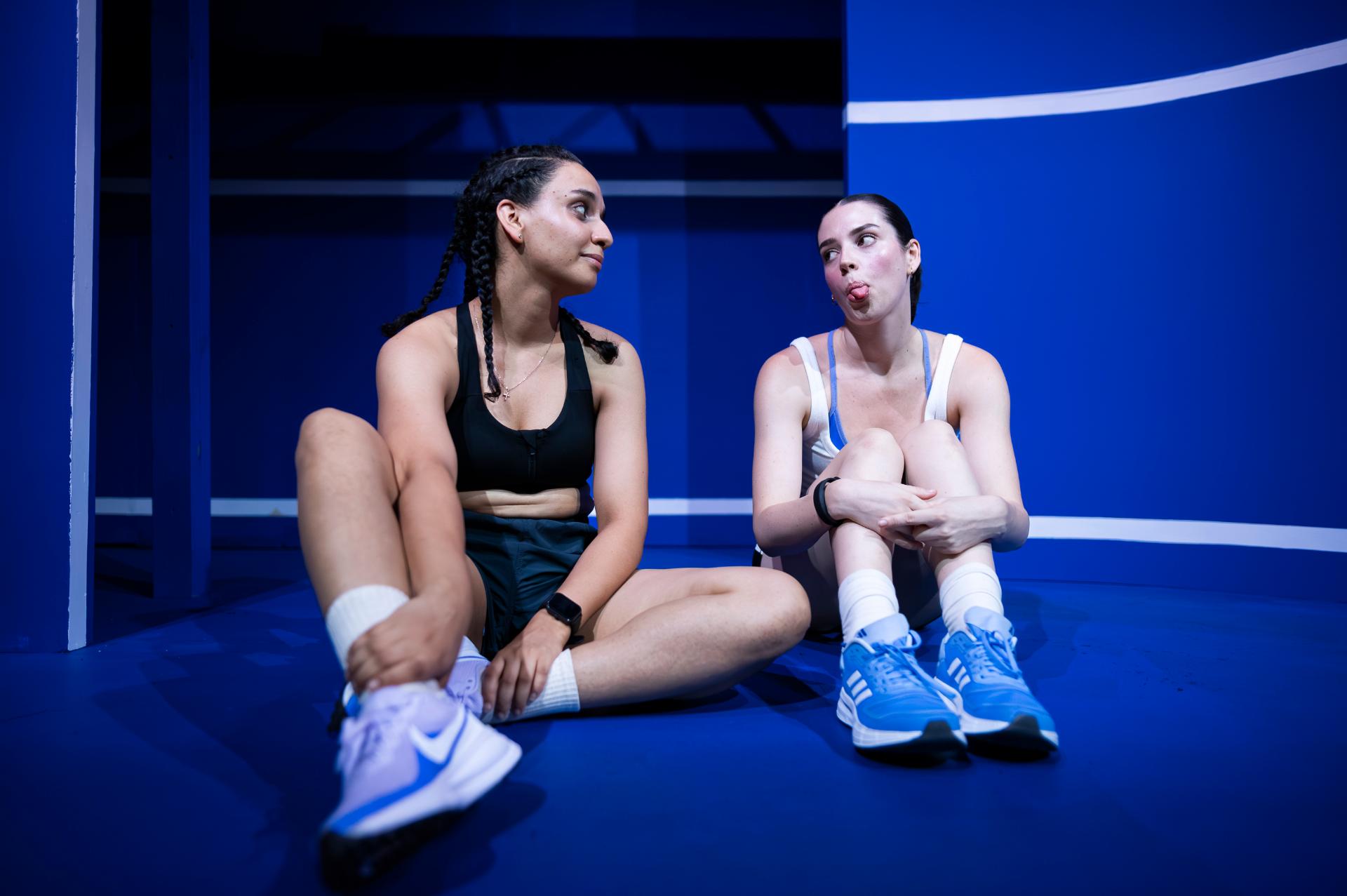
Theatre review Ann and Sophie first cross paths as teenage athletes, both chasing the same shimmering horizon: Olympic glory in the 800 metres. What begins as parallel ambition gradually intertwines into something deeper—a bond that seems impervious to fracture. Yet Fair Play, Ella Road’s penetrating drama, understands that the most devastating ruptures often arrive disguised as inevitability. When crisis finally strikes, it exposes not merely personal betrayal but the insidious architecture of a system that routinely engineers competition among women, transforming potential solidarity into corrosive envy.
Road’s early scenes occasionally risk the prosaic, relying perhaps too heavily on the familiar rhythms of sporting narratives and adolescent camaraderie. Yet this mundanity proves deliberate—a foundation upon which the later moral complexity acquires its full, disquieting force. When the narrative pivots, it does so with devastating precision, compelling us to confront one of contemporary society’s most fraught ethical battlegrounds. The play ultimately rewards patience with a meditation of considerable sophistication, as it interrogates the conditions that conspire to pit women against one another.
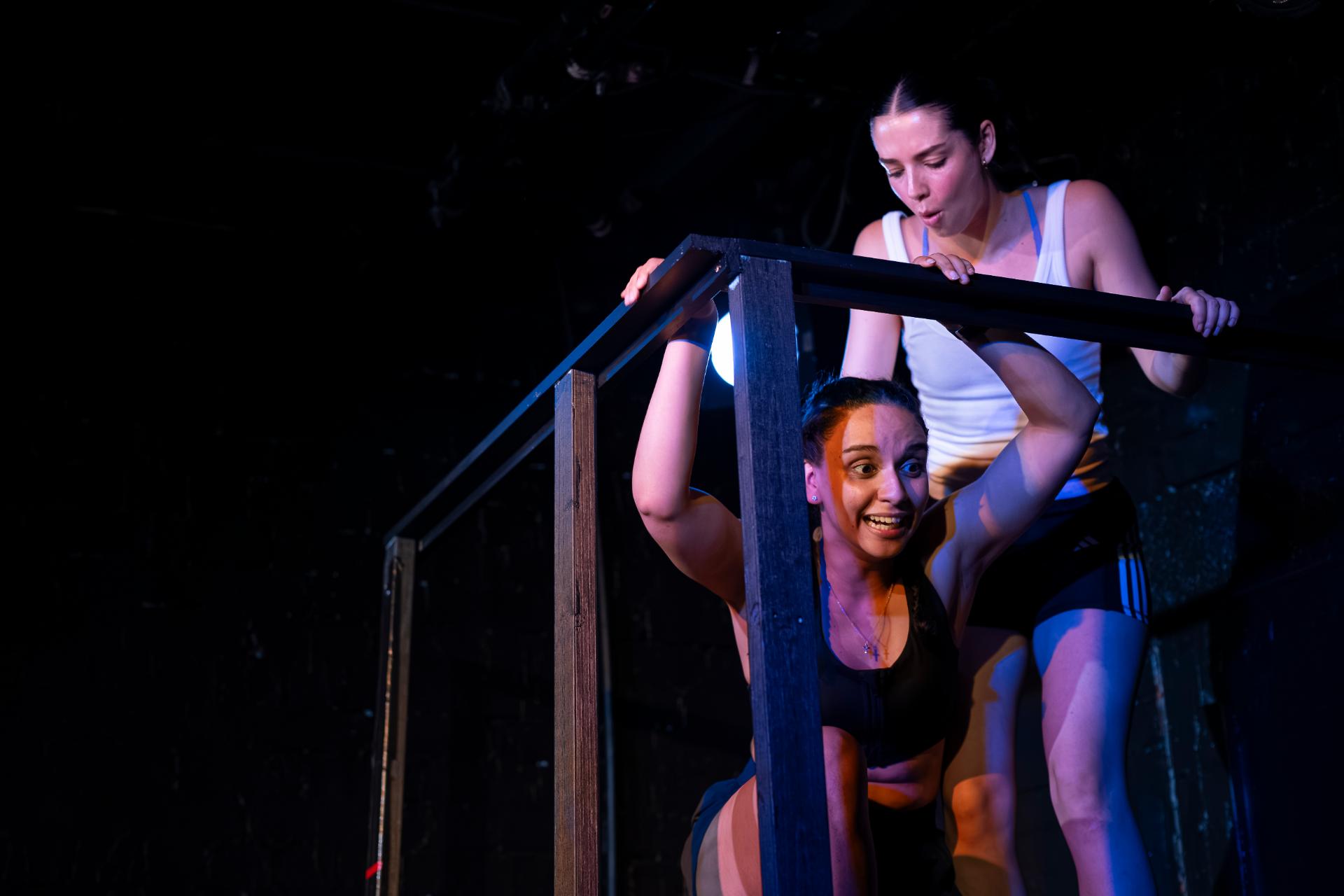
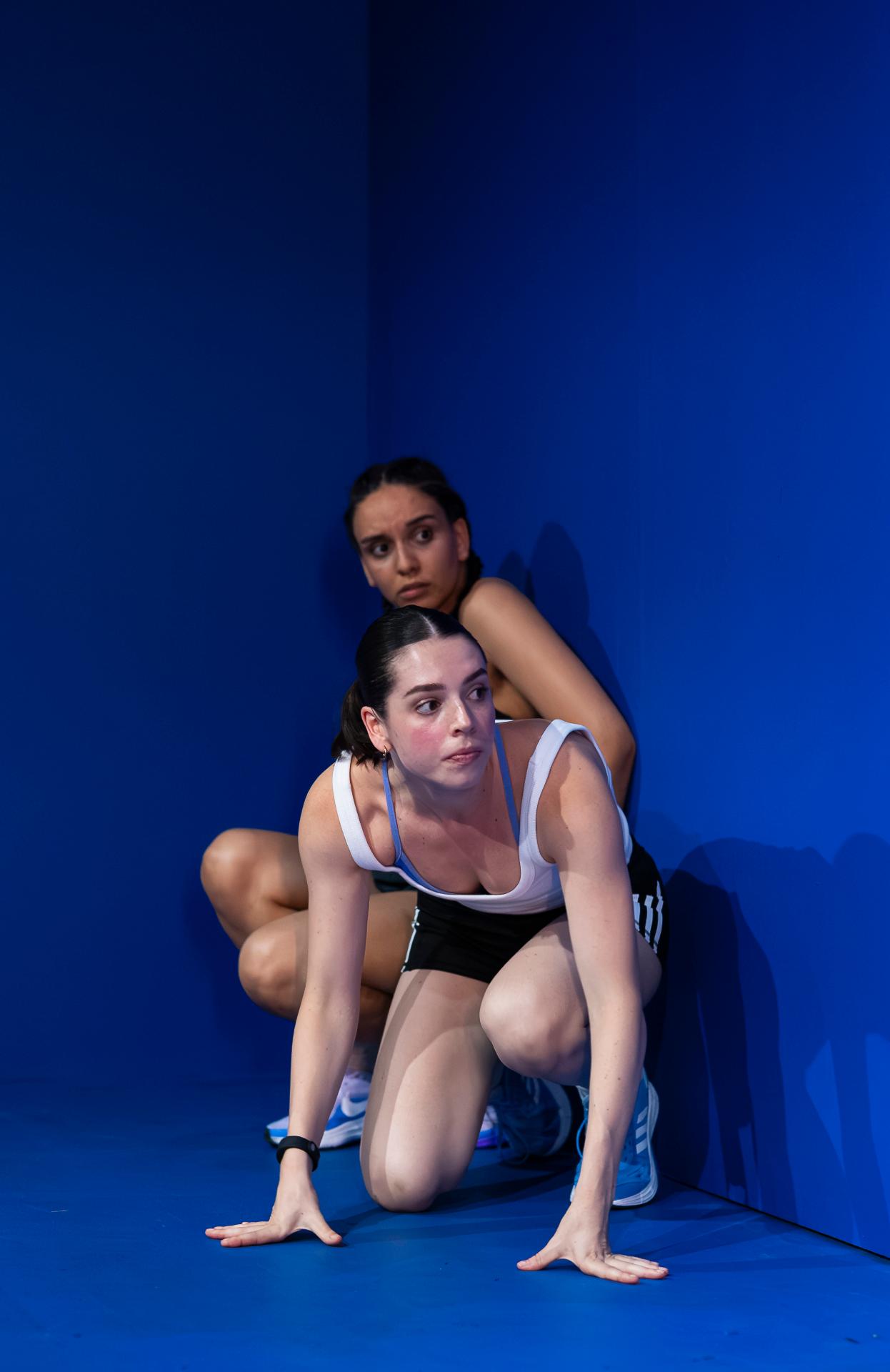
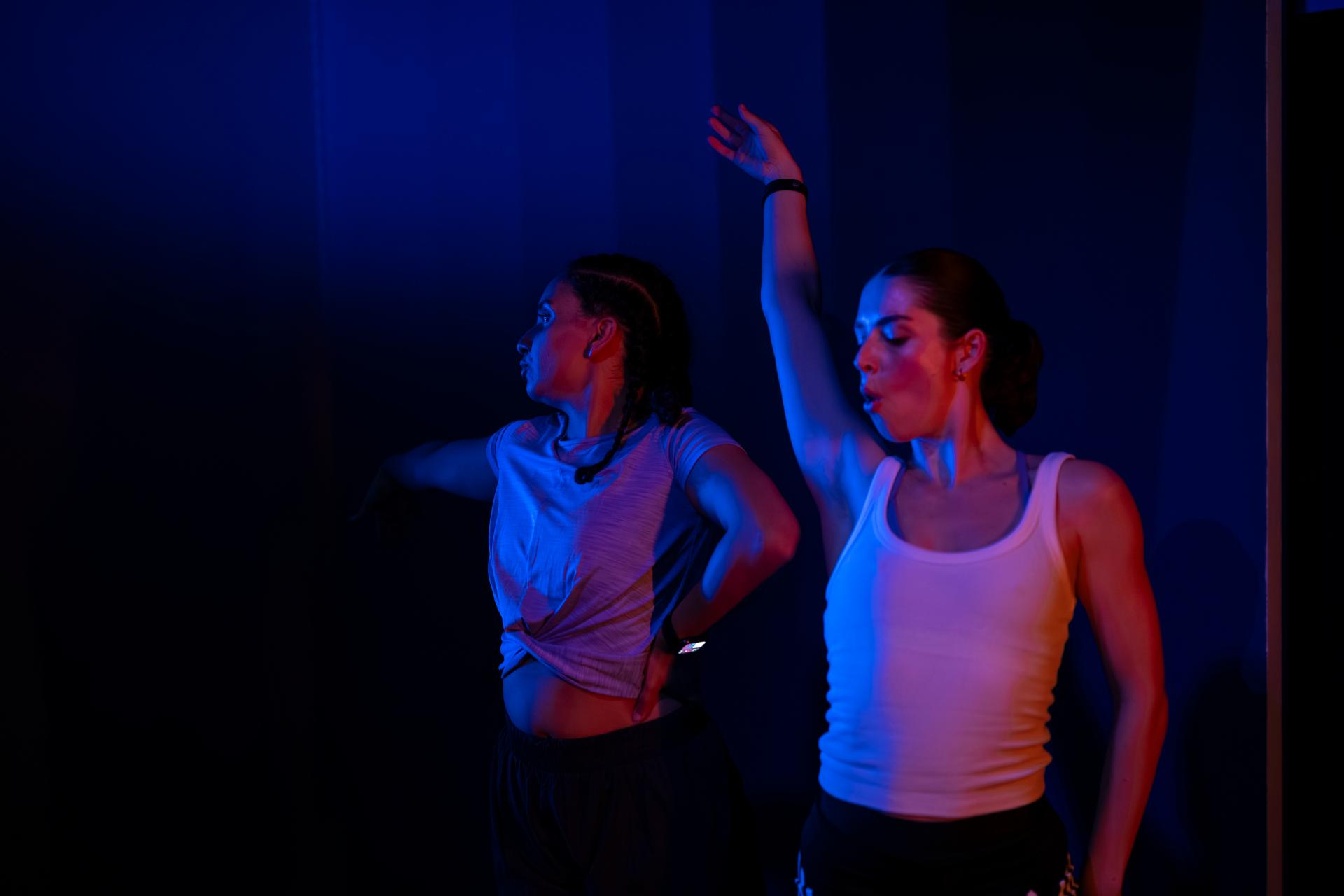
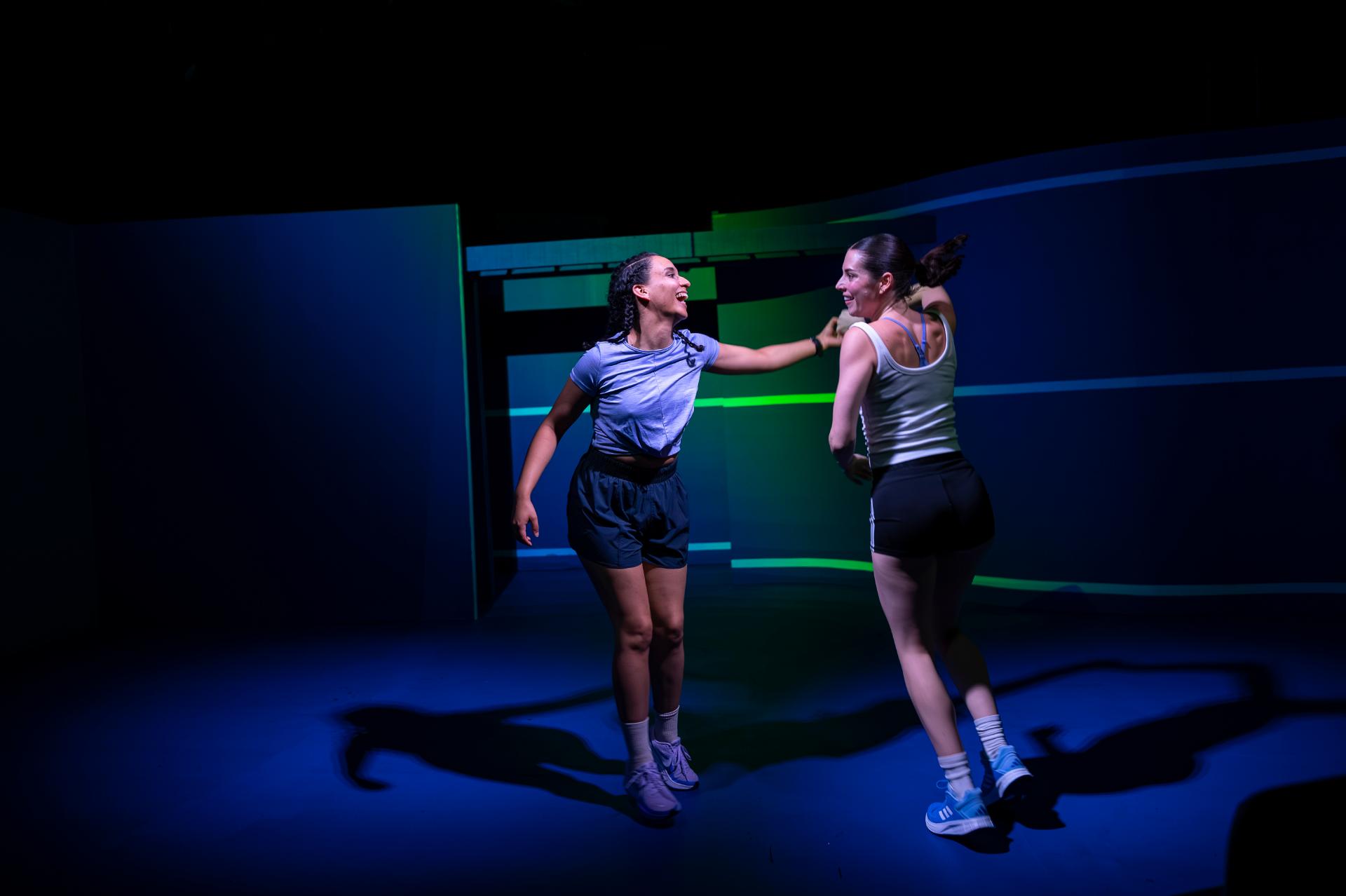
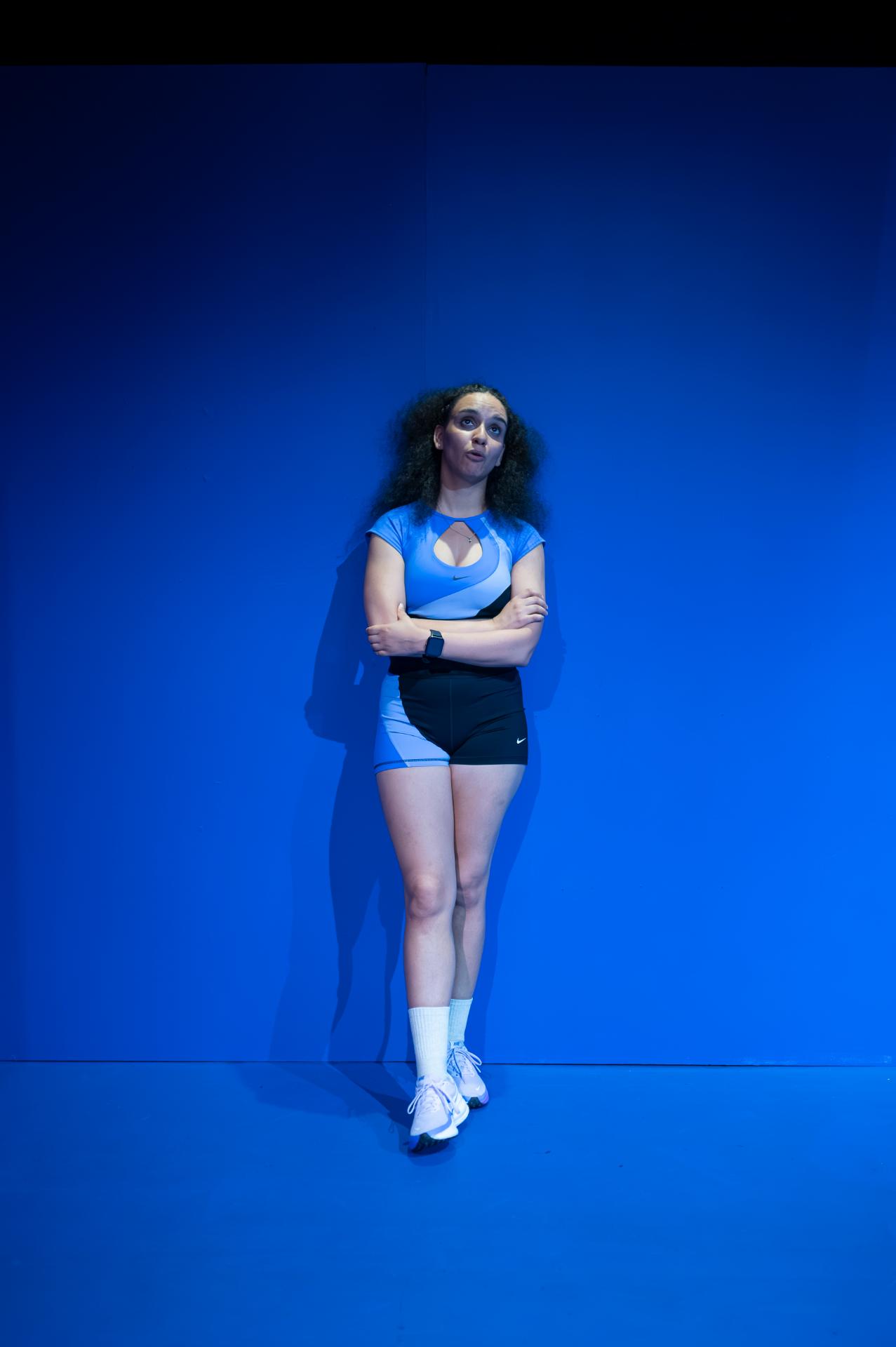
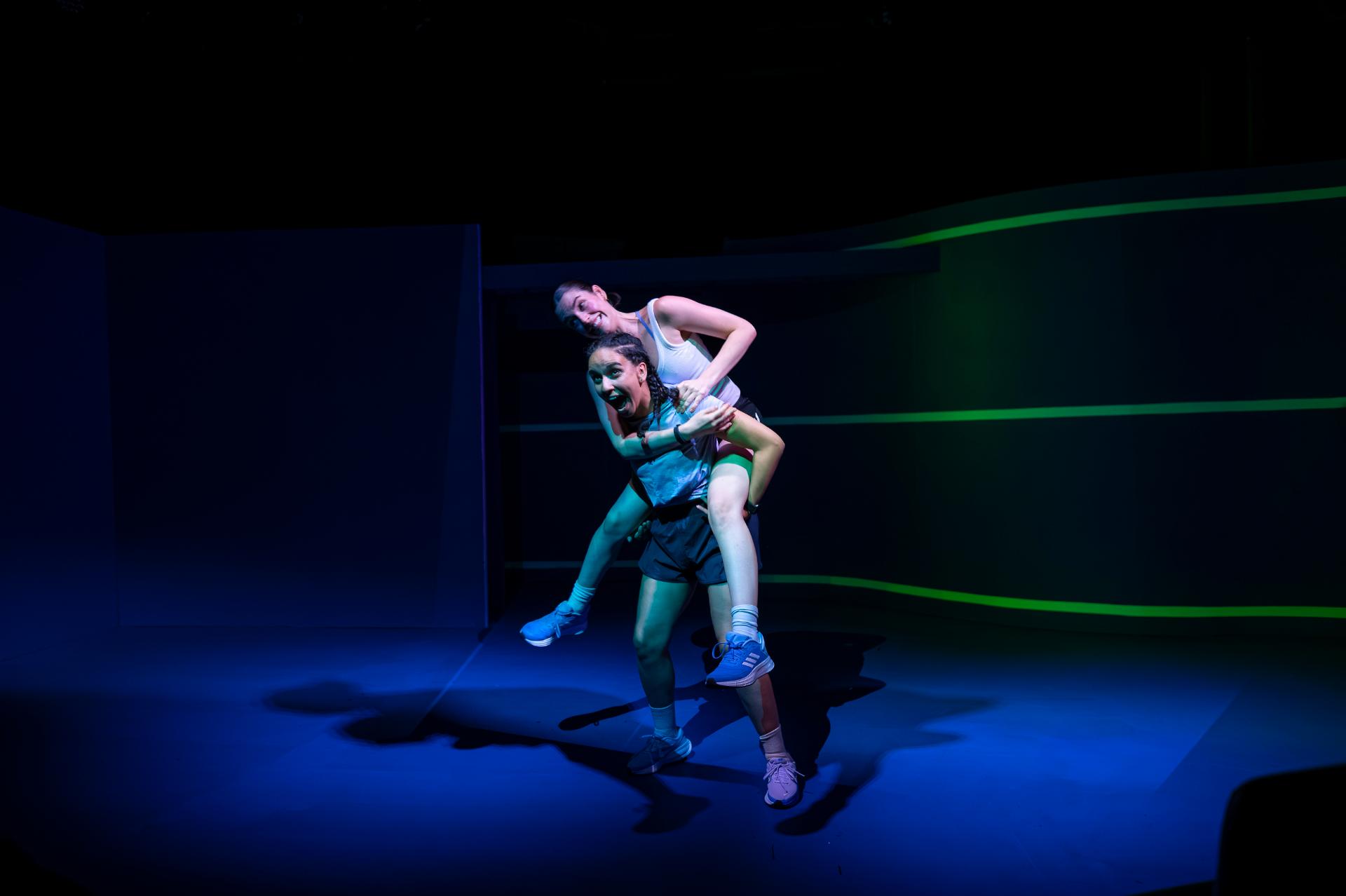
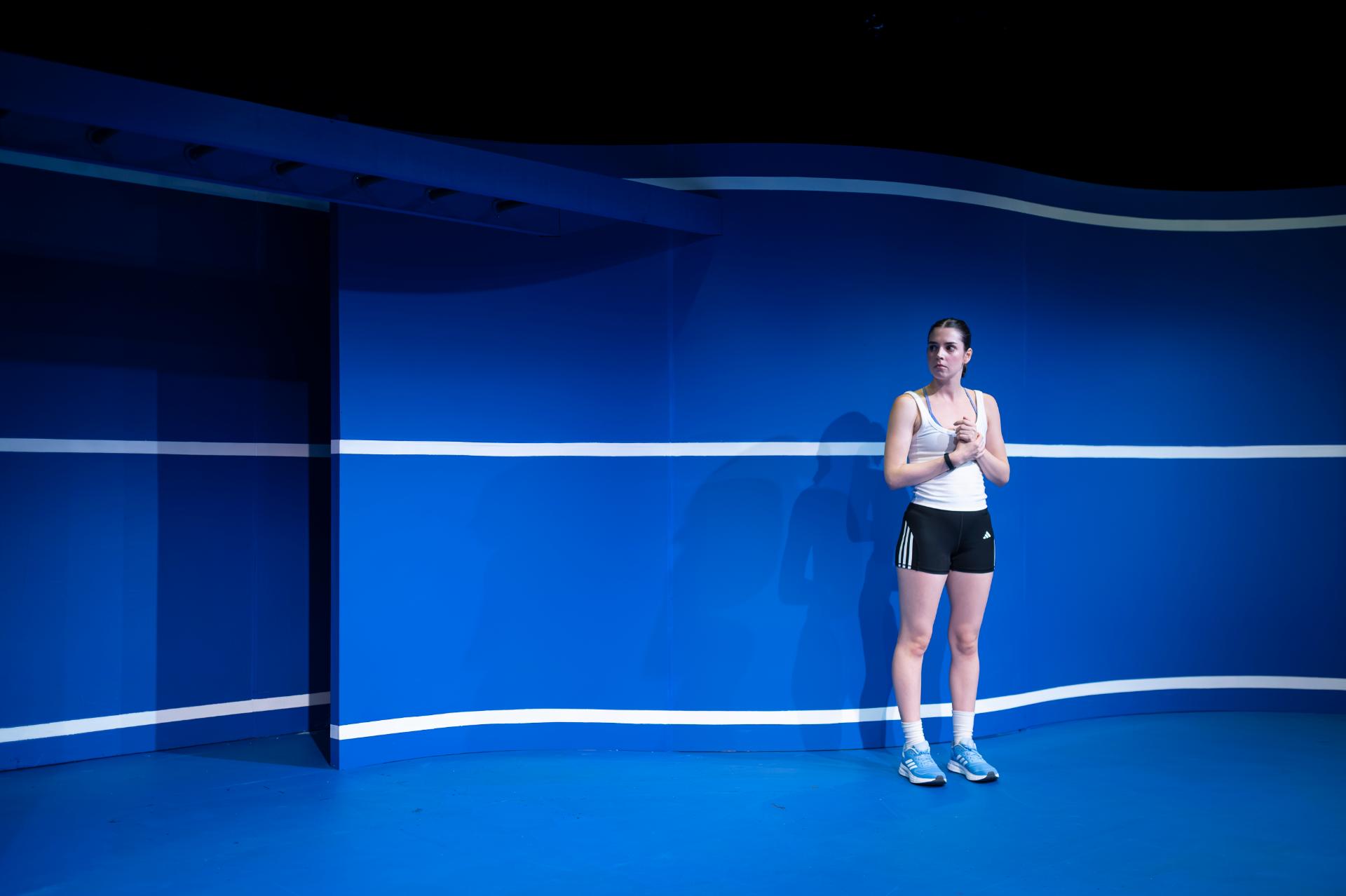
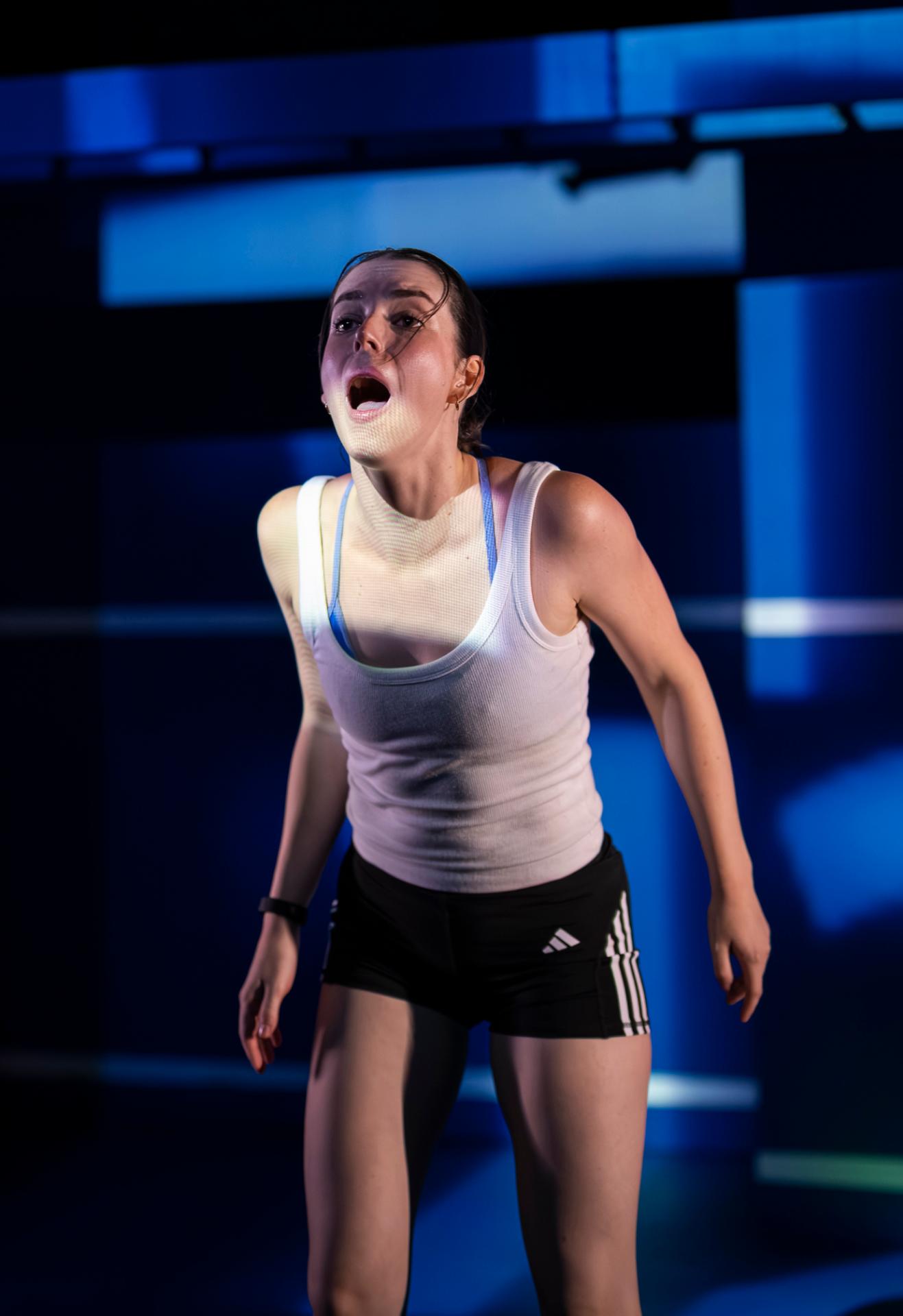
Emma Whitehead’s direction (along with exciting choreography by Cassidy McDermott Smith) imparts a vital buoyancy to the staging, evoking with precision the vigour of youth—that particular alchemy of velocity and infinite horizon that defines adolescence at its most hopeful. They render visible the girls’ intimacy not through declaration but through accumulated detail: the shared language of glances, the physical fluency of bodies in syncopated motion, the unspoken covenant of ambition mutually held. When the narrative’s rupture finally arrives, Whitehead navigates the transition with remarkable adroitness, modulating seamlessly into an atmosphere of sombre gravity, to honour the weight of the social terrain now under examination, treating the play’s emergent concerns with the deliberation they demand.
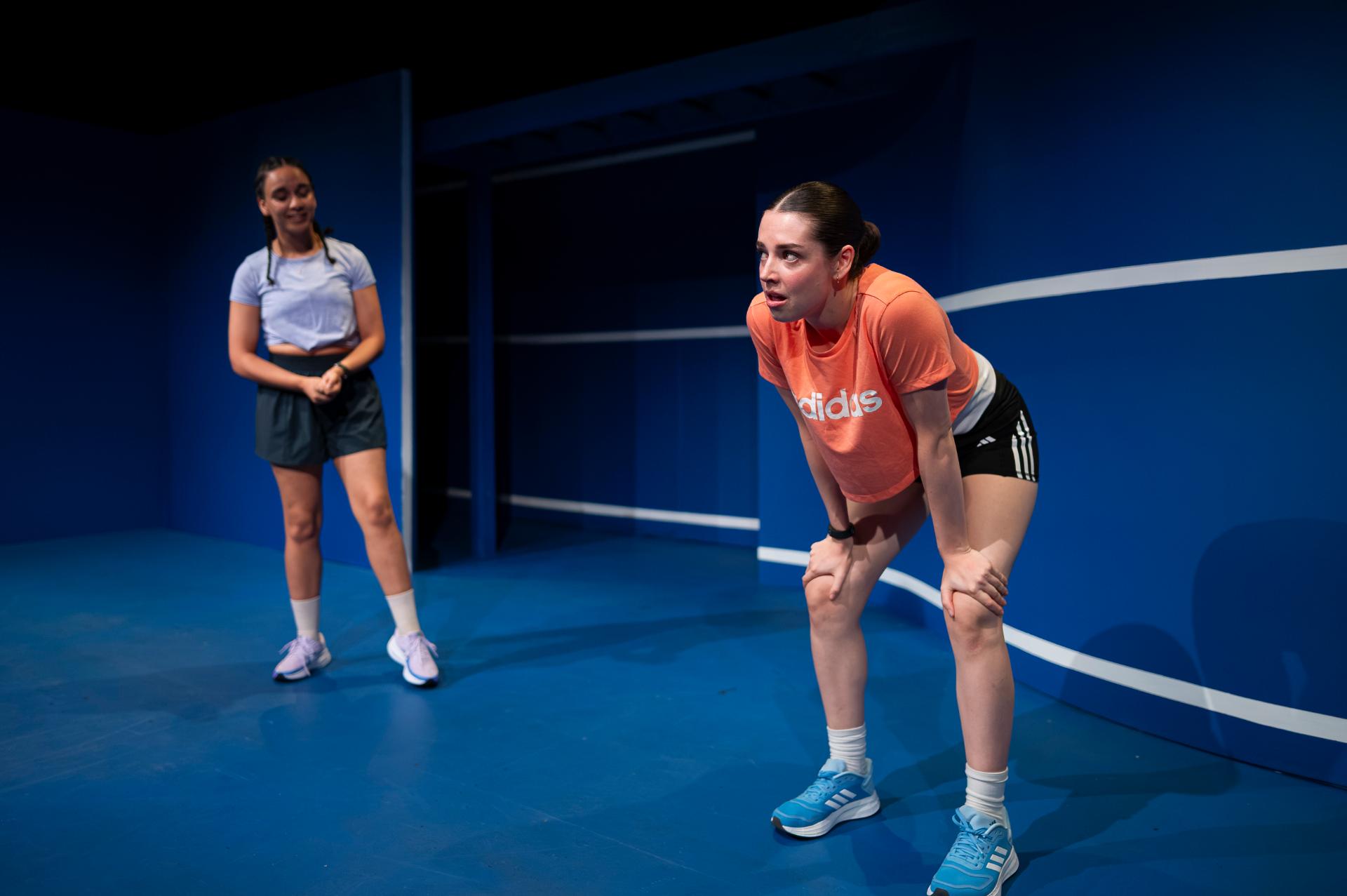
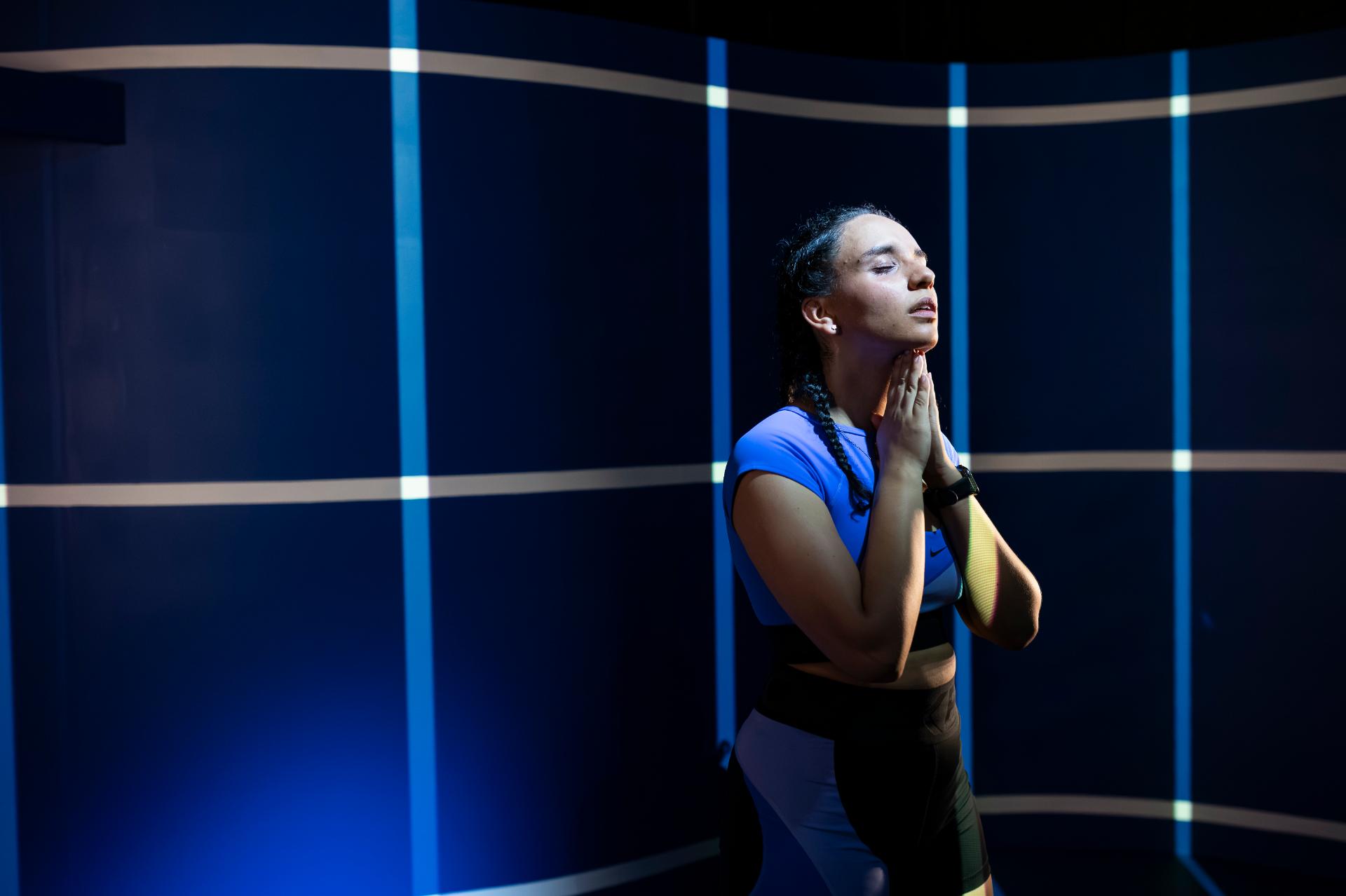
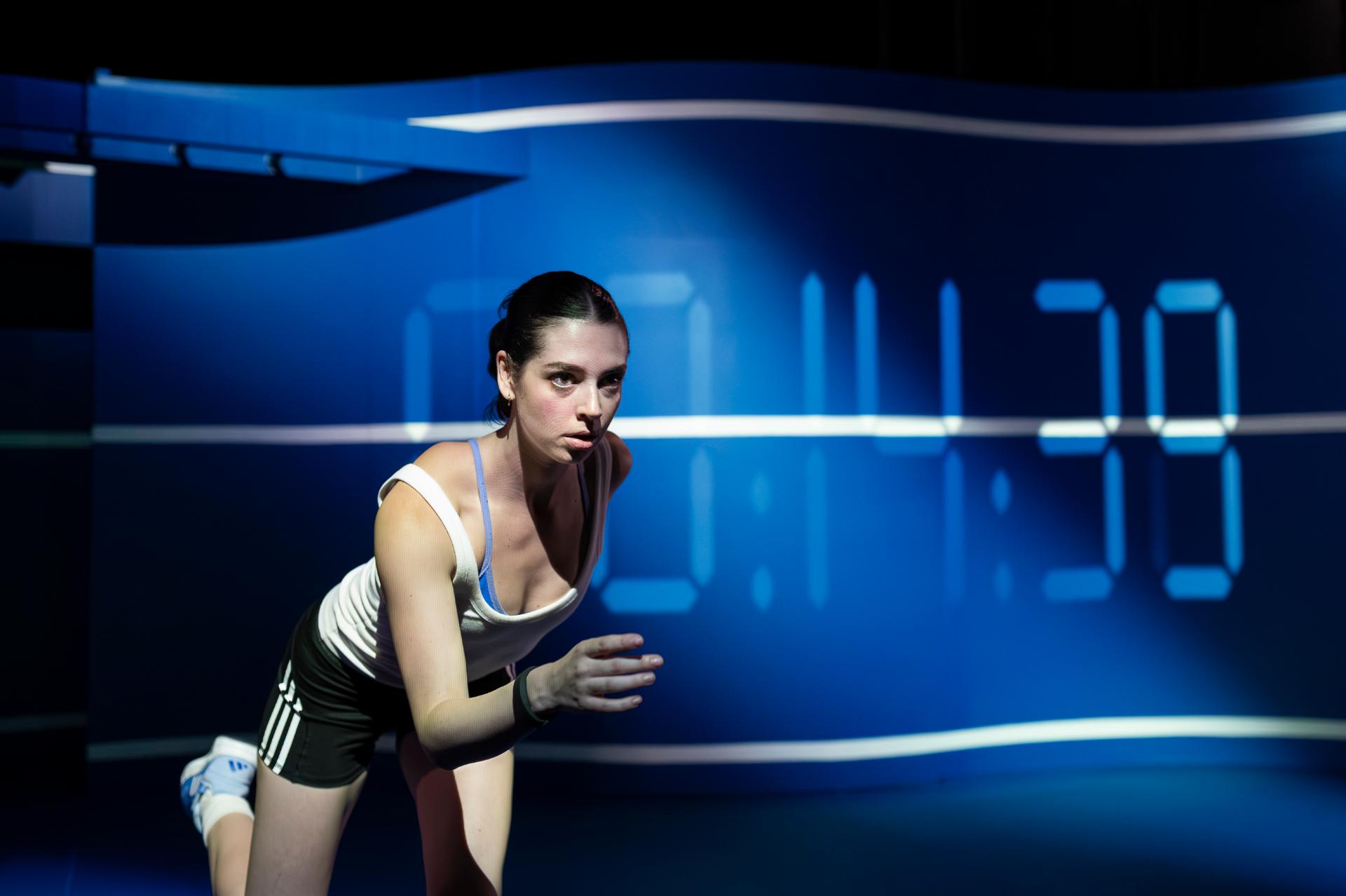
Design elements cohere with admirable precision, conjuring a kinetic vocabulary that renders the athletic milieu not merely as backdrop but as embodied philosophy. Kate Beere’s set operates on dual registers: the literal, with its tactile evocation of racing tracks as arenas of corporeal sacrifice; and the symbolic, its organic curves suggesting femininity itself as sites to be navigated, contested, inscribed upon. EJ Zielinski’s lighting and Aron Murray’s video projections interweave with the sonic architecture of Mitchell Brown and Osibi Akerejola to forge a taut, propulsive rhythm, to hold us in sustained anticipation.
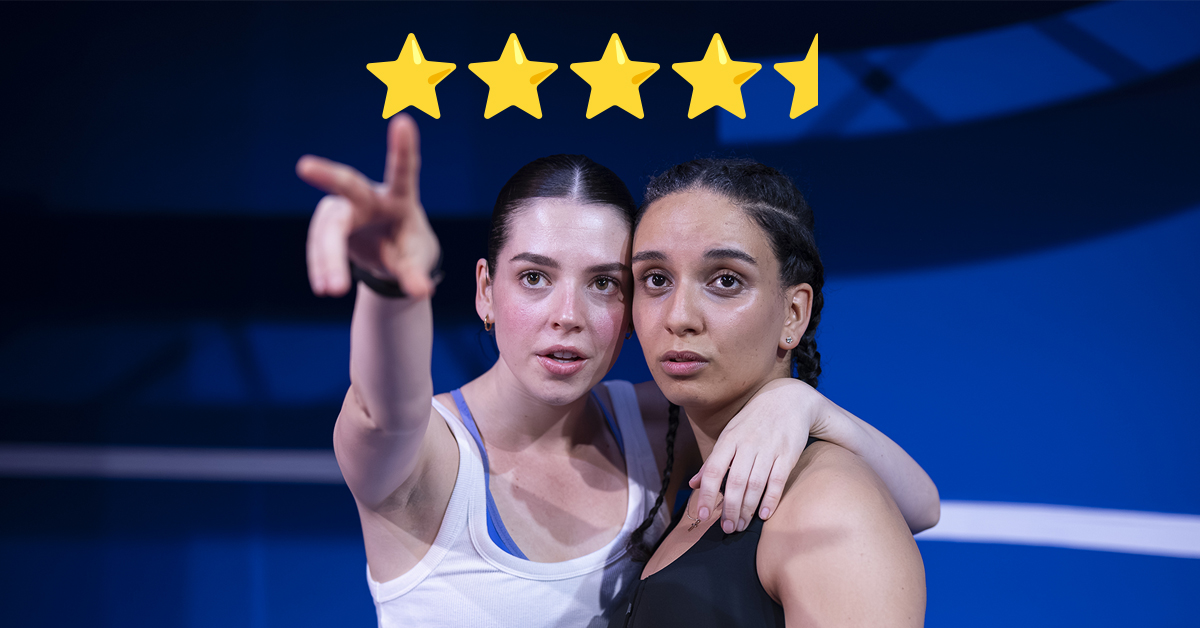
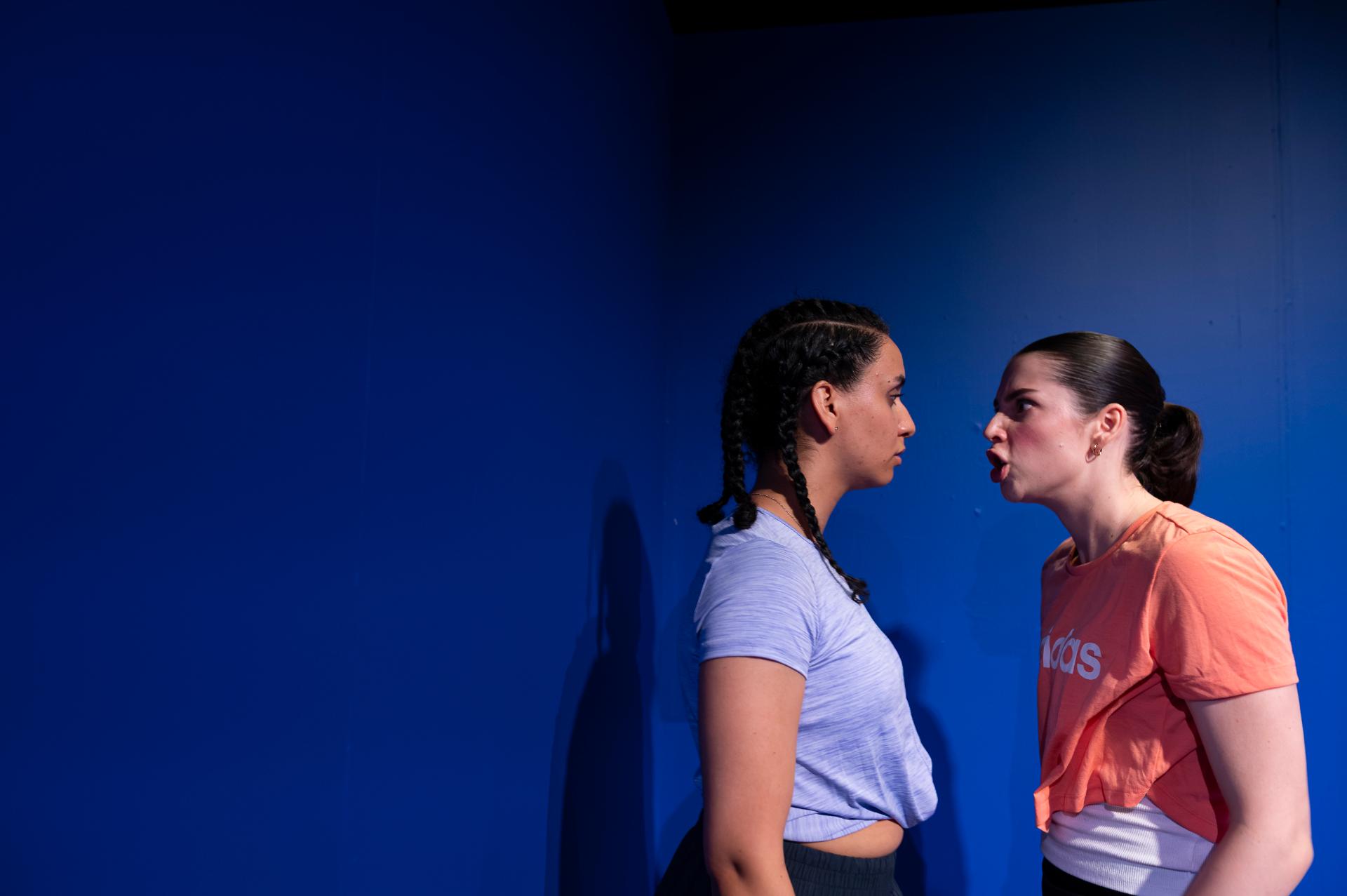
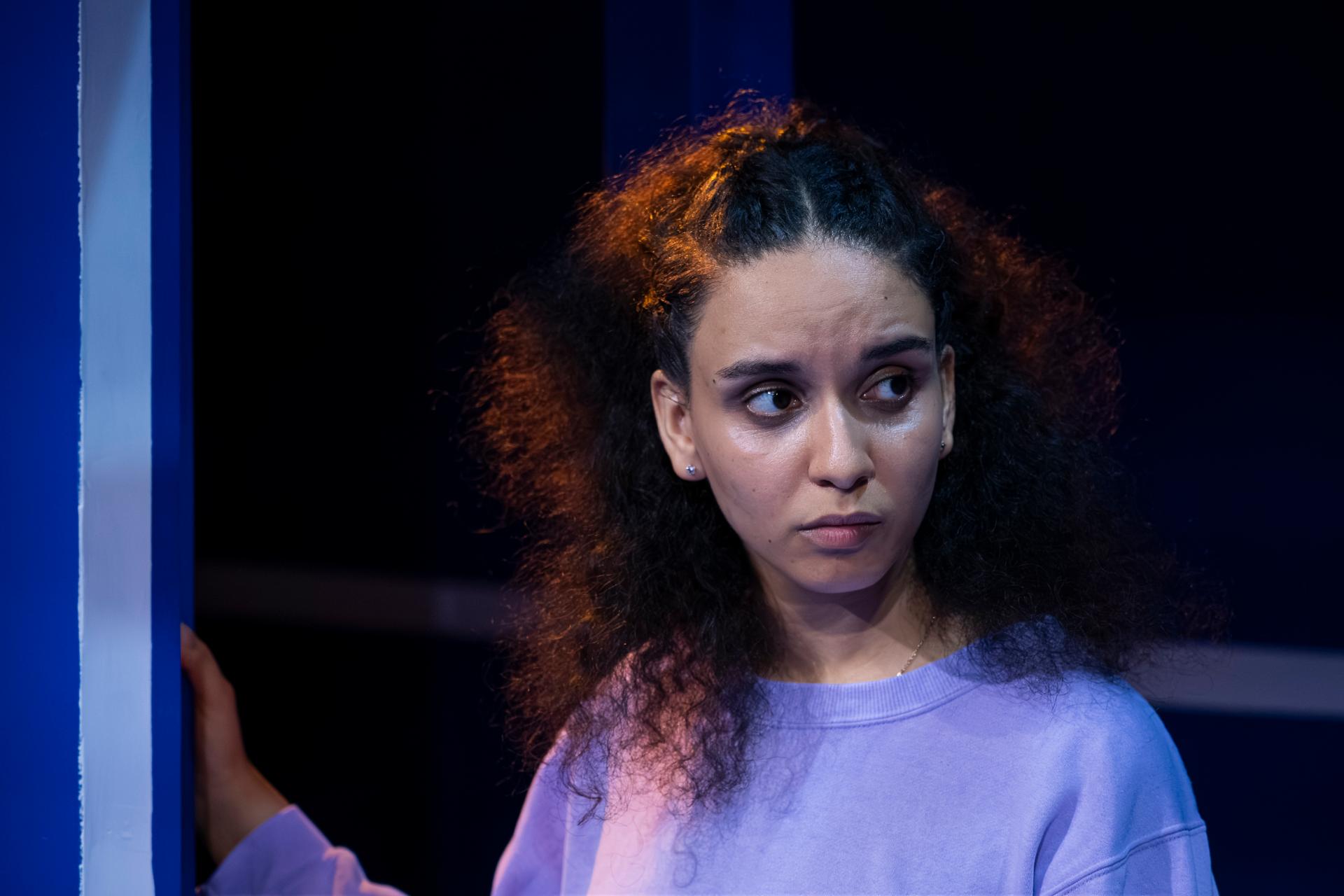
Actors Rachel Crossan and Elodie Westhoff distinguish themselves not merely through individual proficiency, but also through the sublime chemistry they generate in concert. What proves most striking, however, is their navigation of the play’s political subtexts. They communicate the covert economies of female friendship—the unspoken negotiations, the micro-calibrations of power—with the same fluency they bring to more explicit ideological content. The result is a performance that operates on multiple frequencies simultaneously: the immediate human drama and its broader sociological implications, the personal and the structural, held in productive tension.
(Spoilers ahead.) The revelation of Ann’s PAIS or Partial Androgen Insensitivity Syndrome marks the play’s foremost intentions—what begins as narrative twist crystallises into urgent ethical inquiry. Fair Play thus positions itself at the volatile intersection of contemporary sporting discourse and broader debates surrounding sex, gender, and bodily autonomy. Road declines the comfort of easy resolution; no tidy settlement is proffered, no ideological position fully vindicated. Instead, the play achieves something more valuable: it carefully charts exactly how injustice operates, in all its complexity.
We encounter sporting authorities obsessively preoccupied with demarcating the boundaries of sex and gender, yet demonstrably incapable of furnishing coherent definitions for the very categories they police. Trans and intersex athletes thus find themselves suspended in a state of administrative limbo, condemned to navigate systems that simultaneously demand their classification and deny their intelligibility. Their innocent bodies become the terrain upon which ideological warfare is waged, and Fair Play recognises that none of it is genuine ethical concern but ritualised purification, a periodic expulsion of those who threaten the fantasy of binary certainty upon which so much of our mythology depends. The cruelty is systemic, the uncertainty weaponised, the suffering rendered as collateral damage in a conflict that purports to be about protection, while actually securing older hierarchies of tyrannical exclusion.
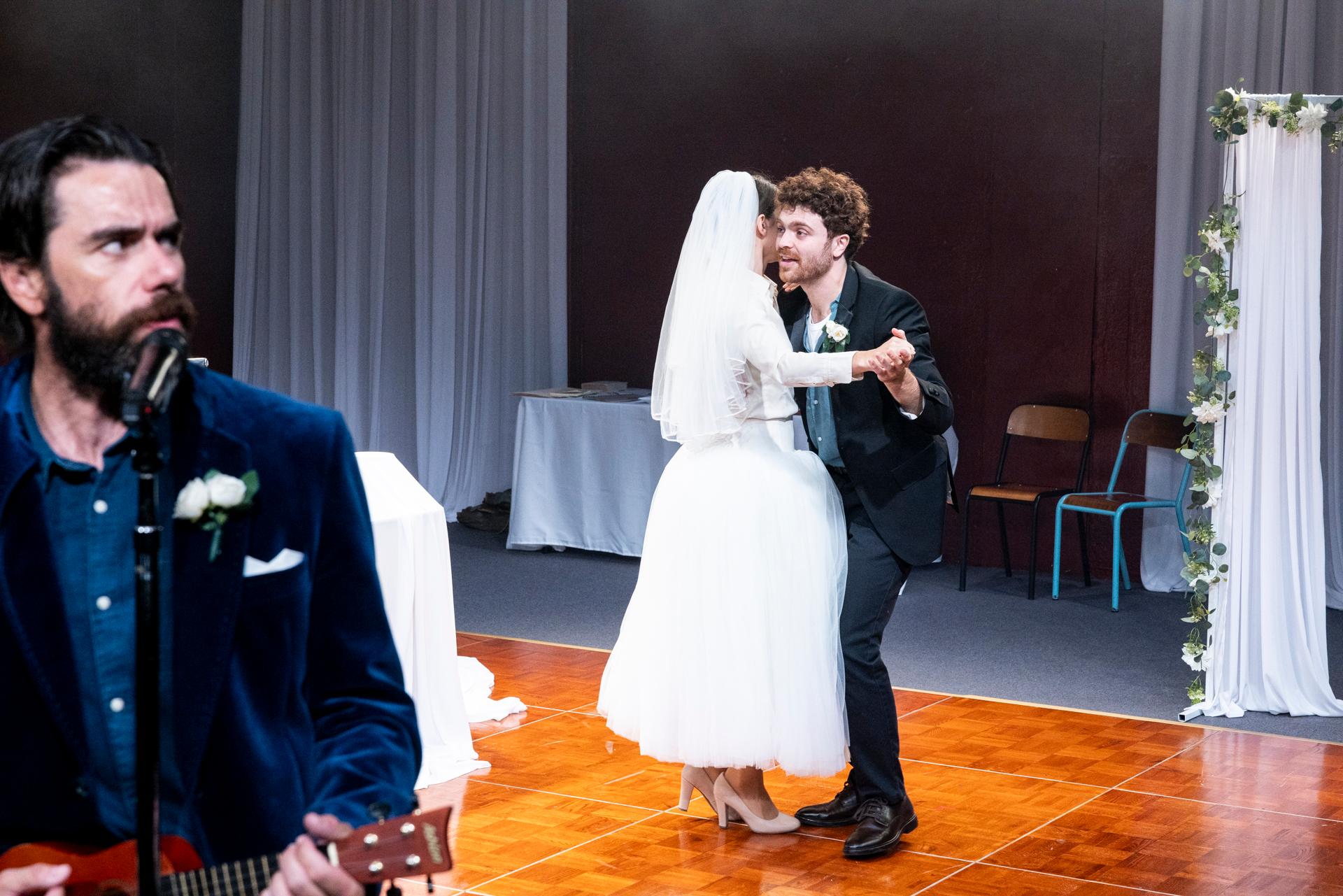
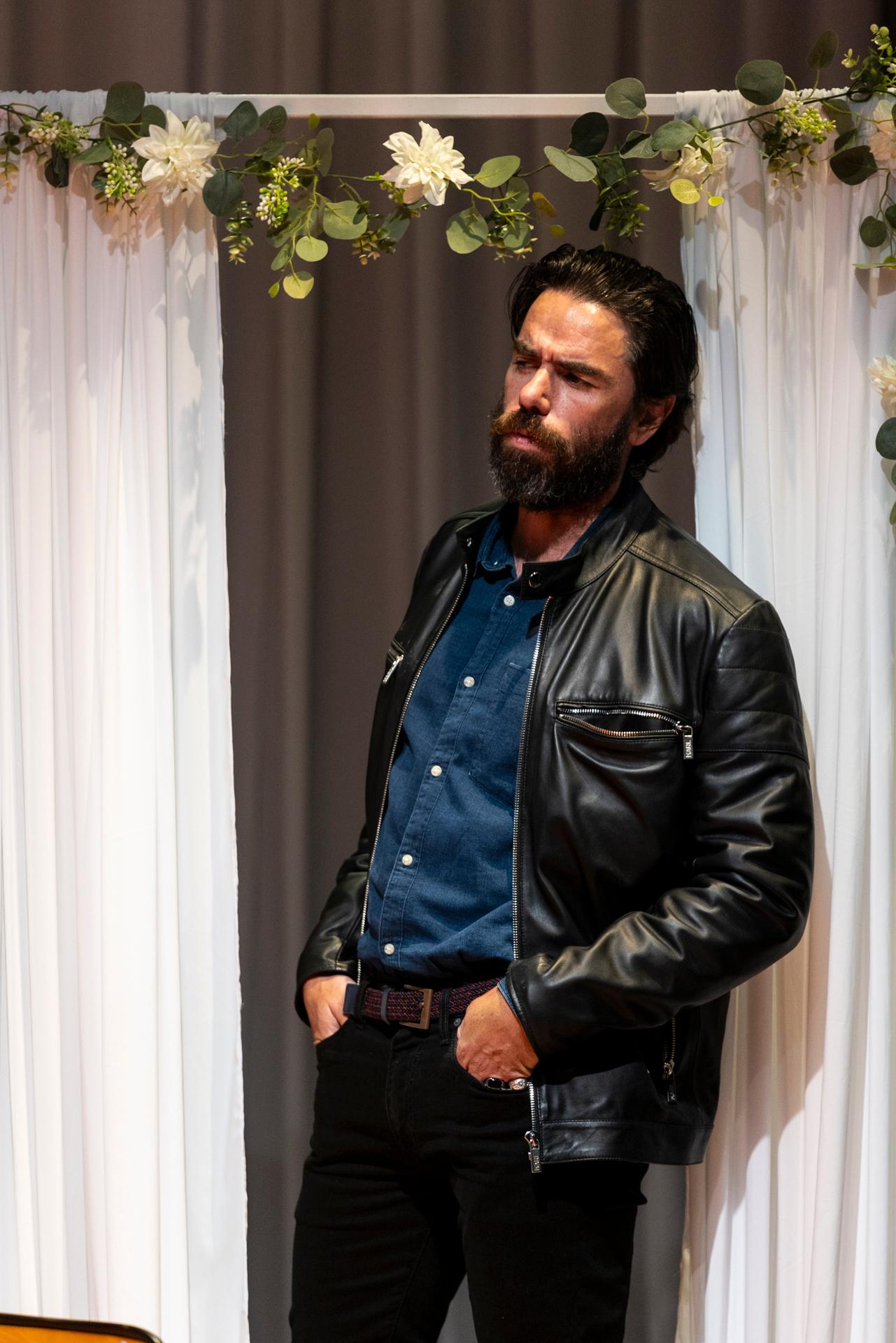
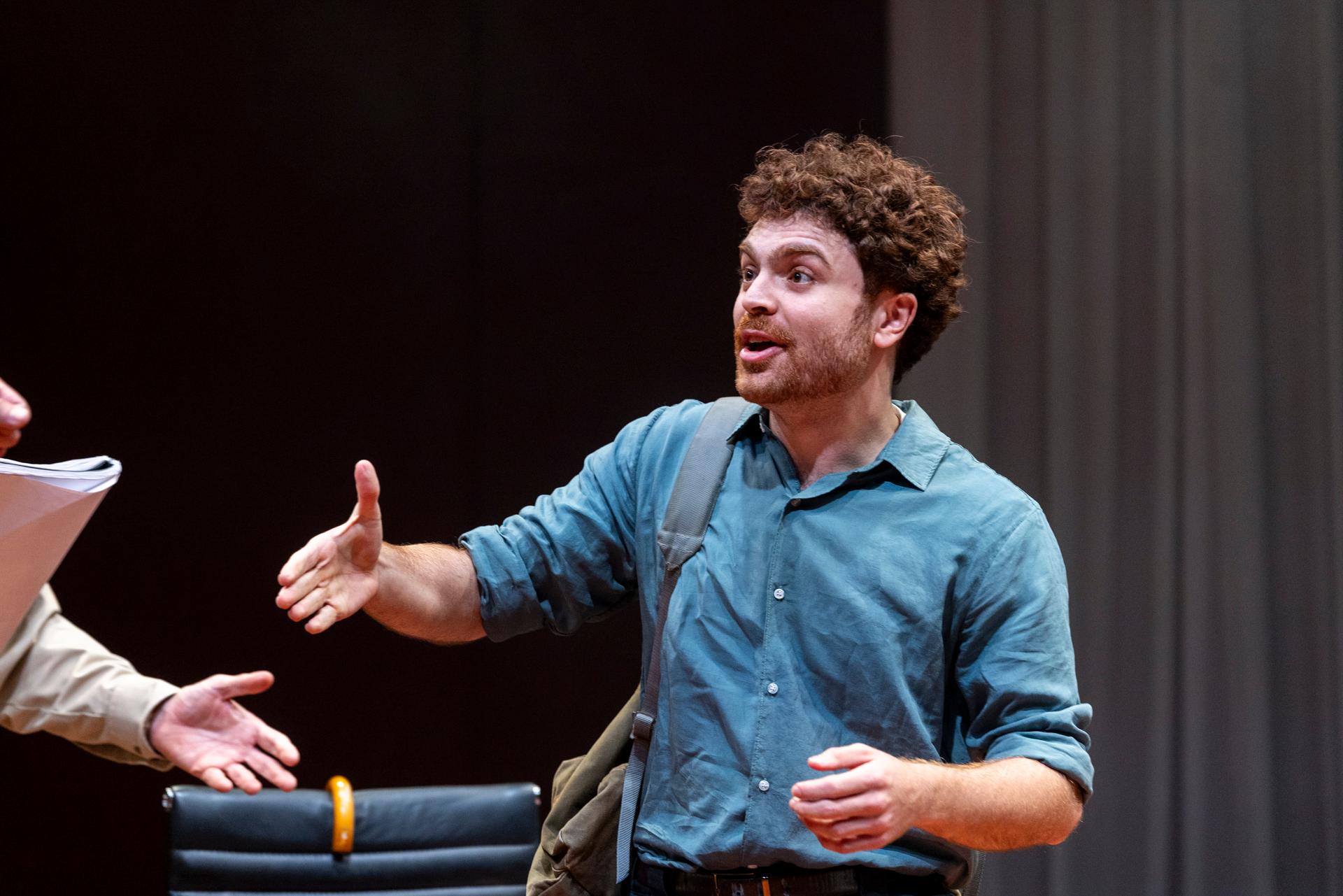
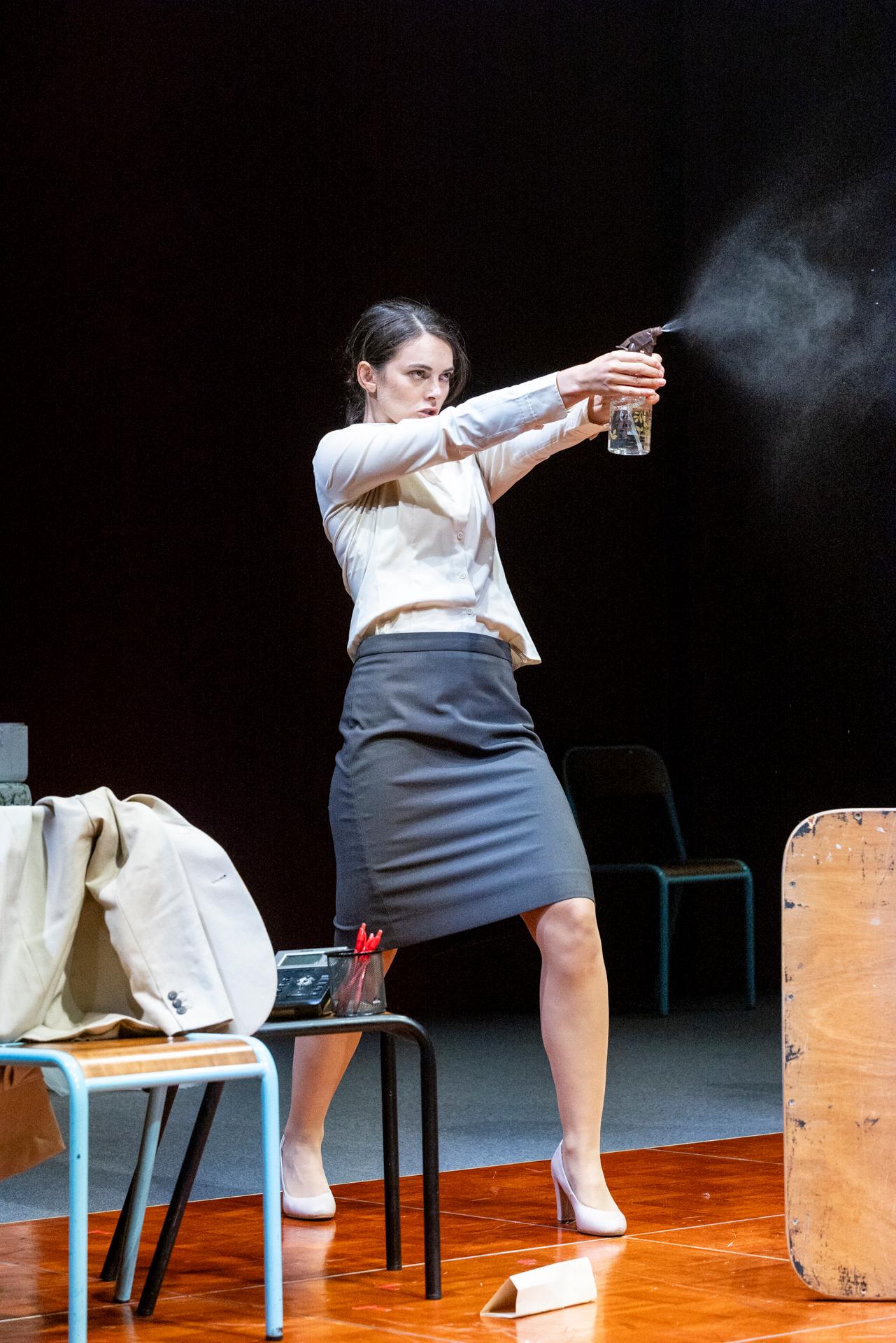
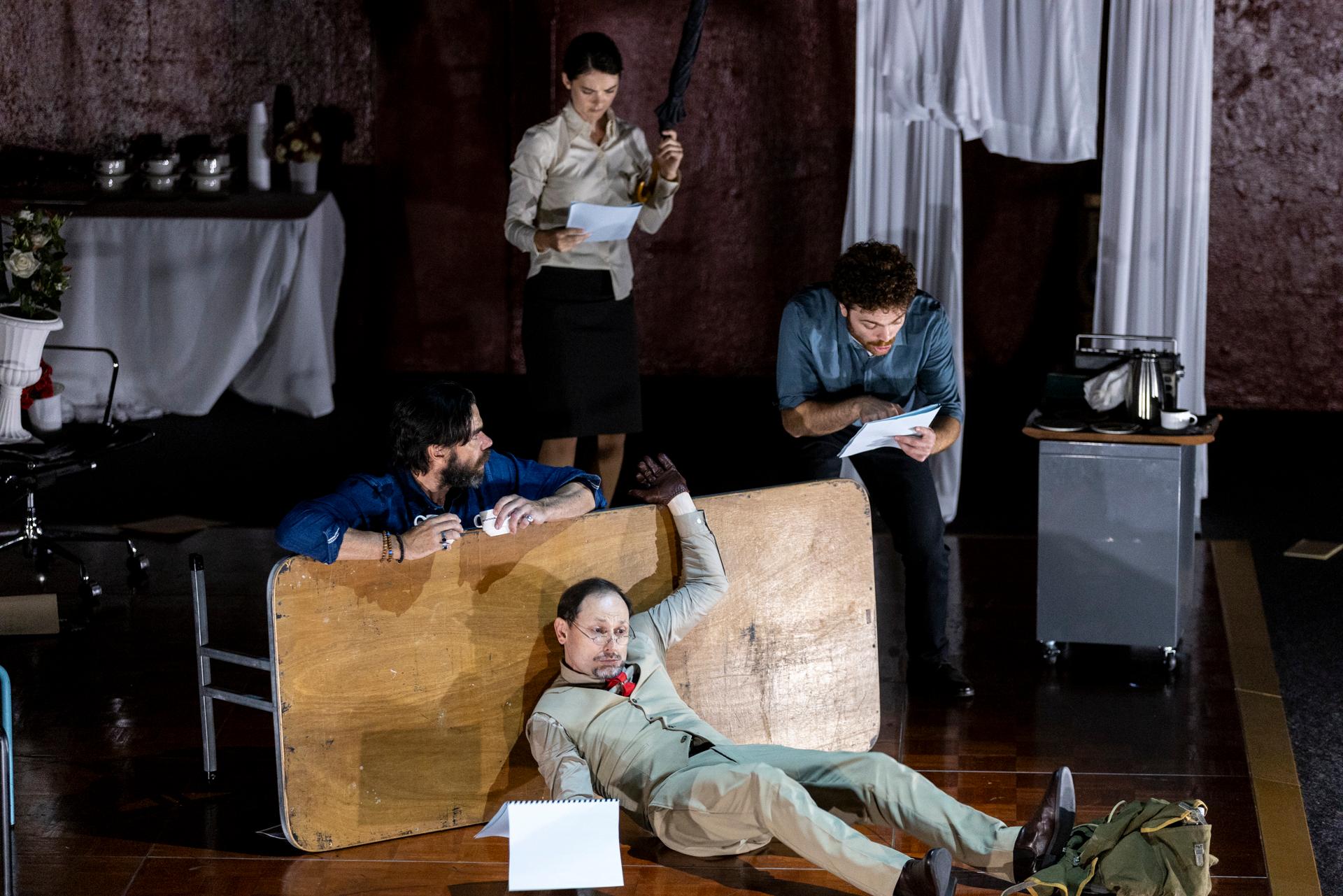
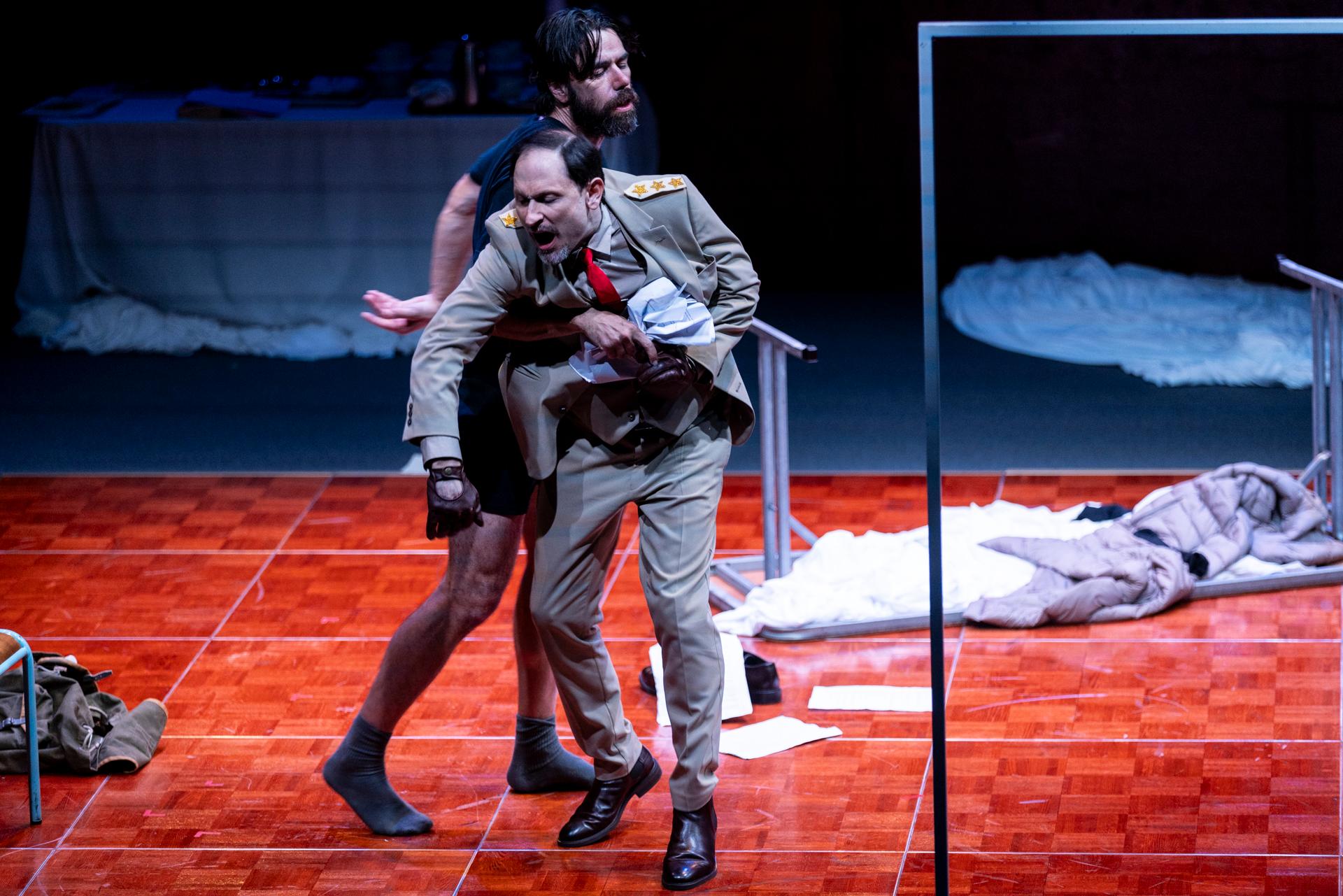
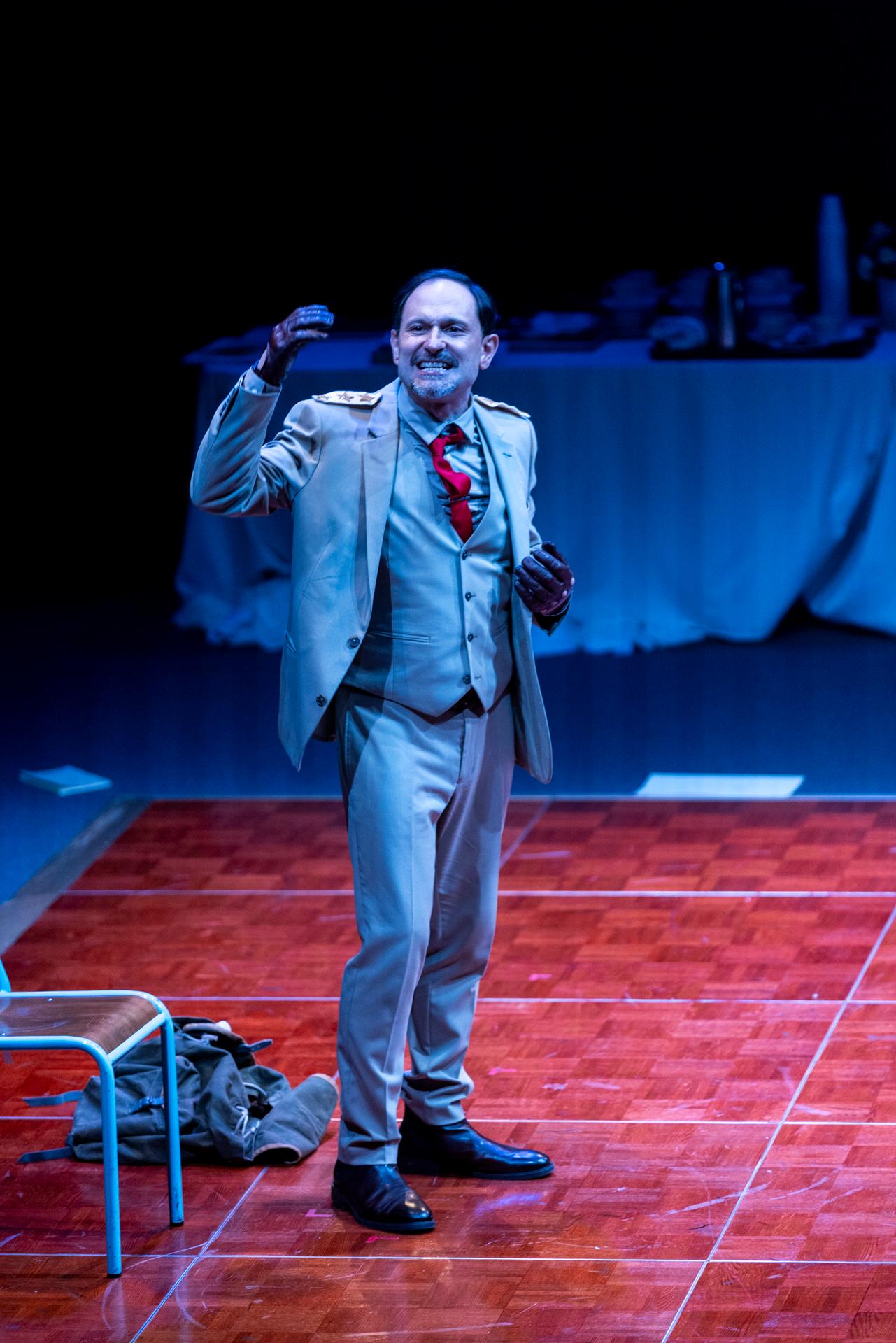
Venue: Belvoir St Theatre (Surry Hills NSW), Feb 21 – Mar 22, 2026 Playwright: Sam Holcroft Director: Margaret Thanos Cast: Eden Falk, Faisal Hamza, Yalin Ozucelik, Rose Riley Images by Brett Boardman
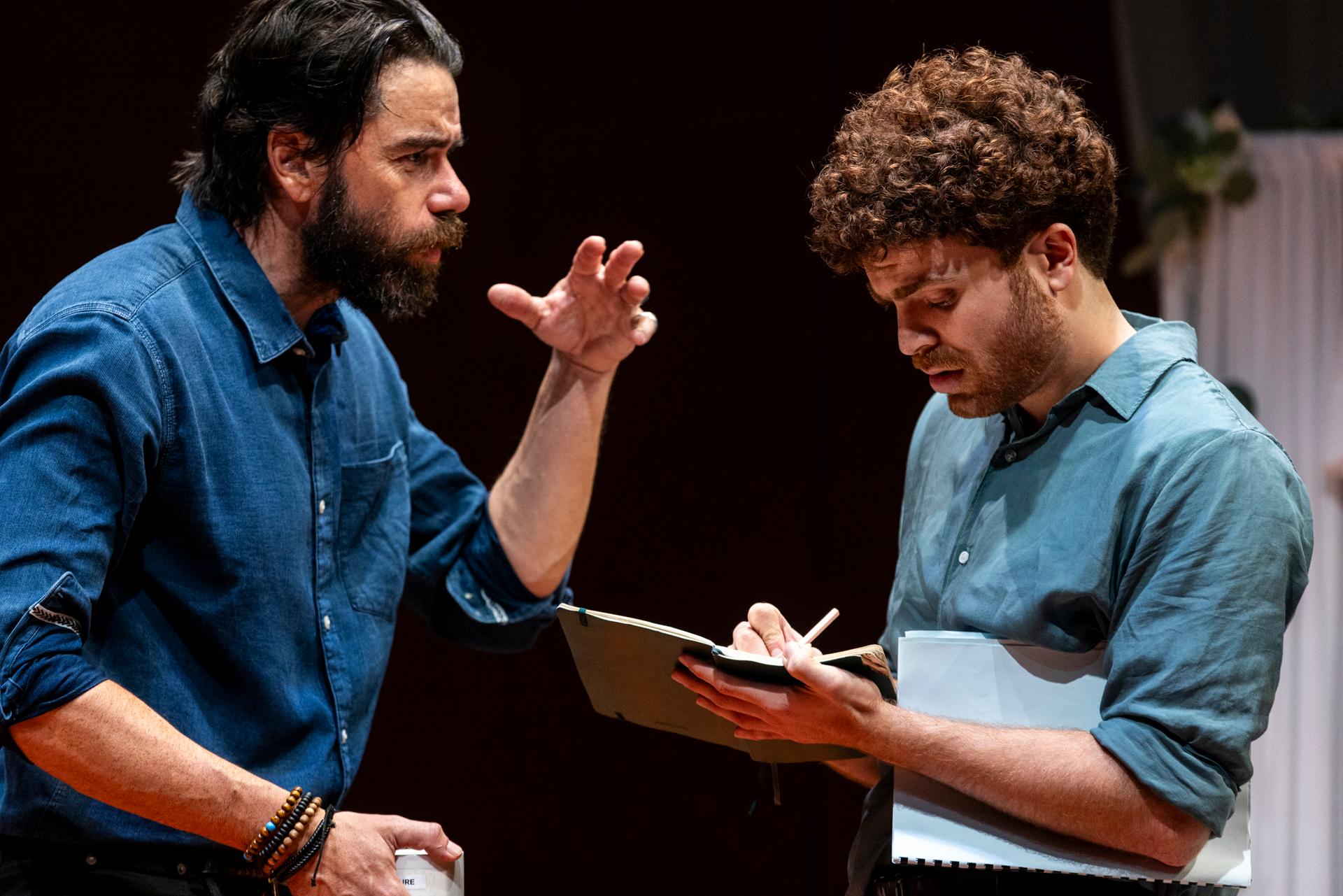
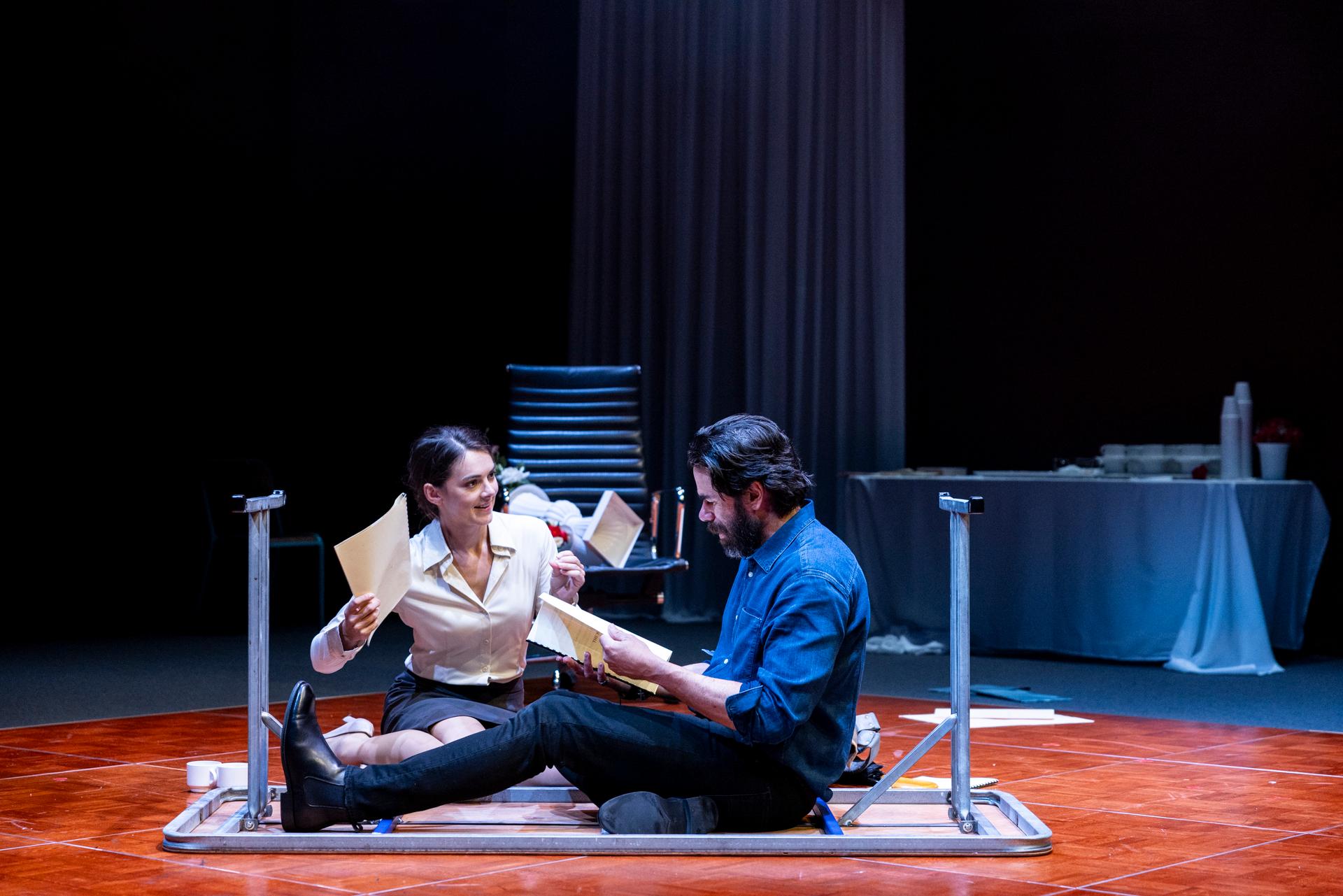
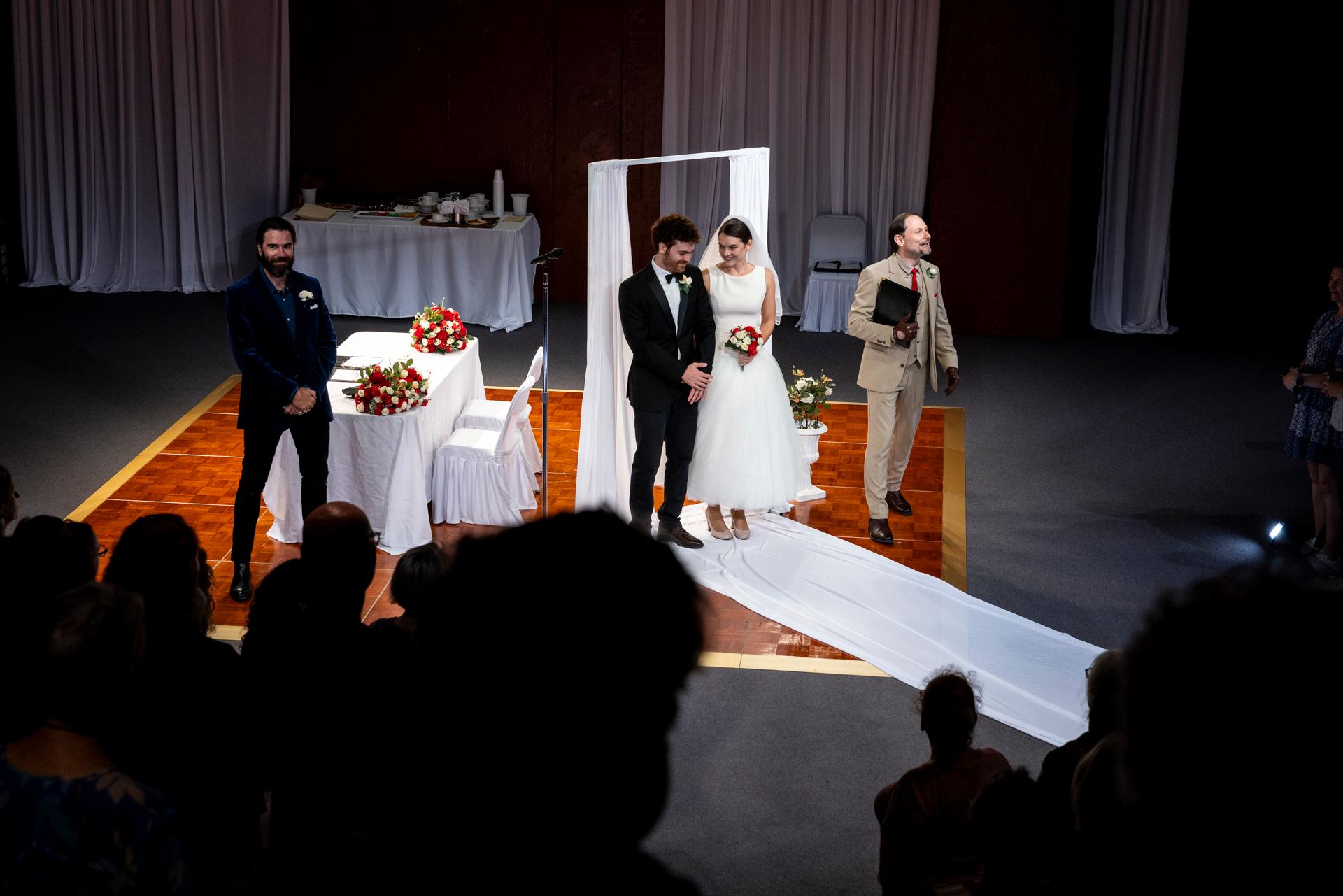
Theatre review A clandestine troupe stages a subversive theatrical production, its barbs aimed squarely at the Ministry of Culture and its censorious apparatus. Interwoven throughout are meditations on the nature of representation itself—whether literal or fictitious—as though artists must cleave to one pole or the other. Sam Holcroft’s A Mirror opens and closes with considerable force, yet the intervening dramaturgy wanders in states of descriptive and ideological confusion.
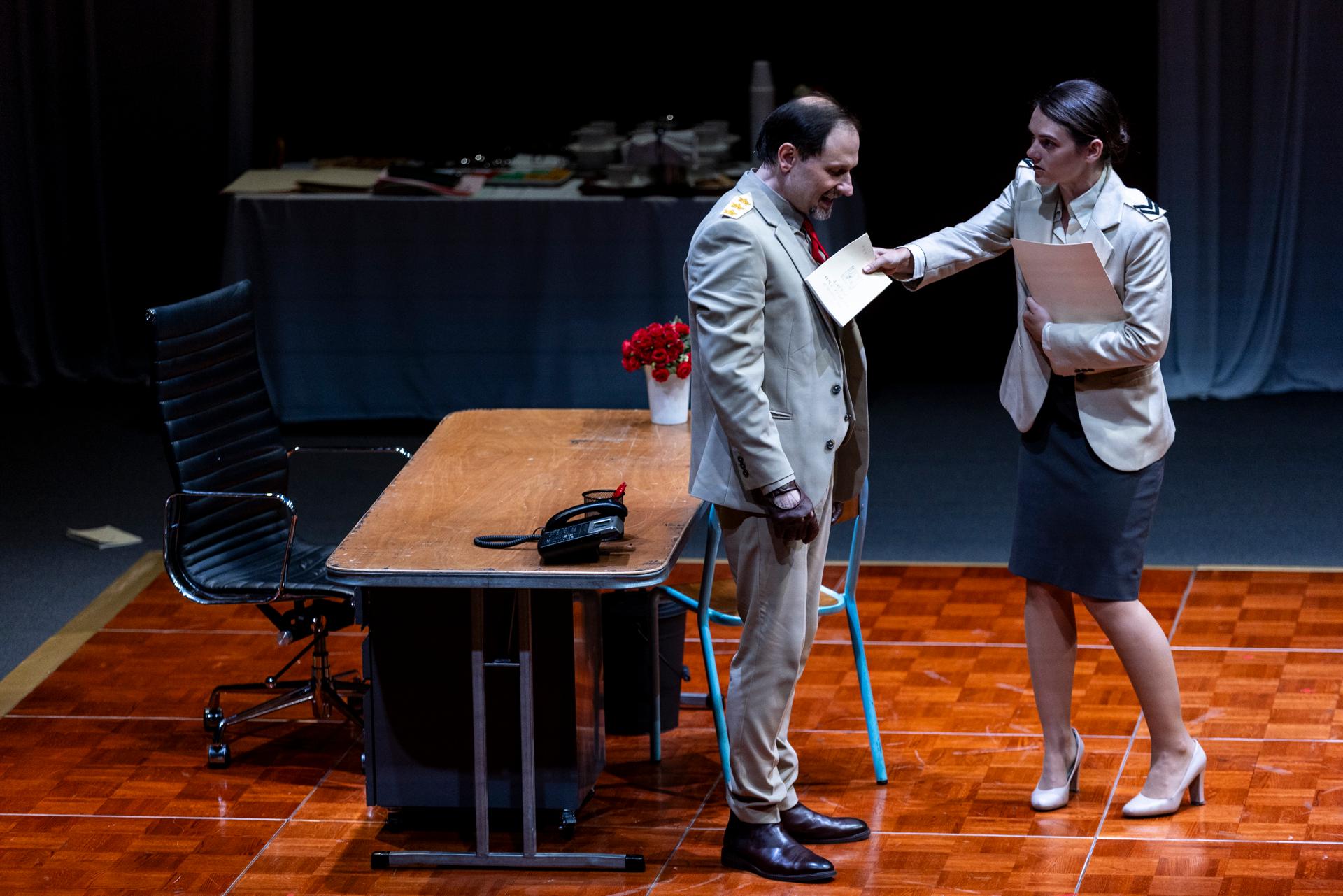
The decision by director Margaret Thanos to render an authoritarian regime through Australian voices, produces an effect of unintended absurdity, particularly when measured against the evident depth of our own democratic institutions (in comparison with other nations). There is, undeniably, a kernel of truth in the play’s suggestion that socioeconomic forces shape the conditions under which art is made, but whether Holcroft’s heightened, schematic approach can resonate meaningfully beyond that observation is less certain. What lingers is not the intricacy of the political critique, but the more elemental, perhaps eternal, truth that enduring work has always demanded of its makers one indispensable quality: courage.
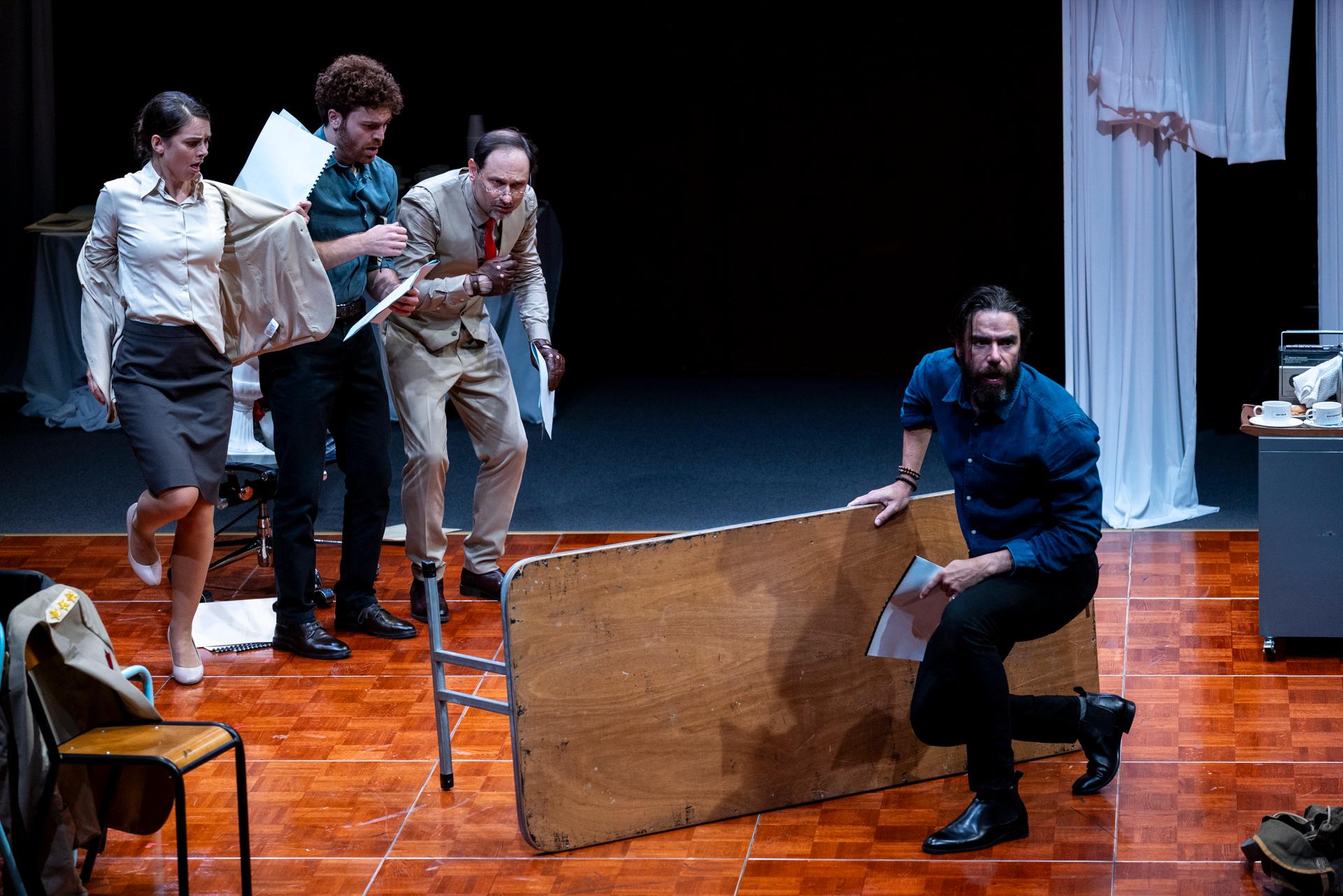
The principal quartet—Eden Falk, Faisal Hamza, Yalin Ozucelik, and Rose Riley—bring considerable acuity to their respective roles, yet seldom cohere into an ensemble that transcends the sum of its parts. For all the mounting urgency of their narrative arc, little of enduring resonance remains once the final curtain falls. The design elements, too, settle for competence rather than distinction. Angelina Daniel’s set and costumes, while serviceable, lapse into staidness precisely where theatrical boldness is most required. Phoebe Pilcher’s lighting and Daniel Herten’s score prove their mettle in moments of heightened tension, yet falter during the protracted stretches of naturalism, which grow unnecessarily dour.
It is undeniable that fascism is ascendant across the globe. In Australia, democratic institutions appear, for the present, intact—yet the historical record offers scant comfort. Subversion, after all, requires no novelty of method; the same infiltrations attempted for centuries persist, adapted to contemporary conditions. Authoritarian regimes, almost without exception, train their sights first on the arts and the media—not merely as instruments of propaganda, but as sites of potential resistance. History demonstrates that while the wholesale destruction of a creative culture may require extreme force, the systematic erosion of democratic voice is altogether more achievable, more insidious.
The possibility that such a future could take root here is not abstract; it is a latent condition, ever-present. What stands against it is not inevitability, but resolve. The more tenaciously we hold to our convictions—the more defiantly we insist upon critical thought, and the messy, generative space of artistic freedom—the less hospitable this society becomes to the despots who would claim it. Resistance, in this sense, is not a dramatic gesture, but a sustained practice.
 Suzy Goes See