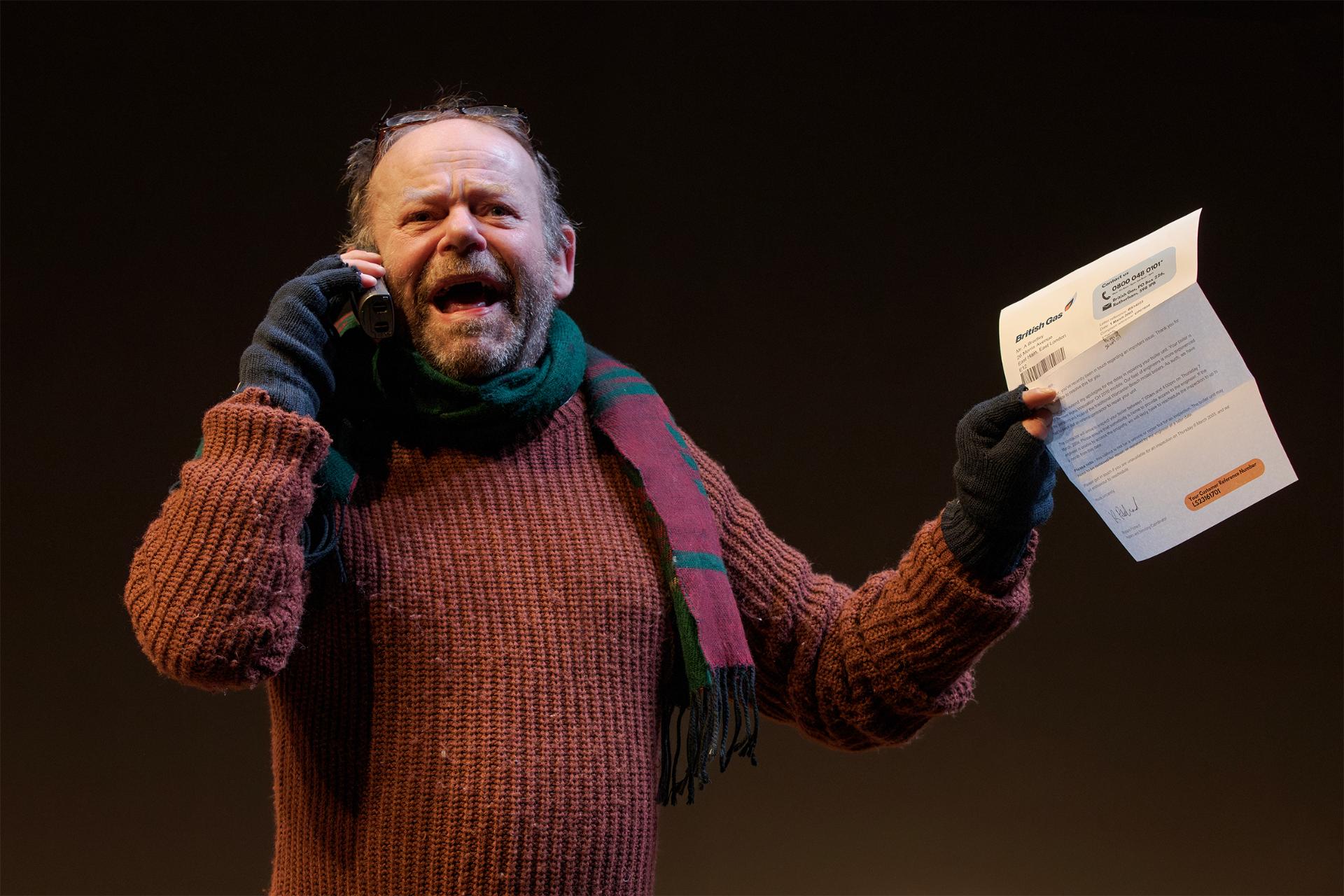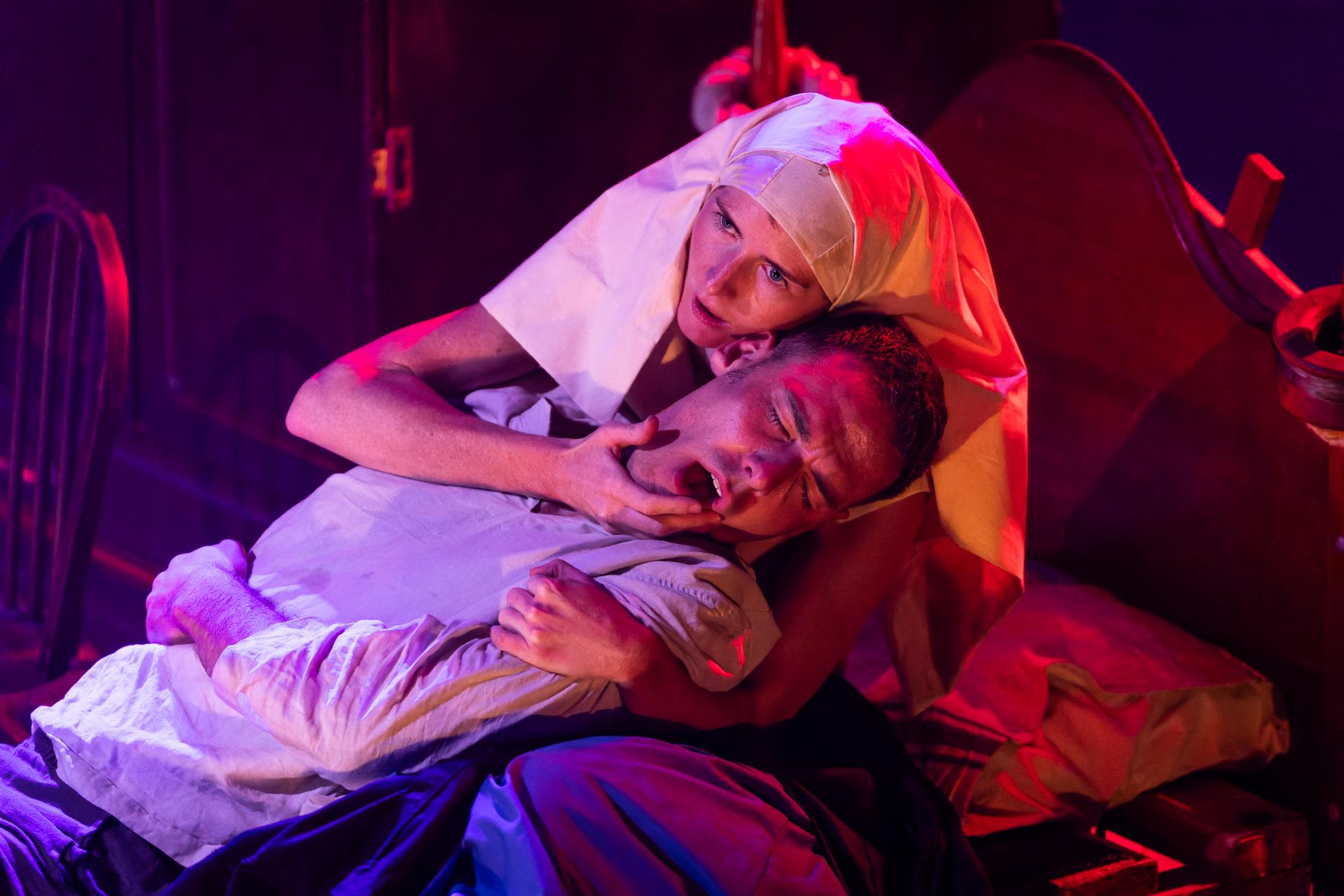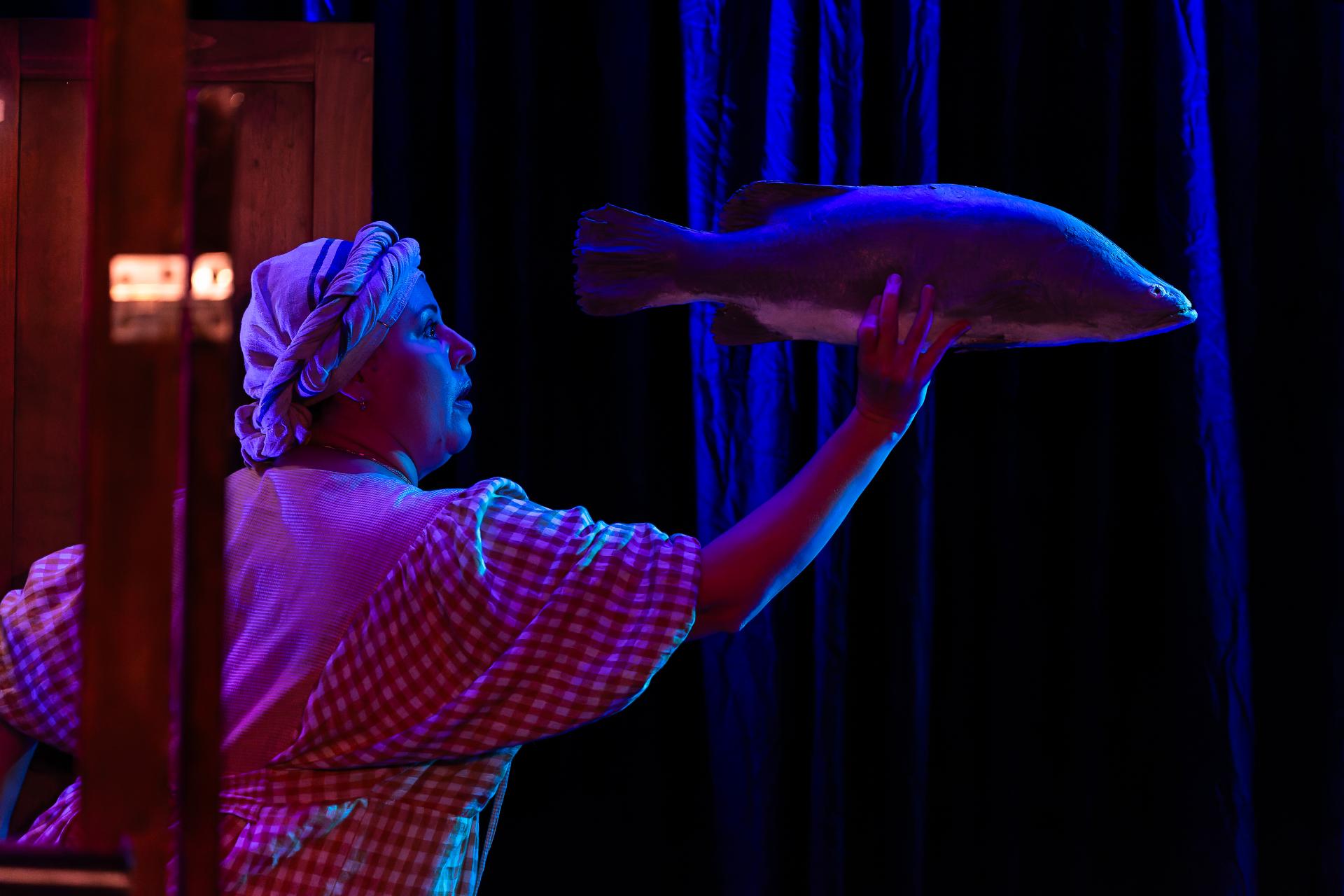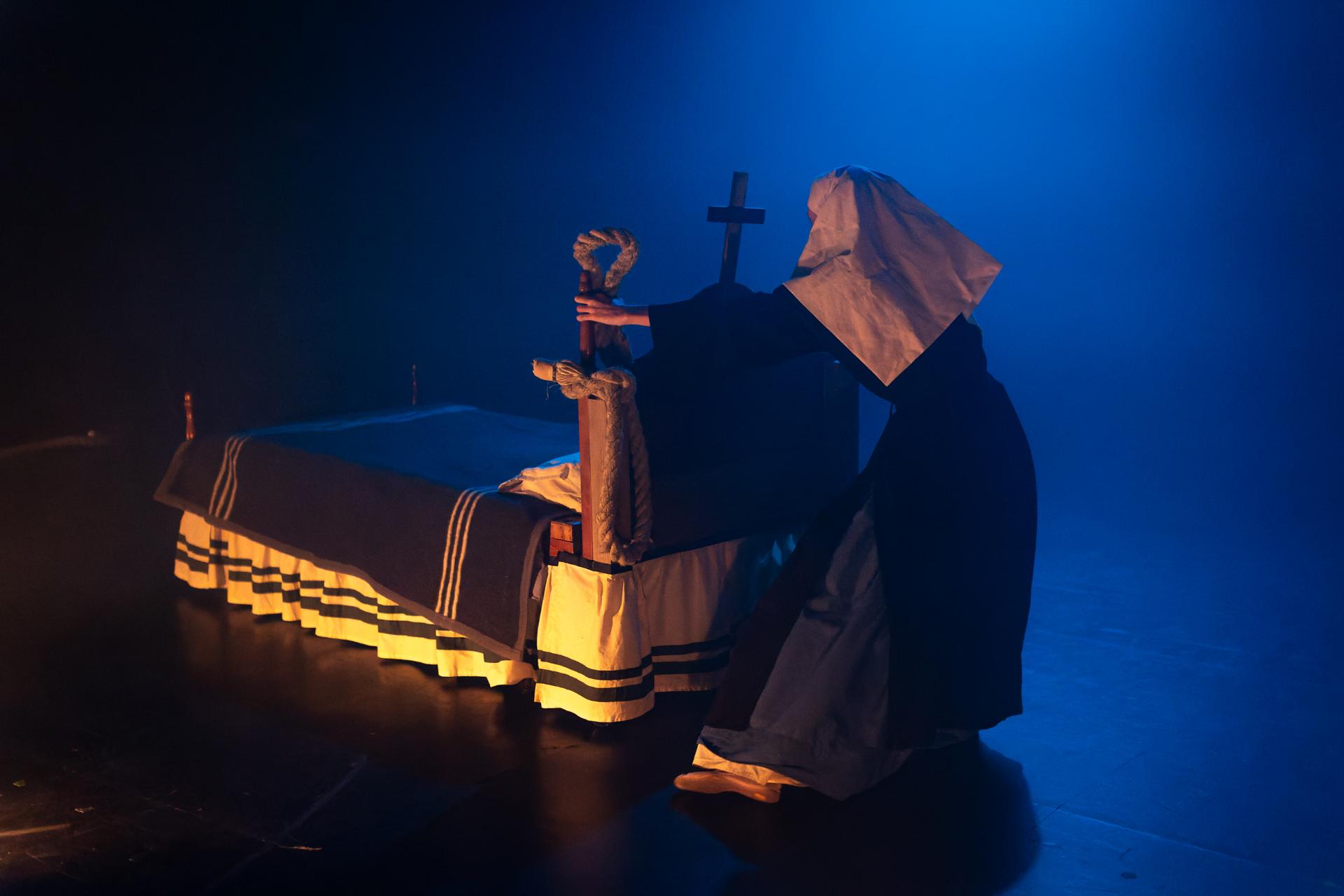
Review: Gilgamesh (Carriageworks)

Venue: Carriageworks (Eveleigh NSW), Sep 26 – Oct 5, 2024
Composer: Jack Symonds
Librettist: Louis Garrick
Conductor: Jack Symonds
Director: Kip Williams
Cast: Jeremy Kleeman, Jessica O’Donoghue, Mitchell Riley, Jane Sheldon, Daniel Szeisong Todd
Images by Daniel Boud

Theatre review
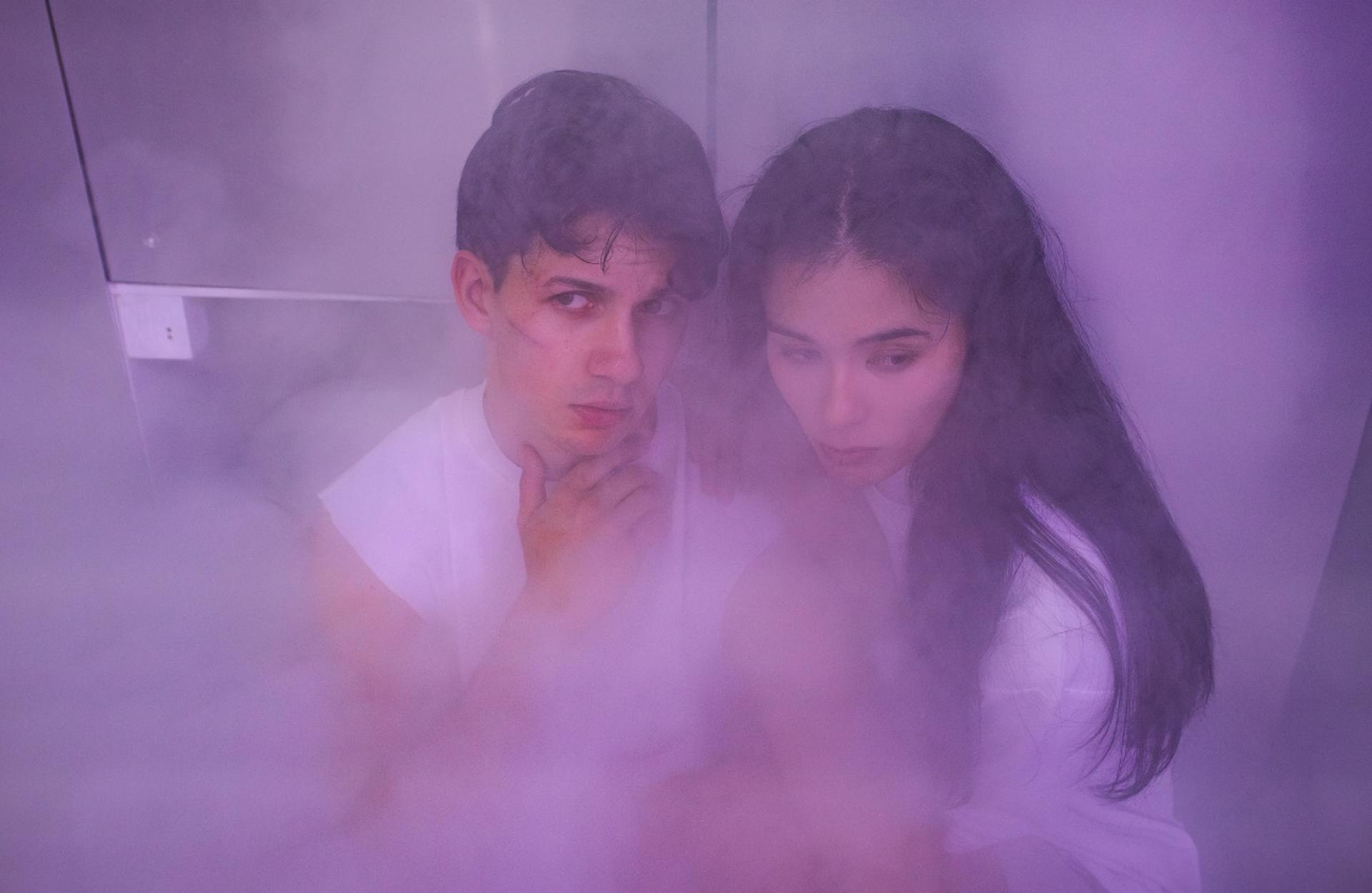
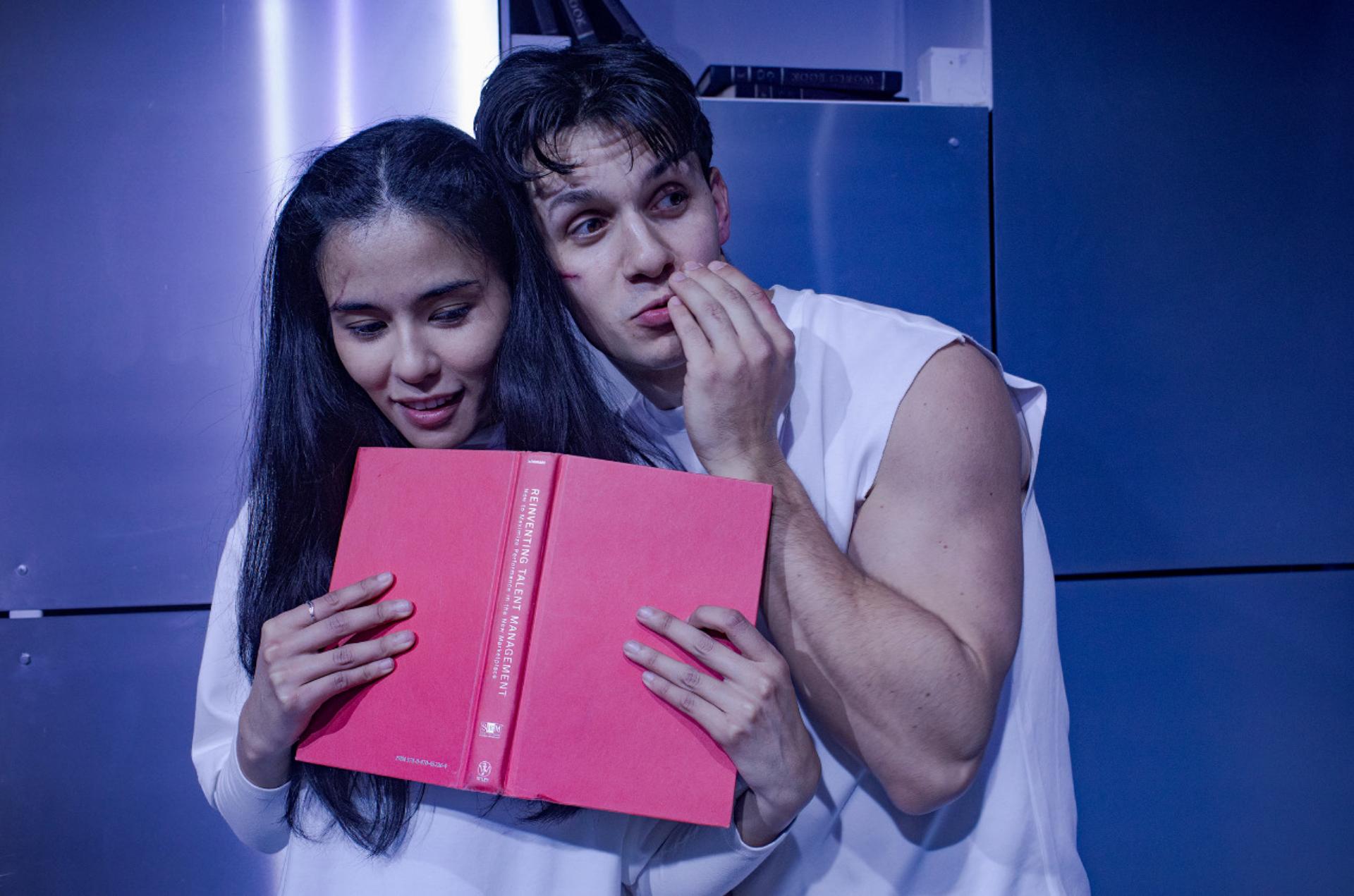
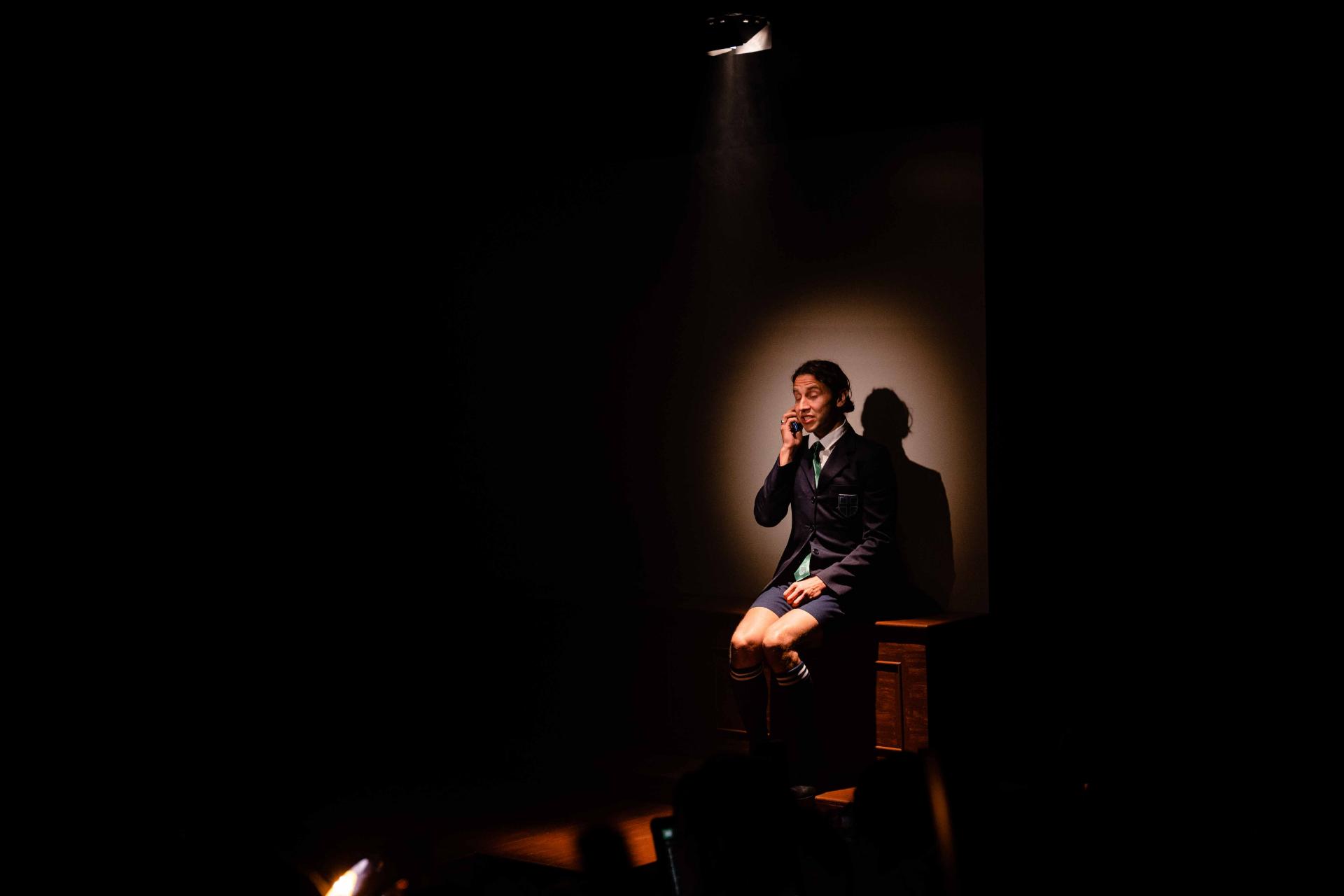
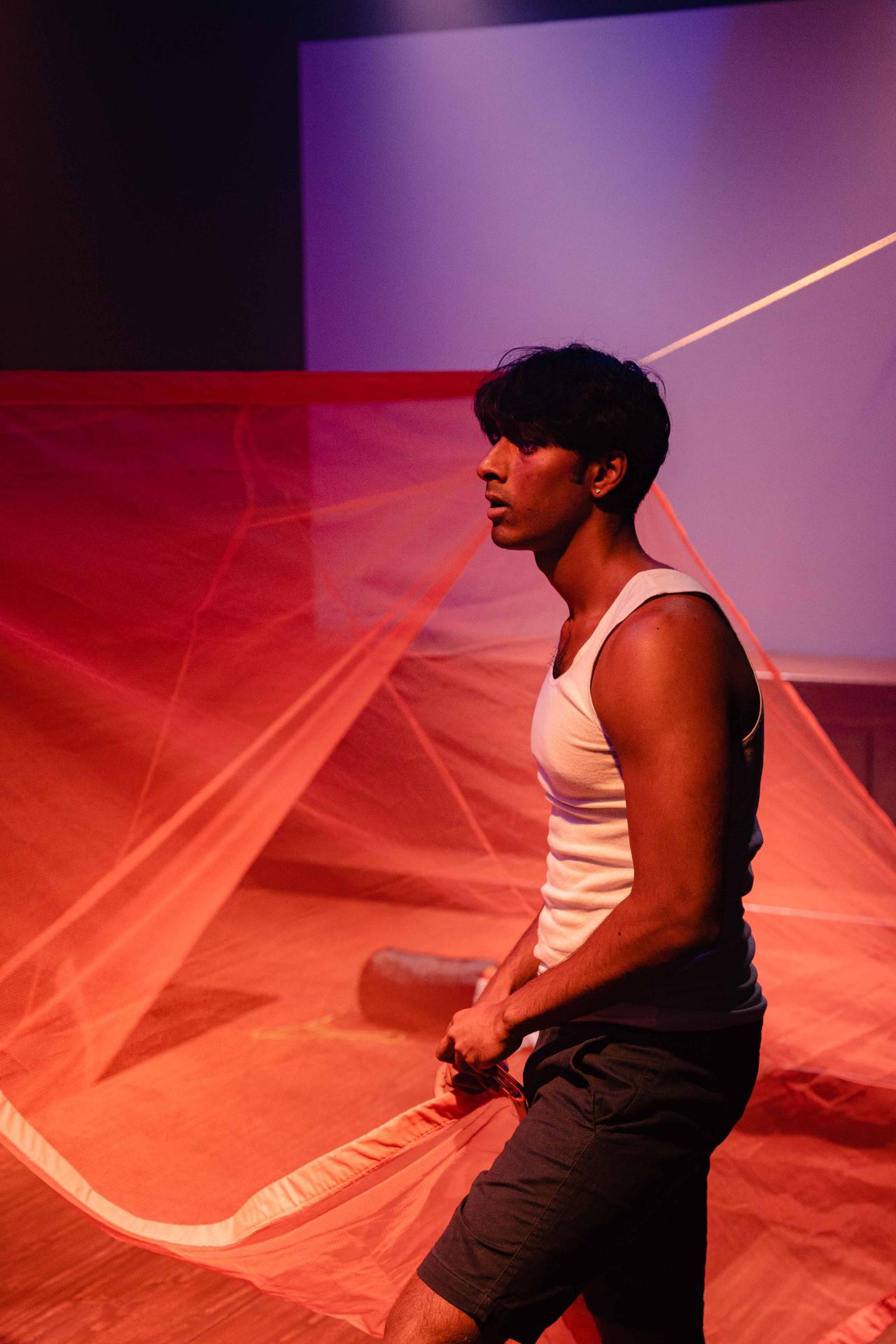
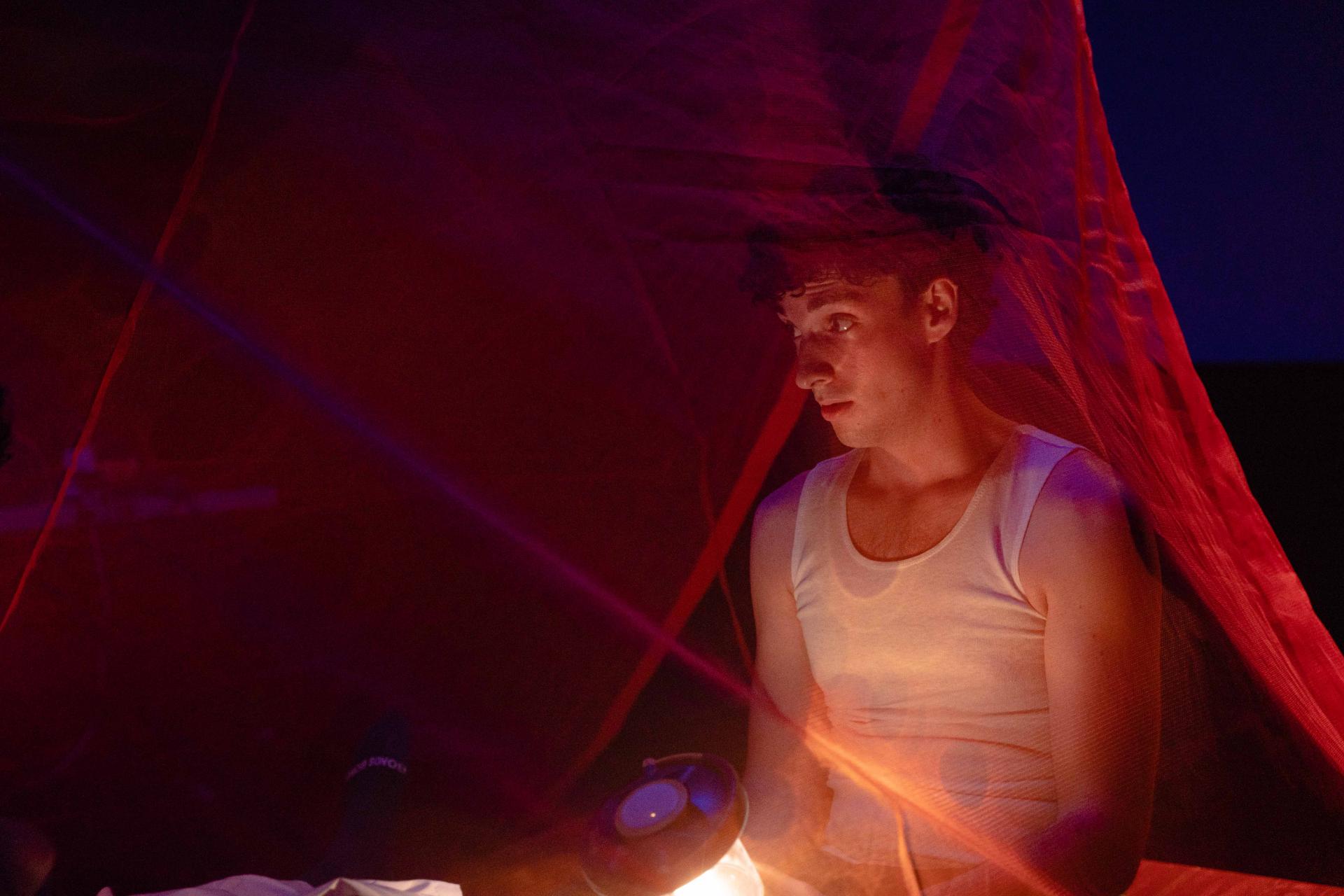
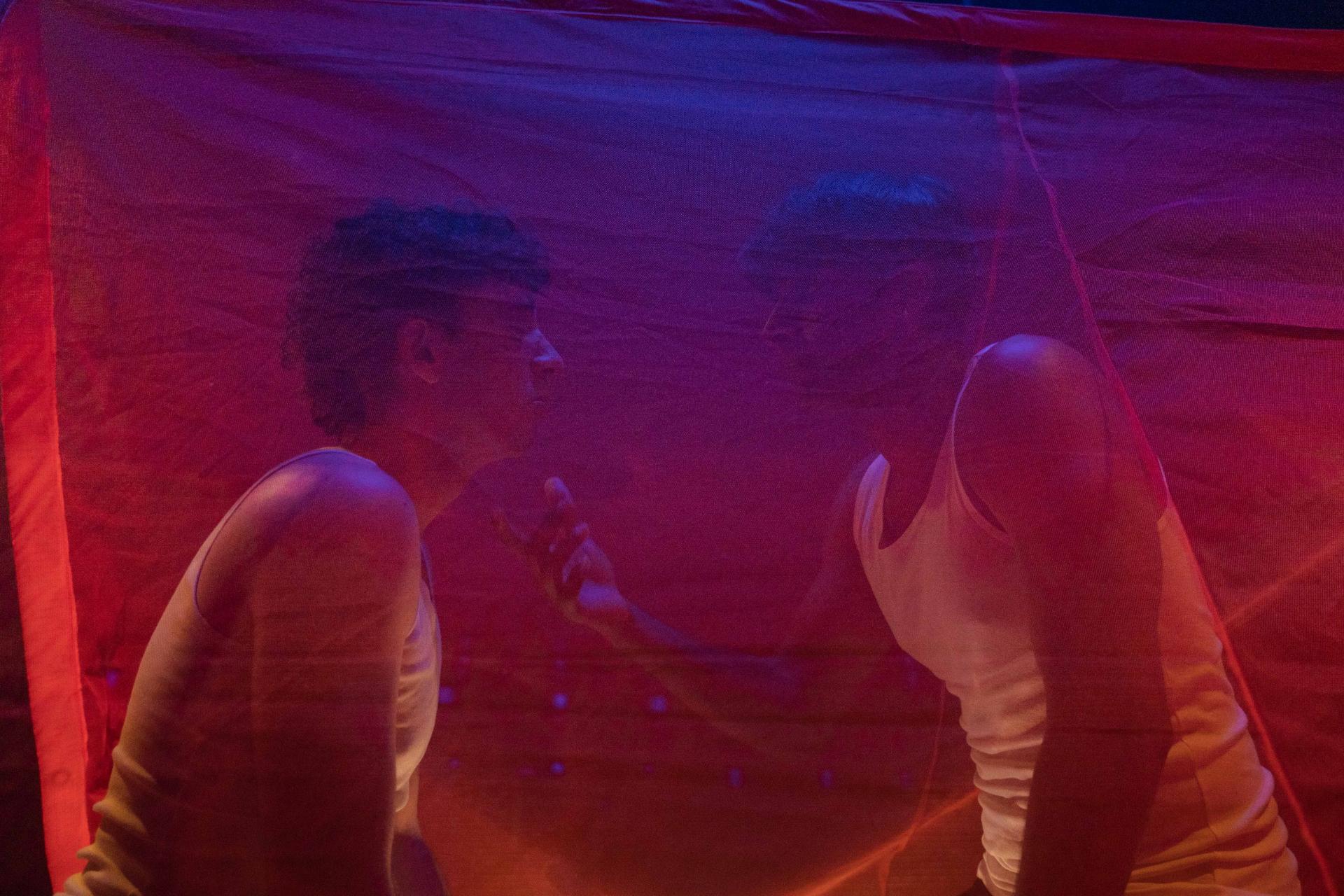
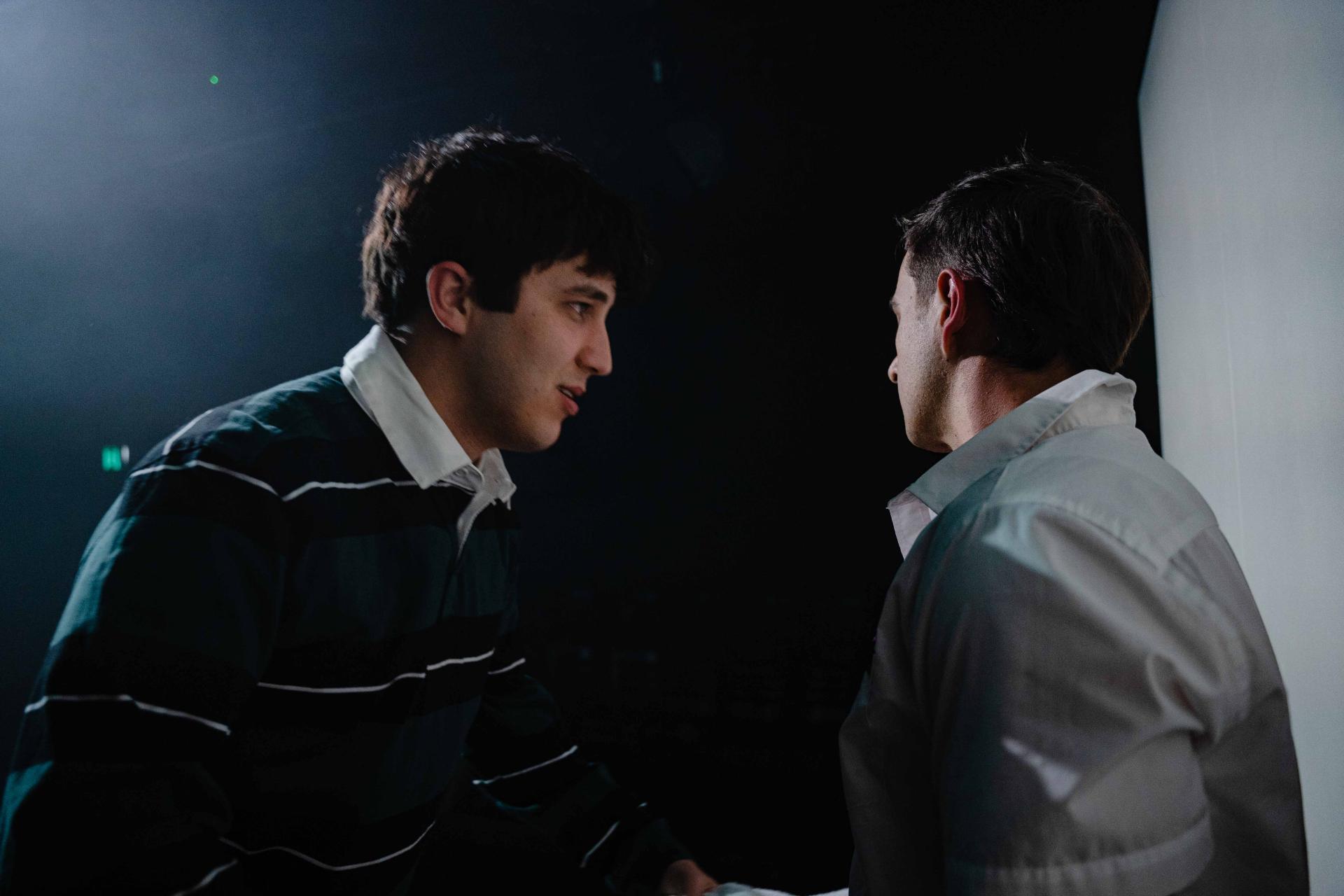
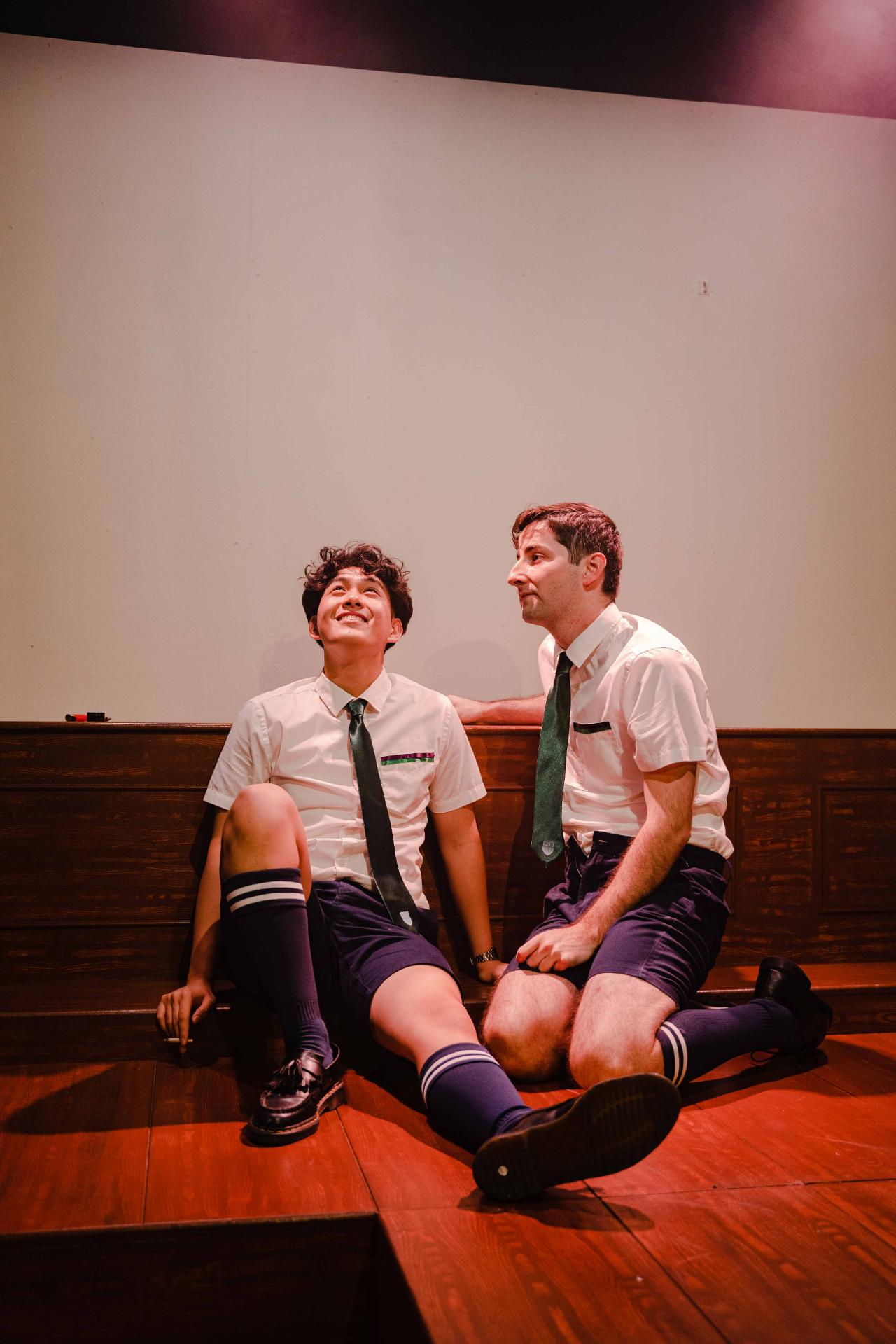
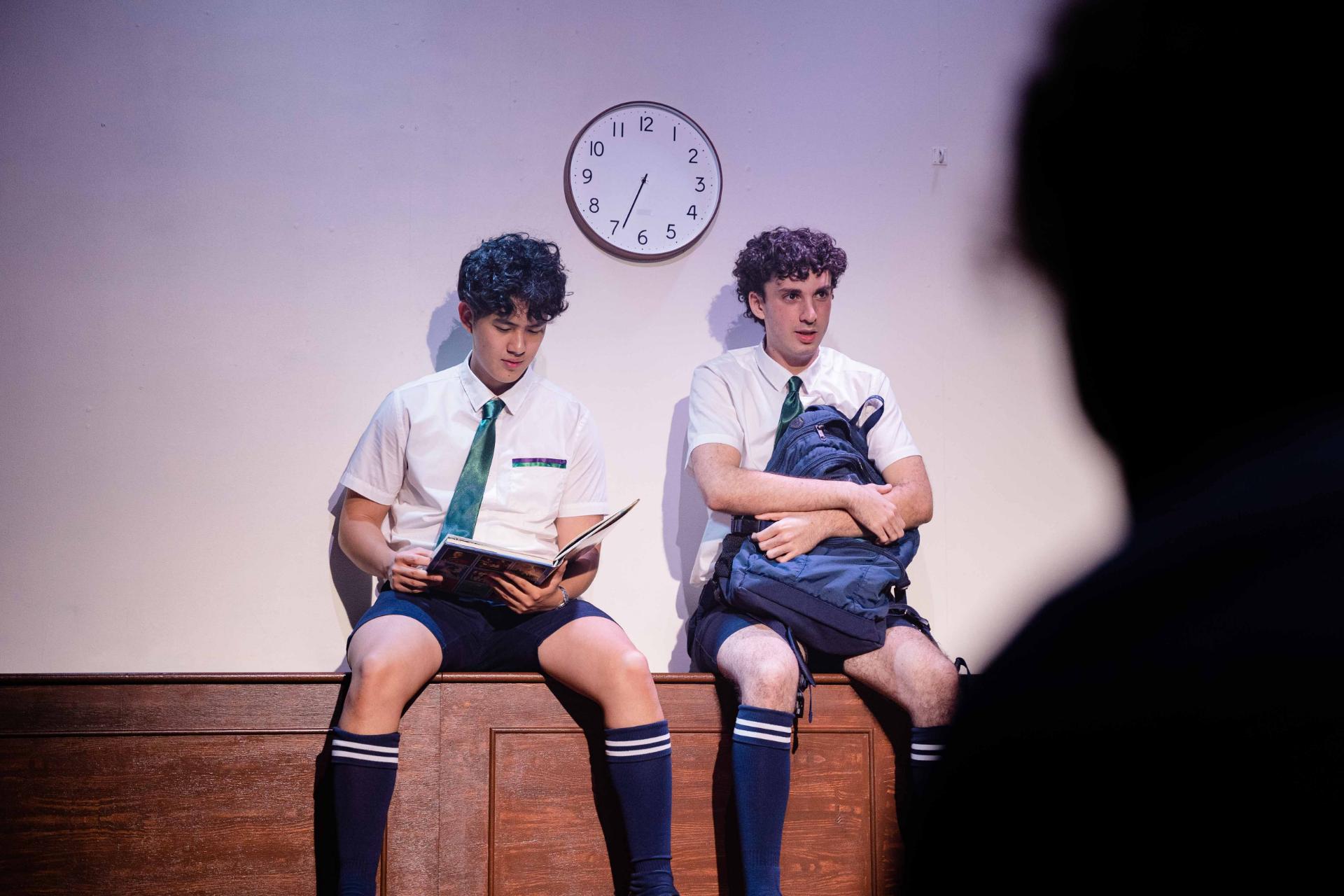
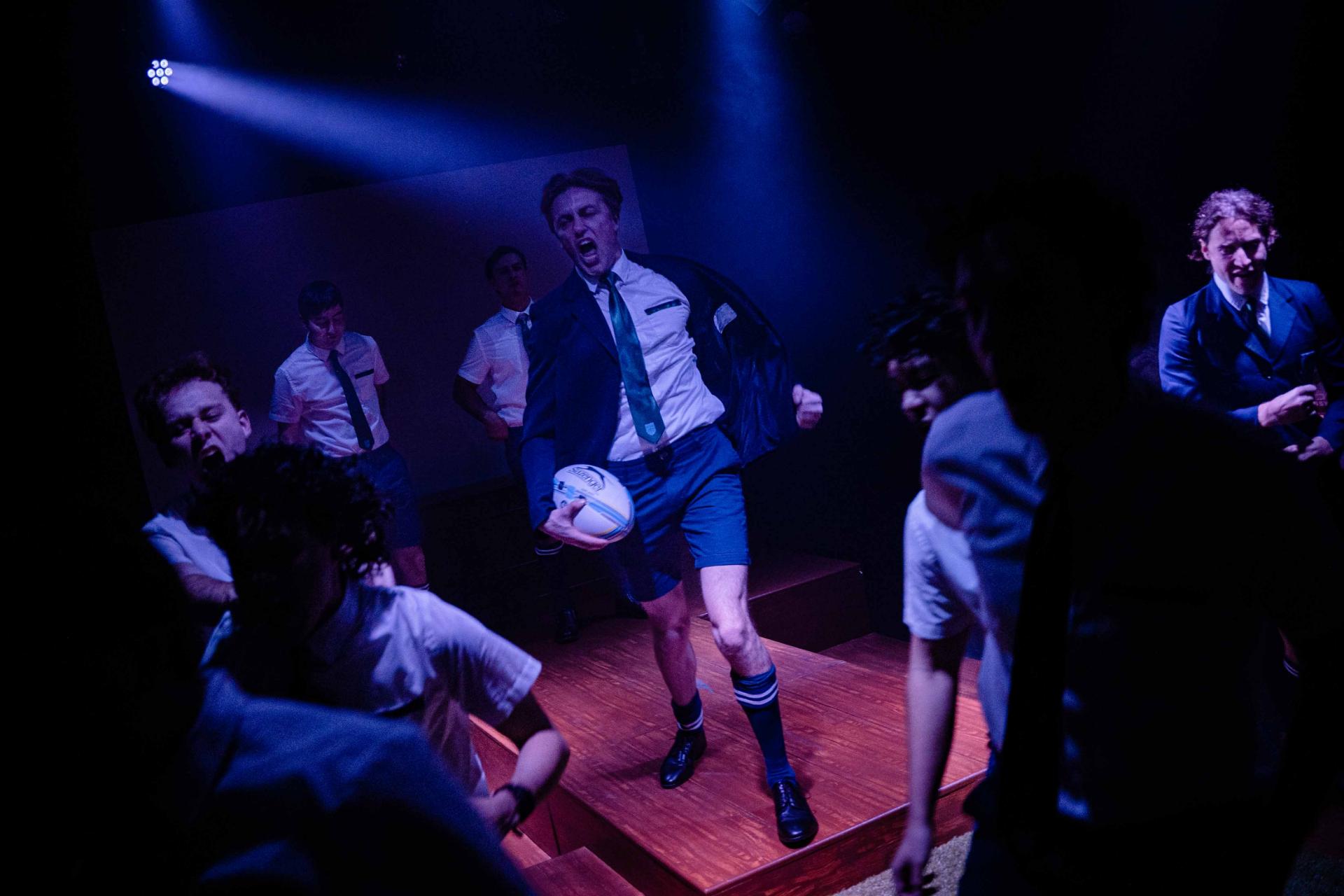
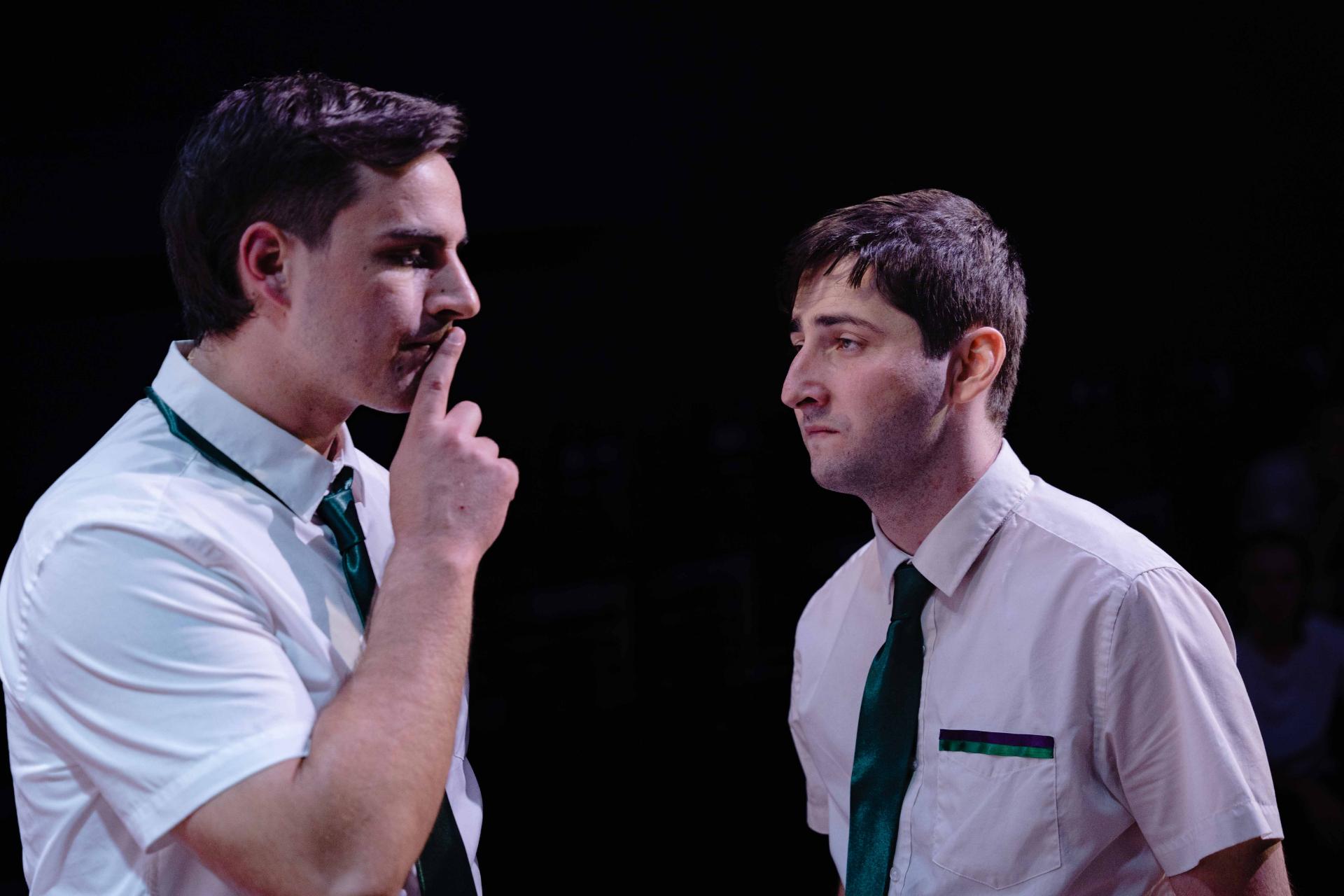
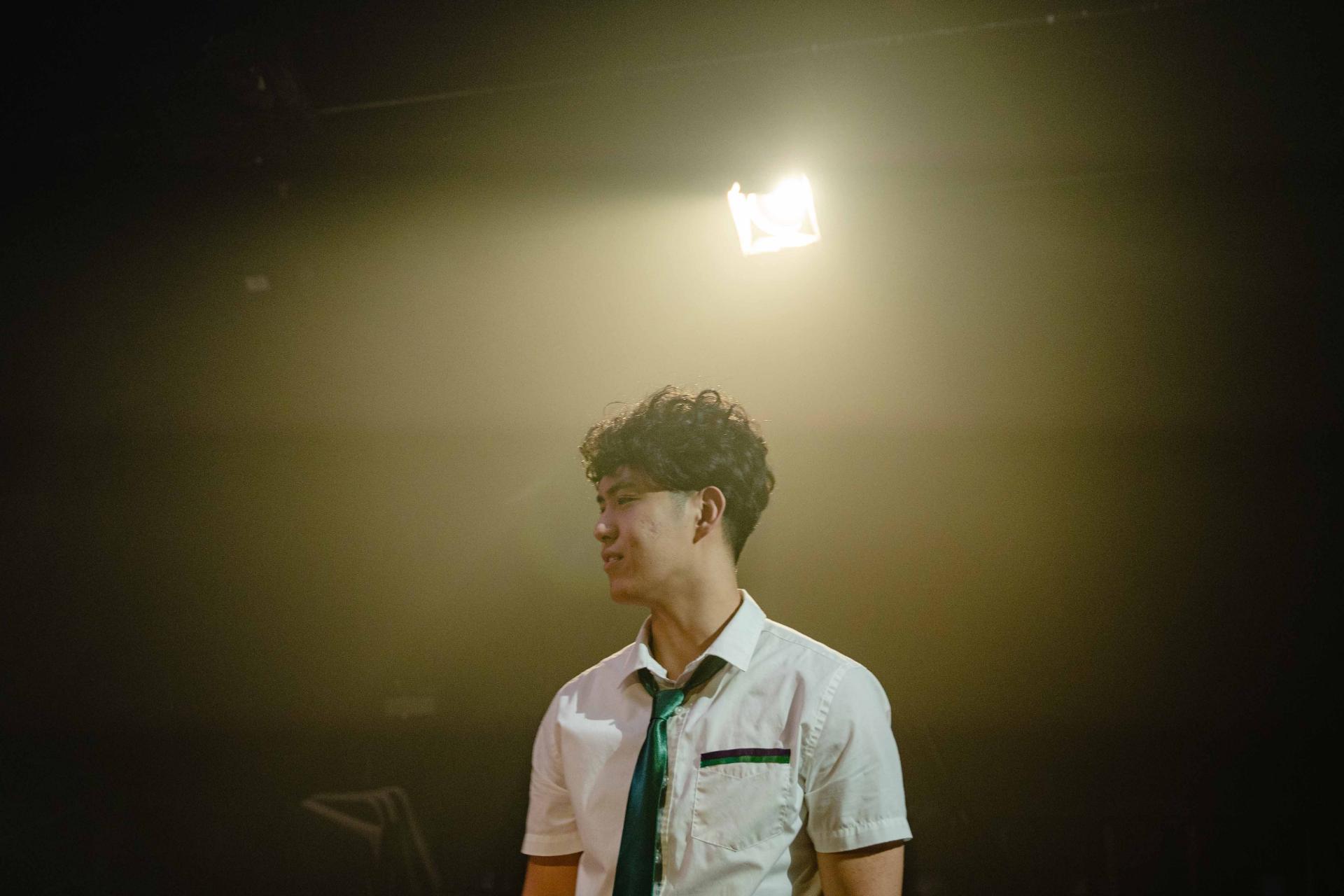
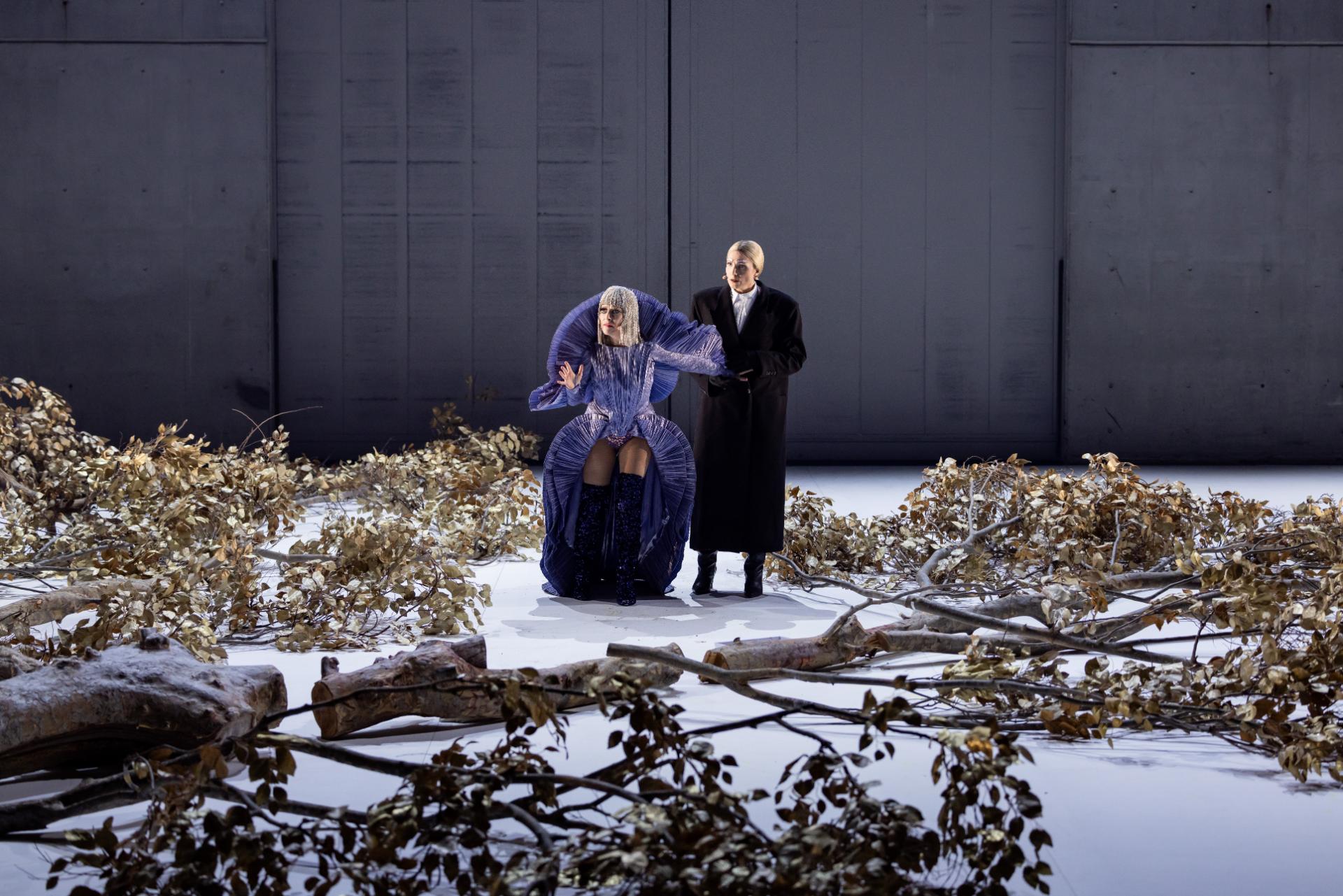
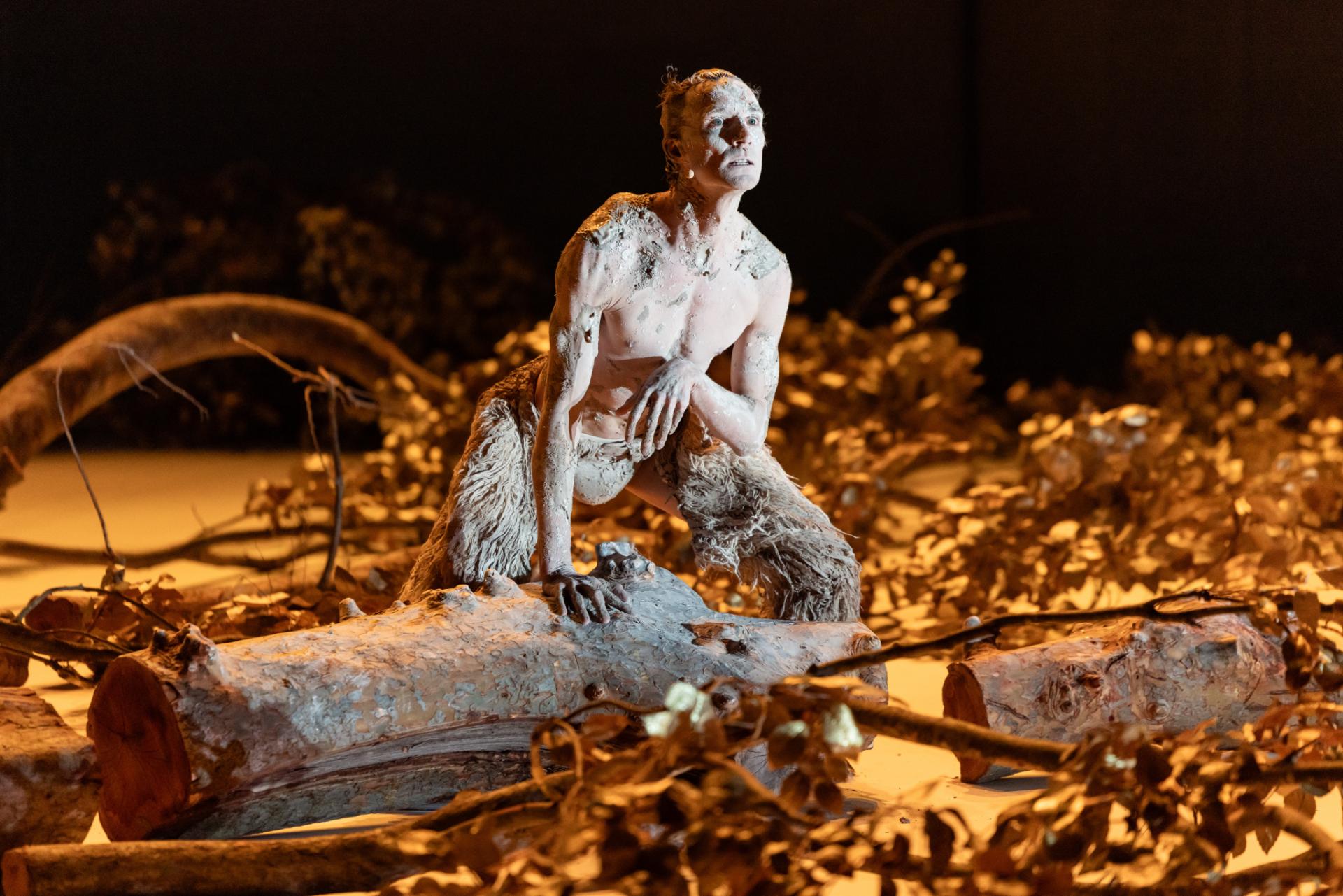
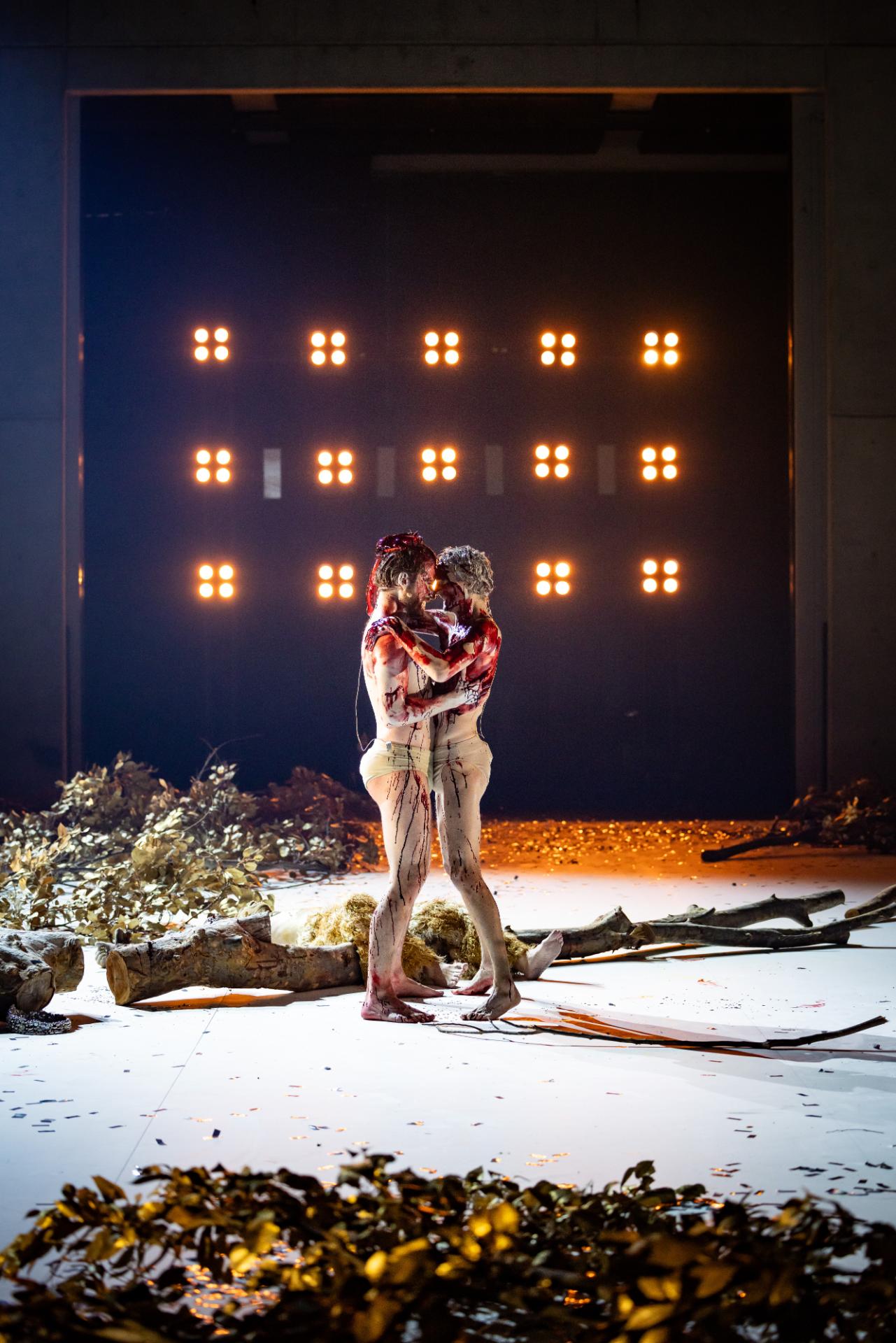
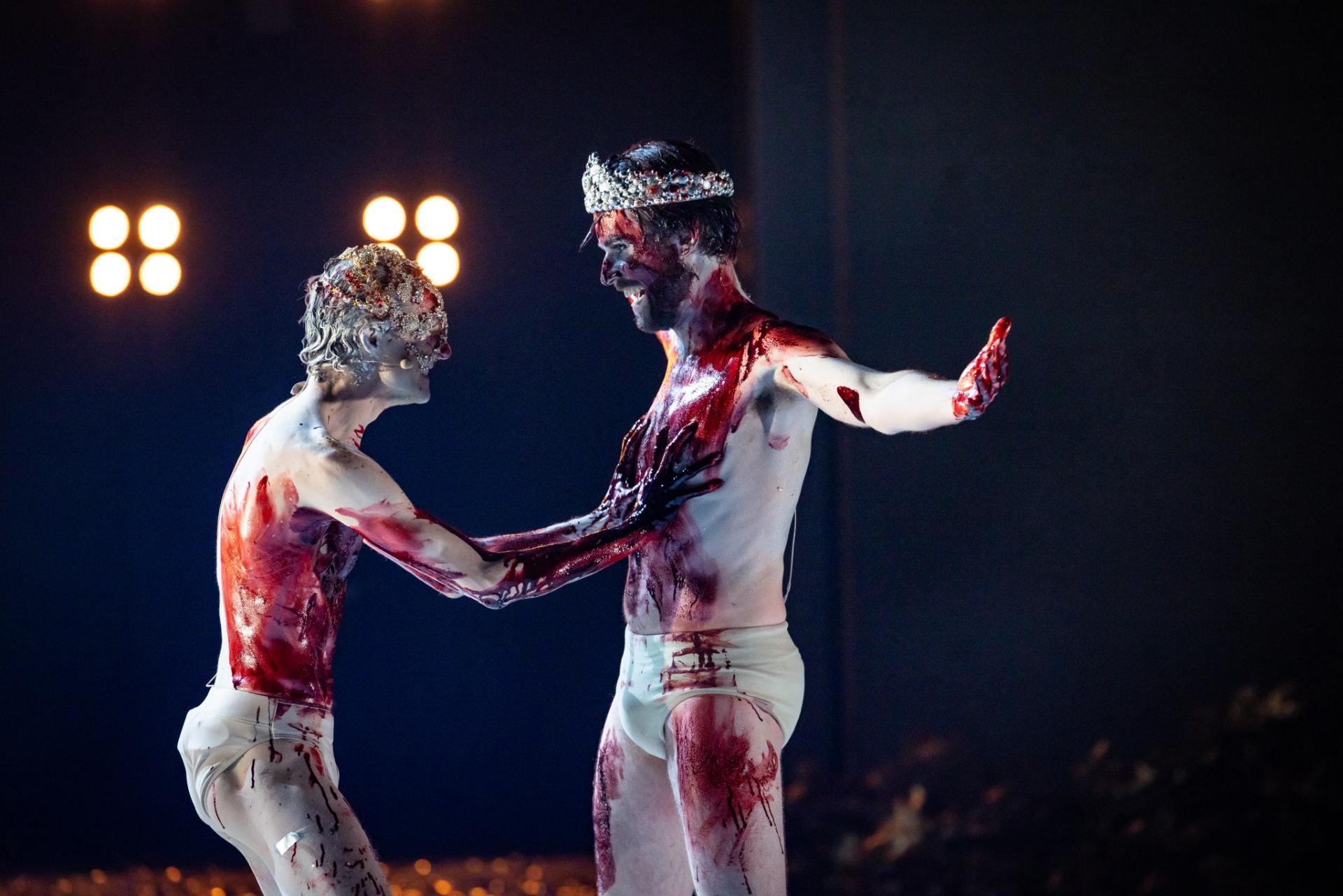
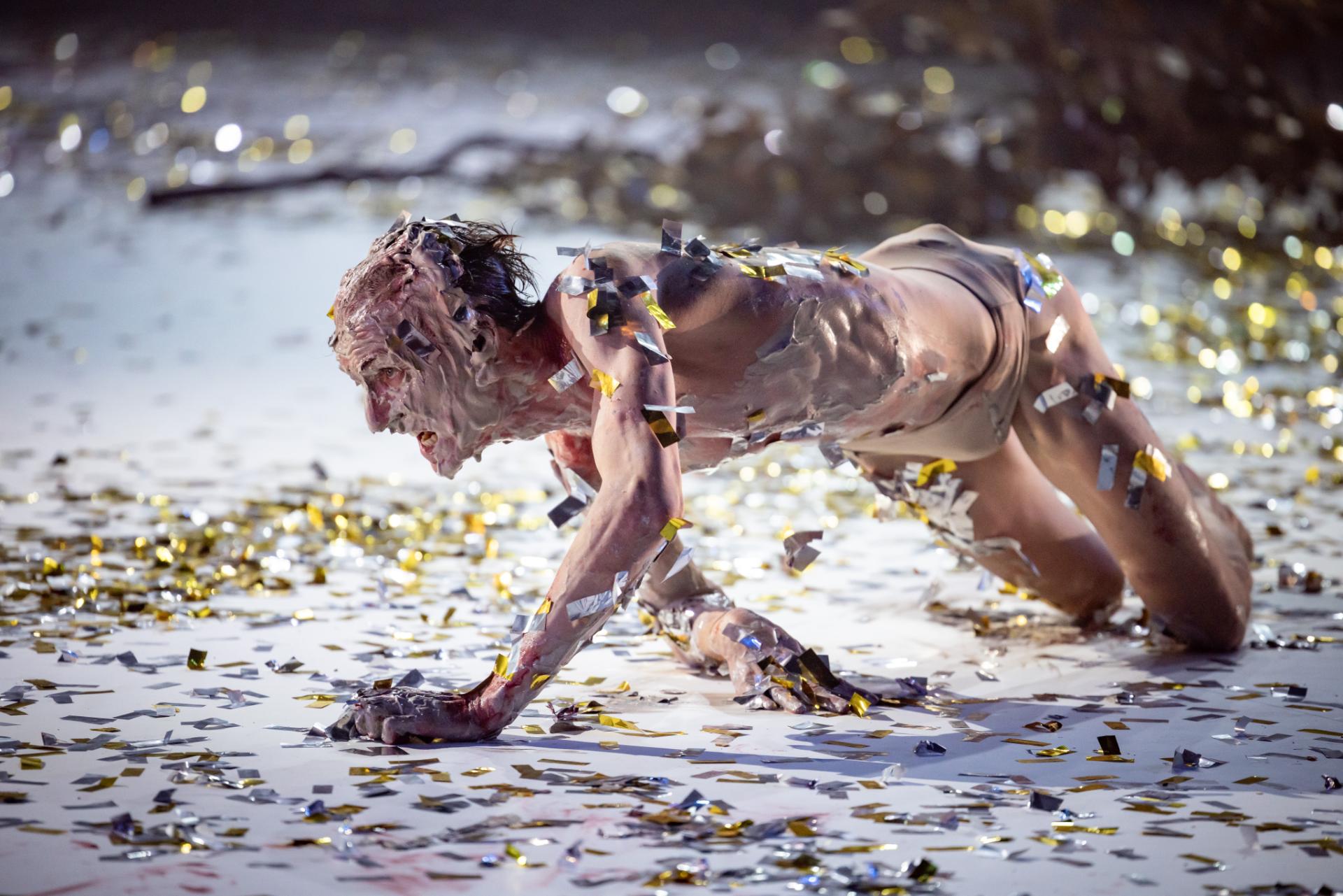
The Epic of Gilgamesh is a story that has been told for more than 4,000 years, with the titular character’s tyrannical tendencies as the king of Uruk, always a prominent feature. His relationship with Endiku, the wild man counterpart, too has been key to the legend, but it is not a pairing that is usually framed as a romantic one. In this 2024 operatic retelling by composer Jack Symonds and librettist Louis Garrick, simply titled Gilgamesh, the two are undeniably and unabashedly in love. Considering the intensity of their connection, we can now see that it is frankly absurd, to have ever denied them their queerness.

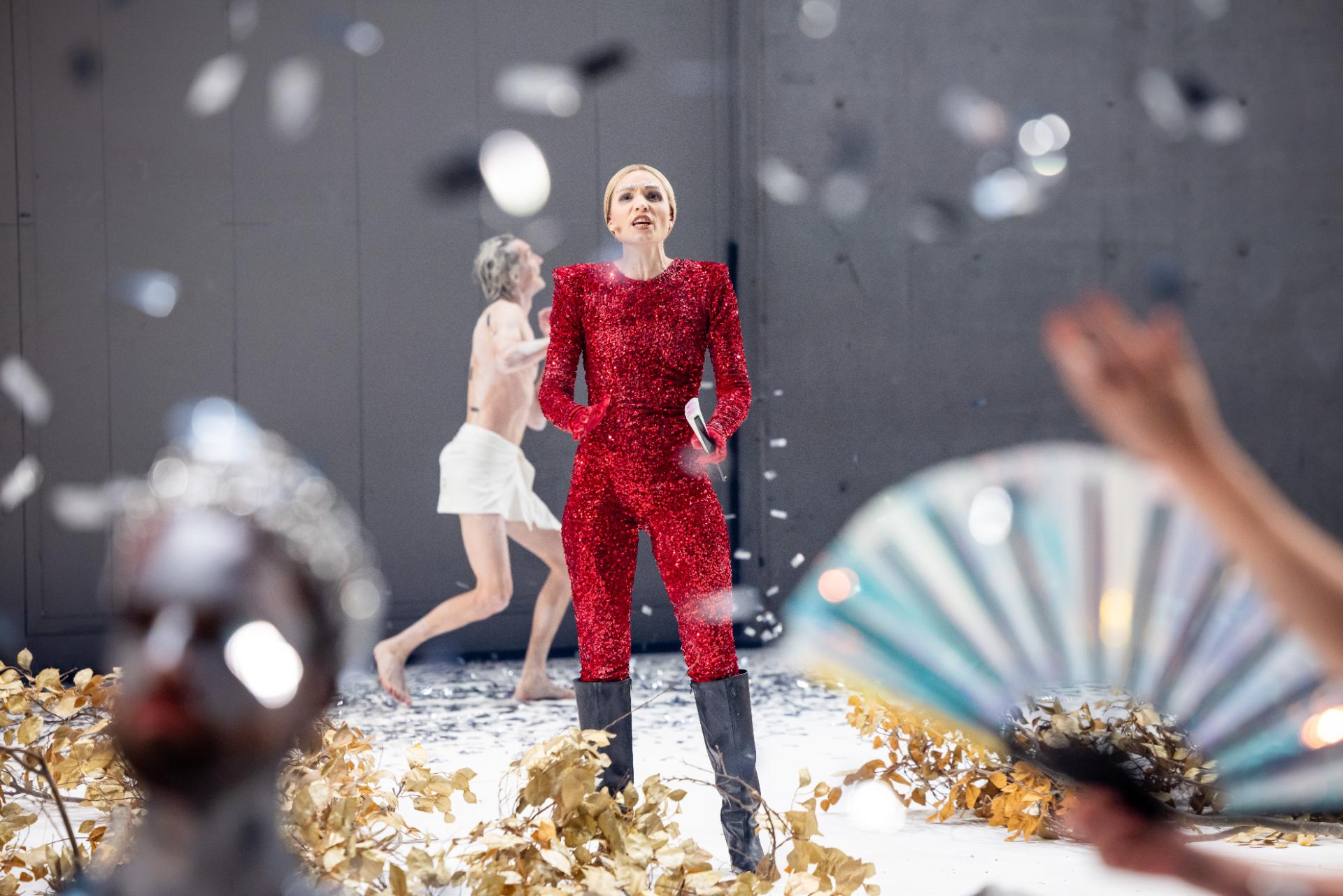
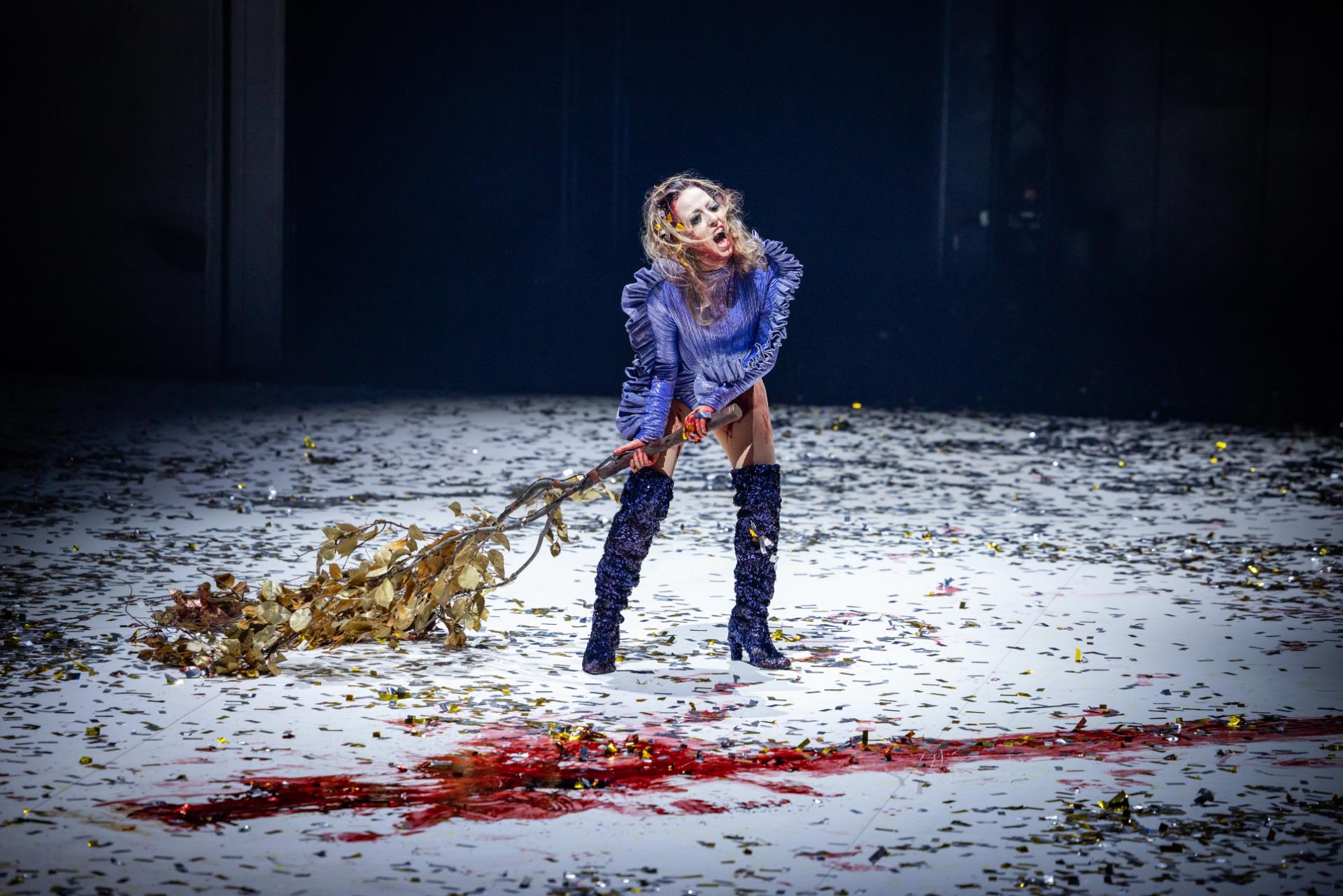
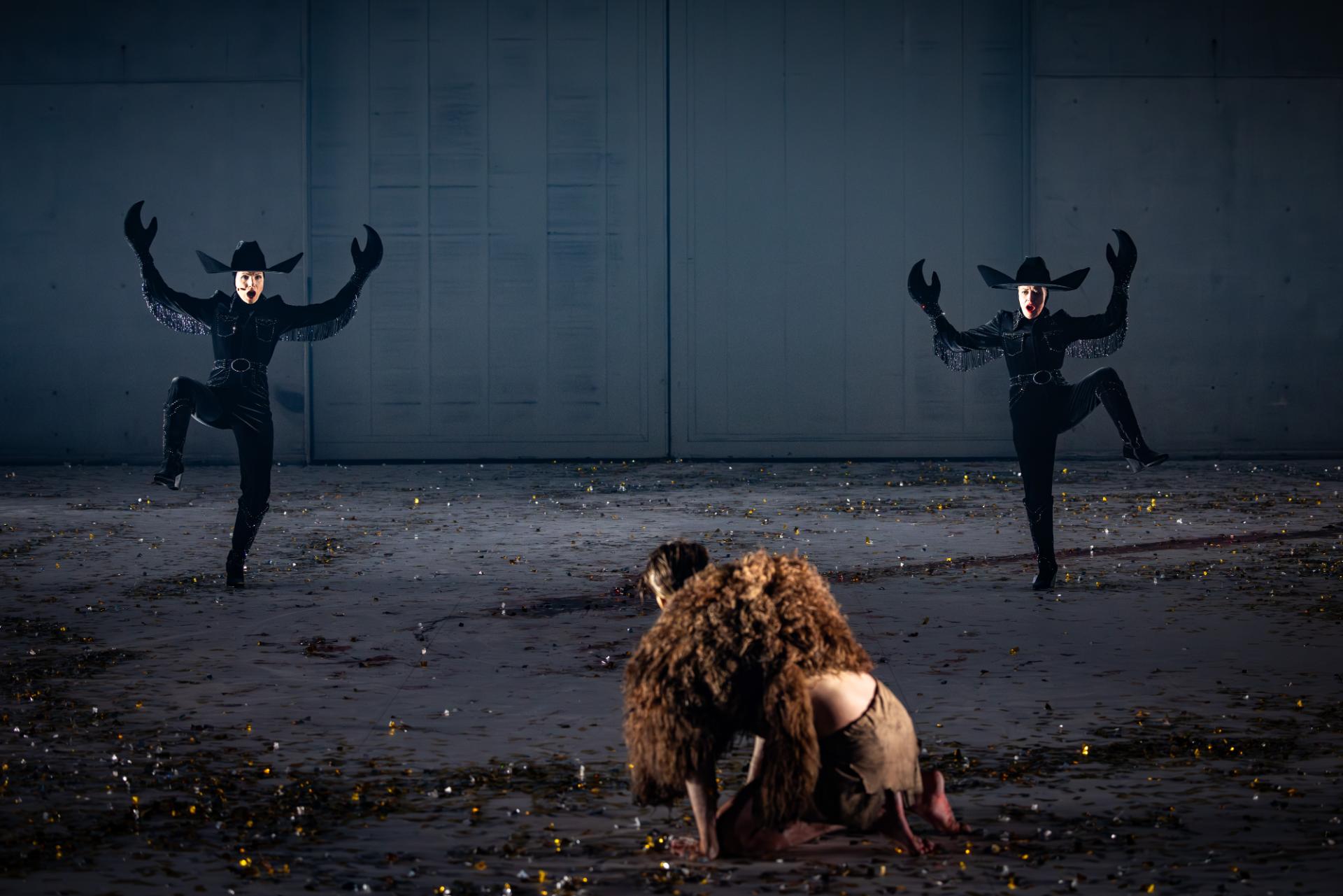
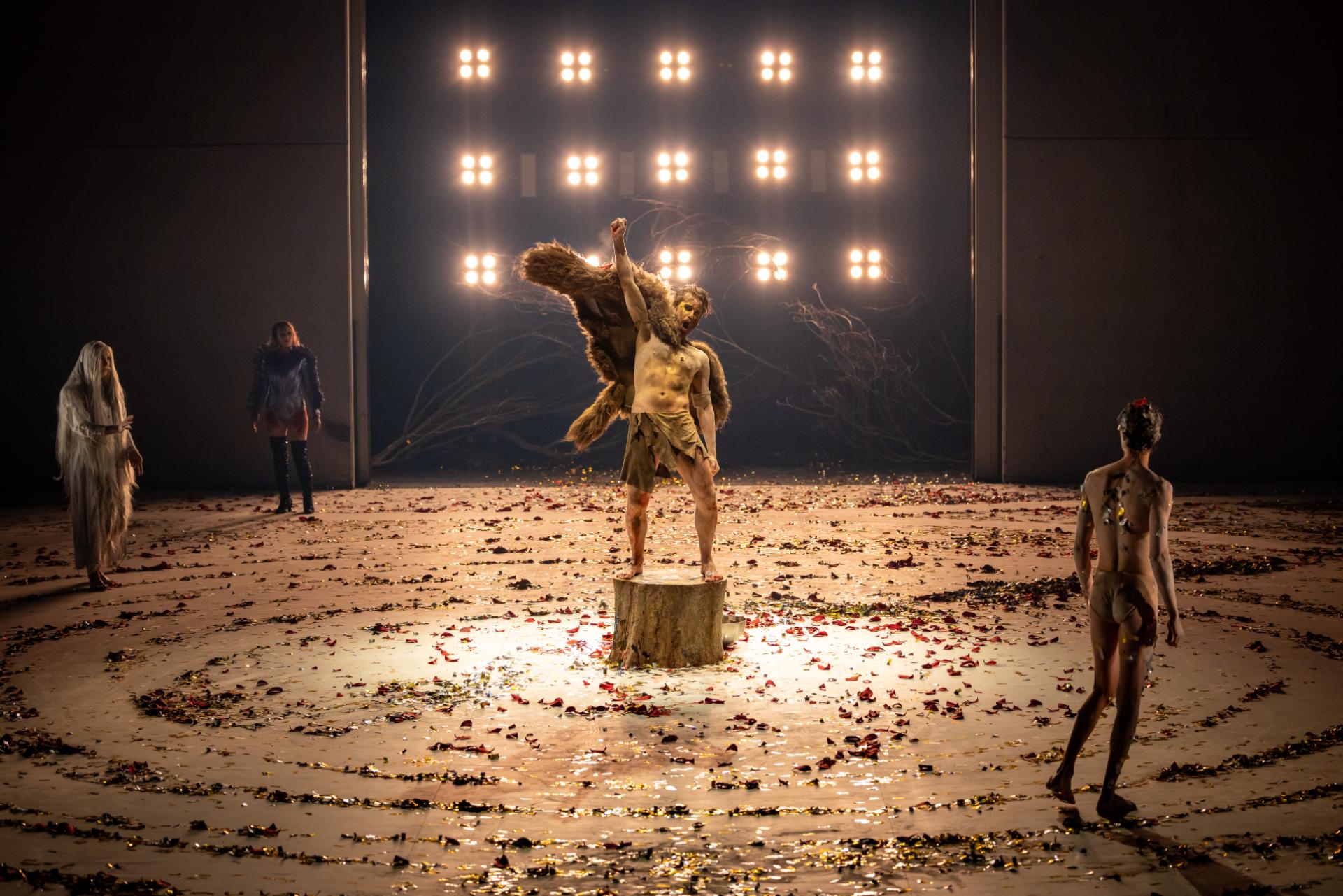
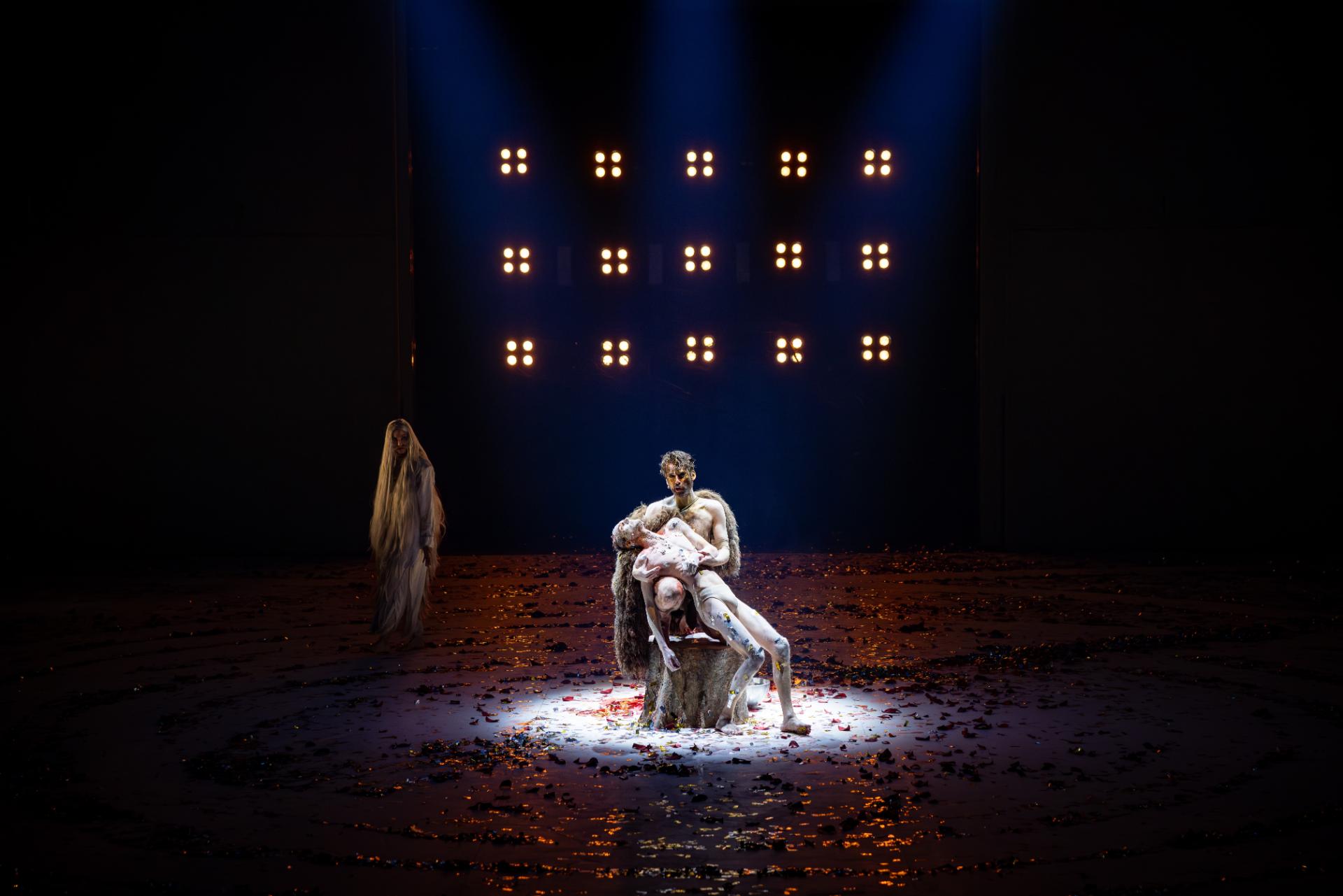
Symond’s thoroughly modern but mournful score is immediately captivating. Along with the visual flamboyance as introduced by director Kip Williams, Gilgamesh is an intriguing confluence of classic and contemporary. At almost three hours however, its resolute despondency becomes hard to bear, especially with the concluding passages becoming increasingly meditative. Initially mesmeric, the production struggles to sustain our attention to the end, although the integrity afforded the music is admirable, when we observe the staging gradually turning minimal.

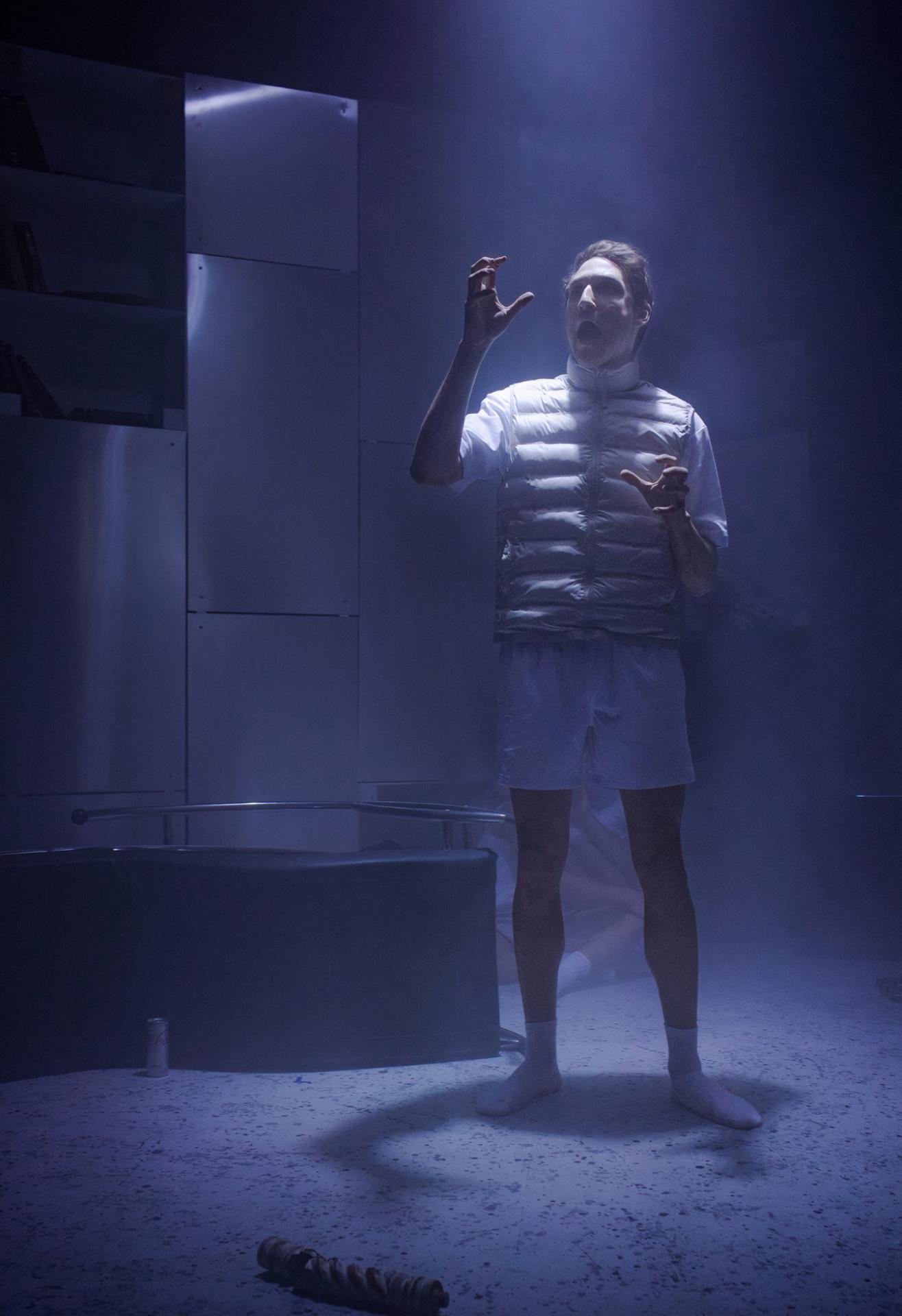
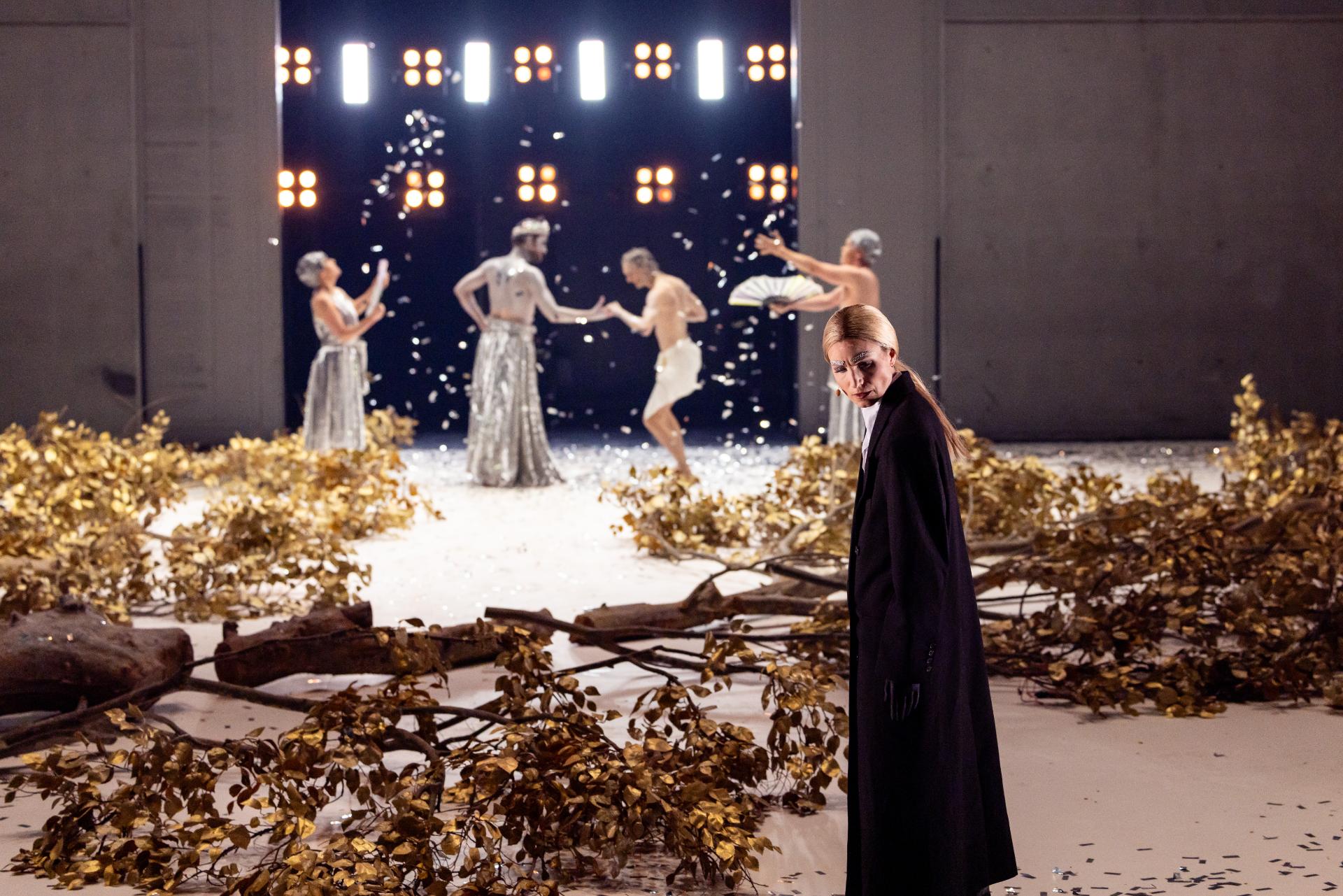
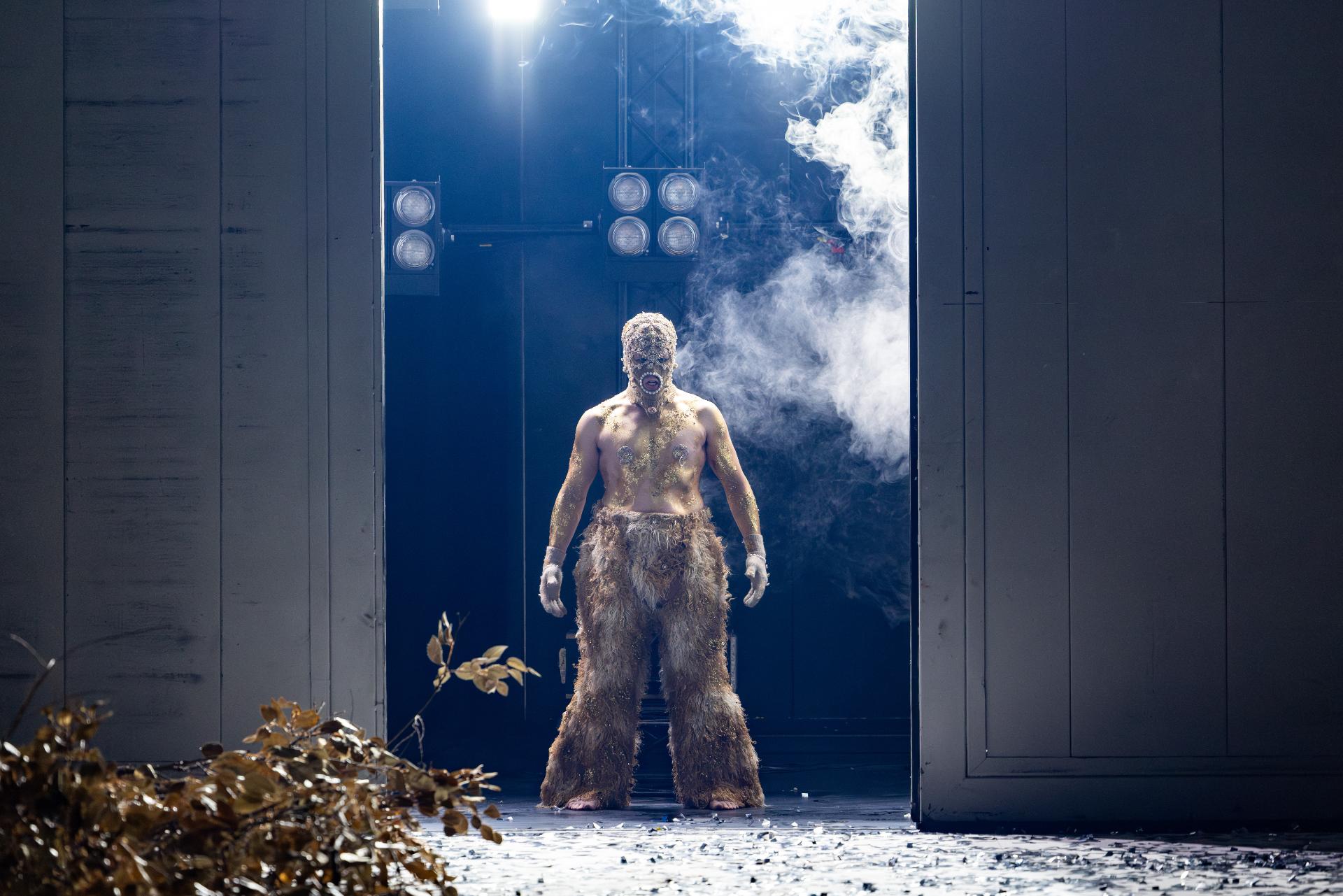
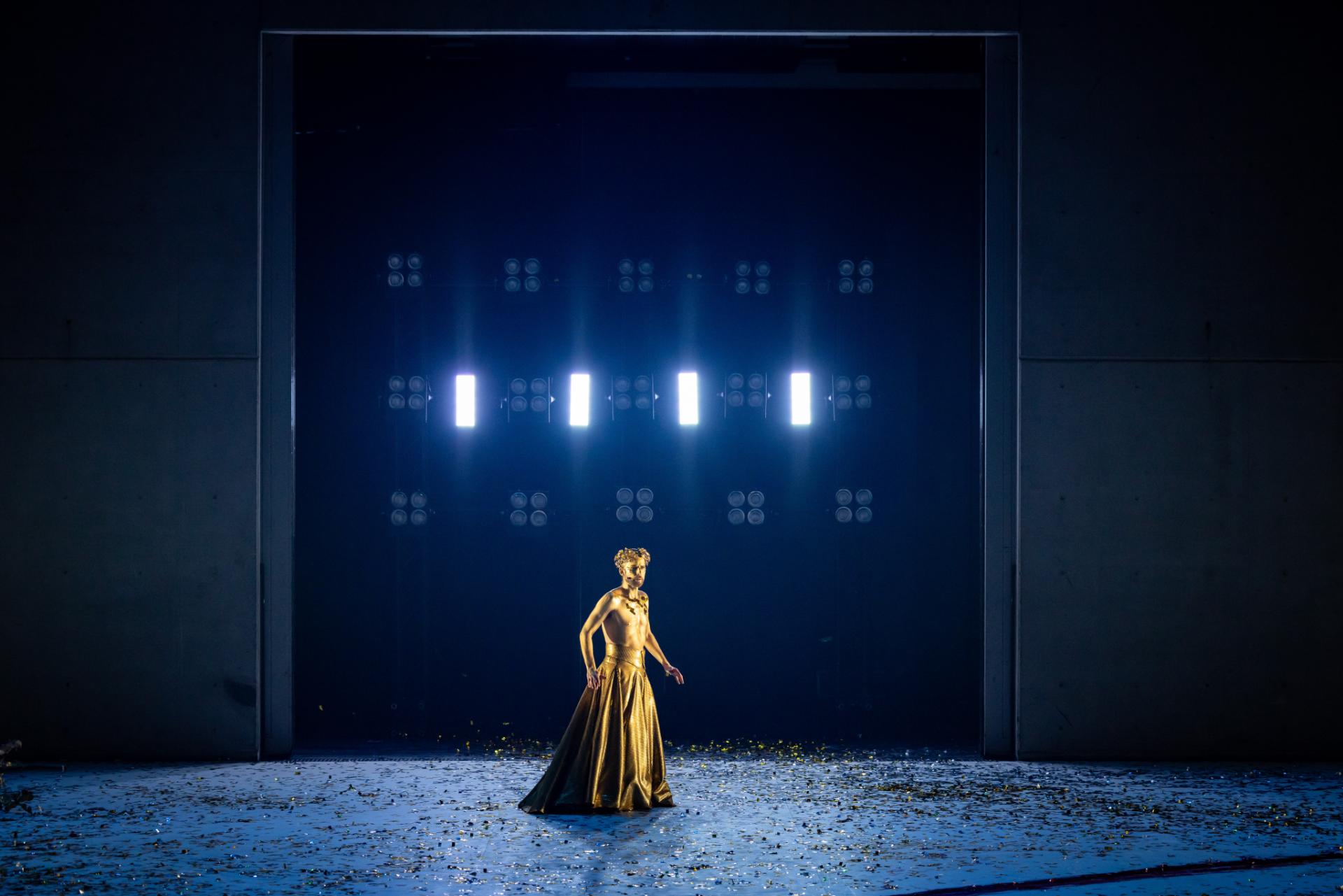
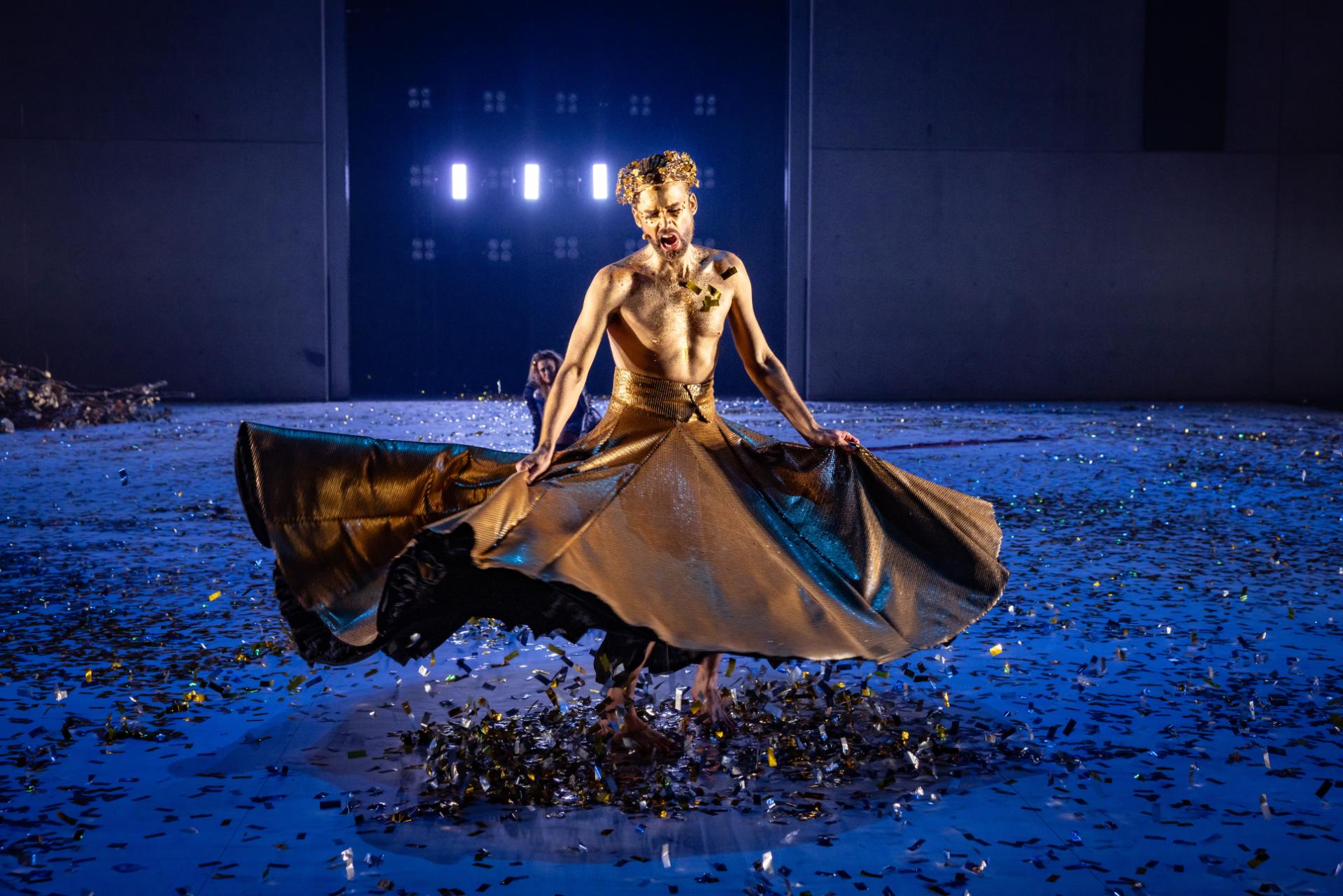
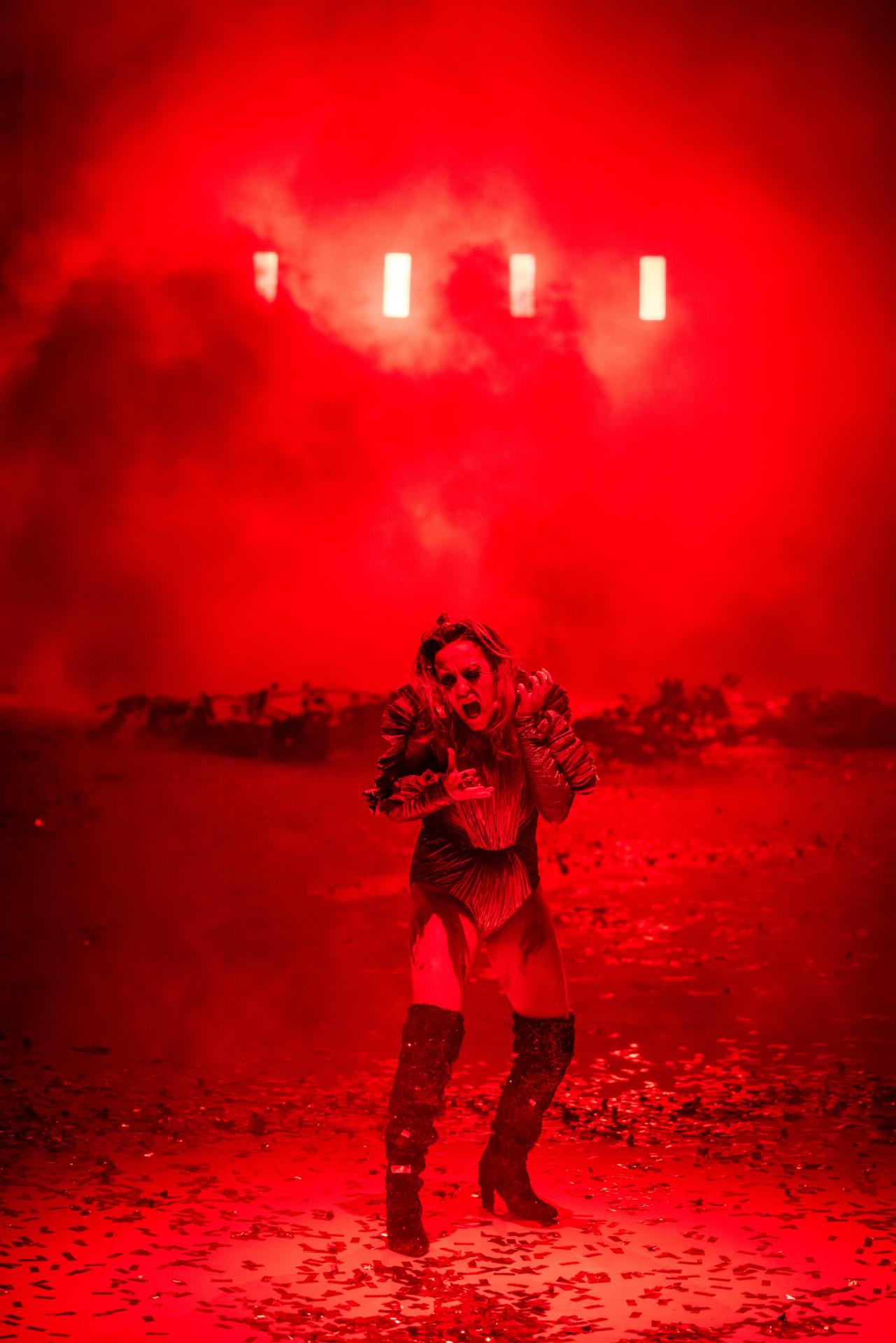
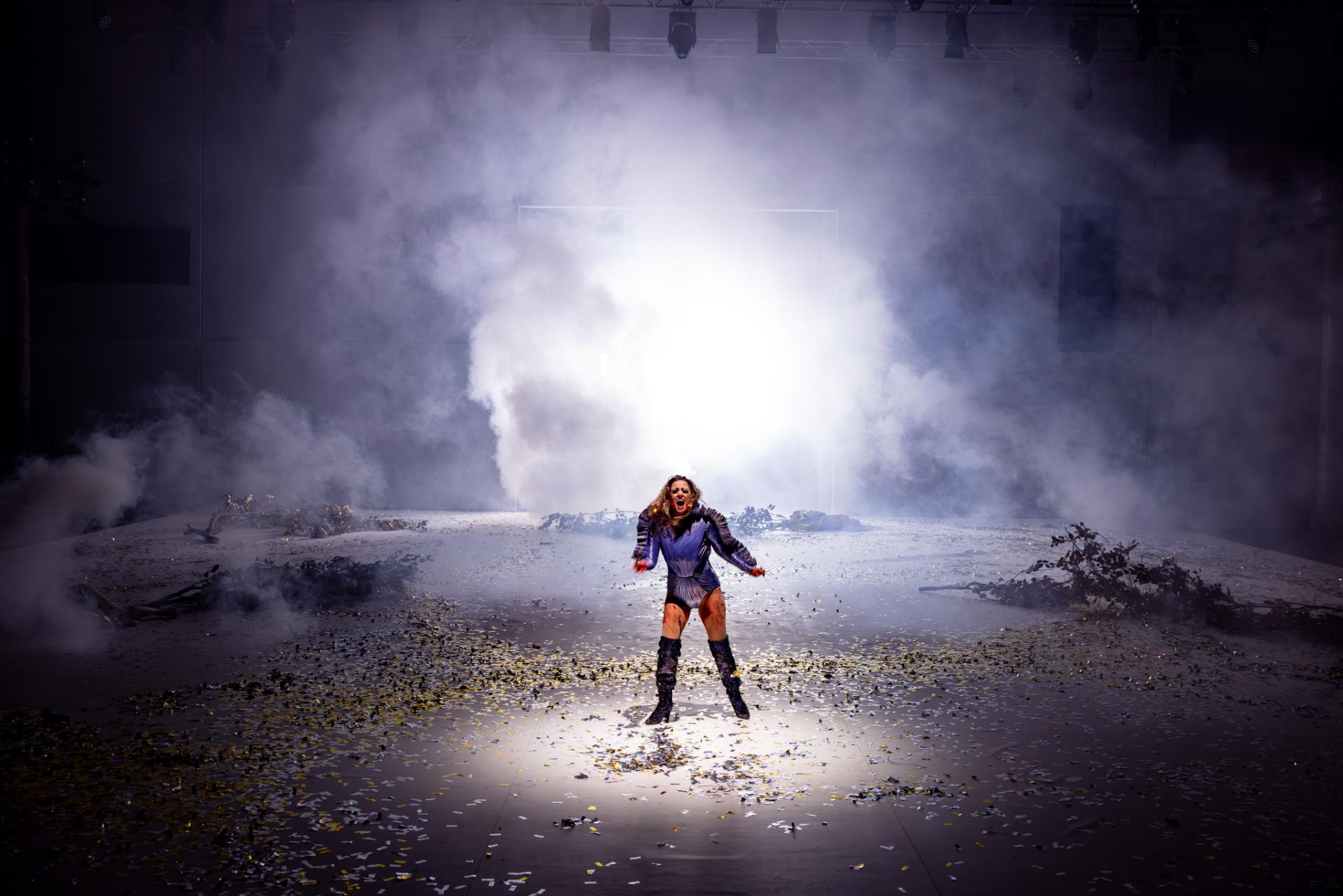
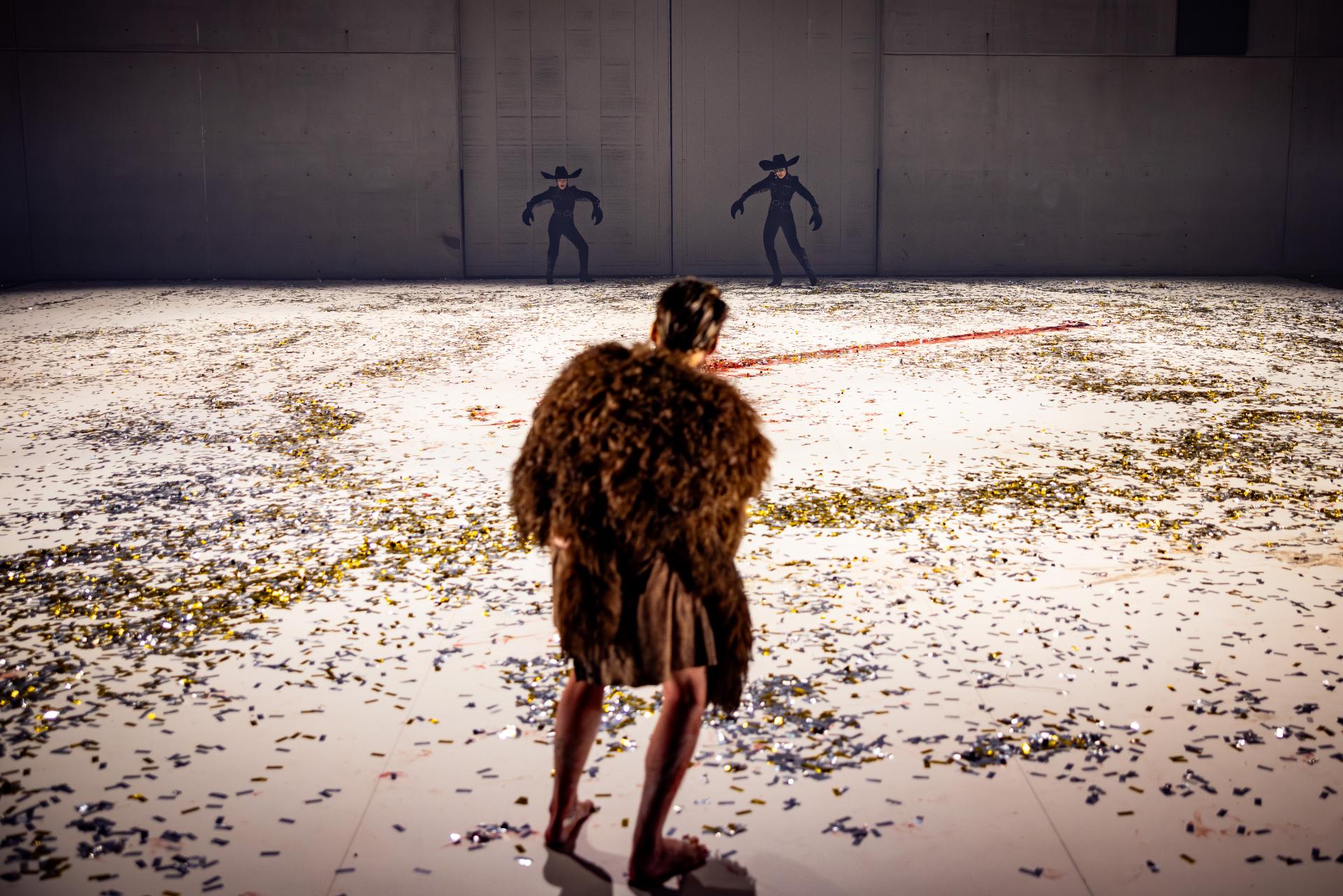
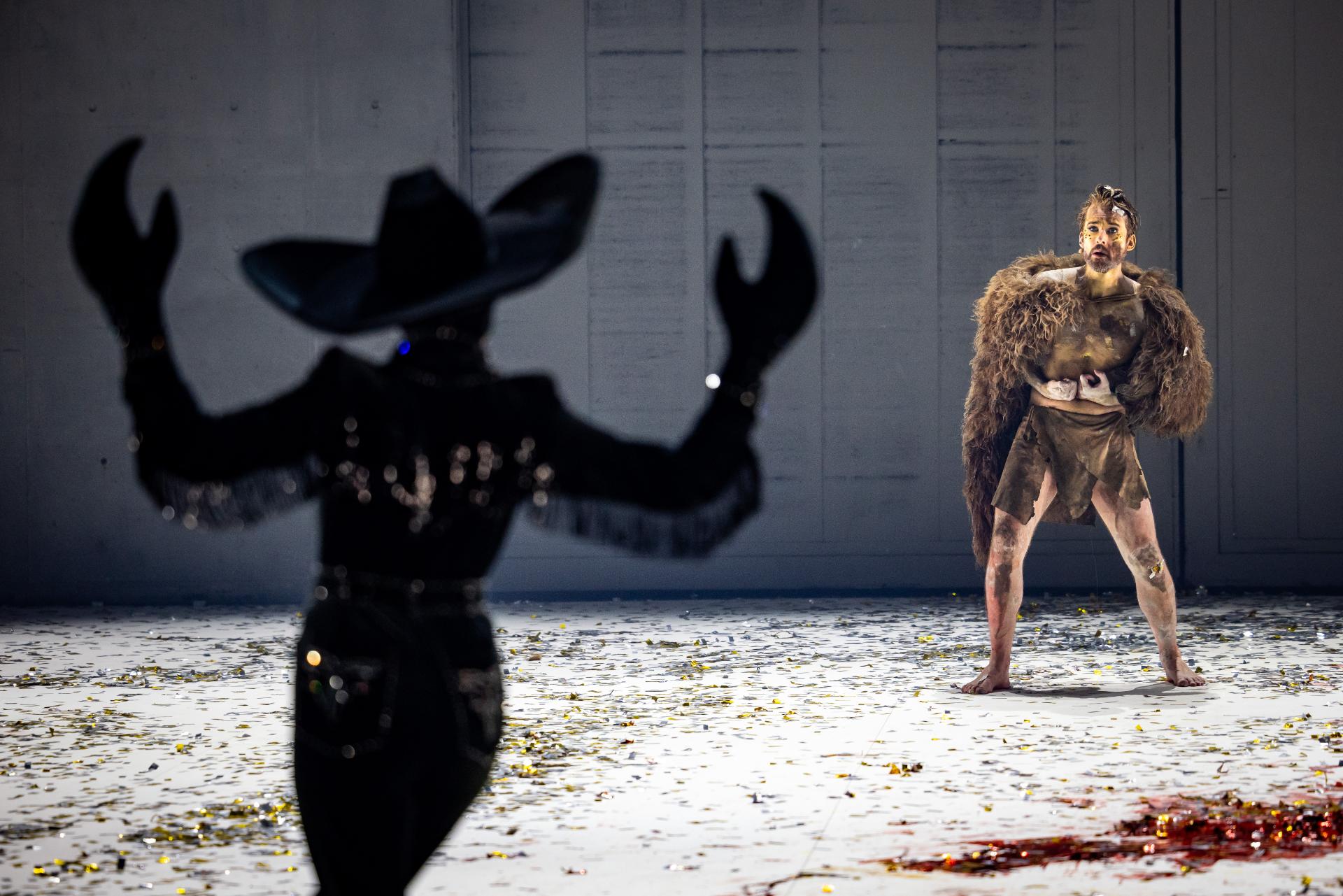
Elizabeth Gadsby’s set design rises to the challenge of depicting a sense of ancient aristocracy, with the juxtaposition of felled tree parts, against an abundance of tinsel. Lights by Amelia Lever-Davidson are certainly dramatic, and quite entrancing in their effect. Bold costumes by David Fleischer can seem somewhat derivative with some of their more extravagant creations, but when required to convey earthiness, Fleischer’s work is truly exquisite.

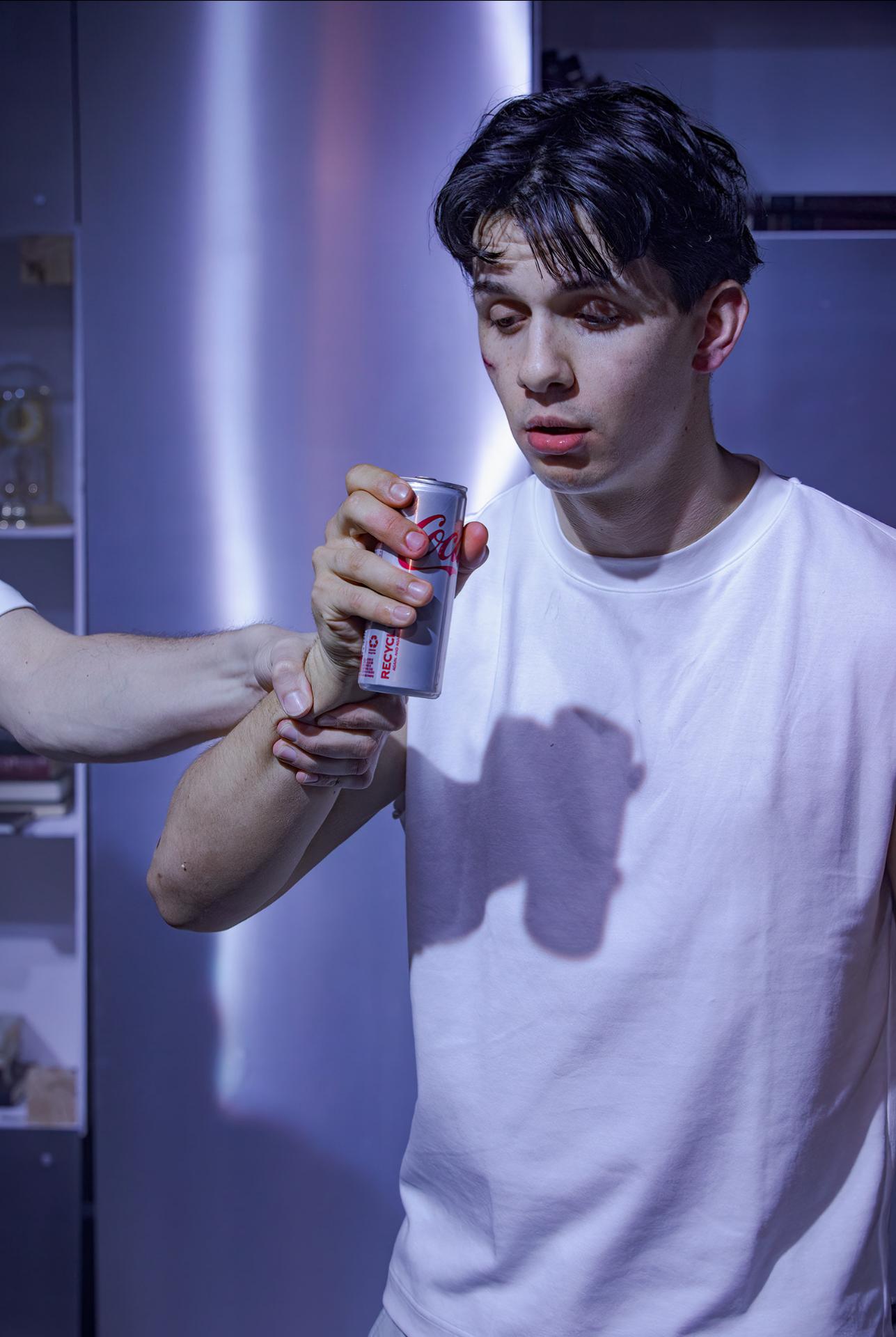
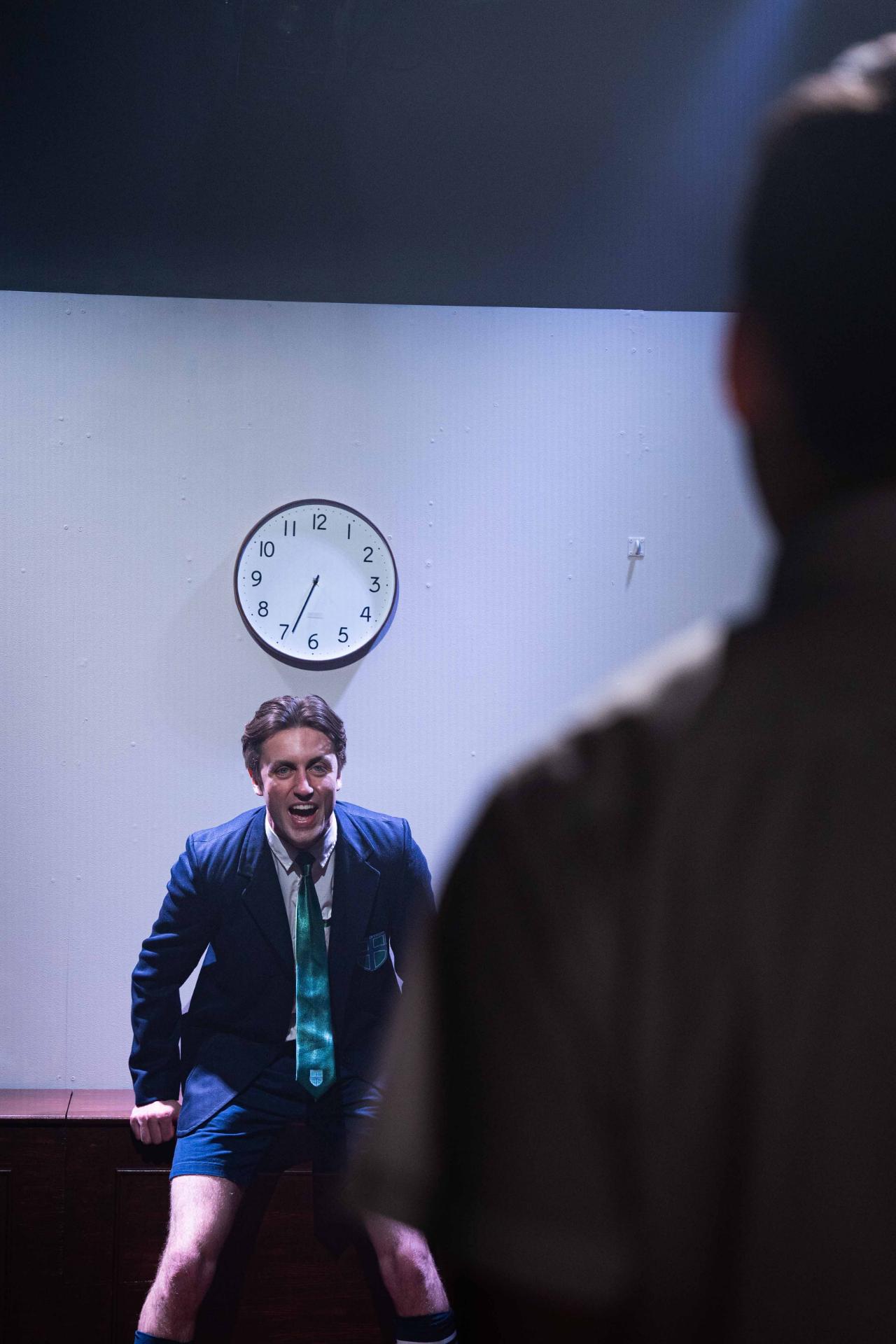
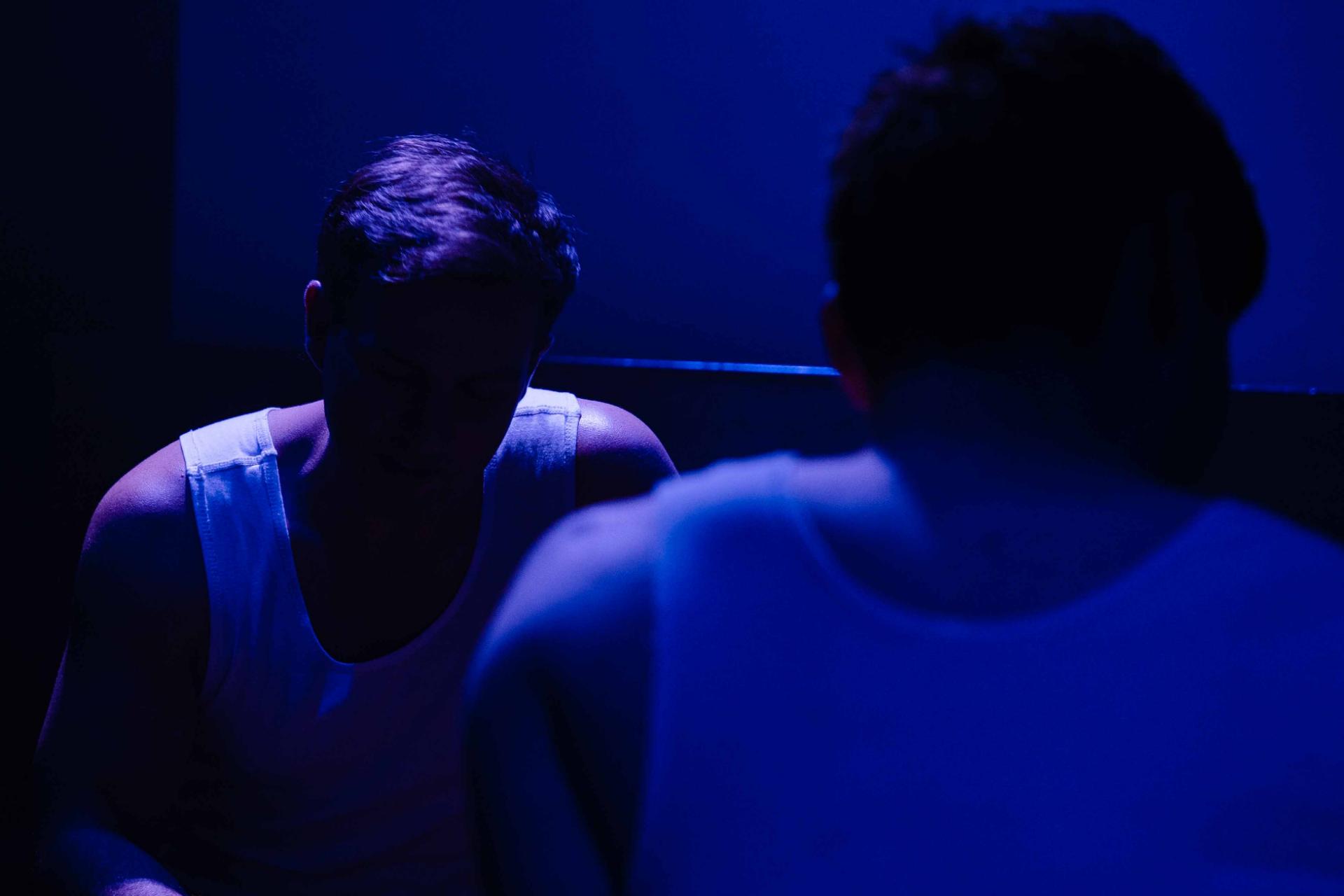
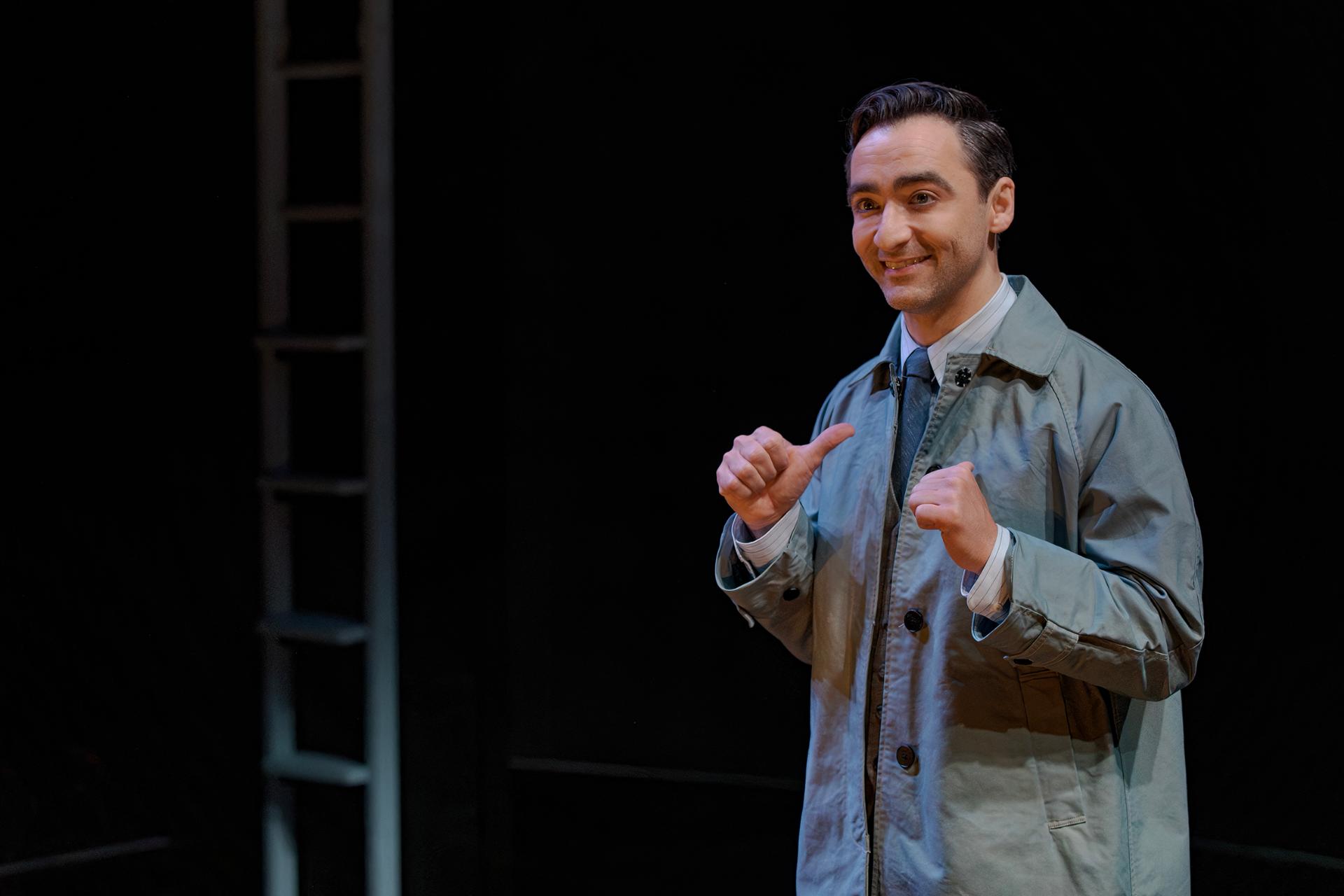
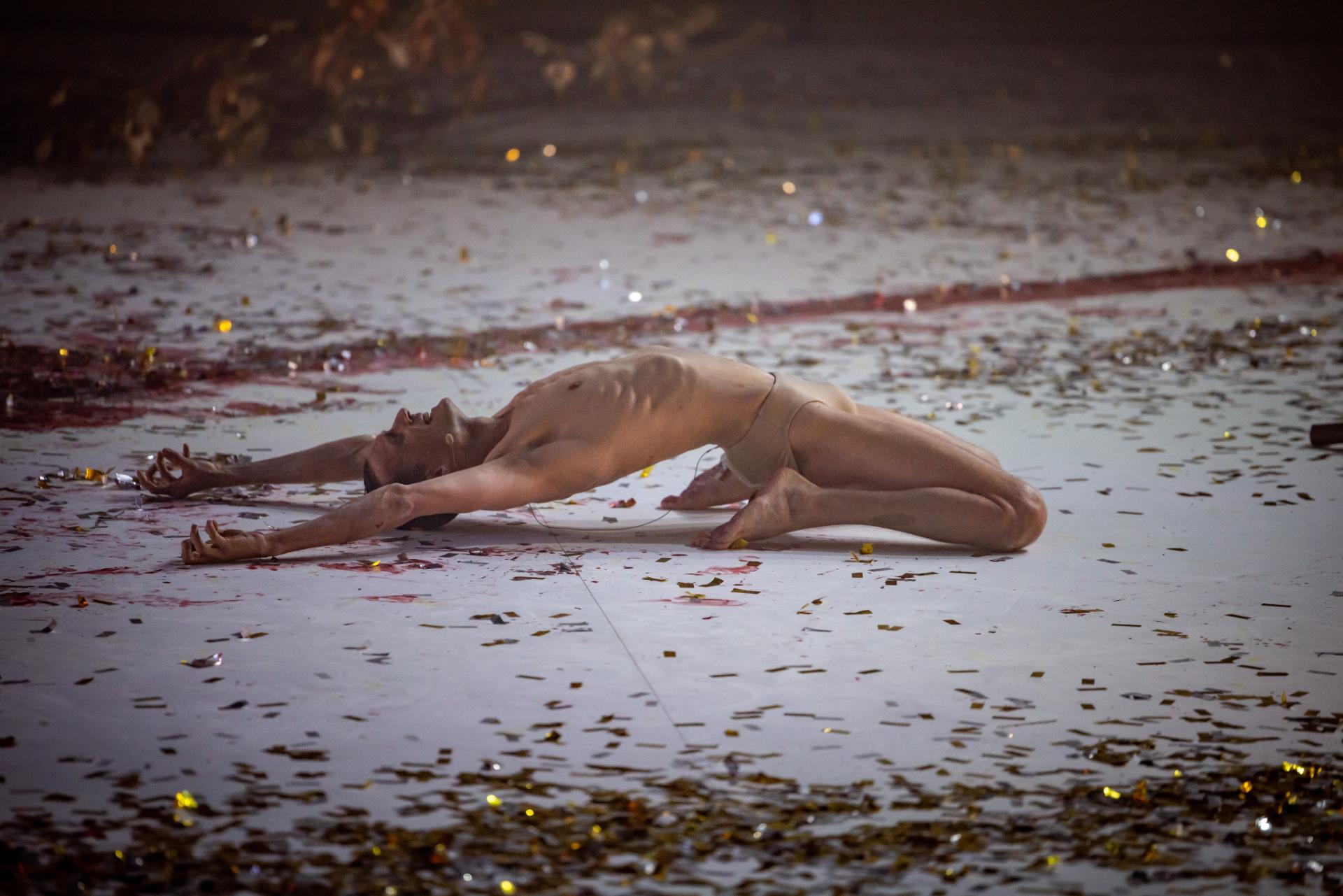
Playing the main character is Jeremy Kleeman, who although not consistently powerful in his portrayal of the partially divine despot, demonstrates unequivocal conviction and focus, for this very demanding role. Mitchell Riley’s physicality is unforgettable as Enkidu, whether evoking the grotesque or the exalted, the performer’s energy bears a perverse beauty and magnetism, that keeps us fascinated in his interpretation of a heavenly being.

The chamber orchestra, as conducted by Symonds, takes us on a transcendent journey, opening the gates to somewhere mystical or even surreal, with their strange yet disciplined contributions to the experience. Often far exceeding the traditional function of accompaniment, the musicians are frequently the central concern in Gilgamesh. Art that takes us to unfamiliar places must be considered noble, especially when discomfort pervades, as though to persuade us of alternate and unexpected perspectives.
www.carriageworks.com.au

Review: Titanique (The Grand Electric)

Venue: The Grand Electric (Surry Hills NSW), 12 Sep 2024 – 22 Jun 2025
Book: Tye Blue, Marla Mindelle, Constantine Rousouli
Director: Tye Blue
Cast: Abu, Stephen Anderson, Abigail Dixon, Georgina Hopson, Jo-Anne Jackson, Matt Lee, Jenni Little, Marney McQueen, Trent Owers, Keane Sheppard-Fletcher, Drew Weston
Images by Daniel Boud

Theatre review
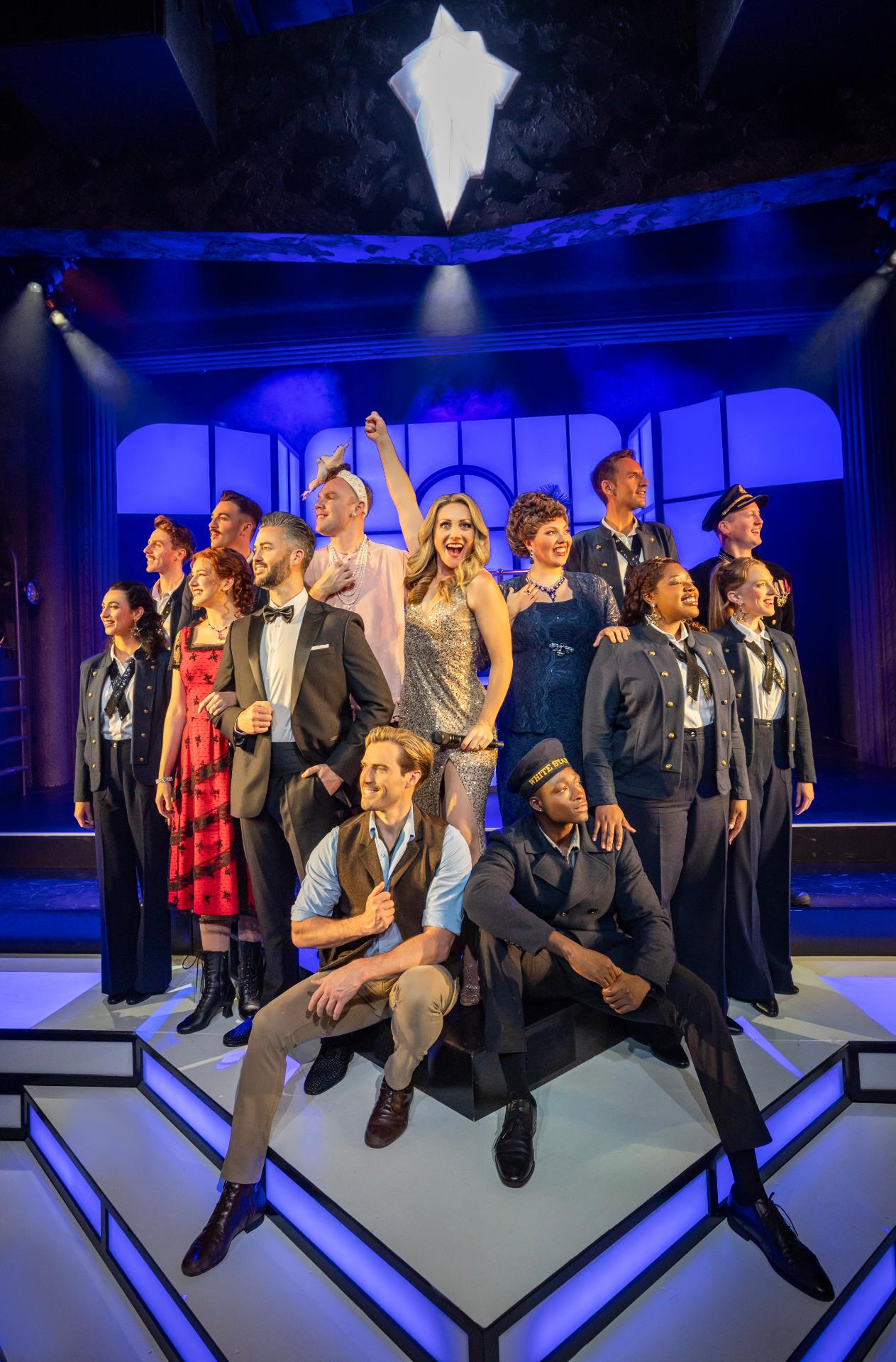
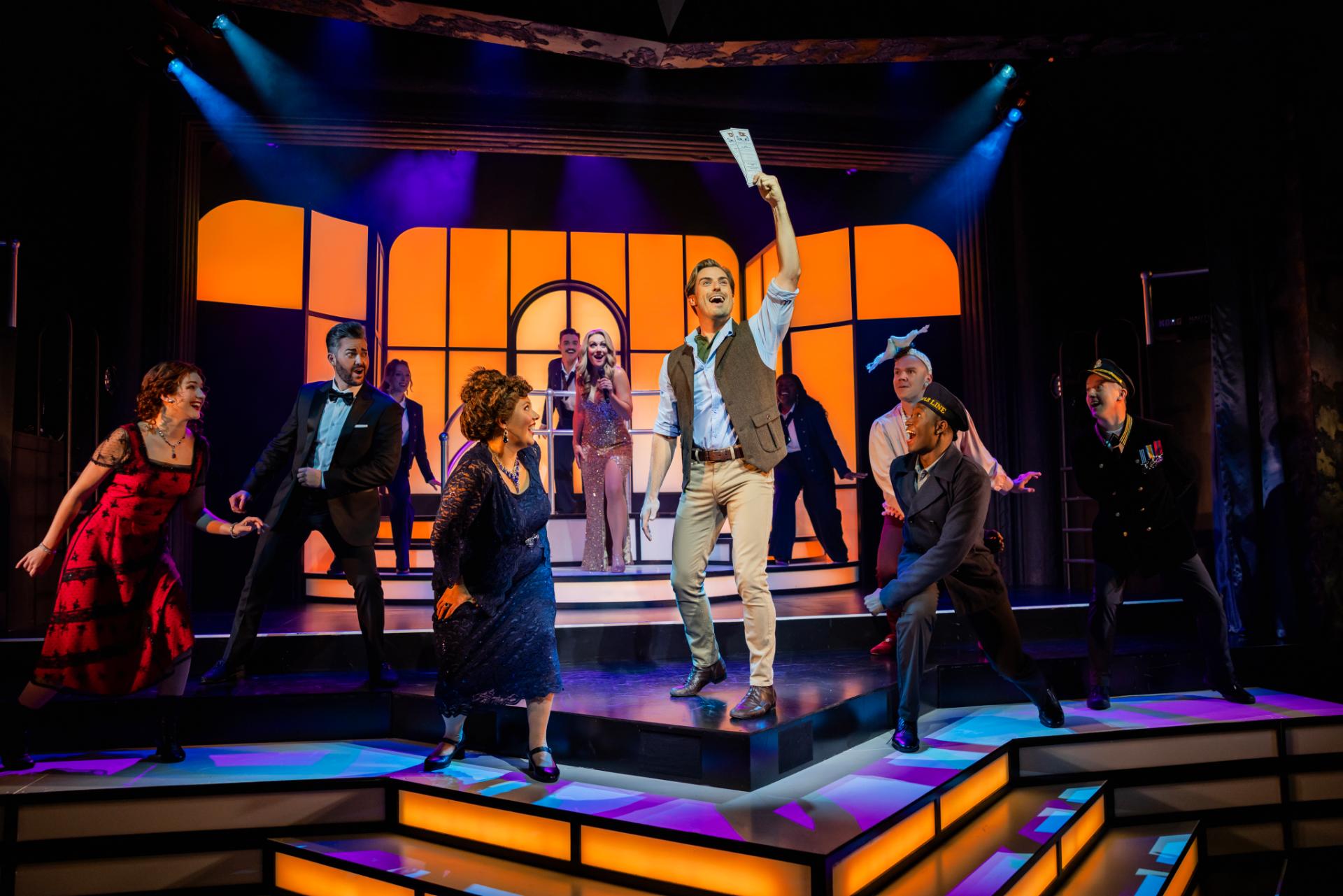
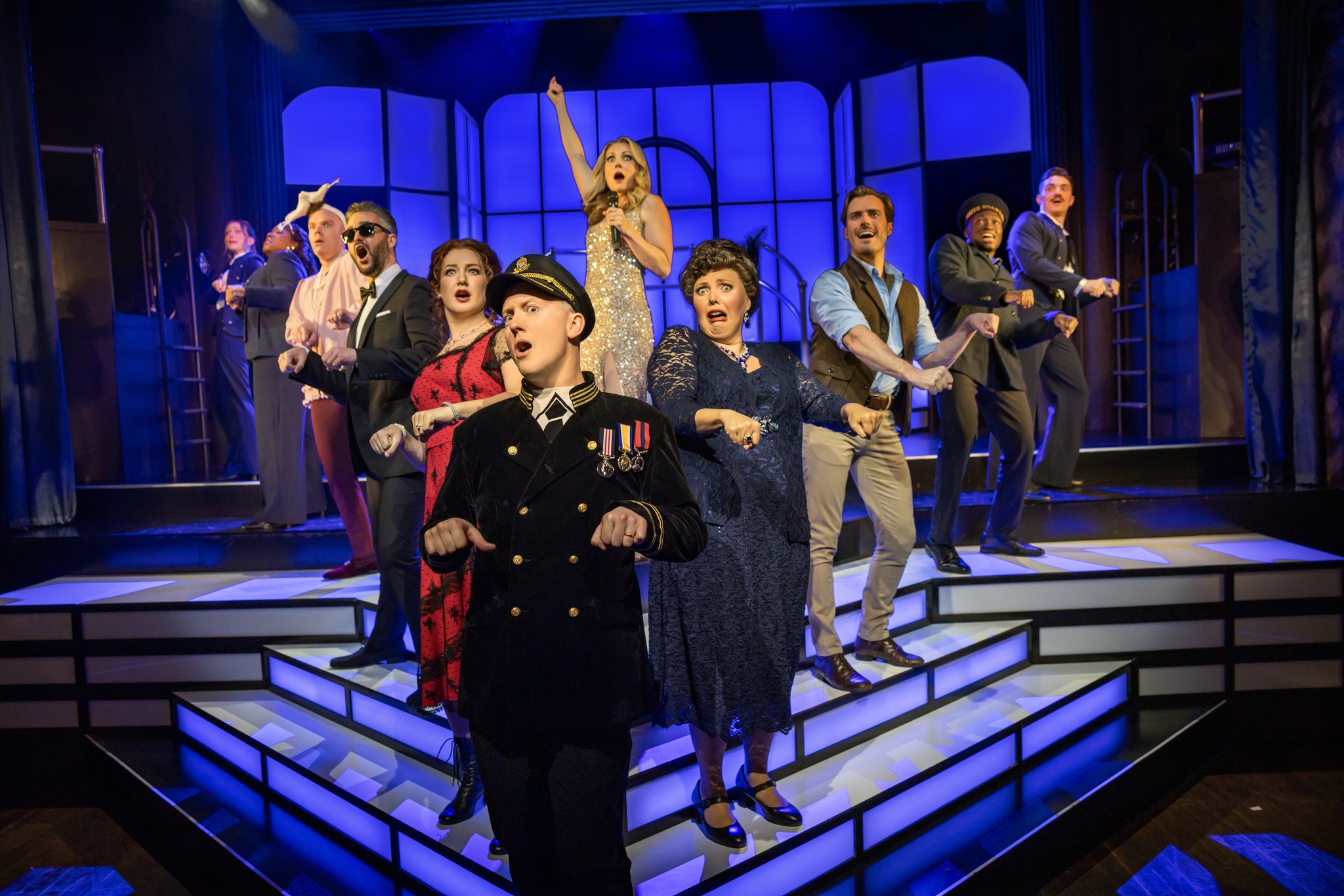
If we are to revisit the story of the Titanic, we may as well have Celine Dion provide her account of events, given how she has inadvertently become so closely associated with the disaster—or, more accurately, with the Hollywood movie about it. This absurd idea is brought to glorious life in the jukebox musical Titanique, a work of unparalleled campy hilarity so completely infused with creative chaos and unbridled frivolity, that it is impossible to dislike.

The incorporation of Dion’s hits may feel somewhat arbitrary at times, but writing by Tye Blue, Marla Mindelle and Constantine Rousouli is so thoroughly uninhibited and joyful, that nothing gets in the way of the good time that Titanique is determined to deliver. Also, Blue’s direction of the production is correspondingly unrestrained, leaving no stone unturned in this unabashed embrace of qualities as personified by its central diva; characteristics that are perhaps too flamboyant, too ridiculous, too mad, and too gay.

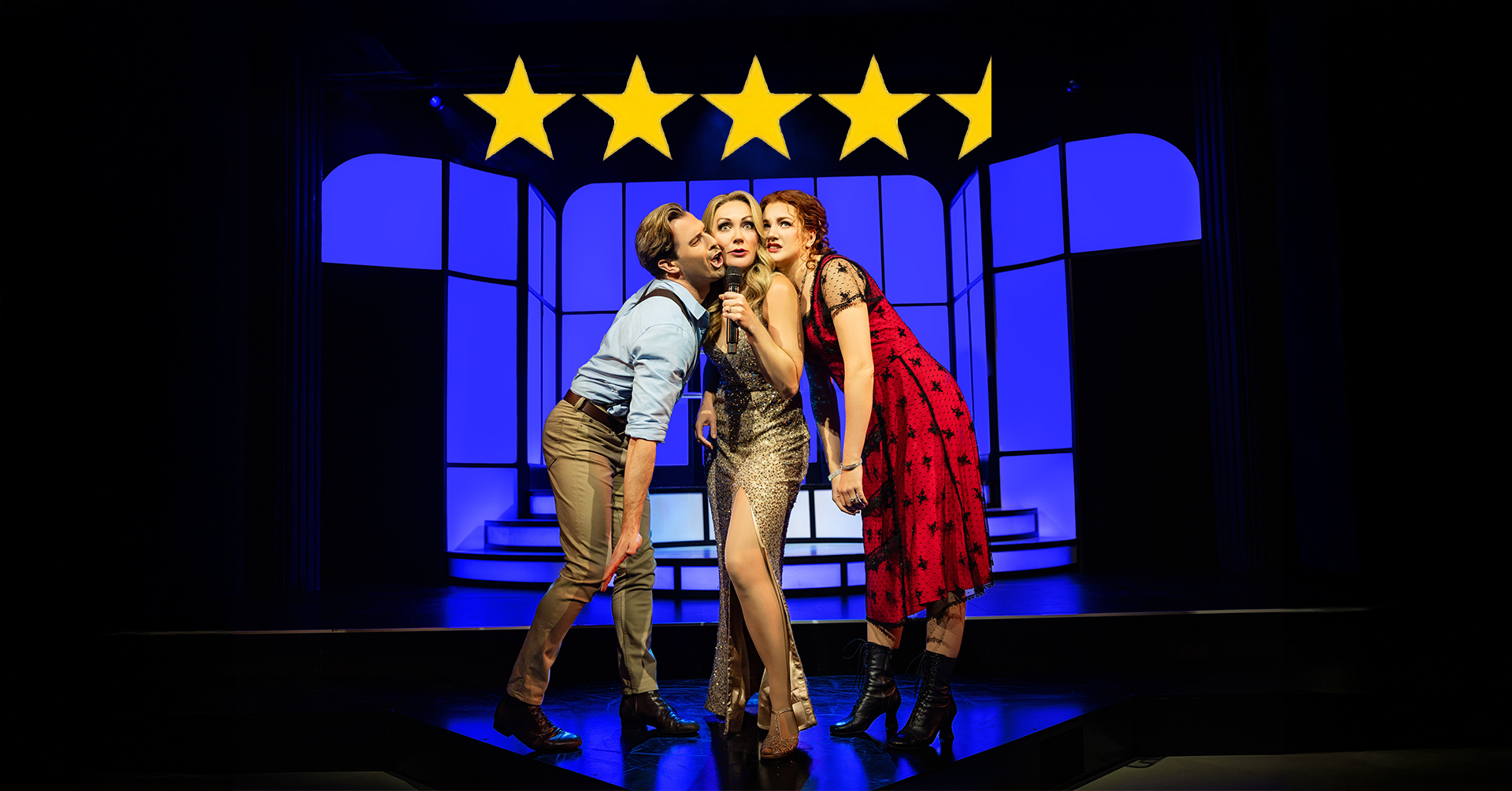
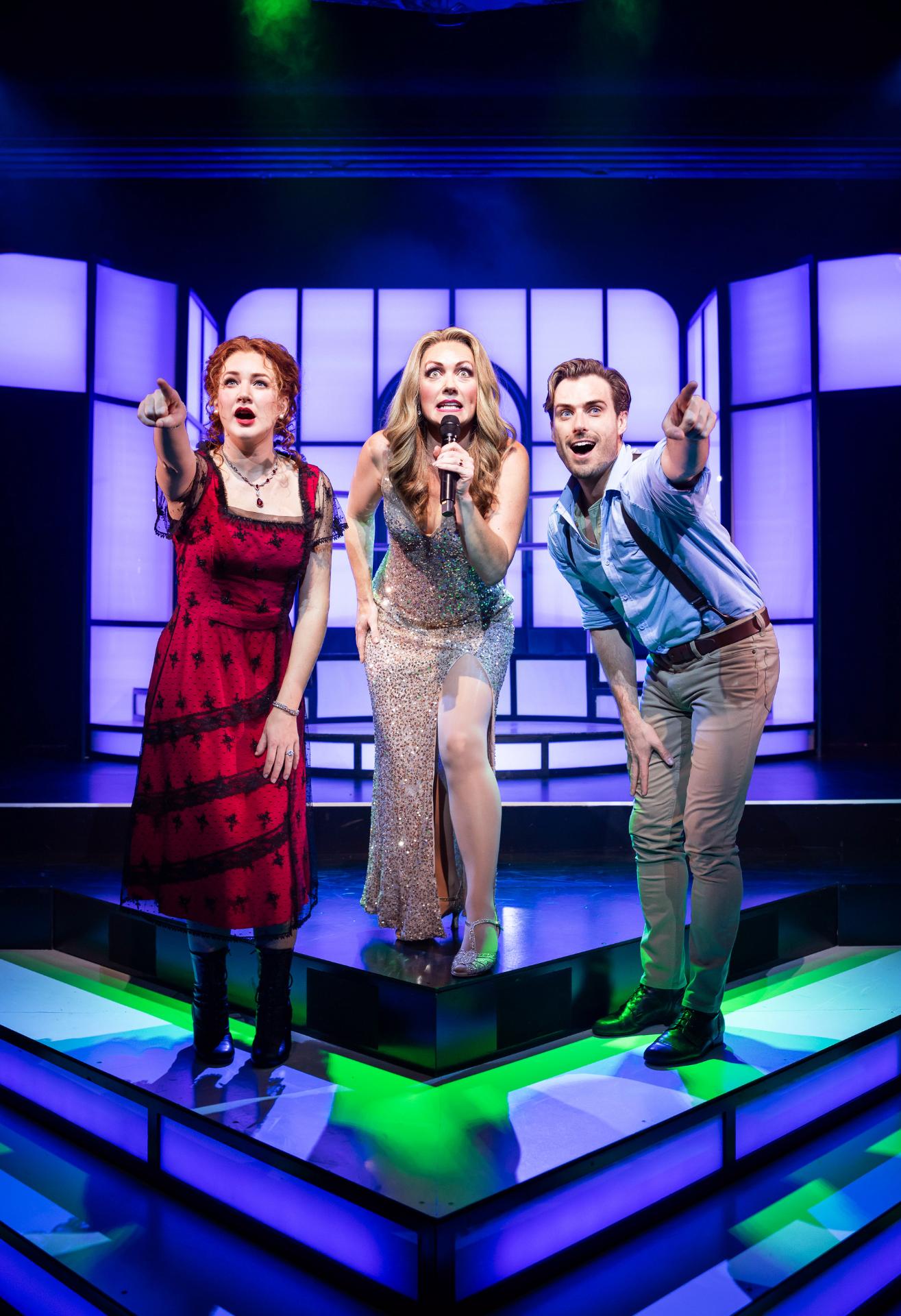
Leading lady Marney McQueen is a sensation as the iconic Quebecer, with impeccable mimicry proving a marvel to witness, and impossibly precise comic timing, that has us amused from the very second of her appearance. Casting for the production is quite the achievement, with each performer showcasing exceptional talent, along with their ability to adhere to the same idiosyncratic tone and tenor of this “kooky crazy” show, and for navigating the most challenging stage design imaginable, consisting entirely of stairs.

Characters from the film are brought to the stage with cheeky irreverence. Jack is played by Drew Weston whose knack for physical comedy is as endearing as his natural charm. Georgina Hopson’s astonishing vocal abilities as Rose are sheer pleasure. Stephen Anderson’s outrageous extravagance in the role of Ruth is consistently funniest of the duration, and certainly unforgettable. Also outstanding is Keane Sheppard-Fletcher, who impresses as the strongest all-rounder, singing and lampooning the part of Cal to the greatest effect.

The humour of Titanique feels very particular and granular, but because its source material is one of the widest appeal, the show becomes consequently much more universally approachable than its aesthetic might suggest. If low art and high art do indeed exist, Titanique is perhaps one of the most successful fusion of both, involving subject matters that are almost painful in their mundanity, but elevated with a niche sensibility, one that is most often associated with marginalised communities. When outsiders are left with nothing to lose, being outrageous seems a natural proposition, even if it upsets the hegemony unfailingly. 

www.titaniquemusical.com.au

Review: New Works Festival Part 2 (Old Fitz Theatre)

Venue: Old Fitzroy Theatre (Woolloomooloo NSW)

Sitting, Screaming Sep 20 – Oct 5, 2024
Playwright: Madelaine Nunn
Director: Lucy Clements
Cast: Clare Hughes
Images by Phil Erbacher

Anomalies Sep 20 – Oct 5
Playwright: Jordyn Fulcher
Director: Matt Bostock
Cast: Giani Fenech, Rhiaan Marquez, Harold Phipps
Images by Phil Erbacher

Theatre review
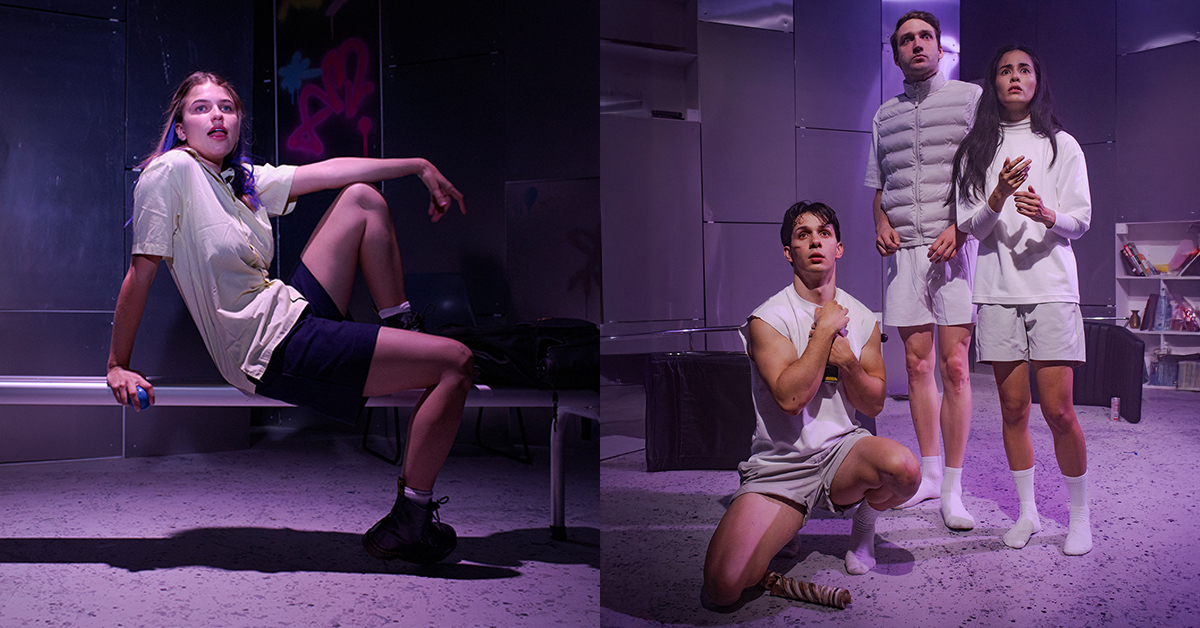
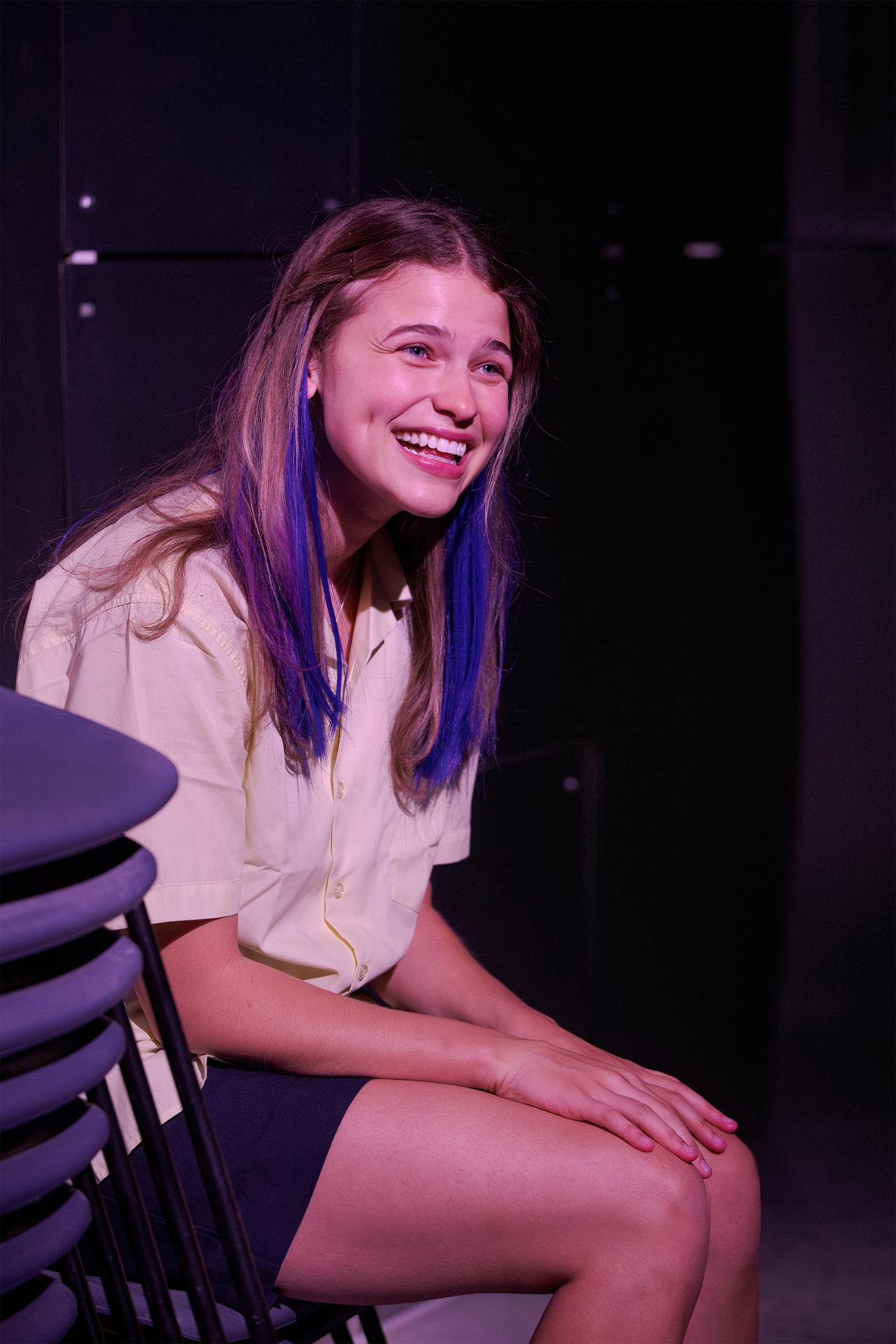
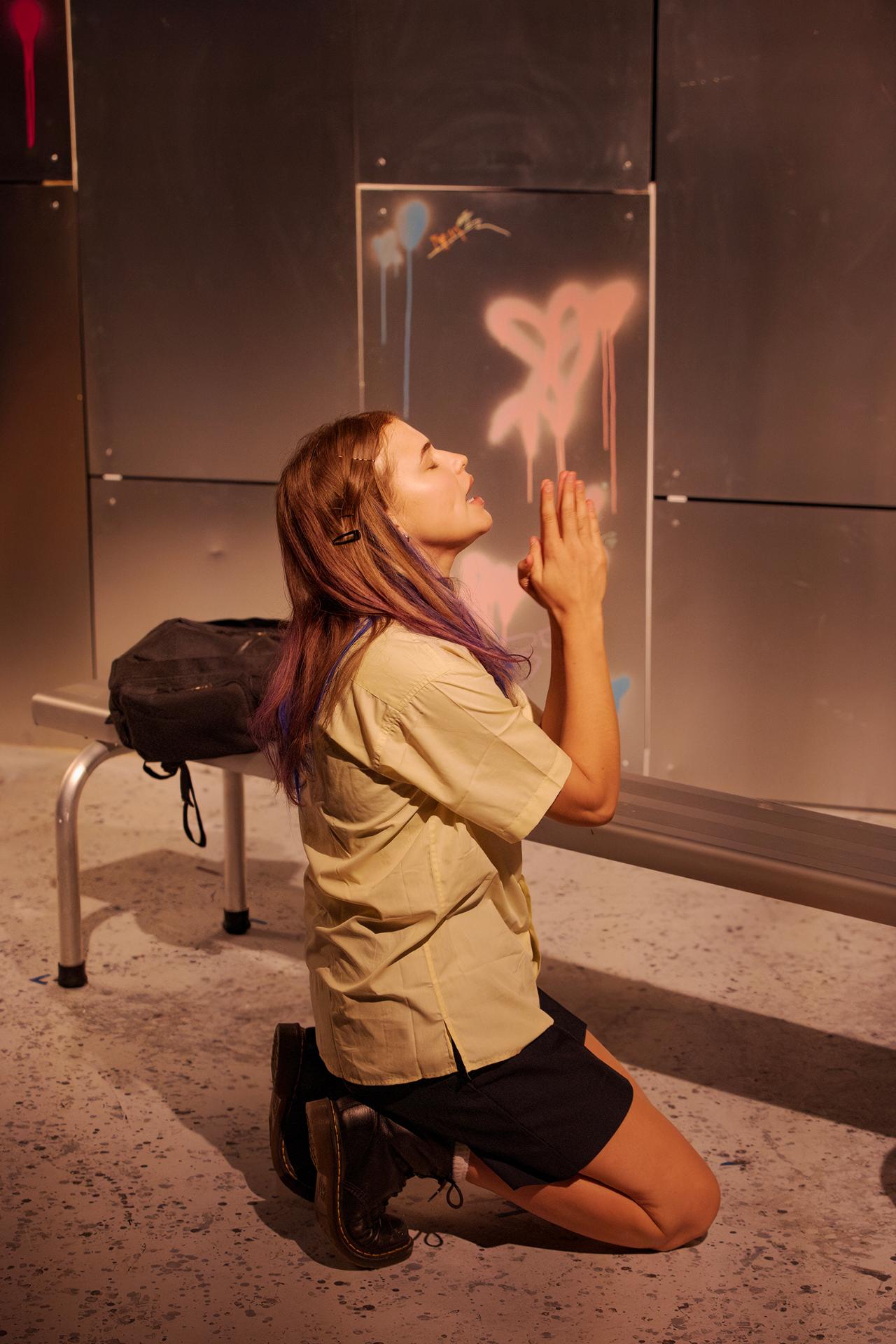
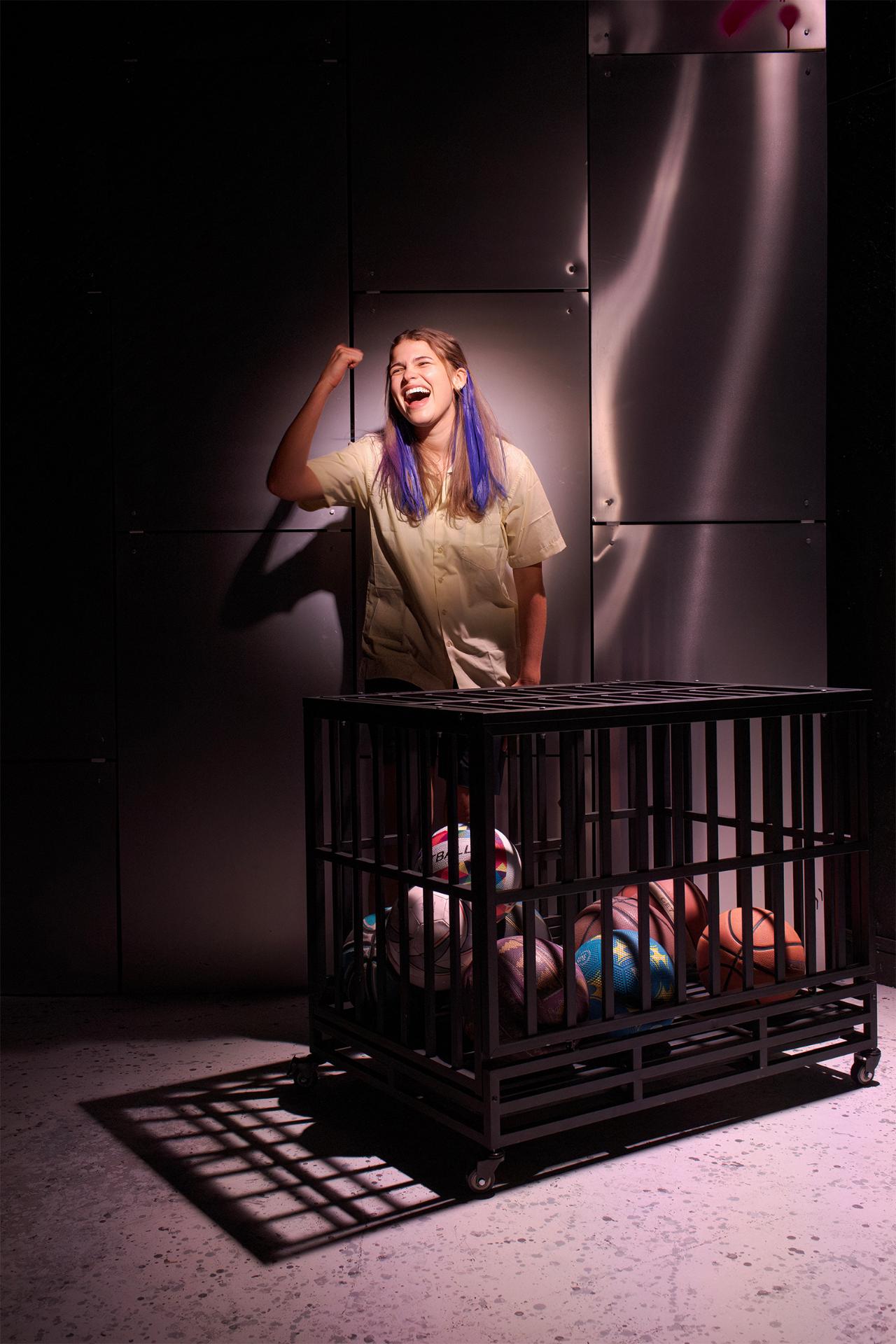
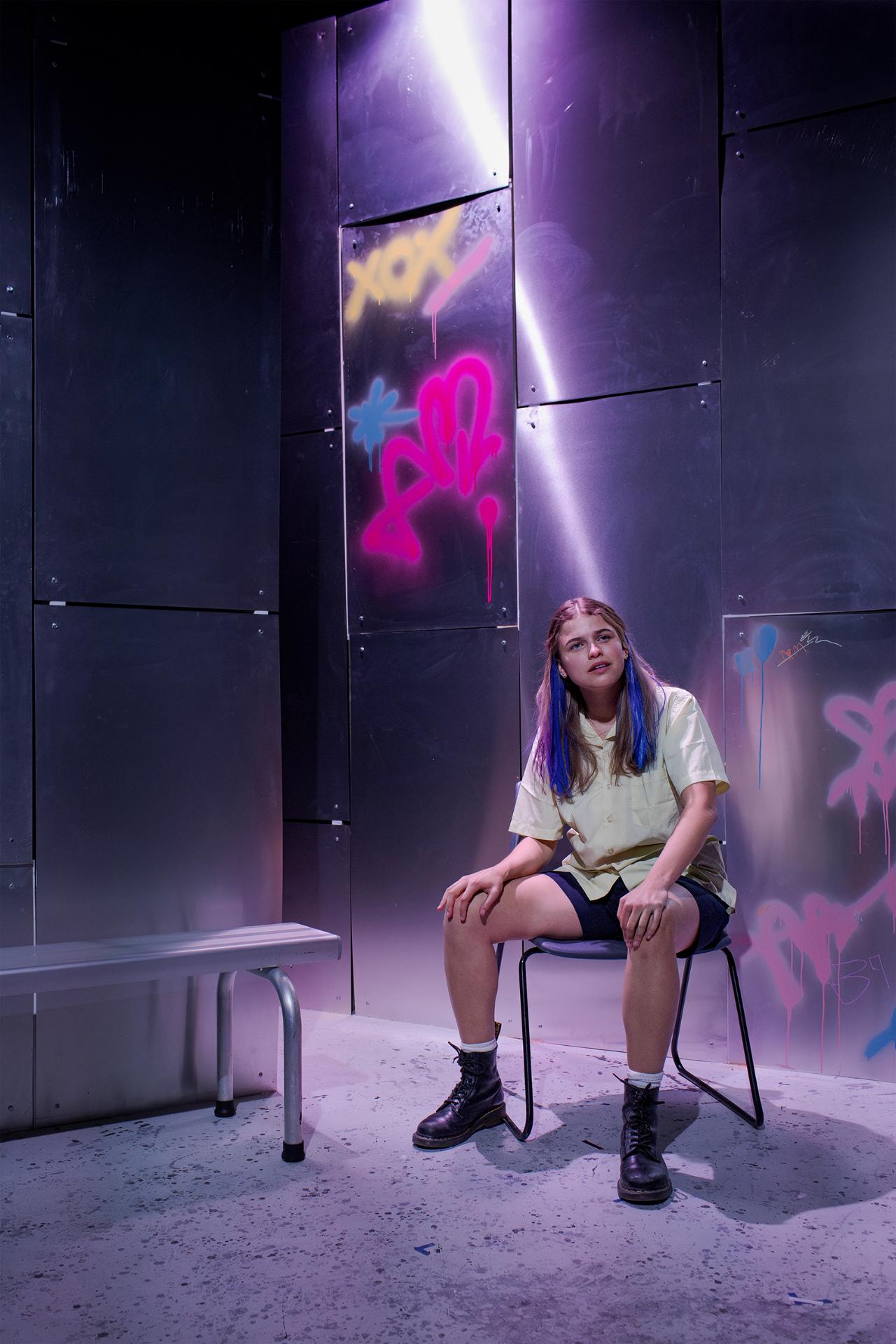
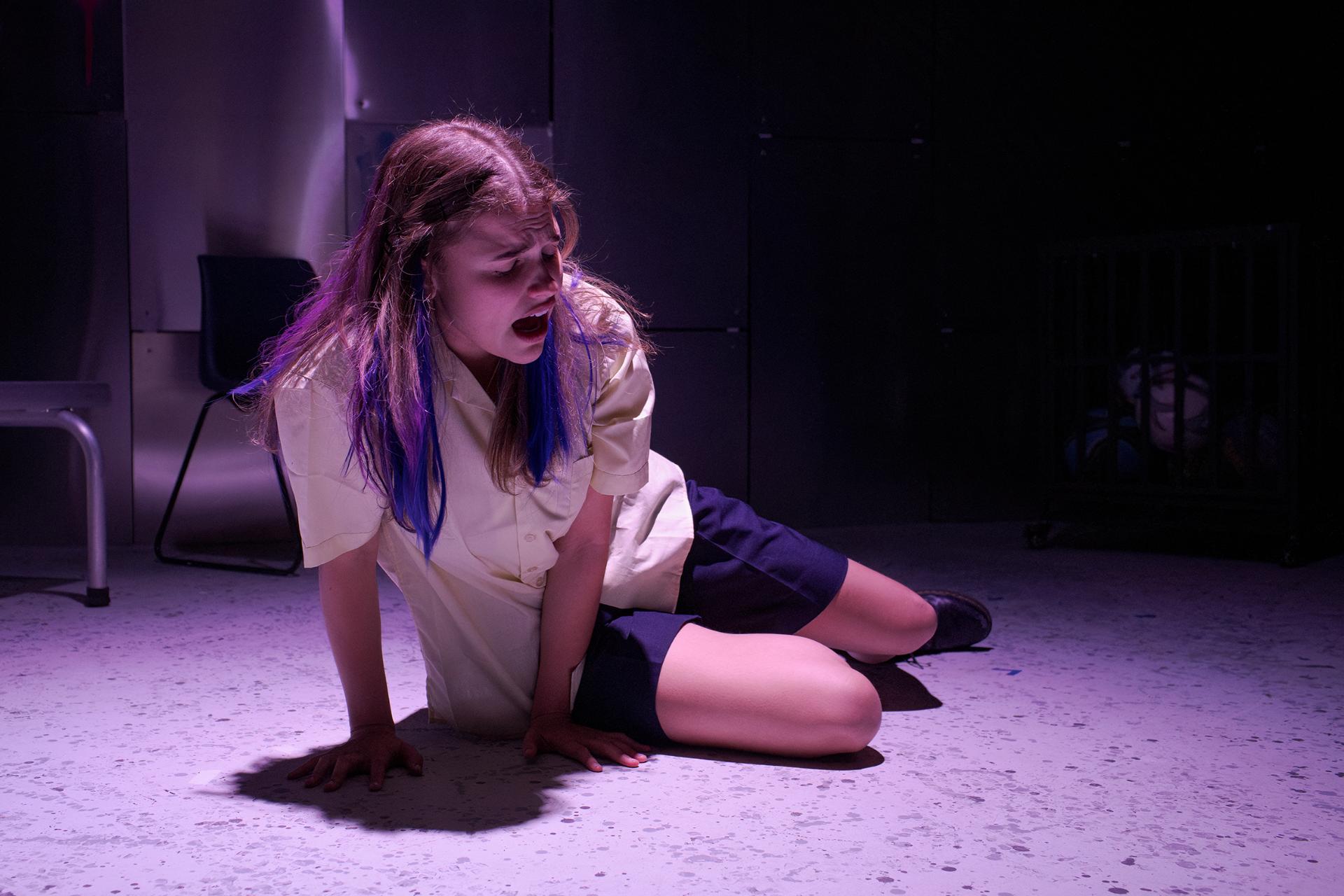
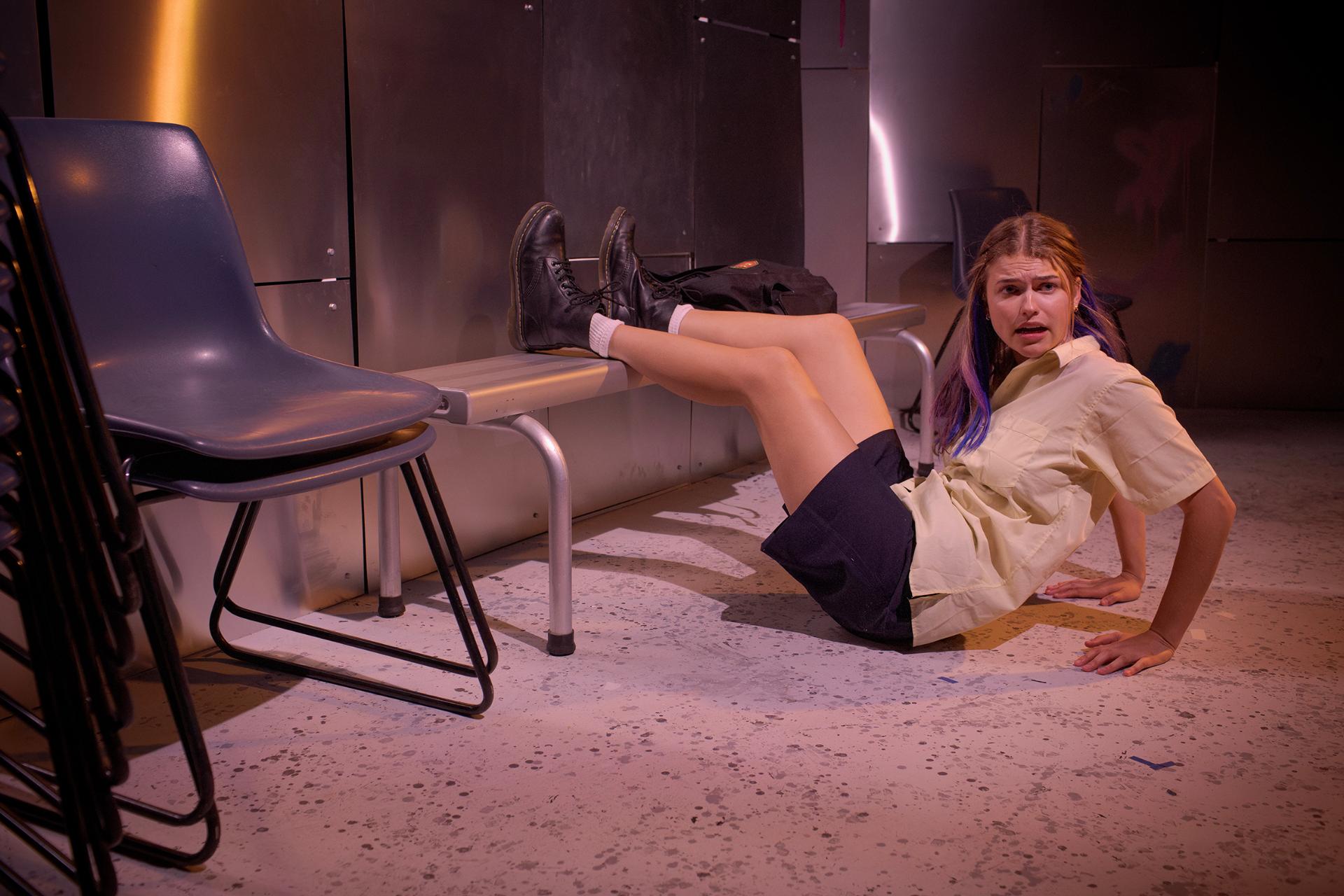
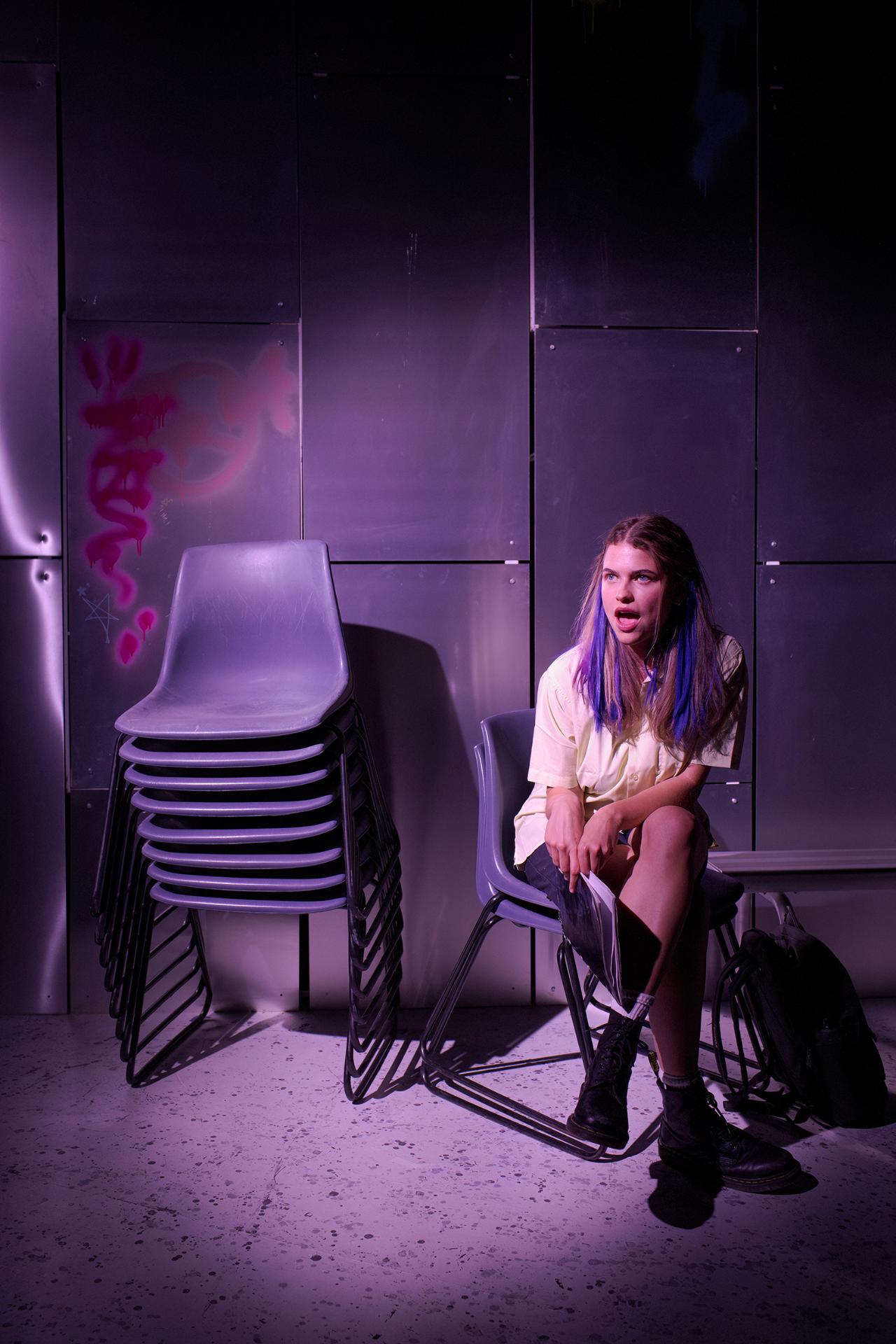
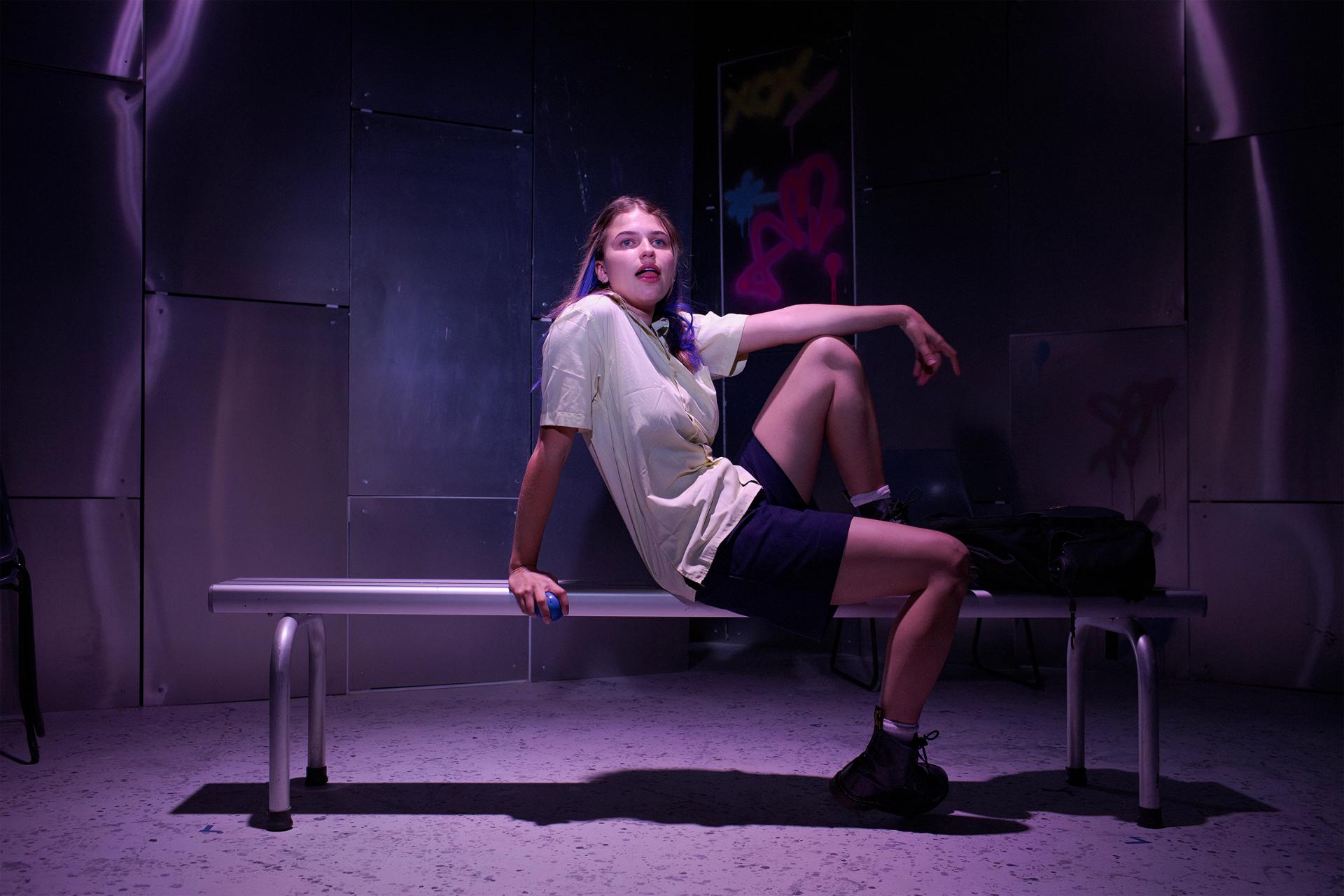
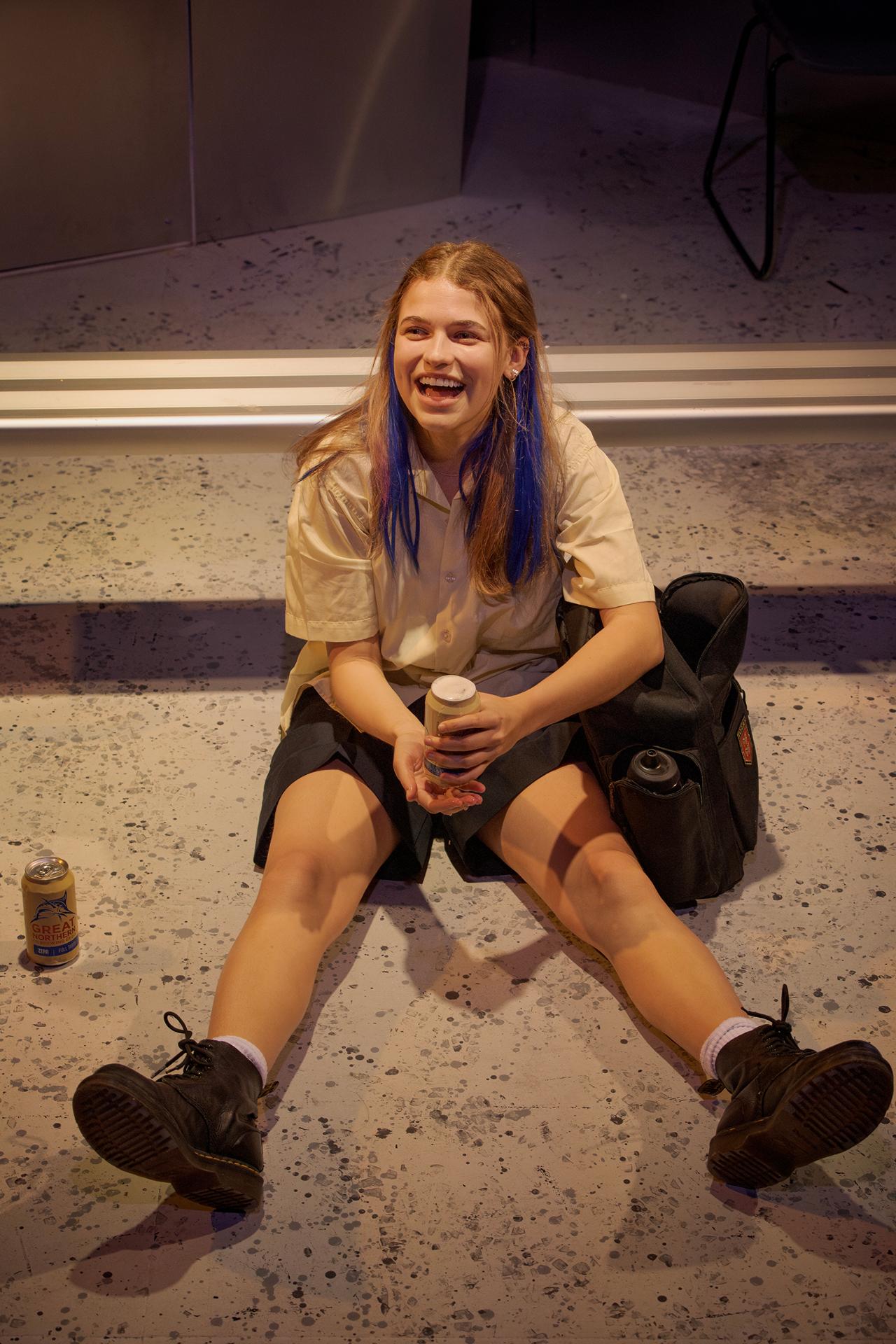
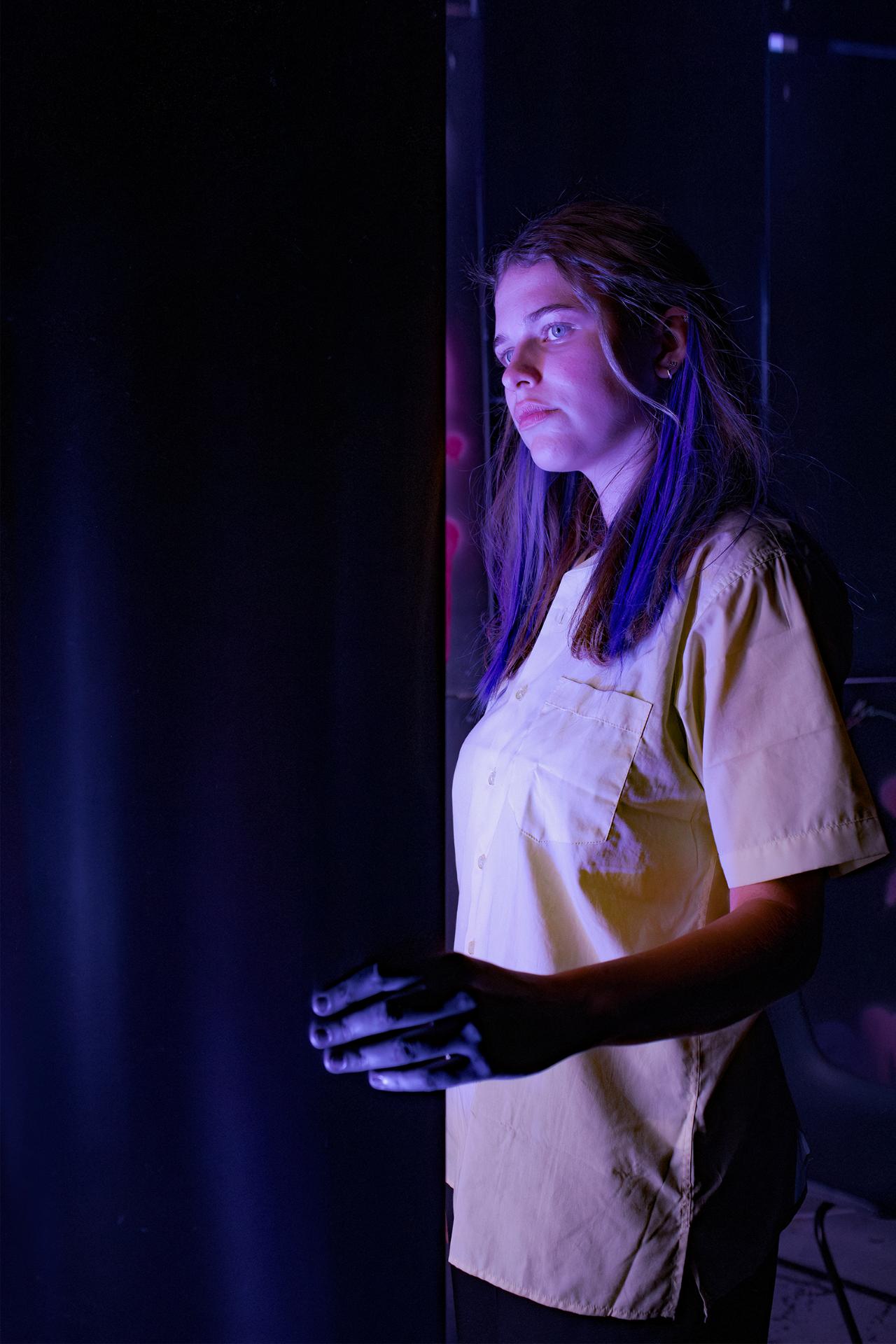
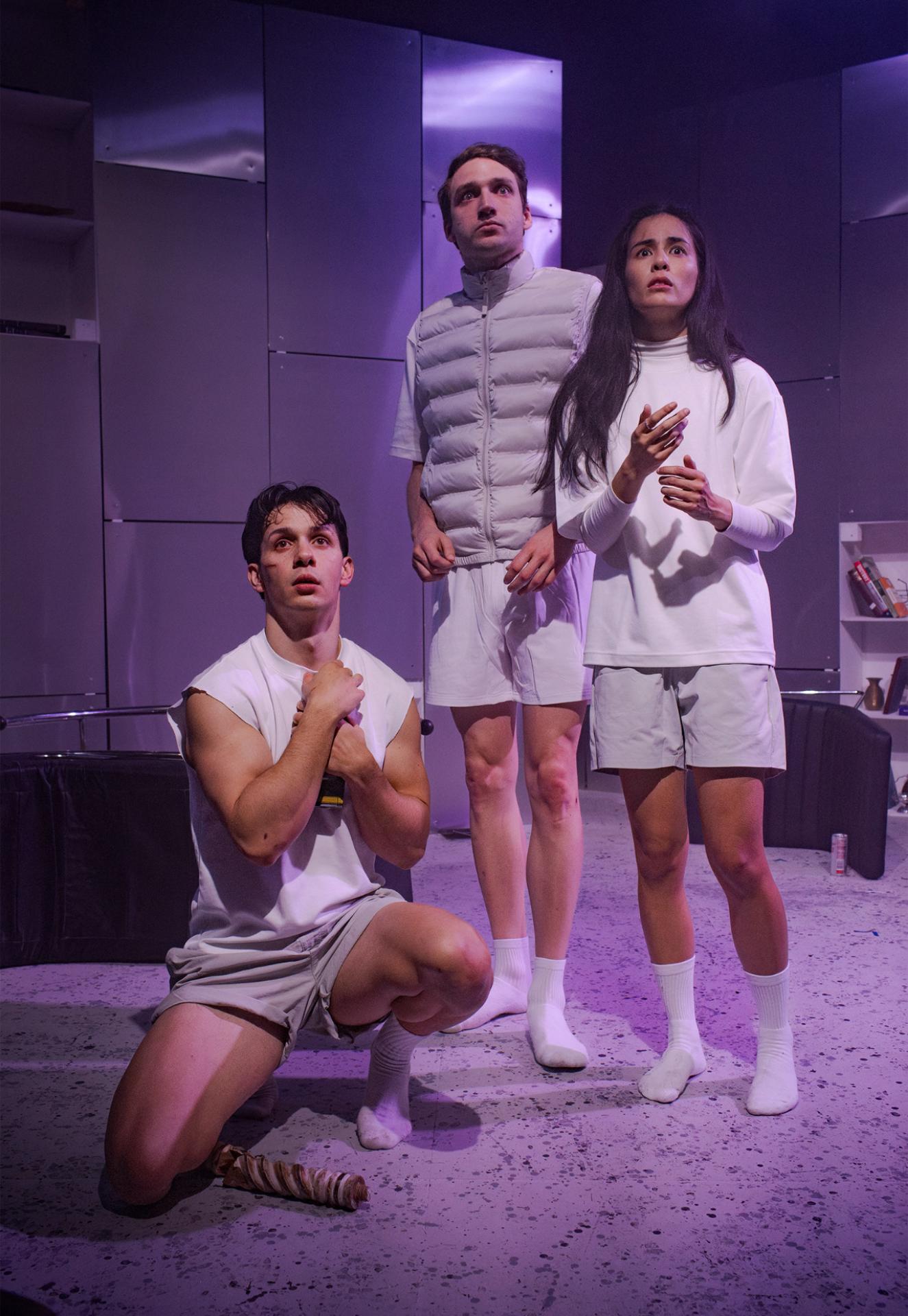
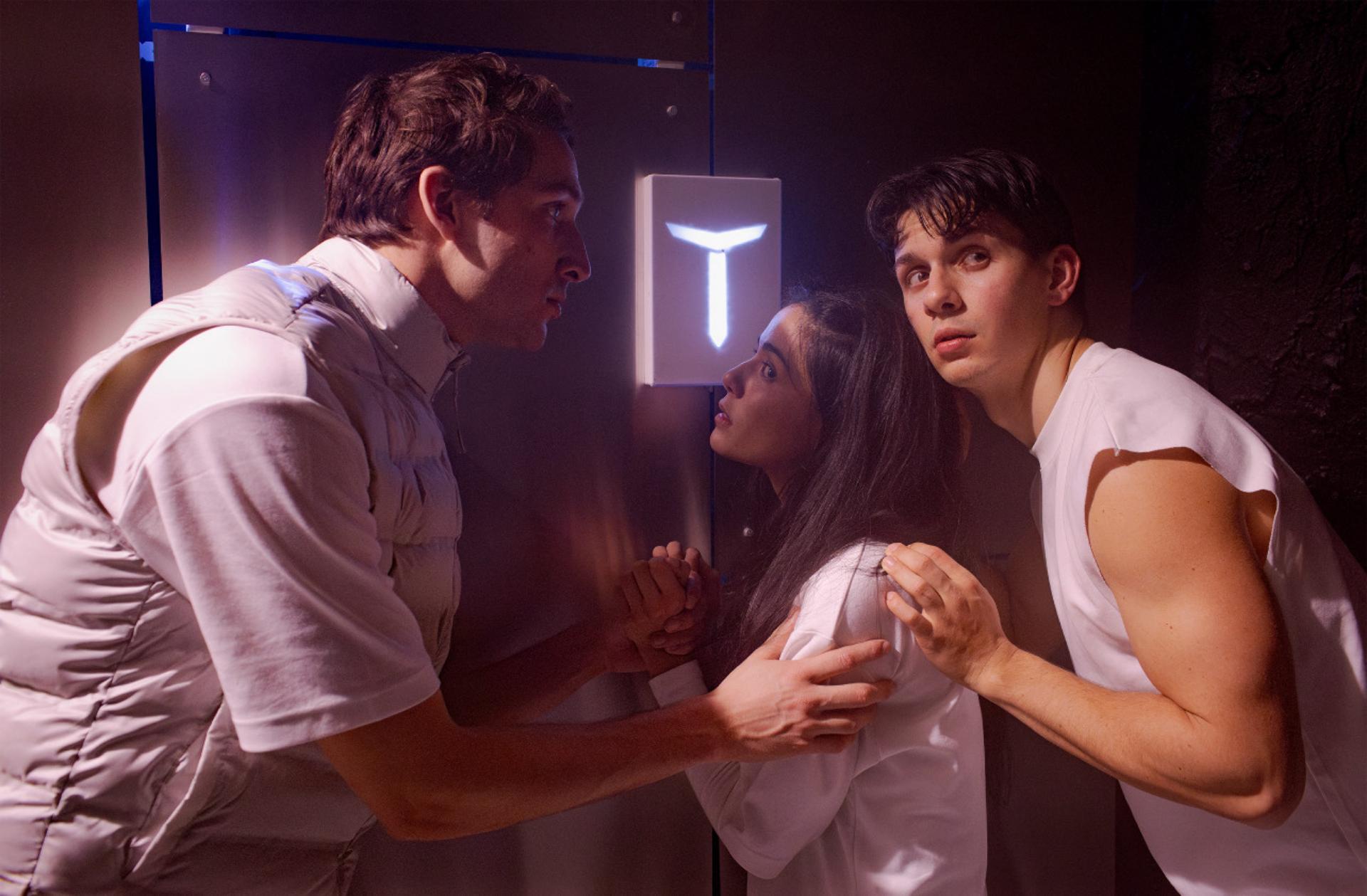
Centred in the second instalment of New Works Festival by Old Fitz Theatre, are the troubling lives of teenagers. Madelaine Nunn’s Sitting, Screaming depicts with searing realism the dangerous situation of a schoolgirl dealing with a predator, whilst Jordyn Fulcher’s Anomalies is completely fantastical in its speculations about a dystopian future, when three youngsters find themselves waking up to calamity, as an extensive technological malfunction takes hold.

The very cleverly structured and rigorously considered Sitting, Screaming is a work of gripping theatre, as directed by Lucy Clements, who brings exceptional detail to this exploration of rape culture. Its protagonist Sam is played by the wonderful Clare Hughes, who keeps us riveted for the entirety, highly impressive with the tonal variations she introduces, for an occasion of memorable storytelling.

Anomalies however is much more demanding of its audience. Although given energetic direction by Matt Bostock, the piece speaks in a convoluted and alienating language, over a lengthy duration, and with little narrative development. The cast works hard to make sense of the play, but Giani Fenech, Rhiaan Marquez and Harold Phipps can only be credited for being able to find meaning from Anomalies for themselves.
Thankfully, we discover that the staging for both are remarkably well designed. Hailley Hunt’s set and costumes are expressive, and convincing with what they wish to convey. Lights by Luna Ng are commendable for their attentiveness to the nuances of the writing, and for helping us shift through all the vacillating drama and comedy. Sounds by Sam Cheng for Sitting, Screaming too are effective at pulling us deep into the fluctuating emotional textures, just as Milo McLaughlin’s audio creations for Anomalies are able to indicate the escalating intensity of its sci-fi predicament.

Characters in both tales, one authentic and one imaginary, inherit broken worlds. So much of what is normalised, should never have been deemed acceptable. It is through the perspective of youth that we can clearly see that all we have acquiesced to consider good enough, is actually of tragic proportions. The eternal dilemma of humanity seems to be that we cannot help but conceive of perfection, but to bring it to fruition is always beyond us.

 ww.oldfitztheatre.com.au | www.newghoststheatre.com

Review: Colder Than Here (Ensemble Theatre)

Venue: Ensemble Theatre (Kirribilli NSW), 16 Sep – 12 Oct, 2024
Playwright: Laura Wade
Director: Janine Watson
Cast: Airlie Dodds, Charlotte Friels, Huw Higginson, Hannah Waterman
Images by Phil Erbacher

Theatre review
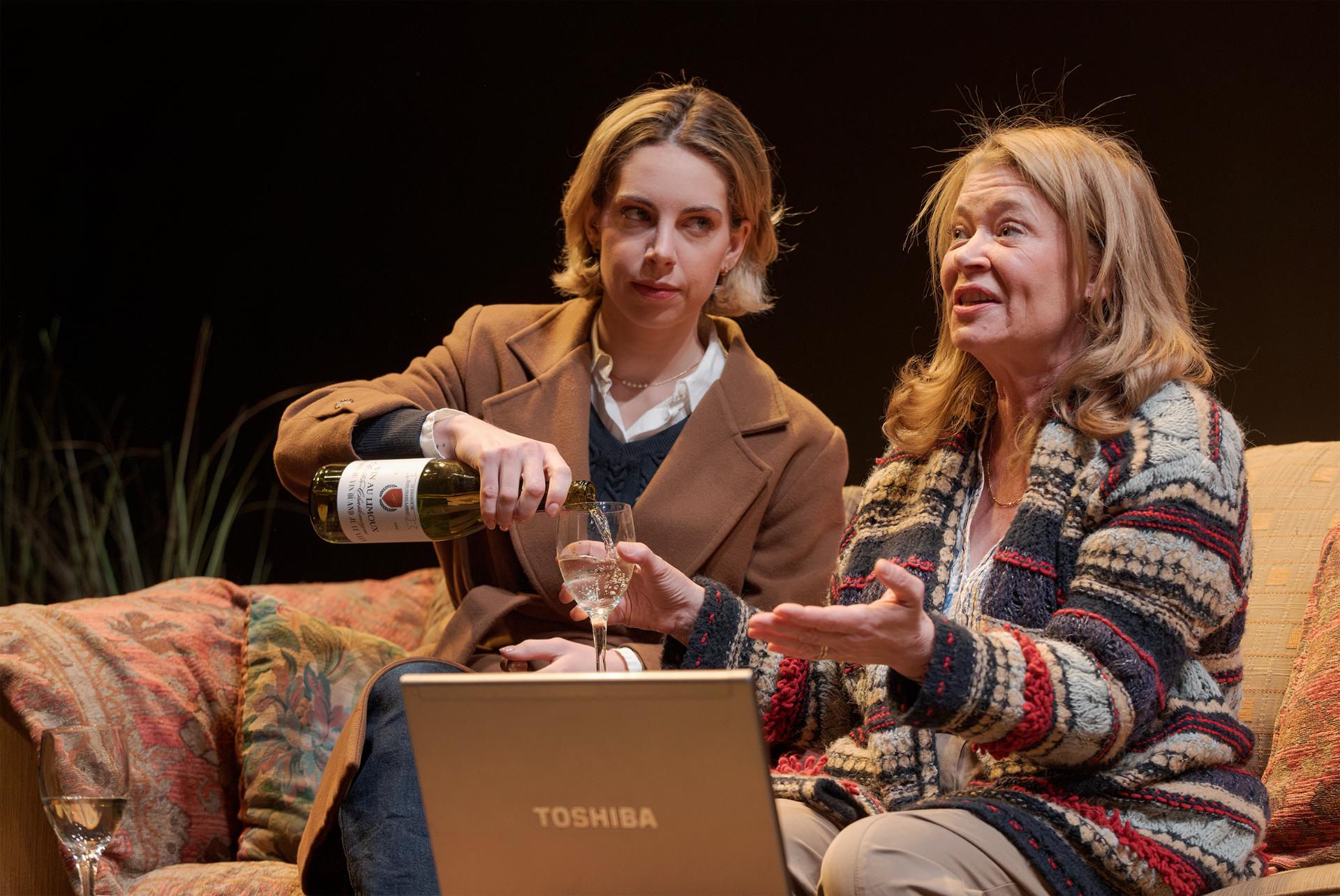
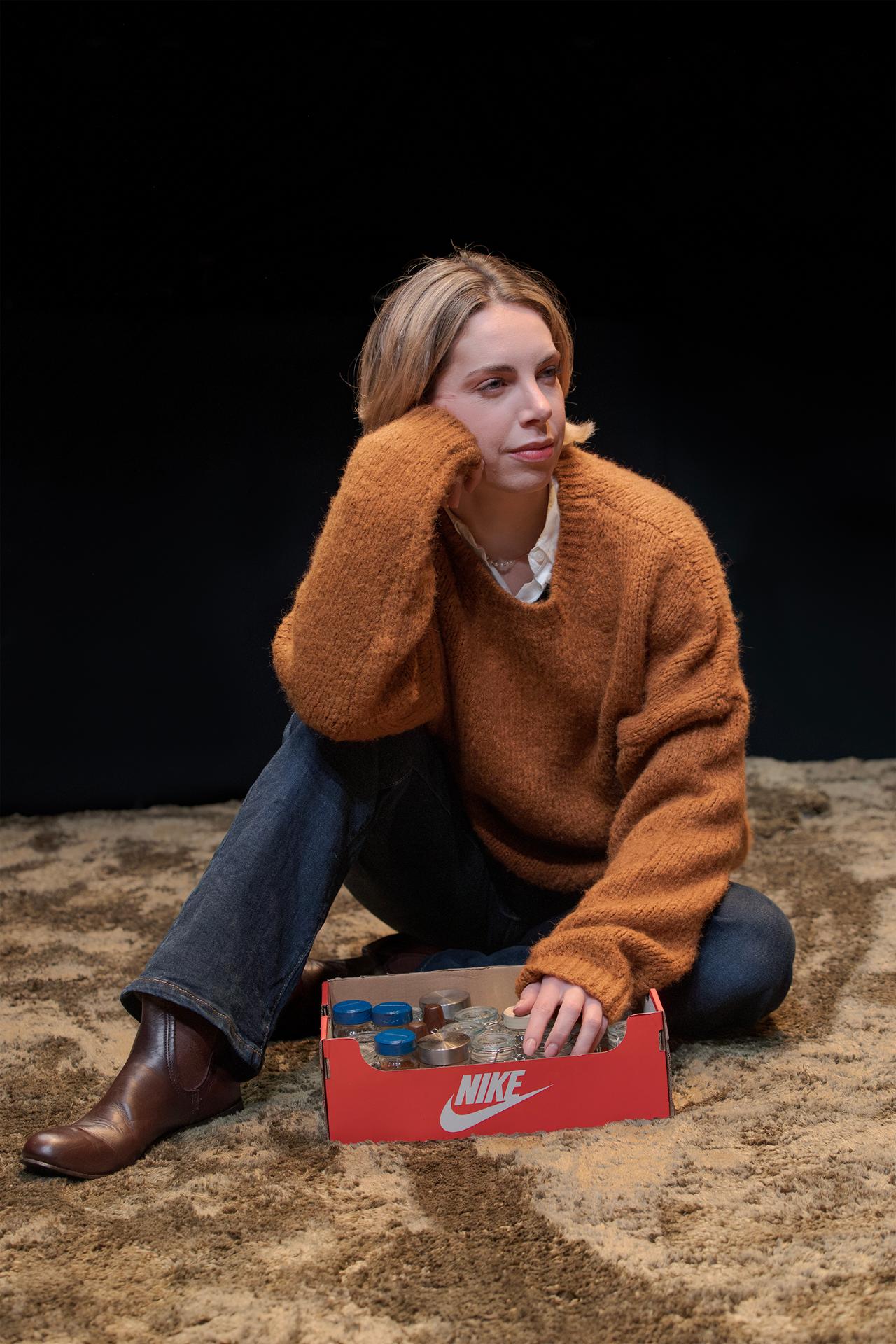
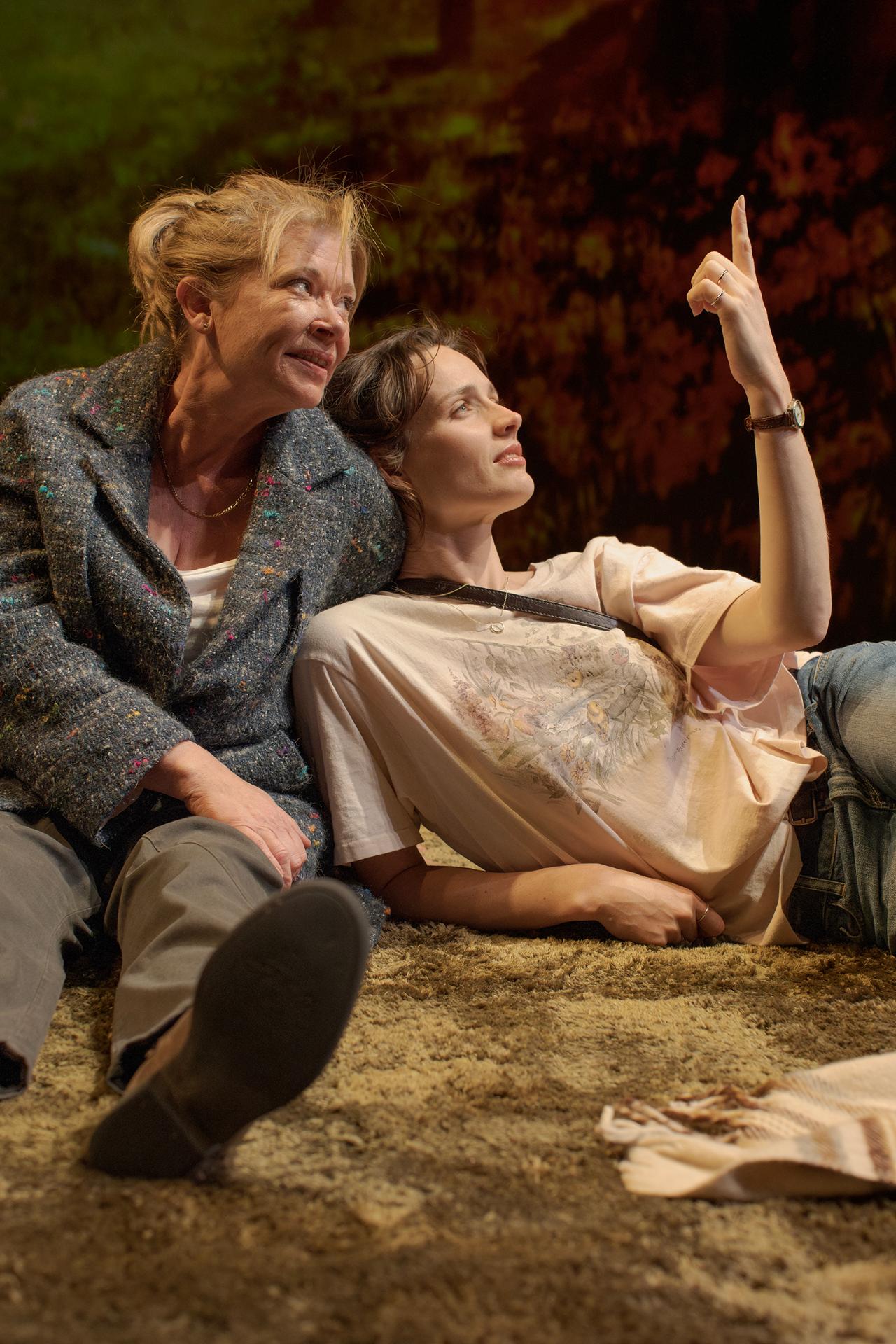
Myra only has months to live. There are only so many practical affairs to attend to, before she has to deal with the real business of saying goodbye to her loved ones. A meditation on death, Laura Wade’s Colder Than Here is an excellent opportunity for audiences to contemplate the inevitable. In paradigms such as ours, that vehemently avoid any discussion on the subject, the play is an unusual attempt to offer a sincere look at something that is certain for all.
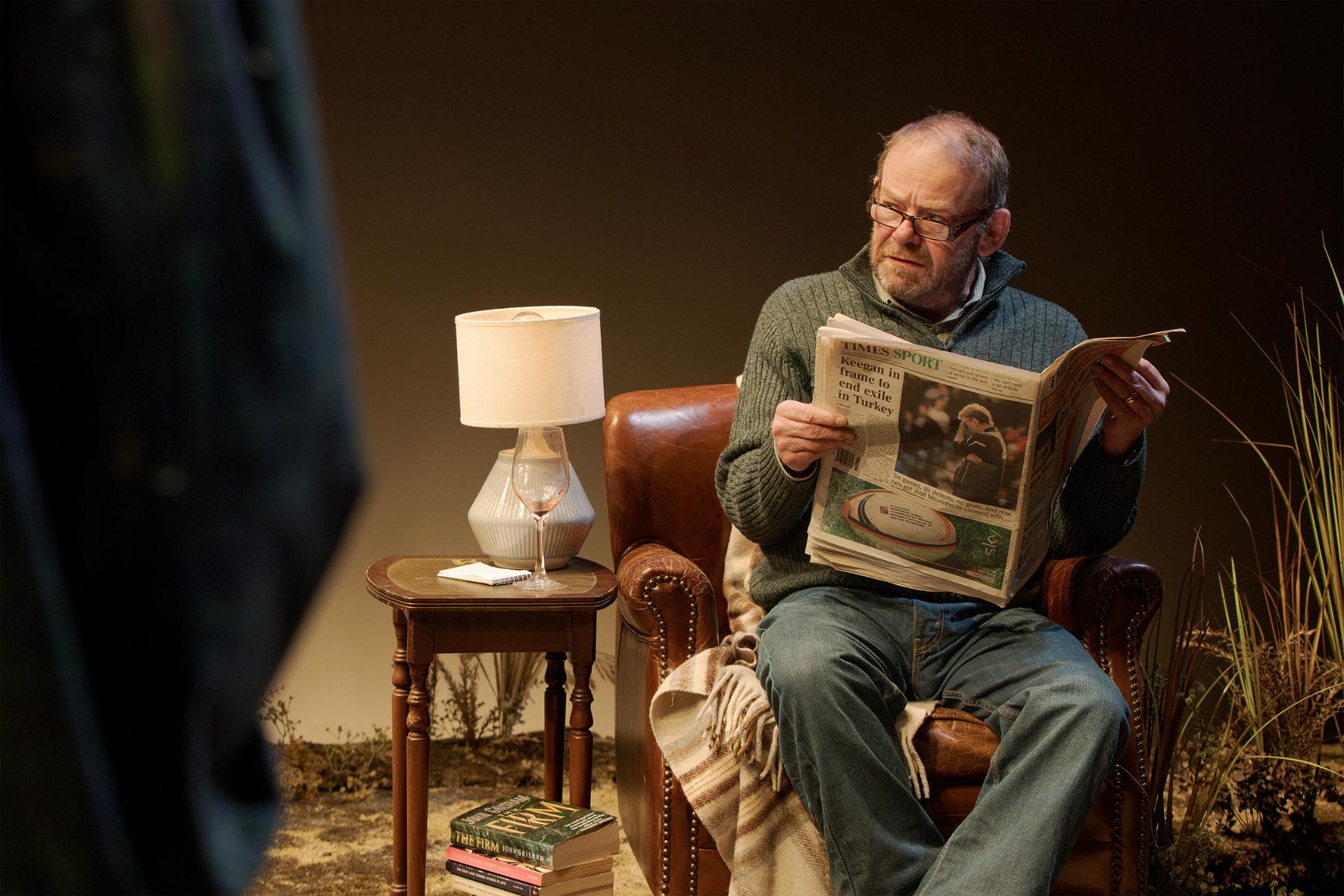
Although irrefutably deliberative in nature, Colder Than Here is memorable for its humour, surprising perhaps for the lightness of its tone. Direction by Janine Watson makes sure that those comedic qualities sing prominently throughout the piece, along with all the sensitive renderings of conversations being depicted between family members.
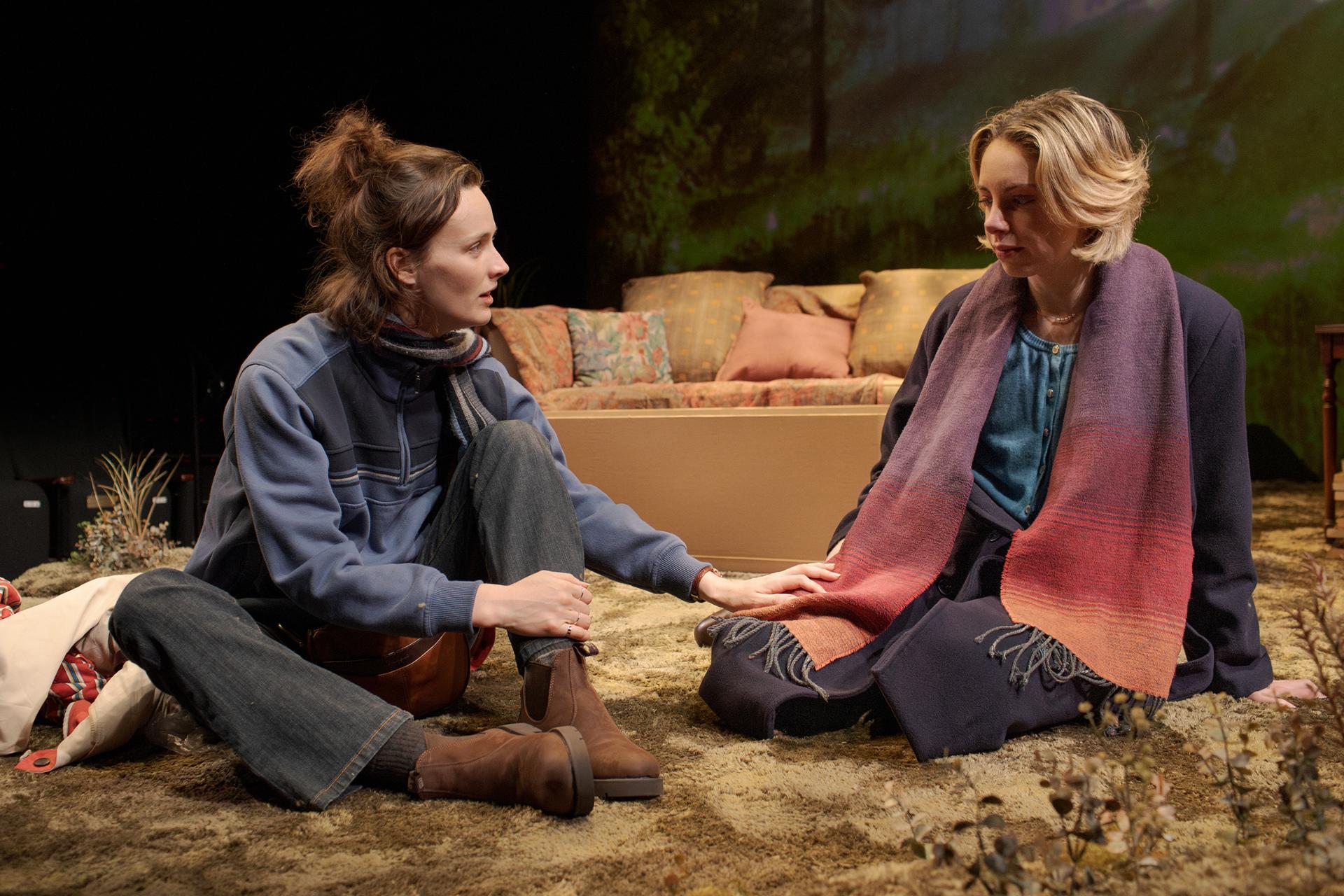
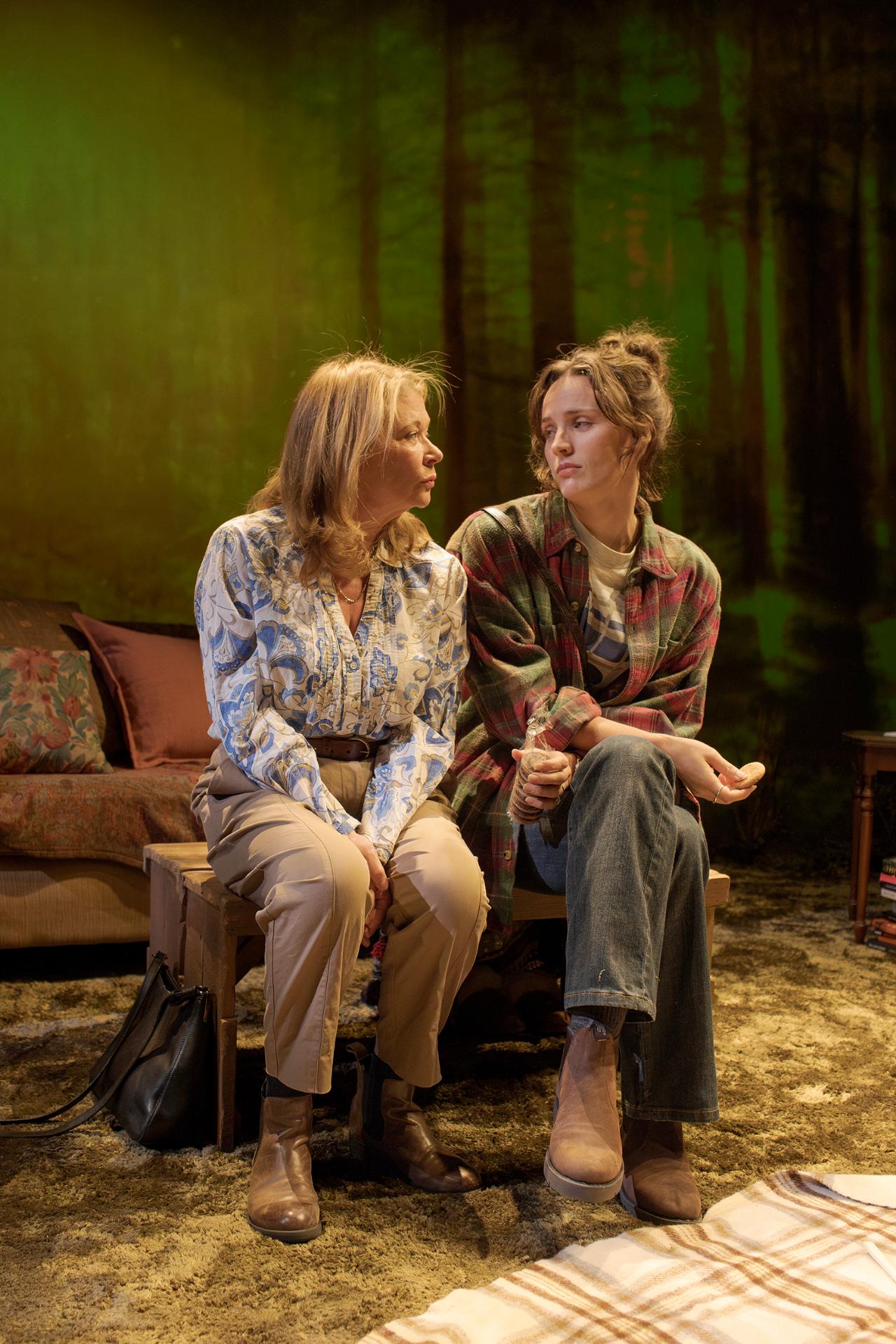
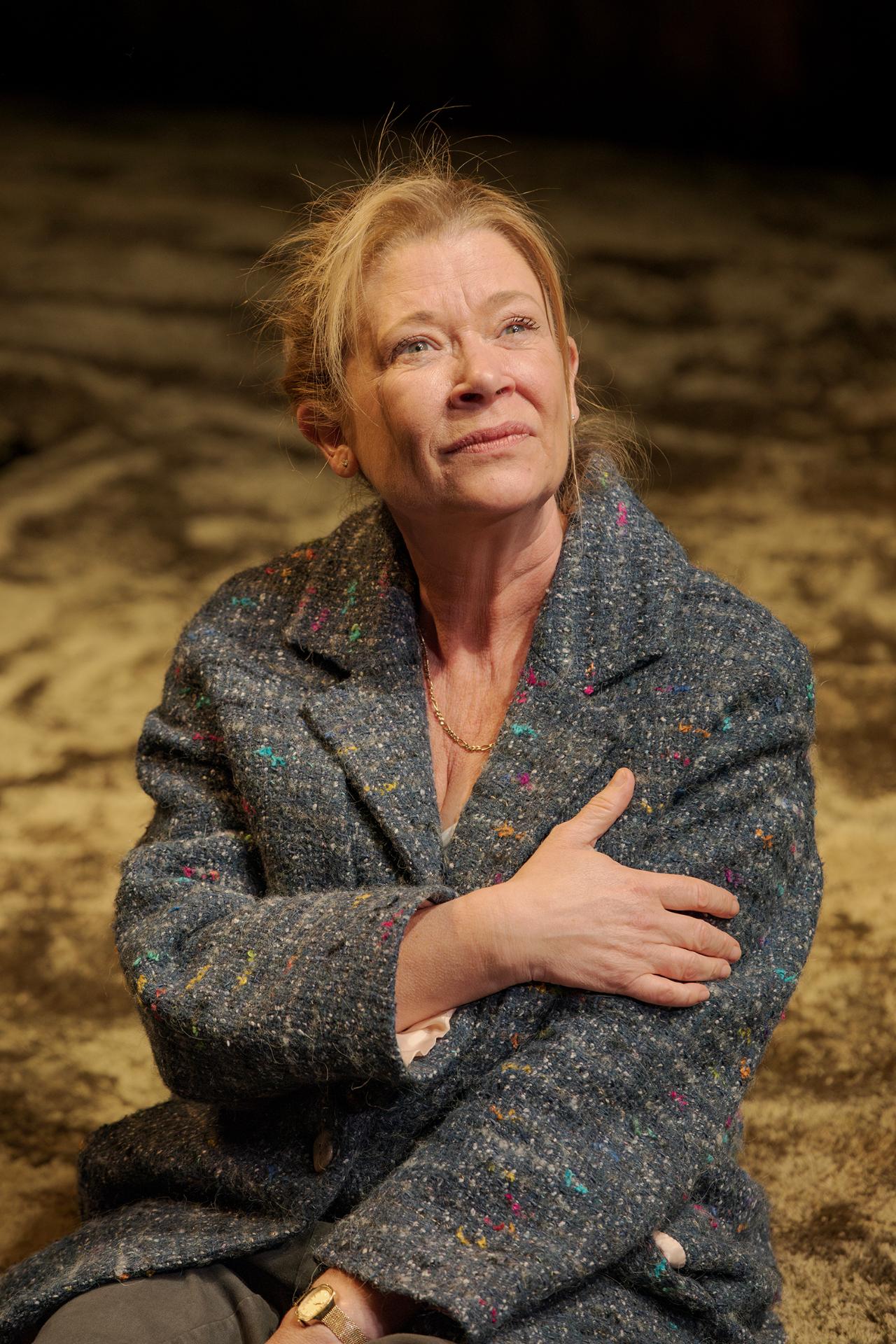
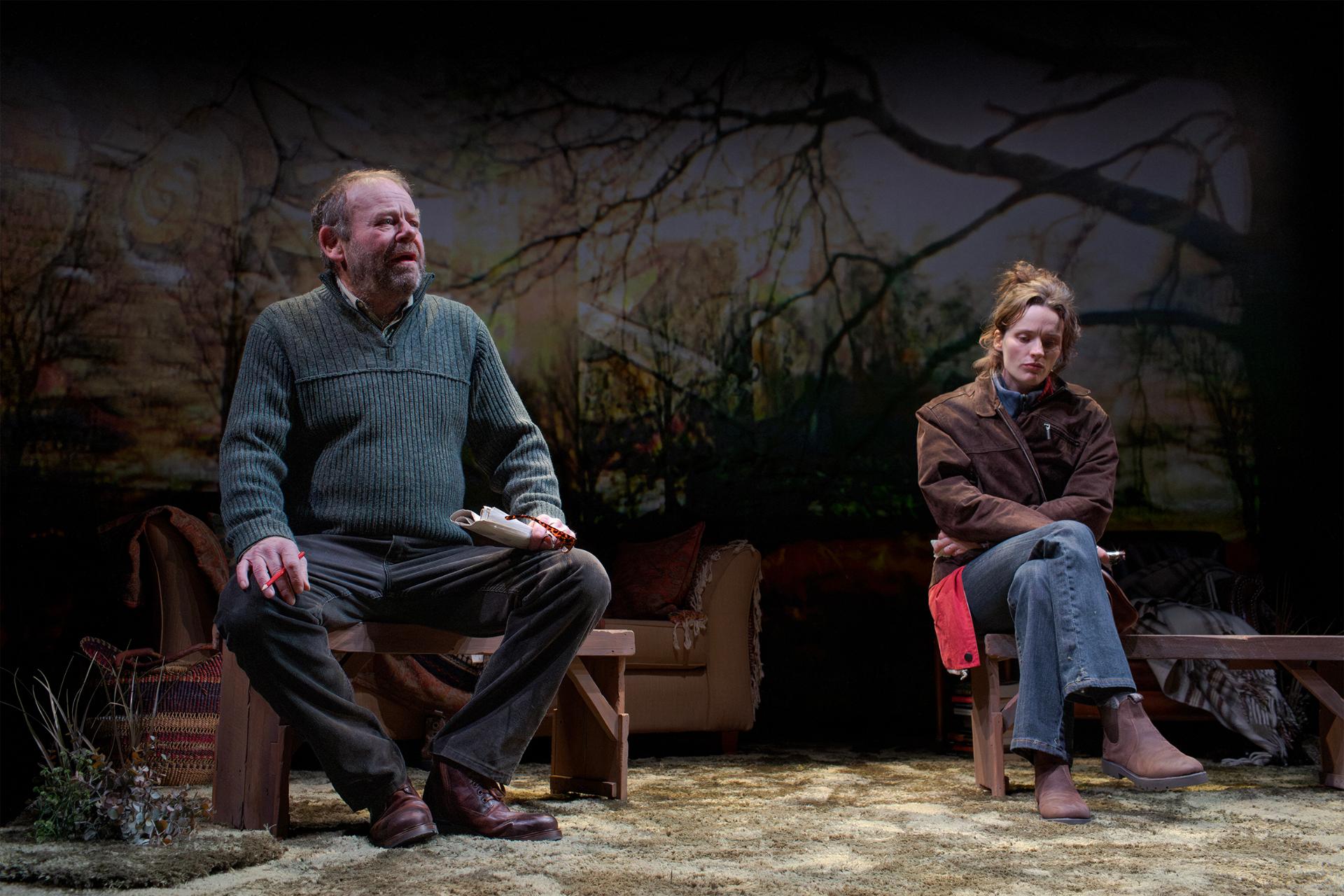
Set design by Michael Hankin takes clear inspiration from Wade’s text, to introduce a carpet of green moss, that dominates the staging, to mixed results. Video projections by Mark Bolotin form beautiful backdrops for scenes of the English landscape, gently animated to evoke the life that continues be, in a story about the renewal of human corporeality. Lights by Morgan Moroney and sounds by Jessica Dunn are sparse and subtle, for a show that always chooses the understated option.
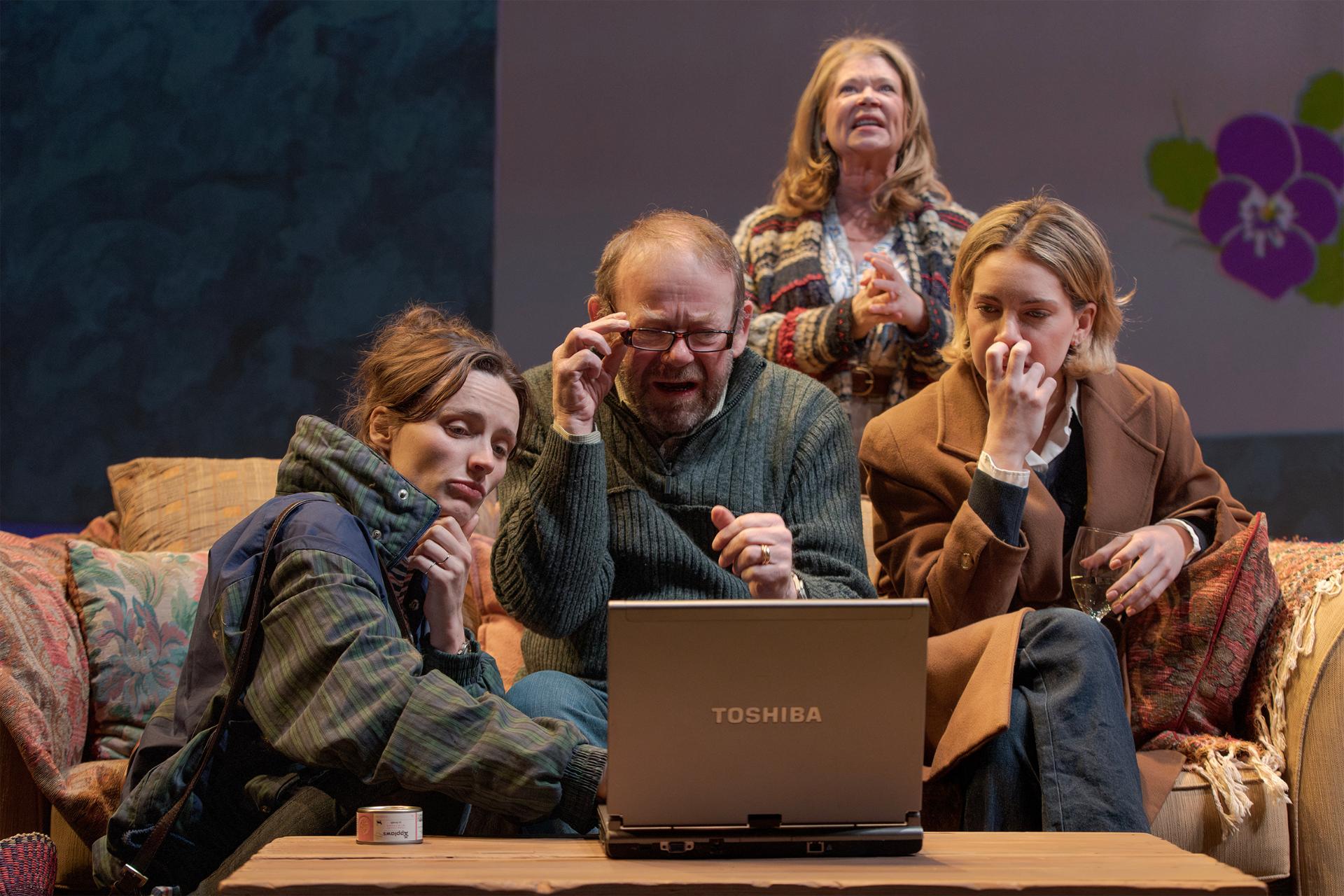
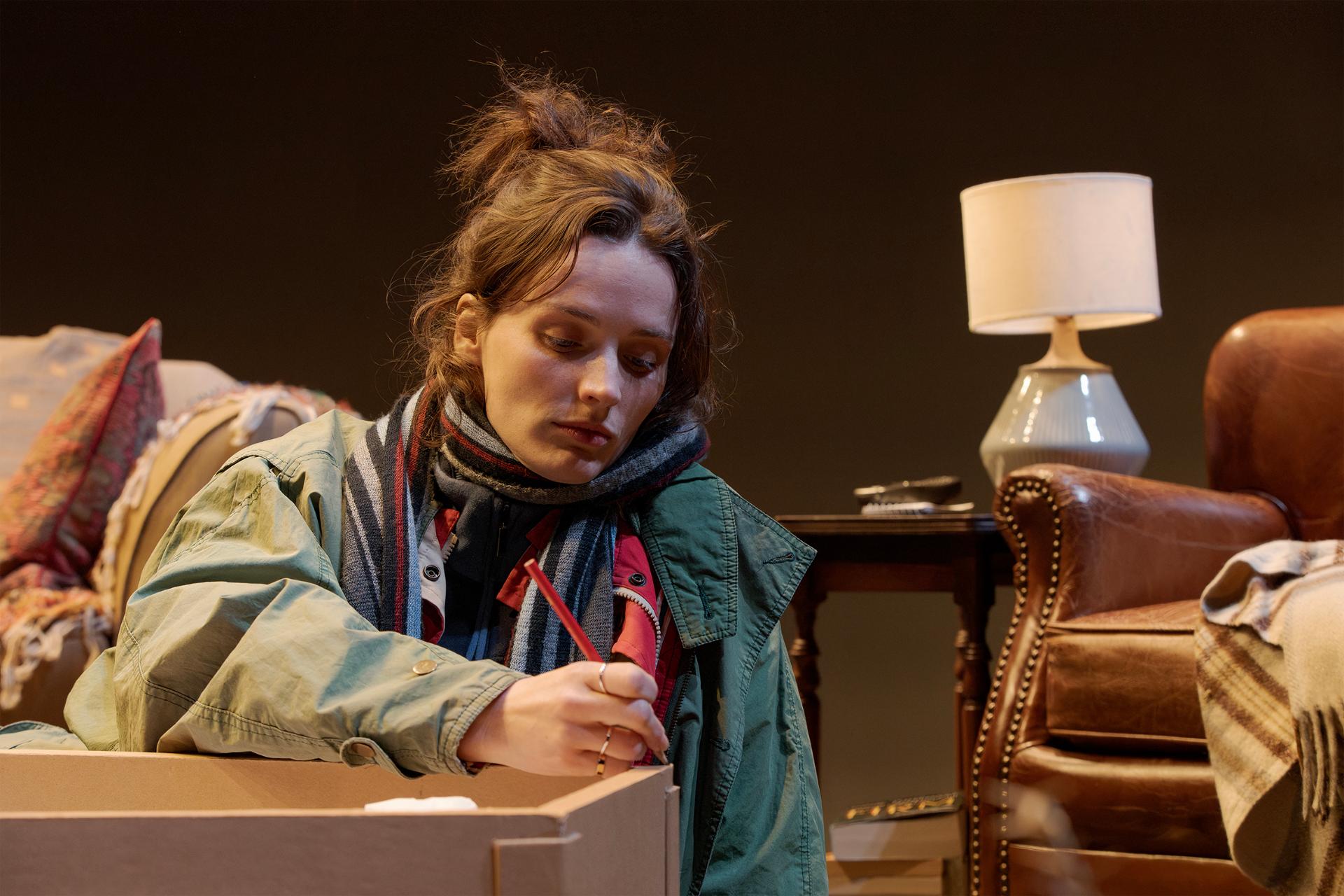
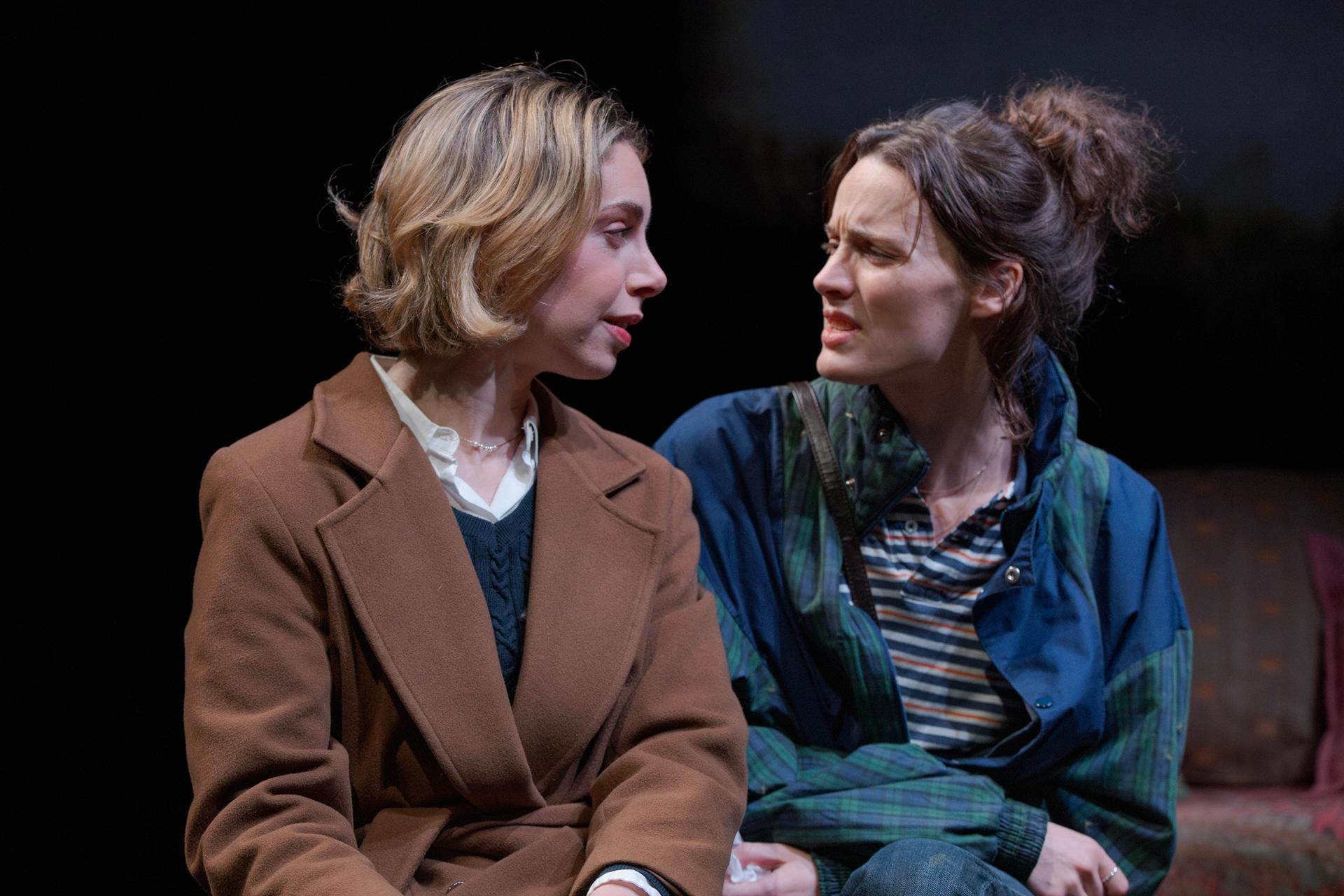
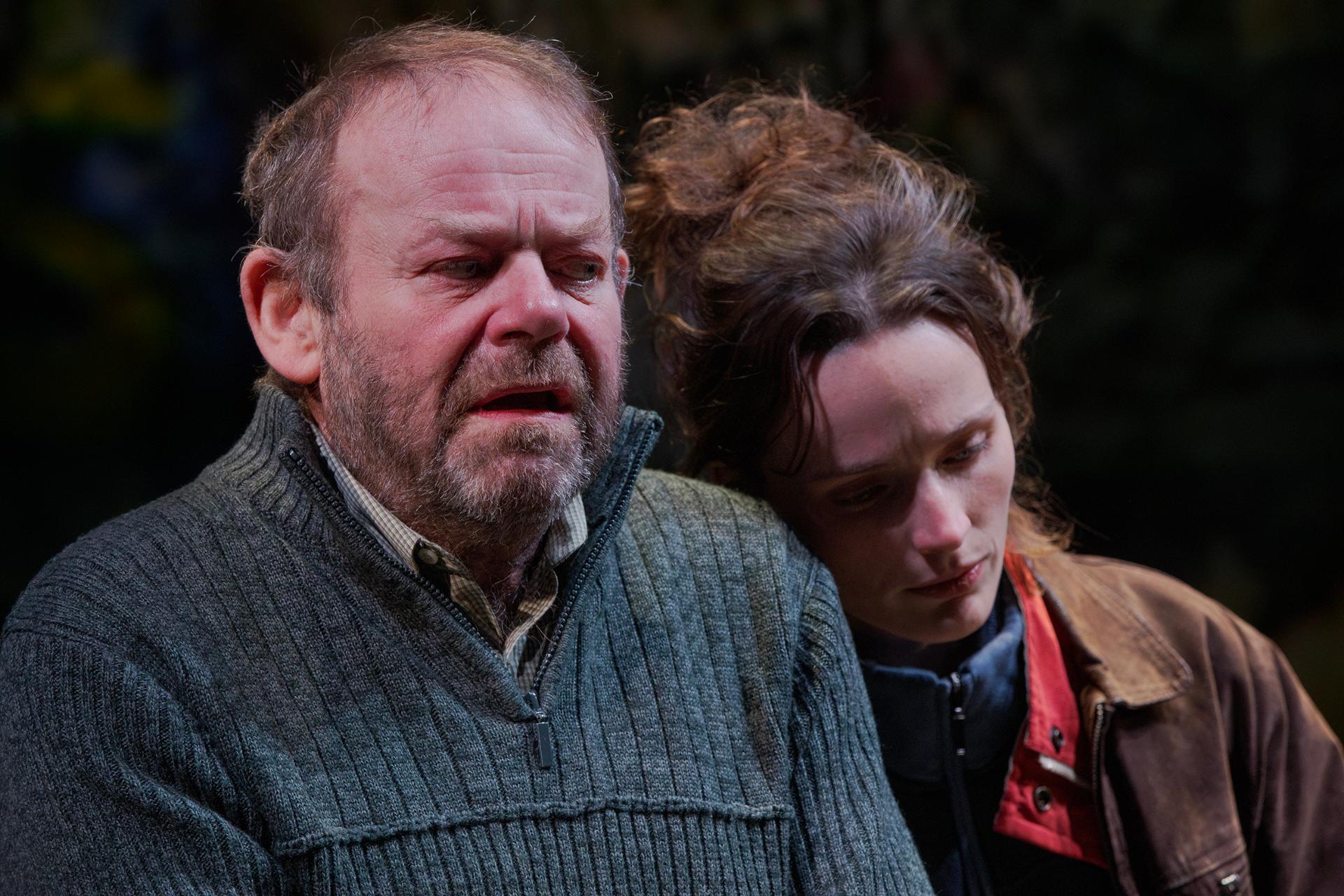
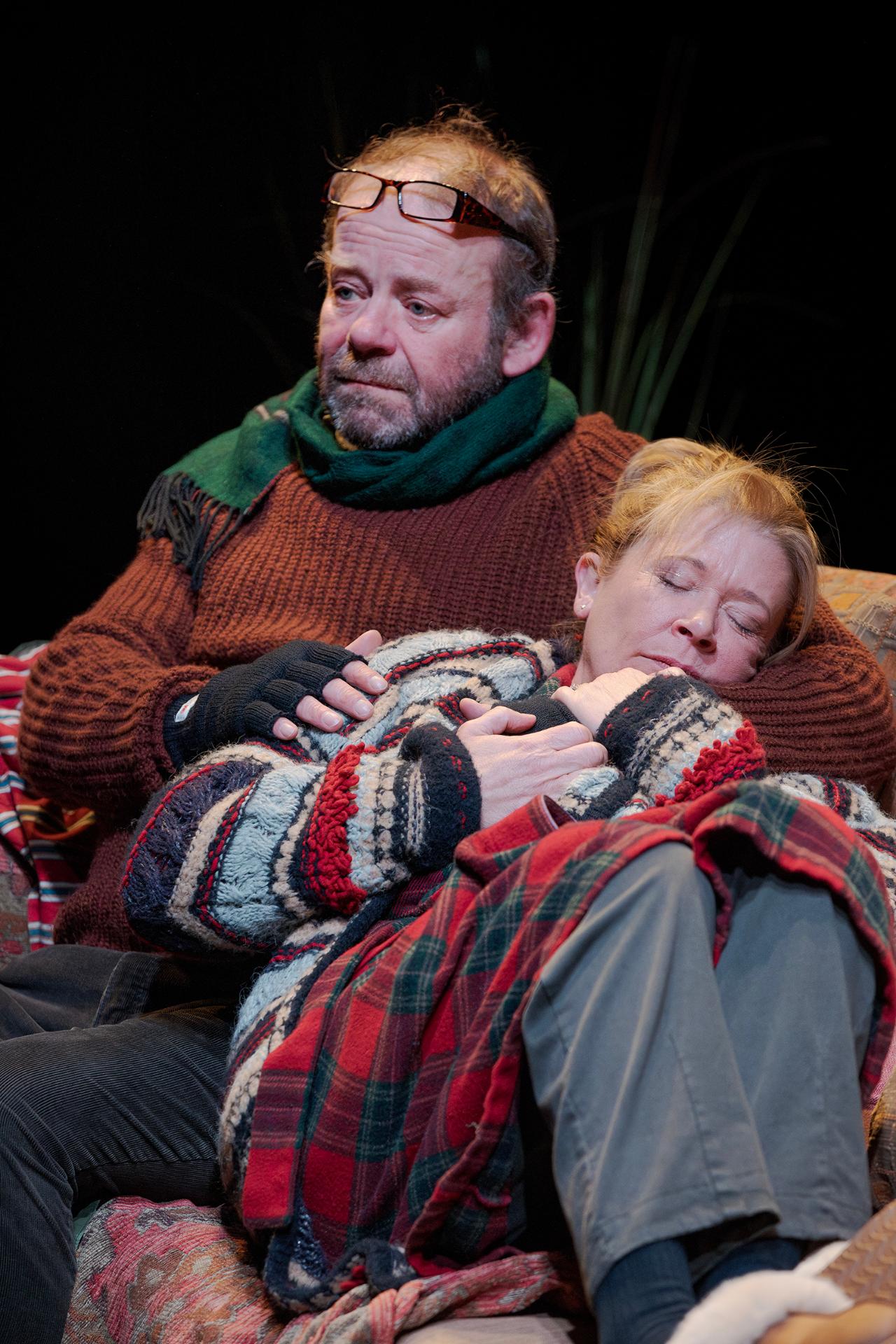
Actor Hannah Waterman brings great believability to Myra, portraying strength and vulnerability in equal measure, along with a charming wit that proves captivating. Husband Alec is also a funny character, as performed by Huw Higginson, who absolutely convinces as a man trying to avoid painful emotions. Airlie Dodds and Charlotte Friels play Myra’s daughters, both demonstrating commitment and focus, in a work that steers clear of cheap sentimentality.

The human mind seems always to be searching for that which is definite; we want to understand things in black and white, yet death being one of the very few that is beyond question, constantly escapes our attention. “The irony of man’s condition is that the deepest need is to be free of the anxiety of death and annihilation; but it is life itself which awakens it, and so we must shrink from being fully alive.” (Ernest Becker, 1973).

www.ensemble.com.au

Review: Plenty Of Fish In The Sea (Sydney Fringe Festival)

Venue: New Theatre (Newtown NSW), Sep 17 – 21, 2024
Creators: Emily Ayoub, Madeline Baghurst
Cast: Emily Ayoub, Madeline Baghurst, Christopher Carroll
Images by Geoff Magee

Theatre review
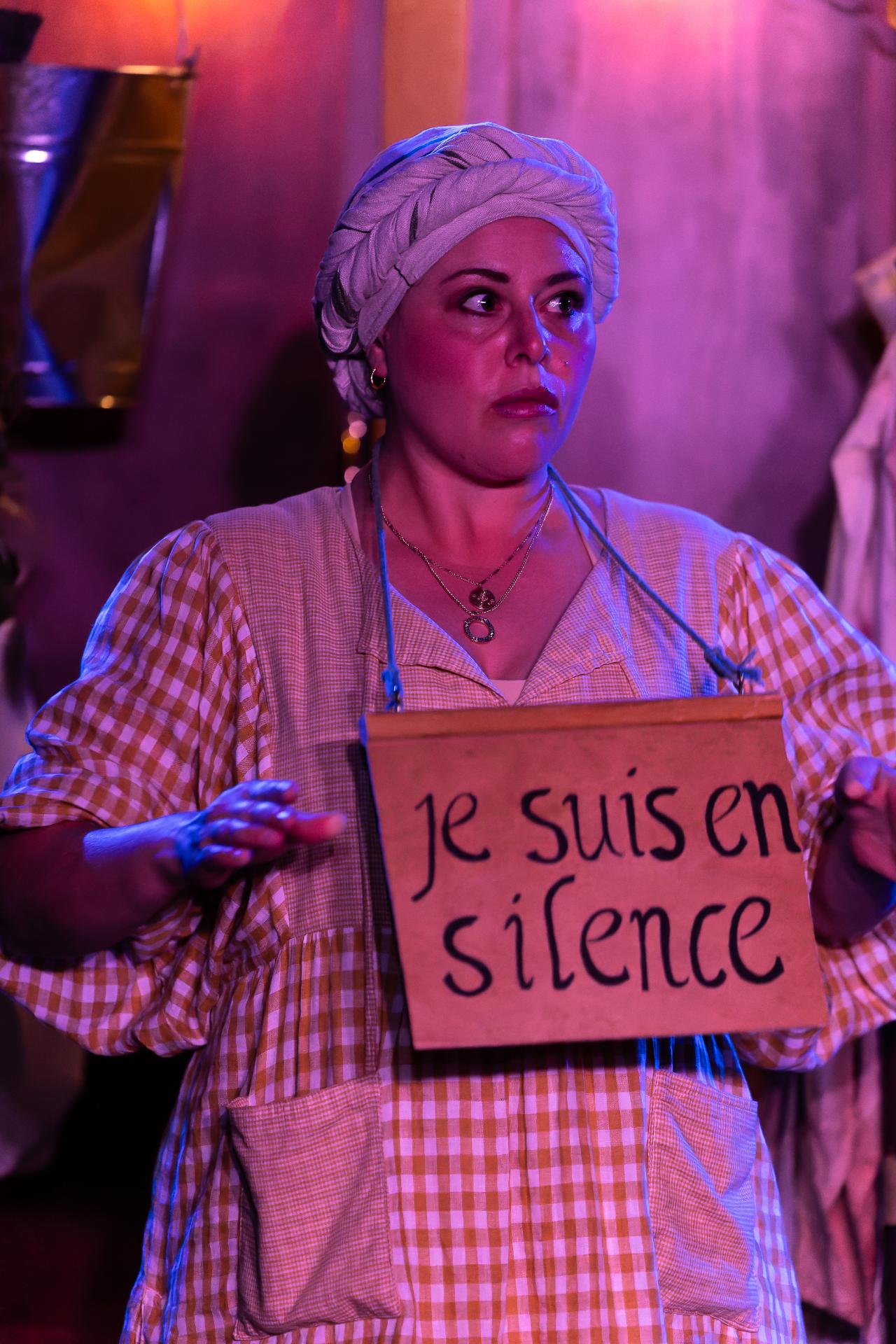
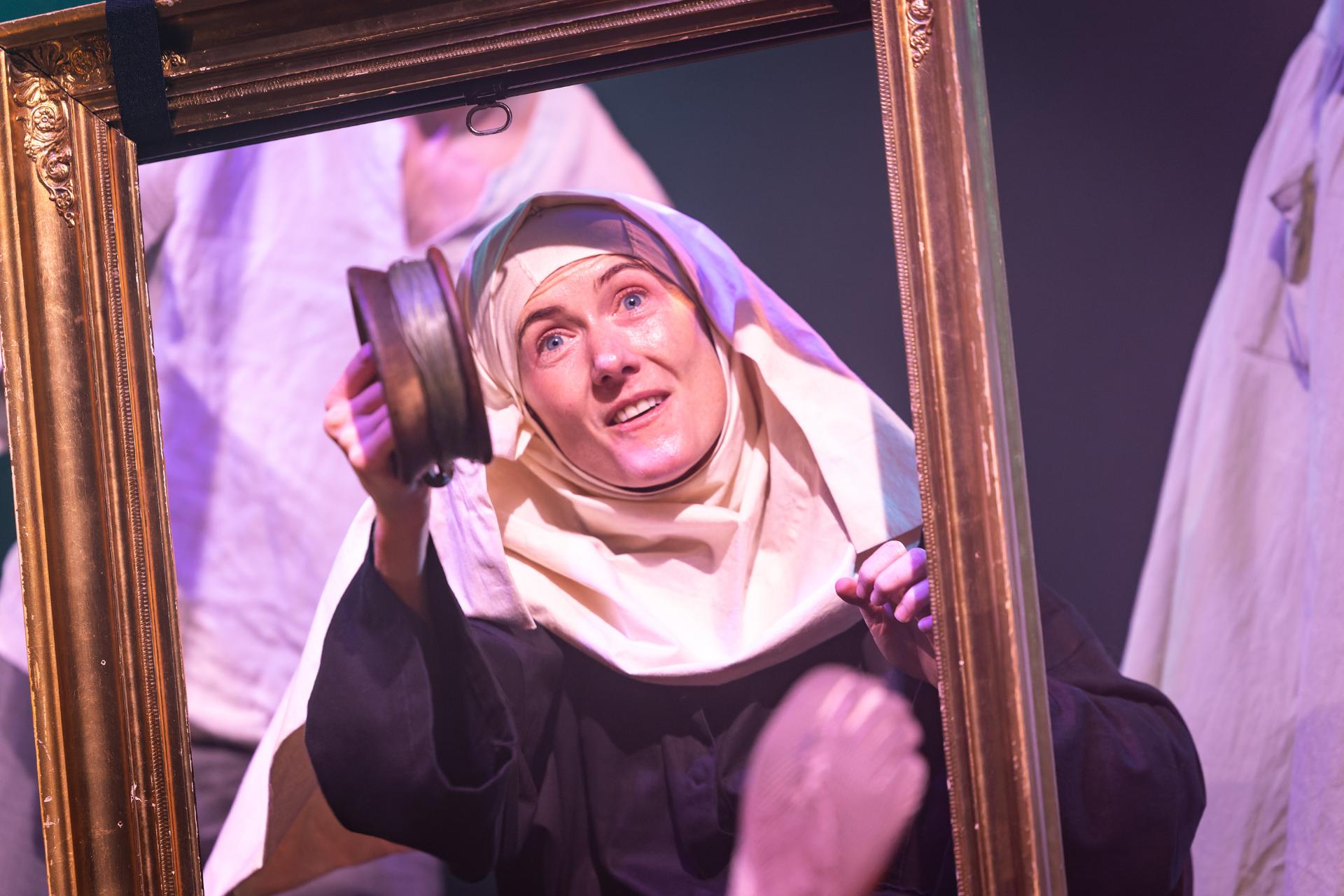
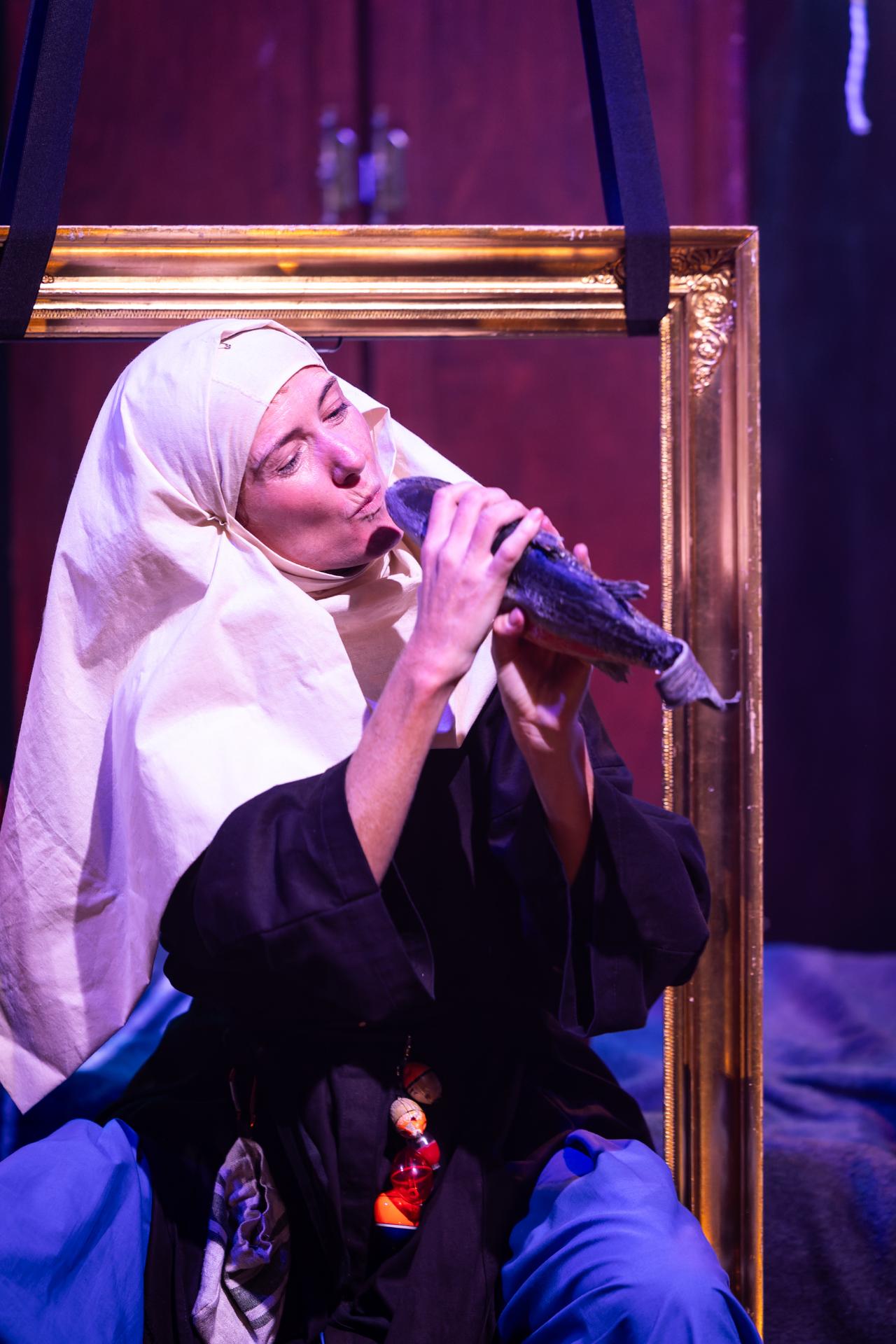
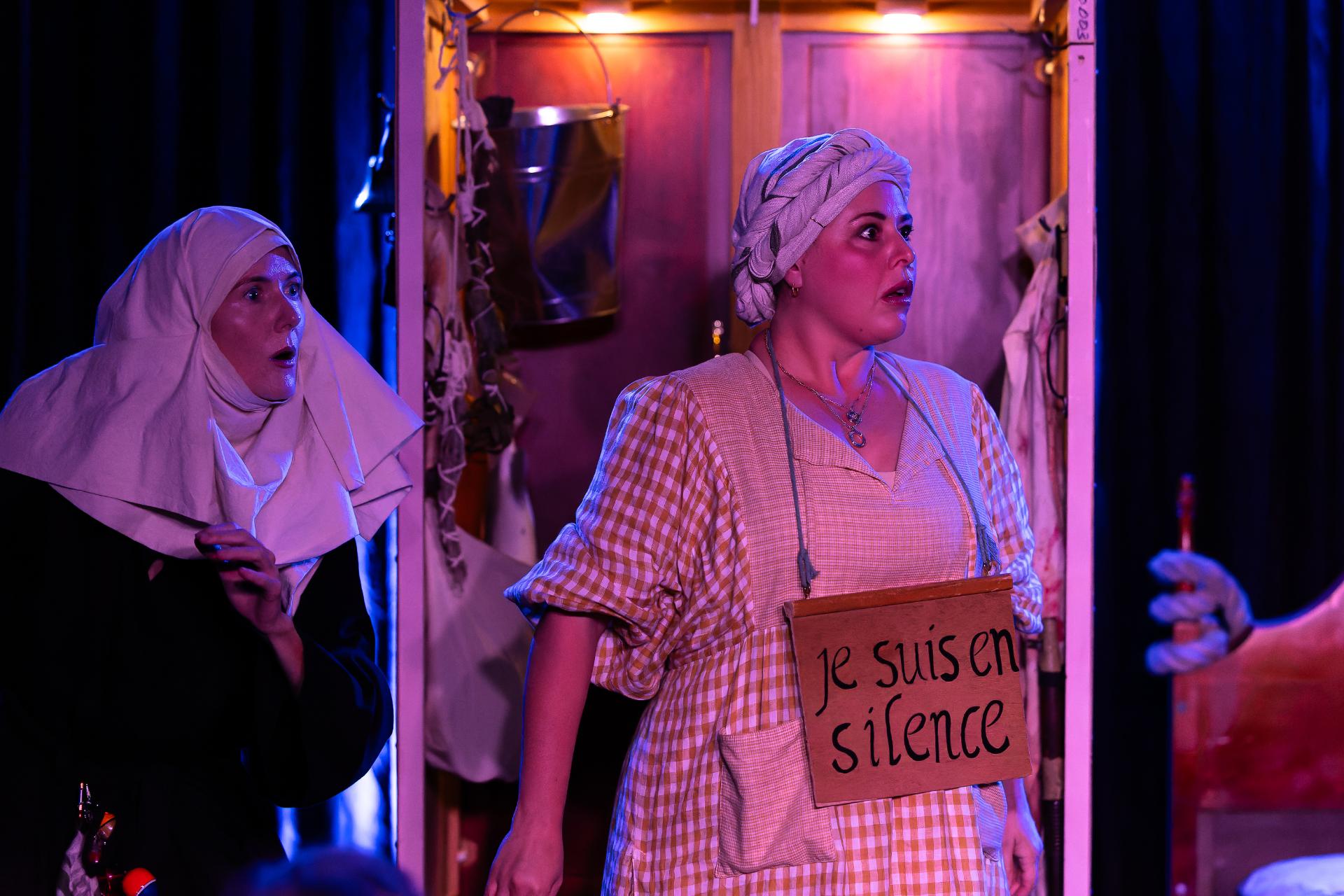
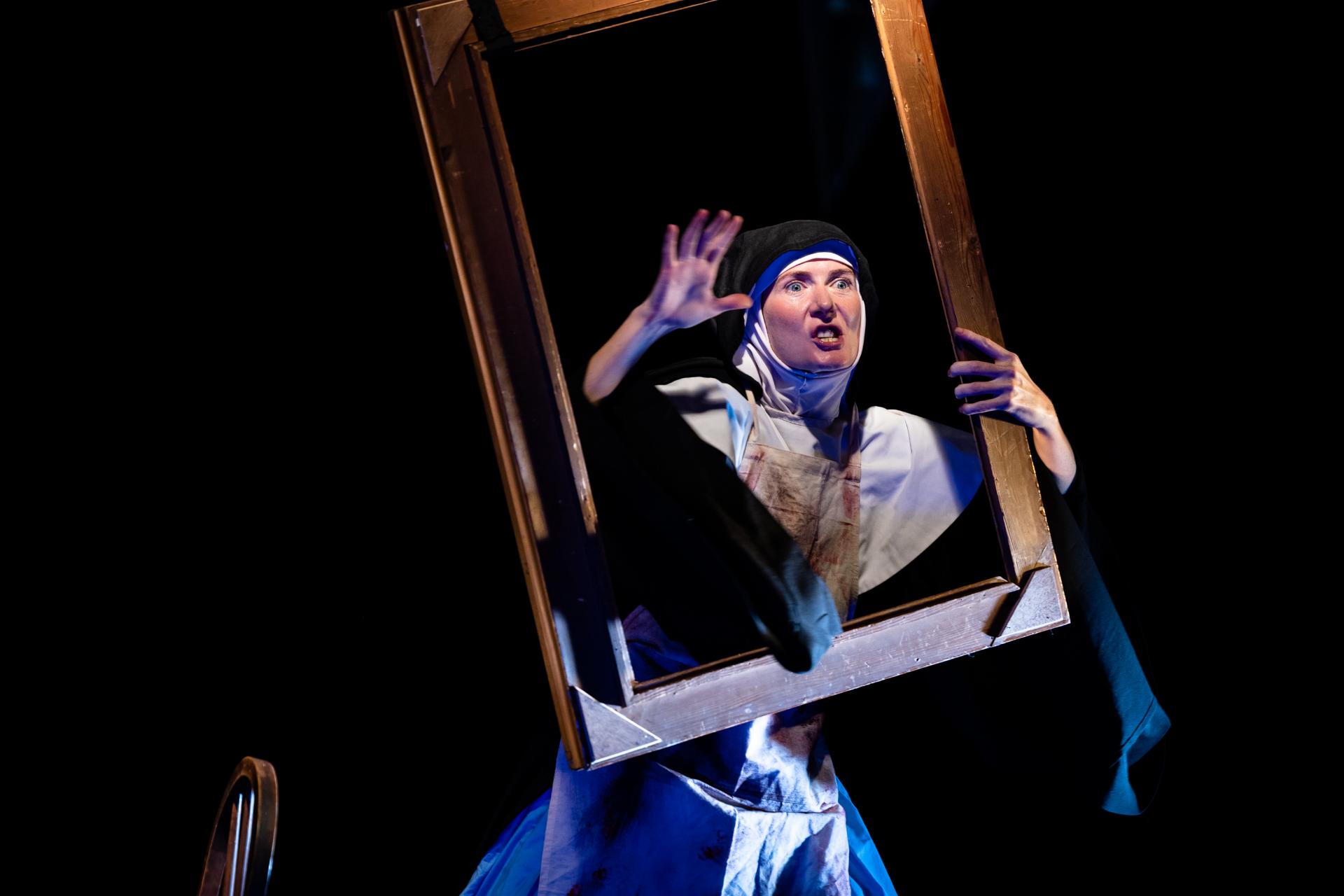
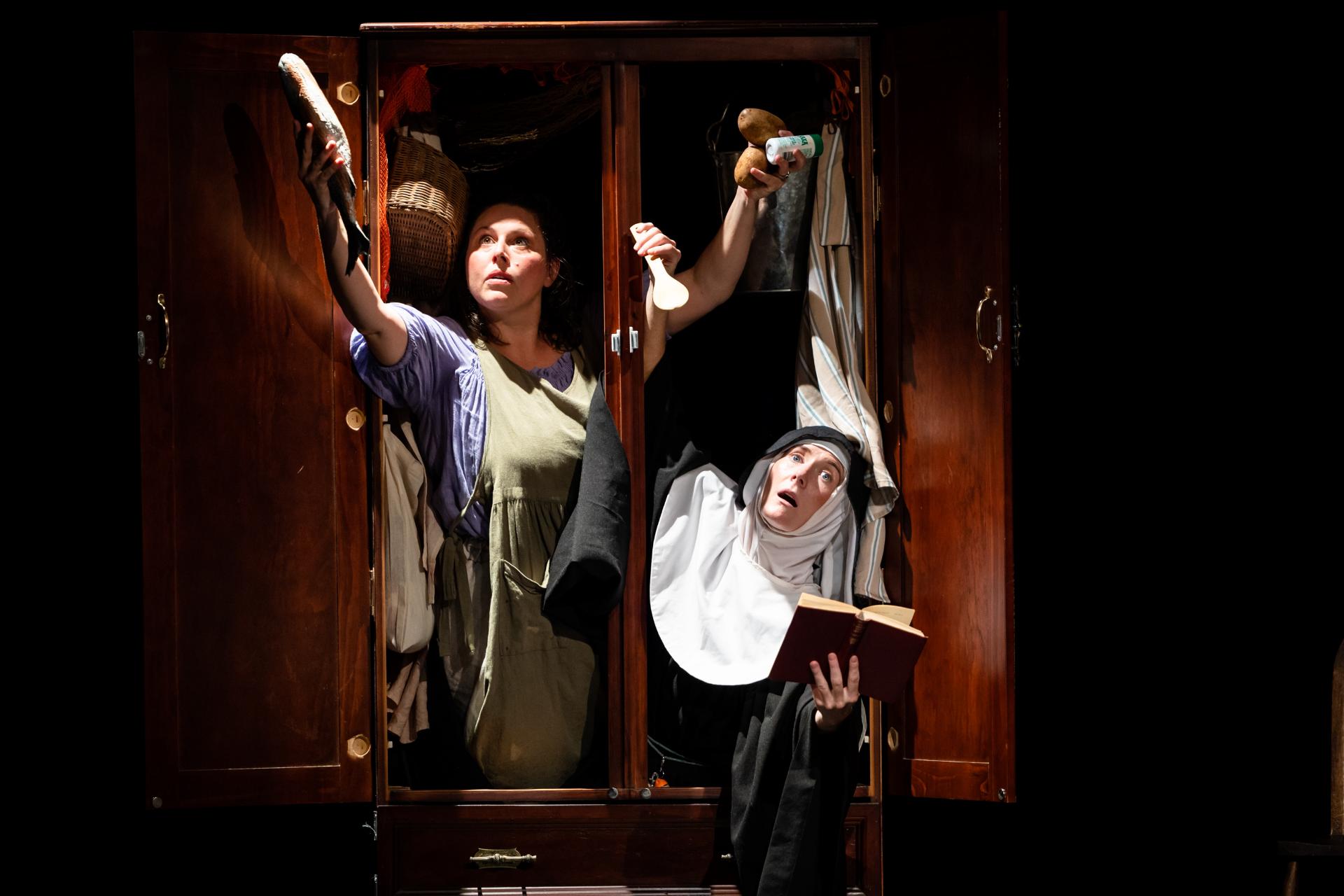
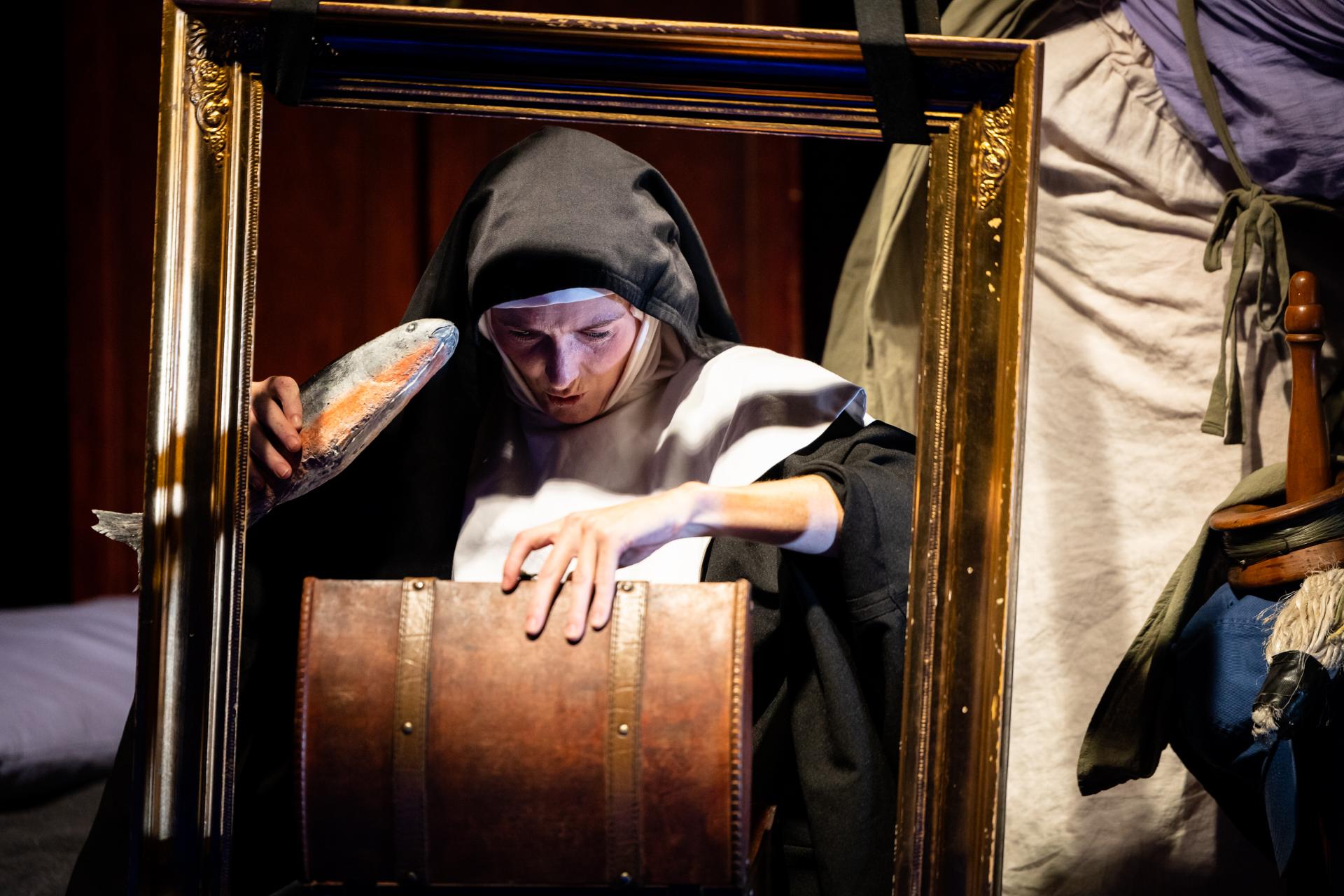
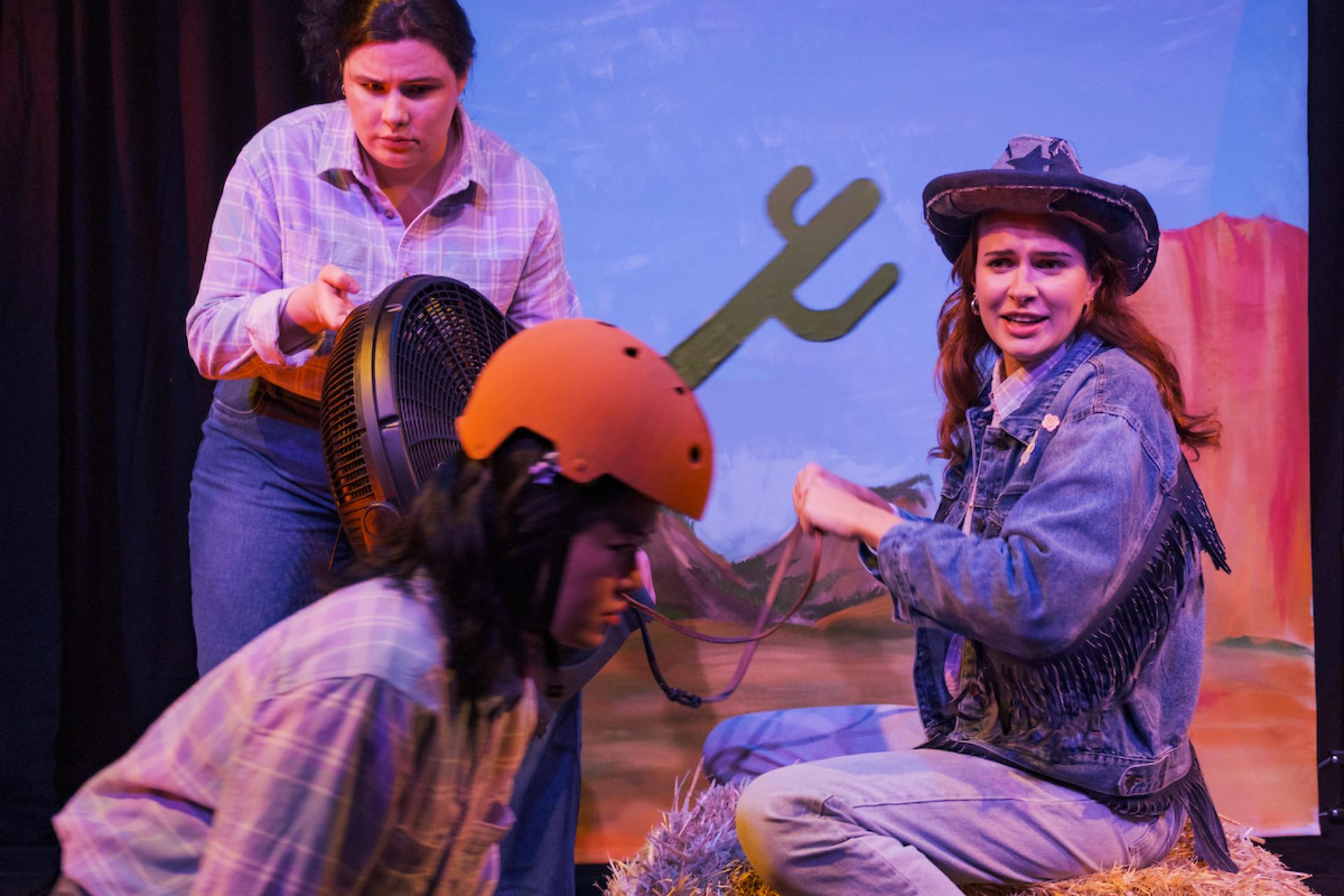
Emily Ayoub and Madeline Baghurst’s Plenty of Fish in the Sea is a story about passion, involving three people on a boat, spending all of their time fishing. Inspired by something named Saint Cotriade, a village or maybe a Catholic deity, they have set off to concoct a special soup from their haul from the ocean. The results are both magnificent and devastating, as we discover in this work of exceptional whimsy.

Creators Ayoub and Baghurst are joined by Christopher Carroll, to form an extraordinary cast remarkable for their physical and facial agility, who deliver a performance memorable for its crisp precision and admirable for its collaborative harmony. Highly inventive in its conception, and executed with great vision and humour, Plenty of Fish in the Sea is a succinct piece of theatre that proves endlessly amusing and delightful.

Production design by Tobhiyah Stone Feller consists of a set that is magically malleable, and costumes that are both evocative and flattering. Dynamic lights by Victor Kalka offer wide ranging calibrations of atmosphere, helping us intuit surprising layers to this simple tale. Daniel Herten’s sounds and music manufacture excitement and intensity, in perfect synchrony with everything being depicted by the personalities on stage.

We learn from Plenty of Fish in the Sea that where there is passion, there could be abundance. Indeed, there are limitless forces that will impose restrictions, on anything one might choose to pursue, and it is incumbent on an individual to honour their own sense of truth. A person’s will could be made to bend, but a person’s essence has the natural inclination to resist, whether or not one wishes.
www.sydneyfringe.com | www.clockfiretheatre.com

Review: Dancefloor Conversion Therapy (Sydney Fringe Festival)

Venue: The Atherden (The Rocks NSW), Sep 12 – 28, 2024
Playwright: Aunty Jonny Hawkins
Director:
Mikala Westall
Cast: Aunty Jonny Hawkins
Images by @anbintheframe

Theatre review
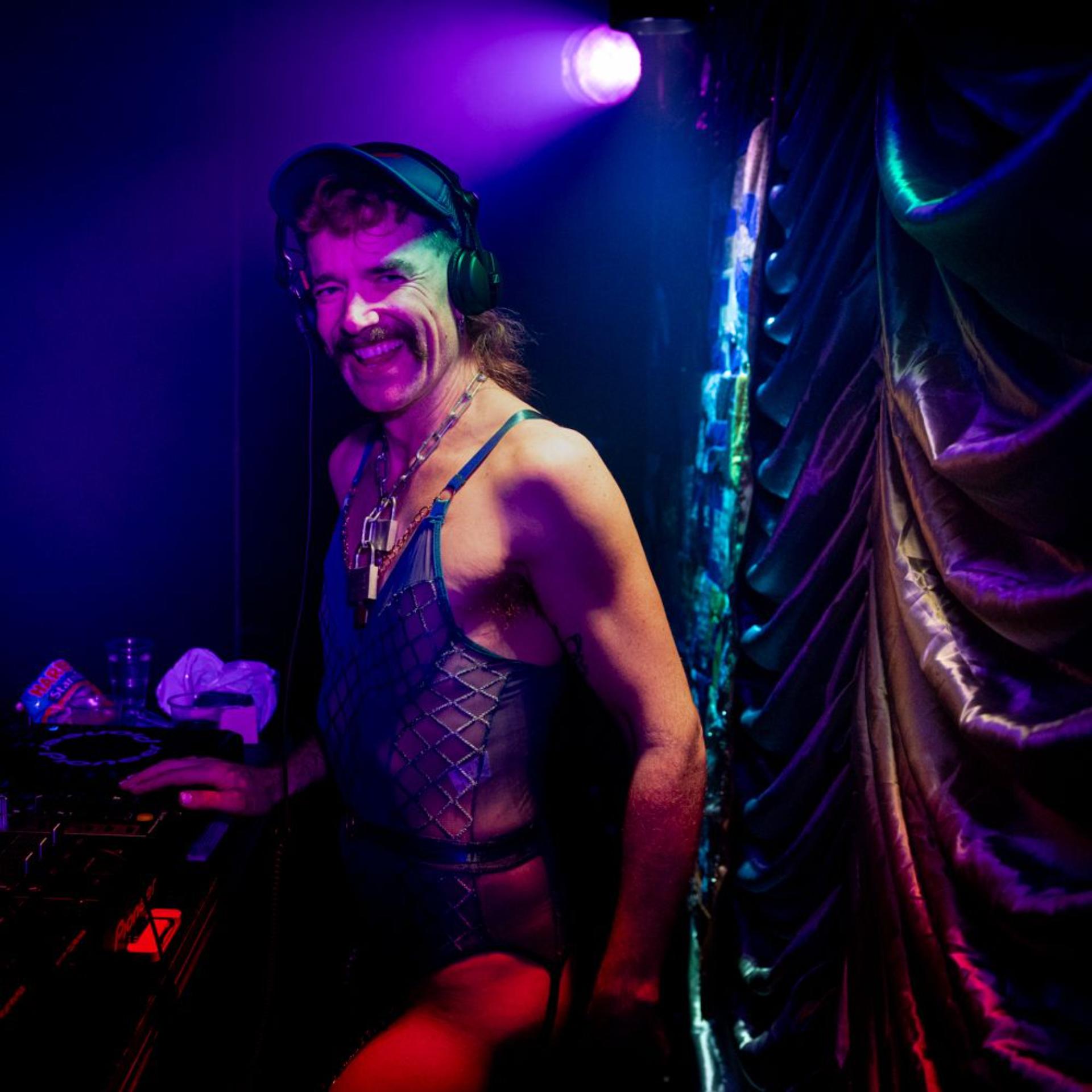
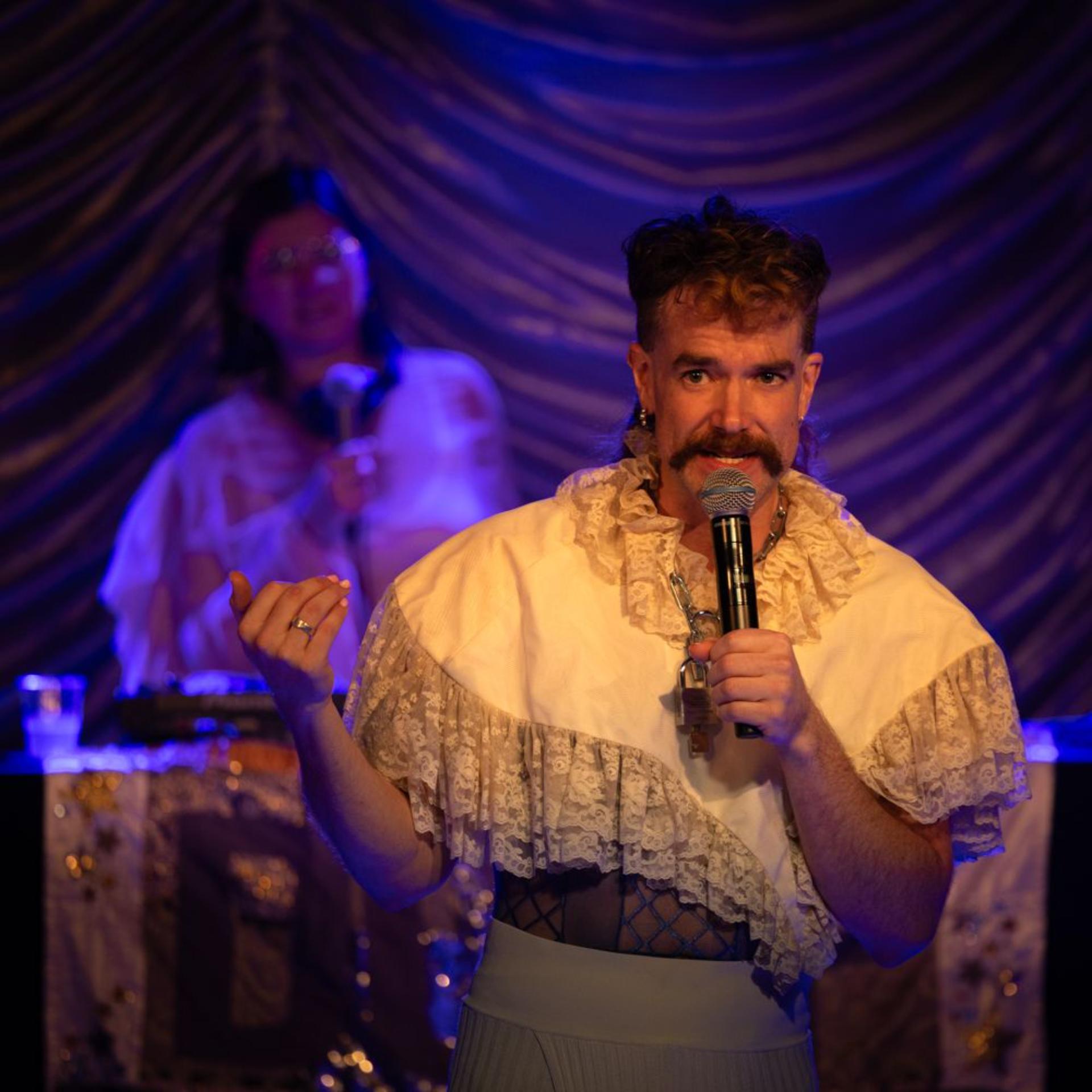
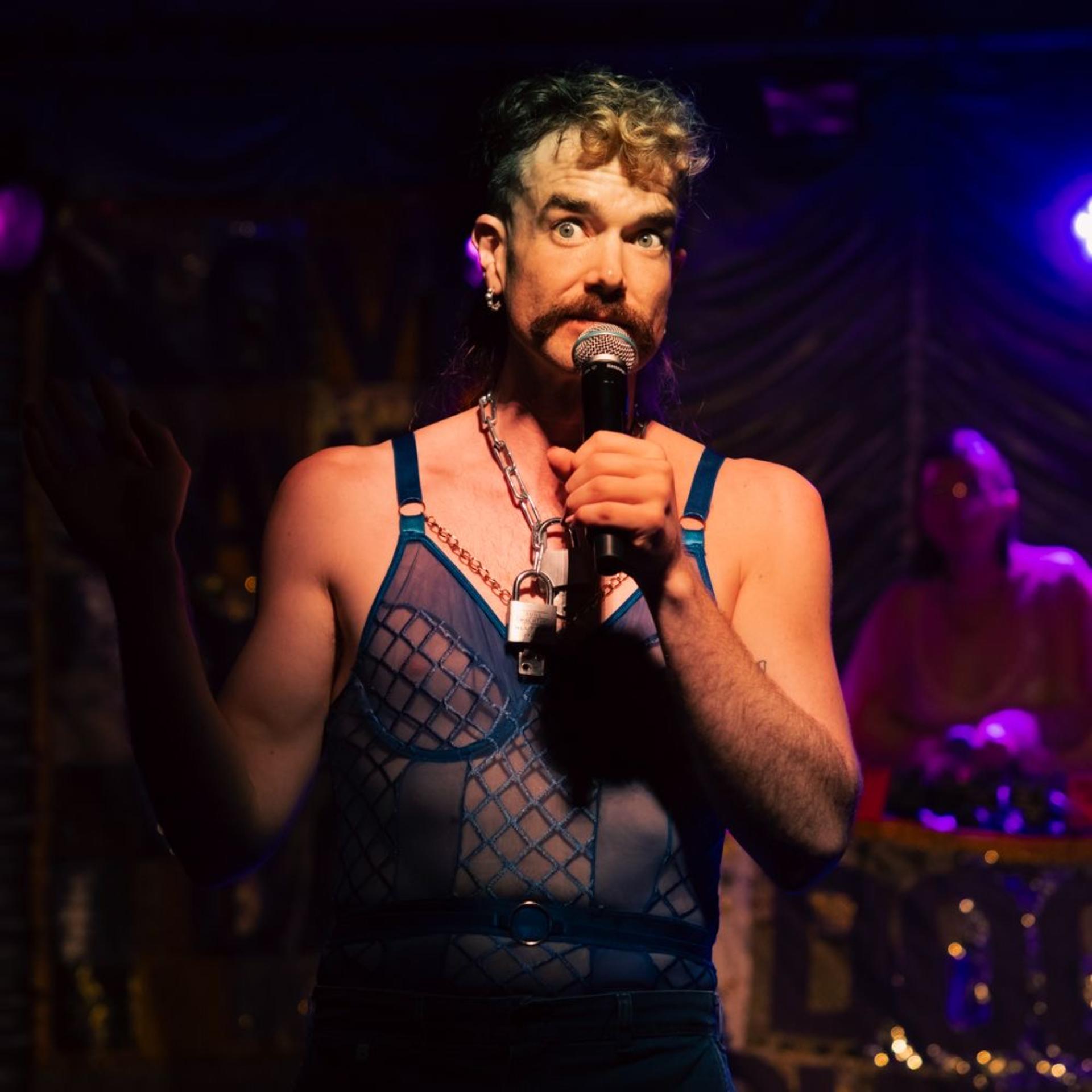
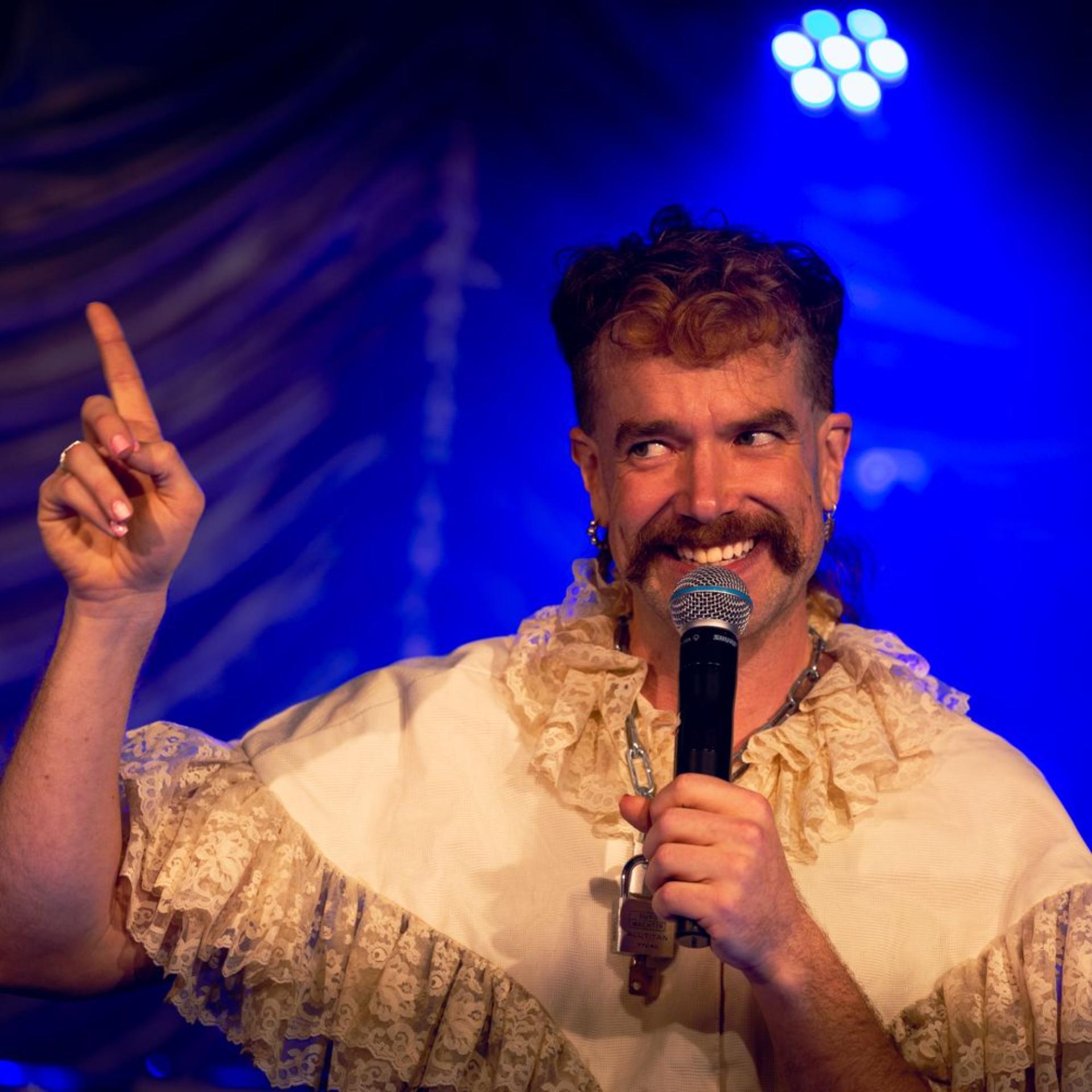
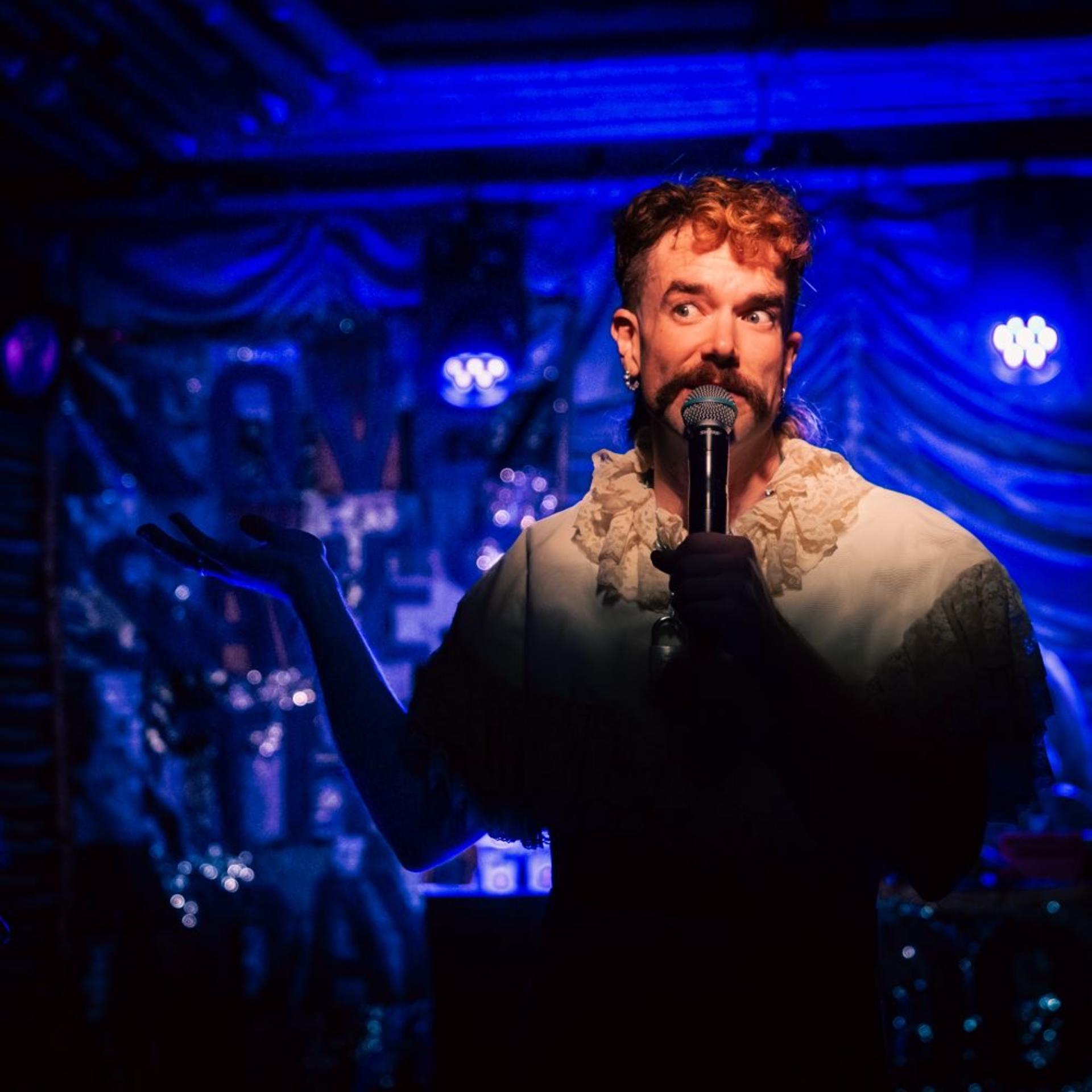
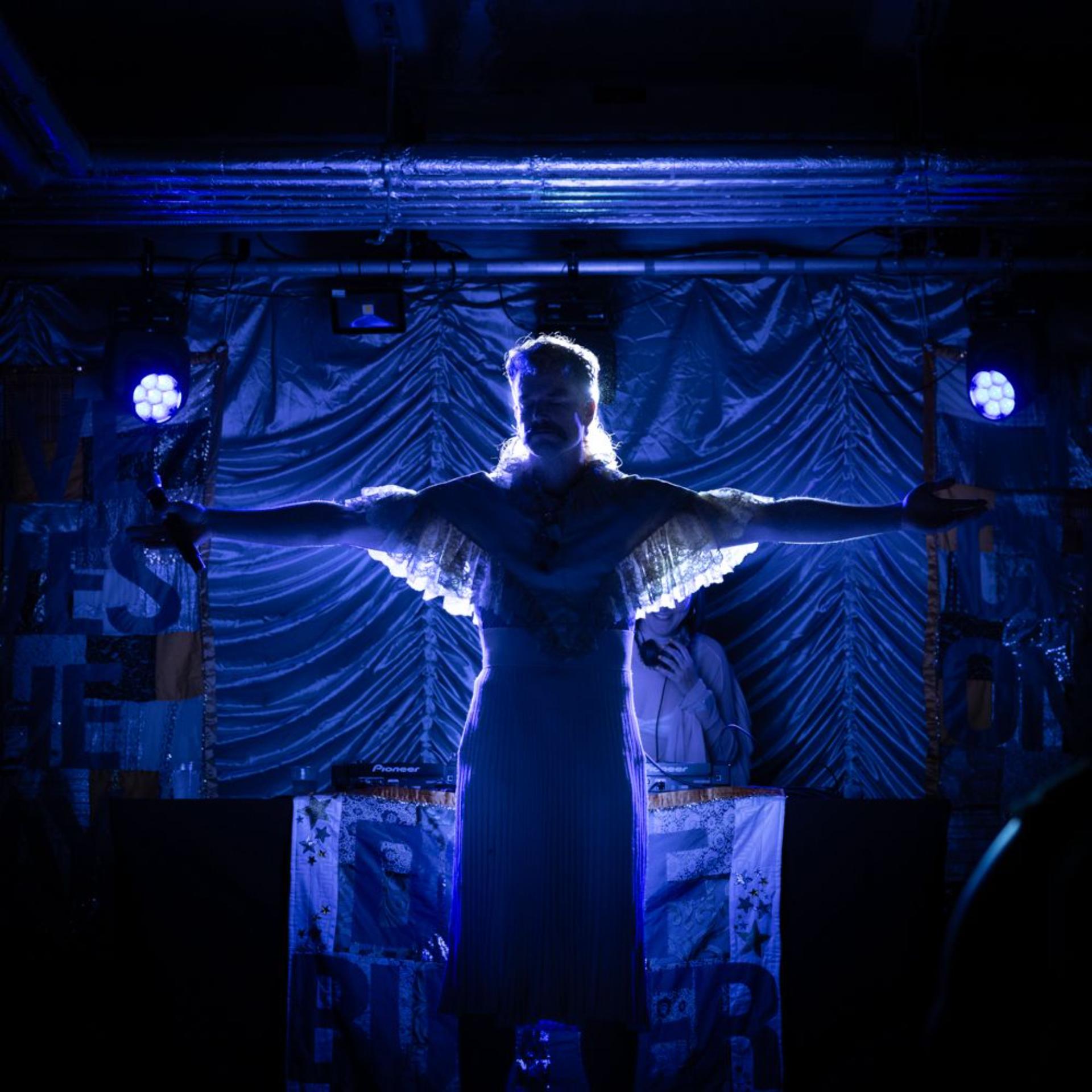
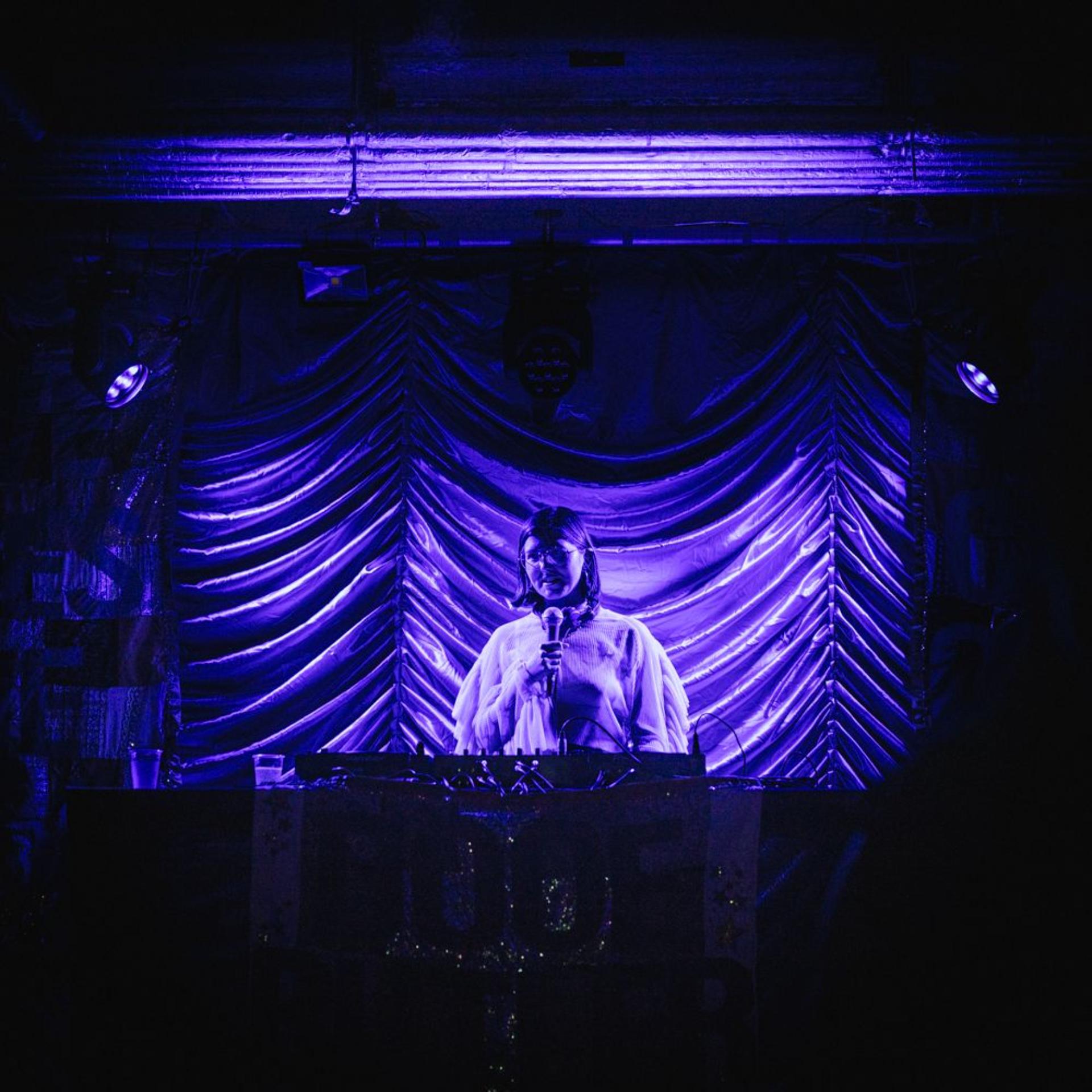
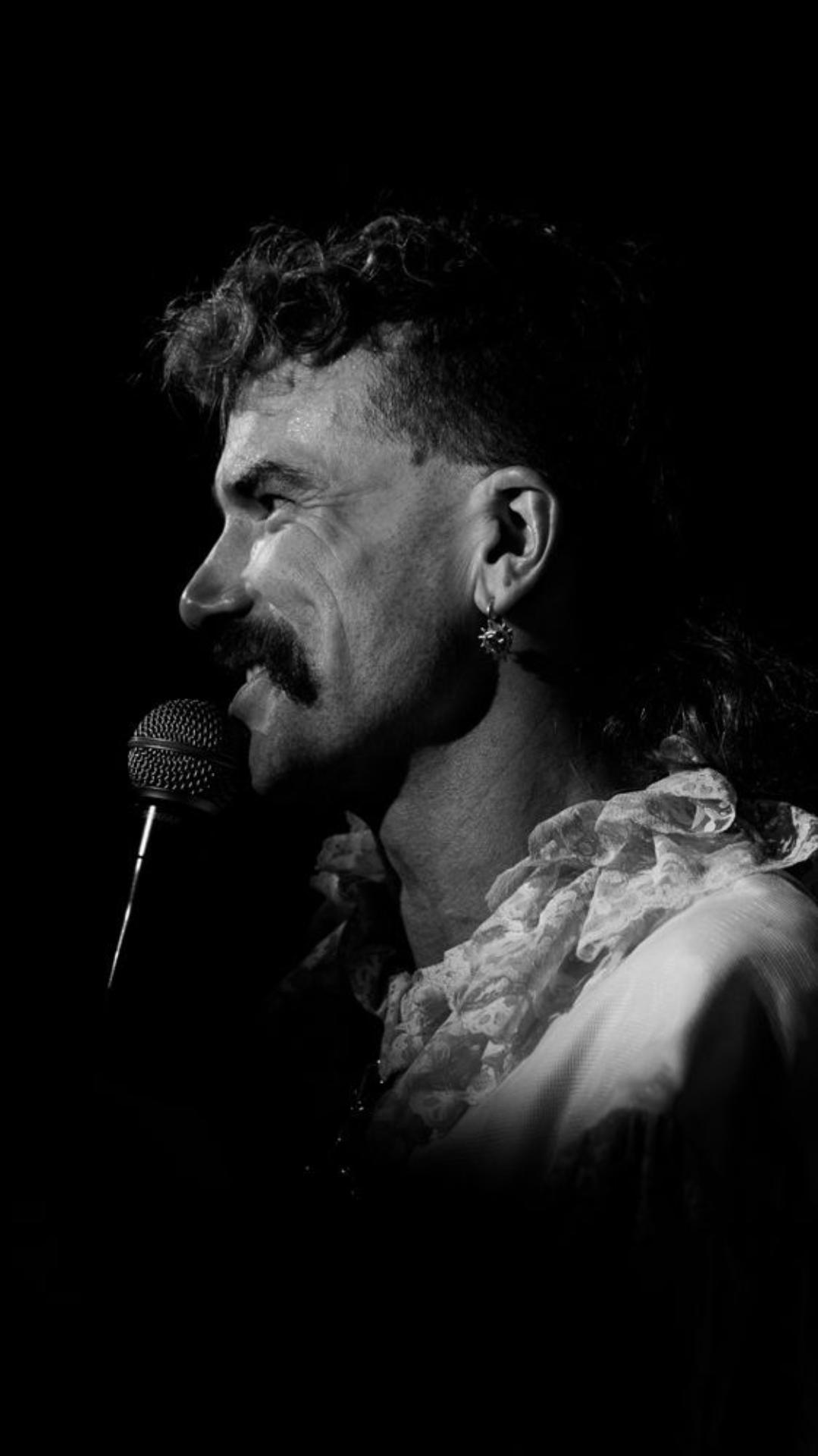
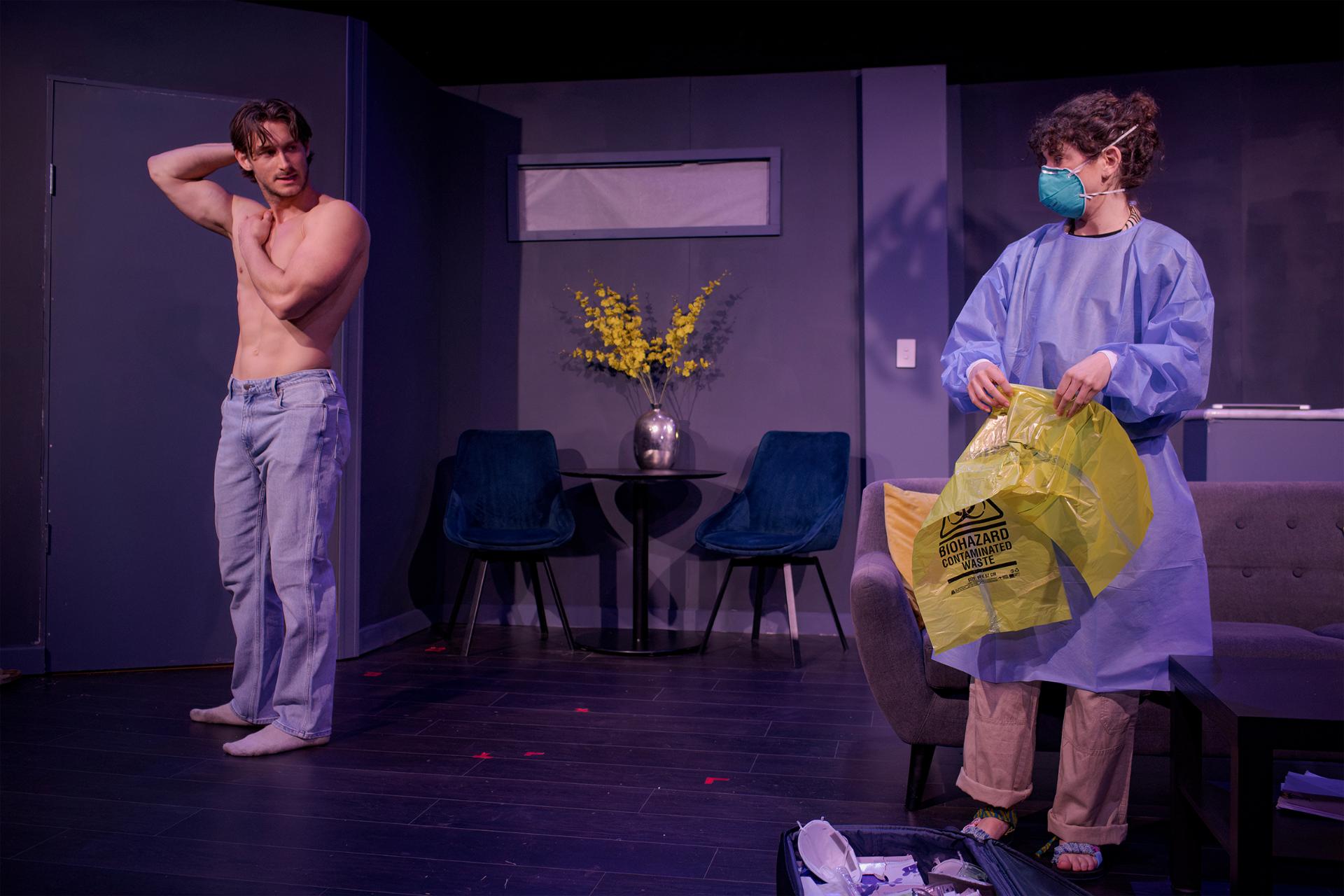
It has been quite a journey for Aunty Jonny who, as a young adult, had been on track to becoming a star minister in the evangelical church system, to now extolling the virtues of dance parties, clad in titillating lingerie. The one thing that remains the same, is Jonny’s passion for proselytising. As witnessed in Dancefloor Conversion Therapy, a tongue-in-cheek presentation in the style of a sermon, the artist speaks of first-hand experiences, in order that we may be convinced of a state of transcendental divination that they so fervently advocate. 

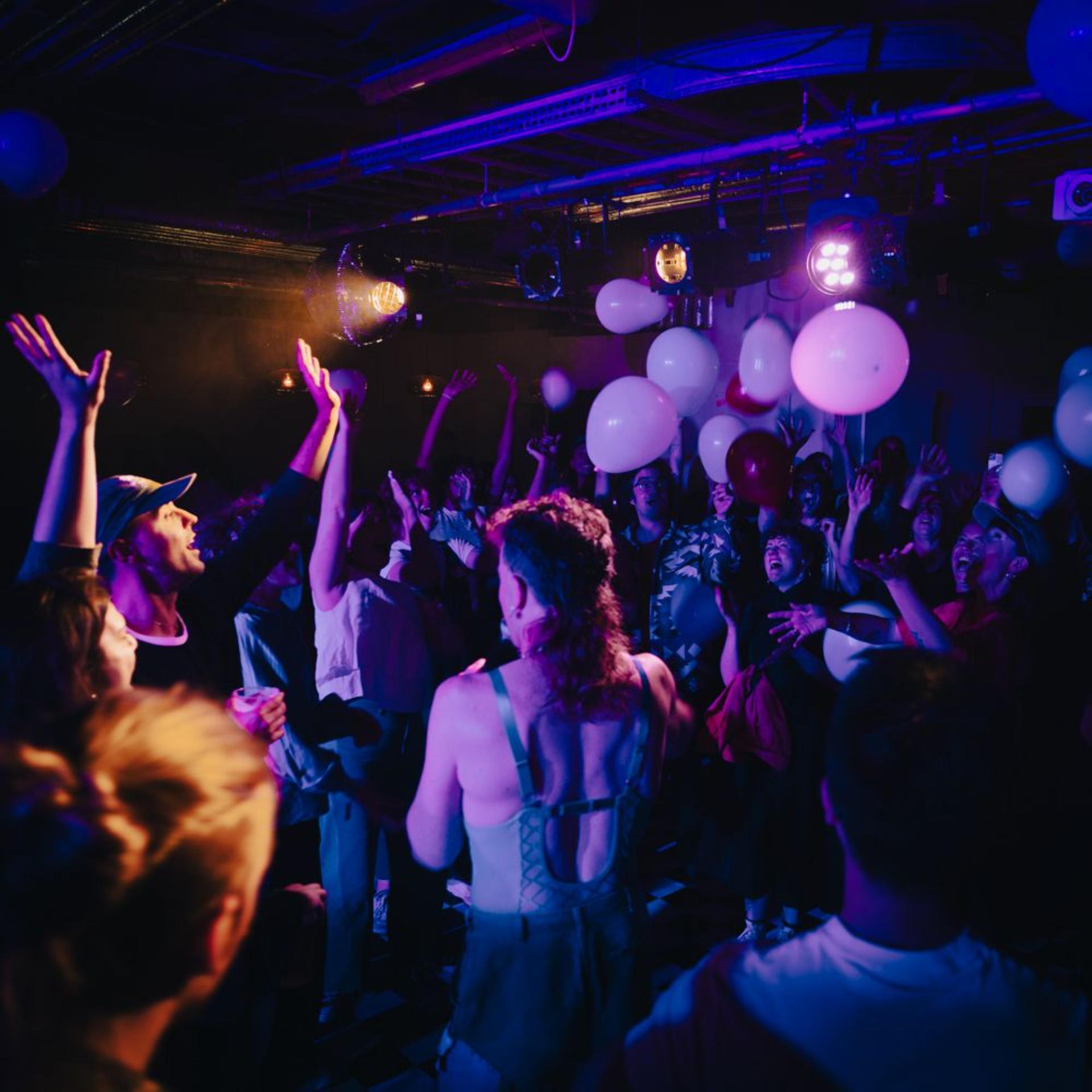
Unlike Christianity however, Jonny’s proclamations are consciously and radically inclusive, informed by their personal journey as a queer person, emerging from a stridently heteronormative background. Now passionately embracing a new paradigm that is almost too neatly diametric in its opposition to their previous life, Jonny shares their love for something decidedly more chaotic and wild, as enthusiastic about debauchery as the old religion is about temperance and chastity.

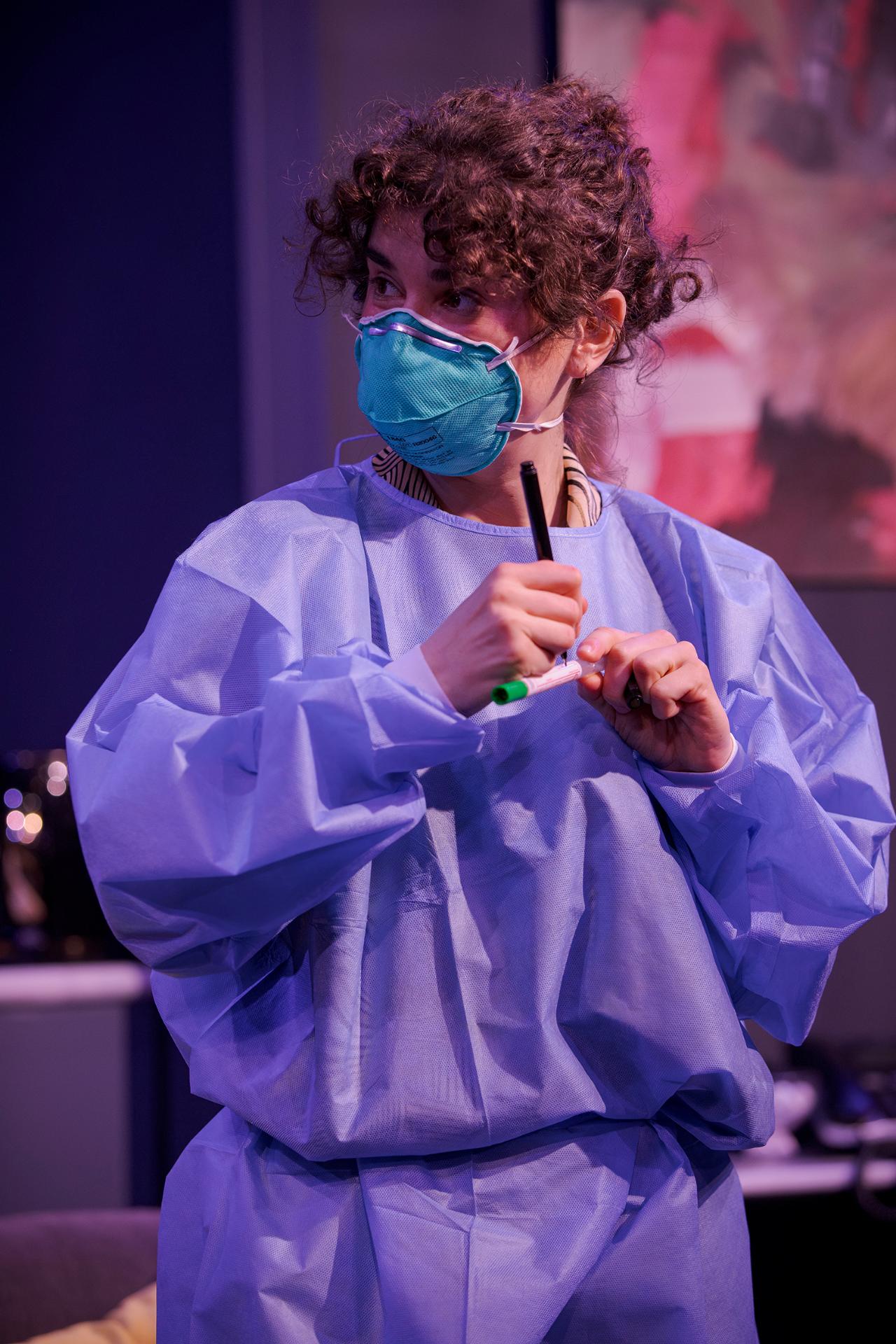
Providing support on DJ decks and a lighting console is Mikala Westall, who as director of the piece, ensures that we encounter a highly endearing Aunty Jonny, in a show that is ceaselessly humorous, with a spiritual quality that is simultaneously ironic and authentic, that keeps us invested.

Jonny’s writing for Dancefloor Conversion Therapy is considered and clever, although not always rich or sufficiently complex in their personal expressions, from the perspective of someone who is evidently still in a tumultuous process of maturation and discovery.  Amusingly analogous with sectarian leaders of all kinds, are not only Jonny’s commanding charisma as performer, but also their steely certainty about the topics they preach. Not to presently draw a false equivalence though, for it is the fundamental concept of liberation that forms the heart of what the artist wishes to convey, which is entirely different from teachings of monotheistic traditions.
One might be hard-pressed to dream up a party that excludes absolutely no one, but we must always believe that freedom can be a state of being made available to all. This means that we must find ways to conceive of our enemies as having the freedom to be who they authentically are, the same way we wish for them to simply let us be who we are. Harmony is key, and we must all insist on it.
www.sydneyfringe.com | www.instagram.com/auntyjonny

Review: All Boys (KXT on Broadway)

Venue: KXT on Broadway (Ultimo NSW), Sep 6 – 21, 2024
Playwright: Xavier Hazard
Director:
Mehhma Malhi
Cast: Ashan Kumar, Braeden Caddy, Faisal Hamza, Harry Stacey, Jackson Hurwood, Jasper Lee-Lindsay, Leon Walshe, Louis Delaunay-Henbest, Robert Miniter, Toby Carey, Victor Y Z Xu
Images by Nicholas Warrand

Theatre review
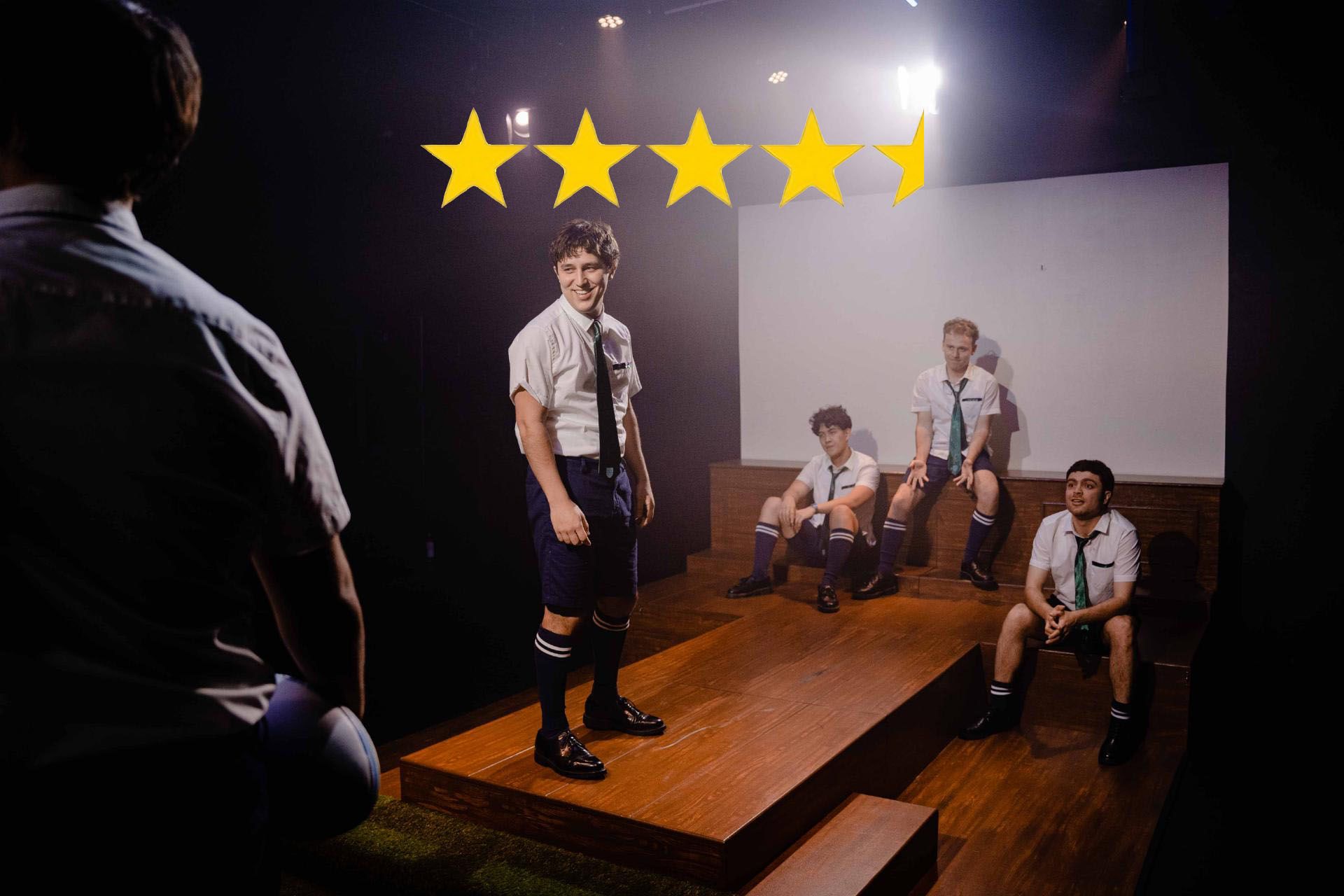
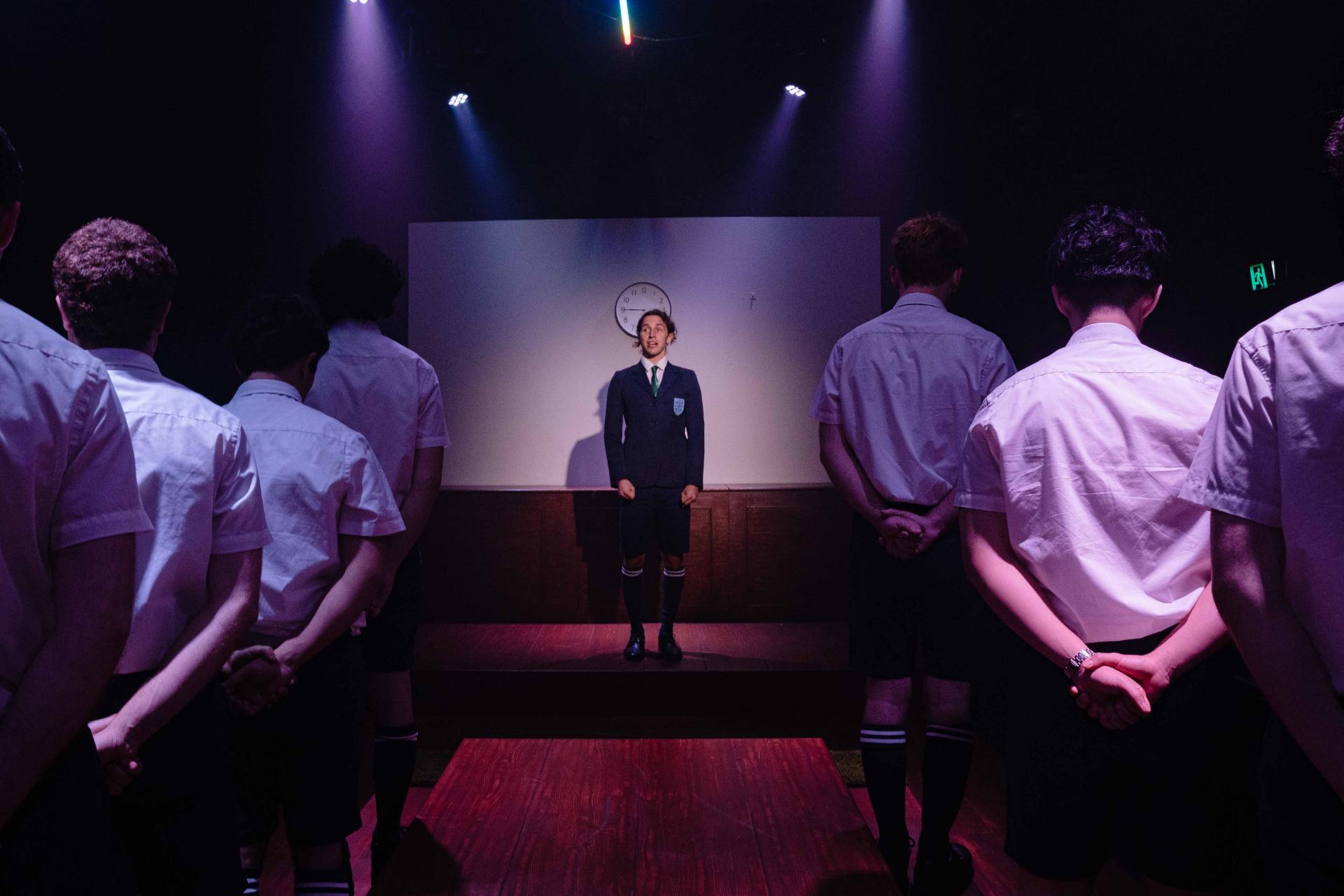
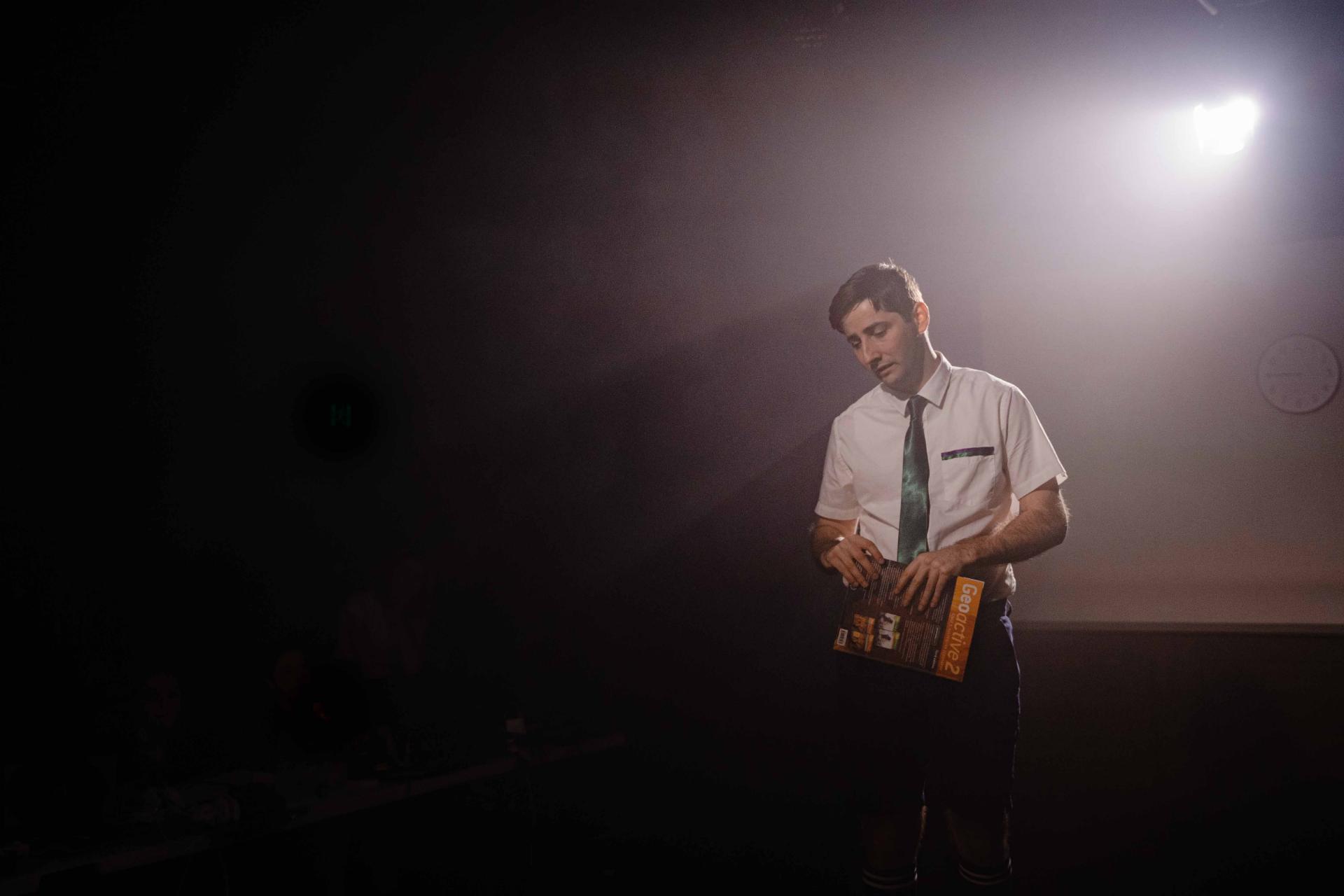
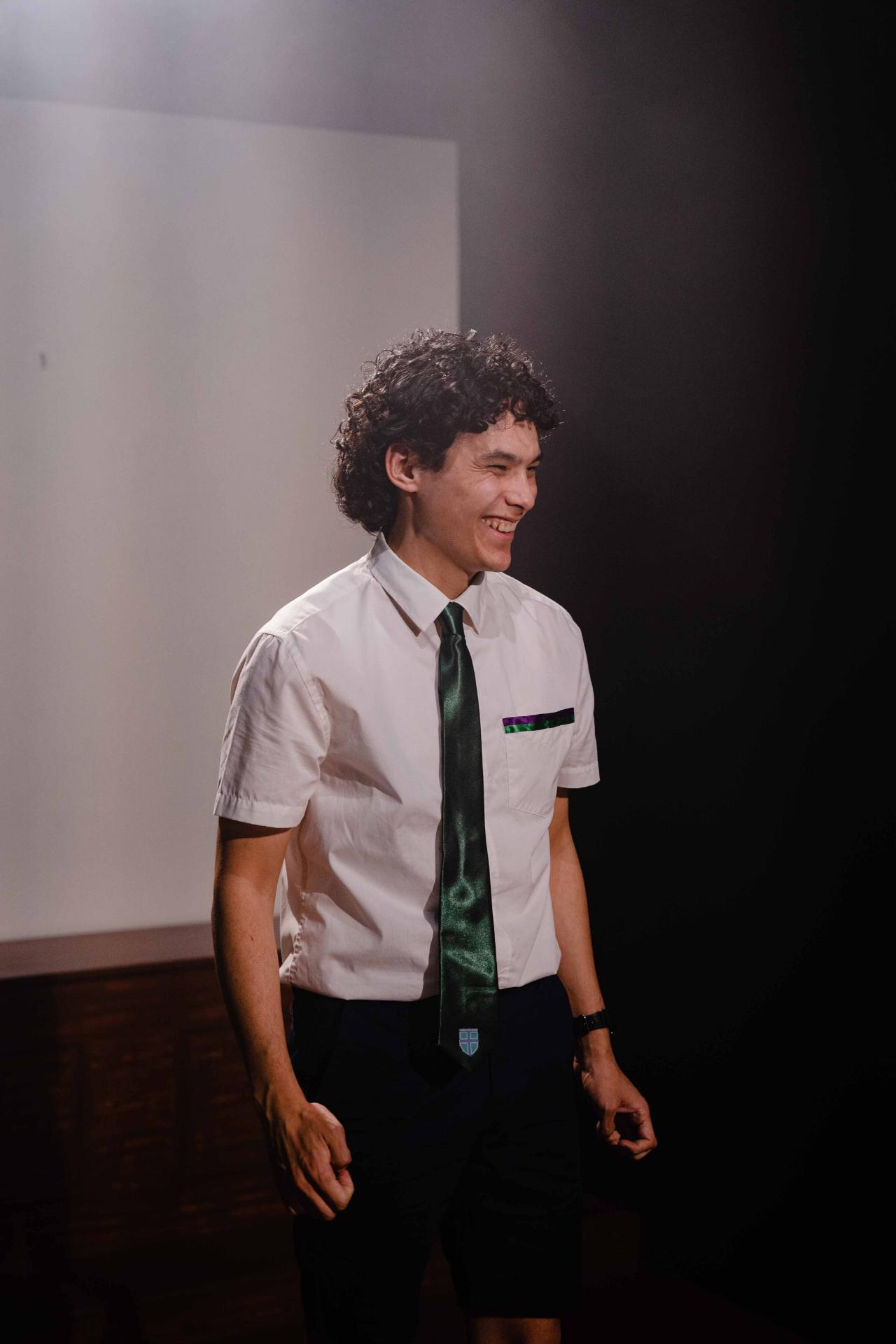
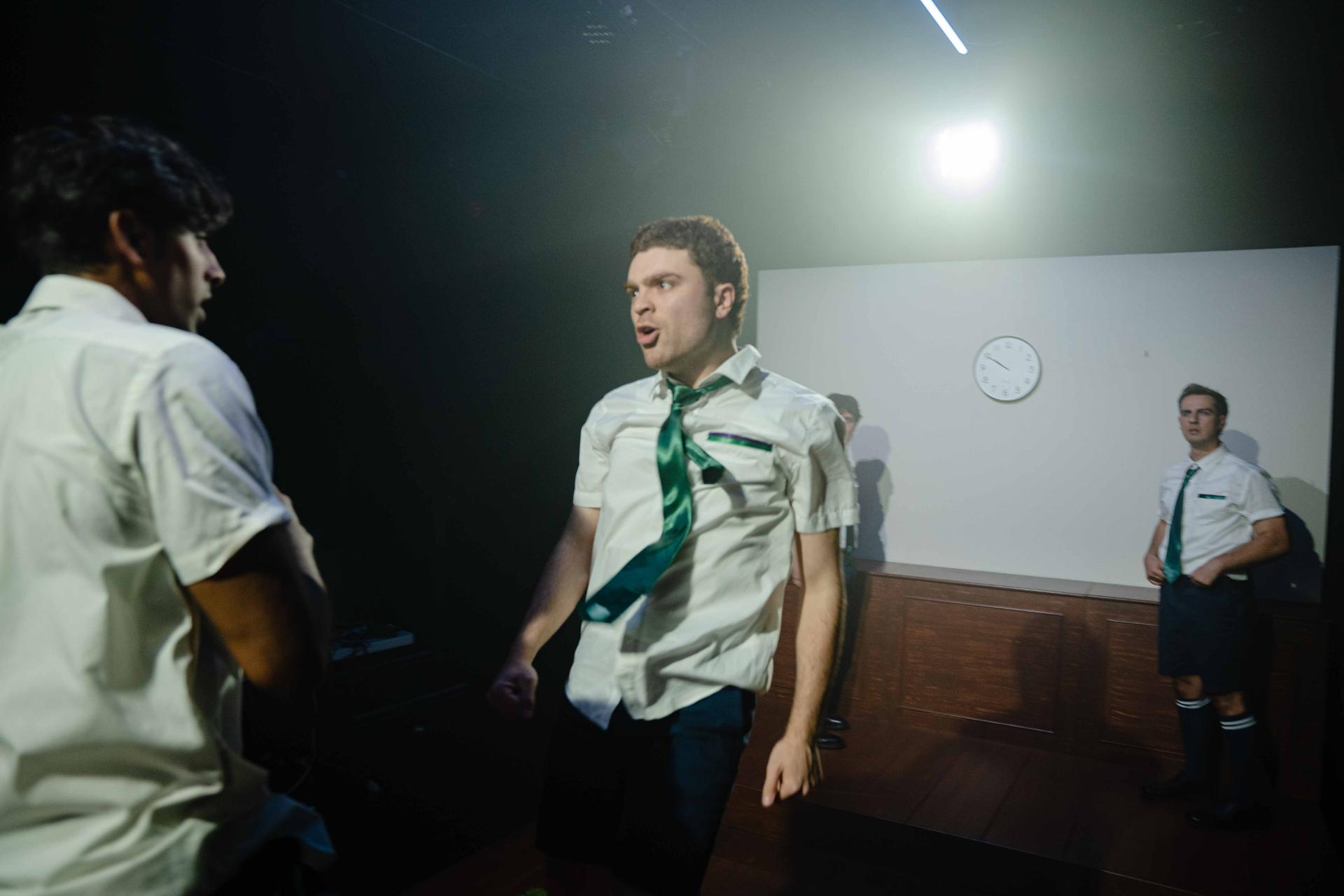
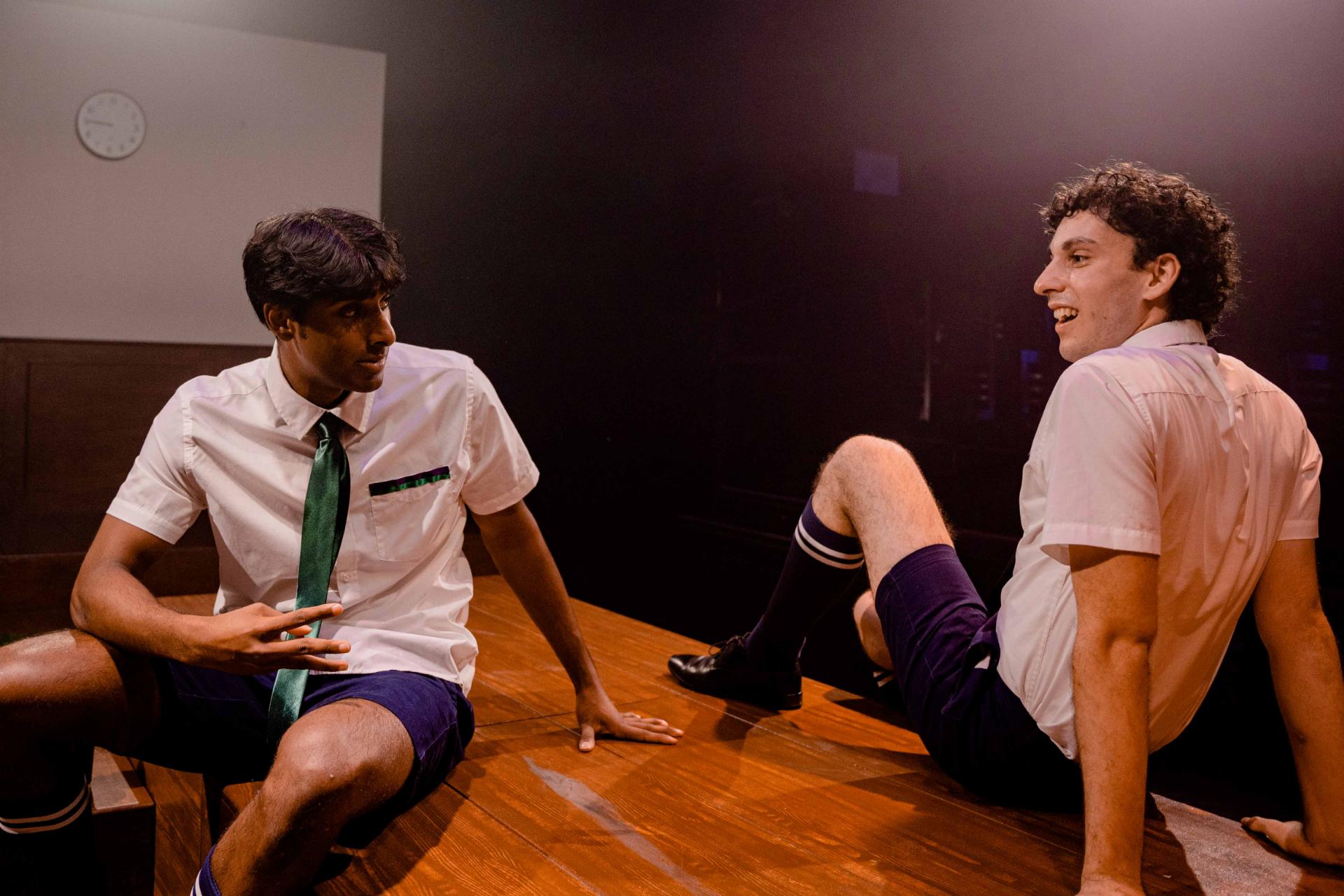
Xavier Hazard’s All Boys takes place over 6 years, in the previous decade, at a Catholic boarding school for boys. As a site of germination for the patriarchy, institutions like these profess to cultivate leaders of the future, but are in fact committed to preserving the many ills that are foundational to the  dysfunctions and inequities of Australian life.

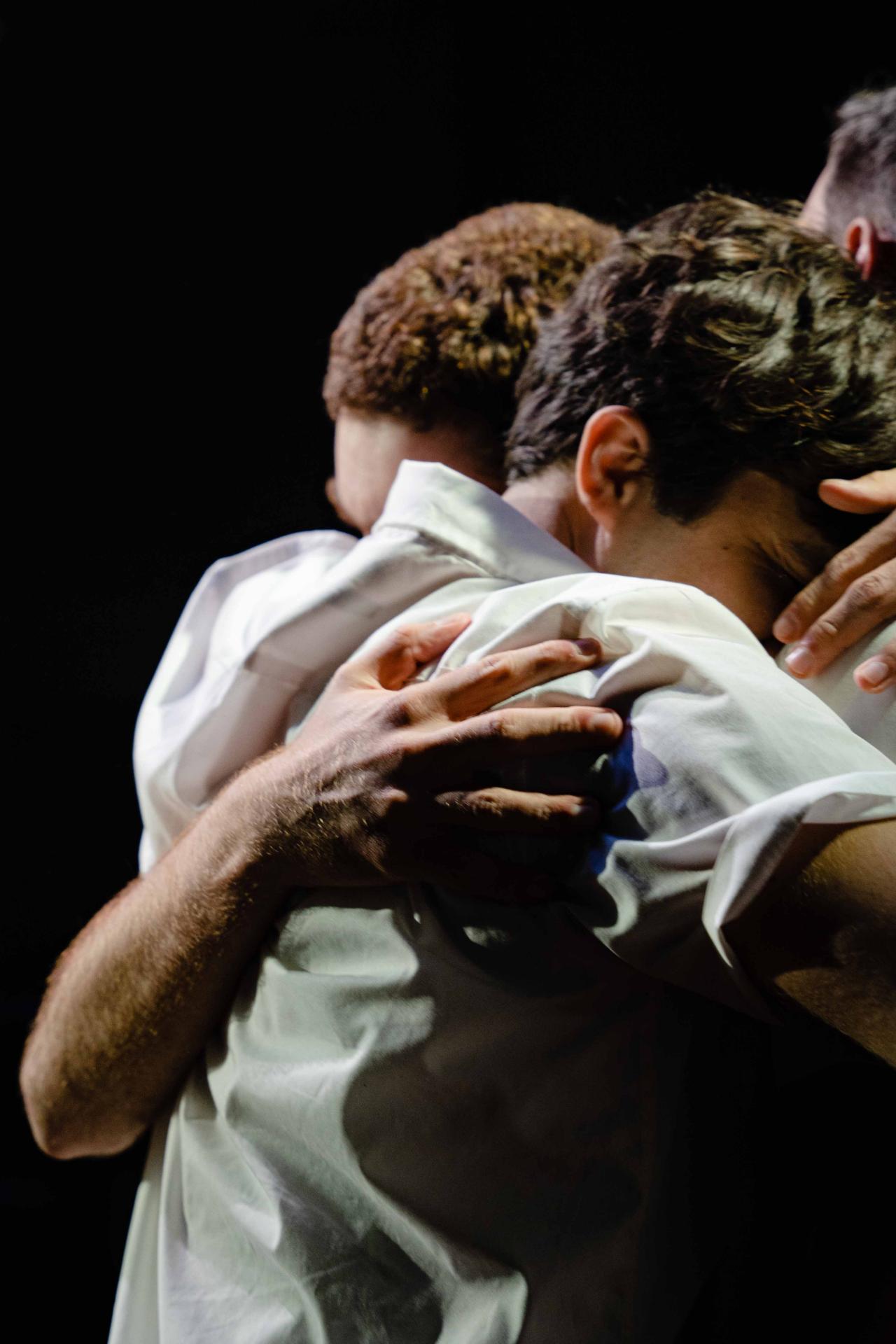
We see in the play, boys learning to become their fathers, in a world devoid of womanhood; they are capable of doing good, but the system engenders and normalises a lot of extremely bad behaviour. This process of indoctrination provides for All Boys its riveting sense of drama, as we watch the young at crossroads, being propelled towards negative outcomes by an establishment obsessed with its elite status. Hazard’s acute observations are expressed in the most sophisticated manner, never overwrought but always powerful, for a work that will resonate especially with those it seeks to represent.

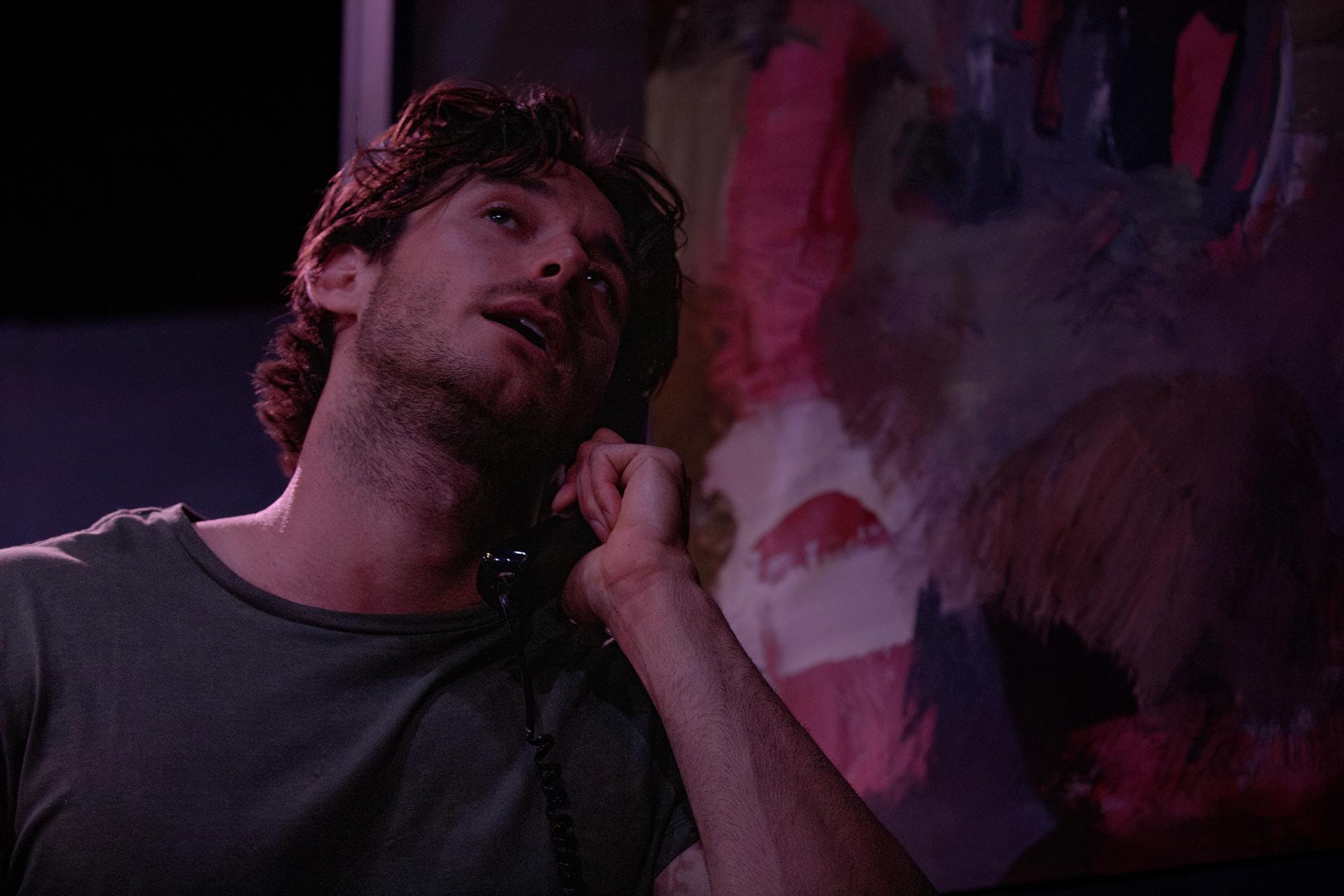
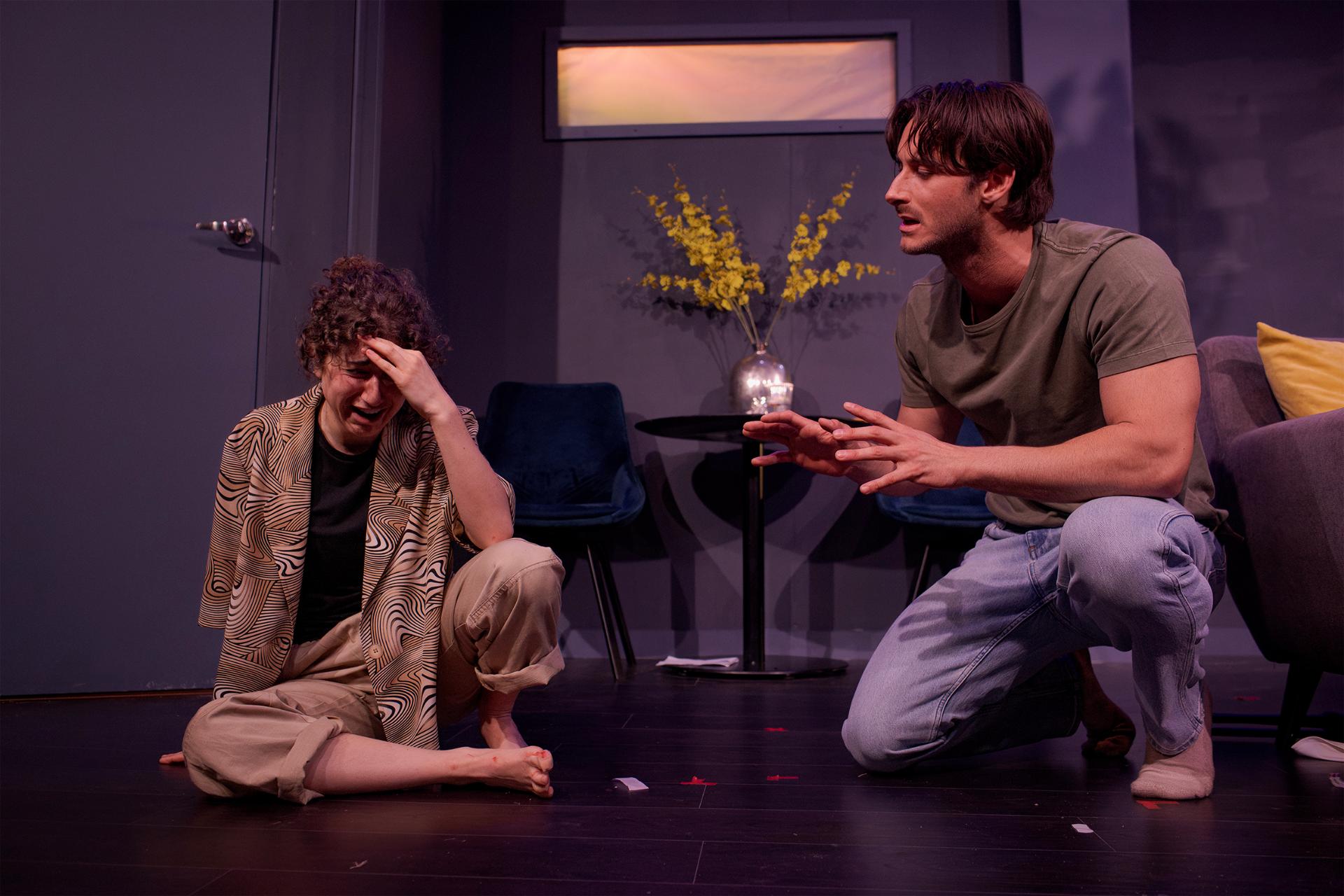
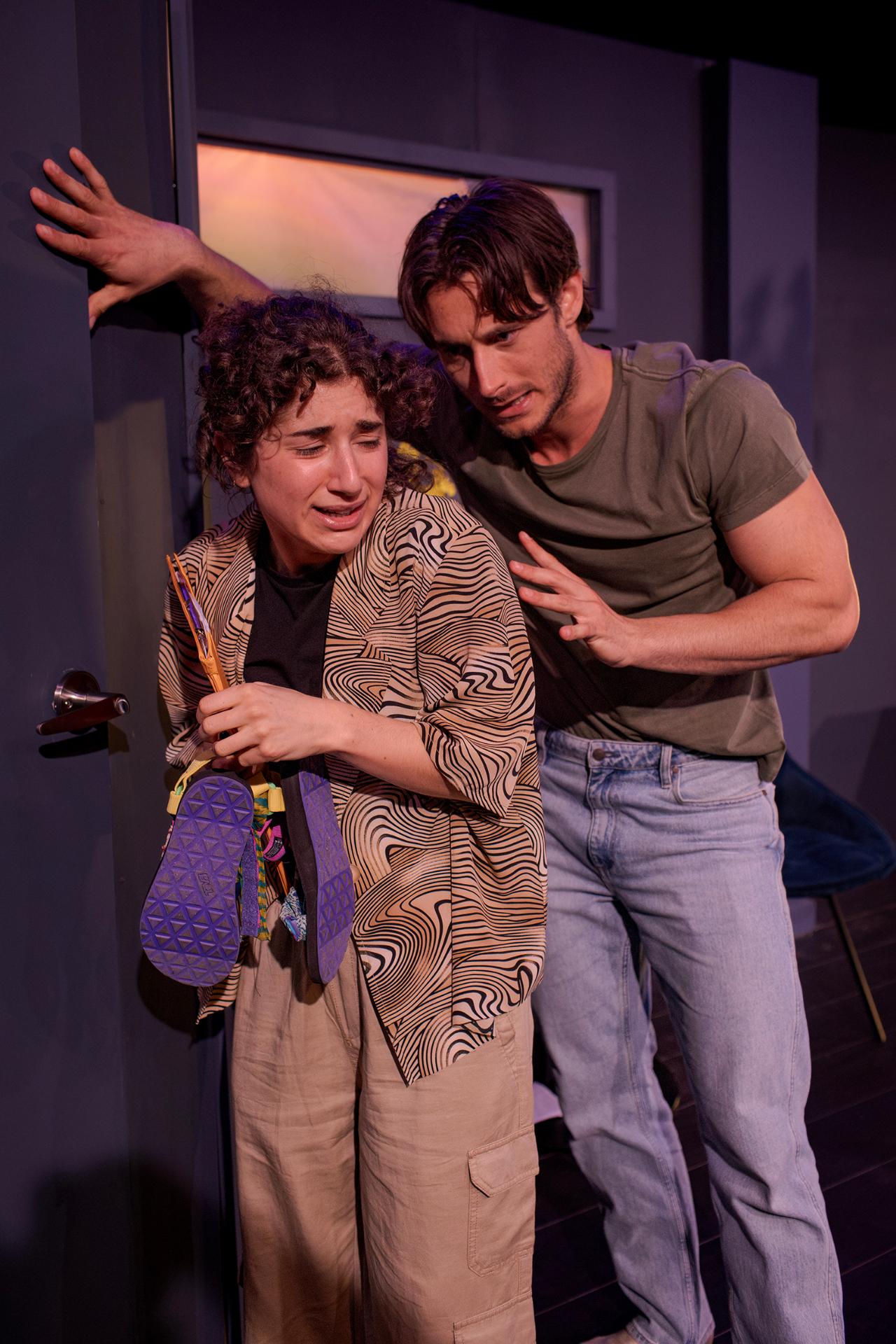
Direction by Mehhma Malhi is correspondingly refined, notable for its trust in the audience’s discernment. Malhi’s show avoids obvious manoeuvres, but is consistently magnetic, having us enthralled for its entirety. It provokes big questions, without ever being on the nose with any of them. 11 excellent actors are perfectly cast; each character is distinct and credible. They bring a wonderful inventiveness to their interpretations of the text, along with an admirable level of commitment that insists on our attention, and our careful scrutiny on the subject matter.

Set design Rebecca Howarth helps the ensemble facilitate a great range of visual compositions, along with costumes, also by Howarth, that impress with their nuanced carving out of individual personalities. Lights by Isobel Morrissey deliver surprising variation to the imagery, and are effective in manufacturing  atmosphere and tension appropriate to each scene. Amy Norton’s sound design is very subtly rendered, but fascinating in its approach at creating suitable focus for the vacillating sensibilities that All Boys inspires.

We see the boys being terrible, and wonder how this comes to be. None of it is intentional, yet culpability resides entirely on those who birth and raise them. We say that all we ever want, is to provide the best education and development, and that none of these negative consequences are part of the plan. We then continue enacting the same systems that produce the same old results. 

www.kingsxtheatre.com | www.instagram.com/every_other_

Review: The Queen’s Nanny (Ensemble Theatre)

Venue: Ensemble Theatre (Kirribilli NSW), 6 Sep – 12 Oct, 2024
Playwright: Melanie Tait
Director: Priscilla Jackman
Cast: Matthew Backer, Elizabeth Blackmore, Emma Palmer
Images by Phil Erbacher

Theatre review
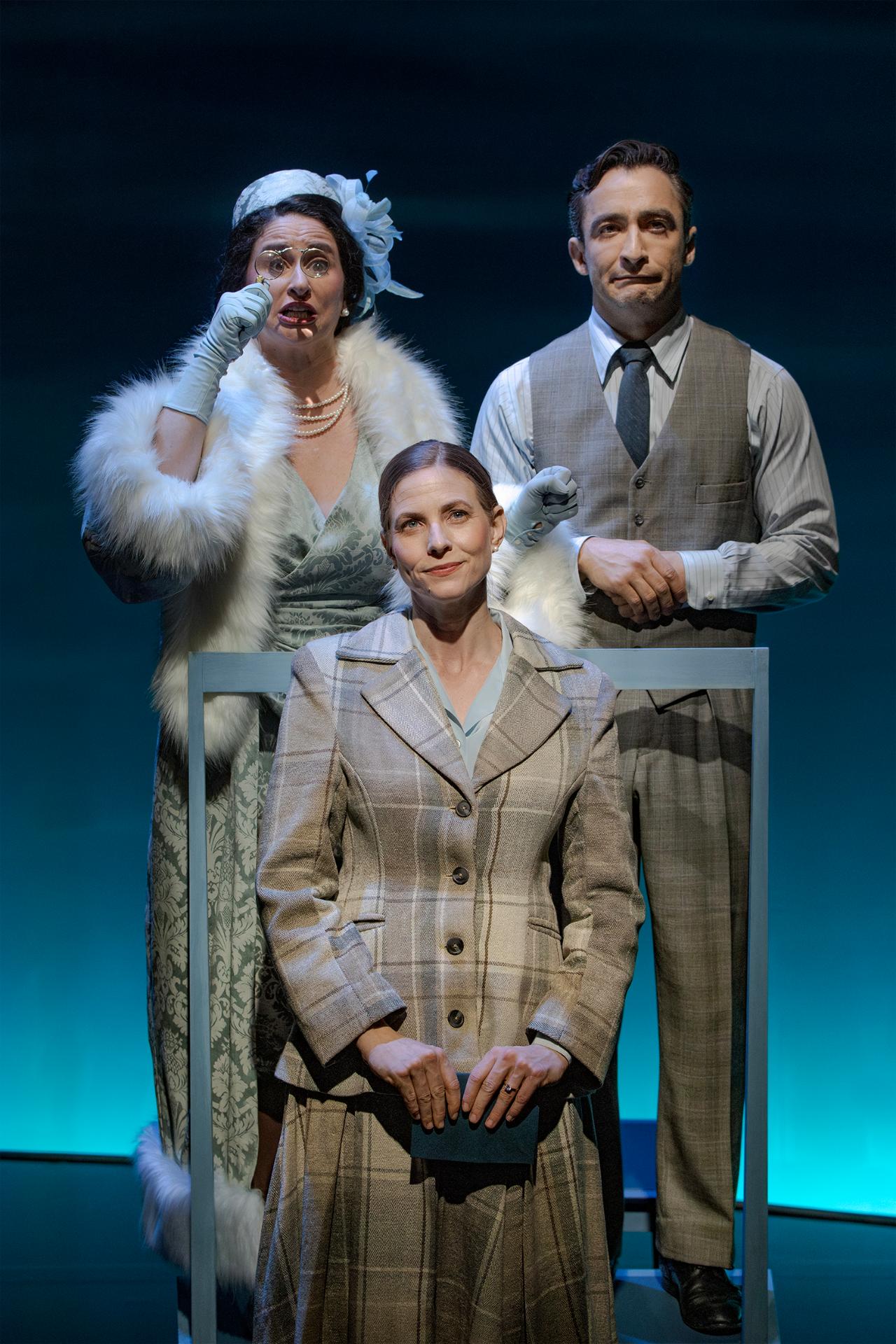
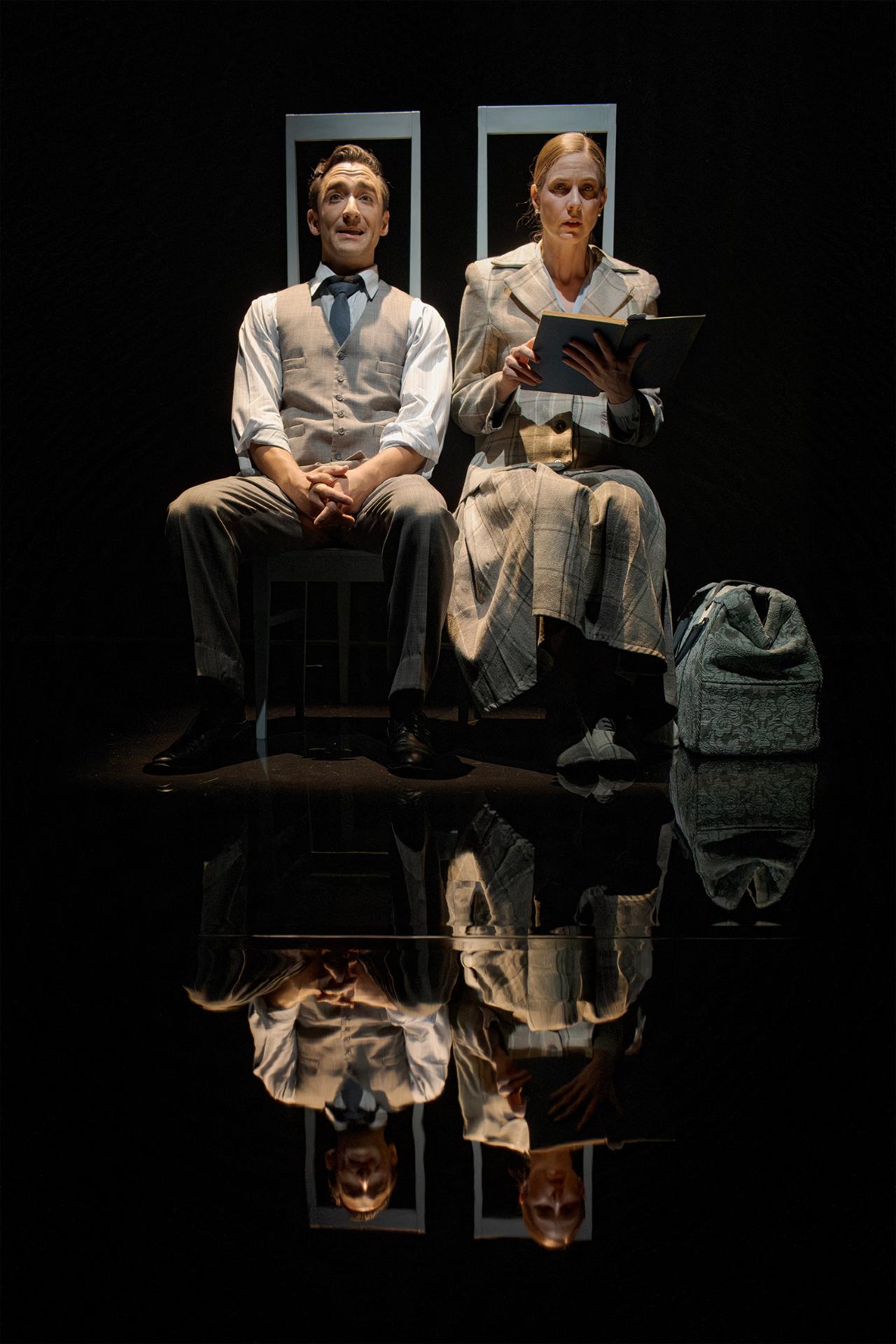
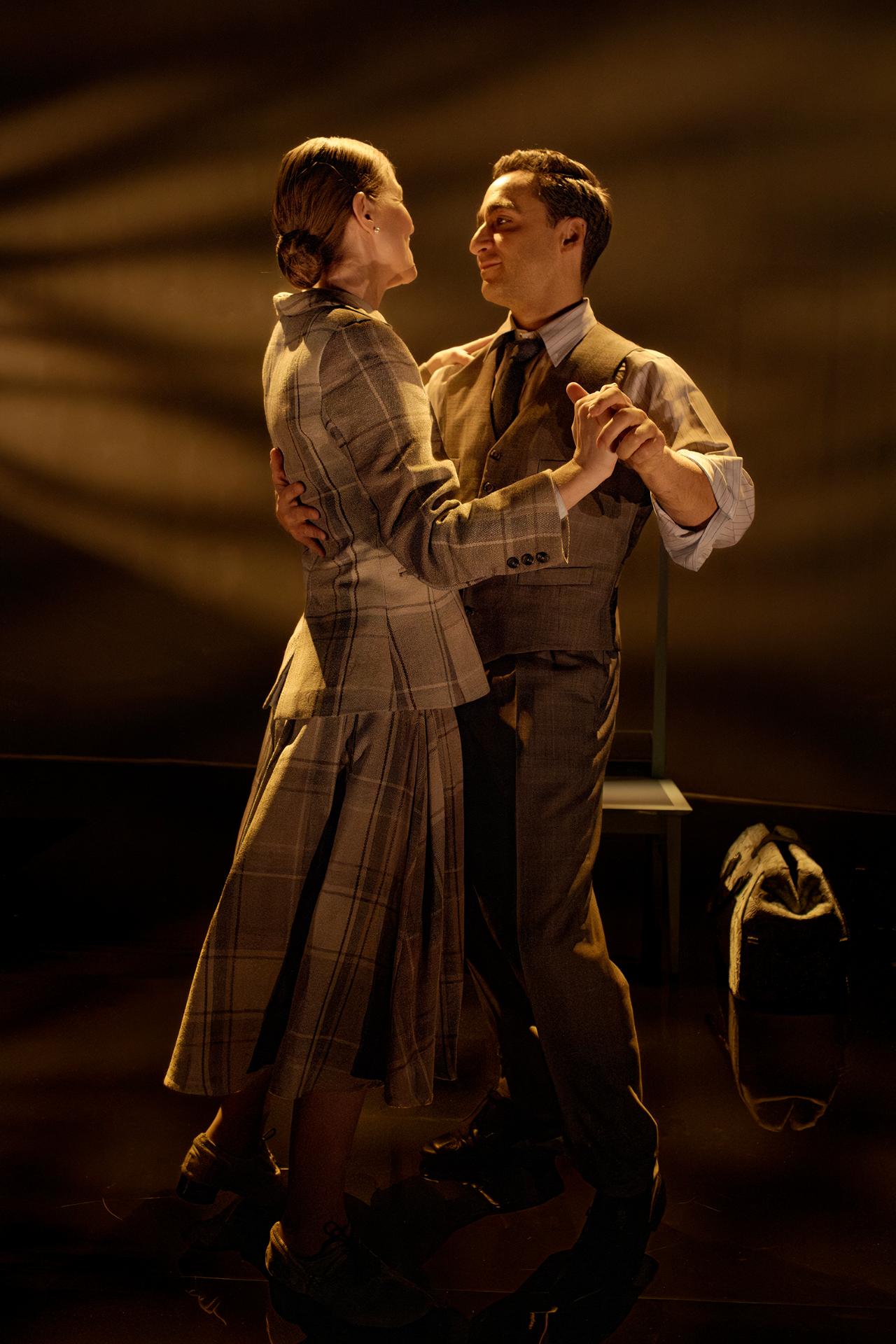
Marion Crawford worked as governess for 17 years, caring for Princesses Elizabeth and Margaret of England. Although she had published articles and a book about her time with royalty, Crawford remained faithful, never writing a disrespectful or denigrating word. Melanie Tait’s play The Queen’s Nanny is accordingly courteous, in its renderings of a woman’s memories pertaining to a special time. There is no questioning the integrity of Tait’s work, but when it comes to stories relating to the crown, some audiences prefer a more creative approach, as evidenced by the success of titles that have taken great liberties in fabricating anecdotes, to have us truly riveted.

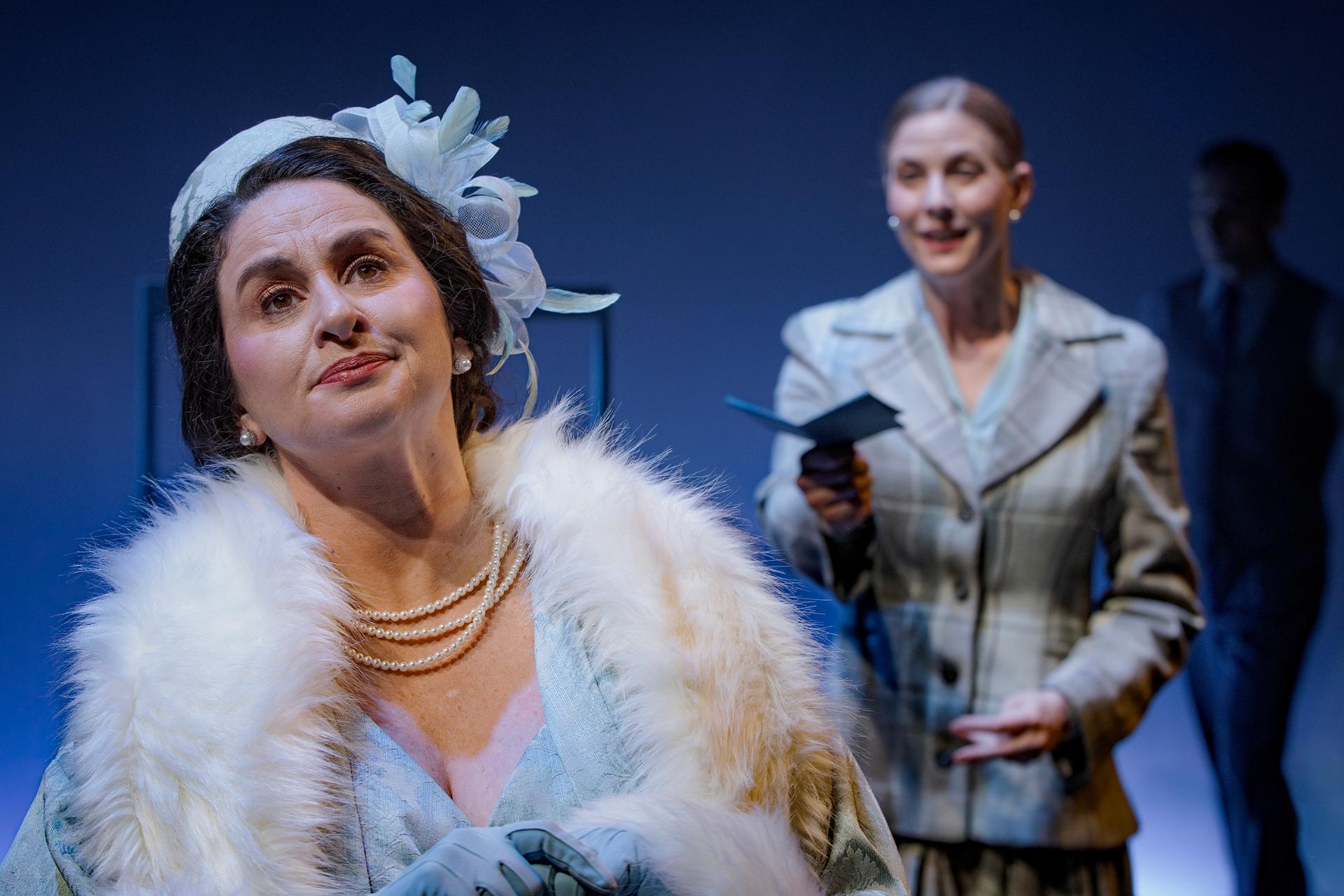
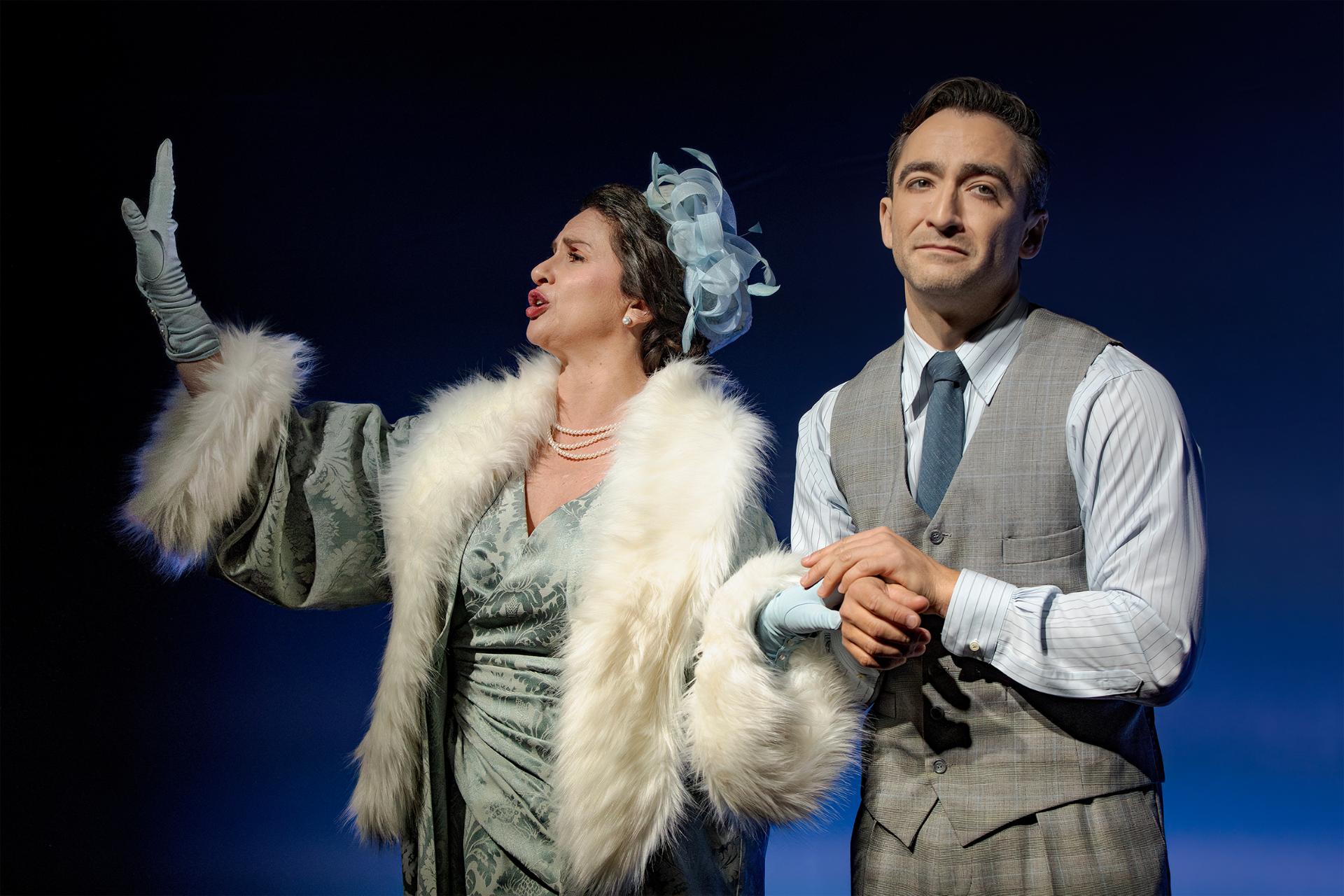
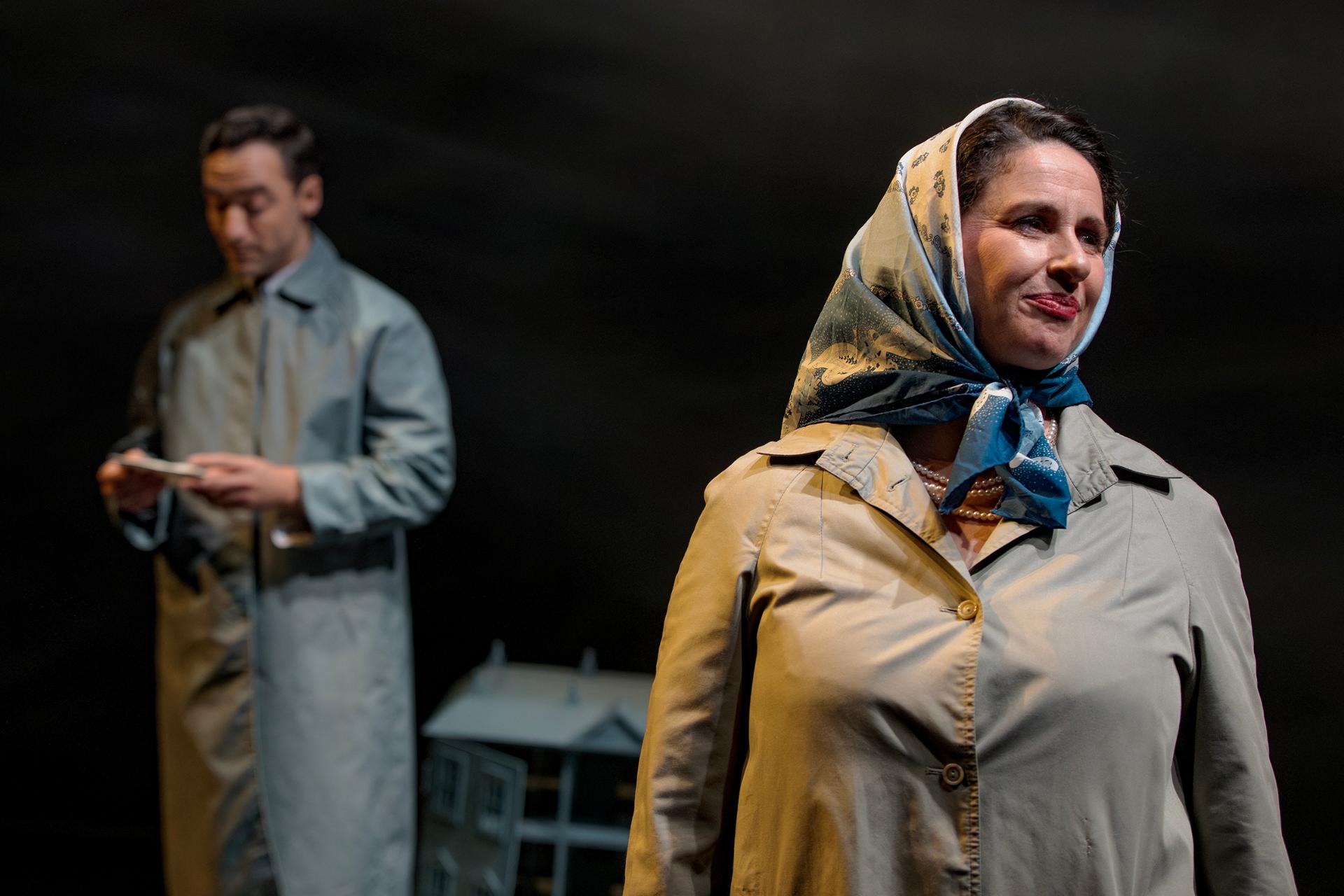
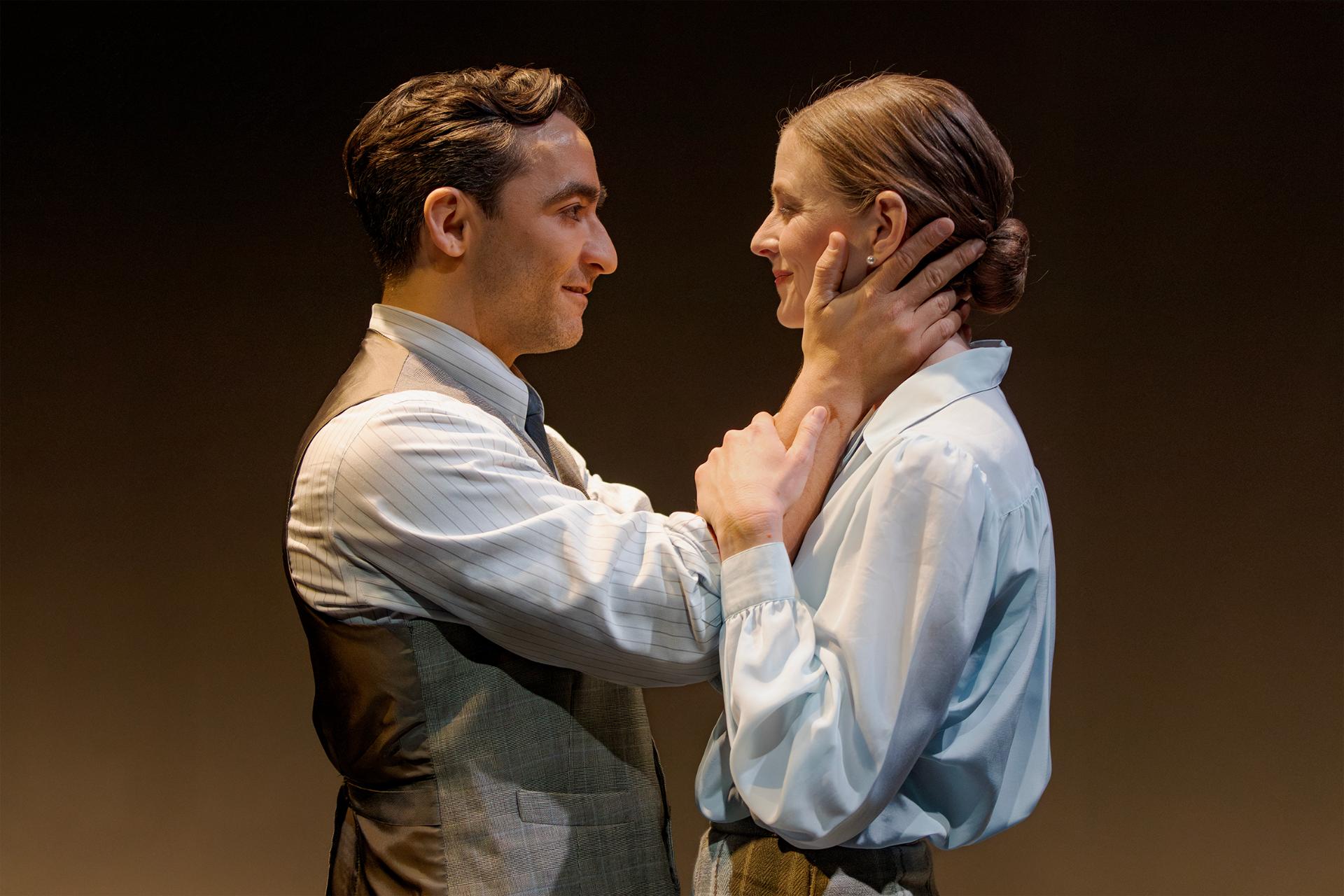
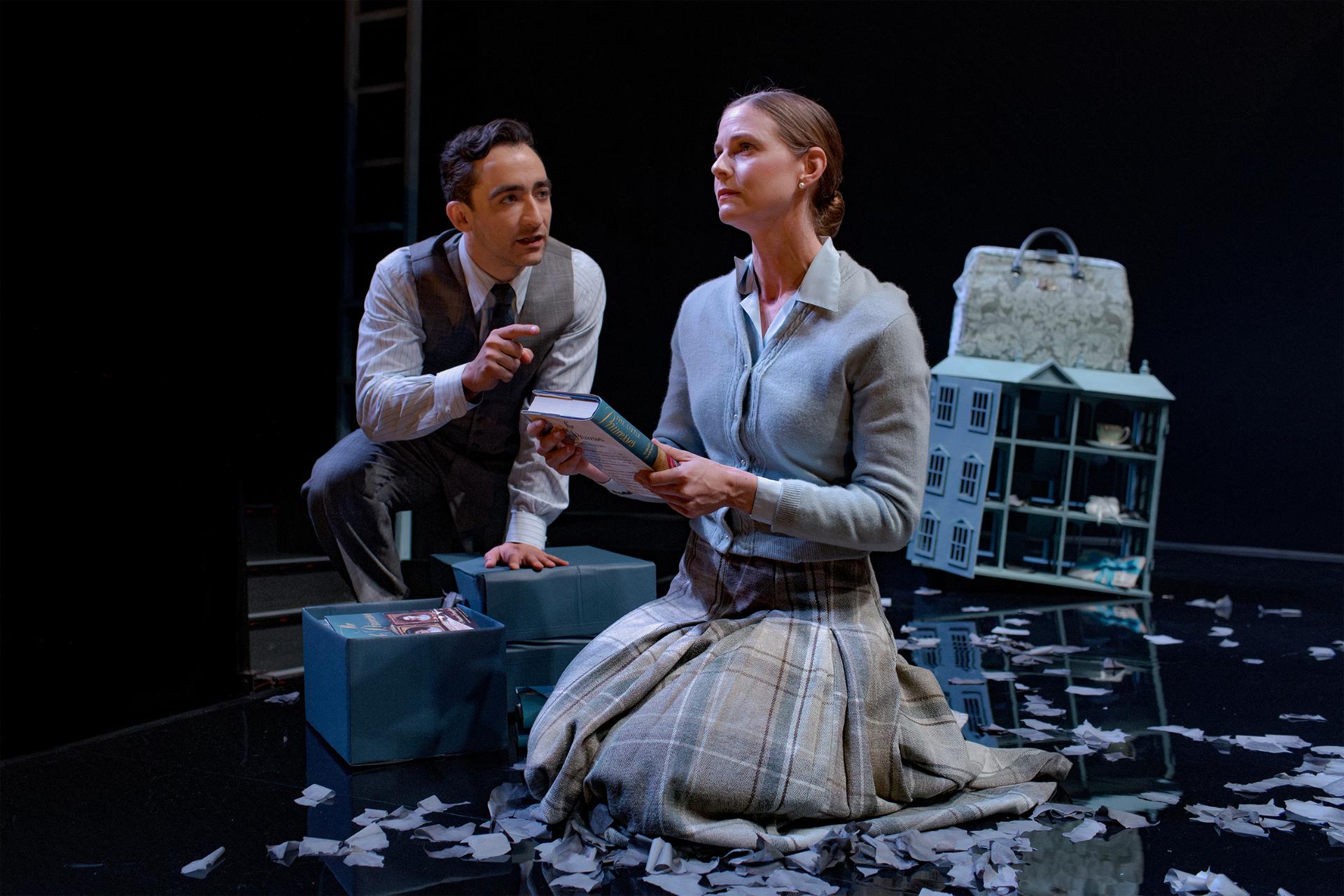
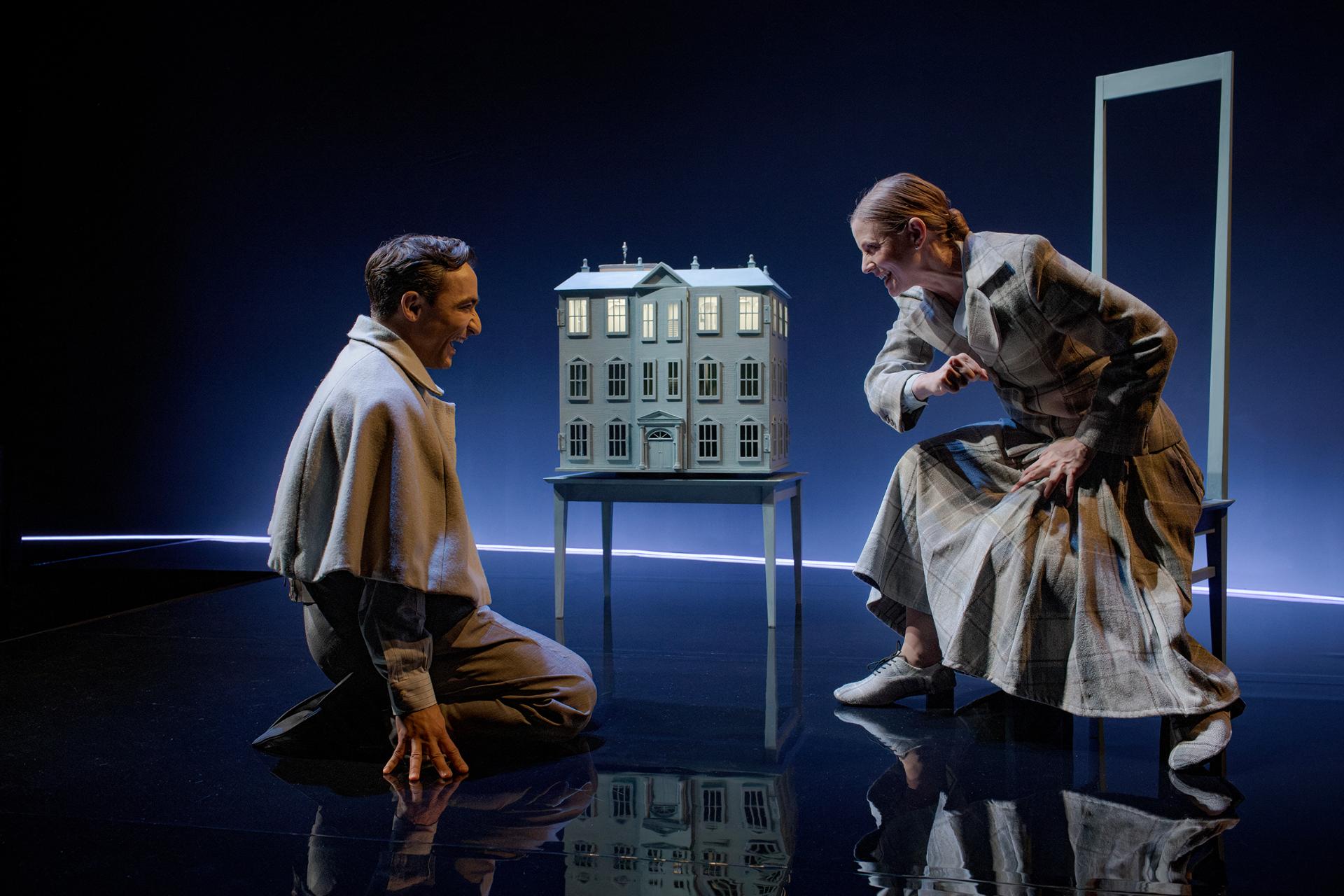
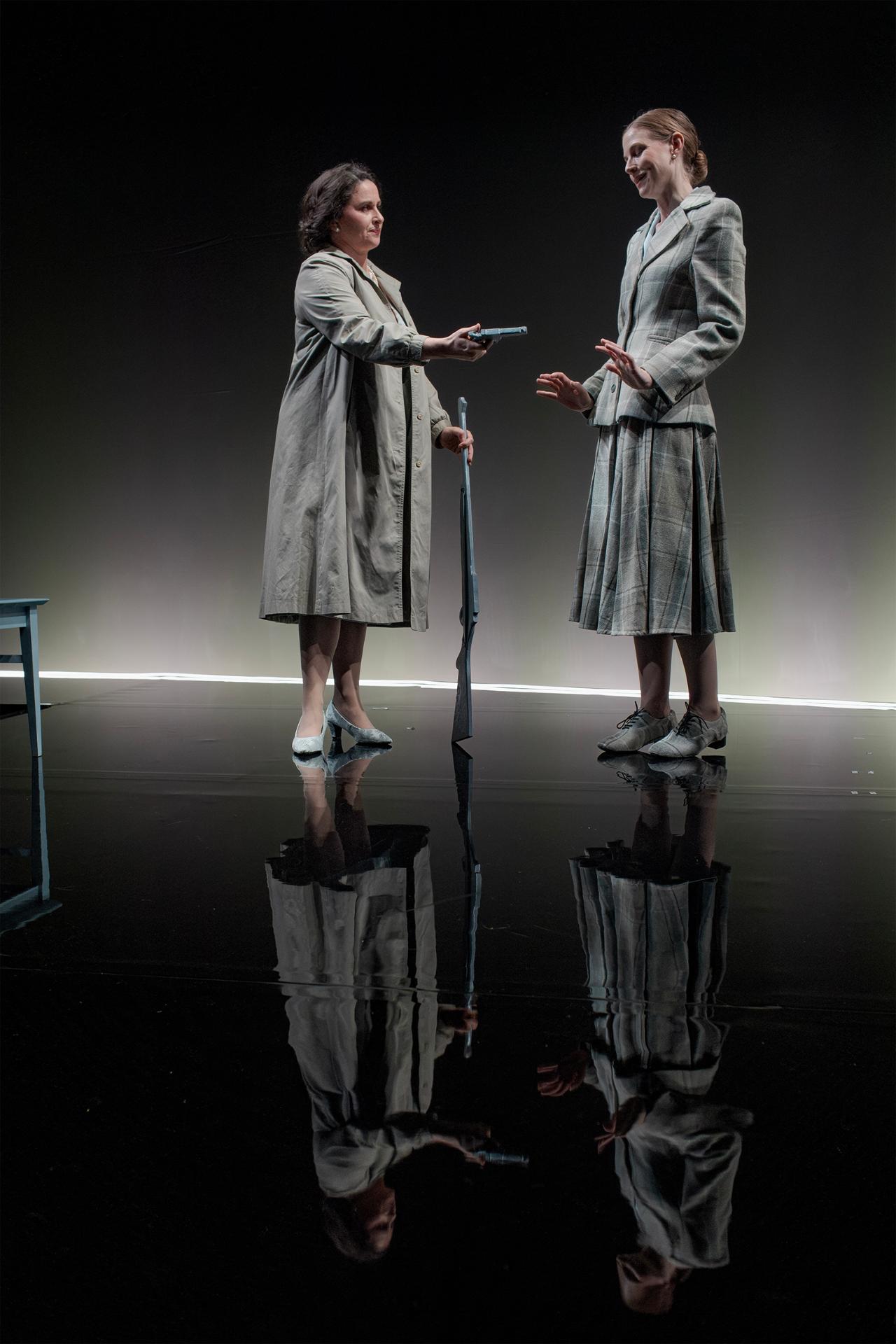
The production is nonetheless vibrantly directed by Priscilla Jackman, who ensures that the staging is beautifully crafted in all aspects. Michael Hankin’s set design is elegant in its simplicity, featuring scale model versions of buildings that help us imagine the rarefied world of The Queen’s Nanny. Costumes by Genevieve Graham are splendidly tailored, to accurately convey the class of people being depicted. Lights by Morgan Moroney are intricately designed, to manufacture dramatic tension, and to represent a sense of opulence. There is an intense sensitivity in James Peter Brown’s music that offer a gravity to the experience, as though a constant reminder that there is always a real humanity at the centre of this show.

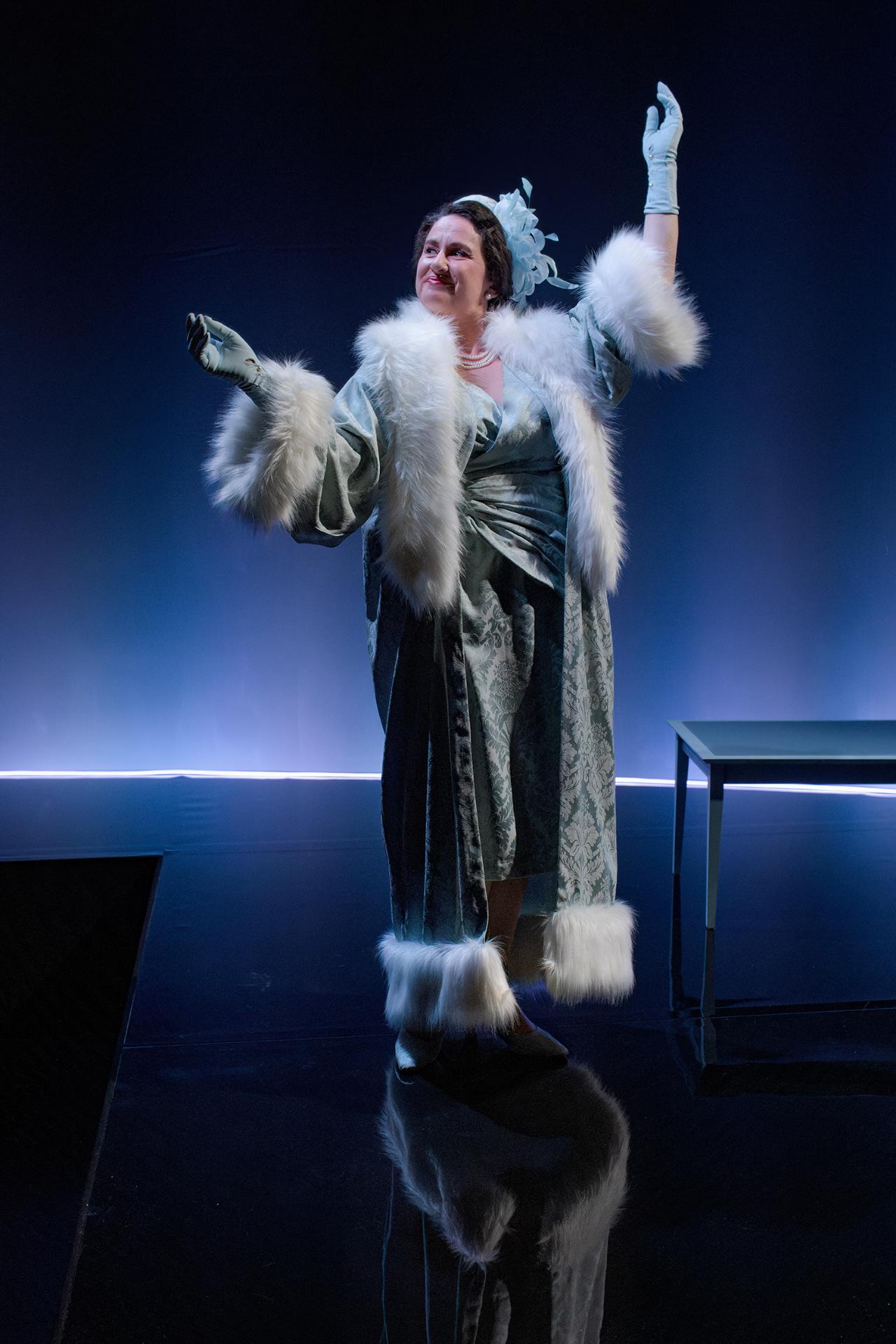
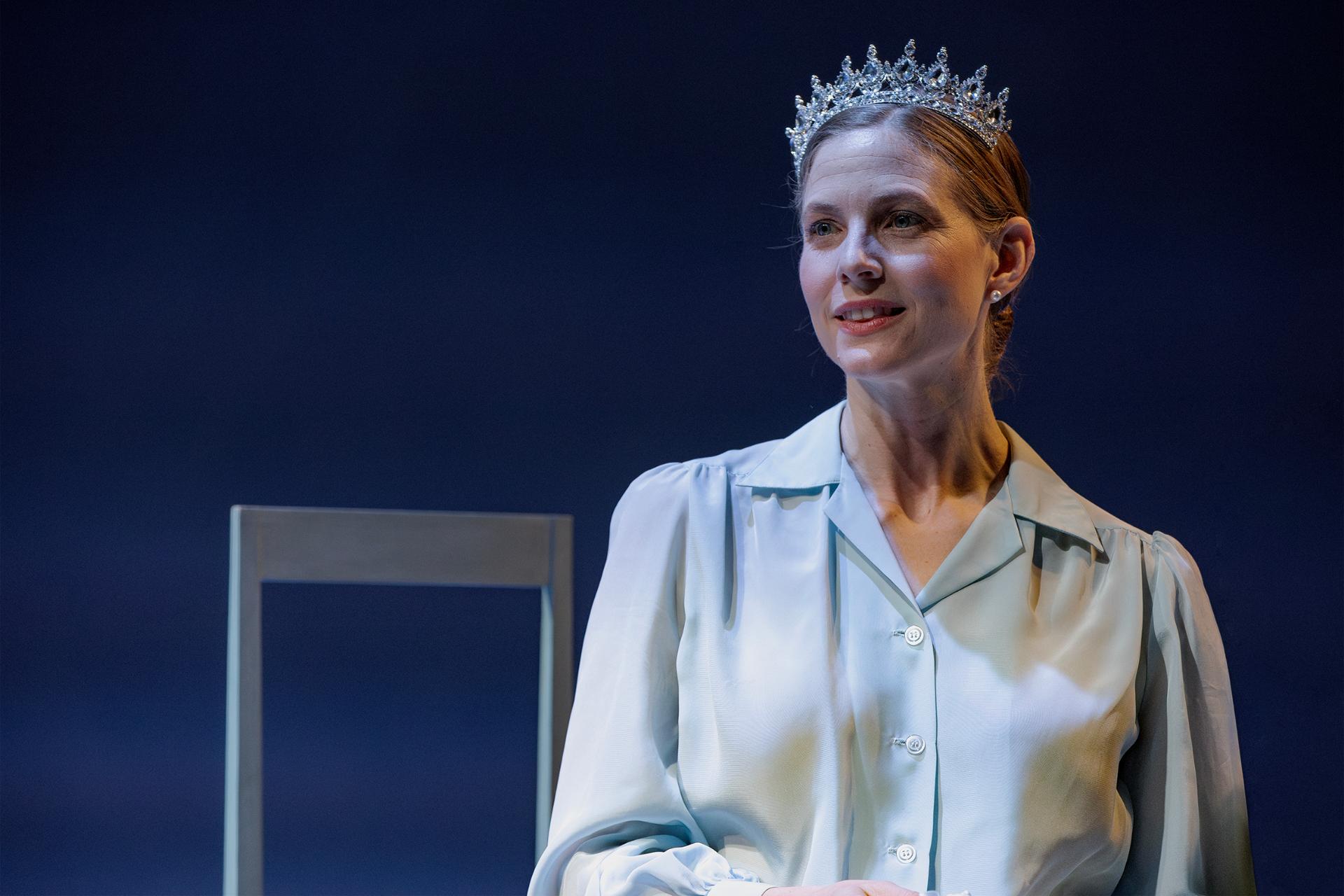
In the titular role is Elizabeth Blackmore who excels at finding emotional range, for a personality from somewhere noted for its great restraint. We may not always be interested in her chronicles, but there is an authenticity to Blackmore’s performance that makes everything feel truthful. A very endearing Emma Palmer plays The Queen Mother with delicious aplomb, bringing a valuable flamboyance that keeps the storytelling buoyant and colourful. Matthew Backer is highly impressive as he morphs into a wide range of characters, each one persuasive and beguiling, demonstrating remarkable skill as he imaginatively carves out his portions of the tale.

It is often a mystery, how an artist finds inspiration, and what results from their efforts. We can very rationally map out the kinds of stories we wish to share at our theatres, but we must also be mindful about the restrictions we impose on our artists. There is a freedom that must be afforded to those in the business of creativity, in order that they may discover something astonishing and unanticipated. It is also important to believe that a greater moment can only happen, after the current one is completed. Marion Crawford was only 39 when her time with queens and kings was over. Her subsequent years may not have been documented as extensively, but we have to believe that they remained cherished and meaningful, even as her life had taken on a different complexion.

www.ensemble.com.au

Review: New Works Festival Part 1 (Old Fitz Theatre)

Venue: Old Fitzroy Theatre (Woolloomooloo NSW)

All The Fraudulent Horse Girls Aug 30 – Sep 14, 2024
Playwright: Michael Louis Kennedy
Director: Jess Arthur
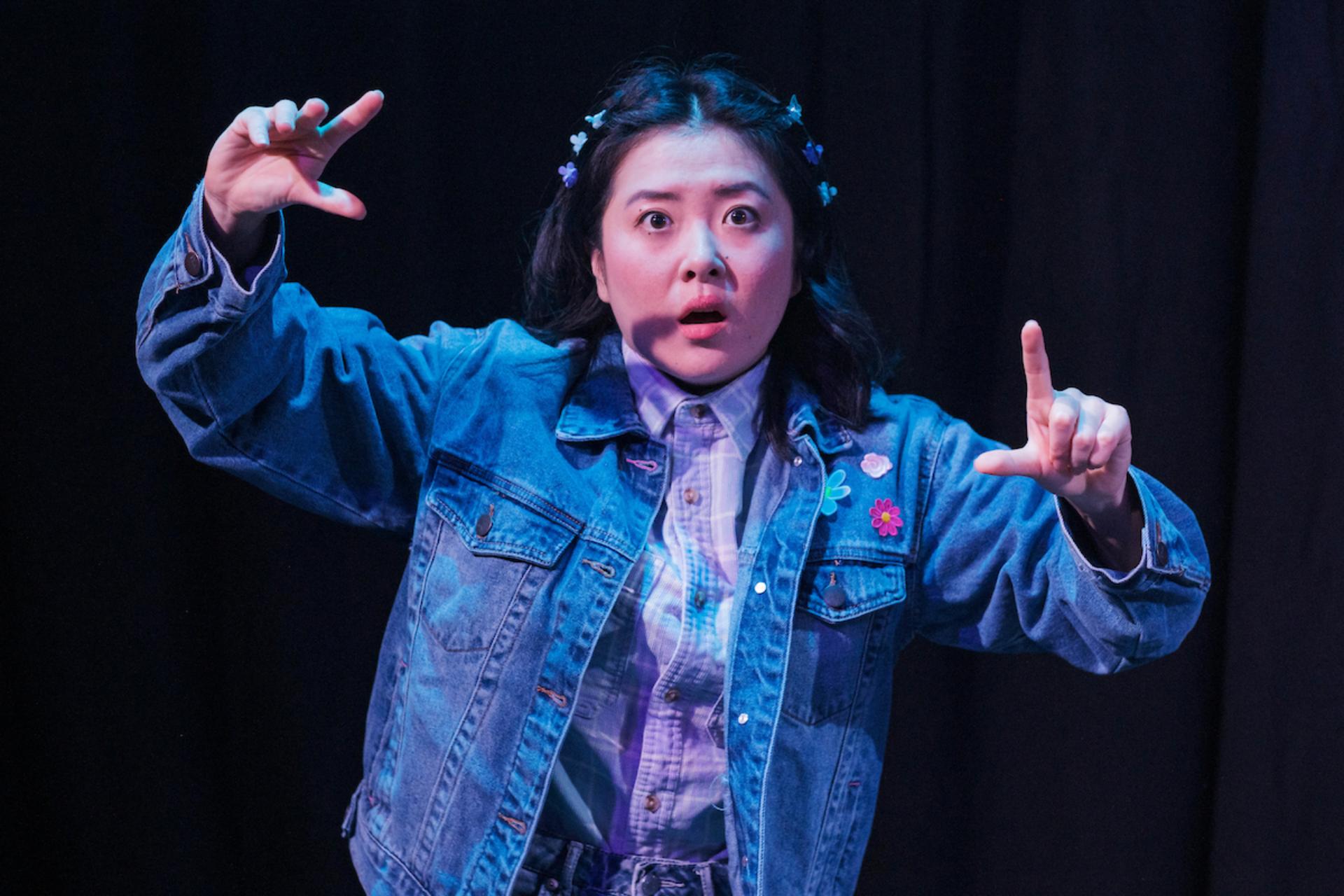
Cast: Janet Anderson, Caitlin A. Kearney, Shirong Wu
Images by Robert Catto

Probe Sep 5 – 14, 2024
Playwright: Becca Hurd
Director: Rachel Chant
Cast: Ryan Panizza, Ziggy Resnick
Images by Phil Erbacher

Theatre review
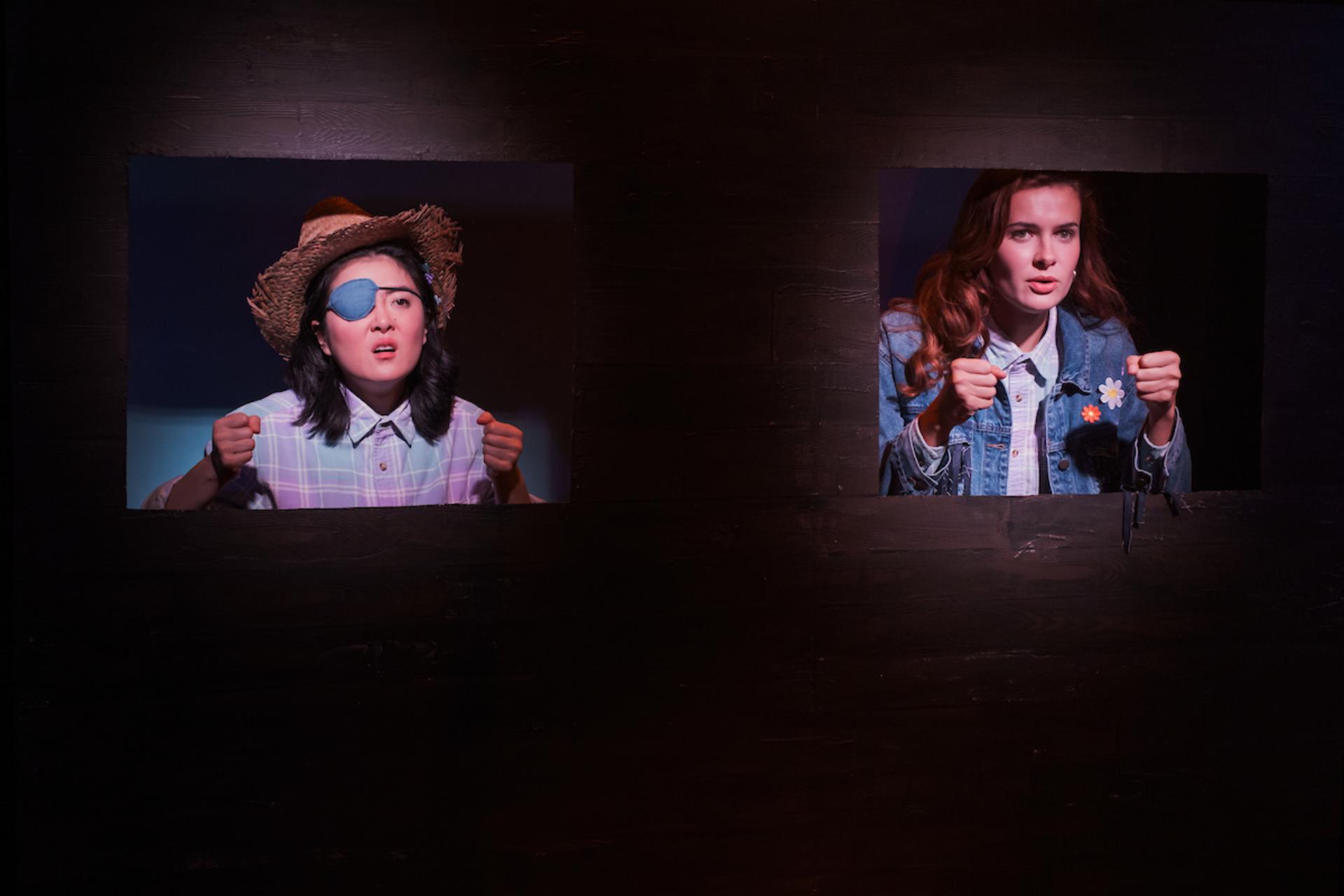
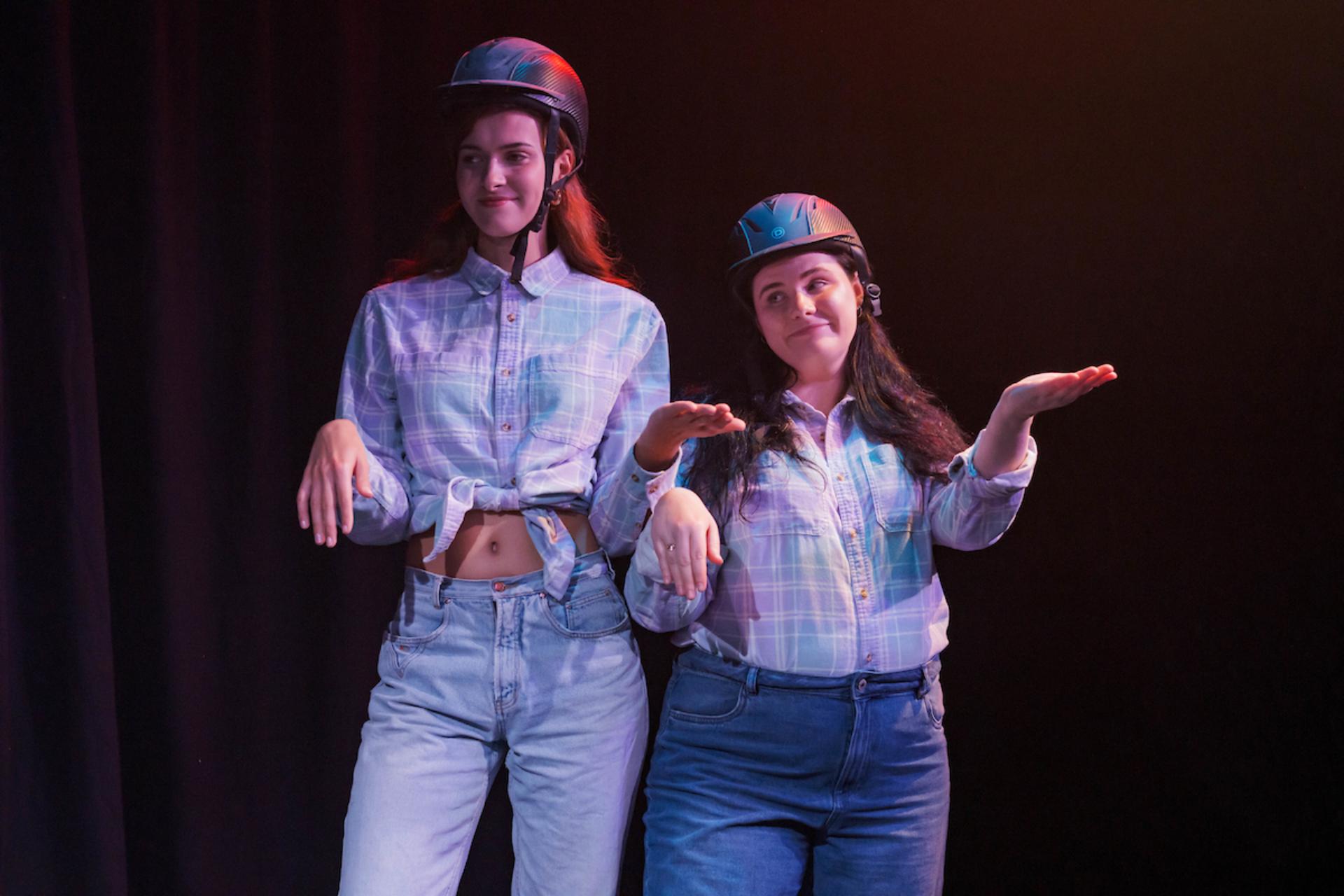
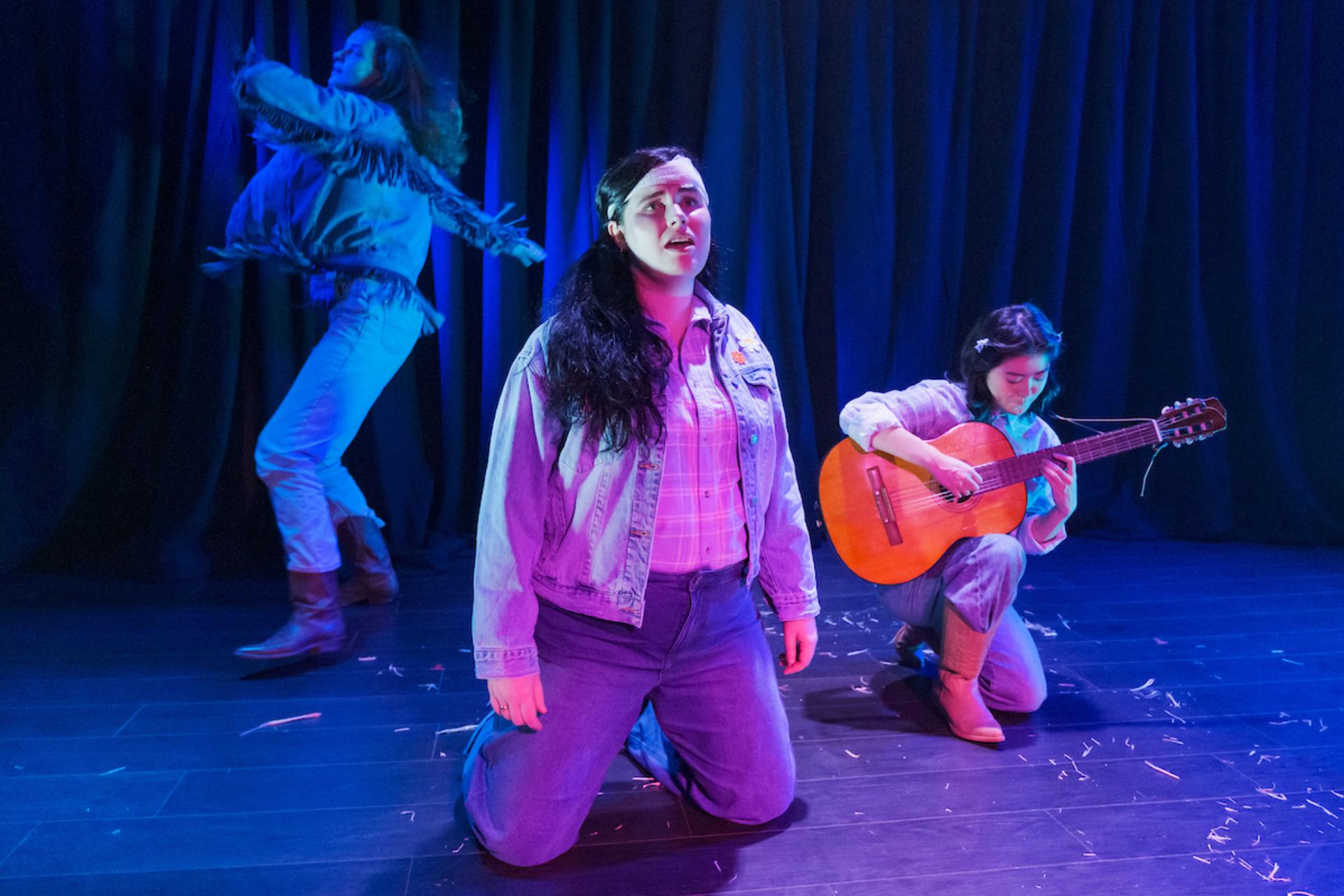
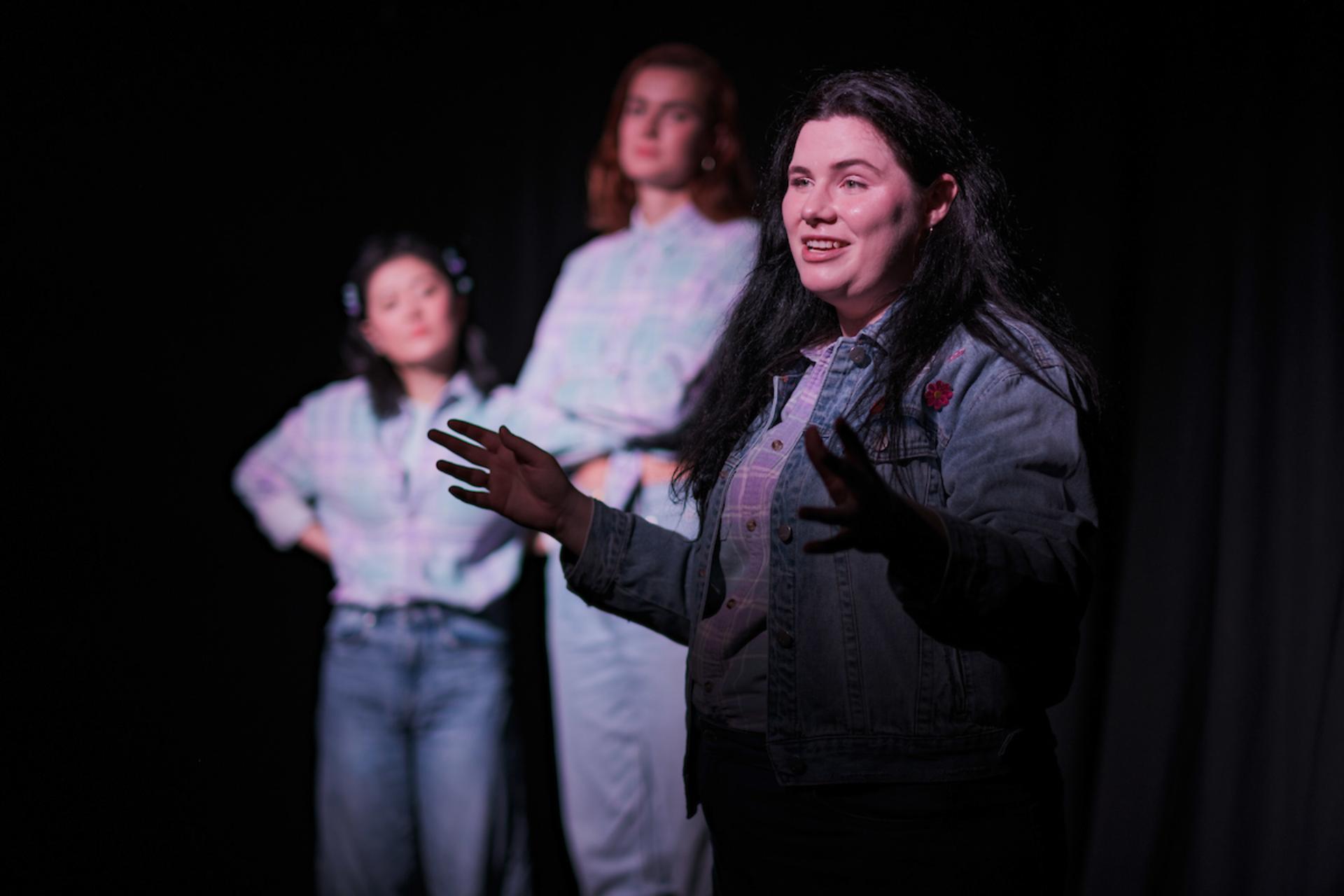
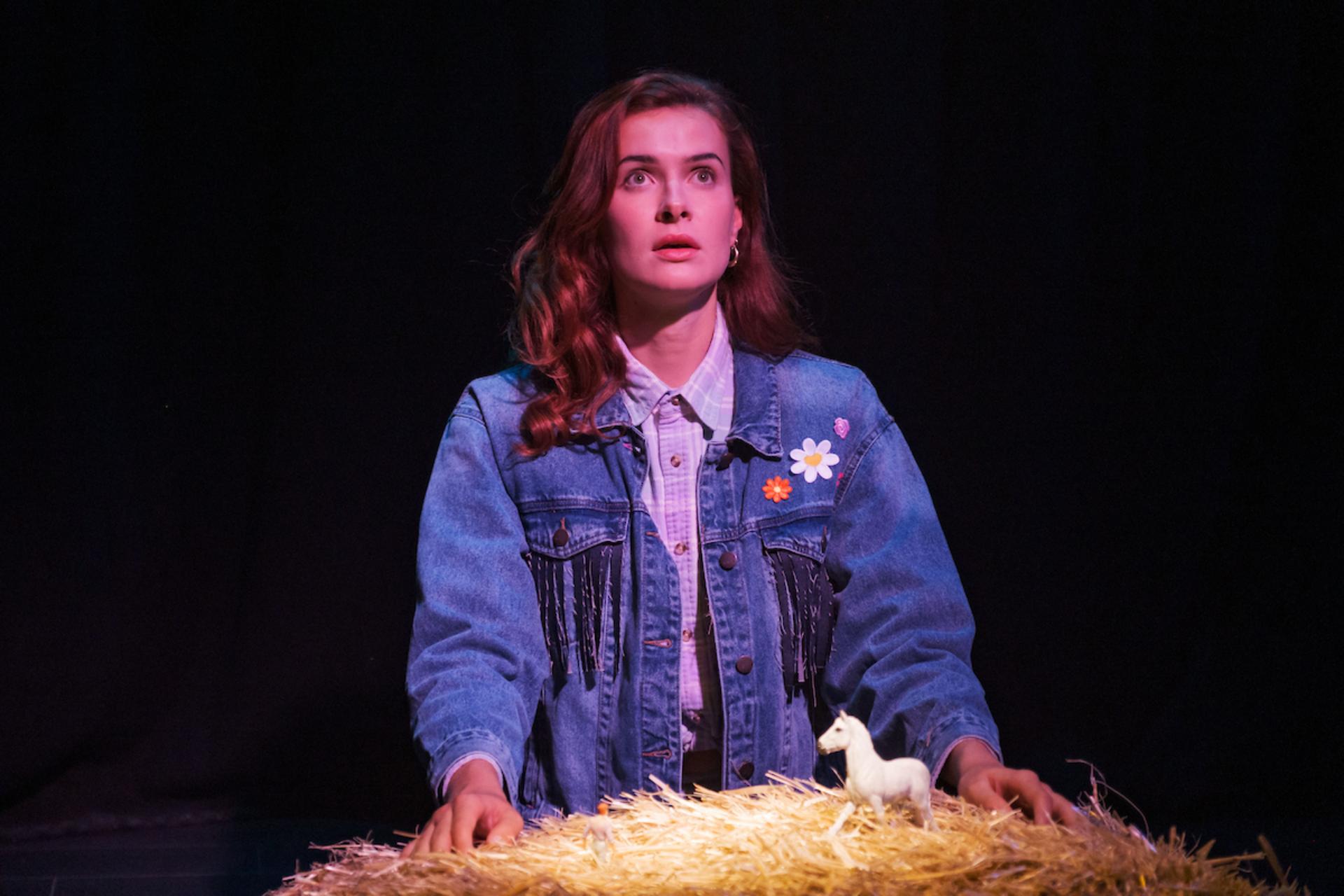
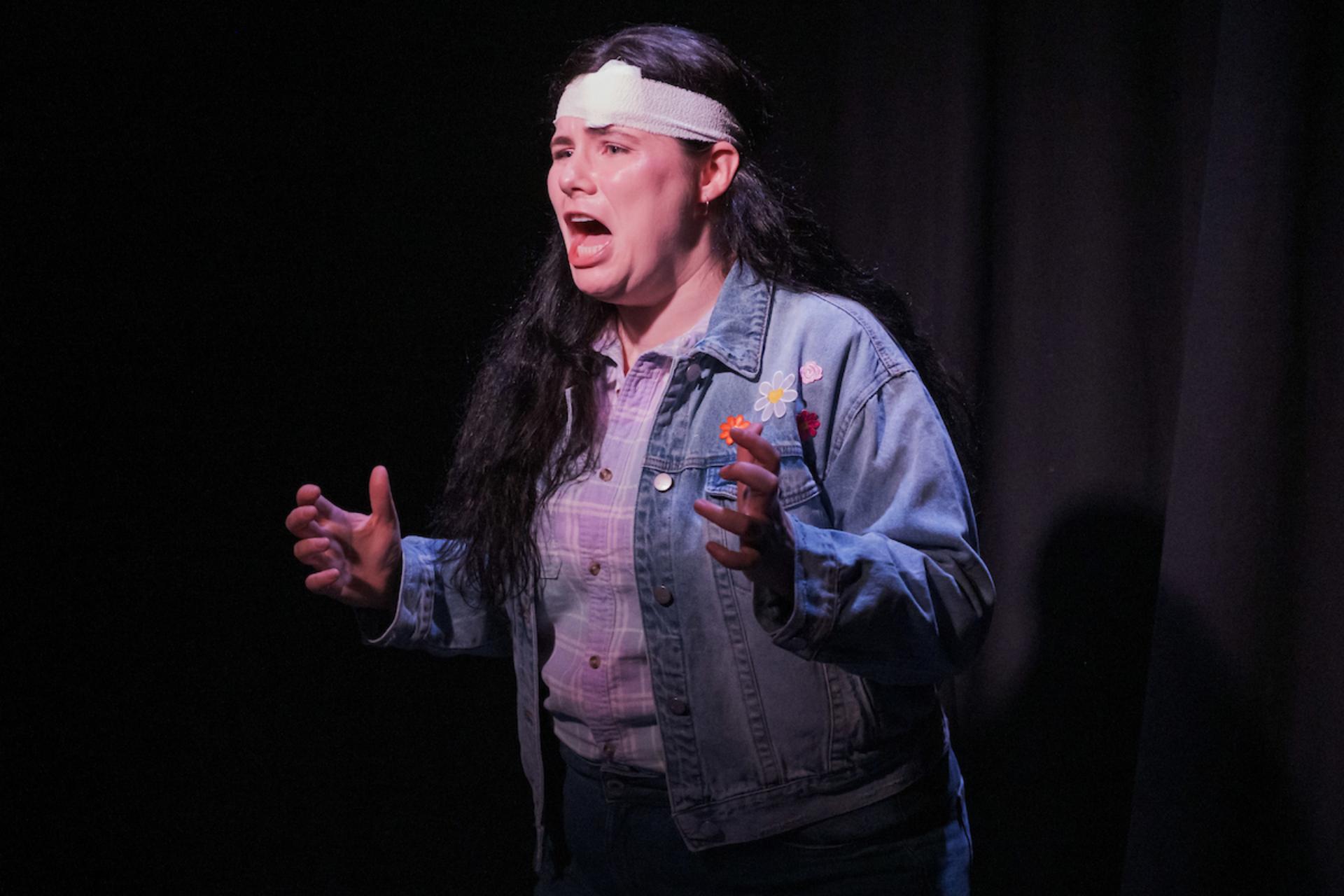
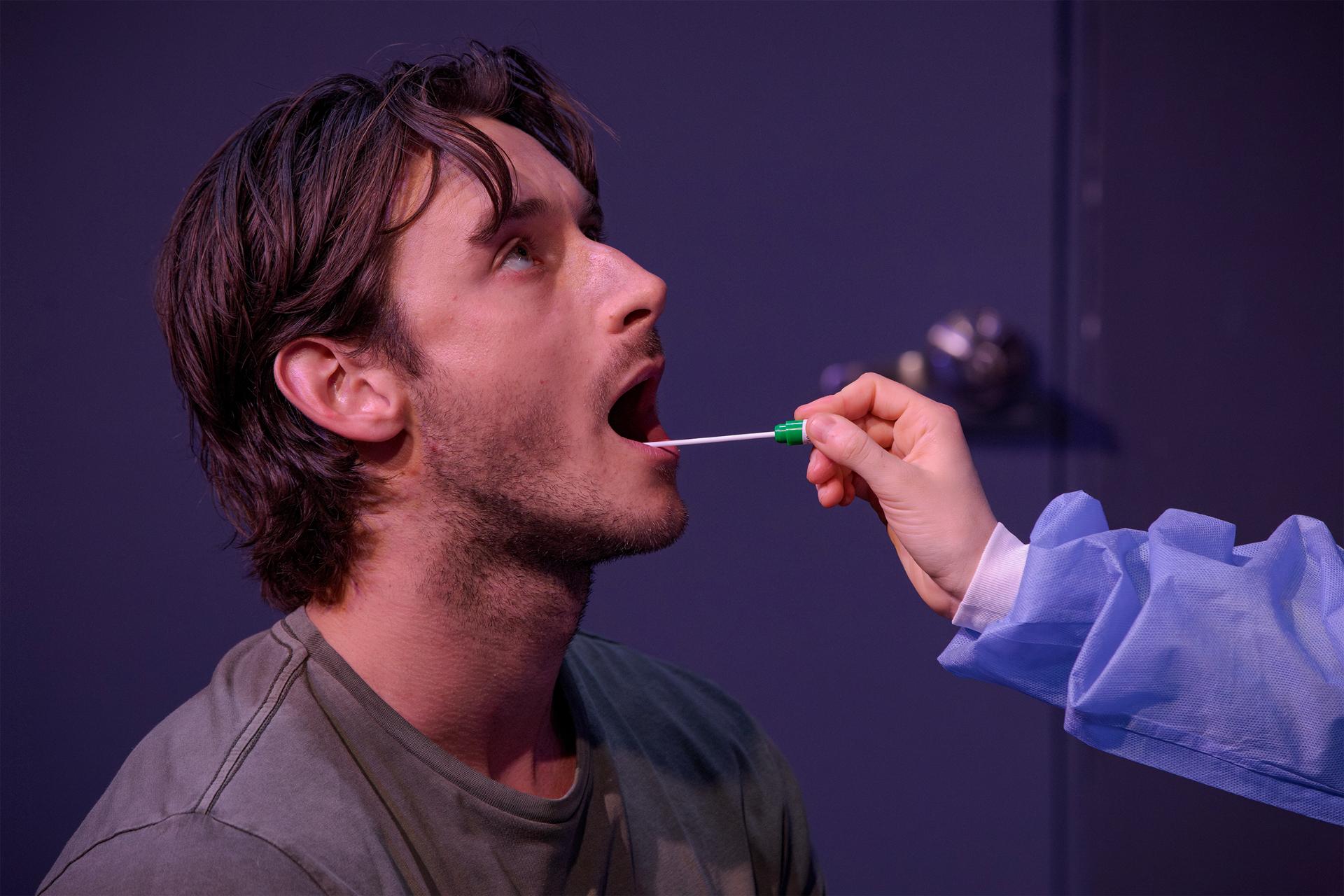
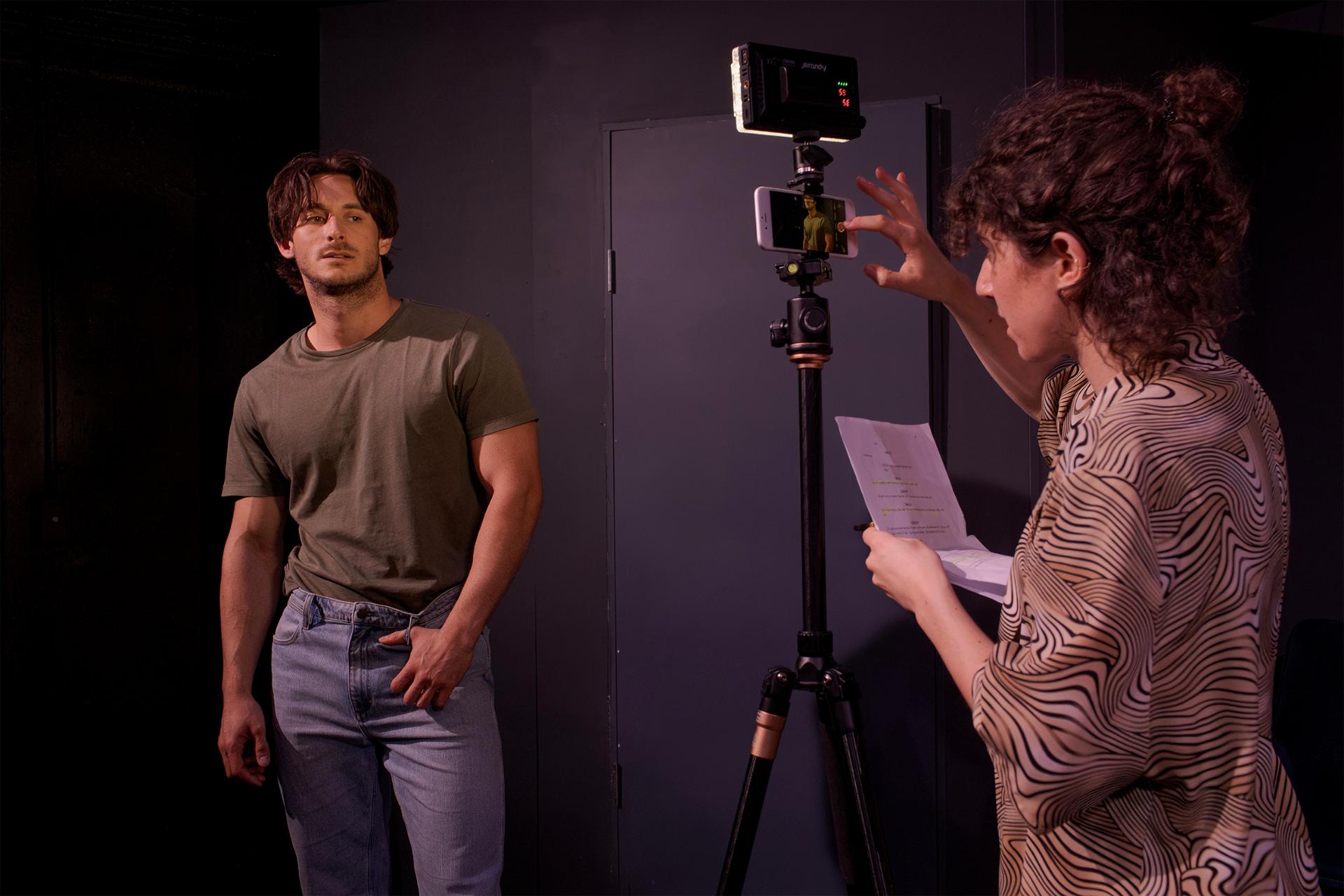
The first in a series of double bills, at the New Works Festival by Old Fitz Theatre, features All The Fraudulent Horse Girls by Michael Louis Kennedy and Probe by Becca Hurd. The former tells the whimsical story of an 11-year-old’s fascination with horses, full of comical imagination if slightly too bizarre to meaningfully engage in. The latter is a two-hander about the current state of the film industry, with a particular interest in the prevailing gender inequity that firmly undergirds the system, notable for its mischievous dialogue, but could benefit from some thoughtful editing.

Direction for both pieces are sensitively and elegantly accomplished, by Jess Archer for Horse Girls and by Rachel Chant for Probe. There is a bold theatricality in their work that translates as an effervescence to help sustain our attention. Lighting design by Emma Van Heen demonstrates a keen for dramatic tension as well as for humour, able to manufacture effective atmospheric transformations to keep our sensibilities attuned.

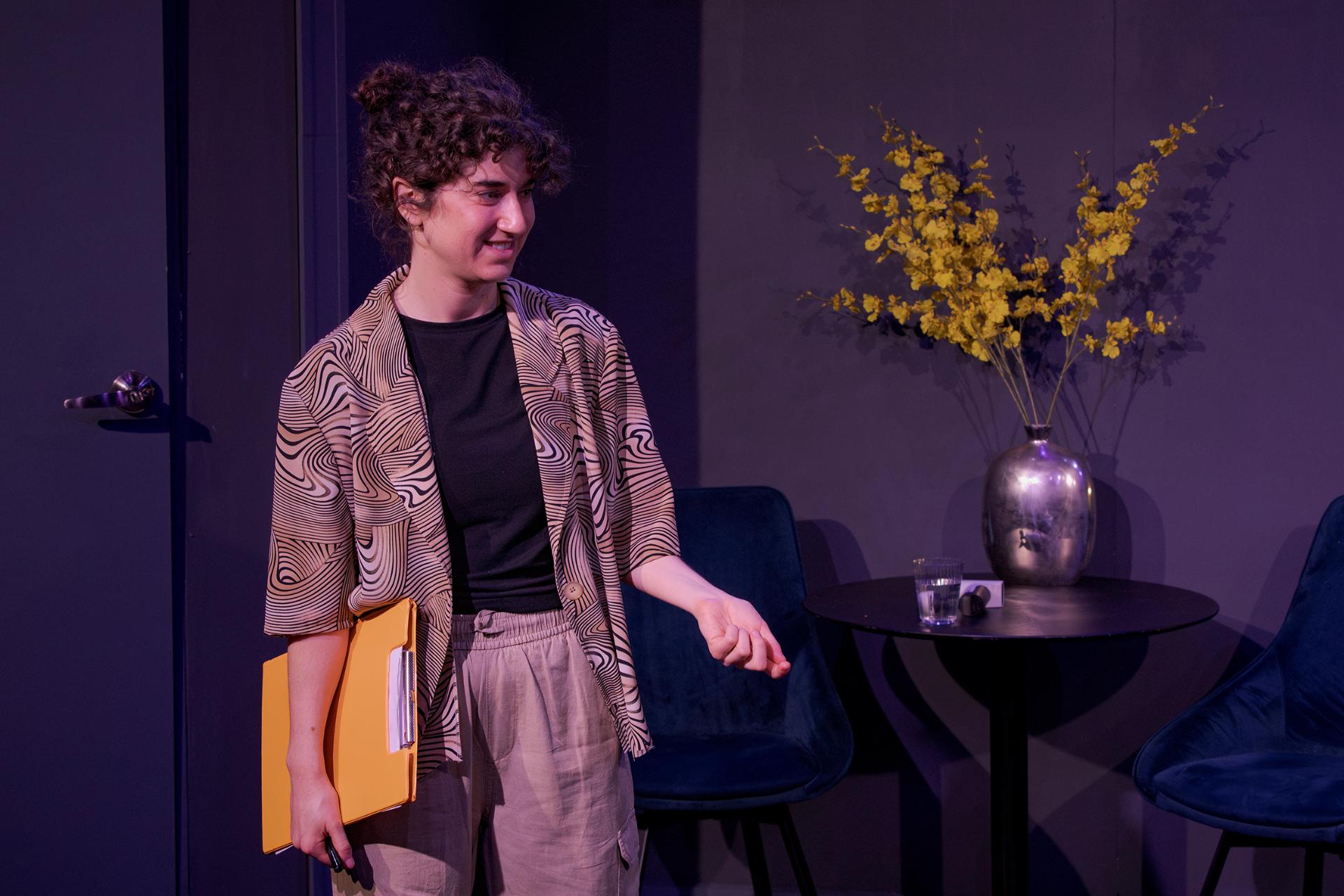
A uniformly excellent group of performers, each one of them deliberative yet uninhibited, insists on making us convinced and interested in what they present. Janet Anderson, Caitlin A. Kearney and Shirong Wu are wonderful with the kookiness of their equine themed creation, offering great variety to their depictions of something fantastical and strange. Playing filmmakers at different stages of their careers, Ryan Panizza and Ziggy Resnick are often powerful with what they bring, and impressive with the level of conviction they deliver for a couple of very challenging characters. These two plays in the first instalment of New Works Festival prove demanding in different ways, but the cast makes it a worthwhile experience, in an artform that is always collaborative, and as can be witnessed here, eternally optimistic.

ww.oldfitztheatre.com.au | www.instagram.com/sourcherry.productions