Review: Rainbow’s End (Darlinghurst Theatre Company)

Venue: Eternity Playhouse (Darlinghurst NSW), Aug 10 – Sep 1, 2019
Playwright: Jane Harrison
Director: Liza-Mare Syron
Cast: Frederick Copperwaite, Phoebe Grainer, Lily Shearer, Lincoln Vickery, Dalara Williams
Images by Robert Catto

Theatre review
Jane Harrison’s Rainbow’s End sees three generations of women from the Dear family, living together by the Goulburn River, navigating the challenges of being Aboriginal on colonised land. Things are hard, but these characters are upbeat, as though demonstrating a defiance in their very nature, that refuses to be subdued. The lighthearted quality of Harrison’s play makes for a charming portrait of Indigenous resilience; it resists our desire for a narrative that foregrounds these women in pain, choosing only to show us how they are able to overcome unremitting disadvantage.

Directed by Liza-Mare Syron, the production is full of spirit, with an enjoyable mischievousness that ensures we respond with a sense of admiration, for the Dear women and their people. Lights by Karen Norris are particularly well conceived, a dynamic element relied upon to provide visual variation. Actor Lily Shearer is a cheeky elder as Nan Dear, bringing considerable warmth to the piece. The vivacious Dalara Williams contributes exuberance in the role of Gladys, memorable for the ironic humour she renders as the unlikely monarchist. Teenage Dolly is played by Phoebe Grainer, whose innocence is a defining factor of this story about Yorta Yorta women in the 1950’s. Grainer is a charming performer, effective in making the play feel authentic, thus prompting us to question the progress of race relations in this country, more than 65 years later.

Rainbow’s End is an Indigenous story told by Indigenous Australians. In it, they demand improvements for their communities today, as the Dear women had done a lifetime ago. We are accustomed to the idea that progress is linear, but there is much evidence to show that we do not operate that way. As white supremacy makes a less than taciturn return to fashion, we have to take all precautions to ensure that its racist agenda, is faced with obstruction at every opportunity. It pretends to do good, when in fact it keeps doing bad, always using lying words to restrain us. They talk about intentions to make things better, but their actions only reveal the opposite. We must insist on recognising the truth, and not be swayed by their language. We must not be manipulated into thinking that where Indigenous Australia is today, is anywhere near good enough.

www.moogahlin.org | www.darlinghursttheatre.com

5 Questions with Jess-Belle Keogh and Bardiya McKinnon

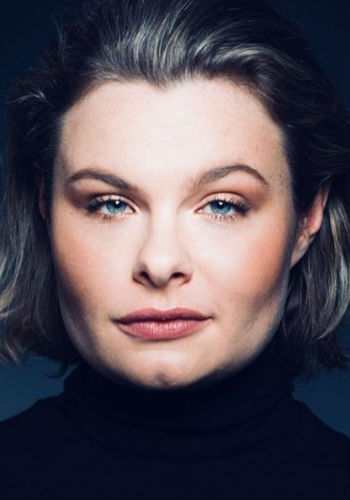
Jess-Belle Keogh

Bardiya McKinnon:What is your biggest pet peeve?
Jess-Belle Keogh: This is a great question, which one do I choose? Okay so, I’m a good walker, I’m quick, even when I’m lost, so people taking up the entire pavement and having no spatial awareness grinds my gears. On a larger scale, I’m very passionate about women’s rights, so violations of those rights does an angry Jessie make (frequently vocal about it, proud of that fact, thanks very much).

What is it like working opposite only one other actor?
So the last two plays I did had at least 3-4 other actors in the room. This work has made me really check in with my own practice. It’s made me more passionate about current events. Ultimately, all of this fills me with enormous joy—it’s taught me to be more present and say “yes!” I don’t know, man– I like working with you too, I guess.

How do you put up with me?
Darling, thanks for checking in. To be frank with you, I’ve resorted to extensive periods of monastic silence in community gardens. It’s a spiritual overhaul. How the hell do you put up with me? God, you poor thing.

Friendship is the ongoing theme in An Intervention, how do your real world experiences feed this role?
The women I’ve surrounded myself with consistently operate with authenticity. The group consists of two sets of twins, and me. We’re all very different. They’re good people who keep me honest, and I love them a great deal. They’re my ride-or-dies, it isn’t shallow territory. We aren’t afraid to show each other love or say “hey, you’re being an asshole.” Wouldn’t trade them for anything. They’re my family. Likewise, I’ve got some incredible friends from a myriad of places who I love to the moon and back, like yourself. So that’s my approach to friendship. Does that answer your question?

What do you think the biggest message of this show is?
Look, not to sound woo-woo, but life has a funny way of making us feel like we’re alone in all of this. The world is in turmoil, after all, and we’re lonelier than ever watching atrocity after atrocity on our smartphones. Or, we’re Instagram distracted in other ways and unaware. We’re rendered inactive all of a sudden; self-conscious voyeurs. Don’t fall for it: apathy or cool indifference is a waste of your time. Be passionate about the big stuff. Do something. Lean into looking silly. Fail gloriously. Risk buggering it all up. But show up, look around, do something. Even if it’s scary or inconvenient or doesn’t suit your Instagram aesthetic. Show up for each other and for life. People are there to meet you. You aren’t alone and damn the thing that makes you feel that way. Lean in. I promise you won’t regret it.

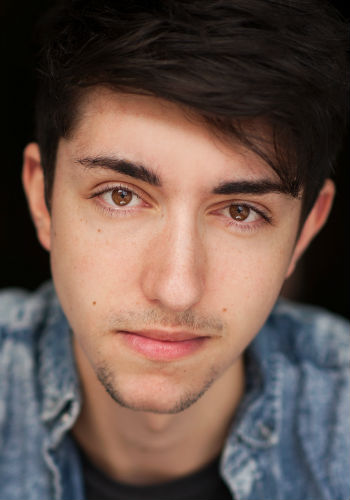
Bardiya McKinnon

Jess-Belle Keogh: Bardiya, I think you’re great. Sorry, that wasn’t a question. Right. Bardiya, what do you like about Mike Bartlett’s An Intervention?
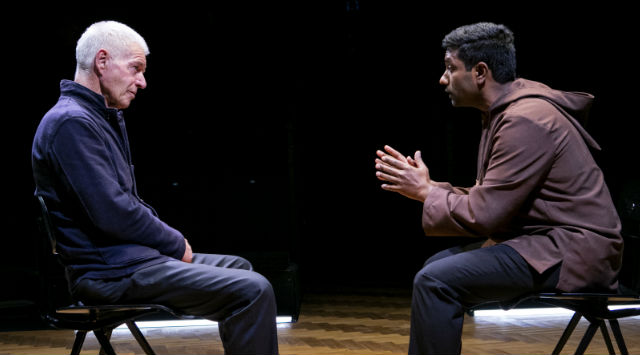
Bardiya McKinnon: I love the simplicity of it all. This show does everything in its power to draw audiences into the relationship between these two best friends. It strips away props, set, bells and whistles to focus on the beautiful space between these two “best” friends. In doing so it creates a very real, honest and genuine portrayal of life and 2 damaged people standing up for what they believe is right. I love it for that.

An Intervention involves spirited debate about socio-political matters on a global scale. We go head to head about these issues, often in bombastic ways. What cause do you feel strongly about at the moment?
This is a tough question to answer because I have never really been one for specific “causes”. I believe in the values that what I was brought up with – that all people no matter their skin colour, orientation, gender or belief system are entitled to love whoever they want, work in whichever field they so choose and believe in whatever cause they choose to as long as it doesn’t impede or harm anyone else. I know that sounds like a cop out answer but my belief system is completely inclusive and I’m sick of hearing about person/s or groups who use their power as a way of regulating how people should exist in their own skin.

We’ve been friends since 2017 (I know, don’t lose it). Perhaps tell the people about how we met? And who is Erin Taylor?
Holy crap 2017…so much has happened in my life since then. You and I met under circumstances that mirror our current situation quite closely. We worked on a show at the Old 505 in 2017, the Outhouse theatre company production of BU21 by Stuart Slade directed by our incredible director Erin Taylor. That show was an absolute highlight for me and every single member of that team was so so wonderful. After working with our wonderful director Erin Taylor on that show I knew exactly who should helm An Intervention once I had read it. Her voice and ability to tap into the fine human details that are easy to miss really make this production really special.

What have you seen recently that literally (or figuratively) knocked your socks off?
Apart from you crushing it in this show? Yeah, have you seen the wonderful promo video we made for this show where we asked a bunch of people in the street about certain events that affected their relationships. It’s super beautiful and super honest and captures our show really well. Now apart from that shameless plug my real answer is: That video of the raccoon dipping the fairy floss into a puddle… love that shit.

Right, let’s do the damn thing. Five words to describe the show— aaaaand go!:
Defiant, Flawed with Love and Wine. (I know that’s 6 but “and” is barely a word…)

Catch Jess-Belle Keogh and Bardiya McKinnon in An Intervention by Mike Bartlett.
Dates: 20 – 31 Aug, 2019
Venue: Old 505 Theatre

Review: Te Molimau (25A Belvoir)

Venue: Belvoir St Theatre (Surry Hills NSW), Aug 7 – 24, 2019
Playwright: Taofia Pelesasa
Director: Emele Ugavule
Cast: Lesina Ateli-Ugavule, Malia Letoafa, Tommy Misa, Iya Ware

Theatre review
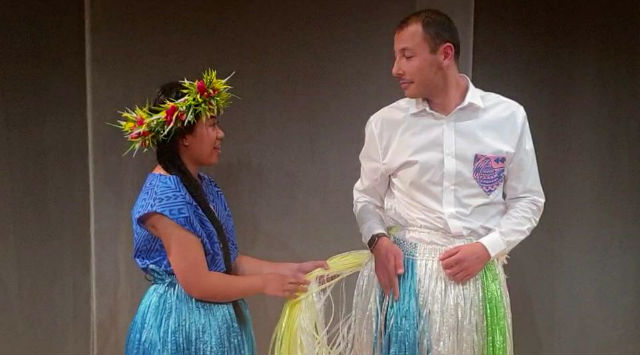
Fatia has flown back to his mother’s hometown, the Pacific nation of Tokelau, where the island state is only days away from being completely submerged beneath the ocean. Taofia Pelesasa’s Te Molimau tells the heartbreaking story of a country lost, in the not too distant future, to the devastating effects of climate change. It is a deeply emotional work, made resonant by the inclusion of some very hard truths, about the way we stand on the sidelines, doing nothing to prevent disasters from consuming our neighbours. Incorporating generous doses of Tokelauan language and dance (with exquisite choreography by Sela Vai), Te Molimau represents the art of storytelling at its most potent, able to use the theatrical form to turn abstract concepts into something immediate, palpable and urgent.

Directed by Emele Ugavule, the show grows gradually, from its initial delicate tone to eventually forceful, all the while ensuring that the plot is built upon a solid foundation of sincerity. Lighting design by Amber Silk is noteworthy for its sensitive coherence with the text’s varying degrees of sentimentality, always subtle but precise in it calibrations of atmosphere. An extraordinarily likeable cast draws us into the action, including Tommy Misa as Fatia, striking in the simplicity of his approach, able to lay bare all that is so engaging and important about the play. In the role of Vitolina is Malia Letoafa, ethereal and truthful, for a supremely understated performance surprising in its impact. Lesina Ateli-Ugavule and Iya Ware demonstrate flawless chemistry, as a couple of mismatched acquaintances who form a friendship remarkable for its genuine warmth.

It is the ultimate cruelty, to see a small neighbouring country sink into the ocean, and choose to do nothing. Even if we are unable to agree on the causes of these calamities, our humanity should know to find ways to help, but it appears that we are more than comfortable to sit back and watch people go through the worst imaginable scenarios. It may be true that we feel helpless, but it is also true that we use ignorance as an excuse, in fear of having to make personal sacrifices for the benefit of others. Nature however, will never understand our demarcations of us and them. Rising sea levels will not end at the Pacific Islands just because they hold less political and economic power. Our delusions tell us that wealth is a shield from every harm, but it is only a matter of time, that this intractable inaction will catch up on us.

www.black-birds.net | www.belvoir.com.au

Review: The Grapes Of Wrath (New Theatre)

Venue: New Theatre (Newtown NSW), Aug 6 – Sep 7, 2019
Playwright: Frank Galati (based on John Steinbeck’s novel)
Director: Louise Fischer
Cast: Matthew Abotomey, Peter David Allison, William Baltyn, James Bean, Ted Crosby, Shayne de Groot, Simon Emmerson, Angus Evans, Peter Irving Smith, Brittany Johnson, Caroline Levien, Madeline MacRae, Ryan Madden, Kirsty McKenzie, Rowena McNicol, Matthew Raven, Andrew Simpson, Lily Stirling, Loki Texilake
Images by Bob Seary

Theatre review
It is the Great Depression, and the Joad family is on the road, having left Oklahoma, in search of opportunities for a better life. John Steinbeck’s The Grapes Of Wrath details economic hardships of barely a century ago, that seem so far removed from our twenty-first century realities. We can however, discern that although the conditions in which we operate have drastically transformed, the challenges and threats to our mortality remain. It may look like life has become easier, but to be human, it seems, will always involve a struggle for survival.

This stage version is a fairly concise adaptation by Frank Galati, and under the direction of Louise Fischer, its scenes move along swiftly, for a historical drama that does not demand too much of its audience. Tom Bannerman’s set design is notable for its elegance and efficiency, and along with Sharna Graham’s understated work on costumes, a visual authenticity is achieved for this American tale of adversity. David Cashman’s songs are a highlight, each one rich and evocative, often outshining the actual scenes that they are placed between.

The show is performed by a very big, and very strong, cast. Each character is lively and convincing, and as a team, they manufacture a sense of time and space effective in having us feel virtually transported. Actors Matthew Abotomey and Rowena McNicol are particularly impressive in scenes together as mother and son, both energetic and detailed, able to communicate the urgency of their situation, for moments of entrancing drama.

As with many other old stories, one could struggle to find the relevance in The Grapes Of Wrath, but the kind of fear that it encapsulates, is quite eternal. We worry about poverty and unemployment, afraid of being left behind. We see the destitute on our streets, and pray that our loved ones be spared from ever having to experience that calamity. One difference that can be observed in our narratives, after the 80 years since the publication of Steinbeck’s novel, is that his characters have each other to rely on, to suffer with. Their fears, unlike ours, do not include abandonment and isolation. We are never guaranteed absolute safety from the tides of time and natural chaos, but they at least had each other.

www.newtheatre.org.au

Review: Wink (Wheels & Co Productions)

Venue: Kings Cross Theatre (Kings Cross NSW), Aug 2 – 24, 2019
Playwright: Jen Silverman
Director: Anthony Skuse
Cast: Eloise Snape, Matthew Cheetham, Graeme McRae , Sam O’Sullivan
Images by Robert Catto

Theatre review
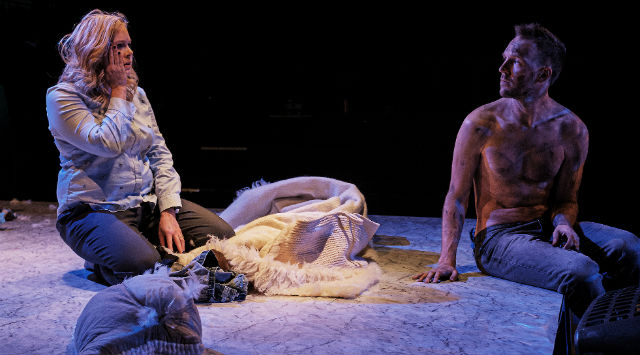
Gregor has skinned his wife’s cat alive, so clearly things are not going well at home. Jen Silverman’s Wink begins at the point of heteronormative ruination, when Gregor and Sophie’s unsatisfying cookie-cutter life together is at breaking point, and something has got to give. Too bad about the cat. Radical transformations happen following Wink’s demise, even the couple’s psychotherapist Frans, undergoes drastic existential alterations. The plan all along to keep things buried, in order to achieve an appearance of success, has failed miserably; something more authentic emerges to take over these lives, but it looks as though this surge of humanity might have come too late.

Silverman’s writing is deliciously wild, with a strong point of view that makes her surreal and irreverent approach sing with purpose. It is a work about the complicated nature of freedom, and the difficulty in returning to one’s true self, after a lifetime of conditioning and conformity. Directed by Anthony Skuse, the show is replete with subtle humour, and its social commentary, informed by a queer feminist sensibility, is delightfully acerbic.

It is a macabre world that we are plunged into, with lights by Phoebe Pilcher and a set by Siobhan Jett O’Hanlon, cleverly conceived to help us situate the action in a range of spaces between real and fantasy. Ben Pierpoint’s sound design impresses with its intricacy, highly effective in how our collective energy is calibrated for every distinct theatrical moment.

Actor Eloise Snape is marvellous as Sophie, delivering the most understated yet powerful comedy through a narrative of frustrated despondency. Her ability to simultaneously convey tragedy and hilarity, whilst performing with deliberate restraint, is extraordinary. Graeme McRae’s portrayal of Gregor is unexpectedly delicate, remarkable for the empathy that he manages to elicit, as the feline murderer. Matthew Cheethan and Sam O’Sullivan play, respectively, the shrink and the cat, both actors wonderfully quirky, for a couple of deeply amusing characters that fascinate at every appearance.

Humans have an insatiable desire for truth, but that impulse is manifested in a million unique ways. We can see the personalities in Wink giving up the external, then turning inward in hope of exchanging their worldly delusions for something genuine. It is tempting to think that our skin is the barrier between truth and lies, that somehow, deep inside, contains something unequivocal and real. This is all conjecture of course, as the human mind, insignificant as it is, will believe what it wishes, and for any of us to think that we are capable of a comprehensive godlike truth, is in itself illusory. We can however, look instead for peace, but how we interpret that concept is, it seems, another million conundrums.

www.facebook.com/wheelscoproductions

Review: Life Of Galileo (Belvoir St Theatre)

Venue: Belvoir St Theatre (Surry Hills NSW), Aug 3 – Sep 15, 2019
Playwright: Bertolt Brecht (adapted by Tom Wright)
Director: Eamon Flack
Cast: Peter Carroll, Colin Friels, Laura McDonald, Miranda Parker, Damien Ryan, Damien Strouthos, Vaishnavi Suryaprakash, Sonia Todd, Rajan Velu
Images by Brett Boardman

Theatre review
Galileo builds a telescope, and discovers that Copernicus’ theory of a heliocentric solar system, is an unassailable fact. That may be a fundamental truth that Galileo has evidenced in early seventeenth century about our universe, but he is prohibited from making known any facts that contradict doctrinal teachings of the Roman Catholic Church. Bertolt Brecht’s Life Of Galileo talks about the nature of truth, and our human capacity to deal with each other’s realities. Instead of celebrating his momentous findings, Galileo is seen as a threat by the powers that be, and is subjected to decades of suppression.

Adapted by Tom Wright, there is no doubt that the 1943 play remains resolutely pertinent. We wrestle daily with fake news, and we communicate as though the world is in constant adversarial opposition with itself, and that consensus seems to only ever be an abstract notion. We all want to be right, and it is that very refusal of ambiguity that prevents this staging from connecting with sufficient intensity. Eamon Flack’s direction delivers an enjoyable show, including enticing moments of theatricality (Paul Jackson’s lights and Jethro Woodward’s music, work marvellously at these instances of flamboyance), but the point that it ultimately does make, struggles to feel more than rudimentary. No one thinks of themselves as being on the wrong side of truth, and Life Of Galileo certainly never lets us veer away from that complacent sense of self-righteousness.

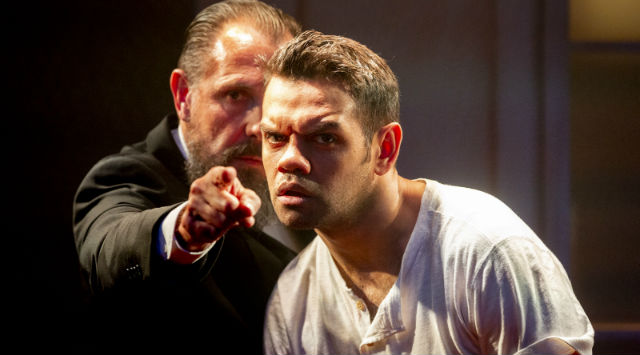
Consequently lacking in tension, the show relies on its cast to keep us engaged, if only on a level of impulse and immediacy. Leading man Colin Friels delivers conviction as the embattled Galileo, effective in conveying facets of his story that are unequivocally inspiring, even if the actor can occasionally seem slightly under-rehearsed. Excellent humour by Peter Carroll is called upon at regular intervals, to prevent the show from turning monotonous. Andrea, a student who witnesses Galileo’s struggles over decades, is played by Vaishnavi Suryaprakash, remarkable for the sincerity and emotional authenticity that she introduces to the story.

In 2019, we are alarmed by how people can construct realities that seem so far removed from facts. We argue over everything, including the very nature of objectivity, unable or unwilling to come to unity, preferring instead to persist in a world of us and them, as though the demonising of others equates to some kind of perverse comfort in one’s own life. As an audience, we wish to see Galileo stick to his guns, and go down in a blaze of glory, but he chooses survival instead, as if to challenge our notions of integrity. Co-existence means that we must share space, that right and wrong have to find ways to sit side by side. It is not only our passionate selves that are required, when we go to fight our side, but humility, and the understanding that human imperfection evades the foe as much as it does the self, should we come to recognise that the purpose is always to attain the greater good.

www.belvoir.com.au

5 Questions with Sam O’Sullivan and Eloise Snape

Sam O’Sullivan

Eloise Snape: In Wink you play the titular character, who is a cat. Seeing as you are slightly obsessed with your own cat, Terry, have you enjoyed observing his behaviour and what has been the most interesting part of your research for this role?
Sam O’Sullivan: First of all, great use of the word “titular”. Second, as you know, I always enjoy observing, photographing, playing with, talking about and hanging out with Terry. I think the best thing about him, and cats in general, is that despite their small stature, they have the attitudes and the instincts of larger cats. When we say someone has the heart of a lion, we mean that they’re brave, determined and loyal. Well, Terry actually has the heart of a lion, its just unfortunate that the rest of him is a British Short Hair.

Jen Silverman has an incredibly unique voice. As a fellow writer, what’s your favourite thing about the way she tells this story and why do you think she is an important contemporary voice?
This play is funny. So right away, you know that Silverman knows what she’s doing. What I love about Wink is the way the humour in the play evolves to carry her message. Things that initially feel like a gag or just plain weirdness over time become incredibly potent metaphors. This play is about a lot of things, but for me what resonates and what makes it important is that it interrogates our ideas and preconceptions about what is “normal” and how unhealthy it can be to cling to those ideas. There is a lot of talk about how civilised people should behave in Wink, but ultimately, for the characters to survive they need to destroy that way of thinking.

You’ve worked with Anthony Skuse and Graeme McRae before, many moons ago in Punk Rock. What has been the most enjoyable thing about working together again, now you are all kinda old?
Way harsh, Tai. This is my forth time working with Skusie (previously Punk Rock, Constellations and Platonov) and third with Graeme (Punk Rock and Platonov). Practically speaking, the more you work with people, the more you develop a short hand which means you can get more work done. You can trust each other to be direct with feedback if something isn’t working and you know nothing’s personal. At the end of the day, we’re all friends, we all respect each other’s work and we’re just trying to make the best show possible. With Skusie, I always feel like we’re exploring and discovering the play together. He has an incredible amount of experience and knowledge but on day one of rehearsals I always feel like where starting from the same spot and that we’re collaborating. Once you’ve started from that place, later when you’re alone on stage, you feel like your director has got your back. Graeme just really likes his job. And that enthusiasm is infectious, especially when it’s backed up by someone who’s done the work and is raising the standard in rehearsals every day. All plays need a Graeme.

Wink explores a very unhappy marriage. What lessons have you learnt from Gregor and Sofie’s failed relationship to ensure the same things won’t happen in your own?
Two things: tolerance and patience. Your partner will never be as perfect as you and the sooner you accept that the happier you’ll be. However, the question now is, which one of us is the imperfect one and which one is being patient? Perhaps that’s something you need to answer for yourself. I’ll wait…

You are a movie buff and have your own movie club which is just you and the cat watching movies. What’s your all time favourite movie and why?
For the record, Movie Club is open to everyone. Terry and I are just more committed than the rest of you. I always find questions about a favourite movie difficult because honestly, I just like movies. They’re my happy place. I don’t like absolutely everything, but I like a lot of stuff, even “bad” movies. My go-to answer for this question is usually Trainspotting because it’s the first movie that I remember having a profound effect on me. I would have been about twelve when I saw it and I think at the time it redefined a lot of what I thought cinema had to be. The narration, the structure, a guy diving into a toilet to retrieve his suppositories. I grew up watching things like Star Wars and Back to the Future and I love those films but Trainspotting broke so many conventions that it opened up a whole new world of storytelling for me.
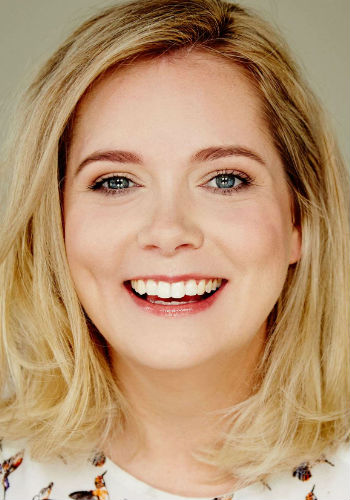
Eloise Snape

Sam O’Sullivan: Why do you watch so much reality television? Is it because you hate art?
Ok first of all, I am very picky with my reality TV viewing. I would call myself a Survivor fan, but I’m not nek level. I was recently invited into the Survivor Super Fan Facebook group and those people are FANS. I am a rookie floating around in there. I also enjoy The Bachelor for the pure lobotomy. When I truly want to switch my brain off and literally dribble, mouth open in front of the television, I watch The Bach. It’s also highly amusing. Everyone has their thing, yours is video games, mine is shit television.

In Wink, your character is struggling with a selfish and uncommunicative partner. How did you prepare for this, given that your real partner is so generous?
As surprising as this may sound, I have dated other people before you, Sam O’Sullivan.

Your character’s cat also goes missing. In a Sophie’s Choice type situation where you had to pick between me and our cat, Terry, honestly, who would you pick and why?
Tricky question. The best thing about cats is they love you unconditionally as long as you can provide them with a quality can of cat food. You on the other hand require more than cat food to keep happy. BUT, Terry doesn’t bring ME food. You are very generous with your feeding of me and you aren’t a shabby cook either. So I choose you. Sorry Terrence.

Wink could be interpreted in a number of different ways. In just three words, what is Jen Silverman’s play actually about?
Identity. Desire. Transformation.

You’ve acted in and produced a lot of Sydney theatre. Is there a production that holds a special place in your heart?
This is super tricky. I have done a lot of independent theatre and the nature of indie productions is that people work above and beyond to create something special and because everyone ends up doing multiple jobs you really all become a family. Also the run never feels long enough – so it’s always hard to say goodbye at the end. But Amy Herzog’s play, 4000 Miles, also directed by Skusie, which I did back in 2013 is the first show I produced and acted in after drama school and it was with my bestie, Stephen Multari. That was why we started MopHead and the show toured around Australia and the rest is history.

Catch Sam O’Sullivan and Eloise Snape in Wink by Jen Silverman.
Dates: 2 – 24 Aug, 2019
Venue: Kings Cross Theatre
Review: Natural Order (Milk Crate Theatre)

Venue: Petersham Town Hall (Petersham NSW), Aug 1 – 10, 2019
Director: Margot Politis
Cast: Aslam Abdus-Samad, Peter Birbas, Shane Ball, Desmond Edwards, Flor Garcia, Owen Gill, Alicia Gonzales, Lisa Griffiths, Sandra Hickey Eugenia Langley, Yen Mekon, Ray Morgan, Matthias Nudl, Ruth Oslington, Darlene Proberts, Steve Simao, Pauline Trenerry, Lucy Watson, Georgina Wood
Images by Lisa Walton
Theatre review
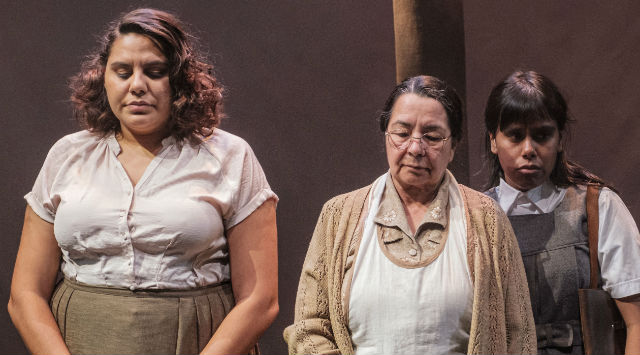
The social services agency in the story of Natural Order is named District Advanced Vocational Outlet, a fictional body no different from any bureaucratic organisation we have had the misfortune to encounter. In the hour long show, we are herded from one room to the next, to witness inefficiencies of a system that seems determined to look busy, but achieve little. We watch people falling repeatedly through its cracks, in an endless queue unable to resolve itself, lost in a system that has forgotten how to care.

Petersham Town Hall is transformed into an electrifying performance space, with evocative set design by Emma White, involving a series of wheeled panels forming simple but unexpected spatial configurations. Liam O’Keefe’s lights are a sensory highlight, effortlessly guiding our vision, as well as our emotions, through the literal and figurative labyrinth of Natural Order. Sound by James Brown and Bella Martin, along with audio-visual installations by David Molloy, offer further enhancements for an experience that many will find touching, regardless of an understandably coy devised text.

Directed by Margot Politis, the production is a stimulating exploration into the way we manage inequalities within our communities. Natural Order is a reminder, rather than a disclosure, of things we already know; its message is communicated gently, and thankfully without a lot of zealous earnestness. Featuring an extremely engaging cast of performers, including Darlene Proberts, whose delightful singing voice has us hopelessly charmed. Shane Bell delivers a powerful monologue, bringing tears to many eyes with his portrayal of Michael, as he recounts his distant glory days. Aslan Abdus-Samad and Alicia Gonzalez depict a couple of robotic red tape staffers, memorable for their cheeky sardonic comedy. Indeed, to talk about old issues that often feel too big to solve, requires a generous sense of humour. Crying is sometimes necessary, but laughing will get us out of the doldrums, for a new invigoration that will help propel us towards further action.

www.naturalorder.com.au

Review: Mars: An Interplanetary Cabaret (The Old 505 Theatre)

Venue: The Old 505 Theatre (Newtown NSW), Jul 30 – Aug 3, 2019
Music: Chelsea Needham
Lyrics: Ang Collins
Director: Andrew McInnes
Cast: Monika Pieprzyk, Amelia Campbell, Tom Matthews, Jacob Mclean, Jack Richardson, Kieran Clancy-Lowe
Images by Zac Jay

Theatre review
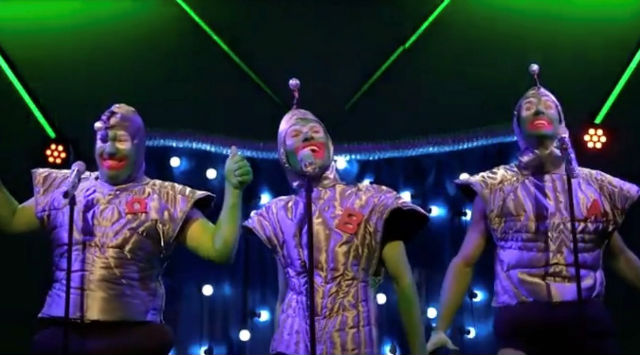
Three Martians have landed, in a spaceship called Incel 9, because apparently, earth girls are easy. The male of that species have had to travel an enormous distance, after women on Mars had wised up to their misogynistic nonsense. Earthlings however, are being protected by Space Cops, who in Mars: An Interplanetary Cabaret, happen to be two women impervious to the sleazy tricks of pickup artists. Written by Ang Collins and Chelsea Needham, this fun-filled work features kooky characters and humorous songs, for a surprisingly wholesome style of entertainment that often feels like a contemporary take on the pantomime form. A show about dirty boys with no dirty jokes, Mars is a remarkably refreshing experience.

Directed by Andrew McInnes, the comedy balances flamboyance with irony, allowing its very broad approach to communicate at somewhat unexpected levels of nuance. The visual style is appropriately lo-fi, with Lucy McCullough’s production design and Tom Houghton’s lights, establishing a lot of playful charm to keep us engaged. Some of the singing is of questionable quality, but the cast is likeable, and they present a well-rehearsed staging that impresses with its verve and spirit of inventiveness. Tom Matthews and Jack Richardson are the more disciplined performers of the group, able to contribute a sheen of professionalism with their vocal and physical polish, although the general lack of refinement remains a major component of Mars‘ appeal.

It is appropriate for our current political climate, to talk as though men are from Mars, women are from, well, Earth. A new generation of feminists have declared that poor behaviour is not acceptable, and that the toxic culture of “boys will be boys” must be changed. We talk of the young as being overly fragile, but it is evident that they are on a mission to make the world a kinder place, that people should not be required to have the fortitude to put up with all manner of bullshit. We should no longer have to laugh along with “casually racist” jokes, just as we should no longer fabricate any reason to blame victims of sexual assault. Those who find this shift in codes of conduct frustrating, are on the wrong side of history.

www.old505theatre.com

Review: City Of Gold (Griffin Theatre Co / Queensland Theatre Co)

Venue: SBW Stables Theatre (Kings Cross NSW), Jul 26 – Aug 31, 2019
Playwright: Meyne Wyatt
Director: Isaac Drandic
Cast: Jeremy Ambrum, Mathew Cooper, Maitland Schnaars, Shari Sebbens, Anthony Standish, Christopher Stollery, Meyne Wyatt
Images by Brett Boardman

Theatre review
Upon the death of his father, Breythe walks off the set of a television commercial, and returns to Kalgoorlie to be with family. The medical establishment’s neglectful treatment of his father sparks a reaction that sees Breythe and his siblings wrestle with difficult discussions, about surviving racism as Indigenous Australians. Meyne Wyatt’s City Of Gold moves between city and bush, to examine one young man’s fight on colonised land. It is a story about the deep prejudice, and of surreptitious genocide, that pervade this country, inescapable no matter where Breythe may go.

Wyatt’s writing is passionate and urgent, able to entertain while it gradually builds intensity. The fury that it contains is an invaluable expression, often hidden away from so-called civilised, Western modes of exchange, where the oppressed must communicate with polite subservience, only to be routinely ignored. Directed by Isaac Drandic, the production pulls no punches, to make a powerful statement about the woeful state of race relations all across this land. Notable work on sound design by Tony Brumpton adds richness to the piece, deftly emphasising the complex emotional dimensions that City Of Gold aims to convey.

As leading man, Wyatt is a compelling presence, entirely persuasive with all that he brings to the stage. Charming in humorous sections, but it is in explicit moments of political confrontation that he absolutely devastates. Wyatt’s monologue at the beginning of Act 2 ranks as one of the most important theatrical moments in our stage history. His siblings are played by Shari Sebbens and Mathew Cooper, both actors captivating with their sincere portrayals, able to demonstrate a resolute dignity alongside their characters’ experiences of adversity and injustice. We are moved by the performances of Jeremy Ambrum and Maitaland Schnaars, who share an unexpected delicacy in their divergent depictions of Aboriginal identities. Dramatic flourishes by Anthony Standish and Christopher Stollery help to provide tension, as a series of unsavoury types who exemplify so much of what is wrong with our societies.

It is the most generous of gestures when our Indigenous artists choose to embody the trauma and pain of their communities. They put themselves through a state of virtual torment, using bodies that know little difference between real and make believe, so that a predominantly white audience can understand the harm that is being inflicted upon legitimate owners of this land. City Of Gold is an extraordinarily difficult story, one that its storytellers have seen, heard and lived for generations. It is regrettable that the responsibility falls upon those who suffer, to educate the rest of us, but there is nothing more profound than the lessons being dispensed here.

/www.griffintheatre.com.au | /www.queenslandtheatre.com.au