Review: Ghosts (The Depot Theatre)

depotVenue: The Depot Theatre (Marrickville NSW), Oct 7 – 24, 2015
Playwright: Henrik Ibsen
Director: Julie Baz
Cast: Julie Baz, David Jeffrey, Emily McGowan, Zac McKay, Steve Vincent

Theatre review
Themes in Henrik Ibsen’s 1881 play Ghosts remain controversial. We continue to debate over religion, venereal disease, incest and euthanasia; each subject is a divisive one, and placing them all in a play for the 19th century, must have given it an explosive edge. By today’s standards however, its very subtle language communicates obtusely. Measured insinuations for delicate sensibilities of a time past are predictably no longer effective in the same way. We require much more obvious dialogue to evoke a level of drama that would correspond with the issues being explored. Ibsen’s writing is beautiful, but presenting it on a contemporary stage requires extensive adaptation, if not of its words, then all the other visual and aural symbols need to find a way to excite us, or at least introduce a greater sense of intrigue. There is much to engage us in the story of Ghosts, but conveying its ideas so many years later is certainly challenging.

Performances are at best, uneven in this production. Characters are depicted with insufficient depth, and actors are unable to express complexity within their roles. There is very little variation in tone and temperament, creating an impression of oversimplification and therefore, our understanding of their narratives become surface. We try to relate to their humanity but struggle to find points of connection. Steve Vincent is an intense Oswald, injecting energy into an oft too placid atmosphere, but his approach requires greater nuance. Zac McKay’s ability to create an air of foreboding and his daring gestures suggesting illicit sexuality, are some of the more theatrical moments of the show, but the role of Jacob Engstrand is a small one. Director Julie Baz keeps the pace tight, and volume levels high, but her show is not finely detailed, and although we see the big picture, much of the undercurrent goings on are lost.

Ghosts talks about things that haunt us, and the things we inherit. It is about the past, and how we negotiate their restraints as we try to move forward. Australian art is full of ghosts, and European masters like Ibsen have an influence over our artistic landscape, the nature of which is probably best described as a love-hate relationship. It gives us a context with which we can have an international voice that facilitates exchanges with cultural capitals of the world, but it also holds us back with yardsticks that are multifariously archaic. In the making of art, we cannot forget those that have come before, but we must remember that our trajectories can only move to the future.

www.thedepottheatre.com

Review: The Cherry Orchard (The Depot Theatre)

depotVenue: The Depot Theatre (Marrickville NSW), Jul 15 – Aug 1, 2015
Playwright: Anton Chekhov
Director: Julie Baz
Cast: Jane Angharad, Anne Brito, Myles Burgin, Leo Domigan, David Jeffrey, Justine Kacir, Theo Kokkinidis, Dave Kirkham, Emily McGowan, Roger Smith, James Smithers, Cherrie Whalen-David
Image by Katy Green Loughrey

Theatre review
Interest in Anton Chekhov’s plays have not waned over the last century. In Australia, not a year goes by without several productions materialising from his famous scripts, and at every outing, we seem unable to keep from arguing endlessly about them. Chekhov is classic, but he is also divisive. Theatre lovers tend to have strong personal conceptions about the meanings derived from his oeuvre, and when it comes to how his writing should be presented, opinions can get quite strong. Art is many things, and when we try to put restrictions on what it encompasses, we need to be vigilant about what is excluded. So perhaps, art is everything. Replication and imitation are thought of as transgressive in the creation of art, yet originality is hardly ever seen. In the theatre especially, we are constantly making references and quotations, almost to the point where we have given up on the importance of making something new.

Julie Baz’s rendering of The Cherry Orchard is interested in the ideas of the script. It is clear that although those ideas have already been shared many times, this production considers them to still be relevant and significant. There is a considerable chasm however, between Moscow in 1904 and Sydney today, and finding parallels between contexts is a challenge, and slightly tenuous, when the show is presented with a sense of reverence, which seems to aim for an experience that is about recreating and re-enacting, rather than reinventing. The result often looks like an historical artefact, with meanings that are not immediately resonant.

Live performances are most successful when there is an energetic exchange between the action on stage and the illusory passivity of its audience. A show takes into account how it is being perceived, and leaving that to chance is an unwise gamble. Much of this production seems to take place in a bubble. The cast is not uniformly strong, and we often feel kept at arm’s length, either by a lack of confidence or a mistaken notion that performance is a one-way street. Moments of frisson occur when the actors allow themselves a more spontaneous and creative space of expression. David Jeffrey as Lopakhin rejects preconceived notions of “what Chekhov must have been” and plays his role from a more honest point of departure. With the simple intention of portraying a colourful character, and an astute awareness about his part’s contribution to the narrative’s effectiveness, Jeffrey is able to form a strong presence on stage and fosters a connection with the viewer. Also fascinating is Roger Smith, who plays the 87 year-old Firs with charming idiosyncrasy and warmth. His looks to be a vaudeville inspired style of presentation, but it works well for a role that situates slightly outside of the main storyline, and the actor takes every one of his opportunities to entertain.

There is value in creating faithful interpretations of classics, but trying to get things right from a vast distance of time and space is hard, and then making it meaningful to an audience for which it was not intended, is also problematic. The Cherry Orchard is about the changing of times, but the production seems trapped in a past that we have only read about or imagined. It manages to locate moments of truth when Chekhov’s writing turns to diatribe, but it is not consistently genuine. The Buddhists and the New Ageists often prescribe placing focus on the here and now, and that belief is perfectly suited to the theatre. Magic does happen on stage, but we have to be there to set it off.

www.thedepottheatre.com

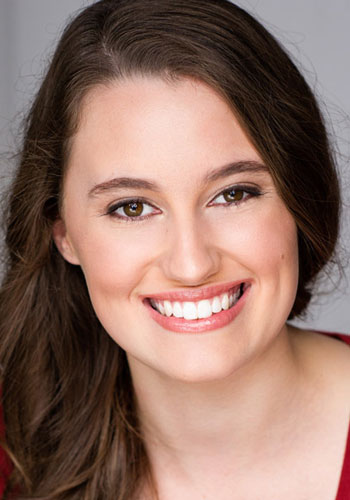
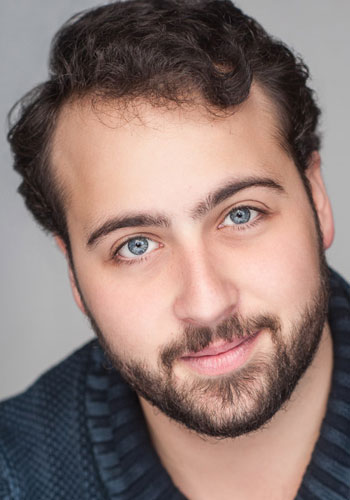
5 Questions with Emily McGowan and Theo Kokkinidis

Emily McGowan

Emily McGowan

Theo Kokkinidis: What has been your most favorite on stage moment?
Emily McGowan: This would probably be from when I was studying at university. In the final year of my degree, each student got the chance to put on a 20 minute short play of our choosing. It could pretty much be anything under the sun. Now, I have an air about me that says young innocent girl, and I often get cast in roles in that category. I decided to put on an original work all about sex, and how the over sexualisation of society is ruining our ability to have proper functioning relationships, which was a little different from what people were used to seeing me do. Lot’s of strange physical stuff happened during the performance, and I even bit off my co-star’s ear. Which was awesome! I had fake blood oozing down my face for about 5 minutes during the show. I think my favorite on stage moment would be the silence from the audience (who were mostly close friends and family, my grandma too) where people didn’t know how to react.

Do you have a ‘guilty pleasure’ movie, tv show or song that most of your friends wouldn’t know you liked?
Ooh, this is a hard one. And not because I don’t have any guilty pleasure shows, but because I probably have too many to choose just one. I think that in an age where there are so many reality TV shows it’s hard to escape watching them. I used to be so vigilant in not watching them, as I feel it takes jobs away from hard working actors and isn’t exactly promoting engaging or thought provoking, new and exciting material. Instead it just replays the same format of material week after week. However, having said that, there is one reality TV show I have come to love in the past year and I don’t exactly know why. It’s… get ready for it… Dance Moms. There it is, massive cringe moment and you all now know my guilty pleasure.

What has been the best thing about working on The Cherry Orchard production so far?
There have been so many things. But the best part would be working with a group of people who work so hard and do it all for the love of the art. Rehearsing at The Depot Theatre and watching the theatre get built around us is so exciting. I feel like every time we arrive at rehearsal, David (who’s building it all) has made so much progress. It’s come together so quickly. These people love what they do, and do it because they love it. Who wouldn’t be inspired by that?

What do you feel is the most difficult part about working on the text of a Chekhov Play?
Chekhov writes in a very interesting way, where characters seem to repeat themselves quite a lot. Whether it be phrases, thoughts or even words, words are repeated, repeated again and again (see what I did there?). The challenges have ranged from simply learning the lines and remembering what order they come in, to finding the thought behind the line and why my character chooses to repeat some specific phrases.

How do you relax after a long day?
Getting into my pyjamas, making a delicious dinner, and sitting on the couch with my boyfriend.

Theo Kokkinidis

Theo Kokkinidis

Emily McGowan: What is your favorite post late night rehearsal snack?
Theo Kokkinidis: If I have any crackers in the pantry after getting home late, I am eating them without question. If not, then it’s a glass of red wine and a Woody Allen movie to make up for the snack.

What was it that first drew you to The Cherry Orchard and made you want to be involved in this project?
Chekhov’s plays have just attracted me ever since I first read them. There can be very little happening in the scene, but there’s so much going on within the characters and it’s fun to discover and work with that. Also, the fact that this is going to be a new venue is bloody exciting.

What is the thing that’s most similar between yourself and your character Peter Trofimov?
Oh boy, too much. He’s a man with a lot of passion and he sometimes doesn’t know what to do with it. Probably the most similar thing though is that he sometimes talks a lot longer than he should and as a lot of my friends know, that’s something I do often.

Being a Russian play, what do you find to be the hardest Russian word/name to pronounce? Please write it as it’s written and it’s spoken.
To be honest it’s my own name in the play, Peter Trofimov. I had an idea of what it sounded like when I read it before rehearsals started, but my emphasis was wrong. Peter is pronounced Pyeh-tyah and Trofimov is Troh-FEE-moff

What is the most embarrassing moment that you have ever had on stage?
My most embarrassing moment is actually also my most favorite moment on stage. I was a poor man about to give my huge speech to the villain which inevitably leads to his prosecution. It was about a page or two of dialogue, it started well of the first sentence or so, but then I just blanked. I improvised for a few seconds giving the general gist of what I was saying, until I just decided to yell out to my stage partner “What do you think of that!”. He caught on right away and continued on with his lines. The reason it’s also my favorite is because no one in the audience knew I screwed up and my partner was completely connected to me and knew what was going on.

Emily McGowan and Theo Kokkinidis will be appearing in The Cherry Orchard by Anton Chekhov.
Dates: 15 Jul – 1 Aug, 2015
Venue: The Depot Theatre