Review: Golden Blood (Griffin Theatre Company)

Venue: SBW Stables Theatre (Darlinghurst NSW), Jun 24 – Jul 30, 2022
Playwright: Merlynn Tong
Director: Tessa Leong
Cast: Merlynn Tong, Charles Wu
Images by Brett Boardman

Theatre review ⭐️⭐️⭐️⭐️
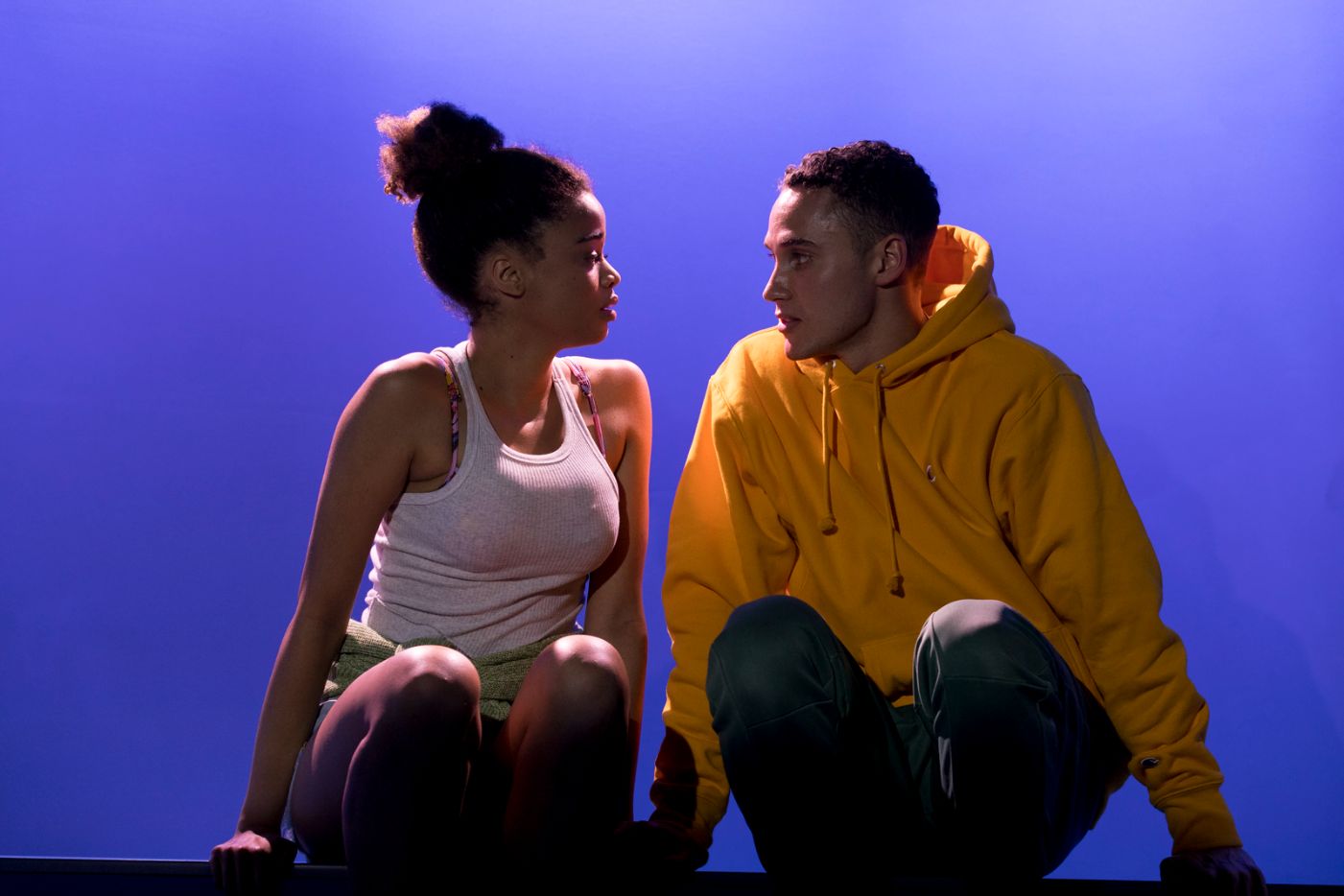
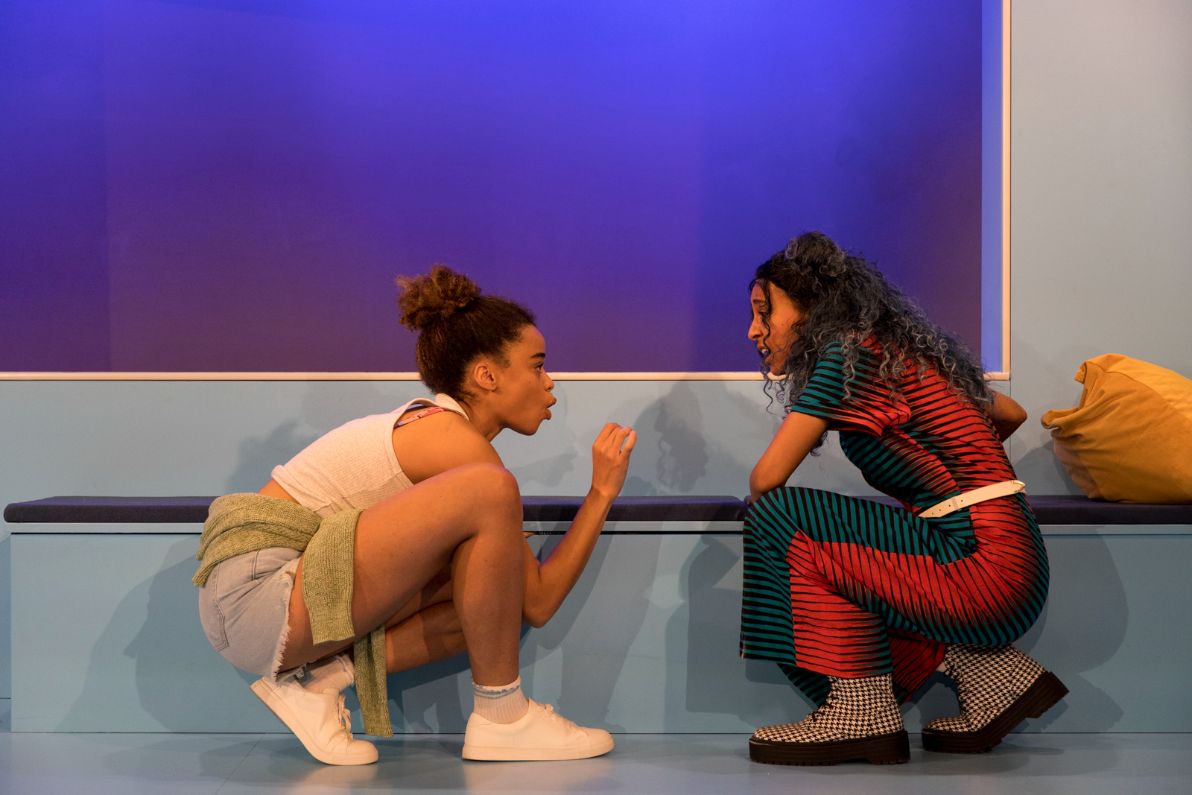
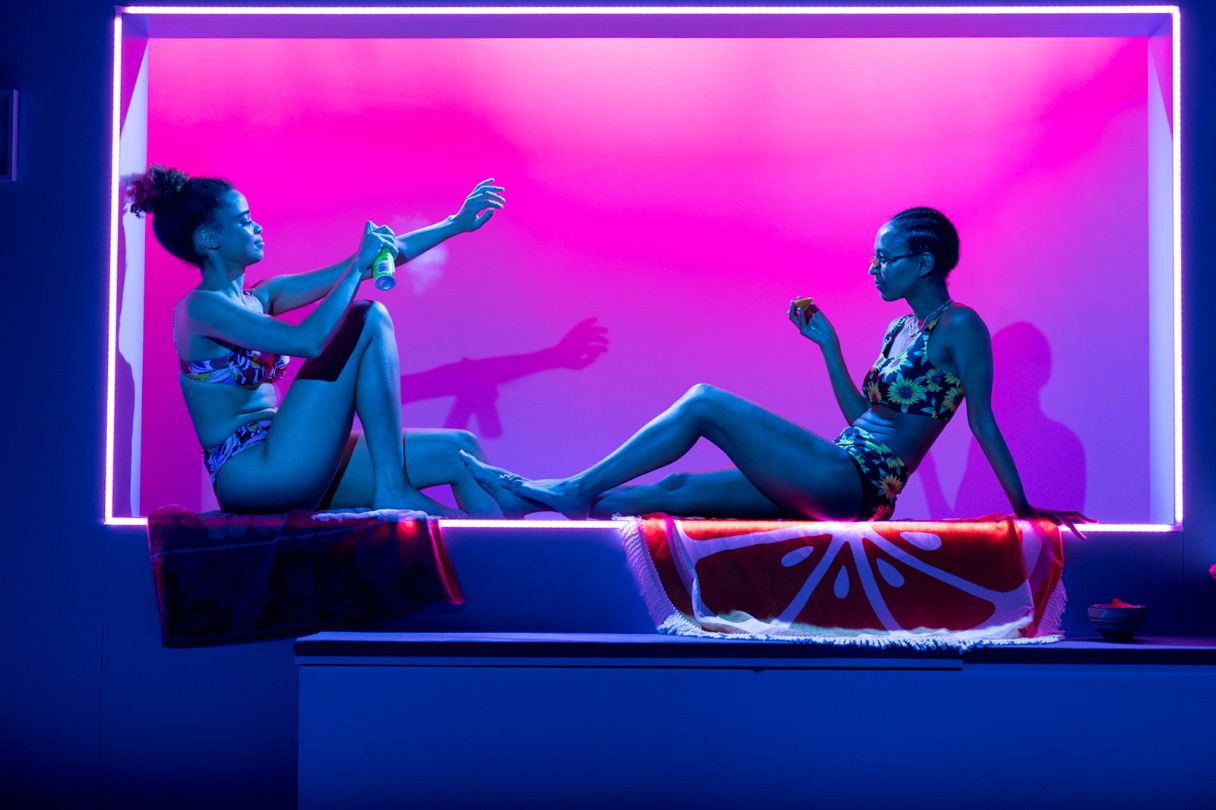
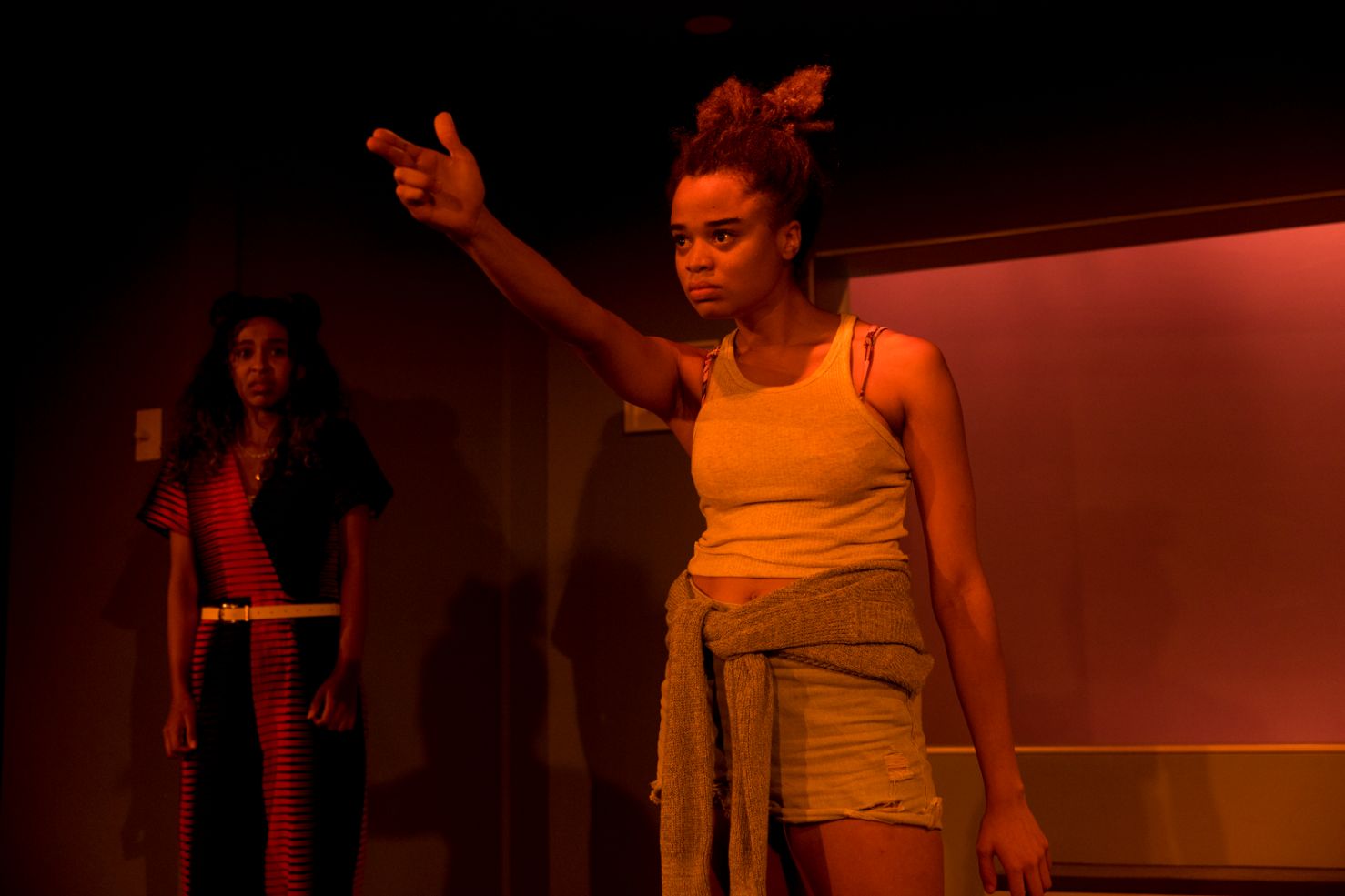
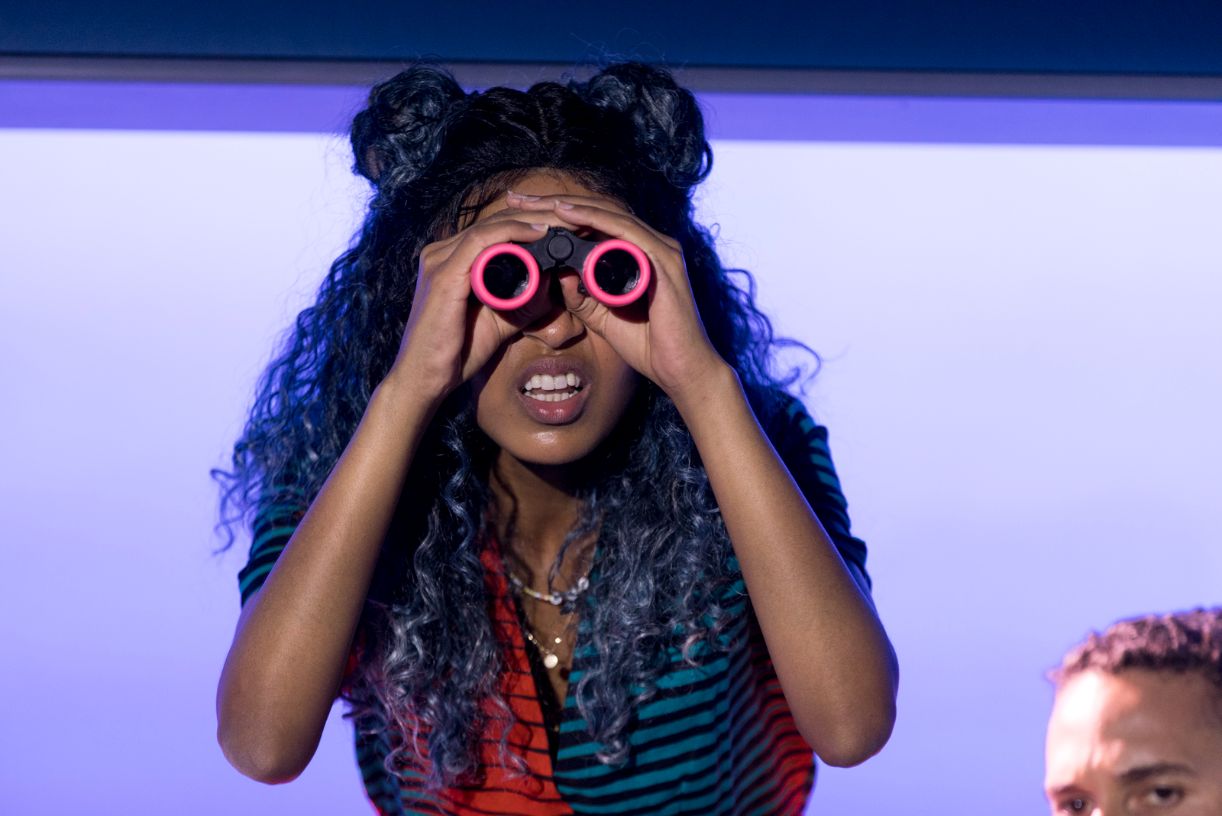
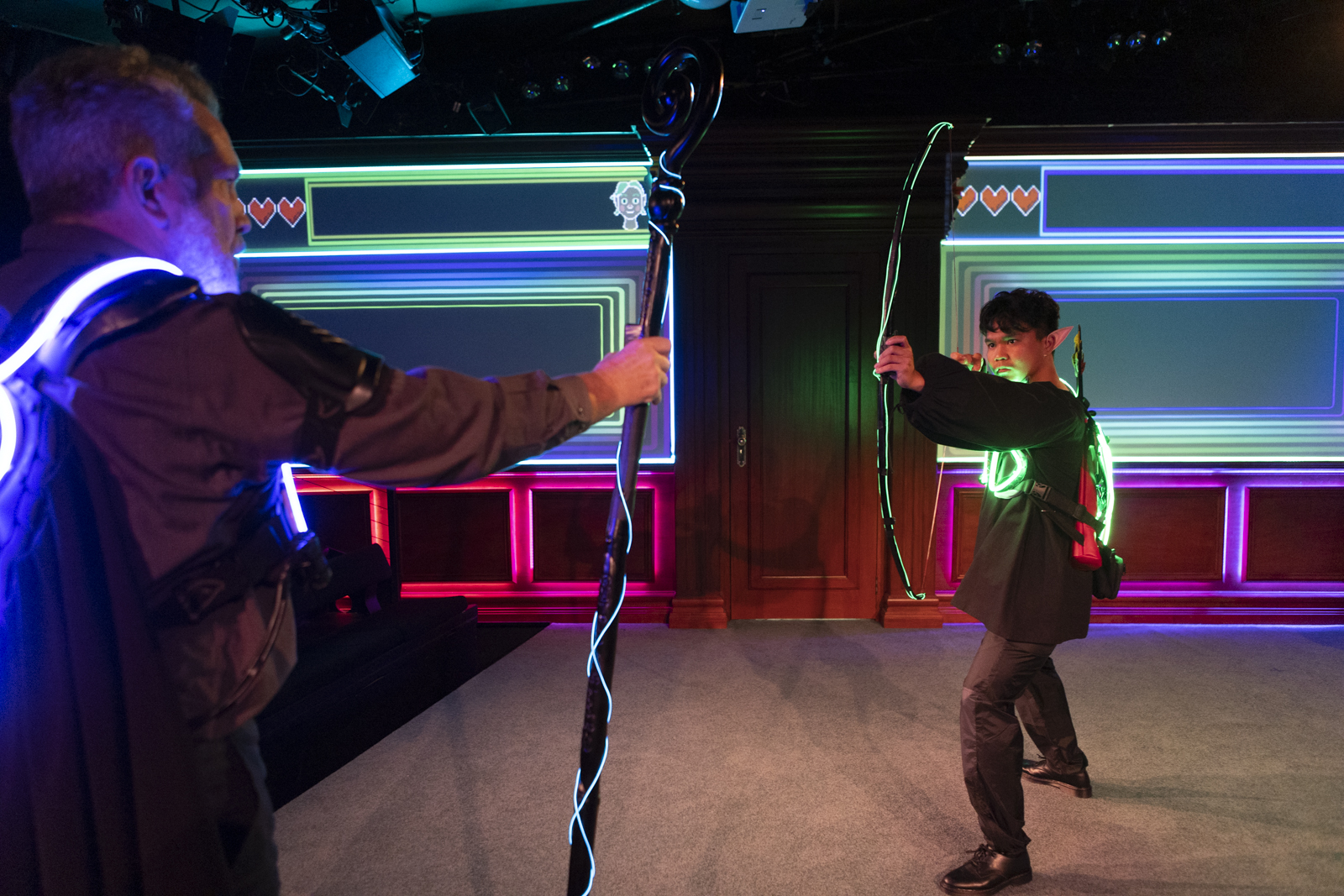
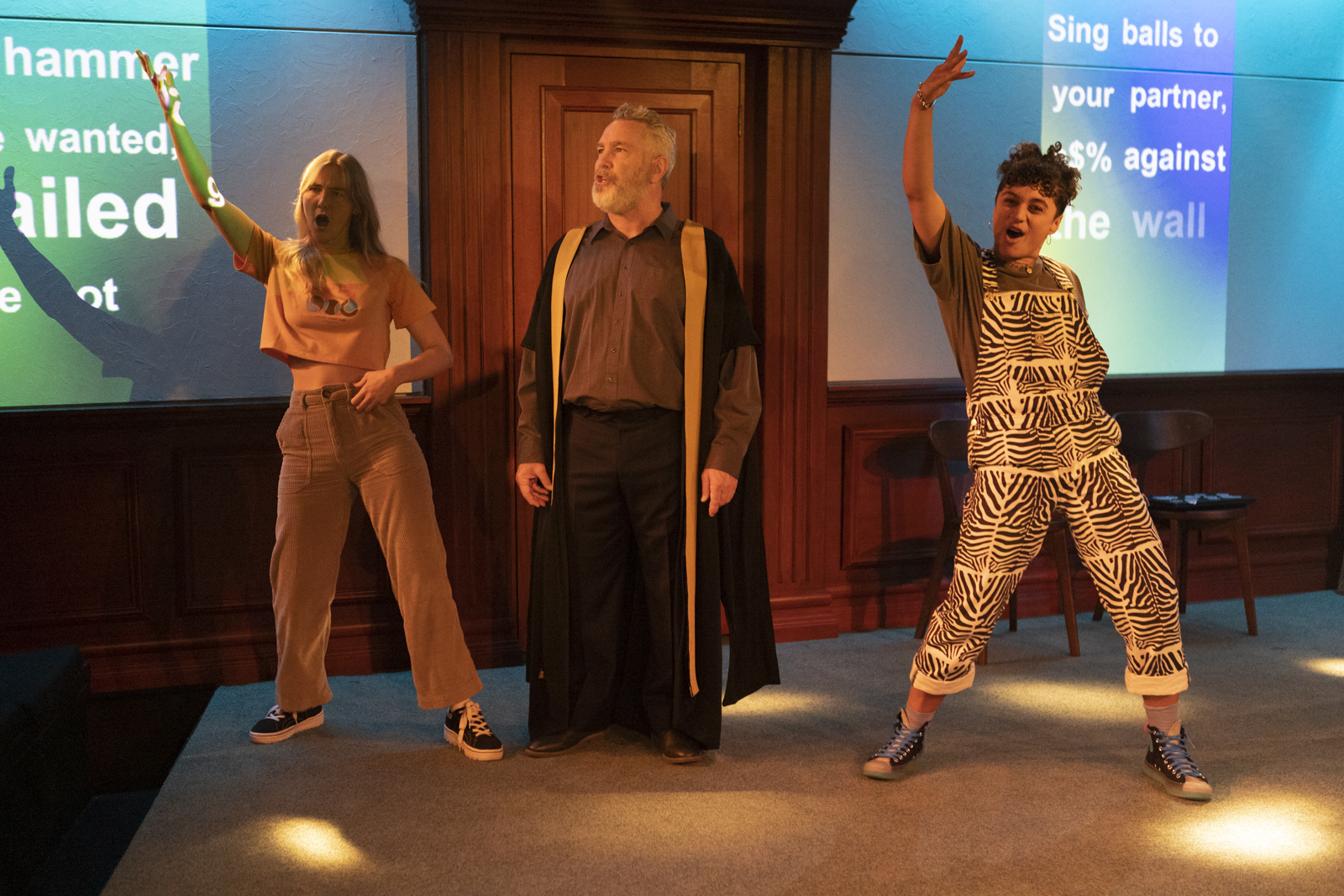
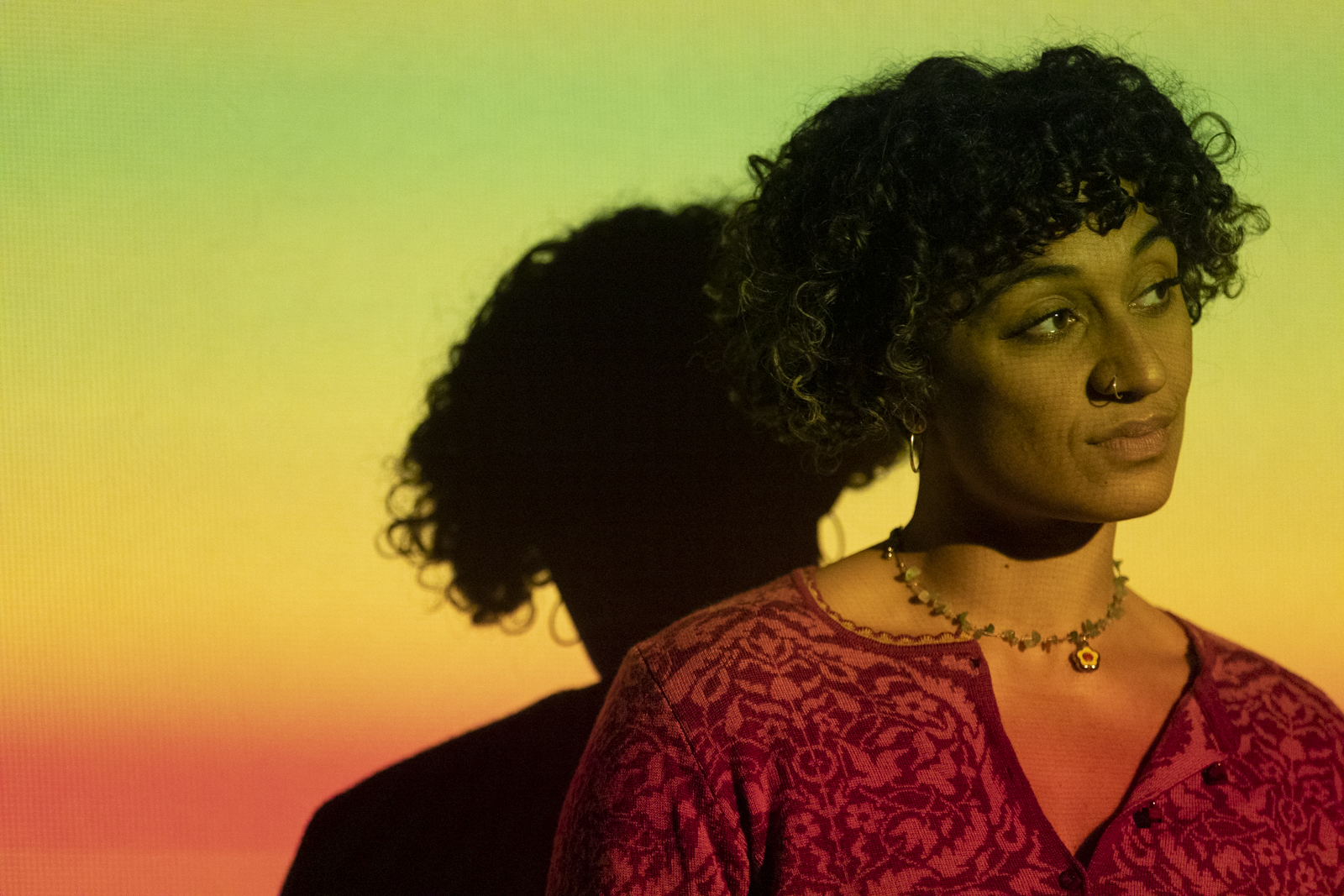
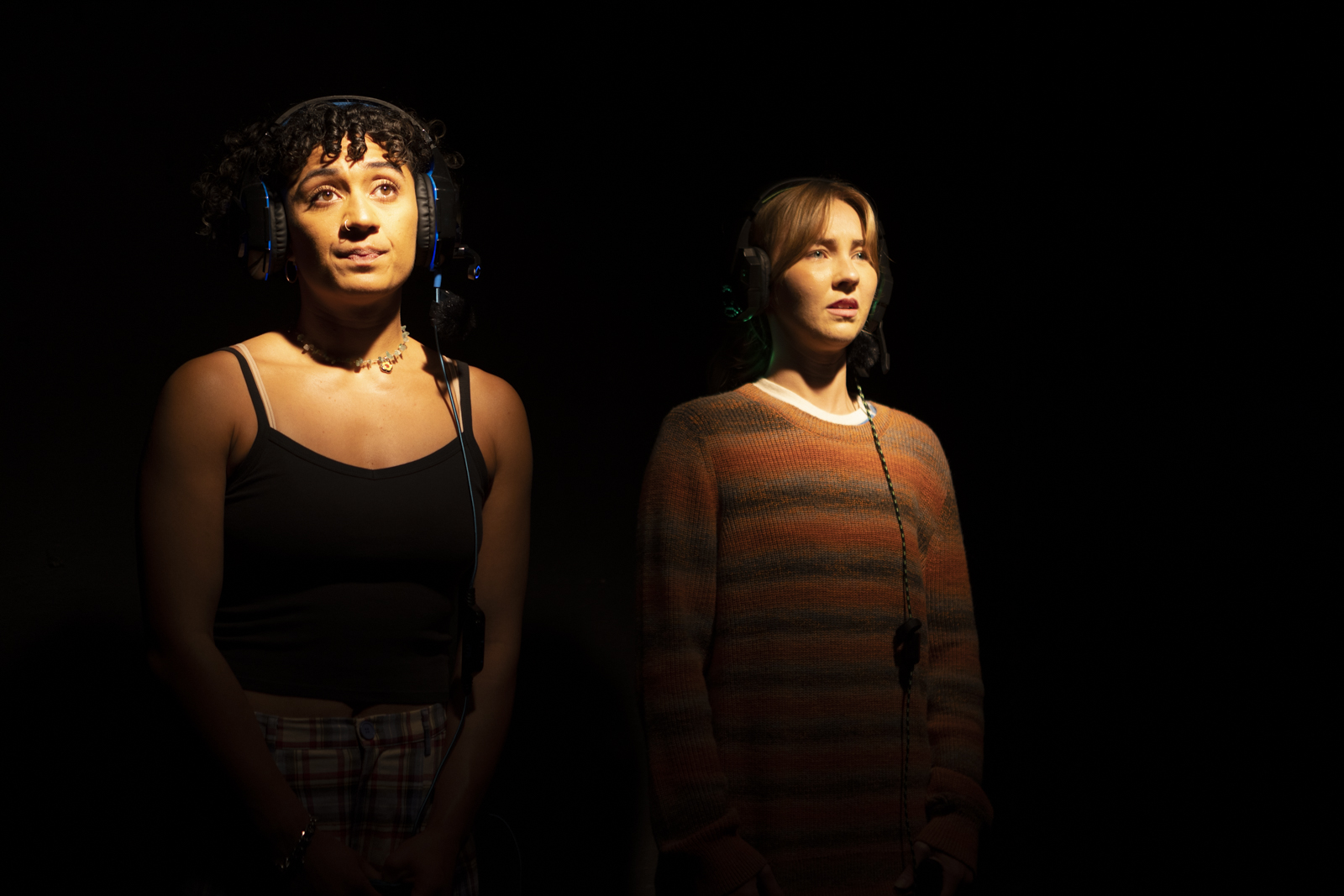
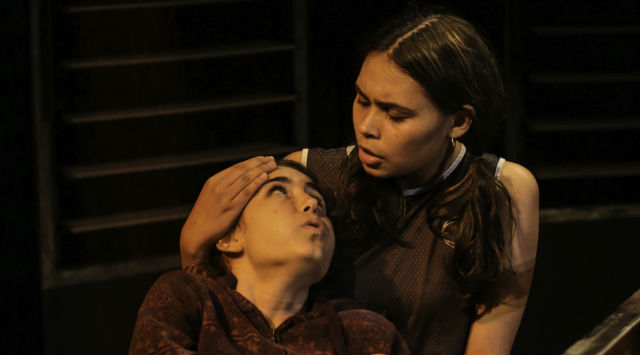
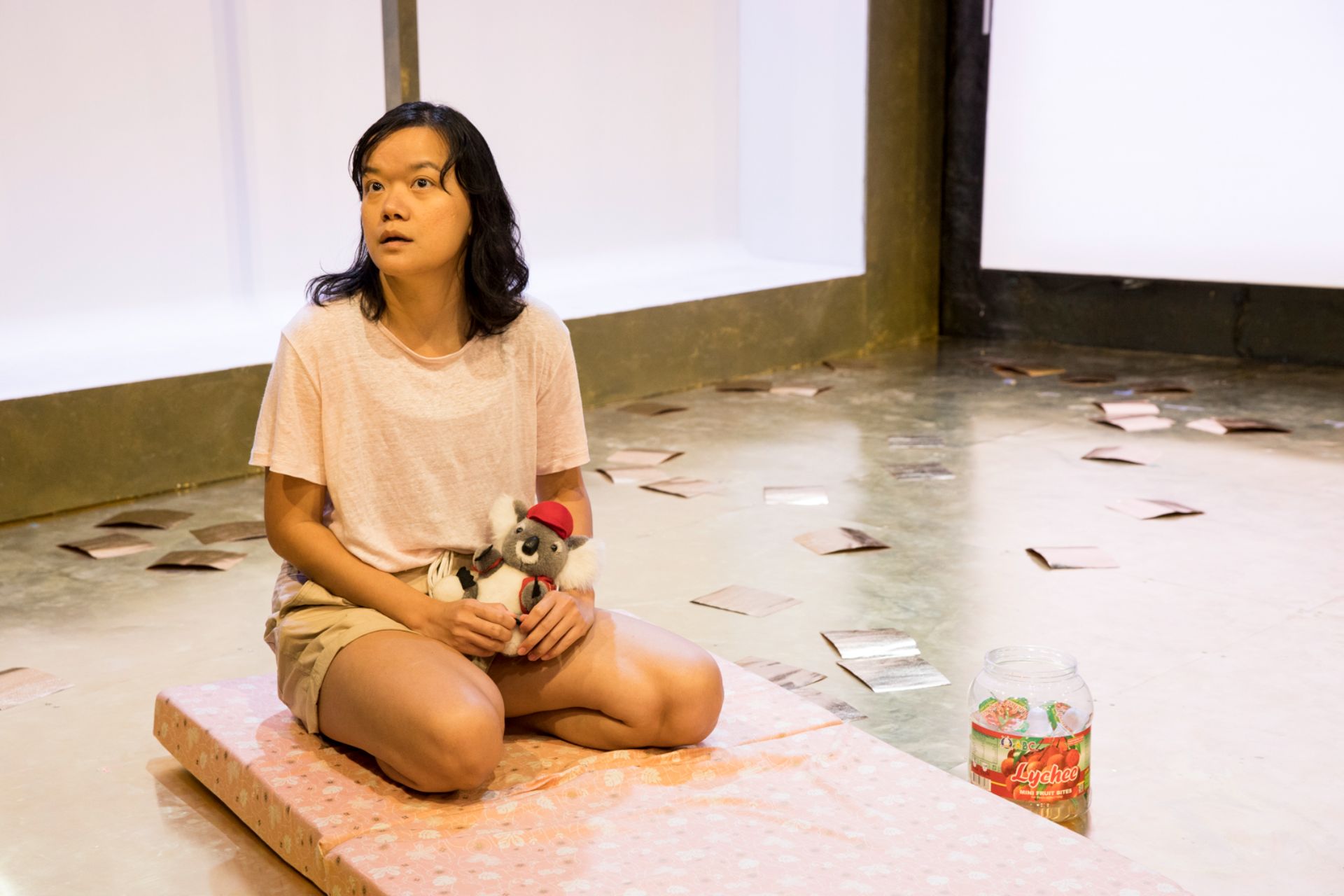
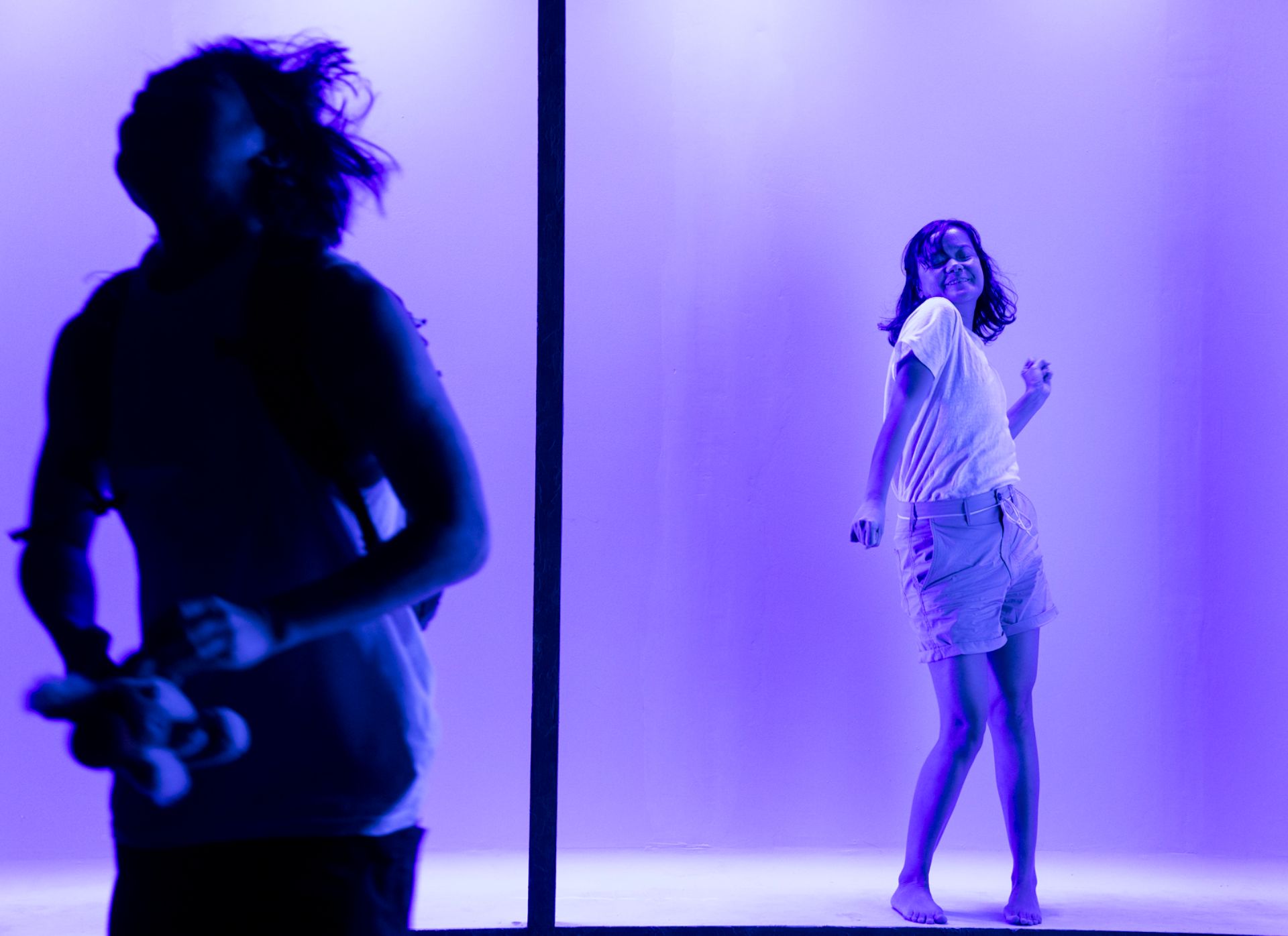
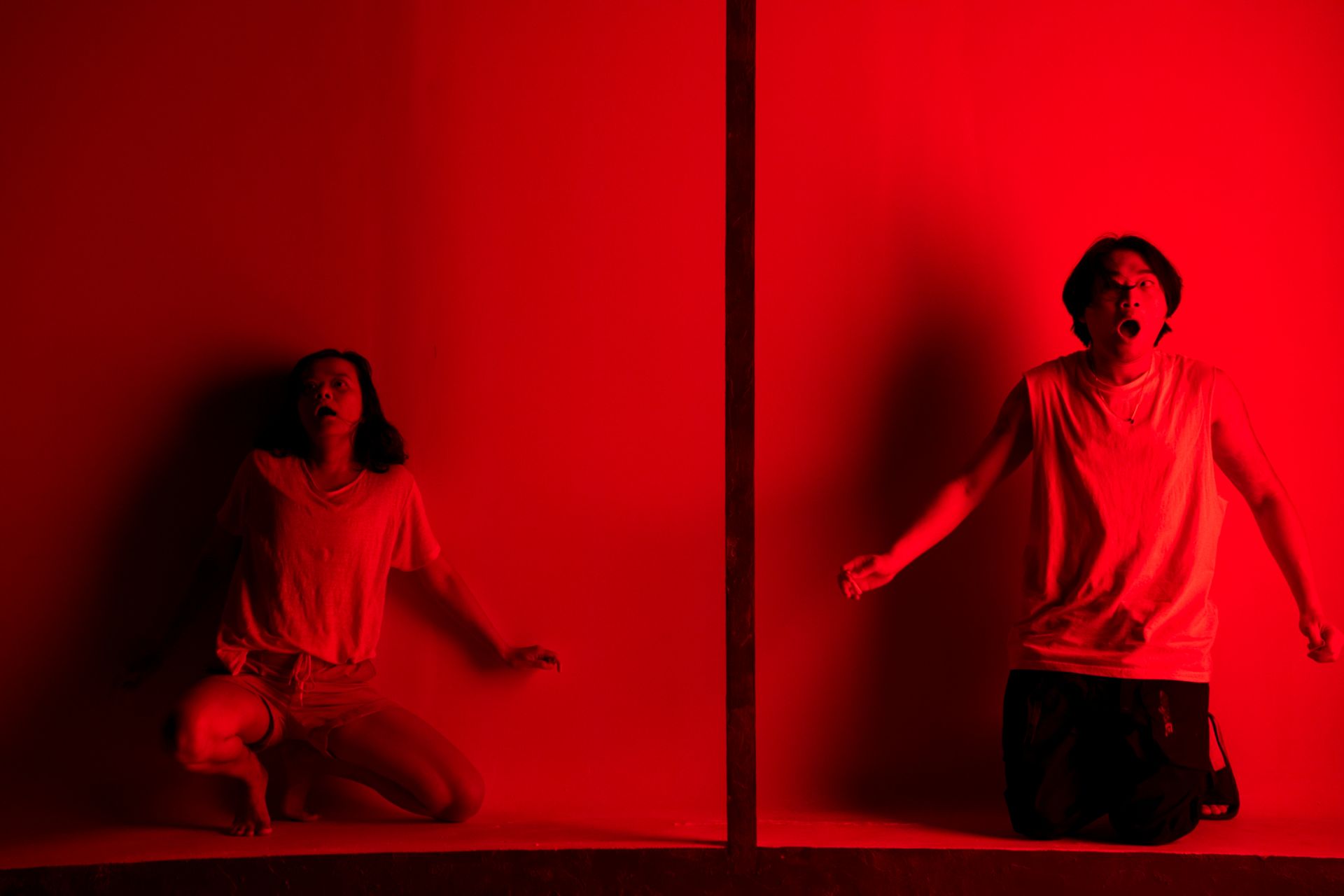
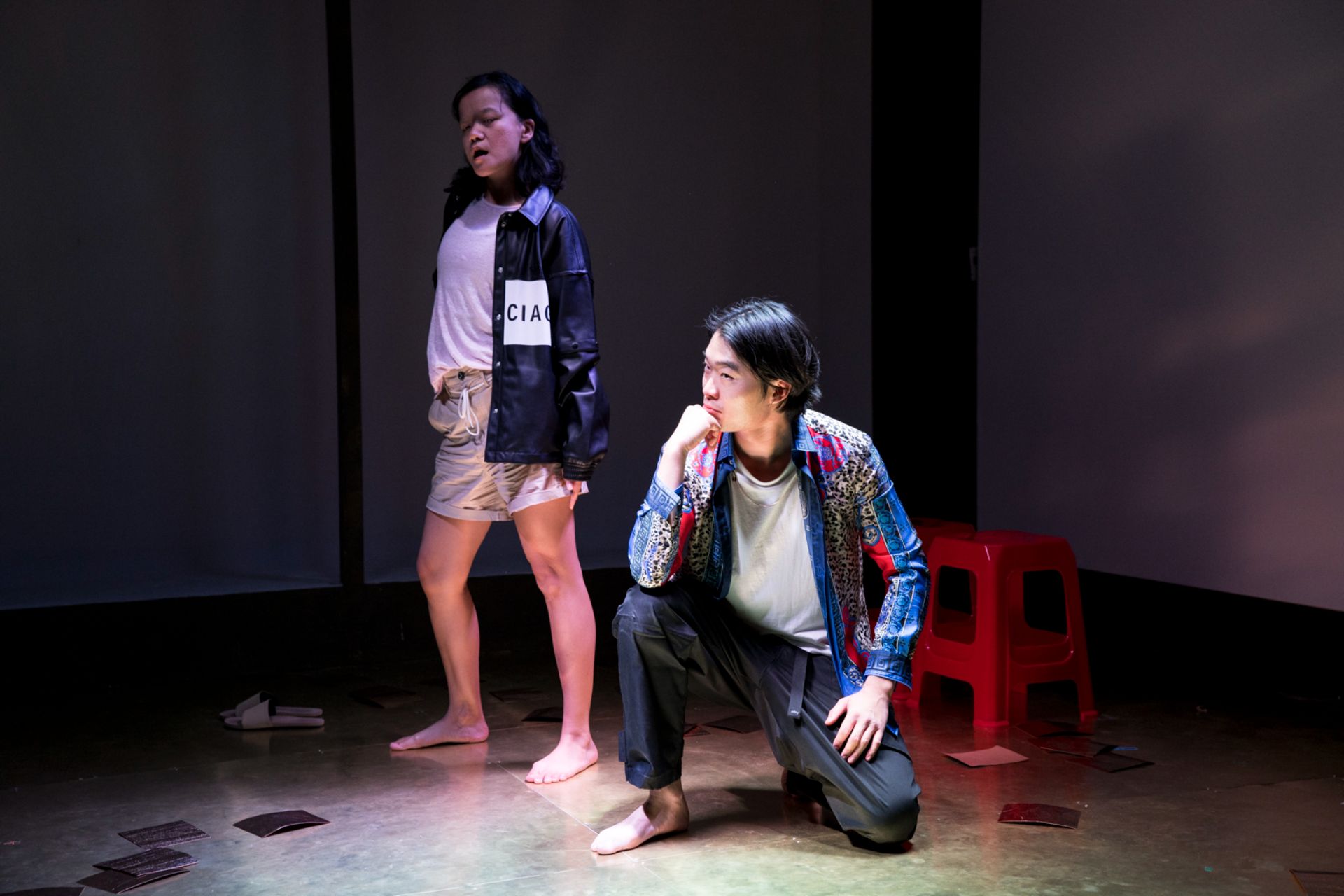
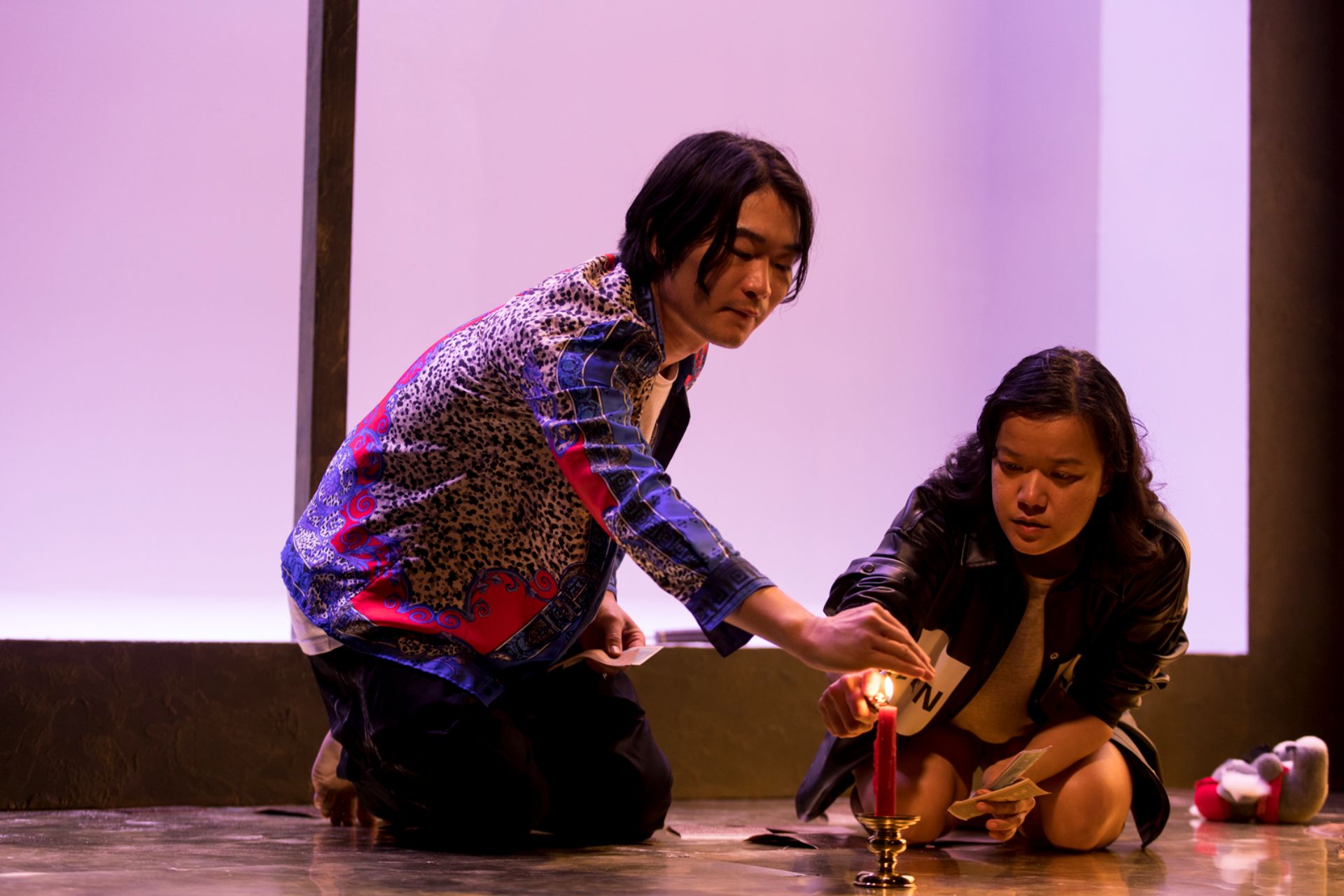
Girl, 14 and Boy, 21 find themselves orphaned upon their mother’s suicide. Having only each other to depend on, the two quickly grow closer, in a social vacuum that sees the wayward older sibling exercise increasingly undue influence on the innocent teen. Merlynn Tong’s Golden Blood takes place in late 90s Singapore, where unlawful gang activities, of which Boy was a committed member, were still making the news. In fear of bringing embarrassment to their family legacy, the young pair hatch creative but corruptive plans to make their fortune, on a land that places veneration on all things gold.

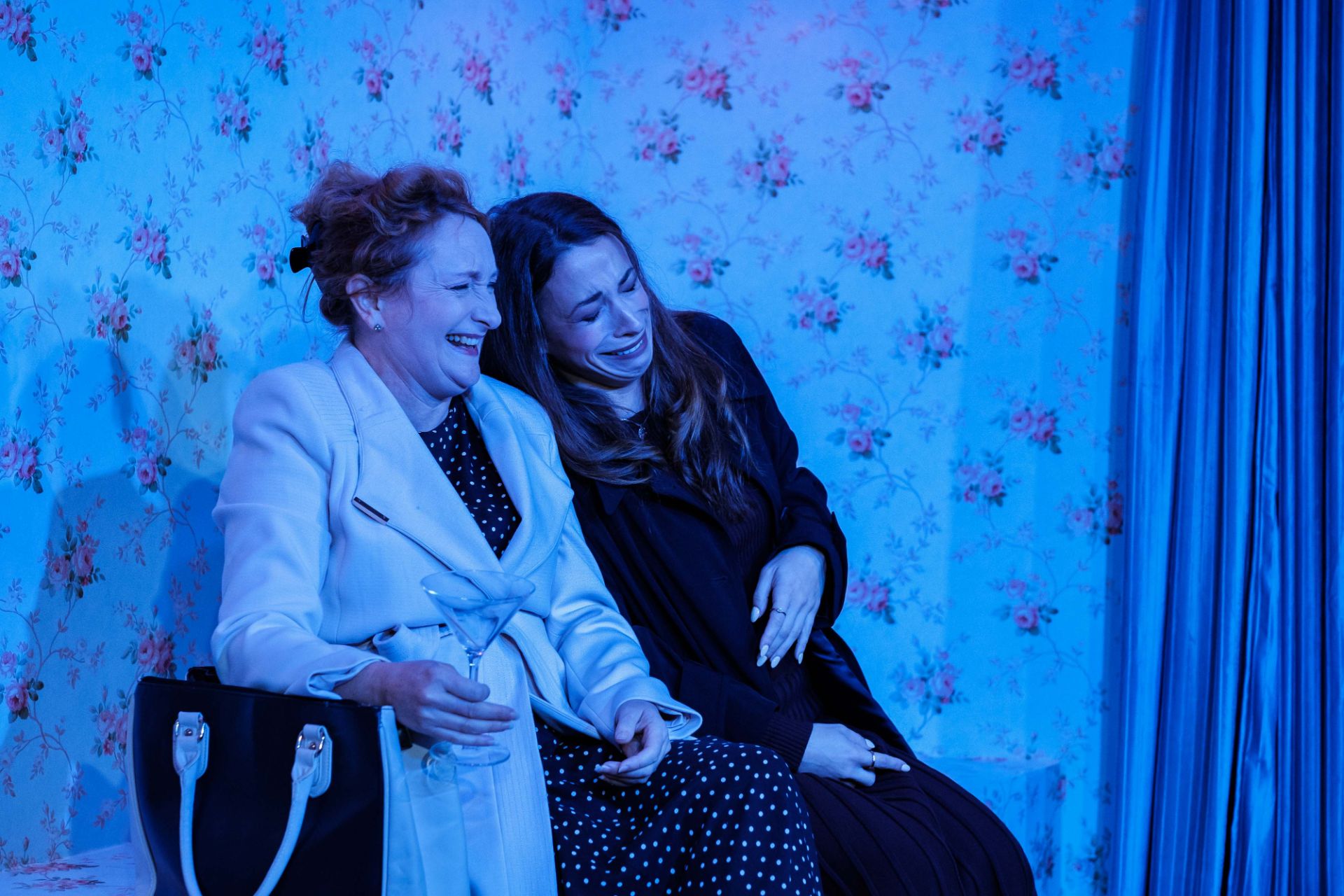
Tong’s writing is exciting and exceptionally colourful. Much of the dialogue in Golden Blood is in Singlish, but the “creole” is carefully crafted, in order that standard English speakers are not left behind. The humour in Tong’s work is thoroughly scintillating, with a broad appeal that transcends cultures. Furthermore the incorporation of Australia as a symbol for Girl’s escapism and ambitions, helps position the play at a point that gives psychological access to viewers here. As the stakes escalate in its narrative, Golden Blood turns melodramatic in a way that some might find alienating, but its concluding moments are unquestionably moving.

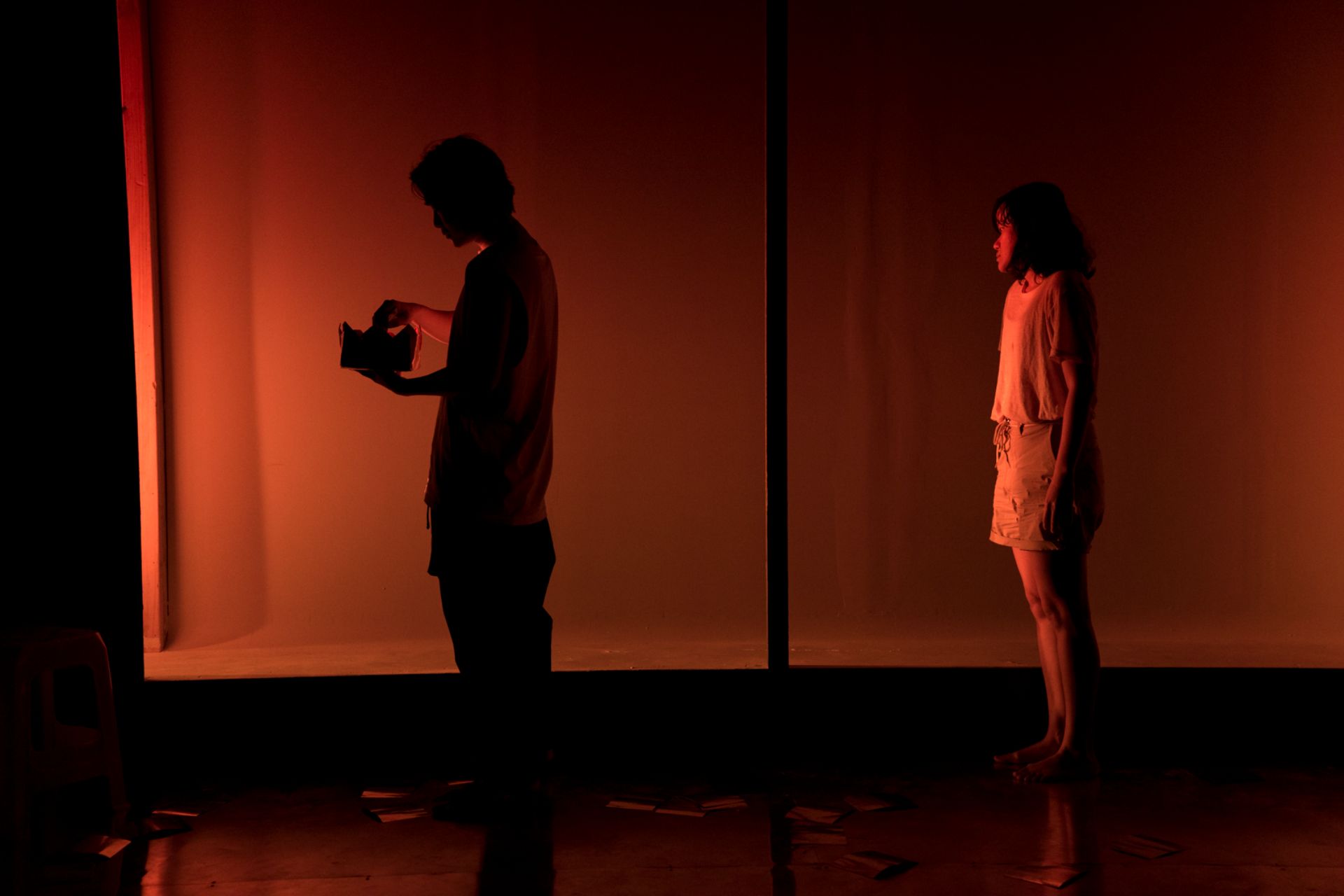
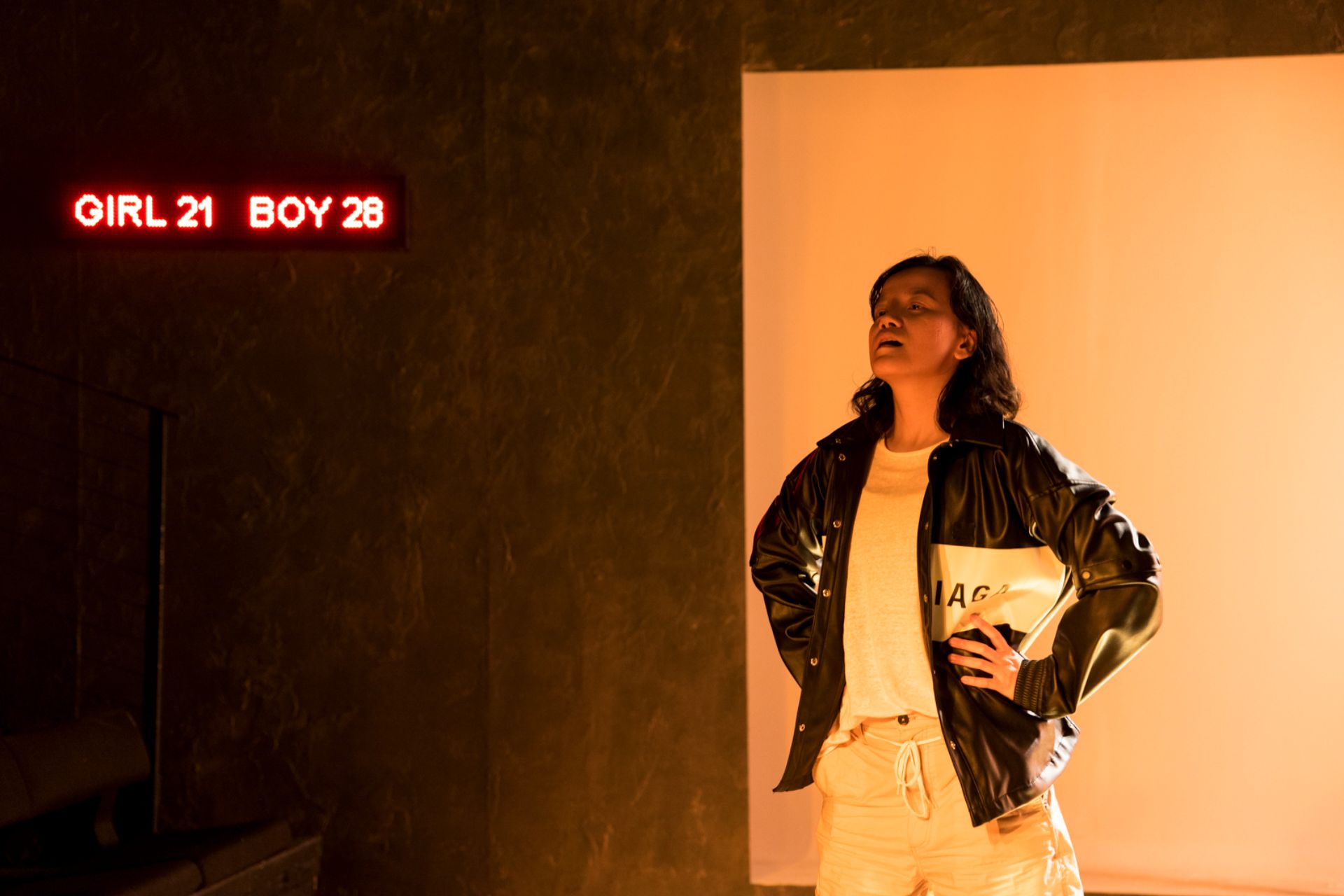
Directed by Tessa Leong, the show although never sanctimonious, is an intense and urgent exploration of modern youth. Replete with energy and an unmistakeable air of anxiety, we are compelled from the very start to invest in this unusual coming-of-age tale, of good intentions gone bad. There are slight incongruities with the inclusion of smartphones and certain clothing items, that can cause momentary confusion regarding the era being discussed, but they are ultimately a negligible oversight.

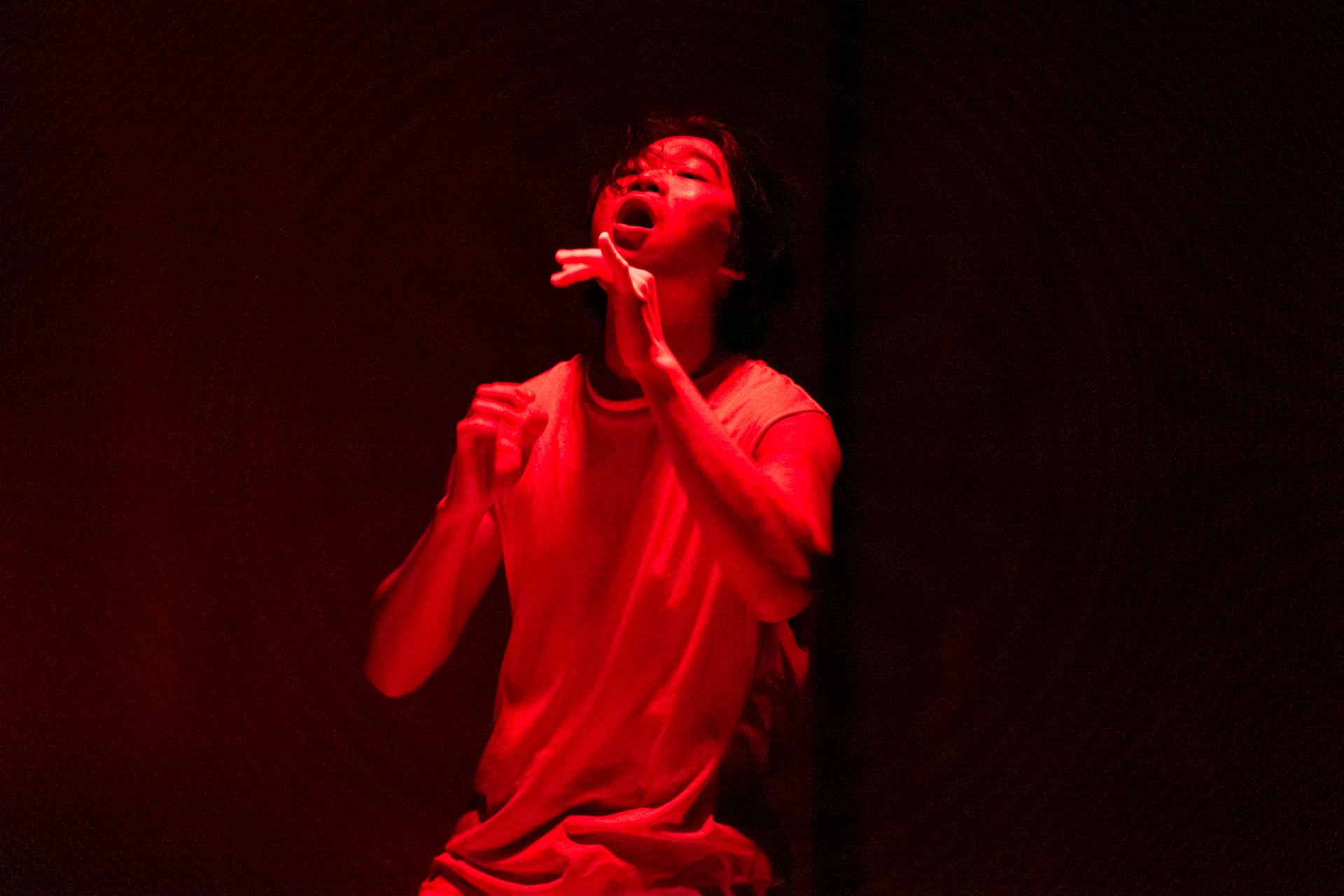
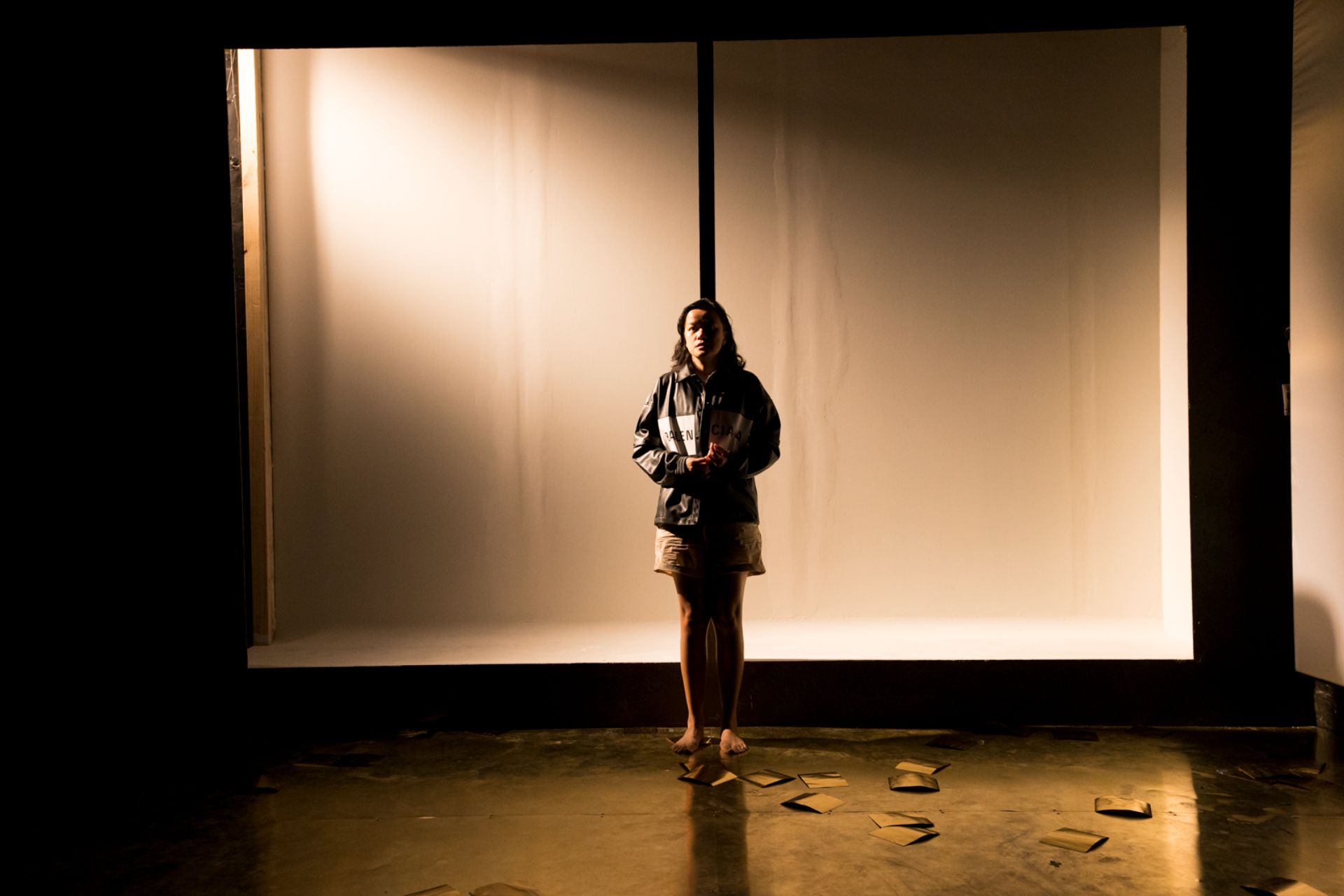
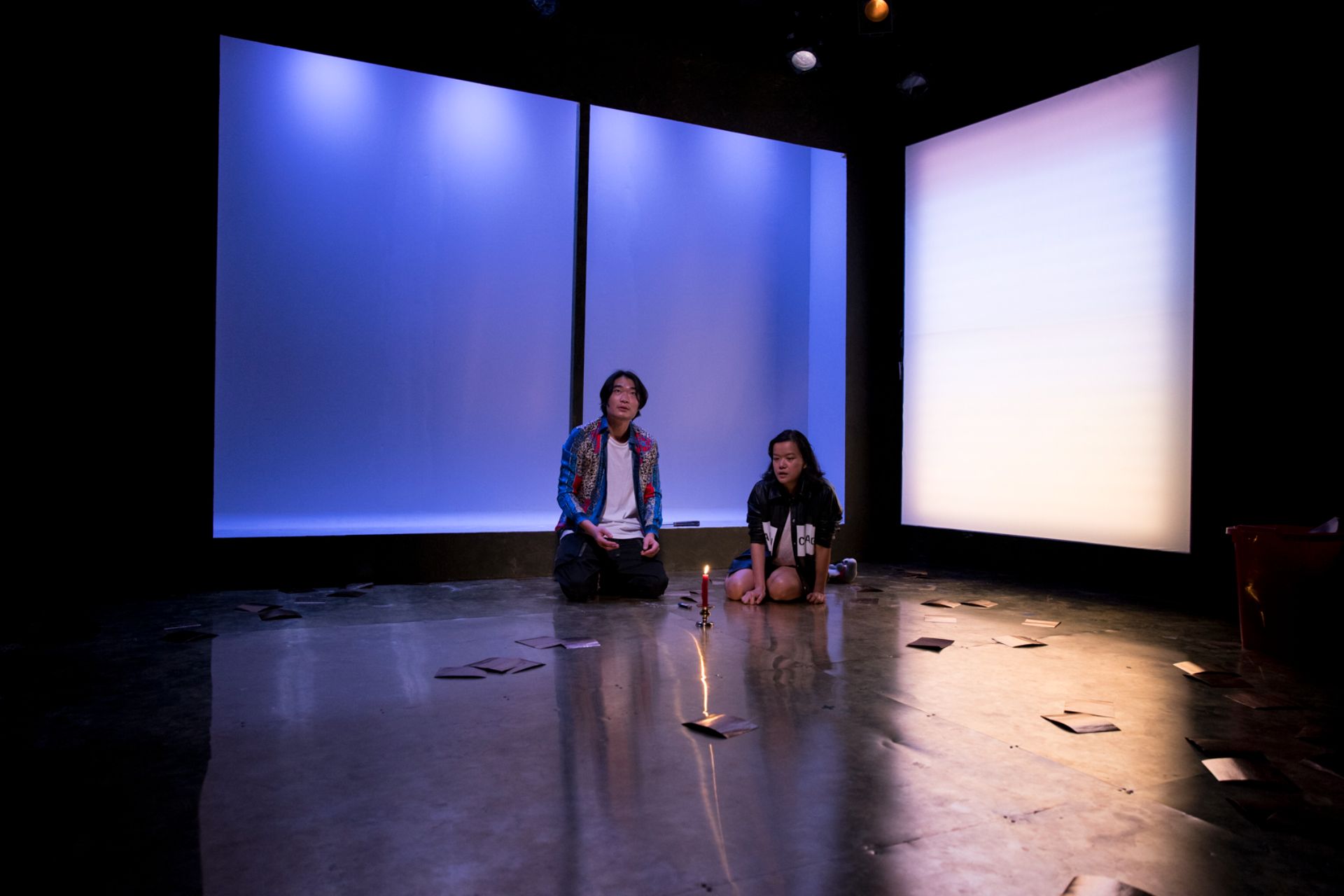
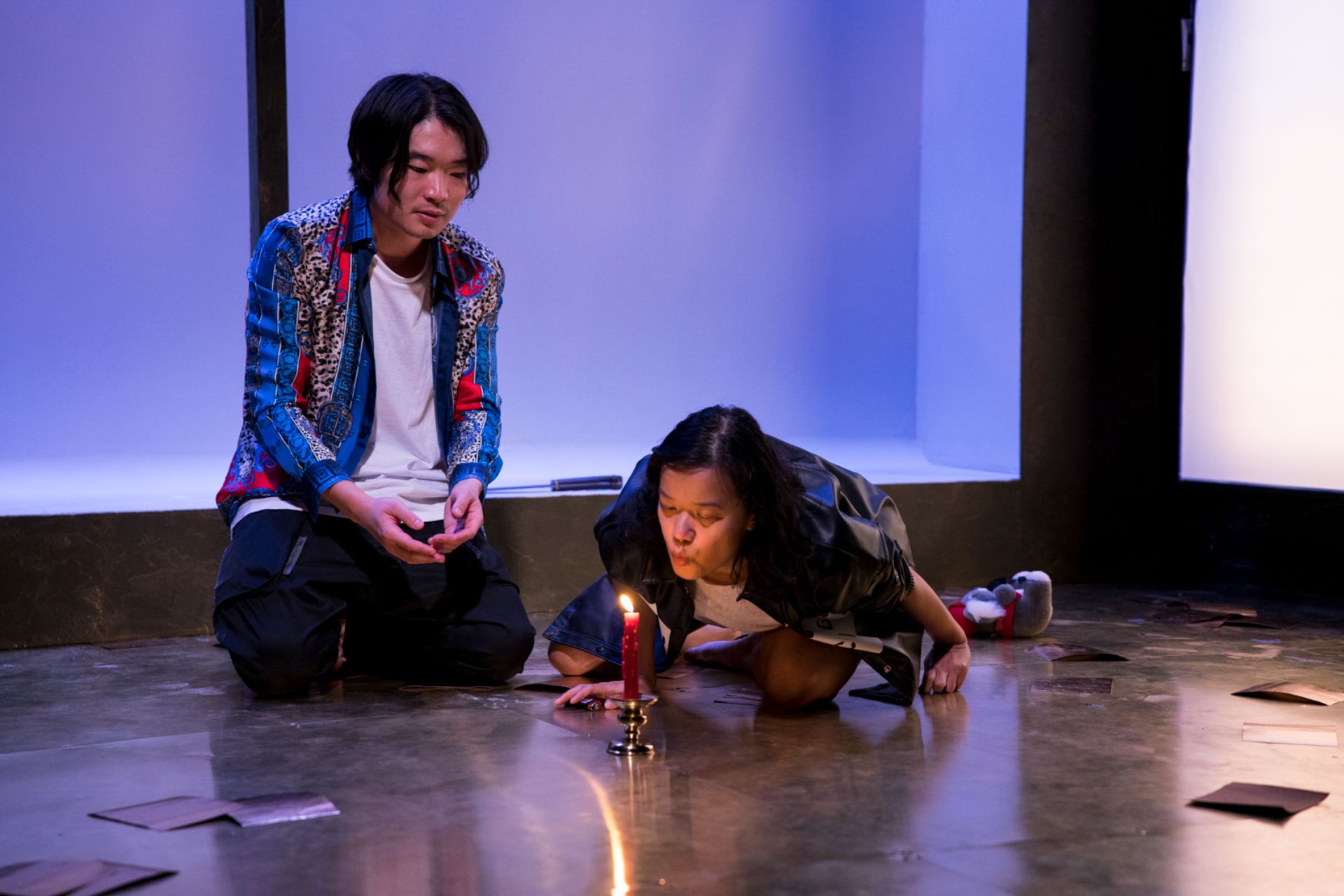
Set and costumes by Michael Hankin are efficiently rendered, and appropriately simple. In tandem with Fausto Brusamolino’s exuberant lights, visual aspects of the production are dynamic, and effective at keeping the audience in a state of consistent tension and tautness. Sound and music by Rainbow Chan are similarly spirited, with cross-cultural influences that convey a valuable complexity, in relation to time and place for this story.

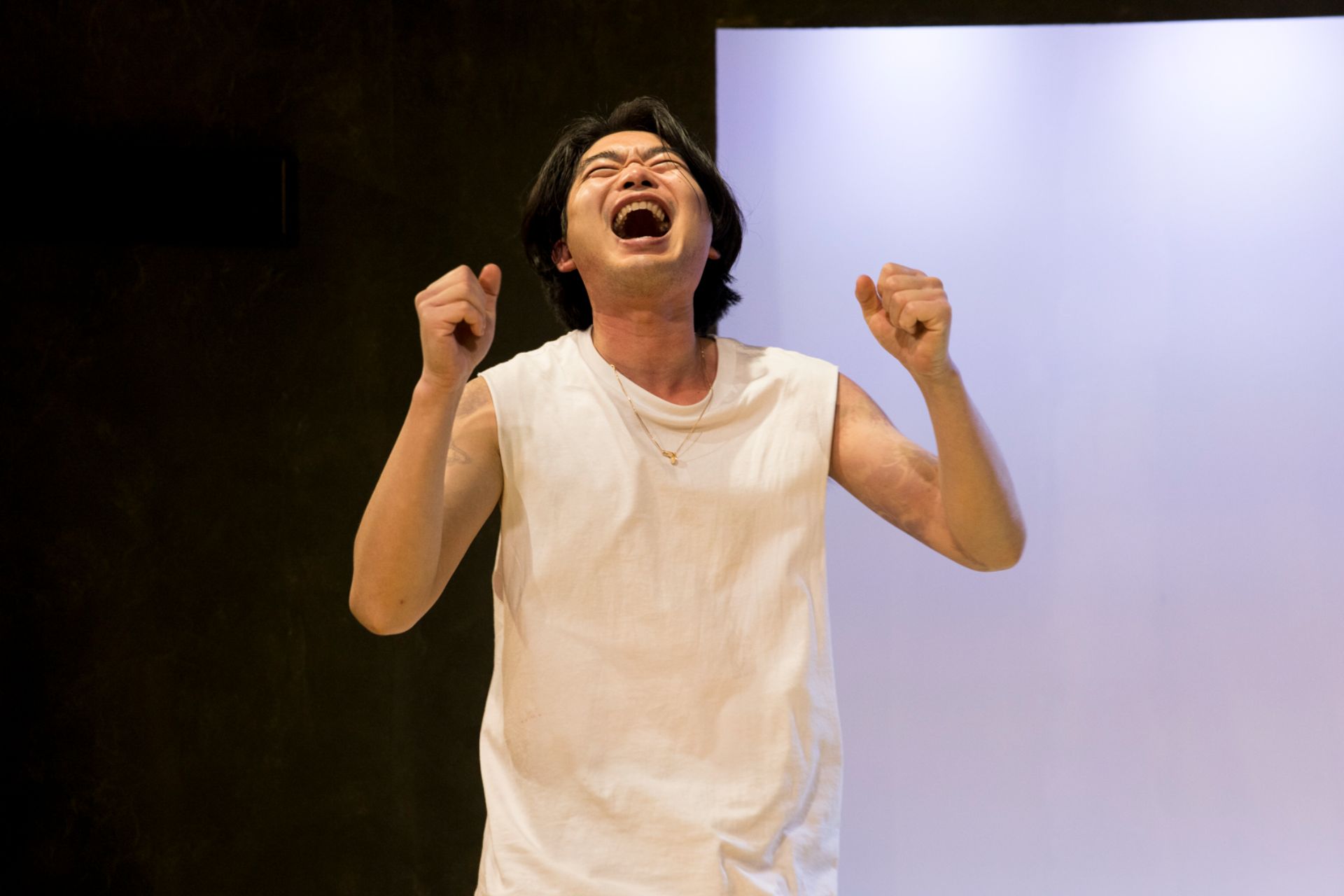
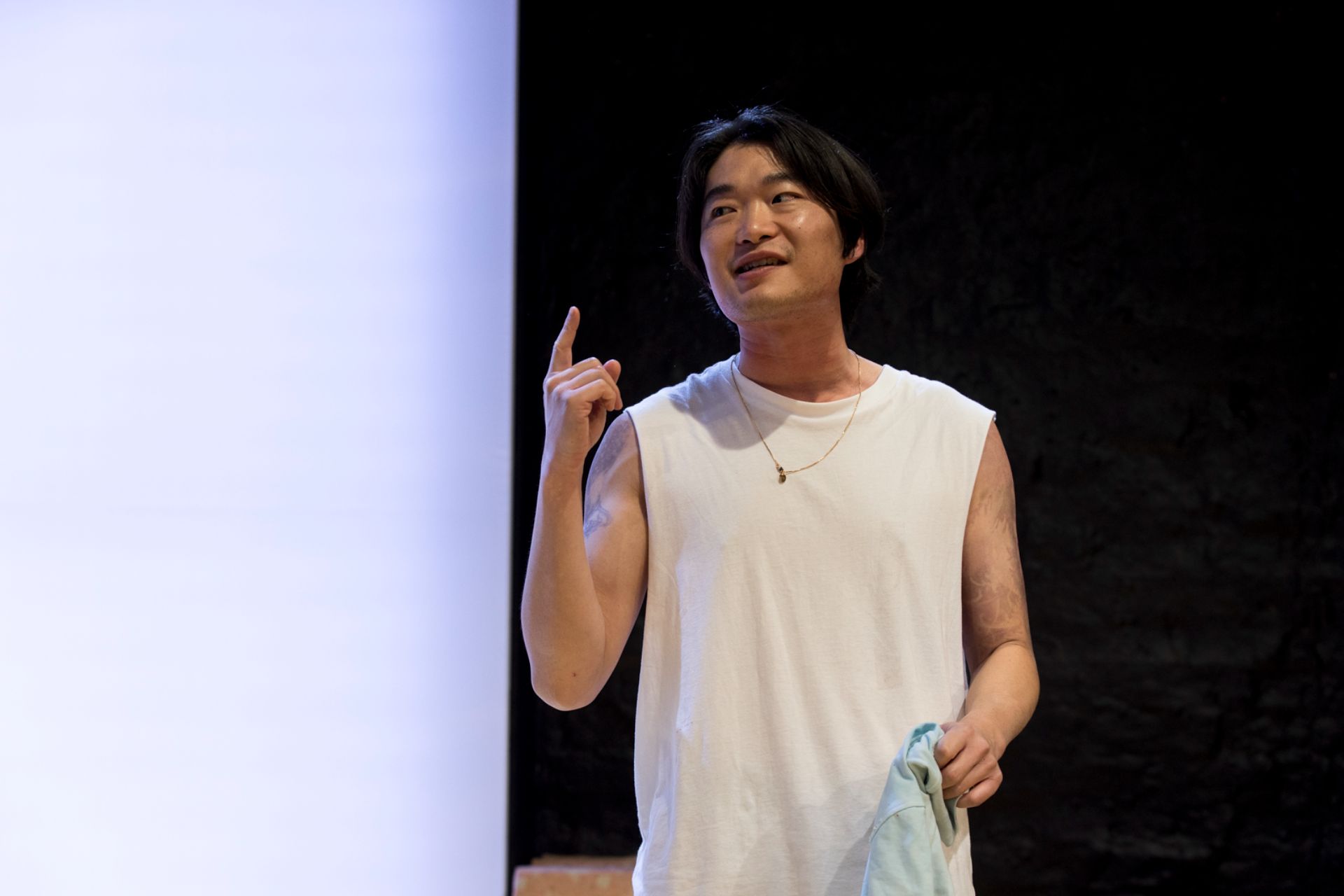
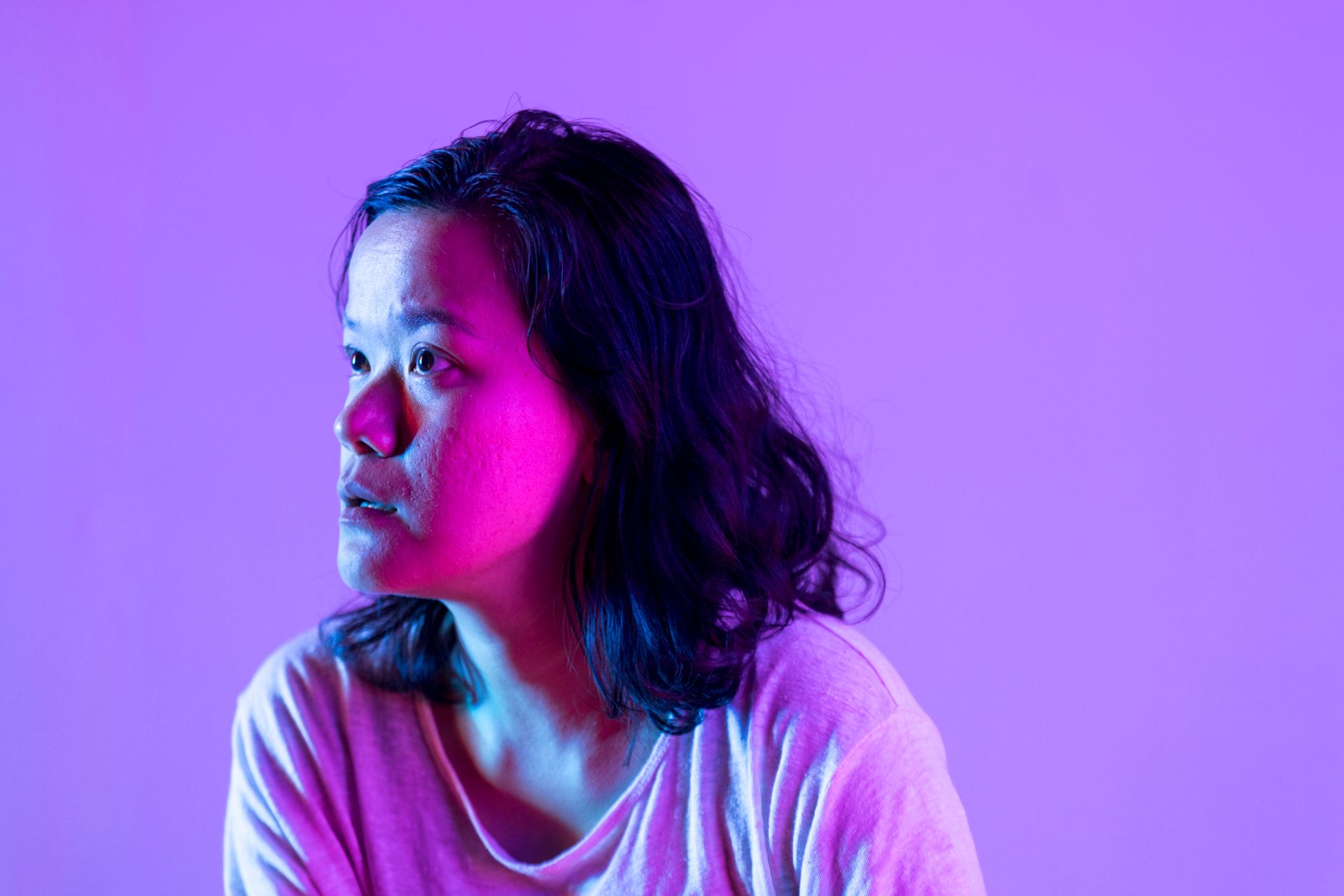
Tong herself takes on the role of Girl, profoundly moving as the misguided ingénue, but also disarmingly hilarious with her exquisite comic timing. Boy is played by Charles Wu, fantastic with the animated physicality and incredible voice he brings to the part. Their chemistry as a team is unbelievably flawless. Both actors bring a marvellous sense of depth to the characters they inhabit, allowing Golden Blood to venture into outlandish and wondrous spaces, without compromising even a fragment on authenticity.

When the definition of success is narrowed down to mean little more than material wealth, the result is an existence that can only ever be empty or exasperating. Girl and Boy were never taught right ways to be, not by their families, and not by the wider communities of which they belong. All they perceive are superficial markers of happiness, designed mostly to obfuscate and not reveal the truth. In Golden Blood we see, that the truth is persistent, even when we try hard to avoid it, and to honour it, is perhaps the only meaningful way to be.
www.griffintheatre.com.au

Review: Ghosting The Party (Griffin Theatre Company)

Venue: SBW Stables Theatre (Darlinghurst NSW), May 20 – Jun 18, 2022
Playwright: Melissa Bubnic
Director: Andrea James
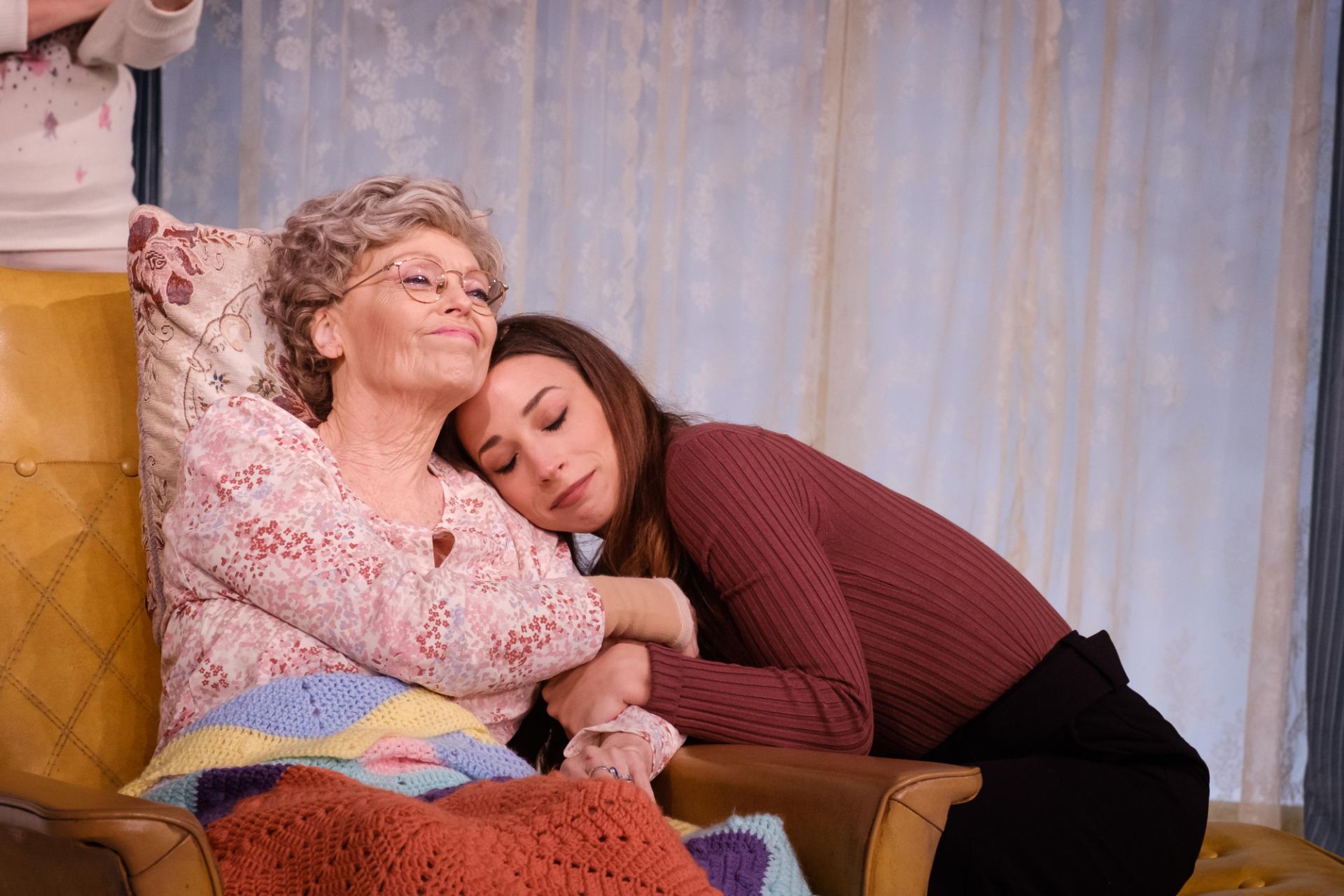
Cast: Belinda Giblin, Amy Hack, Jillian O’Dowd
Images by Clare Hawley

Theatre review
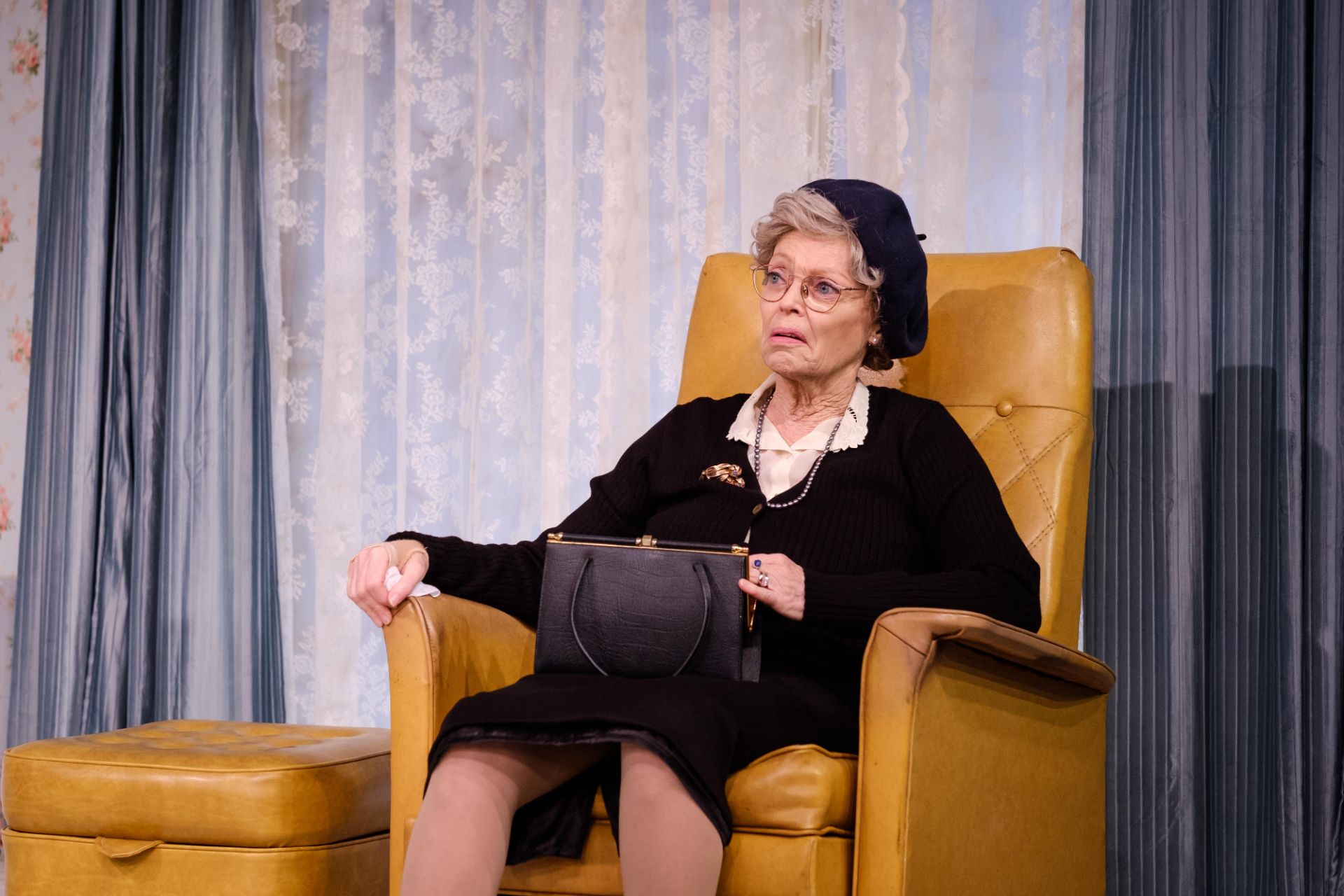
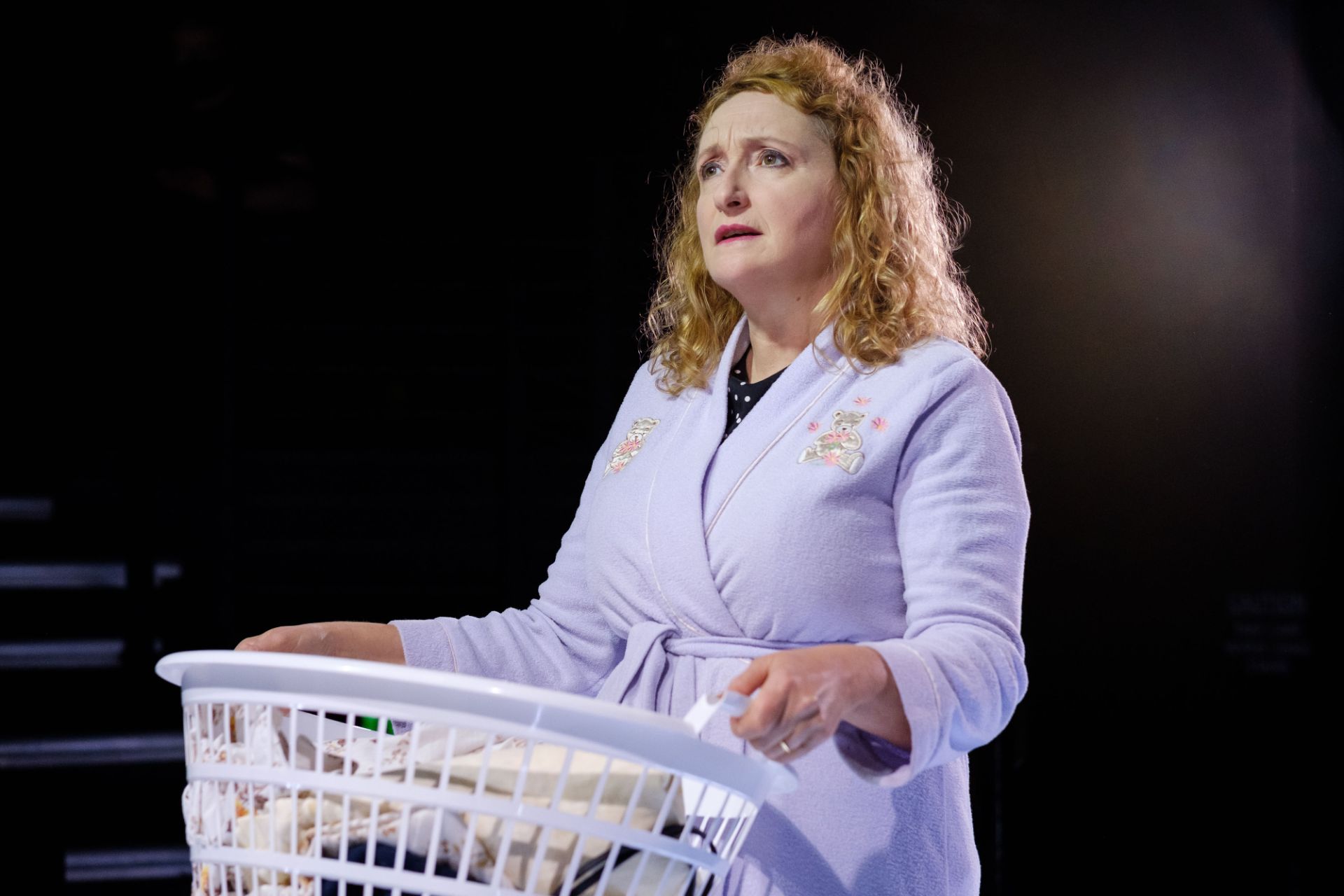
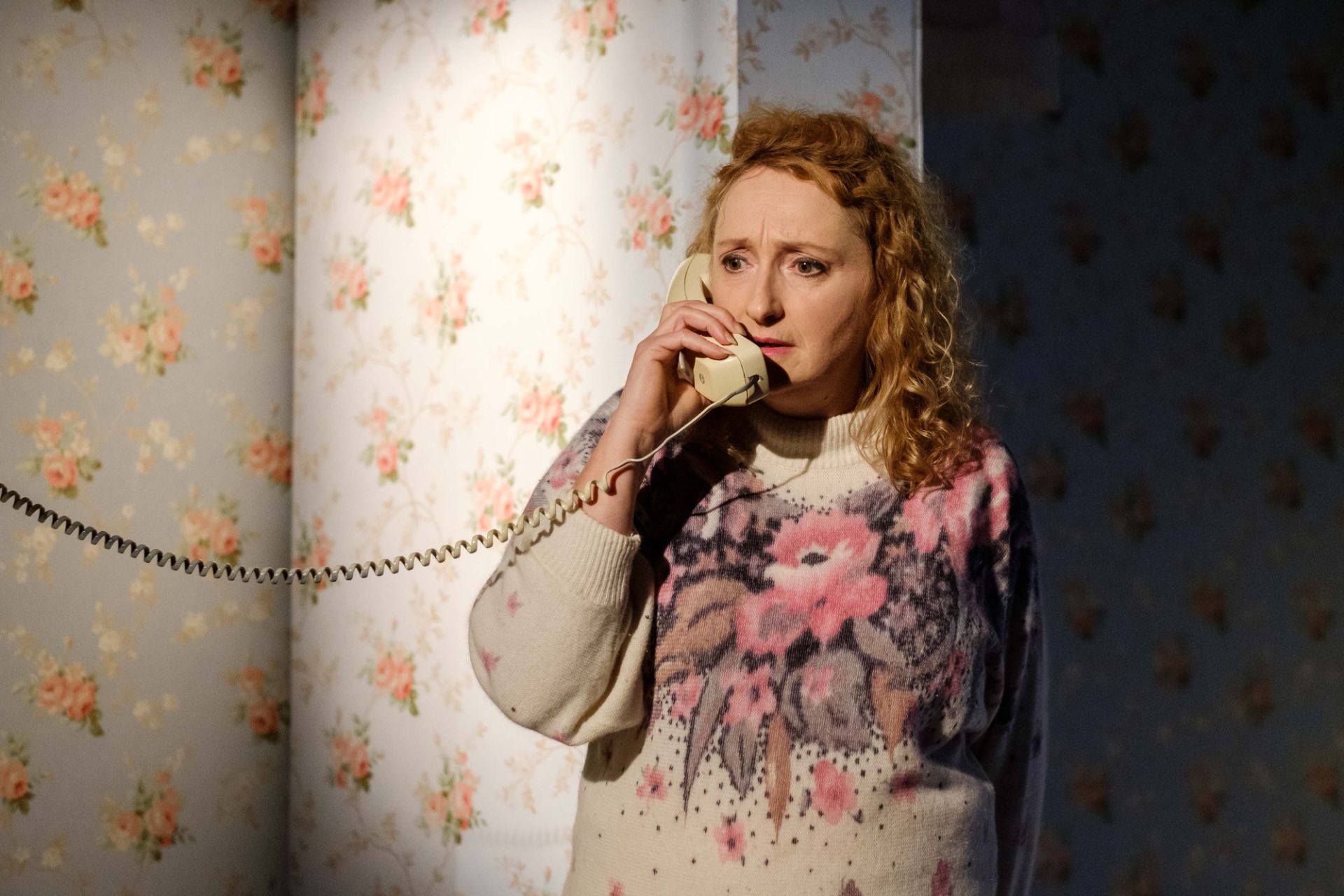
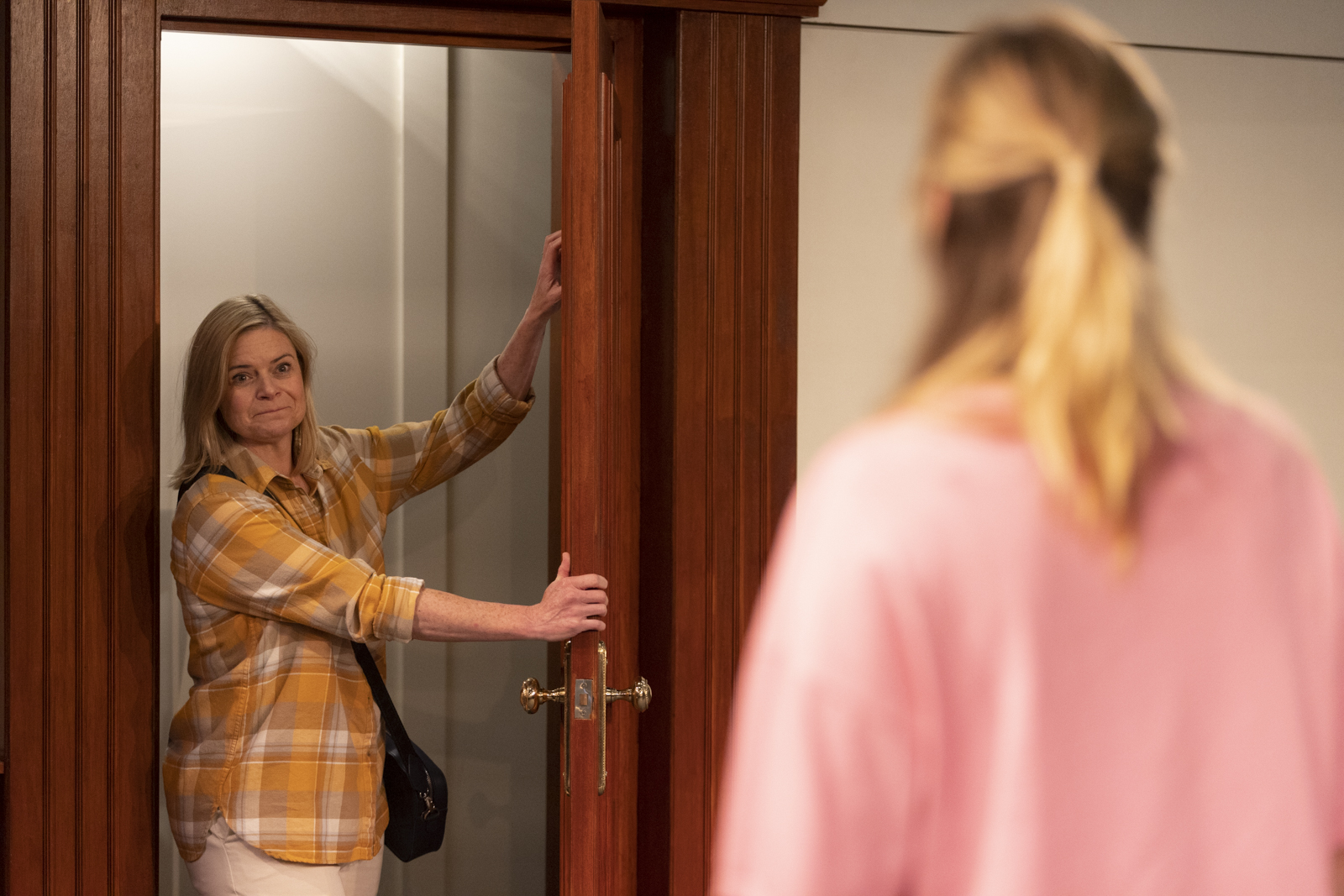
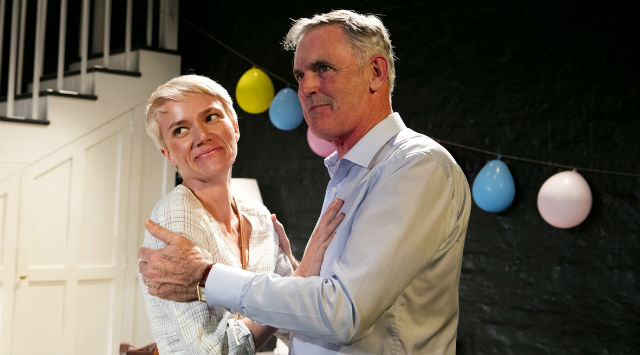
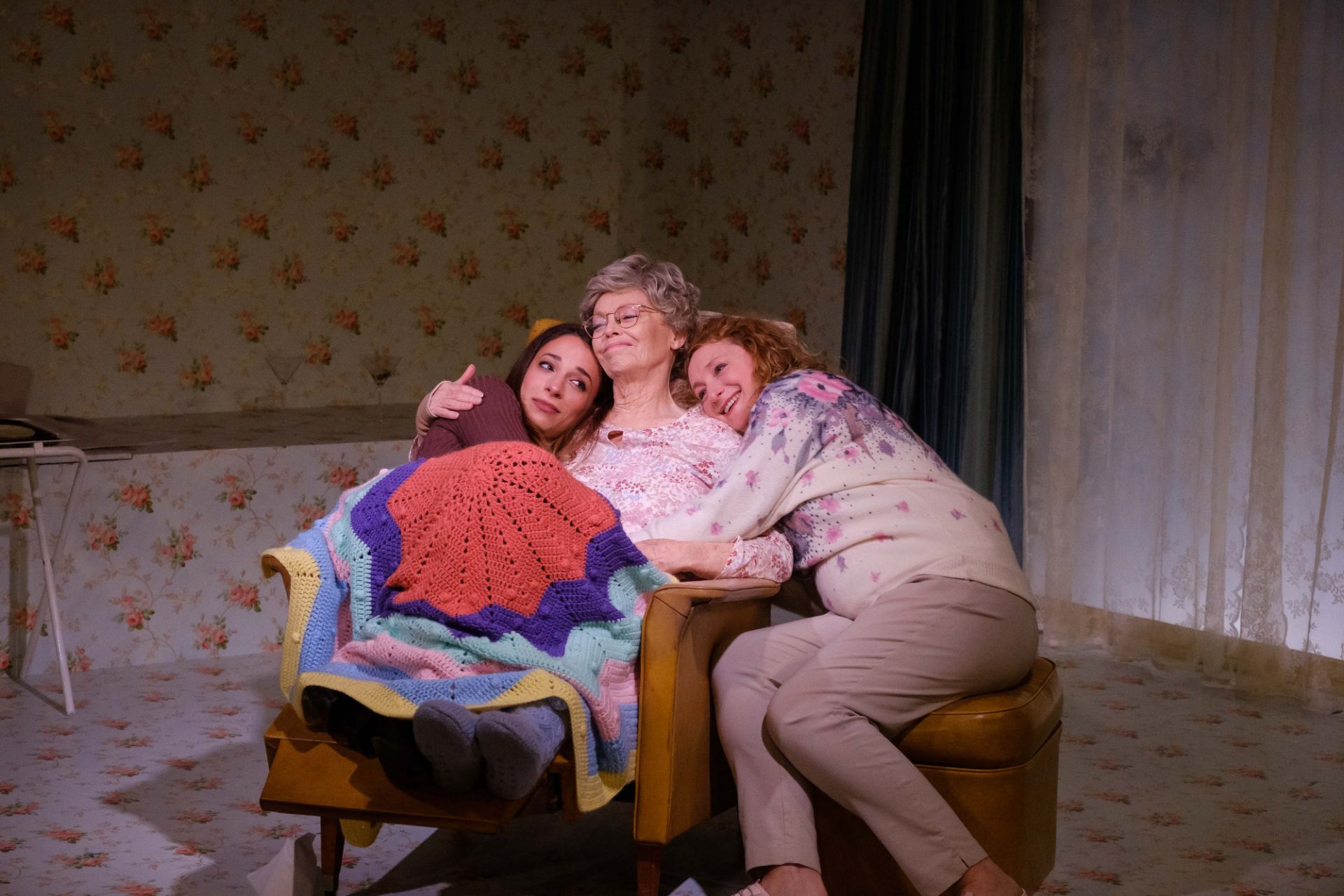
Grace is 87, and everything in life has become a pain. Seeing that there is no joy left in anything, she decides to take her death into her own hands. This however is not a popular decision, with Grace’s daughter and granddaughter, who are not quite as ready to lose a loved one. Melissa Bubnic’s Ghosting the Party may have chosen to talk about the oldest topics, of family and of death, but in fact does so by offering an ultramodern take on life, and on the agency of our women and our aged. Bubnic’s expressions are both emotional and pragmatic, coming from a place of immense honesty, whilst demonstrating deeply impressive analytic capacities. Ghosting the Party is a highly intelligent, and provocative, piece of writing, but also supremely funny, able to thoroughly entertain, as it makes clever arguments about some of life’s most serious matters.

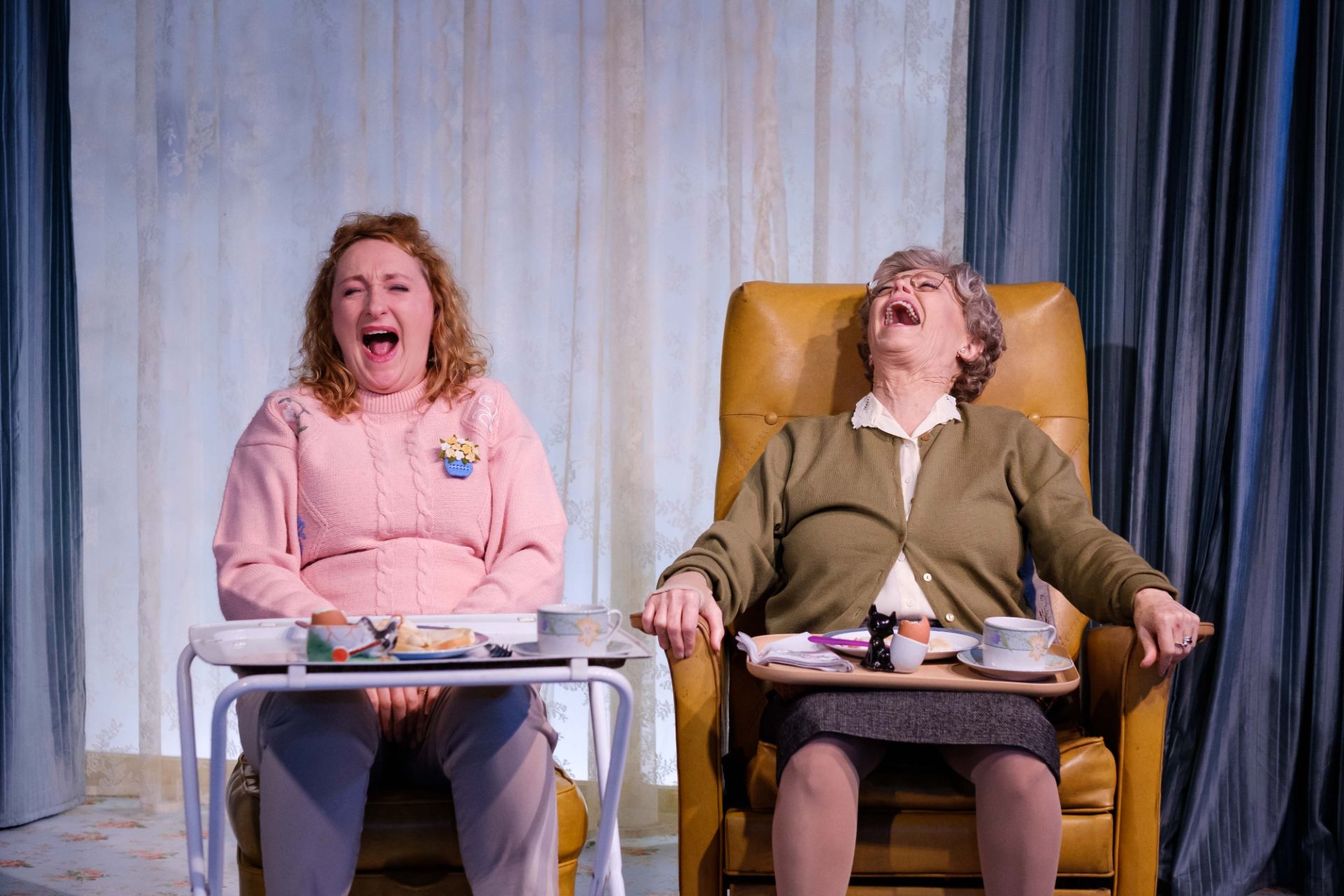
Bubnic’s wonderful words and ideas, are brought to the stage by director Andrea James, who is herself brilliantly humorous. James’ show is simultaneously poignant and comedic, able to move us to tears, not only through its sentimentality, but also by way of some very wicked laughter. With James at the reins, Ghosting the Party is intellectually engaging, and endlessly amusing; certainly one of the best shows you can hope to see at any theatre, at any time.

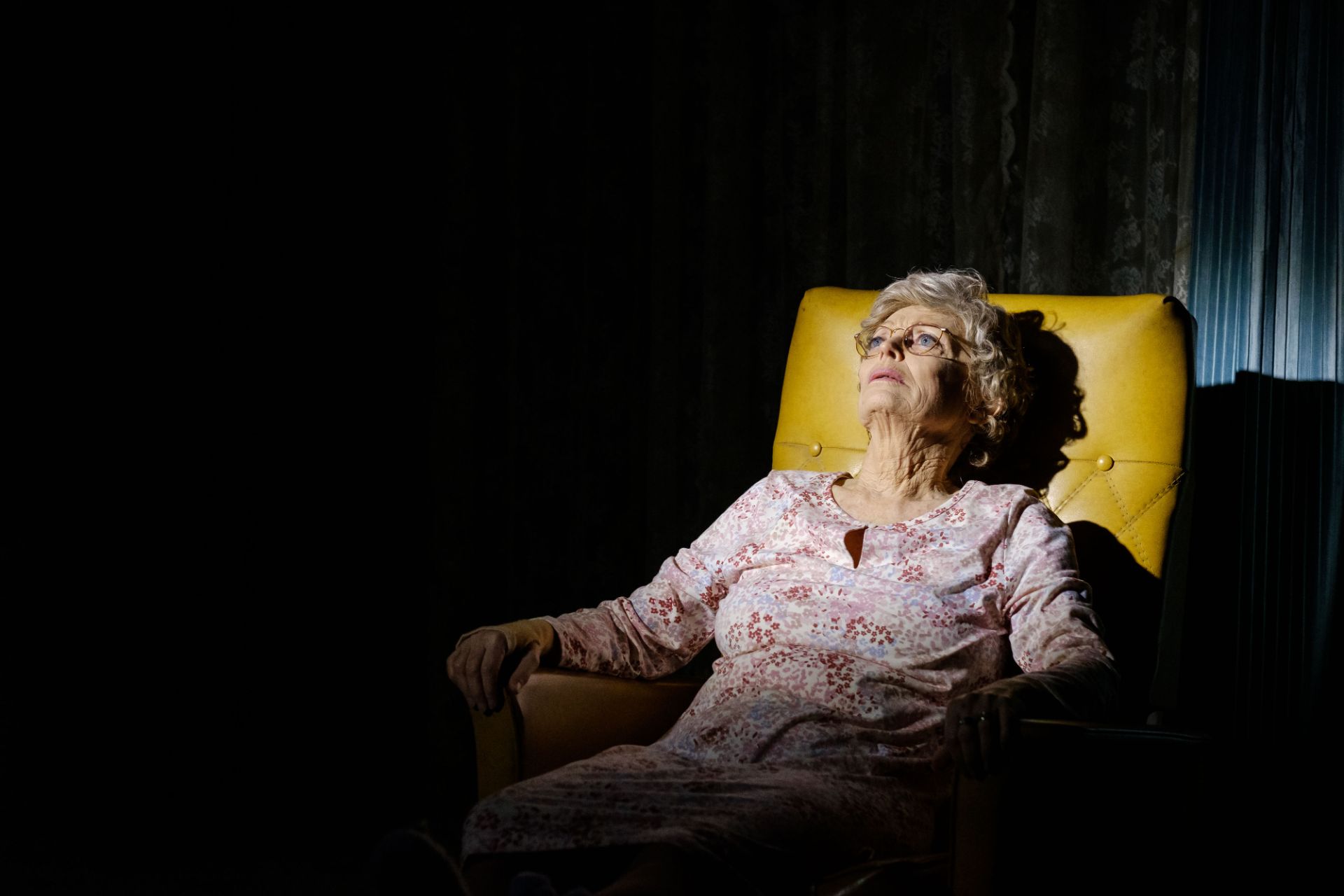
Designer Isabel Hudson does a splendid job of the set and costumes, making witty references to feminine stereotypes, drawing attention perhaps, to the gendered way we talk about so many things, even at the point of death. Lights by Verity Hampson are memorable especially in moments of melancholy, able to swiftly alter our responses to accommodate the complex amalgamation of feelings that the play evokes. That constant shifting of emotional gears, is further assisted by the music and sound design of Phil Downing, which help us connect to both the realist dimensions and the play’s more abstract ones. The show’s design aspects conspire perfectly, to deliver something that is thoughtful, silly, happy and sad, all at once.

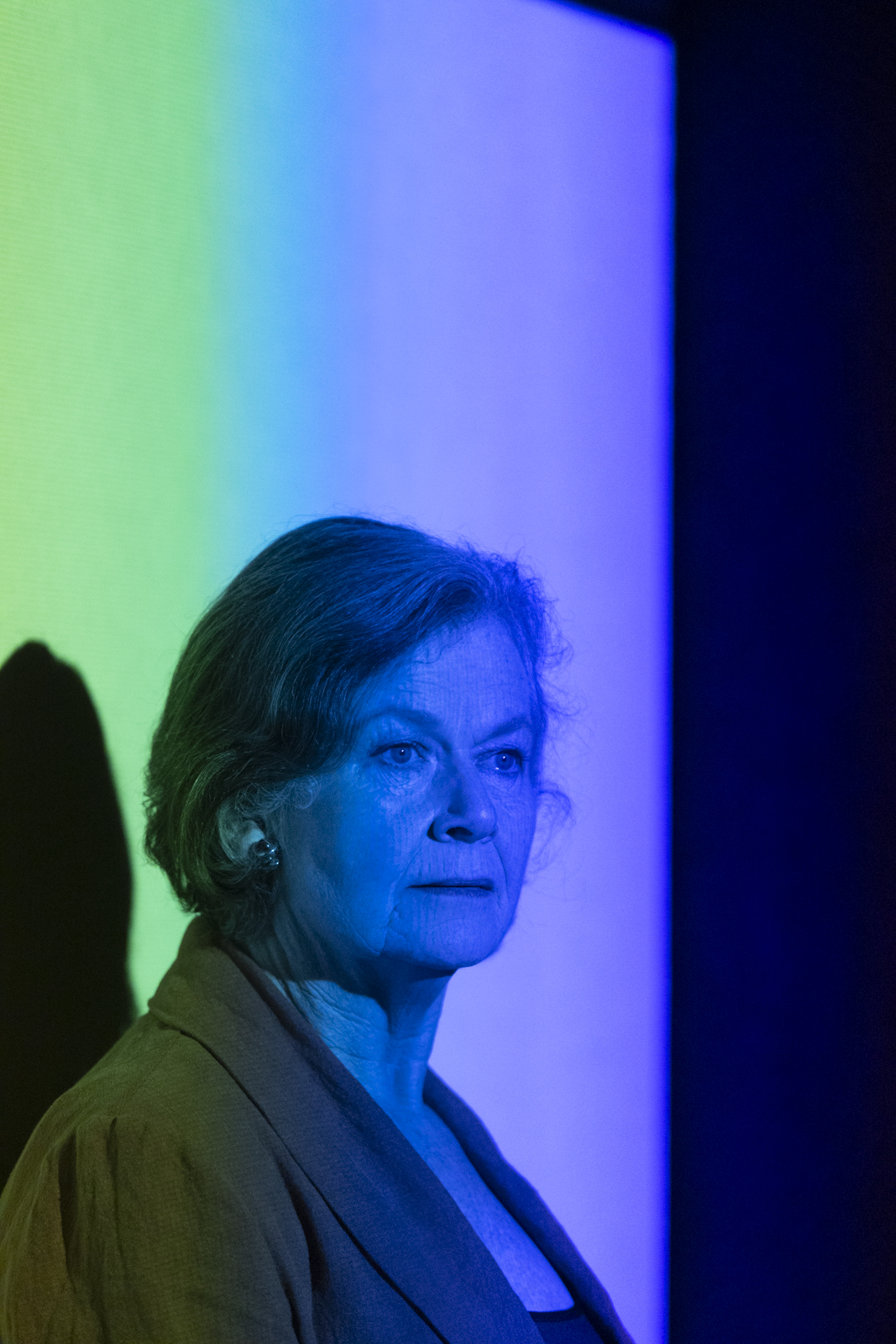
Occupying our attention most intensely however, is the divine Belinda Giblin, who is simply resplendent in the role of Grace. Her work seems infinitely intricate and detailed, allowing us to comprehend the story at great depth and unbelievable nuance. Giblin is as hilarious as she is touching, with a conviction and confidence that is rarely paralleled. Equally passionate is Jillian O’Dowd, who plays daughter Dorothy with an exceptional sense of ironic glee. Her depictions of vulnerability and frustration, form a wonderfully convincing, and endearing, portrait of the middle-aged Australian everywoman as she exists today. Amy Hack is granddaughter Suzie, authentic and strong, in the way she conveys the internal conflicts that inevitably arise, when trying to cut the apron strings and carve her own way.

The first thing we hear in Ghosting the Party, are these stirring words, “No-one ever came back but all reports indicate it’s lovely.” Nobody knows for sure, what happens on the other side, but we all hold cultural and individuated beliefs that pertain to the afterlife. What is irrefutable however, is the sorrow that comes with the sudden absence of a loved one. Love does not make its presence more felt, than when a person goes away. Eternally wondrous, however, is that love never disappears with death. It is that prolonged lingering, that makes us think that we do not simply end this way. Whatever it may be, the truth is that all we can do, is try to love in a way that leaves no room for regret, even if all is only silence thereafter.

www.griffintheatre.com.au

Review: Orange Thrower (Griffin Theatre Company / National Theatre of Parramatta)

Venue: SBW Stables Theatre (Darlinghurst NSW), Feb 18 – Mar 26, 2022
Playwright: Kirsty Marillier
Director: Zindzi Okenyo
Cast: Callan Colley, Angela Nica Sullen, Mariama Whitton, Gabriela van Wyk
Images by Brett Boardman

Theatre review
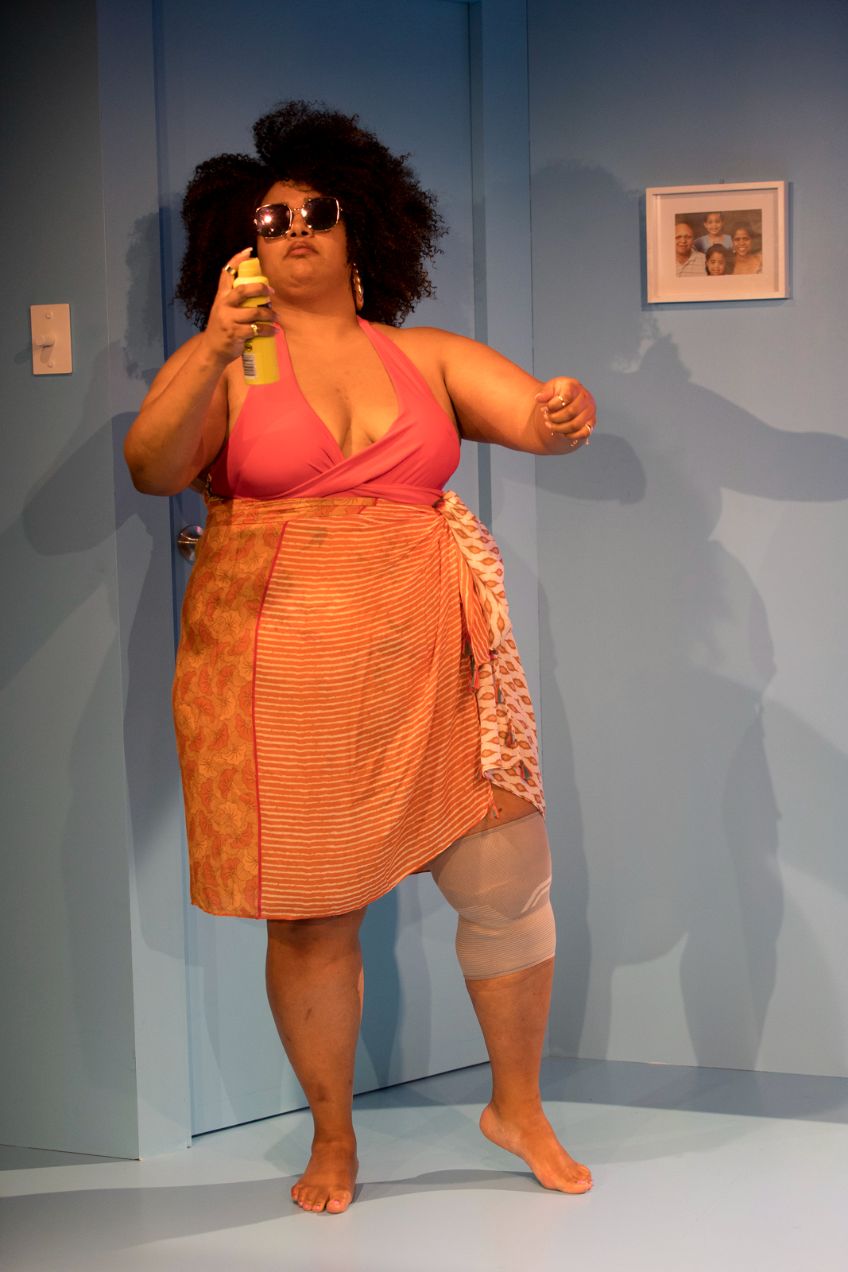
Zadie’s home in an Australian suburb named Paradise, is being pelted with oranges. The cowardly vandals feel no need to explain their actions, because the house belongs to a Black family, and therefore presumably enough of a reason to suffer abuse. Meanwhile, Zadie pays little attention to the repeated humiliation; she has too much on her plate and also, this nonsense happens to minorities all the time. Kirsty Marillier’s Orange Thrower is a whimsical and mysterious work, involving young romance, supernatural phenomena and casual racism.

This unusual blend of genres offered by Orange Thrower is its greatest pleasure, as well as a great challenge that it simultaneously presents. Directed by Zindzi Okenyo, the show is fascinatingly quirky, but its very uniqueness can sit somewhat uncomfortably against more conventional sensibilities. There is something original in Marillier and Okenyo’s mode of storytelling that takes a little getting used to, with an innovative spirit that ultimately proves gratifying.

Production design by Jeremy Allen is vibrant, with a hint of playfulness that provides a sense of visual energy, whilst straddling between spaces real and surreal. Verity Hampson’s lights are bold in its range, able to take us through the wild transformations of atmosphere, that the play so bravely insists upon. Sound and music by Benjamin Pierpoint bears a sense of freedom that traverses a multitude of styles, to coax us into indulging in the play’s complex spatial renderings.

Actor Gabriela van Wyk brings intensity to the lead role, and although detailed in her depictions, the level of authenticity she portrays for Zadie can seem slightly inconsistent. Angela Nica Sullen is striking as cousin Stekkie, with an extraordinary stage presence that can convince us of anything. Younger sister Vimsy is played by a very likeable Mariama Whitton, with excellent zeal and focus. Similarly charming is the compelling and blithely agile Callan Colley who takes on double duty as eye candy love interest Leroy, and as neighbourhood serial pest Sharron, the white lady with a penchant for calling the cops on people of colour.

In spite of the injustices being hurled at her, Zadie goes about her business with passionate glee. She cleans up the mess left behind by her abusers, then goes to work, look after her family, and kisses her boyfriend. It is a kind of joyful resistance that she embodies. Artists of colour on this land too, need to adopt that modus operandi. We must fight, but we must also thrive, and be careful not to always conflate the two. Warriors need love too.

www.griffintheatre.com.au | www.riversideparramatta.com.au/NTofP

Review: Wherever She Wanders (Griffin Theatre Company)

Venue: SBW Stables Theatre (Darlinghurst NSW), Nov 5 – Dec 11, 2021
Playwright: Kendall Feaver
Director: Tessa Leong
Cast: Tony Cogin, Emily Havea, Mark Paguio, Jane Phegan, Fiona Press, Julia Robertson
Images by Brett Boardman

Theatre review
When Paige Hutson is raped in her own room, barely a week into life as a fresher at one of Australia’s oldest residential colleges, it becomes apparent that sexual assault on campus is exceedingly commonplace, and that entrenched mechanisms purporting to deal with these egregious trespasses serve only to protect the system, and not the victims. Kendall Feaver’s “Wherever She Wanders” is a strangely polite look at how a young feminist Nikki Faletau navigates her activism, within the conservative walls of a structure that is perhaps the most patriarchal of all our institutions.

The play’s ideas are modern, but not radical by any stretch of the imagination. It may even seem to occasionally be sitting on the fence, in its attempts to prevent characters from turning caricature. While “Wherever She Wanders” may not convey the incendiary passion often associated with political movements of our time, it certainly paints a cogent picture of the dynamics at play. Feaver takes a lot of care to map out many issues unearthed by that one horrific incident, but it is debatable if the granularity at which it examines them is necessary, at a time when matters of this nature are already stringently scrutinised in so much of  our discourse.

Staging of the piece is humorous and jaunty. Directed by Tessa Leong, the show never fails to feel spirited, with an excellent attention to energy levels, aided by the commendable work contributed by designers, most notably Govin Ruben on lights, and James Brown on sound and music. “Wherever She Wanders” is engaging at every juncture, if slightly deficient in terms of the intellectual rigour, that a narrative of this nature should be able to provide.

Presented by an amiable cast, with the vivacious Emily Havea as lead, bringing a valuable intensity to the earnest advocate Nikki. It is her vitality that gives the production, and the topics of discussion, a sense of authenticity and gravity. Her adversary Jo Mulligan is College Master, and feminist from a bygone era. Played by Fiona Press, who demonstrates great empathy for the role, inviting us to think about the way gatekeepers operate in our daily lives. Actor Julia Robertson does marvellously to deliver for Paige, an abundance of complexity and nuance, so that we may locate both agency and integrity for a young woman in danger of being defined solely by an instance of violation.

Whether one believes that the systems have become broken through the ravages of time, or that the systems were always designed to fail so many of us, one should already have come to the conclusion that it seems only drastic measures, can address all the foundational and fundamental problems that plague our traditional institutions. We observe Nikki’s persistence as she goes about trying to change things, but there is no evidence that the complaints and conversations she participates in, ever result in significant progress. Where there is power imbalance, the subjugated always runs the risk of being patronised. As long as the powerful remain in charge, there is never any incentive for them to do anything more than to pretend to listen. Change does occasionally occur however, and persistence seems the only tool that the disadvantaged an hang on to, aside from the ever-present fantasy of  torching the whole place down.

www.griffintheatre.com.au

Review: Follow Me Home (ATYP)

Venue: SBW Stables Theatre (Kings Cross NSW), Jun 16 – Jul 3, 2021
Playwright: Lewis Treston
Director: Fraser Corfield
Cast: Laneikka Denne, Jasper Lee-Lindsay, Sofia Nolan, Thomas Weatherall
Images by Tracey Schramm

Theatre review
Lewis Treston’s Follow Me Home is comprised of anecdotes, from young Australians who have experienced homelessness. Although unified by a central theme, the stories are varied and surprising, able to reveal to viewers, the pervasive ignorance that surrounds these issues. To see the way people are treated as though discarded, especially at a tender age, is to interrogate our values as a community. Treston’s writing is incisive, and wonderfully dynamic. His dialogue sparkles and pops, to draw us in, and to keep our emotions invested.

The production is directed by Fraser Corfield, who exercises great restraint in stylistic terms, placing emphasis entirely on the quality of performance by a remarkable group of actors. It is worth noting however, that lighting design by Martin Kinnane contributes significantly to the tone of storytelling, and to the ways we respond to the play. Hugh Clark’s video projections provide a dimension of documentary authenticity, that helps us connect the onstage drama, with real world conditions just outside of the auditorium.

The ensemble radiates an unbridled enthusiasm, with four tremendously likeable actors taking on a wide range of roles, in disparate scenes that share a common urgency. Thomas Weatherall brings splendid detail to his characters, and a conspicuous intelligence that allows the narratives he presents, to be perfectly mapped out for our delectation. Sofia Nolan demonstrates great capacity for nuance, blending meaningful subtlety into the playful theatricality she unleashes for each of her personalities. Laneikka Denne is memorable for her earnest renderings, and Jasper Lee-Lindsay’s interior truthfulness proves captivating, in a showcase of some extraordinarily talented performers.

We need to acknowledge that there is something so deficient in our culture, that to have individuals languishing and suffering on the streets, is a normalised expectation. A new-born baby abandoned in a public restroom will cause an uproar, but when people grow past some arbitrary age, we are happy to completely renounce responsibility over their well-being. Each of us understands the fragile nature of life, and we know exactly what it feels like to need help, but rarely are we ready and willing to offer assistance. That frame of mind, is at the very core of our nation’s problems.

www.atyp.com.au

Review: Dogged (Griffin Theatre Company)

Venue: SBW Stables Theatre (Darlinghurst NSW), Apr 30 – Jun 5, 2021
Playwrights: Andrea James, Catherine Ryan
Director: Declan Greene
Cast: Blazey Best, Sandy Greenwood, Anthony Yangoyan
Images by Brett Boardman

Theatre review
The story begins with a dingo in the lands of alpine Victoria, on Gunaikurnai country, looking for her babies. During her search, she encounters a dog and his human owner, a white woman hunter on the prowl for dogs in the wild, to collect their skin for profit. Dogged by Andrea James and Catherine Ryan, explores the broken relationship between modern humans and nature, as well as the difficult bonds between Indigenous Australians and their colonisers.

The 80-minute play is ambitious in scope, with a complex structure that reflects its creators’ desire to encapsulate many discussions being conducted by the wider community. In addition to topics pertaining to environmentalism and racism, Dogged touches on feminism and capitalism, for a work about injustice that cares to be vastly inclusive. Its approach however, is purely allegorical, sometimes obvious but mostly obtuse, which suggests that Dogged is likely to speak more intimately to those already invested in these ideas.

For those less initiated, the action-packed production incorporates energetic sequences, choreographed by Movement Director Kirk Page, that provide an exquisite dimension of visceral excitement to the narrative. Three extraordinary performers hold us captive, for this strange and sometimes bewildering tale of inter-species adventure. Sandy Greenwood is spectacular as Dingo, incredibly detailed with what she is able to convey between the lines, as a First Nations woman actor. We watch her as dingo and as human simultaneously, like a sort of transmorphic genius, illustrating the parallel plights of being Indigenous, of being female, and of being mother earth. Even though her main concern is the portrayal of desecration in its many forms, it is Greenwood’s defiant strength that really mesmerises. Also remarkable are the depths of emotion she summons at will, always replete with intensity, and flabbergasting in her authenticity.

Also impressive is Blazey Best who plays the unnamed human Woman, with a fierce mental concentration to accompany an excellent capacity for nuance, successfully preventing the hunter from devolving into a simple villain. Anthony Yangoyan does a marvellous impression of a dog, both physically and in attitude. The actor is completely believable playing canine in this fantastical thriller, with an endearing sprightliness that introduces a layer of tenderness to an often brutal landscape.

Director Declan Greene uses the writing’s complexity to deliver an exciting show, gripping on several levels. Dogged can be received as an intellectual piece, one that is highly critical of our reprehensible values, and confrontational in addressing our immorality. On the other hand, its dramatics are taut, with characters that interact deliciously, in the telling of a story whose stakes remain high from start to finish.

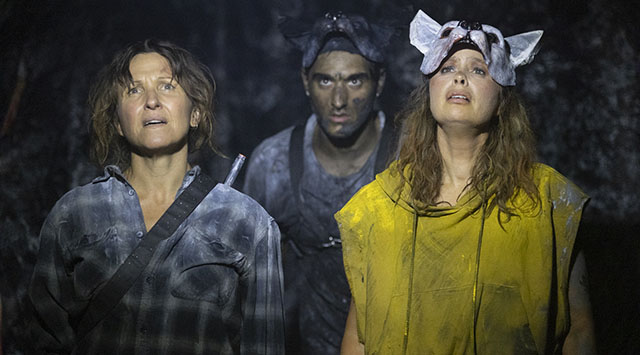
Design work on the production is inventively and skilfully implemented. An intricate set by Renée Mulder and Peter Waples-Crowe, guides our imagination into dark bushlands, mysterious and scary as though stepping into a living nightmare. Mulder’s costumes convince us of the roughness of these creatures’ existence, and the danger that constantly surrounds them. Lights by Verity Hampson meaningfully amplify every resonance of the text, bringing focus to all the profound messages that fundamentally anchor the show. Along with sound and music by Steve Toulmin, mood transformations in Dogged are accurately and intuitively accomplished, and the way Hampson and Toulmin collaborate to keep the staging unpredictable, is truly praiseworthy.

The colonisation of this land must not be seen as anything but cruel, unjust and inhumane. Commencing with European invasions in the 18th Century, to all the subsequent waves of migration, the incremental and devastating dispossession that our First Nations have had to suffer, is unforgivable. Like the destruction on nature, that modern technology, industrialism and commerce, have conspired to enact, we have arrived at a point of apocalyptic discombobulation, where we have no choice but to better understand the impact of many of those sins, past and ongoing.

Dingo tells Woman to “fuck off!” but one wonders if we are already in too deep, and if the idealistic wish for a simple reversion to a historic purity, can ever be possible. So much of the damage has been permanent. There needs to be a rebuild, as though from ashes, a rebirth that centres all the reparations that have to be made. If the moment of reckoning does not take place today, we are only waiting for things to get worse, before the dreaded inevitability happens.

www.griffintheatre.com.au | www.forcemajeure.com.au

Review: Is There Something Wrong With That Lady? (Griffin Theatre Company)

Venue: SBW Stables Theatre (Darlinghurst NSW), Apr 13 – 24, 2021
Playwright: Debra Oswald
Director: Lee Lewis
Cast: Debra Oswald
Images by Brett Boardman

Theatre review
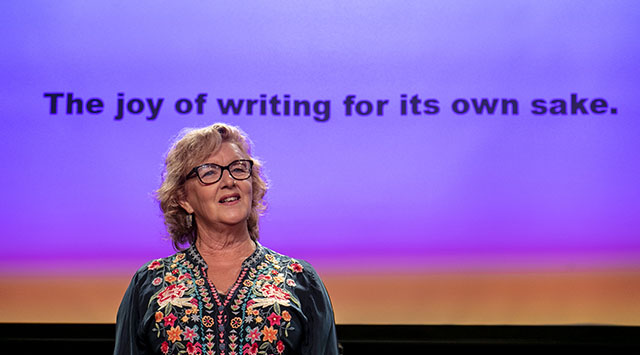
Debra Oswald is a writer who has experienced great successes, but the periods of disappointment in between, are long drawn out and much too frequent. Like most artists, Oswald just keeps persisting, which is probably why she names her autobiographical one-person play, Is there Something Wrong with that Lady? The answer of course is that, it is entirely normal that artists in this country go through extended stints of neglect and even humiliation. In fact it may seem that artists do not require encouragement to be, for we continue to thrive even as conditions worsen in this climate of inescapable economic rationalism. One might be tempted to go so far as to say, that to be an artist in Australia, you will have to be born this way, and a beneficiary of some twisted curse perhaps.

Oswald is unstoppable. She keeps churning out books, plays and teleplays, like her life depends on them, or more to the point, like she has something to say. In her 80-minute solo effort, Oswald is charming, brimming with humour, always affable and delightful. A true blue Australian, she never takes herself too seriously, but it becomes clear that what she stands for, is something worth fighting for. Embracing creatives like Oswald, is crucial in dismantling the old boys club that runs so much of this country. Elevating women of a certain age, will redefine the values we hold as a nation. At the very least, as exemplified by Oswald’s play, we will learn that a person’s worth is not to be measured only by money, but by their imagination, their resilience, and most of all, their capacity to help communities connect.

Lee Lewis’ direction of the work is fairly minimal, demonstrating a sense of confidence that allows the staging to place emphasis completely on the physical presence of Oswald herself. There are minor enhancements in terms of music by Jessica Dunn and lights by Ben Brockman, but it is the inordinate clarity with which we receive the writer’s words that is the most enchanting. Although not the most natural of performers, Oswald is a vibrant personality who holds our attention effortlessly. Her piece may benefit from a slight edit, if only to accommodate our twenty-first century attention span.

Artists work to bring cohesion to society, whether intentional or not. Oswald is a storyteller of the purest kind. Her impulse is to share with the world, the characters and narratives that come through her, as though a sacred duty, so that we can be captivated as groups, to find consensus, instead of thinking incessantly about the divisions in-between. If we understand the importance of finding ways to conceive of the world beyond parameters of money and power, we will understand that those in public office and in private corporations, are not likely to be our answer. Art will set us free, terrifying as it may be.

www.griffintheatre.com.au

Review: Jali (Griffin Theatre Company)

Venue: SBW Stables Theatre (Darlinghurst NSW), Mar 16 – 27, 2021
Playwright: Oliver Twist
Director: Erin Taylor
Cast: Oliver Twist
Images by Estelle Yoon

Theatre review
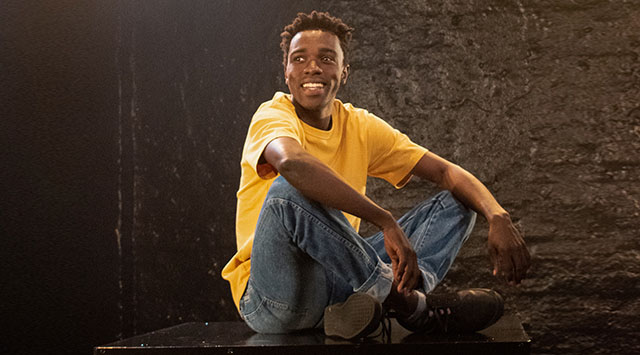
There is an unmistakeable irony to the artist choosing for himself, the name Oliver Twist. Unlike Dickens’ famed character, this Australian Twist does not for a moment, ask for sympathy, even though his experiences as a child refugee were often abhorrent and harrowing. In the hour-long one-person show Jali, writer and performer Twist charts his difficult journey from Rwanda to Ipswich, Queensland, not as a piece of overwrought melodrama, but with an exquisite scintillating humour. To our “first-world” sensibilities, this is perhaps a surprising turn of events, having become used to stories of this nature being framed as a sort of “tragi-porn”, offering perverse catharsis, for viewers who have done more contributing to the hardship of asylum seekers, than to actually helping them.

In Jali, we see a protagonist emerge victorious, in spite of the obstacles we put in his way. Twist’s writing alternates between a sublime sense of the poetic, and a disarming realism derived from his burgeoning career as a stand-up comic. Moving back and forth in time, we observe Twist’s personal growth over the years, whilst gaining an understanding of trauma, and memories of traumatic events, as omnipresent forces, carved into our beings, and playing out their effects, even when we are unconscious of their existence. Twist is on a joyful trajectory in Jali, but a bright future does not mean a forgotten past.

As performer, Twist is full of charm, and remarkably at ease with his audience. Consistently engaged and present, he holds our attention effortlessly, able to gain his audience’s trust from the outset. Bringing a reassuring warmth to his stories, we feel securely cradled, as we bear witness to these first-hand accounts, of information we usually obtain, reliably and otherwise, from a deteriorating news media.

Jali however, is rarely a dark experience. Twist is irrepressibly humorous, with wonderful timing and an unusual deadpan approach, that somehow manages to persuade us of an indomitable strength within the human spirit. It is indeed admirable, when people can overcome adversities of this magnitude, but more important, is to allow these anecdotes to teach us, not only of our resilience, but that we need to prevent these horrors from occurring to anyone, anywhere.

Erin Taylor’s direction of the work capitalises on Twist’s formidable likeability. She ensures that we perceive vulnerability, without any need for humiliation, and showcases her subject’s vital optimism in a manner that proves irresistible. Taylor offers up a vision of a new Australia, or maybe an everchanging Australia, that we all feel invested in, and that we want to do better for.

Production and lighting design are gently harnessed by Kelsey Lee, to enhance the show’s intimate qualities. There is a quietness to the atmosphere that emphasises the gravity of issues being discussed, and that simultaneously allows the performer’s natural vibrancy to shine. In a similarly sensitive fashion, Chrysoulla Markoulli’s precisely measured music helps punctuate both the comedy and the drama, whilst assisting our imaginations to travel the continents along with our storyteller.

All the borders that we build can be thought of as arbitrary. No human is born to be separate from earth, yet decisions have been made to deprive individuals of access to infinite spaces, in the belief that certain lands belong to certain people, and that some are simply to do without. In truth, we can only think of ourselves as custodians of places, and to think that we own anything, that the earth is not entirely autonomous, is pure arrogance. There is something in us that wishes to hoard, and in the process cause dispossession to other people. Some might argue that that is our nature. If that is indeed the case, it might be worthwhile to learn to act against our nature, if we truly care about discerning right from wrong.

www.griffintheatre.com.au

Review: Cusp (ATYP)

Venue: SBW Stables Theatre (Kings Cross NSW), Mar 11 – 28, 2020
Playwright: Mary Anne Butler
Director: Fraser Corfield
Cast: Stevie Jean, Josh McElroy, Nyasha Ogden
Images by Tracey Schramm

Theatre review
In a Northern Territory rural town, three young people are about to leave their teenage years behind. Unlike many of their counterparts in big cities, Elvis, Maddie and Rosie have no time to waste. Mary Anne Butler’s Cusp tackles the worlds of those who do not have the luxury to slowly figure things out. It is a story about class and poverty, an exploration into structures we have to operate under that are manifestly unjust and inadequate, yet are rarely questioned. At seventeen or eighteen, characters in the play have to deal with matters as severe as pregnancy and incarceration, with little support and guidance from those who should know better.

Butler’s scintillating dialogue keeps us engrossed in the personalities she introduces. Director Fraser Corfield brings sincerity and honesty to the play, creating a show with genuine resonances, even though its staging can at times feel static and visually repetitive. Lights by Jessie Davis and sound by Brad Fawcett are sensitively designed, for a remarkably elegant style of presentation.

Three impressive actors bring passion and conviction to their roles, all of them adept at having the audience spellbound. As Rosie, Nyasha Ogden is a captivating presence, warm and very believable as the Indigenous girl trying to reconcile wishes of her community with personal desires. Stevie Jean depicts Maddie’s loss of innocence with a charming boldness, effective in helping us contemplate how a very young woman can exercise her agency. A memorable Josh McElroy is detailed and delicate as Elvis, a familiar juvenile type with troubling anger issues.

The sentence “some people get better choices to choose from” is uttered twice in Cusp. There is overwhelming evidence that wealth inequality in Australia has risen to an unprecedented level, with the general population experiencing over half a decade of stagnating wages, while constant reports of GDP growth fool us into thinking that the country is being managed well. We continue to think of ourselves as an egalitarian people, but are simultaneously, completely comfortable with ignoring the fact that only a small percentage is reaping the rewards of a strong economy. The rest of us are stuck with the indoctrination, that if life is not working out well, we only have ourselves to blame. We are in fact kept in the dark, whilst the few who are much better off, steal everything they can, in broad daylight.

www.atyp.com.au

Review: Family Values (Griffin Theatre Company)

Venue: SBW Stables Theatre (Kings Cross NSW), Jan 17 – Mar 7, 2020
Playwright: David Williamson
Director: Lee Lewis
Cast: Belinda Giblin, Danielle King, Andrew McFarlane, Jamie Oxenbould, Ella Prince, Bishanyia Vincent, Sabryna Walters
Images by Brett Boardman
Theatre review
It is indeed appropriate that white people in Australia should have serious discussions among themselves about immigration, and other matters that require them to challenge their own privileged positions. They are the ones in power, and so much depends on their ability to make concessions in order that all our lives can become more equitable. In David Williamson’s Family Values, we watch rich white people fighting about the right thing to do, ostensibly about Australia’s refugee intake and the worldwide asylum seeker problem, but in fact, the argument that happens in their dining room is much simpler.

The Collins make a lot of noise in Family Values, each of them fired individually by existential angst, but what should have been philosophical and moral debates are embarrassingly reduced to a basic issue of whether seriously ill people should be allowed to stay in Australia, while their refugee status is being considered. The play distracts us with a lot of hullabaloo, misleading us into thinking that privileged North Shore types are actually having broader conversations about immigration and the future of this country, when they are only actually fighting over the destiny of one very sick woman. Needless to say, how we regard people who require serious medical attention, should never be a matter of contention at all, no matter where they come from.

Director Lee Lewis makes sure everyone on stage gets really riled up, and the drama is often gripping over the 90 or so minutes; people are fighting tooth and nail, and there is an inherent pleasure in watching rich people tear each other apart from the sidelines. Dynamics between personalities may be manufactured but there is no denying the intensity of conflict that takes place. The more unrealistic the characters, the more extravagant the performances, which is understandable from the perspective of actors who wish to create something out of nothing.

Jamie Oxenbould and Ella Prince make very bold choices that are frequently jarring, but the alternative of attempting naturalism would clearly make for extremely flaccid interpretations. The one person of colour waiting to be rescued is played by Sabryna Walters, who as Saba, uses her monologue in the second half to deliver a moment of genuine theatrical magic. Her performance of pleading for mercy is powerful and wonderfully emotional, a real treat that reminds us, if only for a few minutes, what we must insist of our artists.

It does not surprise anyone, spoiler alert, that the father of the household Roger eventually steps up and does the right thing, and of course gets celebrated for it, as though he is the true hero in this asinine effort. Powerful people seem to only do good things when they are rewarded disproportionately. Even when innocent lives are at stake, there has to be a profit motive to spur action, and worse, they see no shame in that. Roger Collins wants to be honoured and revered for following the rules set up by those who were just like him, that had come before him. We need to identify the damage that they cause, and establish new ways to get rid of them.

www.griffintheatre.com.au