Review: The Campaign (Seymour Centre)

Venue: Seymour Centre (Chippendale NSW), Feb 11 – 28, 2020
Playwright: Campion Decent
Director: Kim Hardwick
Cast: Tim McGarry, Simon Croker, Mathew Lee, Madeline MacRae, Jane Phegan
Images by Jasmine Simmons

Theatre review
Up until 1997, some of the harshest anti-homosexuality laws in the Western world, were found in our very own Tasmania. In Campion Decent’s The Campaign, we witness the rife homophobia in the Australian state, as well as the hard work by rights groups that fought tooth and nail to bring legislative reform. The story begins in 1988 when community leader Rodney Croome was arrested alongside many others of the Tasmanian Gay and Lesbian Rights Group (previously known as the Tasmanian Gay Law Reform Group), for setting up a stall at Salamanca Market collecting signatures for a petition, towards the decriminalisation of consensual sex between adult males.

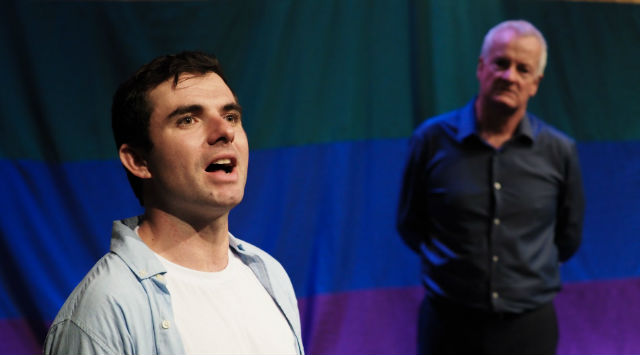
A verbatim work featuring first-hand accounts by activists from that critical decade of LGBTQI history, The Campaign feels a thorough and accurate compilation of memories pertaining to that period of incredible dedication by a group of tireless advocates. With focus placed almost entirely on political machinations, the play can suffer from a lack of drama and theatricality, even though director Kim Hardwick’s determination to inject colour and movement into the staging is evident. Her efforts to keep things pacy, helps liven up dialogue that tends to be dry and stoic.

A disarmingly earnest group of five performs a big number of roles, with Mathew Lee memorable for the authentic emotions he brings to the stage, in the role of Croome especially. Jane Phegan too is a genuine and purposeful presence, as is Tim McGarry whose rigour is a joy to watch. Simon Croker and Madeline MacRae are commendable for bringing both gravity and dynamism to their various characters, in an ensemble that proves itself remarkably well rehearsed, and full of magnanimous conviction.

The Campaign is about the heroes of the movement, but occasional glimpses of villains, make us wonder if those vicious sentiments can ever be extinguished. It has taken a very long time to attain legislative protections, but as witnessed in national debates relating to the 2017 same-sex marriage referendum, people’s attitudes can still be extremely malicious and harmful. For many of us, the reasons for that hatred may have to remain a mystery; the incomprehensible need to vilify those whose identities and actions are completely of no consequence to others, is absurd, and unfortunately relentless.

www.whiteboxtheatre.com.au

Review: Wake In Fright (Sydney Opera House)

Venue: Sydney Opera House (Sydney NSW), Feb 11 – 15, 2020
Playwright: Declan Greene with Zahra Newman (adapted from the novel by Kenneth Cook)
Director: Declan Greene
Cast: Zahra Newman
Images by Daniel Boud

Theatre review
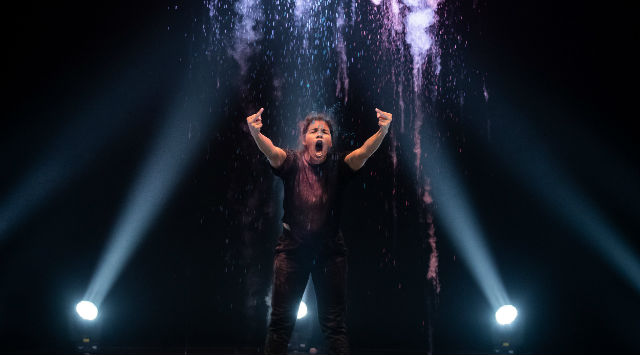
Included in the price of entry, are a pair of earplugs. There are some loud noises in the production that delicate members of the audience might want to shield themselves from, but symbolically, they are a sarcastic dig at our Australian propensity to shut out any discussion about race that goes too close to the bone. Kenneth Cook’s 1961 novel Wake In Fright is re-framed by director Declan Greene and performer Zahra Newman, so that the classic gothic horror becomes an apparatus that exposes the anxiety of the white man on this colonised land. School teacher John is trapped in a country town, where he encounters a string of dubious characters determined to inflict degradation, using alcohol and other vices, so that he turns into one of them, over the course of a weekend.

More than a tall poppy story, this reiteration of Wake In Fright is about Western masculinity’s relentless need for destruction. The Indigenous have long disappeared from fictitious Bundanyabba, but the carnage continues, now with European settlers exerting their irrepressible barbarism onto themselves. Having once been a scary movie, this bleak tale is again given the genre treatment, with outstanding work by Verity Hampson on light and projections, alongside James Paul’s thrilling sound design and Melbourne duo friendships’ intuitive music, providing eerie and meaningful discombobulation to our experience of the show. Although not frightening in a sensorial manner that films are notoriously capable of, director Greene certainly conveys powerfully, the fearsome quality of this dark tale. Aussie larrikins gone wild are not to be toyed with.

The exceptional Newman is breathtaking in her one-woman show, unforgettable for delivering extraordinary complexity with what could have been a simple story. She has us on the edge of our seats for the show’s entirety, keeping our minds active with the many dimensions and depths that she alchemizes on stage. It is noteworthy that this version of Wake In Fright works particularly well with a woman of colour at its helm. Newman’s gender and skin are constant cues that prevent us from forgetting about the masculinity and whiteness that are central to the catastrophe unfolding.

The earbuds remain a personal choice. Many will choose to ignore the obvious, because much of the power of the status quo relies on its ability to keep us feeling debilitated. It also succeeds at misleading many into insisting that the problems with society are about deficient individuals, and not the overarching systems that govern us. It is no coincidence that the horrors that overwhelm John are imposed by people who fit a particular description. We need to learn to see patterns, and form understandings that will help us in more substantive ways, than to replace bad eggs in structures that will never accommodate good ones. The outback town in Wake In Fright is sick, but we fear the overhaul that is required, and choose instead to let it languish in perpetual revulsion.

www.malthousetheatre.com.au

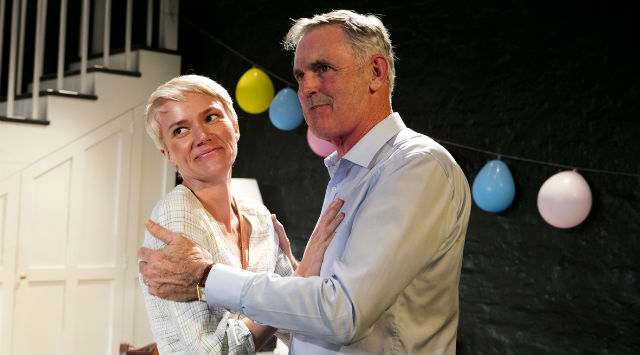
Review: The Deep Blue Sea (Sydney Theatre Company)

Venue: Roslyn Packer Theatre at Walsh Bay (Sydney NSW), Feb 4 – Mar 7, 2020
Playwright: Terrence Rattigan
Director: Paige Rattray
Cast: Fayssal Bazzi, Paul Capsis, Matt Day, Vanessa Downing, Marta Dusseldorp, Charlie Garber, Brandon McClelland, Contessa Treffone
Images by Daniel Boud

Theatre review
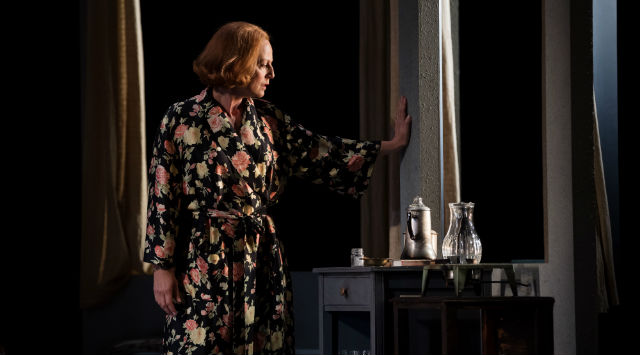
Hester Collyer is having such a miserable time, that when we first meet her, we catch her in the process of attempting suicide. It is the 50’s in Terrence Rattigan’s The Deep Blue Sea, and therefore not surprising to find a woman unfulfilled and depressed. She may have two men vying for her attention, but no amount of romance and love, can mollify her agony. Although a natural artist, having picked up painting at a tender age, she is steered away from her talents, being a clergyman’s daughter, to focus instead on becoming a wife and mother.

We watch our protagonist invest heavily into her lover Freddie, but the relationship is unrewarding no matter how hard each party tries. Her husband William too, works hard for a reconciliation, but Hester is simply unable to find satisfaction in all his acquiescence. Director Paige Rattray understands that Hester has placed all her eggs in the wrong basket, and as we watch the story unfold, it is Rattray’s understanding of events that truly resonate, even as poor Hester herself remains in the dark about her own situation.

Rattray’s feminist intervention is represented by a clever set design by David Fleischer, which gives us alternate views of the same small apartment containing, and constraining, Hester’s tiny world; we are given two perspectives of the narrative, as though a reminder that there are parallel interpretations taking place, feminist and anti-feminist, at each step of the plot trajectory. Other design elements too are noteworthy, with Nick Schlieper’s lights surreptitious but persuasive at all times, and James Brown’s work on sound, restrained but sublime in its dramatic effect.

Actor Marta Dusseldorp gives a thrilling performance in the lead role, endlessly inventive, and courageous with each of her artistic choices. It is a spellbinding depiction of female suffering, powerful in its authenticity, but more importantly, astute with the meanings that she conveys, almost behind Hester’s back. The show is surprisingly comedic, as a result of its modern sensibility. The cast uses Rattigan’s old-fashioned melodrama to put on a show that oscillates between laughter and melancholy, a subtly camp approach that proves highly entertaining.

Paul Capsis is unforgettable as Miller, an uncompromisingly queer presence that functions as a beacon of wisdom, for Hester and for the audience. Fayssal Bazzi and Matt Day are convincing love interests, both helping to make perfect sense of the conundrum at hand. We see that it matters not, whether they are good or bad men, they simply have no bearing on a grown woman’s happiness. Also memorable is Brandon McClelland, whose straightlaced irony as Phillip Welch proves deeply amusing. Confident and perfectly pitched, McClelland delivers some of the show’s best laughs.

The Deep Blue Sea is an excellent example of how the world can destroy a person, when she plays by prescribed rules. At the end of her story, we wonder if Hester is ever going to discard those external expectations, and find a way to carve out a self-determined existence. Women are broken every day, but one wonders how many are able to resist returning to square one, even in the twenty-first century, at each attempt of revival. Bravery is not often found on the well-trodden path, and glory is reserved only for those who dare.

www.sydneytheatre.com.au

Review: Jesus Wants Me For A Sunbeam (Belvoir St Theatre)

Venue: Belvoir St Theatre (Surry Hills NSW), Feb 6 – Mar 8, 2020
Playwright: Steve Rodgers (based on a novella by Peter Goldsworthy)
Director: Darren Yap
Cast: Valerie Bader, Emma Jackson, Mark Lee, Liam Nunan, Grace Truman, Matthew Whittet
Images by Brett Boardman

Theatre review
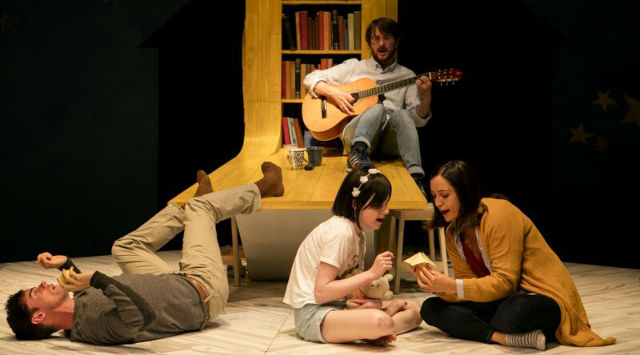
Linda and Rick are a young couple in love, full of hope for the future, and like many who had come before, they decide to have children. In Peter Goldsworthy’s Jesus Wants Me For A Sunbeam (adapted for the stage by Steve Rodgers), it is that collision of optimism and the inevitable harshness of real life that comes to the fore, when a happy family of four is met with the curse of a terminal illness.

The play is predictably emotional, with Darren Yap’s direction making no apologies for the extremely sentimental tone that his production takes. Death however, may seem a more vacillating topic than the show might suggest. As we watch the Pollards go through turmoil, finding ways to deal with the impending passing of a beloved, Jesus Wants Me For A Sunbeam exposes the surprisingly disparate attitudes we may hold, for a completely universal experience. It becomes obvious that because we so rarely talk about death, that we almost never have opportunities to create consensus, so it only makes sense that personal beliefs can vary greatly in relation to the topic.

Characters inhabit a relentlessly dark space, and the trauma being presented feels authentic, even if one does not share in the Pollards’ persuasions about the afterlife. The cast is uniformly strong, impressive with the chemistry they harness as an ensemble, able to give a sense of elevation to some very simple personalities. Actors Liam Nunan and Grace Truman are memorable as the children, passionate and intense with their portrayals of interrupted innocence. Emma Jackson and Matthew Whittet are their parents, both full of conviction, and remarkably elegant in their approaches for this unabashedly stirring work. Valerie Bader and Mark Lee take on a range of senior roles, precise and marvellously deliberate with what they bring to the stage.

Also noteworthy is Emma Vine’s set design, offering considerable versatility and easy scene transitions, whilst remaining pleasing to the eye. Verity Hampson’s lights, along with music and sound by Max Lambert and Sean Peter, ensure that the audience is drawn into the tragedy, through tenacious engagement of our senses.

Death can be thought of as more than a mournful occurrence. In fact, some think of it as a welcome end to suffering. In the lightness of romance, Linda and Rick create new life, unafraid of all the hardship that is sure to come. In sickness, one is made to confront mortality, with fear and sadness invariably becoming part of that process. Along with having to say a long goodbye to loved ones, it is perhaps the uncertainty about what happens thereafter, that causes the greatest despair. We may differ in how we regard the nature of death, but the beauty of life that we have all witnessed, does not have to end when the lights are turned off for the last time.

www.belvoir.com.au | www.riversideparramatta.com.au/NTofP

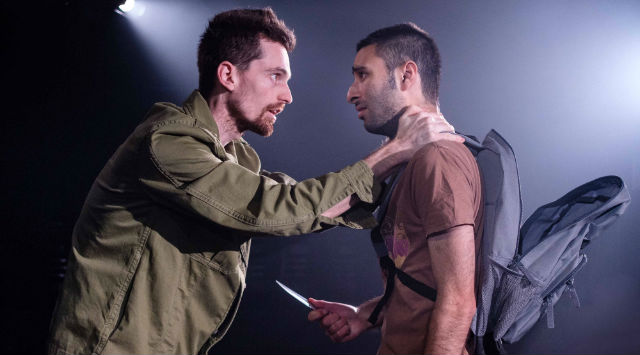
Review: Angry Fags (New Theatre)

Venue: New Theatre (Newtown NSW), Feb 5 – Mar 7, 2020
Playwright: Topher Payne
Director: Mark G Nagle
Cast: Brynn Antony, Phoebe Fuller, Monique Kalmar, Lachie Pringle, Meg Shooter, Emily Weare, Tom Wilson
Images by Chris Lundie

Theatre review
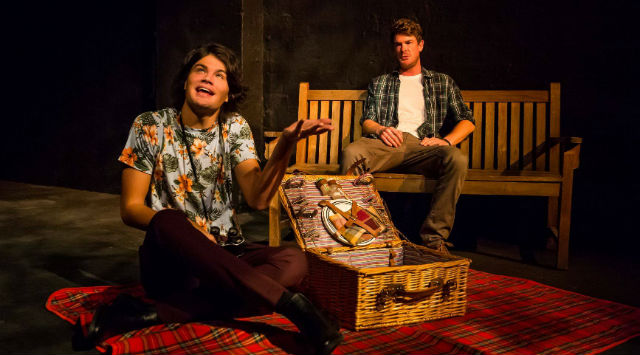
Bennett and Cooper have had enough of homophobia. In Topher Payne’s Angry Fags, the best friends engage in increasingly reckless and violent activity, as a reaction against the gay hate they are experiencing in the “solidly red” American state of Georgia.

Characters in this revenge fantasy take their cues from extremists and terrorists in the news. We see these young men at the end of their tether, resorting to strategies that do nothing more than offer momentary amelioration to their suffering. Their desperate display of might is only capable of providing fodder for the media to sell stories, with no alteration detectable in the prejudice that their transgressions intend to vanquish.

Directed by Mark G Nagle, the comedy of Angry Fags is often effective, even if its irony can seem insufficiently pointed. Chemistry between players is lacking, but individual performances are accomplished. Actors Phoebe Fuller and Lachie Pringle bring the laughs, both memorable with their timing, inventiveness and conviction, proving themselves to be playful personalities able to bring entertainment value to any stage. Central to the story is Bennett, performed by Brynn Antony, a broody presence unable to contribute effervescence to funny portions, but engaging when things take a dark turn.

Hate needs to be met with consequence, but violence is not an instrument that minorities can wield easily. Justice is a frustrating process for those who seek it, but in these discussions that seem only to take place within inherently inequitable structures, speaking the language of power still remains the most potent force of change. It is obvious that extremist methods involving pillage and murder would never garner desirable results for queer movements in the west, but discomfort and inconvenience for the establishment, are not to be shied away from.

www.newtheatre.org.au/

Review: The Spoils (Flight Path Theatre)

Venue: Flight Path Theatre (Marrickville NSW), Jan 29 – Feb 8, 2020
Playwright: Jesse Eisenberg
Director: Ian Warwick
Cast: Rebecca Abdel-Messih, Michael Becker, Isabel Dickson, Haydan Hawkins, Kabir Singh
Images by Clare Hawley

Theatre review
Ben lives in a New York apartment, paid for by his parents. He has dropped out of college, and spends his days pretending to be a film maker; an aimless existence with no responsibilities should mean an easy life, but there is no end to the angst that he experiences. He looks to be jealous of everyone, and as a result behaves terribly to all. Jesse Eisenberg’s The Spoils is critical of over-privileged Americans, but its representations are seldom compelling, and its comedy infrequently funny.

Although not short of conviction or passion, the show struggles to deliver laughs. Directed by Ian Warwick, The Spoils becomes poignant late into Act Two, when Ben shows his true colours, and the escalating drama finally provides a sense of gravity. Actor Michael Becker is committed in the lead role, as are the rest of the cast. Isabel Dickson is particularly strong as Sarah, able to bring a valuable realism to the piece. Set design by Irma Calabrese, along with Roderick van Gelder’s lights are fairly simple in approach, but prove adequate in creating atmosphere for the staging.

There is an insidious quality to the malignity being explored in The Spoils. Ben’s racism is casual, and his misogyny jocular. Those at the receiving end of his insolence, can only turn a blind eye, or risk accusations of instigating disharmony. It has become increasingly obvious to the rest of us, that the powerful can get away with murder. We must learn to respond with intolerance when injustice is apparent, even if it means disrupting the peace.

www.flightpaththeatre.org

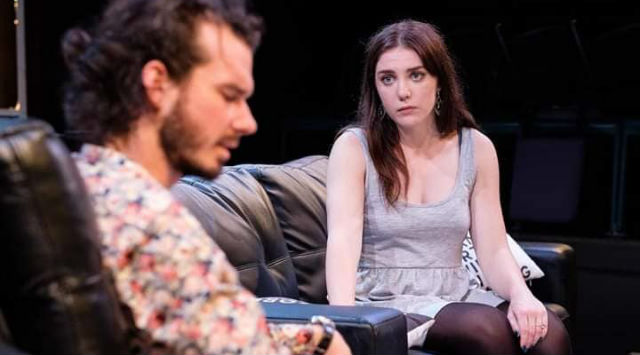
Review: Pomona (Kings Cross Theatre)

Venue: Kings Cross Theatre (Kings Cross NSW), Jan 24 – Feb 8, 2020
Playwright: Alistair McDowell
Director: Anthony Skuse
Cast: Jane Angharad, Kevin Batliwala, Amanda McGregor, Lauren Richardson, Monica Sayers, James Smithers, Dorje Swallow
Images by Clare Hawley

Theatre review
A concrete plot of barren land sitting in the middle of the city, can only raise suspicion. It is simply unbelievable that what appears to be prime real estate is left to languish, as though millions of dollars are left unclaimed, right in front of our eyes. In Alistair McDowell’s Pomona, we are taken underground. In the absence of visible buildings, our cynicism goes into overdrive, as we watch the worst of our capitalistic impulses emerge, through a series of horrific criminal scenarios. The play imagines the most nefarious commercial activities taking place in hidden bunkers, behind closed doors. If business dealings dare be depraved in broad daylight, what more the shady dealings that happen in secret.

Pomona‘s drama involves missing persons, snuff films and more. It is not an exploitative work by any means, but that very tendency of ours to exploit, is placed under scrutiny. Director Anthony Skuse prompts questions about nature and nurture, and the origins of corruption, as we observe characters carrying out unspeakable acts. People seem to be either good or bad, but there is no denying the conditions we all have to operate under, that are in most cases, beyond repair. Lighting design by Veronique Benett is suitably gloomy, for the irrevocably pessimistic world being explored. Music by Nate Edmondson, commanding and tenacious, keeps tensions unrelenting for this foreboding representation of our dangerous lives.

The production is an engaging one, with powerful concepts and a cleverly fractured plot, conspiring to hold our attention. Actors Amanda McGregor and James Smithers depict some very big and genuine emotions, both wonderfully mesmerising with the focus they bring to the stage. Also memorable is Lauren Richardson, who has the unenviable task of inhabiting and portraying the unceasing terror of a woman escaping violence. Moments of innocence by the charming Kevin Batilwala are a delightful reprieve, while Jane Angharad, Monica Sayers and Dorje Swallow play some seriously dubious types who make us confront our own sense of morality.

In a dog eat dog world, good guys finish last. In Pomona, we may want to get rid of the baddies, but there is nothing to stop their positions being usurped by more of the same. Evil runs so much of the world, because of the way things are structured. The way we revere money and power, has allowed bad things to happen again and again. We can no longer afford to imagine that simply placing good people in harmful institutions will fix our problems. We have to move emphasis away from undesirable individuals, to a better understanding of the systems that govern our lives, and begin destroying them, as a first step to improving things for all.

www.secrethouse.com.au

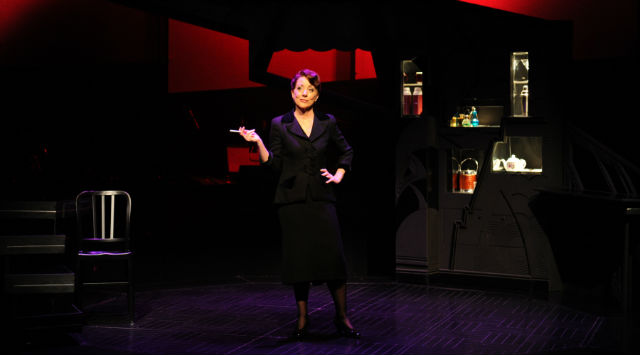
Review: Songs For Nobodies (Sydney Opera House)

Venue: Sydney Opera House (Sydney NSW), Jan 23 – Feb 9, 2020
Playwright: Joanna Murray-Smith
Director: Simon Phillips
Cast: Bernadette Robinson

Theatre review
There are ten women in Joanna Murray-Smith’s Songs For Nobodies, a collection of five stories about famous singers and the ordinary lives they had touched. It is a series of juxtapositions, of diva and goddess, of women on stage and women from other walks of life, all being put through their paces in one form or another. Murray-Smith’s poignant humour works a charm, able to imbue each character with dignity along with a sense of the divine, not only for the celebrities, but also for the women-next-door that it depicts so lovingly. All women can be regarded with reverence, if we know to value them appropriately.

Bernadette Robinson is the extraordinary talent who introduces us to all the characters in Songs For Nobodies. When impersonating Maria Callas, Patsy Cline, Judy Garland, Billie Holiday and Edith Piaf, she is impressive not only for the likeness that she quite magically achieves, but also for the very virtuosity she displays in each of the unforgettable standards that she sings. Her portrayals of the every woman too, are commanding, whether American, English or Irish, Robinson is convincing, engaging and gloriously charming, able to elevate forgotten souls, as a reminder that all women are sometimes truly sublime.

Directed by Simon Phillips, the show is elegantly rendered, very subtle in approach, but nonetheless affecting. Orchestrations by Ian McDonald are dramatic and highly evocative, able to seize our imagination in a flash, to transport us through time and space for momentary immersions, that make us feel as though in the presence of legends. Scott Rogers’ lights too are notable, for their romantic warmth, able to take us away from the humdrum and the mundane, that we too often think of as the only reality.

Very few women ever get to see things from the top, but there is no rat race that we should feel compelled to participate in. More than the rich and famous, are the many examples of fulfilling and self-determined existences that are plain to see. Many of us will not know what it is like to influence millions, and to never have succeeded in accordance with stipulations of dominant paradigms, but in this current moment of a new understanding around centuries of relentless destruction, we should more than ever before, appreciate those we think of small people, who have had no power in our collective journey to impending extinction.

www.duetgroup.com

Review: Family Values (Griffin Theatre Company)

Venue: SBW Stables Theatre (Kings Cross NSW), Jan 17 – Mar 7, 2020
Playwright: David Williamson
Director: Lee Lewis
Cast: Belinda Giblin, Danielle King, Andrew McFarlane, Jamie Oxenbould, Ella Prince, Bishanyia Vincent, Sabryna Walters
Images by Brett Boardman
Theatre review
It is indeed appropriate that white people in Australia should have serious discussions among themselves about immigration, and other matters that require them to challenge their own privileged positions. They are the ones in power, and so much depends on their ability to make concessions in order that all our lives can become more equitable. In David Williamson’s Family Values, we watch rich white people fighting about the right thing to do, ostensibly about Australia’s refugee intake and the worldwide asylum seeker problem, but in fact, the argument that happens in their dining room is much simpler.

The Collins make a lot of noise in Family Values, each of them fired individually by existential angst, but what should have been philosophical and moral debates are embarrassingly reduced to a basic issue of whether seriously ill people should be allowed to stay in Australia, while their refugee status is being considered. The play distracts us with a lot of hullabaloo, misleading us into thinking that privileged North Shore types are actually having broader conversations about immigration and the future of this country, when they are only actually fighting over the destiny of one very sick woman. Needless to say, how we regard people who require serious medical attention, should never be a matter of contention at all, no matter where they come from.

Director Lee Lewis makes sure everyone on stage gets really riled up, and the drama is often gripping over the 90 or so minutes; people are fighting tooth and nail, and there is an inherent pleasure in watching rich people tear each other apart from the sidelines. Dynamics between personalities may be manufactured but there is no denying the intensity of conflict that takes place. The more unrealistic the characters, the more extravagant the performances, which is understandable from the perspective of actors who wish to create something out of nothing.

Jamie Oxenbould and Ella Prince make very bold choices that are frequently jarring, but the alternative of attempting naturalism would clearly make for extremely flaccid interpretations. The one person of colour waiting to be rescued is played by Sabryna Walters, who as Saba, uses her monologue in the second half to deliver a moment of genuine theatrical magic. Her performance of pleading for mercy is powerful and wonderfully emotional, a real treat that reminds us, if only for a few minutes, what we must insist of our artists.

It does not surprise anyone, spoiler alert, that the father of the household Roger eventually steps up and does the right thing, and of course gets celebrated for it, as though he is the true hero in this asinine effort. Powerful people seem to only do good things when they are rewarded disproportionately. Even when innocent lives are at stake, there has to be a profit motive to spur action, and worse, they see no shame in that. Roger Collins wants to be honoured and revered for following the rules set up by those who were just like him, that had come before him. We need to identify the damage that they cause, and establish new ways to get rid of them.

www.griffintheatre.com.au

Review: The Visitors (Moogahlin Performing Arts)

Venue: Carriageworks (Eveleigh NSW), Jan 22 – 26, 2020
Playwright: Jane Harrison
Director: Frederick Copperwaite
Cast: John Blair, Damion Hunter, Colin Kinchela, Nathan Leslie, Leroy Parsons, Glenn Shea, Kerri Simpson
Images by Jamie James

Theatre review
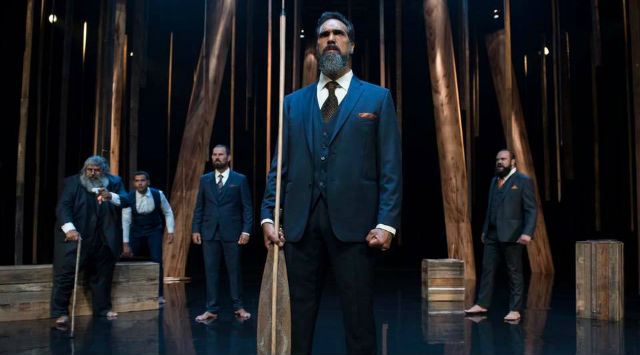
Seven men gather on the shore of Gadigal land, debating whether to welcome or to repel those arriving on ships from overseas. It is 1788, but in Jane Harrison’s The Visitors, these Aboriginal leaders are dressed in three-piece suits, and they speak an English that sounds more like characters from Reginald Rose’s Twelve Angry Men, than even any of us would today. Indeed, Harrison’s writing assumes not only the style of classic white theatre, its narrative structure is modelled after the conceit of that 1954 play, involving a council being disrupted by the doubts of a single cautiously deliberative soul.

As though purposefully addressing a Western audience, The Visitors pulls out all the stops so that there is no mistaking the Aboriginal work’s intent to question and to confront. With both content and form shaped in a way that is unequivocally understandable to colonisers, we watch these Indigenous characters painstakingly discuss an appropriate response for what they had imagined to be temporary entrants. Their compassionate struggle with the matter is only made more moving, by the enormity of the fallout that remains unbeknownst to them, that is to become the daily lived experience of all their descendants.

Directed by Frederick Copperwaite, the staging is as polished as it is passionate, with important arguments delivered in ways that are precise and affecting. Visually satisfying, with Lisa Mimmochi’s exacting set and costumes, along with Chloe Ogilvie’s elegant lights, providing a sense of sophisticated dynamism to the story. Sound design by Phil Downing, with additional music by Tim Gray, too are instrumental in transporting us deep into the psyche of rightful land owners past and present.

The ensemble is marvellously cohesive, unwavering in their dedication to this powerful tale. John Blair and Glenn Shea are particularly memorable for their exquisite timing, both performers turning on the charm, having us absolutely captivated by their effortless humour. An impressive gravity is contributed by Leroy Parsons, very convincing and engrossing as Walter, the brave one who dares go against the tide. The show is brought to an intense conclusion by Damion Hunter’s disarming soliloquy as Gordon, who in the crucial moment reveals emotions that are just as raw today as they were at the dawn of this catastrophe.

It may seem that our Indigenous are always meeting us halfway. In The Visitors, they dress and speak like their oppressors, almost like a last-ditch attempt to get people hearing. Characters in the play fail to understand why the whites feel the need to steal; that basic question so many continue to evade today. Colonisation in Australia has been a ruthless project ongoing for over two centuries, and its pace only ever gets more ferocious. One of the men in the play expresses bewilderment at the felling of just one tree in the hands of the whites. Little did he know the true depth of destruction that was to come.

www.moogahlin.org