Review: Rules For Living (Sydney Theatre Company)

Venue: Sydney Opera House (Sydney NSW), Nov 2 – Dec 19, 2020
Playwright: Sam Holcroft
Director: Susanna Dowling
Cast: Ella Jacob, Keegan Joyce, Amber McMahon, Hazem Shammas, Bruce Spence, Sonia Todd, Nikita Waldron
Images by Daniel Boud

Theatre review
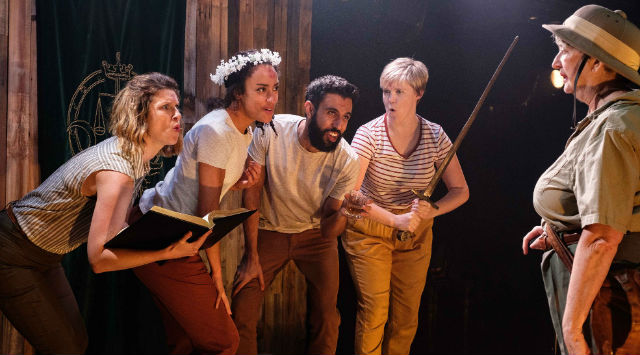
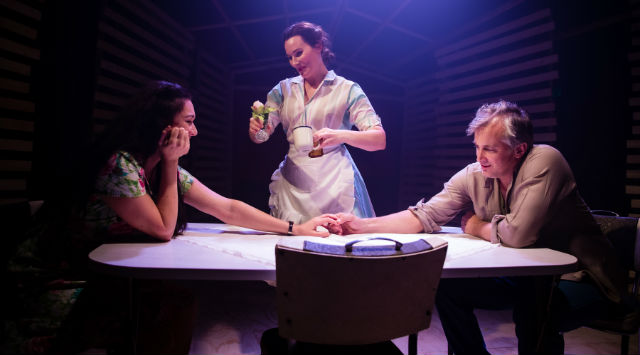
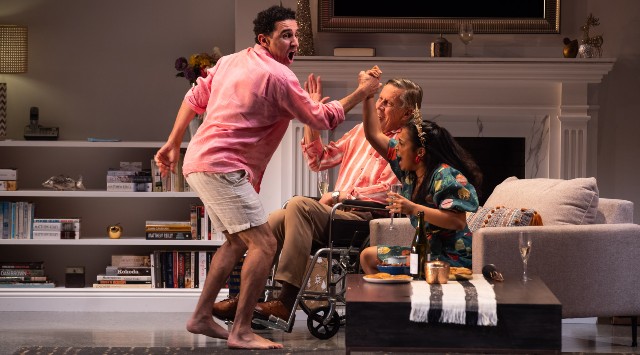
It is Christmas lunch at Francis’ home in the affluent North Shore. He is a successful lawyer, and both his sons are desperately trying to follow in his footsteps, although their authentic passions lie clearly in other fields. A lot of Sam Holcroft’s Rules For Living talks about the conflict between who we are, and who we are expected to be. It is about the standards set by society, by family, friends and lovers, that have very little to do with what one needs for a satisfying existence, and everything to do with obedience, and for keeping up with the joneses. An examination of middle class mirage is plat du jour, as served up by this predictable comedy, giving us nothing edgy or indeed revelatory.

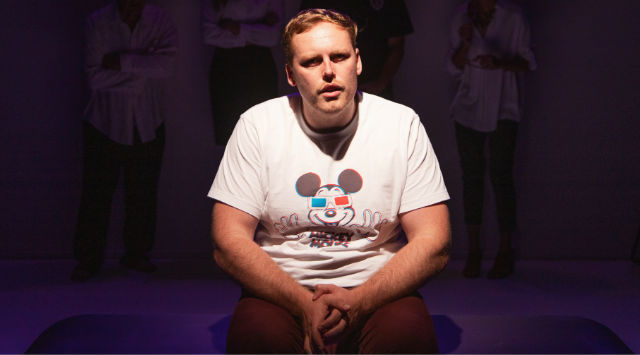
Actor Sonia Todd plays Edith, mother to the boys, especially effective when bringing emphasis to the irony of narcissistic anguish in people who have it all. Everything is too stressful in her perfect world, where not a hair is allowed to be out of place. Todd offers an accurate sense of bourgeois uptight-ness, that is valuable in our understanding of early twenty-first century Western civilisation, even though the noisy ensemble piece does ultimately prevent anything meaningful or profound to be properly conveyed.

Directed by Susanna Dowling, the show is consistently energetic, but bewilderingly unfunny. The performers work extraordinarily hard to entertain, but none seems to have located any significant humour in the piece, that they so laboriously bring to the stage. Their approaches range from realist to absurdist, all of which miss the mark, although it can often appear that there is little in the writing that is inherently amusing. Design aspects are elegant and polished, but conservatively rendered, for a production that looks, sounds and feels like the hundred Christmas comedies that have come before, always unthreatening, but banal at best.

As we try to survive a living hell comprised of Trumpism and COVID-19, telling stories about vicious family dynamics in 2020, proves to be an exercise that feels little more than a slightly quaint distraction from real life. What might have been important theatre in 2015, when Rules For Living had made its international premiere, now lacks pertinence in a vastly transformed world. There are much bigger fish to fry, and art needs to keep up.

www.sydneytheatre.com.au

Review: Enemies Of Grooviness Eat Shit (Performing Lines)

Venue: The Red Rattler Theatre (Marrickville NSW), Oct 26 – Nov 5, 2020
Creator: Emma Maye Gibson
Cast: Betty Grumble
Images by Joseph Mayers

Theatre review
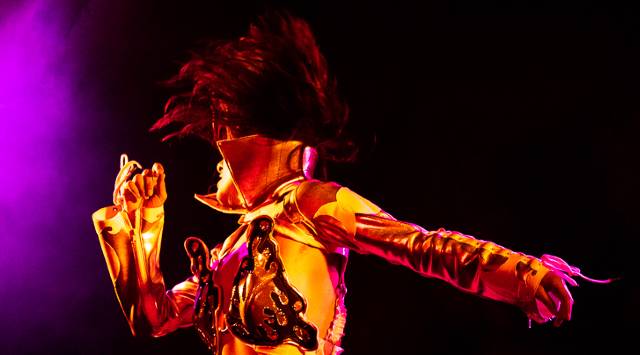
Understanding the power of love does not make one impervious to violence. To love thy neighbour, is a notion that should never have exceptions, but it seems our humanity has a habit of setting limits when it comes to generosity. The title of Betty Grumble’s latest outing, Enemies Of Grooviness Eat Shit feigns a sense of aggression, but its tongue-in-cheekness is evident. At the heart of Grumble’s show is a response to sexual violence, although it must be said that the artist resists constraints of any sort, leading to a nature of work that is stridently post-dramatic and non-linear, eluding categorisations at every juncture. The beauty of it is how one can bring interpretations of all kinds, no matter the viewer’s point of departure, and Grumble’s robust presence emanates a visceral power that rigorously provokes thought, even as our senses are consumed by her outrageous manoeuvres.

The character we come into contact with can be seen as a love warrior, oxymoronic but completely appropriate for our times of division. As North Americans march to their voting stations this week, we see a nation fighting for its survival, even though they may look more to be fighting one another. In truth, no fight is devoid of love. Humanity has been tied to death and destruction since the dawn of time, but all our transgressions are executed in the name of love, no matter how gruesome or savage. Even the Nazis say they kill for the love of their race. In Enemies Of Grooviness Eat Shit we confront the concept that hate seems always to be bred from love, yet if one is to be truly loving, ideas of revenge and justice will only turn painful and messy.

Grumble wrestles with herself and the world, as she tries to make things right. It is essentially a one-person show, but our star is constantly invoking others, most notably and with great veneration the artists Candy Royale and Annie Sprinkle, always naming collaborators and inspiring figures, as she takes charge of our communion. It is a deep understanding that for the world to be better, there can be no room for narcissism. We might only be able to speak one at a time, but efforts must find unity.

Grumble’s theatrical language prevents fissures resulting in us and them, so to talk about enemies, and to tell them to eat shit, always takes the attack back to the self. The violence if not turned inward, is certainly shared. In Grumble’s universe, Gaia and Karma are fundamental to how things are understood, and how things should be carried out. She offers a spiritual experience, but one that is devoid of naivety. If there are solutions, they can be found in guiding principles that the show teaches, not very much in words, but through the sensual and visual manifestations of what she puts her body through for our benefit.

Grumble may not have solved the world’s problems with her show, but she succeeds in introducing a moment of transcendence into each of our lives, and because to meet this artist is unequivocally unforgettable, the messages that she imparts will stick. Returning to spaces less sacred, less sublime, a part of us can sense the lingering presence of what had been witnessed, and we know that if everyone can get in touch with the Betty Grumble within, things will be all right.

www.performinglines.org.a

Review: Wonnangatta (Sydney Theatre Company)

Venue: Roslyn Packer Theatre (Sydney NSW), Sep 21 – Oct 31, 2020
Playwright: Angus Cerini
Director: Jessica Arthur
Cast: Wayne Blair, Hugo Weaving
Images by Prudence Upton

Theatre review
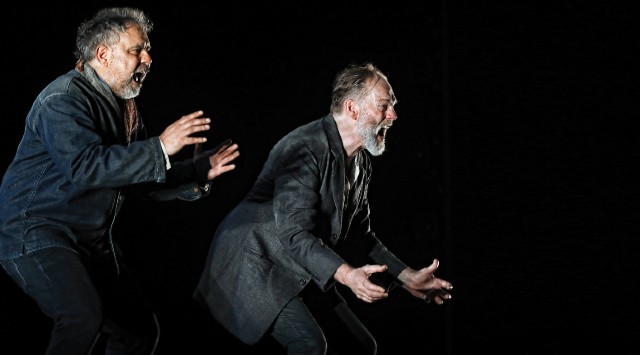
We see in Angus Cerini’s Wonnangatta, two men in various states of distress, coming to grips with the murder of a friend. The story takes place in the remote Victorian Alps, one century ago, inevitably taking the familiar tone of the Australian gothic fable. Our obsession with the landscape, and the nature of our mateship, come to the fore as the characters wrestle with isolation, despair and terror. Cerini’s writing is remarkably visceral in quality, allowing for ample manifestations of mood in the theatrical form to activate various aspects of our imagination.

Production design by Jacob Nash is sparse but highly evocative, featuring a structure reminiscent of a meandering cliff, that works in conjunction with Nick Schlieper’s lights to convincingly shepherd us into the abyss of Wonnangatta‘s haunting realms. Music and sound by Stefan Gregory provide valuable demarcations that shift our perceptions of time, in accordance with the men’s increasing bewilderment.

Actors Wayne Blair and Hugo Weaving bring undeniable charisma and gravity to the experience, although multiple blunders with collisions of their dialogue prove distracting. Director Jessica Arthur introduces a gradual crescendo to tension levels that sustains our interest, and it becomes evident that the performance is at its most enjoyable when the duo invests in the kinetic poeticism of the writing. An emphasis on the narrative’s linearity can however, work against the strengths of the show. We want to indulge in the despondent beauty of its netherworld, but often find ourselves trying to pay attention to details that detract from its more ephemeral pleasures.

Stories about our forefathers tend to involve hardship, and in 2020, that resonance is certainly apparent. There is a constant sense of foreboding in Wonnangatta that relates so directly to our lives today, as though fear, misery and anxiety are the most fundamental features of our humanity. We are reminded that survival is what we have to do. For decades, many have lived with lofty ideals, thinking that the meaning of life relates to so much more, than keeping alive to welcome the morning. It is a humbling moment, one most of us could do well to appreciate.

www.sydneytheatre.com.au

Review: Distorted (Fixed Foot Productions)

Venue: Old 505 Theatre (Newtown NSW), Mar 10 – 22, 2020
Playwright: Xavier Coy
Director: Richard Hilliar
Cast: Michael Arvithis, Xavier Coy, Emma Louise, Poppy Lynch, Lex Marinos, Tristan McKinnon, Kate Rutherford, Jack Walton, David Woodland, Sheree Zellner
Images by Becky Matthews

Theatre review
Xavier Coy’s Distorted comprises short episodes, involving ten main characters, all of whom are connected, and all of whom have less than joyful lives. They look like people from any Western city, who have struggles that look ordinary, yet none of which can be easily dealt with. Life is hard, by Coy’s estimation, but what he presents is perversely delightful. There is a veiled humour to the despondent scenarios being enacted, that feels like a bitter irony acknowledging that our complaints can only ever feel haughty when there are roofs over heads, and no shortage of food in bellies.

In Distorted, we observe the all-consuming nature of these personal problems, whilst forming a perspective that reveals these frustrations to be ultimately inconsequential and somewhat narcissistic. Director Richard Hilliar does an excellent job of depicting both the accuracy of these egocentric experiences, and a wider view that it all amounts to little. The show is captivating in every moment, with Hilliar’s knack for drama keeping us mesmerised.

Stage design by Hamish Elliot is gracefully rendered, and effective in facilitating the quick scene changes that happen throughout the duration. Jasmin Borsovsky’s lights too, help us instinctively navigate spacial transformations, as do Martin Gallagher’s sounds that work with our subconscious to make sense of the many abrupt shifts in time. A strong cast performs the piece, with each character believable and realistic. The team tells a cohesive story, remarkable with the even focus they provide so compellingly, to have us invest in every little detail that is being conveyed.

Most of the people in Distorted find the world a difficult place, but they do little to seek to change it. One of them spends considerable time in psychotherapy, where he tries to find ways to fix himself, even though the play gives no evidence of the young man suffering any illness. We have become conditioned to always think that it is the individual who needs improvement, that when things go wrong, we need to fix ourselves, without ever questioning if it is the external environment that requires interrogation. Happiness must come from within, but when we encounter anxiety and exasperation, we must not forget to transcend the self, and identify first, the structures we operate under that are determined to beat us down.

www.facebook.com/fixedfootproductions

Review: Cusp (ATYP)

Venue: SBW Stables Theatre (Kings Cross NSW), Mar 11 – 28, 2020
Playwright: Mary Anne Butler
Director: Fraser Corfield
Cast: Stevie Jean, Josh McElroy, Nyasha Ogden
Images by Tracey Schramm

Theatre review
In a Northern Territory rural town, three young people are about to leave their teenage years behind. Unlike many of their counterparts in big cities, Elvis, Maddie and Rosie have no time to waste. Mary Anne Butler’s Cusp tackles the worlds of those who do not have the luxury to slowly figure things out. It is a story about class and poverty, an exploration into structures we have to operate under that are manifestly unjust and inadequate, yet are rarely questioned. At seventeen or eighteen, characters in the play have to deal with matters as severe as pregnancy and incarceration, with little support and guidance from those who should know better.

Butler’s scintillating dialogue keeps us engrossed in the personalities she introduces. Director Fraser Corfield brings sincerity and honesty to the play, creating a show with genuine resonances, even though its staging can at times feel static and visually repetitive. Lights by Jessie Davis and sound by Brad Fawcett are sensitively designed, for a remarkably elegant style of presentation.

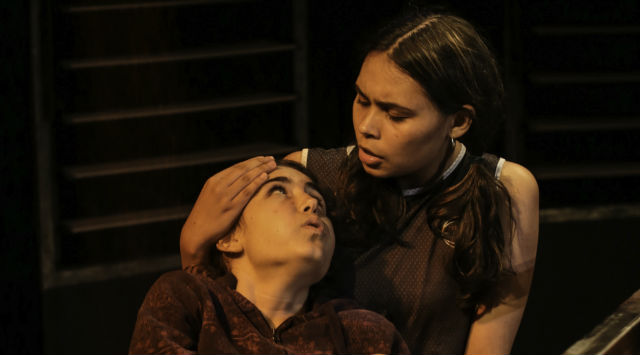
Three impressive actors bring passion and conviction to their roles, all of them adept at having the audience spellbound. As Rosie, Nyasha Ogden is a captivating presence, warm and very believable as the Indigenous girl trying to reconcile wishes of her community with personal desires. Stevie Jean depicts Maddie’s loss of innocence with a charming boldness, effective in helping us contemplate how a very young woman can exercise her agency. A memorable Josh McElroy is detailed and delicate as Elvis, a familiar juvenile type with troubling anger issues.

The sentence “some people get better choices to choose from” is uttered twice in Cusp. There is overwhelming evidence that wealth inequality in Australia has risen to an unprecedented level, with the general population experiencing over half a decade of stagnating wages, while constant reports of GDP growth fool us into thinking that the country is being managed well. We continue to think of ourselves as an egalitarian people, but are simultaneously, completely comfortable with ignoring the fact that only a small percentage is reaping the rewards of a strong economy. The rest of us are stuck with the indoctrination, that if life is not working out well, we only have ourselves to blame. We are in fact kept in the dark, whilst the few who are much better off, steal everything they can, in broad daylight.

www.atyp.com.au

Review: Everybody (Cross Pollinate Productions)

Venue: Kings Cross Theatre (Kings Cross NSW), Mar 6 – 21, 2020
Playwright: Branden Jacobs-Jenkins
Director: Gabriel Fancourt
Cast: Kate Bookallil, Caitlin Burley, Annie Byron, Giles Gartrell-Mills, Isaro Kayitesi, Mansoor Noor, Kate Skinner, Samm Ward and Michael Wood
Images by Clare Hawley

Theatre review
The idea is to think of that one thing you can take with you, when you die. Everybody by Branden Jacobs-Jenkins talks about the most common of denominators. A woman named Death has come knocking, and is asking Everybody to bring along one other, to meet their maker. It is worth pointing out that Everybody is played by any one of five actors, determined at each performance by lottery. As we watch ourselves shuffle off this mortal coil, leaving behind all things material, we are urged to consider a certain distillation of being, that occurs in the final hour, and come to a conclusion of what it is that might accompany the departure of each spirit.

It is a cleverly structure play, featuring thought-provoking and immensely enjoyable dialogue. Its raison d’etre may ultimately feel somewhat prosaic, but the journey Everybody takes us on, is a very satisfying one. Dynamic work by lighting designer Morgan Moroney and sound designer Felicity Giles, ensure that the production is consistently energetic and vibrant. Set design by Stephanie Dunlop makes effective use of space, with a simple solution that keeps us all engaged with every stage activity.

Gabriel Fancourt’s direction delivers a show that entertains from start to finish, able to position a compelling sense of theatricality alongside earnest explorations of the text’s philosophy. A charming cast, including five brave performers who allow a nightly act of chance decide their fate, collaborate on a presentation unique to the live form. When playing the part of Everybody, Isaro Kayitesi is tremendously impressive, with a glorious combination of vulnerability, complexity and authenticity, that she renders with apparent ease. Giles Gartrell-Mills is our usher, comfortably authoritative in the role, but also disarming with a sincerity that he exudes quite naturally. Death is a comical character when portrayed by Annie Byron, whose unremitting joviality brings splendid contrast to the grim notions that she embodies.

God is omnipresent in Jacobs-Jenkins’ writing, but Nature scarcely gets a mention. In 2020, it is our natural world and environment that has become a major factor in how we conceive of mortality and the future. Perhaps God has all along been indivisible from Nature, yet so many of our minds have learned to have them separated. There is a lot of truth in saying that we create God in our image (and vice versa), and for those of us who think of God and Nature as different, this must be the day of reckoning, the final opportunity for us to come to grips with the fact that it is us who are at the mercy of Mother Earth.

www.crosspollinate.com.au

Review: The Bridges Of Madison County (Hayes Theatre)

Venue: Hayes Theatre Co (Potts Point NSW), Mar 6 – Apr 5, 2020
Book: Marsha Norman (based on the novel by Robert James Waller)
Music & Lyrics: Jason Robert Brown
Director: Neil Gooding
Cast: Michael Beckley, Anton Berezin, Beth Daly, Kate Maree Hoolihan, Zoe Ioannou, Katie McKee, Ian Stenlake, Grady Swithenbank
Images by Grant Leslie

Theatre review
When we encounter Francesca, she is a housewife in 1960s Iowa, with 2 kids and a husband, seemingly happy to be on a farm living the simple life. A fortuitous meeting with photographer Robert however, reveals that she does want more. The Bridges of Madison County is one of the most famous of American romances, a novella by Robert James Waller that has sold over 60 million copies since its initial publication in 1992. Francesca’s struggles about fulfilling her duties as wife and mother, are presented as completely incongruent with what might be a greater happiness. For a moment, she experiences exhilaration with Robert, but must weigh the consequences should she dare to follow her heart.

This musical version, first created in 2013, features strong songwriting by Jason Robert Brown, but its individual numbers, although delightful, do not necessarily add up to a satisfying plot for the show. Direction by Neil Gooding is able to suffuse a sense of intensity to the emotions being depicted, but the general pace for its storytelling is unsatisfying. Design and technical aspects of the production are on the whole accomplished, with Phoebe Pilcher’s work on lights noteworthy for bringing valuable flamboyance to the staging.

Performer Kate Maree Hoolihan plays a very sentimental Francesca. Her interpretation tends to be simplistic, but proves ultimately to be a moving one. Ian Stenlake looks every bit the National Geographer photographer and love interest Robert, but some of his singing at crucial points are not quite up to scratch. Although evident that the couple works hard to find chemistry, the attraction between the two is never really convincing. Beth Daly and Michael Beckley however are memorable as Marge and Charlie, quirky neighbours who bring occasional but very needed humour to the staging.

In the song “Almost Real”, we hear Francesca talk about her relationship with Chiara, her sister in Naples, who “would open her legs just as easy as speaking.” In her efforts to separate herself from that negative perspective of a free woman, Francesca spends her life doing what she thinks is the right thing, but it is clear that all she does is dedicate herself to being a subject of conformity. Although an indisputably credible character, the writers of Bridges refuse to allow Francesca the gratification she craves, and deserves. We are made to think that to be a good mother, Francesca simply has to give herself up, and that we must all realise, is a lie.

www.goodingproductions.com

Review: Good Mourning (The Old 505 Theatre)

Venue: The Old 505 Theatre (Newtown NSW), Mar 3 – 8, 2020
Playwright: Sonia Dodd
Director: Hannah Armstrong
Cast: Gabrielle Aubrey, Coen Lourigan, Madelaine Osborn, Ben Rodwell

Theatre review
Told from the perspective of an 8 year-old, Good Mourning by Sonia Dodd is about a young family dealing with the impending death of a parent. The four children have to grapple with a diagnosis that can only be described as traumatic; their father has advanced cancer with only three months to live. It is however not a grim story that we discover. The family finds uplifting ways to spend their remaining time together, cherishing their precious days and doing what children do best, to find the light under any circumstance.

At just forty minutes or so, Dodd’s writing is concise but satisfying, with an honesty that circumvents sentimentality, for a discussion on grief that always feels authentic. Hannah Armstrong directs this story based on her own experiences, inventive and effervescent in style, surprising us with the optimism and entertainment she is able to provide. Also noteworthy are Rhys Mendham’s efforts with lighting design, successful at providing consistent visual variation to a very bare stage.

The ensemble is charming and well-rehearsed, beautifully cohesive with all that they present. Gabrielle Aubrey, Coen Lourigan, Madelaine Osborn and Ben Rodwell play a range of characters, each one spirited and cleverly imagined. Their portrayal of the children’s innocence is especially effective, able to tell a sad story without excessive despondency, thereby encouraging us to think about death and mourning in a healthy manner. The very definition of life means that we must encounter loss. Learning to cope is essential, and knowing how to live with vibrancy after saying goodbye, is crucial.

www.old505theatre.com

Review: Hamlet (Bell Shakespeare)

Venue: Sydney Opera House (Sydney NSW), Feb 29 – Apr 4, 2020
Playwright: William Shakespeare
Director: Peter Evans
Cast: Jeremi Campese, Tony Cogin, Jack Crumlin, James Evans, Harriet Gordon-Anderson, James Lugton, Jane Mahady, Lisa McCune, Robert Menzies, Aanisa Vylet, Sophie Wilde
Images by Brett Boardman

Theatre review
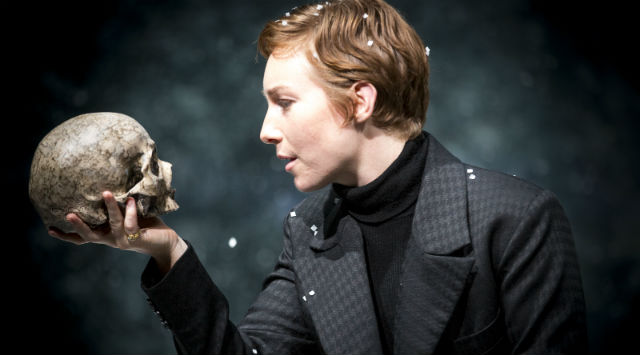
Having very recently lost his father, the young prince is understandably grief-stricken. Hamlet obsesses over his mother’s quick remarriage to the new King Claudius, almost as a form of distraction, but when the ghost of the dead king arrives to reveal that it was his own brother Claudius who had killed him, Hamlet becomes overwhelmed with fury. More than a revenge story, Shakespeare’s Hamlet examines the meaning of death, from the vantage point of a man obsessed with bereavement.

It is a handsome production, with Benjamin Cisterne’s lights giving a glamorous finish to the staging, and designer Anna Tregloan’s 1960’s costumes adding a sense of whimsy. Tregloan’s cyclorama depicts a beautiful Danish snowscape, but an awkward house-shaped frame sits centre stage, doing little more than to confuse with its lack of purpose. Video projections by Laura Turner helps us empathise with Hamlet’s tragic circumstances, as does Max Lyandvert’s restrained music compositions.

Director Peter Evans’ conservative style may not deliver anything unexpected, but his rendition is likely to appeal to fans of Shakespeare who favour a more conventional approach. Actor Harriet Gordon-Anderson is insufficiently charismatic as the lead, but displays clear dedication to her craft. What she offers as the Danish prince is not always convincing, due in part to her slight stature, although there is no questioning her conviction and focus for the role. The two problematic women in Hamlet, Gertrude and Ophelia, are played by Lisa McCune and Sophie Wilde respectively, both performers able to convey a certain level of power and integrity, in spite of Shakespeare’s intentions to portray them as useless. Robert Menzies leaves a strong impression as Polonius, animated and entertaining as the court’s chief counsellor.

In the twenty-first century, it is easy to take issue with the representation of women in Shakespeare’s work. We are far less likely to accept as reasonable, the extremely unbalanced way in which gender is expressed in his oeuvre. The current trend of placing women actors in key male roles does, to some extent, soften the blow of insults to half of humankind, but the strategy is rarely if ever, able to comprehensively address the gender problem that figures so centrally in all of Shakespeare’s narratives.

www.bellshakespeare.com.au

Review: Artslab: Behind Closed Doors (Shopfront Arts Co-op)

Venue: 107 (Redfern NSW), Feb 26 – Mar 1, 2020
Images by Clare Hawley

Stalls
Playwrights: Lana Filies, Lily Hensby
Devised and performed by: Lana Filies, Olivia Harris, Lily Hensby, Cara Severino

Little Jokes In Times Of War
Written, directed and performed by: Charlotte Salusinszky

Stripped
Written, directed and performed by: Luke Standish

Theatre review
Artslab: Behind Closed Doors features five works, three of which are in the theatrical form. Created by young emerging artists, they combine to offer a refreshing experience, even if style and tone are extremely varied from one to another.

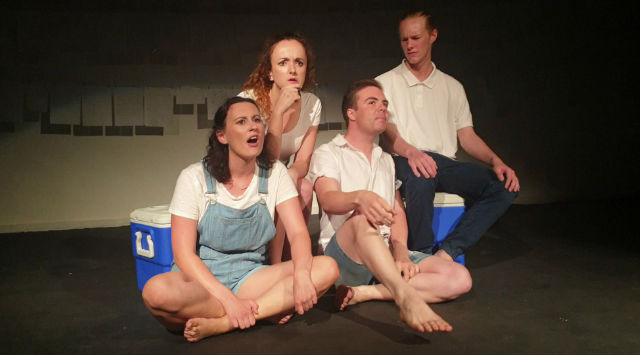
Stalls is a collaboration between Lana Filies and Lily Hensby, exploring toilet humour with a feminist approach, inspired by the concept of an idealised woman that allows no capacity for the most basic of all bodily functions, defecation. The performance is devised by the writers, along with additional cast members Olivia Harris and Cara Severino, for a riotously funny show that stridently rejects notions of sugar and spice and all things nice. Chemistry between the four is joyous, for an effervescent thirty minutes that entertains from an unmistakably political perspective.

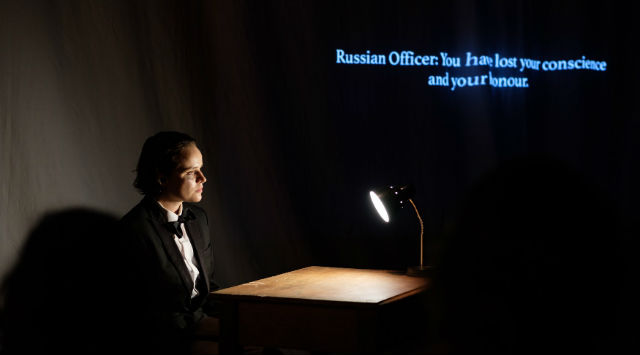
Charlotte Salusinszky goes in search of her Hungarian roots in Little Jokes In Times Of War, and unearths a story of inter-generational trauma through an examination of her grandmother’s life. Salusinszky’s almost psychic impulses function as a mode of connection with her family history, inspiring a sort of time travel, going back to locate ancestral meanings, so that she can find, and crystallise, herself in the process. It is a rich text that comes to be, and the artist’s remarkable proficiency on stage, as performer and director, is a revelation.

The thoughts of an erotic stripper are documented in Luke Standish’s Stripped, a poetic and melancholic look at one man’s experience of employment in the adult industry. It is, appropriately, a predominantly physical presentation, but made abstract in a way that reveals, more than anything, the subject’s emotional state. Even at just half an hour, Stripped is repetitive, unable to provide significant elucidation beyond the predictable and obvious, but its imagery is compelling, whether Standish chooses to be clothed or not.

We live full lives behind closed doors, but it is what can be shown to others, that determines so much of identity. Art is most valuable when it lifts the veil on that which lays dormant. Art helps us know ourselves, and as narcissistic humans, that promise of reaching deeper into our own truths, is a huge thrill. Theatre furthers that mission, by coalescing truth into consensus, so that when we sit side by side in a darkened room, something magnanimous unites us, if and when the magic happens.

www.shopfront.org.au