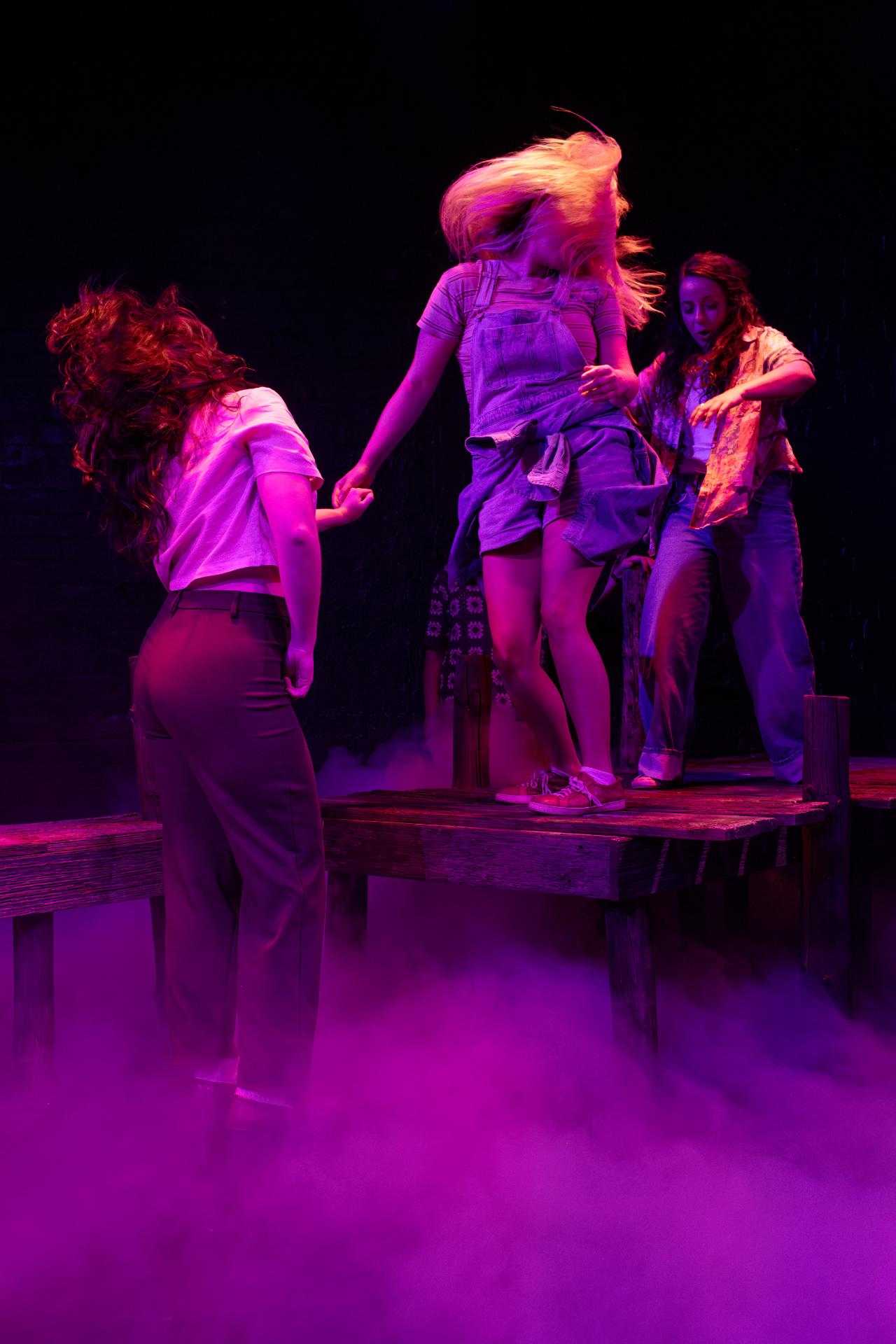
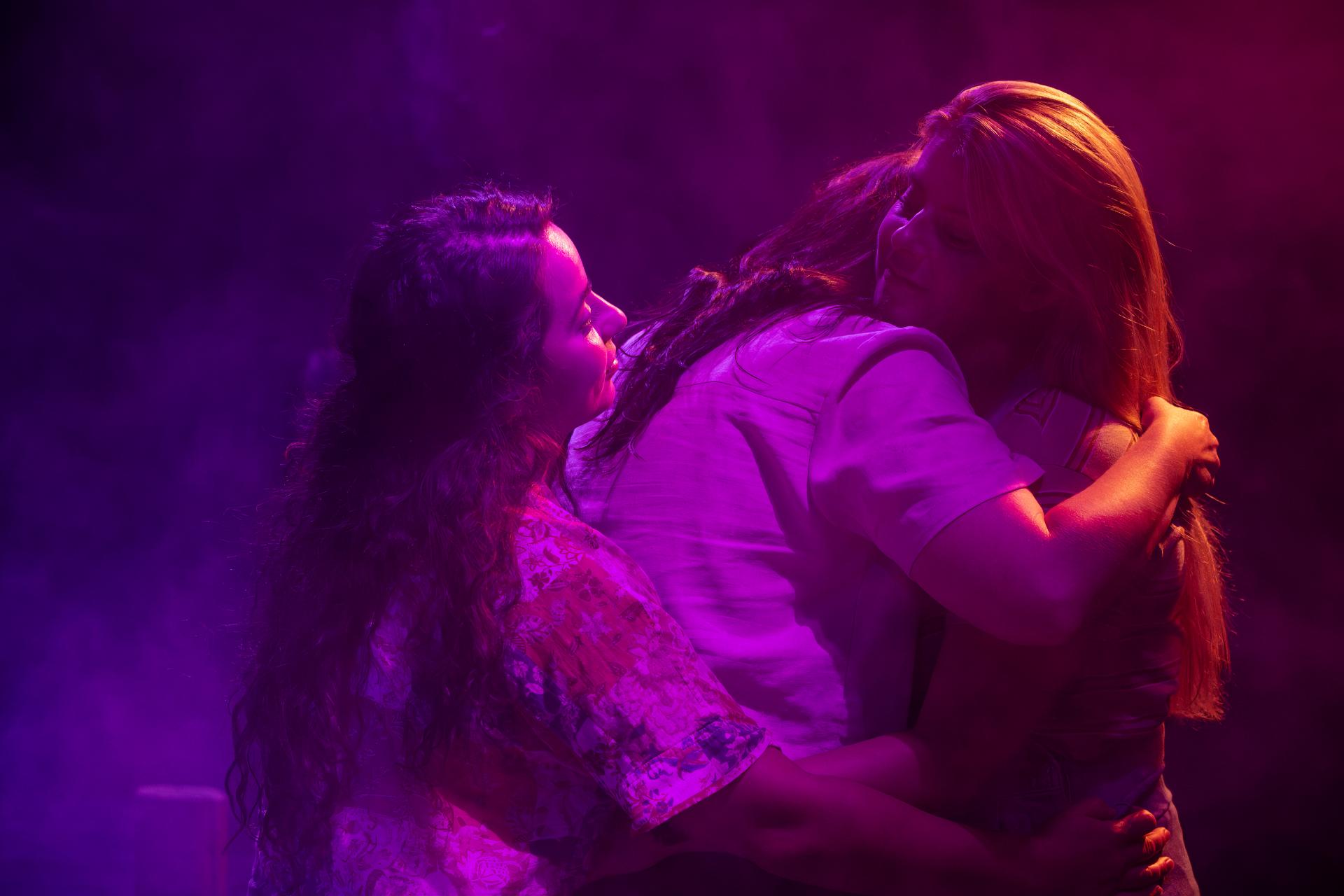
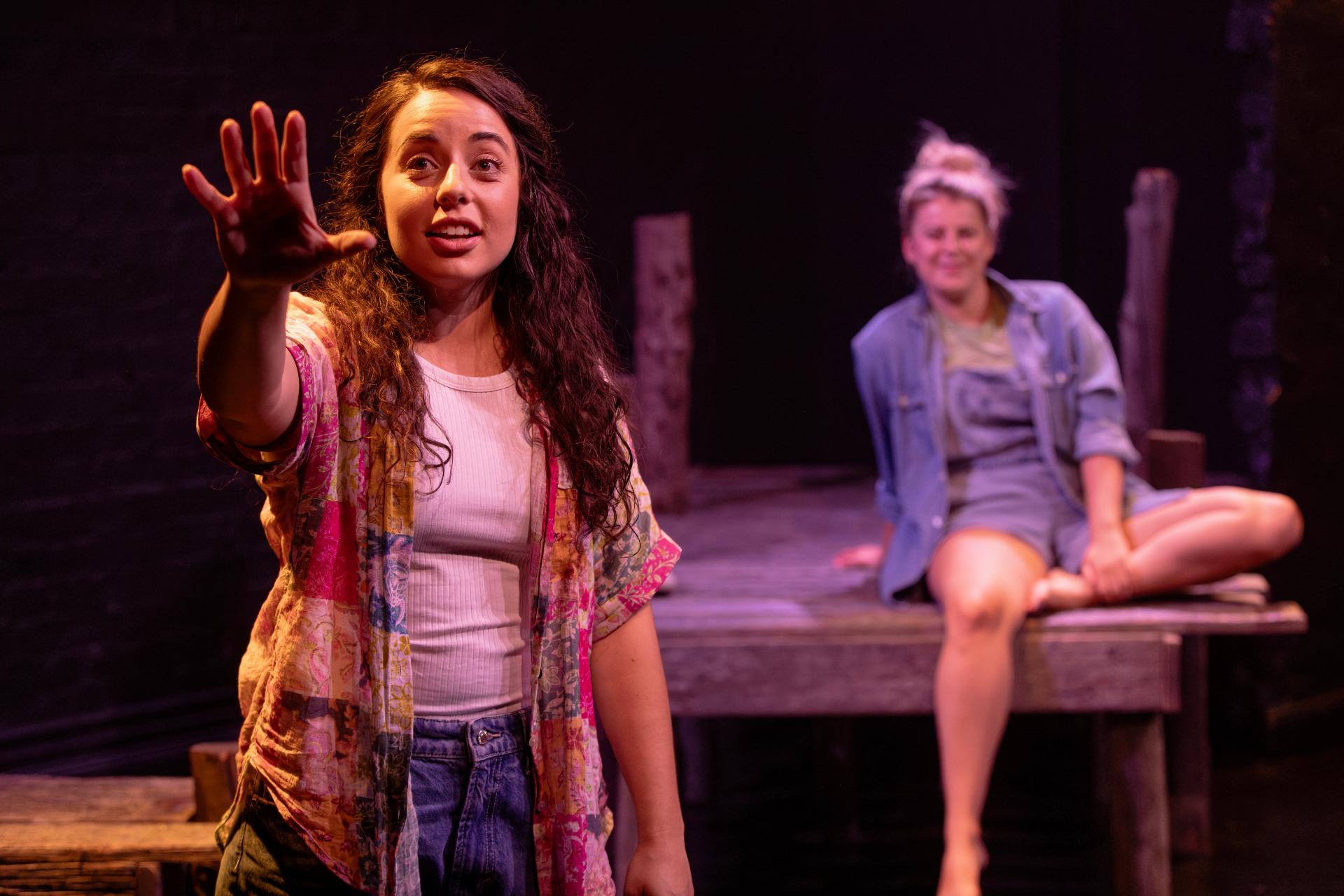
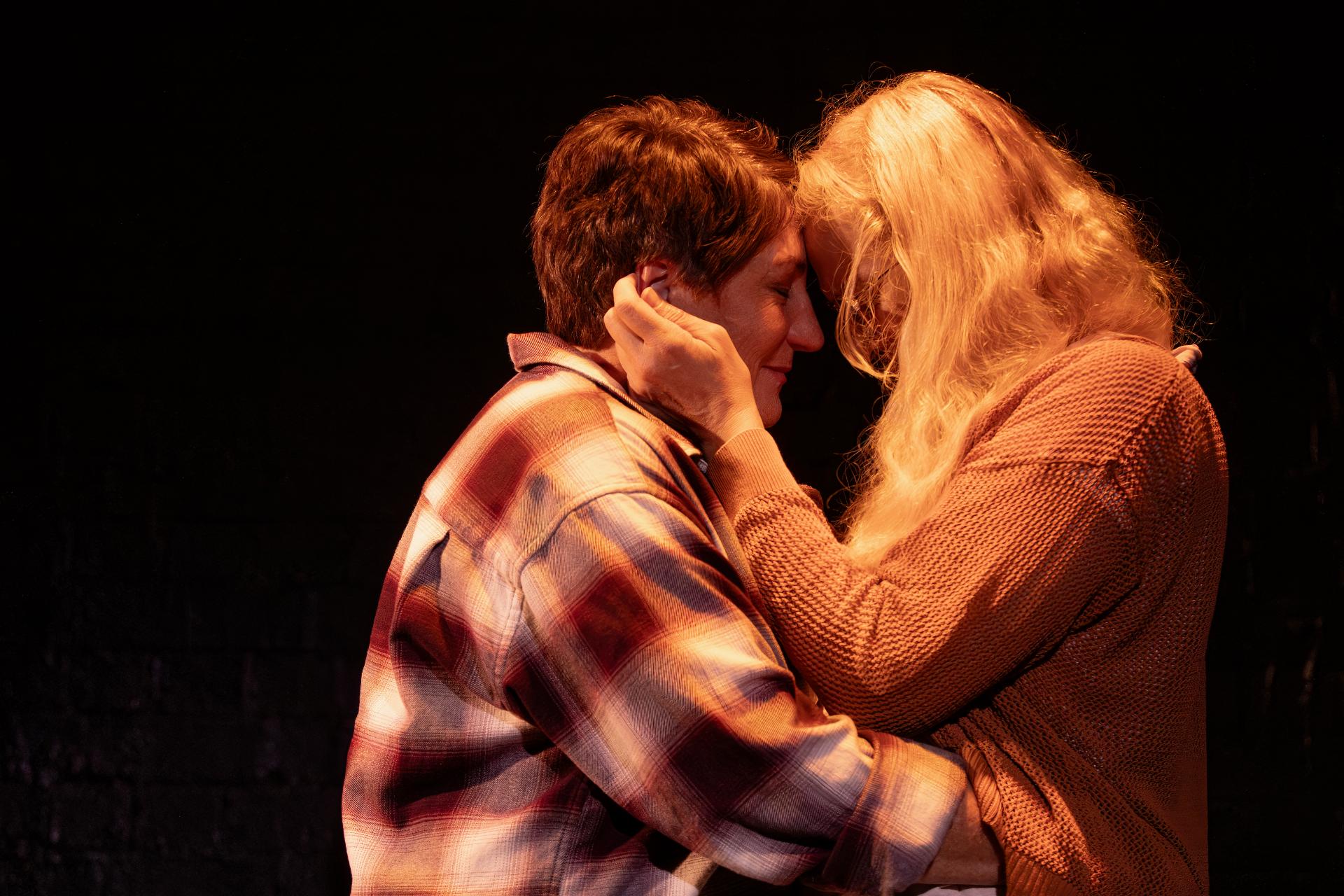
Review: Frame Narrative (Old Fitz Theatre)

Venue: Old Fitzroy Theatre (Woolloomooloo NSW), Mar 8 – 30, 2024
Playwright: Emily Sheehan
Director: Lucy Clements
Cast: Madeline Li, Megan O’Connell, Jennifer Rani, Charles Upton, Emma Wright
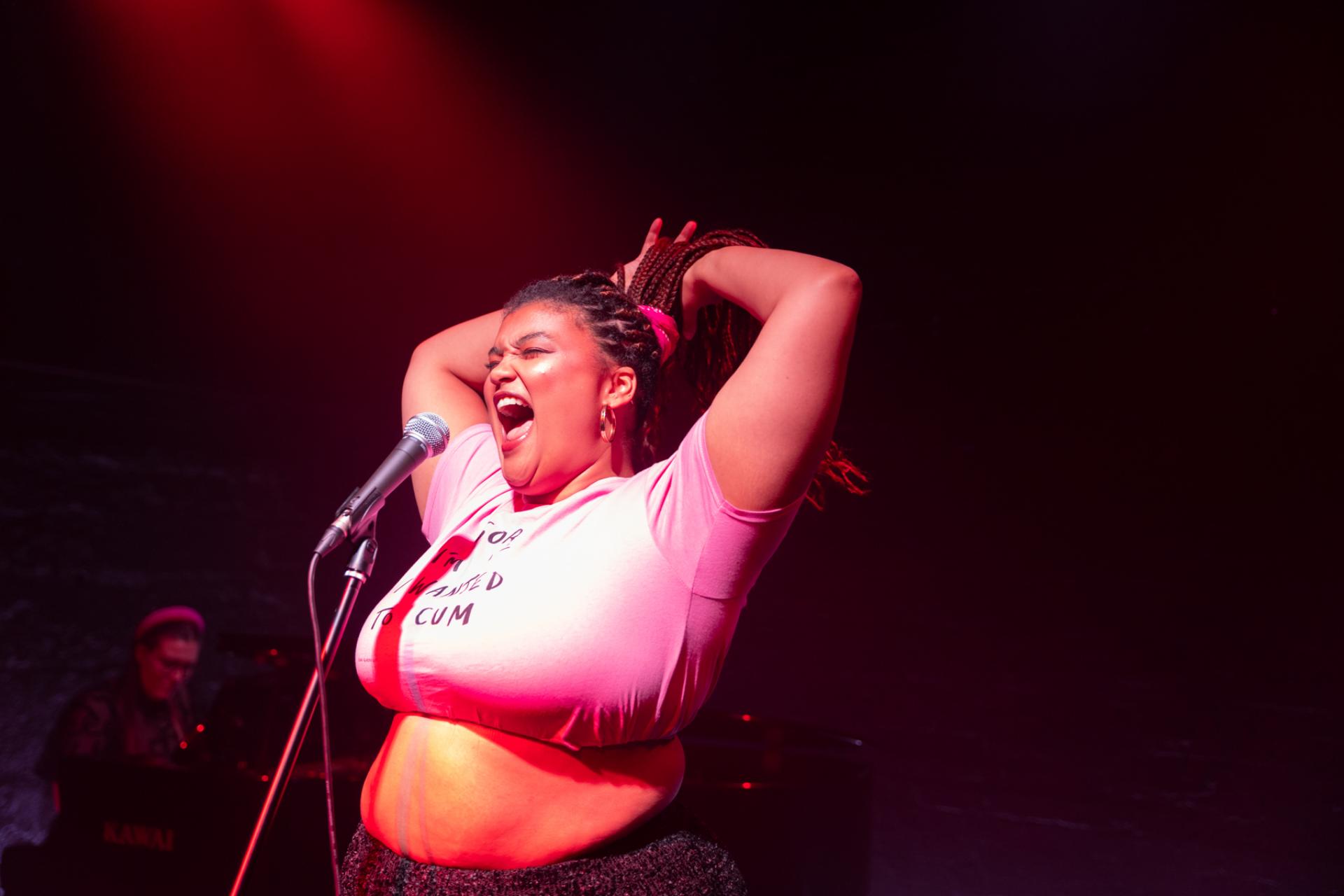
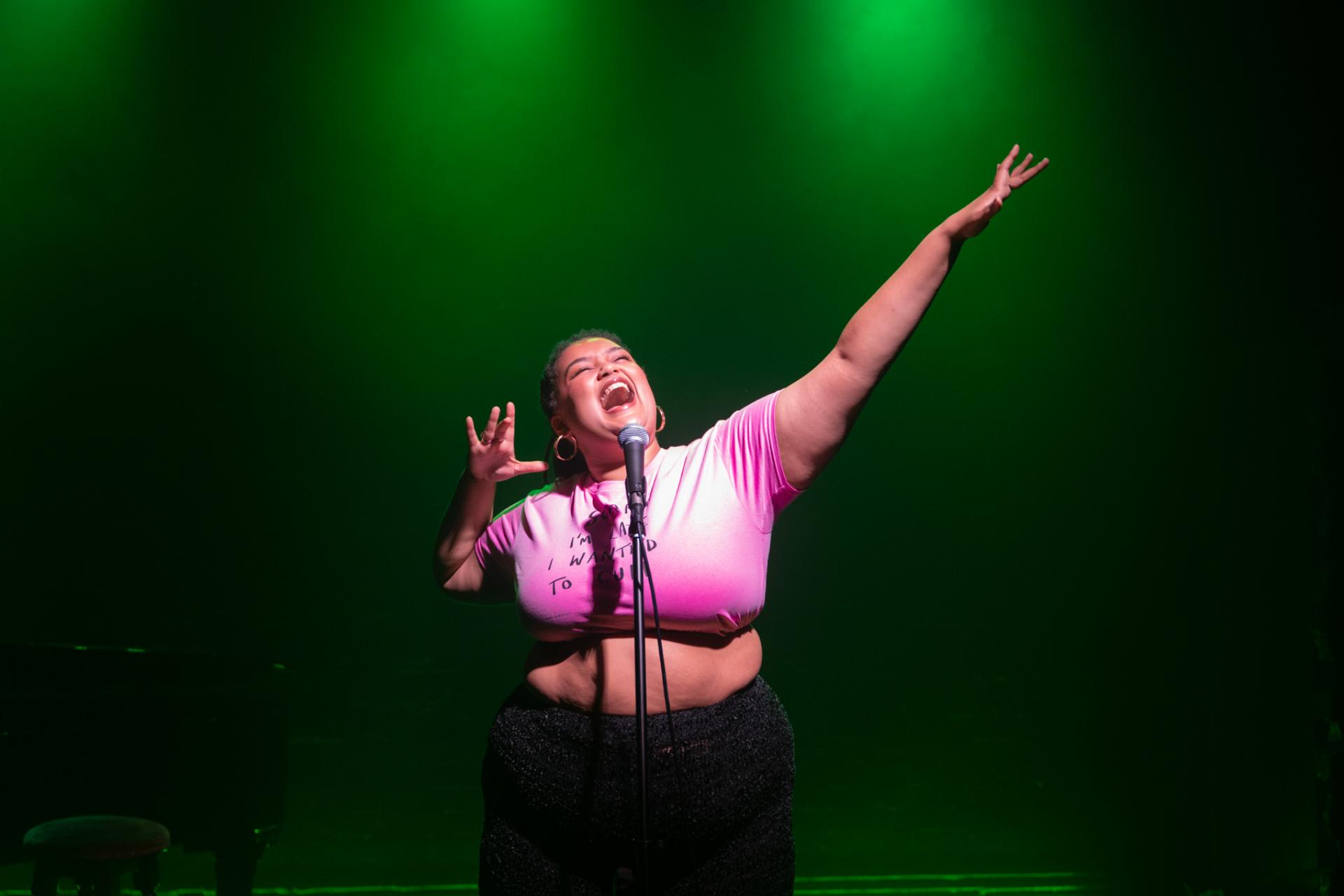
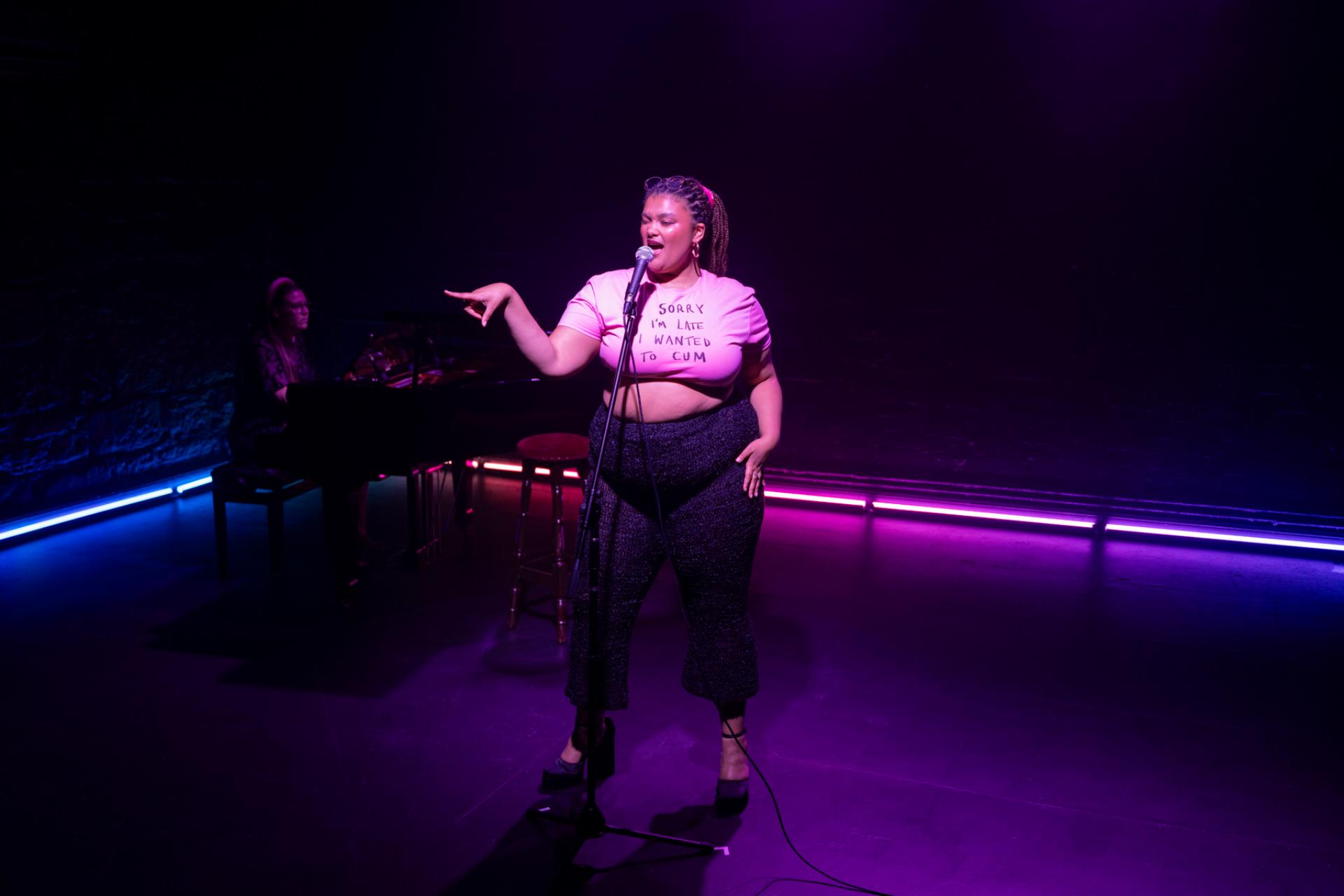
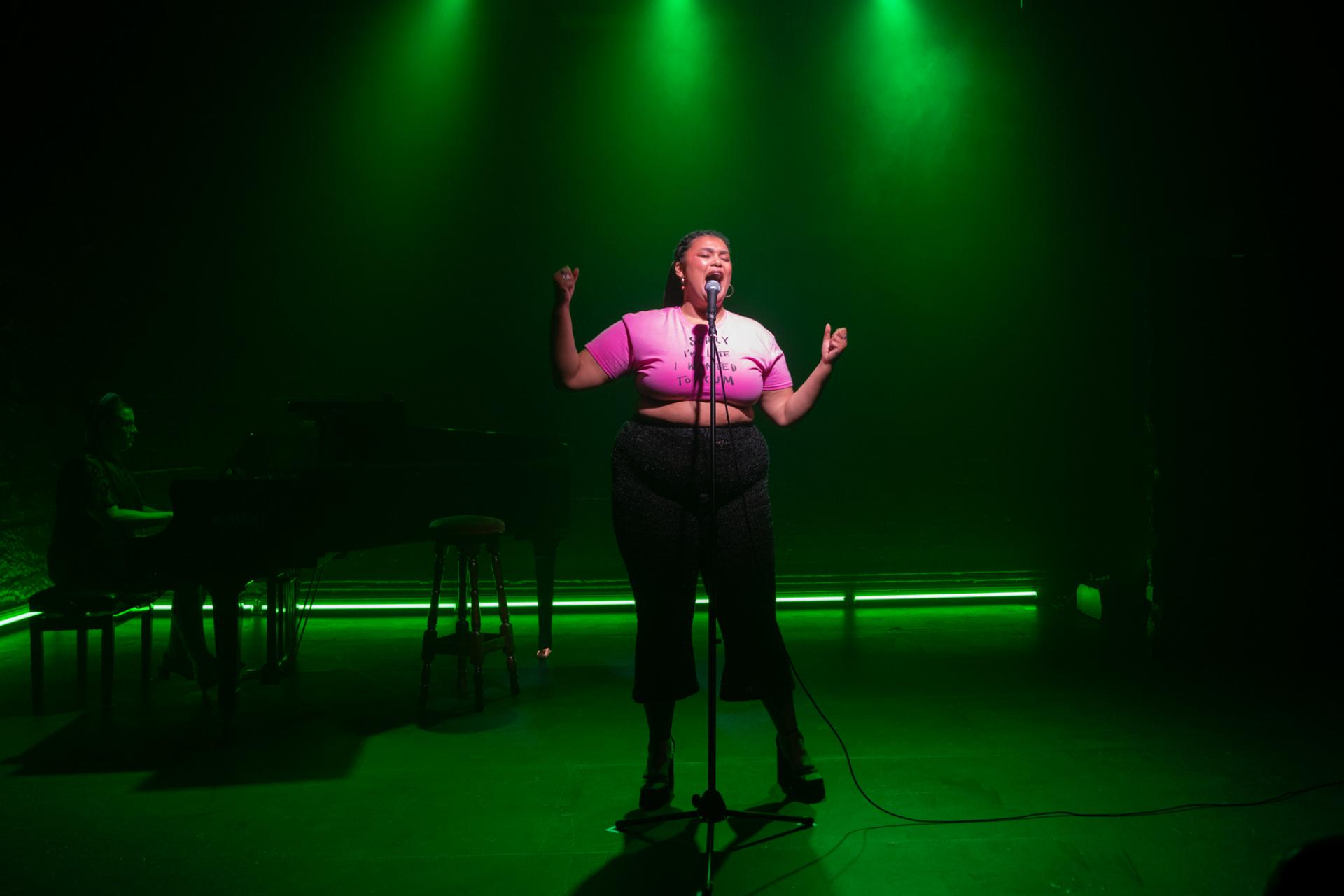
Images by Phil Erbacher and HollyMae Steane Price

Theatre review
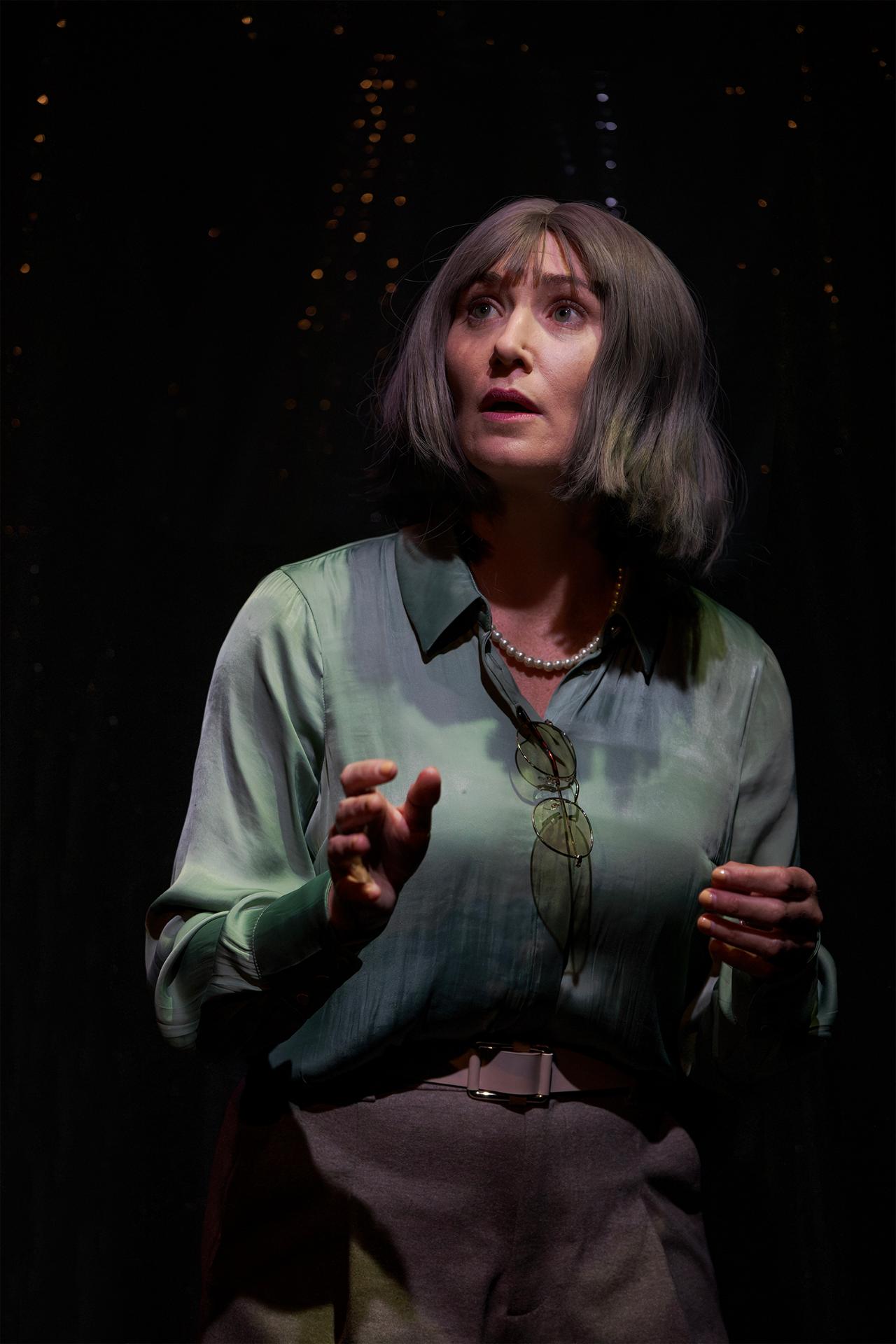
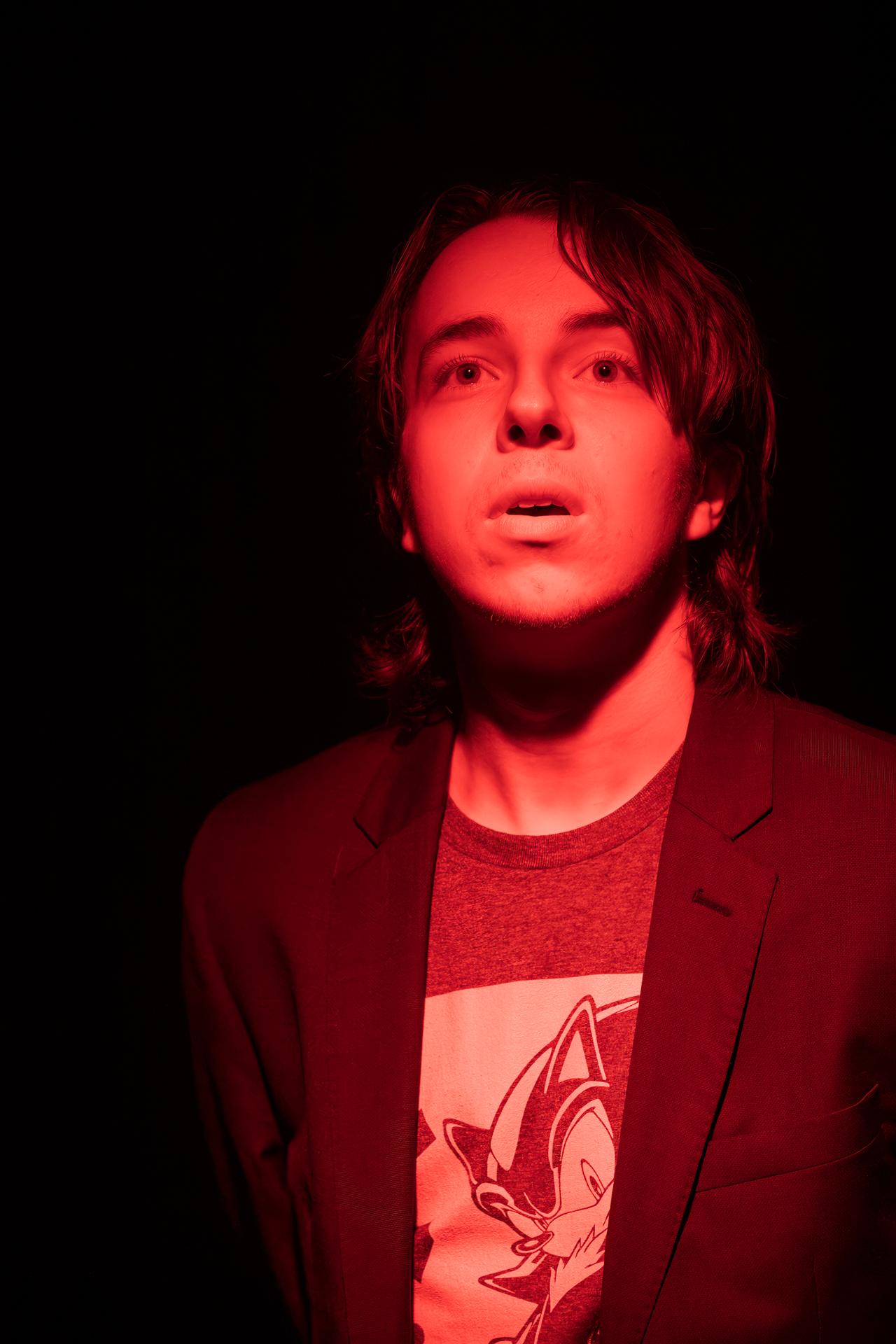
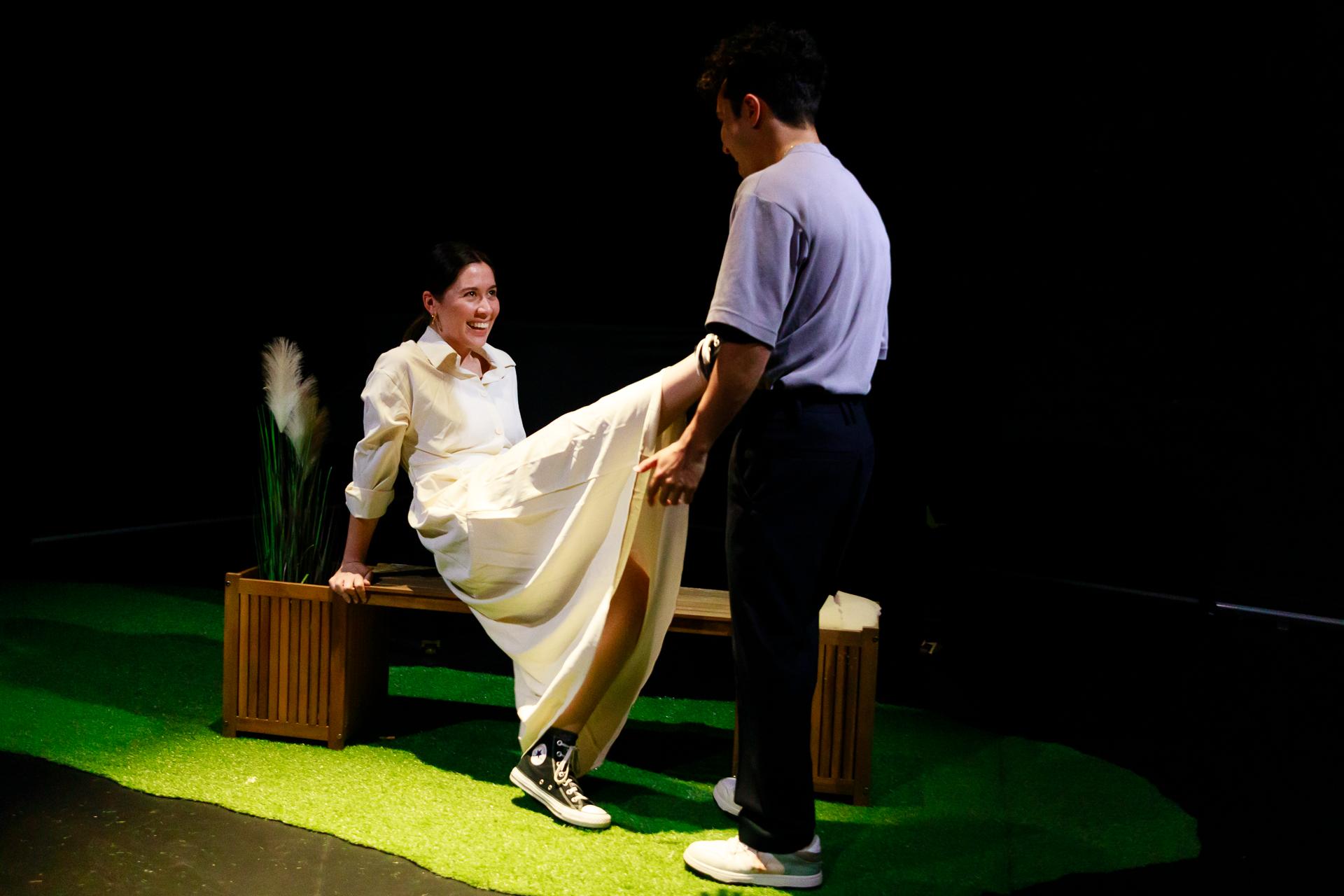
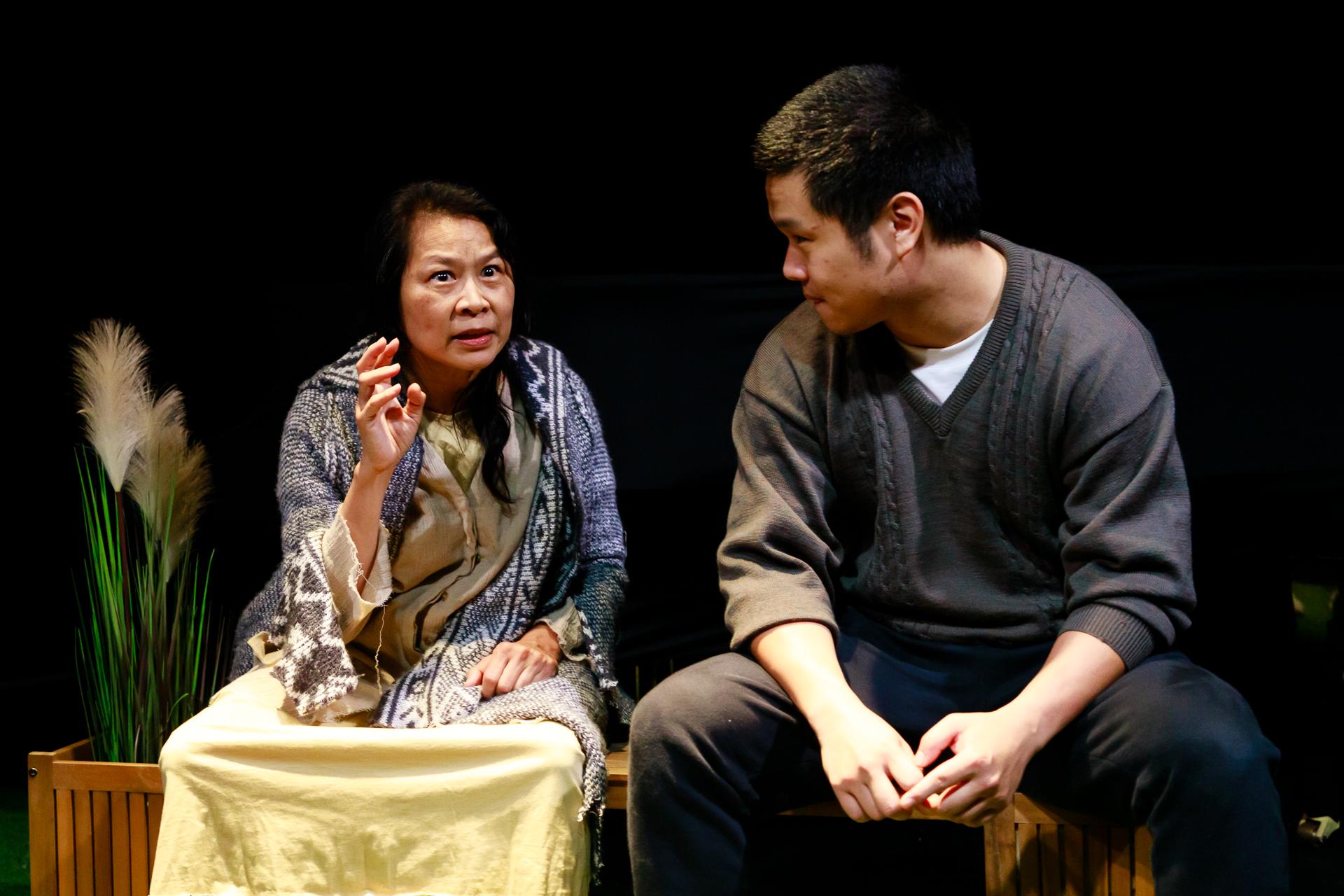
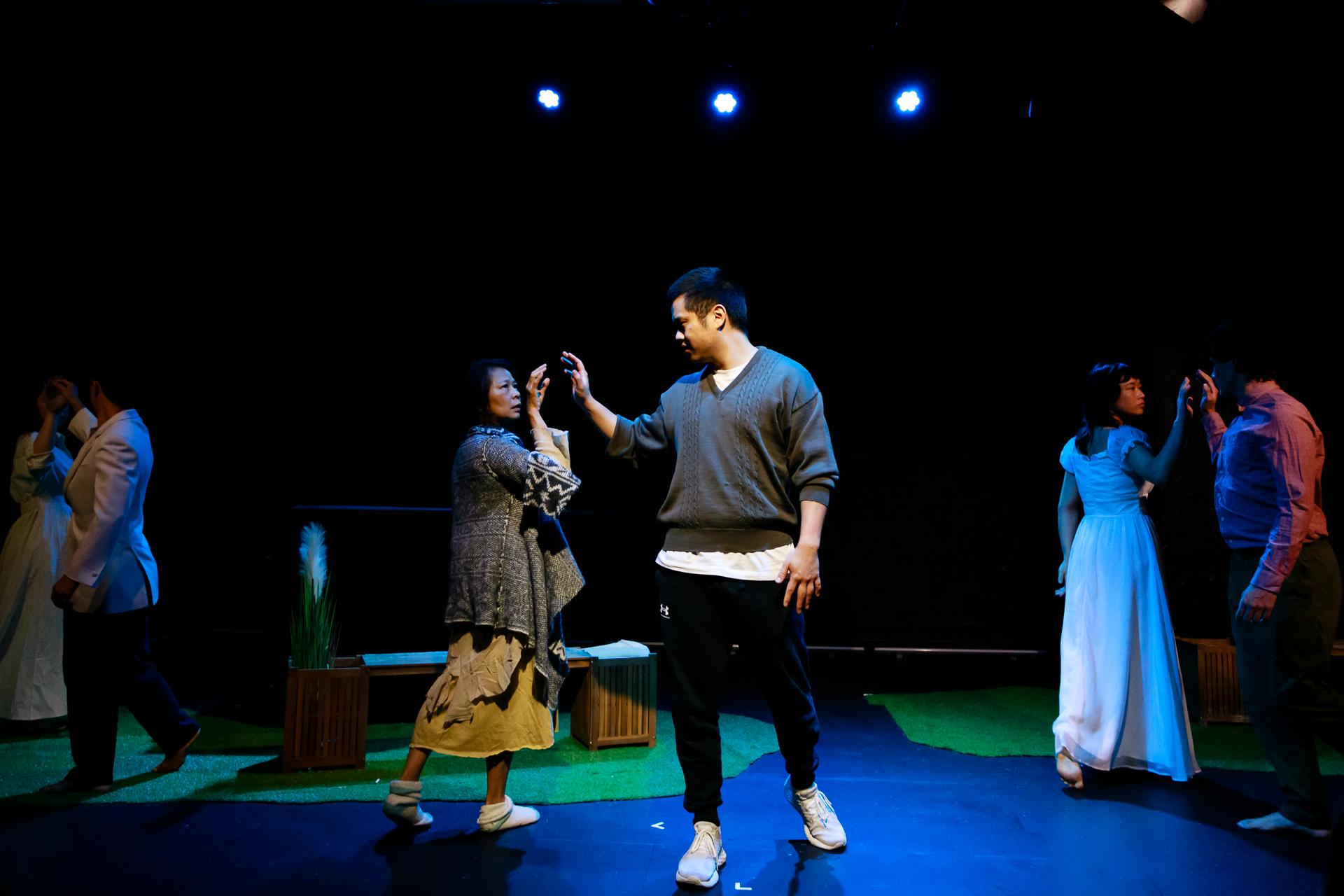
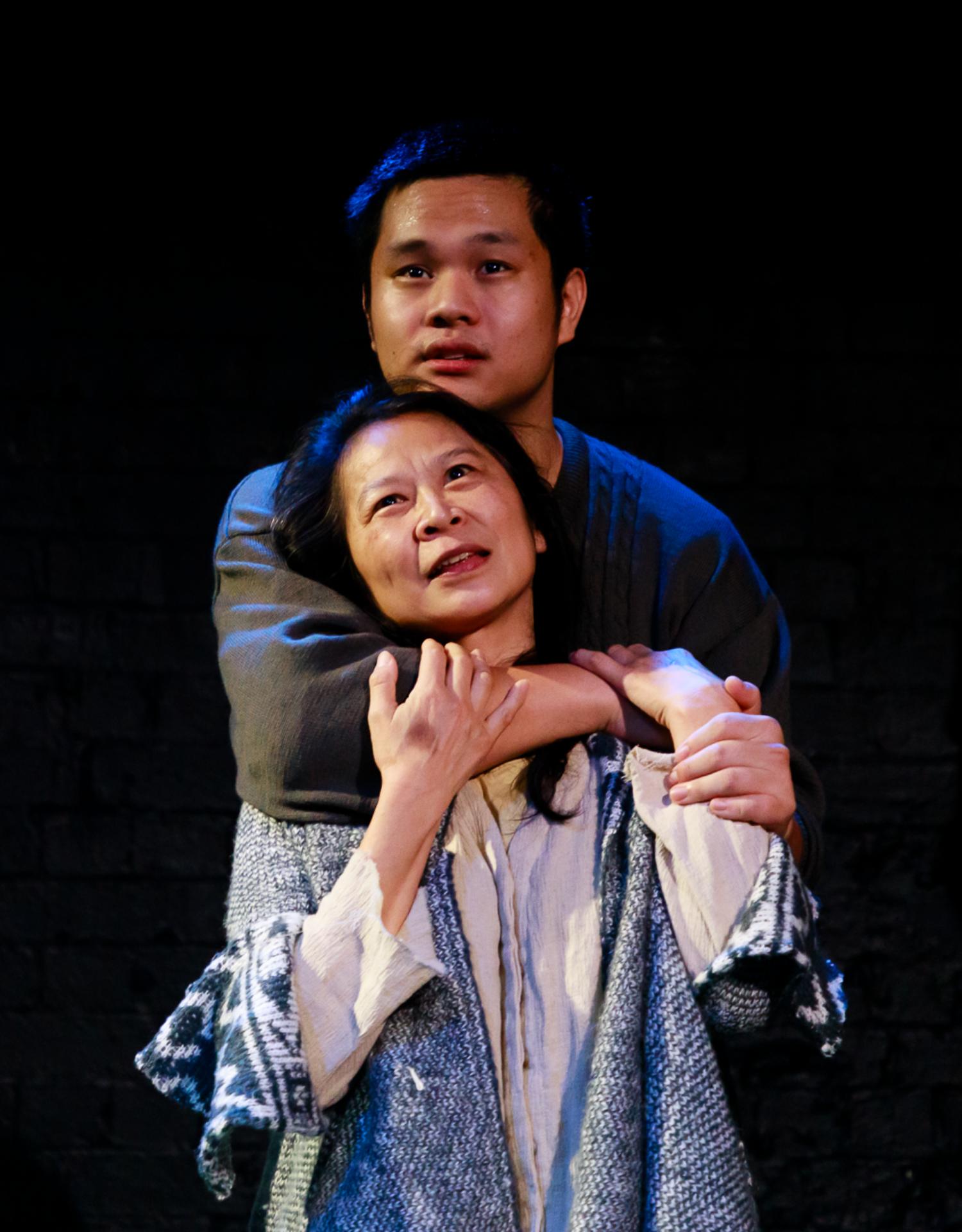
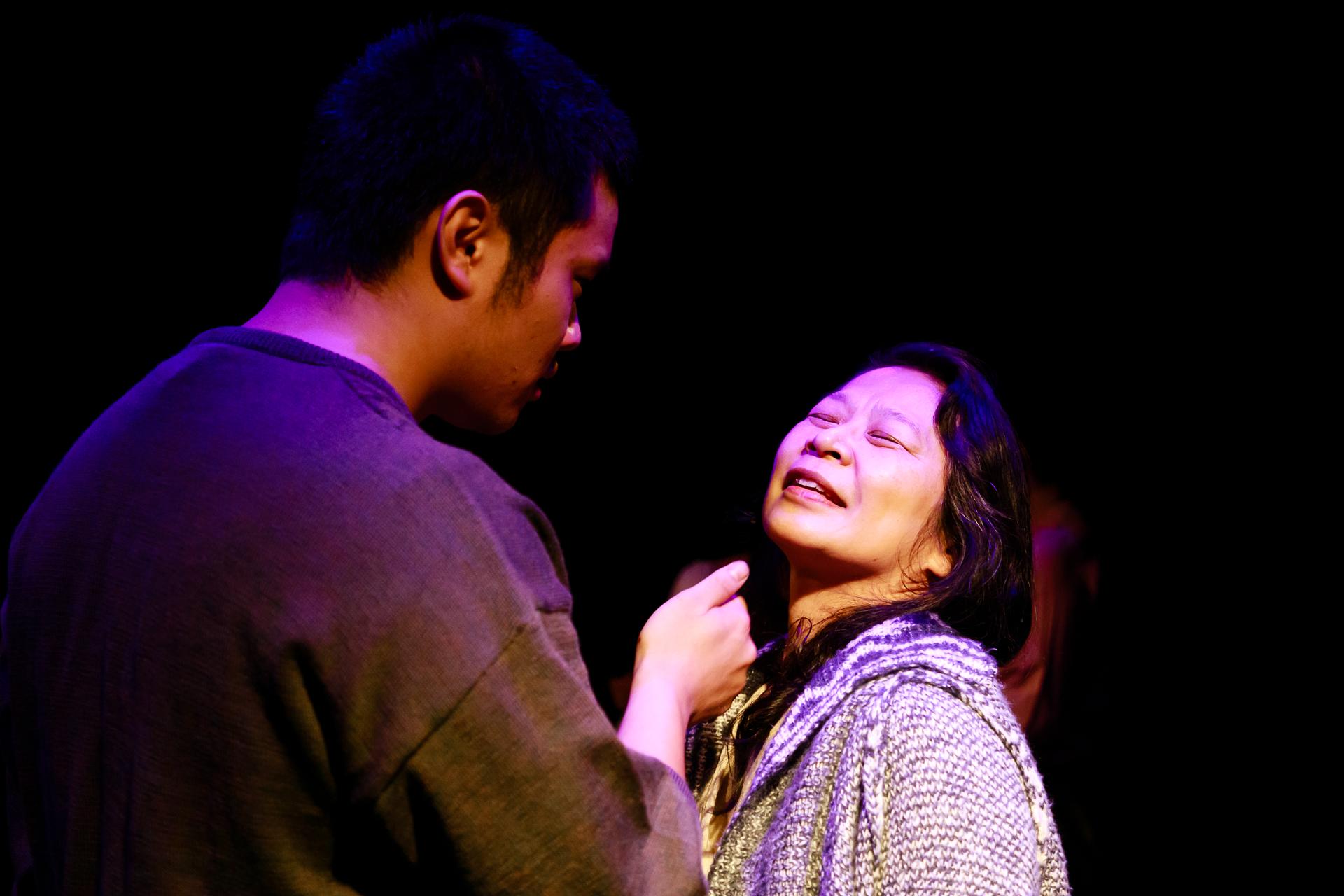
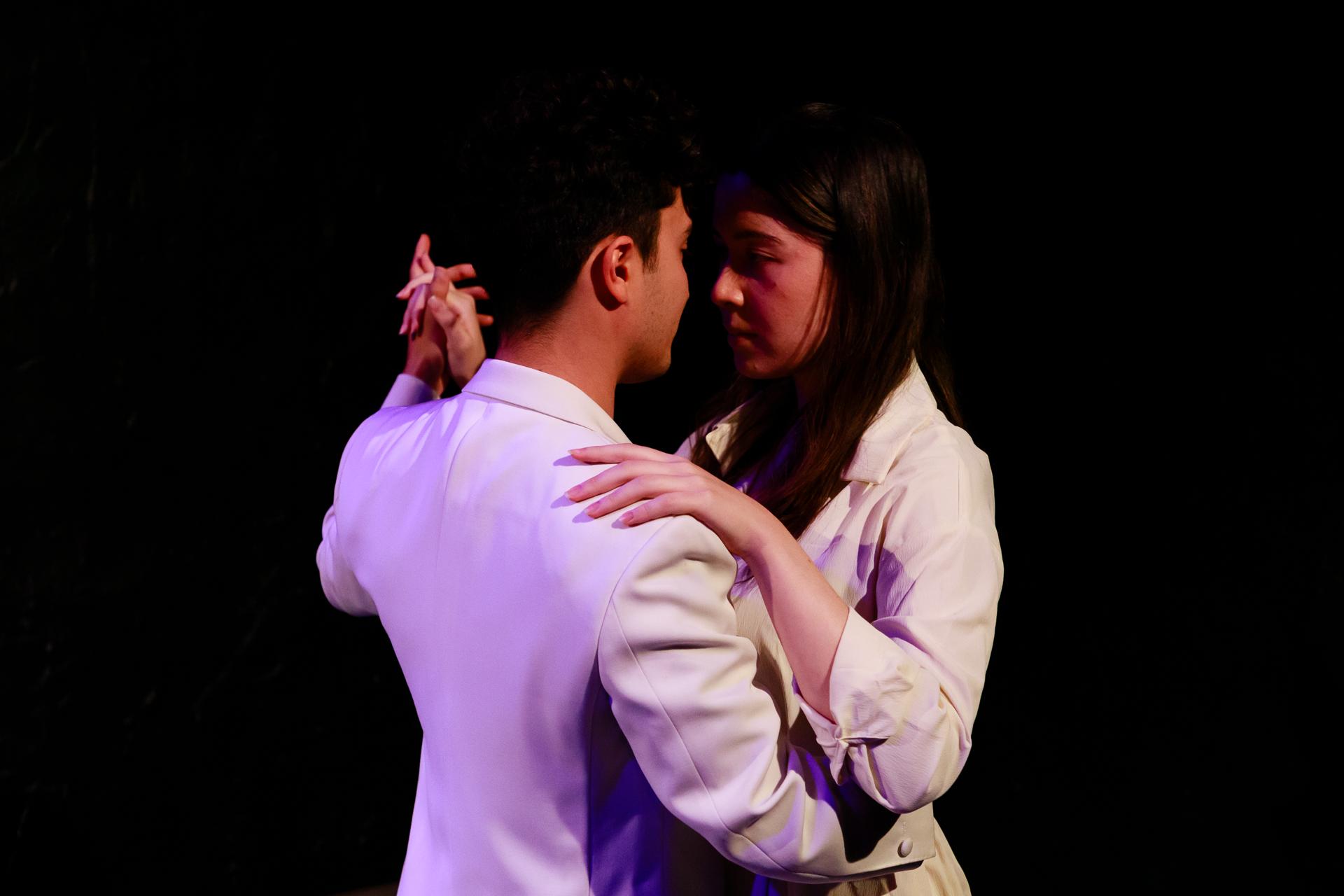
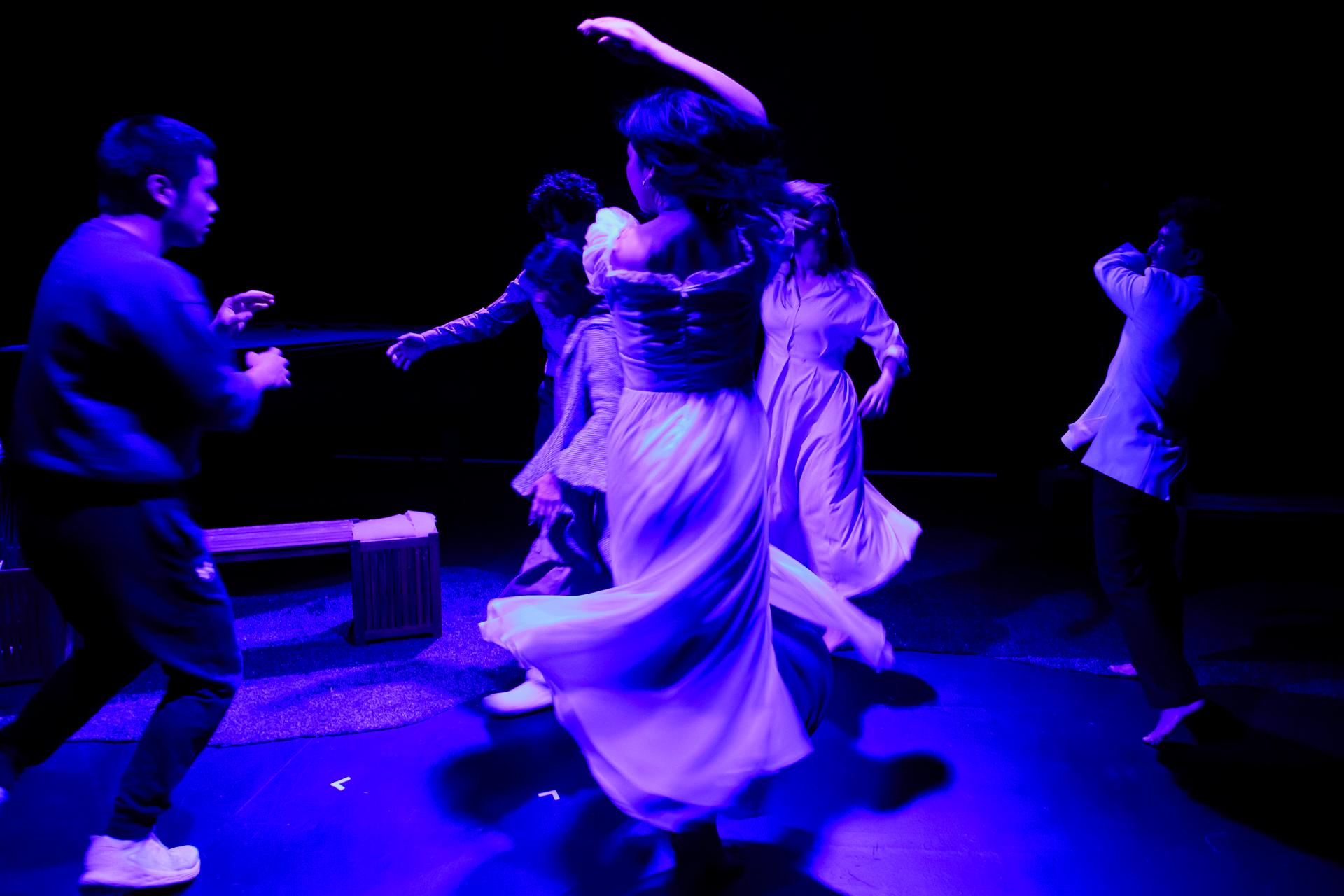
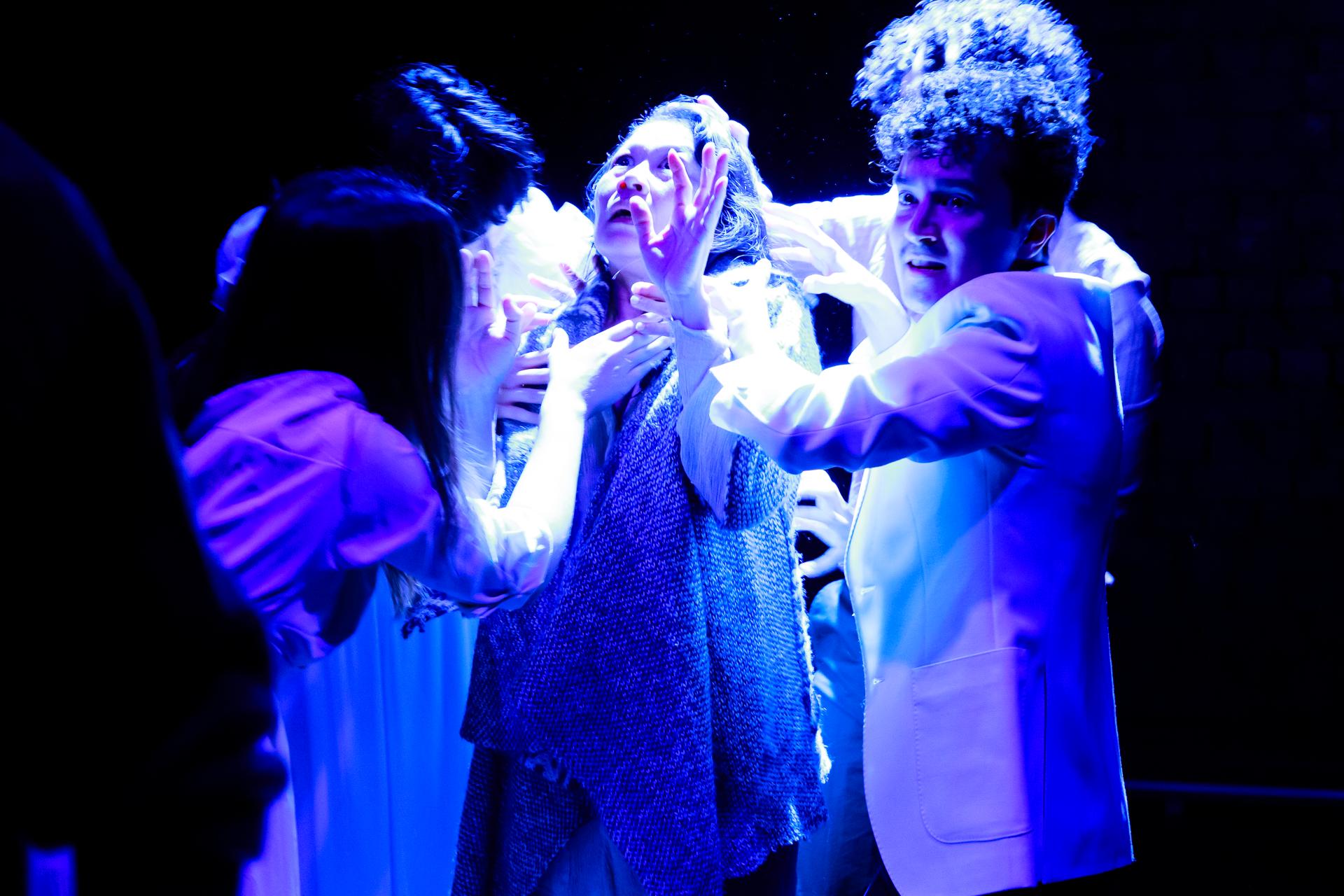
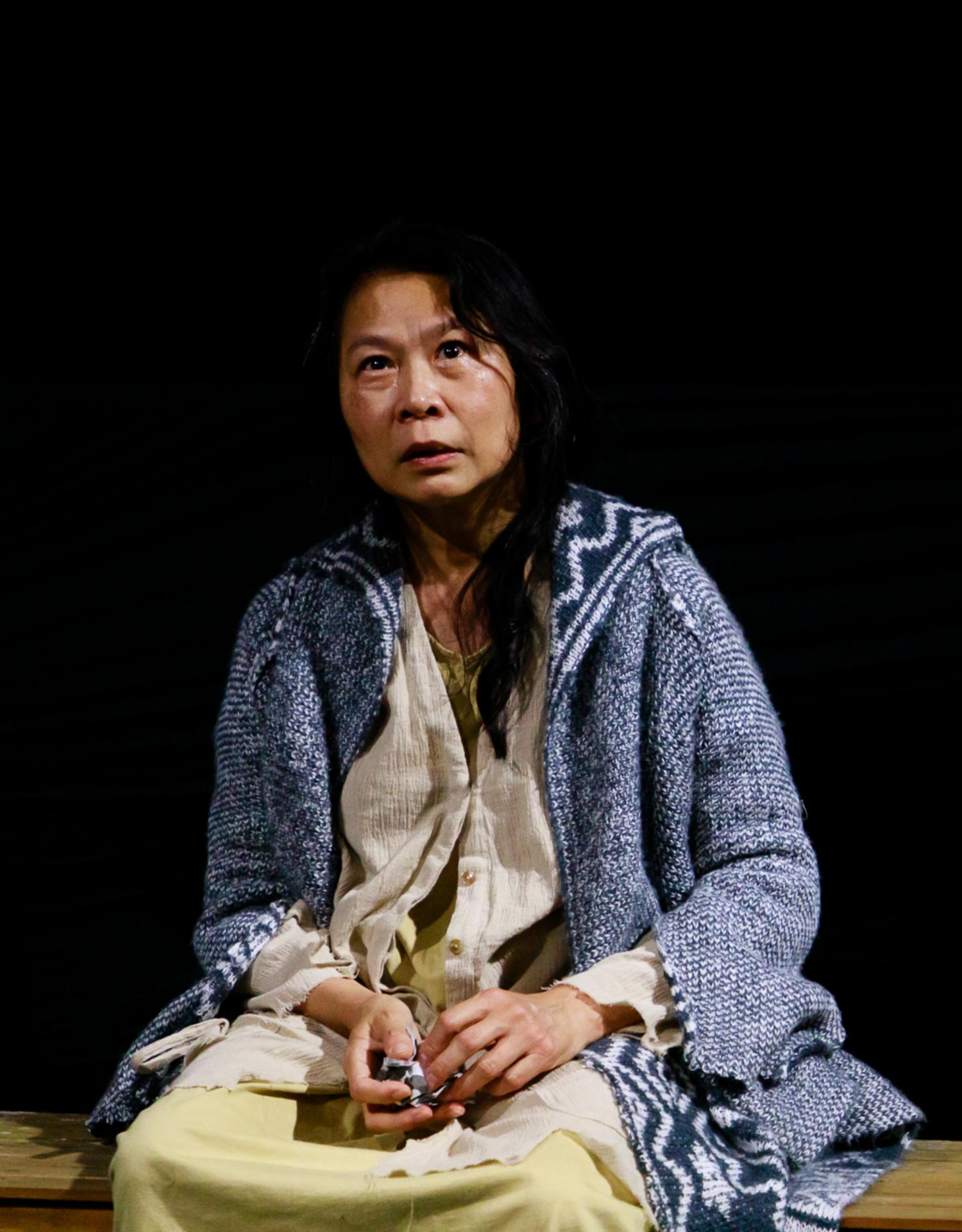
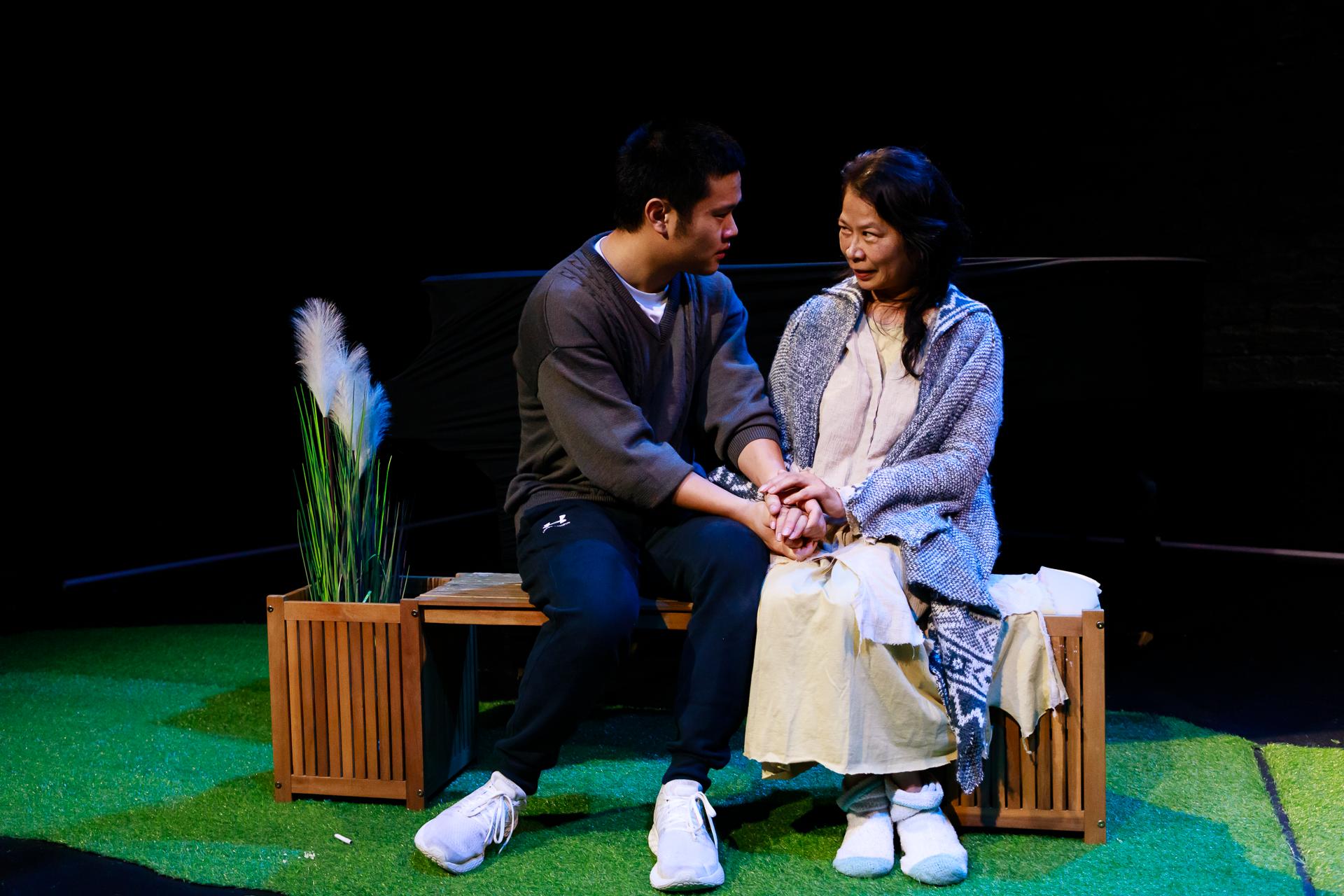
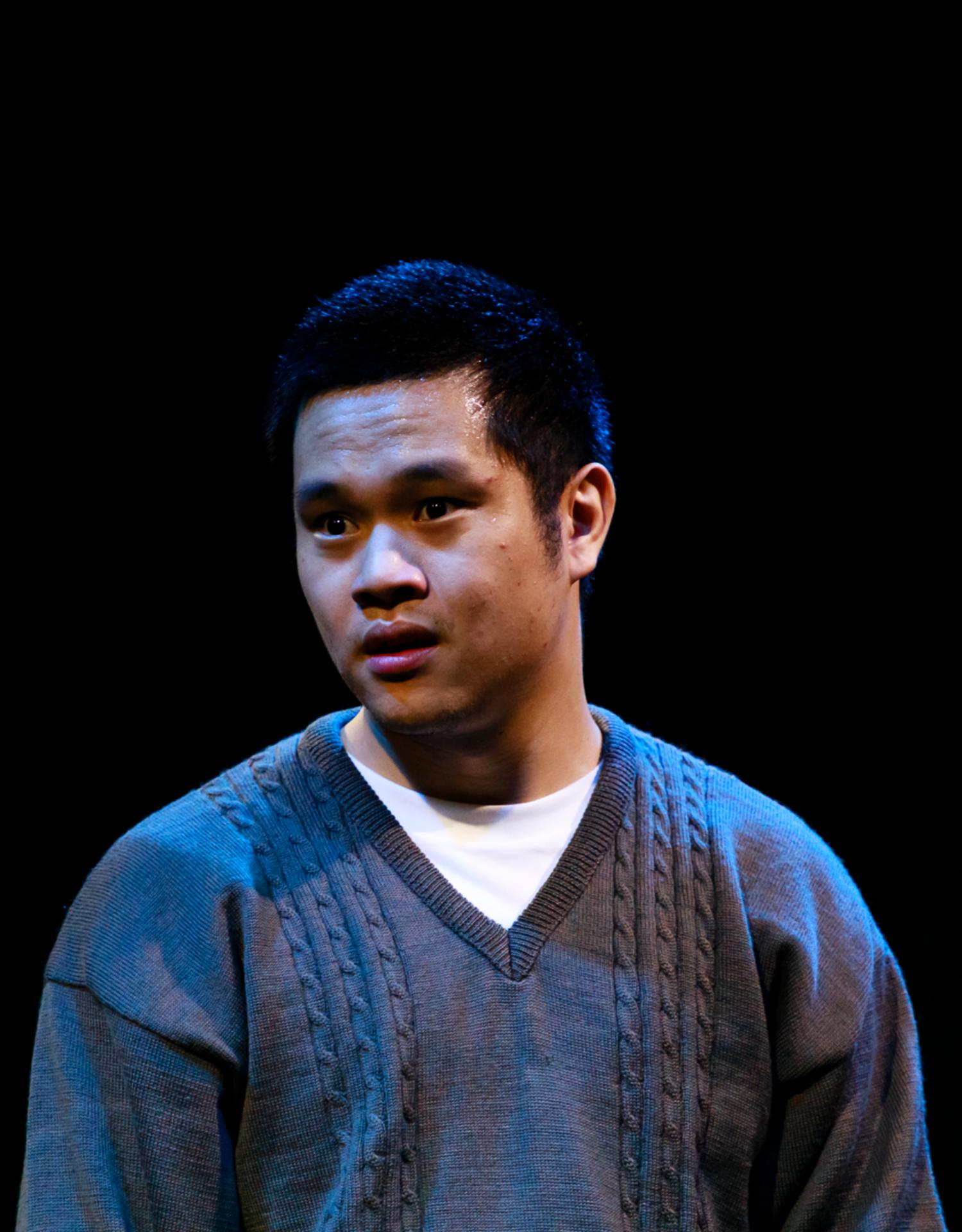
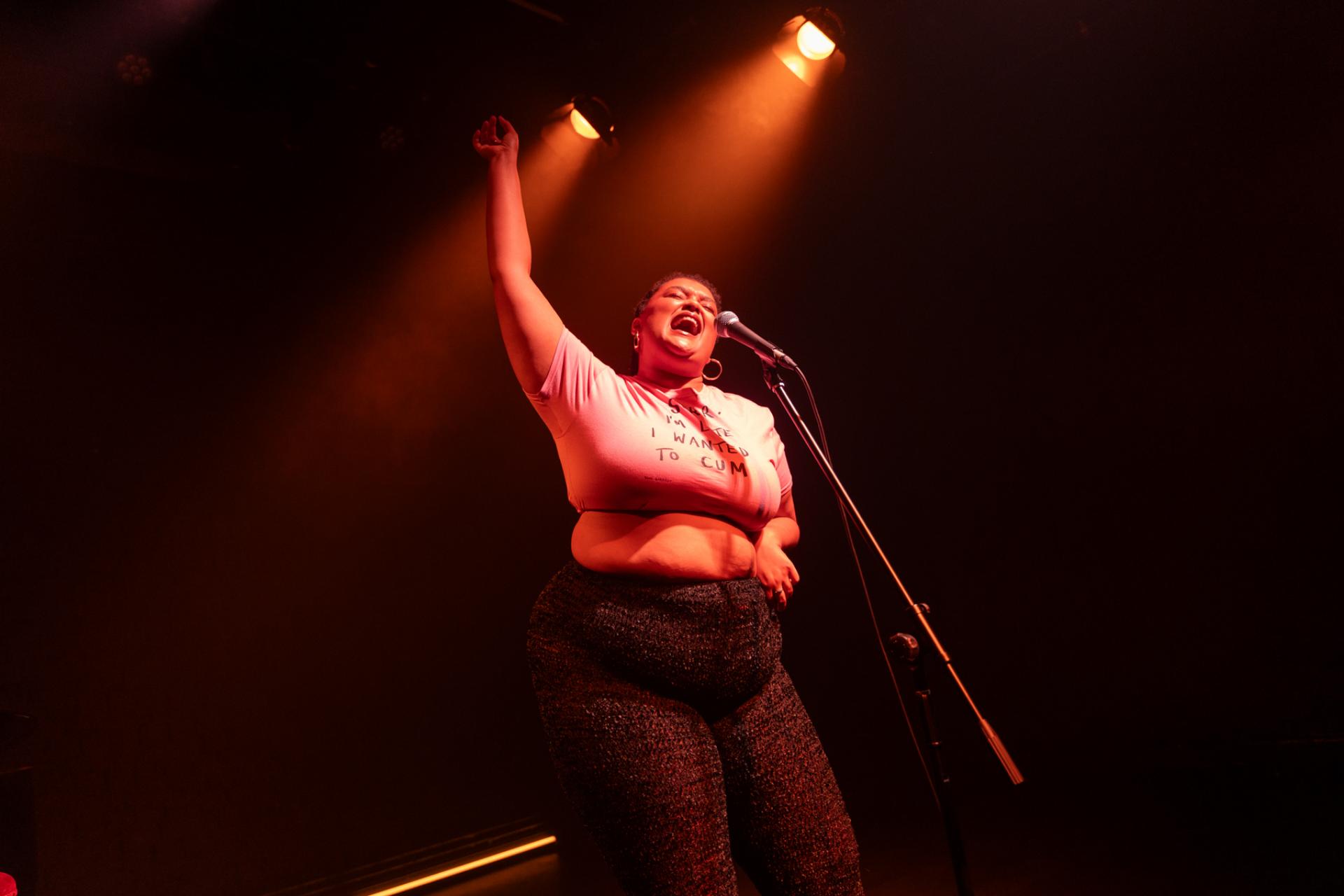
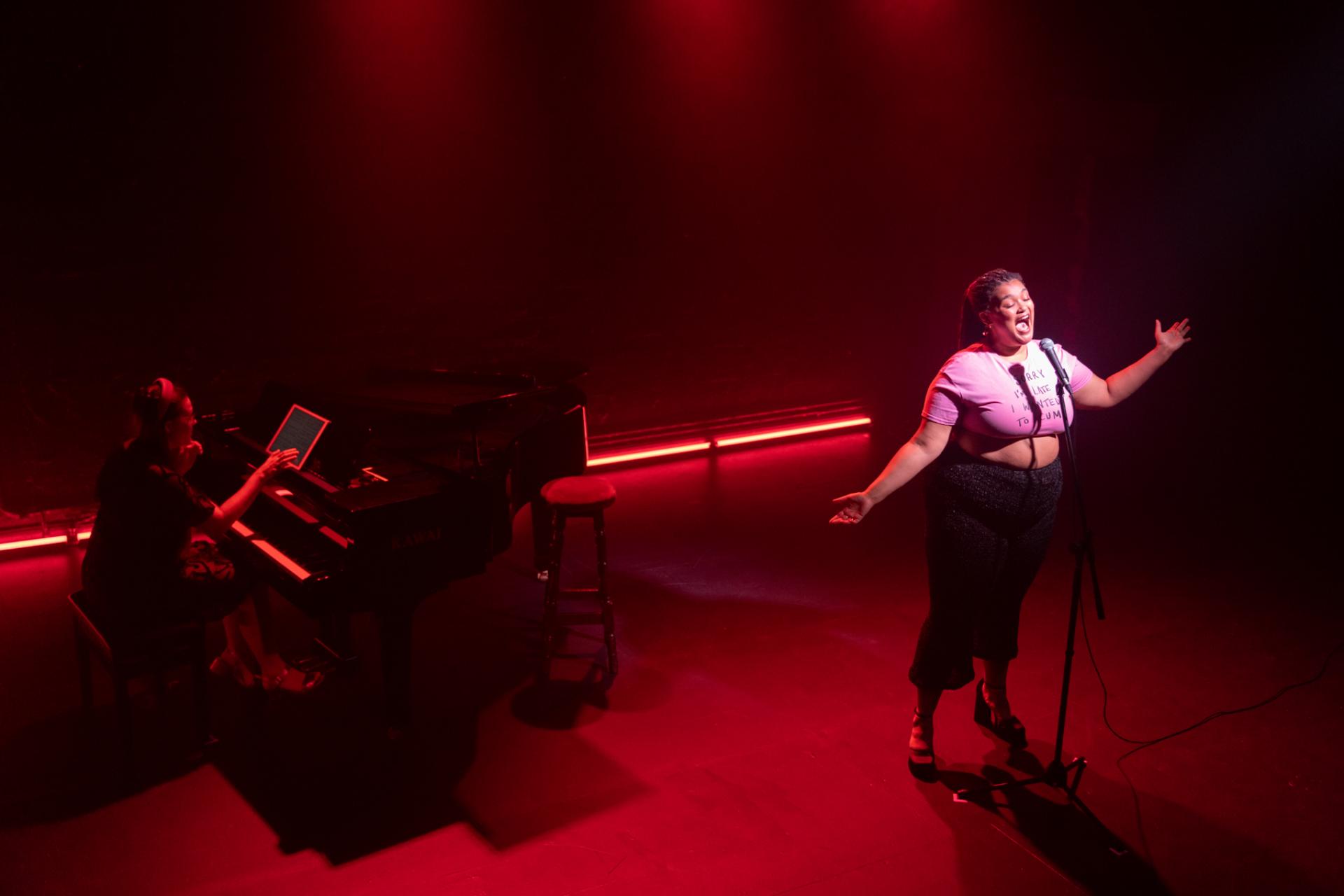
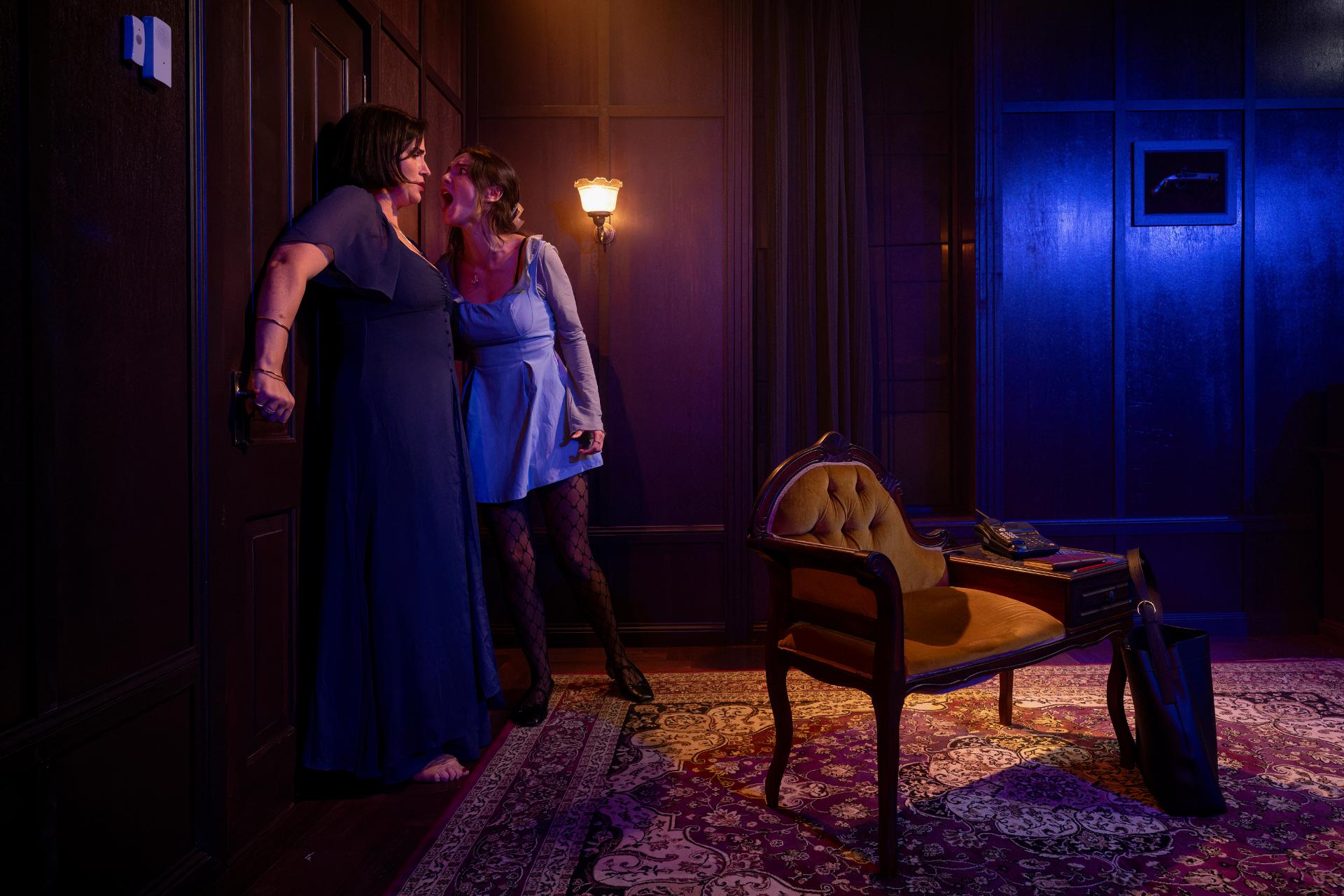
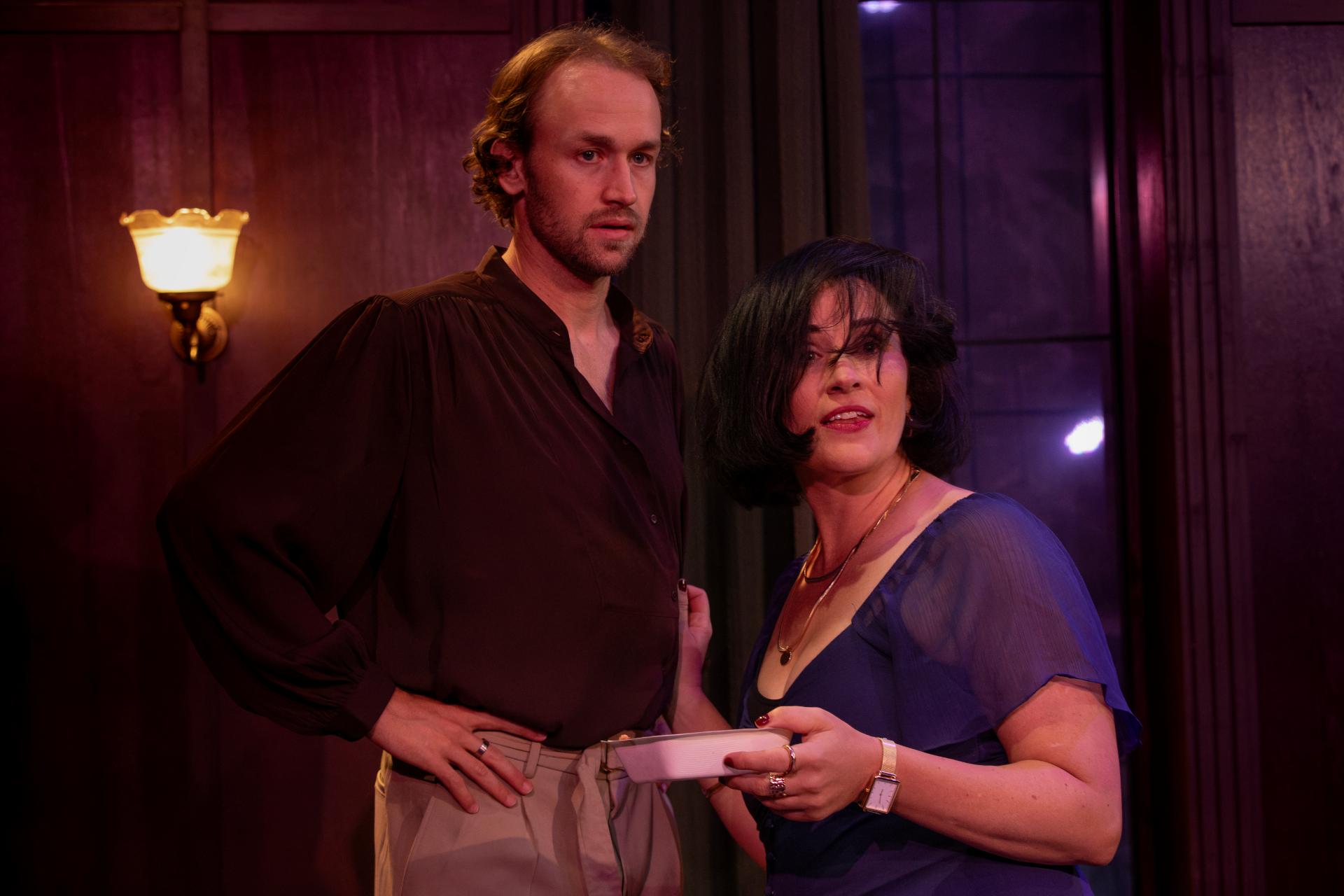
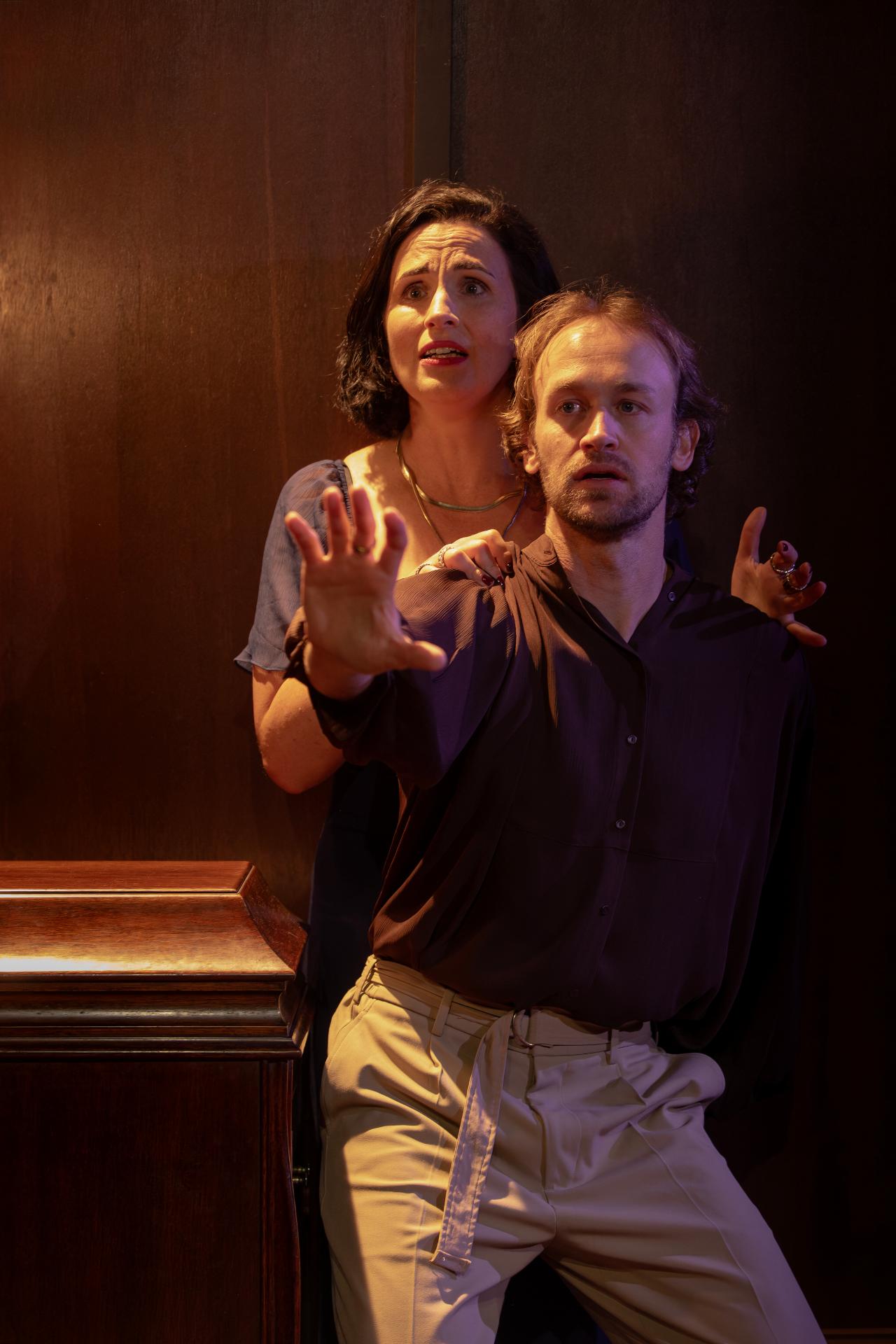
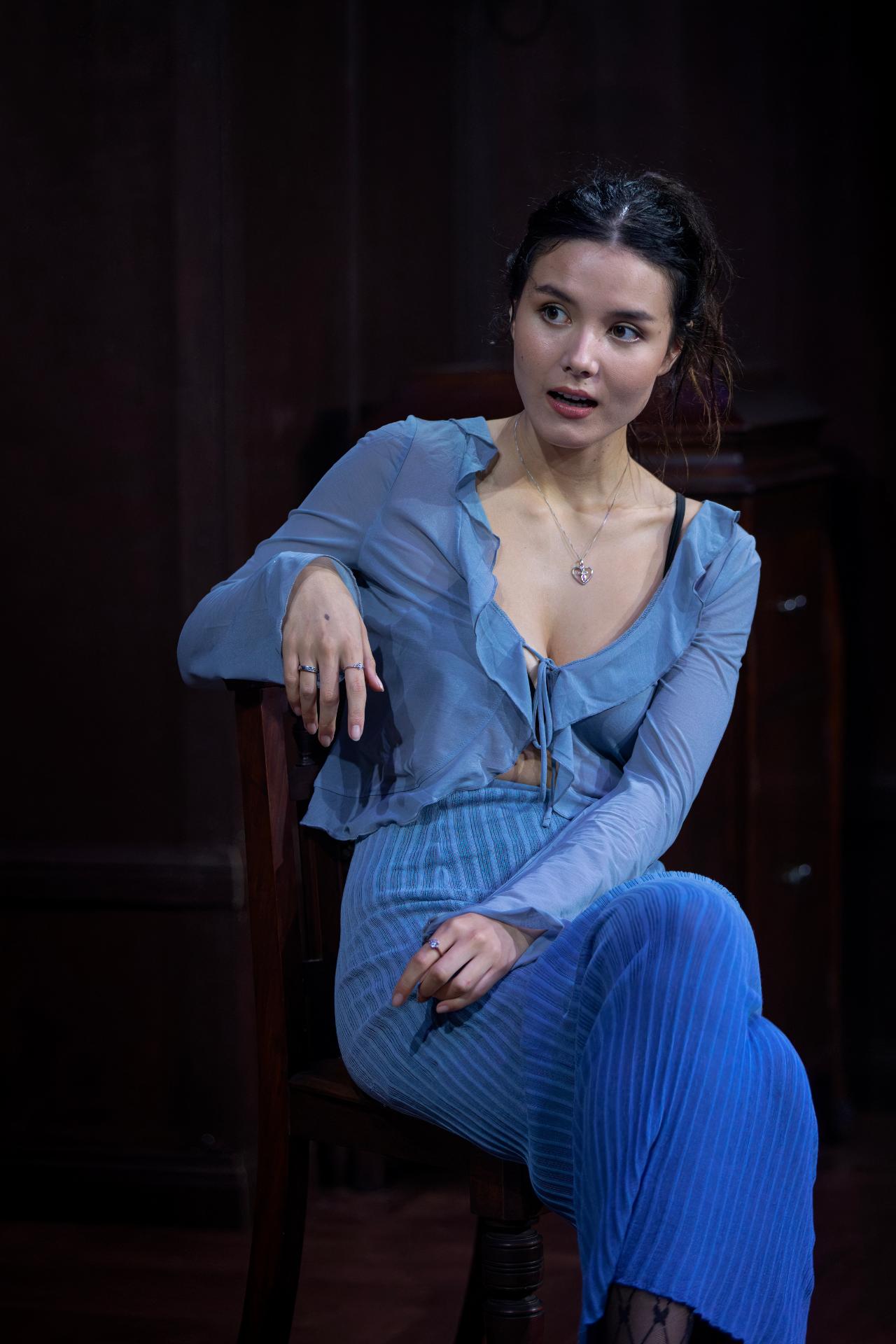
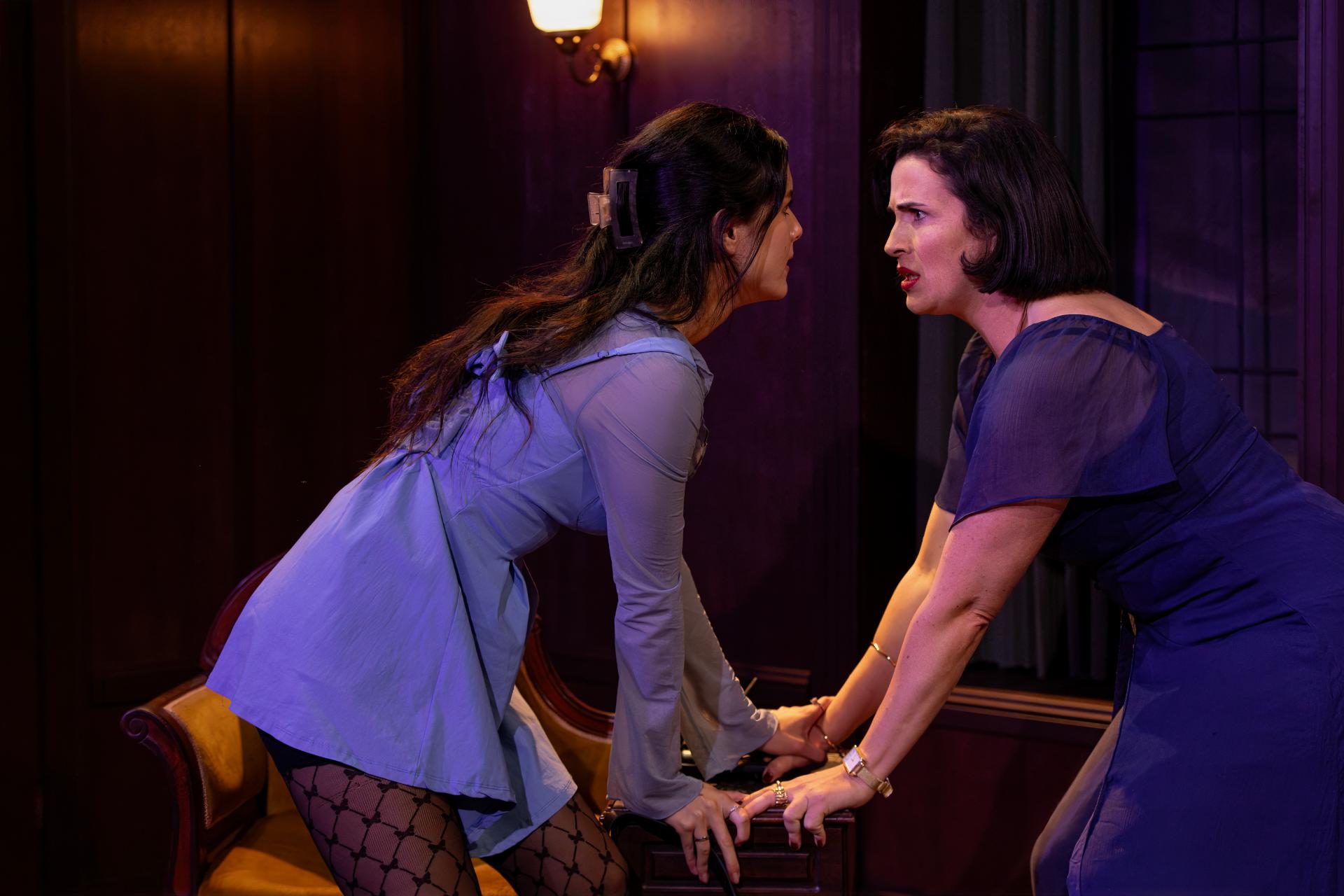
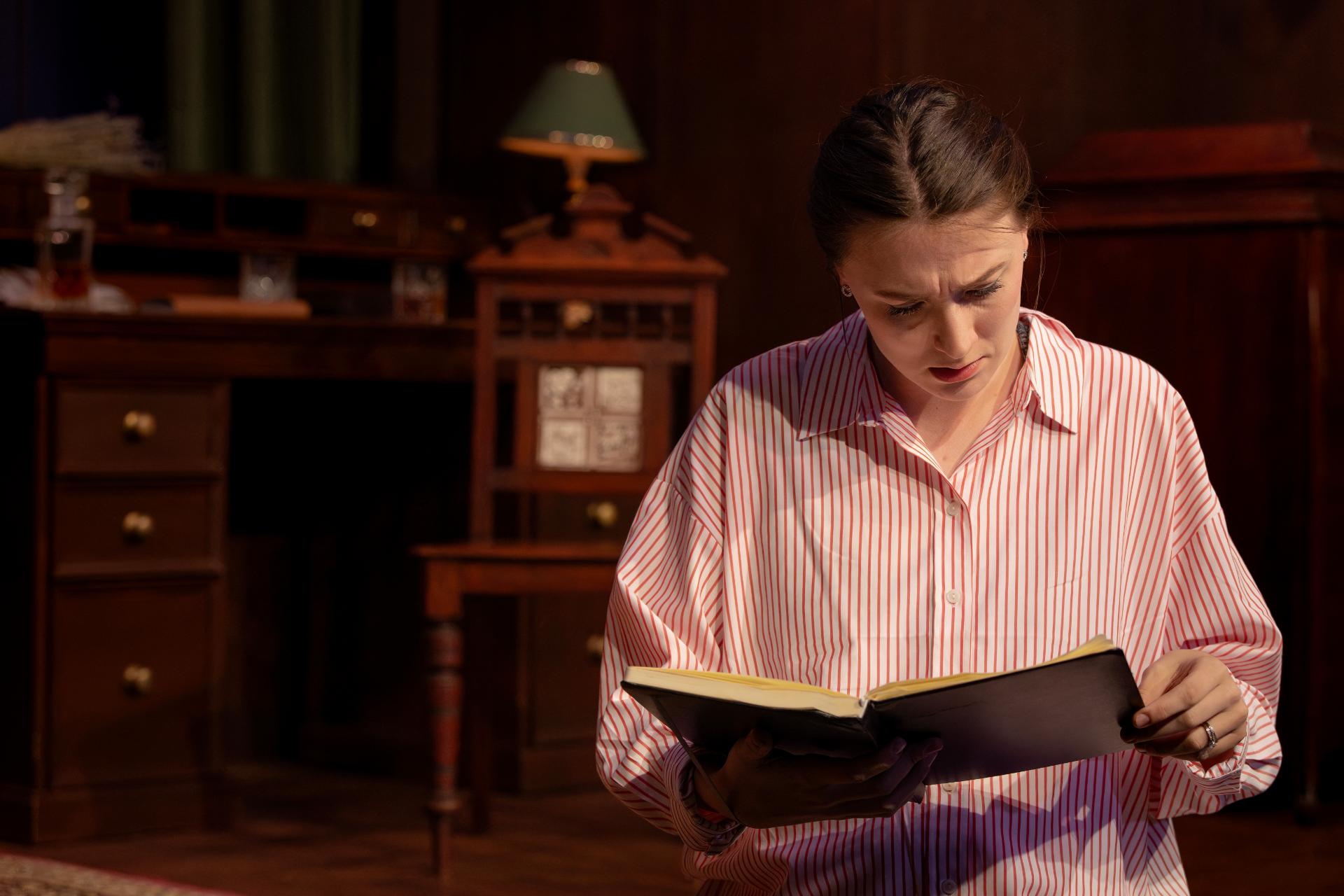
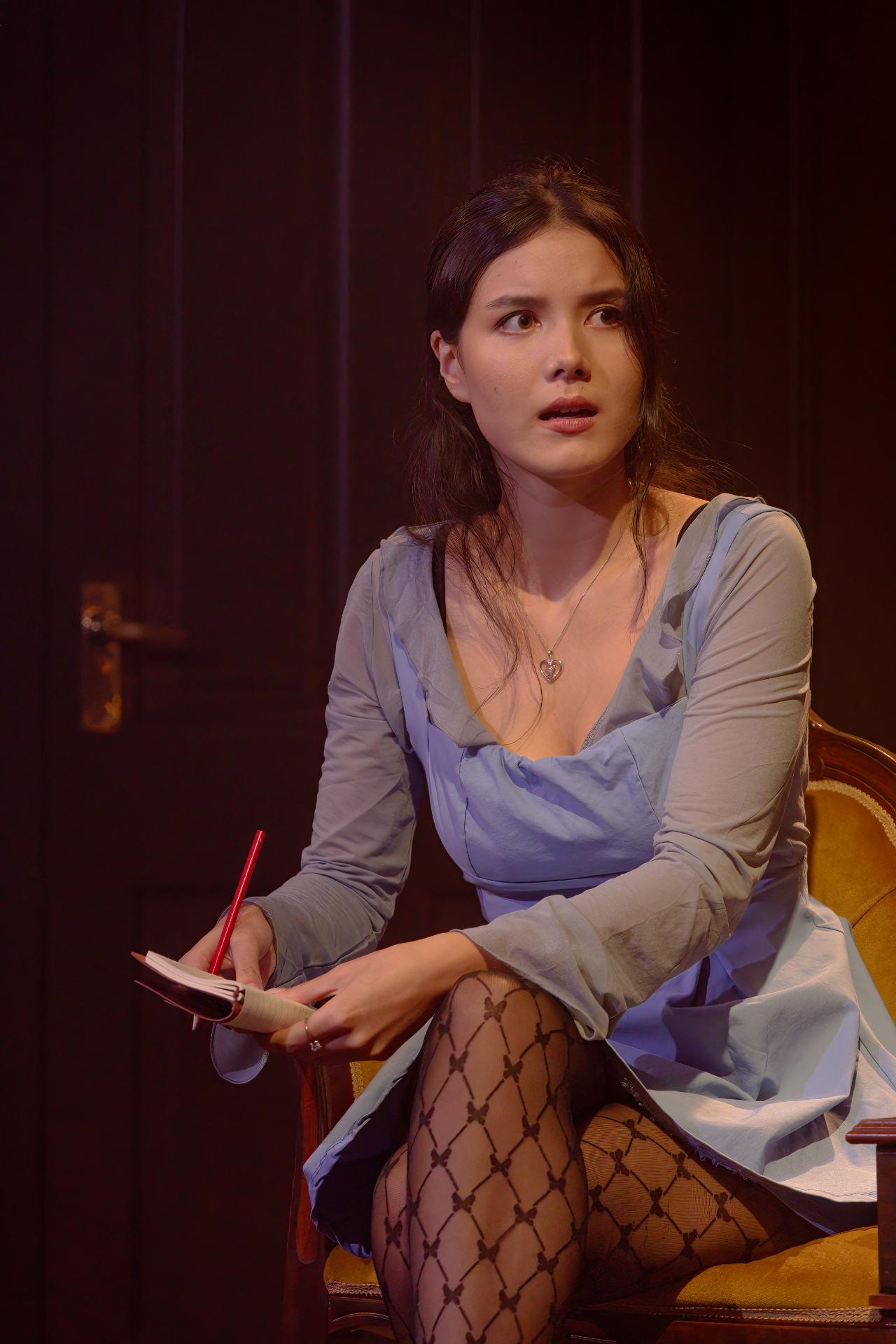
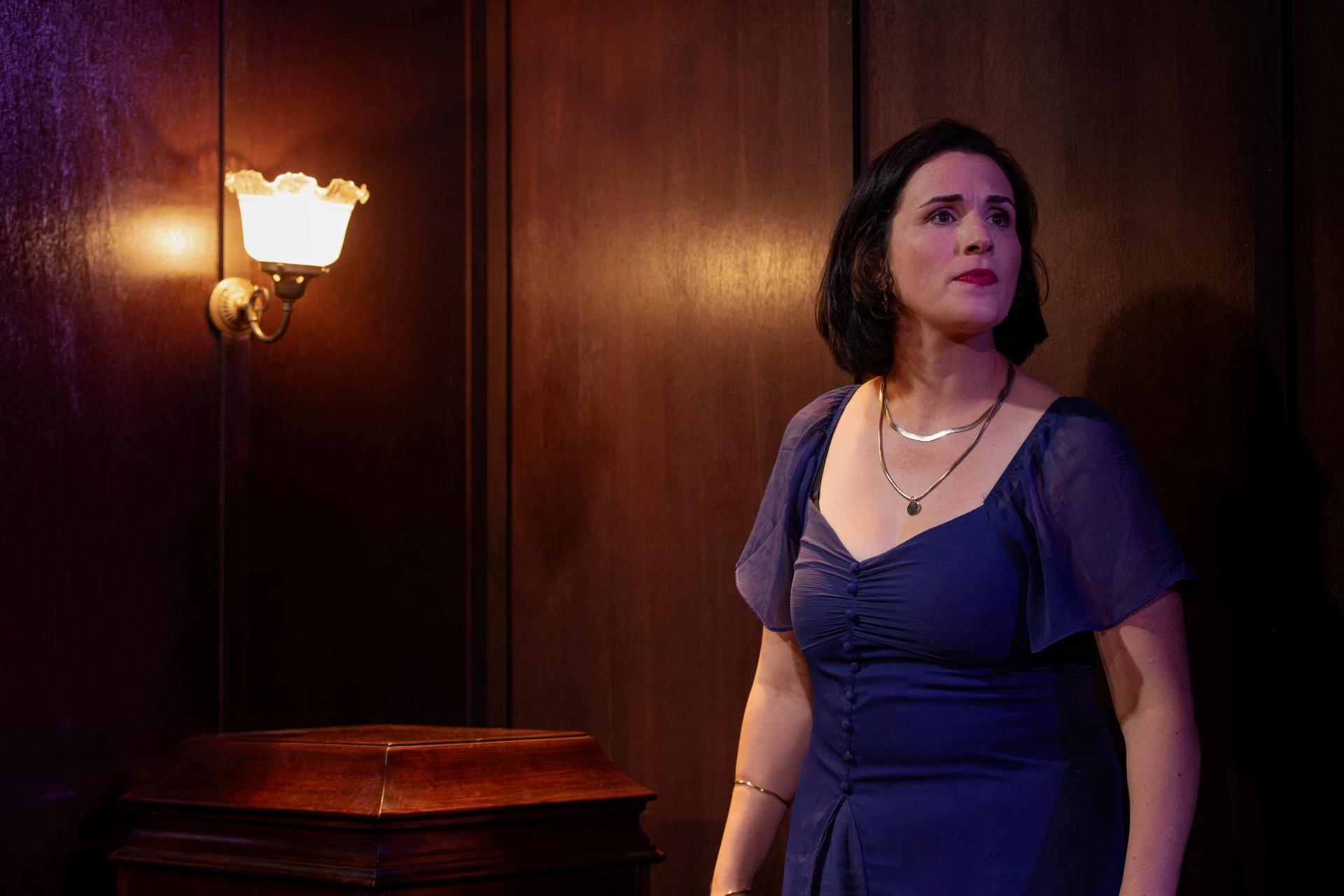
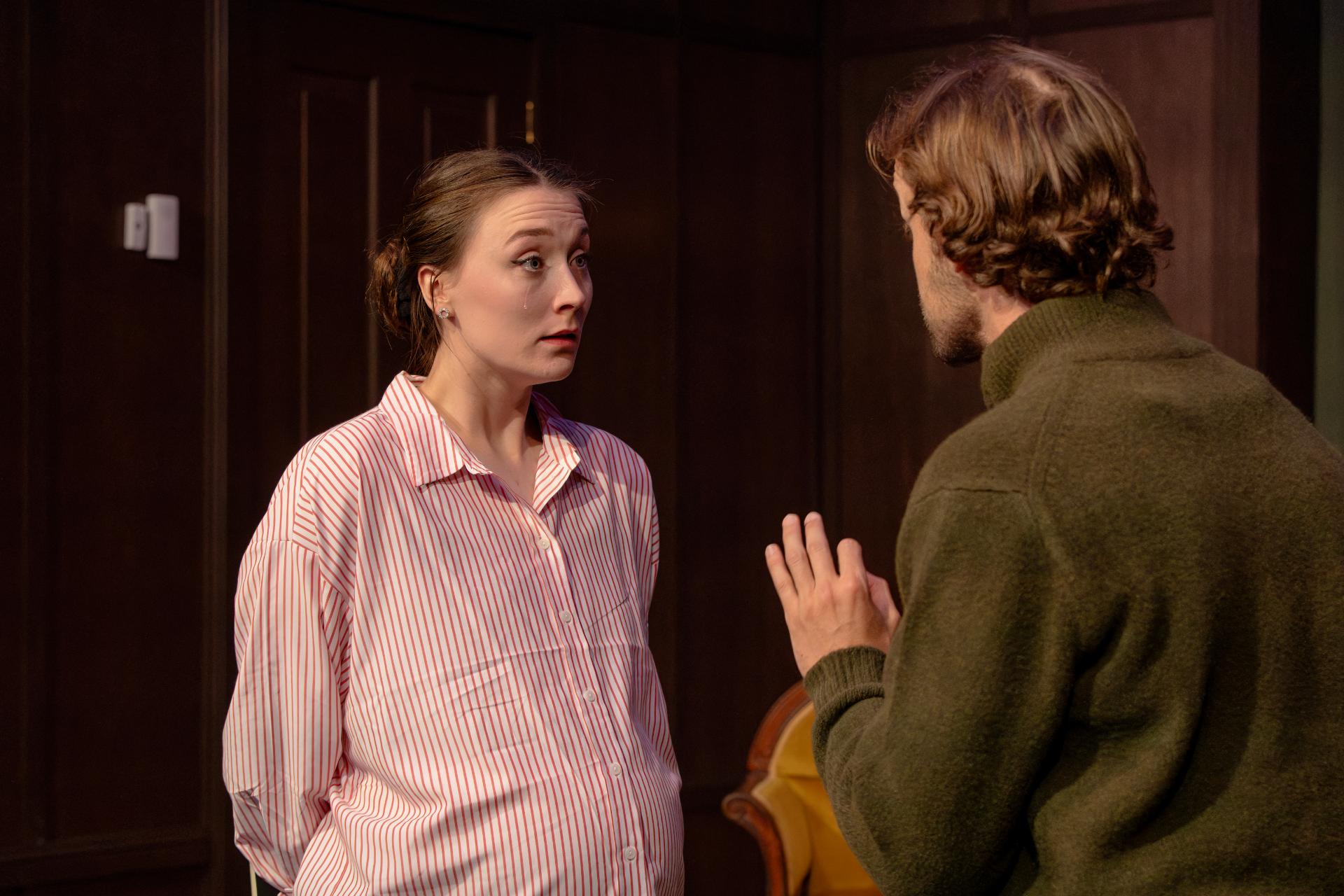
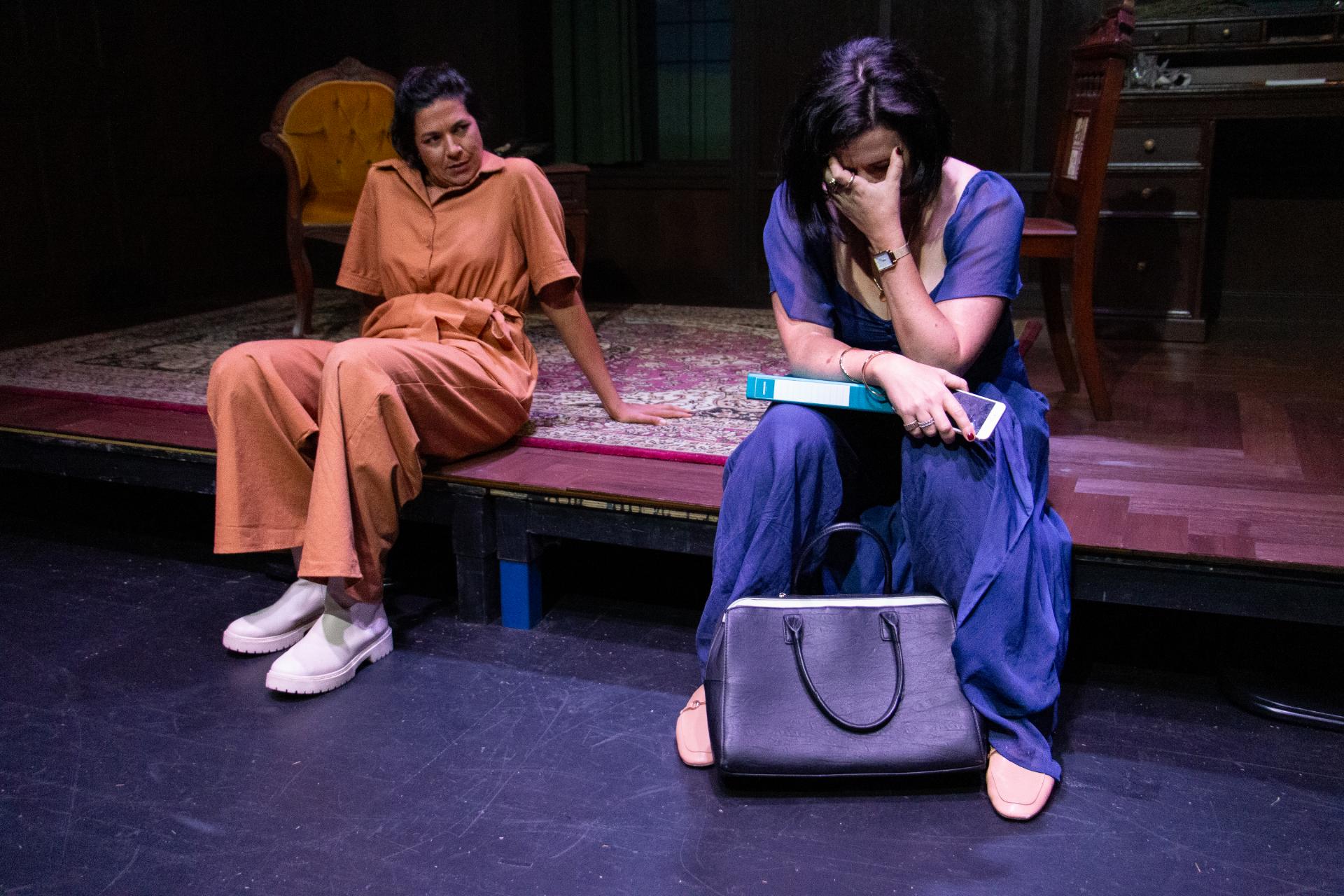
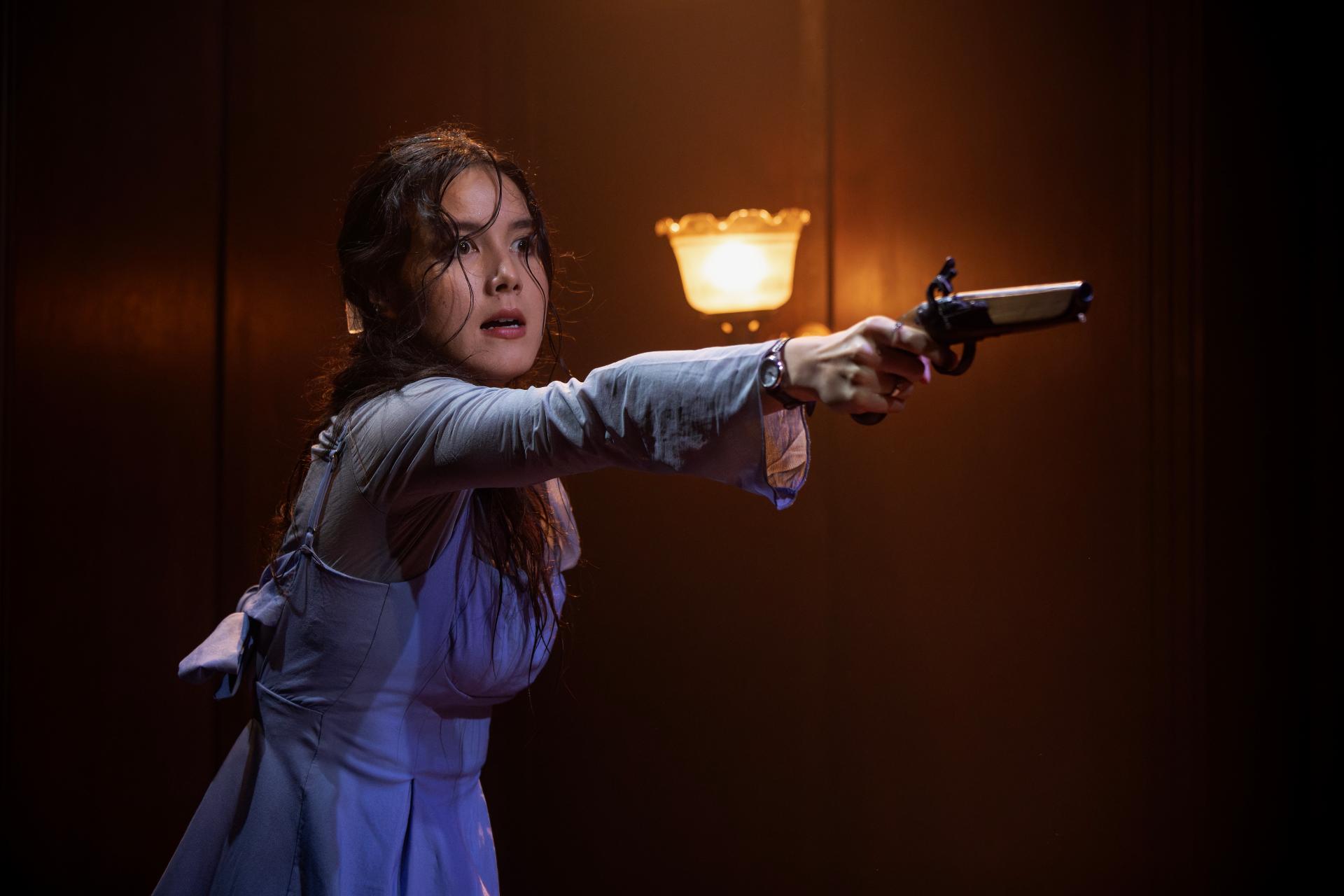
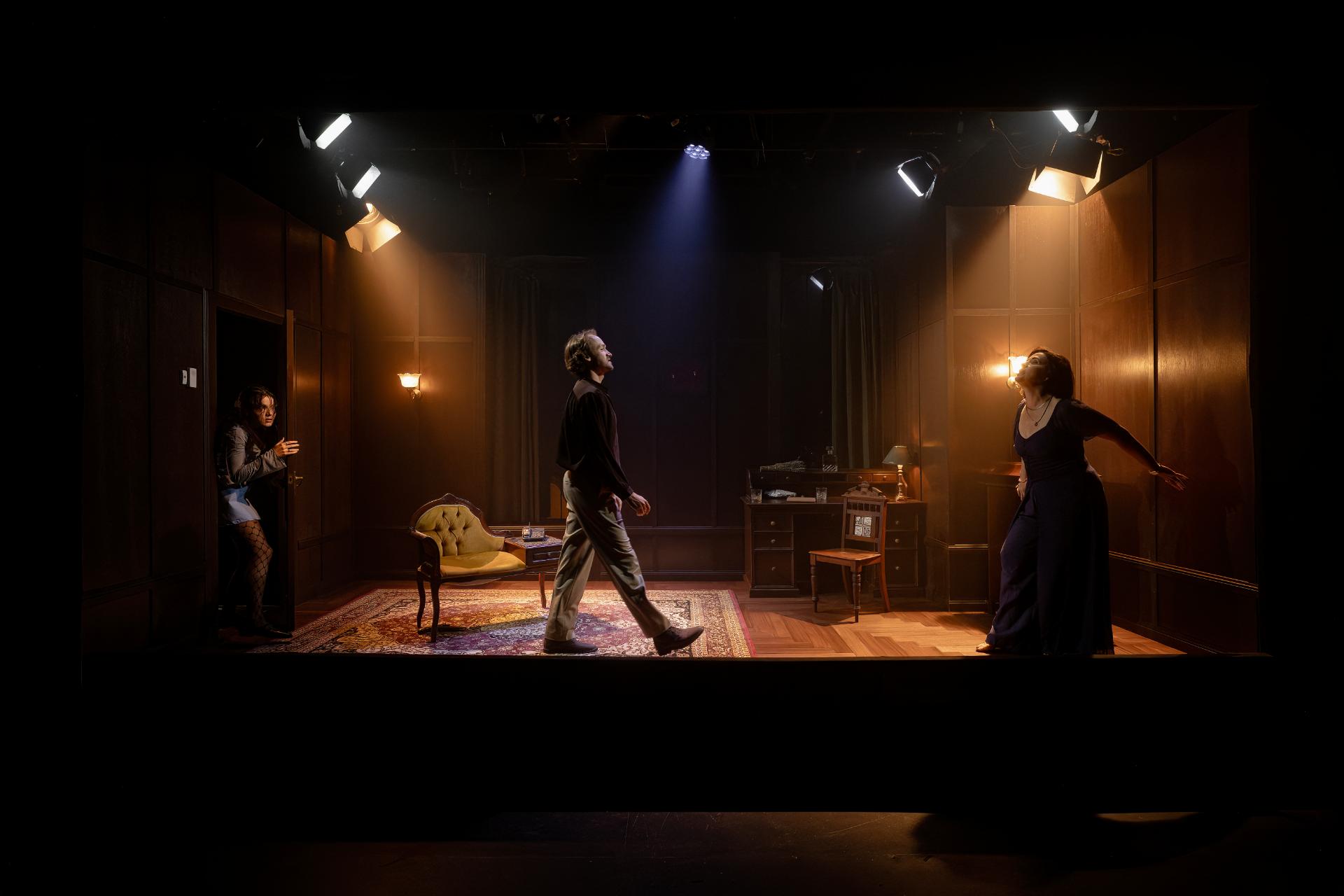
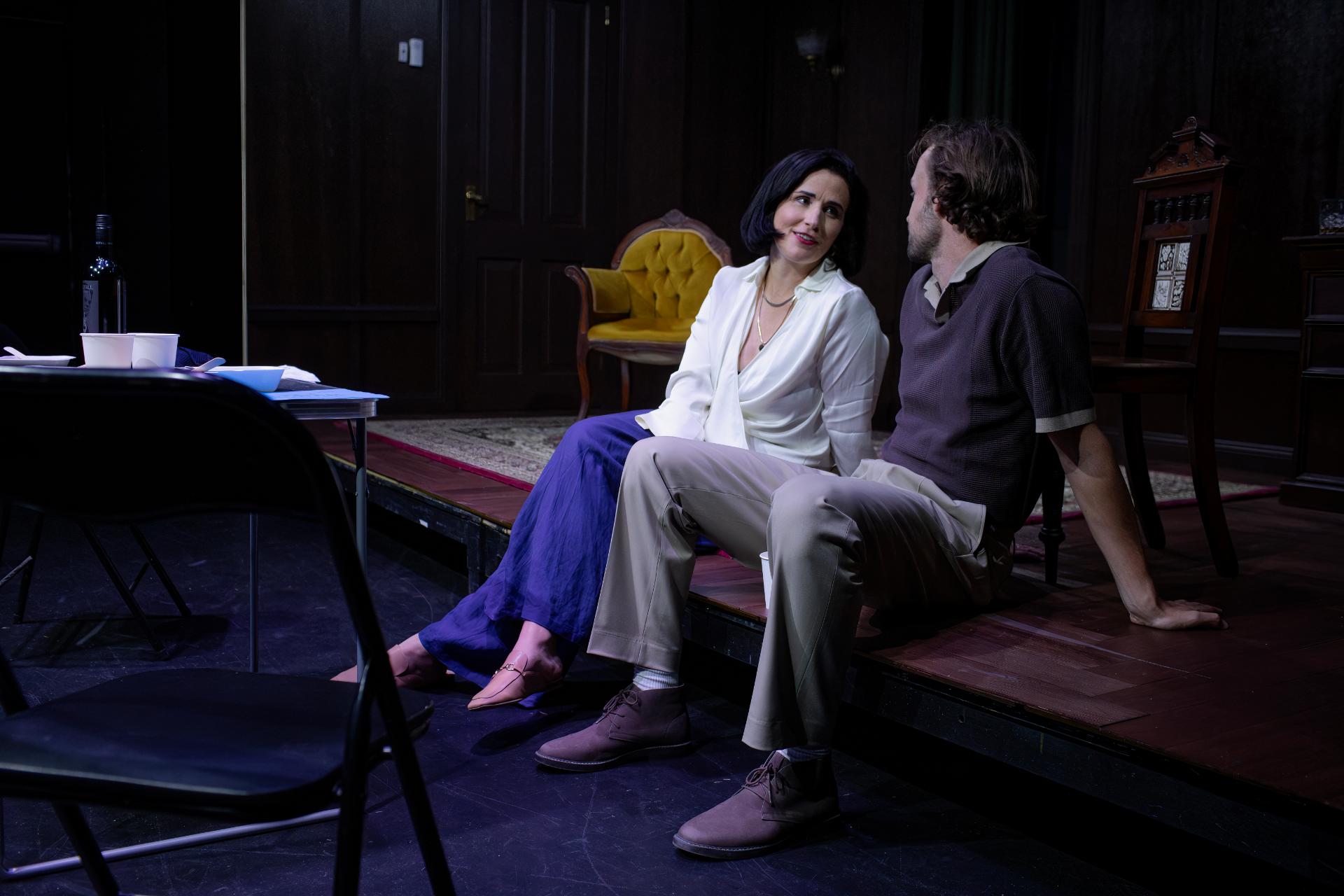
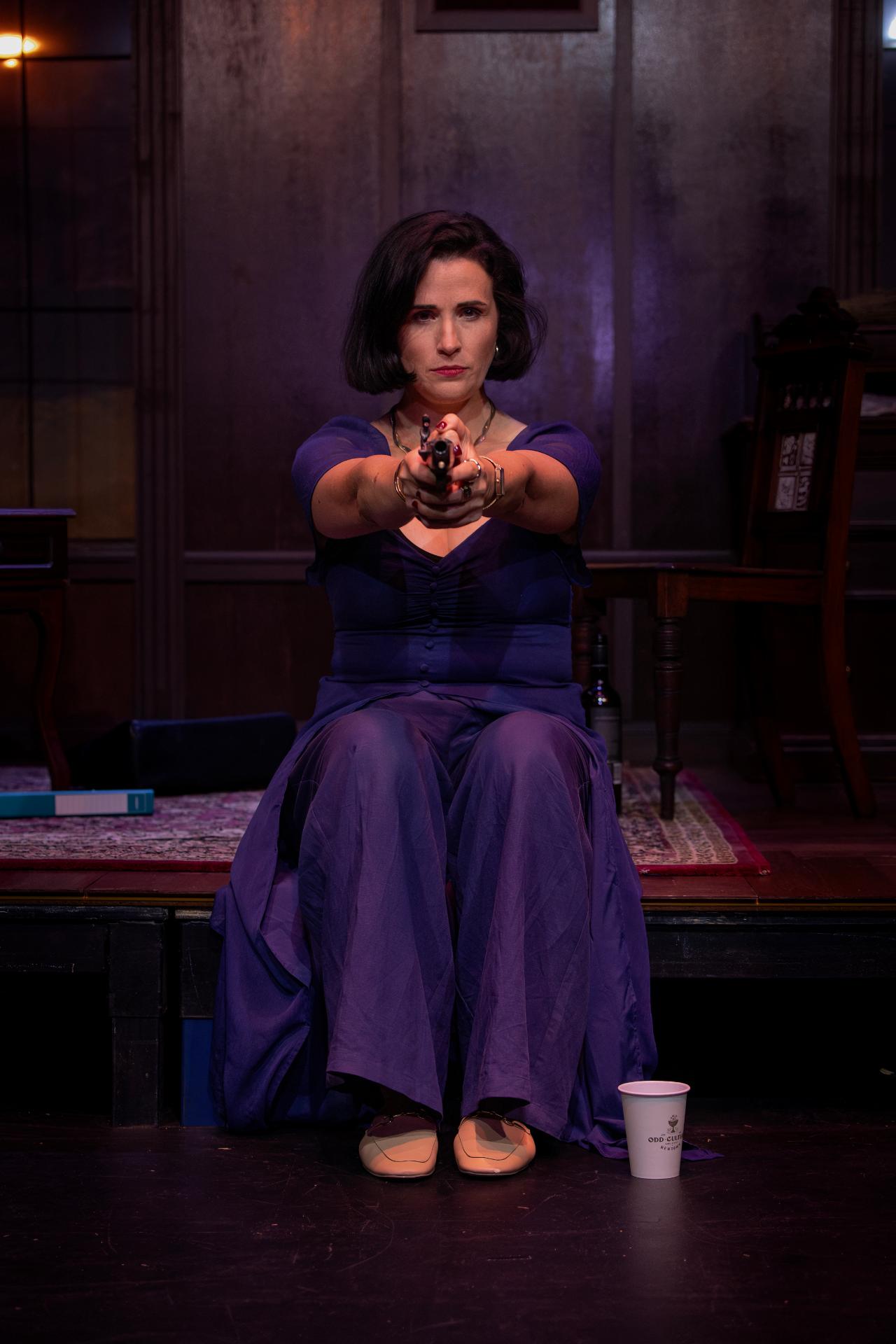
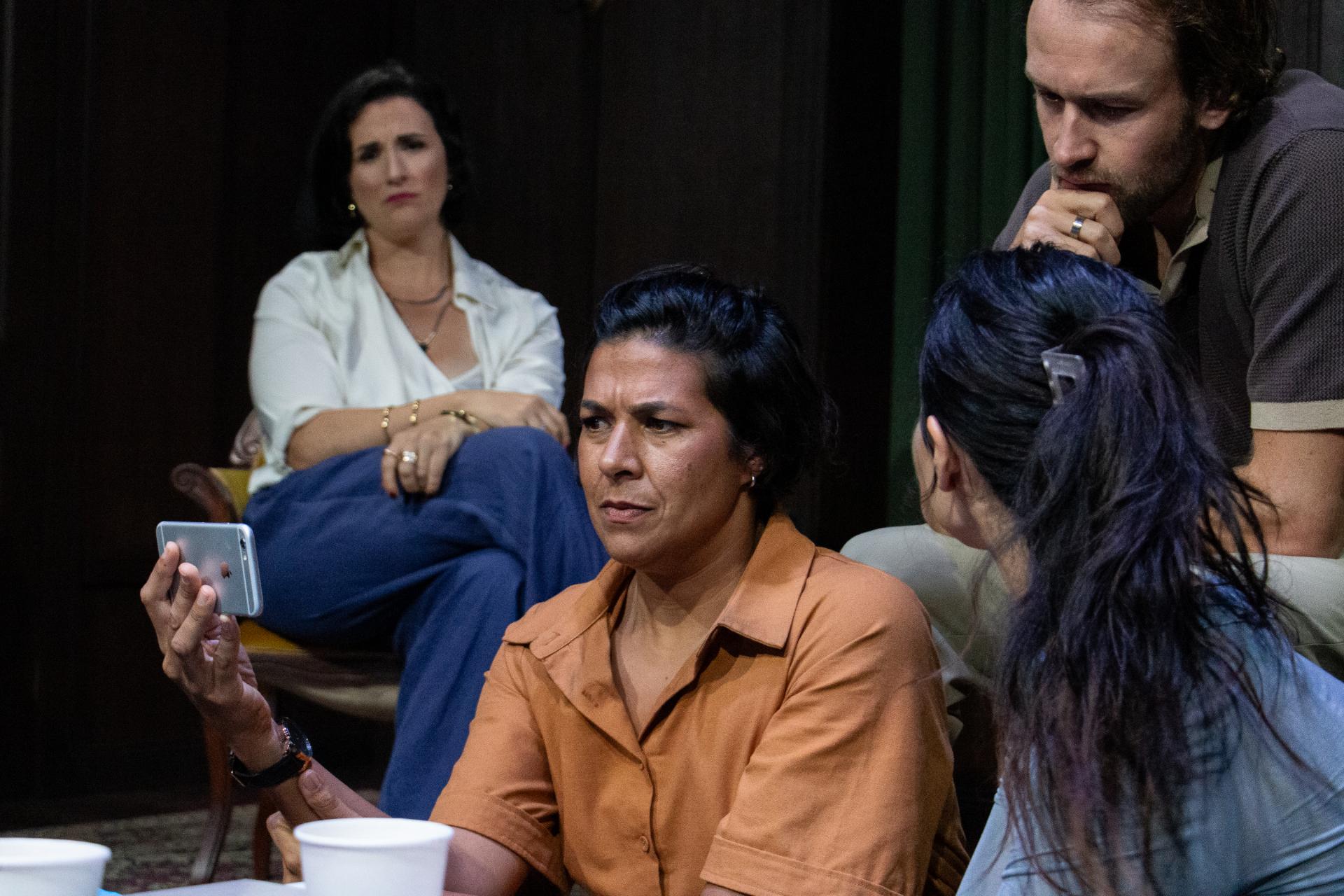
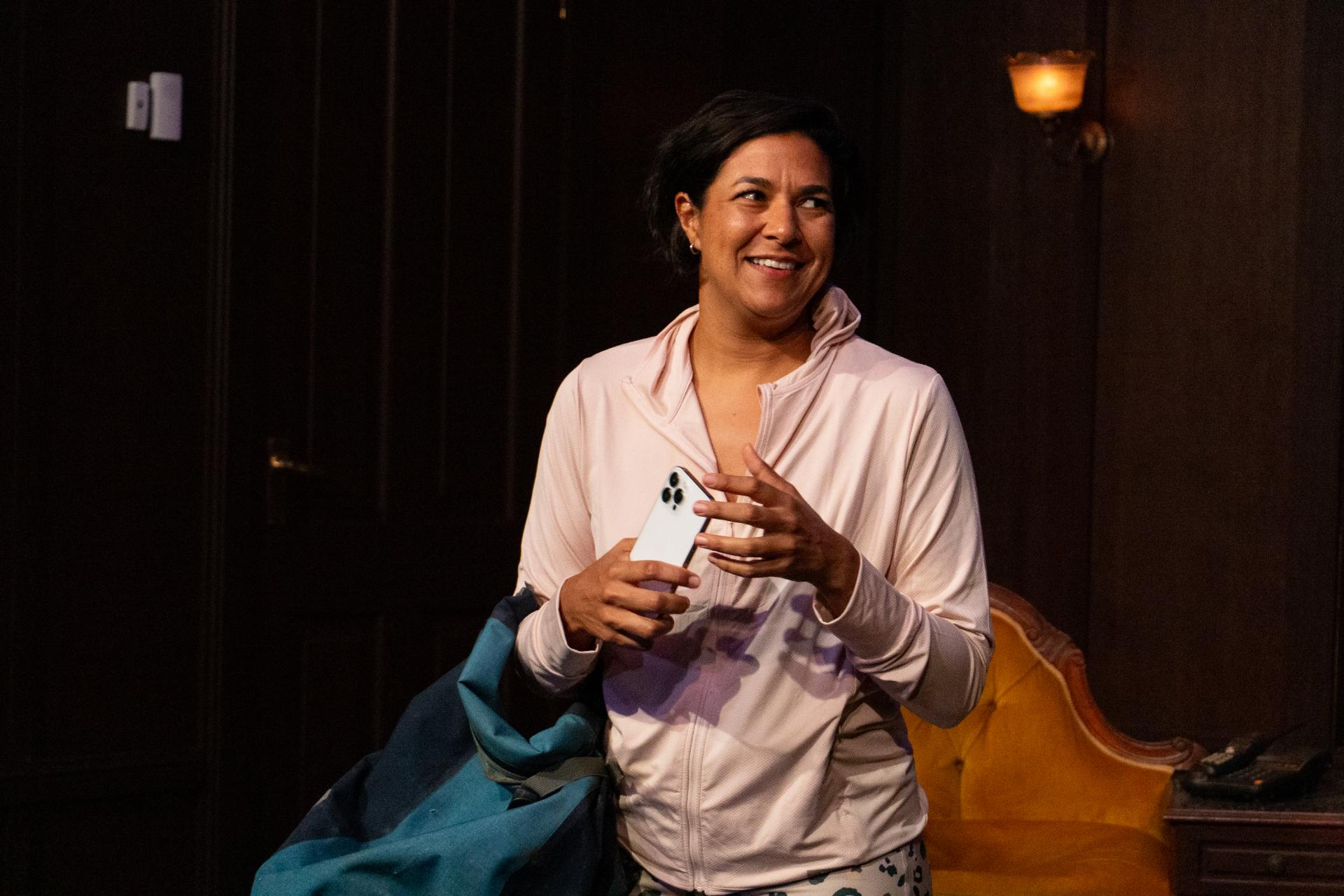
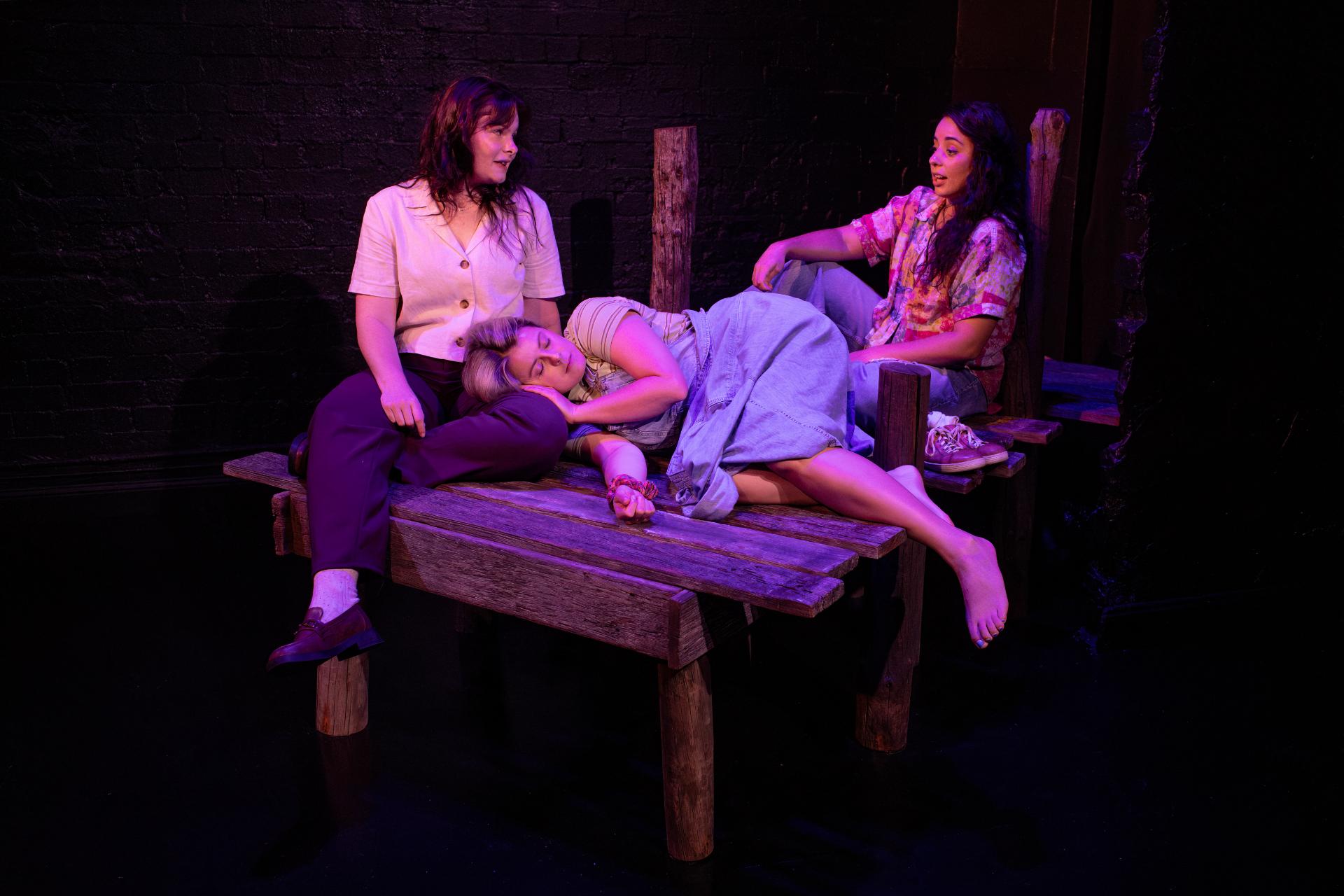
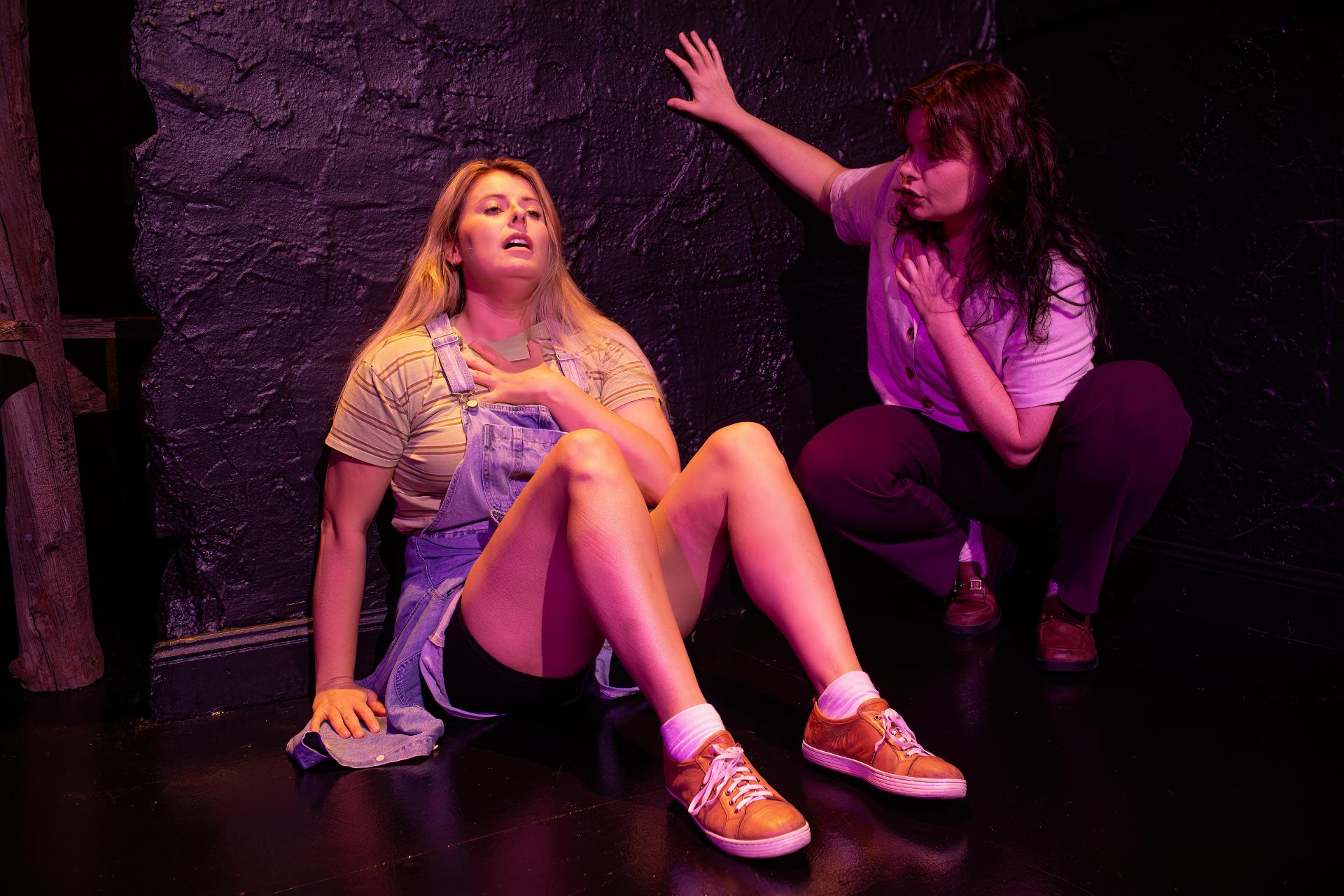
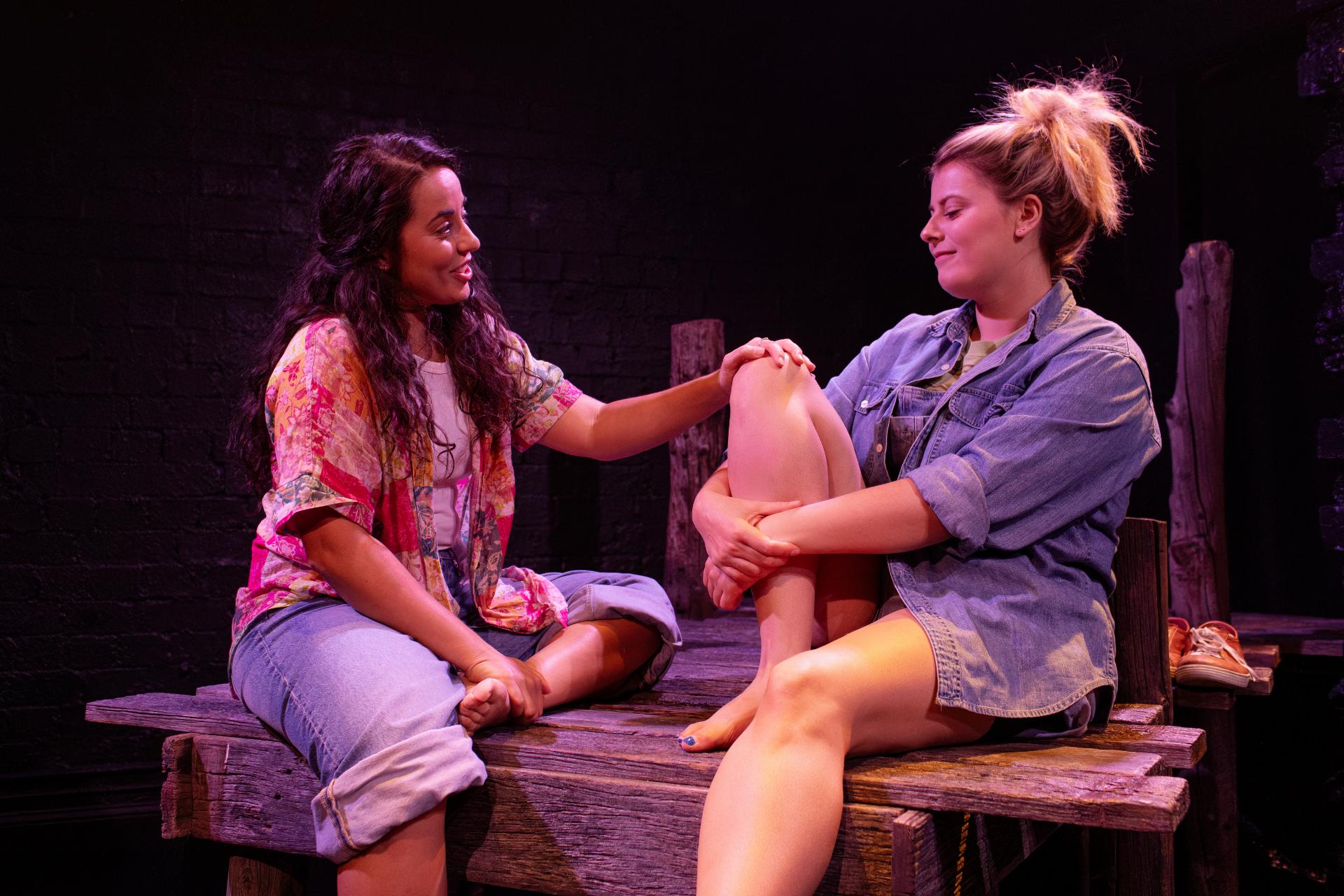
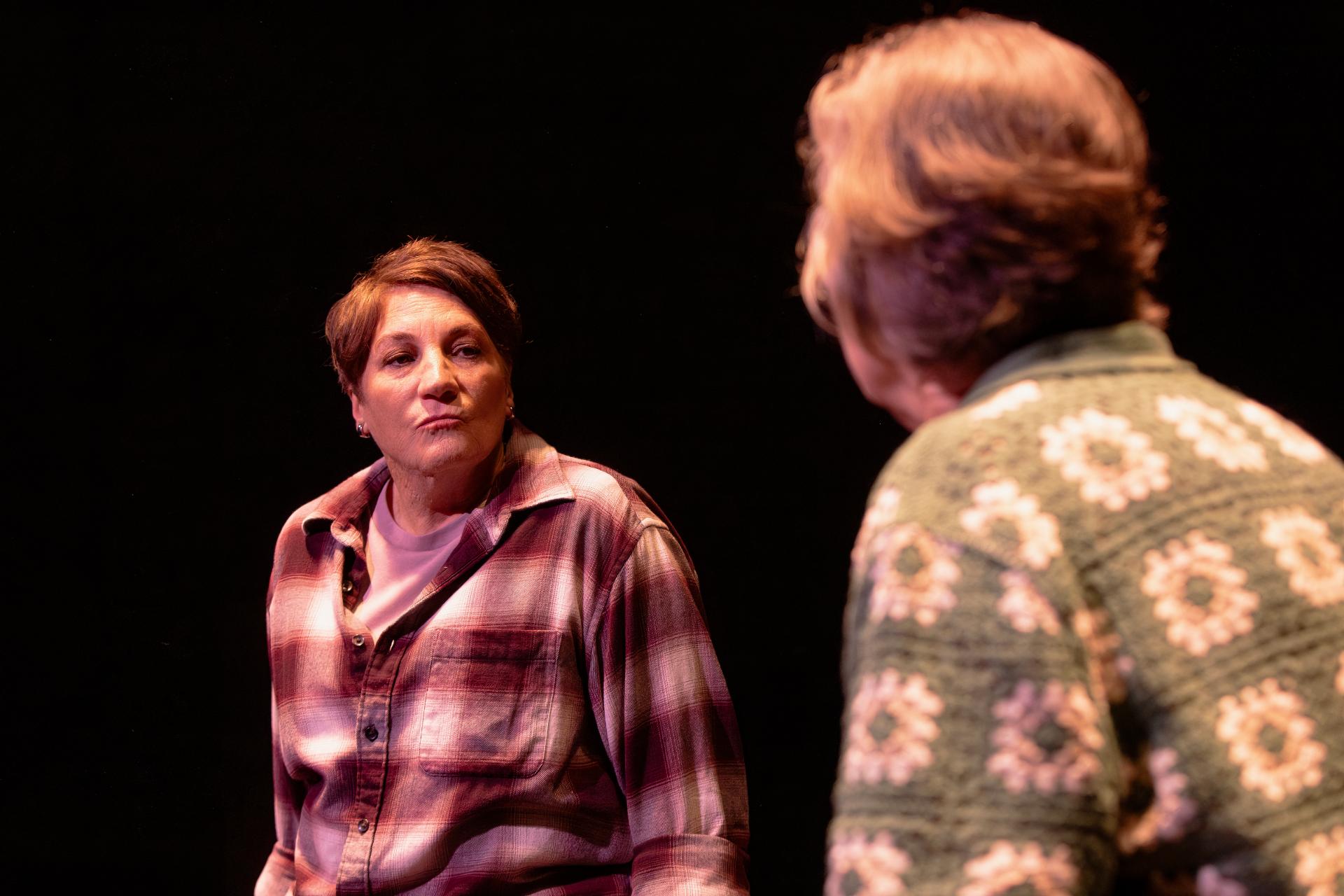
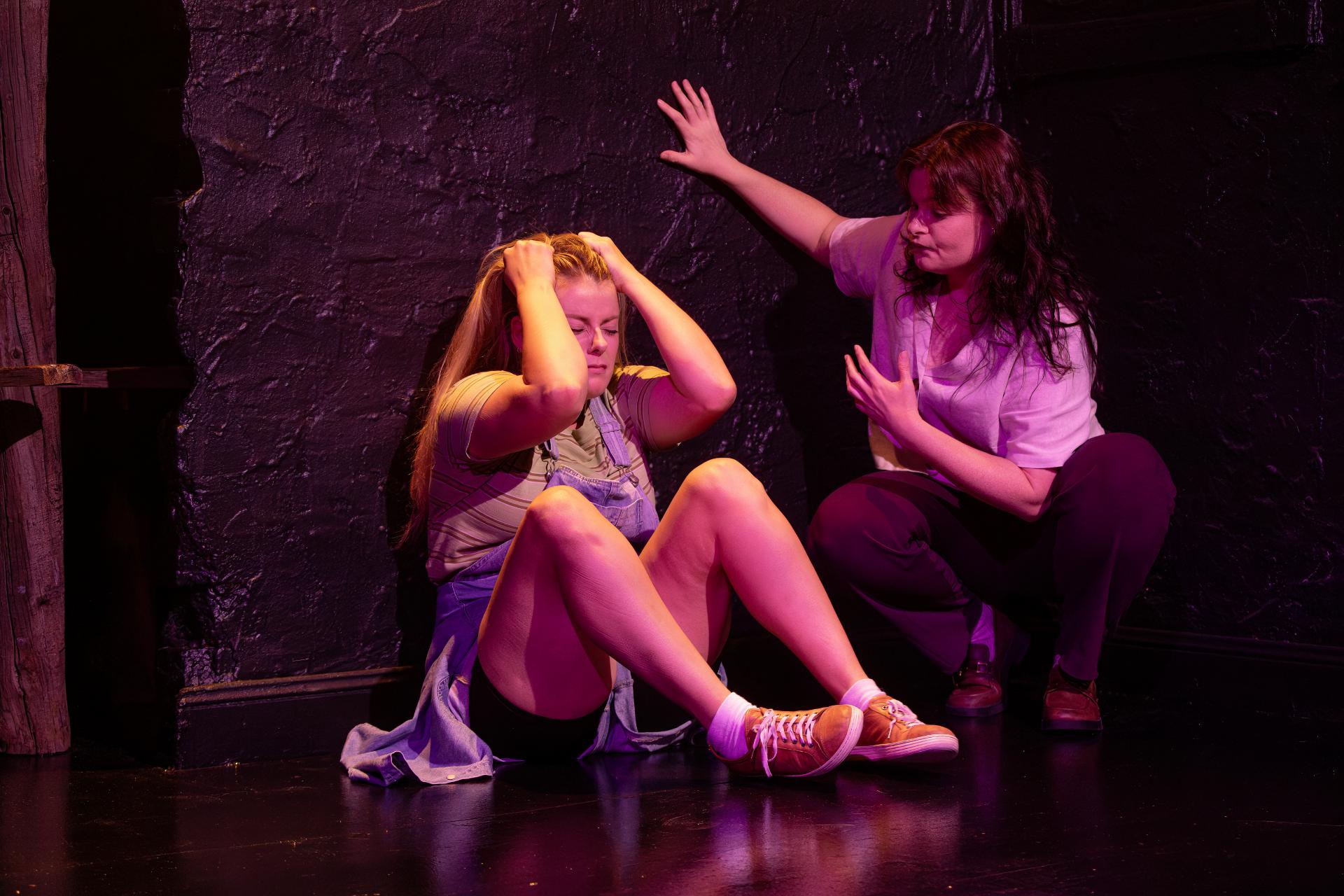
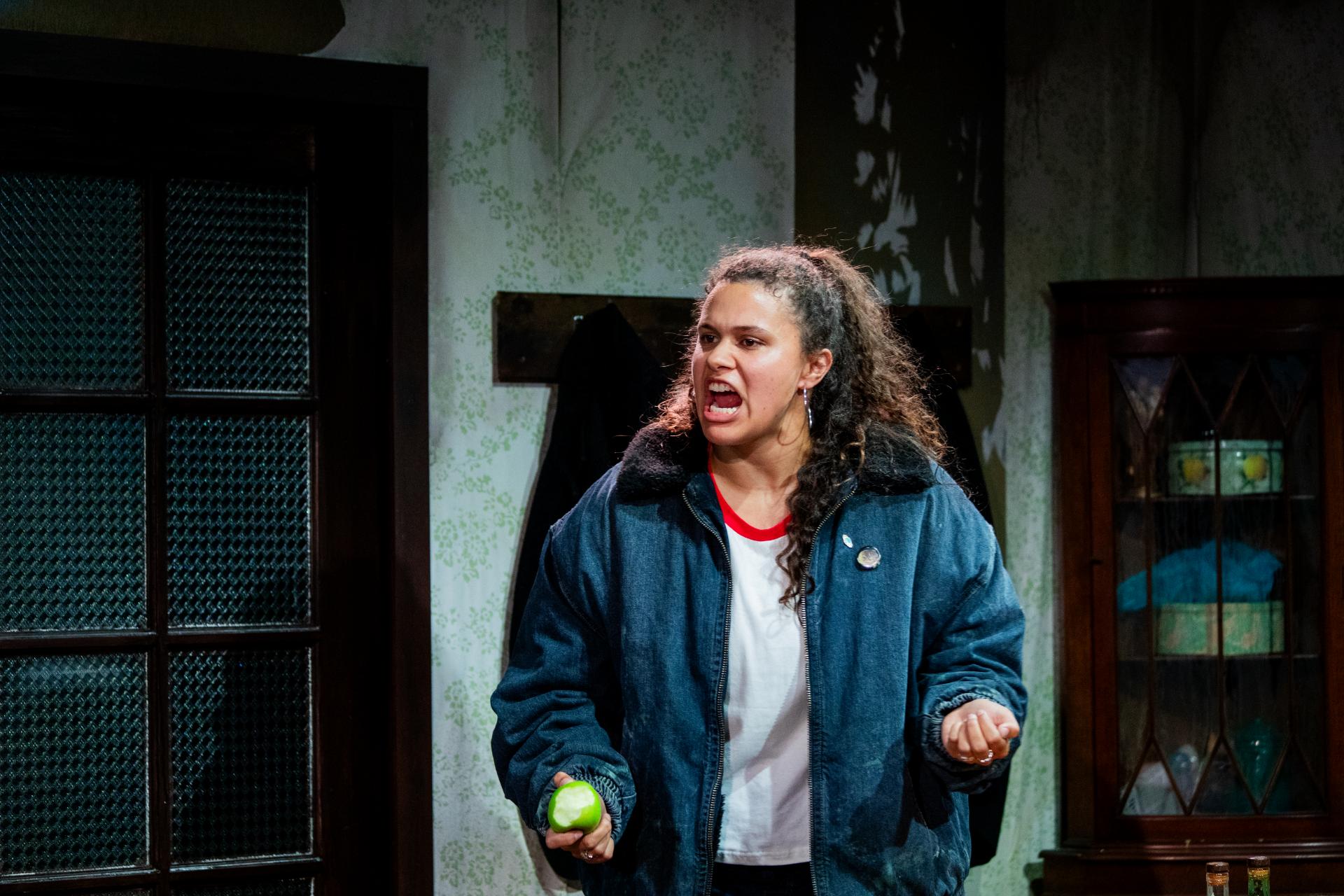
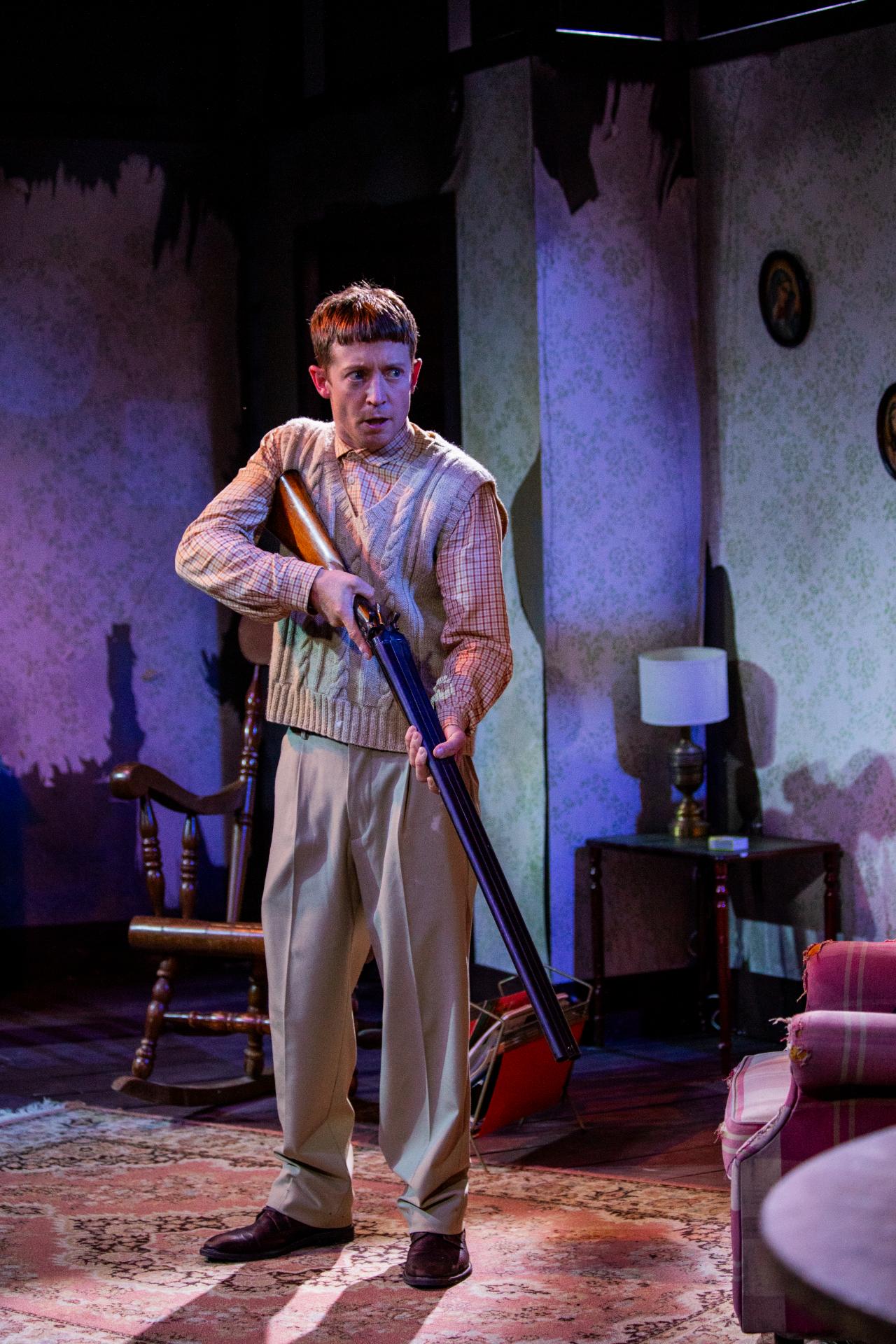
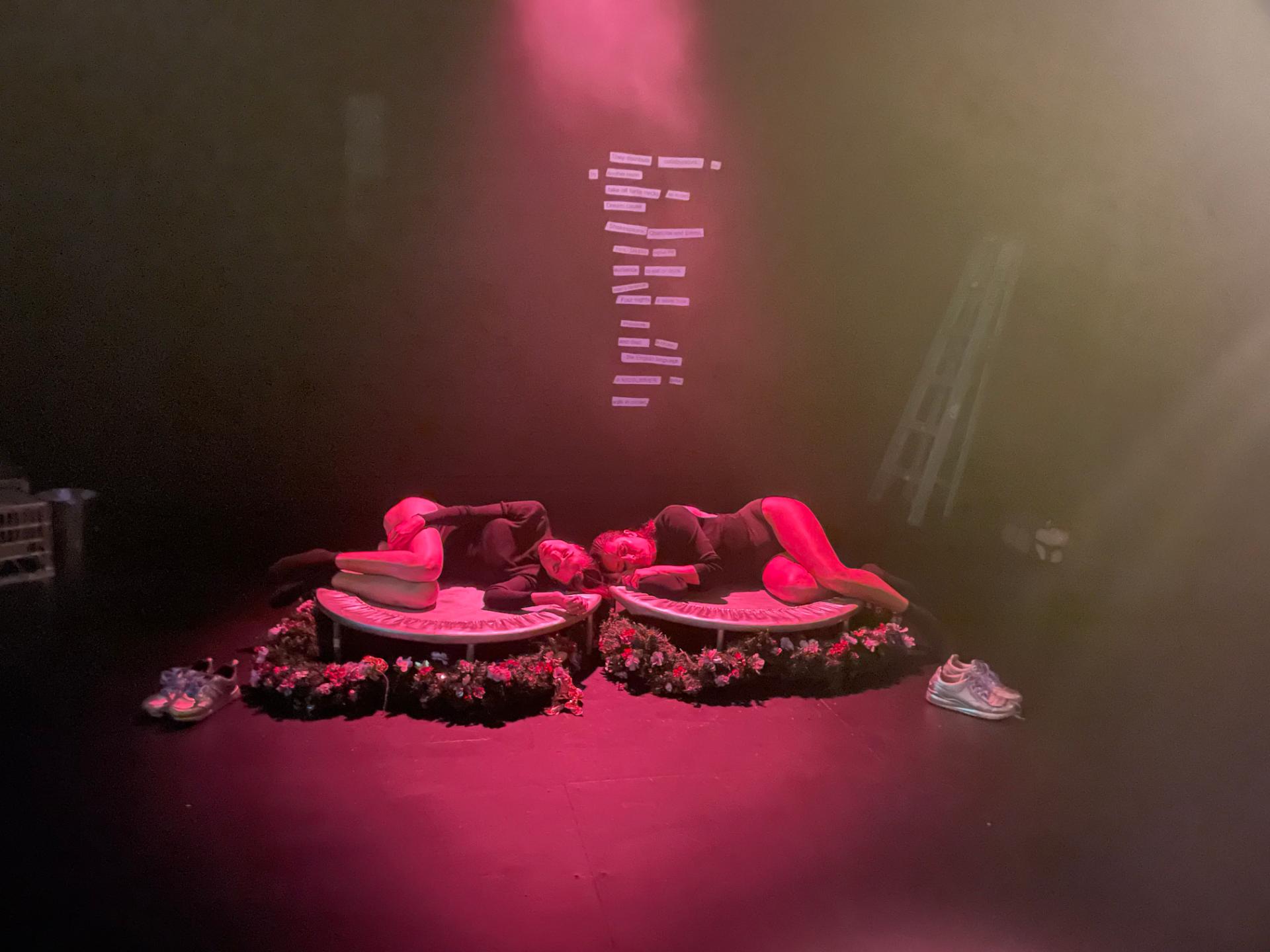
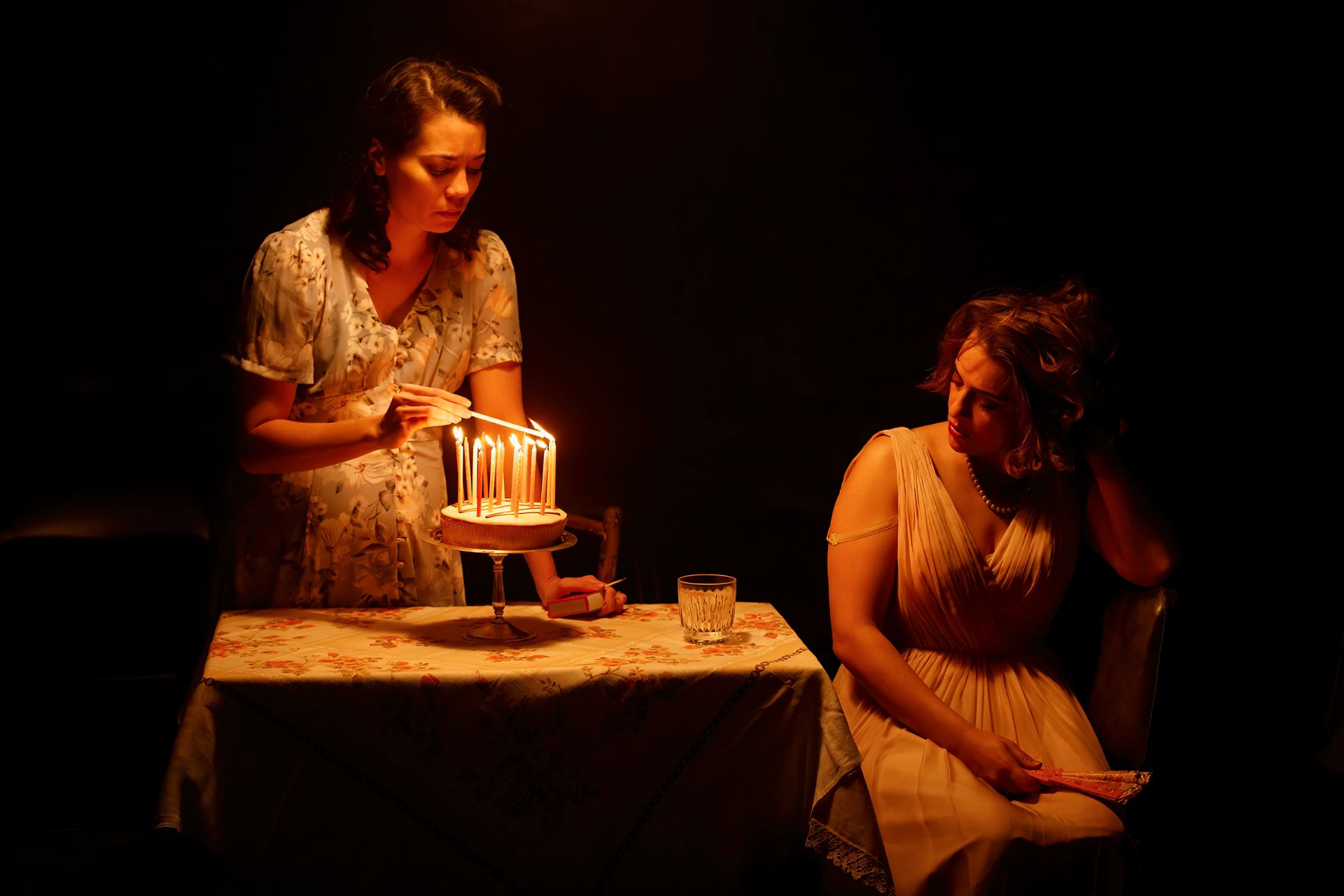
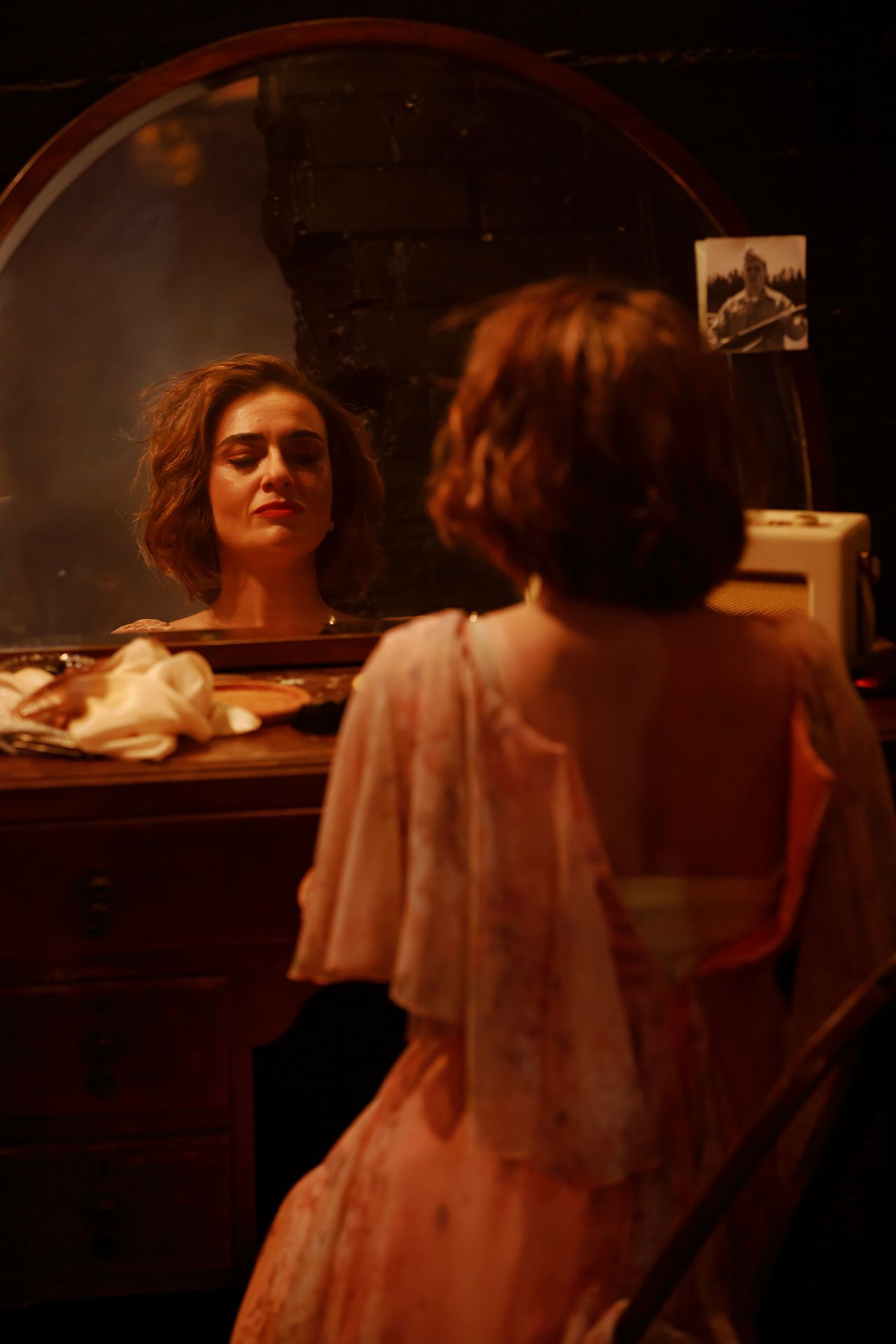
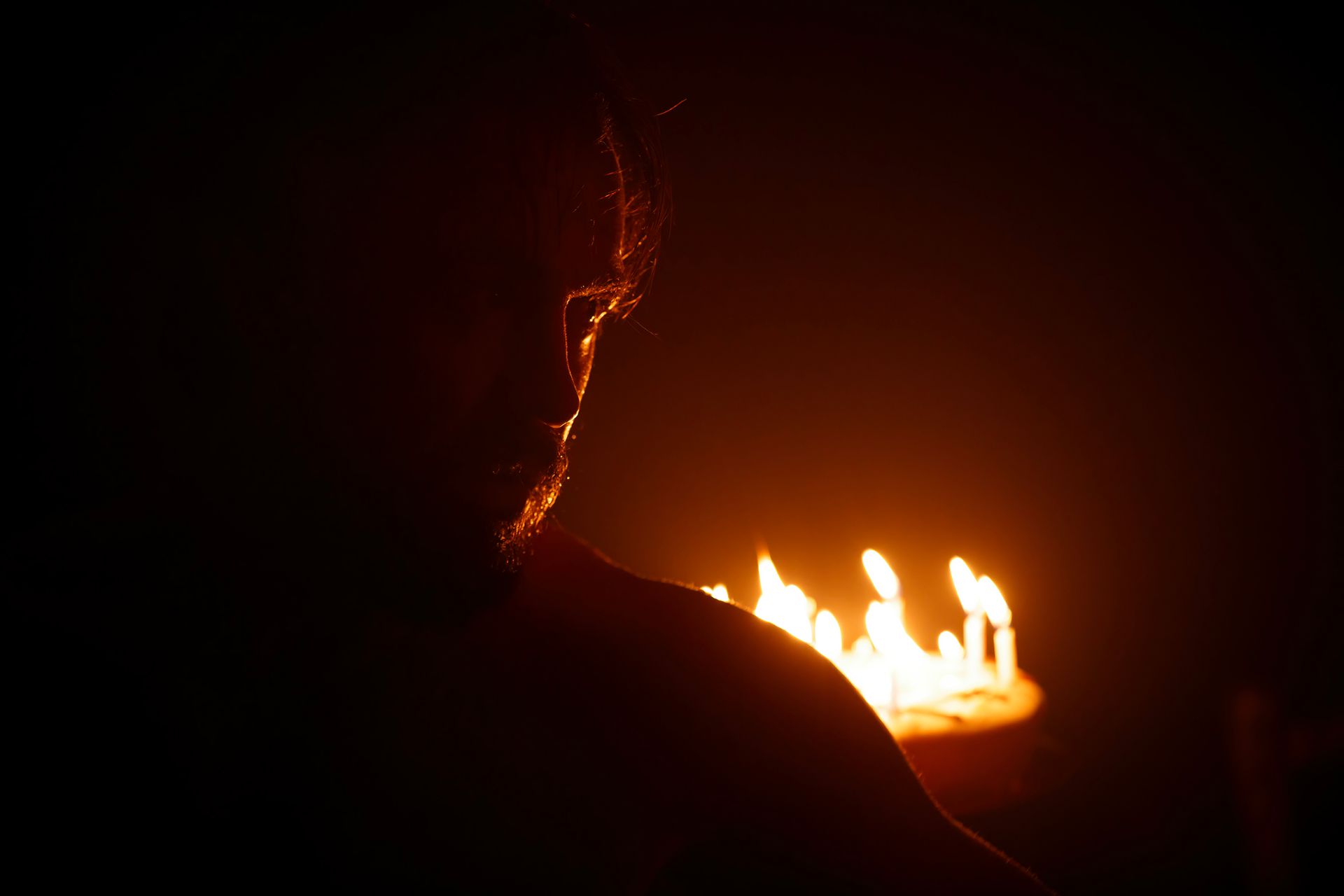
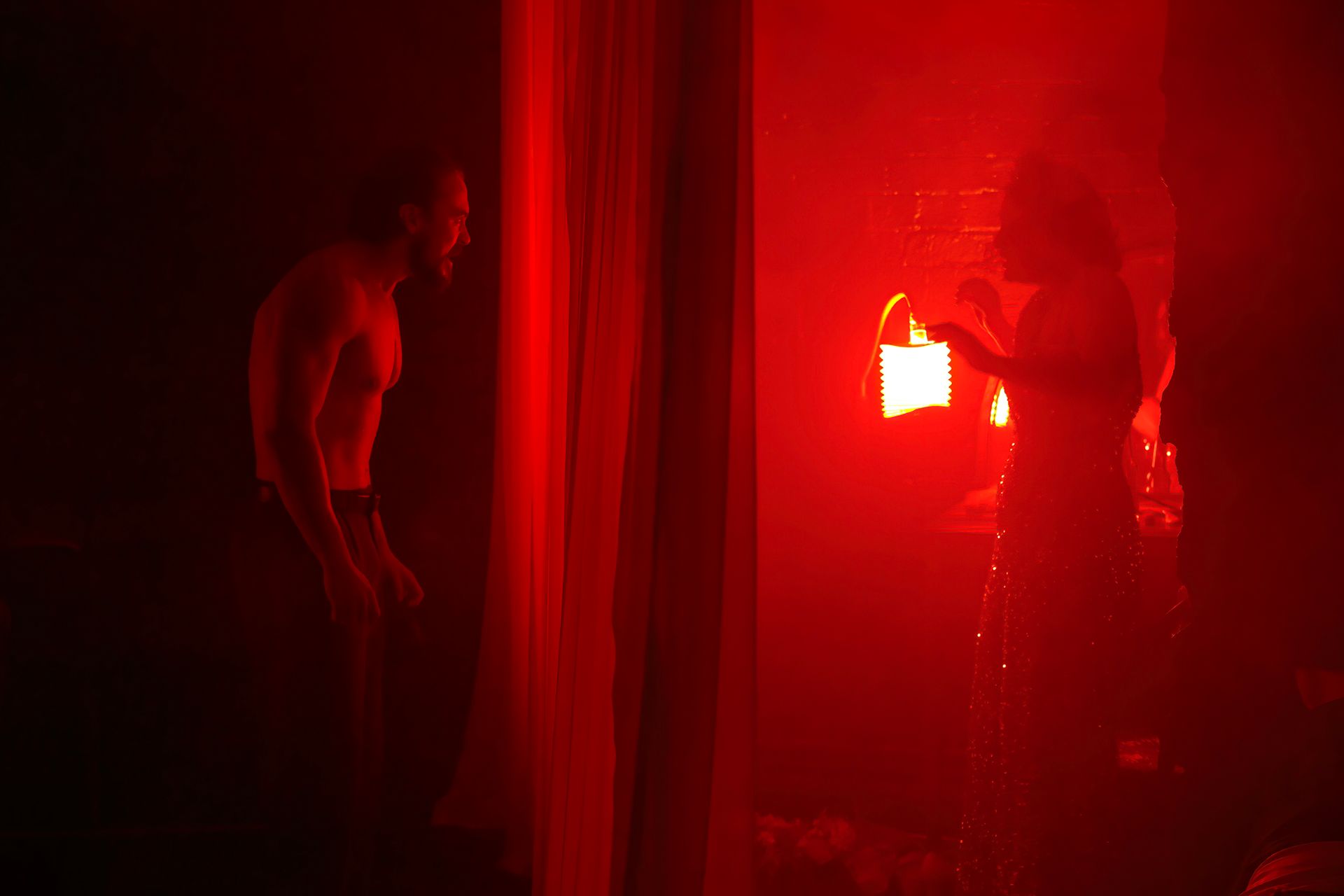
Movie star Angelica is making a comeback, after taking time off to raise her child. Filming however, is not going at all smoothly, with constant personality clashes on set making the project a painful ordeal. In Emily Sheehan’s Frame Narrative, people get in the way of art; whether a result of self-sabotage or  interpersonal discord, we see artists unable to focus on the real matter at hand, forever transferring their energies away onto the wrong drama.

Often very funny, and with a clever plot structure, Sheehan’s play delights with its constant supply of surprises. Its moralistic ambiguities however, resists our emotional investment in its characters, who we always distrust. Direction by Lucy Clements does not attempt to hide the deficiencies inherent in these humans, portraying them truthfully as flawed beings. Her show bears an enjoyable theatricality, fuelled by the text’s explorations of artistic form, along with an investigation into the nature of reality.

An ambitious set design by Soham Apte helps us imagine a place much like Hollywood, where artifice reigns supreme. Costumes by Rita Naidu provides definition to personality types, but requires finessing to better represent the extraordinary wealth of this cohort. Spencer Herd’s lights are intricately conceived, to convey the many different spaces, both physical and conceptual, that we traverse in Frame Narrative. Sound design by Sam Cheng is rendered with a quiet sophistication, surreptitious but highly effective in its calibrations of atmosphere and temperaments.

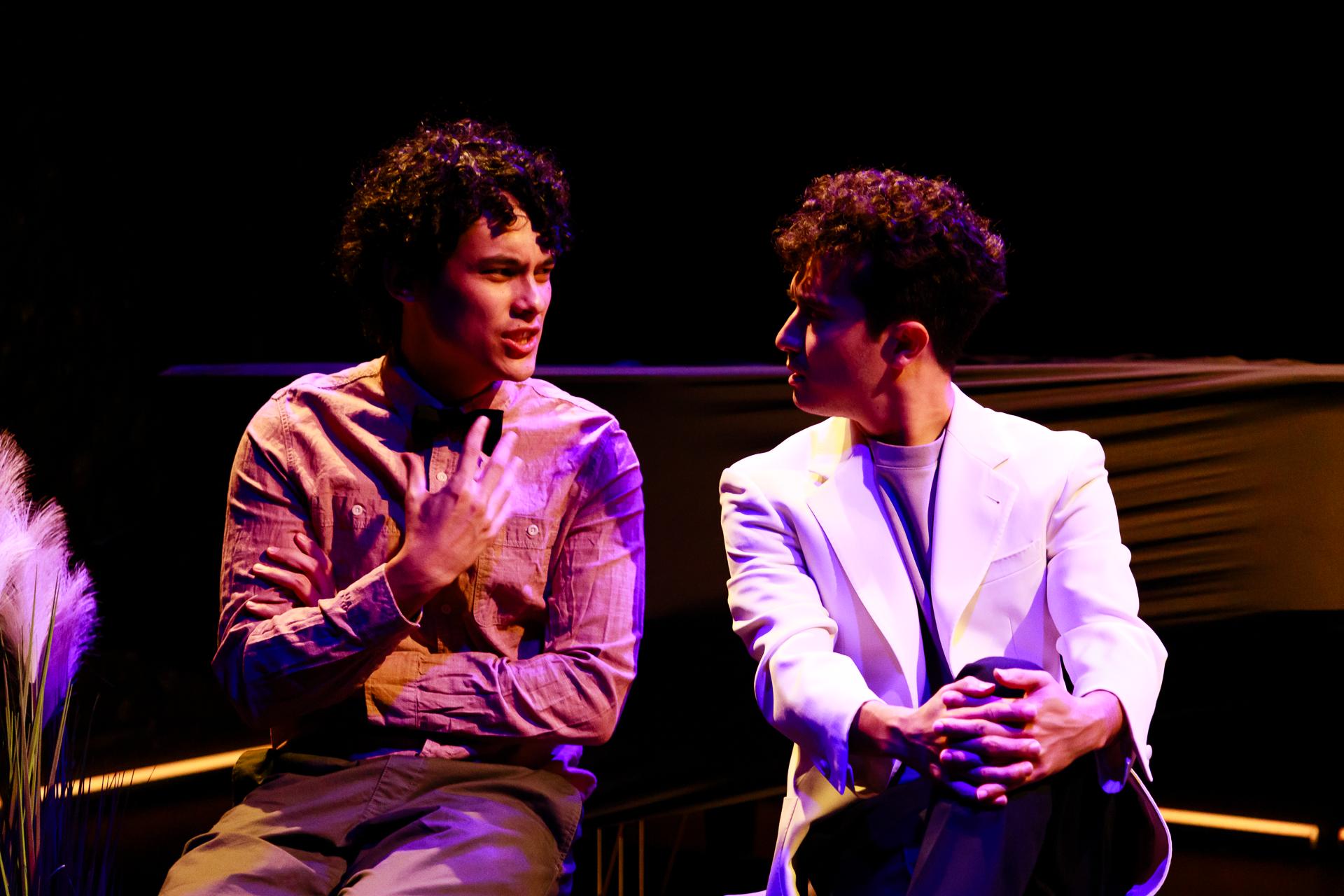
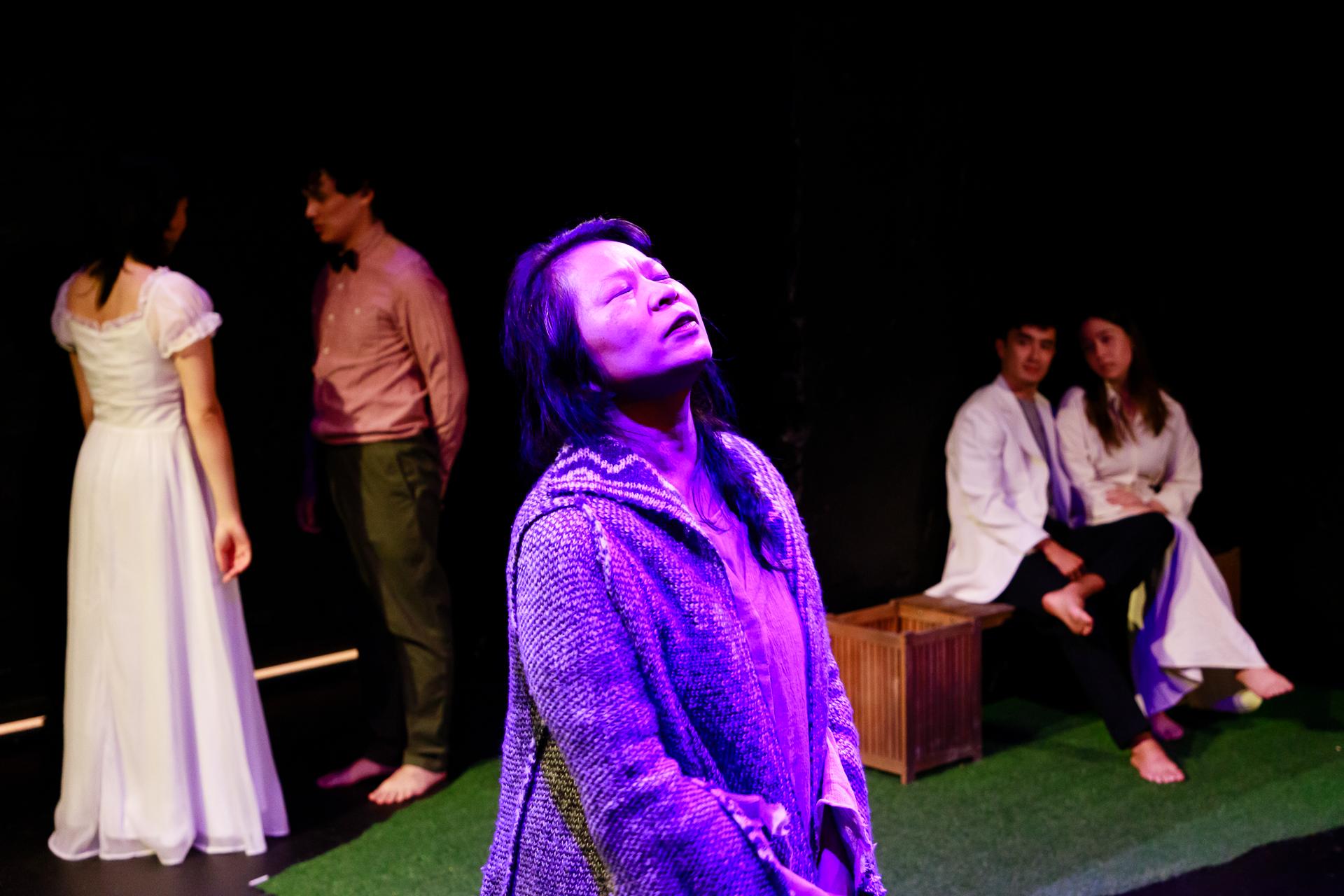
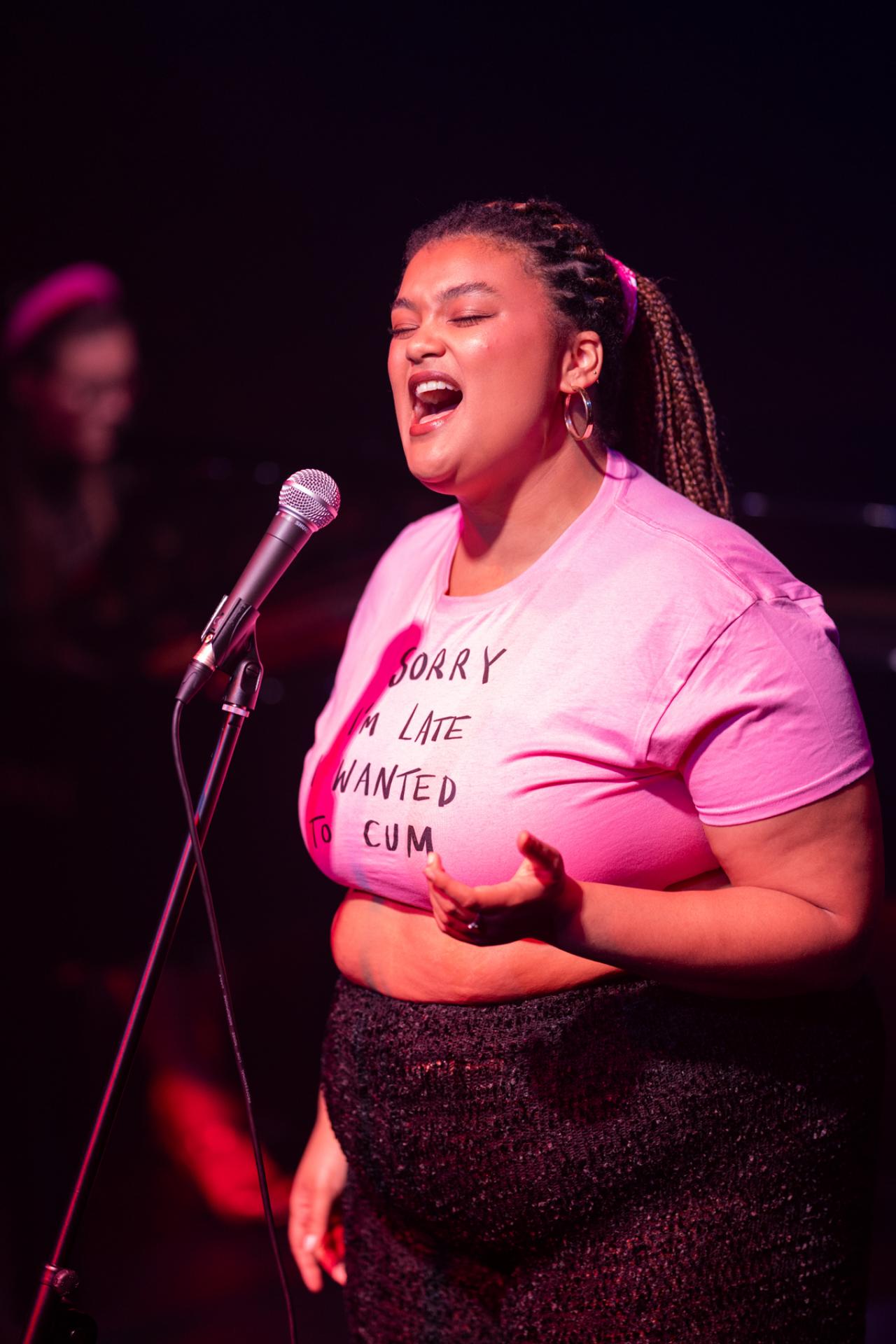
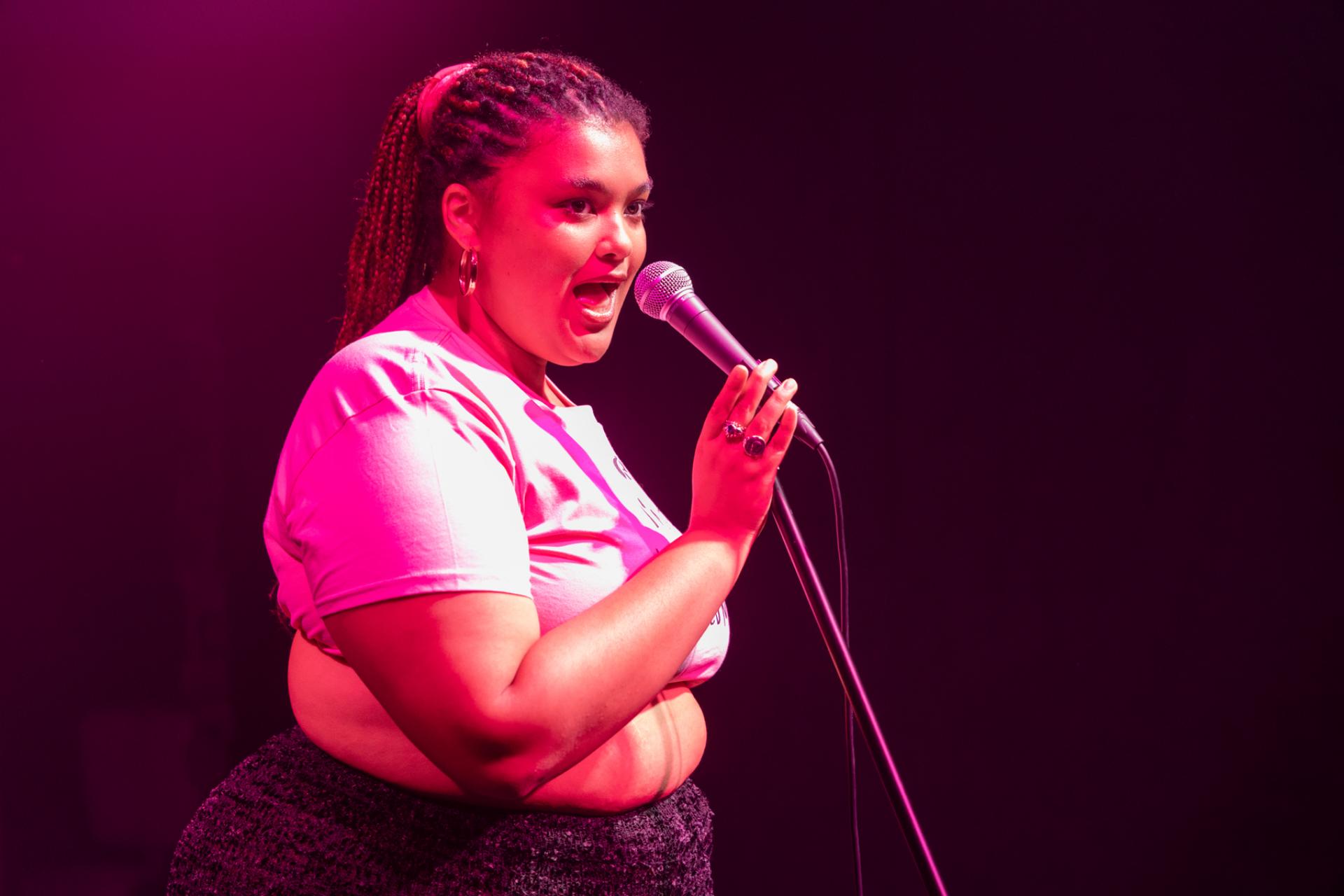
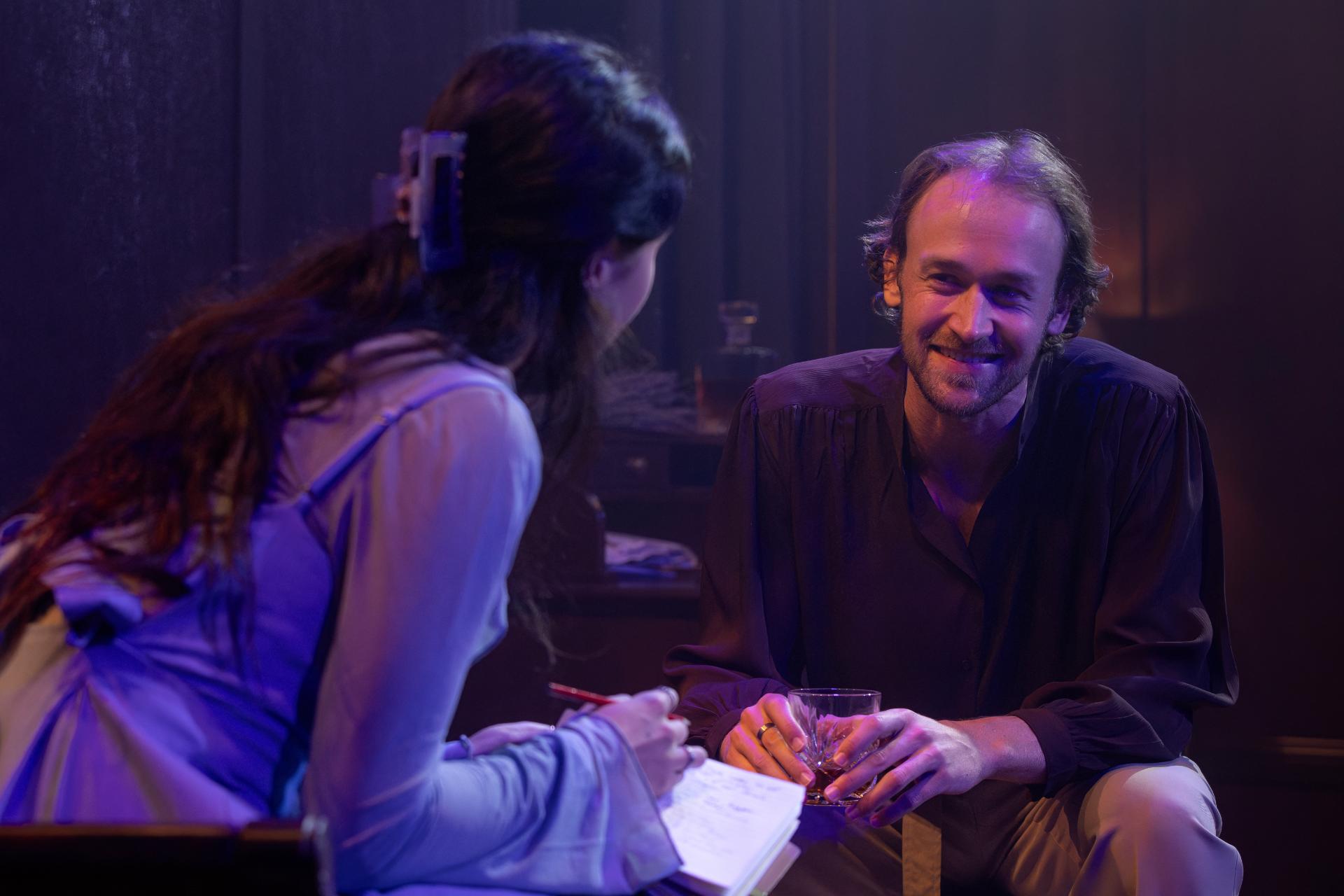
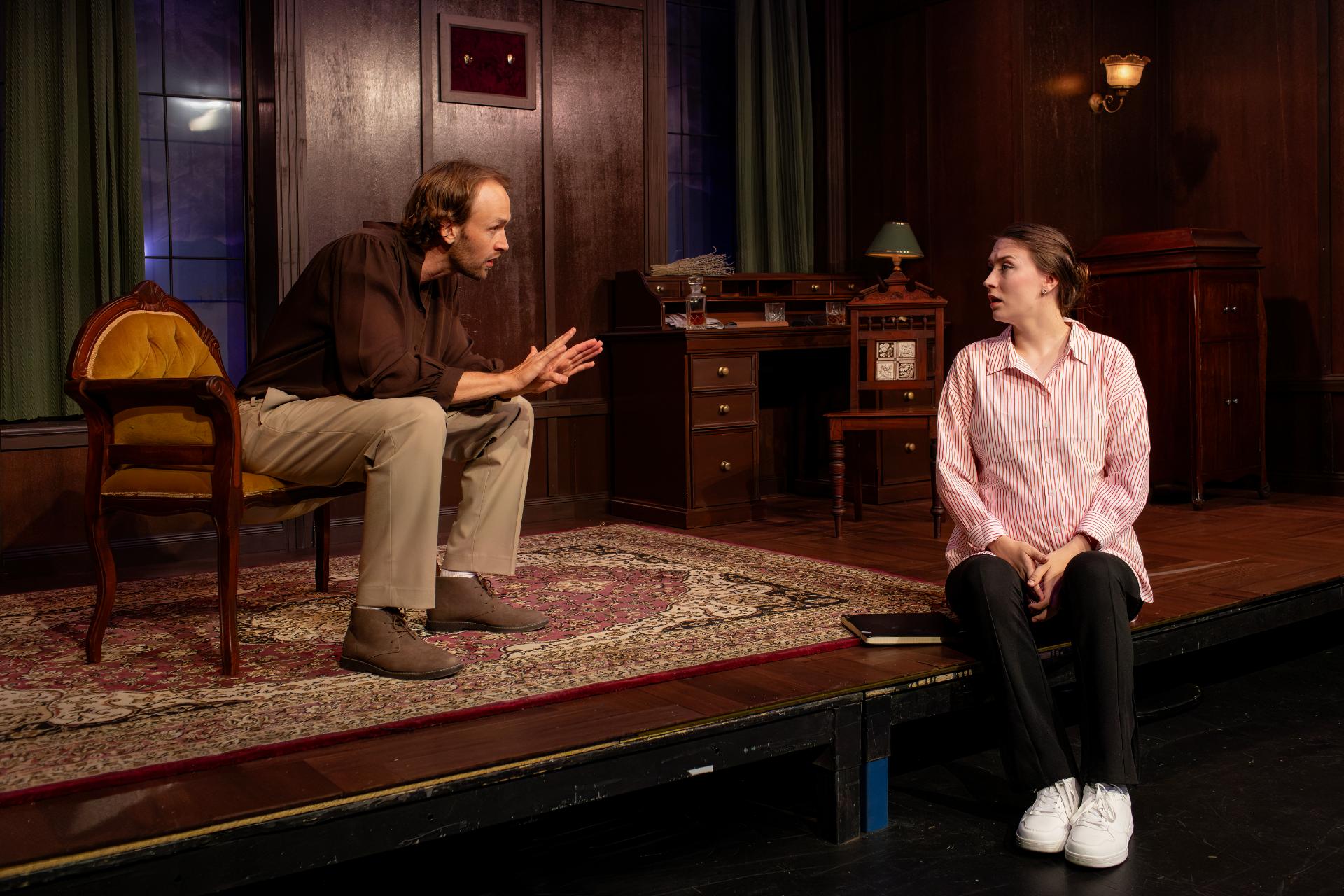
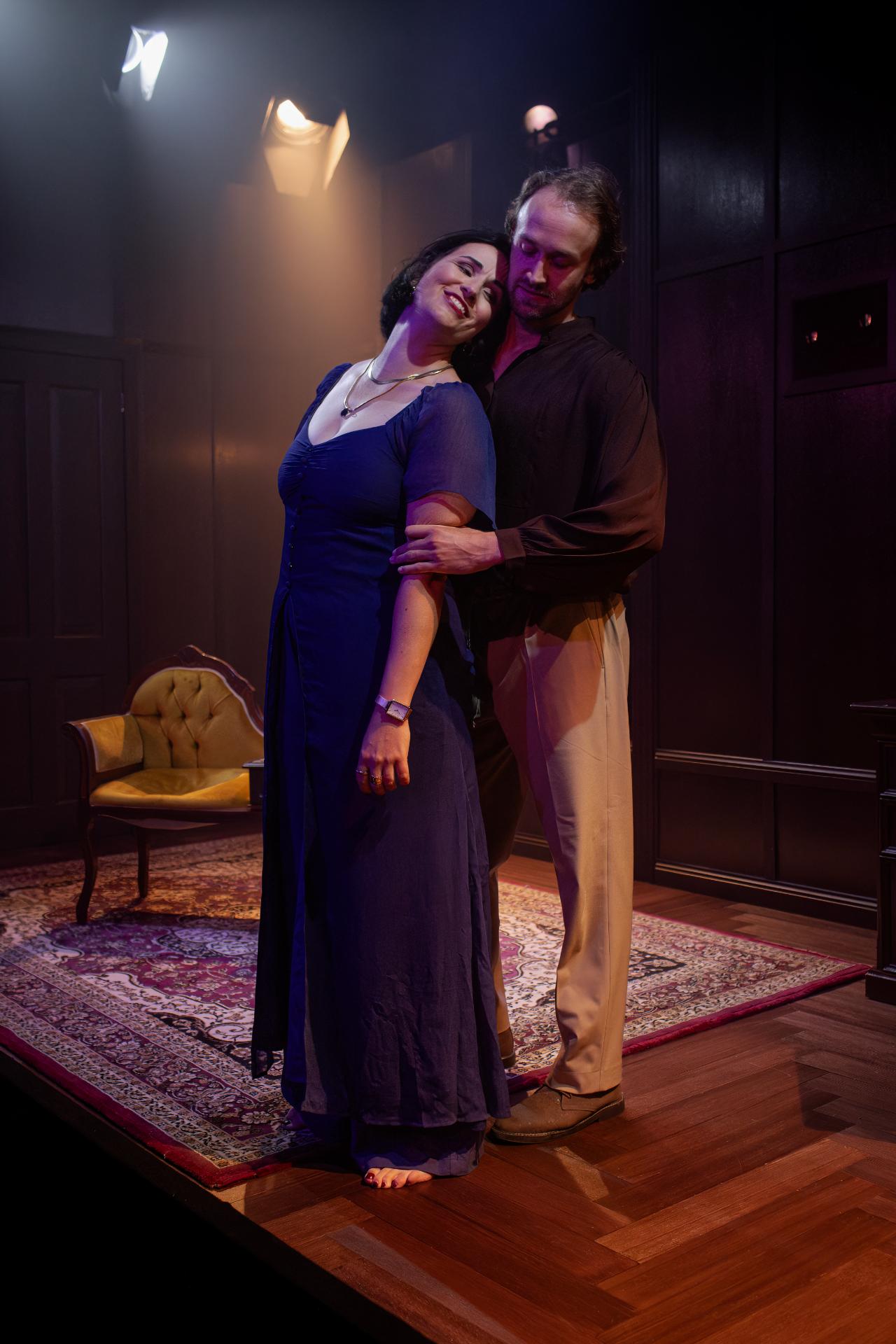
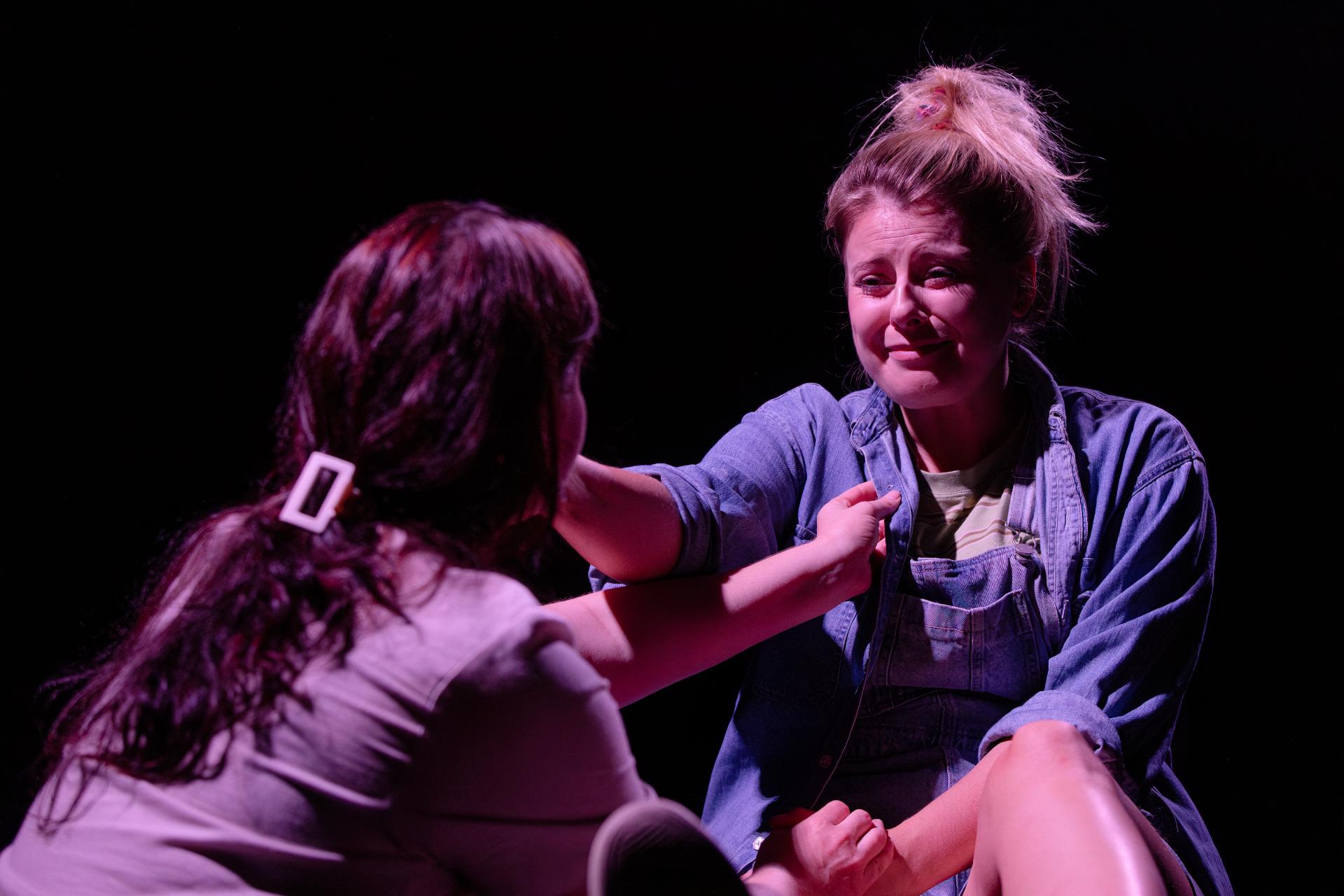
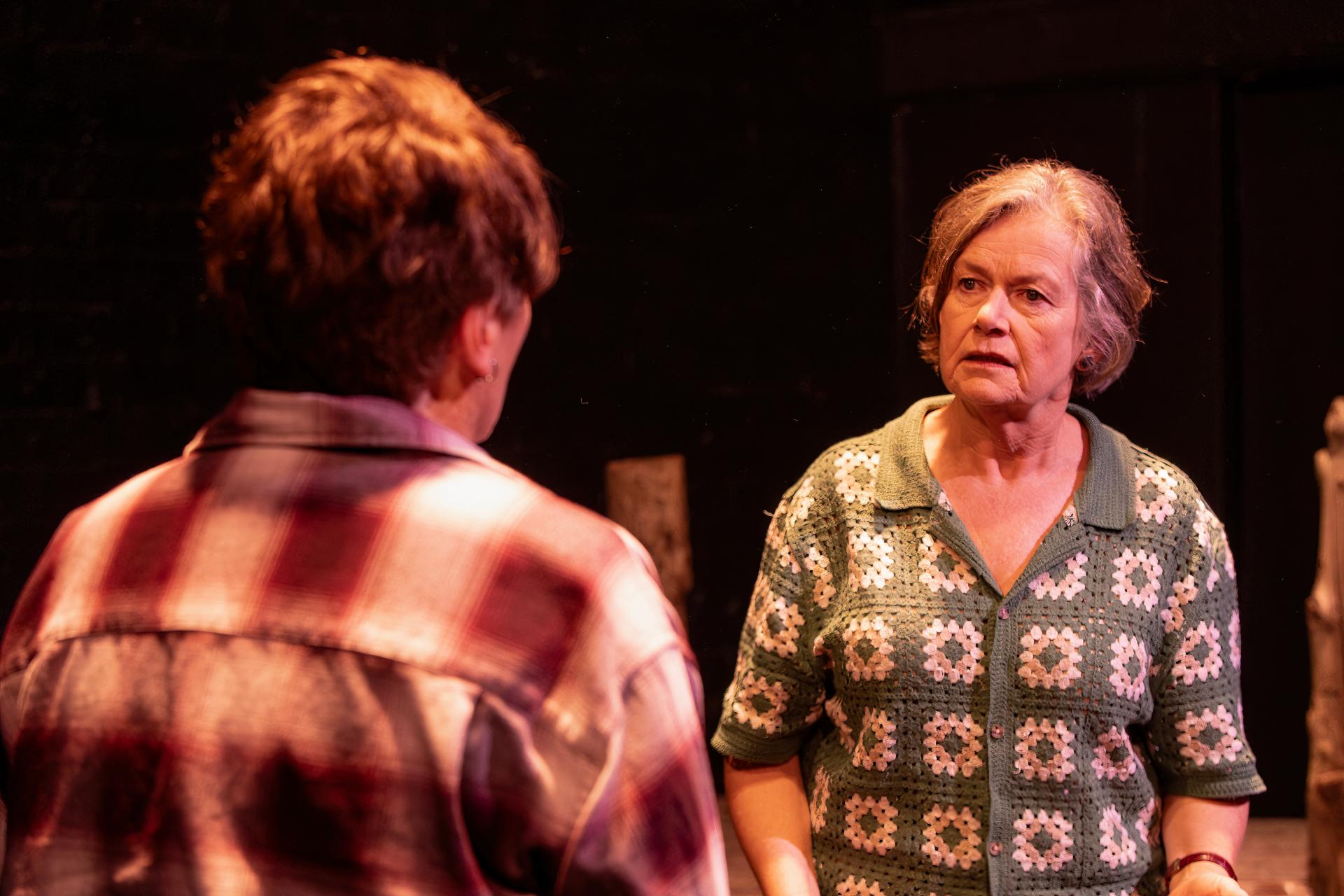
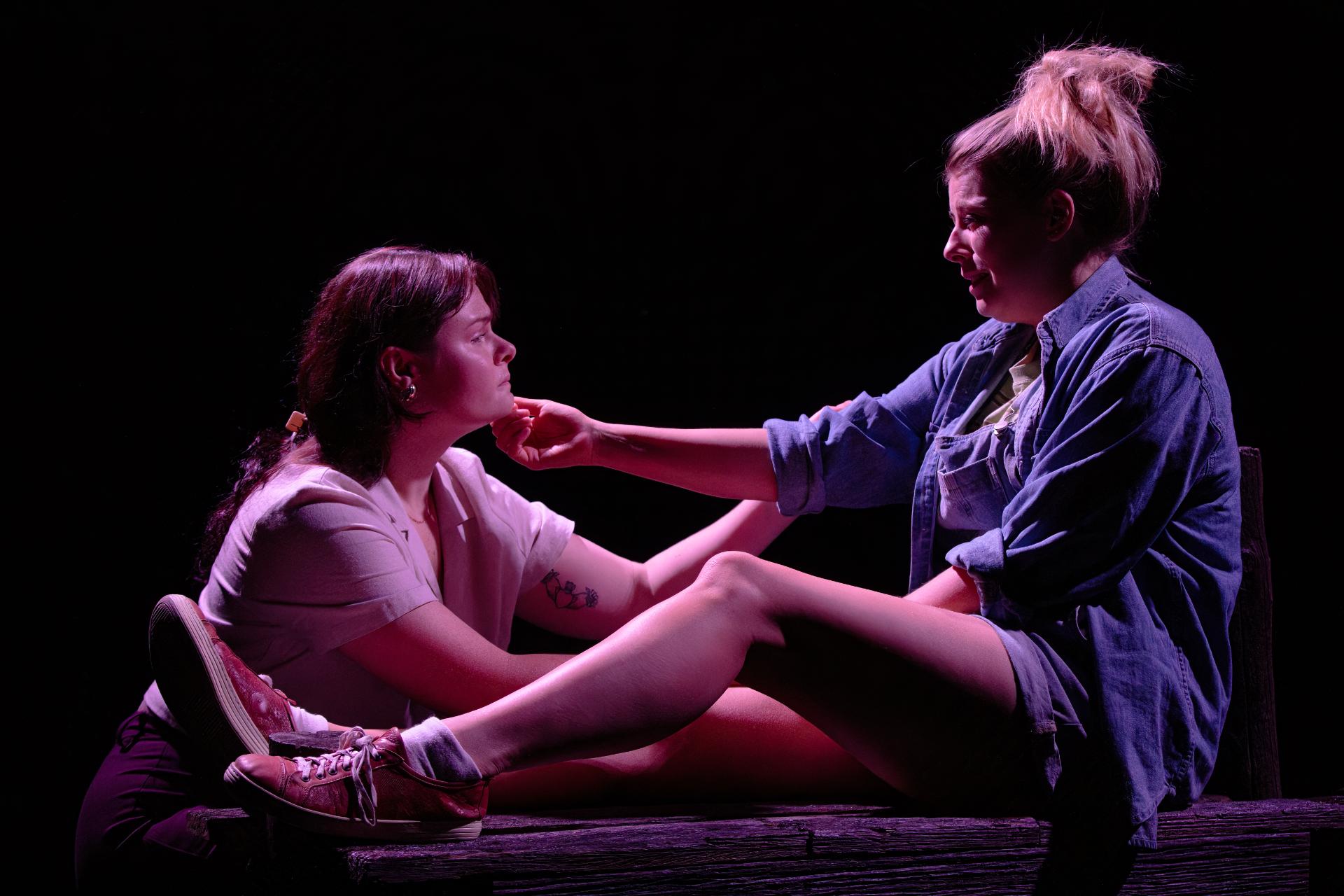
Actor Megan O’Connell brings vigour and integrity to the complex role of Angelica. Charles Upton too is unwavering in his commitment to playing Hendrick, completely believable whether being decent or despicable. Madeline Li introduces great tension to the experience, through her embrace of Elsa’s precarious unpredictability. Jennifer Rani’s intensity as Margot demands our attentiveness, and Emma Wright’s vulnerability as an unnamed writer, attunes us to a sense of depth for the play, at its closing scenes.

Human destructiveness usually looks like a force that exerts outwards, but its reverberations always seem to come back around. In Frame Narrative, colleagues inflict toxicity at one another, never noticing the harm that inevitably descends upon the work they try so hard to create. We all have unhealthy impulses, but how we choose to act on them, is what truly matters.

www.oldfitztheatre.com.au | www.newghoststheatre.com

Review: The Swell (Old Fitz Theatre)

Venue: Old Fitzroy Theatre (Woolloomooloo NSW), Feb 15 – Mar 2, 2024
Playwright: Isley Lynn
Director: Julia Billington
Cast: Jessica Bell, Katherine Hopwood Poulsen, Deborah Jones, Alexandra Keddie, Fiona Press, Monique Sallé
Images by Phil Erbacher

Theatre review
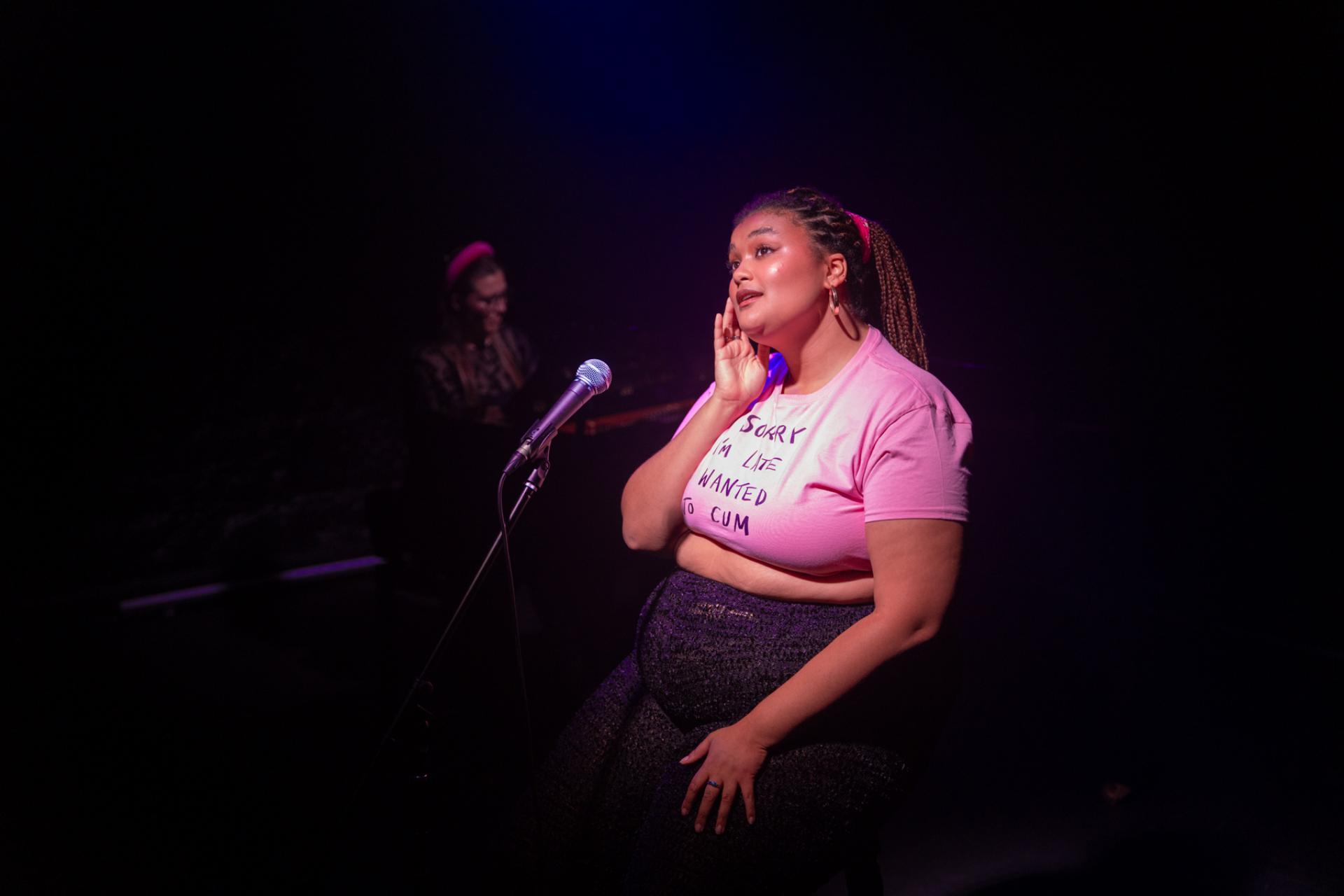
Annie and Bel are planning their wedding, when Flo returns from out of town for a visit. A surprising connection blossoms between Flo and one of the brides-to-be, instigating drama to ensue in the most unimaginable way. An electrifying plot twist in Isley Lynn’s The Swell brings us to the edges of our seats, in an otherwise slightly pedestrian tale, of a queer love triangle.

There is a leniency in Julia Billington’s direction of the piece, that is perhaps overly reliant on what their cast chooses to bring to the stage. It is a delicate work however, with a sense of integrity, that prevents The Swell and its undeniable sensationalised aspects, from feeling in any way unrefined or pulpy.

Hannah Yardley’s set design is extremely simple, forming an appealing representation of rural England, although not always sufficiently vivid with how it helps us imagine the physical contexts, in which the three women intertwine. Lights by Saint Clair are suitably moody, bringing an alluring edge to this dark romance. Sound design by Clare Hennessy is consistently subtle, effective at harnessing tension, but could benefit with a bolder approach to achieve a more stirring result.

Six generous actors perform the roles across two generations, in a story spanning thirty years. Jessica Bell, Alexandra Keddie and Monique Sallé play the young women, each creating distinct personalities, but are not always convincing with the chemistry being generated. Katherine Hopwood Poulsen, Deborah Jones and Fiona Press deliver senior versions of the same characters, admirable for bringing the show to a satisfying climactic conclusion.

As we become increasingly comfortable with queerness in our art and lives, it is important that the particularities of our experiences as queer people are not disregarded. The Swell talks specifically about lesbians. In a climate of radical inclusivity, it is tempting to wish to represent as many marginalised people as possible, in each instance of theatre making, but we risk erasure of valuable differences pertaining to our LGBTQIA+ identities.

Emancipation naturally means that we will ultimately be freeing ourselves from labels, and we should always work towards a future of fewer limitations and greater possibilities, but there is power in embodying markers, especially those that carry with them, glorious histories of resistance, resilience and triumph. Lesbians have improved the world for everyone, in countless ways, and we must insist on their enduring and conspicuous presence.

www.oldfitztheatre.com.au | www.instagram.com/akimbo_co

Review: The Lonesome West (Old Fitz Theatre)

Venue: Old Fitzroy Theatre (Woolloomooloo NSW), Jan 13 – Feb 10, 2024
Playwright: Martin McDonagh
Director: Anna Houston
Cast: Lee Beckhurst, Andre de Vanny, Ruby Henaway, Abe Mitchell
Images by Saz Watson

Theatre review
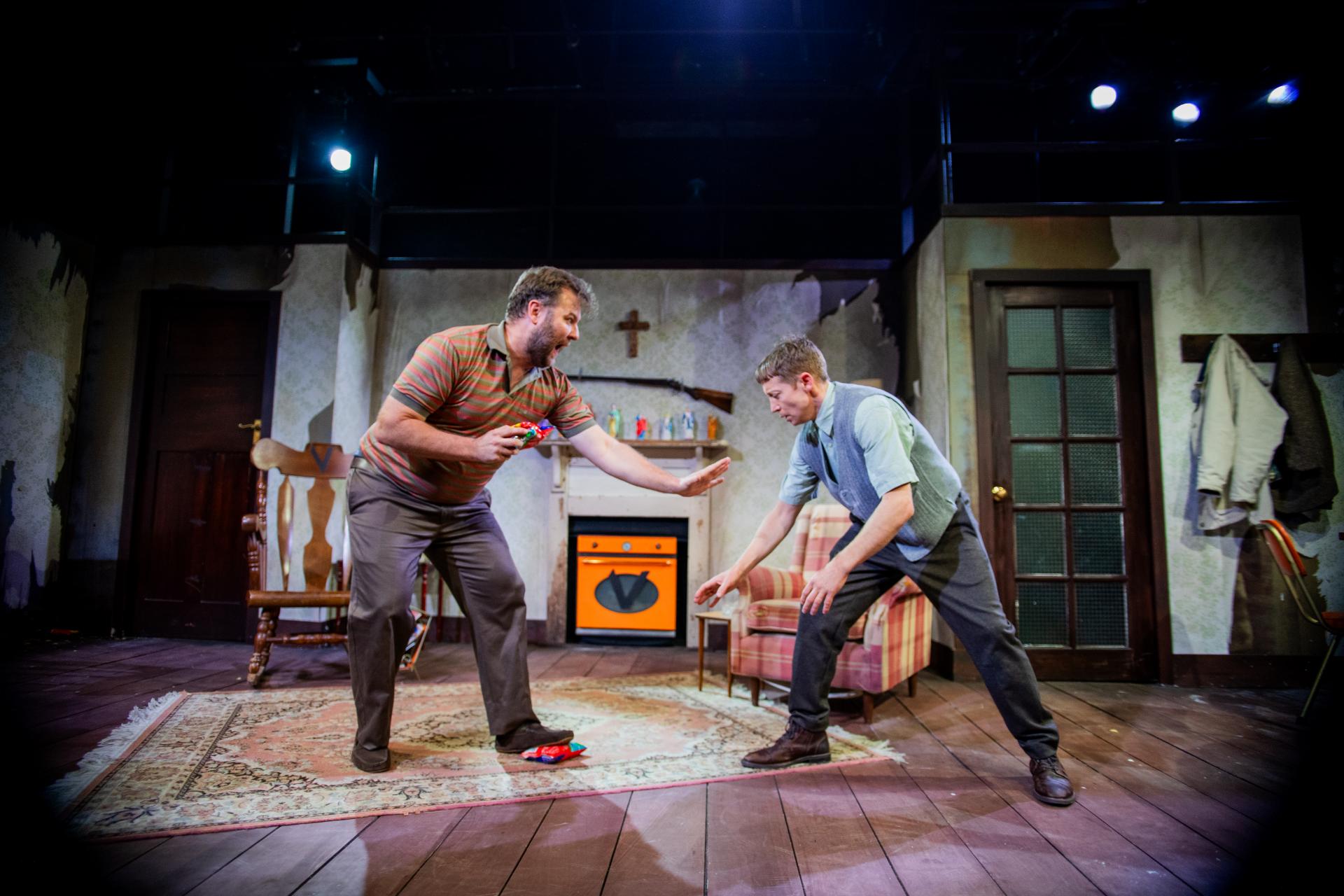
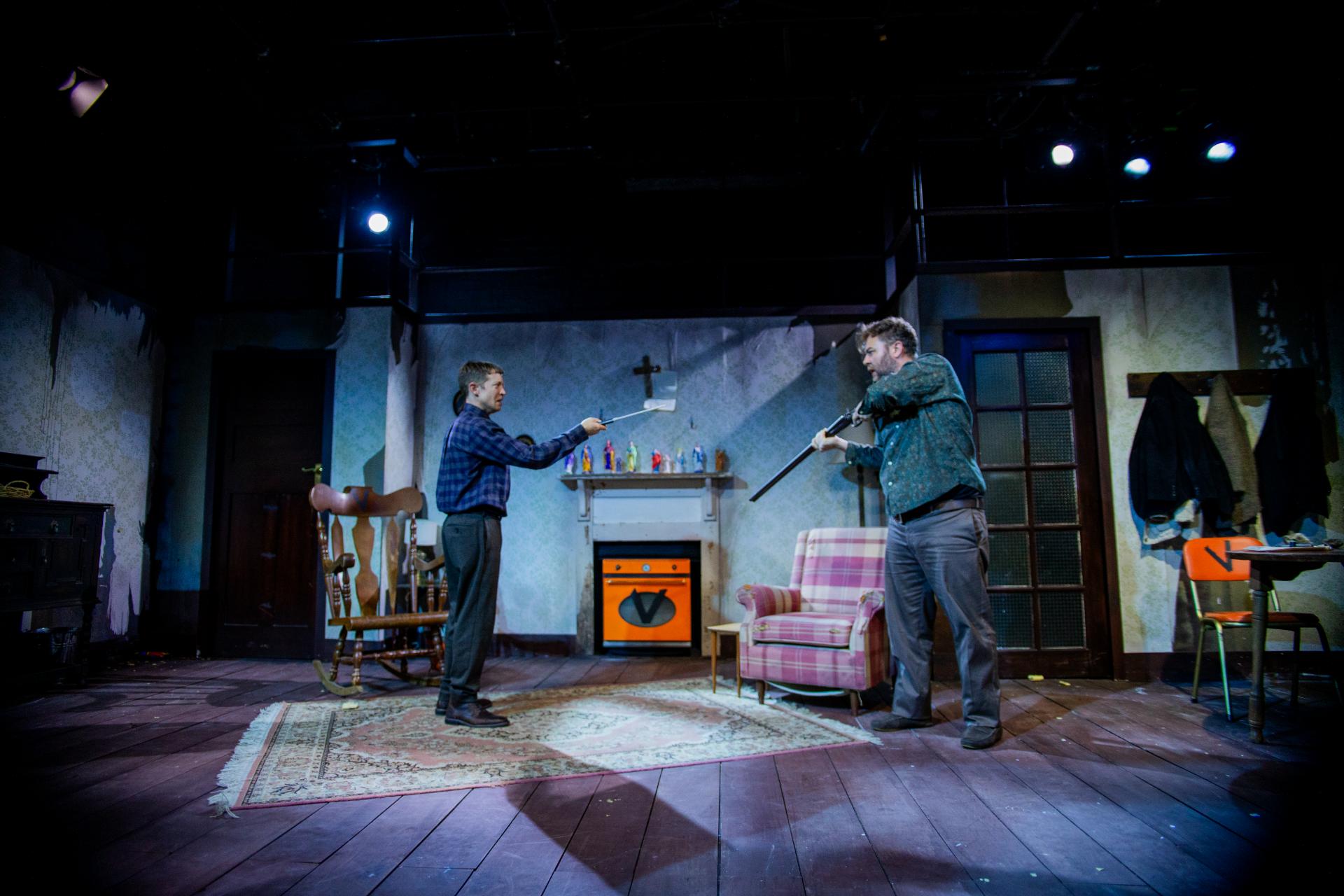
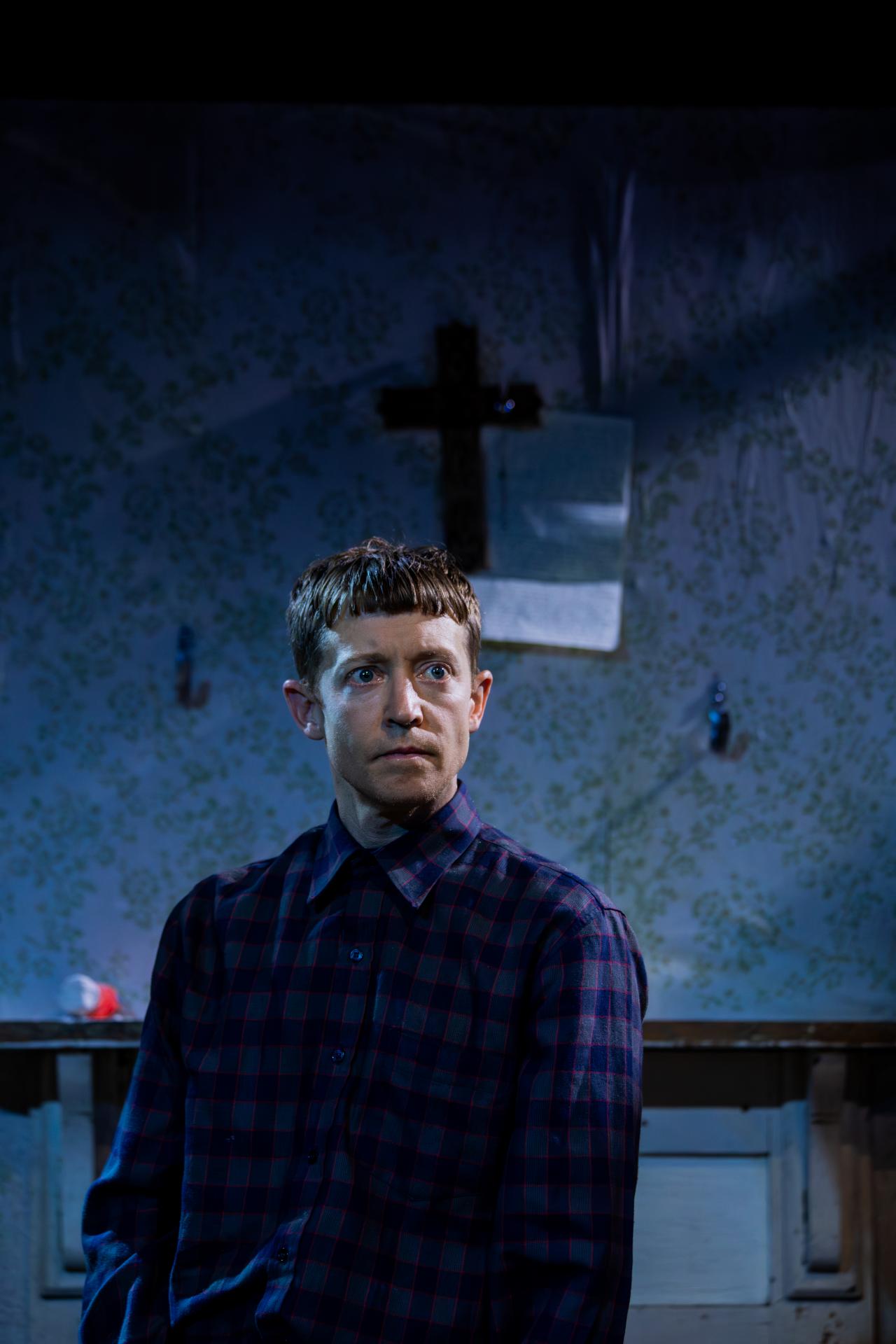
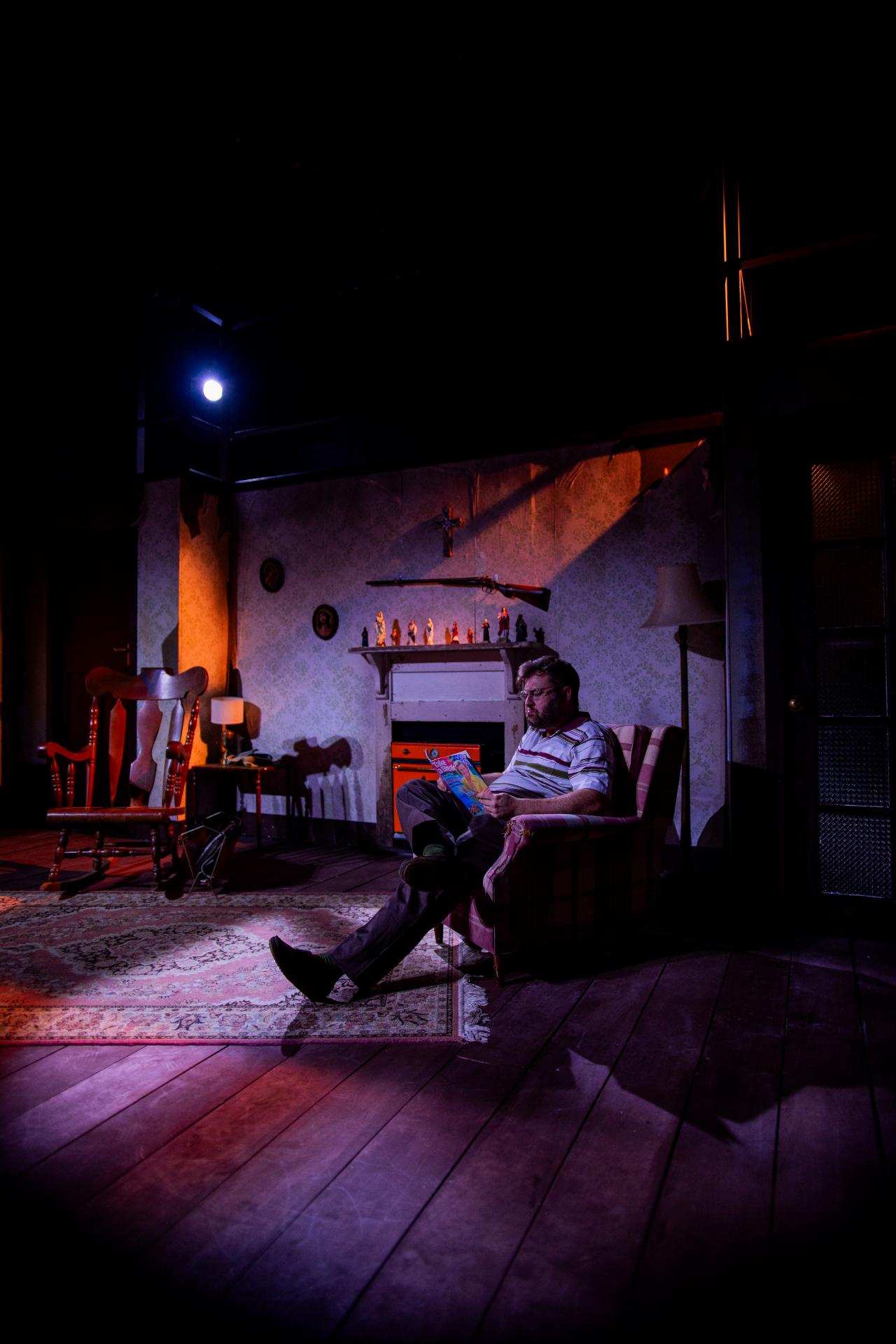
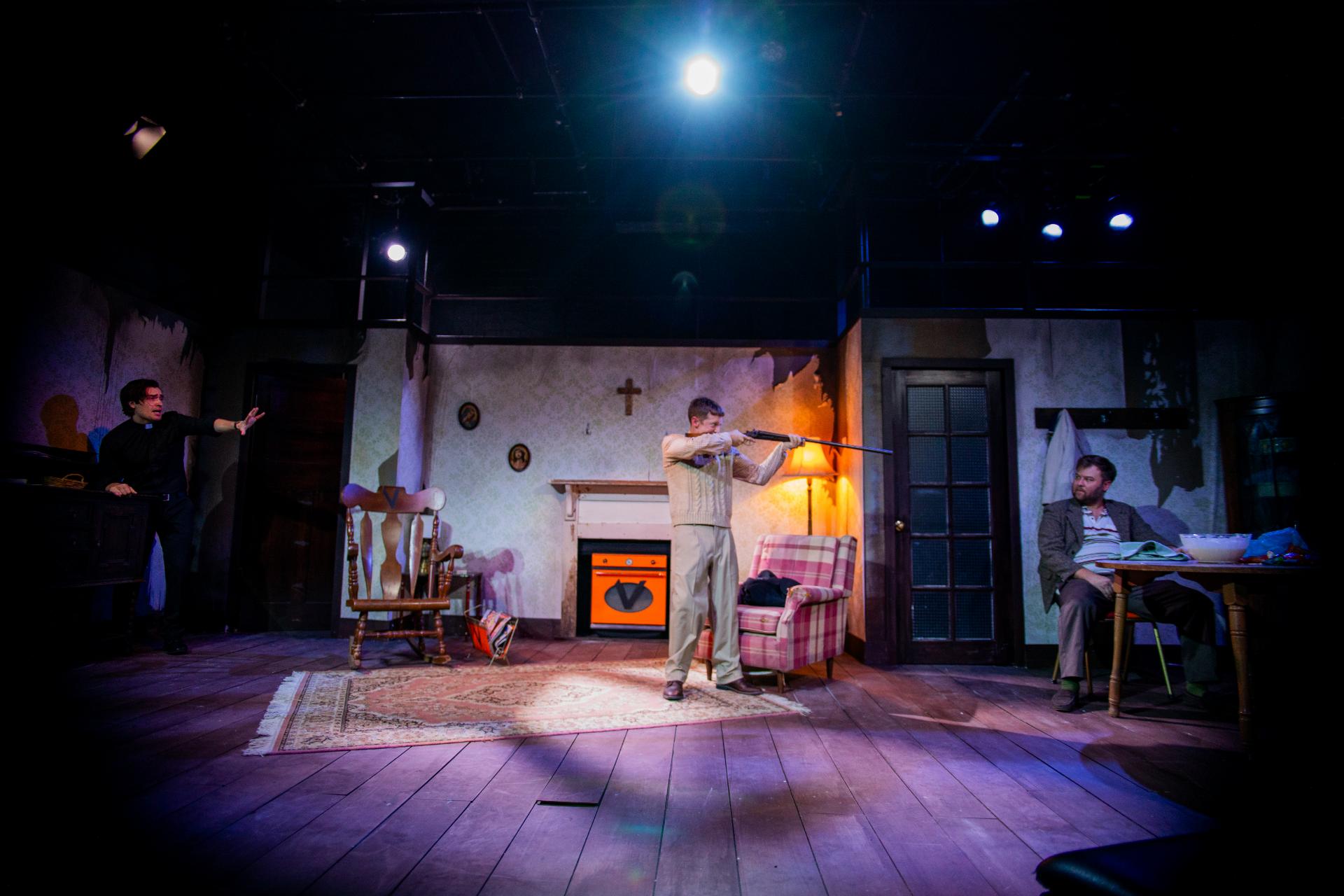
Coleman and Valene are brothers who fight all day, over the pettiest of things like crisps and religious figurines. Local priest Father Welsh is at the end of his wits, trying to be peacemaker, whilst fulfilling his duties for a parish that seems to be beyond redemption. Martin McDonagh’s 1997 play The Lonesome West is set in the western Irish town of Leenane, where resources are limited, and hope even more scarce. The humour is absurd and very dark, about a couple of ne’er-do-wells who never hesitate to use language that is misogynist, homophobic and racist. Contemporary audiences might find those instances quite jarring, but the fact remains, that we are not supposed to ever regard the men as anything but undesirables.

Directed by Anna Houston, the show is relentlessly hilarious, never missing a beat with its comedy. Whether broad or nuanced, Houston goes into remarkable detail, in order that the theatrical experience is persistently engrossing and rib-tickling. Her cast rises to every challenge, keeping us thoroughly enthralled for the surprisingly swift two-and-a-half hour duration.

Andre de Vanny is masterful in the role of Valene, delivering for the character every shade of human response, from naturalistic to bizarre, in his astonishing depictions of a parochial type. Coleman is played by Lee Beckhurst, whose acerbic approach makes for a thrilling rendition of a despicable yet charismatic personality. The pair’s ignitable chemistry and flawless timing, ensure that we are always amused, even if The Lonesome West takes place somewhere quite alien to where we are, in our here and now. Additional performers Ruby Henaway and Abe Mitchell demonstrate great dedication, as they each bring meaning, as well as amusement, to their respective parts.

Set and costumes by Kate Beere offer a sense of accuracy to whom and where we visit, giving further visual resonance to the storytelling. Lights by Spencer Heard, along with music by Zachary Saric, provide subtle enhancements to the staging, very measured and intentional with every gesture they introduce to the action.

The essence of how people battle, and how our hate manifests, points to the unyielding self destructiveness of our very nature. Coleman and Valene are kin, but they can never stop finding ways to identify every point of discord and division, unable to be content with any notion of harmony and unity that should come naturally by virtue of their familial bond. Much of the comedy in The Lonesome West relies on the obvious stupidity of their war. If only it is quite as easy to laugh in real life, as we agonise every day, about all the annihilation we seem mercilessly determined to inflict on ourselves.

www.oldfitztheatre.com.au | www.empresstheatre.com.au

Review: A Midsummer Night’s Cream (Old Fitz Theatre)

Venue: Old Fitzroy Theatre (Woolloomooloo NSW), Dec 1 – 10, 2023
Creators: Charlotte Farrell, Emma Maye Gibson

Theatre review
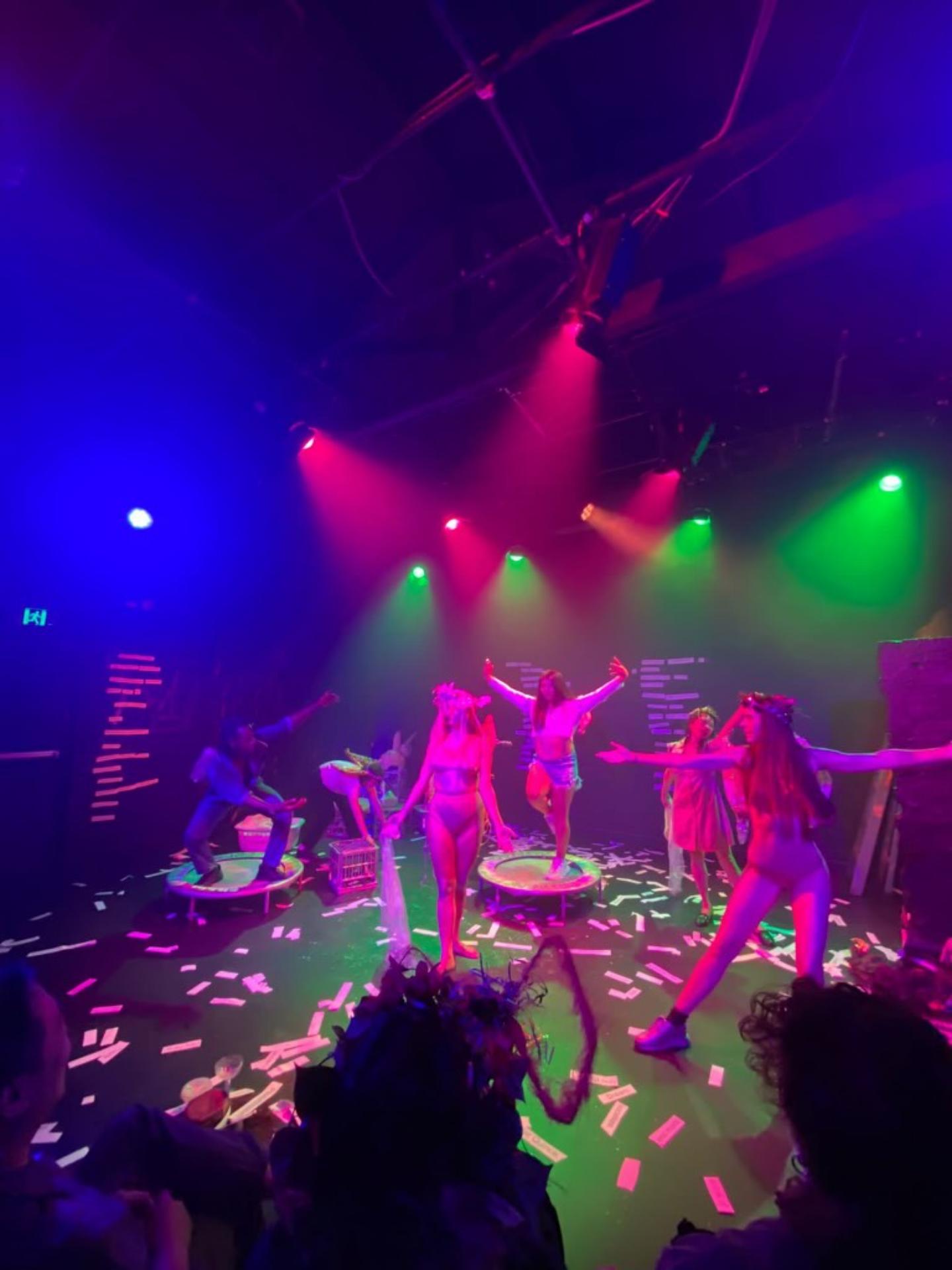
Feminists are not usually fans of Shakespeare’s oeuvre; his representations of women are often nauseating, if not completely despicable. Charlotte Farrell and Emma Maye Gibson seem to have a love-hate relationship with The Bard. A Midsummer Night’s Cream is a devised work that is both inspired by, and critical of Shakespeare. Early portions of the show are heavily centred around deconstructions of Shakespeare’s writing, reflecting perhaps a frustration derived from making theatre in a milieu that regards him to be foundational and epochal, even centuries later.

The show then swirls gradually away from that point of departure, and ventures somewhere more intimate, with Farrell and Gibson discussing motherhood. An intensification of atmosphere, luminated with a palpable sensuality by Cheryn Frost, almost indicates the true purpose of the exercise, as the two women engage in exchanges that explore those meanings that pertain to the young cisgender female body. Like Shakespeare being so intrinsically linked to how he conceive of the theatrical arts, pregnancy is to many women, inextricable and integral to their understanding of existence.

None of this is ever made explicit however, in a presentation that is as whimsical as it is poetic. Political but never pugnacious, A Midsummer Night’s Cream asserts itself with only the smallest affront to what it wishes to abolish, choosing instead to establish on stage, a new order that, unlike its predecessor, is characterised by inclusiveness and grace. Empowered to make change, with a humility informed by past deficiencies, Farrell and Gibson are careful not to inflict the same egregiousness it tries to replace.

This is a feminism that does not merely substitute one thing for another, preserving old structures while temporarily and superficially transforming them. What the artists deliver, looks like disruptive chaos, but that probably says more about our attachment to obsolete values, than it does the essential qualities of their work. Real change is uncomfortable, and good art is never afraid to challenge.

www.redlineproductions.com.au

Review: The Face Of Jizo (Old Fitz Theatre)

Venue: Old Fitzroy Theatre (Woolloomooloo NSW), Oct 28 – Nov 18, 2023
Playwright: Hisashi Inoue (translated By Roger Pulvers)
Director: David Lynch, Shingo Usami
Cast: Mayu Iwasaki, Shingo Usami
Images by Phil Erbacher

Theatre review
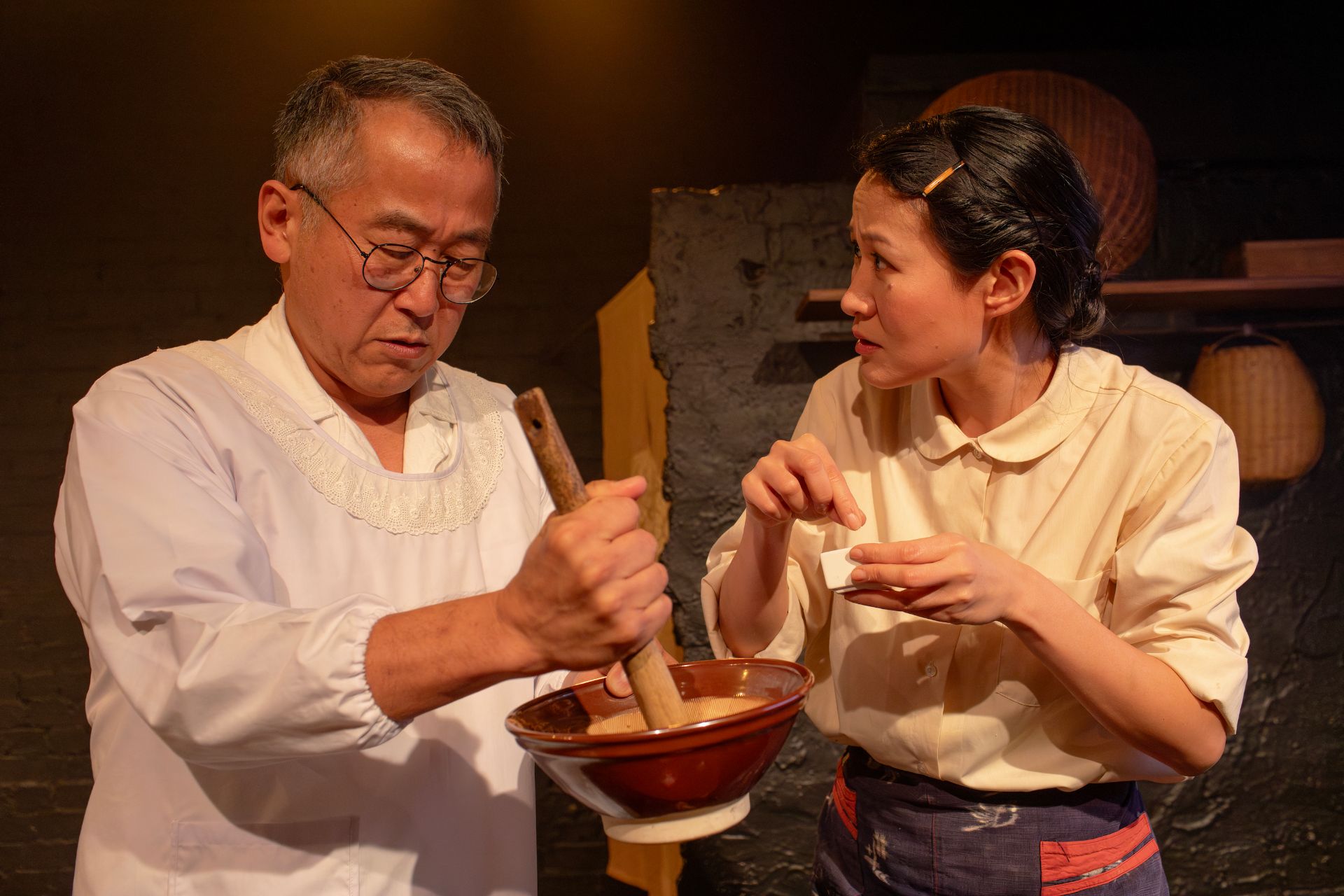
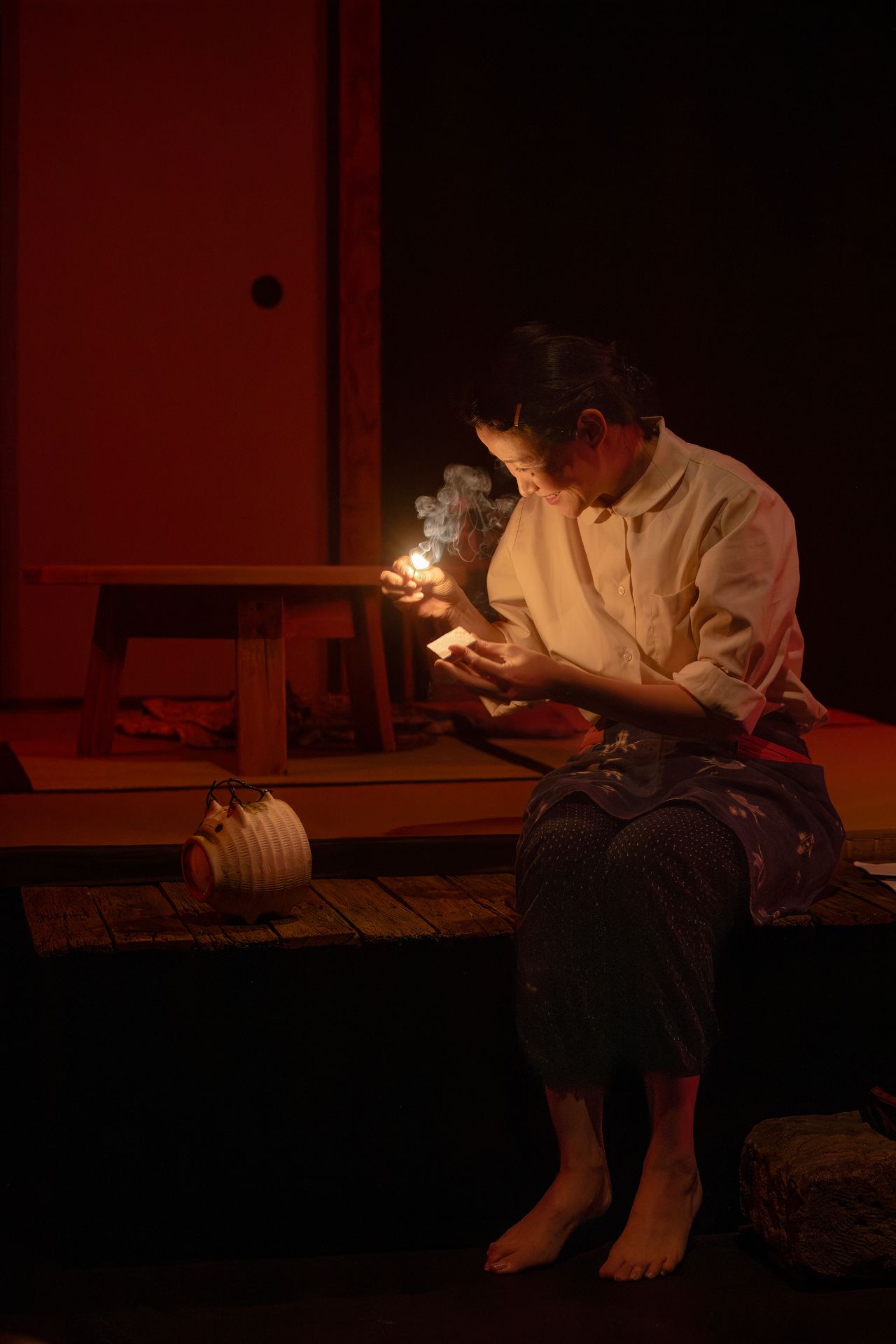
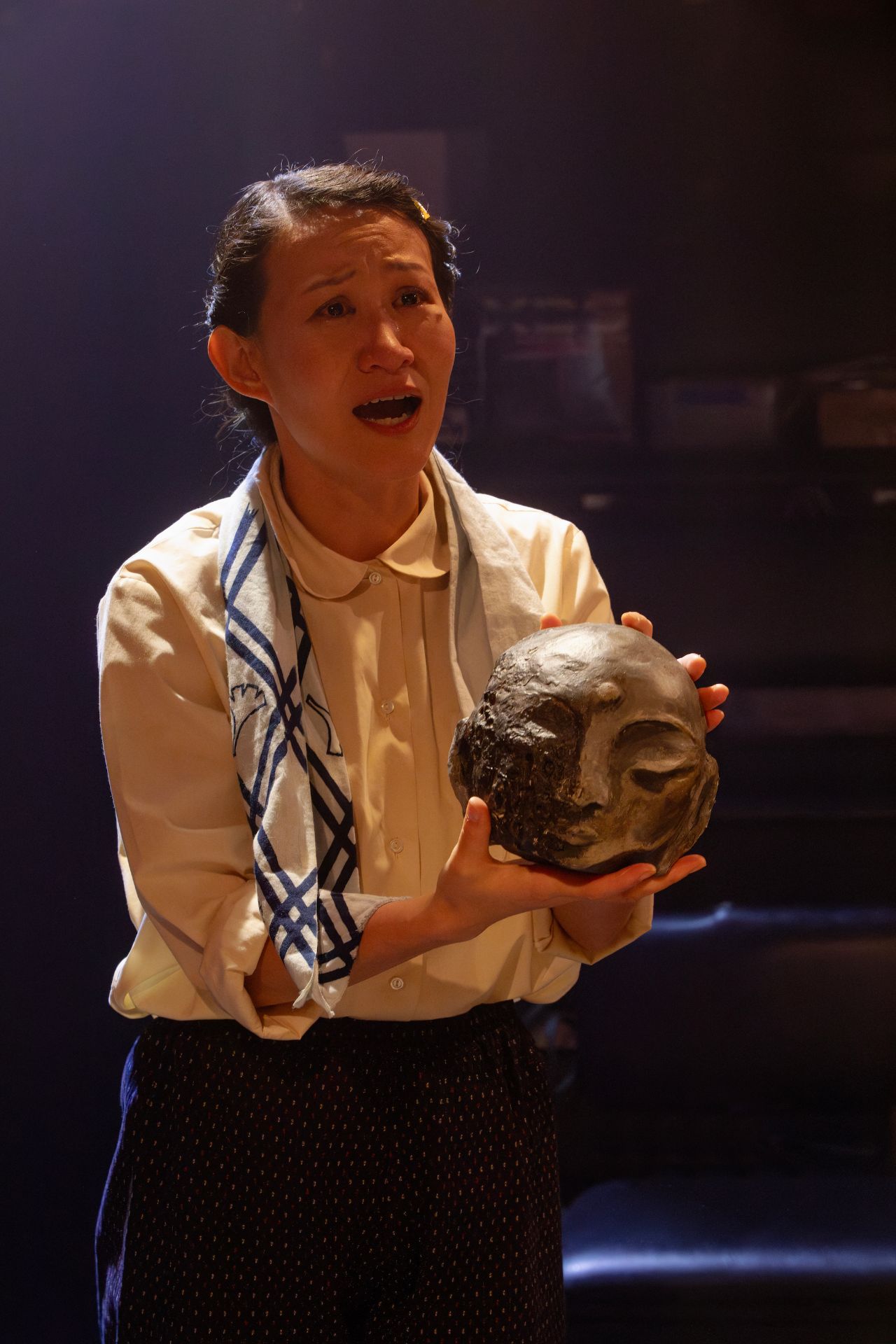
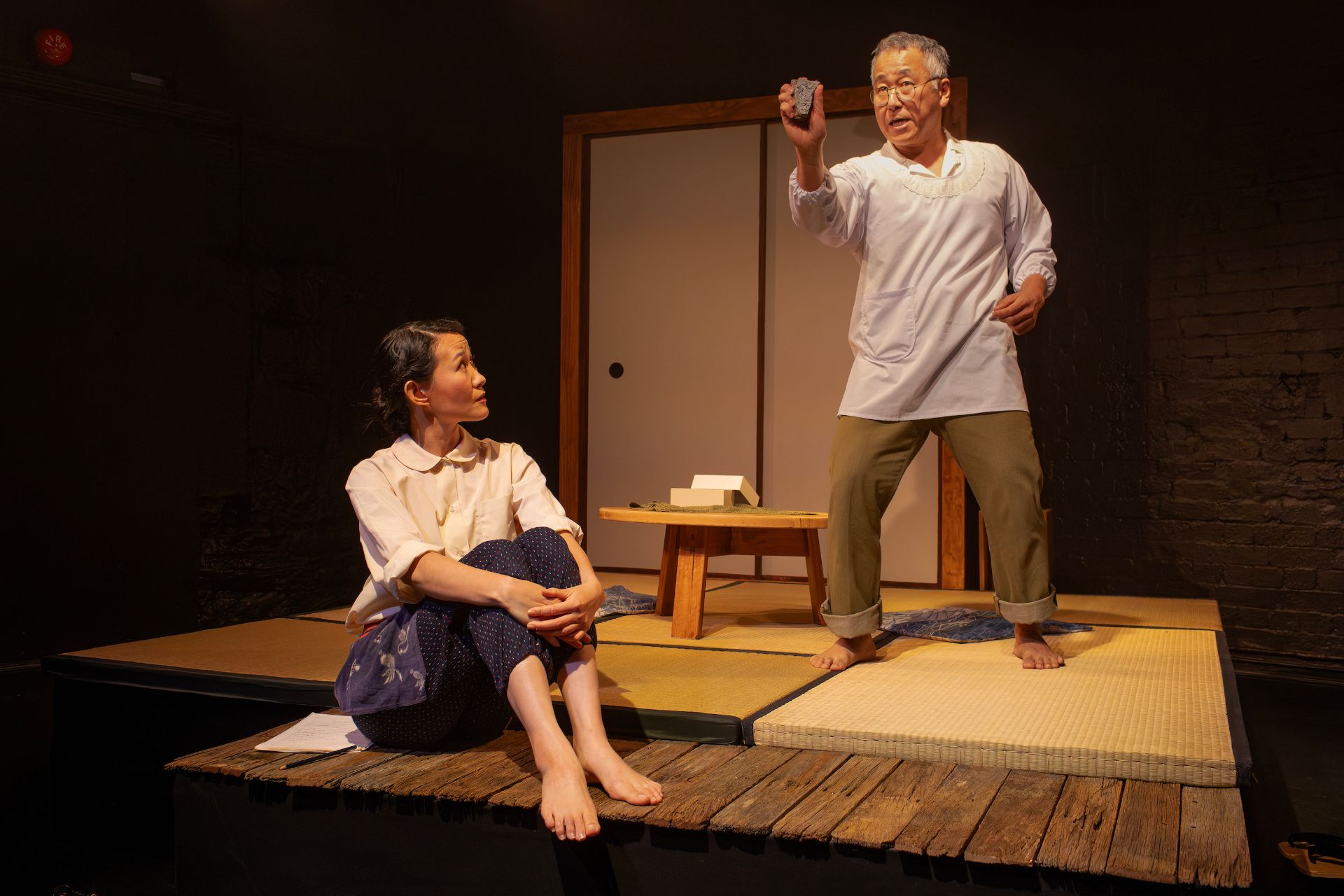
Mitsue is on the surface, a contented librarian in mid-century Hiroshima, but having lived through the devastating bombing by Americans only three years prior, her inner turmoil is much more profound than can be easily perceived. The 2001 play The Face Of Jizo by Hisashi Inoue 井上 ひさし may be set decades ago, but its reflections on survivor guilt reverberate beyond its narrative about one particular catastrophe. Along with serving as a reminder on the tragic consequences of war, The Face Of Jizo is concerned with how we emerge from trauma, emphasising the point that to live well, is often a matter of choices we make.

It is perhaps inevitable that the play’s gravity is central and severe, but there is also excellent humour coaxing us into the story and its stirring intentions. Directed by David Lynch and Shingo Usami, the show is charmingly inviting, with a palpable warmth that accompanies the harder edges of a sobering tale. Simultaneously gentle and heartrending, this theatrical experience proves enjoyable even though its themes are unquestionably foreboding.

Set design by Tobhiyah Stone Feller convey a sense of accuracy, for the time and place being depicted. The subtleties of Matt Cox’s lights, as well as his more dramatic manoeuvres, reveal a commendable attentiveness to the meaningful text. Music by Me-Lee Hay and sound design by Zachary Saric are appropriately restrained, called upon when necessary to add embellishment and refinement, to a thoughtful and sensitive work.

Actor Mayu Iwasaki brings both exuberance and poignancy to the role of Mitsue, with an extraordinary focus that keeps us compelled and hooked to her emotional journey. The aforementioned Usami plays the ghost of Mitsue’s father, similarly absorbing and persuasive, whether delivering joy or anguish, in a show that always takes care to render the light with the dark. The pair applies a distinct style of performance, for this translation by Roger Pulvers, to ensure that the English language never detracts from the cultural specificity being portrayed. Some of the adapted dialogue may feel awkward, but its sensibilities never for a moment, stray from mid-century Japan.

Guilt that turns inward, and that never finds resolution, can only be harmful. We see in Mitsue the futility of sorrowful regret and the damage it causes, having survived unspeakable losses. It is of course easier said than done, when urging a person to simply get over hardship of this magnitude. Indeed, the ray of hope should always be fundamental to any survival, but the grace of community is equally vital, to how we can heal, and how we can curtail the evil that always seems ready to inflict death and destruction.

www.redlineproductions.com.au

Review: The Chairs (Old Fitz Theatre)

Venue: Old Fitzroy Theatre (Woolloomooloo NSW), Sep 5 – Oct 15, 2023
Playwright: Eugène Ionesco
Director: Gale Edwards
Cast: Paul Capsis, iOTA
Images by Phil Erbacher

Theatre review
Stuck in a room for a lifetime, after an environmental disaster many decades ago rendered them helpless, an old couple can only while the days away by talking to each other, in highly imaginative ways. Their isolation leads them to play out a scenario involving guests arriving to keep them company, determined to listen to their many thoughts on what might have been. Eugène Ionesco’s The Chairs is characteristically absurd, in thoughtful and profound ways commensurate with the playwright’s reputation.

What the play says, is as much about what the viewer wishes to decipher, as it is about the author’s intentions. Under the direction of a sensitive and astute Gale Edwards, the possibilities for resonance are many. It is a production that reaches for the sublime, wishing to communicate something transcendent with all of its abstractions, yet capable of feeling simultaneously concrete through the sense of reality being offered. Something truthful is being manifested, and we perceive it as such, even though there is a definite freedom in how our personal interpretations are encouraged.

Set design by Brian Thomson evokes a fantastical space, somewhere ephemeral perhaps or timeless, allowing us to have a taste both of 1952 when The Chairs was first staged, and the distant future in which the story happens. Costumes are wonderfully theatrical, with excellent consideration for colours and textures by Angela Doherty providing a certain tactility to how we access the characters. Lights by Benjamin Brockman and sounds by Zac Saric create useful demarcations in the text, so that our intellect can feel elastic and activated, lively in our introspections, from being provoked by what we see and hear.

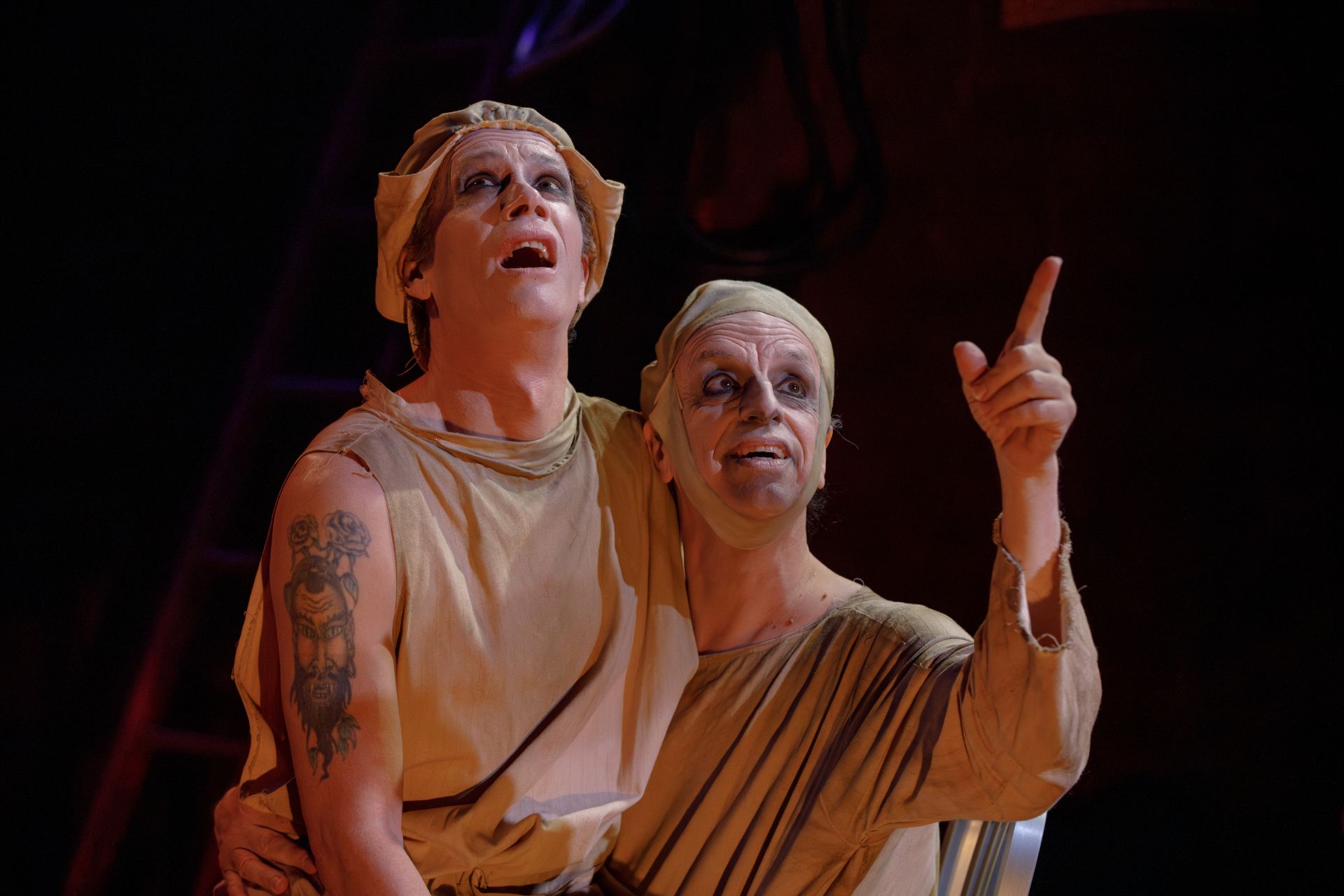
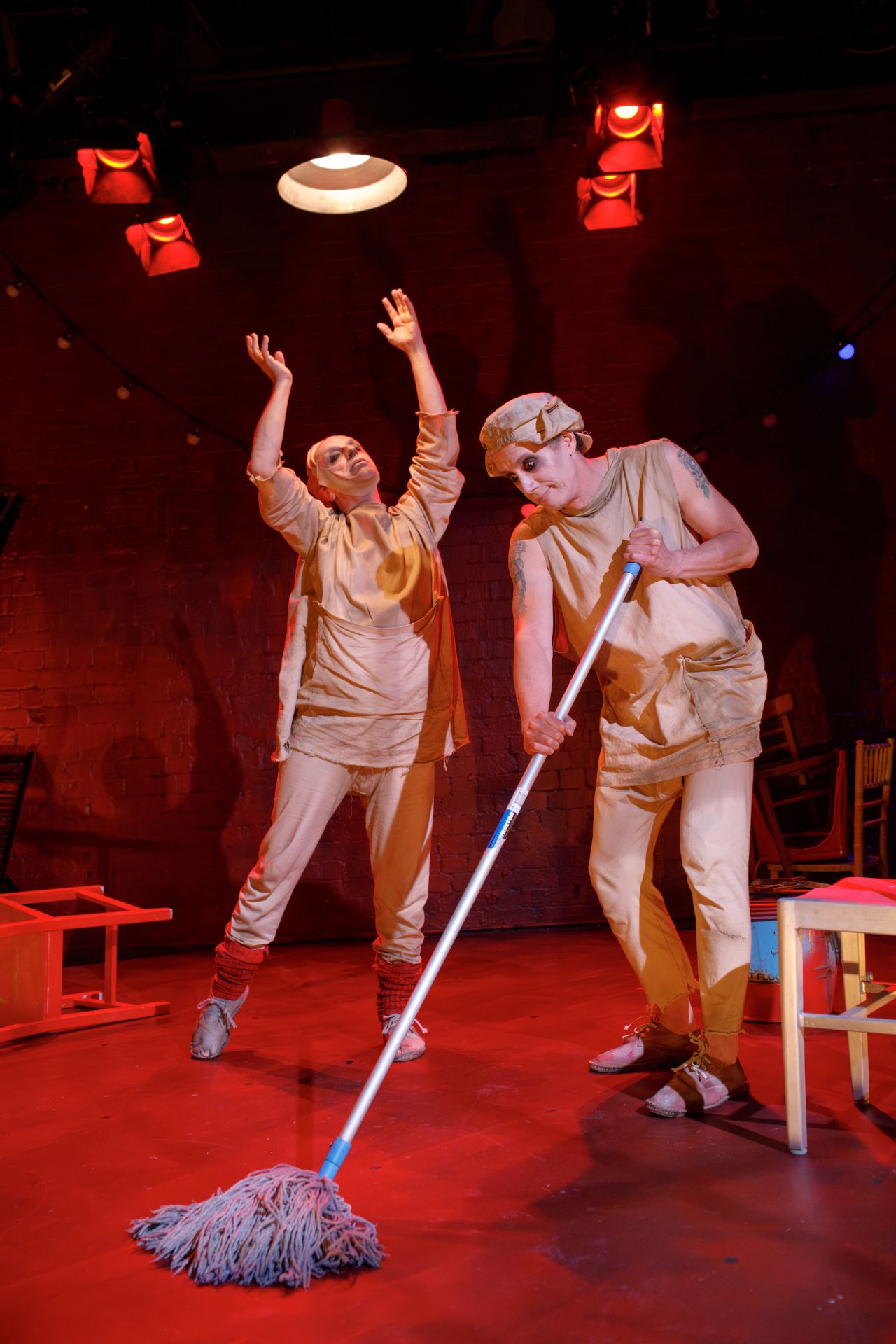
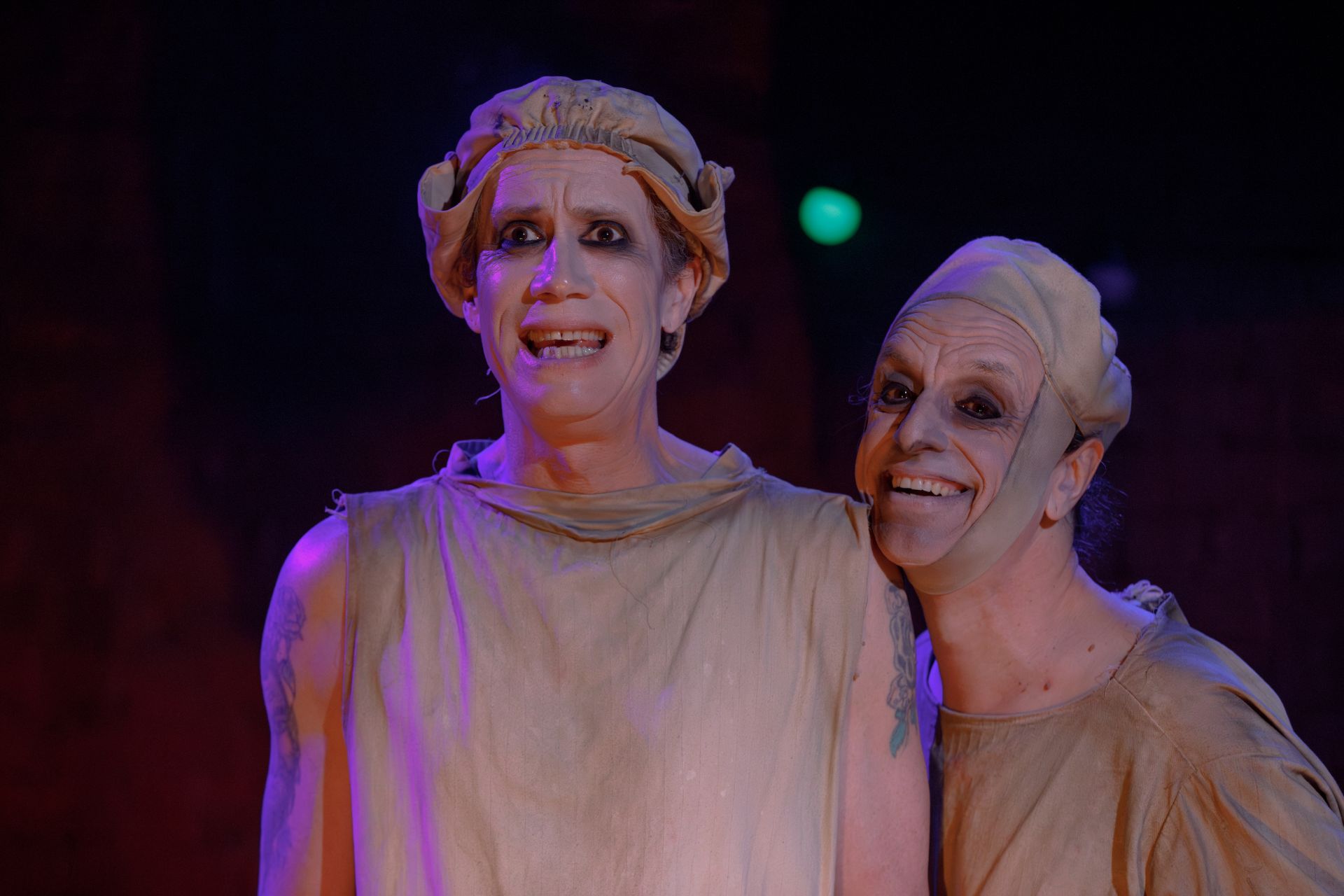
The exquisite iOTA takes on one of the geriatric roles, delivering nuanced intensity as we are held captive to all the passion and the melancholy being rendered in the most mesmeric ways. The performer’s undeniable presence brings to the piece a soulful quality that invites us to regard the work with sentimentality, and therefore elicits our emotional investment in a story that could easily have been left entirely a cerebral experience. Also glorious is Paul Capsis whose natural whimsy imbues the surreality of The Chair with a poetic beauty, turning our inevitable disintegration into a strange decadence, almost romantic in a depiction of longing, whatever the pining may be for. Chemistry and timing between the two are flawless, reflecting a level of artistry that can only come from exceptional talent and finely honed skill.

Things may be futile, but humans will continue being humans. Our lives mean little in the absence of hope, so we can only carry on doing what we know, even if much of it can seem delusory. It is true however, that humans can make choices that we believe to be constructive or destructive, and the tragedy is that we are capable of doing bad, not only unintentionally, but often completely consciously. The old couple in The Chairs live in a France that has become submerged in water. That is not the entirety of the play, but a detail that screams loud. Yet, turning a blind eye feels utterly easy.

www.redlineproductions.com.au

Review: A Streetcar Named Desire (Old Fitz Theatre)

Venue: Old Fitzroy Theatre (Woolloomooloo NSW), Jun 3 – Jul 1, 2023
Playwright: Tennessee Williams
Director: Alexander Berlage
Cast: Jessica Bentley, Sheridan Harbridge, Albert Mwangi, Ben O’Toole, Agustin Paz, Josh Price, Joshua Shediak, Angela Nica Sullen and Catherine Văn-Davies
Images by Phil Erbacher

Theatre review
When Blanche descends upon Stella and Stanley’s home, she is a woman at the end of her tether. We may not see characters caught up in reminiscence or nostalgia, but in Tennessee Williams’ A Streetcar Named Desire, it is the haunting presence of their faded glory days and the indelible trauma they have endured that lingers. The delicious melodrama, so characteristic of Williams, is derived from the manifestations of a past that proves too dazzling, for any future to live up to. It is survival but with only the dimmest of hope, and that conspicuous pain translates as masochistic theatrical exaltation, which proves a timeless treasure, 76 years after its 1947 Broadway premiere.

Directed by Alexander Berlage, Streetcar‘s grand scale of emotions is comprehensively loaded into the most intimate of auditoriums, providing a live experience as rich as anyone could wish for, and unrelentingly intense throughout its entire 3-hour duration. The classic text is left wholly intact, but Berlage introduces a sensibility that feels unequivocally contemporary, especially in terms of what the play says of gender politics. The relationship between Blanche and Stanley is distilled powerfully, so that we can understand the actual dynamics operating therein, far beyond the superficial lust that usually defines that connection. The cruelty of men, inflicted upon both Blanche and Stella, is an important focal point that never gets missed in this wonderfully contemplative production. Noteworthy too, is the nature of resilience as exemplified by the two women, whose lives in 1940s New Orleans, tell a remarkably accurate story of misogyny that sadly persists.

Emma White’s set design provides cleverly imagined spatial demarcations, valuable to the physical and psychological dimensions of the play. Aleisa Jelbart’s astute work on costumes depicts a time and place, remembered for its oppressively conformist climate. Extraordinary illumination by Phoebe Pilcher, seduces us into Blanche’s overwhelming yearning for poeticism and decadence, turning mundane domesticity into a realm becoming progressively escapist. Zac Saric’s music and sounds juxtapose a modern attitude with old jazz influences, offering a foreboding glamour that has us thoroughly beguiled.

Actor Sheridan Harbridge brings spectacularly to the stage, the iconic tortured soul of Blanche DuBois. Gloriously (and appropriately) flamboyant but resolutely authentic with the role’s mental and spiritual aspects, so that the performance never becomes caricature, no matter how escalated the emotions being portrayed. Blanche is a broken woman from the past, returning once again to devastate, this time by Harbridge who bridges the generations, and breaks our 21st century hearts, through her ability to locate in this irresistible tale, all that is eternal and therefore undeniably truthful about humanity.

Stella is played by Catherine Văn-Davies, who in a piece of supremely heightened drama, delivers marvellously a realistic personality, convincing and sympathetic, but informed by sensibilities that are absolutely of today. The parallels Văn-Davies draws between Stella and Blanche offer a refreshing perspective, demonstrating that the sisters’ lives have perhaps not deviated as significantly as previously thought. Ben O’Toole brings a strong presence, along with admirable integrity for the role of Stanley, combining belligerence and vulnerability to make a forceful statement about masculinity that seems to never lose resonance. Also interrogating traditional maleness is Josh Price, who as Mitch delivers a nuanced study of deceptive benignity, so that we may perceive the danger inherent in power imbalances, even if shrouded in politeness.

It is a wonder that more of us are not losing out minds, in a world that refuses so many our autonomy. It is a tragedy that Blanche is unable to attain her heart’s desire. It is also a tragedy, that her desires are shaped by forces that demand her continual supplication and acquiescence. Those who stand to benefit from our submission, will always seek to regulate our every inclination. There is no end to how much they seek to extract of us, and accordingly no depths they will not plunder, to ensure that all we would wish for, will forever be of their dominion.

www.redlineproductions.com.au

Review: New Balance (Old Fitz Theatre)

Venue: Old Fitzroy Theatre (Woolloomooloo NSW), Apr 19 – 23, 2023
Creators: Christopher Bryant, Emma Palackic
Cast: Christopher Bryant
Images by Robert Catto

Theatre review
In the one-person show New Balance, Christopher Bryant declares himself queer and disabled, wearing those labels like one would badges of honour, when returning from fighting for causes of immense consequence. In polite society, those labels of identification are of course discouraged from prominent enunciation, because the cis-white-straight-ableist hegemony would always prefer to deny, that their prejudices are in fact fundamental, to how each of our lives is structured. They want us to subscribe to the convenient notion that all people are the same, in order that so many of the injustices they steadfastly establish and perpetuate, are allowed to operate in stealth.

Their gaslighting, and our cultural delusion, is addressed by New Balance, a brilliantly engrossing 60-minute show created by Bryant and Emma Palackic, to firmly renounce that collective refusal to acknowledge the gremlins in our system, put in place to privilege the few, but that are perversely upheld by the masses. The show asserts otherness from a location that is both queer and disabled, two conceptions of experiences that seem at face value, to be distinct and separate, but through the articulation of a performer who inhabits both identities simultaneously, it becomes clear that the politics of otherness, only ever functions one way. The narrative of routine ostracism, and of persistent exclusion, is powerfully represented by Bryant’s unvarnished performance style, devoid of pretension and of formalist technique, existing only in the space of theatre, to speak intimately and persuasively from human to human.

Bryant and Palackic’s text, which includes first-person contributions from Jamila Main, Rebekah Robertson, Anthony Severino and Jacqueline Tooley, is a deeply evocative expression of life on the outside. Video projections by Justin Gardam, along with sound recordings of confessional voices, offer meaningful enhancement to all the sensitive divulgements, that are surprising yet familiar, in their honest encapsulation of a diverse humanity. Lighting design by Chris Milburn add sensuality to proceedings, to make us feel a certain palpable corporeality, that keeps these thoughts being so staunchly shared on stage, to link resolutely to our own bodies.

New Balance seeks to dismantle that which has long been instituted as pristine, and reconstitutes that which is deemed immaculate, to refute the many exclusionary tendencies of how we organise our lives. It reminds us fervently, that much as we experience challenges differently, our humanity can only ever be uniformly perfect.

www.redlineproductions.com.au
Review: Collapsible (Old Fitz Theatre)

Venue: Old Fitzroy Theatre (Woolloomooloo NSW), Mar 9 – Apr 1, 2023
Writer: Margaret Perry
Directors: Zoë Hollyoak, Morgan Moroney
Cast: Janet Anderson
Images by Phil Erbacher

Theatre review
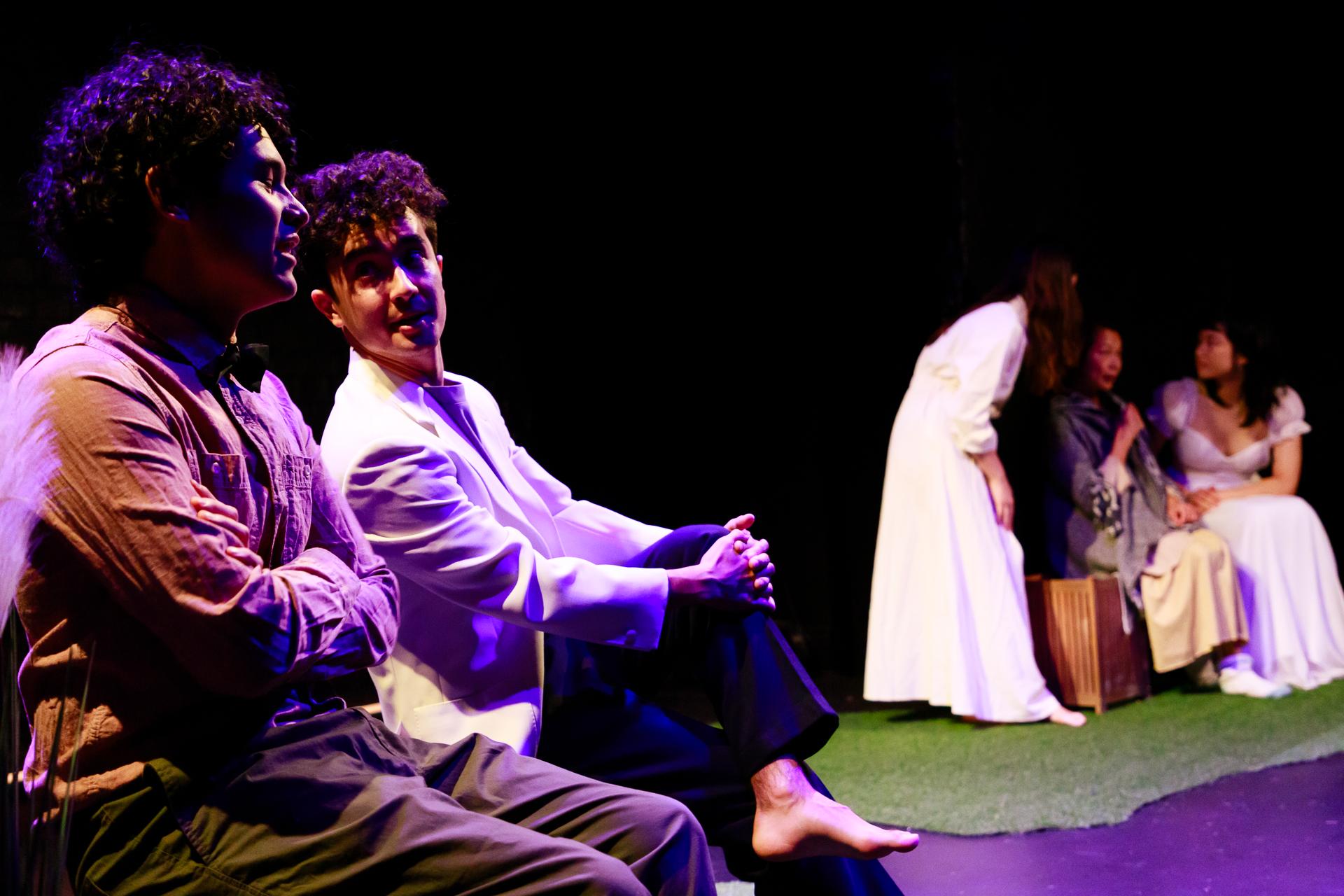
Esther is asking everyone she knows, for a word to describe herself. In Margaret Perry’s Collapsible, we see the strange things a person does, when deep in the process of job hunting. Esther contorts her personality into different forms, in hopes that she may be perceived as a right fit, for one of the many organisations that she is interviewing with. We observe someone trying to be all things to all people, and ultimately becoming an empty vessel, knowing nothing about herself, from trying to appeal to an economy determined to reward mediocrity and that encourages one to shed their values and principles.

There is an abundance of abstraction in Perry’s writing, which Zoë Hollyoak and Morgan Moroney use as directors of the piece, to deliver something memorable for its rich visuals. Although unpredictable and exciting with its sense of theatricality, the show can feel somewhat hollow, which admittedly is an accurate representation of Esther’s essence. A more intense depiction of anxiety and unease, that accompanies the existential angst being reflected, could perhaps make the experience more worthwhile.

Set and costumes by Hayden Relf offer surprising solutions, that make for a quirky staging that sustains our attention, in what could easily have been a very understated one-woman show. Video projections by Daniel Herten and Moroney, are ambitiously rendered but offer little other than a demonstration of an experimental spirit. Lights, also by Moroney, are a more satisfying aspect of the production, delivering great texture and atmospheric transformations. Herten’s sound design is wonderfully lively, but could benefit from a greater sensitivity in approach.

Actor Janet Anderson is thoroughly captivating as Esther, with an impressive degree of control over the challenging material being explored. Emotional aspects of Anderson’s performance could be more delicately managed, but her vigorous physicality keeps us engrossed.

It is not only for financial reasons that Esther loses herself, but also the pressures of social conformity, that pushes her to twist her soul, into something that prioritises external expectations. We are not certain if Esther has forgotten herself, or if she had indeed ever truly known herself. The hard part of being, is to arrive at a state of knowing the self. To navigate life only in bewilderment, is unquestionably tragic.

www.redlineproductions.com.au / www.facebook.com/es.wrkrs
Review: Lose To Win (Old Fitz Theatre)

Venue: Old Fitzroy Theatre (Woolloomooloo NSW), Oct 18 – 29, 2022
Writer: Mandela Mathia
Director: Jessica Arthur
Cast: Mandela Mathia
Images by Phil Erbacher

Theatre review
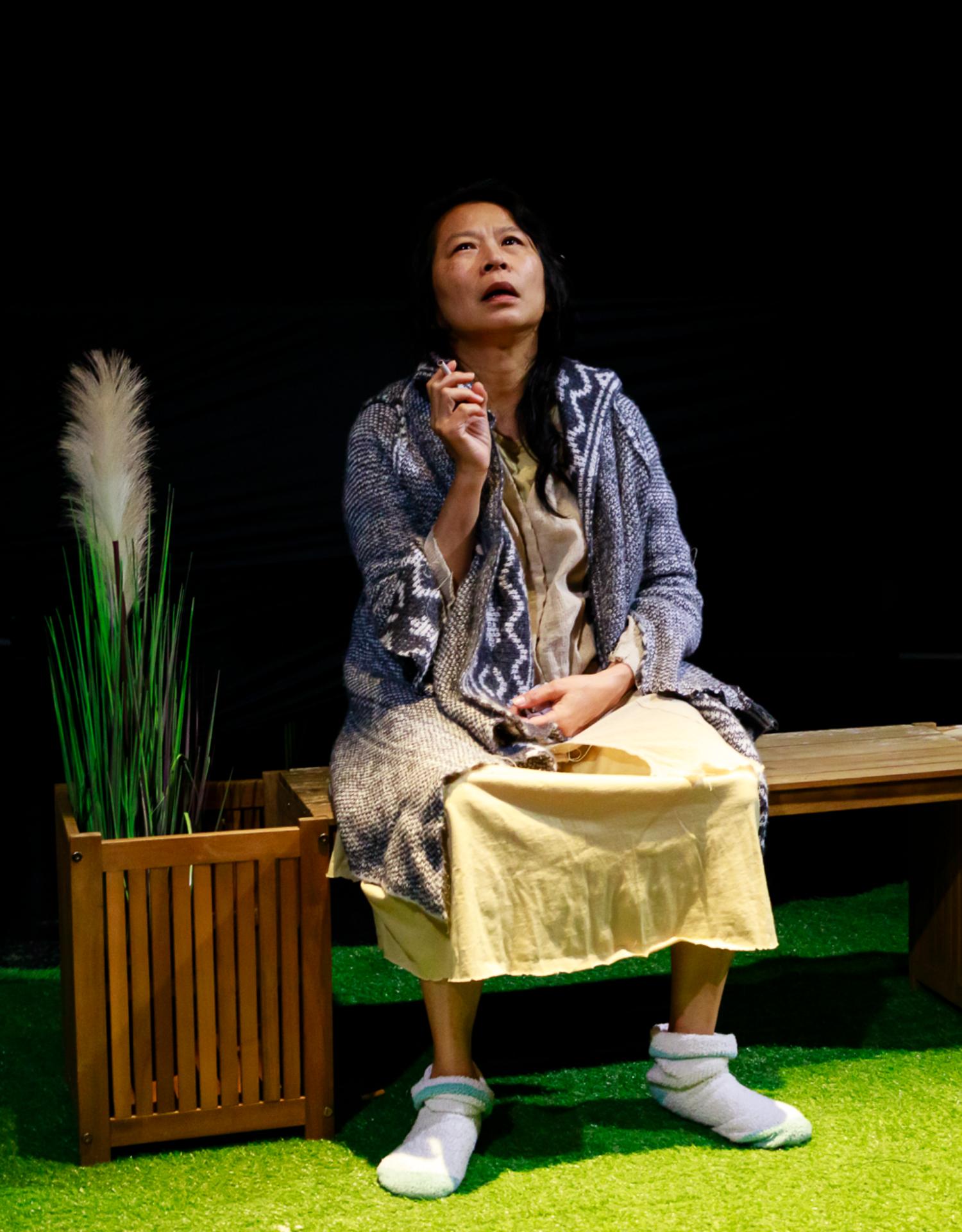
Lose to Win is an autobiographical one-man show, in the most classic sense. Mandela Mathia is on stage  alone, for just over an hour, performing a piece written by himself, to tell the story of his life hitherto. From his birth in South Sudan, and his hazardous days in Egypt as an adolescent orphan, to his early years as a refugee in Australia, Mathia provides first-hand accounts of an eventful journey, that sees him travel great distances for safe harbour.

It is a sensitively constructed work, slightly too polite in approach perhaps, but certainly rich with what it conveys. Lose to Win wishes to function as a bridge, to create understanding for immigrant communities, in an Australia that is often unkind to people who are not white. Mathia might come across inevitably as the model citizen typical of presentations like these, but under the direction of Jessica Arthur, there is plentiful humour and charm to encounter, in a production careful to sidestep traumatic tropes, in favour of something altogether more joyful and modern.

Helping to provide visual variety, is Kate Baldwin’s imaginative lighting design, surprising us with colours and angles that transform a simple stage, into cleverly configurated performance spaces. Sounds by Rose Mulcare are integral in helping us navigate the swiftly changing moods of the show, effortlessly sustaining our attention throughout.

Mathia’s unmistakeable sincerity is at the centre of Lose to Win, urging a connection where we have become used to fracture and alienation. Disunity benefits the rich and powerful. Fear has become a mechanism that can be exploited for private gains, that will only exacerbate the rifts between us. We need to come to a place, where our neighbours’ successes are not considered to be taking anything anyway from us. We are abundant, we only need to embrace generosity.

www.redlineproductions.com.au