Review: The Edit (25A Belvoir)

Venue: Belvoir St Theatre (Surry Hills NSW), Oct 7 – 26, 2025
Playwright: Gabrielle Scawthorn
Director: Gabrielle Scawthorn
Cast: Iolanthe, Matilda Ridgway
Images by Robert Catto

Theatre review
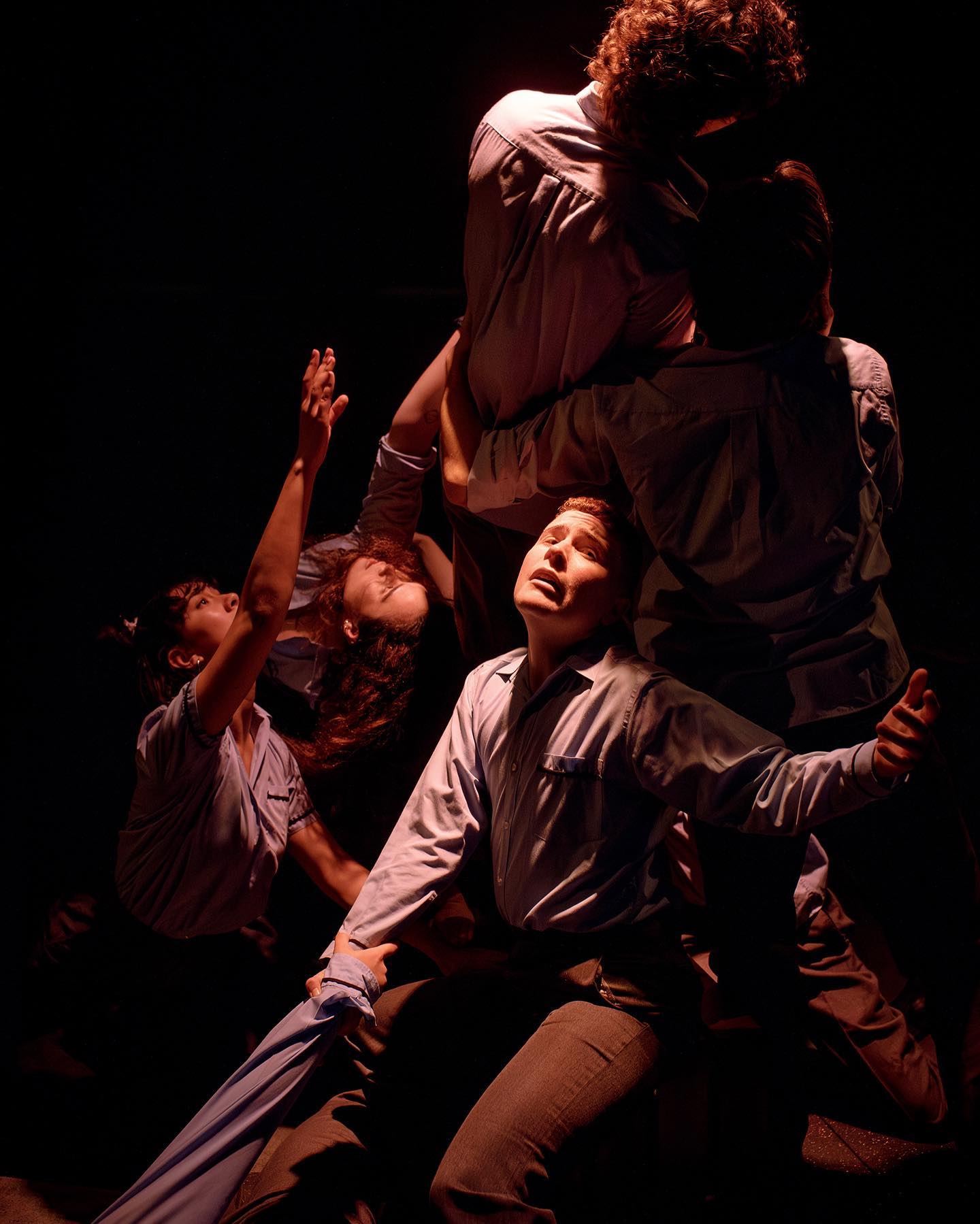
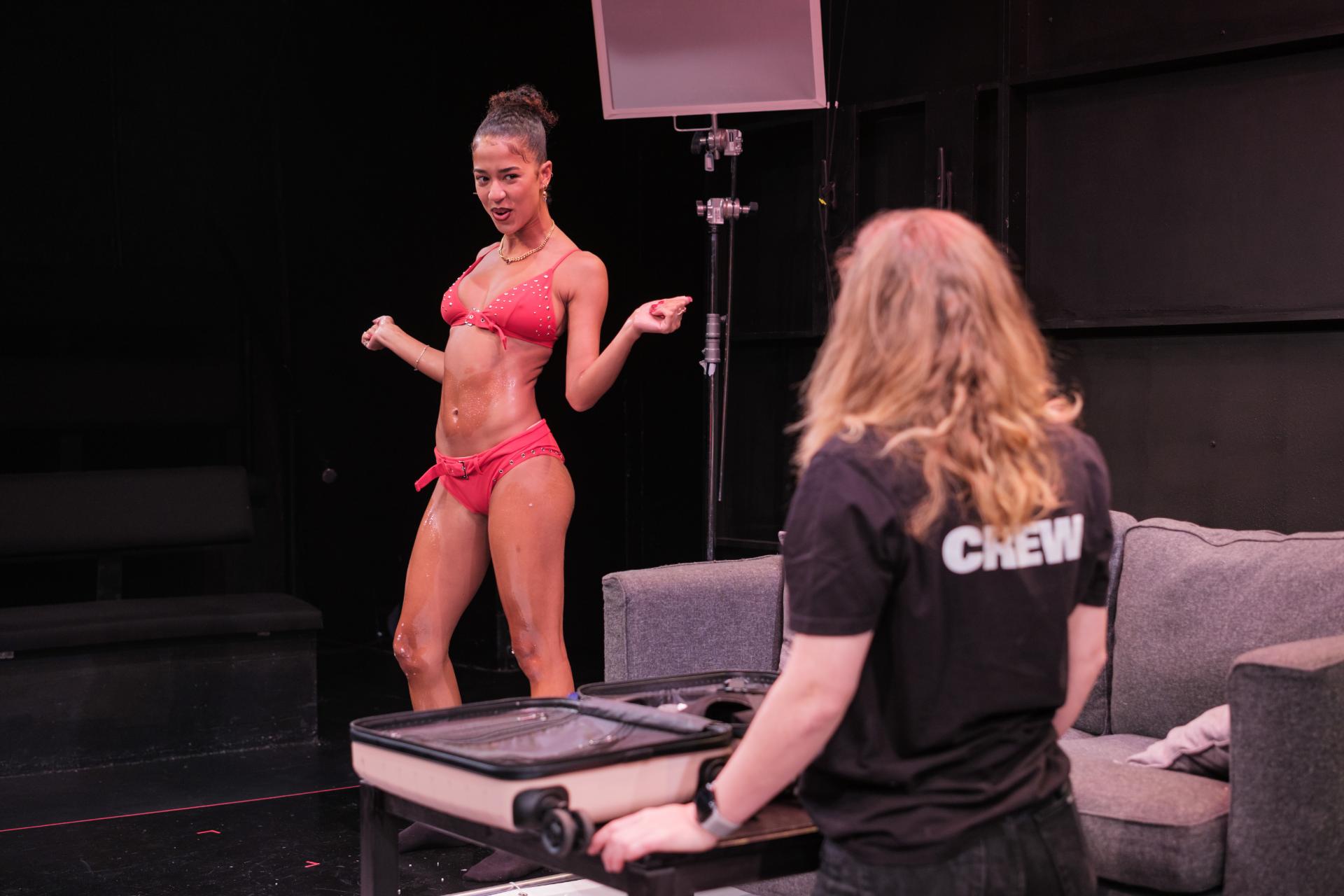
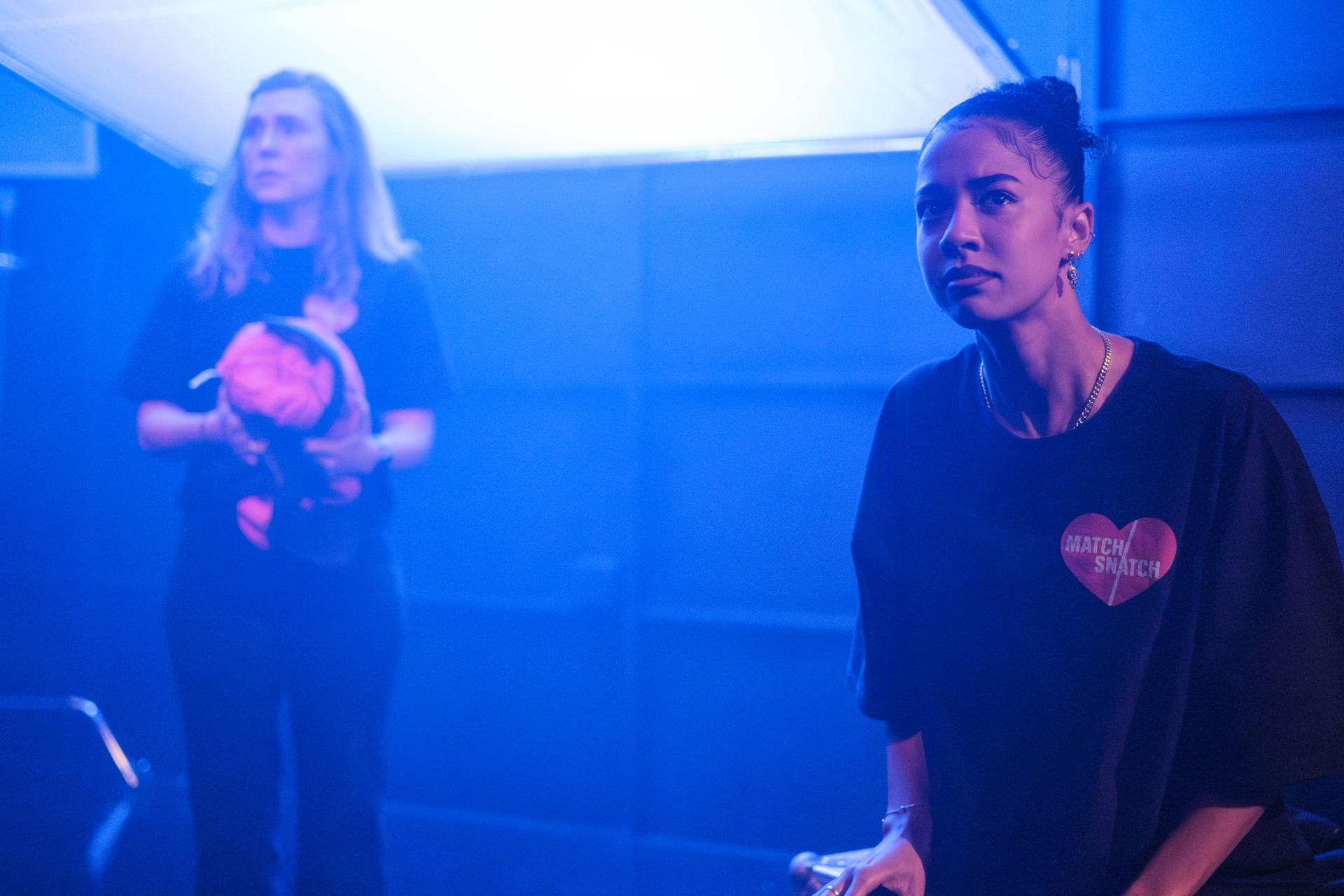
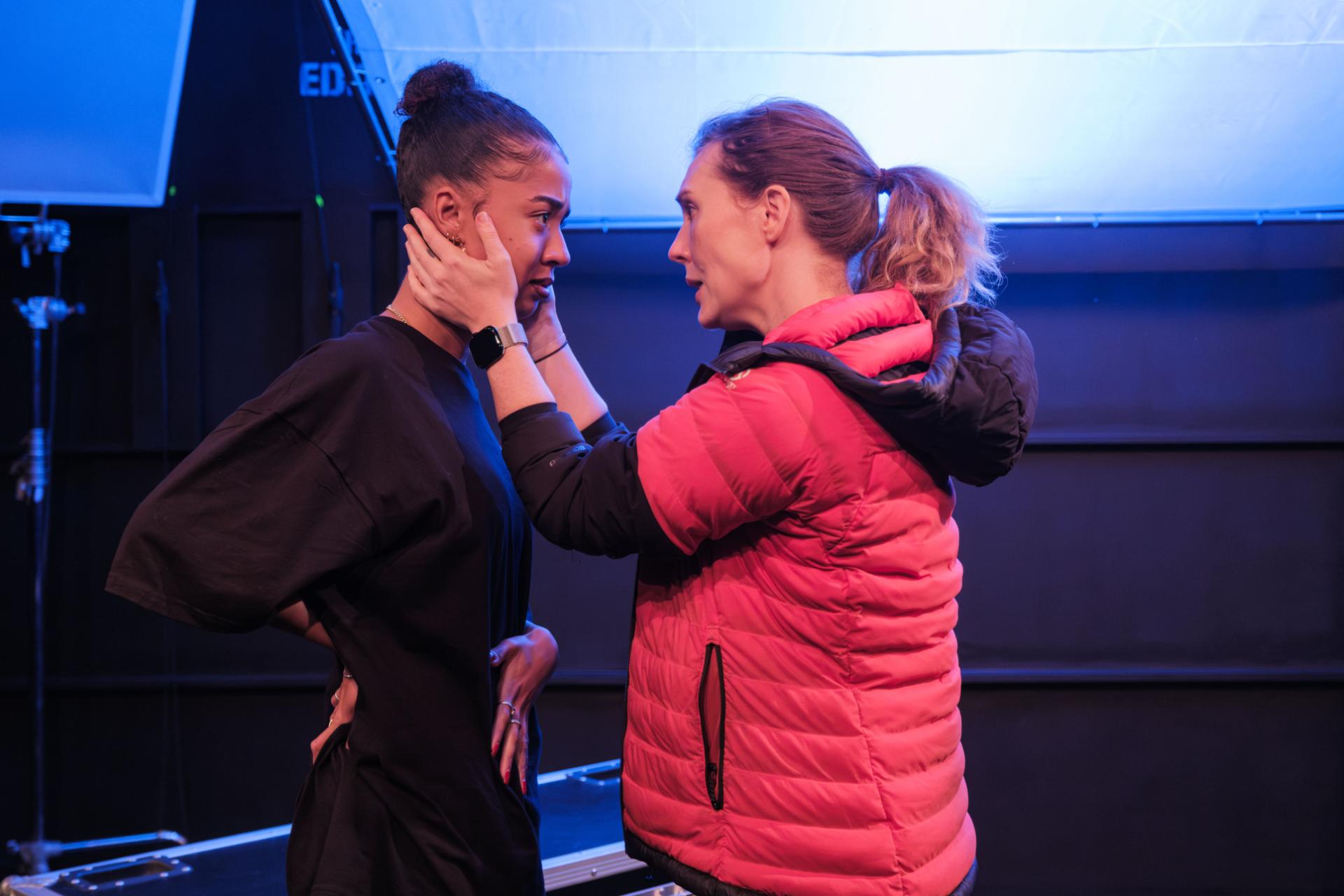
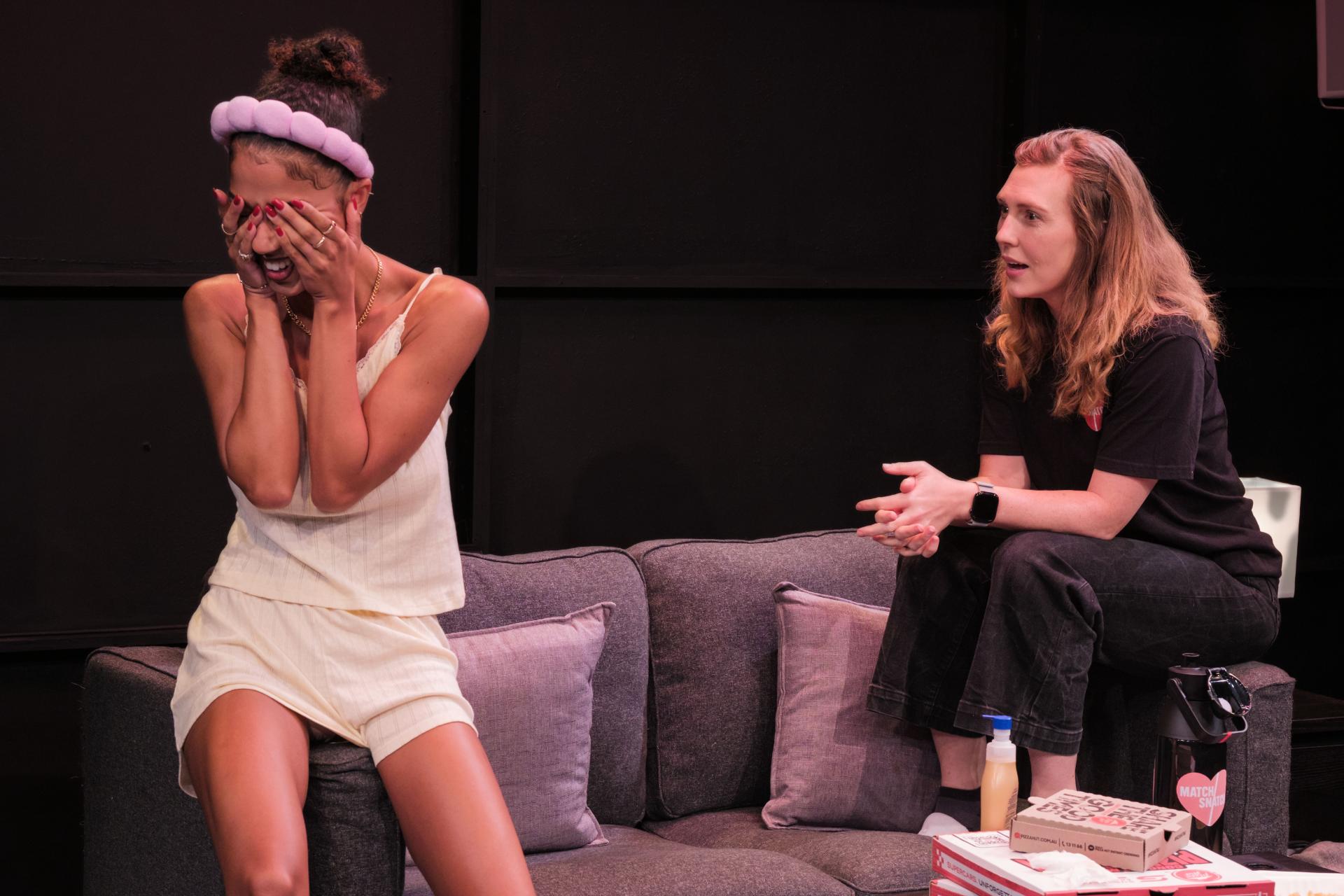
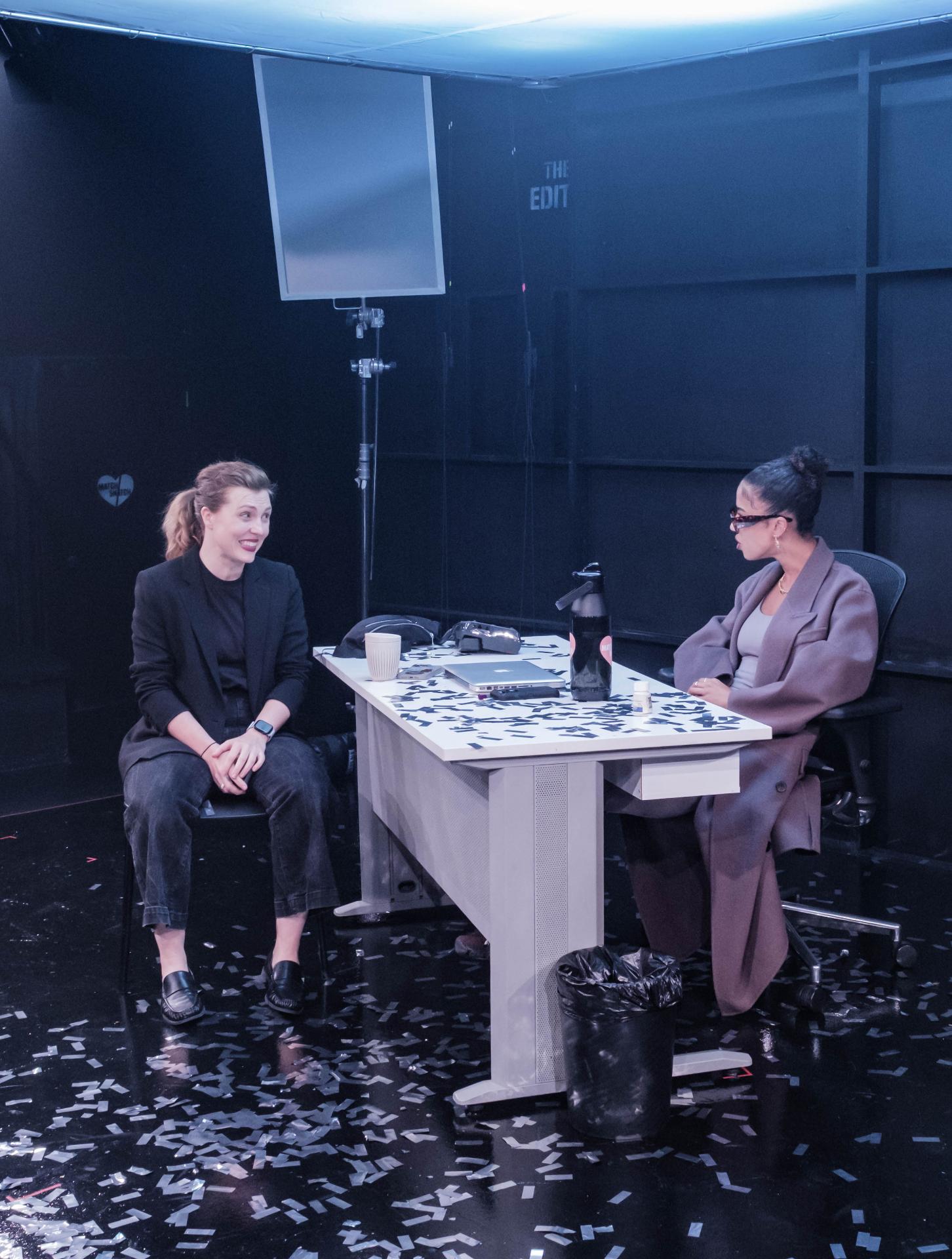
Nia signs up for a reality dating show, while producer Jess hovers nearby to ensure the illusion of love unfolds without a hitch. But when the pair are caught up in a devastating incident, what surfaces isn’t the expected solidarity between women, but a betrayal so stark it throws everything into question. Gabrielle Scawthorn’s The Edit is a piercing look at the stranglehold of late capitalism on contemporary womanhood — and how easily we can slip into exploiting one another in pursuit of success. Rather than rallying against the forces that divide and commodify, we too often become willing participants in our own undoing.

Scawthorn’s writing is incisive and richly layered, full of surprising twists and morally complex characters that keep us alert and uneasy. As director, she delivers the work with unrelenting intensity and passion, sustaining a charged atmosphere from start to finish. The Edit is intellectually rigorous and emotionally fraught, most rewarding when it allows us fleeting glimpses into who these women truly are beneath the spectacle.

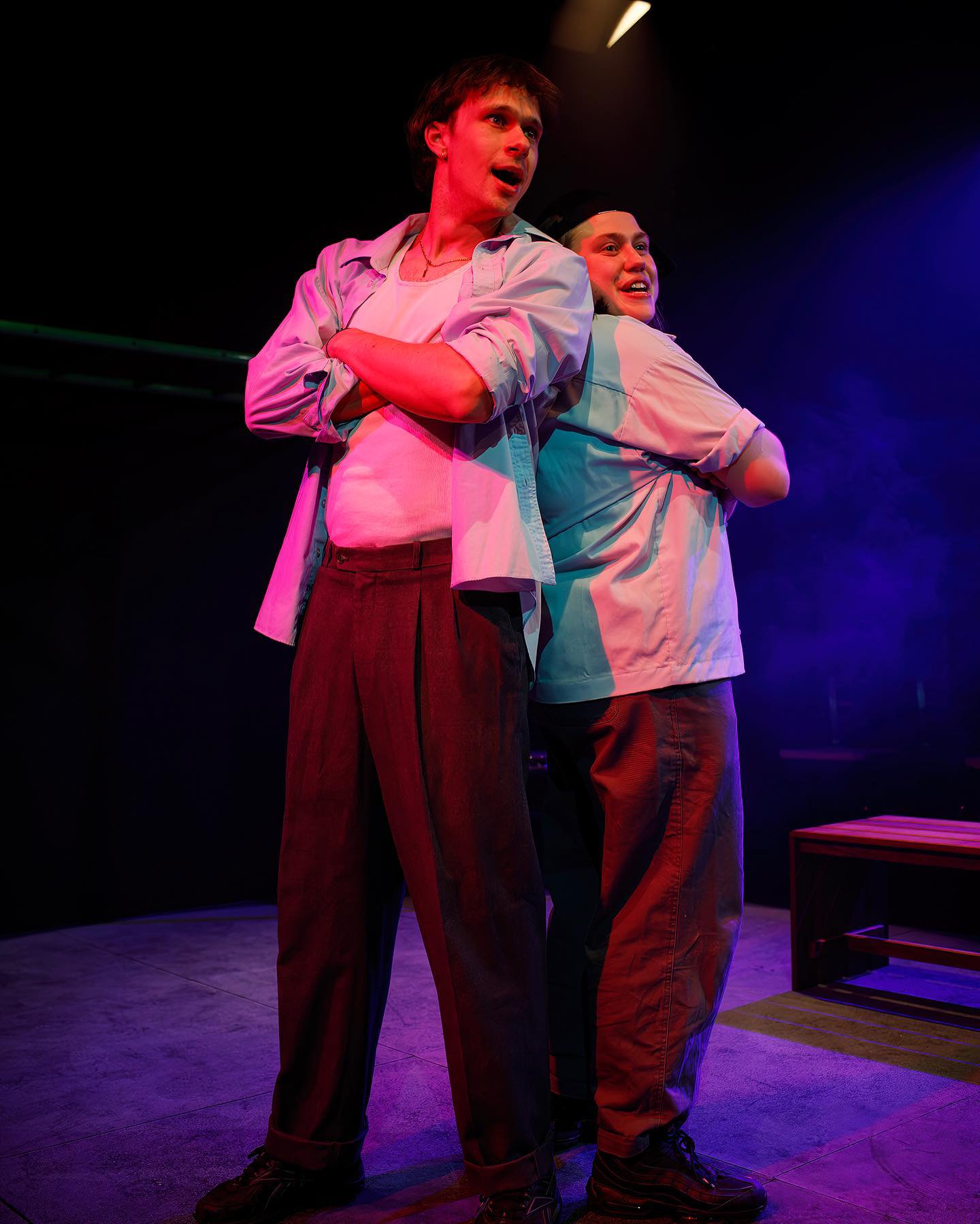
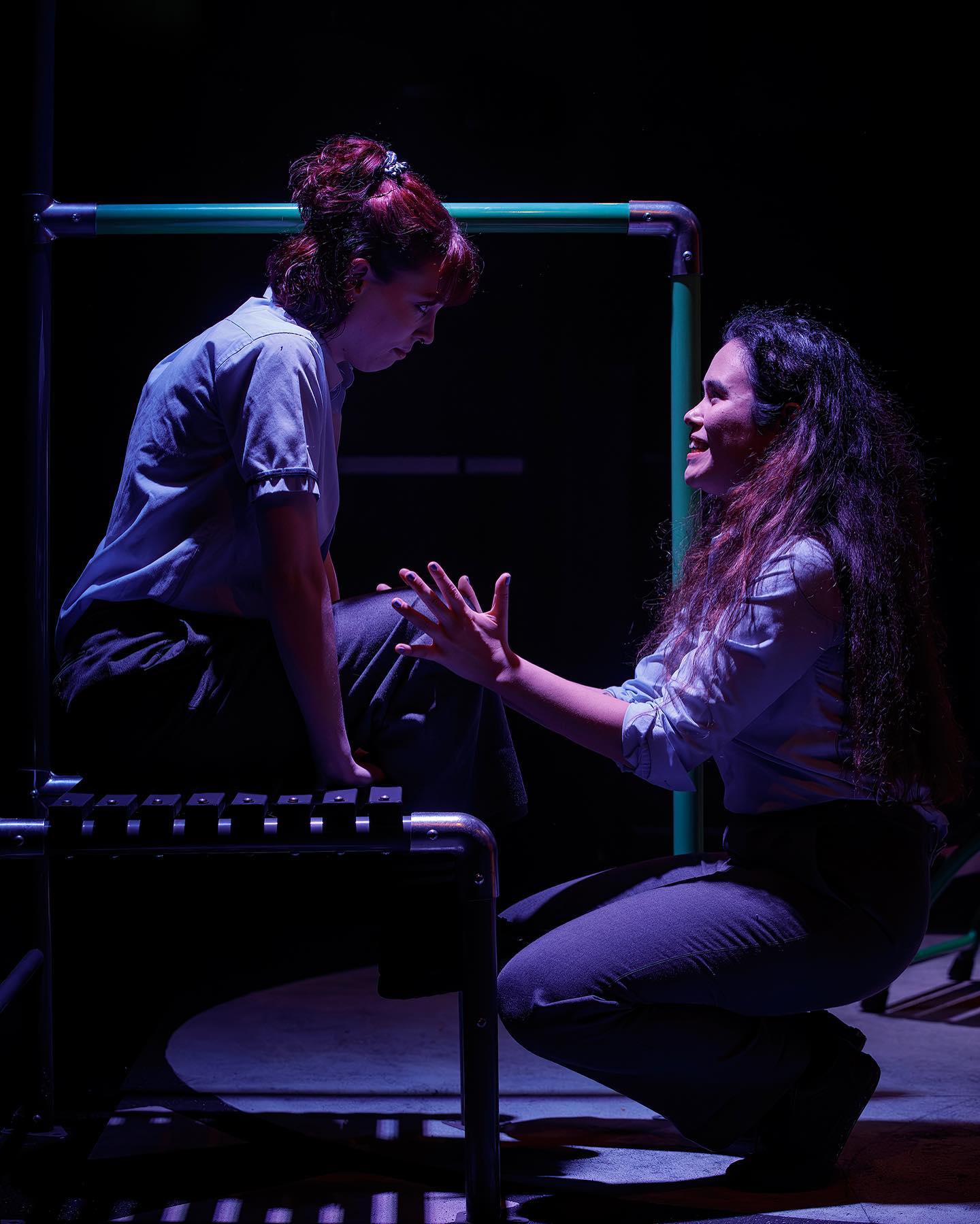
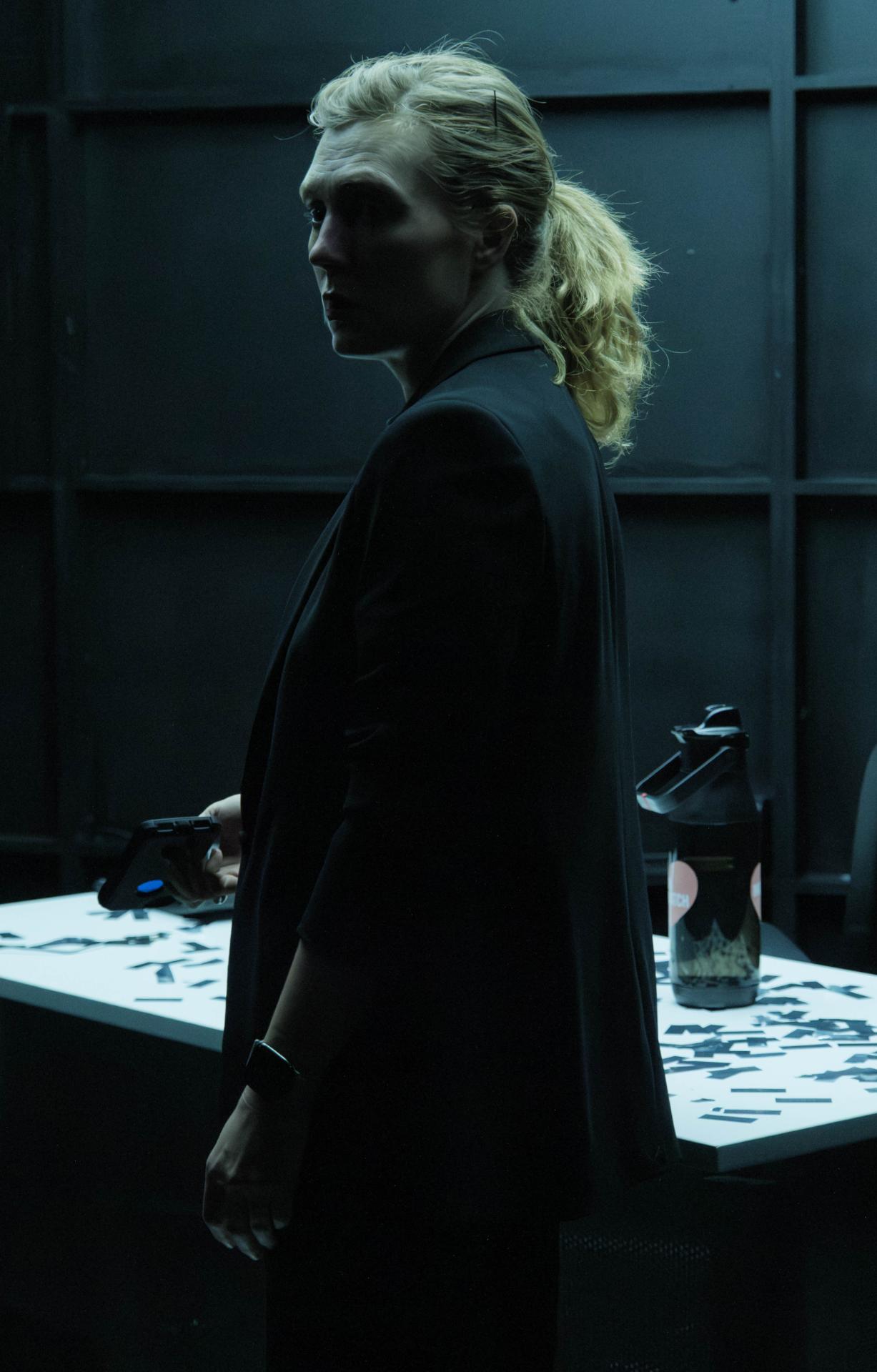
As Nia, Iolanthe offers an intriguing study of ambition under late capitalism, portraying with disarming authenticity the moral dissonance required for success. Her performance captures a young woman’s conviction that intelligence and charm can transcend systemic exploitation, a belief that we observe to be both seductive and self-defeating. Matilda Ridgway’s interpretation of Jess is marked by remarkable psychological acuity; her disingenuousness feels neither exaggerated nor opaque, but grounded in a credible logic of survival. As the play unfolds, Jess becomes increasingly reprehensible, yet Ridgway’s depictions remain resolutely authentic, allowing us to perceive the structural and emotional pressures that shape such behaviour.

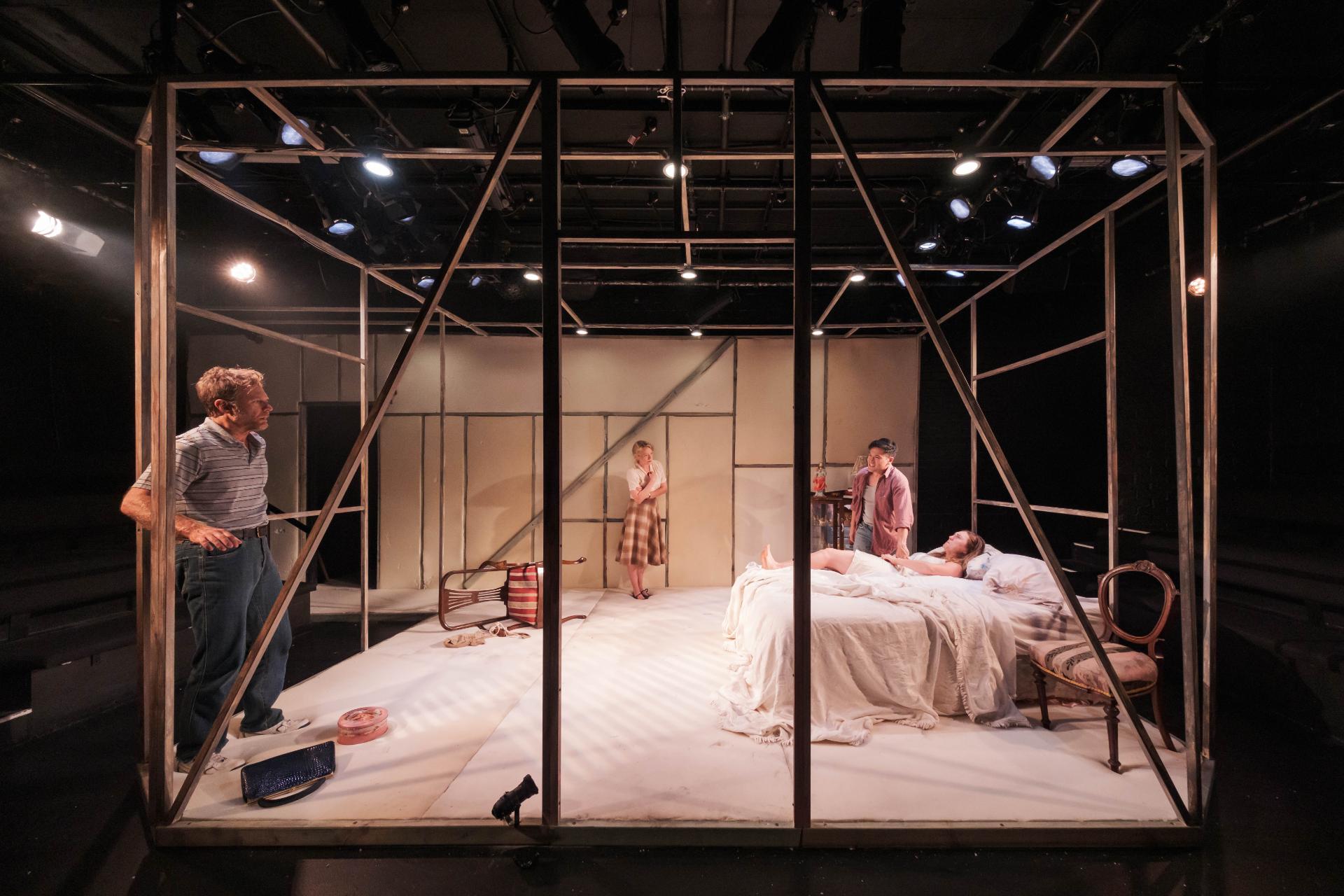
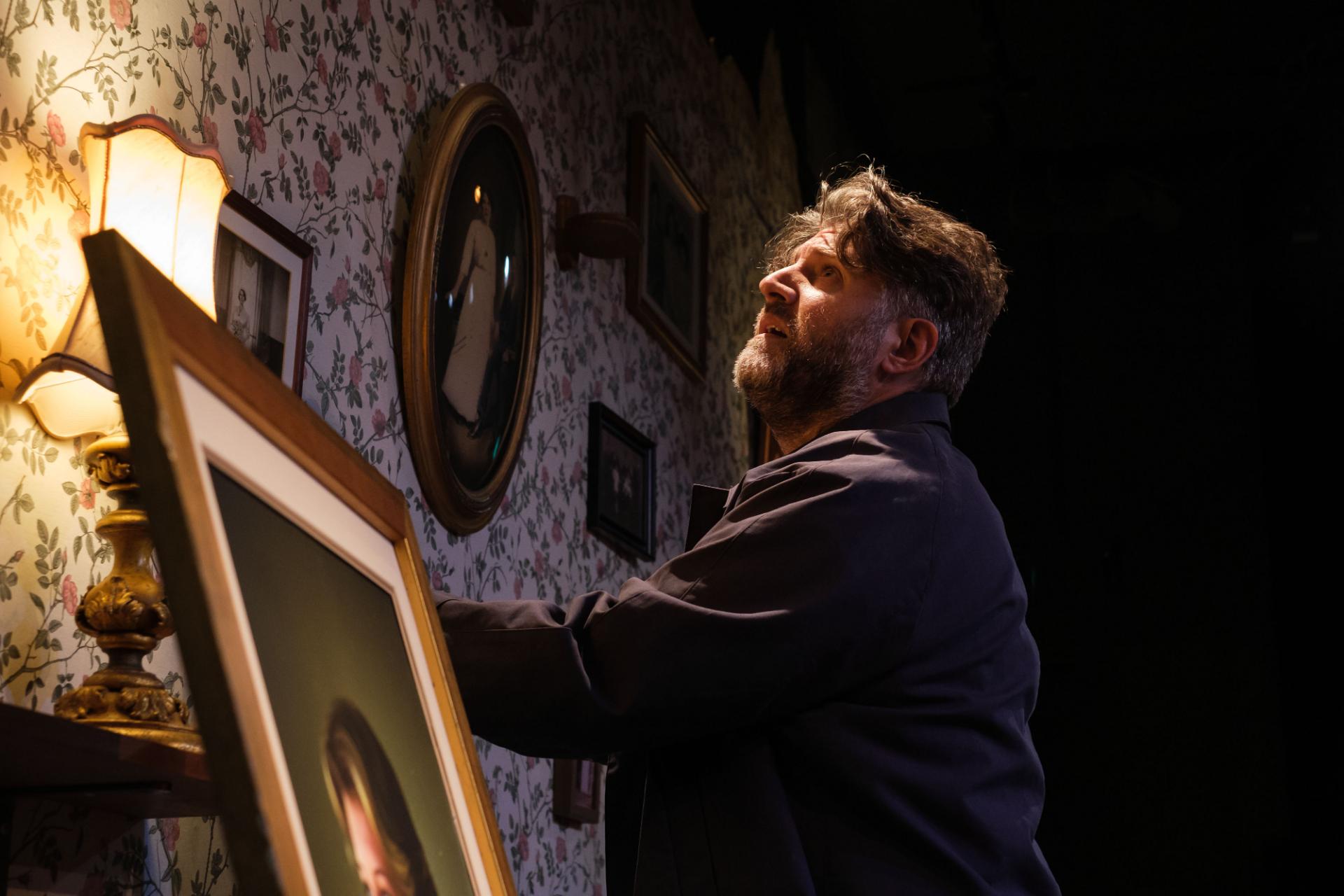
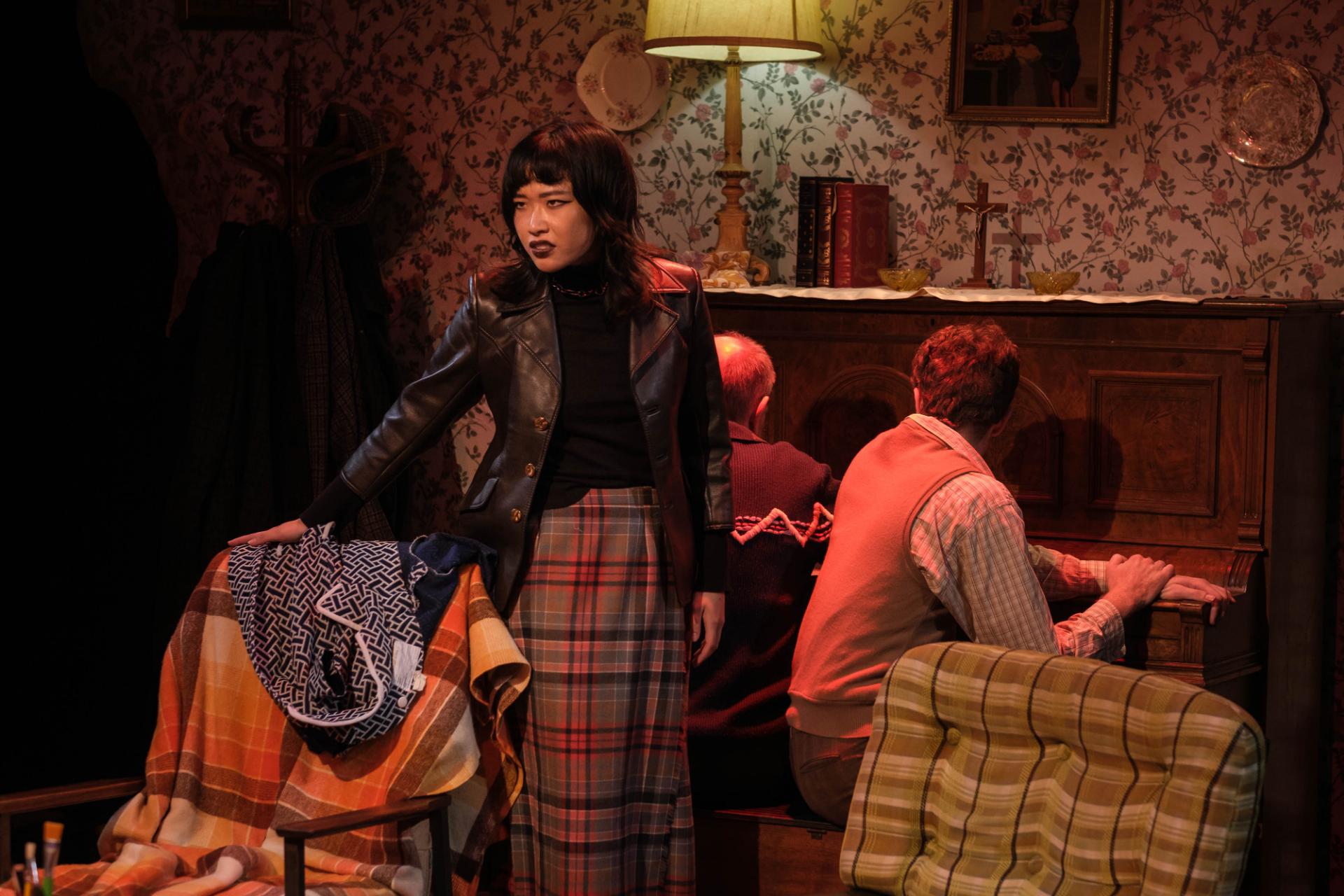
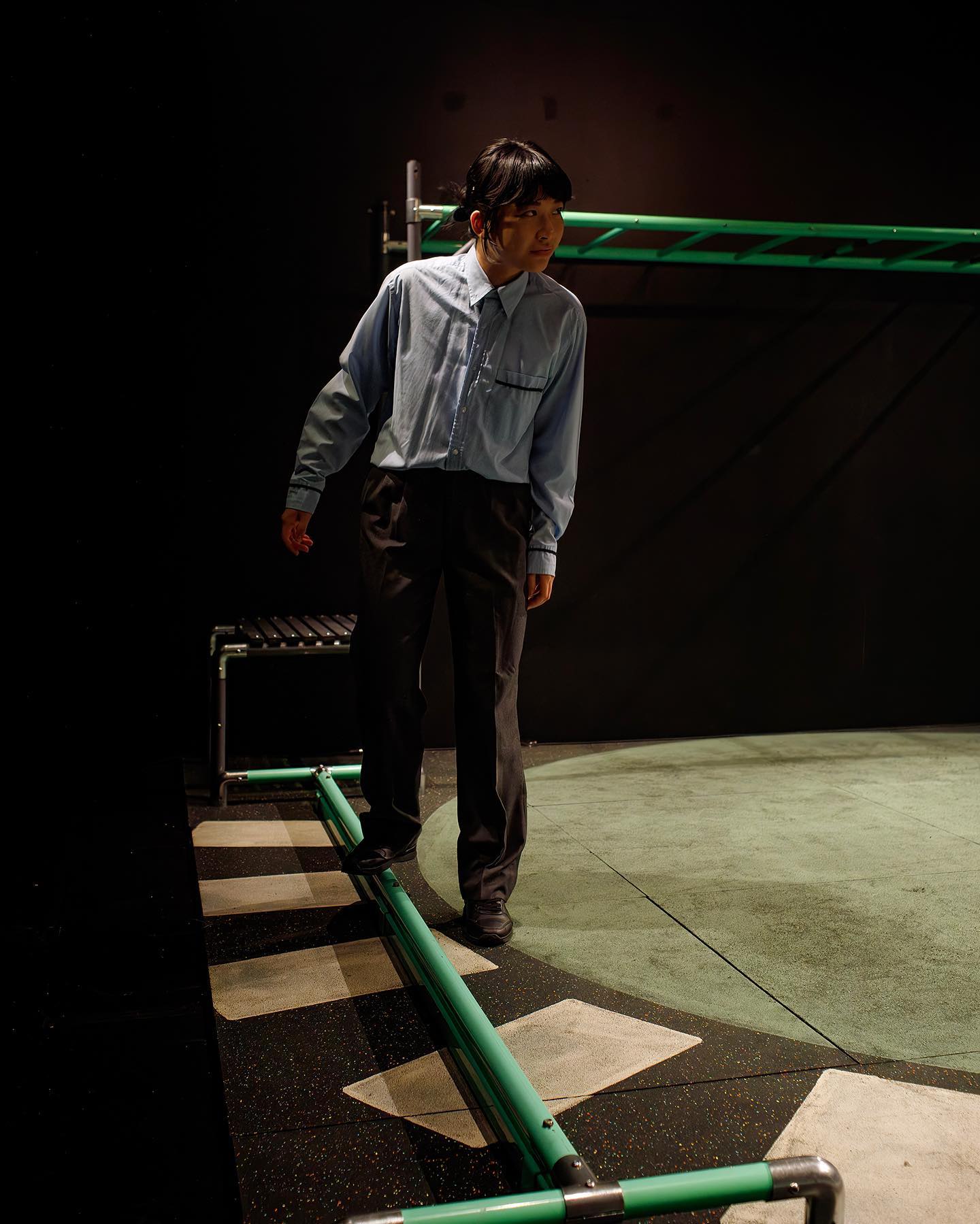
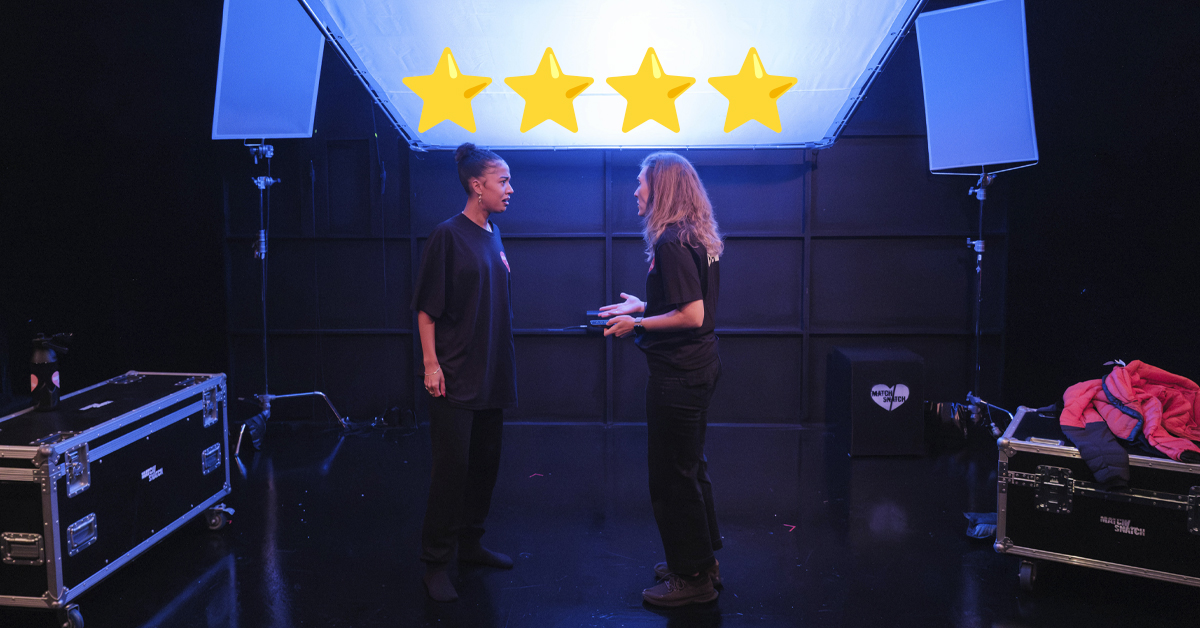
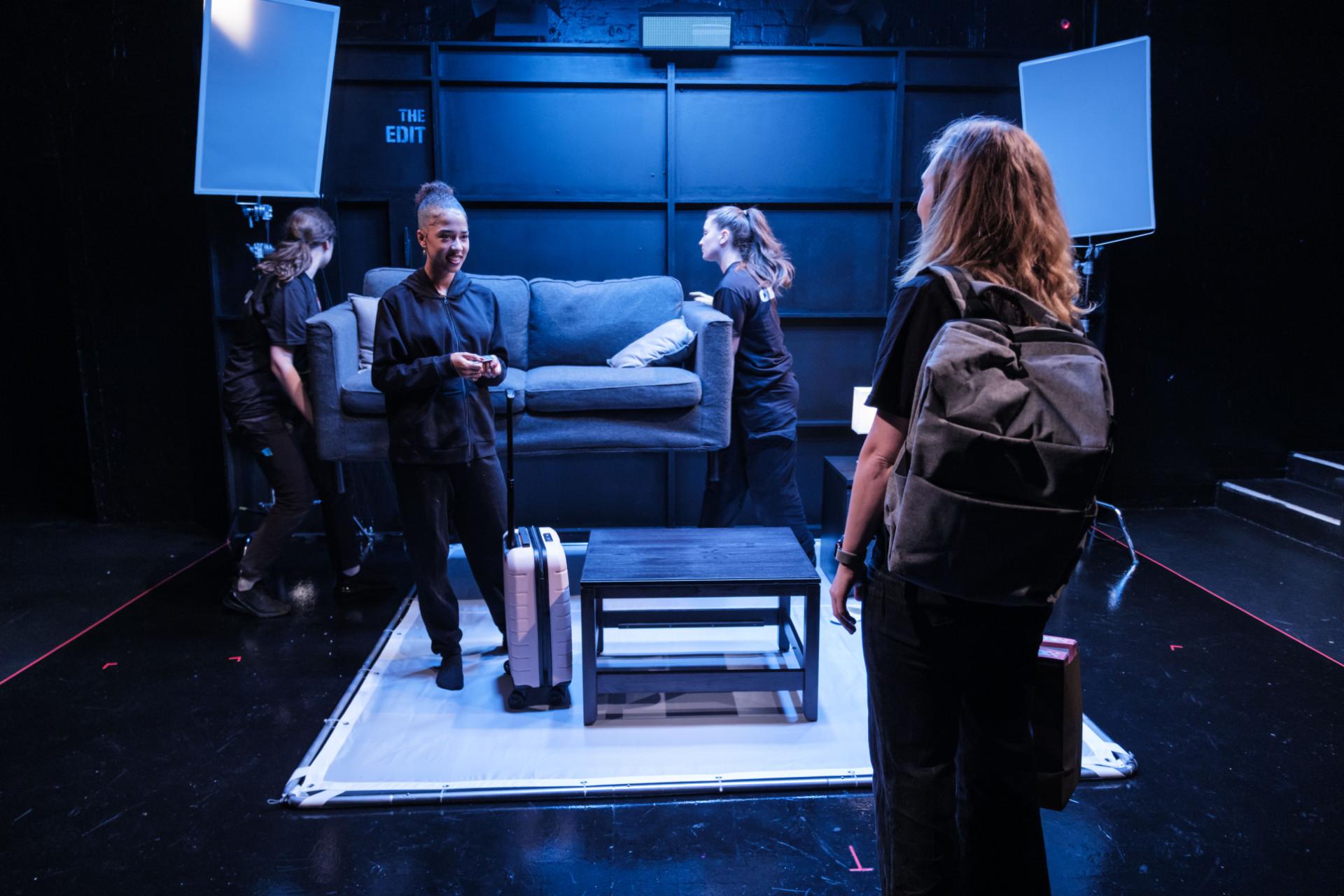
Set design by Ruby Jenkins cleverly frames the action with visual cues that expose the hidden machinery of television production, and the layers of deceit that sustain its manufactured fantasies. The stage becomes both a workplace and a trap — a reminder that behind every glossy image lies manipulation at work. Phoebe Pilcher’s lighting design is striking in its chill and precision, evoking the emotional coldness that governs human behaviour in a system built on economic cannibalism. Music and sound by Alyx Dennison heighten the drama with an organic subtlety; their contributions are seamlessly integrated yet undeniably potent in shaping the production’s tension and mood.

The pursuit of success feels almost instinctive, a shared ambition ingrained from an early age, yet its meaning remains troublingly mutable. What we come to define as “success” is so often shaped by external forces, by market logics and cultural expectations that reward ambition only when it conforms to the existing order. For the young, particularly those taking their first tentative steps into professional life, this pursuit can be both intoxicating and perilous. The world teaches its lessons harshly, and every triumph seems to come at the expense of something quietly vital.

We are endlessly seduced by the shimmer of promise, by images of prosperity, relevance, and acclaim, and in our hunger, we mistake the surface for substance. The capitalist dream markets itself as empowerment, yet its currency is exploitation. Still, we continue to invest in the system, not solely out of necessity but from an almost devotional belief that perseverance will one day grant transcendence. The tragedy, of course, is that such faith is misplaced. The machine does not elevate; it consumes. It extracts our labour, our time, our spirit, and gives back only a fleeting sense of validation before demanding more. In the end, the system does not nurture our aspirations; it feeds on them, leaving us diminished, yet still reaching, still convinced that the next victory will finally make us whole.

www.belvoir.com.au | www.legittheatreco.com | www.unlikelyproductions.co.uk
Review: Furious Mattress (25A Belvoir)

Venue: Belvoir St Theatre (Surry Hills NSW), Mar 11 – 30, 2025
Playwright: Melissa Reeves
Director: Margaret Thanos
Cast: Julian Garner, Alex Malone, Matilda Ridgway, Shan-Ree Tan
Images by Robert Catto

Theatre review
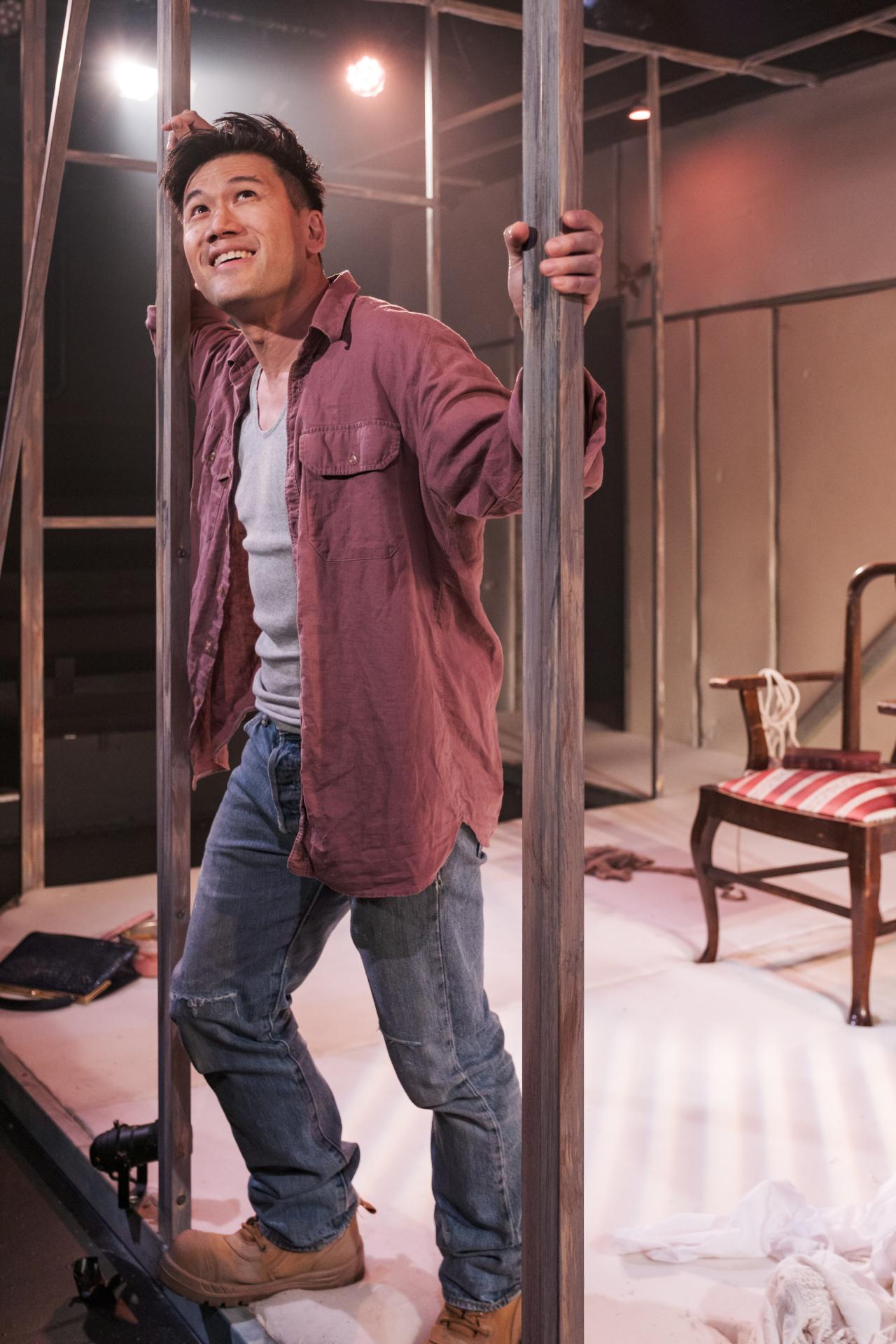
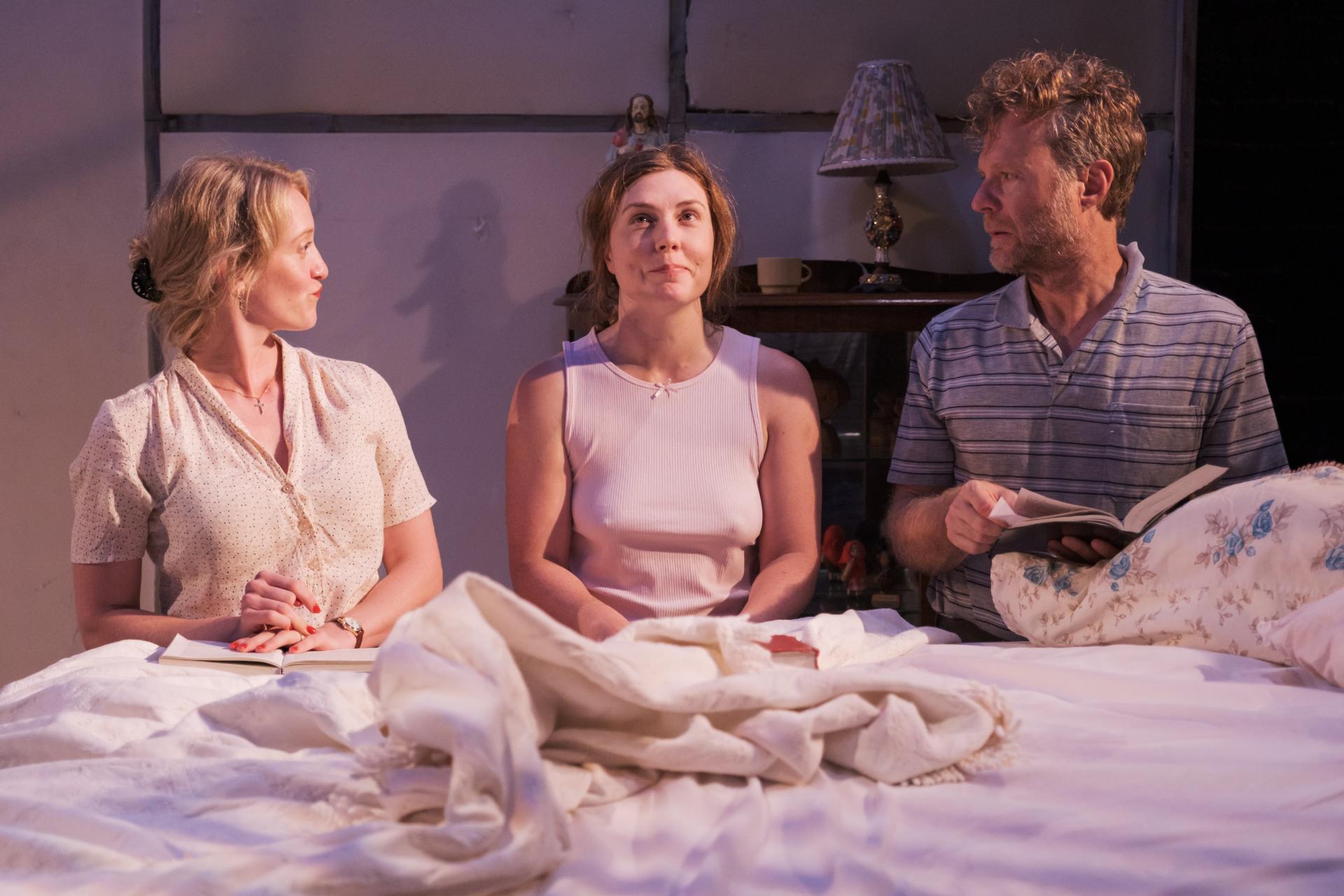
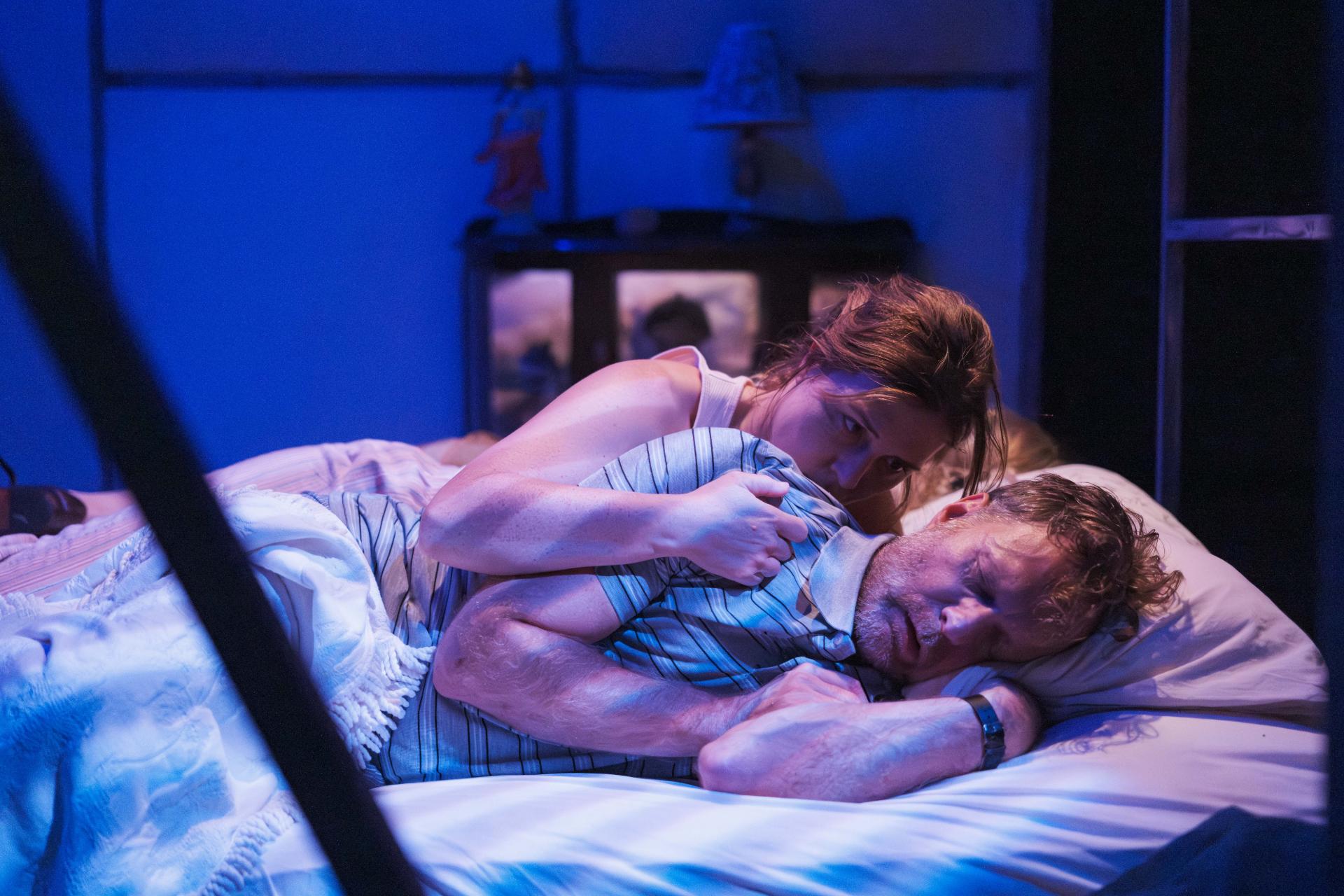
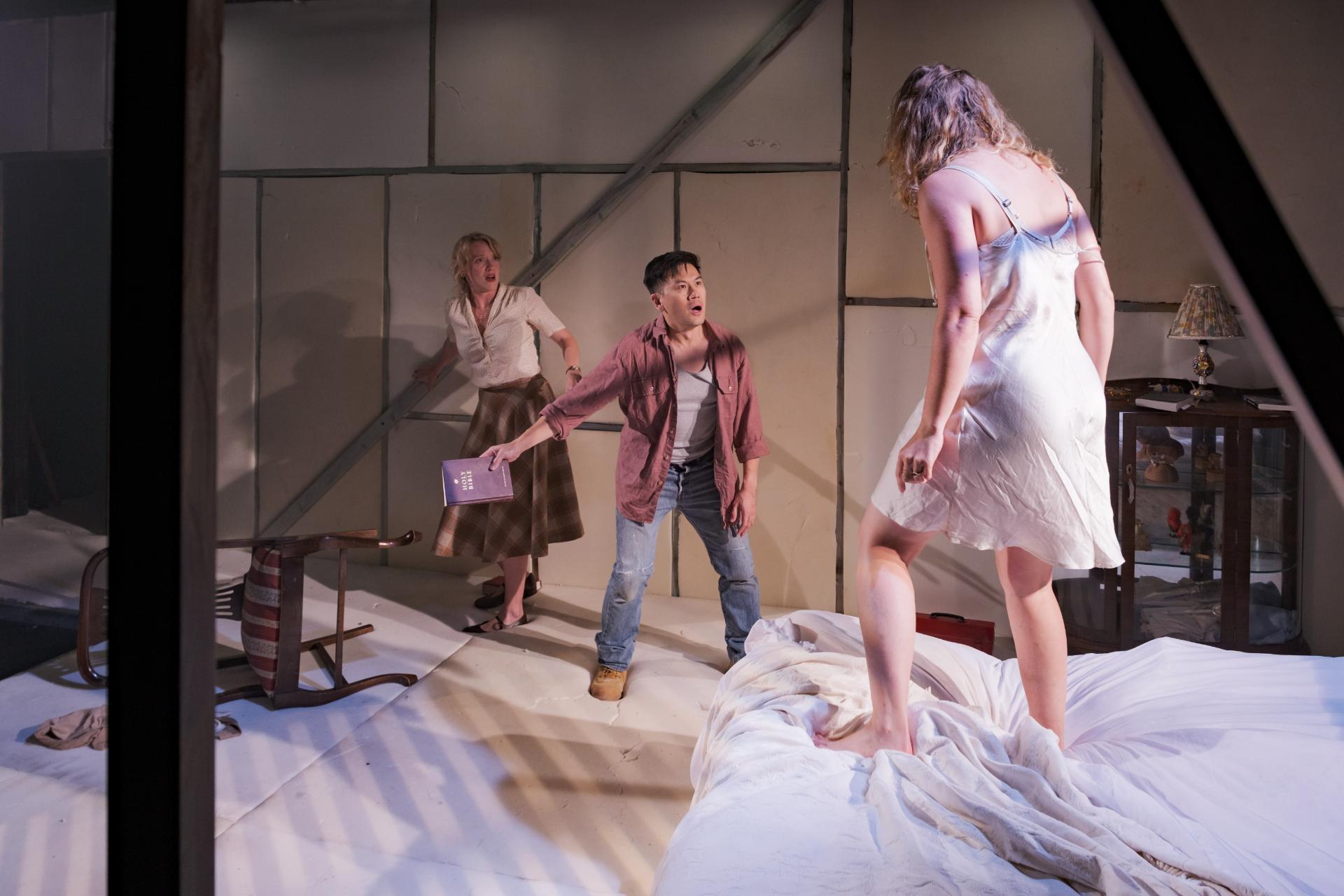
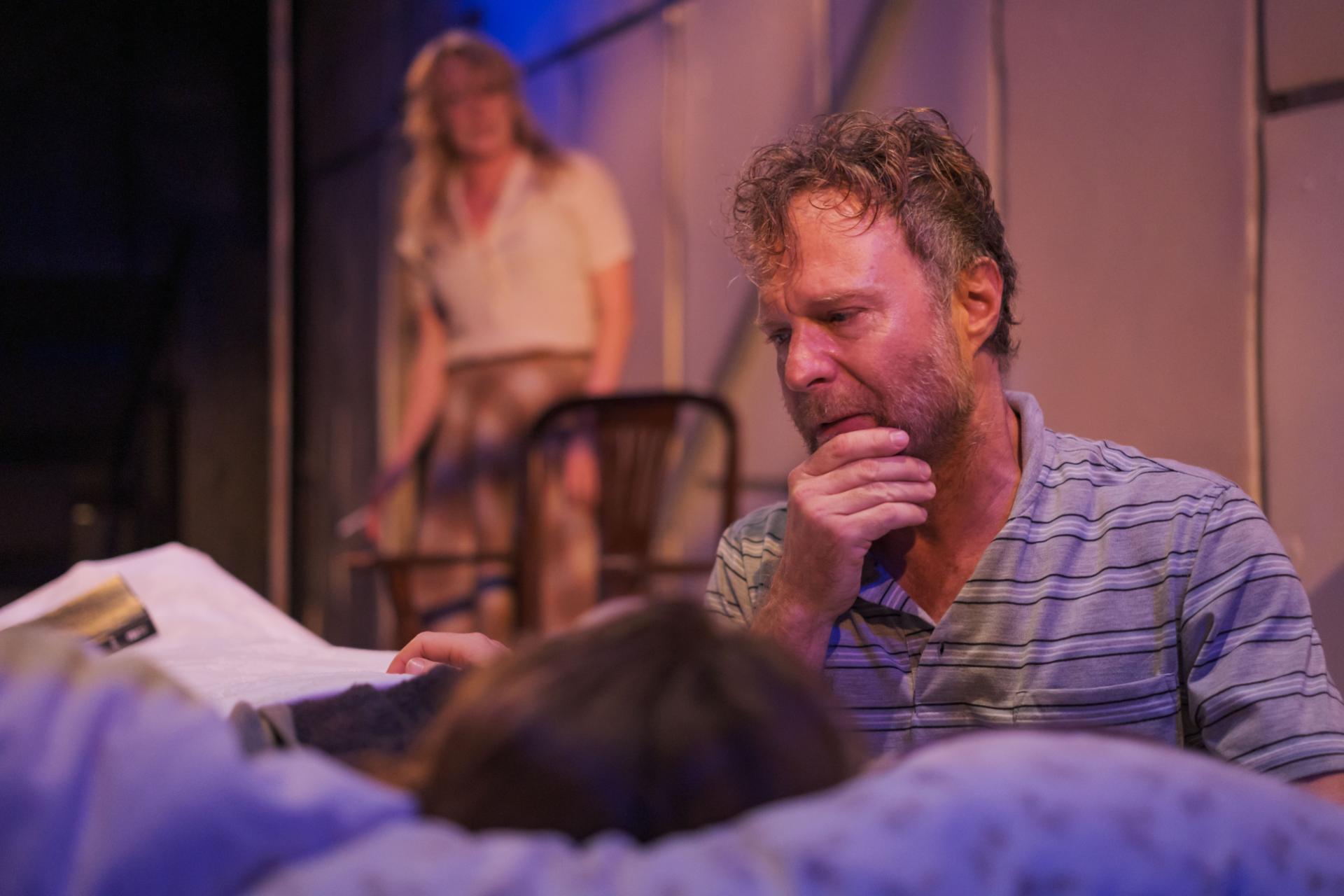
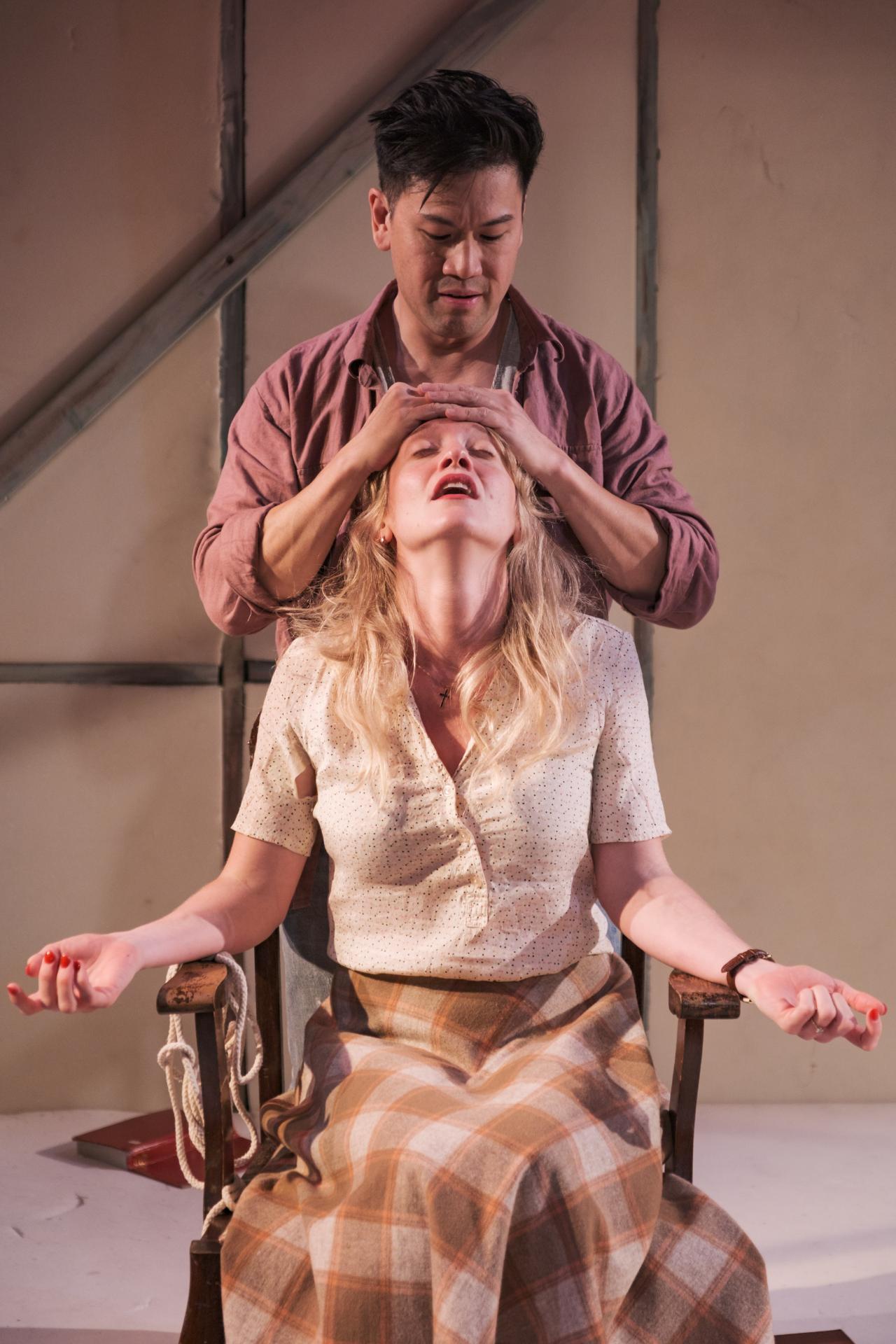
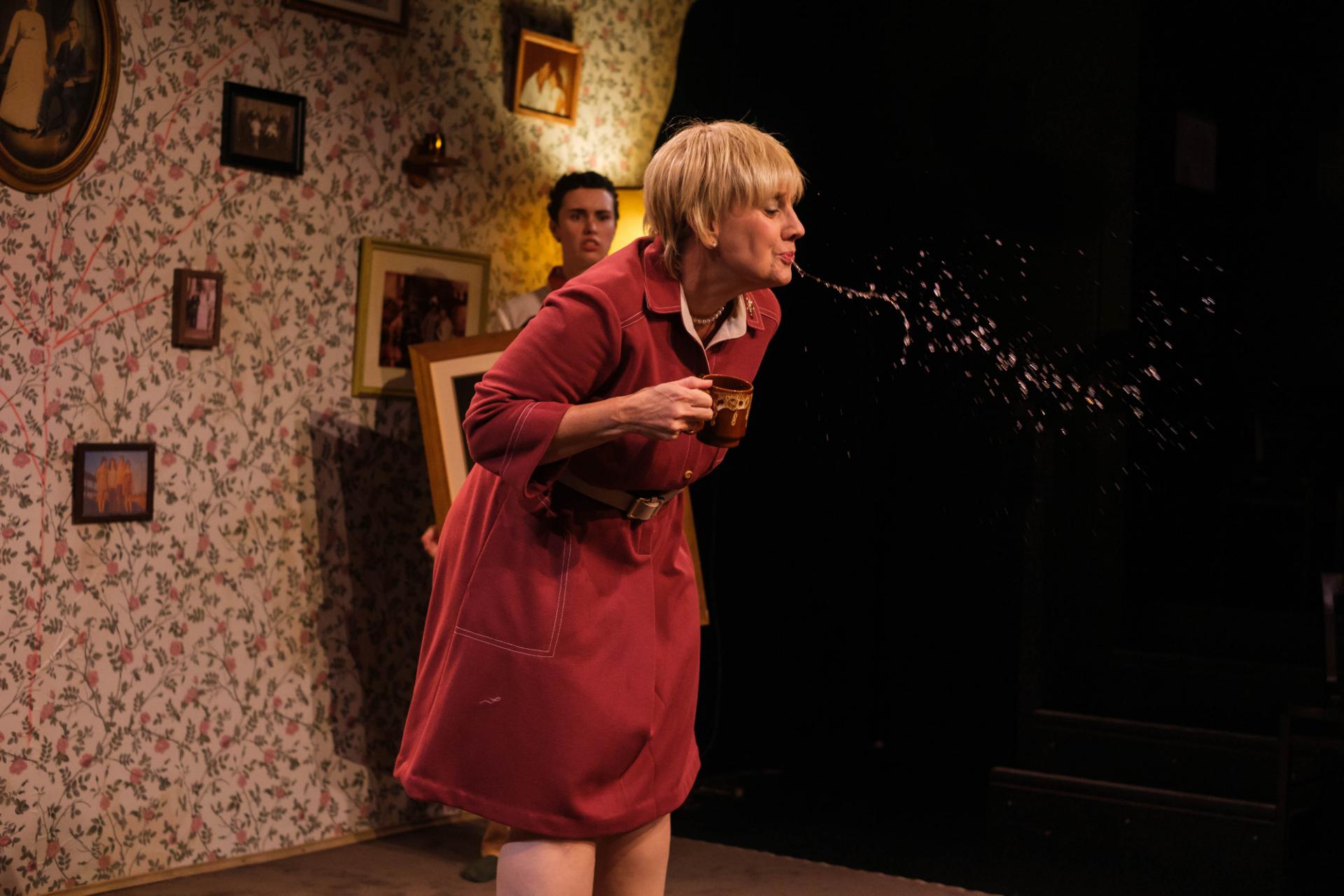
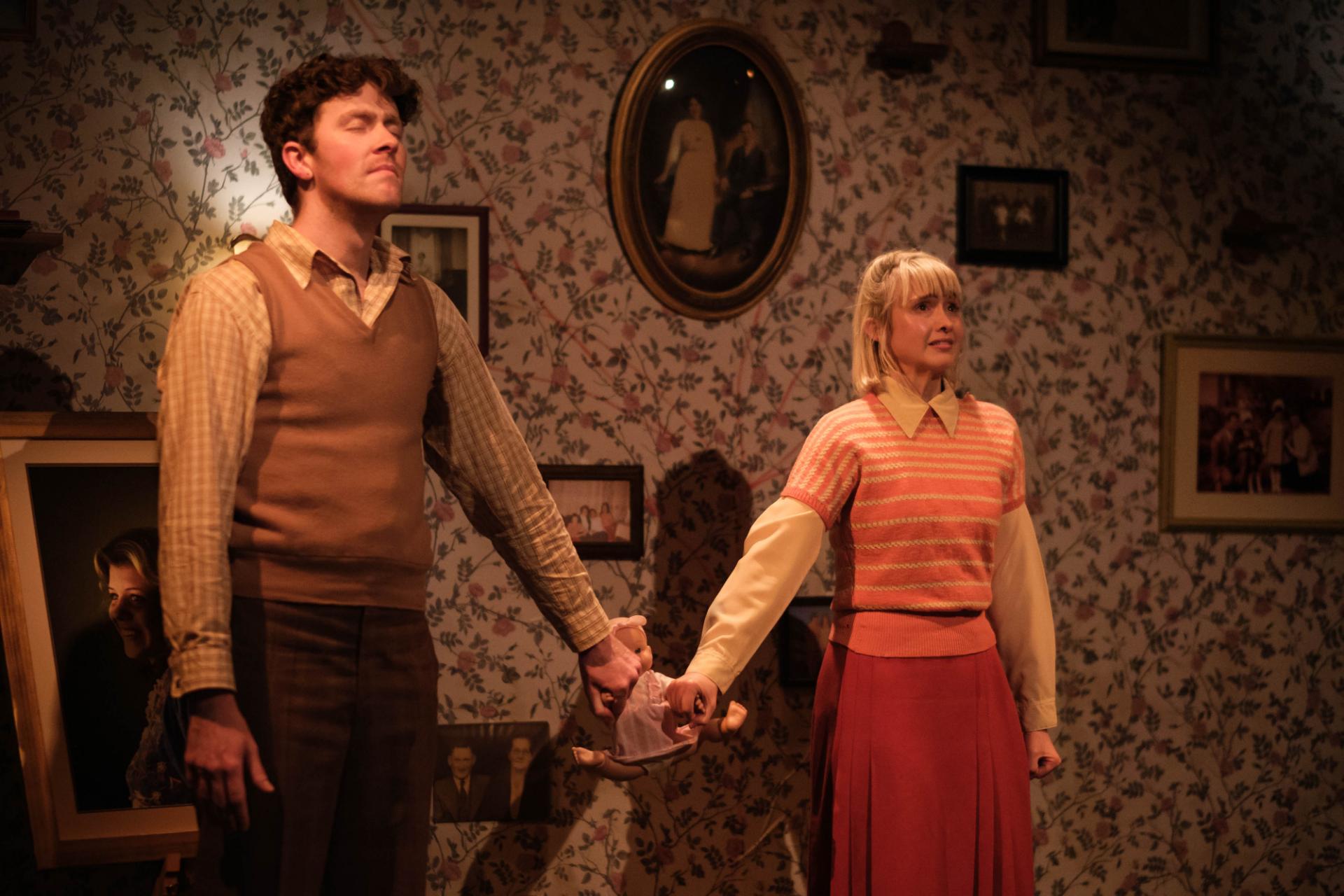
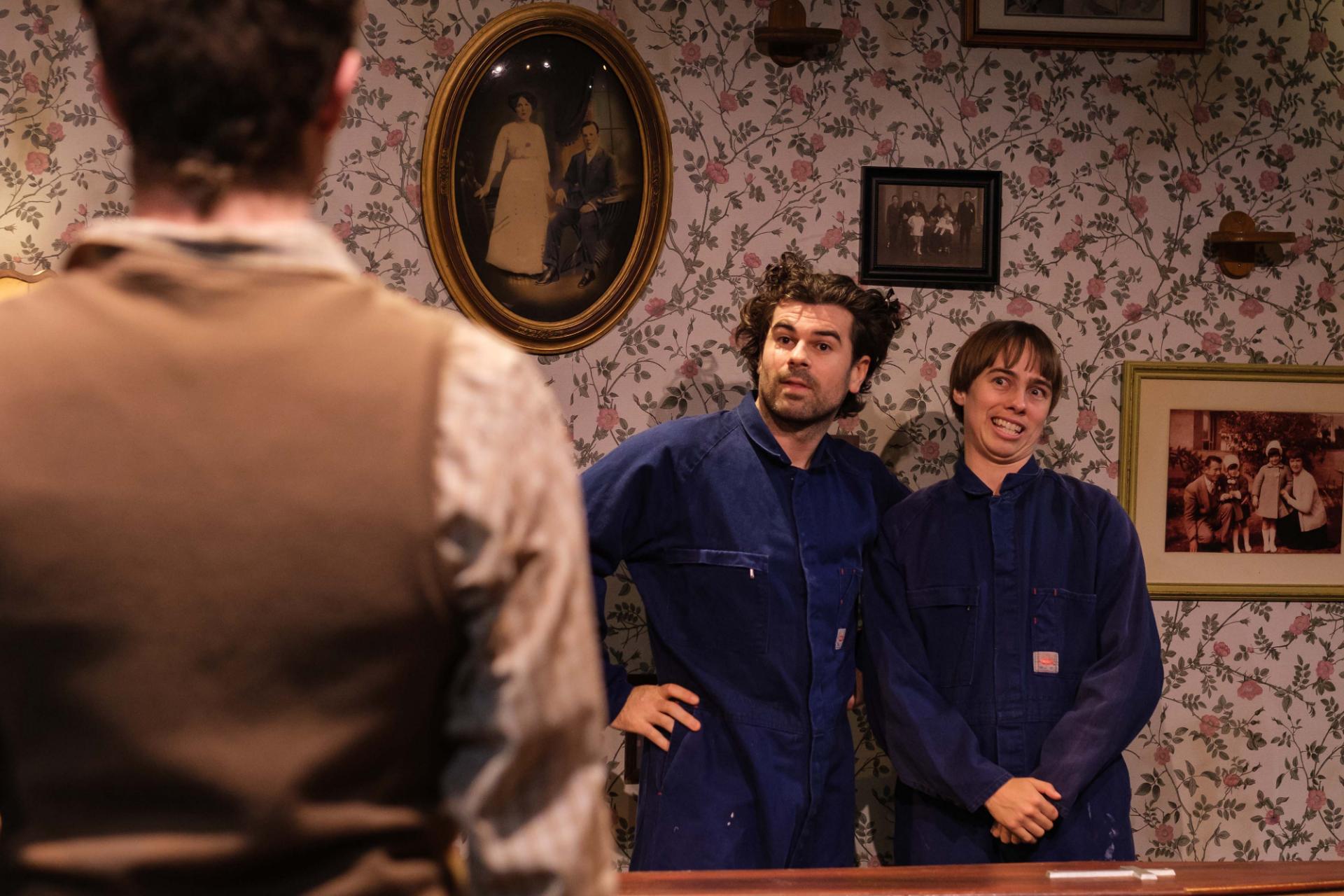
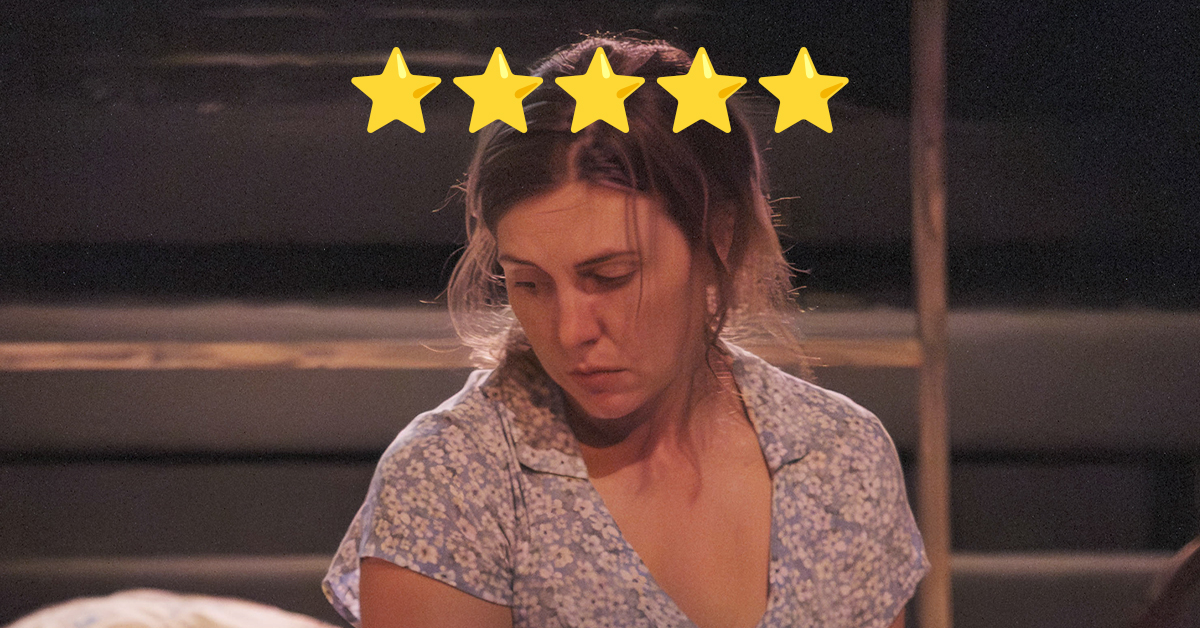
Else was not the first woman to be described as difficult, and not the first to be subject to an exorcism for that very reason. Based on a true story from 90s rural Victoria, Furious Mattress by Melissa Reeves is a dark comedy exploring parochialism, ignorance and intolerance. A scathing indictment of prevailing systems, most notably the Abrahamic religions which perpetuate all manner of social exclusionary, Reeves’ deeply subversive writing is as thrilling as it is mischievous.
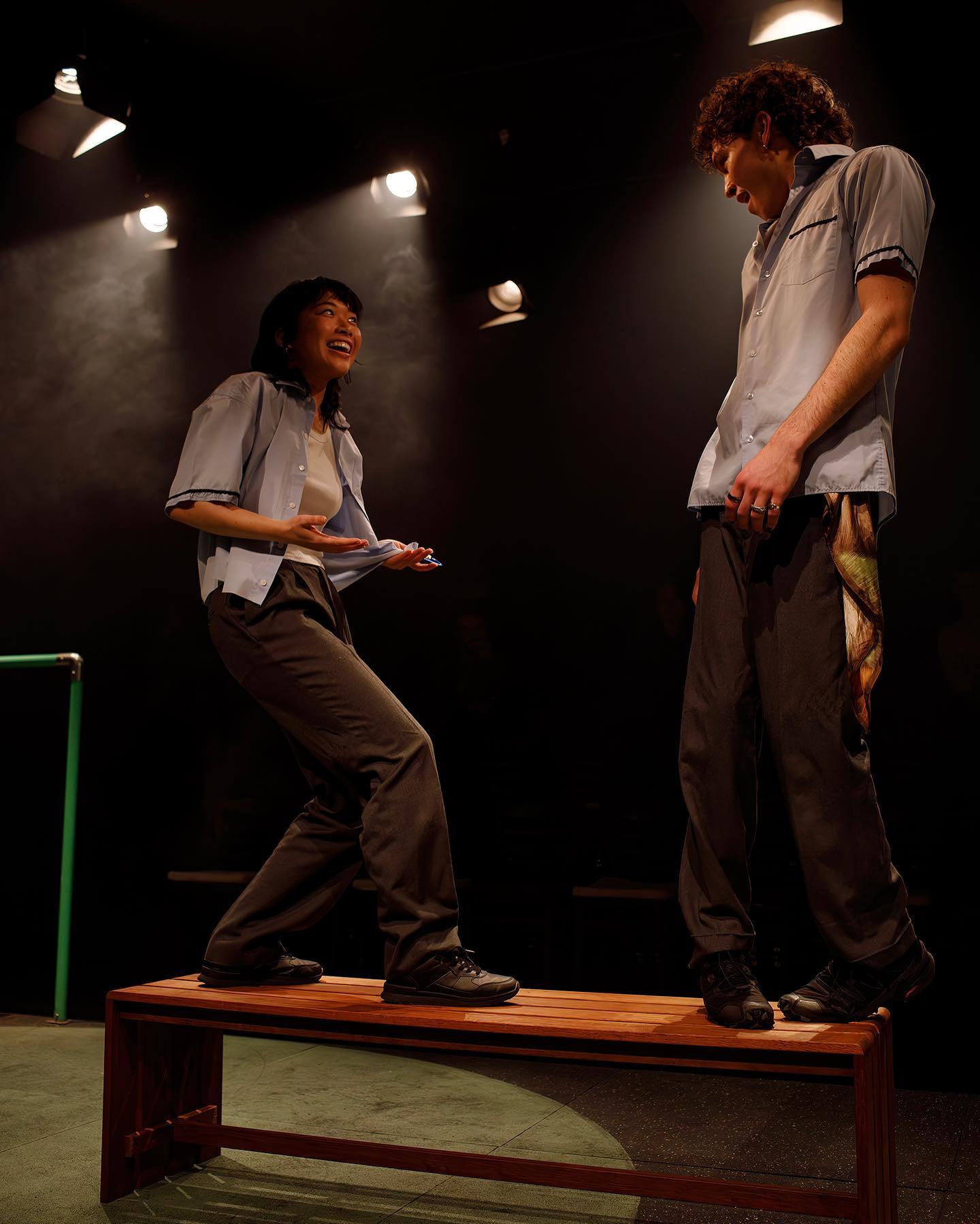
The play is a wild ride, using poltergeist activity and demonic possession as basis for its renderings of theatrical magic. Direction by Margaret Thanos provides an exhilarating kineticism that represents female rage in the twisted form of absurd comedy. Although memorable for that surreal extravagance, its humour can also be wickedly deadpan in naturalist scenes. Either way, Furious Mattress makes us laugh from a condemnatory position, for a satirical chastisement on superstitions and traditions, that insist on the rejection of gender parity. Also noteworthy is the work by Harry Milas as magic consultant, giving literal and figurative elevation to the show.

Angelina Daniel’s set design is immediately evocative of country life, with the incorporation of padded surfaces further suggesting interiors of psychiatric institutions, while providing functionality for this highly dynamic presentation. Costumes by Ruby Jenkins guide us to a recent past, but it is a surprise macabre creation that truly excites. Lights by Ryan McDonald are a powerful element, especially satisfying in its delivery of optical illusions for this exploration of paranormal phenomenon. Sound design by Cameron Smith and music composition by Daniel Hertern dial up the drama, for an instance of storytelling that invites us to approach its serious themes with a delicious duality of solemnity and playfulness.

Actor Matilda Ridgway brings a wonderful defiance to Else, demanding that we see the world through her eyes. Ridgway’s cheeky presence keeps us endeared to the central character, even if it is interpreted as demonic within the text. An extremely funny Alex Malone plays Christian zealot Anna with a marvellous cynicism. Else’s husband Pierce is imbued admirable integrity along with the most subtle of incisive derision, by a captivating Julian Garner. Shan-Ree Tan as charlatan exorcist Max adds to the intensity, for a production that elicits a complex melange of emotions from its audience.

When something supernatural happens, and the church is the first authority called upon to solve its mystery, we can observe the extent to which that old institution controls our understanding of the world. When a woman seems to be losing her mind, and the only available discourse regarding her perceived brokenness relates to religion, we ignore the inherent systemic requisites of keeping women down. Some women will not adhere, and they are usually the ones who speak the truth.

www.belvoir.com.au | www.legittheatreco.com

Review: Misery Loves Company (KXT on Broadway)

Venue: KXT on Broadway (Ultimo NSW), May 3 – 18, 2024
Playwright: Isabella Reid
Director:
Mathew Lee
Cast: Lib Campbell, Clay Crighton, Lincoln Elliott, Paul Grabovac, Teale Howie, Mark Langham, Linda Nicholls-Gidley, Rachel Seeto, Annie Stafford, Michael Yore
Images by Clare Hawley

Theatre review
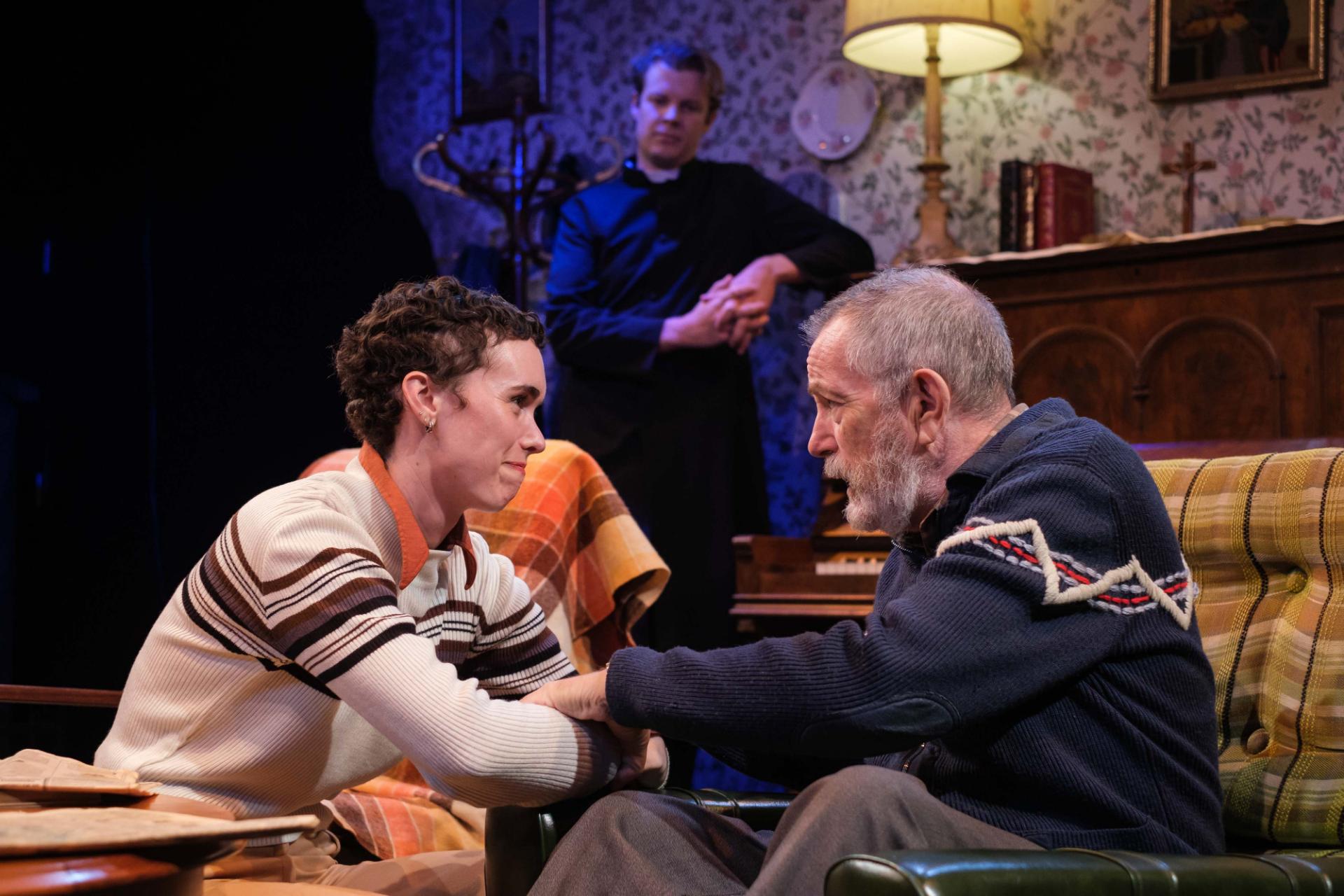
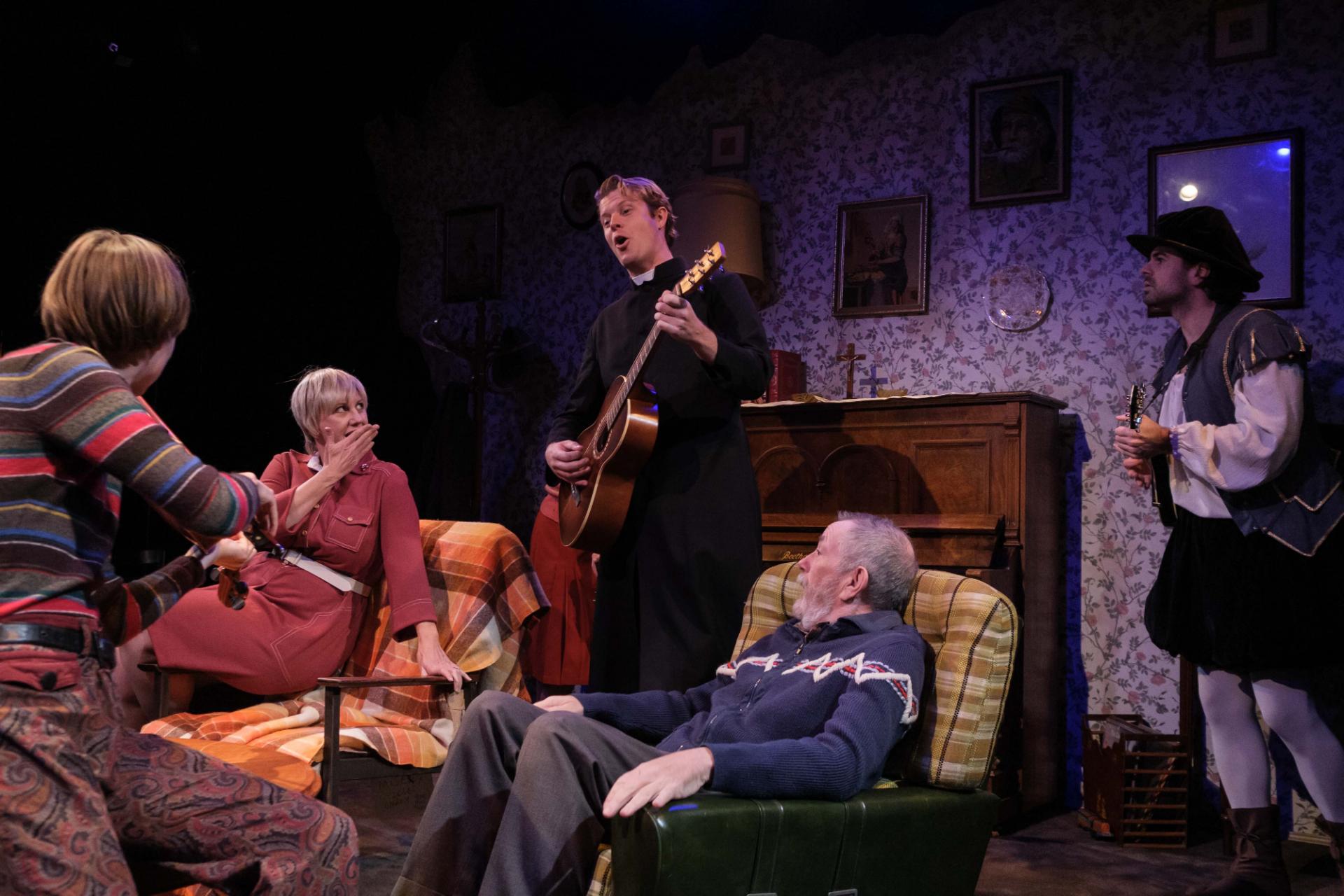
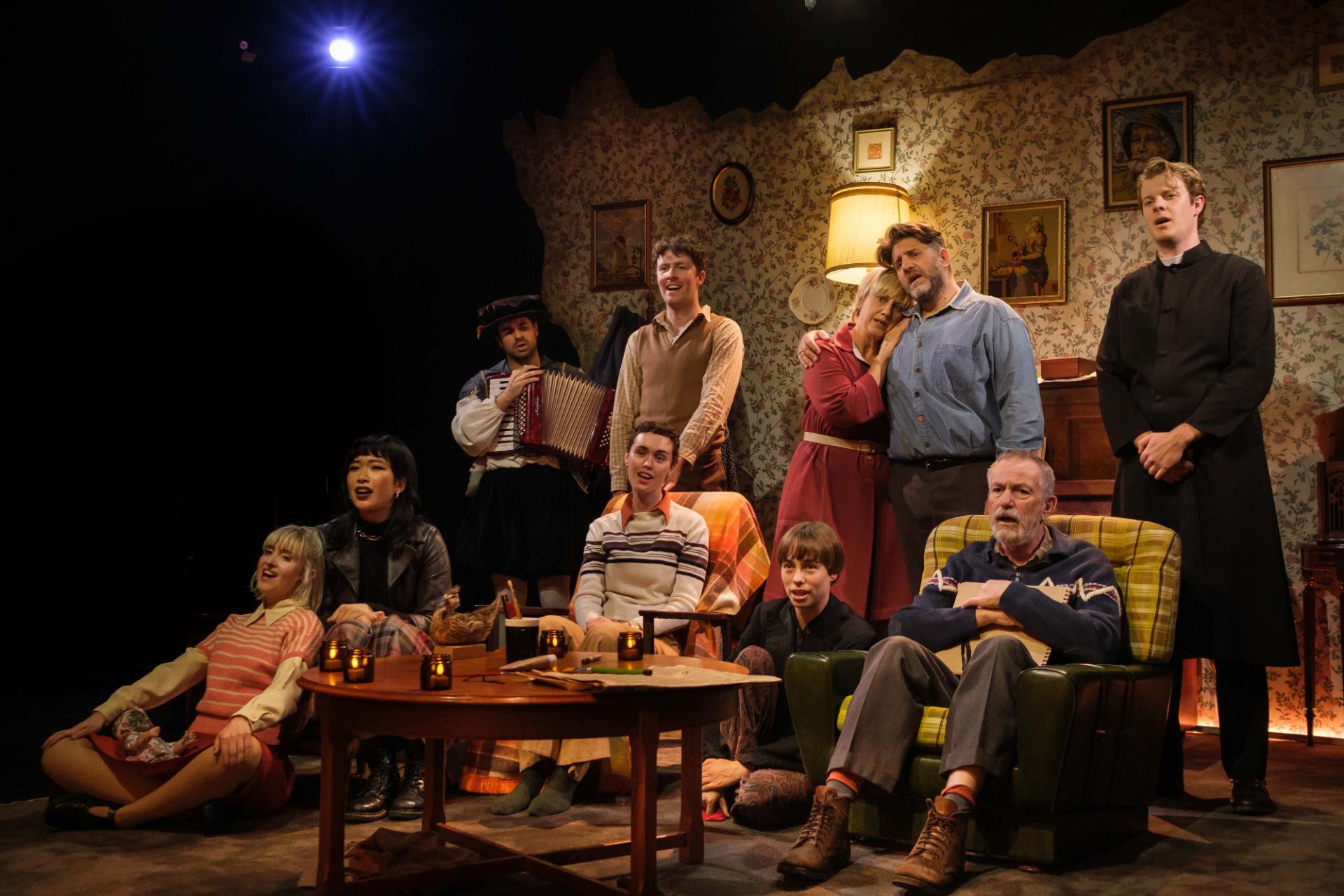
There has been a death in the Glynne family, and all the kin congregate to hold a vigil for the dearly departed. In Isabella Reid’s Misery Loves Company, we see everything go incredibly wrong, for an uproarious comedy, set in what should be the most sombre of times. With it being 1977 in Northern Ireland, and turbulence a permanent fixture during those years, perhaps chaos does make sense, even in moments of reverence and intimacy.

The jokes are plentiful, and indeed incessant, in Reid’s debut play. Misery Loves Company is full of mischief, with sharp dialogue and short scenes, that keep it a buoyant experience. Director Mathew Lee imbues a bold spontaneity, for a show that feels as fresh as it is amusing, consistently enjoyable with its resolute focus on delivering laughter. The cast of ten is strong in general, with a respectable amount of emphasis on chemistry between performers, that ensure we can all be swept up in the effervescent tomfoolery.

Production design by Ruby Jenkins is commendable for its sense of accuracy in terms of portraying a precise time and place, and also for a visual vibrancy that contributes to the humour of the piece. Lights by Tyler Fitzpatrick are deployed with an impressive eye for detail, notable for their ability to manufacture subtle but meaningful shifts in mood. Clare Hennessy’s music demonstrates an impressive sophistication, as it evokes cultural specificity and a gently melancholic nostalgia, for a presentation that for some, relates to a cherished tradition. We come from all corners, but where we converge on this land, is often in the sheer absurdity of living through together, each and every mercurial day.

www.kingsxtheatre.com | www.legittheatreco.com

Review: Dumb Kids (KXT on Broadway)

Venue: KXT on Broadway (Ultimo NSW), Jun 23 – Jul 8, 2023
Playwright: Jacob Parker
Director:
Sophia Bryant
Cast: Fraser Crane, Ryan Hodson, Mym Kwa, Oli McGavock, Lou McInnes, Dominique Purdue, Connor Reilly, Rachel Seeto, Kate Wilkins, Angharad Wise
Images by Phil Erbacher

Theatre review

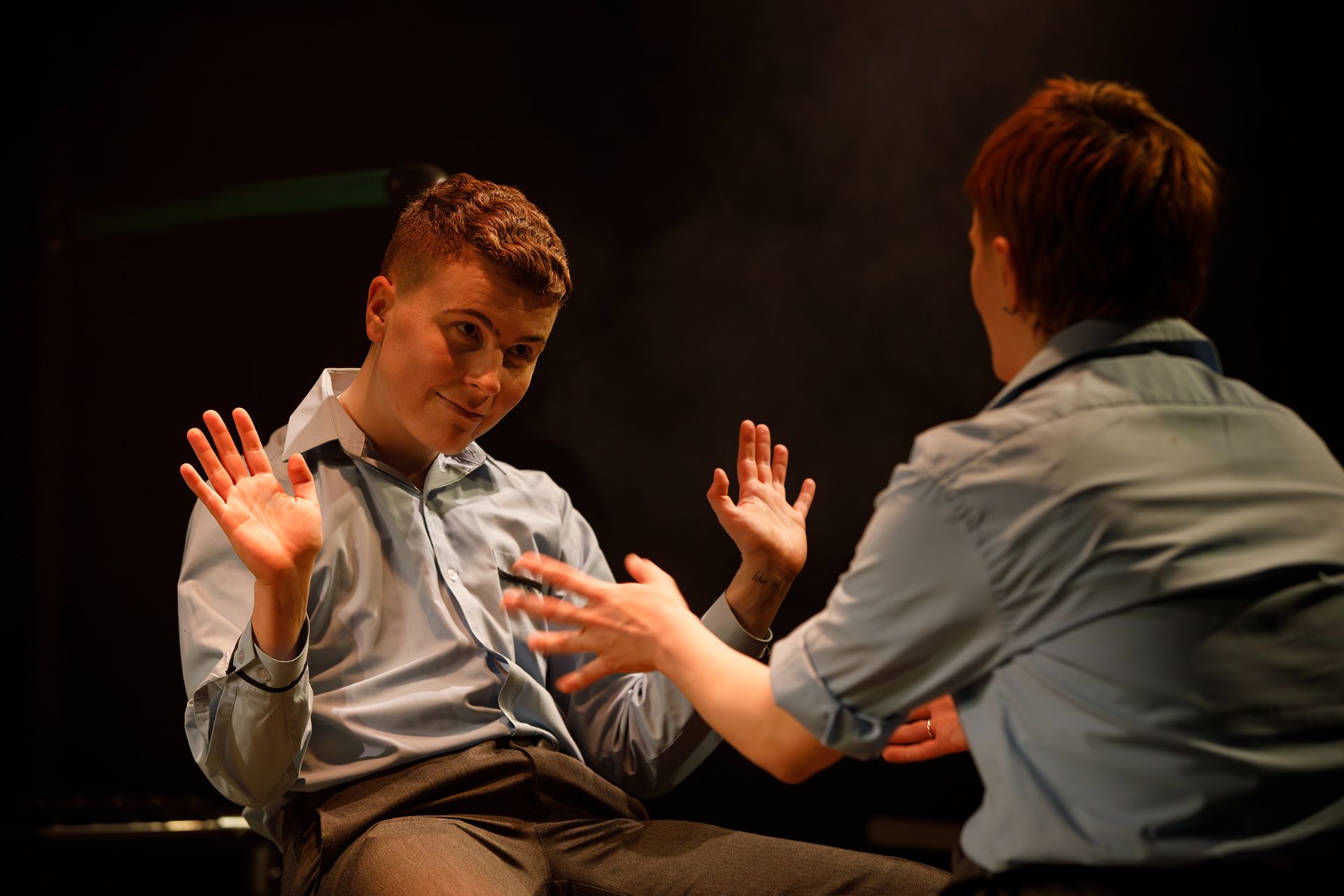
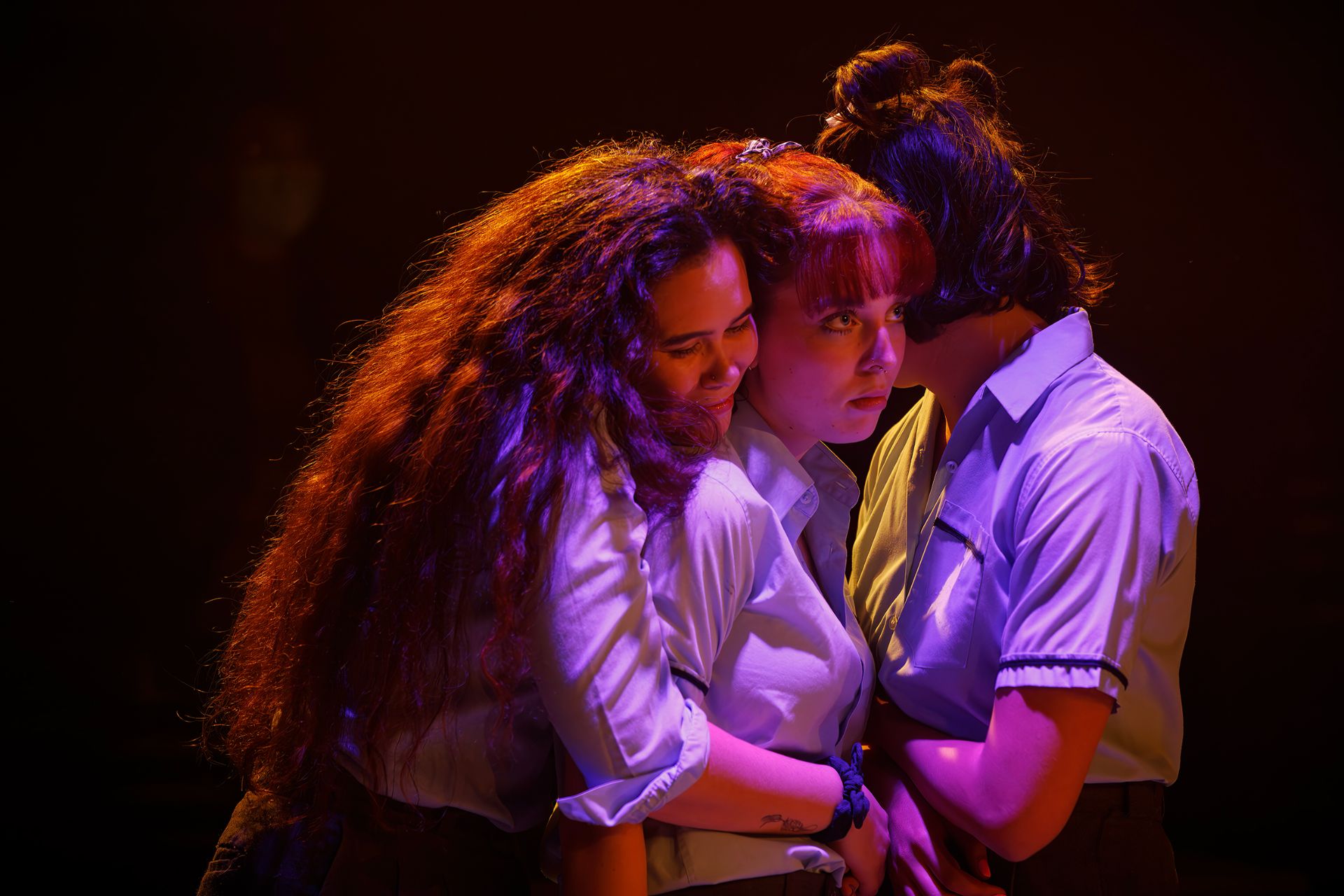
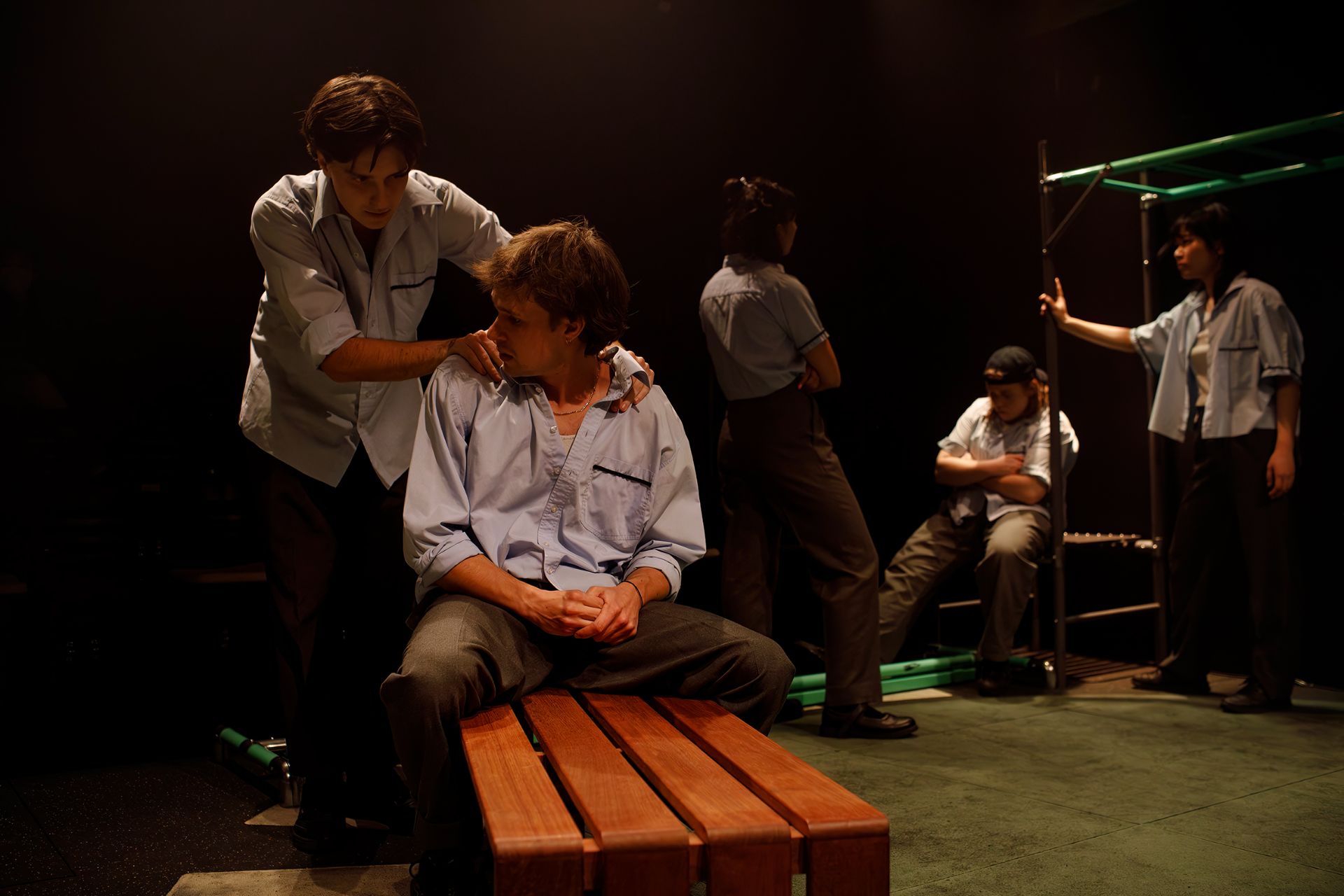
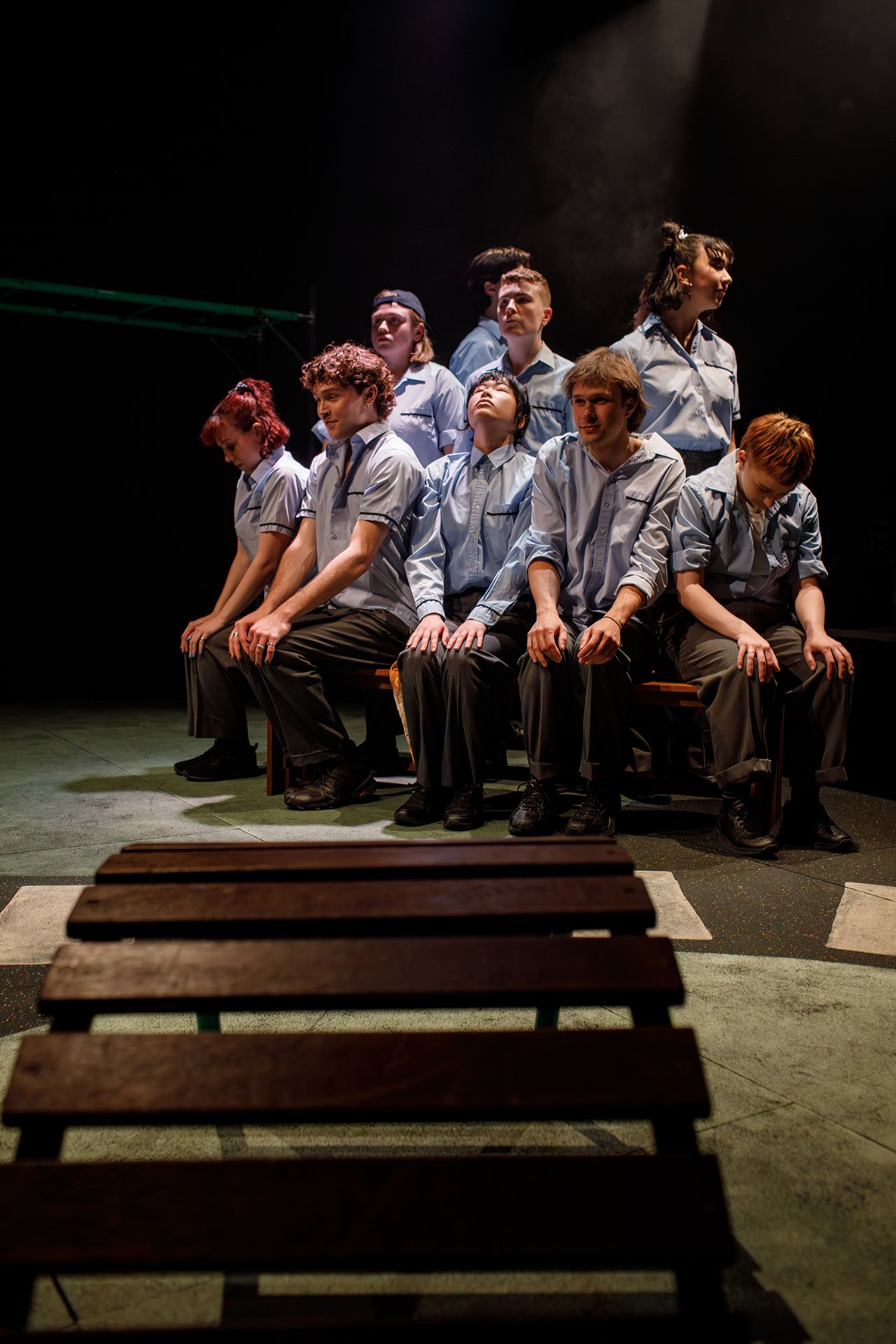
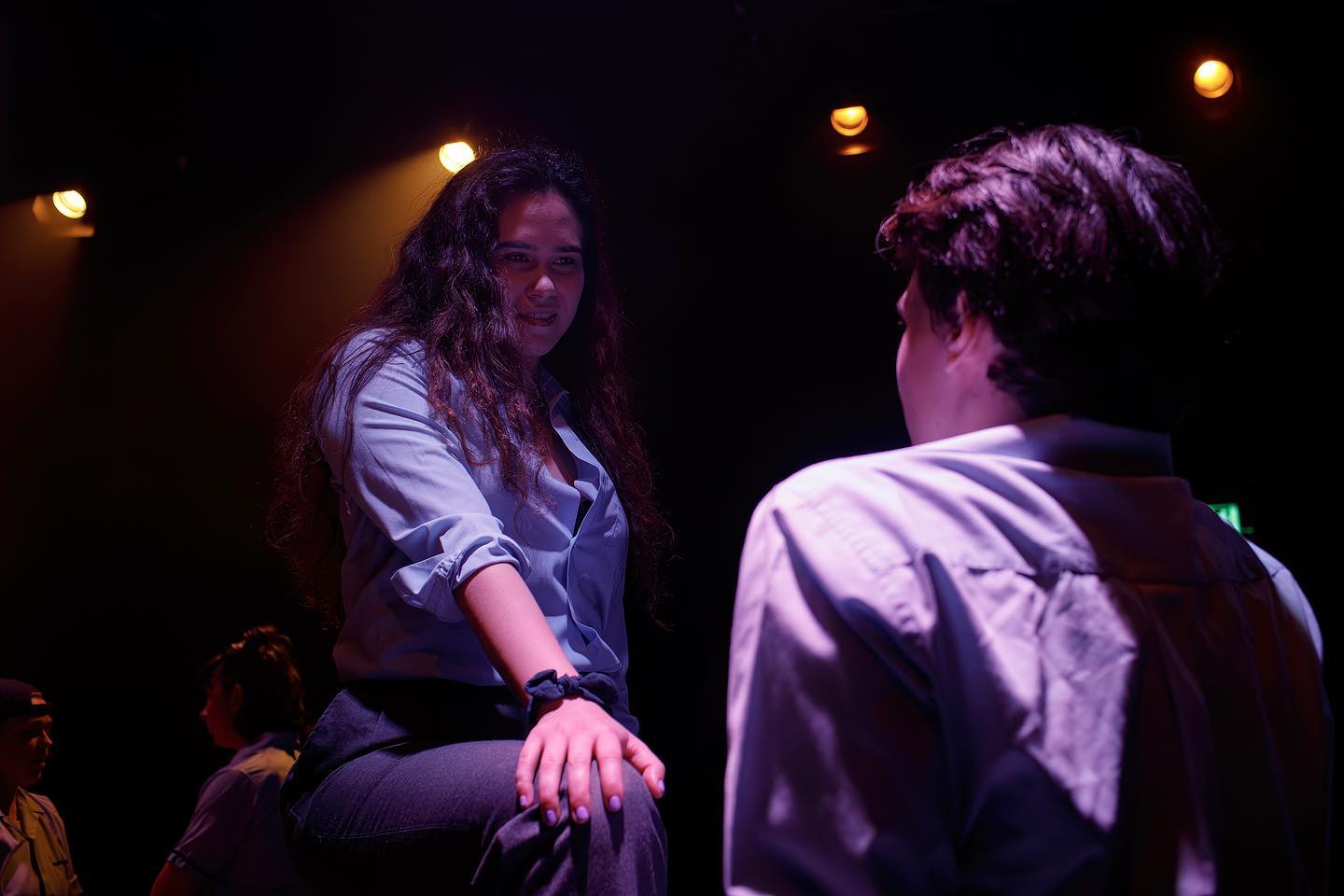
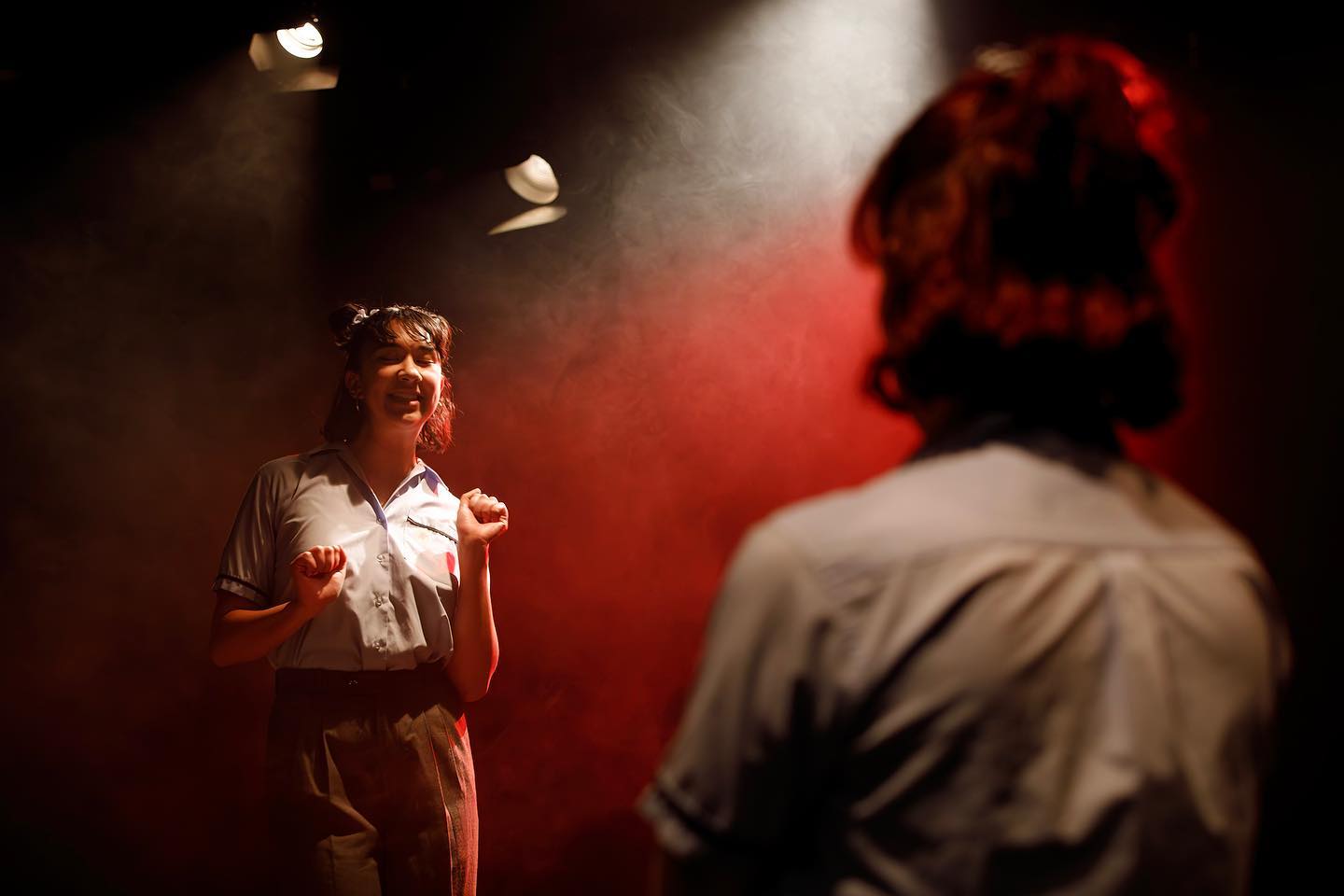
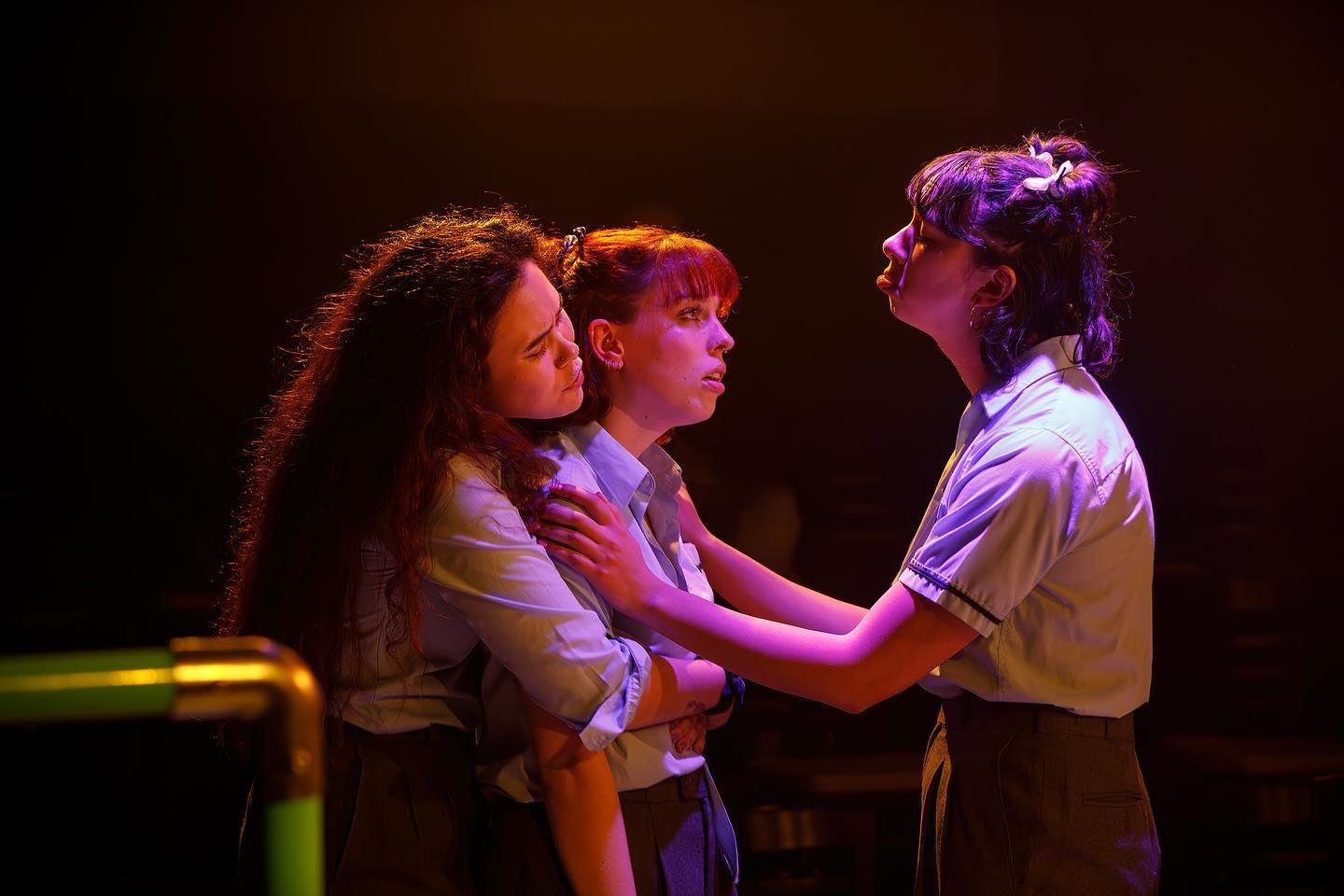
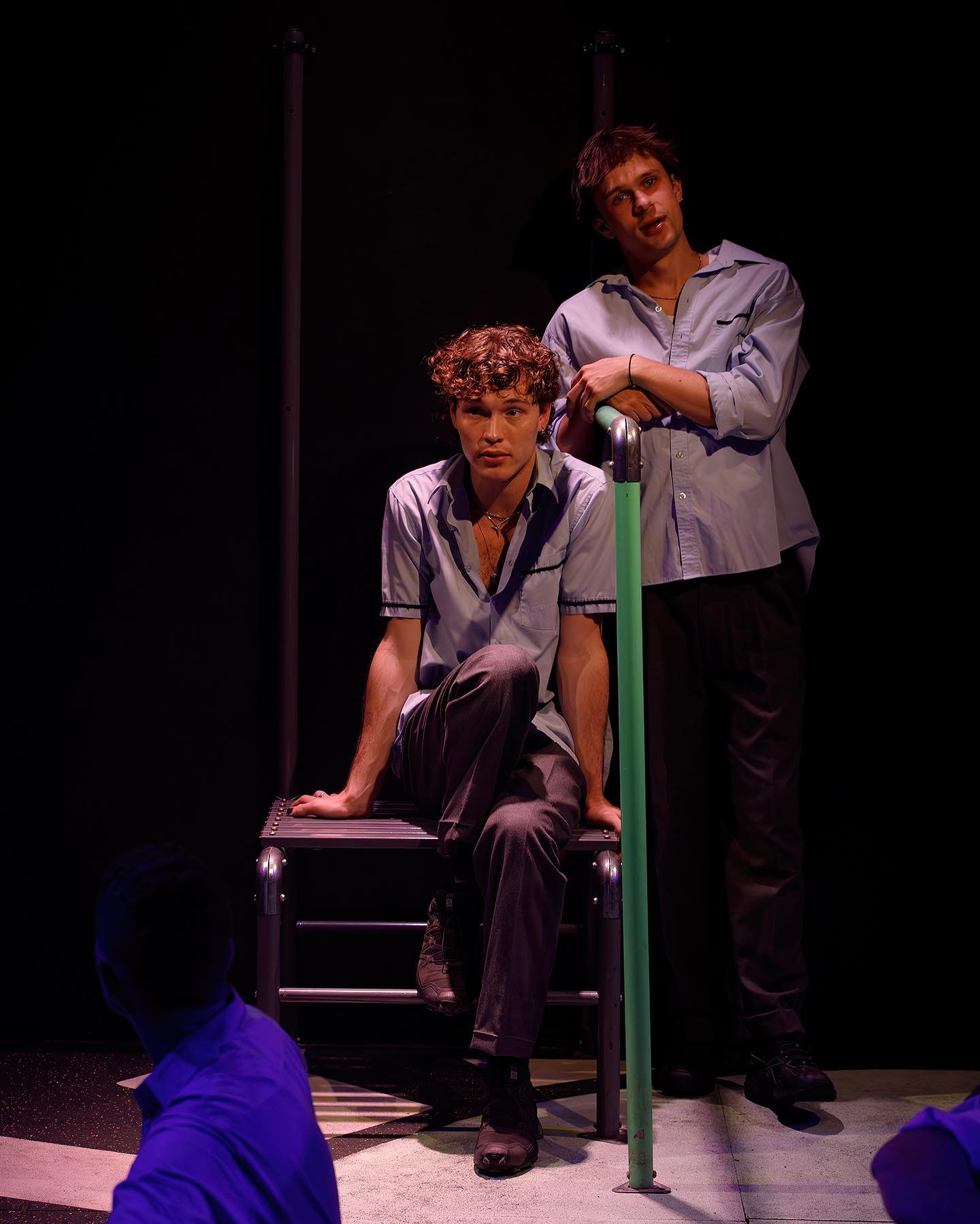
It is always between classes, when we see the young people of Jacob Parker’s Dumb Kids chatting and socialising. There is occasional talk about their impending Year Eleven Social, but these ten teenagers are mostly occupied with matters of a sexual nature. At their age especially, talking about sex is really an exploration of self identity, and in Dumb Kids we see a fascinating microcosm, representative of the state of youth culture in 2023. Australia in the future, it may seem, is no longer predominantly straight, with lesbians, gay men, bisexuals and pansexuals becoming as commonplace as heterosexuals. Trans and nonbinary people too, are no longer anomalies in how we recognise gender experiences. Queer, it may seem, is everything.

Parker’s depictions can of course be considered an exaggeration, not only of queerness, but also of a particular kindness that has hitherto eluded most stories pertaining to this cohort. Masculinity is very present in Dumb Kids but its toxic aspects have largely disappeared. Bullying and intimidation are no longer a significant driving force, in this narrative about adolescent sociality. Conformity too has subsided, with these teenagers completely at ease with notions of diversity. Angst and confusion however remain essential, for it is wholly natural to see humans never figuring everything out, about our very own existence, even after learning that we can all make different choices in self-determination.

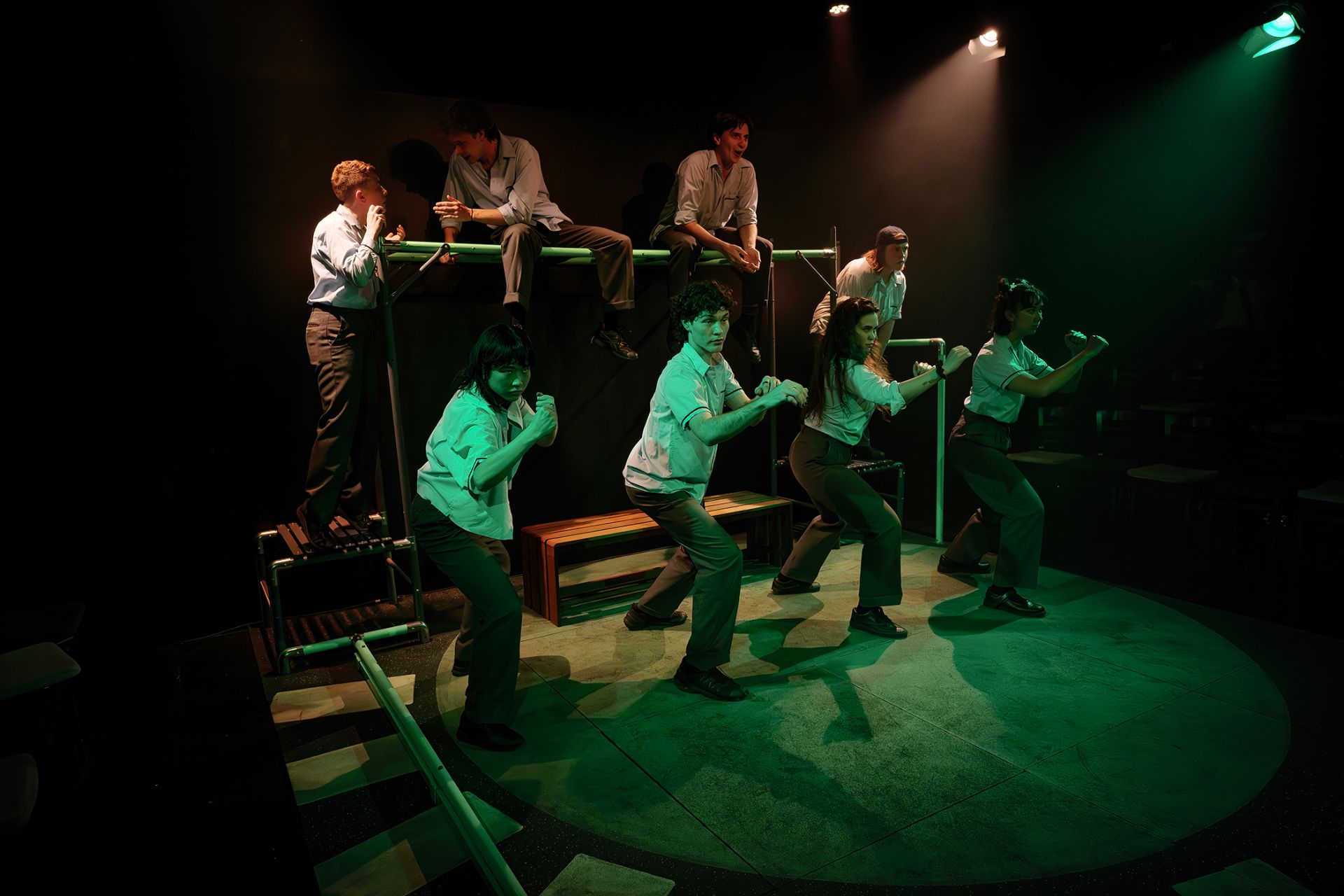
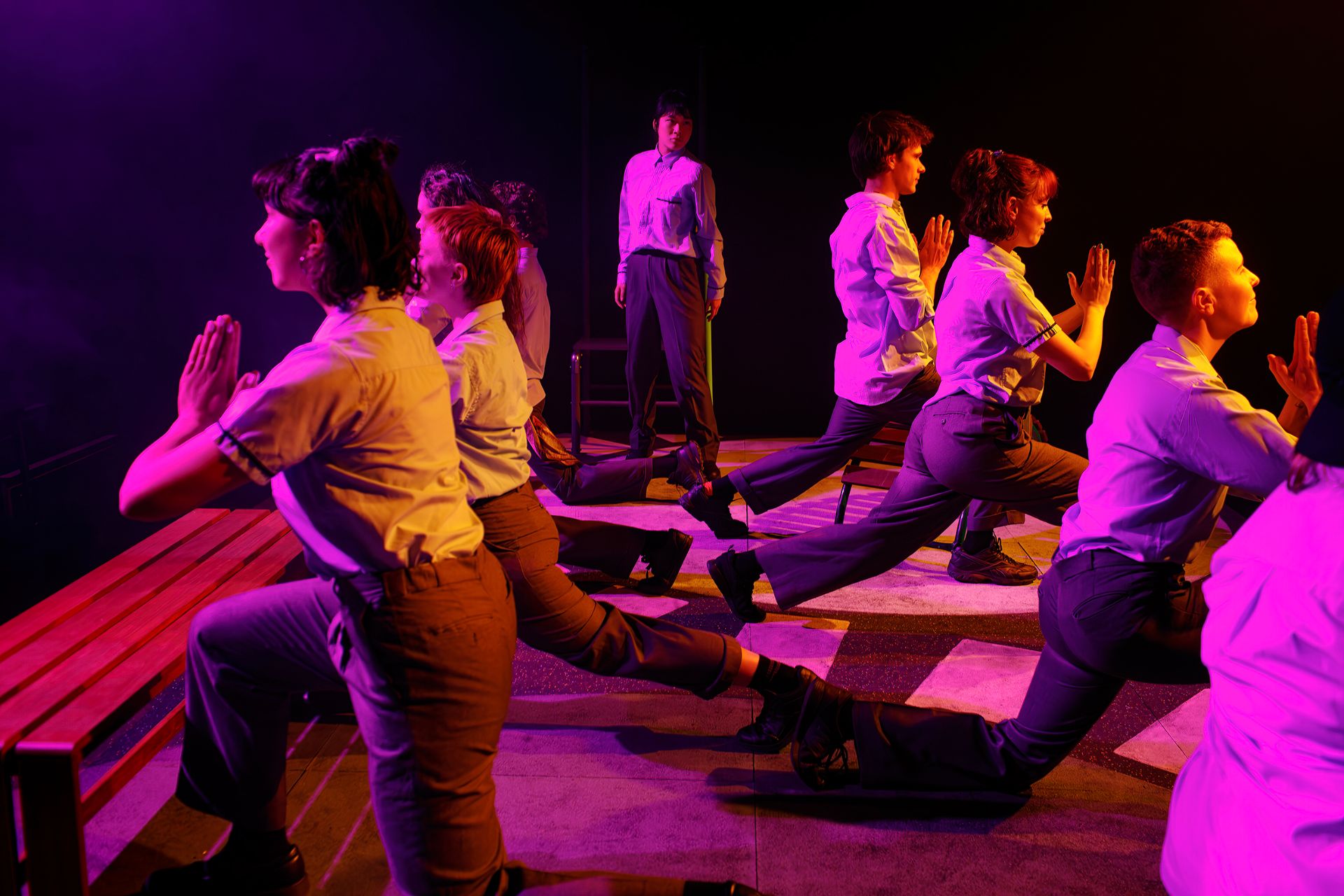
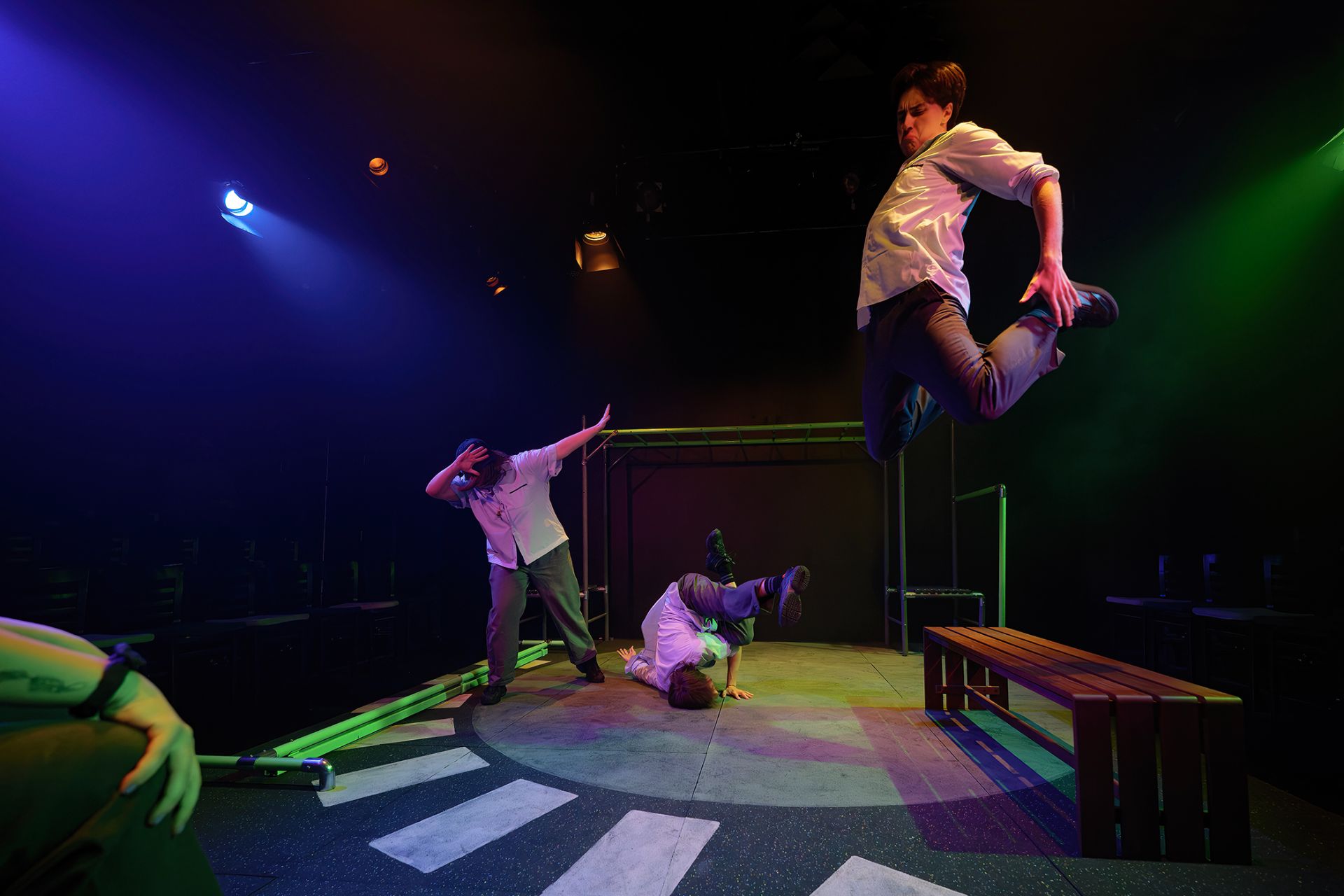
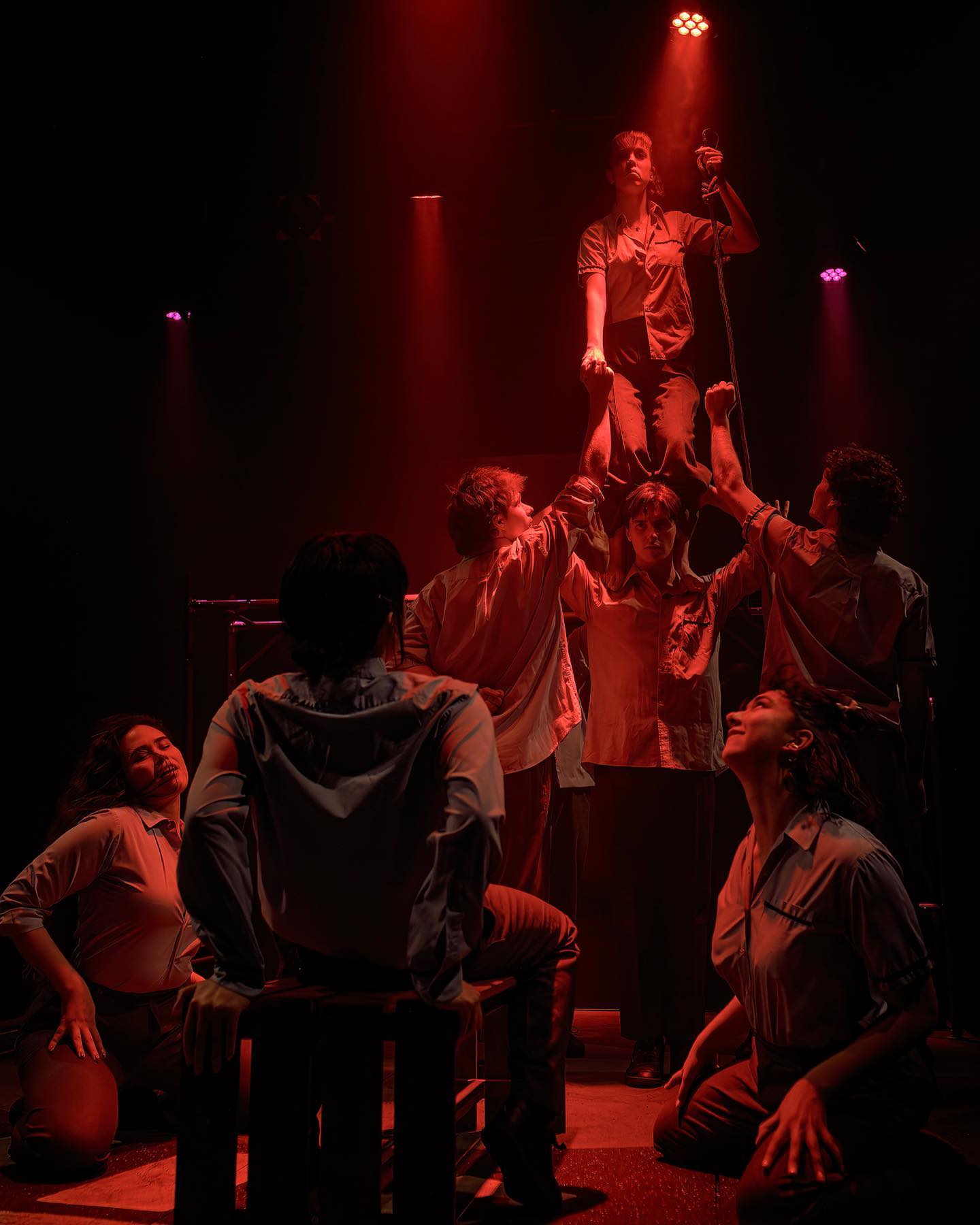
The bold and idealistic writing is brought to life by Sophia Bryant, whose direction is memorable for imbuing a valuable authenticity, that makes the audience receptive to these radically new portrayals of our young. Along with movement choreography by Emma Van Veen, the show is visually appealing, commendable for delivering much more than configurations of bodies in naturalistic conversational postures.

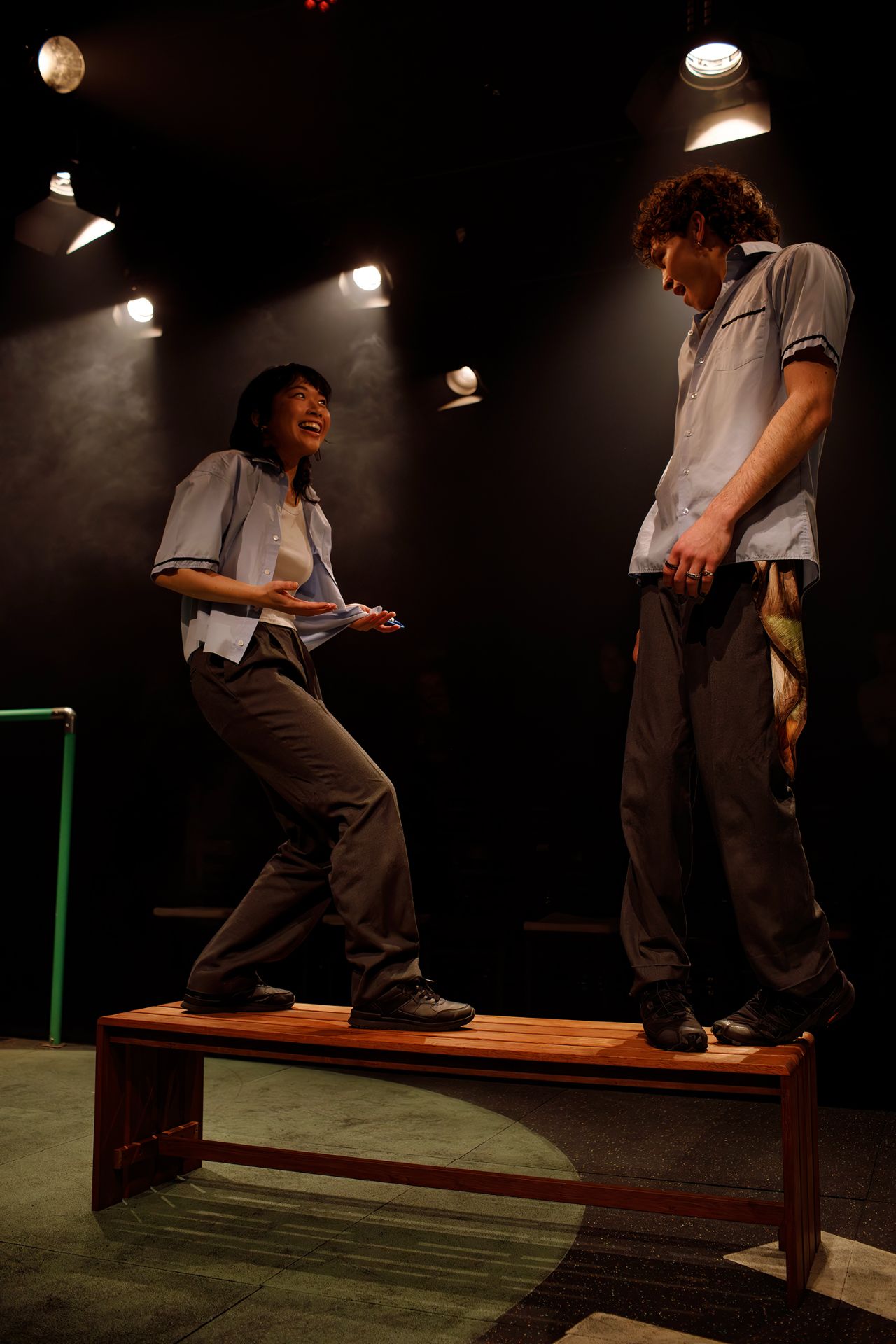
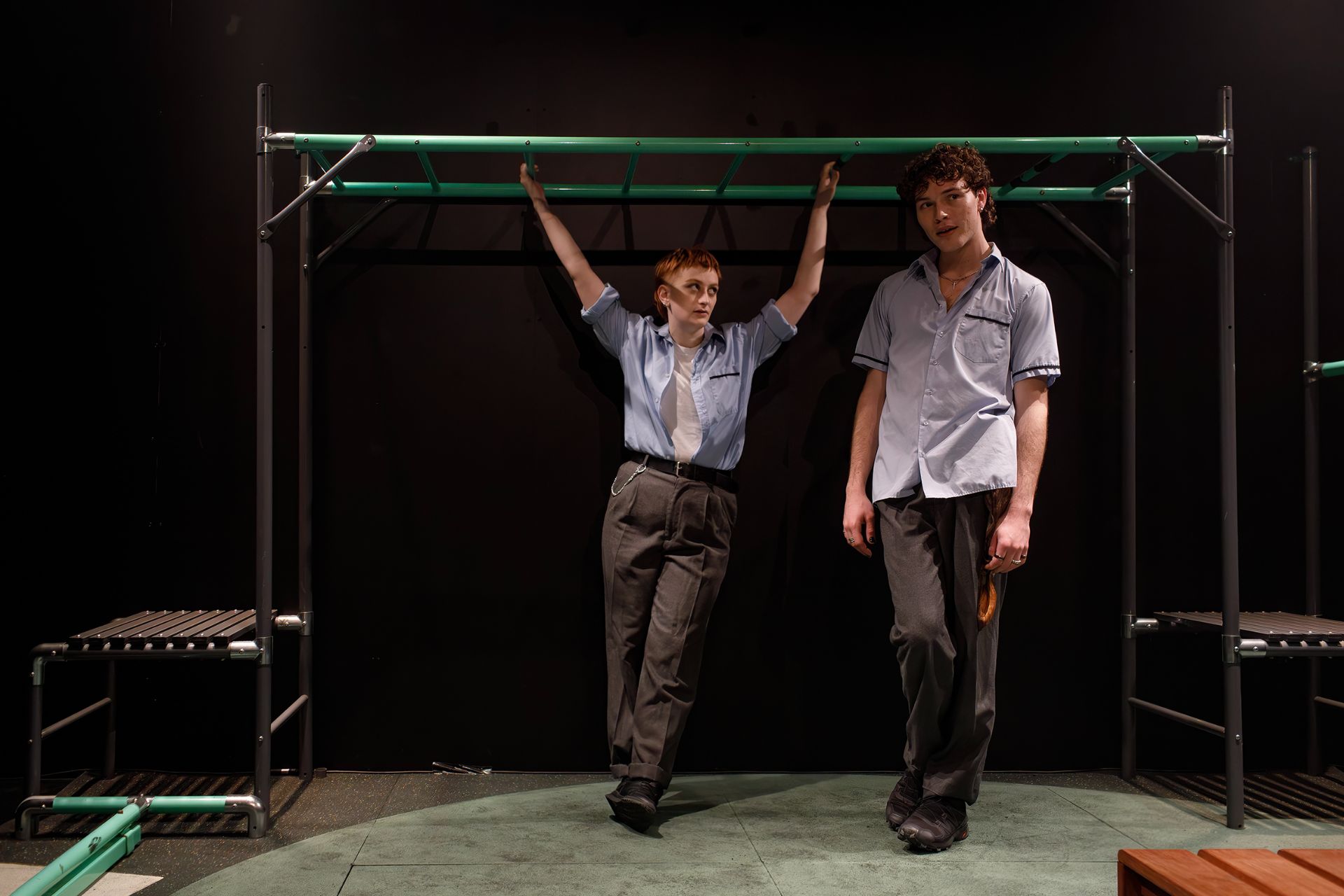
Set design by Benedict Janeczko-Taylor offers a theatrical rendition of the school playground, charming with its use of colour, and clever in its creation of spatial potential for performers. Janeczko-Taylor’s delightful work extends to costumes, with intricate details that make this staging feel simultaneously real and elevated. Thomas Doyle’s lights reveal an adventurous spirit, choosing to deliver fantastical imagery rather than something more lifelike, and therefore impressive for its ambitious artistry. Music by Christine Pan keeps us in tune with the frequencies of this generation, giving definition to how the staging wishes to conceive of the here and now.

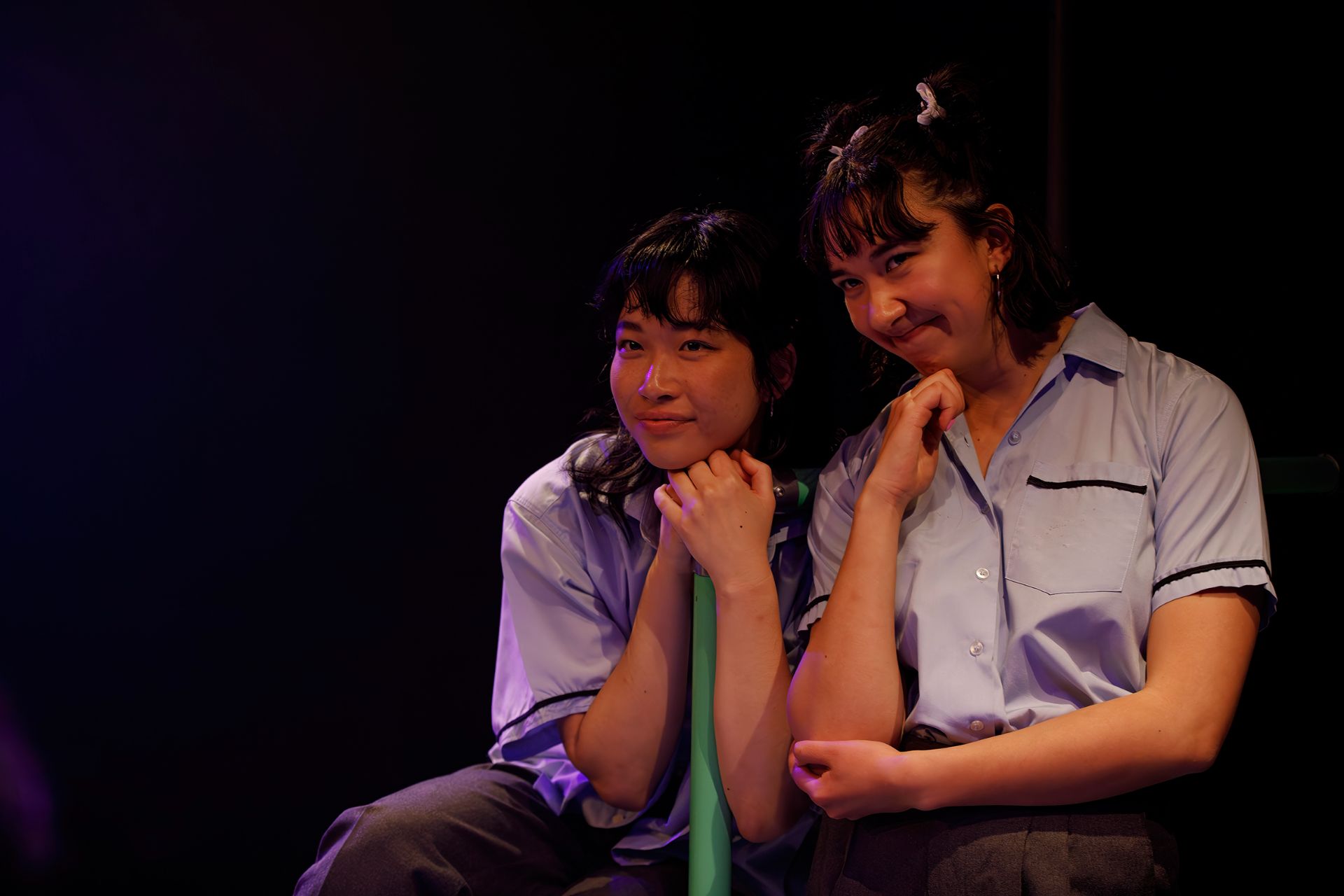
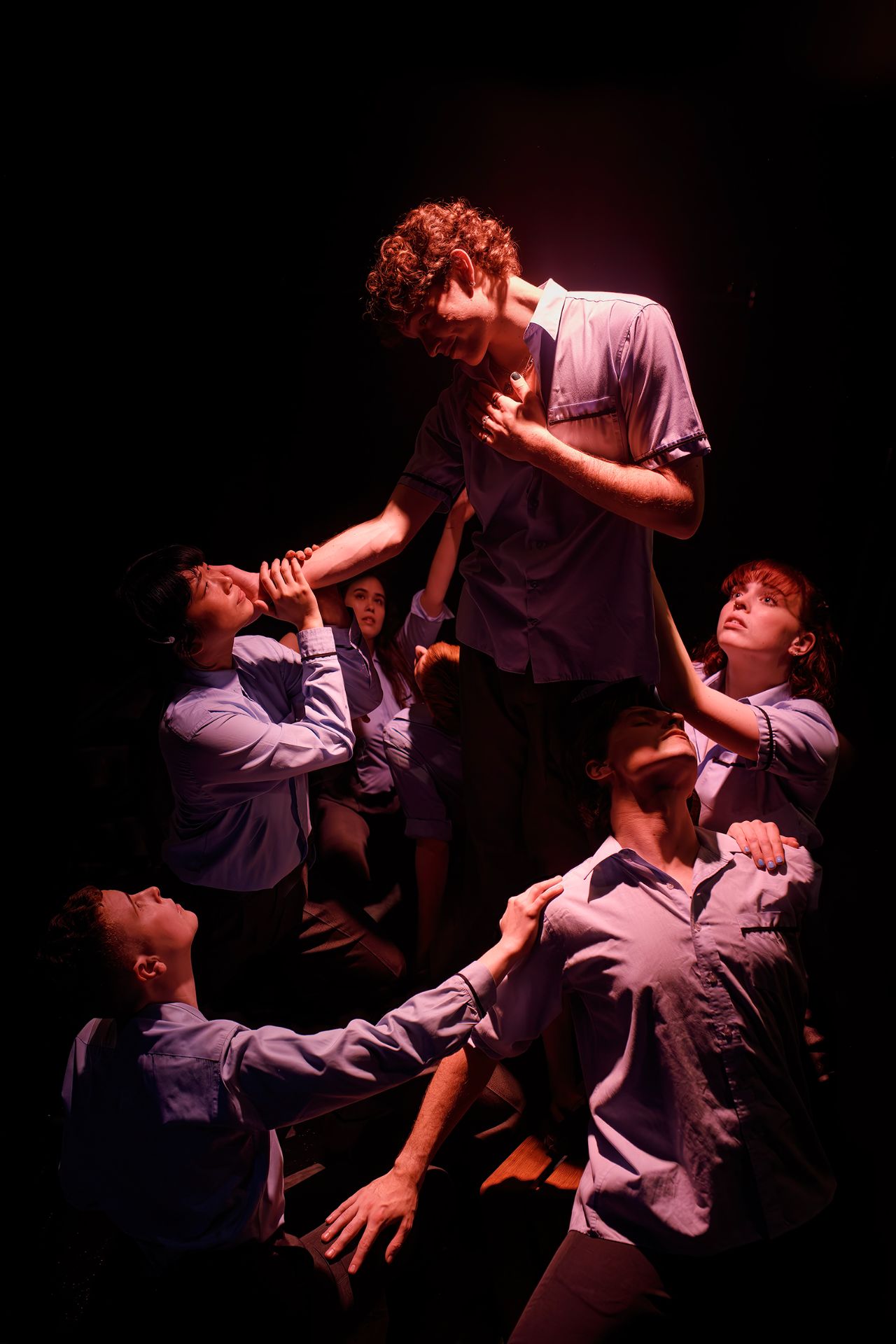
An ensemble of ten effervescent performers bring wonderful spirit and dedication to Dumb Kids, exceptional with the cohesion they have fostered so successfully. Every character is believable and likeable, in a play that resists taking sides. There is no us and them, no good people or bad people, just humans navigating one day at a time. The generosity embodied by the cast, allows for a certain utopic vision to make sense, so that we can begin to be convinced of a brighter future. When all the world turns queer, is when no group is allowed to dominate, and when no one is left outside.

www.kingsxtheatre.com | www.facebook.com/legittheatreco