Review: Dogged (Griffin Theatre Company)

Venue: SBW Stables Theatre (Darlinghurst NSW), Apr 30 – Jun 5, 2021
Playwrights: Andrea James, Catherine Ryan
Director: Declan Greene
Cast: Blazey Best, Sandy Greenwood, Anthony Yangoyan
Images by Brett Boardman

Theatre review
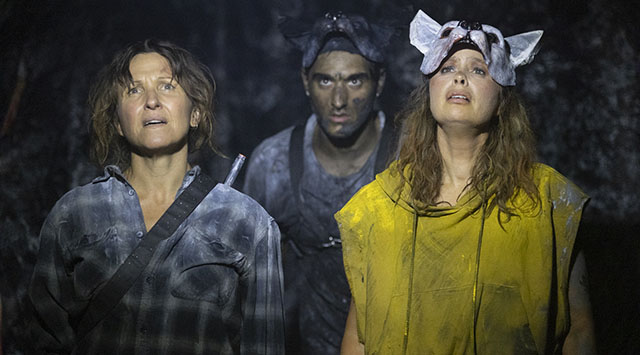
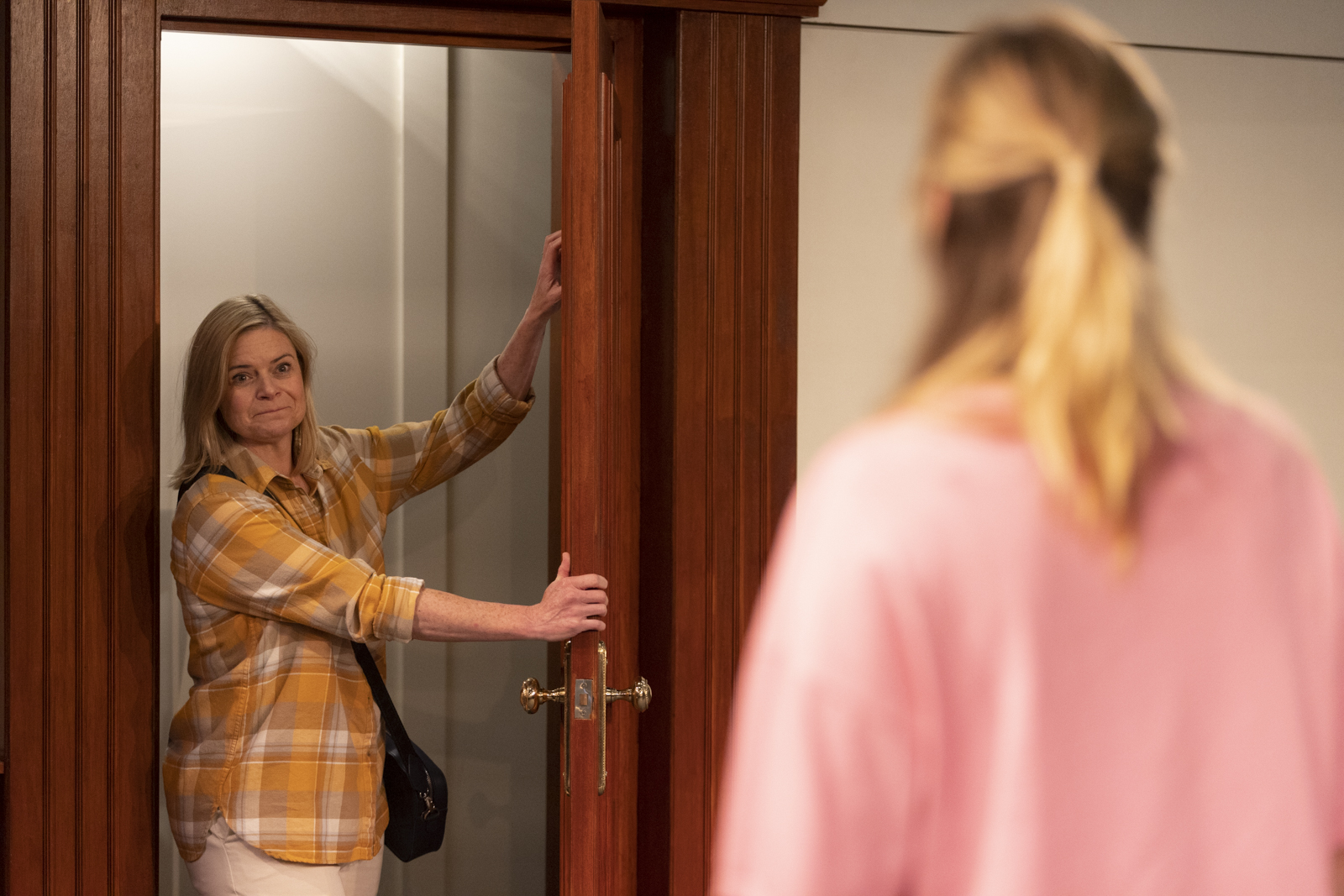
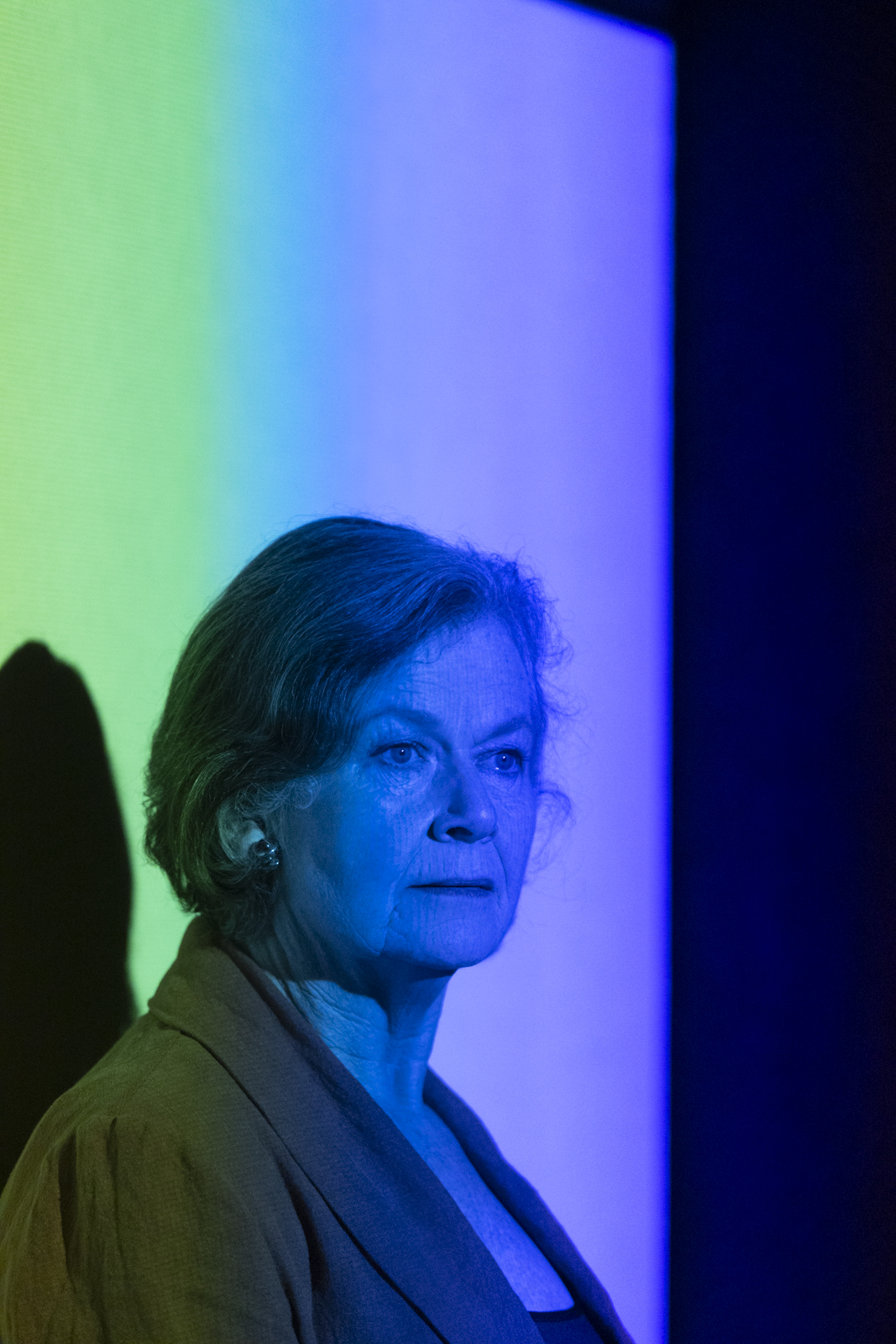
The story begins with a dingo in the lands of alpine Victoria, on Gunaikurnai country, looking for her babies. During her search, she encounters a dog and his human owner, a white woman hunter on the prowl for dogs in the wild, to collect their skin for profit. Dogged by Andrea James and Catherine Ryan, explores the broken relationship between modern humans and nature, as well as the difficult bonds between Indigenous Australians and their colonisers.

The 80-minute play is ambitious in scope, with a complex structure that reflects its creators’ desire to encapsulate many discussions being conducted by the wider community. In addition to topics pertaining to environmentalism and racism, Dogged touches on feminism and capitalism, for a work about injustice that cares to be vastly inclusive. Its approach however, is purely allegorical, sometimes obvious but mostly obtuse, which suggests that Dogged is likely to speak more intimately to those already invested in these ideas.

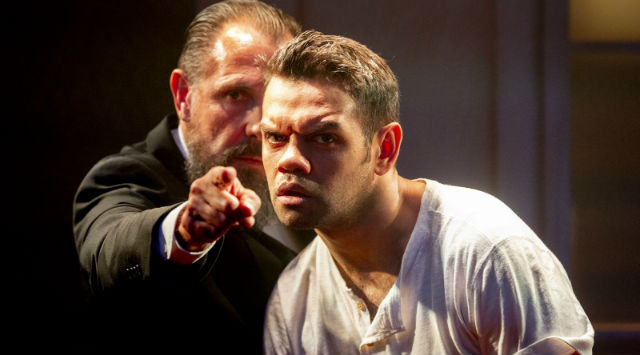
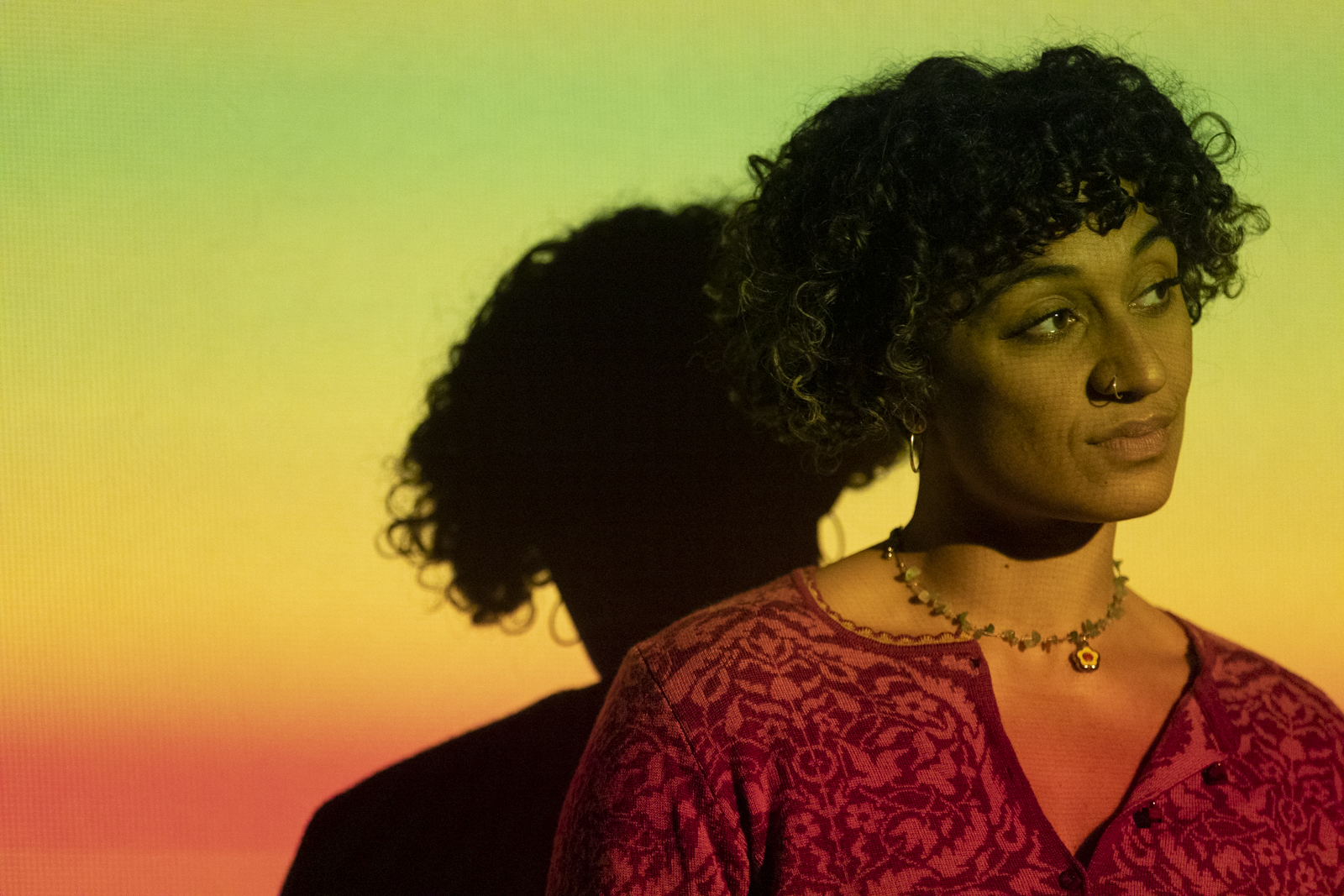
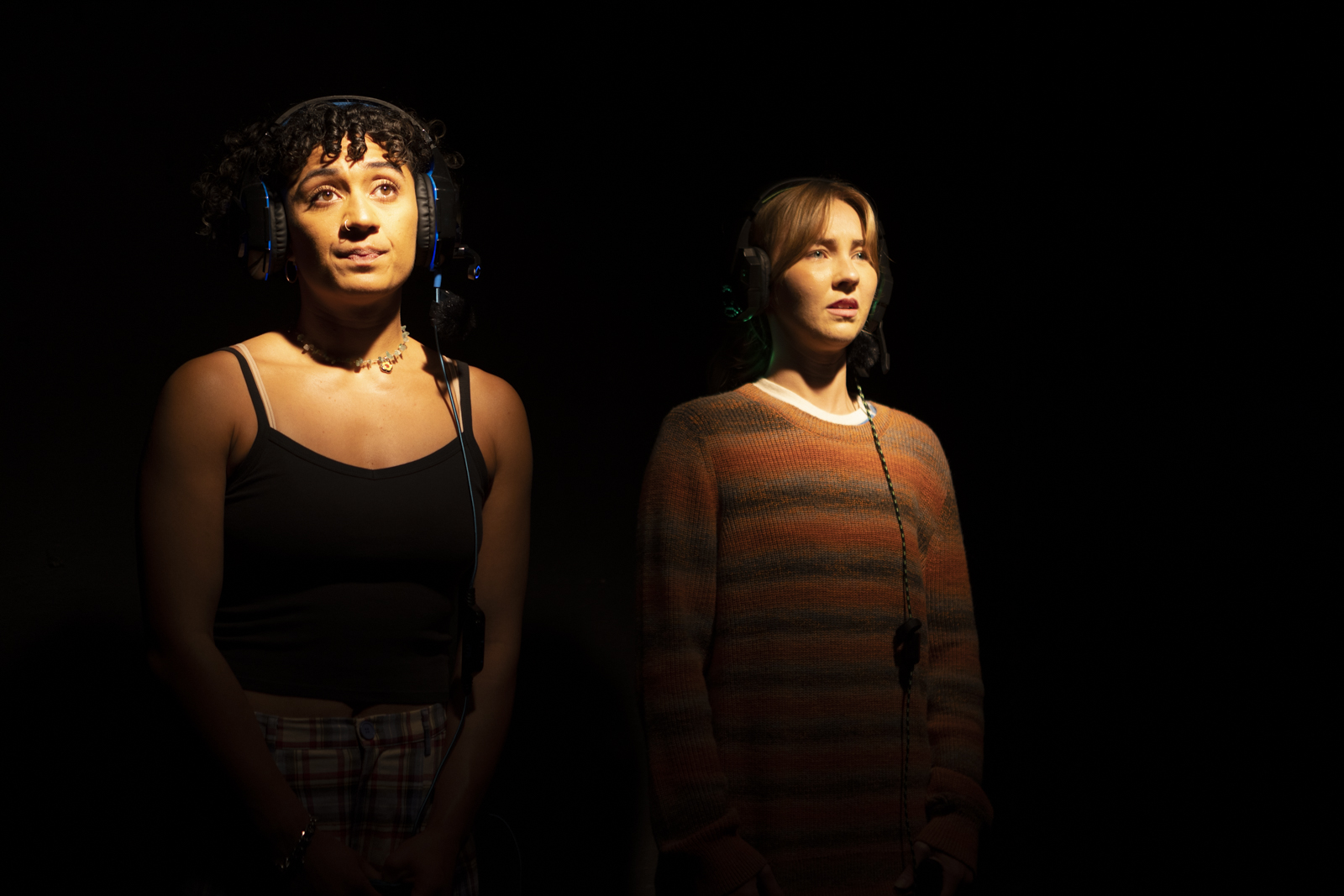
For those less initiated, the action-packed production incorporates energetic sequences, choreographed by Movement Director Kirk Page, that provide an exquisite dimension of visceral excitement to the narrative. Three extraordinary performers hold us captive, for this strange and sometimes bewildering tale of inter-species adventure. Sandy Greenwood is spectacular as Dingo, incredibly detailed with what she is able to convey between the lines, as a First Nations woman actor. We watch her as dingo and as human simultaneously, like a sort of transmorphic genius, illustrating the parallel plights of being Indigenous, of being female, and of being mother earth. Even though her main concern is the portrayal of desecration in its many forms, it is Greenwood’s defiant strength that really mesmerises. Also remarkable are the depths of emotion she summons at will, always replete with intensity, and flabbergasting in her authenticity.

Also impressive is Blazey Best who plays the unnamed human Woman, with a fierce mental concentration to accompany an excellent capacity for nuance, successfully preventing the hunter from devolving into a simple villain. Anthony Yangoyan does a marvellous impression of a dog, both physically and in attitude. The actor is completely believable playing canine in this fantastical thriller, with an endearing sprightliness that introduces a layer of tenderness to an often brutal landscape.

Director Declan Greene uses the writing’s complexity to deliver an exciting show, gripping on several levels. Dogged can be received as an intellectual piece, one that is highly critical of our reprehensible values, and confrontational in addressing our immorality. On the other hand, its dramatics are taut, with characters that interact deliciously, in the telling of a story whose stakes remain high from start to finish.

Design work on the production is inventively and skilfully implemented. An intricate set by Renée Mulder and Peter Waples-Crowe, guides our imagination into dark bushlands, mysterious and scary as though stepping into a living nightmare. Mulder’s costumes convince us of the roughness of these creatures’ existence, and the danger that constantly surrounds them. Lights by Verity Hampson meaningfully amplify every resonance of the text, bringing focus to all the profound messages that fundamentally anchor the show. Along with sound and music by Steve Toulmin, mood transformations in Dogged are accurately and intuitively accomplished, and the way Hampson and Toulmin collaborate to keep the staging unpredictable, is truly praiseworthy.

The colonisation of this land must not be seen as anything but cruel, unjust and inhumane. Commencing with European invasions in the 18th Century, to all the subsequent waves of migration, the incremental and devastating dispossession that our First Nations have had to suffer, is unforgivable. Like the destruction on nature, that modern technology, industrialism and commerce, have conspired to enact, we have arrived at a point of apocalyptic discombobulation, where we have no choice but to better understand the impact of many of those sins, past and ongoing.

Dingo tells Woman to “fuck off!” but one wonders if we are already in too deep, and if the idealistic wish for a simple reversion to a historic purity, can ever be possible. So much of the damage has been permanent. There needs to be a rebuild, as though from ashes, a rebirth that centres all the reparations that have to be made. If the moment of reckoning does not take place today, we are only waiting for things to get worse, before the dreaded inevitability happens.

www.griffintheatre.com.au | www.forcemajeure.com.au

Review: Is There Something Wrong With That Lady? (Griffin Theatre Company)

Venue: SBW Stables Theatre (Darlinghurst NSW), Apr 13 – 24, 2021
Playwright: Debra Oswald
Director: Lee Lewis
Cast: Debra Oswald
Images by Brett Boardman

Theatre review
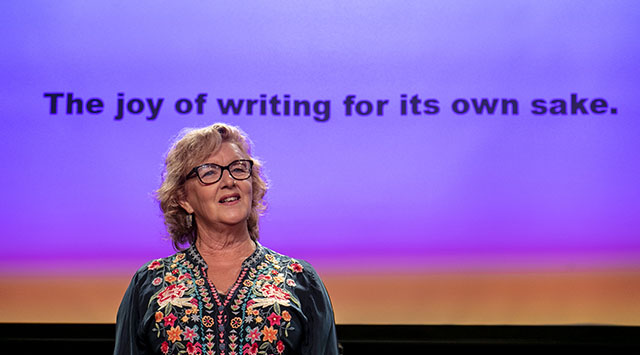
Debra Oswald is a writer who has experienced great successes, but the periods of disappointment in between, are long drawn out and much too frequent. Like most artists, Oswald just keeps persisting, which is probably why she names her autobiographical one-person play, Is there Something Wrong with that Lady? The answer of course is that, it is entirely normal that artists in this country go through extended stints of neglect and even humiliation. In fact it may seem that artists do not require encouragement to be, for we continue to thrive even as conditions worsen in this climate of inescapable economic rationalism. One might be tempted to go so far as to say, that to be an artist in Australia, you will have to be born this way, and a beneficiary of some twisted curse perhaps.

Oswald is unstoppable. She keeps churning out books, plays and teleplays, like her life depends on them, or more to the point, like she has something to say. In her 80-minute solo effort, Oswald is charming, brimming with humour, always affable and delightful. A true blue Australian, she never takes herself too seriously, but it becomes clear that what she stands for, is something worth fighting for. Embracing creatives like Oswald, is crucial in dismantling the old boys club that runs so much of this country. Elevating women of a certain age, will redefine the values we hold as a nation. At the very least, as exemplified by Oswald’s play, we will learn that a person’s worth is not to be measured only by money, but by their imagination, their resilience, and most of all, their capacity to help communities connect.

Lee Lewis’ direction of the work is fairly minimal, demonstrating a sense of confidence that allows the staging to place emphasis completely on the physical presence of Oswald herself. There are minor enhancements in terms of music by Jessica Dunn and lights by Ben Brockman, but it is the inordinate clarity with which we receive the writer’s words that is the most enchanting. Although not the most natural of performers, Oswald is a vibrant personality who holds our attention effortlessly. Her piece may benefit from a slight edit, if only to accommodate our twenty-first century attention span.

Artists work to bring cohesion to society, whether intentional or not. Oswald is a storyteller of the purest kind. Her impulse is to share with the world, the characters and narratives that come through her, as though a sacred duty, so that we can be captivated as groups, to find consensus, instead of thinking incessantly about the divisions in-between. If we understand the importance of finding ways to conceive of the world beyond parameters of money and power, we will understand that those in public office and in private corporations, are not likely to be our answer. Art will set us free, terrifying as it may be.

www.griffintheatre.com.au

Review: Jali (Griffin Theatre Company)

Venue: SBW Stables Theatre (Darlinghurst NSW), Mar 16 – 27, 2021
Playwright: Oliver Twist
Director: Erin Taylor
Cast: Oliver Twist
Images by Estelle Yoon

Theatre review
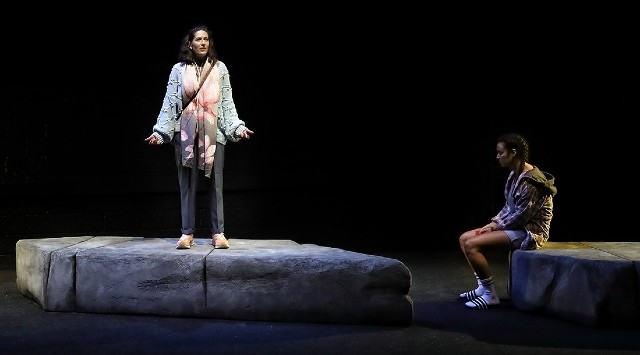
There is an unmistakeable irony to the artist choosing for himself, the name Oliver Twist. Unlike Dickens’ famed character, this Australian Twist does not for a moment, ask for sympathy, even though his experiences as a child refugee were often abhorrent and harrowing. In the hour-long one-person show Jali, writer and performer Twist charts his difficult journey from Rwanda to Ipswich, Queensland, not as a piece of overwrought melodrama, but with an exquisite scintillating humour. To our “first-world” sensibilities, this is perhaps a surprising turn of events, having become used to stories of this nature being framed as a sort of “tragi-porn”, offering perverse catharsis, for viewers who have done more contributing to the hardship of asylum seekers, than to actually helping them.

In Jali, we see a protagonist emerge victorious, in spite of the obstacles we put in his way. Twist’s writing alternates between a sublime sense of the poetic, and a disarming realism derived from his burgeoning career as a stand-up comic. Moving back and forth in time, we observe Twist’s personal growth over the years, whilst gaining an understanding of trauma, and memories of traumatic events, as omnipresent forces, carved into our beings, and playing out their effects, even when we are unconscious of their existence. Twist is on a joyful trajectory in Jali, but a bright future does not mean a forgotten past.

As performer, Twist is full of charm, and remarkably at ease with his audience. Consistently engaged and present, he holds our attention effortlessly, able to gain his audience’s trust from the outset. Bringing a reassuring warmth to his stories, we feel securely cradled, as we bear witness to these first-hand accounts, of information we usually obtain, reliably and otherwise, from a deteriorating news media.

Jali however, is rarely a dark experience. Twist is irrepressibly humorous, with wonderful timing and an unusual deadpan approach, that somehow manages to persuade us of an indomitable strength within the human spirit. It is indeed admirable, when people can overcome adversities of this magnitude, but more important, is to allow these anecdotes to teach us, not only of our resilience, but that we need to prevent these horrors from occurring to anyone, anywhere.

Erin Taylor’s direction of the work capitalises on Twist’s formidable likeability. She ensures that we perceive vulnerability, without any need for humiliation, and showcases her subject’s vital optimism in a manner that proves irresistible. Taylor offers up a vision of a new Australia, or maybe an everchanging Australia, that we all feel invested in, and that we want to do better for.

Production and lighting design are gently harnessed by Kelsey Lee, to enhance the show’s intimate qualities. There is a quietness to the atmosphere that emphasises the gravity of issues being discussed, and that simultaneously allows the performer’s natural vibrancy to shine. In a similarly sensitive fashion, Chrysoulla Markoulli’s precisely measured music helps punctuate both the comedy and the drama, whilst assisting our imaginations to travel the continents along with our storyteller.

All the borders that we build can be thought of as arbitrary. No human is born to be separate from earth, yet decisions have been made to deprive individuals of access to infinite spaces, in the belief that certain lands belong to certain people, and that some are simply to do without. In truth, we can only think of ourselves as custodians of places, and to think that we own anything, that the earth is not entirely autonomous, is pure arrogance. There is something in us that wishes to hoard, and in the process cause dispossession to other people. Some might argue that that is our nature. If that is indeed the case, it might be worthwhile to learn to act against our nature, if we truly care about discerning right from wrong.

www.griffintheatre.com.au

Review: Green Park (Griffin Theatre Company)

Venue: Green Park (Darlinghurst NSW), Feb 5 – Mar 6, 2021
Playwright: Elias Jamieson Brown
Director: Declan Greene
Cast: Joseph Althouse, Steve Le Marquand
Images by Brett Boardman

Theatre review
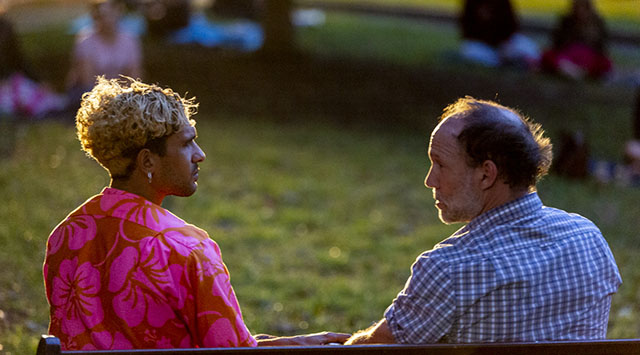
Two men meet in a park, after having connected on a hook up app. Edden is young, out and Black, and Warren is middle-aged, closeted and White. In Elias Jamieson Brown’s Green Park, it is the sexual dalliance that brings different worlds together. Juxtaposing the most intimate of human acts against the severe divisions of twenty-first century life, the two characters engage in a constant tug-of-war, as we meditate on hopes of camaraderie and unity. Sex is by nature a binding force, yet it is able to reveal so poignantly, the fractures that exist between individuals.

It is a passionate and deeply truthful piece of writing from Jamieson Brown. His tragically flawed personalities offer insight into the ills of the day, shedding light on what we lack as a society, including the unfinished business of what many may consider the fulfilled destiny of the twentieth-century gay movement. We can now marry people of our own sex, but as we see in Green Park, so much harm continues to be inflicted on those unable to adhere to the straight and narrow. There is a lot that is painful and profound in the work, but the clandestine quality of this illicit and salacious encounter, makes for a rivetingly enjoyable show.

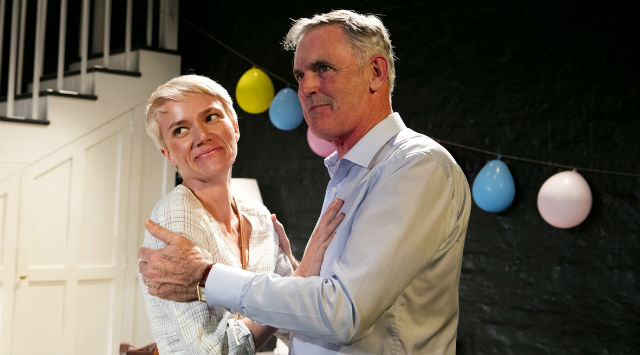
Directed by Declan Greene, who places the action inside the actual Green Park of Darlinghurst, with all walls of a usual theatrical space removed, insisting that the audience sees not only the performers, but also the historically significant location that lends its name to the play. Unintended supporting actors surround the action, offering real life noise that make us look over our shoulders, as we sense the omnipresent threat of violence that queer people must live with, everyday of our lives. Greene imbues an uncanny realism that draws us in, for both the theatrical moment unfolding, and the palpable non-fiction concerns to which his work refers.

Actor Joseph Althouse is remarkably convincing as the erratic Edden, powerfully embodying the risky existence of a young lost soul. He introduces a resonant defiance to his nuanced depiction of a sexual masochist, confronting us with the disturbing notion of a Black man roaming the streets (and the internet), asking to be dominated, albeit in his own terms. Steve Le Marquand skillfully turns a sad cliché of a man into someone whose story proves to be surprisingly moving. It is a complicated range of emotions that the role requires, and Le Marquand’s deftness at bringing clear articulation to each of Warren’s interior states, is very impressive. Also laudable is the degree to which the pair is in sync with one another. They move through the show’s many tonal fluctuations in tight unison, always keeping in mutual rhythm, no matter how the narrative alters its trajectory.

It is noteworthy that performances are enhanced by the provision of headphones, that prevent us from losing any word of dialogue to the open air conditions. David Bergman’s sound design is effective in manufacturing a sense of the natural to accompany the outdoors context of the production, and equally potent when dialing up the theatrical, for sequences that involve greater sensory elevation.

Edden and Warren think all they want is some no-strings sex, but it is evident that to compartmentalise sexuality, to separate it from the rest of our lives, is not as simple as it may seem. We are made from sex, and we continue to live in cultures that are always partially, but fundamentally, defined by sex. It creates conventions, tells us what is acceptable and what is not; it upholds hierarchies, aggrandising certain people and oppressing others. Both men in Green Park suffer as a result of their libidinal impulses. They are punished by others, as well as by themselves, for something that occurs naturally between consenting adults. The play Green Park, like its namesake on which the Gay and Lesbian Holocaust Memorial stands, is a reminder that so much of what underpins our ways of lives, is dreadfully unkind. Hence, no matter which stripe of the rainbow one aligns with, complacency is not quite yet, a luxury any of us can afford.

www.griffintheatre.com.au

Review: Superheroes (Griffin Theatre Company)

Venue: Seymour Centre (Chippendale NSW), Sep 25 – Oct 31, 2020
Playwright: Mark Rogers
Director: Shari Sebbens
Cast: Gemma Bird Matheson, Claire Lovering, Aleks Mikic
Images by Prudence Upton

Theatre review
Superheroes by Mark Rogers tells the stories of two women at opposite ends of the world; Jana is near Sarajevo, and Emily is near Sydney. Their lives are different as can be, but on this one stage, we cannot help but draw parallels, such is the nature of being human. We create meaning from things we observe, and make distinct each personality whom we encounter, focussing quite naturally on how they are separate, but in this strange juxtaposition of experiences within Rogers’ text, we are additionally compelled to find ways to see ourselves as a unified species. We examine microcosms in war-torn Bosnia-Herzegovina and a more privileged Australia, finding ways to understand the people that we are, wondering if vastly different environments mean that we are necessarily disparate, or essentially one and the same.

Rogers’ scintillating writing is brought to life by Shari Sebbens’ dynamic and vigorous direction. The show brims with passion, offering emotional intensity from start to end. Claire Lovering is exquisite as Jana, delivering a deeply considered and precise portrayal, of a woman unable to emerge from the trauma and conflict that has shaped her community. It is an unequivocally profound performance by Lovering. Emily is played by Gemma Bird Matheson, memorable for her exuberance and an enjoyable sense of rawness she introduces to the production. It is an extremely likeable presence that she brings. Aleks Mikic takes on separate roles as male counterparts to the leads, succeeding on both counts, with his uncanny ability to convey authenticity whilst dispensing generous measures of natural charm.

Also noteworthy is lighting design by Verity Hampson, efficient yet refined as it helps us navigate movements in time. Production designer Renée Mulder exercises restrained elegance for her work on costumes and set. David Bergman’s sound and music are dramatic but unobtrusive, surreptitiously manipulating our emotional responses as the plot unfolds.

Even in the most ordinary of lives, courage is paramount. Even the most cowardly, have known moments of bravery in order that they may survive. In these challenging times of 2020, we are startled to realise the strength and resilience each can possess. The most noble of us however, have the capacity not only to stay afloat, but to keep making the best choices for the sake of all, when self-preservation seems the order of the day.

www.griffintheatre.com.au

Review: Family Values (Griffin Theatre Company)

Venue: SBW Stables Theatre (Kings Cross NSW), Jan 17 – Mar 7, 2020
Playwright: David Williamson
Director: Lee Lewis
Cast: Belinda Giblin, Danielle King, Andrew McFarlane, Jamie Oxenbould, Ella Prince, Bishanyia Vincent, Sabryna Walters
Images by Brett Boardman
Theatre review
It is indeed appropriate that white people in Australia should have serious discussions among themselves about immigration, and other matters that require them to challenge their own privileged positions. They are the ones in power, and so much depends on their ability to make concessions in order that all our lives can become more equitable. In David Williamson’s Family Values, we watch rich white people fighting about the right thing to do, ostensibly about Australia’s refugee intake and the worldwide asylum seeker problem, but in fact, the argument that happens in their dining room is much simpler.

The Collins make a lot of noise in Family Values, each of them fired individually by existential angst, but what should have been philosophical and moral debates are embarrassingly reduced to a basic issue of whether seriously ill people should be allowed to stay in Australia, while their refugee status is being considered. The play distracts us with a lot of hullabaloo, misleading us into thinking that privileged North Shore types are actually having broader conversations about immigration and the future of this country, when they are only actually fighting over the destiny of one very sick woman. Needless to say, how we regard people who require serious medical attention, should never be a matter of contention at all, no matter where they come from.

Director Lee Lewis makes sure everyone on stage gets really riled up, and the drama is often gripping over the 90 or so minutes; people are fighting tooth and nail, and there is an inherent pleasure in watching rich people tear each other apart from the sidelines. Dynamics between personalities may be manufactured but there is no denying the intensity of conflict that takes place. The more unrealistic the characters, the more extravagant the performances, which is understandable from the perspective of actors who wish to create something out of nothing.

Jamie Oxenbould and Ella Prince make very bold choices that are frequently jarring, but the alternative of attempting naturalism would clearly make for extremely flaccid interpretations. The one person of colour waiting to be rescued is played by Sabryna Walters, who as Saba, uses her monologue in the second half to deliver a moment of genuine theatrical magic. Her performance of pleading for mercy is powerful and wonderfully emotional, a real treat that reminds us, if only for a few minutes, what we must insist of our artists.

It does not surprise anyone, spoiler alert, that the father of the household Roger eventually steps up and does the right thing, and of course gets celebrated for it, as though he is the true hero in this asinine effort. Powerful people seem to only do good things when they are rewarded disproportionately. Even when innocent lives are at stake, there has to be a profit motive to spur action, and worse, they see no shame in that. Roger Collins wants to be honoured and revered for following the rules set up by those who were just like him, that had come before him. We need to identify the damage that they cause, and establish new ways to get rid of them.

www.griffintheatre.com.au

Review: First Love Is The Revolution (Griffin Theatre Company)

Venue: SBW Stables Theatre (Kings Cross NSW), Nov 1 – Dec 14, 2019
Playwright: Rita Kalnejais
Director: Lee Lewis
Cast: Amy Hack, Rebecca Massey, Bardiya McKinnon, Sarah Meacham, Guy Simon, Matthew Whittet
Images by Brett Boardman

Theatre review
Basti and Rdeca meet one momentous night, and quickly fall for each other. What makes Rita Kalnejais’ rom-com First Love Is The Revolution unusual, is that its female lead is a fox, literally. Kalnejais’ play takes the star-crossed lovers trope to new heights of absurdity, for a story about nature and our interactions with it. The young rebels must walk away from their respective backgrounds, to establish for themselves entirely new ways of being, should they wish to find happiness. The writing is imaginative and daring, extremely mischievous in its flirtations with notions of bestiality, but delicate sensibilities can rest assured that there is never any doubt about sexual consent from any of its characters.

Passionate and joyous, the zesty production is directed by Lee Lewis, who leaves no stone unturned, in her explorations of this idiosyncratic text, to deliver an experience full of tension and intrigue. Funny, intelligent and highly captivating, First Love Is The Revolution is as entertaining as it is meaningful. Designer Ella Butler’s work on set and costumes is remarkable for its exuberance and refreshing use of colour. Lights by Trent Suidgeest, along with music by David Bergman, are memorable for their flamboyant flourishes, appropriately and enjoyably exaggerated in intensified moments of romance as well as comedy.

The luminescent Sarah Meacham plays Rdeca, with exceptional verve and faultless instinct; an astounding talent able to convey thorough authenticity for even the most bizarre, in her portrayal of an adolescent fox. Fourteen year-old Basti too is made very likeable by Bardiya McKinnon, an intricate performer who brings depth and conviction to the role. Rebecca Massey is powerful as the fox’s mother Cochineal, deftly oscillating between silly and serious, convincing from start to end. Amy Hack and Matthew Whittet each play three roles, all of them deeply amusing, with Whittet’s surprisingly poignant turn as Basti’s father Simon leaving a particularly strong impression. A magnetic Guy Simon alternates between fox and hound in two separate parts, wonderfully humorous in both, but terrifying as the bloodthirsty dog Rovis.

When a child grows up to become their own person, apron strings should have to be cut, before a true self can be said to have actualised. Young love is often a precipitating factor that urges one to examine one’s background, in a process that involves rethinking and re-contextualising of circumstances, to attain a more individualised world view. Basti and Rdeca need each other, in order that a destination can be identified for their inevitable departure from home. Growth is painful at any age, but stagnation, although comfortable at times, is a fate worse than death.

www.griffintheatre.com.au

Review: Splinter (Griffin Theatre Company)

Venue: SBW Stables Theatre (Kings Cross NSW), Sep 6 – Oct 12, 2019
Playwright: Hilary Bell
Director: Lee Lewis
Cast: Lucy Bell, Simon Gleeson
Images by Brett Boardman

Theatre review
Five-year-old Laura has just returned home, after a nine-month disappearance. Her parents are understandably traumatised, but relieved to have their nightmare come to an end. In Hilary Bell’s Splinter however, we see that the family’s problems do not vanish quite so easily, as questions arise about this sudden reunion. There are only two actors in Bell’s play, with little Lauren an apparition that we all have to conjure up with imagination, which proves a fascinating device for something that positions itself within the genre of psychological thriller. The ideas in Splinter are engaging, but it is arguable if its dialogue and plot structure are always effective in delivering the tension so crucial to this form of storytelling.

The show begins innocuously, perhaps even drearily, as a conventional family drama that overloads the stage with saccharine sentimentality. It takes a considerable while before director Lee Lewis introduces suspense elements that let the entertainment begin, by which time our boredom with the daytime television style of presentation had almost completely taken hold. At just over an hour long, there is little opportunity for us to settle sufficiently into the real substance of the piece, but the intrigue that does eventually manifest, is admittedly chilling.

The late transformation in atmosphere is cleverly manufactured by creatives including Alyx Dennison, whose sound design confirms the gear switch, giving us necessary cues to swiftly change focus in our interpretation of the narrative. Video projections by Mic Gruchy and lights by Benjamin Brockman become increasingly theatrical, thus guiding our minds into more pronounced spaces of fantasy and delusion.

Lucy Bell and Simon Gleeson perform the piece with extraordinary conviction, both bringing admirable intensity to a tale involving unimaginable suffering. Gleeson has the additional dimension of paranoia to help enrich his character, which he utilises compellingly, for several powerful moments of bloodcurdling dread. Bell is given less extravagant material, but nonetheless offers a reliable, self-possessed counterpoint that prevents Splinter from veering away from its central truthfulness.

Genre is infinitely more prevalent in film, because the form deals almost exclusively in illusion, and is therefore perfect for stories that require drastic alterations to reality. Theatre that venture into those territories must be praised accordingly, for even daring to test the possibilities of the live stage. There is a supernatural quality to Splinter that is almost inevitable, in its depiction of psychological disturbance. In those moments, the audience participates in seeing things that are not present, almost like artists who have the Midas touch, able to make something out of nothing, and in the process, giving to their communities a kind of magic that brings elevation to us all.

www.griffintheatre.com.au

Review: City Of Gold (Griffin Theatre Co / Queensland Theatre Co)

Venue: SBW Stables Theatre (Kings Cross NSW), Jul 26 – Aug 31, 2019
Playwright: Meyne Wyatt
Director: Isaac Drandic
Cast: Jeremy Ambrum, Mathew Cooper, Maitland Schnaars, Shari Sebbens, Anthony Standish, Christopher Stollery, Meyne Wyatt
Images by Brett Boardman

Theatre review
Upon the death of his father, Breythe walks off the set of a television commercial, and returns to Kalgoorlie to be with family. The medical establishment’s neglectful treatment of his father sparks a reaction that sees Breythe and his siblings wrestle with difficult discussions, about surviving racism as Indigenous Australians. Meyne Wyatt’s City Of Gold moves between city and bush, to examine one young man’s fight on colonised land. It is a story about the deep prejudice, and of surreptitious genocide, that pervade this country, inescapable no matter where Breythe may go.

Wyatt’s writing is passionate and urgent, able to entertain while it gradually builds intensity. The fury that it contains is an invaluable expression, often hidden away from so-called civilised, Western modes of exchange, where the oppressed must communicate with polite subservience, only to be routinely ignored. Directed by Isaac Drandic, the production pulls no punches, to make a powerful statement about the woeful state of race relations all across this land. Notable work on sound design by Tony Brumpton adds richness to the piece, deftly emphasising the complex emotional dimensions that City Of Gold aims to convey.

As leading man, Wyatt is a compelling presence, entirely persuasive with all that he brings to the stage. Charming in humorous sections, but it is in explicit moments of political confrontation that he absolutely devastates. Wyatt’s monologue at the beginning of Act 2 ranks as one of the most important theatrical moments in our stage history. His siblings are played by Shari Sebbens and Mathew Cooper, both actors captivating with their sincere portrayals, able to demonstrate a resolute dignity alongside their characters’ experiences of adversity and injustice. We are moved by the performances of Jeremy Ambrum and Maitaland Schnaars, who share an unexpected delicacy in their divergent depictions of Aboriginal identities. Dramatic flourishes by Anthony Standish and Christopher Stollery help to provide tension, as a series of unsavoury types who exemplify so much of what is wrong with our societies.

It is the most generous of gestures when our Indigenous artists choose to embody the trauma and pain of their communities. They put themselves through a state of virtual torment, using bodies that know little difference between real and make believe, so that a predominantly white audience can understand the harm that is being inflicted upon legitimate owners of this land. City Of Gold is an extraordinarily difficult story, one that its storytellers have seen, heard and lived for generations. It is regrettable that the responsibility falls upon those who suffer, to educate the rest of us, but there is nothing more profound than the lessons being dispensed here.

/www.griffintheatre.com.au | /www.queenslandtheatre.com.au

Review: Glittery Clittery: A Consensual Party (Griffin Theatre Co / The Furies)

Venue: SBW Stables Theatre (Kings Cross NSW), Jul 8 – 20, 2019
Playwright: Fringe Wives Club (Victoria Falconer, Rowena Hutson, Tessa Waters)
Director: Clare Bartholomew
Cast: Laura Frew, Rowena Hutson, Tessa Waters
Images by Kate Pardey

Theatre review
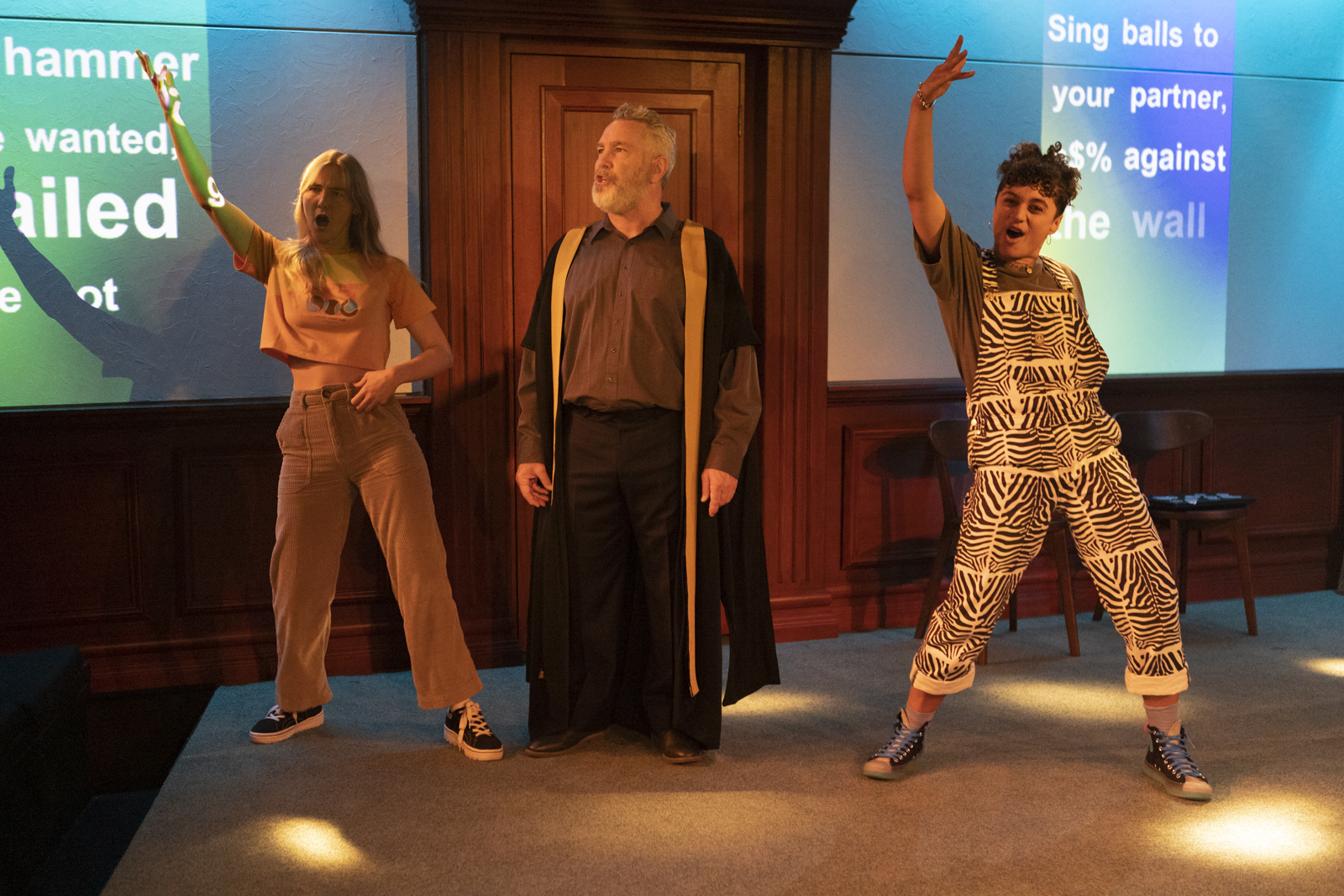
It is a rowdy cabaret with three women in sequinned jumpsuits, very excited by feminism, and thrilled at the prospect of preaching to the converted. Christened Glittery Clittery: A Consensual Party, the show is perfectly suited to our current climate of placing centre stage, all things woke and womanly. Devised by Victoria Falconer, Rowena Hutson and Tessa Waters, collectively known as the Fringe Wives Club, the work consists of relentlessly amusing songs, and witty repartee that make for an enjoyable hour. It has a coalescing power, through its comical observations and vivacious representations, that makes us feel like a tribal audience, united in laughter against the patriarchy.

Directed by Clare Bartholomew, the cabaret presentation is intensely energetic, if slightly frenetic and unfocused in parts. Music is one of its indubitable strengths, although sound engineering could be improved to exploit more fully, the rousing pop potentials of the backing tracks. The performers bring a palpable warmth to the space, perhaps too polite in their approach, but all three are earnest personalities who insist on our adoration; Hutson is particularly likeable when temporarily assuming the scintillating part, “Lagoon of Mystery”.

Glittery Clittery is a sweaty, joyous mess; its text accurately expresses the thoughts and experiences of modern women everywhere in the Western world, but more importantly, the bawdy vigour with which its characters conduct themselves, is a marvellous exemplification of a new feminist spirit that we can utilise in conjuring up new feminine identities. This “clitterati” is unlikely to be anything close to what our grandparents had envisioned, and that is a sure sign of the progress that is under way for us all.

/www.facebook.com/fringewivesclub