Review: Switzerland (Ensemble Theatre)

Venue: Ensemble Theatre (Kirribilli NSW), 3 May – 8 Jun, 2024
Playwright: Joanna Murray-Smith
Director: Shaun Rennie
Cast: Laurence Boxhall, Toni Scanlan
Images by Brett Boardman

Theatre review
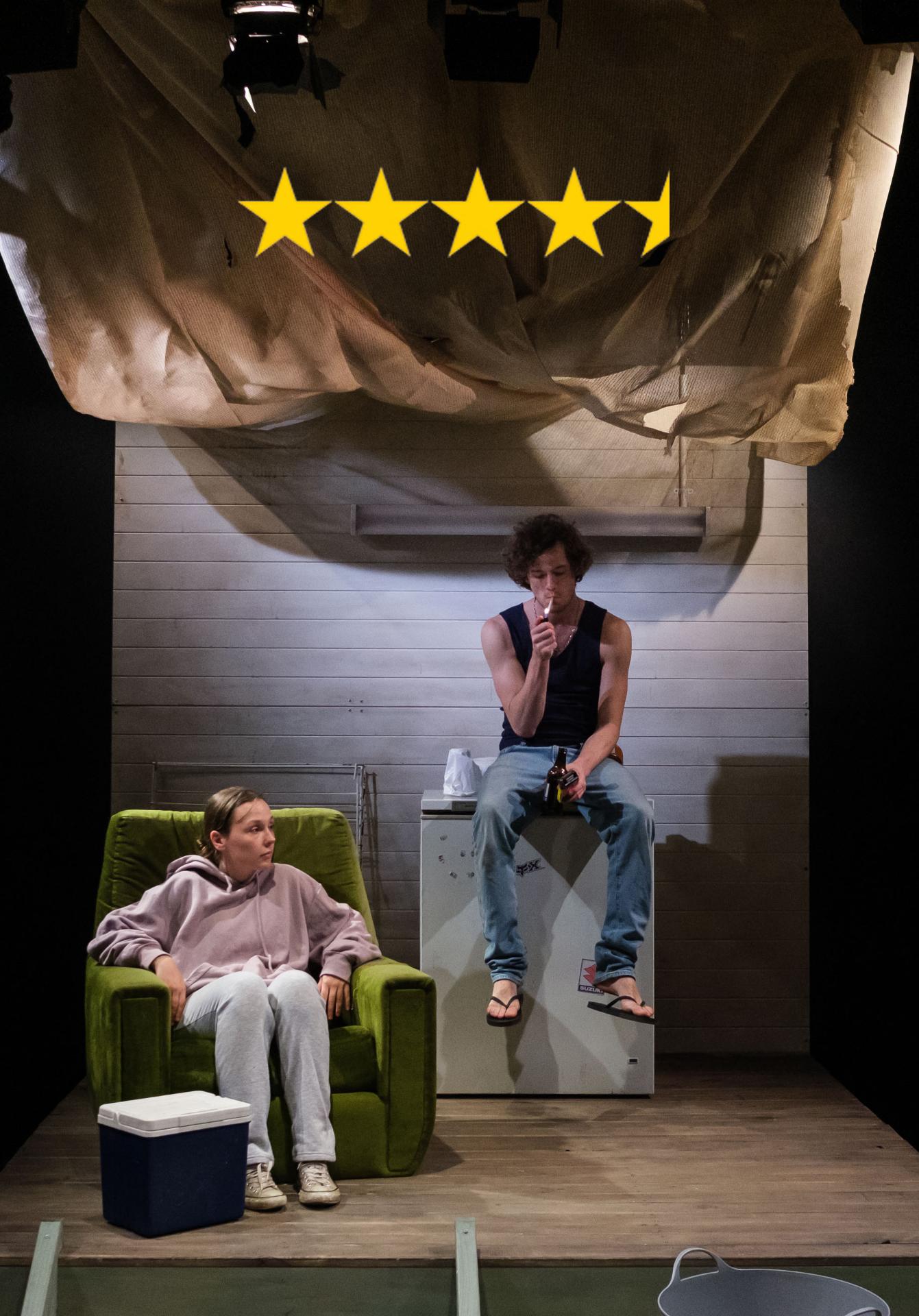
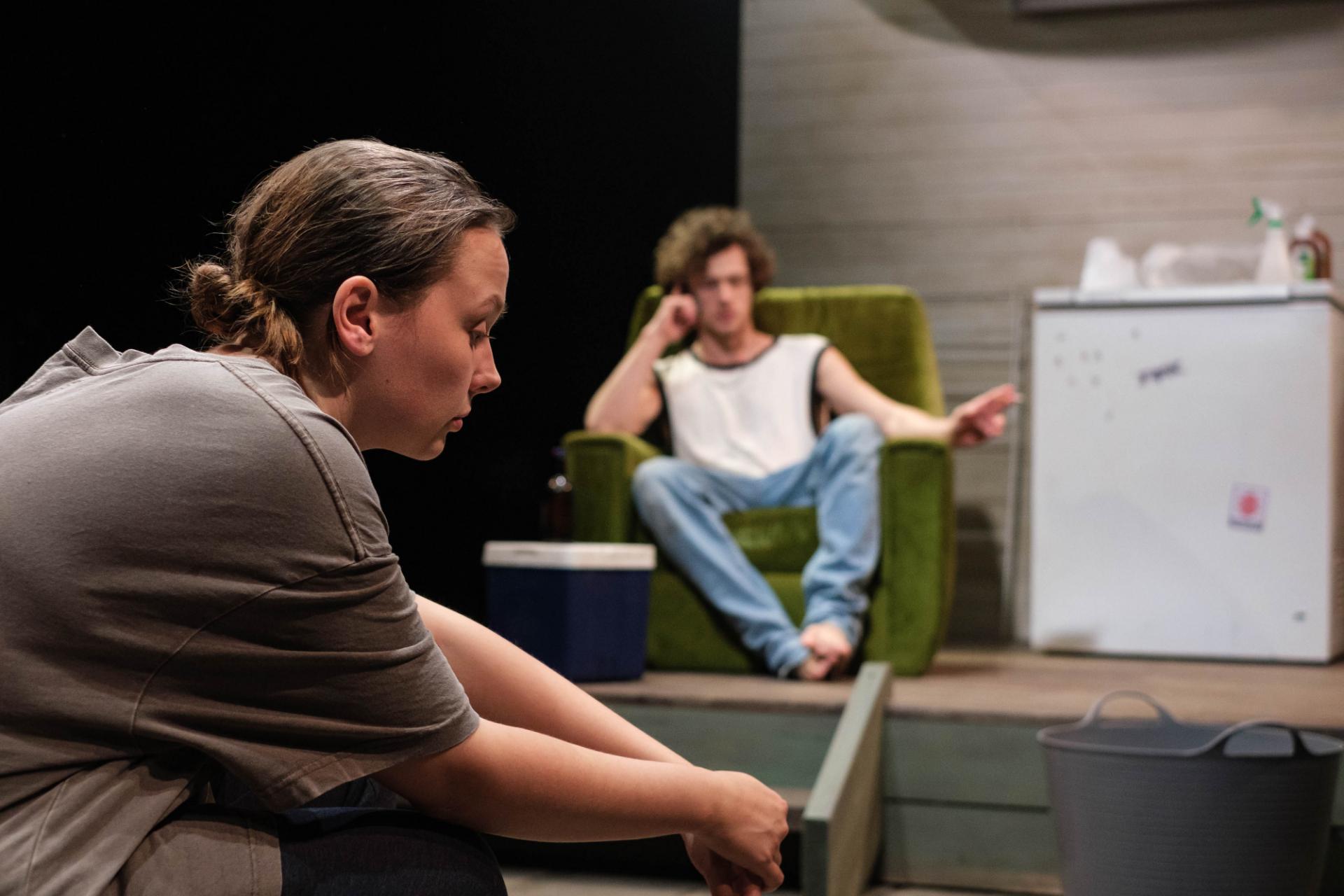
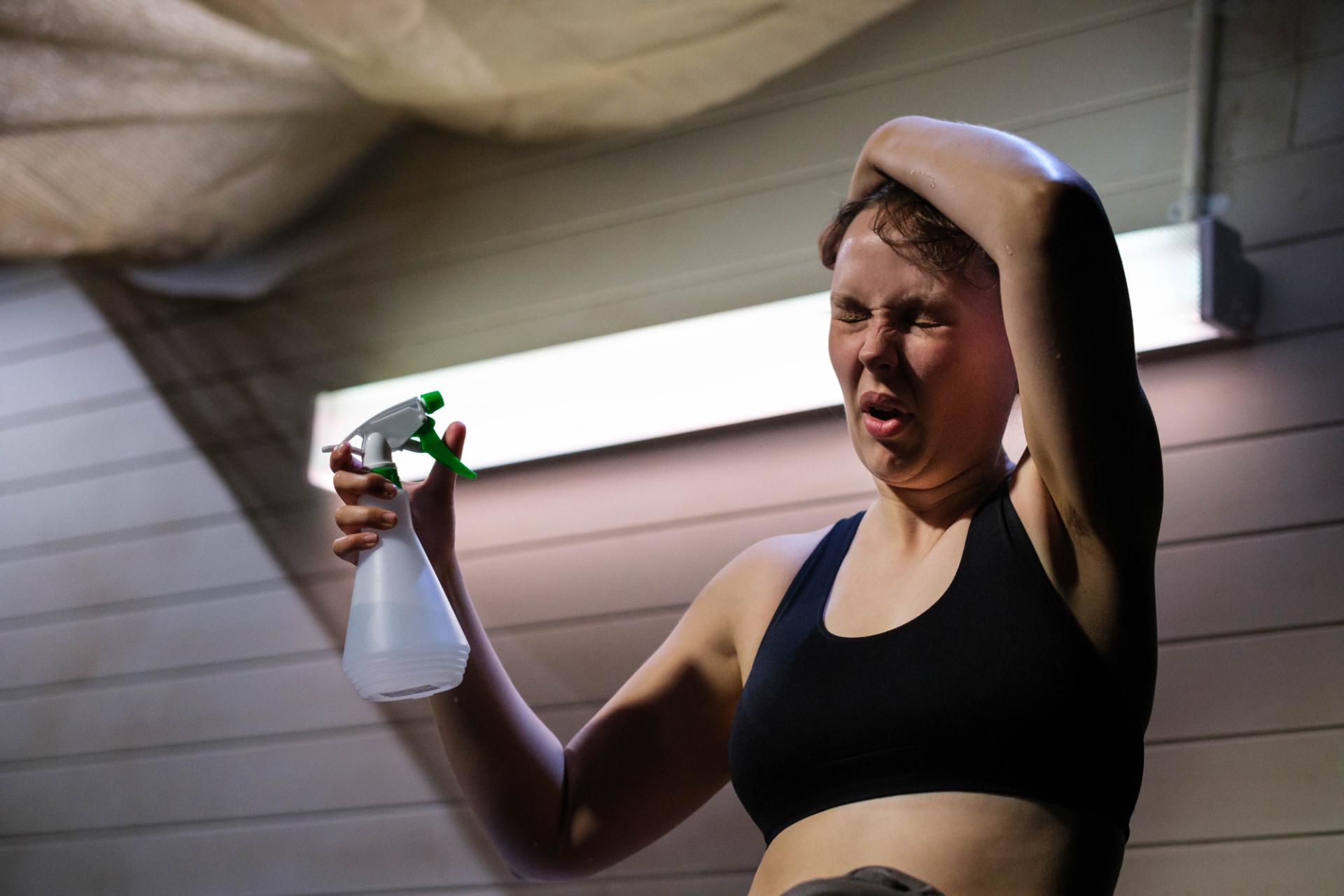
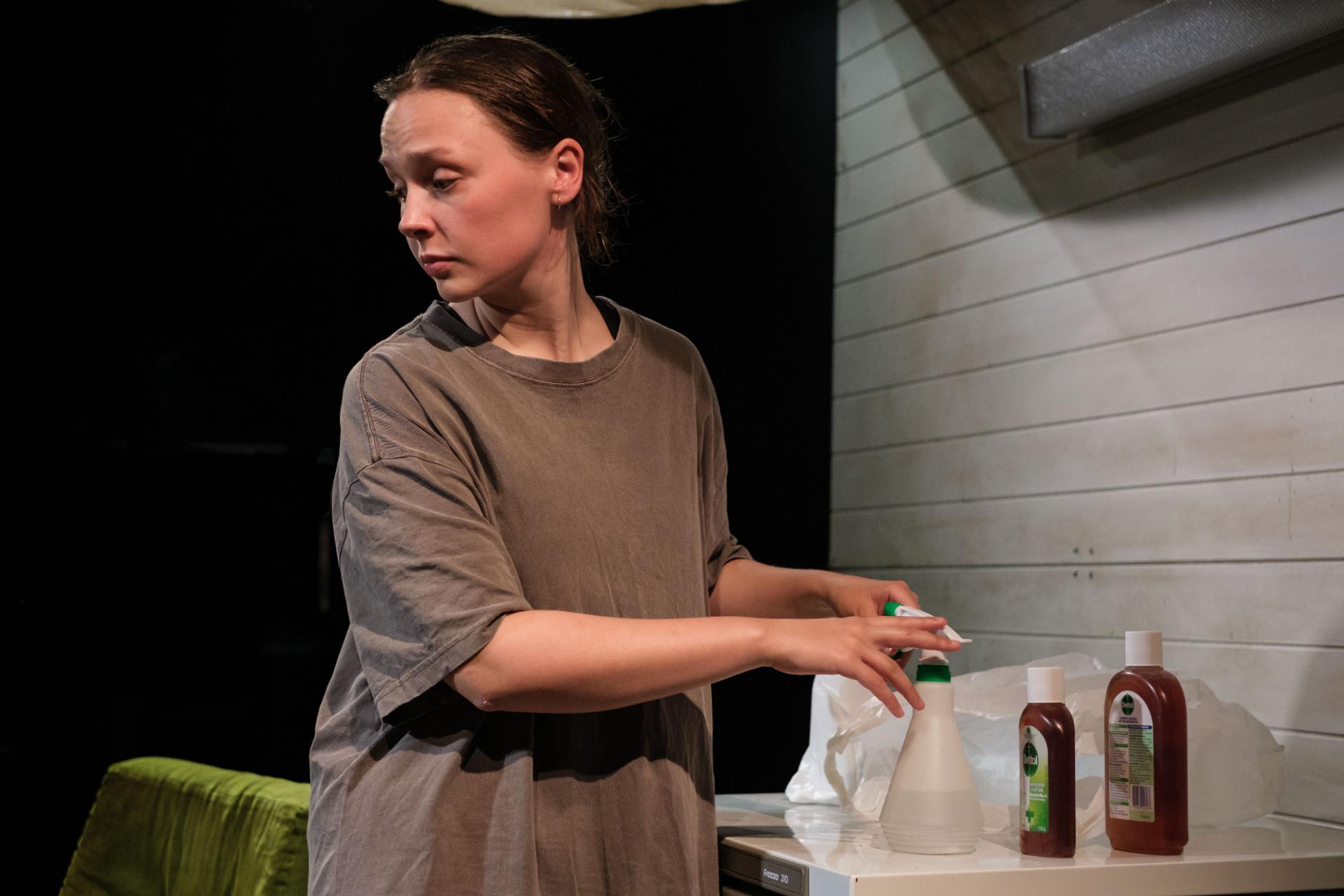
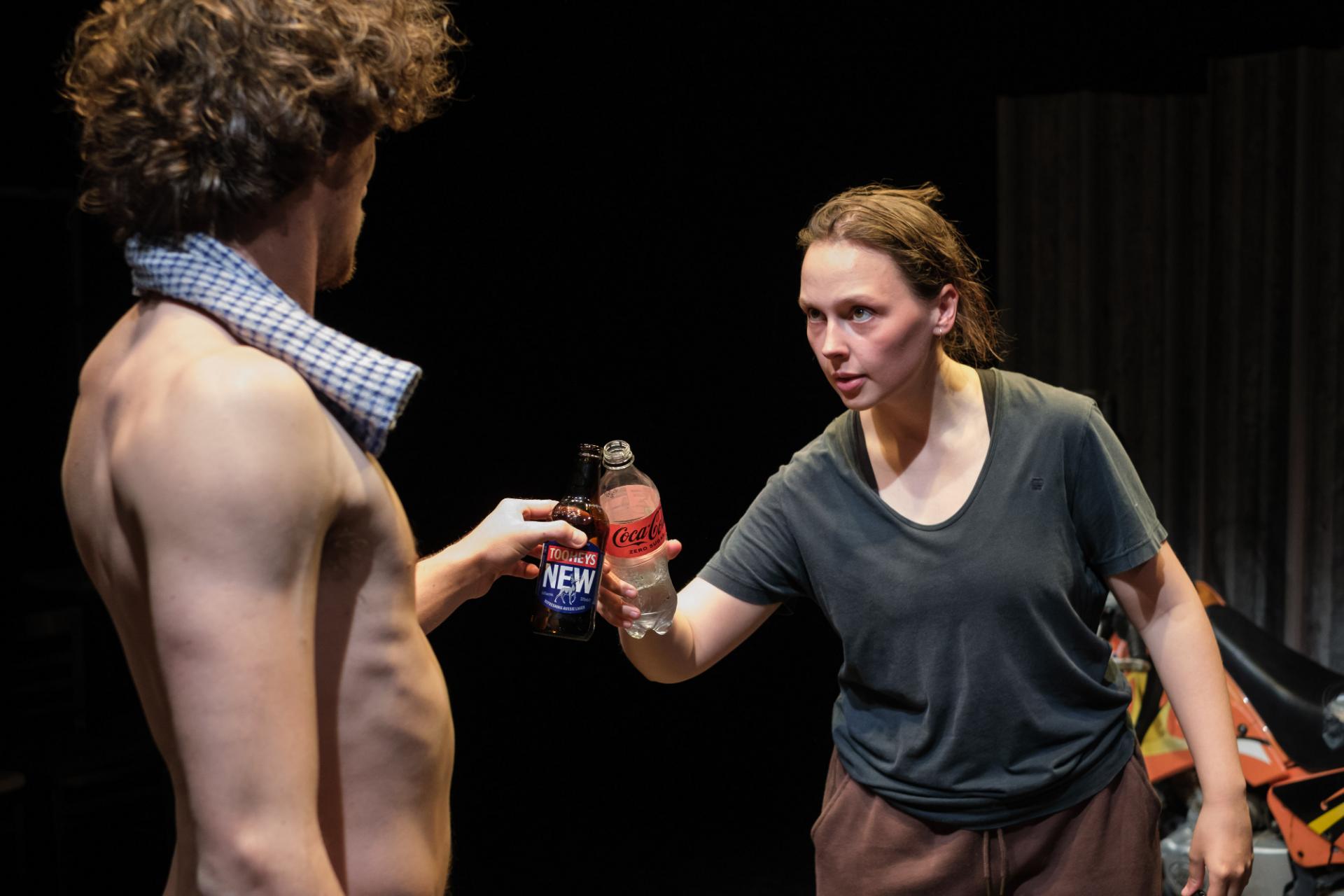
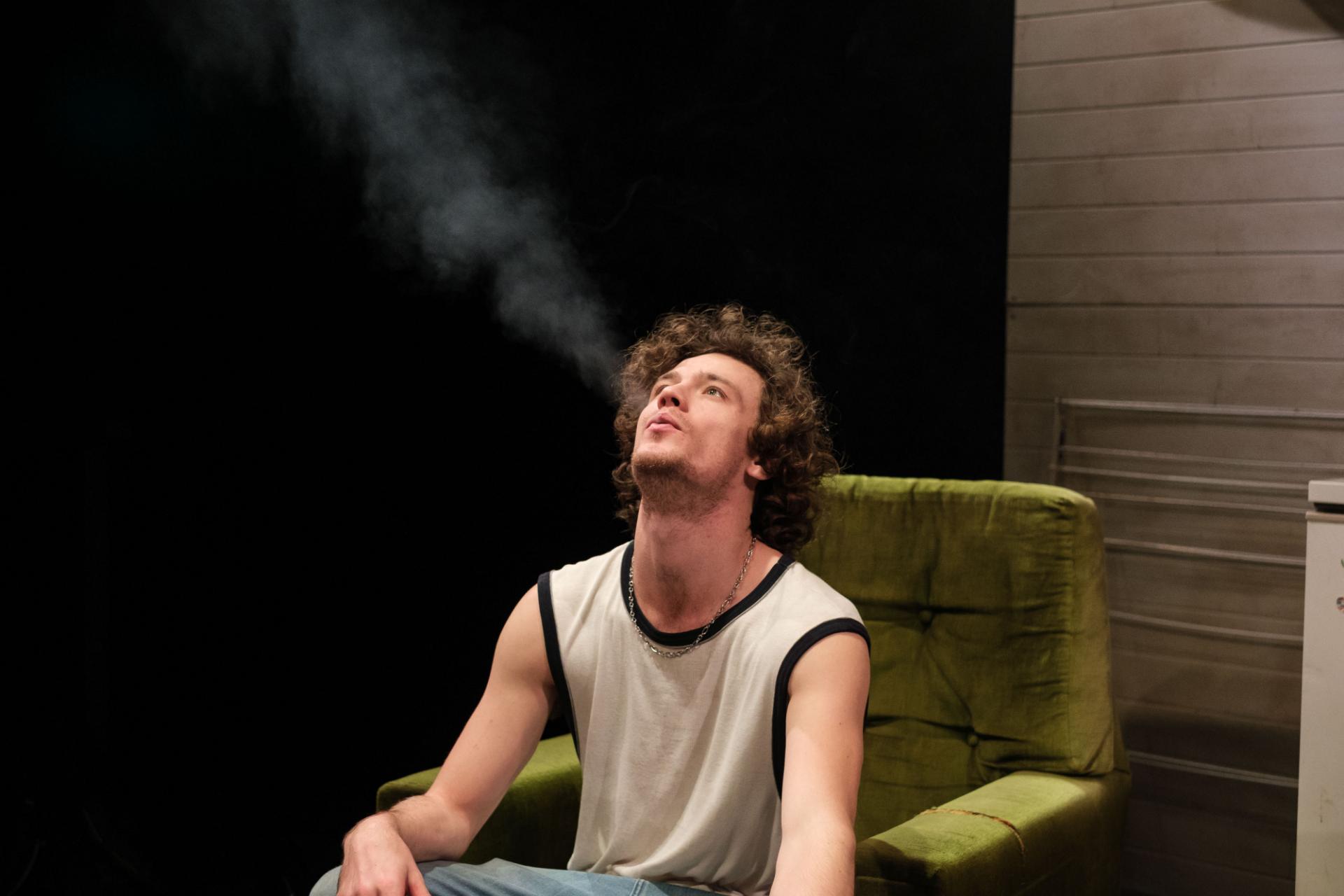
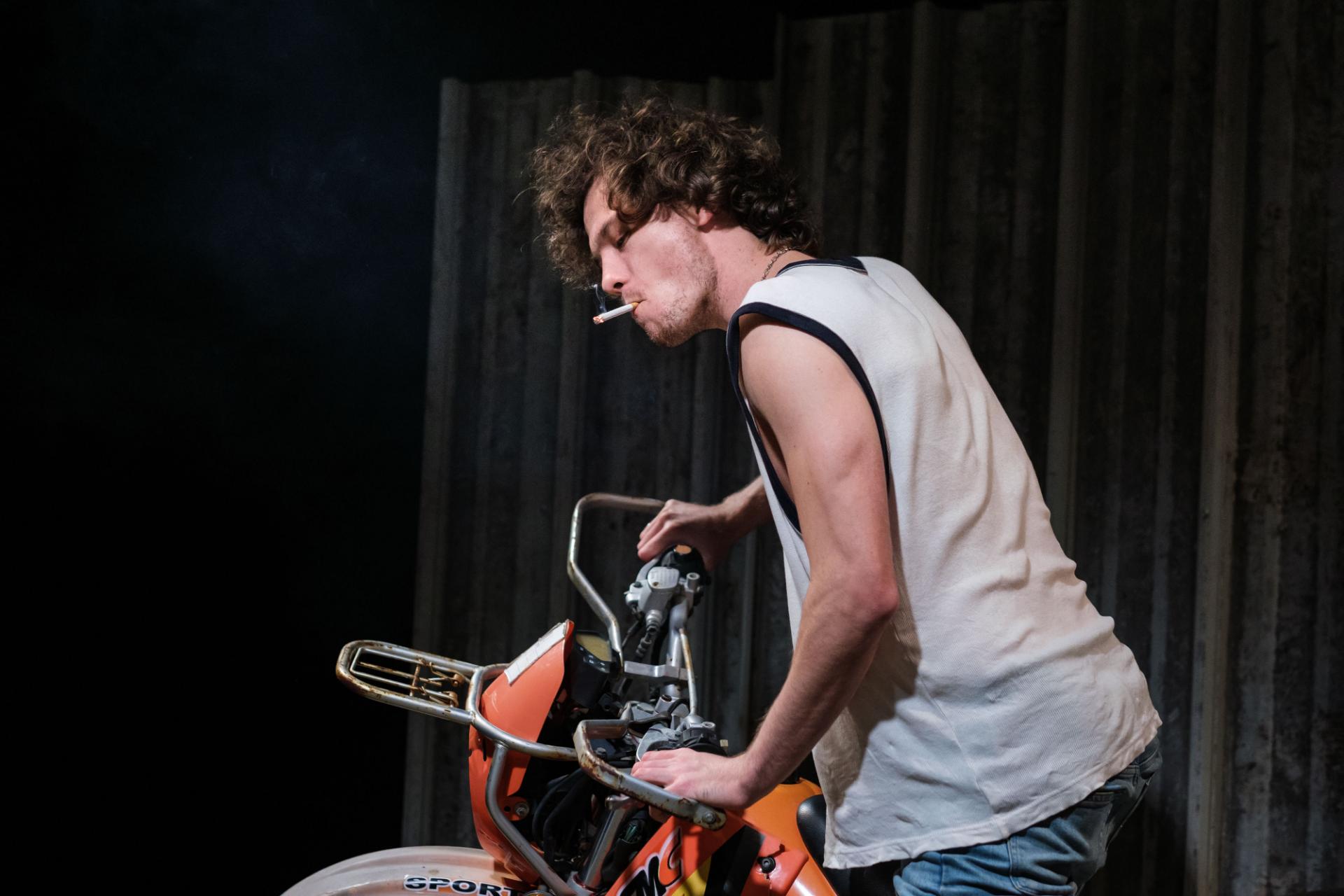
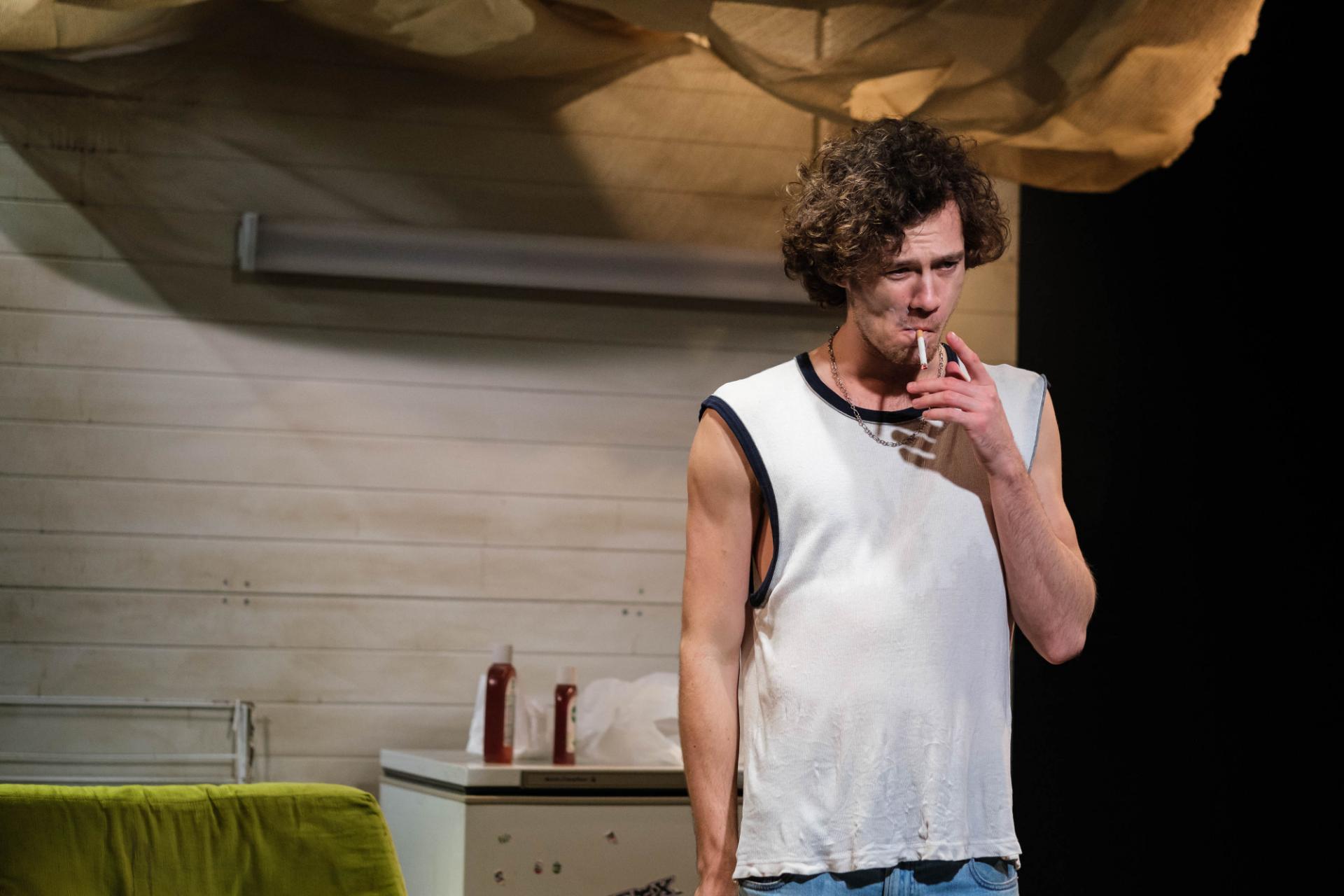
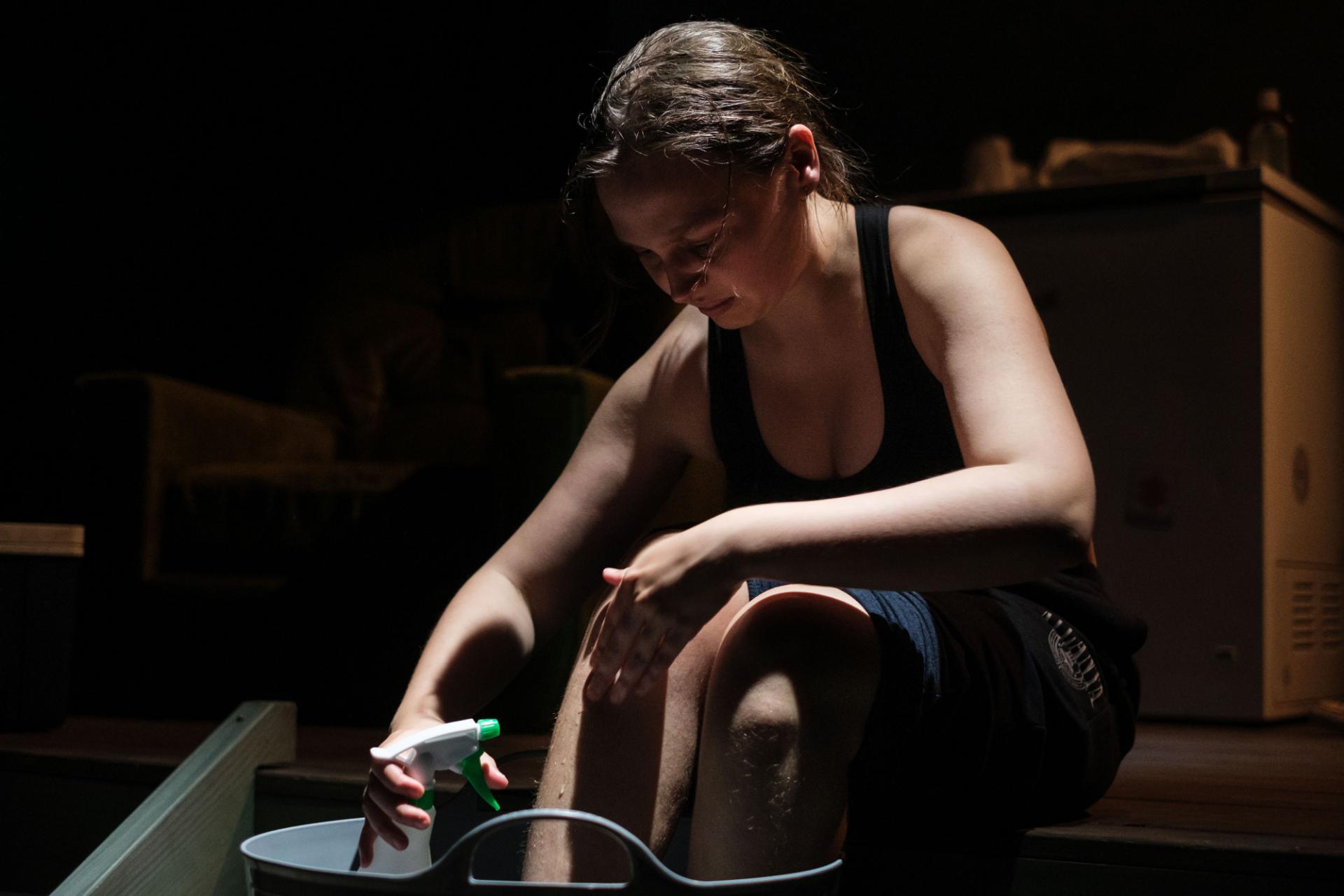
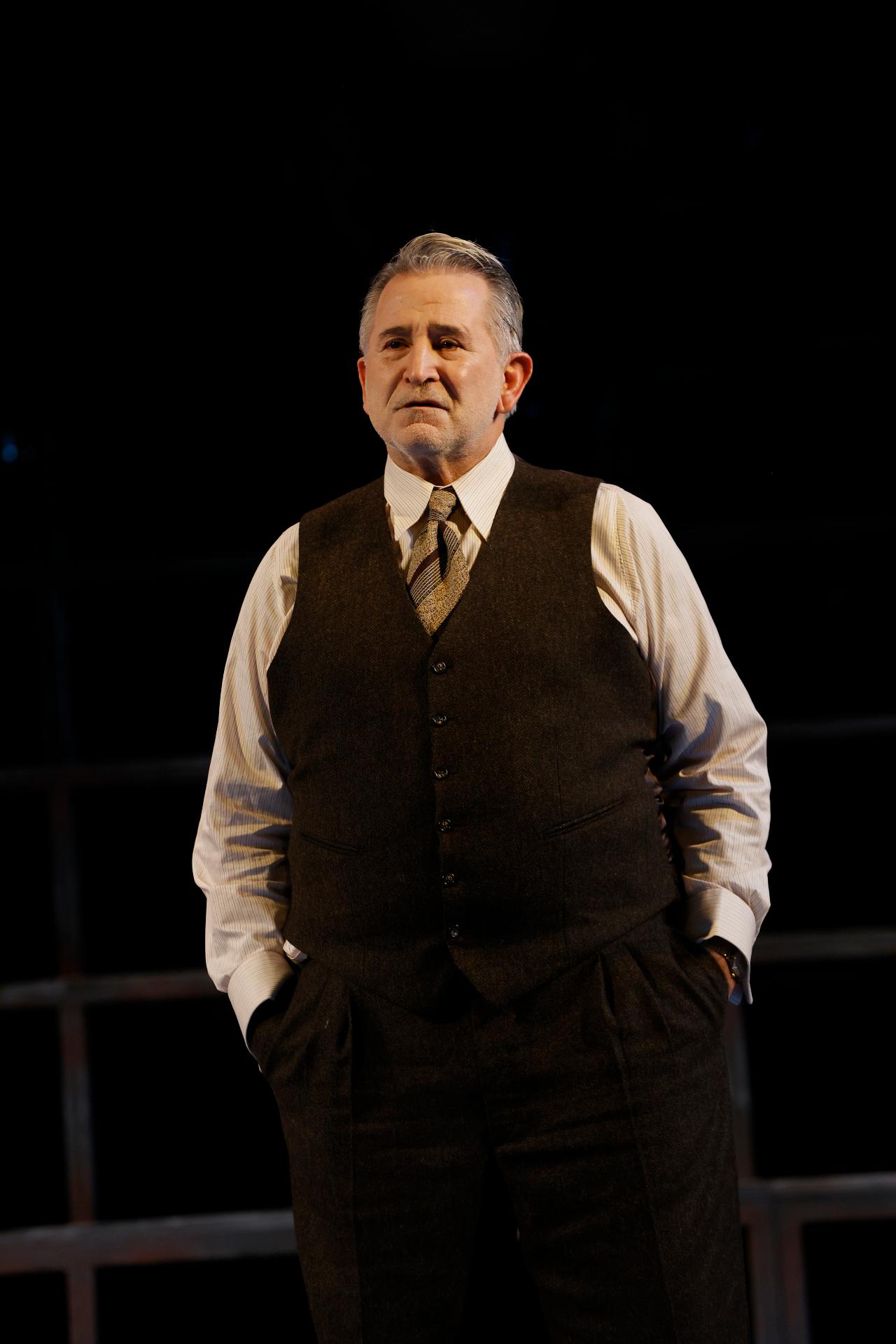
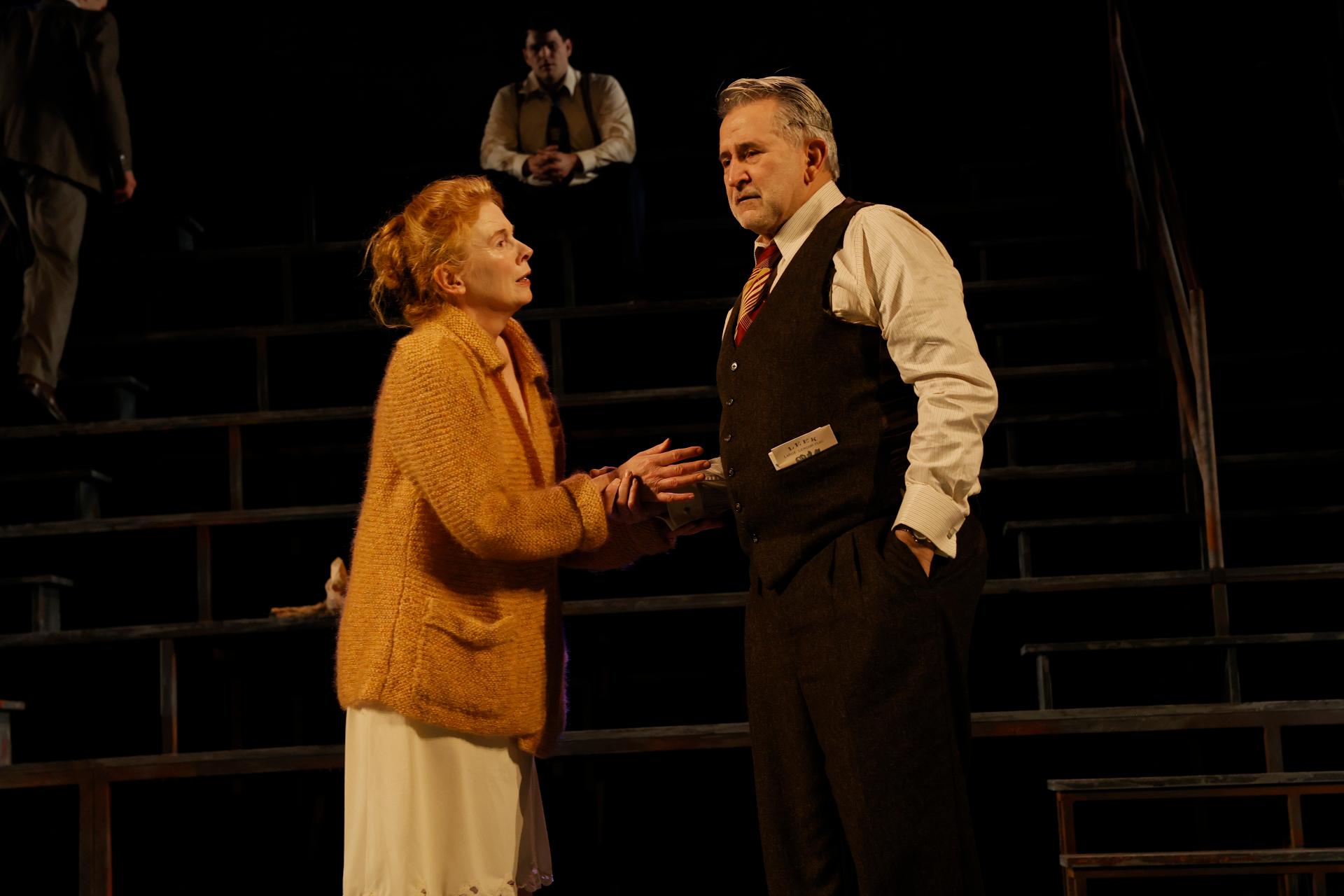
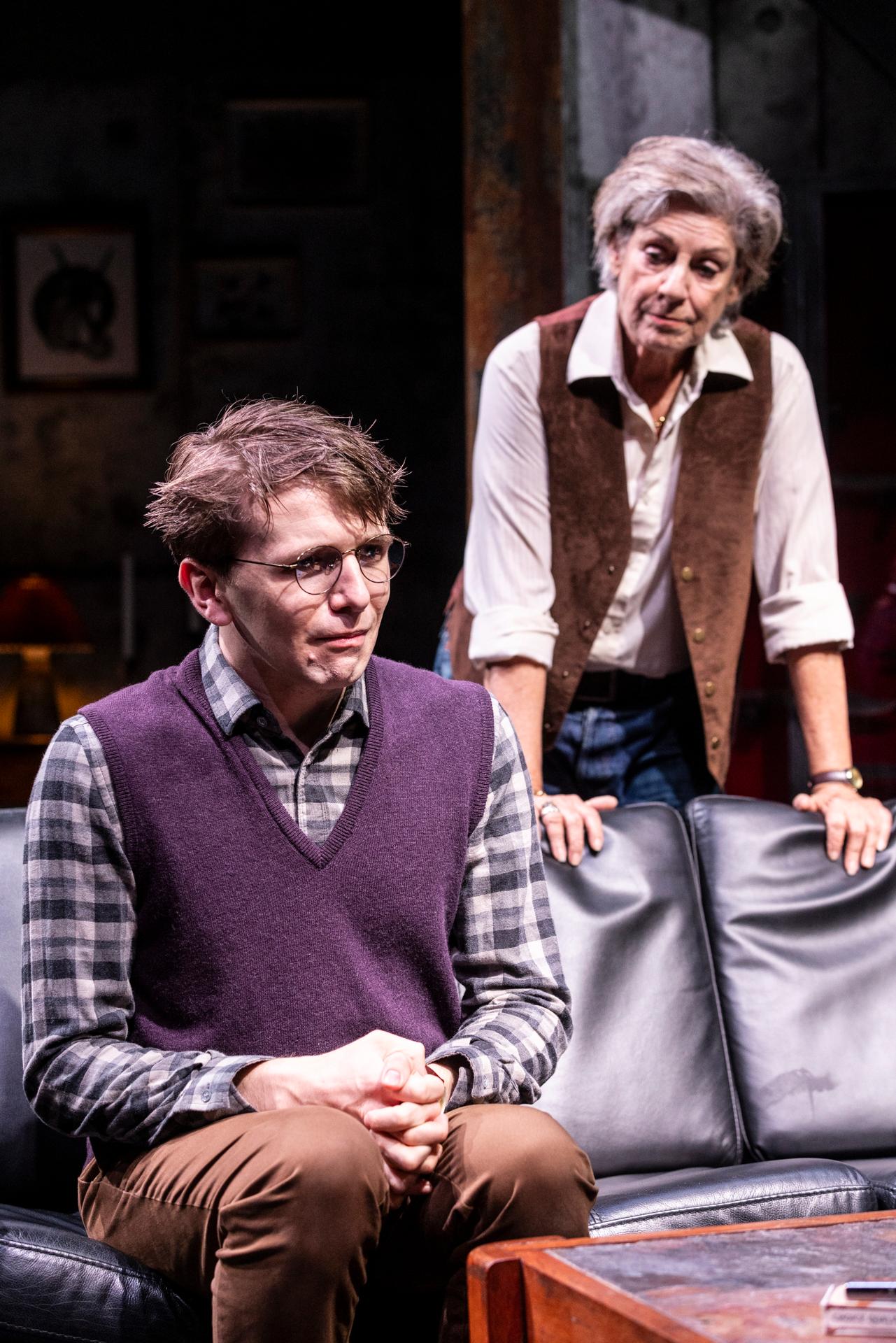
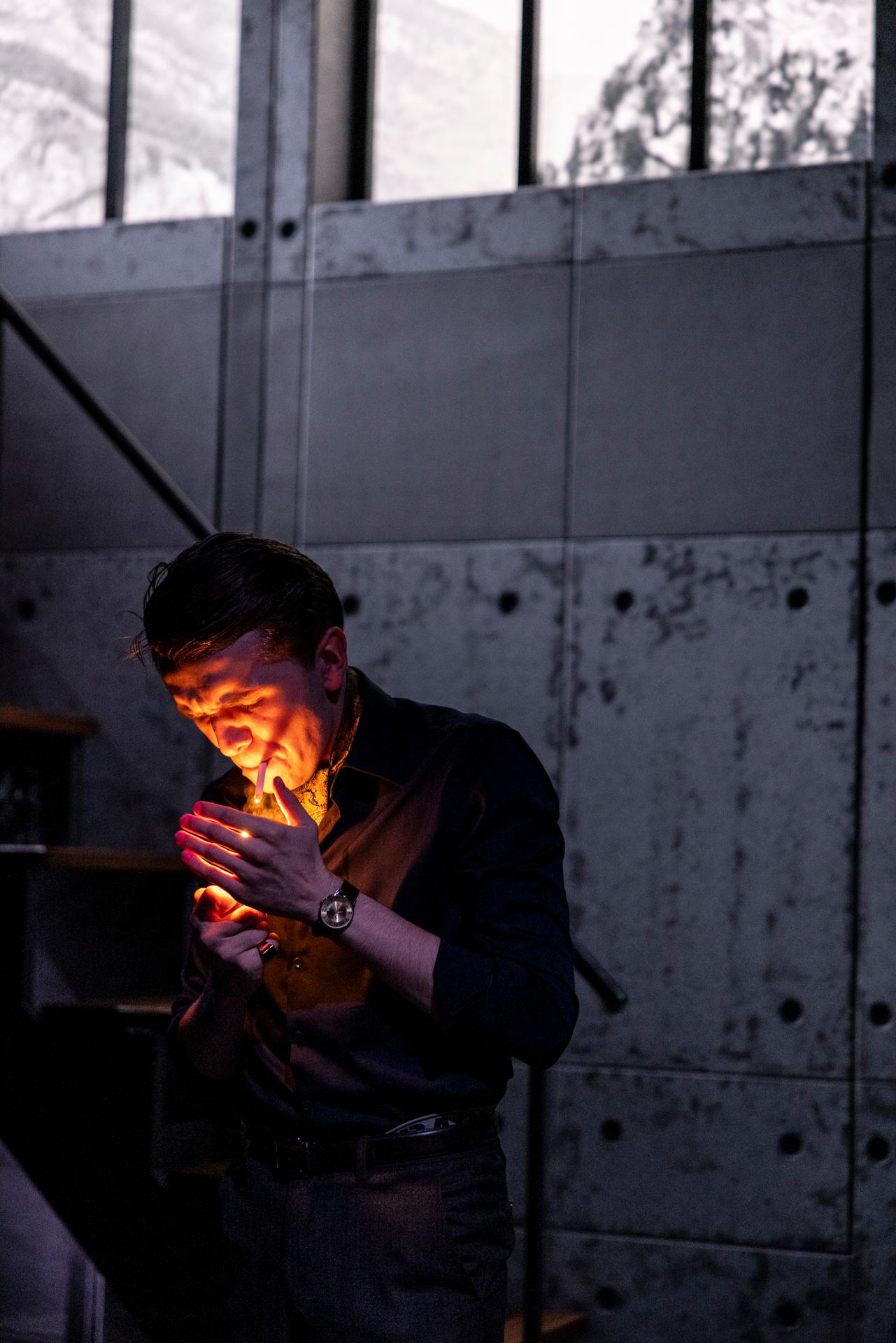
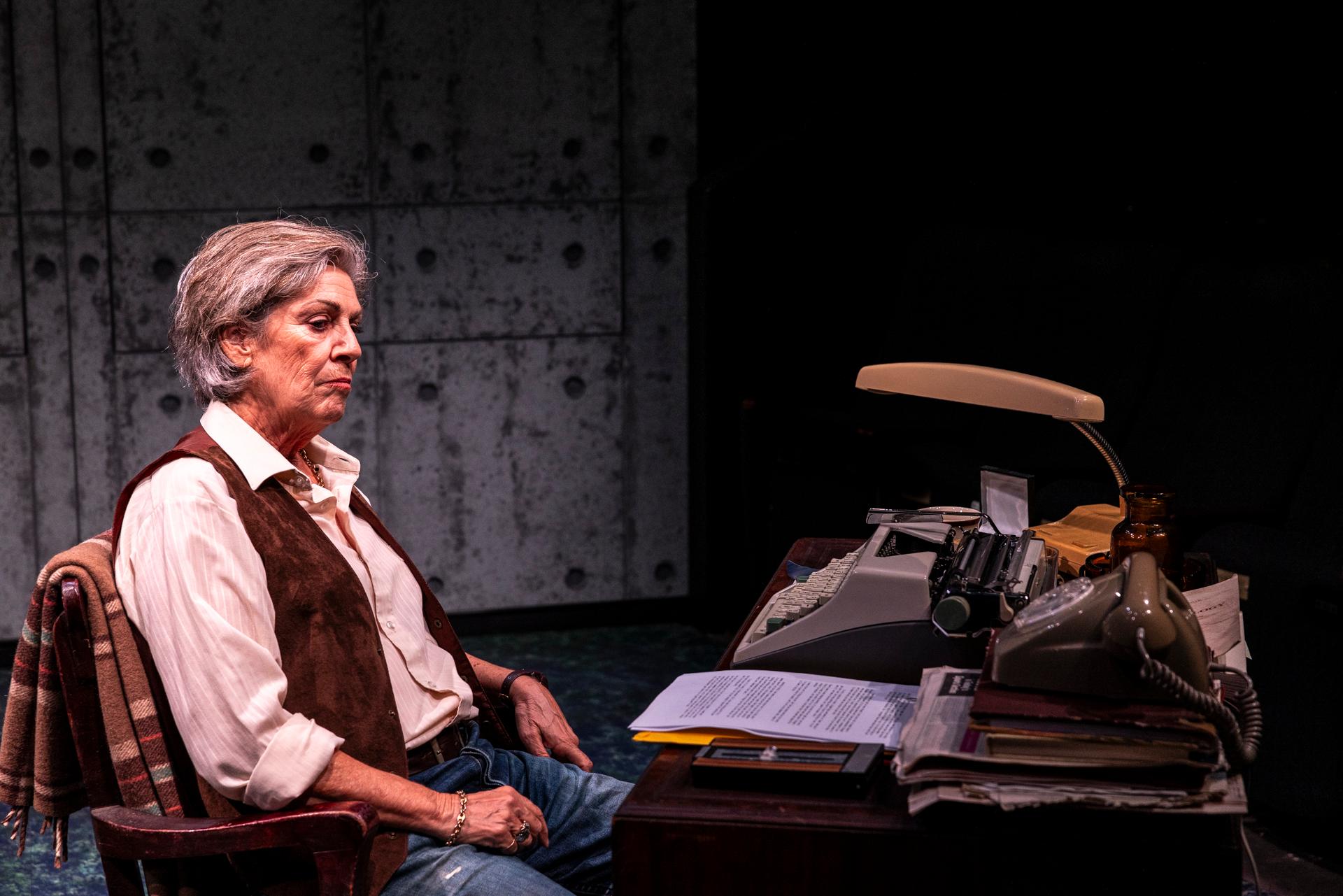
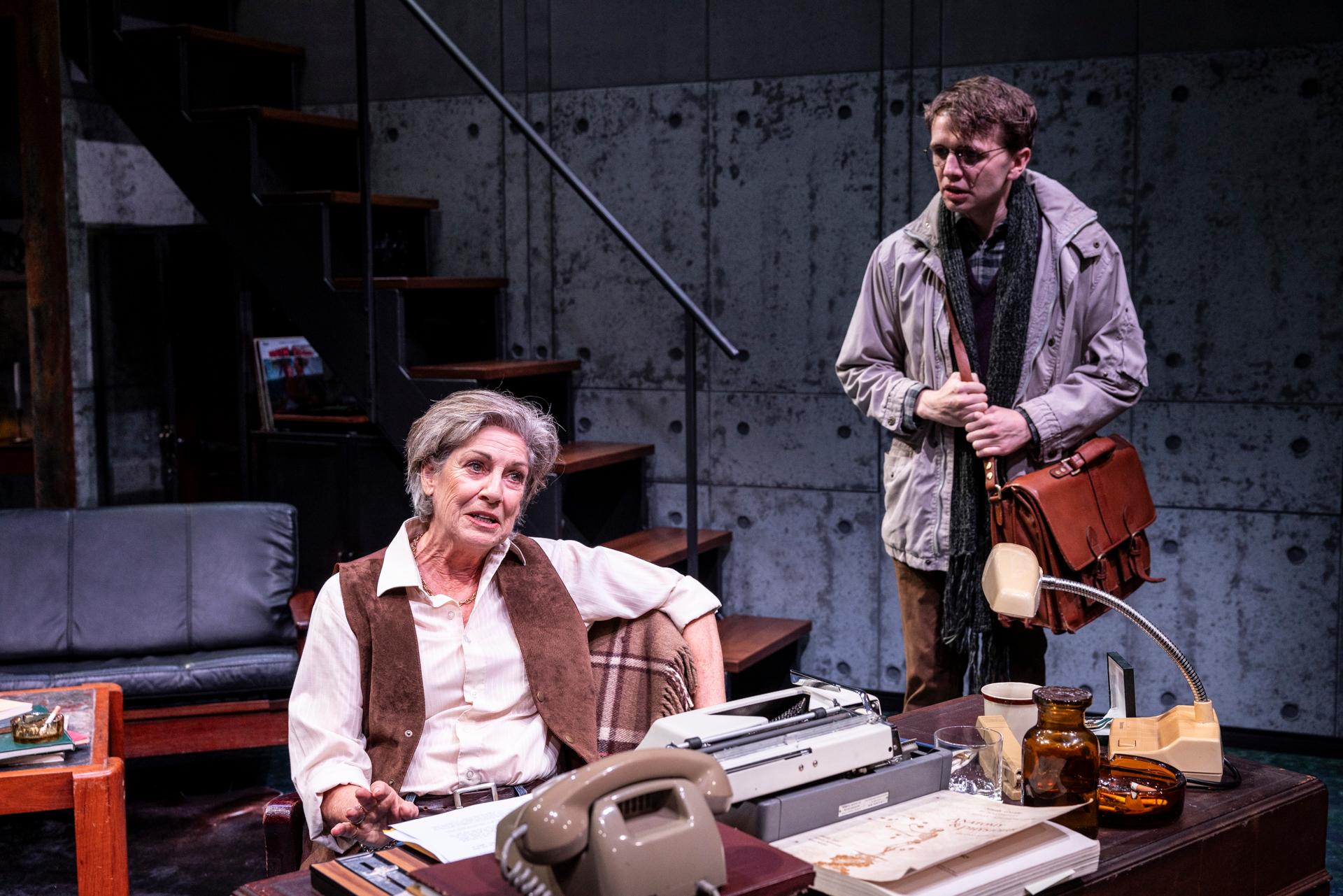
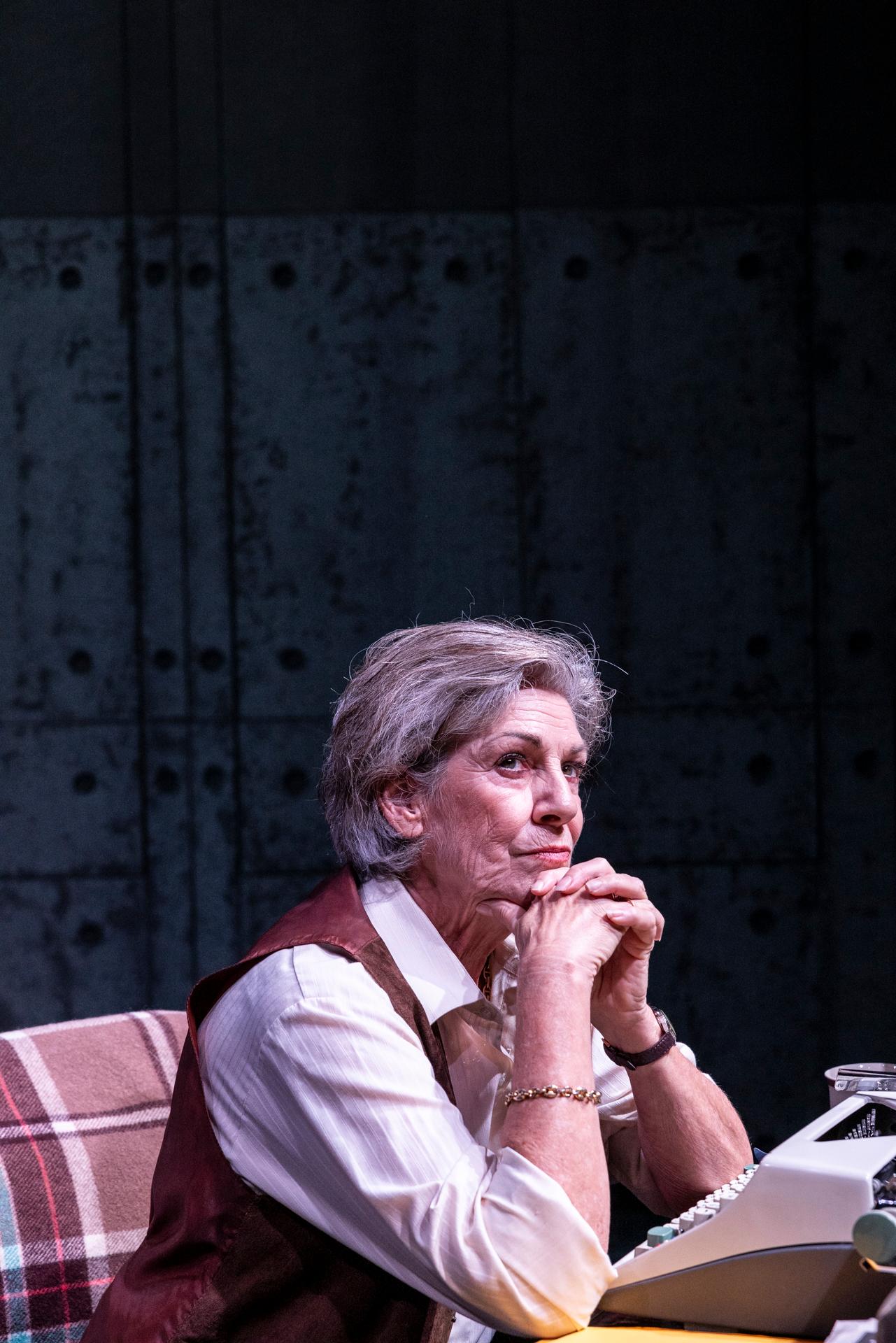
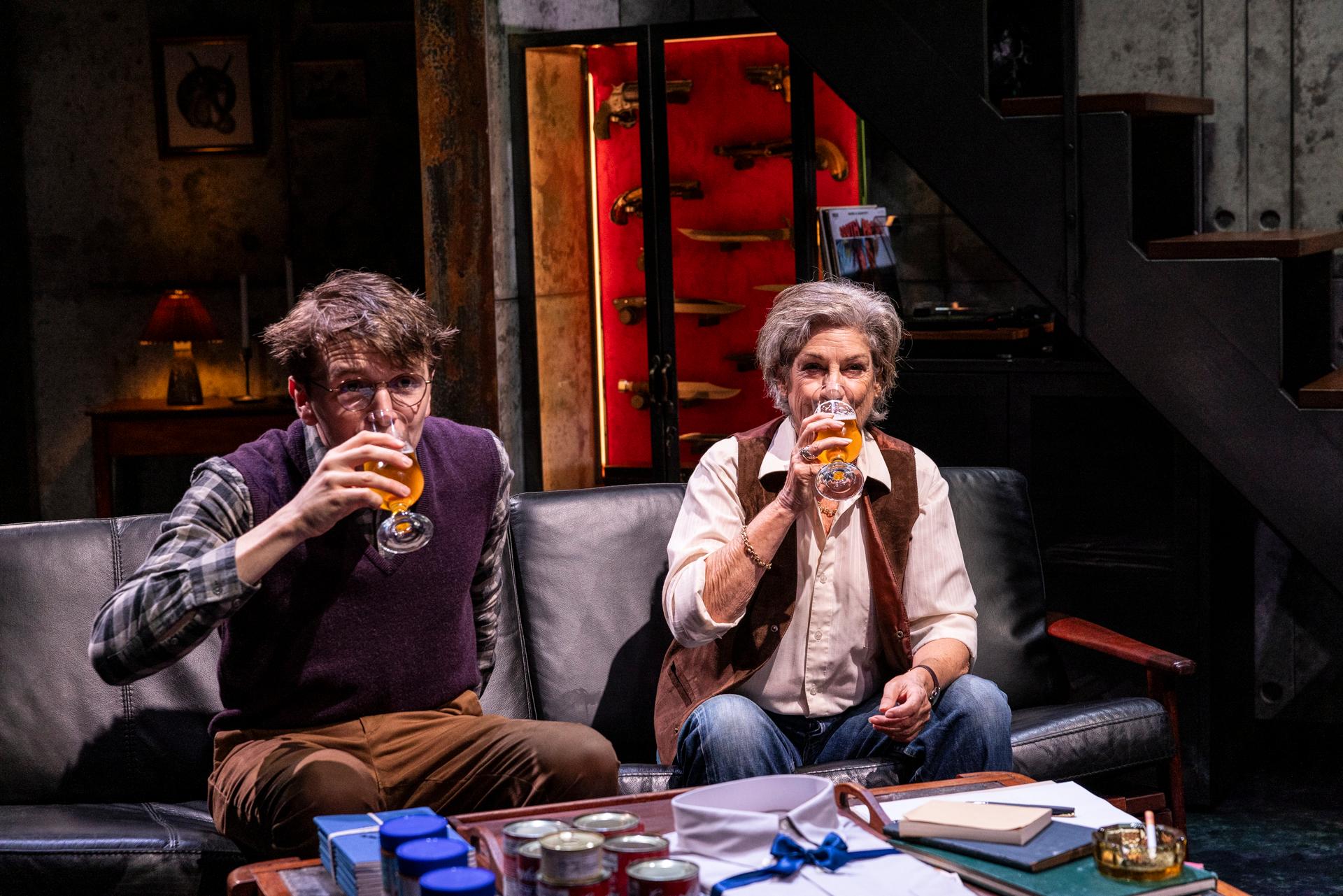
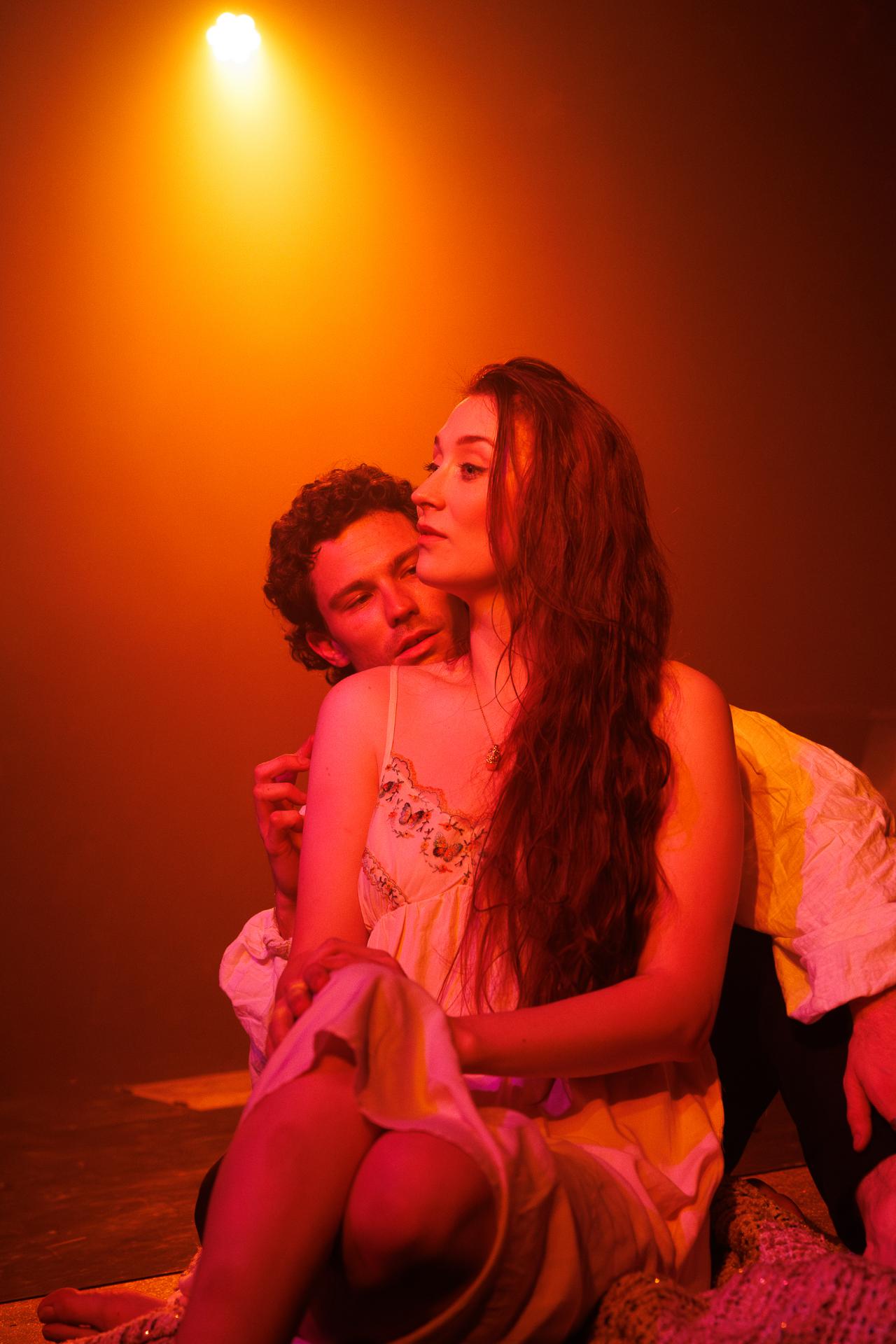
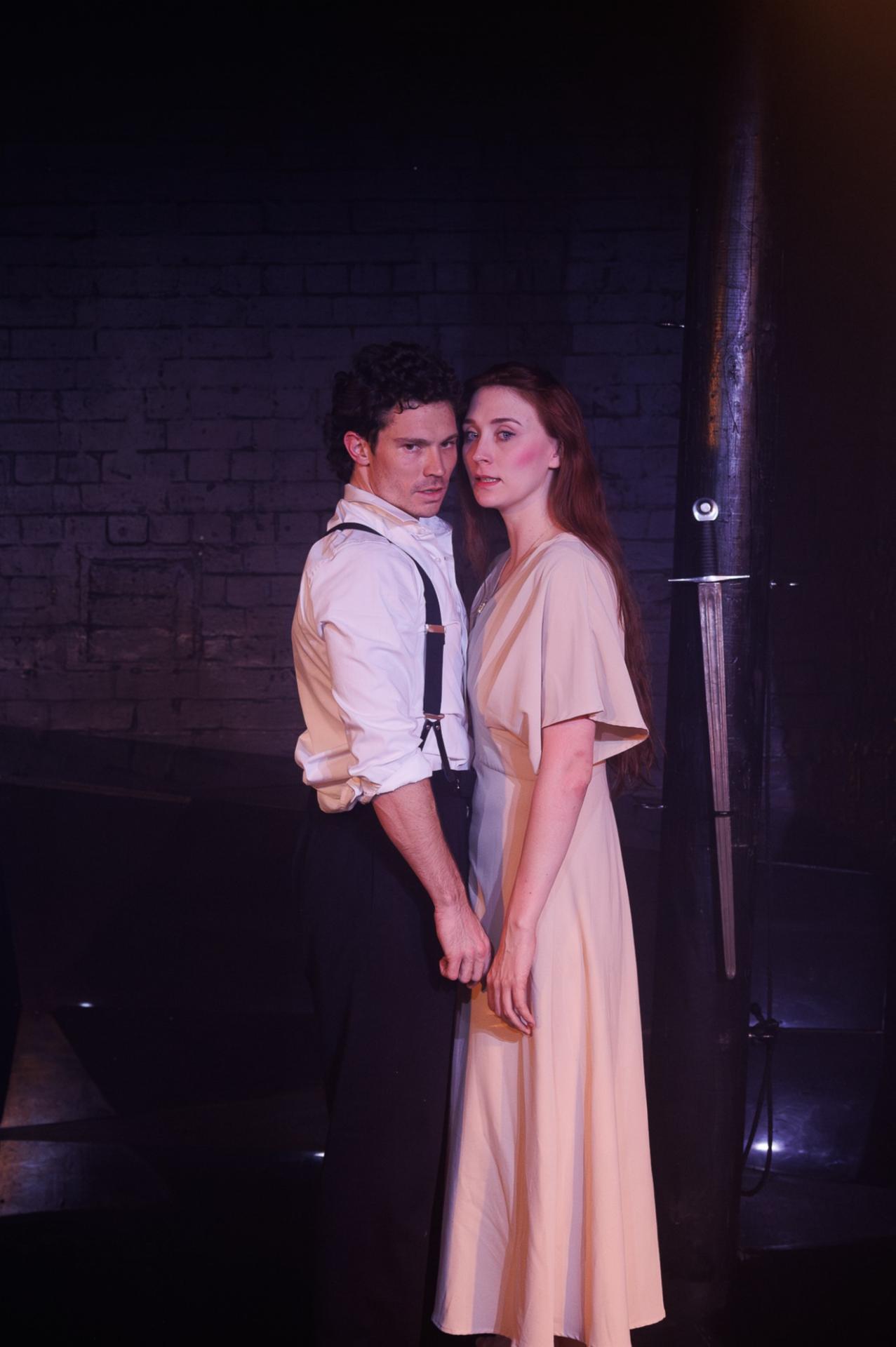
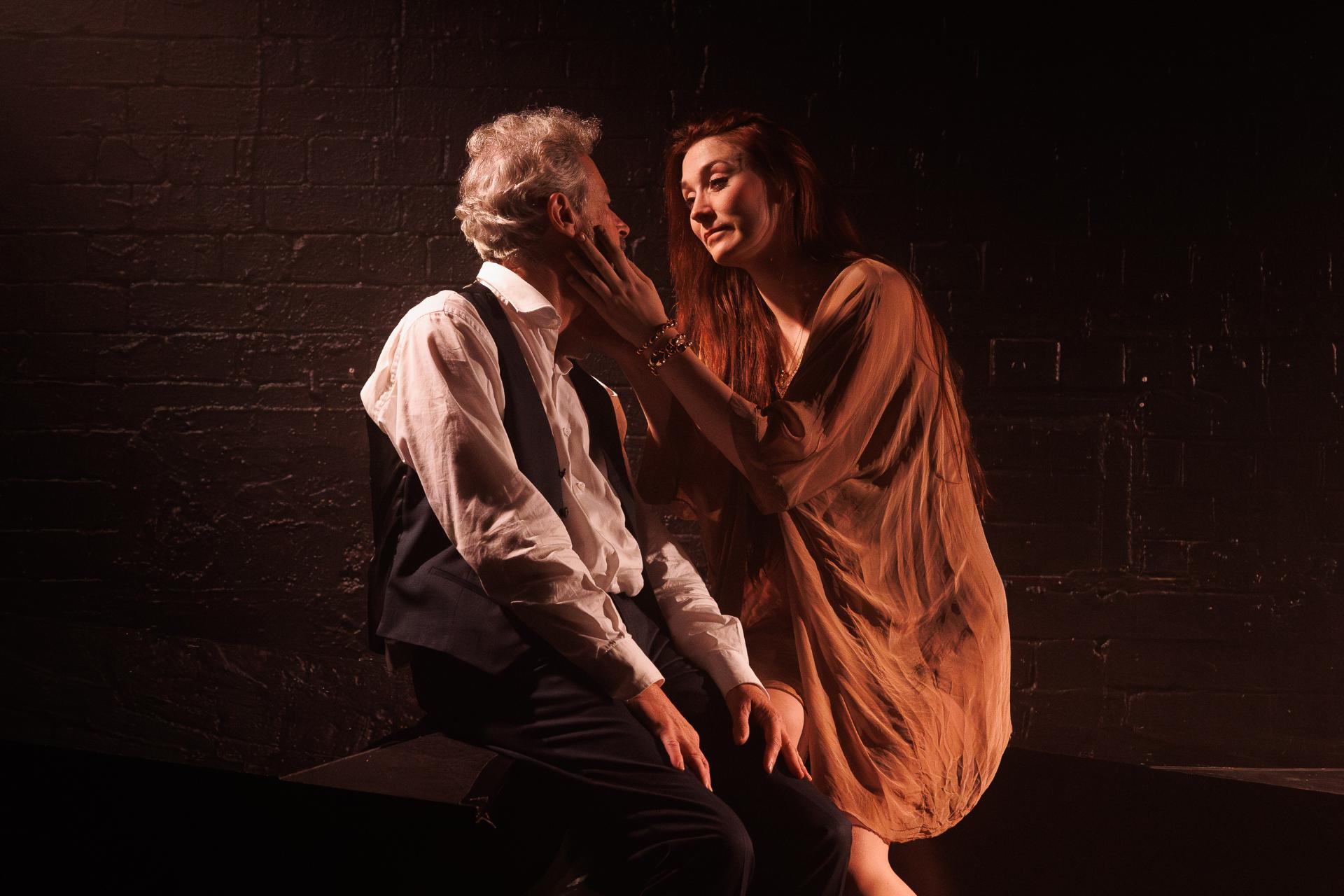
The famous author Patricia Highsmith is visited in the Swiss alps, by a junior member of her publisher’s office. Everybody it seems, wants another instalment of her Ripley novels, but Highsmith is making things very hard, including for herself. For all the bravado she displays, there is clearly a crisis of confidence underway. Young Edward however, is determined to have the new book completed, even if it means having to contend with the artist’s impossible insolence.

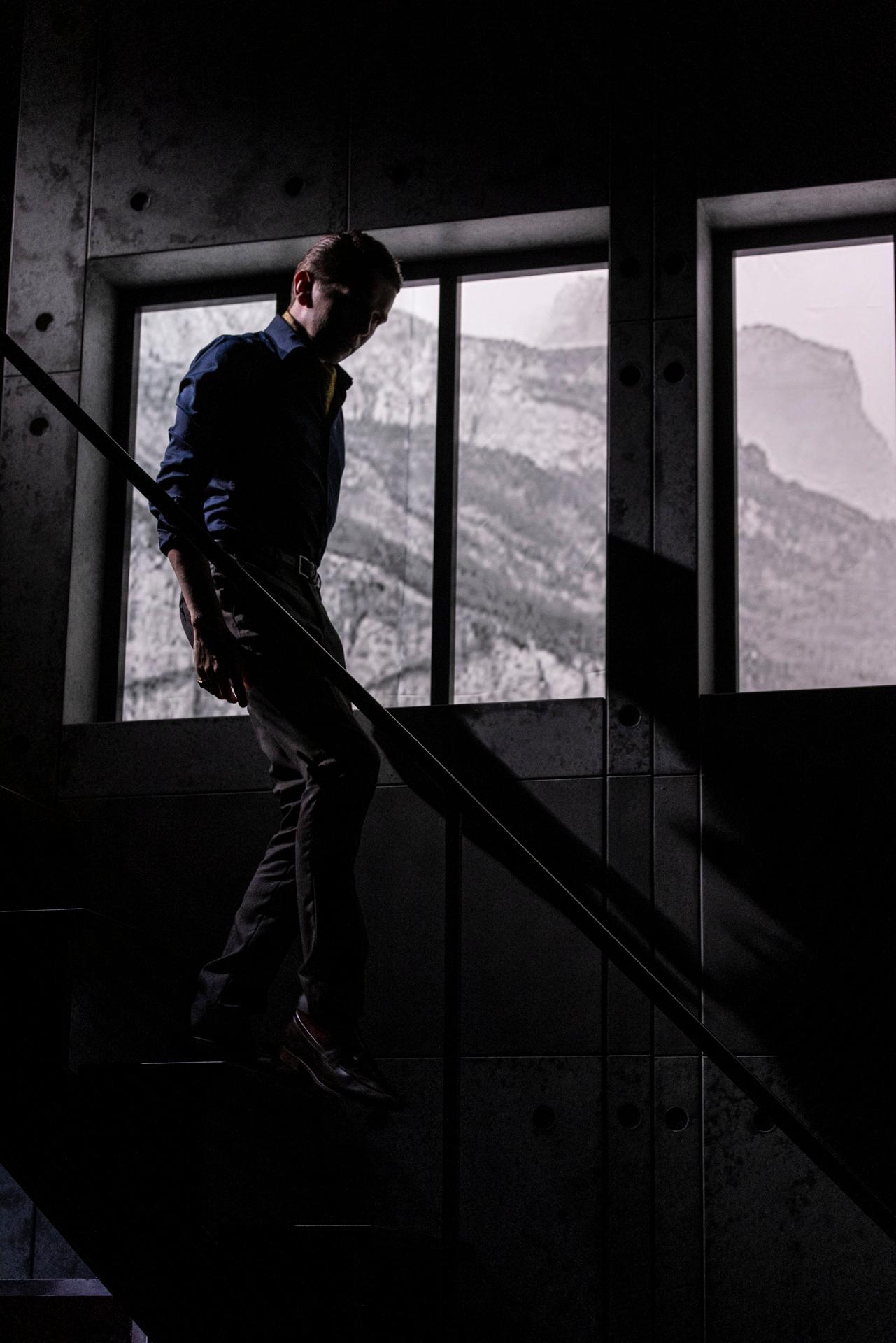
The wit in Joanna Murray-Smith’s Switzerland is remarkable, with an unrelenting acerbity that director Shaun Rennie uses to great effect, for a show that is as hilarious as it is thrilling. The humorous acrimony is established from curtains up, but a creeping sense of mortal danger develops decisively over the three acts, as the general tone turns indubitably darker. Fatalistic as it might be, Switzerland is also wonderfully poetic, in its rendering of the creative process, and of the nature of inspiration itself. Murray-Smith’s explorations into the meaning of art, for an artist like Highsmith, turns out to be deeply rewarding, for the rest of us who are unlikely to experience that level of accomplishment.

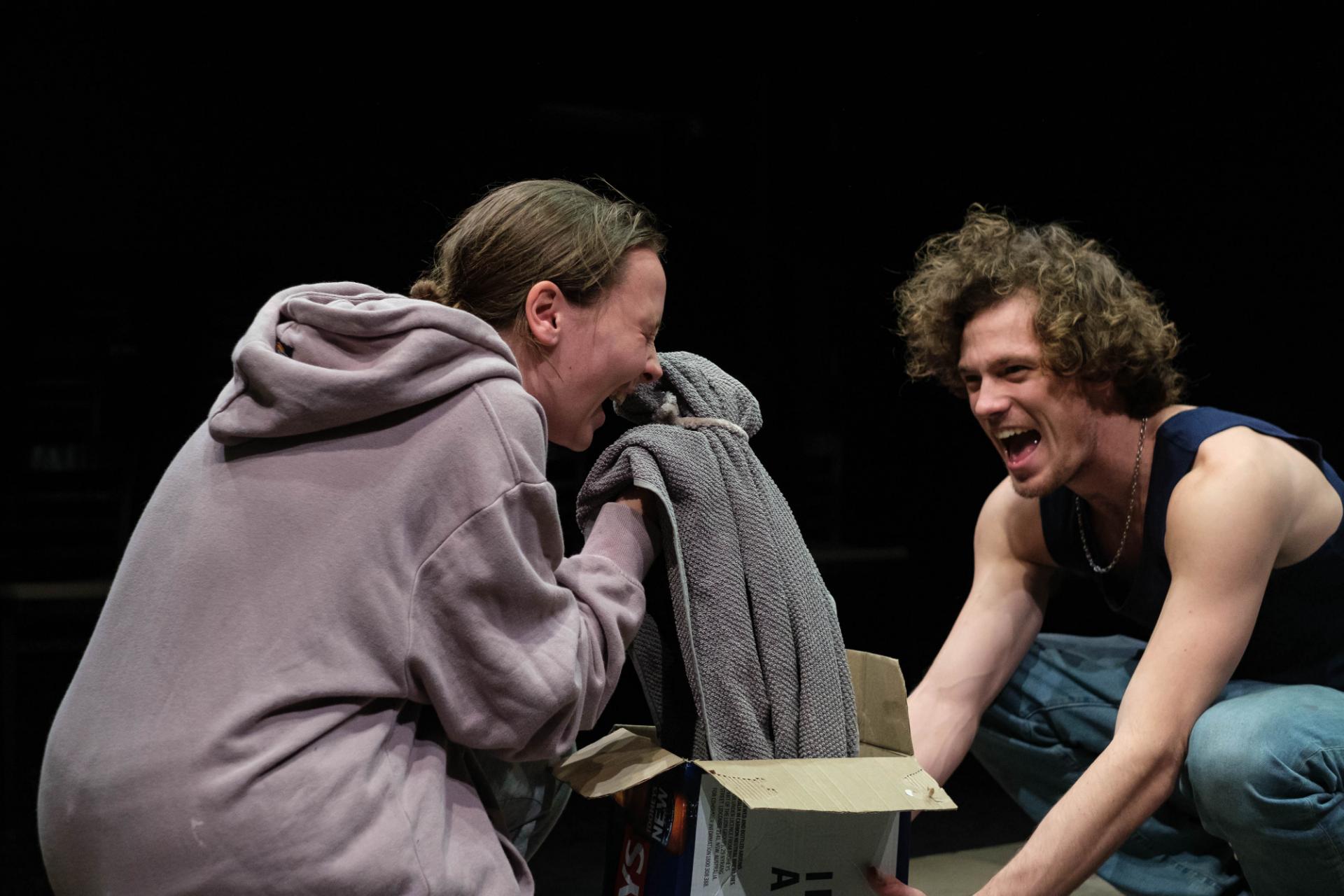
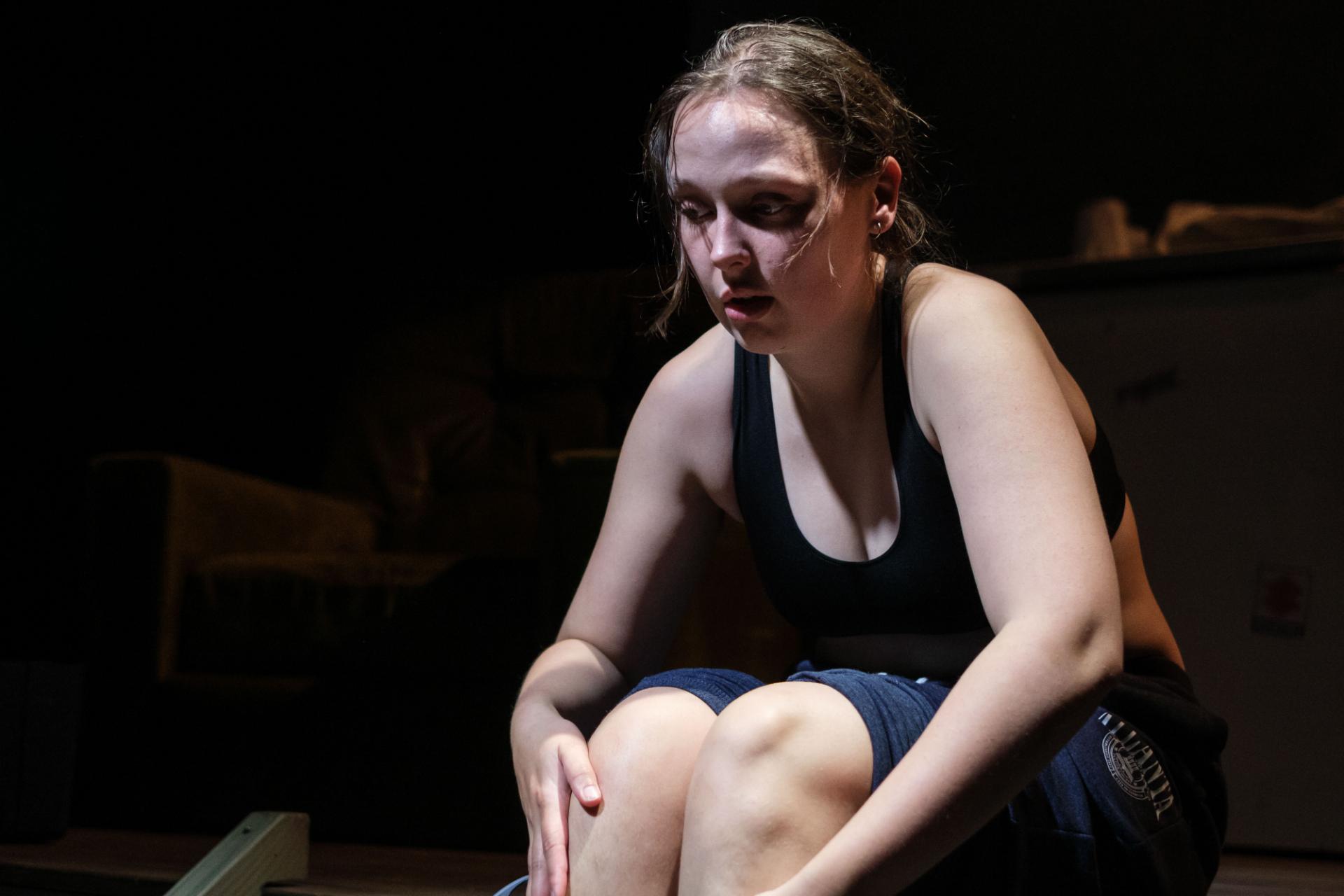
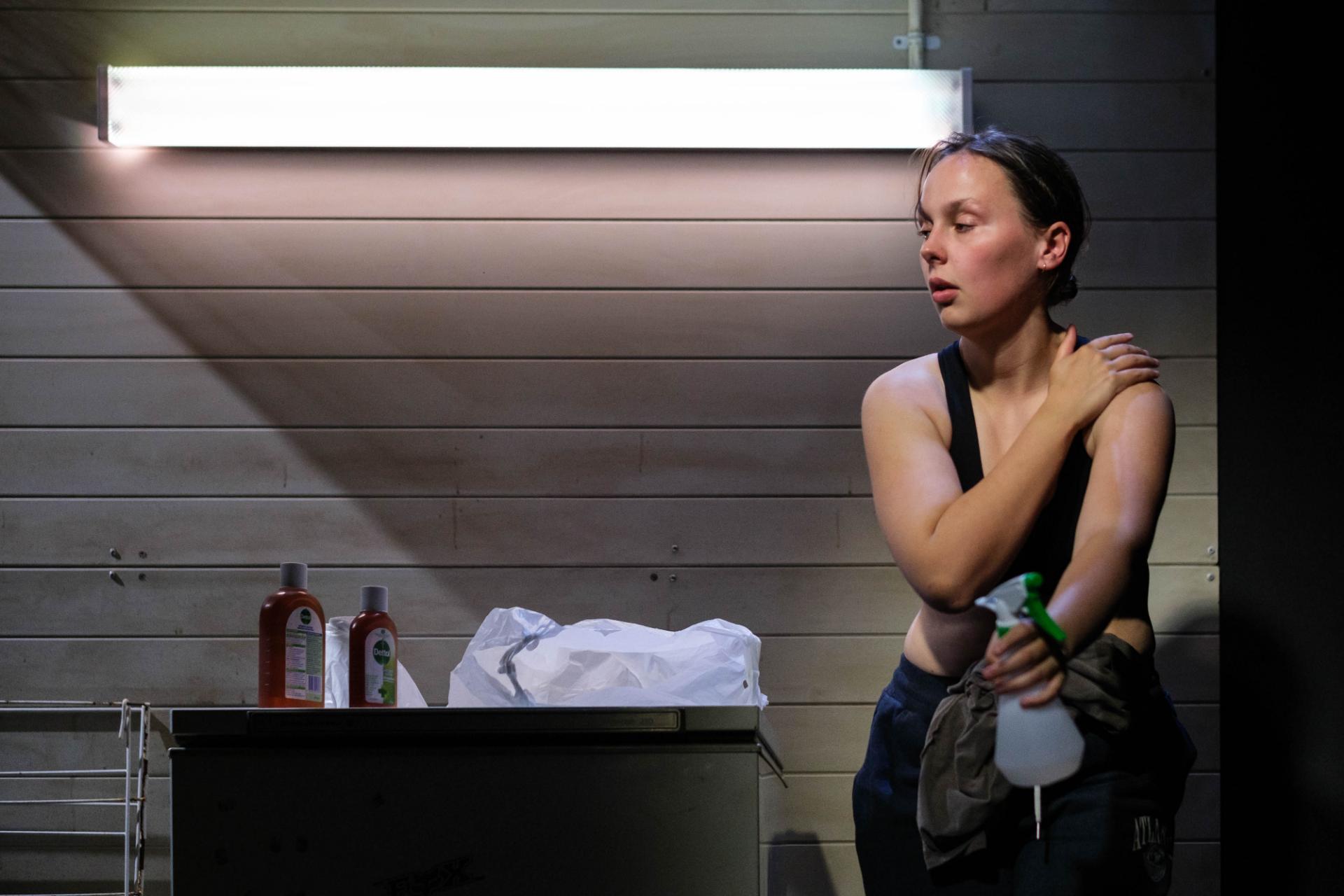
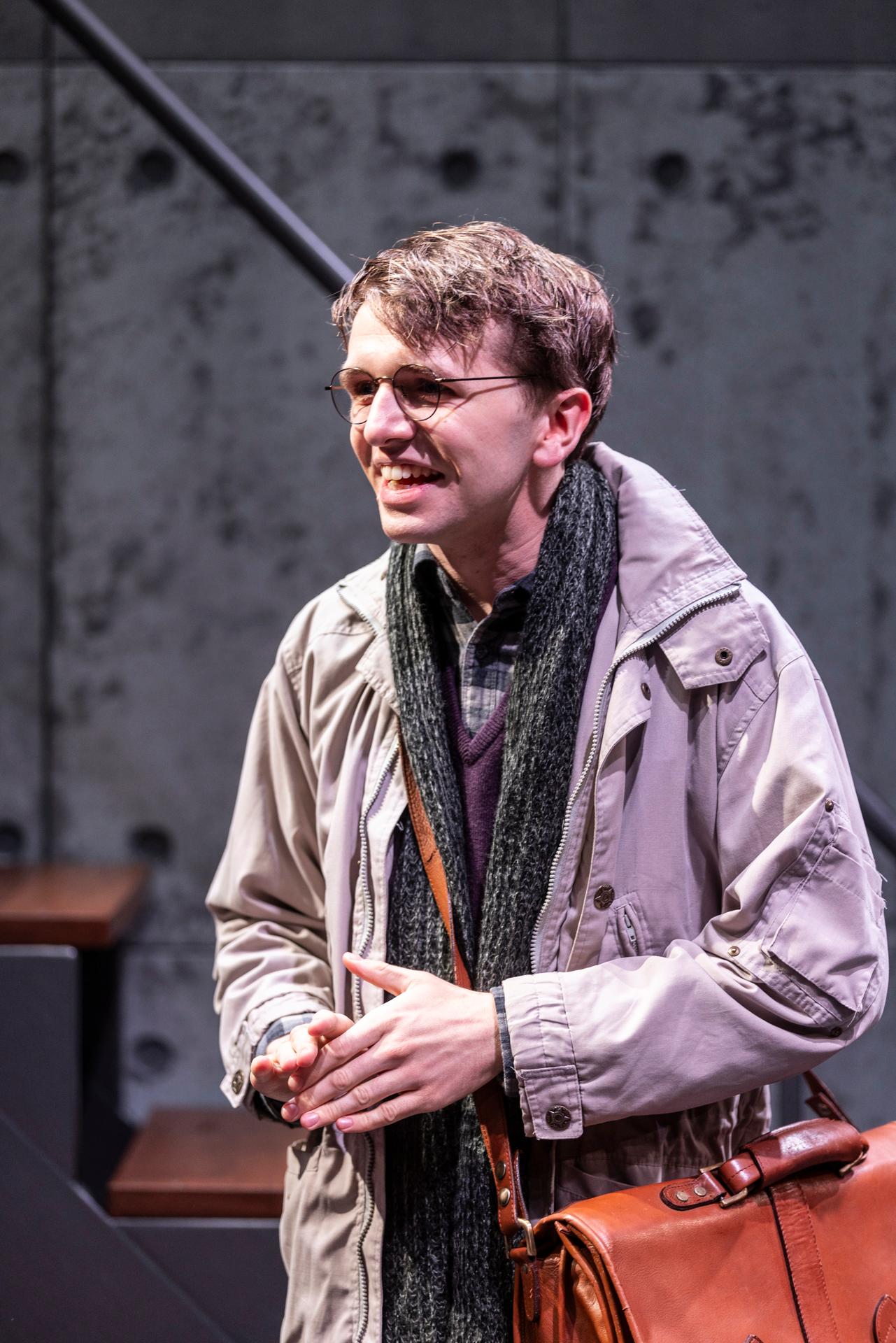
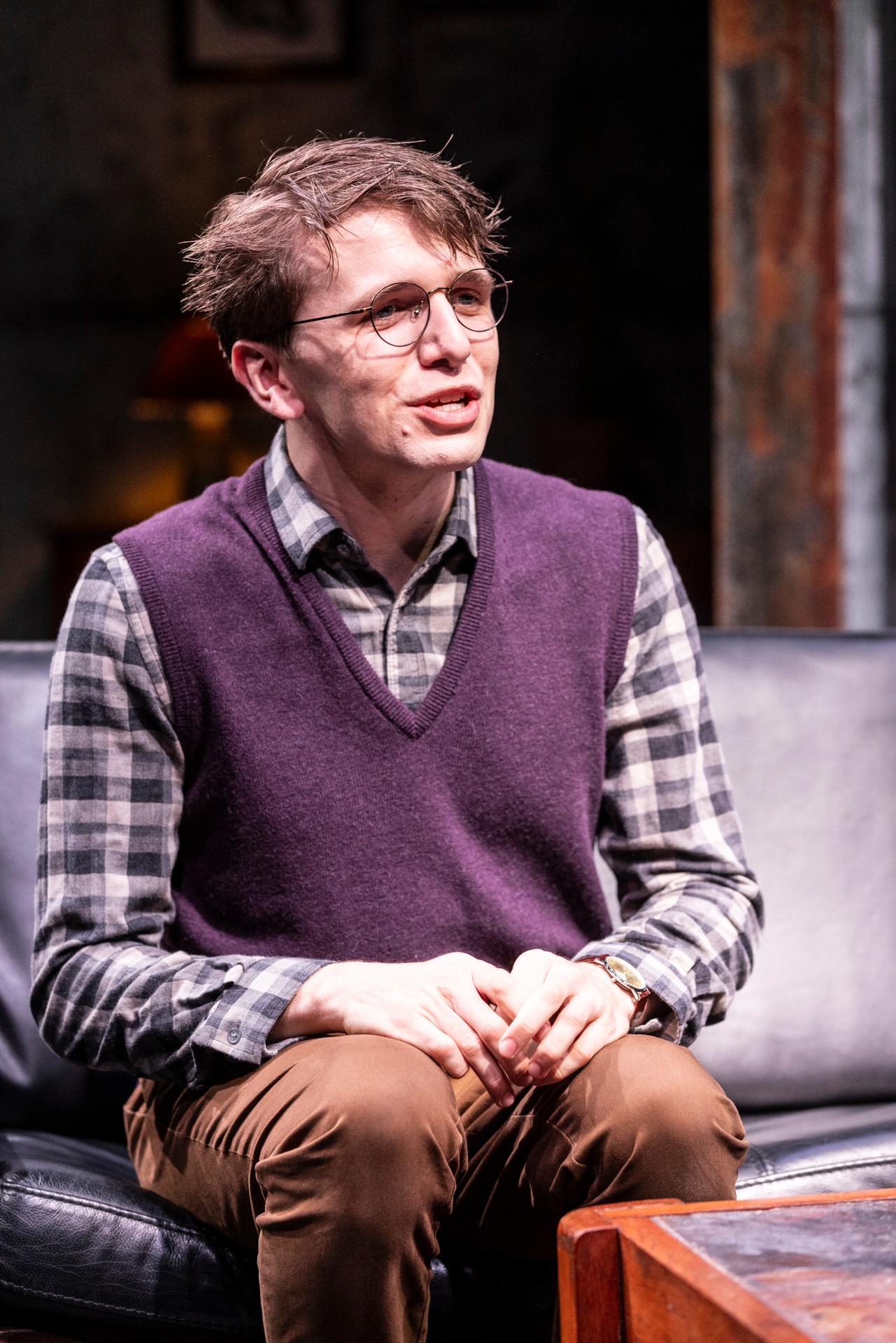
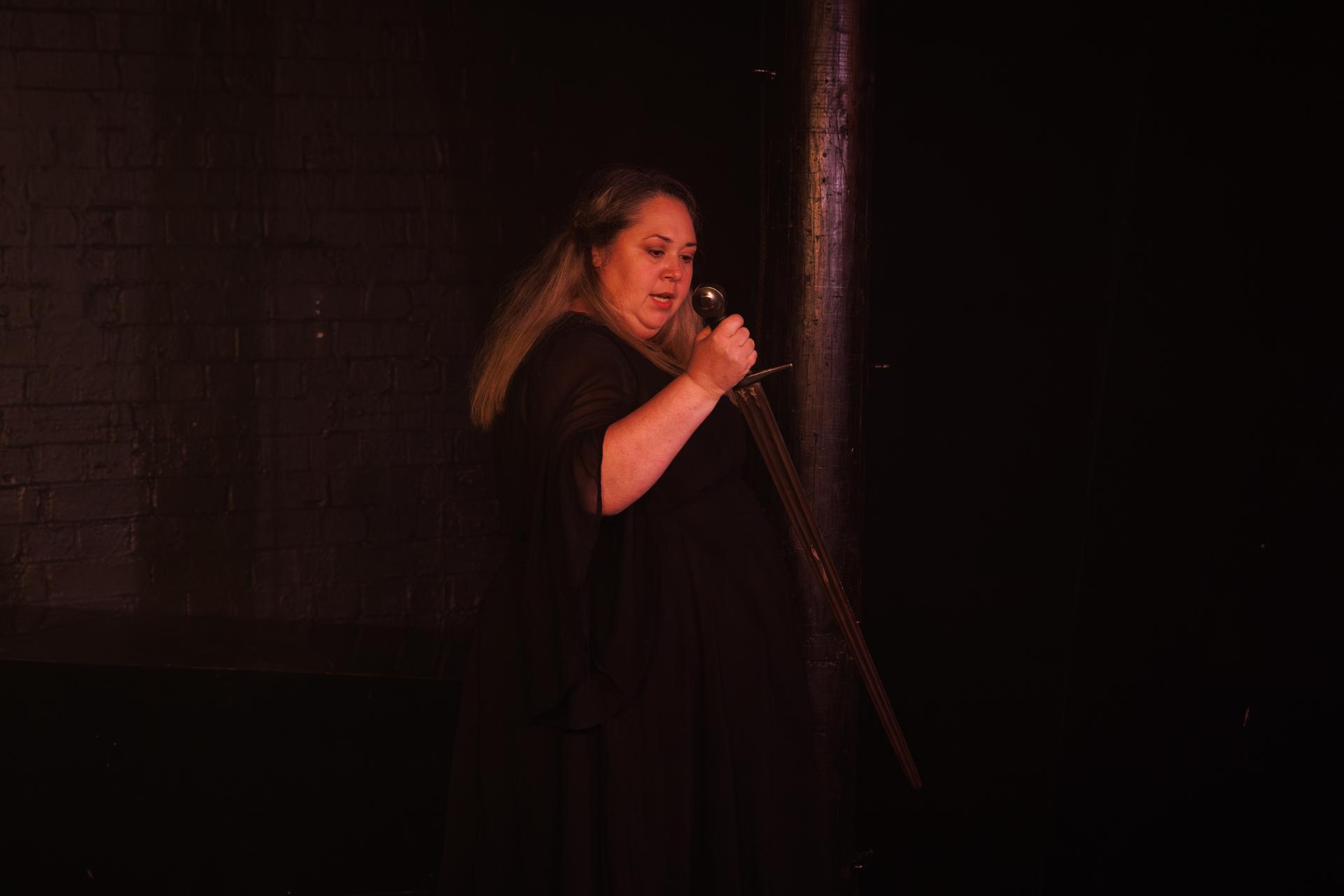
Actor Toni Scanlan brings extraordinary charm to the comical bitterness of Highsmith’s schtick. The character we encounter feels authentic, whilst being irresistibly theatrical, and we find ourselves incredulously mesmerised by that unremitting wickedness. Laurence Boxhall is fabulously nuanced as the stealthily talented Edward, offering endless layers beyond a sparkling American surface, convincing whether playing naïve or morbidly cynical. Chemistry between the two is electric, effortlessly sustained for 90 minutes of delicious storytelling.

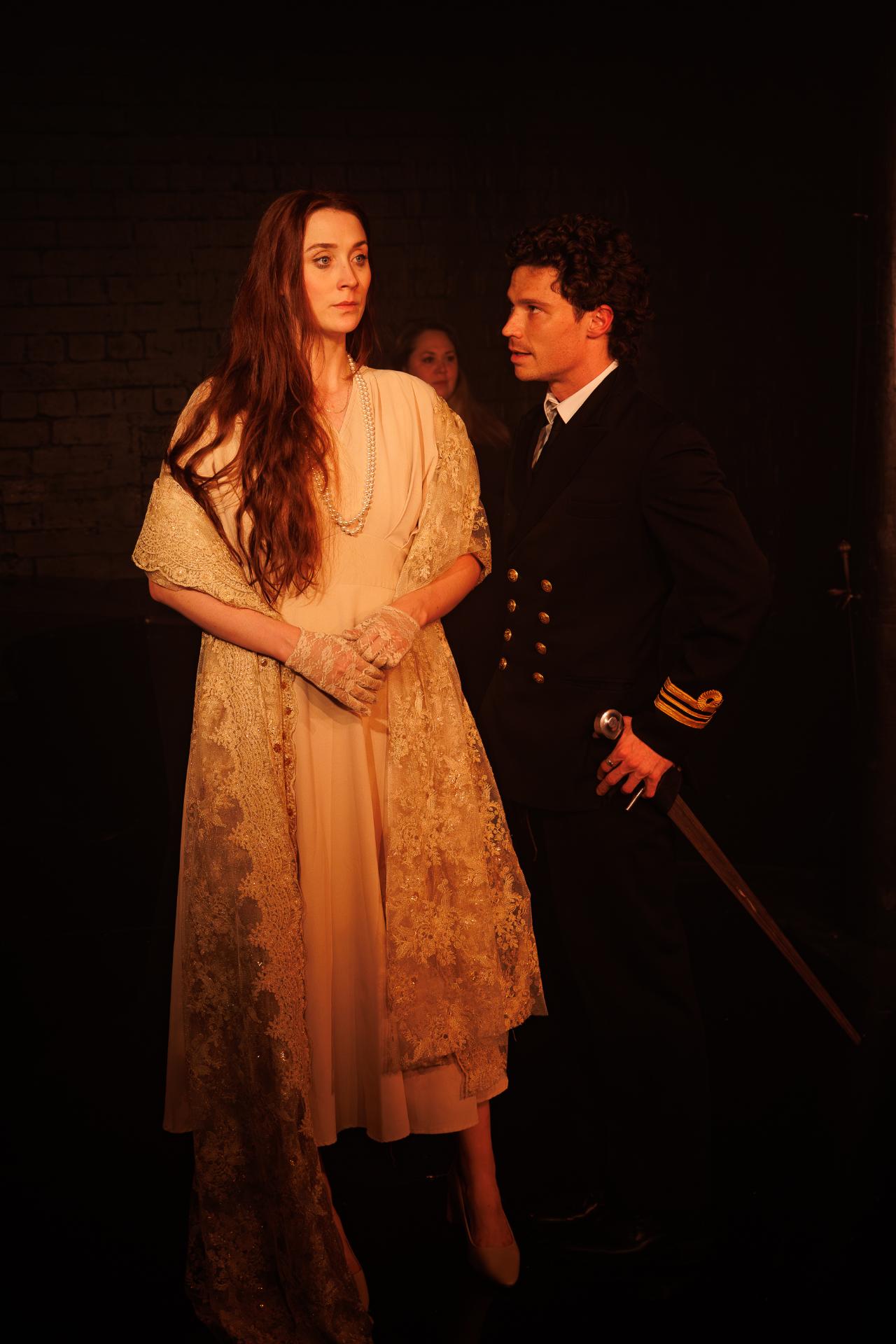
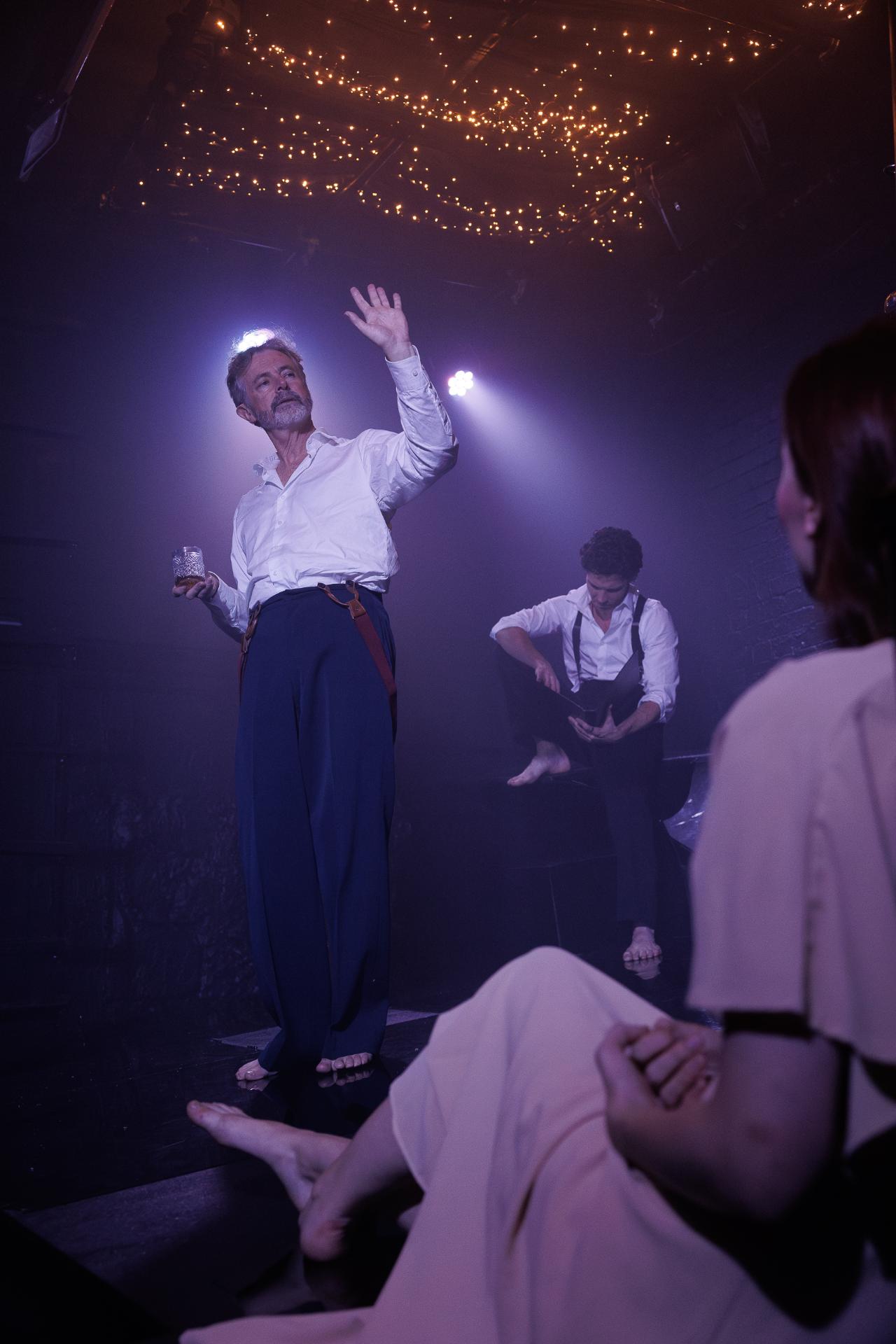
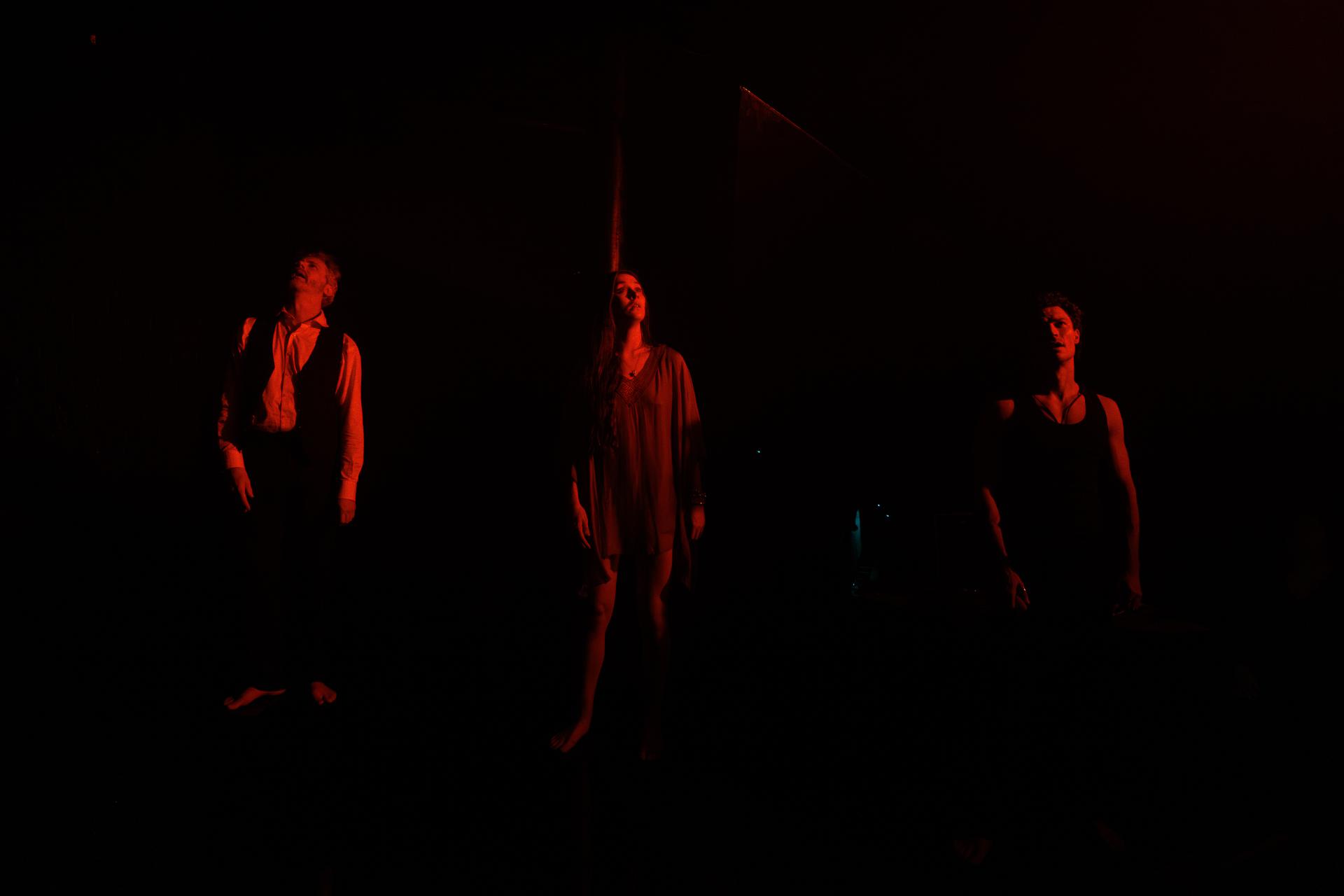
Costumes by Kelsey Lee are appropriate in every way, never distracting and in a sufficiently vibrant palette to help us endear to both personalities. Set design by Veronique Benett is thoroughly elegant, for a home that absolutely befits Highsmith’s status and exacting standards. Benett’s lights, along with Kelly Ryall’s music, are unostentatious to begin with, but as the action turns noir, both rise to the occasion and deliver dramatic transformations to atmosphere that have us spellbound.

In Highsmith’s world, people are never who they seem to be. One may go so far, in Switzerland, to conclude that people rarely even know who they really are. We yearn to have firm grasps of our own identities – it makes our essential evanescence tolerable – but the whole truth of each person’s existence, seems eternally to be a mystery. What is real, is that we continue to seek pathways to understanding, and in that persistence, we can only hope that what we find, is not only glorious, but good.

www.ensemble.com.au

Review: Isolde & Tristan (Old Fitz Theatre)

Venue: Old Fitzroy Theatre (Woolloomooloo NSW), May 3 – Jun 1, 2024
Playwright: Esther Vilar
Director: Damien Ryan
Cast: Sean O’Shea, Tom Wilson, Emma Wright
Images by Kate Williams

Theatre review
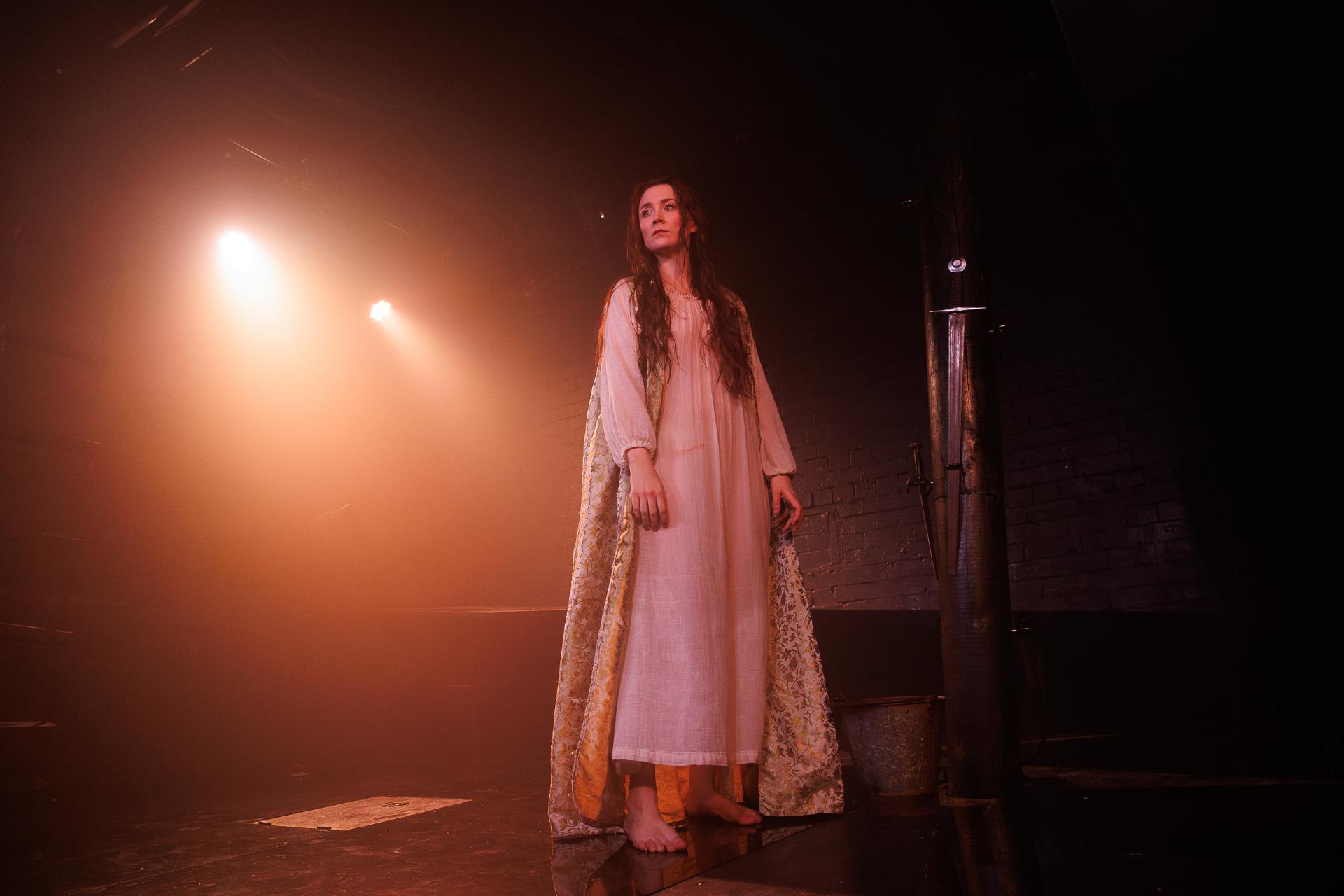
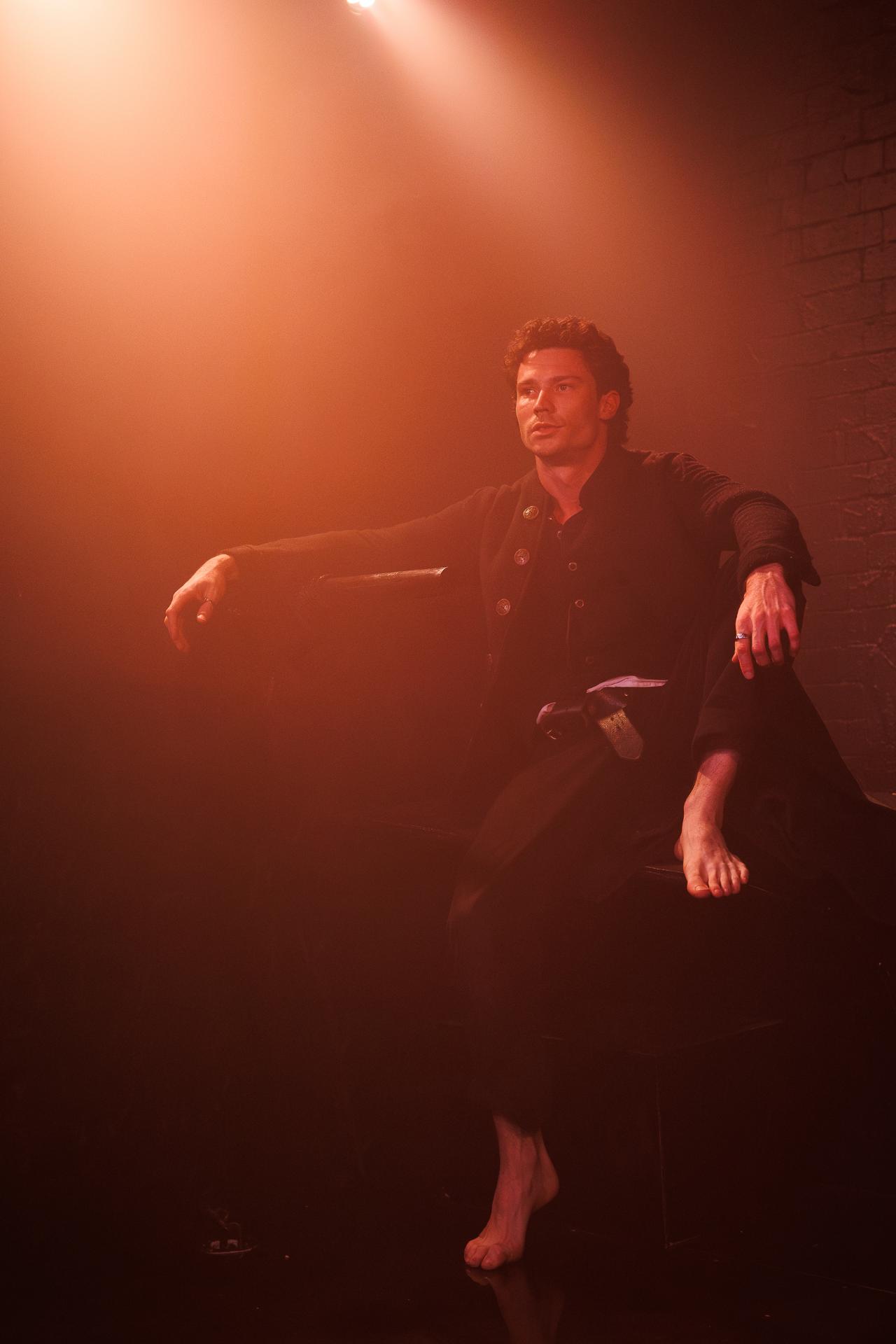
In Isolde & Tristan by Esther Vilar, the Irish princess Isolde is being cargoed off to England, like an item of merchandise, where she is to marry the king of Cornwall. In charge of dispatch, is the handsome Tristan, who had very recently beheaded Isolde’s betrothed, by the king’s order, which makes the journey exceedingly interesting.

The German title of Vilar’s play is Stundenplan einer Rache (or Timetable of a Revenge), which draws unambiguous attention to its revenge narrative, but under Damien Ryan’s direction, in a refreshing translation by Udo Borgert and Laura Ginters, we are made almost to forget the heroine’s vendetta, as she negotiates her very survival, on board a vessel to an anguishing future. The complexities of Isolde’s plans are diluted in the drama, and the show consequently loses tension at some points, but it is nonetheless a charming work memorable for its flirtations with controversy.

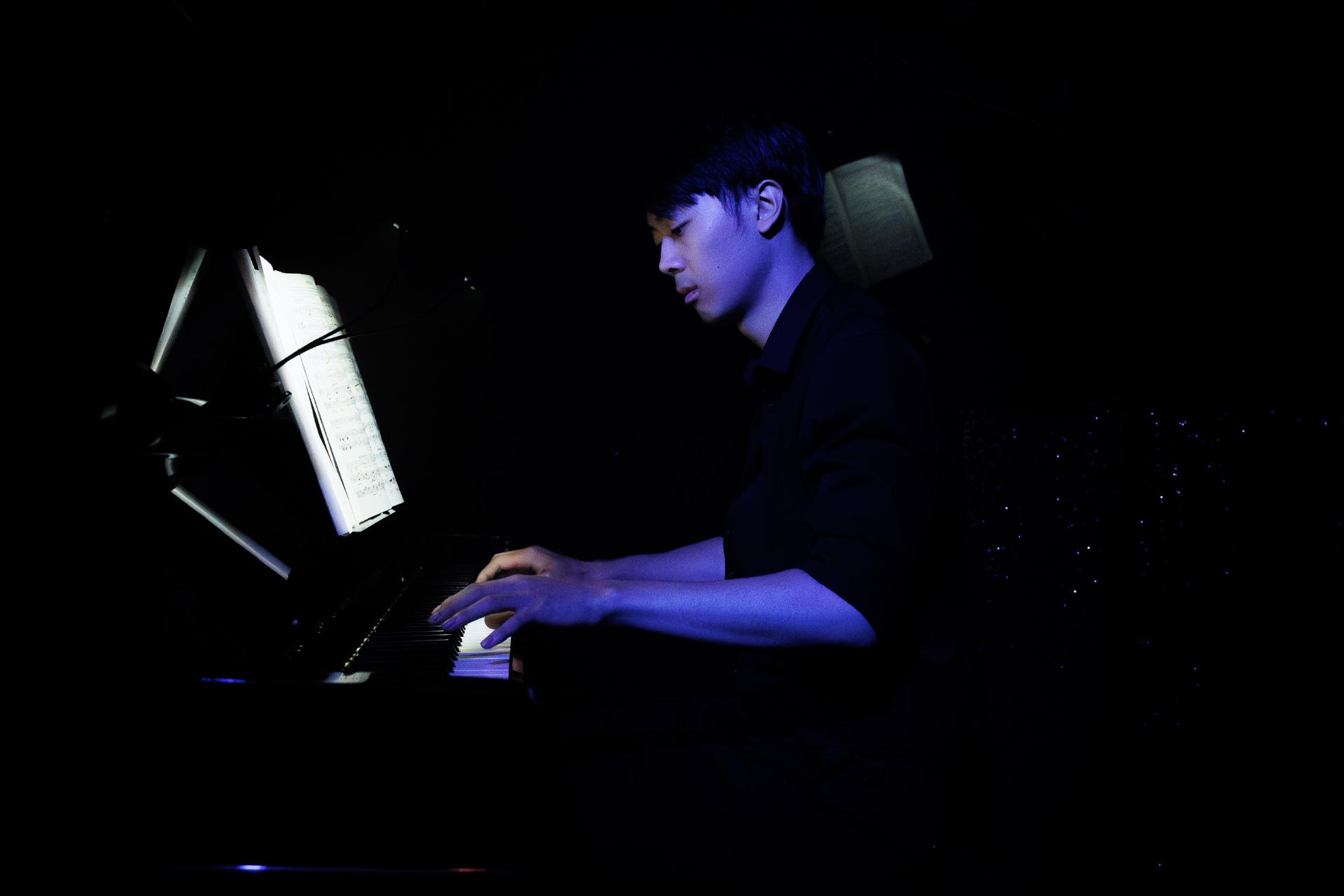
A delicate balance between humour and a sense of danger, is struck by a very competent cast comprising Sean O’Shea, Tom Wilson and Emma Wright, who demonstrate admirable ingenuity and instinct, in their presentation of Vilar’s contentious ideas. Live singing by Octavia Barron Martin, accompanied by Justin Leong on piano, features extracts from Wagner’s Tristan und Isolde to add an extravagance to the experience.

Sound design by Sorie Bangura makes certain our awareness around the characters being at choppy seas. A set by Tom Bannerman delivers alluring, if slightly unrefined, shapes to help us perceive the nautical surrounds, with lights by Sophie Pekbilimli ensuring we are conscious of time’s movement, from one scene to another. The overall visual quality of Isolde & Tristan can be improved, but costumes by Bernadette Ryan are a cut above the rest, with the princess’ attractive and extensive wardrobe proving especially noteworthy.

Isolde’s story seems so much to be about who she belongs to, but even though she has no real autonomy, there is definitely no shortage of agency in how she operates. Vilar seems to celebrate in her writing, the heroine’s capacity at inflicting harm upon her adversaries, even if it comes at an extremely high cost. This is about a woman trying to beat men at their own game. Much as we often have to play by their rules, we know that it is not the gender of winners that matters, but the nature of the game itself. We need to arrive at a place where we can decide on our own circumstances, and never to be possessed by anybody else.

www.oldfitztheatre.com.au | www.sportforjove.com.au

Review: Nayika A Dancing Girl நாயிகா – ஒரு நாட்டியப் பெண் (Belvoir St Theatre)

Venue: Belvoir St Theatre (Surry Hills NSW), Apr 30 – May 19, 2024
Creators and Directors: Nithya Nagarajan, Liv Satchell
Cast: Vaishnavi Suryaprakash
Images by Brett Boardman

Theatre review
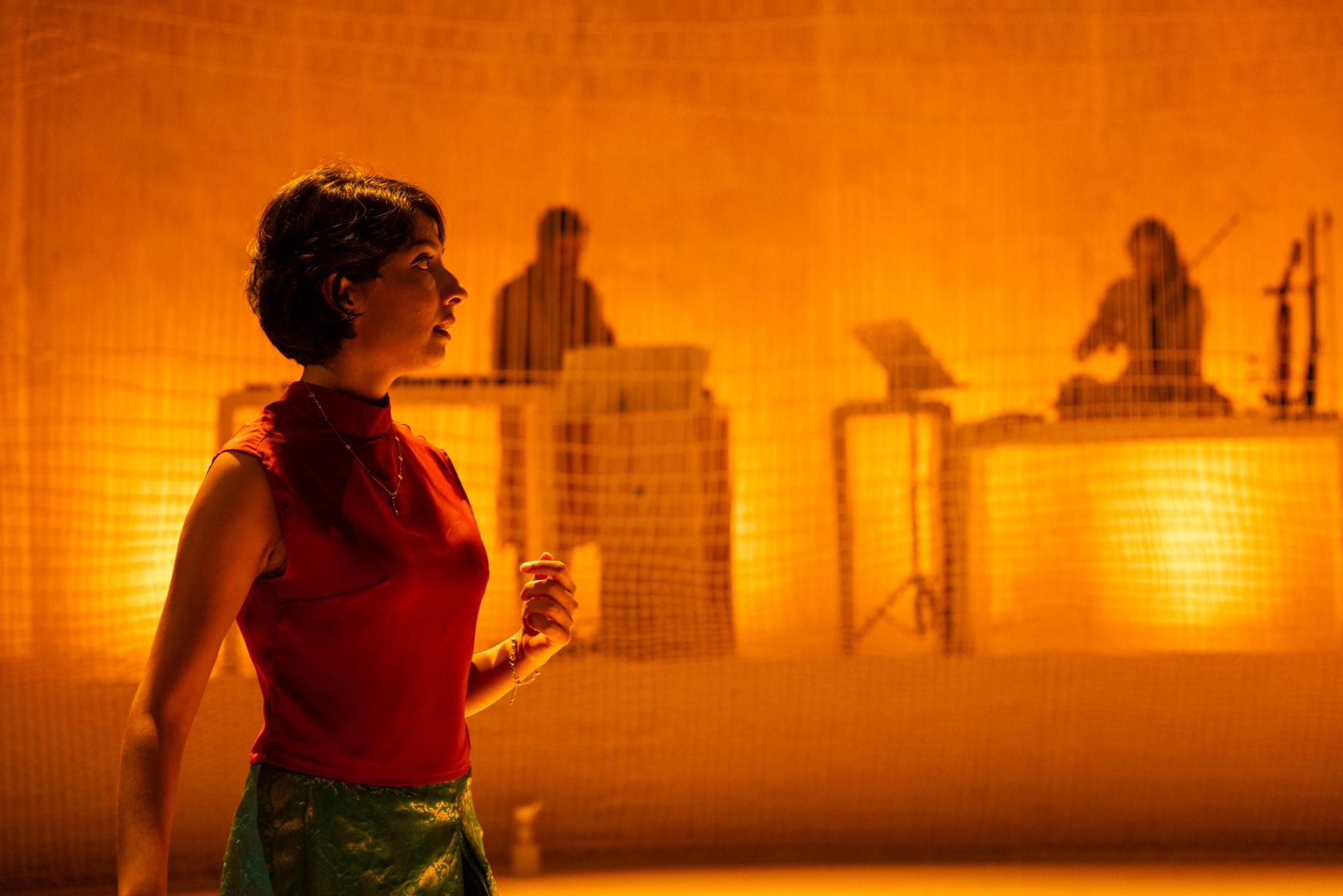
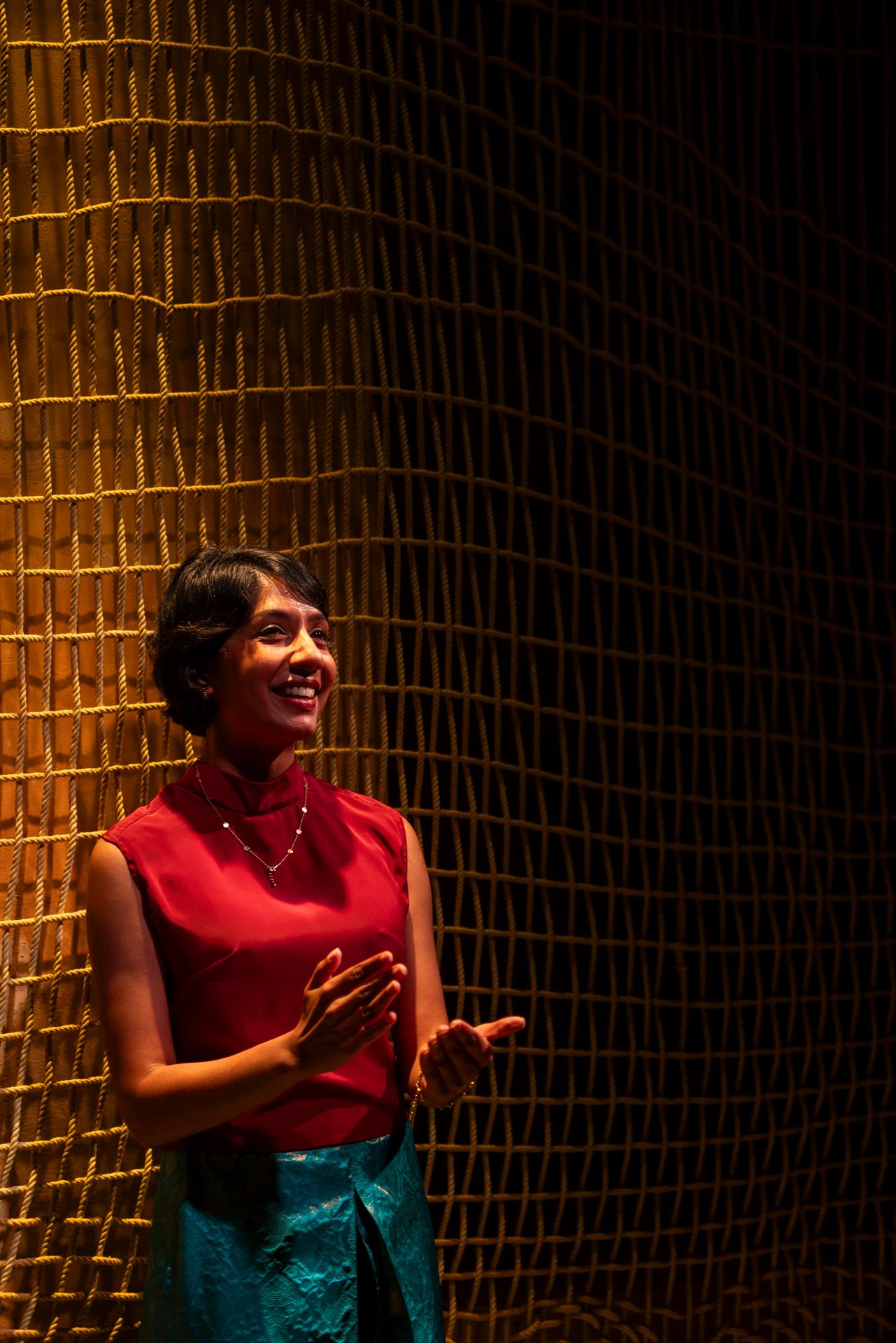
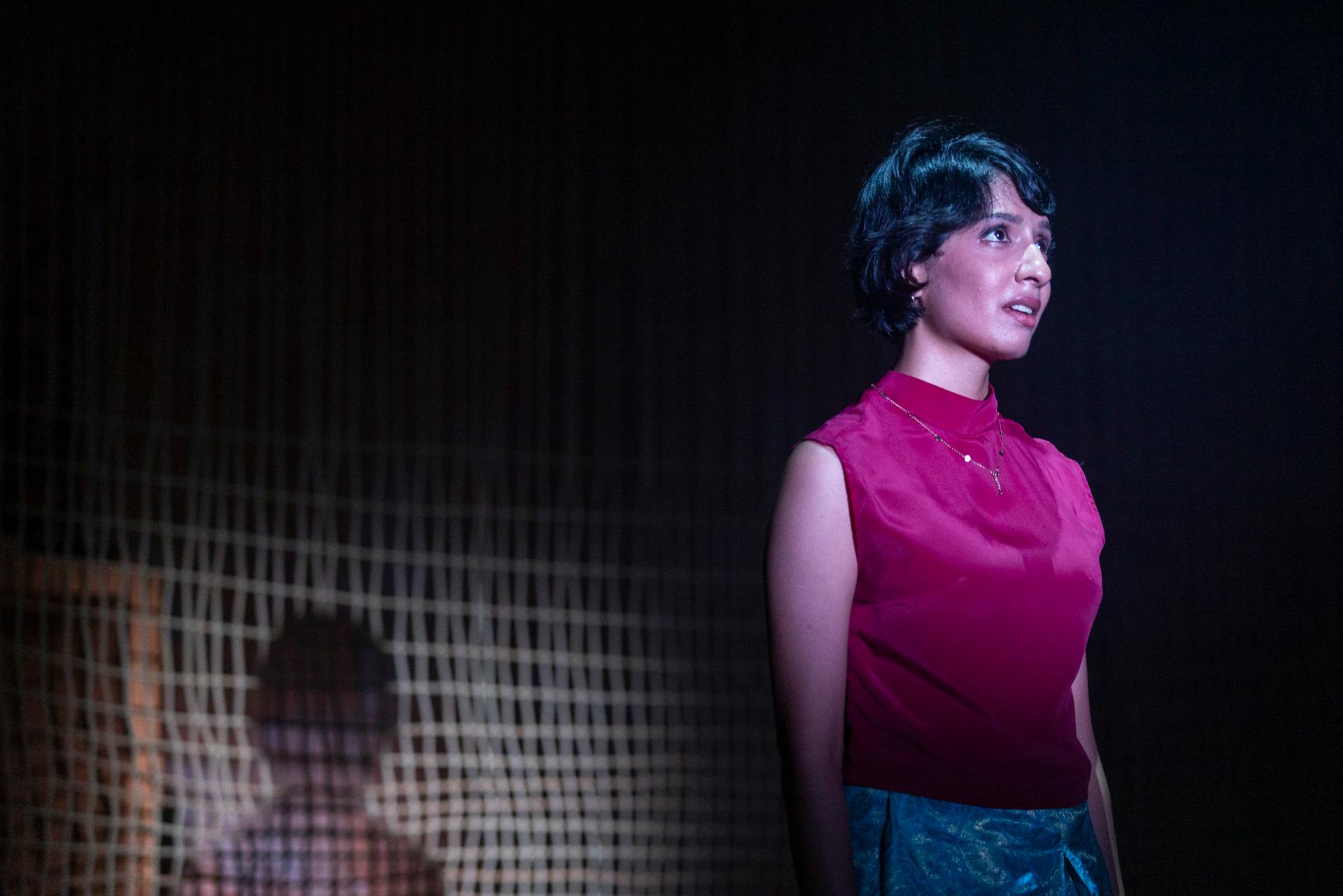
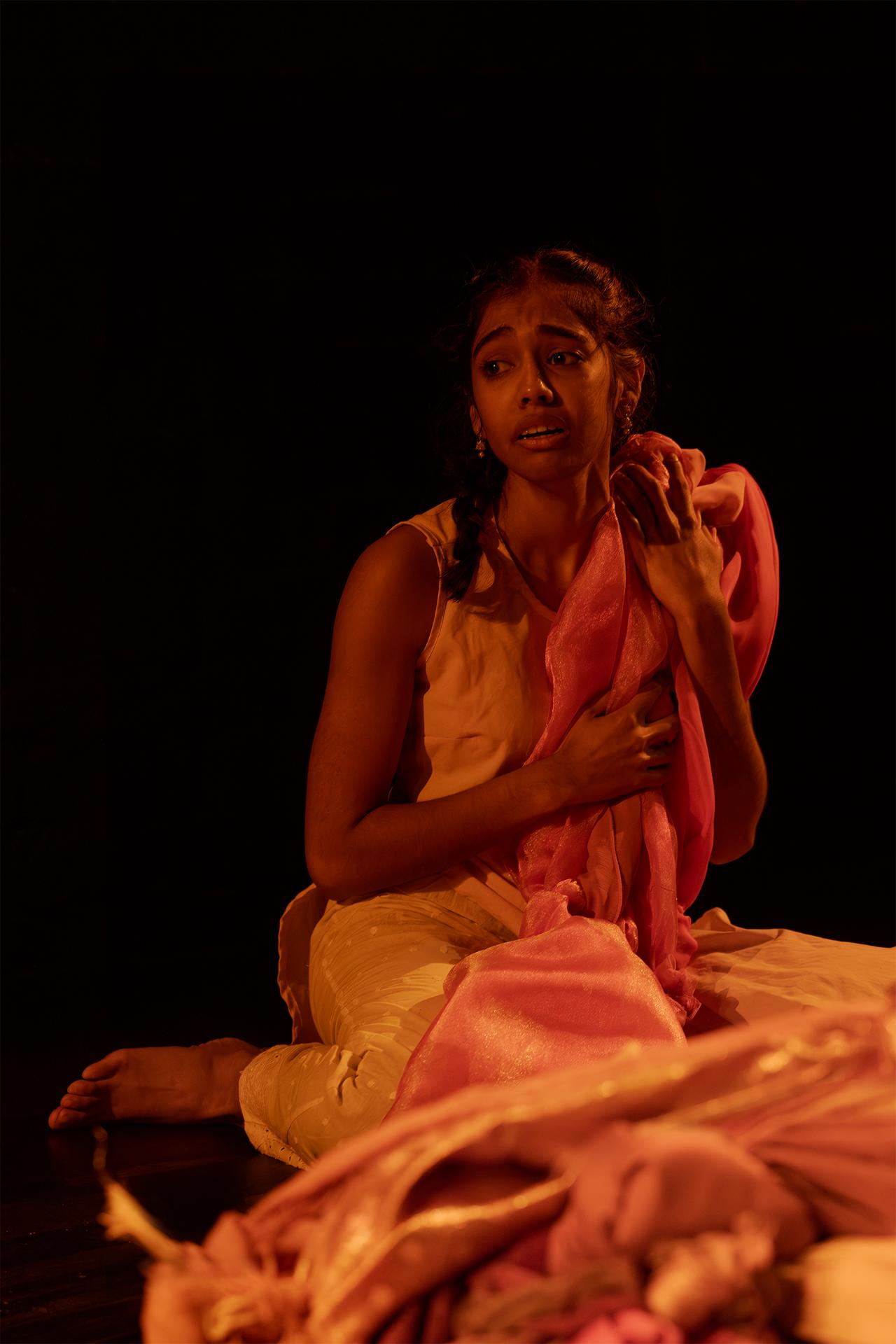
When we meet the heroine of Nayika a Dancing Girl, she is just becoming ready to face the hard truths of her past, and recall the trauma that has pushed her away from her loved ones in India. With the passage of time, and having found a sense of security in her safe harbour of Australia, our unnamed protagonist is now able to confront the hidden parts of herself, that are scarred by having experienced intimate partner violence, when she was but a teenager. In order to survive, there are things that need to be psychologically sequestered, but for a person to truly thrive, their emotions require healing, and those can be attended to, as one becomes stronger over the years.

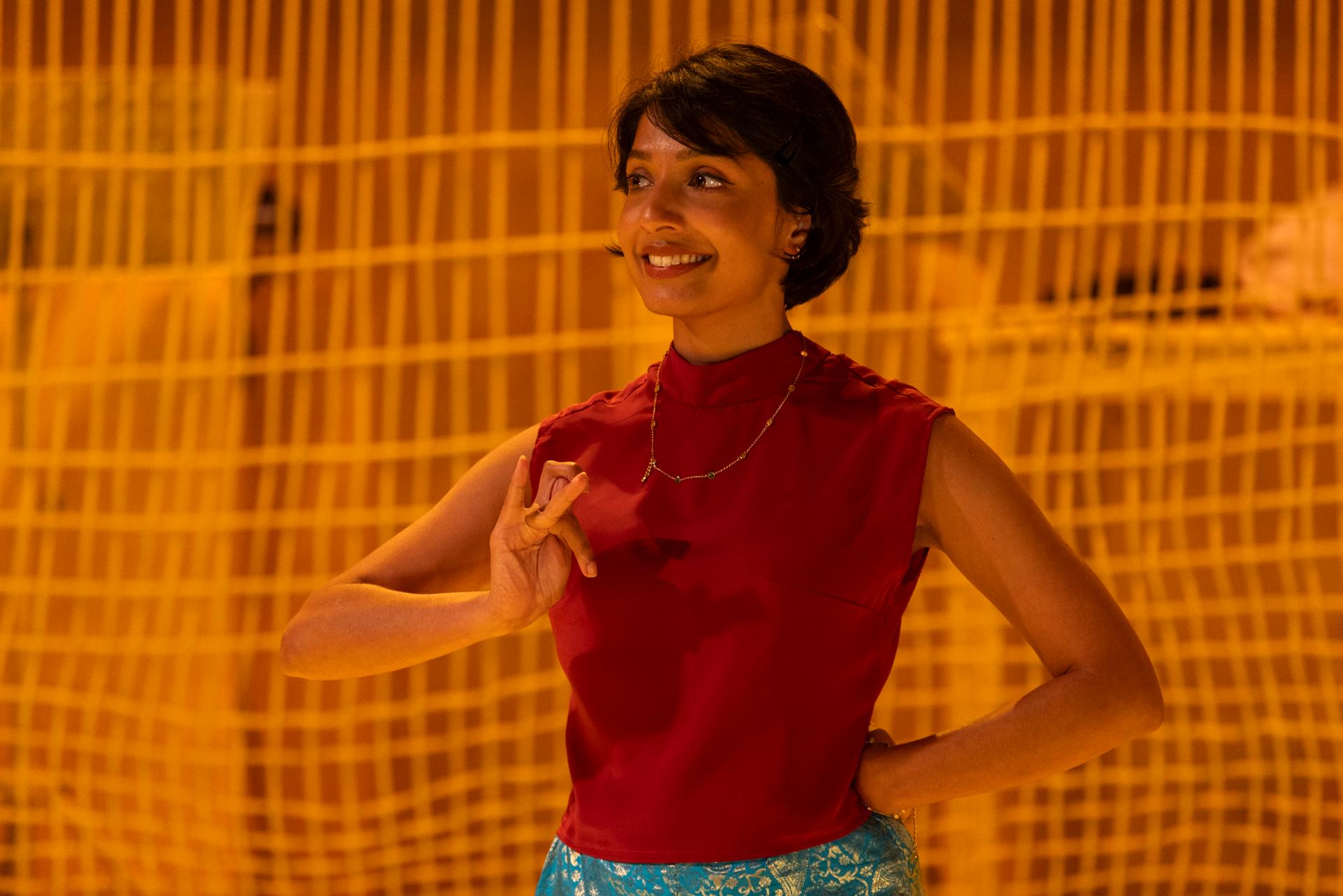
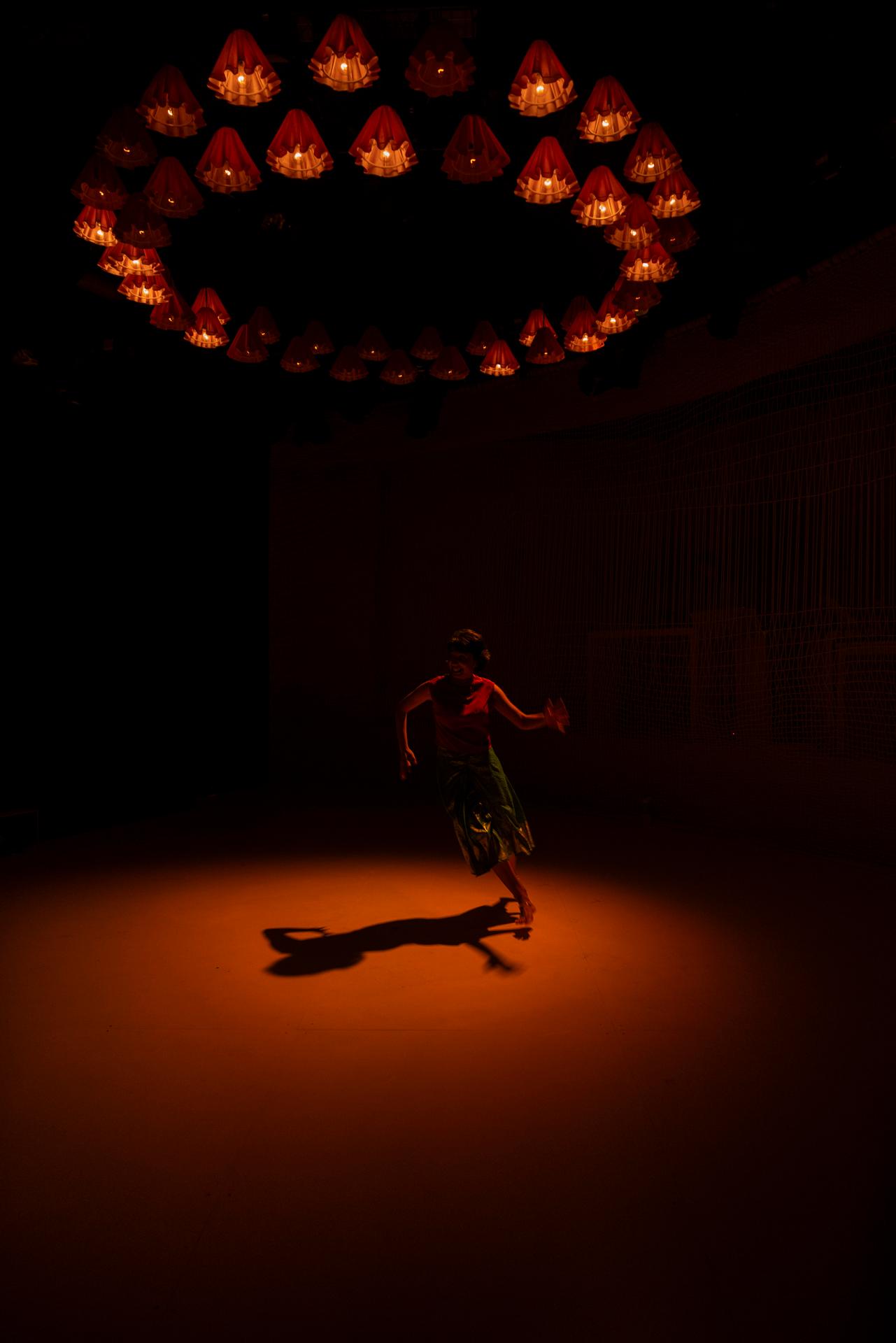
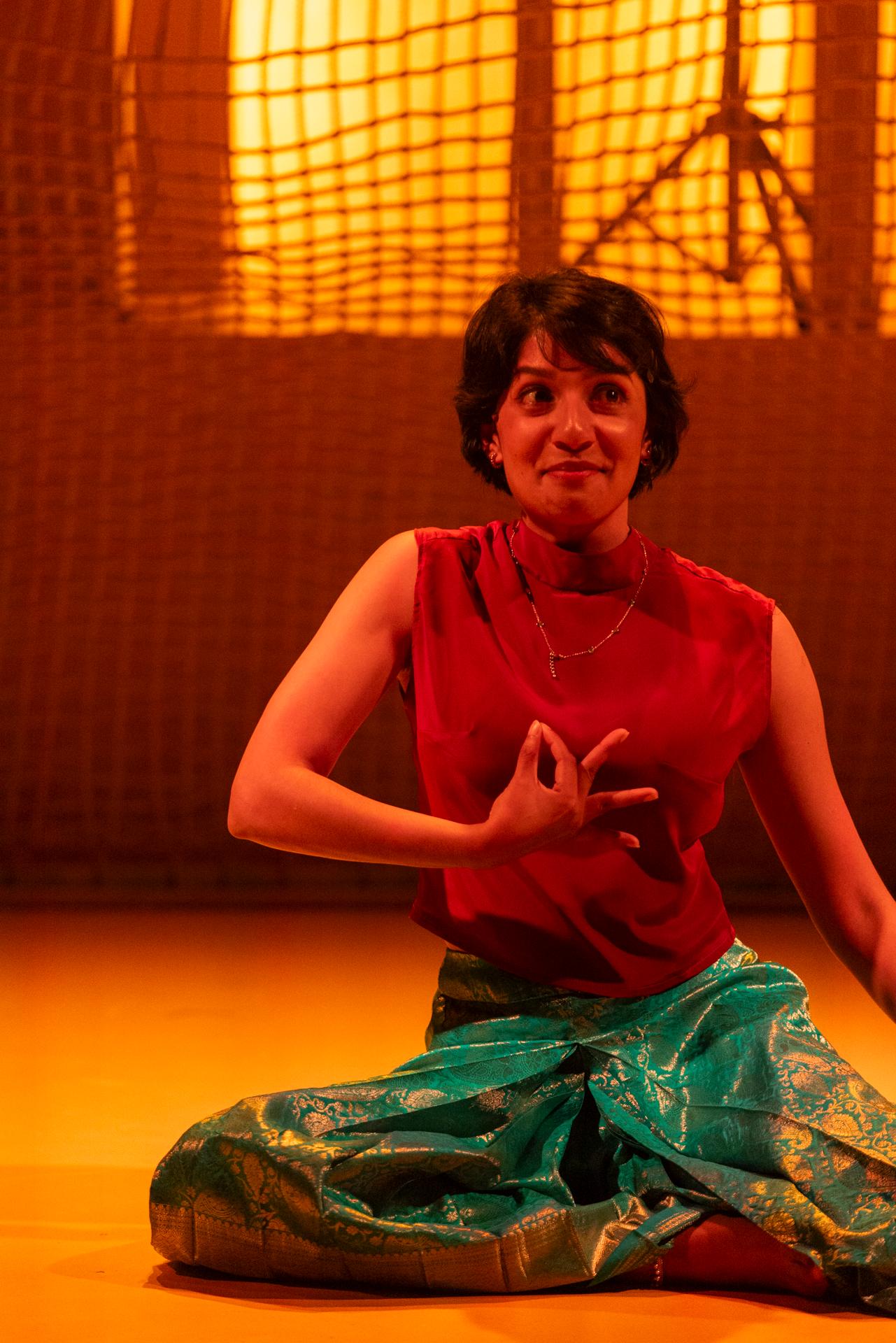
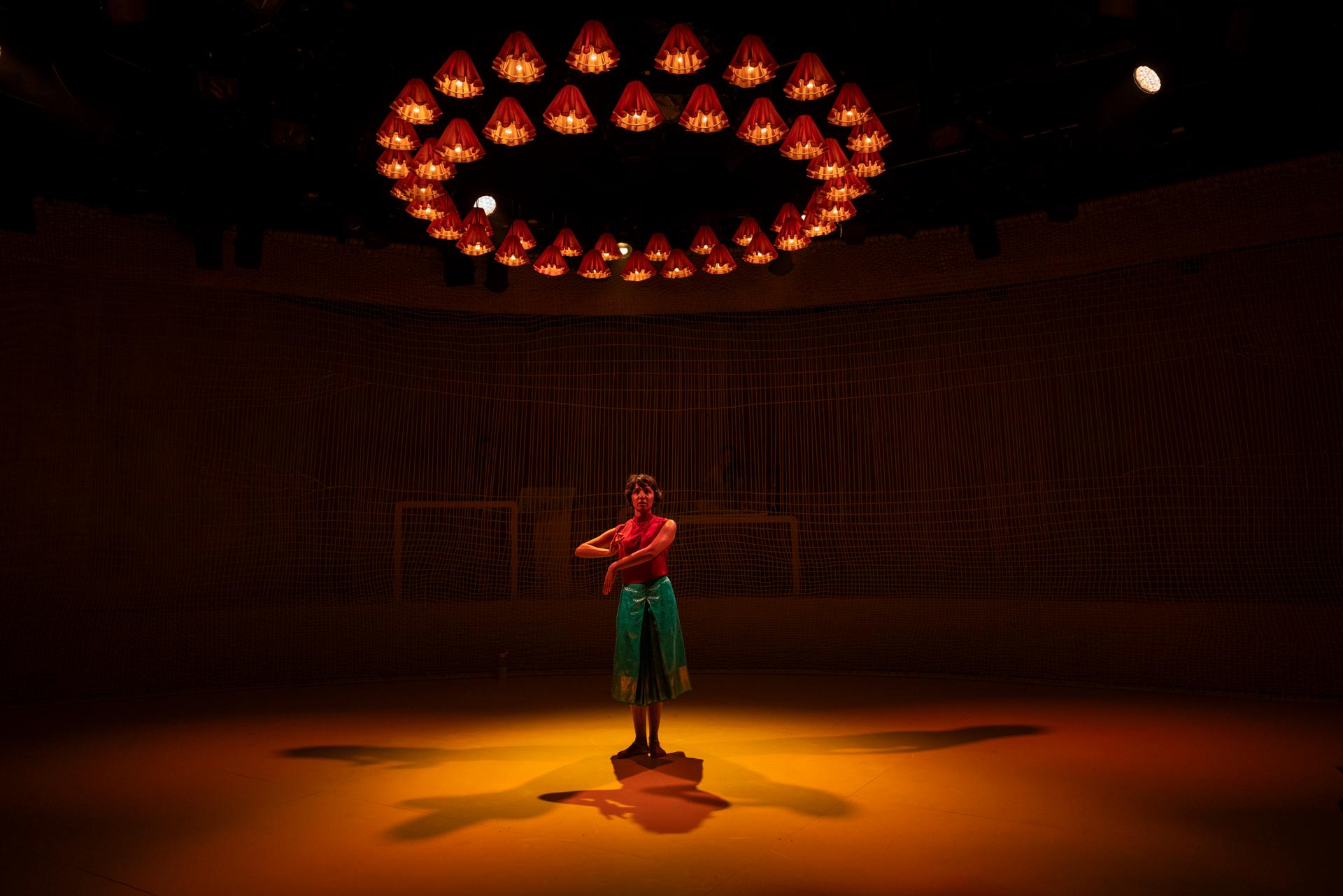
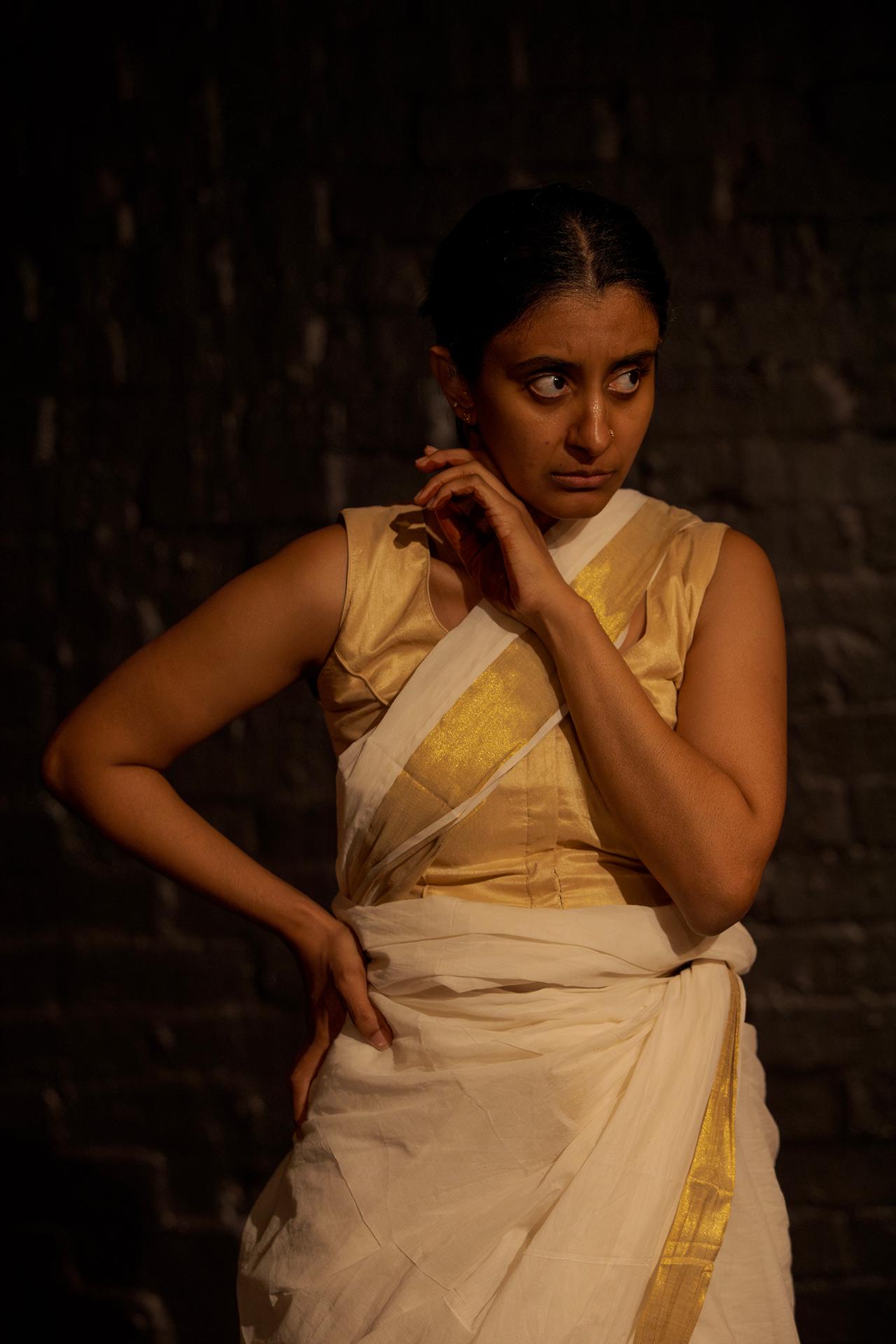
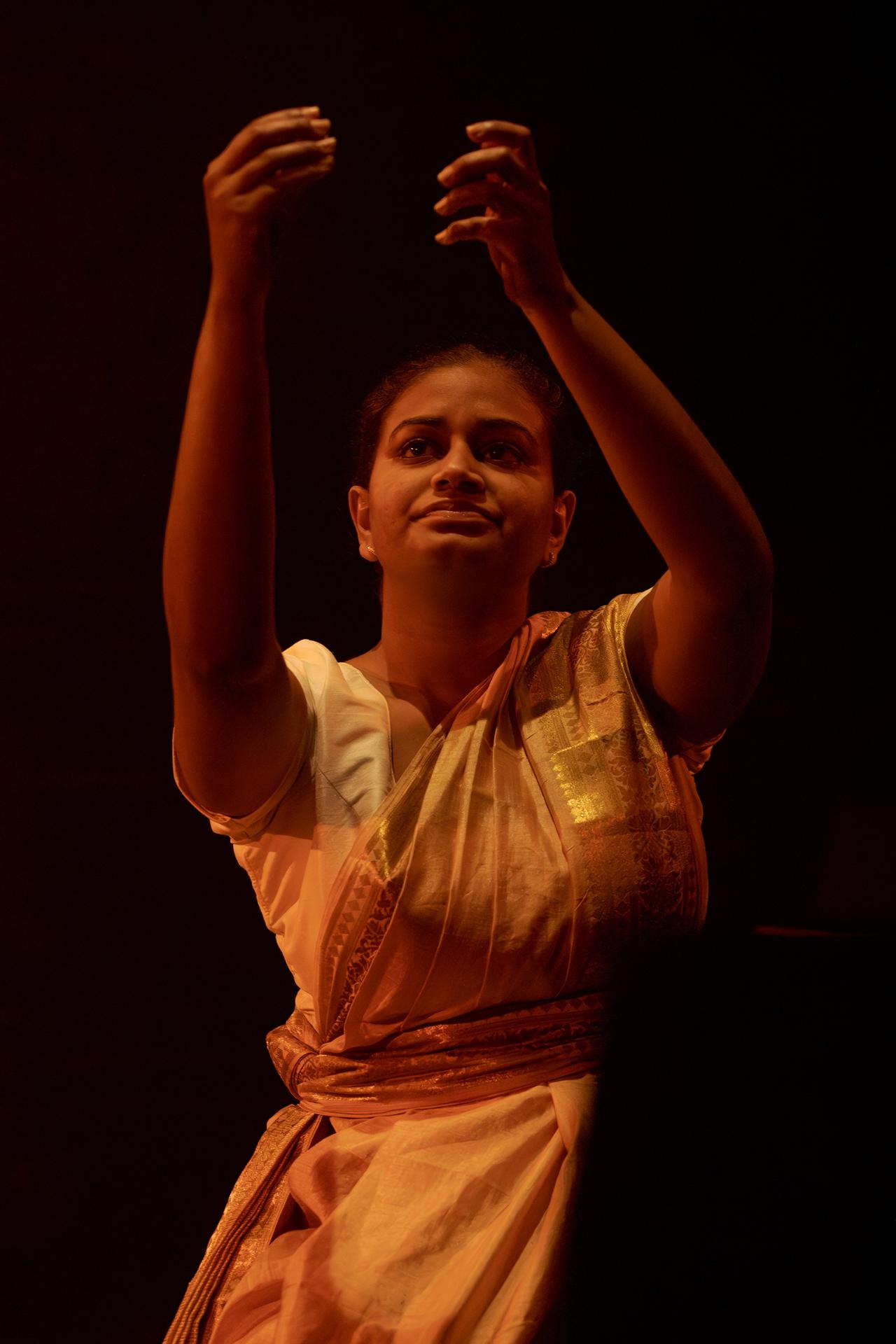
Created and directed by Nithya Nagarajan and Liv Satchell, Nayika a Dancing Girl tells a story of recovery and triumph, through an amalgamation of western theatrical conventions and the Indian classical dance form of Bharatanatyam. The production is visually compelling, with brilliant choreography set against the tranquil elegance, of Keerthi Subramanyam’s scenic and costume design. Morgan Moroney’s dynamically alluring lights further enrich the atmosphere, as do live music by Marco Cher-Gibard and Bhairavi Raman, delivering for the show a luxuriant aural dimension.

Actor Vaishnavi Suryaprakash is the unequivocal main attraction, with unassailable magnetism, steadfast energy and focus, along with a passionate and authentic approach to the material, that keep us absolutely riveted. The play bears a regretfully halting pace, and a structure that communicates with insufficient power, but Suryaprakash is nonetheless captivating, consistent in her ability to persuade us of the gravity of Nayika and its themes.

It is evident that some of our enduring problems will not find resolution, even after repeated attempts for rectification, from within established systems and conventional approaches. The dancing girl in Nayika has had to abandon an entire culture, and seek refuge elsewhere, before she can pick up the pieces, by creating meaning out of a refreshed consolidation of diverse perspectives. The old ways were never going to serve her, in fact they were made to bolster the behaviour of assailants. To find something effective, has meant that she needed different points of reference. To leave, may look like quitting, but it is that courage to stand on one’s own convictions, against persistent pillars of conformism that are patently harmful, that will set a person free.

www.belvoir.com.au

Review: Aurat Raj عورت راج औरत राज (25A Belvoir)

Venue: Belvoir St Theatre (Surry Hills NSW), May 2 – 19, 2024
Playwright: Pratha Nagpal
Director: Pratha Nagpal
Cast: Vinaya Elijala, Nikki Sekar, Anusha Thomas, Kirthihaa Veluppillai
Images by Phil Erbacher

Theatre review
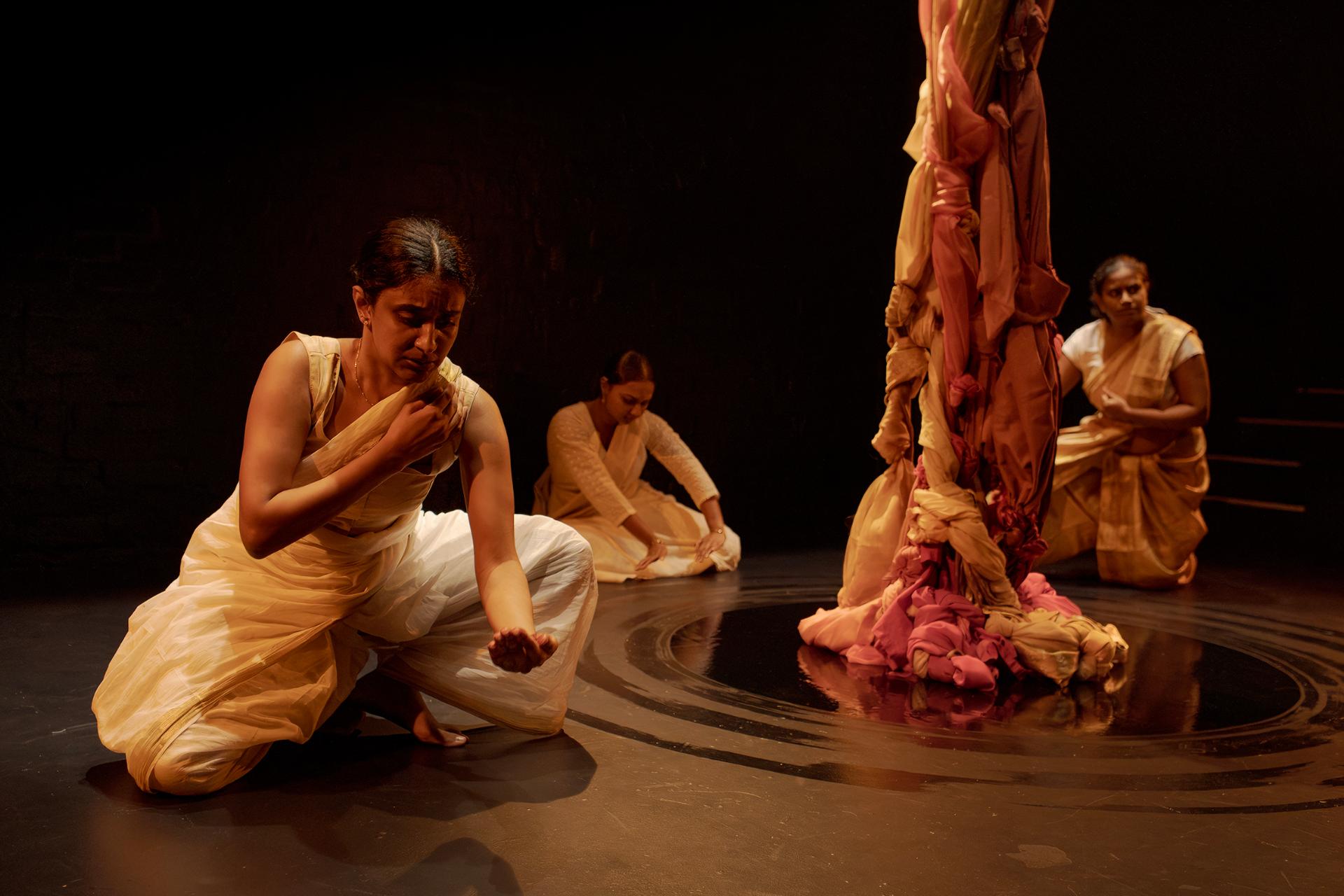
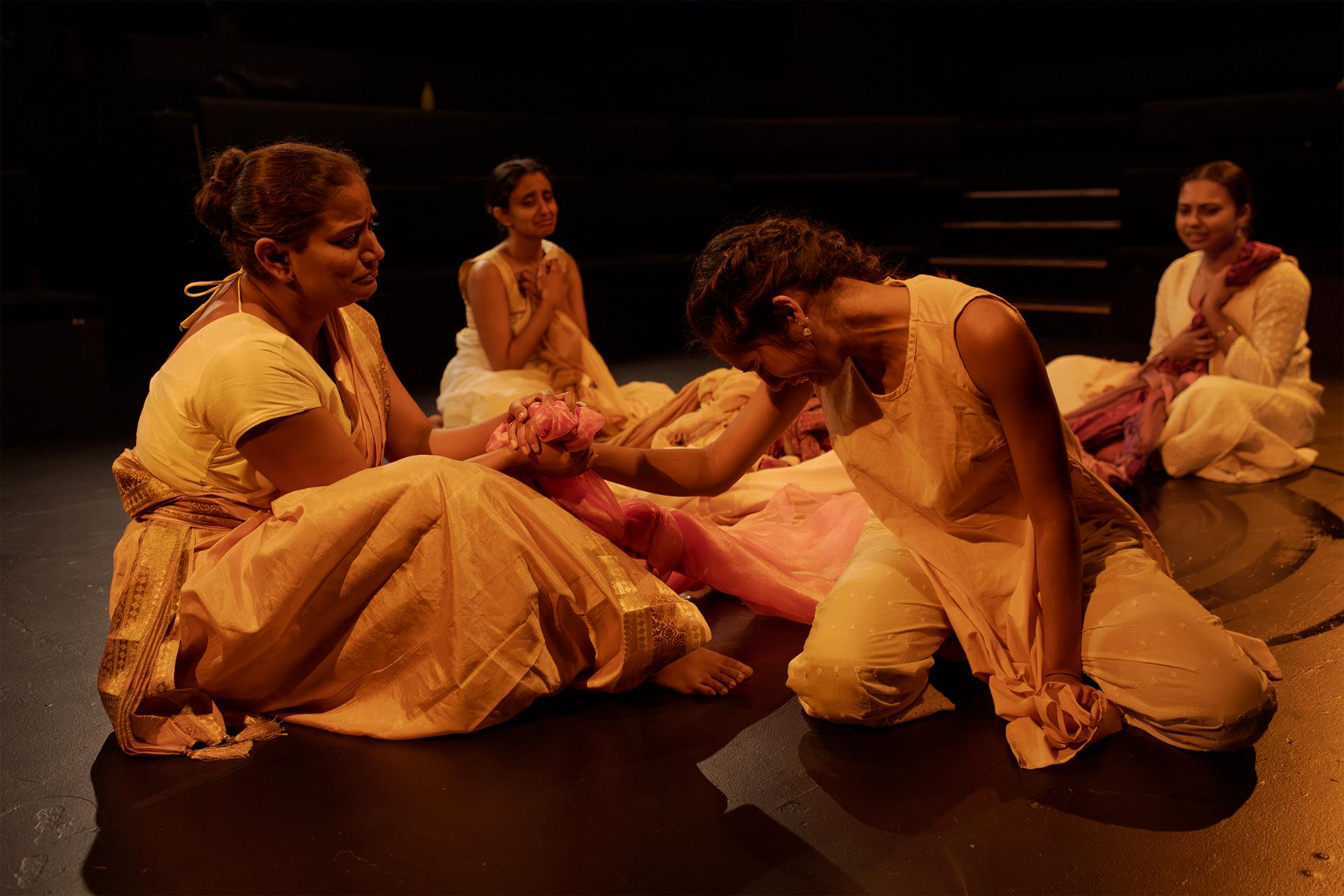
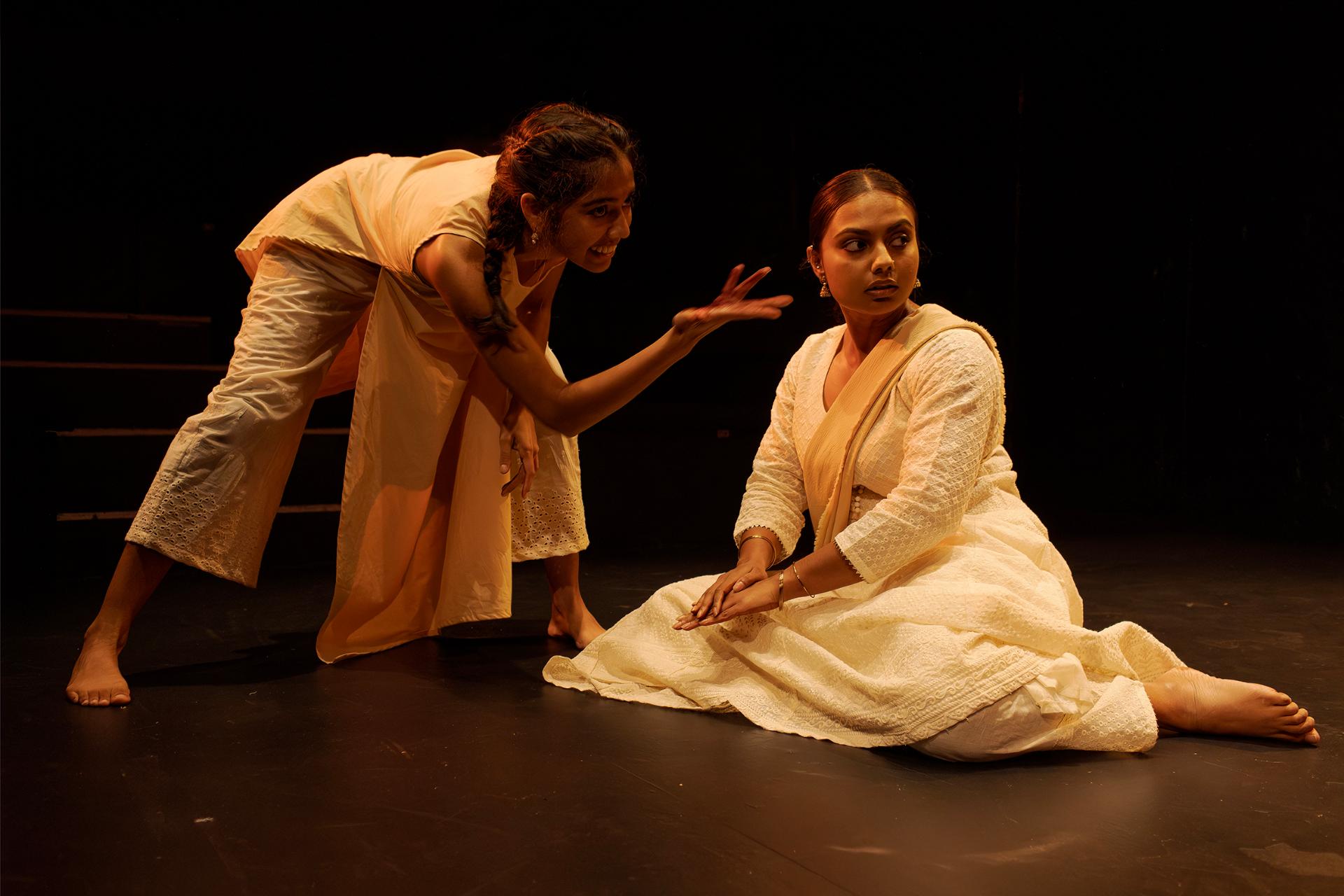
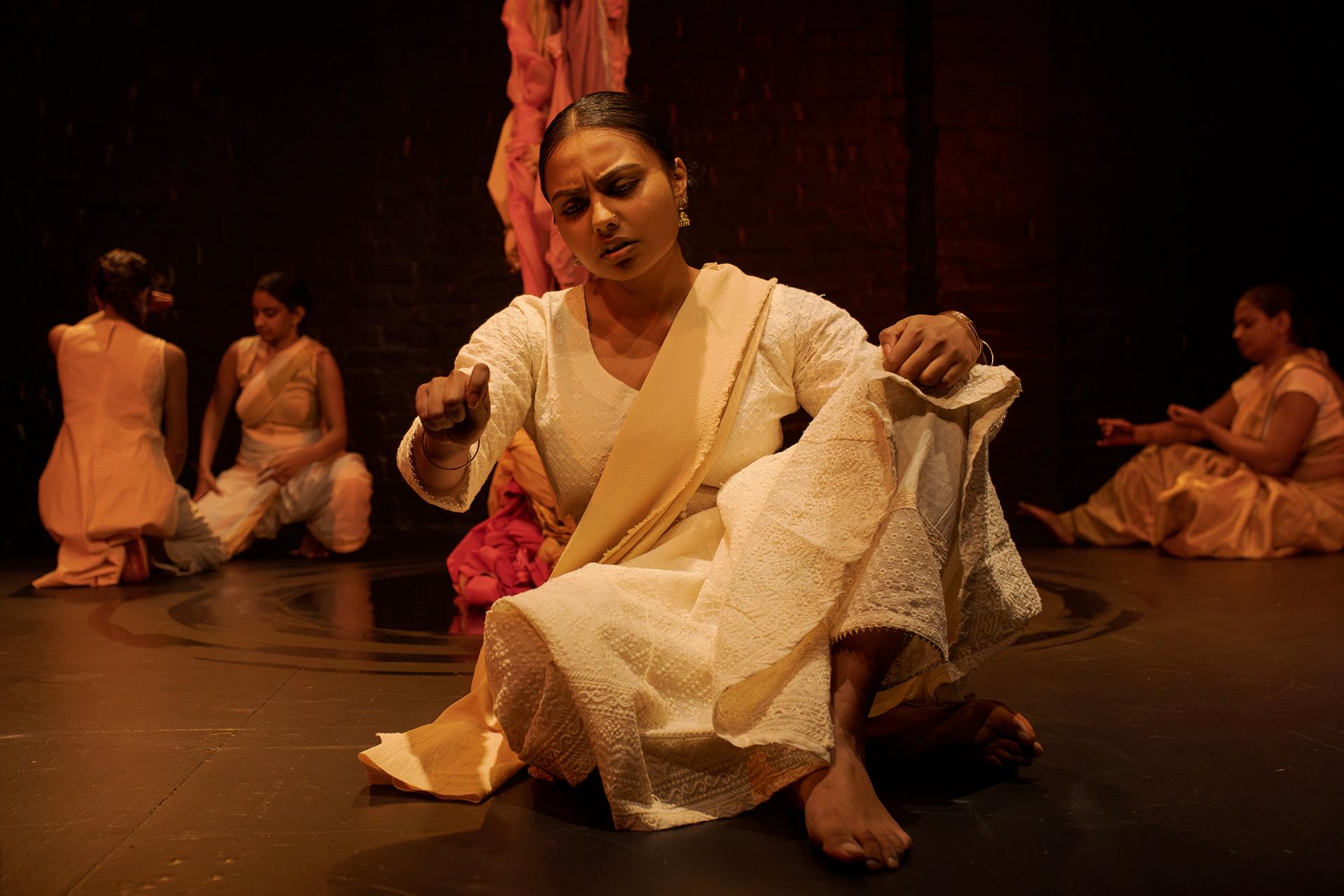
Four women are hard at work. Their tasks appear menial and repetitive, but there is a level of dedication that cannot be denied, except for the youngest of the group. She questions the ritualistic practices, but being the factory’s only rebel, faces only repudiation and castigation. Pratha Nagpal’s wonderful Aurat Raj, named after a 1979 Pakistani feminist film, interrogates the meanings of labour and womanhood, within structures that rely on women yet keep us simultaneously subjugated. The absence of male characters further explores the ways in which we enforce instruments of control, on behalf of those who have little concern for our interests.

Aurat Raj might be considered a presentation in the form of physical theatre, but it is unequivocal that the splendid ensemble offers expressions far beyond western conceptions of dance. Vinaya Elijala, Nikki Sekar, Anusha Thomas and Kirthihaa Veluppillai bring a sentimental quality that relay the emotional and psychological complications, of being cogs in systems, whether or not we understand those systems to be functioning to our disadvantage. Movement direction by Sekar is full of grace, with a simplicity for the piece that ensures its symbolism resonates effectively.

Production design by Hailley Hunt introduces a sense of ethereal beauty to the production, along with lights by Tyler Fitzpatrick that deliver remarkable sensuality, to this portrait of woman as both heroic and tragic. Sounds and music by Christine Pan are exquisitely rendered, to offer something transcendental that connects us with the people on stage, and with the larger implications of their earnest, if slightly timid, storytelling.

We understand that the machine will exert punishment, when it detects disobedience. Some of us cannot help but adhere to its every whim and fancy, but there will always be a few who take a more risky approach, even if it means suffering ramifications. It is to those who are fearless and self-sacrificial that we owe gratitude, for it is their incremental efforts that has moved us progressively forward, as we await the next big revolution.

www.belvoir.com.au

Review: Tell Me On A Sunday (Hayes Theatre)

Venue: Hayes Theatre Co (Potts Point NSW), Apr 12 – May 5, 2024
Music: Andrew Lloyd Webber
Lyrics: Don Black
Director: Blazey Best
Cast: Erin Clare
Images by John McRae

Theatre review
There was a time, approximately half-a-century ago, when men would create shows about women who had no interest for anything else but love. They would dream up pretty young things who wanted nothing other than to find a man, presumably a specimen much like themselves. Andrew Lloyd Webber and Don Black’s 1979 creation Tell Me on a Sunday is a one-act song-cycle, that sees “the girl” wandering from England to New York and to Hollywood, just chasing candidates for marriage, presumably because for her to have any other purpose, would be terribly inconvenient. At just over an hour long, the pair clearly did not know much about the character they purport to represent, and although of brief duration, some might consider Lloyd Webber and Black’s show to be tiresome even before its halfway point.

In this 2024 iteration, direction by Blazey Best does accord “the girl” an attitude of gumption and vigour, she is certainly no shy retiring type, but it is nonetheless irksome to see her want nothing but to land a man. The songs are very much of that period, none of which are particularly catchy, although musical direction by David Gardos is notable for offering enjoyable nostalgia through his faithful renditions, of these compositions about missed opportunities.

Performer Erin Clare sings the score with precision and passion, and although motivated to bring a sense of integrity to the character she embodies, it is difficult to see her as anything but lost and excruciatingly misguided.  Costumes by Ruby Jenkins are flattering, if not always accurate with the era being depicted. Lights by Kelsey Lee deliver sumptuous imagery, along with a sense of time’s passage, as we see “the girl” wasting her best years, running from one failed romance to another.

Even the love obsessed, must contend with the existence of other things, if only for survival. It can be true that a person like “the girl” did exist, especially at a time when we were determined to indoctrinate that being wife and mother, was the ultimate virtue. How we talk about women though, needs to be much more generous in scope. Not all women have to be ambitious, powerful, wise, or resilient, but we do need to make stories be about our agency and autonomy. In stories at least, we need to be able to put ourselves at our own centres.

www.hayestheatre.com.au

Review: A Case For The Existence Of God (Seymour Centre)

Venue: Seymour Centre (Chippendale NSW), Apr 11 – May 4, 2024
Playwright: Samuel D. Hunter
Director: Craig Baldwin
Cast: Anthony Gooley, Elijah Williams
Images by Phil Erbacher

Theatre review
The two men in A Case for the Existence of God live in different worlds, but when Ryan engages Keith as mortgage broker, they become unexpected friends, and discover that they “share a specific kind of sadness”. Samuel D. Hunter’s play is a sensitive work, about the bond between men, and the tenderness that is rarely acknowledged , but that is crucial to the health and wellbeing of any modern male person. It is also a portrait of single fatherhood in contemporary USA, where like in many Western societies, the evolution of masculinity seems to be at a moment of reckoning.

This deeply reflective piece of writing is imbued commendable integrity, in a staging by director Craig Baldwin, whose depictions of the two individuals, and their burgeoning friendship, beams with authenticity. The tone of the production can feel somewhat unvarying, but the storytelling is nonetheless consistently engaging. With the captivating duo of Anthony Gooley and Elijah Williams performing as Ryan and Keith respectively, we are immediately endeared to both characters, and never let up on our investment in their connections. We may not always see enough contrasts or oppositions in their dynamic, but their generous symbiosis ensures our engagement in the piece.

Set design by Veronique Bennet conveys evocatively the claustrophobic nature of smalltown life, and of traditional masculinity, but lacks the versatility required to transport us to the assorted locations of the play. Bennet’s lights though are marvellously detailed, able to render precisely the appropriate temperament for each scene. Costumes by Jeremy Waters are fittingly stoic, for a presentation that deals with the often overlooked aspects of being male. Sounds by the aforementioned Baldwin offer simple solutions to relay the passage of time, in a show that is distinct for its sense of stillness.

In A Case for the Existence of God, we watch Ryan and Keith find value in the present, by always referring to the past and the future. Family history is key to their identity, which can seem an obvious statement, but in our increasingly individualistic modes of living, concepts of heritage and of legacy are rarely central in how we think and act, and they need our renewed attention. In the pursuit of personal joy and freedoms, one can easily find themself eventually completely unmoored. It is true that all is transient, but to view everything as impermanent, can be unbearable for humans that thrive almost exclusively on meaning. It can be argued that altruism is the solution for our disquiet, and family is the most convenient location for its practice.

www.seymourcentre.com | www.outhousetheatre.org

Review: For The Love Of Paper (KXT on Broadway)

Venue: KXT on Broadway (Ultimo NSW), Apr 5 – 20, 2024
Playwright: Almitra Mavalvala
Director:
Kersherka Sivakumaran
Cast: Antony Makhlouf, Almitra Mavalvala, Joseph Raboy
Images by LSH Media

Theatre review
Amaliah and Kaveh are thick as thieves, best of friends living together. When Amaliah comes to the end of her tether trying to apply for visas to stay in Australia, Kaveh decides to marry her, even though he is gay, and the two are in no way romantically involved. For the Love of Paper by Almitra Mavalvala explores the nature of friendship, in terms of its evolution as conditions change, and as power dynamics become unbalanced. It also looks at the experiences of immigrants in search of greener pastures, but who are always caught between cultures.

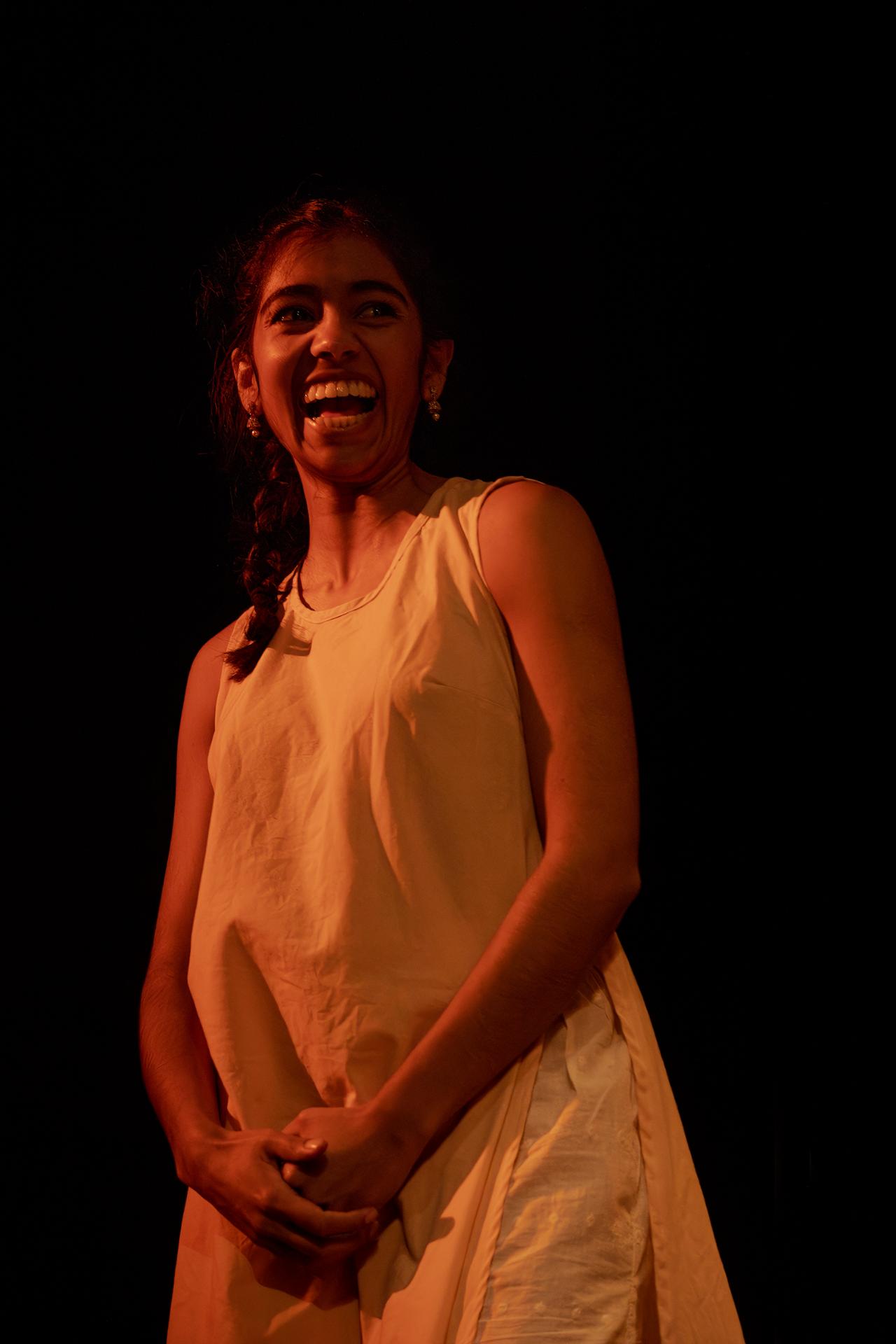
There is a lot of ground to cover in the play, and even though meaningful and well observed, For the Love of Paper is much too detailed in its depictions of reality-based events. While the narrative is compelling, it is often a predictable one that requires less exposition than is being given. There is excellent humour in the piece, but direction by Kersherka Sivakumaran tends to be overly severe. Nonetheless, the show bears a distinct sense of authenticity, that makes it a worthwhile experience.
Set design by Paris Bell offers a rendering of familiar domesticity, effective at facilitating physical activity, if slightly busy visually. Costumes by Rita Naidu help to convey personality types with accuracy and immediacy. Jasmin Borsovsky’s lights are intricately conceived, to provide impressive variation to imagery and mood. Music by Mavalvala and Andre Sauzier is thoroughly enjoyable, however sound design is in general deficient, often leaving atmosphere cooler than appropriate.

Mavalvala performs the role of Amaliah with commendable vigour, while Antony Makhlouf is notable for bringing excellent nuance as Kaveh. Both are charming presences, with a lovely chemistry that always feels believable and endearing. Joseph Raboy plays innumerable supporting characters, consistently reliable for the levity he introduces so effortlessly.

Amaliah and Kaveh are making new lives on foreign lands, and like immigrants everywhere going through a process of transplantation, they discover quandaries full of unanticipated challenges. The luckier ones may feel a superficial welcome, but rarely is there sufficient support to truly thrive. Many will have to grapple with being in positions of disadvantage. It is incumbent upon birds of a feather to flock together, in order that we may uplift each other, in spaces where we continue to be regarded as second class.

www.kingsxtheatre.com | www.bcdtheatre.com | www.instagram.com/culture_shock_theatrical

Review: Sotoba Komachi 卒塔婆小町 (Old Fitz Theatre)

Venue: Old Fitzroy Theatre (Woolloomooloo NSW), Apr 6 – 13, 2024
Playwright: Yukio Mishima 三島由紀夫
Director: Jeremi Campese
Cast: Jeremi Campese, Millie Hing, Jasper Lee-Lindsay, Susan Ling Young, Wern Mak, Rachel Seeto
Images by Karl Elbour

Theatre review
A poet meets a 99-year-old vagrant in a park, and philosophical discussions promptly ensue. The young man is by nature inquisitive, and the old woman knows a lot, by sheer virtue of experience. Sotoba Komachi 「卒塔婆小町」 by Yukio Mishima 三島由紀夫 is a 1952 adaptation of the 14th century Nō classic; characteristically surreal and lyrical, it explores themes of ageing and mortality, that in turn inspire thoughts about how we exist in the here and now.
Direction by Jeremi Campese demonstrates an appreciation for the macabre beauty inherent in the Japanese piece, but although intentions to honour the play’s illusory and phantasmal qualities are evident, the execution often feels excessively realistic. Sound design by Johnny Yang does however help to provide for the production, an atmosphere that is haunting and moderately evanescent. Chris Milburn’s lights are effective when dialling up the production’s theatricality. Rita Naidu’s set design is minimal but sufficiently evocative, and her costumes are well-considered, if slightly lacking in boldness.

Actor Susan Ling Young plays Komachi the elderly figure with a commendable emotional intensity, while Wern Mak takes on the role of the unnamed writer, with visible dedication. The aforementioned Campese joins as supporting cast, along with Millie Hing, Jasper Lee-Lindsay and Rachel Seeto, in a staging that is although stylistically deficient, shows no shortage of spirited commitment.

Times will change, but ghosts are constant and eternal. They represent the essence of who we are, and what we see them to possess, corresponds with the most fundamental of our values and beliefs. Intuitively we know that the ghosts have shed all that is gratuitous and meaningless. They remain as a manifestation of our very core, and every meditation on their nature, can only be a reflection on who we truly are, in the breathing moment.

www.oldfitztheatre.com.au | www.newghoststheatre.com

Review: Into The Shimmering World (Sydney Theatre Company)

Venue: Wharf 1 Sydney Theatre Company (Walsh Bay NSW), Apr 2 – May 19, 2024
Playwright: Angus Cerini
Director: Paige Rattray
Cast: Kerry Armstrong, Colin Friels, Renee Lim, James O’Connell, Bruce Spence
Images by Daniel Boud

Theatre review
Ray is older now, but the life of a humble farmer means a conventional retirement is never quite within reach. In addition to his ailing health, the persistent drought seems determined to only make things harder. His wife Flossy, along with their sons, are however reliable sources of emotional support, and in Angus Cerini’s Into the Shimmering World, we see Ray’s last years becoming increasingly meaningful, even if the struggles never subside.
It seems a simple existence that Cerini’s play depicts, but it speaks profoundly from a space of thorough authenticity. There are no frills to Ray and Flossy’s days in the bush, so our explorations can only be about the essential and important qualities, of what makes a life worth living. Direction by Paige Rattray insists we pay attention to the minutiae, so that we come to an understanding, that it is in the details, that we can discover something truly significant, or even eternal, within fleeting moments that usually feel inconsequential. Into the Shimmering World takes us away from so much that is time-wasting and petty, and for 90 minutes, provides an opportunity to meditate on that which is real and noble.
That virtuousness pertaining to notions of simplicity, is reflected in a production design by David Fleischer, that functions purely to facilitate storytelling. There is nothing extraneous in Ray’s life, so there is nothing frivolous to be found in the set and costumes. Lights by Nick Schlieper do however manufacture instances of theatrical elevation, most notably during scenes that venture into the metaphysical. Music and sound by Clemence Williams are crucial in helping calibrate our temperament, in a show that is full of constant, but subtle, shifts in tone.

It is a deceptively quiet presentation, memorable for its stillness, but always with a submerged rumbling, that feels very much like the unabating sensation of human upheaval. Actor Colin Friels embodies that contained drama, in a portrayal of Ray that is remarkable for its integrity and hence, believability. Like most Australian men of his generation, Ray is not one for words, but Friels does excellently at conveying the textures of turmoil, that are so crucial to our appreciation of the work. Kerry Armstrong plays Flossy with warmth and tenderness, so that we may approach the tale with sensitivity. Other members of cast include Renee Lim, James O’Connell and Bruce Spence, all of whom bring thoughtfulness that help deliver valuable insights inherent in Cerini’s writing.

Legacy is not about vanity, but responsibility. We can deliberate endlessly about the meaning of life, but a commitment to leaving the world a better place than how one had found it, is the key to existential fulfilment.

www.sydneytheatre.com.au

Review: Mercury Poisoning (KXT on Broadway)

Venue: KXT on Broadway (Ultimo NSW), Mar 15 – 30, 2024
Playwright: Madeleine Stedman
Director:
Kim Hardwick
Cast: Violette Ayad, Shaw Cameron, Anna Clark, Melissa Jones, Shawnee Jones, Nikita Khromykh, , Tinashe Mangwana, Teodora Matovic, Brendan Miles, Jack Richardson, Charlotte Salusinszky, Sarah Jane Starr
Images by Clare Hawley

Theatre review
Madeleine Stedman’s Mercury Poisoning involves three women in the 1960s, inspired by true stories about their respective relationships with space travel. These lives never cross paths, but they are in some ways parallel, not only in aeronautical terms, but also with their fights against structural sexism, which proves a defining force. While well-conceived, more effort could be made for the narratives in Mercury Poisoning to intertwine, instead of having them completely segregated.

Direction by Kim Hardwick attempts to make up for that lack in coherence between the different threads, with creative use of visual compositions. There is a sincerity in her presentation that helps with our logical engagement with the piece, but a persistent coolness in temperament prevents us from investing sufficiently into the emotions being explored.

Set design by Meg Anderson and lights by Jimi Rawlings are effective in evoking outer space, but the imagery being produced is too relentlessly dark, which makes it a struggle for the production to lift in energy, especially noticeable in comedic scenes. Sound design by Rowan Yeomans and Jay Rae is however very strong, bringing to the storytelling, an enjoyable sense of theatricality.

Actors Violette Ayad, Shawnee Jones and Teodora Matovic play the main roles, all able to convey authenticity and vulnerability for these discussions about challenges faced by women at the workplace. A big roster of supporting cast members bring variety to the experience, admirable for the frequent rotation of characters they bring to the stage.

In Mercury Poisoning we see the ways in which power manifests, and how so much of our resources is  organised around concepts of deprivation. The three women are deterred from attaining what so many of their white male counterparts have achieved. Through their stories, we observe how a certain caste of society is determined to keep privileges to themselves, convinced that there is not enough for everyone. It is clear they know, that what makes them feel special about their own lives, can only come from the dispossession of others.

www.kingsxtheatre.com | www.instagram.com/snatchedtheatreco | www.whiteboxtheatre.com.au