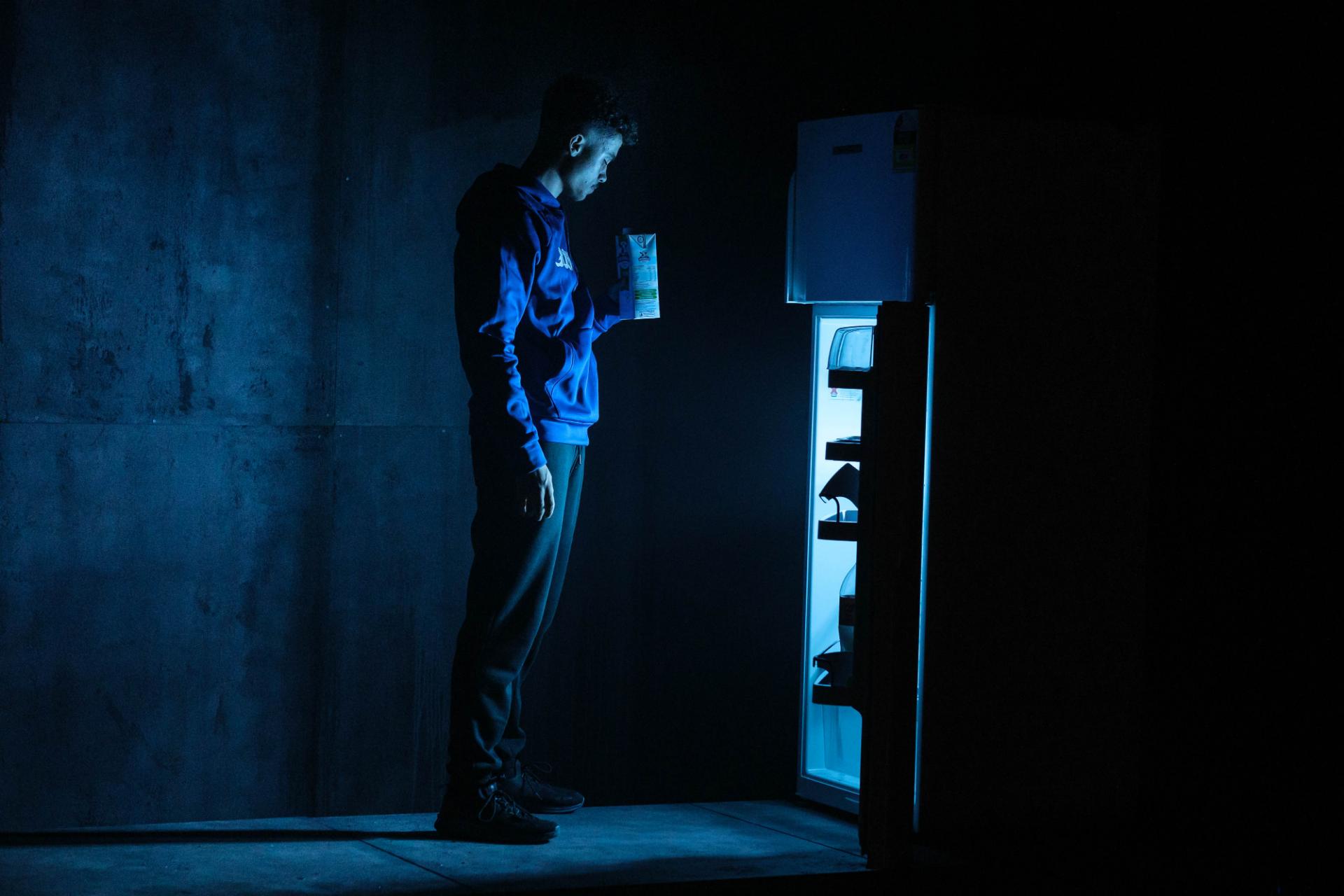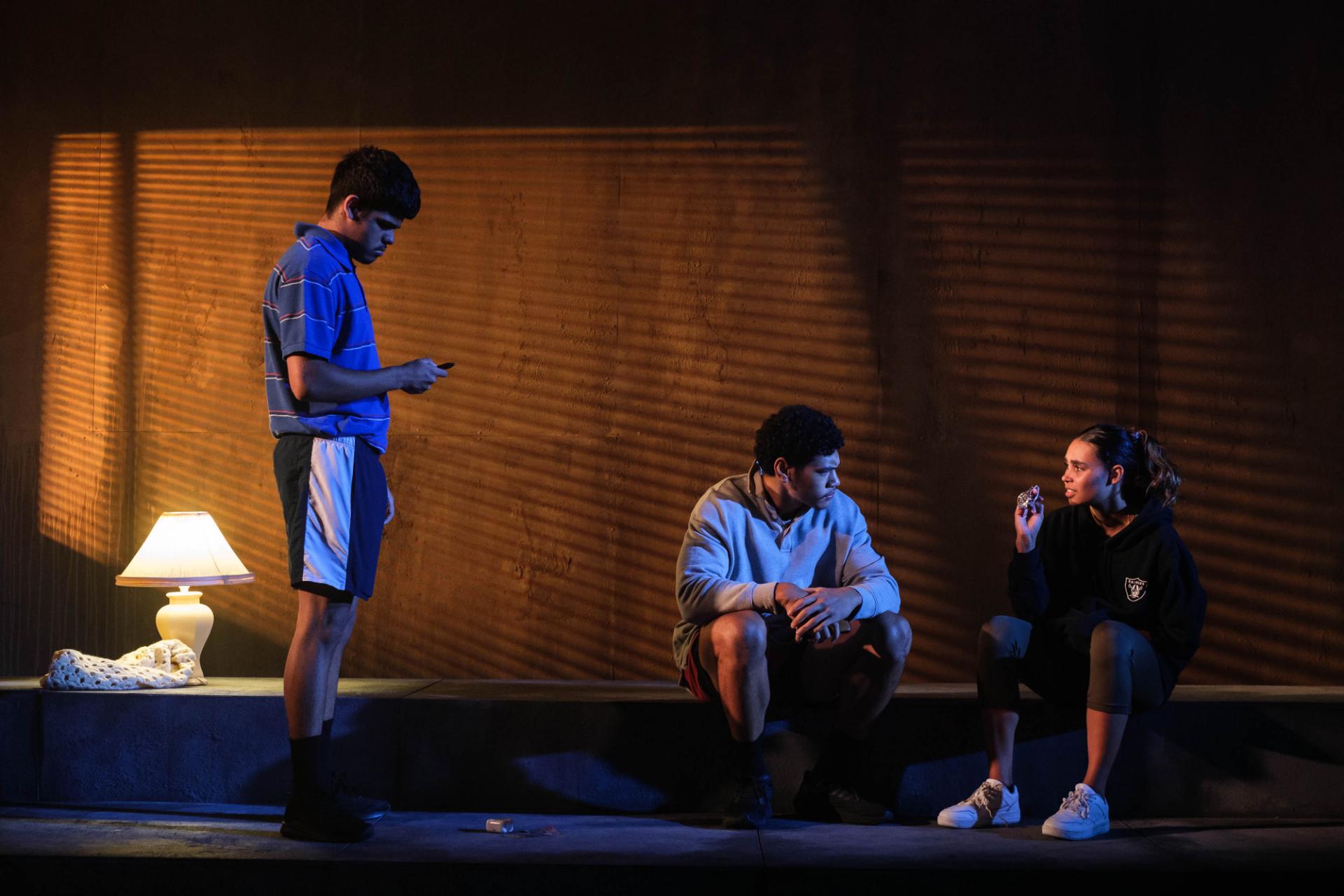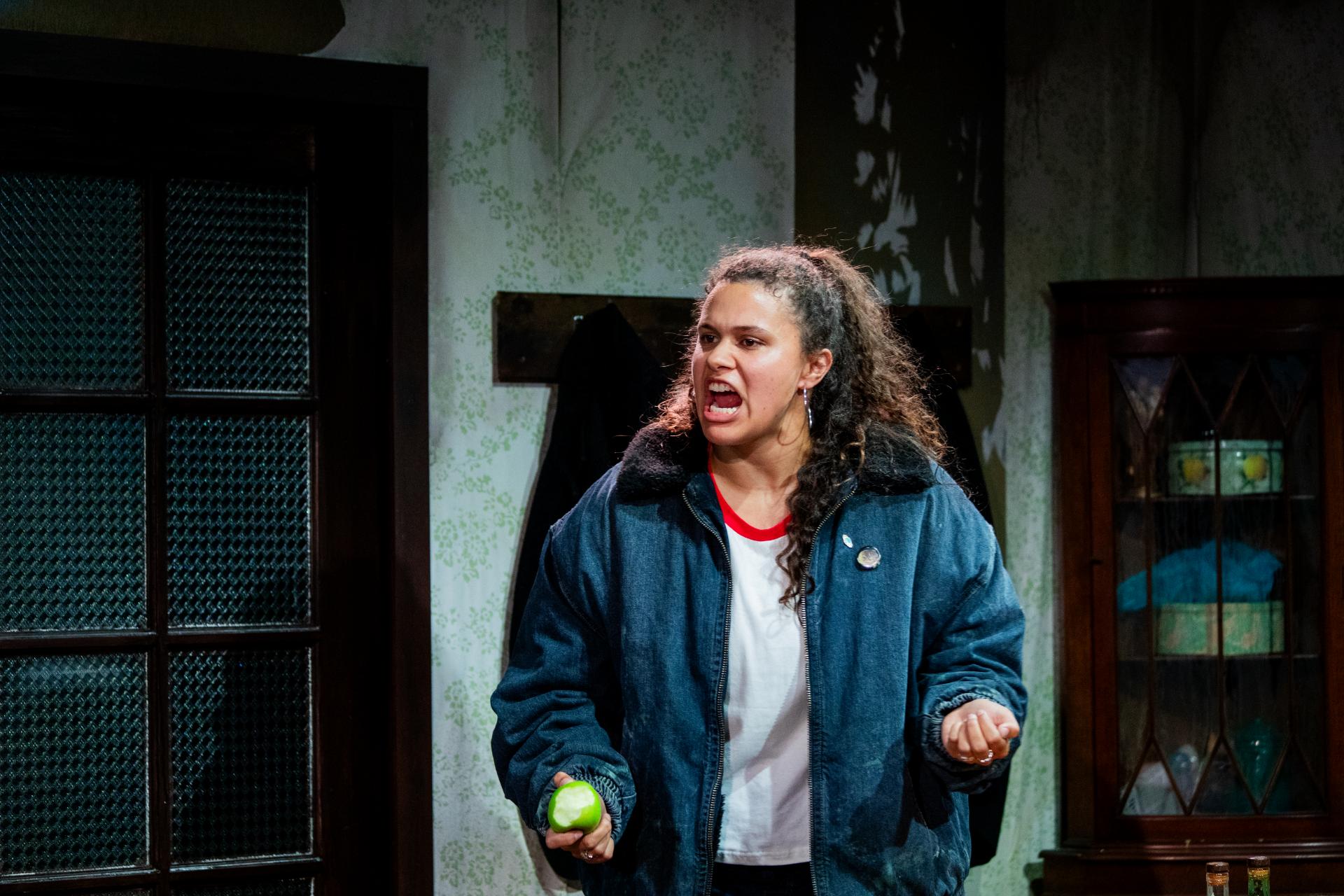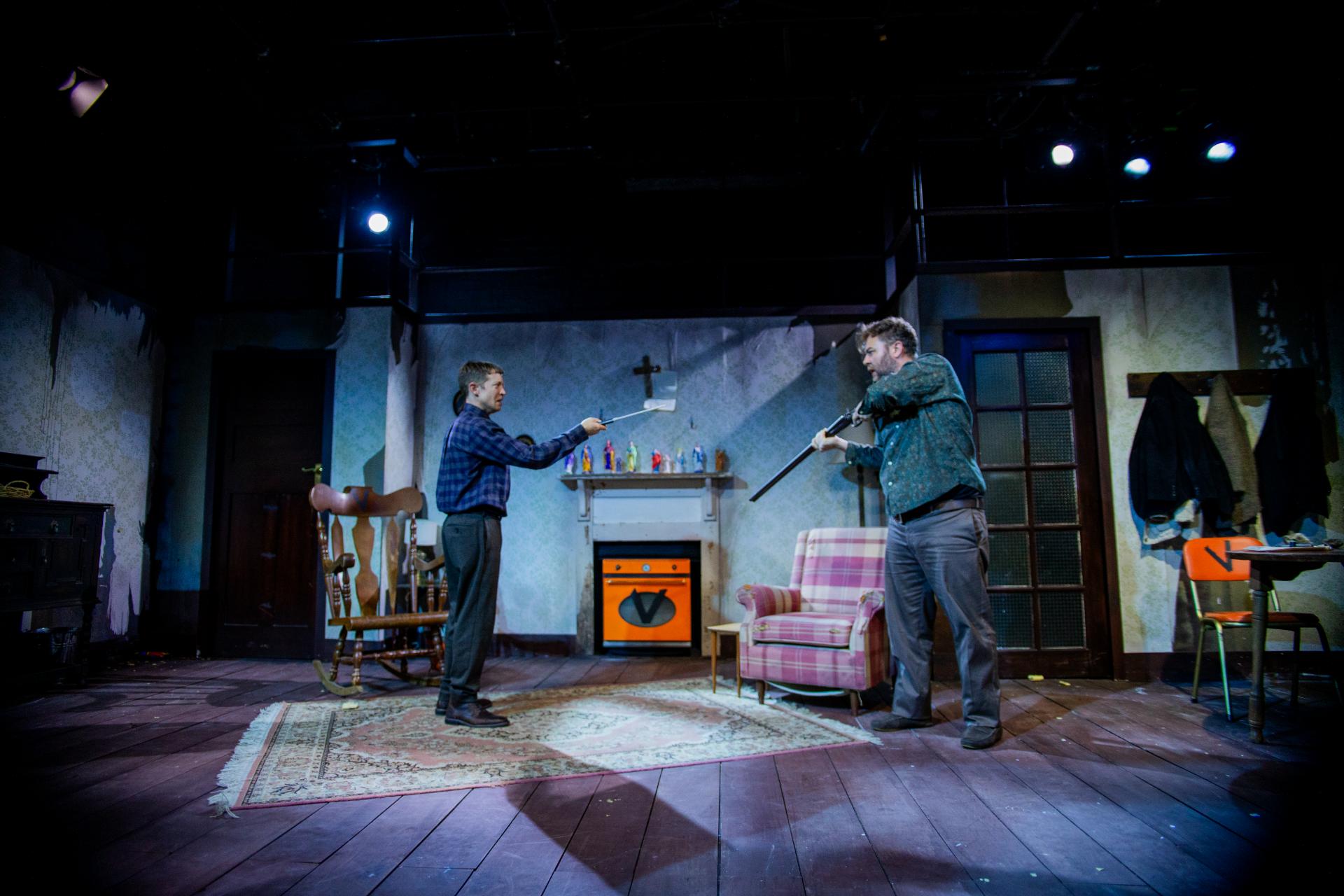
Review: The Hello Girls (Hayes Theatre)

Venue: Hayes Theatre Co (Potts Point NSW), Jan 10 – Feb 4, 2024
Music and Lyrics: Peter Mills
Book: Peter Mills, Cara Reichel
Director: Jason Langley
Cast: Rhianna McCourt, Kira Leiva, Kaori Maeda-Judge, Nikola Gucciardo, Kaitlin Nihill, Joel Hutchings, Matthew Hearne, David Hooley, Lincoln Elliot, Zachary Selmes, Jessy Heath, Alexis van Maanen, James Frampton
Images by Philip Erbacher

Theatre review
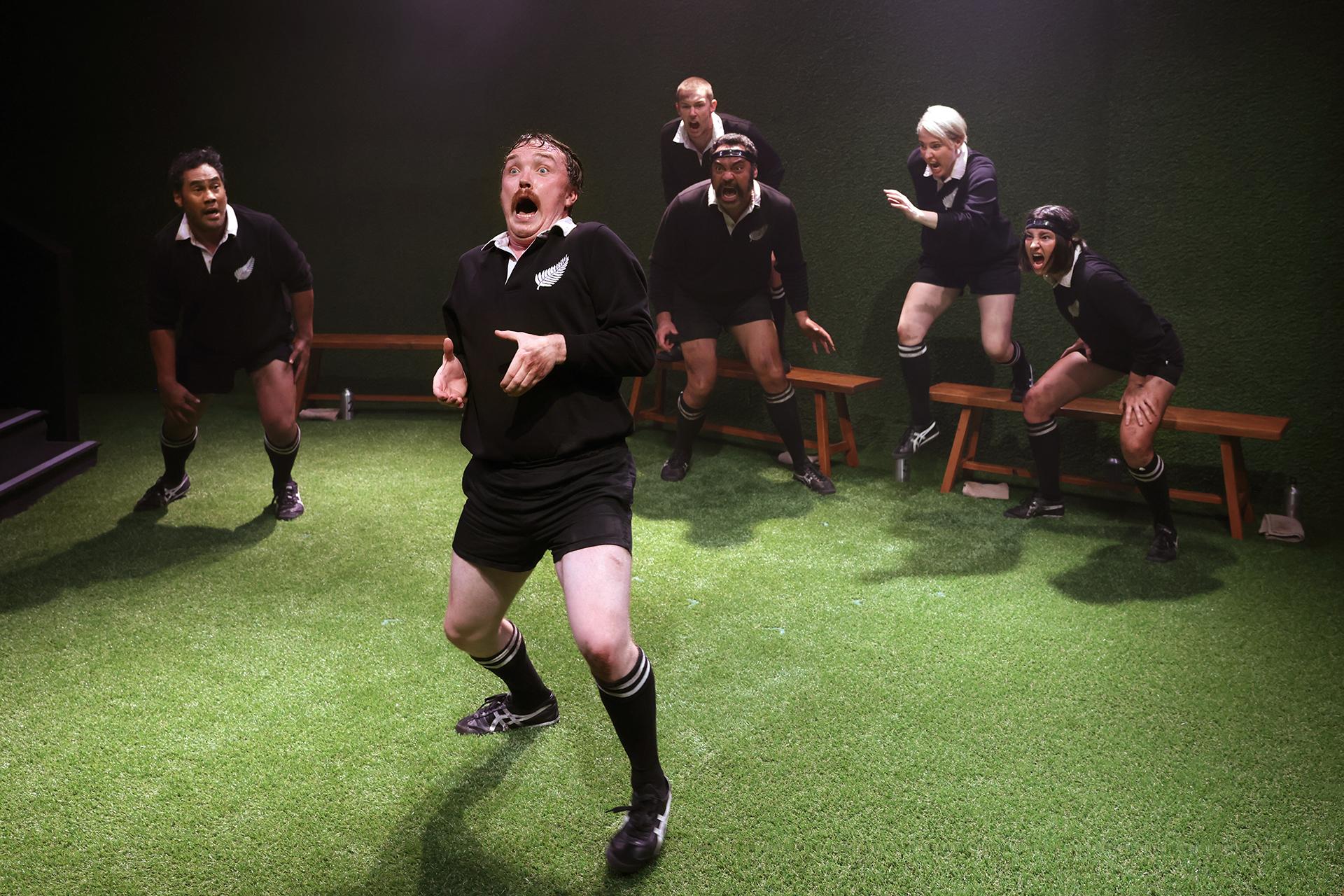
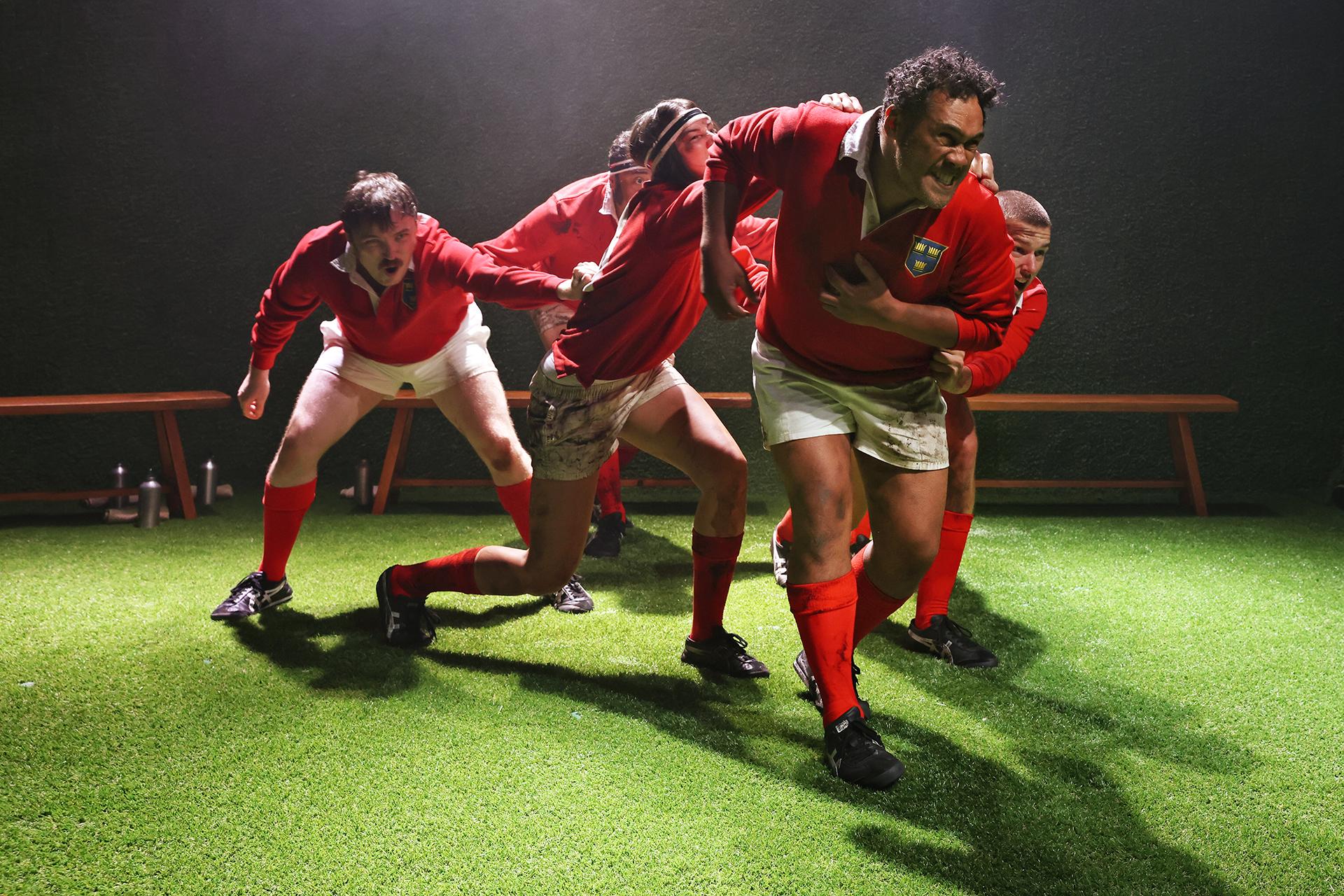
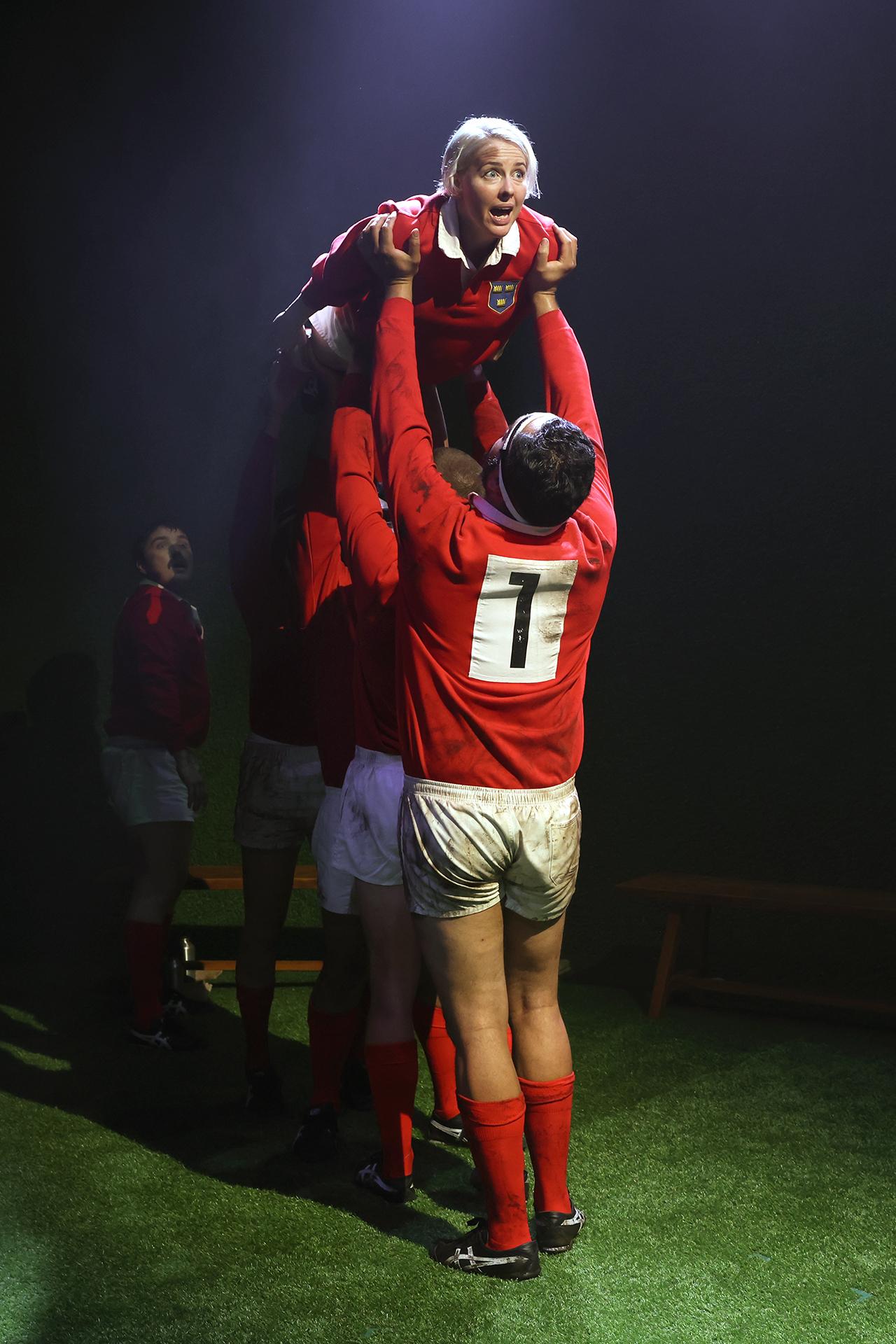
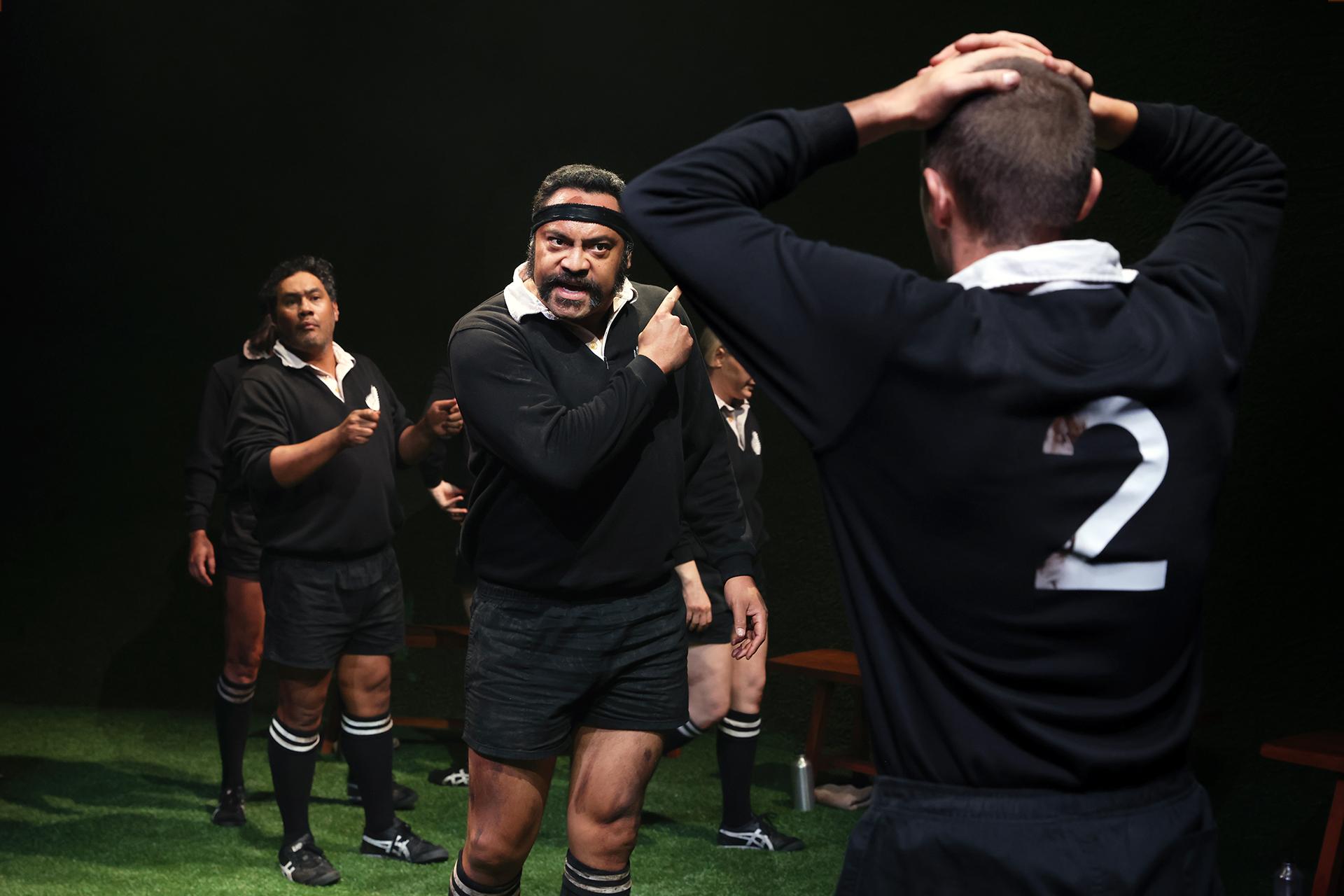
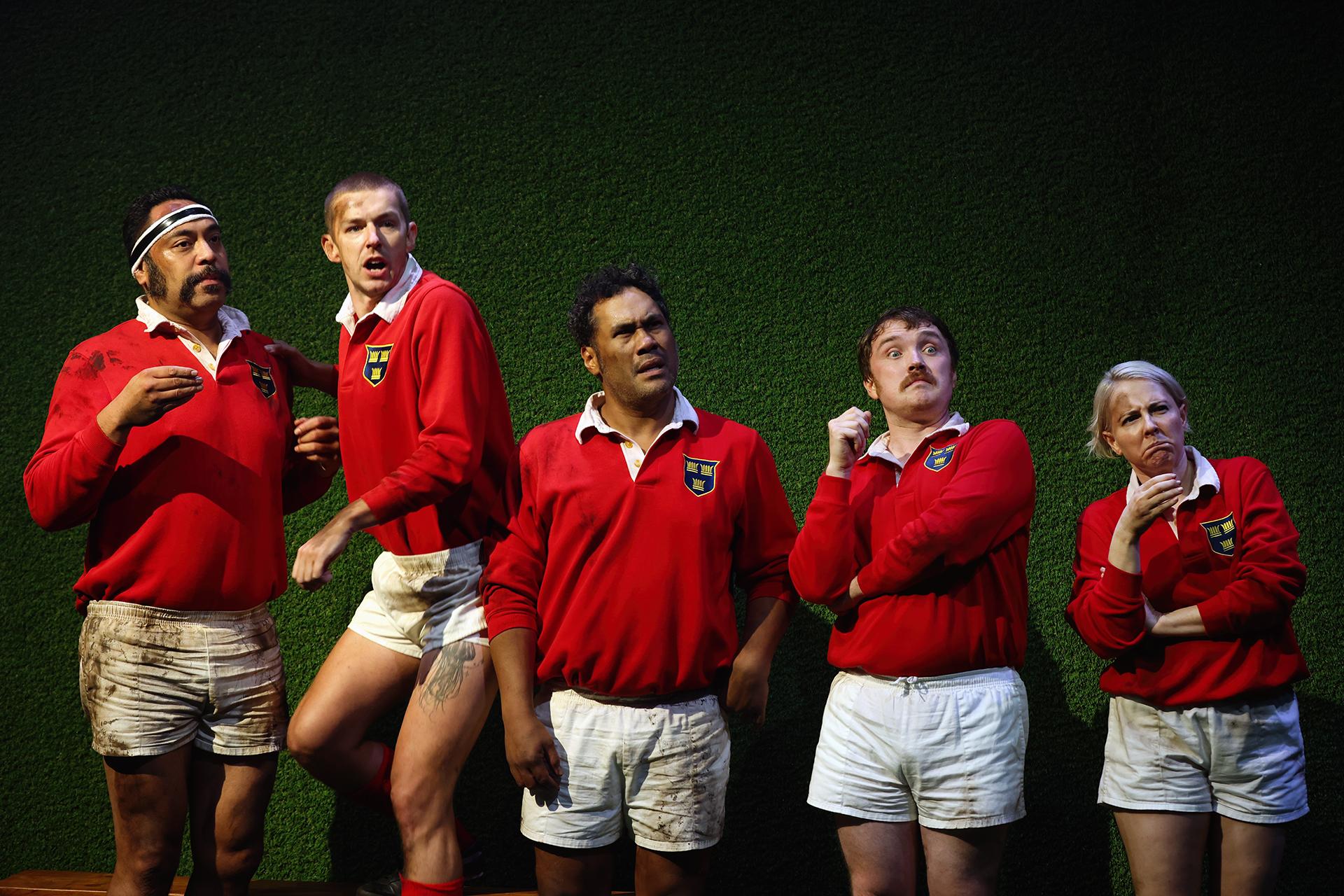
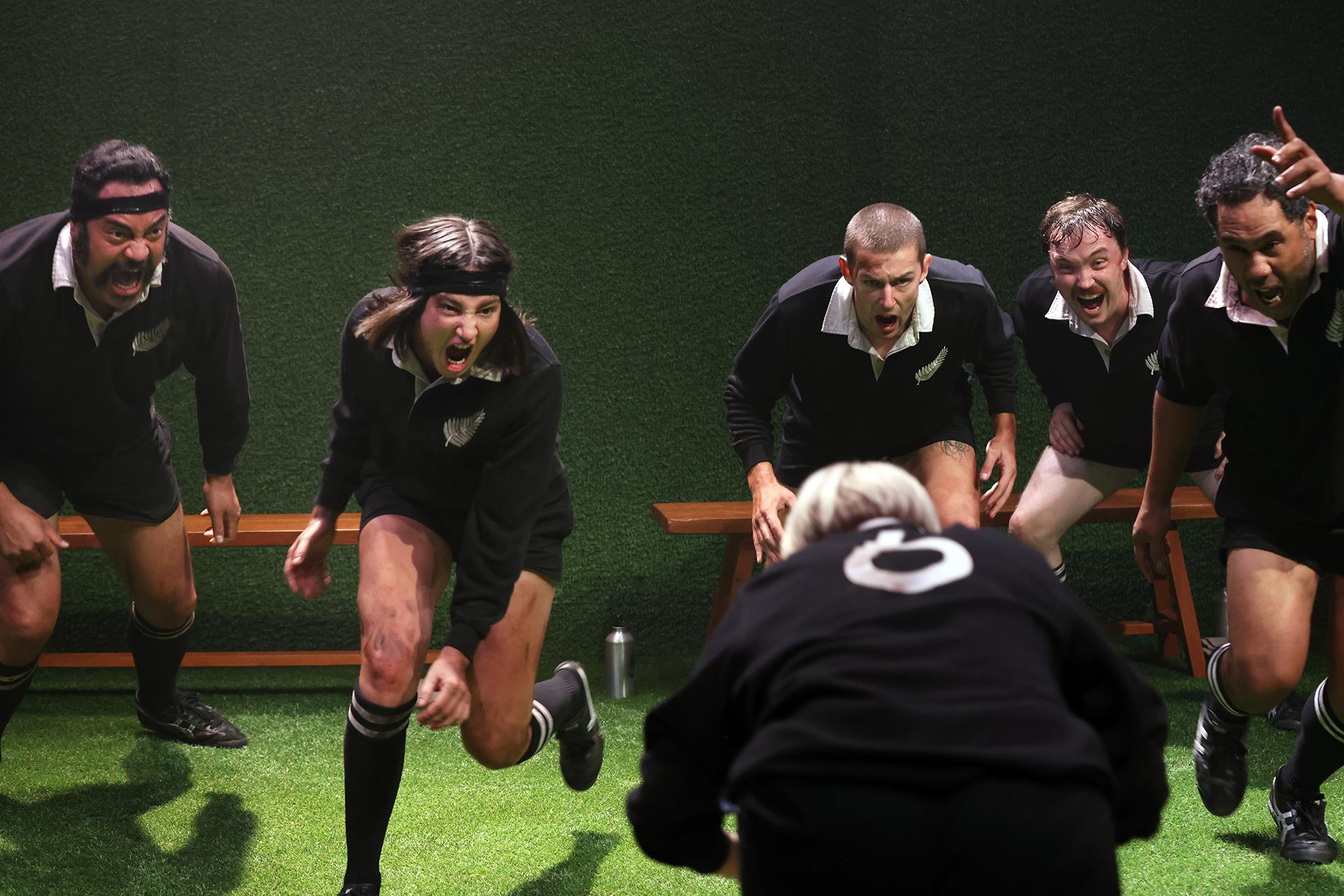
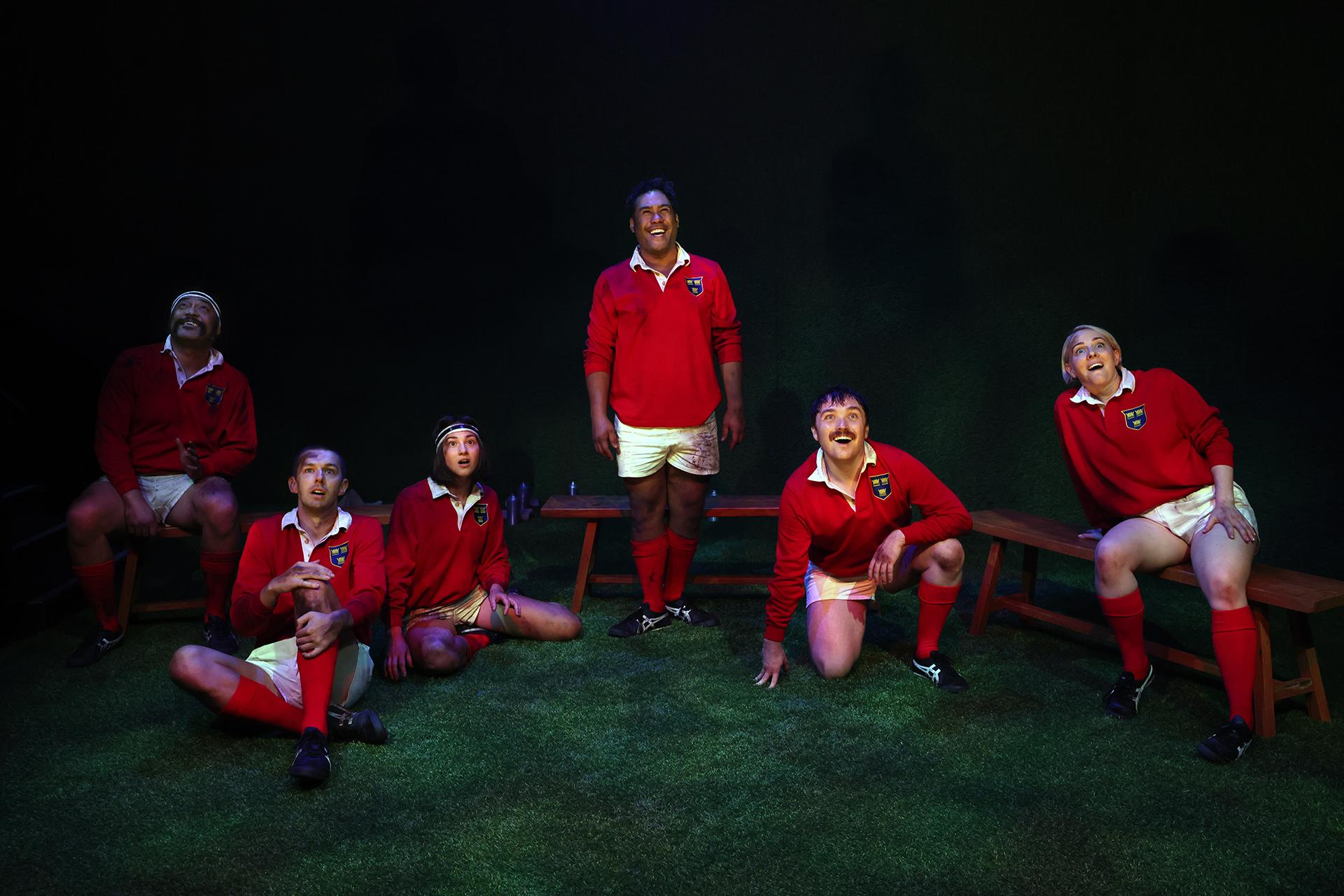
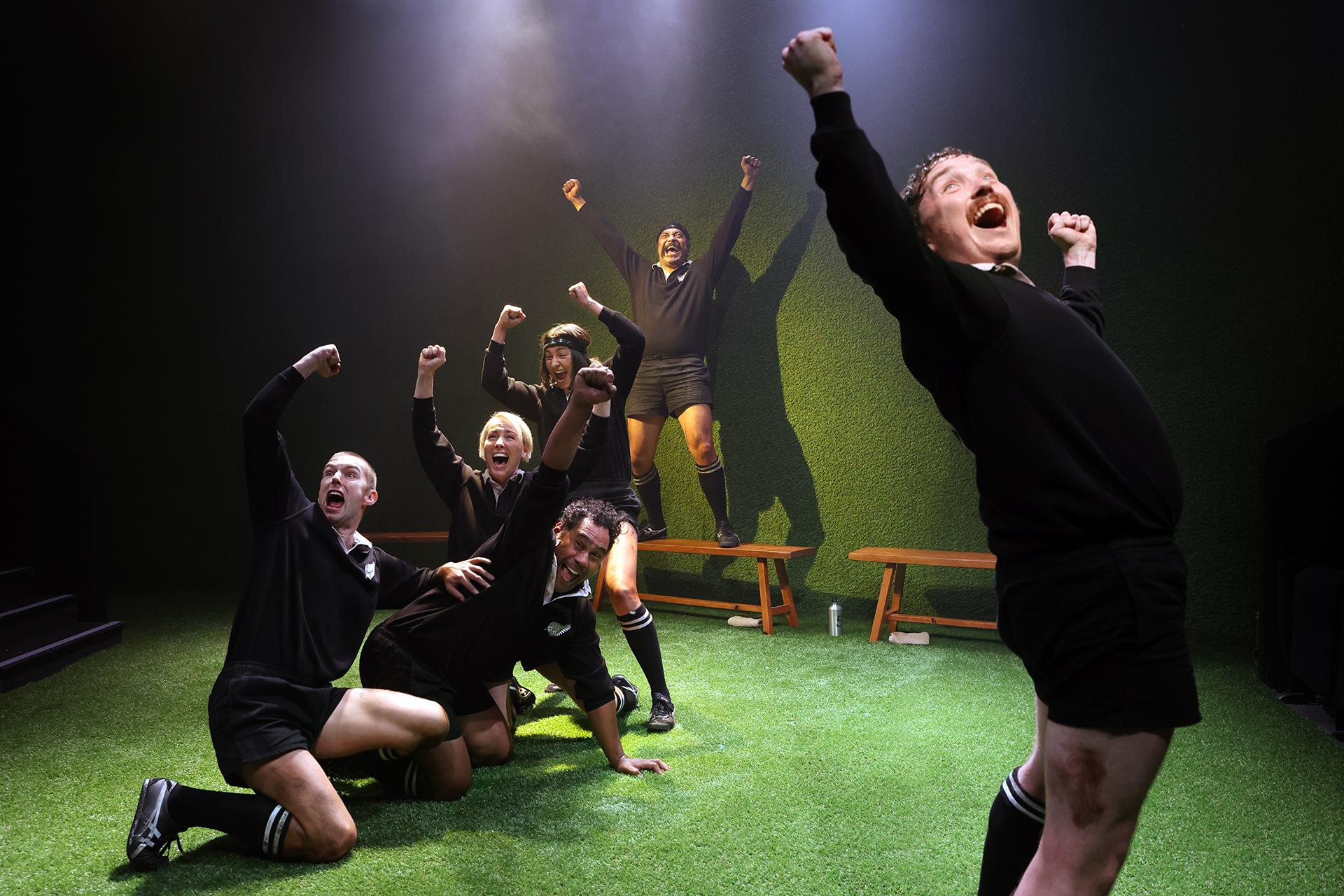
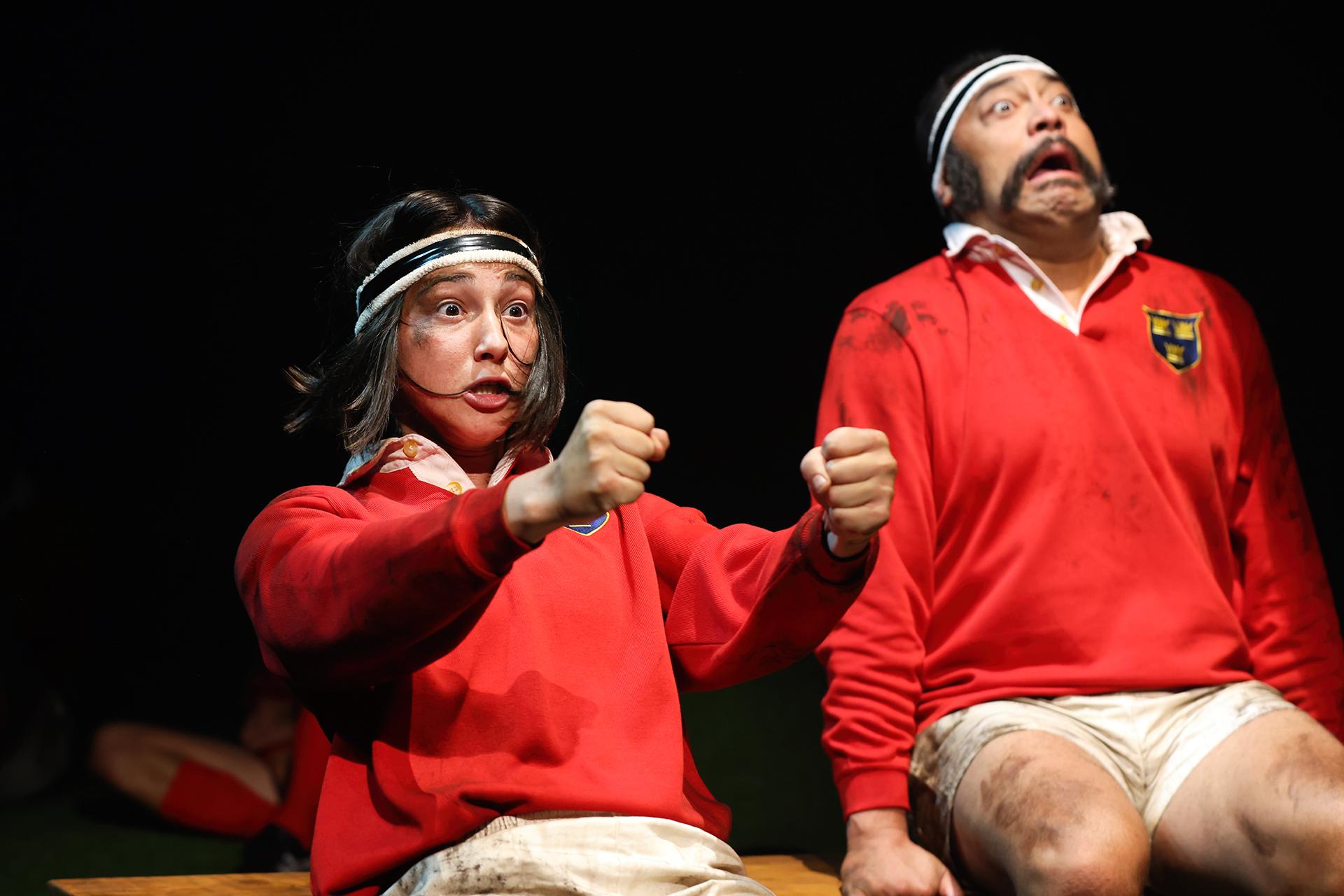
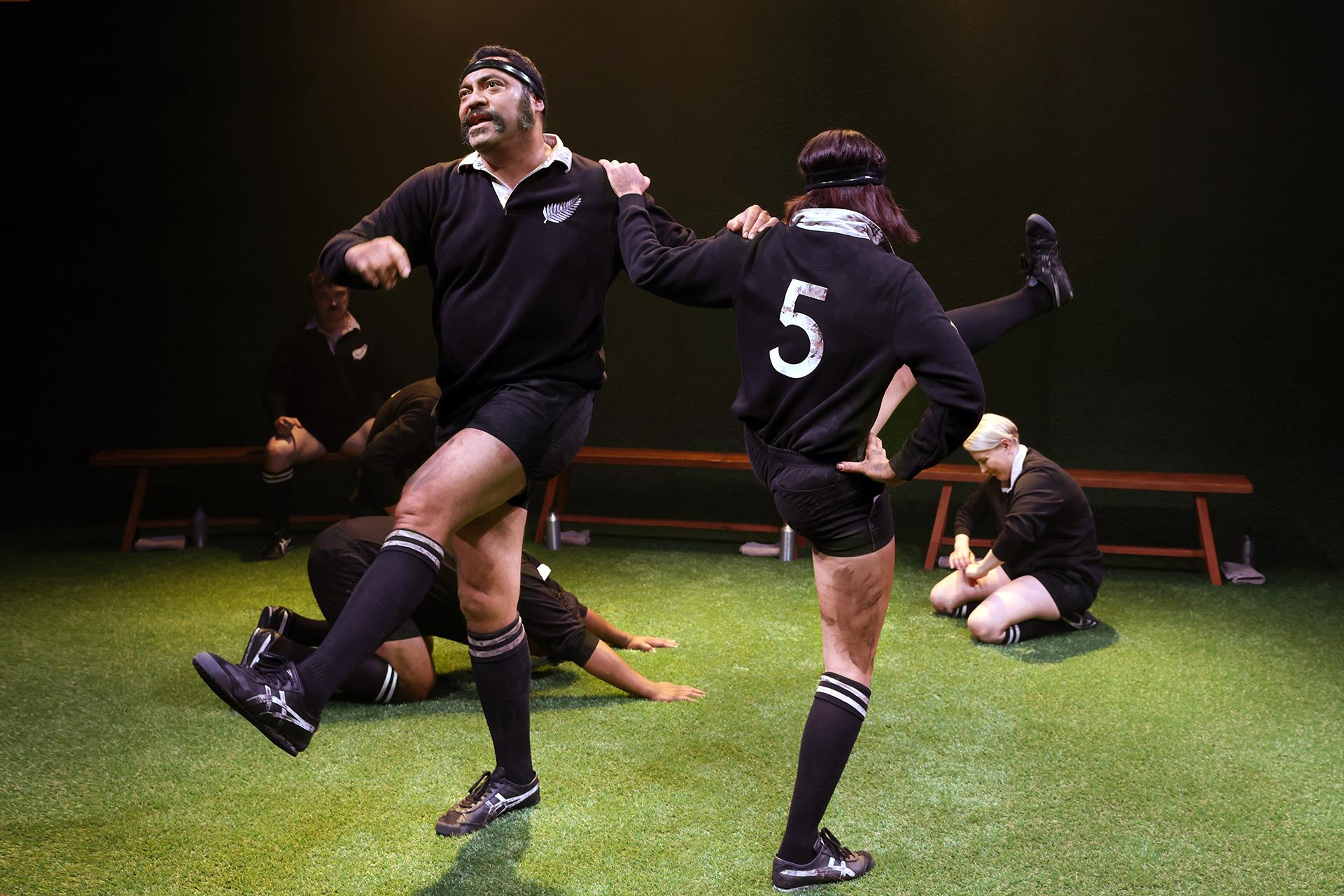
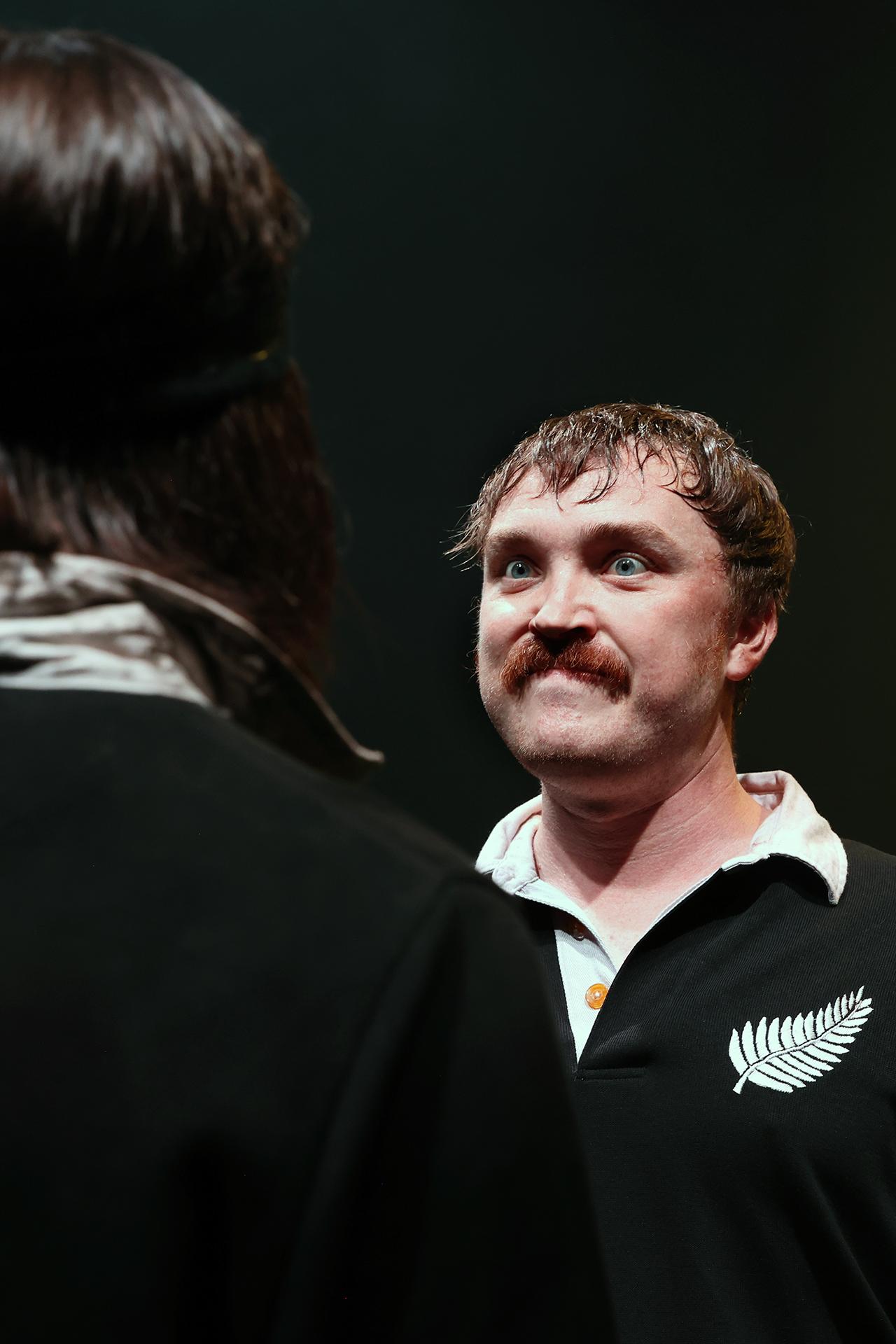
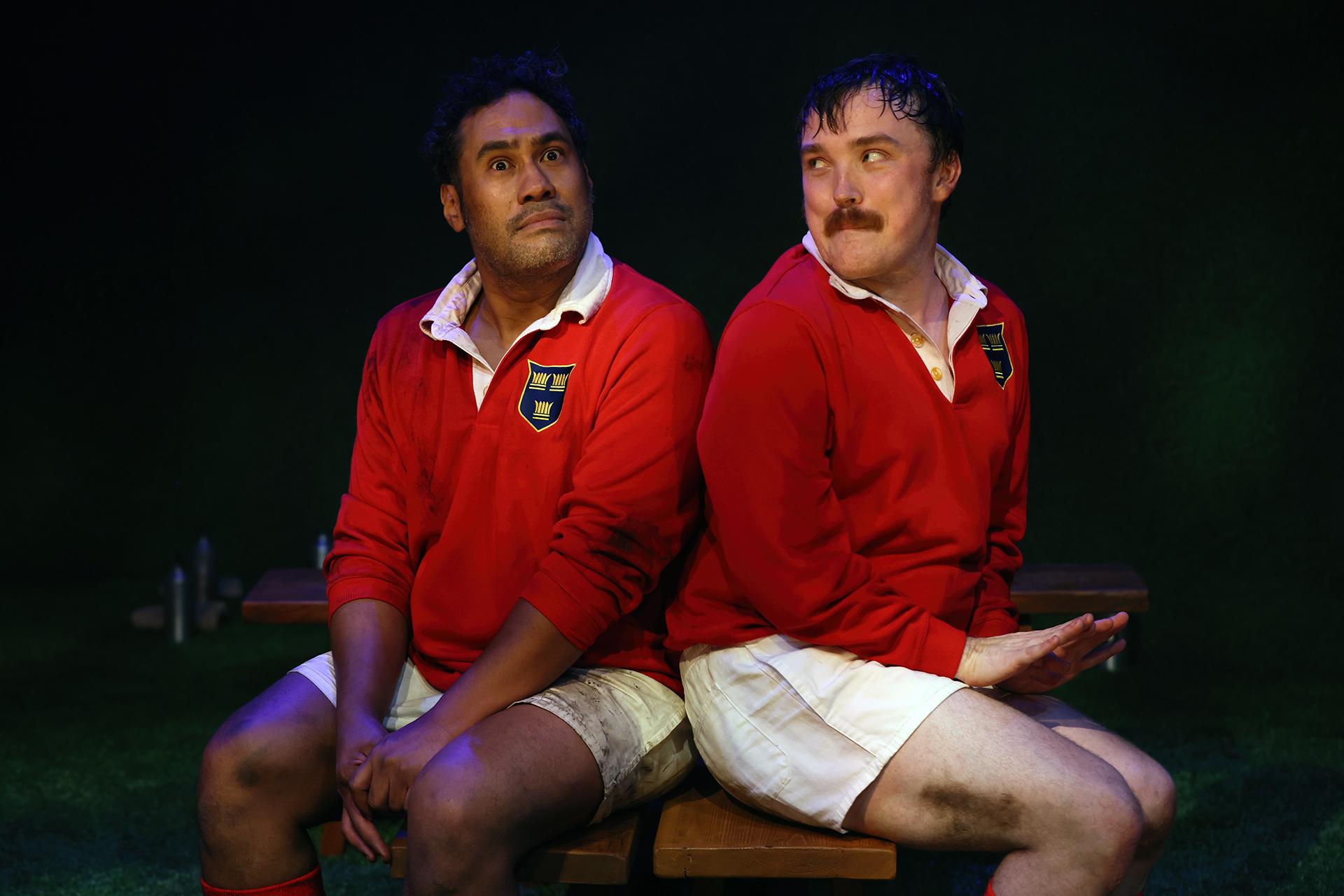
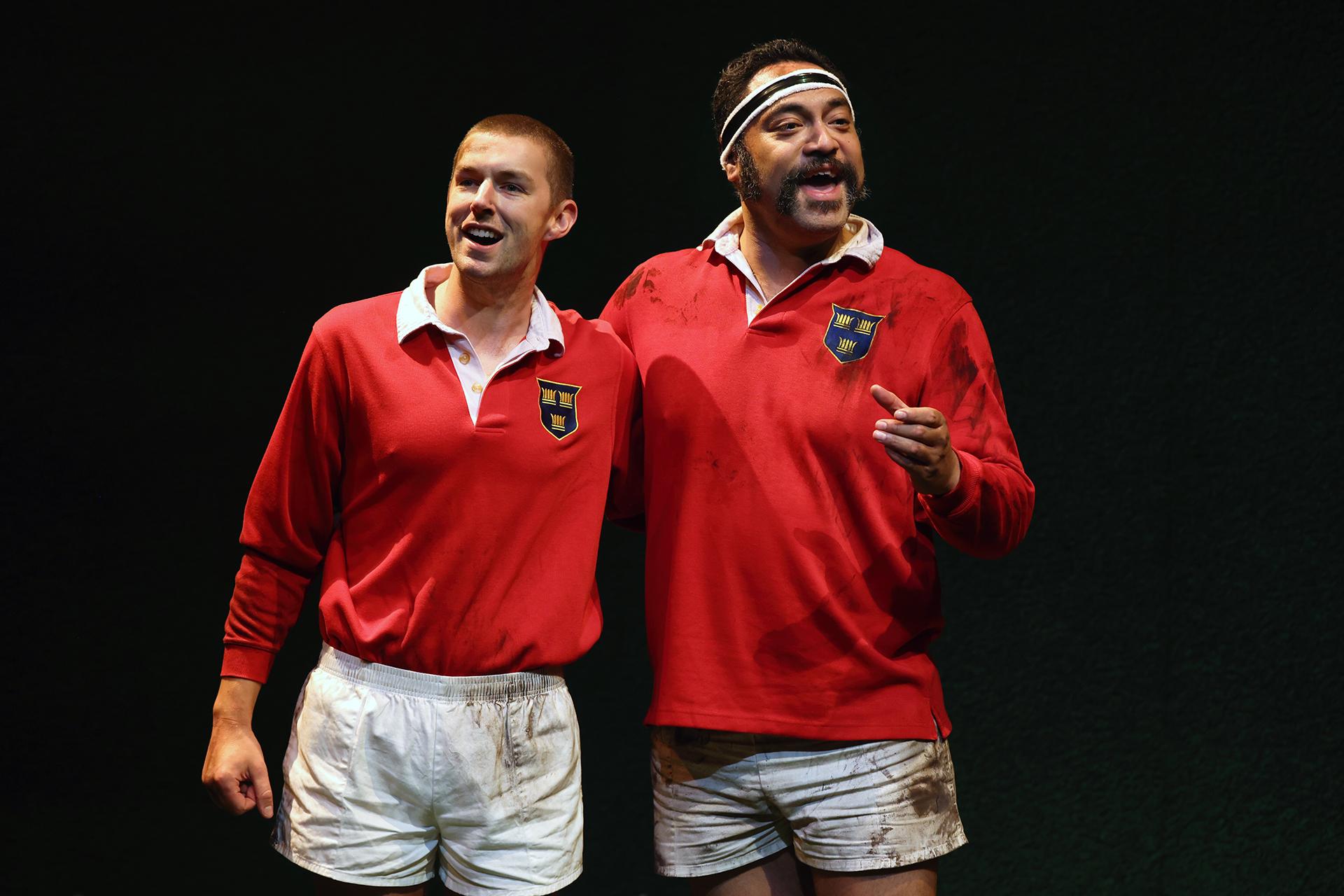
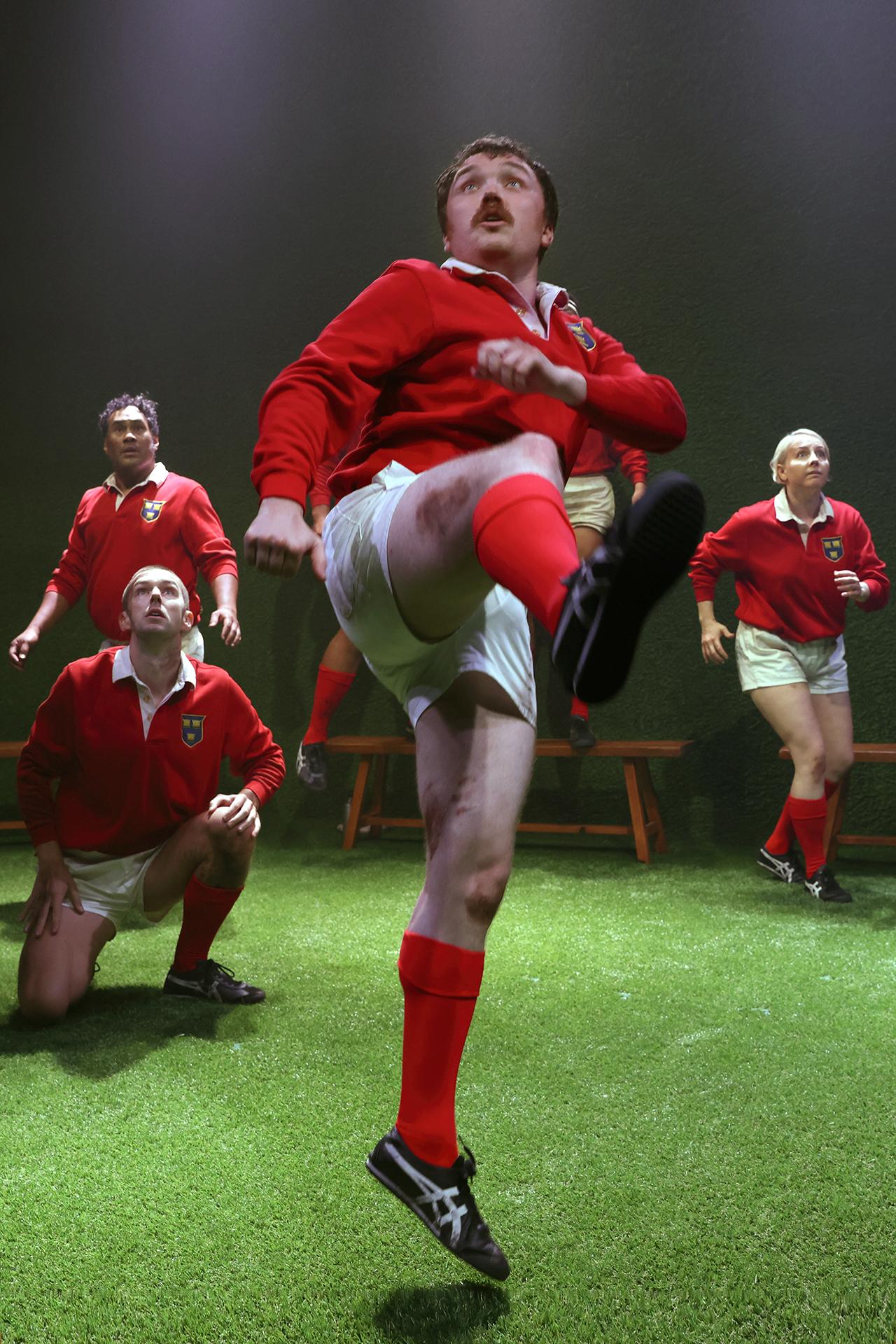
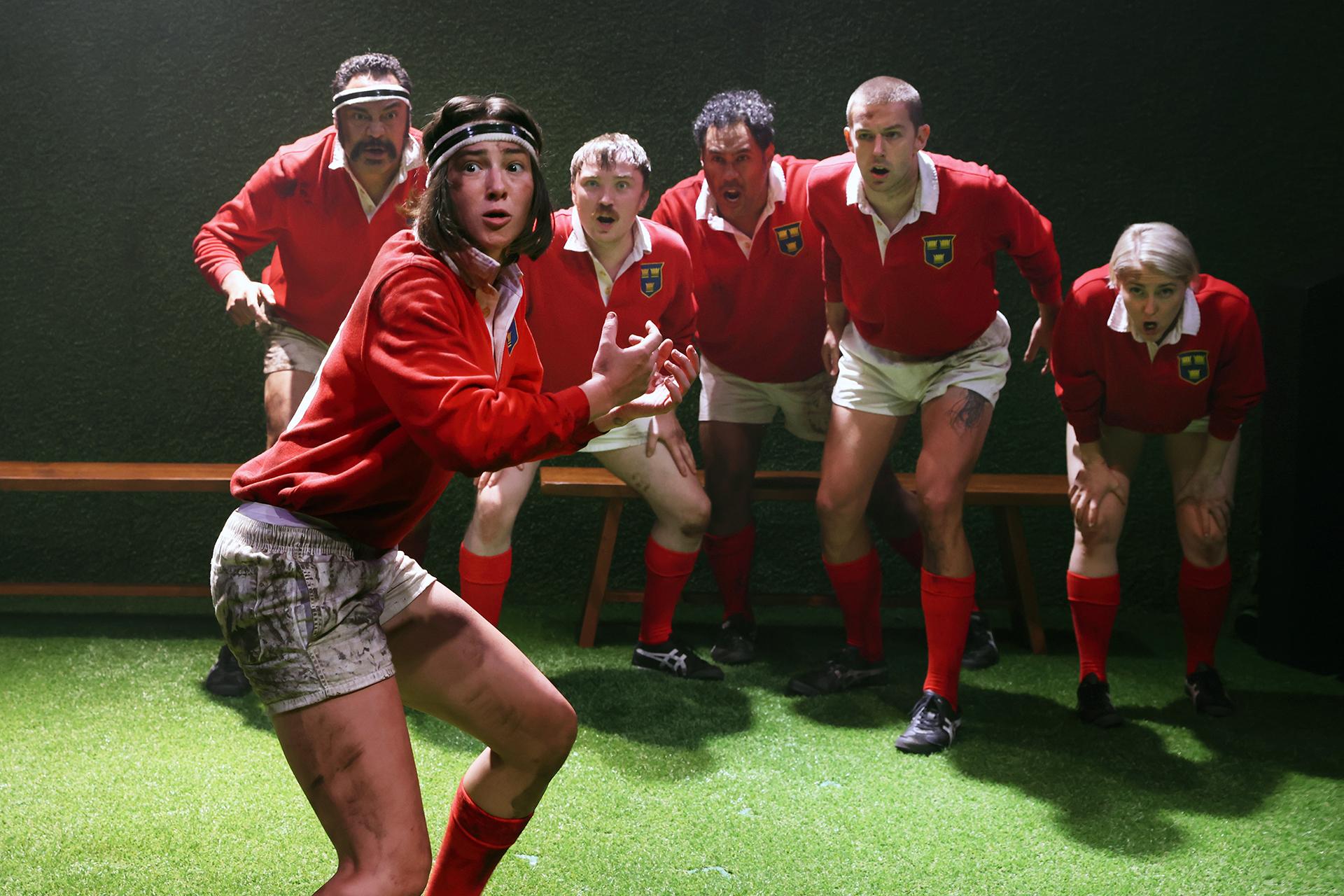
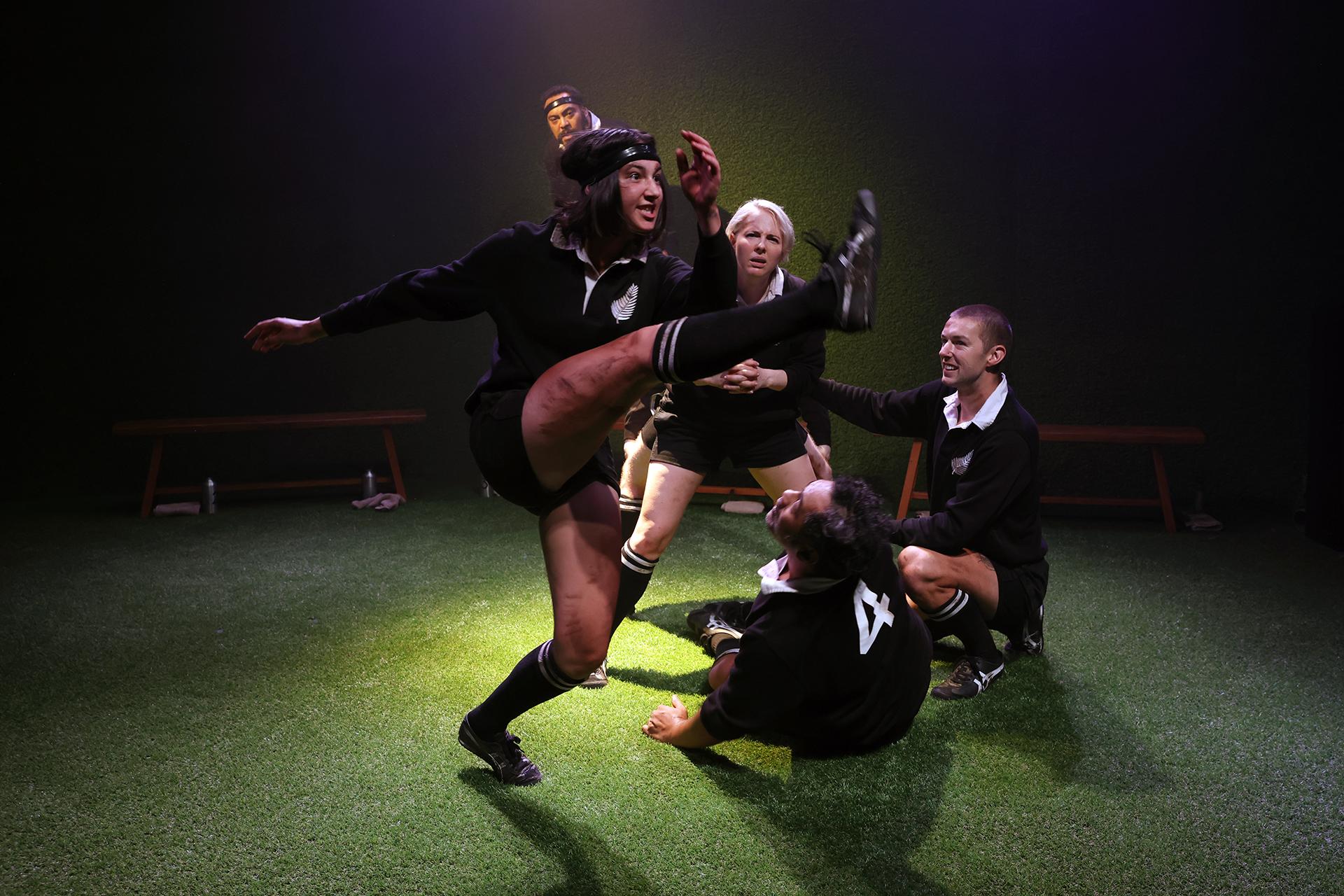
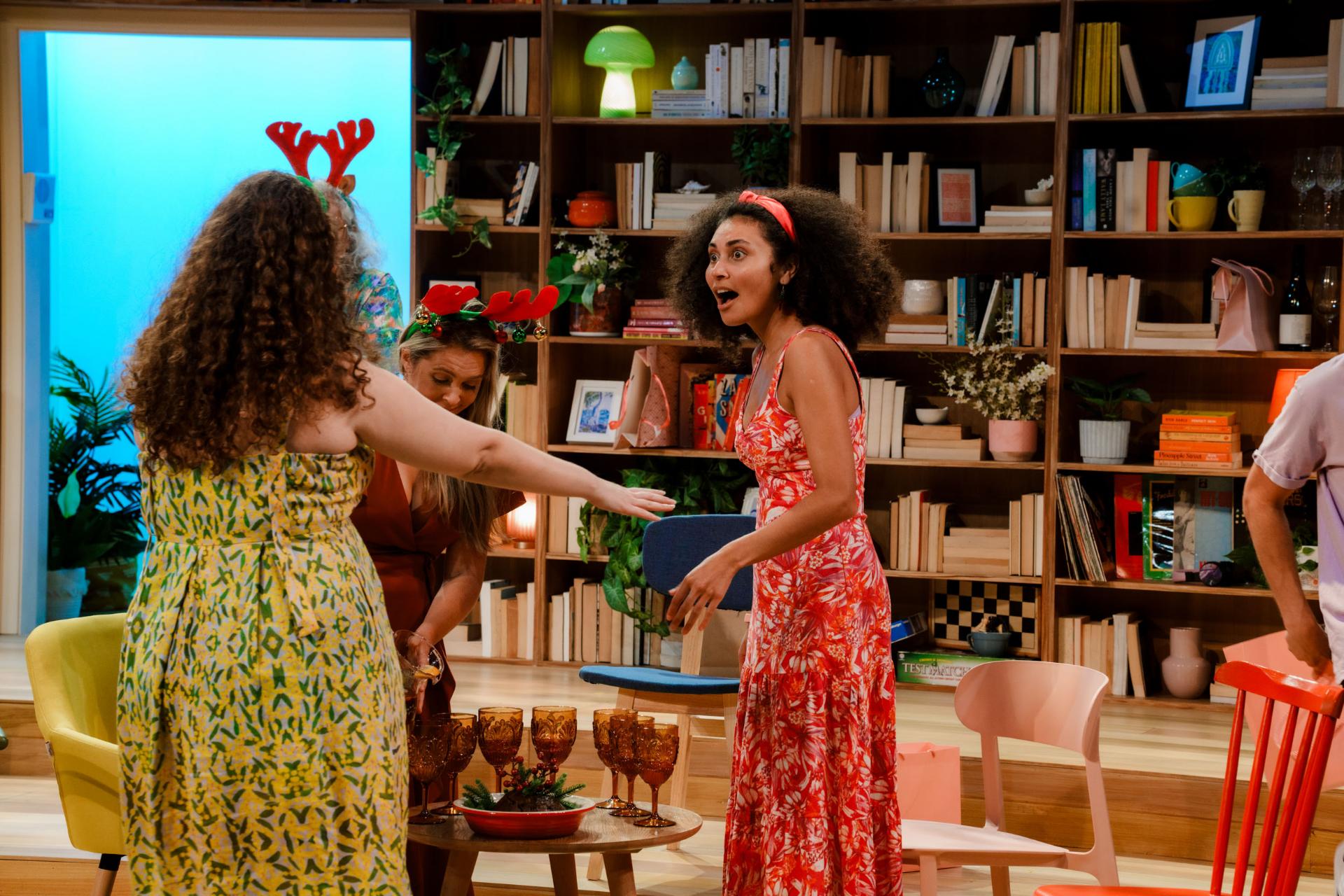
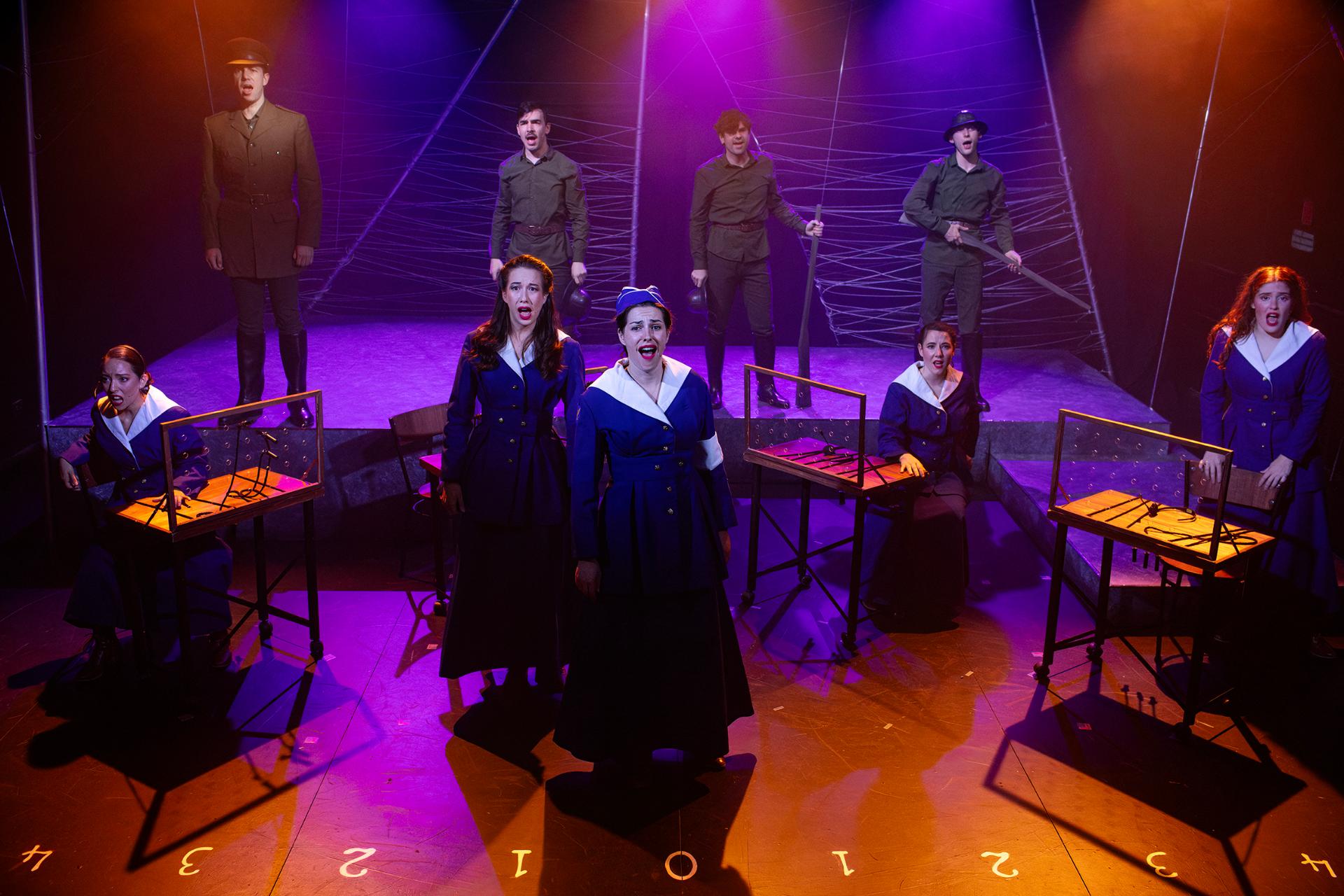
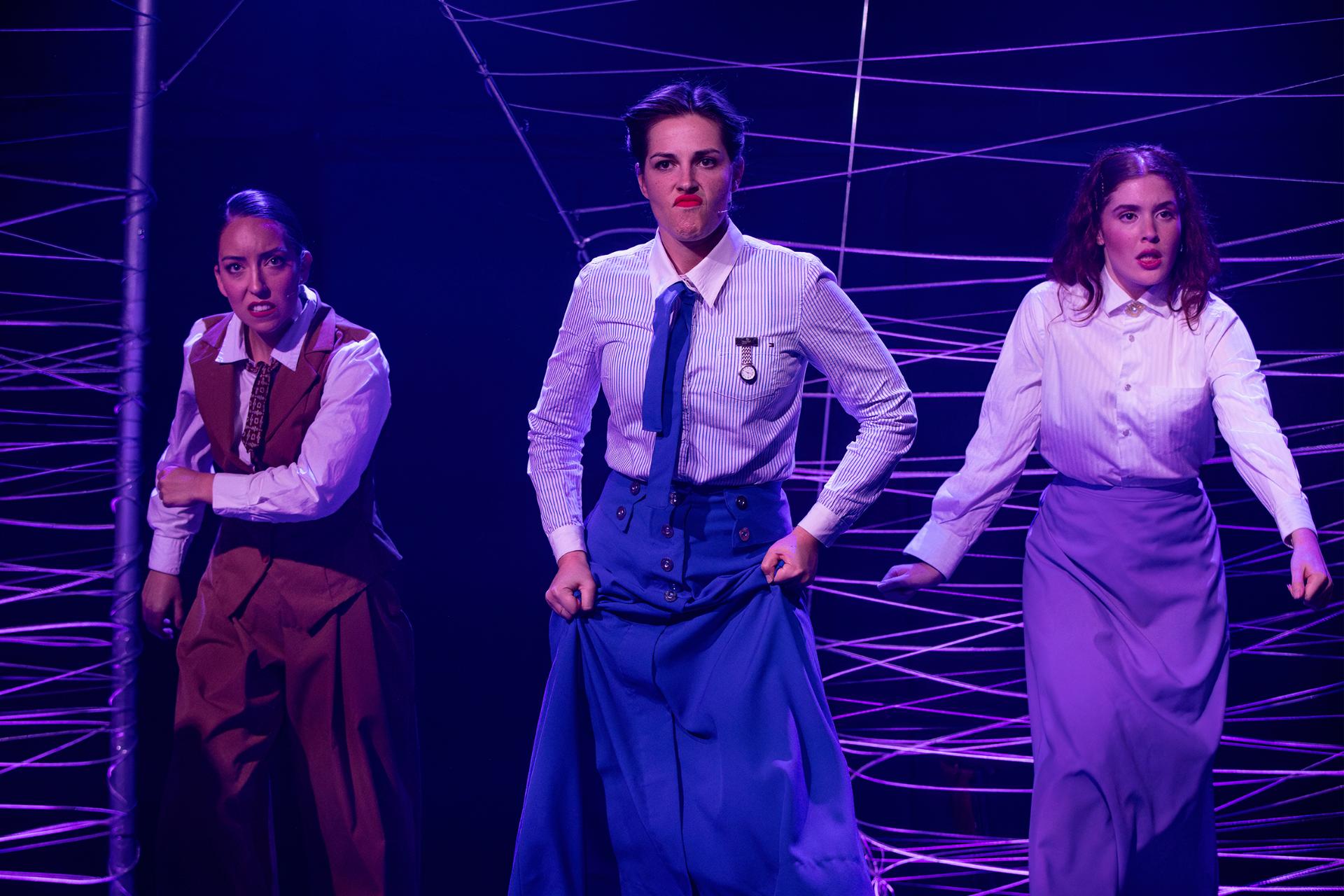
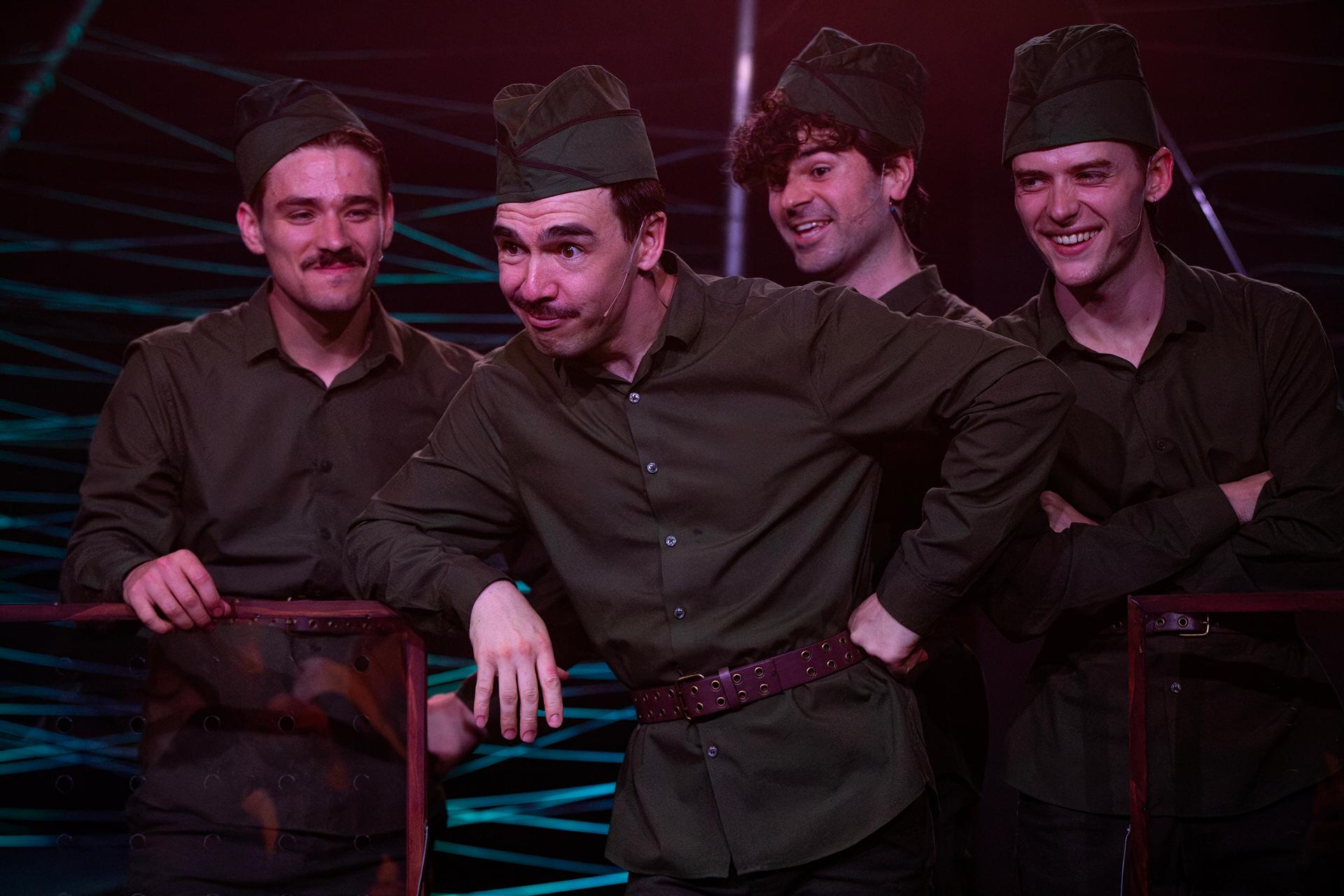
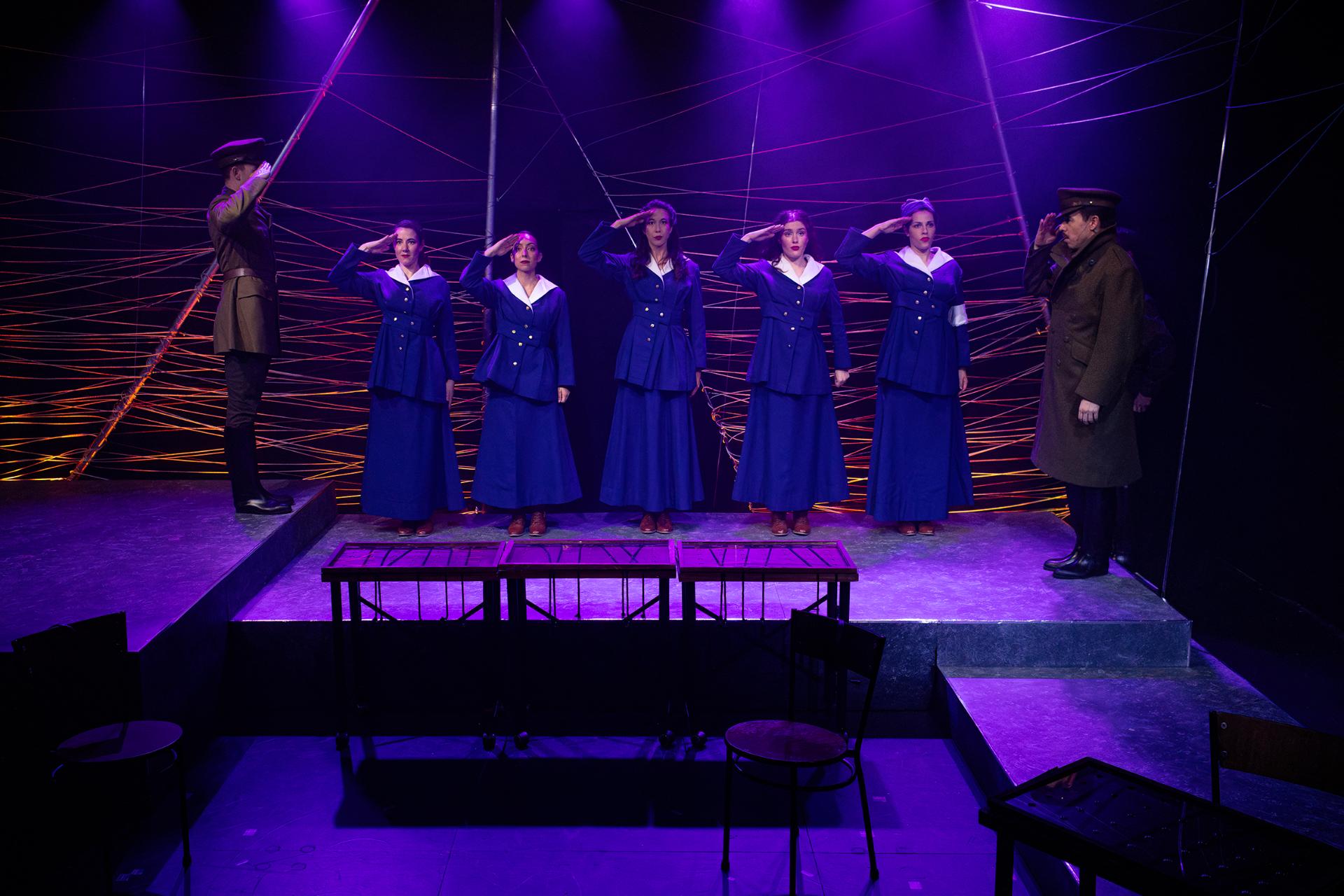
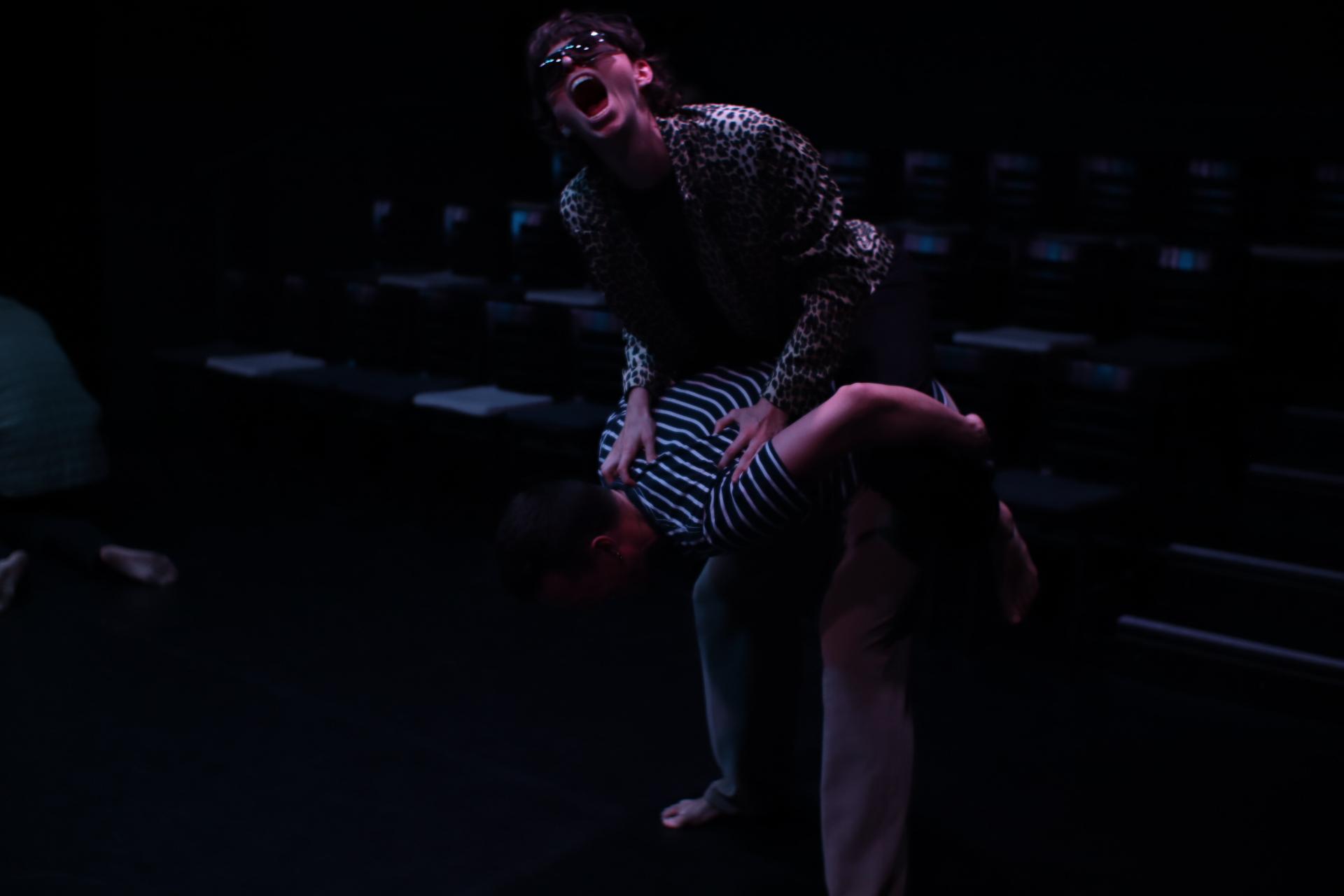
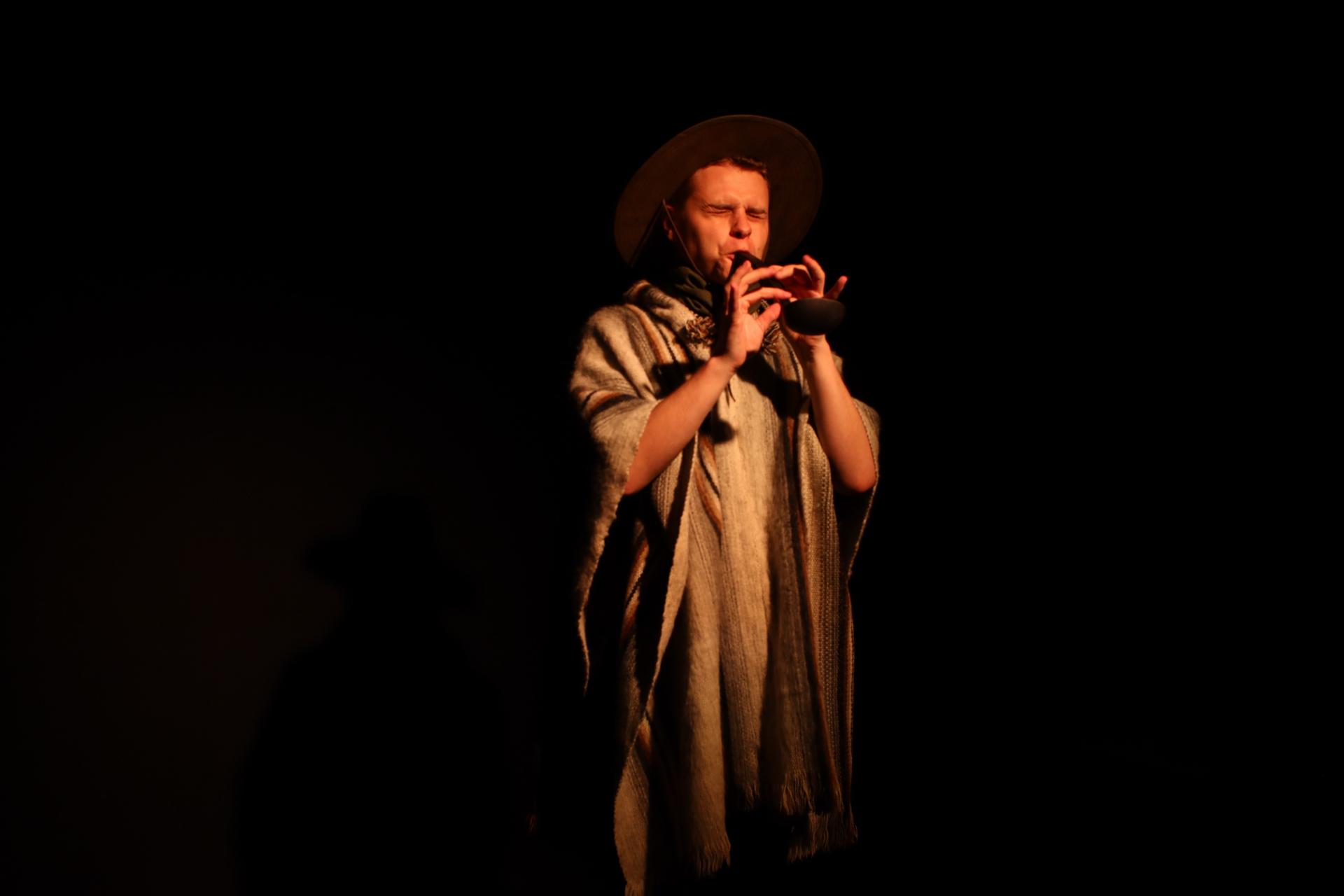
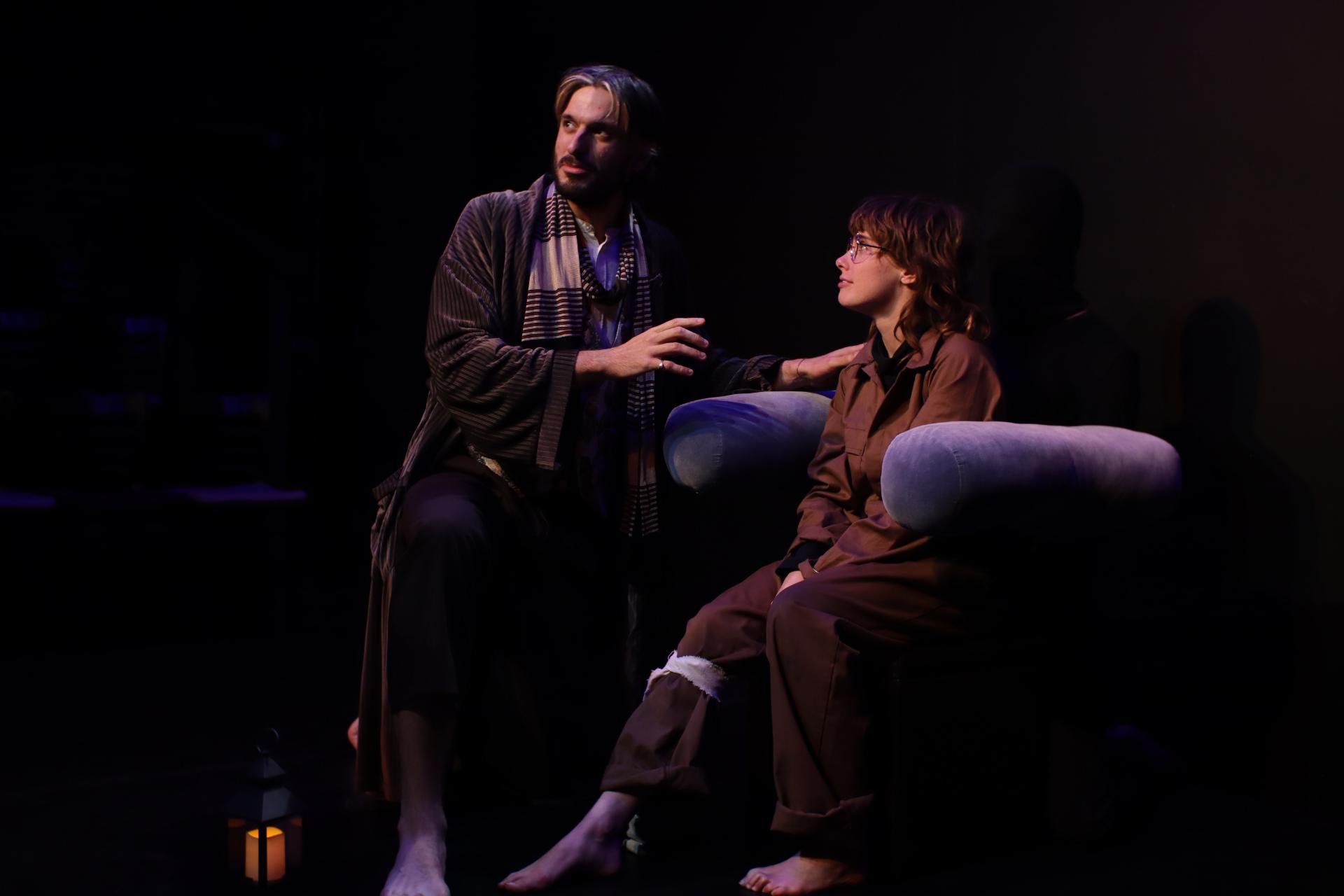
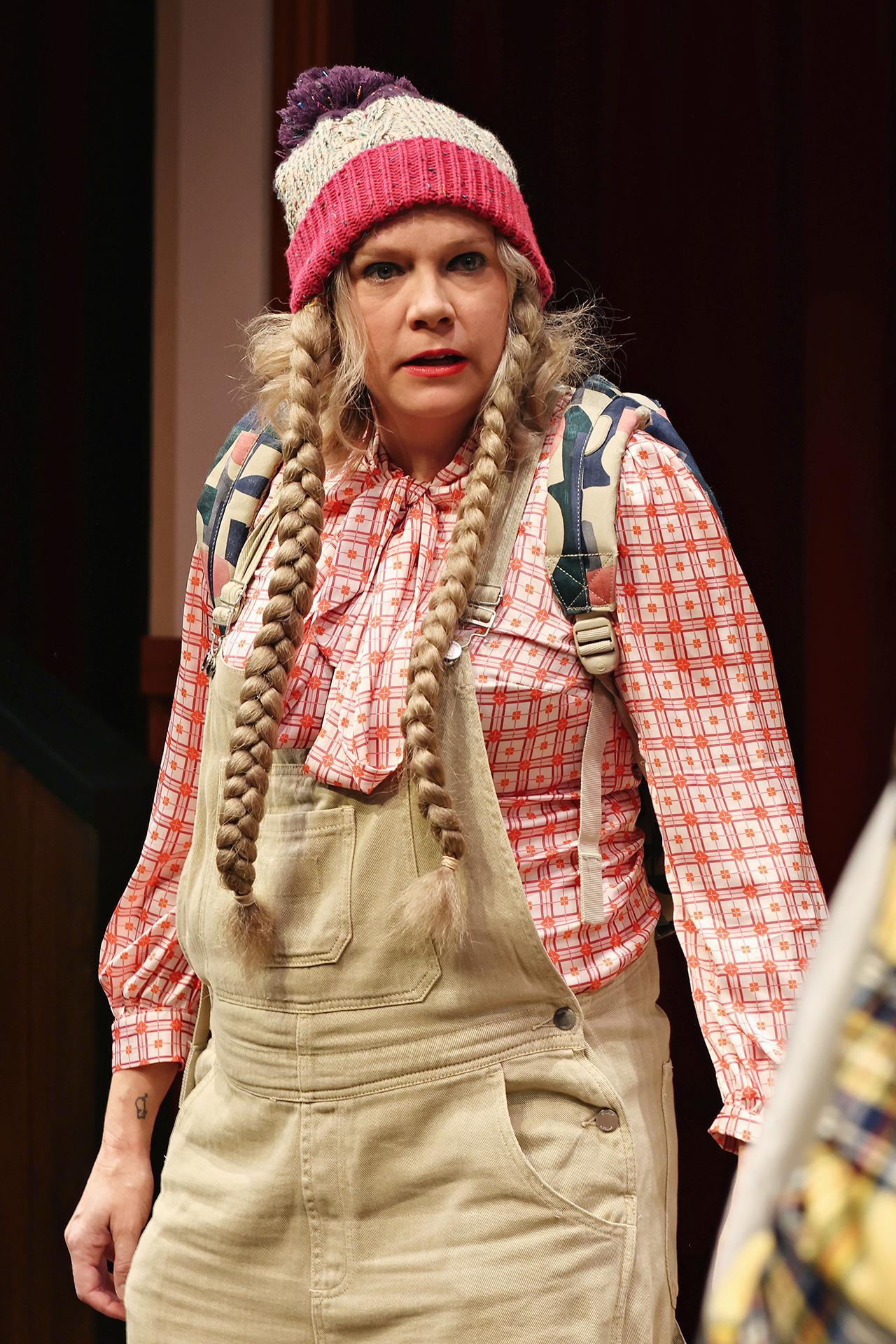
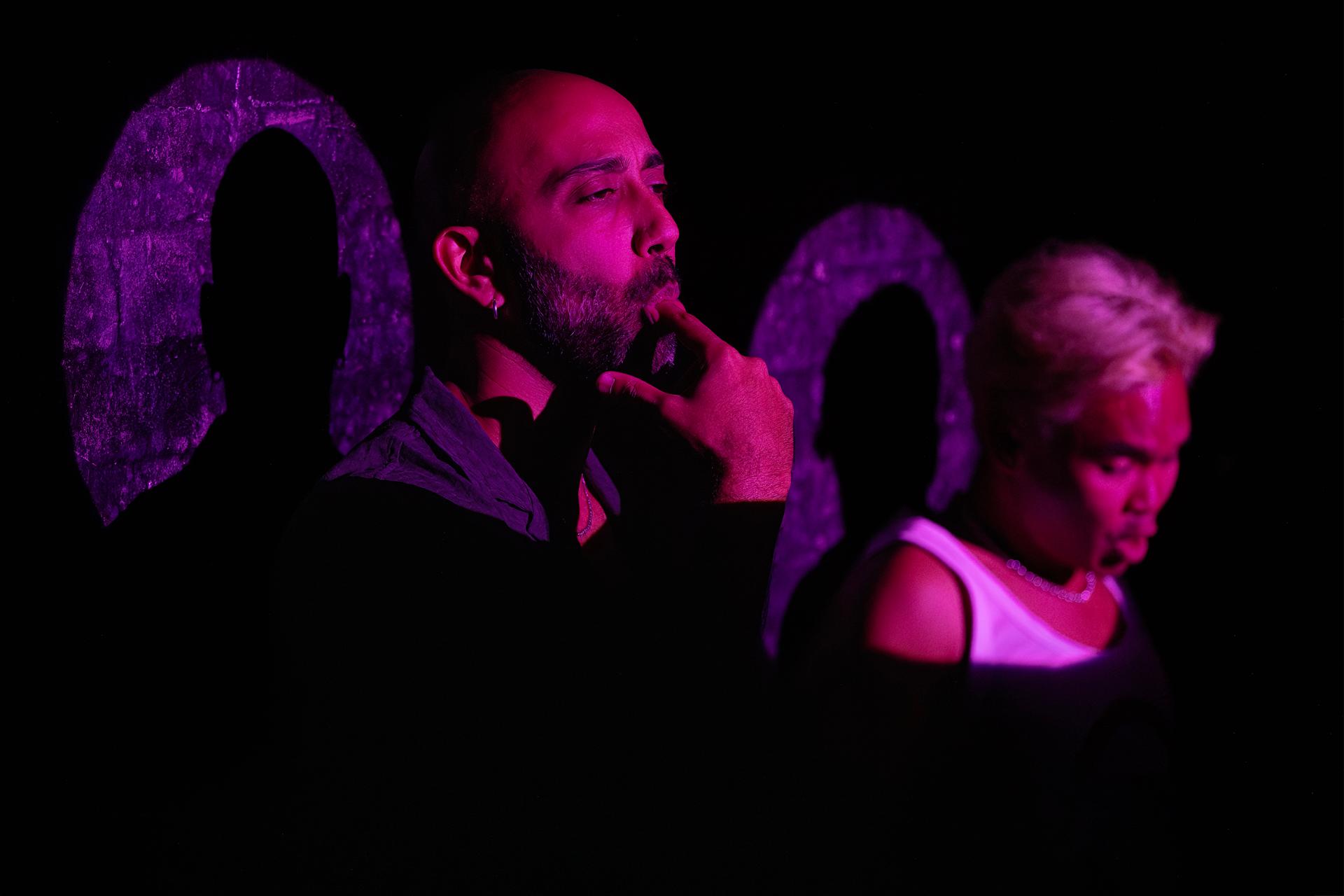
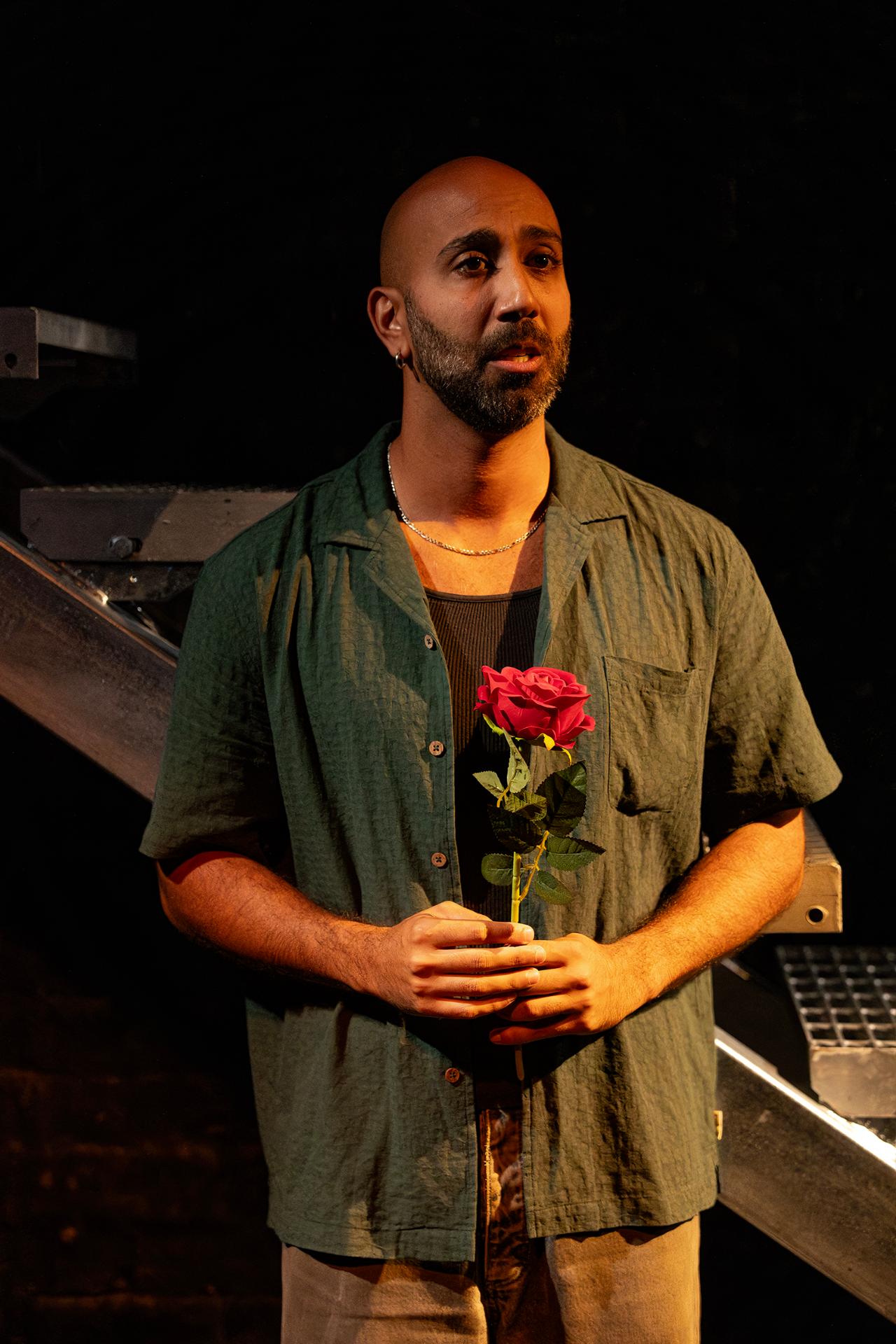
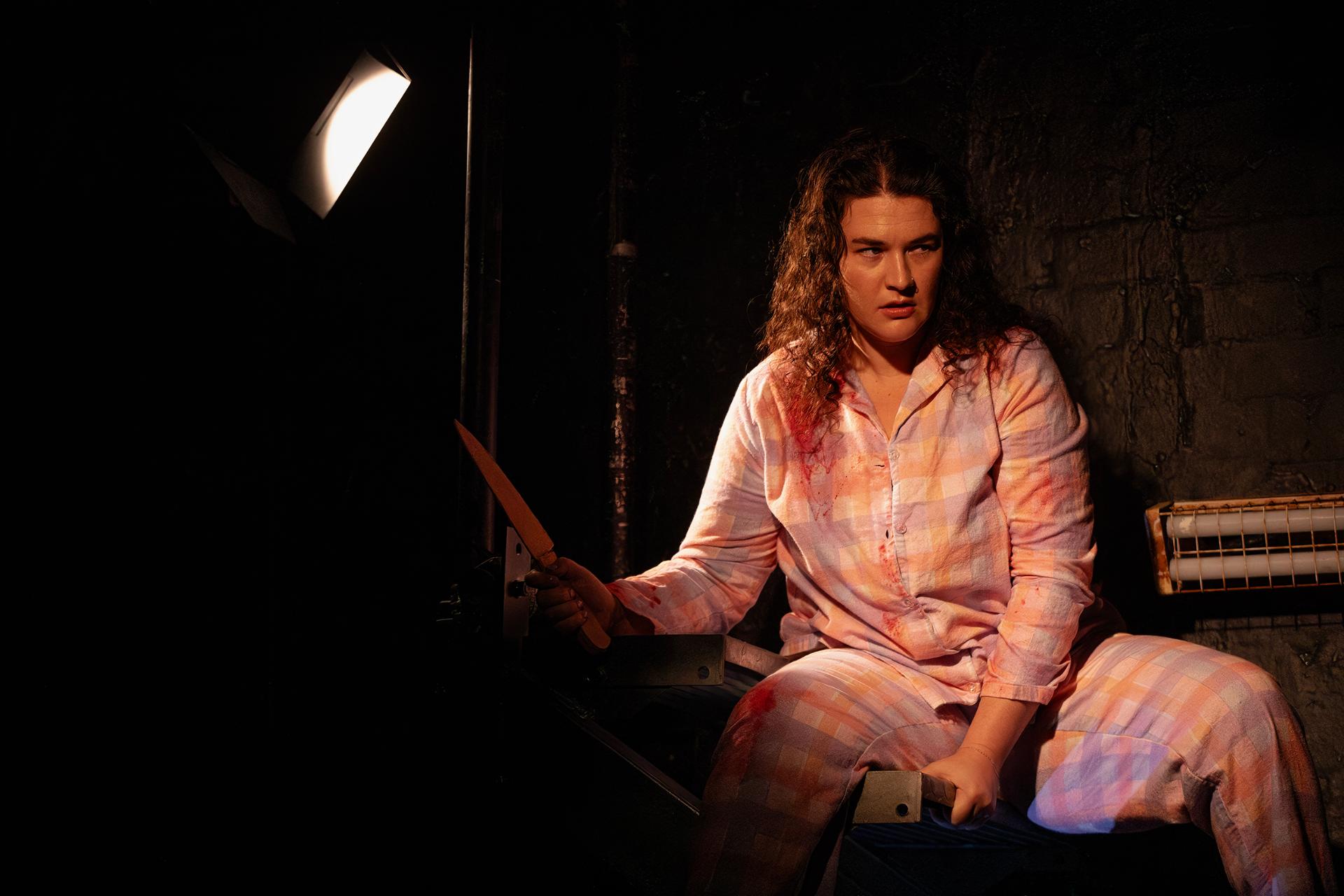
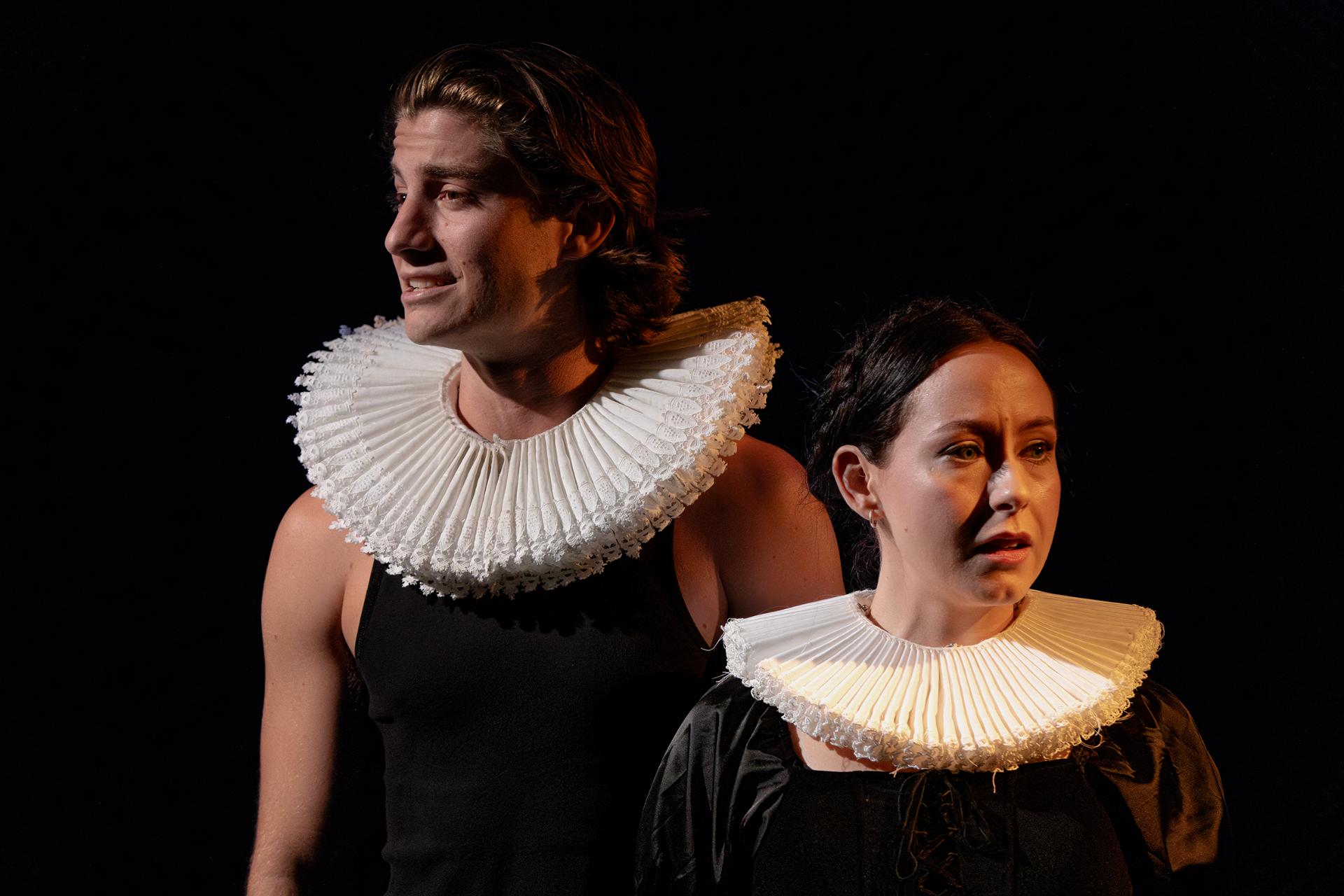
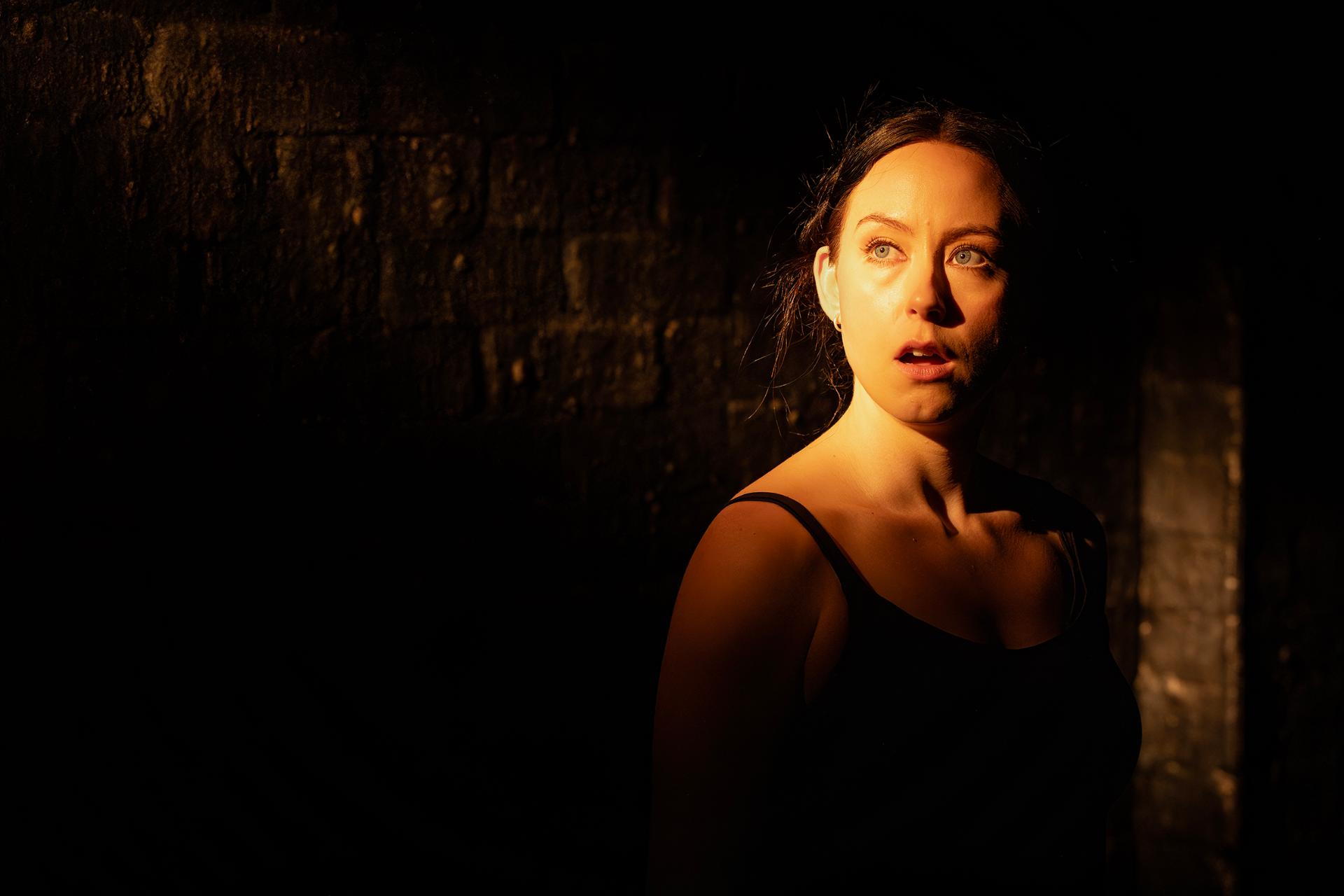
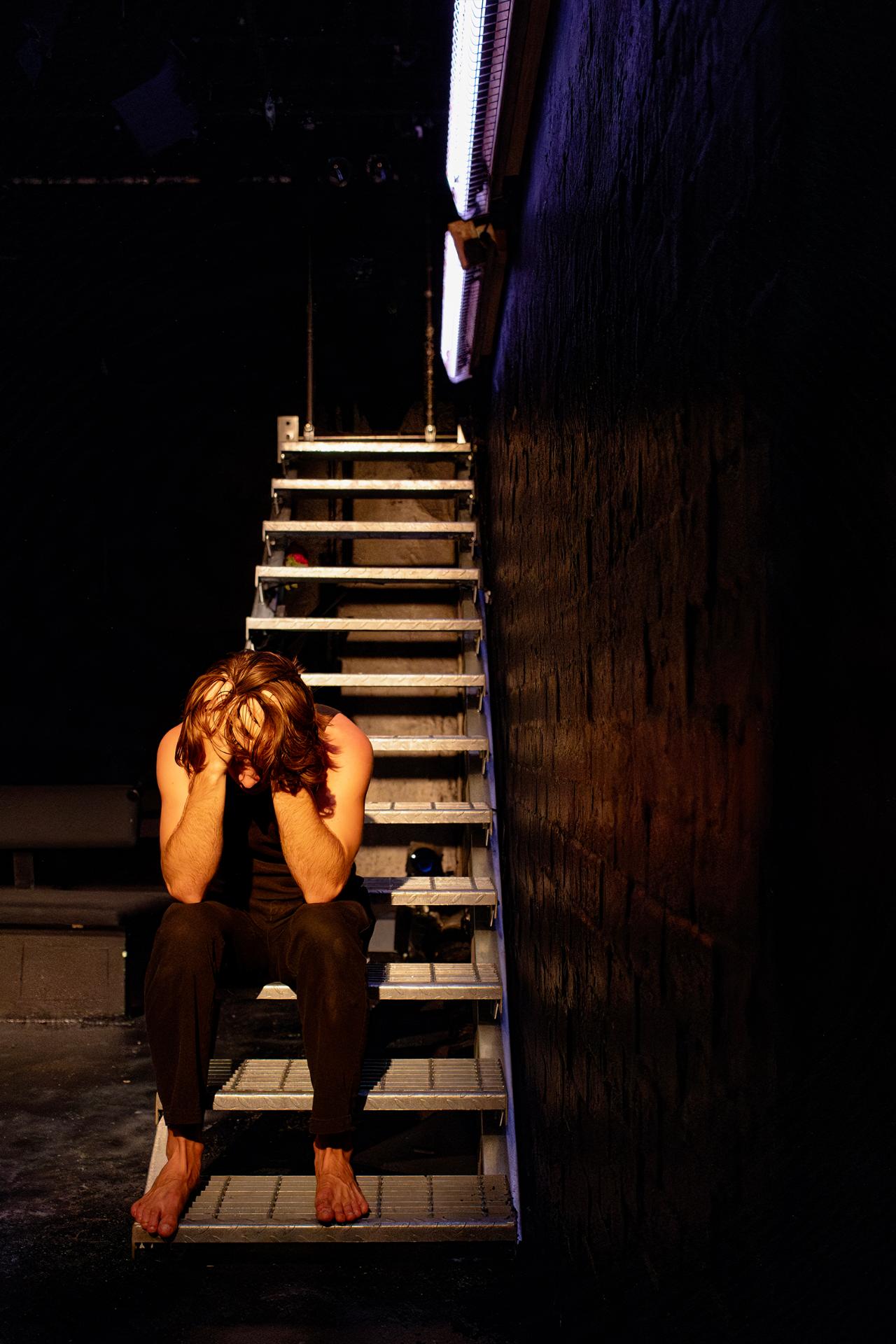
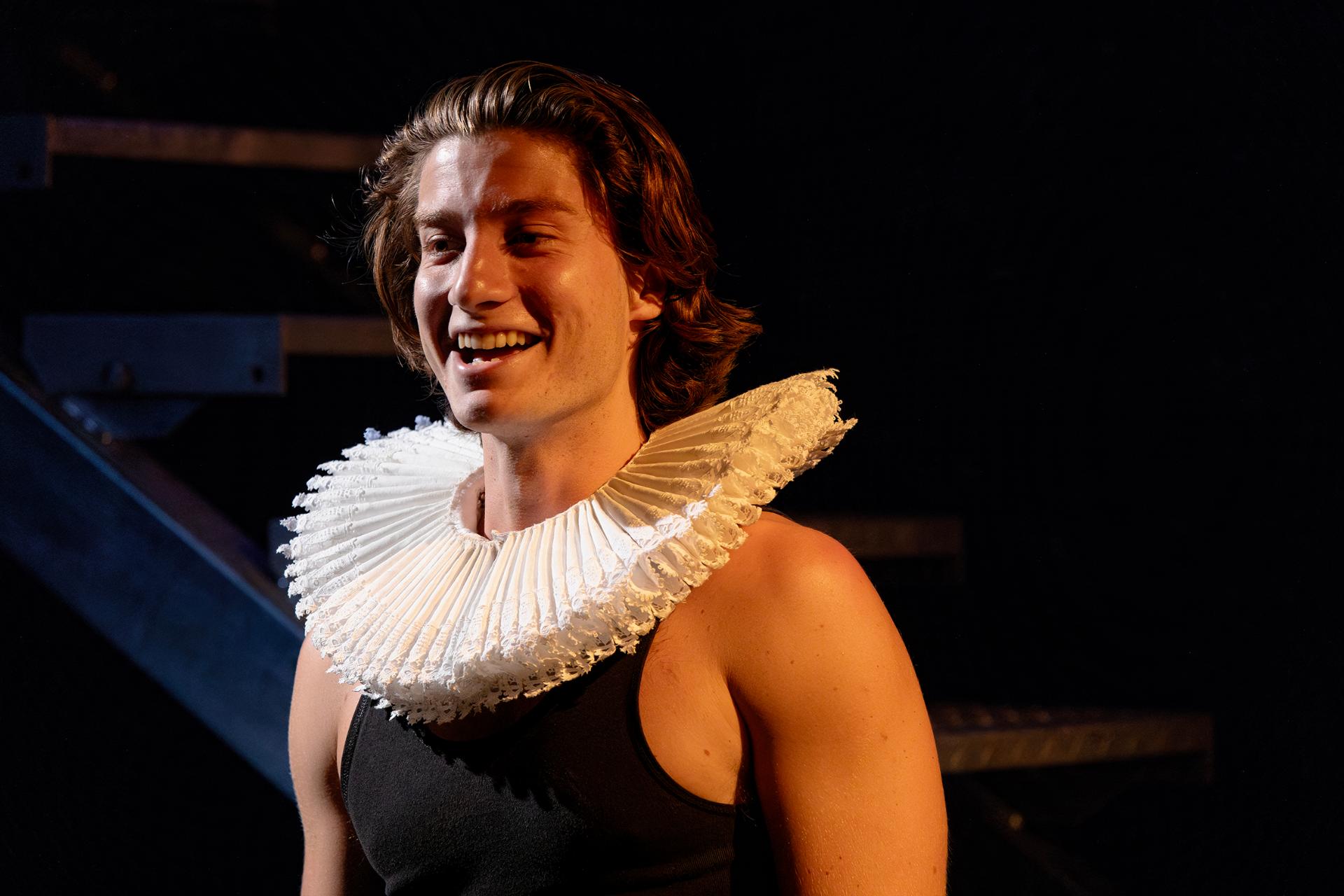
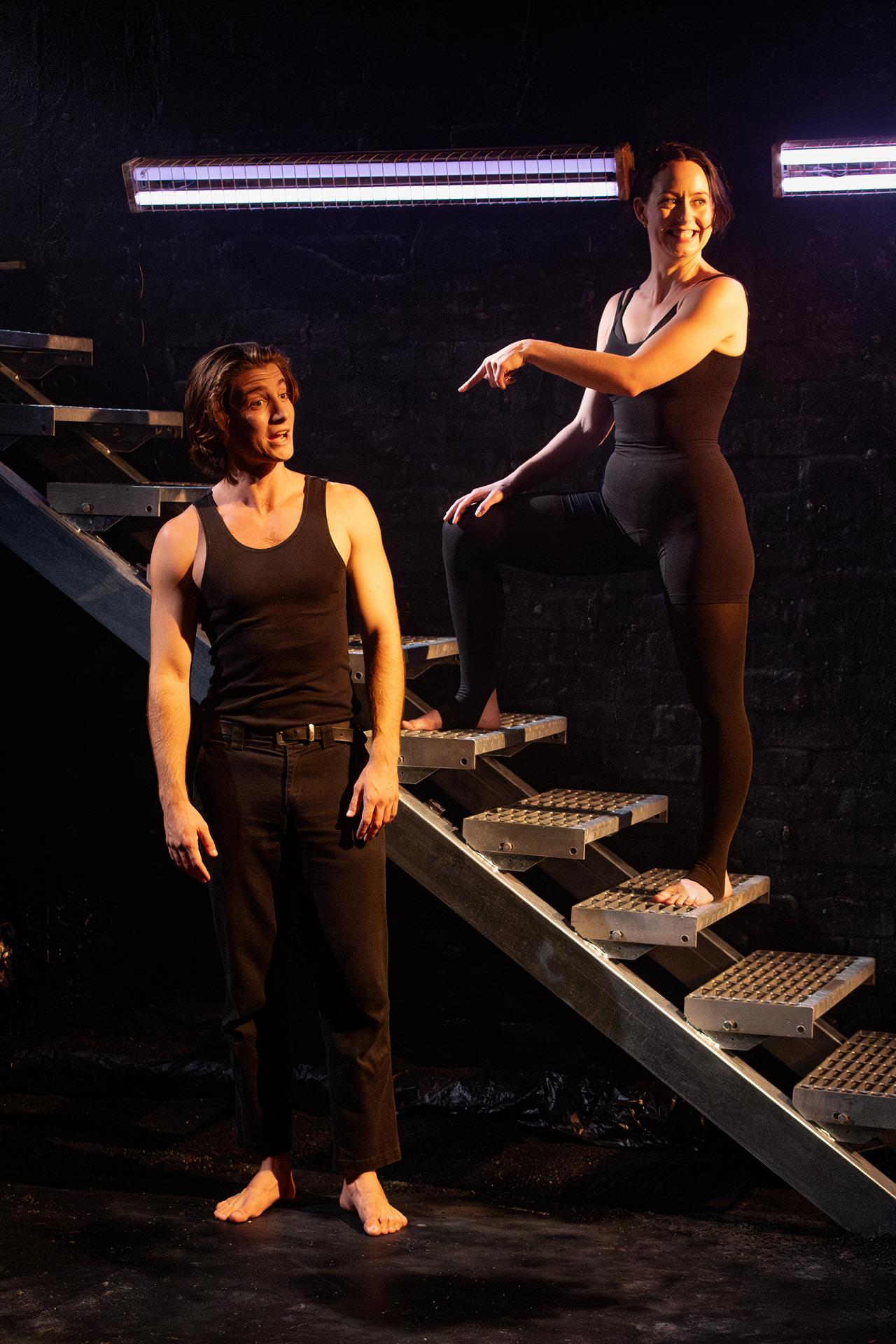
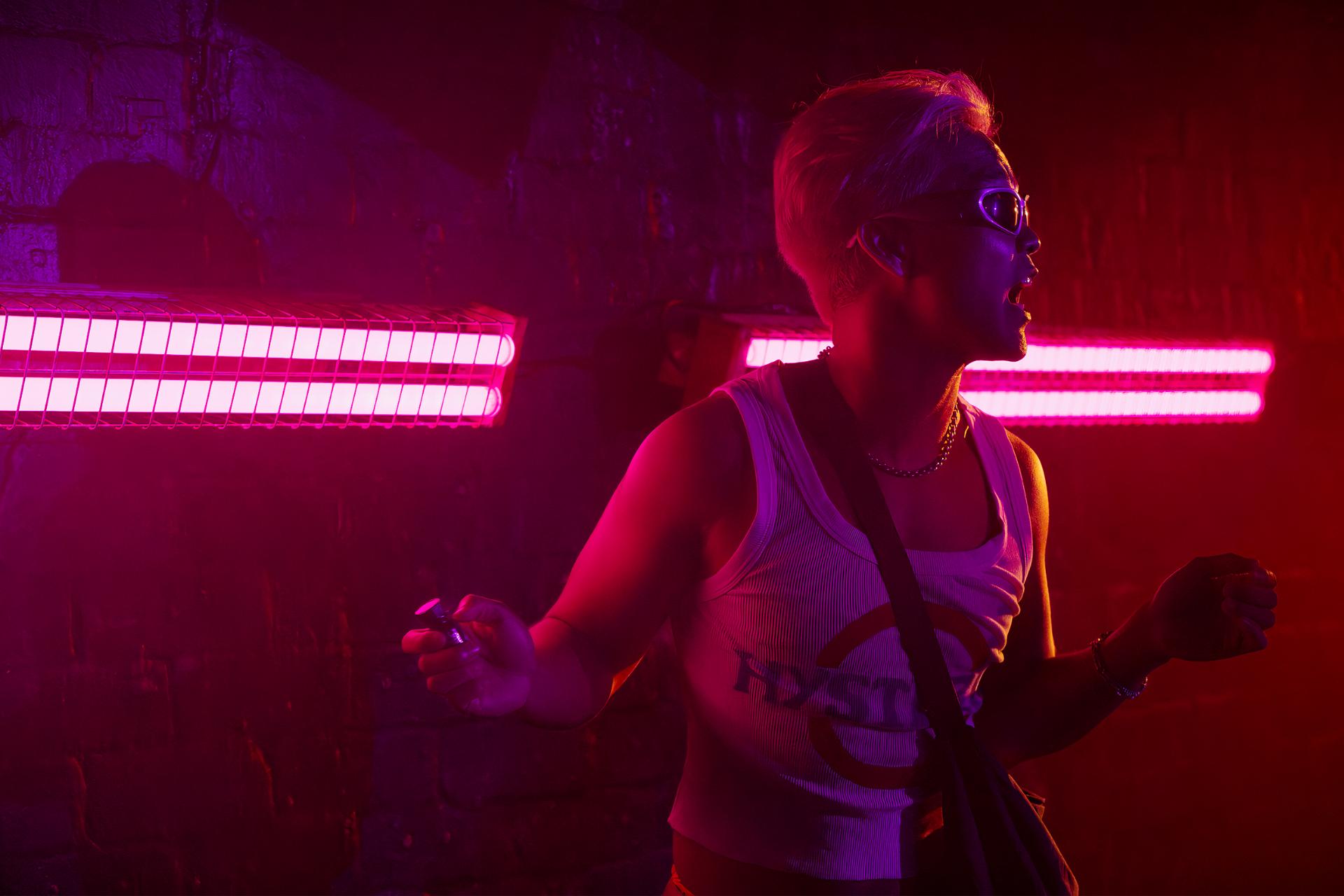
It was 1917 when Grace Banker was enlisted to lead a USA corps of thirty-three women switchboard operators in World War I. Although formally termed the Signal Corps Female Telephone Operators Unit, they became popularly known as the Hello Girls, a moniker after which Peter Mills and Cara Reichel named their entertaining and informative 2018 musical. It is a comparatively small yet ultimately consequential wartime story that the pair has identified and deftly written about, accompanied by a notable collection of catchy tunes to keep us firmly engaged.

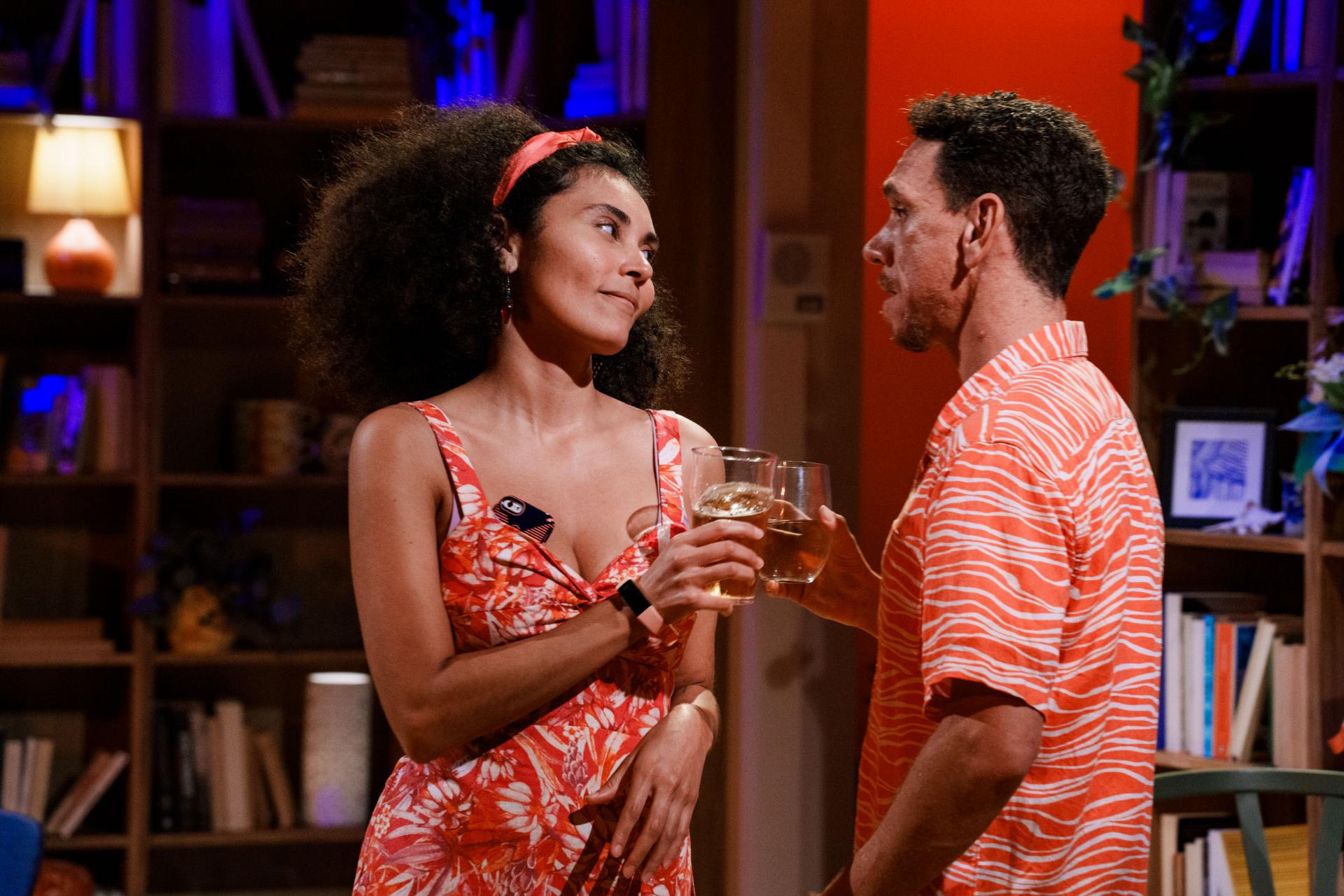
Exquisitely sung by a cast of ten, with Rhianna McCourt as their effervescent leading lady, the quality of vocal performances in The Hello Girls leaves a remarkable impression. Also exceptional, is the spirited band under Natalya Aynsley’s meticulous musical direction, delivering songs that are as tightly propulsive as they are imaginatively transportative. Sound design by Kyle Sheedy too is effective, especially when called upon to help illustrate the more chilling aspects of the women’s experiences.

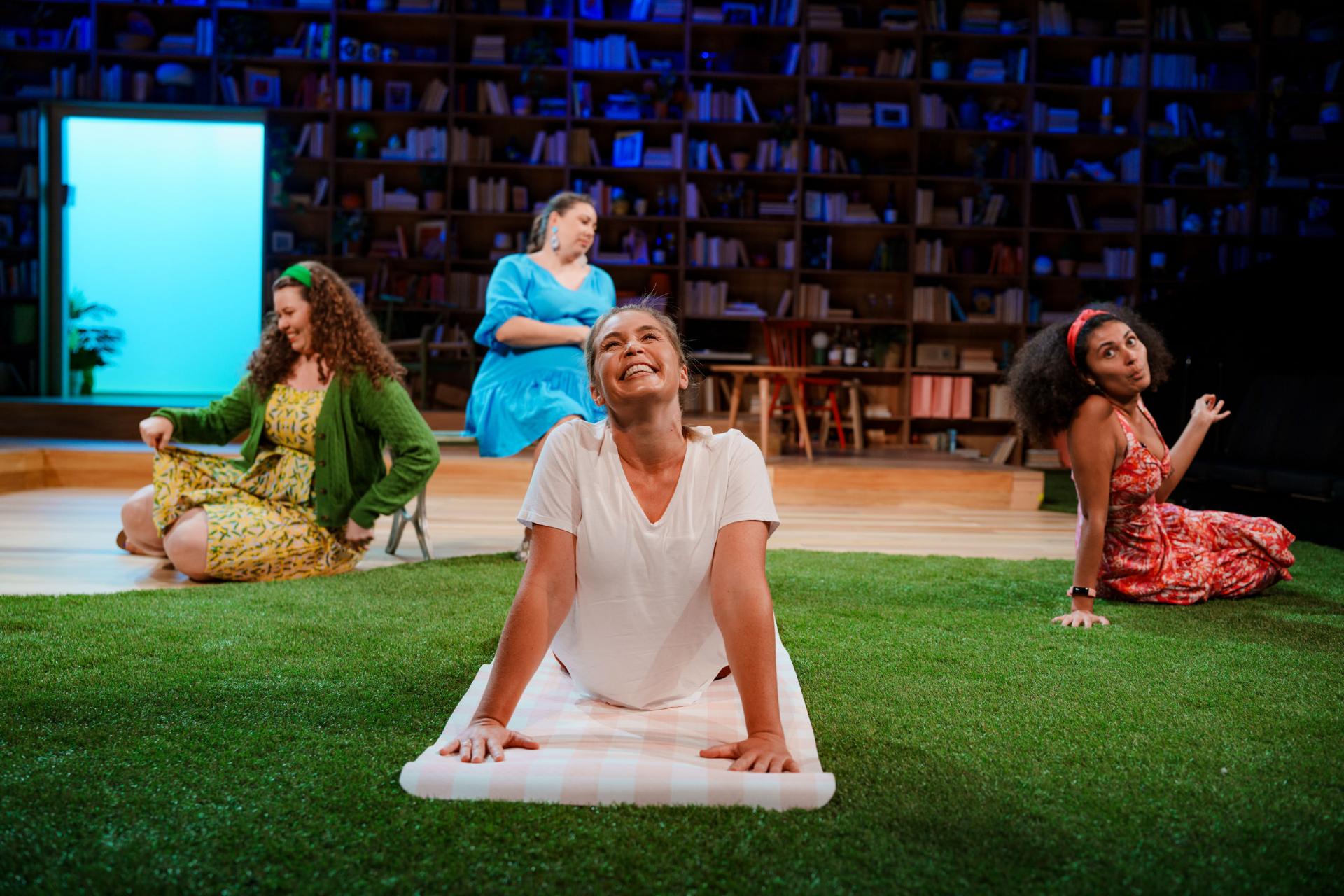
Directed by Jason Langley, along with choreography by Amy Orman, the narrative is conveyed with a theatrical exuberance and an appropriate sense of urgency. Not all of the story is applicable to how we think of the wars that are currently being fought in foreign lands, but portions of the show certainly resonate in meaningful and contemporaneously relevant ways.

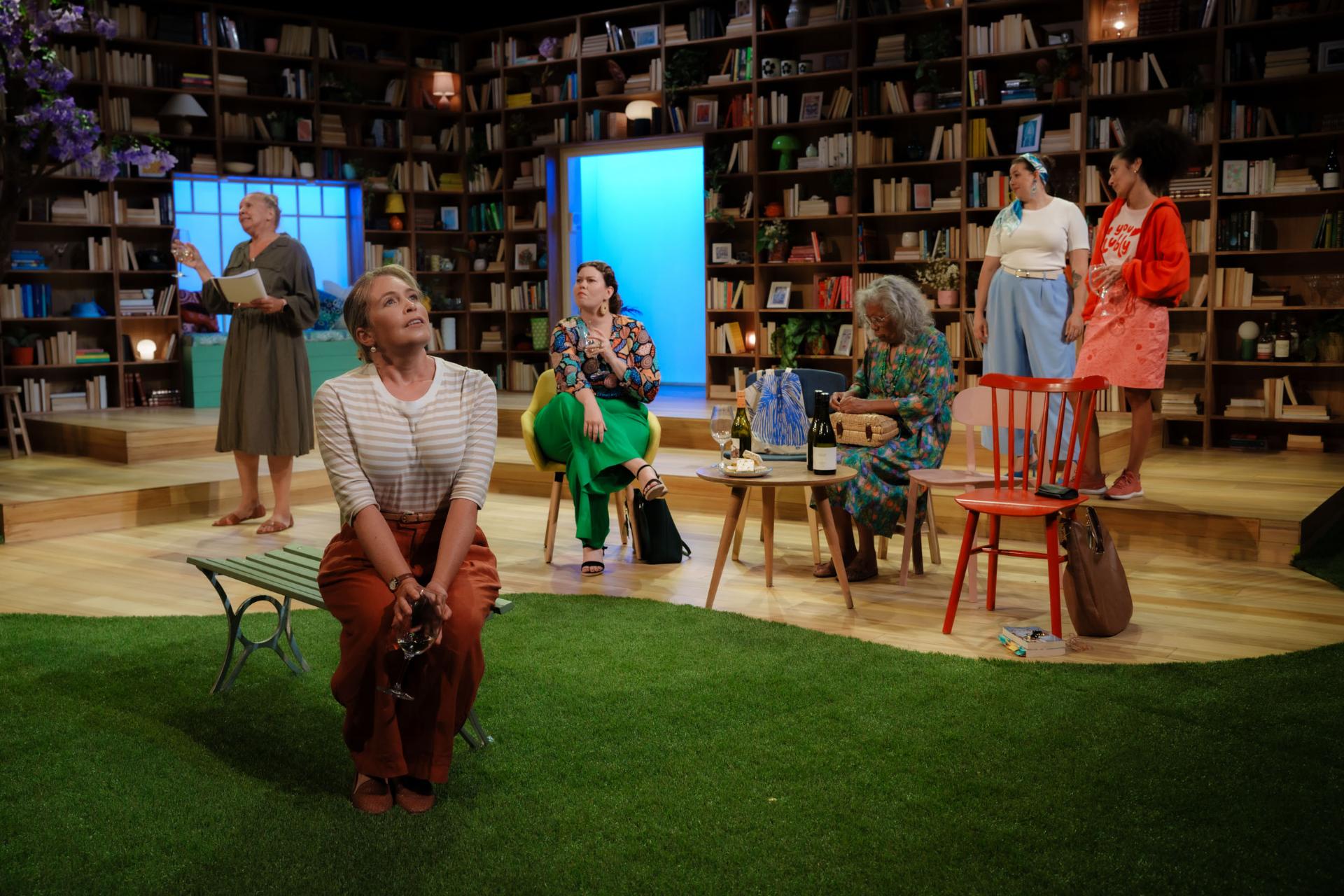
The staging suffers however, from an overall lack of visual flamboyance. Set design offers a functional space, but one that appears increasingly rigid over the two-and-a-half-hour duration. Lights are fairly rudimentary, although dynamic within its limited technical capacities. Sarah Hordern’s costumes are perhaps too accurate in emulating apparel from the era, with representations of characters that look excessively pragmatic and frugal.

We discover in The Hello Girls, that it had taken 60 years after the war before the American Congress approved Veteran Status/Honorable discharges for the remaining military women. This prolonged denial that women were a crucial part of the war effort, exposes the ease with which our venerated systems are able to accommodate injustices of all kinds. The Hello Girls also shows that there is nothing broken about those systems, that it is precisely the way they were always meant to operate, that we need to interrogate and transform.

www.hayestheatre.com.au | www.facebook.com/heartstringstheatreco

Review: The Wind In The Willows (KXT on Broadway)

Venue: KXT on Broadway (Ultimo NSW), Dec 8 – 23, 2023
Playwright: Alan Bennett (from the novel by Kenneth Grahame)
Director:
James Raggatt
Cast: Georgia Blizzard, Michael Cecere, Miranda Daughtry, Michael Doris, Elyse Phelan, James Raggatt, Joseph Raggatt, Jack Richardson, Lachlan Stevenson, Harlee Timms, Ross Walker
Images by Brittany Santariga

Theatre review

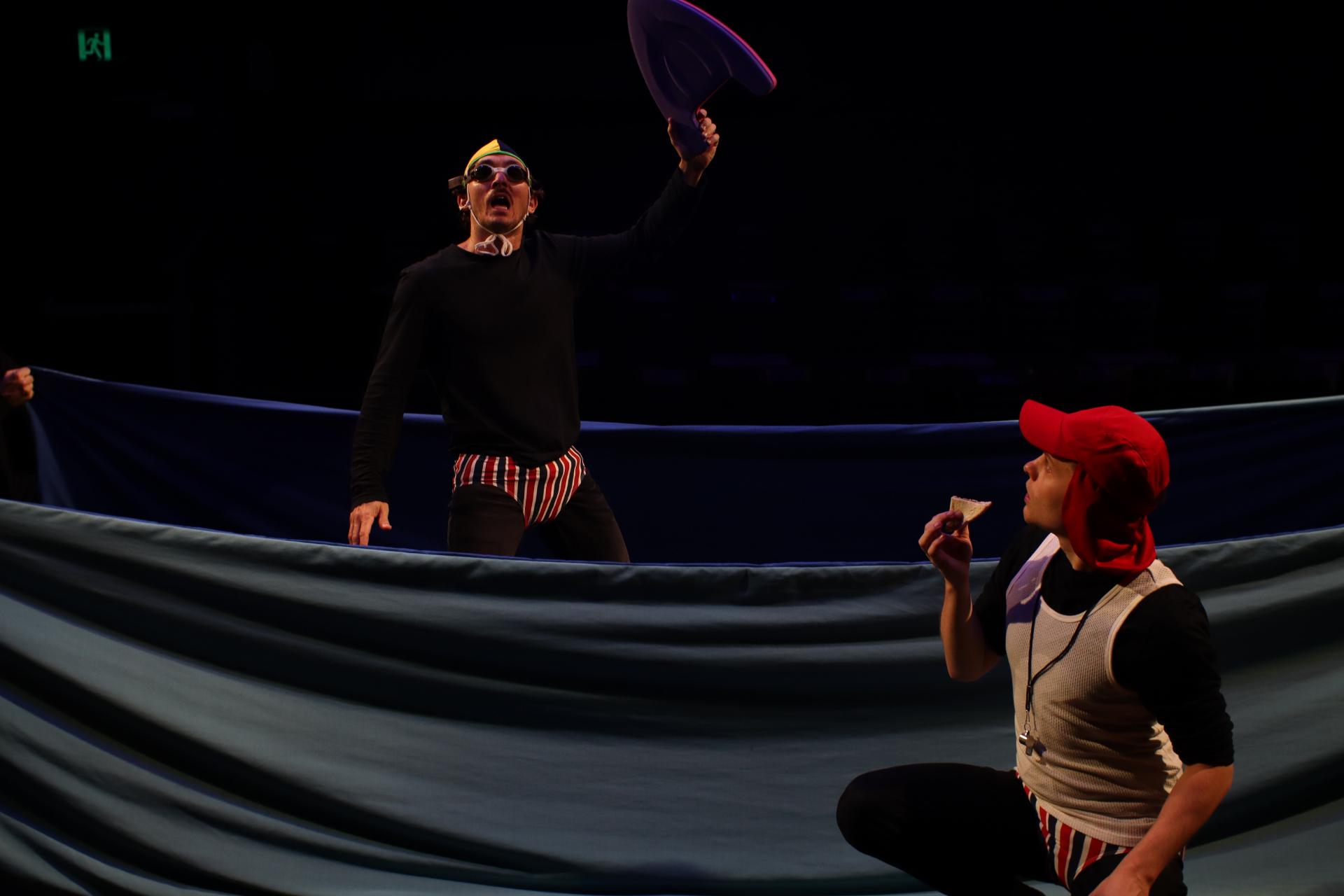
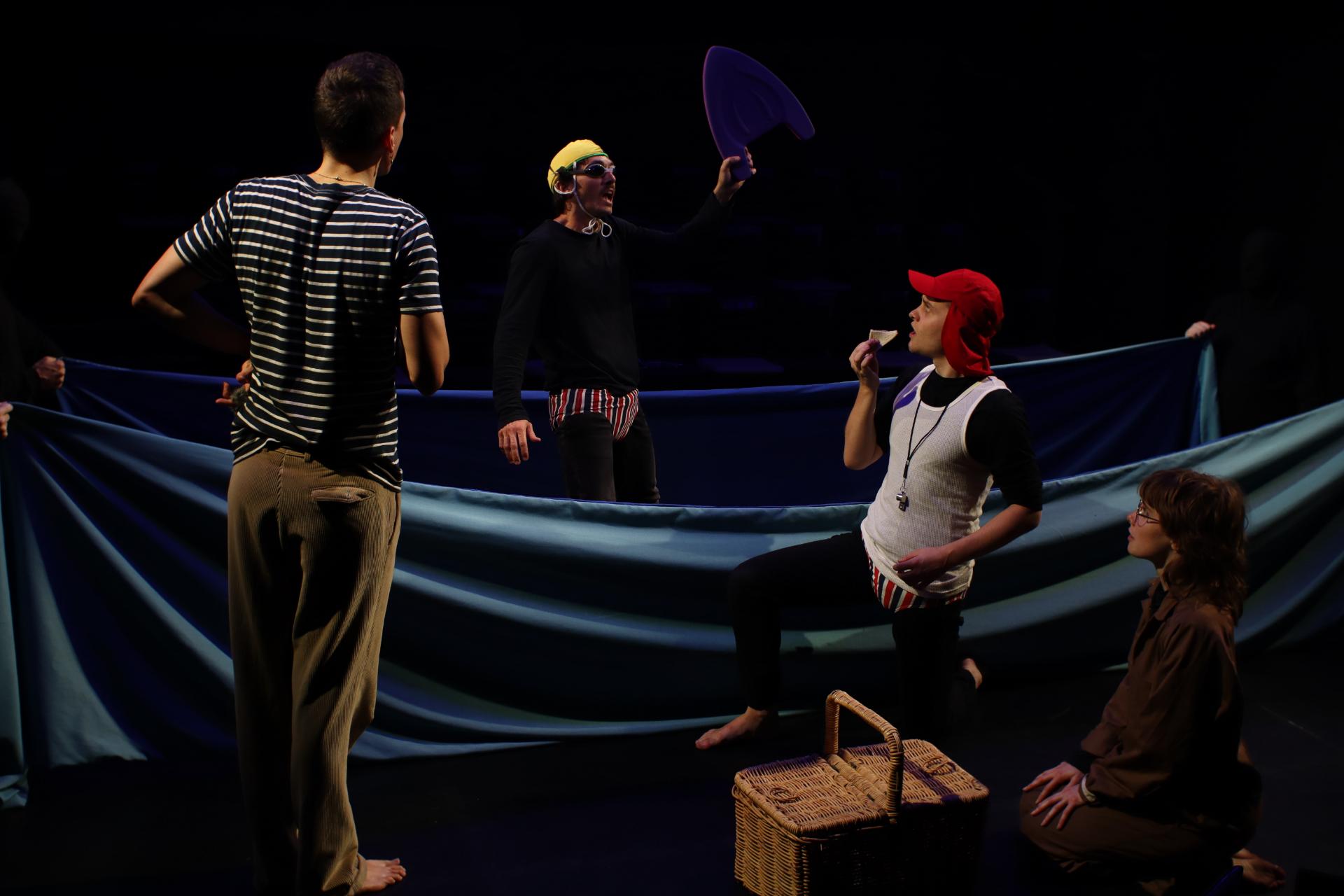
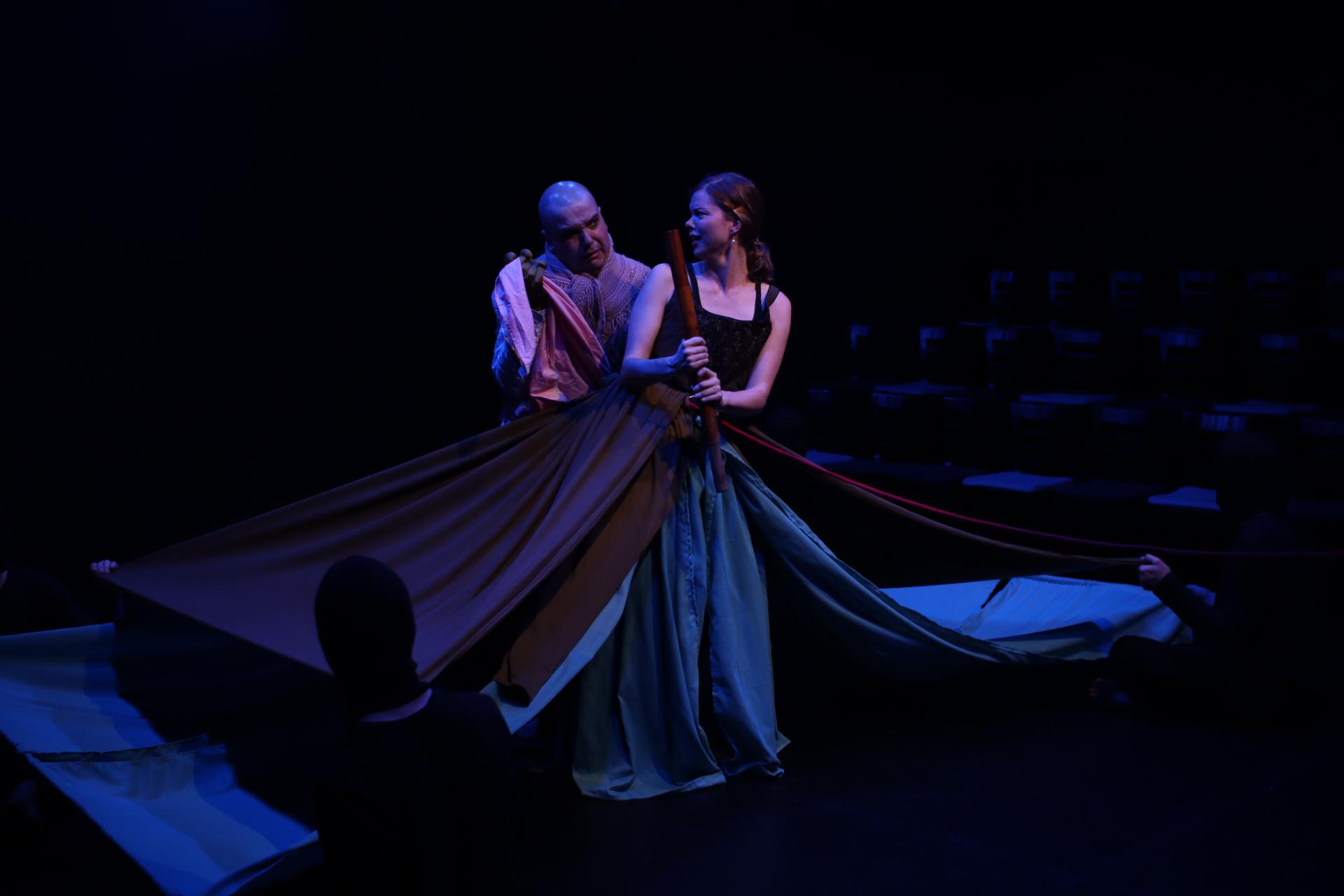
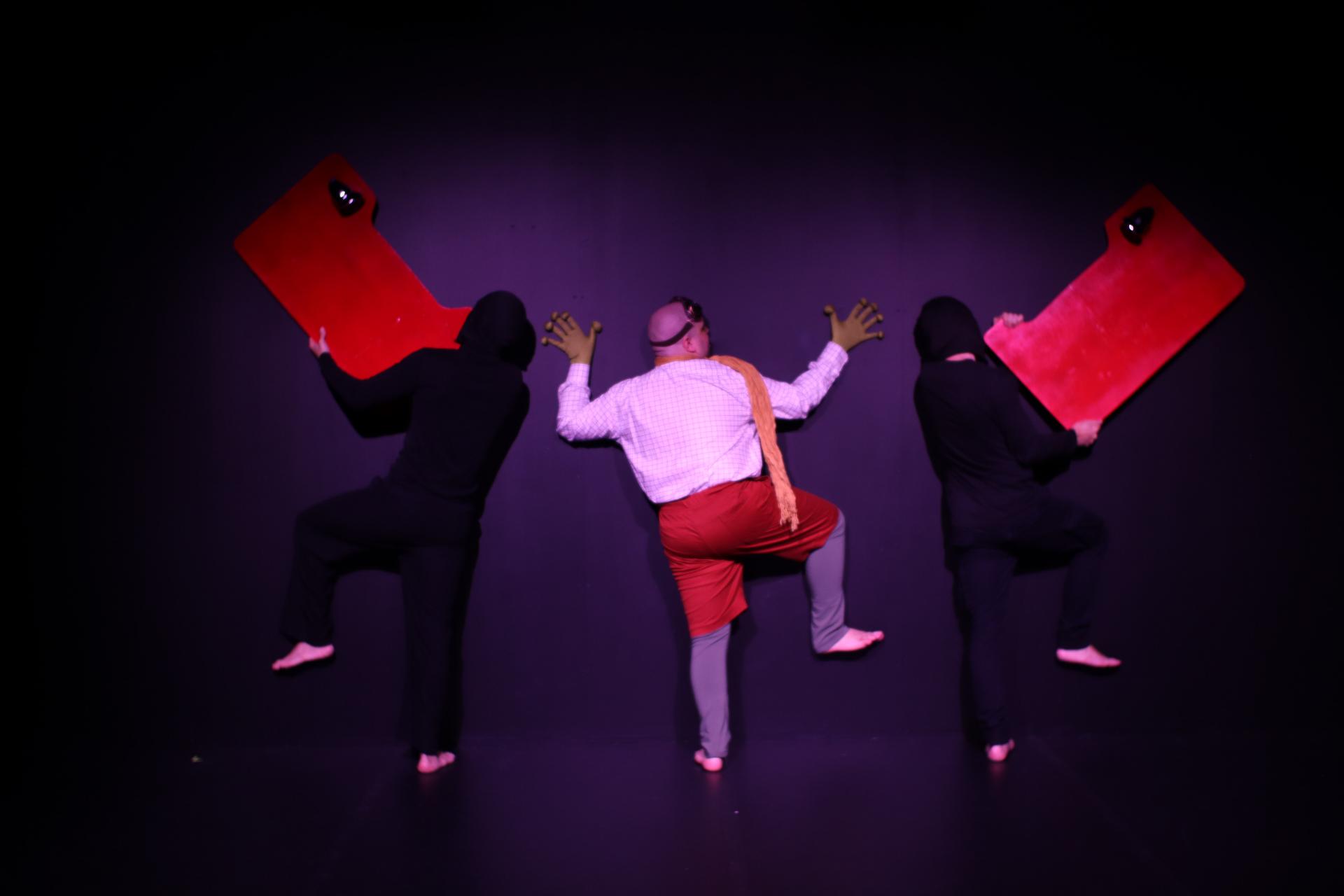
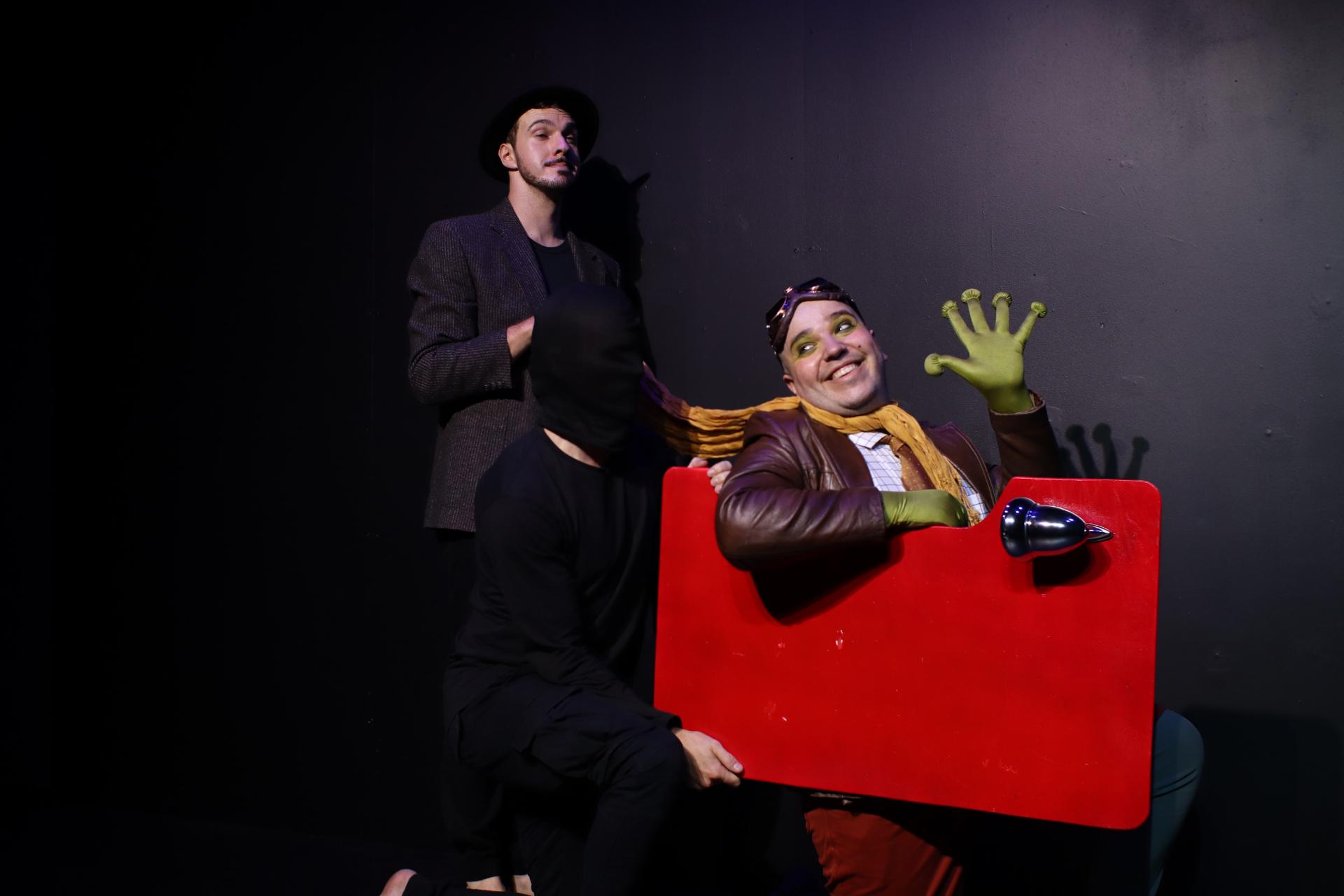
In Alan Bennett’s adaptation of The Wind in the Willows by Kenneth Grahame, the reckless and irresponsible Toad steals a car, and finds himself imprisoned. It is unequivocal that there are life lessons he needs to learn, and luckily friends are on hand to guide and support. The whimsical work is written with great charm, involving anthropomorphised characters that give Grahame’s 1908 creation a sense of timelessness, able to dissolve psychological barriers and allow an old English tale to speak to wider audiences.
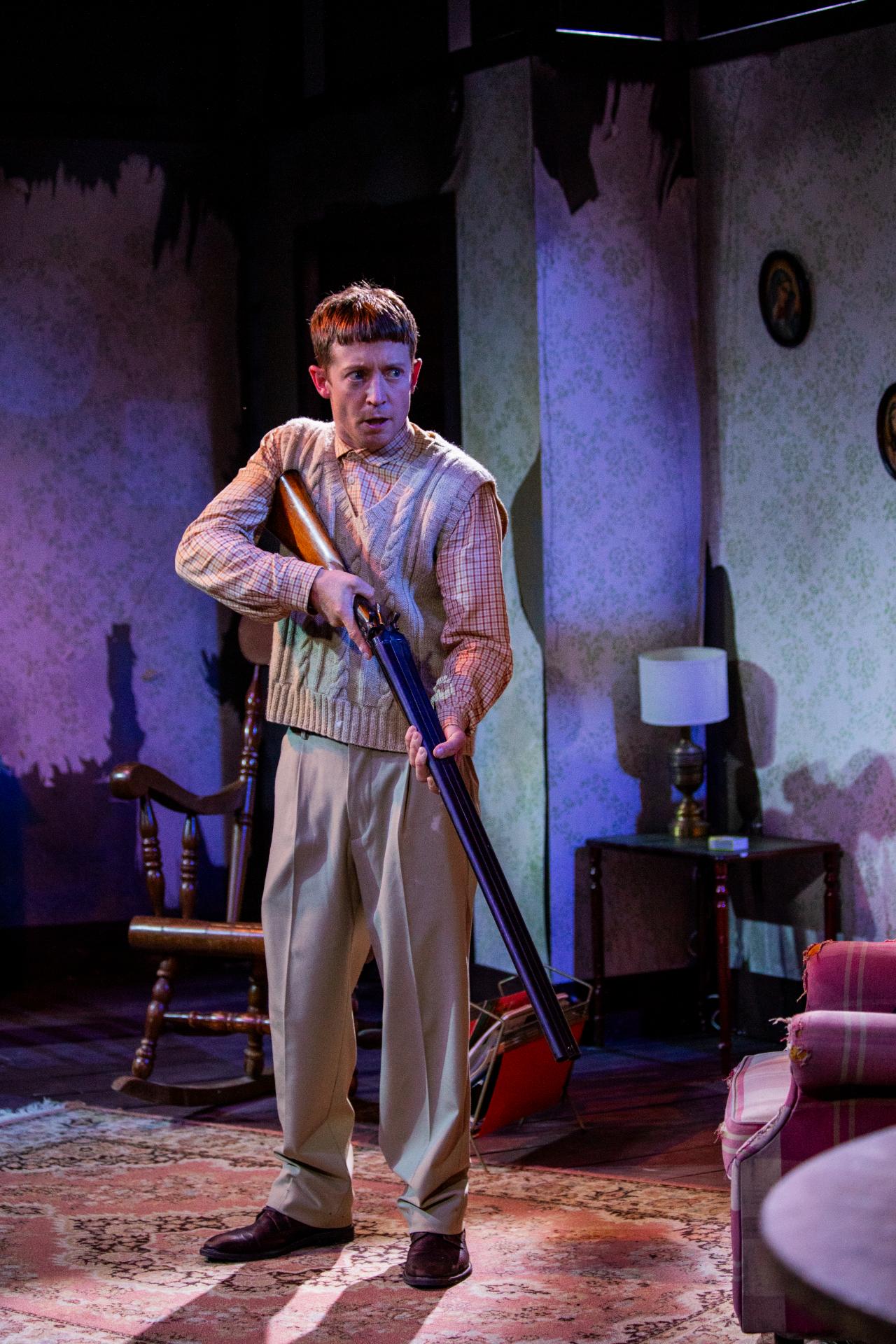
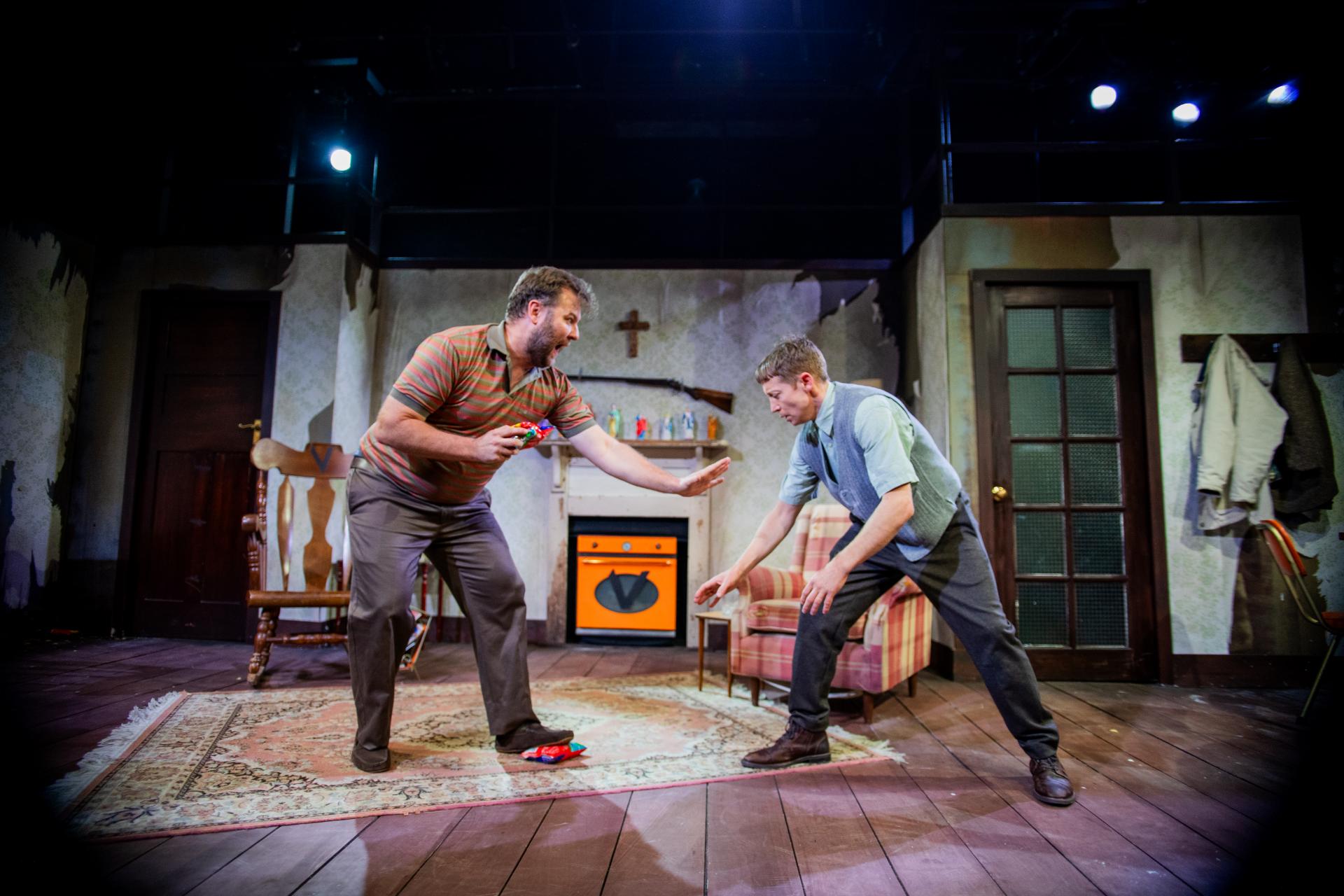
Direction for this staging is provided by James Raggatt, who brings a commensurately quirky approach to how the story is told. On a bare stage, Raggatt demonstrates considerable inventiveness, in his depictions of these deeply fanciful scenarios. There is admirable detail in performances by an accomplished cast, including Michael Doris who is simply delightful as Toad. Although not always cohesive or sufficiently focused, the show is consistently energetic, with a joyful quality that sustains our attention.

Costumes by Isabella Holder help with the ways in which we imagine these animal characters, but could afford to include more extravagance and eccentricity in building a visual style. Lights by Saint Clair are a dynamic element, intricately transforming imagery from scene to scene, guiding us through this realm of theatrical fantasy. Songs by Jeremy Sams are a valuable addition, but the absence of a more intentional sound design diminishes the impact, of all that is being so passionately rendered. 

People and stories can easily be forgotten with the passage of time, but the lessons left behind could very well linger until the very end. A wise man once said, “careful the things you say, children will listen.” There are important things to deduce from The Wind in the Willows, not just from what is being told, but also in how we gather, to listen to one another.

www.kingsxtheatre.com | www.facebook.com/stacksontheatre

Review: Midnight Murder At Hamlington Hall (Ensemble Theatre)

Venue: Ensemble Theatre (Kirribilli NSW), Dec 1, 2023 – Jan 14, 2024
Playwright: Mark Kilmurry, Jamie Oxenbould 
Director: Mark Kilmurry
Cast: Sam O’Sullivan, Jamie Oxenbould, Ariadne Sgouros, Eloise Snape
Images by Prudence Upton

Theatre review
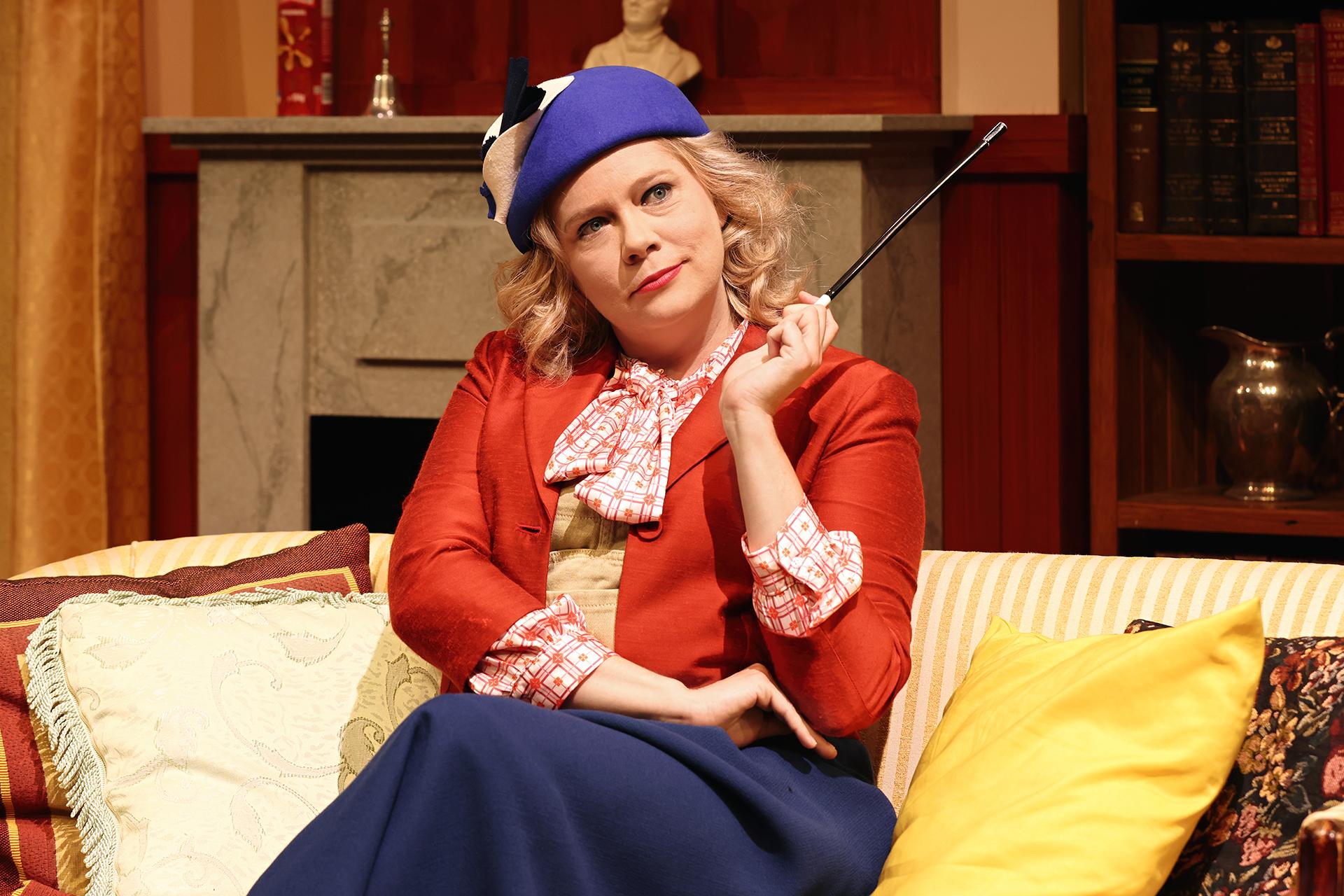
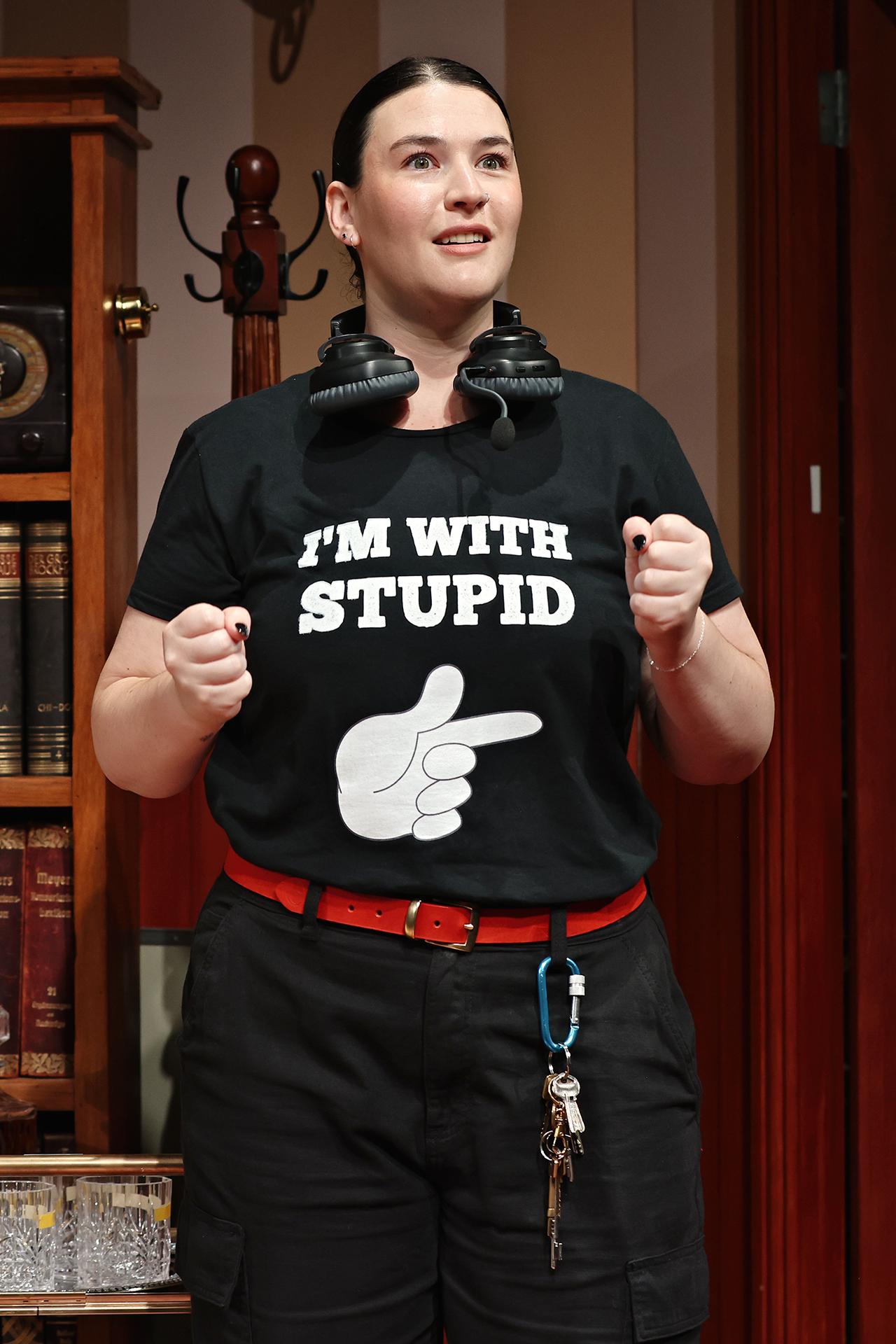
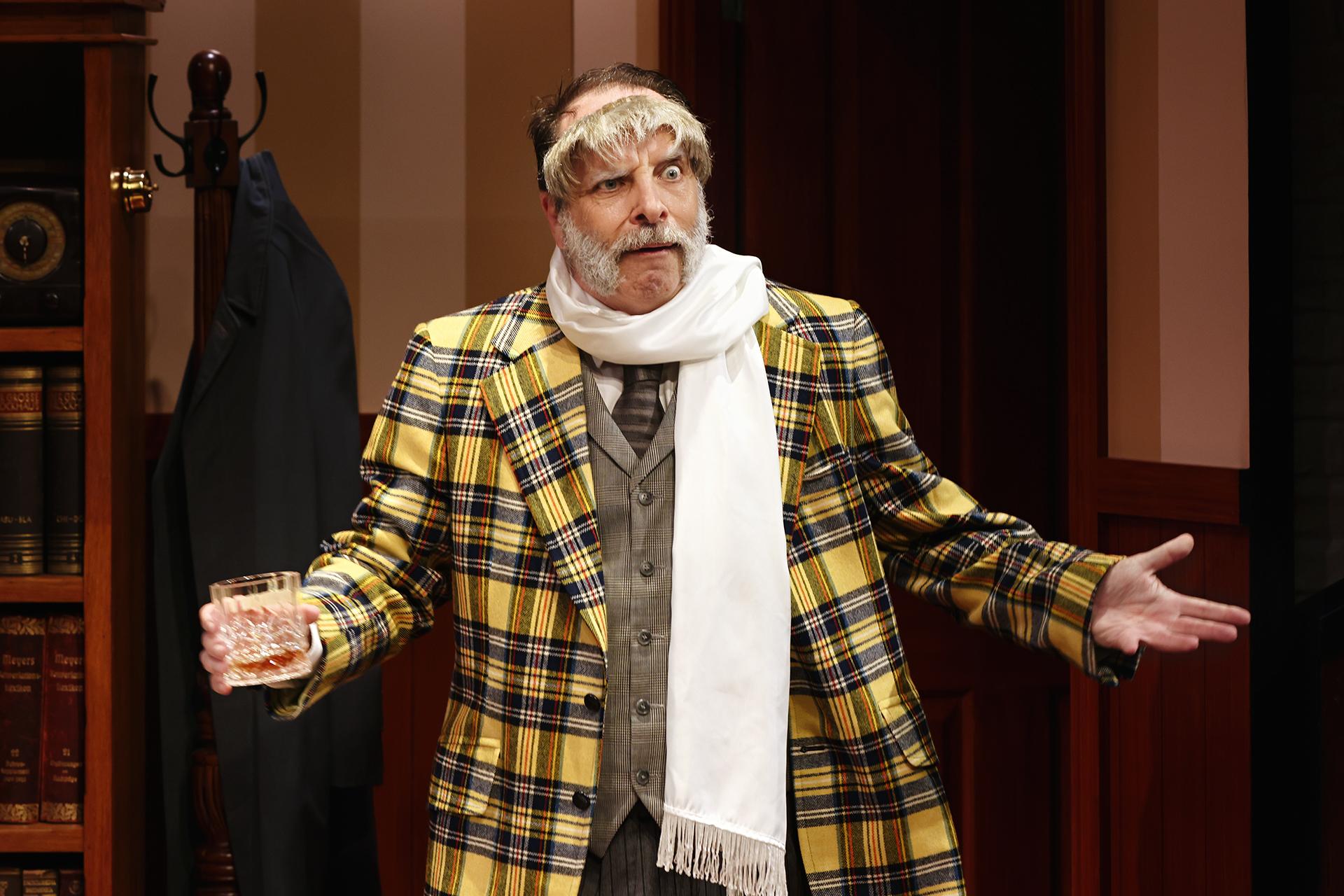
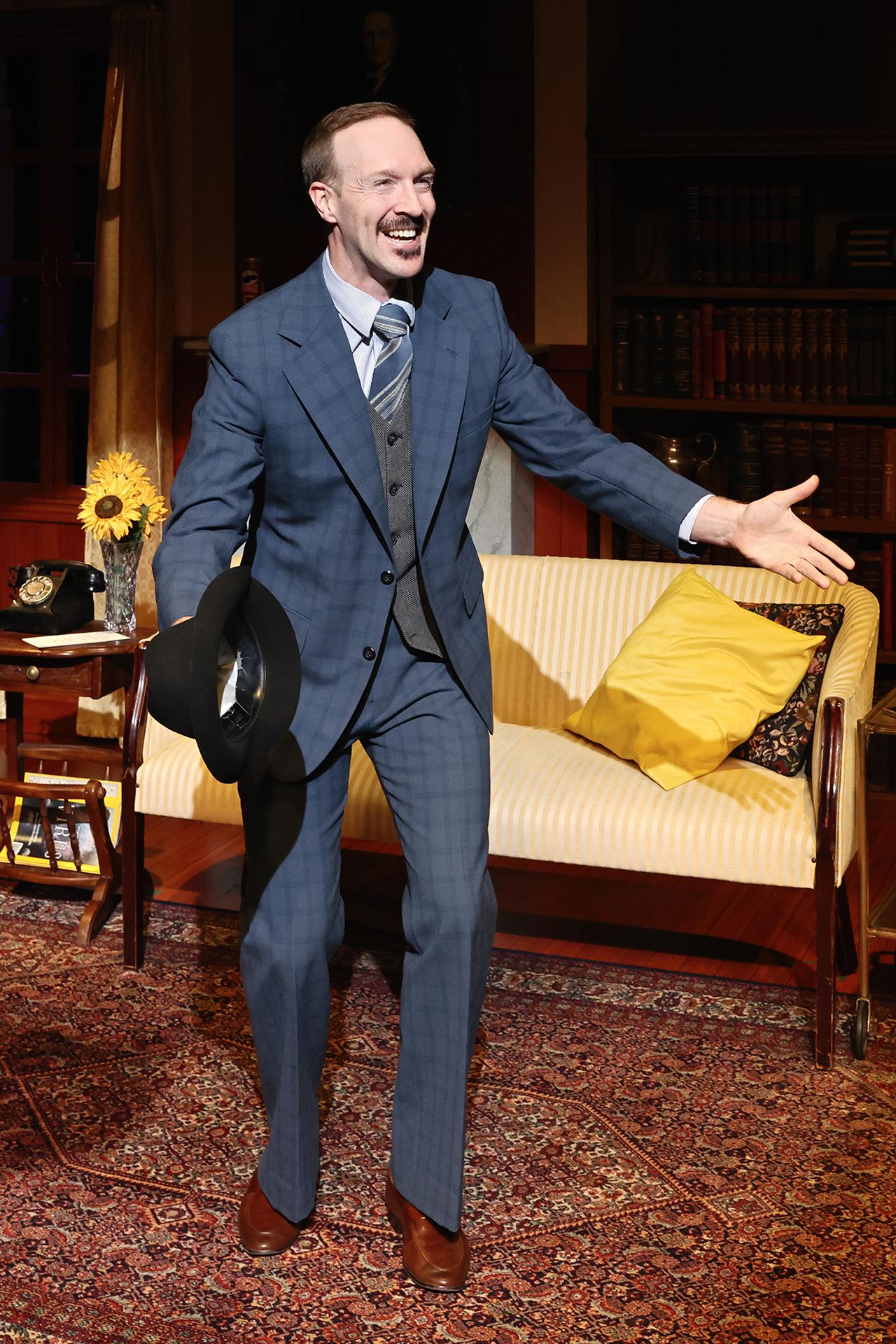
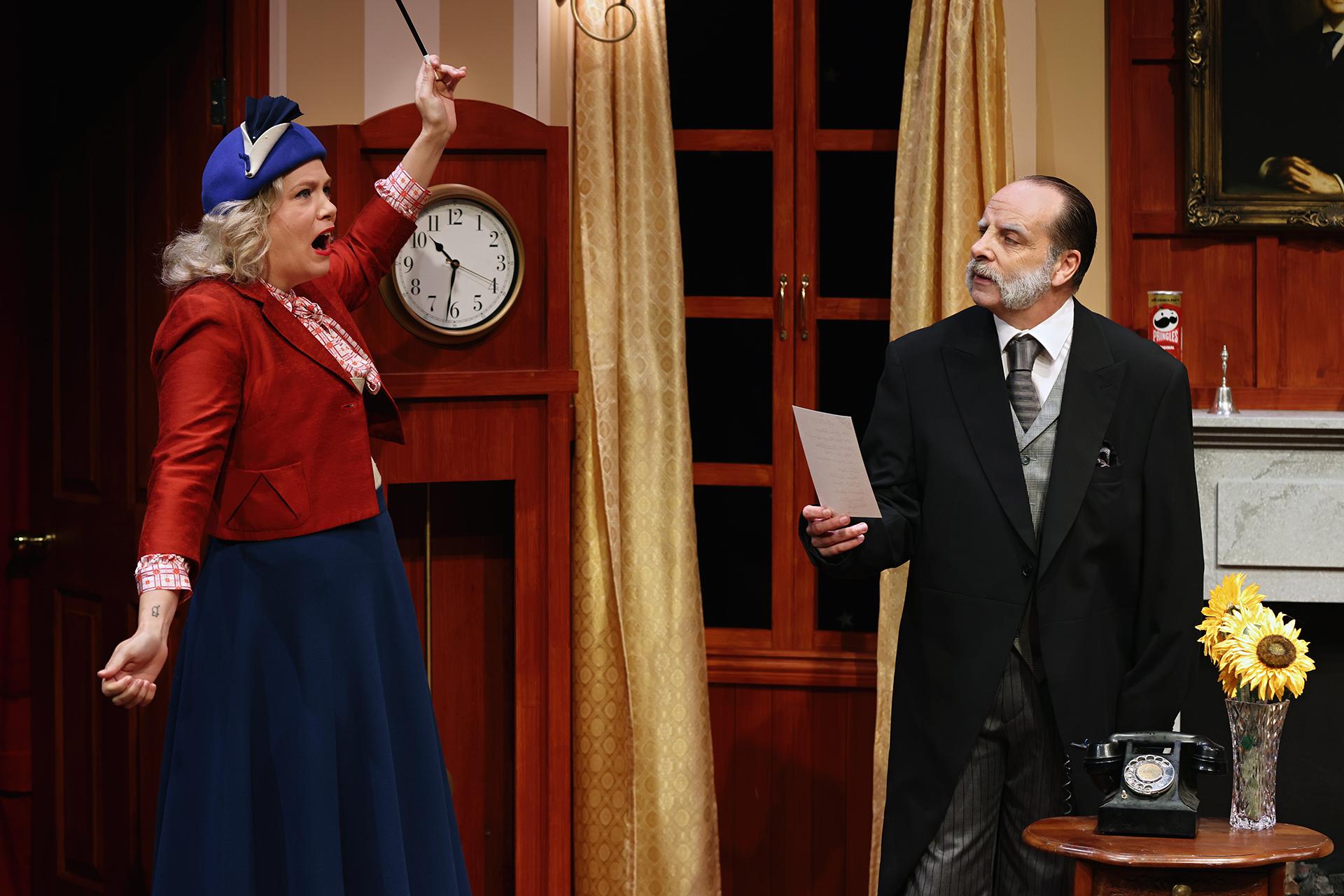
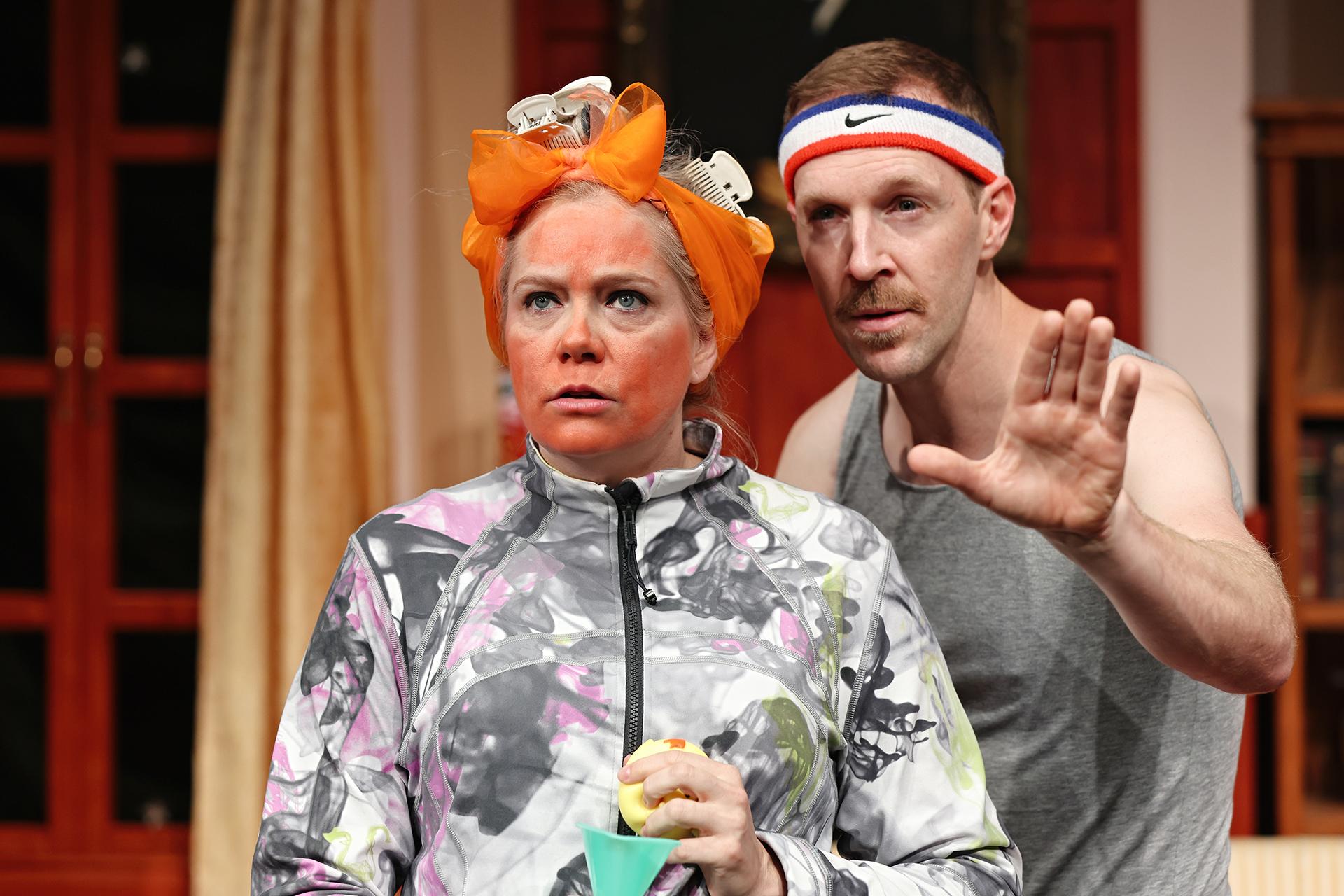
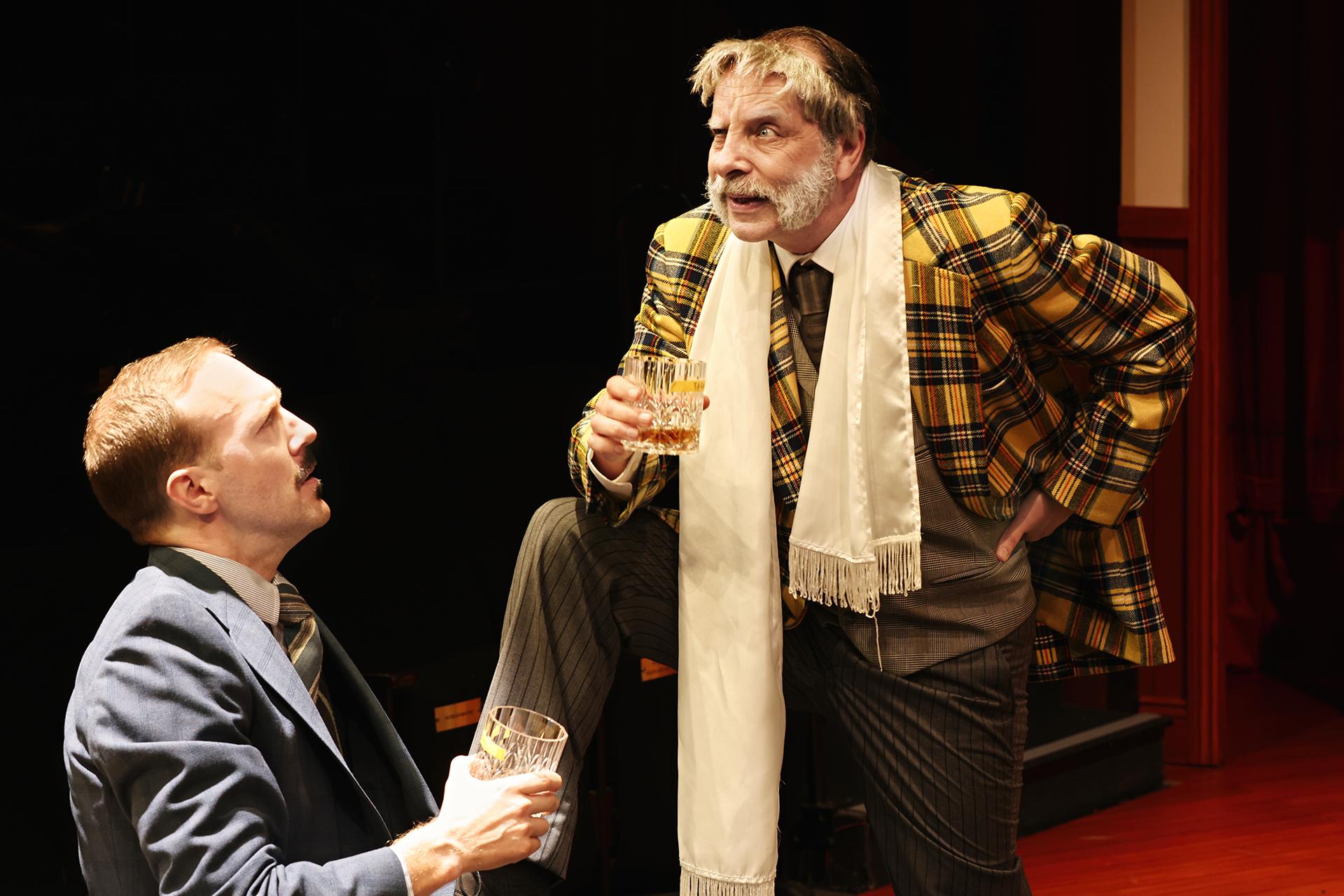
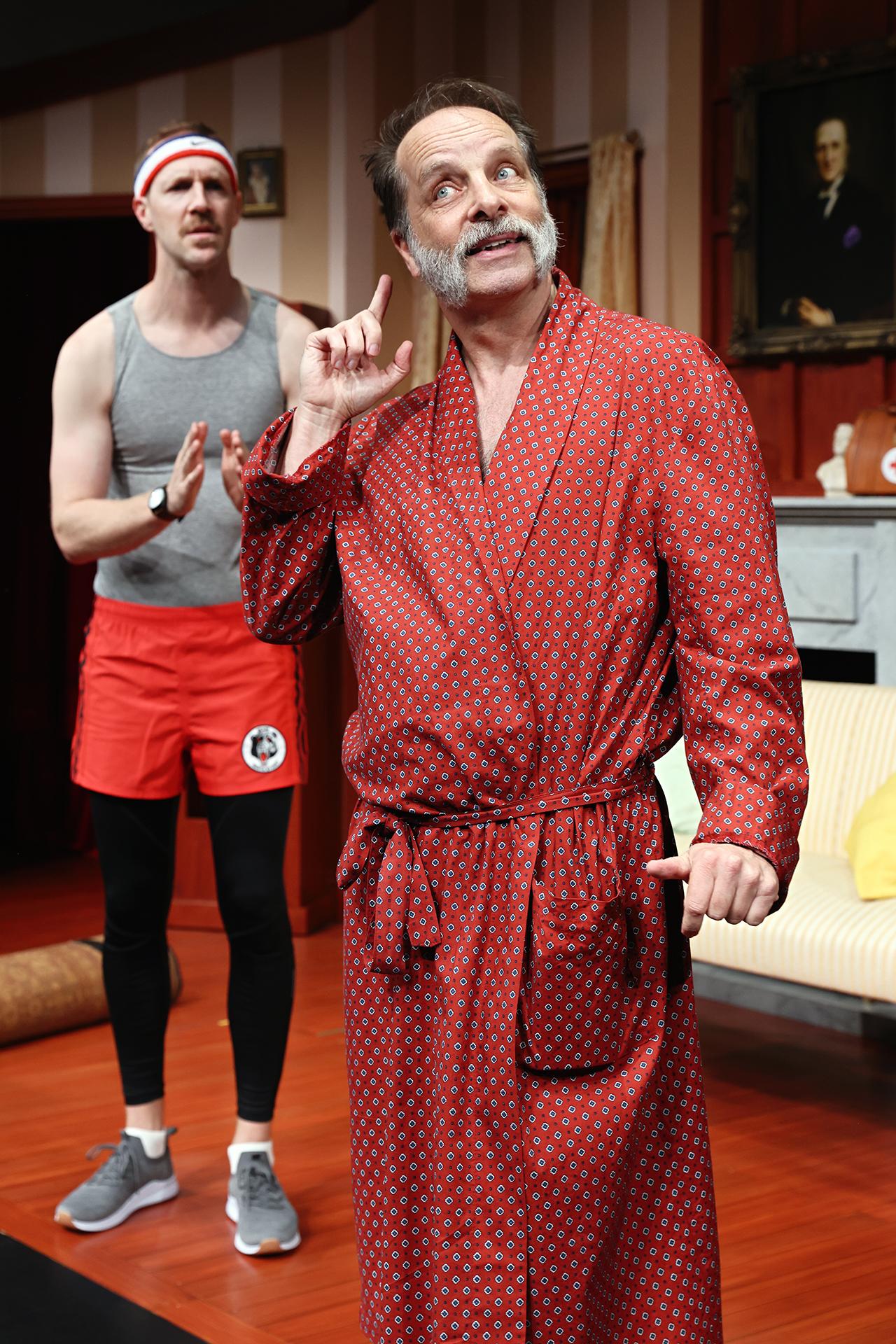
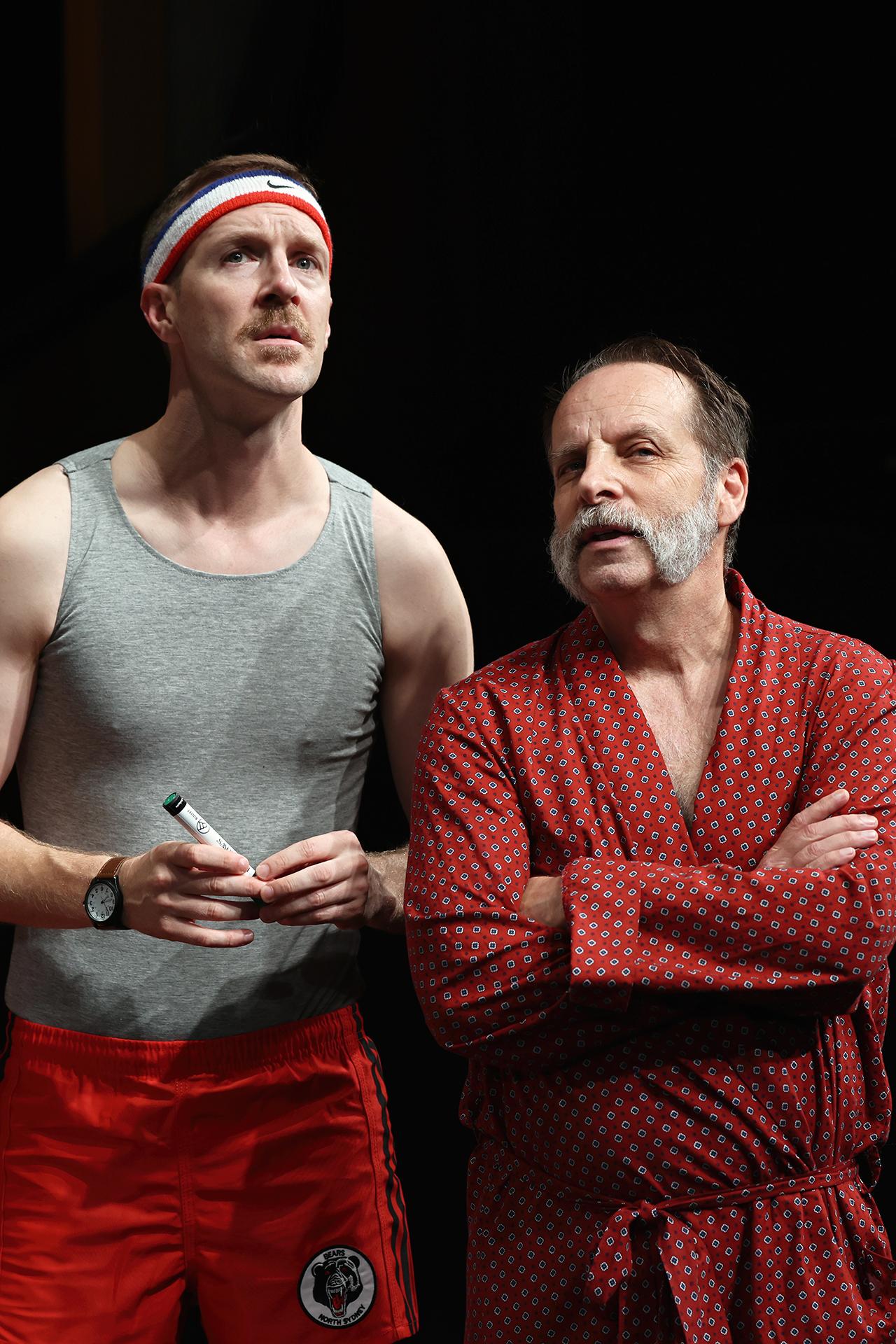
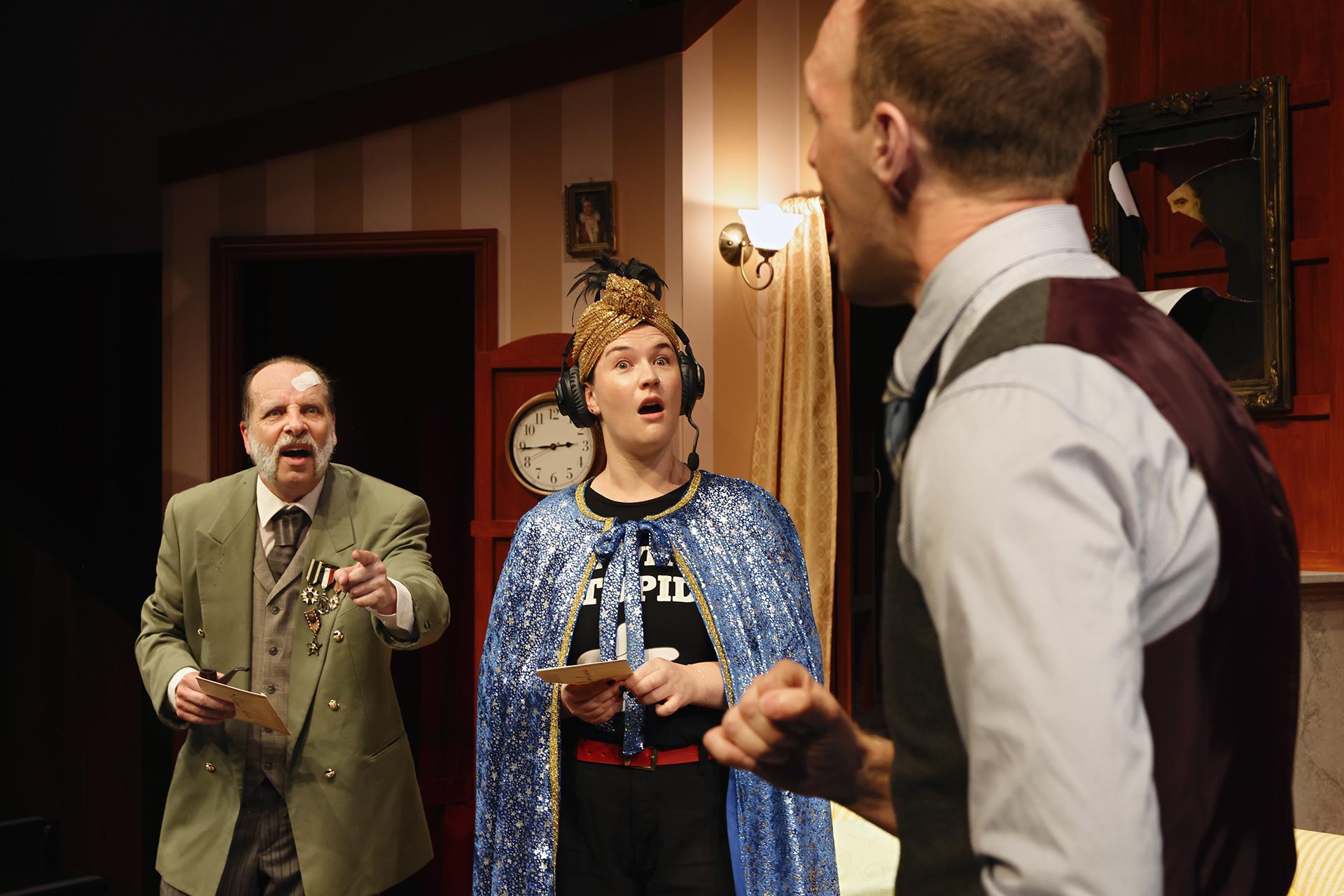
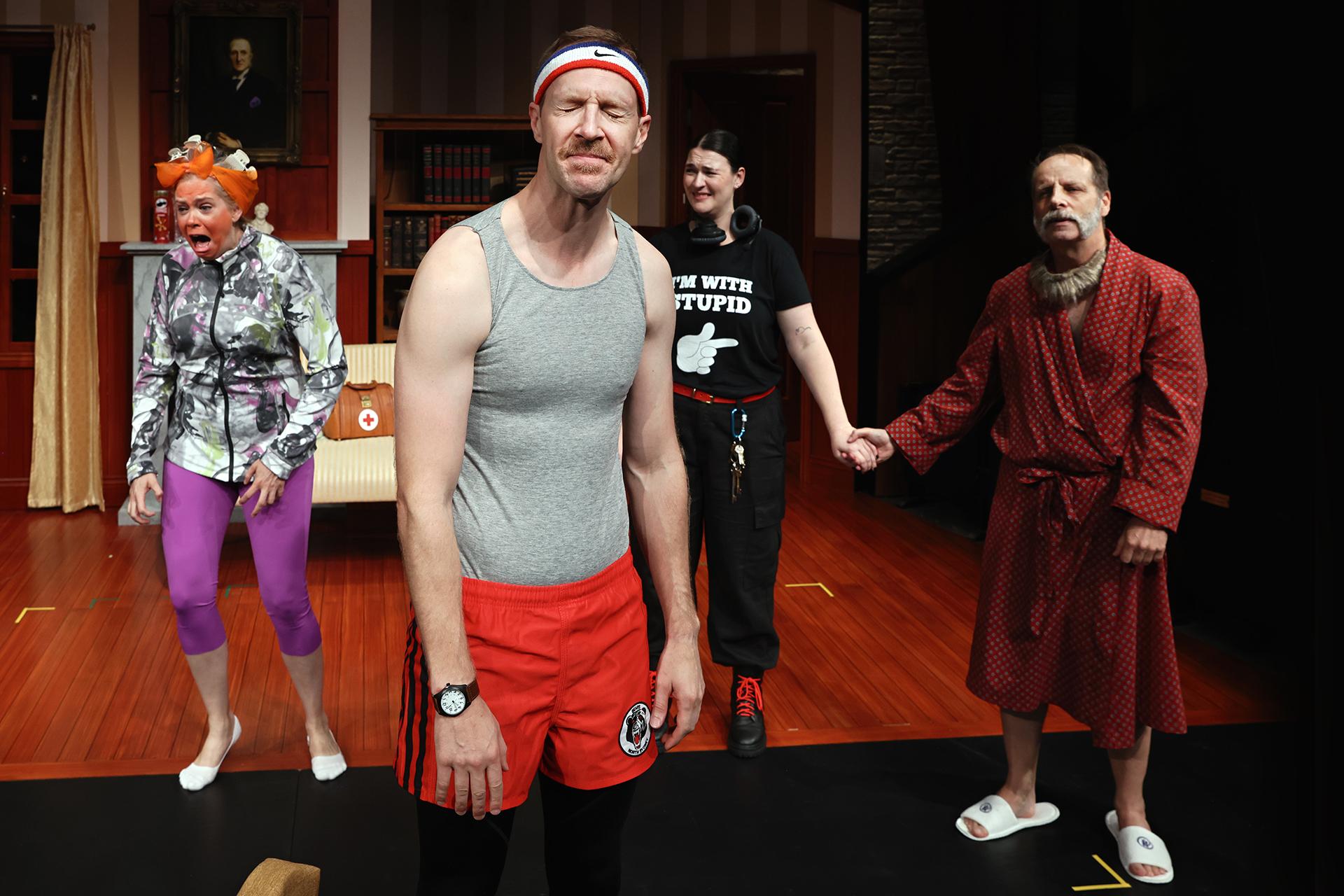
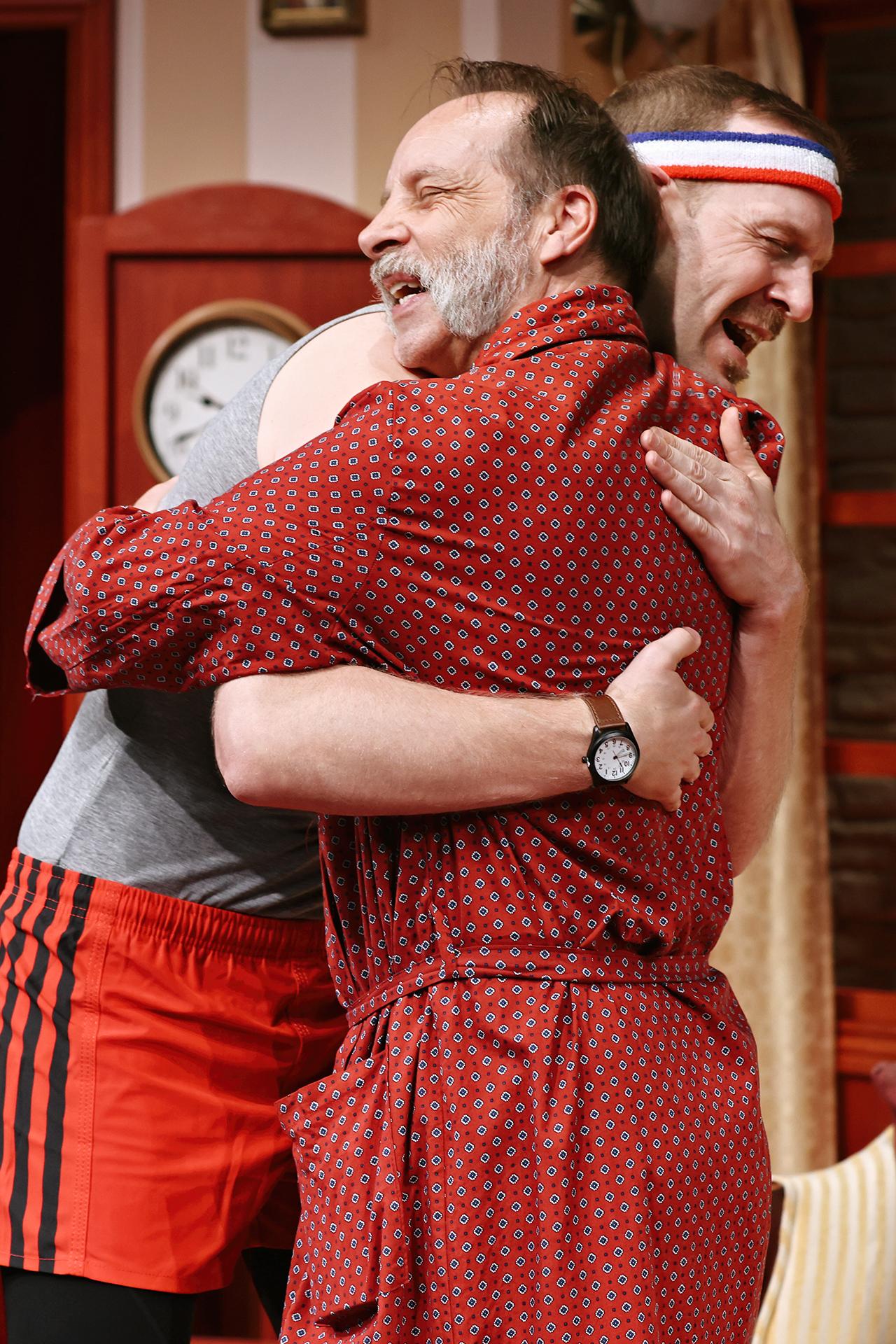
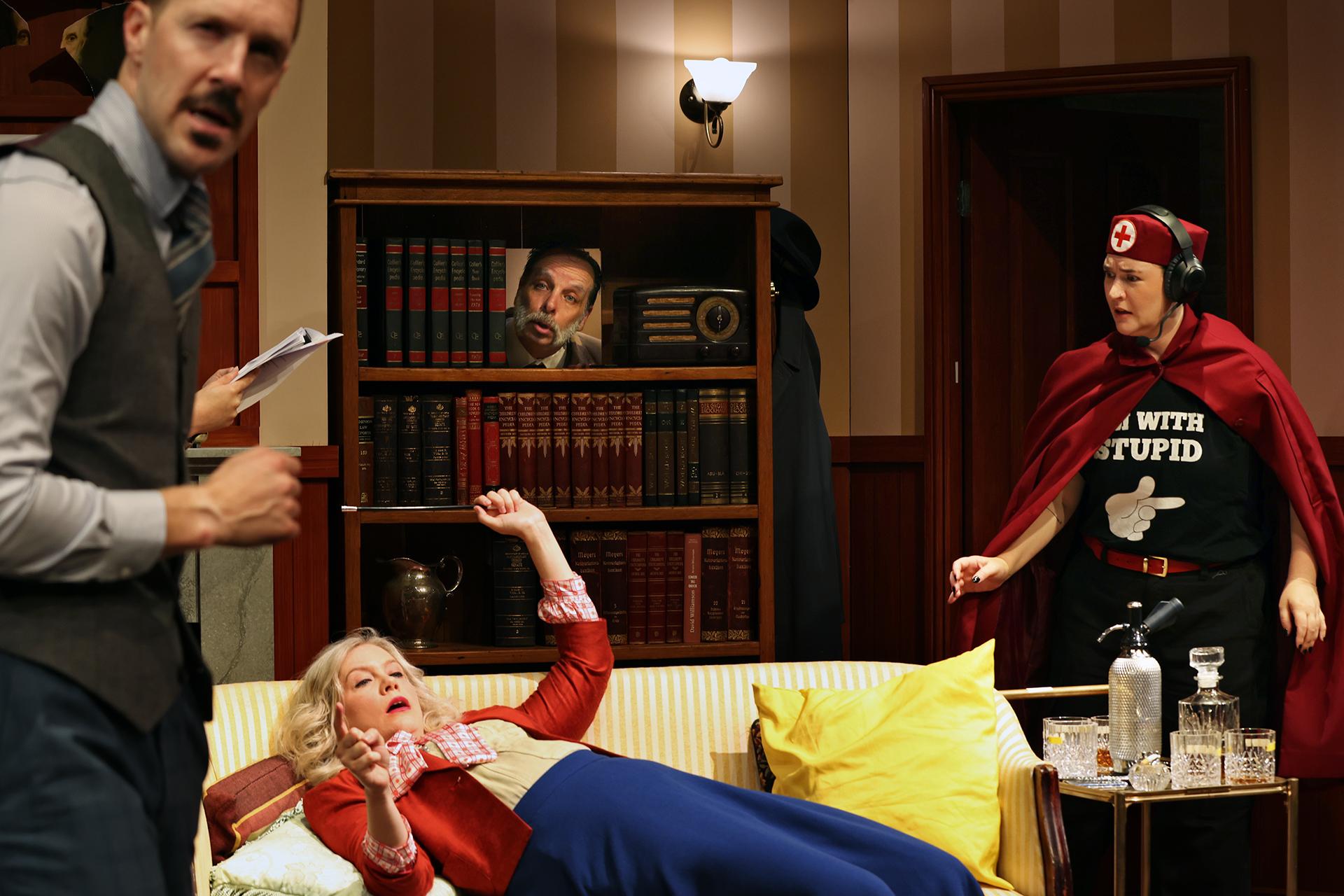
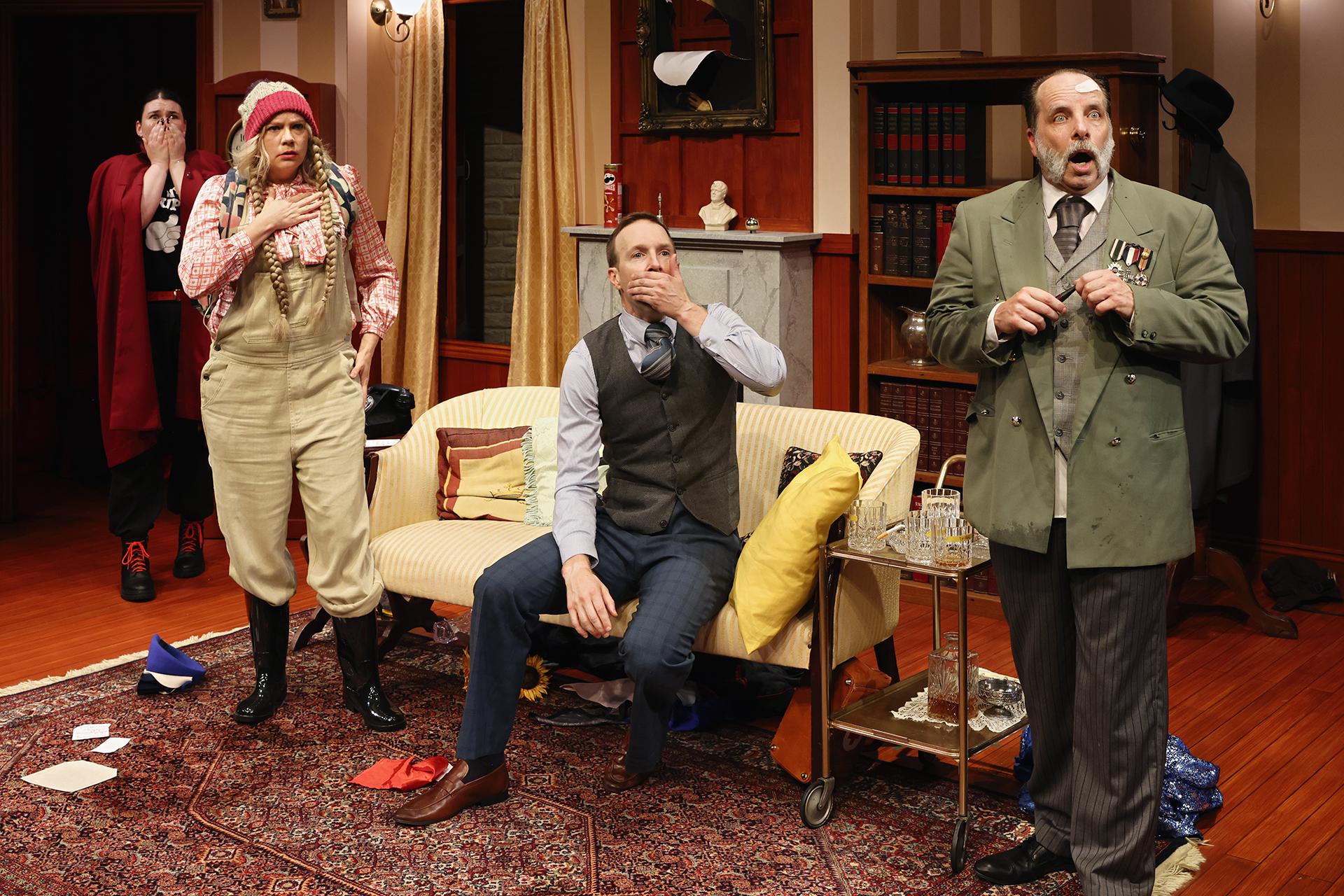
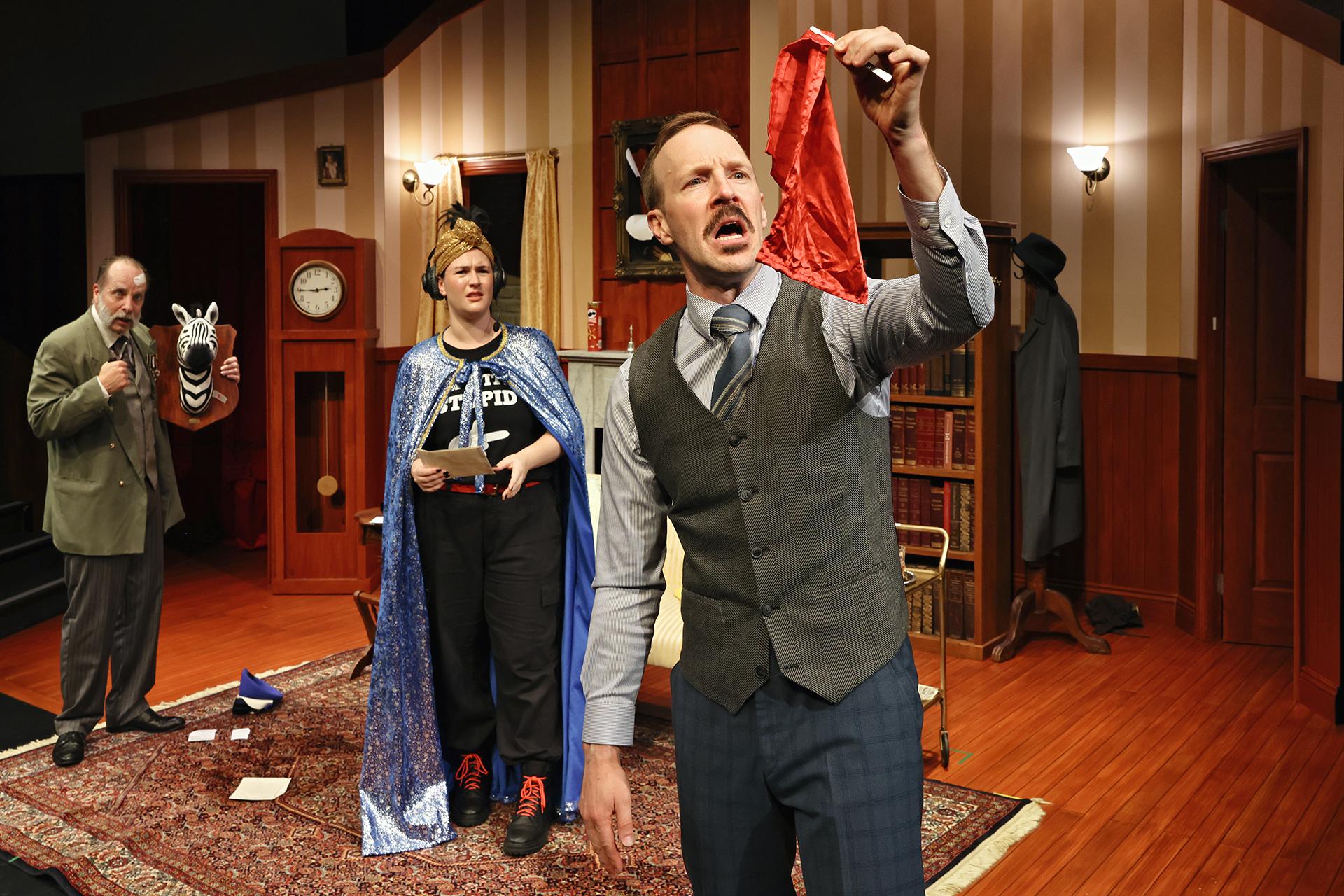
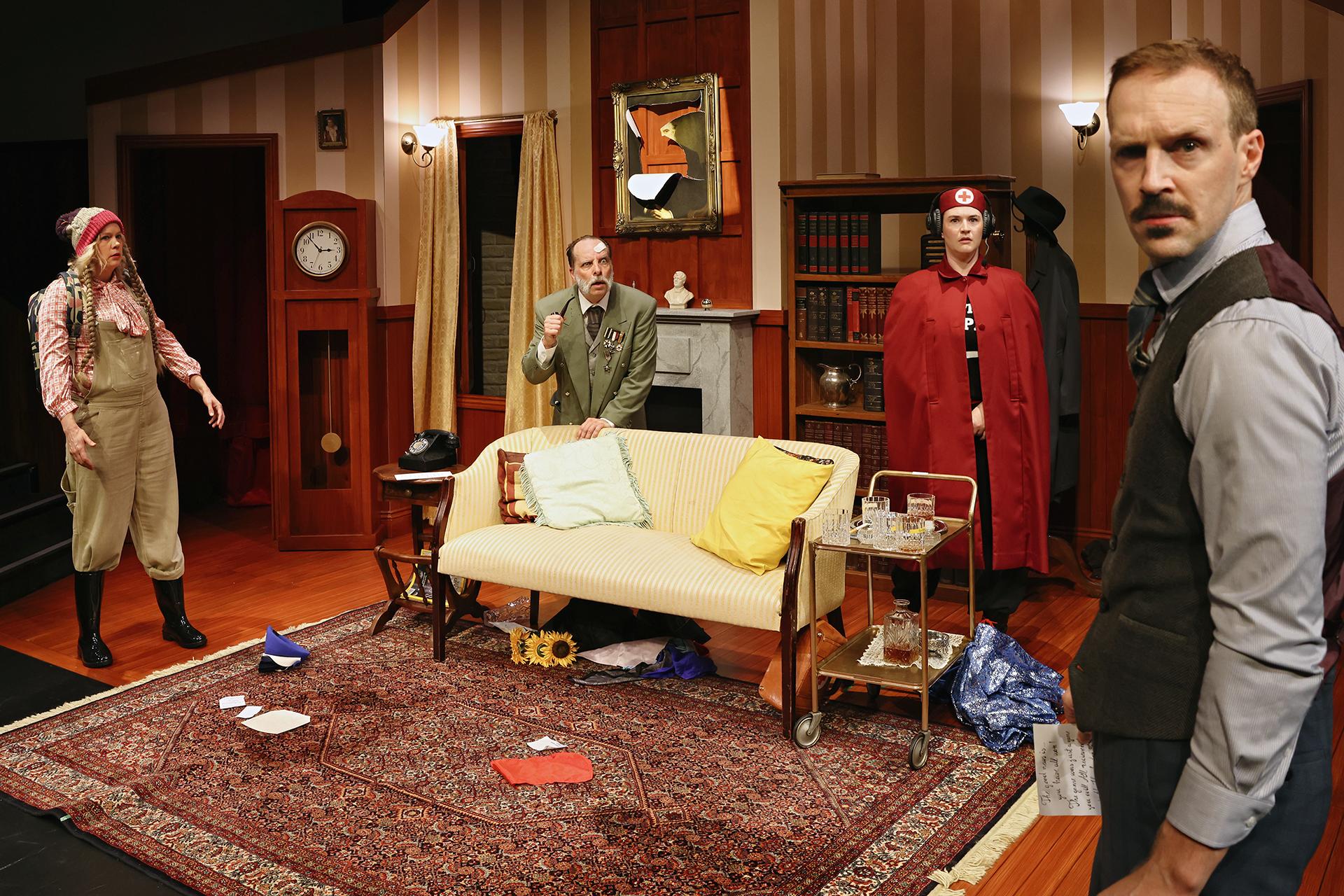
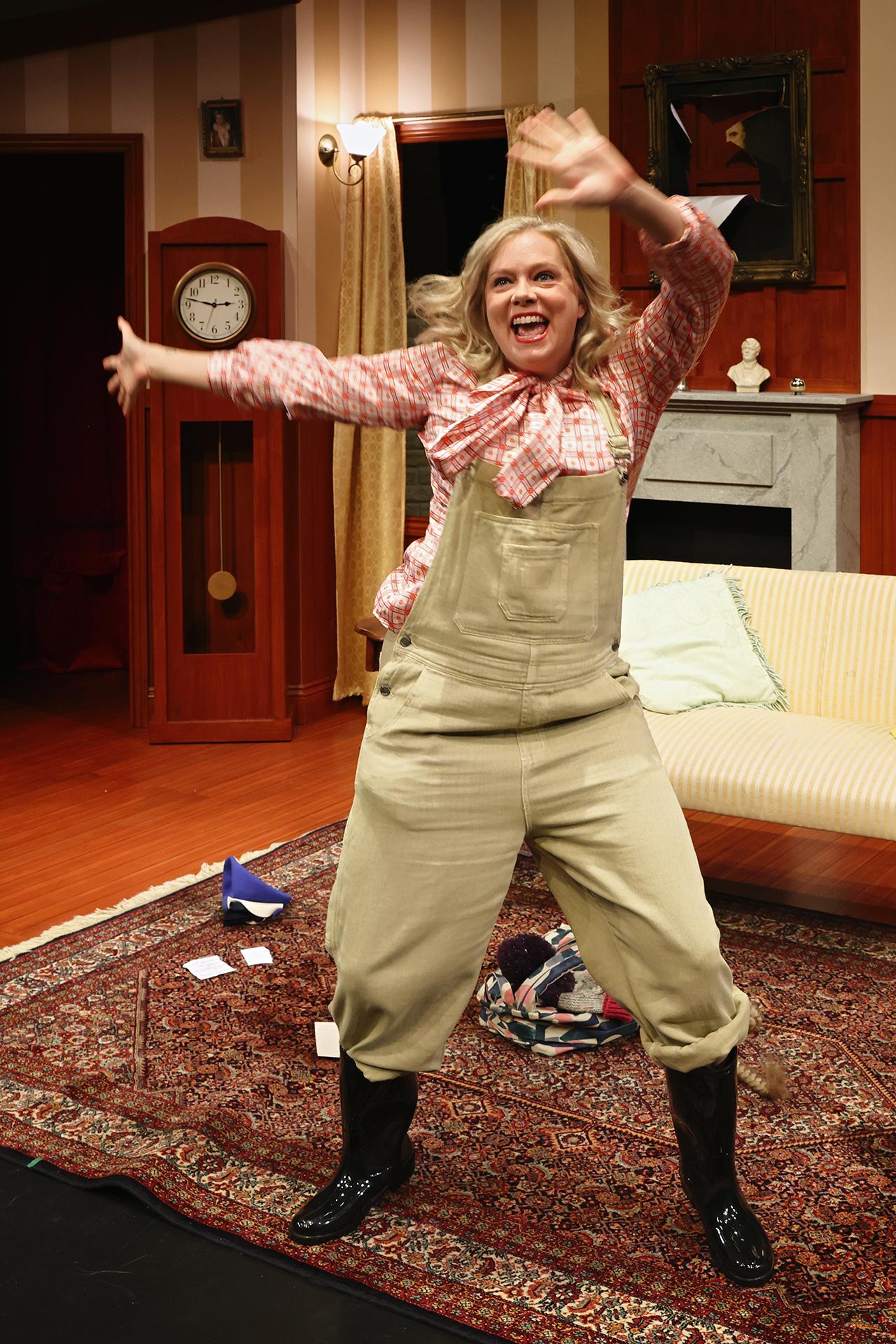
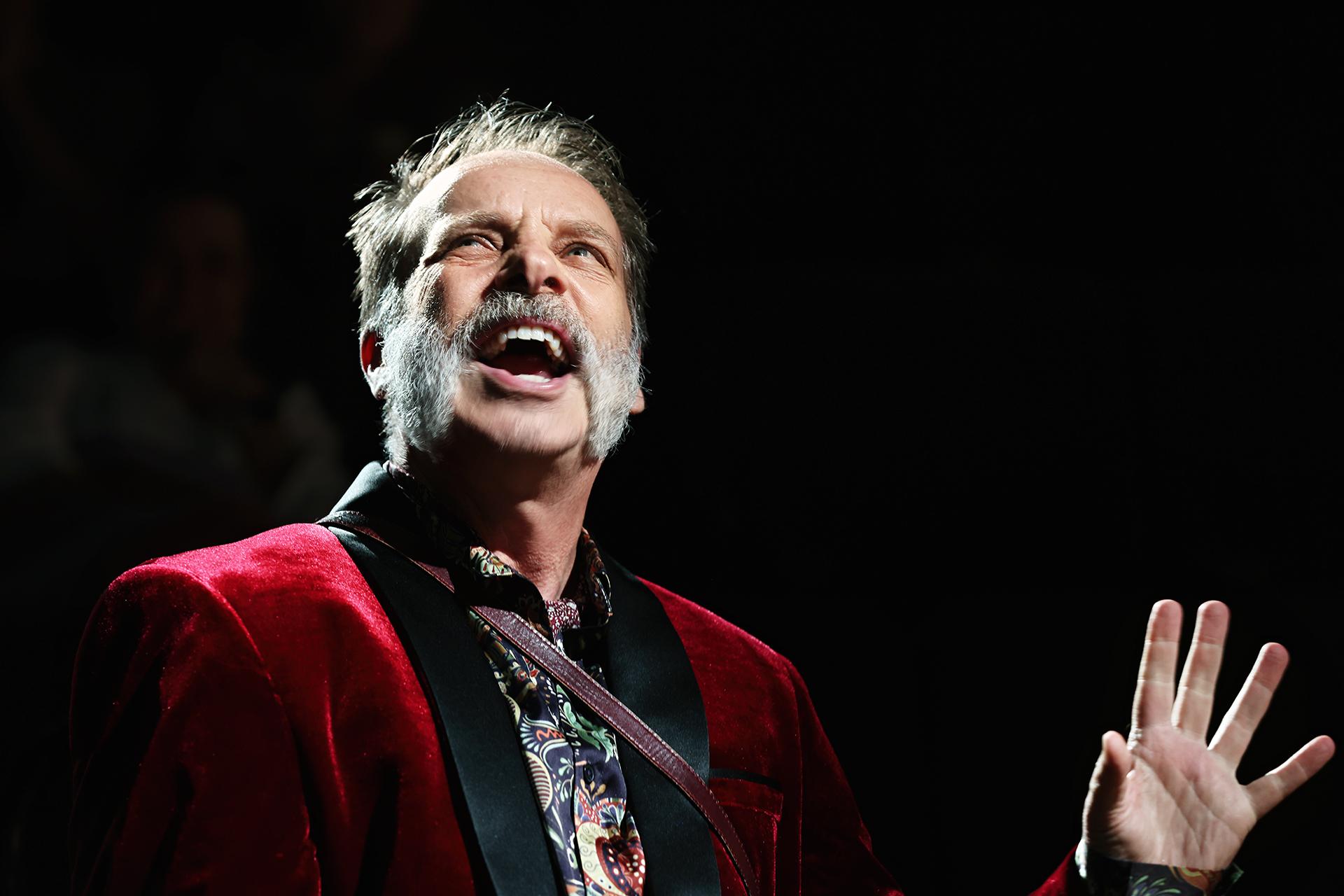
Amateur theatre group The Middling Cove Players are about to open a new show, but seven of the cast have been struck with covid, and only three actors and their stage manager are left to play all the characters. Everything falls to pieces but they persist, such is the tenacity of show people. Midnight Murder at Hamlington Hall by Mark Kilmurry and Jamie Oxenbould is a classic farce, in the same vein as 2012’s The Play that Goes Wrong by Mischief Theatre in London. The jokes flood in unremittingly, many of them very broad, in a work that is sure to delight audiences from all walks.

Rigorous direction by Kilmurry fills every moment with a playful zeal. Although stylistically derivative, the production is filled with whimsical creativity, informed by a joyous abandonment that many will find infectious and inexorably hilarious. With the sole purpose of entertainment, Midnight Murder delivers in spades. 

Set and costume designer Simon Greer offers vibrancy, along with an unmistakable irony, keeping the entire staging in a spirit of blitheness. Lights by Verity Hampson and sounds by Daryl Wallis are commensurately mirthful, adding to the convivial atmosphere.

Oxenbould performs the role of Barney with gusto, and with exceptional confidence. Sam O’Sullivan, Ariadne Sgouros and Eloise Snape play Shane, Karen and Philippa respectively, individually amusing and energetic, but as a team, the ensemble grips with their chemistry, thoroughly enjoyable with all the hijinks they concoct. Diversions of this nature are necessary, if only to help retain some sanity in a world determined to go mad.
www.ensemble.com.au

Review: A Midsummer Night’s Cream (Old Fitz Theatre)

Venue: Old Fitzroy Theatre (Woolloomooloo NSW), Dec 1 – 10, 2023
Creators: Charlotte Farrell, Emma Maye Gibson

Theatre review
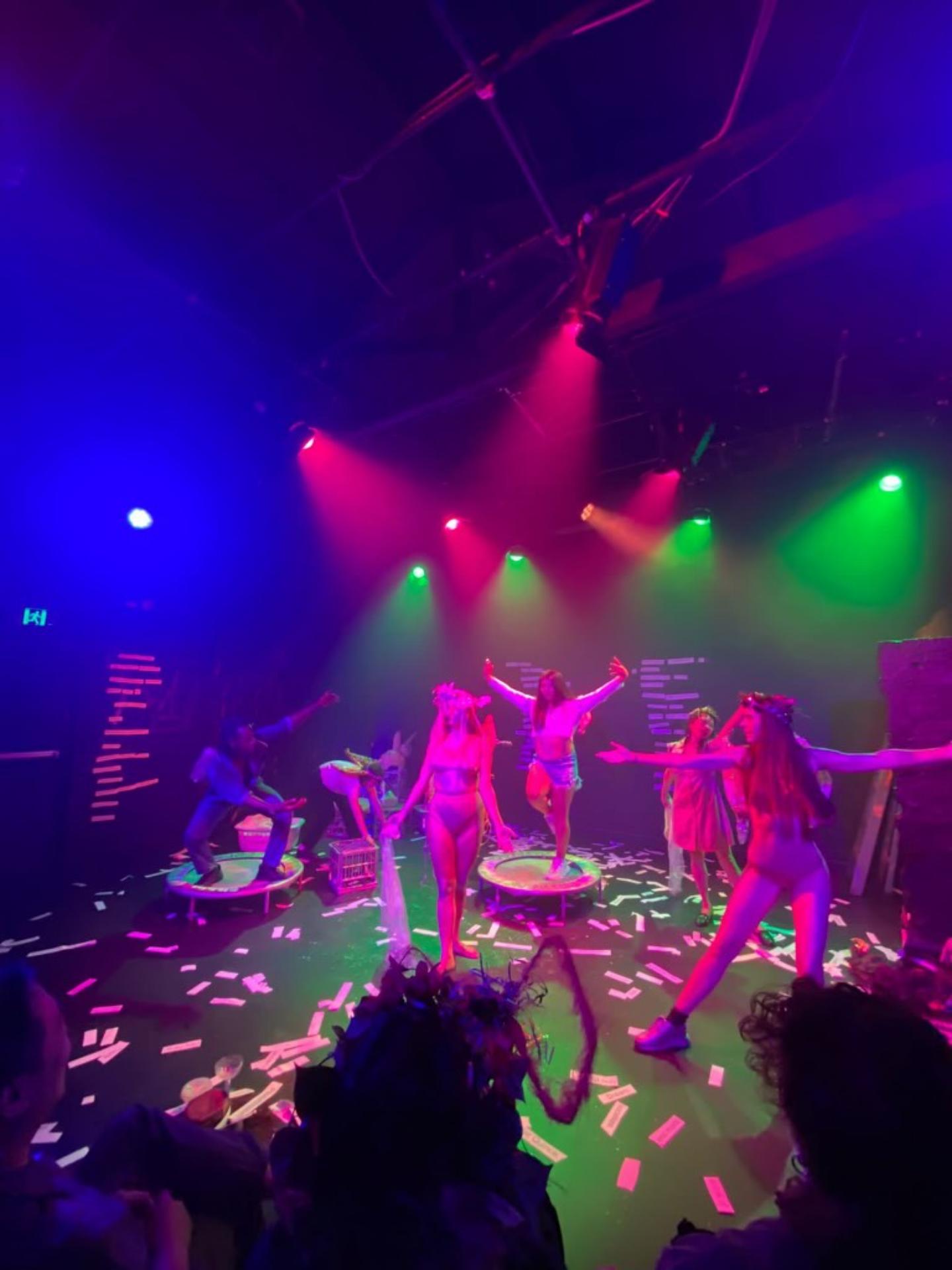
Feminists are not usually fans of Shakespeare’s oeuvre; his representations of women are often nauseating, if not completely despicable. Charlotte Farrell and Emma Maye Gibson seem to have a love-hate relationship with The Bard. A Midsummer Night’s Cream is a devised work that is both inspired by, and critical of Shakespeare. Early portions of the show are heavily centred around deconstructions of Shakespeare’s writing, reflecting perhaps a frustration derived from making theatre in a milieu that regards him to be foundational and epochal, even centuries later.

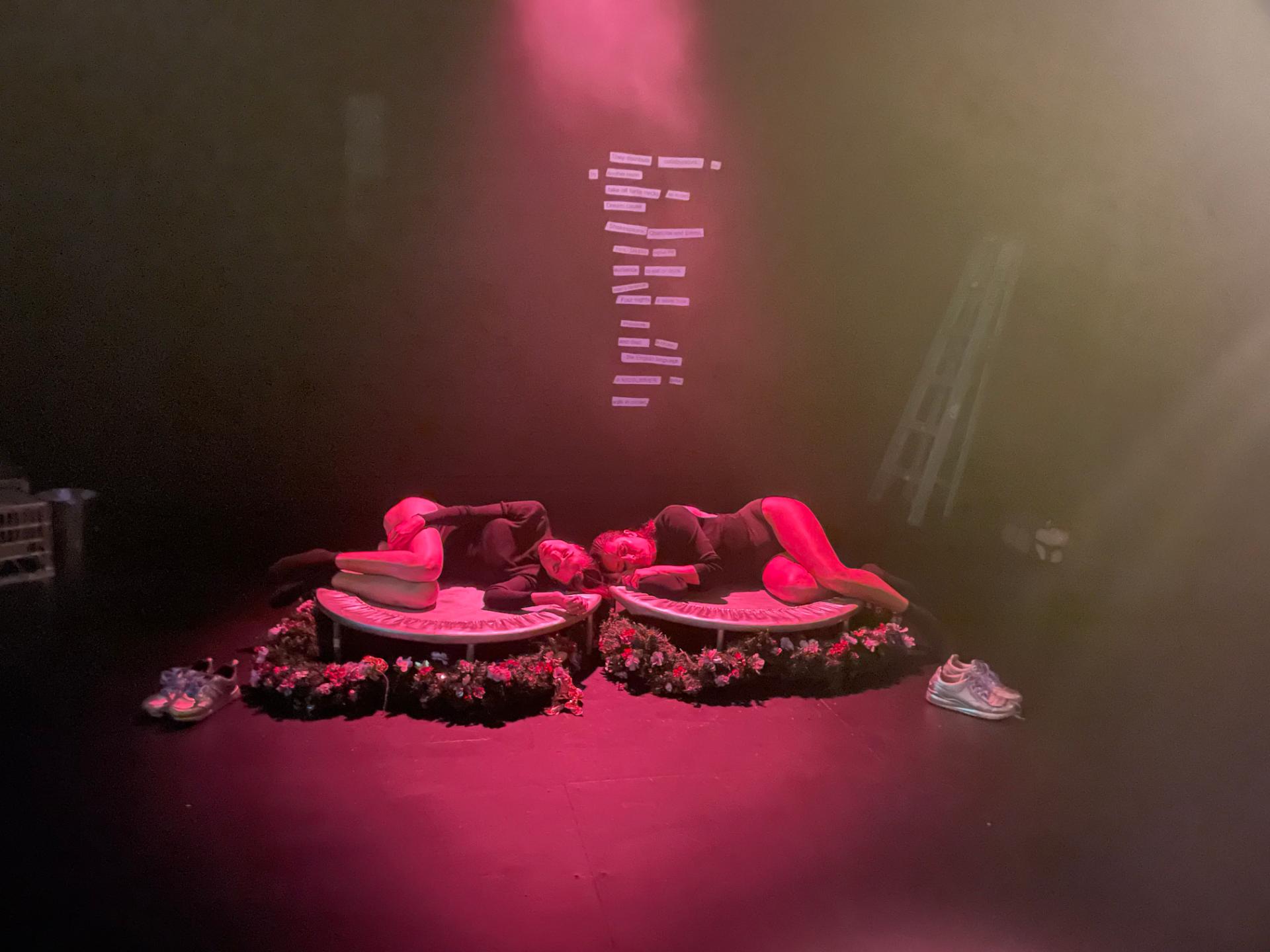
The show then swirls gradually away from that point of departure, and ventures somewhere more intimate, with Farrell and Gibson discussing motherhood. An intensification of atmosphere, luminated with a palpable sensuality by Cheryn Frost, almost indicates the true purpose of the exercise, as the two women engage in exchanges that explore those meanings that pertain to the young cisgender female body. Like Shakespeare being so intrinsically linked to how he conceive of the theatrical arts, pregnancy is to many women, inextricable and integral to their understanding of existence.

None of this is ever made explicit however, in a presentation that is as whimsical as it is poetic. Political but never pugnacious, A Midsummer Night’s Cream asserts itself with only the smallest affront to what it wishes to abolish, choosing instead to establish on stage, a new order that, unlike its predecessor, is characterised by inclusiveness and grace. Empowered to make change, with a humility informed by past deficiencies, Farrell and Gibson are careful not to inflict the same egregiousness it tries to replace.

This is a feminism that does not merely substitute one thing for another, preserving old structures while temporarily and superficially transforming them. What the artists deliver, looks like disruptive chaos, but that probably says more about our attachment to obsolete values, than it does the essential qualities of their work. Real change is uncomfortable, and good art is never afraid to challenge.

www.redlineproductions.com.au

Review: The Seagull (Sydney Theatre Company)

Venue: Roslyn Packer Theatre (Sydney NSW), Nov 21 – Dec 16, 2023
Playwright: Anton Chekhov (adapted by Andrew Upton)
Director: Imara Savage
Cast: Arka Das, Michael Denkha, Harry Greenwood, Markus Hamilton, Mabel Li, Sean O’Shea, Toby Schmitz, Sigrid Thornton, Megan Wilding, Brigid Zengeni
Images by Prudence Upton

Theatre review
Constantine’s angst remains resolute, even though he no longer lives in 1896 Russia. Andrew Upton’s adaptation of Chekhov’s The Seagull takes place in current day Australia, refreshed with modernised dialogue that effervesces amusingly, but is otherwise entirely faithful to the original. It is arguable whether these characters would think and behave the same, having moved continents and centuries. Even though human nature can be disconcertingly rigid, the dramatic (and iconic) conclusion of Chekhov’s play, feels too characteristic perhaps of an olden Russia. It is however certainly possible that that despondence is in fact no different, wherever and whenever the story takes place. Upton could be making the point, that we are in fact deluded, should we consider ourselves evolved and improved.

Nevertheless, the update feels somewhat tenuous, even though the contemporarised humour of the piece is an unequivocal pleasure. Directed by Imara Savage, the show is at its most appealing when moments are drenched in irony, as we watch persons of a certain privilege, unable to evade nihilistic despair. Reflecting on Chekhov’s times, we can associate The Seagull with impending revolutions, and explain that malaise within a context of disquietude and a thirst for upheaval. Watching the same tale unfold in our here and now, is a confronting proposition. That unflinching pessimism could be saying something appalling about the people we are, or we could simply regard this transposition to be somehow inauthentic.

All the same, drama is delicious. Actor Harry Greenwood as Constantine is less sympathetic than is traditionally portrayed, but renders an unassailable sense of truth and integrity, to persuade us of his narrative. Other notable performers include Mabel Li, equally impressive in comedic and tragic portions of Nina’s exploits, able to make convincing the drastic shift in temperaments, for this classic showcase of lost innocence. Sean O’Shea’s highly idiosyncratic turn as Peter proves thoroughly delightful, very extravagant in style but unquestionably charming with his interpretations of an ageing invertebrate. Playing Boris the cad is Toby Schmitz, wonderfully inventive and unpredictable, in his thrilling explorations of self-absorption and immorality. On stage, Schmitz’s impulsiveness is a real joy.

Set design by David Fleischer conveys a rustic sensibility, but always with a quiet sophistication that reminds us of the social class being depicted. Costumes by Renée Mulder emphasise the modernity of characters, keeping them accurately within the current generation. Lights by Amelia Lever-Davidson, along with sounds and music by Max Lyandvert, are extremely subtle until the final climactic scenes, when we are treated to a greater theatricality, as the show approaches its inevitable melodramatic conclusion.

The world tells Constantine that by virtue of his biological and social distinctions, that he is destined to be a leader and a winner. In the microcosm of his daily existence however, he only feels belittled and disgraced. Males account for three-quarters of suicide in Australia today. We can diverge in our understandings of that statistic, but it is a clearly a question of gender that cannot be ignored. We are all vulnerable beings. It is the quixotic notion that some of us have to be impervious to human fallibilities, that can drive a person to the brink.

www.sydneytheatre.com.au

Review: Next To Normal (ARA Darling Quarter Theatre)

Venue: ARA Darling Quarter Theatre (Sydney NSW), Nov 22 – 25, 2023
Book and Lyrics: Brian Yorkey
Music: Tom Kitt
Director: Marie-Jo Orbase, Eezu Tan
Cast: Jacen Bennett, Liam Faulkner-Dimond, Sebastian Nelson, Chaya Ocampo, Claire Perry, Marcus Rivera
Images by Hugo Photography & Film

Theatre review
Diana experiences serious mental health challenges; suffering from bipolar disorder, along with depression and anxiety issues, she tries different treatment options, hoping for a cure that could solve her problems decisively. In the musical Next to Normal by Tom Kitt and Brian Yorkey, we take an honest look at a phenomenon that is pervasive yet stigmatised, to help facilitate discussions about how we, as individuals and as communities, navigate psychological well-being.

It is a cleverly structured work, with excellent humour and a sensitive tenderness, culminating in a surprisingly subversive conclusion, that connects with both intelligence and amusement. Directed by Marie-Jo Orbase and Eezu Tan, the production is full of sincerity, and although lacking in polish, tells the story with a vibrant gusto. Sound engineering in the production is particularly impressive, standing out as the staging’s most professional element.

Performer Claire Perry demonstrates great commitment for the role of Diana, and sings the part with admirable precision. The entire cast delivers a good standard of musicality, as well as passion and energy, for a show that provokes valuable thought and discussion.

There are many ways we can choose to deal with our mental health, as long as we know not to neglect its care. We are bruised and battered from simply existing, and what happens in the mind is endlessly complex and delicate. There are no easy solutions, and certainly nothing that could work the same for every person, but to pay it close attention, to understand that it requires constant nurturing and tending to, is crucial to us thriving.

www.whimsicalproductions.com.au

Review: Darwin’s Reptilia (25A Belvoir)

Venue: Belvoir St Theatre (Surry Hills NSW), Nov 15 – 26, 2023
Playwright: Charlie Falkner
Director: Samantha Young
Cast: Danny Ball, Zoe Jensen, Mathew Lee, Leilani Loau, Ainslie McGlynn
Images by Phil Erbacher

Theatre review
Five people (and a baby) are contained at a motel in Darwin, due to a bizarre infestation of crocodiles that has taken the lives of at least two Swedes. This initial conceit in Charlie Falkner’s Darwin’s Reptilia might be absurd, but what follows is a realistic study of regular lives, presented with sparkling humour. The comedy might feel slightly deficient in terms of plot development, but its dialogue is endlessly amusing, with intricately imagined characters who endear, charm and fascinate.

Direction by Samantha Young imbues effervescence throughout the piece, able to convey veracity yet provide an inviting playfulness, keeping us mirthfully connected to the quirky storytelling. Set and costumes by Ruth Arnold are commensurately vibrant, with a cheerful colour palette that energises and activates the space. Lights by Saint Clair, along with sounds and music by Hewett Cook, are rendered minimally but precisely, to support the cast’s antics in tropical Northern Territory.

Renata, the characteristically dubious self-help author from New York, is performed by Ainslie McGlynn with a naturalistic approach, to help make convincing her impulsive visit to Australia. Renata’s Irish husband Declan is played by a comically intense Danny Ball, wonderfully theatrical and dripping with irony, as a classically macho brooding type. The delightful Zoe Jensen brings blitheness and zeal, along with exceptional timing, to the role of motel worker Flick. Her manager Bobbi is given captivating authenticity and emotional depth by Leilani Loau, and Mathew Lee is unforgettable as the naïve but charming John, escaping the USA for greener pastures, only to find all his old baggage awaiting at the new destination.

People journey afar in search of better days, but the best a person can hope for, is a change in scenery that could allow for what is already within, to express itself in refreshed or unfettered ways. Happiness is only a little about that which is external; who we are internally, determines the peace and fulfilment one can experience. It is true that outside affects inside, but years of travelling will ultimately reveal, that it is in a return to one’s own head and heart, that the key can be found.

www.jackrabbitprods.com | www.belvoir.com.au

Review: The Master & Margarita  (Belvoir St Theatre)

Venue: Belvoir St Theatre (Surry Hills NSW), Nov 11 – Dec 10, 2023
Playwright: Eamon Flack (adapted from the book by Mikhail Bulgakov)
Director: Eamon Flack
Cast: Paula Arundell, Marco Chiappi, Tom Conroy, Gareth Davies, Amber McMahon, Josh Price, Matilda Ridgway, Anna Samson, Mark Leonard Winter, Jana Zvedeniuk
Images by Brett Boardman

Theatre review
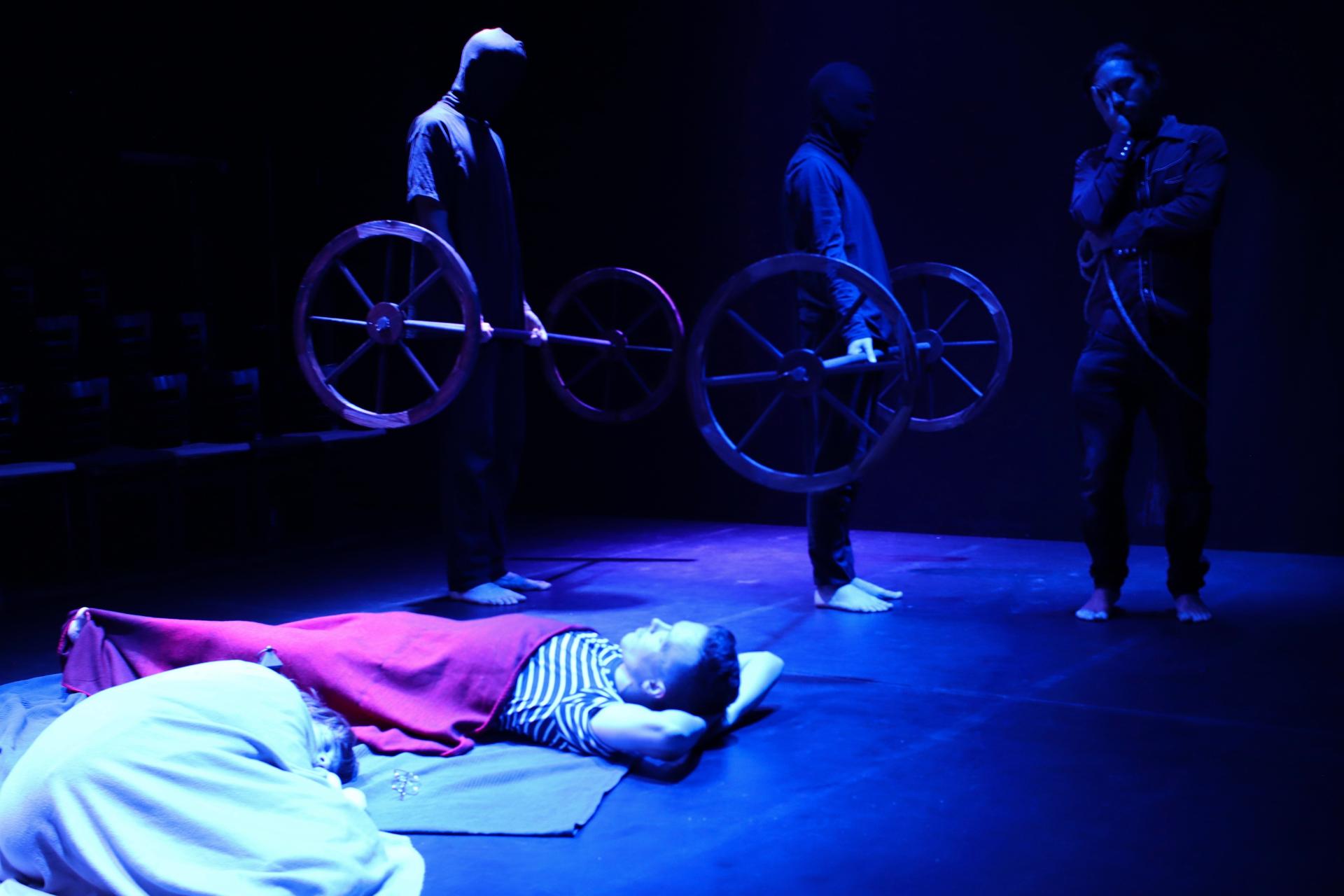
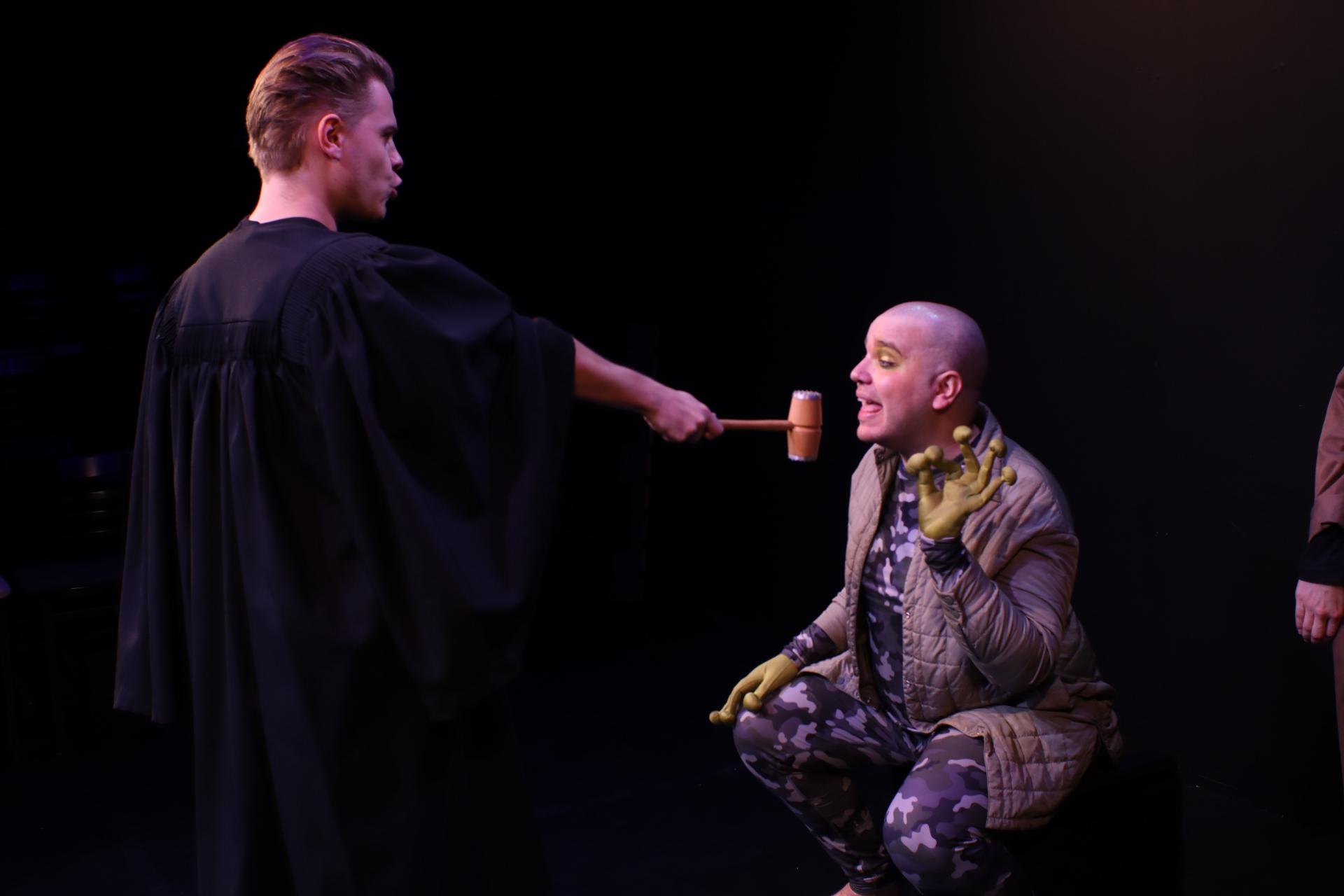
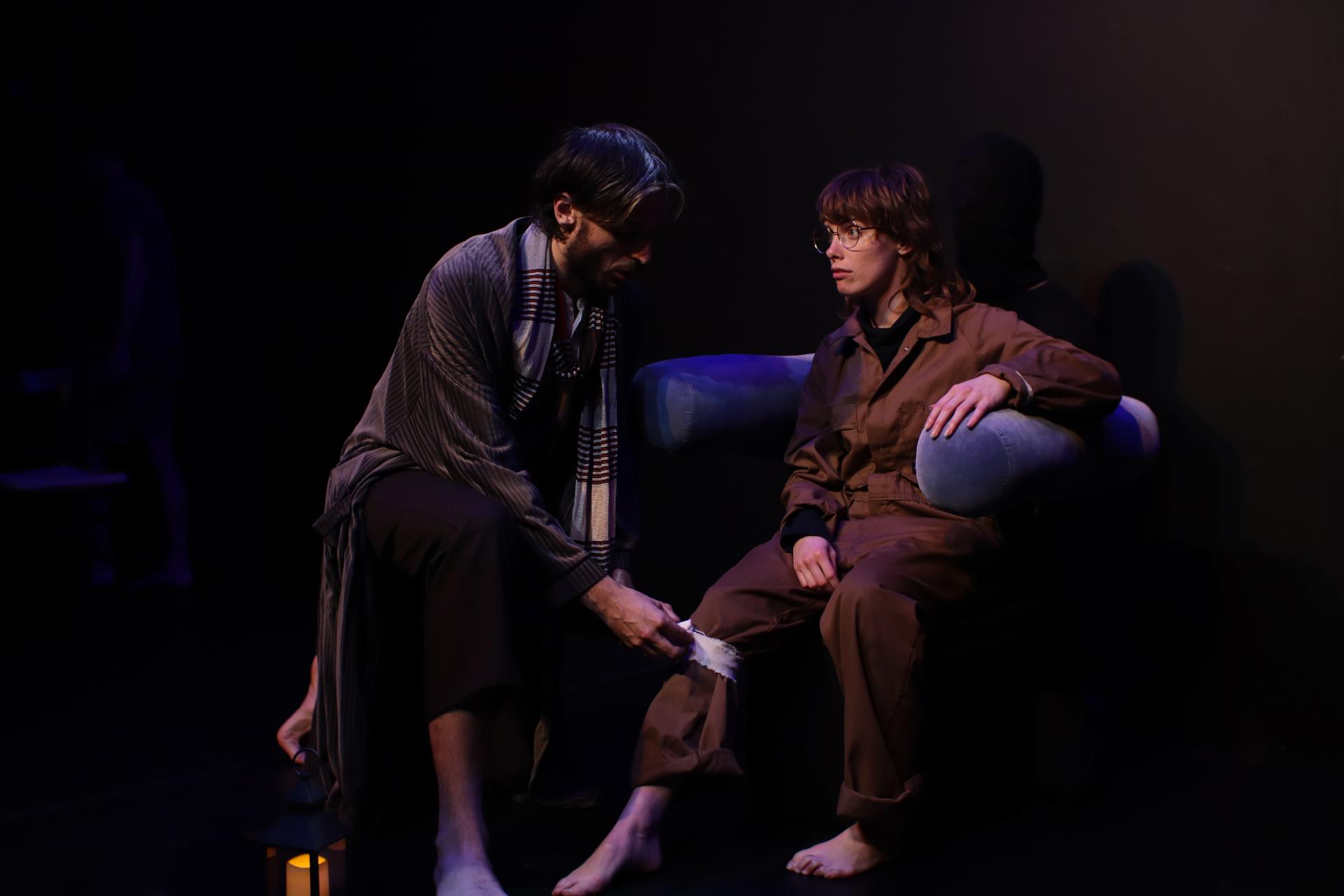
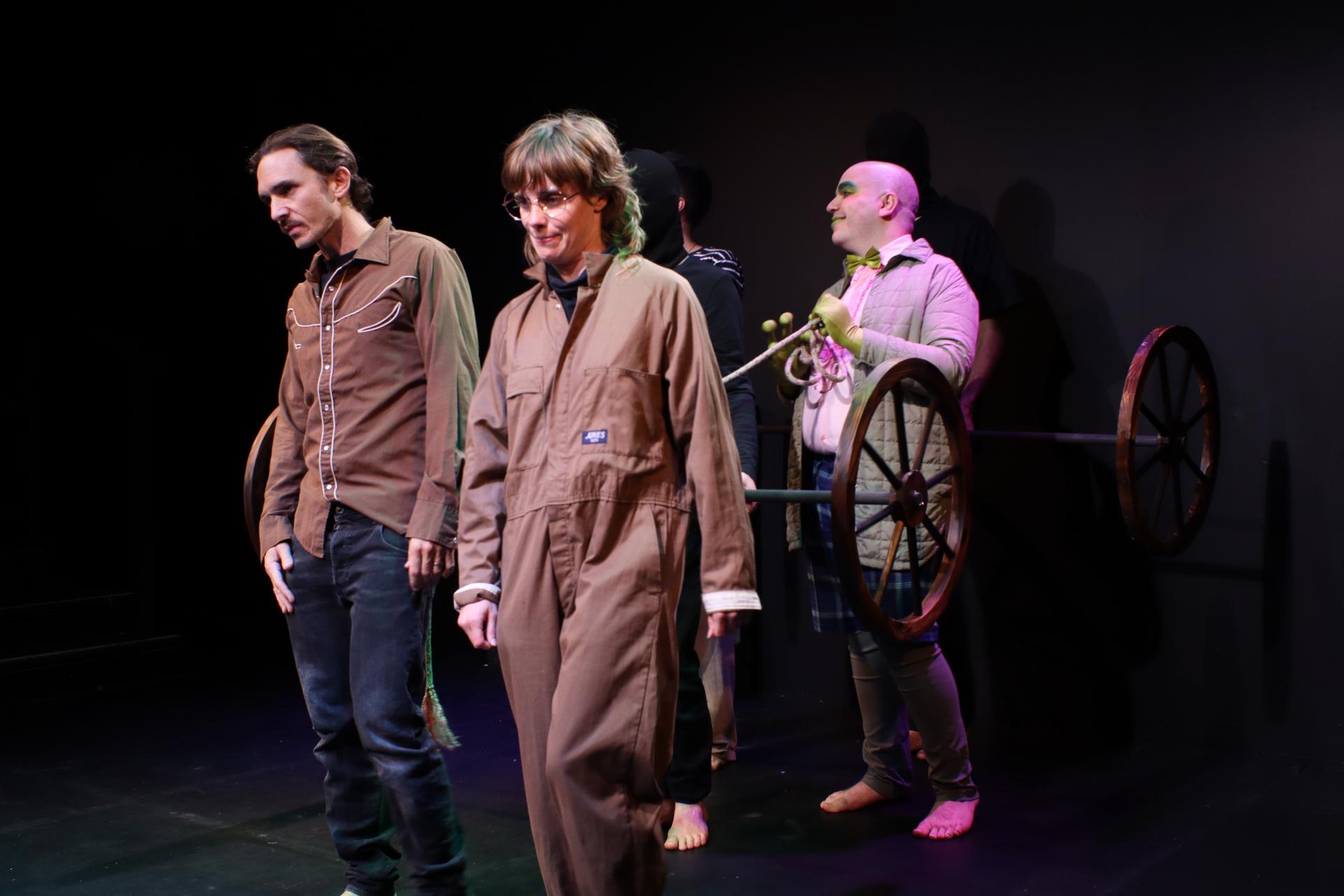
Mikhail Bulgakov’s The Master and Margarita features Satan as provocateur, a figure intent on exposing hypocrisy and failings of society. There are also a novelist and a poet, who create further flights of fantasy, in addition to the already complex narratives being woven by Bulgakov. Eamon Flack’s adaptation not only transposes for the stage, key portions of the book, it also introduces biographical information about the author’s experiences with censorship in Stalin’s Soviet Union, and includes modernist commentary on the very process of adaptation.

The staging is ambitious, expansive and brave, full of passion in its often wild transformations of space and atmosphere. Inspired by the imaginative and unconstrained qualities of the source material, The Master & Margarita becomes a work of theatre that feels commensurately boundless, in both scope and intention, successful at translating a sense of spirit and of essence, rather than attempting to labour excessively over plot details. Almost a century old, references and contexts in Bulgakov’s text now feel inevitably distant, but his exuberant commitment to art and to politics, evidently remains an inspiration. The artists, under Flack’s directorship, demonstrate the perennial relevance of that dedication to truth and to an existential vigour, and their audience is certainly reminded of those virtues.

Lighting design by Nick Schlieper imbues sophistication for the production, increasingly flamboyant as the show progresses, but is curiously reticent at times, in something that should not shy from extravagance. Costumes by Romanie Harper indicate with clarity, the characters being presented, along with the times and places to which they belong, often with a gentle humour that adds valuable idiosyncrasy to the imagery we encounter. Memorable elements of magic and illusion are designed by Adam Mada, to engender an otherworldliness so crucial to any reading of Bulgakov’s work. Sounds and music by Stefan Gregory are gently transportative, surreptitious but highly effective in having us beguiled and attentive.

A formidable ensemble of ten performers take us through three hours of joyous mayhem, remarkable  in their zeal and inventiveness. Each is given ample opportunity to showcase their individual strengths, and as a group, their chemistry is simply mesmerising. Performance guidance is provided by Emma Maye Gibson, who ensures uniformity in style, and establishes for the show, an air of decadence that proves transgressive not only as an artistic gesture, but also for how we can decipher and deconstruct the paradigms involved, in navigating life as contemporary colonised Australians.

There is a great beauty in this rendition of The Master & Margarita, with no shortage of courage and integrity being displayed, yet what it does say, seems never to be pointed enough. Perhaps abstractions can only speak on what the viewer is ready to receive, and not what the initiator wishes to convey. Perhaps wishing for art to change the world, can only be true in small increments, that its revolution can only happen gradually. Much as art can appear radical, maybe what it brings about, can only ever be subtle and slow. In the moment of interaction, The Master & Margarita seems commanding and forceful with all that it delivers, but what is actually being communicated sits somewhere visceral, likely to emerge with real poignancy at some unpredictable juncture.

www.belvoir.com.au

Review: The Face Of Jizo (Old Fitz Theatre)

Venue: Old Fitzroy Theatre (Woolloomooloo NSW), Oct 28 – Nov 18, 2023
Playwright: Hisashi Inoue (translated By Roger Pulvers)
Director: David Lynch, Shingo Usami
Cast: Mayu Iwasaki, Shingo Usami
Images by Phil Erbacher

Theatre review
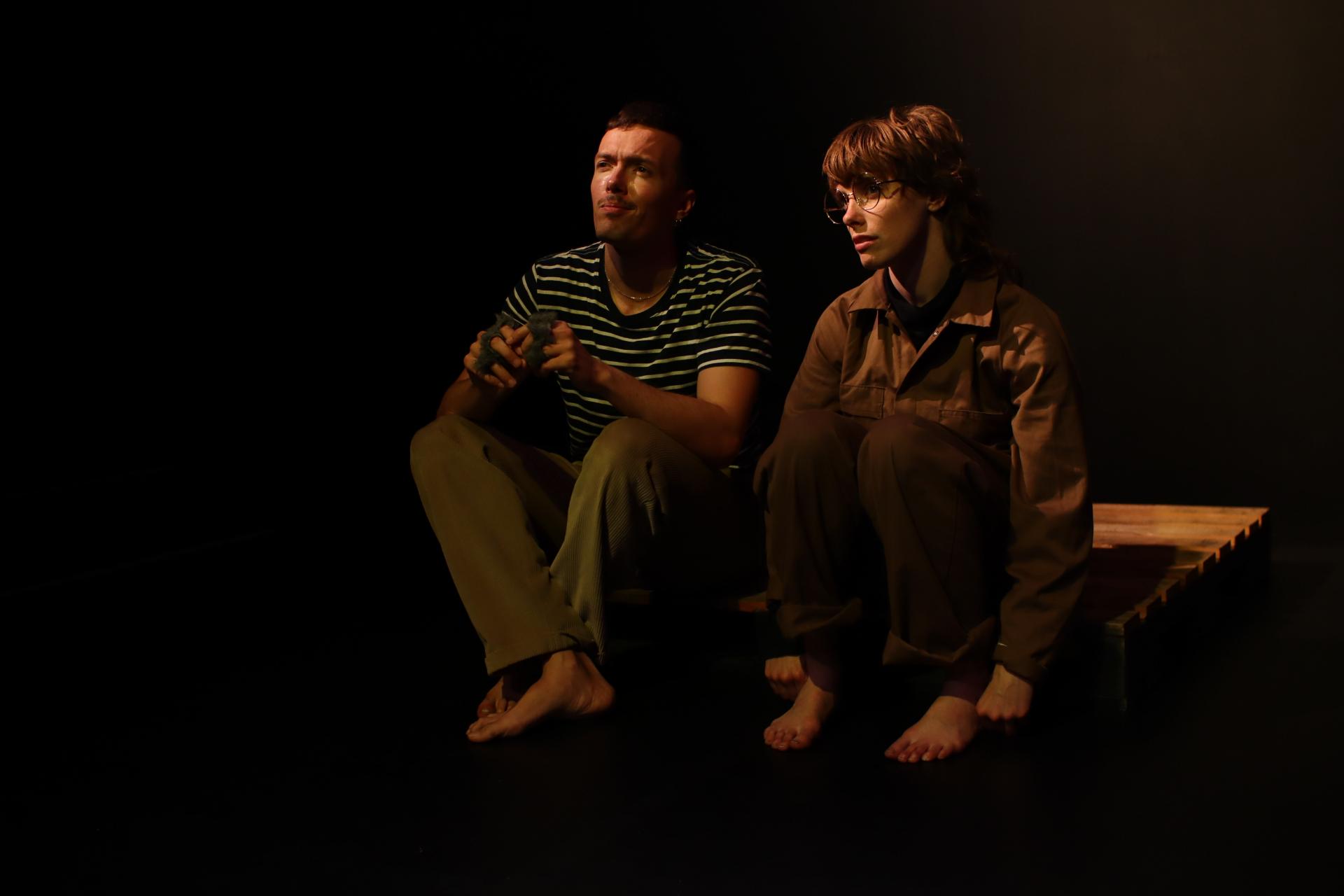
Mitsue is on the surface, a contented librarian in mid-century Hiroshima, but having lived through the devastating bombing by Americans only three years prior, her inner turmoil is much more profound than can be easily perceived. The 2001 play The Face Of Jizo by Hisashi Inoue 井上 ひさし may be set decades ago, but its reflections on survivor guilt reverberate beyond its narrative about one particular catastrophe. Along with serving as a reminder on the tragic consequences of war, The Face Of Jizo is concerned with how we emerge from trauma, emphasising the point that to live well, is often a matter of choices we make.

It is perhaps inevitable that the play’s gravity is central and severe, but there is also excellent humour coaxing us into the story and its stirring intentions. Directed by David Lynch and Shingo Usami, the show is charmingly inviting, with a palpable warmth that accompanies the harder edges of a sobering tale. Simultaneously gentle and heartrending, this theatrical experience proves enjoyable even though its themes are unquestionably foreboding.

Set design by Tobhiyah Stone Feller convey a sense of accuracy, for the time and place being depicted. The subtleties of Matt Cox’s lights, as well as his more dramatic manoeuvres, reveal a commendable attentiveness to the meaningful text. Music by Me-Lee Hay and sound design by Zachary Saric are appropriately restrained, called upon when necessary to add embellishment and refinement, to a thoughtful and sensitive work.

Actor Mayu Iwasaki brings both exuberance and poignancy to the role of Mitsue, with an extraordinary focus that keeps us compelled and hooked to her emotional journey. The aforementioned Usami plays the ghost of Mitsue’s father, similarly absorbing and persuasive, whether delivering joy or anguish, in a show that always takes care to render the light with the dark. The pair applies a distinct style of performance, for this translation by Roger Pulvers, to ensure that the English language never detracts from the cultural specificity being portrayed. Some of the adapted dialogue may feel awkward, but its sensibilities never for a moment, stray from mid-century Japan.

Guilt that turns inward, and that never finds resolution, can only be harmful. We see in Mitsue the futility of sorrowful regret and the damage it causes, having survived unspeakable losses. It is of course easier said than done, when urging a person to simply get over hardship of this magnitude. Indeed, the ray of hope should always be fundamental to any survival, but the grace of community is equally vital, to how we can heal, and how we can curtail the evil that always seems ready to inflict death and destruction.

www.redlineproductions.com.au

Review: Twelfth Night (Bell Shakespeare)

Venue: Sydney Opera House (Sydney NSW), Oct 24 – Nov 19, 2023
Playwright: William Shakespeare
Director: Heather Fairbairn
Cast: Keith Agius, Isabel Burton, Alfie Gledhill, Amy Hack, Garth Holcombe, Mike Howlett, Tomáš Kantor, Chrissy Mae, Ursula Mills, Jane Montgomery Griffiths
Images by Brett Boardman

Theatre review
In Twelfth Night, William Shakespeare’s comedy is based largely on the absurd and abhorrent idea of love and sex between people of the same gender. We are meant to laugh at Olivia being in love with Viola, and Orsino with Cesario, but many of us today no longer wish to participate in that cruel charade, of ridiculing something we know should be cherished and honoured. Director Heather Fairbairn too rejects that obsolete perspective, and in her rendition subverts Shakespeare’s tired tropes to make a statement about queer autonomy and acceptance.

Fairbairn’s production is endlessly vivacious and amusing, marvelously playful and imaginative with its characters and their hijinks. Each scene is rigorously explored, to ensure that we are kept entertained, even when the text proves tedious. A set design by Charles Davis cleverly concentrates the action into the stage’s middle, where along with Verity Hampson’s lights, great energy is channeled, creating a dynamic focal point. Davis’ fashionable costumes are a delight, as are Hampson’s illumination, especially at moments of heightened drama. David Bergman’s sounds are sophisticated and rich, particularly enjoyable when they nudge us into surreality. Songs by Sarah Blasko are an unequivocal highlight, extraordinarily beautiful with what they add to the presentation.

Sung mostly by Tomáš Kantor, who impresses not only with their remarkable vocal talents, but also with their physical agility and mischievous humour. Isabel Burton and Alfie Gledhill play the twins at the centre of all the shenanigans, intriguing with the meanings they inspire in terms of the performance and experience of gender. Duke Orsino and Countess Olivia are portrayed by Garth Holcombe and Ursula Mills respectively, both alluring and admirable with their commitment to elevating some of the more inane elements of the writing.

Undeniable star of the show however, is Jane Montgomery Griffiths, who as a female Malvolia brings immense amplification to both the comedic and tragic aspects of the lovelorn steward’s narrative. The humiliation she suffers under Shakespeare’s pen is given significant magnification, so powerfully depicted at a key moment of chastisement, that we almost feel as if she embodies the vengeance due to every queer and every woman degraded in his hallowed oeuvre. Griffiths’ turn as Malvolia is breathtaking, if only her castigations could become a reckoning truly monumental, beyond the confines of this singular instance of theatrical pleasure.

www.bellshakespeare.com.au