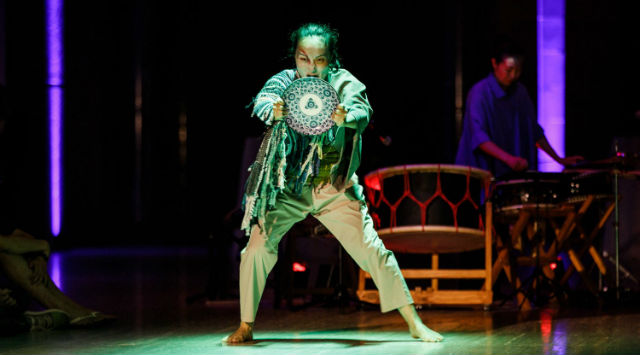
Review: Ruins أطلال (25A Belvoir)

Venue: Belvoir St Theatre (Surry Hills NSW), Oct 1 – 20, 2024
Playwrights: Emily Ayoub, Madeline Baghurst, Mine Cerci
Directors: Emily Ayoub, Madeline Baghurst
Cast: Emily Ayoub, Adam Al Kuheli, Madeline Baghurst, Tony Poli, Piumi Wijesundara
Images by Geoff Magee

Theatre review
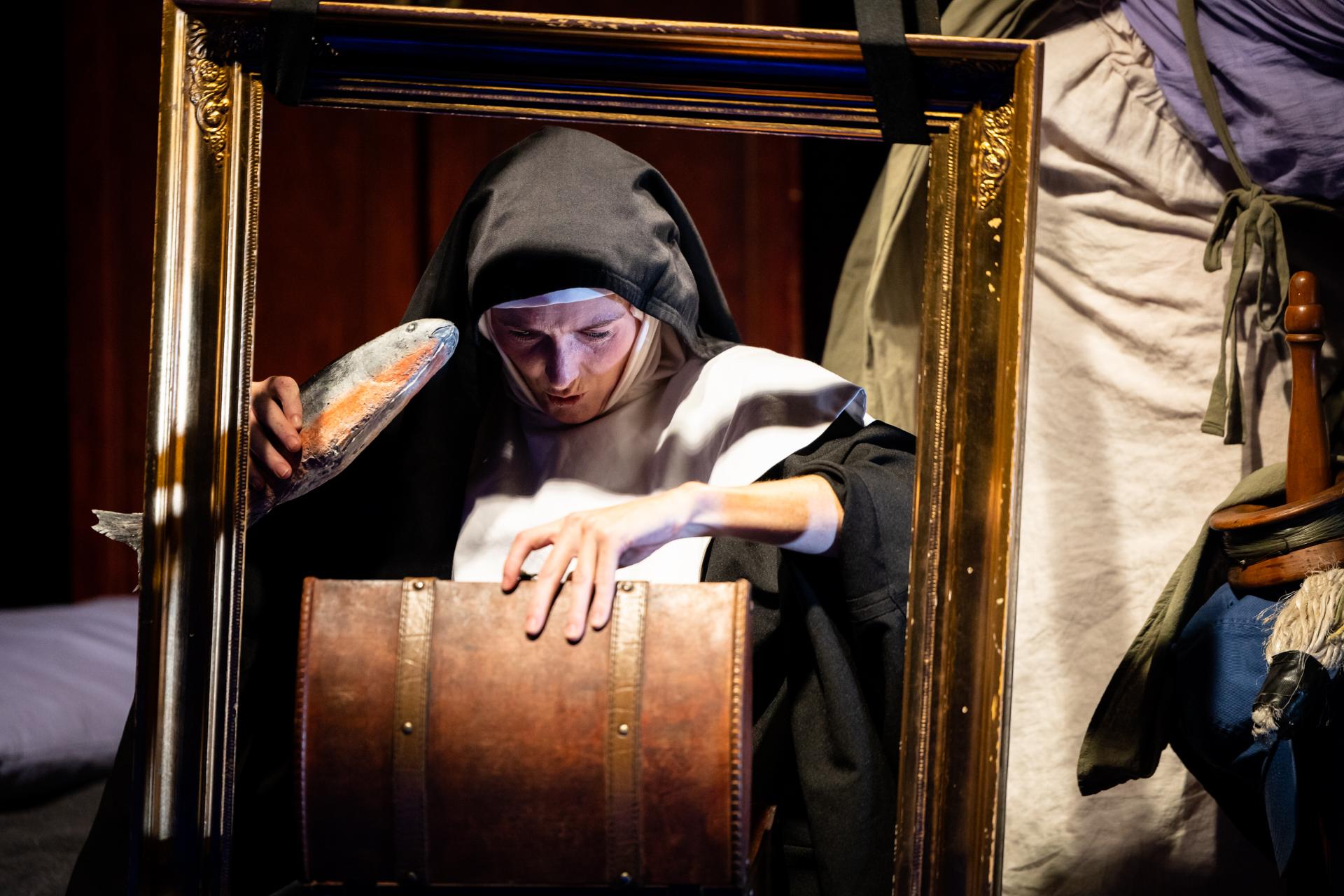
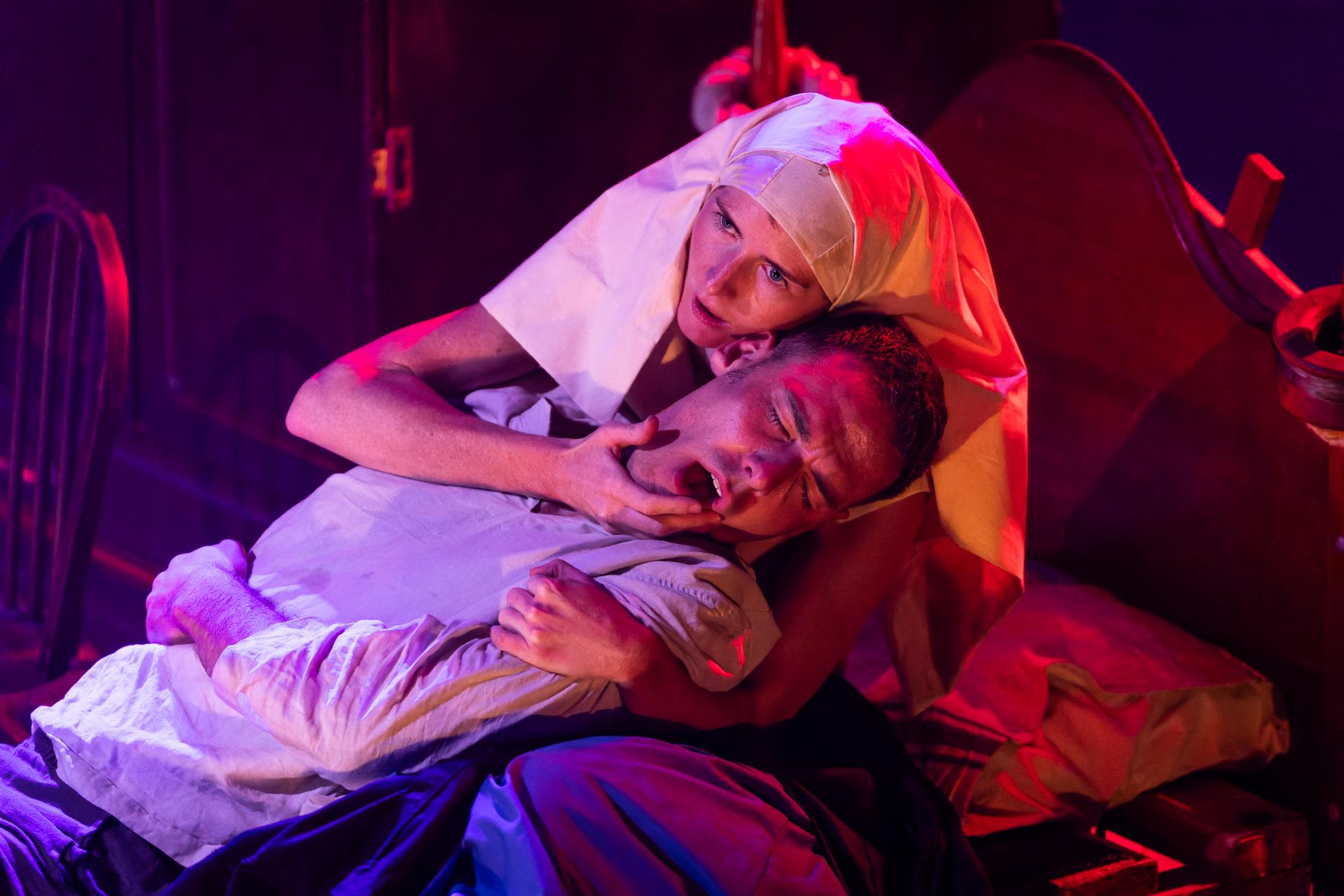
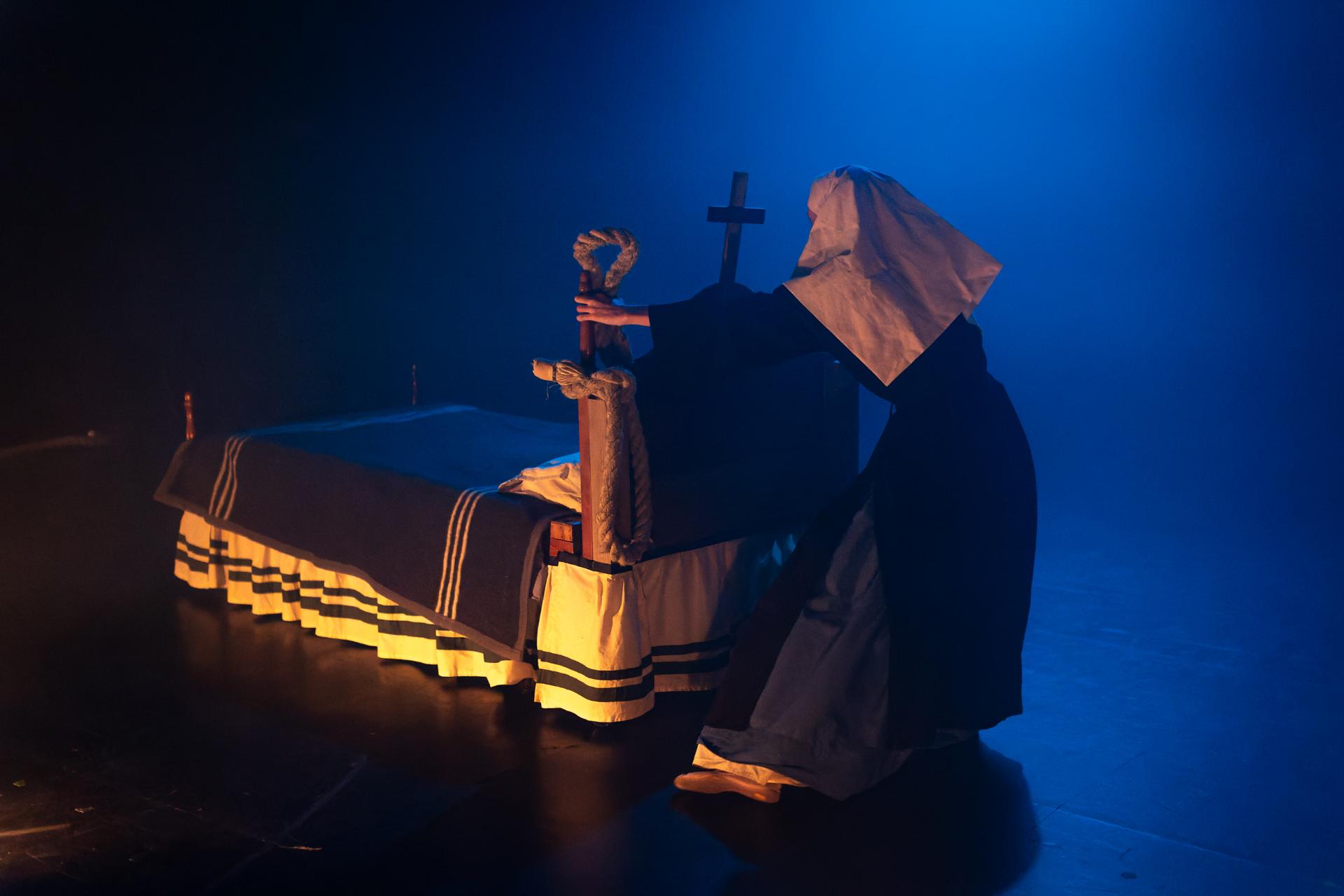
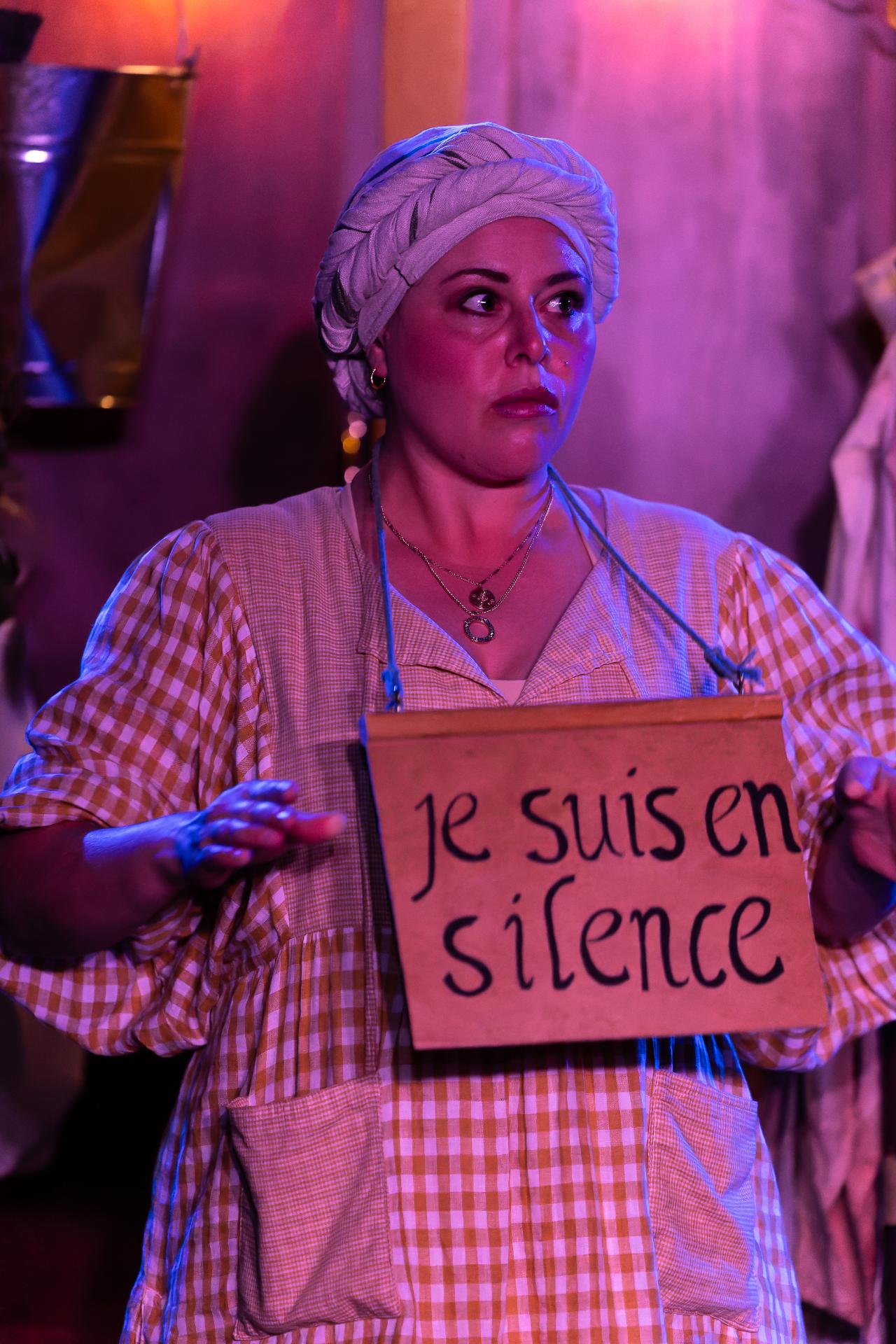
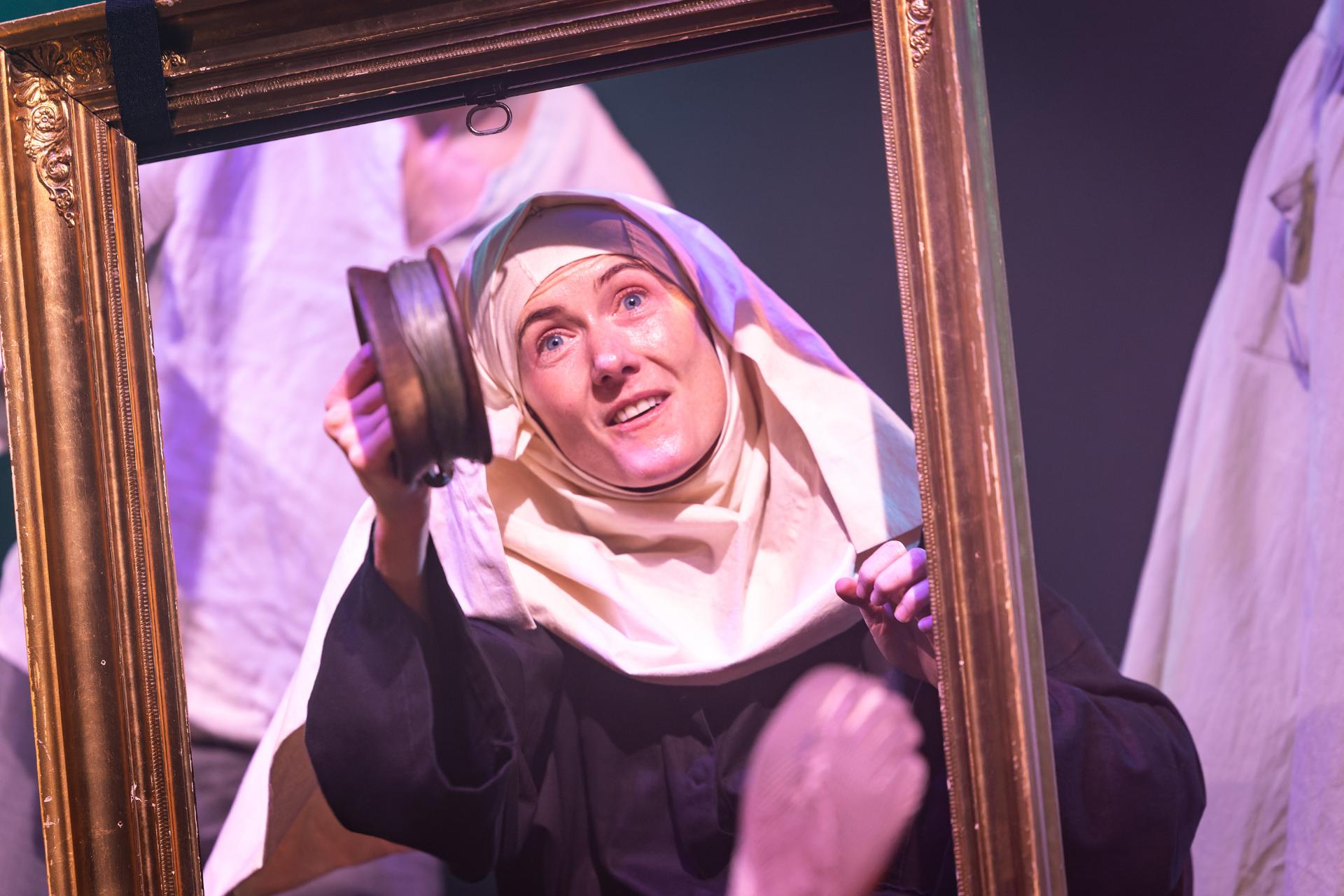
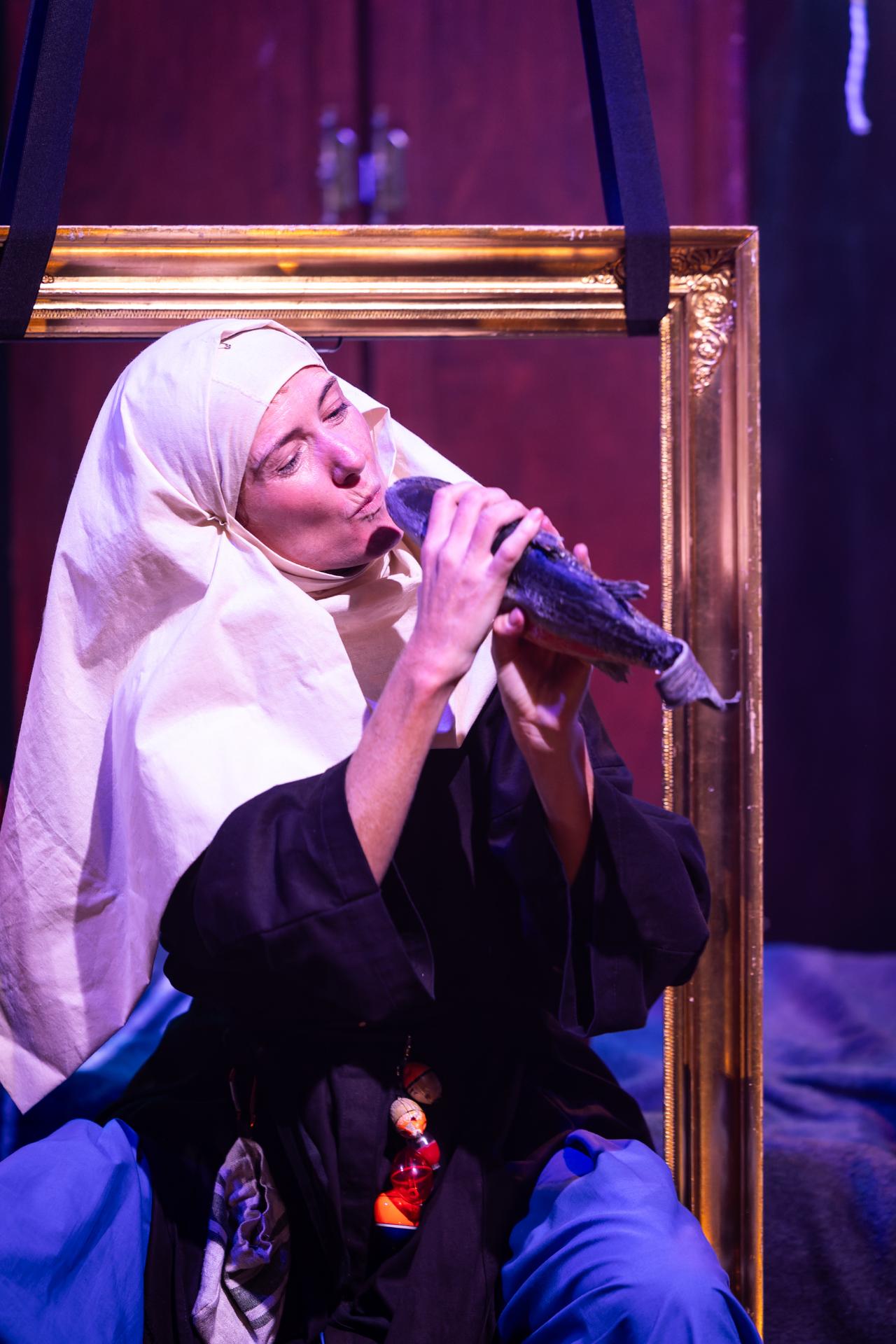
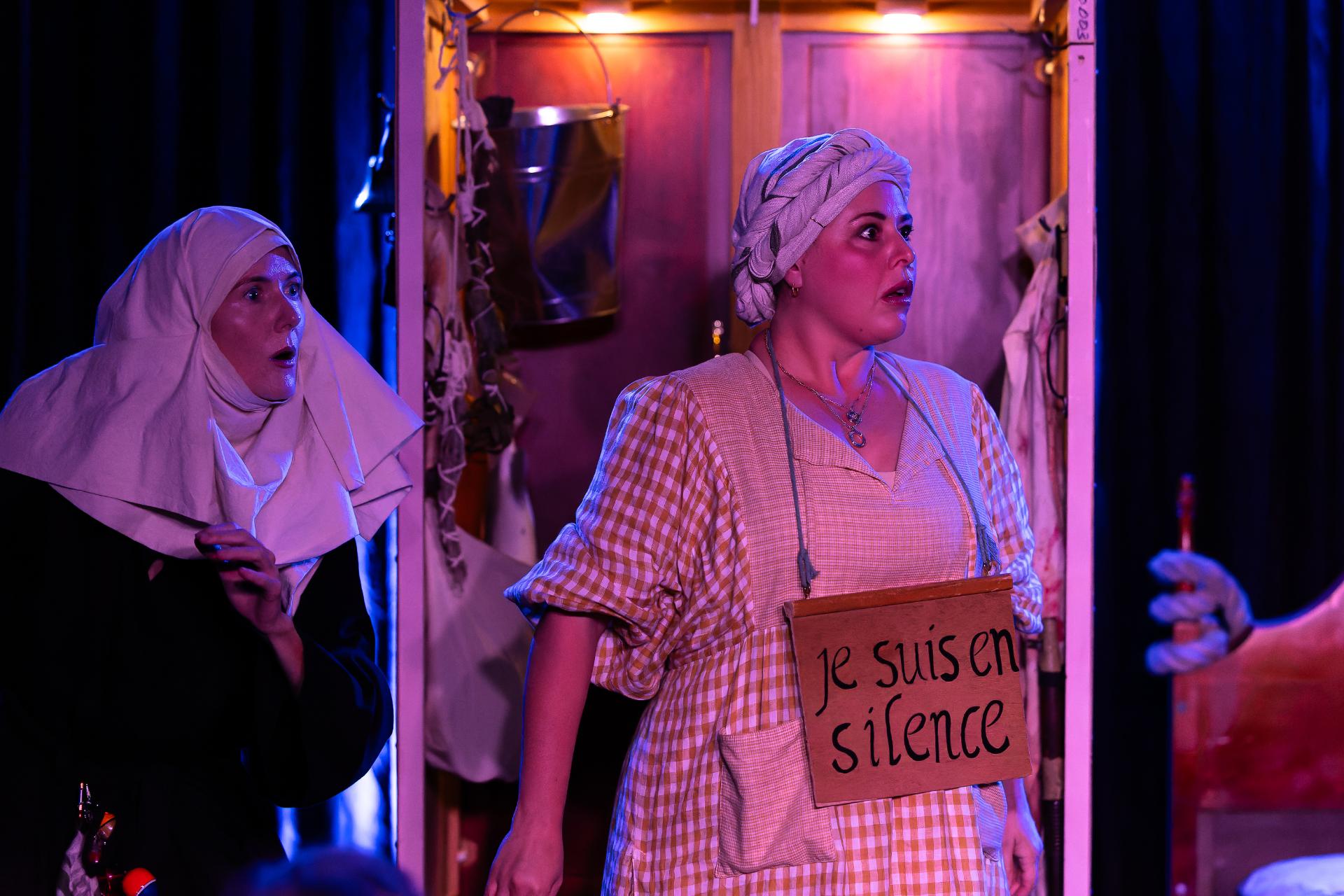
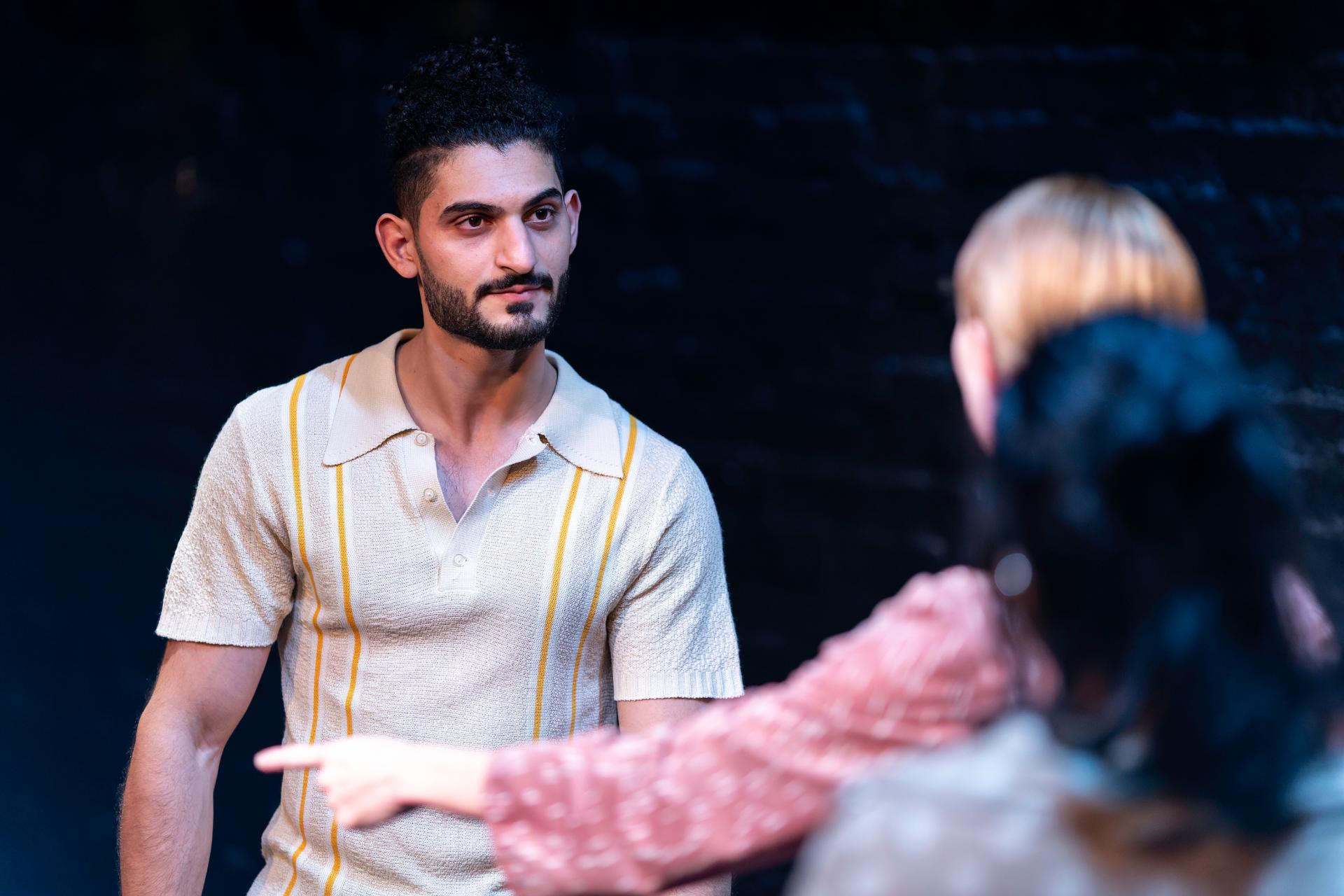
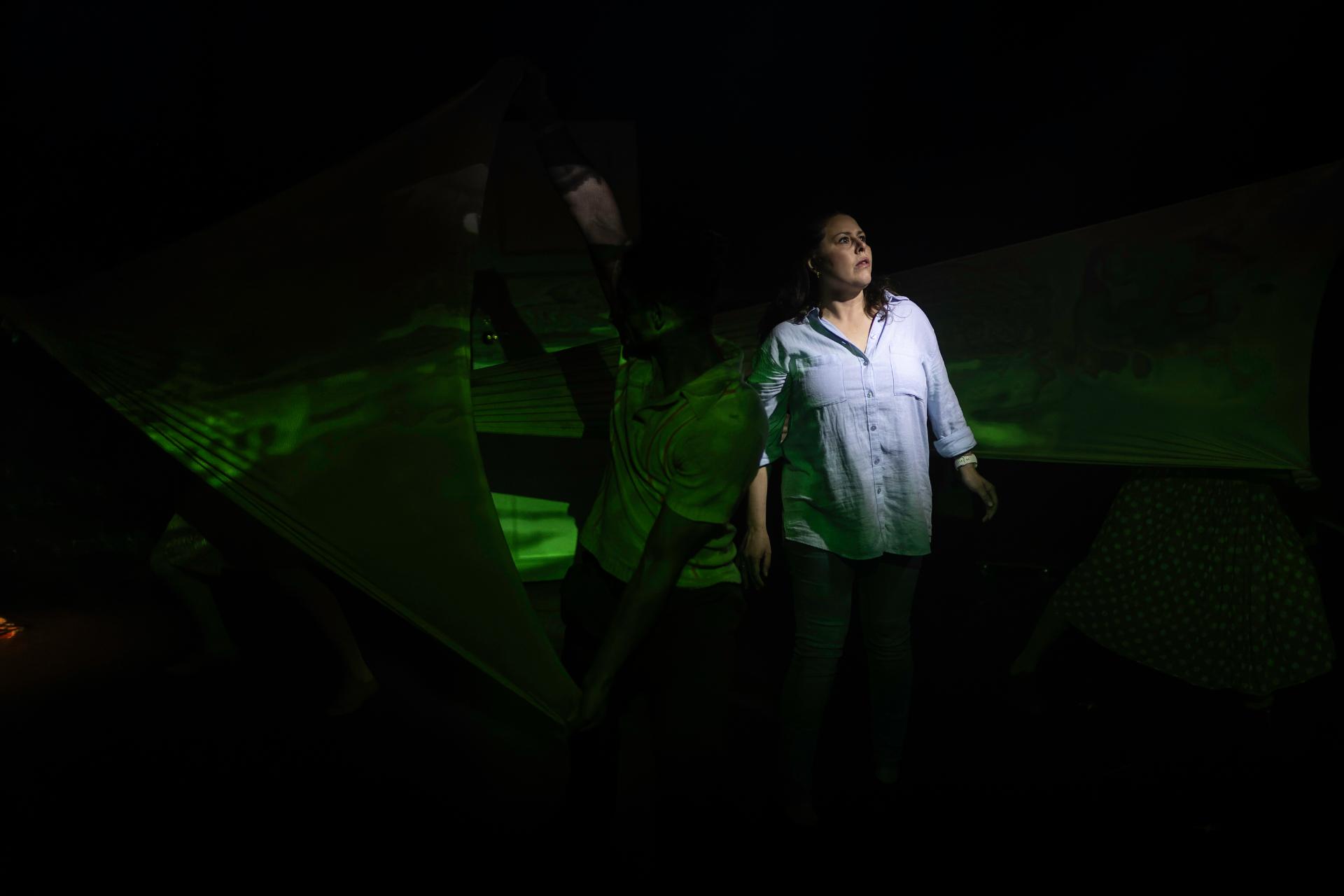
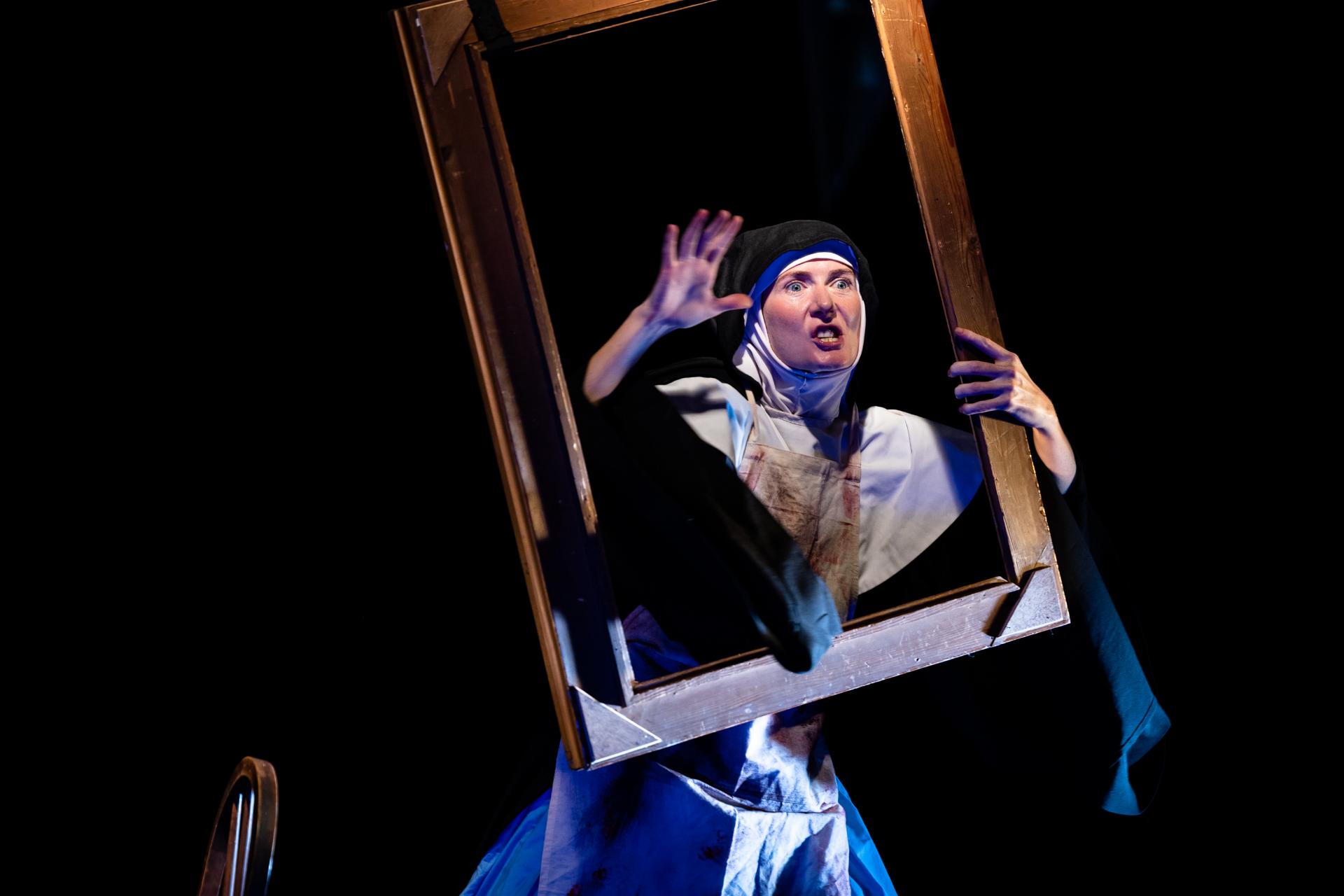
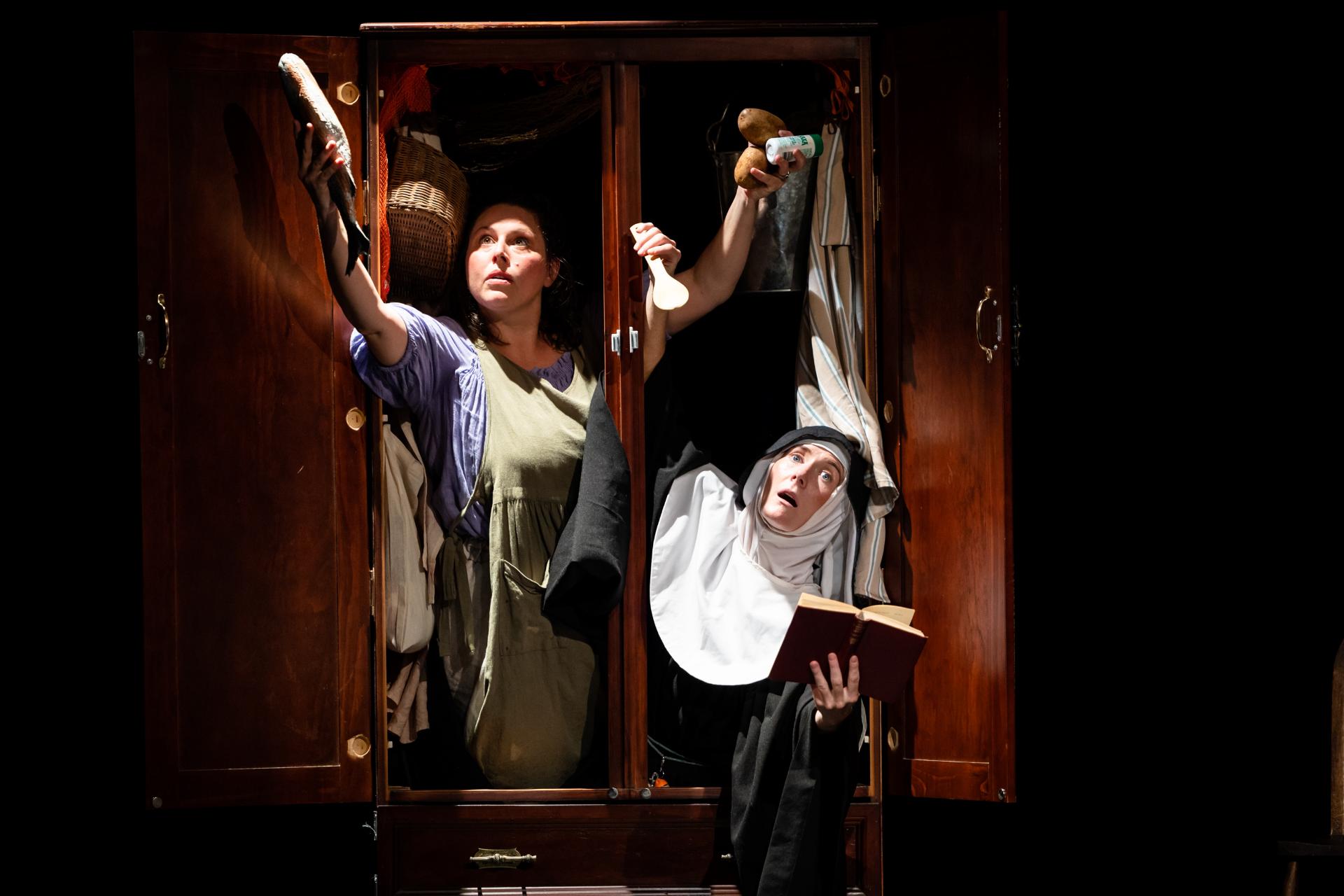
It is a pilgrimage of sorts that we see in Ruins أطلال . An Australian travels to the Bekaa Valley in Lebanon, guided by memories of her recently departed father, in search of something that feels like belonging. Stories of diaspora seem to be having their moment. It is the element of time that makes all the difference. We have always known the wealth of possibilities in working through our tales of origin, but assimilation for survival has meant that we have, for a long time, neglected parts of ourselves that are considered inconvenient and unsavoury.

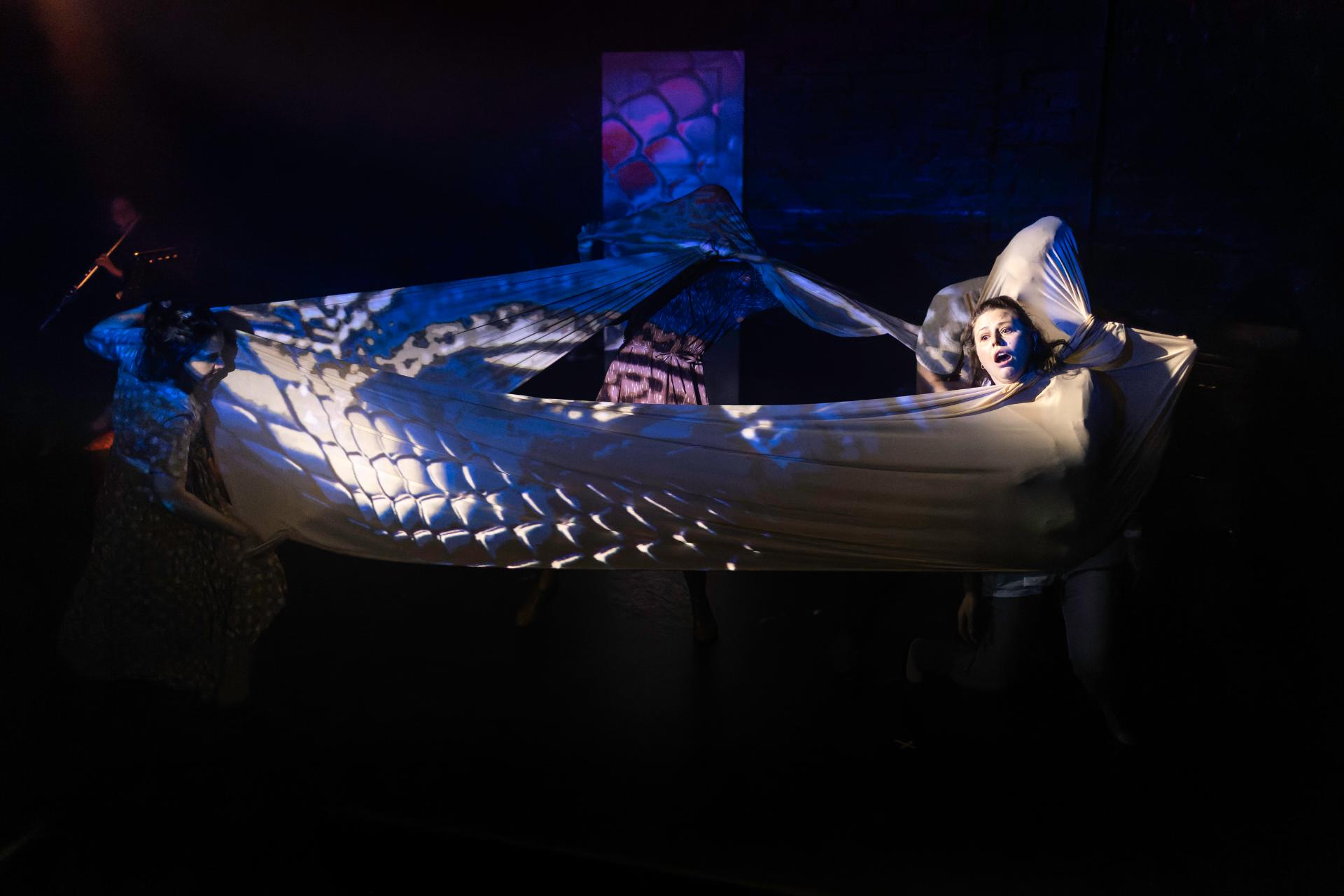
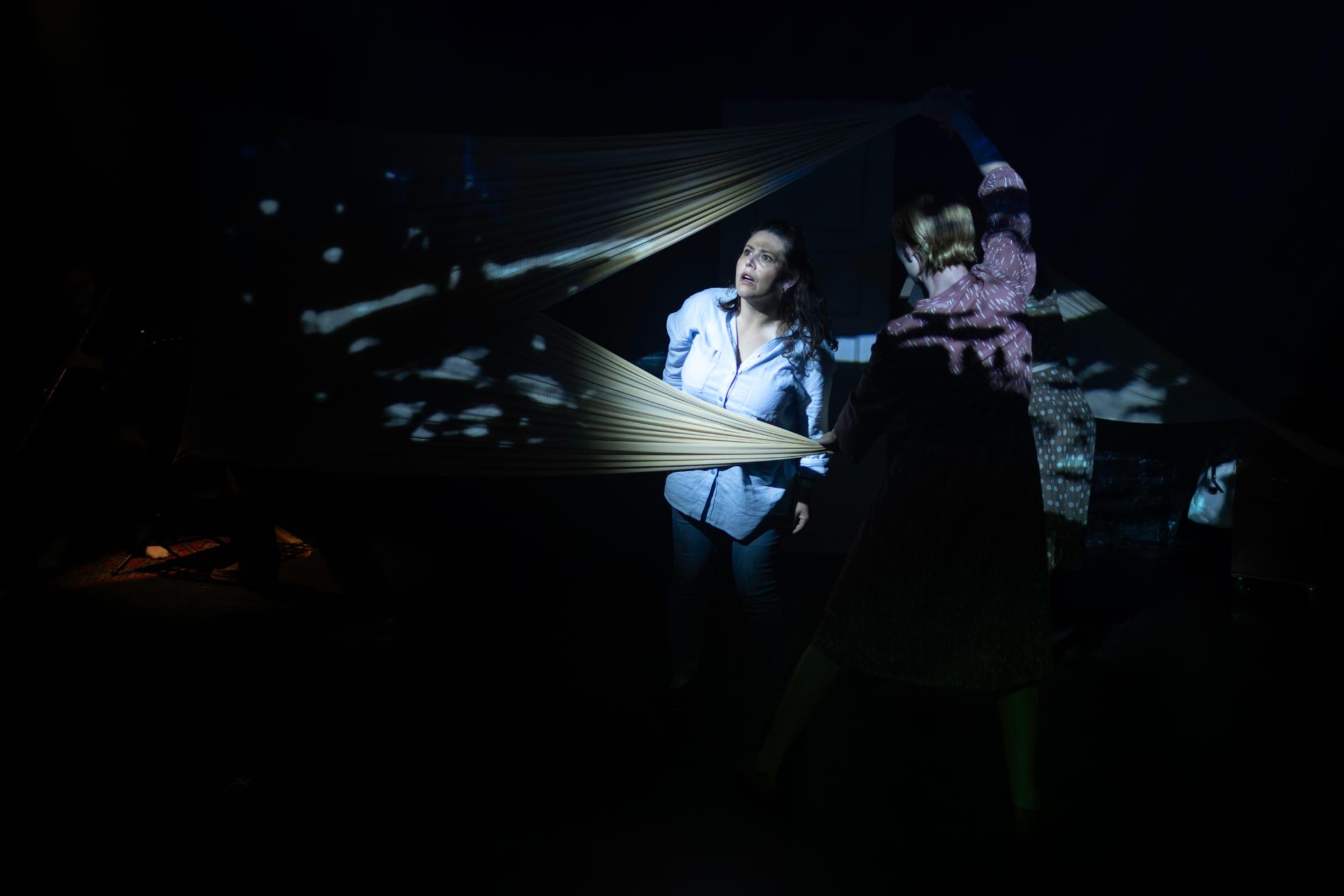
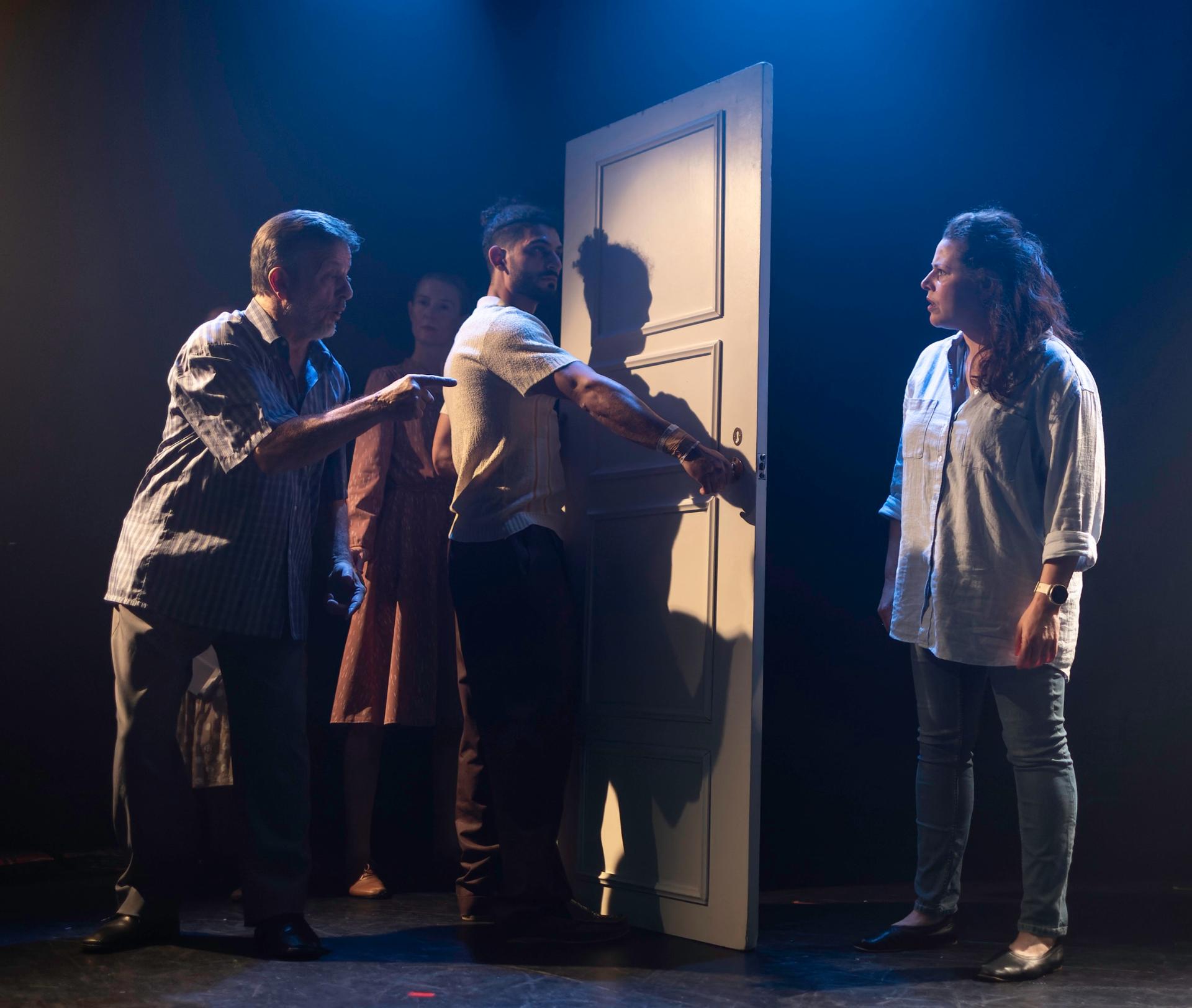
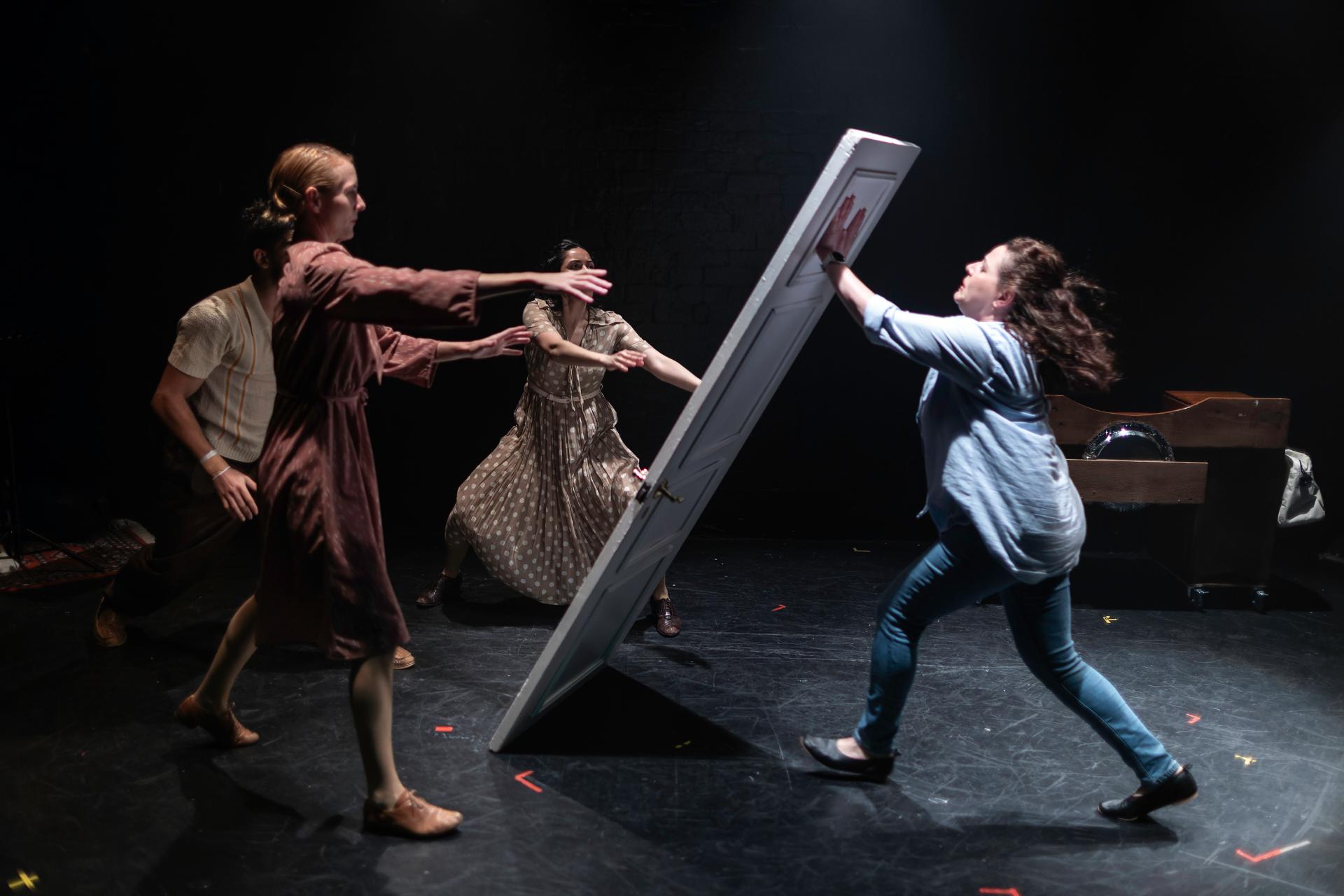
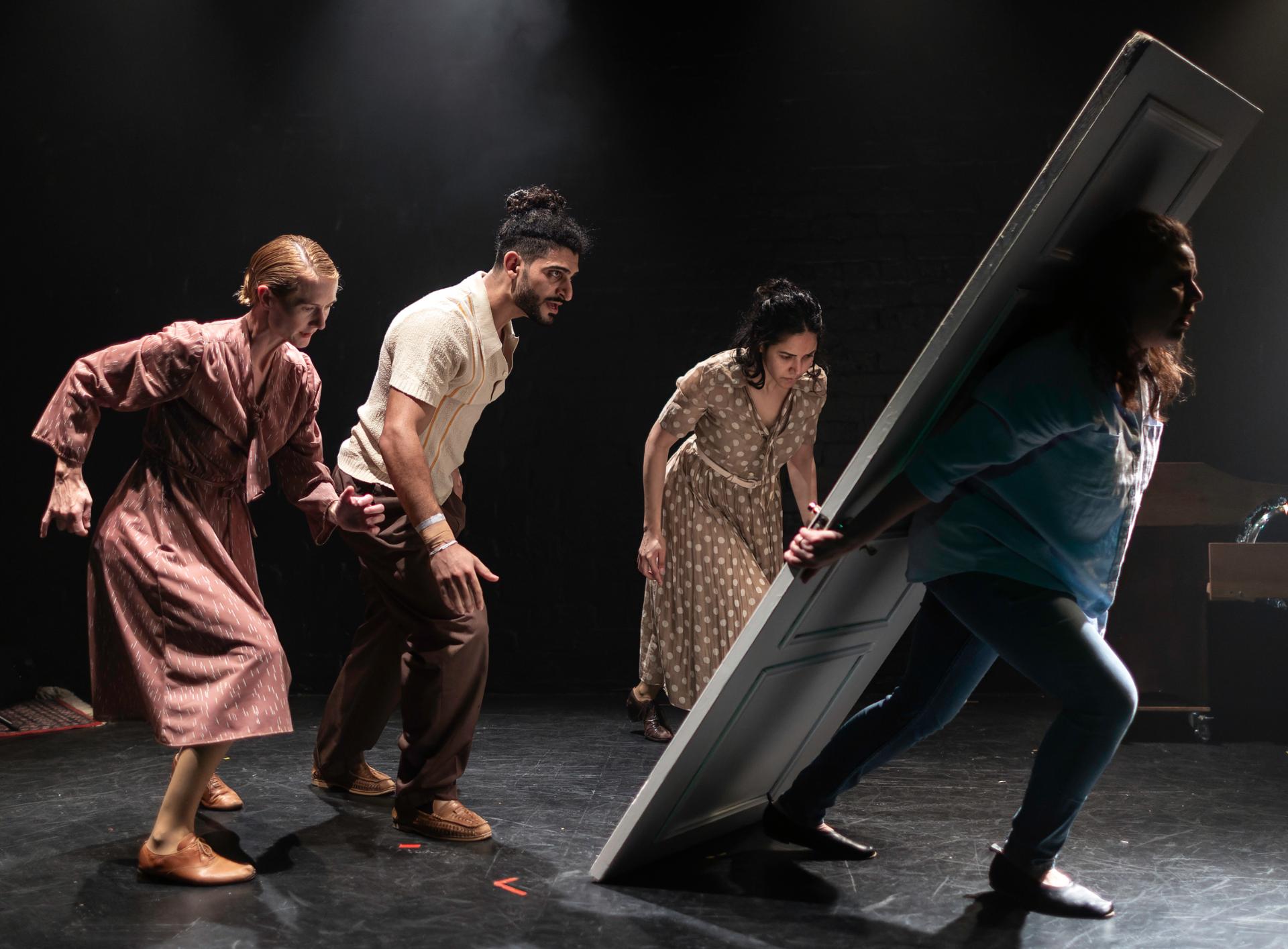
Conceptualised and directed by the formidable duo of Emily Ayoub and Madeline Baghurst, Ruins أطلال  initiates an exploration into that duality of being both and in-between, of containing contradictions and finding harmony whilst acknowledging, all the troublesome incoherence resulting from inhabiting an identity that is not just one thing. The show is beautiful at every juncture, with incredible configurations of bodies in space, illuminated exquisitely by Frankie Clarke, and with Johnny Yang’s music gently stirring in the background.

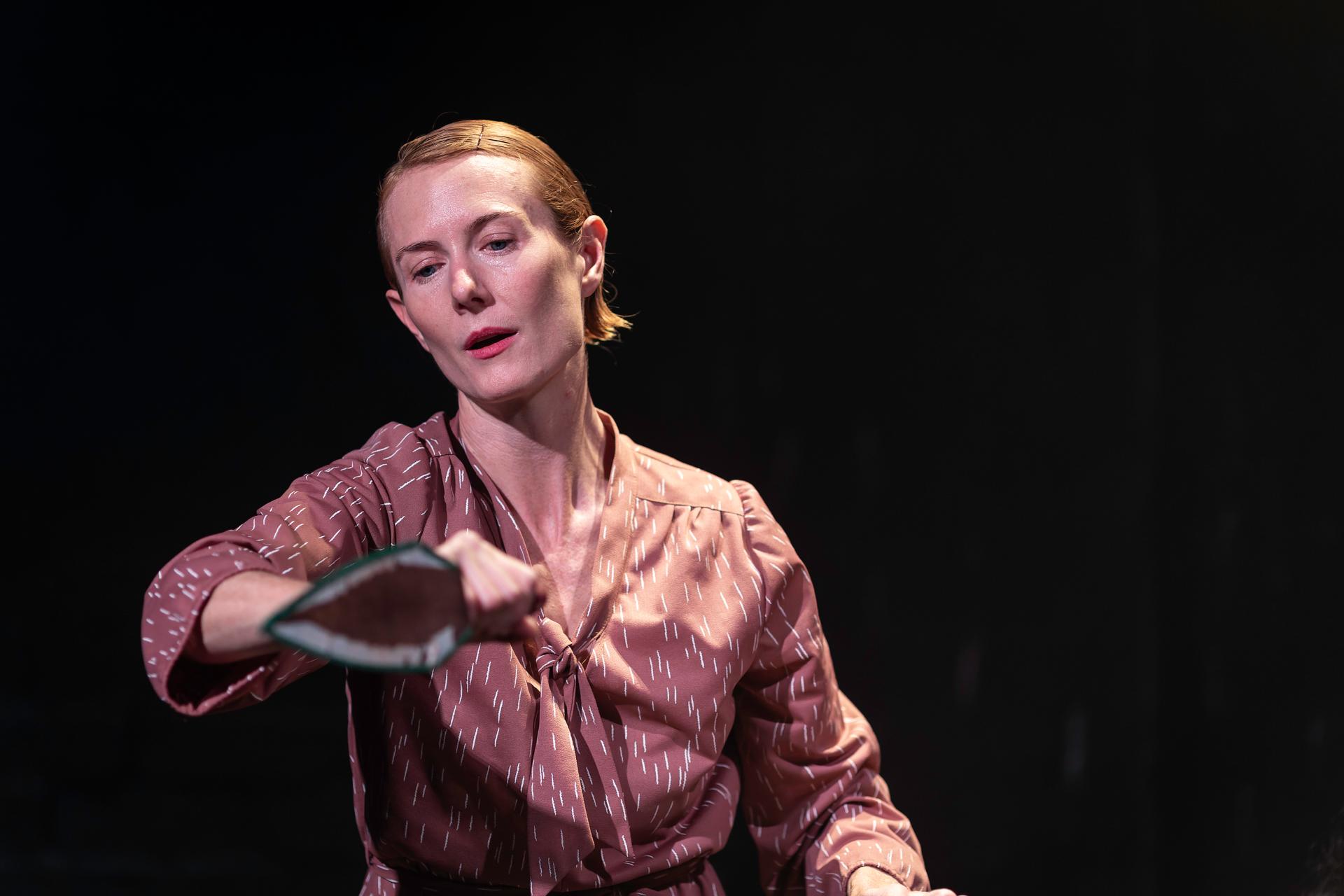
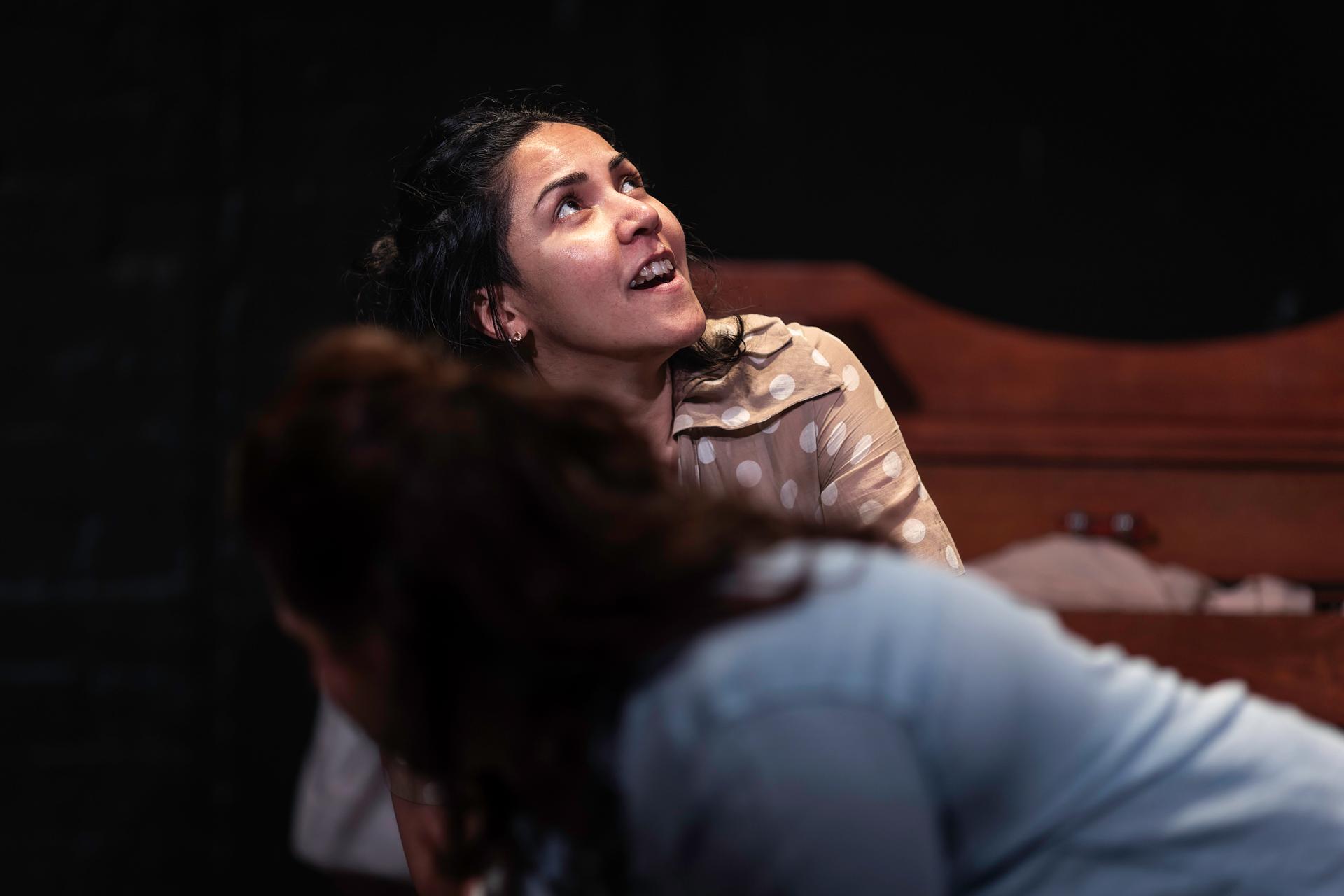
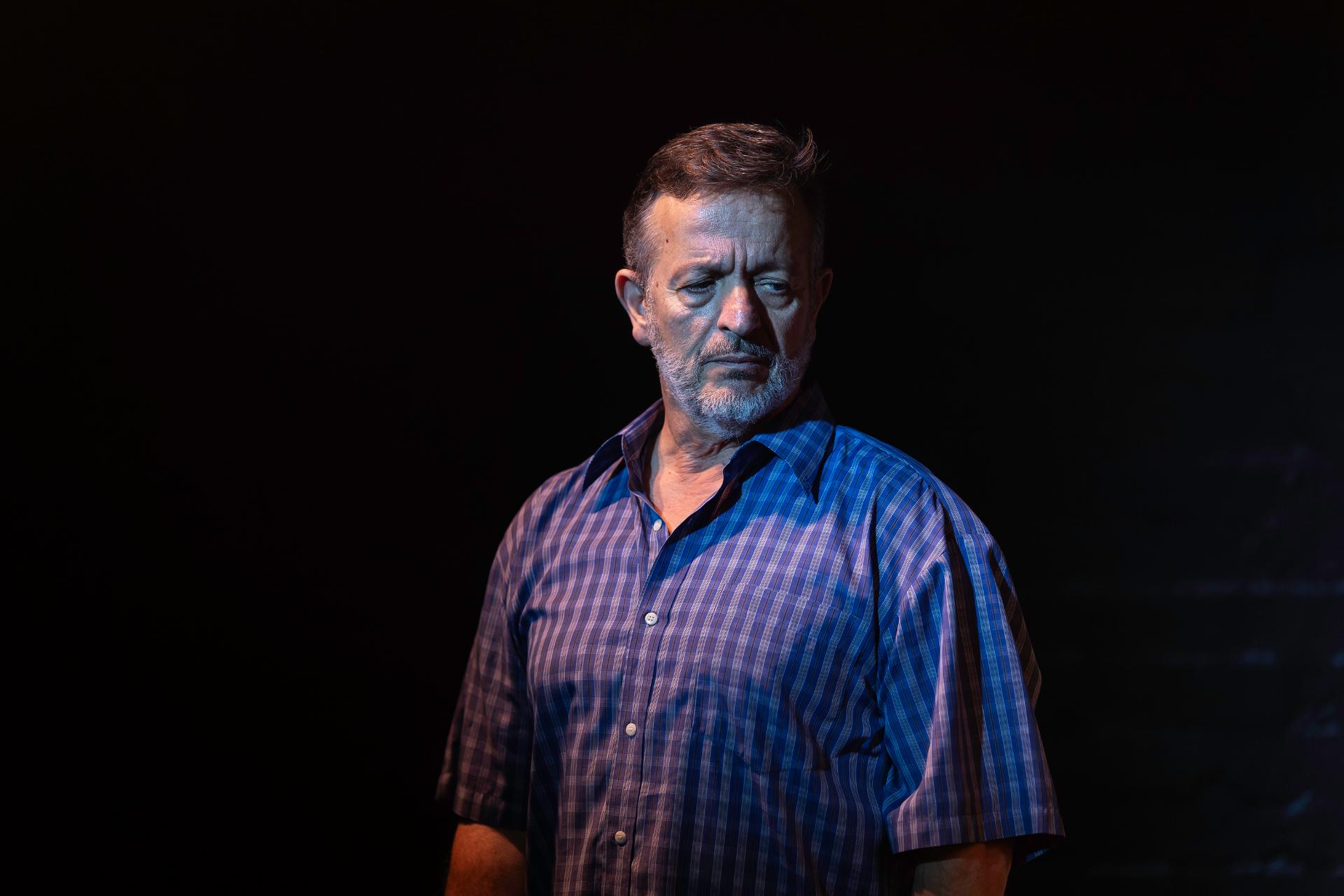
Jessica Scott is the flautist on the periphery, adding to the dynamism of the piece, whilst the spiritually fortified Ayoub leads the cast at bringing to life, this meditation on how a person cannot escape excavating the past, if they wish to become truly whole. Tony Poli embodies the paternal figure, with generous warmth and an understated strength. Baghurst, along with Adam Al Kuneli and Piumi Wijesundara play a range of secondary characters with magical effect, always imbuing a sense of wonder to the experience.

There is perhaps some deficiency in the level of intellectual engagement that the piece inspires, but Ruins أطلال is a work that makes an unequivocal statement about the importance of knowing one’s roots and of embracing one’s entirety. It is about the rejection of shame as prescribed by colonialist projects, and about finding the confidence to stand for the validity of cultural specificities that are excluded from hegemonic paradigms. We may have to regularly acquiesce to whiteness on these lands, but spaces are opening up, rapidly and pervasively, in which we can become truer and better selves.
www.belvoir.com.au | www.clockfiretheatre.com

Review: Plenty Of Fish In The Sea (Sydney Fringe Festival)

Venue: New Theatre (Newtown NSW), Sep 17 – 21, 2024
Creators: Emily Ayoub, Madeline Baghurst
Cast: Emily Ayoub, Madeline Baghurst, Christopher Carroll
Images by Geoff Magee

Theatre review
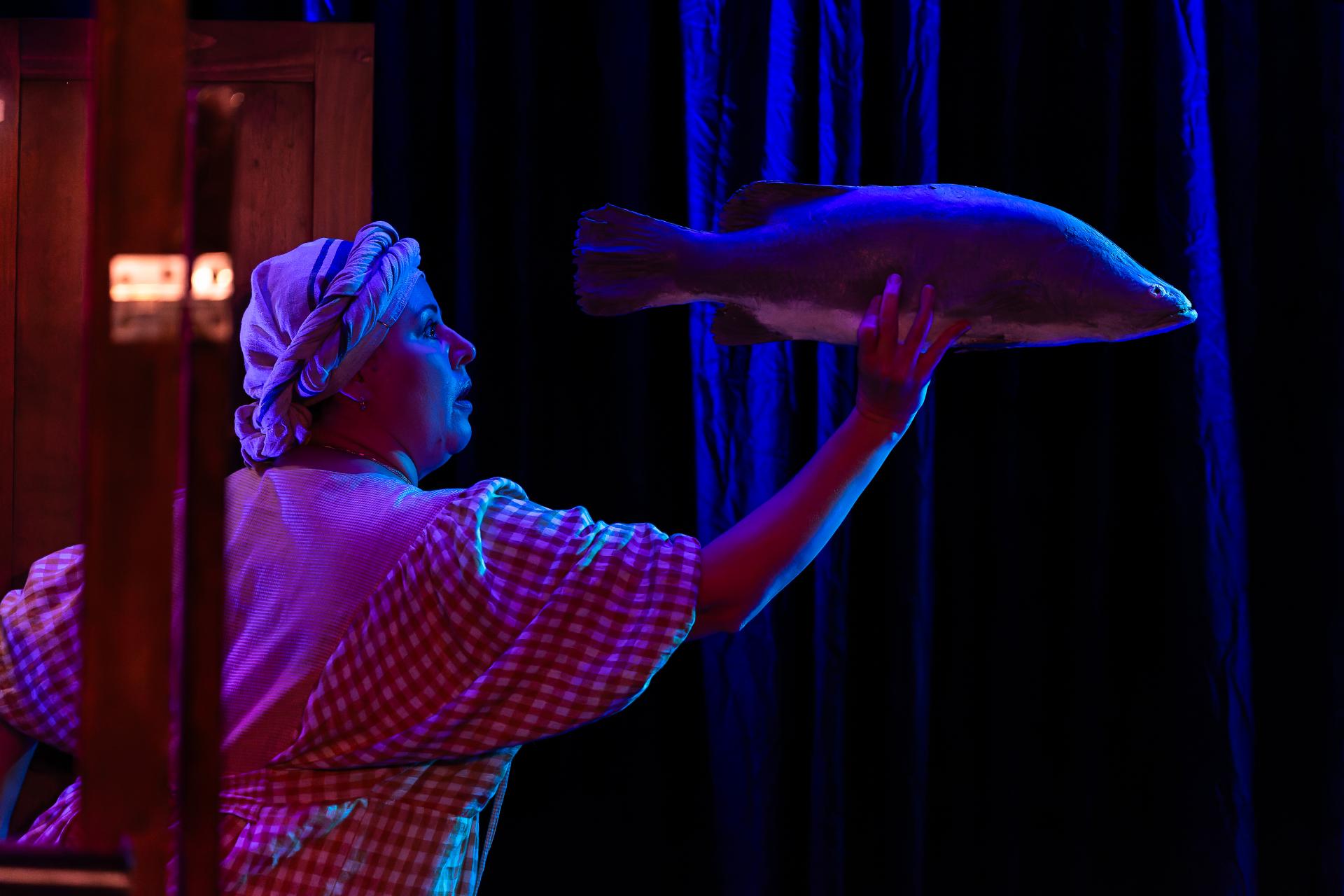
Emily Ayoub and Madeline Baghurst’s Plenty of Fish in the Sea is a story about passion, involving three people on a boat, spending all of their time fishing. Inspired by something named Saint Cotriade, a village or maybe a Catholic deity, they have set off to concoct a special soup from their haul from the ocean. The results are both magnificent and devastating, as we discover in this work of exceptional whimsy.

Creators Ayoub and Baghurst are joined by Christopher Carroll, to form an extraordinary cast remarkable for their physical and facial agility, who deliver a performance memorable for its crisp precision and admirable for its collaborative harmony. Highly inventive in its conception, and executed with great vision and humour, Plenty of Fish in the Sea is a succinct piece of theatre that proves endlessly amusing and delightful.

Production design by Tobhiyah Stone Feller consists of a set that is magically malleable, and costumes that are both evocative and flattering. Dynamic lights by Victor Kalka offer wide ranging calibrations of atmosphere, helping us intuit surprising layers to this simple tale. Daniel Herten’s sounds and music manufacture excitement and intensity, in perfect synchrony with everything being depicted by the personalities on stage.

We learn from Plenty of Fish in the Sea that where there is passion, there could be abundance. Indeed, there are limitless forces that will impose restrictions, on anything one might choose to pursue, and it is incumbent on an individual to honour their own sense of truth. A person’s will could be made to bend, but a person’s essence has the natural inclination to resist, whether or not one wishes.

www.sydneyfringe.com | www.clockfiretheatre.com

Review: Night Parade Of One Hundred Goblins (Clockfire Theatre Company)

Venue: Art Gallery of NSW (Sydney NSW), Jan 16 – 25, 2020
Director: Emily Ayoub, Arisa Yura
Cast: Madeline Baghurst, Ryuichi Fujimura, Alicia Gonzalez, Masae Ikegawa, Emily Ayoub, Arisa Yura

Theatre review
Based on the illustrations of Toriyama Sekien (1712–1788) and Itaya Hiroharu (1831-82), the Japanese folklore of 百鬼夜行 Hyakki Yagyō is brought to fantastic life for a 21st century audience, in a modern iteration entitled Night Parade Of One Hundred Goblins. A long runway is formed, so that the stage action reads like a scroll, commencing with performers racing past us, a succession of curious entities travelling across time and space, to share ancient stories from a supernatural realm.

It is a thoroughly physical work, informed by traditions of dance, mime and clowning, featuring a cast of five taking on a variety of characters, each one stranger than the other. They are alternately comical, frightening and dramatic, but always intriguing, and certainly inventive with their bodily faculties. Dialogue is kept to a minimum, so we rely almost entirely on visual communication, although music does play an inordinately big part of the exercise.

Masae Ikegawa creates her music live, a thrilling feature that works magically with the echoes of the hall, to take us away from the mundane, as it thrusts our imagination into something altogether more mysterious and instinctual. Recorded sounds by Ben Pierpoint are an electronic counterpoint that keeps sensibilities within this modernity, complete with thumping beats that make sense of the dance, for bodies we see on stage, as well as the rhythmic pulsations we experience inside our seated selves.

Lights by Martin Kinnane are colourful and very dynamic, able to spirit us away from the interiors of a concrete jungle to somewhere far more mythical and magical. Tobhiyah Stone Feller does brilliantly as designer, with unforgettable work on costumes and makeup that deliver extraordinary whimsy and quite unexpected beauty.

Directed by Emily Ayoub and Arisa Yura, the presentation is a marvellous feast for the eyes, a clever blend of theatrical disciplines that playfully entertains, whilst challenging our artistic literacy. There is much that Night Parade Of One Hundred Goblins can offer to teach, but probably more significantly in terms of how we read its stories, rather than the stories themselves.

www.clockfiretheatre.com

Review: The Natural Conservatorium For Wise Women (Clockfire Theatre)

Venue: Old 505 Theatre (Newtown NSW), Oct 3 – 21, 2017
Director: Emily Ayoub
Cast: Alicia Gonzalez, Sam Newing-Stern, Catherine Parle, Laura Turner, Tony Weir
Image by Geoff Magee

Theatre review
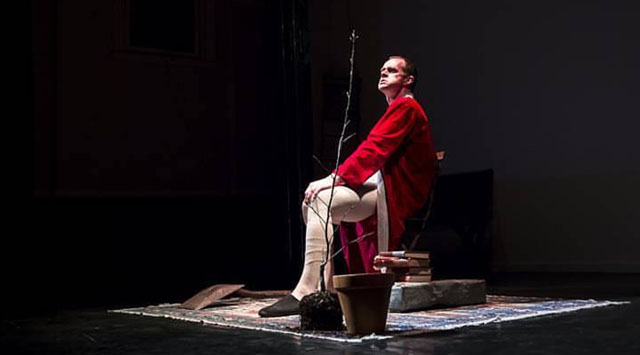
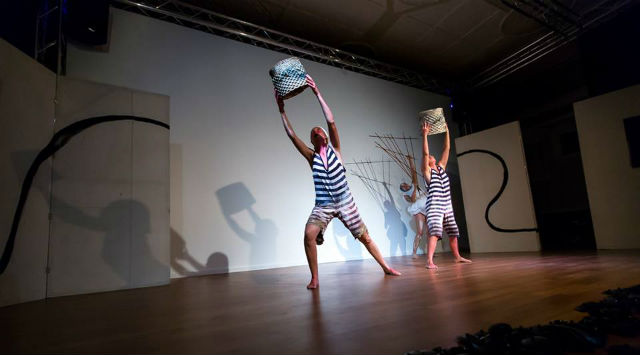
The patriarchy is constantly at war. In a system that benefits few, it has to protect itself from many enemies, especially those who have awoken from its deceptive manipulations, and are now aware of the injustices it generates. The Natural Conservatorium For Wise Women is an allegorical expression of the nature of patriarchy, in which we meet a man sitting atop a lonely throne, inside the strict boundaries of his miserable home, whilst others are outside engaged in blood-drenched combat on his behalf.

A highly imaginative work with only a slight reliance on dialogue, it is the sheer theatricality we encounter that truly excites. The characters tell a meaningful story, but it is the craft being put on display that is most captivating. There is much to admire, in the very specific discipline cultivated by this team of artists, with its strong emphasis on human physicality, rather than a more conventional use of emotional and verbal capacities as devices of communication. Informed by traditions of dance and mime, it is a style of performance that we rarely see in the landscapes of Australian art and is hence, an immediately refreshing experience for our audiences.

It is a very accomplished cast, with Tony Weir sensational as the decaying patriarch. Mesmerised, we watch closely as he mobilises every fibre of his being to turn the stage into a living, breathing thing that insists on our undivided attention. Weir’s commanding presence, and his powerfully seductive eyes, guide us through each moment with commendable precision and an inspiring sense of wonder. Alicia Gonzalez and Catherine Parle too, are terrific with their eccentric concoction of personalities, and the beautiful simplicity built into their unique language, is quite sublime. Space and atmosphere are finely tuned by director Emily Ayoub, who delivers a creation elegantly minimal in its aesthetic, but rich in resonance.

There is no end to the things we can talk about in the theatre, and there is no end to the different ways in which we can have those conversations, yet we seem to go about things in predictable fashion, choosing to persist with refining usual modes of presentation, instead of investing in the new. Our conservative art is symptomatic of the conservative times in which we live, and one might begin to interpret this unmistakable apathy as though there is nothing left to fight for. The opposite is true of course, but until we wake from the dulled and disillusioned dormancy of an existence that has resigned itself to the parochial, events like The Natural Conservatorium For Wise Women can only be an exception and not the norm.

www.clockfiretheatre.com

Review: We, The Lost Company‏ (Clockfire Theatre Company)

clockfireVenue: Old 505 Theatre @ 5 Eliza St (Newtown NSW), Oct 13 – 31, 2015
Devisors: Emily Ayoub, Madeline Baghurst, Alicia González, Kate Worsley, Arisa Yura
Director: Emily Ayoub
Cast: Madeline Baghurst, Alicia González, Arisa Yura
Image by Geoff Magee Photography

Theatre review
Since time immemorial, we have danced in honour of the gods that watch over us. It is an acknowledgement of our vulnerabilities and reflects our hopes for better days during this time on earth. We, The Lost Company is an intertextual exploration into our relationship with water, finding inspiration from the paintings of Brett Whiteley to create a work of physical theatre informed by the disciplines of mime and dance. It is gently humorous but wildly imaginative. It touches on subjects of migration, ecology, community and ageing, revelling in the beauty of abstraction but powerfully connecting with its audience, if not in terms of meaning, then certainly with the level of engagement it manages to instil into what is usually a challenging form of performance art.

Music and sound by Ben Pierpoint is complex, evocative and spirited. His work controls our imagination, and leads us to grand and eccentric spaces within our minds that provide a context for the three dancers on stage. Charming anecdotes about water obtained from interviews with mature members of Sydney communities are woven into the soundtrack to anchor the production with a warm authenticity that keeps our shared humanity firmly inside what is being developed.

The dancers’ weird and wonderful physical language is a thoroughly amusing one that sustains a sense of intrigue and holds our attention for its entire fifty-minute duration. Their poetry is whimsical but ruggedly sincere, allowing us to understand its intentions from a drastically unconventional kind of theatrical expression. Arisa Yura’s very memorable but very short monologue in Japanese about childhood, the forces of nature, ice cream and beach balls, extends the theme of memory from the audio recordings, and touches us unexpectedly with its dramatically emotive and nostalgic pseudo drama. The production is full of adventure and sensitive innovation, but its lighting feels inadequate within the extravagance of its multi-disciplinary articulations. The space requires greater depth and colour to achieve a stronger sense of visceral lift off that is always just within reach.

To know something, does not necessitate the ability to put it into words. Call it a feeling, intuition, or a soul thing, art is fundamentally about communication and the modes through which communication happens. We, The Lost Company has vocabularies of its own that are refreshing, unique and dare we say, original, but what it speaks can be understood by all, and like the themes that it is concerned with, we are all embroiled in this mysterious undertaking as one.

www.venue505.com/theatre | www.clockfiretheatre.com