











Venue: Qtopia (Darlinghurst NSW), Oct 8 – 19, 2024
Playwright: Mark Salvestro
Director: Ryan Whitworth-Jones
Cast: Jack Calver, Kath Gordon, Mark Salvestro
Images by Bojan Bozic
Theatre review
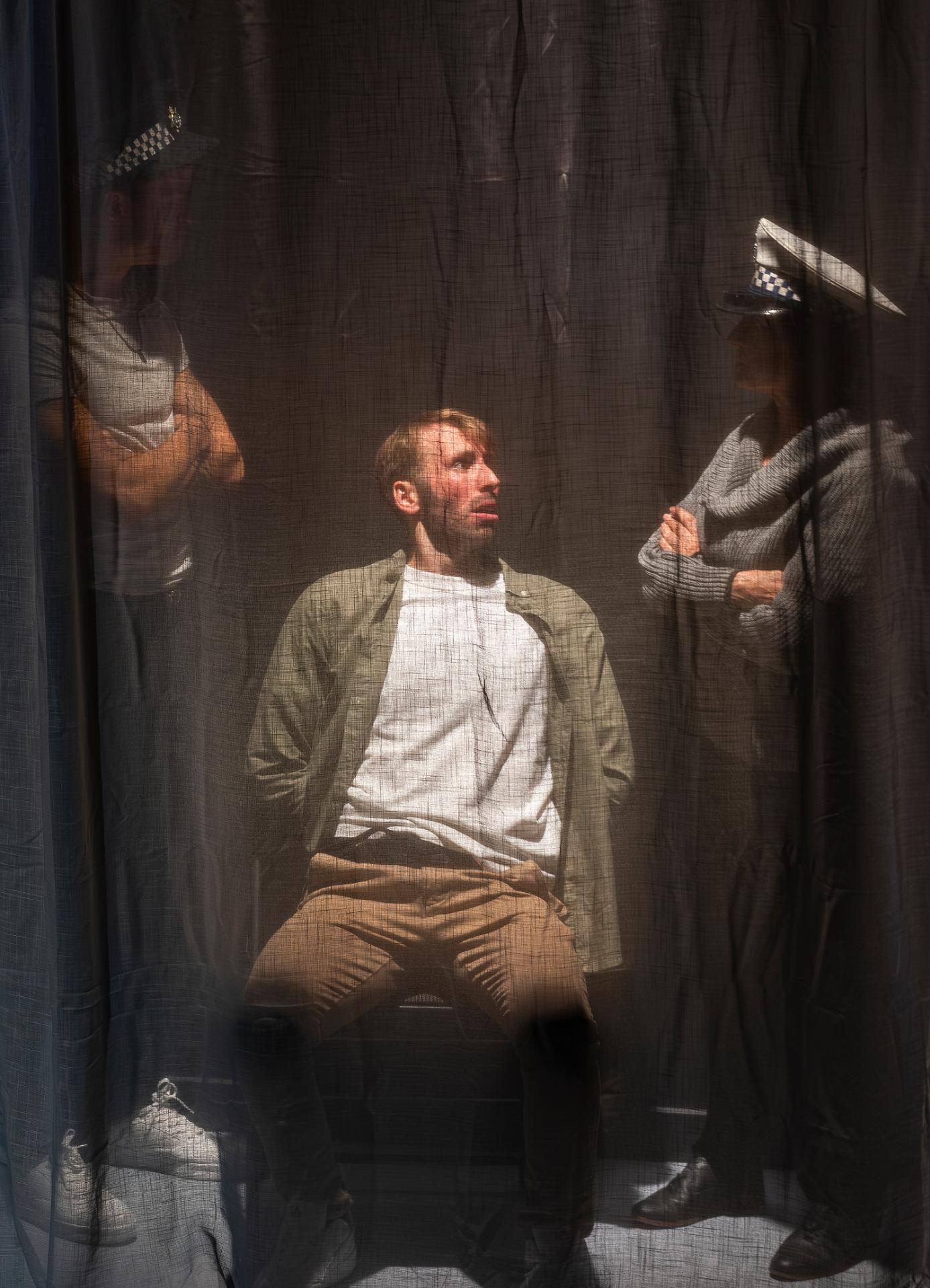
Set in Cooma, a town fondly known as the capital of the Snowy Mountains, The Queen’s City of the South by Mark Salvestro involves an unearthing of a dark chapter in that locale’s history. A homosexual prison had operated there in the 1950s, not only for the purposes of incarcerating and humiliating queer people, but also to attempt to “rehabilitate” them with cruel experiments. Community radio presented Ryan stumbles upon this hidden information, and is intent on learning everything about those persecutions, but finds himself obstructed by a culture of denial and ignorance.
Salvestro’s intriguing play is grounded in powerful ideas, and even though slightly too conventionally structured, what it does convey is resonant and meaningful. Presented in the form of a conventional comedy, its political explorations are softened for easier consumption, with witty repartee between characters keeping proceedings light and amusing.
As performer, Salvestro plays the leading part with excellent timing and admirable acuity. There is a valuable dynamism and passion that Salvestro brings to the stage, that keeps us invested in Ryan’s endeavour to reveal the truth. His ability to foster authentic chemistry with the supporting cast, namely Jack Calver and Kath Gordon, makes the plot and its characters feel effortlessly compelling.
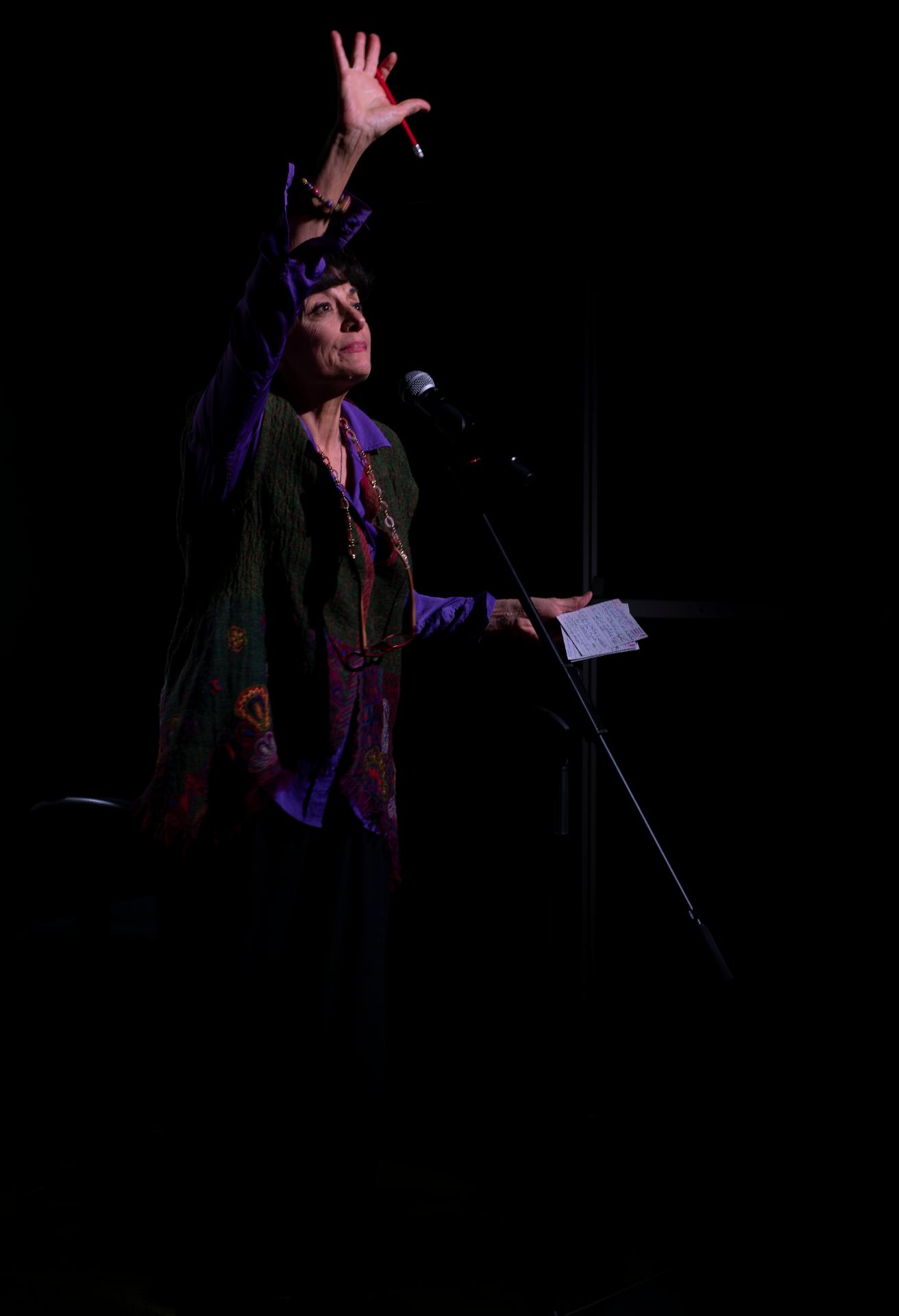
Directed by Ryan Whitworth-Jones, the show is fast-paced, and with an earnestness that proves persuasive. Set design by Elle Fitzgerald addresses the need for multiple settings succinctly, along with costumes that deliver a sense of accuracy for the personality types being depicted. Lights by Luna Ng are sensitive to the shifts in dramatic tone throughout the 2-hour journey, and sounds by Madeleine Picard are rigorous in enriching atmosphere, for an otherwise raw visual presentation.
Australia has a shameful past that some of us regard as necessary, in order that we may attain all that we have today. Others would consider that ugliness to be characteristic of an ongoing deplorable project of colonialisation. In any case, knowing the past is fundamental not only to how we can better move forward, but additionally for some of us, it serves as a poignant reminder that hate and oppression are always just a fragile membrane away, poised and ready to rear their ugly head when we lose our vigilance.











 Suzy Goes See