Review: No Love Songs For Lady Basses (Old Fitz Theatre)

Venue: Old Fitzroy Theatre (Woolloomooloo NSW), Jun 11 – 16, 2024
Playwright: Sheanna Parker Russon
Music: Lillian M. Hearne
Director: Cassie Hamilton
Cast: Sheanna Parker Russon, Lillian M. Hearne
Images by Jamie James

Theatre review
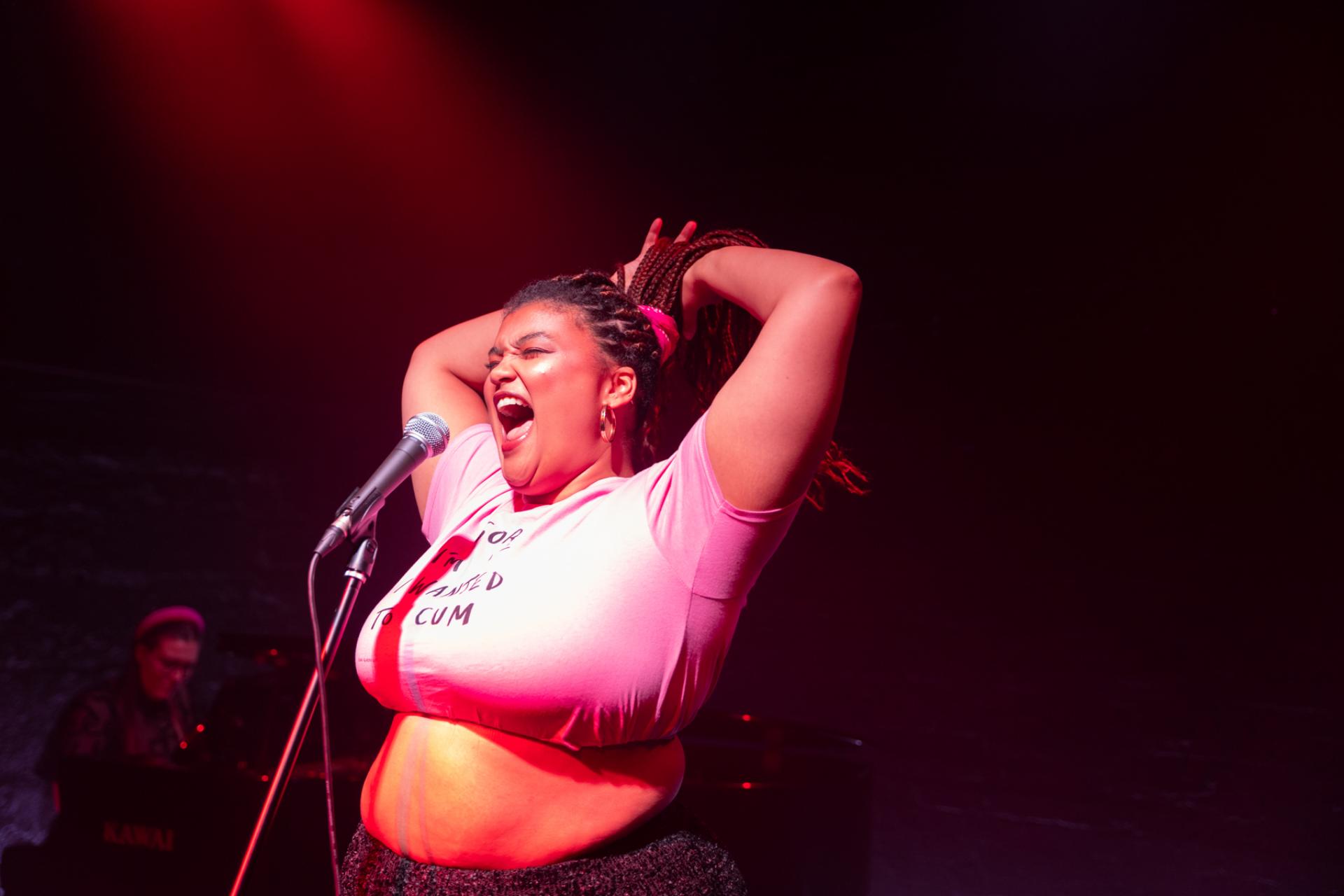
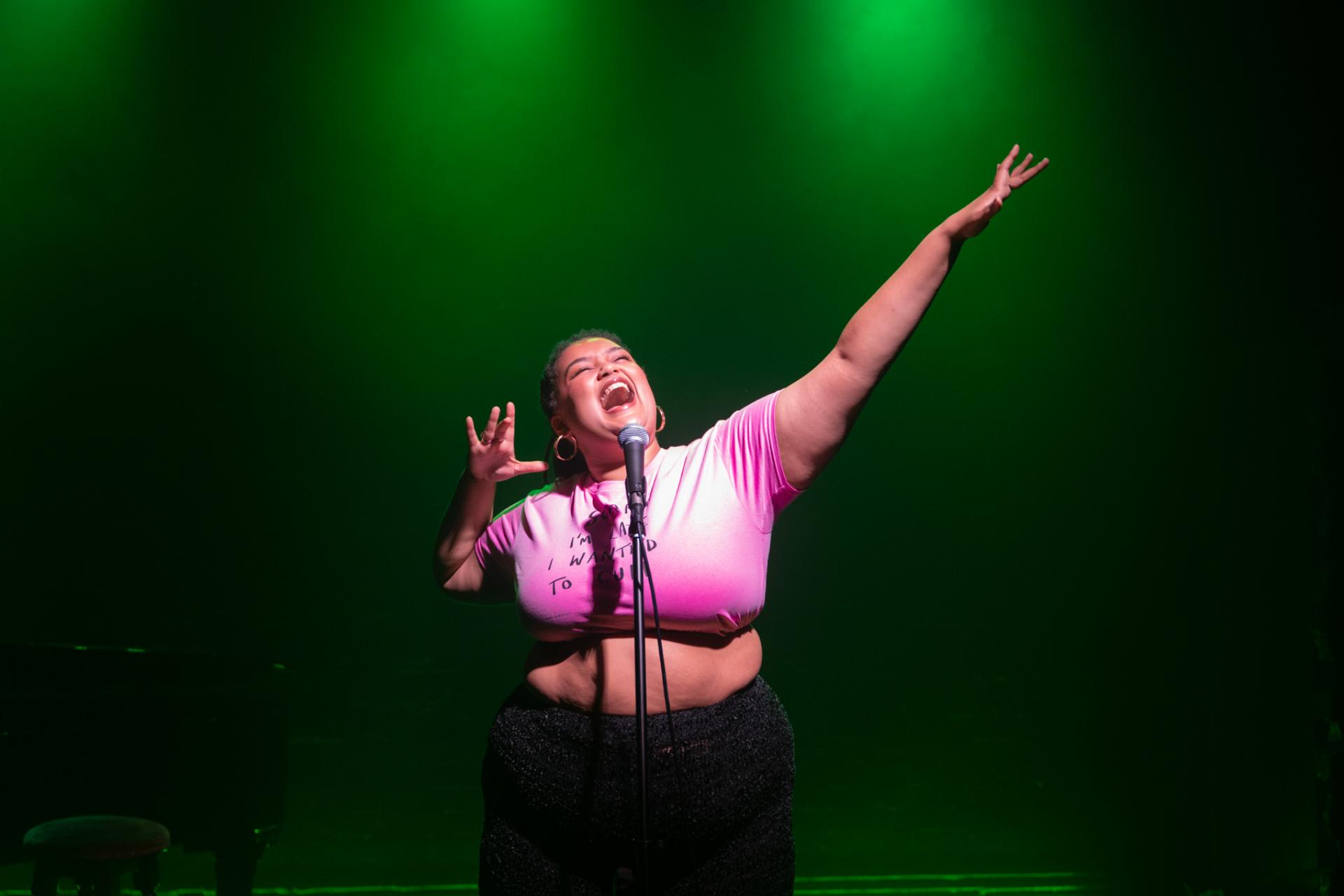
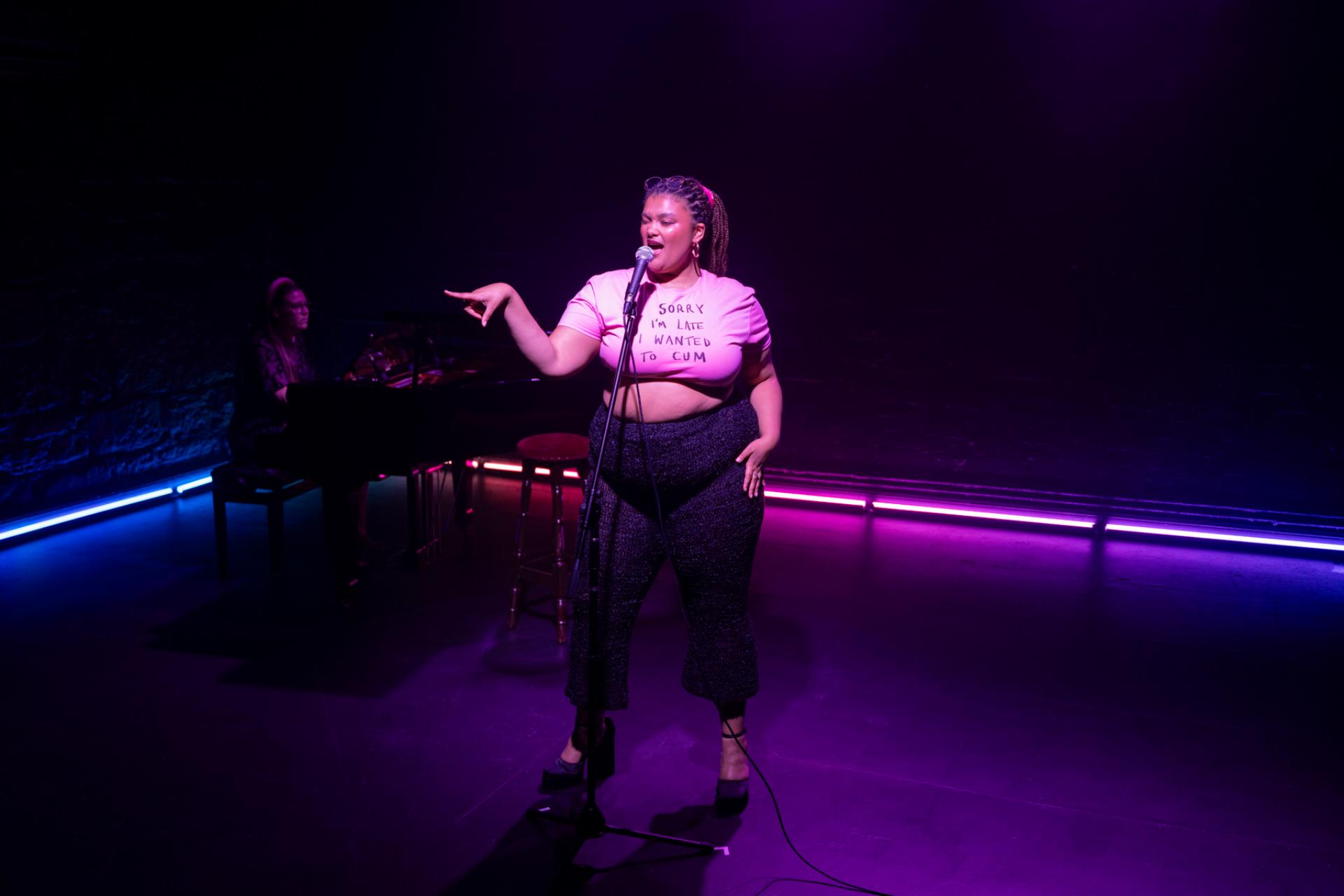
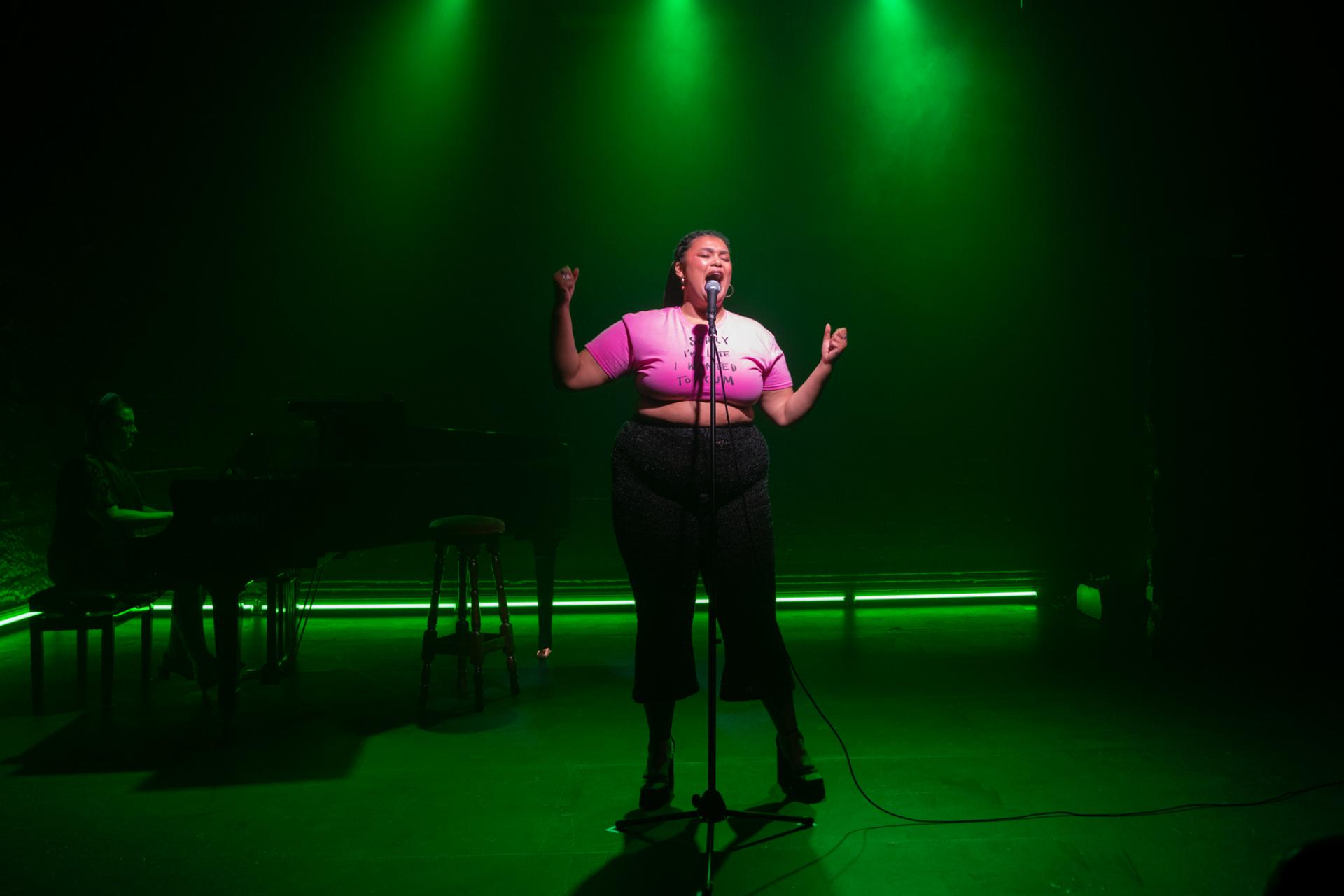
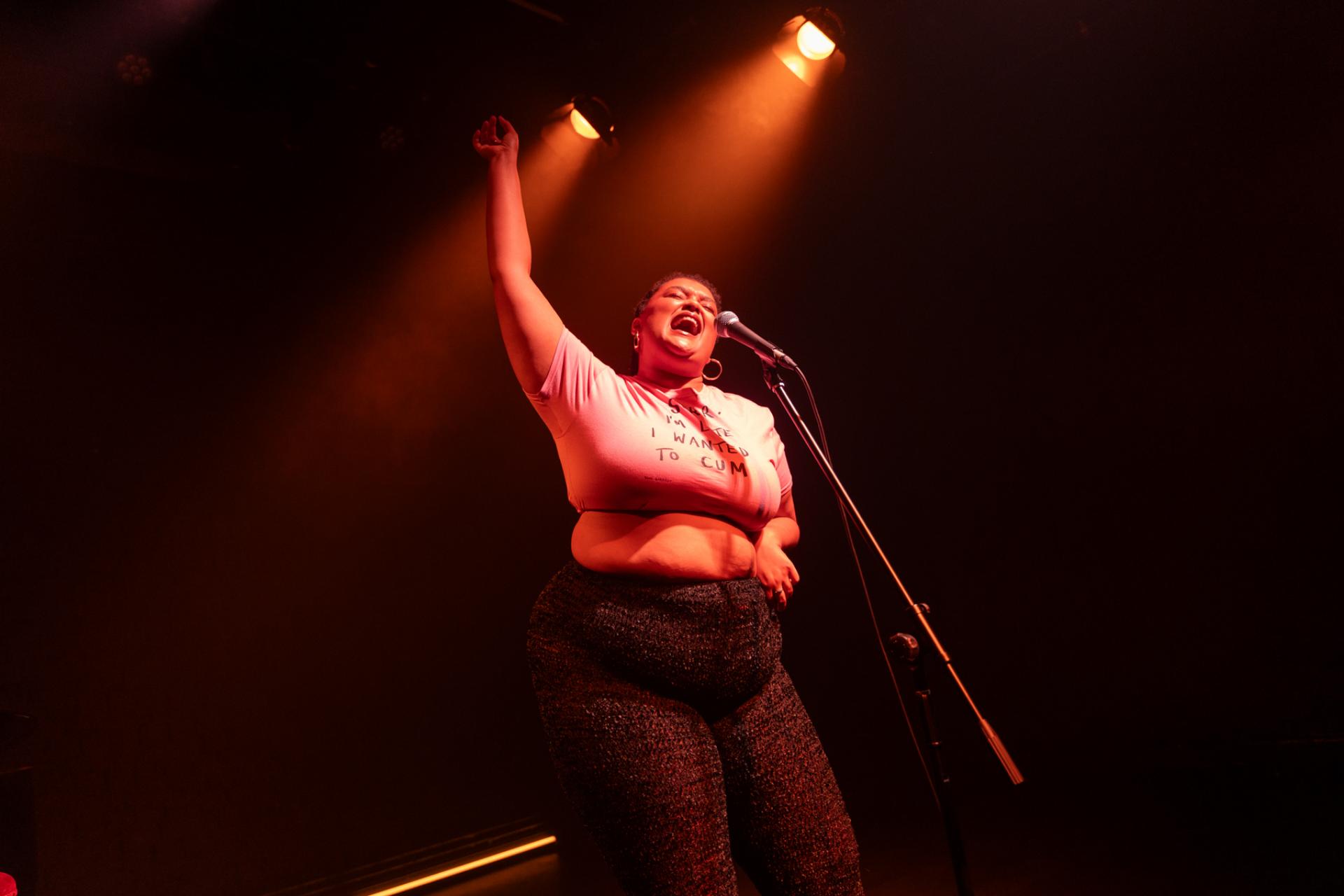
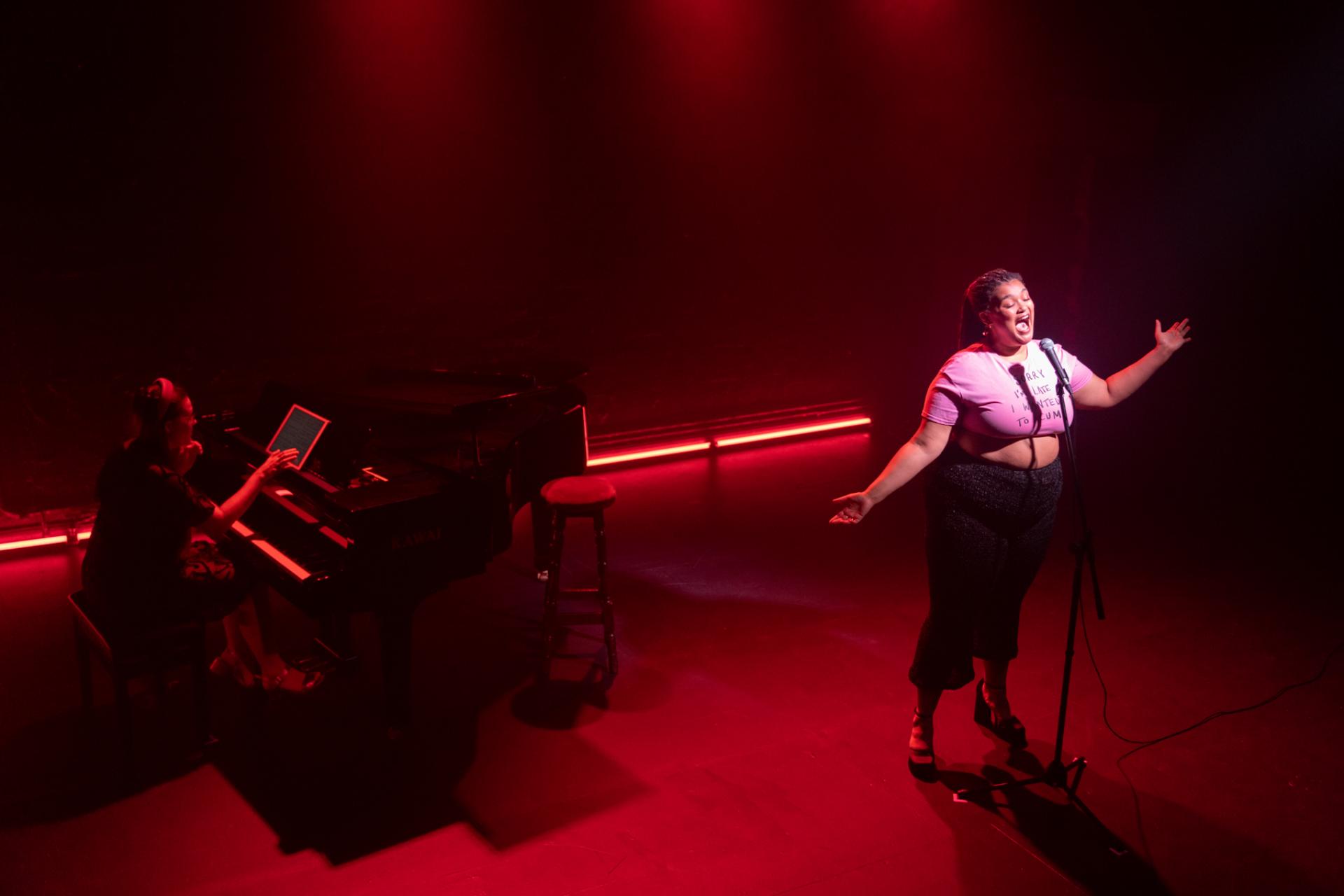
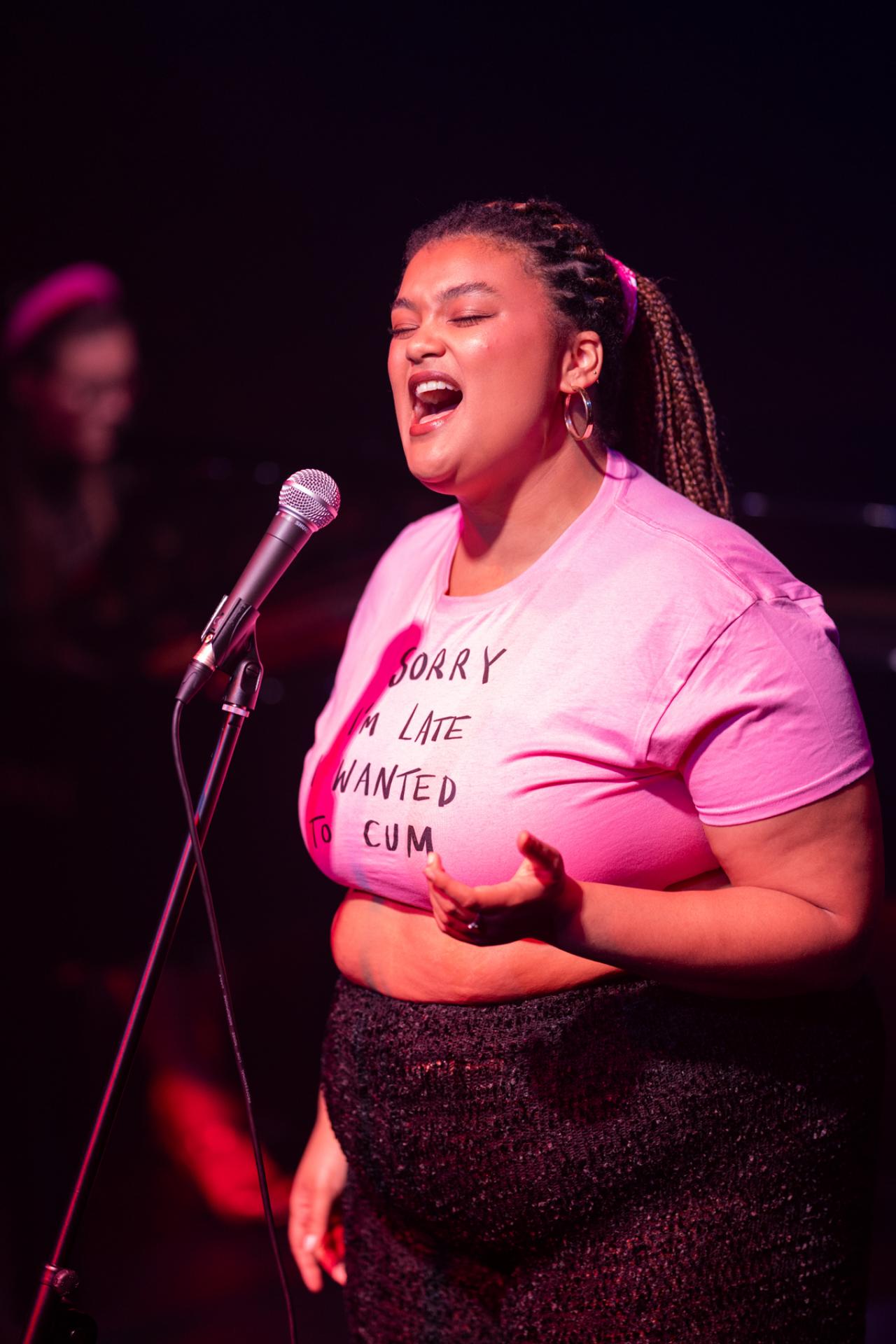
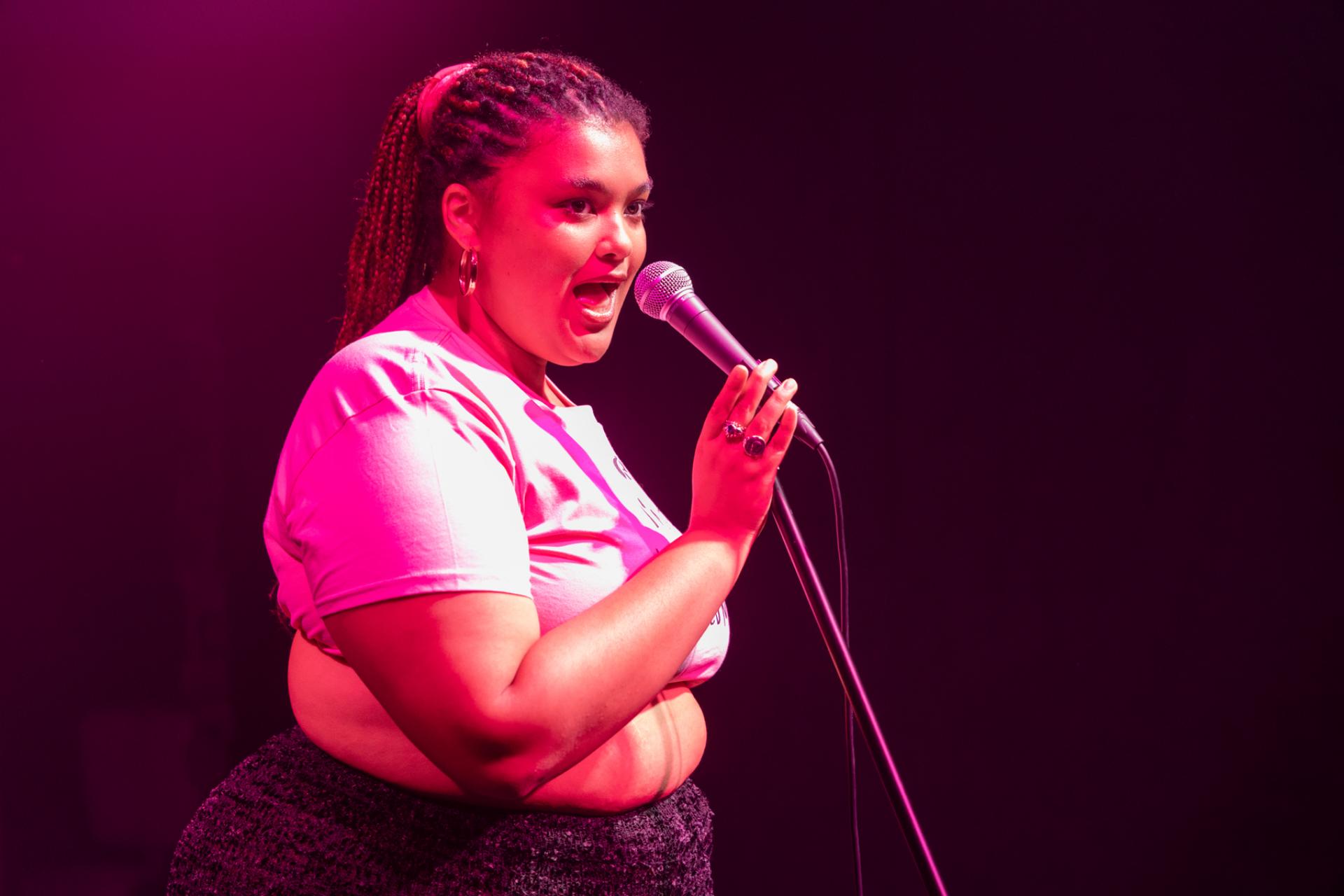
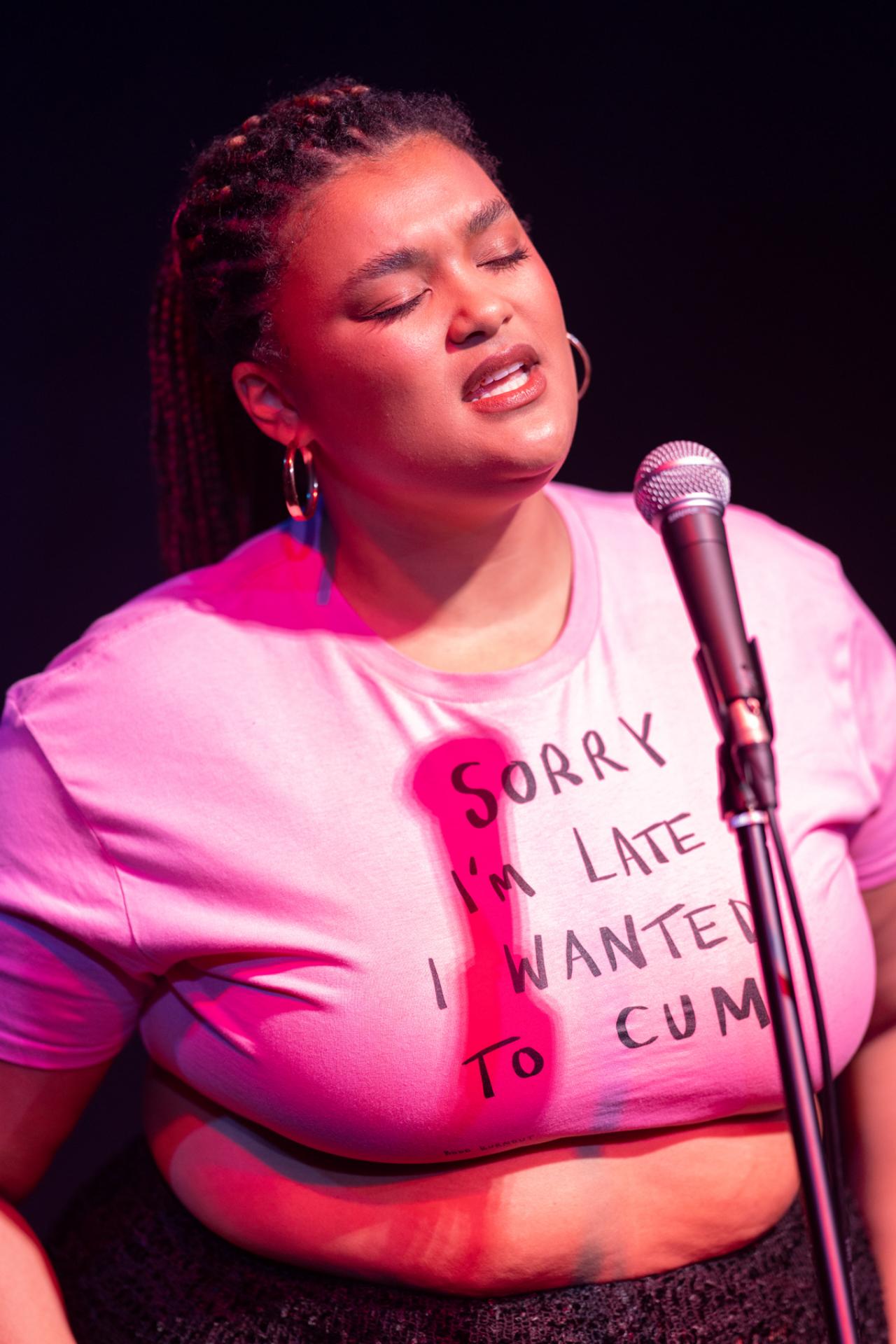
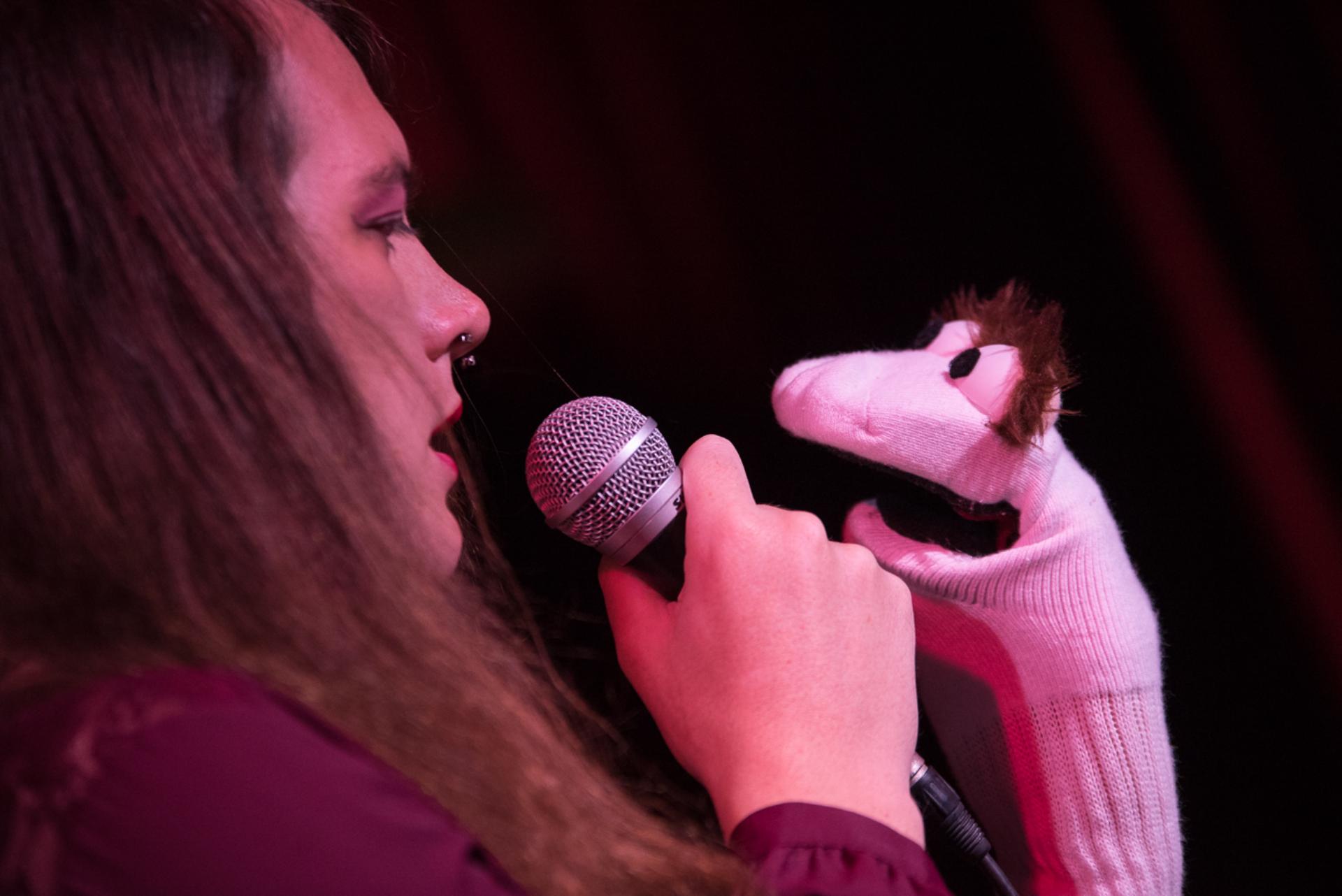
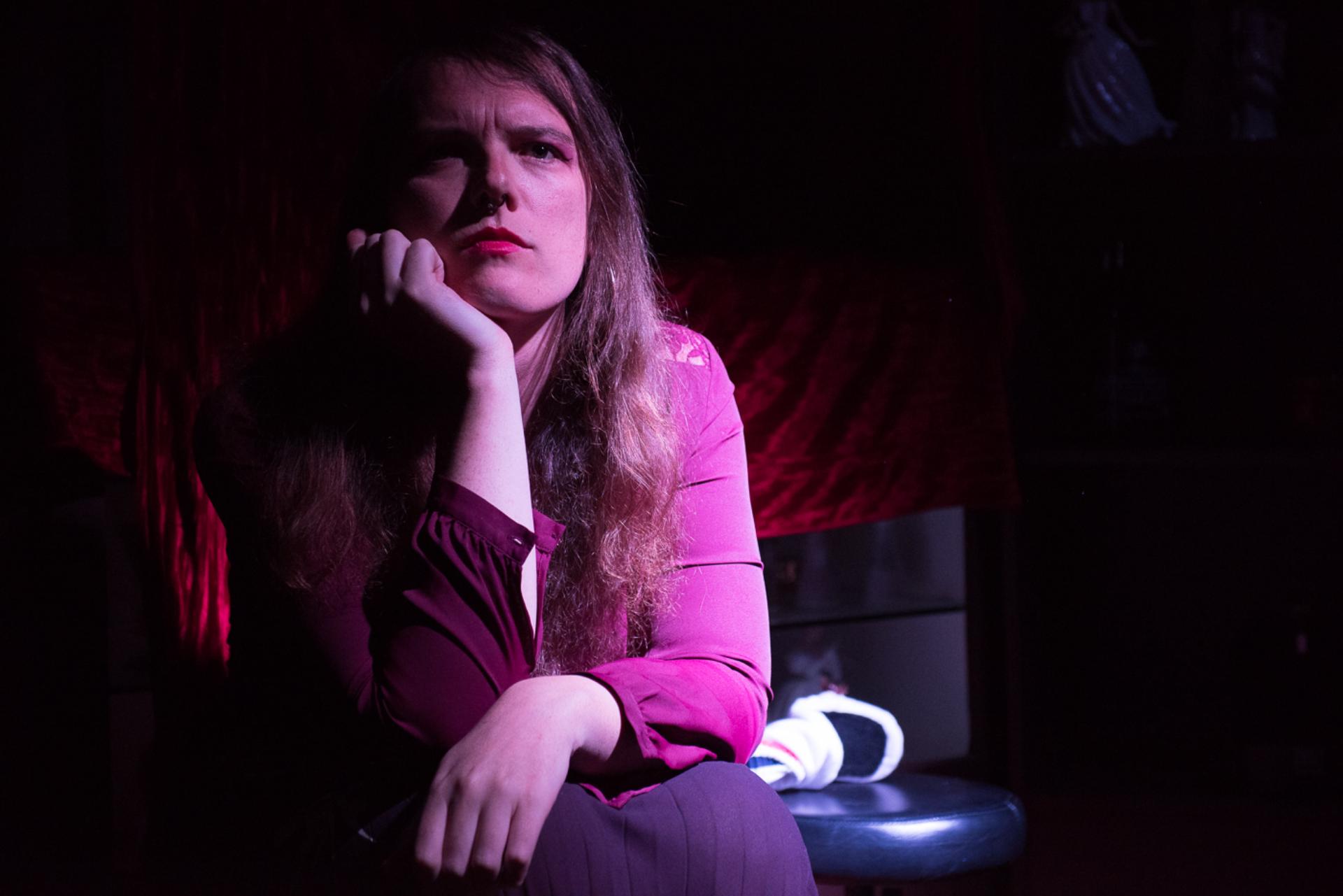
Having transitioned fairly recently to living as a woman, Sheanna Parker Russon is coming to terms with some of the more practical shifts in the way she has to navigate her day to day. In No Love Songs for Lady Basses, Parker Russon talks about the lack of songs appropriate and available to her lower vocal register, in a world that is so resolutely gendered and binary. She discovers that trying to match her own conceptions of womanhood, with what is considered normative, is proving to be a highly challenging process. This of course, extends beyond the context of singing, and it is with these realisations,  that Parker Russon begins to question how a woman can determine for herself, the parameters of gender, which is itself a construct that any individual has to constantly negotiate, with their respective environments.

This discussion of what happens internally and externally, when a person is transgender, is managed thoughtfully in collaboration with Cassie Hamilton, who as director of the show brings an excellent sense of variety, to the tones, textures and sensibilities being rendered. There may seem a greater emphasis on comedy than is necessary, but the artists’ ideas are always presented with admirable salience.

Live accompaniment by musicians Aisling Bermingham and Lillian M. Hearne, provides energy and an enjoyable polish to the staging. Songs by Hearne and Parker Russon are replete with charming wit, offering valuable counterbalance to the more earnest spoken sections. Lighting design by Hana Truban is noteworthy for its accurate calibrations of atmosphere, along with the visual interest it delivers for the experience.

There is a profound authenticity to Parker Russon’s performance, of what one assumes is her autobiography. In embracing her womanhood, she quickly discovers the trouble with gender, that however a person tries, it is almost always an imperfect endeavour. We know that although gender can be affirming and gratifying, it is also an apparatus by which control is exerted. Oppressive systems have long relied upon our adherence to those norms, and on our acceptance of those corresponding hierarchies, for their machinations to prevail. This can only mean that although gender is hitherto ubiquitous and indomitable, we should regard it with irreverence and subversiveness, and always be at the ready to dismantle and redefine it, if only to remind ourselves, that much as we cannot help investing into it, gender is ultimately meaningless.

www.oldfitztheatre.com.au | www.instagram.com/transtheatrecollective
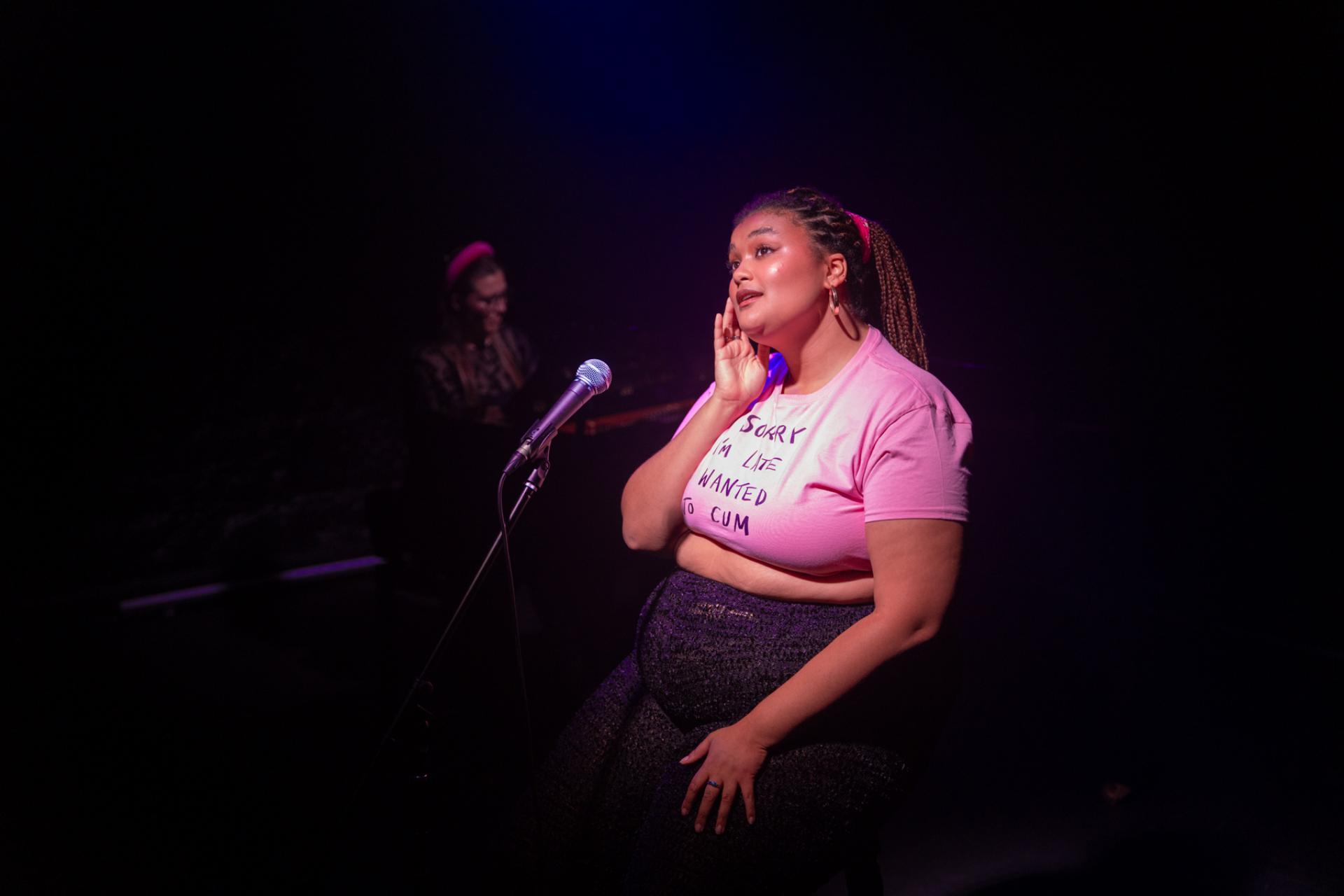
Review: Black, Fat And F**gy (Old Fitz Theatre)

Venue: Old Fitzroy Theatre (Woolloomooloo NSW), Apr 3 – 13, 2024
Creator: Milo Hartill
Cast: Milo Hartill
Images by Abraham de Souza

Theatre review
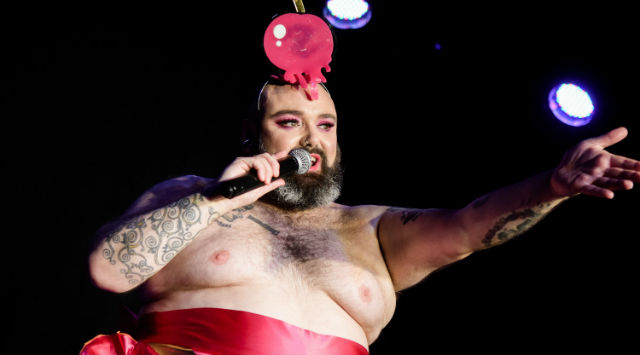
In her provocatively named Black, Fat and Fa**gy, Milo Hartill reflects on her twenty-three-year-old life, at the intersections of marginalisation that relate to all the identity markers, so vividly described in the title of her one-woman show. The presentation is a statement spawned from radical acceptance and defiant joy, of an individual overcoming obstacles of prejudice, and who has found success as a performer, influencer and model.

Hartill’s writing may not be the most inventive, but her skills and charisma for the stage are undeniable. Collaborator Robin Goldsworthy is credited as “head chef”, on hand to ensure that the star is never to be perceived as anything but delightful and scintillating. Music direction is provided by Lucy O’Brien whose piano accompaniment on songs from Sinatra to CupcakKe, imbues additional spiritedness to an already irrepressible force of nature. Also noteworthy are lights by Isobel Morrissey delivering unexpected atmospheric transformations that help us tune in, to every shifting nuance of what Hartill intends to convey.

Black, Fat and Fa**gy is about the indomitability of an artist who understands intimately and comprehensively, the nature of violence in all its forms. From the perspective of someone who embodies all that is antithetic of hegemonic power, Hartill demonstrates how a person may thrive in spite of forces that intend to be exhaustively annihilating. We are graciously spared having to delve too deeply into her spaces of trauma, but in the witnessing of all her celebratory assertions, it is clear what the darker dimensions of her, and by implication all of our, stories are.

www.oldfitztheatre.com.au | www.andrewhenrypresents.com

Review: Velvet Rewired (Sydney Opera House)

Venue: Sydney Opera House (Sydney NSW), Dec 22, 2022 – Feb 12, 2023
Director/Creator: Craig Ilott
Cast: Joe Accaria, Jacinta Gulisano, Marcia Hines, Sasha Lee Saunders, Craig Reid, Beau Sargent, Tom Sharah, Sven and Jan, Harley Timmermans
Images by Daniel Boud

Theatre review

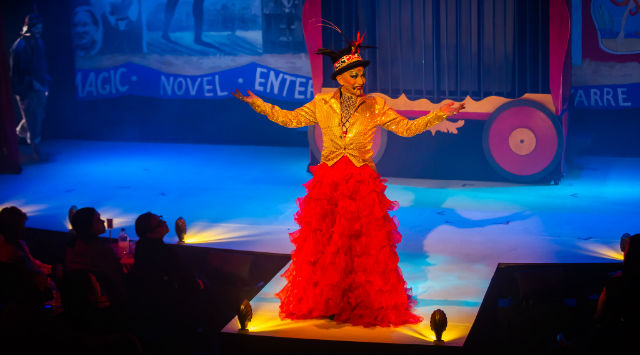
Performer Tom Sharah plays someone meek, miserable and lost, inside an exuberant clubland peppered with decadence and brimming with cacophonous life. It is the story of a man’s broken heart, that provides a vague sense of narrative to Velvet Rewired, a theatrical presentation in the form probably best described, as a variety show. Comprising 75 minutes of classic disco hits, and nary a word of dialogue, it is a cornucopia of colour and movement that we are thrust into, along with an old school devil-may-care spiritedness, that hopes to awaken the most wearied of our modern cosmopolitan dispositions.

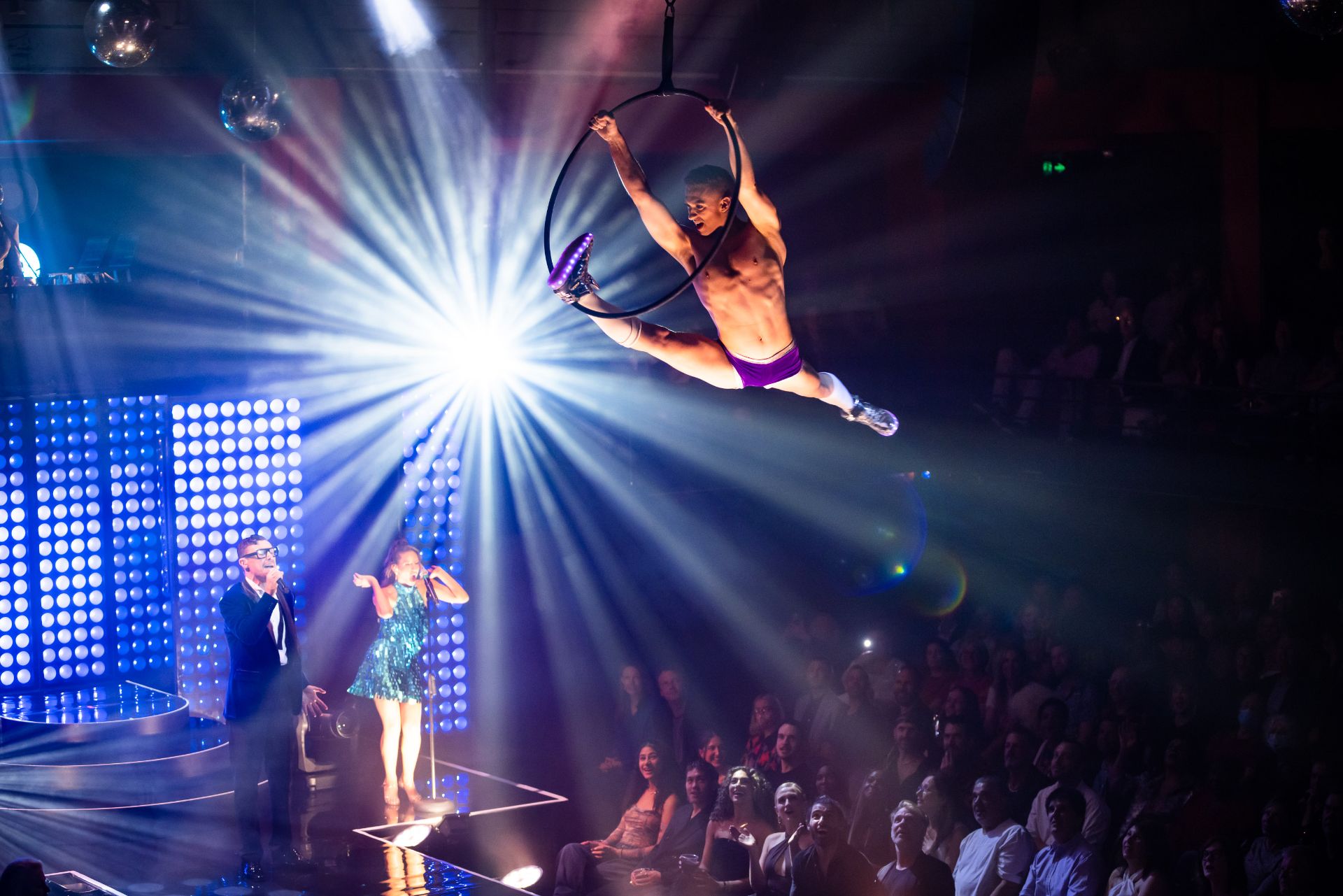
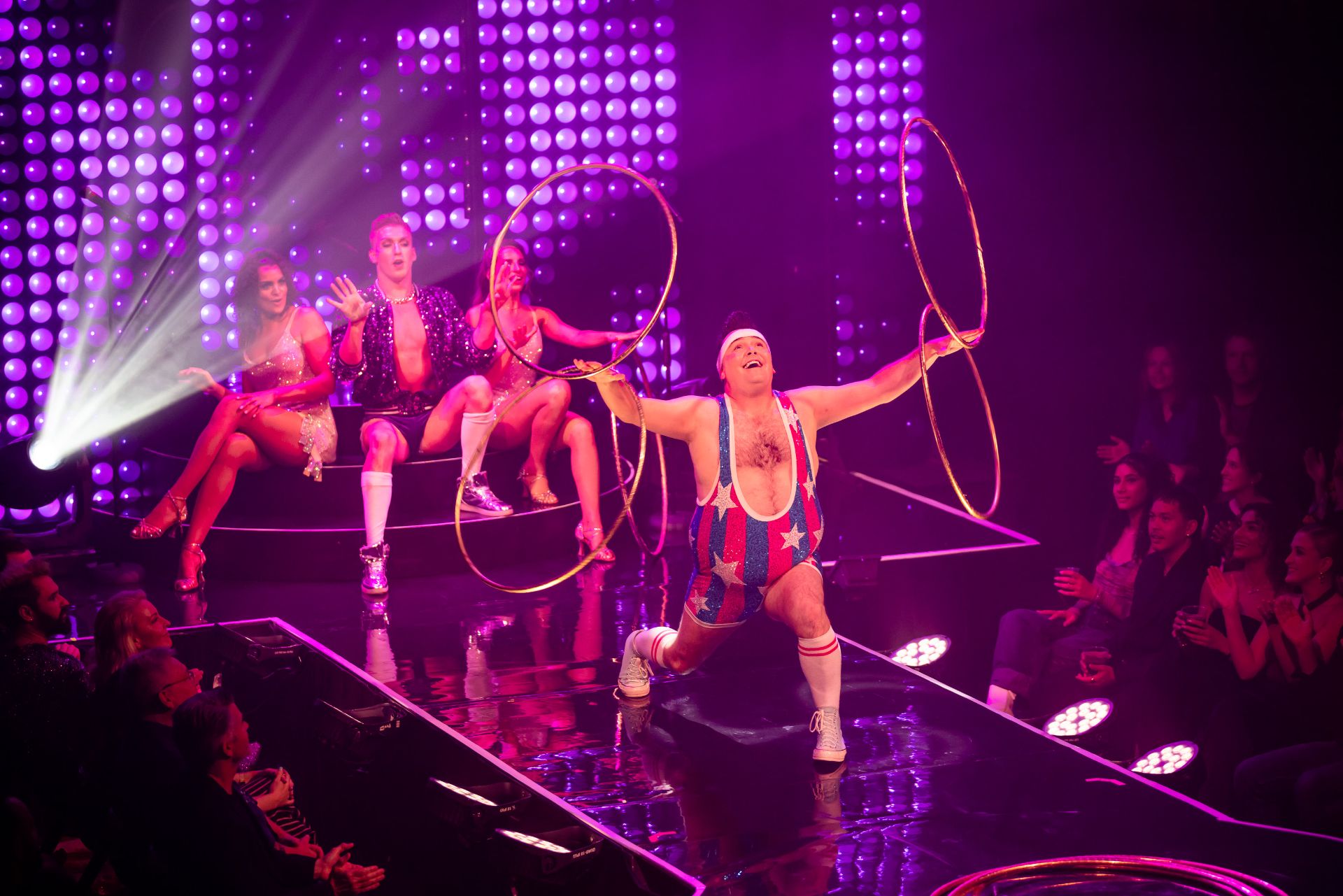
Created and directed by Craig Ilott, Velvet Rewired provides an excuse for an instance of hedonism, where all the strain of staying alive can be set aside. Ilott urges us to indulge in his fantasy realm, by removing rhyme and reason from our interactions with the staging. Indeed it is when mind-boggling stunts occupy our attention, and we lose our breath gawking at incredible physical feats, by the likes of aerialists Beau Sargent and Harley Timmermans, rollerskating acrobats Sven and Jan, and hula hooping wonder Craig Reid, that the show really lifts us away from the mundane.

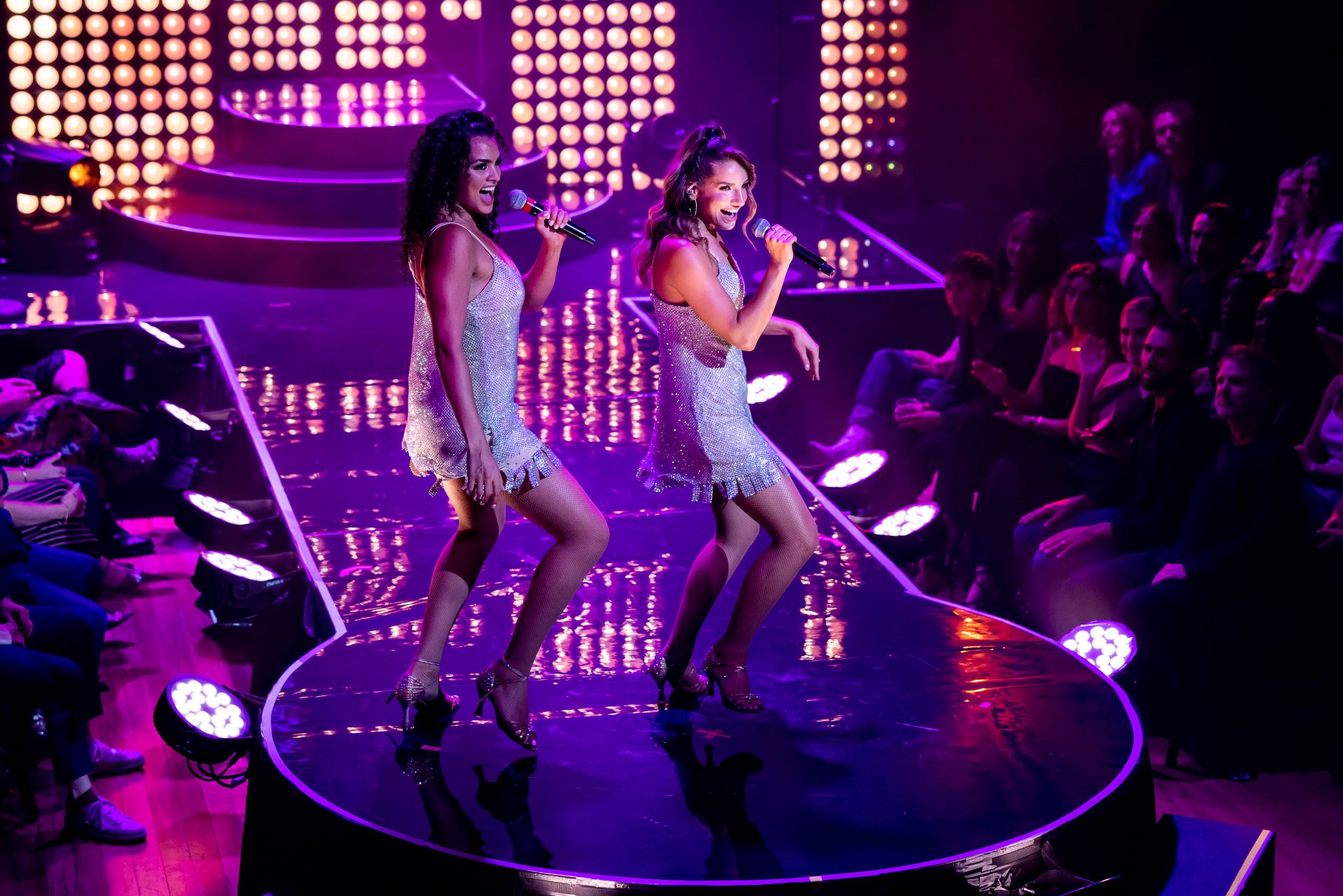
Also out of this world, is the singing diva Marcia Hines whose voice and presence help move us somewhere decidedly more transcendent, or rapturous even. Jacinta Gulisano and Sasha Lee Saunders appear to be the hardest working women in showbusiness, onstage for almost the entirety, singing and dancing with great energy and precision, as only the most passionate of artists can. Amy Campbell’s choreography takes care to accentuate the best of this duo’s qualities.

Joe Accaria too is always in sight, as the charismatic DJ perched atop in his secular pulpit, orchestrating the action through his control of the irresistible disco beats. Accaria’s work as musical director for Velvet Rewired is powerful, able to revive the magic of funk and soul music from almost half a century ago, to deliver a sense of timeless euphoria. Lights by Matthew Marshall are dazzling, as they take advantage of the genre’s capacity for limitless ostentation. James Browne’s set design involves a catwalk that makes each member of audience feel part of the action, and his costumes bear a flamboyance and sexiness, that keep our eyes satisfied.

The aforementioned Tom Sharah sparkles when his unnamed character attains his moment of spiritual emancipation. At a show like Velvet Rewired we too are gifted a flash of freedom, where for a few minutes nothing else matters, but the sensual basslines of tried and tested records, that will offer epiphany and redemption, maybe not everlasting, but certain to return when least expected.

www.velvetrewired.com

Review: Bigger and Blacker (Sydney Opera House)

Venue: Sydney Opera House (Sydney NSW), May 19 – 22, 2021
Music and Lyrics: Steven Oliver
Director: Isaac Drandic
Cast: Steven Oliver
Images by Daniel Boud

Theatre review
For just over an hour, a gay Black man reigns supreme, in Steven Oliver’s cabaret outing Bigger and Blacker. Entirely live and intimate, Oliver performs self-written songs accumulated over the years, a greatest hits compilation that spans everything from love to politics, that take us from hilarity to devastation.

Much of the presentation is concerned with being on the outside. Marginalised for both his racial and sexual identities, there is no wonder that Oliver is famously funny. Like many whose very existence poses a threat to the hegemony, being comical is a defence, a mode of self-preservation that becomes second nature. In Bigger and Blacker, the artist is characteristically flamboyant, but the underlying gravity of his raison d’etre is always apparent. Through the sensitive eye of director Isaac Drandic, we discover a duality of the persona, whimsical yet dark, and we respond accordingly, sometimes with joy, sometimes with sadness, but most often with a melancholic combination of both.

Oliver’s songs are cleverly written, all of them beautifully melodic and lyrically meaningful, made more poignant by the performer’s sincere introductions for every number. Accompanist Michael Griffiths is his spirited companion, whose inspired musical direction guides us through a multitude of stylistic genres, for a seriously engaging one-person variety extravaganza. From torch song to hip hop, Bigger and Blacker keeps itself fresh and surprising, not a single dull moment permitted.

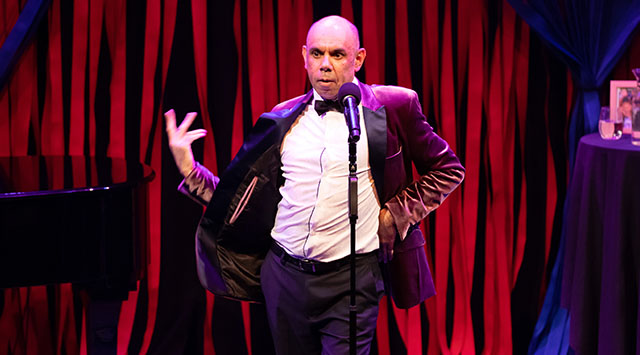
Brady Watkins’ work on sound design transports us to a sensual world, distinctly lush and enchanting, and coupled with Chloe Ogilvie’s tender lighting, the audience finds itself effortlessly lulled into a temporary theatrical romance. Oliver is dressed by Kevin O’Brien, resplendent in a deep pink tuxedo jacket, determined to steal our hearts.

Identity labels are tiresome, for people who do not have to wrestle with oppression. Those of us who are systematically and habitually excluded, however, learn to embrace that which others have used to define us. What others try to shame us with, we grow to love, and we grow to understand the positively formative power, of everything that is meant to be inferior or contemptible. Oliver talks a lot about being a minority; he is Black, and he is gay, and as we come to realise, is therefore extraordinary.

www.sydneyoperahouse.com

Review: The Rise And Fall Of Saint George (Performing Lines)

Venue: Barangaroo Reserve (Barangaroo NSW), Jan 15, 2021
Music: Paul Mac
Lyrics: Lachlan Philpott
Director: Kate Champion
Cast: Andrew Bukenya, Jacqui Dark, HANDSOME, Joyride, Brendan Maclean, Ngaiire, Marcus Whale, Inner West Voices, Sydney Philharmonia Choirs, Sydney Conservatorium of Music
Images by Bianca De Marchi

Theatre review
English pop music legend George Michael passed away Christmas Day 2016. His death (and life) holds special meaning for the diverse and bohemian suburb of Newtown in Sydney, where a mural was painted soon after by graffiti artist Scott Marsh, on a wall outside the home of musician Paul Mac. Passengers on a busy train line would pass by many times every hour, watching a sanctified commemoration of St George, complete with spliff and beer bottle, as if blessing Sydneysiders from an ironic but unequivocally loving heaven.

It was a difficult time for Australia, leading up to the same-sex marriage referendum in Sep 2017. Our divisions had become severe and overt like never before, but there he was, St George with a Pride flag draped around his shoulders, in a mock religious style, providing comfort and reassurance. The gay icon had left behind an unparalleled legacy. Emanating from the spray painted image, were memories of his achievements, escapades and defiance, a constant reminder that all will be fine, in the midst of daily homophobic attacks on virtually every media platform.

Days after it was made official that marriage equality would come to pass, our beloved St George was defiled. Black paint was smeared all over what had quickly become a landmark, by Christian fundamentalists, who claimed it an insulting portrayal of Jesus Christ. Our community was left reeling. The artists went to work. The Rise And Fall Of Saint George is a collection of songs by Paul Mac and playwright Lachlan Philpott, documenting that assault on Newtown and Sydney’s queer community. It deals with trauma not only of that fateful moment, but is in fact, a meditation on the lifelong persecution suffered by all of us whose sexual and gender identities dare deviate from the straight and narrow.

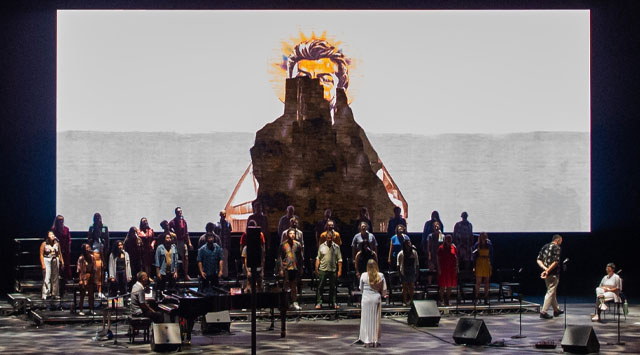
Like Michael’s own music, the work here is consistently melancholic, whether the rhythms are buoyant or sentimental. Peppered with deeply affecting moments of Mac addressing the audience from his piano, with first-hand accounts of precious memories, the entire experience is a tender one. A choir (conducted by Emily Irvine) and solo singers perform each number with admirable passion, often with flamboyant embellishments, but always sincere in their approach. Video projections by Tony Melov are evocative enhancements offering invaluable flashbacks, that return us to some very emotional days.

From his early days hiding in the closet, afraid of the myriad devastating repercussions if found out, to a rejuvenated existence that is unapologetically loud and proud, the George Michael narrative is one that all in this community is intimately familiar with. Violence is nothing new to us, and the more we have to endure it, the more brilliant we shine.

www.performinglines.org.au

Review: Enemies Of Grooviness Eat Shit (Performing Lines)

Venue: The Red Rattler Theatre (Marrickville NSW), Oct 26 – Nov 5, 2020
Creator: Emma Maye Gibson
Cast: Betty Grumble
Images by Joseph Mayers

Theatre review
Understanding the power of love does not make one impervious to violence. To love thy neighbour, is a notion that should never have exceptions, but it seems our humanity has a habit of setting limits when it comes to generosity. The title of Betty Grumble’s latest outing, Enemies Of Grooviness Eat Shit feigns a sense of aggression, but its tongue-in-cheekness is evident. At the heart of Grumble’s show is a response to sexual violence, although it must be said that the artist resists constraints of any sort, leading to a nature of work that is stridently post-dramatic and non-linear, eluding categorisations at every juncture. The beauty of it is how one can bring interpretations of all kinds, no matter the viewer’s point of departure, and Grumble’s robust presence emanates a visceral power that rigorously provokes thought, even as our senses are consumed by her outrageous manoeuvres.

The character we come into contact with can be seen as a love warrior, oxymoronic but completely appropriate for our times of division. As North Americans march to their voting stations this week, we see a nation fighting for its survival, even though they may look more to be fighting one another. In truth, no fight is devoid of love. Humanity has been tied to death and destruction since the dawn of time, but all our transgressions are executed in the name of love, no matter how gruesome or savage. Even the Nazis say they kill for the love of their race. In Enemies Of Grooviness Eat Shit we confront the concept that hate seems always to be bred from love, yet if one is to be truly loving, ideas of revenge and justice will only turn painful and messy.

Grumble wrestles with herself and the world, as she tries to make things right. It is essentially a one-person show, but our star is constantly invoking others, most notably and with great veneration the artists Candy Royale and Annie Sprinkle, always naming collaborators and inspiring figures, as she takes charge of our communion. It is a deep understanding that for the world to be better, there can be no room for narcissism. We might only be able to speak one at a time, but efforts must find unity.

Grumble’s theatrical language prevents fissures resulting in us and them, so to talk about enemies, and to tell them to eat shit, always takes the attack back to the self. The violence if not turned inward, is certainly shared. In Grumble’s universe, Gaia and Karma are fundamental to how things are understood, and how things should be carried out. She offers a spiritual experience, but one that is devoid of naivety. If there are solutions, they can be found in guiding principles that the show teaches, not very much in words, but through the sensual and visual manifestations of what she puts her body through for our benefit.

Grumble may not have solved the world’s problems with her show, but she succeeds in introducing a moment of transcendence into each of our lives, and because to meet this artist is unequivocally unforgettable, the messages that she imparts will stick. Returning to spaces less sacred, less sublime, a part of us can sense the lingering presence of what had been witnessed, and we know that if everyone can get in touch with the Betty Grumble within, things will be all right.

www.performinglines.org.a

Review: Songs For Nobodies (Sydney Opera House)

Venue: Sydney Opera House (Sydney NSW), Jan 23 – Feb 9, 2020
Playwright: Joanna Murray-Smith
Director: Simon Phillips
Cast: Bernadette Robinson

Theatre review
There are ten women in Joanna Murray-Smith’s Songs For Nobodies, a collection of five stories about famous singers and the ordinary lives they had touched. It is a series of juxtapositions, of diva and goddess, of women on stage and women from other walks of life, all being put through their paces in one form or another. Murray-Smith’s poignant humour works a charm, able to imbue each character with dignity along with a sense of the divine, not only for the celebrities, but also for the women-next-door that it depicts so lovingly. All women can be regarded with reverence, if we know to value them appropriately.

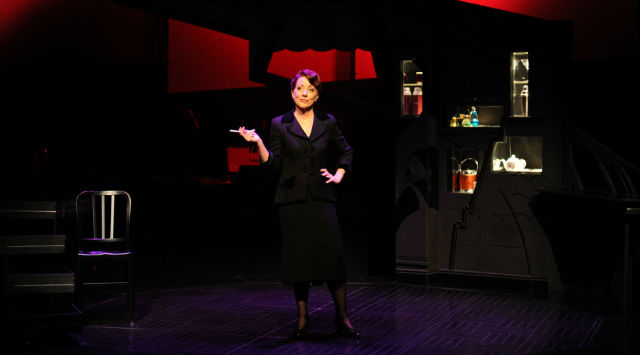
Bernadette Robinson is the extraordinary talent who introduces us to all the characters in Songs For Nobodies. When impersonating Maria Callas, Patsy Cline, Judy Garland, Billie Holiday and Edith Piaf, she is impressive not only for the likeness that she quite magically achieves, but also for the very virtuosity she displays in each of the unforgettable standards that she sings. Her portrayals of the every woman too, are commanding, whether American, English or Irish, Robinson is convincing, engaging and gloriously charming, able to elevate forgotten souls, as a reminder that all women are sometimes truly sublime.

Directed by Simon Phillips, the show is elegantly rendered, very subtle in approach, but nonetheless affecting. Orchestrations by Ian McDonald are dramatic and highly evocative, able to seize our imagination in a flash, to transport us through time and space for momentary immersions, that make us feel as though in the presence of legends. Scott Rogers’ lights too are notable, for their romantic warmth, able to take us away from the humdrum and the mundane, that we too often think of as the only reality.

Very few women ever get to see things from the top, but there is no rat race that we should feel compelled to participate in. More than the rich and famous, are the many examples of fulfilling and self-determined existences that are plain to see. Many of us will not know what it is like to influence millions, and to never have succeeded in accordance with stipulations of dominant paradigms, but in this current moment of a new understanding around centuries of relentless destruction, we should more than ever before, appreciate those we think of small people, who have had no power in our collective journey to impending extinction.

www.duetgroup.com

Review: Natives Go Wild (Sydney Opera House)

Venue: Sydney Opera House (Sydney NSW), Oct 22 – 27, 2019
Playwright: Rhoda Roberts
Music: Damian Robinson
Director: Chelsea McGuffin
Cast: Waangenga Blanco, Mika Haka, Beau James, Josephine Mailisi, ‘SistaNative’ Seini Taumoepeau, Samuela Taukave aka Skillz
Images by Anna Kucera

Theatre review
There is probably nothing more objectifying than being part of the display at a human zoo. To be placed in that position can of course be an entirely voluntary enterprise, but in the 19th century, it is likely that circumstances at fairs and carnivals were less than dignified, with the acquisition and misrepresentation of Indigenous peoples for the pleasure of gawking colonials, forming a crucial feature of the circus industry.

Rhoda Roberts’ Natives Go Wild is critical of that tradition of humiliation, of a West obsessed with exoticism, depriving people of colour their agency. In this show however, identities are reclaimed, and tables are turned, as Indigenous performers from various Antipodean regions, take charge of their narratives, telling us precisely what we need to know, about who they are and what they do.

It is a glamorous production, featuring excellent work by designers Mark Howett (set and lights) and Tim Chappel (costumes). Original songs and music by Damian Robinson are full of inspiration, contributing a sense of transcendental elevation to the staging, with singer Seini SistaNative Taumoepeau bringing remarkable soul to these refreshing compositions. Director Chelsea McGuffin is charged with the responsibility of assembling disparate elements into a cohesive whole, for a vaudeville style of presentation that asks all the right questions.

Ringmaster Mika Haka is high camp personified, but in an acerbic and confrontational style, never letting us easily off the hook. Waangenga Blanco and Samuela Skillz Taukave are mesmerising dancers, both portraying a series of legendary Indigenous figures from circus history. Aerial artist and contortionist Josephine Mailisi conveys true beauty with a physicality full of strength and discipline. The interminably charming clown Beau James delivers some of the funniest and most moving sequences, proving himself a real star we cannot get enough of.

Some might argue that colonisation has improved lives, but there is no question that the inherent cruelty of Western values, has had negative impacts on Indigenous communities that remain significant today. The persistent inability of white people to prioritise Indigenous voices have meant that their needs are consistently ignored, and their wisdom disregarded. Even as we watch the world crumble under instruments of white supremacy, it refuses to cede power, tenaciously holding on to reins that have failed economies and the environment. Unless the next stage of our collective evolution is to better incorporate those who have demonstrated actual skills of survival, the future can only be bleak.

www.sydneyoperahouse.com

Review: Mars: An Interplanetary Cabaret (The Old 505 Theatre)

Venue: The Old 505 Theatre (Newtown NSW), Jul 30 – Aug 3, 2019
Music: Chelsea Needham
Lyrics: Ang Collins
Director: Andrew McInnes
Cast: Monika Pieprzyk, Amelia Campbell, Tom Matthews, Jacob Mclean, Jack Richardson, Kieran Clancy-Lowe
Images by Zac Jay

Theatre review
Three Martians have landed, in a spaceship called Incel 9, because apparently, earth girls are easy. The male of that species have had to travel an enormous distance, after women on Mars had wised up to their misogynistic nonsense. Earthlings however, are being protected by Space Cops, who in Mars: An Interplanetary Cabaret, happen to be two women impervious to the sleazy tricks of pickup artists. Written by Ang Collins and Chelsea Needham, this fun-filled work features kooky characters and humorous songs, for a surprisingly wholesome style of entertainment that often feels like a contemporary take on the pantomime form. A show about dirty boys with no dirty jokes, Mars is a remarkably refreshing experience.

Directed by Andrew McInnes, the comedy balances flamboyance with irony, allowing its very broad approach to communicate at somewhat unexpected levels of nuance. The visual style is appropriately lo-fi, with Lucy McCullough’s production design and Tom Houghton’s lights, establishing a lot of playful charm to keep us engaged. Some of the singing is of questionable quality, but the cast is likeable, and they present a well-rehearsed staging that impresses with its verve and spirit of inventiveness. Tom Matthews and Jack Richardson are the more disciplined performers of the group, able to contribute a sheen of professionalism with their vocal and physical polish, although the general lack of refinement remains a major component of Mars‘ appeal.

It is appropriate for our current political climate, to talk as though men are from Mars, women are from, well, Earth. A new generation of feminists have declared that poor behaviour is not acceptable, and that the toxic culture of “boys will be boys” must be changed. We talk of the young as being overly fragile, but it is evident that they are on a mission to make the world a kinder place, that people should not be required to have the fortitude to put up with all manner of bullshit. We should no longer have to laugh along with “casually racist” jokes, just as we should no longer fabricate any reason to blame victims of sexual assault. Those who find this shift in codes of conduct frustrating, are on the wrong side of history.

www.old505theatre.com

Review: Cake Daddy (Seymour Centre)

Venue: Seymour Centre (Chippendale NSW), Feb 16 – 22, 2019
Playwrights: Ross Anderson-Doherty, Lachlan Philpott
Director: Alyson Campbell
Cast: Ross Anderson-Doherty

Theatre review
When we first meet Ross Anderson-Doherty in his one man show, he plays a success story at Cakewatchers, an internationally renowned weight-loss programme. The performer’s large body is the location on which the farce takes place, as he takes us through a series of absurd guidelines, that claim to help individuals achieve some semblance of satisfaction for one’s own physicality, by becoming thin. Cake Daddy by Anderson-Doherty and Lachlan Philpott is an incisive summation of what is termed “diet culture”, the horrendous relationship many of us have with food and body image; that bottomless pit of cruelty, dealt by the self and by society, determined to infect each of us with an overwhelming sense of inadequacy.

As the jokes and songs pass us by, we see Anderson-Doherty shedding the spokesperson’s plastic facade, to reveal real experiences of a fat person who struggles to find self-acceptance. The disclosures are by no means original or new, but the honesty of the performer’s display of emotion, is channelled by director Alyson Campbell to communicate a remarkable poignancy that turns the show subtly, into a discussion about compassion, both for the self and for others. As Anderson-Doherty oscillates between hating his reflection, and loving the freedom of an emancipated mind, we witness the most authentic portrayal of humanity. Even when we have the answers to life’s big mysteries, there will always be hard work waiting to be done, in order to get through some of the days.

Musical numbers in the piece can sometimes feel extraneous, as we tend to lose a powerful sense of immediacy when Anderson-Doherty drifts into song, but to encounter his exceptional singing voice is an unequivocal pleasure. As comedian, his ability to read the audience is uncanny, and we find ourselves always kept on our toes by his vigilant stage awareness, although some of his pacing can be needlessly languid, in a production that is most effective when manic in tone. Cake Daddy skates close to self-deprecation, but its subject is never humiliated. In fact, we watch him in all his glory, and wonder if he actually shares in our vision of his greatness. However each person comes to dislike parts of themselves, it is crucial that one is committed to finding peace within, even if it proves an endless task.

www.wreckedallprods.com