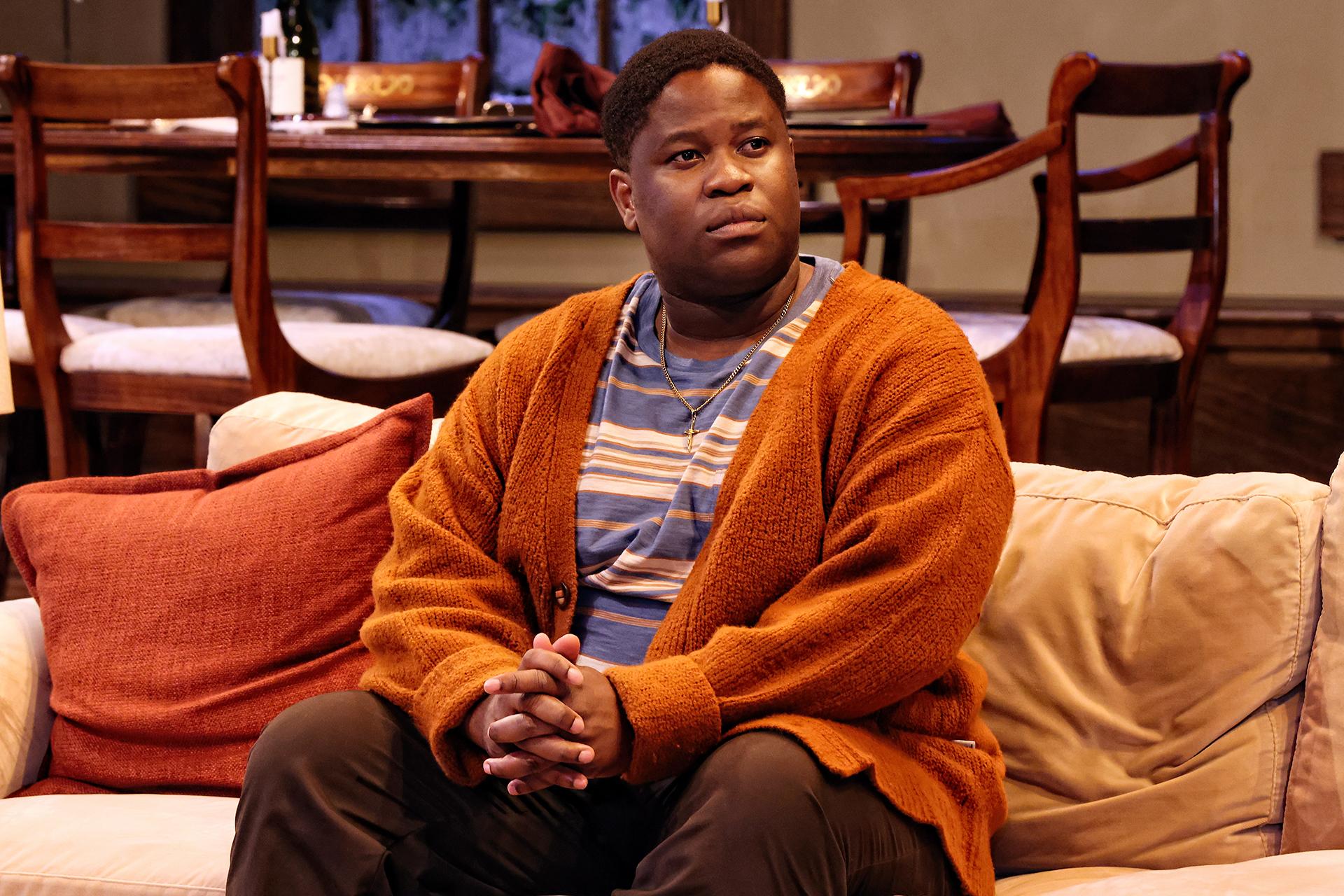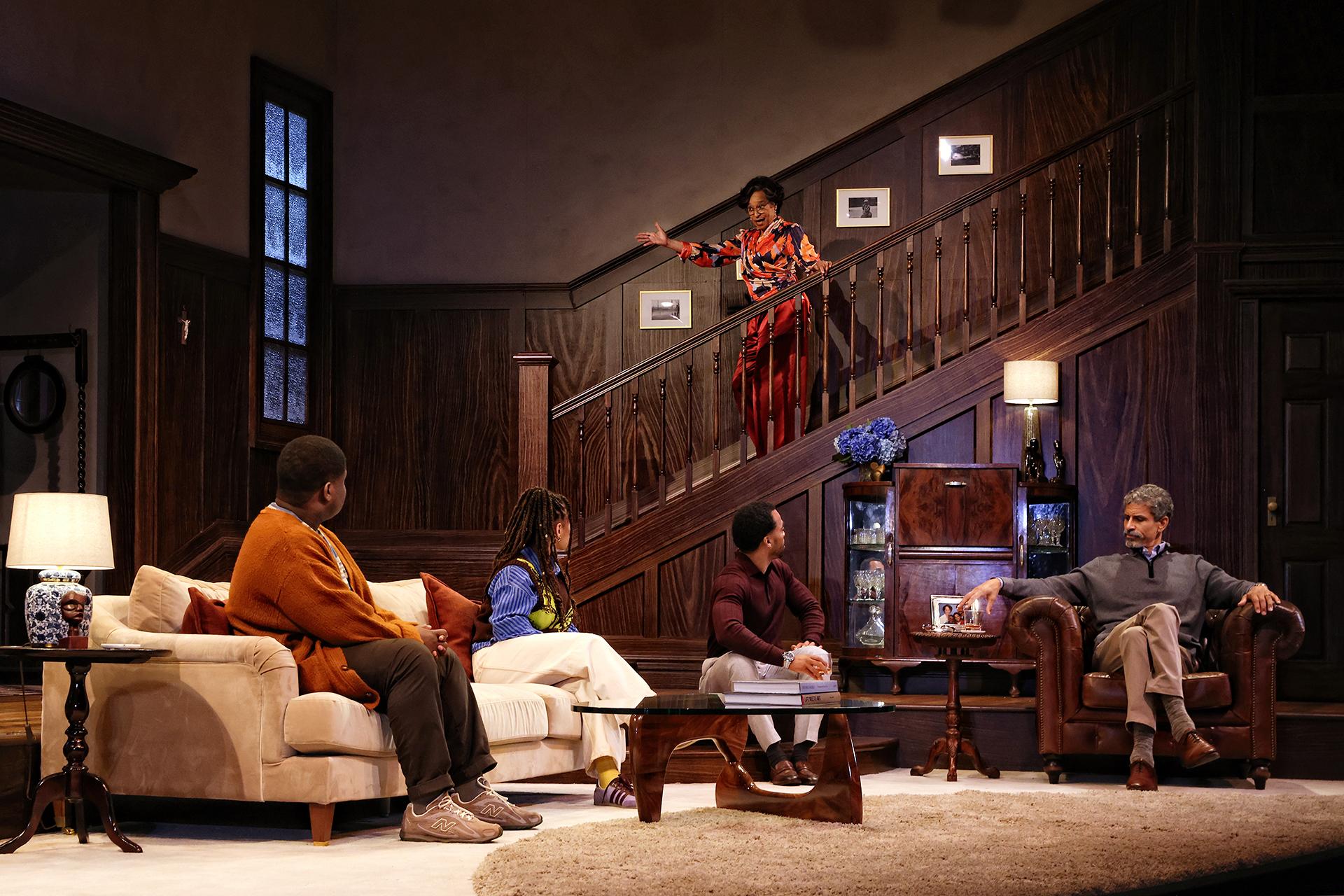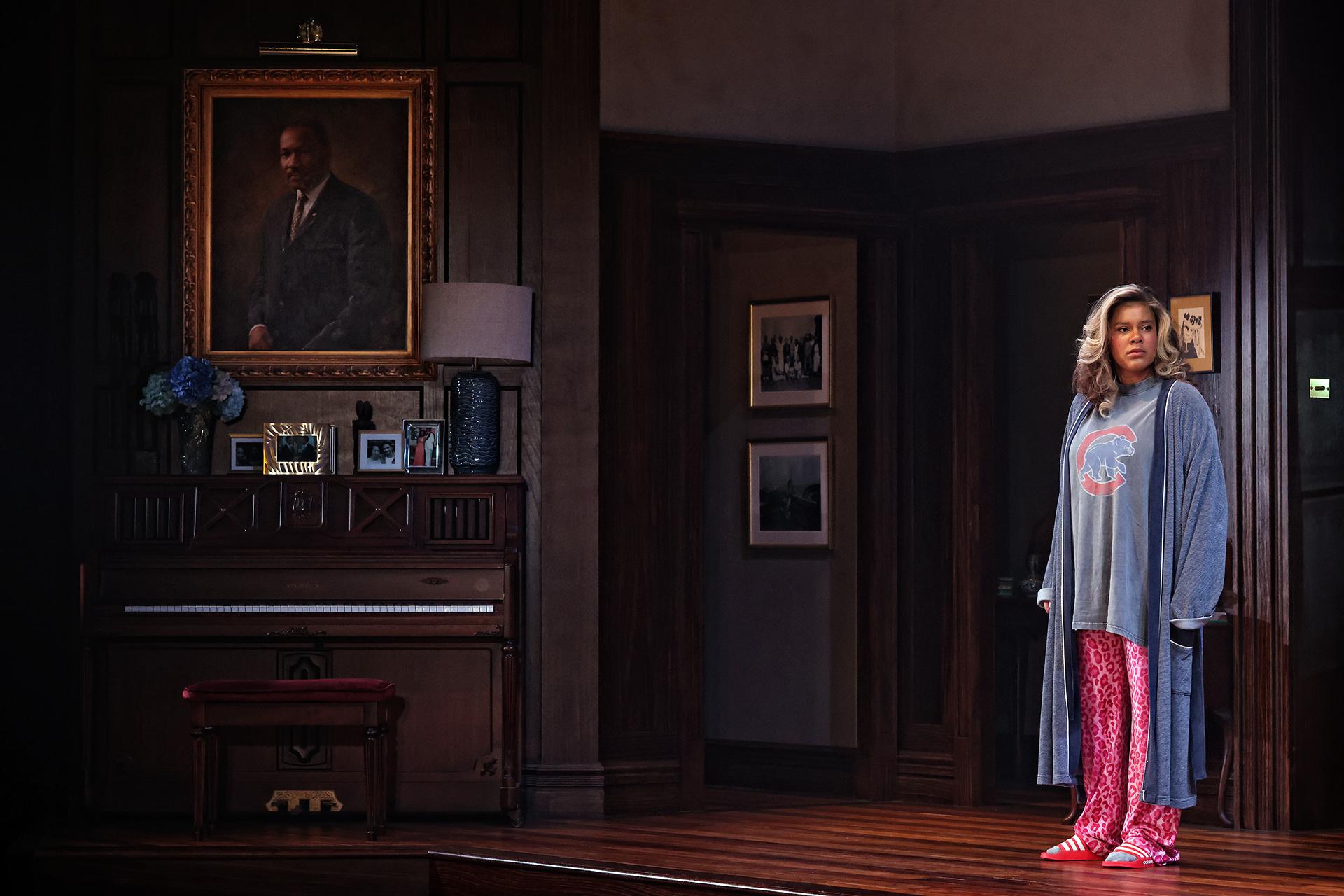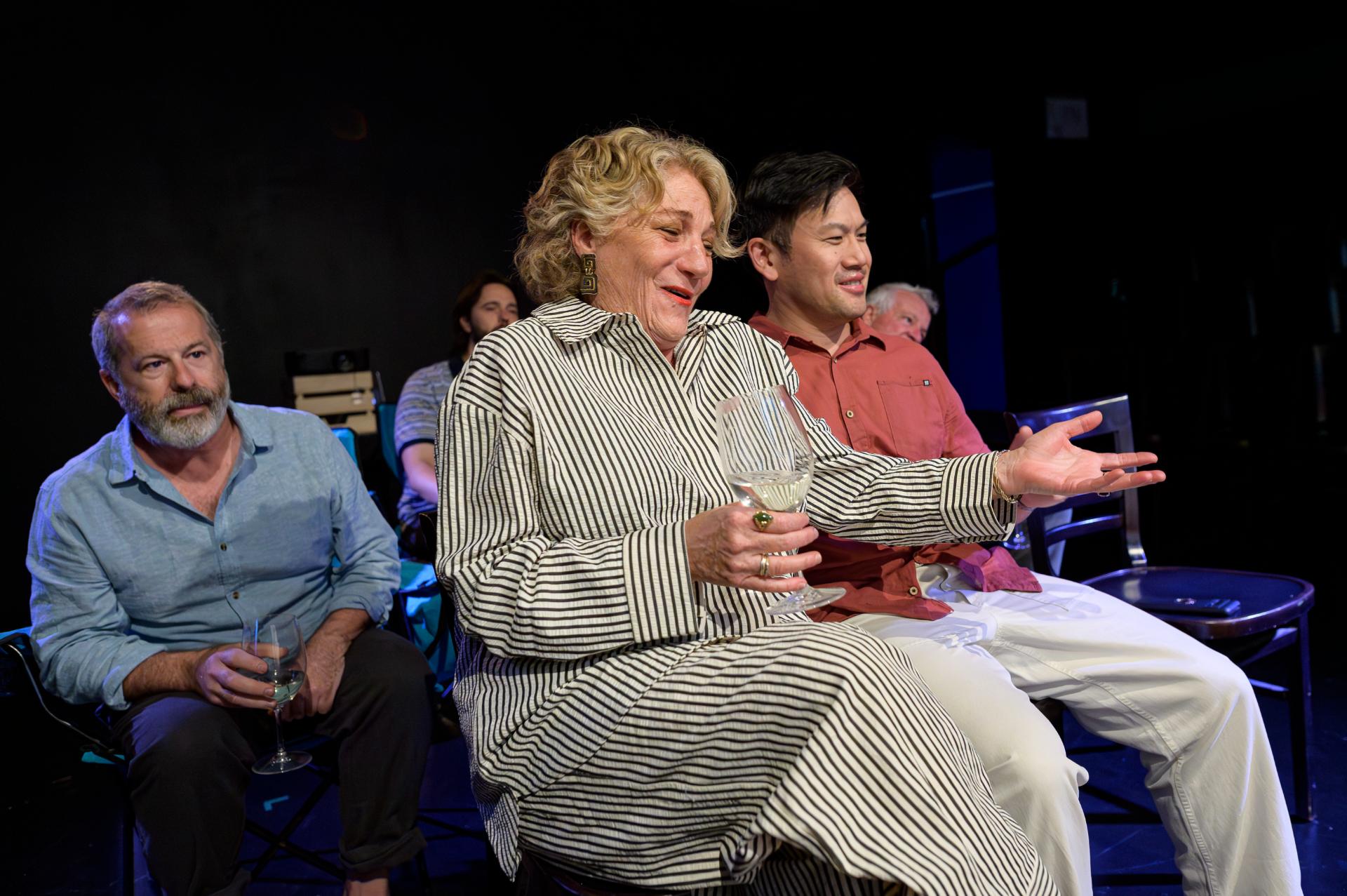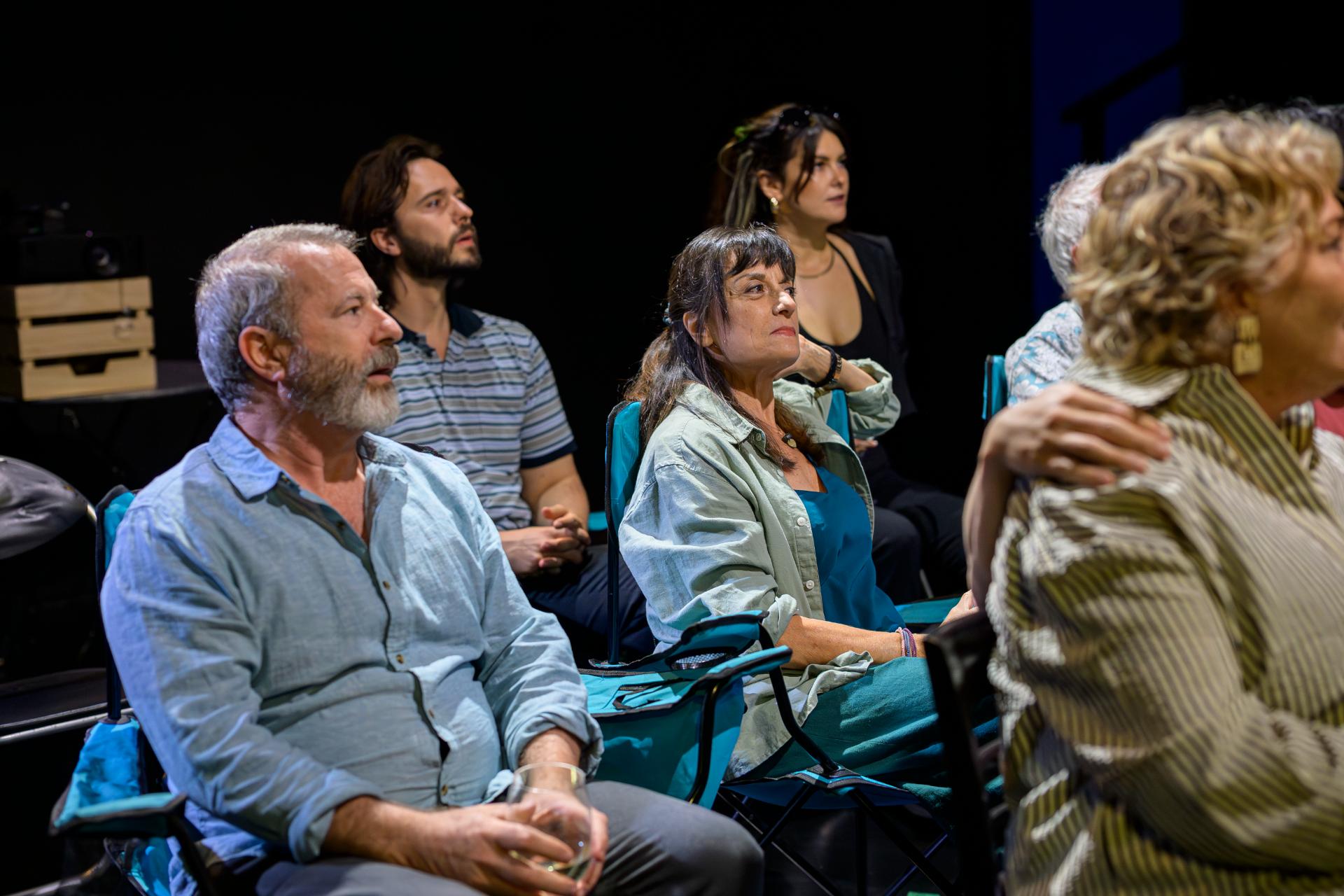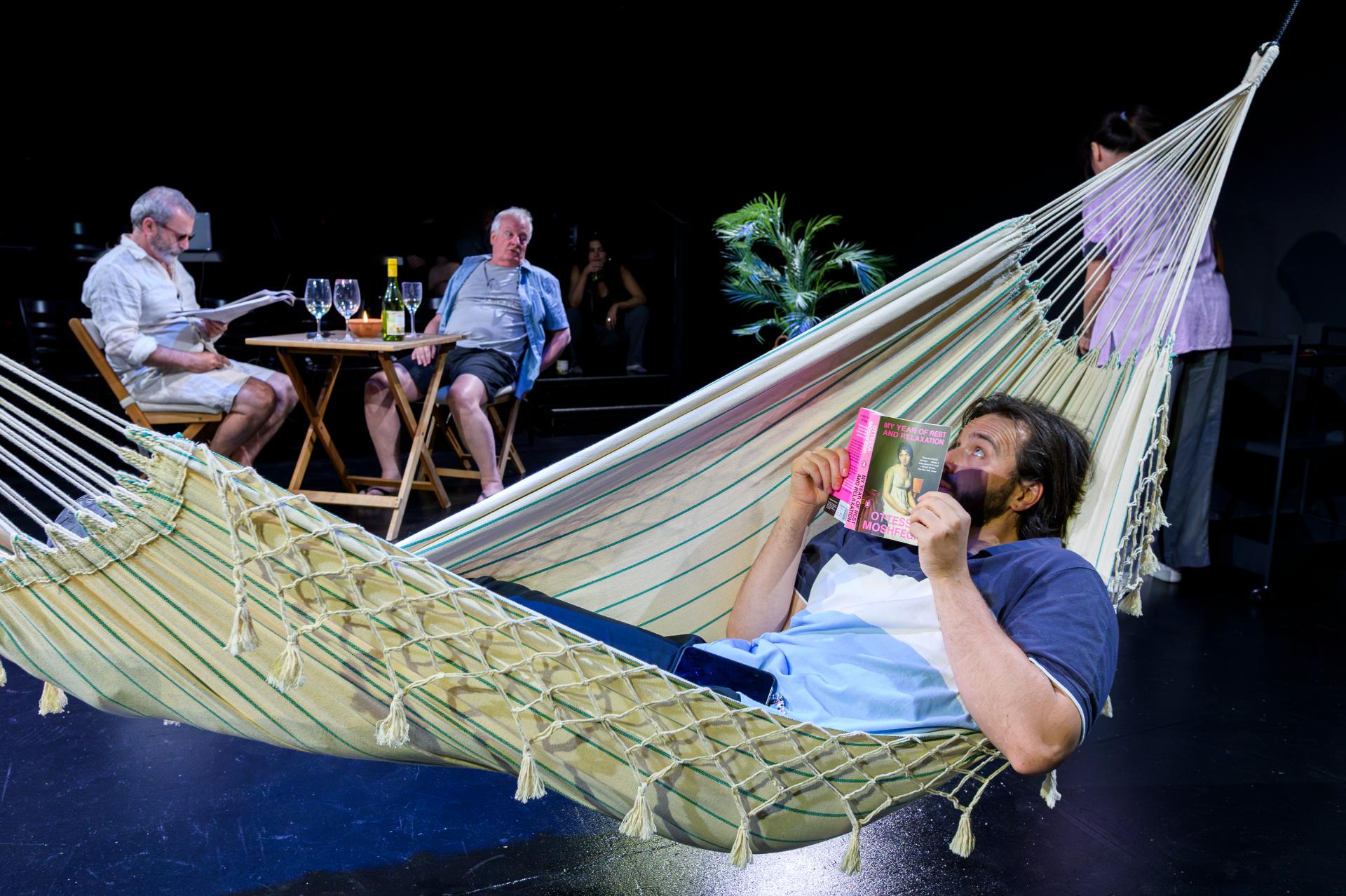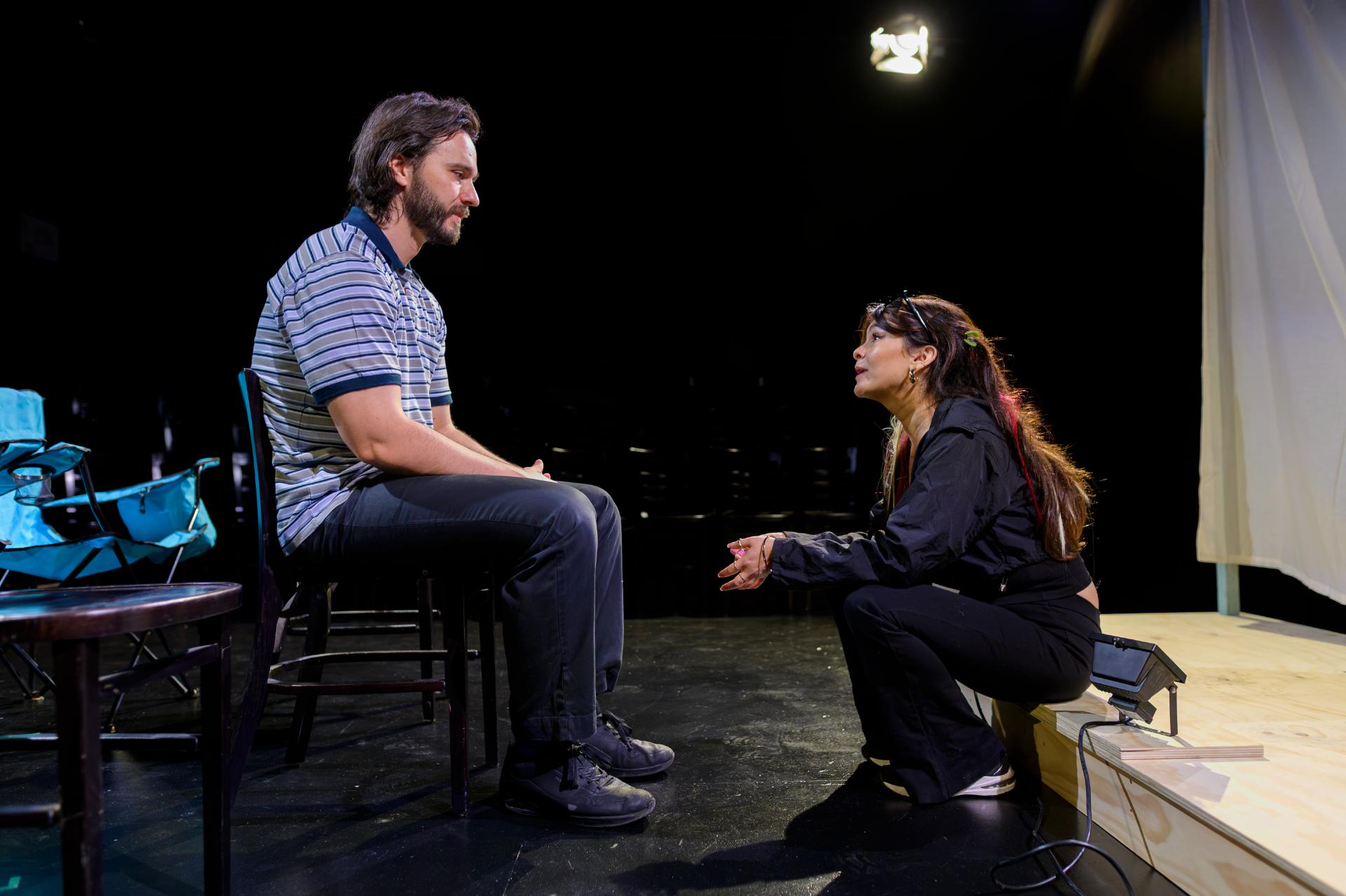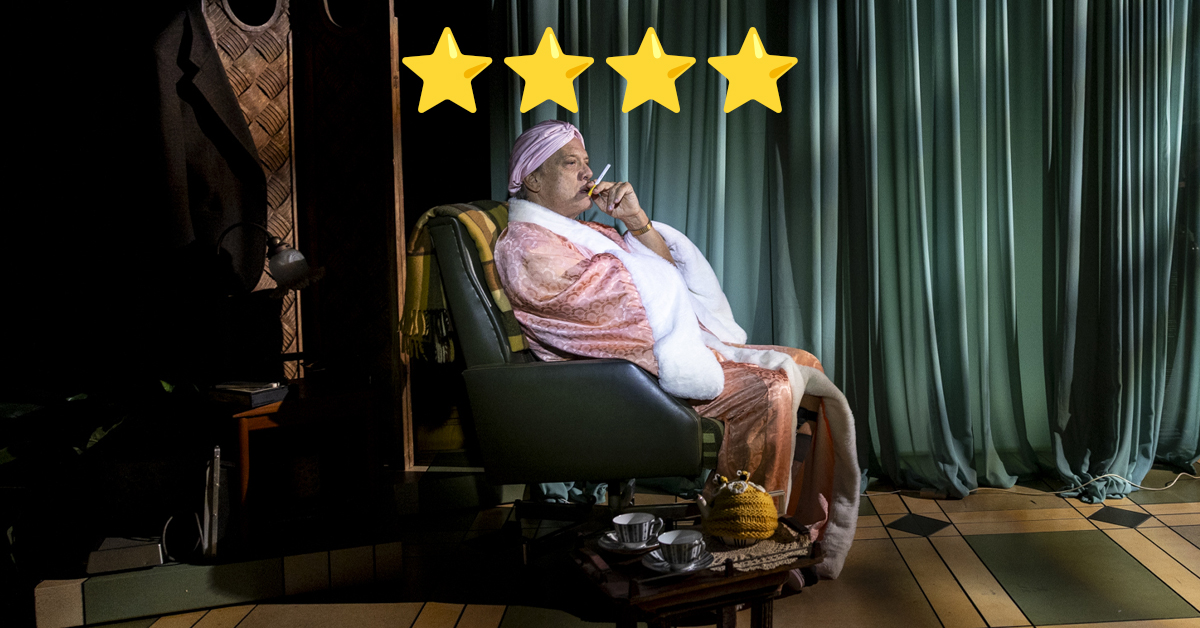
Review: Dial M For Murder (Ensemble Theatre)

Venue: Ensemble Theatre (Kirribilli NSW), Nov 28, 2025 – Jan 11, 2026
Playwright: Jeffrey Hatcher (from the original by Frederick Knott)
Director: Mark Kilmurry
Cast: Garth Holcombe, Madeleine Jones, Kenneth Moraleda, Anna Samson, David Soncin
Images by Phil Erbacher

Theatre review
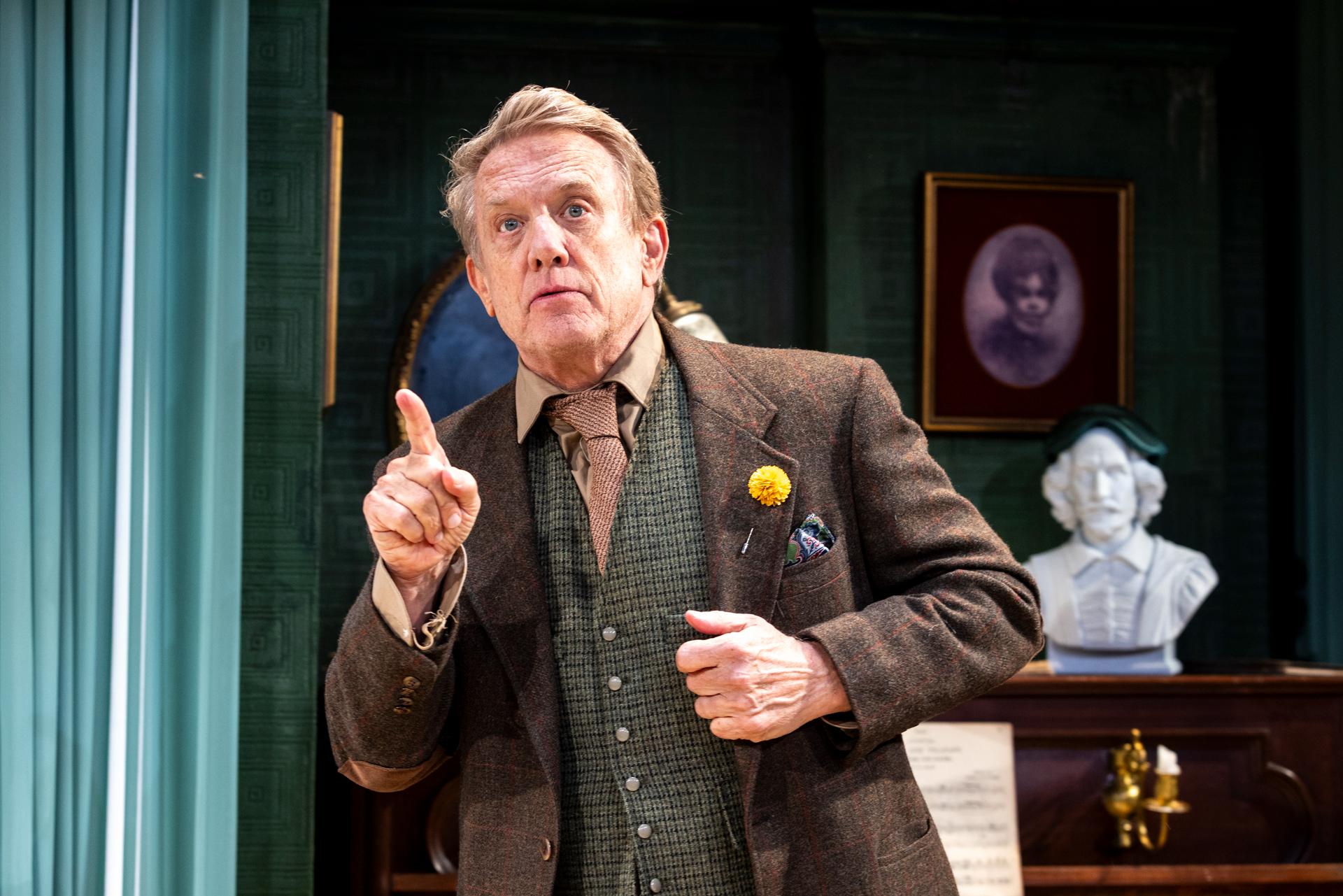
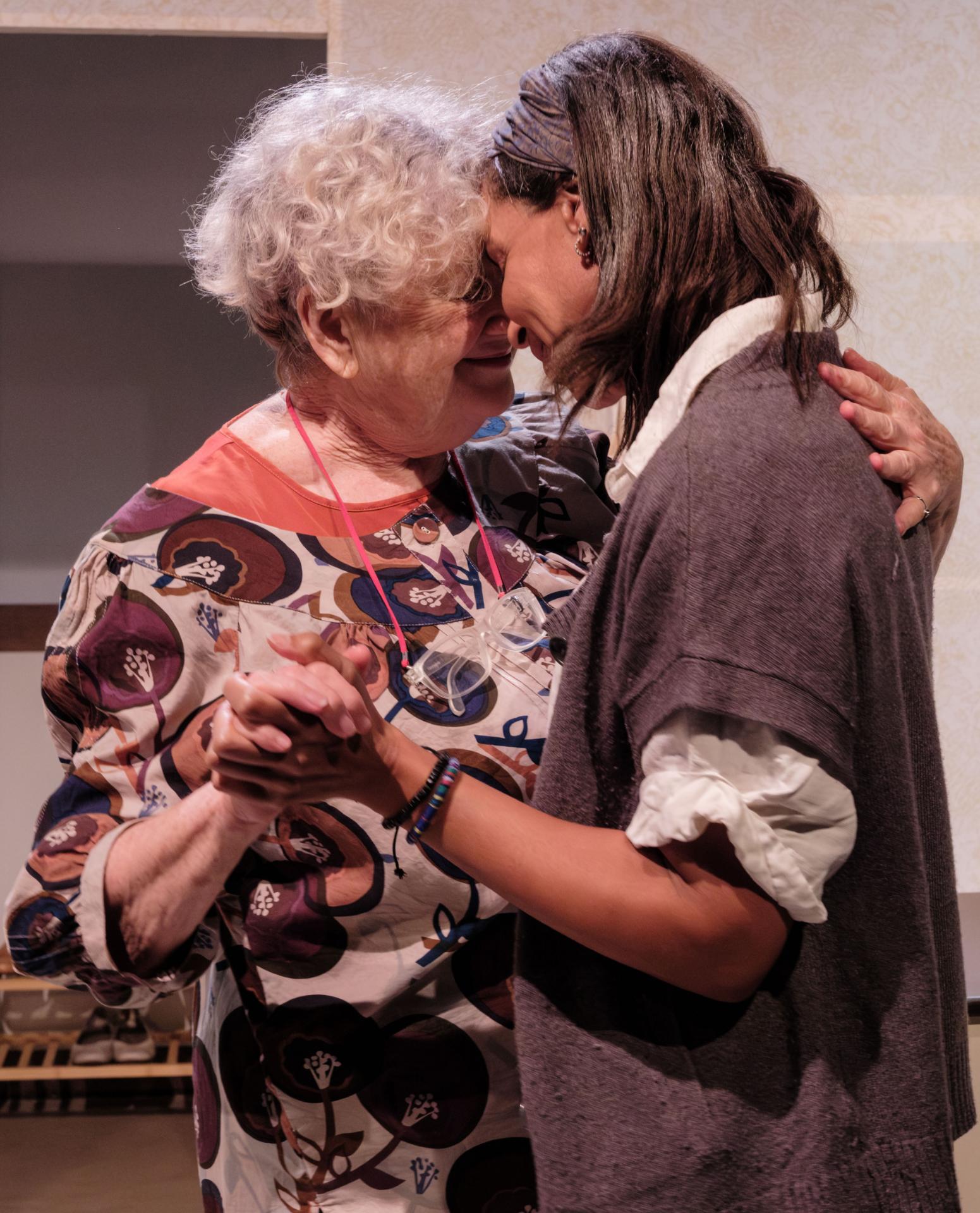
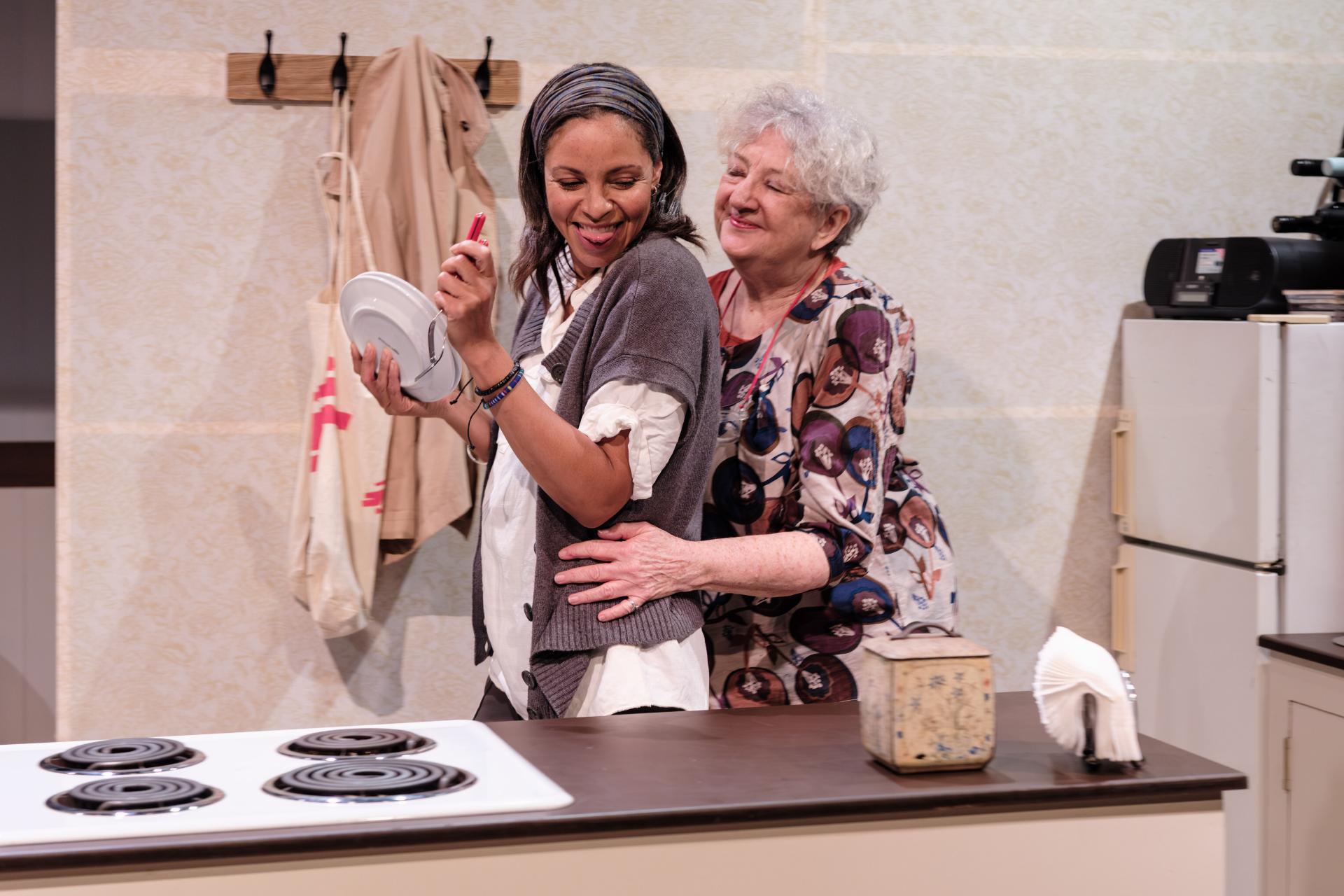
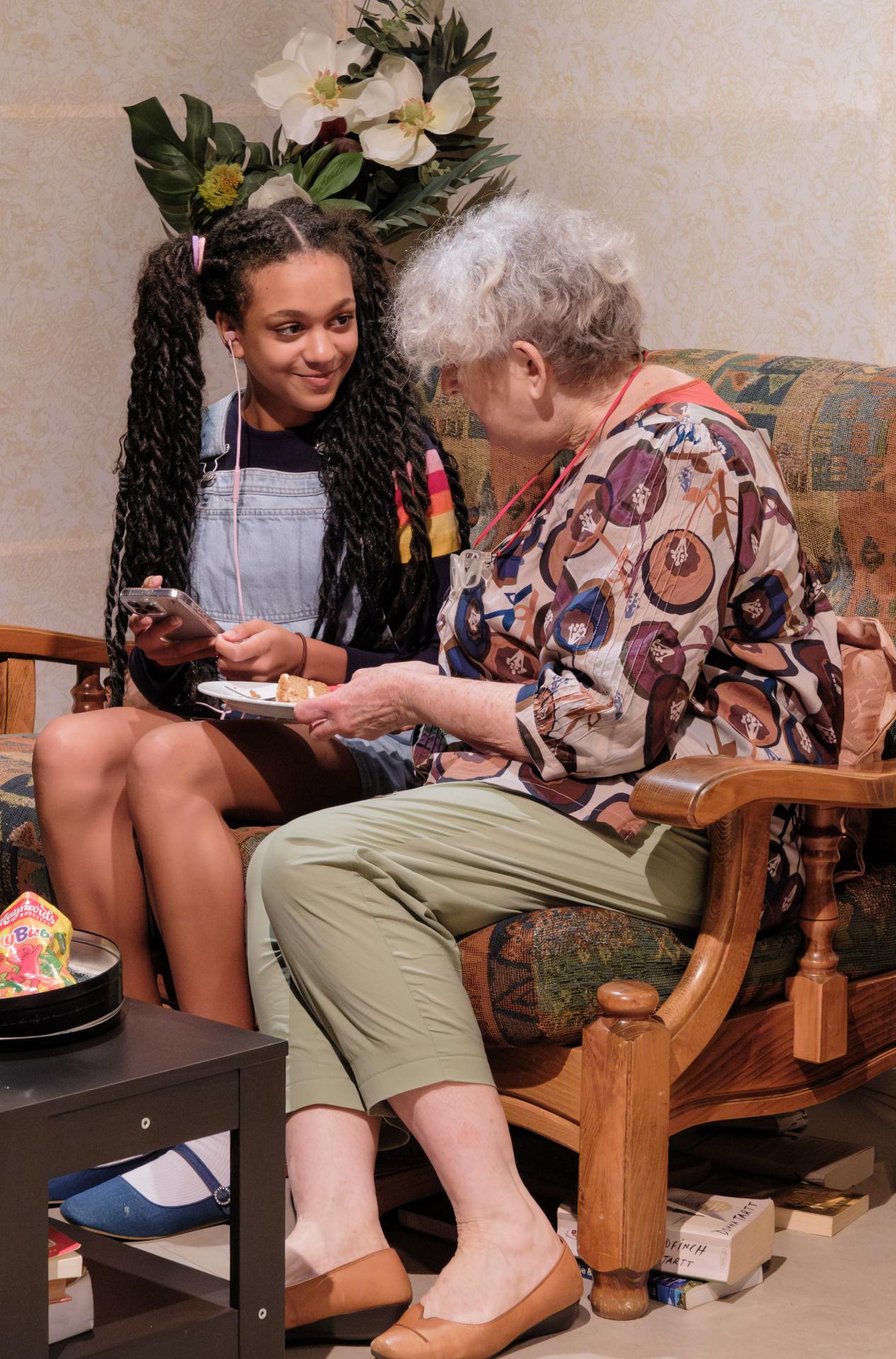
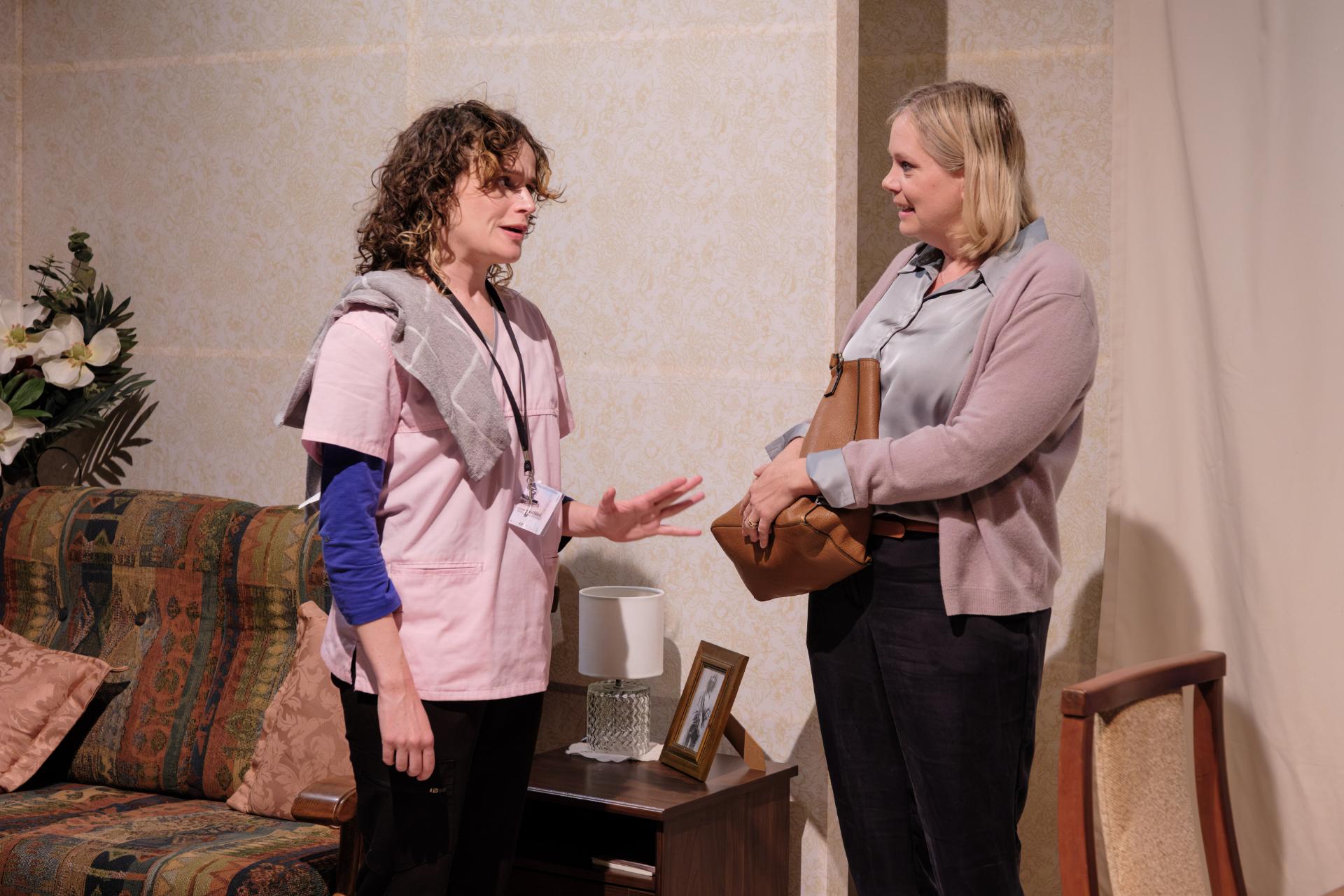
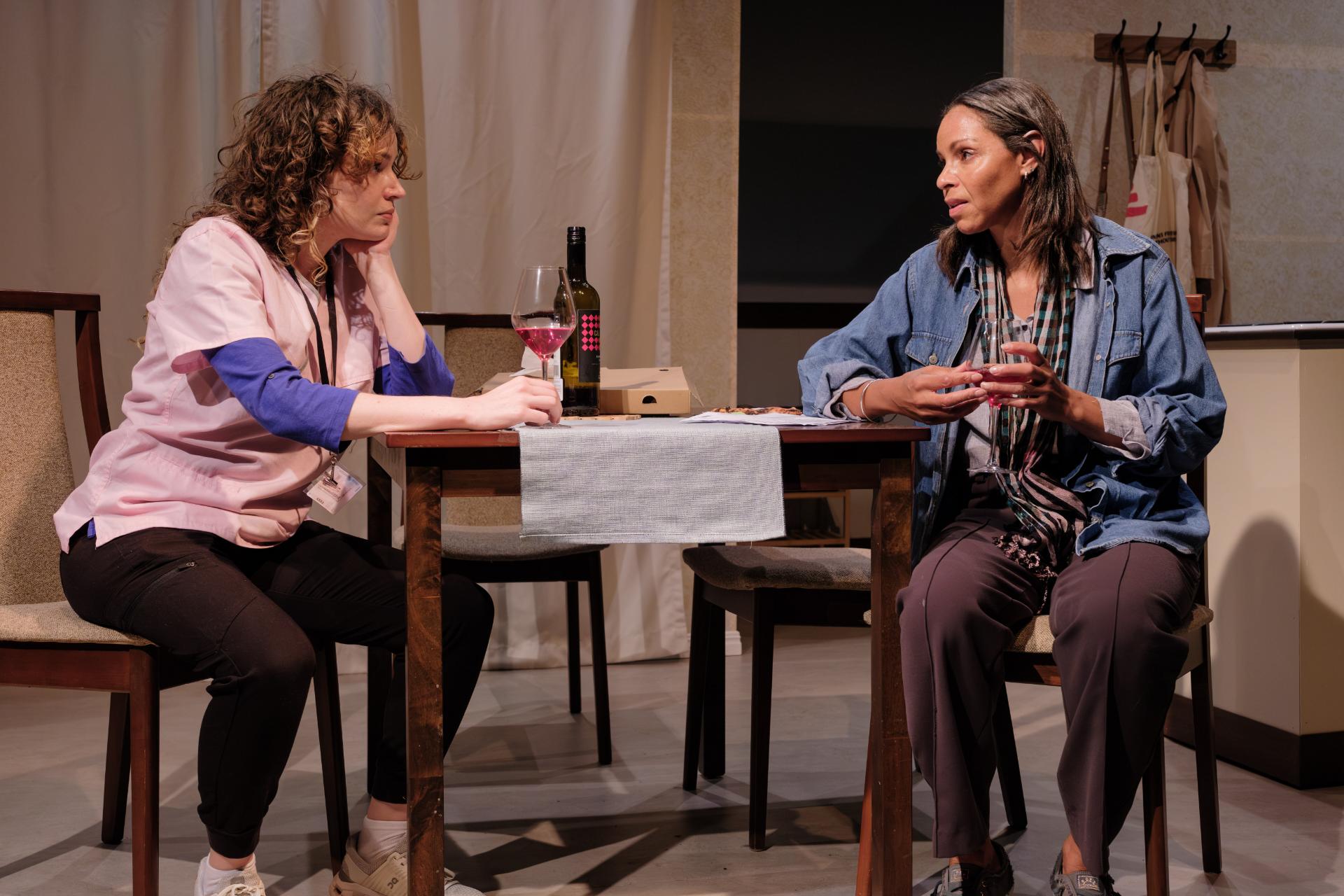
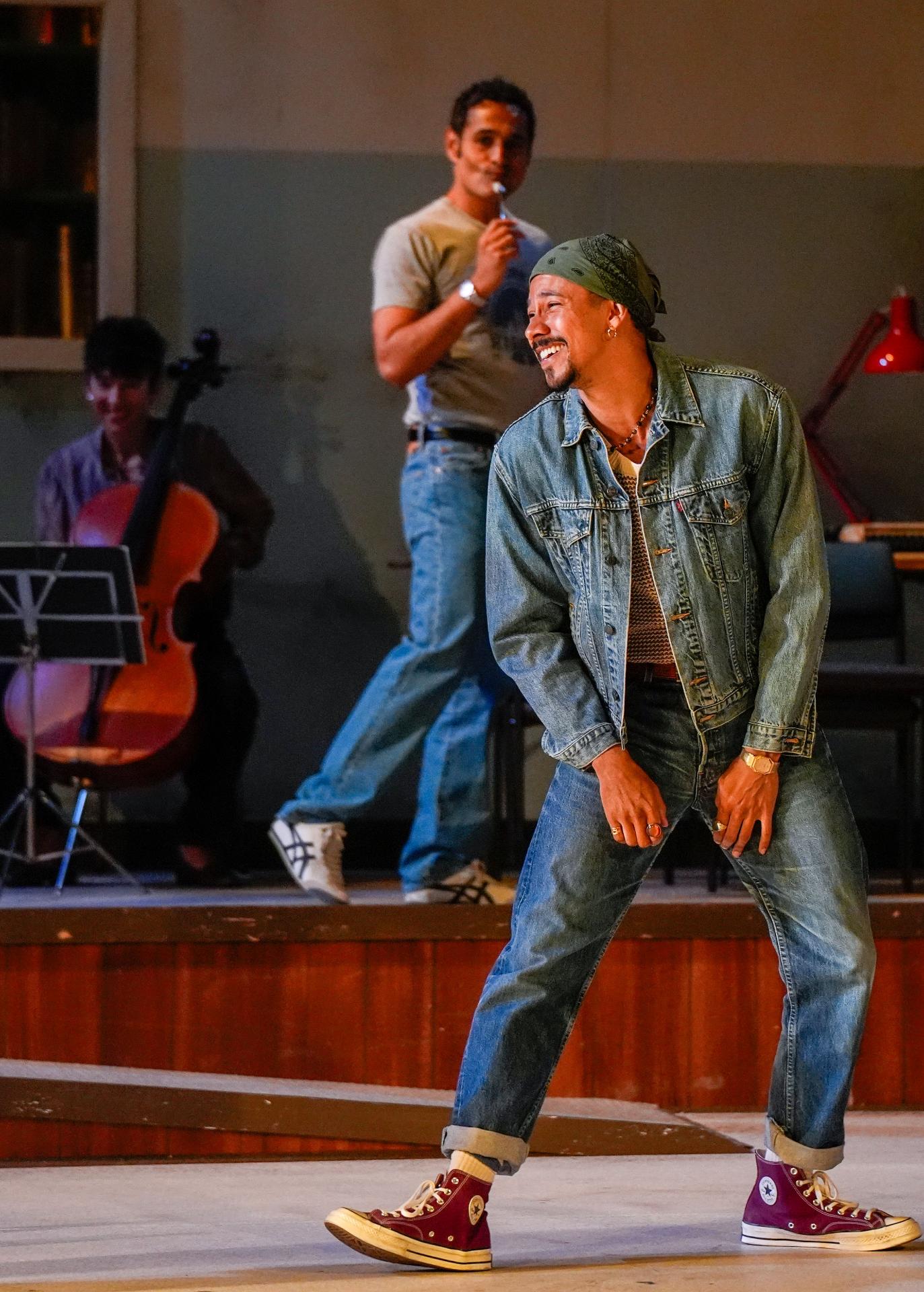
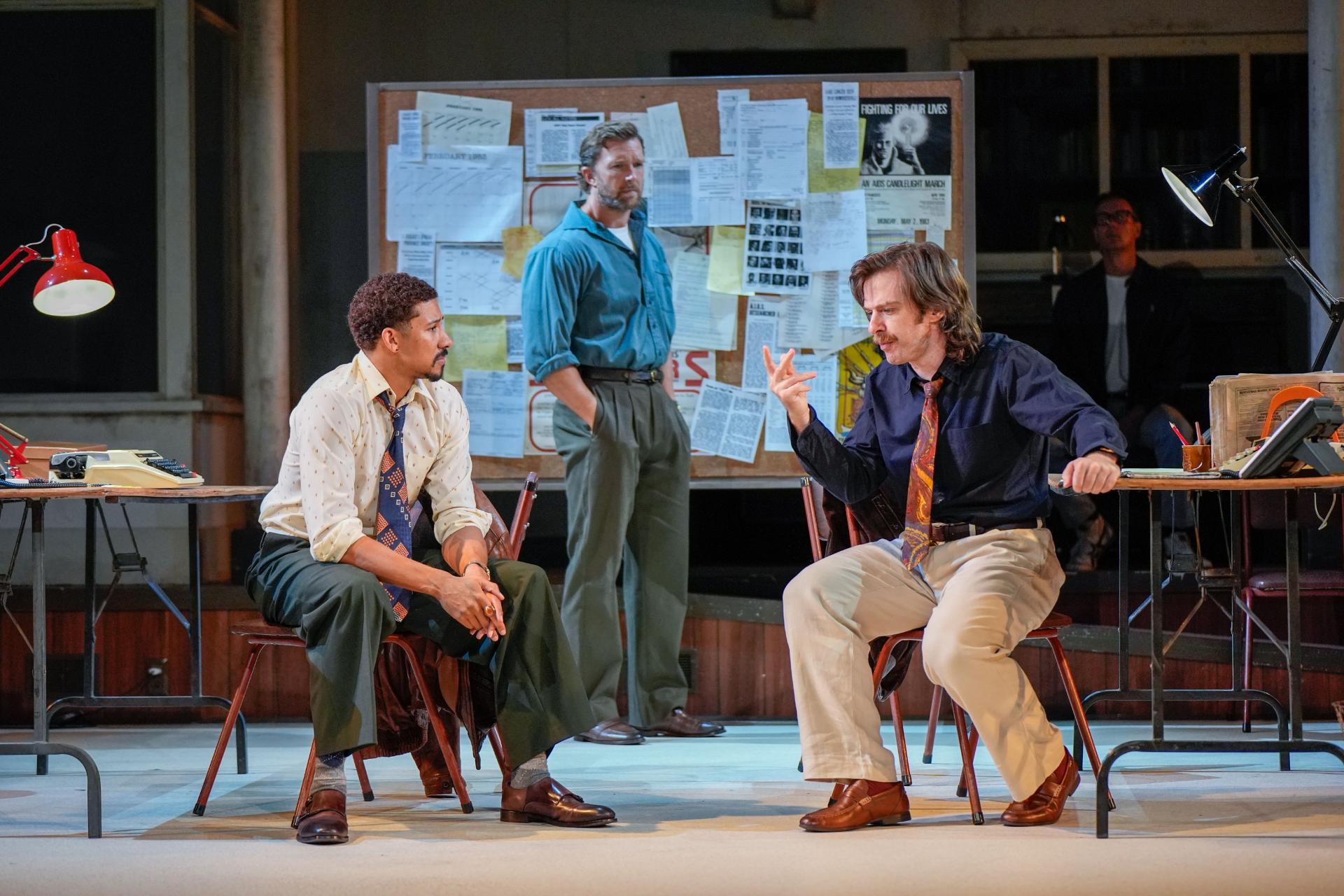
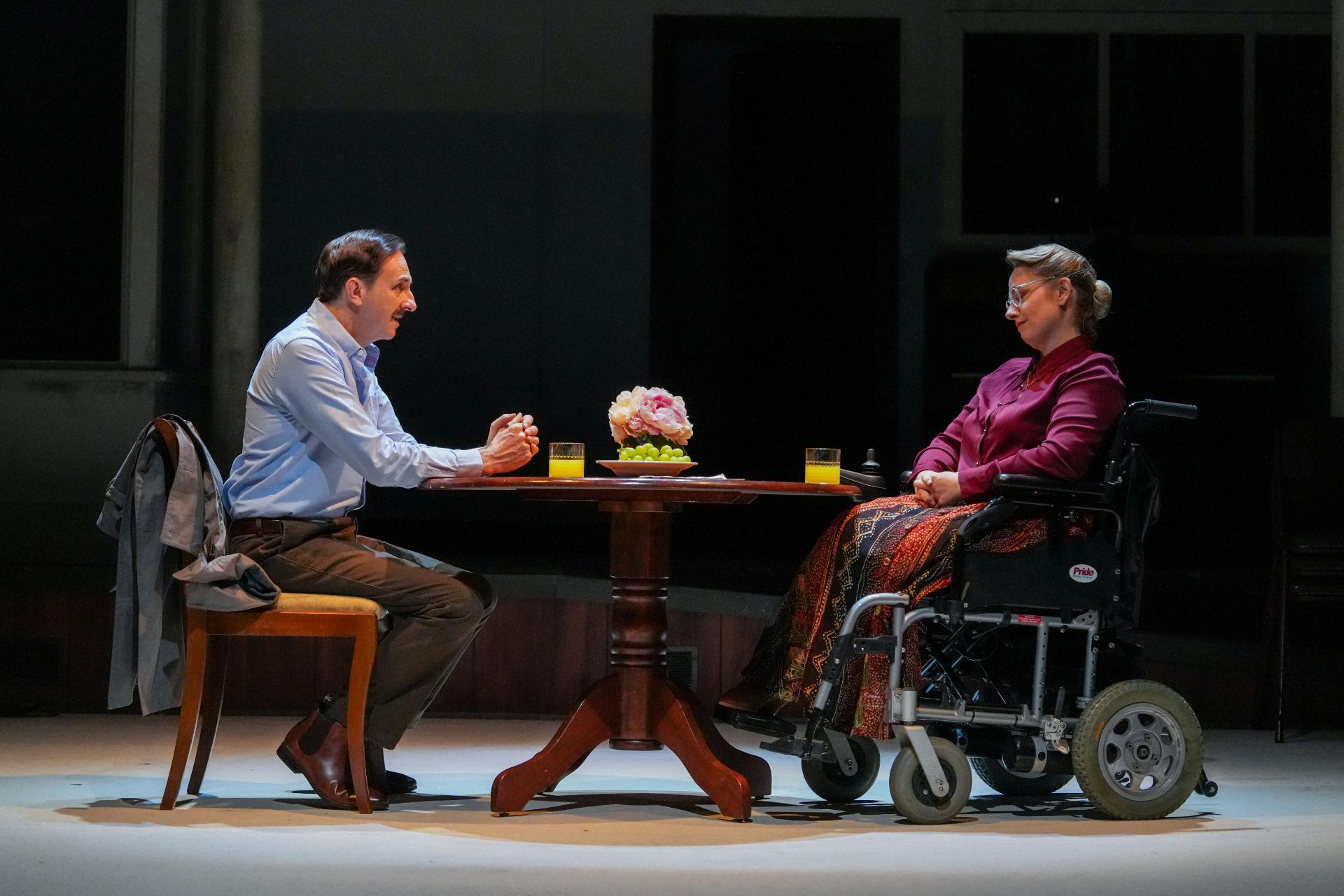
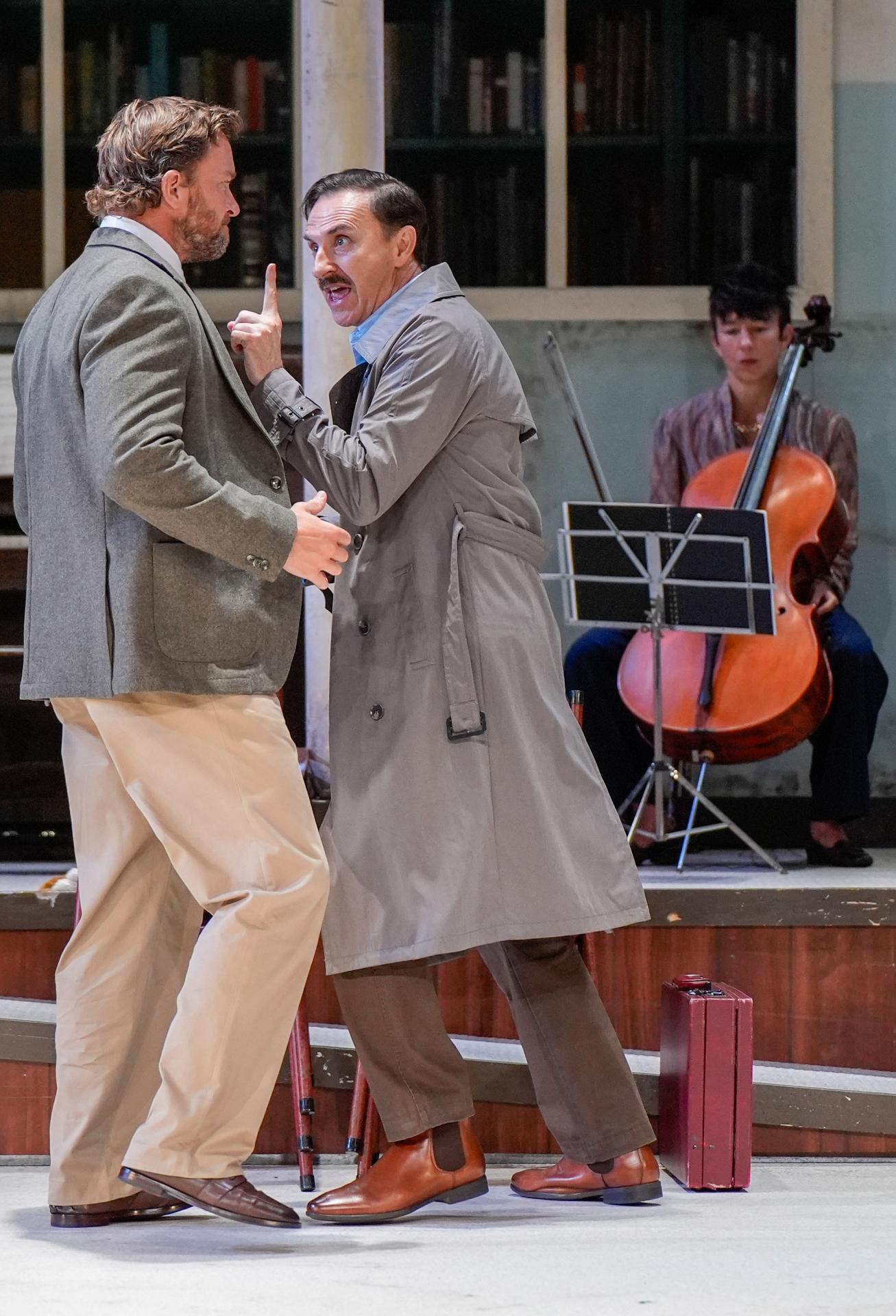
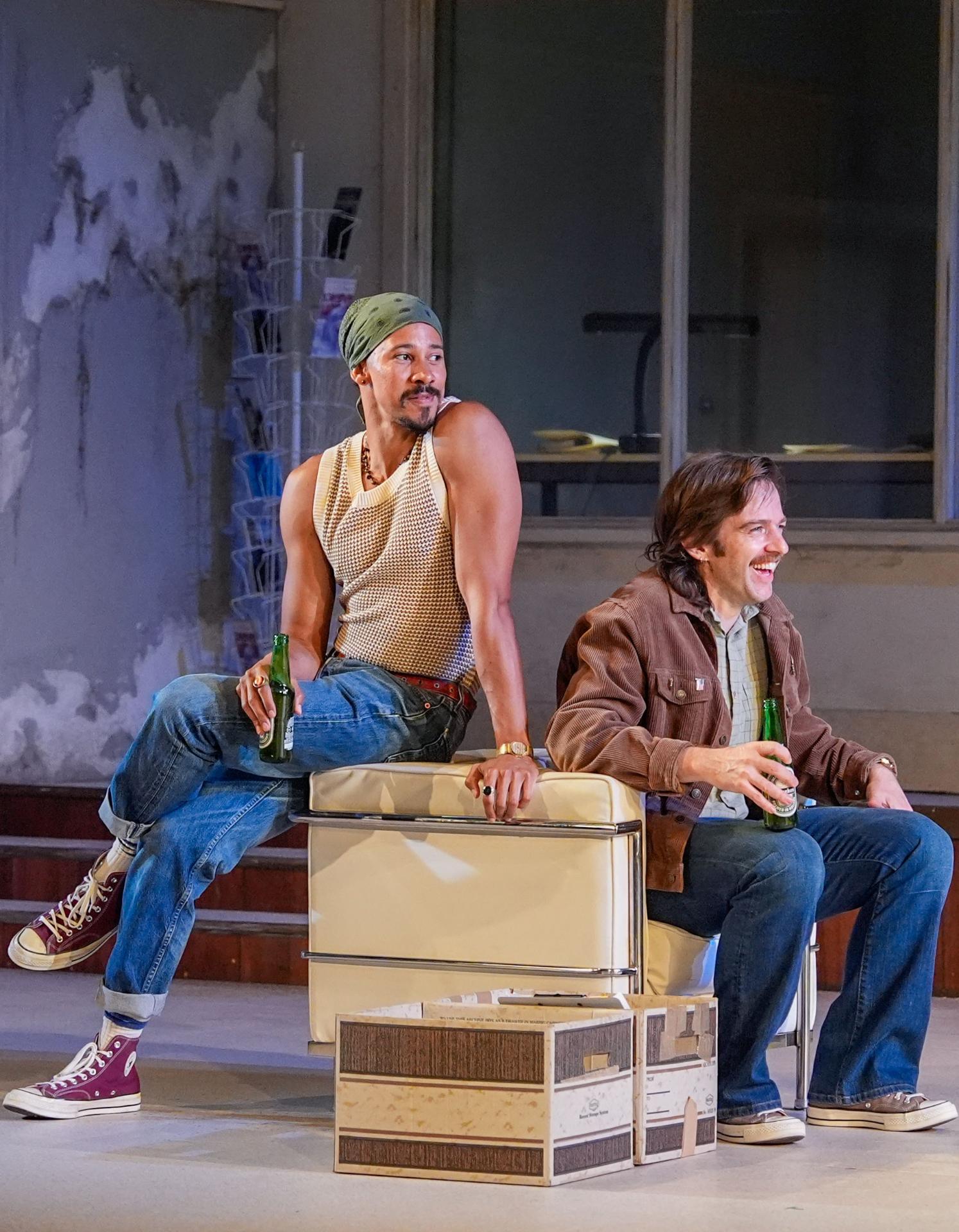
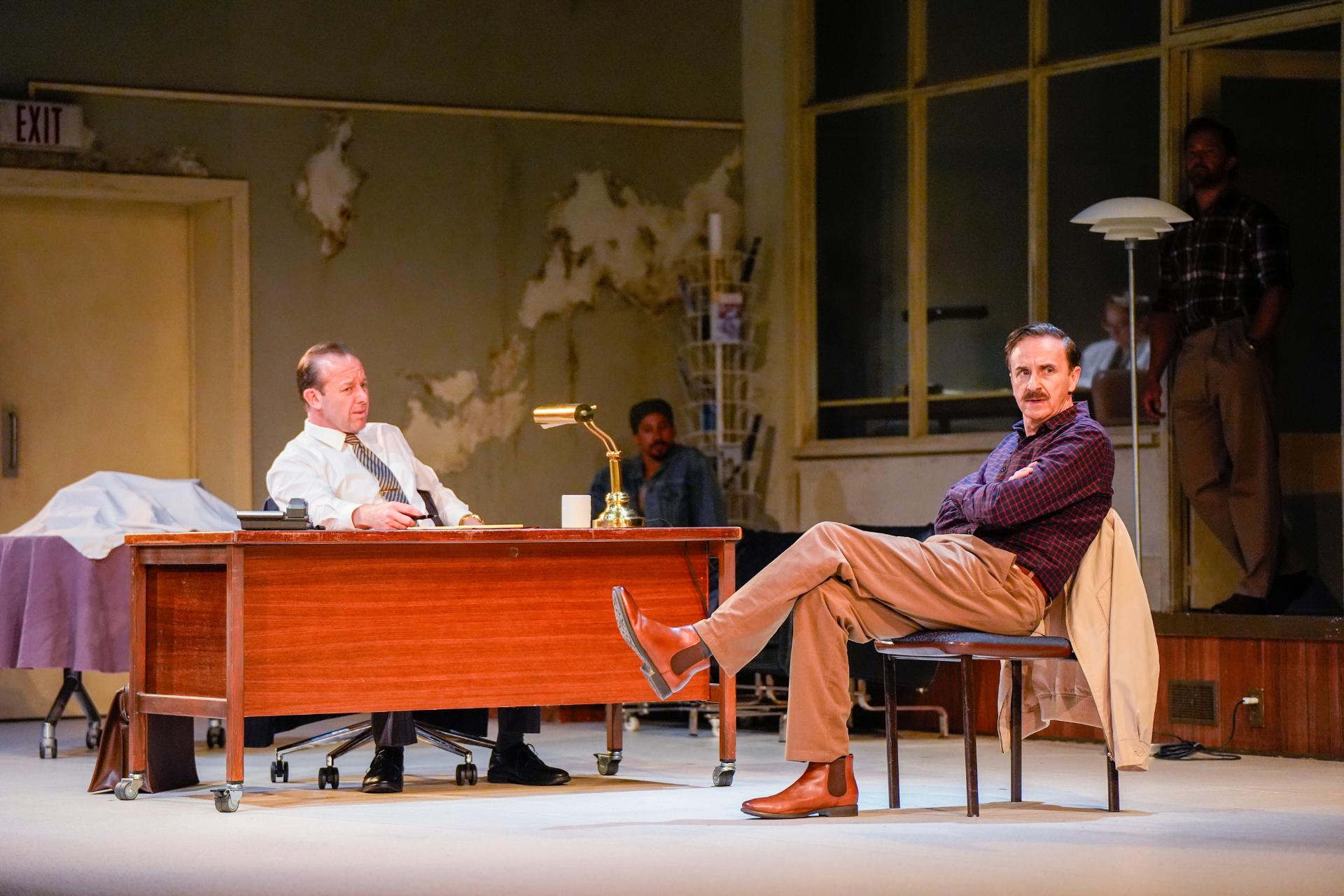
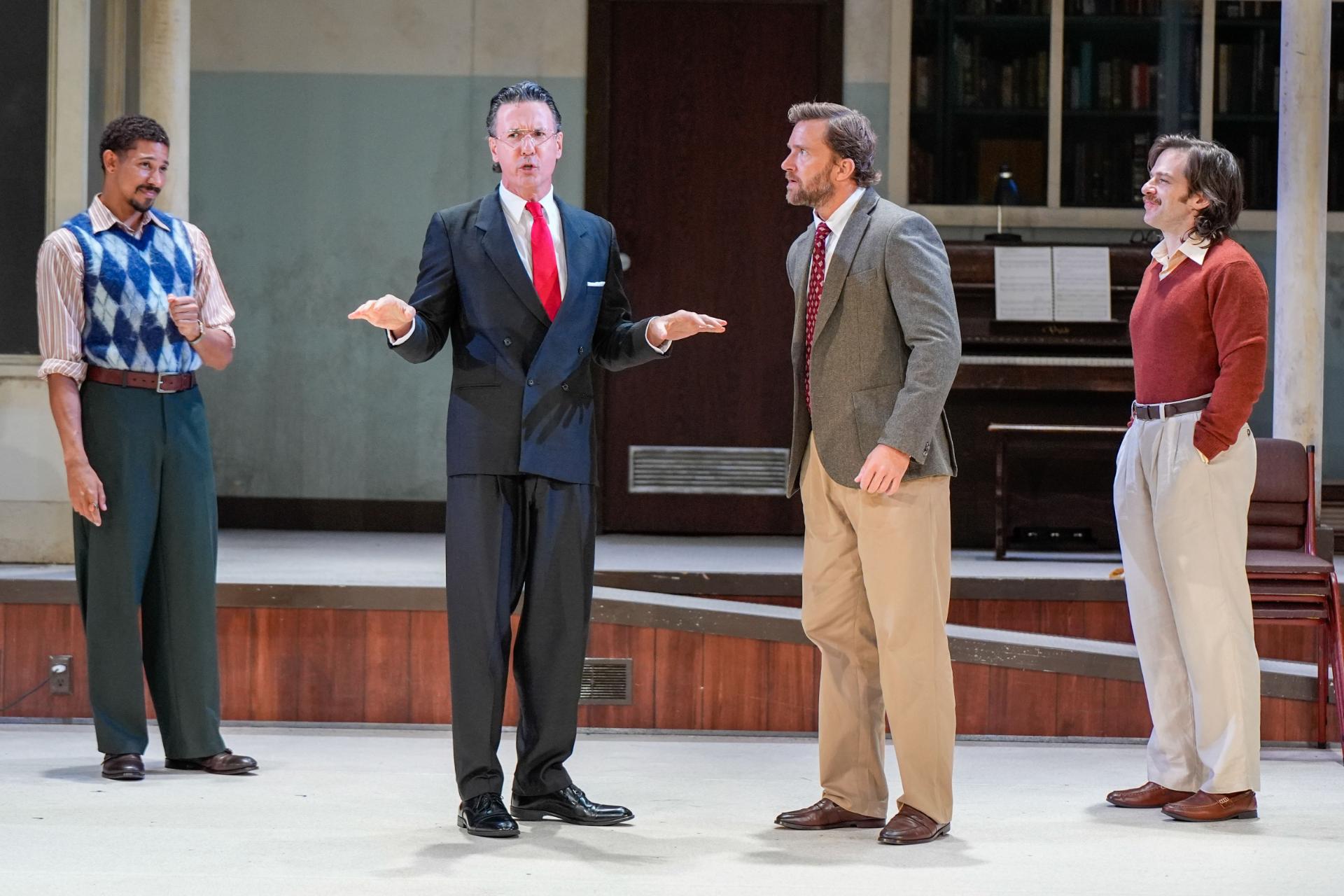
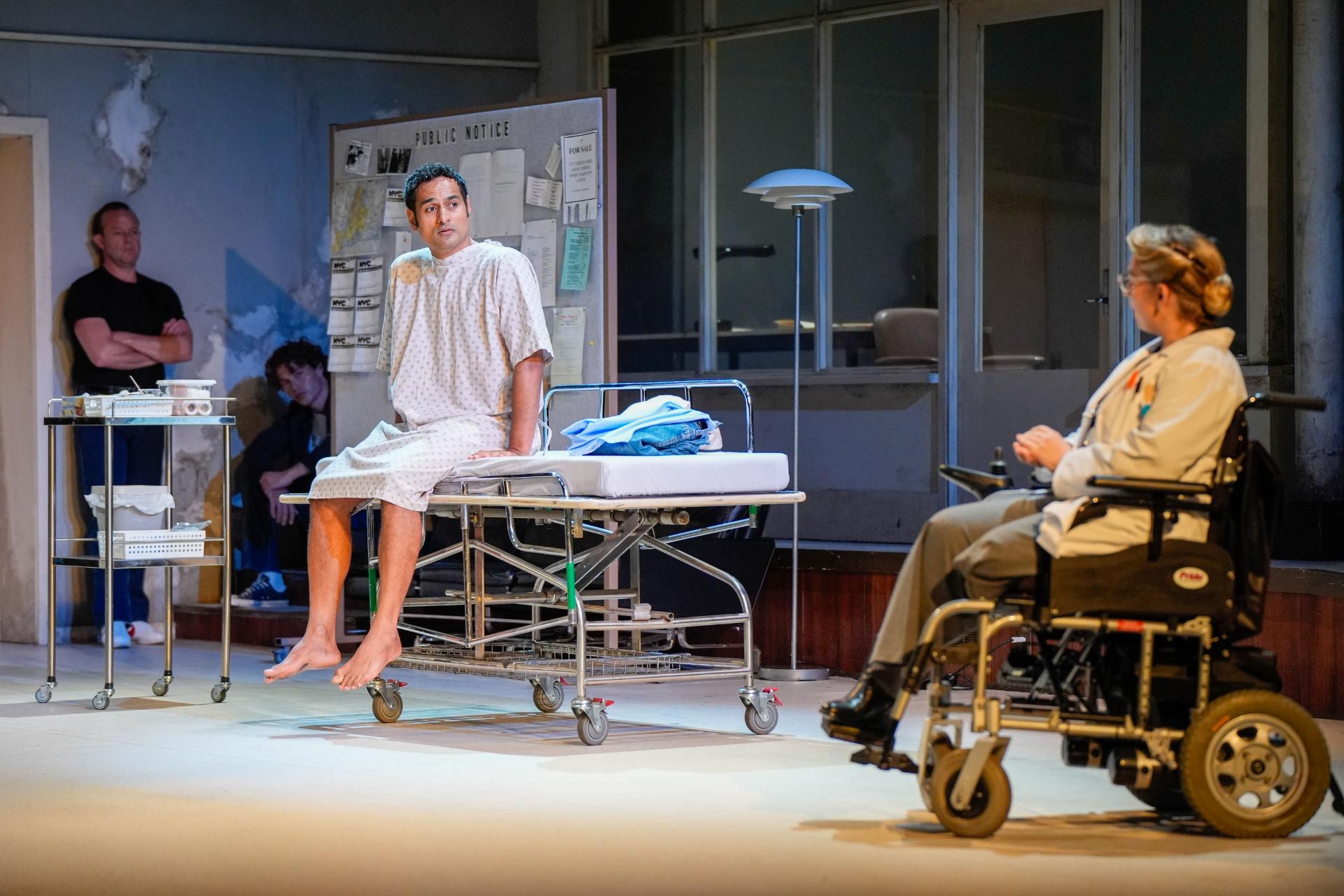
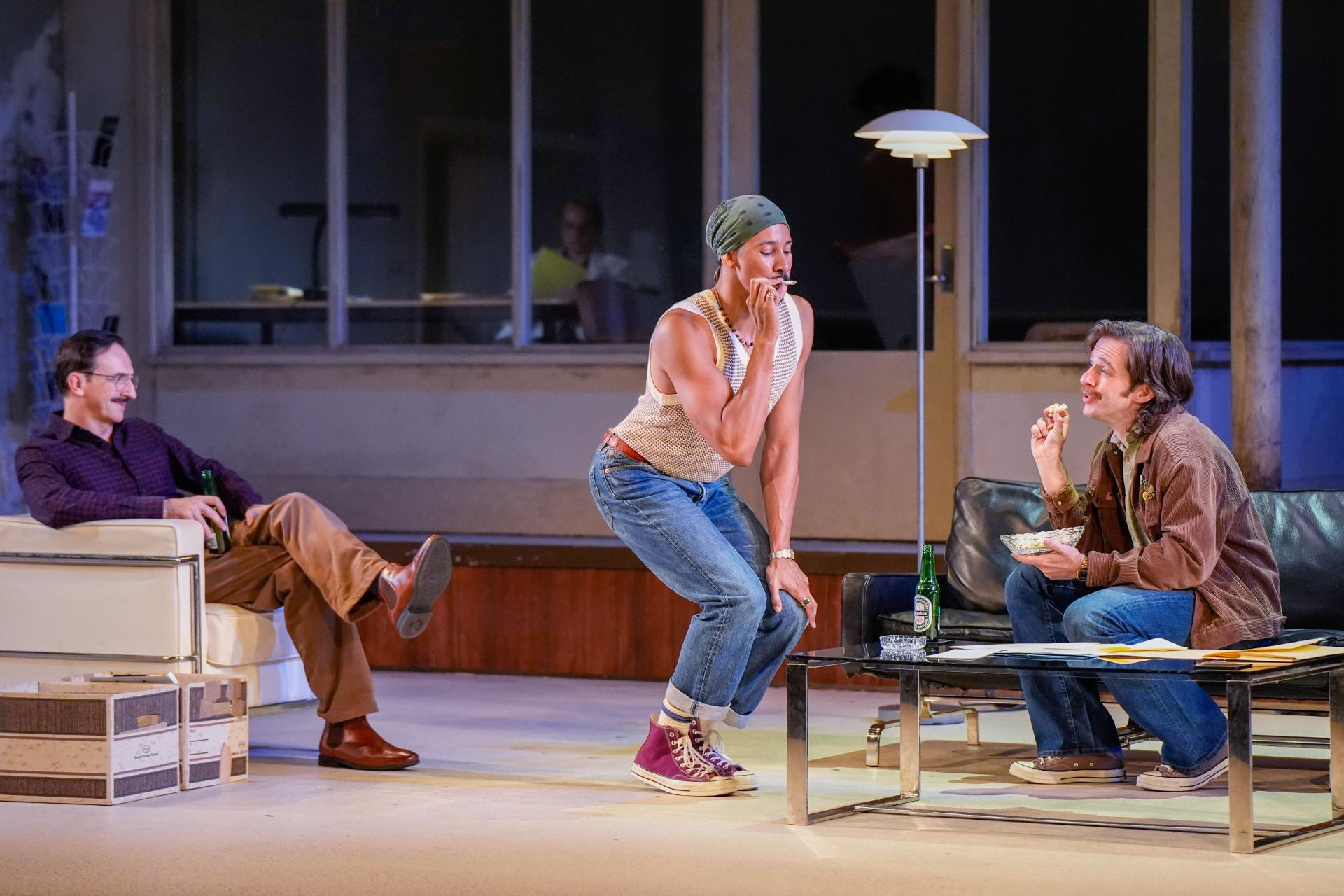
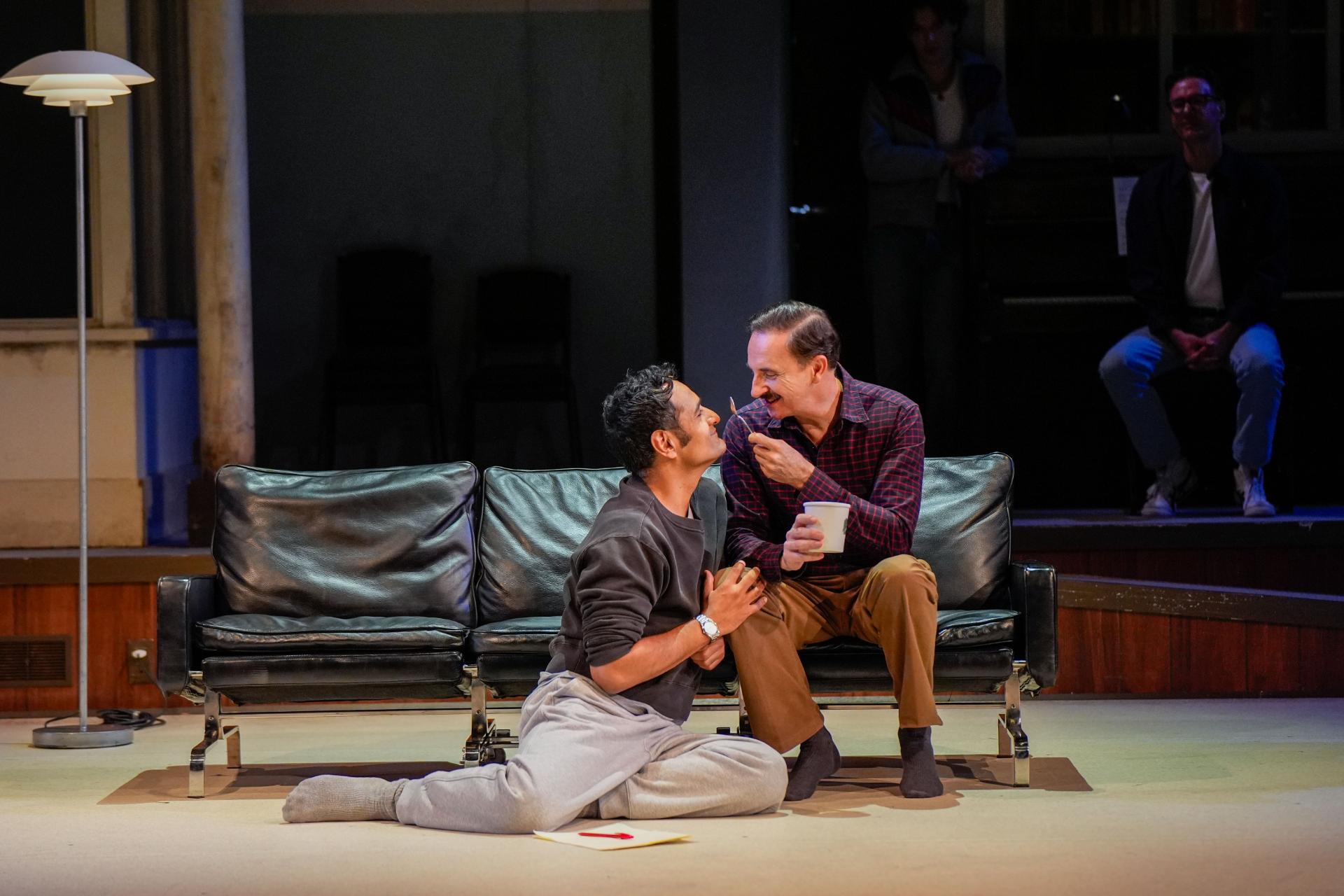
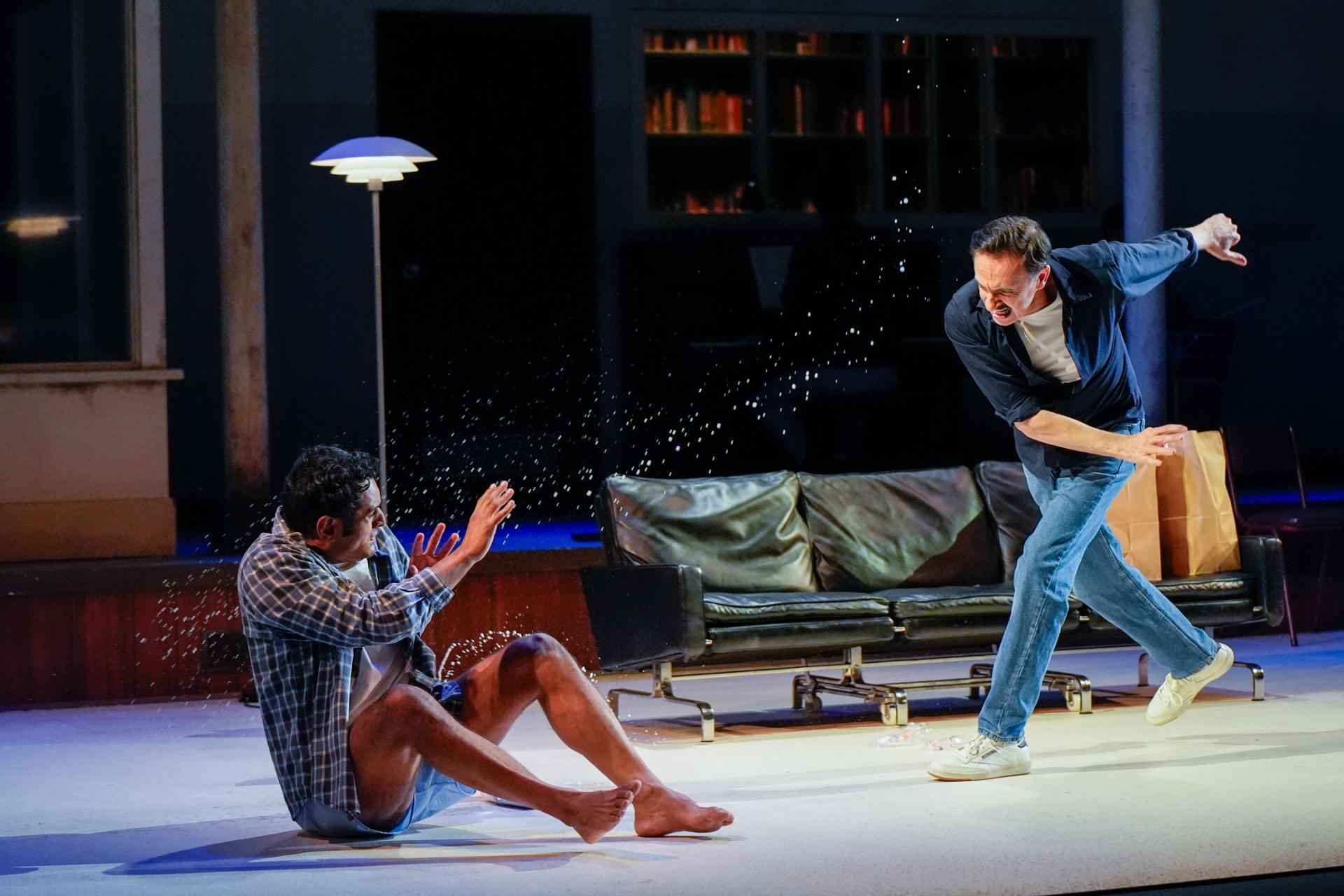
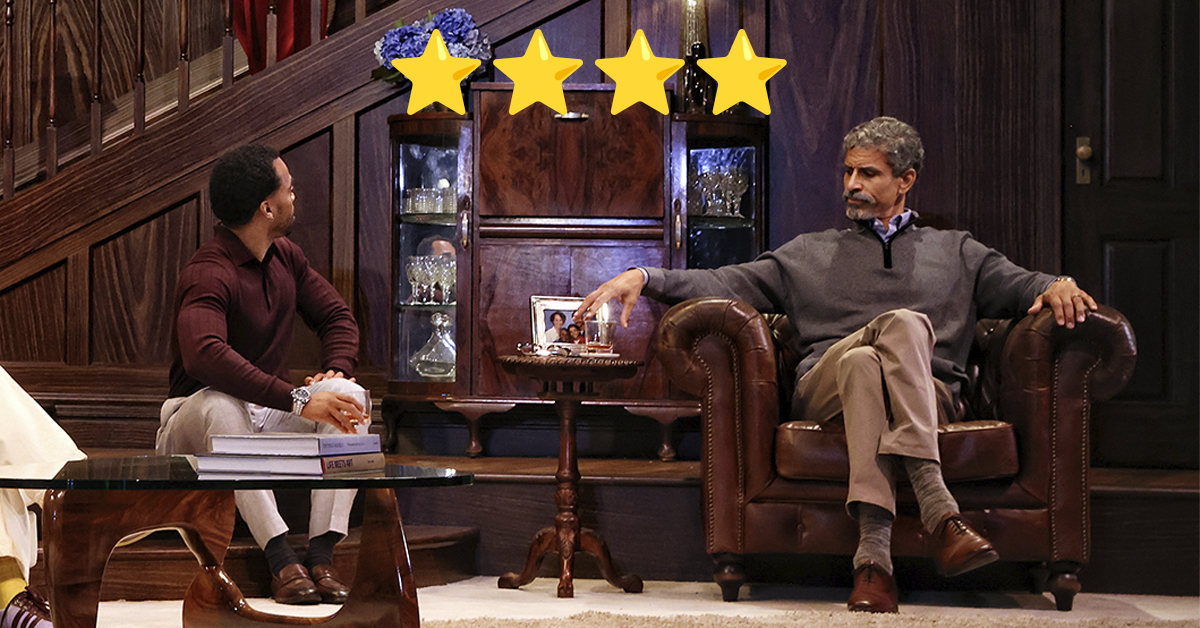
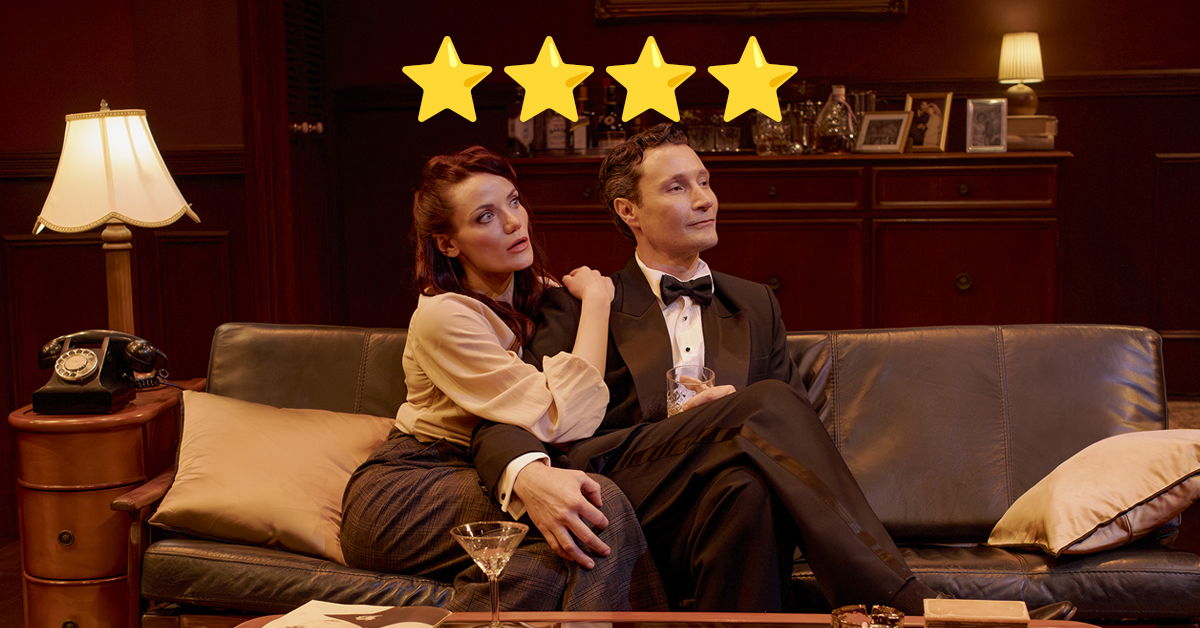
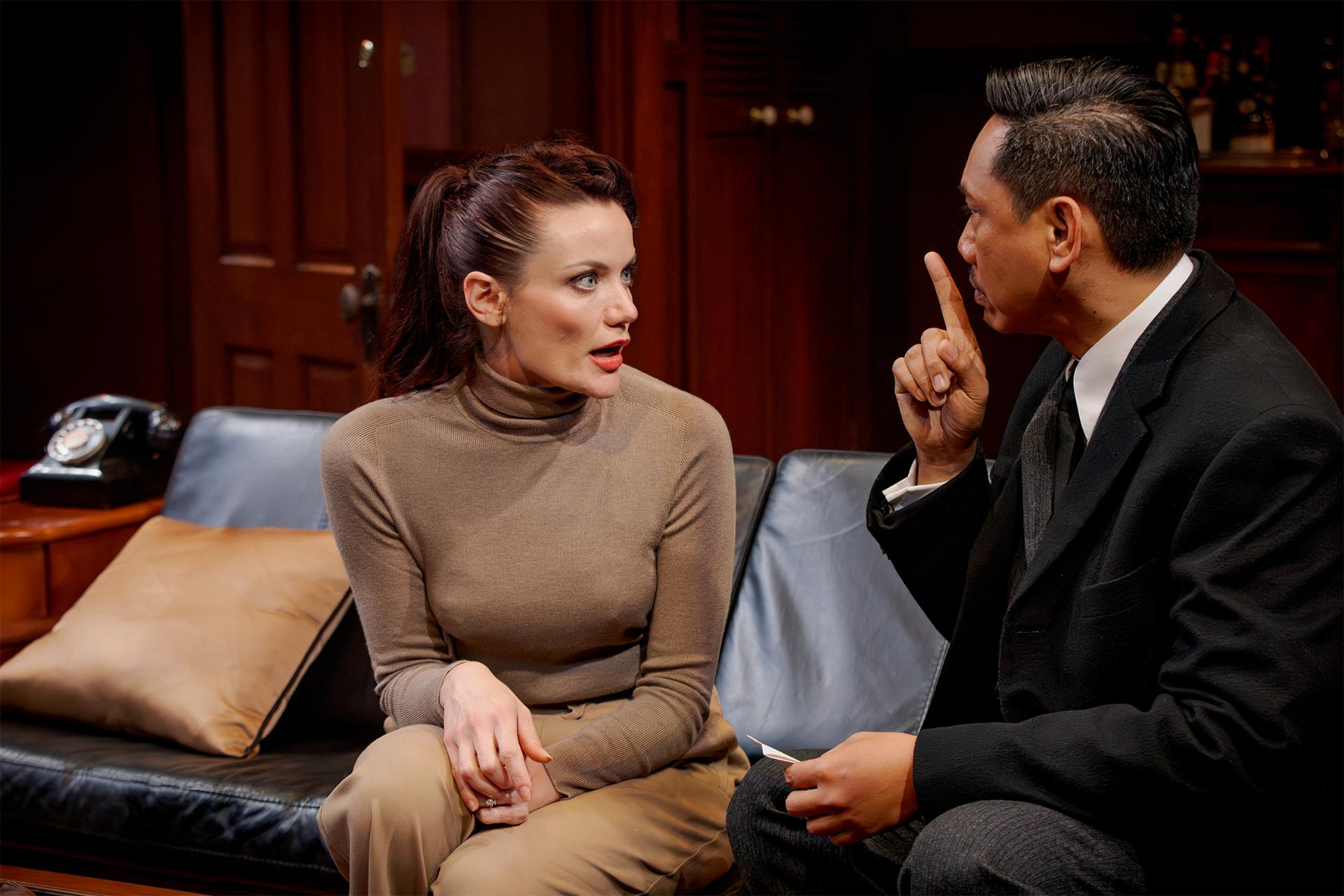
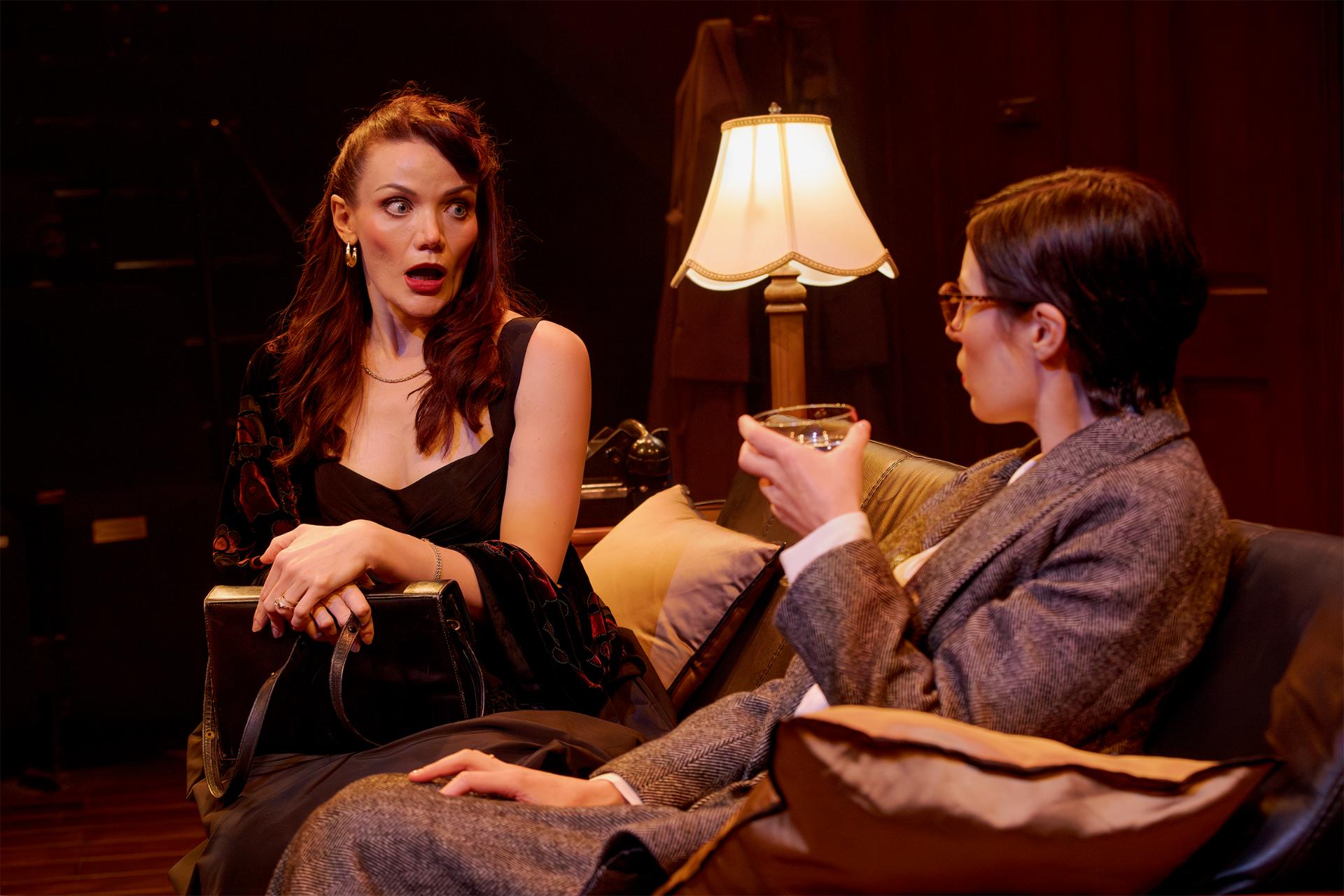
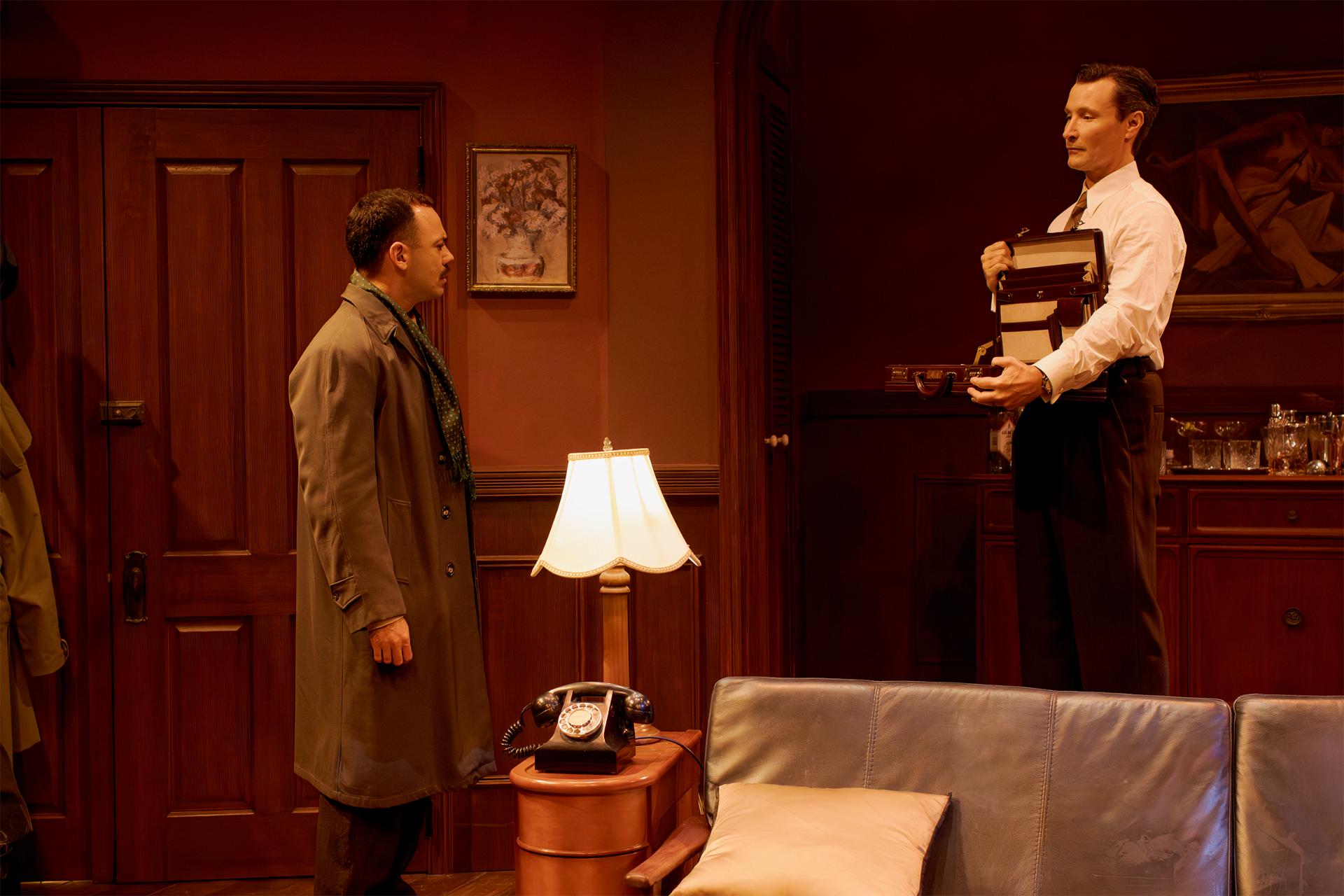
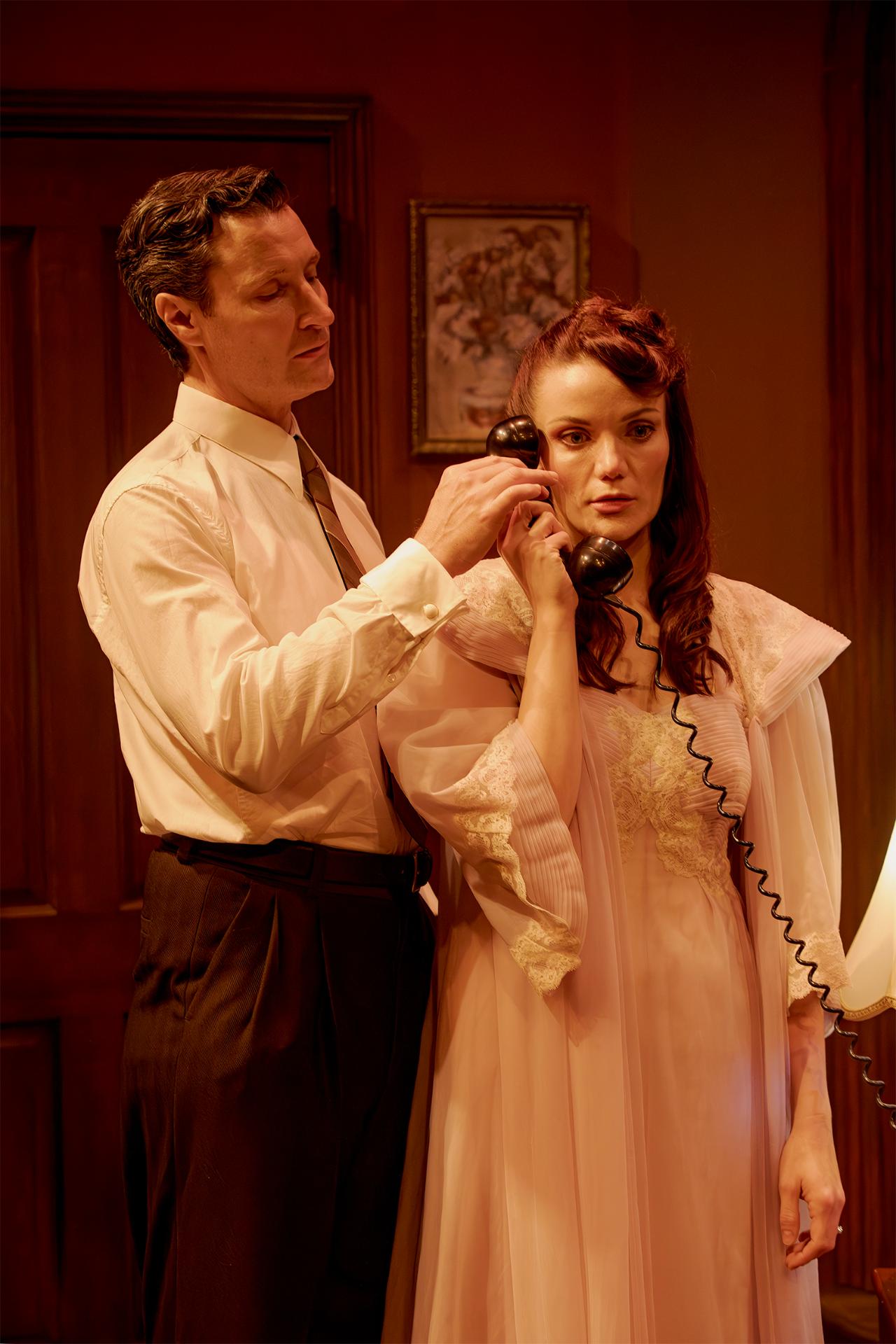
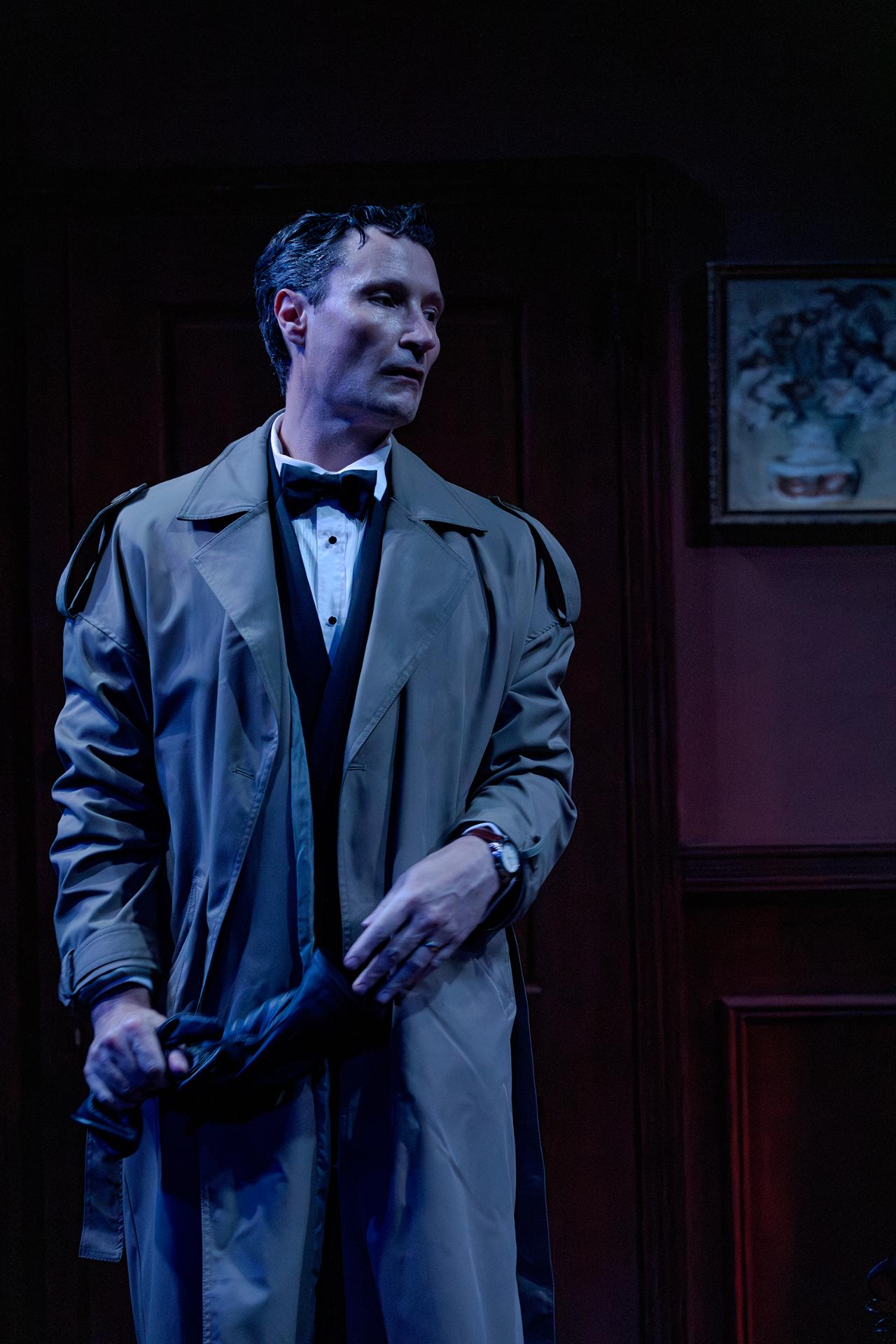
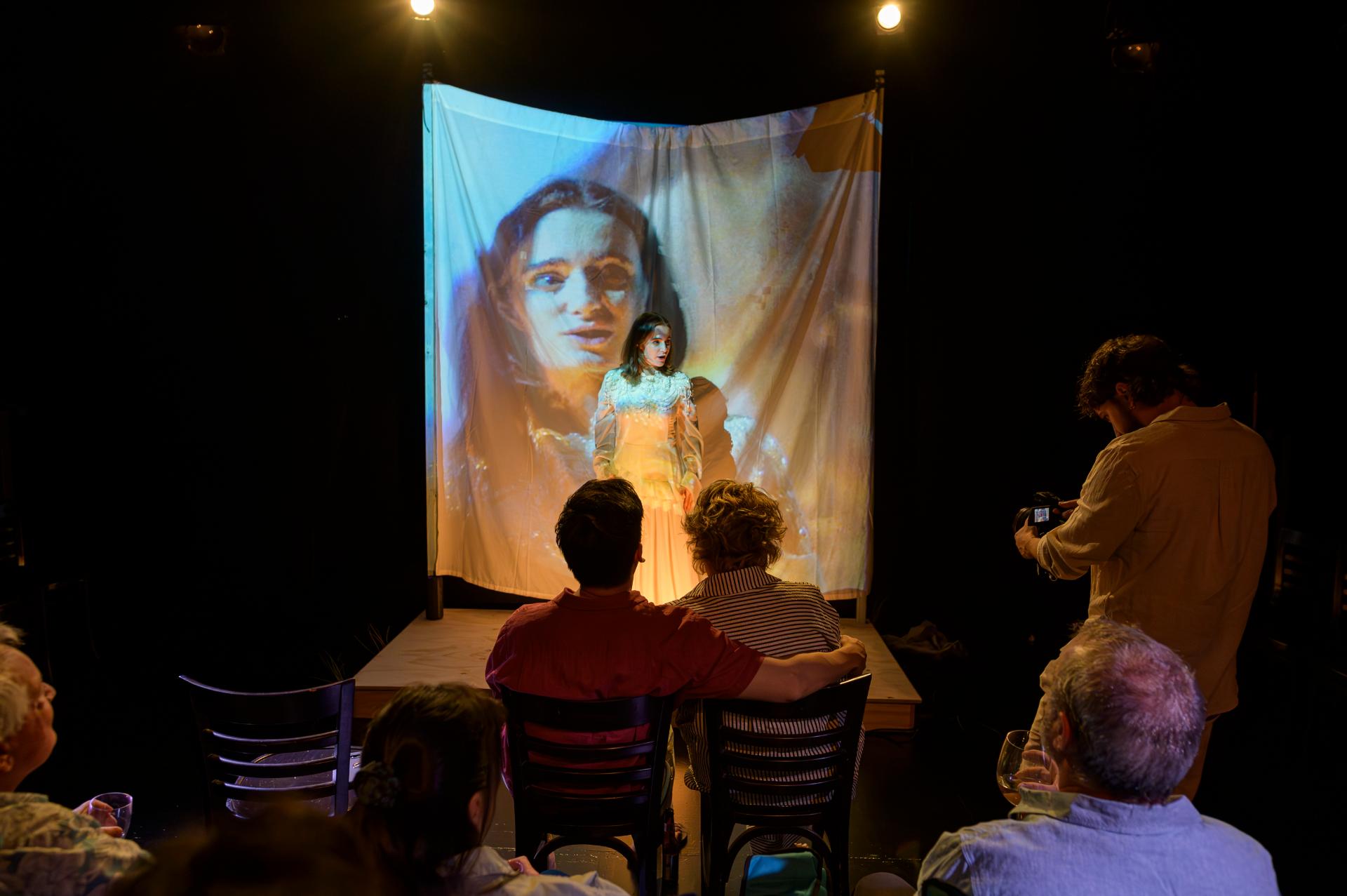
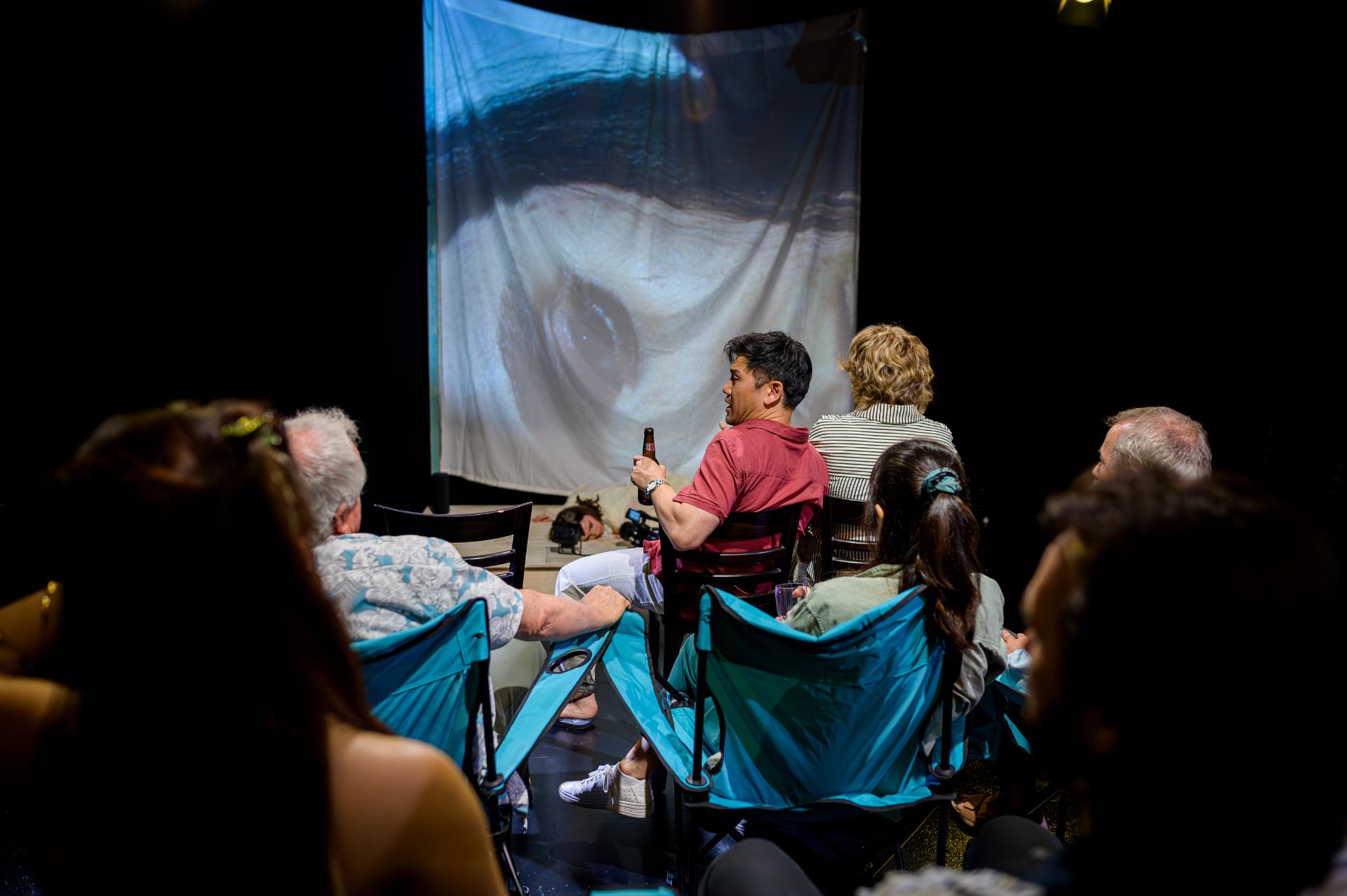
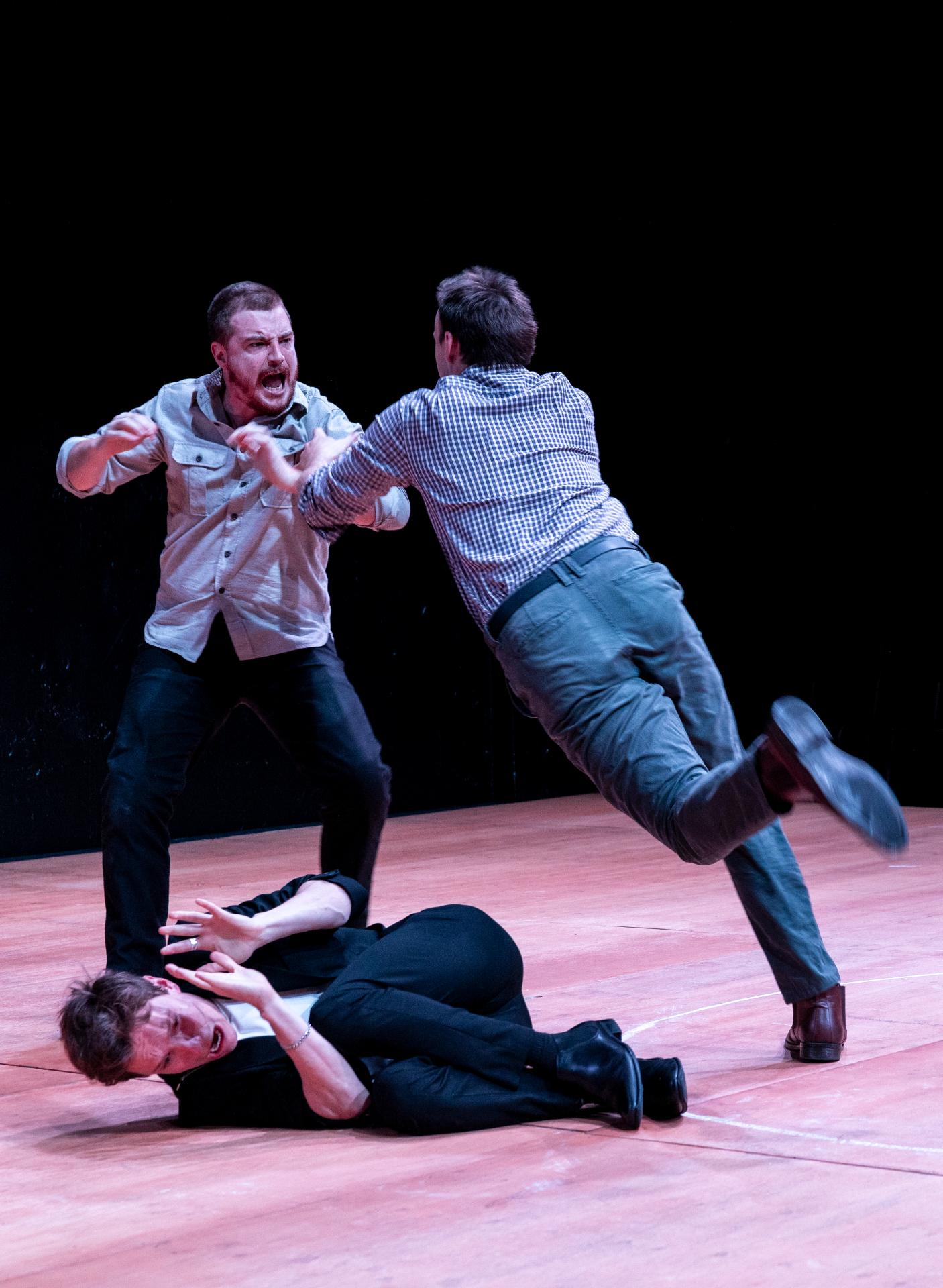
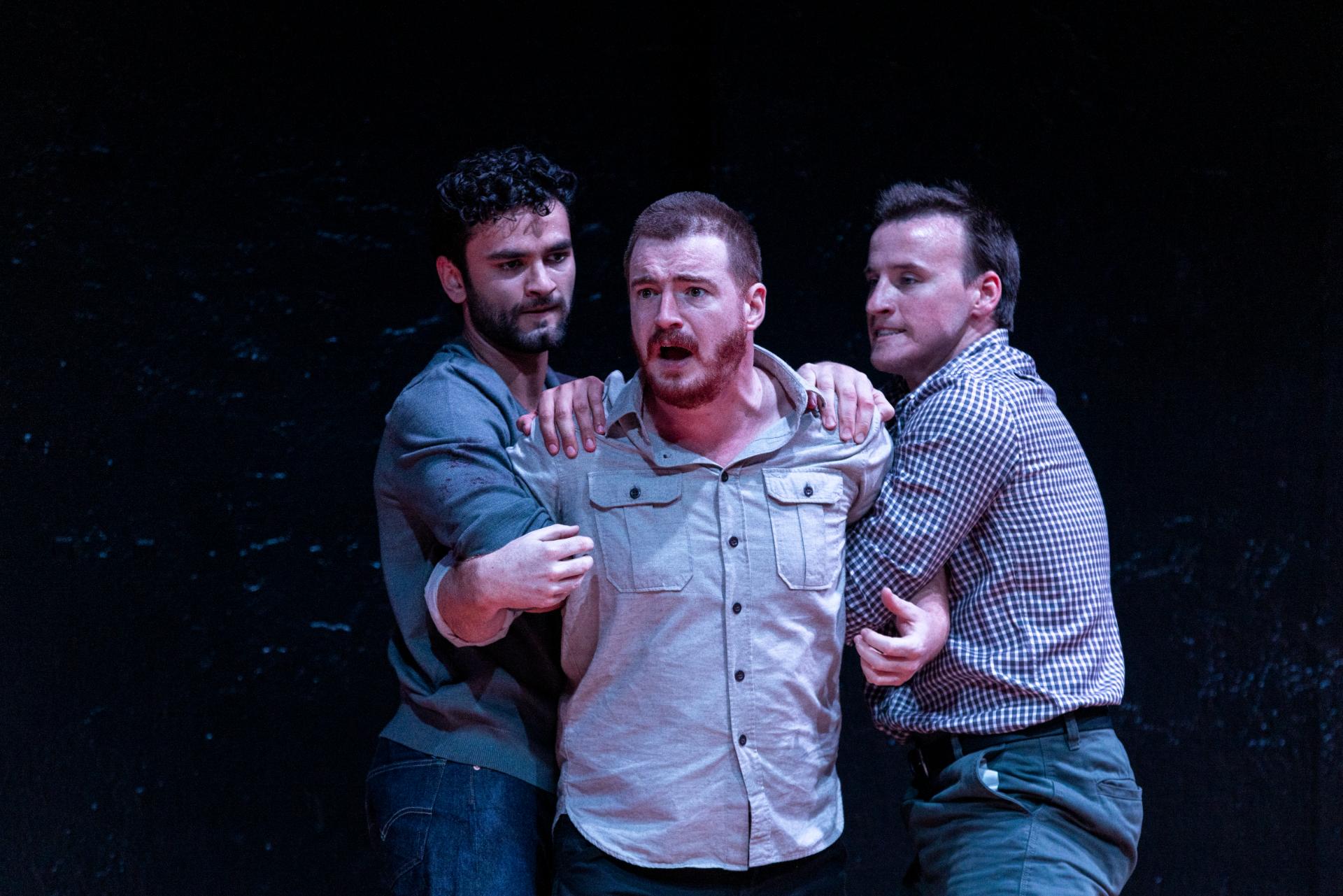
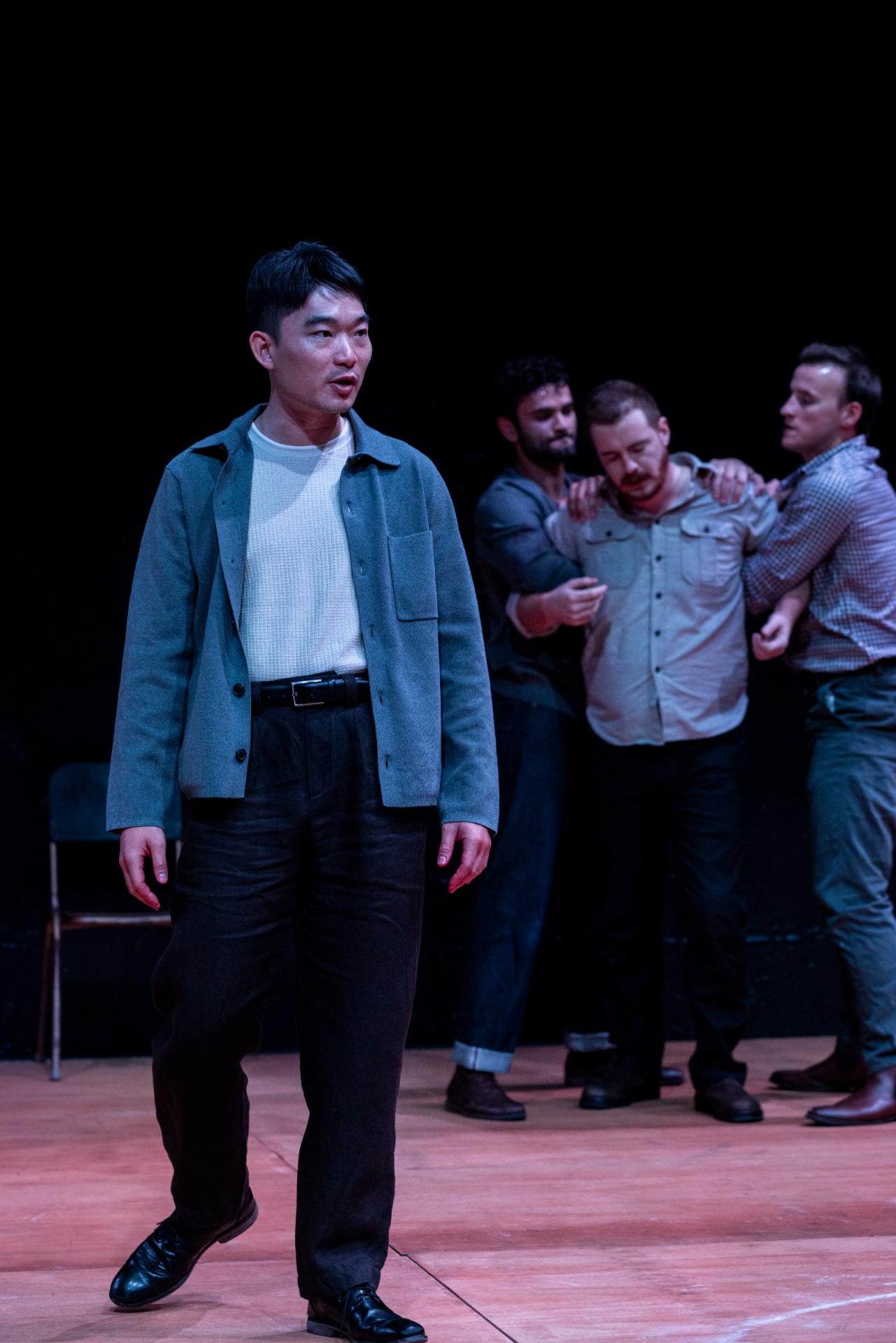
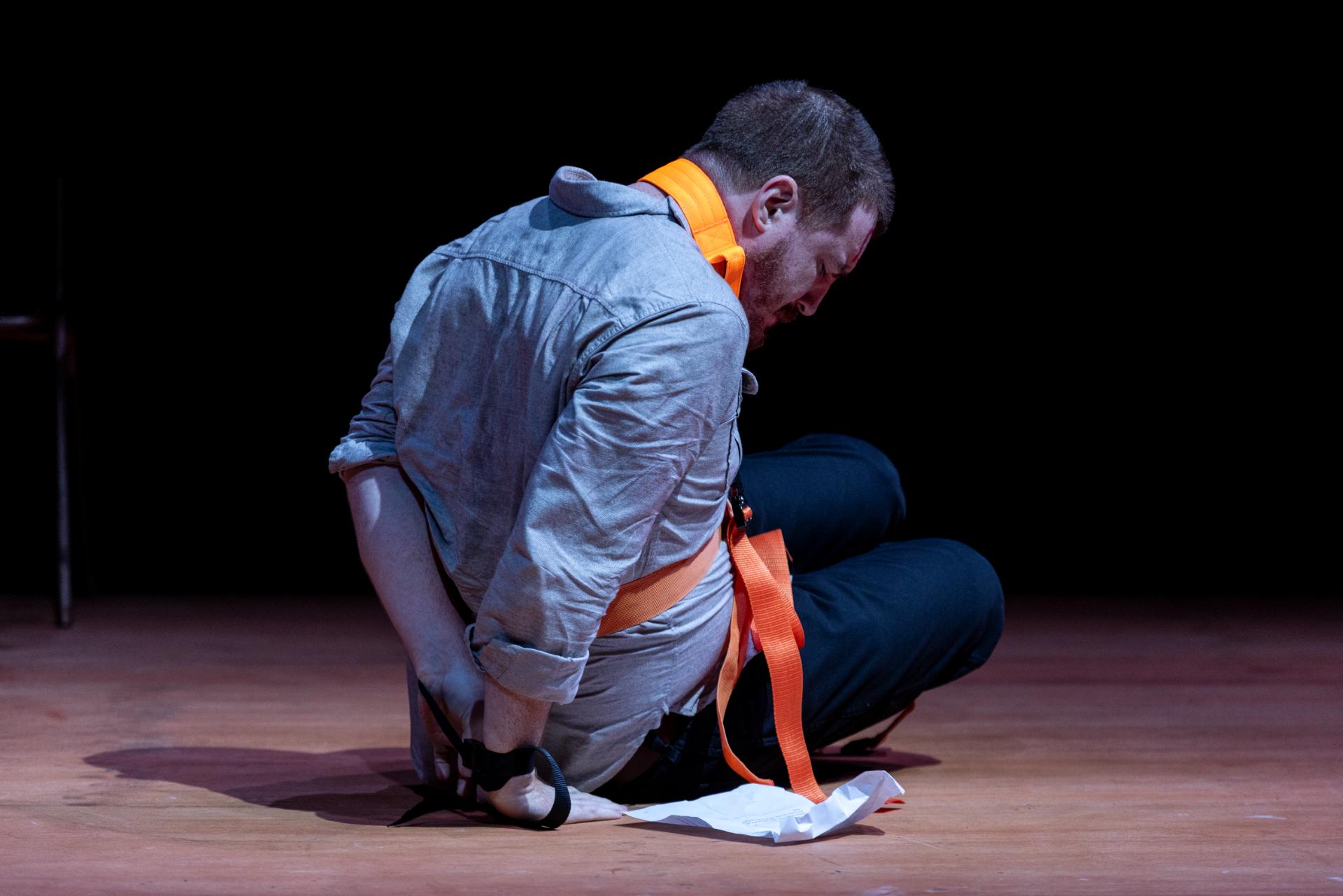
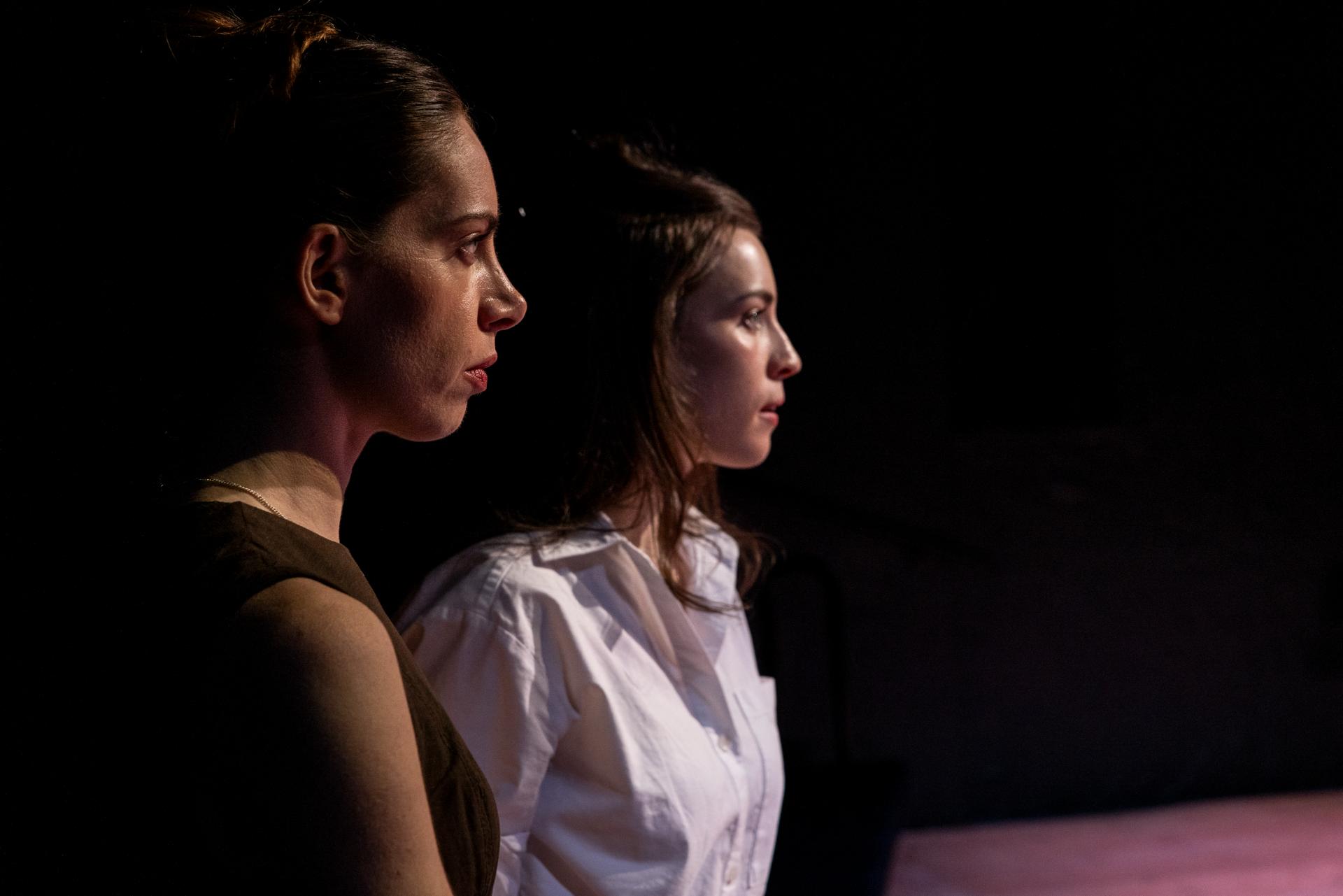
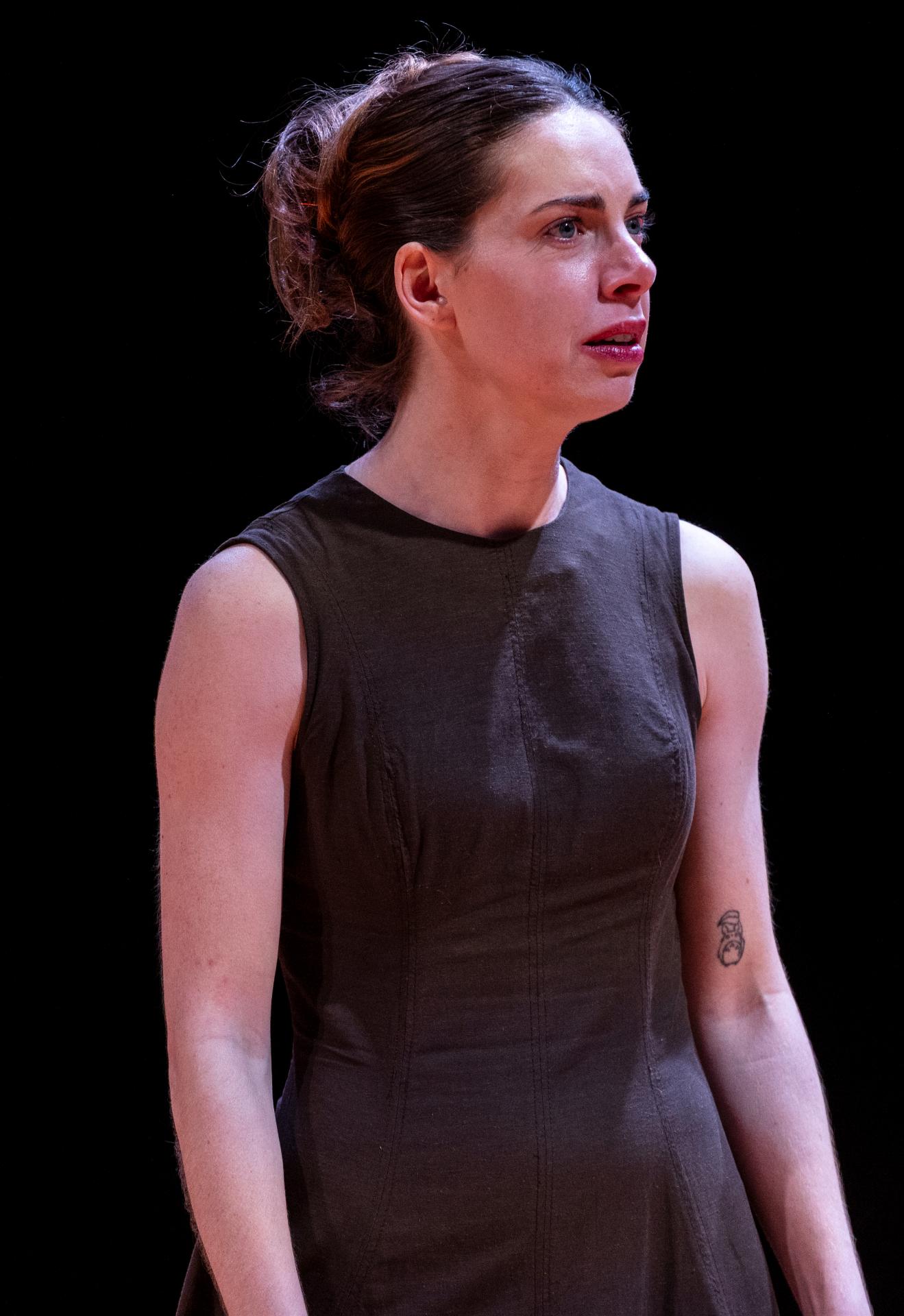
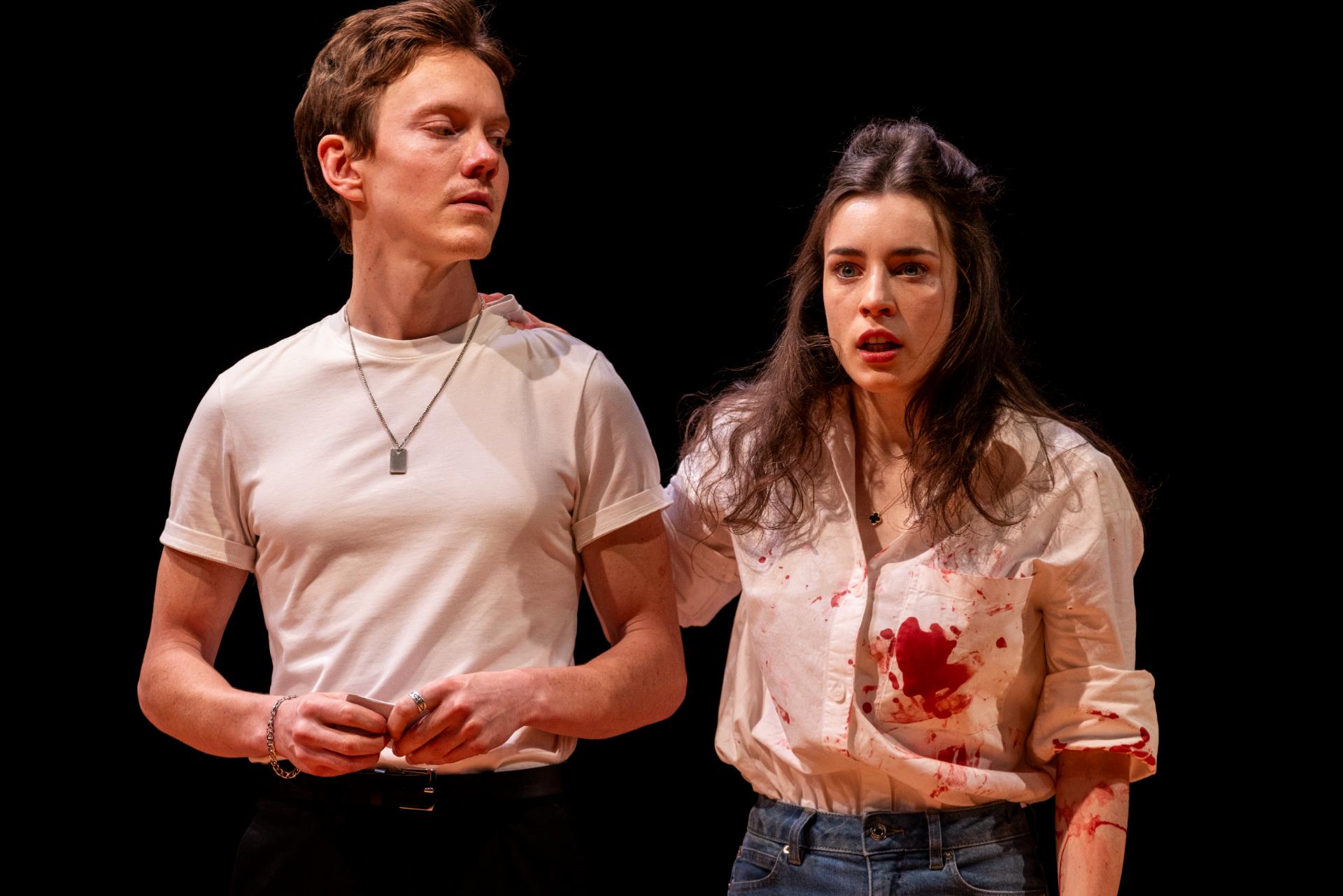
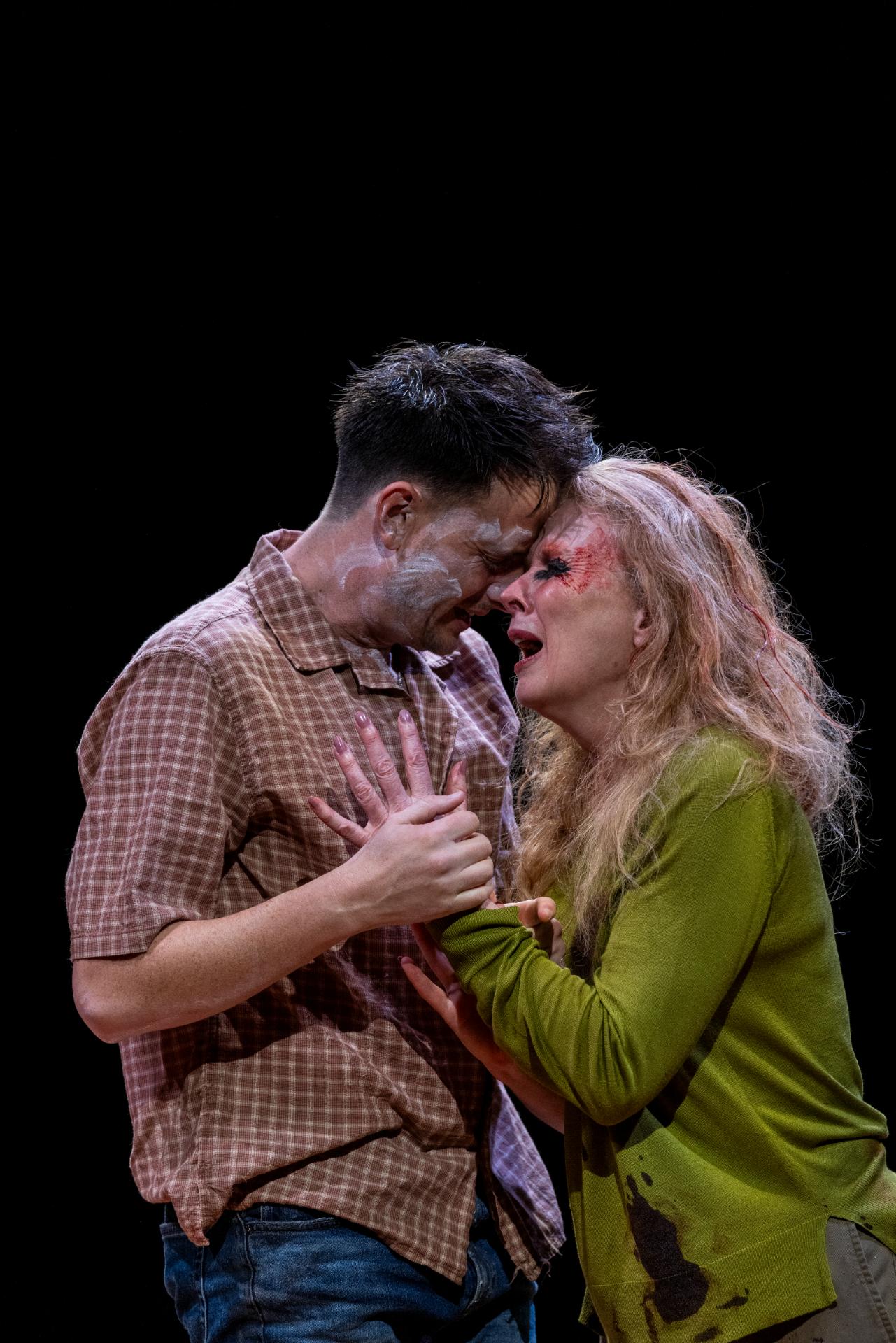
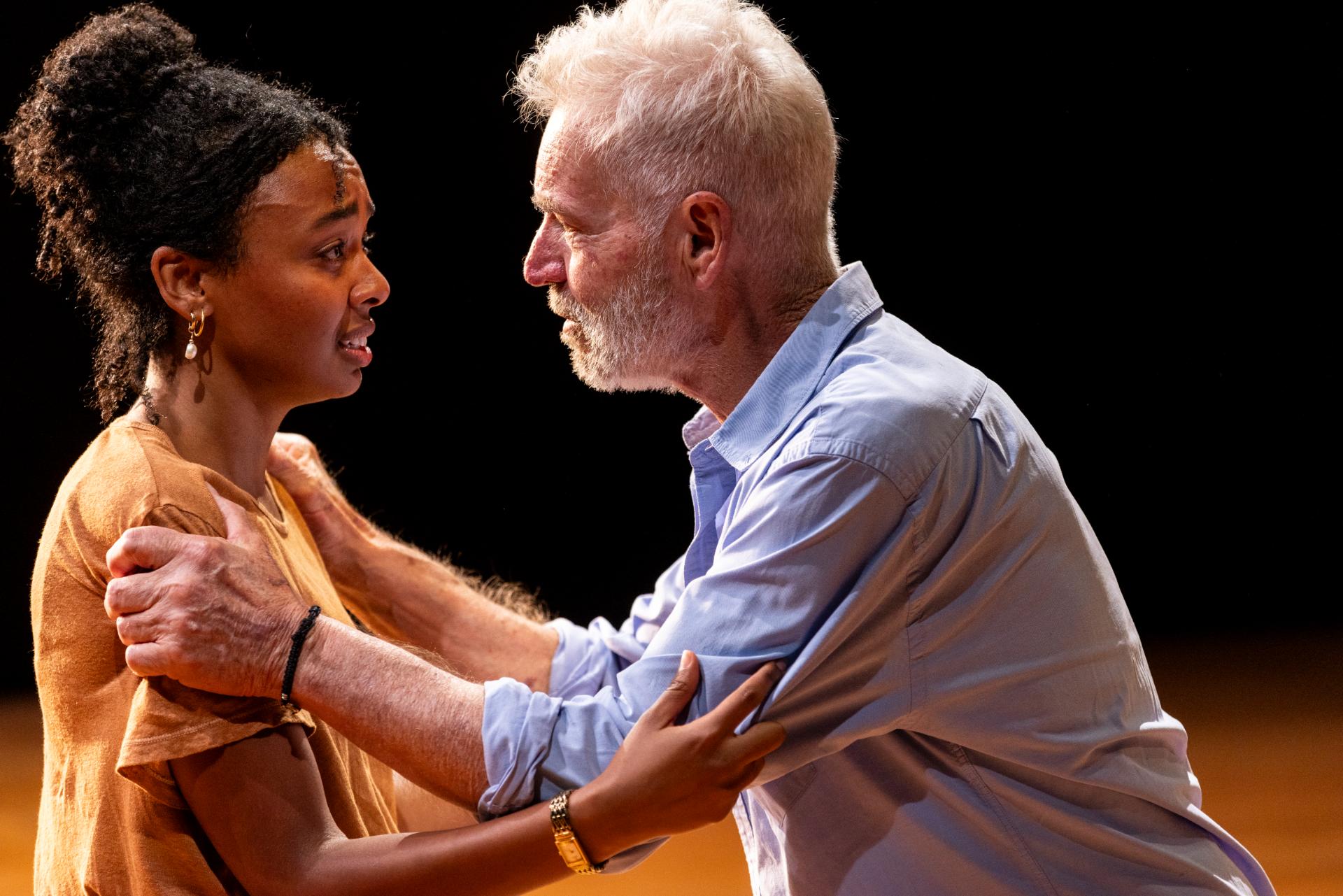
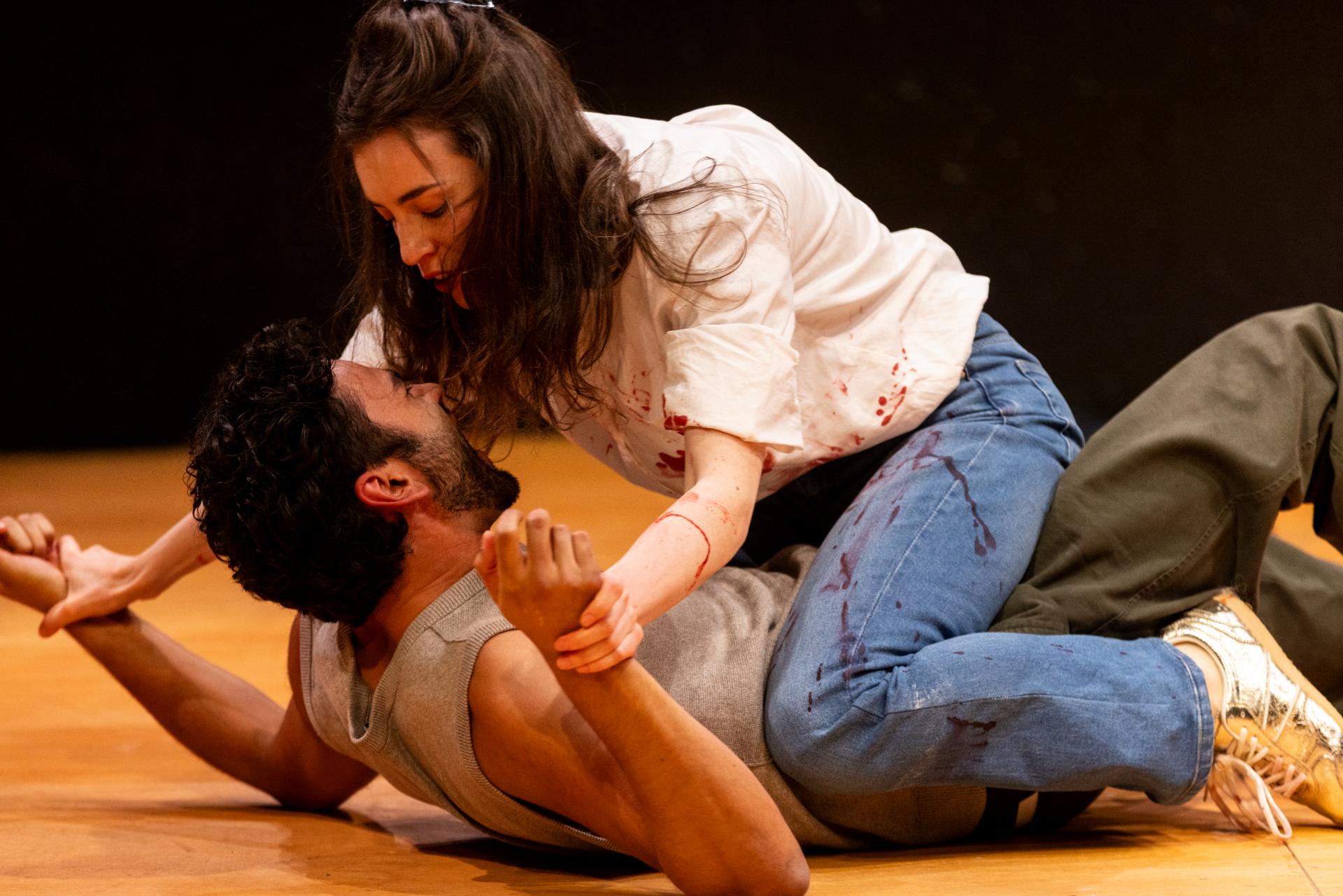
Margot is conducting an affair, unaware that her husband Tony is quietly engineering her murder. Yet in Dial M for Murder, even the most meticulous schemes refuse to unfold as intended, giving rise to a cascade of unforeseen twists. Jeffrey Hatcher’s adaptation of Frederick Knott’s seminal play and film may not conform to the conventions of a traditional whodunnit, but it possesses all the hallmarks of an investigative classic—suspenseful, cunningly constructed, and keeping us on tenterhooks as we strain to anticipate its final reckoning.

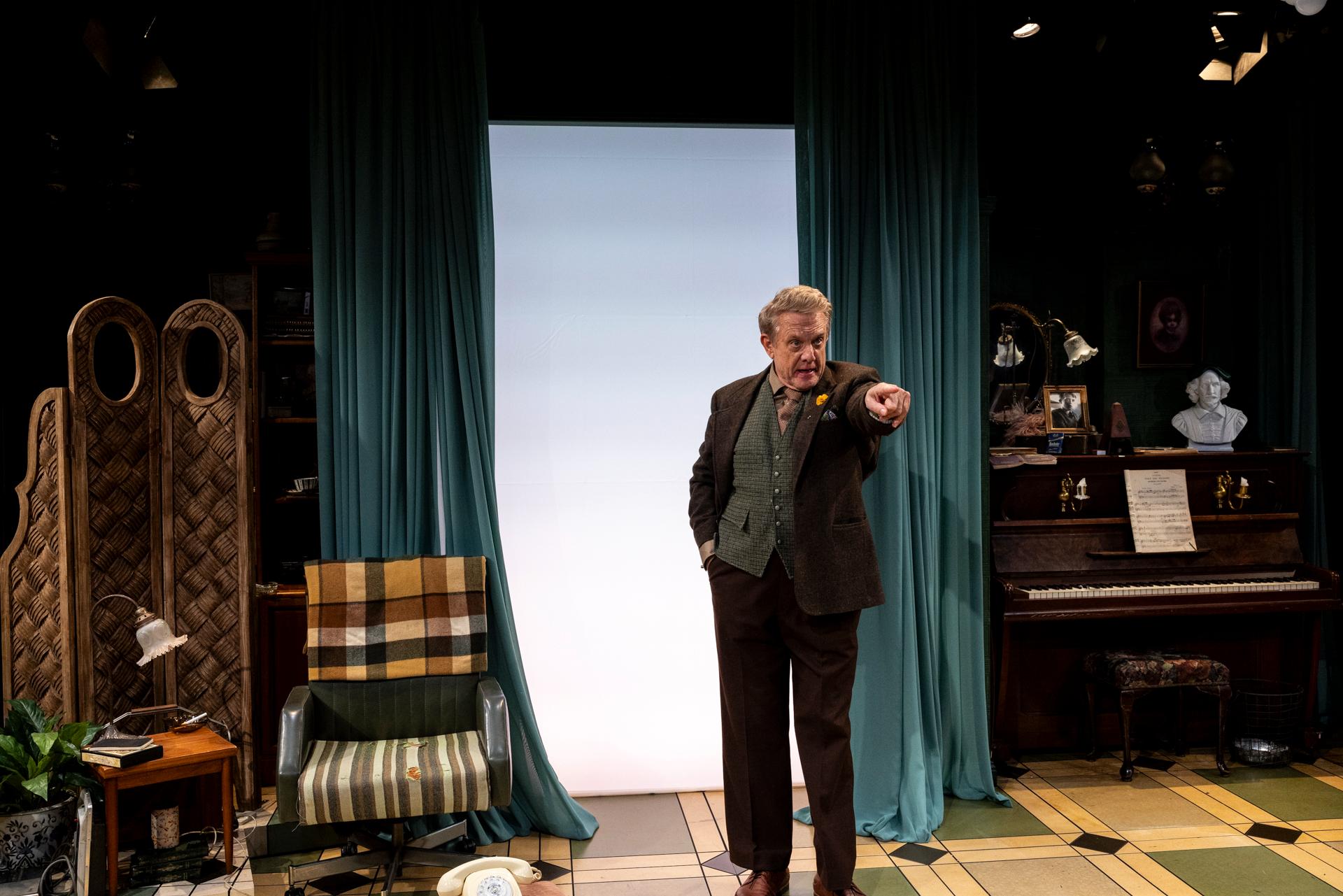
Marvellously taut direction from Mark Kilmurry, laced with a gentle, sly humour, yields a thoroughly engaging night at the theatre. While Kilmurry’s treatment of this 1952 tale is not especially inventive, it has no difficulty holding us captive throughout. Each plot revelation is unveiled with delectable finesse, delivering the kind of satisfaction that reminds us why this genre endures so effortlessly.
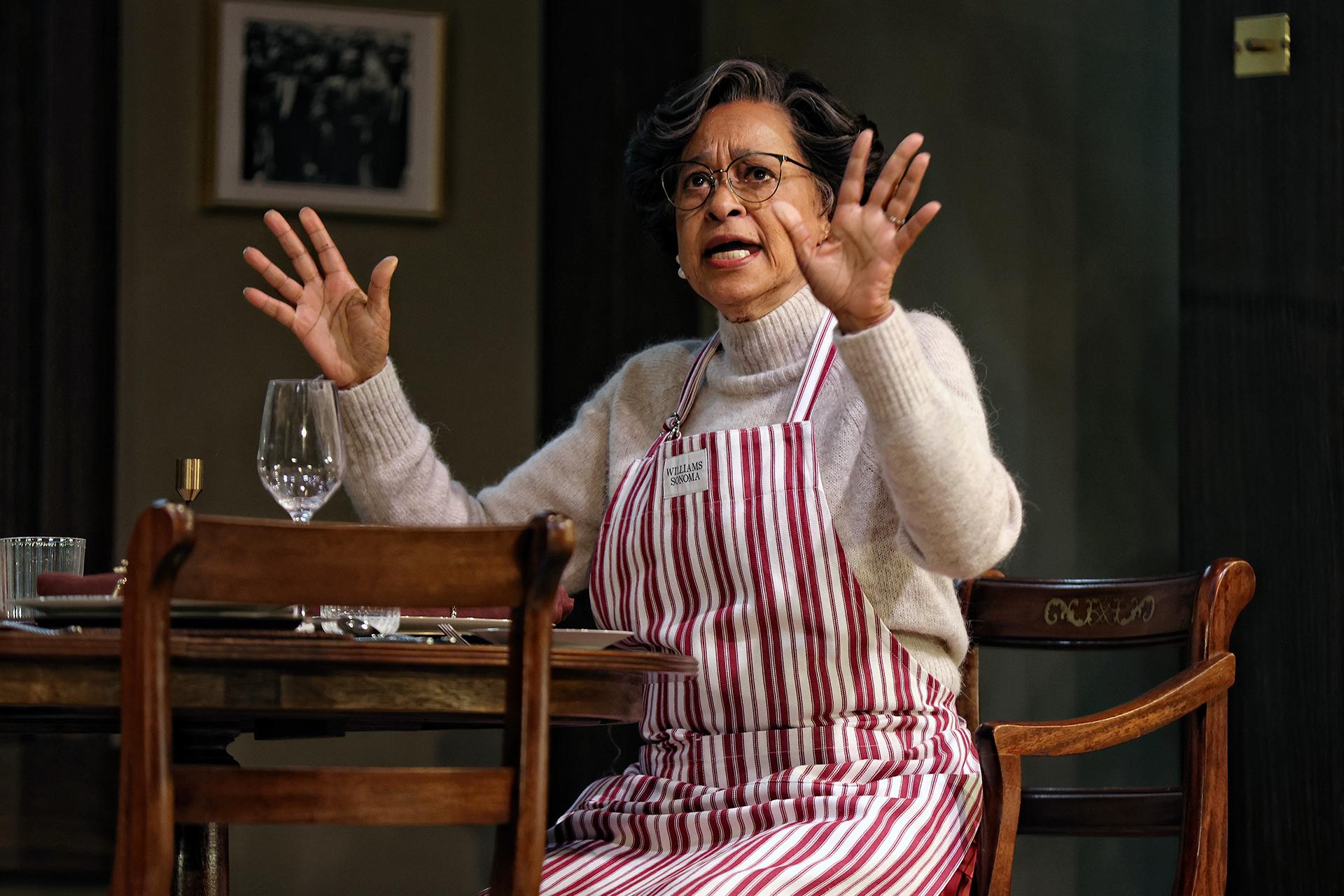
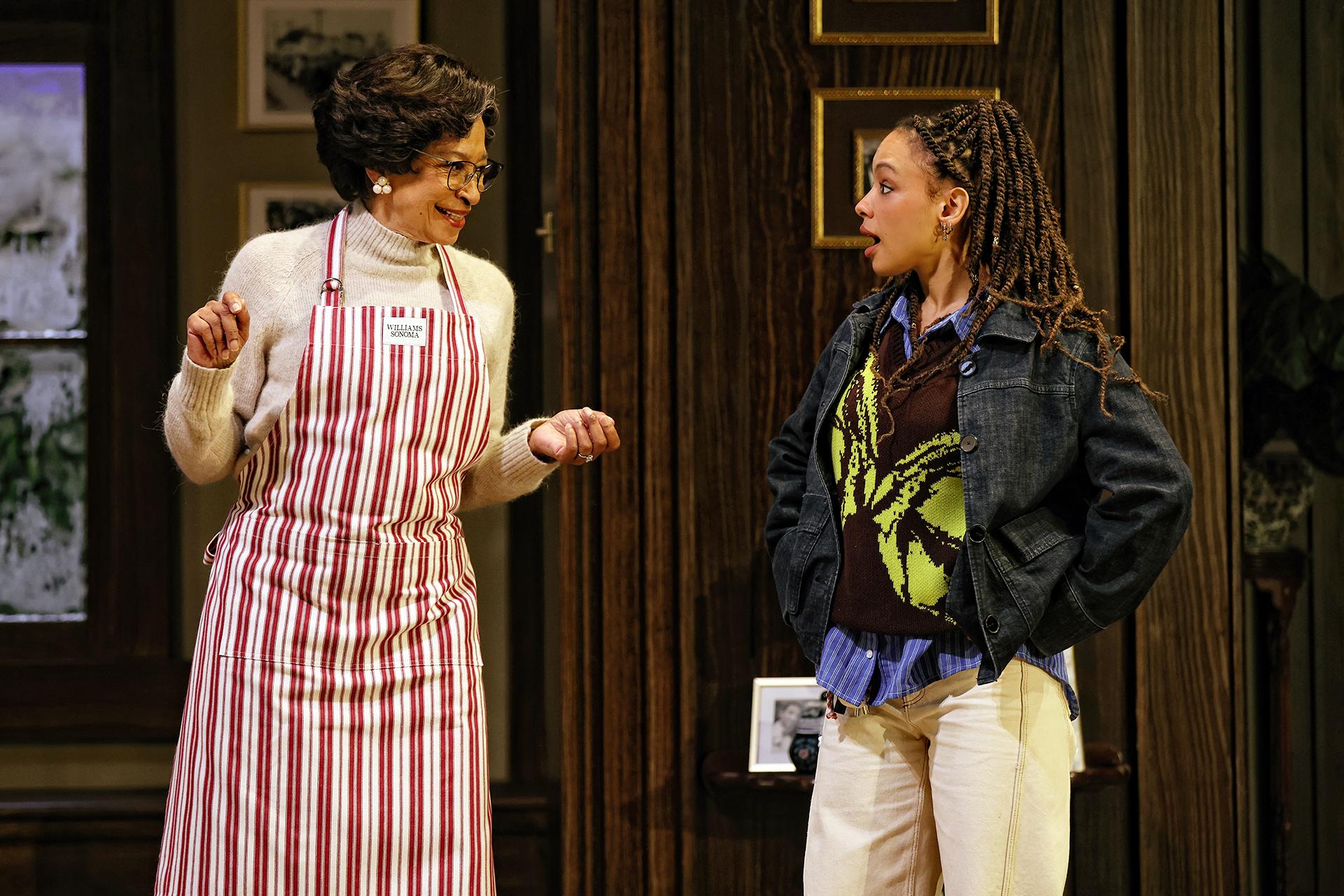
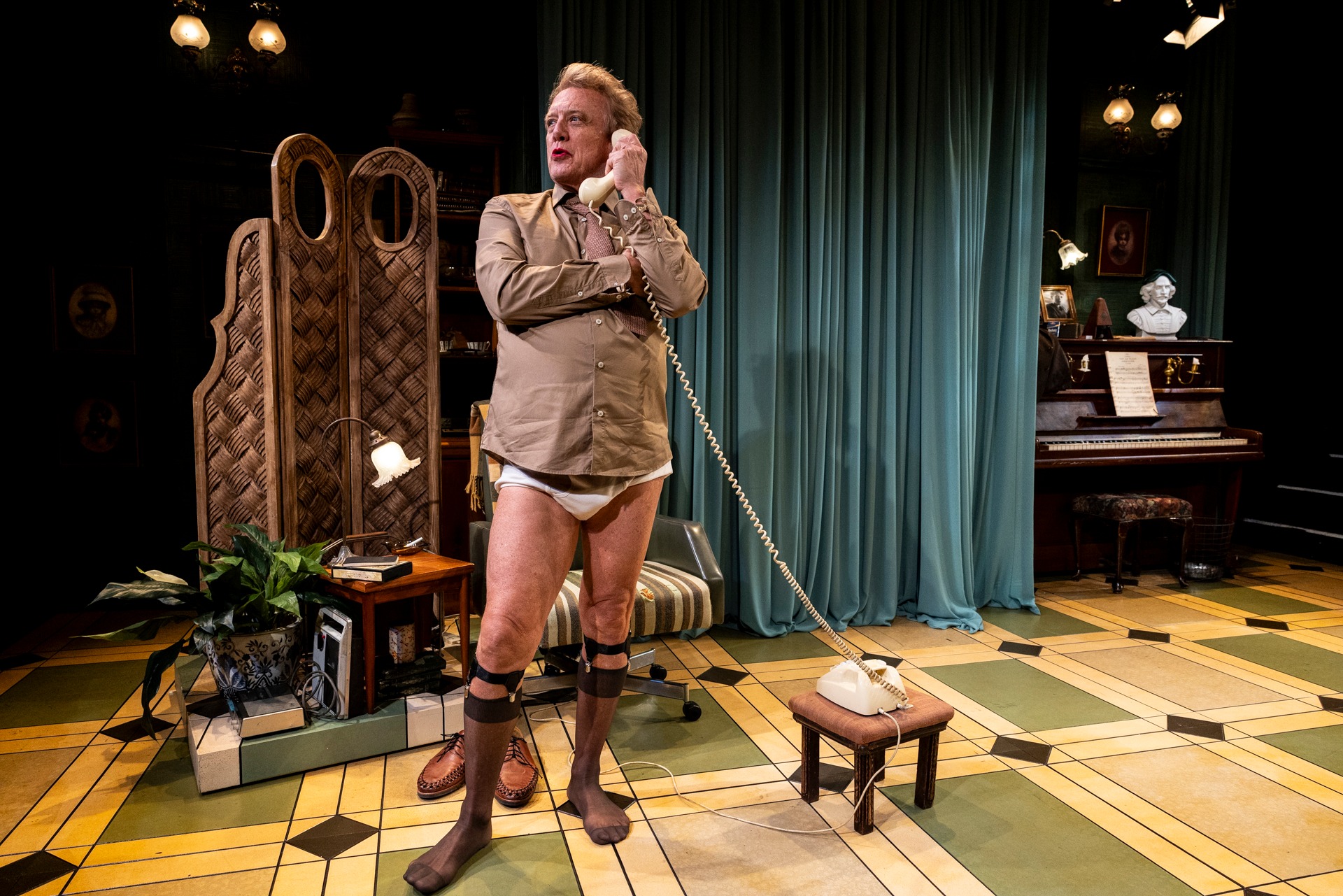
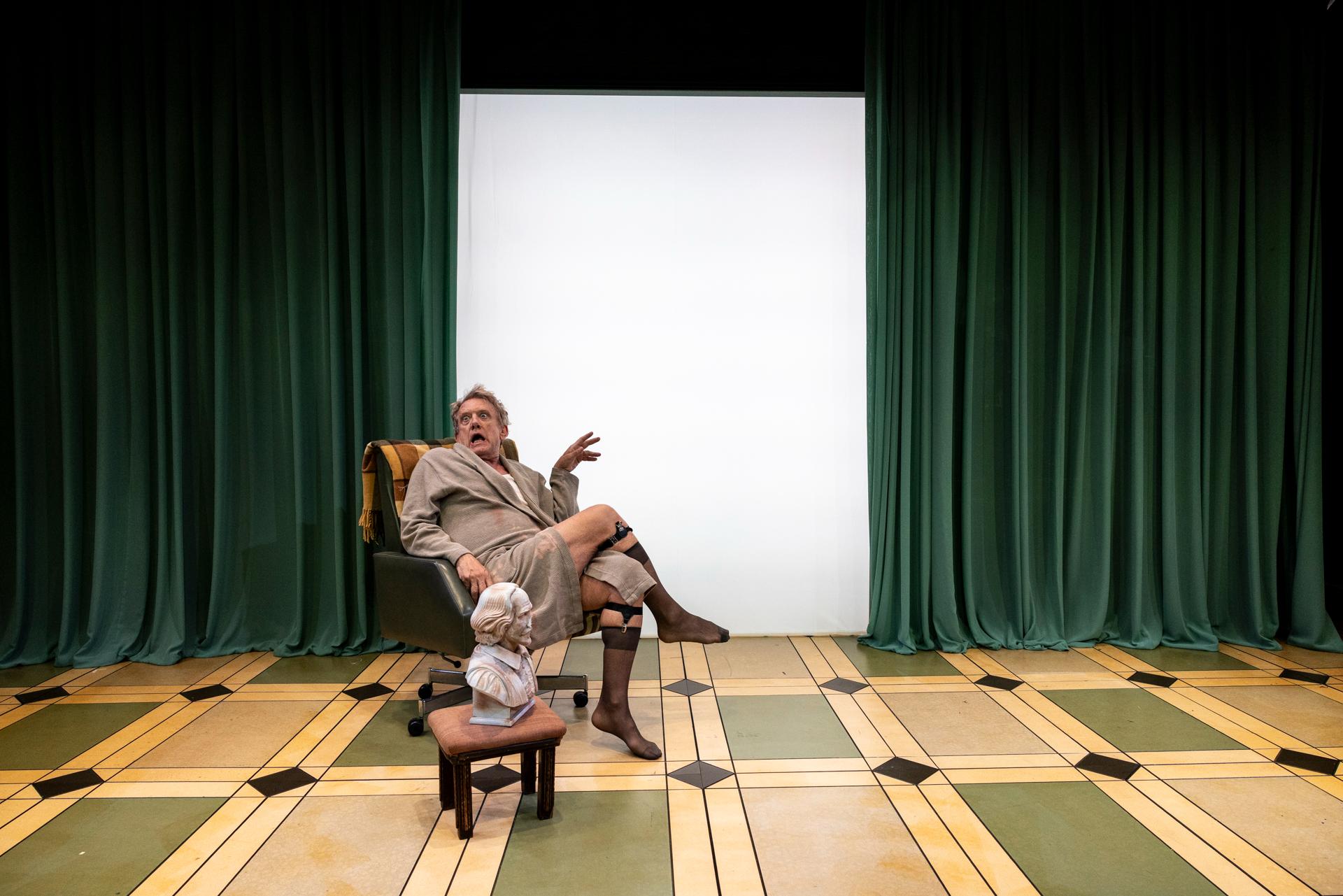
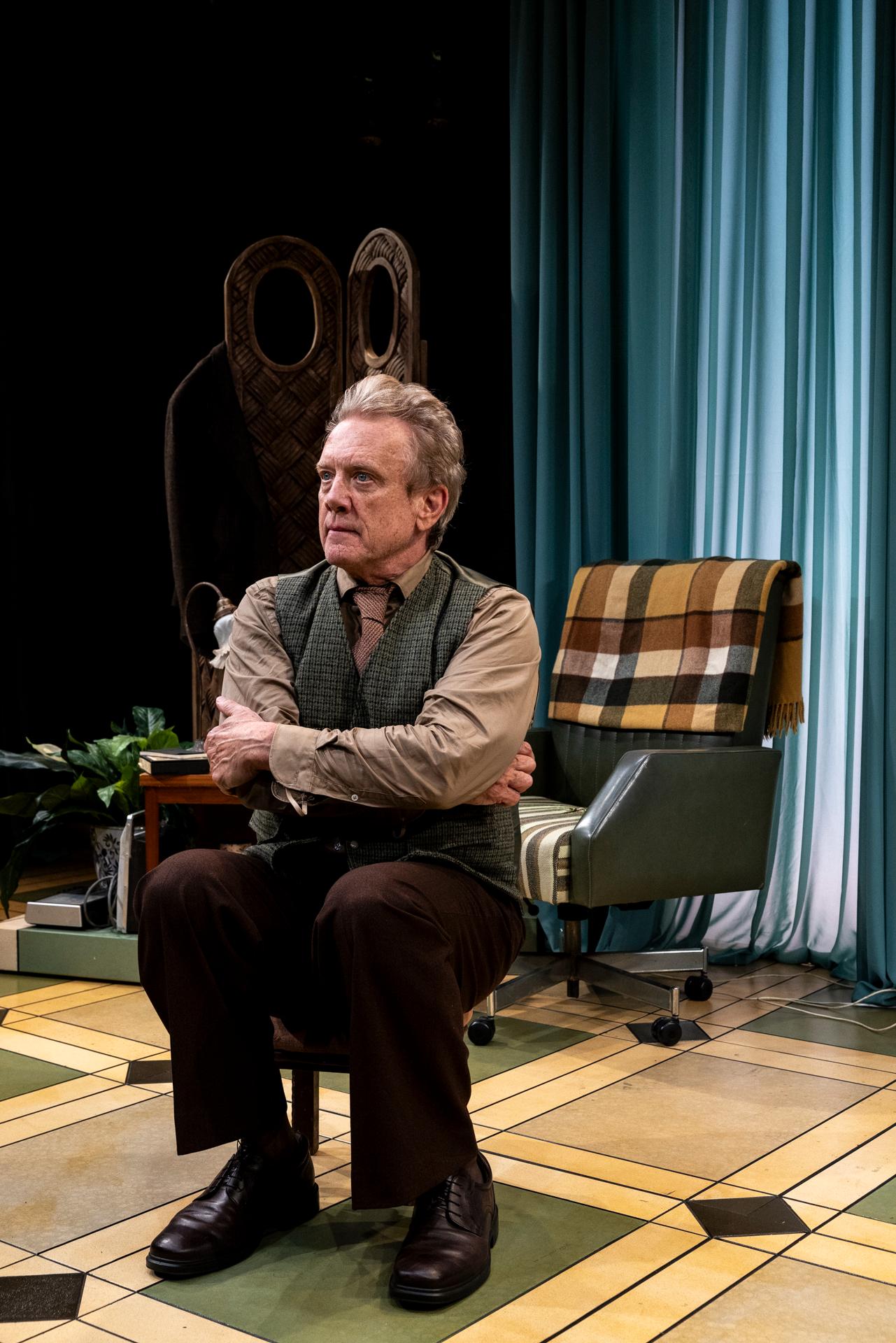
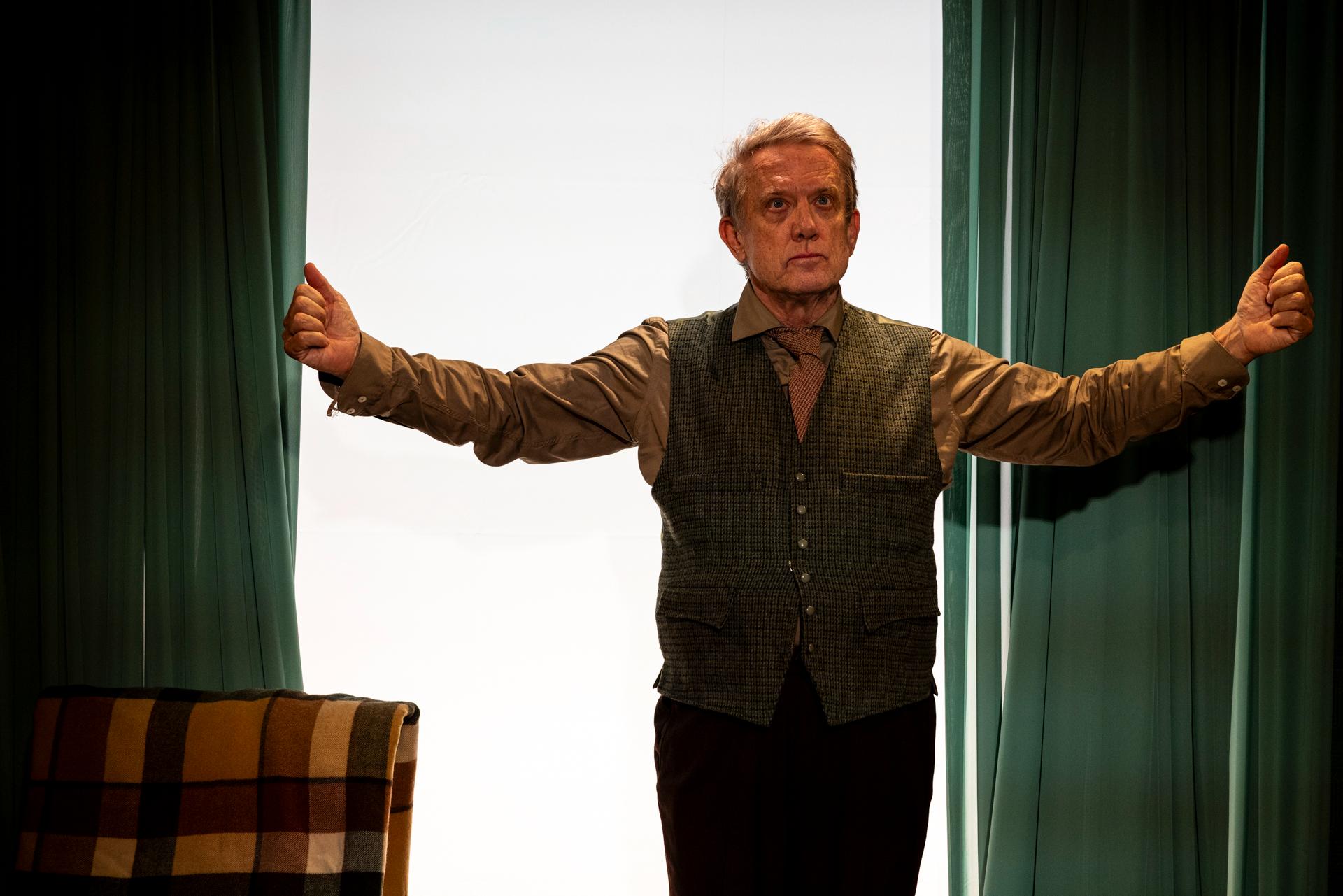
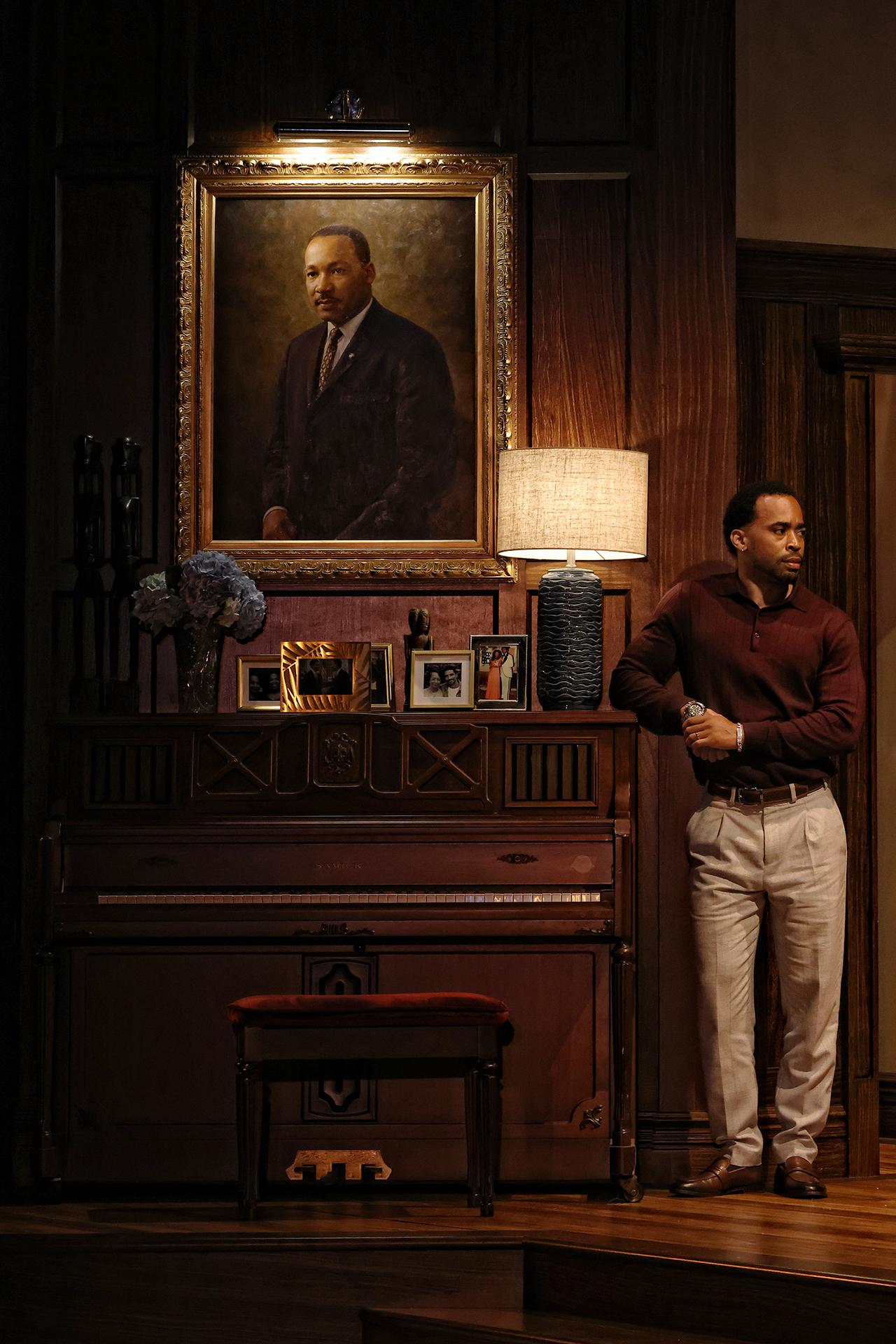
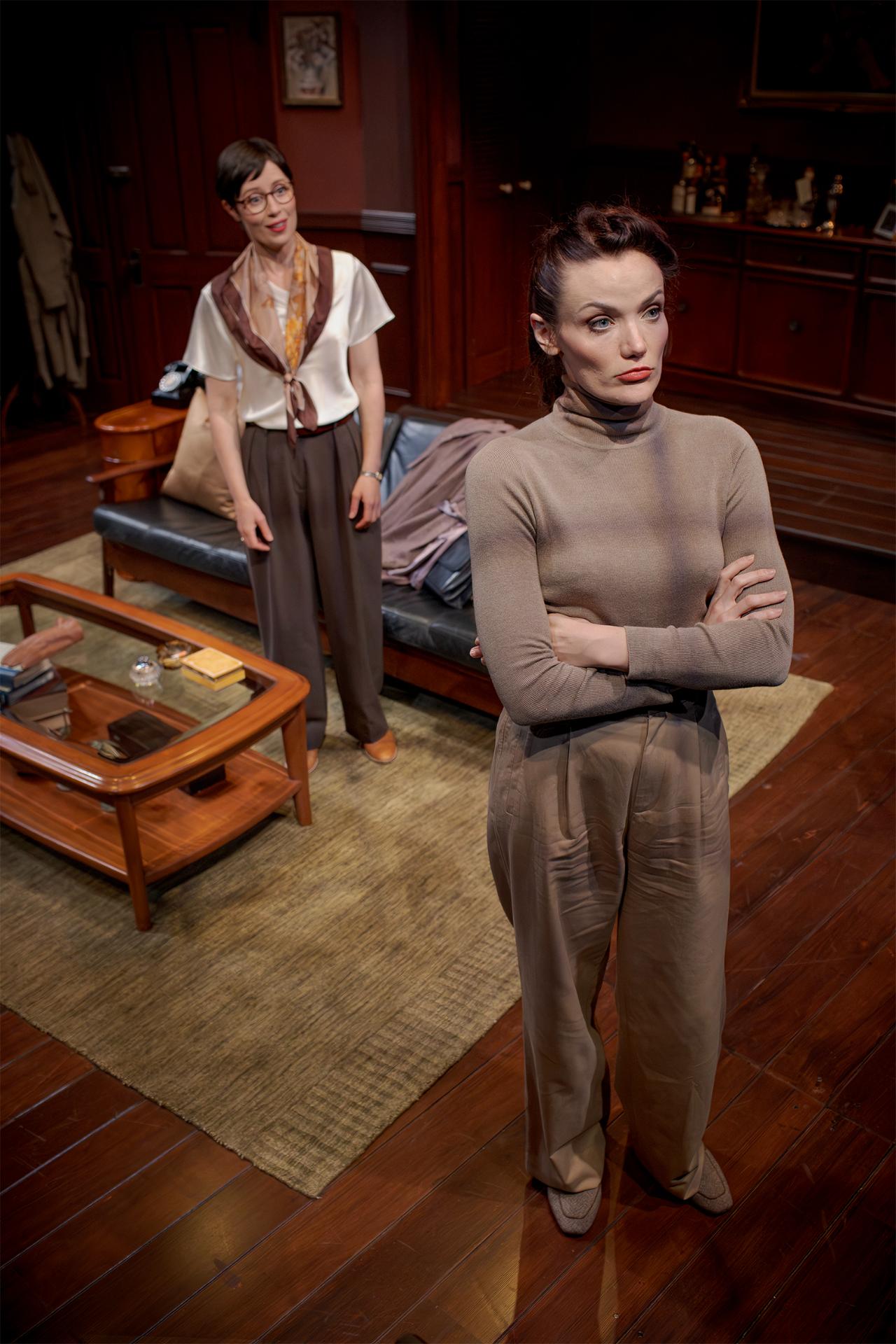
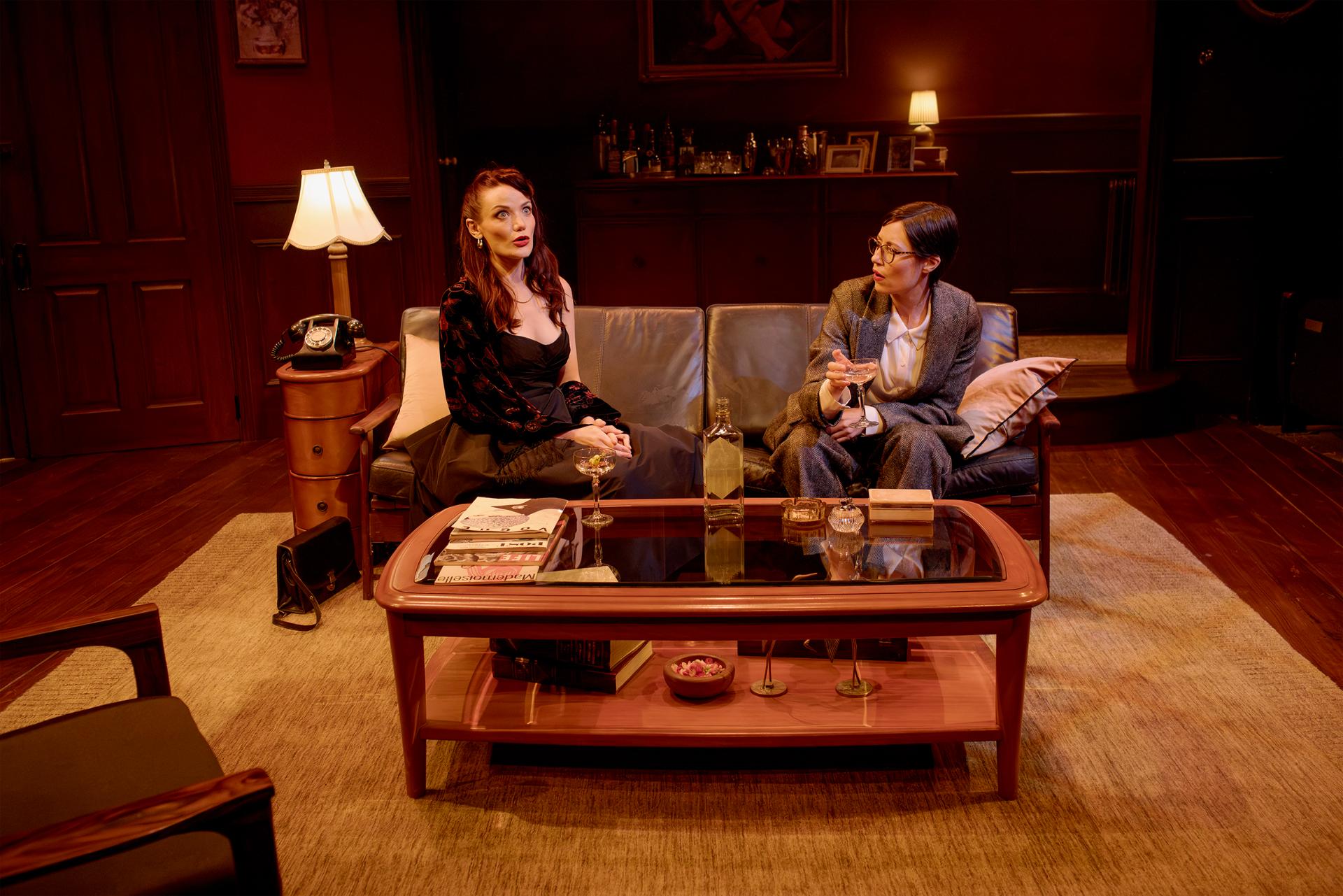
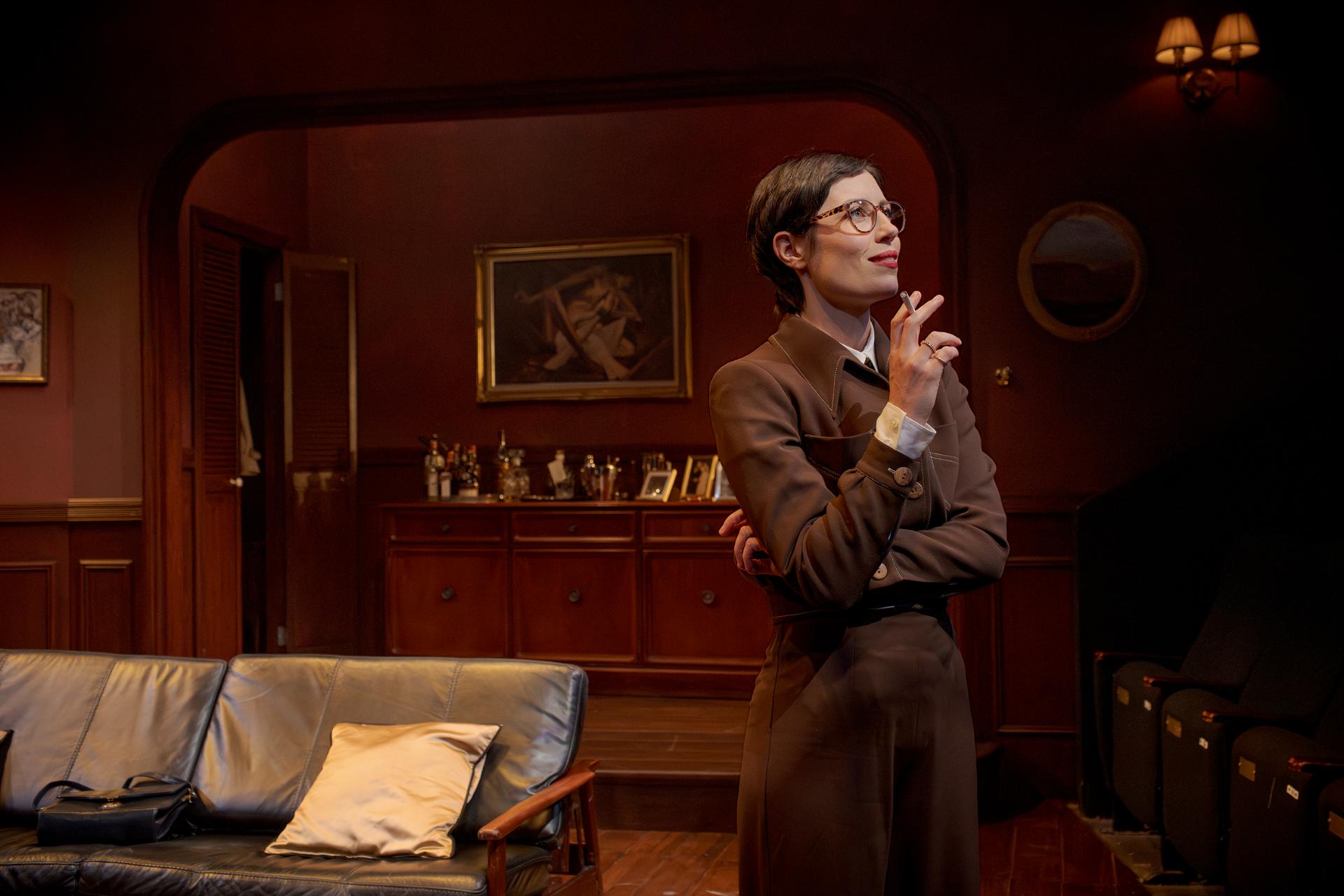
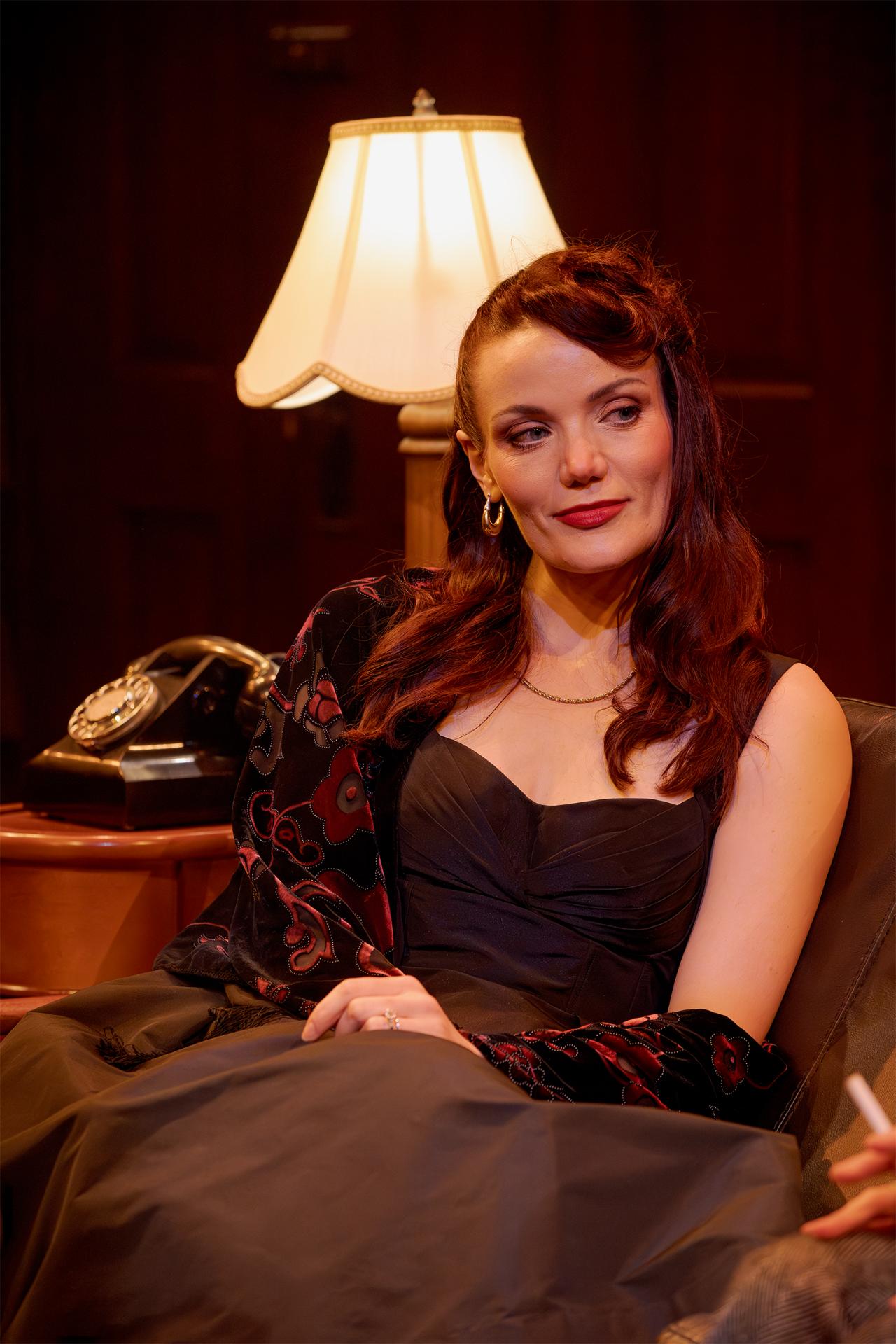
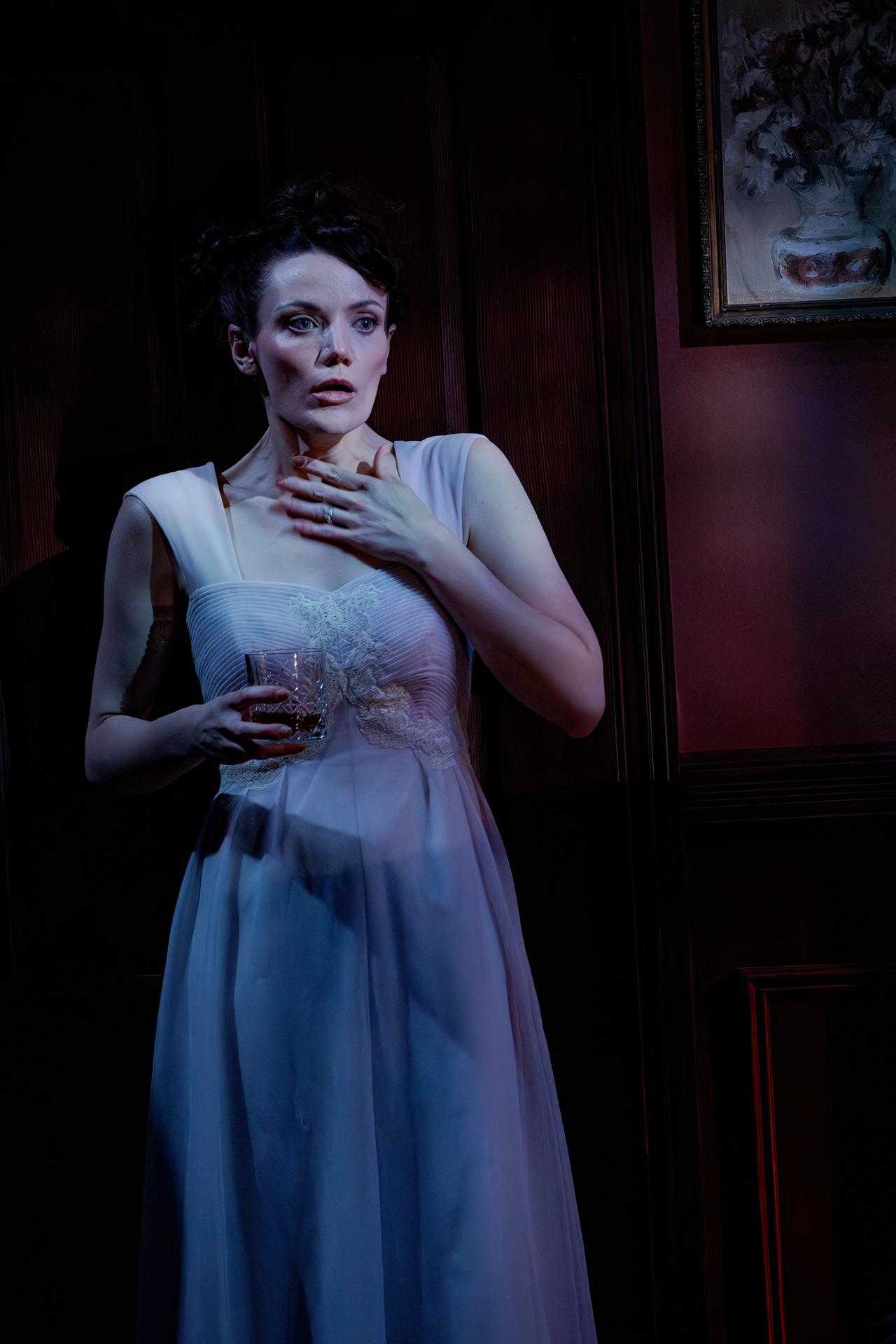
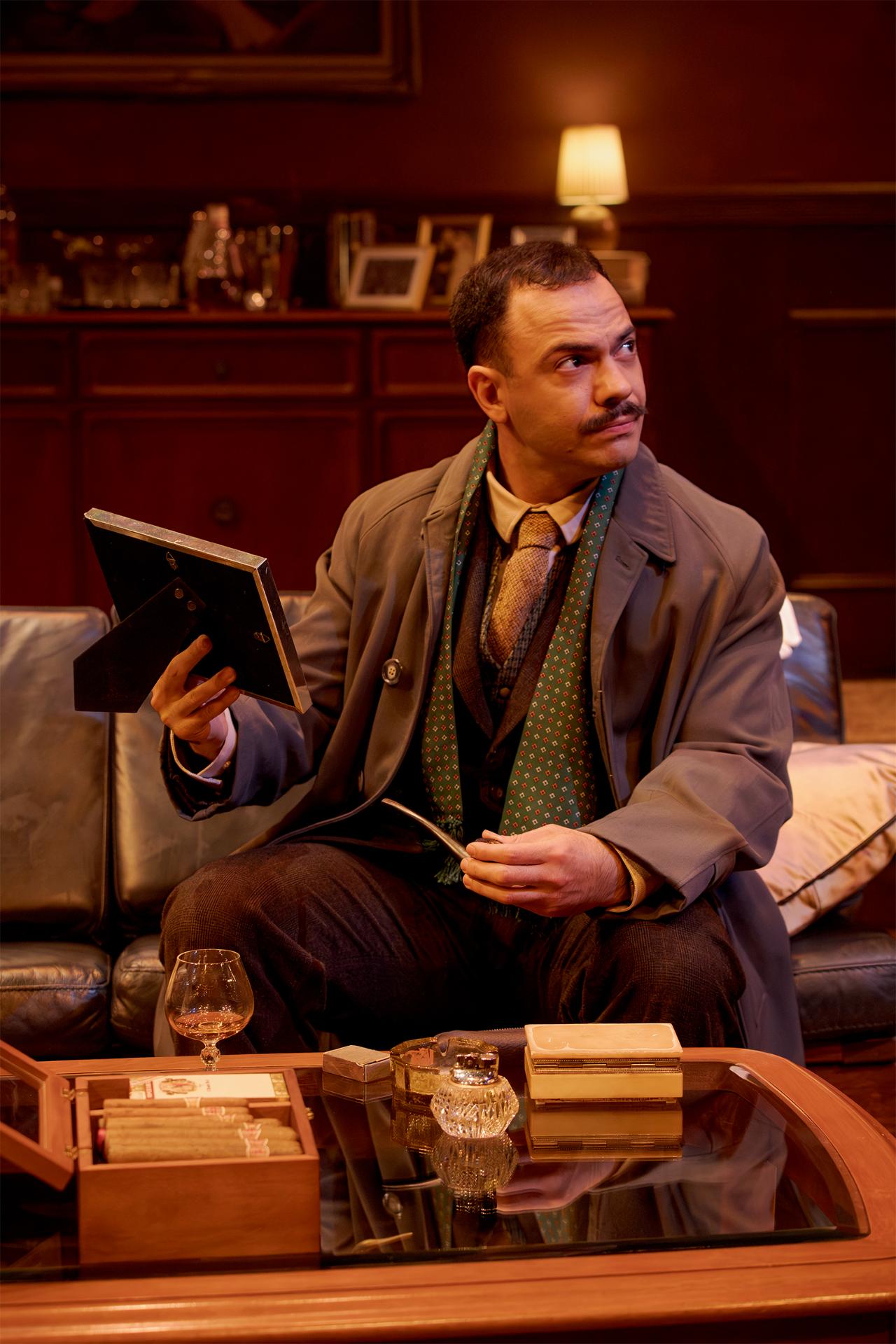
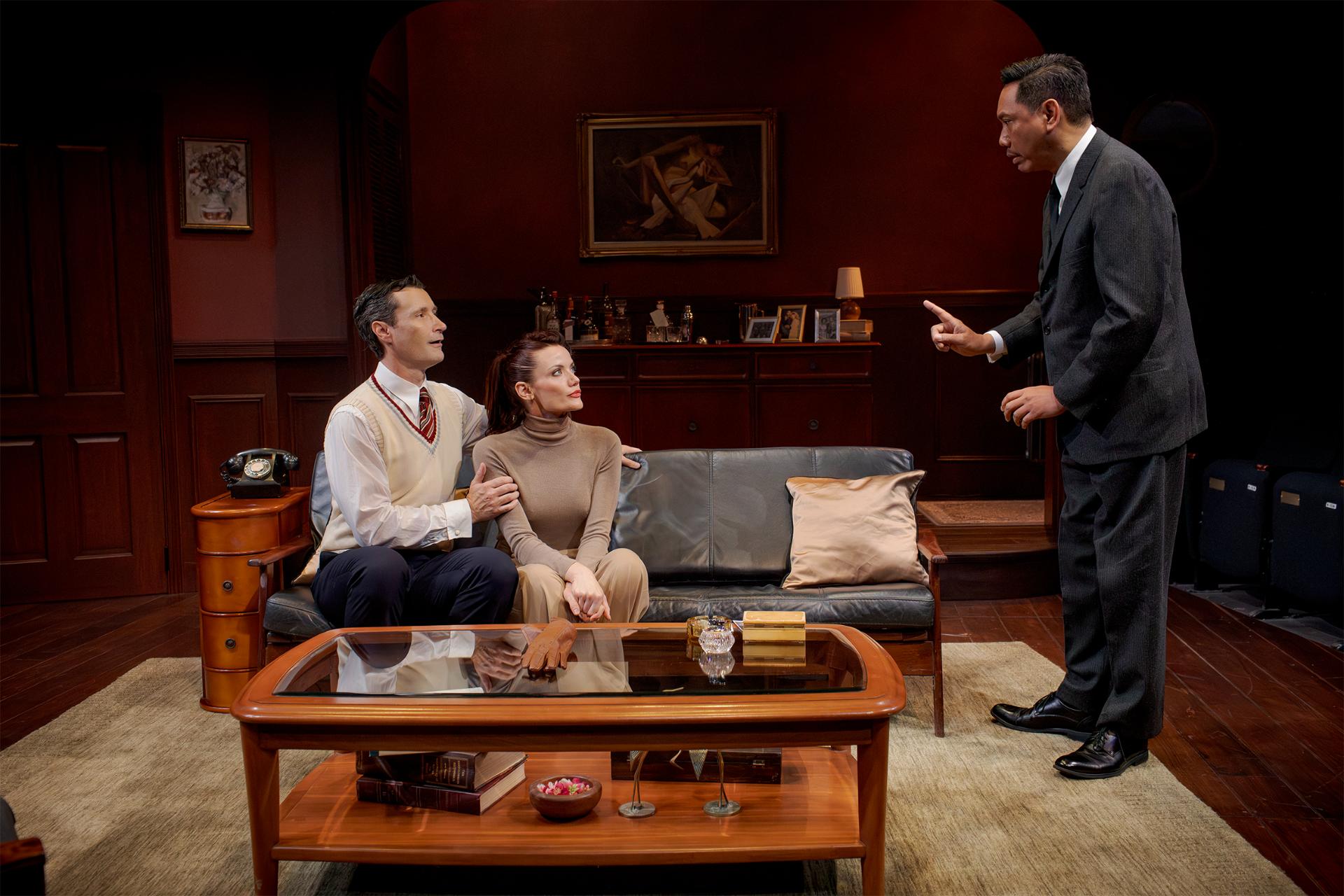
Nick Fry’s handsome set design allows for fluid, elegant movement, while presenting a sophisticated colour palette that evokes the period yet remains visually appealing. His costumes, impeccably realised, convincingly embody the refinement of the English upper class. Matt Cox’s lighting, with its warm amber glow, flatters the stage picture and injects a quietly simmering dramatic tension. Madeleine Picard’s music, lush and evocative of mid-century cinema, proves sumptuous throughout, ever attuned to deepening the atmosphere of intrigue.
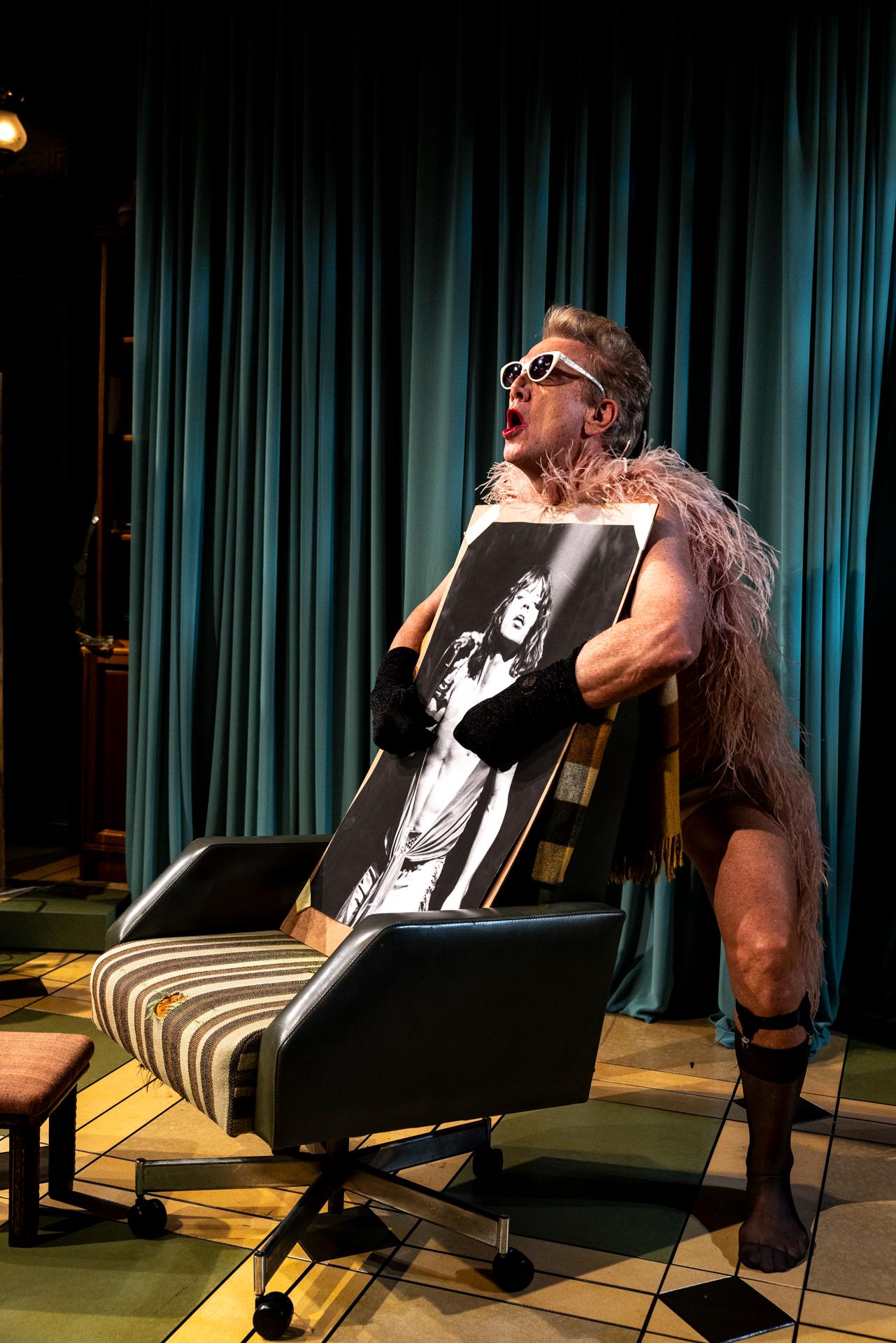
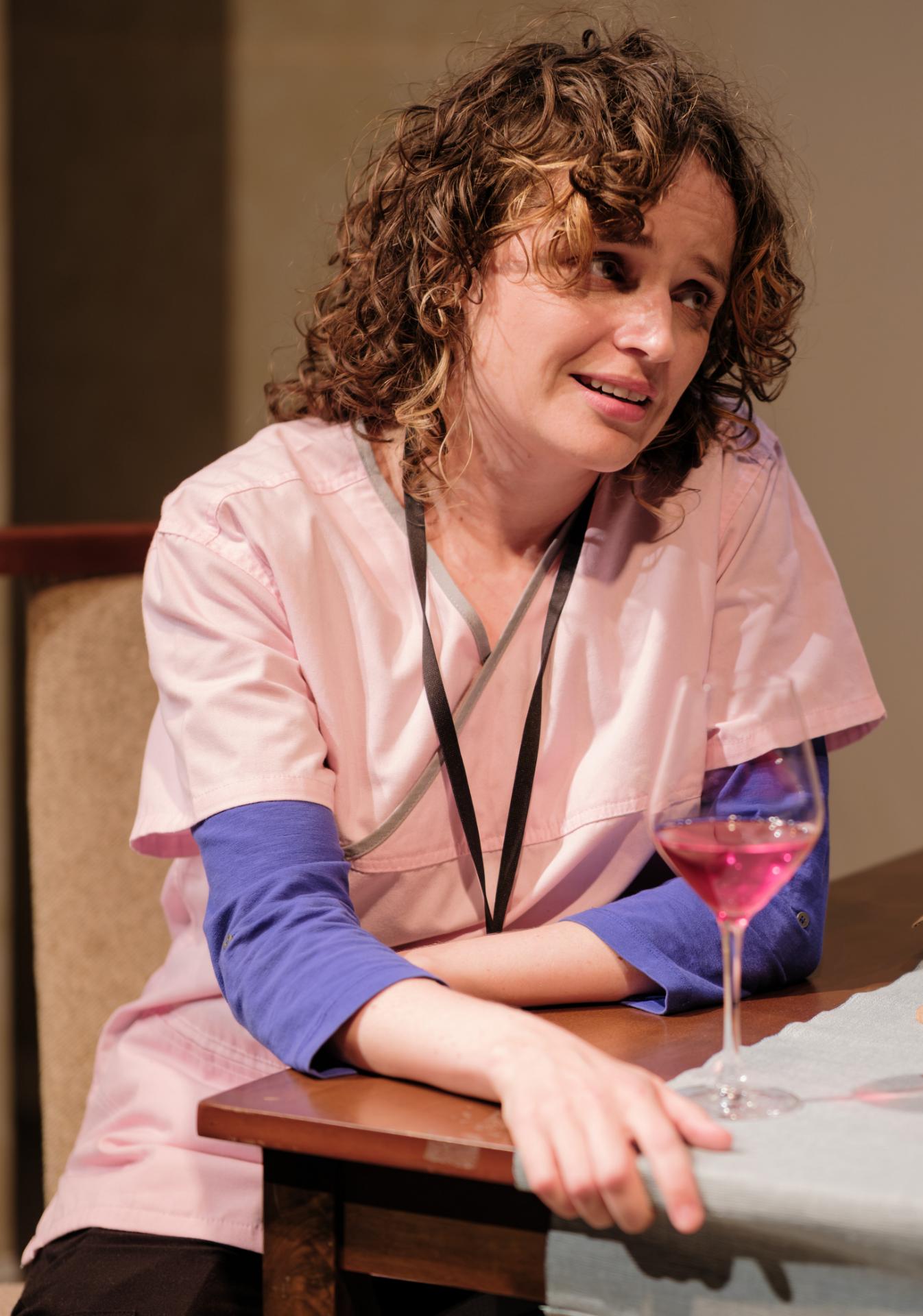
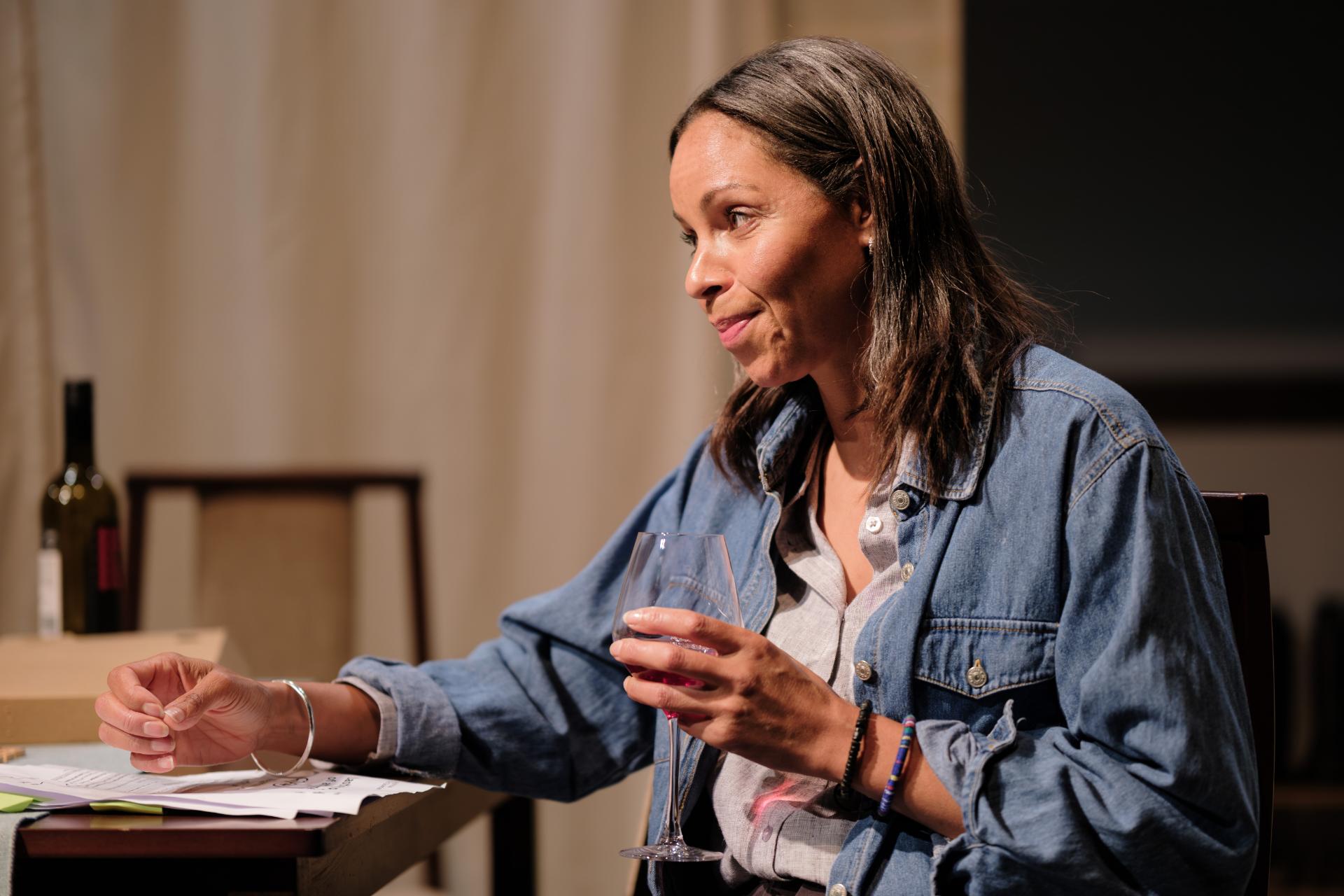
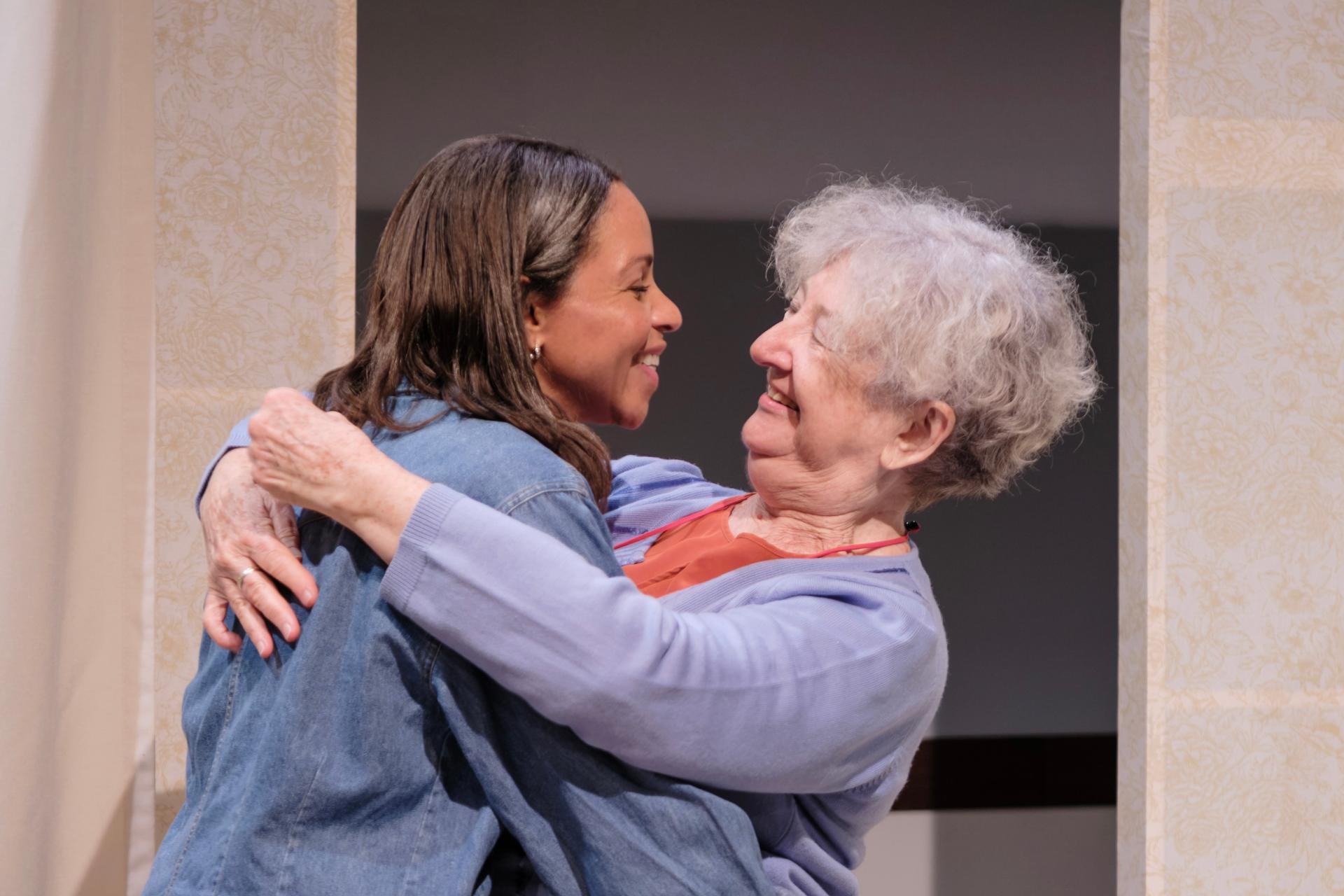
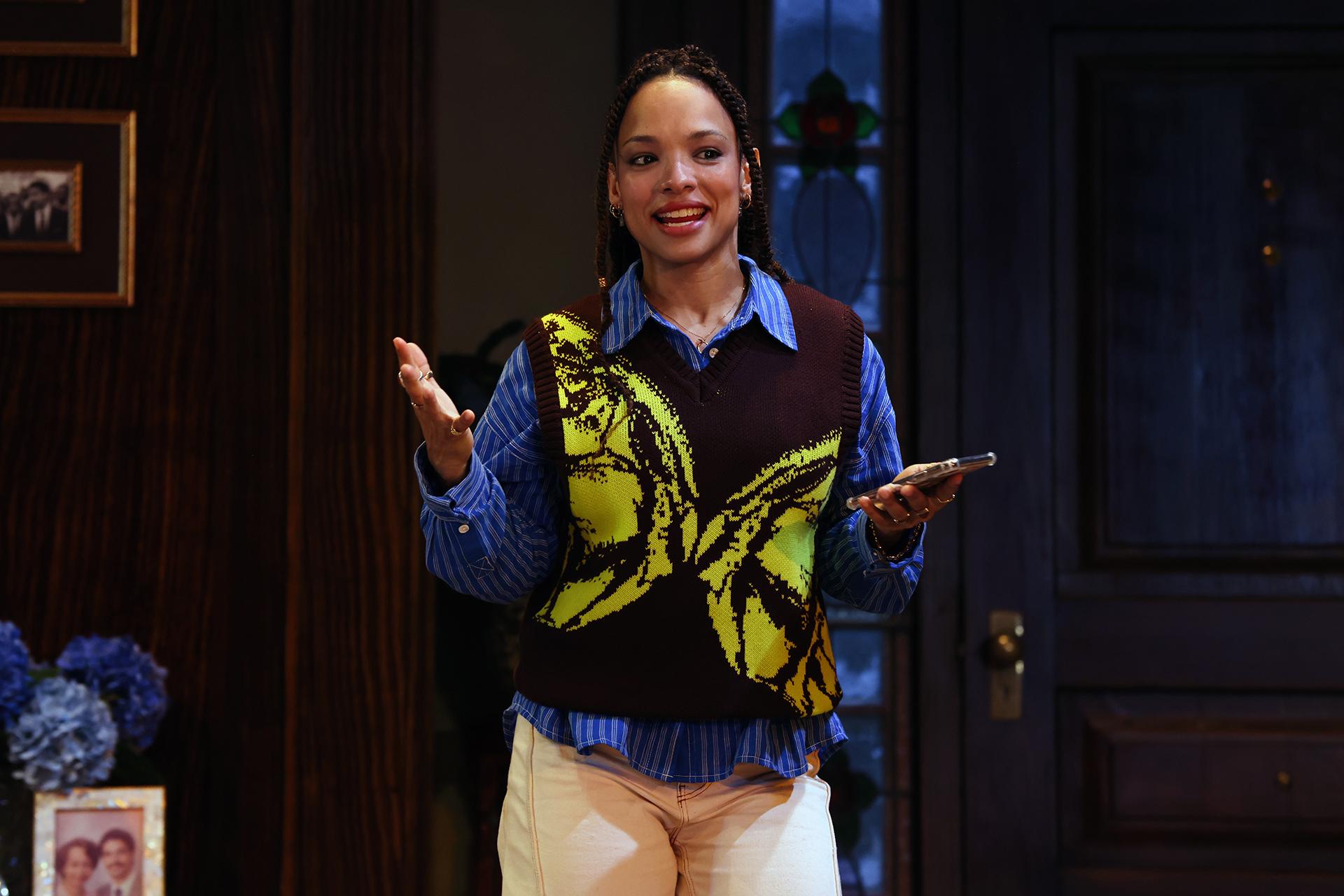
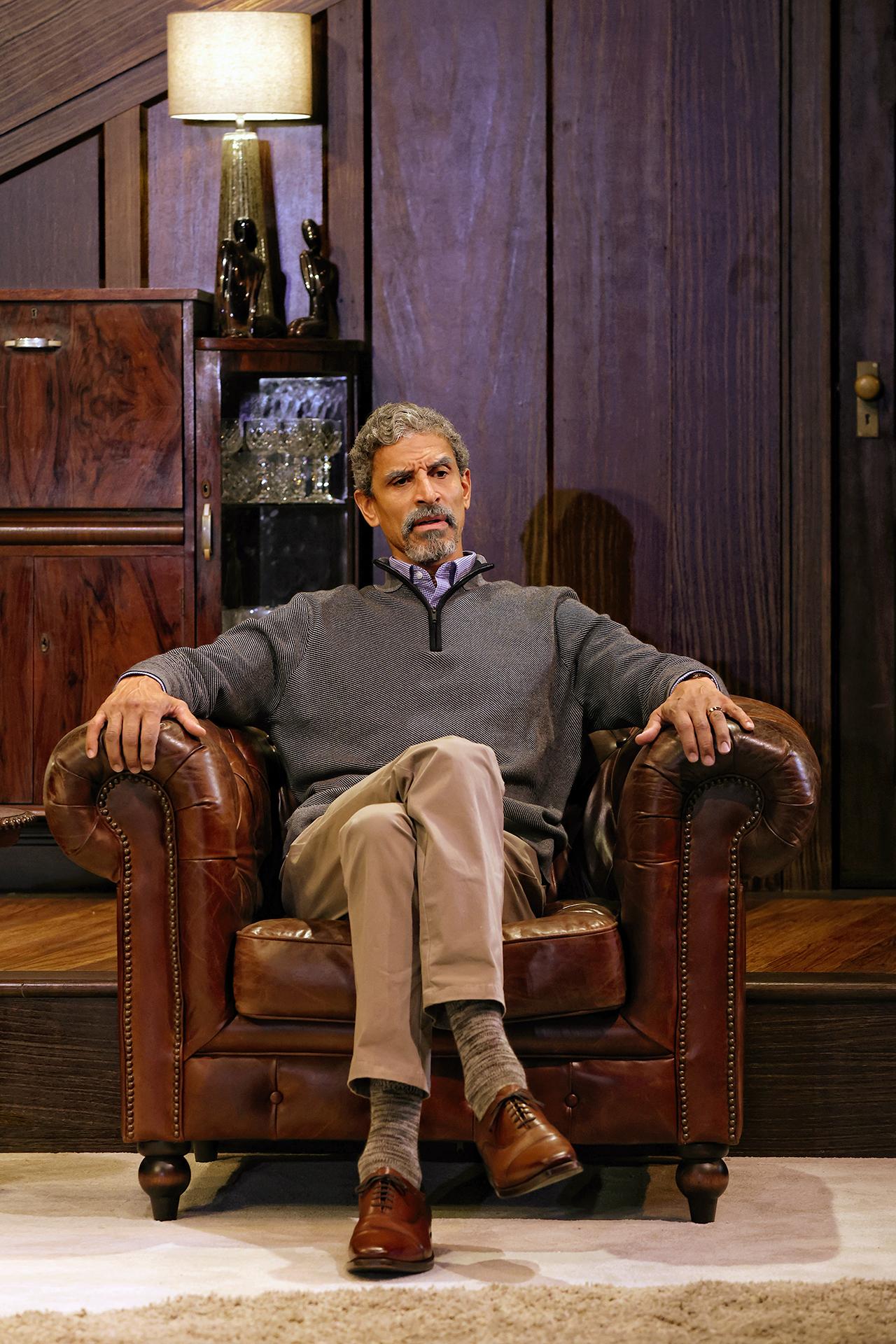
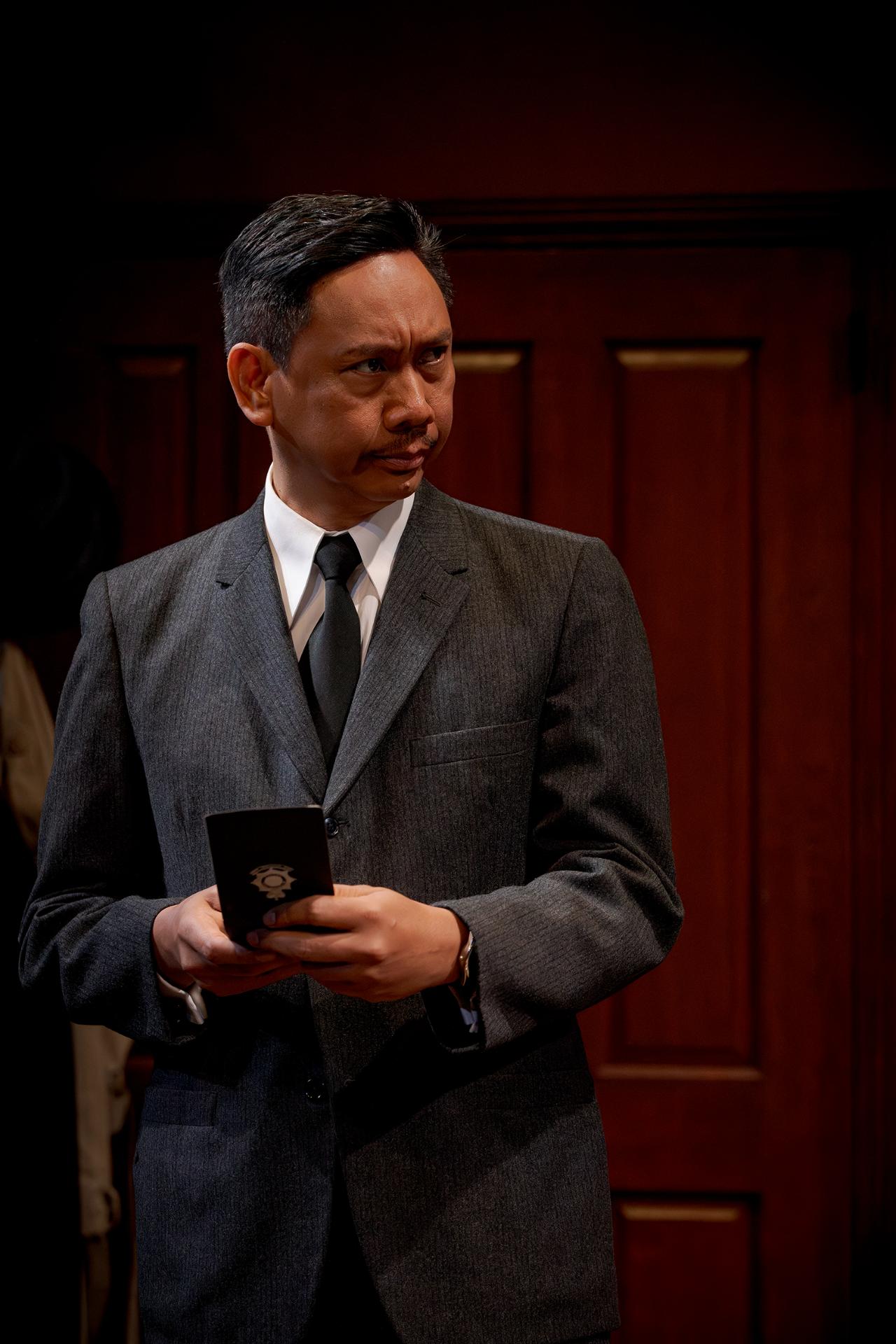
Anna Samson and Garth Holcombe embody, with remarkable acuity, a couple burdened by secrets. Both deliver finely detailed performances that steer the narrative through its dizzying succession of twists, offering a delectable touch of extravagance that never tips into excess. Madeleine Jones and David Soncin provide compelling support, but it is Kenneth Moraleda’s turn as Inspector Hubbard that proves especially irresistible. He infuses the role with a distinctive quirkiness, lending the production an added spark that elevates its overall charm. At the end, the production is an excellent reminder of how perversely delightful it can be to revel in a story woven from such unabashedly heinous acts.
www.ensemble.com.au

Review: The Seagull (KXT on Broadway)

Venue: KXT on Broadway (Ultimo NSW), Nov 21 – Dec 6, 2025
Playwright: Saro Lusty-Cavallari (after Anton Chekhov)
Director:
Saro Lusty-Cavallari
Cast: Talia Benatar, Kath Gordon, Jason Jefferies, Deborah Jones, Saro Lepejian, Tim McGarry, Brendan Miles, Shan-Ree Tan, Alexandra Travers
Images by Robert Miniter

Theatre review
In Saro Lusty-Cavallari’s adaptation of The Seagull, the action is deftly relocated from late-19th-century Russia to the 2020 COVID lockdown in Bellingen, an idyllic township north of Sydney. Chekhov’s characters preserve their familiar longings and disappointments, and in this contemporary reframing it becomes unmistakably clear that the disillusionment of young theatrical hopefuls like Konstantin and Nina is far from an antiquated concern. Lusty-Cavallari reveals a marked vulnerability in this iteration of the classic, offering transparent glimpses of autobiography woven through an updated tale that engages meaningfully with the inner workings—and inner wounds—of Sydney’s theatre world.

Although its context is reimagined, this production maintains a striking fidelity to Chekhov’s spirit, arriving—somewhat unexpectedly—at a tone that feels almost traditional for a genre no longer in vogue. Lusty-Cavallari’s exuberant humour, threaded generously throughout, reshapes a well-worn tale of existential drift into something distinctly bittersweet, and, thankfully, thoroughly engaging and enjoyable.

Konstantin is rendered with remarkable intricacy by Saro Lepejian, who layers nuance upon nuance to create a character of great authenticity and warmth, allowing us to grasp him with unusual depth and familiarity. Alexandra Travers is equally compelling as Nina, lifting the archetype of the innocent ingénue into a figure of luminous humanity; her final scenes prove disarmingly profound and affecting under Travers’ interpretation. Also notable is Tim McGarry’s wonderfully idiosyncratic Pyotr, delivered with exquisite comic timing and an assured lightness of touch, earning some of the production’s most memorable laughs.

Kate Beere’s set and costume design provides elegant, uncluttered solutions that allow the intricate emotional dynamics to remain firmly in view. Aron Murray’s lighting is exquisitely attuned to each fluctuation in tone, guiding us seamlessly into not only the work’s dramatic intensities but also its well-timed moments of levity, which together render the production genuinely delightful.

It may feel incongruous to watch Chekhov’s characters driven to the point of shooting themselves in a contemporary Australian setting, yet the deep-seated malaise that fuels such despair remains clearly recognisable in our present moment. These upper-middle-class figures seem perpetually unable to attain what they long for, even as they dismiss what is already theirs—a conundrum that, now more than ever, echoes uncomfortably through many of our own lives.

www.kingsxtheatre.com | www.montaguebasement.com

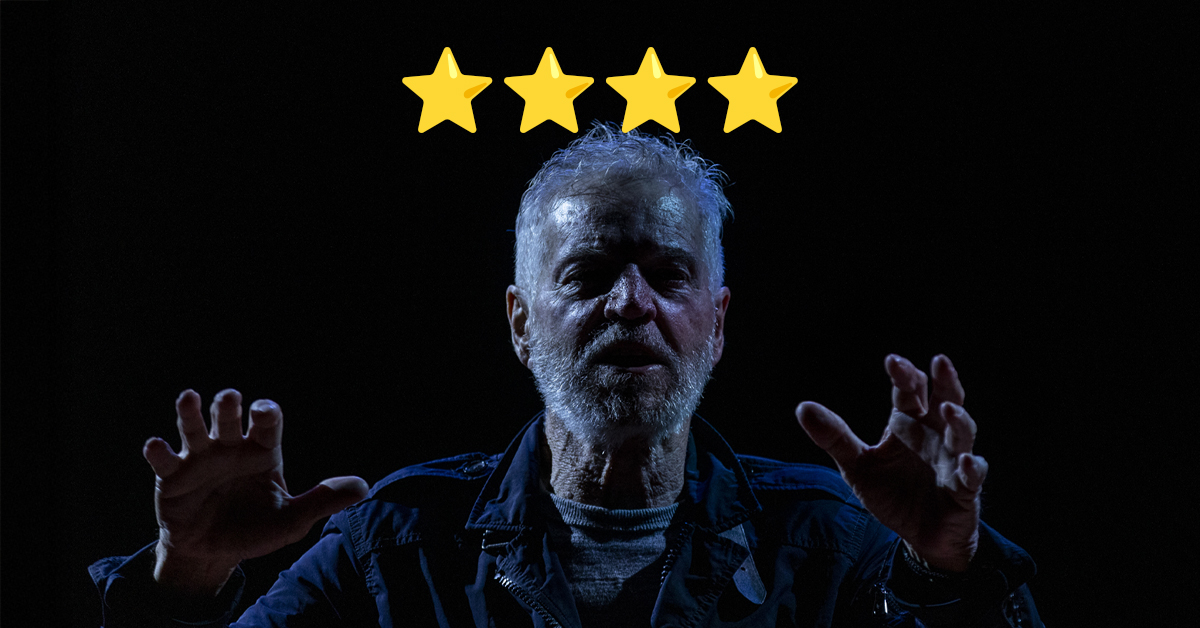
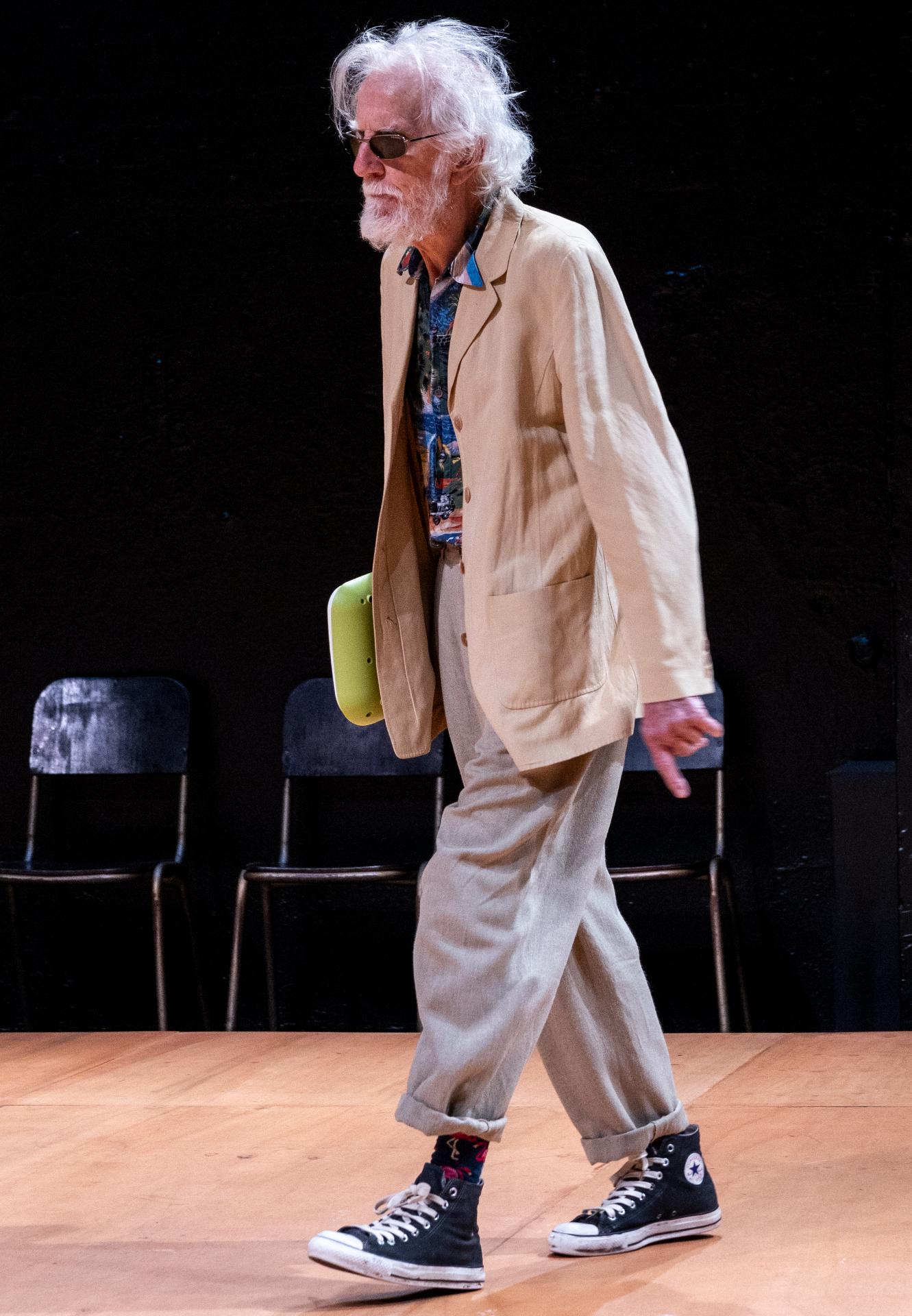
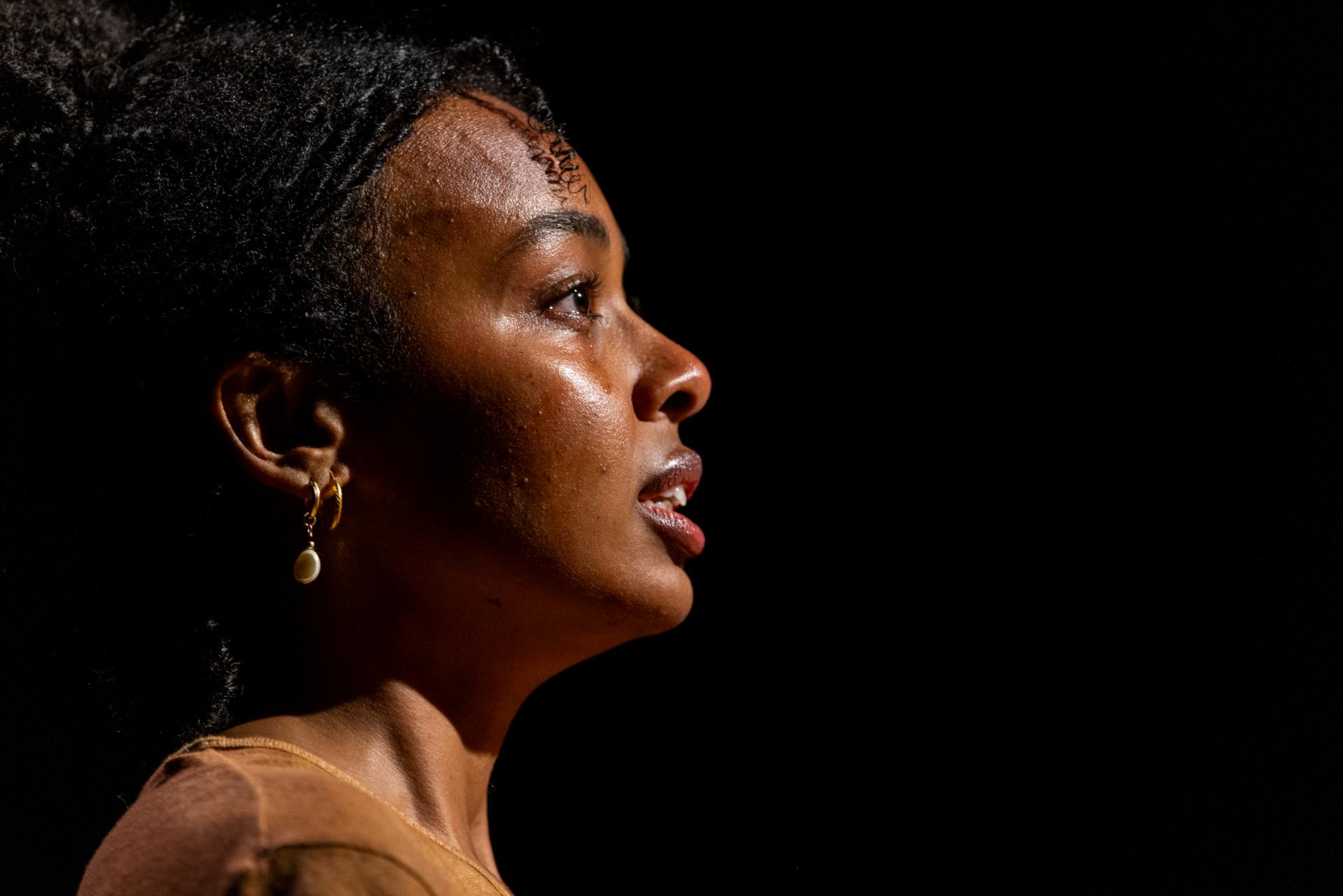
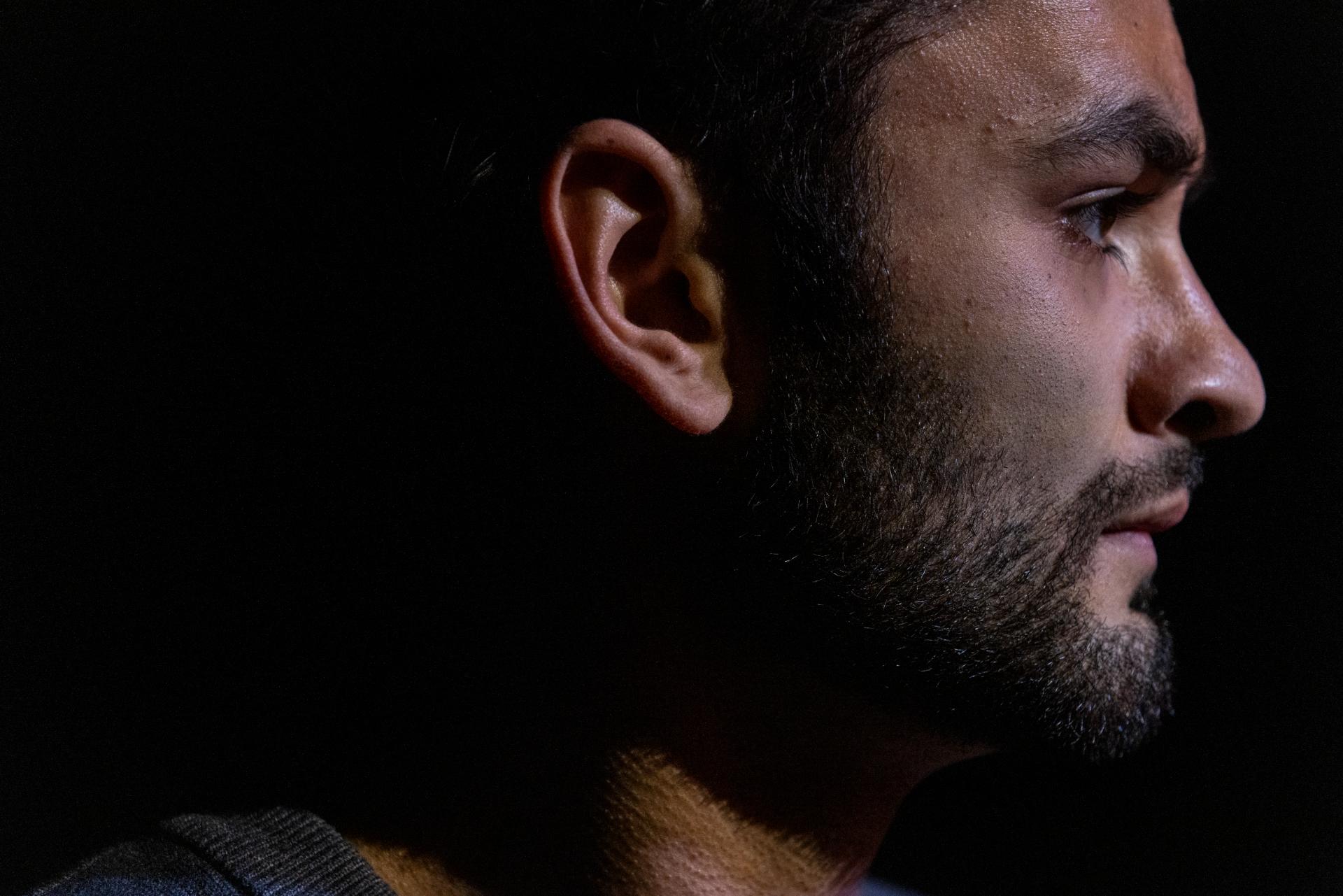
Review: The True History Of The Life And Death Of King Lear & His Three Daughters (Belvoir St Theatre)

Venue: Belvoir St Theatre (Surry Hills NSW), Nov 15, 2025 – Jan 4, 2026
Playwright: William Shakespeare
Director: Eamon Flack
Cast: Ahunim Abebe, Peter Carroll, Tom Conroy, James Fraser, Charlotte Friels, Colin Friels, Raj Labade, Brandon McClelland, Conor Merrigan-Turner, Sukhbir (Sunny) Singh Walia, Alison Whyte, Charles Wu, Jana Zvedeniuk
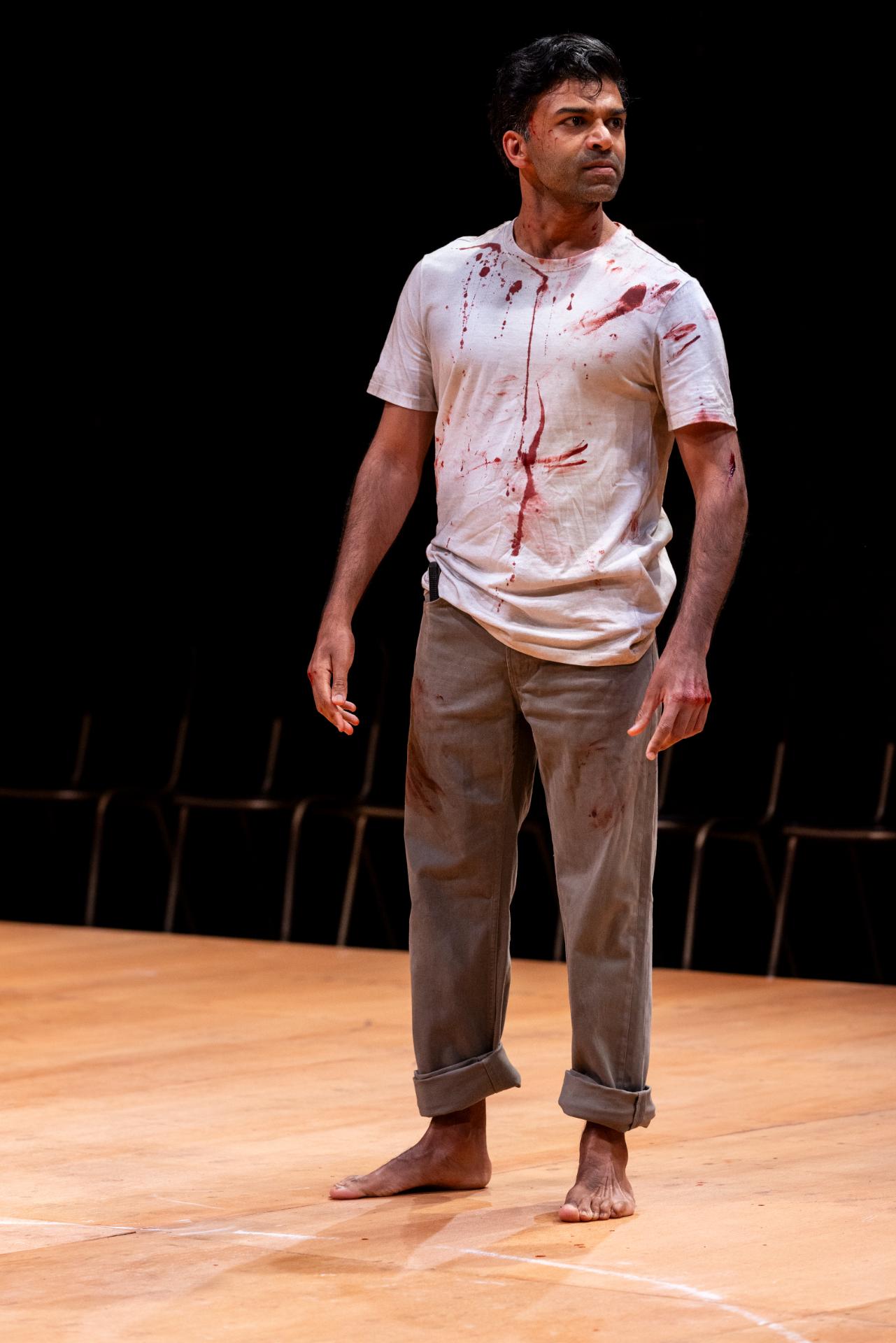
Images by Brett Boardman

Theatre review
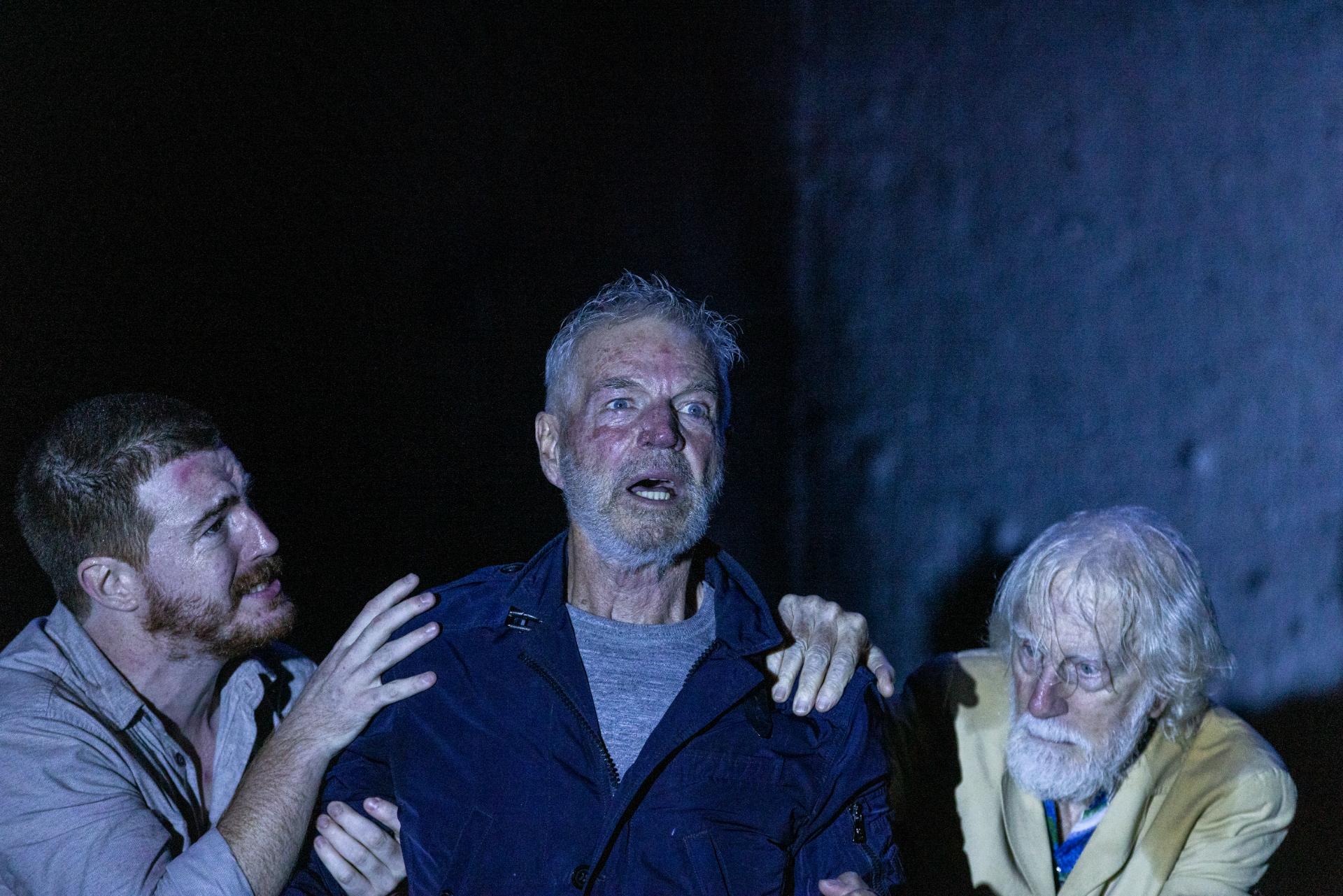
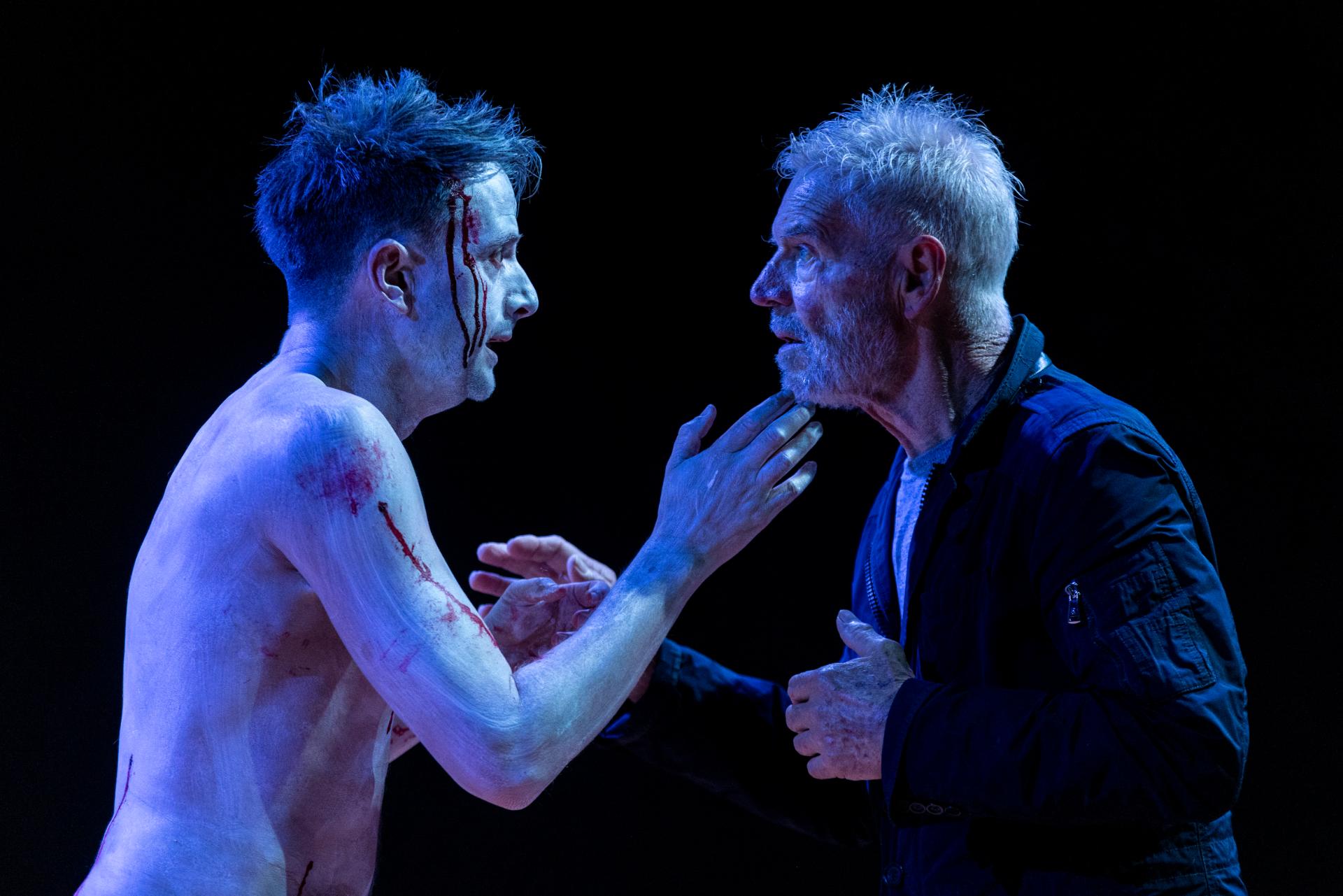
The “orange menace” has been re-elected, ruling from the White House with narcissism more brazen than ever, even as he appears to drift into senility on the cusp of eighty. We may be tempted to call these times unprecedentedly strange, yet Shakespeare wrote King Lear centuries ago—proof enough that the spectacle of a deluded sovereign is hardly new. Perhaps it is merely our overly idealistic sensibilities that persuade us that today’s disorder is somehow exceptional.

Directed by Eamon Flack and bearing the charmingly elaborate title The True History of the Life and Death of King Lear & His Three Daughters, this production is an unambiguous showcase of exceptional performance, even if its visual world feels short on ambition. Bob Cousins’ set design and James Stibilj’s costumes appear deliberately nondescript, yet their quiet elegance remains unmistakable. The music, however, is a sheer delight: intricately composed by Steve Francis and Arjunan Puveendran, with live accompaniment that draws out every atmospheric nuance, pulling us wholly into the narrative at each turn.

Leading man Colin Friels inhabits the psyche of the titular character with unwavering conviction, offering a performance marked by sustained authenticity, even if he does not always command the stage with equal magnetism. It is, perhaps, the supporting cast who linger more vividly in the mind, many of them seizing their moments with flashes of astonishing brilliance that hold us rapt. Raj Labade as Edmund, Brandon McClelland as Kent, and Alison Whyte as Gloucester, to name but a few, distinguish themselves with performances whose precision and vitality give the production much of its dramatic force.

It was, after all, in this very year of 2025 that we witnessed the emergence of the No Kings movement and the two massive protests it inspired. We need no elaborate justification for its urgency, but King Lear seems to articulate perfectly our present sentiments with tragic precision. In its portrait of power unmoored from wisdom, the play reminds us that the call to dismantle the crown is not a novelty of our age, but a lesson humanity keeps forgetting—until the kingdom burns again.

www.belvoir.com.au

Review: Castrati (Old Fitz Theatre)

Venue: Old Fitzroy Theatre (Woolloomooloo NSW), Nov 11 – 16, 2025
Creator: Kit Spencer
Director: Tyler Diaz
Cast: Kit Spencer
Images by Patrick Phillips

Theatre review
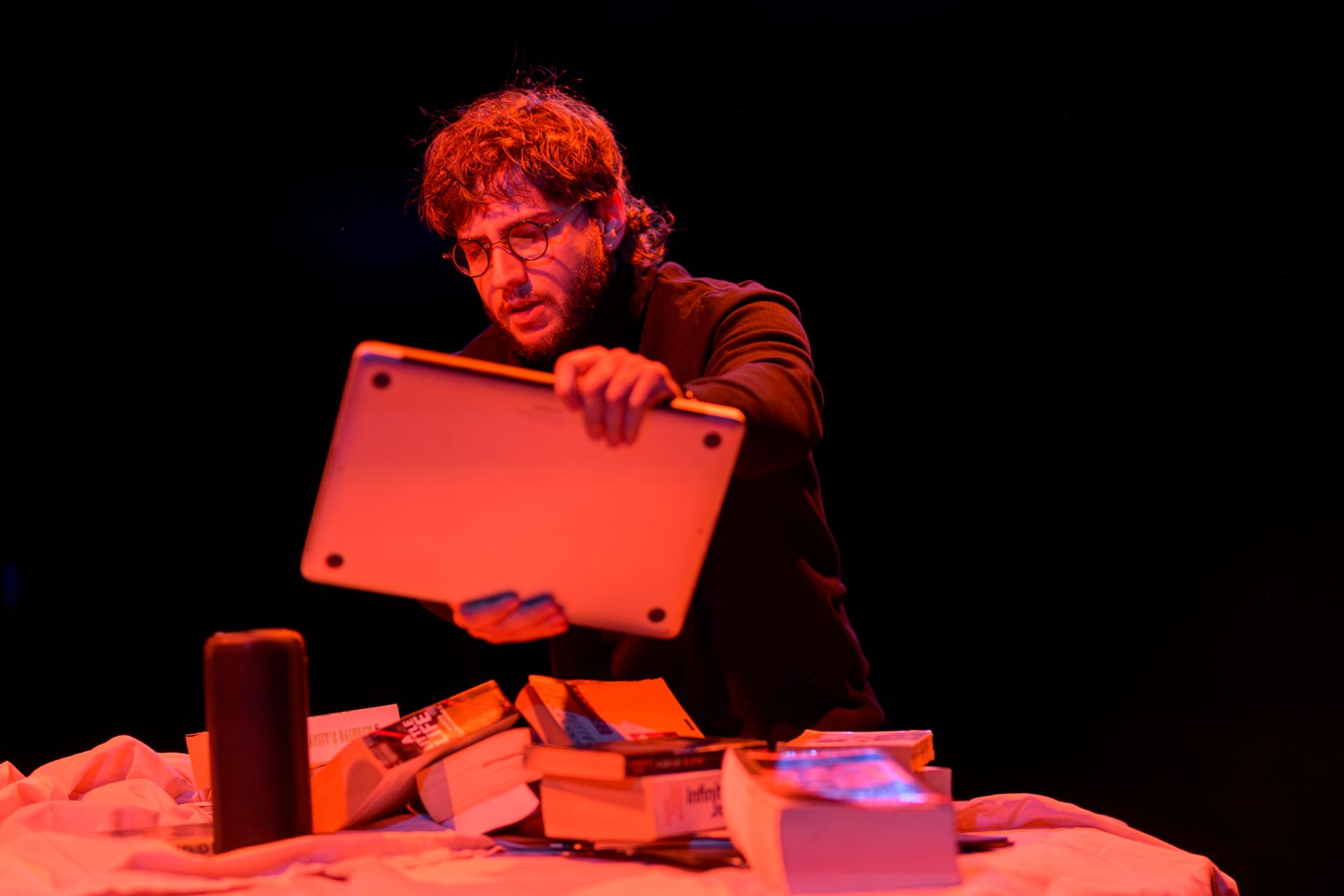
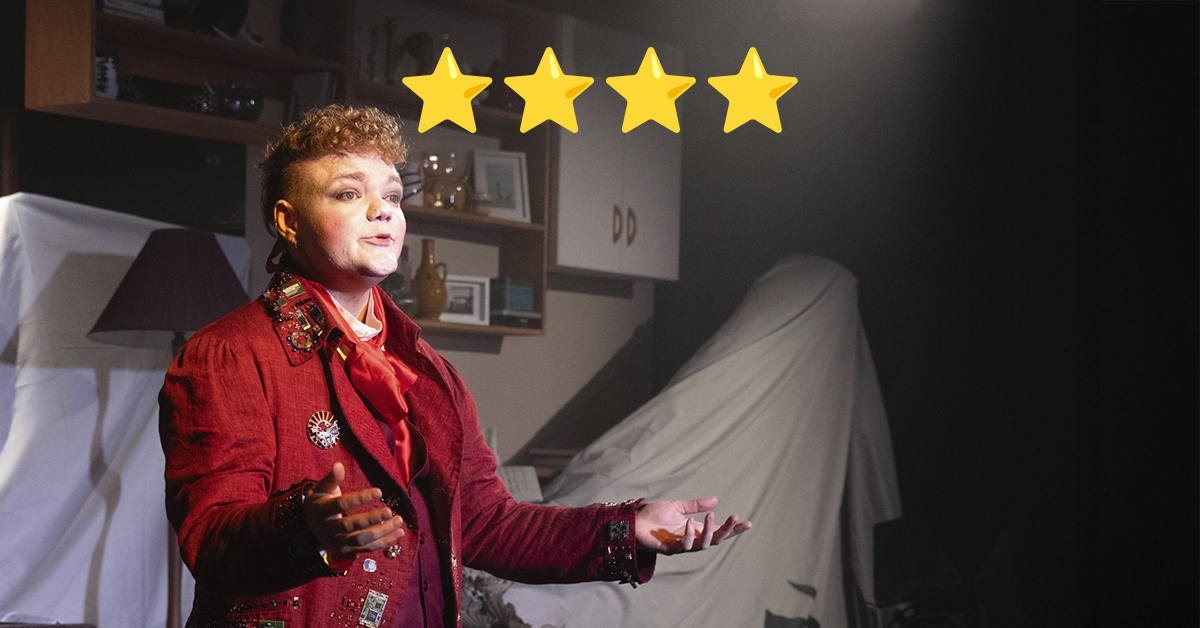
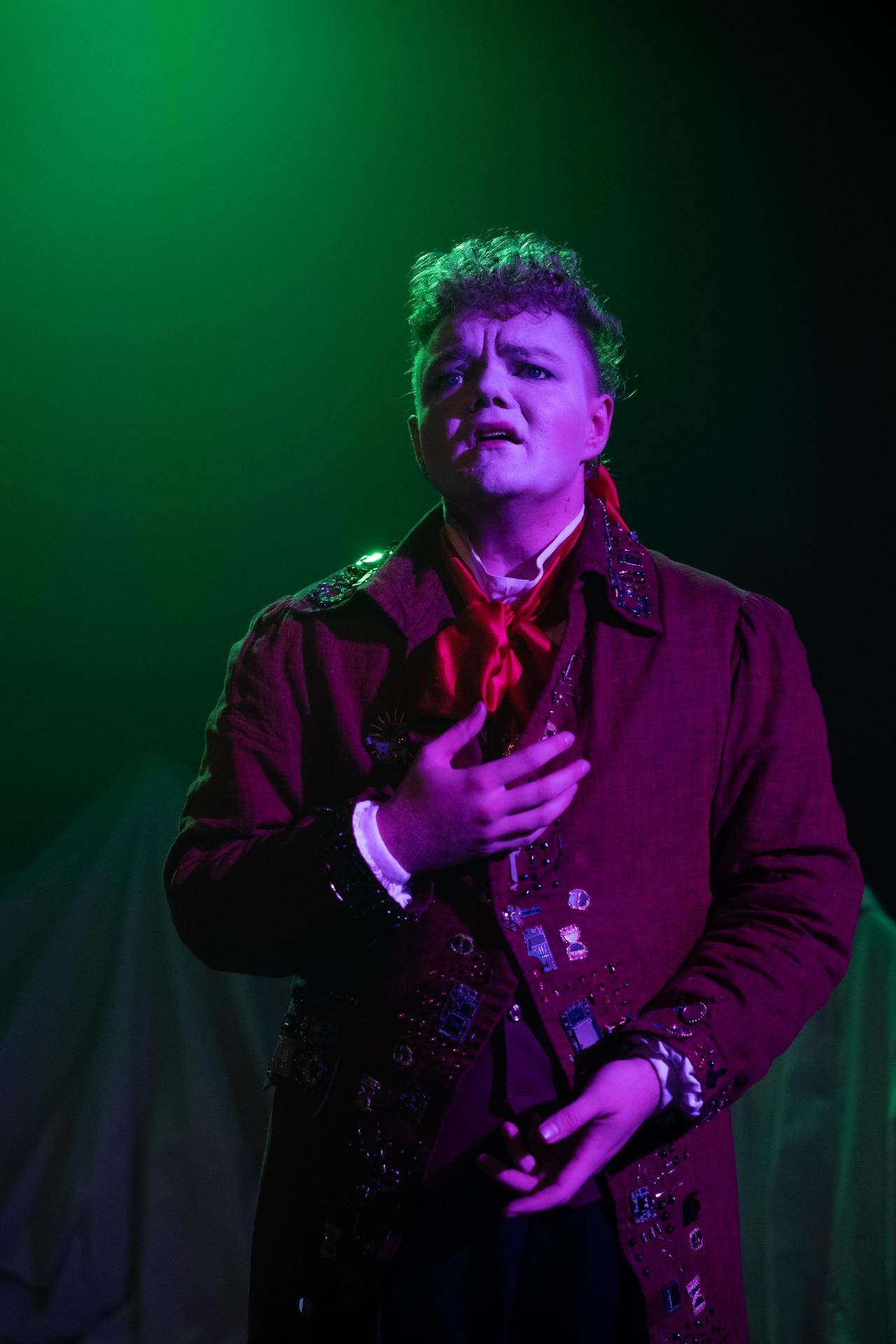
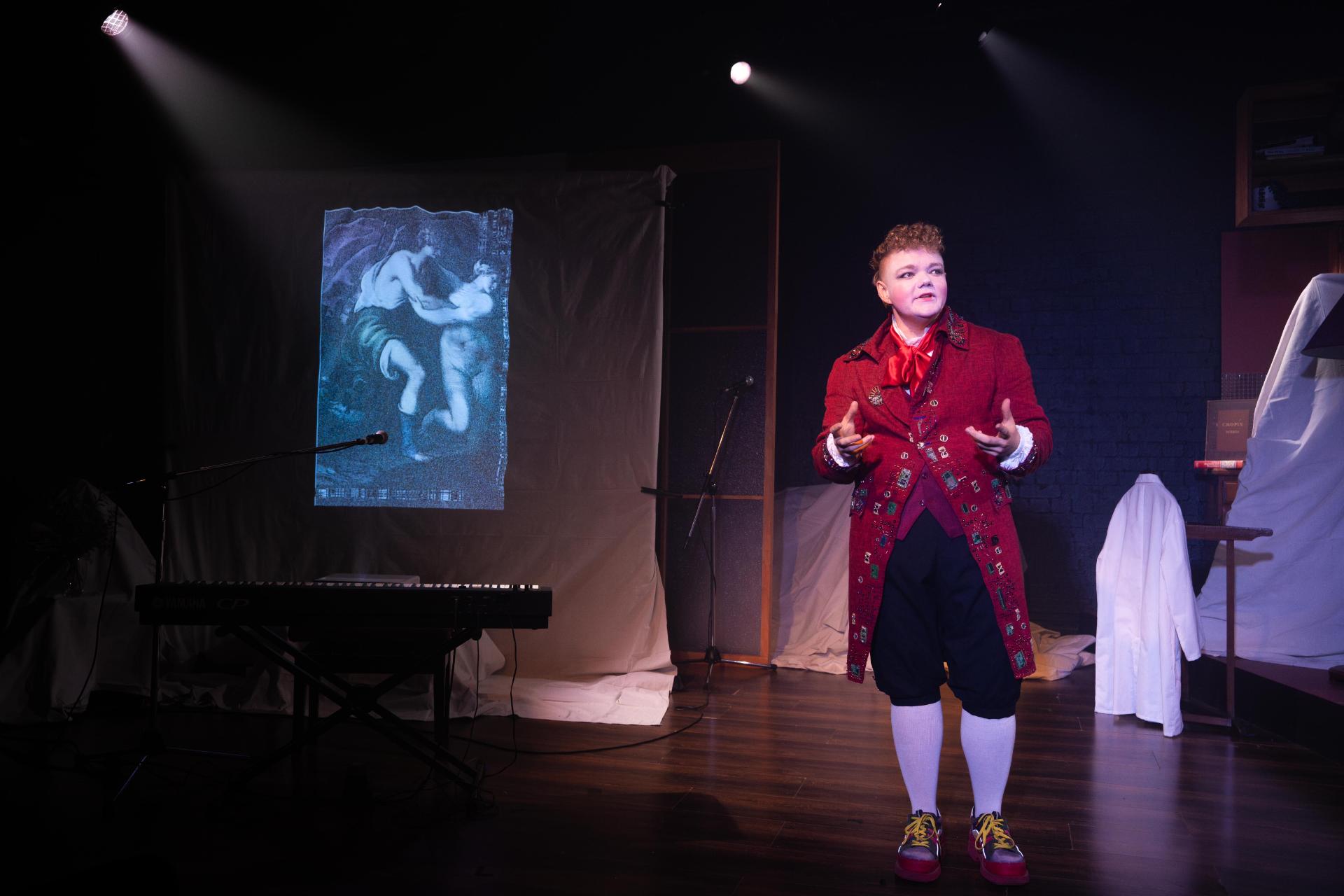
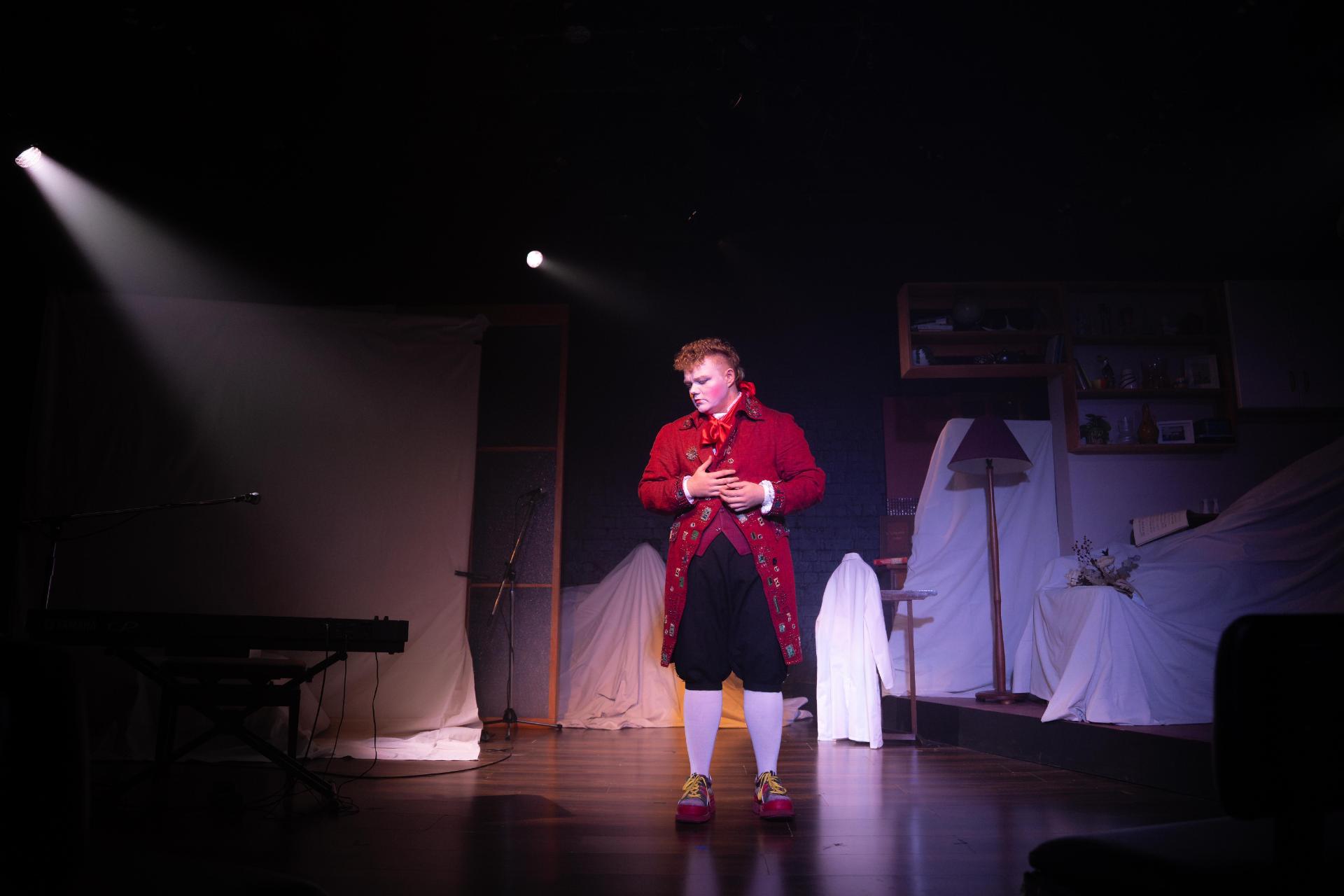
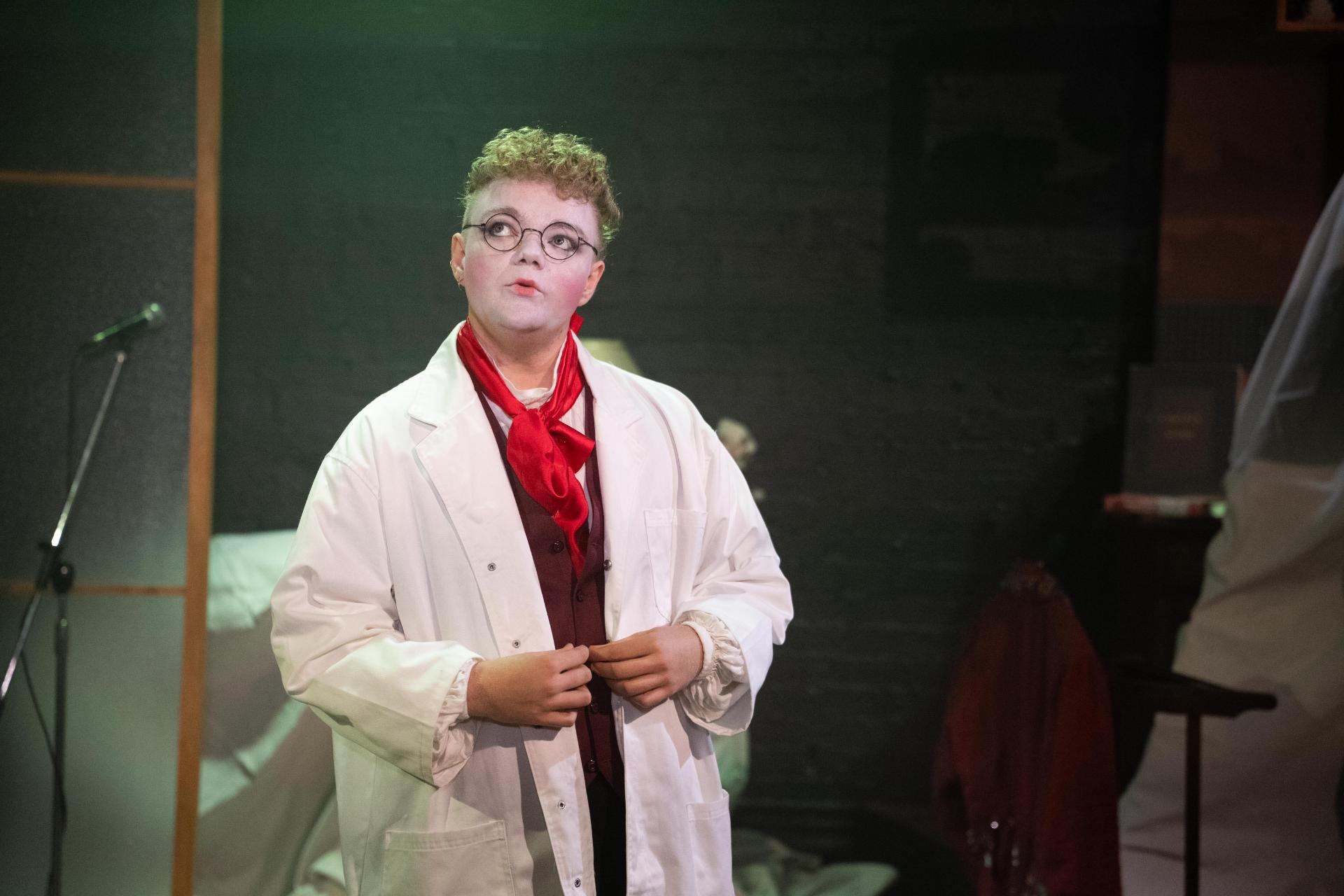
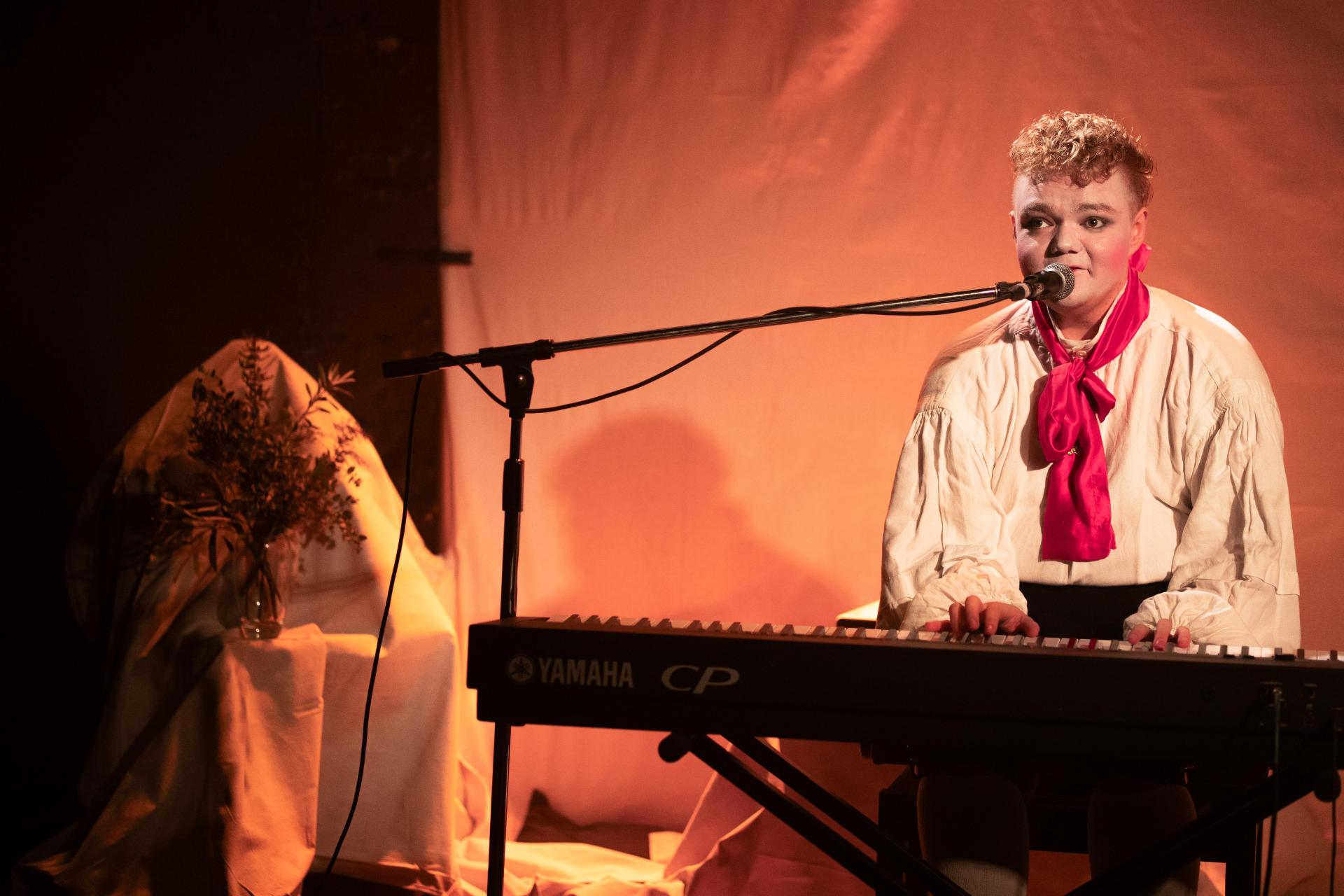
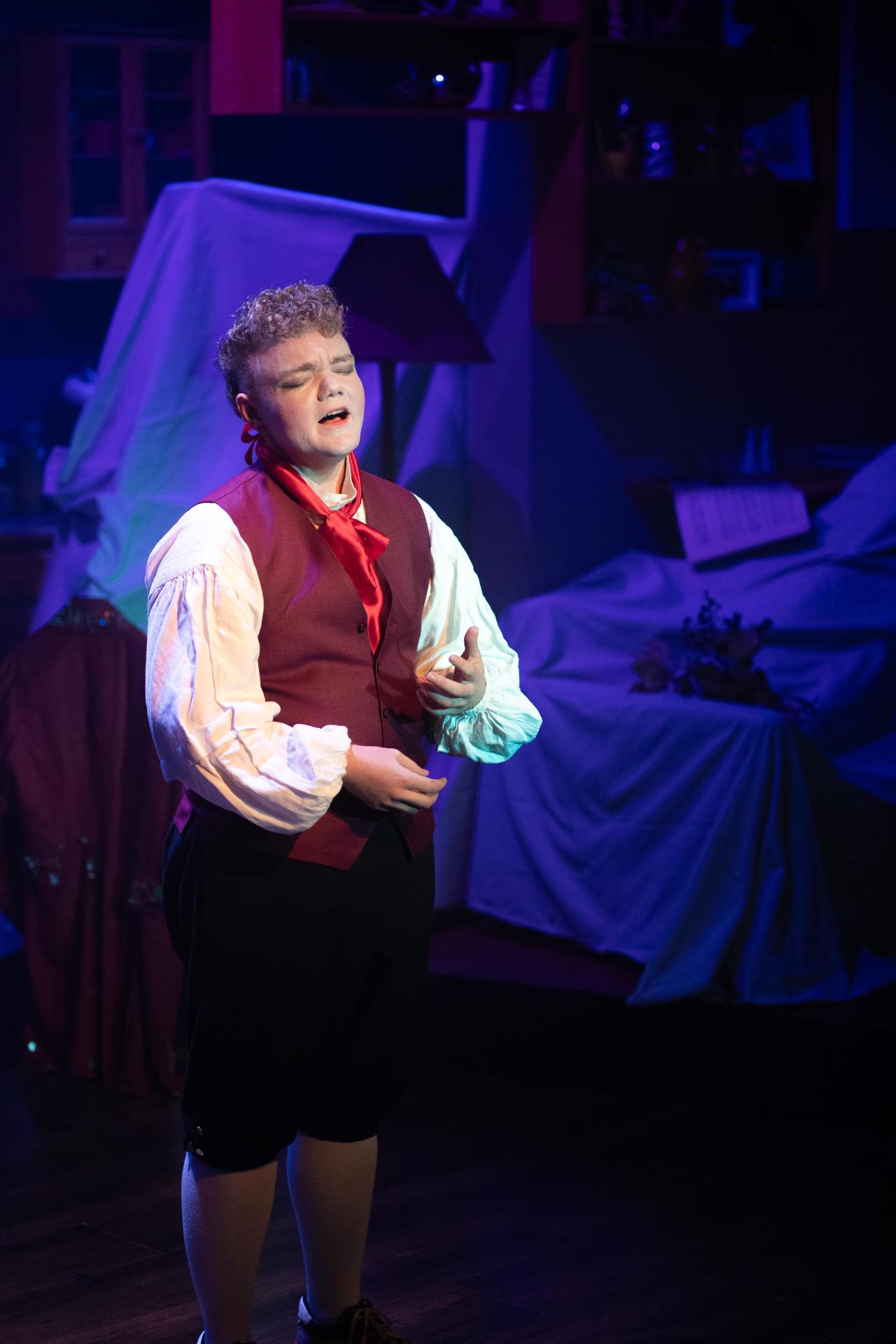
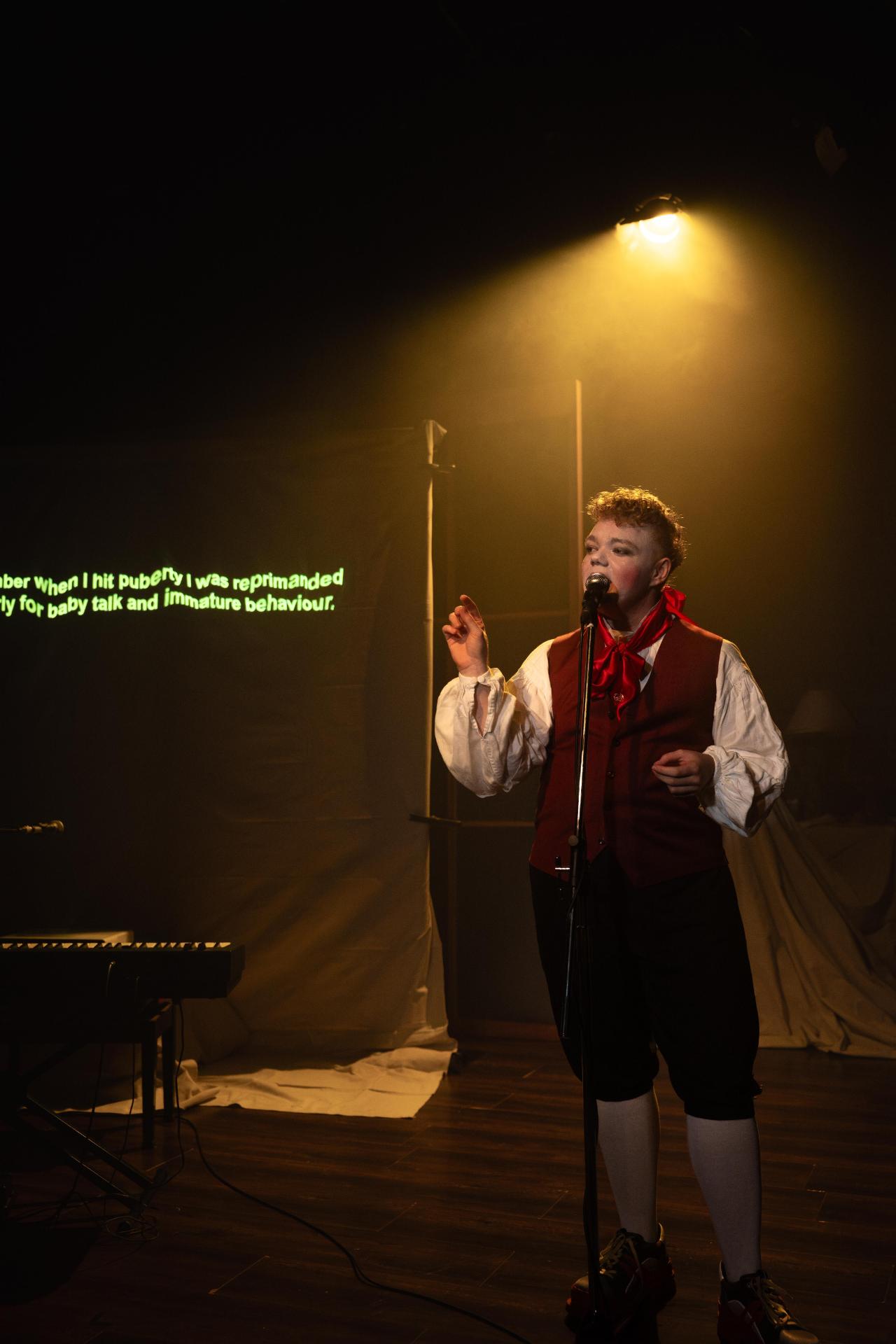
Kit Spencer’s Castrati examines the three-hundred-year phenomenon of Italy’s castrati, originating in the 16th century, while placing it in dialogue with his own trajectory as transgender and a singer. What first appears as a shared limitation—the absence of lower notes—opens into a richer field of correspondences: bodies reshaped by necessity or desire, and masculinities continually reimagined at their edges. It is within these echoing transformations that Spencer locates the wellspring of his fascination.

Spencer’s writing is genuinely captivating, blending deeply honest introspection with carefully reasoned analysis. Presented with an ease of coherence yet enriched by striking complexity, Castrati proves as informative as it is engaging. Under Tyler Dias’s direction, the production channels its emotions with fervour while maintaining meticulous attention to the wealth of historical and cultural detail it brings to light.

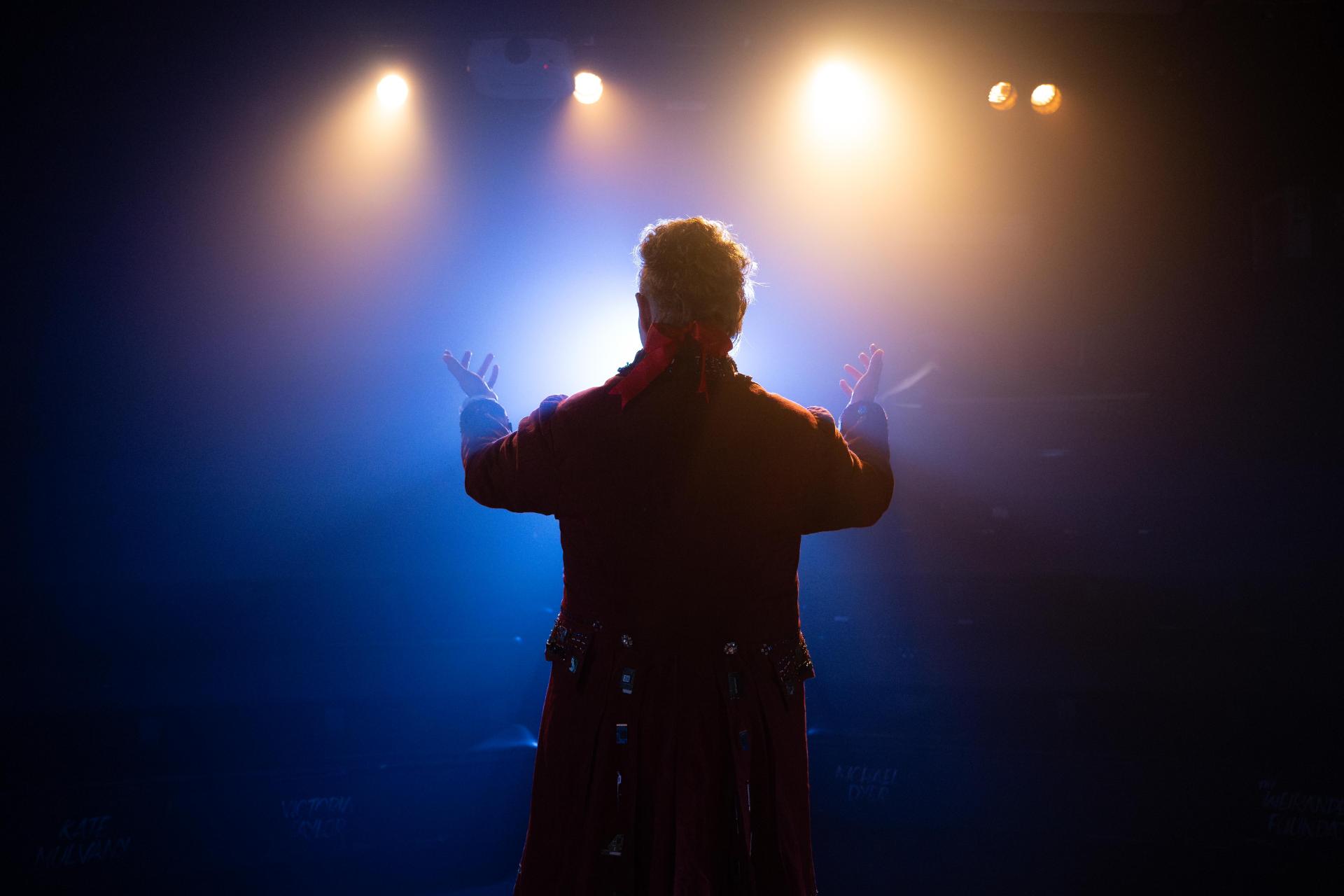
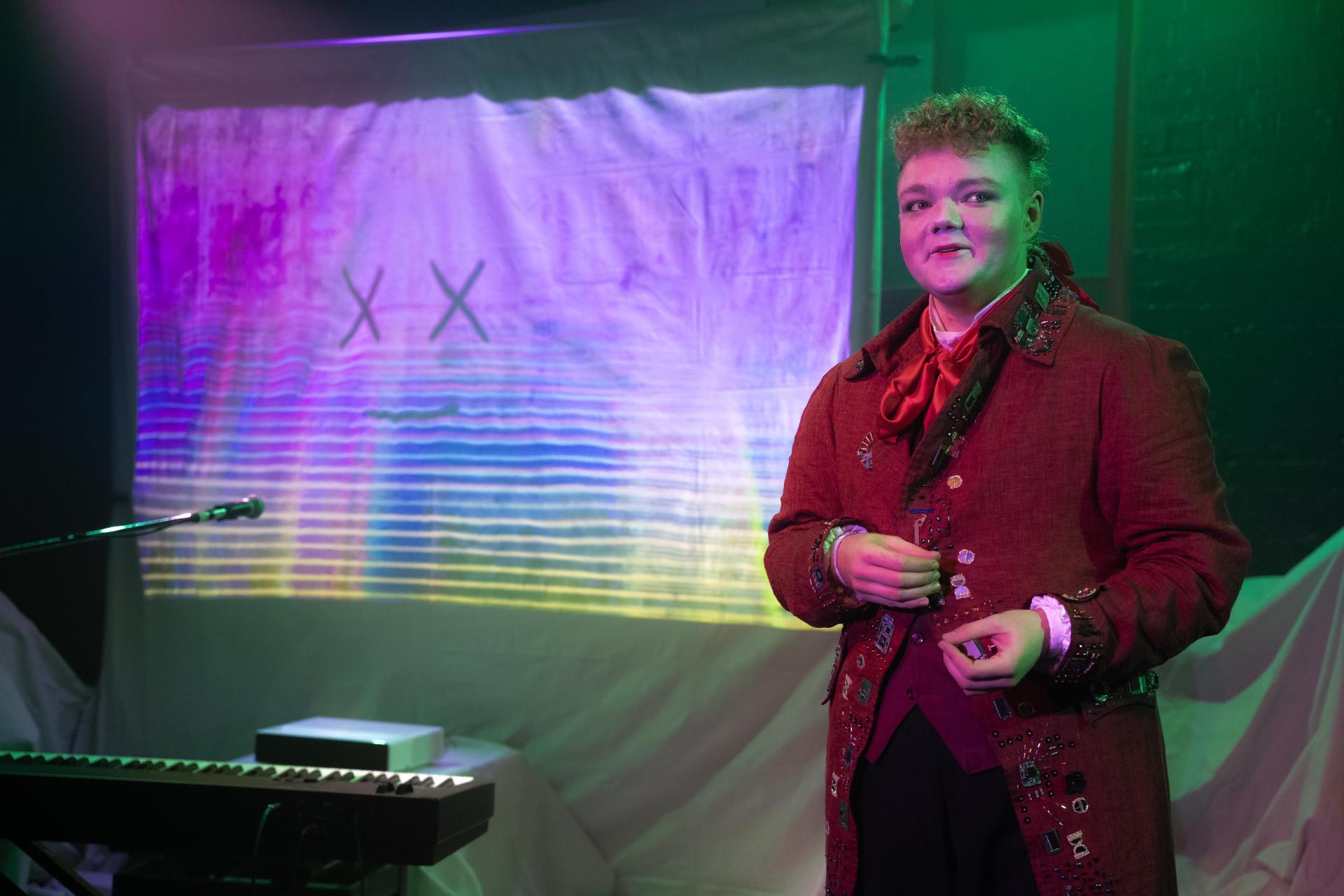
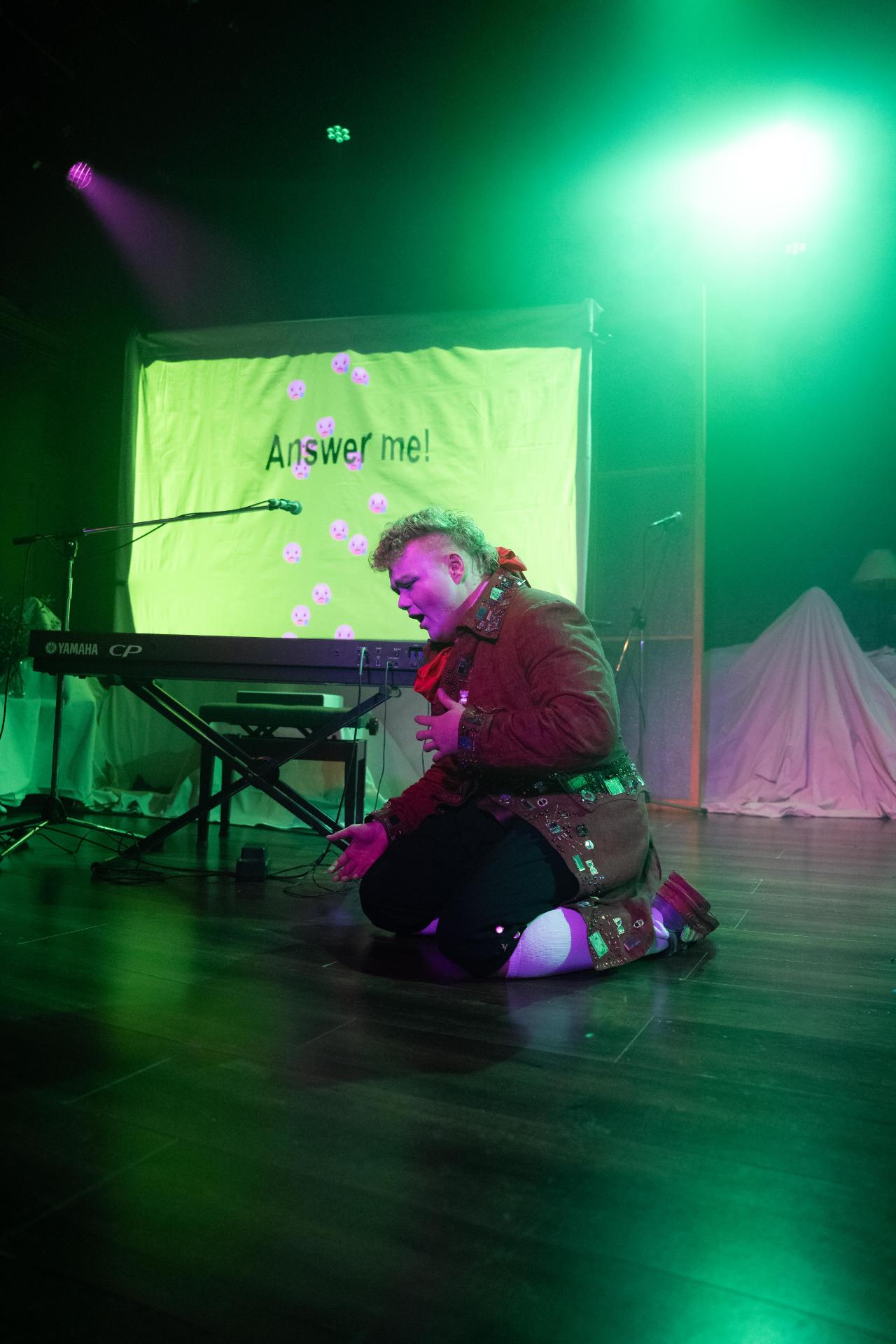
The experience is further enriched by the formidable talents of music producer Lunar Martins, who seamlessly fuses electronic textures with traditional forms in her reinterpretations of arias by composers such as Vivaldi and Handel. Jas Borsovsky’s lighting design heightens the drama while infusing the stage with a sense of transcendent beauty, and Annika Victoria’s video projections contribute a playful exuberance through their cleverly orchestrated digital tableaux.

As performer, Spencer is raw yet remarkably sincere and endearing, bringing both vulnerability and conviction to the stage in a manner that secures our investment from the outset. The ideas he introduces span a wide terrain, as though enacting a deliberate resistance to having his thoughts reduced to anything simple or neatly contained.

Together with Spencer, we mourn the reality that boys as young as seven were compelled to sacrifice so profoundly in service of an aesthetic ideal imposed by the culture that claimed to cherish them. We are then invited to consider the men they became, and the unending challenges that must have accompanied lives shaped so drastically by those physical modifications. Although the castrato has been outlawed for more than a century, our bodies and identities continue to be pressured into conformity. For trans people, especially, the grind of enduring other people’s rigid notions of gender remains a persistent and often exhausting struggle. In the end, history reminds us that the highest notes often come from the deepest wounds.

www.oldfitztheatre.com.au

Review: The Lovers (Theatre Royal)

Venue: Theatre Royal (Sydney NSW), Oct 31 – Nov 16, 2025
Book, Music & Lyrics: Laura Murphy
Director: Nick Skubu
Cast: Natalie Abbott, Jason Arrow, Jayme-Lee Hanekom, Loren Hunter, Stellar Perry, Mat Verevis
Images by Joel Devereux

Theatre review
Helena loves Demetrius, who only has eyes for Hermia, who happens to fancy Lysander—who, luckily, fancies her back. Into this romantic tangle stumble Oberon and Puck, whose antics send the entire affair spiralling into chaos. In The Lovers, Laura Murphy reimagines Shakespeare’s A Midsummer Night’s Dream as a pop-fuelled rom-com, and it proves a stroke of brilliance. Murphy’s songs are crafted with such wit and precision that an otherwise frivolous love polygon becomes something exuberant and uplifting—a celebration of desire, confusion, and the sheer delight of losing oneself in both.

Nick Skubij’s direction leans into the work’s pop sensibilities, resulting in a production that feels consistently sweet and effervescent. At times, his approach may lack a certain inventiveness or sense of play, yet there is an undeniable momentum that keeps the show engaging throughout. Isabel Hudson’s set and costumes are tasteful but somewhat pared back for a story so gleefully fantastical. Fortunately, Trent Suidgeest’s lavish lighting design and David Bergman’s refined video projections lend the staging a grandeur that transforms it into something visually majestic and memorable.

We meet a superbly cohesive cast of six, each performer brimming with talent and conviction. Natalie Abbott’s Helena and Stellar Perry’s Oberon prove especially magnetic—both returning from the 2022 production with a mastery that infuses every scene with confidence and flair. The vocal work throughout is first-rate, and under Heidi Maguire’s deft musical direction, the show achieves a gleam of polish that ensures it is the songs, above all, that continue to echo long after the curtain falls.

www.theloversmusical.com.au

Review: The Edit (25A Belvoir)

Venue: Belvoir St Theatre (Surry Hills NSW), Oct 7 – 26, 2025
Playwright: Gabrielle Scawthorn
Director: Gabrielle Scawthorn
Cast: Iolanthe, Matilda Ridgway
Images by Robert Catto

Theatre review
Nia signs up for a reality dating show, while producer Jess hovers nearby to ensure the illusion of love unfolds without a hitch. But when the pair are caught up in a devastating incident, what surfaces isn’t the expected solidarity between women, but a betrayal so stark it throws everything into question. Gabrielle Scawthorn’s The Edit is a piercing look at the stranglehold of late capitalism on contemporary womanhood — and how easily we can slip into exploiting one another in pursuit of success. Rather than rallying against the forces that divide and commodify, we too often become willing participants in our own undoing.

Scawthorn’s writing is incisive and richly layered, full of surprising twists and morally complex characters that keep us alert and uneasy. As director, she delivers the work with unrelenting intensity and passion, sustaining a charged atmosphere from start to finish. The Edit is intellectually rigorous and emotionally fraught, most rewarding when it allows us fleeting glimpses into who these women truly are beneath the spectacle.

As Nia, Iolanthe offers an intriguing study of ambition under late capitalism, portraying with disarming authenticity the moral dissonance required for success. Her performance captures a young woman’s conviction that intelligence and charm can transcend systemic exploitation, a belief that we observe to be both seductive and self-defeating. Matilda Ridgway’s interpretation of Jess is marked by remarkable psychological acuity; her disingenuousness feels neither exaggerated nor opaque, but grounded in a credible logic of survival. As the play unfolds, Jess becomes increasingly reprehensible, yet Ridgway’s depictions remain resolutely authentic, allowing us to perceive the structural and emotional pressures that shape such behaviour.

Set design by Ruby Jenkins cleverly frames the action with visual cues that expose the hidden machinery of television production, and the layers of deceit that sustain its manufactured fantasies. The stage becomes both a workplace and a trap — a reminder that behind every glossy image lies manipulation at work. Phoebe Pilcher’s lighting design is striking in its chill and precision, evoking the emotional coldness that governs human behaviour in a system built on economic cannibalism. Music and sound by Alyx Dennison heighten the drama with an organic subtlety; their contributions are seamlessly integrated yet undeniably potent in shaping the production’s tension and mood.

The pursuit of success feels almost instinctive, a shared ambition ingrained from an early age, yet its meaning remains troublingly mutable. What we come to define as “success” is so often shaped by external forces, by market logics and cultural expectations that reward ambition only when it conforms to the existing order. For the young, particularly those taking their first tentative steps into professional life, this pursuit can be both intoxicating and perilous. The world teaches its lessons harshly, and every triumph seems to come at the expense of something quietly vital.

We are endlessly seduced by the shimmer of promise, by images of prosperity, relevance, and acclaim, and in our hunger, we mistake the surface for substance. The capitalist dream markets itself as empowerment, yet its currency is exploitation. Still, we continue to invest in the system, not solely out of necessity but from an almost devotional belief that perseverance will one day grant transcendence. The tragedy, of course, is that such faith is misplaced. The machine does not elevate; it consumes. It extracts our labour, our time, our spirit, and gives back only a fleeting sense of validation before demanding more. In the end, the system does not nurture our aspirations; it feeds on them, leaving us diminished, yet still reaching, still convinced that the next victory will finally make us whole.

www.belvoir.com.au | www.legittheatreco.com | www.unlikelyproductions.co.uk

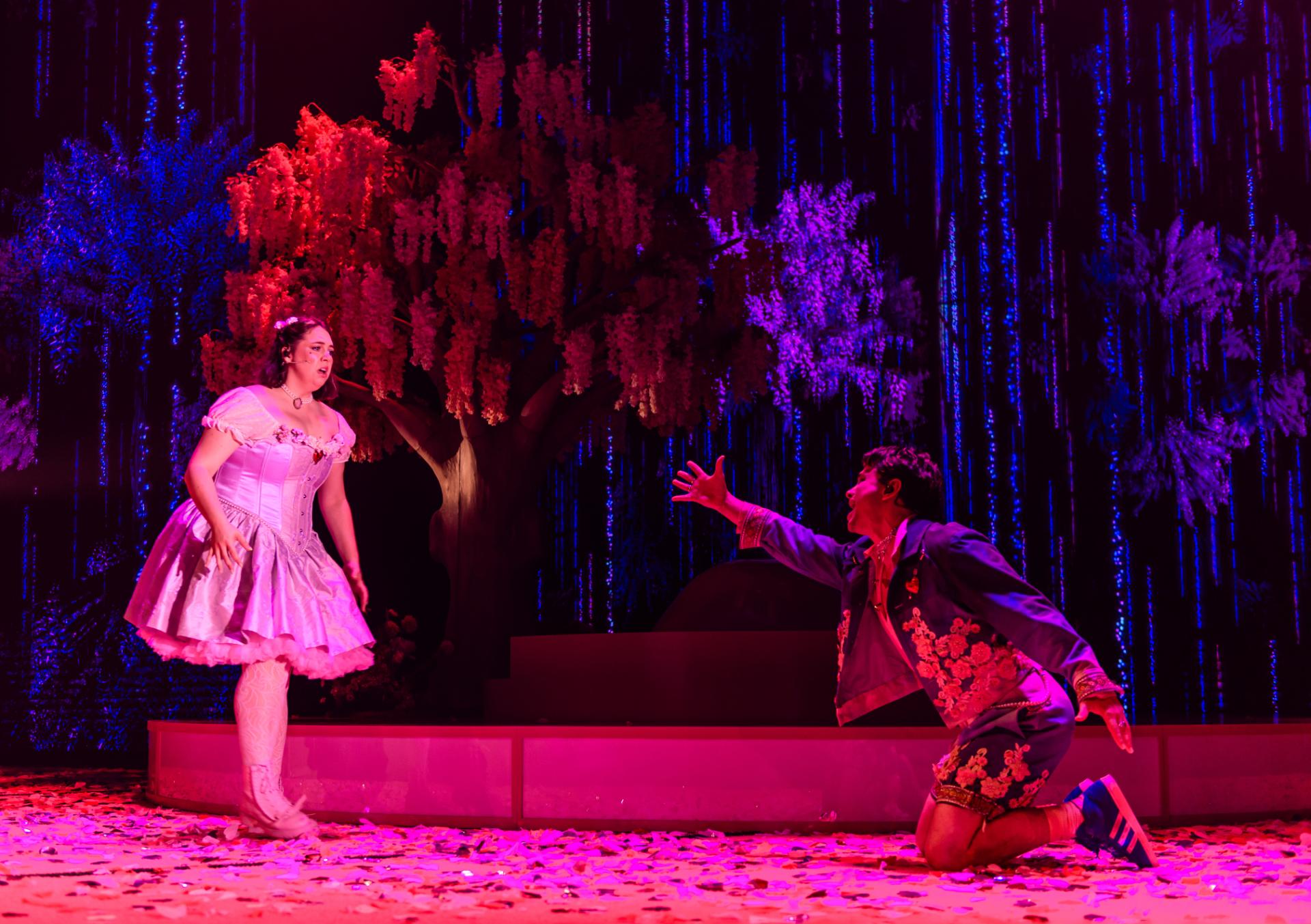
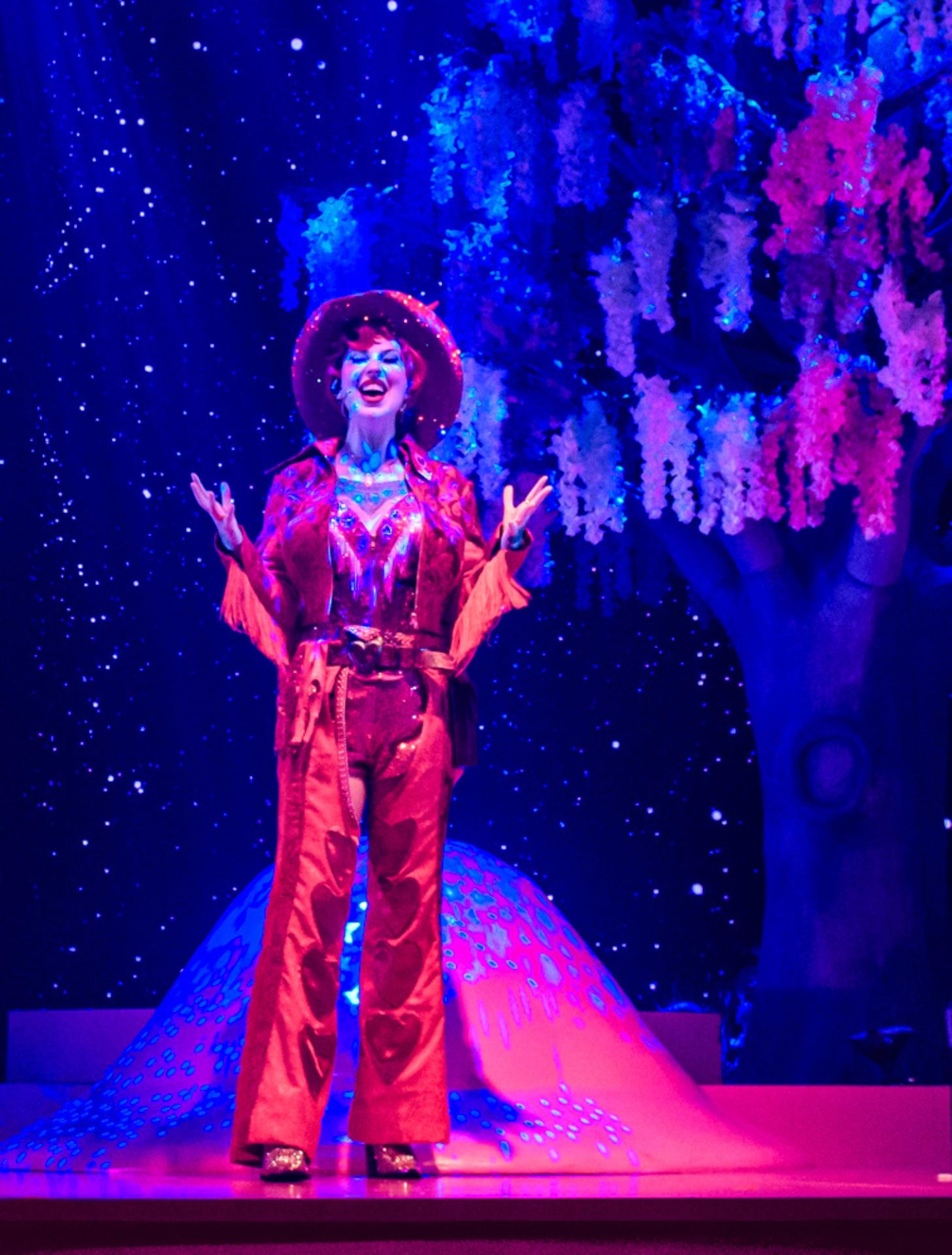
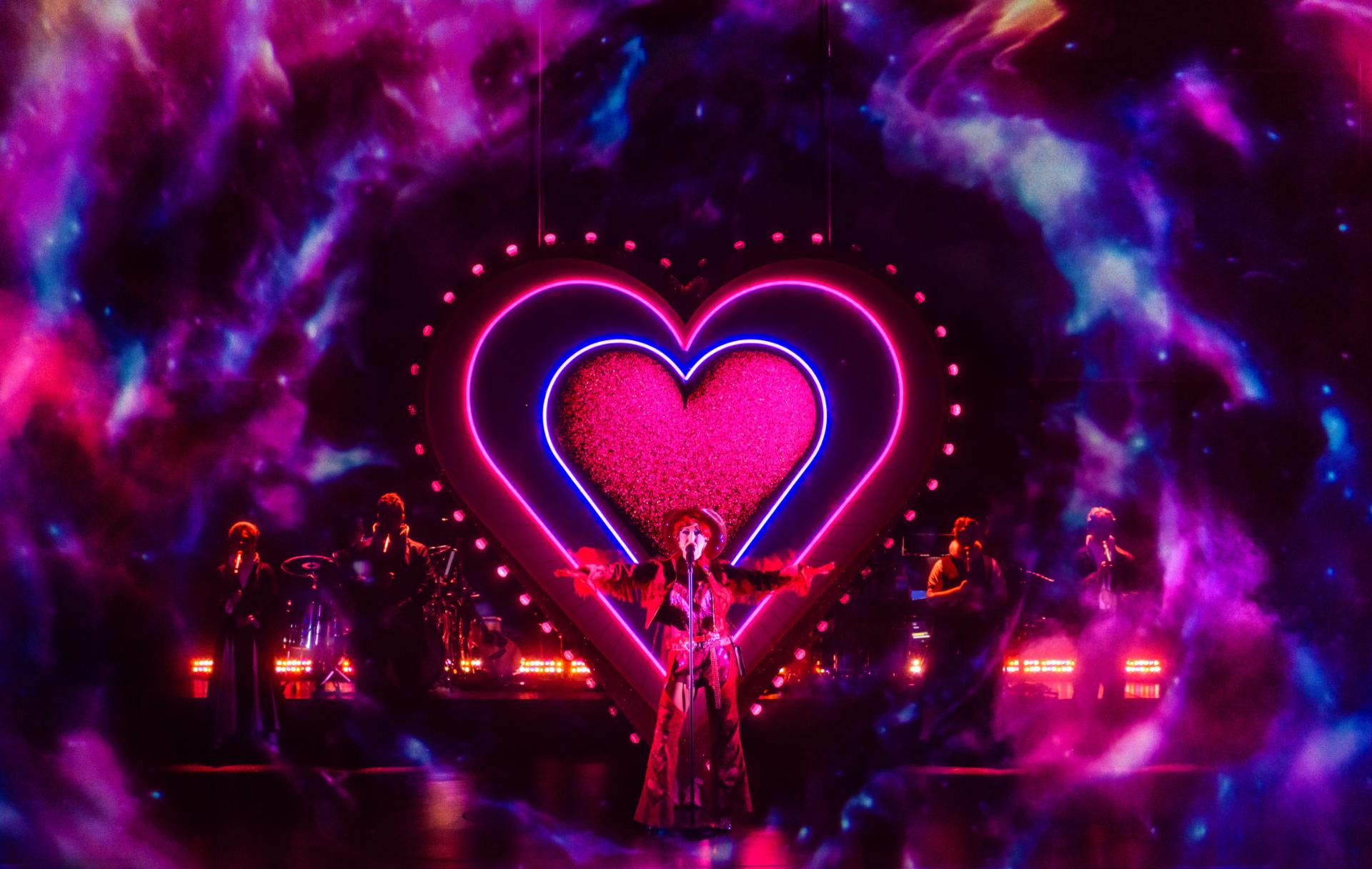
Review: Rent (Sydney Opera House)

Venue: Sydney Opera House (Sydney NSW), Sep 27 – Nov 1 2025
Book, Music & Lyrics: Jonathan Larson
Director: Shaun Rennie
Cast: Jesse Dutlow, Googoorewon Knox, Tana Laga’aia, Calista Nelmes, Kristin Paulse, Henry Rollo, Harry Targett, Imani Williams
Images by Pia Johnson, Neil Bennett

Theatre review
When Jonathan Larson completed his magnum opus Rent in 1996, he could not have foreseen that the bohemian enclave of New York City he celebrated was already in its twilight. Within a year, Rudy Giuliani’s iron-fisted mayorship would begin reshaping the city, erasing the fragile counterculture that had given Rent its heartbeat. Nearly three decades on, some of its echoes have softened, but the core refrain remains. The story of an underclass ignored by a complacent American mainstream feels newly pertinent in an era marked by authoritarian politics and cultural division.

Whether Larson’s writing truly earns its lofty reputation is open to debate, but Shaun Rennie’s direction in this revival is beyond question. His staging shimmers with a visual splendour that conjures spectacle without betraying the grit of a neighbourhood on the margins. What once risked sounding trite in Rent is here imbued with unexpected sincerity, the familiar refrains lifted into something that feels palpably meaningful.

Dann Barber’s set design astonishes in its detail and completeness, evoking both the era and the grunge locale with unflinching accuracy, while offering theatricality that never ceases to enthral the eye. Ella Butler’s costumes bring striking authenticity to a multitude of characters, yet always sustain a visual harmony across the stage. Paul Jackson’s lighting is profoundly evocative, conjuring memory and emotion in equal measure, and captivating us with an endless stream of potent imagery.

The cast is uniformly endearing, each performer delivering not only exceptional vocal power but also a sincerity that grounds the musical’s sweeping emotions. Calista Nelmes all but stops the show with her riotous, electric turn as Maureen in “Over the Moon,” while Harry Targett imbues Roger with an actorly intensity that lends the production its beating heart. Equally praiseworthy are Luca Dinardo’s choreography and Jack Earle’s musical direction—both infused with passion and executed with polish, their work bold in vision and shimmering with invention, breathing new vitality into a show that has long lived in the cultural imagination.

Perhaps the most crucial truth that Rent represents is that, in much of American culture and tradition, those at the bottom rungs are deemed undesirable—or even expendable. The AIDS crisis laid bare the ease with which Americans could turn on one another, exploiting capitalist values or religious fervour as justification for prejudice and cruelty. Today, the same currents ripple through a new era of fascism, as communities are singled out, scapegoated, offered up as sacrificial lambs to feed the hunger for false promises and hollow triumphs. The musical’s story, though decades old, pulses with uncanny relevance, a mirror to a society still grappling with whom it chooses to value and whom it casts aside.

rentmusical.au

Review: King (Sydney Fringe)

Venue: New Theatre (Newtown NSW), Sep 24 – 27, 2025
Playwright: Jo Tan
Director: Tan Shou Chen
Cast: Jo Tan
Images by Elissa Webb

Theatre review
Geok Yen is a marketing executive by day and Matt’s dutiful girlfriend by night, roles she shoulders with care but never with equal reward. She is forced to shrink, to contort, her true voice muffled. Then, in a moment of accidental inspiration, she steps into the skin of a man named Sterling—and the ground shifts beneath her.

Jo Tan’s one-woman play King initially situates itself within familiar binaries, only to destabilize them as the narrative progresses. Its insights into sexism accrue gradually, building towards a textured critique that resists simplistic dichotomies. By layering complexity onto what appears at first conventional, Tan invites her audience to reconsider the very categories through which gender is perceived and enacted.

Directed with flair by Tan Shou Chen, King shifts seamlessly between comedy and drama in charting Geok Yen’s journey. Each comic twist carries within it a shadow, each burst of humour a reminder of the weight pressing beneath. Though rooted in Singapore, the play’s reflections on societal roles and gender imbalance transcend geography. The details may vary across cultures, but the paradigm it reveals is both universal and pertinent.

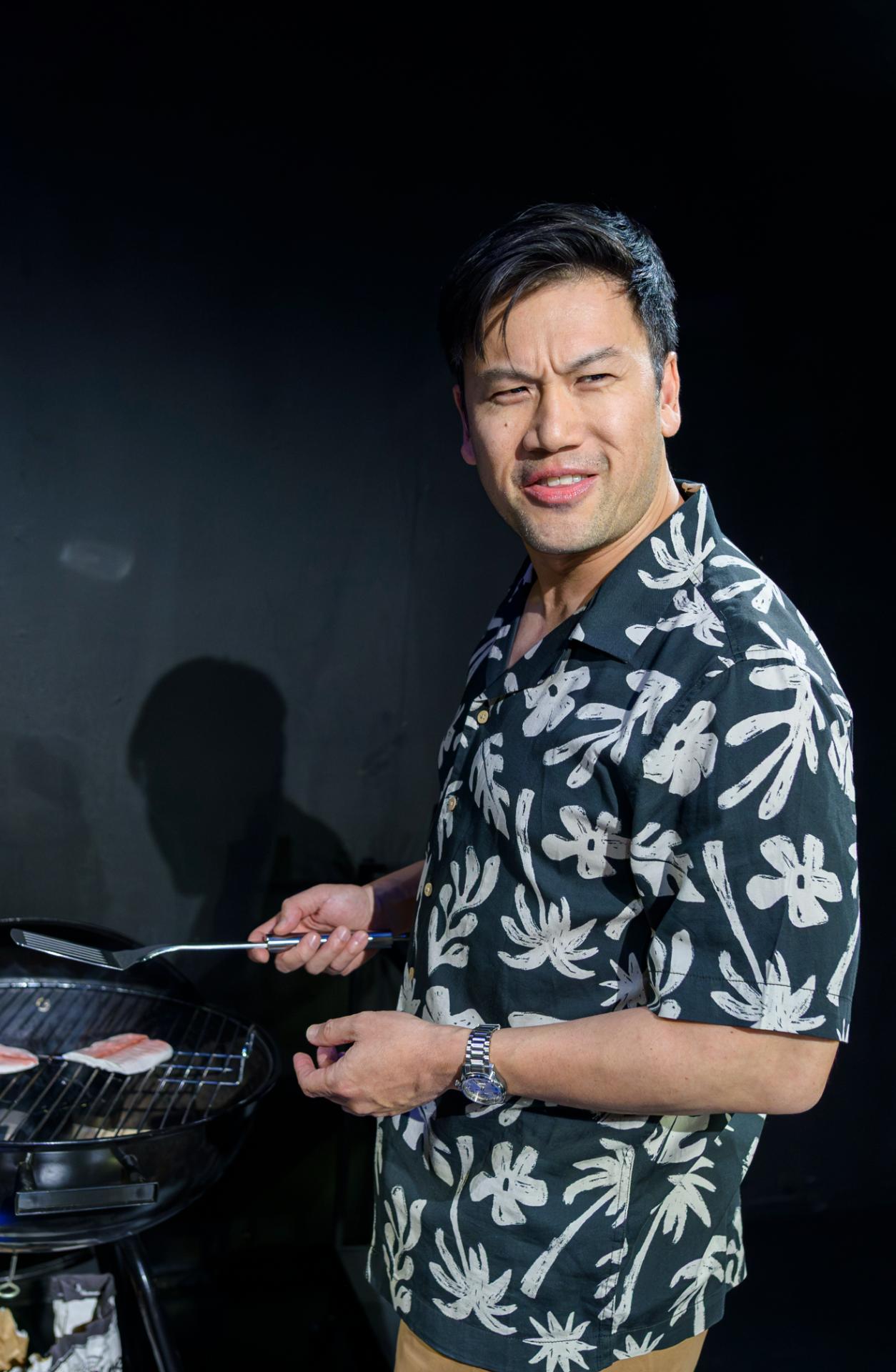
Jo Tan delivers a tour de force, slipping effortlessly between Geok Yen, Sterling, and a gallery of side characters, all conjured with wit, imagination, and playful precision. The craftsmanship of her performance is impeccable, but it is her irresistible charisma and the clarity with which she unfolds both story and moral, that captivates, delights, and provokes in equal measure. Also noteworthy are video projections by designer Brian Gothong Tan, which heighten the theatricality of the production and accentuate the fantastical dimensions of Geok Yen’s narrative, all while dazzling with their sheer visual spectacle.

King begins with a starkly binary view of life, but by inhabiting both extremes, Geok Yen moves toward a more nuanced understanding of her place in the world. From black and white emerges a spectrum of grey, within which she discovers the courage to begin embracing her authenticity. The terrors that once haunted her prove to be illusions, and the forces that seemed all-powerful are revealed as far less formidable than they first appeared.

www.sydneyfringe.com

Review: Bright Star (Hayes Theatre)

Venue: Hayes Theatre Co (Potts Point NSW), Sep 5 – Oct 5, 2025
Music, Book & Story: Steve Martin
Music, Lyrics & Story: Edie Brickell
Directors: Miranda Middleton, Damien Ryan
Cast: Cameron Bajraktarevic-Hayward, Kaya Byrne, Victoria Falconer, Genevieve Goldman, Jack Green, Deirdre Khoo, Hannah McInerney, Jarrad Payne, Rupert Reid, Katrina Retallick, Felix Staas, Alec Steedman, Molly Margaret Stewart, Olivia Tajer, Seán van Doornum 
Images by Robert Catto

Theatre review
The story begins a century ago in North Carolina, where Alice falls pregnant out of wedlock and is forced to give up her child. At a time when single motherhood was considered unthinkable, women who defied convention by seeking independence or family without a husband were often subjected to severe persecution. Bright Star, the musical by Steve Martin and Edie Brickell, revisits this not-so-distant chapter of history, exposing the harsh, often barbaric conditions faced by some Americans. While the narrative tends to be too obviously tugging at our emotions, the production is buoyed by its irresistibly vibrant score, written in the bluegrass tradition, which remains a joy to experience.

Alec Steedman’s musical direction sweeps us into the romance and effervescence of every song, while co-directors Miranda Middleton and Damien Ryan shape the production into something strikingly elegant, imbued with warmth and empathy, even if the story’s separate timelines are not always clear. The design elements are handled with equal finesse: Isabel Hudson’s set exudes rustic charm yet retains a crisp sense of polish; Lily Matelian’s costumes evoke the American South with convincing detail, though they falter in ageing characters convincingly as the story shifts through time. James Wallis’ lighting is a continual delight—sumptuous, evocative, and unfailingly theatrical.

Hannah McInerney is commanding in the lead role of Alice, bringing remarkable depth and authenticity to the character, even if the distinction between her younger and older selves is not always sharply drawn. The two men in Alice’s life, played by Kaya Byrne and Cameron Bajraktarevic-Hayward, make a lasting impression with performances marked by sincerity, grounded realism, and an appealing lack of artifice. Also deserving mention are Deidre Khoo, Genevieve Goldman, and Jack Green, who, though in smaller roles, provide delightful flashes of humour and personality, their quirky characterisations and impeccable comic timing adding much to the production’s charm.

Not all storytelling lies in what is said, but in how it is told, and Bright Star is a case in point. The way its elements are assembled gives the production a resonance far greater than the sum of its parts. The meticulous musicianship, the generosity of its performers, and the discerning artistry of its designers coalesce to create a show that is consistently engaging, even when the plot itself borders on cliché. In this moment, we transcend the ordinary, reminded that art’s greatest gift is often the inspiration that it bestows.

www.hayestheatre.com.au | www.sportforjove.com.au

Review: The Talented Mr. Ripley (Sydney Theatre Company)

Venue: Roslyn Packer Theatre (Sydney NSW), Aug 19 – Sep 28, 2025
Playwright: Joanna Murray-Smith (based on the novel by Patricia Highsmith)
Director: Sarah Goodes
Cast: Faisal Hamza, Raj Labade, Will McDonald, Andrew McFarlane, Johnny Nasser, Claude Scott-Mitchell 
Images by Prudence Upton

Theatre review
There are many possible reasons for Patricia Highsmith’s famous protagonist making the appalling decisions he does. Without overt explanations of Tom Ripley’s psychological constitution, we are left to observe his actions and to speculate on his motivations, often through notions of humanity that we can only presume to be universal. Joanna Murray-Smith’s adaptation comes 60 years after the novel’s publication, and although The Talented Mr. Ripley is thankfully rendered identifiably queer in this new stage version, we remain seduced by its enigmatic characters and their fundamentally dangerous story.

It is almost always a challenge to condense a work from book to play, but Murray-Smith does wonderfully to retain not only the essence, but also the delicious details of Highsmith’s original narrative. Direction by Sarah Goodes however feels rushed at several key moments, likely a consequence of wishing to keep running time within the conventional two hours. The show prevents itself from sprawling and luxuriating, in something that cannot disguise its tendencies toward indulgence.

Visual aspects too fall short of the extravagance and decadence one might anticipate from a narrative steeped in class and envy, but the crucial scene of Ripley’s first murder, is certainly some of the most beautiful theatre to appear in recent memory. Set design by Elizabeth Gadsby is modern and sparse. Emma White’s costumes subtly represent the distinctions of social stratum. Damien Cooper’s lighting brings dynamism, though it can appear somewhat unnecessarily restrained. Music and sound by Steve Francis is an unequivocal highlight, delivering huge doses of unabashed drama, to match Ripley’s intensifying delusions of grandeur.

Leading man Will McDonald is both compelling and convincing as the disturbed charlatan, brilliantly conveying the unspoken dimensions of Ripley’s inner world, which form the very heart of the production. Object of desire Dickie Greenleaf is performed with charismatic verve by a highly memorable Raj Labade, who strikes a delicate balance between likeable cad and despicable scoundrel. Also noteworthy is Faisal Hamza as Freddie Miles, wonderfully mischievous in his portrayals of nauseating privilege and wanton youth.

There is little reason to admire Ripley, yet despite his heinous crimes, we never for a moment want him to be caught. Every subsequent kill, though met with our derision, remains an irresistible pleasure in the purely artistic sense. That we can find ways to enjoy learning about Ripley’s atrocities, only means that there are parts of our psyche that can somehow appreciate his debauched descent. Though we strive to uphold honour in our personal choices, the sheer talent of those who commit barbarities proves always to exert a relentless, undeniable fascination.

www.sydneytheatre.com.au