Review: Elf: The Musical (Sydney Opera House)

Venue: Sydney Opera House (Sydney NSW), 19 – 29 Dec, 2024
Book: Bob Martin, Thomas Meehan
Music:
 Matthew Sklar
Lyrics: Chad Beguelin
Director: Eric Giancola
Cast: Brianna Bishop, Oscar Bridges, Simon Burke, Andrew Dunne, Gareth Isaac, Madeleine Mackenzie, Lara Mulcahy, Katrina Retallick
Images by Daniel Boud

Theatre review
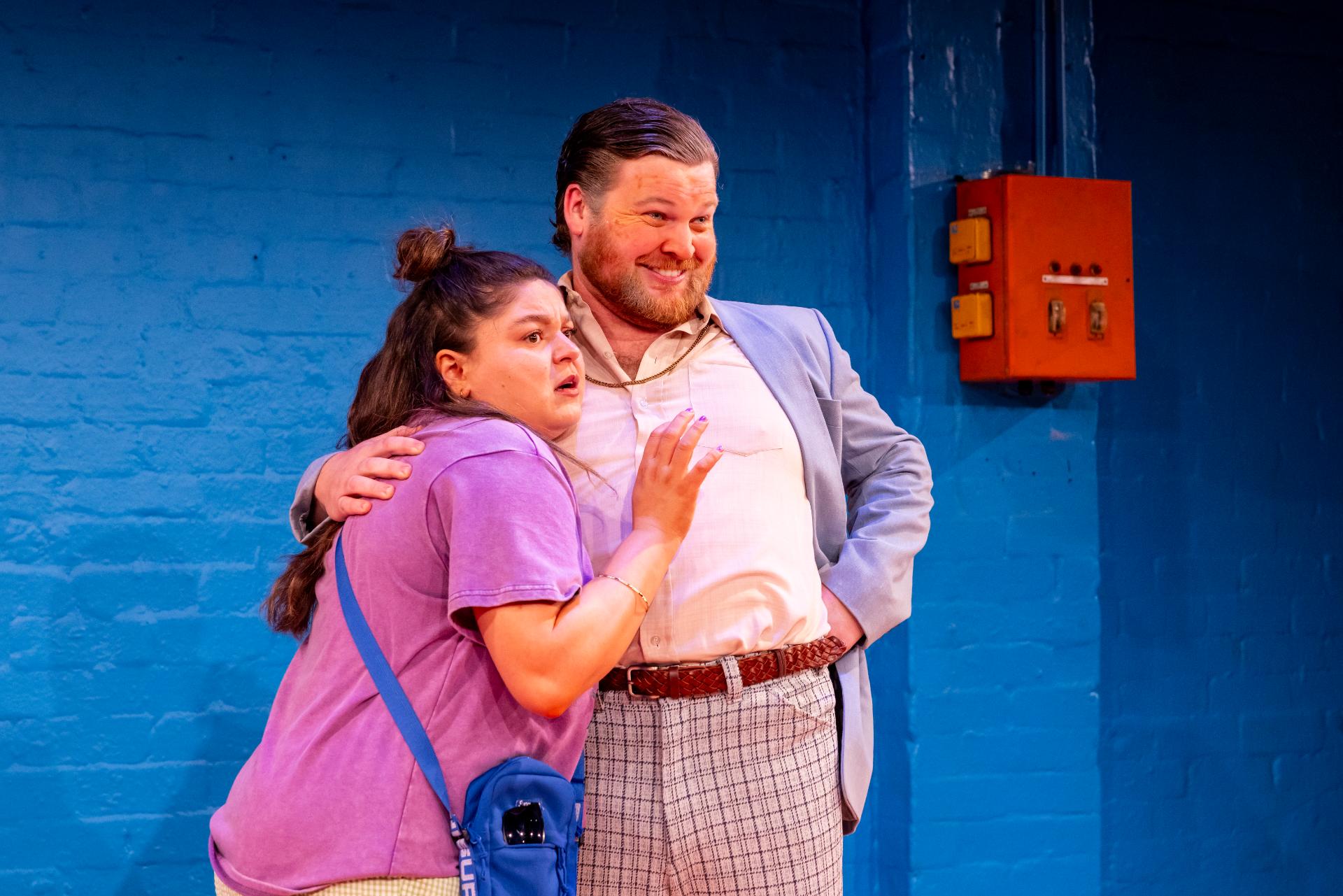
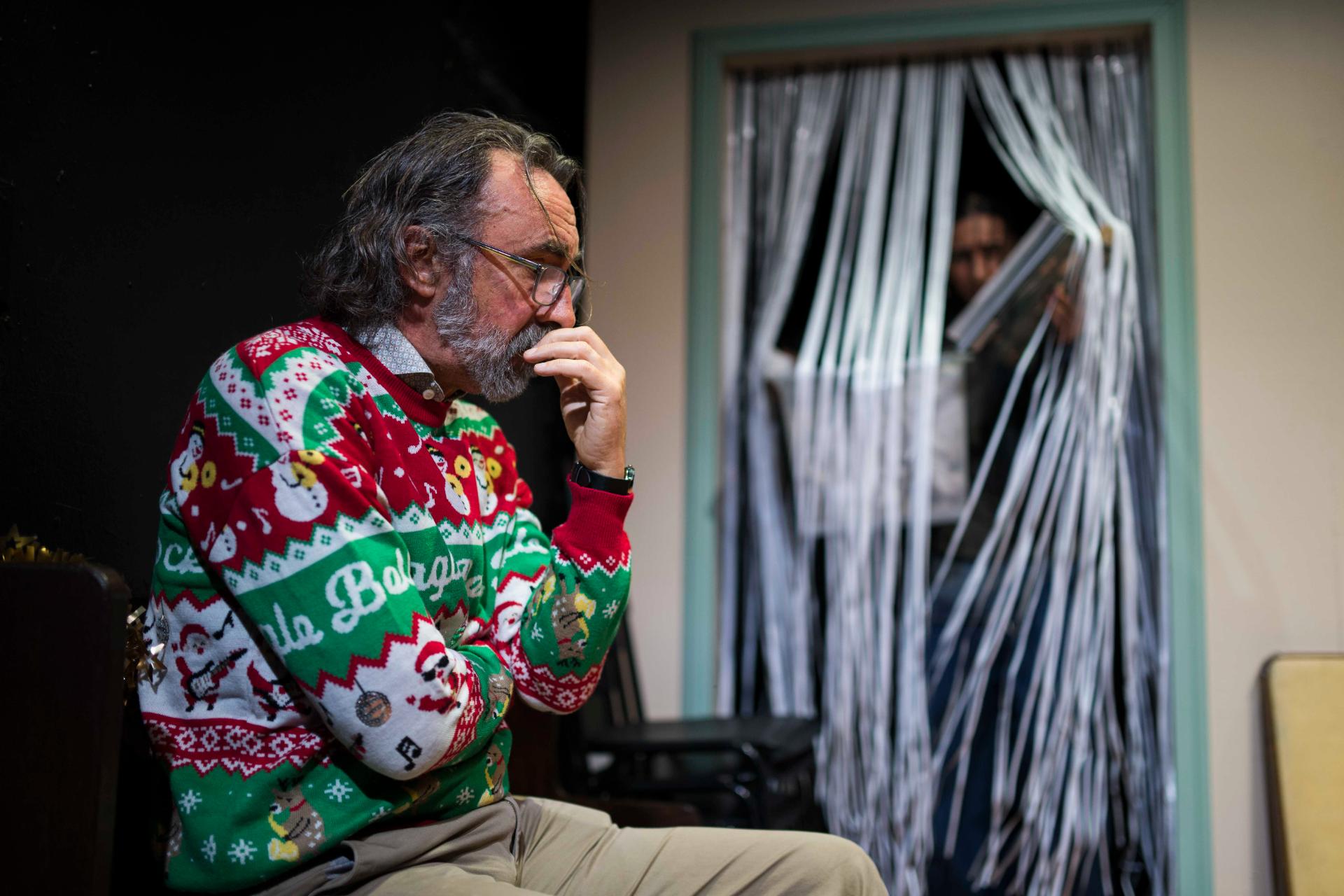
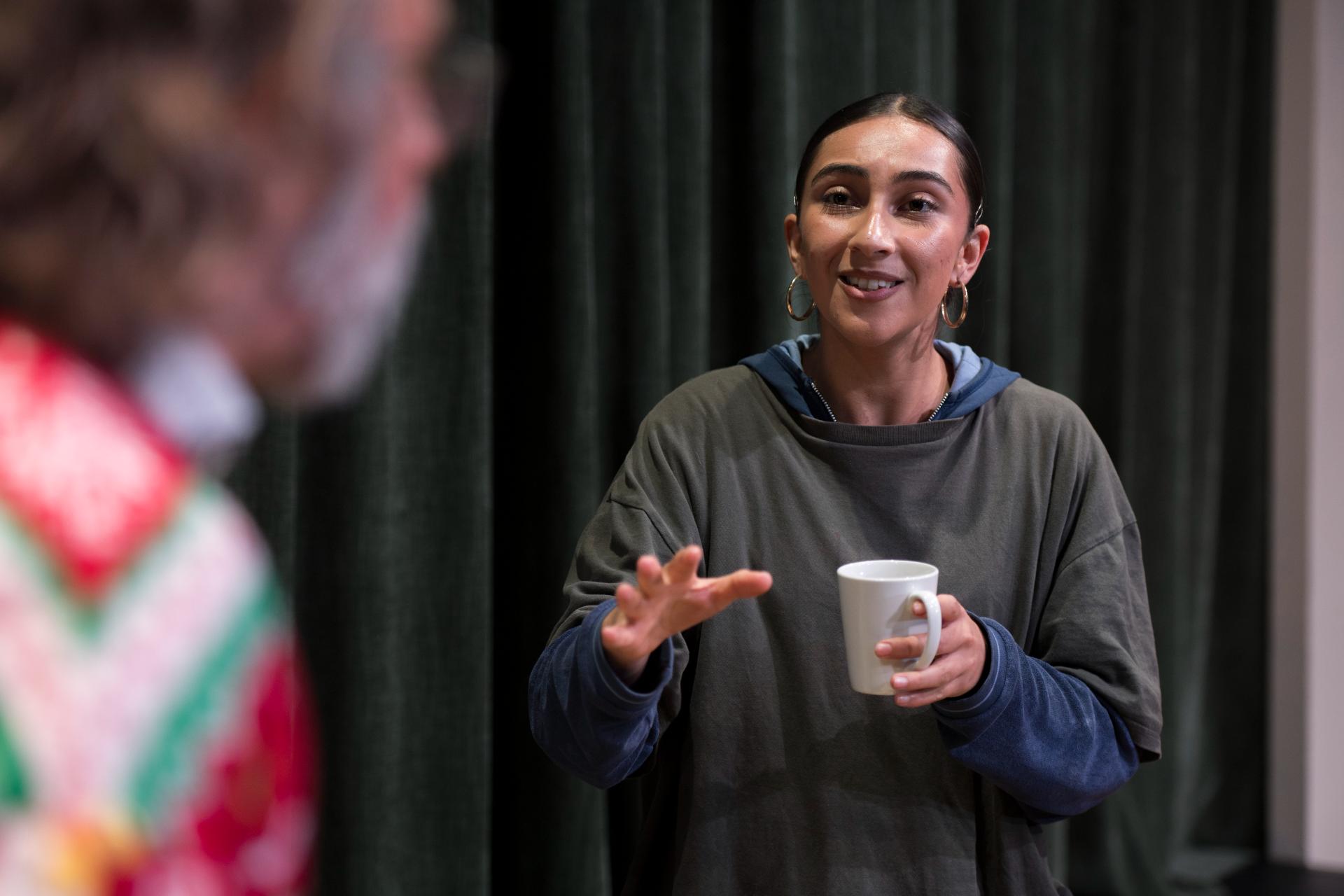
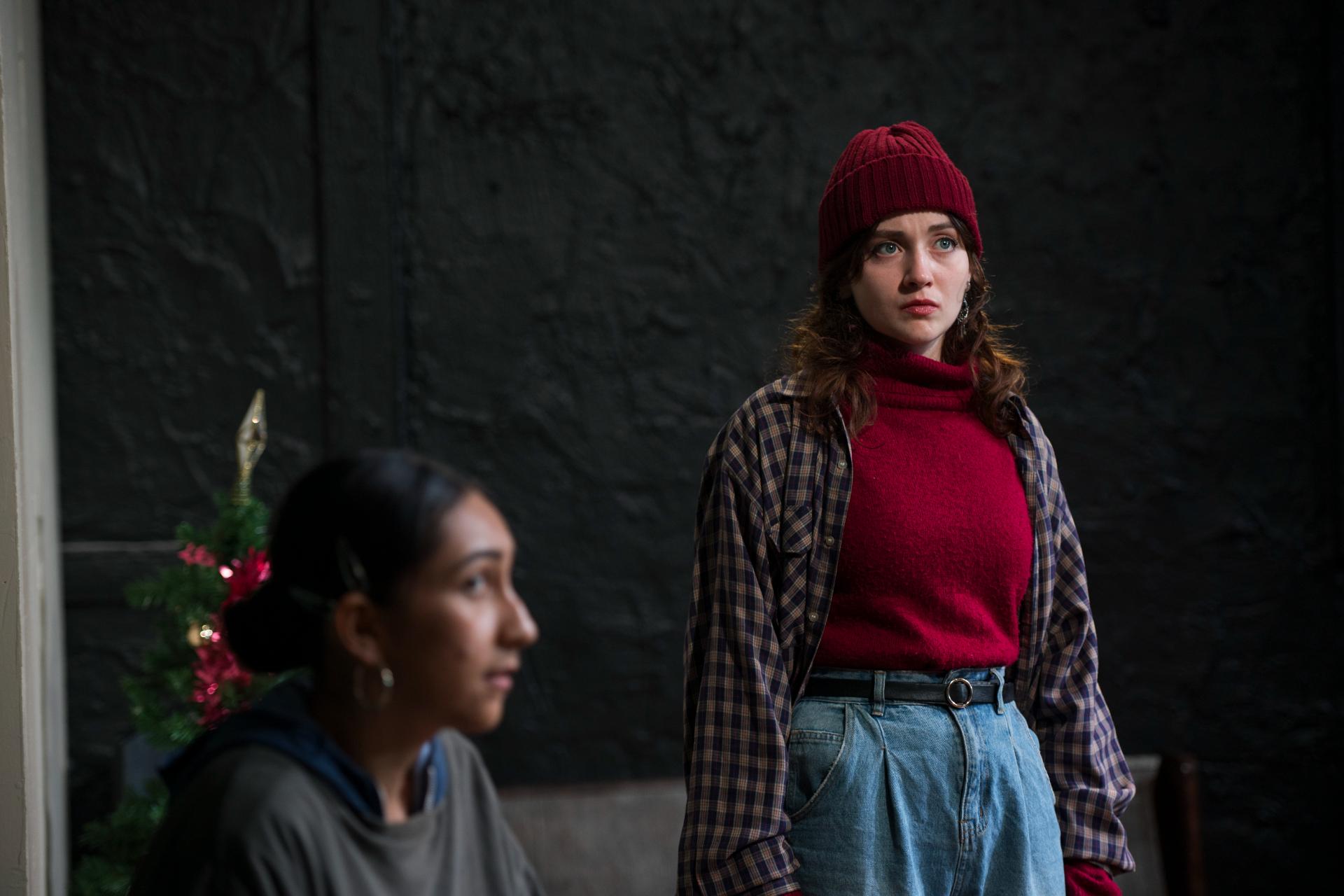
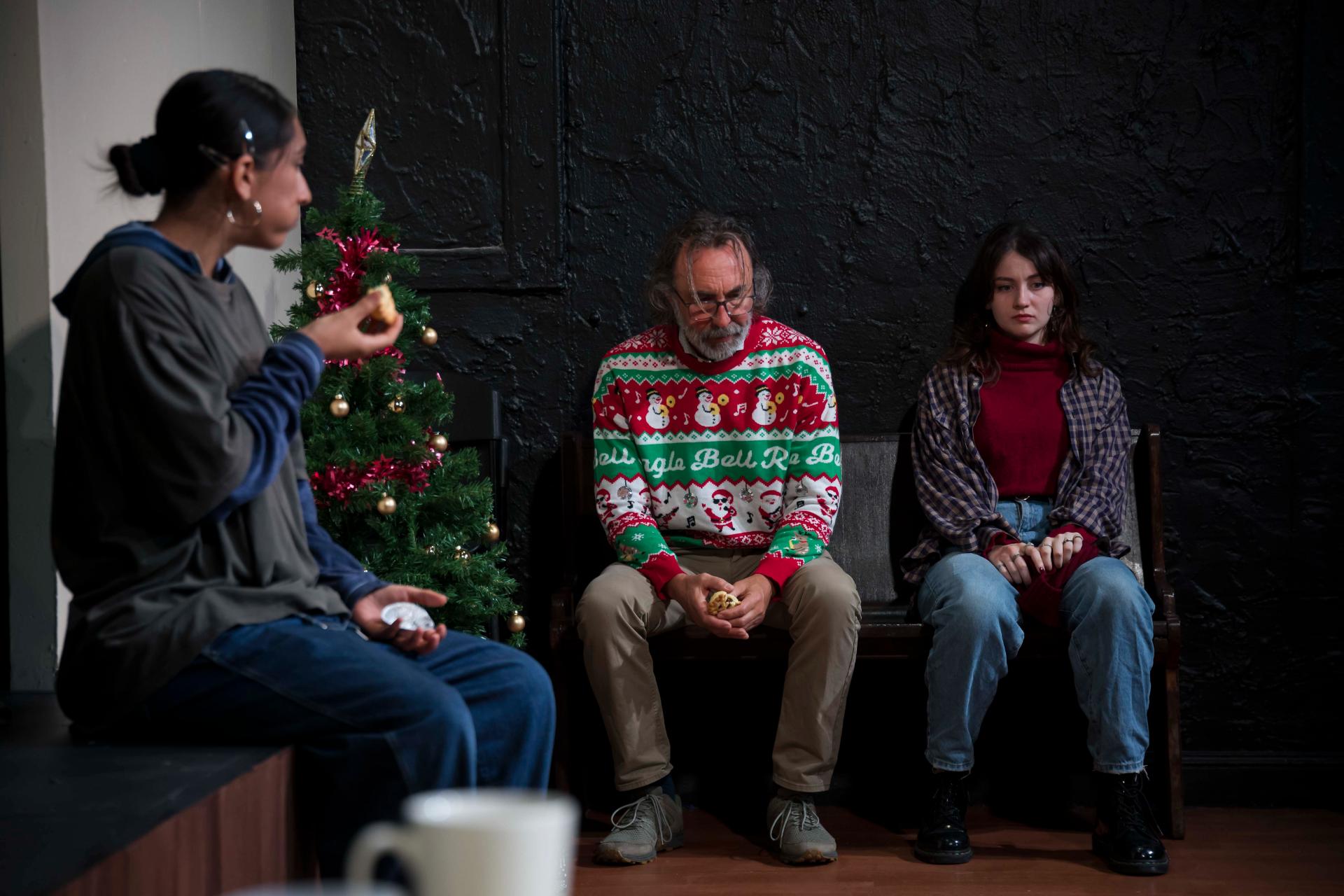
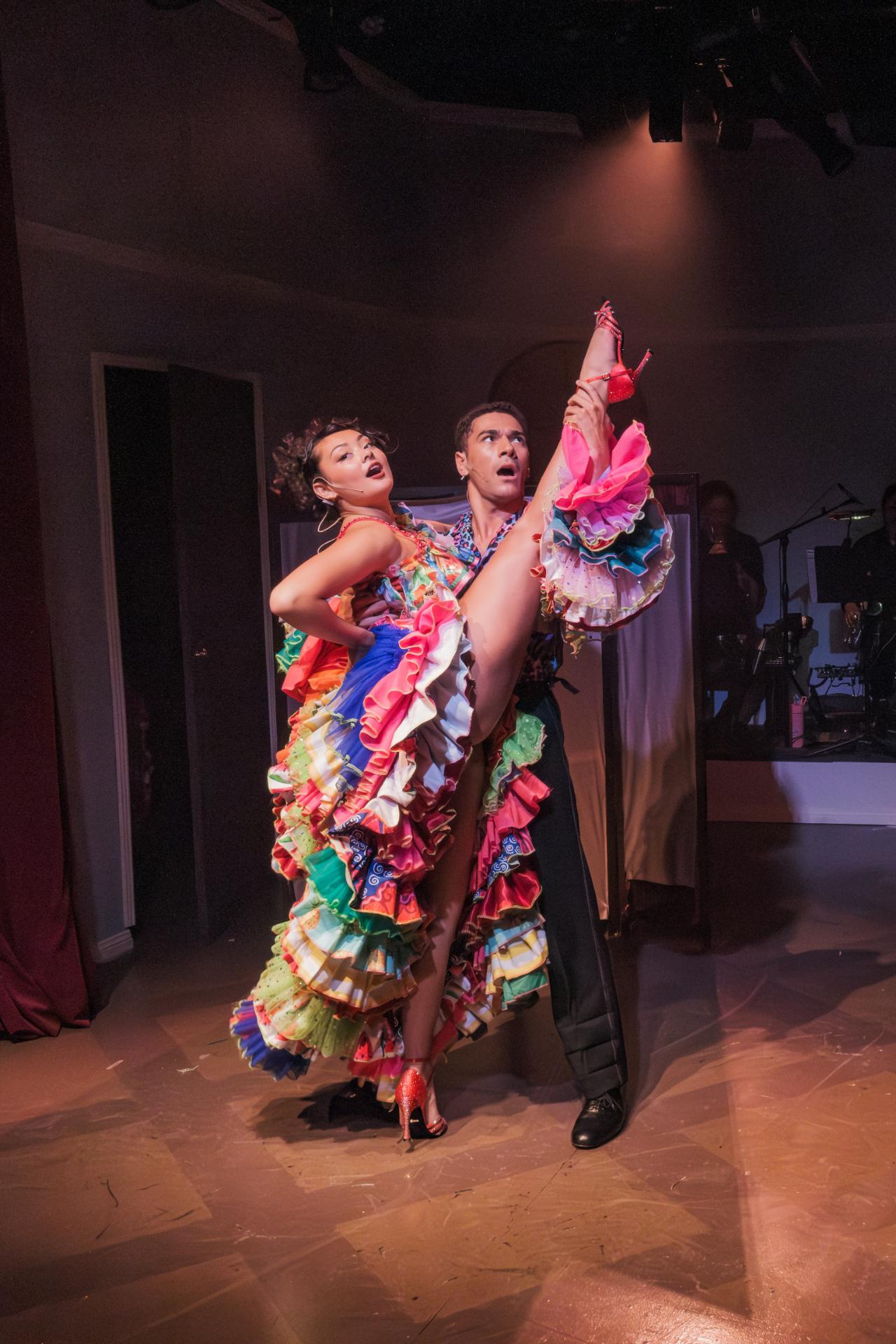
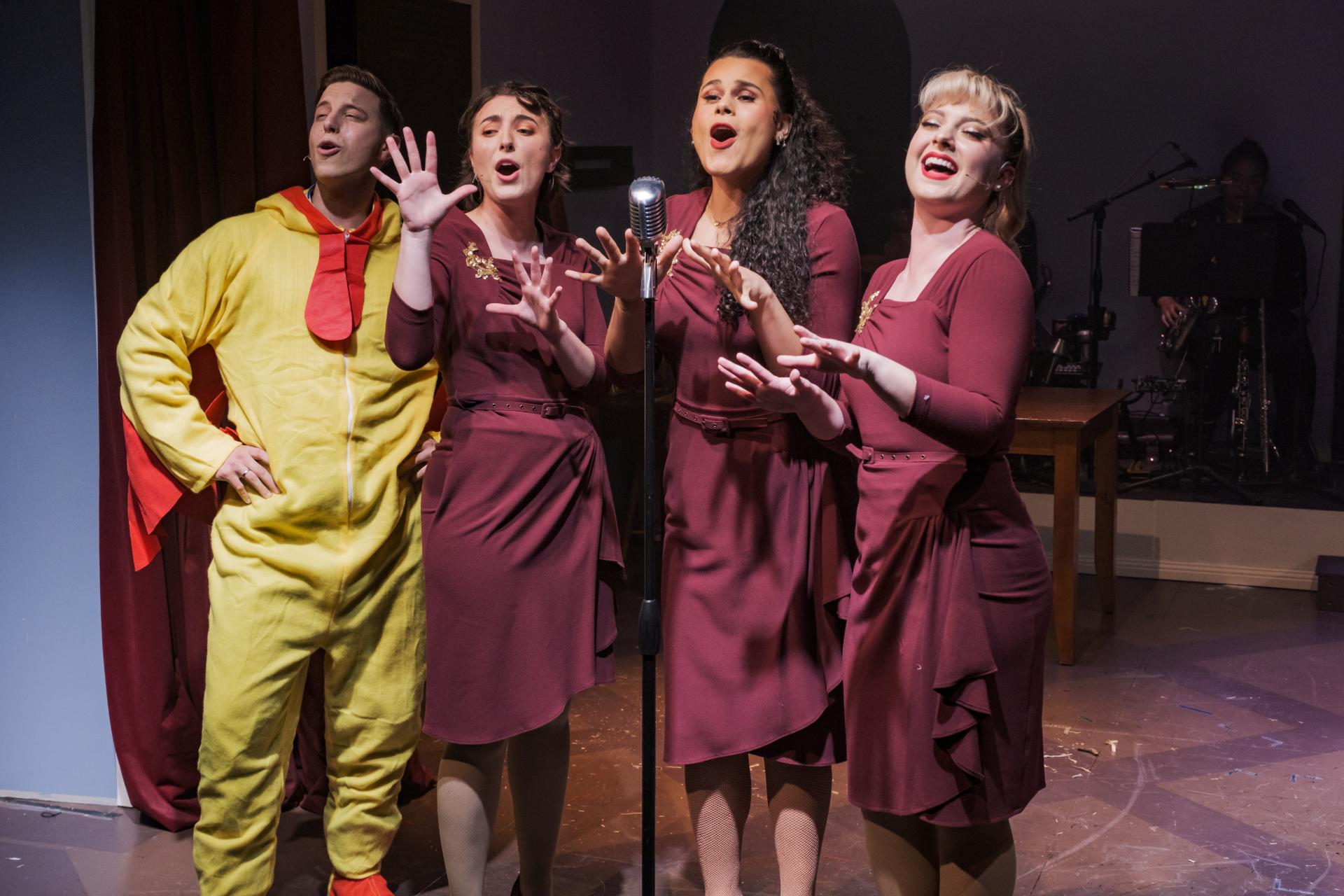
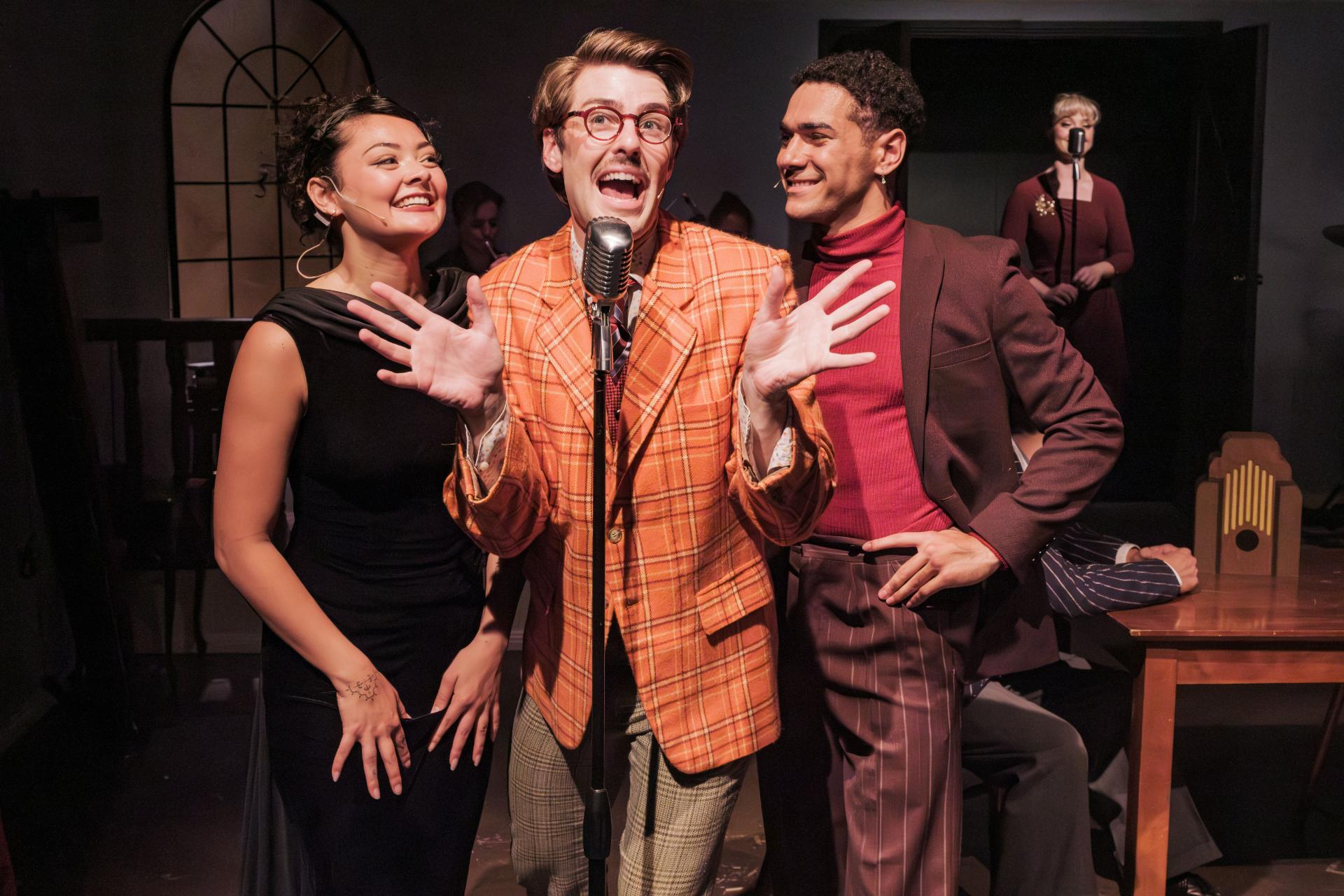
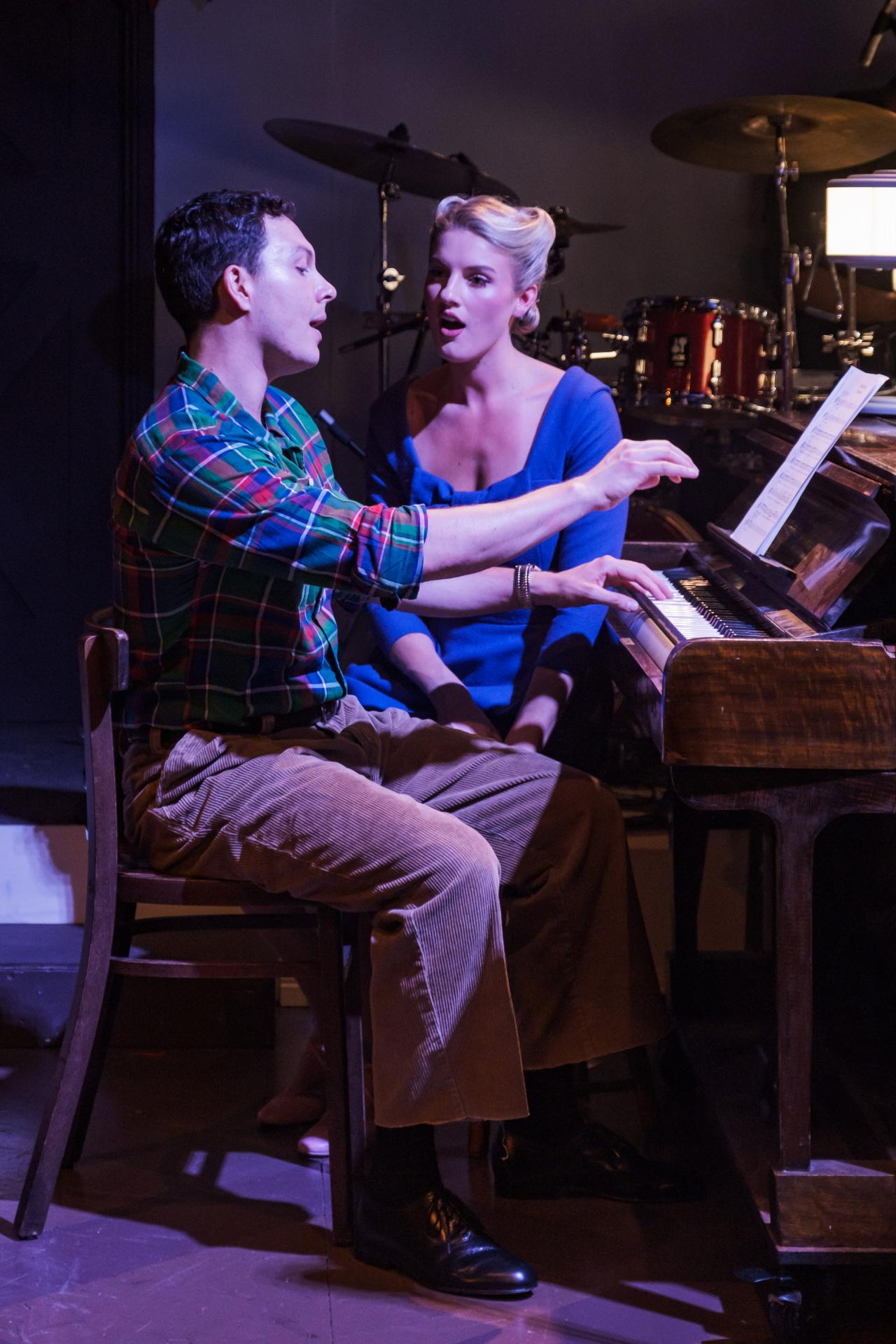
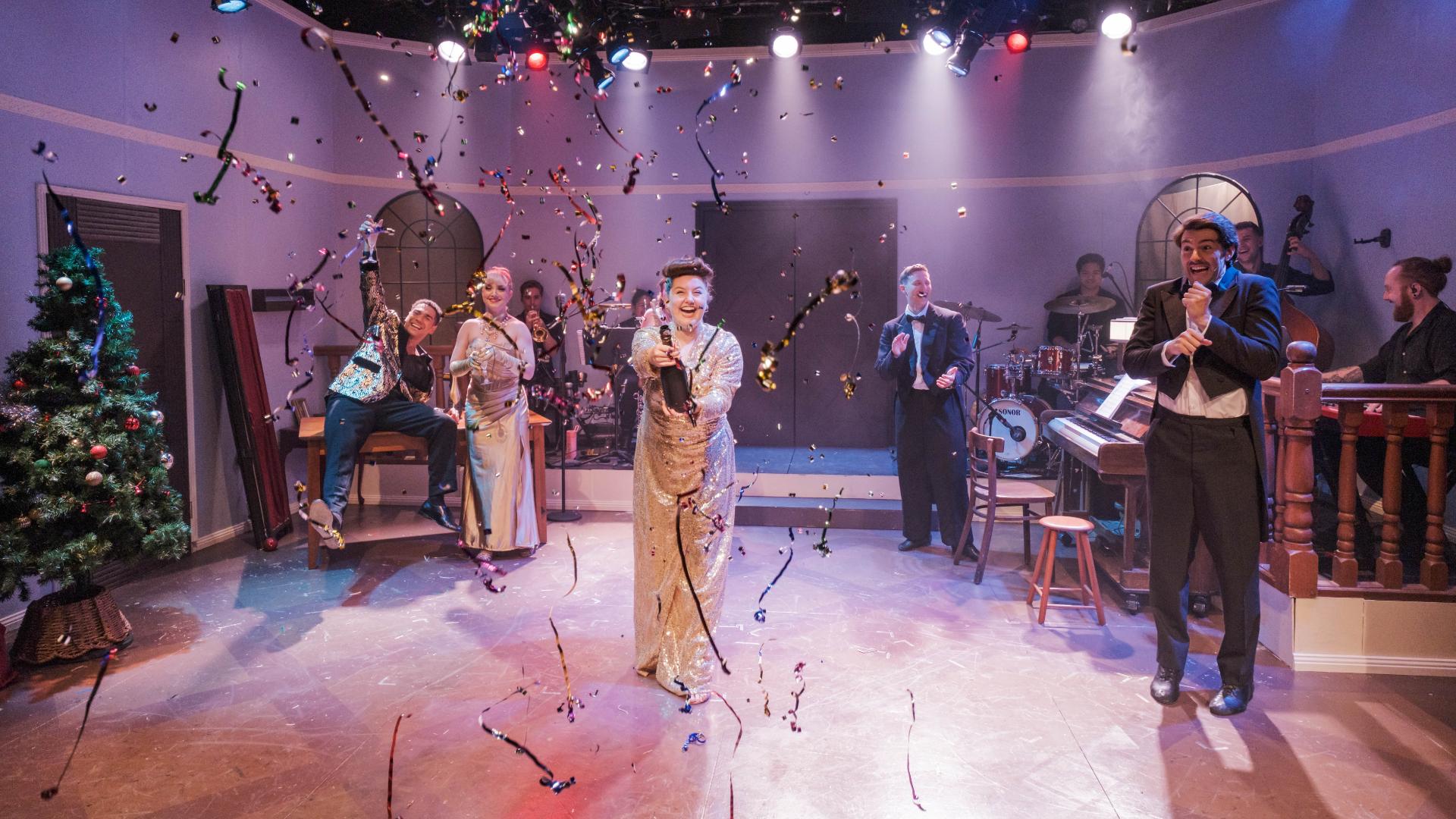
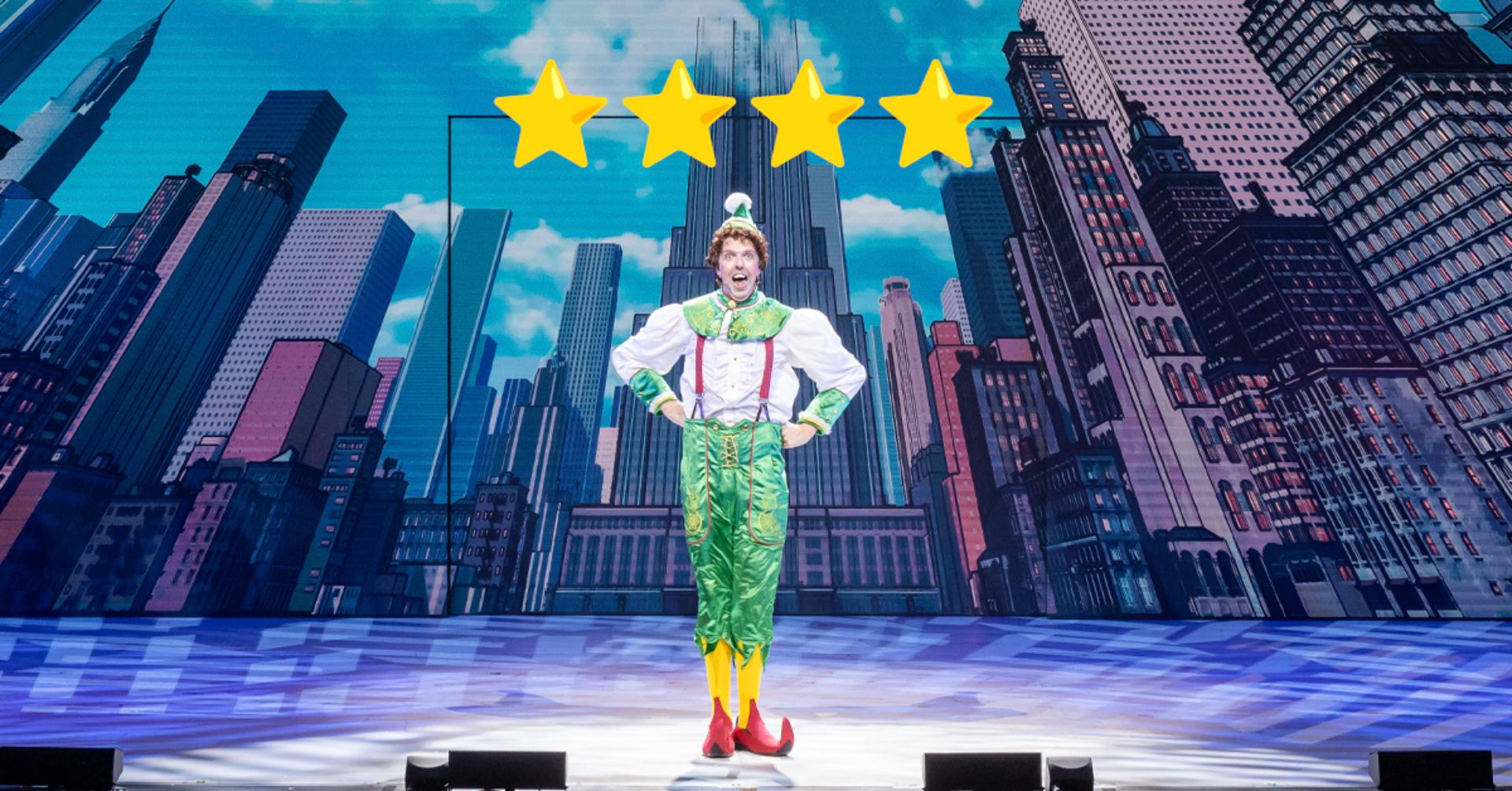
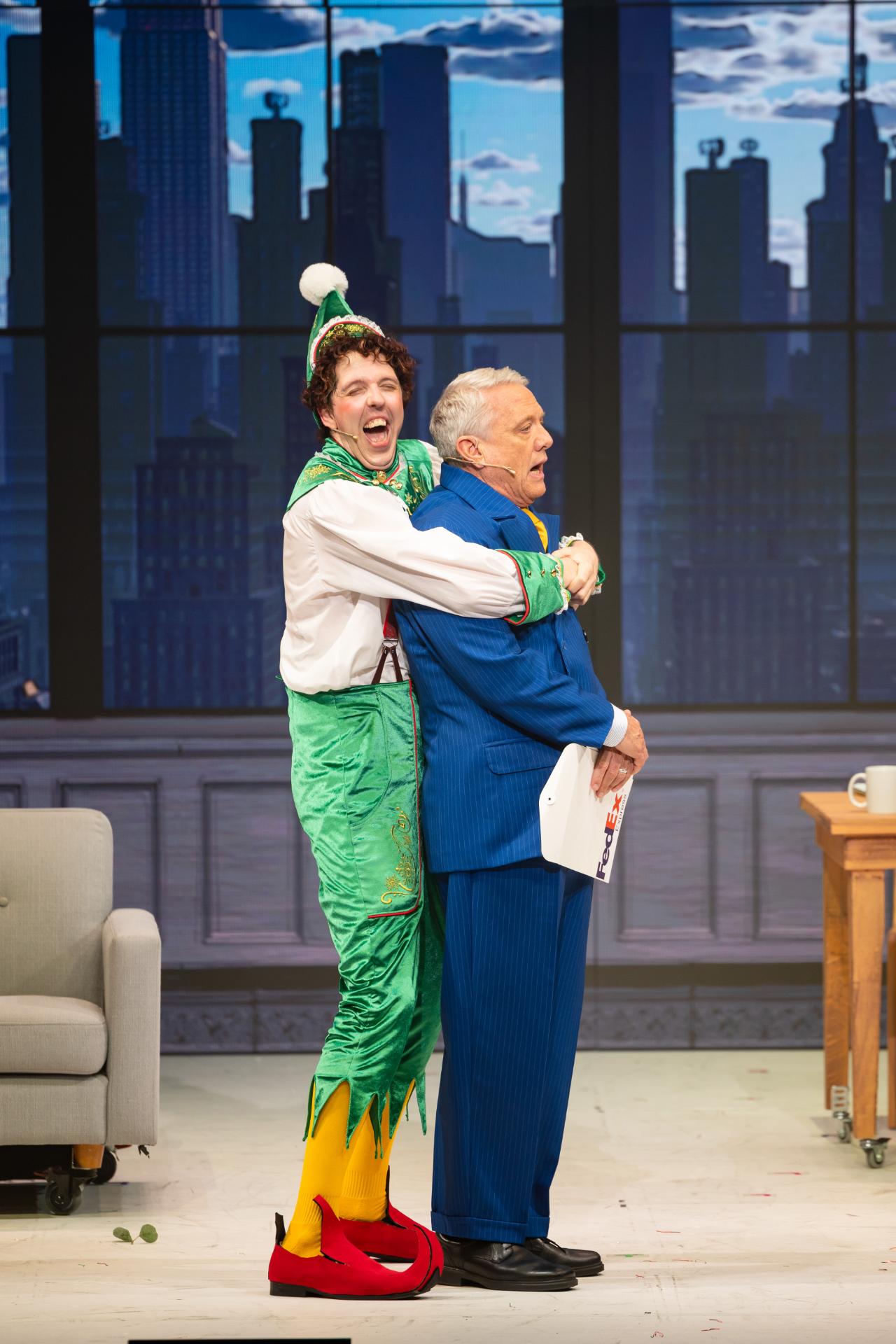
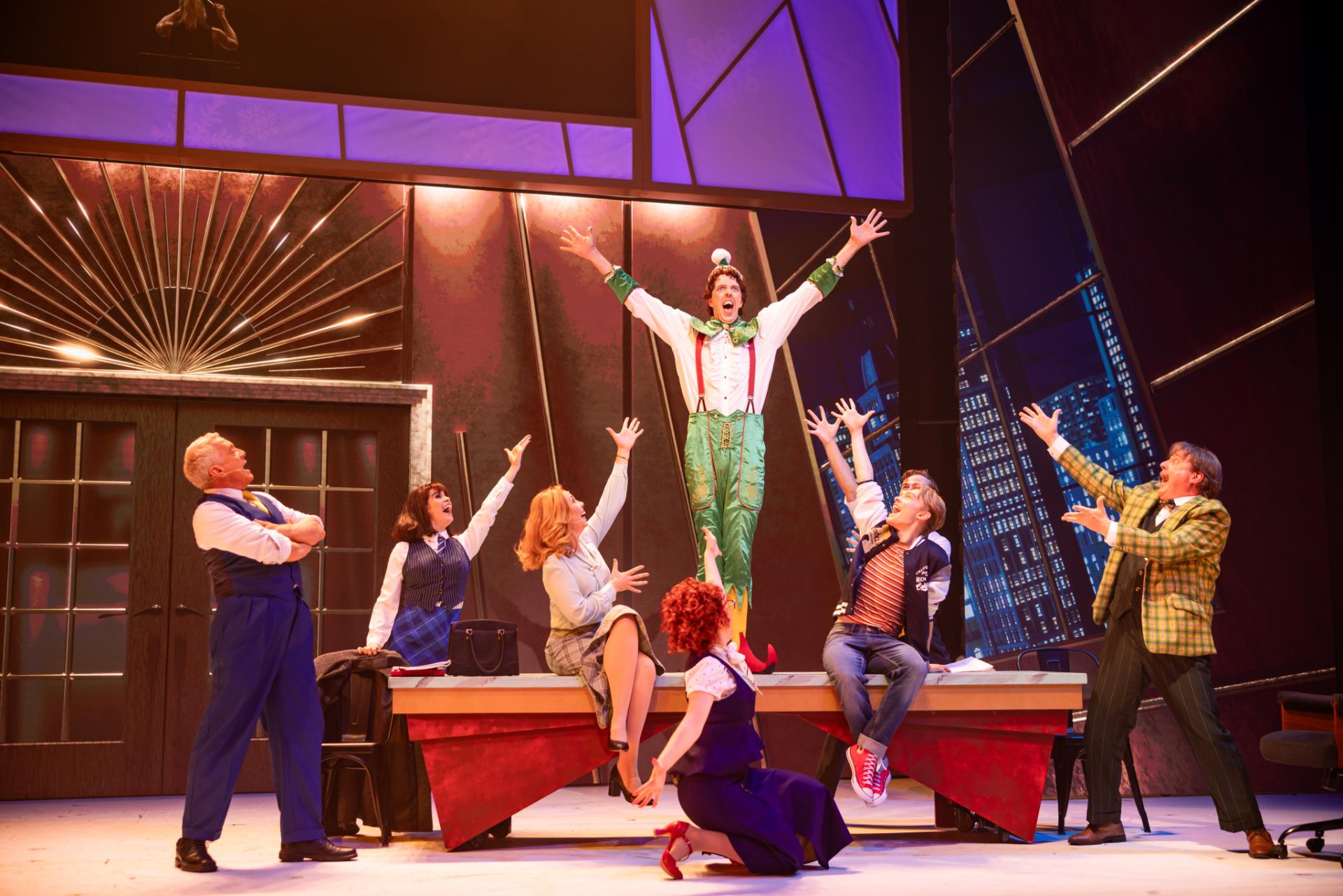
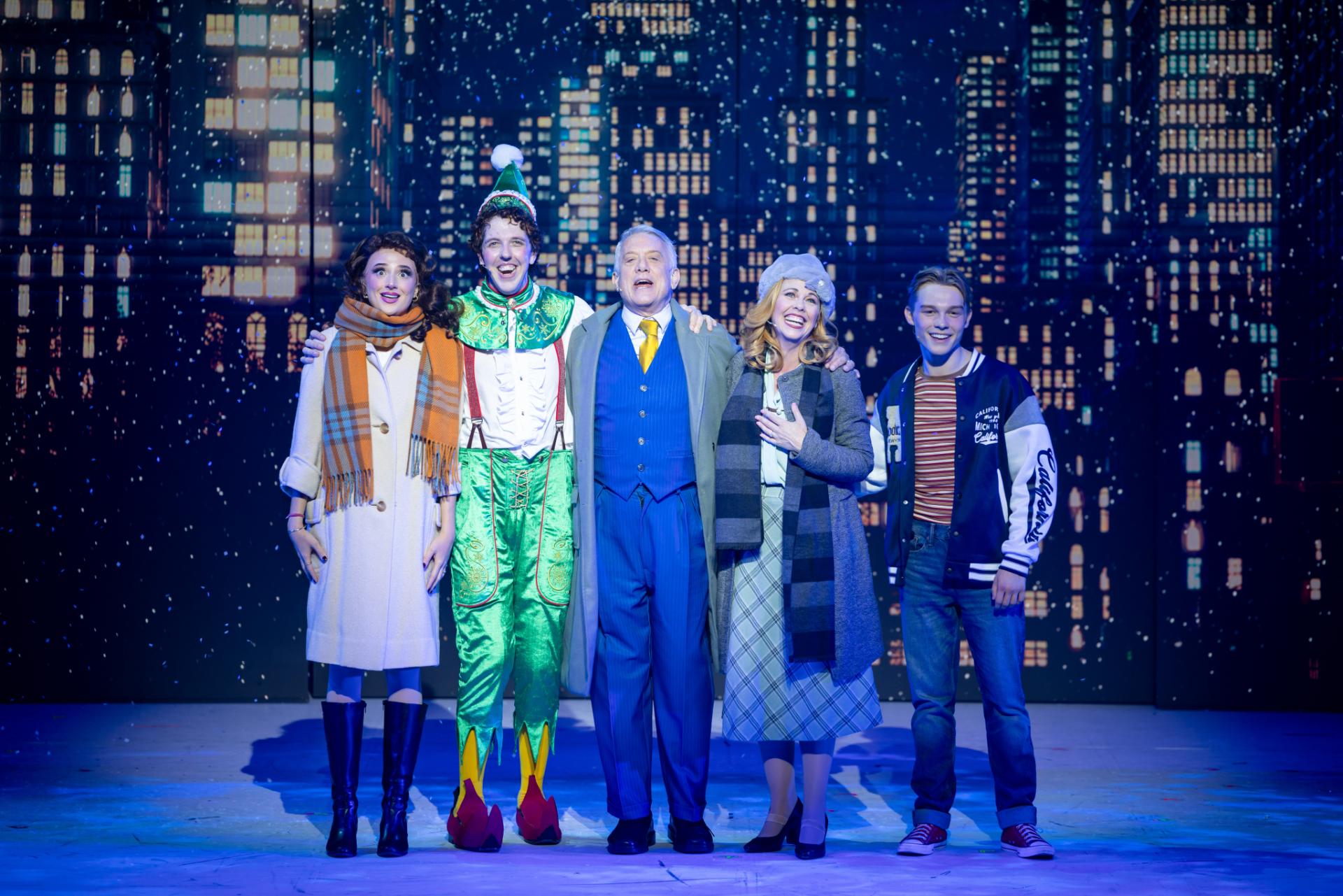
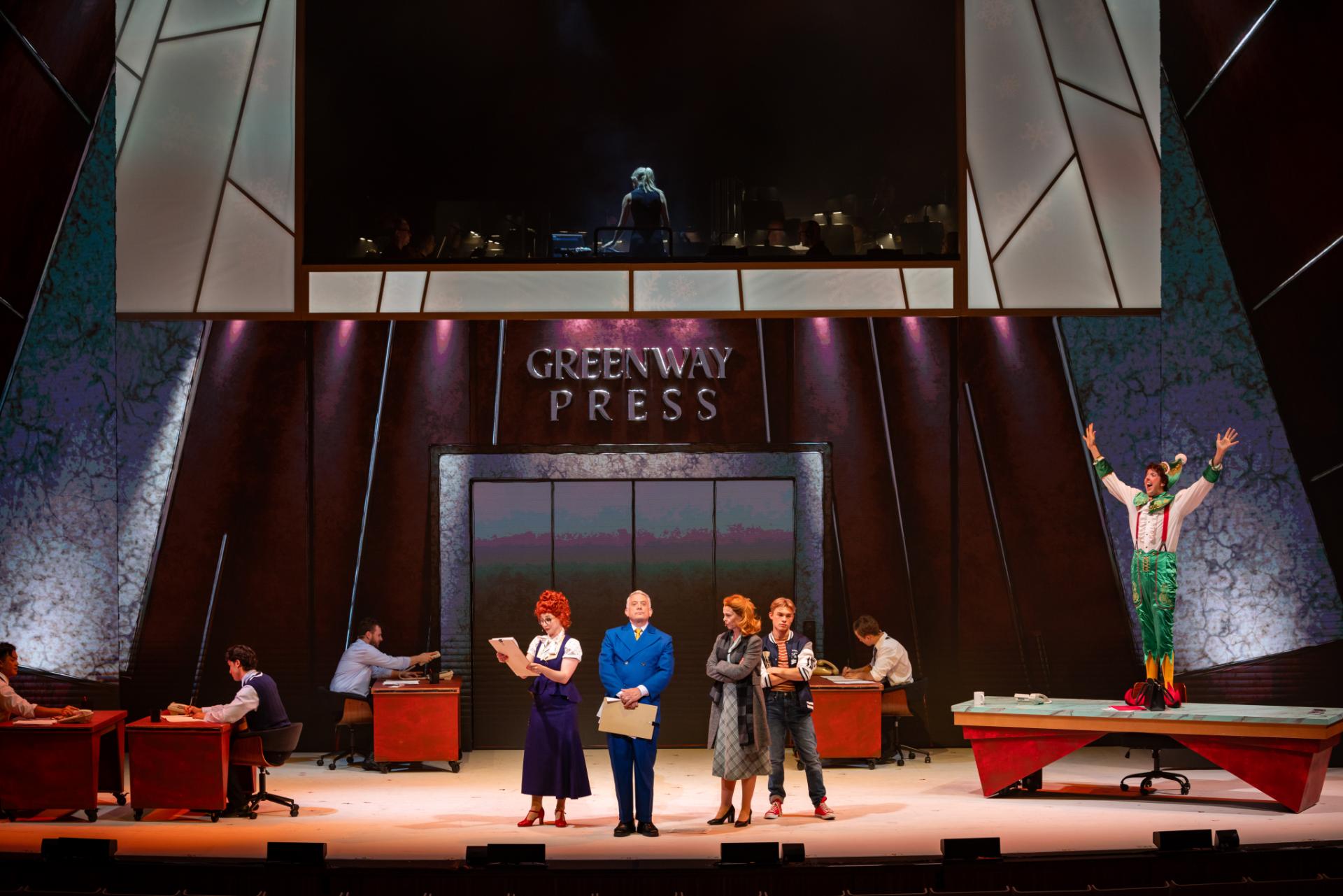
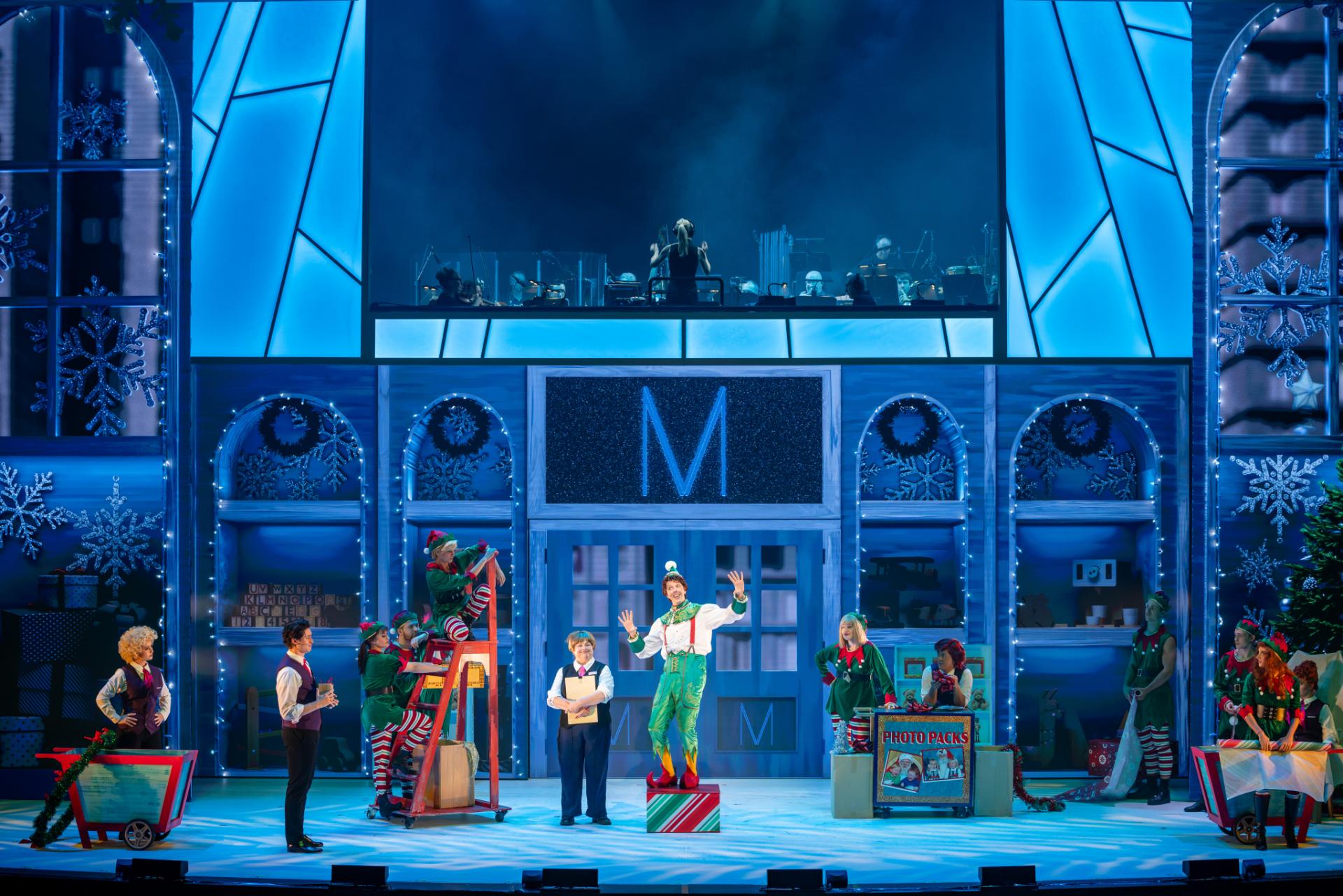
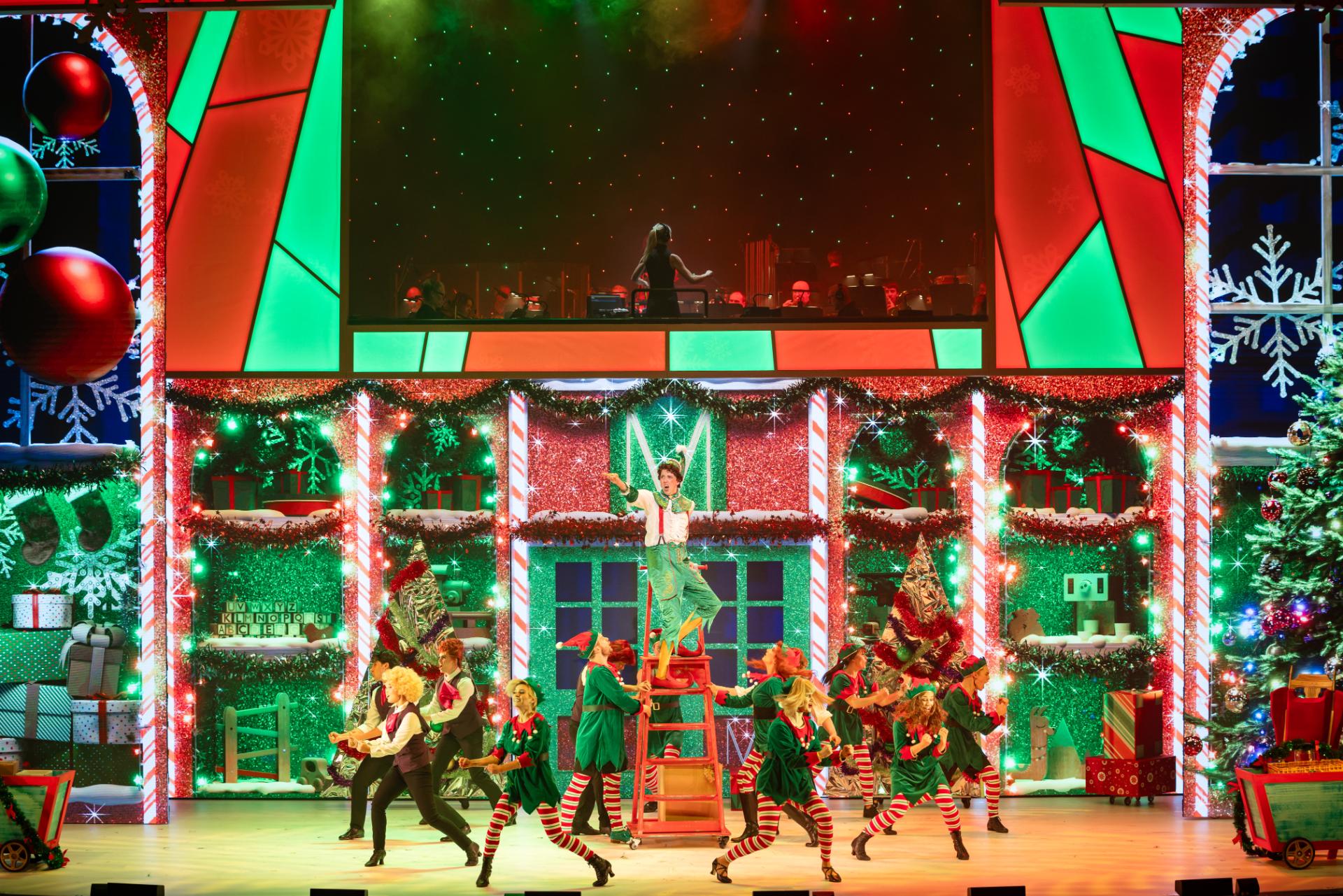
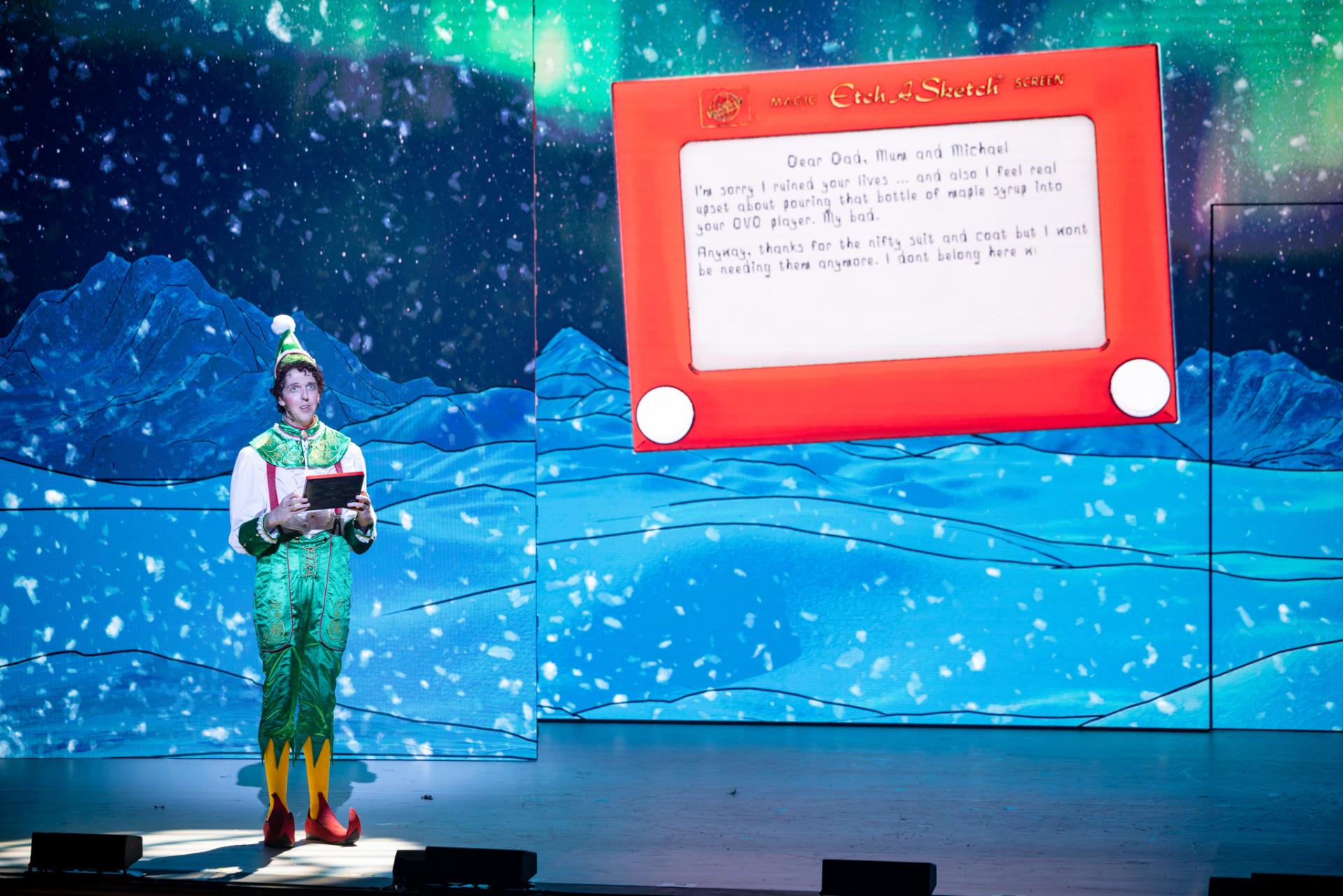
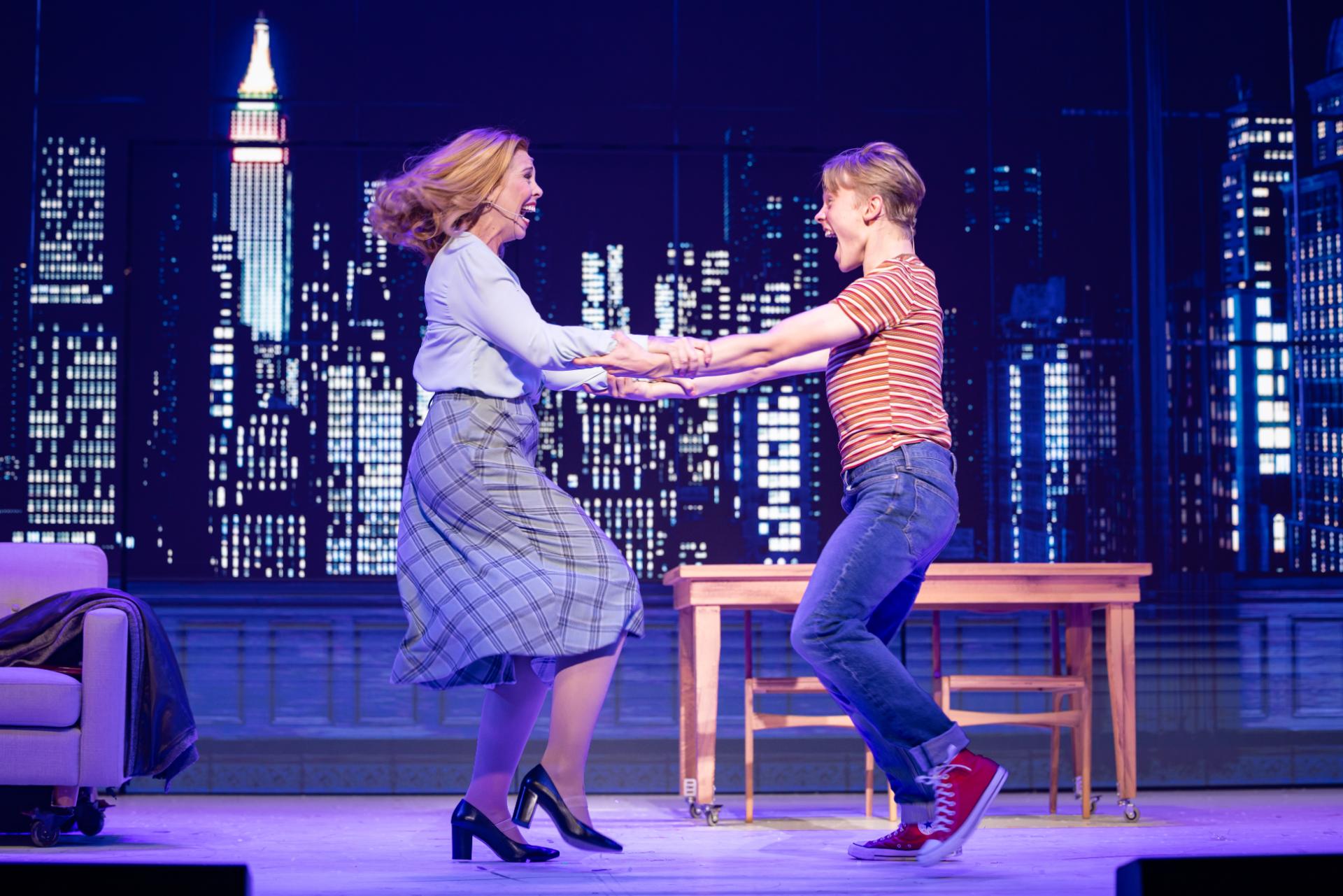
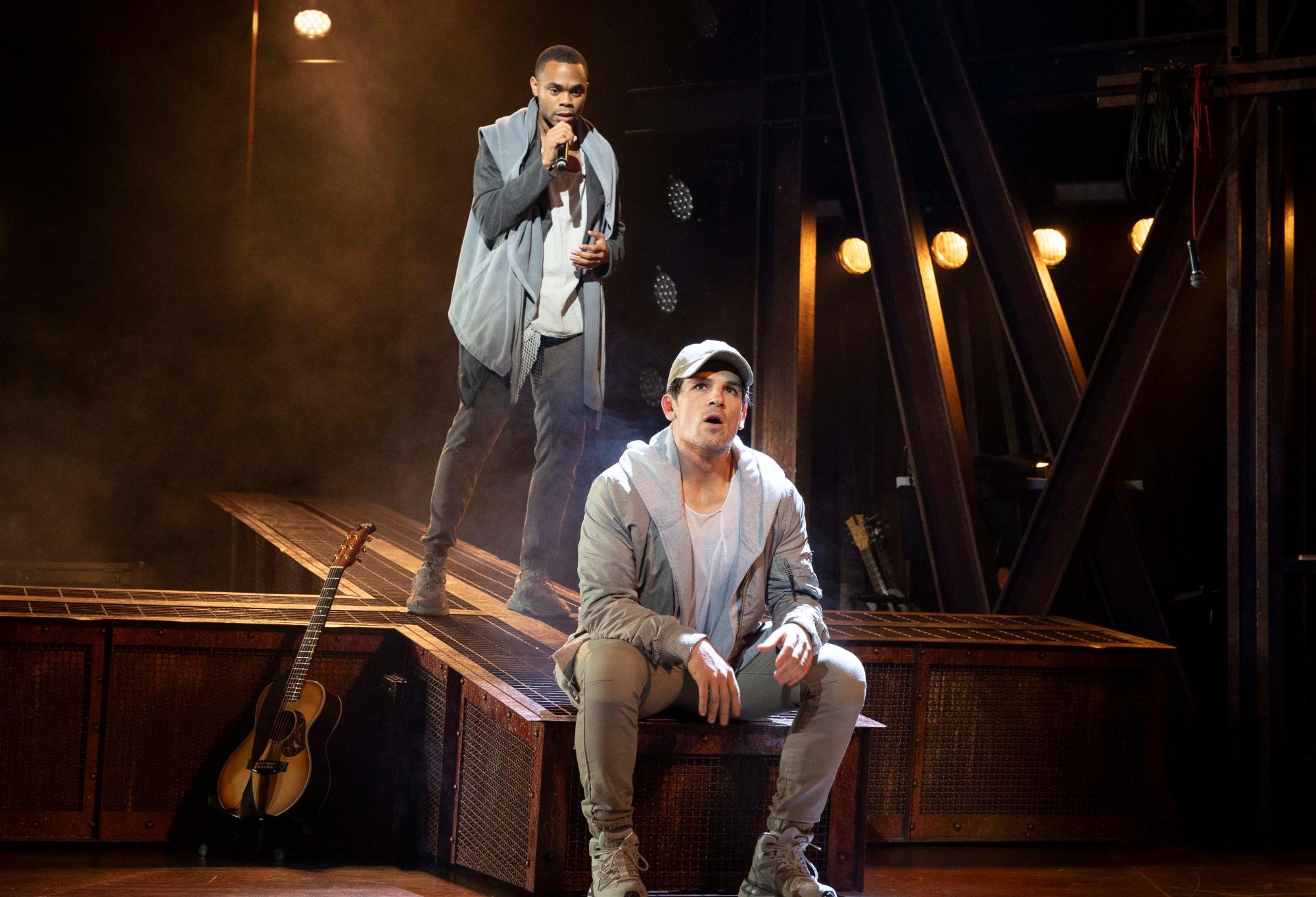
Buddy embarks on a journey to New York to find his biological father, having recently learned that he is not a natural-born elf. Elf: The Musical was created several years after the success of the 2003 motion picture on which it is based, bringing further joy to the holiday season for audiences of all ages.

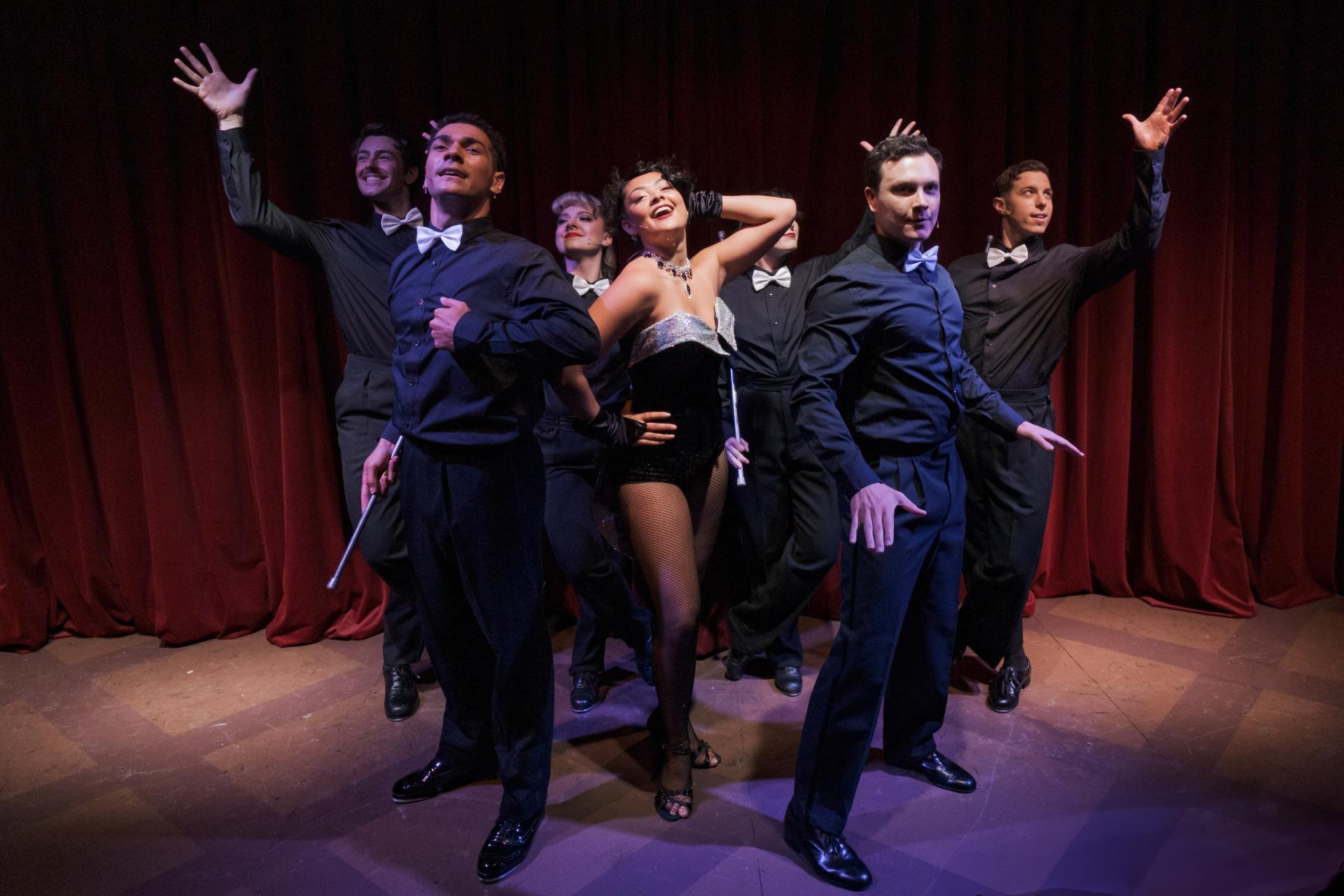
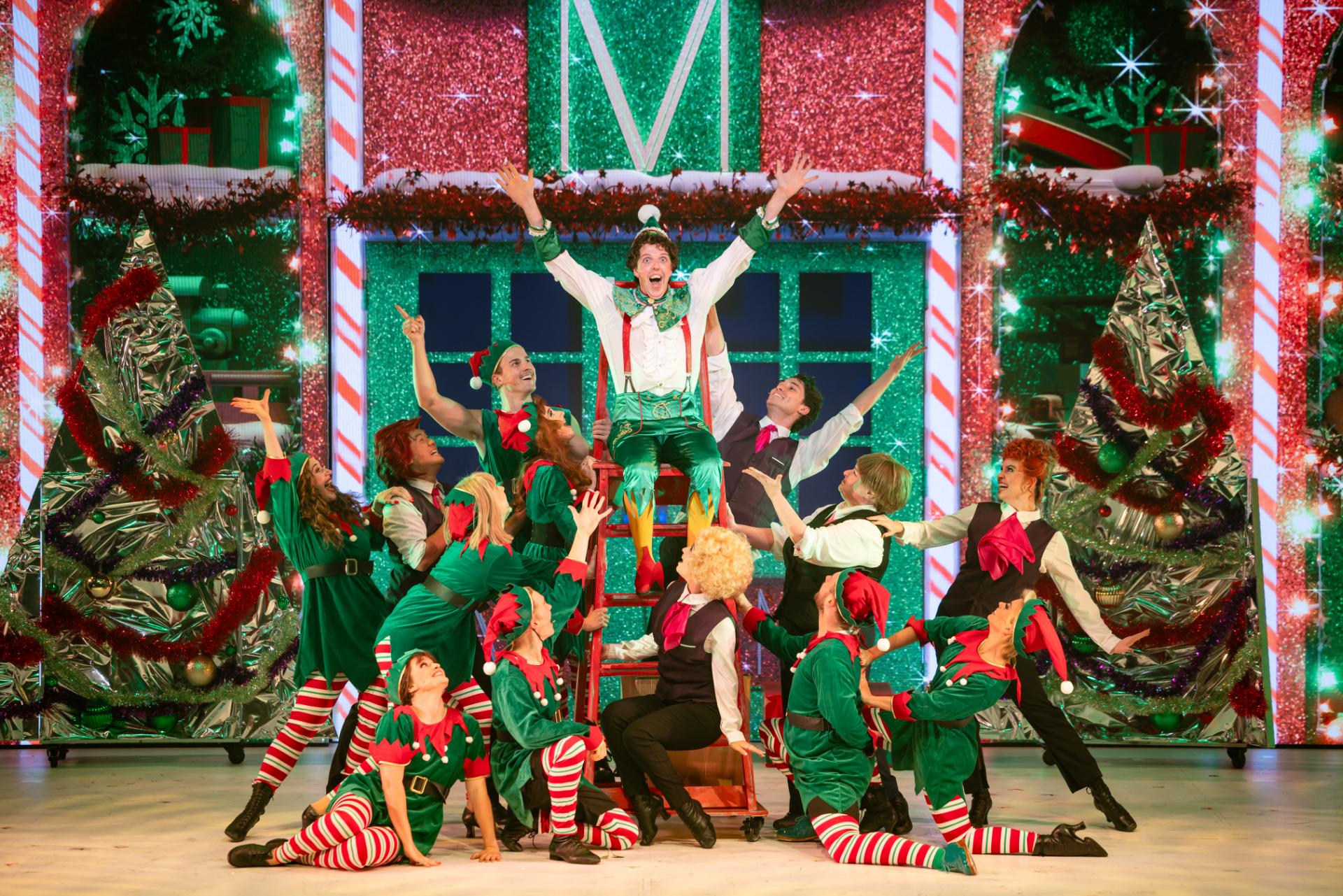
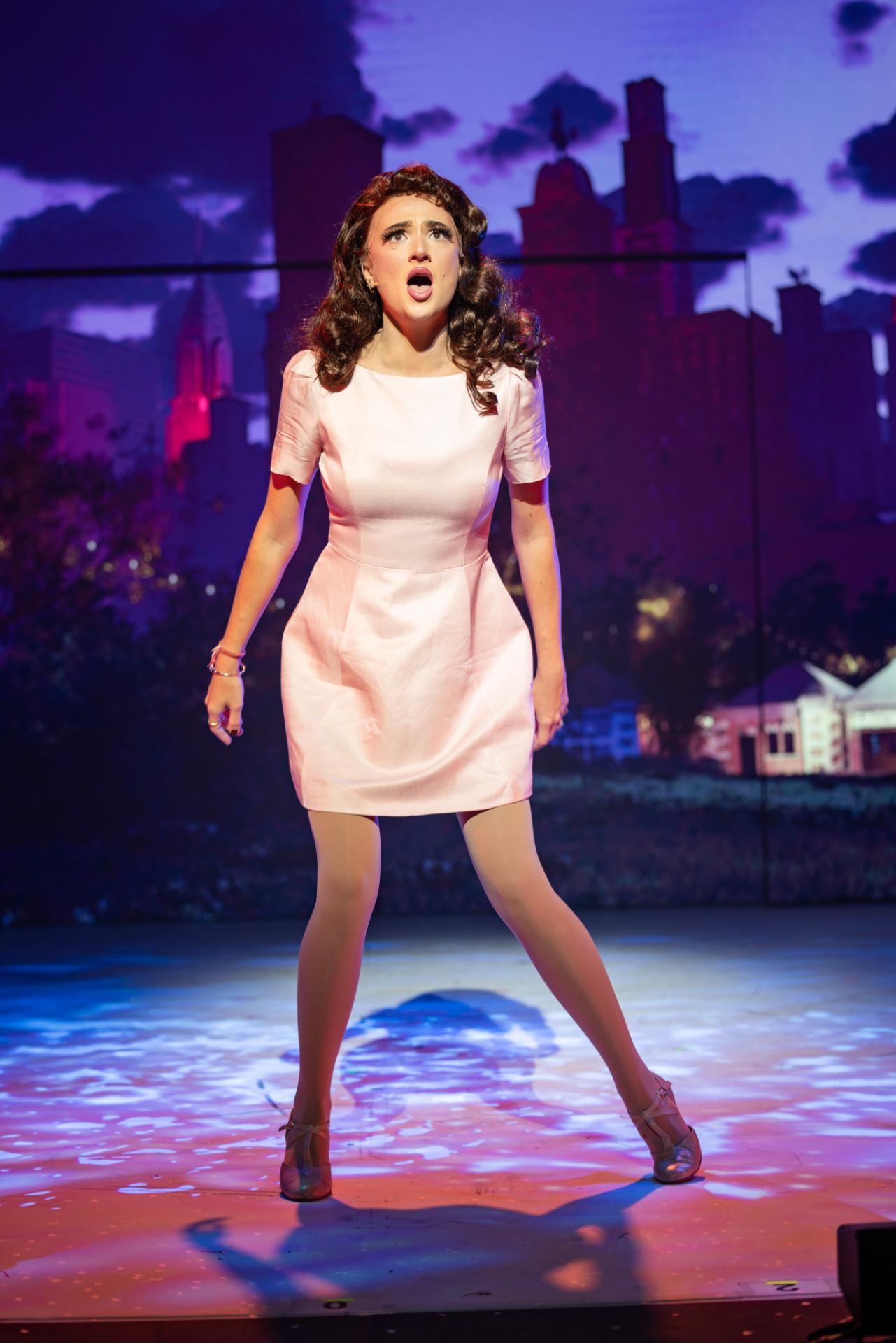
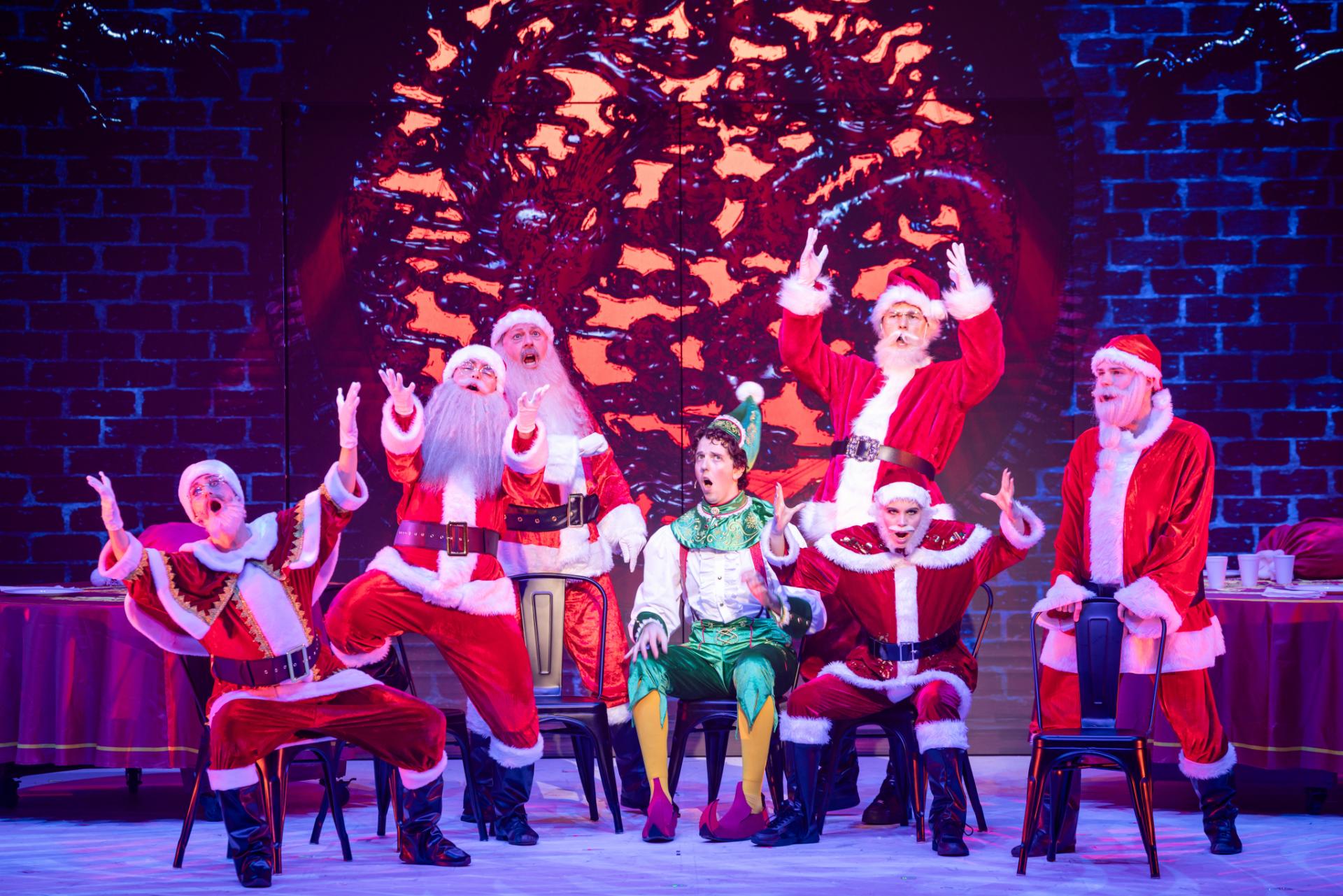
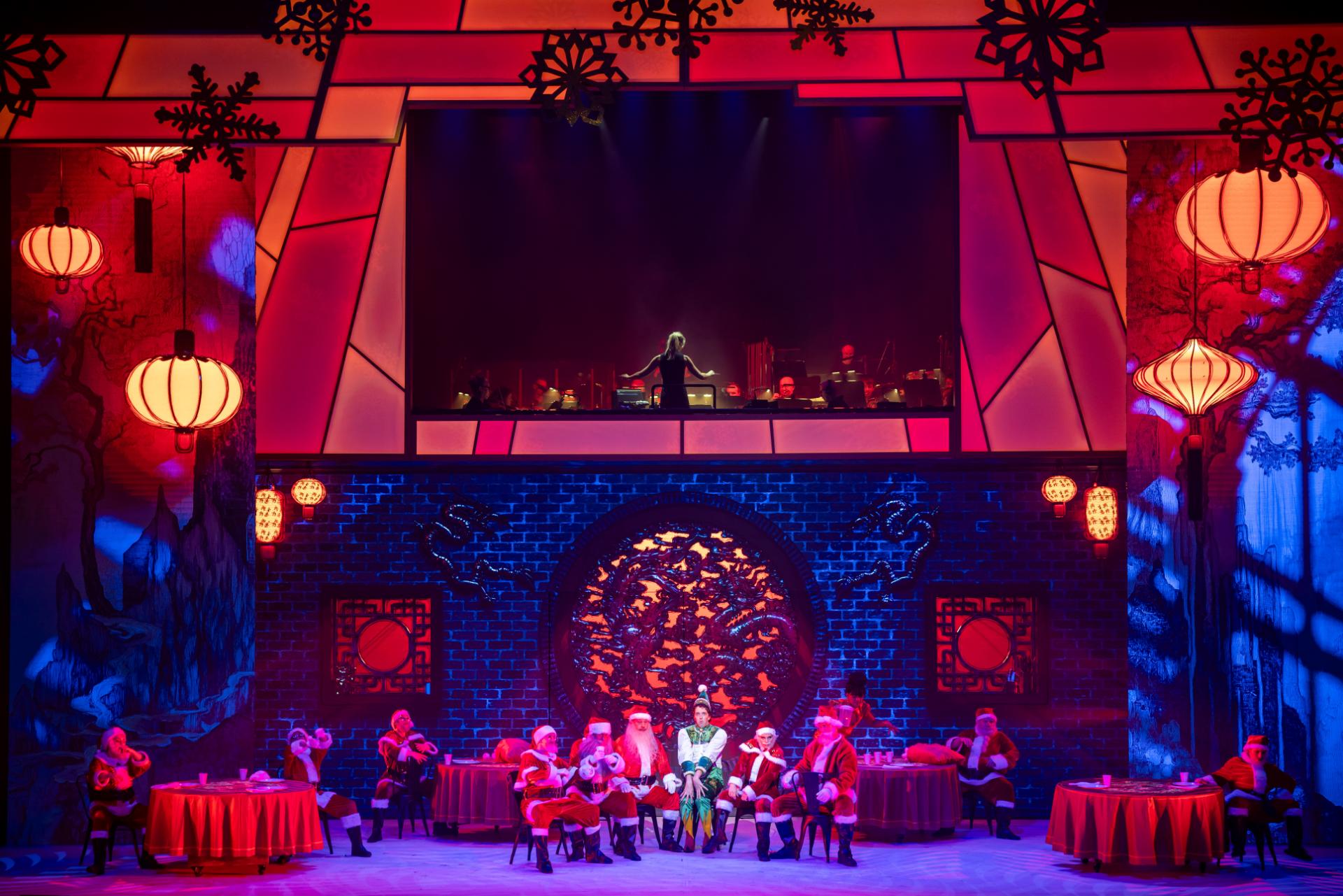
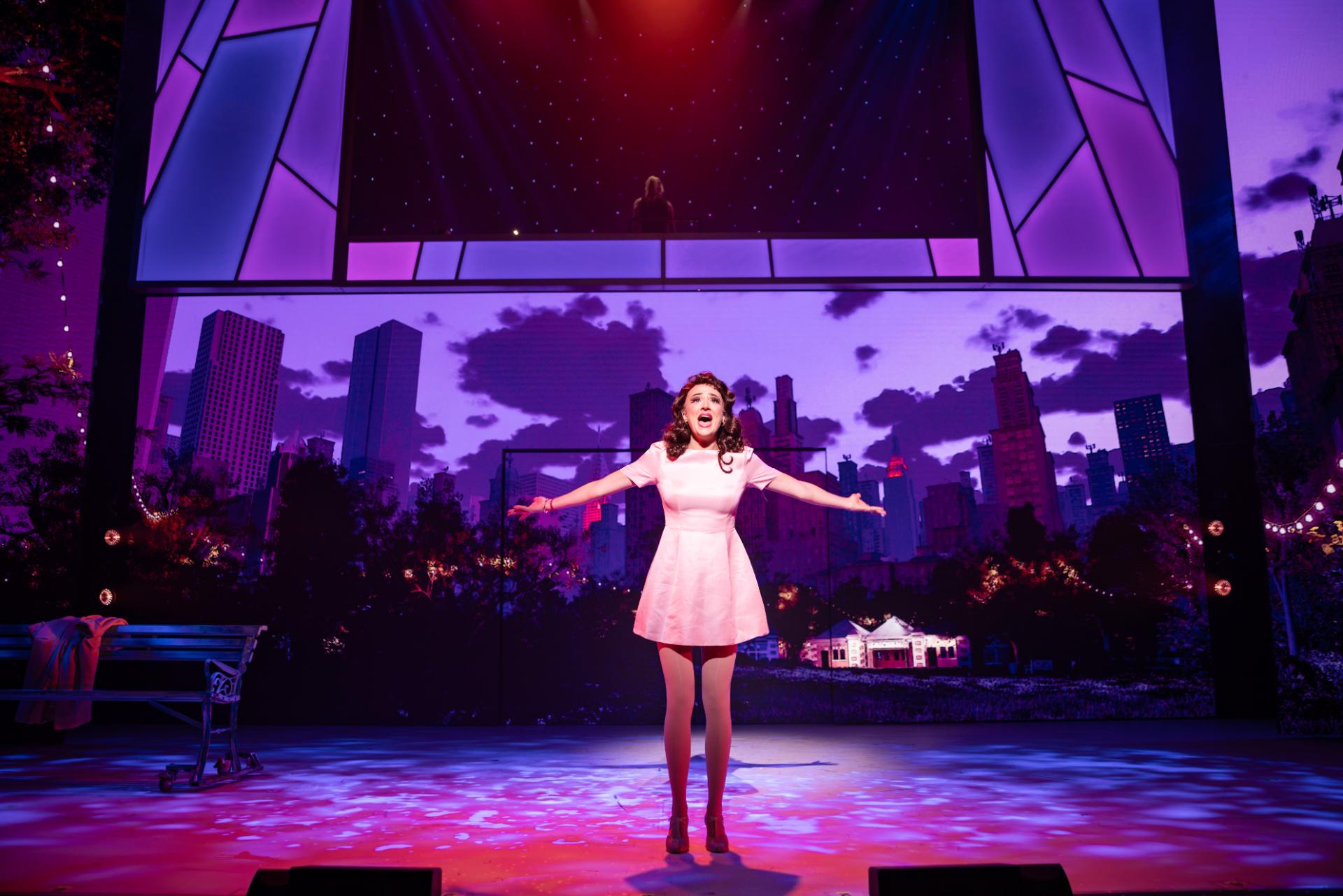
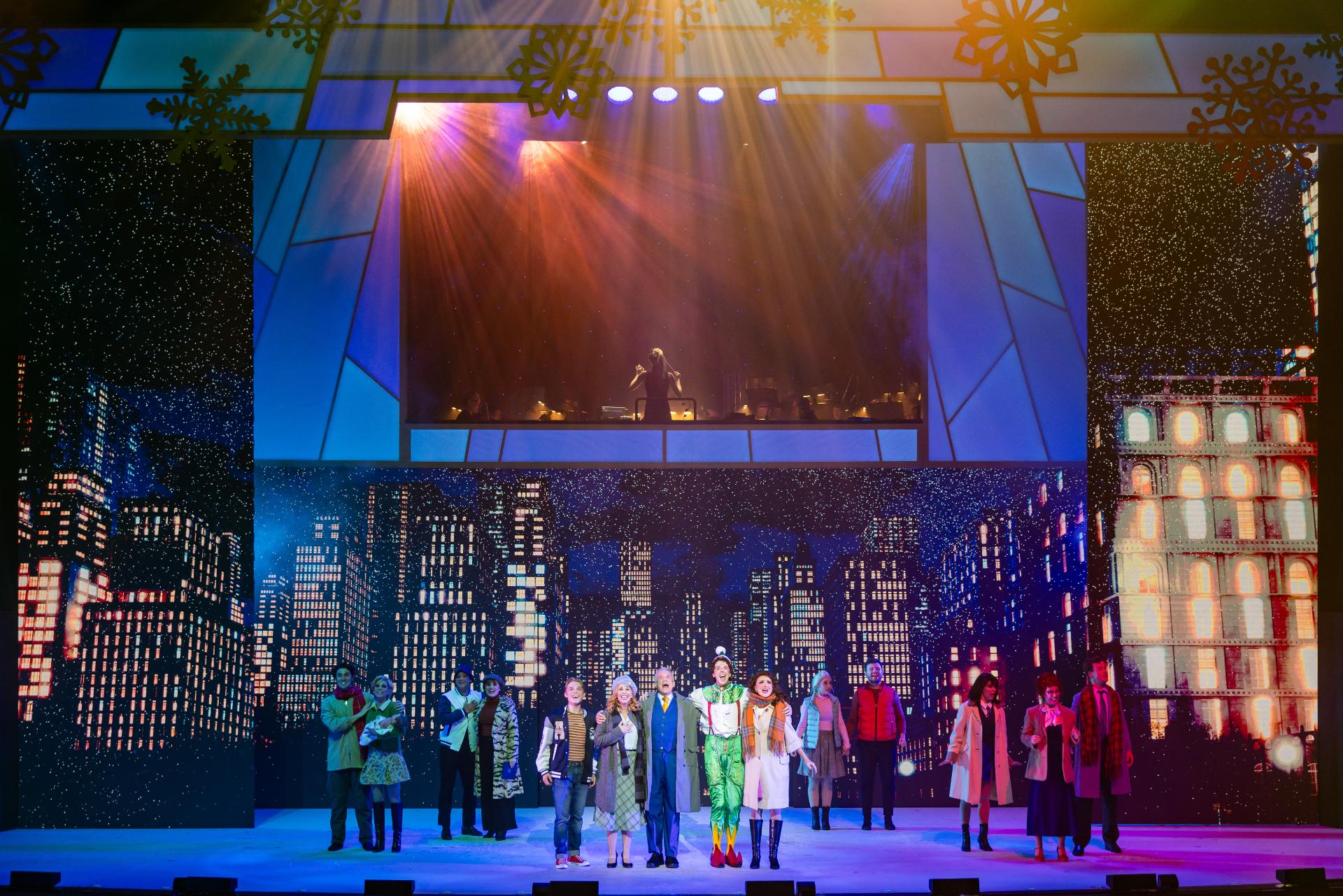
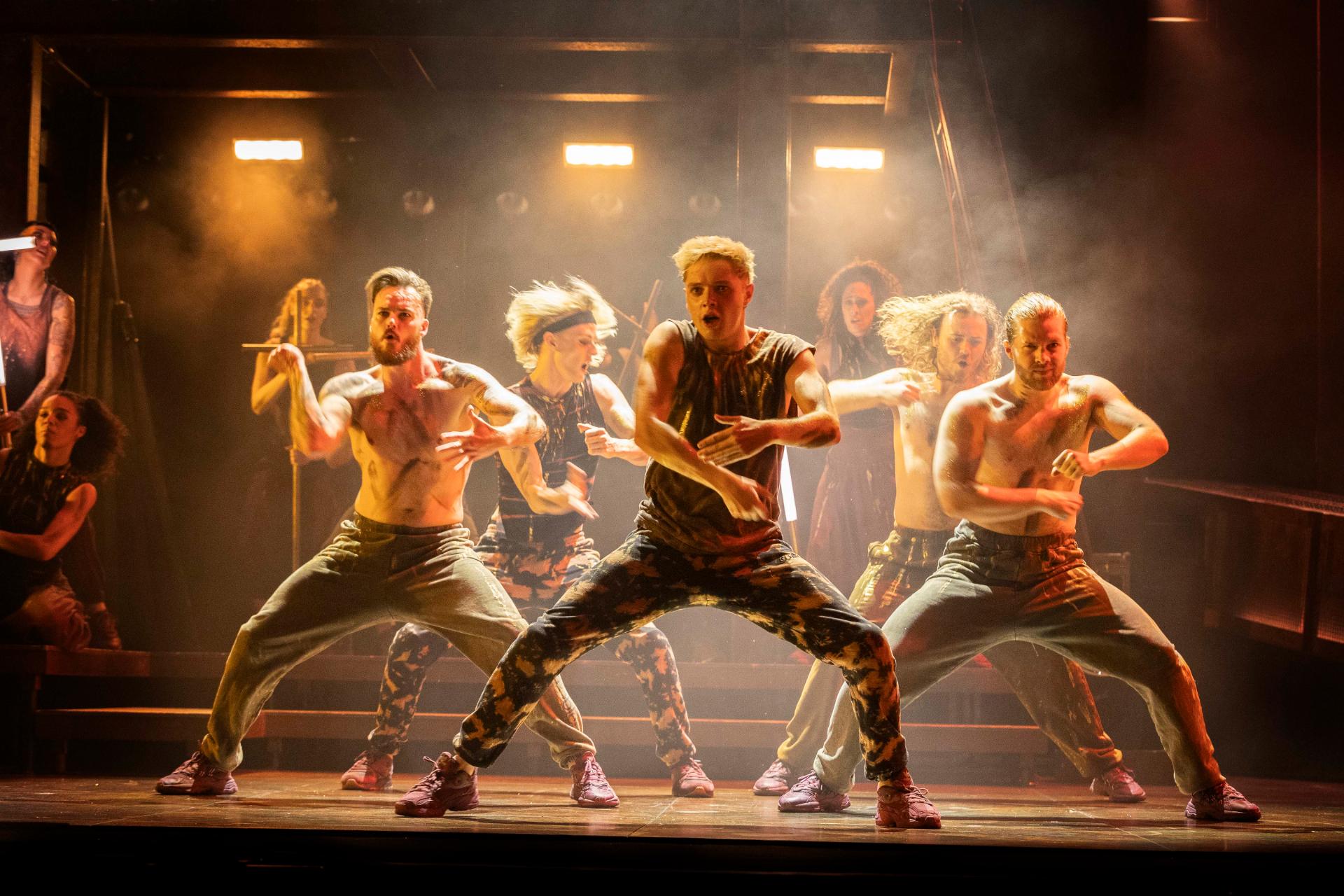
Under Eric Giancola’s effervescent direction, this stage version emerges as a comedic delight determined to leave crowds beaming with pleasure. Charming choreography by Mitchel Woodcock is a memorable feature, adding richness and dynamism to the narrative’s inherent momentum. Splendid video design by David Bergman increases the kineticism of the experience, working with our imagination to render believable a wide range of locations, as it delivers irrepressible colour and movement to have us mesmerised.

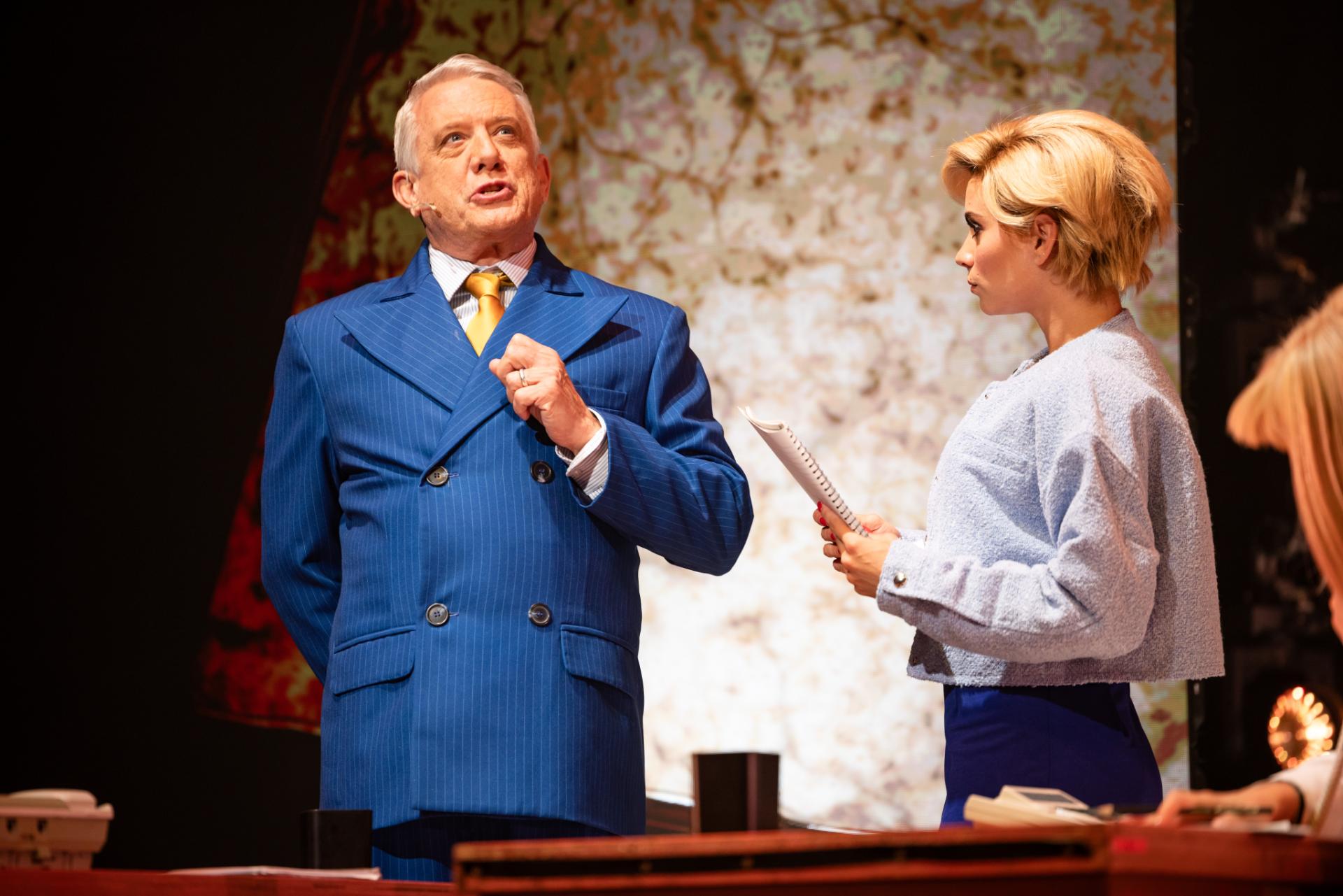
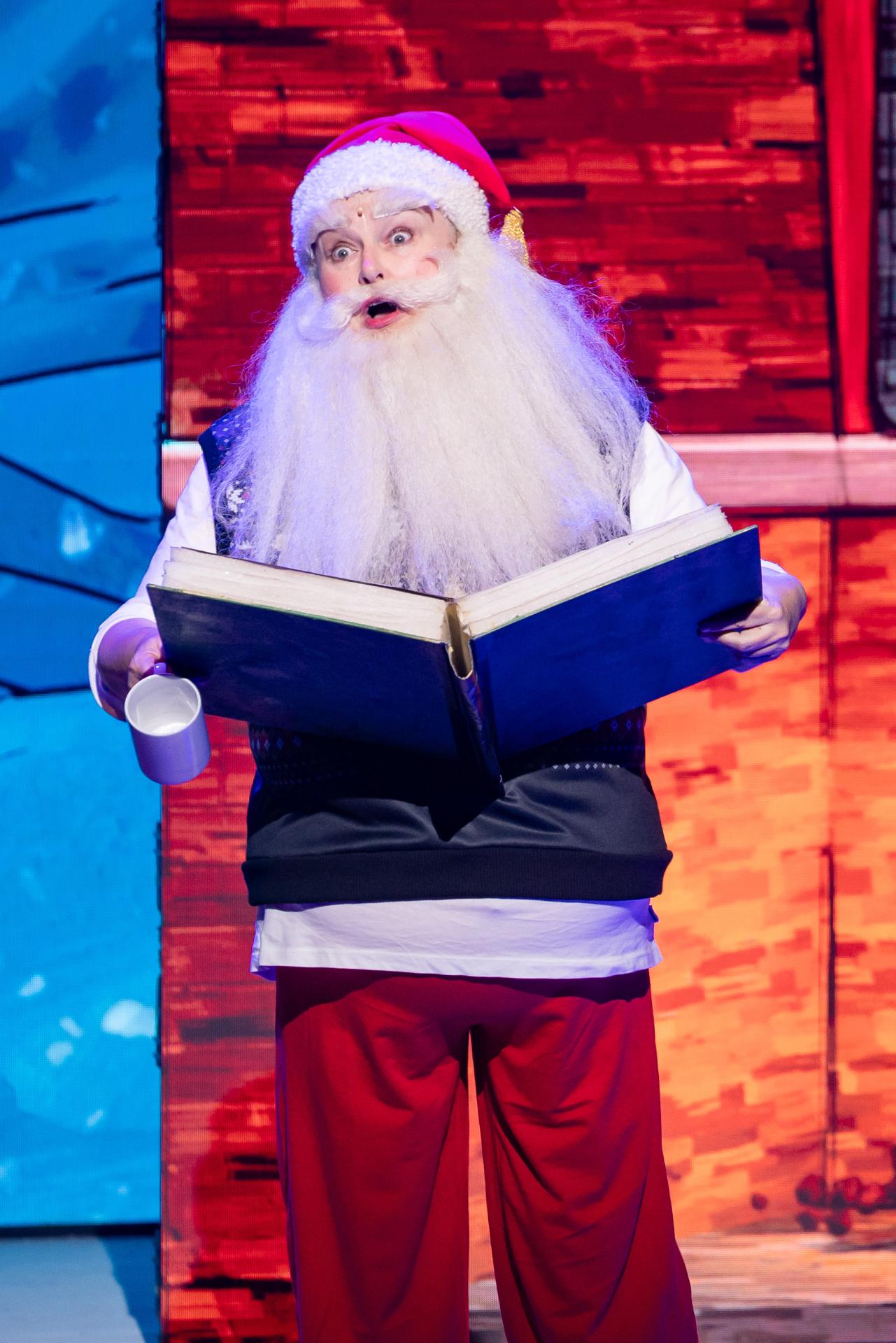
Performer Gareth Isaac plays Buddy with an appealing naivety, and along with his vibrant ebullience,  convinces us to invest in this story about an oversized Santa’s helper. As Santa, Laura Mulcahy’s natural charisma shines to great effect, completely enchanting with the confidence and humour she introduces. Simon Burke and Katrina Retallick are notable for their magnetism in the roles of Mr and Mrs Hobbs, both effortlessly captivating, as parental figures in Buddy’s search for belonging.

Christmas may always be first and foremost about the birth of a deity, but increasingly we regard it to simply be a time for togetherness and harmony. No matter our beliefs, it becomes a greater possibility during these festivities to lay down the arms, and to hold sacred a moment, if only for remembering to hope for peace on earth, and mercy mild.
www.sydneyoperahouse.com

Review: The Pigeons (KXT on Broadway)

Venue: KXT on Broadway (Ultimo NSW), Dec 7 – 21, 2024
Playwright: David Gieselmann
Director:
Eugene Lynch
Cast: Tel Benjamin, Lib Campbell, Micaela Ellis, Kath Gordon, Jackson Hurwood, Kandice Joy, Mark Langham, Andrew Lindqvist, Dominic Lui
Images by Justin Cueno

Theatre review
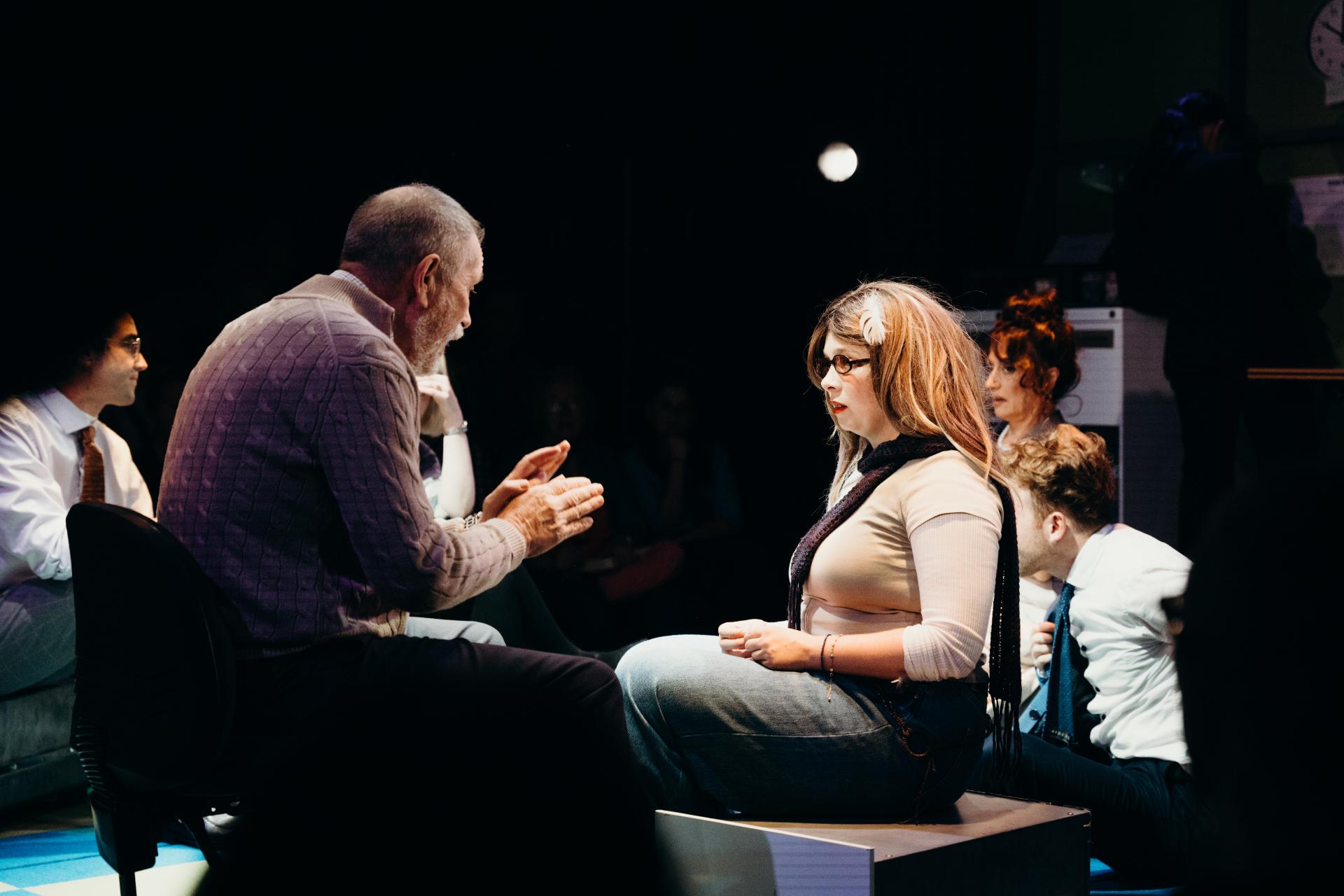
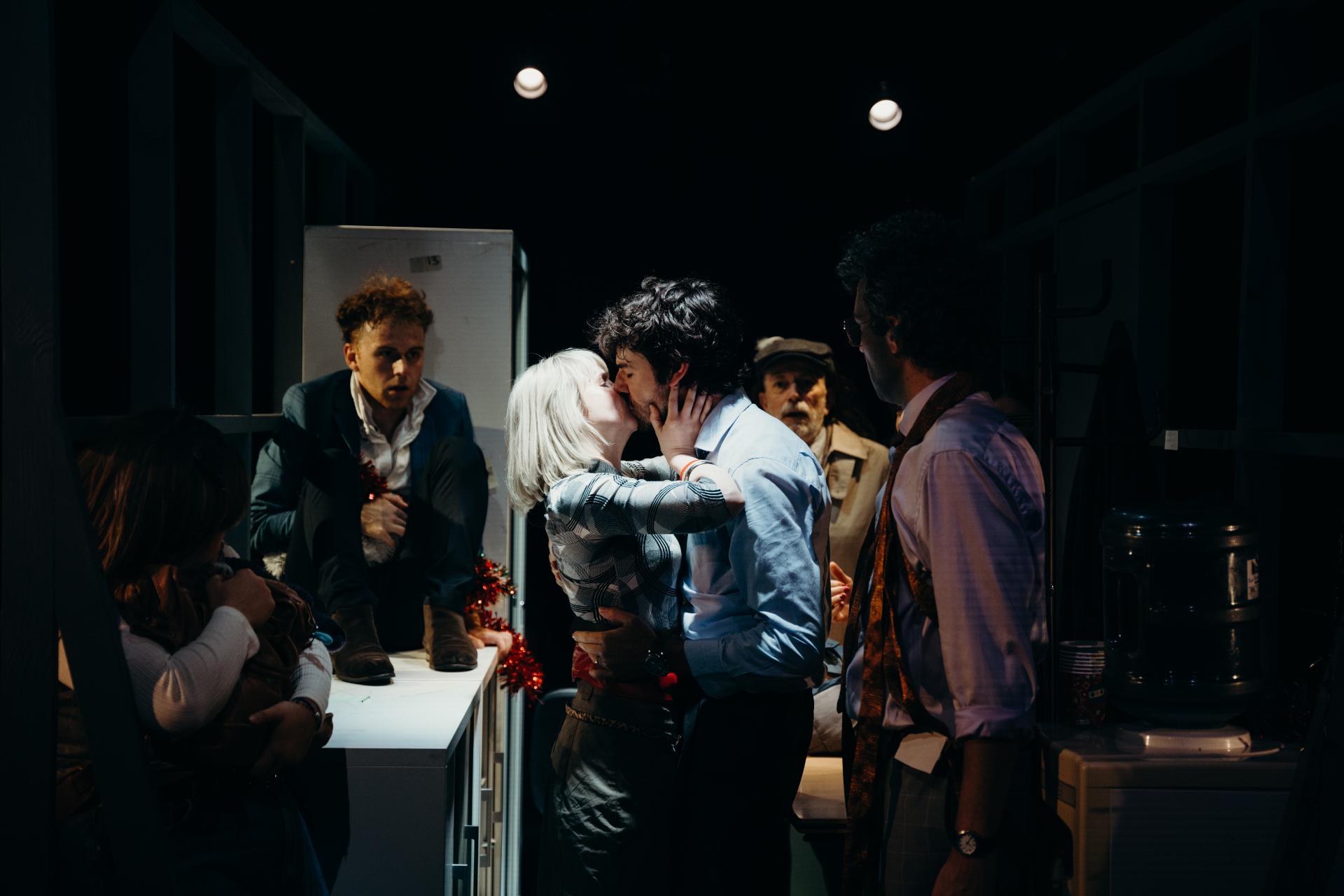
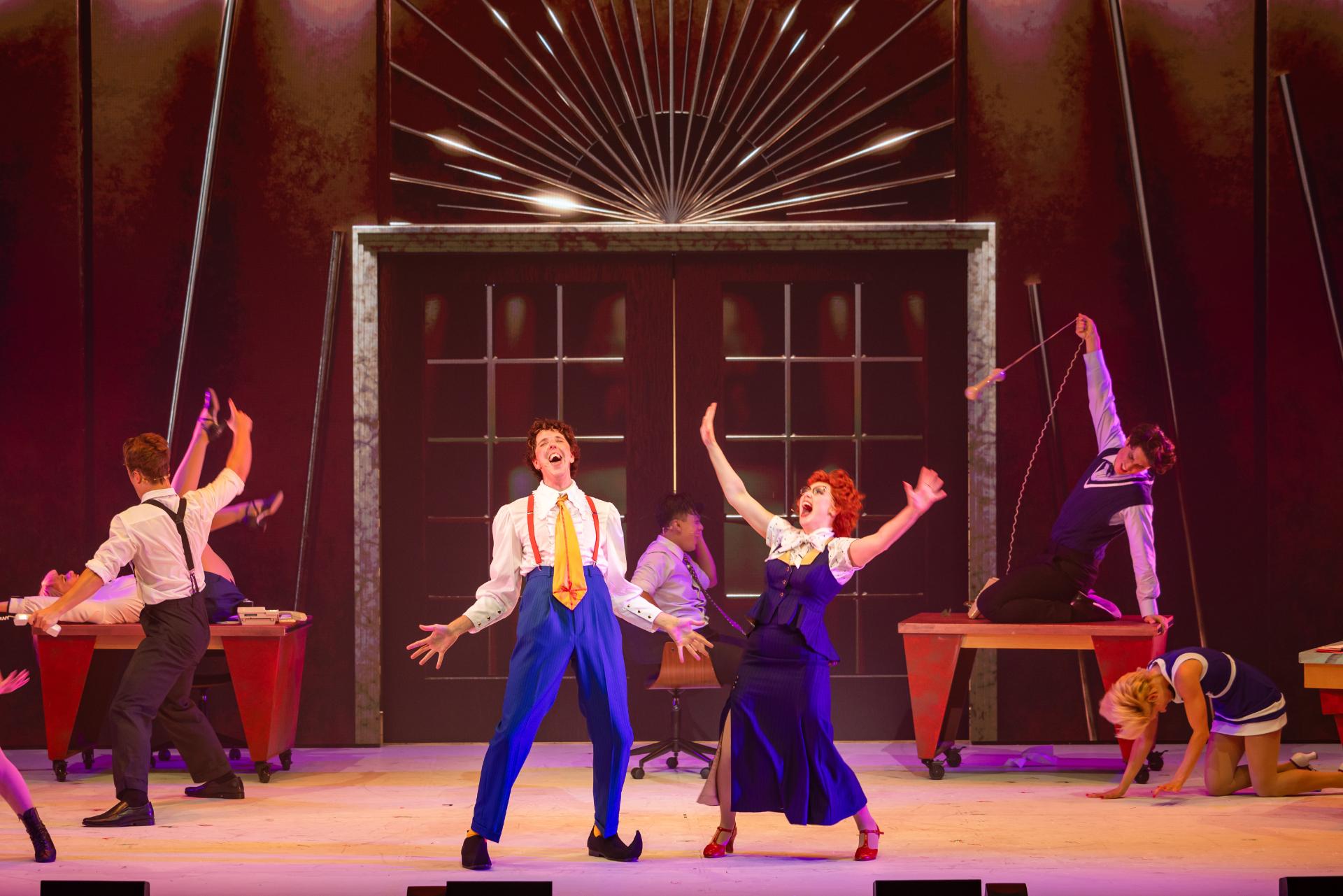
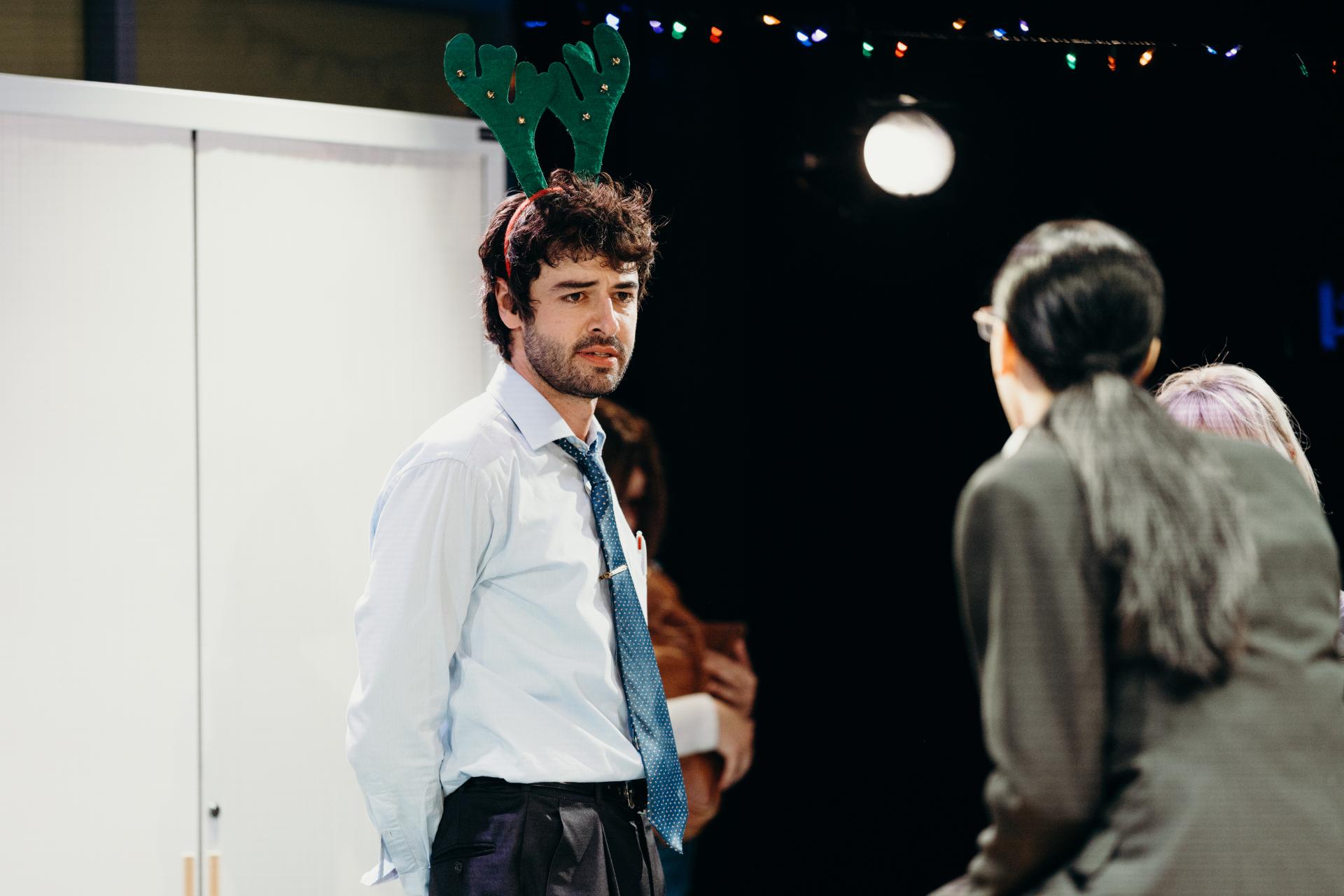
Robert has had enough of the rat race and is calling it quits. Things in the office are always chaotic anyway, so his disappearance seems not to have changed the tone of daily life very much. Any interpretation of its narrative however, is probably not of much importance for David Gieselmann’s The Pigeons, in which form and style take precedence over actual content or story.

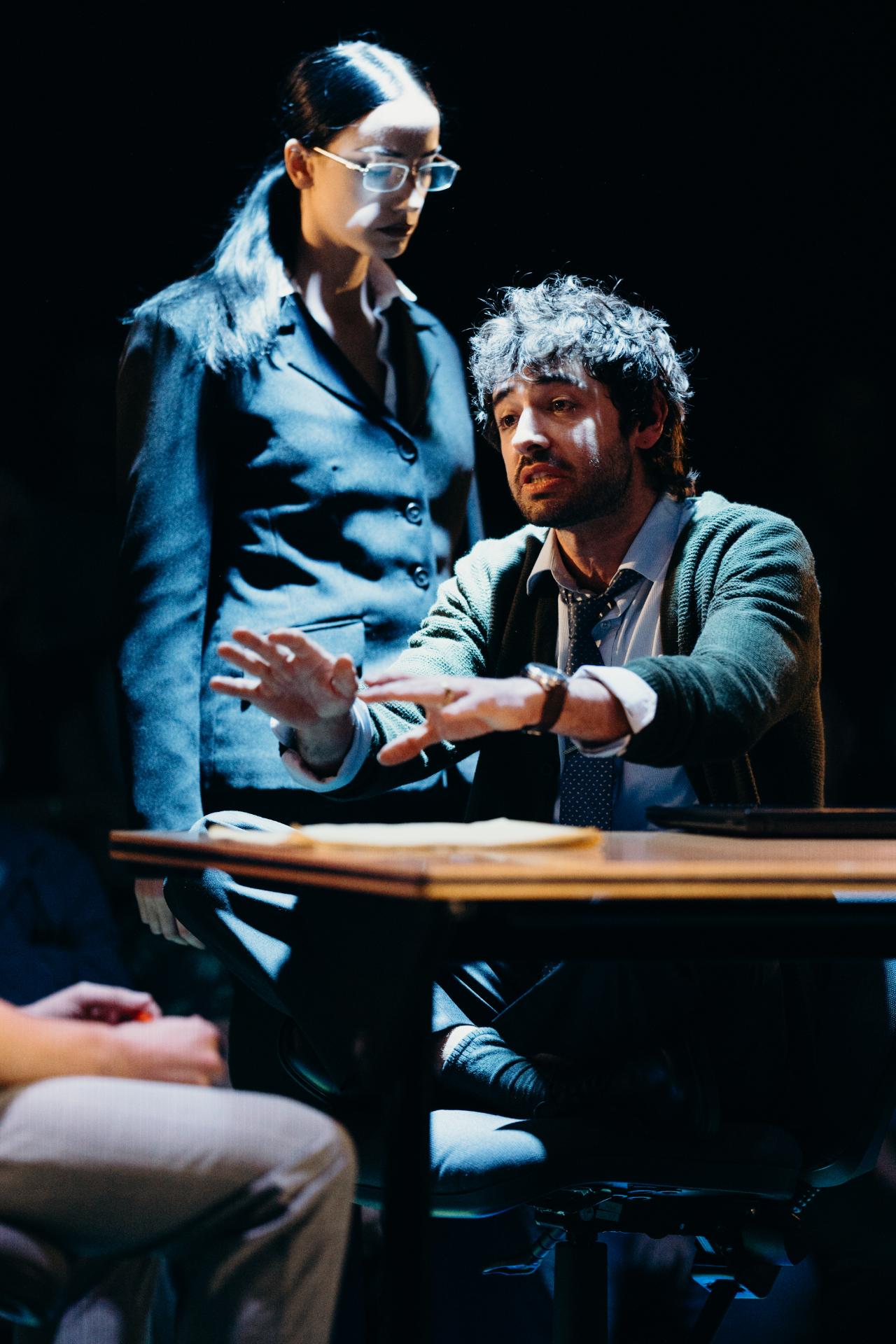
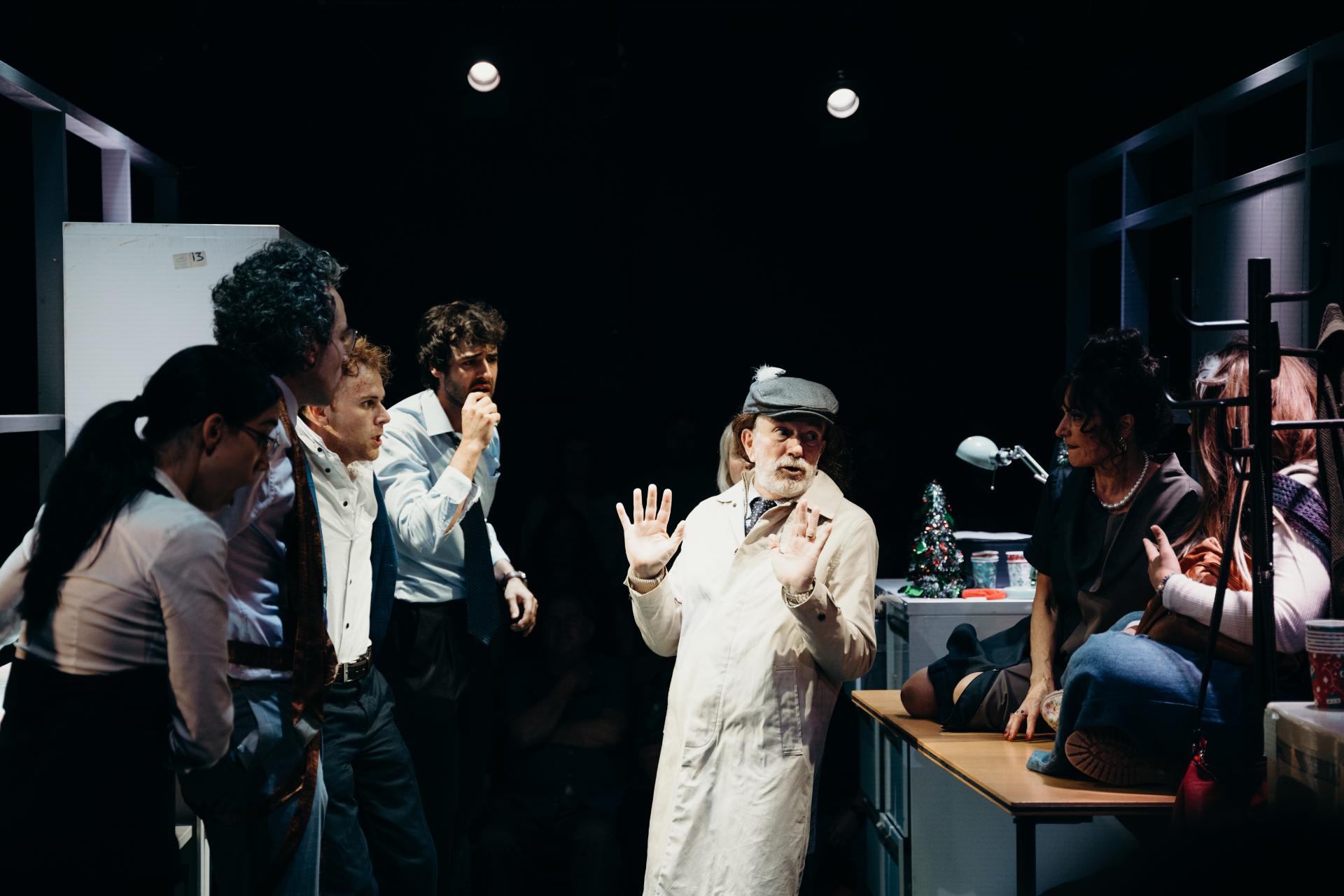
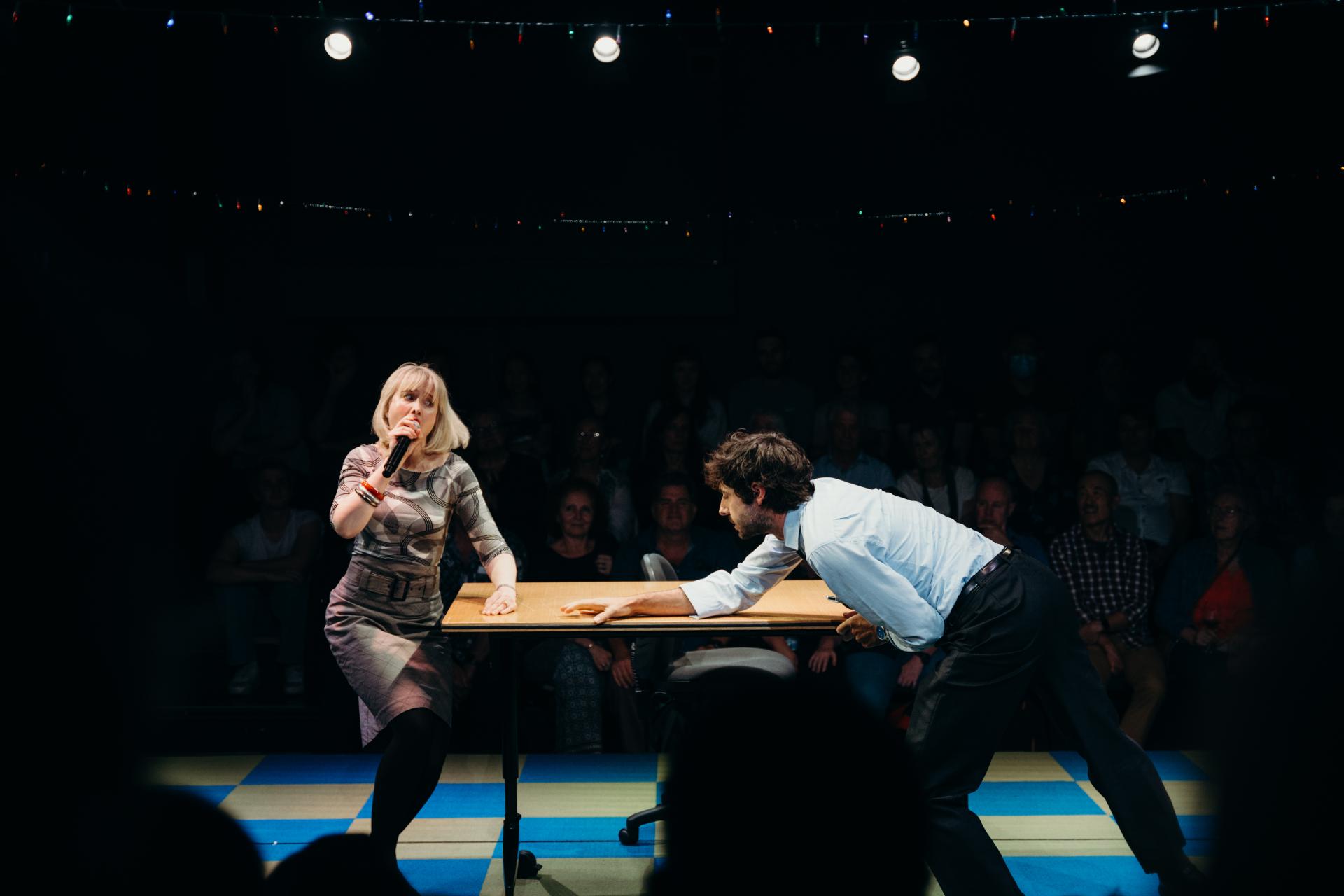
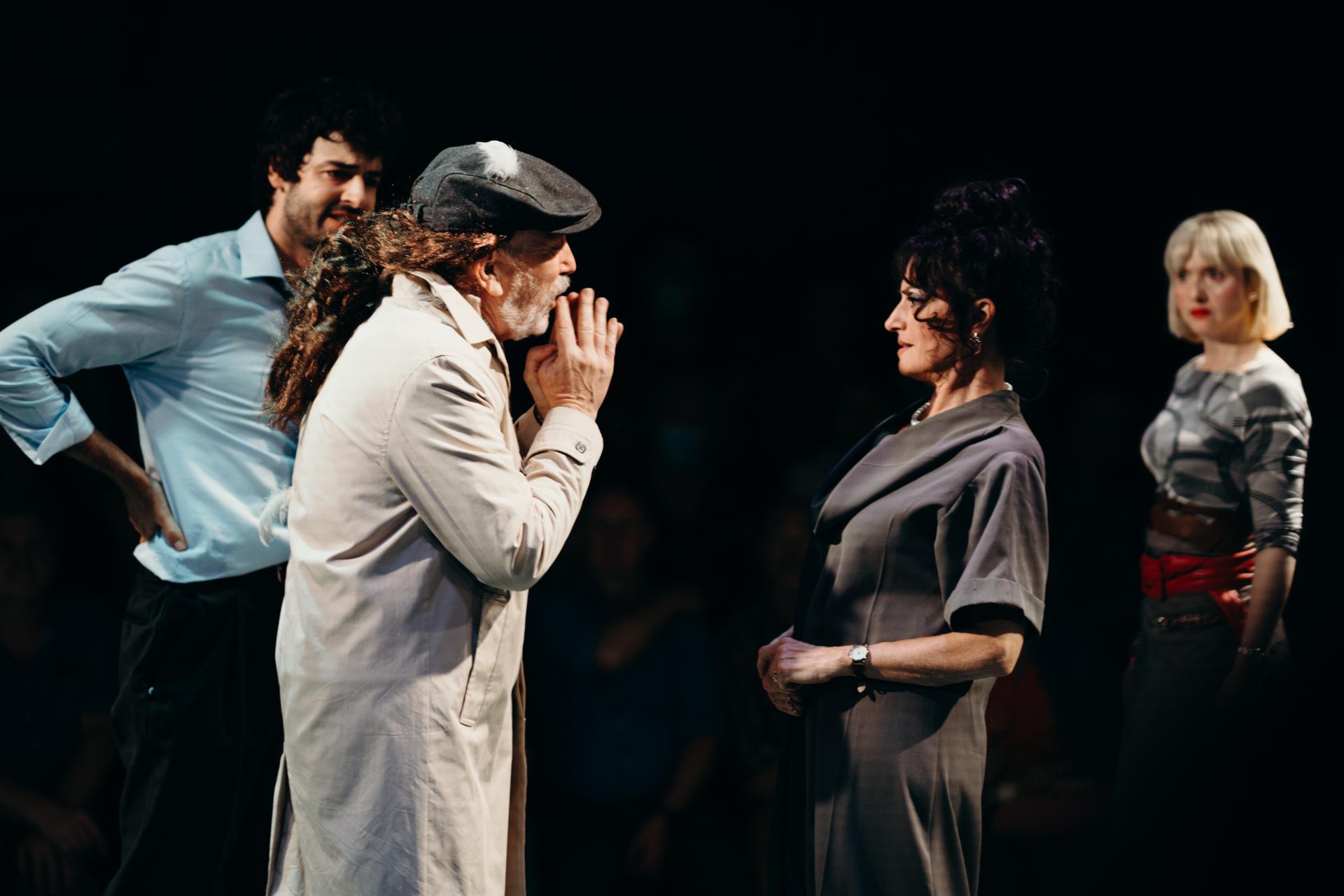
Direction by Eugene Lynch, along with choreography by Cassidy McDermott-Smith, introduce a great amount of frenzied energy to the piece, but never quite draws us into any real fascination with the artistic experimentations taking place on stage, only becoming increasingly alienating over the course. The cast can be credited for their undeniable investment into the experience, with players like Tel Benjamin, Lib Campbell and Kath Gordon leaving good impressions with their rendering of comedic moments when opportunities arise.

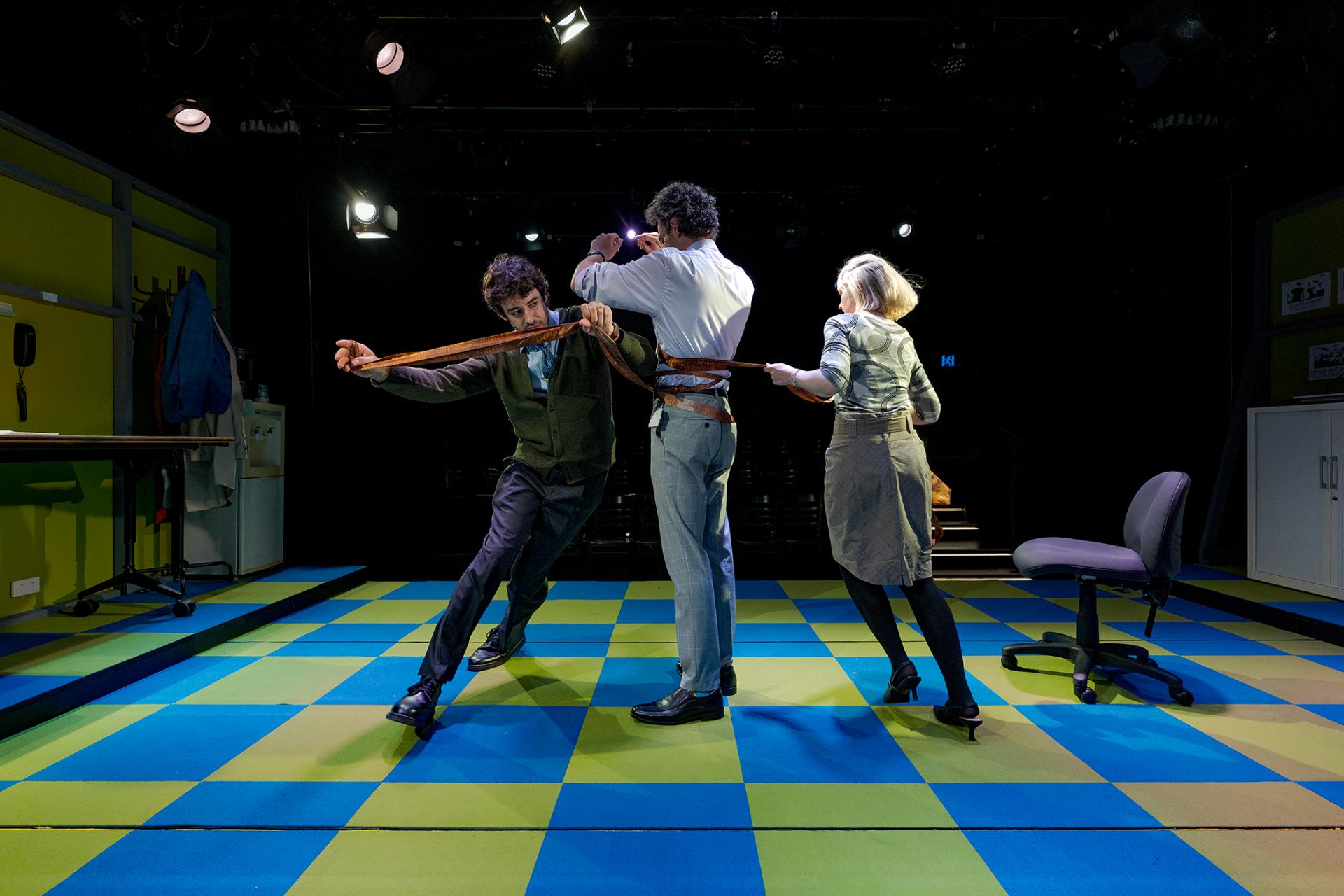
Costumes by Lily Mateljan may only mimic dreary aspects of humdrum normalcy, but a moment of extraordinary absurdity involving a necktie, certainly proves delightful. An adaptive set design by Lochie Odgers too delivers an element of surprise in later portions of the show. Lights by Topaz Marlay-Cole are well considered, but available equipment proves restrictive in the implementation of the designer’s more creative ideas. Music and sounds by Christine Pan, often delightfully performed live, are effective in reminding our sensibilities to venture somewhere surreal.

Pigeons have a homing instinct that means they always come back. Our human nature can be thought of as something that always wishes to return to square one, but evidence suggests that we are capable of breaking out and moving forward. Art especially should have the capacity to resist repetition, and our artists can be relied on, to introduce new ways of thinking and being, even if the ways they choose to challenge us, can be difficult.

www.kingsxtheatre.com | www.theothertheatre.com.au

Review: Hot Tub (25A Belvoir)

Venue: Belvoir St Theatre (Surry Hills NSW), Dec 6 – 21, 2024
Playwright: Lewis Treston
Director: Riley Spadaro
Cast: Jack Calver, Patrick Jhanur, Melissa Kahraman, Kieran McGrath, Ella Prince, Shannon Ryan, Diane Smith
Images by Katherine Griffiths

Theatre review
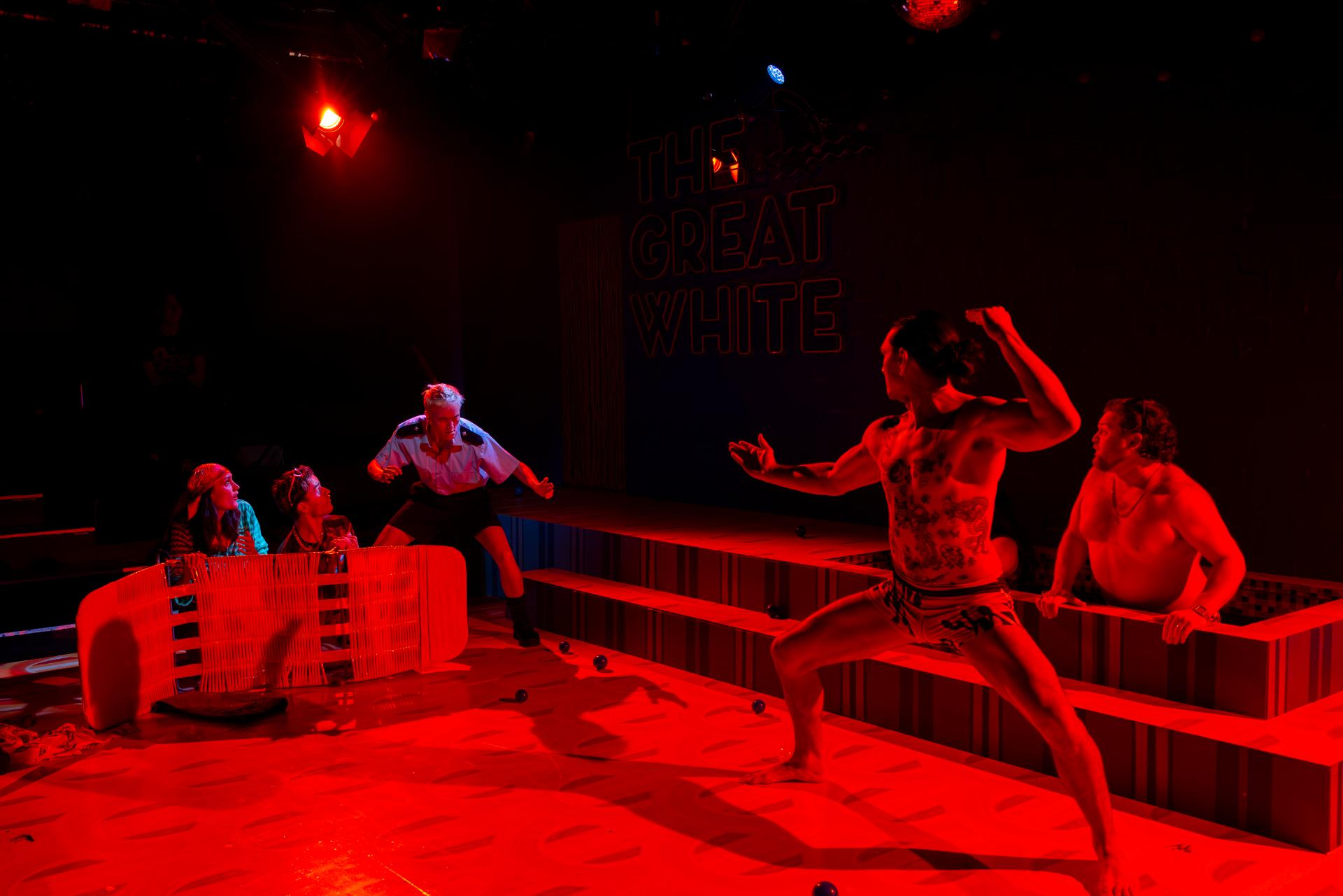
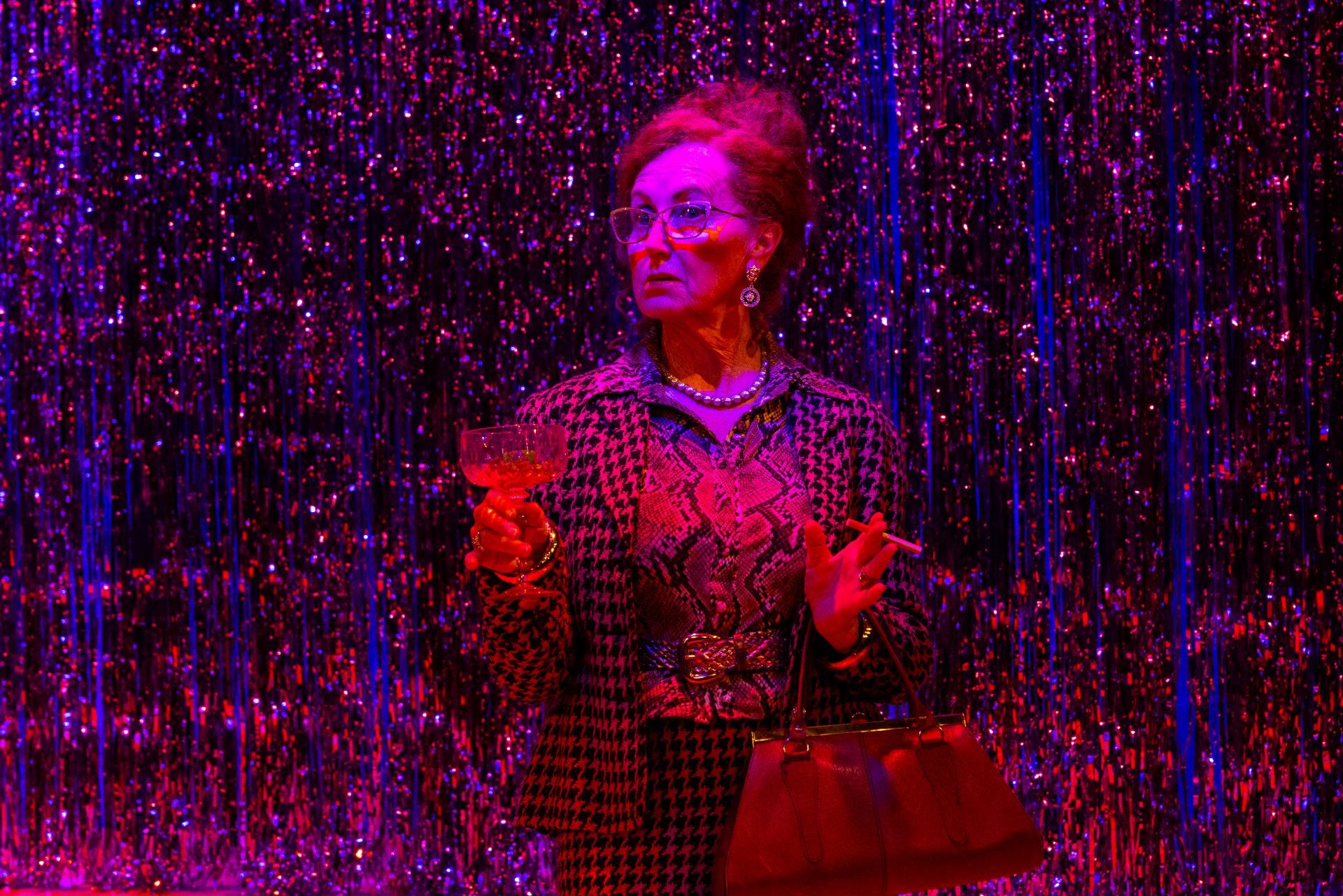
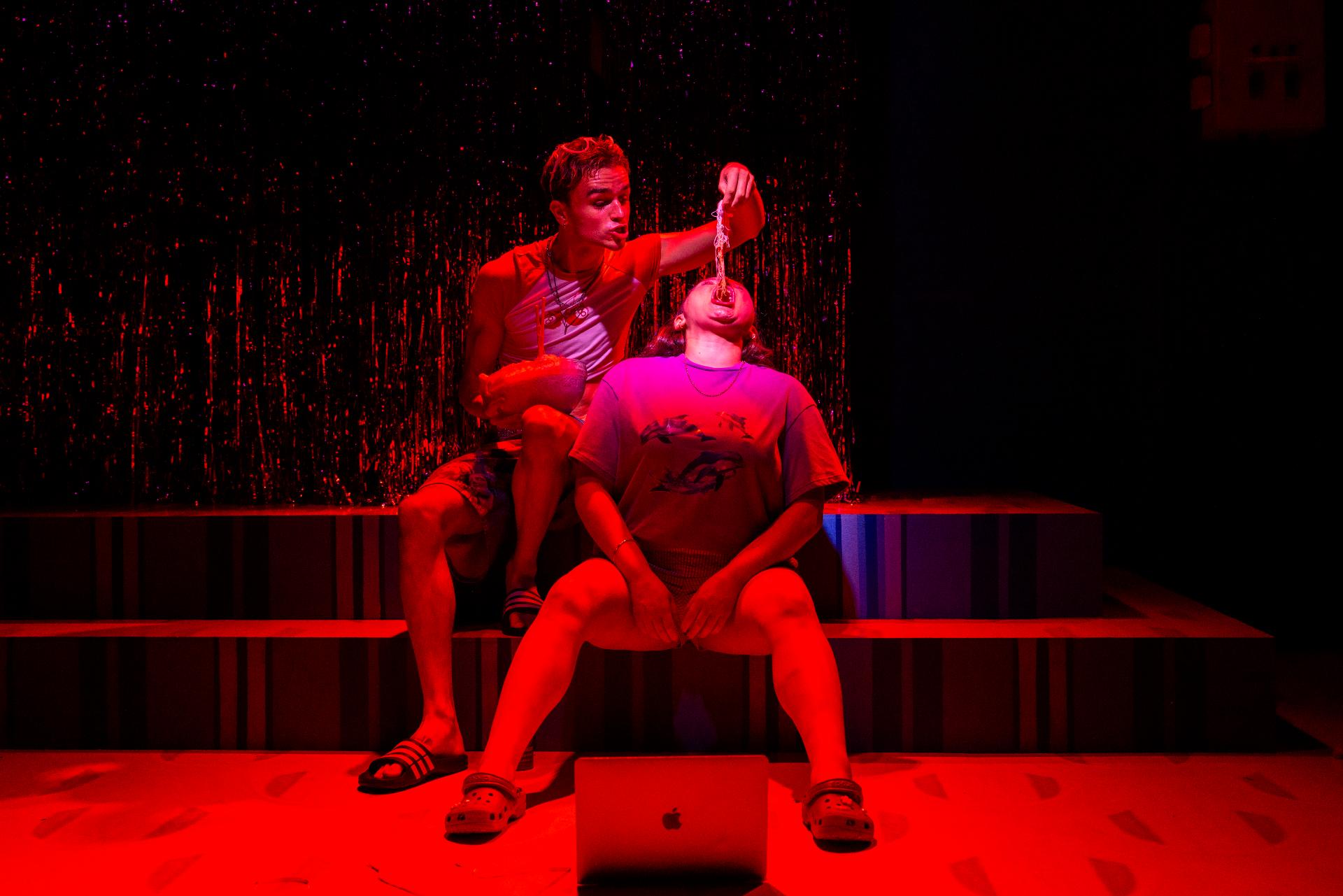
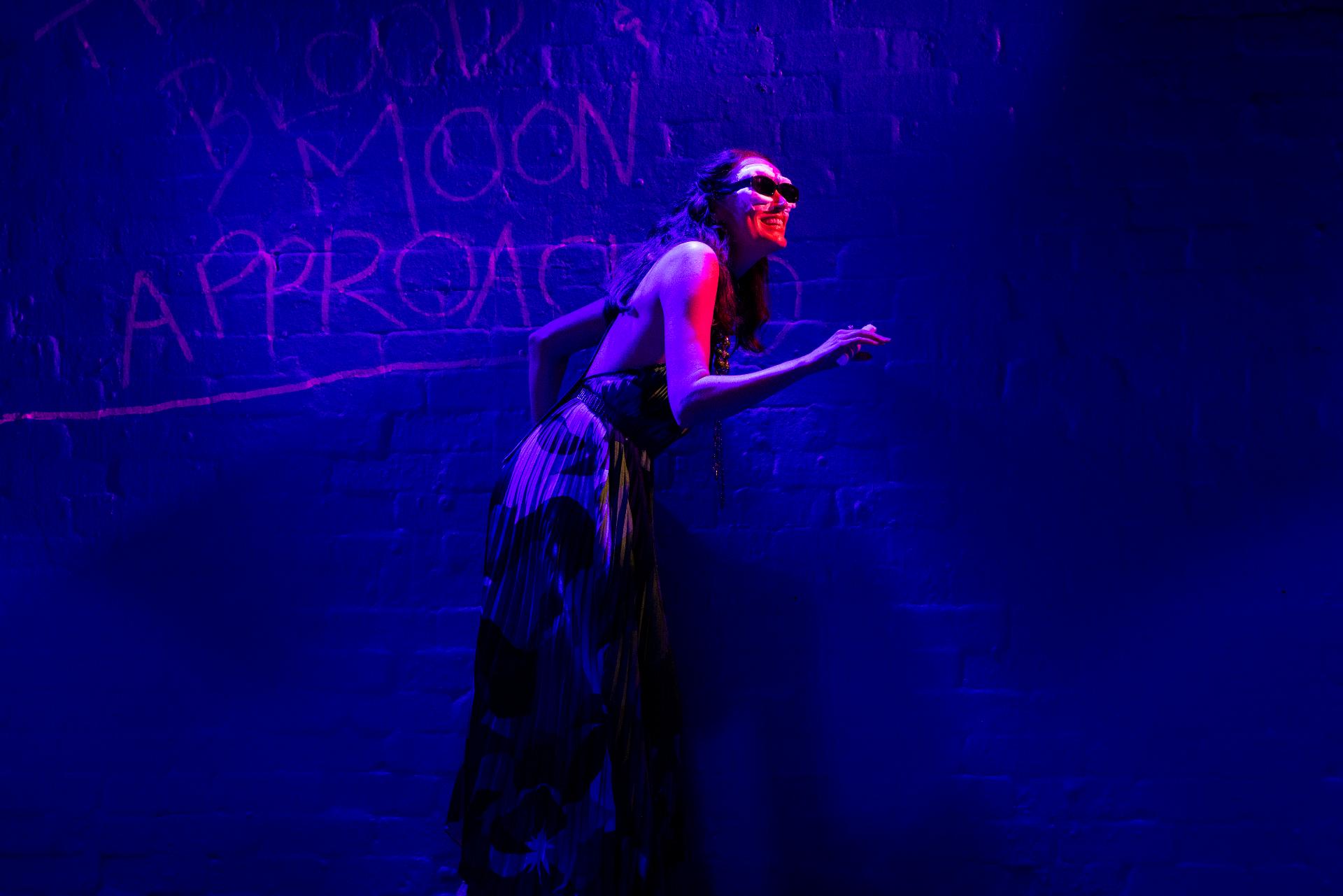
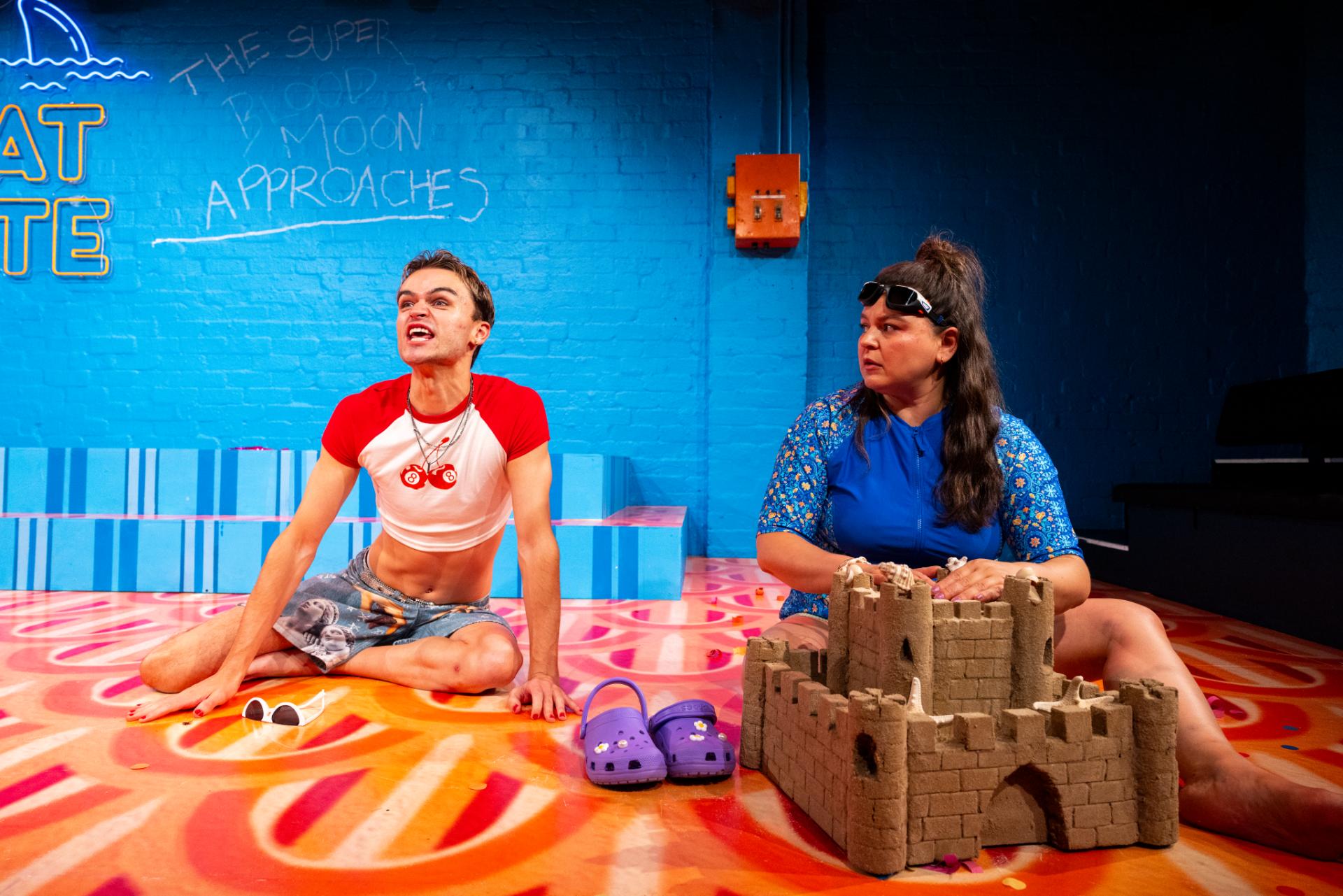
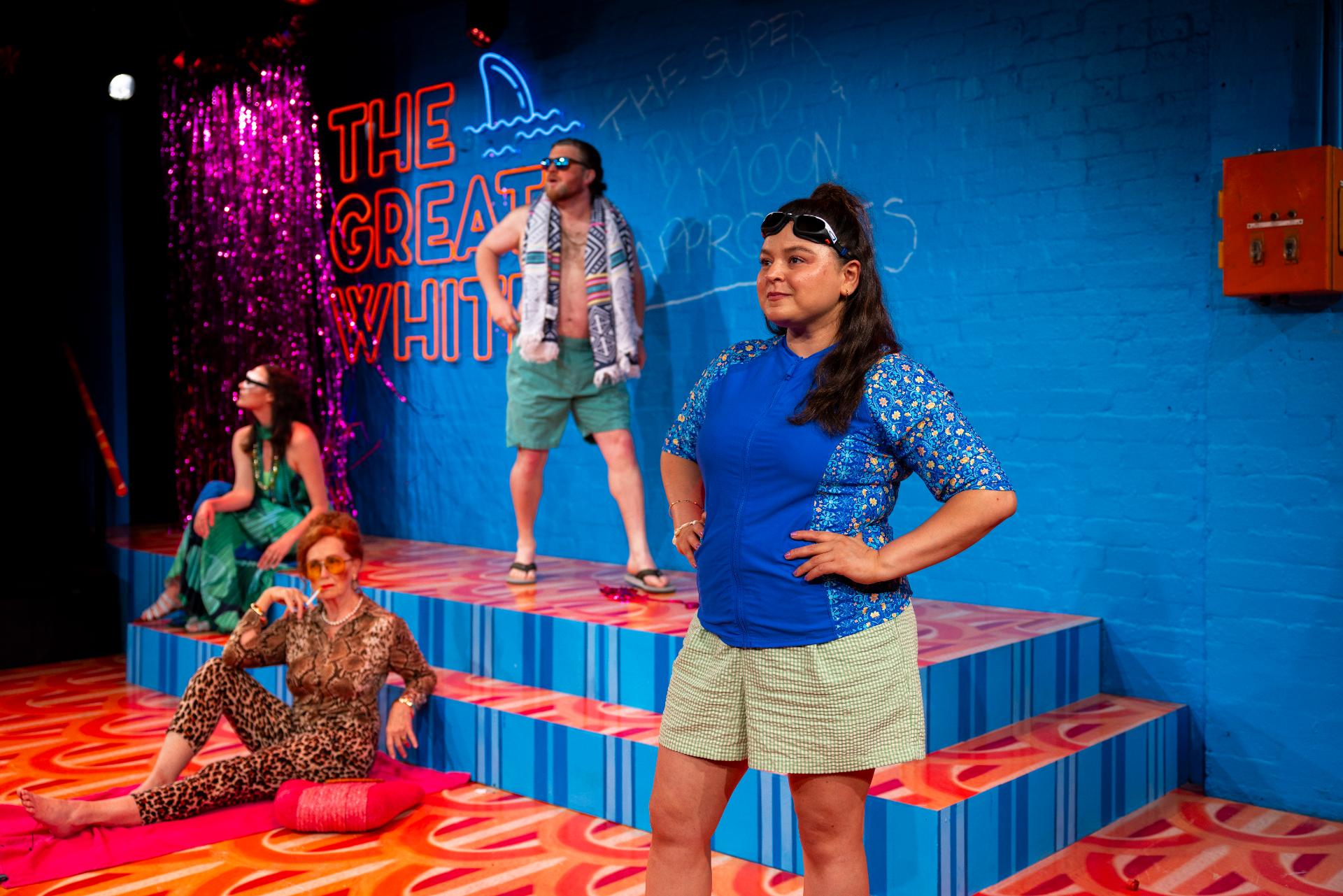
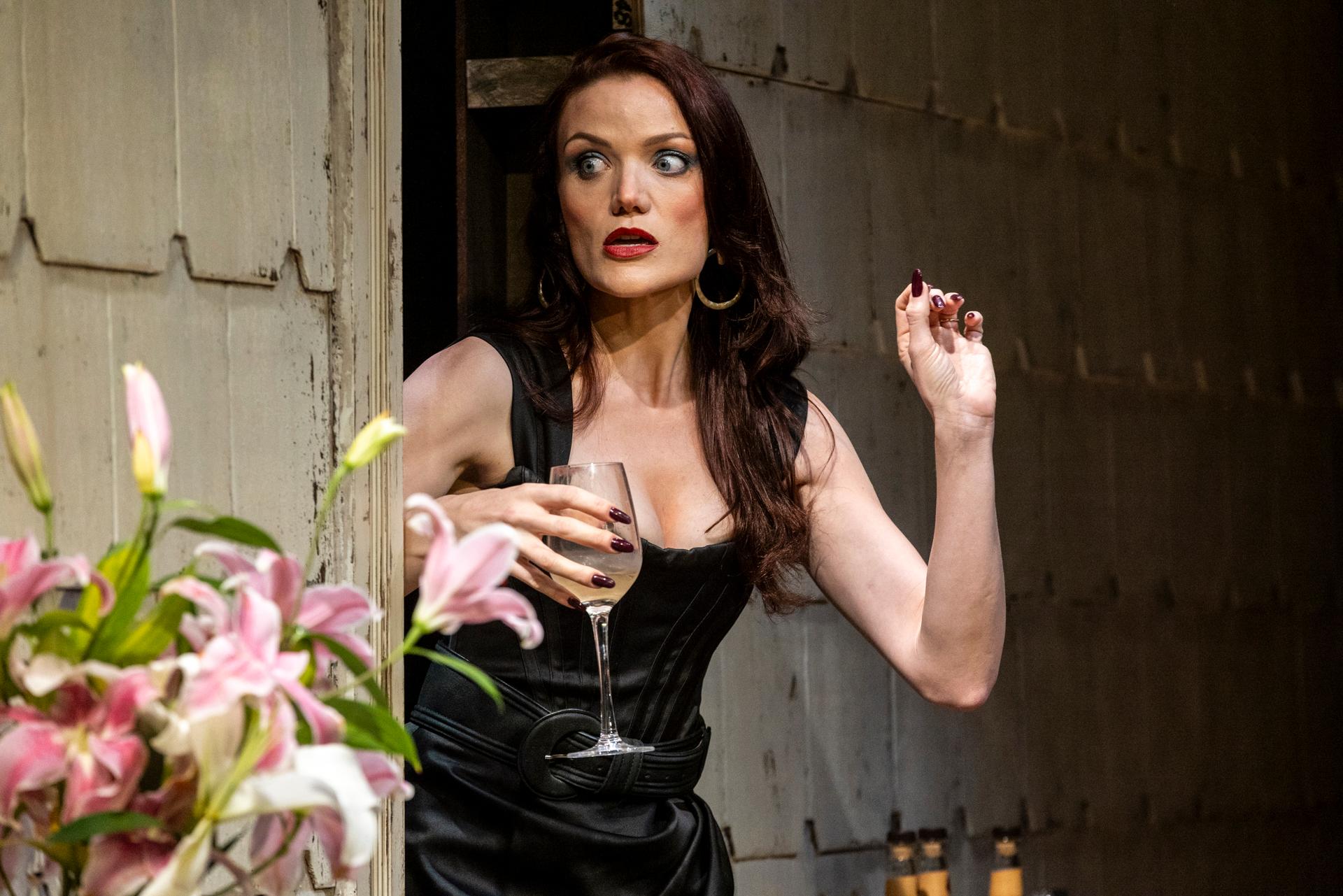
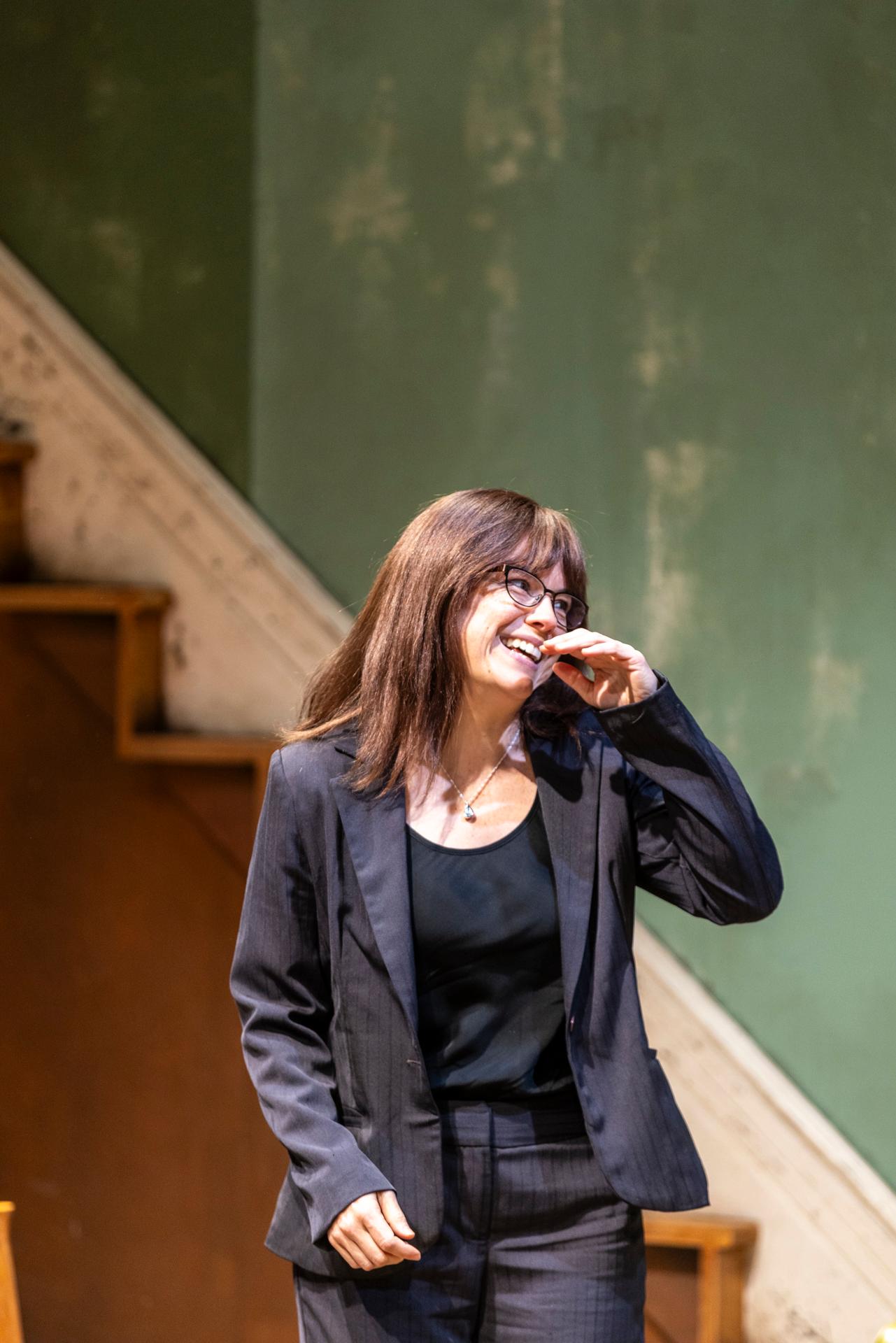
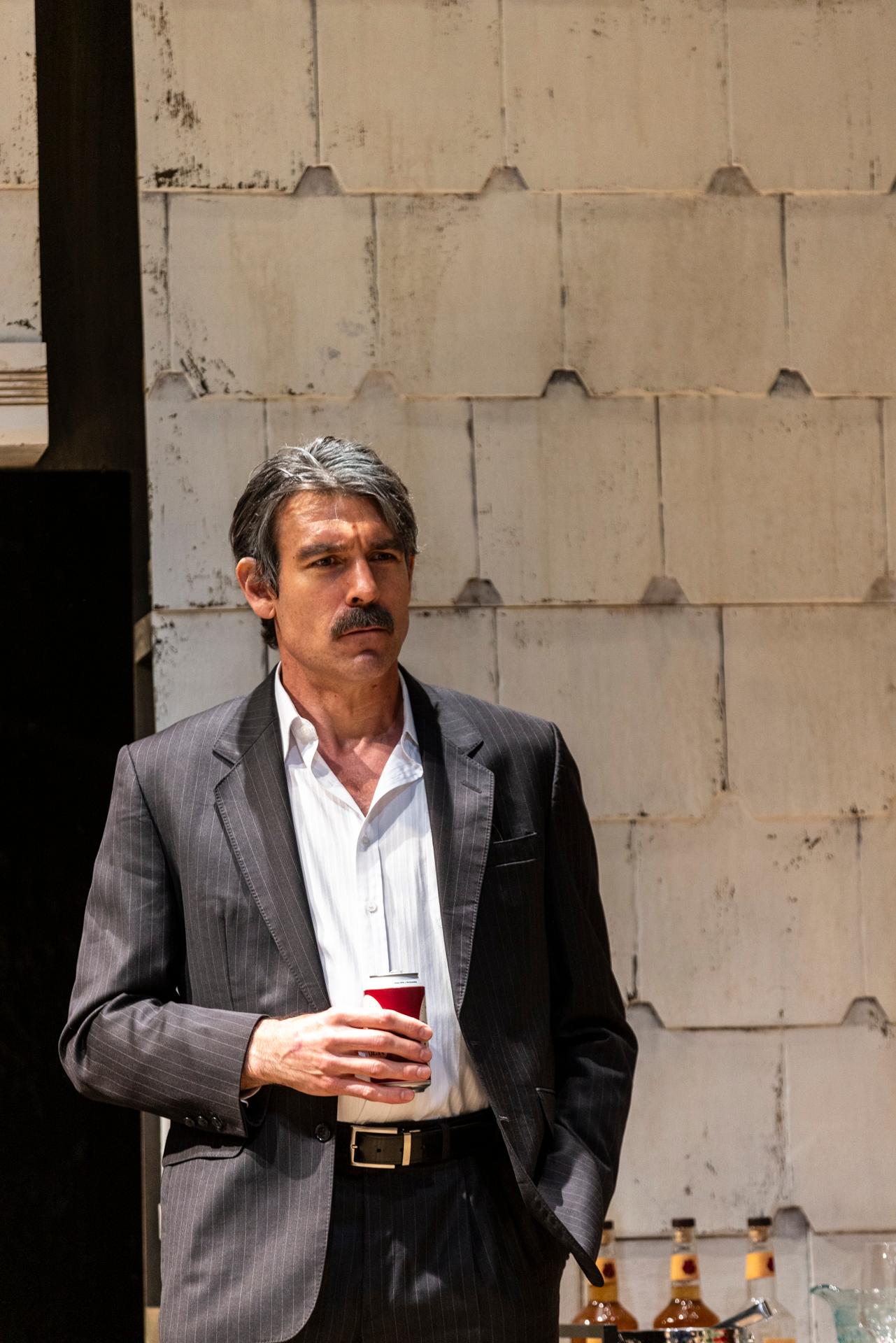
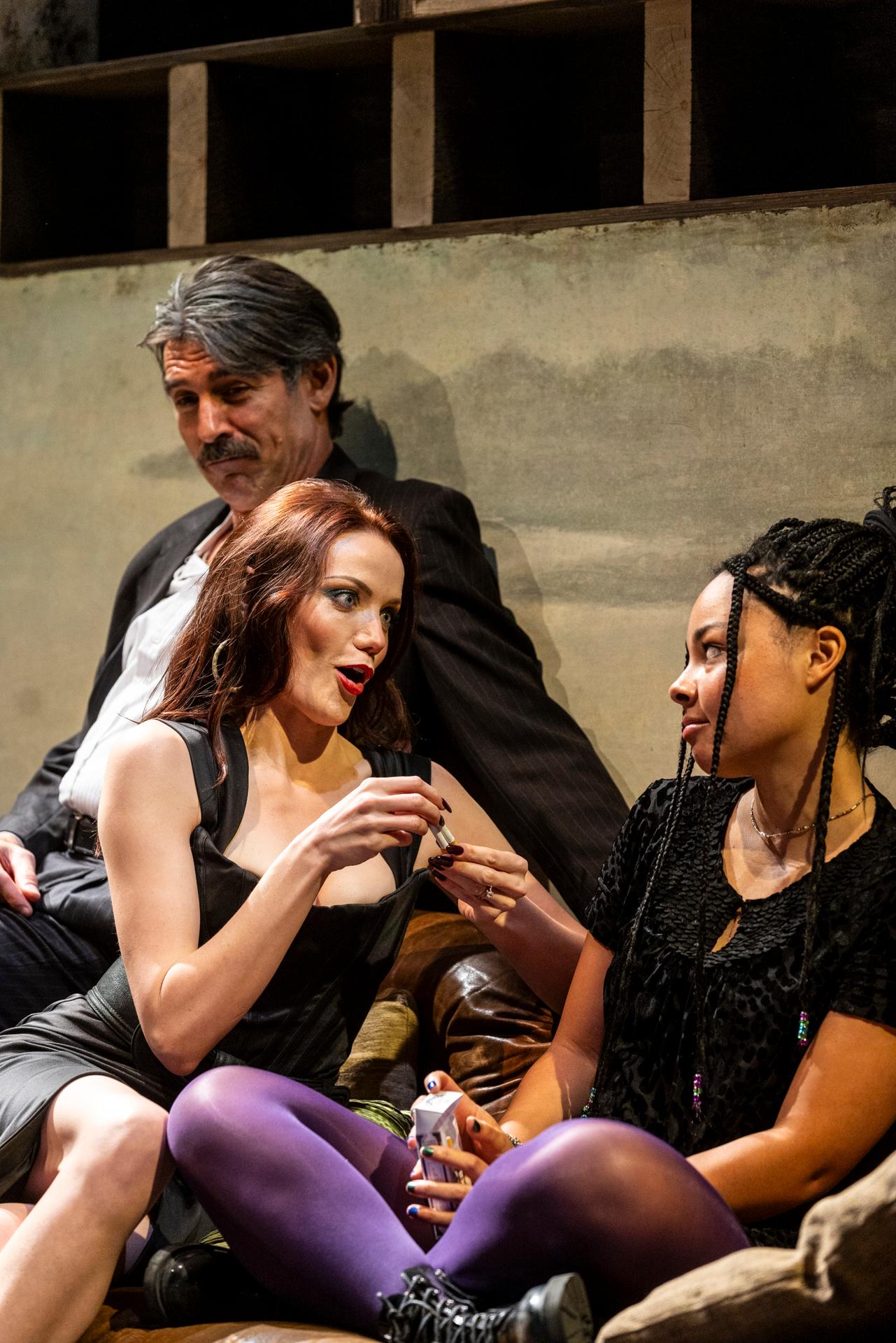
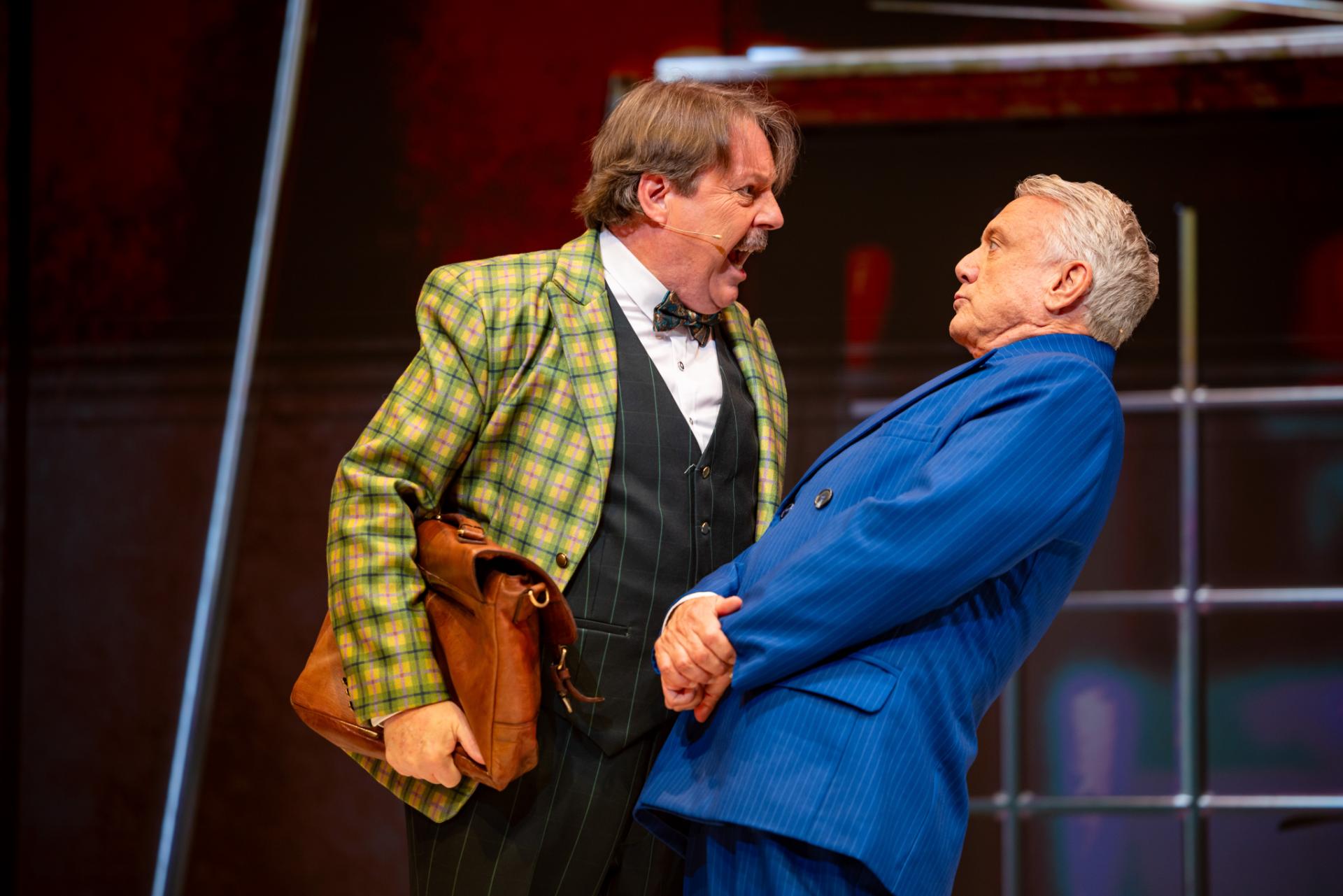
The Hunter-Whites have more dollars than sense, and something about the Gold Coast just sends them in a tailspin. Hot Tub by Lewis Treston is an absurdist comedy about the wealthy, a fantasia on the frenzied existence of cash-rich and drug-fuelled moguls, with lifestyles propped up by property ownership and a distinct shortage of moral concerns. The play is composed of highly amusing dialogue, featuring flamboyantly imagined personalities; its narrative may be lacklustre, but its spirit is certainly wildly infectious.

Commensurately exuberant direction by Riley Spadaro delivers a show as camp as it is unabashedly depraved. There is a sophistication to Spadaro’s approach that counteracts the obvious humour of Hot Tub, and while it may not prevent us from feeling empty at the end, the journey is unquestionably entertaining.

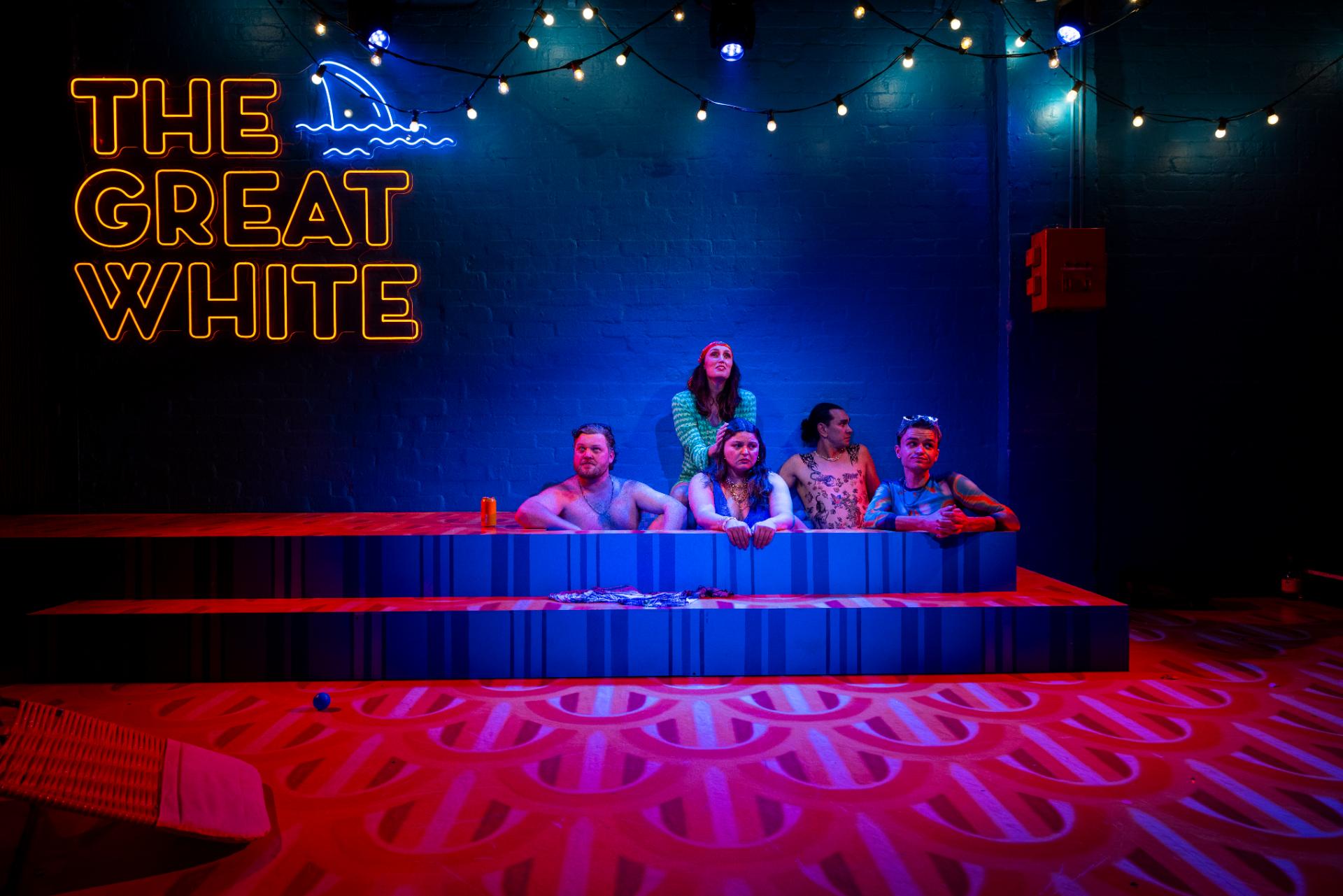
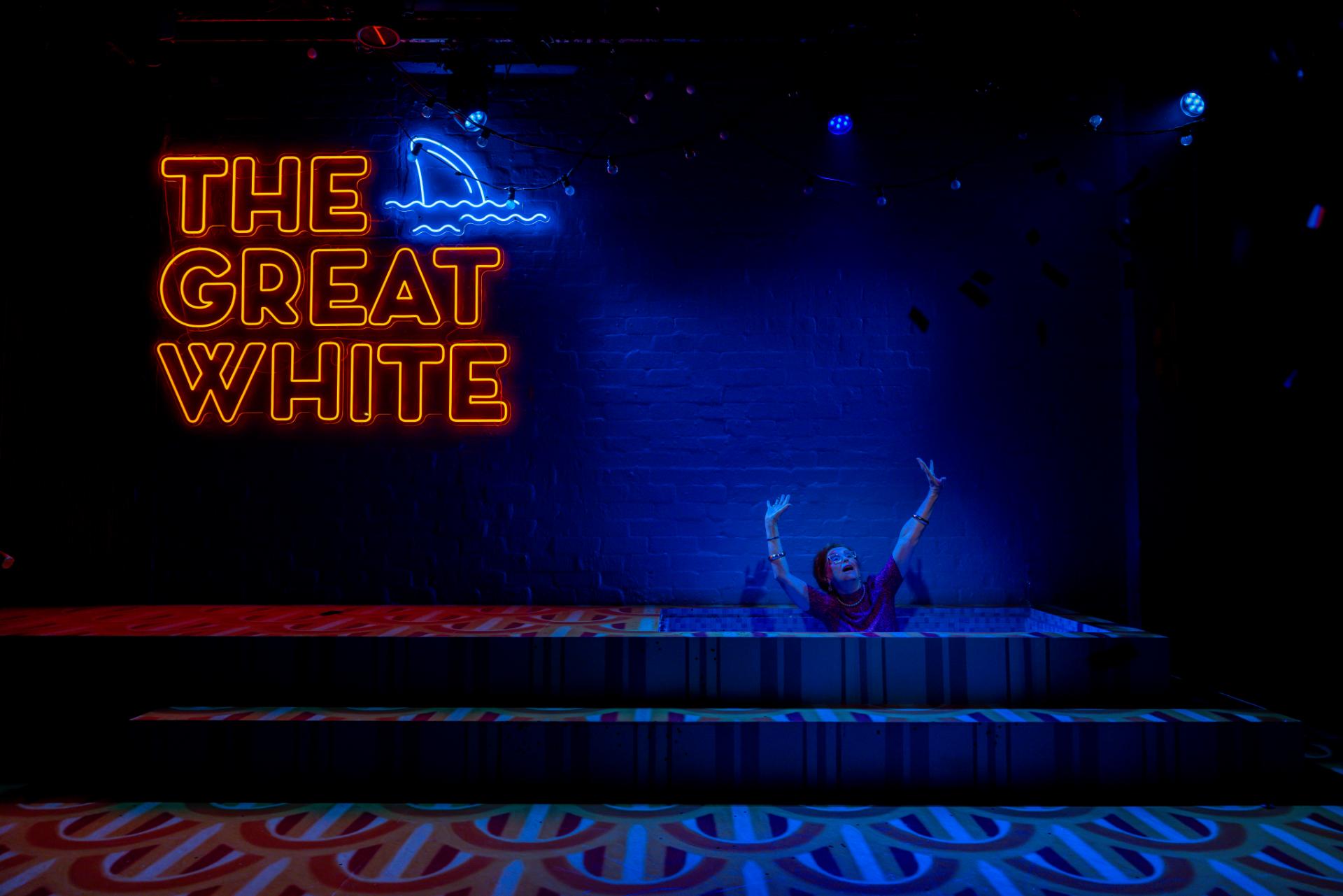
Grace Deacon’s set design is attractive and remarkably finessed, and even though her costumes do not sufficiently portray affluence, the colourful imagery being formulated proves a delight. Lights by Phoebe Pilcher are energetic and richly tailored, bringing a wonderful sense of variety to our visual enjoyment of the piece. Madeleine Picard’s sound design is less conspicuously presented, but the vitality it imbues is unambiguous.

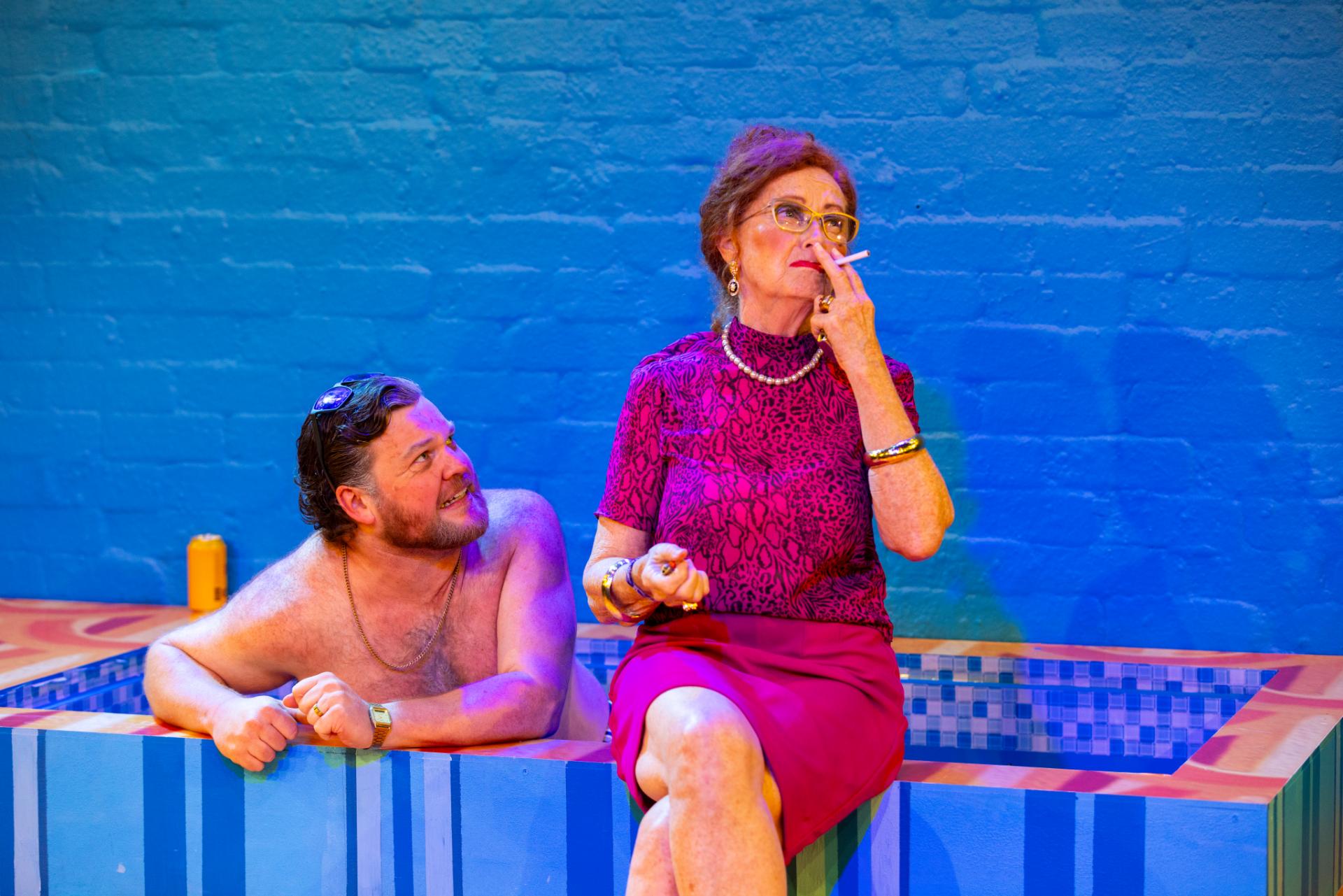
It is clear that the cast of Hot Tub is deeply committed, with every performer bringing an unwavering focus to their parts. Ella Prince is particularly memorable as Officer Sheryl, with a level of theatricality that feels completely off the charts, yet accurate to the aesthetic being rendered. Diane Smith too introduces a brand of bizarre to her delicious interpretation of a grandmother more interested in money than in family, admirable for her iconoclastic depiction of an Australian matriarch. 

There is something in the very bones of our way of life on this land, that insists that we make safe and bland decisions. Even in art, we are often held back from jumping off cliffs, as though the repercussions will forever be dire, even though nobody can know for certain what awaits thereafter. In Hot Tub, we can see that a leap of faith has been taken, a kind of wild abandon is in action, perhaps informed by the unequivocal queerness that serves as central guiding principle, establishing the language and paradigm from which it communicates.

It is a play about family, yet love seems non-existent, or at least undetectable in a conventional manner. Queer people perceive kinship differently. Queer people may even understand love differently. There is a communal connection taking place, when we laugh at glamorous characters being awful parents, and even though they leave us needing more, we know that for a moment, we had been held.
www.belvoir.com.au | www.instagram.com/presentedbybub

Review: Snowflakes (Old Fitz Theatre)

Venue: Old Fitzroy Theatre (Woolloomooloo NSW), Dec 6 – 22, 2024
Playwright: Mike Bartlett
Director: Jo Bradley
Cast: Claudia Elbourne, James Lugton, Lilian Alejandra Valverde
Images by Robert Miniter

Theatre review
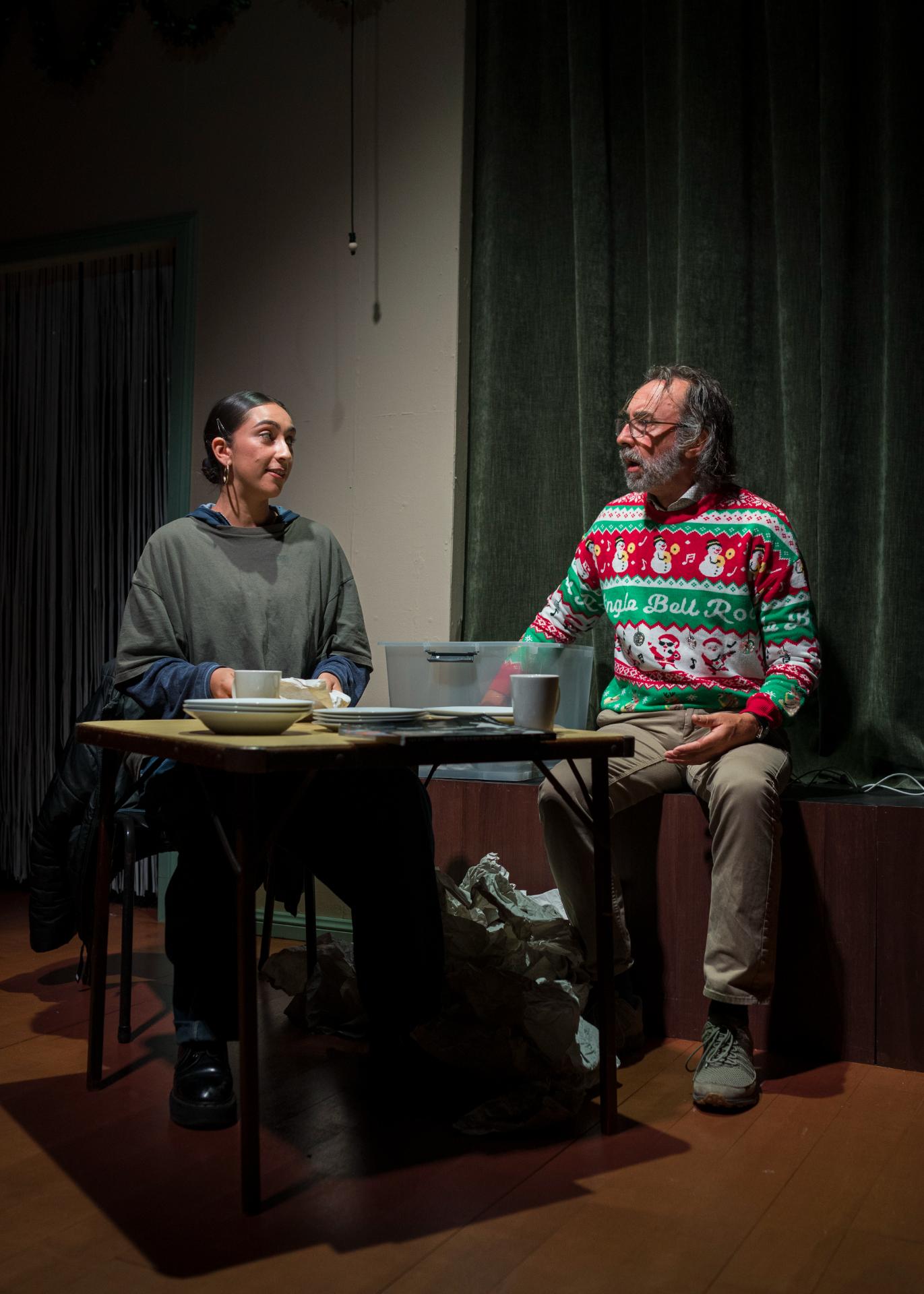
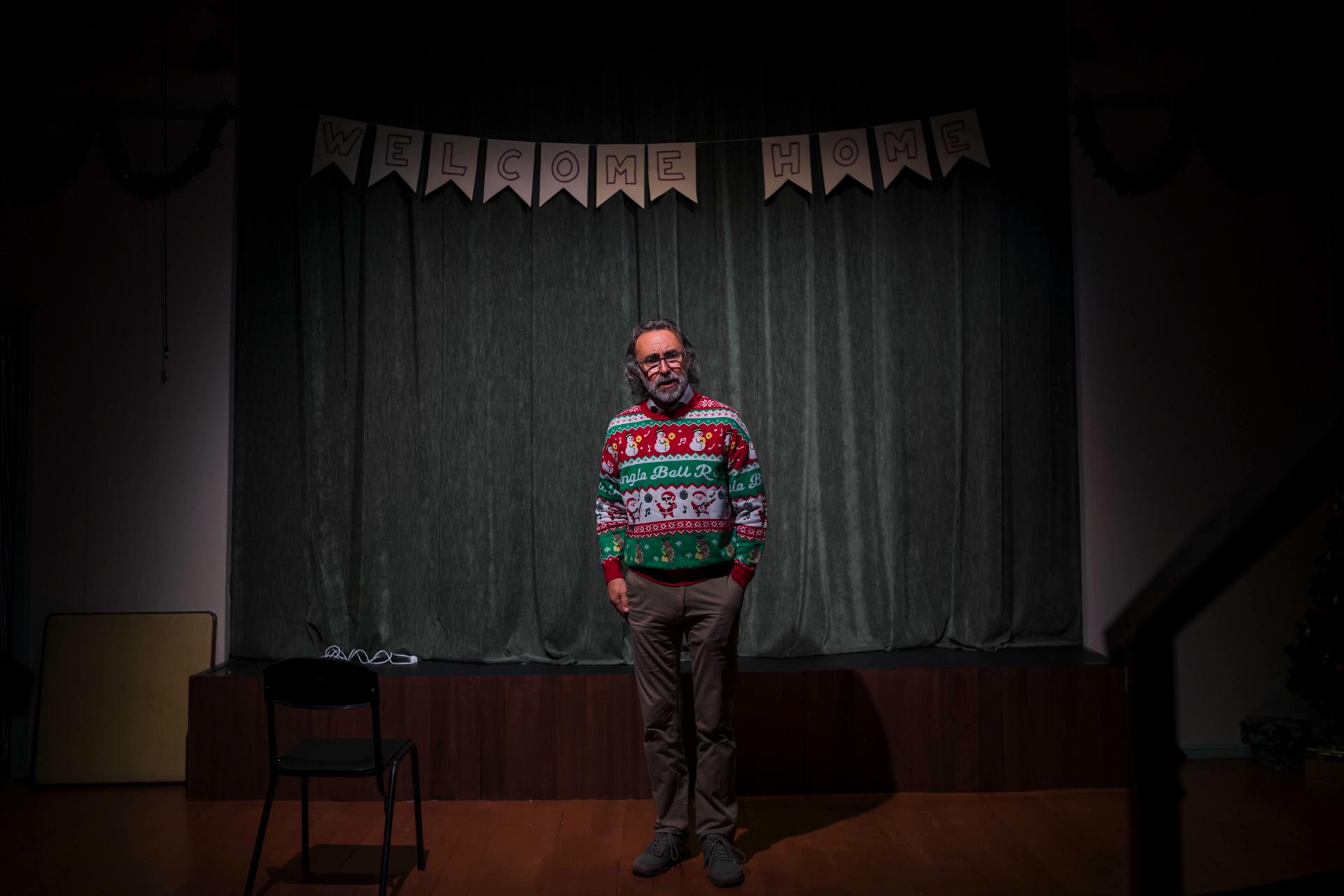
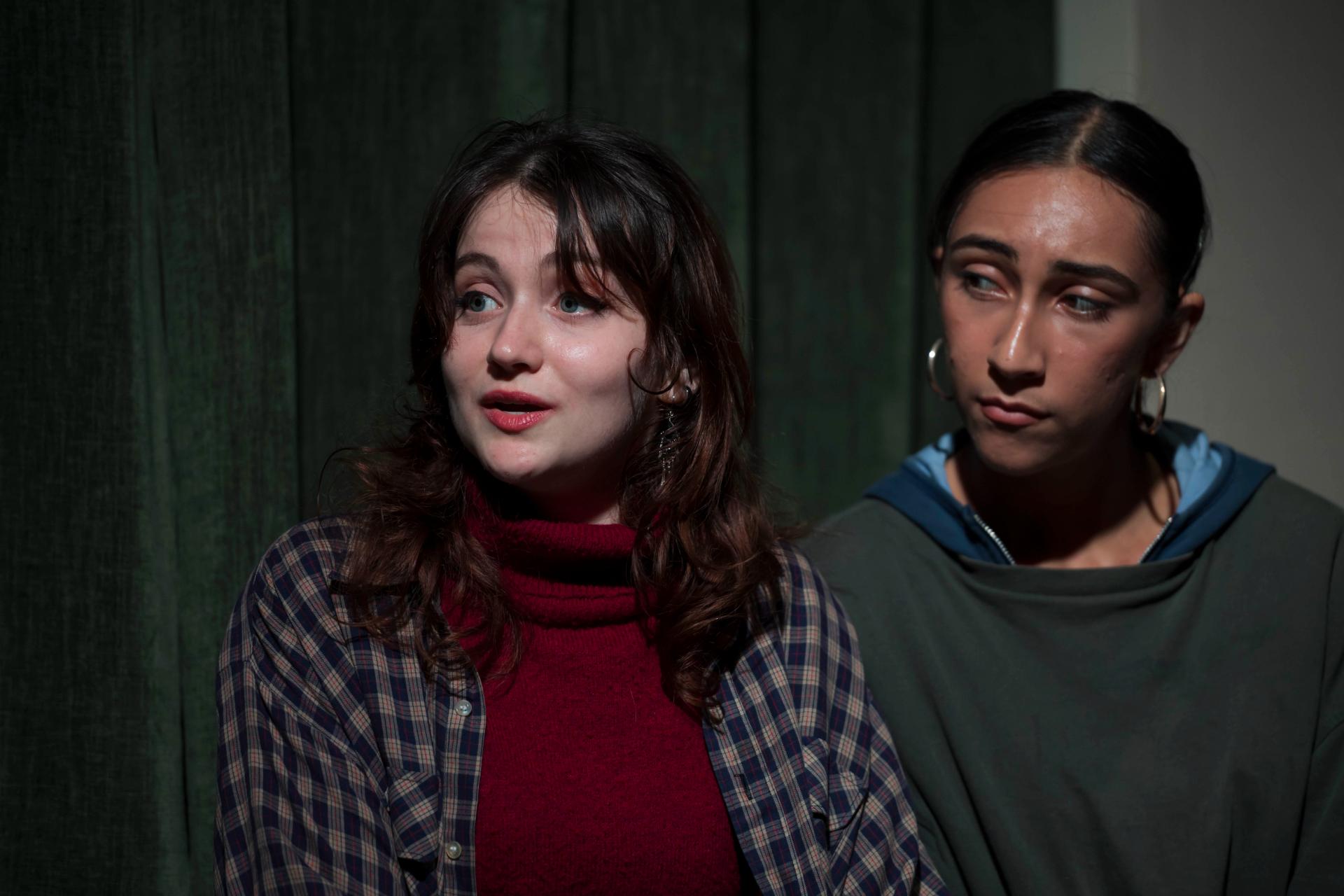
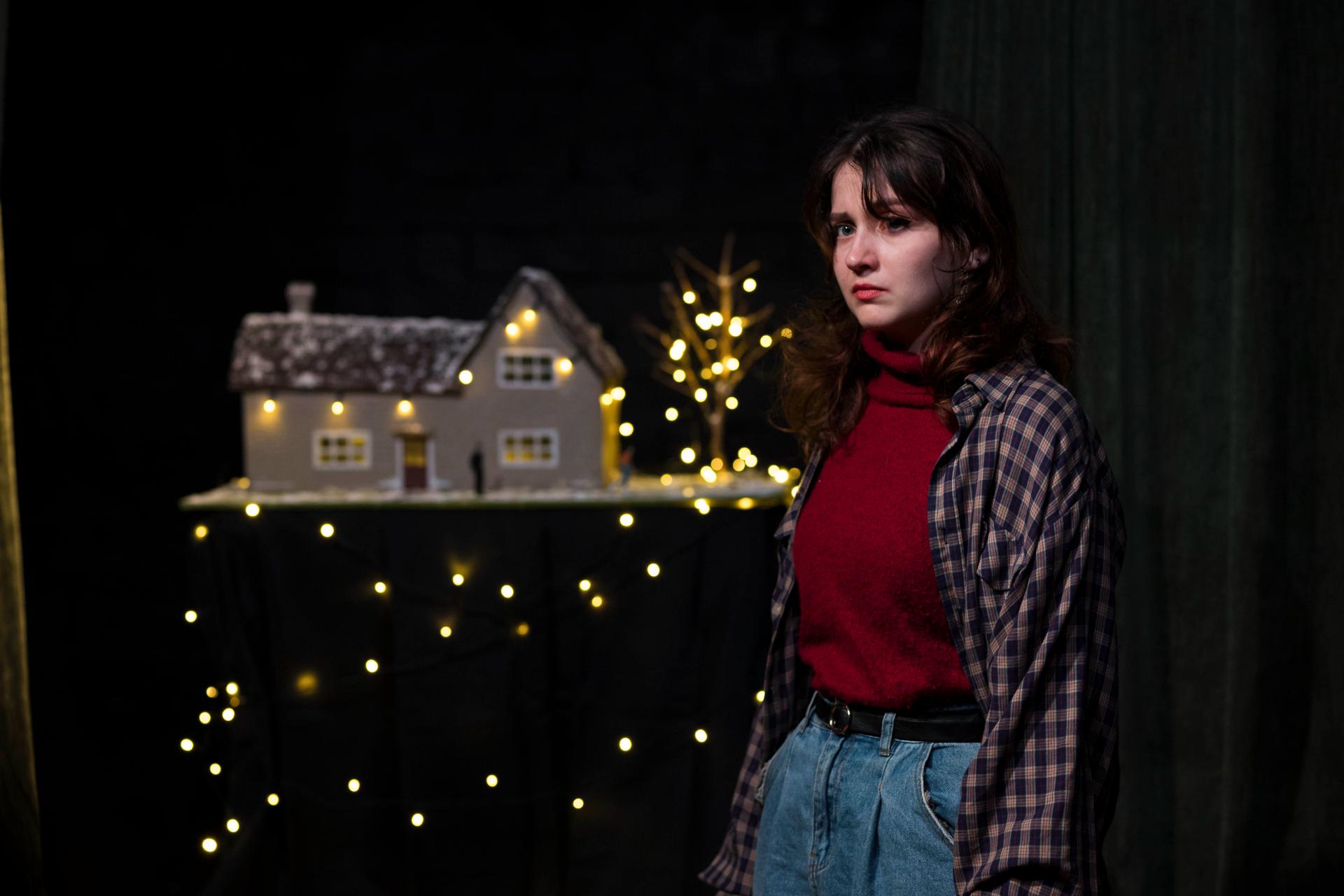
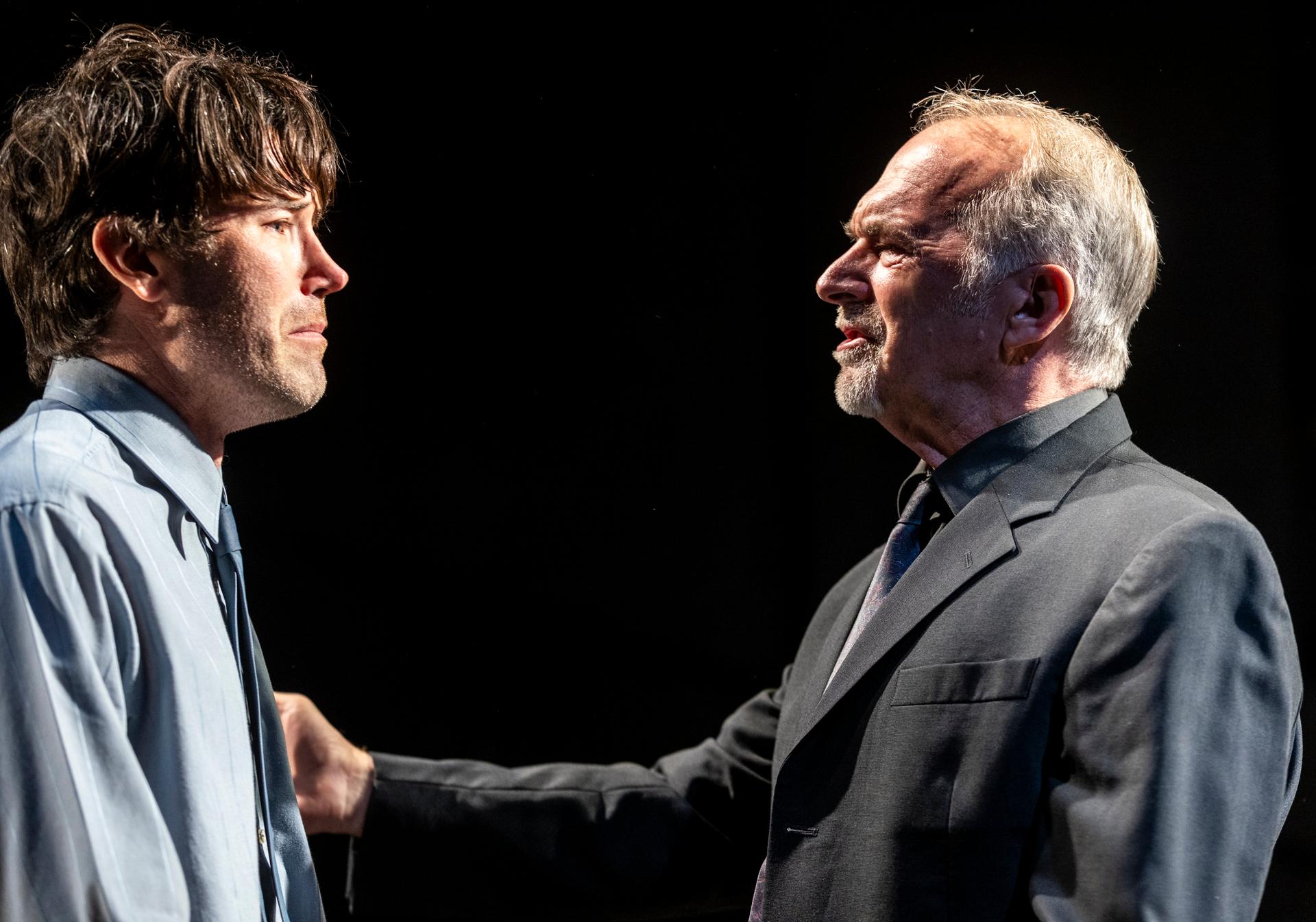
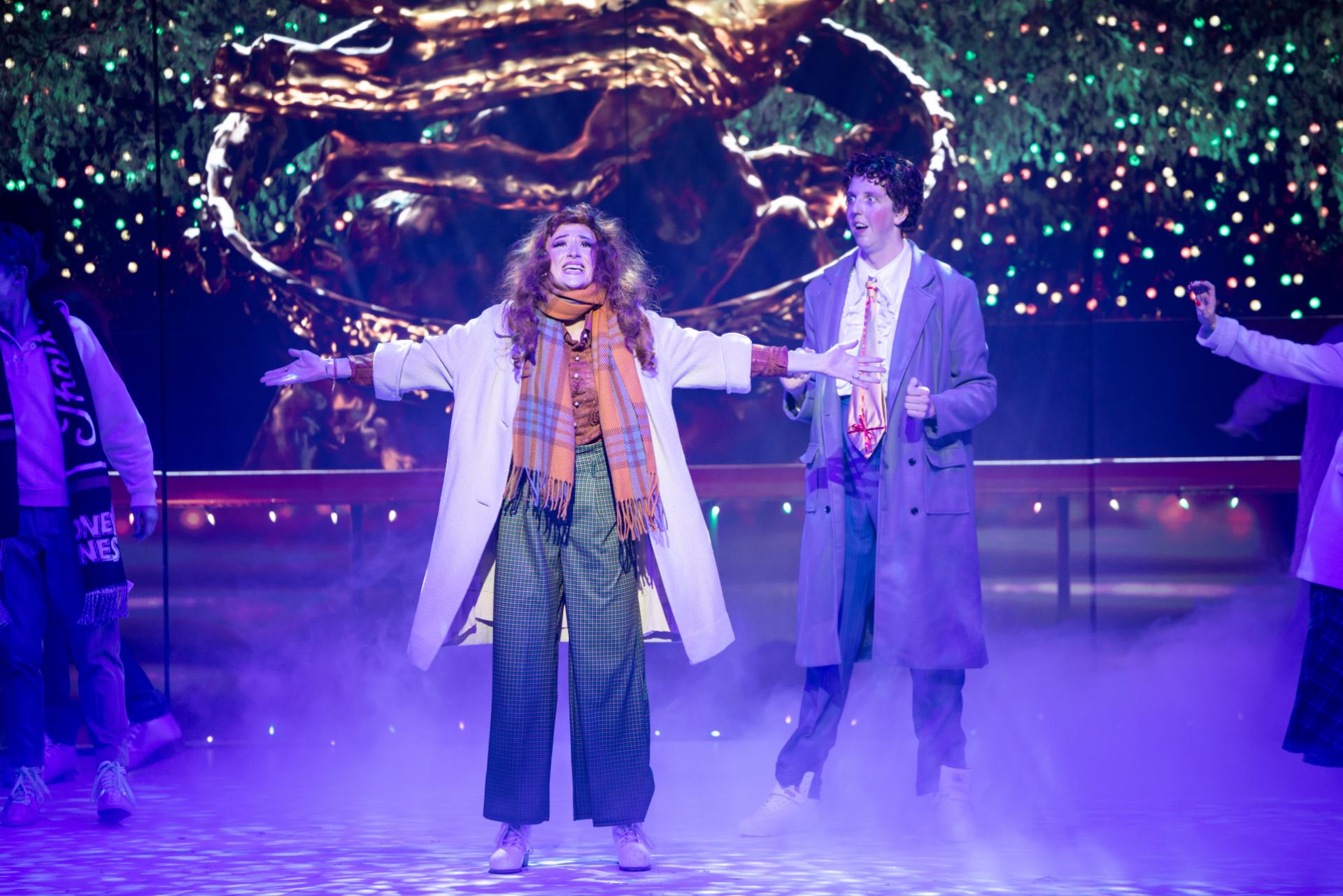
Political discourse seems to be in a state of unprecedented turmoil, as reflected in Mike Bartlett’s Snowflakes, a play about conflicting values and the possibility of resolution. Maya had left home shortly after the Brexit referendum, no longer able to tolerate her father Andy’s beliefs and opinions. Several years later, Maya and Andy attempt a reunification at Christmas time, but peace does not come easy.

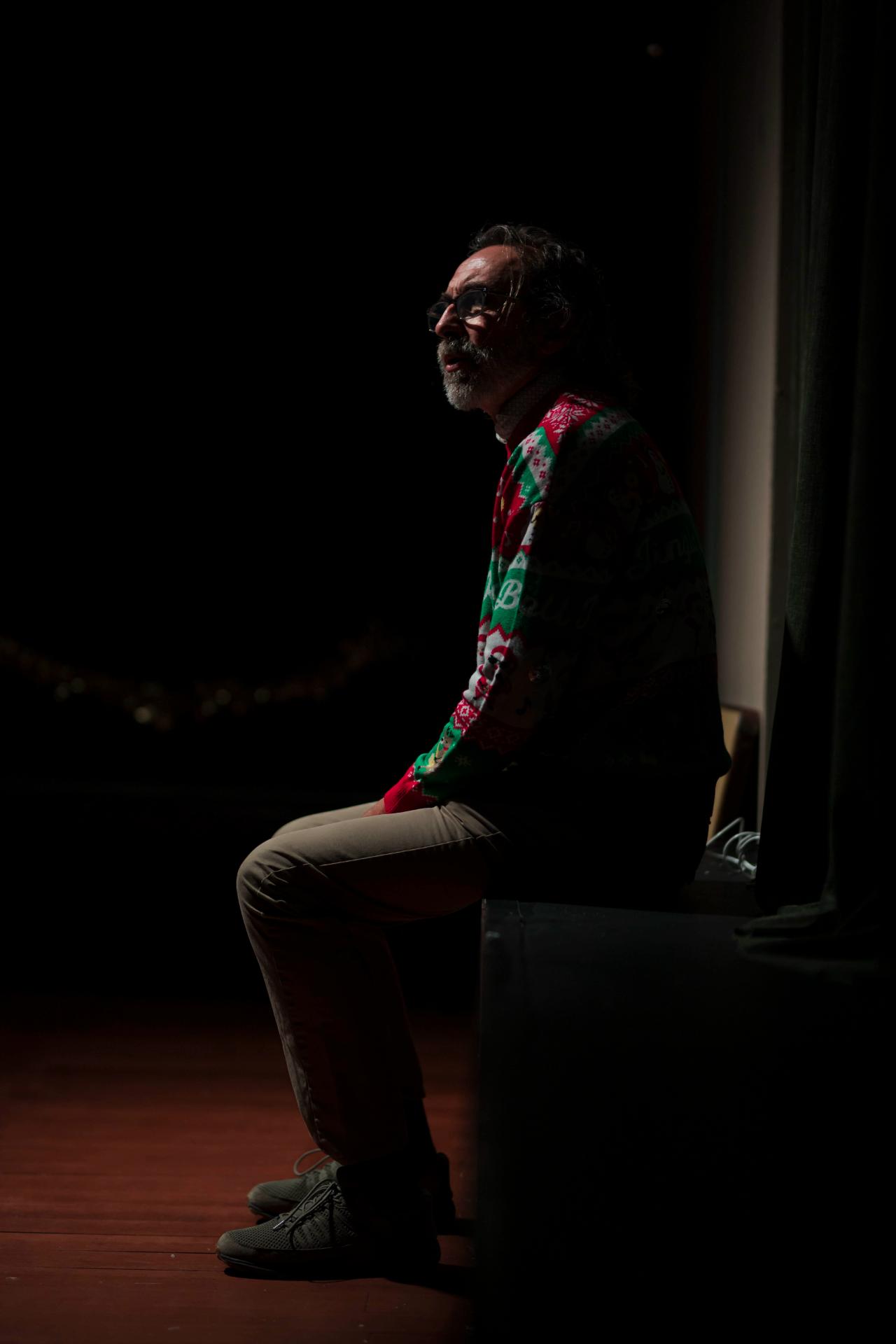
It is a discussion we need to have, much as it is an inevitably fraught and upsetting one. The chasm between us is ever exacerbating, and in Snowflakes we certainly observe how challenging it is for our minds to meet. Bartlett provides for Andy’s more conservative side ample, and possibly excessive exposition, often maddening with his obstinacy, much as the text attempts to imbue him with endearing qualities. The role is performed by James Lugton, whose admirable precision and personal charisma helps to sustain our interest, but some viewers will nonetheless find tiresome, the unceasing efforts to make Andy likeable.

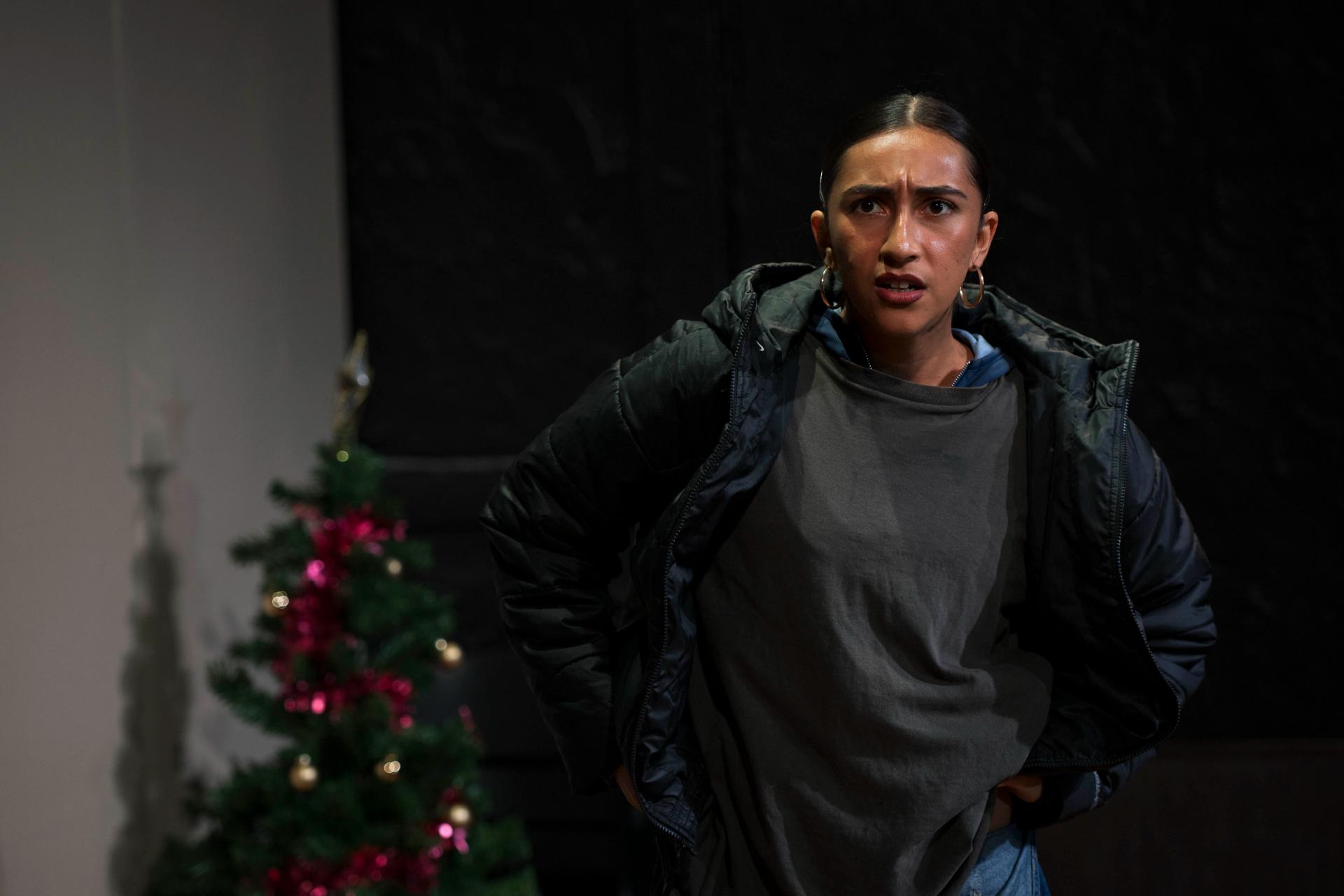
Lilian Alejandra Valverde plays Natalie, a peacemaker character, with excellent vitality and passion. Maya makes her entrance later in the piece, via actor Claudia Elbourne who brings a youthful idealism valuable to the narrative. Valverde and Elbourne represent the progressive side with palpable passion, even though the writing seems to provide insufficient material to help them argue their case.

Director Jo Bradley has the unenviable task of making the family drama resonate in tandem with the combative politics that become increasingly apparent through the duration. The tender aspects of Snowflakes are probably not as persuasive as they should be, but the production’s rendering of adversarial dynamics is undoubtedly compelling.

Set and costumes by Soham Apte are effective in their depictions of time and space. Lights by Luna Ng are sensitively calibrated, to convey shifting moods and on occasion to add some theatricality, to the show’s essential realism. Sounds by Daniel Hertern are understandably restrained, in a story that emphasises the normalcy of these fissures in our daily connections.

As a young queer woman, Maya has come to the realisation that the system is designed to work against her. Understanding that much of what is traditional and customary serves a hegemony that she wishes to dismantle, everything her father stands for can only be seen as disdainful. In time, she will learn that Andy too suffers from the system’s failures, albeit through different manifestations, and learning to work against the system and not individuals, should help her find a more harmonious existence.

www.oldfitztheatre.com.au | www.instagram.com/goodtimetheatrics/

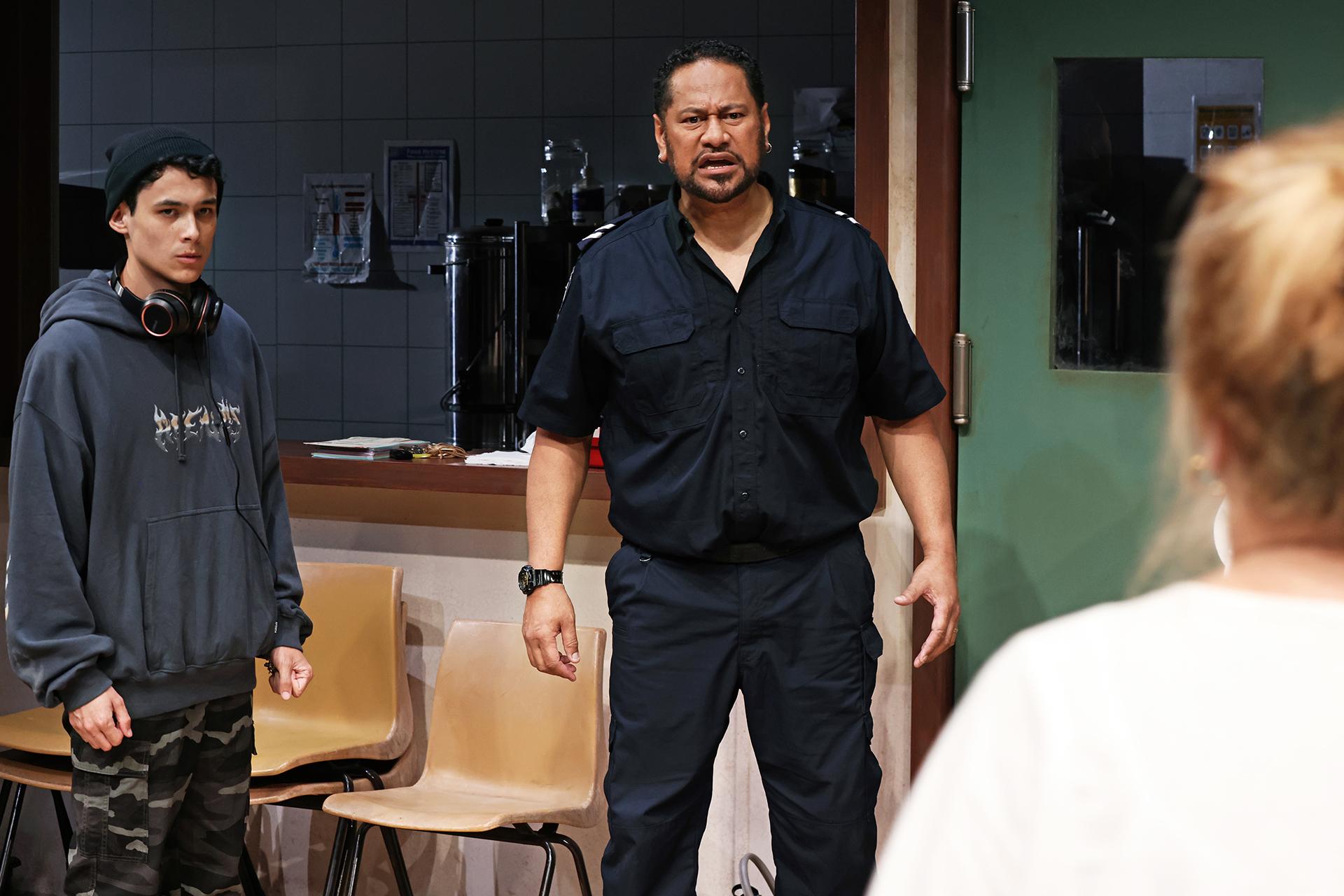
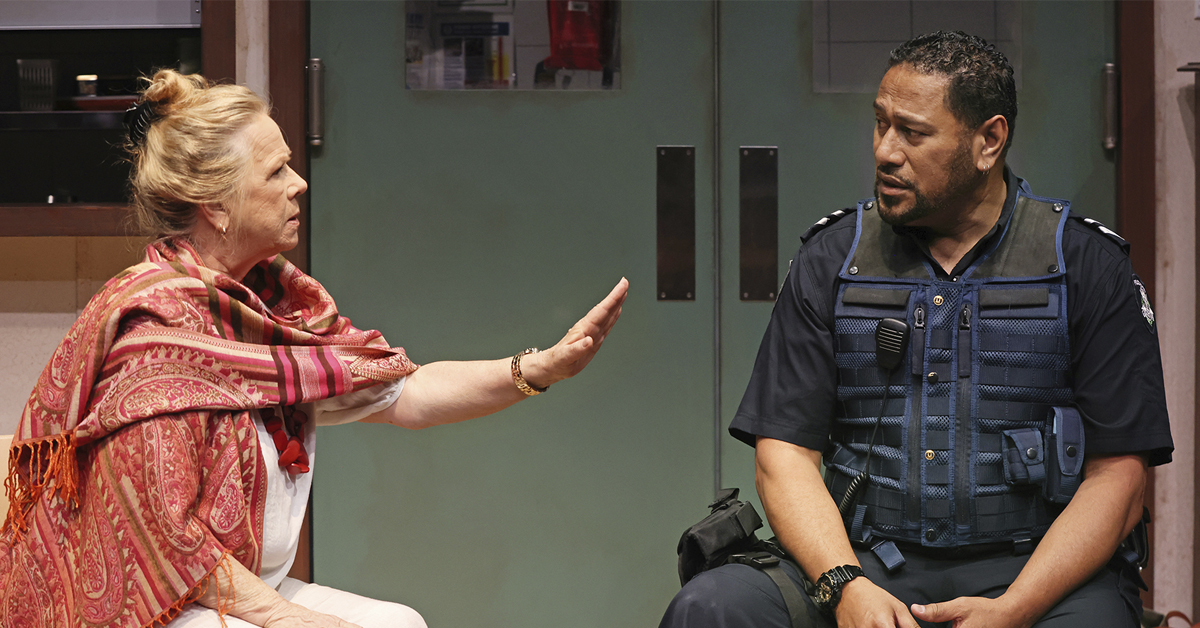
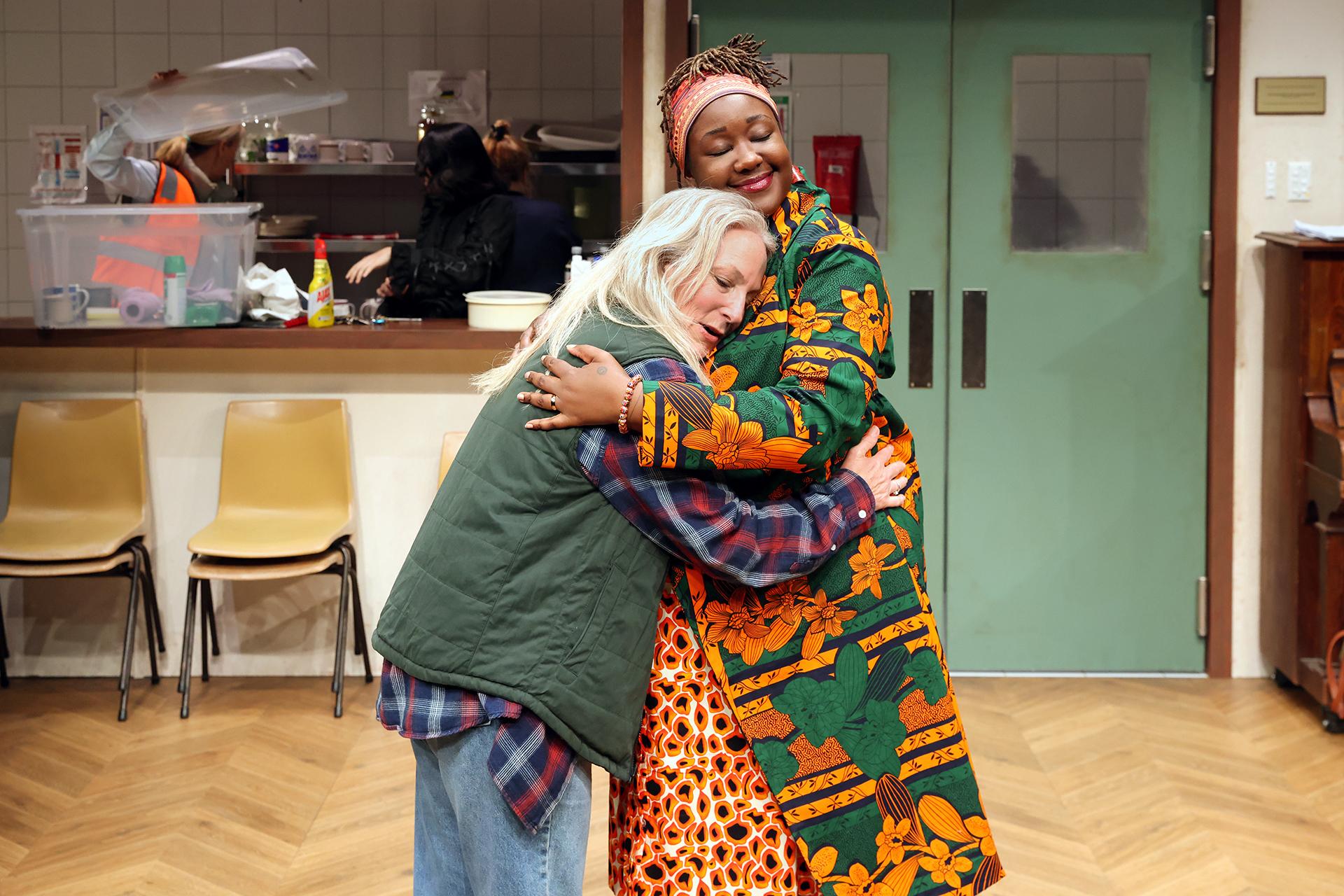
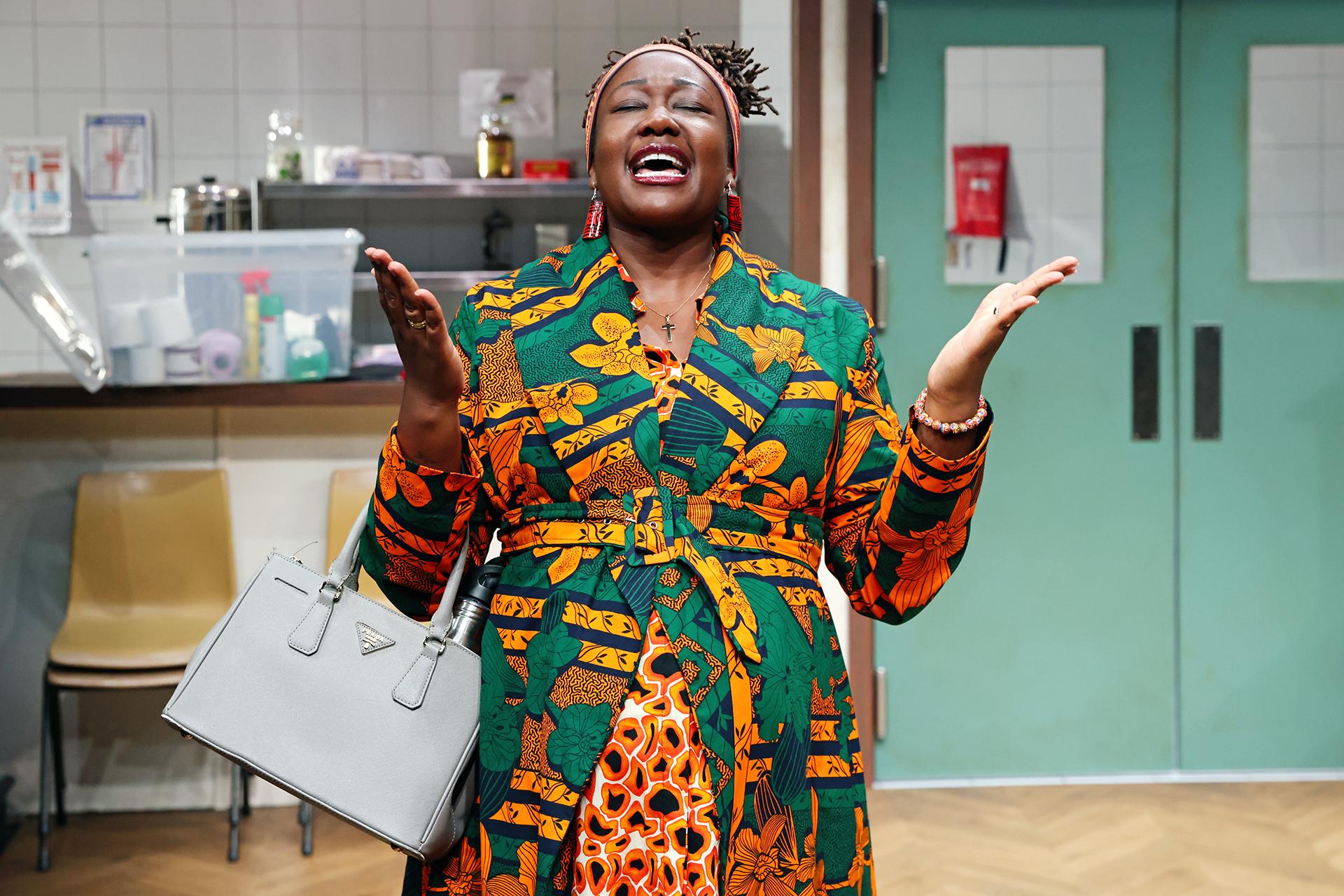
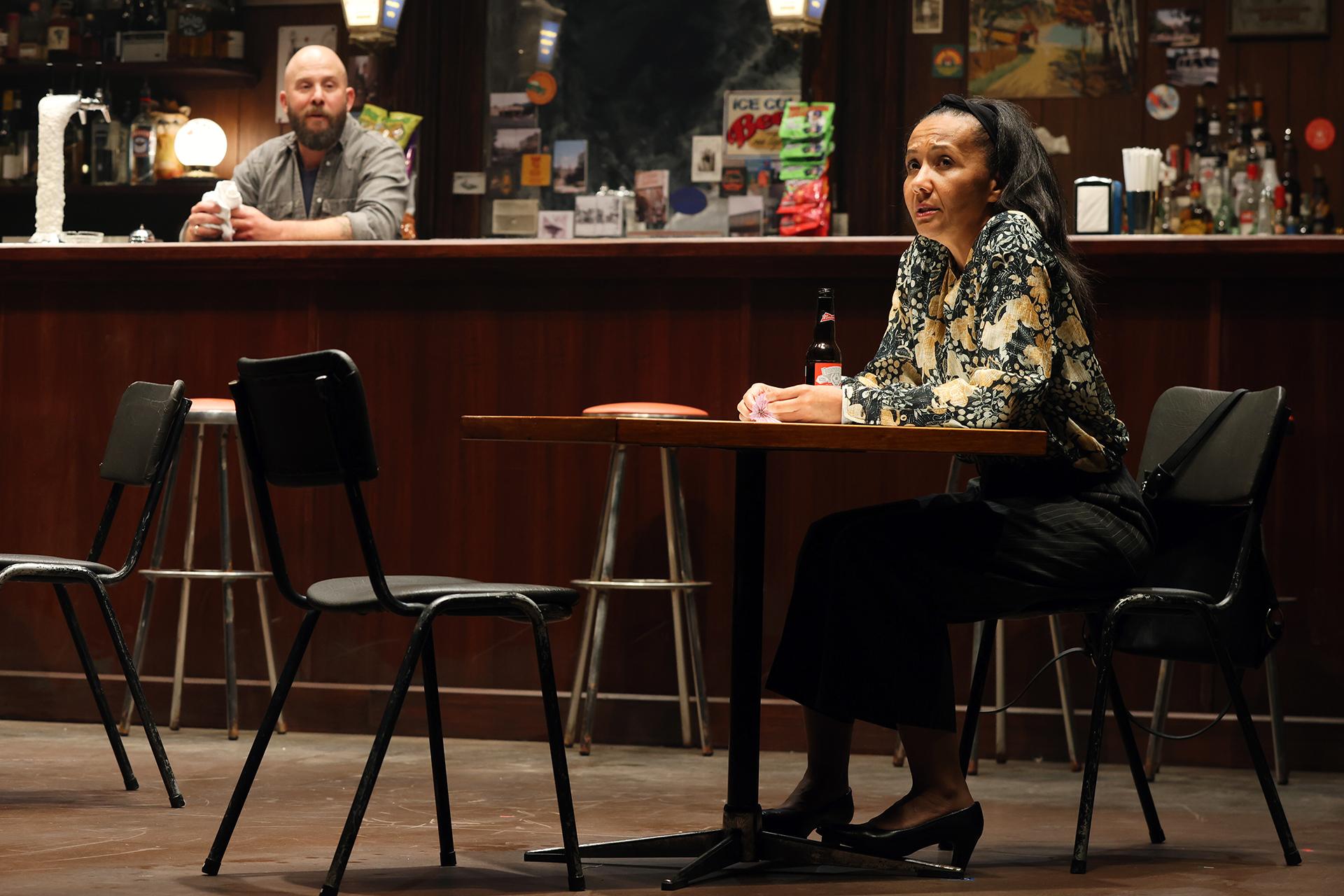
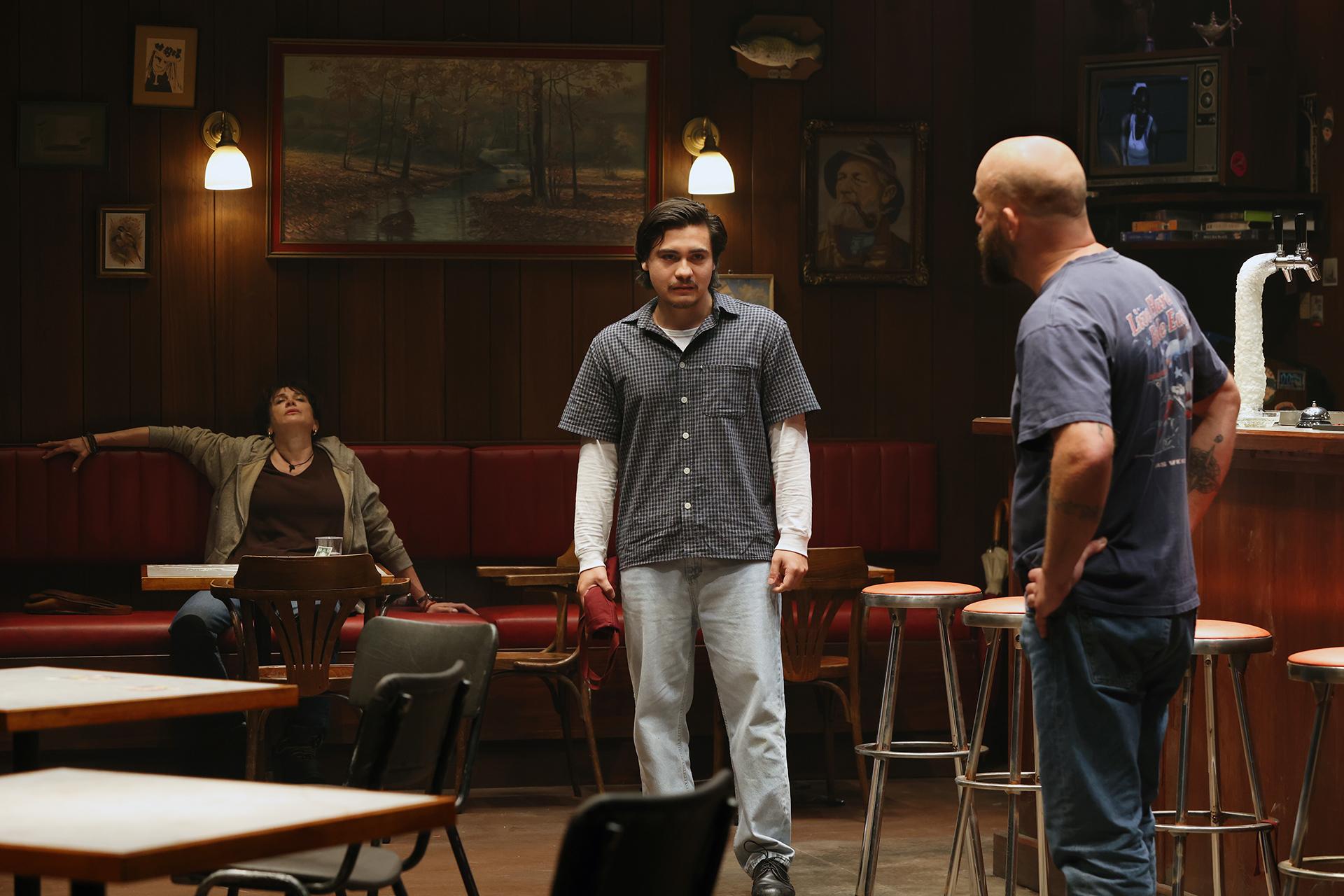
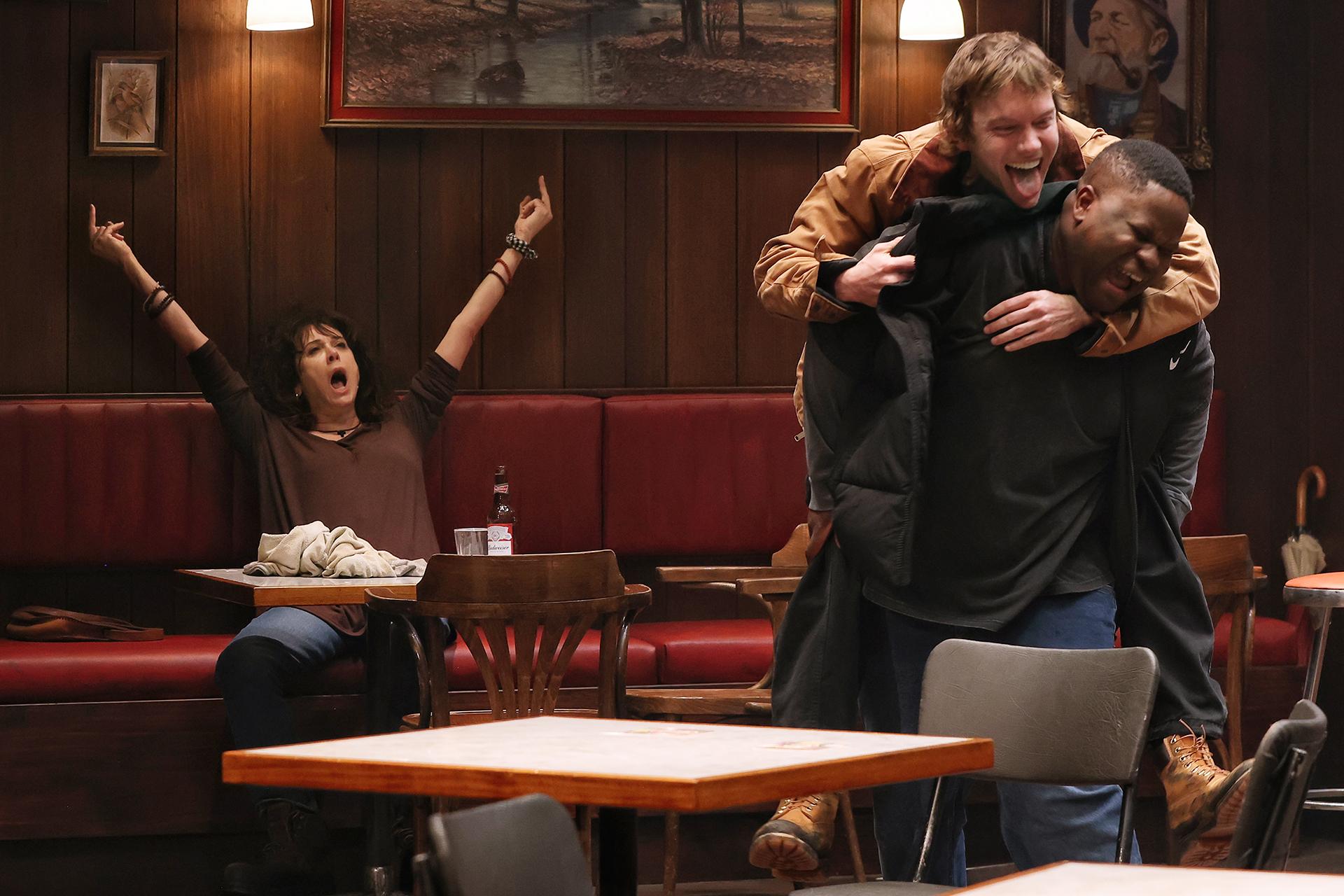
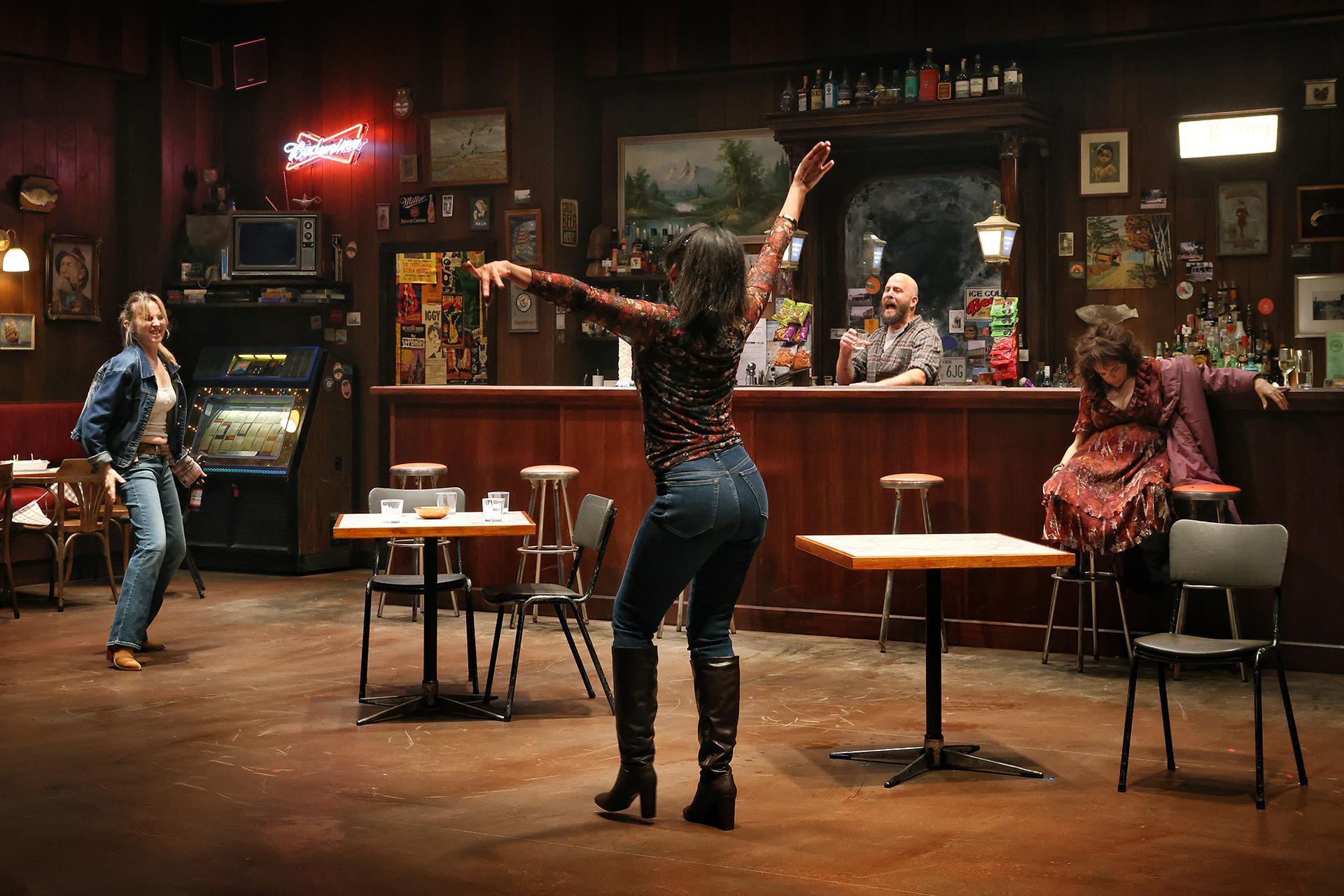
Review: The Heartbreak Choir (Ensemble Theatre)

Venue: Ensemble Theatre (Kirribilli NSW), 29 Oct, 2024 – 12 Jan, 2025
Playwright: Aidan Fennessy
Director: Anna Ledwich
Cast: Valerie Bader, Tyallah Bullock, Nancy Denis, Carita Farrer Spencer, Jay Laga’aia, Jasper Lee-Lindsay, Georgina Symes
Images by Prudence Upton

Theatre review
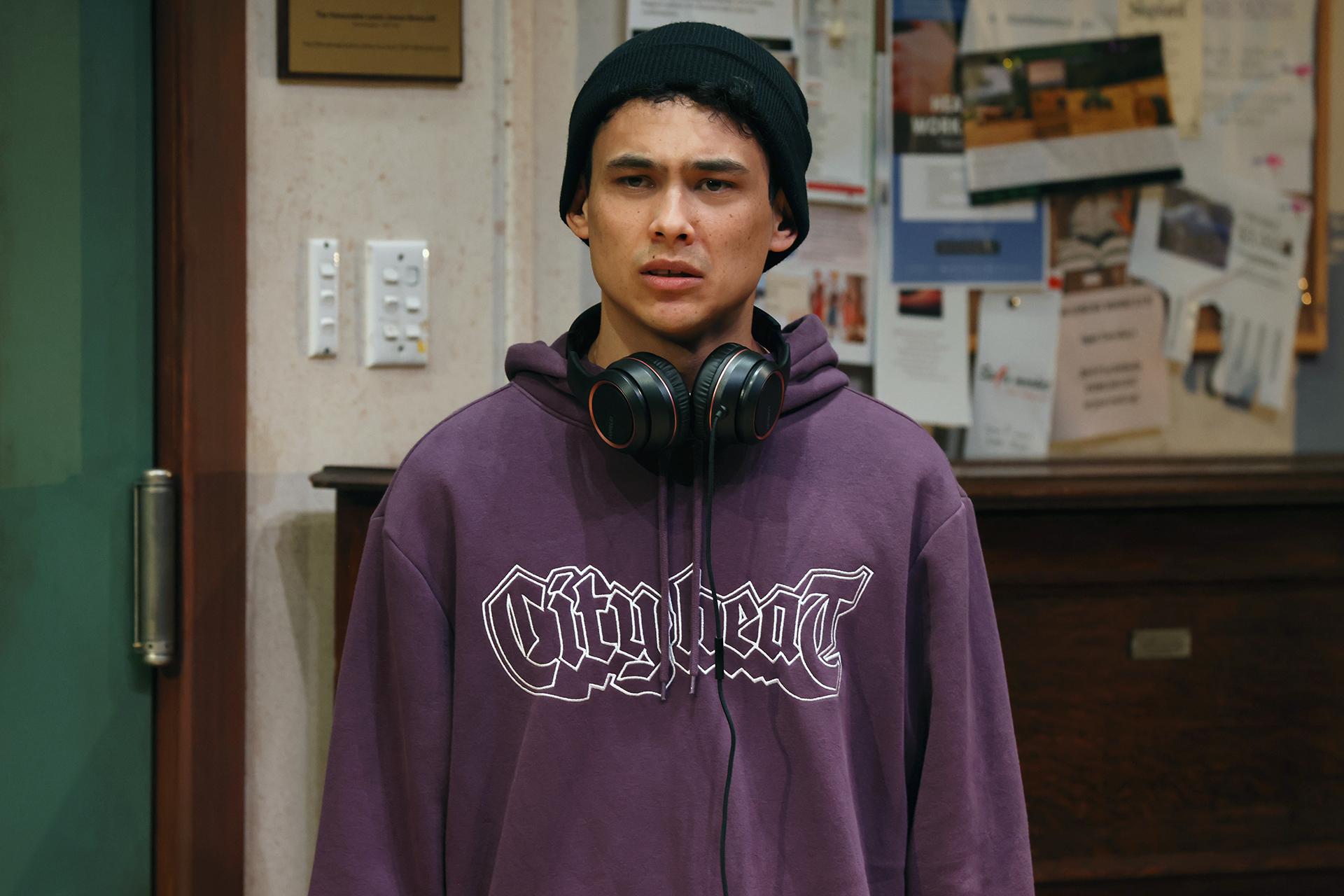
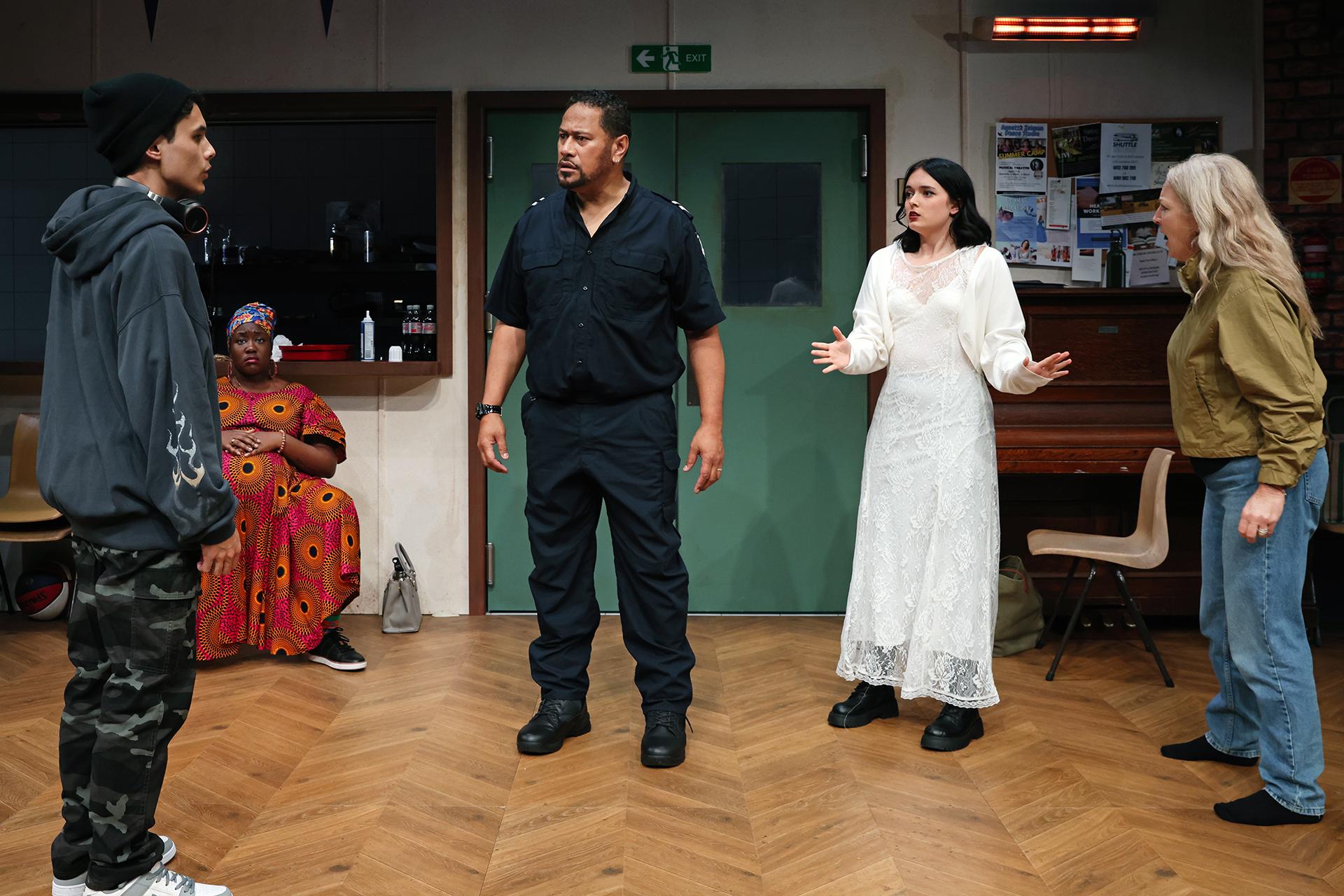
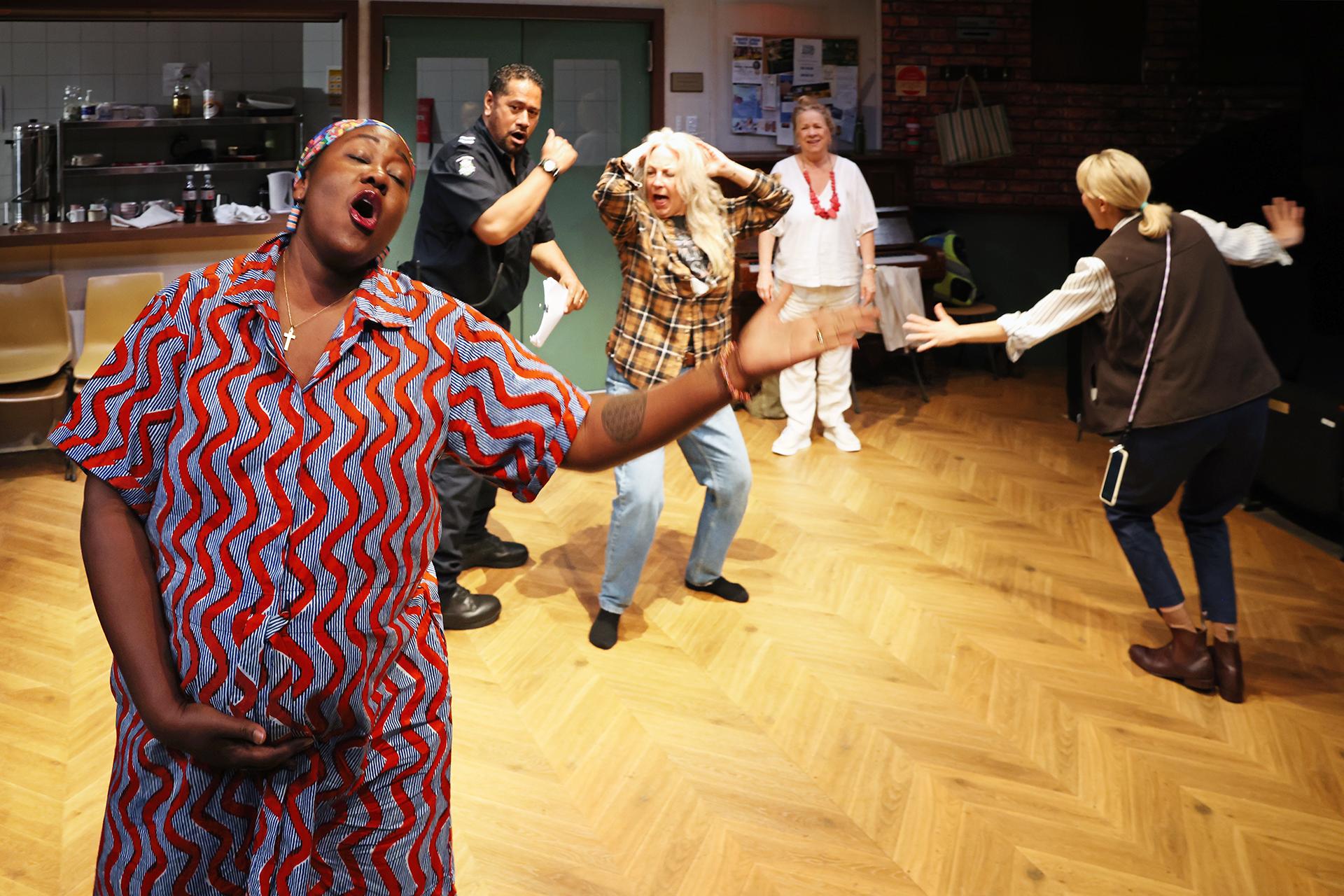
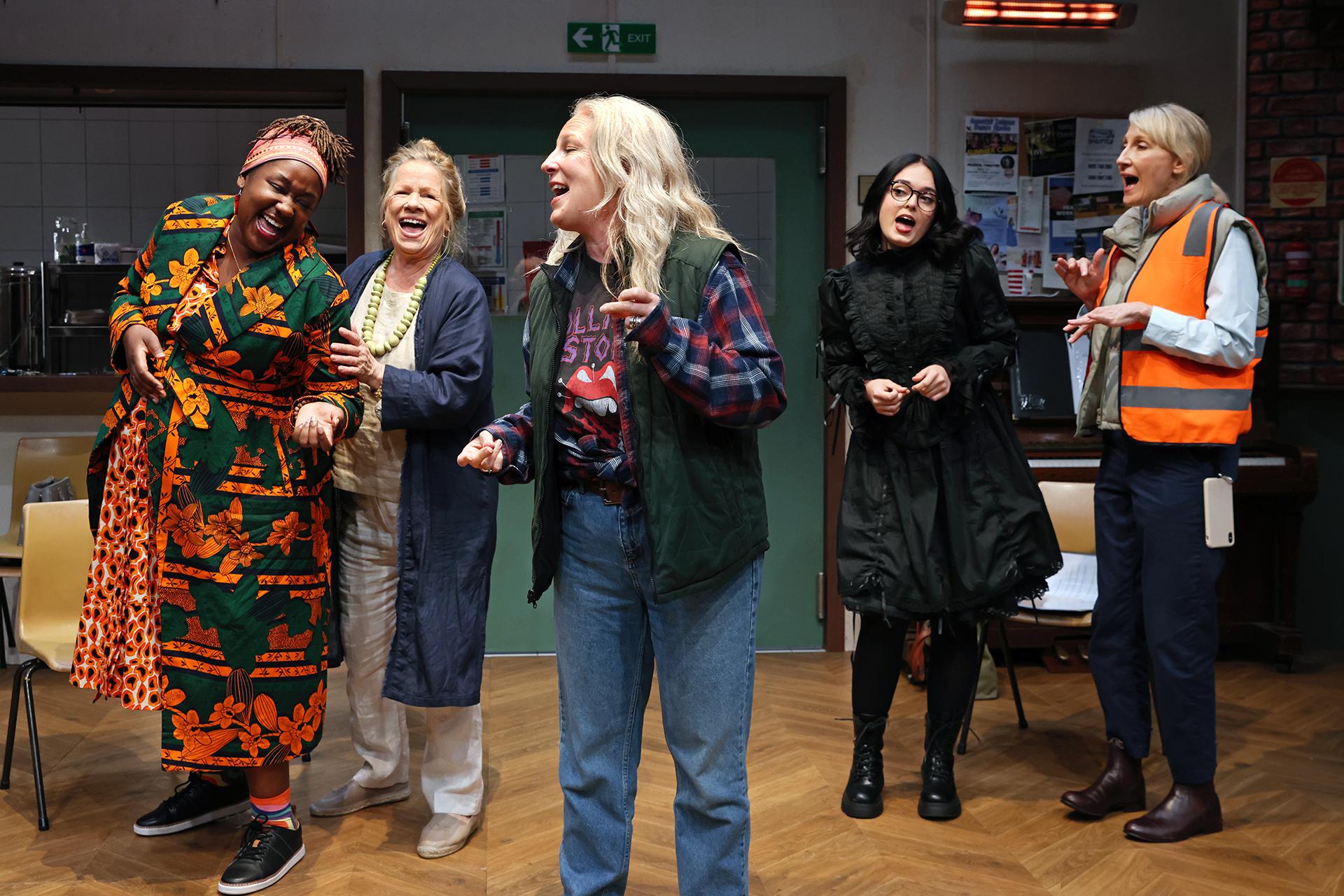
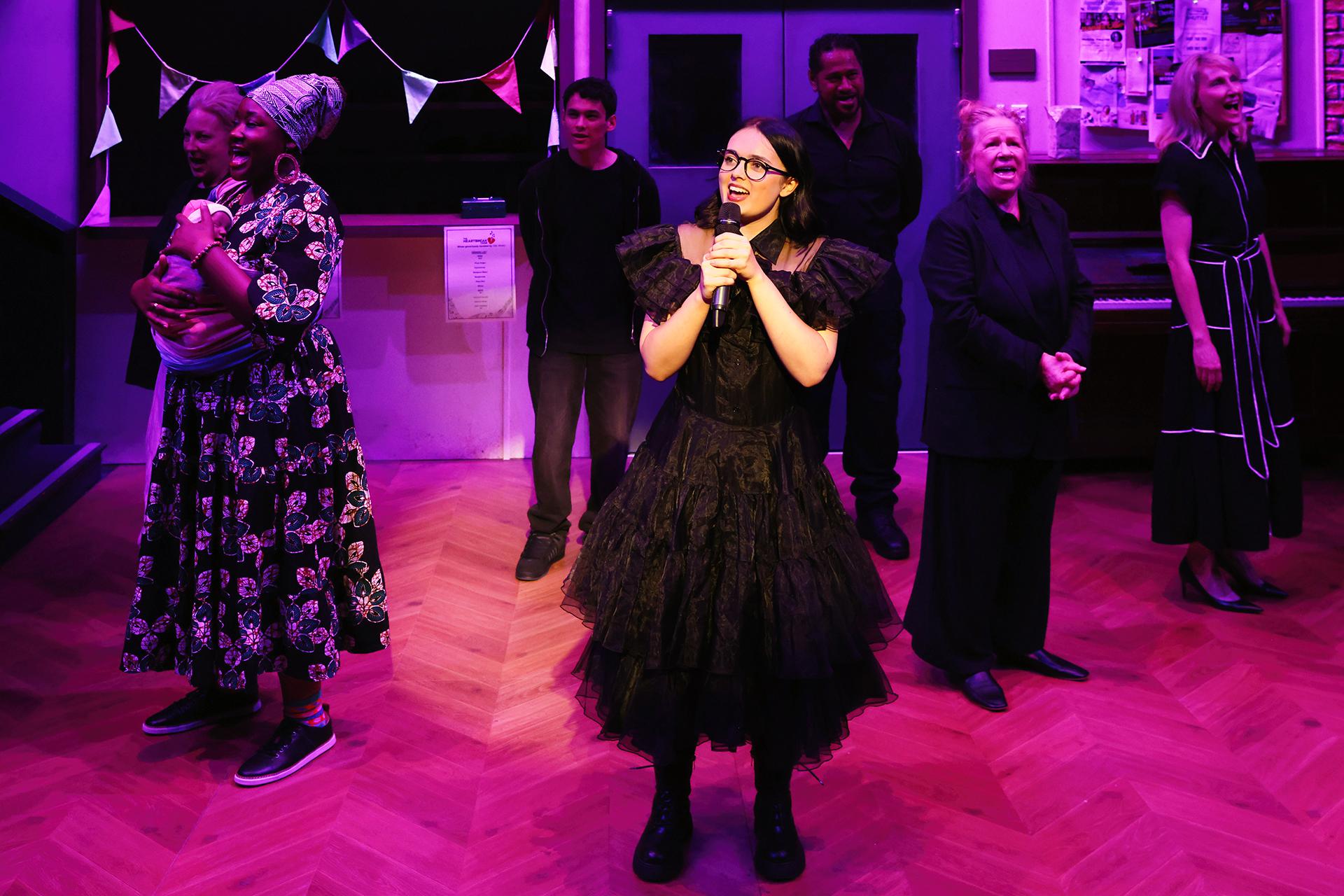
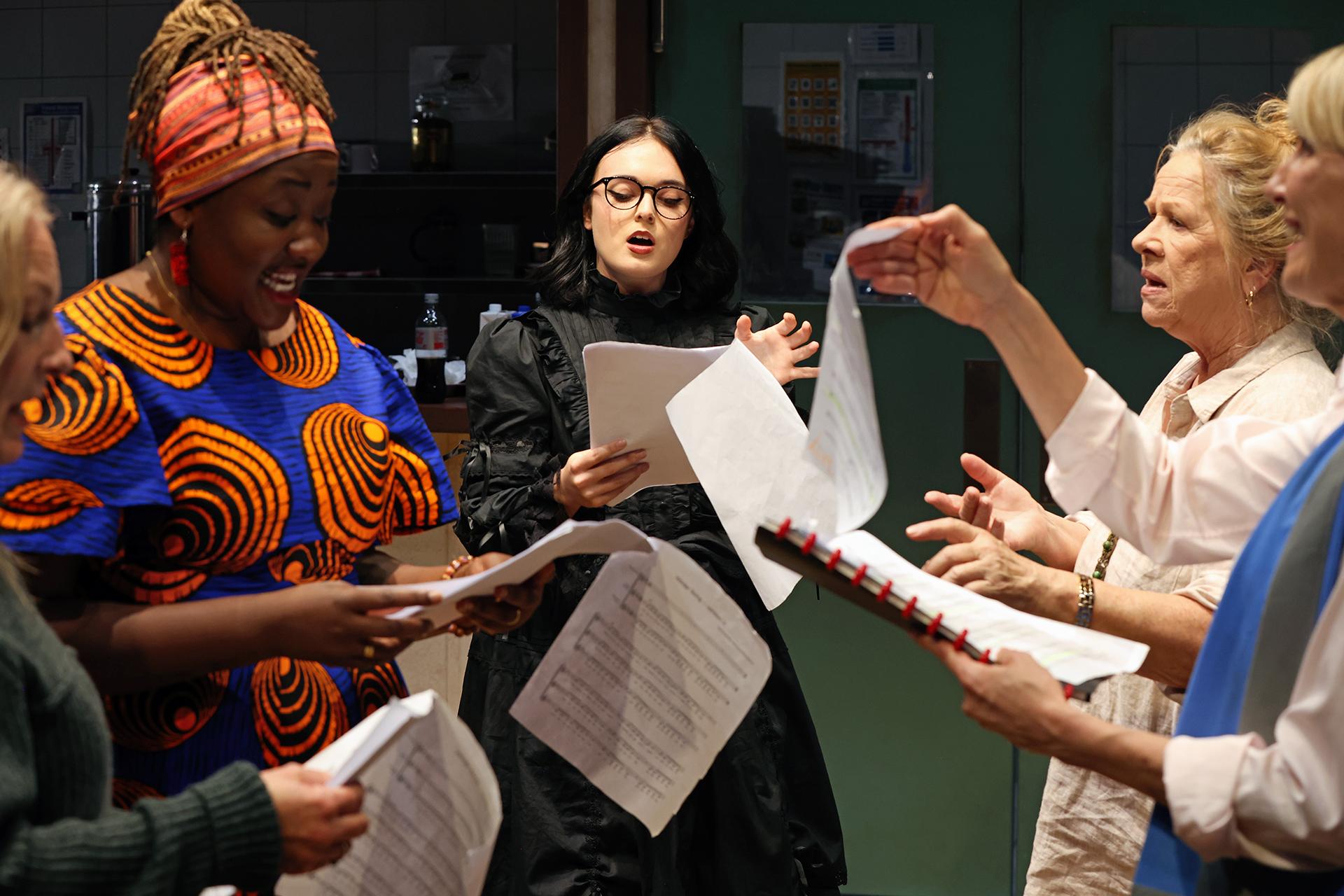
Barbara and her friends have left their choir to set up their own offshoot. When Savannah suggests the new name “Heartbreak Choir”, they all agree on its suitability, but it takes considerable time before we understand the reasoning behind their choice. At the foundation of Aidan Fennessy’s play The Heartbreak Choir is something quite profound and moving; however a lack of focus and an overreliance on humour, detract from what could have been a powerful experience.

The show is sometimes truly funny, but it also has a tendency to deviate too much from its central concern. Direction by Anna Ledwich imbues a palpable warmth, particularly in its portrayal of community, even as the narrative struggles to resonate sufficiently with the darker themes that inspire it. 

Set and costumes by Nick Fry deliver a convincing realism, along with a spaciousness that facilitates easy movement by its cast. Lights by Verity Hampson can be somewhat abrupt with their transformations, but are calibrated well to guide us through shifting temperaments. Occasional singing is an enjoyable feature, with musical direction by Sally Whitwell providing just enough complexity to give a sense of elevation, and a lustre to the production. 

Performer Valerie Bader is a passionate presence as Barbara, if somewhat strained with her interpretations of the play’s more emotive portions. Jay Laga’aia is highly charismatic in the key role of Peter, effortlessly instigating our investment into his character’s journey of healing. Also memorable is Jasper Lee-Lindsay whose restrained approach for the part of Peter’s son Beau, translates into moments of tenderness and much needed gravitas. The persistent lightness of The Heartbreak Choir offers an accessible entry point into the trauma at its core, yet for something more effectively cathartic, it is ultimately unavoidable to confront and feel the actual pain.

www.ensemble.com.au

Review: People Will Think You Don’t Love Me (KXT on Broadway)

Venue: KXT on Broadway (Ultimo NSW), Nov 15 – 30, 2024
Playwright: Joanna Erskine
Director:
Jules Billington
Cast: Ruby Maishman, Tom Matthews, Grace Naoum
Images by Phil Erbacher

Theatre review
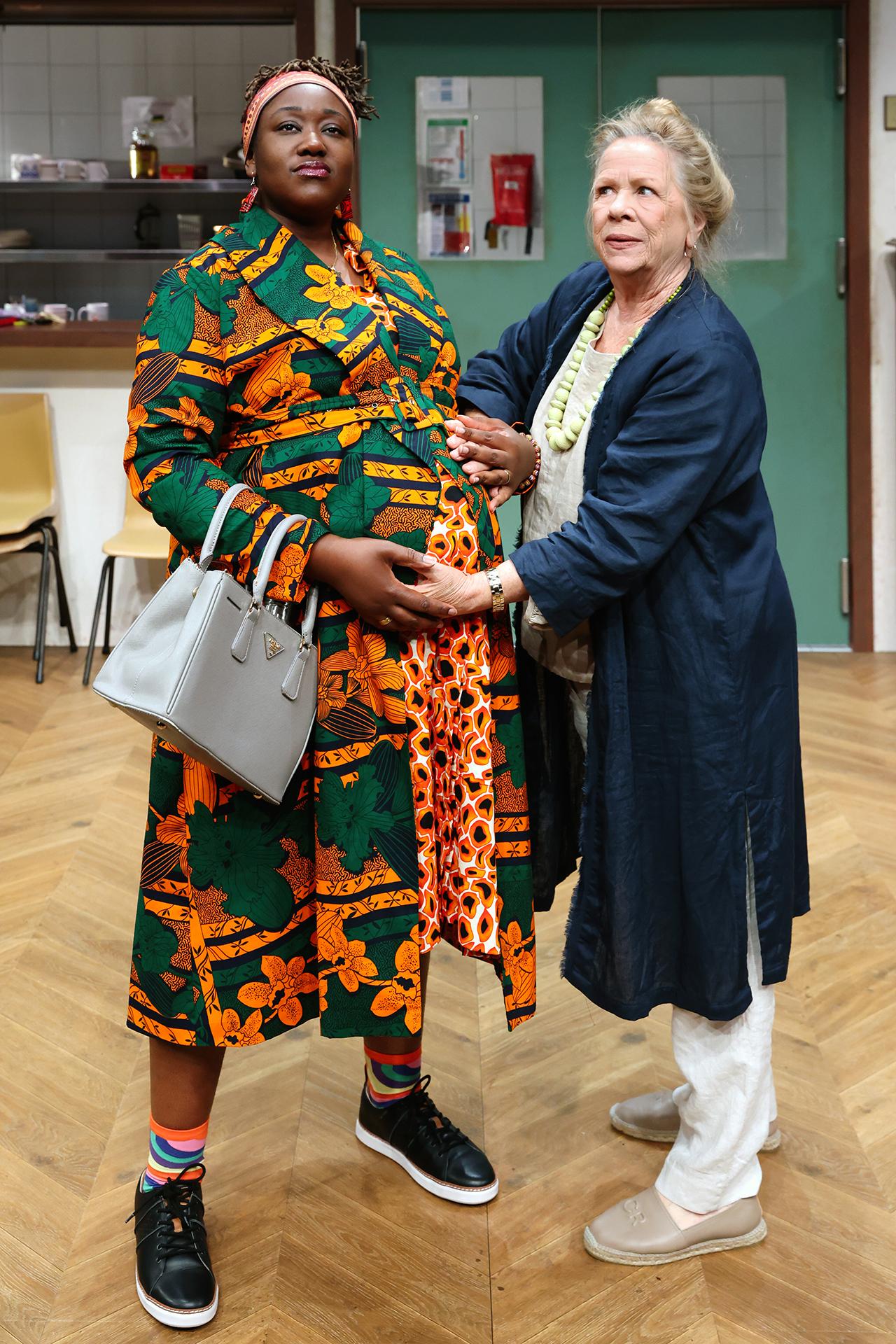
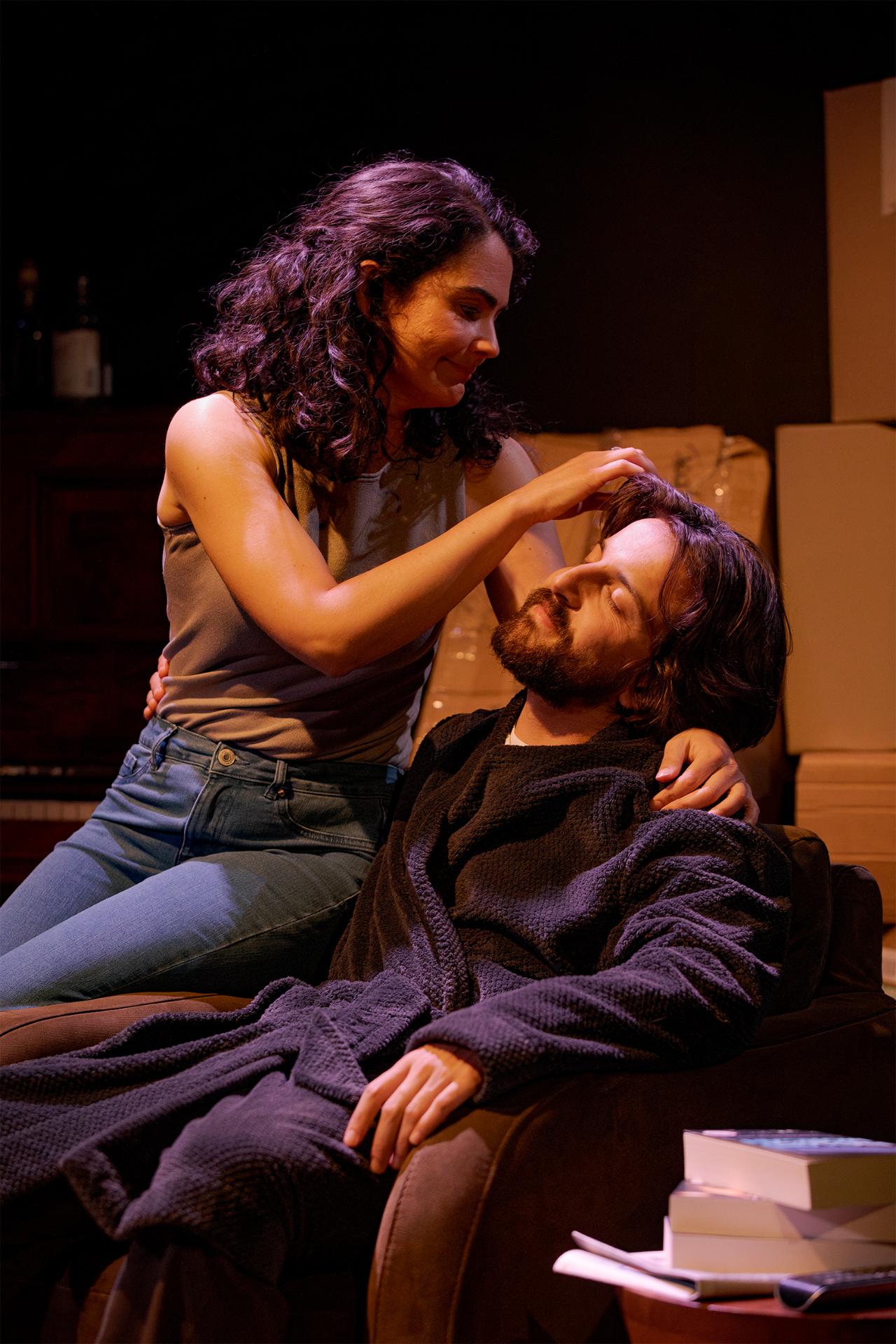
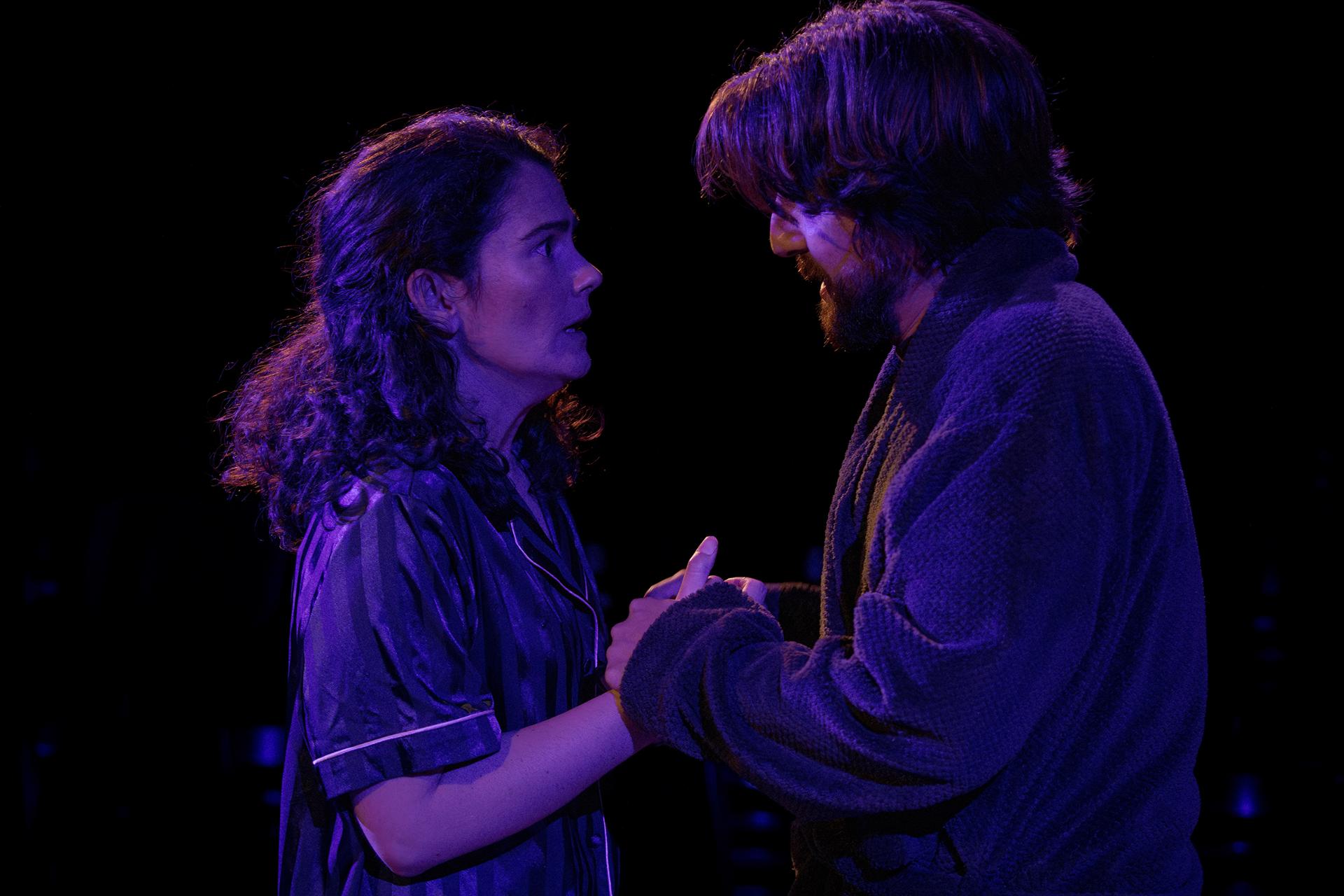
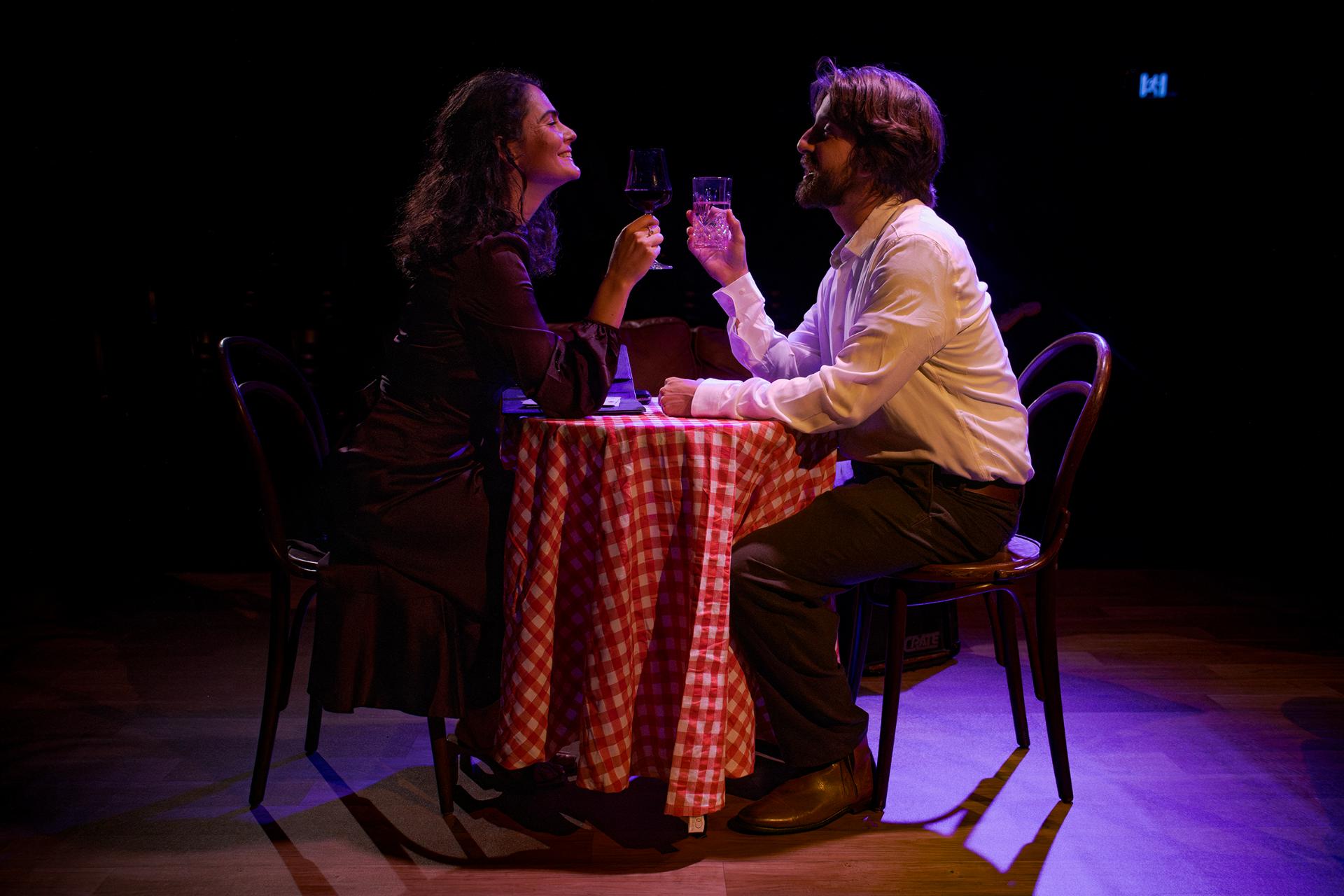
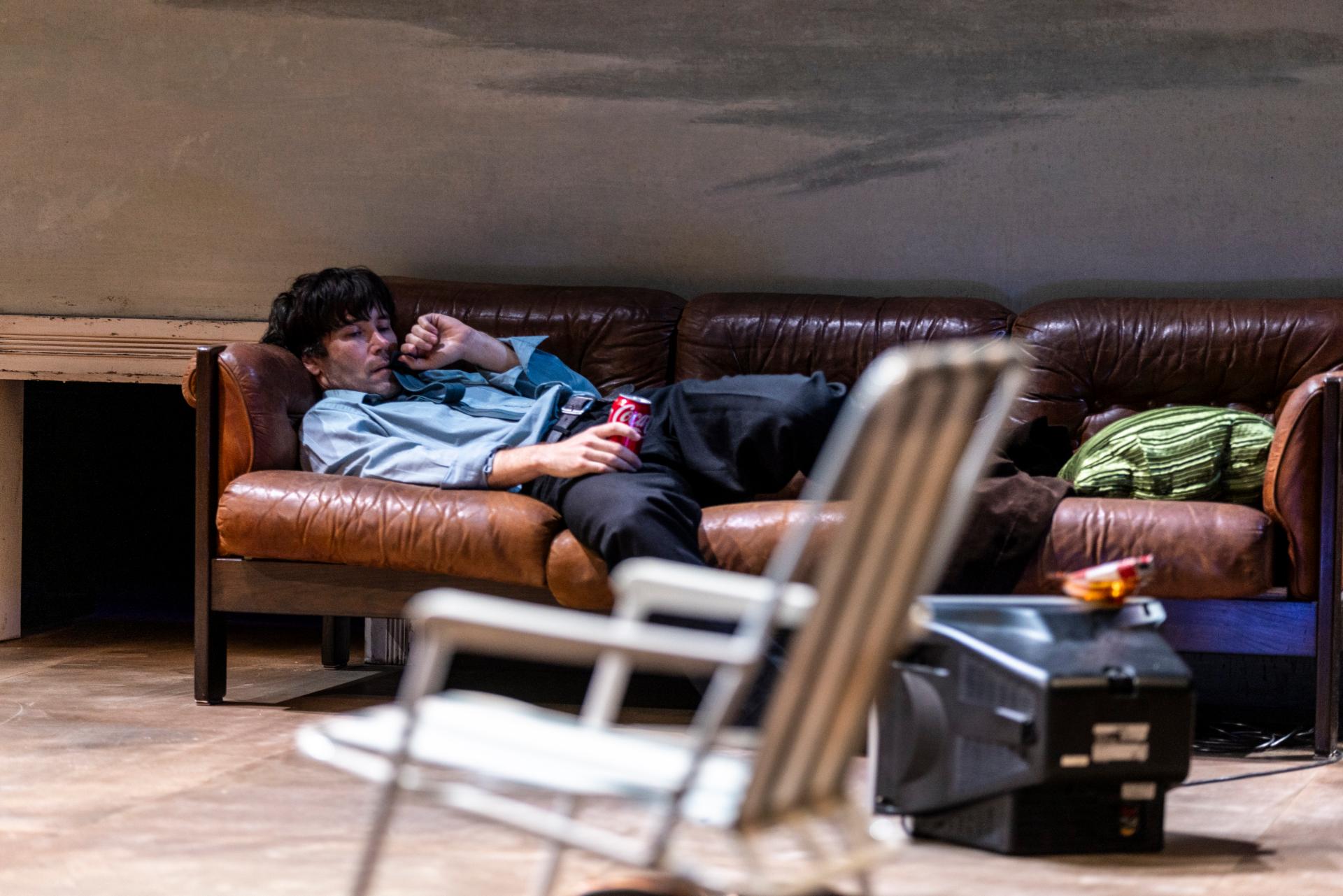
Michael has had a heart transplant, but it seems that he may have inherited more than just Rick’s organ. People Will Think You Don’t Love Me by Joanna Erskine is an intriguing work about consciousness and sentience, particularly how they intersect with human biology. Full of fascinating speculations, Erskine’s play brings into the domestic realm, some of the biggest questions about the mind — where it resides, and how it can transform. 

Direction by Jules Billington brings great focus to these intimate explorations, highly compelling with their ability to make believable, these often outlandish conjectures. There is however a diminishment of dramatic intensity, in concluding portions of the show where we are poised in expectation of an escalation. Its cerebral quality though, does fortunately persist to the end, for a satisfying experience that is likely to remain with viewers long after the curtain call.

Sam Wylie’s production design is a visually pleasing amalgamation of locations, successful at representing the various settings, and accurate with costuming that illustrates the regular Sydney folk we encounter in the story. Wylie’s lights operate well to encourage our sentimental responses, but can afford to be more ambitious in segments that veer into surreal territory. Sounds and music by Clare Hennessy are extremely delicate, memorable for their efficacy at bringing subtle tension, to these scenes of mounting discord.
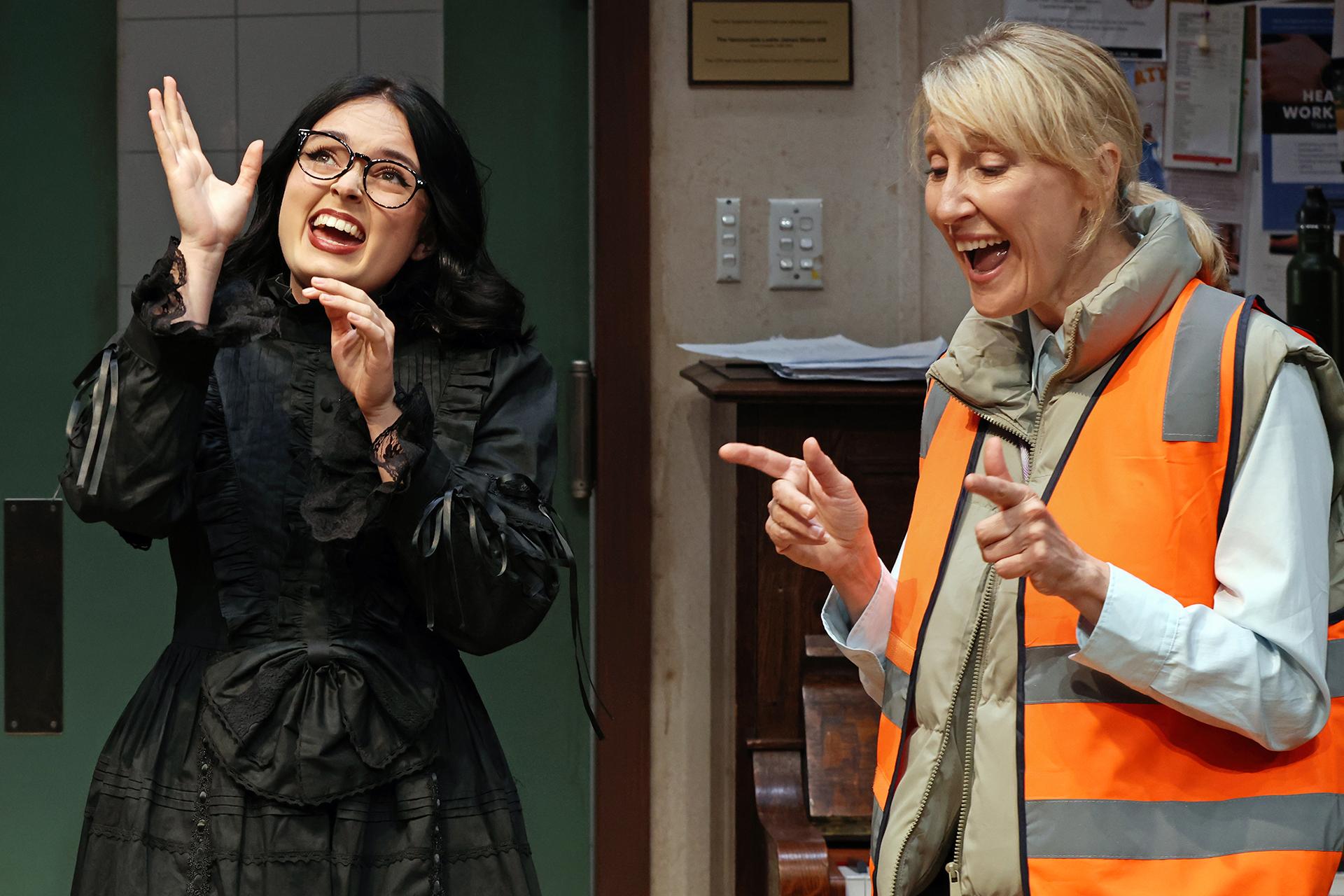
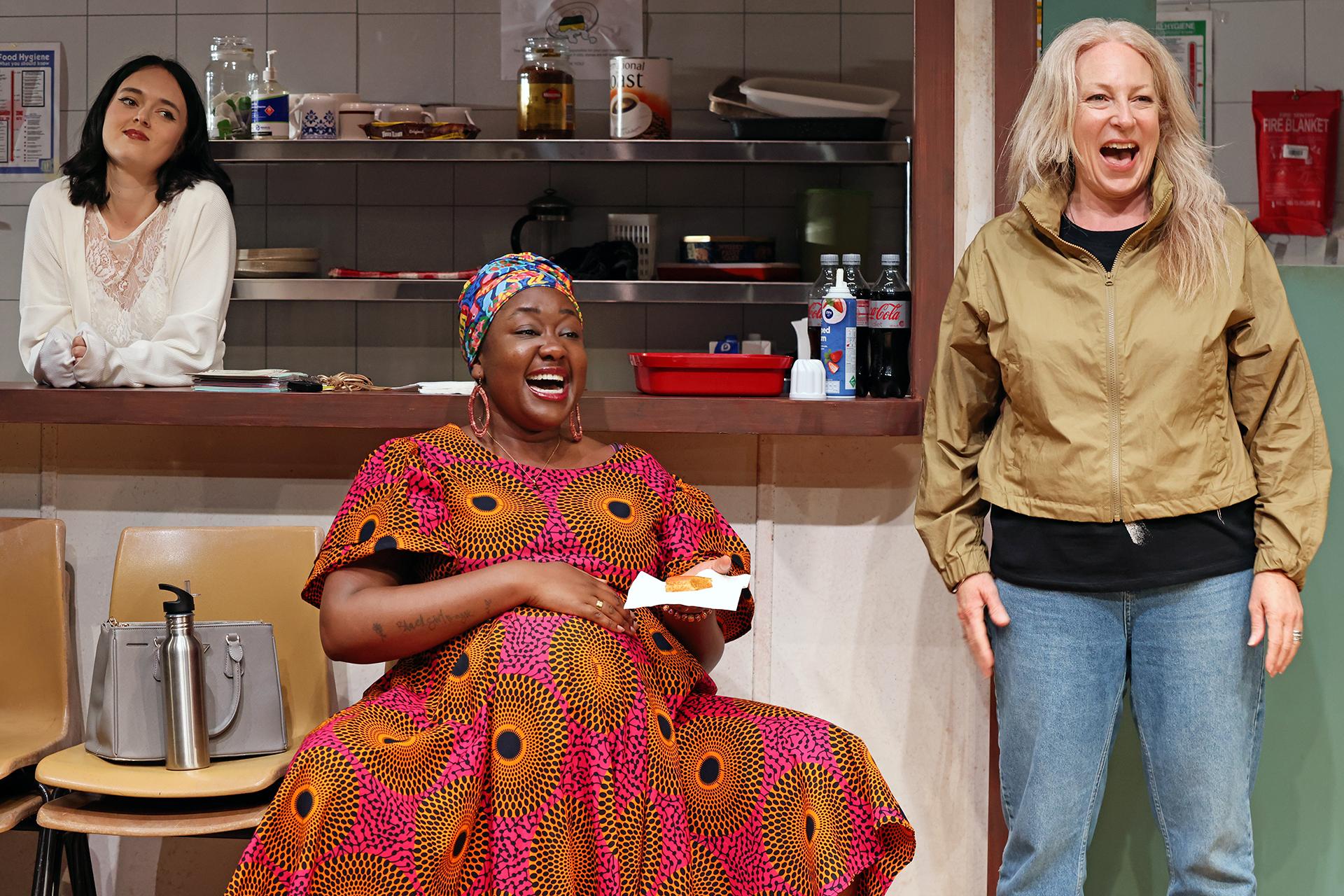
A strong cast of three presents People Will Think You Don’t Love Me with admirable deliberation and detail. Tom Matthews brings a valuable naturalism to the role of Michael, to keep us invested and persuaded of the play’s extravagant musings. Playing Michael’s wife Elizabeth, is Grace Naoum who introduces urgency whenever required, and is always convincing when portraying the anxiety navigated by someone under constant stress. The organ donor’s partner Tomasina is depicted by Ruby Maishman with a wonderful idiosyncrasy that makes her character feel familiar and realistic. The compelling chemistry between actors is a marvellous feature, especially when unexpected humour arises, in this otherwise quite sombre staging.
In the enactment of our capitalistic lives, there is often insufficient care and respect for the bodies we inhabit. The heart, soul and mind are often relegated to something almost abstract, even though we know them to be absolutely central. We often fall into thinking ourselves as somewhat ephemeral, whilst simultaneously mistreating our corporeality, endlessly making bodies serve their capitalistic purposes of productivity, and ignoring their more esoteric capacities. Love and the human spirit are real, and they could very well be living not in the ether, but in all of our blood, skin, flesh and bones.

www.kingsxtheatre.com | www.facebook.com/littletrojantheatre

Review: Irving Berlin’s Holiday Inn (Hayes Theatre)

Venue: Hayes Theatre Co (Potts Point NSW), Nov 22 – Dec 22, 2024
Music and Lyrics: Irving Berlin
Book: Gordon Greenberg, Chad Hodge
Director: Sally Dashwood
Cast: Zohra Bednarz, Emma Feliciano, Paige Fallu, Matt Hourigan, Nigel Huckle, Niky Markovic, Chloë Marshall, Mary McCorry, Jamie Reisin, Jacob Steen
Images by Robert Catto

Theatre review
All Jim wants is an idyllic life of marriage in rural Connecticut, but when Lila discovers that the farmhouse is not quite to her taste, Jim quickly finds a new love interest in Linda. Based on a film from 1942, it is perhaps not a surprise to find in Holiday Inn, that women are but interchangeable and disposable. The book by Gordon Greenberg and Chad Hodge for this 2014 musical version, preserves what some might term an old-fashioned charm, but for others it is probably only the interpolated songs from the Irving Berlin oeuvre that holds any appeal.

Direction by Sally Dashwood is correspondingly nostalgic in style, with an approach that is perhaps overly sterile and conservative. Zealous choreography by Veronica Beattie George is highly animated, but a restrictive set design by Bell Rose Saltearn hinders the cast from performing freely. Lights by Véronique Benett introduce dynamism to the staging, but it is the extensive wardrobe by costumier Brendan de la Hay that provides some visual splendour.

Music direction by Abi McCunn is faithful to the relevant era, ensuring that Berlin’s hits remain enchanting. Leading the cast are Nigel Huckle and Mary McCorry who both impress with their singing abilities as Jim and Linda, although chemistry is nowhere to be found on this occasion. More captivating is Jacob Steen who plays Jim’s partner and friend Ted, demonstrating exceptional flair and a knack for harnessing dramatic authenticity, even for a story that is completely absurd. There is something about the Christmas season that feels ridiculous, but we participate anyway, understanding that so much of the joy comes from a willingness to indulge in a collective delusion, about this portion of the calendar holding so much more meaning, than the rest of the year.

www.hayestheatre.com.au

Review: August: Osage County (Belvoir St Theatre)

Venue: Belvoir St Theatre (Surry Hills NSW), Nov 9 – Dec 22, 2024
Playwright: Tracy Letts
Director: Eamon Flack
Cast: Tamsin Carroll, Bee Cruse, John Howard, Bert LaBonté, Amy Mathews, Johnny Nasser, Rohan Nichol, Will O’Mahony, Pamela Rabe, Anna Samson, Greg Stone, Helen Thomson, Esther Williams
Images by Brett Boardman

Theatre review
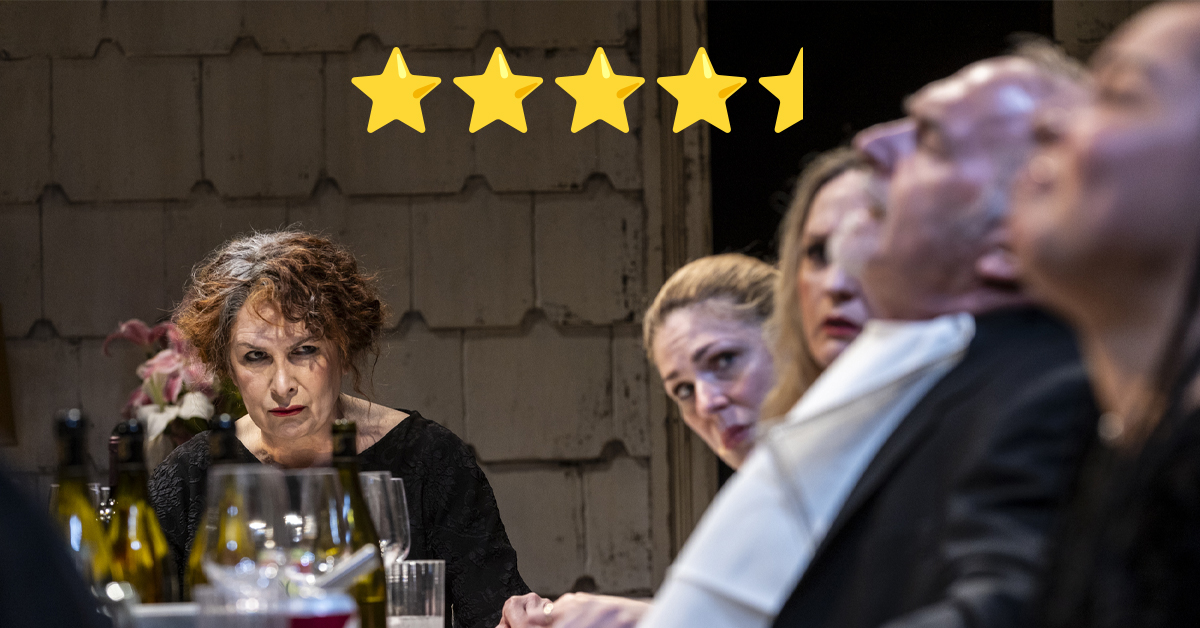
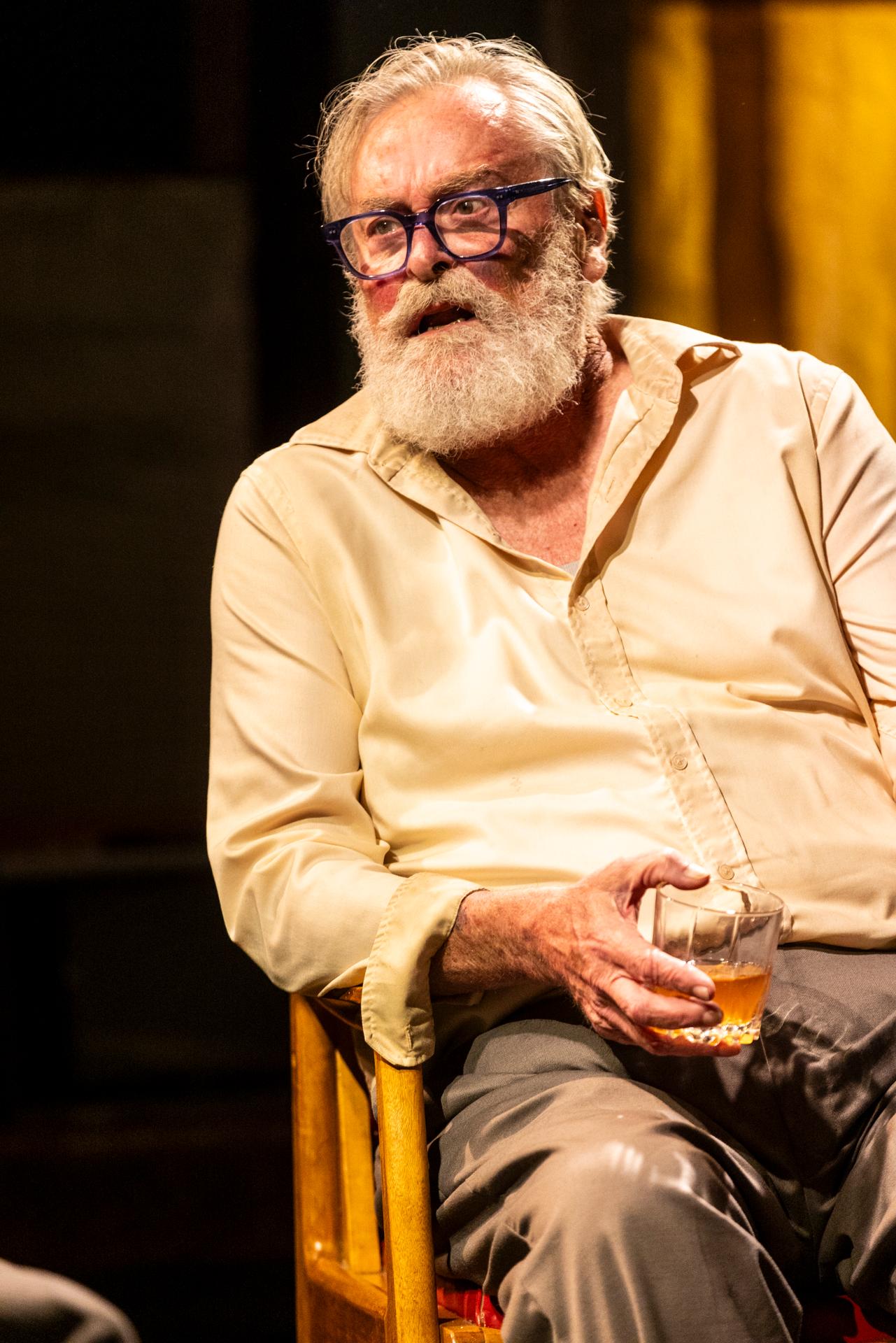
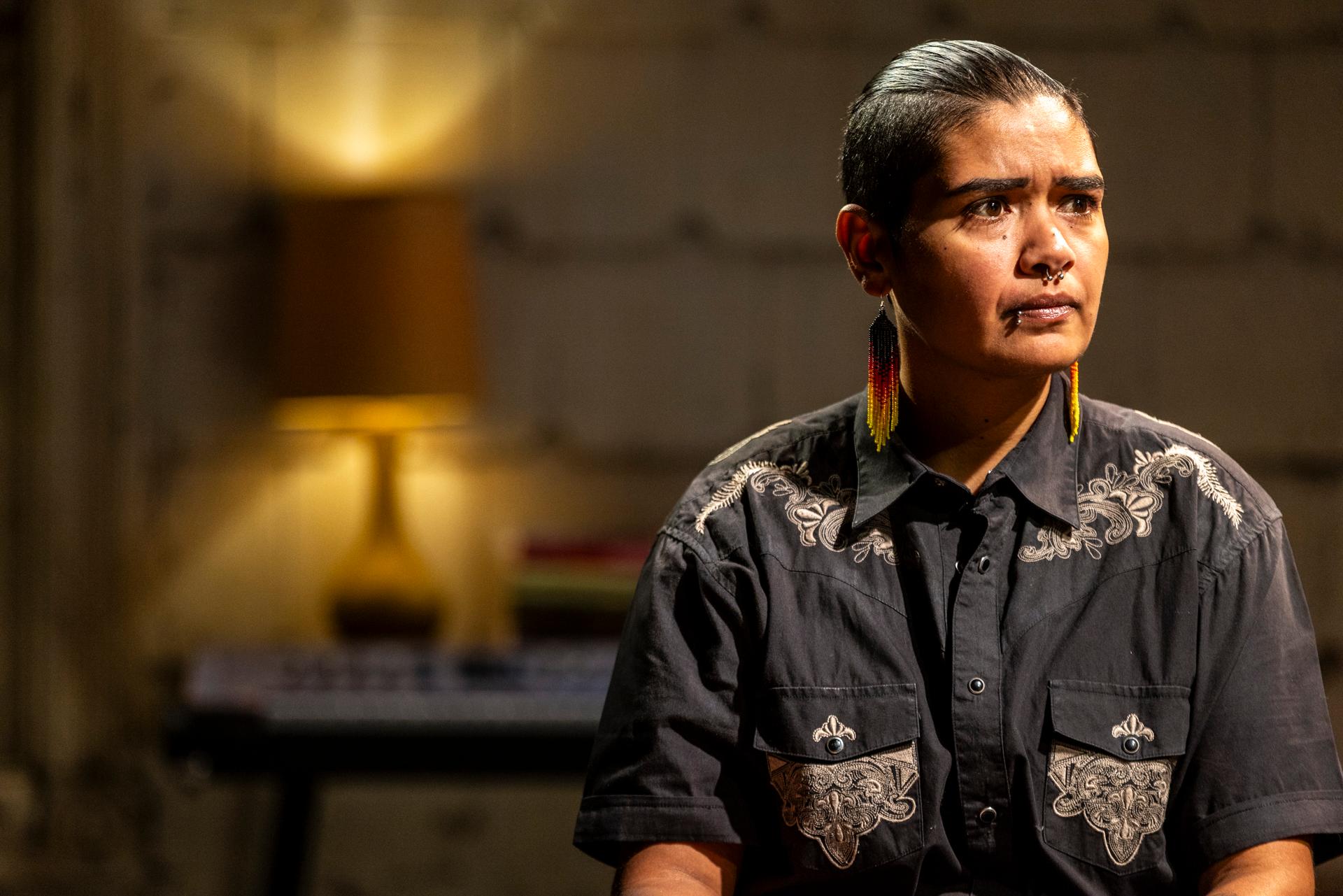
After hiring Johnna as caretaker, Beverly vanishes, leaving his wife Violet and their three daughters in a state of chaos. August: Osage County by Tracy Letts takes the form of a family drama, with outrageous dialogue and plot points delivering both excitement and hilarity. It is a work of theatre that not only indulges our sentimentality with its extravagant storytelling but also prompts contemplation on the origins of our modern discontents.

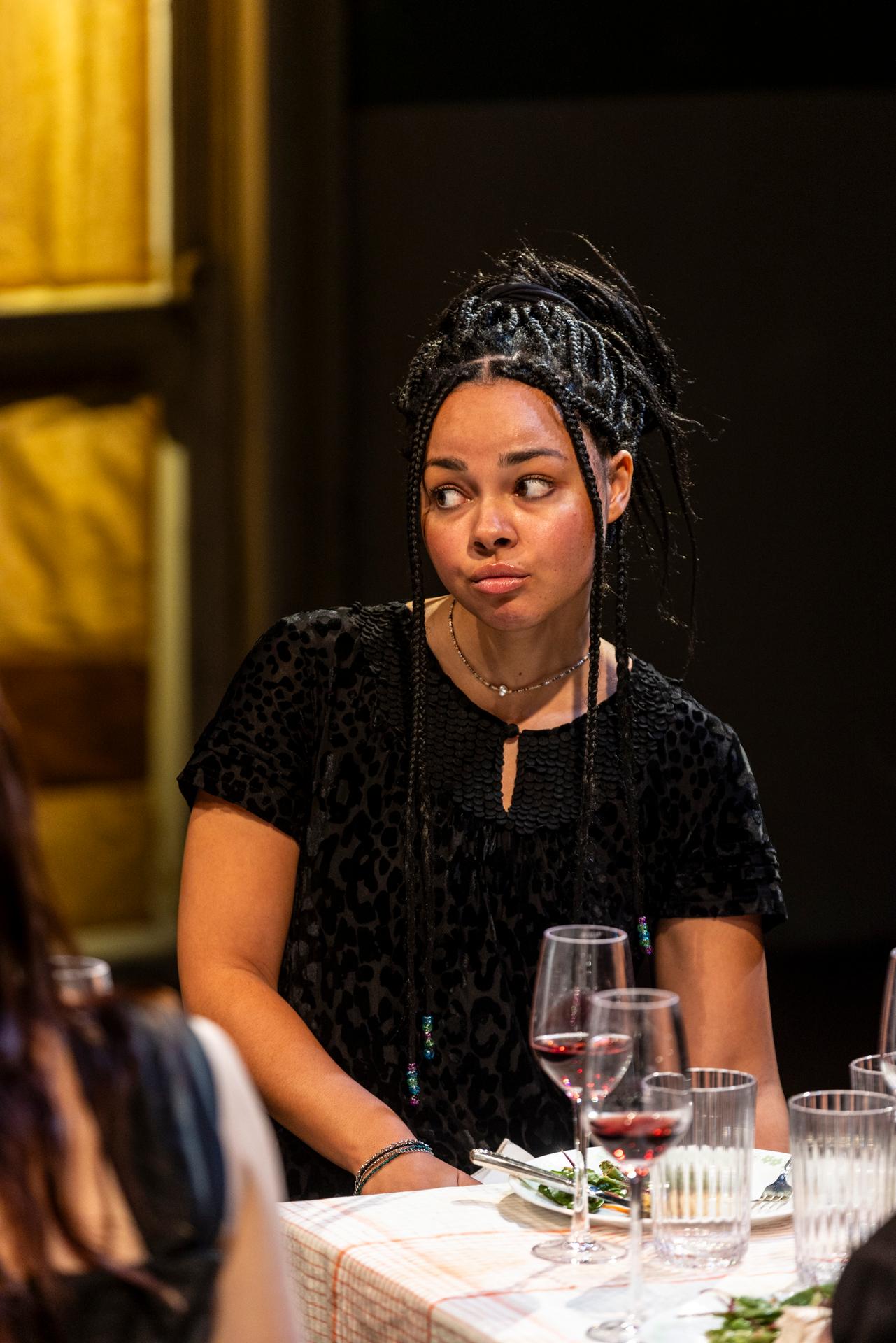
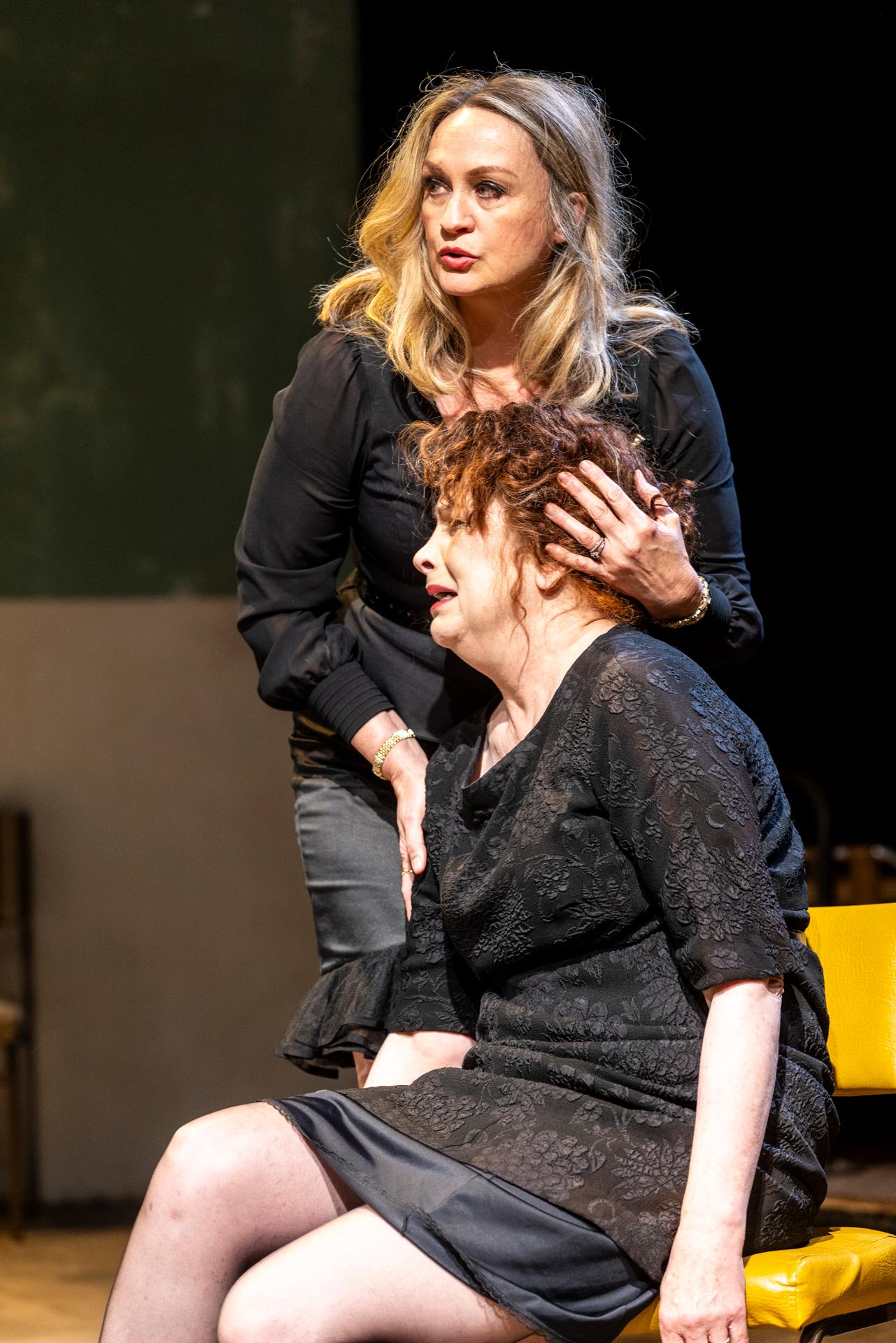
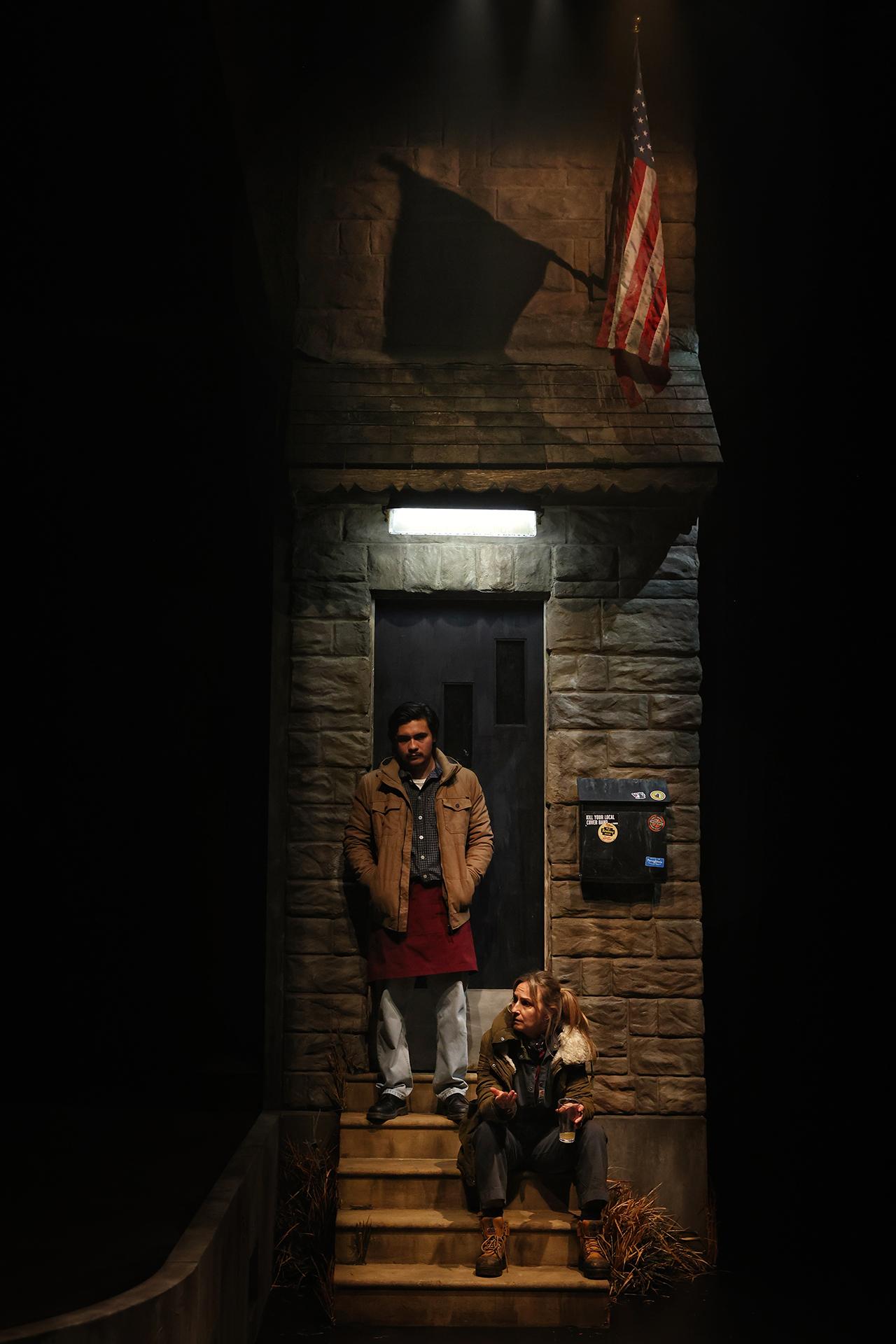
There is an aggression that feels intrinsic to the Weston household, rendered with confident surety by director Eamon Flack. Flack’s thoughtful juxtapositions of Johnna’s indigeneity against the Weston family’s whiteness, elicits persuasive deductions relating to colonisation, and the legacy of violence that forms the very foundation of Western civilisations. Furthermore there is a sense of being unmoored, at the centre of their very existence, that the Westons struggle with. Unlike Johnna who exemplifies a certain serenity in the midst of relentless upheaval, the Westons can never arrive at peace. Even as Violet fervently reaches for words to express multitudes of truths, or when her daughters try endlessly to settle in romance, their bitterness refuses to be assuaged. It is a generational curse that plays out in August: Osage County, an inheritance from the forefathers of yore.

Delectable performances from the 13-strong cast keep our intellect and our emotions firing on all cylinders. Pamela Rabe’s wild manifestations of Violet as an unhinged addict sets us agog, having us intrigued with the endless pit of toxicity that a person can contain. Tamsin Carroll brings marvellous complexity to Barbara’s narrative of interminable desperation, along with splendid timing that provokes both thought and laughter. Johnna is played by Bee Cruse, whose silent but strong presence speaks volumes for the entire duration, using elegant restraint as a philosophical instrument in this deep examination of existential angst. 

Set design by Bob Cousins evokes dilapidation, in relation to the family and to the nation in question. Costumes by Ella Butler represent effectively the middle class, if slightly austere in tone. Lights by Morgan Moroney are similarly unassuming, but are certainly encouraging of our attentiveness, for a plot that can travel in surprising directions. Music by Rachael Dease is subtle and sparse, but commendable for its perfect encapsulation of the tragic melancholy that undergirds all the action.

Talking psychology for individual characters in August: Osage County can only go so far. A meaningful diagnosis of their disorders must include much wider contexts than what transpires within the Weston household. Contemporary paradigms have a strong tendency to explain experiences in terms of personal pathologies, but a substantial part of how we understand our worlds, need a much greater appreciation of that which has been handed down, and that affects more than our immediate kin.
www.belvoir.com.au

Review: Sweat (Sydney Theatre Company)

Venue: Wharf 1 Sydney Theatre Company (Walsh Bay NSW), 11 Nov – 22 Dec, 2024
Playwright: Lynn Nottage
Director: Zindzi Okenyo
Cast: Gabriel Alvarado, Paula Arundell, Yure Covich, James Fraser, Deborah Galanos, Markus Hamilton, Tinashe Mangwana, Lisa McCune
Images by Prudence Upton

Theatre review
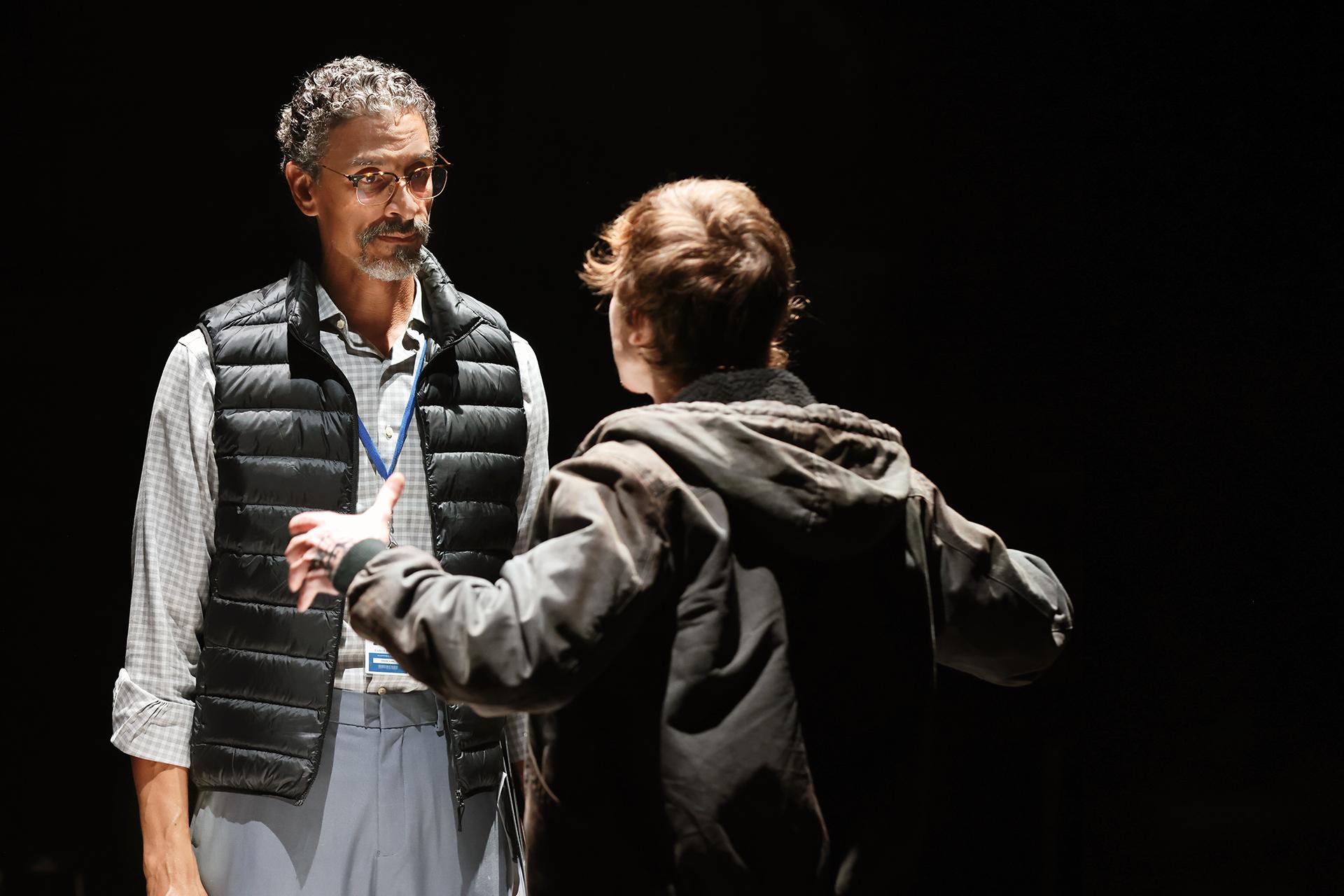
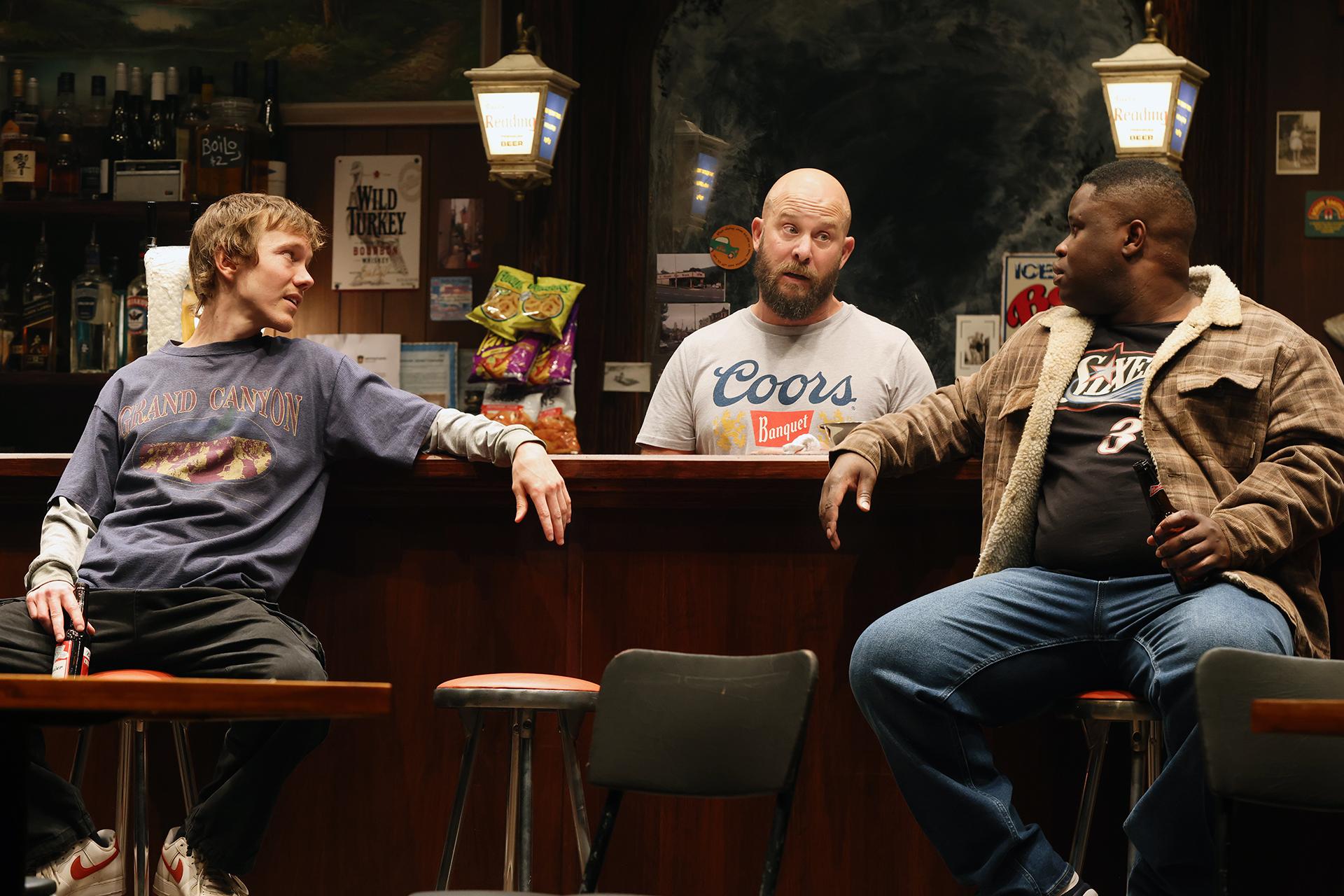
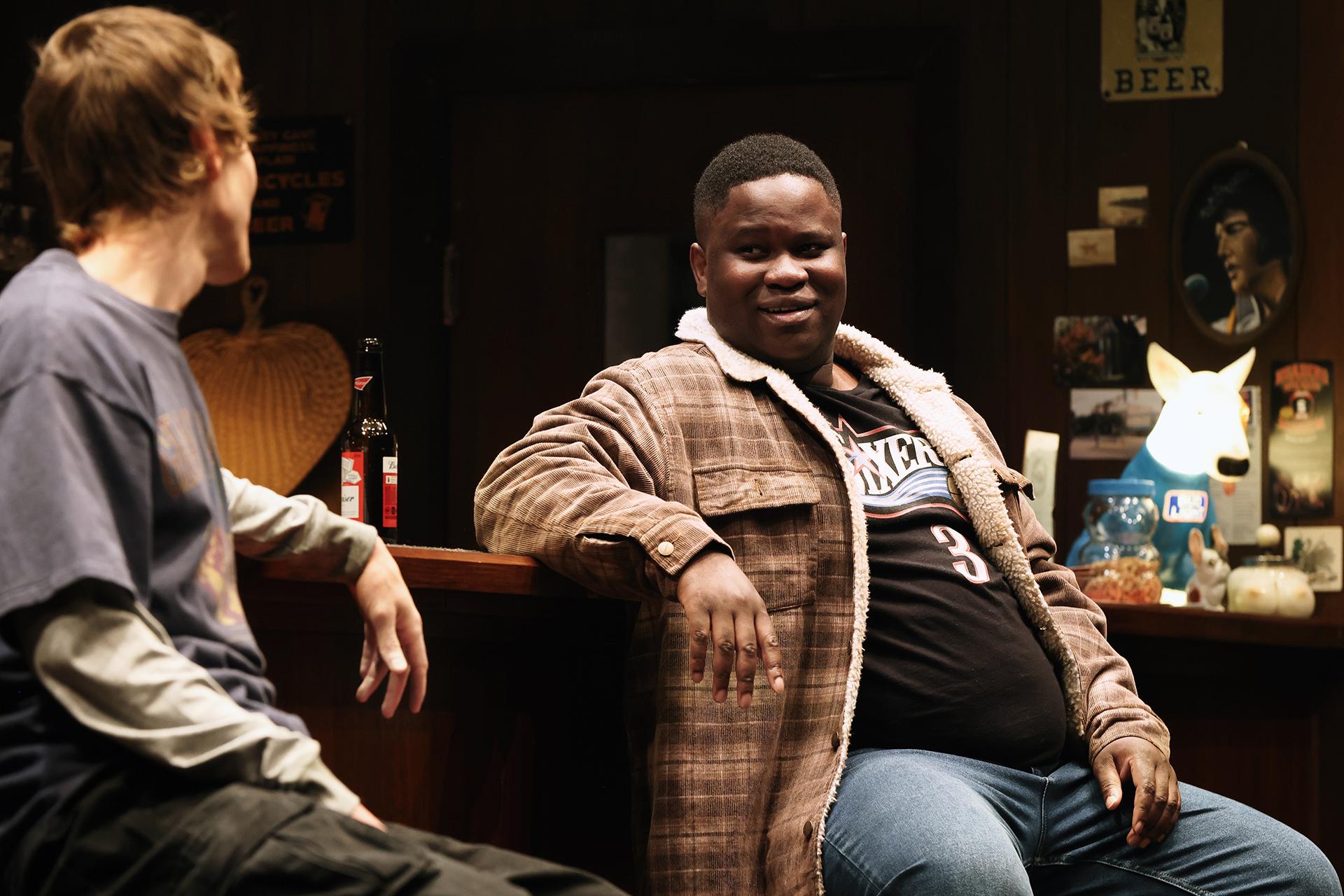
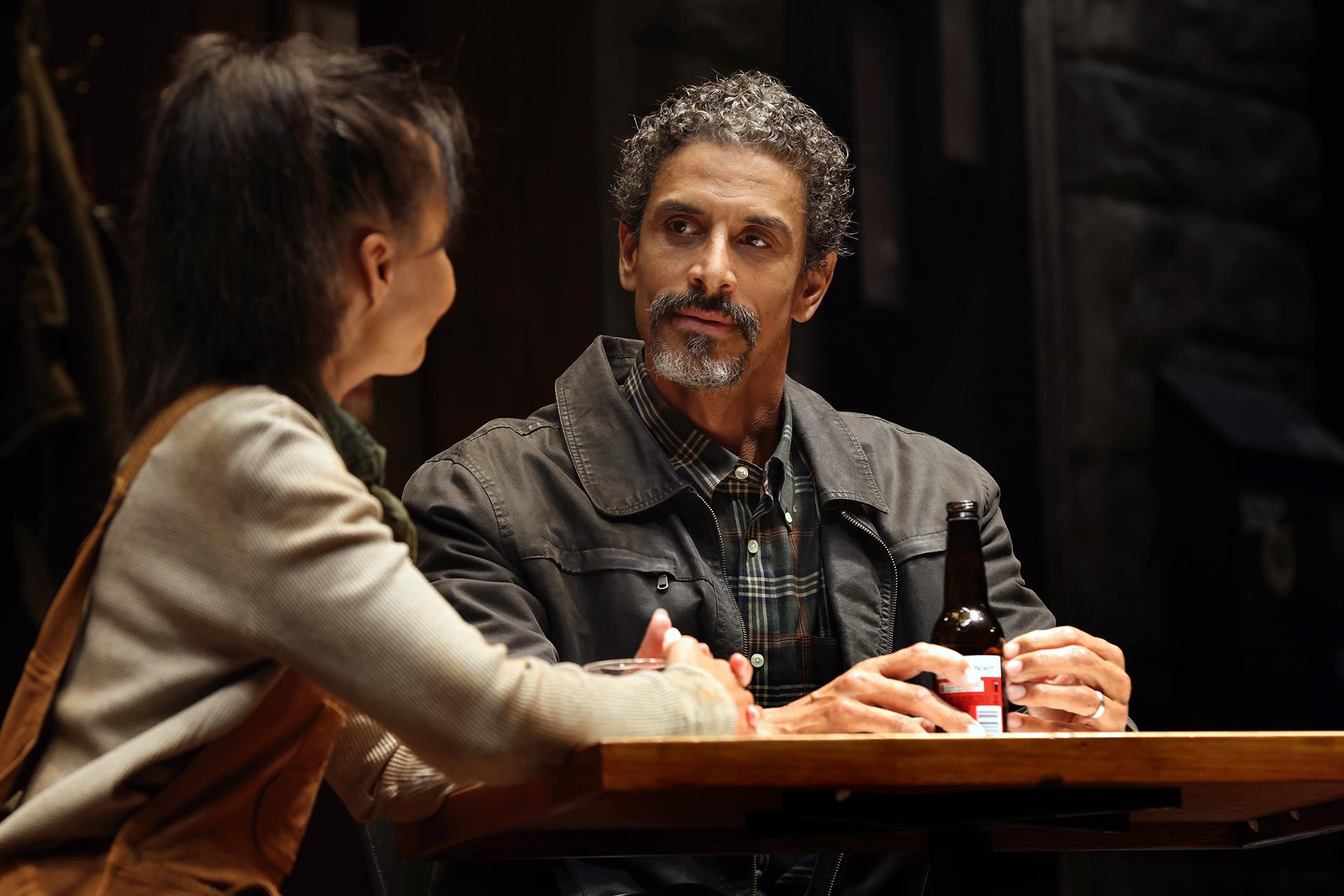
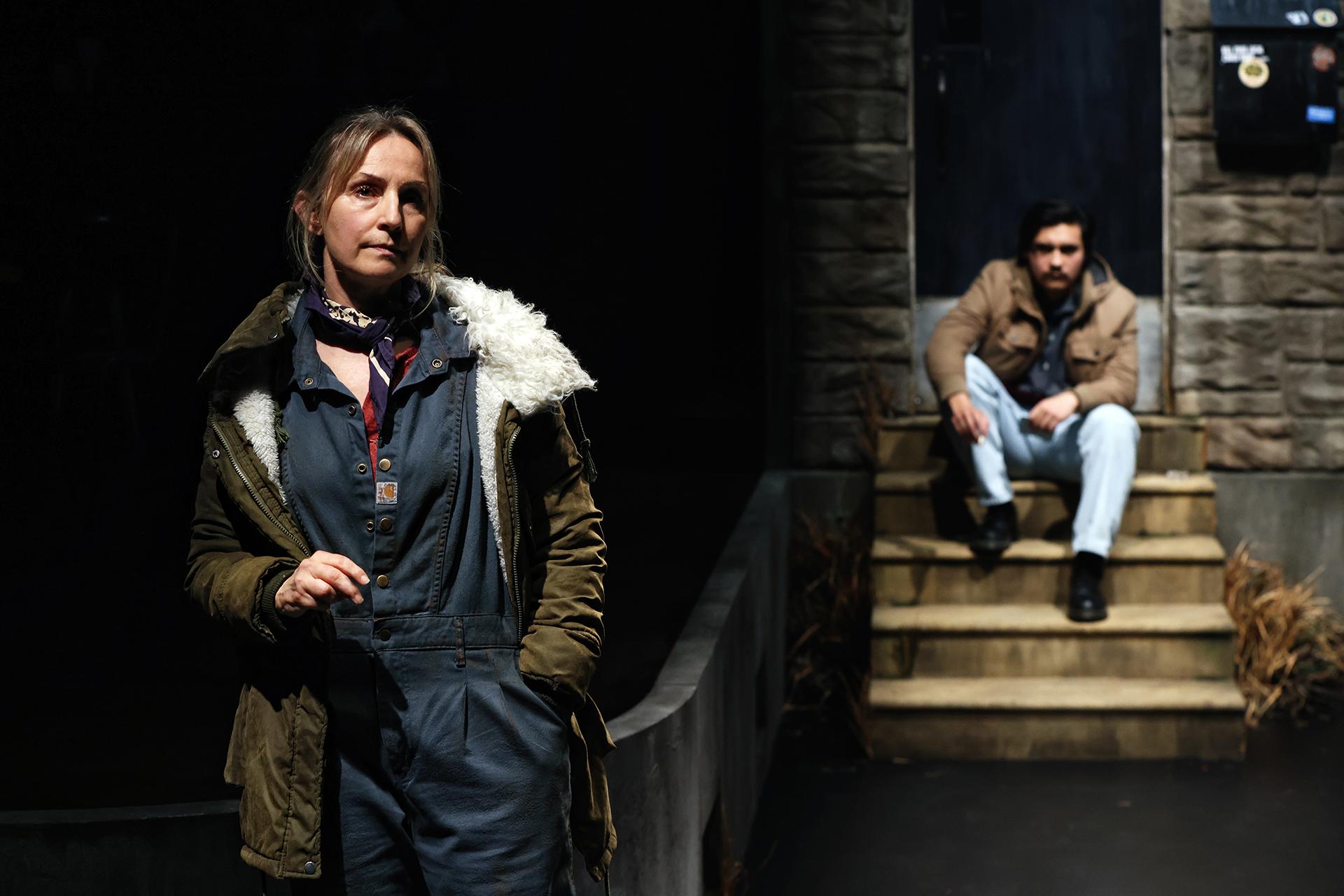
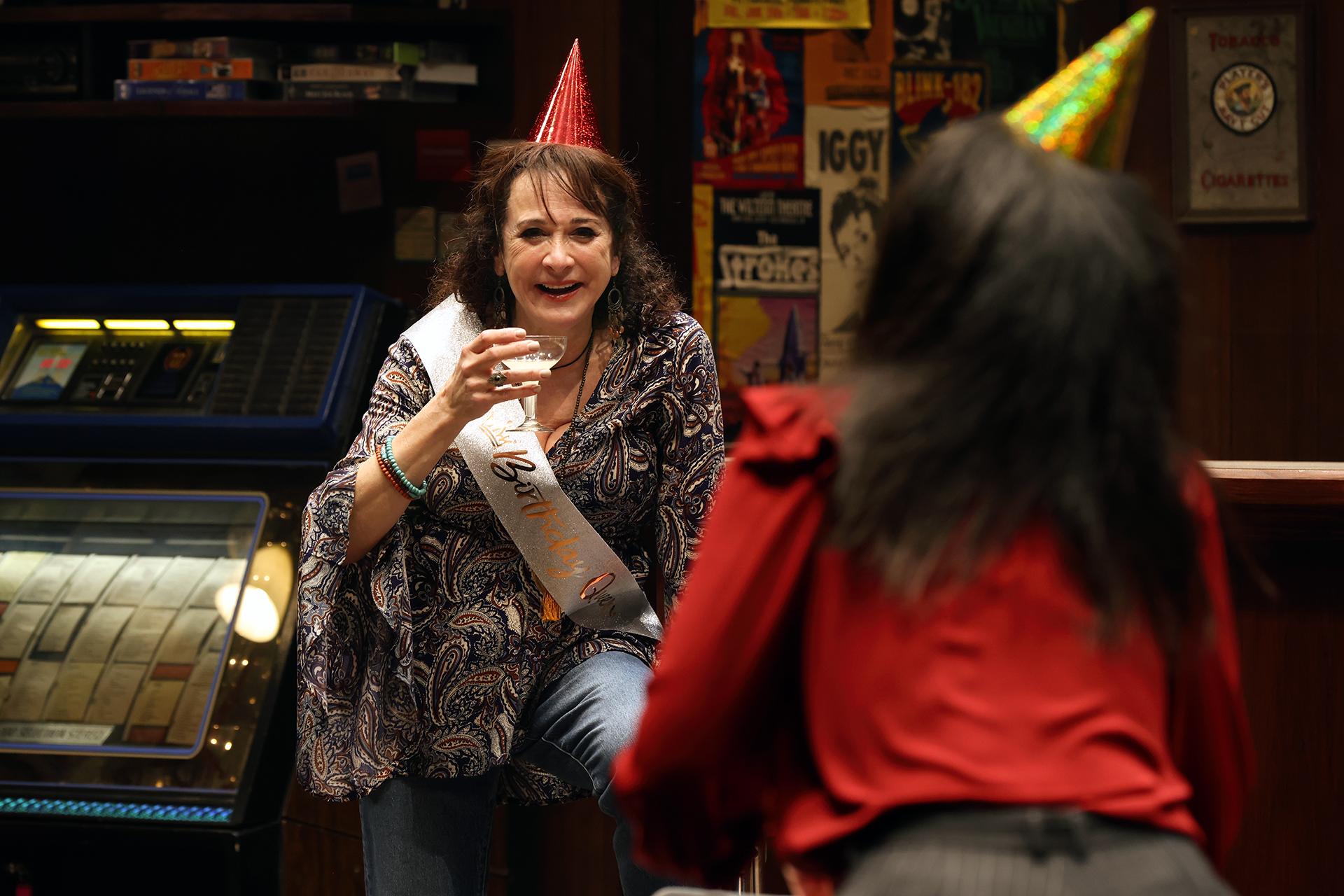
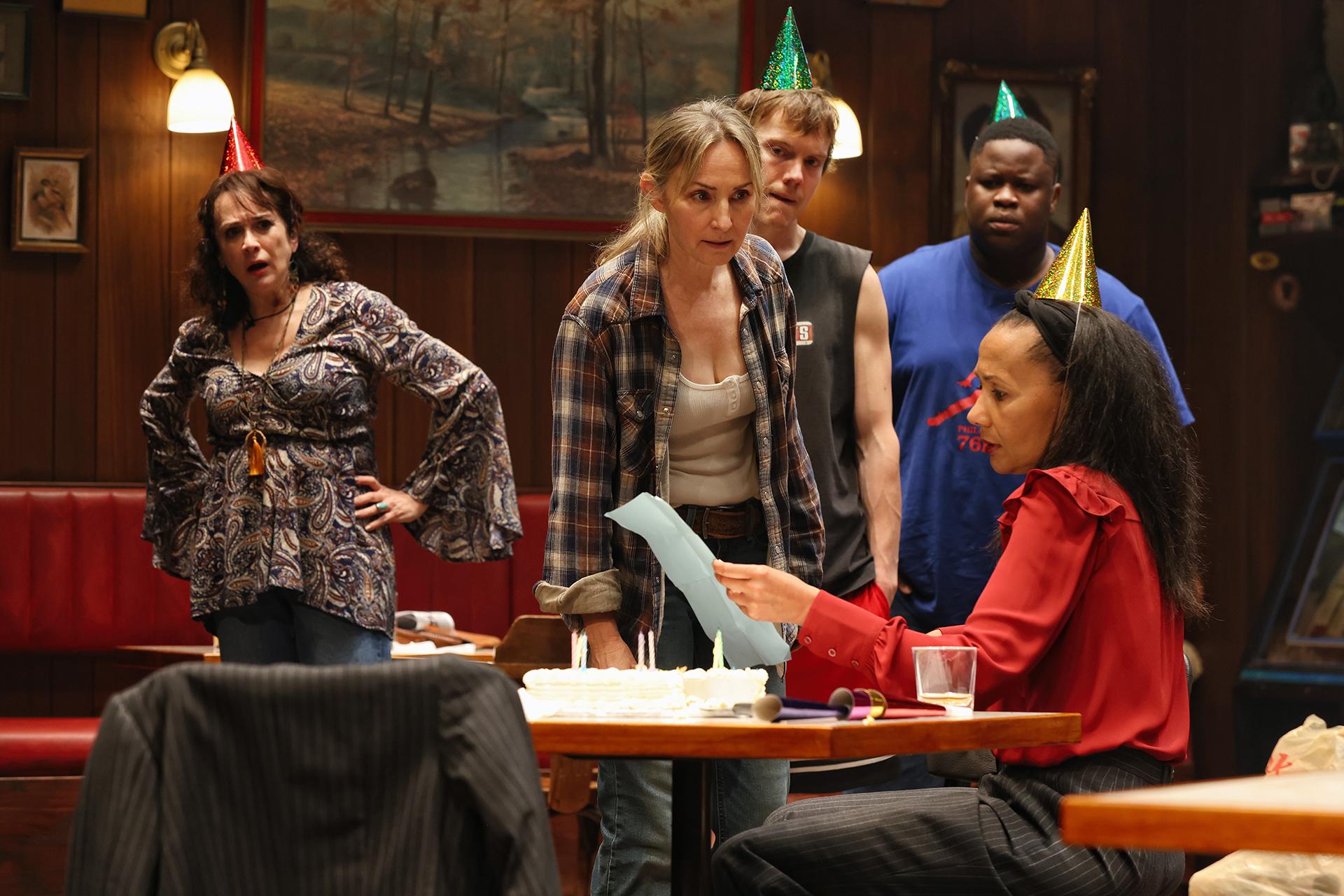
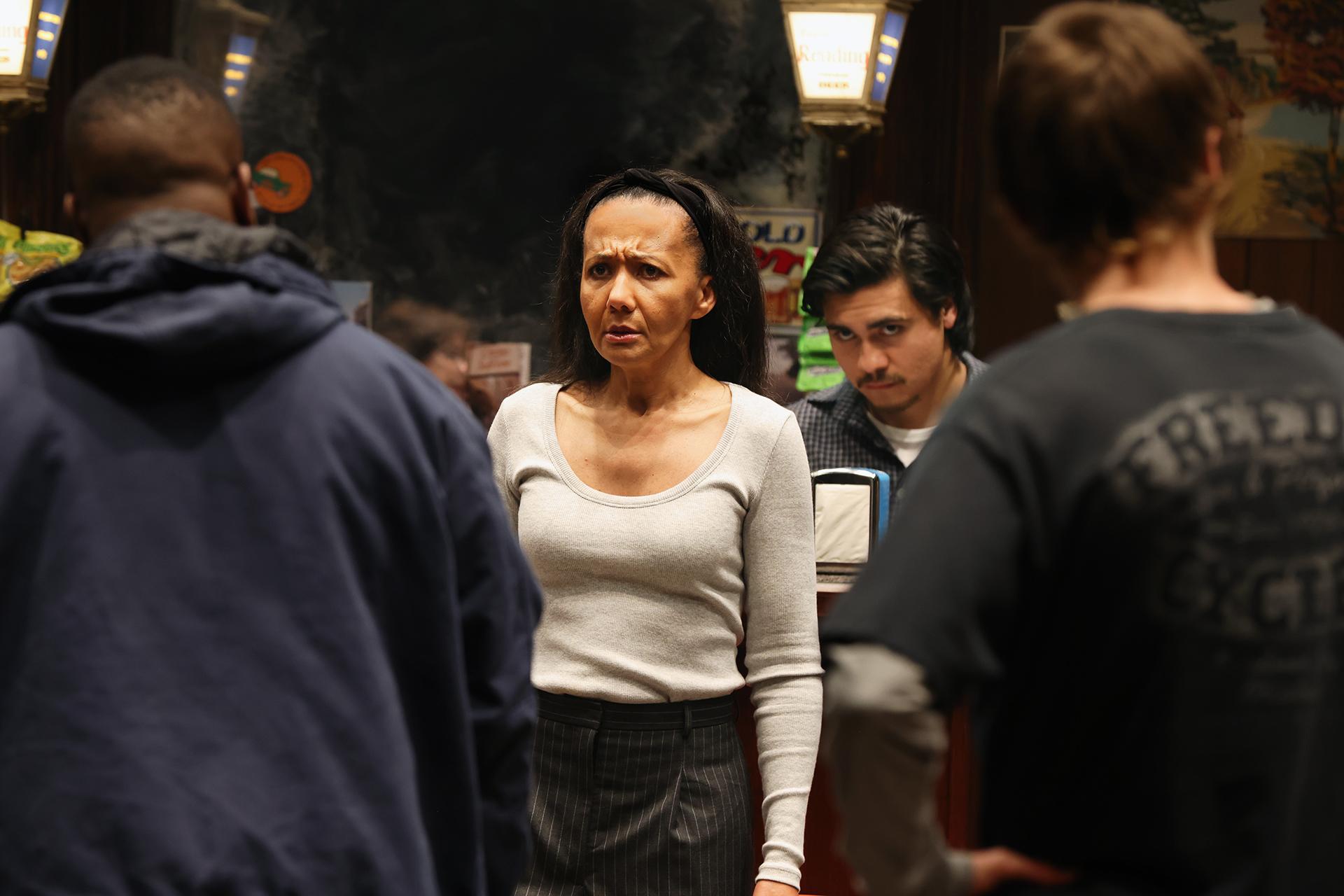
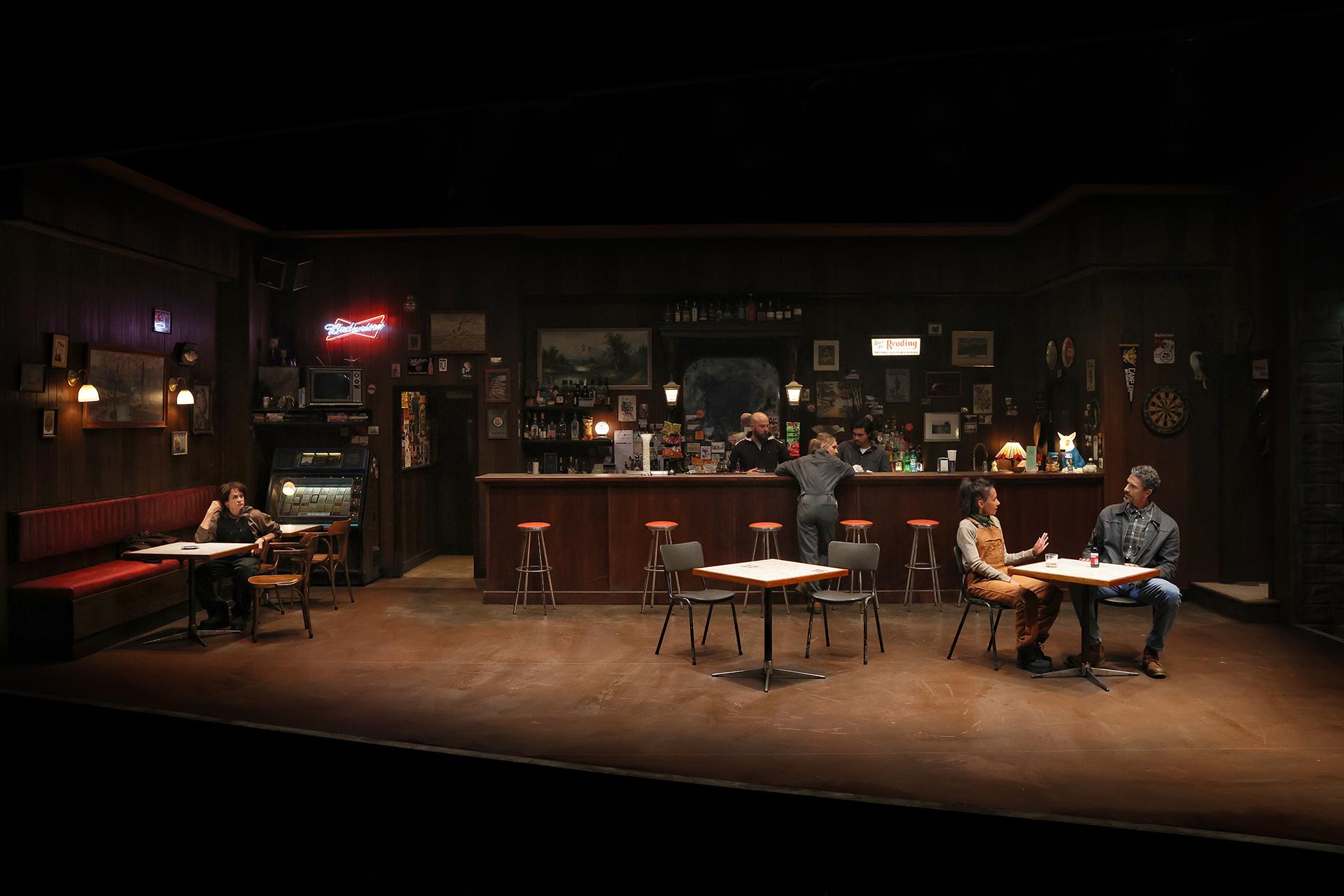
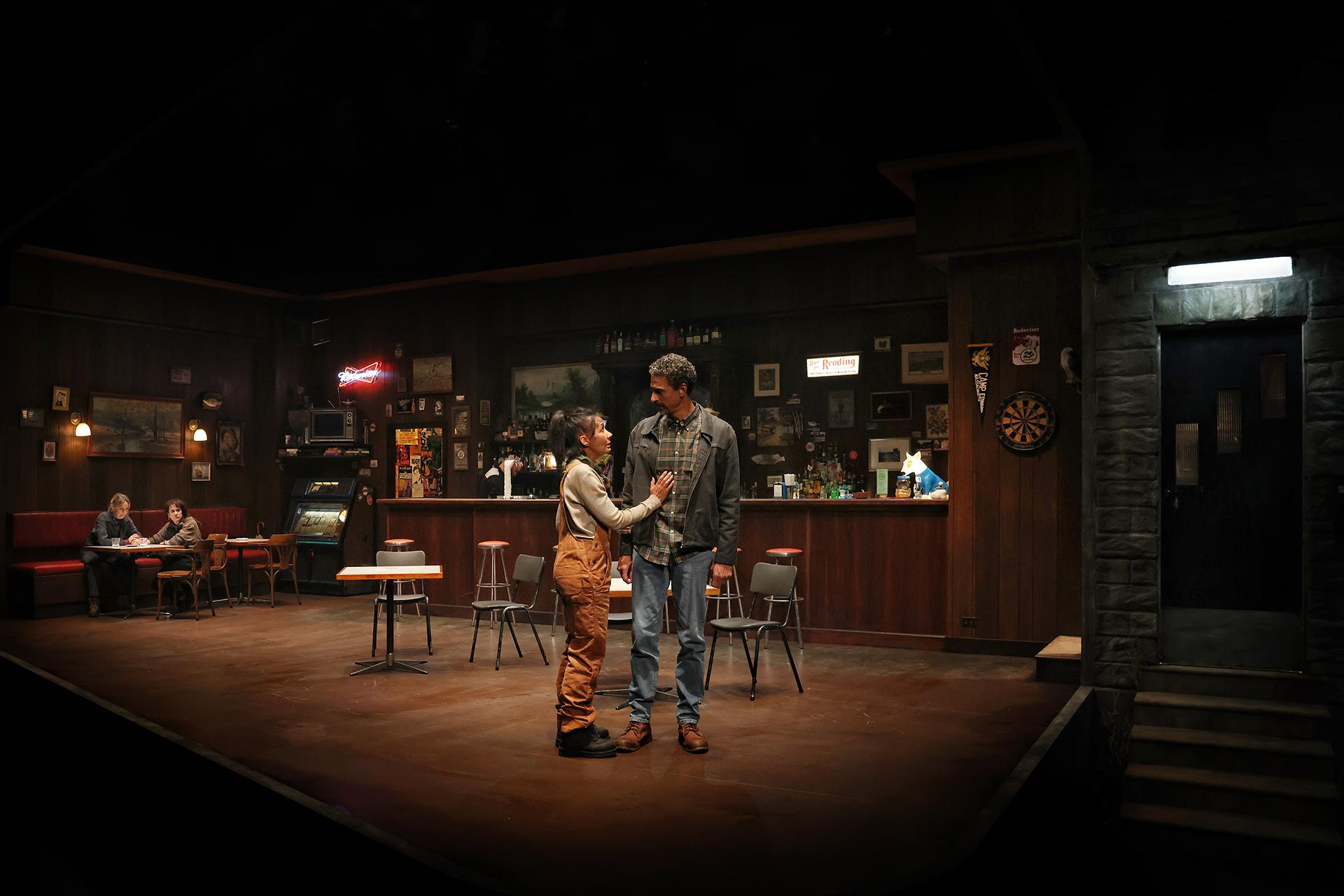
The story takes place in Pennsylvania at the turn of the century, when its economy is experiencing a severe downturn. A steel factory that has employed several generations of residents in the town of Reading, is laying off workers in large numbers, causing great unrest among the populace. Lynn Nottage’s Sweat looks at the disconnect between lives of workers and decisions of resource owners. It examines the phenomenon of humans being regarded as nothing more than means of production, and how our day-to-day suffers as a result.

A strong cast of eight takes on the responsibility of storytelling, and their commitment to advocating for the underclass is evident in the level of focus each player brings to the piece. As a collective though, the ensemble never really finds an effective chemistry and their show, although believable, does not bear an authentic immediacy required to earn our instinctual empathy. Direction by Zindzi Okenyo demonstrates no shortage of earnestness, and we invest intellectually as a response, but how we feel for the situations being discussed, never really turns impassioned. 
Jeremy Allen’s set design is aesthetically pleasing but its spaciousness conveys a corresponding emptiness that seems to struggle at harnessing dramatic intensity. Lights by Verity Hampson are often excessively languid in tone, although its realism does help us gain an appreciation for the environment being explored. Music by Brendon Boney delivers an appropriate nostalgia in this flash back to the year 2000, even if it does little to rouse our sentiments.
In all the trauma and hardship of Sweat, we can deduce that income inequality renders a powerlessness, both perceived and real, amongst those we might call the proletariat. Characters in the play turn on one another, instead of fighting the real enemy at the top. An incapacitation occurs that dissuades the disadvantaged from confronting those that can improve conditions, shifting attention to scapegoats, often at the encouragement of those who shirk their social and moral duty. It is understandable that those at the bottom should adhere to the language and mechanisms of power, but finding alternatives seems to be the only way we can hope to help ourselves.

www.sydneytheatre.com.au

Review: Jesus Christ Superstar (Capitol Theatre)

Venue: Capitol Theatre (Sydney NSW), from Nov 6, 2024 – Jan 26, 2025
Music: Andrew Lloyd Webber
Lyrics: Tim Rice
Director: Timothy Sheader
Cast: Elliott Baker, Mahalia Barnes, Reuben Kaye, Javon King, Peter Murphy, John O’Hara, Michael Paynter
Images by Jeff Busby

Theatre review
Originally an album of songs about the Passion, and one of the first rock operas to be written, Jesus Christ Superstar by Andrew Lloyd Webber and Tim Rice has travelled a long way from its conception in 1970. What had been deemed irreligious and controversial, has become unremarkable, due mainly to the steady rise of secularism over the decades. 

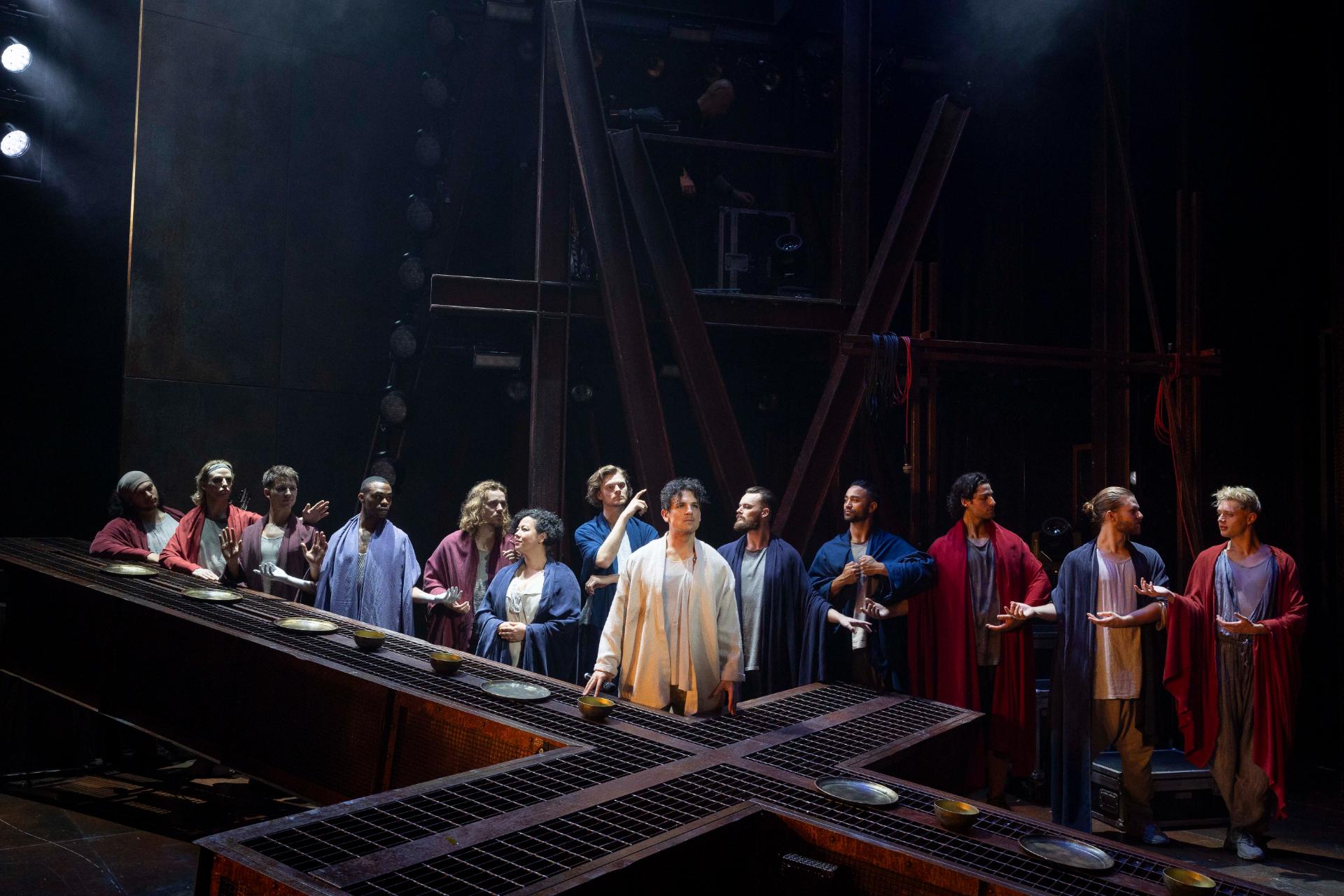
The performative intensity and drama of God’s only son being killed by crucifixion, seems almost quaint in today’s climate. This iteration fuses the musical and concert formats, for a compact showcase of Lloyd Webber and Rice’s songs, as directed by Timothy Sheader, whose rendition feels entirely faithful to the work’s initial spirit. There may be nothing surprising about the production, but the lustre of its song writing seems to have persisted, especially with extraordinary musical direction by Laura Tipoki imbuing a timeless soul edge, that connects wonderfully our contemporary sensibilities to these half-century old tunes.

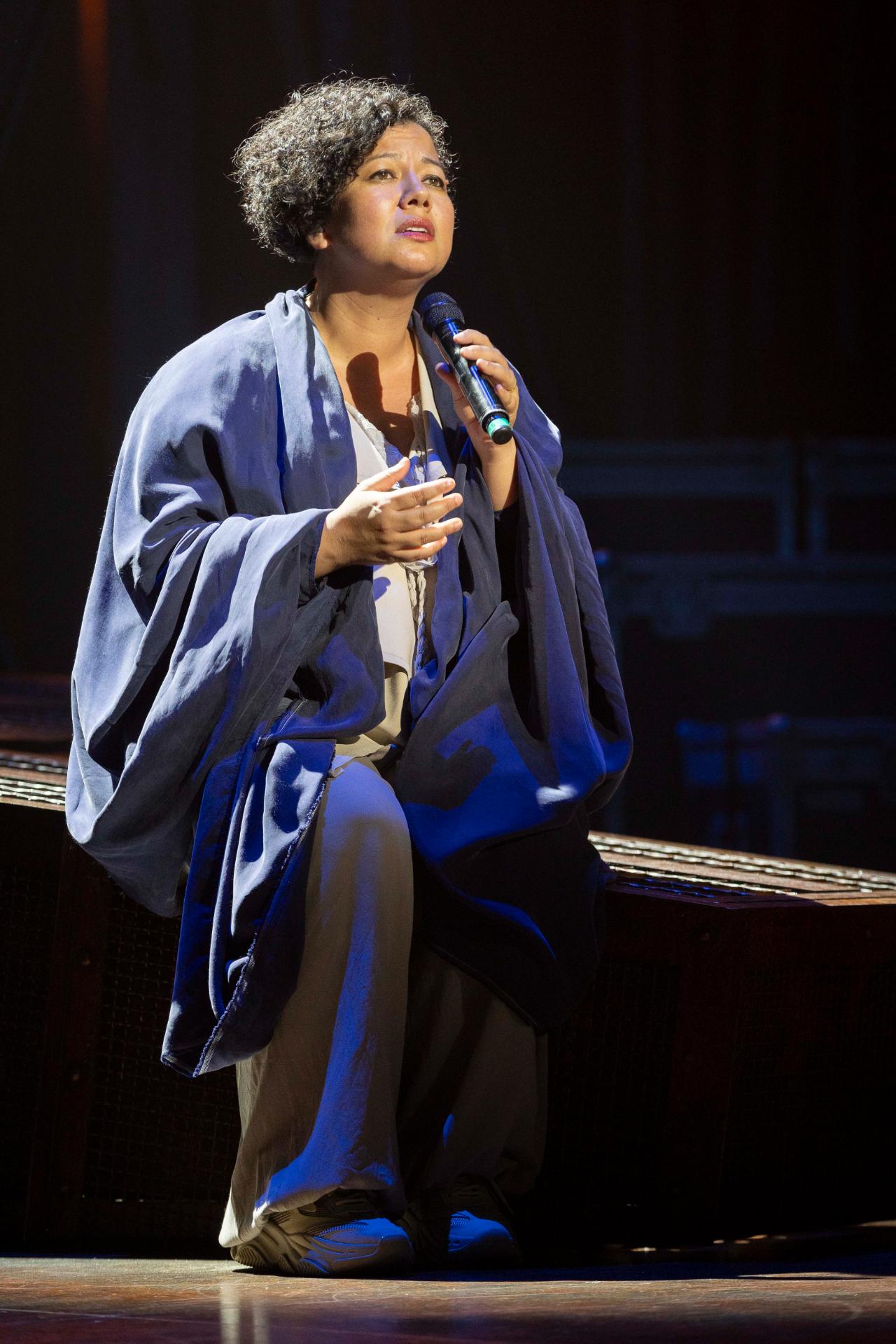
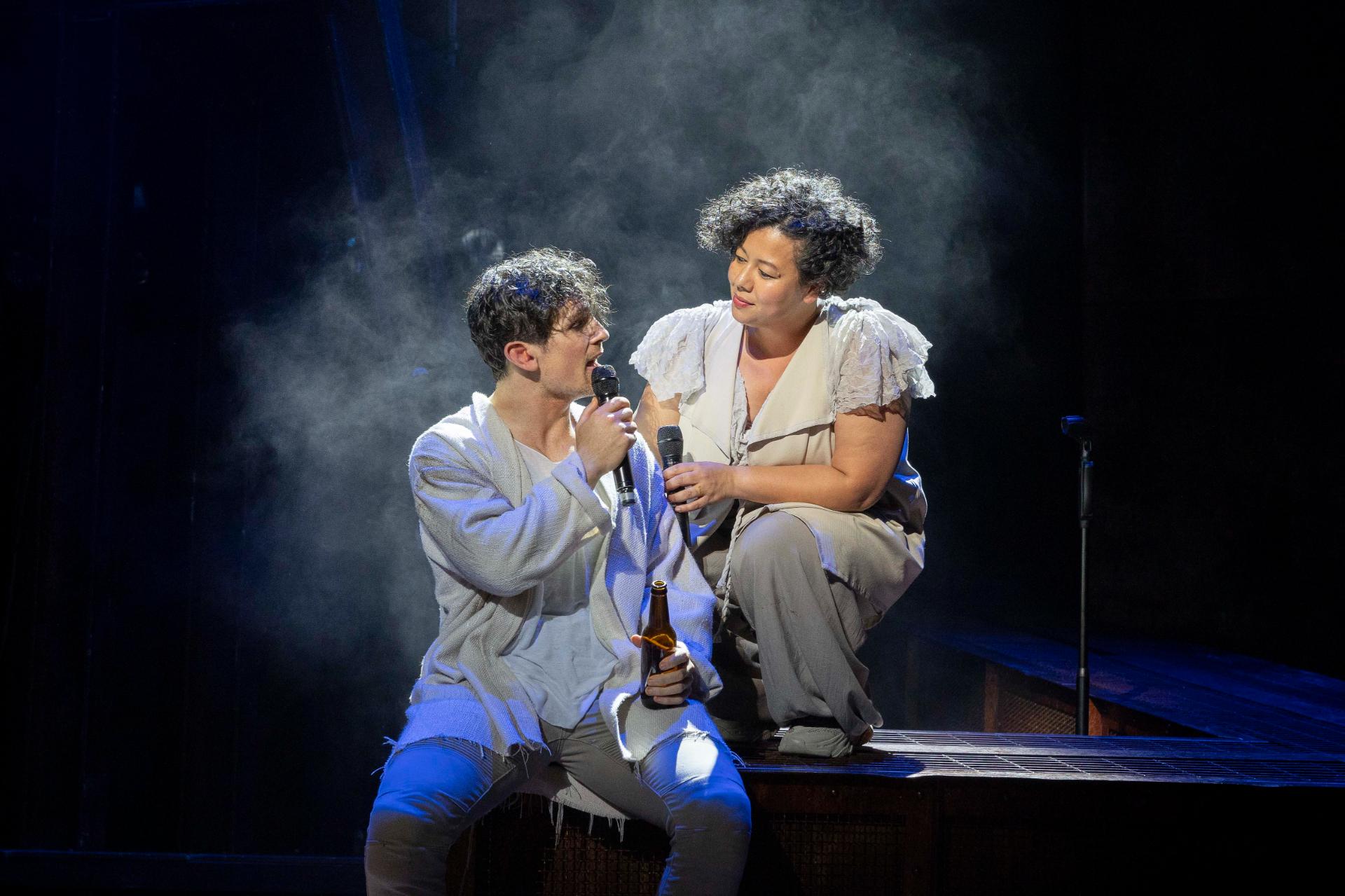
Performer Michael Paynter’s vocals prove a sensation for the role of Jesus, but it is Javon King as Judas who leaves the best impression, with both acting and singing abilities being a source of constant astonishment. Mahalia Barnes and Peter Murphy sing perfectly their respective parts for Mary and Pilate, but characterisations are lacking. Reuben Kaye appears as Herod for a single number, introducing a moment of camp that is certainly a highlight.

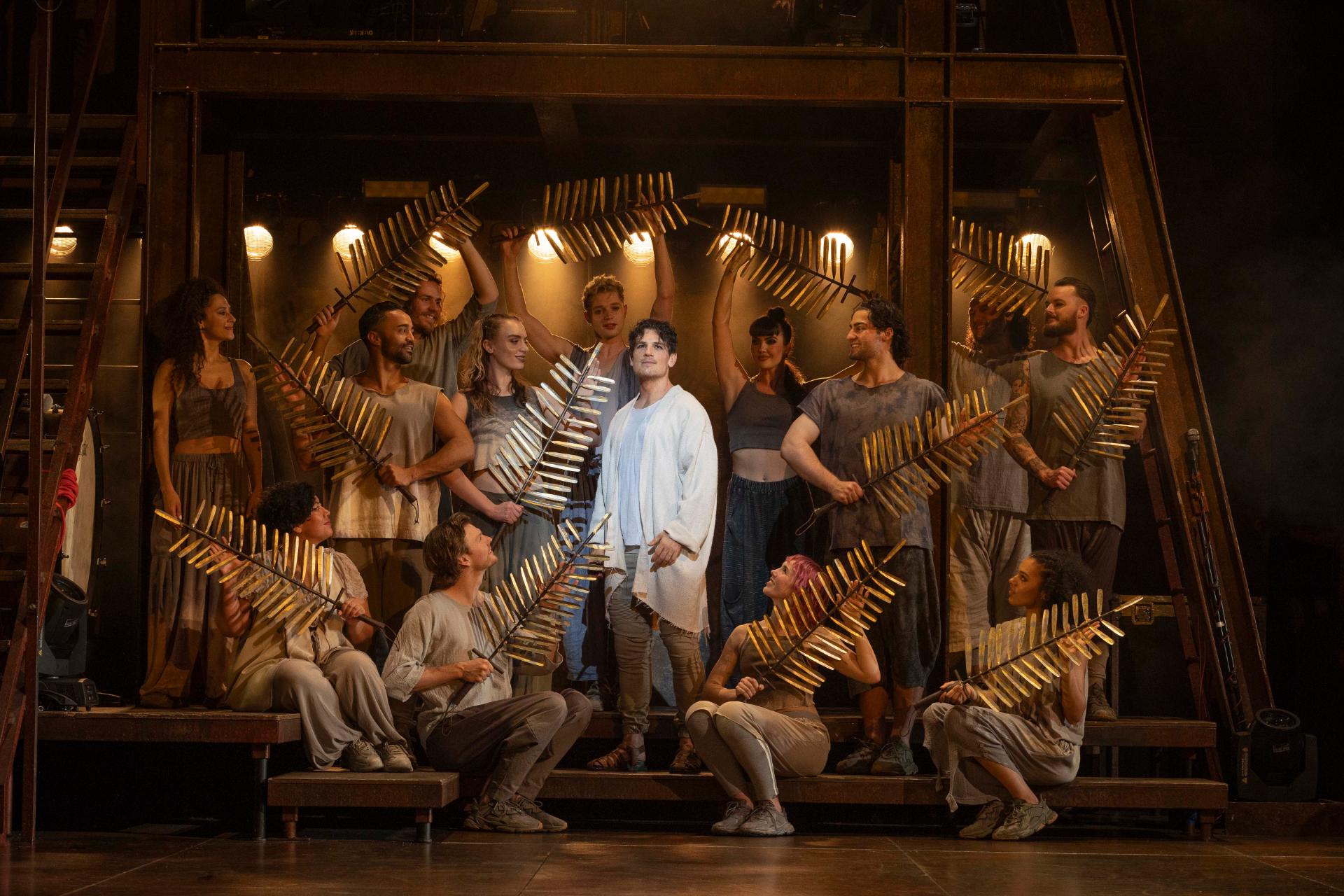
Aside from Herod’s costume which is unequivocally spectacular, production design by Tom Scutt is somewhat underwhelming, with a setting that creates awkwardly inconvenient divisions of space for the ensemble. Choreography by Drew McOnie too is often inelegant and overzealous, in a show we learn to be one that sounds much better than it looks. There is perhaps a satisfaction in discovering that the songs of Jesus Christ Superstar have, by and large, stood the test of time, but it is unclear whether any staging could live up to the power of its heyday.

www.jesuschristsuperstarmusical.com.au