
Review: End Of (Griffin Theatre Company)

Venue: SBW Stables Theatre (Darlinghurst NSW), Oct 13 – Nov 5, 2022
Playwright: Ash Flanders
Director: Stephen Nicolazzo
Cast: Ash Flanders
Images by Brett Boardman

Theatre review
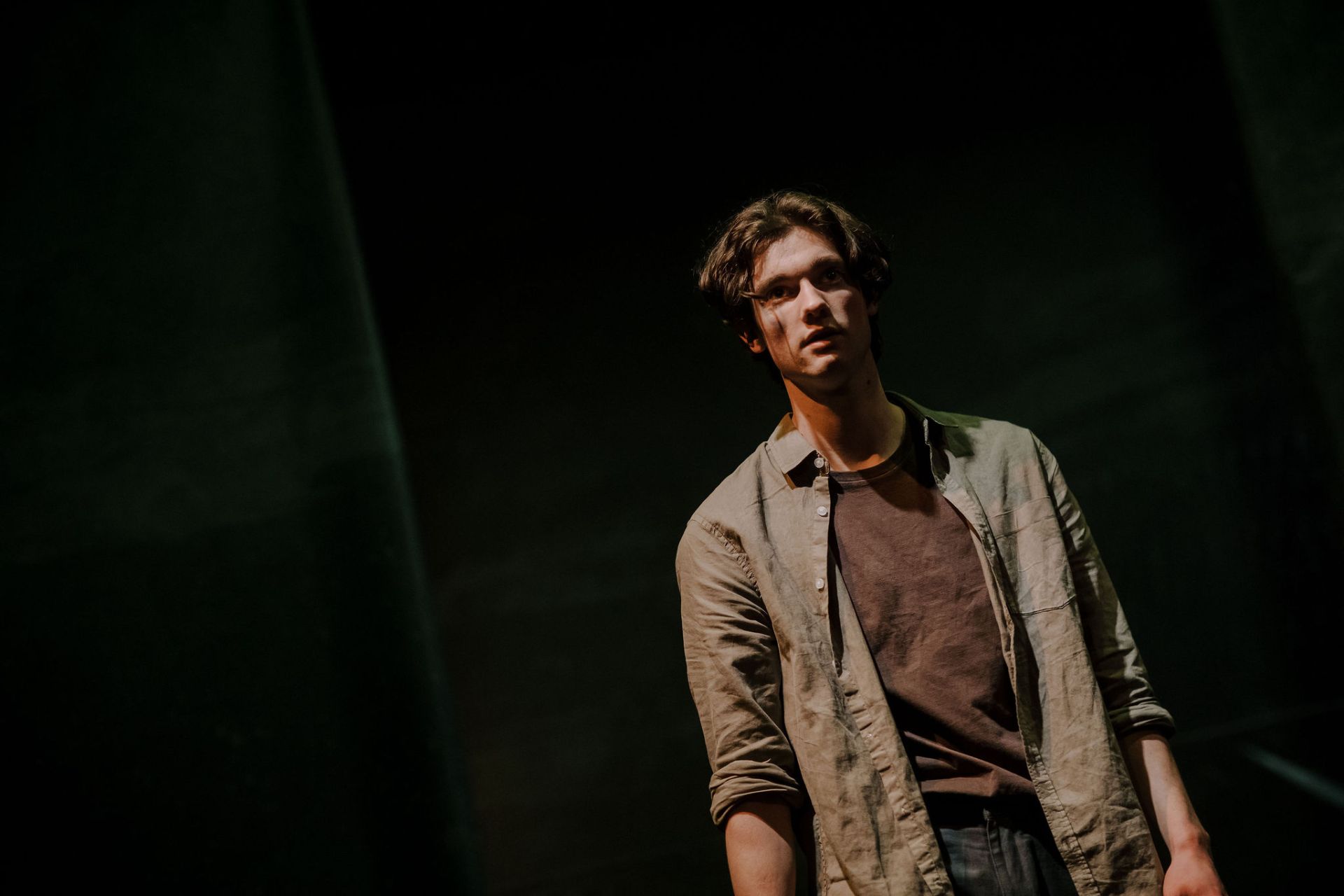
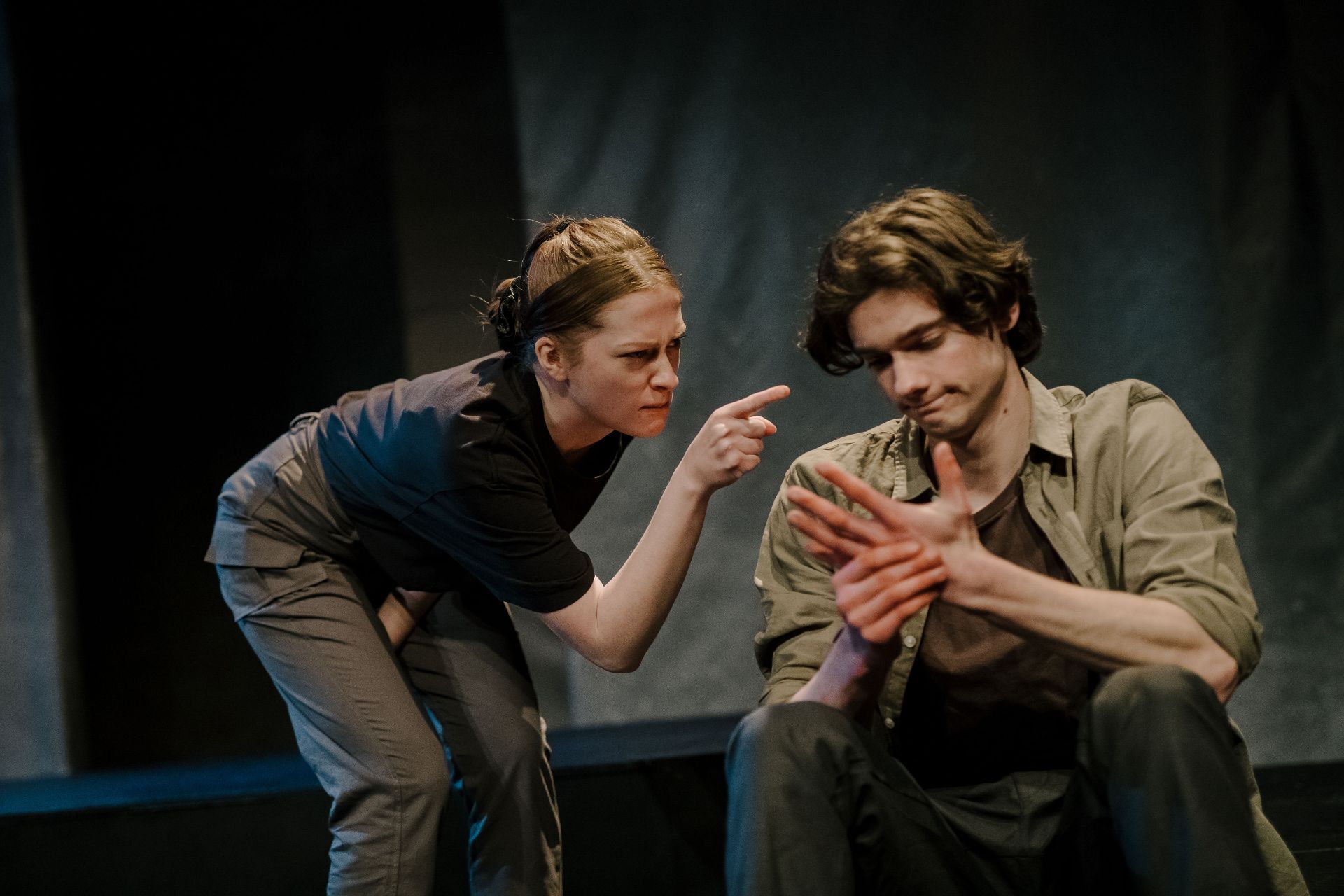
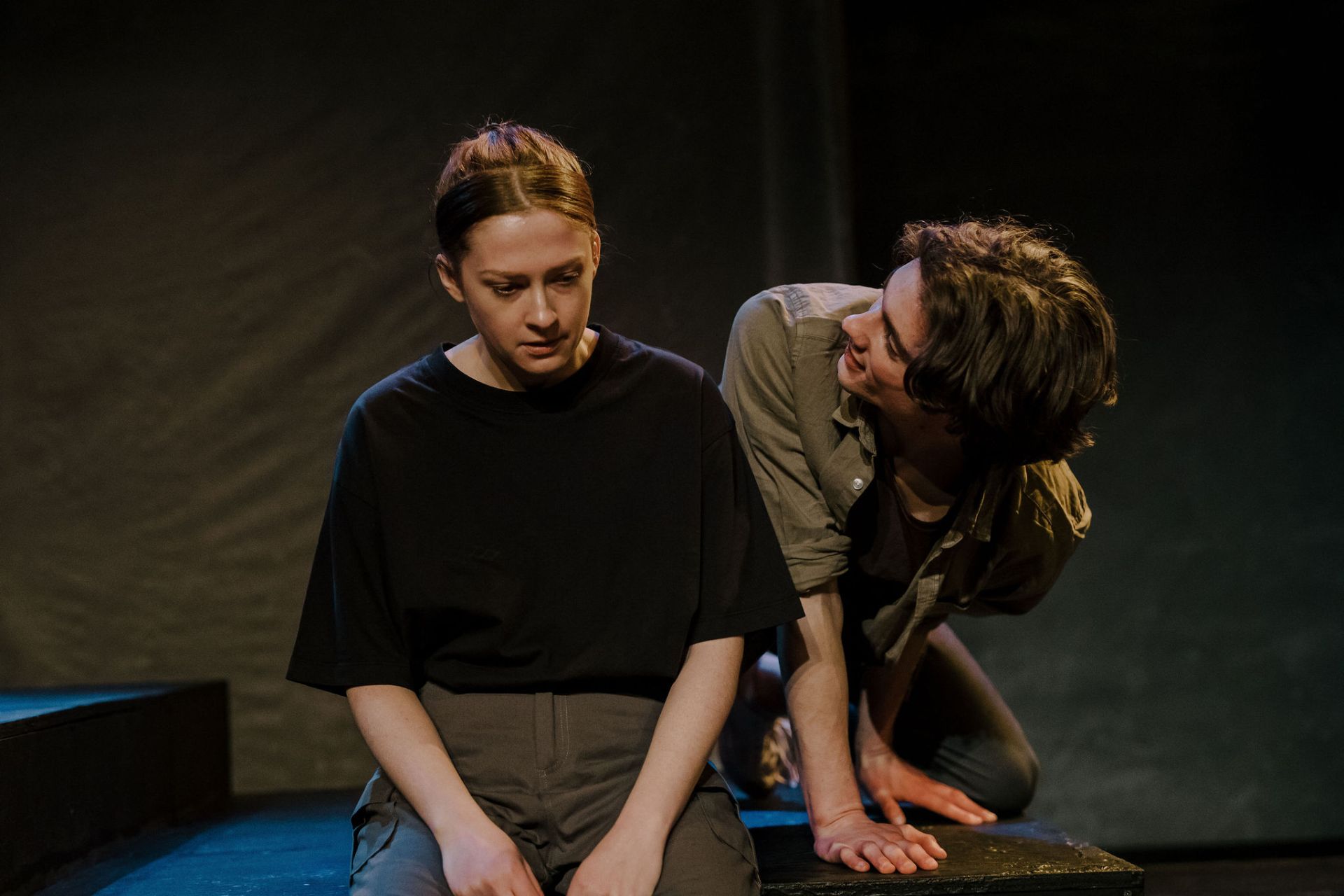
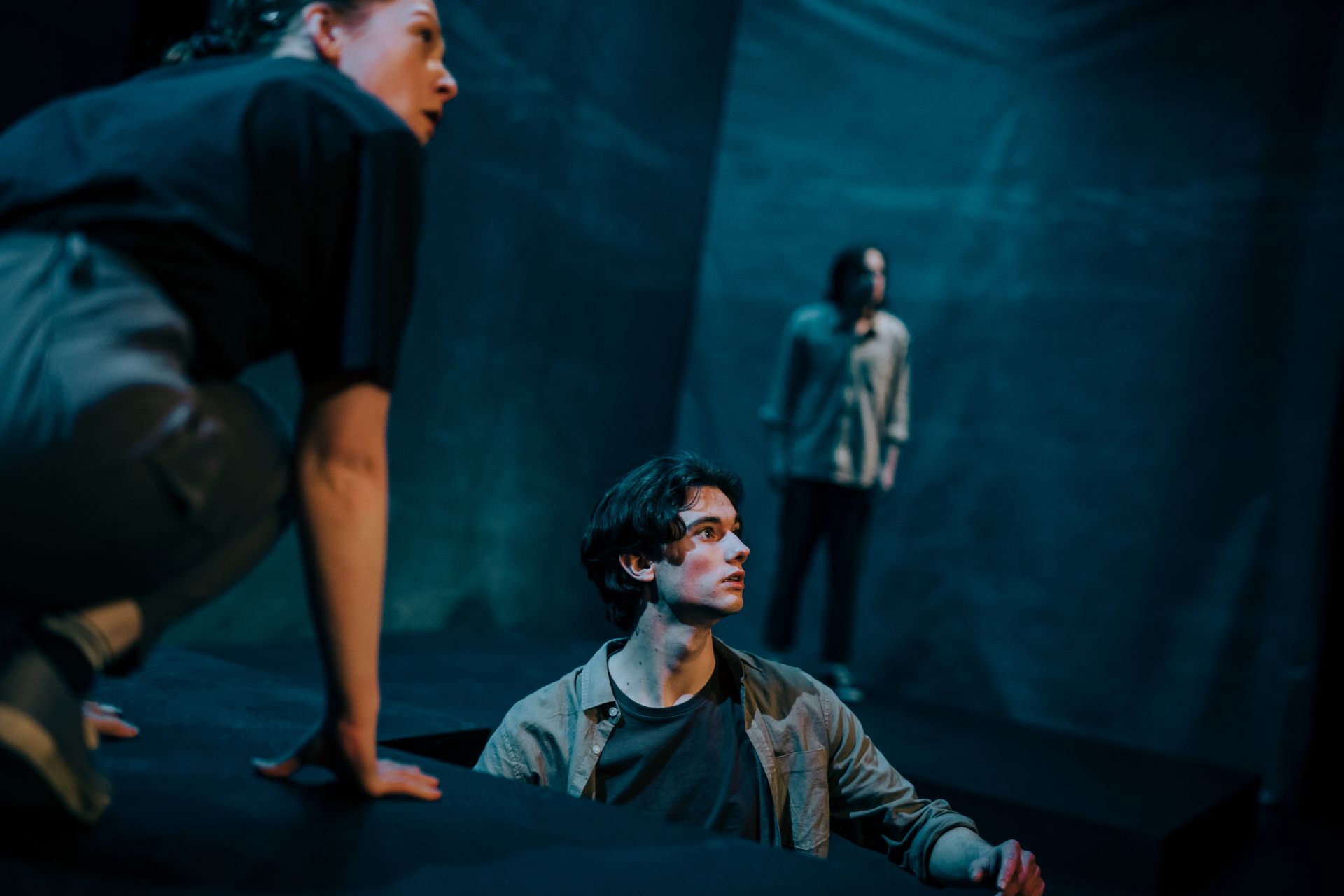
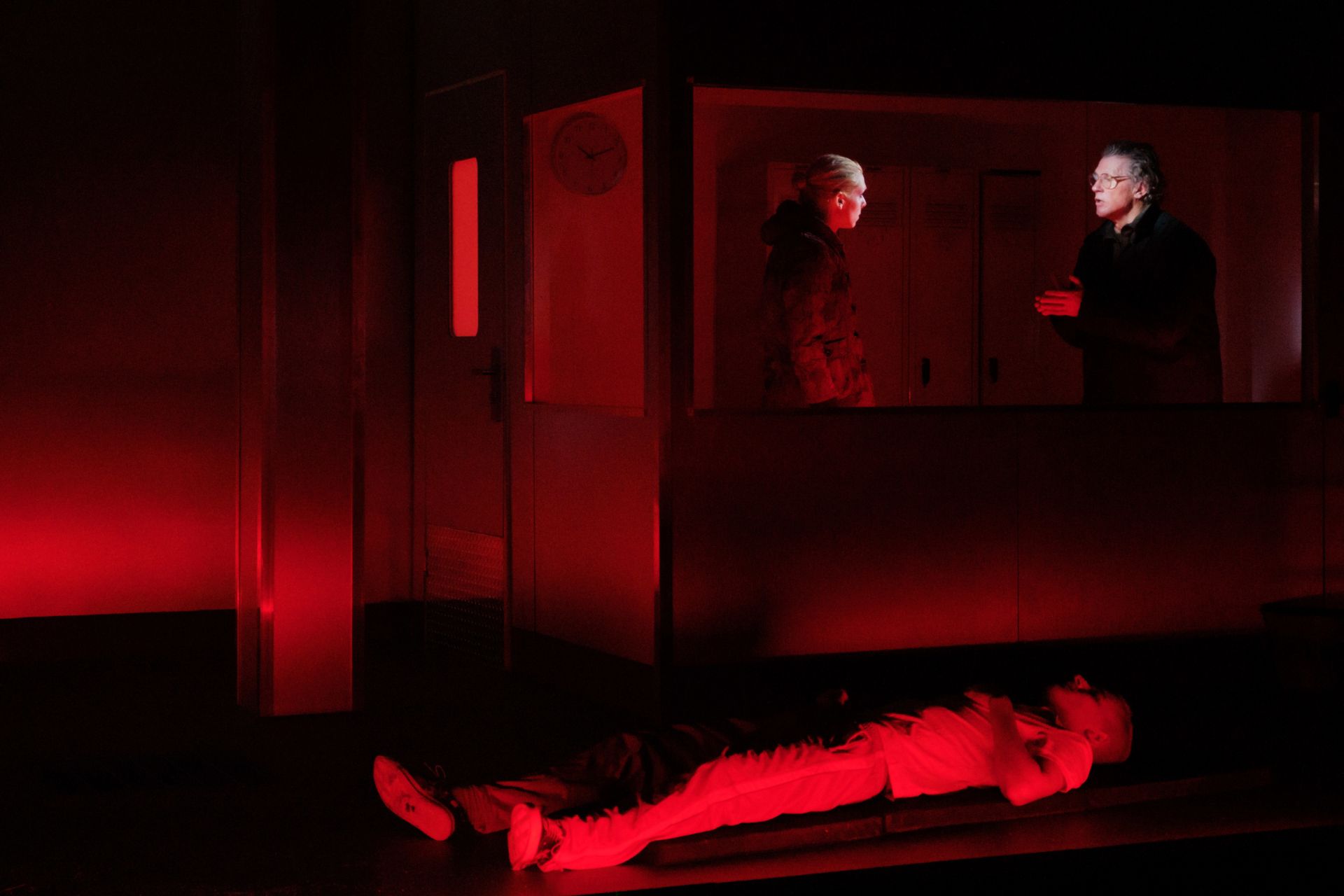
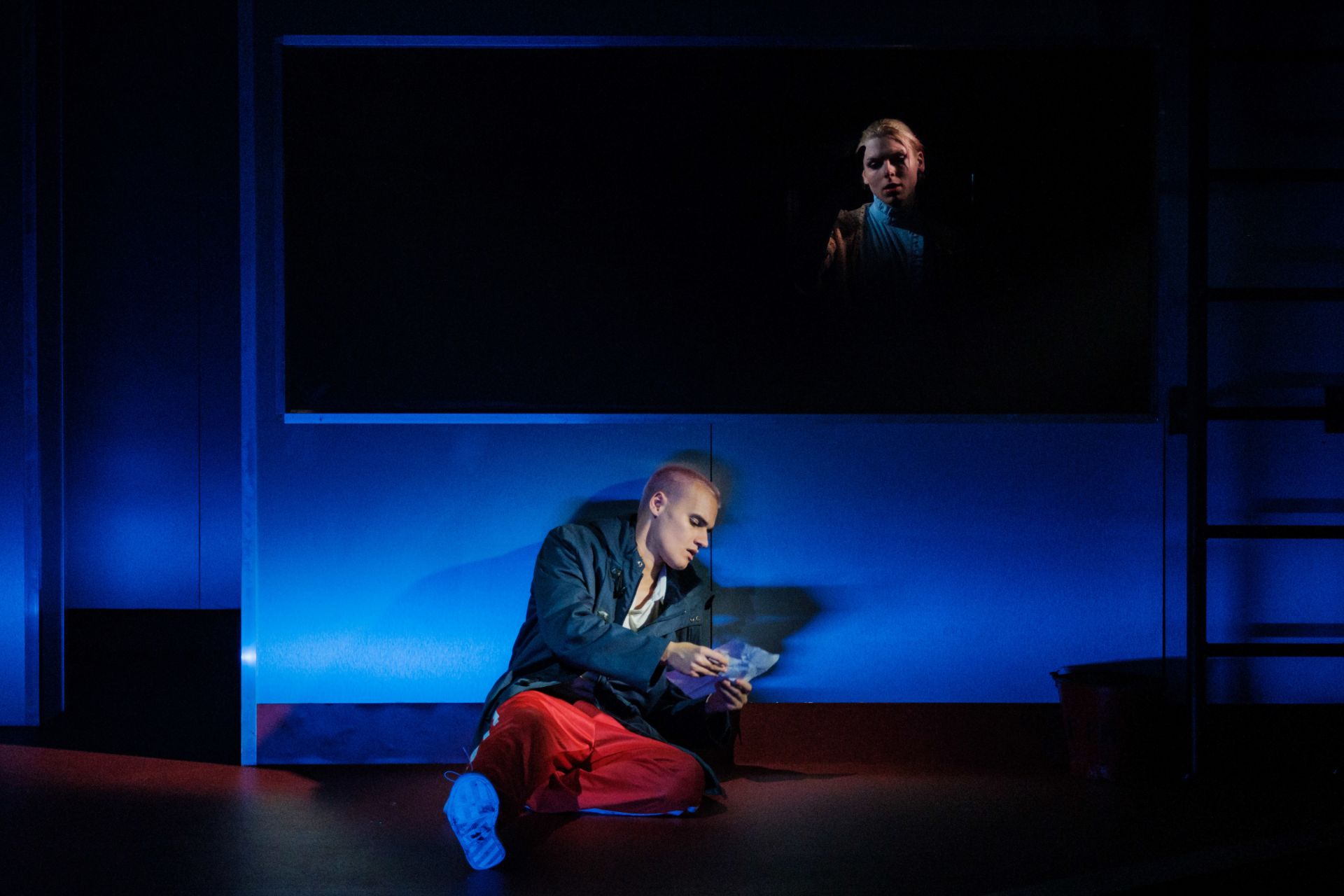
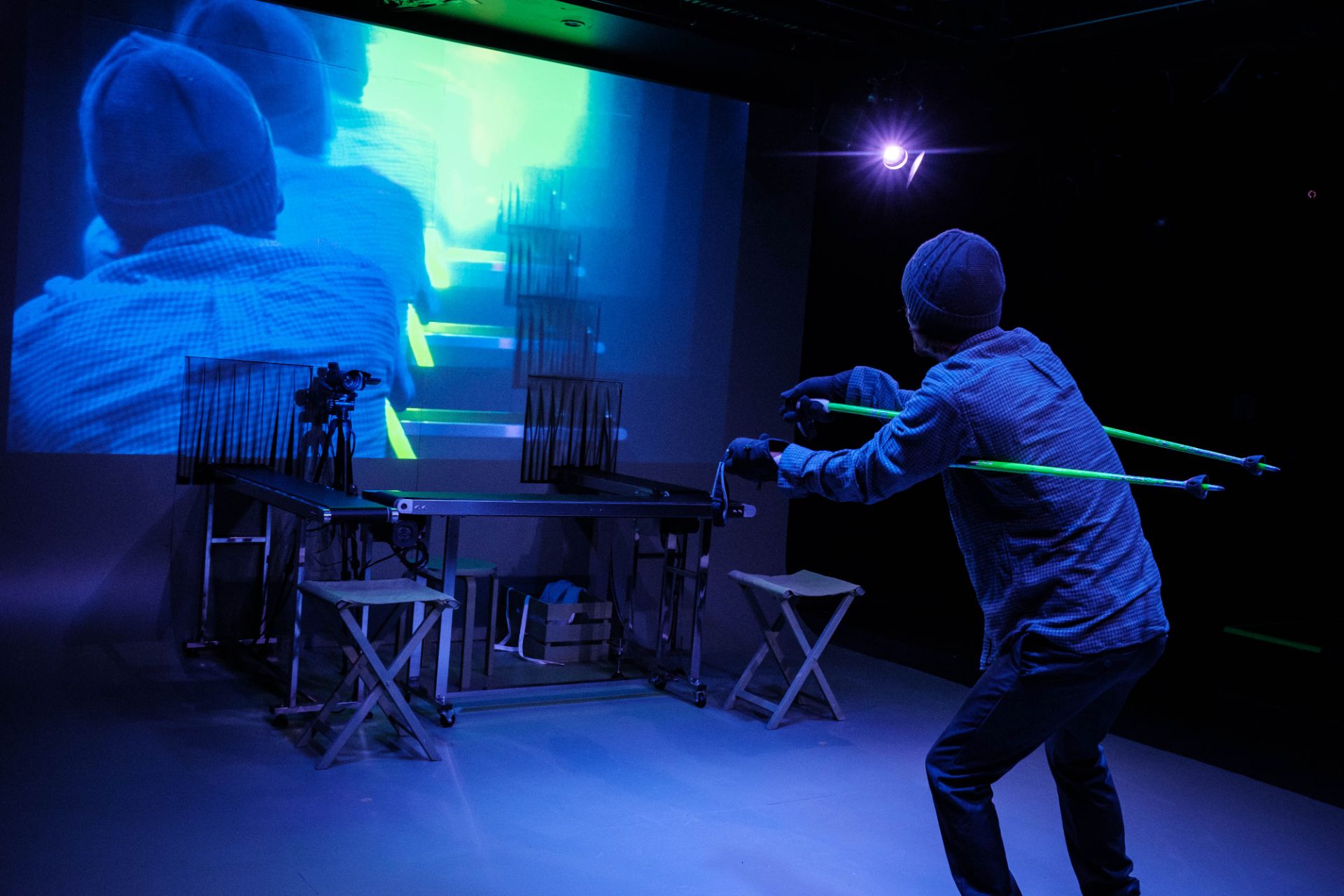
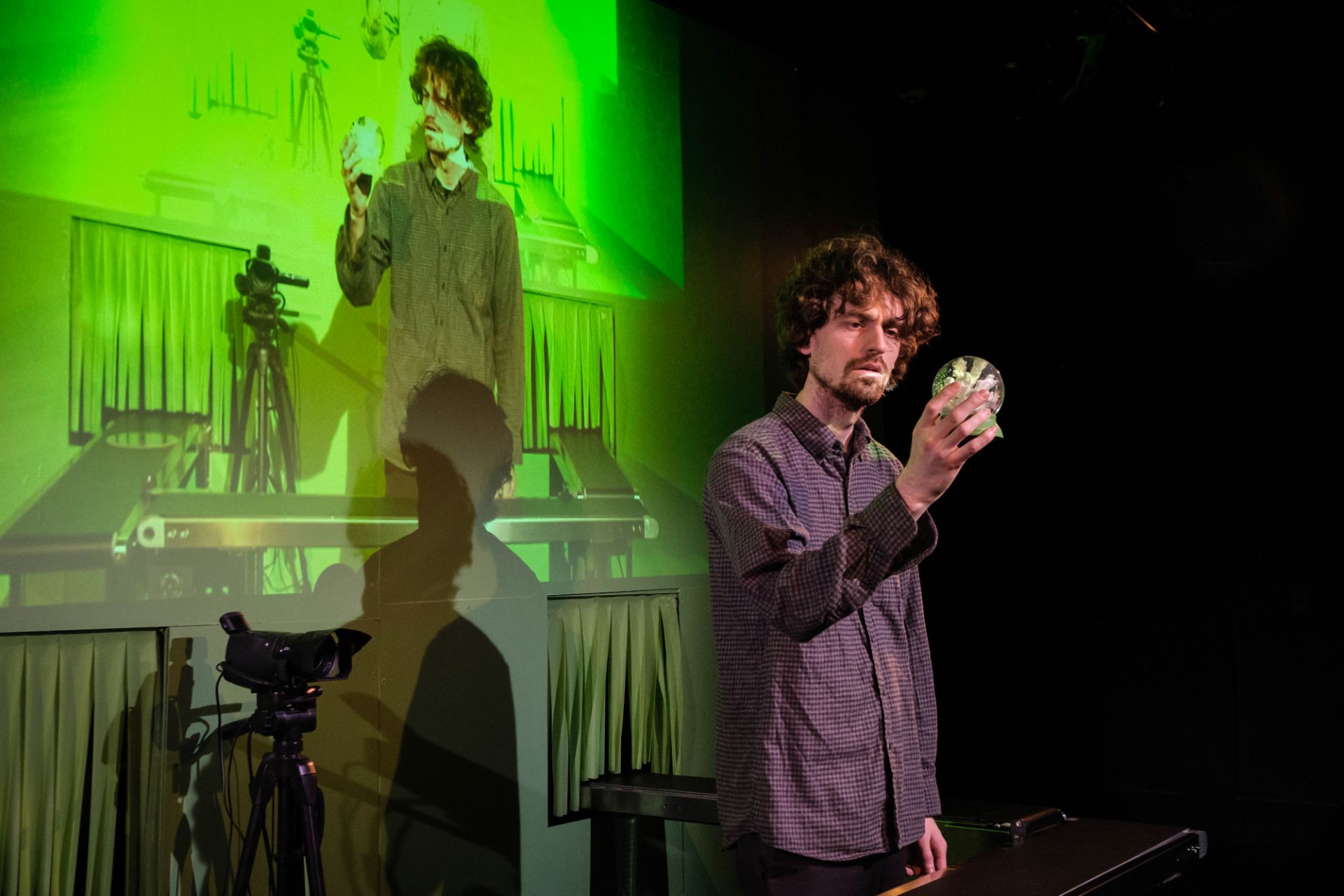
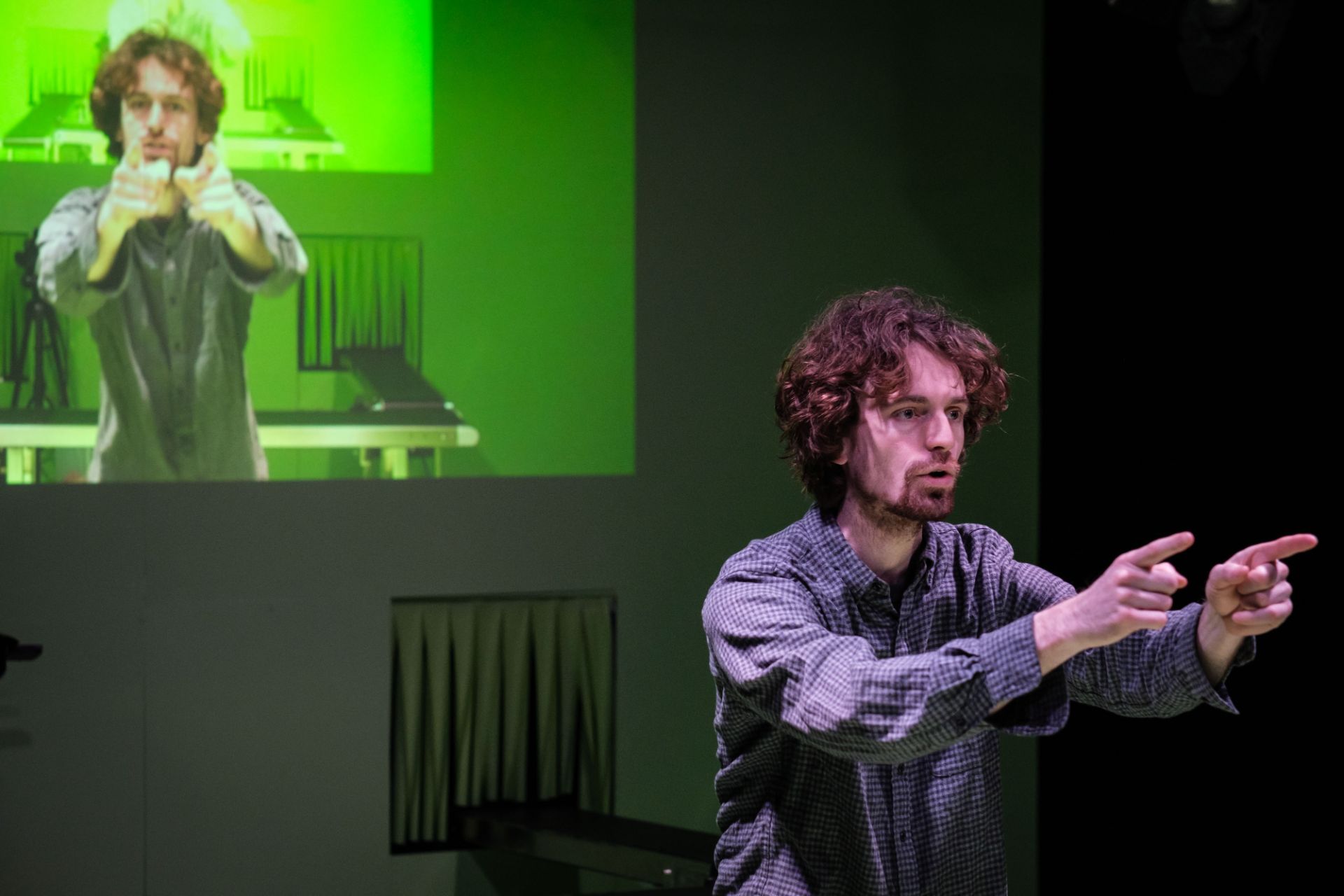
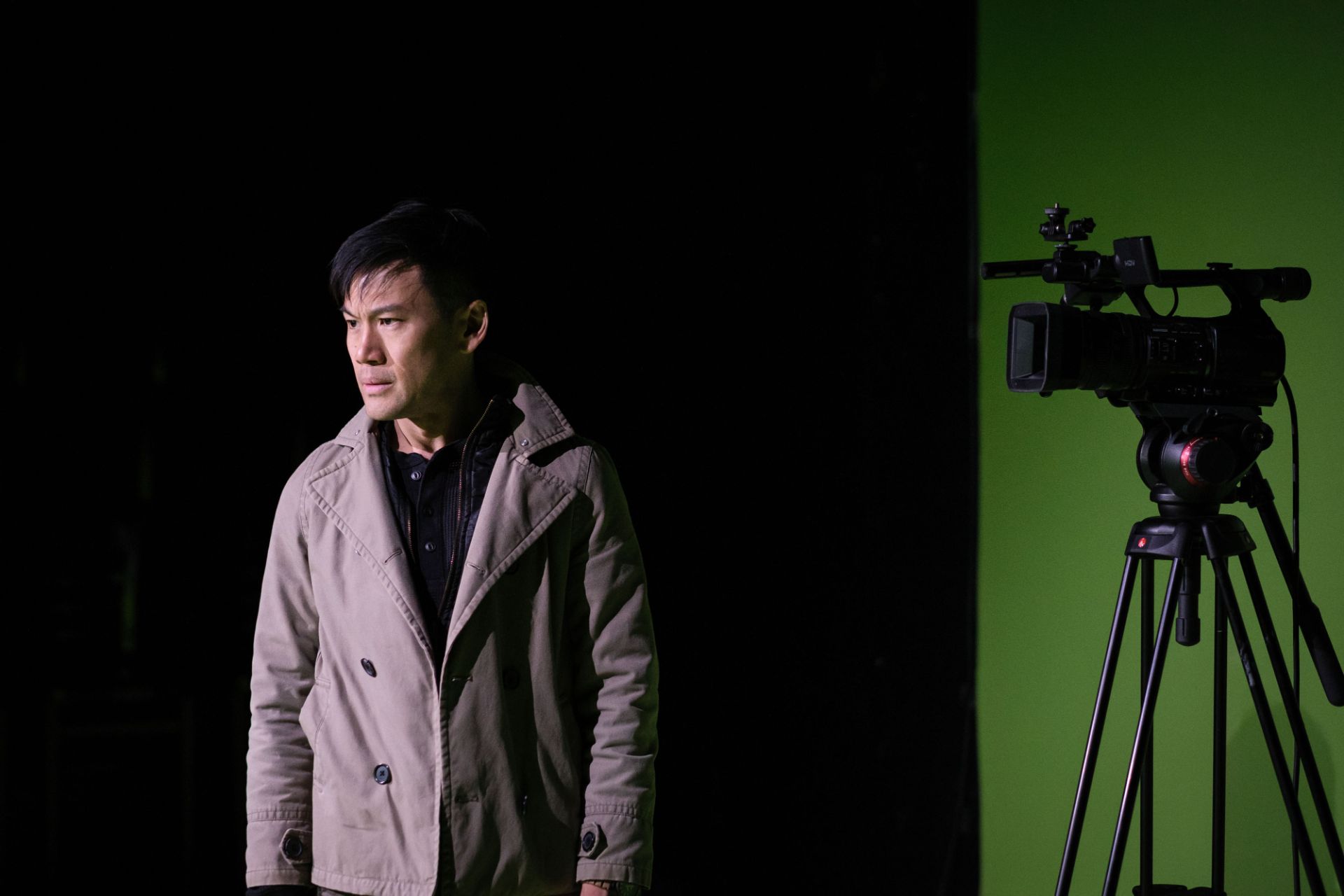
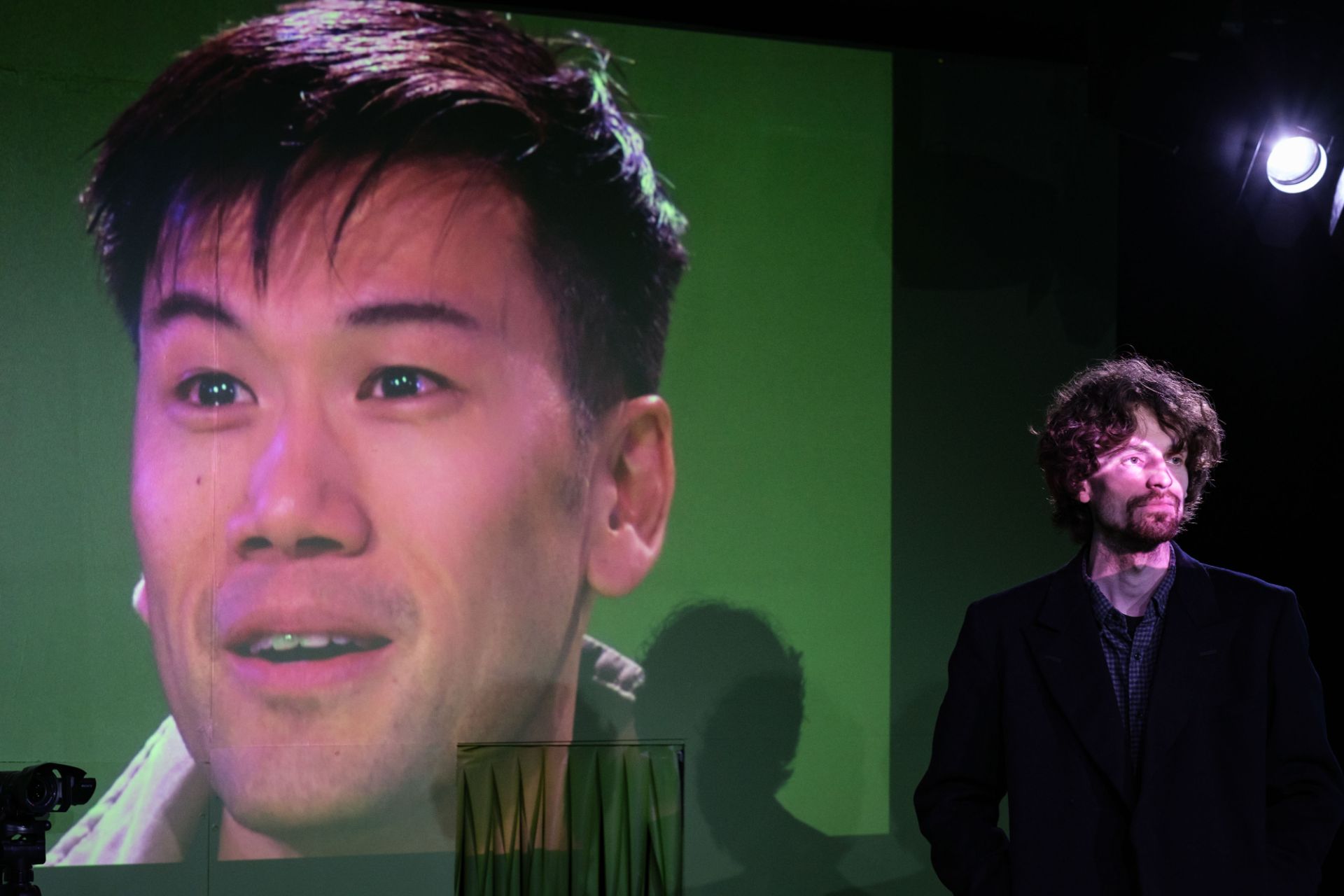
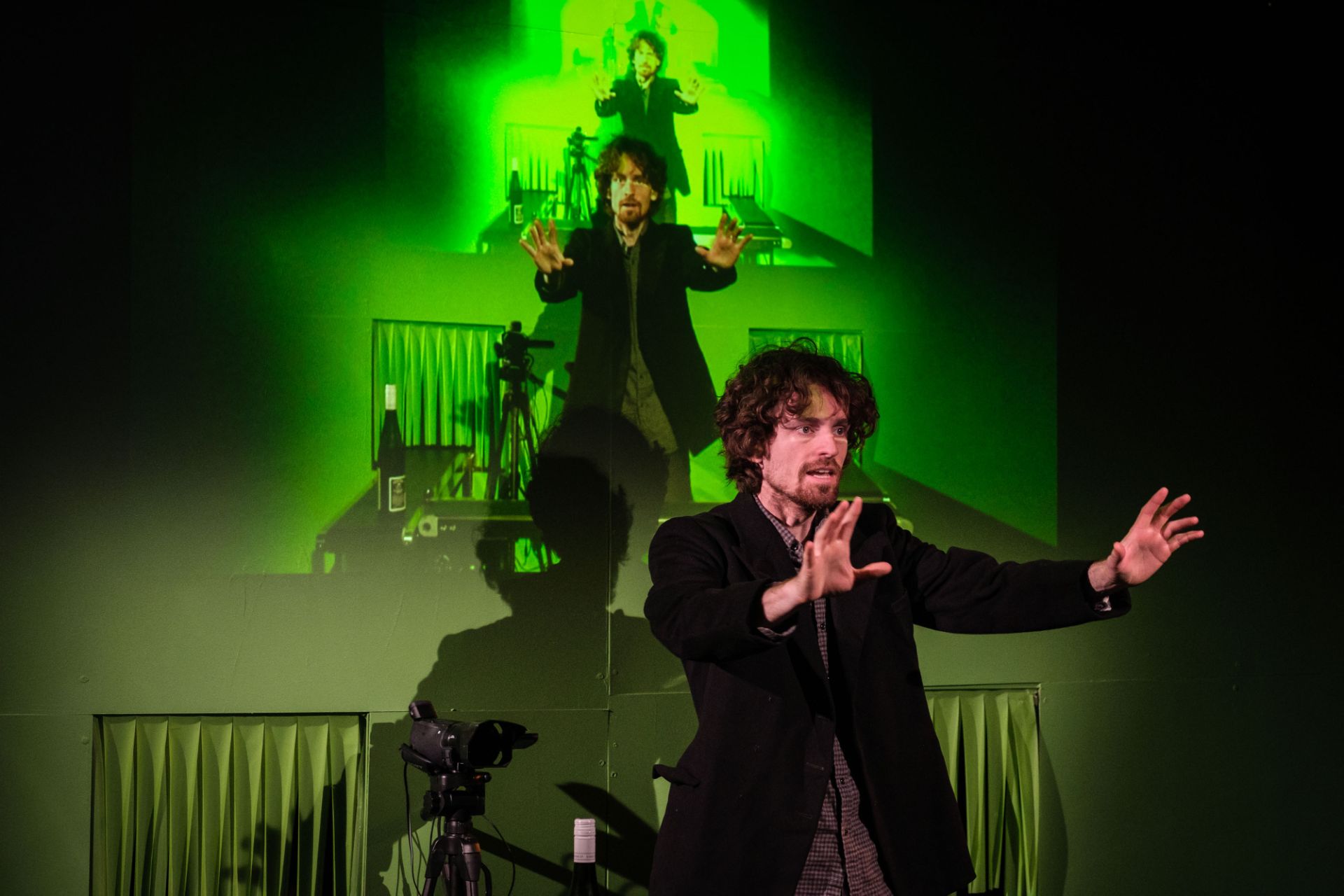
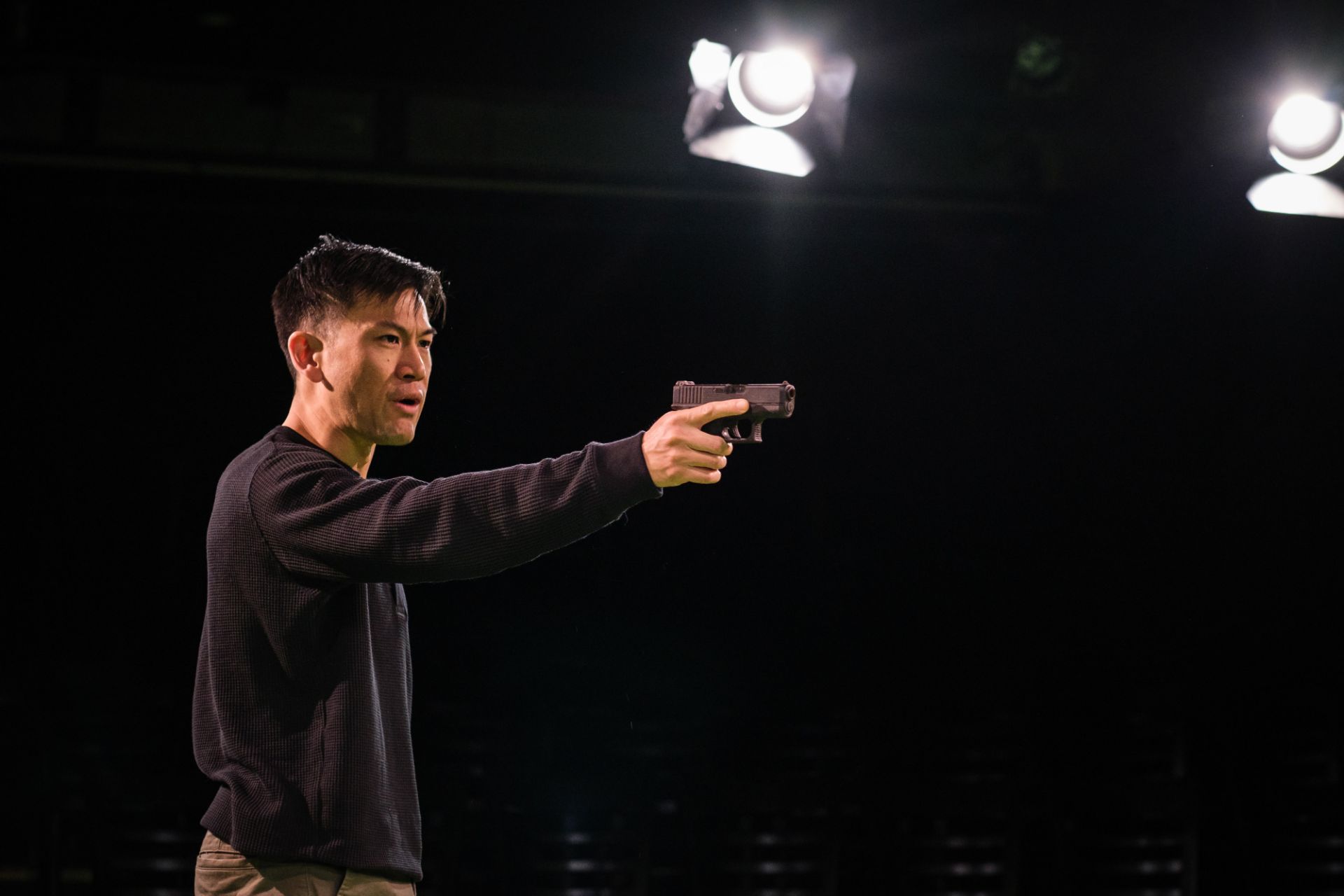
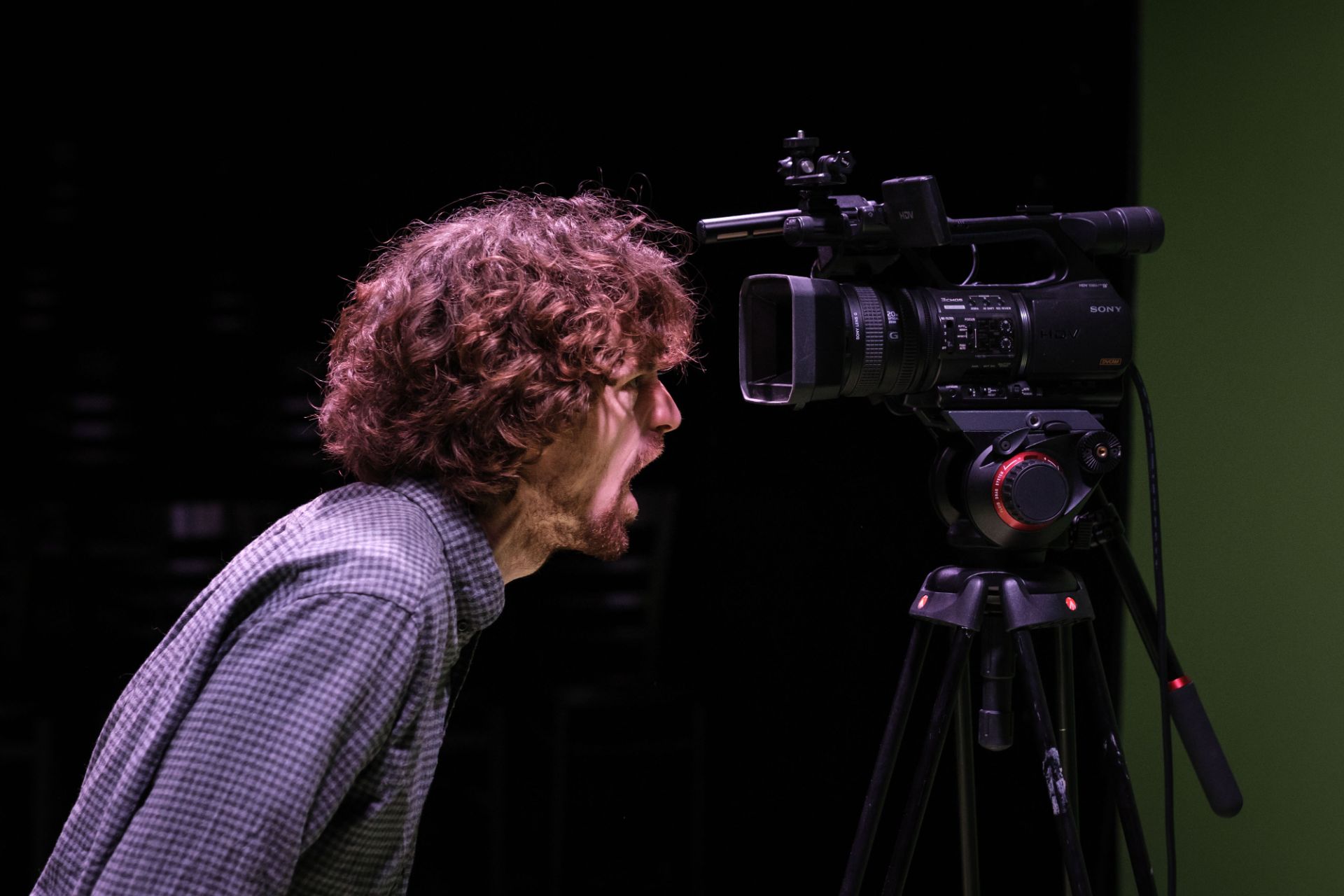
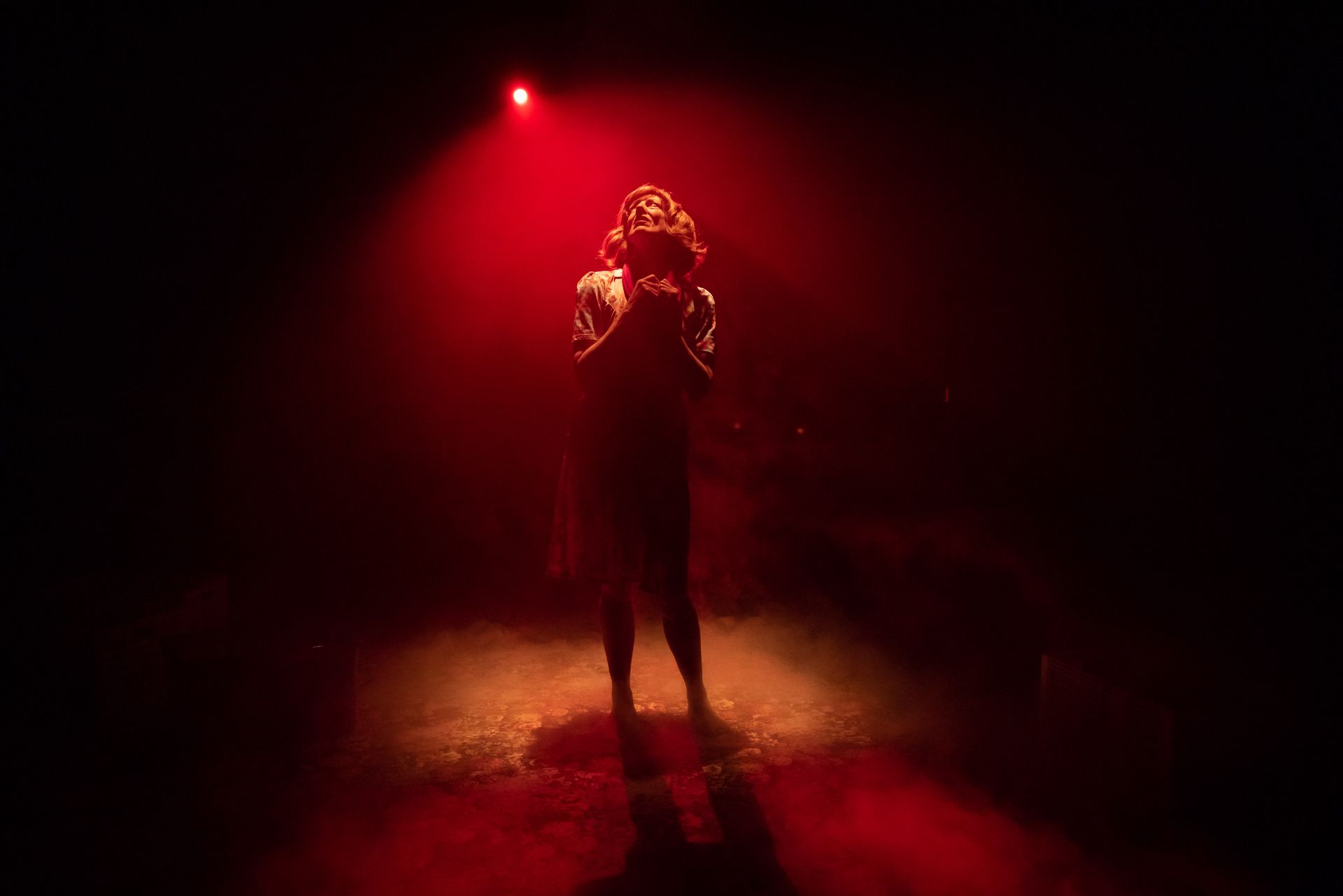
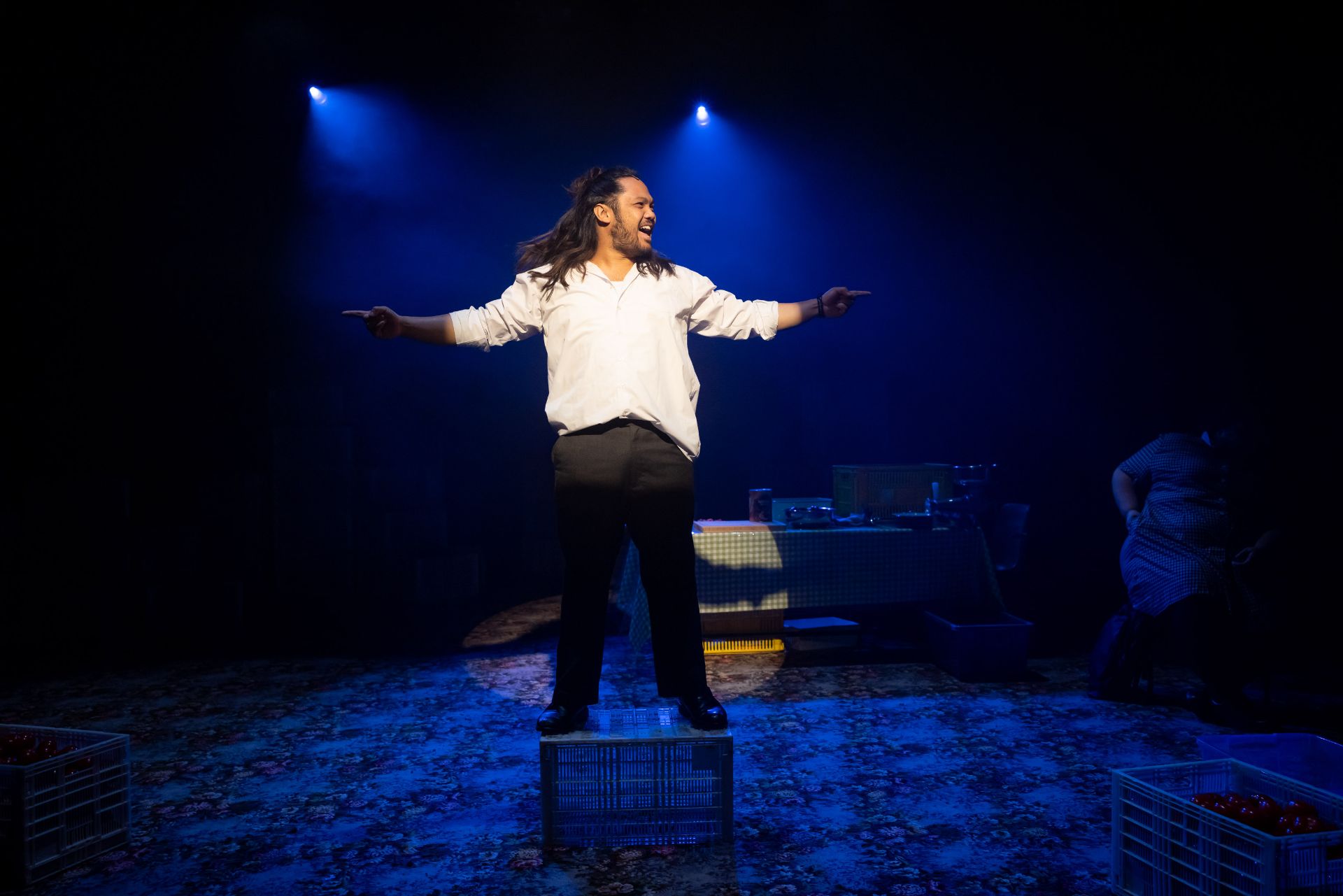
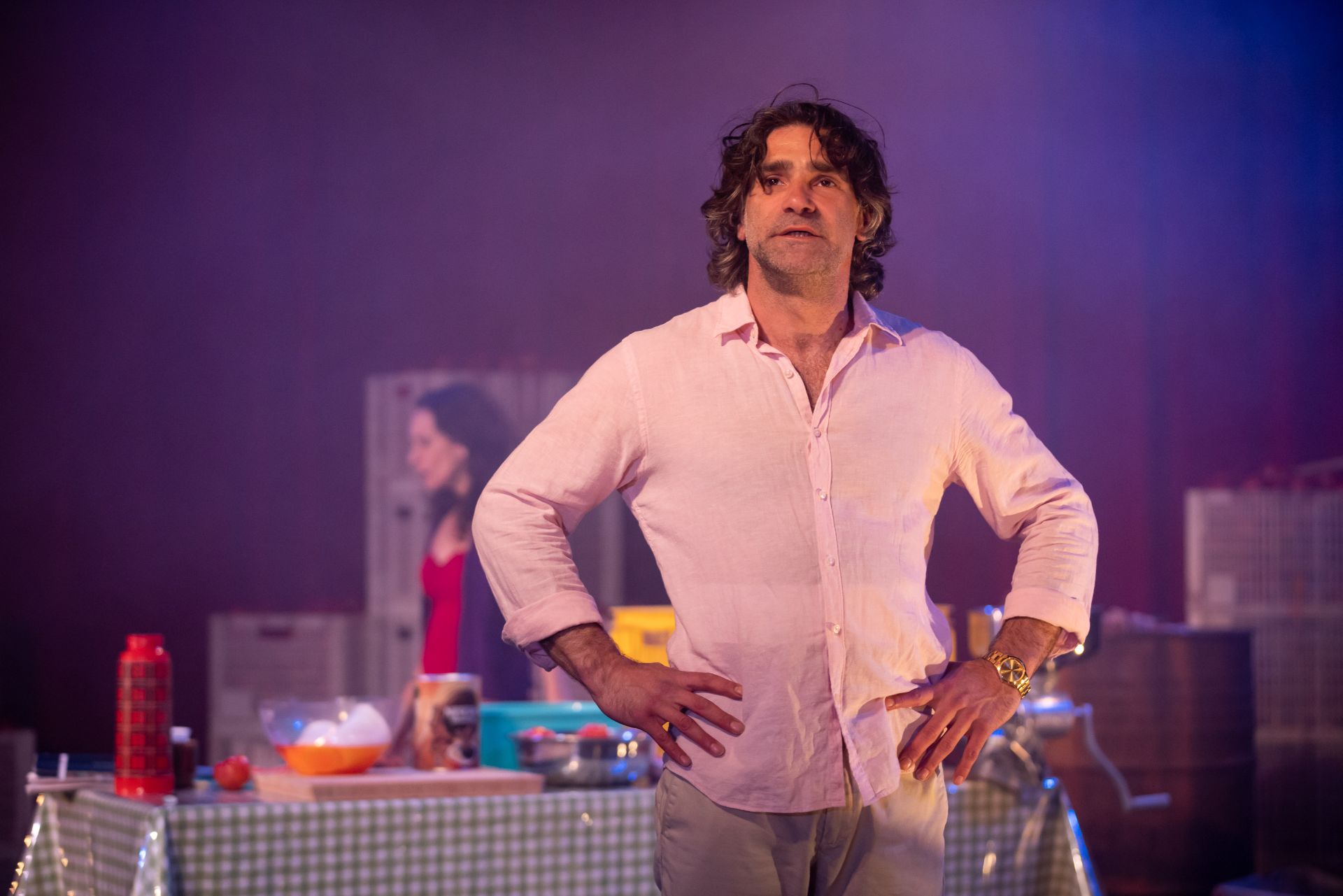
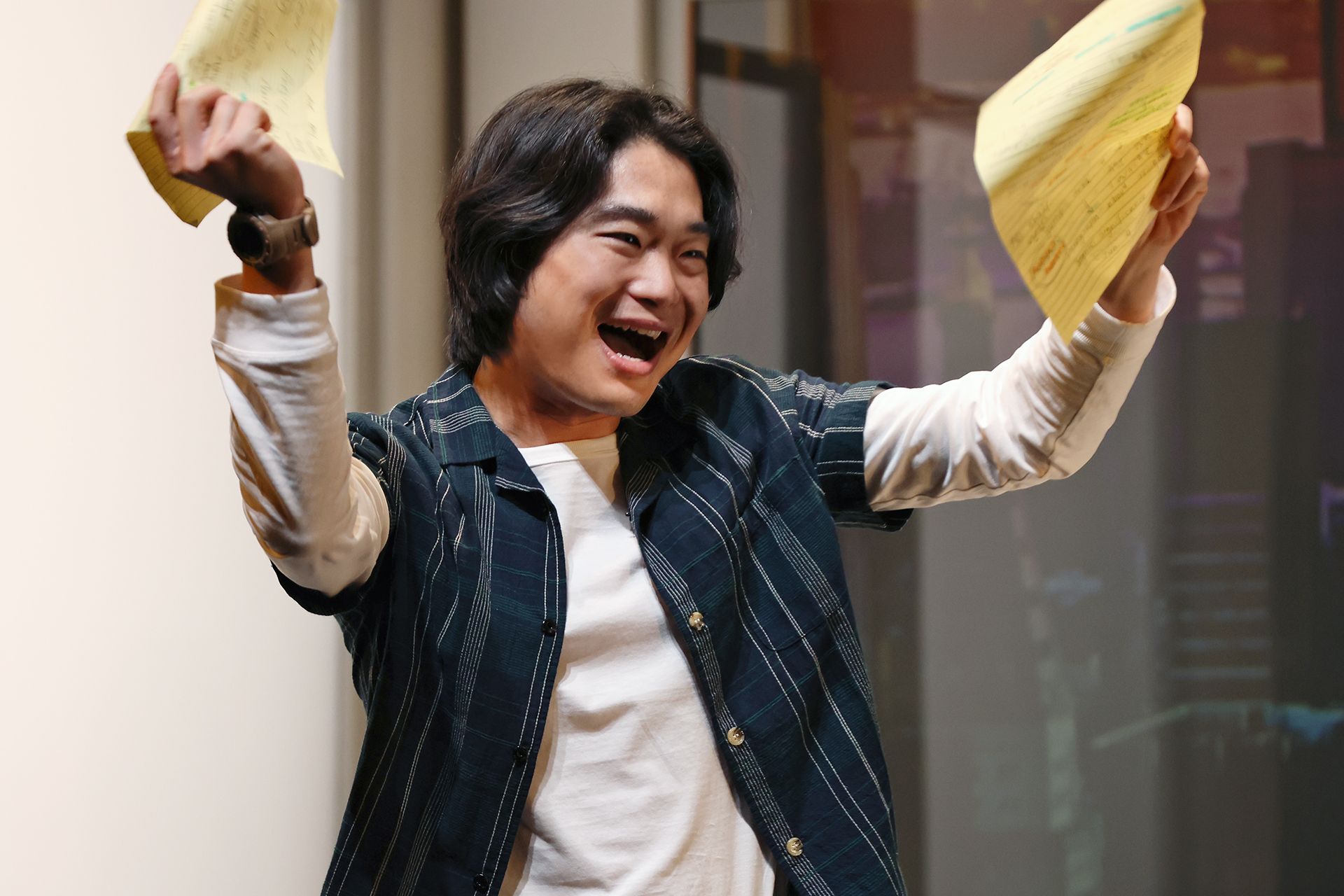
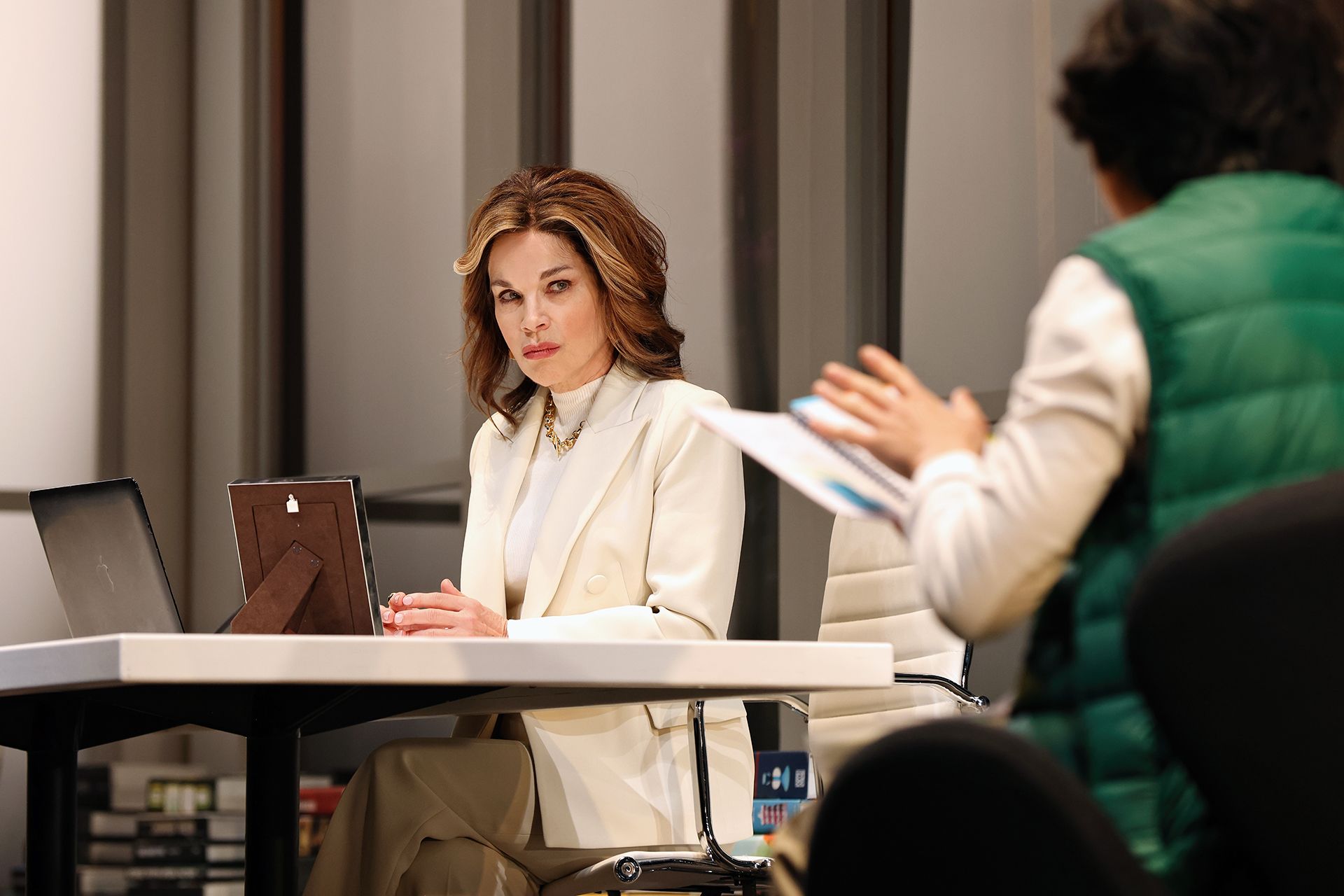
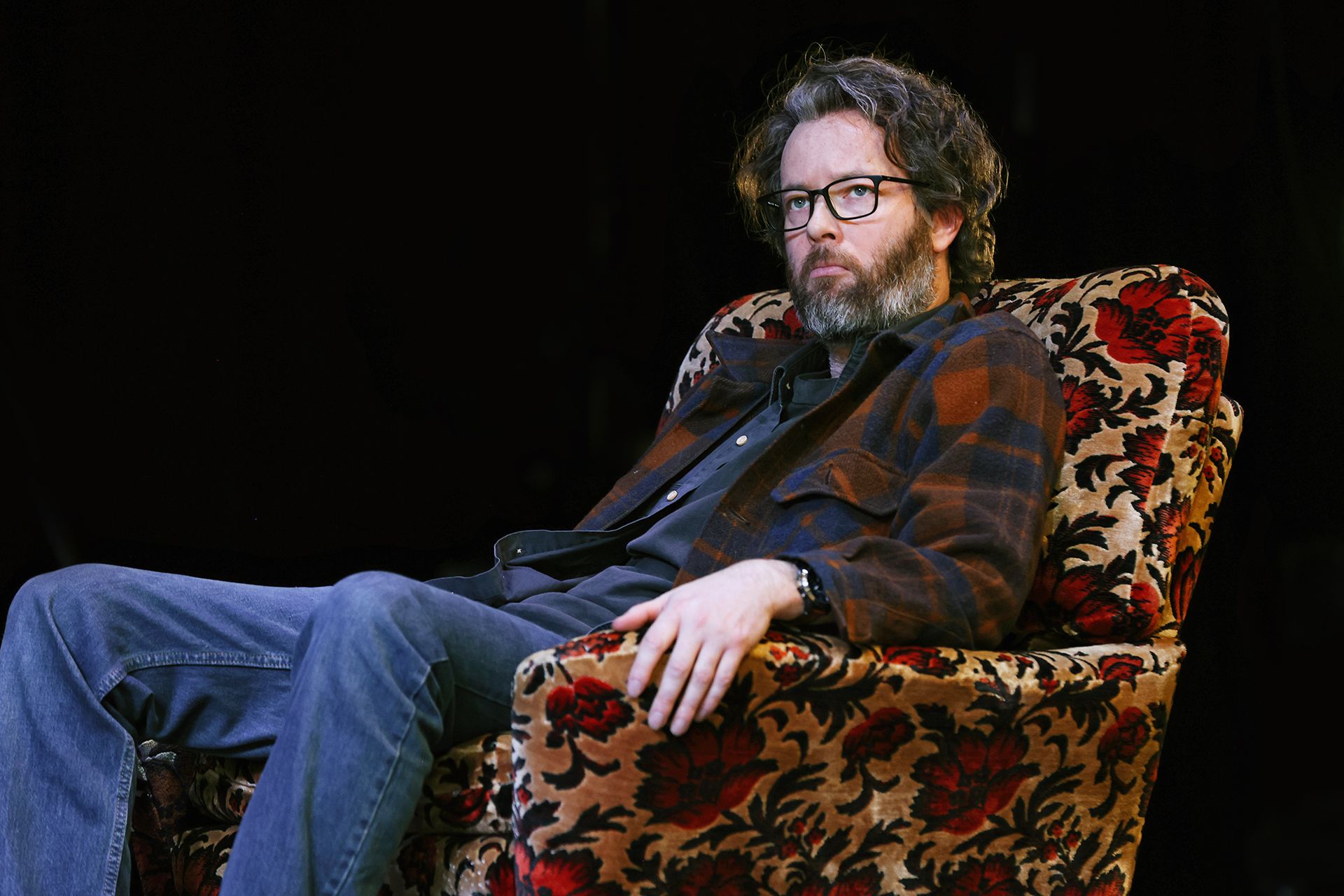
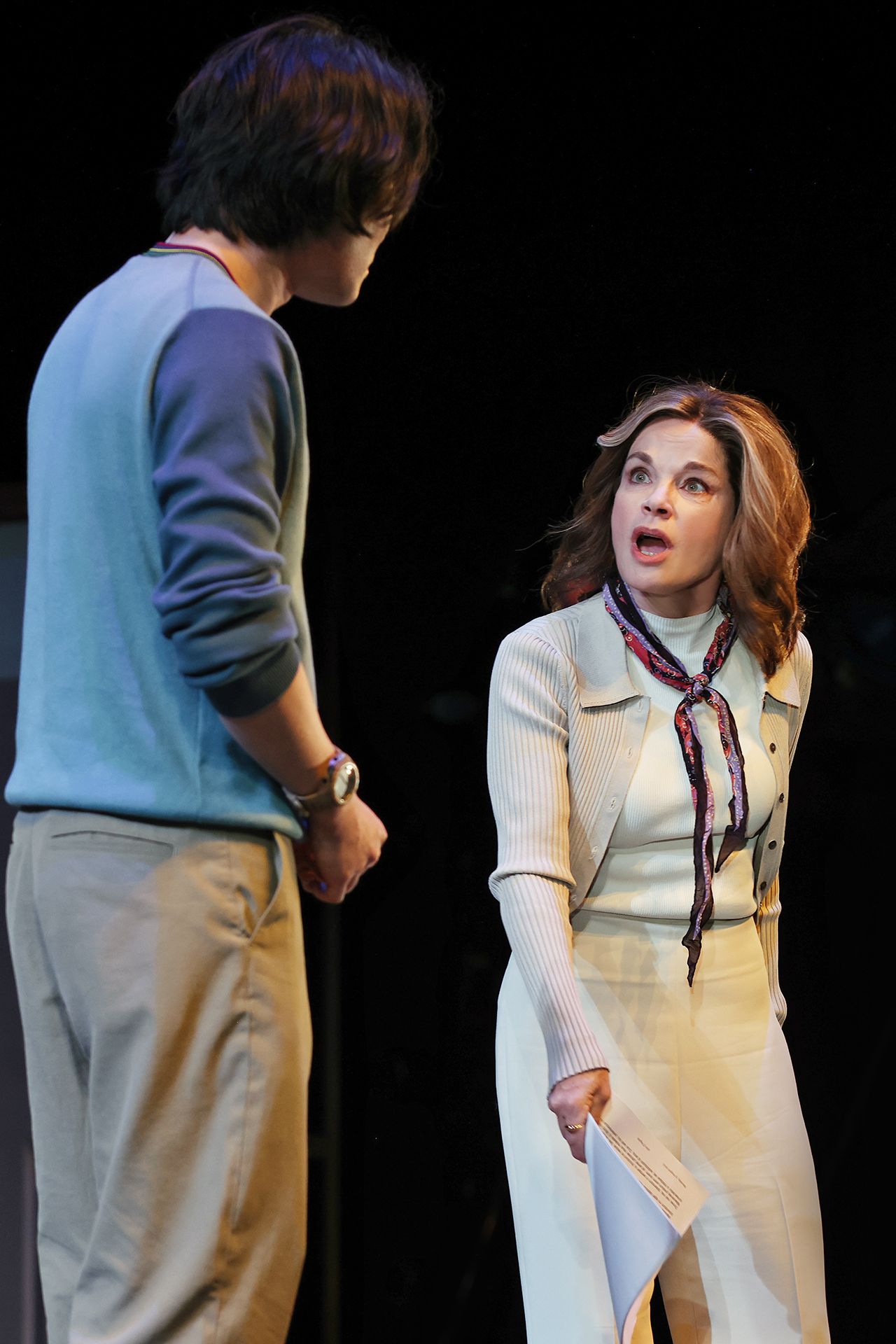
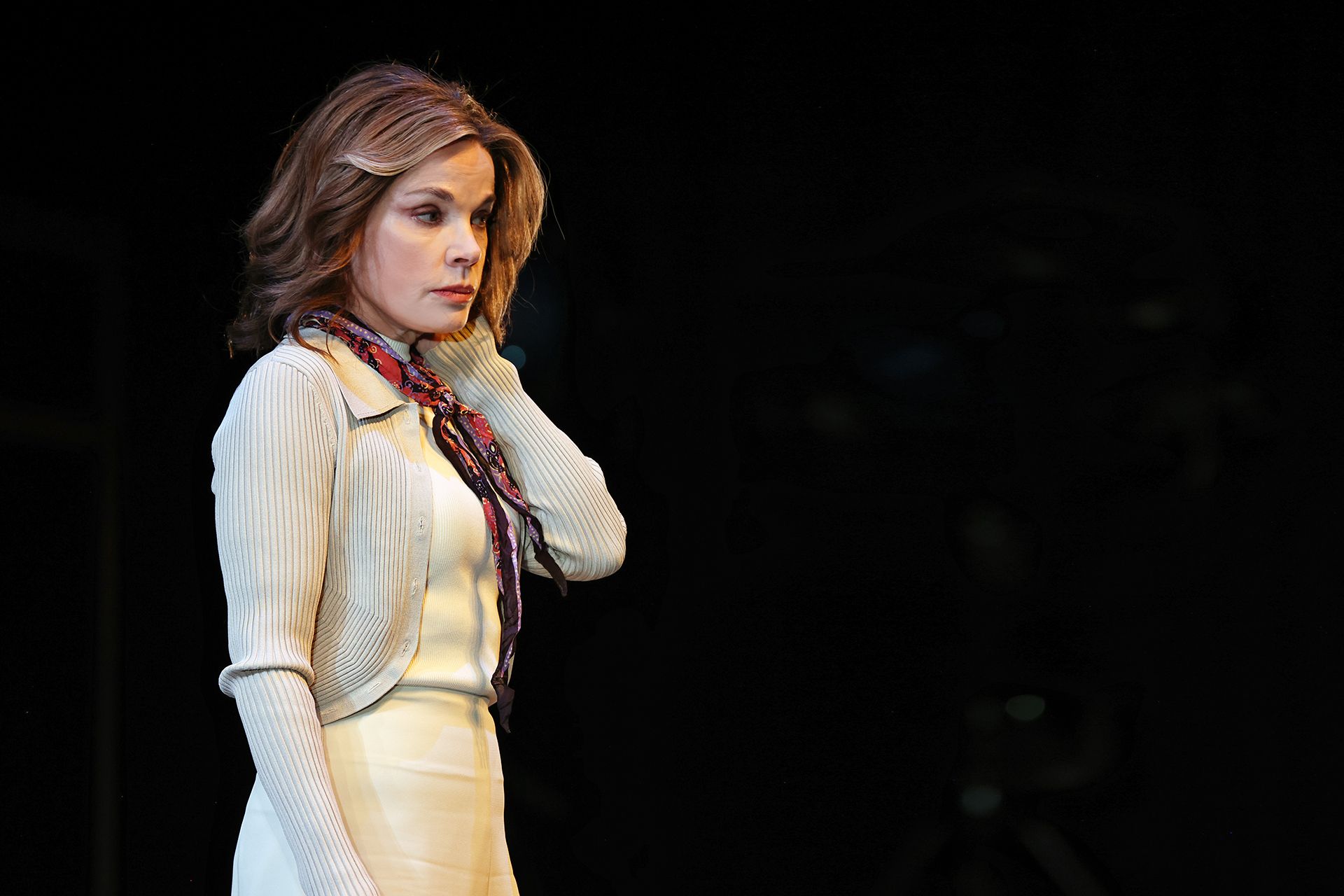
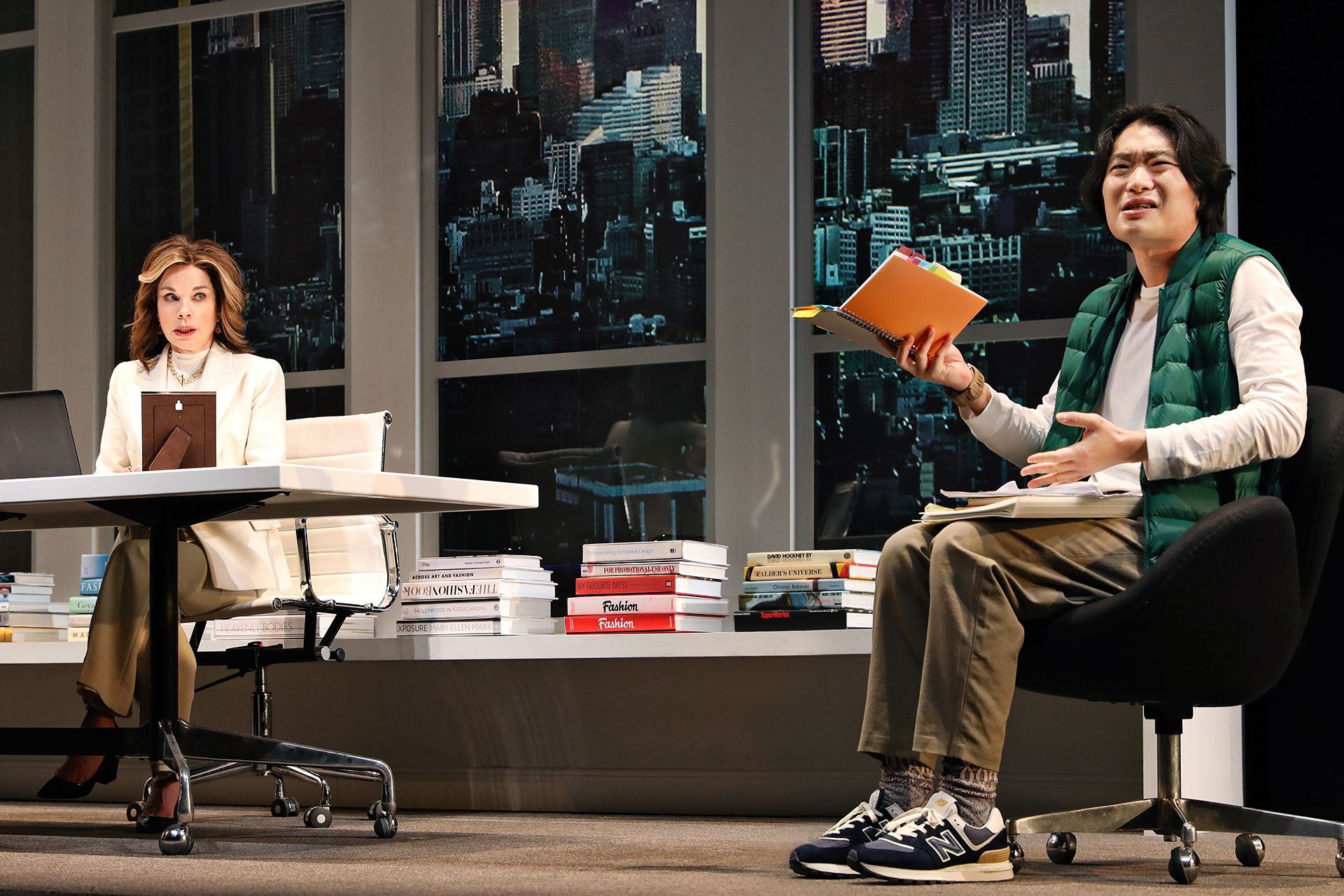
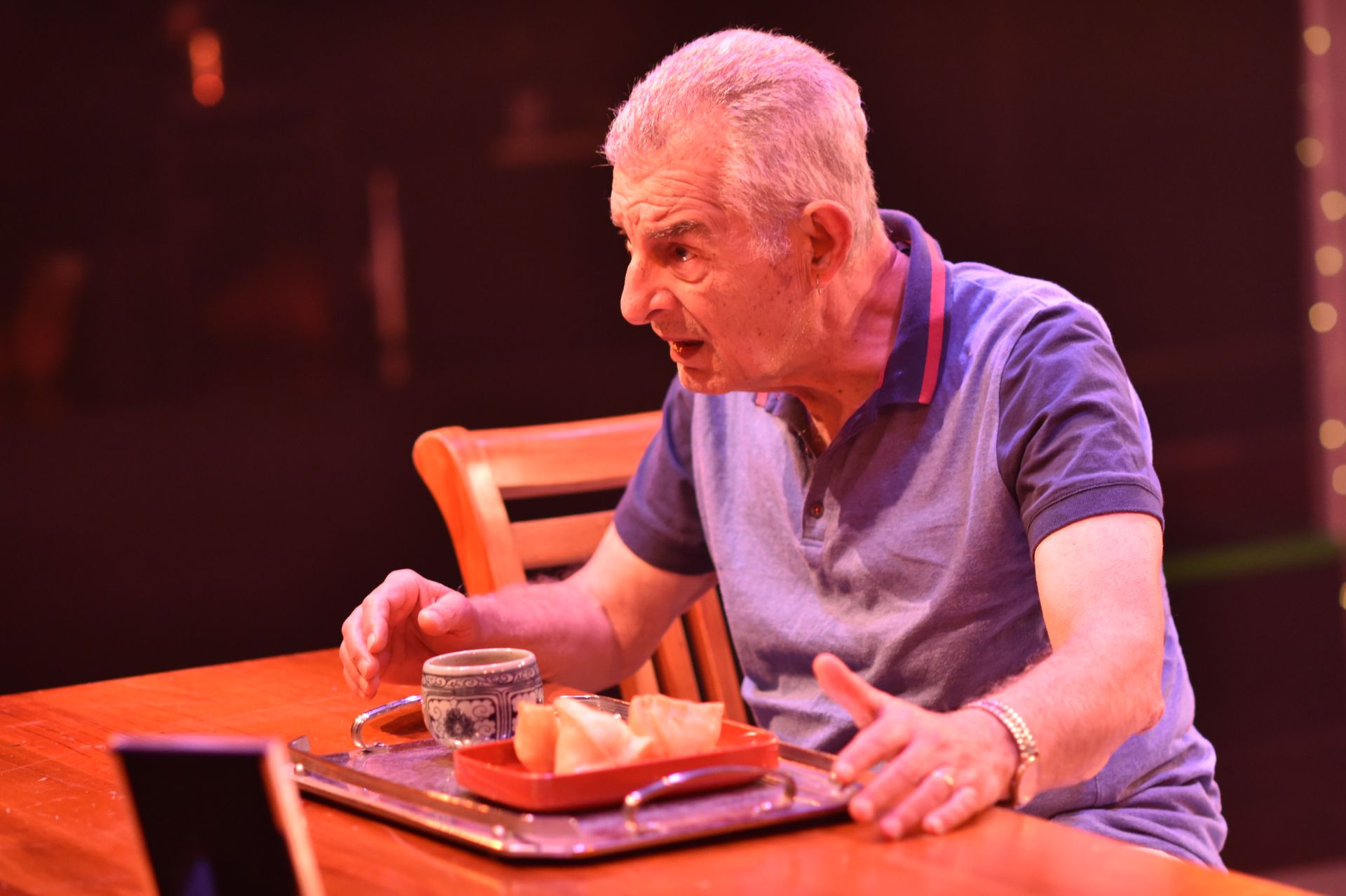
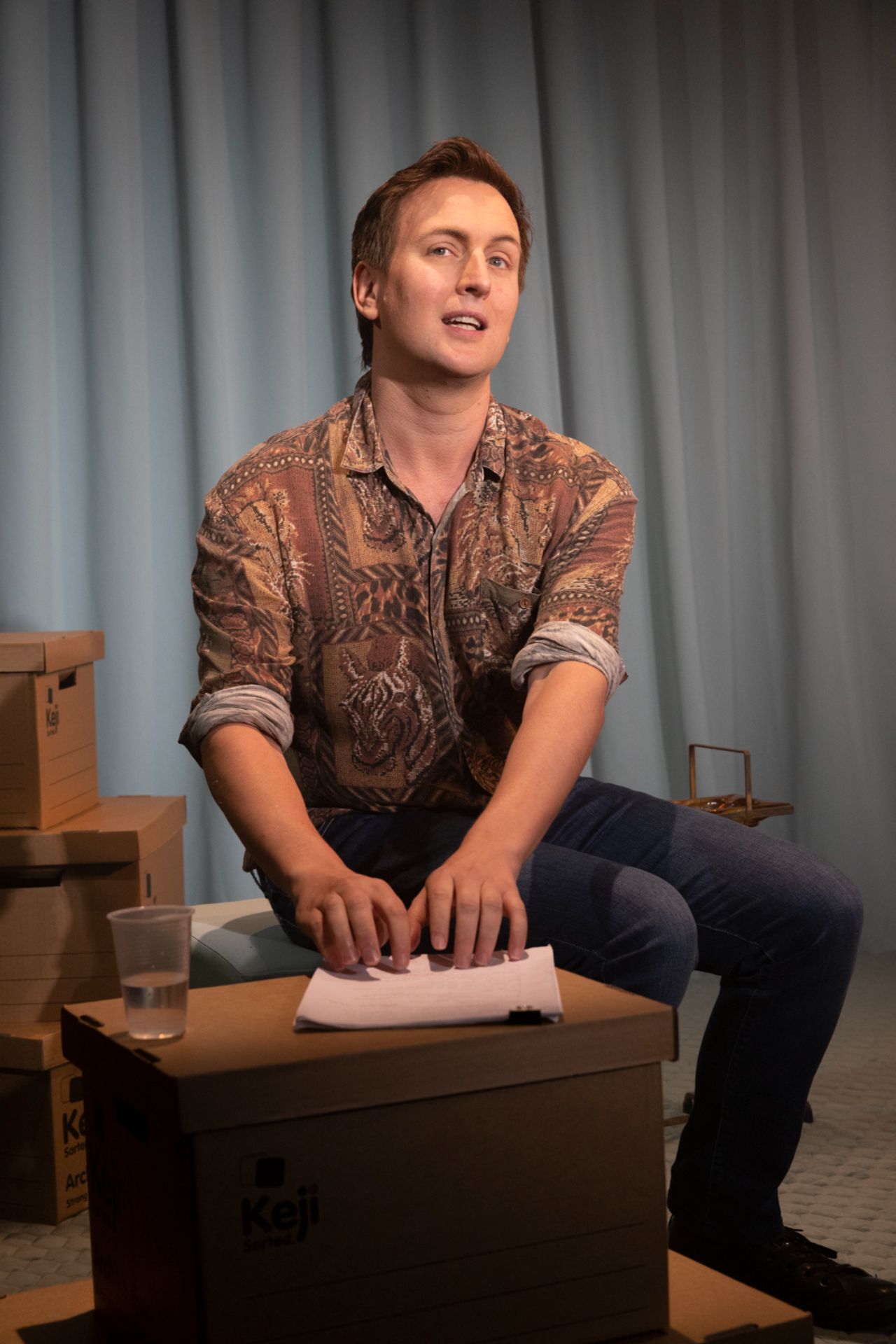
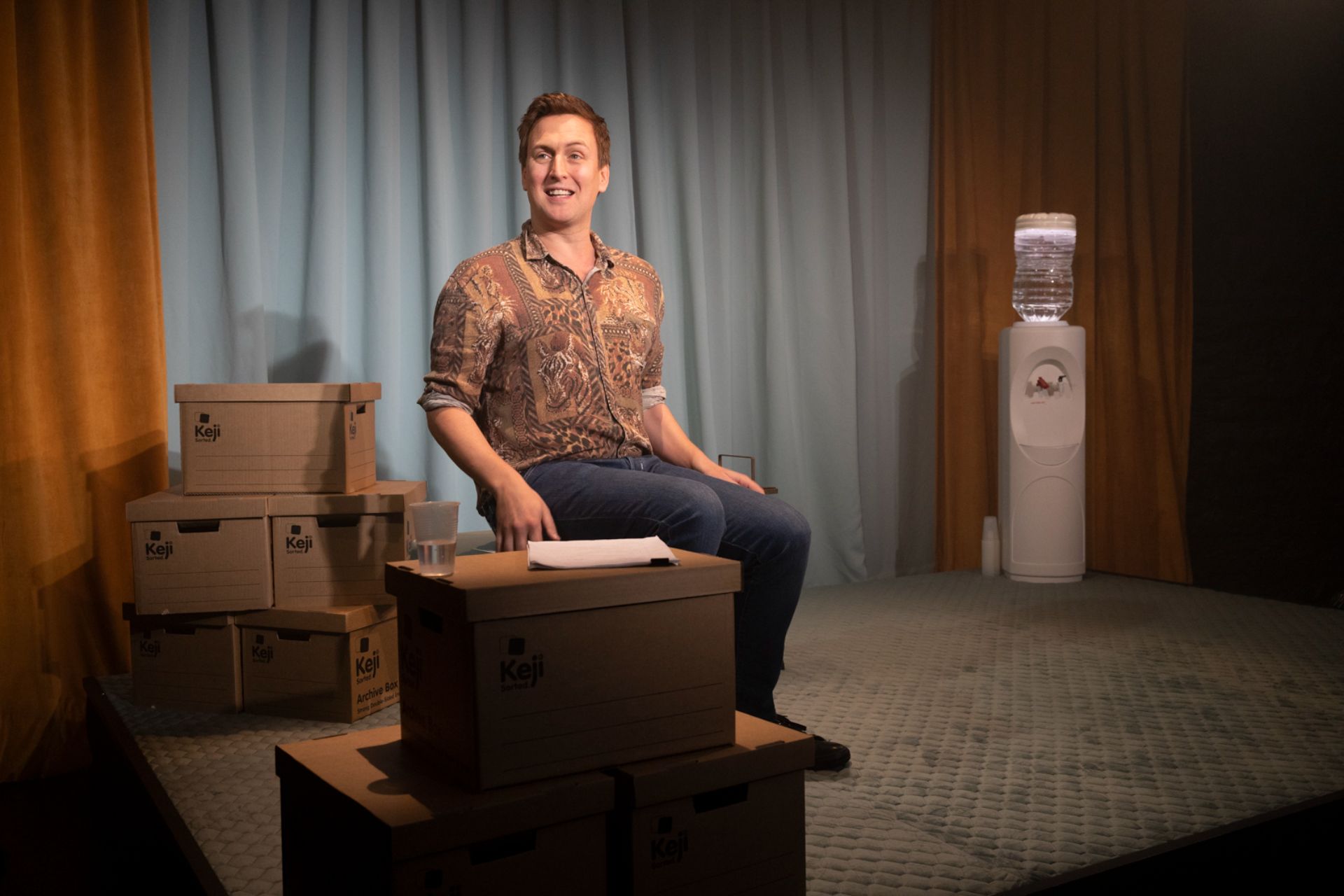
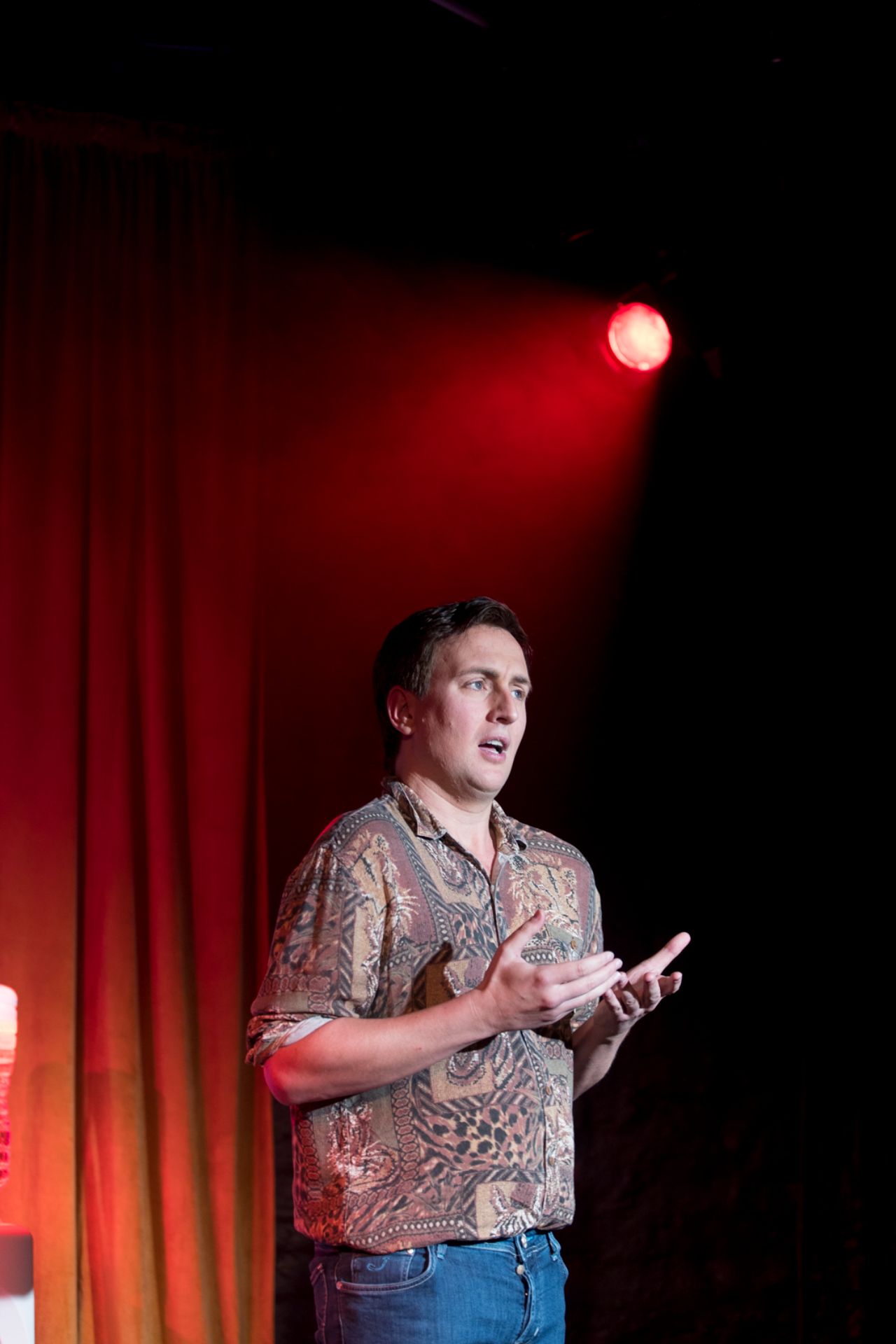
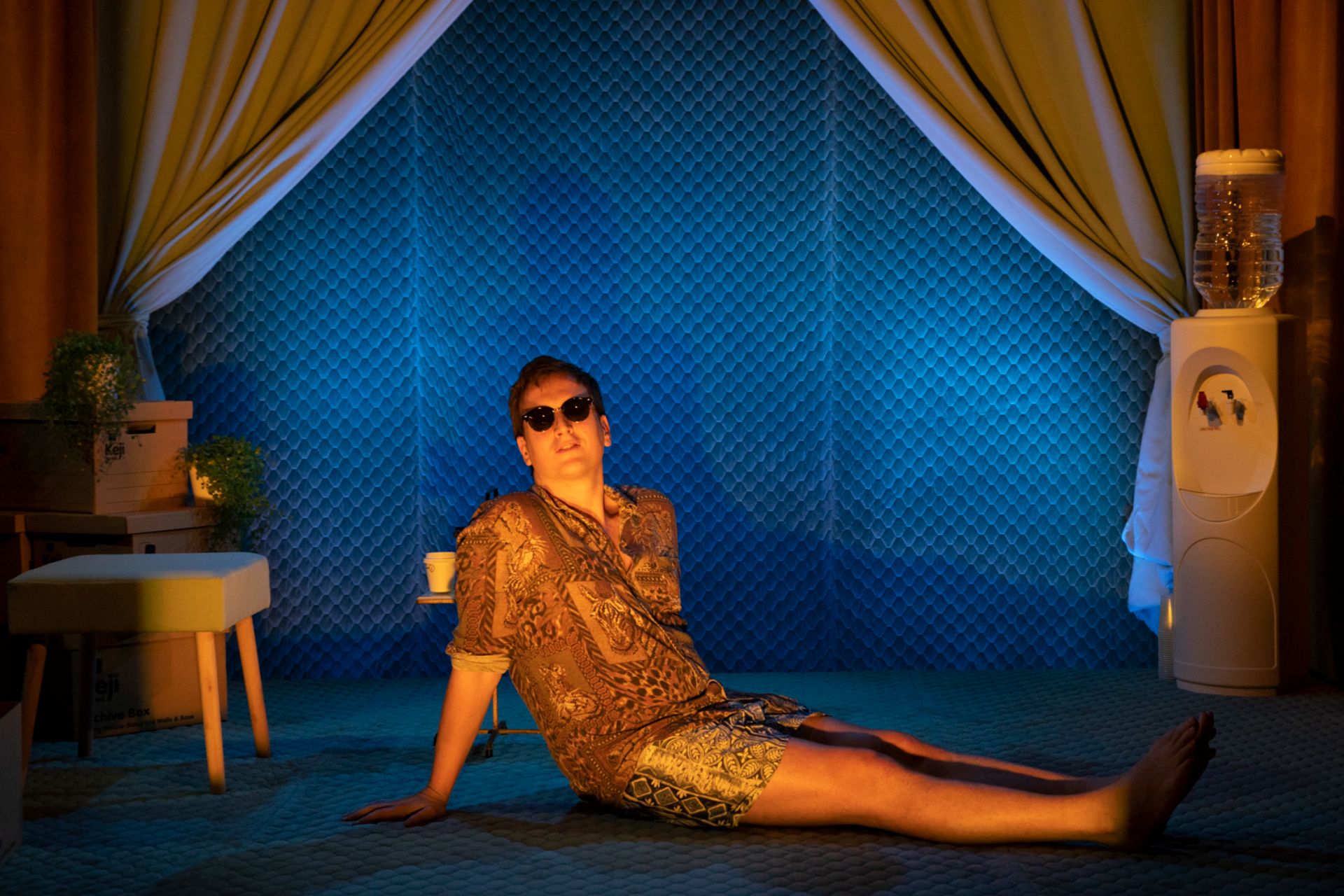
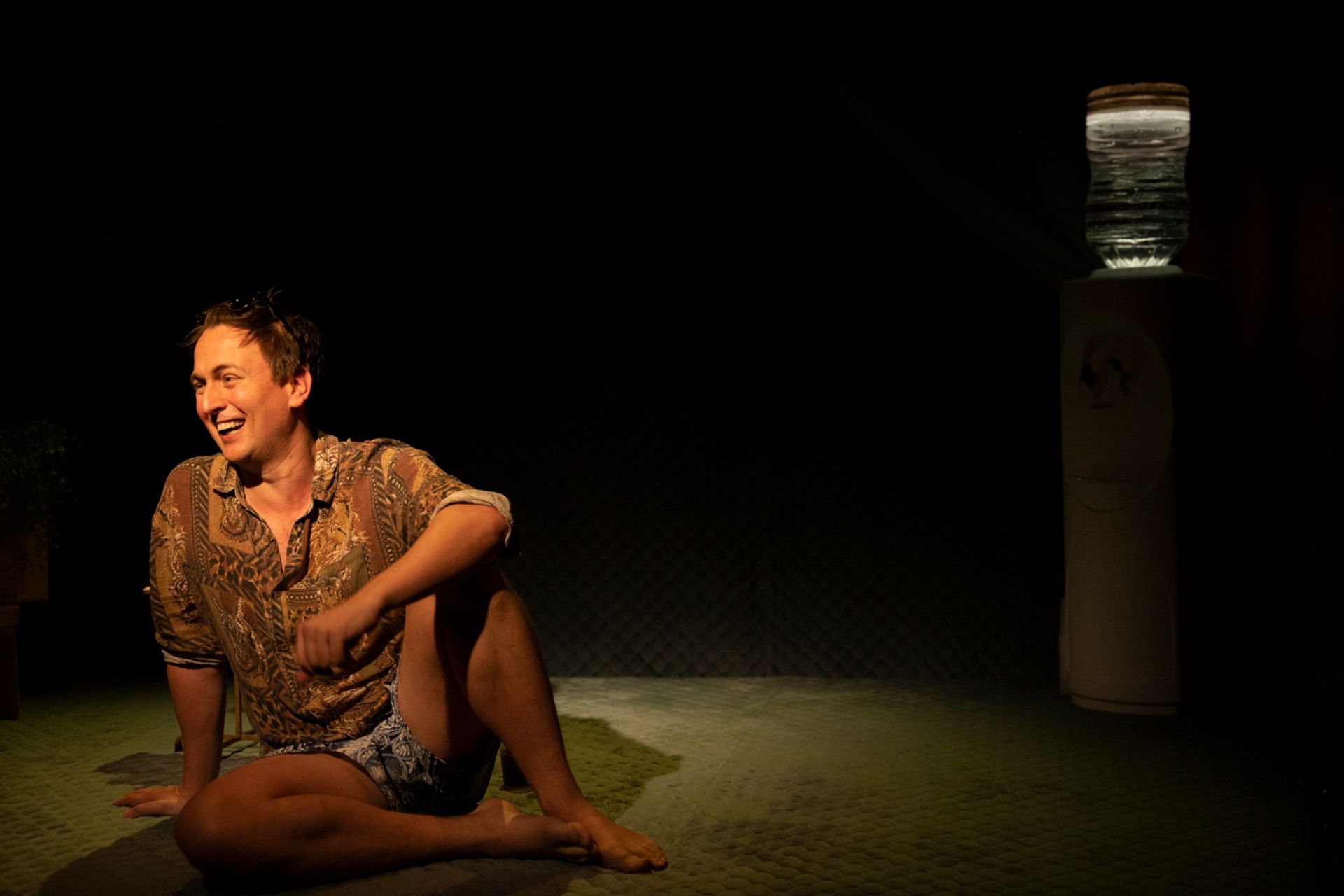
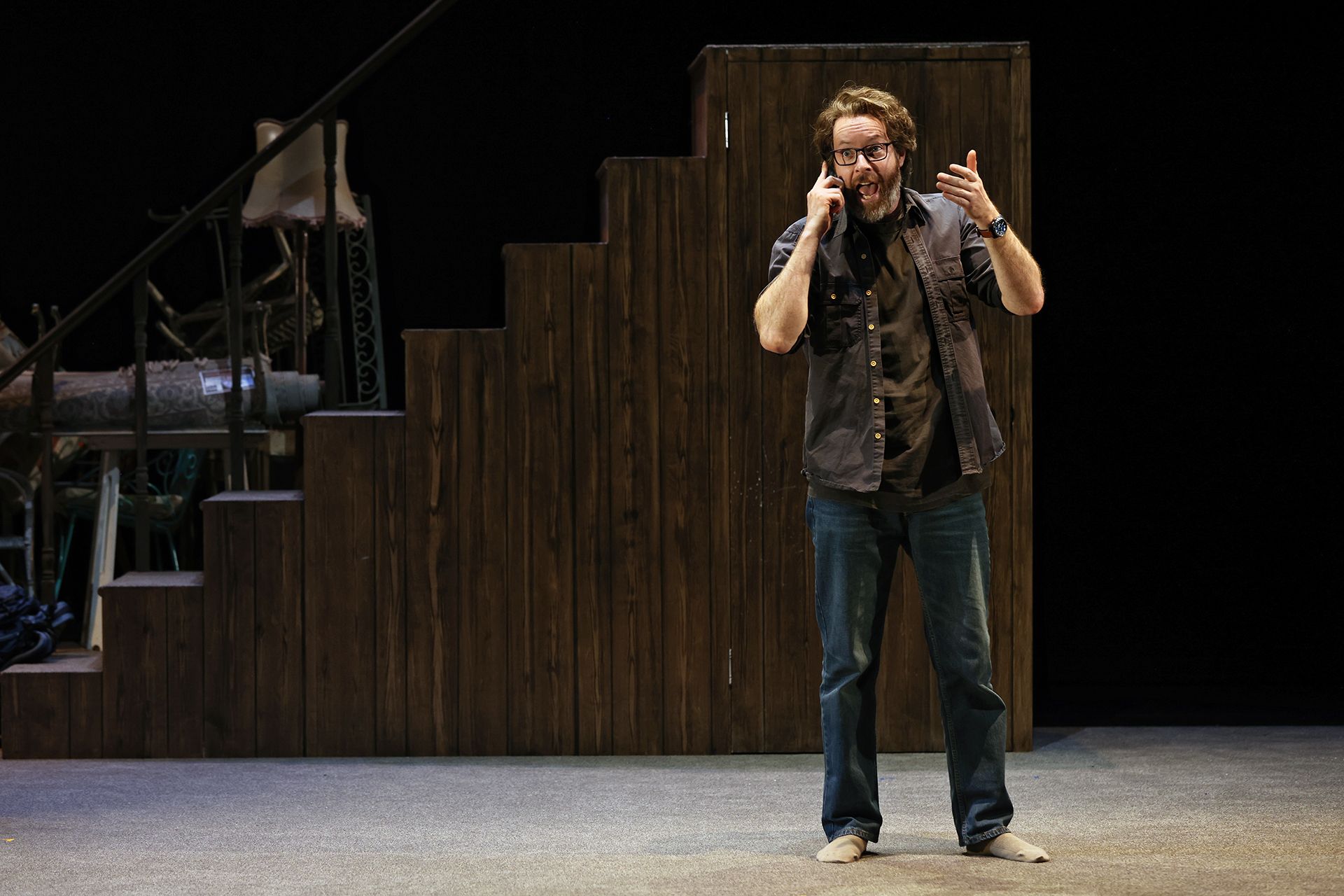
Ash Flanders is so incredibly theatrical, of course he has written a one-man play about his mother dying, even though Heather is somewhere in Melbourne, still quite alive. End Of begins with anecdotes about Flanders’ stint working as a transcriber for the police, then veers off talking about his adventures in procuring horse entrails to use as props for a show, and then his first moments on psychedelics that lead him to becoming sisters with a papier-mâché rooster. The pieces are tangential to say the least, but it is hard to care too much about coherence, when the point of the work is really only about Flanders’ immense comedic talent as a live performer.

Magnetic and utterly persuasive, Flanders proves himself an actor of audacious talent and skill, in this piece named after his sardonic mother’s favourite punchline, End Of. It attempts to take us somewhere profound in the final minutes, but it is Flanders’ relentless obsession with the frivolous and the flamboyant, that leaves an impression. Director Stephen Nicolazzo knows this, and has made sure to build a production around that invaluable sense of humour, for an experience that provides incessant laughter, and endless amusement. Everything is fair game, from the disappointing Hollywood remake of Total Recall, to deaths in Flanders’ family. Camp becomes a sort of zen outlook, occupying the centre of Flanders’ world; if everything is capable of being diminished, nothing really hurts.

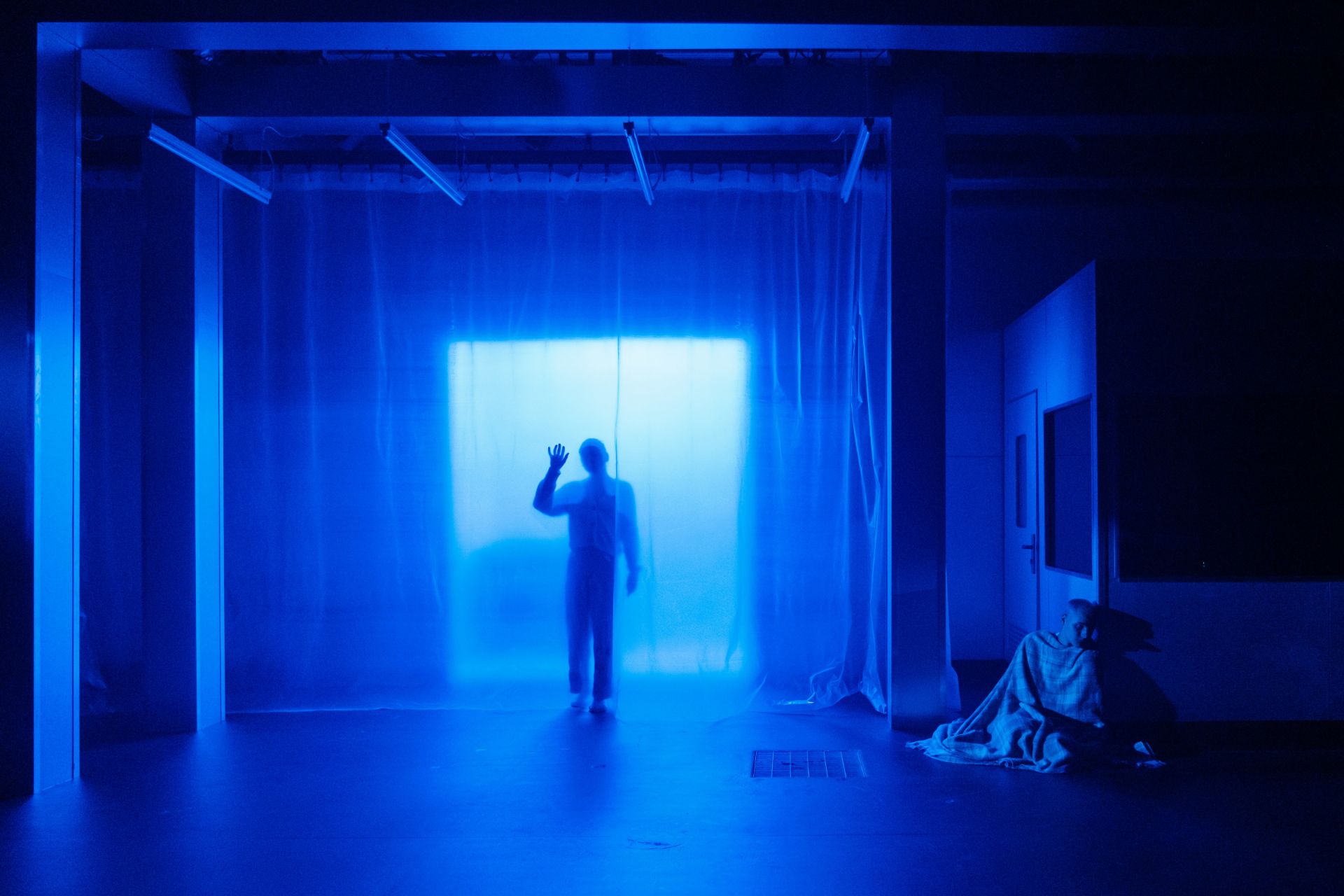
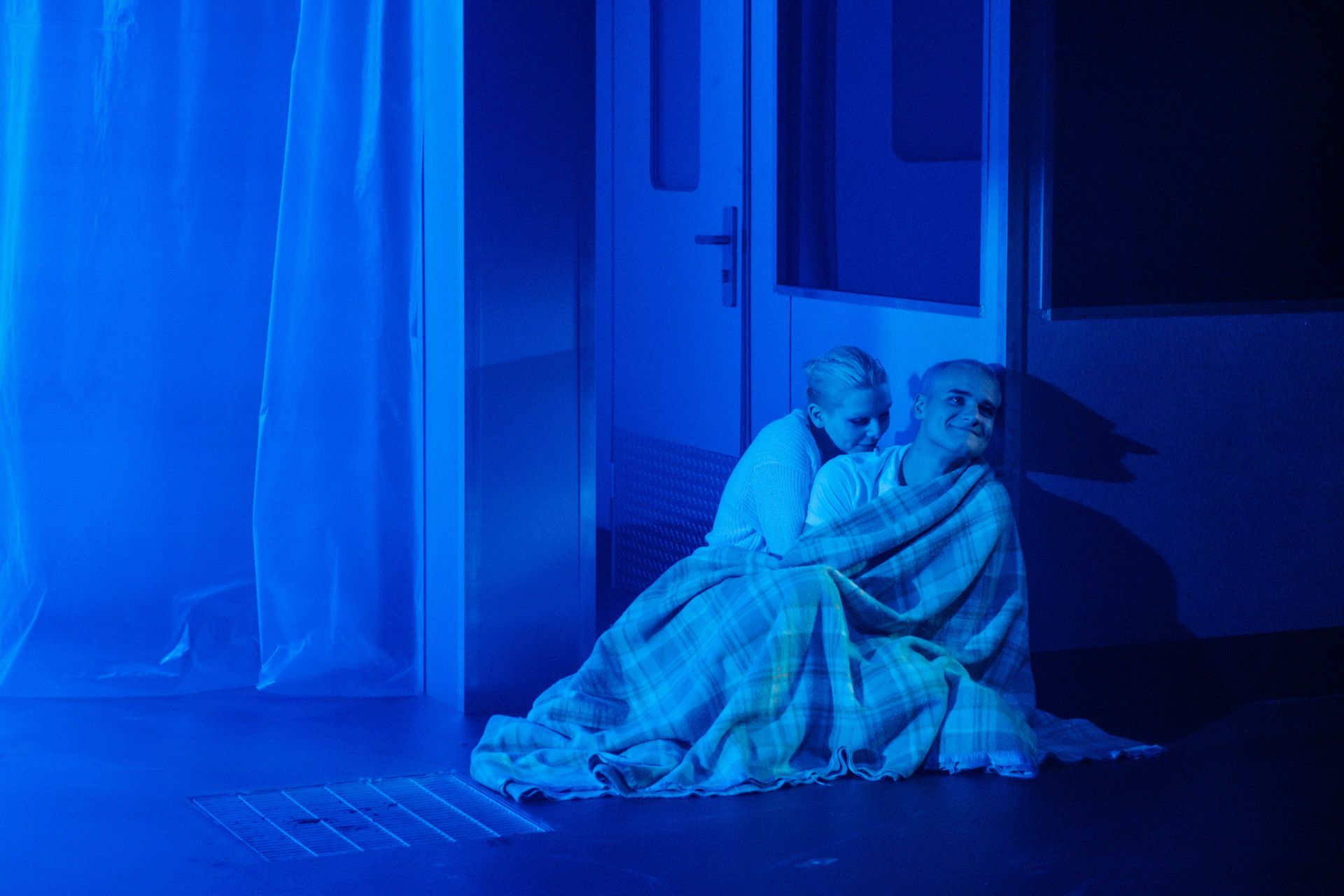
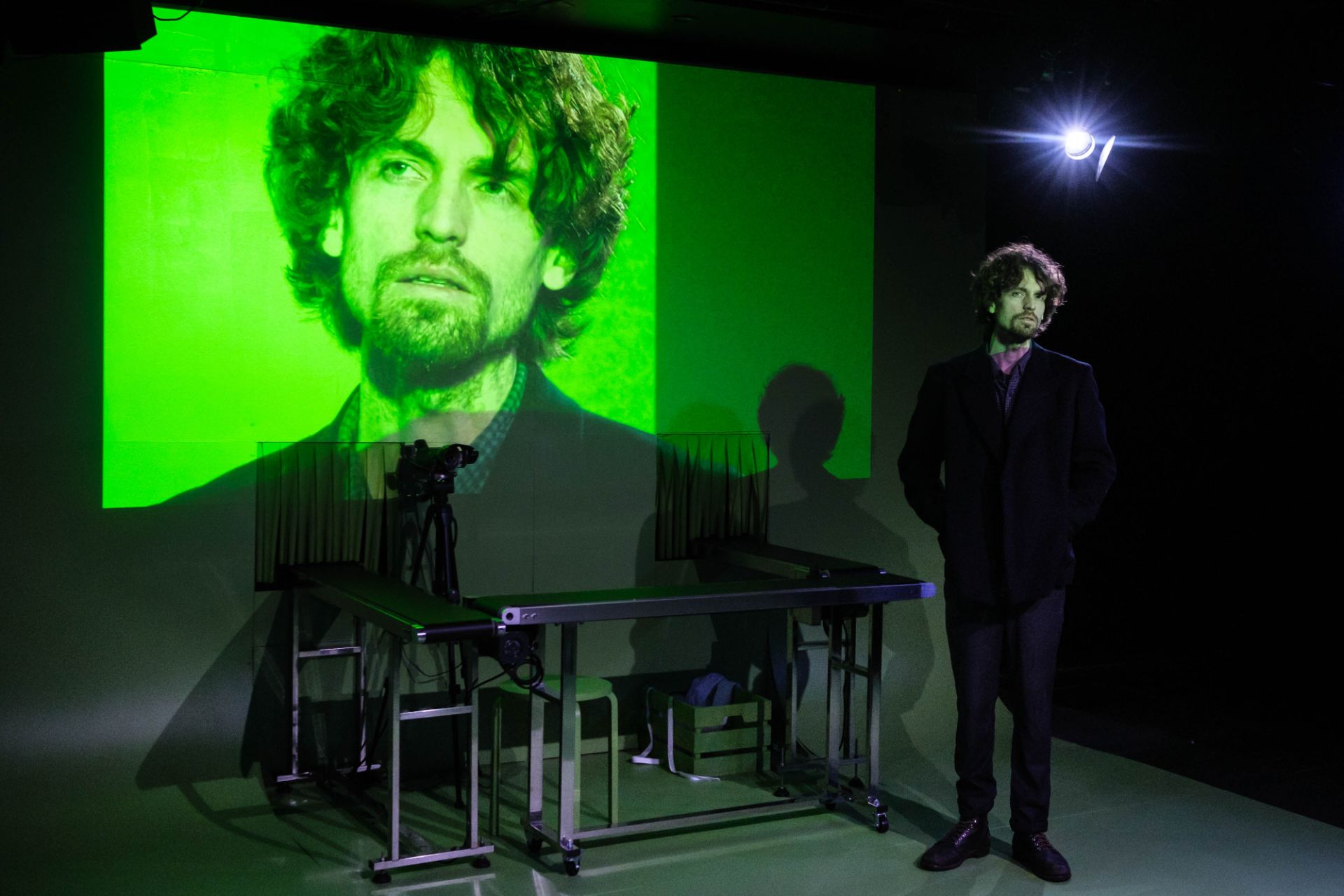
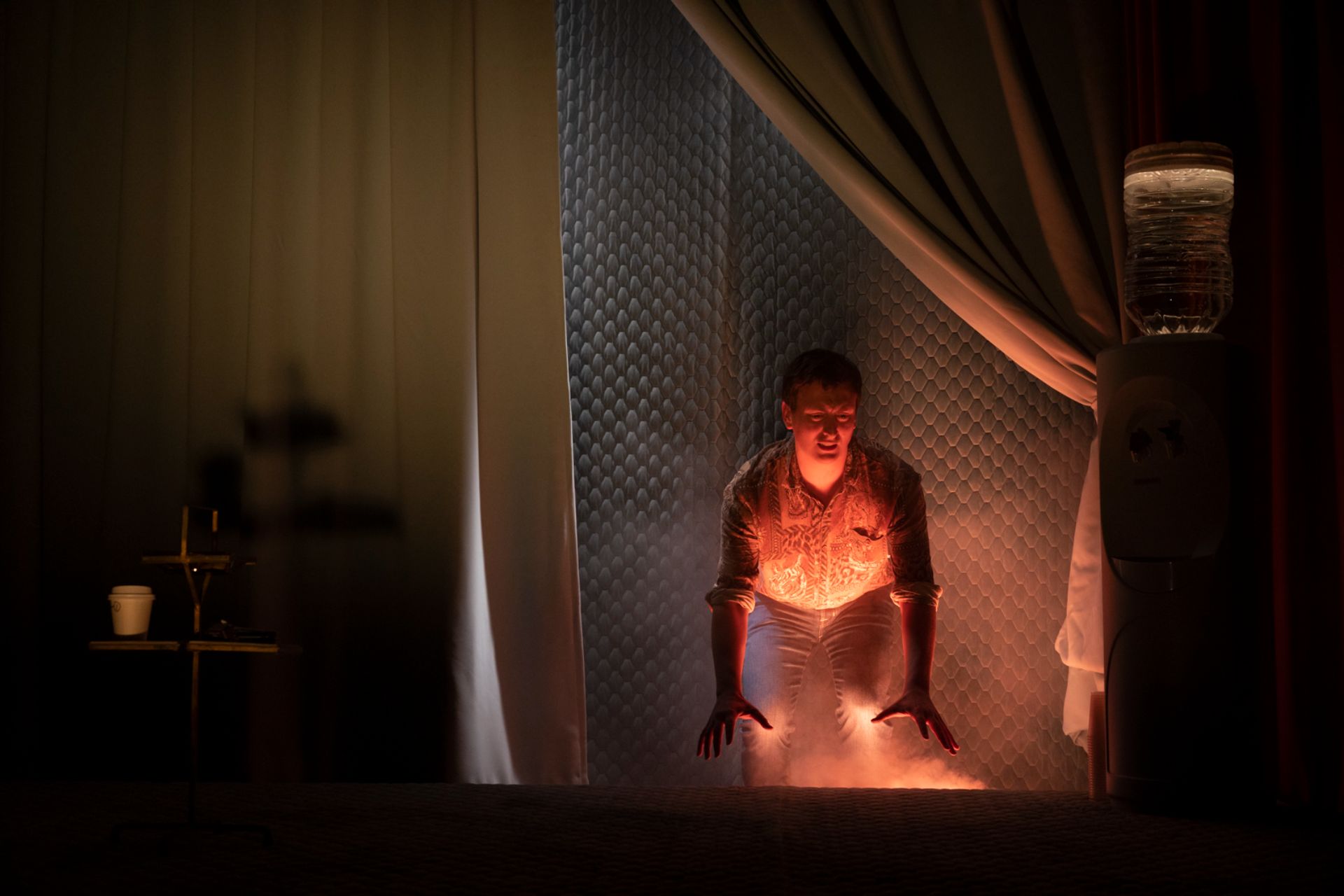
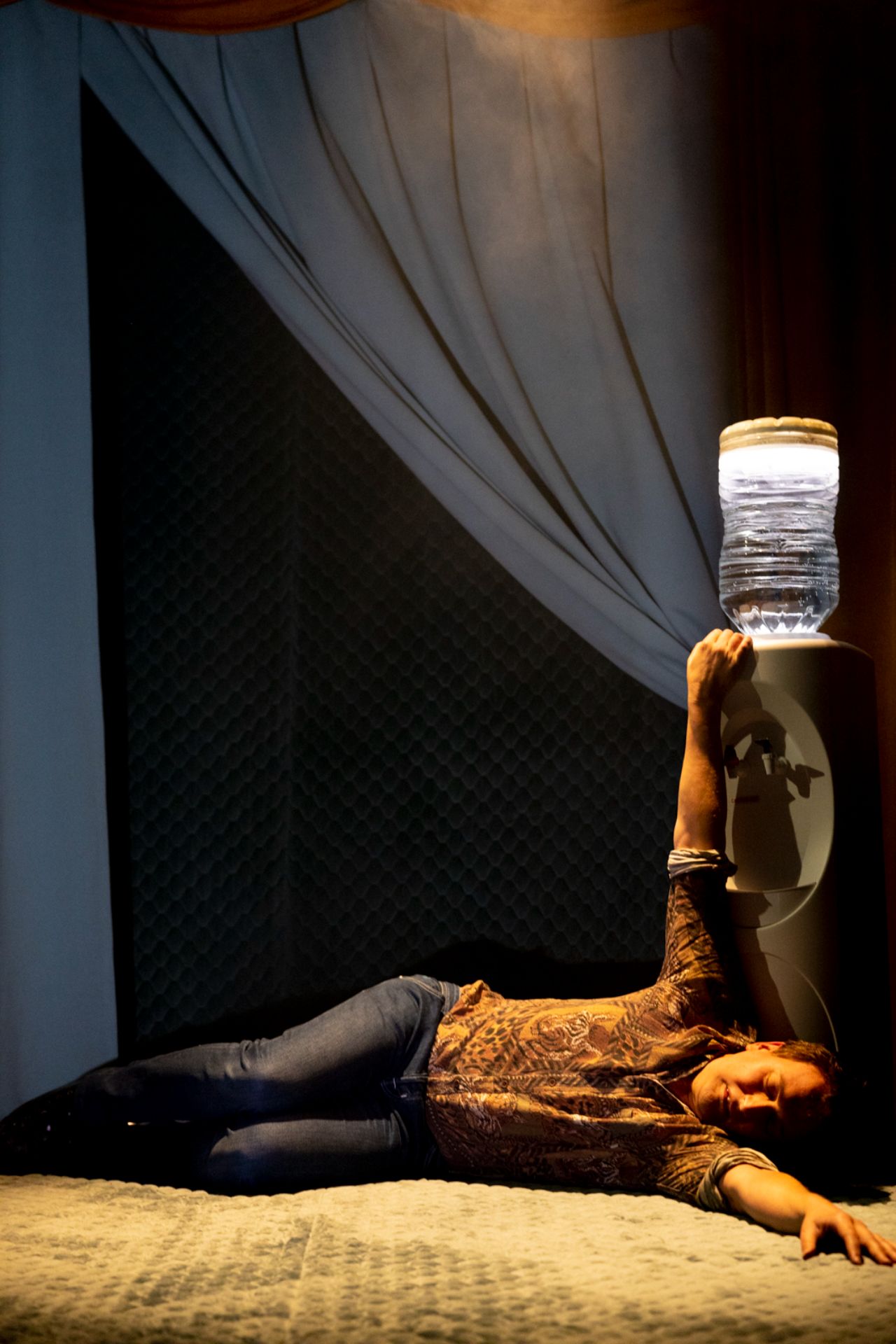
Stage and costume design by Nathan Burmeister is simple, but knowing, able to give a wink-and-nudge, that indicates appropriate time and place as well as attitude, for this very 21st century representation of ironic gay sensibility. Rachel Burke’s lights are a pleasant surprise, as they turn increasingly opulent, after establishing something distressingly humble, when we first meet Flanders at a bureaucratic facility. Sound by Tom Backhaus offers valuable atmospheric embellishment to the reminiscences being shared, even if Flanders’ extraordinary dexterity with his commanding voice, feels to be more than sufficient.

End Of is a reminder that sometimes, the story is not the thing. The sheer pleasure of being in the presence of a performer at the top of their game, doing what they do best, is one of the gifts of theatre that can never be replaced. This bliss cannot be digitised.
www.griffintheatre.com.au

Review: Past The Shallows (ATYP)

Venue: The Rebel Theatre (Sydney NSW), Oct 12 – Nov 9, 2022
Playwright: Julian Larnach (based on the novel by Favel Parrett)
Director: Ben Winspear
Cast: Meg Clarke, Ryan Hodson, Griffin McLaughlin
Images by Jesse Hunniford

Theatre review

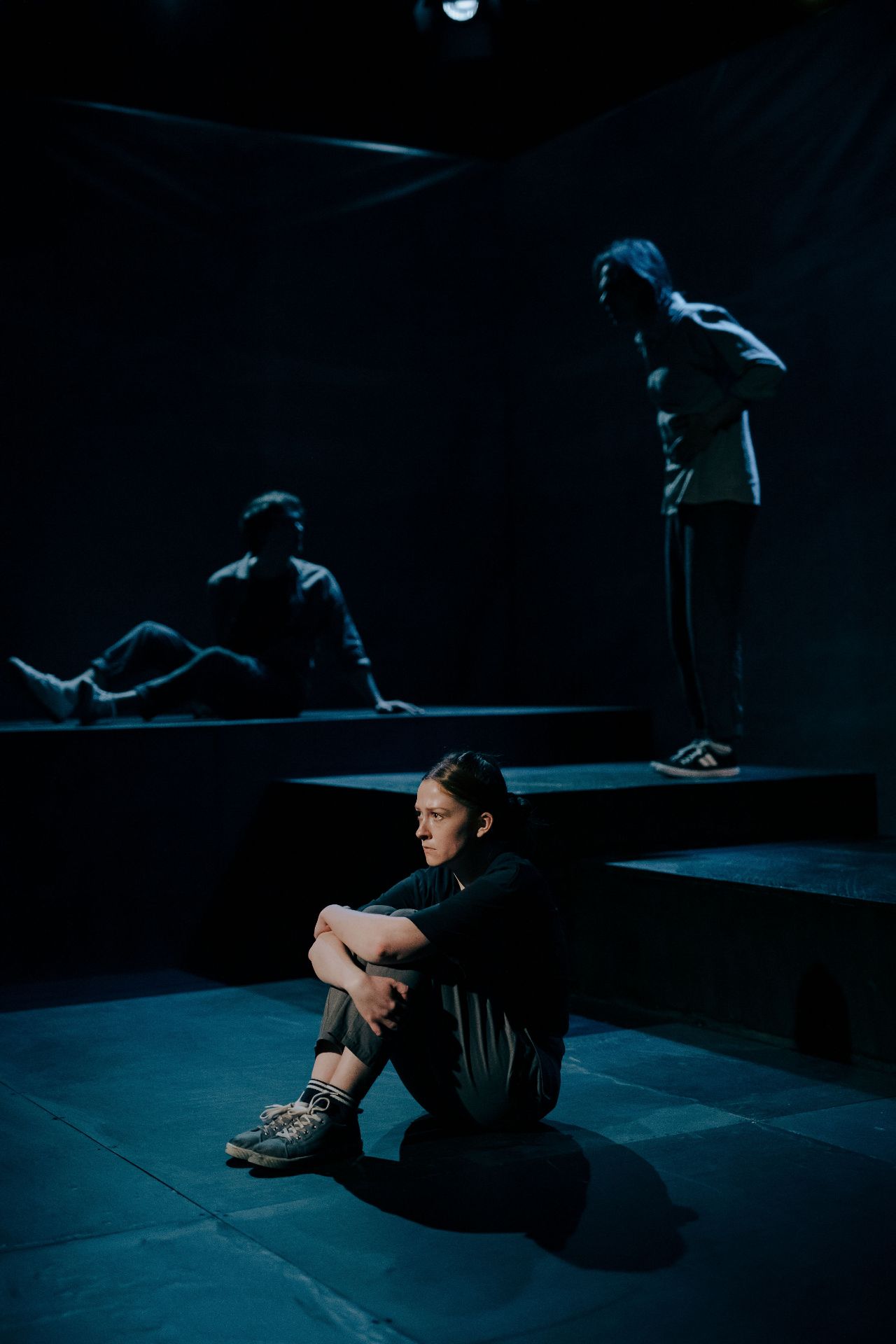
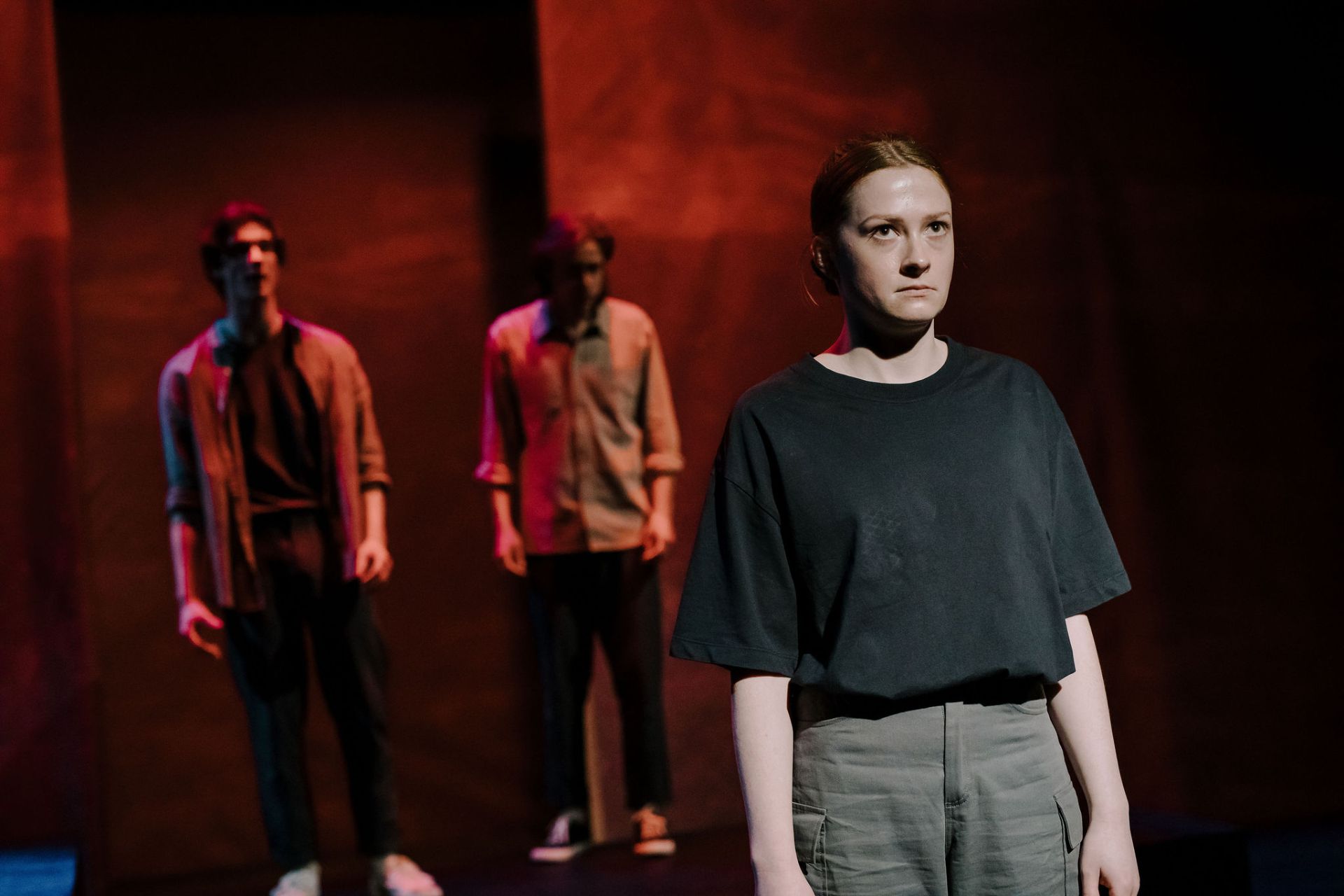
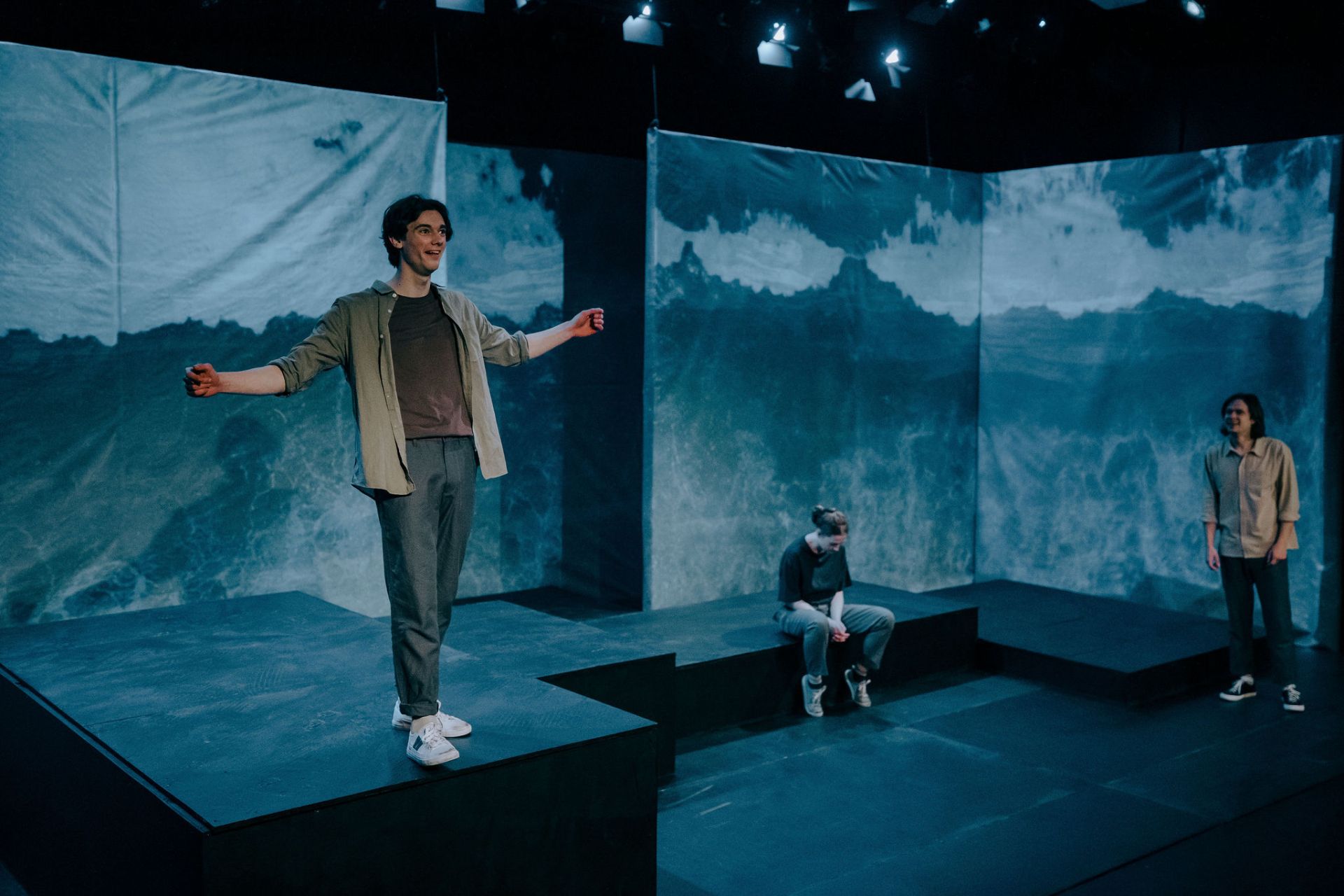
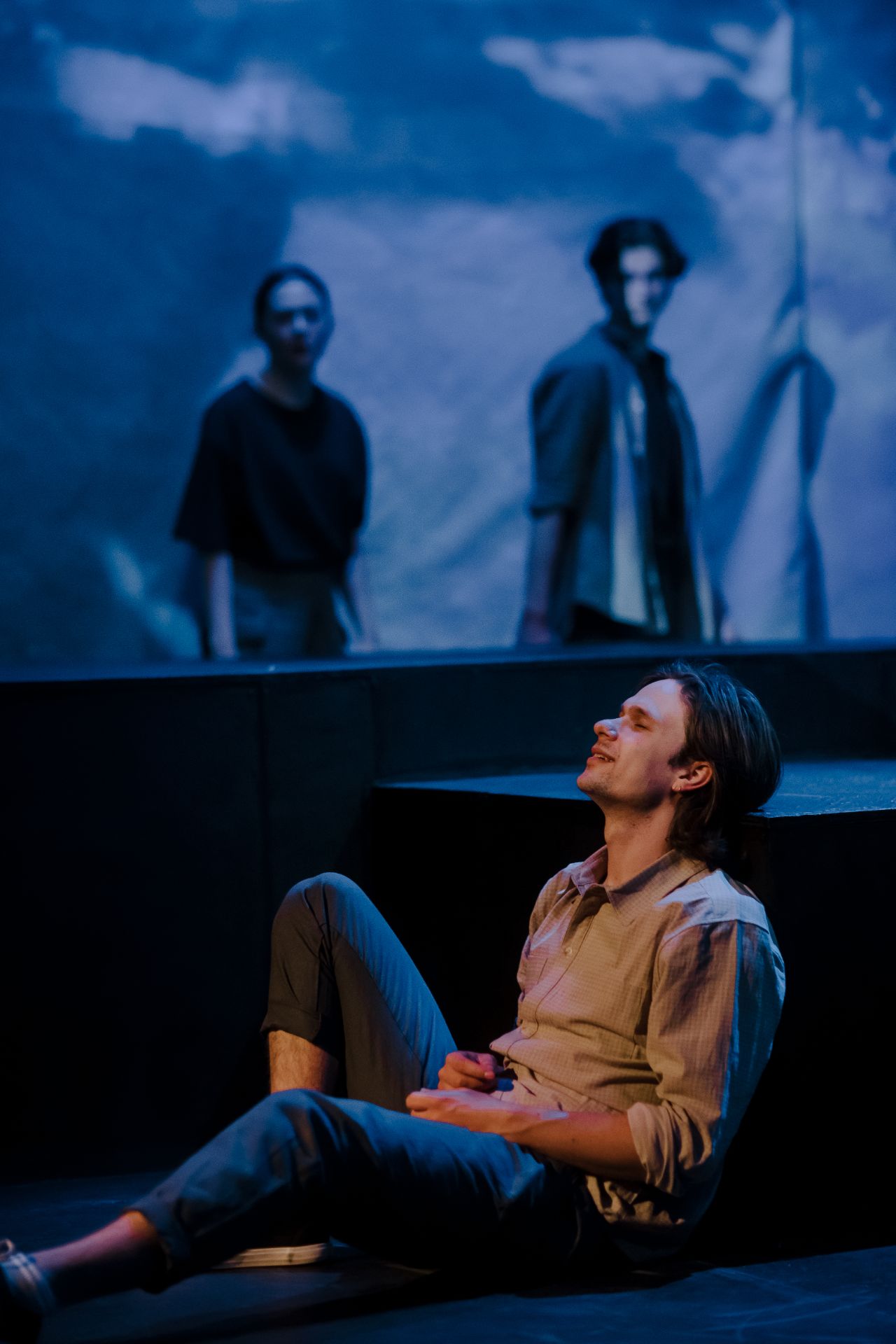
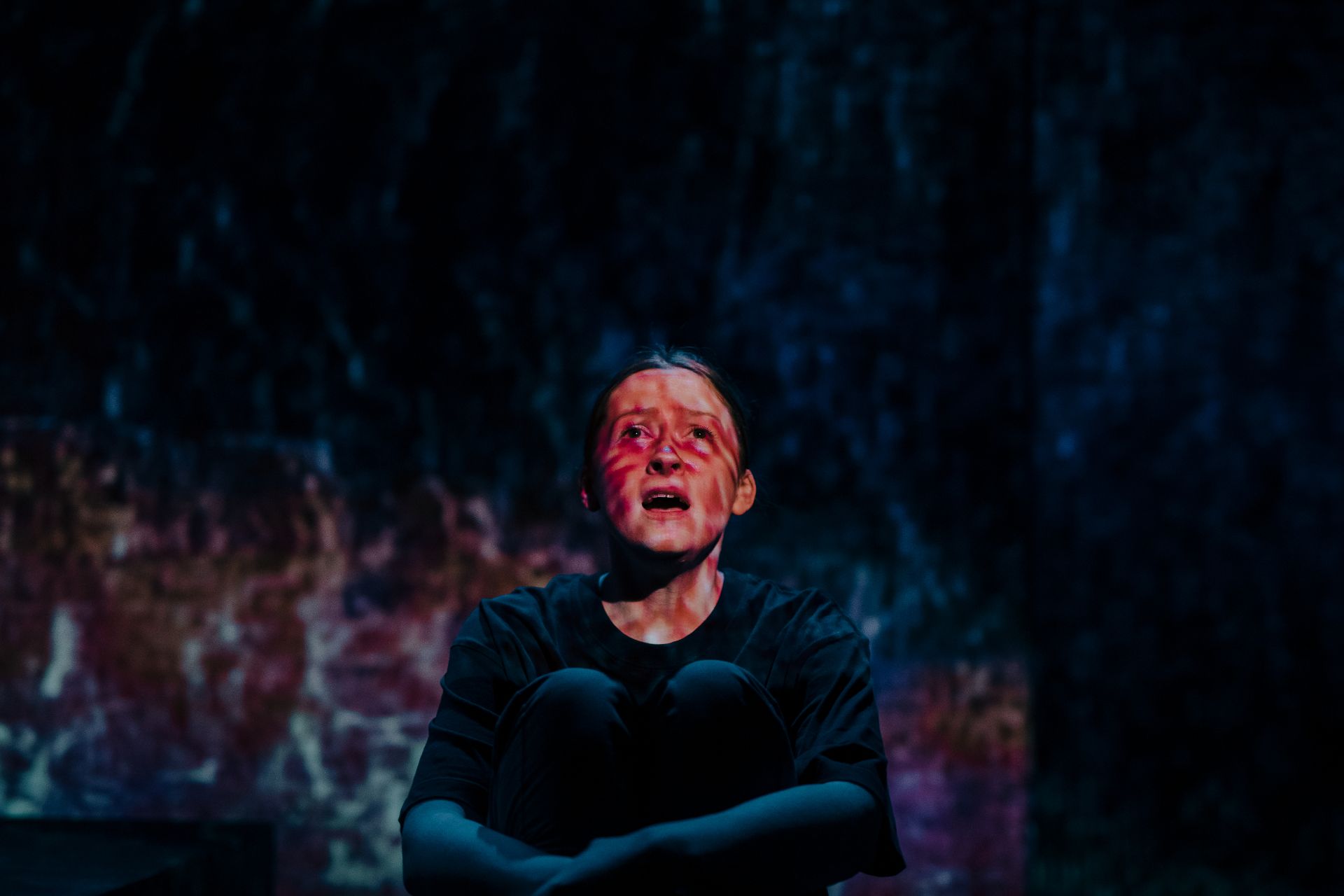
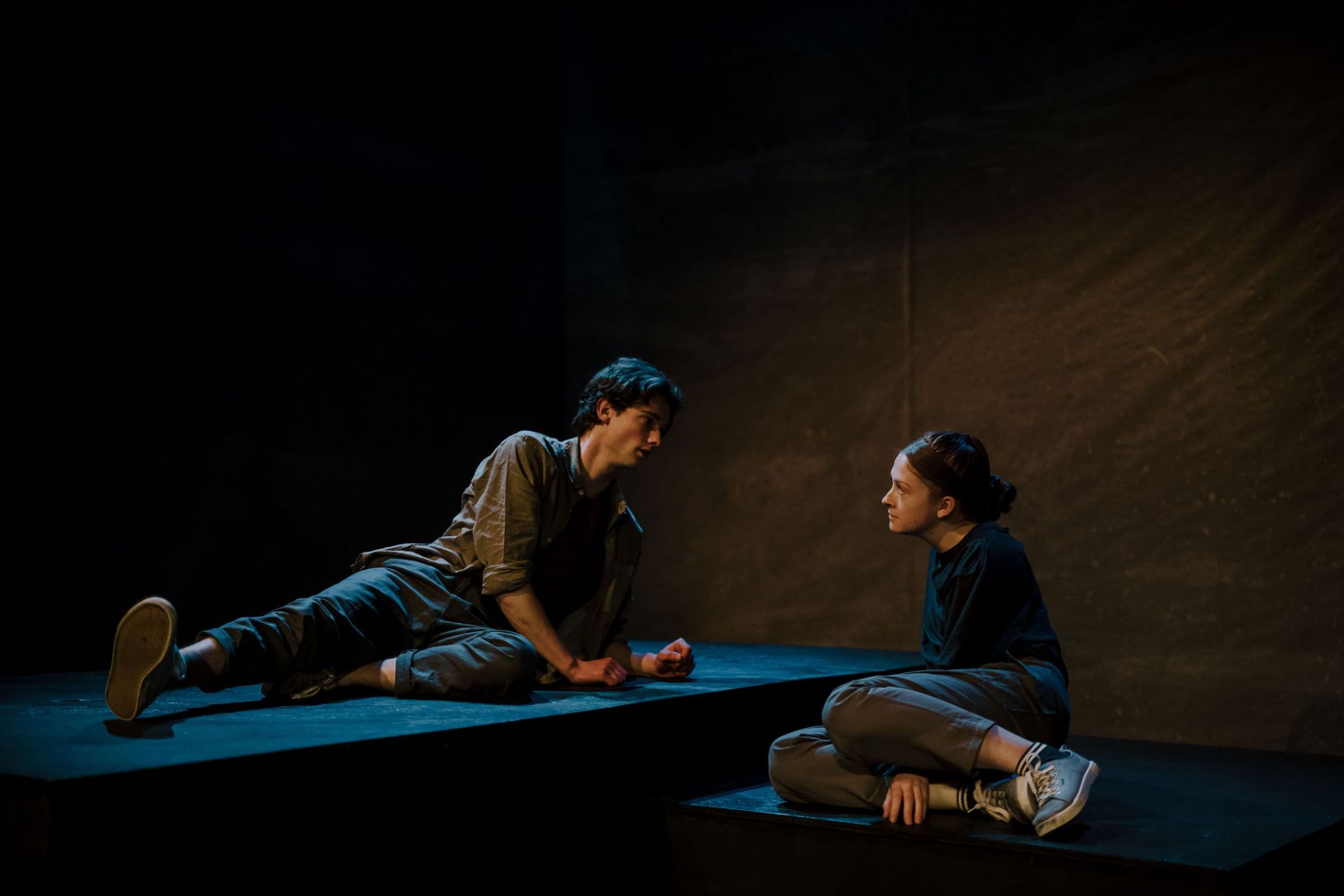
On the isolated south-east coast of Tasmania, three brothers struggle with life after their mother’s death. The wild seascape is part of their chaos, with an unstable father being the indisputable cause of their daily anxieties. Julian Larnach’s adaptation of the novel Past the Shallows by Favel Parrett, brings to the stage a story of family, of youth and of masculinity. A challenging mixture of narration and dialogue forms the basis of this theatrical iteration. Instead of being assigned particular roles, all the characters are taken on by three performers, who swap their parts seemingly randomly, all through the show.

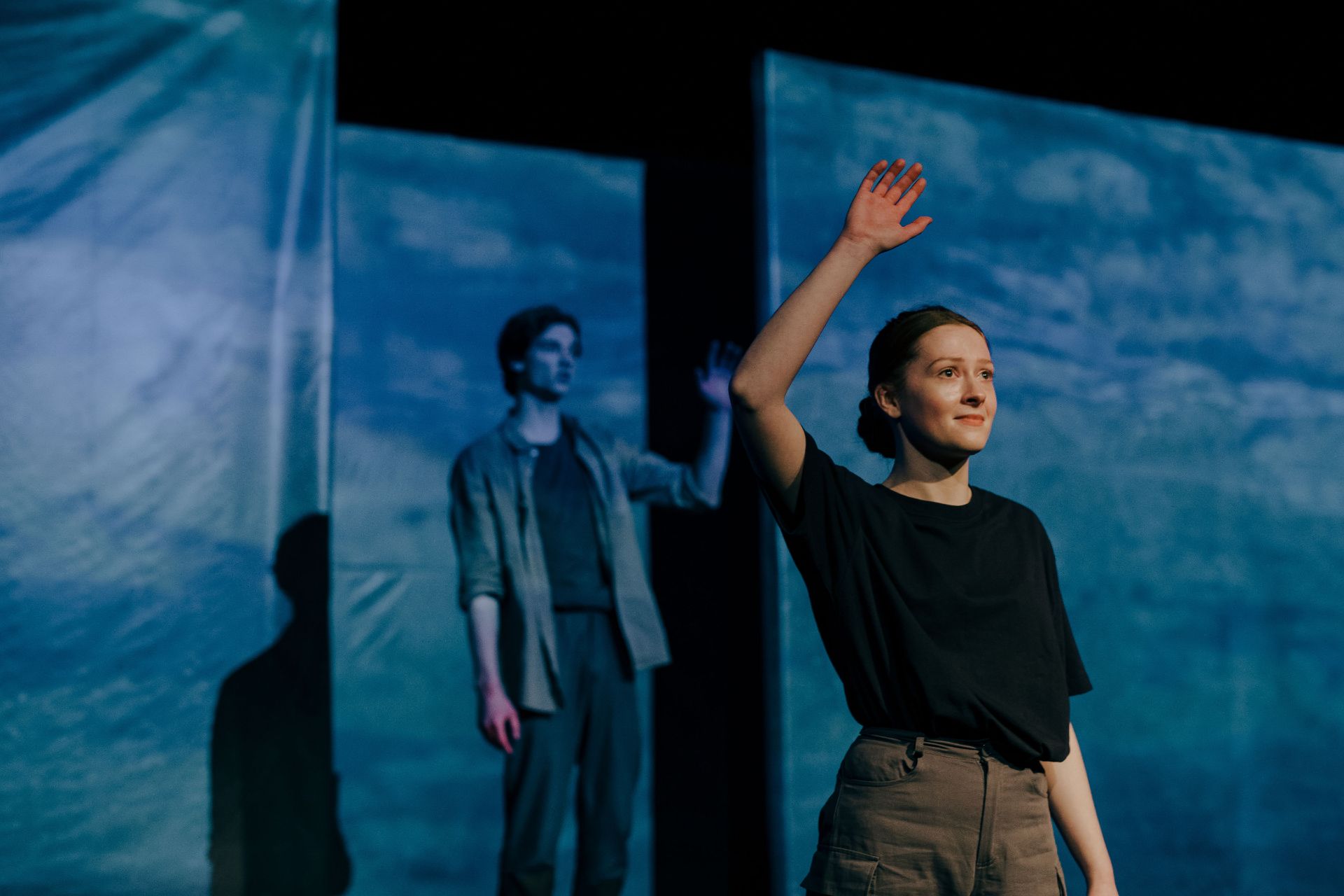
Directed by Ben Winspear, Past the Shallows requires of its audience an inordinate amount of concentration, but the experience is ultimately a satisfying one. There is a vividness to atmosphere and tension, made even more pronounced by the sense of confusion, that we encounter from the staging’s unusual device of interchanging actors. It is a representation of volatility that fits well within the themes of the play, and although disquieting for the audience, the performers emanate a confidence that helps sooth our nerves.

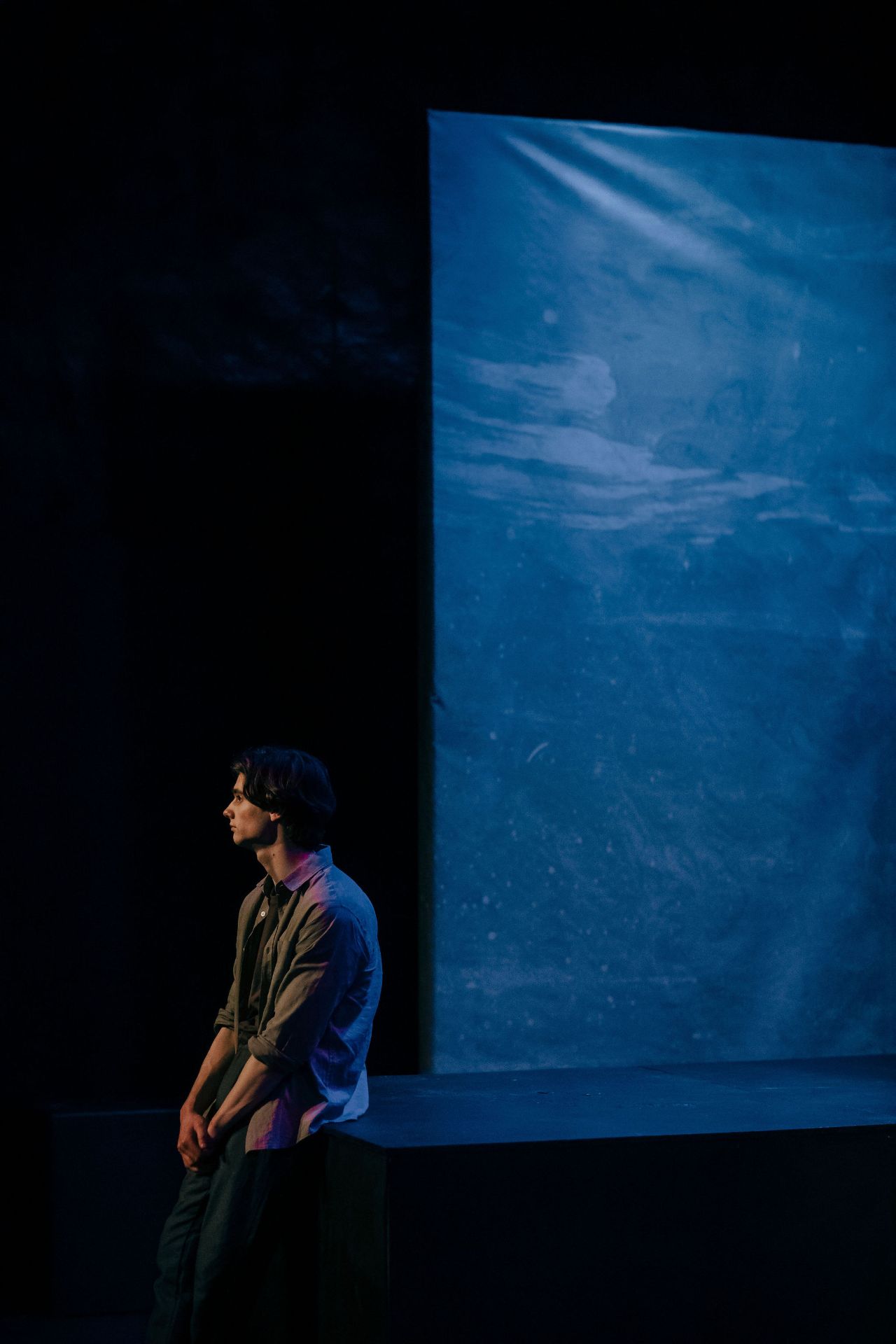
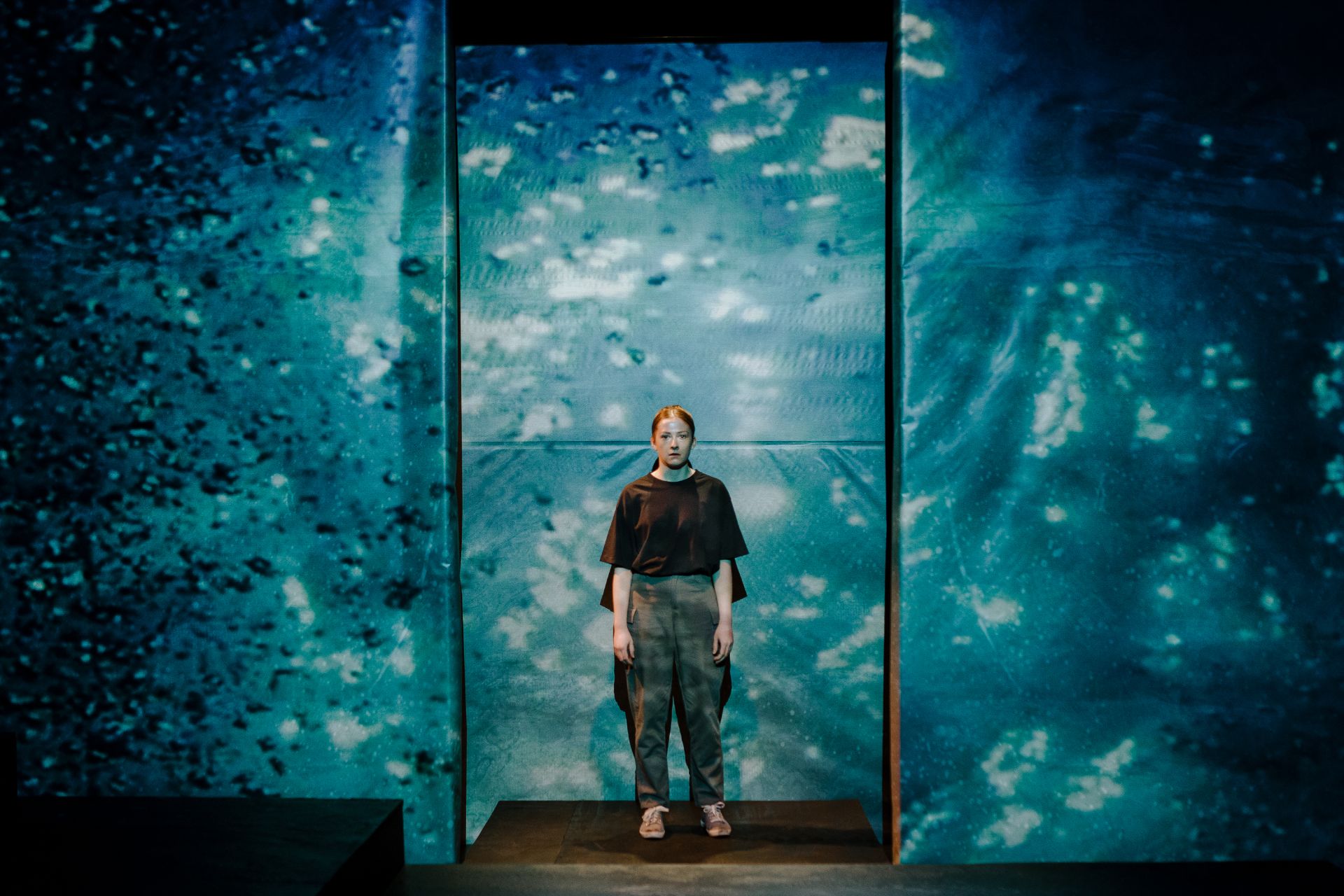
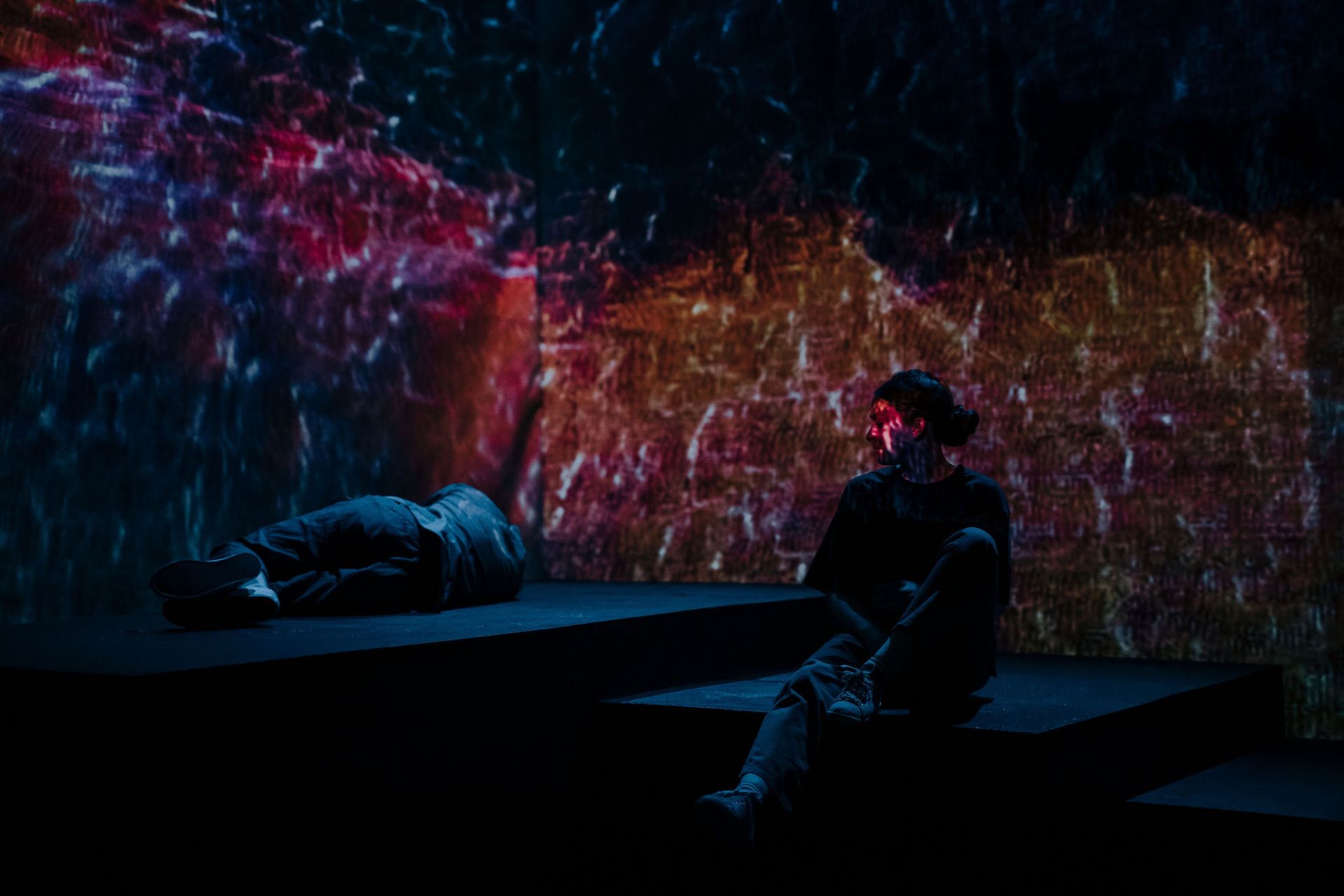
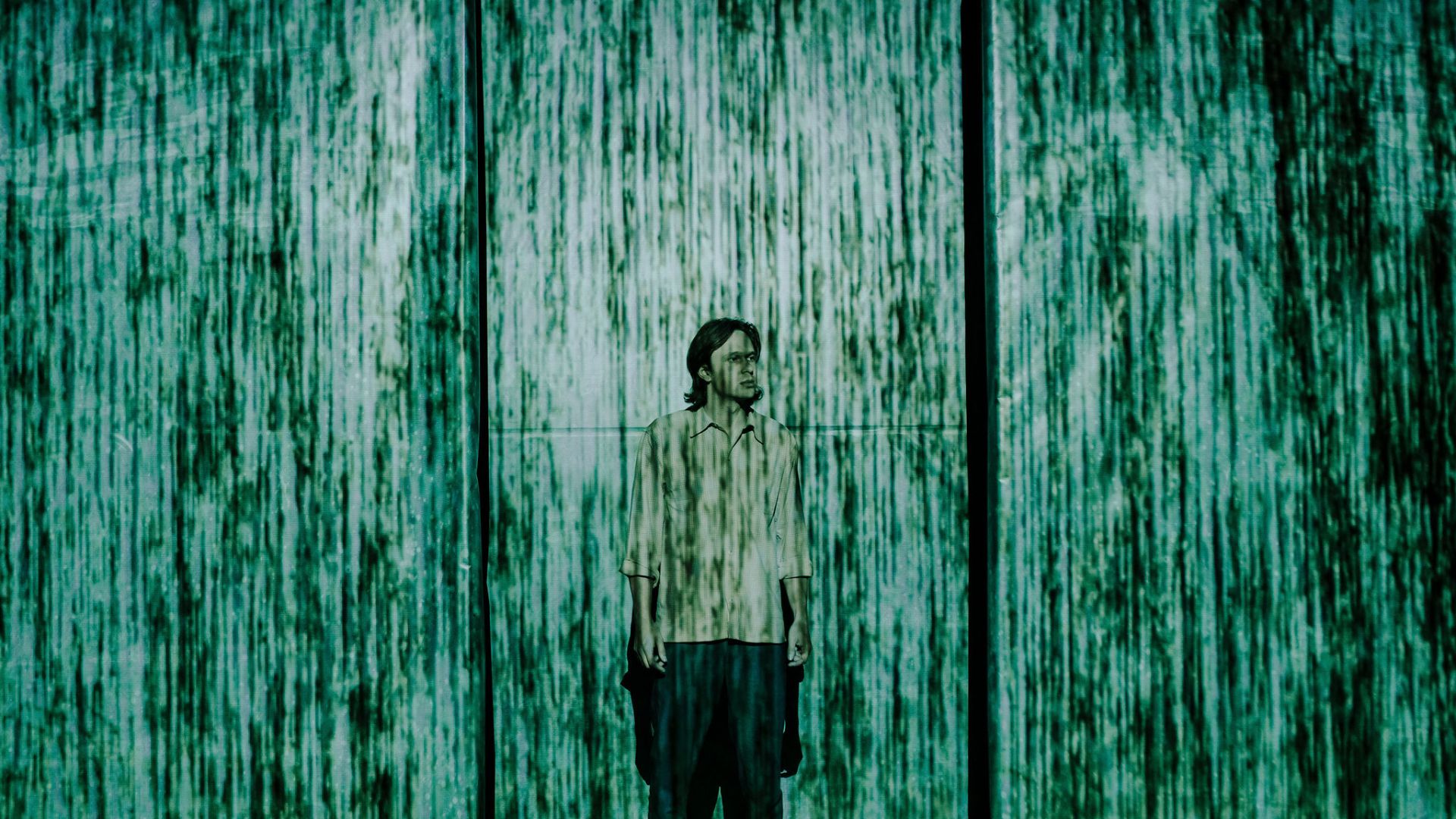
Video by Nema Adel is projected on the cyclorama, forming the literal and figurative backdrop to the brothers’ tumultuous story. Beautiful shot and edited, but not always bright enough or perhaps sharp enough in resolution, for greater impact. Lights by Jason James are sometimes in competition with said video, but is memorable for bringing drama when required, on a bare black stage. Keerthi Subramanyam’s set and costume designs are minimal, but they accurately convey the presentational style chosen for this gritty, no frills tale that deals in part with poverty. Sound by Glenn Richards is not always precisely rendered, but certainly delivers powerfully at key moments.

Actor Meg Clarke is astonishingly persuasive from start to end, extraordinarily present in whichever role she embodies. In Clarke we see an endless font of empathy and vulnerability, that wins us over comprehensively, in a show with many elements that threaten to alienate its audience. Ryan Hodson and Griffin McLaughlin may not equal in terms of depth for their portrayals, but both match with energy and dedication, in a work that impresses, with its very well-rehearsed degree of readiness.

In Past the Shallows, nature is beautiful, and terrifying. Similarly, and accordingly, humans are divine yet devastating, for we are nothing but a small adjunct modicum of this thing we understand to be nature. We imagine nature to have its purposes and its ways, yet we are given a certain element of will in how we wish to be, as humans within this scheme, of ecology and of destiny. It will forever be arguable if we do indeed have any bearing on the greater consequences, but the human conscience is real, and we always know deeply, that which is truly good and right.

www.atyp.com.au | www.archipelago-productions.com

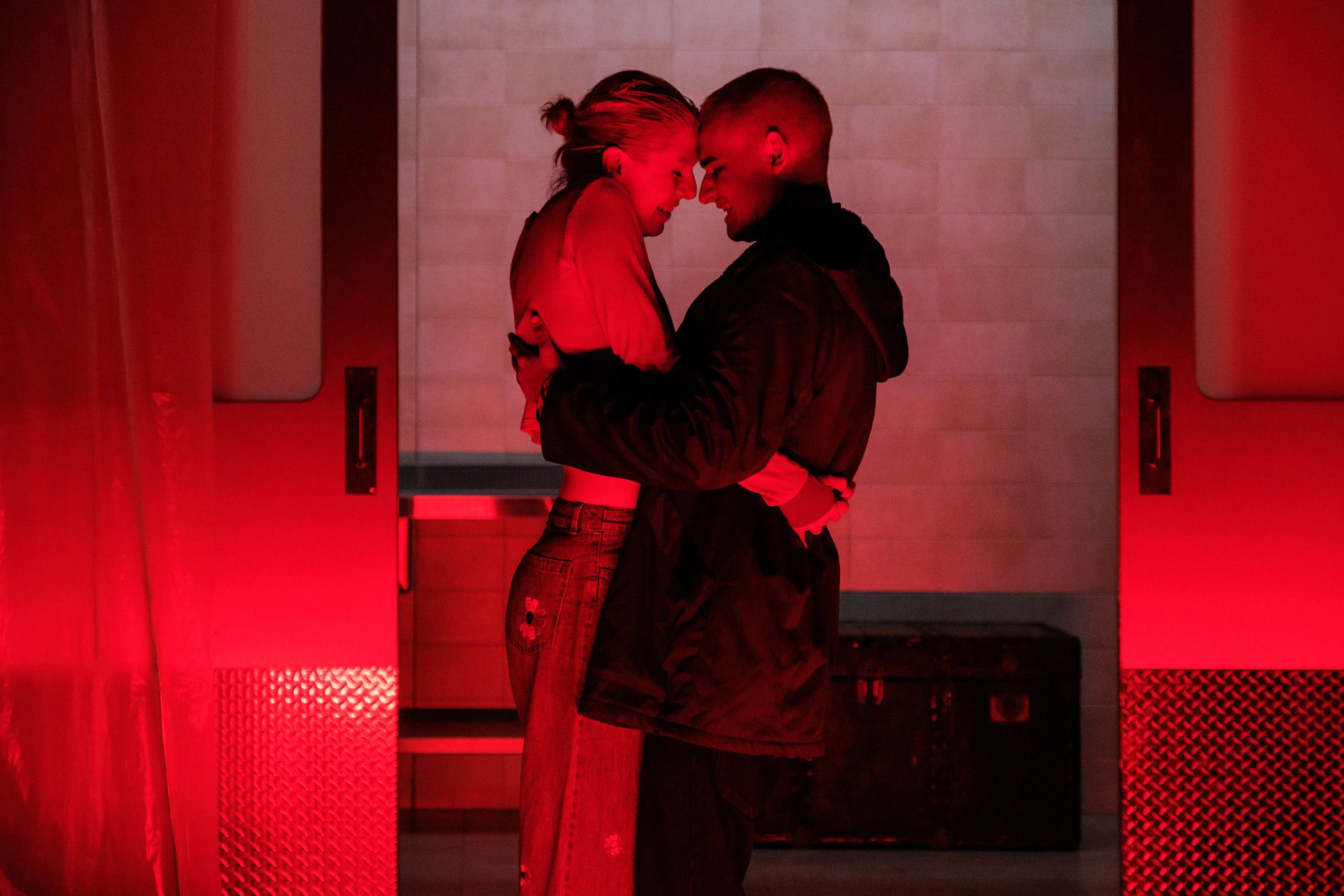
Review: Let The Right One In (Darlinghurst Theatre Company)

Venue: Eternity Playhouse (Darlinghurst NSW), Oct 7 – Nov 20, 2022
Playwright: Jack Thorne (based on the novel by John Ajvide Lindqvist)
Director: Alexander Berlage
Cast: Stephen Anderton, Callan Colley, Will McDonald, Eddie Orton, Josh Price, Monica Sayers, Sebrina Thornton-Walker, Matthew Whittet
Images by Robert Catto

Theatre review
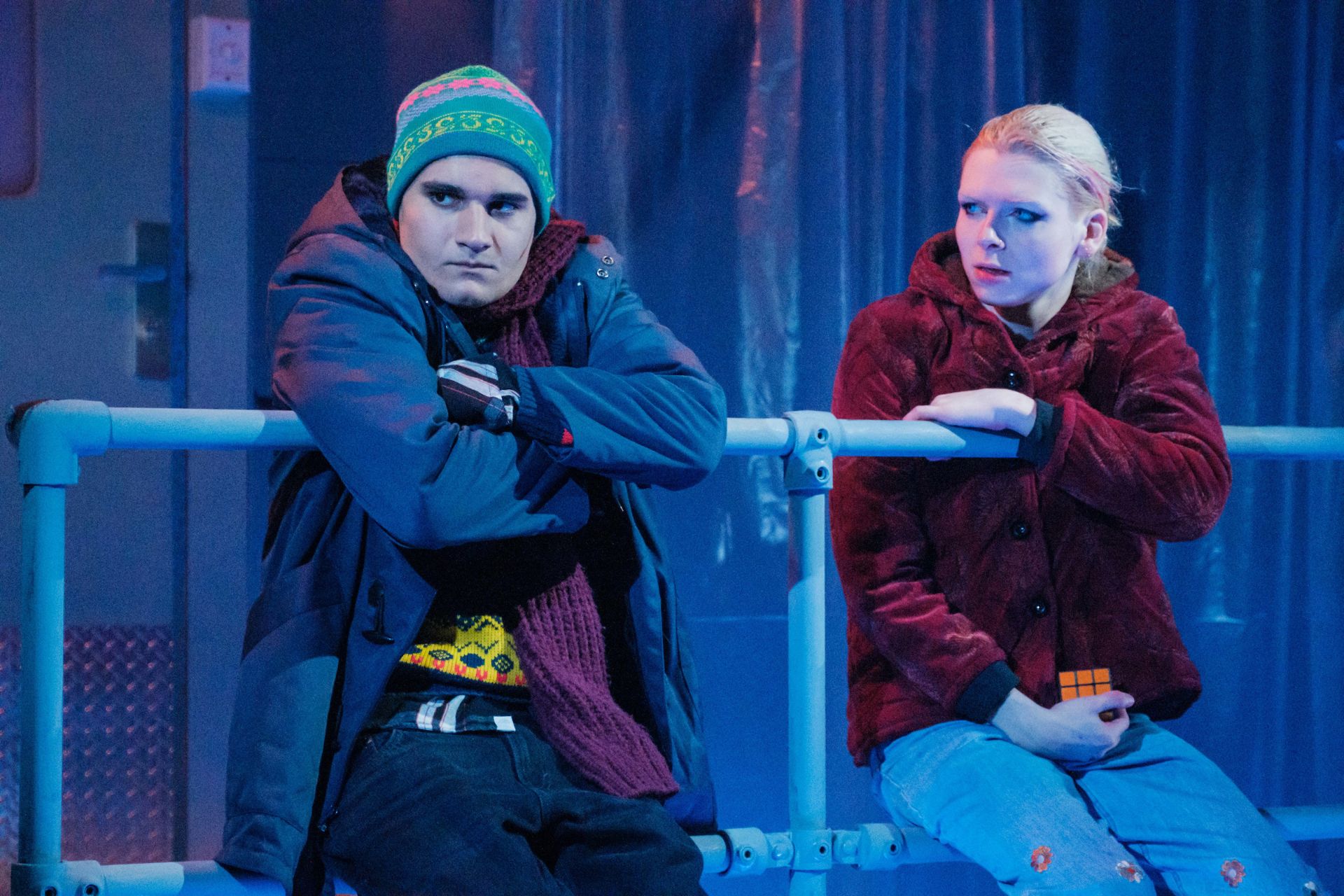
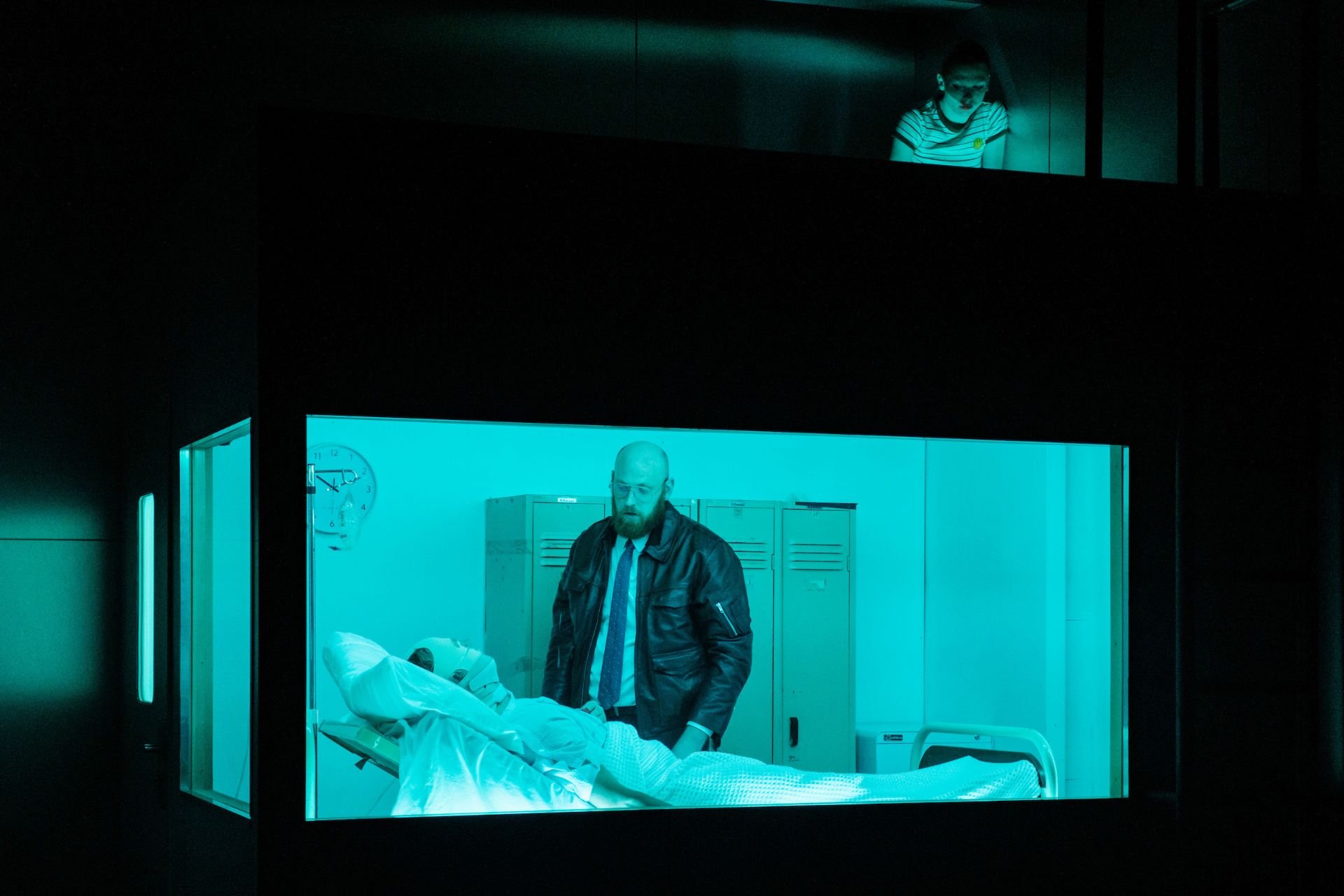
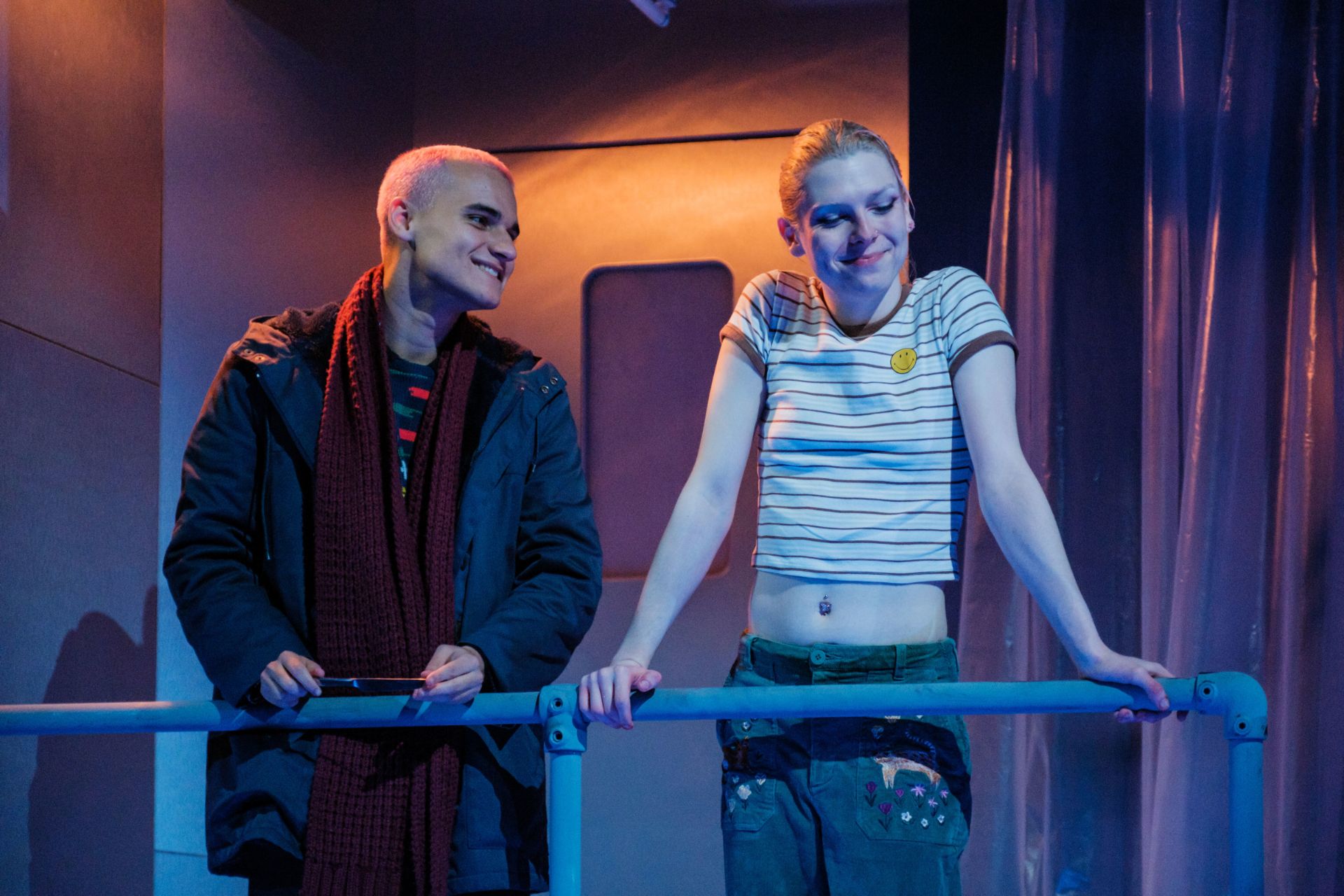
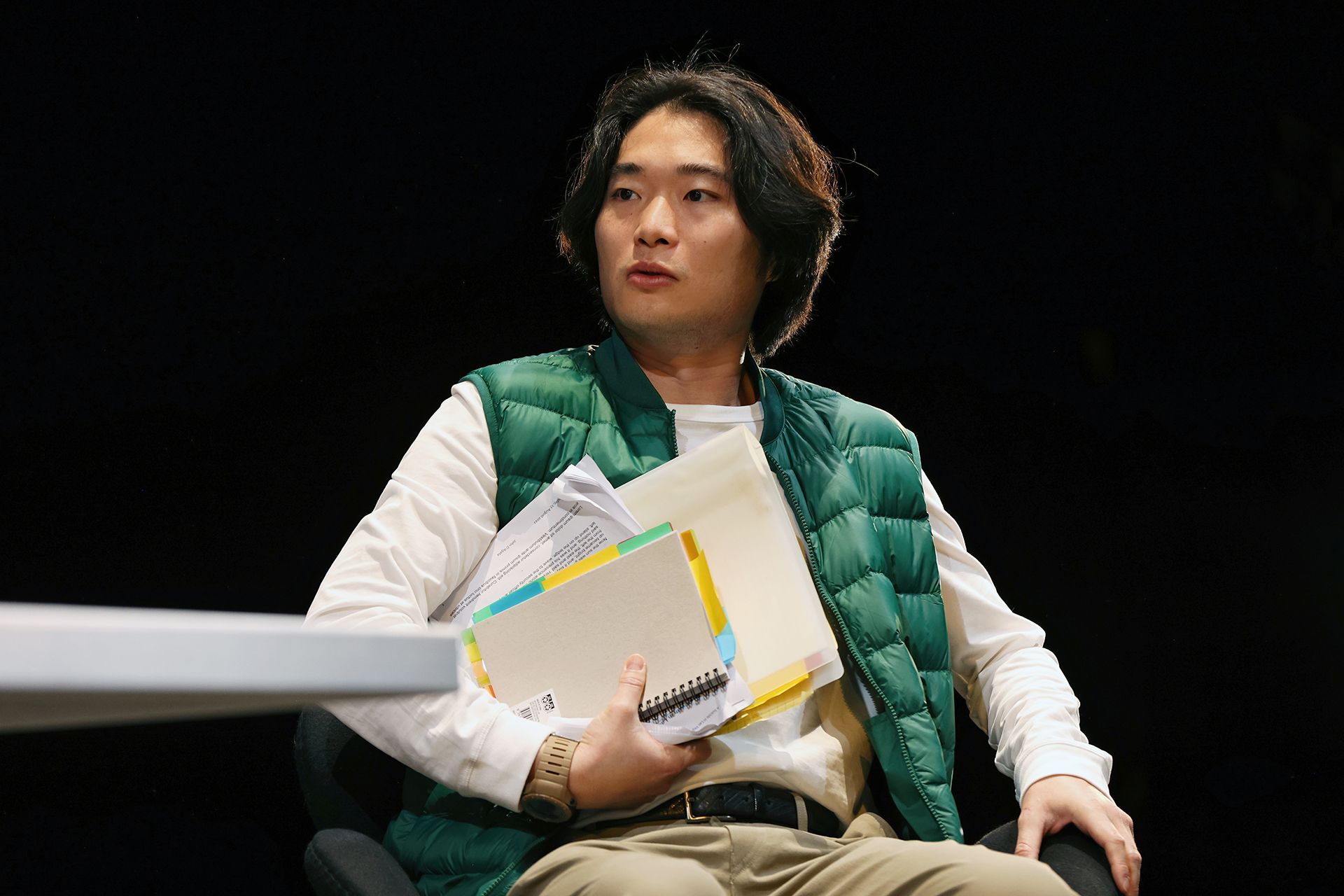
Things are going terribly for 12-year-old Oskar. His mother is a raging alcoholic, and the bullying at school is interminable. Meeting Eli late one night, may seem to indicate a change for the better, but falling in love with a vampire comes with major drawbacks. Jack Thorne’s adaptation of John Ajvide Lindqvist’s novel and film Let the Right One In, attempts to transpose an unorthodox story of young love to the stage, complete with all the hallmark features of a genre piece.

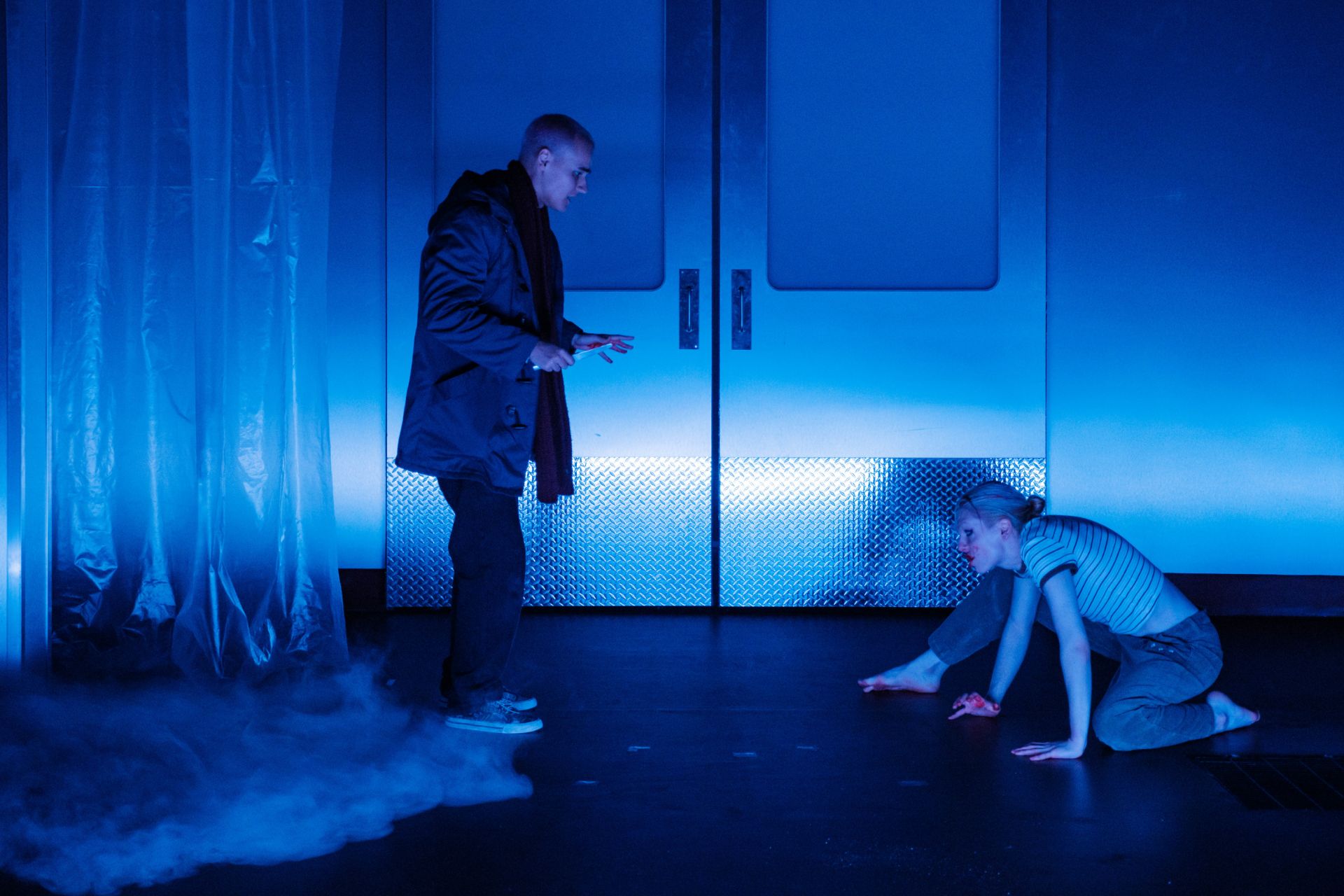
Under the directorship of Alexander Berlage, Let the Right One In becomes an unexpected concoction of romantic-comedy with horror elements. There are moments of gore to be sure, but a quirky sense of humour dominates the staging. It is a compelling experience, enjoyable especially for its unusual tackling of the supernatural, although the confluence of humour with revulsion, seems a tricky one to resolve.

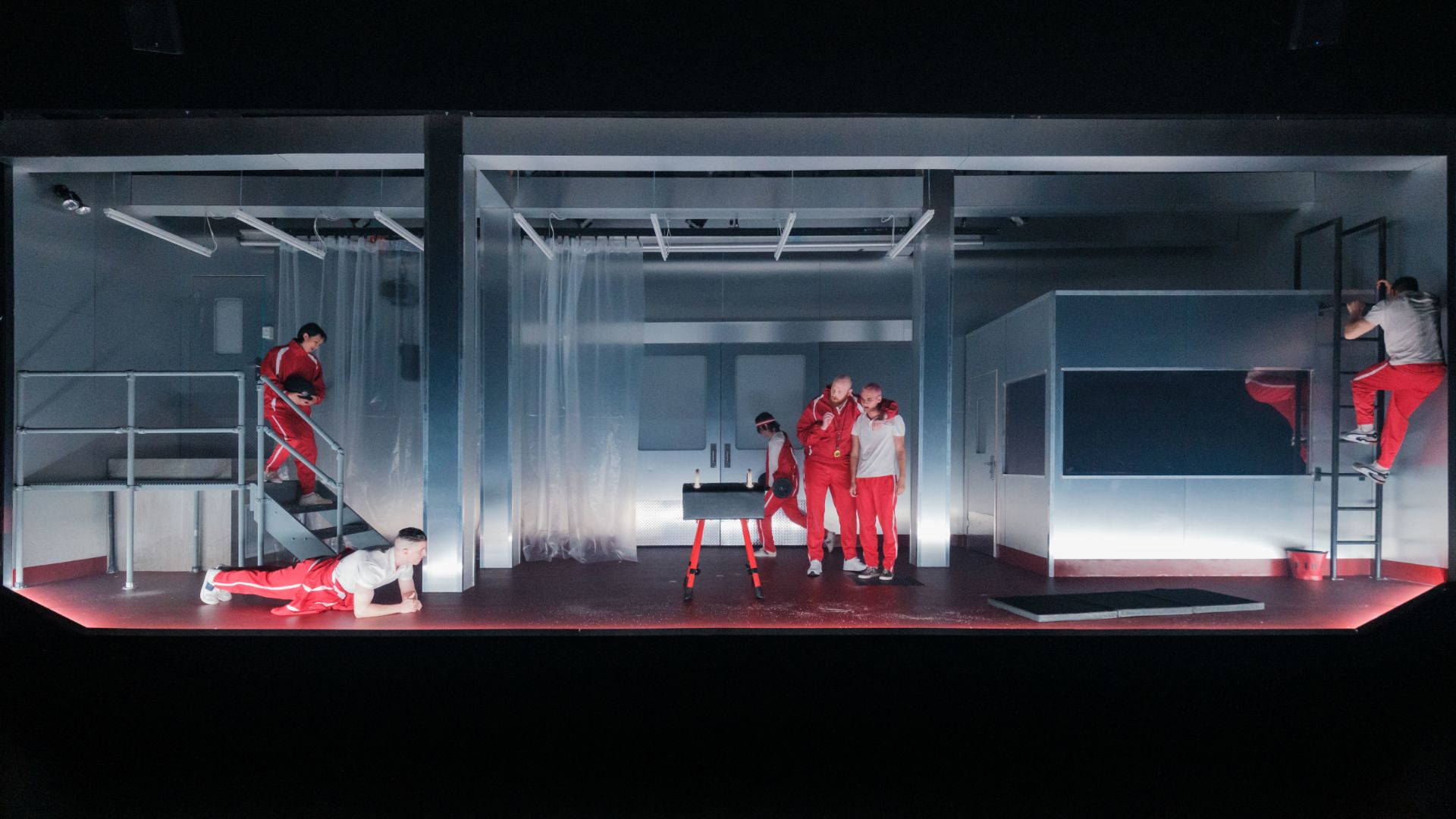
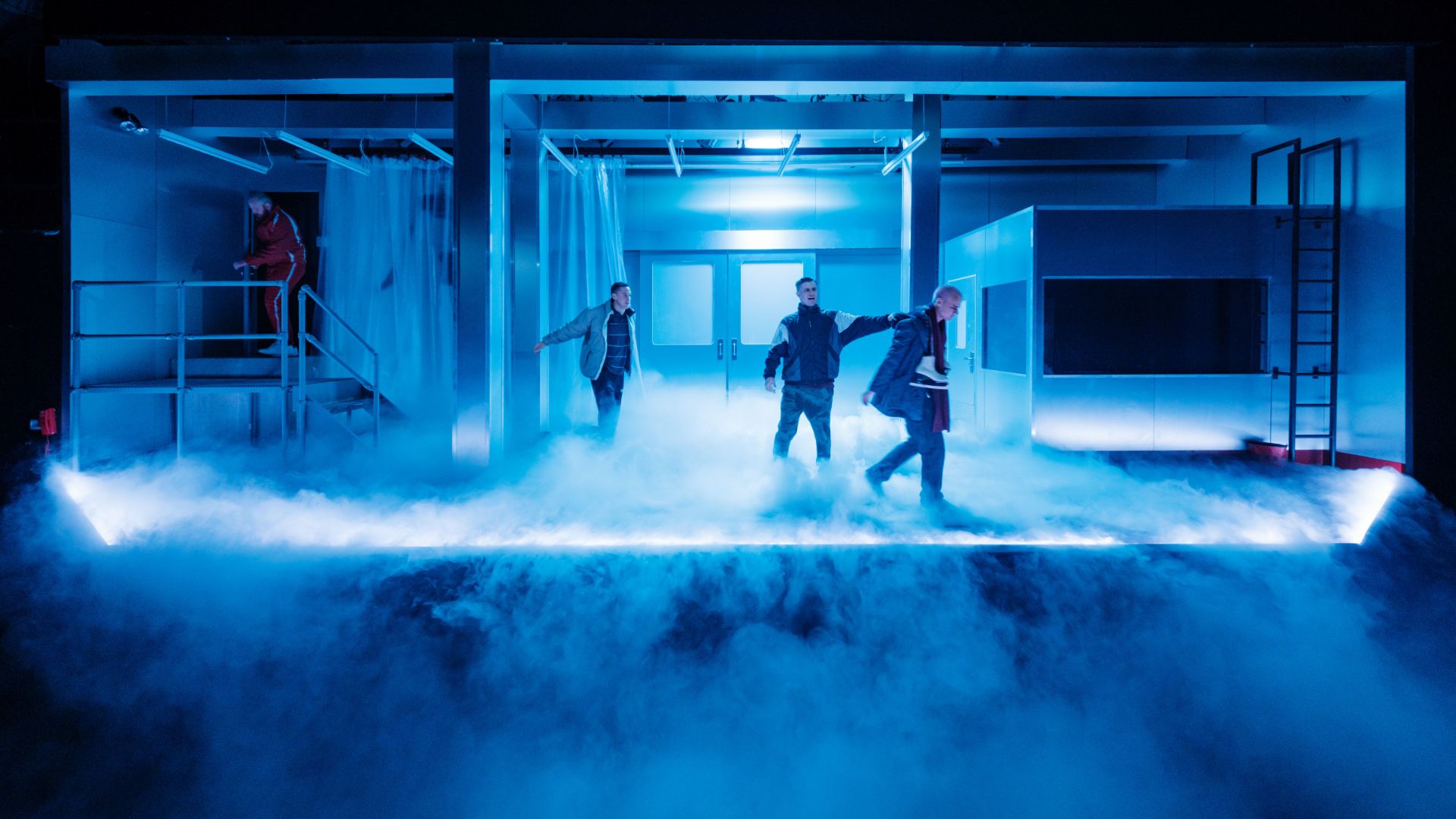
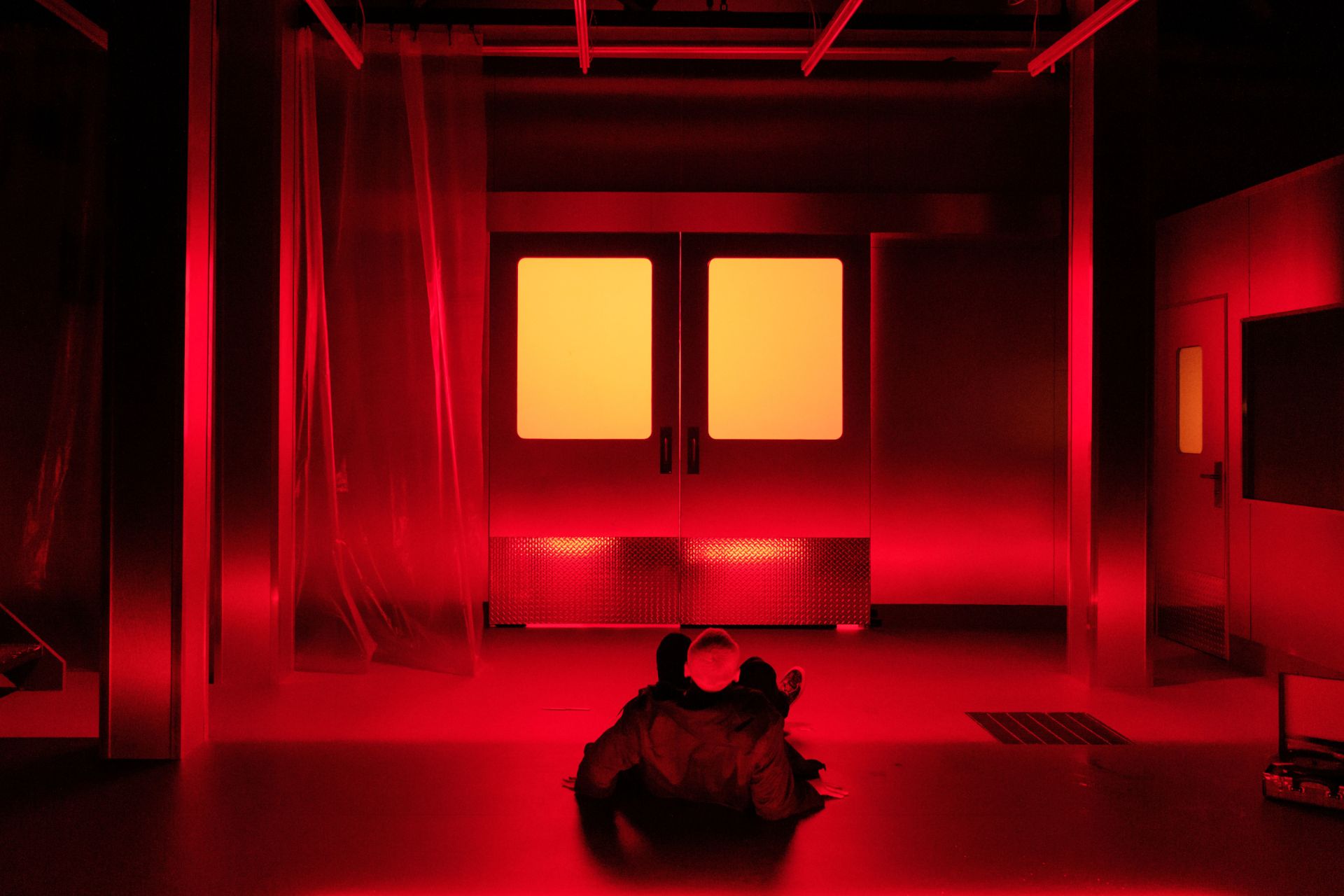
Trent Suidgeest’s sensual lighting design is highly attractive, but can sometimes seem at odds with the comedy being performed. There are competing tones being presented, each one detracting from the other. Daniel Herten’s sound and music too, work consistently to build tension for something resolutely scary, seemingly unaware of the show’s strong tendencies toward the funny. Isabel Hudson’s set design is appropriately cold and stark, depicting somewhere appearing a cross between hospitals and abattoirs, with shiny surfaces that keeps the chill in our spines. Hudson’s costumes are evocative of Sweden, from whence the tale originates, but the main characters never really look persuasively like children.

Actor Will McDonald is very endearing as Oskar, perfectly conveying the innocence of his character, whilst offering a rich interpretation, of someone going through something impossibly intense. The challenging task of portraying Eli, who is both a small child, and a phantasm over a century old, is taken on by Sebrina Thornton-Walker, who brings a satisfying sense of macabre physicality to the role. Supporting players, Stephen Anderton, Callan Colley, Eddie Orton, Josh Price and Monica Sayers, are spirited in their embrace of the show’s absurdist dimensions, each one leaving a strong impression with the idiosyncrasies they are able to find, for the various personalities that we meet.

It is a strange phenomenon, that people should pay good money to make themselves feel scared. It is perhaps an opportunity for us to release, that which has to be psychologically suppressed, in order that we may face daily life with an attitude of normalcy. The possibilities of afterlife are hard to discount, for the unknown has the ability to take on infinite configurations, and the terror of death makes our imagination of that aftermath go to the darkest. Hence it is easy to believe the worst, but only in chosen occasions can we indulge in those frightful meditations.
www.darlinghursttheatre.com

Review: For The Grace Of You Go I (Kings Cross Theatre)

Venue: Kings Cross Theatre (Kings Cross NSW), Oct 5 – 15, 2022
Playwright: Alan Harris
Director:
Lucy Clements
Cast: Jane Angharad, James Smithers, Shan-Ree Tan
Images by

Theatre review
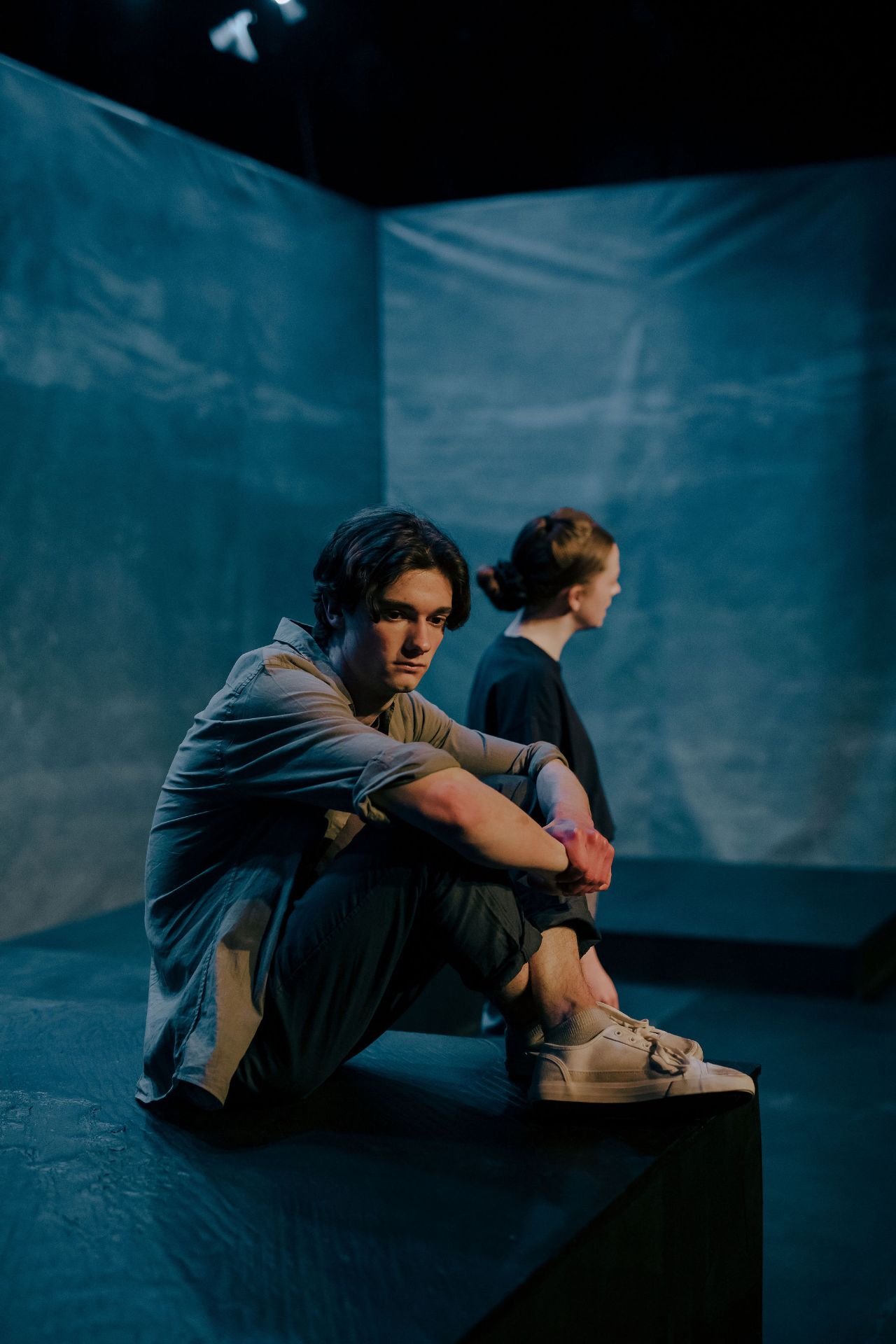
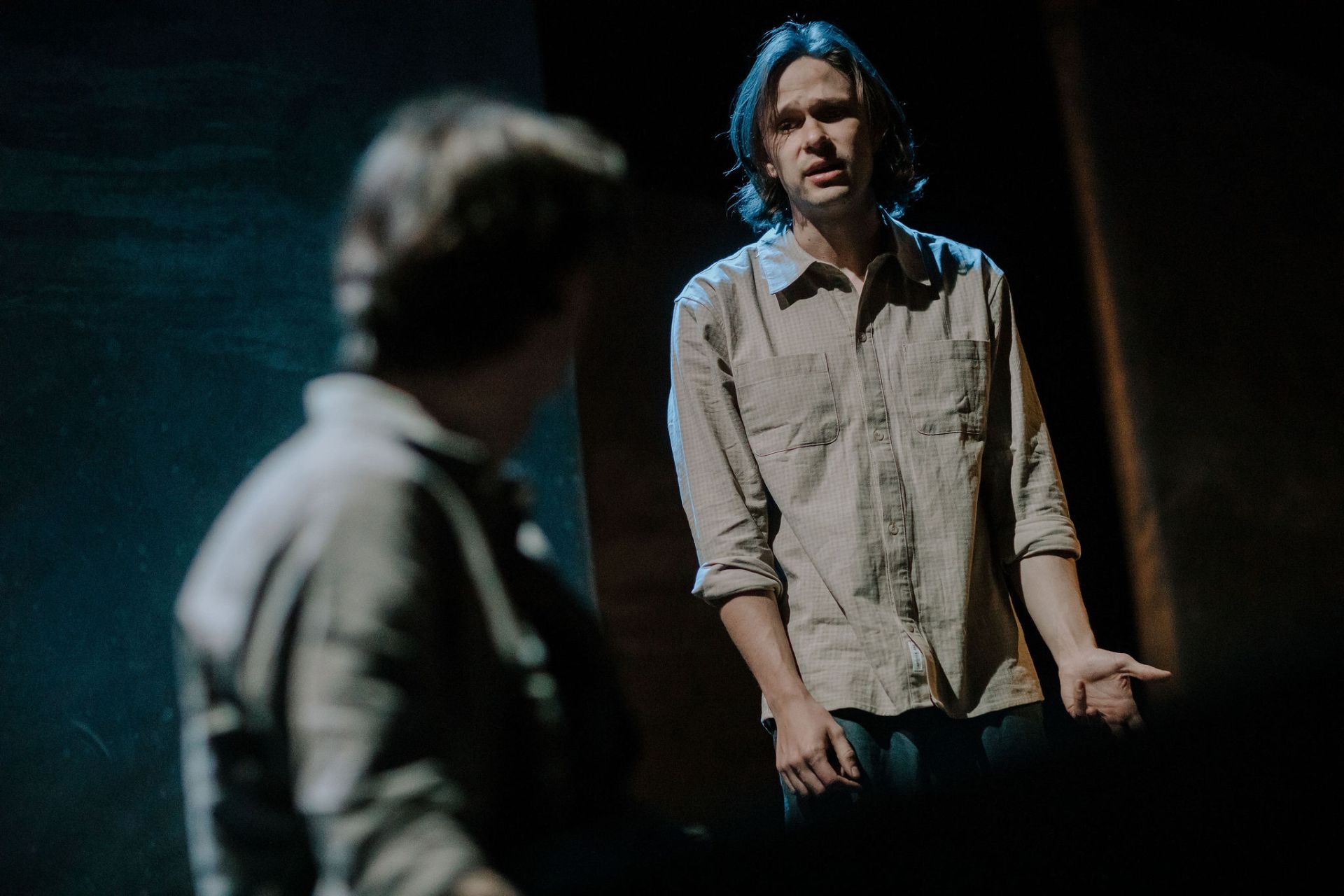
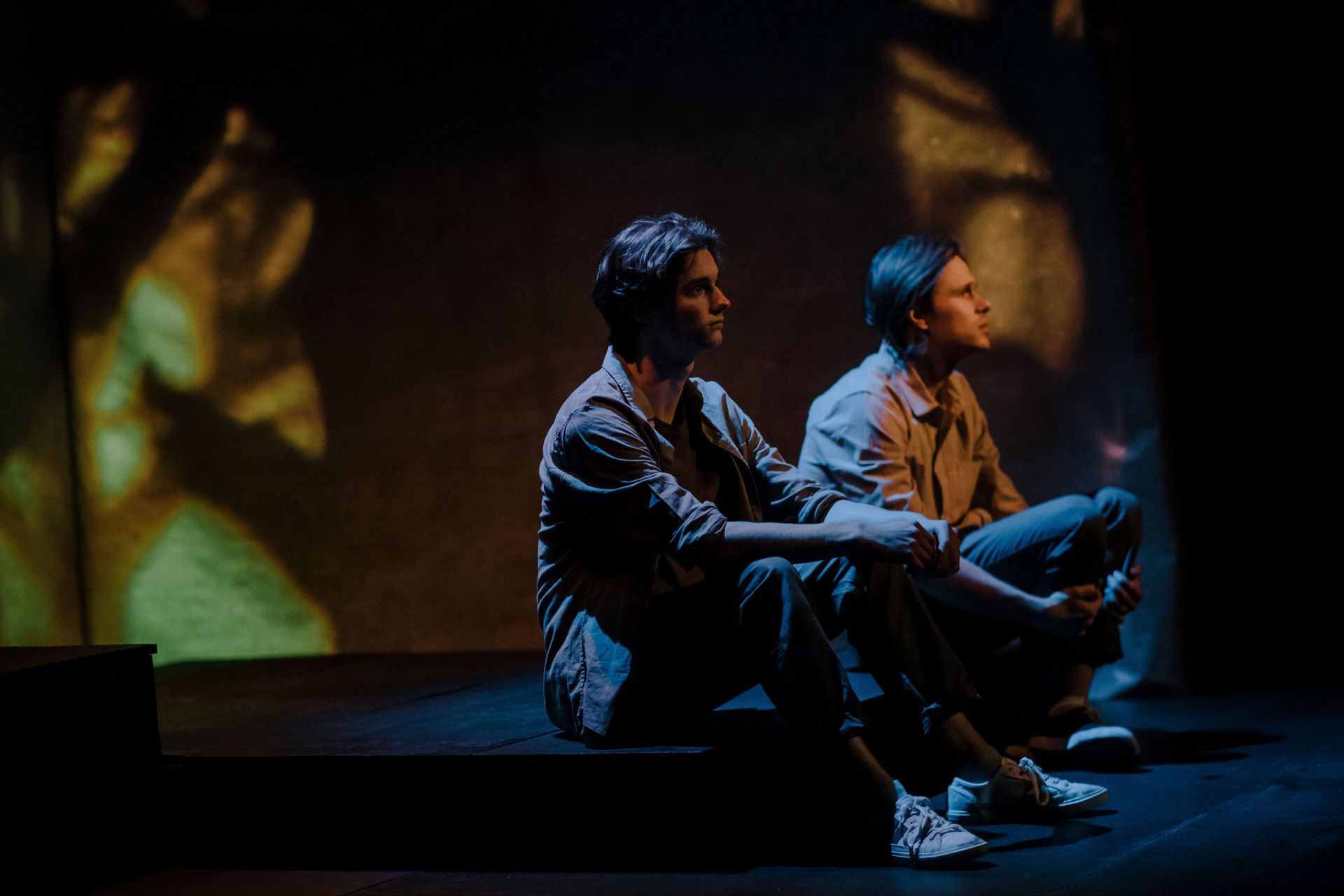
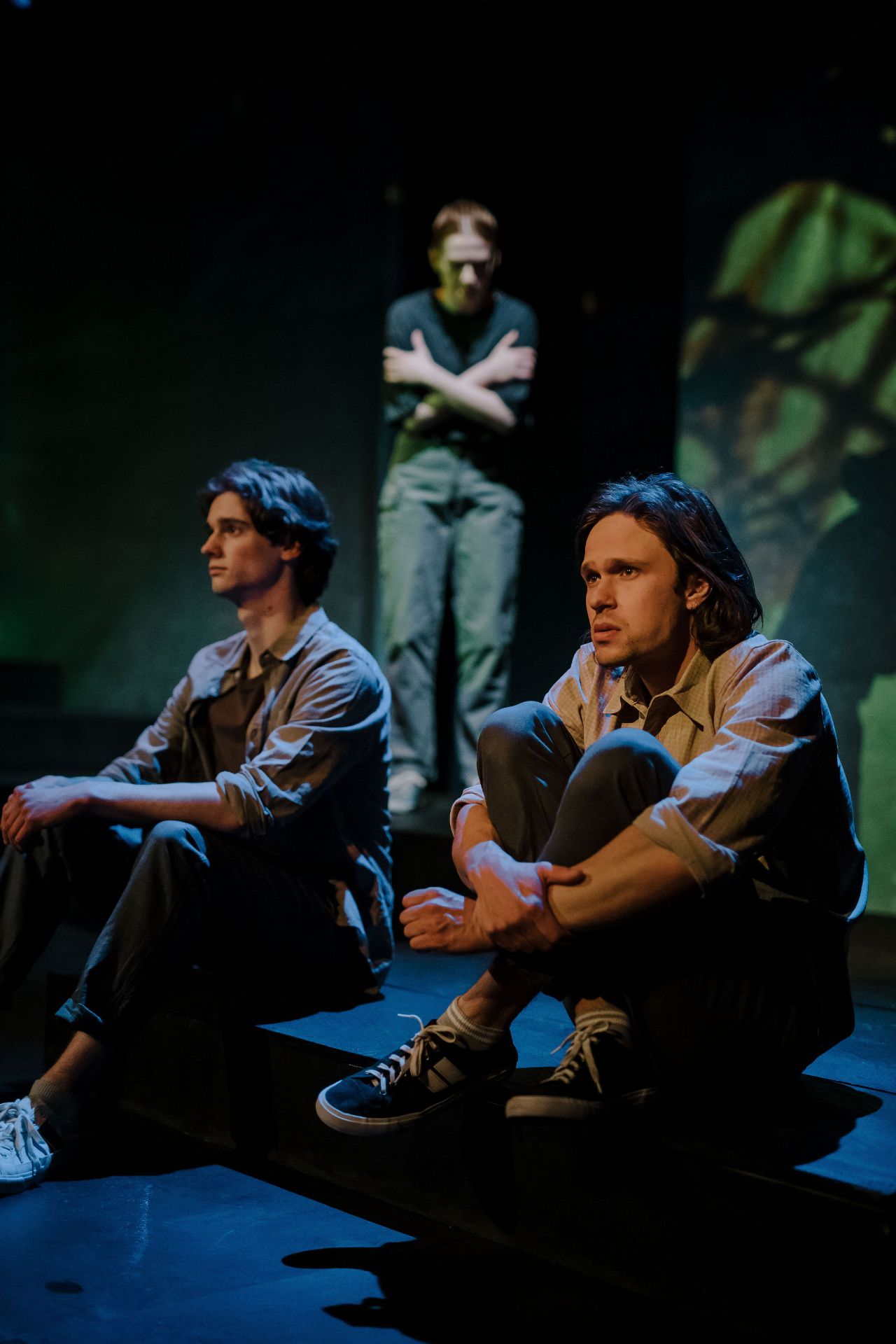
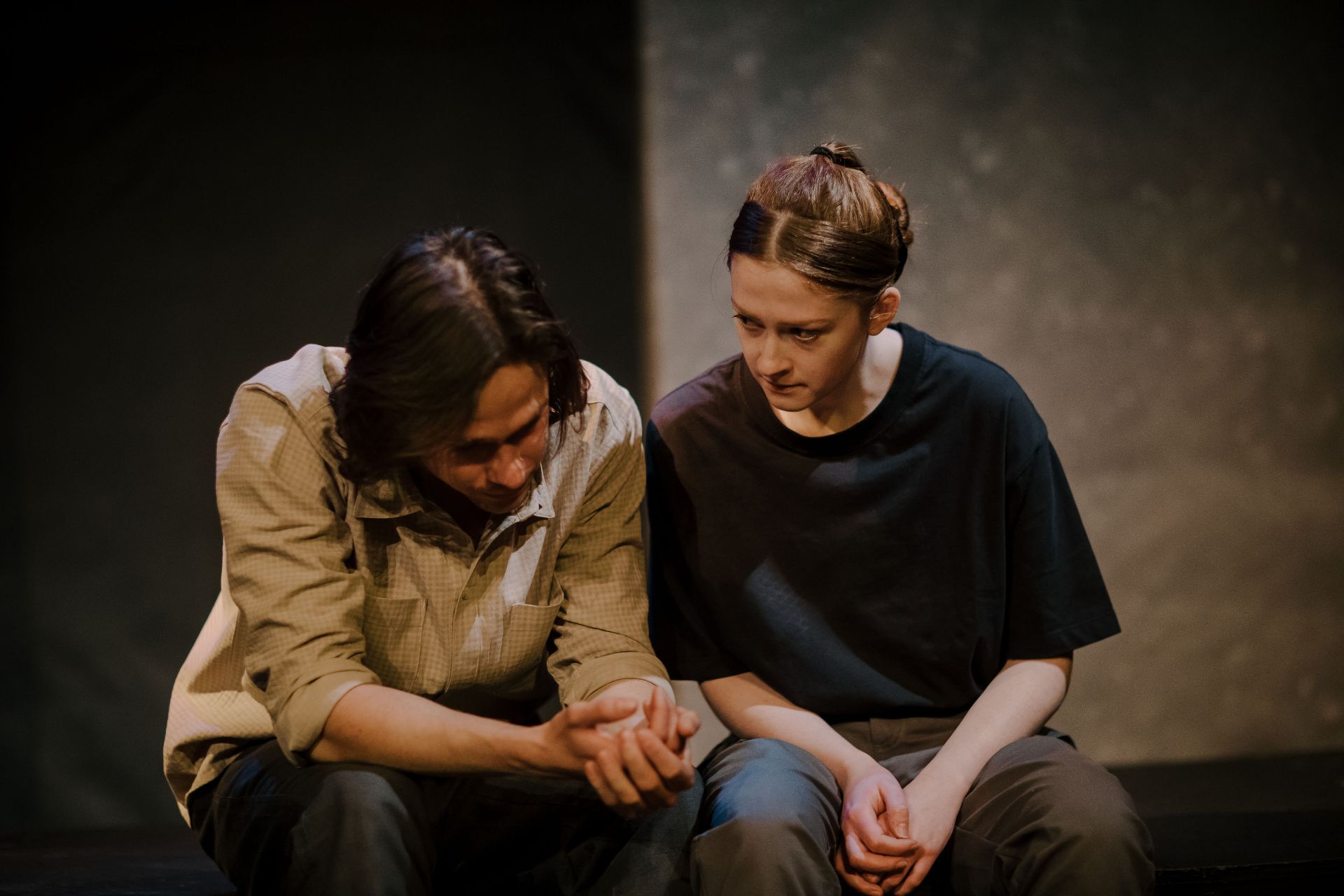
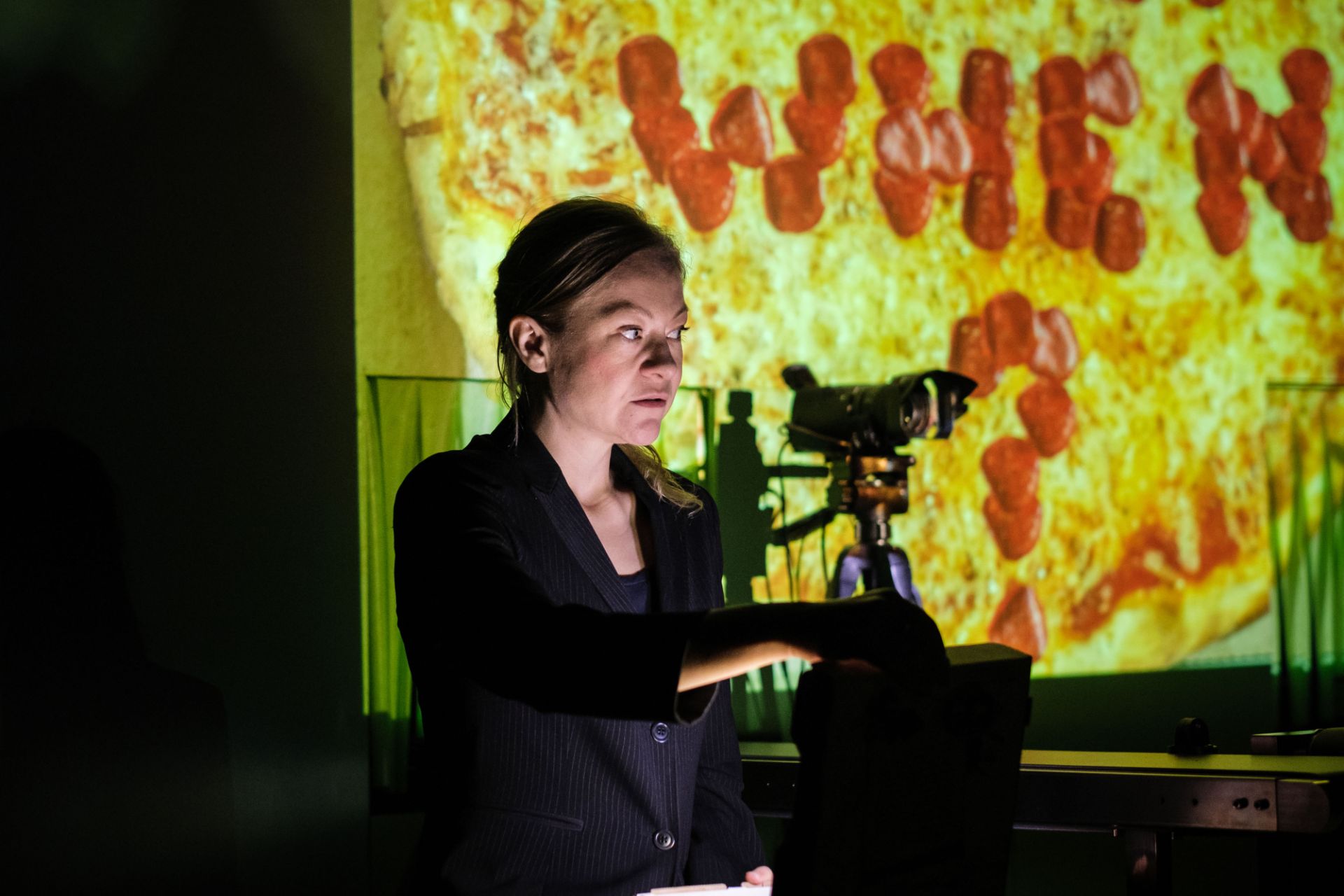
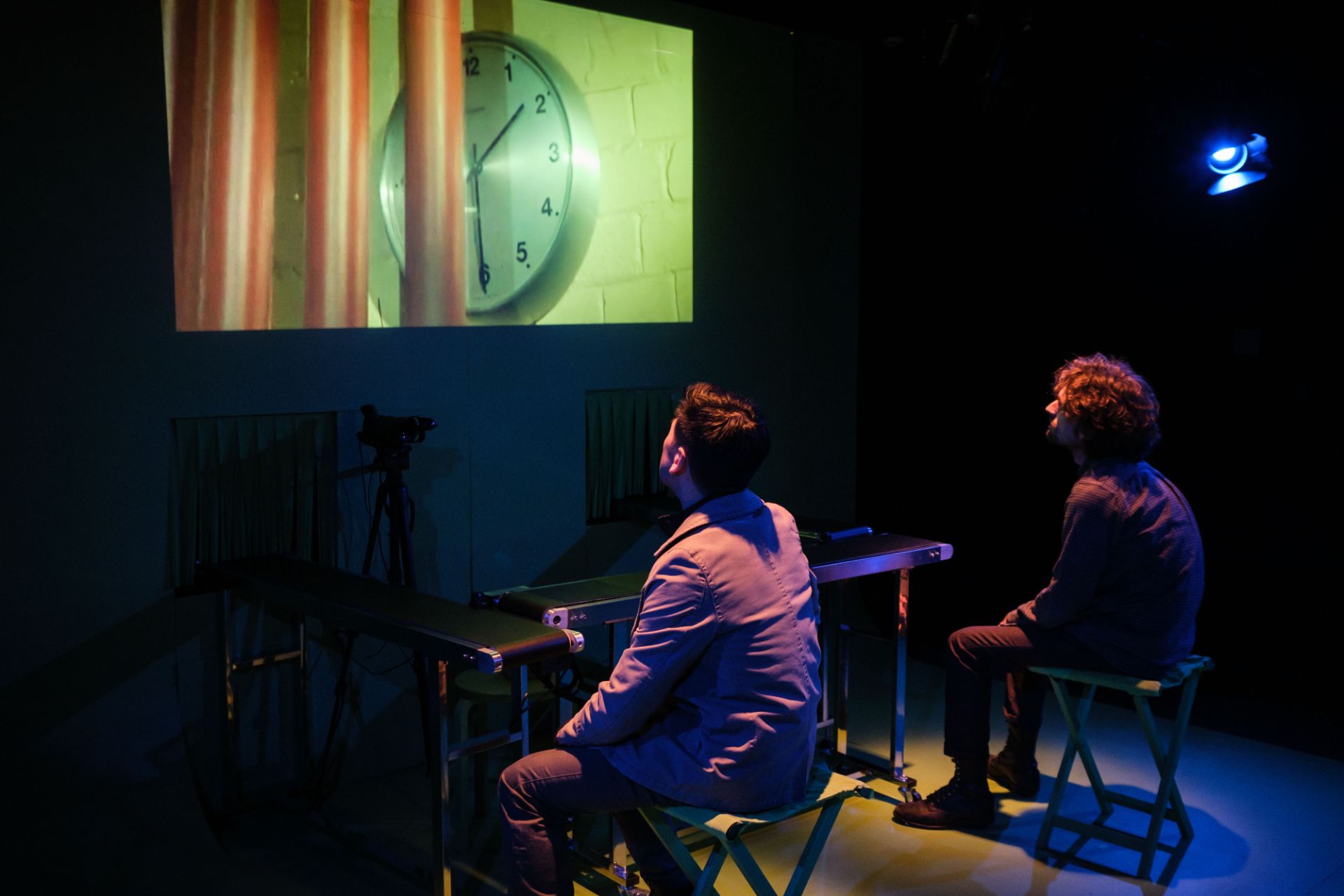
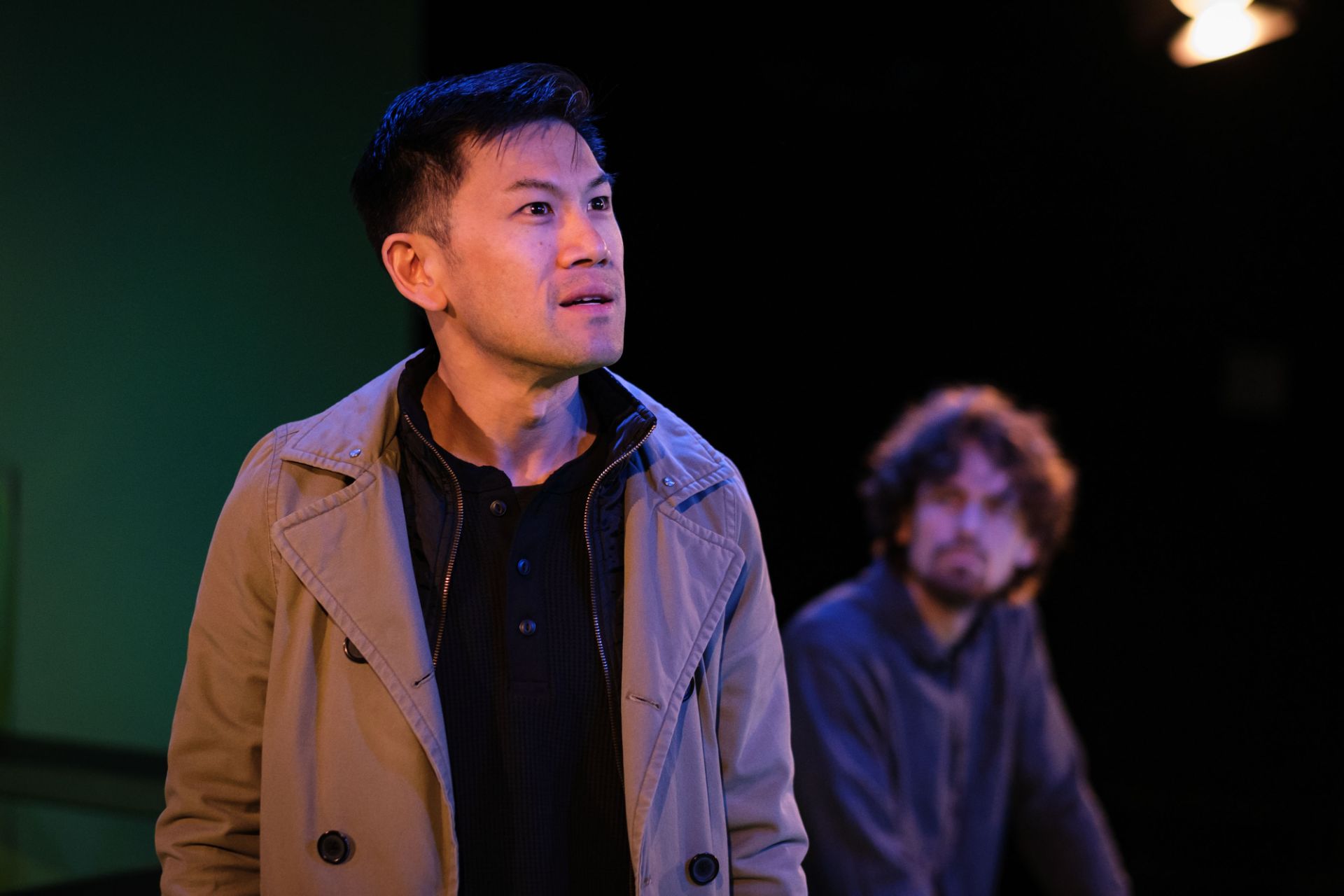
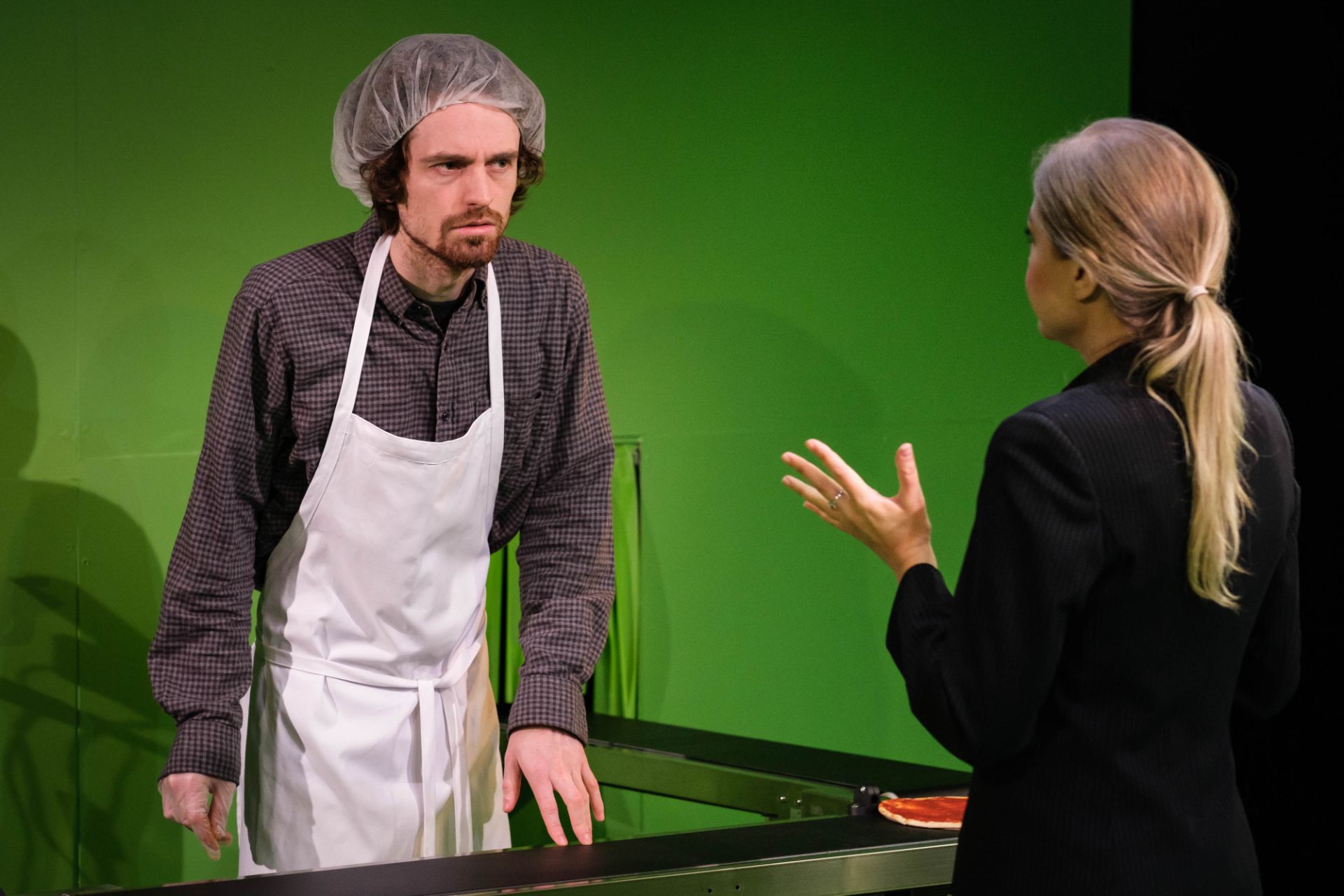
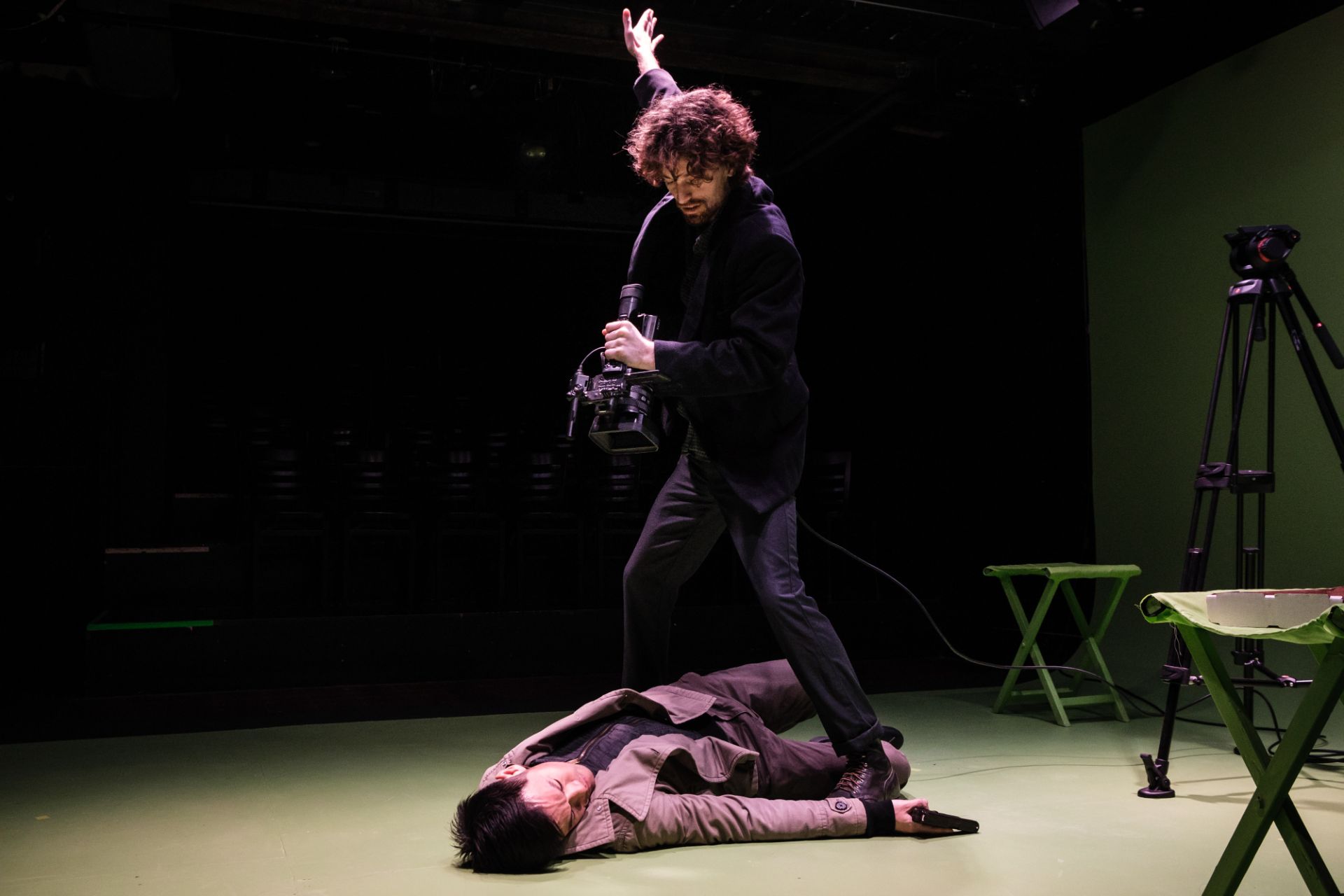
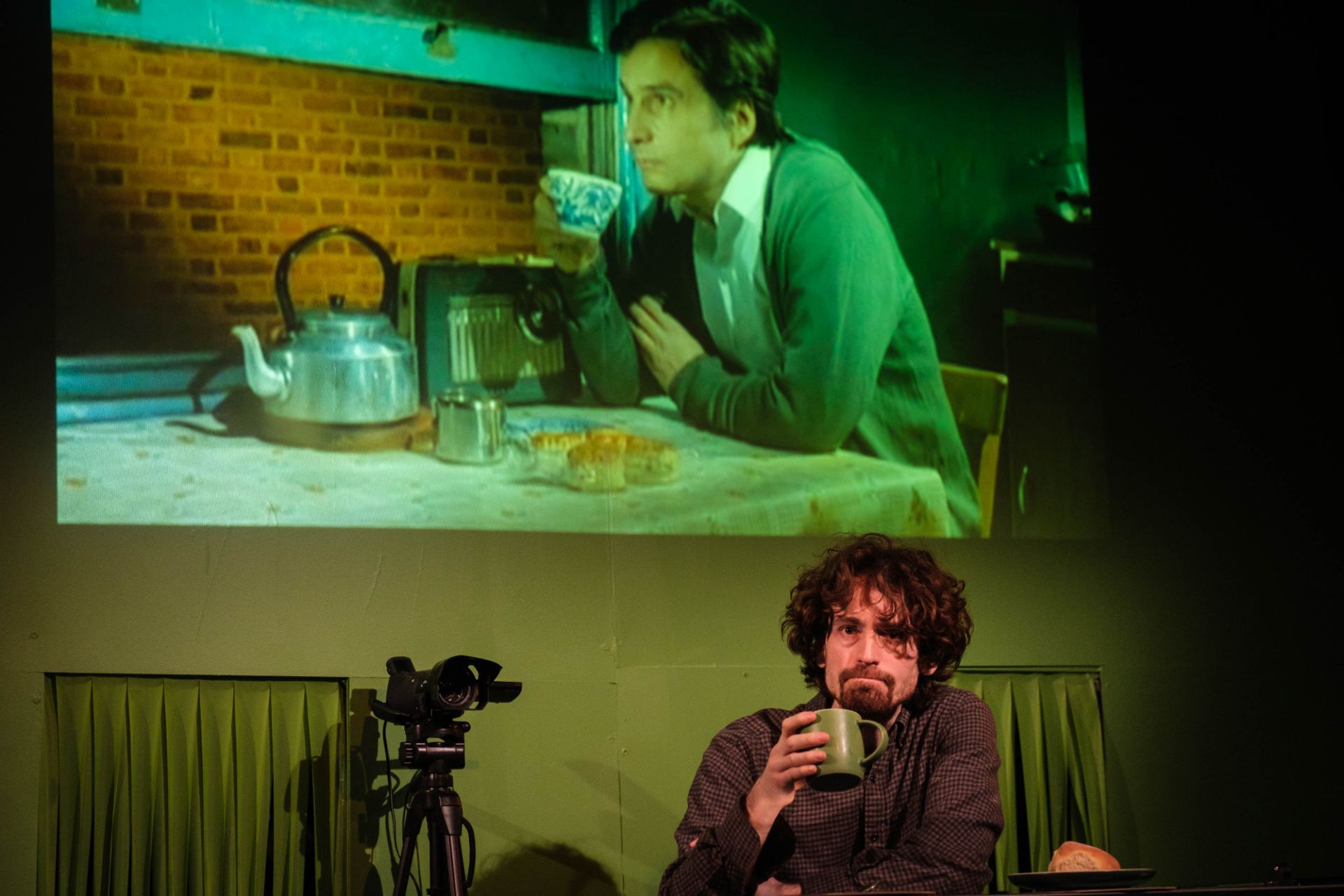
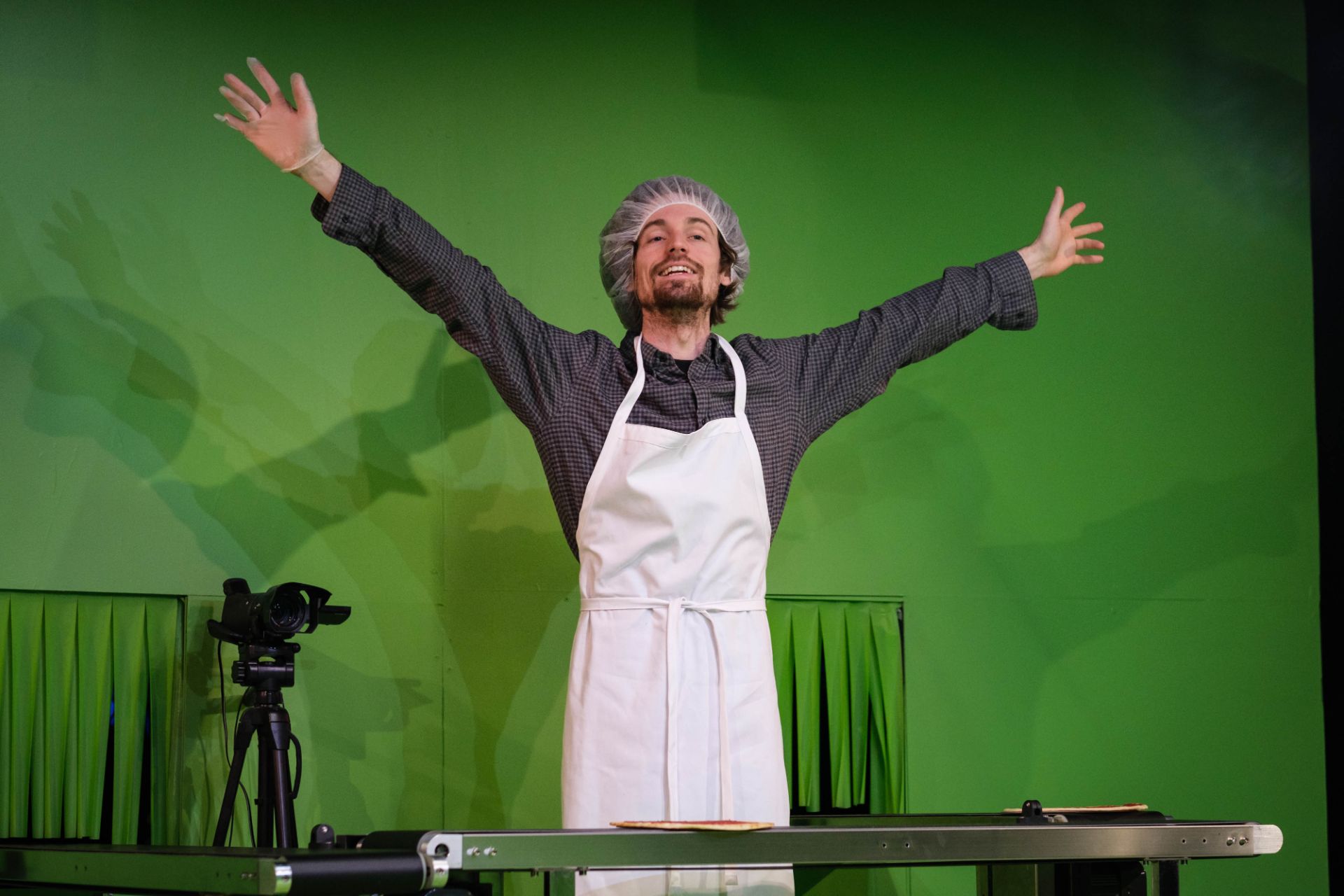
Jimmy is trying to hold down a job, whilst keeping his psychological disorder in check. The menial tasks at the pizza factory however, are not helping. Alan Harris’ For the Grace of You Go I sees its protagonist go through distortions of reality, that are initially innocuous, until watching a film by Aki Kaurismäki inspires Jimmy to hire a contract killer, to have himself murdered. Harris’ play is distinctly absurdist in style, with surrealist elements that seem appropriately congruent with depictions of mental illness.
The multiverse, as experienced by Jimmy, presents an opportunity for a show of playful flamboyance, but the production proves an overly subtle one, often leaving us more befuddled than amused, by the confusion of that contorted world. Directed by Lucy Clements, whose restrained approach shifts focus from the comedy, choosing instead to explore the more melancholic qualities of the narrative, resulting in a staging that feels unnecessarily staid.
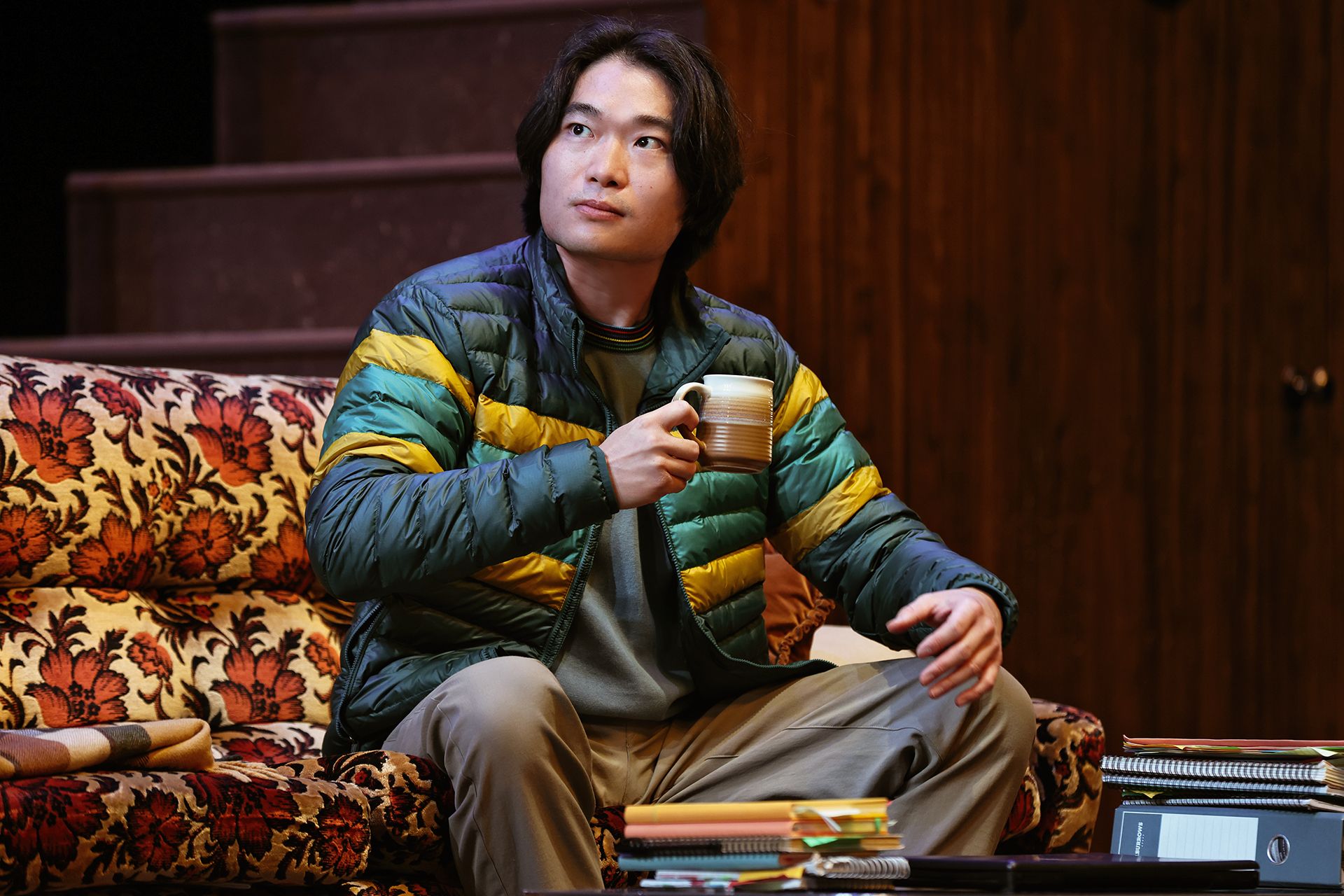
Congruently, actor James Smithers is most persuasive, when playing Jimmy at his most vulnerable and introspective. Concluding scenes demonstrate Smithers’ flair for conveying a silent anguish, that helps humanise the character and his story. Jane Angharad is severe and dry, as the officious Irina, and Shan-Ree Tan as Mark brings much needed energy at each entrance, for a work that tends toward a misplaced circumspection.

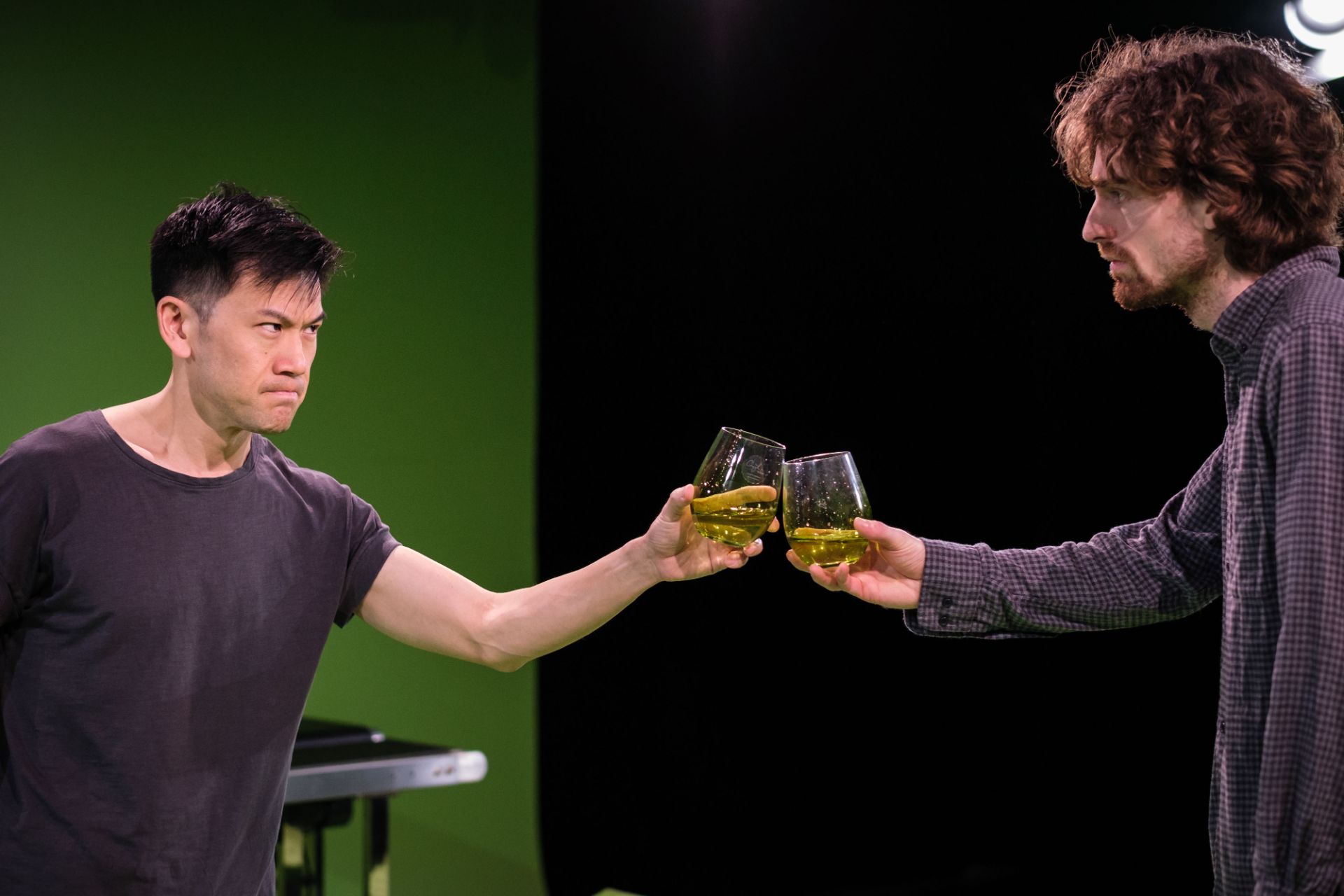
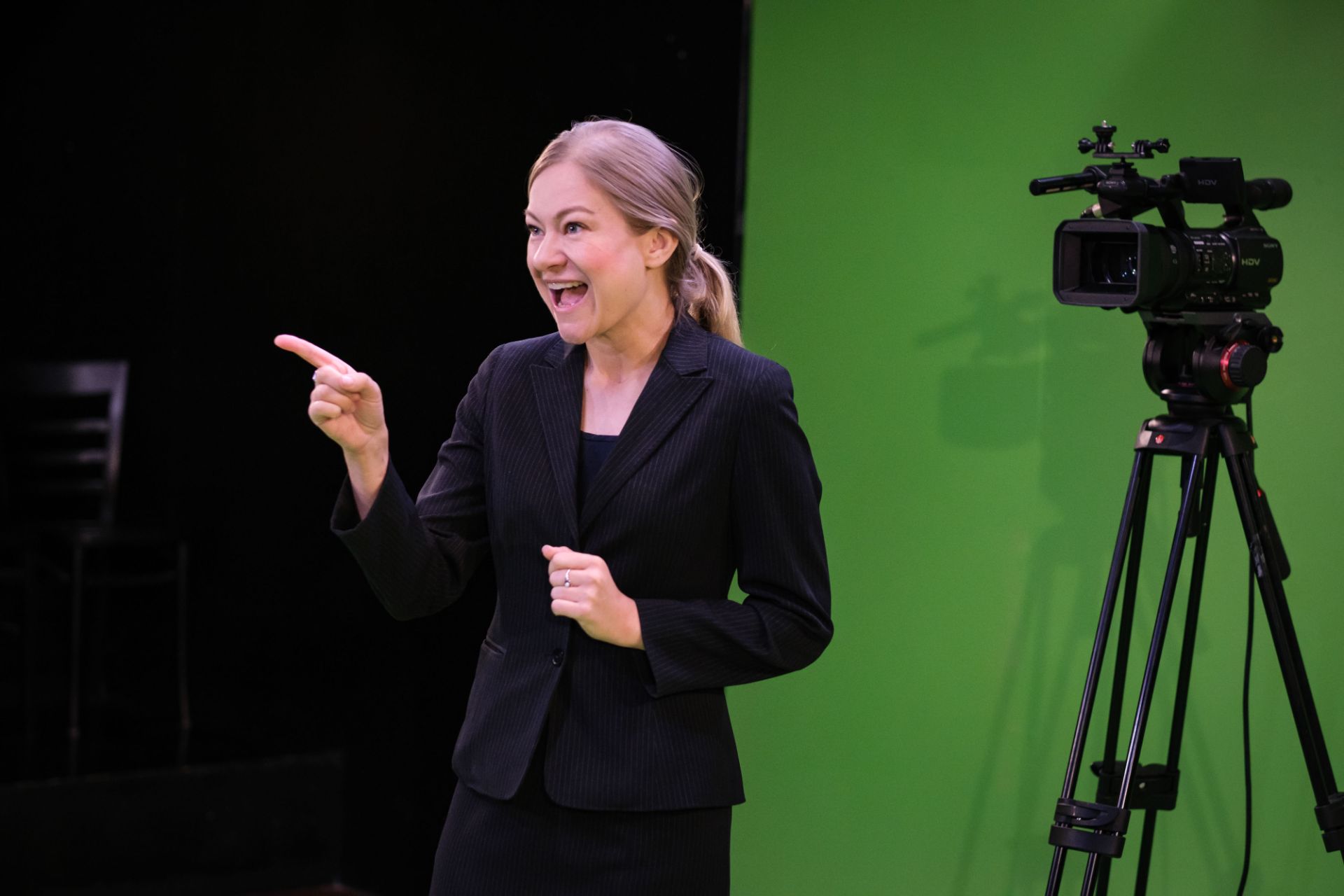
Set design by Monique Langford and Kate Ingram, feature entirely green surfaces that indicate the instability of Jimmy’s constantly morphing mind, by drawing parallels with the essential illusoriness of movie sets. Lights by Alice Stafford and music by Sam Cheng, are discreetly rendered to help facilitate the portrayal of a man in deterioration.

Illnesses are of course no joke, but art has the ability to make light of the dark, whilst retaining dignity for those involved. There is little to be gained, when polite society insists on sweeping the harder parts of life under the carpet. Through storytelling, we attain understanding and compassion. Thankfully not every lesson needs to be learned first-hand, but how we find expression and how we listen, are paramount.

www.newghoststheatre.com | www.secrethouse.com.au

Review: Never Closer (25A Belvoir)

Venue: Belvoir St Theatre (Surry Hills NSW), Oct 4 – 16, 2022
Playwright: Grace Chapple
Director: Hannah Goodwin
Cast: Emma Diaz, Raj Labade, Mabel Li, Philip Lynch, Ariadne Sgouros, Adam Sollis
Images by Phil Erbacher

Theatre review ⭐️⭐️⭐️⭐️ 
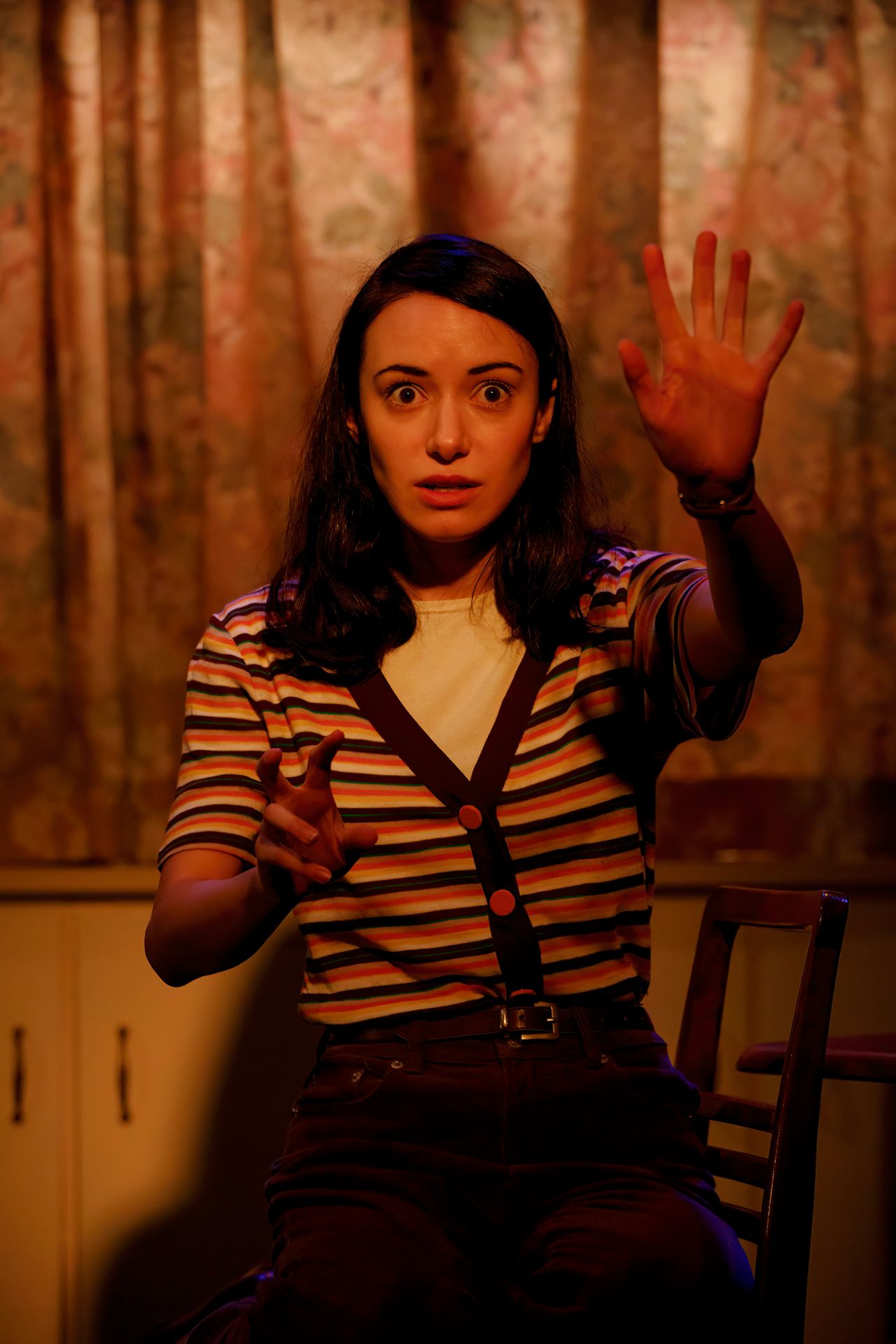
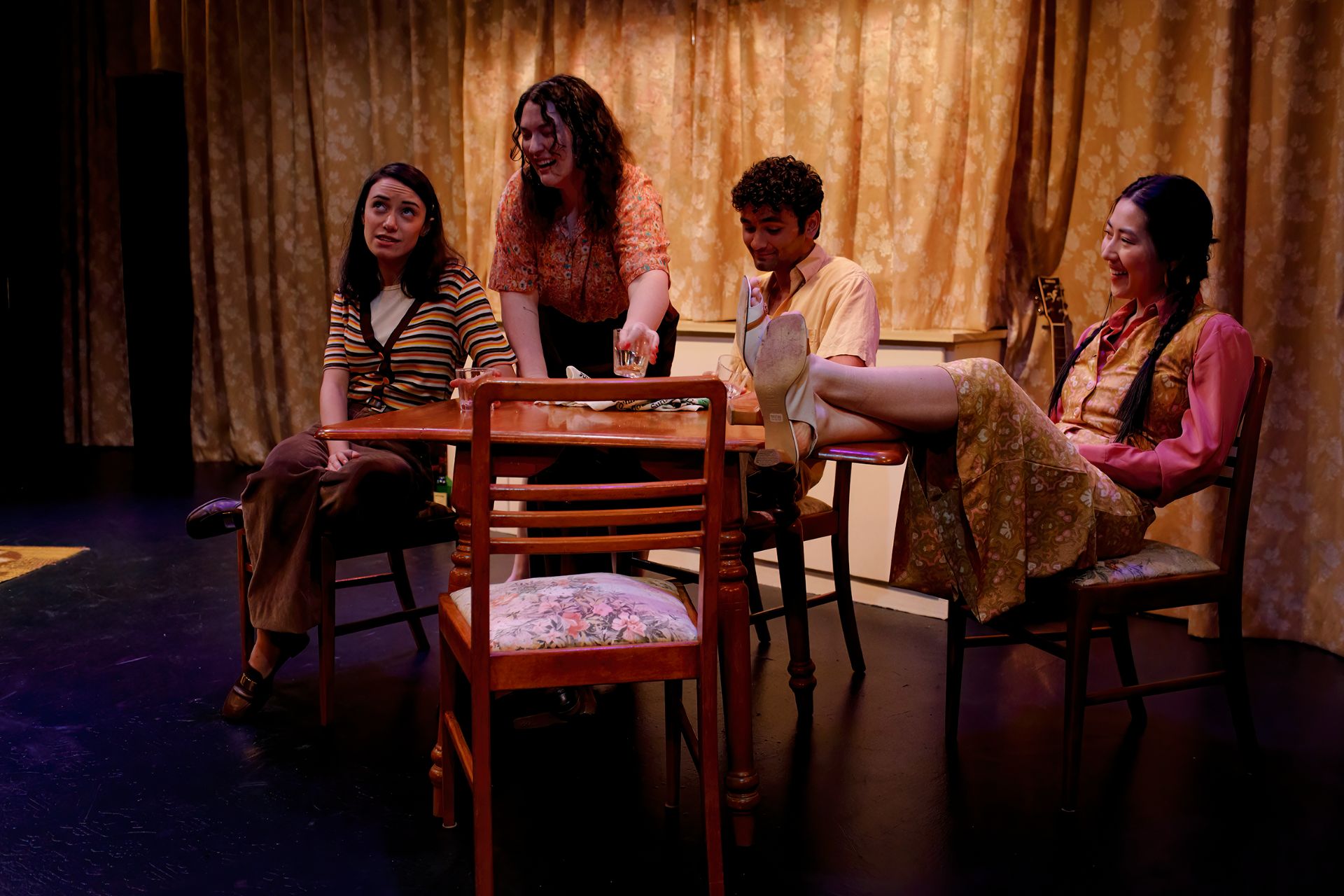
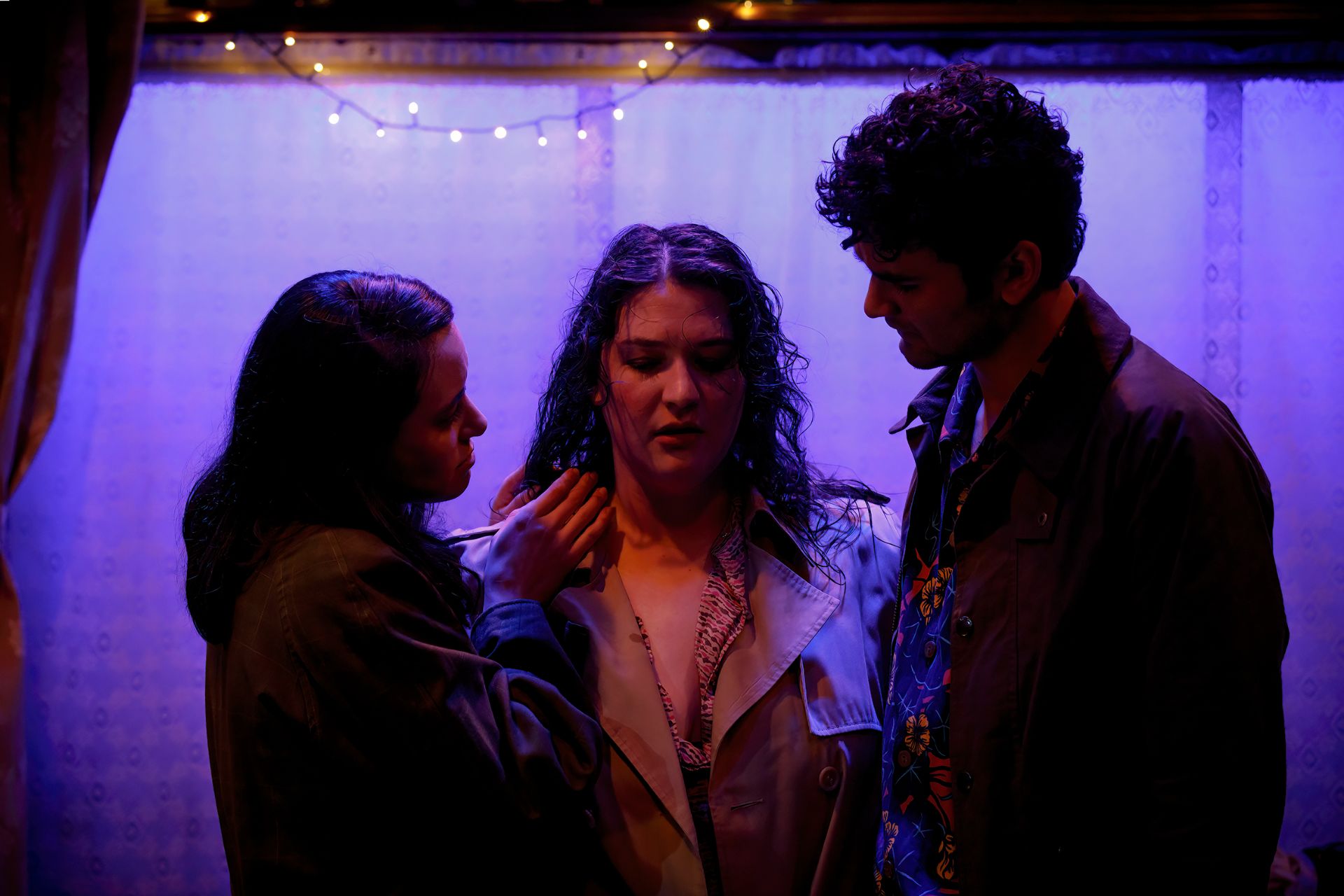
Niamh returns to her hometown in Northern Ireland for Christmas, and finds that all her old friends from school are still there. It is 1987, and there are certainly compelling reasons to go search for greener pastures, but in Grace Chapple’s Never Closer, we explore the nature of human attachments, and what it is that makes us persist, or indeed relinquish. Chapple’s writing bears a generosity that lends a sense of sophistication, to a tale about the difficult decisions that people make. It is intricately considered, with an admirable sensitivity as she navigates some hard subjects, but made palatable by an effortless humour, that keeps the journey amusing.

Direction by Hannah Goodwin leans into the comedy of the piece, relishing in each of its funny details, whilst painstakingly creating for the audience, a realism that makes everything feel authentic and convincing. There are six distinct personalities in Never Closer, all of whom are made believable and endearing by Goodwin’s uncompromising approach, of making each moment count.

It is a splendid ensemble cast that tells the story, with an incredible chemistry that makes all that they offer up, feel meaningful and true. Mabel Li demonstrates great versatility as Niamh, seamless in the way she blends the comical with the earnest, in a show that really succeeds in being tender and hilarious both at once. Adam Sollis is charged with the responsibility of instigating some very bombastic drama, as Connor, which he accomplishes with a natural ease. Emma Diaz as Deirdre and Raj Labade as Jimmy, deliver nuances throughout, that seem subtle yet are palpably moving. Philip Lynch as Harry and Ariadne Sgouros as Mary, are bold with their desire to make us laugh, and they never miss a beat.

Stage design by Grace Deacon takes us decades back in time, impressive particularly with the many smaller household items that look completely to be from a bygone era. Costumes by Keerthi Subramanyam offer a constant reminder that the story is of a time past, even if the characters feel so present and intimate. Phoebe Pilcher’s lights and Alyx Dennison’s sounds, work quietly to manufacture a familiar domestic environment, but are certainly powerful when required to cause a ruckus.

As the saying goes, “the world is your oyster” and for the young, that is especially true. To see Niamh’s friends unwilling (or perhaps unable) to leave home, feels a sad waste of opportunity, but it should probably only be for each individual, to lay judgement on how one’s time on earth is spent. Many have stayed put, and accomplished much. Others have travelled far and wide, and seen all there is. In Never Closer we are shown that not all our destinies are reliant on personal decisions. Often where we go, is animated by circumstance, but only becoming apparent with the passage of time.

www.belvoir.com.au

Review: Looking For Alibrandi (Belvoir St Theatre)

Venue: Belvoir St Theatre (Surry Hills NSW), Oct 1 – Nov 6, 2022
Playwright: Vidya Rajan (based on the book by Melina Marchetta)
Director: Stephen Nicolazzo
Cast: John Marc Desengano, Ashley Lyons, Chanella Macri, Lucia Mastrantone, Hannah Monson, Jennifer Vuletic
Images by Daniel Boud

Theatre review
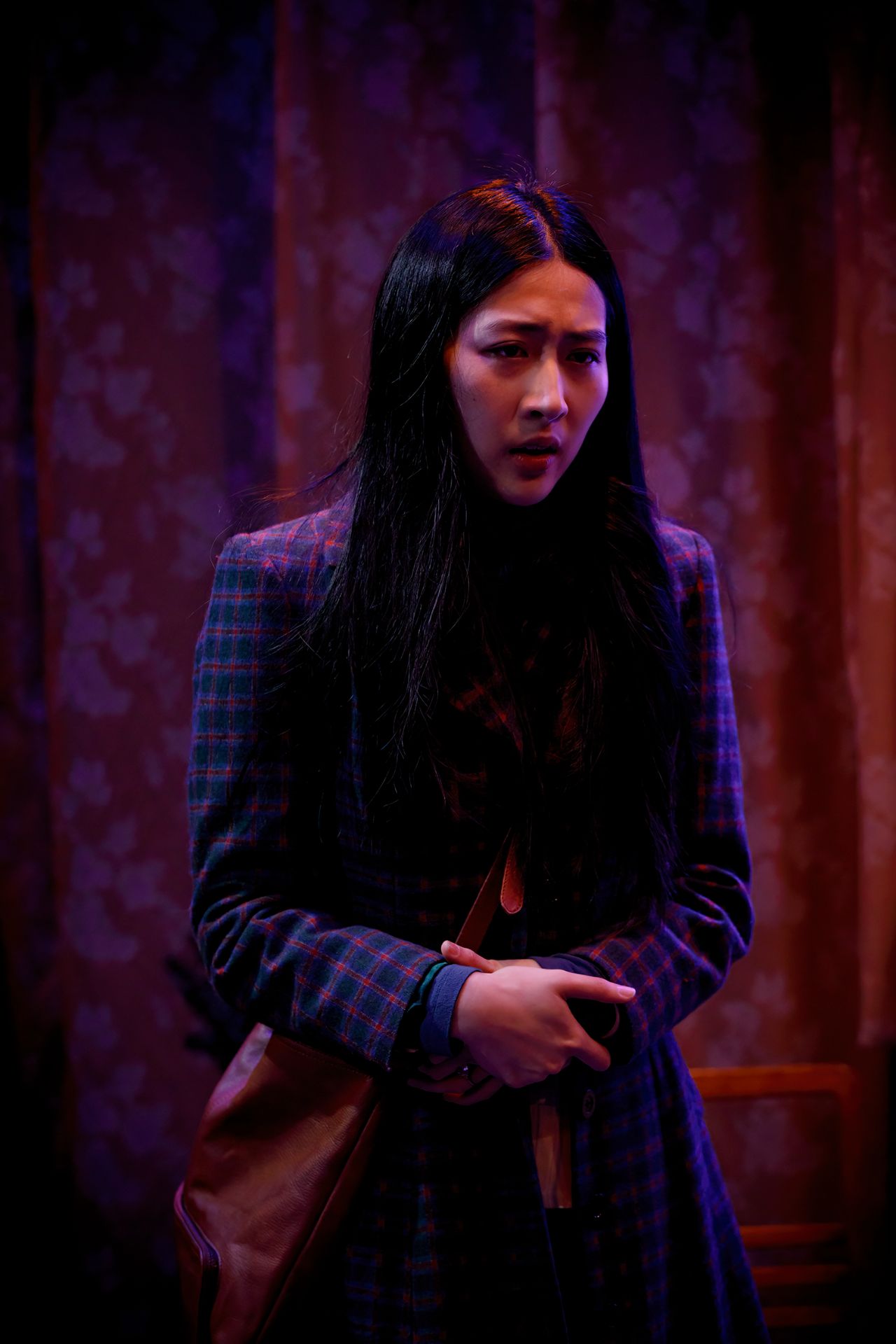
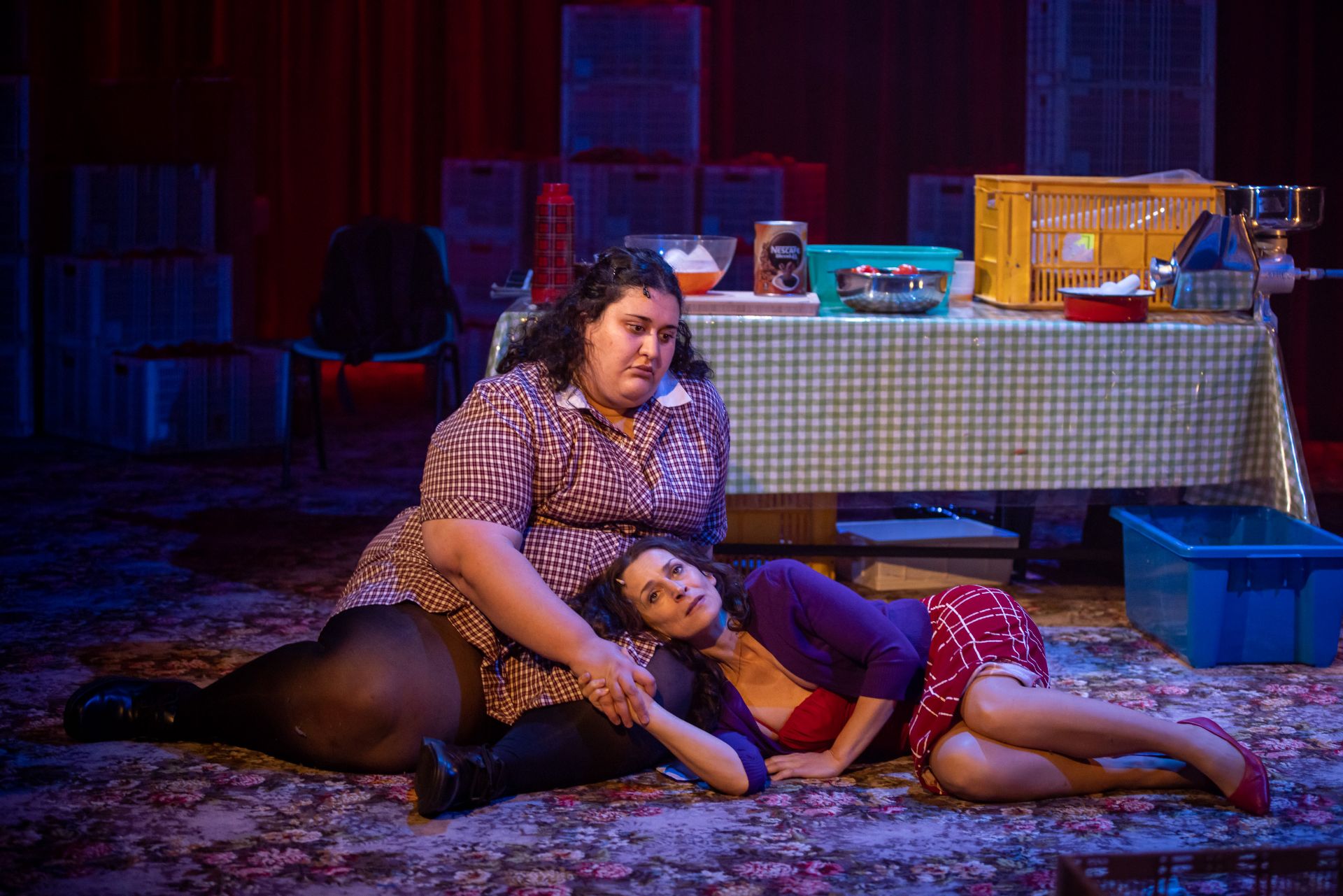
It is the 1990s, and Josie is about to graduate from high school. We find out that the bright, young woman is determined to become a lawyer, which seems an aspiration not out of the ordinary, for many a modern Australian. Looking closer however, we see that she comes from a legacy of shattered dreams, with her mother and her grandmother, both feeling let down by life’s promises. A lot of Melina Marchett’s 1992 novel Looking for Alibrandi, is concerned with the immigrant experience, bringing particular focus to the post-war Italian diaspora. In this stage adaptation by Vidya Rajan, we see the emotional toll taken by three generations of Alibrandi women, and along with Josie, wonder if she will be the one who breaks the cycle of unfulfilled potential.

Thirty years on, Looking for Alibrandi can feel slightly old-fashioned in its rendering of marginalisation, as a daily reality for those who are considered lesser Australians. Its perspective places emphasis on the minutia of its characters, without sufficiently tackling the systemic factors that influence outcomes, or to put it more bluntly, it neglects to reveal the social structures that aid and abet prevailing inequities that privilege a certain class. The Alibrandi women have a tendency to blame only themselves for their woes, but we understand that things are never completely of their own doing.

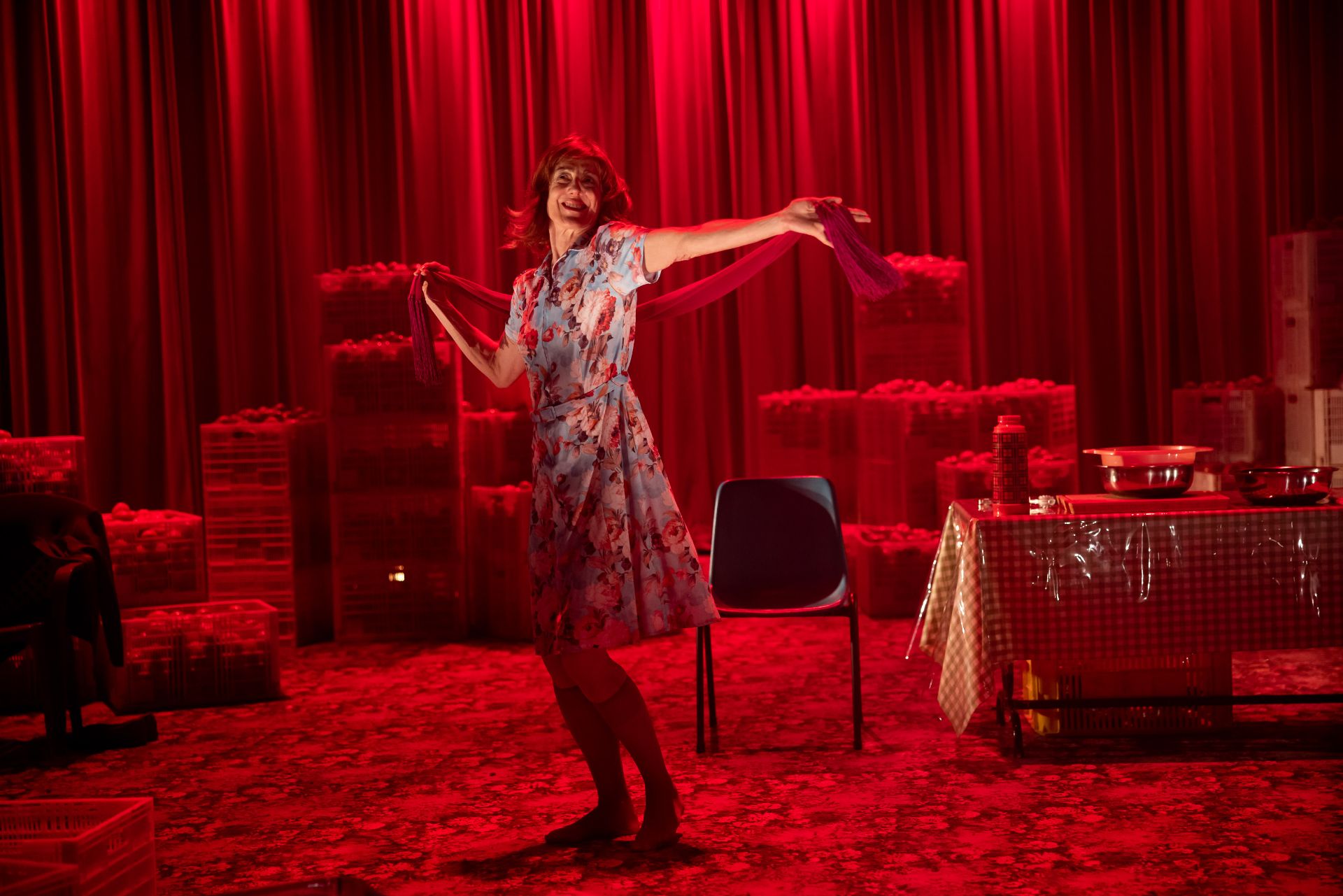
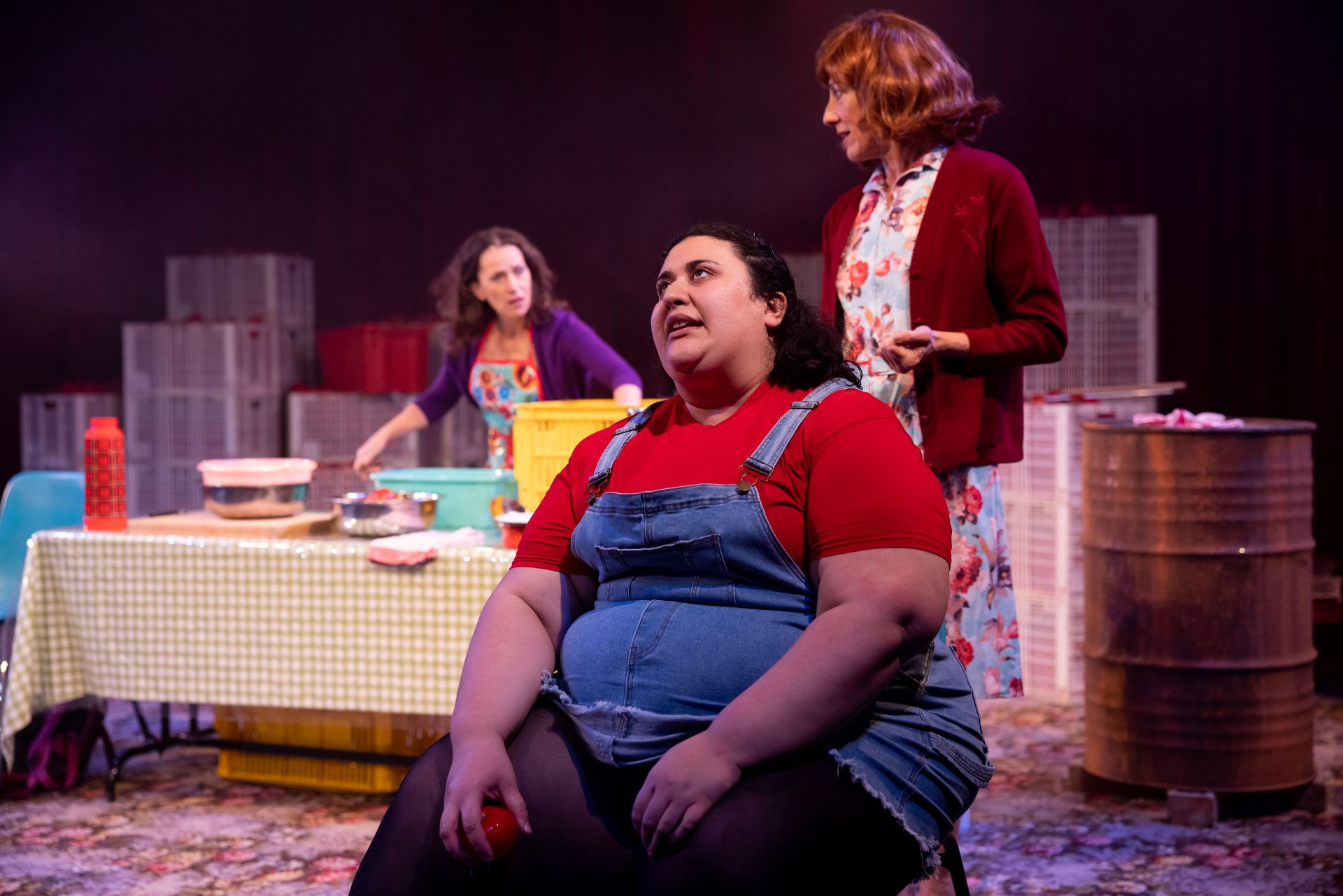
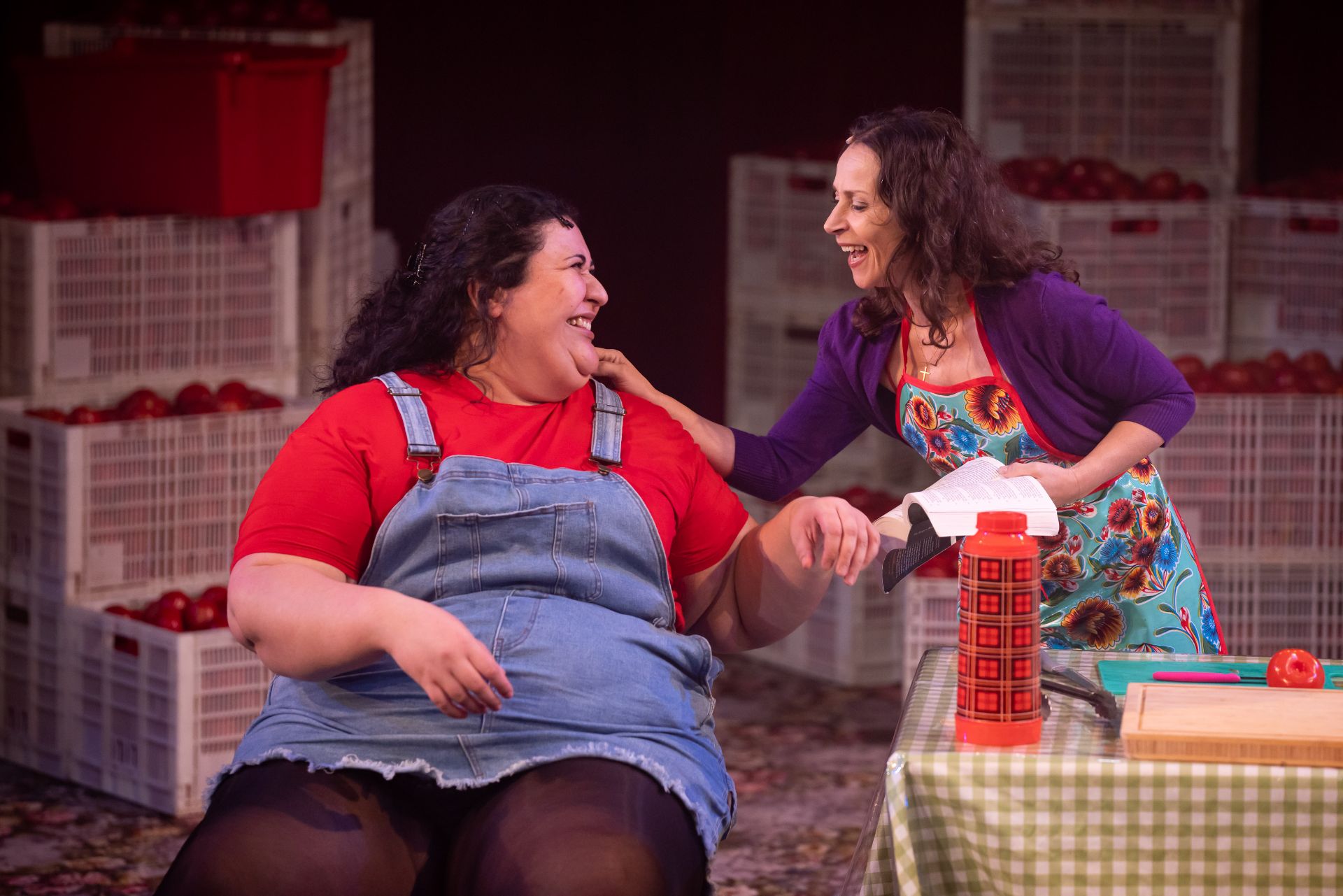
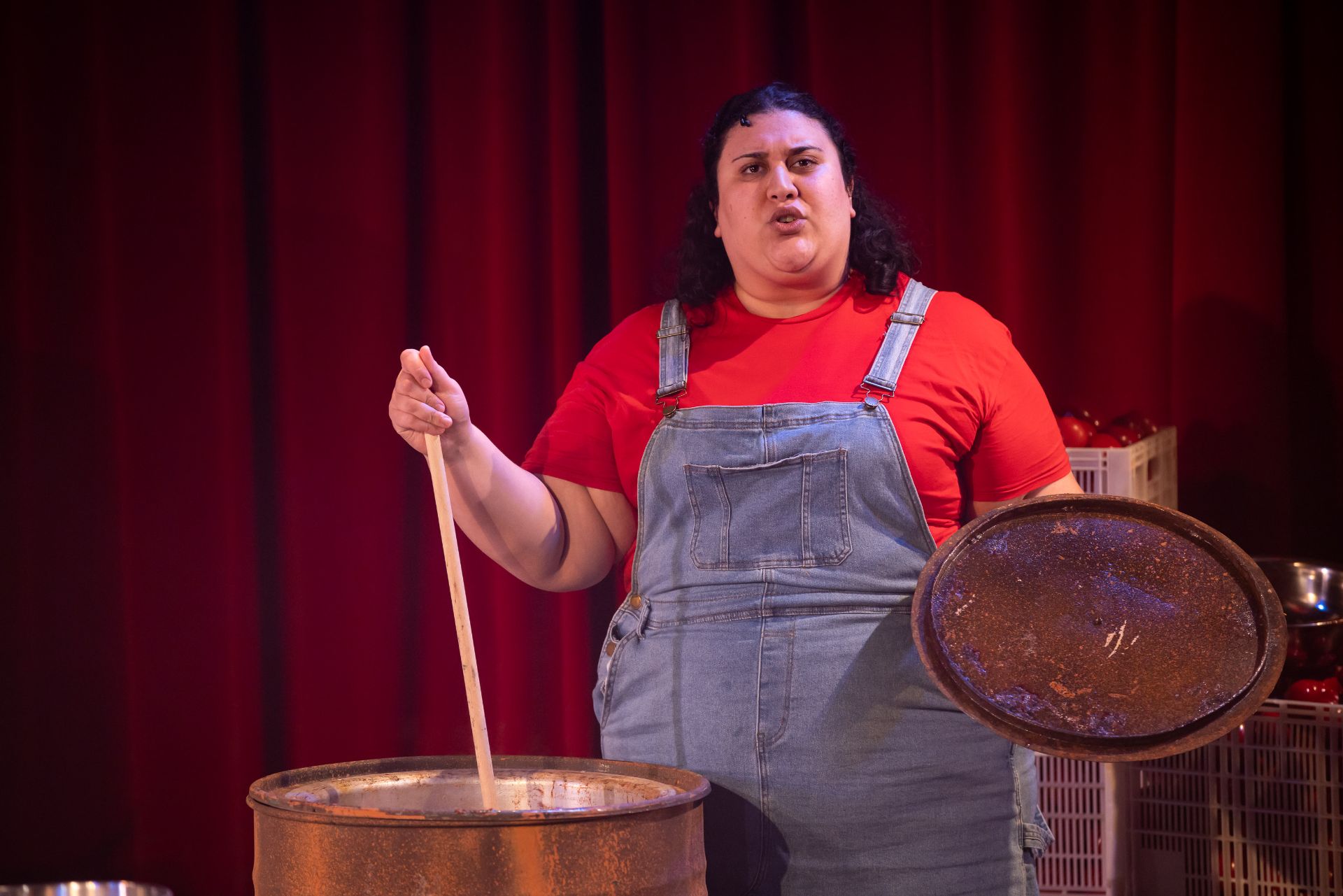
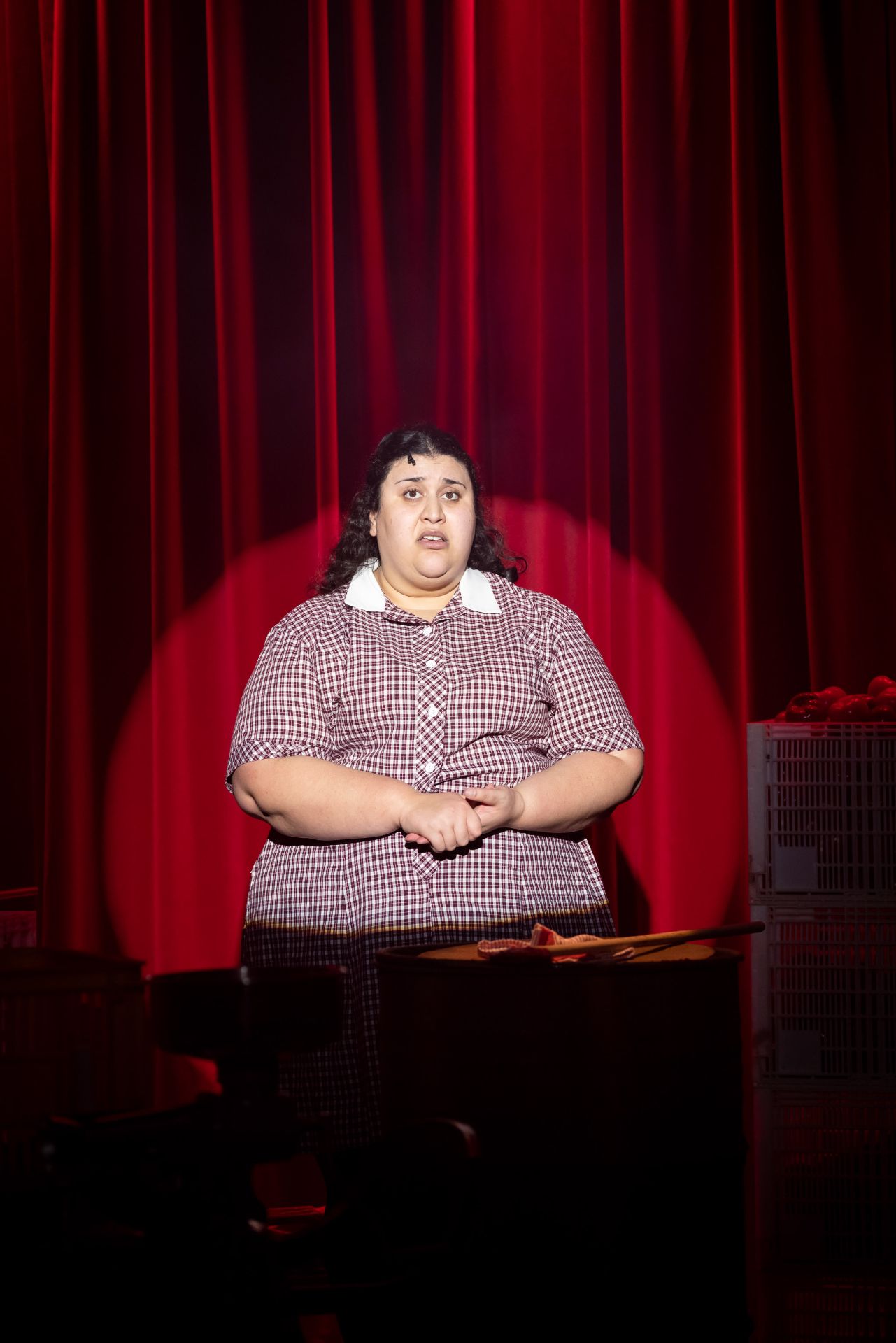
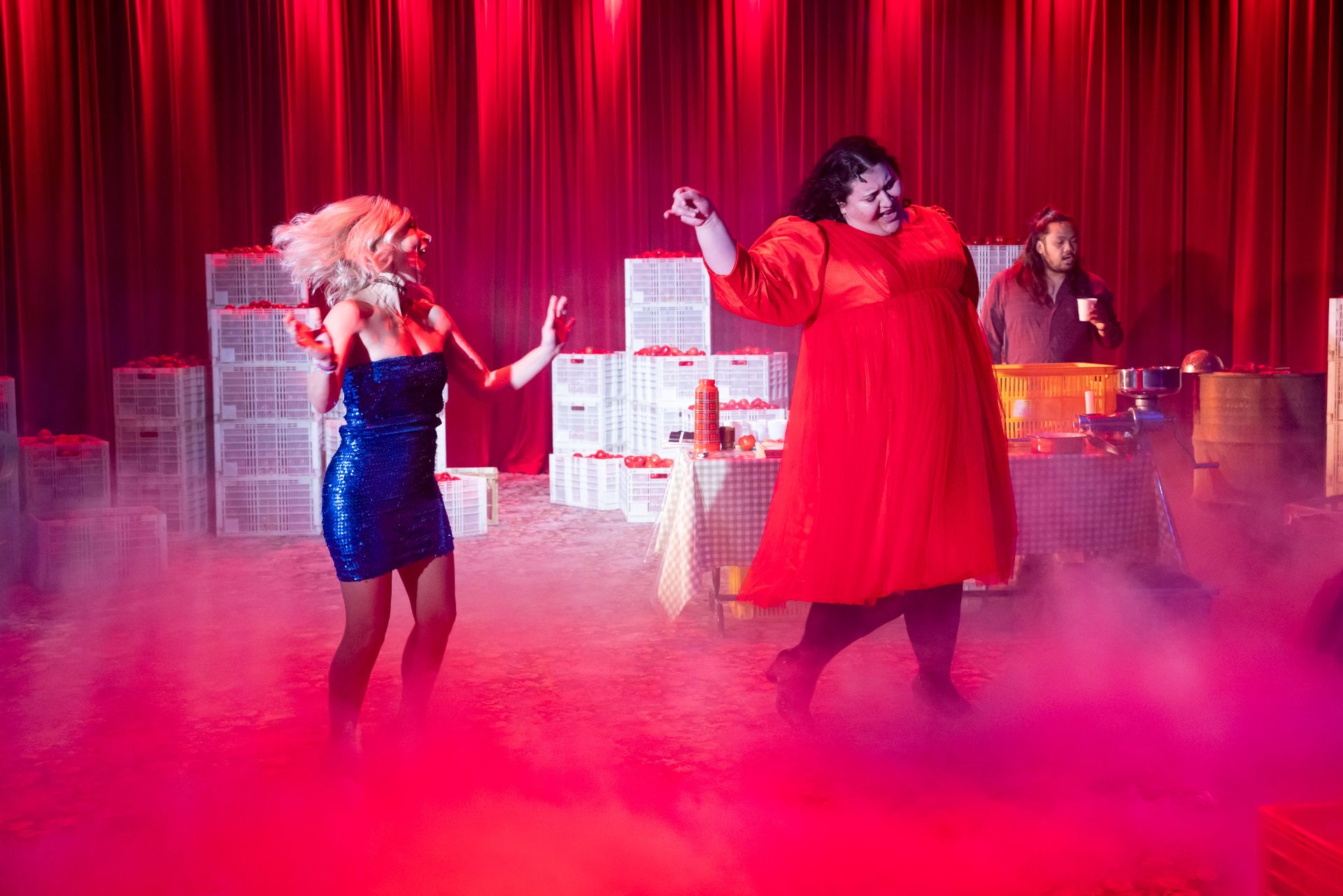
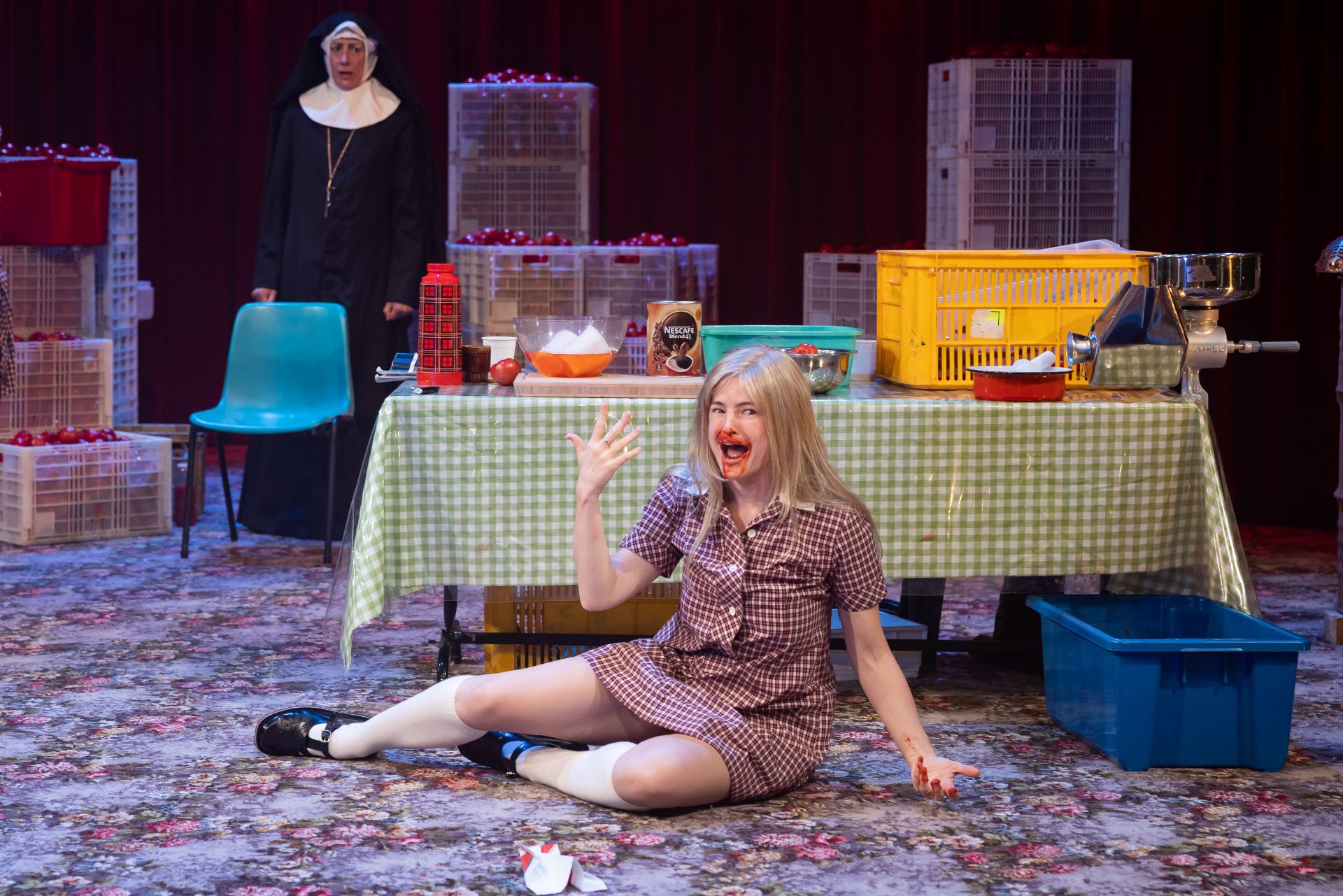
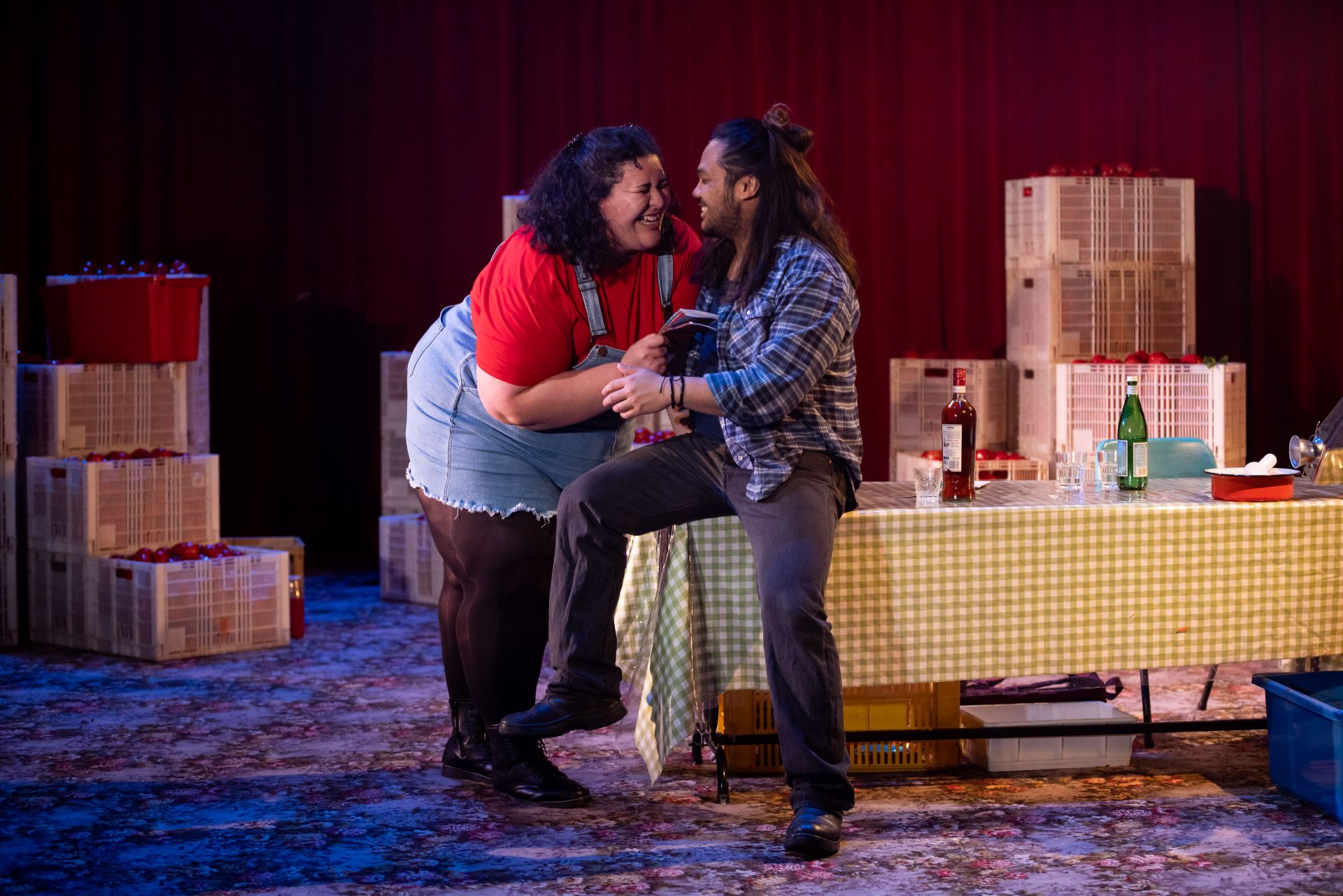
Nonetheless, the writing is wonderfully humorous, and as a a work of entertainment, Looking for Alibrandi is certainly satisfying. Directed by Stephen Nicolazzo, the production is suffused with heart and soul, using a theme of tradition, to create a theatrical experience memorable for its atmosphere. The fragrance of Italian food stewing in an oversized pot for the entire duration, firmly establishes a sense that a subculture is occupying space, resolute in speaking on its own terms.

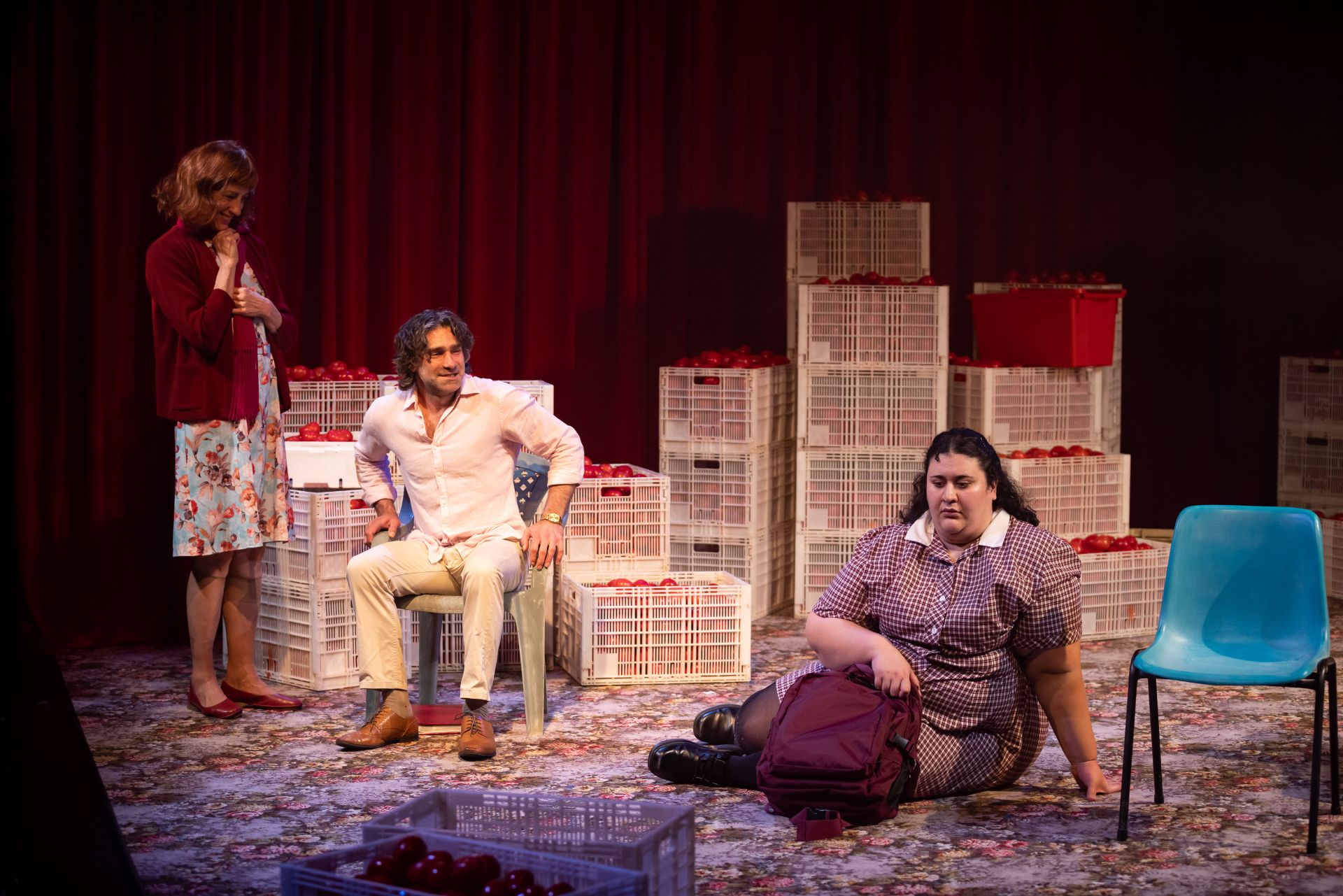
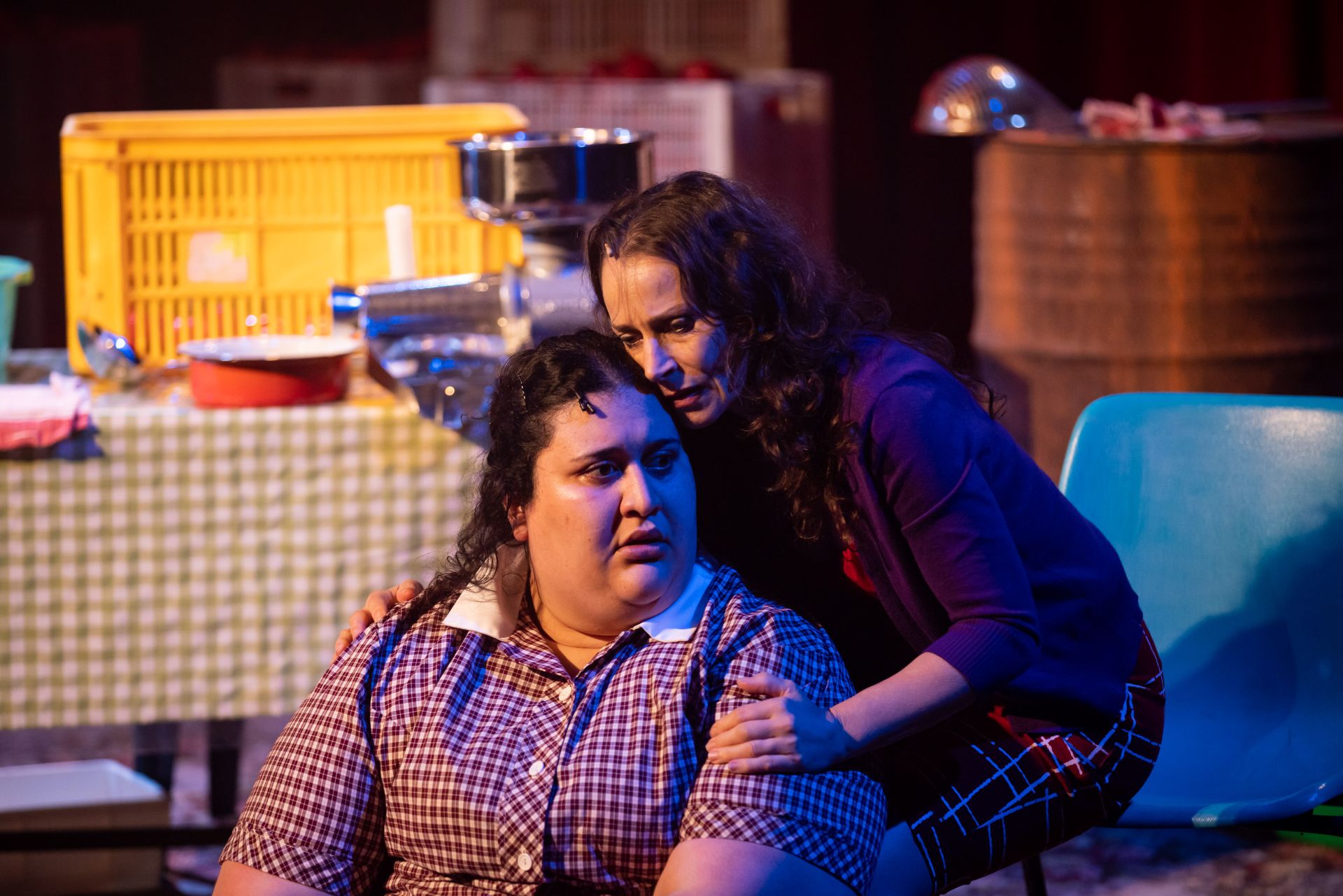
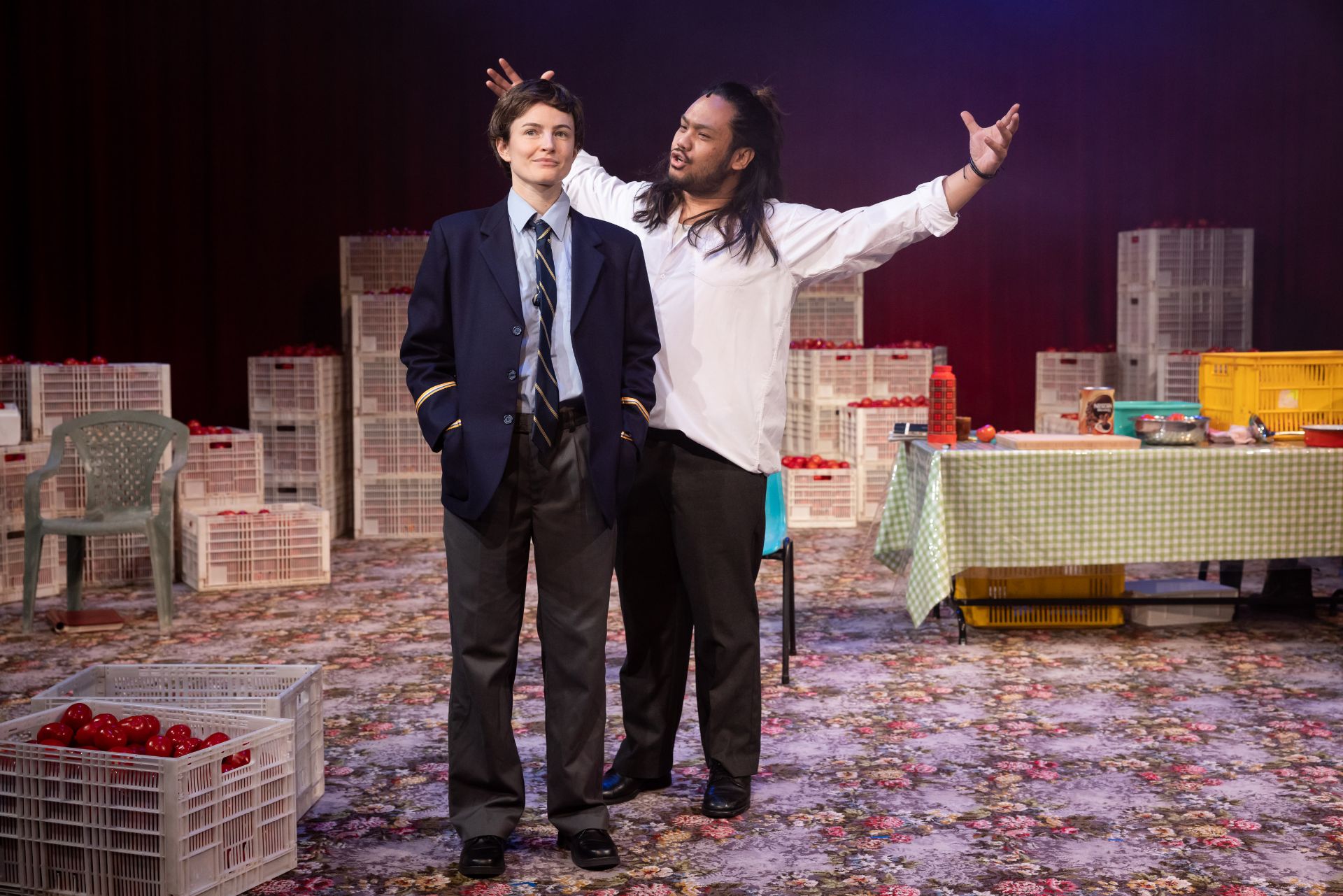
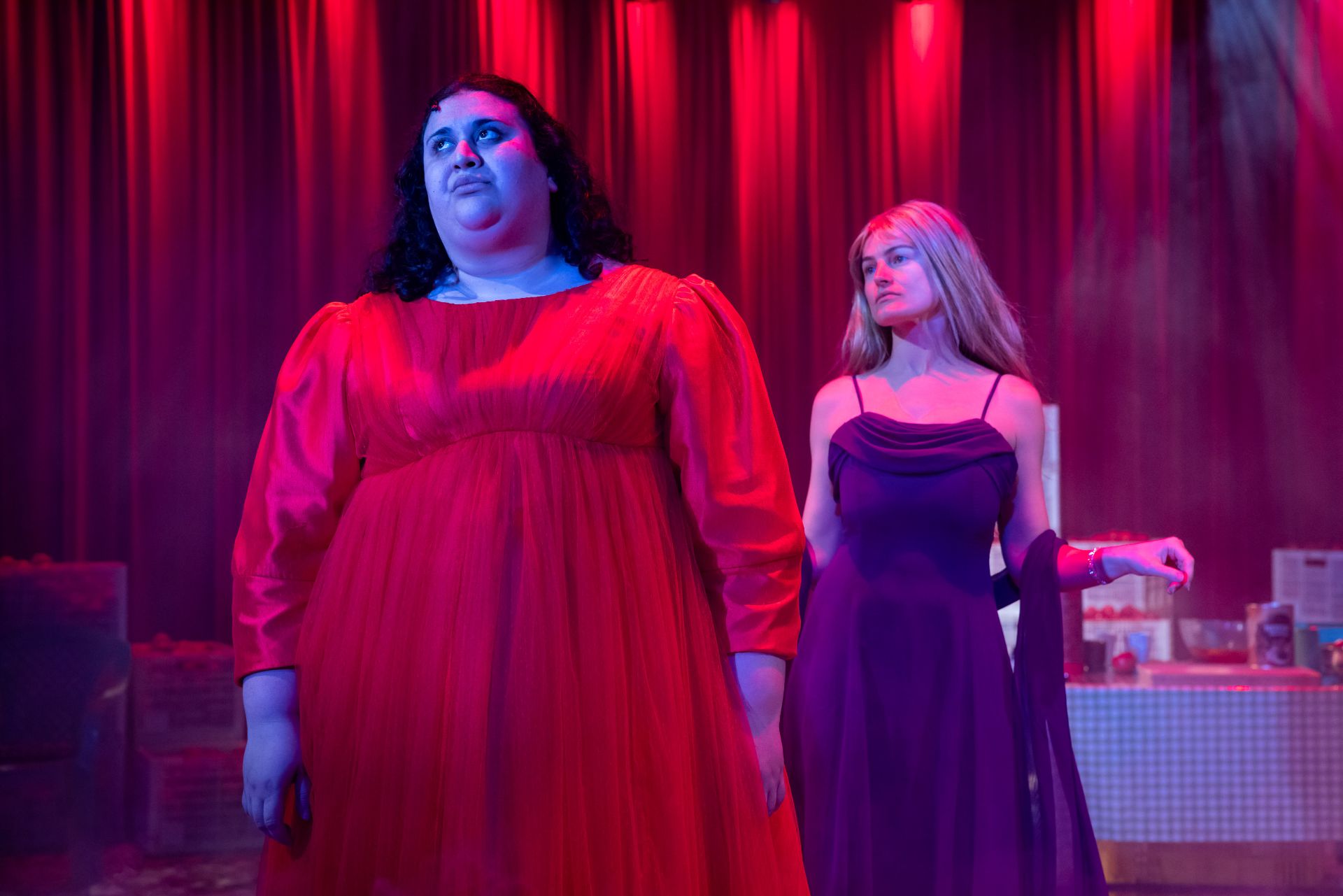
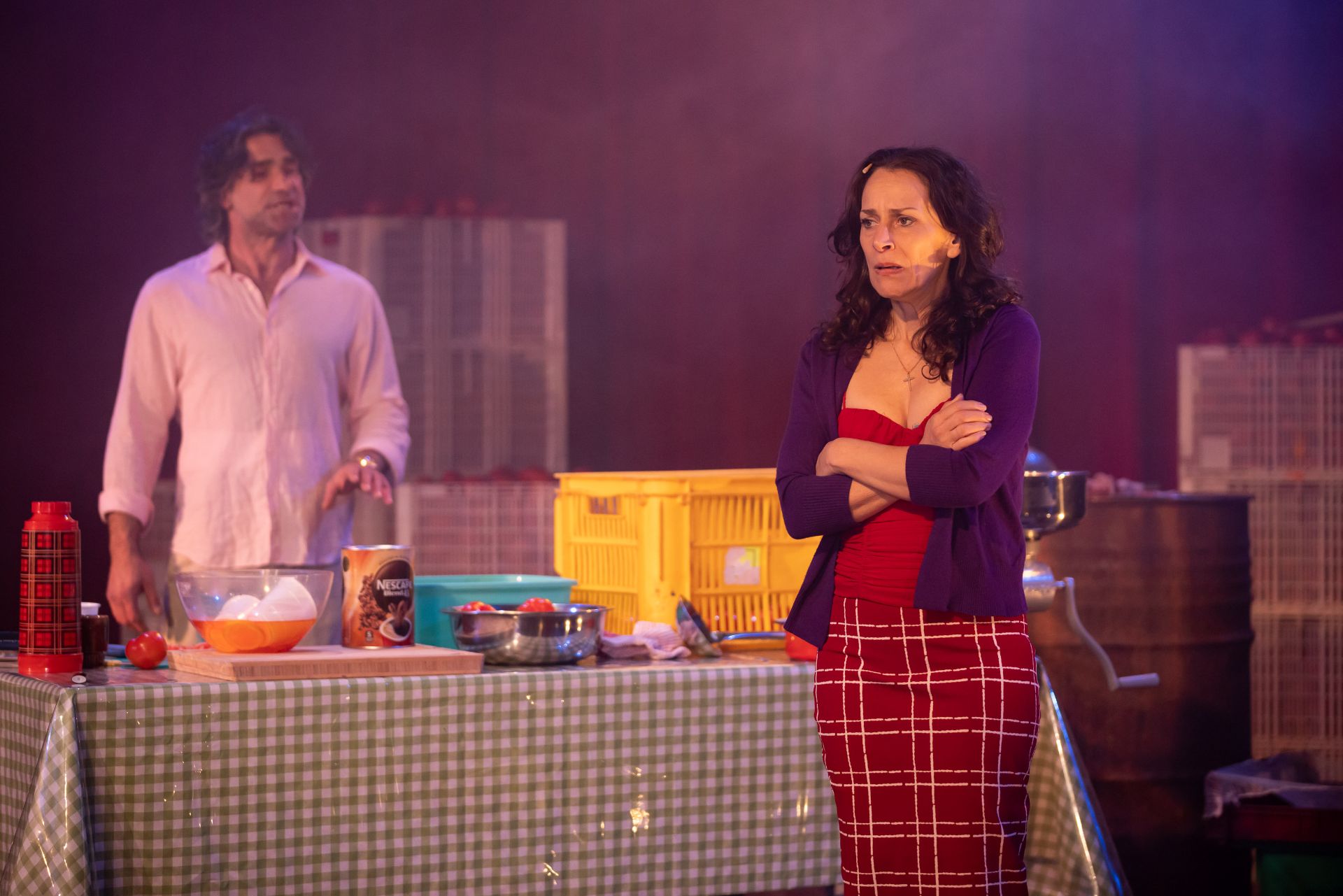
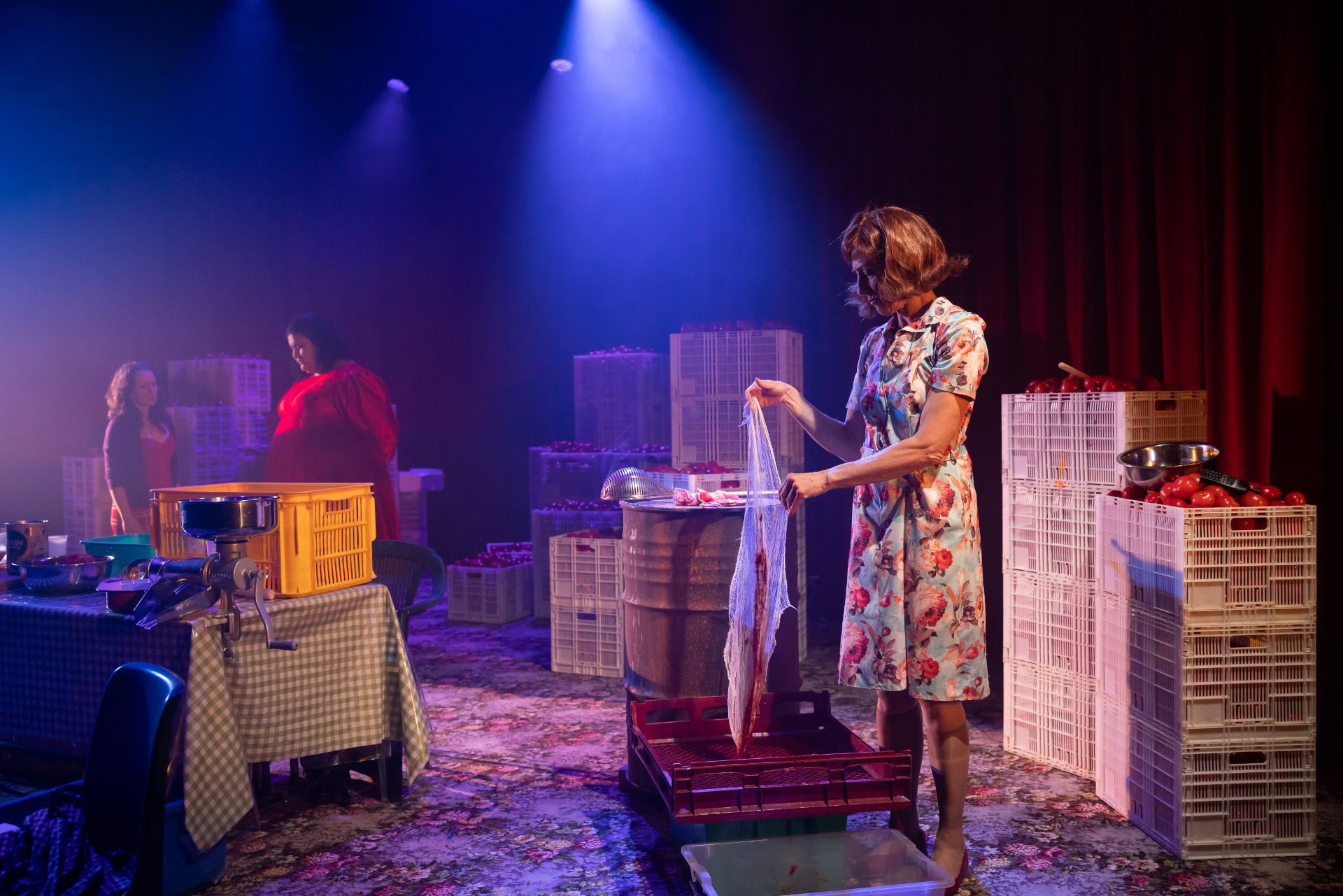
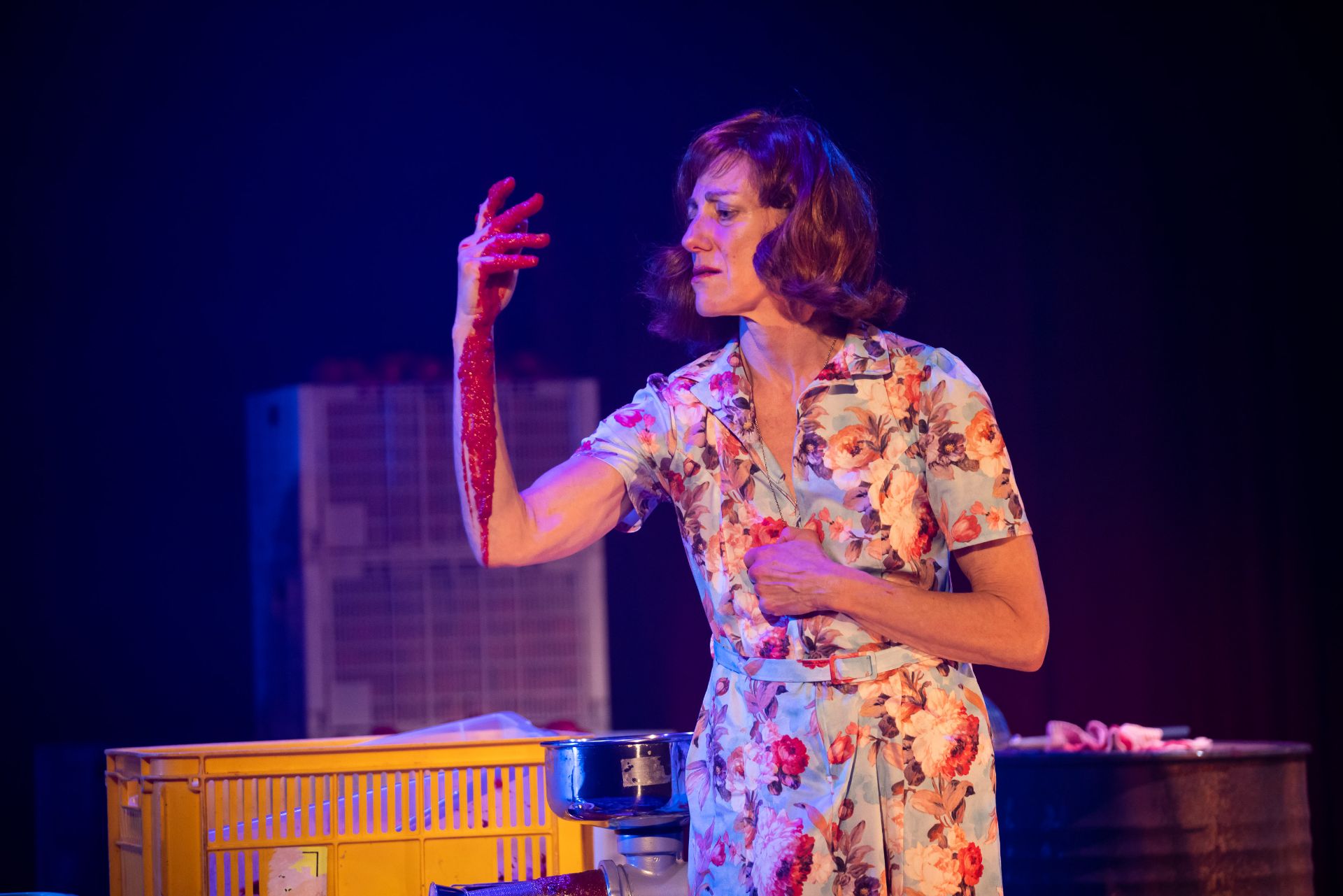
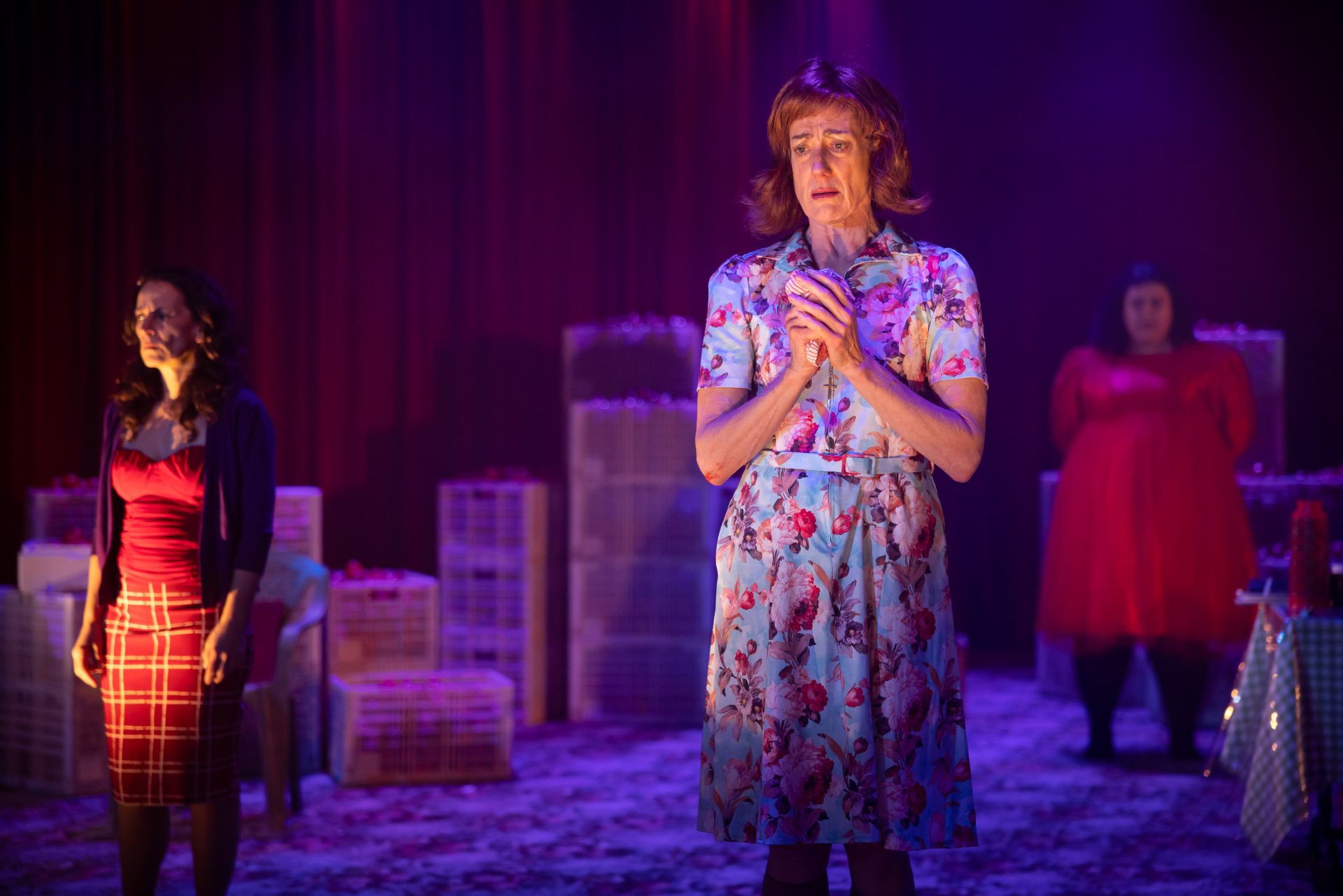
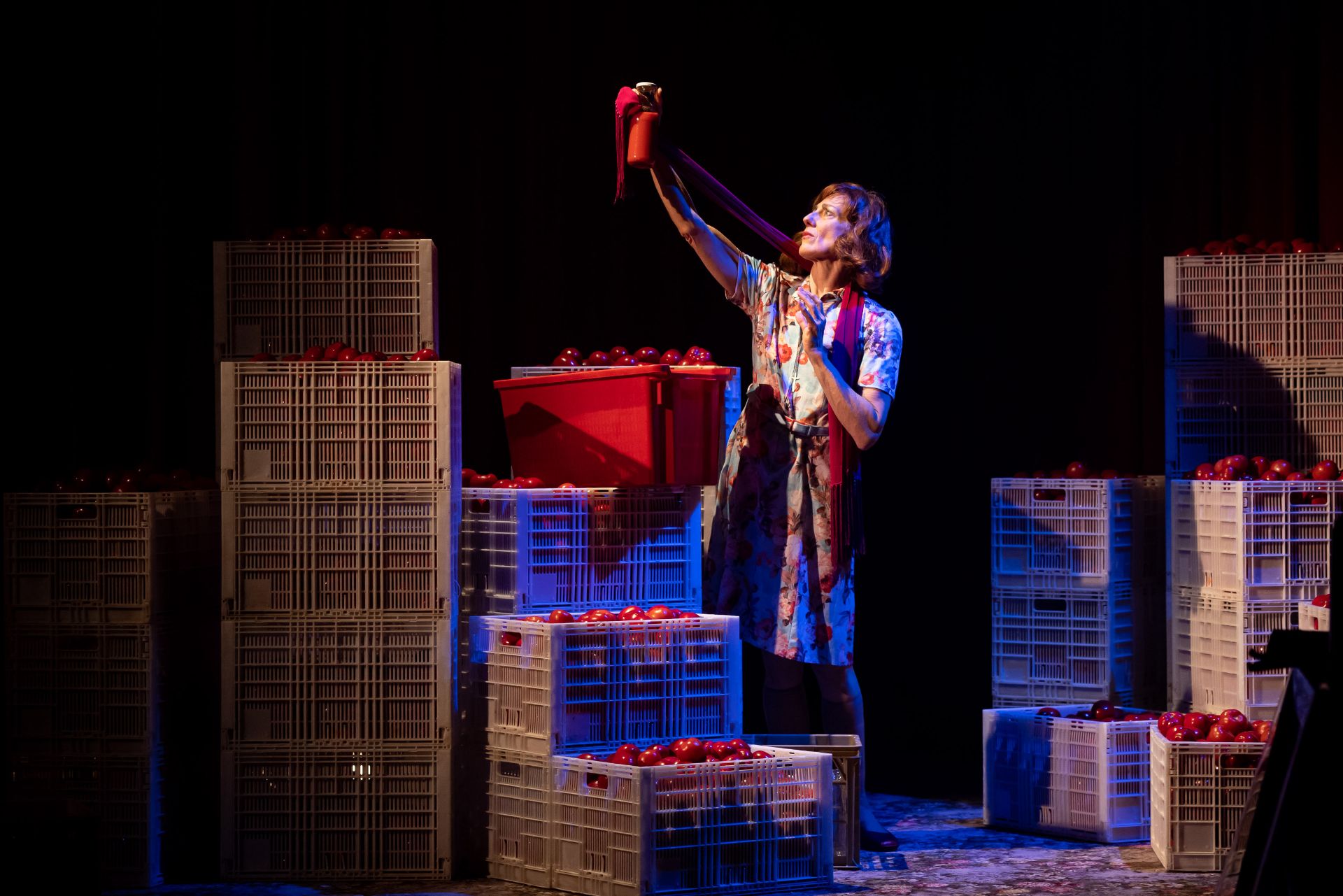
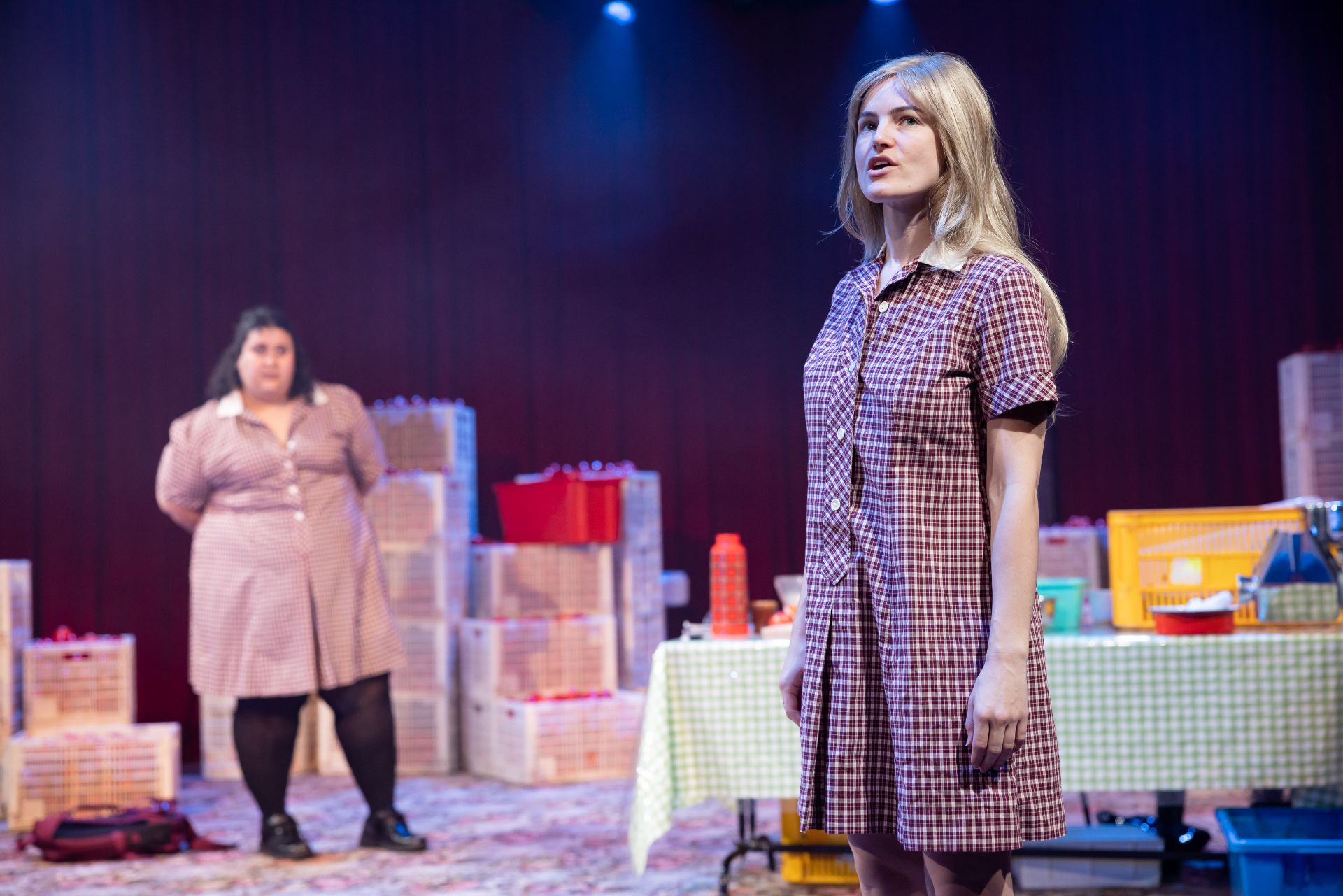
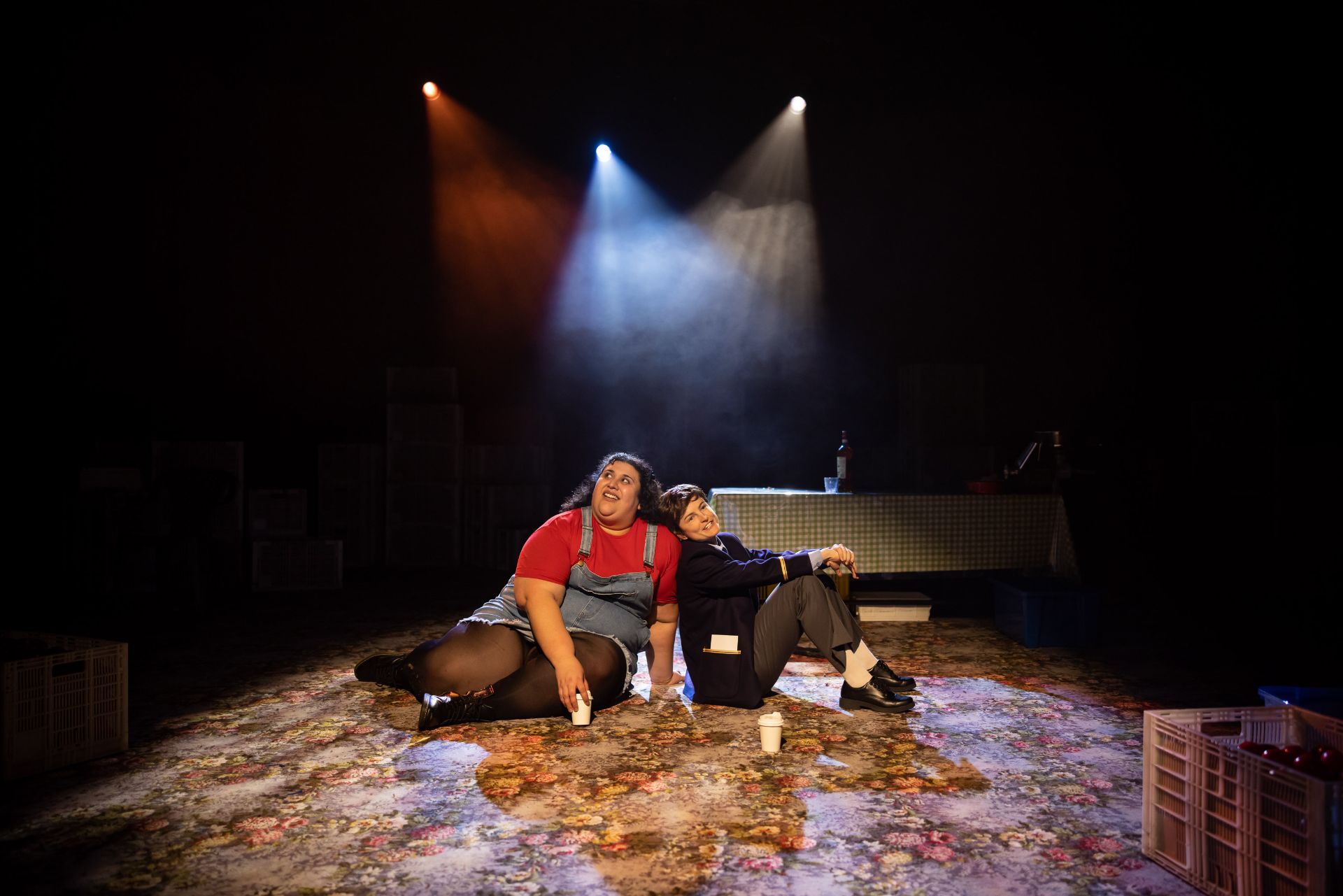
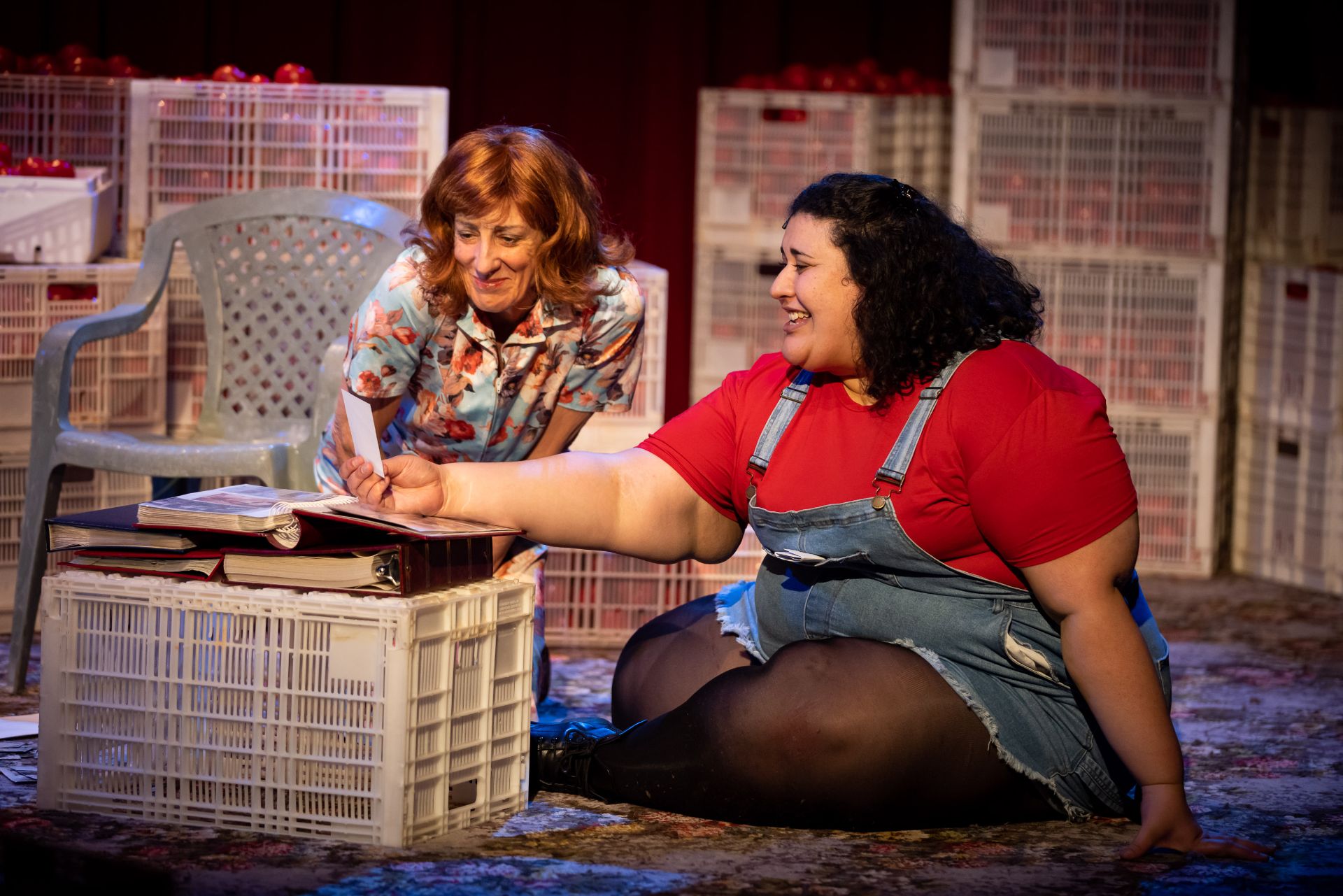
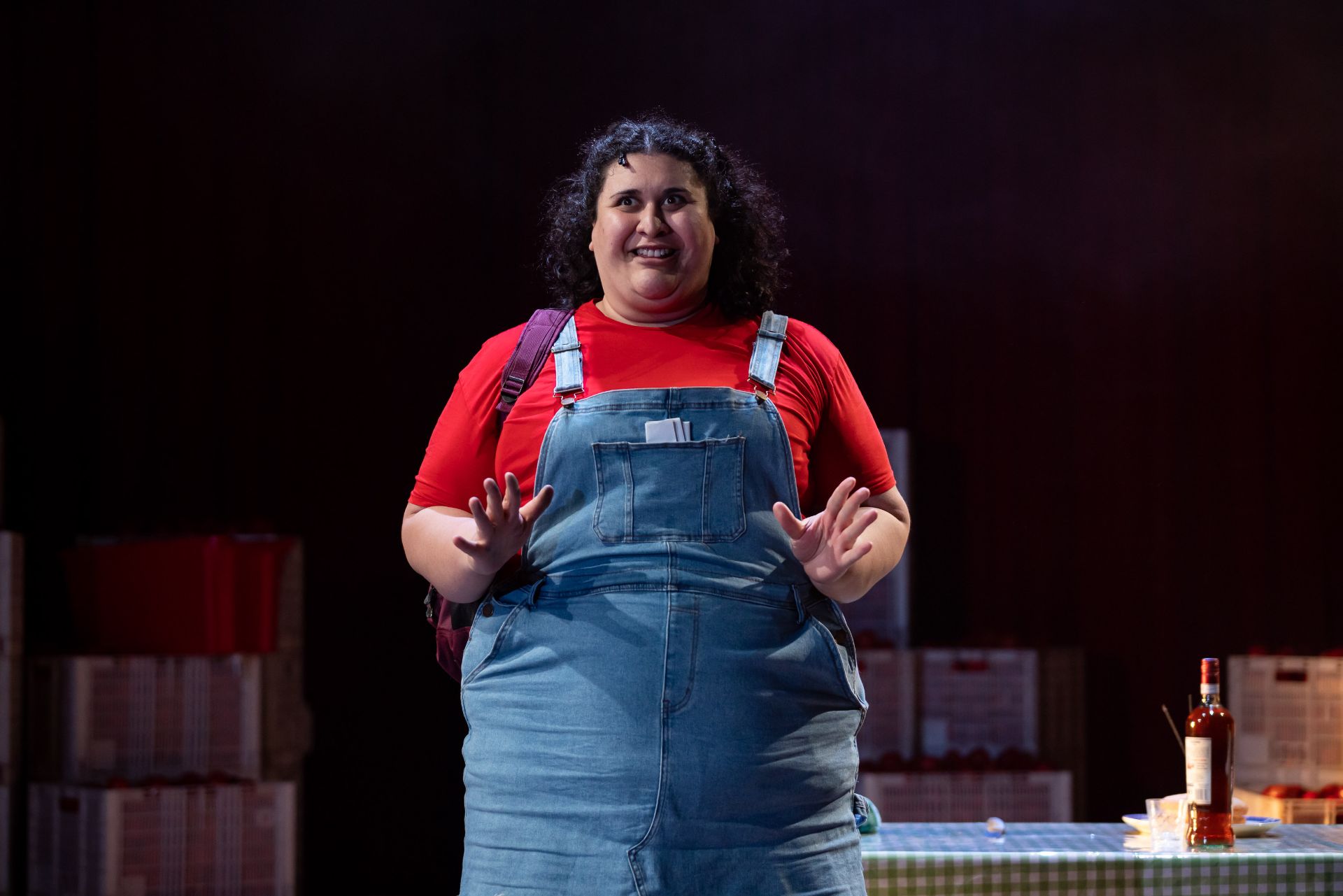
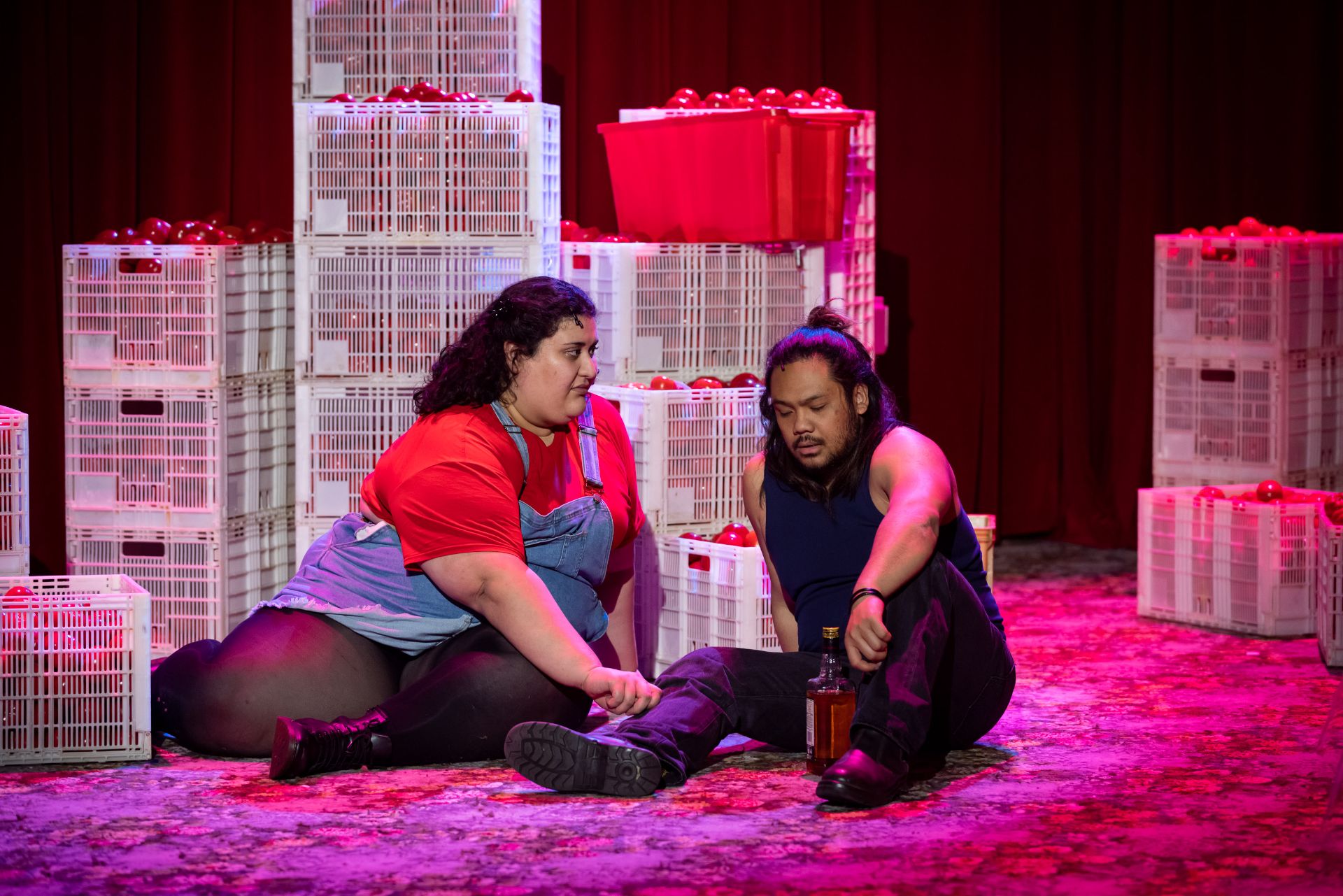
Almost half the stage, designed by Kate Davis, is taken up by crates filled with bulbous red tomatoes, against velvety crimson drapes indicating something classic, and desirous of an old-way extravagance. Sumptuous lights by Katie Sfetkidis are brash when necessary, to make effective the many witty punchlines, but also persuasively sentimental, for sections when we delve into the more rapturous aspects of the Alibrandi story. Daniel Nixon’s sound design incorporates curious background noise throughout the piece, occasionally distracting but an interesting commentary perhaps, on our obsession with silence in colonised forms of theatre audienceship.

In the role of Josie is Chanella Macri, who proves herself an accomplished comedian, flawless with her delivery of the many delightful jokes, that make Looking for Alibrandi a thoroughly amusing time. Paired with her ability to embody a consistent sense of truth, not only for her character but also for the deeper meanings inherent in the narrative, the compelling Macri impresses by telling the story with great integrity.

Lucia Mastrantone plays Josie’s mother Christina and schoolmate Sera, with a marvellous flamboyance layered over an intimate affiliation, that the actor clearly feels for the material. Jennifer Vuletic is a strong presence as Nonna and as archetypal nun Sister Bernadette, effortless in conveying authority for both matriarchs. Supporting cast members John Marc Desengano, Ashley Lyons and Hannah Monson are all endearing, and convincing with their contributions, in a show remarkable with its taut proficiencies and irresistible charm.

Josie’s talent and self-belief are the best ingredients for a success story, but they are still only just half the story. No matter how dedicated and hardworking, Josie still has forces working against her, in a world that remains racist and sexist, and Josie’s seeming obliviousness to those factors can only serve to make things even worse. Significant time has past since the original publication of Marchett’s book, making Josie close to 50 years of age today. We can only wonder if she has attained all her wishes, if the grit she demonstrates has taken her far, and if our society has allowed all that promise to flourish.

www.belvoir.com.au

Review: Mother May We (Griffin Theatre Company)

Venue: SBW Stables Theatre (Darlinghurst NSW), Sep 27 – Oct 8, 2022
Playwright: Mel Ree
Cast: Mel Ree
Images by DefinitelyDefne Photography

Theatre review
Mel Ree performs her own writing in Mother May We, a meditation on identity, heritage, aspiration and liberation. A vulnerable collection of thoughts, scant with autobiographical details, placing emphasis instead on the translation of deep personal feelings, into words. It is the essence of Ree’s being that emerges, from these poetic scenes, retaining for the subject a certain mystique, but leaving us a strong impression about the riveting personality we encounter.

With magnetism seeping from every pore, Ree makes an hour in her presence feel a fleeting moment. She charms and delights, with masterful control over her physicality, along with the silkiest of voices, Ree effortlessly but powerfully keeps us under her spell for the entire duration. Her presentation oscillates between humour, poignancy and eccentricity, serving up testimony from the perspective of a queer woman-of-colour on these colonised lands.

Whether flippant or sombre, the tone of Mother May We constantly morphs, but what it reveals is always and only the truth. In allowing that truth to occupy space so absolutely, Ree stands for something radical. There is a transformation that she synthesises, that we are made to be a part of, when we open ourselves to the autonomy of her storytelling. The audience is forever changed, as a result of encountering a soul, so insistent and so defiant, in the assertion of something that can only be described as the artist’s sense of authenticity.

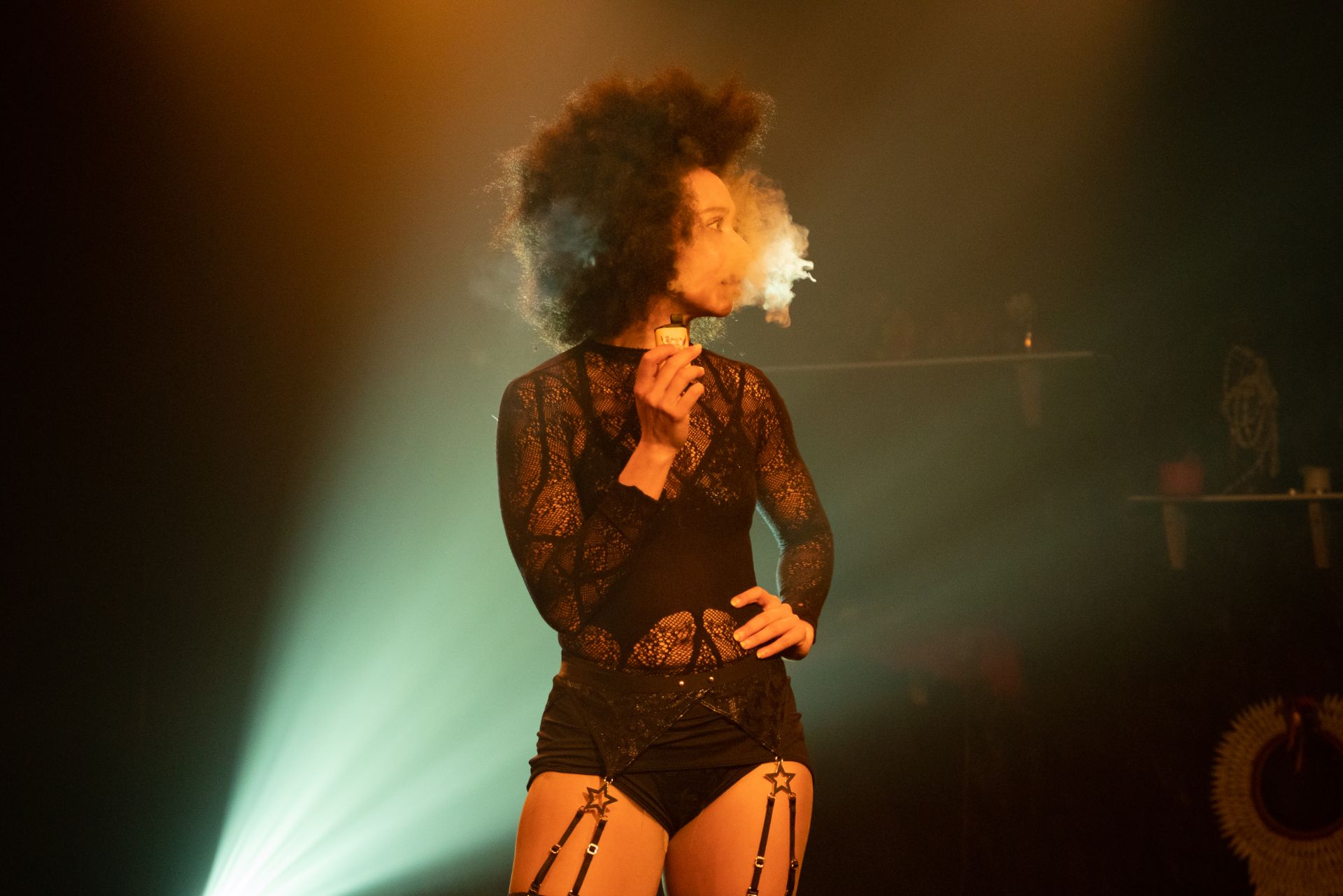
The poetry is enhanced by an intricate sound design by Steven Khoury, who twists and turns our sensibilities, so that we connect with the various dimensions of quirkiness, that Ree brings forth so gregariously. Lights by Frankie Clarke and video by Nema Adel, mesmerise and titillate, much like the star of the show, full of surprises, and always with an underlying but distinct air of glamour.

It is perhaps the job of feminism, to wrestle with uncertainty and that which is undecided, because convenient answers have proven to only serve hegemonies that we know to rile against. In Mother May We things seem to be in flux, seeking for destinations that we discover ultimately to be further transitory points. It is our idiosyncrasies, that we should learn to honour. To cultivate a capacity for individuality in our humanity, and to resist that which demands uniformity and conformity. Feminism holds us at every inevitable occasion of chaos, when we are able to get to the truth, and it teaches us to be apprehensive, when things fall too neatly into tidy little boxes.

www.griffintheatre.com.au

Review: The Lifespan Of A Fact (Sydney Theatre Company)

Venue: Roslyn Packer Theatre (Sydney NSW), Sep 20 – Oct 22, 2022
Playwrights: Gordon Farrell, Jeremy Kareken, David Murrell (based on the book by John D’Agata and Jim Fingal)
Director: Paige Rattray
Cast: Gareth Davies, Sigrid Thornton, Charles Wu
Images by Prudence Upton

Theatre review
John D’Agata writes essays, in which he seeks truth and beauty. When Jim Fingal enters the frame as a fact-checker, we discover that subjective truths do not always align with cold, hard facts. Based on the collaborative book The Lifespan of a Fact by D’Agata and Fingal, this theatrical version by Gordon Farrell, Jeremy Kareken and David Murrell, explores a concept of the artistic licence, as understood by D’Agata. In the examination of how he accesses the truth, the play encourages us to consider the very nature of truth, and what it means, when in contradiction with objective reality.

It is an intellectually stimulating work, but also entertaining, in its rendering of D’Agata and Fingal as idiosyncratic personalities, and in the excellent humour with which their incessant conflict is presented. Direction by Paige Rattray ensures that the comedy of The Lifespan of a Fact is thoroughly exteriorised, for a show that amuses at all times.

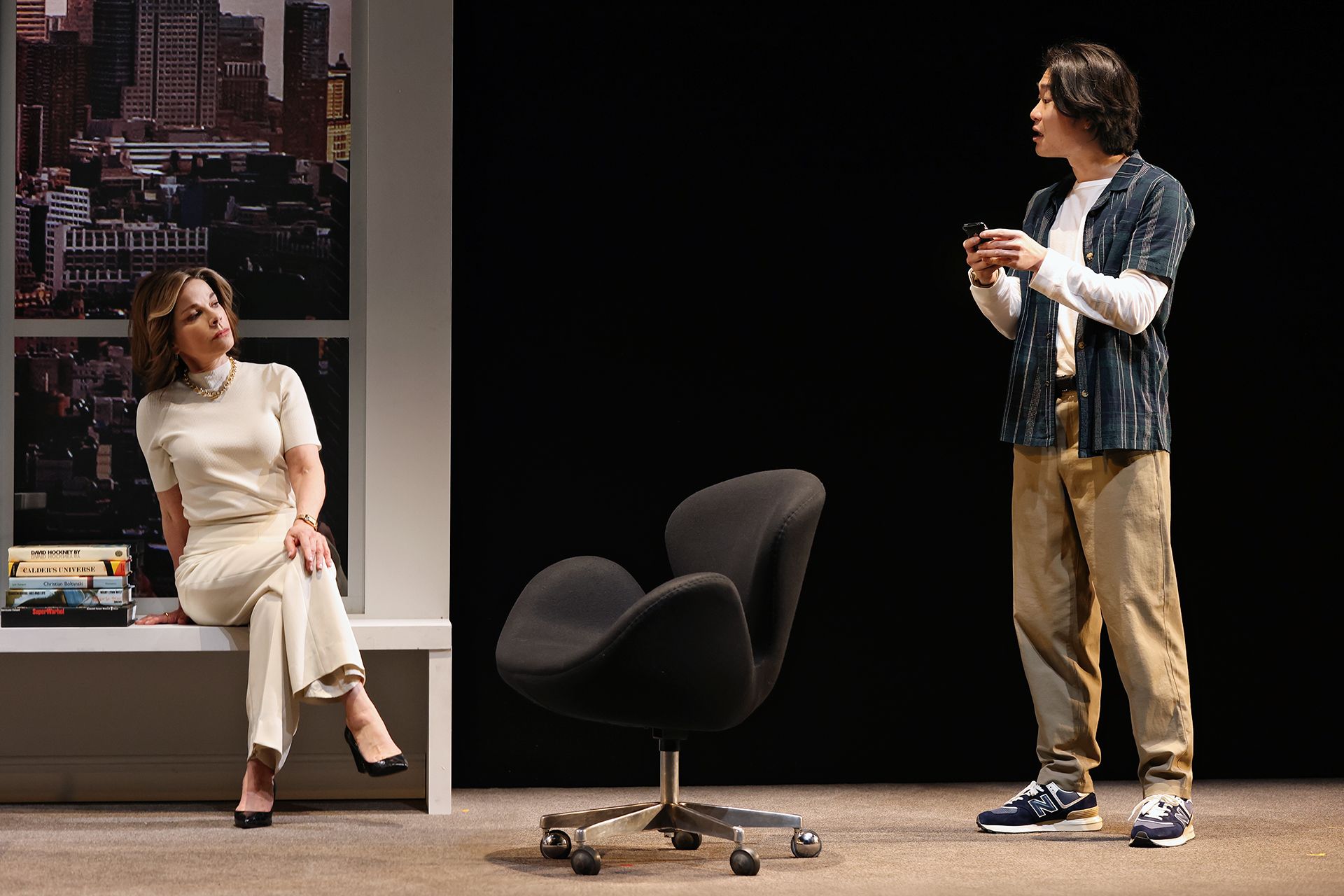
Actor Charles Wu plays the detail-oriented Fingal, with captivating verve, and astonishing precision. His rhythm and timing are beautifully measured, so that we are kept riveted, to both the funny and the serious simultaneously, of his character’s austere perspective. Gareth Davies performs the role of D’Agata with an irony so subtle and persuasive, that makes convincing, even his most extravagant declarations. Davies and Wu bring great energy to the stage, and along with their effortless charisma, this story of rivalry, between personalities and ideas, is made truly delectable.

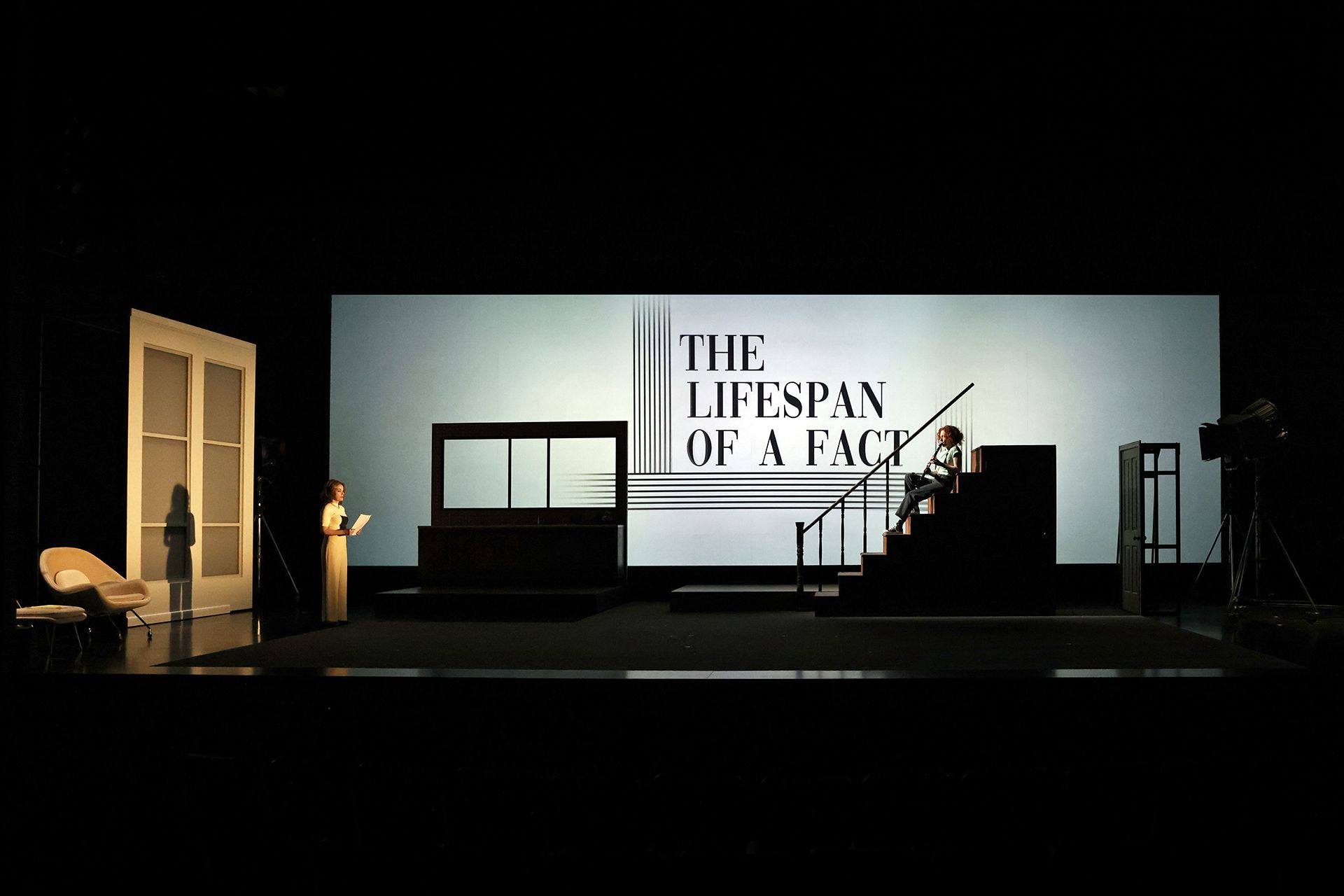
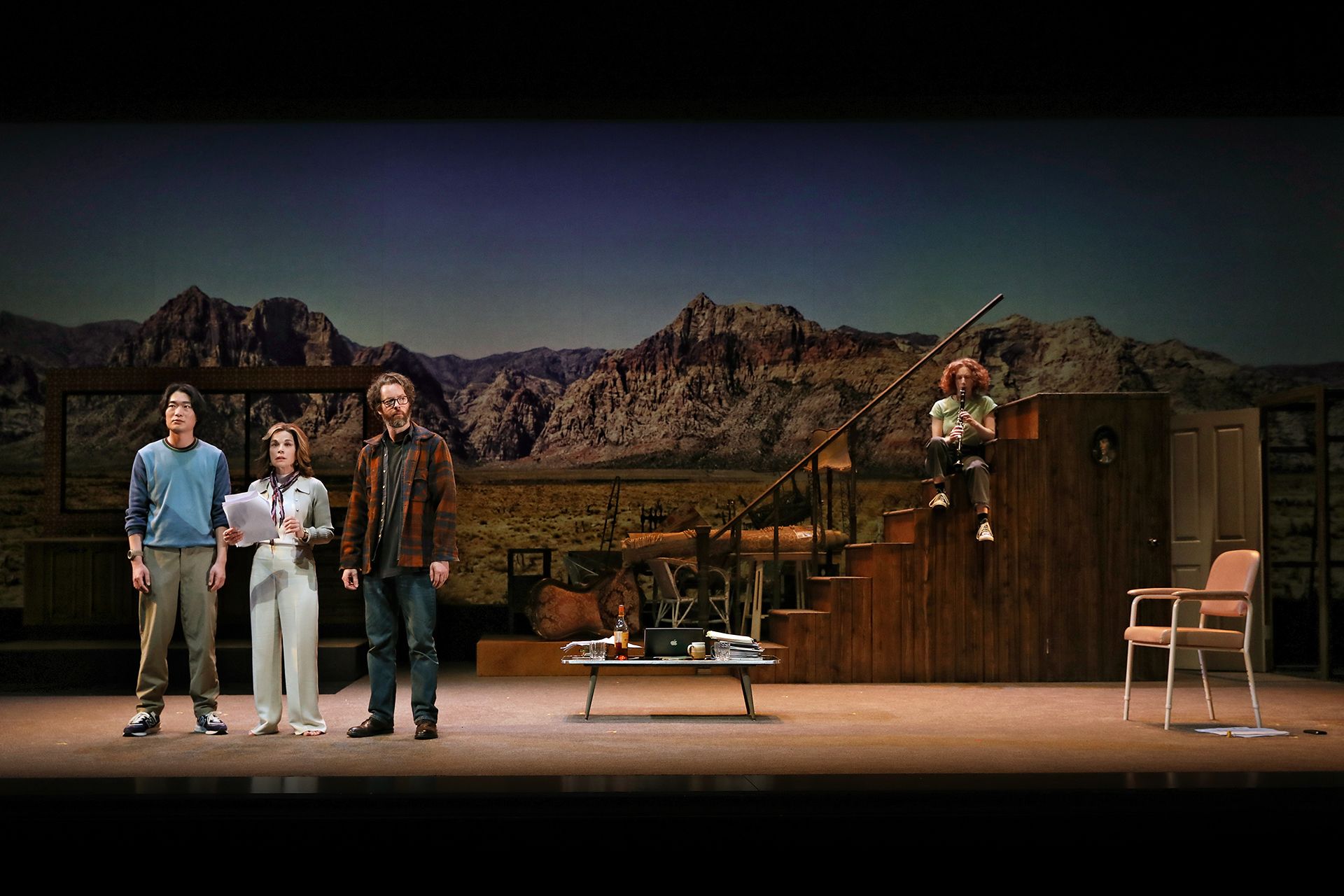
Similarly ebullient, is Sigrid Thornton as magazine editor Emily Penrose, most effective when adding fuel to fire, in the war between ideologies. Clarinettist Maria Alfonsine lends her vaporous presence, to the discussion of real versus true, introducing live and recorded music in ways that make a strong argument for the importance of beauty, and of aesthetic pursuits in general.

Set design by Marg Horwell is remarkably appealing, in her modernist approach to the evocation of place. It straddles fantastical and authentic, yet leaving no doubt about where we are, even though we are in fact oceans away from New York and Las Vegas. Lights by Paul Jackson are designed with a pleasing simplicity, rarely drawing attention to itself, but always reliable at enhancing the storytelling.

These are precarious times. Over the last few years, we have seen people holding firm to destructive beliefs, in the face of evidence that proves the contrary. False medicines have been sold all through the pandemic, along with fraudulent information about vaccinations. Patriotic feelings were manipulated, to make the British turn against their neighbours, at the detriment of their own economy, and a similar style of nationalism was used in America, for a moment of insurrection that will continue to reverberate for years to come.

It appears truth always exists most resonantly as a subjective experience; what we can feel is often valued more highly than what we can actually see or hear. Even at his most earnest, D’Agata’s ego is apparent. If it is characteristic of humanity to be self-important, then it should come as no surprise, when the universe chooses to have us eliminated.

www.sydneytheatre.com.au

Review: The Marriage Agency (Kings Cross Theatre)

Venue: Kings Cross Theatre (Kings Cross NSW), Sep 16 – Oct 1, 2022
Playwright: Saman Shad
Director:
Kenneth Moraleda
Cast: Kevin Batliwala, Caroline L. George, Atharv Kolhatkar, Lex Marinos, Ashi Singh
Images by Phil Erbacher

Theatre review

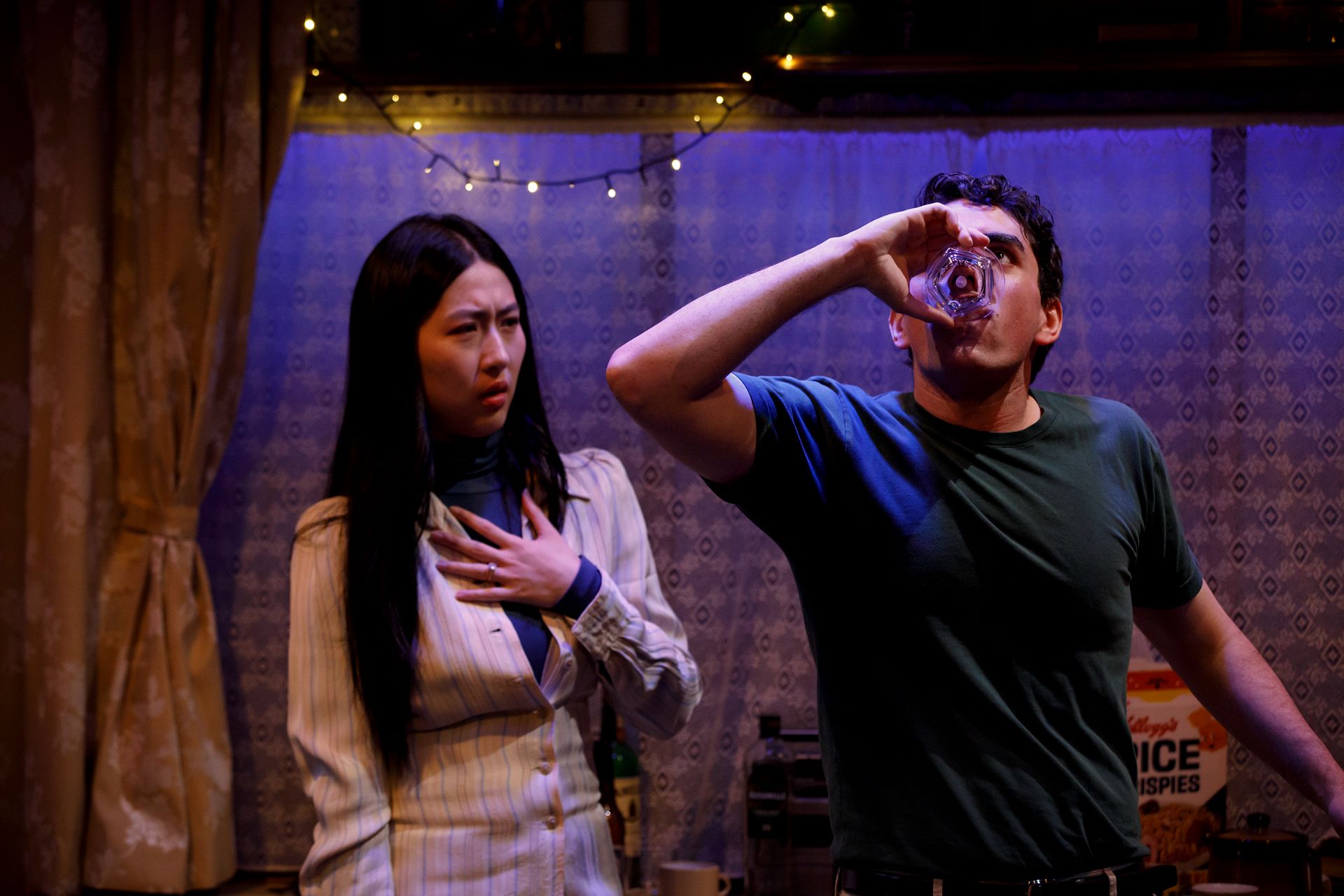
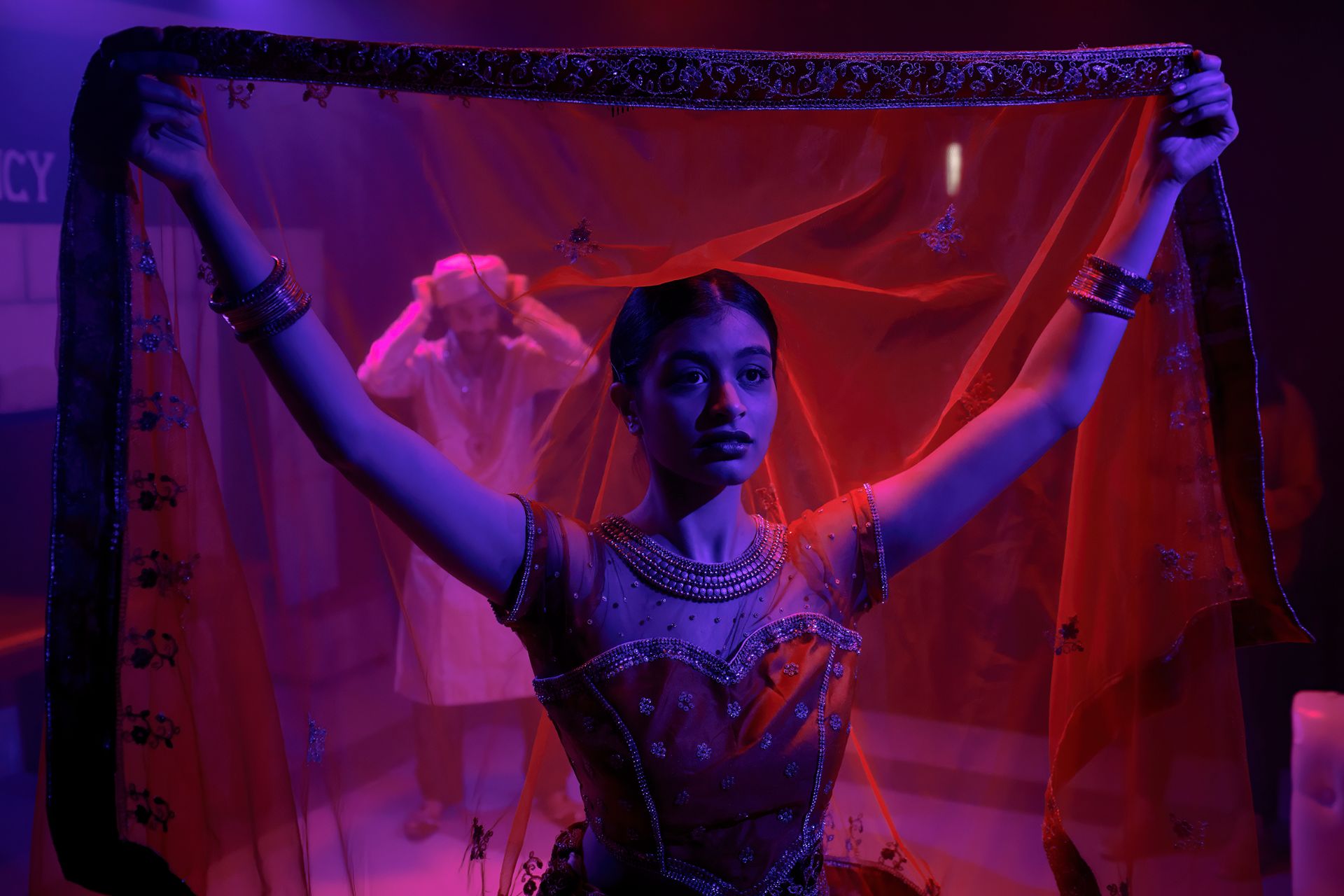
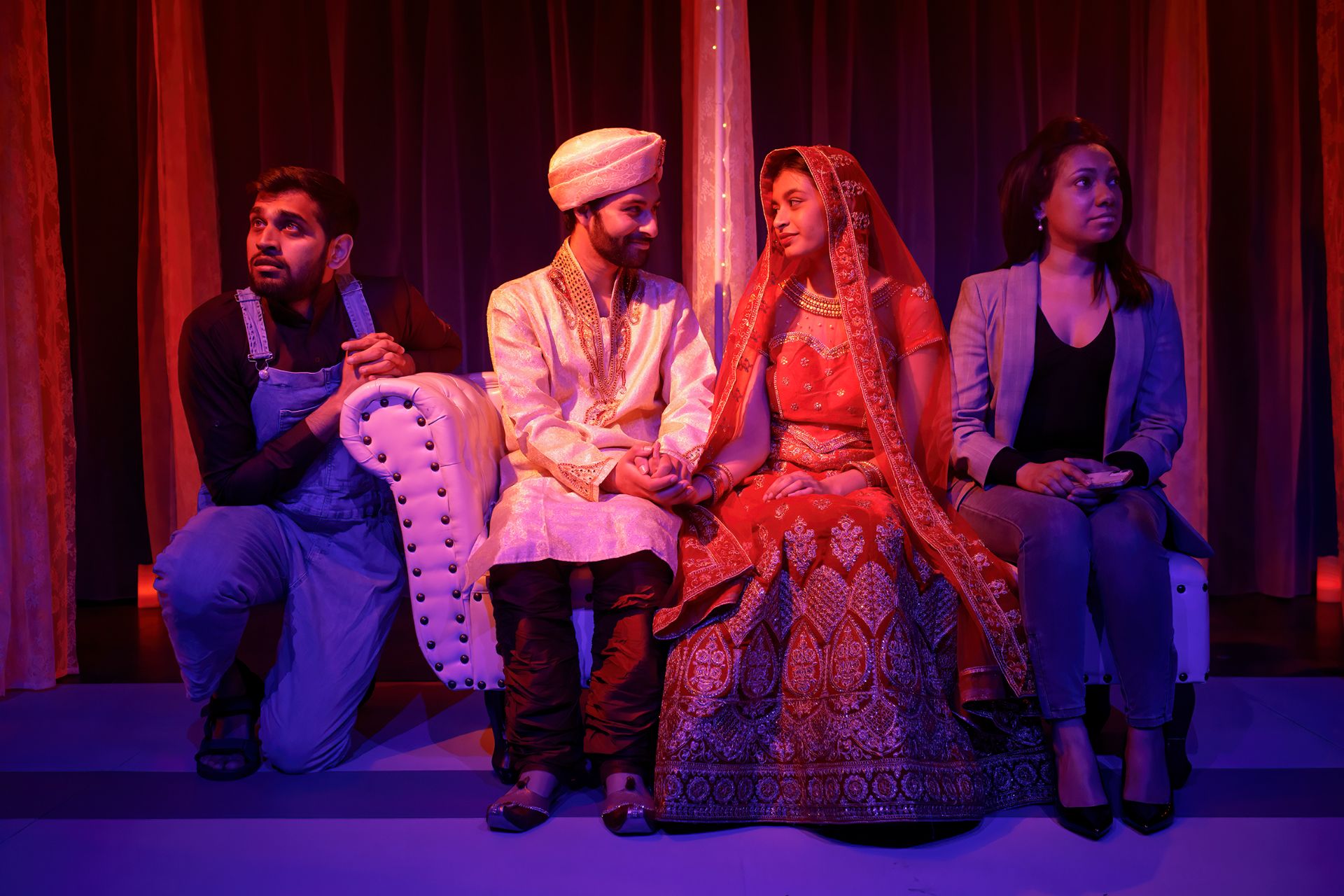
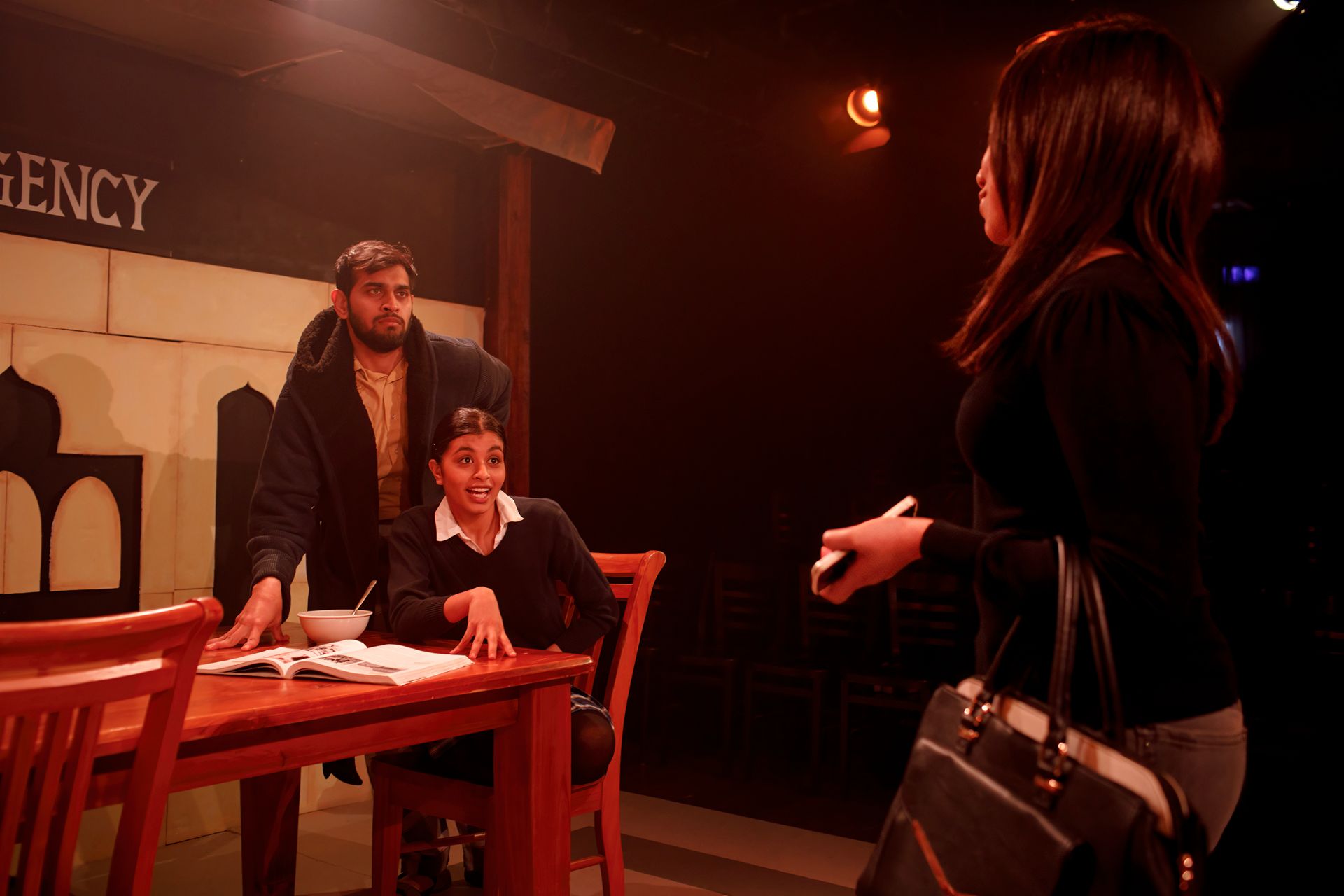
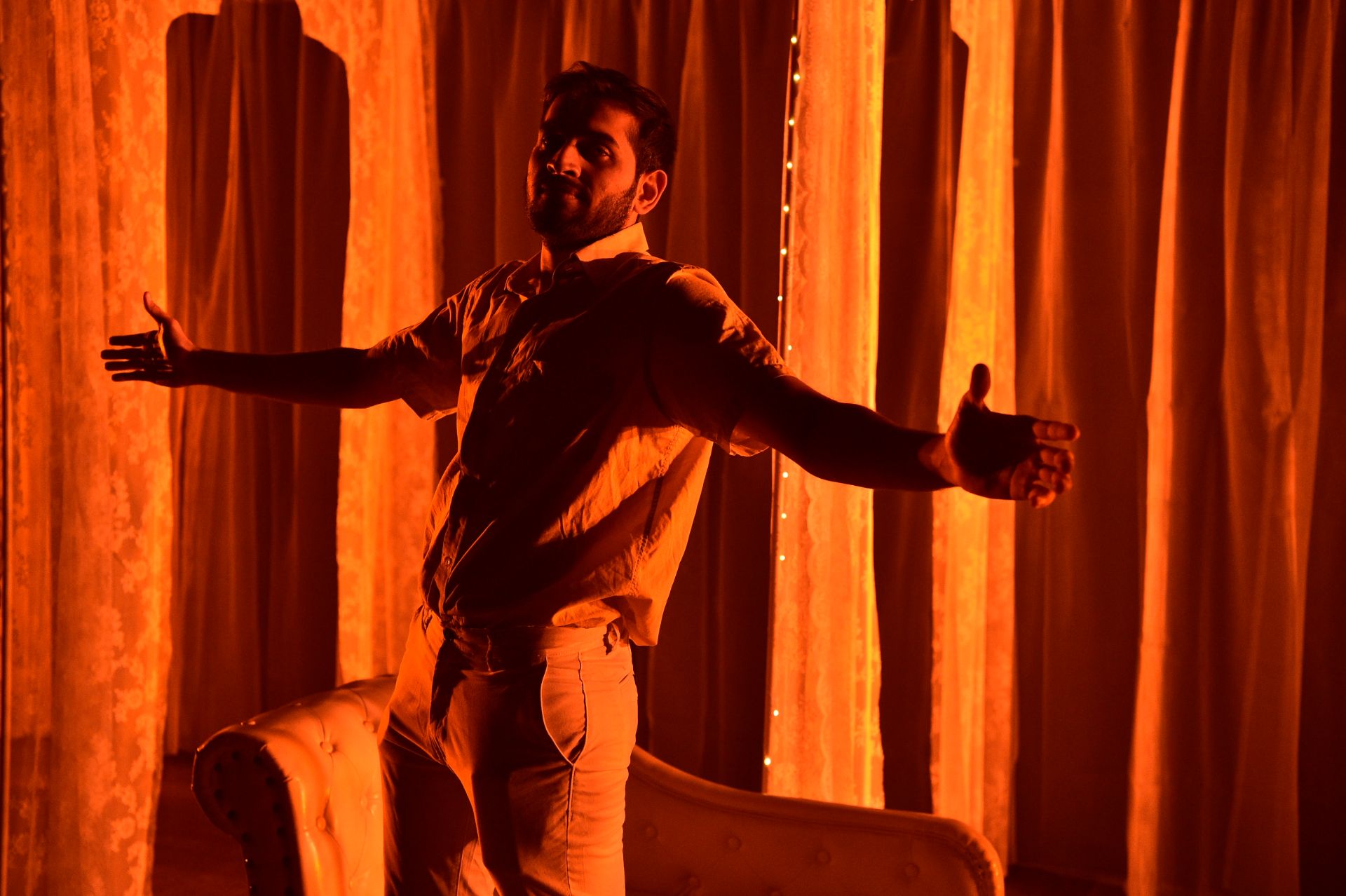
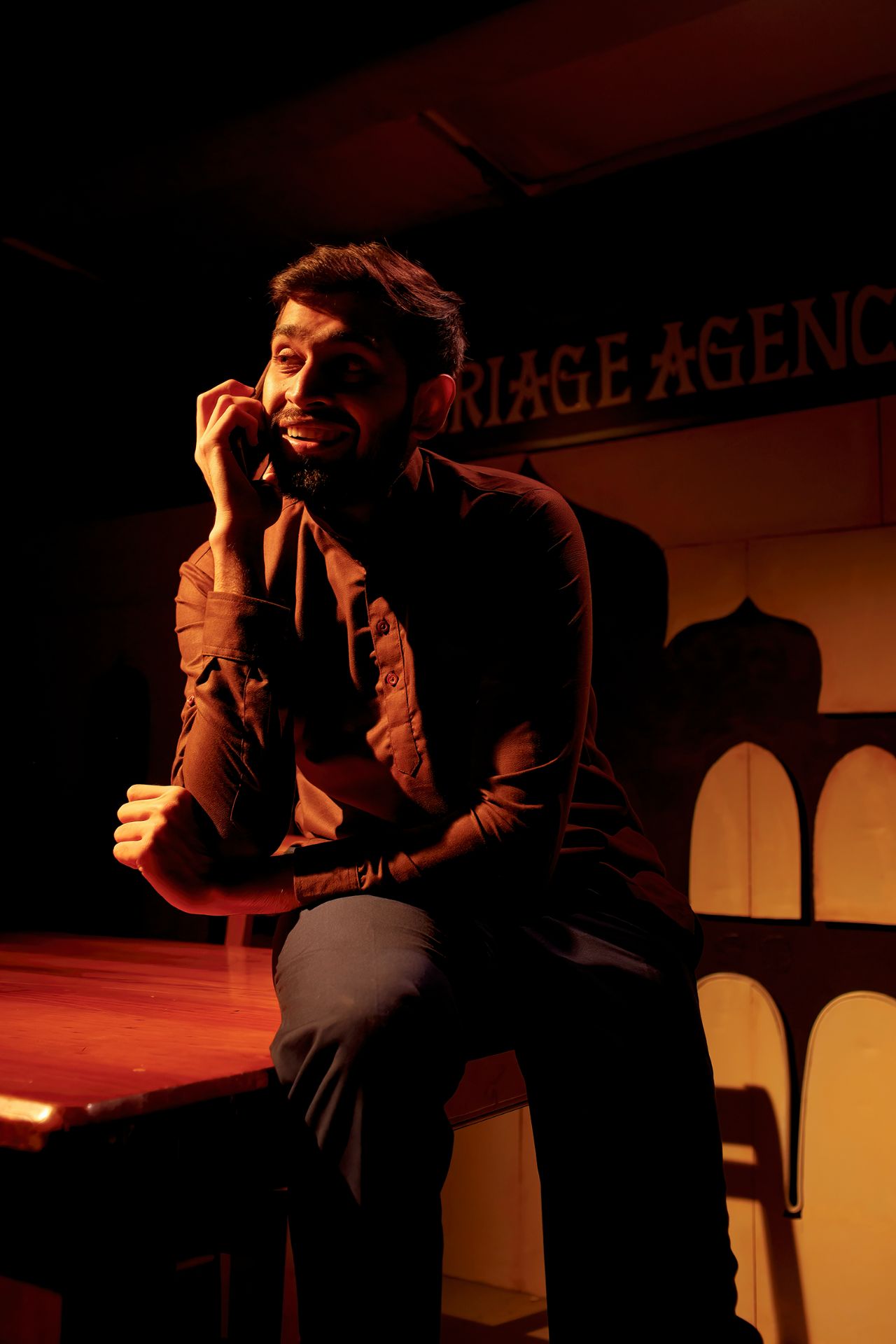
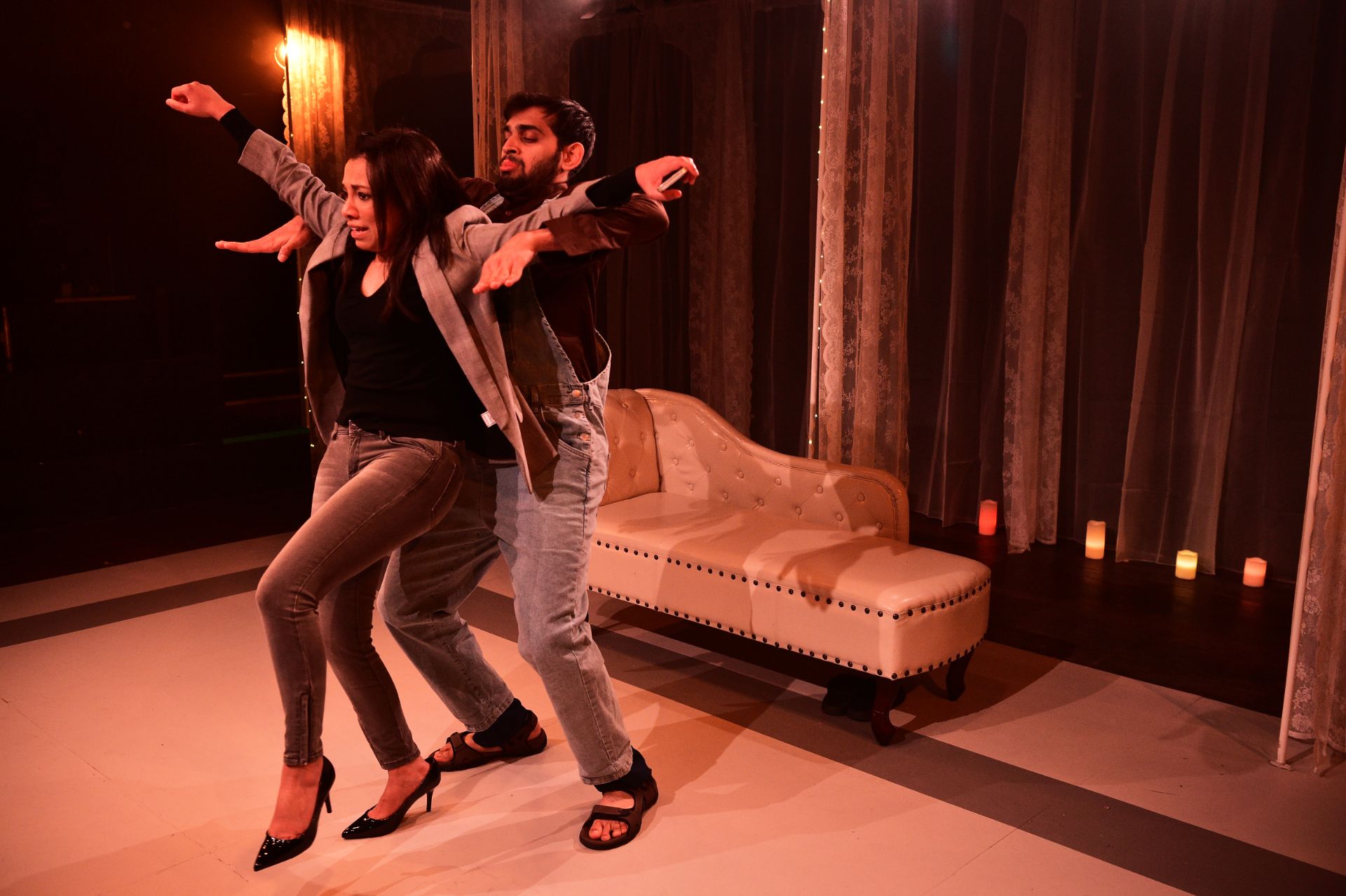
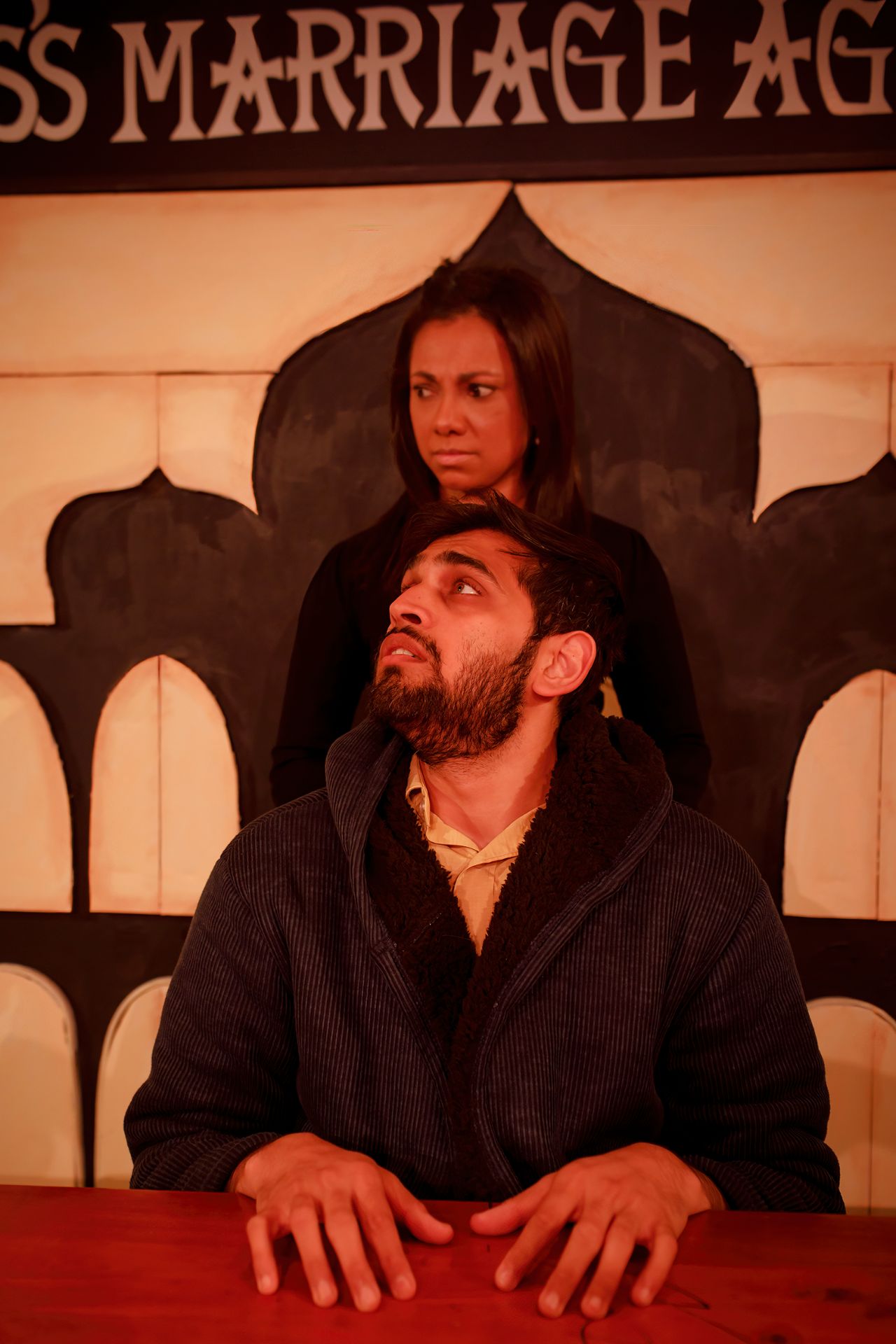
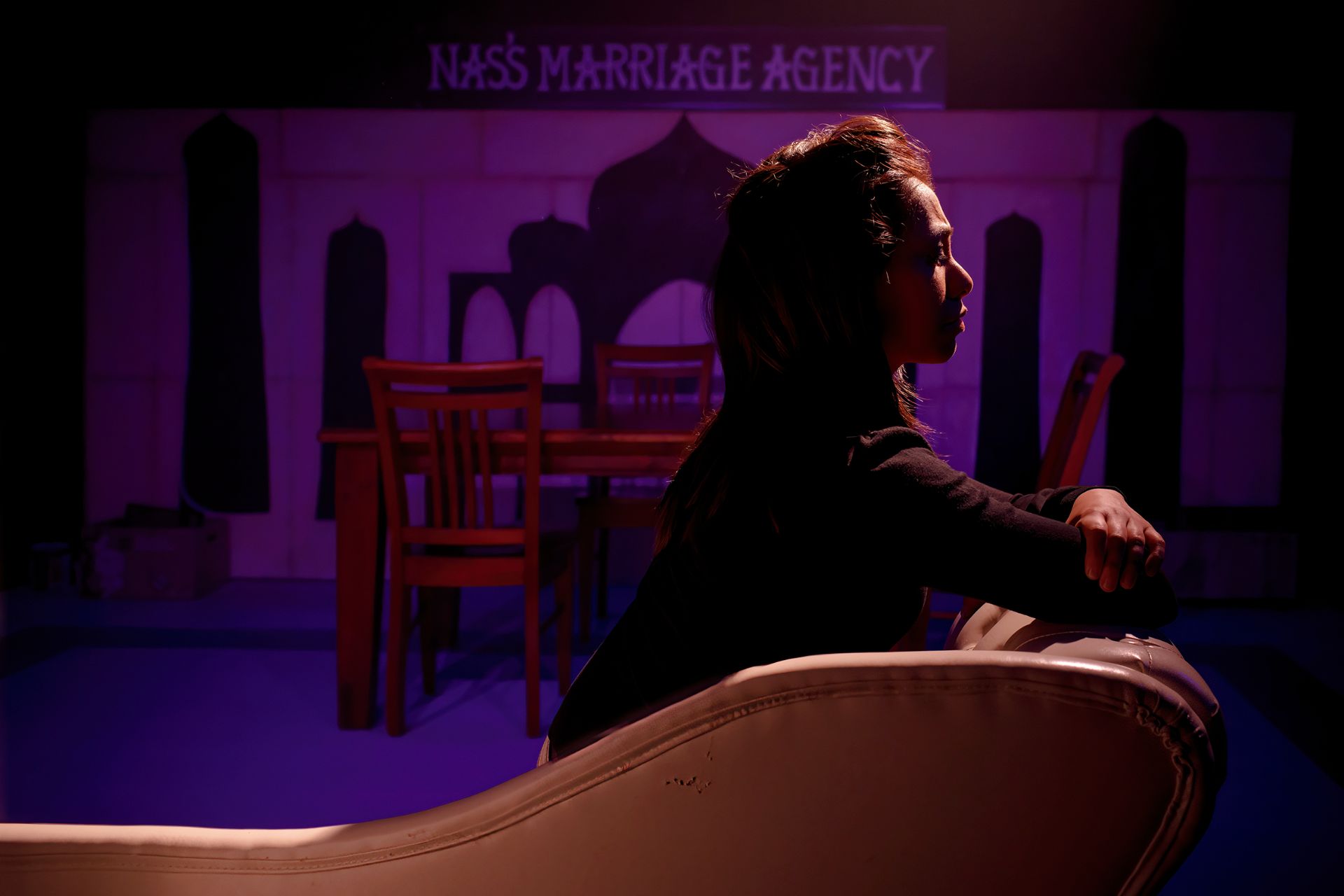
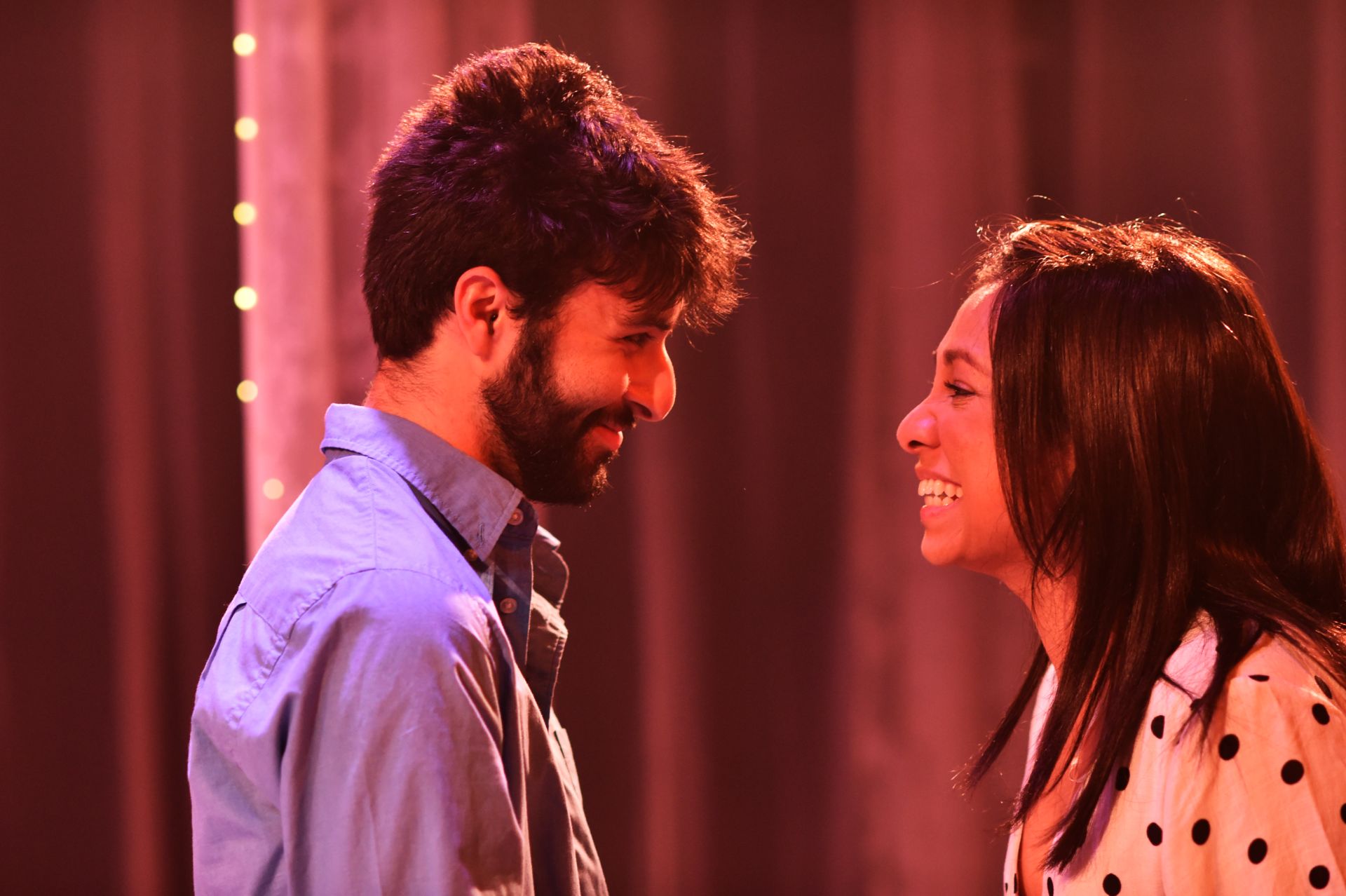
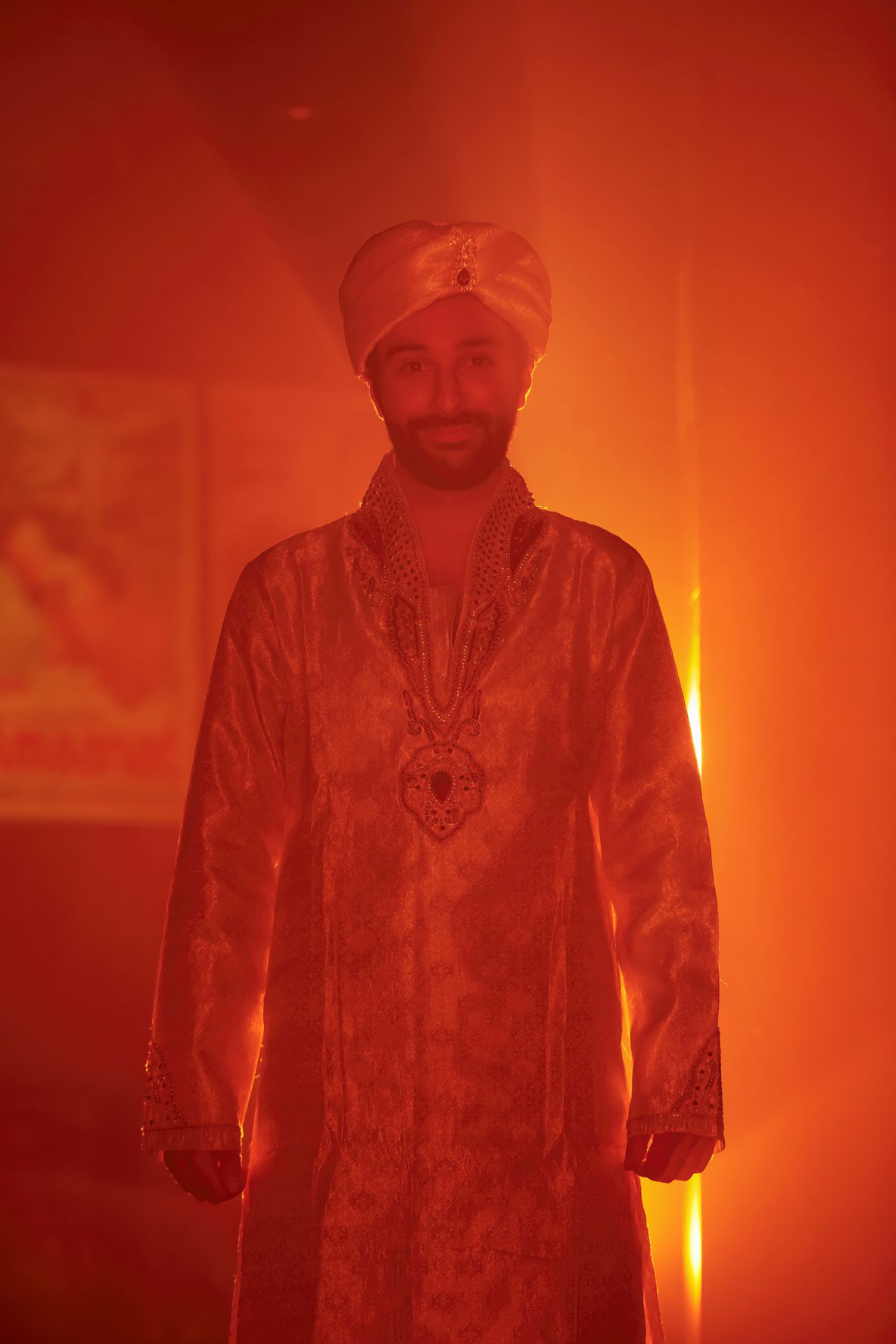
Somewhere in Australia, Nasir is opening a marriage agency, because he has successfully matched dozens of Indian and Pakistani couples, and thinks it is time he turns professional. A hopeless romantic, Nasir is also buoyed by the success of his own marriage with Tasnim, making him feel an expert in the field. Saman Shad’s The Marriage Agency is a delightful comedy about love, for the young-at-heart. Nasir and Tasnim may be parents to a quick-witted rapidly growing teenager, but their relationship is still very much a focus.

Shad’s play takes a gentle, if slightly predictable, look at marriage during its maturing years. Characters in The Marriage Agency are refreshingly idiosyncratic, with consistently humorous dialogue that has us captivated. Directed by Kenneth Moraleda, the show feels energised, bearing an effervescence that proves uplifting from start to end.

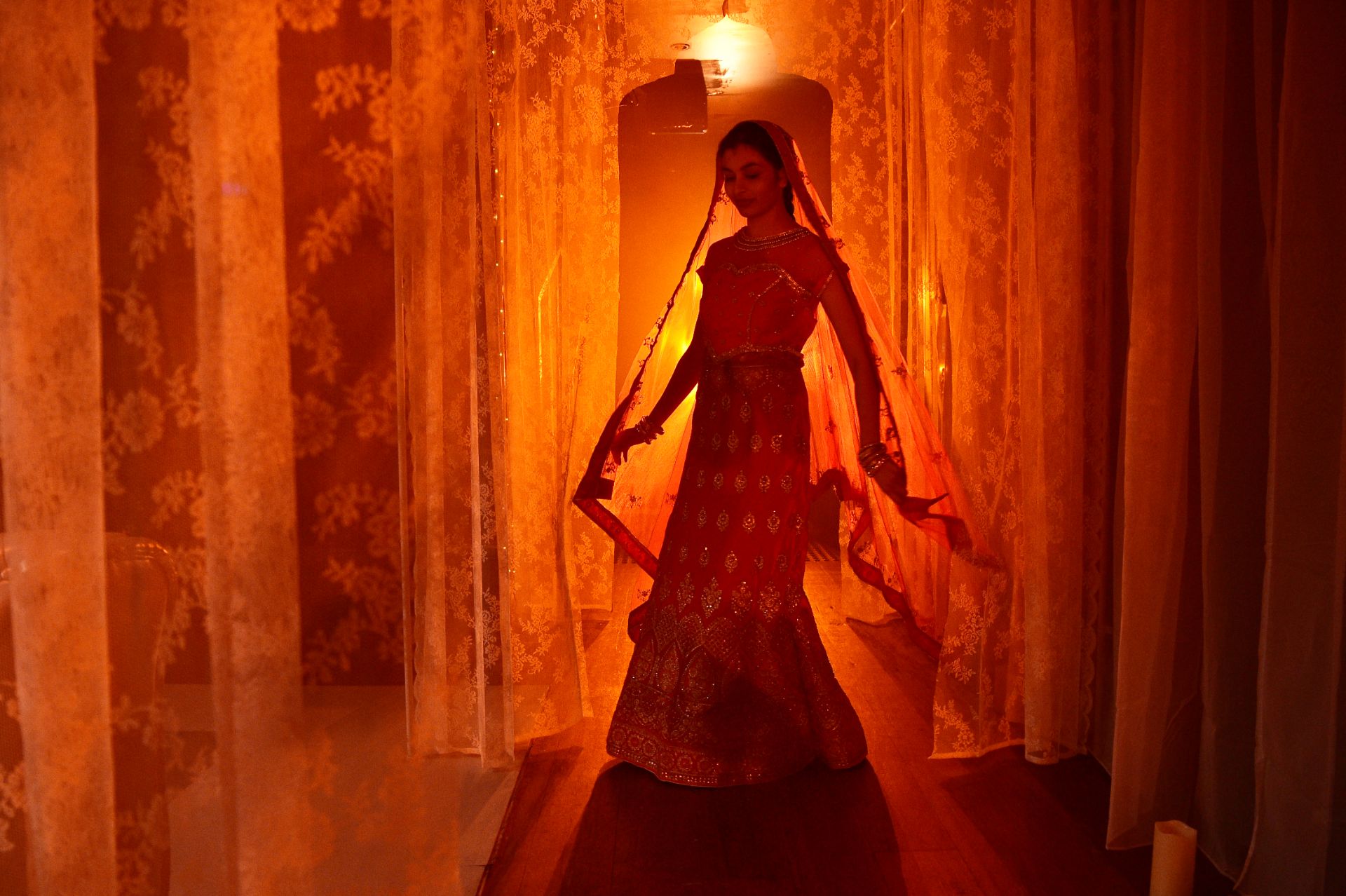
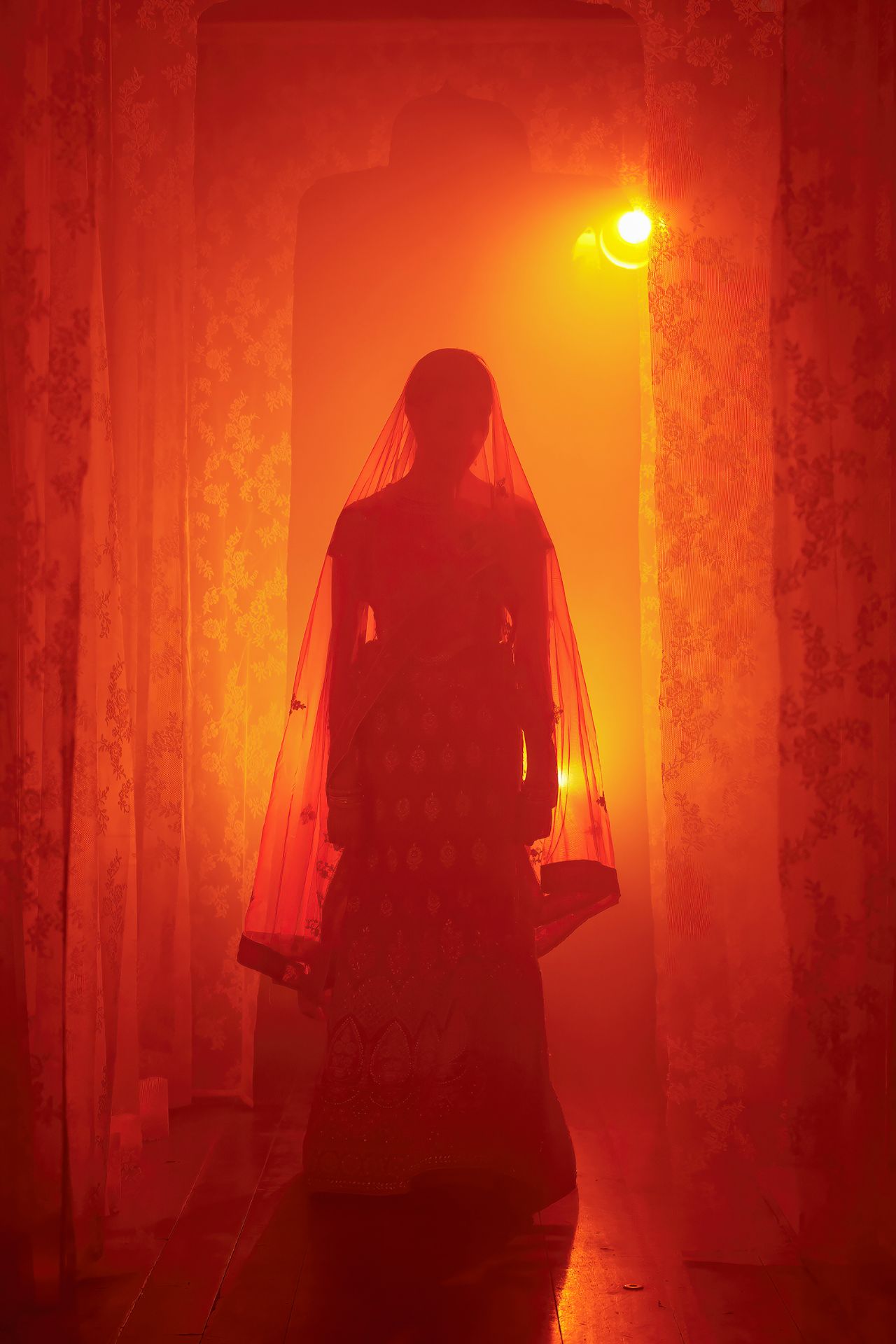
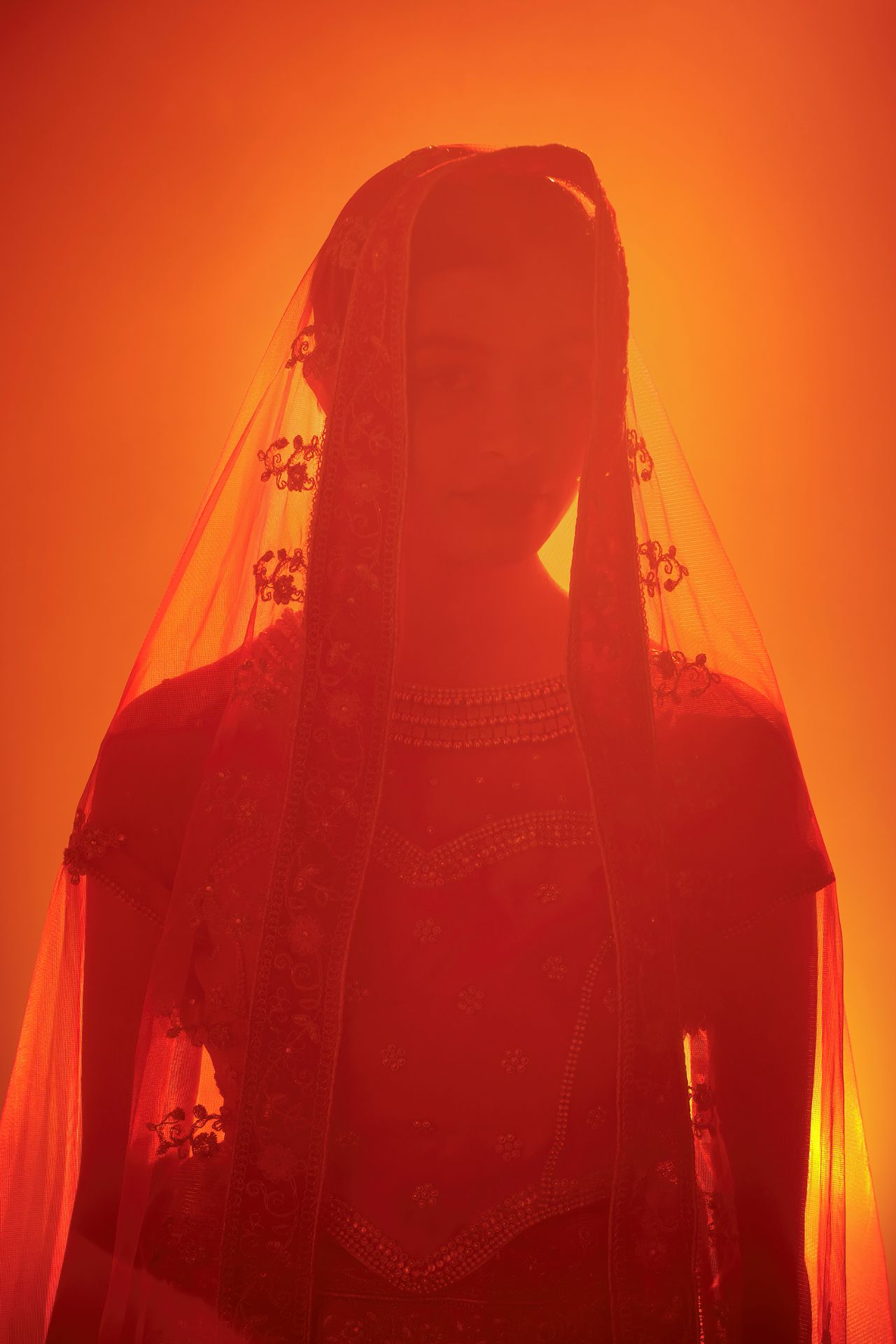
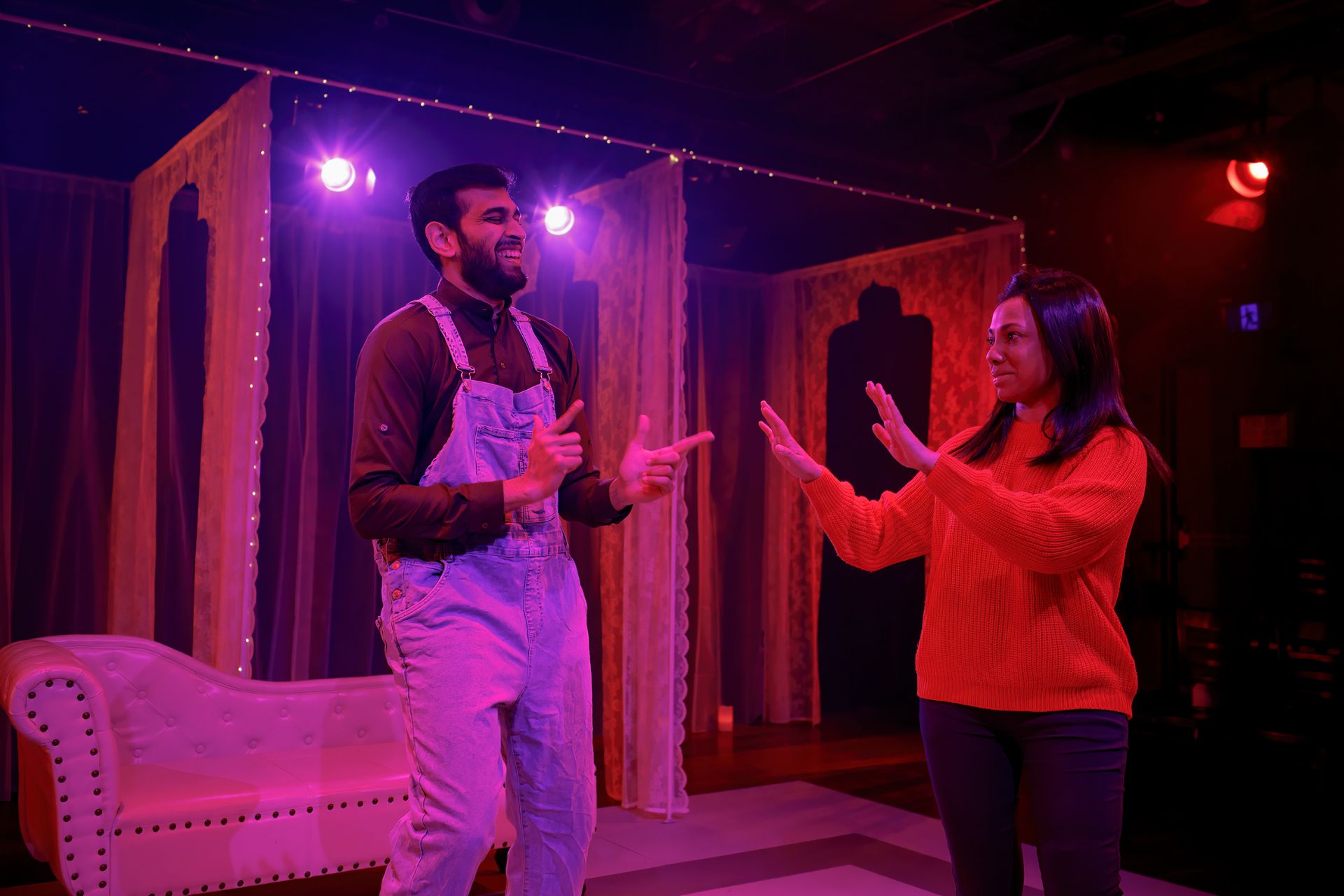
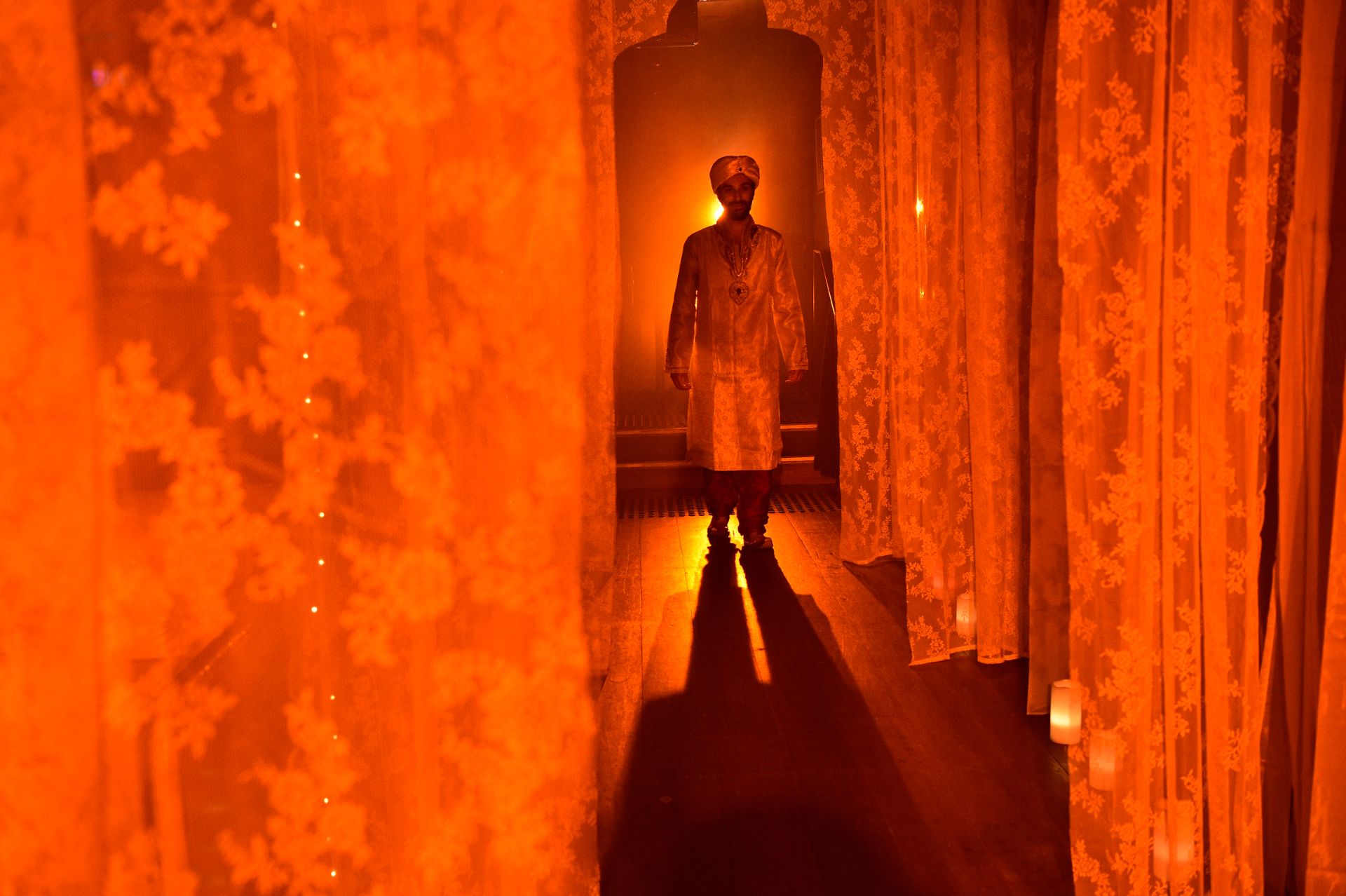
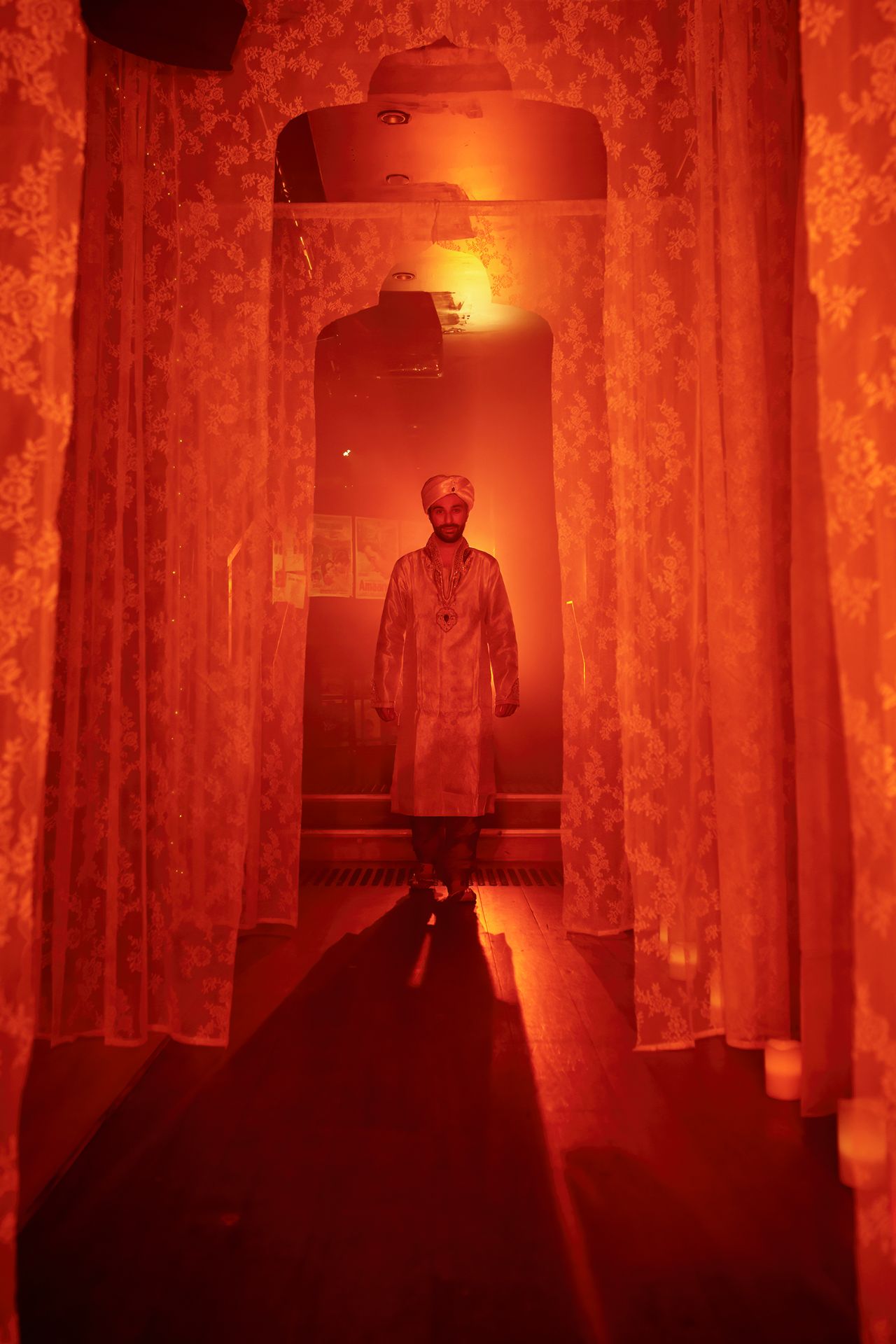
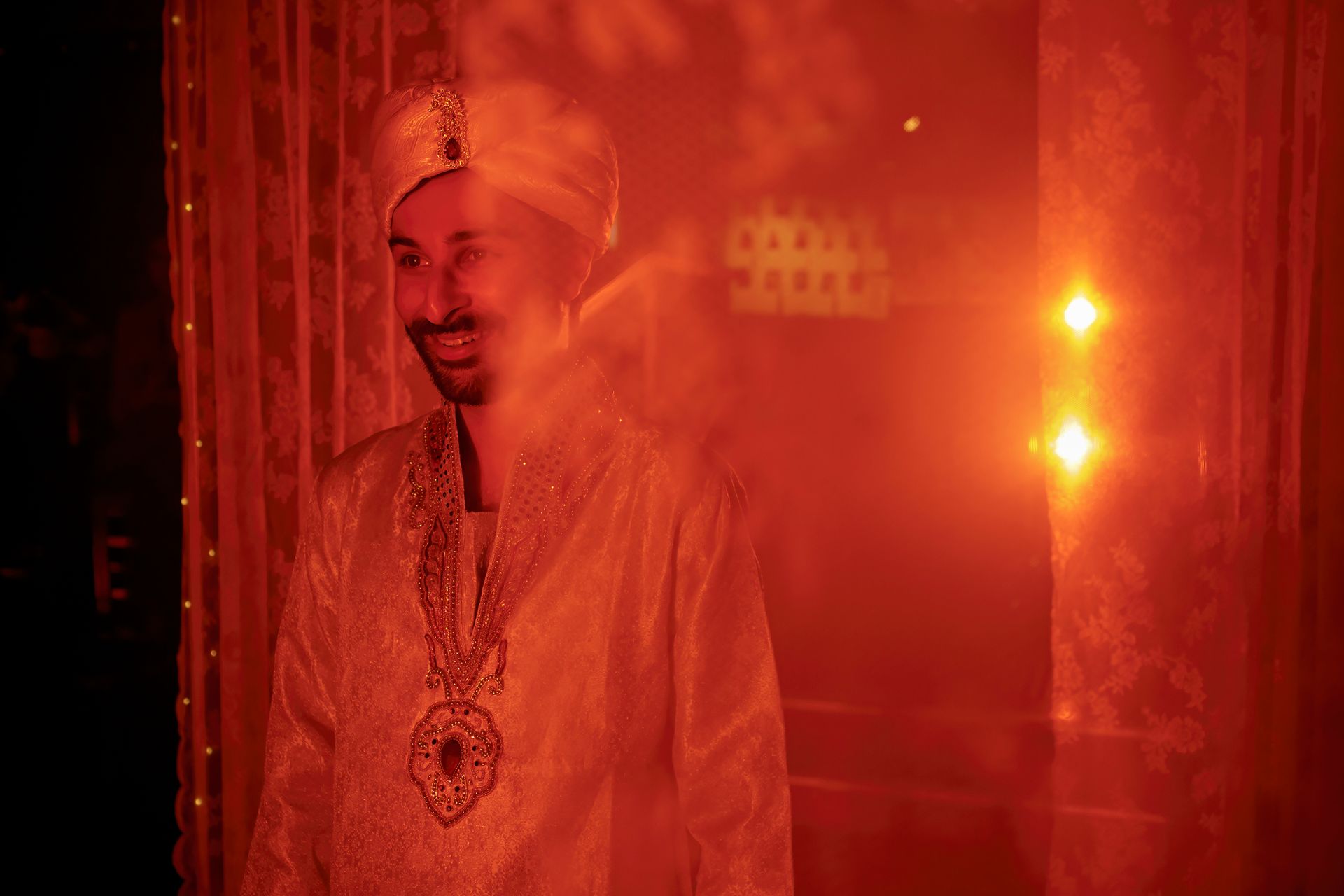
Stage design by Rita Naidu cleverly incorporates a traditionally styled wedding walkway, that adds dimensionality to our sense of time and space. Lights by Saint Clair are thoroughly and ambitiously considered, to provide visual richness, to a simple story. Samantha Cheng’s spirited music gives the production a rhythmic foundation, on which performers and audience can connect, in emotional and atmospheric terms.

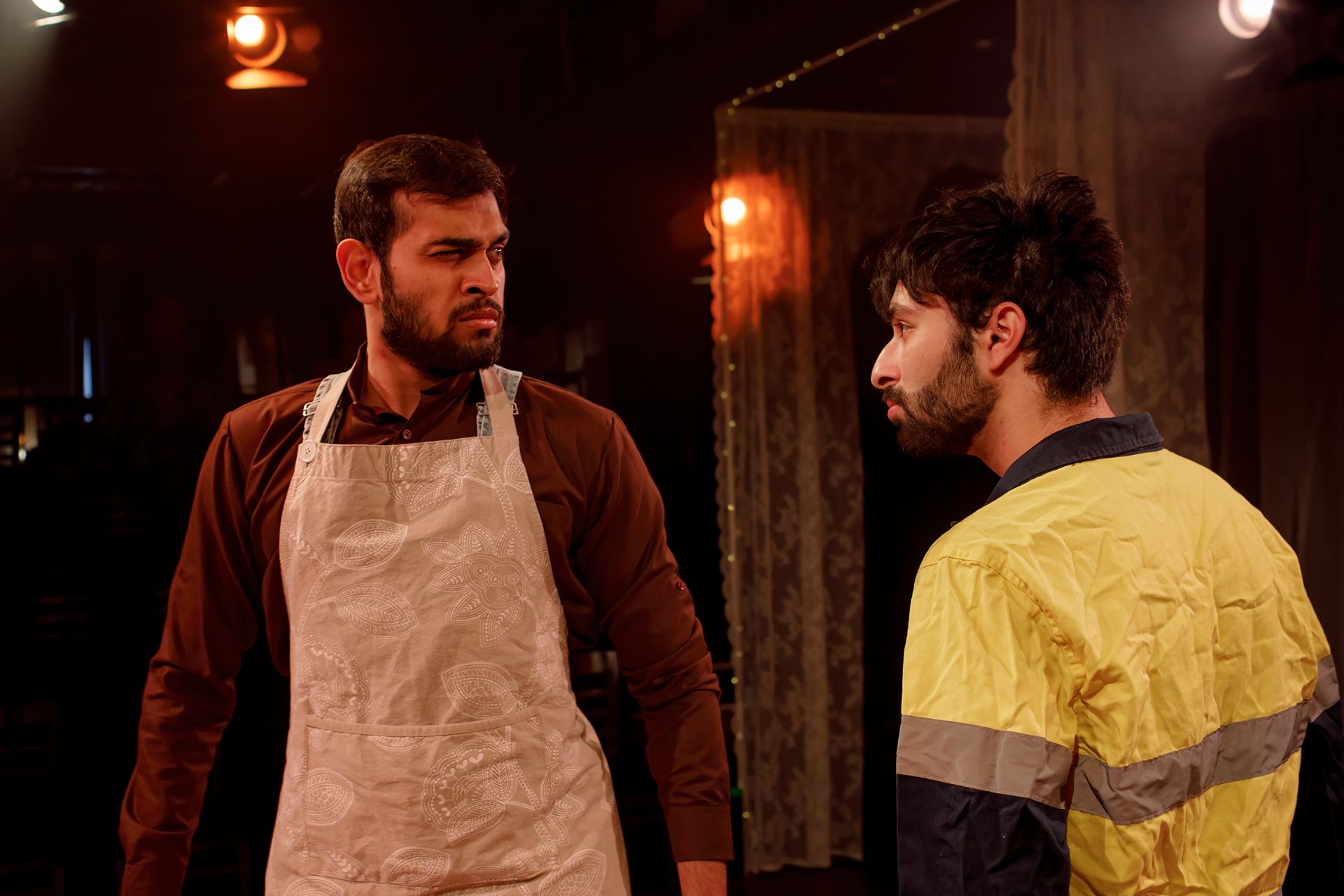
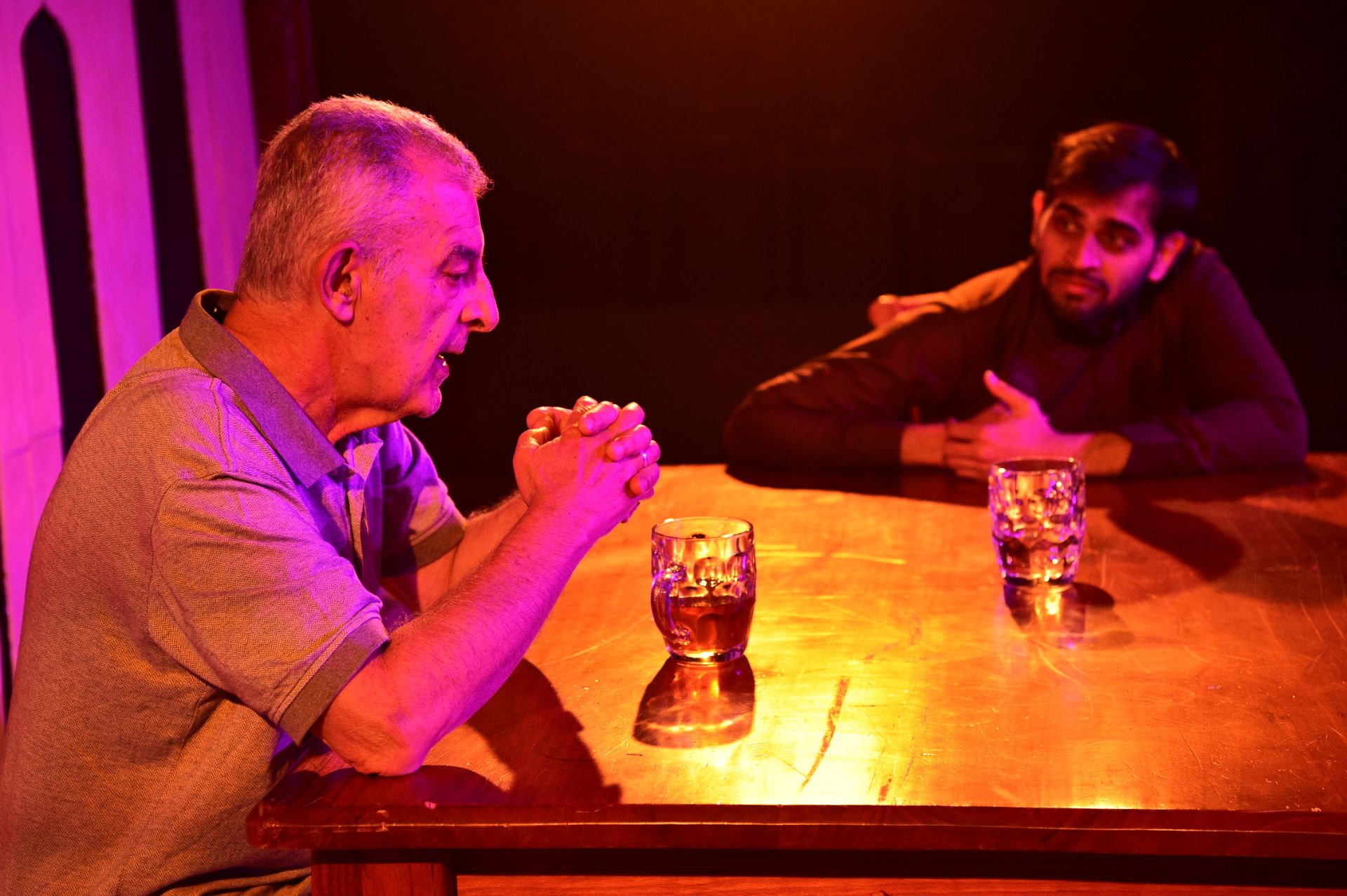
Actor Atharv Kolhatkar is wonderfully endearing as the somewhat naïve Nasir, able to make convincing a personality who is evidently quixotic by nature. Caroline L. George offers excellent balance as Tasnim, the much more rational spouse, effective at anchoring the story in a place of realism, that represents a familiar point of access for viewers. Lex Marinos’ understated approach as Bill, brings not only nuance but also elegance. Ashi Singh is a compelling presence, as daughter Salima. Kevin Batliwala is very charismatic, and very funny, in a number of disparate roles, leaving a remarkable impression with his natural flair for comedic timing.

Marriage is not for everyone, but for some, it can be all-consuming. Watching people like Nasir, who invest so much into romance, can be bewildering, but it is no doubt fascinating to see how fulfilling it appears to be. It is a reminder that to be human, involves a universal wrestling with a feeling of lack, that somehow we are created with an emptiness that requires something external, to provide a sensation of wholeness or completion. There is some truth to the idea, that we are born alone, and we die alone, but the fact remains, that for life to be meaningful, one needs to find ways to connect. The universe is embracing of us in infinite ways, and it is how we respond to those possibilities (and what we decide to call love) that matters.

www.kwento.com.au

Review: The Great Australian Play (Old Fitz Theatre)

Venue: Old Fitzroy Theatre (Woolloomooloo NSW), Sep 15 – Oct 8, 2022
Writer: Kim Ho
Director: Saro Lusty-Cavallari
Cast: Lucinda Howes, Kurt Pimblett, Rachel Seeto, Idam Sondhi, Mây Trần
Images by Phil Erbacher

Theatre review

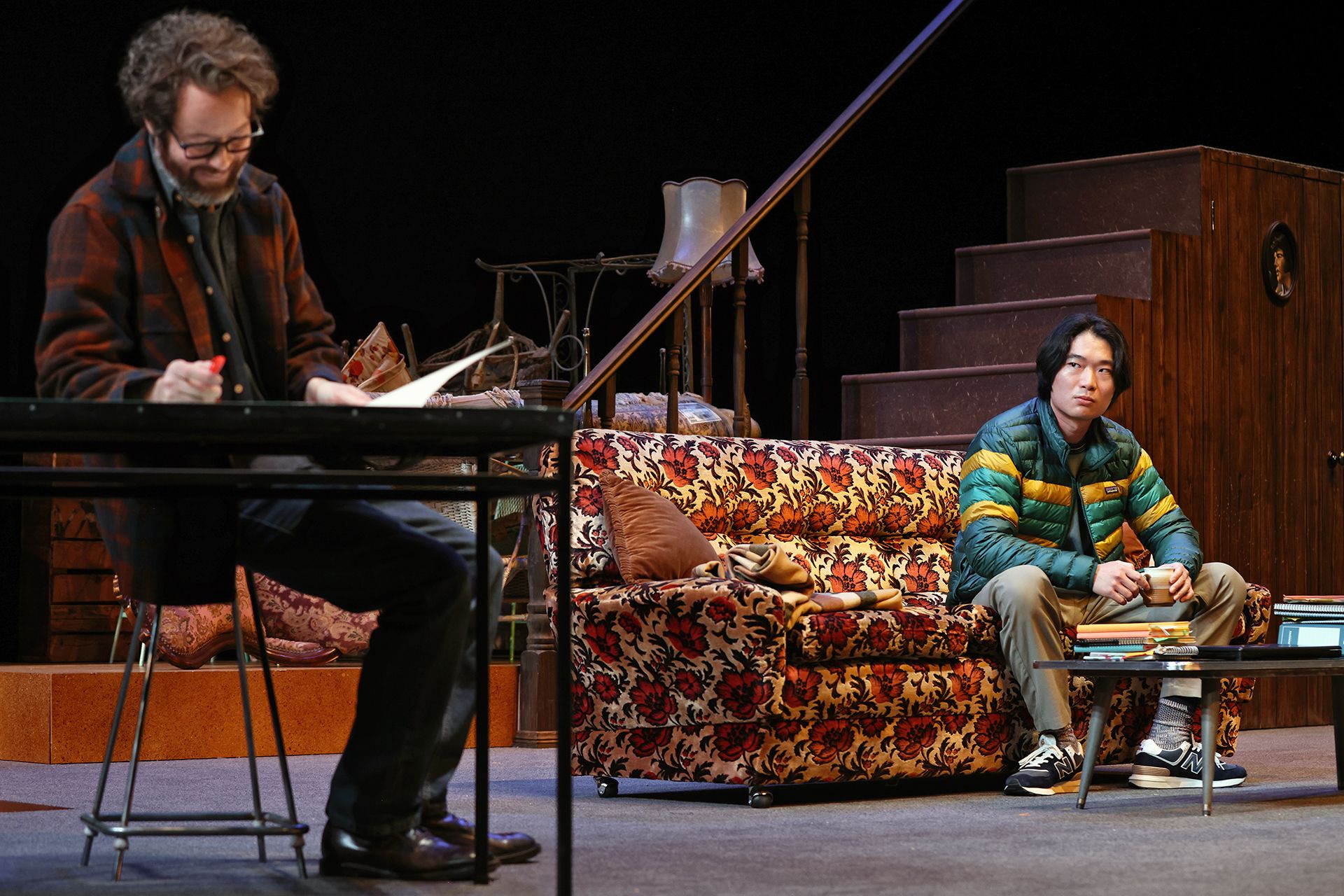
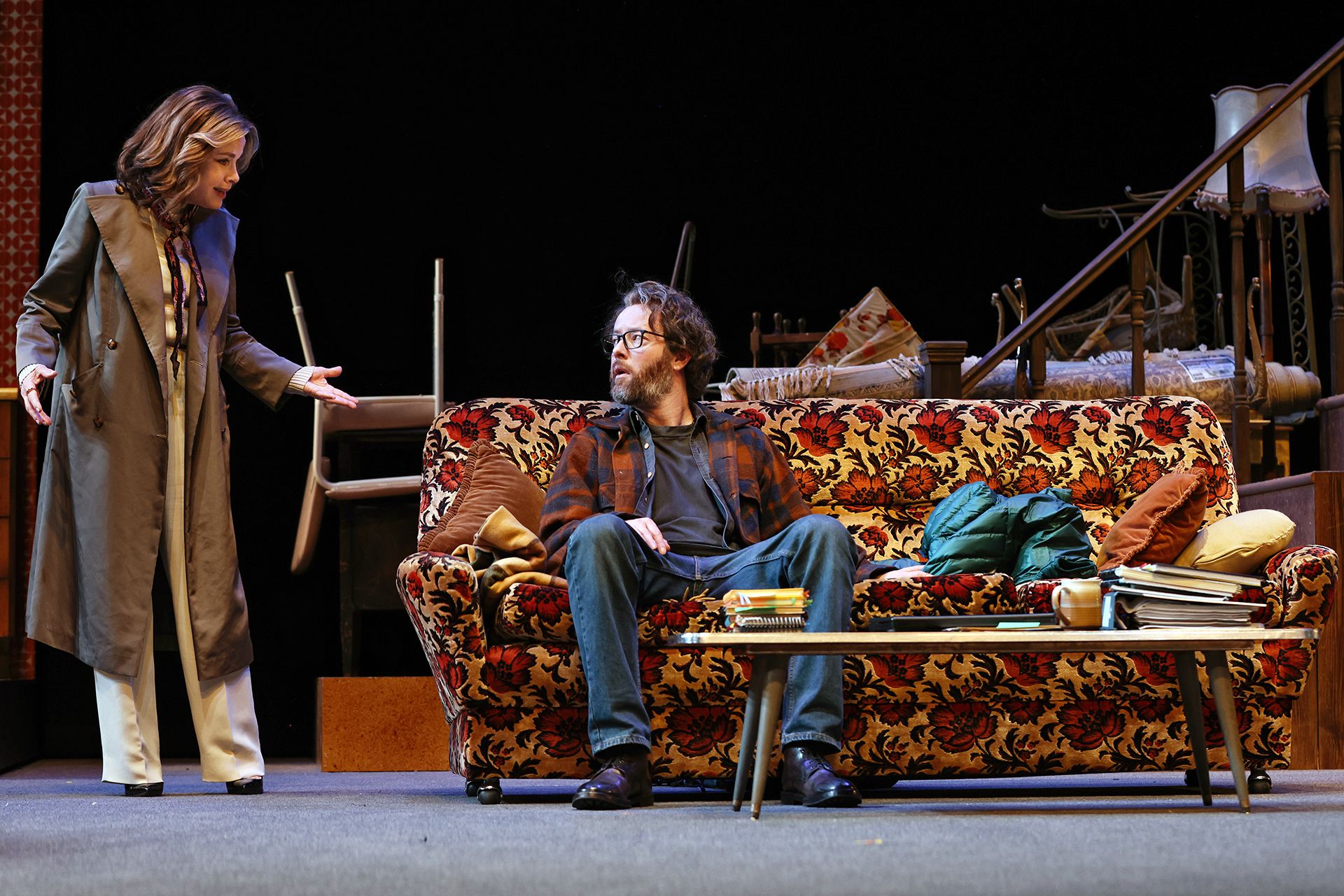
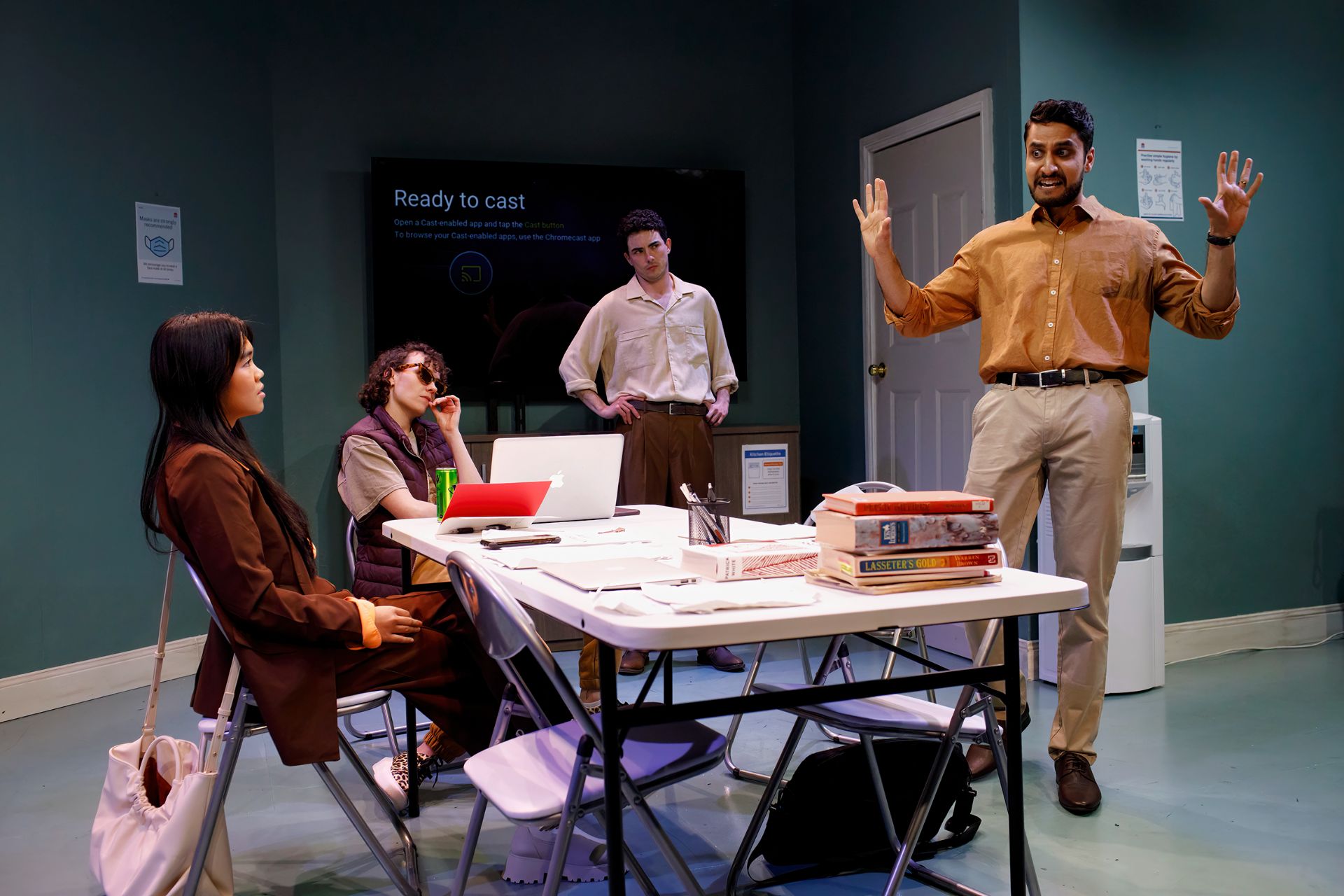
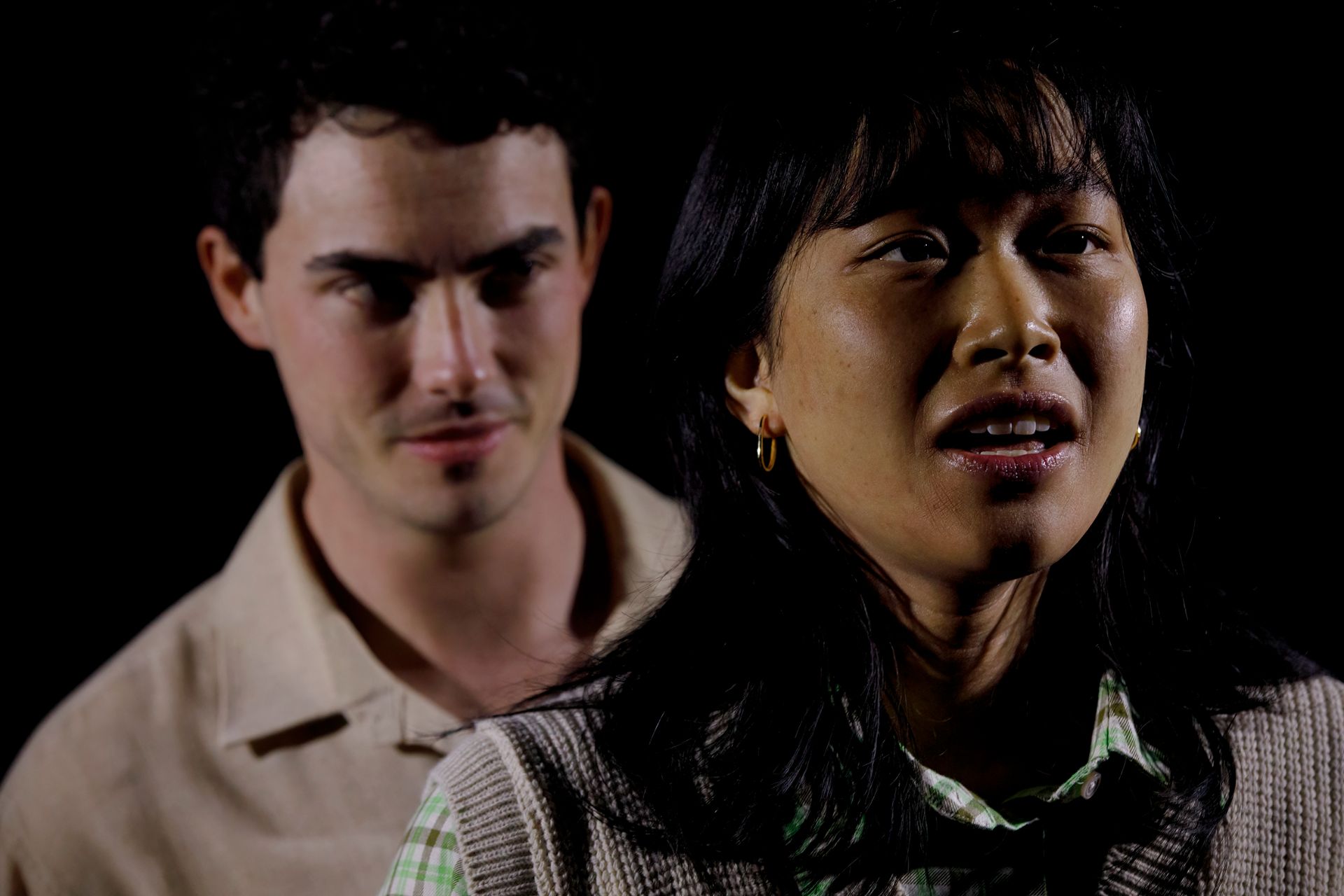
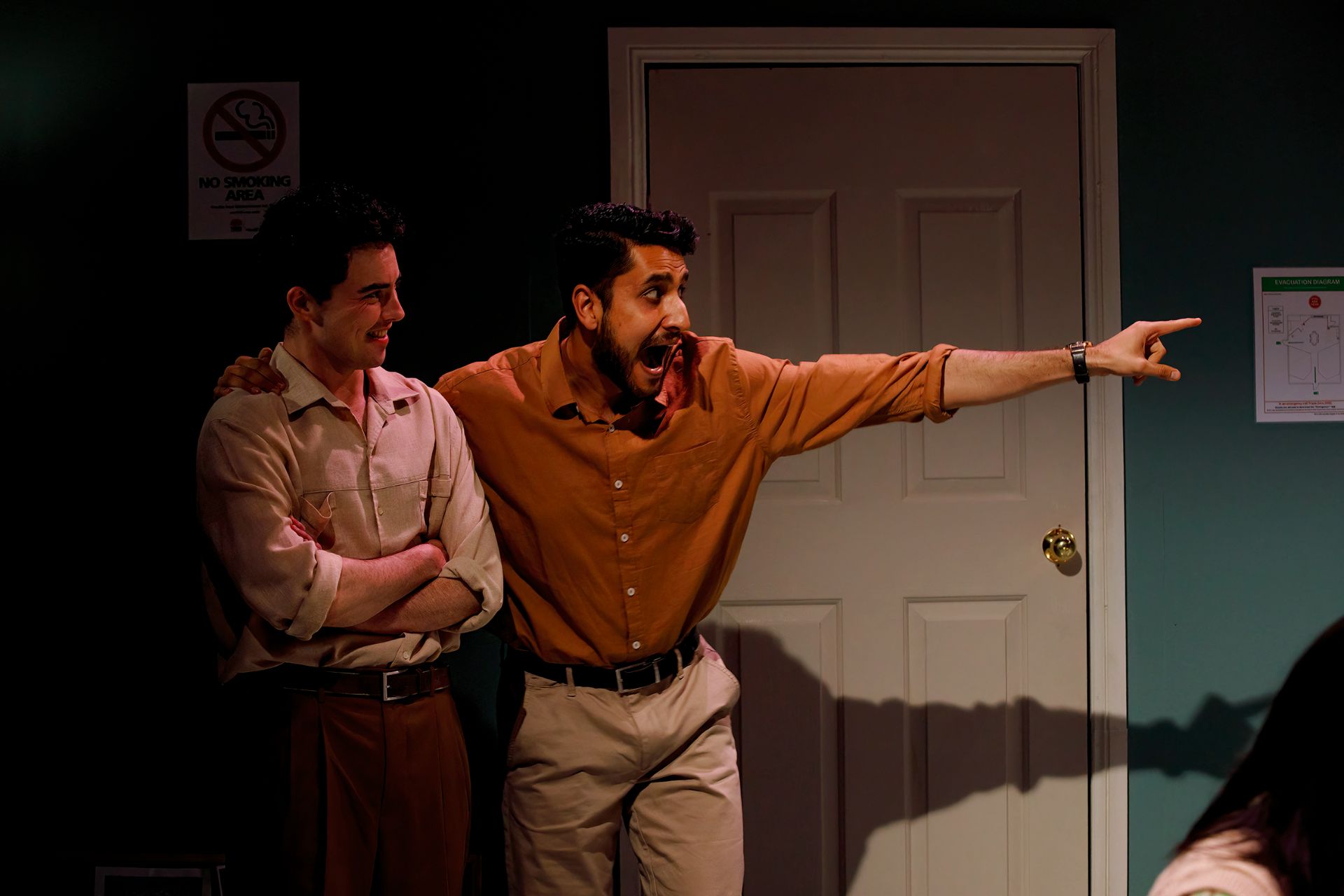
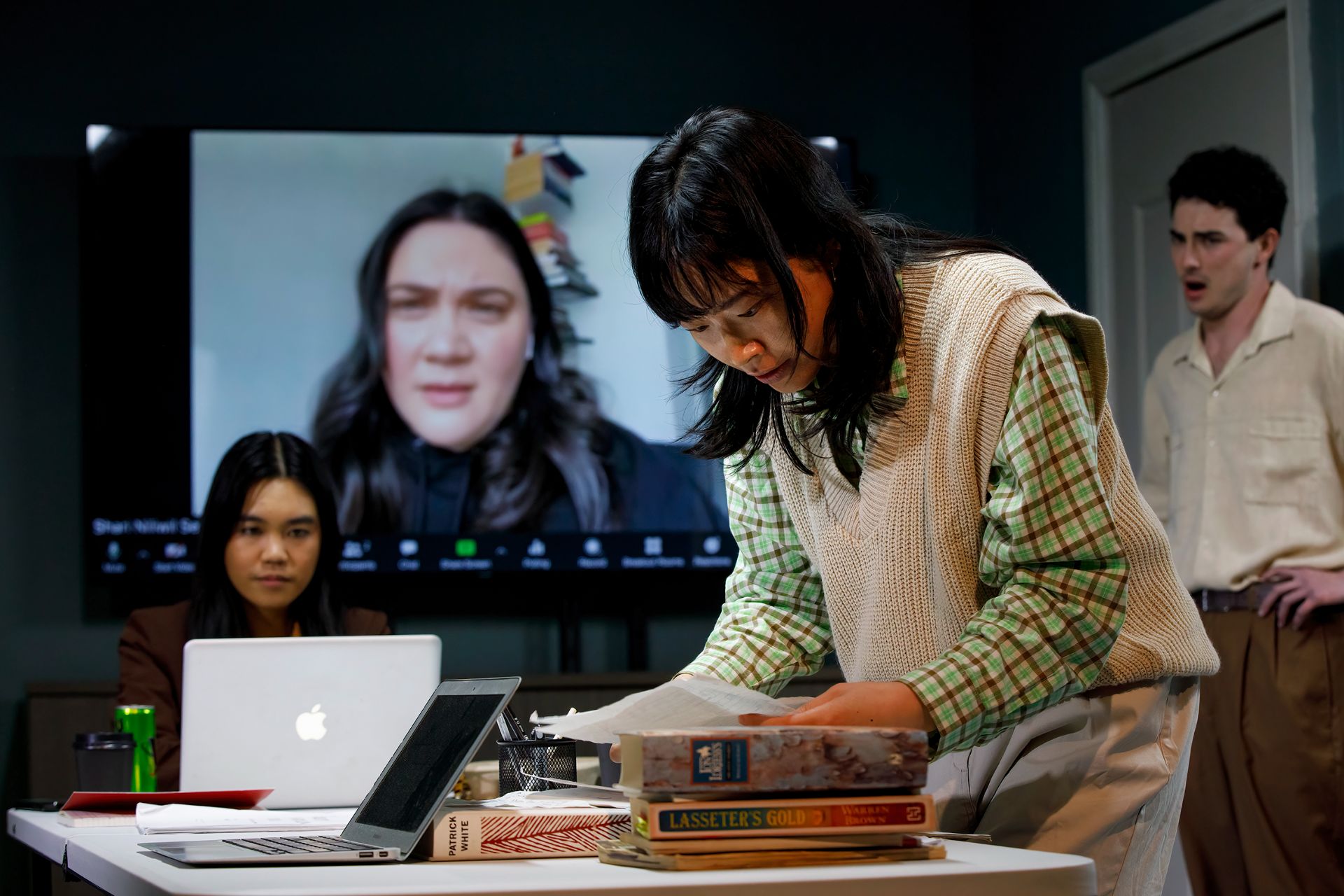
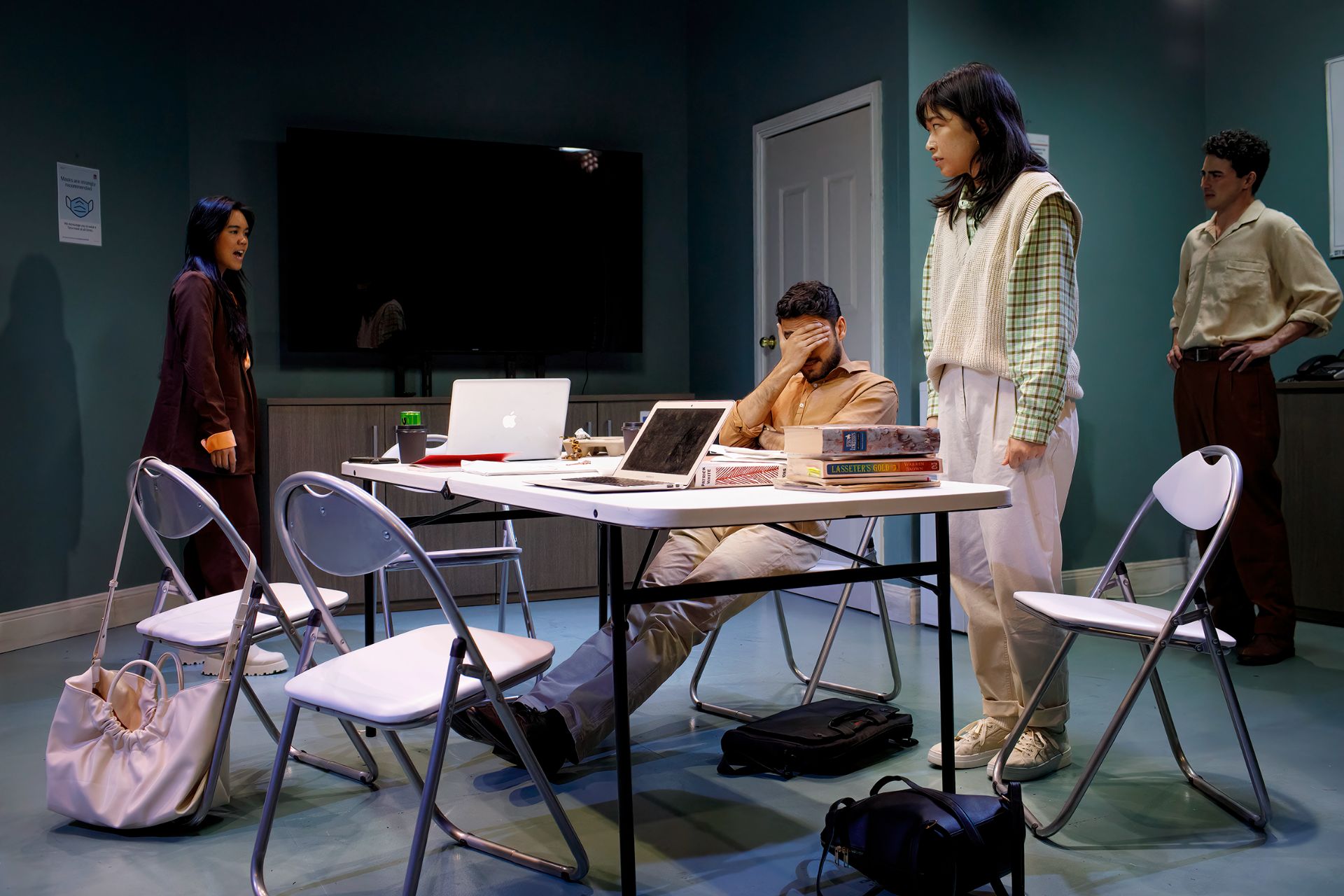
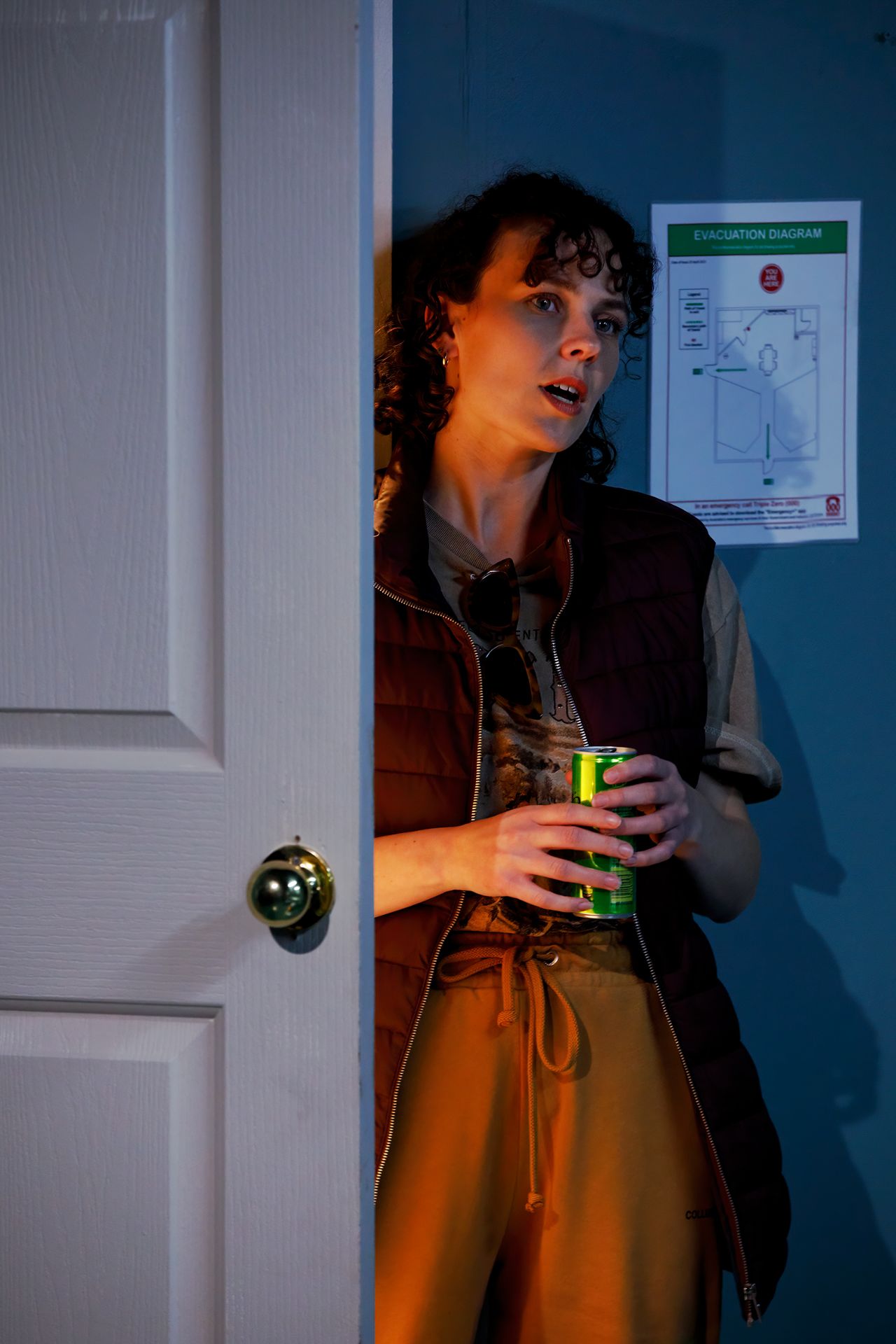
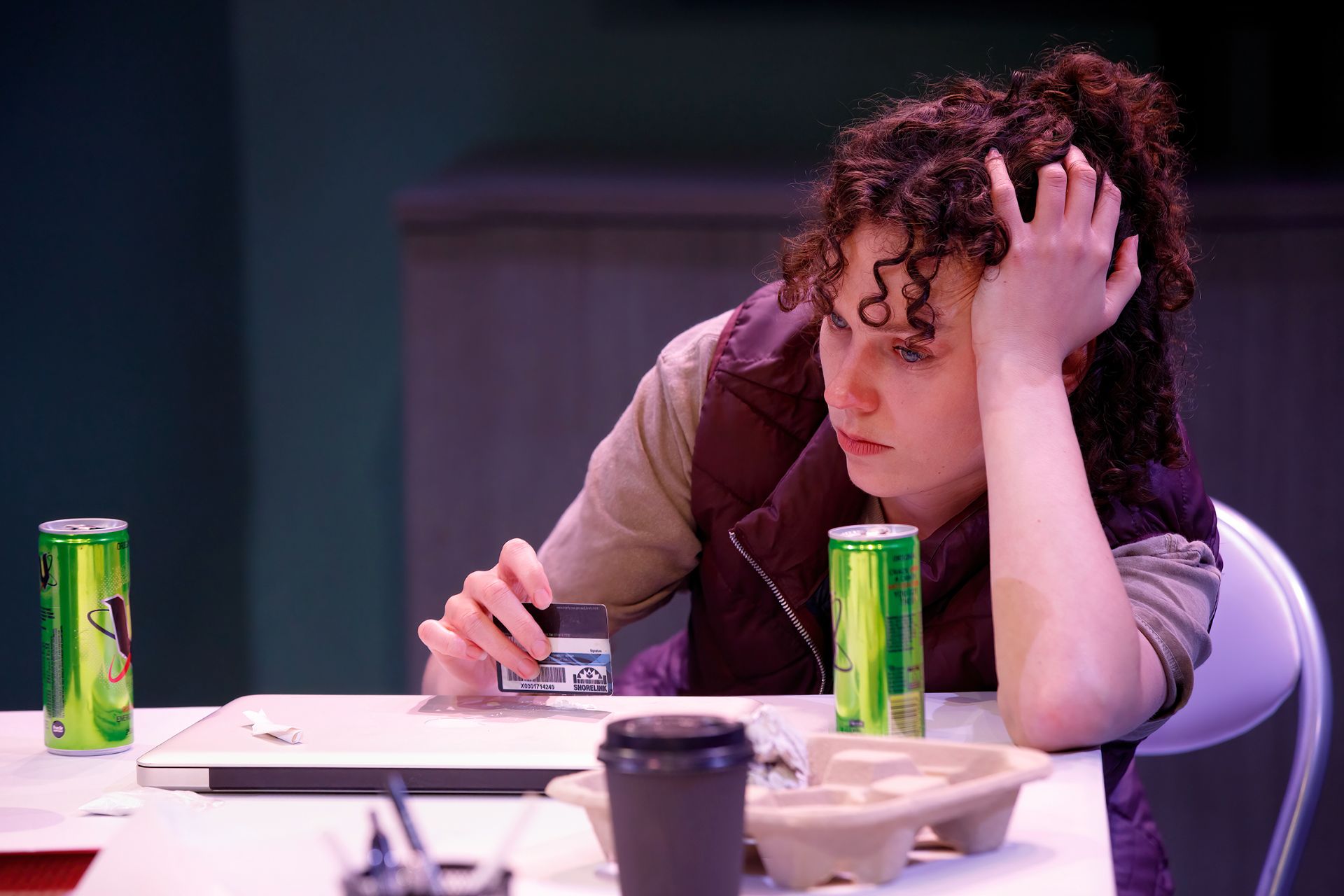
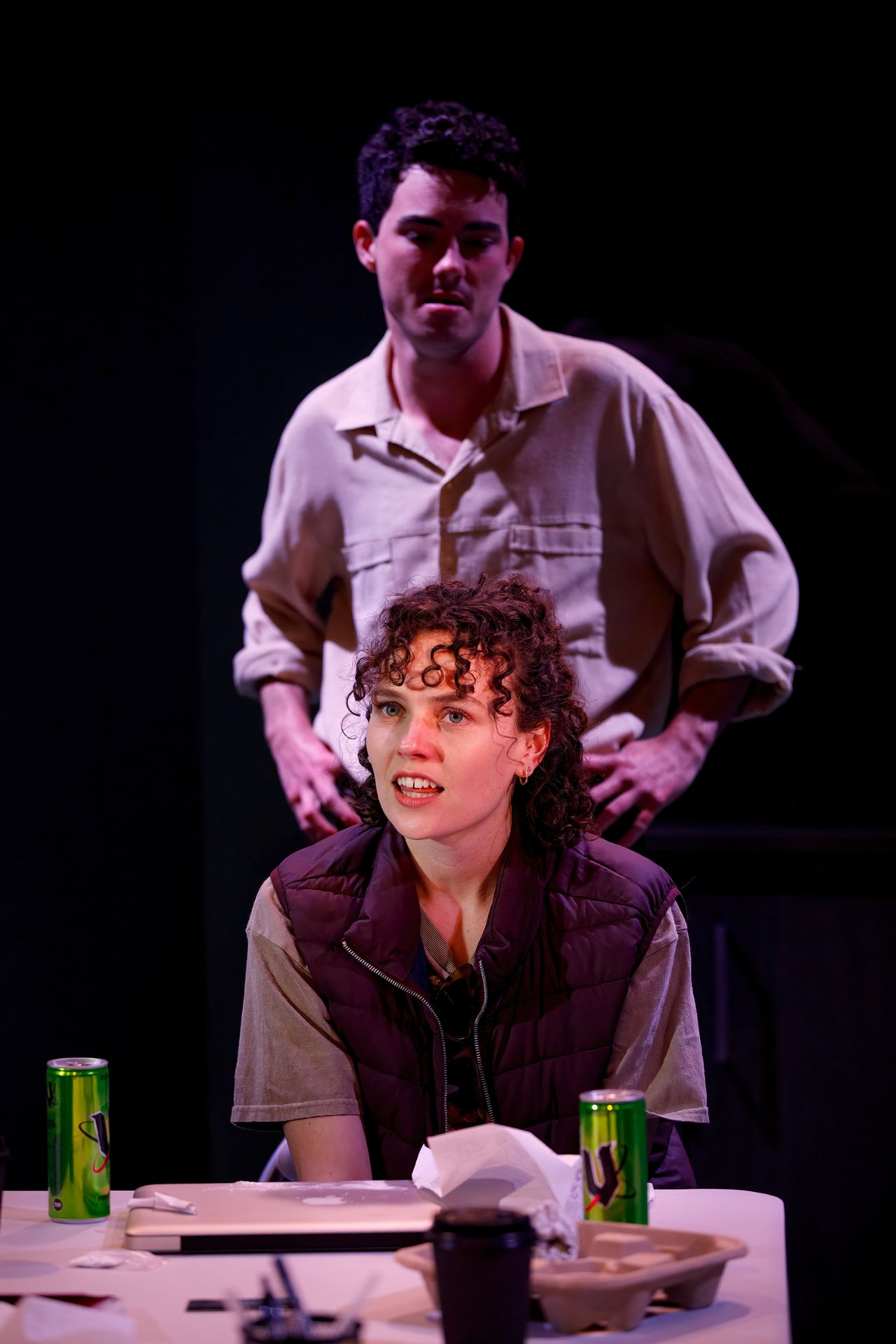
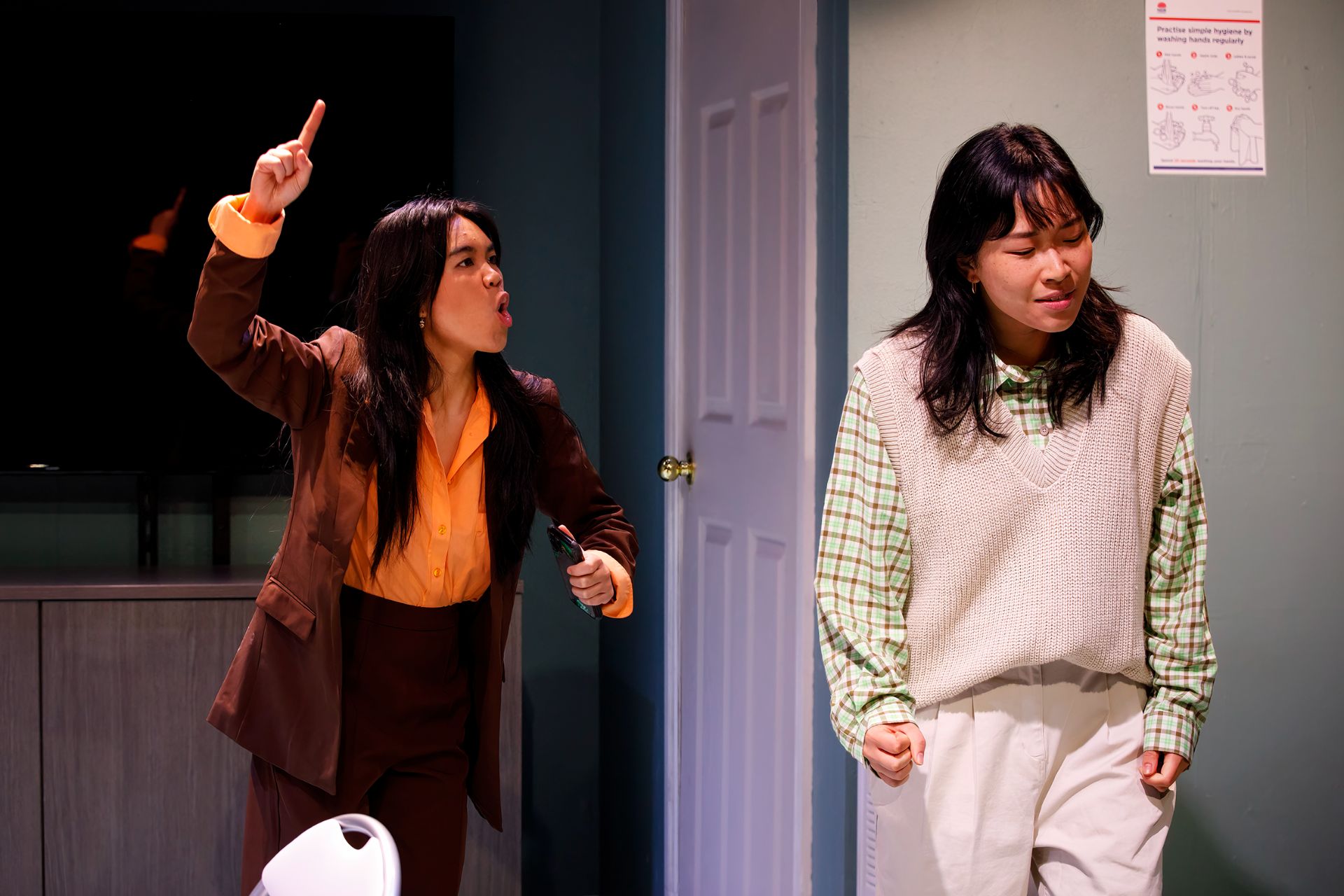
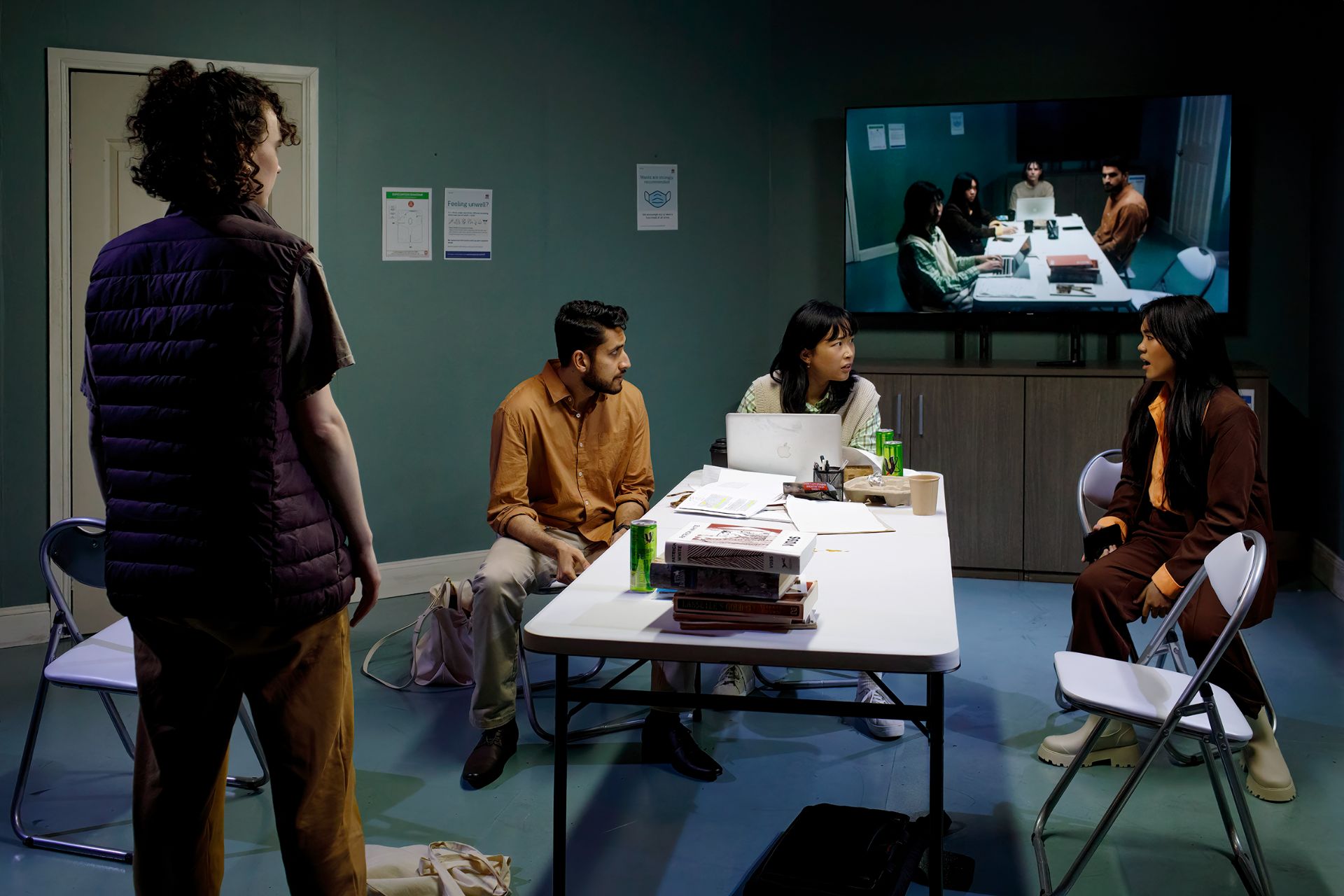
A group of young Australians are in a room, trying to write a television series, but obstacles abound preventing them from getting anywhere meaningful with their project. Kim Ho’s The Great Australian Play is a very contemporary look, at our culture and zeitgeist, a work that serves perhaps as documentation of how we are changing as a nation. The bad news, is that we consistently fail to find consensus, in so much of what we do; good news however, is that the weakening of a previous hegemony, means that authority is being disseminated.

Unable to agree on anything, the writers struggle to meet their deadline. The Great Australian Play is not a case of writer’s block, but a rendering of the commercial, social and artistic factors, that many of today’s creatives feel they are beholden to. Director Saro Lusty-Cavallari uses this conceit, to create a show about conflict and the elusiveness of resolution. It is a satire about the creative process, as it stands this point in time, as we try to make sense of the mechanics of power on this colonised land, and try to effect benevolent changes to it.

The Great Australian Play has a tendency to feel overly complicated, especially when it ventures into surreal and symbolic territory. Its concepts are strong, but execution never quite reaches its aesthetic ideals. Set and costumes by Kate Beere, are able to convey the mundanity of the writers’ room experience, but lacks the versatility and idiosyncrasy required, to aid in the play’s many amorphous and quirky tendencies. Kate Baldwin’s lights respond better to that need for a more theatrical approach, although they can feel at times to be abruptly calibrated. More successful is Lusty-Cavallari’s own sound design, that proves adept at helping the audience navigate between complex spatial configurations, physical and otherwise.

Demonstrating great commitment to the cause, is a cast of six compelling actors. Lucinda Howes, Kurt Pimblett, Rachel Seeto, Idam Sondhi and Mây Trần, form a well-rehearsed group, persuasive with all they intend to say.

What we can learn from the old guard, is not only that it is time for them to relinquish power to more appropriate people, but also that the way in which their systems have been organised, is in desperate need of transformation. There is not much point, in replacing one head with another, if the entire apparatus refuses to budge. Characters in The Great Australian Play are seen to be falling apart, because they are still operating under old structures. It is accurate to portray them as failures, for none of us is quite sure, as to where our destination should be, if indeed, one could exist.

www.redlineproductions.com.au | www.montaguebasement.com