Review: The Cherry Orchard (Chippen Street Theatre)

Venue: Chippen Street Theatre (Chippendale NSW), Jun 6 – 16, 2019
Playwright: Anton Chekhov (adapted by Victor Kalka)
Director: Victor Kalka
Cast: Martin Bell, Garreth Cruikshank, Dominique de Marco, Zacharie di Ferdinando, Suzann James, Craig James, Laurel McGowan, Martin Quinn, Alannah Robertson, Benjamin Tarlinton, Caitlin Williams, Harley Wilson
Images by Clare Hawley

Theatre review
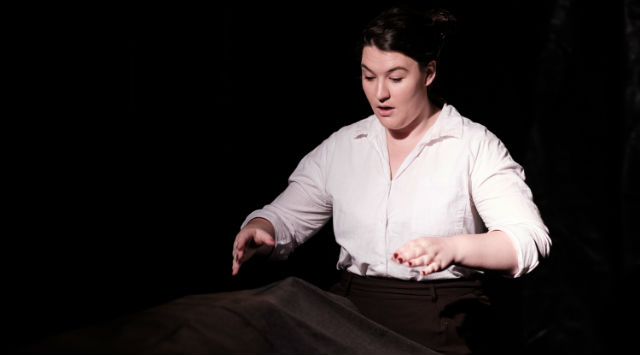
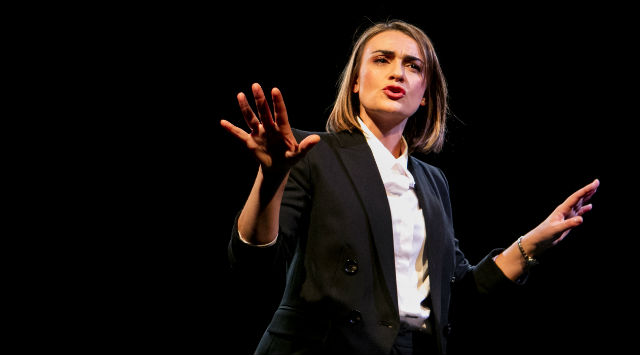
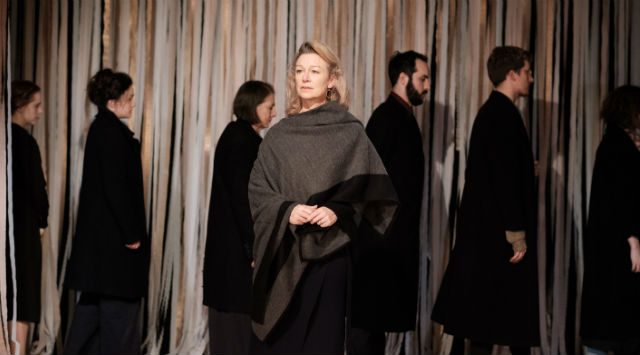
In Victor Kalka’s adaptation of The Cherry Orchard, we revisit Lyubov Andreyevna’s property and the anxieties surrounding its impending transfer of ownership. This story of old money versus new money, as it relates to the evolution of the Russian economic system just over a hundred years ago, bears themes pertaining to social equality that will always be relevant, but Chekhov’s characters and their idiosyncratic concerns, from 1904, seem to have retained little lustre and resonance. We no longer struggle with the notion of work as virtue, as Chekhov seems to present as the work’s integral assertion. In fact, it can be argued that another point of progress has been reached, where we begin to question that very assumption of honourable labour, that has informed so much of our participation in twentieth-century capitalism.

The production allows us to look back at the dawn of these modern times, to observe the naive optimism with which we regarded that model as mechanism for a redistribution of wealth. We had hoped that the new system would once and for all eradicate poverty, that aristocracy would relent and be relegated to the dustbin of history, but we find ourselves in 2019, talking about the top 1% and trying to solve problems of a similar nature. In addition, as an Australian audience we have to confront the concept of land ownership, as beneficiaries of a cruel and ongoing colonisation, and consider the meaning of resource allocation, when rightful owners of all our wealth are routinely kept deprived and subjugated.

Kalka keeps his show moving swiftly, at a pace suited to our contemporary tastes, although we never get to know any of the twelve personalities sufficiently to really care about their individual or collective predicaments. Performances are uneven but it is, on the whole, an adequate ensemble that has us following the narrative and that helps us gather some of its more intellectual aspects. The production is strangely deficient in eliciting any emotional involvement. Even though relatively vibrant in parts, this iteration of The Cherry Orchard struggles to communicate beyond the cerebral.

When we trust in work, we believe in a system of reward that is intrinsically just. Power imbalances however, will always mean that those who provide labour are constantly under the control of those who pay the wages. In order that we may feel fairly rewarded, we need extensive knowledge about resource distribution, but it is precisely this information that is rigorously kept behind closed doors. We are made to believe that we are given what we deserve, and we are taught to accept class and wealth distinctions, so that we accept our lot as somehow natural, and keep working in accordance with rules that only favour those on top. Perhaps the optimism in The Cherry Orchard is indication that big changes do occur, that a revolution, as impossible as it may seem in our indoctrinated minds, will arrive one day.

www.chippenstreet.com | www.virginiaplaintheatre.com

Review: Necrophilia (Jackrabbit Theatre)

Venue: Limelight on Oxford (Darlinghurst NSW), May 22 – Jun 1, 2019
Playwright: Lincoln Vickery
Director: Lincoln Vickery
Cast: Adam Sollis, Ariadne Sgouros, Jack Scott, Emma O’Sullivan
Images by Clare Hawley

Theatre review
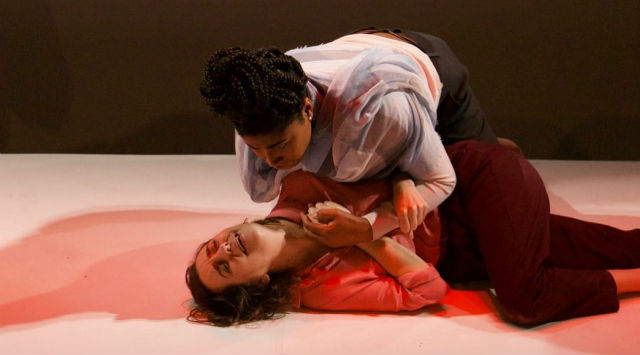
Amanda works as an undertaker, preparing the dead for funerals, but because of her peculiar penchant for sex with cadavers, things get complicated. Lincoln Vickery’s Necrophilia is a comedy that capitalises, predictably, on our awkwardness about the subject. Although thankfully not an exploitative work, Vickery’s focus on the idea of Amanda’s repentance and rehabilitation, seems a lost opportunity for a more philosophical or sociological approach to discussing a taboo of which, on the surface, “nobody gets hurt”.

In spite of the inherently morbid theme, Vickery’s direction gives us a show that feels like a regular romantic comedy. In the absence of intellectual rigour, we are offered instead, some depth of emotion by actor Ariadne Sgouros, whose depiction of Amanda’s struggles brings valuable dimension to the production. Sgouros’ comedy can be slightly obvious at times, but her conviction as performer is admirable. Playing love interest is Adam Sollis, whose ability for nuance in a simple part is noteworthy, able to introduce a quotient of sophistication to the experience. Jack Scott and Emma O’Sullivan round up the cast, both performers effortlessly funny, and confident, in their respective supporting roles.

There seems always to be something unusual about each person’s sexual proclivities; we are all unique beings with individual quirks. Of course, we draw the line at consent, and it is in our incessant arguments about the nature of consent, that the real drama occurs. A dead person is unable to give consent, but a corpse is clearly not the same as a human being. If we think of it as an object, we have to confront the idea that at some stage, it could be treated as less than sacred. We then come to an analysis of whether sex can be anything other than sacred or profane, in these dissections of libidinous activities and body parts. That we can be so uptight and hung up on these subjects only reveals the parts of ourselves that are as yet unevolved, but if we let art do its job, we can be hopeful that it will show the way to enlightenment.

www.jackrabbittheatre.com | www.limelightonoxford.com.au

Review: Normal (The Uncertainty Principle / The Old 505 Theatre)

Venue: The Old 505 Theatre (Newtown NSW), May 29 – Jun 15, 2019
Playwright: Katie Pollock
Director: Anthony Skuse
Cast: Chika Ikogwe, Alexandra Morgan, Cecilia Morrow, Finley Penrose
Images by James Balian

Theatre review
Teenager Poppy’s eyes begin to twitch one day, and before too long her entire being spasms, to the extent that she passes out in public without warning. It appears a disease has taken hold, one of a mysterious nature that compels all around her to formulate narratives, to impose judgement upon the young woman’s body. When the same symptoms are seen in her school friends, this spreading of an unexplained phenomenon, fractures Poppy’s community, with people seeing only difference of opinion, and not what binds them together. Katie Pollock’s Normal is an intriguing work, because it allows for ambiguity, even though its expressions are passionate. Poppy’s resistance of definition, of not wanting to be pinned down, is a tale about female bodily integrity. It refuses to fit into a structure that would make us comfortable, for its autonomy comes before our conventional stipulations.

Normal‘s politics are never obvious, but director Anthony Skuse makes sure that it speaks with an incontrovertible urgency. The ensemble of four conspire to deliver something quite intense, with Alexandra Morgan’s turn as Poppy bringing a satisfying mix of youthful innocence and exuberance to the play. Chika Ikogwe is wonderful in a variety of roles, always a striking presence, yet marvellously persuasive with her naturalistic style of presentation. Cecilia Morrow and Finley Penrose too are effective in the show, both infectious with their zeal and conviction.

The production is cleverly designed, with Kelsey Lee’s lights monitoring proceedings through a combined sense of dynamism and sensitivity, and her set providing an elegant visual cohesion to the many short scenes that comprise the plot. Sound by Cluny Edwards is imaginative, with a distinctive kooky edge, able to facilitate unexpected dimensions for the story and its characters.

One of the most dangerous things that could happen to society as we know it, is for women to reject any attempts to control our bodies. The radical notion that we can do what we want with our lives and with our corporeality, goes against so much of what constitutes the fundamental building blocks of what we are. Old religions and other old patriarchies require our subjugation and capitulation, so to have women take charge of our own destinies, can only mean devastation to life as we know it, which is absolutely a future to look forward to.

www.old505theatre.com

Review: Mercury Fur (Kings Cross Theatre)

Venue: Kings Cross Theatre (Kings Cross NSW), May 24 – Jun 8, 2019
Playwright: Philip Ridley
Director: Kim Hardwick
Cast: Janet Anderson, Danny Ball, Lucia May, Romy Bartz, Meg Clarke, Party Guest, Jack Walton, Michael McStay
Images by Jasmine Simmons

Theatre review
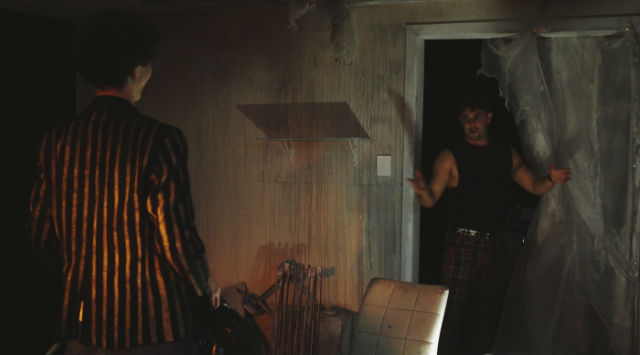
Civilisation is all but wiped out, in Philip Ridley’s Mercury Fur. Out of the rubble are remaining humans trying to get on with things, holding on to memories of more coherent times, so that they can try to make some sense of the meaningless now. Brothers Elliot and Darren are party planners, for a sordid event about to take place. The host’s requirements are absolutely immoral, but at a time like this, nothing should matter anymore. Yet a struggle remains, as we watch the siblings unable to come to terms with what they had agreed to undertake.

Surreal and very dark, Ridley’s play seems intent on shocking its viewer, as is typical of British “in-yer-face theatre” two decades ago. Director Kim Hardwick’s approach is more considered, for a staging that abhors cheap effects, working instead to find, within a conceit of extreme depravity, only the truth about our humanity. Early portions of the show are, as a result, perhaps too sedate, but there is no doubt that when the stakes are raised, the story becomes effortlessly gripping.

The actors are excellent, all of them distinctive and memorable in their respective parts. Josh McElroy is particularly impressive as Party Guest, the worst kind of bad guy, completely despicable, but made thoroughly entertaining by McElroy’s uninhibited portrayal. Also remarkable is Meg Clarke, luminous as the painfully innocent Naz, caught up in a filthy world, desperate for acceptance, and ending up in a treacherous crossfire.

Most of us go about our daily lives, pretending that evil does not exist. We have to believe in the best of people, if we wish for an opportunity to thrive. Evil is real however, and in Mercury Fur we see the way it manifests when untethered. In an apocalyptic aftermath, there is momentum for destruction to keep its pace, until one meets utter annihilation. Resilience is also real, and many of us will know to pick up the pieces, and build again. The extinction of our species is entirely possible, although our instinctual rejection of that truth, might be able to keep us hanging on for some time longer.

www.hbrcreatives.com.au | www.whiteboxtheatre.com.au

Review: Extinction Of The Learned Response (Glitterbomb / 25A Belvoir)

Venue: Belvoir St Theatre (Surry Hills NSW), May 7 – 25, 2019
Playwright: Emme Hoy
Director: Carissa Licciardello
Cast: Tel Benjamin, Sarah Meacham, Eddie Orton, Jennifer Rani
Images by Jasmin Simmons

Theatre review
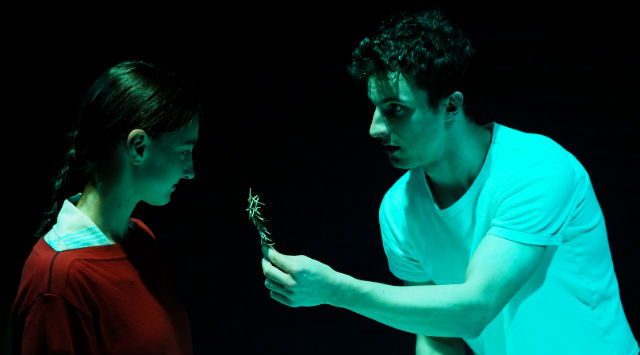
Duncan and Marlow are running an unauthorised, and unethical, experiment. They have two mysterious subjects held captive in their laboratory, undergoing a gruelling training regime to appear more convincingly human. Rachel and Wells have problems mastering the most basic of social skills, and we are kept wondering about their natural form; they may look human, but the playwright Emme Hoy wants us to look deeper into who these people are inside, or if indeed, they are people at all. Essentially a work of science fiction, Extinction Of The Leaned Response does ultimately ask some worthwhile questions, but its intrigue is too mild, and its plot too hesitant, to be sufficiently provocative.

The show is moody, and adequately suspenseful, thanks in large measure to Ben Pierpoint’s genre specific sounds and Kelsey Lee’s adventurous lights. There is however a circumvention of the bizarre and absurd, in favour of naturalism, by director Carissa Licciardello, that seems a missed opportunity. An air of placidity provides sophistication to proceedings, but the story’s cruel circumstance calls for something more heightened that could make for a more satisfying theatricality.

Actors Sarah Meacham and Eddie Orton are fascinating as the test subjects, both effective in engaging our imagination. Undeterred by the abstruseness of their material, Meacham and Orton find ways to vitalise their parts, making Rachel and Wells memorable, and strangely charming. Tel Benjamin and Jennifer Rani play the dubious researchers, with excessive restraint perhaps, but are nevertheless entertaining performers with excellent conviction.

As humans, we are eternally enthralled by our own nature. Always seeking to define humanity, we constantly find new ways to understand ourselves, not only because of an indubitable narcissism, but also as a means to interact with the larger universe. When one wishes to make the world a better place, it is necessary to know deeply the self, before one should begin imposing on others. In their efforts to discover bigger truths however, the researchers in Extinction Of The Leaned Response commit transgressions that are horribly egregious. There can be no end to knowledge, but to recognise right from wrong, is a fundamental principle that must not be compromised.

www.dasglitterbomb.com | www.belvoir.com.au

Review: Blood On The Cat’s Neck (Montague Basement)

Venue: Kings Cross Theatre (Kings Cross NSW), May 22 – Jun 1, 2019
Playwright: Rainer Werner Fassbinder (translated by Denis Calandra)
Director: Saro Lusty-Cavallari
Cast: Alex Chalwell, Jack Crumlin, Jemwel Danao, Deng Deng, Laura Djanegara, Deborah Galanos, Alice Keohavong, Emma Kew, Brendan Miles, Annie Stafford
Images by Zaina Ahmed

Theatre review
Phoebe Zeitgeist is an alien. She arrives disguised as a human, infiltrating what we might consider normal life, and learns to assume our behaviour. Rainer Werner Fassbinder’s Blood On The Cat’s Neck from 1971 might also be seen as a work about artificial intelligence, with Phoebe Zeitgeist a kind of technology, a robot perhaps, who disrupts our existence, gradually forming sentience within our midst, and eventually able to outsmart us. There is undeniable anxiety in Blood On The Cat’s Neck, whether relating to a certain perilous quality of our social interactions, or that increasing unease about being overcome by technology.

The abstract nature of Fassbinder’s writing provides a basis on which director Saro Lusty-Cavallari builds an immersive experience for his rendition of Blood On The Cat’s Neck. In the decadent surrounds of a bordello themed bar, we find ten performers scattered, as we are, floating in space with no designated stage and few allocated seats to keep us anchored. Scenes unfold one at a time, and we trace the action, eavesdropping in plain sight as though we too are aliens, scrambling to make heads and tails out of information dispensed mid-conversation, with little context for convenient comprehension.

The 70-minute show does however bear a coherent structure; a beginning, a middle and an end for a familiar flow that offers a sense of security. Hints of drama throughout help to sustain our interest, but its middle section feels repetitive and long, and we find ourselves occasionally disengaging from the artists, perhaps choosing instead to observe the more general goings on. As Phoebe Zeitgeist examines one character after another, we are on the outside, secretly scrutinising fellow audience members, as though all are curious.

A strong cast is assembled for the piece, with each personality bearing a distinct individual essence that accrue an air of gravity, that gives fortification to the production’s experimental style. Sophie Pekbilimli’s lighting design is a highlight, sensual and stealthy, rendered with a light touch that demonstrates artistic confidence. Costumes by Grace Deacon are cleverly coordinated, to depict character types, and to deliver charming imagery. Lusty-Cavallari’s sounds keep us on the right track, so that our interpretations are kept within parameters, as is our visceral experience of his unique kinetic theatricality.

Phoebe Zeitgeist’s convincing otherness is derived from her fictitious-ness. Technology on the other hand, cannot be divorced from its creator; it and us are one. The post-human story contained in Blood On The Cat’s Neck is frightening, because we know the worst of ourselves, and it requires no great stretch of imagination to see it manifested in robots. If artificial intelligence does eventually overwhelm us, we will recognise ourselves in them, and perhaps come to an understanding that evolution will take us on its natural course, and move us beyond a biology that will conceivably turn defunct. Mainstream culture has little appreciation for notions of everlasting life, but maybe we will grow smarter, and develop a new consciousness where we can find heaven, even if it lives inside a machine.

www.montaguebasement.com

Review: Prima Facie (Griffin Theatre Company)

Venue: SBW Stables Theatre (Kings Cross NSW), May 17 – Jun 22, 2019
Playwright: Suzie Miller
Director: Lee Lewis
Cast: Sheridan Harbridge
Images by Brett Boardman

Theatre review
Tessa is proud of her success as a criminal defence barrister, and when we first meet her in Suzie Miller’s Prima Facie, her faith in the legal system seems a matter of course, for a young woman going places in the field of law. When the tables turn however, and Tessa finds herself on the prosecution side as a victim of rape, she discovers severe fallibility in the way we serve justice, especially in cases of sexual assault. Miller’s breathtaking new work is full of passion, propelled by an urgent need to bring change to these deeply problematic processes, that are patently incapable of providing appropriate redress to plaintiffs who are almost exclusively women.

Miller is precise and thorough, in her careful storytelling. She engages our hearts and minds, for a stirring theatrical experience, perfectly suited to our current climate of #MeToo heightened social consciousness. Prima Facie makes its arguments convincingly, and crystal clear, and we leave sharing in the passionate intensity of its perspectives. Actor Sheridan Harbridge holds us captive for the entire 100 minutes, of her spellbinding one-woman show. It is an extraordinary achievement, with Harbridge able to convey authenticity at every stage, whilst keeping us zealously engaged with the issues being presented. She is entertaining, confident, and persuasive, fabulously well-rehearsed in what is clearly an immense challenge for any performer. Her memory seems a freak of nature, but it is her ability to make us care so deeply that is truly marvellous.

It is a meticulously rendered production, by director Lee Lewis who maintains a minimal surface, and then channels all her intelligence and energy into making every subliminal dimension of the show communicate with a tremendous power. Subtle design elements offer inconspicuous manipulations, to ensure that we respond appropriately with the play’s intentions. Renée Mulder’s set and costumes are chic and suitably severe. Trent Suidgeest’s unassuming lighting transformations help us perceive nuances in the text, and Paul Charlier’s music keeps our pulses fluctuating in accordance with the show’s varying emotional states.

Our democracy has failed women on many fronts. We operate within systems created by a powerful few, believing in the promises and lies that it dispenses. We follow its rules, thinking that all are being treated with justice and fairness; we behave ourselves and we work hard, indoctrinated into thinking that doing the right thing will always be rewarded. Tessa finds out the hard way, that without enough women at the top, those of us at the bottom will only ever be violated. It is hard to imagine a hierarchy that works for everyone. As long as there are powerful people, there will be those who are left powerless. Essentially, Prima Facie asks for the patriarchy to be smashed, but what its replacement looks like, is still as yet undecided.

www.griffintheatre.com.au

Review: Cyprus Avenue (Empress Theatre)

Venue: Old Fitzroy Theatre (Woolloomooloo NSW), May 15 – Jun 8, 2019
Playwright: David Ireland
Director: Anna Houston
Cast: Lloyd Allison-Young, Roy Barker, Branden Christine, Jude Gibson, Amanda McGregor
Images by Yure Covich

Theatre review
Even though Eric does not run around in a white conical hood, and he takes every opportunity to make grand declarations that he is not a racist, there is no question that our protagonist is the worst kind of bigot. David Ireland’s Cyprus Avenue is a confronting, if slightly exploitative, play about a sad old man trapped in the traumatic days of The Troubles. Habitually putting everyone in identity categories, his hate for “the others” seems to know no bounds; even his five-week old granddaughter is not spared. Playwright Ireland makes a powerful statement about prejudice, with his flamboyantly brash approach offering a style of theatre that is full of dramatic tension, as well as ample opportunity for intellectual stimulation.

Direction by Anna Houston appropriately emphasises the quirky quality of Cyprus Avenue‘s comedy, bringing valuable balance to its otherwise brutal nature. Difficult concepts are left undiluted, so that the audience cannot help but examine its challenging provocations. Leading man Roy Barker embodies beautifully, contradictory dimensions of Eric. He is deplorable, but also charming; tender yet full of evil. Unfortunately, the actor’s constant stumbling over lines puts a damper on proceedings, with the disruptions of speech rhythms causing considerable distraction. Other cast members are much more polished with what they present, each remarkable in their respective roles, all of them compelling with what they bring to the stage.

There is profoundly objectionable behaviour in Cyprus Avenue that we must attempt to analyse. The show’s controversial situations make it an imperative that we find ways to process, not only the violence that happens in Eric’s fictitious world, but also the equally heinous hate crimes, of all descriptions, in real life. People will have justifications for every horror they commit, but as a society, we will always have to weigh up compassion and punishment, in our strategies for prevention. Eric has been driven mad by circumstance, and as a result, he perpetuates grievous harm, in a circle of violence that tempts us to keep shifting blame from one to another. There are no easy answers in Cyprus Avenue, perhaps no answers at all, but it allows us to see, in what feels to be a thoroughly honest way, how terrifying humans can be. What we do with that information thereafter, is anybody’s guess.

www.empresstheatre.com.au | www.redlineproductions.com.au

Review: American Psycho (BB Arts & Two Doors Productions)

Venue: Hayes Theatre Co (Potts Point NSW), May 10 – Jun 9, 2019
Book: Roberto Aguirre-Sarcasa (based on the novel by Bret Easton Ellis)
Music & Lyrics: Duncan Sheik
Director: Alexander Berlage
Cast: Blake Appelqvist, Erin Clare, Shannon Dooley, Ben Gerrard, Eric James Gravolin, Amy Hack, Loren Hunter, Julian Kuo, Kristina McNamara, Liam Nunan, Daniel Raso
Images by Clare Hawley

Theatre review
Bret Easton Ellis’ seminal 1991 novel American Psycho encapsulates a kind of sickness that had emerged from 1980’s capitalism. The story of exemplary yuppie Patrick Bateman was a wild indictment of Western culture at the time, one obsessed with prestige and facade, centred around the mythical Wall Street model of success. Evil personified, he served as an icon of all that had hitherto gone wrong, a monster materialising not from supernatural realms, but borne out of economic reality. The book’s detailed and extreme violence sparked great outrage, but the unassailable truths behind Ellis’ extravagant depictions, have made it a classic that remains pertinent three decades on.

Roberto Aguirre-Sarcasa and Duncan Sheik’s musical version is understandably much more tame in comparison, but thanks to the extraordinary characters and narrative it inherits, the show is still able to captivate, even if Sheik’s original songs are at best mediocre. It must be noted however, that musical direction by Andrew Worboys succeeds masterfully, at elevating these show tunes, turning very average melodies and lyrics into genuinely exciting numbers. Visual design too, is remarkable. Isabel Hudson’s revolving stage and butchers-style strip curtains are high gloss and very sexy, and even though slightly noisy at times, their theatrical effect is truly marvellous. The stage management team, headed by Brooke Verburg must be congratulated for their super smooth execution of mind-boggling logistics, most obviously in terms of performers’ complicated entrances and exits, all flawlessly enacted to quite magical results. Choreographer Yvette Lee demonstrates exceptional attention to detail and a highly sophisticated style, that bring the stage to flamboyant life.

Director Alexander Berlage’s lighting design is suitably sleek, and highly evocative. Along with Mason Browne’s costumes, they establish an aesthetic that is as much about contemporary fashion as it is about the 80’s; alluring, colourful and ostentatious, and ambitious like Patrick. Berlage’s direction of the piece certainly corresponds with his protagonist’s love of the surface. First half is all frothy and camp, a queer interrogation into toxic and hyper masculinity, that sits well within the musical genre. American Psycho‘s notoriety means that we know the tale to be terrifyingly macabre, but the production’s obsession with portraying a vacuous culture, can feel more bubblegum than menacing, although at no point is it ever less than fabulously entertaining. Second half becomes much more satisfying, as things get sinister, as we approach the true horror of the story.

Performer Ben Gerrard may not be entirely convincing as the demonic American, but the intelligent commentary he infuses into every line and lyric, every glance and gesture, ensures a resonance that communicates on levels beyond the obvious. We are repulsed by Patrick, but Gerrard’s charm keeps us attentive. Without a moral to its story, American Psycho is only obscene, and our leading man’s admirable efforts at driving home the message, represents the show’s beacon of integrity. Memorable supporting players include Liam Nunan whose turn as Luis, the closet homosexual, proves to be as comical as it is heartbreaking. Loren Hunter has the unenviable task of playing Jean, the dowdy secretary who falls in love with Patrick, a difficult role that she, quite miraculously, makes believable and empathetic.

Patrick, at twenty-seven, is a big fan of Donald Trump. The role models we choose, are a direct reflection of our values. Unable to see past the superficial glamour of the rich and powerful, Patrick invests his entirety to the pursuit of money and status. Morality is irrelevant. Today, Trump is President. It would be erroneous to imagine that all 63 million who had voted for him are devoid of morality, but these numbers tell a symptom that we would be remiss to ignore. Over the course of time, virtues are constructed, and re-constructed. In 1991, American Psycho controversially appeared as a cautionary tale of sorts. In 2019, the yuppies are nowhere to be seen yet we only have to look in the mirror to wonder, if resistance against greed is always futile.

www.bbartsentertainment.com | www.hayestheatre.com.au

Review: Made To Measure (Seymour Centre)

Venue: Seymour Centre (Chippendale NSW), May 16 – Jun 1, 2019
Playwright: Alana Valentine
Director: Tim Jones
Cast: Tracy Mann, Sam O’Sullivan, Megan Wilding
Images by Lisa Tomasetti

Theatre review
Society’s hatred for fat bodies is placed under scrutiny, in Alana Valentine’s Made To Measure. Ashleigh, our protagonist, is preparing for her wedding, and the process of getting a gown made, is provoking tremendous anguish and frustration. Her dress designer Monica is nice enough, but it seems neither is able to talk about Ashleigh’s large figure, without turning it into a problem. We see an insidious prejudice in operation, a pervasive attitude of disrespect that constantly subjects fat people to criticism and chastisement. Not only does Monica struggle to avoid comments that make her client feel bad, Ashleigh herself often believes those degrading remarks to be true. Society is her worst enemy, but Ashleigh’s own opinions about her own body, are not much better.

The playwright’s elucidations are detailed and often very powerful. With an important agenda to push, Valentine’s play has a tendency to be didactic and slightly dry, but Made To Measure is ultimately highly effective, in pointing out the objectionable nature of our fatphobia, and may even succeed, over its ninety minutes, to change the way we think and act. The production is beautifully assembled, with Melanie Liertz’s set and Verity Hampson’s lights particularly delightful and well-considered. Director Tim Jones’ straightforward approach imbues the work with a sense of integrity, but a more imaginative use of space could provide an improved theatrical experience.

Leading lady Megan Wilding brings to the stage, an exceptional vulnerability that does at least as much as the writing, to help us understand the gravity of the issue at hand. Her depiction of pain is thoroughly convincing, with a potency that defies any audience member to regard the play with even a minutiae of scepticism. Also impressive is Tracy Mann, whose multi-faceted interpretation of Monica prevents the show from oversimplification. It is an authentic performance that encourages us to appreciate the story’s themes with complexity and humanity. Sam O’Sullivan plays a variety of roles with admirable gusto, able to represent both the best and worst of our community, with charm and humour.

It seems that very few of us in capitalist societies are able to be satisfied with our physical appearance. The free market takes aim at our self-esteem, relentless in its attempts to make us insatiable consumers, by ensuring that we feel eternally inadequate. The issue is not whether there is anything wrong with Ashleigh’s body. The problem is that we think we have a right to an opinion about it. We routinely remove bodily autonomy from fat people, always allowing that transgression to occur under the pretence of concern and compassion. When we know to bestow genuine kindness upon one another, differences between persons fade away. When there is no capacity for kindness, even the most perfect creature can be made a monster.

www.seymourcentre.com