Review: The Humans (Old Fitz Theatre)

Venue: Old Fitzroy Theatre (Woolloomooloo NSW), Sep 5 – Oct 7, 2018
Playwright: Stephen Karam
Director: Anthea Williams
Cast: Di Adams, Madeleine Jones, Arky Michael, Diana McLean, Reza Momenzada, Eloise Snape
Images by Clare Hawley

Theatre review
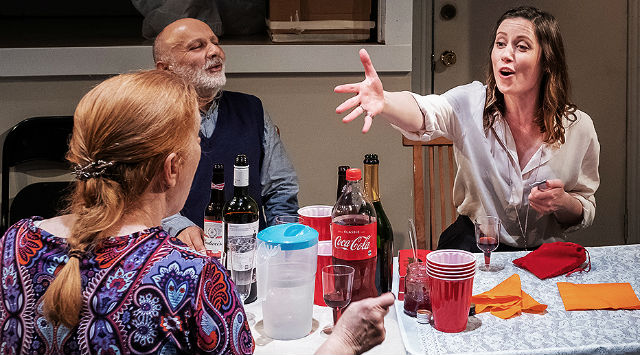
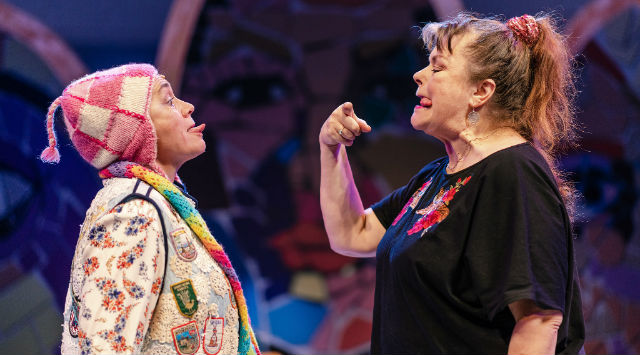
It is Thanksgiving and as is customary for American families, the Blakes gather to mark the occasion. All do their best to make it a joyous evening, but each have individual lives that are not going at all well. Stephen Karam’s The Humans talks about the hardship of modern existence for our lower-middle classes, and explores the resilience required to survive, with family being a source of strength that can provide some degree of support and grounding. It is an exceptionally subtle work, but intensely intriguing, that lures us deep into a discussion about concerns that are perhaps not immediately apparent.

The show is surprisingly entertaining, considering the coyness of its approach. Director Anthea Williams introduces a generous quotient of dramatic tension to accompany the deceivingly mundane goings on, and comedy aspects are certainly very well executed under her supervision. Family dynamics feel authentic, with a bitter-sweetness that many will find strangely comforting.

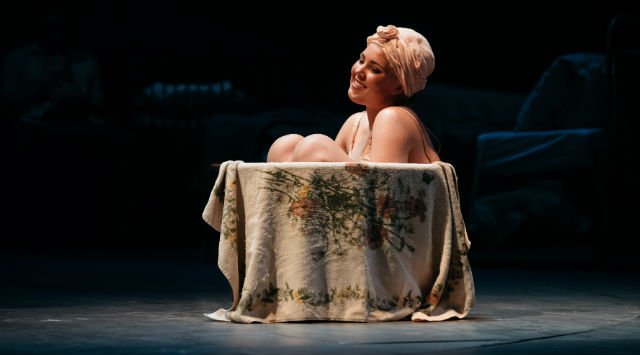
An ensemble of six likeable personalities take us through the messy business of celebrations at home, with Di Adams especially compelling as Deirdre, whose suffering is demonstrated palpably alongside a zest for life, for a splendid depiction of human spirit at its best. Similarly poignant is Eloise Snape’s performance as Aimee, a young woman with little to be grateful for, but who we see sustained by an extraordinary inner strength. The actor delivers some gloriously funny moments, whilst portraying, terribly convincingly, a painfully tragic character.

These people face considerable challenges, but loneliness is not one of their problems. They are unable to fix each other, but their love does try to conquer all. For those who have family to rely on, it is a refuge that can soothe the ravages of life, and that provides the assurance that for all the anxieties we must endure, an embrace is always there waiting. Home is where the heart is, and those who have a way back, must count themselves lucky.

www.redlineproductions.com.au

Review: Jersey Boys (Capitol Theatre)

Venue: Capitol Theatre (Sydney NSW), from Aug 29
Music: Bob Gaudio
Lyrics: Bob Crewe
Book: Marshall Brickman, Rick Elice
Director: Des McAnuff
Cast: Ryan Gonzalez, Cameron MacDonald, Thomas McGuane, Glaston Toft, Mia Dabkowski-Chandler, Cristina D’Agostino, Sage Douglas, Mackenzie Dunn, Glenn Hill, Luigi Lucente, Enrico Mammarella, Scott McConnell, Joshua Mulheran, Jack O’Riley, Matthew Prime, Daniel Raso, Rutene Spooner
Images by Jeff Busby

Theatre review
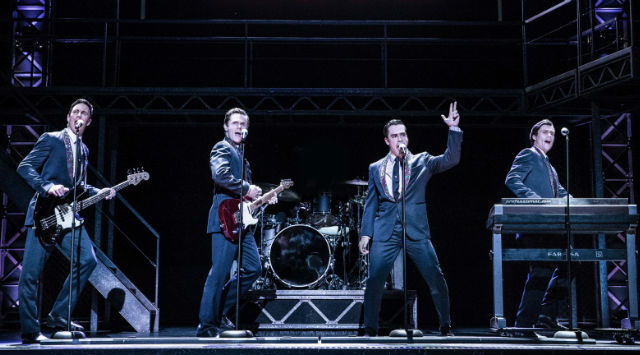
The Four Seasons have sold an estimated 100 million records, a figure virtually unheard of in the industry today. Jersey Boys takes place in the 1960s, when young American talents were able to think of the music industry as a realistic means of striking rich. A highly effective jukebox musical, filled with colourful characters and an infallible inventory of songs, the show is the proverbial, and predictable, rollicking ride, designed for sheer entertainment.

This Australian revival features an exceptional cast, with Ryan Gonzalez particularly mesmerising as Frankie Valli, complete with that trademark falsetto, celestial and ineffable. Gonzalez’s vocal abilities are a sublime joy from start to end, and his stage presence proves astonishingly compelling, despite his slight stature. He gives his all to the performance, leaving us thrilled and wanting more.

Cameron MacDonald too, is wonderful as Tommy DeVito, founding member of the group and charming villain of the piece. Brilliantly wicked, and quite alluring, MacDonald impresses with flawless timing, proving himself indispensable to the production’s dramatic effectiveness. Also noteworthy is supporting player Rutene Spooner, who sparkles in all his guises, and has us flummoxed by the incredibly nimble athleticism of his voice, whenever he is given an opportunity to sing.

We can easily tire of rags to riches stories; they rarely deviate from structures that are rigidly conventional. The magic of live musical performance however, is boundlessly and fantastically uplifting. Singers and musicians have the potential to move us in profound ways, and on this occasion, their renditions of these half-century old songs, have certainly hit the mark.

www.jerseyboys.com.au

Review: Ironbound (An Assorted Few)

Venue: Kings Cross Theatre (Kings Cross NSW), Aug 31 – Sep 15, 2018
Playwright: Martyna Majok
Director: Alastair Clark
Cast: Abe Mitchell, Ryan Morgan, Gabrielle Scawthorn, Benedict Wall
Images by Jasmin Simmons

Theatre review
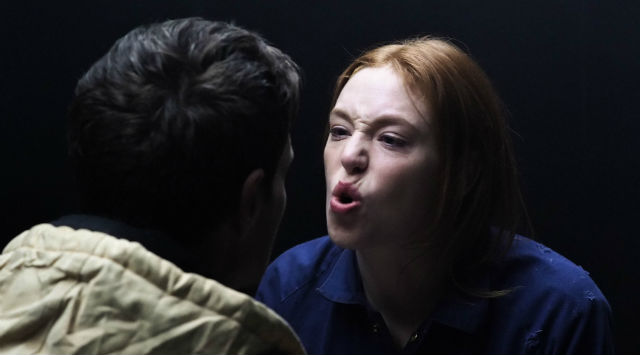
We see Darja at different periods of her life, but whether she is in her twenties, thirties or forties, poverty remains the central defining feature of her misfortunes. Scenes in Martyna Majok’s Ironbound take place at a New Jersey bus stop, where Darja is always hoping to go somewhere, but never does. Between working two jobs, and relying on a series of men for help, her situation refuses to improve, no matter how much she tries.

Majok’s play presents the American Dream as a lie, arguing against the notion that hard work alone is the key to salvation. Darja is a female Polish immigrant, thoroughly disadvantaged, and seen by society to be no more than a worker ant. She has only her hopes and dreams to cling to, unaware that those who have sold her those aspirations, are also the very ones who stand to benefit greatest from her destitution. All she does is work for the man, and all the man wants, is to keep things unchanged.

Even though socially pertinent, Ironbound is not necessarily a story with universal appeal. It dispenses valuable information, but is also inevitably dreary. Director Alastair Clark has the unenviable task of making entertainment from experiences of poverty, which is difficult as well as being morally precarious, but he negotiates those lines well, for an engaging show that always has its heart in the right place.

Leading a very strong cast is Gabrielle Scawthorn, immensely authentic in the role of Darja, with a portrayal of desperation that is deeply thought-provoking. We do respond to her story with a level of pity, but it is ultimately the wider questions being raised that stay with us thereafter. Benedict Wall brings a surprising complexity to love interest Tommy, facilitating profound contemplation about the meaning of love, in this age of advanced capitalism. Darja’s first husband Maks is played by Abe Mitchell, an endearing presence with a wonderfully dynamic approach, signalling the end of innocence in the Western world. The young and privileged Vic is brought to exuberant life by Ryan Morgan, charming and humorous, in his depictions of our systemic injustices.

We want Darja’s suffering to end, but Ironbound refuses to sugar-coat any of its truths. She fights tooth and nail for a good life, but the world is determined to keep her down. It is a story about people who never stood a chance, and the lies we are fed to sustain the inhumane status quo of our calamitous inequities. Education and knowledge, and therefore art, can help set us free, that is true, but it is unlikely that the likes of Darja will ever get to see a work of theatre like this.

www.facebook.com/anassortedfew

Review: Macbeth (SheShakespeare / PACT)

Venue: PACT Centre for Emerging Artists (Erskineville NSW), Aug 29 – Sep 8, 2018
Playwright: William Shakespeare
Director: Shelley Casey
Cast: Megan Bennetts, Isobel Dickson, Rizcel Gagawanan, Joy Gray, Daniela Haddad, Prudence Holloway, Sonya Kerr, Emma Louise, Erica Lovell, Cassady Maddox, Suz Mawer, Emily McKnight, Beth McMullen, Lana Morgan, Grace Naoum
Images by Isobel Markus-Dunworth

Theatre review
If everything happens for a reason, then Malcolm must feel it the strangest twist of fate with this leadership challenge, in Shakespeare’s Macbeth. Although instigated by others, Malcolm is ultimately the one who undergoes complete transformation, by that story’s bloody end. This production features an all-female cast, but more notably, all its characters are now women. What seems to be minute alterations to Shakespeare’s words, turn his writing much more palatable, although some feminists would still prefer to see the time and energy of this passionate stable of talents, applied to projects more relevant to our times.

Director Shelley Casey proves herself an accomplished storyteller, carving out distinct characters and quick, engaging scenes for her captive crowd. Her style however is slightly too conventional, for a play in desperate need of reinvention, having been presented much too often in faithful renditions. Kyle Rowling’s work as fight choreographer is, on the other hand, truly noteworthy, in various sequences that give the show’s action quotient, an unexpectedly entertaining boost.

Leading lady Beth McMullen is a slight presence, who lacks the majesty we have come to expect of the role, but her intensity and unrelenting conviction, are admirable. It is a big cast of fifteen performers, of varying abilities, that impress with their unmistakable sense of cohesion. Gracie Naoum is a standout as Malcolm, bringing nuance to a staging that enjoys placing emphasis on its more raucous qualities. Also memorable is Rizcel Gagawanan’s interpretation of the Porter, mischievous and confident, for a theatrical moment audiences will find humorously endearing.

To “bring forth women-children only” is a futile wish, but when we look at the politics of this country (and many others), there is abundant evidence that the male of our species cannot help but create dissension wherever traditional power structures are in place. It might be naive to think that women would operate differently under those configurations of authority, but to address gender equality at all our offices and boards, is the first realistic step towards a more radical modification, of how we can better run the business of society. Whether we think of women and men as being essentially different, it is vital that all the divisions we do impose on our lives, are justly managed. All the old familiar violations, must no longer be tolerated.

www.sheshakespeare.com

Review: The Maids (Glitterbomb / 25A Belvoir)

Venue: Belvoir St Theatre (Surry Hills NSW), Aug 25 – Sep 15, 2018
Playwright: Jean Genet (translated by Bernard Frechtmann)
Director: Carissa Licciardello
Cast: Alexandra Aldrich, Skyler Ellis, Amanda McGregor
Images by Jasmin Simmons

Theatre review
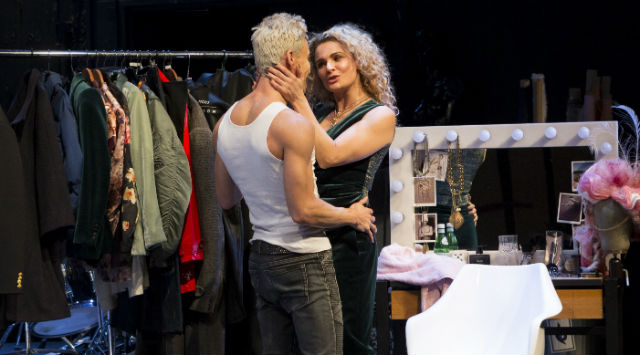
Jean Genet’s The Maids is based on a 1933 murder in France. A pair of sisters work as maids in a rich man’s house, isolated from the rest of the world. Their shared oppression turns them monstrous, as they gradually bring to fruition, the heinous contents of their imagination. We may no longer, in the West, have servants of that kind, but it is a story that draws parallels with the many inequalities that persist, or are in fact escalating, in these supposedly modern times. We look at the birth of evil, from evil, and are made to consider the repercussions of a society determined to maintain its hierarchies.

Carissa Licciardello directs an extraordinarily intense and flamboyant production, using Genet’s macabre poetry to inspire a marvellous sense of heightened drama. Three wonderful actors work in perfect tandem, delivering a sensational piece of grotesque theatre, intriguing and powerful with what they bring to the stage. Alexandra Aldrich and Amanda McGregor play the sisters, both commanding in presence, as Claire and Solange, compelling from beginning to end, even when Genet’s writing turns impenetrable and obtuse. Male actor Skyler Ellis takes on the role of Madame with aplomb, demonstrating excellent nuance alongside the role’s predictable extravagance. Watching the maids feud with a man, creates a fresh intellectual dimension, helping the old play speak with more pertinence than it would otherwise have.

Humans have an insatiable desire to control one another. Our thirst for power, when untamed, has the ability to blind us to the fact that people’s freedoms are always essential. Compromises can be reached in all our interactions, of course, but it is clear that transgressions occur frequently, with or without our acknowledgement. The servants have no choice but to submit to the consequences of their poverty, but when people are subjected to conditions unnatural and perverse, it is certain that morbidity will result.

www.dasglitterbomb.com | www.belvoir.com.au

Review: The Misanthrope (Bell Shakespeare / Griffin Theatre Company)

Venue: Sydney Opera House (Sydney NSW), Aug 28 – Sep 28, 2018
Playwright: Molière (a new version by Justin Fleming)
Director: Lee Lewis
Cast: Simon Burke, Danielle Cormack, Catherine Davies, Ben Gerrard, Rebecca Massey, Hamish Michael, Anthony Taufa
Images by Brett Boardman

Theatre review
Alceste believes that the only truths are the ones in her own head, refusing to accept any behaviour she perceives to be contrary, and charges them all with hypocrisy. As fate would have it, her lover Cymbeline is no believer in fidelity, and when Alceste has to confront Cymbeline’s covert flirtations with several others, matters of the head and heart come to agonising conflict, in this tale about how we value our principles. Justin Fleming’s new adaptation of Molière’s The Misanthrope brings the play into our contemporary times, by immersing it deep into our obsession with popular culture, and even more significantly, by altering the genders of its key roles.

Alceste is now a woman, played by Danielle Cormack, a powerful and captivating presence, appropriately representing the influential position of our lead character, although a persistently sombre approach to the central role, does significantly diminish the humour of the piece. Cymbeline, previously Célimène, is now a male pop star, convincingly portrayed by Ben Gerrard who luxuriates in the part’s farcical narcissism. Sexuality is turned entirely fluid in this rendition of The Misanthrope, with every personality capable of gay and straight love, and orientation is no longer a concern.

The production looks vivid, absolutely glitzy at times, with Dan Potra’s very flashy costumes leaving a particularly strong impression, but the show is often underwhelming, unable to excite with its comedy or philosophies. Director Lee Lewis succeeds at making things modern and coherent, but an air of banality does, unfortunately, pervade.

Passion for one’s beliefs, is often the propulsion that moves us to greater planes, but it is perhaps more exigent than ever, that we should learn as societies, to accommodate the opinions of others at these very fractious times. Unable to reconcile her disdain for all that is dishonest and insincere, Alceste is increasingly isolated, ultimately left only with a doctrine that has achieved nothing. It is a huge challenge, to hold on to what is right, yet able to negotiate all the contrarians that inevitably surround. To find the answer to our peace is difficult, but imperative.

www.bellshakespeare.com.au | www.griffintheatre.com.au

Review: The Secret Singer (Darlinghurst Theatre Company)

Venue: Eternity Playhouse (Darlinghurst NSW), Aug 28 – Sep 9, 2018
Playwright: Joanna Weinberg
Songs: Joanna Weinberg
Director: Joanna Weinberg
Cast: Genevieve Lemon, Kate Mannix
Images by Stephen Reinhardt

Theatre review
Jenny wants to sing in seven different choirs, one for each day of the week. It is a particularly unusual ambition, considering she has been unable to vocalise a single note in public, for the last ten years. When she reaches out to singing teacher Emjay for help, a deep connection instantly develops between the two, in Joanna Weinberg’s The Secret Singer, for a meaningful story about the fragile yet resilient human spirit.

Weinberg’s style as writer and director, is naive but tender, and her show, while not glossy with polish, is an uplifting and soulful work, that resonates with our indomitable capacity for hope. In the role of Emjay, performer Genevieve Lemon brings great warmth to the production; her earnest approach has the ability to convert any sceptic. Kate Mannix plays Jenny, with a gentle but effective humour, capturing our imagination with her confident interpretation of a very likeable character. Also noteworthy is Matthew Reid’s musical accompaniment on keyboard, impressive with its technical accuracy and emotional sensitivity.

To sing out loud, is to assert one’s position in the world. There are many who will want to silence others, and in that figurative stealing of voices, people are rendered powerless. It takes courage to sing, just as it takes courage to live with authenticity and joyfulness. Our communities can be supportive, but they can also be stifling. When choirs do their job well, all voices are heard, and no one is allowed to be drowned out. Harmony is not easy to achieve, but it is what our social selves must always strive for.

www.darlinghursttheatre.com

Review: Horror (Sydney Opera House)

Venue: Sydney Opera House (Sydney NSW), Aug 29 – Sep 2, 2018
Artistic Director: Jakop Ahlbom
Cast: Andrea Buegger, Sofieke De Kater, Yannick Greweldinger, Silke Hundertmark, Gwen Langenberg, Reinier Schimmel, Luc Van Esch, Thomas Van Ouwerkerk
Images by Prudence Upton

Theatre review
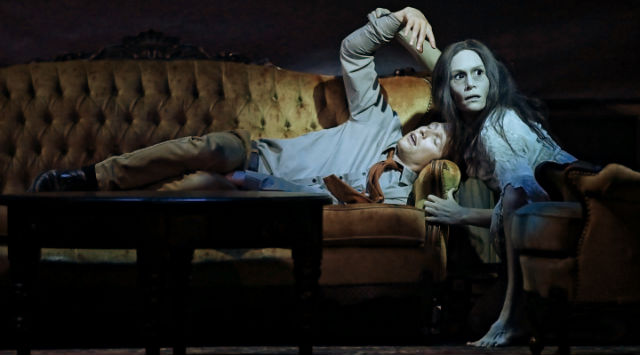
The action takes place in a haunted house. No words are spoken, but we know exactly what happens in each moment, mainly because we have seen everything before at the cinema. The horror film genre relies on special effects and creative editing, both technical features unavailable to the live format. In Jakop Ahlbom’s Horror, however, capacities of the stage are pushed to their limit, to achieve something that is best described as a tribute to the great classics of fear and revulsion. The show aims to frighten, and like the vast majority of scary pictures, it is only occasionally successful in that regard, although there is no denying the production’s very persistent entertainment value.

Cleverly designed on all fronts, from set and lights, to hair and makeup, and of course the obligatory cacophony of jolting sounds, Horror is an innovative tapestry of creative imagination. A skilful cast portrays a range of supernatural beings, performing unearthly acts that have us amused and fascinated. It is a well-oiled operation, every moment executed with impressive precision. Some of its gimmicks can feel underwhelming, but the show is ultimately a satisfying one, memorable more for its hits than for its misses.

We are afraid of ghosts, because we understand the mistreatment that people suffer when alive. These beings return from the dead, with nothing to lose, and their vengeance is both justifiable and boundless. To see them, is to think of ourselves at our angriest, except completely unrestrained. Our biggest fear perhaps, is when people believe that they can act without consequence. Ghosts, and so many of our intangible creations, teach us to be good whilst being keenly aware of our capacity to be bad, and telling ghost stories is as though to put a curse on the evil, when they are hiding in plain sight.

www.horrortheshow.com | www.sydneyoperahouse.com

Review: She Loves Me (Hayes Theatre)

Venue: Hayes Theatre Co (Potts Point NSW), Aug 24 – Sep 15, 2018
Book: Joe Masteroff
Music: Jerry Bock
Lyrics: Sheldon Harnick
Director: Erin James
Cast: Caitlin Berry, Zoe Gertz, Joel Granger, Jay James-Moody, Tony Llewellyn-Jones, Kurt Phelan, Suzanne Steele, Georgina Walker, Rowan Witt
Images by Noni Carroll
Theatre review
Balash and Nowack have been exchanging anonymous love letters, unaware that they are colleagues, both working at the same cosmetics store. Based on Miklós László’s 1937 play Parfumerie, the musical She Loves Me first appeared 1963 on Broadway, and although a terribly old-fashioned story, its songs are utterly and eternally charming, still able to delight audiences today. Its characters are perhaps no longer believable, and they present little that we can relate to, but the show would most certainly appeal to those seeking a healthy dose of nostalgia in their entertainment.

Musical direction for this revival, is executed wonderfully by Steven Kreamer, who breathes new ebullient life into these half-century-old songs. His team of musicians, along with David Grigg’s sound design, deliver for our ears, an unexpectedly rich and exciting experience. Choreography by Leslie Bell, too, is enchanting, bringing to the stage a sense of extravagance that consistently fascinates our senses.

Much of the comedy in She Loves Me is outdated, but several big laughs are had when supporting player Jay James-Moody occupies centre stage; his comic inventiveness is an absolute godsend. Caitlin Berry and Rowan Witt are the leads, both excellent singers, with strong presences that manage to sustain our attention, even when the story wanes. Director Erin James keeps the production active and energetic, but the plot’s flimsiness seems impossible to rectify.

The nature of romance changes with time. In the Tinder age, we are encouraged to always anticipate the next better thing. Unlike us, people of Balash and Nowack’s generation were more likely to believe in that one true love, at a time when moving mountains to find them, had seemed a completely reasonable thing to do. The stakes are significantly lower now, as we become increasingly independent and pragmatic, able to attain fulfilment without narrow definitions of success and love. Many have been let down by dreams of happily ever after, but if we are able to appreciate the things that are, and not hanker only for what could be, chances are that heaven, is already here.

www.hayestheatre.com.au

Review: The Harp In The South (Sydney Theatre Company)

Venue: Roslyn Packer Theatre at Walsh Bay (Sydney NSW), Aug 16 – Oct 6, 2018
Playwright: Kate Mulvany (from novels by Ruth Park)
Director: Kip Williams
Cast: Joel Bishop, Luke Carroll, Tony Cogin, Jack Finsterer, Benedict Hardie, Emma Harvie, Anita Hegh, Ben O’Toole, Lucia Mastrantone, Heather Mitchell, Tara Morice, Rose Riley, Rahel Romahn, Jack Ruwald, Guy Simon, Bruce Spence, Helen Thomson, Contessa Treffone, George Zhao
Images by Daniel Boud

Theatre review
When Margaret Kilker met Hugh Darcy in 1920, life in rural Trafalgar was idyllic but inert. The couple, both Irish-Australian, young and hopeful, soon headed to Sydney for a brighter future, setting up home in Surry Hills, where they found community, and formed the foundations of a legacy never intended or even imagined.

The Harp In The South is a six-and-a-half hour epic, in two parts, by Kate Mulvany, based on two of Ruth Park’s novels from the 1940’s and another from 1985. Composed mainly of migrant perspectives as experienced by three generations of Irish women, the play offers contemporary audiences a version of our city’s recent history that feels counter-cultural, one that is derived not from contrivances of the establishment, but from stories told by the poor and disadvantaged. All the wonderful things we associate with this city, are built upon the fortitude of those who bear injustice and genuine hardship. Instead of hearing once again about the great white forefathers who take every credit, The Harp In The South restores the voices of forgotten individuals, and places them in the mythical centre of Sydney’s eminence.

Mulvany’s adaptation is exhilarating and witty, replete with irresistible drama, and brimming with inspiration. A palpable soulfulness informs her every manoeuvre, revealing a deep love of the subject and the material, that proves to be completely and profoundly affecting. Although concerned with a cultural specificity, Mulvany’s play contains a sensibility of inclusiveness, that understands the diverse realities of those to whom this story is relevant. The Kilker-Darcy household leads the action, but their truth can only resonate within a context of multiculturalism, and the accompanying portrayals of Indigenous, Chinese, Greek and Italian characters provide not only a degree of ethnological accuracy, they also make an important statement about the way we have, for a long time, sought to share space in harmony.

Director Kip Williams’ vision is exquisite, for a production extraordinary in what it achieves, not only in aesthetic terms, but even more valuable is its promise to galvanise society, through highly persuasive, and sentimental, depictions of our common past, involving all the complexities in our endeavours to be good families, friends and neighbours. Even though the events that unfold are from a different era, every scene rings true, with a familiarity that emanates from its absolute honesty. The Harp In The South is tremendously soulful, and it speaks to all who have an intimate connection with Surry Hills and its surrounds.

Flawlessly designed, the show looks and sounds magnificent. David Fleischer’s sets, Nick Schlieper’s lights and Renée Mulder’s costumes, form an impeccable collaboration delivering theatrical grandeur, with a pervasive and melancholic nostalgia best described as beautiful. Music by The Sweats and sound design by Nate Edmondson, combine new with old, real with abstract, seamlessly cajoling us from one dimension to another, making us laugh and cry at will. The songs we choose to sing, are the truest indication of who we are, and the many melodic renditions of The Harp In The South are like spiritual disclosures, engineered to touch us in the heart and in the mind.

A large cast of actors, play a very large number of characters, each one fabulously evocative, no matter how brief their appearance. Contessa Treffone, marvellous as both Josie and Dolour, is onstage for a substantial portion of this durational challenge, persistently impressive with her spirited and delightful comedy, and triumphant with the integral vulnerability she brings to the show. Margaret and Hugh are brought to life by Anita Hegh and Jack Finsterer, both reliably poignant, but also cuttingly humorous when appropriate. Heather Mitchell too is splendid, and thoroughly amusing, as the matriarch Eny Kilker.

Unforgettably funny, are Benedict Hardie and Rahel Romahn in all their innumerable guises, although Helen Thomson is a clear favourite, unequivocally outstanding with an incomparable volume of laughs, particularly wonderful as the bawdy brothel madam Delie Stock. Lesbian nuns Theopilus and Beatrix are a thrilling pair, performed playfully yet tenderly, by Lucia Mastrantone and Tara Morice, endearing as a sisterly set, and independently formidable in an astonishingly varied range of personalities.

We can proclaim to know ourselves, but art can often surprise with new epiphanies. There is no end to how humanity can understand itself, and it is imperative that we are committed to finding ever greater truths, if we should continue to believe in better tomorrows. We may not be direct descendants of the people in The Harp In The South, but they show us so exhaustively, who we are, as Sydneysiders, as Australians. The shoulders we stand on were not always solid, but all our strength today must be attributed to that past.

www.sydneytheatre.com.au