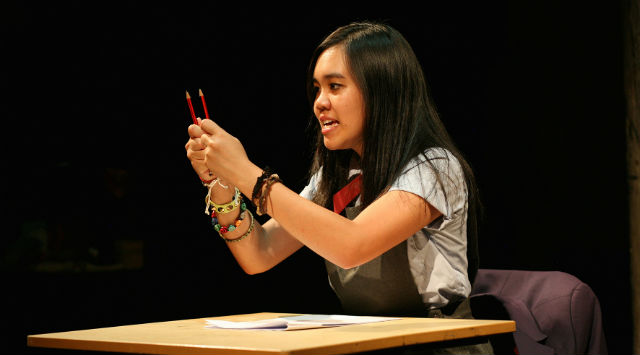
Review: Perch (The Leaps / Belvoir St Theatre)

perchVenue: Belvoir St Theatre (Surry Hills NSW), Feb 9 – 21, 2016
Playwrights: Brian Carbee, Sarah Carradine
Director: Sarah Carradine
Cast: Brian Carbee
Image by Phyllis Photography

Theatre review
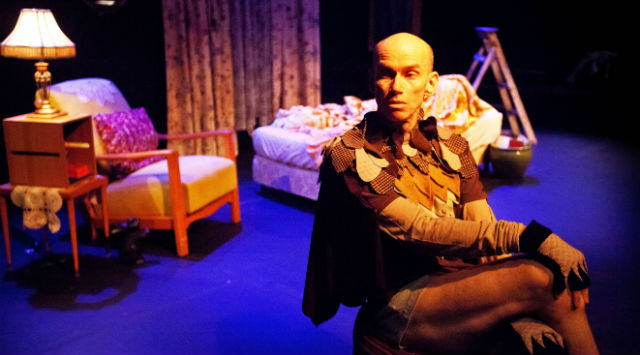
Brian Carbee plays two characters in Perch; an owl and a human. Their relationship is strange to say the least, and even though the poetic script does not engage in a conventional sense, it provides impetus for a show that utilises the considerable talents of its performer, revealing not only the wealth of experience Carbee possesses as a dancer, but also the eccentric and idiosyncratic qualities he bears as an artist accomplished in the realm of movement based art.

It feels as though the roles he inhabits are but conduit for an expression of self. We might not achieve a great understanding of what is being created on stage, there is certainly no doubt as to the kind of person involved in the creative process before our eyes. The work is about the artist’s presence, and it is his skill, flair and fluency that captivates. It is Carbee’s very own humanness that is the object of our appreciation, and the surreality of all the action he manufactures is the looking glass through which we are able to read, and feel, the existence of a living, breathing sentient being exposed to our audienceship.

Perch is a work about the camp sensibility and its manifestations in physical and verbal forms. Carbee portrays an overt flamboyance that simultaneously obfuscates and indicates the truths that are at play on his stage. Identity is explored through the creation of false otherness, almost as though reaching for exaggerated and illusory entities is key to the discovery of authenticity. When we define our alter egos, we give shape and meaning to ourselves, and because facing the self is exasperating, we luxuriate in something else, something seemingly separate that can tell us everything that we need to know about the universe that lies within.

www.theleaps.orgwww.belvoir.com.au

Review: Life Without Me (Illuminate Educate)

illuminateeducateVenue: Seymour Centre (Chippendale NSW), Feb 9 – 16, 2016
Playwright: Daniel Keene
Director: Cathy Hunt
Cast: Martin Broome, Annie Byron, Laurence Coy, Drew Fairley, Brendan Donoghue, Julie Hudspeth, Anne Wilson
Image by Stephen Reinhardt

Theatre review
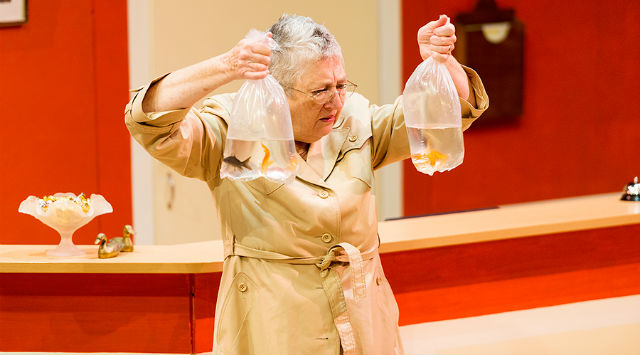
The action takes place in a hotel, mostly in its lobby. The transient nature of this setting prompts us to look at the way we move through life; how we travel in relation to time, the people we encounter, and the meaning of ephemerality itself in personal existences that often deceive us with a feeling of permanence. Daniel Keene’s script has a surreal edge that helps skew our perspective, providing an alternative to the linearity that informs many of our understanding of the universe. The play has more than a few quirky facets, but its scenes are firmly attached to everyday concerns in a way that allow us to relate with all its characters no matter how colourful each scenario becomes.

Direction by Cathy Hunt achieves good clarity with plot trajectories and her active use of space helps keep our senses engaged, but the show is surprisingly muted. Keene’s text provides potential for a more adventurous approach, yet the production often seems to lack a greater sense of extravagance that would befit its very imaginative dialogue. Its actors tend to be restrained and polite, even though the concepts introduced veer towards something much wilder. Memorable personalities include Mrs Spence, performed by the very animated Annie Byron whose precision is a joy to watch. Her passionate demeanour and confident comic timing brings a valuable liveliness to a stage that is often too staid in tone. Also delightful is Laurence Coy as Roy who injects a convincing spontaneity to proceedings, along with a sensitive balance of consternation and optimism that we identify with.

Life Without Me is about living in purgatory, suspended in a state of limbo excluded from where the real action is. We wish for the characters to discover that the point of life is to live, to participate and to commit. We fear for their aimlessness and their indecisiveness, and we observe their passivity through the passage of time as if waiting for nothing but the arrival of certain death. At the hotel, people are always going somewhere, but they forget that they are already here.

www.illuminateeducate.com.au

Review: The Pride (Darlinghurst Theatre Company)

darloVenue: Eternity Playhouse (Darlinghurst NSW), Feb 5 – Mar 6, 2016
Playwright: Alexi Kaye Campbell
Director: Shane Bosher
Cast: Geraldine Hakewill, Kyle Kazmarzik, Simon London, Matt Minto
Image by Helen White

Theatre review
Like all good narratives that move toward a satisfying conclusion, we hope for political movements of each era to come with happy endings. Each of the causes that people fight for have a definite objective, but their reverberations are often felt far beyond those destinations, and happily ever after is never as simple a proposition as we might imagine. The Pride is about gay liberation, but its concerns extend beyond the legal rights that LGBT communities have, and continue to, achieve. It looks at the reparations that have not been made, even though our law books are altered for better standards of equality and humanity. Alexi Kaye Campbell’s script is about the scars that gay men continue to bear, at a time when the fight, in Britain at least, is meant to be over.

Campbell’s play is a very deep one. Its explorations of intimate gay histories is imbued with the most thorough cognizance of the human condition. We look not only at feelings, but also at the way people’s behaviours are shaped, when subject to generations of injustice and cruelty. Its insights are valuable, and its message important, but the script is lengthy, with scenes that struggle to sustain dramatic tension as they take time to get to their point, although every line of dialogue is undoubtedly beautifully crafted. Director Shane Bosher’s style is sophisticated and honest. He does not overcome the writing’s structural issues, but what he brings is marvellous elucidation to a rare discussion of contemporary gay life, and the challenges faced by a community that is often tricked into thinking that the worst is over.

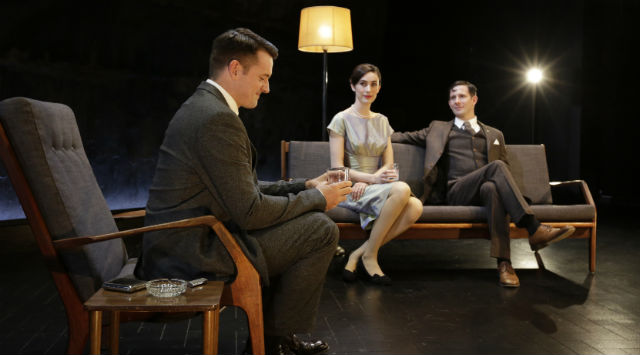
The production is performed with great passion by its cast of four. The level of commitment in their work is truly splendid, even if their individual abilities may vary. Simon London is magnificent as Phillip. His portrayal of vulnerability is full of poignancy and vividly resonant, even as the character spends a lifetime manufacturing false fronts and deceptions. London inhabits all the contradictory qualities of his tragic role, along with the extreme emotionality of his thinly-veiled true nature, to leave a remarkable and lasting impression. Leading man Matt Minto has an appealing authenticity that makes Oliver’s stories palpable, but the actor has a tendency to be too quiet, almost film-like in his approach, requiring the audience to work harder to connect (in the absence of cameras zooming in for close ups). Geraldine Hakewill too, can afford to introduce greater theatricality to her roles, but even though slightly straightforward, her interpretations are consistently thoughtful and strikingly empathetic. Scene-stealer Kyle Kazmarzik pops up in different guises playing minor roles, but is completely delightful in every moment. His comedy is flawless, and transformations between personalities astounding. Kazmarzik takes on the easier parts of the script, but exceeds all expectations and requirements to deliver some of the most memorably engaging sequences in the production.

Like a pride of lions, our LGBT communities have weathered the worst that society is capable of, and have come out fierce, resilient and strong. We have also inherited a merciless savagery that can rear its head at unsuspecting times, even or perhaps especially, against ourselves. When the war is over, our impulse is to celebrate, but someone has to pick up the pieces left behind by the enduring harm inflicted in years past, or a beast of destruction will manifest. In The Pride, things end on an optimistic note, and even though its suddenly illusory quality of its closing scene does not deceive, its hopefulness is welcome, and necessary.

www.darlinghursttheatre.com

Review: The Whale (Red Line Productions)

redlineVenue: Old Fitzroy Theatre (Woolloomooloo NSW), Feb 12 – Mar 4, 2016
Playwright: Samuel D. Hunter
Director: Shane Anthony
Cast: Keith Agius, Chloe Bayliss, Alex Beauman, Meredith Penman, Hannah Waterman

Theatre review
There is no question more fundamental than to consider why it is that we choose to live. In Samuel D. Hunter’s The Whale, a kind of suicidal impulse is explored, but the dramatic gesture is not a sudden one. Alan and Charlie let themselves waste away by withdrawing from the very living of life, allowing their bodies to approach certain and hastened death. The writing is powerful, poignant and sensitive, with a clever plot structure to fascinate and to provide plentiful food for thought.

Direction of the work by Shane Anthony is replete with tenderness and compassion, eager for us to find points of identification with its quirky characters. The show needs a more pronounced sense of humour for its overall emotional arc to make a greater impact, but its effect is nonetheless strong. Anthony’s use of space is dynamic and thoughtful, beautifully aided by Charlie Davis’ very accomplished and evocative set design.

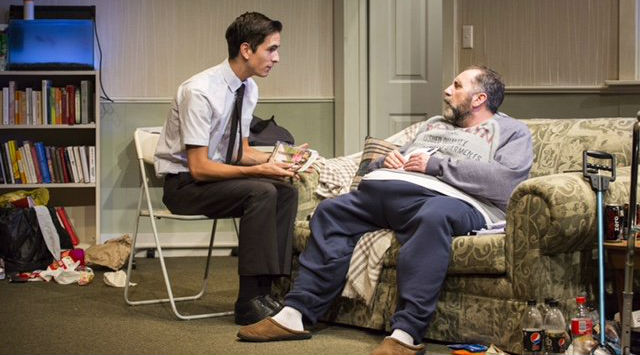
Performances are well-rehearsed, with excellent chemistry to be found, but character interpretations can at times tend to be too straightforward. Keith Agius brings a valuable vibrancy to Charlie’s sad story, and although his portrayal of the role’s profound sorrow is not always convincing, we achieve a thorough understanding of his mind and spirit, and it is the actor’s work that provides his audience with many of the show’s reflective and meaningful moments. Also moving is Hannah Waterman as Mary, whose life struggles are immediately evident in spite of her brief stage time. Waterman’s approach brings a surprising complexity that makes her part the most authentic and empathetic of the group.

In The Whale, Charlie is crippled by regret and heartache. We watch him go through immense suffering, and although we appreciate the difficulties he faces, the play allows us to see the possibilities of a better life that is only a hair away. It is a lesson that we can all learn; about choice, strength and hope. Charlie might be an abomination to many, especially to himself, but to those of us who know his parable, he will serve as a reminder on our darker days, for a long time to come.

www.oldfitztheatre.com

Review: The Secret River (Sydney Theatre Company)

Venue: Roslyn Packer Theatre at Walsh Bay (Sydney NSW), Feb 1 – 20, 2016
Playwright: Kate Grenville (based on the novel by Andrew Bovell)
Director: Neil Armfield
Cast: Georgia Adamson, Joshua Brennan, Toby Challenor, Shaka Cook, Nathaniel Dean, Frances Djulibing, Jennifer Hagan, Isaac Hayward, Trevor Jamieson, Heath Jelovic, Ningali Lawford-Wolf, Madeleine Madden, Colin Moody, Jeremiah Mundine, Wesley Patten, Kelton Pell, Richard Piper, Rory Potter, James Slee, Bruce Spence, Matthew Sunderland
Images by Heidrun Löhr

Theatre review
It is one thing to know about the usurpation of Australian land by the British two centuries ago, but quite another to see it happen before one’s own eyes. Brutal and tragic events register in our minds only as deeply as human sensitivity can allow. Our natural tendency to evade pain also means an involuntary ability to shelter our frail sentiments from the true depth of atrocities that we become aware of. We can think of this inadequacy in our comprehension as an explanation for the deficiency of empathy relating to the plight of Aboriginal Australia, and it is also the ease at which our minds can resort to delusion that their suffering can so often be hidden from us in plain sight.

Kate Grenville’s The Secret River is a story all Australians know. It is about early British settlement and the swift displacement of Aboriginal communities as a result of our convict history. What is valuable in Grenville’s vision, is the depth and detail of personal experiences from those old chronicles that we find difficult to face. Her play is a confrontation that insists we witness in vividness, the misjustice, betrayal and horrific bloodshed that had befallen our Aboriginal peoples, on which many of our lives today are built upon. Through her marvellous storytelling and palpable characters, concepts are turned into reality and pain is shared.

The show is heavy and heartbreaking, but also remarkably compelling. At no point is the audience in doubt about the end that is to come, but we are nonetheless captivated by the story that unfolds. Director Neil Armfield sets a reverent tone and at a deliberate pace, embarks upon a presentation that takes its responsibilities in education and activism seriously. The Secret River is exemplary as an exercise of using theatre for social progress, through the art of gentle persuasion so that its message can be accepted by many. Armfield strikes a fine balance of portraying the barbarism inflicted upon the nation’s First Peoples while relaying a dramatic narrative with great warmth and credibility, so that even the most misanthropic of us will remain engaged.

Nathaniel Dean and Georgia Adamson play the Thornhills, who begin their frontier lives on the Hawkesbury River in 1813 as farmers claiming land without authorisation by its rightful owners. The actors are vibrant, charismatic and precise in their approach, with a fierce honesty that keeps us simultaneously endeared and repelled. It is tricky business creating villainous protagonists, but the duo’s very fine work shines light on their flawed humanity with a complexity that disallows us from writing them off too conveniently. A cast of Indigenous performers brilliantly depicts the local community that falls victim to the Thornhills’ rapacious enterprise. They do not speak English, but all that they feel and desire is conveyed with clarity and enthralling charm. Ningali Lawford-Wolf provides with great beauty, an important matriarchal omnipresence that represents the origins of our land, and a compassion that informs the way we respond to the events that unfold before her, and our, eyes. The role of Ngalamalum is played by Trevor Jamieson, whose humour and capacity for powerful emotion leaves an indelible impression. His work in the epilogue especially, is quite a thing to behold, and certainly one of the most moving moments to be seen on any stage.

There is a simplicity to the production, crucial and closely linked to its essential gravity, with design elements thoroughly refined in order to maintain a sense of directness in its depictions. The show seems understated, but there is no denying the sophistication and thoughtfulness involved in creating its very specific aesthetic of earthiness and urgency. Musical Director Isaac Hayward is positioned downstage left providing accompaniment for the entire duration, orchestrating the way we feel in each scene and meticulously controlling atmosphere along with the very involved lighting design of Mark Howett. Stephen Curtis’ elegant set is a basic and unchanging one, so Howett’s lights are called upon to establish the play’s many transitions of time and space, which he manages with unassailable flair.

At its most extreme and idealistic, political theatre wishes to create uprisings and revolutions. It is arguable if any work had ever achieved that purpose, but what we can hope for, is for individuals to find inspiration, and for our culture to move towards something better, as a result of a collective awakening brought on by a show like The Secret River. When we sit in an auditorium and feel the same passions, we must realise the strength of our will and what it is capable of. We may not know what the next step should be, but the common trajectory of our feelings is undeniable, and we must hold on to the belief that justice, truth and democracy will eventually prevail.

www.sydneytheatre.com.au

Review: All Good Things (ATYP)

atypVenue: ATYP (Walsh Bay NSW), Feb 3 – 20, 2016
Playwrights: Michael J Cornford, Alberto Di Troia, Piri Eddy, Georgia Goode, Kirby Medway, Callum McLean, Gemma Neall, Rachel O’Regan, Morgan St. Clair, Ciella William
Director: Iain Sinclair
Cast: Simone Cheuanghane, Simon Croker, Martin Hoggart, Poppy Lynch, Moreblessing Maturure, Sarah Meacham, Alex Packard, Jonas Thompson, May Tran, Darius Williams
Image by Tracey Schramm

Theatre review (of a preview performance)
Ten short monologues are interwoven on an intimate stage, with ten young actors presenting a new generation’s perspective of where we are and where we are approaching. Through stories about adolescence, identity, sexuality and desire, we observe in All Good Things, the world’s evolution and we wonder about the things that change and those that remain the same. We conceive of the future as a time that will bear differences, yet human nature seems to be fundamentally immovable. The linearity of time misleads us into thinking that we leave everything behind, yet the truth seems to be that although we are ever-changing, we will never be anything other than human.

There is wonderful and starkly inspired writing to be found in this collection of plays. Each one individualistic, offering a wild range of styles and tones, from simple narratives that pack a punch, to poetic abstractions that affect with beguiling efficacy. Iain Sinclair’s direction provides an almost miraculous cohesion that allows us to absorb the fragments as a whole, manipulating our senses and emotions as though following a conventional theatrical plot. The format he creates attempts to bring an evenness to the disparate source material, but the more anecdotal pieces leave a greater impression. Callum Mclean’s Changing Room, Gemma Neall’s Jailbait and Morgan St. Clair’s Possession in particular, involving gender and strong sexuality, are captivating tales told intelligently.

The show features a talented and vibrant cast of youngsters from diverse ethnic backgrounds; a rainbow of skin and hair colours but all sharing a singular Australian-accented voice. Darius Williams is charming, confident and effortlessly engaging in the role of David in Piri Eddy’s Teeth. The wide range of emotion he portrays so convincingly, and his infectious humour make his performance a highlight of the production. In Rachel O’Regan’s Red Bull, May Tran depicts a girl cracking under the pressure of an examination, with marvellous precision and clarity. Poppy Lynch in Bright by Ciella William is daring, energetic and charismatic, and Jonas Thompson in Kirby Medway’s The Fuzz is a keen comedian with beautifully timed punchlines that any audience would find irresistible.

Through the wealth of talent on show here, we catch a glimpse of the things that really matter to our young artists. Not every work is deep or serious, but even when encountering moments of frivolity, we see honesty and commitment to their craft. The value of innocence has always been important in art, and on this occasion, we connect with that special quality that will always be rare in the oft too clever art form of theatre. Together with an excellent and thoughtful team of designers (Michael Toisuta’s sound design is stunning), Iain Sinclair has introduced a great deal of sophistication to the production, but the youthful effervescence of every artist is never subdued, and it is their idealism and their hopes that stay with us the strongest.

www.atyp.com.au

Review: Jack Of Hearts (Ensemble Theatre)

ensembleVenue: Ensemble Theatre (Kirribilli NSW), Jan 29 – Apr 2, 2016
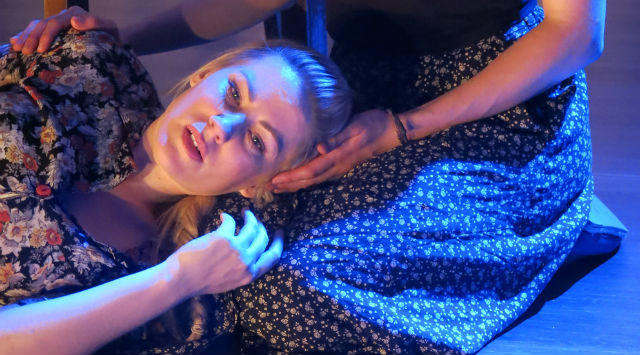
Playwright: David Williamson
Director: David Williamson
Cast: Paige Gardiner, Christa Nicola, Peter Mochrie, Brooke Satchwell, Craig Reucassel, Isabella Tannock, Chris Taylor
Image by Clare Hawley

Theatre review
It is probably a common fantasy to have multiple lovers vying for one’s attention, so it is understandable that David Williamson would use the idea to spark his new play Jack Of Hearts. The quirk is that lead character Jack is a thoroughly ordinary man, with no substantial talents, wealth or looks to speak of. He is not a particularly kind or caring man, and as a middle-aged divorcee, it is quite a mystery that he thinks that three very attractive women would be desperate for his affections. Except, the play is not a mystery at all, not in the conventional sense at least. It is a straightforward and very old-fashioned comedy about Jack’s ridiculous delusions. Often unintentionally laughable, and frequently offensive to audiences with even the slightest of feminist sensibilities, this is certainly not a show for everyone.

Nevertheless, it is without question that there are those who will enjoy the confident and energetic rhythm of the production’s humour. Its thorough and determined need to entertain will be pleasing to some, especially those who are able to leave political correctness and intellect outside of the auditorium. Theatre should have no rules. It can be frivolous, shallow and rude if it chooses to be, and in fact, millions have been made from entertainment of this description. Jack Of Hearts is the kind of work that will have many detractors, but also many fans. It can be described in many words, but boring is not one of them.

The cast of comedians is well-rehearsed and spirited. Characters do not make much psychological sense, but the actors are able to convey a good level of authenticity in individual scenes to keep us engaged. Jack is played by Chris Taylor, whose energy sustains the surprisingly lengthy show. His charisma shines through in sections in which he performs stand-up comedy (to adversaries who attend on multiple nights, voluntarily subjecting themselves to humiliation for no good reason). It is a very animated performance by Taylor, and although a healthy dose of naturalism would help us identify better with his story, there is a remarkable clarity achieved in his quite nonsensical circumstances. Craig Reucassel is similarly vivid in his portrayal of Stu, the stereotypical Sydney cad who also finds himself in the middle of two women with mystifyingly low levels of self-esteem. Reucassel is naturally charming, with a quality of mischief that makes Stu as engrossing as he is intolerable. Brooke Satchwell does her best with the role of Denys, almost disregarding the complete illogic of all the character’s decisions, to deliver a performance that is consistently funny and very amusing. The actor’s irresistible flair is one of the show’s few highlights.

There are no likeable personalities in the play. These Australians are at worst repugnant, and at best, banal. Theatre is often a reflection of real life, but on this occasion, it is fortunate that nothing seems believable, and we can allow ourselves to think of the people in Jack Of Hearts as entirely fictitious and thus form a disassociation. It however, cannot be overlooked that women continue to be accessories in many of our stories about men, even very unremarkable men. The women here exist only in relation to their husbands and lovers, but incredulous as it might seen to some, this is not how we are in reality, and the reflections offered here are profoundly stupid.

www.ensemble.com.au

Review: The Poor Kitchen (Subtlenuance / The Old 505 Theatre)

subtlenuanceVenue: Old 505 Theatre @ 5 Eliza St (Newtown NSW), Feb 2 – 6, 2016
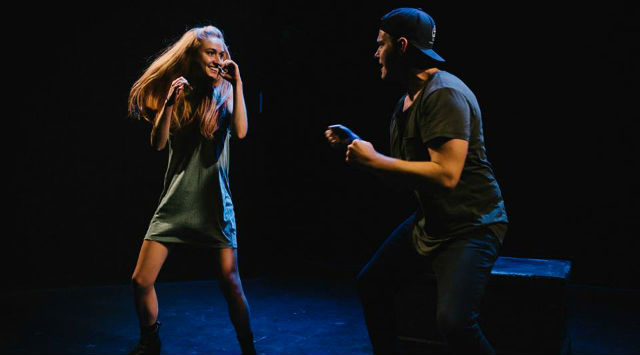
Playwright: Daniela Giorgi
Director: Paul Gilchrist
Cast: Mark Langham, Samantha Meisner, Katrina Rautenberg, Randa Sayed, Benjamin Winckle

Theatre review (of a preview performance)
Elle inherits a farm in Italy, so she flies there with plans to sell up and return with cash for a piece of the Sydney property market. To our Australian sensibilities, the proposition is straightforward, but what Elle experiences is a set of unforeseen and complicated circumstances involving a foreign culture, to which she is intrinsically entwined, by blood and history. Modern life for most of us holds a strange and contradictory duality. We identify with the place and culture that we immediately belong, but are aware also of ties to other faraway places. We think of ourselves as one thing, but are really much more internationally connected than we care to admit. Geographical boundaries are real, but also arbitrary. This is an inconvenient and problematic truth that challenges our inevitably parochial ways of living, one that confronts how we think about migration, ecology and politics, all topics that The Poor Kitchen is keen to tackle. It shatters the “us and them” oppositions set up to justify our capitalism, so we keep it under wraps, choosing to subscribe instead to nationalistic notions of being that our small minds find manageable.

Daniela Giorgi’s script is both thoughtful and insightful. Its narrative can be structured more engagingly, but its attempts at bringing big ideas into a realm of domesticity, and hence intelligibility, are successful. There are colourful characters that keep us entertained, and even though performances are of a good standard, chemistry between actors is sometimes lacking, causing the show to lose tension at various points. Randa Sayed is thoroughly charming as Anna, with an energy and dynamism that light up the stage each time she makes an appearance. In the role of Carlo is Benjamin Winckle, who impresses with a consistent and precise approach in his creation of what is perhaps the most convincing character in the production. Leading lady Katrina Rautenberg is strong when emotions gets intense, but is less effective in portraying the more light-hearted parts of Elle. We take some time to warm up to her, so the events surrounding our protagonist can feel slightly distanced in earlier scenes.

The production’s minimal design is appropriate for the rustic quality it depicts, but sections that take us through dramatic shifts in time require greater atmospheric support from the team of creatives. Paul Gilchrist’s direction makes excellent use of space, and he often finds the best to showcase in each performer, allowing individuals to find their own captivating moments and to deliver a certain level of depth from each personality. The story of The Poor Kitchen is an interesting one, but in its resistance of conventional melodrama, our emotions are kept in check. It is true that family matters can easily cause aggravation, and soap operas all over the world exploit that indulgence, but level-headedness is probably the only means to rid us of those heartaches, so that we may begin to see the bigger picture.

www.subtlenuance.comwww.venue505.com/theatre

Review: Tender Napalm (Brevity Theatre)

brevityVenue: Old Fitzroy Theatre (Woolloomooloo NSW), Jan 19 – 30, 2016
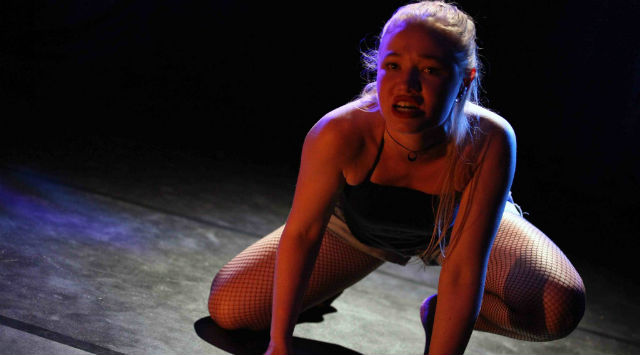
Playwright: Phillip Ridley
Director: Alexander Butt
Cast: Jordan Cowan, Tim Franklin
Image by Andre Vasquez

Theatre review
People who work in theatre know how to tell stories. Whether simple truths or tall tales, their creativity determines how a narrative takes shape. In Phillip Ridley’s Tender Napalm, a pair of lovers recite passages of extravagant fantasy, making sense of their relationship by constructing worlds far from reality, but ones that reveal the struggles they experience. Ridley provides his characters with outlandish words, but little happens in terms of plot. We catch meaningful glimpses of the relationship’s tensions, and fleeting poignancies that allow us to make sense, but the writing is fanciful and deliberately embellished, feeling as though it is more suited for the page than it does on the stage.

The work is demanding of its audience’s imagination. Both actors are presented in the plainest way possible, on a bare stage with ample room to conjure up the wild scenarios of the text. Katelyn Shaw’s sound design and Ben Brockman’s lights help significantly in manipulating ambience and energy, but the effectiveness of the show relies squarely on performances by the young duo of Jordan Cowan and Tim Franklin, both of whom tackle the script with gusto and impressive determination. Cowan has a vibrant theatricality that holds our attention effortlessly, with an endearing warmth in the personalities she inhabits. Equally charming but with a more laid-back approach is Franklin, whose natural sense of humour is omnipresent and delightful.

The performers give their all for a dynamic and engaging performance, but there is a surprising and strange emptiness to be discovered after the curtain call. No matter how accomplished, any hit show will have its detractors, and no matter how obtuse, a presentation can still find an appreciative audience. What makes a theatrical piece connect with its audience can be analysed and deconstructed into a multitude of things, but there is nothing that can guarantee all to be satisfied. It is not the responsibility of artists to please everyone, in fact it is harmful to conceive of one’s career thus. There are many other greater values that can guide one’s art, and as long as those are vested and present, the creation is valid.

www.oldfitztheatre.com | www.brevitytheatre.com.au

Review: Femme Fatale (Leftofcentre Theatre Co)

leftofcentreVenue: Old 505 Theatre @ 5 Eliza St (Newtown NSW), Jan 19 – 23, 2016
Playwright: Clare Hennessy
Director: Carissa Licciardello
Cast: Rebecca Day, Tiffany Hoy, Henriette Tkalec

Theatre review
The femme fatale is a figure usually conjured up as a source of threat to the masculine of our species. She seems sexual, devious and powerful, but only exists in opposition, having no meaning independent of her male counterparts. In Clare Hennessy’s Femme Fatale, we look at humankind’s first three women according to Western mythology; Eve, Lilith and Pandora, and their conception as originators of evil and sin. Each were made responsible for releasing to the world a perpetuity of harm. Their myths have framed womanhood as initiator in the eradication of purity and goodness, and the feminine is forever tainted with malice.

The writing is unabashedly poetic, and although full of passion, its structure is insufficiently dramatic. Its abstraction has a deliberate and obscure beauty, but is of the sort that can be too alienating for emotional connection. The production’s atmosphere of foreboding is effectively orchestrated, although greater variation in style and tone between scenes could prove to be more rewarding. The cast is well-rehearsed and each actor shows excellent commitment, with Henriette Tkalec’s intense presence leaving the strongest impression.

It is not the most communicative of works, but its intentions are thoughtful and sincere. We can always rely on politics to give theatre its fire, and Femme Fatale is certainly spirited, buoyed by its many exciting, sometimes repetitious, ideas and inspirations. It makes an unambiguous feminist statement with what it attempts to say, but more so in how the show is put together. These young women have pooled their talents in collaboration for a piece that exists against all odds, in a landscape that is tenaciously patriarchal. No matter how we look at it, Australian theatre is still a boys’ club, but the bad girls are here to stay, and their ripple effect has begun.

/www.leftofcentreau.com