Review: Ljubičica – Wild Violet (Seymour Centre)

ljuibicicaVenue: Sound Lounge, Seymour Centre (Sydney NSW), Sep 17 – 19, 2015
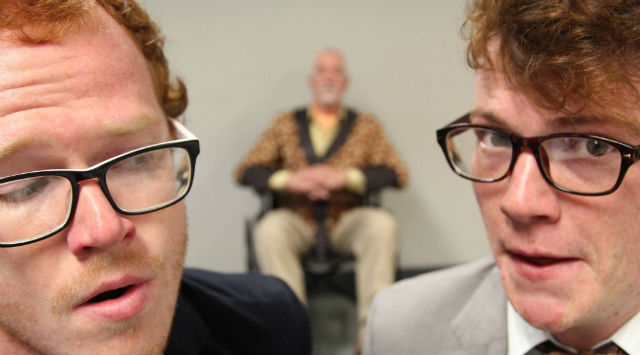
Playwright: Melita Rowston
Director: Melita Rowston
Cast: Josipa Draisma, Mara Knezevic, The Squeeze Box

Theatre review
Josipa Draisma’s show is composed of stories and songs from her mother’s childhood. Born in a Croatian village, Ljubičica – Wild Violet details her days as a young girl missing her absent father, and her subsequent journey to Australia in search of a better life. The stories are sentimental, and the songs are romantic. The bitter-sweet show, written and directed by Melita Rowston, strikes a thoughtful balance between biography and entertainment, with surprising variations in atmosphere that help hold our attention. The piece could benefit from a trim to speed things up slightly, but it is ultimately a delightful insight into one of our many migrant experiences, with a special poignancy that seems to arise uniquely from true stories.

Draisma’s performance is a passionate one, and we are swept away by the many beautiful Croatian songs she presents with gusto. Several humorous impressions of characters in her mother’s life are especially effective; the actor’s talent seems to be stronger with comedy, but the show is presented mostly in a serious tone. Mara Knezevic provides fine support as the secondary voice of the production. The women’s harmonies together are sublime, and a rare treat for our Anglocentric city. The handsome Gypsy jazz trio The Squeeze Box adds a sophistication and polish to the stage with their sensual and confident accompaniment on accordion, guitar and violin. Draisma’s monologues help the music communicate with our foreign ears, but it is the music that gives soul to the show.

Our nation is composed of a million exotic tales. Attempts to obliterate our diversity from public discourse occurs everyday, but the fact remains that a vast majority of lives on this land have roots in places far away. Ljubičica – Wild Violet tells of one migrant’s experience, but we should not look upon it as unique or foreign. It should be embraced as the true face of normal, with all its individual colours and melodies.

www.josipadraisma.com

Review: Our Father Who Art (Nearly) In Heaven (Seymour Centre)

ourfatherVenue: Seymour Centre (Chippendale NSW), Sep 15 – 19, 2015
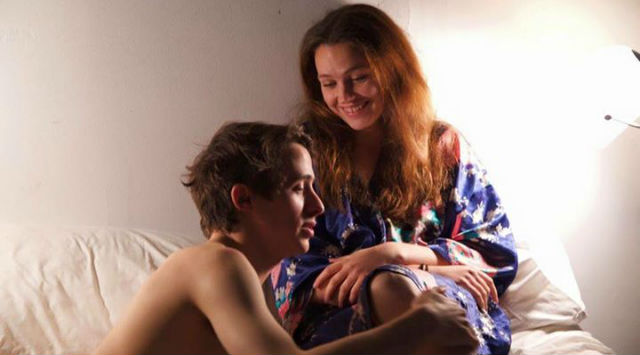
Playwright: N. Gregory Finger
Director: Stuart Owen
Cast: Richard Clark, Catherine Davies, Chris Heaslip, Daniel Hunter, Douglas Kent, Michelle Millgate, Nid Oswald, Stuart Owen, Kate Parker-Frost

Theatre review
N. Gregory Finger’s Our Father Who Art (Nearly) In Heaven takes the form of a classic farce, with fast paced, frivolous and wise-cracking scenes of amusement emerging one after another. The show is old-fashioned in ways, but many of its jokes are genuinely funny, often with a pointed flamboyance that prevents it from being a dowdy imitation of its forebears. Its characters are clearly defined ones who reference familiar archetypes that we are more than comfortable making fun of. These less than dignified personalities are placed in the predictable situation where they find the patriarch with one foot in the grave, all scrambling to secure a slice of the estate. Hilarity does ensue, quite surprisingly, proving that wit and flair can trump innovation under the right circumstances.

Direction of the piece by Stuart Owen is suitably speedy and madcap. The script’s many short sequences are deftly handled by Owen who uses stage space intelligently, although lighting design could be more responsive to his attempts at shifting our attention. Efforts at imbuing energy into every interchange gives the show an exuberance that keeps us engaged, although the wide range of abilities in the cast of nine is a major weakness that is hard to ignore. Some of the players are clearly inexperienced, and even though there is never a shortage of enthusiasm, the inaccuracy of their portrayals can be punishing. Owen saves the day however, with an excellent performance as Ben, one of the dying man’s son. He is charming and rambunctious, with perfect comic timing that elevates the show with his every appearance. Owen’s ability to present varying styles of humour, and his versatility at depicting his character’s temperamental transformations, is delightfully memorable. The very animated Chris Heaslip plays Damian, the other son, also to good effect, with an infectious confidence and a steadfast love for performance that shines through. Heaslip can be repetitive with his manic approach to the role, but his vigour is crucial to the delirious experience that the play delivers.

Fashion comes and goes, but when it comes to entertainment, we can always go back to the tried and tested. Our Father Who Art (Nearly) In Heaven is a new play that reminds us of special moments of laughter in movie and live theatres in years past, and its stylistic revival is remarkably welcome.

www.seymourcentre.com

Review: All About Medea (Montague Basement)

montagueVenue: Old 505 Theatre (Surry Hills NSW), Sep 15 – 19, 2015
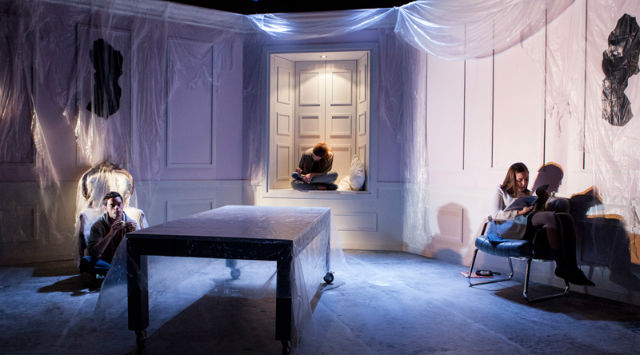
Playwright: Saro Lusty-Cavallari
Director: Saro Lusty-Cavallari
Cast: Christian Byers, Lulu Howes
Image by Patrick Morrow

Theatre review
In Saro Lusty-Cavallari’s All About Medea, the ancient Greek mythological characters of Medea and Jason are transformed into generic versions of modern day “girl and boy”. We know little about them, except for their time together; their initial meeting, their pregnancy and marriage, and the eventual devastation that befalls their story. The breakdown of this relationship is the main focus of the play, but it occurs with little explanation. Jason is painted as the villain, but his infidelity is too convenient and his transformation to apathy unconvincing. It might appear that Lusty-Cavallari’s eagerness to portray Medea’s innocence in this sad state of affairs has guided him to a narrative that is far too simplistic.

Medea is an intriguing and dynamic character, but her legend’s value in feminist terms is debatable. It is doubtless that she possesses immense strength, but the sacrifice of her children is made, ultimately to punish the man who abandons her. Her vengeful obsession gives her her power, but in All About Medea, her implied purpose is to cause suffering to Jason, and then to win him back by her delusional attempt to turn back time. Her happiness depends squarely on the manipulations she can effect on her husband’s life.

Nevertheless, the production is an engaging one, with short and sharp scenes that manage to surprise within its purposefully conventional plot structure. Performances by Christian Byers and Lulu Howes are uneven, but the team’s easy and confident chemistry is an outstanding feature. There are some refreshing and subversive approaches to the portrayal of sexuality that will leave an impression, including its liberal amount of nudity at a particularly conservative time in our civilisation. Also, the play provides insightful commentary on youth culture in Australia, and on the trend for the formation of families at a significantly younger age than had been the norm in recent decades.

When imagining Medea as a modern woman, one would hope that society can afford her greater freedom to establish a life in accordance with her desires, but with much smaller reliance on her husband and children. The concluding moment of All About Medea is a controversial one that pushes its audience to reach for their own vision of alternatives that we wish for our heroine, and luckily, that task is not a difficult one.

www.montaguebasement.com

Review: Minus One Sister (Stories Like These)

storiesliketheseVenue: SBW Stables Theatre (Kings Cross NSW), Sep 9 – Oct 3, 2015
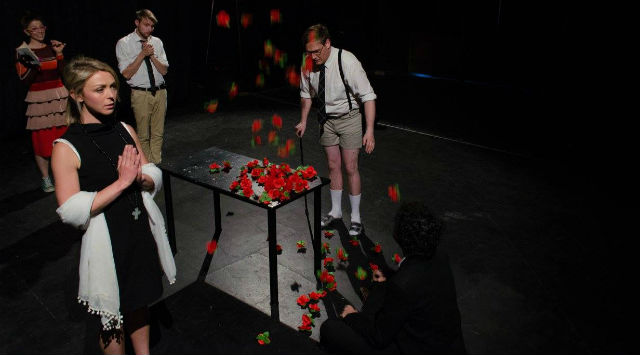
Playwright: Anna Barnes
Director: Luke Rogers
Cast: Kate Cheel, Lucy Heffernan, Liam Nunan, Contessa Treffone
Image by Brett Boardman

Theatre review
Unlike Abraham’s sacrifice of Isaac that did not eventuate, Agamemnon killed his daughter Iphegenia to appease the goddess Artemis, in order that the lives of many others could be saved. In Anna Barnes’ retelling of the ancient tale, place becomes Australia and the time is now. Her poetic language borrows from Greek theatrical traditions and combines it with the speech of today, for a fascinating and modern take on the dramatic form. Early passages are slow-moving, with repetitions that do not seem to serve a clear enough purpose, but when the blood-letting begins, Minus One Sister takes on the intense energy of a classic tragedy. Transposing the story to a contemporary context involves a hindrance that the play tends to evade. The chain of murders originates at a point of supernaturality, which in Barnes’ version for the twenty-first century, is not entirely reasonable or convincing. Even though her revenge narratives are powerful and full of intrigue, the first transgression occurs with insufficient persuasiveness, and without that foundation, emotional investment in the piece becomes challenging.

Luke Rogers’ direction brings to the stage a wild and decadent destructiveness that is often mesmerising, in the shape of a finely tuned drama that provides many exciting moments. Although the production does not deliver great poignancy, its sensuality resonates effectively, with beautifully crafted tension holding together a show that is full of fragility and volatility. Marvellously designed by the dynamic team of Georgia Hopkins (set and costumes), Sian James-Holland (lights) and Nate Edmondson (sound), we are transfixed and overcome by a sordid world populated by unimaginably dark thoughts and evil plans. The ruin of purity could perhaps be handled with a harsher brutality, but the family’s misery is depicted with a melancholic, almost gothic, sensibility that appeals to our taste for storytelling with an edge of morbidity.

The four young actors make a compelling cast, each with a distinctive presence, and an enthusiasm for agile atmospheric shifts that keeps the show from turning predictable. Contessa Treffone, as Chrysothemis and Clytemnestra, is especially powerful, and impressive with the range of temperaments that she is able to conjure up for her scenes. Tender, resolute or cruel, she is full of conviction and we are consistently drawn to her every surprising expression. Electra, the angry and vengeful sister, is played by Kate Cheel whose ability to portray chilling ruthlessness gives the play a gravity and a foreboding that are essential to its apocalyptic plot trajectory. Cheel’s climatic moment of devastation requires greater passion, but her work is memorable for its intellectual clarity and her flair for sombreness.

Minus One Sister is concerned with the disruption of family and innocence, but its message comes across mildly, in spite of its severe and horrific episodes. There are obvious efforts at making key personalities empathetic, but their experiences do not come close enough to our reality. Nevertheless, the production is a polished and sometimes spectacular one. There is a generous amount of talent on display, and every one of its fabulous facets welcomes our genuine and immediate admiration.

www.storieslikethese.com

Review: Tender Indifference‏ (Arrive Devise Repeat)

arrivedeviserepeatVenue: PACT Theatre (Erskineville NSW), Sep 8 – 12, 2015
Playwright: Arrive Devise Repeat (after Albert Camus)
Director: Alexis Hammerton, Victor Kalka
Cast: Joanne Coleman, Ryan Devlin, Alexis Hammerton, Patrick Howard, Victor Kalka, Troy Kent
Image by Jack Gorman

Theatre review
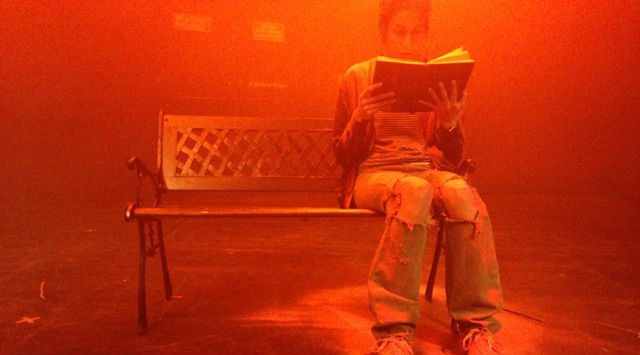
Through the absurd, we can examine what it is that gives life a sense of coherence. Albert Camus’ L’Étranger tells of a man who does not grieve his mother’s death. In Tender Indifference, he is distanced from the world, floating through scenarios almost like an apparition, never involving his emotions with all that occurs in the environment. His alienation is ubiquitous in the play, and we struggle to find a point of connection with his story. It brushes us off, pushes us away, and only the extremely persistent can afford attention for its entirety.

Direction of the work is adventurous but lacking in maturity. Scenes are created for superficial effect, without offering enough innovation to affect fascination, and with characters and narratives that fail to engross. The cast is well rehearsed, but quality of performance is uneven. Stand-out players include Alexis Hammerton whose presence is strongest in the group, and who displays a confidence that addresses our need to be entertained. Patrick Howard takes on the more daring parts, with a flamboyance that keeps us amused. His comedy in the piece is simple and coarse, but refreshing nonetheless, in an atmosphere that aims to be comprehensively dark.

It is challenging to find value in alienation if what follows is emptiness. A work of art can have the best intentions, but if it falters with its communication, the theatrical event represents a missed opportunity. The viewer gains little from Tender Indifference, but its participants probably are conversely enriched by its process. The nature of performance however, requires a kind of partnership between those on and off stage, and both must benefit from that shared experience, no matter what the message therein may be.

www.facebook.com/arrive.devise.repeat

Review: Unend‏ (Never Never Theatre Co)

neverneverVenue: PACT Theatre (Erskineville NSW), Sep 10 – 12, 2015
Playwright: Harry Black
Director: Jess Arthur
Cast: Emma Harvie, Eliza J Scott

Theatre review
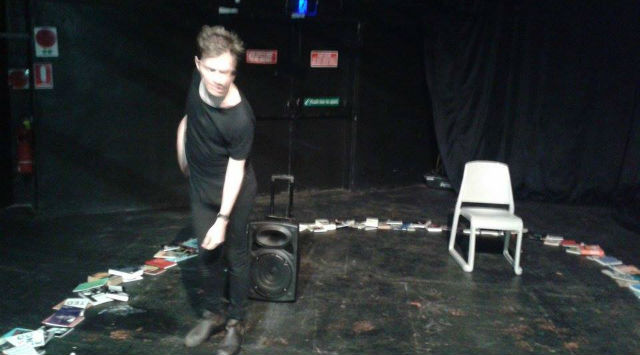
Abstraction in theatre can bring tremendous pleasure or great boredom, depending on the kinds of communication that do or do not happen between the stage and its audience. Unlike media such as paintings and sculpture, one is trapped in a seat, unable to simply walk away to a different work. Harry Black’s Unend is entirely abstract, and although elements of reality and points of reference are peppered through, it persists with its sublime incoherence, unafraid to cause alienation. The themes are broad, and characteristically open to interpretation. The work talks about the creative process, and the obstacles to progress. It might also be concerned with the relationship between artist and muse, and the self-jeopardising nature of humanity. Many things can be read into Black’s writing, and it is that vagueness that allows an appreciation of Unend to be a dynamic and involving one.

Adding to the sophistication of the script is Jess Arthur’s direction, which delights in manufacturing a sensual and ghostly beauty (ably materialised by Jeremy Allen’s set and lights, and Gayda de Mesa’s sound) to accompany the free-flowing ideas that occur in the text. Dialogue is relayed with impressive detail, and even though its ephemeral quality evades our instinctive need to rationalise every sentence, we never doubt the truth that is being explored on stage. A solid and palpable chemistry is established early on and stays for the entirety of this two-hander. Emma Harvie’s work is thorough and complex, with motivations that feel powerfully honest. The actor balances an inner authenticity with a robust physical portrayal, to create a character that encourages identification in spite of her many ambiguities. Similarly buoyant is Eliza J Scott’s depiction of an earthy angel, reverberating with conviction and enthusiasm. Her vibrant energy gives grounding to a show that can easily turn impenetrable, and the playfulness she introduces reflects a passion to entertain.

This production of Unend speaks differently to each viewer. It requires intellectual investment on our part, so it follows that passive consumption of the work may not gratify, but if one is able to connect with some of its assertions, a rewarding theatrical experience will emerge. The world is full of mystery, but its participants must find ways to understand their very existence. Like an author with a blank screen, meaning begins with that singular leap of faith.

www.facebook.com/nevernevertc

Review: Everything I Learned At NIDA‏ (Pact Centre For Emerging Artists)

kylewalmsleyVenue: PACT Theatre (Erskineville NSW), Sep 8 – 12, 2015
Playwright: Kyle Walmsley
Director: Kyle Walmsley
Cast: Kyle Walmsley

Theatre review
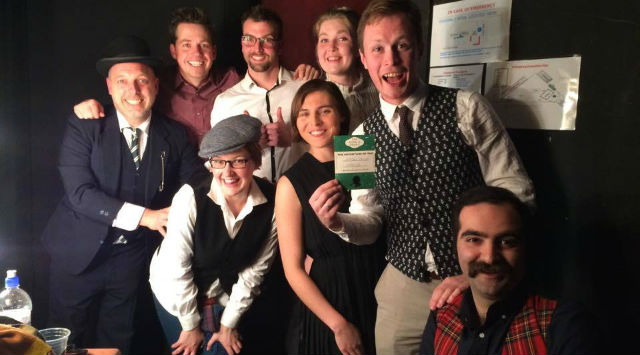
The beauty of youth cannot be divorced from its anxieties, frustrations and arrogance. Kyle Walmsley’s Everything I Learned At NIDA is about a young man’s experiences with acting teachers, and his struggles at balancing his ego with the acquisition of skills that promise fame and glory. It is also extremely funny and outstandingly detailed in its observations of clichés in that particular field of education. Walmsley performs the show not as a student, but as the condescending and self-absorbed instructor who treats his crowd as though we are desperate and ignorant parish at his church. His style ranges from very subtle to ridiculously bombastic, and the show’s comedic effectiveness keeps growing through the duration. It is a caustic tone that drives the production, and although the approach can seem juvenile, the material is substantial enough for rumination after the laughter subsides.

Walmsley’s abilities as comedian, writer and director are all impressively showcased. It is a highly idiosyncratic presentation, but with finely tuned nuances that engage us in often clever and unexpected ways. There is a bold and crass sensibility to his brand of humour, but Walmsley does not rely on cheap or vulgar laughs. His punchlines are genuinely hilarious. In many ways similar to a stand-up format, his very acute sensitivity to our responses and his hunger for attention, creates a level of engagement that is immediate and thrilling. His fondness of audience participation certainly keeps us on edge.

The work is cagey when it comes to the artist’s own feelings and beliefs about his time at NIDA, but a lot is revealed through his portrayal of the culture he had experienced. The tension between talent and effort, and the conundrum of being true to oneself while abandoning the ego, are questions about art education that come into focus. Institutions can provide answers, but the student has to choose whether to learn. Places and personalities hold valuable opportunities for development, and the individual must decide how best to make their dreams come true.

www.kylewalmsley.com

Review: The Game Is Afoot (The Factory Theatre)

gamesafootVenue: The Factory Theatre (Marrickville NSW), Sep 9 – 13, 2015
Cast: Bridie Connell, Kate Coates, William Erimya, Ange Lavoipierre, Patrick Magee, Luke Ryan, Jon Williams

Theatre review
Upon entering the venue, audience members are invited to fill in a form to suggest scenarios for the improvisational comedy that is about to unfold. The first performer Jon Williams appears and introduces himself as Dr. Watson, assistant to the world’s most famous fictional detective, Sherlock Holmes. He jokes charismatically about a few of our recommendations before settling on “The Adventure of the Mummy’s Curse”.

The show begins, and it soon becomes clear that a substantial amount of what is presented is based on material prepared prior, complete with light cues that denote scene transitions. The specificity of the night’s theme is only moderately relevant to the show’s plot, but our interest lies with its performers, who are mischievous and vibrant, each with a distinct and appealing sense of humour. Kate Coates’ extremely quirky approach leaves a lasting impression. Through various characters, she displays various sides to her unconventional style, all slightly odd, but all delightful. William Erimya is similarly likeable as Constantine Damascus, with the strongest sense of improvisational presence in the group, but his appearances are too brief and few. Patrick Magee (who plays Holmes) and Luke Ryan are dynamic performers who tend to be too controlling of the action on stage, but both turn exuberant whenever the vulnerability of chance is allowed to affect their performances.

The piece is short and sweet, with moments of precariousness keeping things alive and thrilling. Although its “scripted” portions are less impressive, they are nonetheless effective, and provide a context for improvisational play to take place. Sherlock’s adventures have entertained generations, and even though we know him for his genius, it is always the doubt and danger that he encounters that gets us hooked.

www.facebook.com/thegameisafootimpro

Review: Ride & Fourplay (Darlinghurst Theatre Company)

darlotheatreVenue: Eternity Playhouse (Darlinghurst NSW), Sep 4 – Oct 4, 2015
Playwright: Jane Bodie
Director: Anthony Skuse
Cast: Aaron Glenane, Tom O’Sullivan, Emma Palmer, Gabrielle Scawthorn
Image by Robert Catto

Theatre review
Ride & Fourplay are two plays by Jane Bodie about male-female relationships in Australia today. Bodie’s writing is obsessed with the mundanity and ordinariness of life, and where most writers choose to romanticise and dramatise those boy-meets-girl stories, these versions are in no rush to make their point. They linger and indulge in moments to let us observe human dynamics, and to analyse the inner workings of our emotions. As a result, Bodie’s are scripts that probably hold more value for performers than they do for audiences. Under Anthony Skuse’s direction, emphasis is placed squarely on how the cast brings life to the words. Other theatrics are kept to a minimum, and at a three hour running time, our stamina and patience for brooding reflections are thoroughly tested. Although its characters are not in any way exotic, we do not necessarily find it easy to relate to their many concerns. They are too much like us, and our own foibles fail to appear fascinating when portrayed in such a plain and direct manner.

All four actors are however, impressive. They take the opportunity to explore the painstaking naturalism, and achieve a great deal of authenticity with the material. They do their best to engage without compromising the style of the production, and even though results are ultimately underwhelming, there are many points of frisson that showcase their abilities. Tom O’Sullivan and Gabrielle Scawthorn display extraordinary emotional vulnerability that provide interesting dimensions to their narratives. Their portrayals are detailed studies of the subtle ways we think and act in response to the people around us who matter. Emma Palmer is captivating in Ride, with a broken heart and a lost soul. We recognise the ordeal she goes through, and admire the actor’s thoroughness at understanding her role’s psychology and all that is required to make Elizabeth complex and true. Aaron Glenane plays Jack, a slightly unusual man with a warm charm that helps us forgive his misdeeds. Glenane has the challenging task of turning what is frankly an outrageous circumstance into one that is endearing and uplifting. It is an unpleasant plot twist that he has to deliver, but he does so convincingly.

The production is free of frills, but ambience is beautifully manufactured by its team of designers. Alistair Wallace’s sound and Christopher Page’s lights rarely steal our attention but the mood in the theatre is consistently rich with sentimentality and a gentle electricity, derived from a very sensitive approach to the show’s quiet aesthetics. Hugh O’Connor’s big raked platform facilitates an intimacy that results from giving the actors no place to hide, doggedly exposing their every flinch and gesture. The vast space around them however, causes obvious problems with acoustics, even though the overall vista is a very satisfying one.

It is in our nature to love and be loved, but we do not need to think only in terms of the (in this case) girl-boy dynamic. Love takes many forms, yet we spend an inordinate amount of time and effort in the pursuit of things like romance, marriage, fidelity, and sex. We are drawn in by its terribly seductive power; it is a mysterious libido that scientists and philosophers have tried to explain for centuries, but it is a riddle that refuses to be solved. It is an uncontrollable force that goes round and round, and even though its chief motive is pleasure, its increasingly predictable manifestations can sometimes land us in scarce more than weariness.

www.darlinghursttheatre.com

Review: La Traviata (Belvoir St Theatre / Sisters Grimm)

Venue: Belvoir St Theatre (Surry Hills NSW), Aug 27 – Sep 20, 2015
Creators: Ash Flanders, Declan Greene
Director: Declan Greene
Cast: Ash Flanders, Emma Maye Gibson, Michael Lewis, Zindzi Okenyo
Images by Patrick Boland

Theatre review
Giuseppe Verdi’s opera La Traviata is about love and money. In Ash Flanders and Declan Greene’s radical re-imagination, a third theme of art is added to create a work of theatre that moves emphasis away from sentimental indulgence, to something that is altogether more contemporary, and intellectual. The exploration of ideas becomes an explicit one. Through five separate sequences, we are encouraged to think about our economy and consider the extent to which our lives are required to be commodified in order to survive, or at least to be able to find justification for our social existences.

Flanders and Greene are interested in the problems of thinking about art as product, and in their attempt to determine what it is that gives art a sense of value, a series of funny but thoughtful scenes are created. Each one a different genre, their presentation also addresses the clichés of art reflecting upon itself, and the difficulties in producing anything original, especially within this contemporary and introspective concept. The same operas are staged every year, yet artists are pressured to be innovative, and in our current political climate, the capitalistic ideal of “excellence” is applied to art in an attempt to understand and indeed, control how artists do their work. These absurdities are effectively, and entertainingly, encapsulated in Flanders and Greene’s show. Each section is executed with charm and sharp humour, but the transitions between them are not always managed with the same amount of flair. One also questions the straightforward division of scenes, which comes across too simple and convenient. The fourth sequence involves a question and answer format that aims to perform a sort of “reality” genre that accurately depicts the state of communications today, but the discussions demystify the abstractions that had come before, and the transformation of what was ephemerally beautiful into plainer terms is unfortunate. Perhaps a statement is made about the diminishment of romance and mystery in our lives, but it is an ironic and disappointing loss.

Greene’s talent with aesthetic and atmosphere is a drawcard of the production. Along with designers Marg Horwell (set and costumes), Matthew Marshall (lighting) and Steve Toulmin (music and sound), this overhaul of La Traviata is a consistently fascinating one, particularly at its more classically operatic moments. There is a strong desire for the work to connect, which often results in an appealing brashness that matches its quite madcap humour. It takes every opportunity to express itself with flamboyance and extravagance, but unlike the lavish operas at bigger venues, its sensibility is firmly anti-establishment. Quirky and queer, the world it creates is adventurous, dynamic and consistently idiosyncratic, with compelling symbols that interrogate our imagination and delight our eyes and ears. Performers Emma Maye Gibson and Michael Lewis leave an impression with their accomplished voices late in the piece, surprising us with morsels of operatic singing that we had all but given up expecting. It is a strong cast, each with solid presences and a confidence in their material that helps us appreciate the topics being dissected. In the absence of narrative, their cohesion in energy and comedy styles gives the show its compelling driving force.

Our hero Violetta chooses love over money at every stage of her life story. There is never a hint that money could ever mean more than her one true love. The sacrifices she makes for Alfredo eventually destroys her, and although we observe in sadness her tragic death, the profound meanings of integrity and truth emerge clearer than ever. Death pales in comparison to passion. When one is able to identify the greatest love of all, life is worth living.

www.belvoir.com.au | www.sistersgrimm.com.au