Review: Shivered (Mad March Hare Theatre Company)

madmarchVenue: PACT Theatre (Erskineville NSW), May 7 – 30, 2015
Playwright: Philip Ridley
Director: Claudia Barrie
Cast: Josh Anderson, Joseph Del Re, Rhonda Doyl, Libby Fleming, Andrew Johnston, Brendan Miles, Liam Nunan

Theatre review
Illusory contours “are perceived where there is no physical luminance, colour or texture difference,” referring to our ability to see things that are not actually there. In the case of Philip Ridley’s Shivered, we form narratives and create meanings from a series of scenes that do not immediately relate to each other, almost as though in a state of delusion. Our human nature is explored not only in the stories being told, but also in the way the audience is encouraged to makes sense of all that is put on stage. Looking at our propensity to interpret events in a way that never strays far from “cause and effect”, it is an examination of logic, which the play suggests is sometimes insufficient, and indeed, futile. Ridley’s work deals with many of the worst things in life, and makes us wonder if we can ever think of our darkest moments as inevitable, and the ethical implications of being embroiled in disappointments and disasters that we do not have direct control over.

These are big philosophical considerations, but individual scenes are melodramatic, almost operatic, in nature. Director Claudia Barrie invests heavily into that duality of intellect and emotion, with a fierce dedication to her stagecraft, and her work here is effective on both those levels. We get caught up in intense family drama not unlike those favoured by tabloid journalism, but the work is unrelenting in placing us at a conceptual distance so that we are always analysing the catastrophic consequences from an abstract perspective, in addition to experiencing the anguish that is being performed. The text is an edgy one, and Barrie takes great care in having Ridley’s words articulated with excellent clarity, but with all the taboo subjects involved, the production often feels tame in its expression when compared to the controversies being discussed.

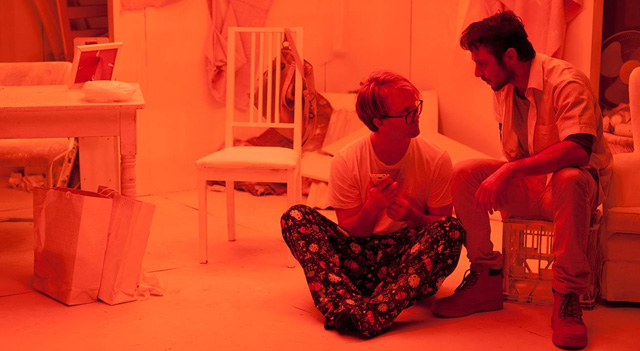
Light and set design by Benjamin Brockman delivers a sophisticated space that is able to portray abstraction or realism as required, sometimes simultaneously. It accommodates the haphazard timeline of the plot beautifully, and the starkness of his aesthetic matches the brutality of Ridley’s writing very well, but at over two hours, scene transitions become repetitive and predictable later in the piece. The economy of technology Brockman experiments with, though slightly restrictive, is a success story that signals a significant evolution in lighting for Sydney stages.

The cast is detailed and powerful. Every character in the show touches us, despite the outrageous contexts we find them in. Libby Fleming alternates between quite campy humour and palpable rawness, for an enthralling performance that is as fascinating as it is moving. Her impressive ability to portray depths of despair provides a solid core of empathy that keep us anxiously attentive. The connection Fleming establishes with her sons in the play is the crucial ingredient that secures the gravity for its various threads of turmoil. Also wonderfully engaging is Liam Nunan whose presentational style effervesces with extravagance, but with a surprisingly convincing focus that keeps us engaged. Josh Anderson plays the damaged young Ryan with quiet sensitivity, but the threatening intensity he produces teeters close to eruption, and we are fascinated by the complexity he consistently works into his role.

There are horrors around us, and they are by nature absurd, for if they were fathomable, they would also be preventable. Humanity necessitates that we make sense of things, but life often insists on defying logic to demonstrate its dominance over humans. Life is hard, but we are resilient. All the characters in Shivered struggle, and their persistence with survival means that in order to overcome, they have to figure things out, whether possible or not. No one in the play gives up, and that is the moral of the story.

www.madmarchtheatreco.com

Review: Educating Rita (Ensemble Theatre)

ensembleVenue: Ensemble Theatre (Kirribilli NSW), May 21 – Jun 28, 2015
Playwright: Willy Russell
Director: Mark Kilmurry
Cast: Catherine McGraffin, Mark Kilmurry
Image by Clare Hawley

Theatre review
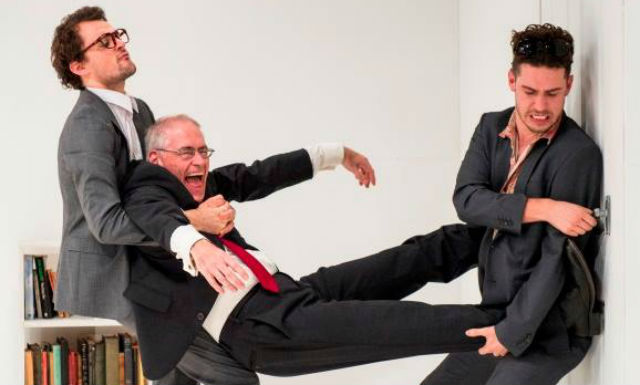
Willy Russell’s Educating Rita makes a case for aspirations, but not in capitalistic terms or in the form of the all too common middle-class pipe dream. He talks about the importance of culture and choice in all our lives, and suggests that the greatest value of life resides in the active pursuit of self-betterment. The very act of finding greater meanings and knowledge, is the key to enriching one’s existence. The effectiveness of Russell’s narrative relies on the obstructions that we face, especially repressive forces in our surrounds that hold us back and prevalent apathetic attitudes of our communities. Frank is an alcoholic, who is all but resigned from hopes, dreams and ambitions. He has removed the clock from his office wall and hides it along with the secret bottles of booze that occupy the back of bookshelves, so that he can deny the fact that time is passing him by, while he drinks his days away. Through his education of Rita, we observe all that Frank has to offer the world, but he does not acknowledge his own talents, and lets himself flounder and descend towards oblivion.

Direction of the work by Mark Kilmurry is beautifully executed, and very moving. Both characters are engaging and solidly established, so that we feel an instant familiarity that helps us become quickly invested in their stories. Kilmurry has created an environment where both actors collaborate intimately with little ego in the way of storytelling, and what they present often resonates with extraordinary authenticity, and we relate to the play from very personal and deep perspectives. As a performer, Kilmurry is lively and multifarious. His work is vivid, with remarkable clarity in intention and expression, but his character evolution as Frank is insufficiently dramatic in latter scenes for tensions to sustain beyond the show’s very exciting first half. Catherine McGraffin is an effervescent Rita, with the right variety and amount of charisma to let her role translate powerfully and emotionally. Through her heartfelt approach to the material at hand, we are able to examine our own lives, and to think about the parallels between Rita’s experiences and the choices we have made for ourselves. McGraffin’s intuitive and unrestrained style of performance takes hold of our empathy at will, but Rita’s progression later in the piece becomes unnecessarily subdued, resulting in the play seeming to lose steam over time.

Rita’s thirst for knowledge and her eagerness to lift the veil on secrets of the big, wide world is an inspiration, and Frank’s tragedy is a cautionary tale perhaps, of the increasingly parochial ways we live. Interaction with culture requires broad minds, but affluent societies are complacent. We spend time and energy chasing pleasures, but neglect the more challenging and meaningful parts of life. As we make our communities more wealthy and stable, interesting ideas become dangerous and we shut them out. It is difficult to be progressive in 2015 Australia, where fear is becoming a virtue, and we become increasingly protective against enemies real and imagined. The theatre might be a safe and sometimes conservative space where risky thoughts are contained, but at least they (theatre and risky thoughts) are both still thriving, and patrons can always leave with some degree of choice as to the freedoms they will allow themselves.

www.ensemble.com.au

Review: The School For Scandal (New Theatre)

newtheatreVenue: New Theatre (Newtown NSW), Apr 29 – May 30, 2015
Playwright: Richard Brinsley Sheridan
Director: David Burrowes
Cast: Tel Benjamin, Richard Cotter, Sasha Dyer, Peter Flett, Emma Harvie, Rhys Keir, Chantel Leseberg, Moreblessing Maturure, Lillian Silk, Marty O’Neill, Nick Rowe, Billie Scott, Eleanor Stankiewicz, Samantha Ward, Jacob Warner, Madeleine Withington
Photography © Matthias Engesser

Theatre review
Money makes the world go round, but it is also the root of all evil. No ordinary person is able to escape the claws of modern economy, and we all have to define our existences in, at least, partially monetary terms. The School For Scandal is about greed, and our ability to be blinded by wealth. Richard Brinsley Sheridan’s script is a wickedly funny one, and his outstanding wit has ensured that his story about deception and decadence is still well-regarded 238 years later.

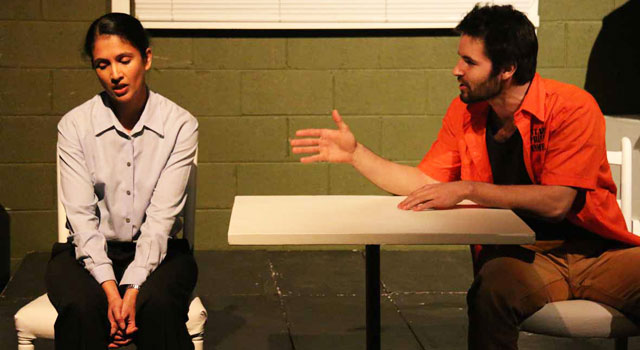
Direction by David Burrowes is ambitious and visually striking, with a very contemporary rendering that draws inspiration from the nouveau riche of Australia’s more brazen social set. The work is wildly energetic, and comedy is always being created around the text, but less attention is paid on the nuances of the writing. The resultant work is flamboyant and amusing, but the actual story is often a secondary aside. Plot is sacrificed for effect, and while the experience is not always satisfying, there certainly is a lot that is remarkable in terms of the generous amount of creativity being featured. Isabella Andronos’ set and costume designs are mischievous and refreshing, adding to the Sydney theatre landscape an exciting aesthetic that is reflective of a particular generational and cultural segment. The representation of dominant social tribes is important in the understanding of our selves, and Andronos’ contribution is an acute study of the way things are, for some of us, in the absolute now.

All performances in the show are strong. The cast is committed to Burrowes’ vision of creating something extravagant, and to keep us entertained. Rhys Keir as Charles Surface is a quirky combination of sex appeal and clownish tomfoolery. The actor’s larger than life presence is determined to captivate, and his comedy is quite irresistible. Keir’s sharp instincts and confident timing make his joyful showmanship a real pleasure to witness, and his ability to manufacture chemistry with colleagues demonstrates a natural flair of someone born for the stage. Equally gifted is Madeleine Withington who plays Lady Teazle, a shrewd young lady with an impetuous, ditzy edge. Withington’s style feels unfettered, but there is an exacting focus to her manoeuvres that help provide a clarity to a plot that often gets lost in the incessant pandemonium. There is noteworthy work by two of the show’s smallest roles, played by Emma Harvie and Moreblessing Maturure, but it must be said that there is more than a little discomfort in watching the only actors who are not of Caucasian appearance, take on the parts of servants.

Theatre can do many things, but an audience will always concentrate on story if one exists, and treat other elements as subordinate. This production of The School For Scandal has a fierce experimental spirit that resides in every corner, but although undeniably passionate in approach, much of the effort does not translate as anything more than embellishment. Sheridan’s work is solid, and it resists obfuscation. There is much to admire in the show, but what we crave is something deeper and more substantial, something quite the opposite of surface.

www.newtheatre.org.au

Review: Rhymes With Silence (Improvising Change)

rhymeswithviolenceVenue: 107 Projects (Redfern NSW), May 16 – 24, 2015
Playwrights: Alex Broun, Jane Cafarella, Joy Roberts, Kate Rotherham, Loueen Winters, Natalie Banach, Pete Malicki, Suzy Wilds, Vee Malnar
Directors: Chrissy deSilva, Garreth Cruikshank, Glen Pead, Glenn Groves, Kaye Lopez, Lisa Eismen, Margaret Barnaby, Natasha McDonald, Uma Kali Shakti, Vee Malnar, Wayne Mitchell
Cast: Alex Gercsov, Ali Aitken, Angela Gibson, Bendeguz Daniel Devenyi-Botos, Debbie Tilley, Dede Attipoe, Elisa Cristallo, Eliza St John, Garreth Cruickshank, James Belfrage, Joanna Kedziora, Karina Bracken, Katherine Richardson, Katrina Papadopoulos, Kerrie Roberts, Lisa Hanssens, Liz Harper, Liz Hovey, Lynda Leavers, Matt Cowey, Melissa Day, Rebecca Van-Hek, Ros Richards, Sarah North, Tommy Deckard, Veena Sudarshan
Image by John Tsioulos

Theatre review
The programme comprises 13 short plays, unified by the theme of domestic violence against women and girls. The event aims to bring attention to a problem that struggles to find articulation, due to the unthinkable horror of being attacked within the most intimate of relationships. The perpetrators we hear about in Rhymes With Silence are husbands, lovers, fathers. Men who are meant to be our protectors have failed to provide the shield from harm, and their betrayal of trust is of the most severe and devastating kind. Without a doubt, the stories being shared here are dark and often harrowing. There is certainly no shortage of gravitas in spite of the casual presentation style, which simply moves from one basic staging to another with minimal fuss.

Some of the pieces can feel too obvious in their approach, and there is a repetitiveness to the proceedings that makes the two-and-a-half hours slightly challenging, but the earnest and direct way the artists deal with their difficult subject matter is a refreshing experience. The level of honesty we encounter is intimidating, but we are compelled to learn more. The scenarios are shocking but never unbelievable. Joy Roberts’ Regret is one of the few opportunities to hear from a male character, and the revelations of a wolf in sheep’s clothing is enlightening and exasperating. Also intriguing is Good Men Do Bad Things by Suzy Wilds, which features two mothers-in-law in dialogue after the son is sent to prison for killing the other’s daughter. The extraordinary context is fertile ground for explosive interchanges, and the script explores the possibilities beautifully. All the complex emotions are authentic and we relate effortlessly to every plea and confrontation. More than other stories in the collection, this work holds the greatest promise for a very interesting full length iteration.

The inordinately large number of cast members is evidence of the growing concern we have for the issue at hand. Some of the performances might be of an amateur level, but all are committed and serious in attitude. More polished actors include Karina Bracken, who shines in Whirlpools by Alex Broun. Bracken’s style is still but powerful, and her quiet confidence allows us to connect with the works she puts into her character’s thought processes. The fluidity in her interpretation provides a humanity that feels familiar and genuine. Also impressive is Melissa Day in Tara Weldon and Vee Malnar’s I Just Want My Little Family, whose energetic depiction of the single, low-income mother of an infant is as heartbreaking as it is threatening. The actor has a precision that is entertaining to watch, and a unique earthiness that gives her play a strong and individual flavour.

Theatre gives voice to the silent, and the formation of narratives allows us not only to share our experiences, but also works as a vehicle for individual catharsis. The healing process for the most gravely damaged is one that lasts a lifetime, and the artistic journey is also one with no end. The most enduring work comes from a place of truth, and unpacking emotional injuries requires an interrogation into the human condition that has no tolerance for pretence or triviality. There is nothing good that can come out of domestic violence, but many of the worst things that occur can be transposed into a new creativity, so that life can be be reconsolidated along with the art forms being built.

www.improvisingchange.com/

Review: The Merchant Of Venice (Sport For Jove Theatre)

sportforjoveVenue: Seymour Centre (Chippendale NSW), May 22 – 30, 2015
Playwright: William Shakespeare
Director: Richard Cottrell
Cast: Darcy Brown, Michael Cullen, Pip Dracakis, Jonathan Elsom, Lucy Heffernan, Jason Kos, Erica Lovell, James Lugton, Lizzie Schebesta, Christopher Stalley, Damien Strouthos, Aaron Tsindos, John Turnbull
Image by Marnya Rothe

Theatre review
At the centre of Shakespeare’s The Merchant Of Venice is its anti-semitic depiction of the principal antagonist, Shylock, the Jewish moneylender. Productions today face the conundrum of having to adjust their interpretations to fit contemporary sensibilities, while maintaining a level of faithfulness to the author’s original. The script not only demeans Shylock as an individual, it often makes sweeping statements that can only be termed racist.

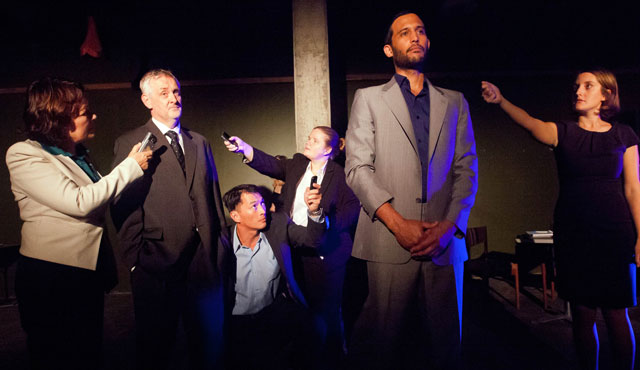
Richard Cottrell is clearly aware of the problem, as his direction of the work reflects the precariousness of bringing to stage a script that, although well-crafted, is painfully archaic in its representation of attitudes toward Jewish peoples. Cottrell’s show does not hide the outrageously vilifying lines of the text, but subverts them to reveal ugliness of those words. Content that is objectionable by today’s standards, is portrayed as such, so that the company declares its oppositional stance to what Shakespeare had intended. The production is set in pre-WWII, and it encourages us to view the Bard’s vilifications in a context that relates to the rise of Nazism. It is a sophisticated treatment of the material, but the play’s conclusion is preserved sufficiently, so that the story’s distasteful moral is kept intact. It is hard to deny what the work is about, and much as Cottrell is careful with the issue, the show leaves a very bad after-taste. Some are fond of questioning the interminable choice of reviving Shakespeare, but on this occasion, the question is undeniably about the decision to pick this title in particular.

A reason for any interest in Merchant could be that Shylock is among the most spectacularly audacious characters in the Shakespearean oeuvre. Performed by the magnetic John Turnbull, the role is colourful, unpredictable and spine-chillingly dangerous. Turnbull’s work is precise and calculated, but also full of panache and vigour. It is a very stylish performance that is fascinating to watch, and the actor’s ability to present both good and bad sides of his character is complex and quite beautiful. Another star of the production is designer Anna Gardiner, who has created a simple but effective Art Deco set, and a wardrobe of very handsome suits, for an elegant aesthetic that makes the unpleasant goings-on slightly more digestible.

The way we relate to Shakespeare in Australia today is peculiar. We like to think that being suspicious of authority is a crucial part of our identity, yet virtually all quarters readily accept the legitimacy of his genius. The gender bigotry in all his texts is conveniently swept under the carpet, and it appears that we are quite happy as well, to let sleeping dogs lie when it comes to issues of ethnicity and faith. The company has created an entertaining show, and all their individual talents are marvellously present, but we need to take a stronger stand for the things we believe to be true.

www.sportforjove.com.au

Review: Dead Time (Lace Balloon)

laceballoon1Venue: 107 Projects (Redfern NSW), May 20 – 29, 2015
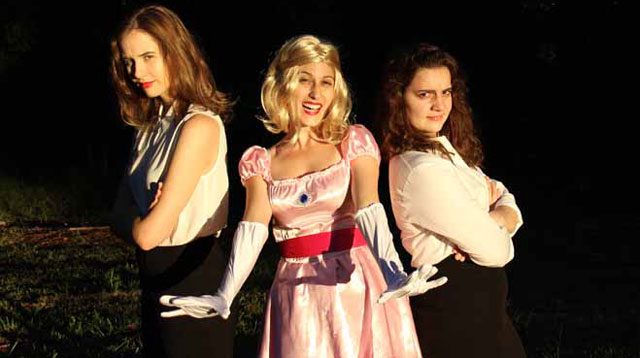
Playwright: Fleur Beaupert
Director: Fleur Beaupert
Cast: Paul Armstrong, Lara Lightfoot, Abi Rayment, Robert Rhode, Melissa Kathryn Rose, Eleni Schumacher, Barton Williams
Image by Phyllis Wong

Theatre review
Stories about the underdog hold a tenacious appeal. Fleur Beaupert’s Dead Time is based on the events surrounding Dr Mohamed Haneef’s arrest and subsequent release in 2007, at a time when the Australian government was placing threats of terrorism front and centre in the national consciousness. The post-9/11 era has allowed public life (including politics and media) to encroach upon individual liberties in the name of vigilance, and our collective paranoia is used to justify racist persecutions in place of sound legal processes. The script is partly verbatim, and it makes a conscious effort to depict events with accuracy. Consequently, moments of heightened drama are few, even though tension is effectively manufactured with relative consistency. Haneef’s ordeal is rightly portrayed as institutionalised exploitation, and the play’s purpose is to give voice to the oppressed. In the case of contemporary Australia, people of the Muslim faith are especially relevant to this discussion. Beaupert’s work as writer and director is not always elegant, but what she has created, is a compelling and stirring statement against our gradually increasing acceptance of injustice in the name of national security. It is a touchy subject, and the show elicits our emotional involvement effortlessly, and for many, its protestations are representative of how we feel about the world today, and the passion on display is reflective of our attitudes about the themes at hand.

Performances are uneven, but leading man Robert Rhode is entirely captivating. The actor’s presence and instincts are a real pleasure to witness, and his easy confidence allows us to empathise with his character at every point of his journey. His interpretation of innocence is authentic, and he builds just enough complexity into Haneef’s victimisation so that we identify intimately with his predicament and his fears. The production is a showcase for Rhode’s talent, which seems scarcely trained, but in its rawness, we observe a natural flair that emanates, and recognise in it, a fragility that makes the cruel mistreatment suffered by Haneef all the more upsetting.

Dead Time is not a polished work, but the clarity and importance of its message makes it a standout in a landscape of bourgeois concerns that characterises our lucky country. The land of the fair go has become delusional in its self identity, refusing to come to grips with its evolution into a Western power that has little capacity for compassion. We insist on seeing ourselves as earthy, sincere and wholesome. We think us better than our corrupt siblings of United States and Europe, but in fact our dealings in regional issues are shameful. Our eagerness to vilify, intimidate and abuse those in need is an extension of the way we have maltreated Aboriginal communities since 1788. Australia’s European history refuses to learn from its own mistakes, and we are now in the middle of a new cycle of violence that is heading towards a repeat performance of its very worst.

laceballoon.wordpress.com

Review: (Extra)ordinary, (Un)usual Episode III (The Monologue Project)

themonologueprojectVenue: New Theatre (Newtown NSW), May 13 – 27, 2015
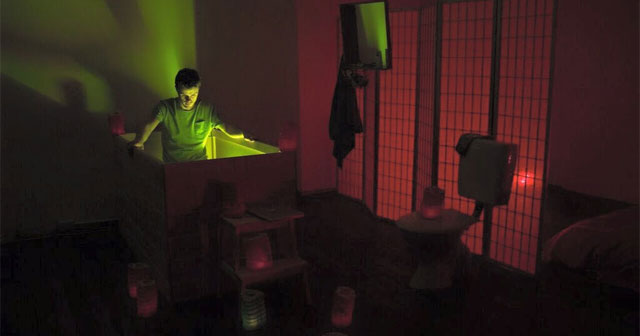
Playwright: Pete Malicki
Director: Pete Malicki
Cast: Debbie Neilson, Glenn Wanstall, Luke Reeves, Matt Friedman, Raechel Carlsen, Rosemary Ghazi, Tiffany Hoy, Yannick Lawry, Miss Suzie Q

Theatre review
The production comprises eight monologues, all written and directed by Pete Malicki. His writing is mainly concerned with the ordinariness of Australian lives, but he delves into fantastical inventions on occasion, to create stories that aim to entertain and amuse. Malicki finds the small and mundane parts of existence and places them in the spotlight. His characters all seem neurotic, as their solitude allows them to reveal their deepest idiosyncrasies. The programme is a light-hearted one, with little room for gloom or poignancy, but it does offer social observations through sarcastic jabs and slapstick comedy.

Malicki’s direction is not particularly versatile, but he ensures that each segment is energetic and vibrantly quirky. He has a knack for extracting confident and quite wild performances from his cast, all of whom appear to bubble with excitement when placed centre stage. Glenn Wanstall’s performance in That Time Harold Borgenstein Went Speed Dating And Got Taken Over By All Of The Greek Gods, is impressively athletic and irresistibly funny. The actor’s intuition is remarkably precise, and the level of conviction he displays is entirely captivating. The piece is somewhat pointless, but it serves as a secure platform for Wanstall to present some of the most outrageous and flamboyant spectacles one is likely to encounter.

Artists often need boundaries to instigate the creative flow, and in Malicki’s case, the short monologue format is a framework that he is clearly very comfortable in. His ability to find tension and humour within his preferred structure is well-honed, but like the faces in his cast, greater diversity is required. Presenting eight works together is an appealing idea, and as much as it is a showcase of one’s strengths, it is able also to unwittingly expose one’s weaknesses. Malicki may not speak universally, but he is certainly an expert in his chosen field.

www.monologues.com.au

Review: Decay (Eclective Productions)

eclectiveVenue: Old 505 Theatre (Surry Hills NSW), May 19 – 24, 2015
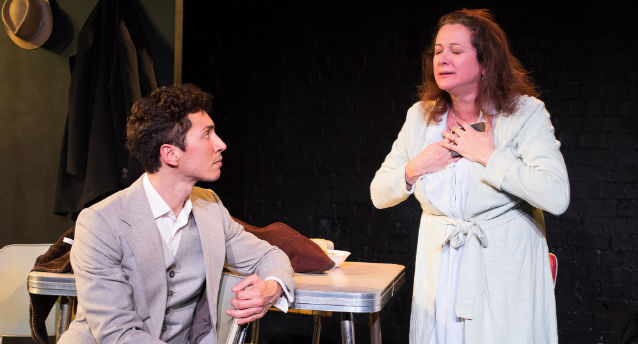
Playwright: Melissa Lee Speyer
Director: Rachel Chant
Cast: Joel Horwood, Rosie Lourde
Image by Pamela Amores

Theatre review
The act of storytelling can sometimes be more interesting than the actual content being shared. This is an important feature of theatrical experiences, because original stories are hard to come by, but finding new ways to relay old tales is what keeps us challenged and excited. Melissa Lee Speye’s Decay experiments with timelines and plot structures, using very little words, to create a work that depicts the human condition in a truthful but unusual light. The context involves death and disaster, but the production is not particularly moving. Instead, it connects with our curiosity and intellect for a seventy-minute journey that is more cerebral than visceral. It interacts with us by prompting a series of questions that may be about the characters on stage, but mostly, of the world in general.

Centre stage is Joel Horwood, who takes on the challenge of portraying extreme emotions but without the indulgence of a conventional narrative flow. The actor manufactures tension well, and it is clear to see that he invests heavily into the role’s emotional arc. Horwood is dynamic and focused, but the mysterious nature of the play prevents us from getting too caught up with the protagonist in all his drama. Direction by Rachel Chant gives the production a tautness in pace and atmosphere, and her commitment to an unconventional and sometimes surreal theatrical form is refreshing and quite courageous. Nate Edmondson’s sound design is cleverly imagined, and beautifully realised. Without many spoken lines to occupy our minds with, Edmondson’s contribution takes on greater importance than usual. More than any other element of the show, it is the sound that provides us with the information required to help make sense of the intriguing chaos that unfolds.

Toying with conventions is always risky, and in the case of Decay, it ticks many boxes but leaves us cold. It does not entertain sufficiently, but it satisfies in other ways. With a defined artistic vision, we are impressed by the way it bends rules and negotiates boundaries. There is good work to be admired herein, and like most daring ventures, it will unsettle a little, and at times, it might even disappoint, but we can be certain that what is served is not rehashed rubbish rolled in glitter or painting by numbers, which is very comforting indeed.

www.facebook.com/EclectiveProductions

Review: The House Of Ramon Iglesia (Mophead Productions / Red Line Productions)

mopheadVenue: Old Fitzroy Theatre (Woolloomooloo NSW), May 12 – Jun 6, 2015
Playwright: José Rivera
Director: Anthony Skuse
Cast: Christian Charisiou, Deborah Galanos, Nicholas Papademetriou, Ronny Jon Paul Mouawad, Stephen Multari, Eloise Snape, David Soncin
Image by Clare Hawley

Theatre review
No man is an island. We need to feel a sense of belonging, not only with other people, but also with places. José Rivera’s The House Of Ramon Iglesia investigates the significance of ancestry and roots, through the experience of Puerto Rican migrants in 1980 New York. The Iglesia family is dislocated in a space between San Juan and Holbrook, and its two generations illustrate the complexity of human attachment to a sense of country and home. In our modern times, populations are in constant flux, and the arbitrariness of borders is negotiated to allow for opportunities and interested parties to collide. The matter of nationalities is no longer a straightforward concept for many, and Rivera’s work questions its importance and indeed, its relevance to individual lives.

Anthony Skuse’s direction of the piece is a passionate rendering that delivers an engaging and energetic theatre, but our empathy for its characters only arrives several scenes after it begins. Early sequences feel distant, perhaps a result of their estranged temporal and geographic contexts. Its themes take time to connect, and even though many of its ideas can be universal, we only recognise them after some investment of imagination and patience, but when the show shifts into a gear of high drama, the play becomes a dynamic one, with performances that impress with emotional depth, and a compelling cast chemistry that creates an extraordinarily believable family unit.

When actors are focused and psychologically accurate, we surrender our trust and follow their journeys without hesitation. Deborah Galanos’ intensity gives her Dolores an admirable strength and although quite flamboyant in her approach, we do not question the authenticity of what is being presented. The melodrama Galanos introduces is delightfully entertaining, and allows the actor to expand her characterisation beyond the scripted lines, so that who we meet is greater than an archetypal maternal figure. In the smaller role of Charlie is David Soncin, whose memorable performance is coloured with a natural exuberance and an effortless magnetism. He plays his role with clear and simple intentions, but always discovers powerful subtleties that add surprising dimension to his work. Stephen Multari’s conviction and emotional sonority is a highlight in many scenes of confrontation and feuding. Javier’s inner world is central to the effectiveness of the play, and Multari’s depiction of it is beautifully resonant. The actor’s vigour and earnestness however, can seem out of place in the show’s more tranquil moments, and opportunities are missed that could allow the character to be more endearing, so that we care more about the lead and all the people surrounding him.

When we think of identity, we inevitably go to beliefs about bloodlines and origin. Place is important, but how we manufacture meaning between lived experience and geography is idiosyncratic and personal, yet collectivism is always a part of the discussion. We talk of nations of peoples, and we talk of partners and kins. Rivera’s story is about that conundrum, not just of how we use identity labels, but also how these labels intersect between friends and family. Each person can have an intimate and private understanding of their own space in the big scheme of things, but arbitration will always exist, even for the strongest.

www.oldfitztheatre.com | www.mophead.com.au

Review: The Dream (The Australian Ballet)

ausballetVenue: Sydney Opera House (Sydney NSW), Apr 29 – May 16, 2015
Choreographer: Frederick Ashton (reproduced by Francis Croese)
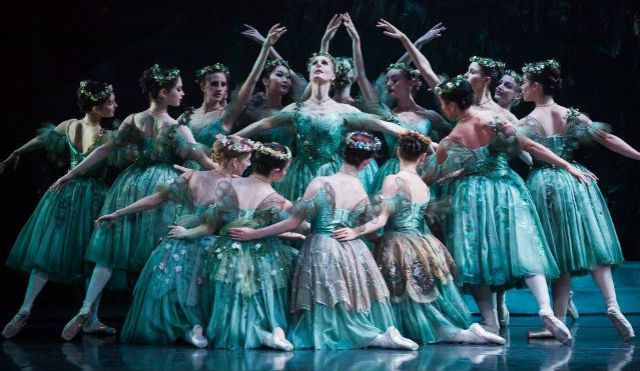
Image by Daniel Boud

Theatre review
Frederick Ashton’s adaptation of Shakespeare’s A Midsummer Night’s Dream distils all the magic and fantasy of Titania and Oberon’s Fairyland, and uses the ethereal qualities of ballet to provide lyrical expression. Familiar characters are vividly brought to life in dance form, with performers from The Australian Ballet investing in their roles surprising colour and fitting charm. Particularly engaging is Chengwu Guo as Puck, whose powerful and nuanced work is an effervescent highlight of the production.

Retaining original visual design elements for the programme is perhaps unexpectedly effective, especially for Ashton’s Symphonic Variations, which is presented as a prelude to The Dream. Sophie Fedorovitch’s delightful set and costumes for the 1946 piece looks as modern today as it must have seven decades ago, with a stunning backdrop reflective of the early emergence of post modern design at the end of the second World War and in the wake of the Art Deco movement. Ashton’s work features six dancers, all of whom remain on stage for its entire duration, and although adventurous and dynamic by nature, its presentation on this occasion seems too aloof, and energy levels too consistent, to portray the multi-dimensional qualities of its choreography.

The first (of three) Ashton works in the schedule is Monotones II, created in the mid 1960’s to the music of Erik Satie. With just three dancers and a disarming starkness to its visual language, the piece is absolutely unforgiving, and requires of its performers, the utmost in precision, focus and cohesion. When moments coalesce, we obtain the kind of sublime beauty that we seek of the art form, and as inevitable imperfections reveal themselves, one is reminded of the “wabi-sabi” philosophy from Japanese aesthetic principles. Absence makes the heart grow fonder, but it also gives greater meaning to the rest that are present. Perhaps more than any other discipline, ballet’s incessant pursuit of perfection is fundamental to its very meaning and existence. For those of us who deny the possibility of perfection (and hence probably not possess the traits required of professional dancers), it is that very act of pursuance that appeals. The spirit is always willing and pure in our best performers, so even if the body can never live up to our abstract fabrications, what we witness in good theatre is always that passionate belief in something greater, something borne of the brave hearts of our most courageous idealists.

www.australianballet.com.au