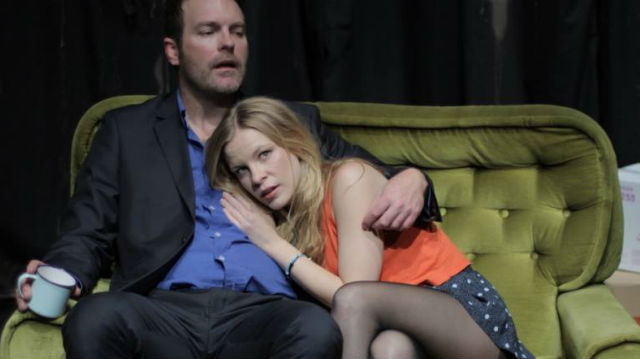
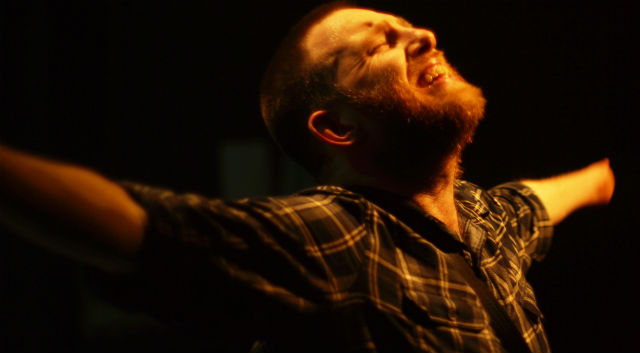
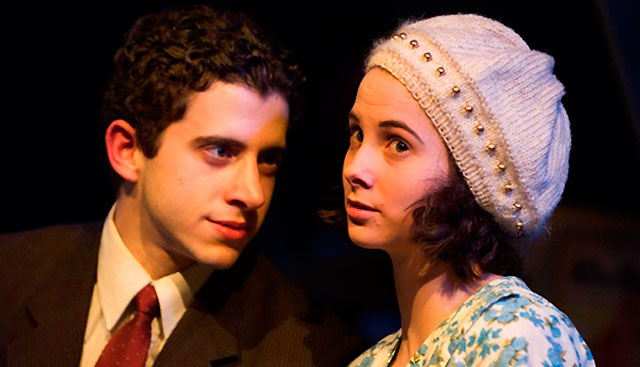
Review: Re: Memory (Suitcase Civilians / Old 505 Theatre)

old505Venue: Old 505 Theatre (Surry Hills NSW), Jun 16 – 21, 2015
Devised by: Jade Allen, Sepy Baghaei, Scott Parker
Director: Sepy Baghaei
Image by Liam O’Keefe

Theatre review
It is impossible to overstate the importance of memory and the extent to which it shapes our lives. Our beliefs, thoughts, behaviour and relationships rely on the flawless functioning of memory, and human experience rests upon its stability in order that everything can retain its meaning. Sepy Baghaei’s work attempts to excavate our capacity to remember, not to test its accuracy, but to provide a sense of the link between today and yesterday, by looking at how the way we are today is informed by and undivorceable from the past.

Attendees of her event are blindfolded for most of the hour. Our gaze is turned inward, and we are required to respond to voices and sounds by following prompts and answering questions. The show can be seen as two halves. One deals with how we relate to the physical world, and the other is entirely internal, where we examine personal emotions and psychology. The “facilitators” are confident and warm, so we allow ourselves to be vulnerable, and at the moment we surrender control, the experience becomes fascinating and deeply interesting.

What Baghaei creates is thoroughly adventurous and quite wonderful, but finding greater depth is a challenge. This piece of theatre relies on attendees to become its only cast members, and with only a short opportunity of interaction (instead of months of rehearsal), we can only reveal and see so much. It feels like skimming a surface, where the most affecting and profound are surely hidden. Leaving Re: Memory feels very satisfying, almost gleefully so, but the experience should continue. It is a show that should keep playing long after we have exited its stage, but it is easier to fall back into the daily grind and leave behind those early stages of introspection. Nevertheless, there is no knowing yet, if the mind does keep working its magic independent of our intentions, after Baghaei’s gentle interrogations.

www.venue505.com/theatre | www.facebook.com/suitcase.civilians

Review: Being Norwegian (Brevity Theatre)

brevityVenue: Old Fitzroy Theatre (Woolloomooloo NSW), Jun 9 – 21, 2015
Playwright: David Greig
Director: Alexander Butt
Cast: Katy Curtain, David Woodland
Image by Pollyanna Nowicki

Theatre review
Relationships are “challenging”, to say the least. Lisa and Sean are in Sean’s apartment, after having met in a pub not long before. Both are hopeful for something exciting, and greater than everyday life to happen. The strangers quickly reveal parts of their hidden selves to try to make the night a meaningful one, but they clash. Lisa is assertive, and Sean is disarmed. The awkwardness of creating new relationships is familiar to us all. We crave deep connections, but finding it can be difficult for most. David Greig’s Being Norwegian is a half-hour sojourn investigating that peculiar dynamic when two meet for the first time, both in search of the same but struggling to find commonality.

The natural discomfort of strange encounters is expressed well, under Alexander Butt’s direction. The eagerness for affirmation and the urgent need to gratify primal urges, libidinal and otherwise, are presented with accuracy and good humour. Butt finds pleasure in the cheekiness of the writing, and works at creating laughs through a varied range of methods, which prevents the show from the threat of becoming a one trick pony.

The characters are colourful and amusing, but they require greater complexity and texture for us to find identification, in order that their narratives and jokes may cut deeper. Katy Curtain and David Woodland are polished performers with strong presences that captivate with ease. Their comedic chemistry is confident, although the sexual energy they manufacture can feel hesitant. The work is often exaggerative in tone, but the players manage to portray a surprising authenticity in a way that only dedicated show folk can. Curtain and Woodland are at home on the stage, and we are delighted to be in their company.

www.oldfitztheatre.com | brevitytheatre.com.au

Review: Misterman (Siren Theatre Co / Red Line Productions)

sirenVenue: Old Fitzroy Theatre (Woolloomooloo NSW), Jun 9 – 27, 2015
Playwright: Enda Walsh
Director: Kate Gaul
Cast: Thomas Campbell
Image by Diana Popovska

Theatre review
Enda Walsh’s Misterman addresses the very contemporary concern of fundamentalist religiosity and its place within secular societies. The tension between the private and the public seems to be approaching its breaking point with our obsessive attention on terrorist activity around the globe. The principle of individuals keeping religious beliefs to themselves has always been precarious, and now we see every day, the violent trespass of those beliefs upon the lives of others. Thomas lives in a small Irish town, and like Travis in Martin Scorsese’s Taxi Driver, he becomes increasingly frustrated by the sins he perceives to be thriving around him. Further parallels can be drawn with other “outsiders” like Norman Bates and Carrie, and accordingly, Misterman appeals to our sentimental feelings for the underdog, as well as that undeniable dread arising from seeing the oppressed struggling at the end of their tether.

Beautifully imagined and directed by Kate Gaul, the intimacy of the venue is utilised to enhance the confrontational quality of the text. Her show is a bold one, with an abundance of creative devices invented to provide intrigue, interest and dimension to the monologue format. Subtleties of Walsh’s writing can sometimes be drowned out, but the intensity of what is being presented proves to be arresting, and we engage with the work thoroughly for its entirety. The holistic incorporation of design faculties demonstrates a sophistication that reflects a deep understanding of the nature and capacities of theatre. Set by Gaul, lights by Harley T A Kemp, music and sound by Nate Edmondson contribute much more than atmosphere. The way we understand the protagonist’s environment and his psychology happens through the accomplishments of this formidable design crew, and their exhaustive exploration of space and fantasy.

Thomas Campbell gives the performance of a lifetime in Misterman. His affinity with the material at hand, and the vast amount of depth he has discovered in the text and within himself, have conjured up a tremendous character, rich with life and poignancy. Campbell pushes hard and what he attains is glorious. The focus, energy, sensitivity and intuition he displays, is a rare gift to audiences that we must accept with a gratitude as sincere as what he puts on stage.

The play is about the way we break, and because we are all, to some extent, broken people, the work is accessible in spite of Thomas’ oddness and idiosyncrasies. The isolation and cruelty he experiences is exceptional but also familiar, and through his story, we can perhaps learn about understanding and compassion, which are necessary but often lacking. We don’t need much to survive, but the basic things don’t come easy.

www.oldfitztheatre.com | www.sirentheatreco.com

Review: Mother Courage And Her Children (Belvoir St Theatre)

Venue: Belvoir St Theatre (Surry Hills NSW), Jun 6 – Jul 26, 2015
Playwright: Bertolt Brecht (translated by Michael Gow)
Director: Eamon Flack
Cast: Paula Arundell, Tom Conroy, Lena Cruz, Michael McStay, Alex Menglet, Arky Michael, Robyn Nevin, Anthony Phelan, Richard Pyros, Hazem Shammas, Emele Ugavule
Images by Heidrun Lohr

Theatre review
It cannot be denied that war is a part of human nature. We can certainly imagine a world with no battles, but history proves that it is in fact inevitable, that people will fight, over religion, money and land, no matter how catastrophic the results may be. We are however, resilient and optimistic, with a survival instinct that does not easily give in to threats and destruction. Bertolt Brecht made the association between capitalism and war, in his seminal work Mother Courage And Her Children, first staged in 1941, during the Second World War. It is concerned with decisions made by individuals in the face of social upheaval at wartime, and characteristically, Brecht had aimed to encourage a specific way of thinking through the play.

Politics is always crucial to discussions and renderings of Brecht’s legacy. He made theatre with the intention of influencing his public about contemporary issues, and whenever productions are materialised today, it is still imperative that a political message is at the core of whatever transpires. Story and politics are intimately bound, and for Brecht’s writing, separation is quite impossible. Michael Gow’s translation provides a newer cadence to the text, but the poetic style of language requires a delivery that is sensitive to the ears of its audience, and the production fails to find a way to connect with our sensibilities and emotions.

Eamon Flack’s direction leaves us confused for long stretches of the show, with unclear depictions of characters, timelines and narratival details. There is a good focus on theatrics, which provides an energetic and colourful atmosphere, but we are never quite certain what the plot is trying to reveal. The iconic use of Brechtian placards are sorely missed in our periods of perplexity. The players engage confidently with each other, and their presences feel authentic, but not enough effort is put into including us in their interactions, which means that we are never able to gain insight into how and why things are happening. The experience is frustrating as events on stage often seem interesting, but we only have access to surfaces. The lack of depth in our understanding, coupled with an emotional detachment makes it increasingly challenging to pay attention as time passes. At 150 minutes, our commitment to participate as an engrossed crowd is thoroughly tested.

Performances in the piece have a quality of confidence and gravity that give the production an unmissable polish. The cast, including leading lady Robyn Nevin, seems well-rehearsed and they rise to the challenge of a show with complex transformations and frequent scene changes that can be wildly different in tone from one another. For the entire duration, the actors are in powerful command of all that happens on stage, even though they rarely create significant impact beyond that periphery. Speech is presented in a naturalistic manner, which is inappropriate for a script that is quite dense and florid. Without sufficient assistance with nuances of the writing, the lines seem to hurry past our consciousness, and characters begin to sound as though mumbling throughout their lives. Paula Arundell leaves the strongest impression in her role of Yvette, with an appealing vivacity that communicates more than the others. Arundell seems to project her portrayal with greater specificity to allow for audience connection, resulting in one of the more successful elements of the production.

It is an expertly designed show, with Benjamin Cisterne’s lights and Robert Cousins’ set creating both an air of theatrical fantasy and wartime grittiness via a surprising minimal approach. That sophistication extends to Stefan Gregory’s delightfully intricate music compositions, which are probably the greatest achievement of this staging. Evocative of Brecht and Kurt Weill’s distinctive style, each interlude provides an opportunity for us to focus on the state of minds and affairs being explored, as they find articulation at a more lyrical pace.

We are in the midst of war when our governments and communities identify explicit enemies, whether asylum seekers, terrorists, paedophiles or drug dealers. As individuals in democracies, our ethical standpoints must always be examined. Bad things happen when good people do nothing, or if they submit to dominant ideologies that are unconscionable. We live in a time where dubious ethics are encouraged, in the name of things like nationalism, or the profit motive. Capitalism can provide an excuse for unjust behaviour, and fabricate permission for bad things to happen. Mother Courage should not be a divisive personality, but on this occasion, we cannot be sure that the right message is consistently delivered, or whether the spectators can even be concerned at all for the moral of her story.

www.belvoir.com.au

Review: The Diary Of Anne Frank (New Theatre)

newtheatre1Venue: New Theatre (Newtown NSW), Jun 9 – Jul 11, 2015
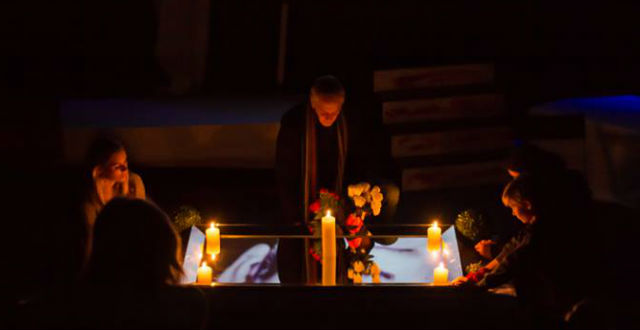
Playwrights: Frances Goodrich, Albert Hackett
Director: Sam Thomas
Cast: James Bean, Caroline Levien, Rowena McNicol, Jessie Miles, Jodine Muir, Martin Portus, Martin Searles, Geoff Sirmai, Justina Ward, David Wiernik
Photography © Matthias Engesser

Theatre review
Based on Anne Frank’s The Diary Of A Young Girl, this classic play by Frances Goodrich and Albert Hackett premiered 1955 in New York City. It is classic in structure and subject matter, with characters and a narrative that follows all the rules of conventional drama. Even though the work is based entirely on true events, the script is filled with elements that ensure a theatricality that writers of fiction can scarcely dream up. Anne Frank’s story is a significant part of our literary and social history, and although not particularly groundbreaking or trendy by today’s expectations, its resonances are intense and undeniable.

Direction by Sam Thomas is nuanced and sensitive, but also exuberantly dynamic. She has created a rare cohesiveness in a cast that is unified by a vision and tone that aims to tell Anne Frank’s story with clarity and a lot of heart. Thomas’ measured approach is quiet, and her hand is an invisible one. Front and centre are not the egos of artists, but the tragedy of WWII and a young girl’s experiences and understanding of it. All the cruelty and savagery of war, and the catastrophic debasement of Jewish peoples are presented powerfully, with a formidable tension that builds gently and gradually through accomplished design work from all aspects, most notably Heidi Brosnan’s lights and James Ackland’s sound. Costume by Famke Visser, and Allan Walpole’s set both contribute effective and elegant solutions to the expression of time and space, quickly drawing us into life in the now legendary attic in Amsterdam.

All 10 actors involved are perfectly cast, each with an individually memorable presence and all creating poignancy from different perspectives. The chemistry on stage is effortless but unmissable, and we never question the authenticity of their very close relationships. In the role of Anne is Justina Ward, who never quite looks thirteen years-old, but who has us firmly in the palm of her hand, delighting us with an animated personality and a precisely studied interpretation of Anne’s psychological and emotional evolution over the two years. Palpable, joyful and thoroughly adorable, Ward’s work as leading lady in The Diary Of Anne Frank is quite the revelation.

The problem with old stories is that we dismiss them as stale, forgetting what it is that makes them persevere. Sam Thomas and her team have well and truly dusted off every cobweb and revealed afresh, a tale of humanity and hope, that will touch even the hardest of hearts. The work moves us by appealing to our common benevolence, but is never overly sentimental. The characters are simply realistic and genuine, so we cannot see them as anything but our sisters and brothers. The memory of Anne lives on because our belief in justice never fades, and the need to uphold it in our societies never diminishes. The fallibility of human nature means that different groups are persecuted at different times, but there is also a determination in us all that want to do right, and it is to that spirit that this play speaks.

www.newtheatre.org.au

Review: Beyond The Neck (Emu Productions / Epicentre Theatre Company)

kstVenue: King Street Theatre (Newtown NSW), May 28 – Jun 13, 2015

Playwright: Tom Holloway
Director: Markus Weber
Cast: Dana Brierley, Jessica Hobden, David Ritchie, Brayden Sim
Image by Thomas Adams

Theatre review
Not a day goes by that we do not hear about terrorism. The fear of being attacked by enemies is reinforced by our government and media fervidly, but the truth of our experience shows that it is not external forces that have caused us greatest harm, but those within that we consider to be neighbours. The “Martin Place Siege” of just half a year ago shocked the entire nation, and brought back memories of the horrific “Port Arthur Massacre” of 1996, where 35 people were killed and 23 wounded. Tom Holloway’s Beyond The Neck is an expression of a deep grief that is inflicted upon a community after a catastrophe of that magnitude. The play’s intent is to heal, and to explore the nature of emotional and psychological trauma.

The four-actor cast performs most of the piece in individual monologues, with several moments of very brief interaction. Not all are well prepared, in fact some appear to be quite unready for the production, but Dana Brierley and Jessica Hobden work well to portray their characters with a degree of passion and accuracy. There is a misplaced flavour of melodrama to their intensity, but they help to bring variance to the energy on stage.

Music is played fairly loudly in the background for most of the duration, and is almost always a distraction. The mood it creates is often contrary to what the actors try to achieve, and the audience is prevented from connecting meaningfully with the stories being told. Set design seems unnecessarily busy and visually confusing, with levels and colours that do not contribute to the poignancy of the play.

The production is a timely one, considering our interest in the subject matter. Many of us have strong feelings about events of mass terror, and an opportunity for catharsis is undoubtedly welcome, but on this occasion there is insufficient clarity in the execution of its purpose. The issues we face are complex and a lot more is required for those things to begin to make sense.

www.kingstreettheatre.com.au | www.epicentretheatre.org.au/

Review: Love (Shut The Front Door)

shutthefrontdoorVenue: PACT Theatre (Erskineville NSW), June 2 – 6, 2015

Playwright: Patricia Cornelius
Director: Sean O’Riordan
Cast: Kimberly Kelly, Ebony Halliday, Ford Sarhan

Theatre review
Art can tackle any subject matter, but when it ventures into the more obscure parts of life, artist and viewer must both find a way of communication that achieves some level of resonance. Patricia Cornelius’ Love features three young drug addicts and their aimless existences. Nothing they experience is more than fleeting pleasures, except for the romantic love that they may, or may not, have found. Cornelius’ use of language is an interesting exploration into the speech of young Australians from the low rungs of life’s echelon. They speak plainly, but their words do not express depth of thought and emotion. The best they can manage is frustration, which is perhaps a true representation of youth. For many theatregoers, the characters’ lives are distant and objectionable, and although Sean O’Riordan’s direction translates plot lines well, we struggle to find any common ground. Horrible things happen but finding empathy is challenging.

The performers begin the piece with insufficient passion, but eventually find their feet to portray more genuine sentiments in the latter half. The play is about love and romance, but we are rarely able to be convinced of the relationships on stage, which unfortunately makes the production quite precarious at many points. Ford Sarhan provides good support as Lenny, with a natural comic ability that can deliver laughs at will. Even though the actor can feel like the show’s saving grace, his style of performance does not always find cohesion with his colleagues, and the tone he introduces, although delightful, seems to run contrary to intentions of the text. Leading ladies Kimberly Kelly and Ebony Halliday are less charming, but both manage to provide strong focus and poignancy at the end.

For some, the only thing worth living for are the relationships they foster. Those less fortunate might have nothing but a string of pointless moments interrupted only by emptiness. Creating a life with meaning does not come easy, but with education and age, enlightenment is always within reach for those of us in the developed world. Love asks us to think of the young and how we treat them. Our prejudices are put to test, but converting fundamental beliefs is a difficult task, and compassion proves not to come spontaneously in all cases.

www.facebook.com/shutthefrontdoortheatre

Review: Venus In Fur (Darlinghurst Theatre Company)

darlo1Venue: Eternity Playhouse (Darlinghurst NSW), May 29 – Jul 5, 2015
Playwright: David Ives
Director: Grace Barnes
Cast: Anna Houston, Gareth Reeves
Image by Helen White

Theatre review
The bedroom is not for thinking about politics, if sexual pleasures are to be had. This statement reveals the wealth of meanings that are embedded into our desires and the way we satisfy them. David Ives’ Venus In Fur is a brilliant exploration into the manifestations of our sexualities, and an examination of impulses that might run contrary to our intentions and the kinds of people we wish ourselves to be. The quality of autonomous irrepressibility of our sexual appetites often betray the public personae we convey to the world. Ives’ writing is supremely complex, but truthfully so. It is highly intellectual but never pretentious or overly academic. It is a rare articulation of the way our problematic sexual selves resist suppression and tempering, and it looks at the implications of those deeper meanings that our sex seem to express. Through a context of sado-masochism, the play investigates the chasm between private and social, how we are able, or unable, to understand our true selves, and the impact that sex can have on the rest of one’s life. Also, Venus In Fur is some of the wittiest and most outrageously entertaining theatre one can ever wish to experience.

Direction by Grace Barnes is completely masterful, with a firm grasp on all the script’s themes that constantly and unpredictably fluctuate, thus representing the inconvenient and devious ways human nature can manifest. Barnes’ work pays attention to the most minute of nuances, and turns them into poignant, sometimes formidable statements, but she also creates flamboyant sequences of theatricality that are nothing short of edge-of-your-seat stuff. There are loud political messages being said here, and there is a delicious assertiveness that accompanies them, even (or maybe, especially) if they do come into conflict with one another. When art wants to get at the truth of something, the results are often antagonistic, and in this case, the incessant exposure of our humanly contradictions is exciting and at times, rapturously so. It is an acknowledgement of all our strengths and weaknesses, and a celebration of our determined exertion to become better.

Anna Houston is magnificent as Vanda, an enigmatic character written so vast, she seems destined to embody all of womanhood. It is an impossible idea, but Houston’s work is boundlessly passionate and versatile, and she exceeds all requirements of the hugely demanding text. The actor is dynamic at every moment, always keeping us entertained with a bold comic sensibility, and challenging our mental capacities with a range of subtexts so acerbic and provocative, that we cannot help but be entranced. The wildness of her approach is informed by a powerful impetus that can be emotional, political, or libidinous, depending on what she wishes to portray. Houston is a captivating performer full of drama and depth, perfectly formed for this show, and the kind who can shine in any other role on any stage. Her colleague Gareth Reeves is less vibrant in the role of Thomas, but equally solid and compelling. Reeves’ depiction of sexism from a male perspective is honest and surprisingly delicate. The authenticity of his work is key to the show’s intellectual effectiveness. The presentation of sexism as convoluted and inextricable gives the production an immense feeling of texture and an impression of interminable layers that plays on our minds relentlessly. Reeves’ commitment and focus gives the show an air of confidence, which allows us to lose ourselves in the plot, and let the players take us on a ride of extremes.

Design elements are understated but necessarily so. Sound and lights contribute greatly to psychological dimensions that are always in play. Aside from a few thunderous roars and purposefully abrupt light changes, Sian James-Holland (lighting designer) and Jessica James-Moody (composer and sound designer) work quietly to add to tensions and atmosphere without drawing attention to themselves. Realistic costume design by Mel Page also serves plot and characters beautifully without too much embellishment, although some fetishistic leather items do seem to have an ebullient effect on some members of the audience.

Telling stories about the other, inevitably makes one an easy target for criticism. Men writing plays about the subjugation of women can never escape chastisement, but an artist stepping into a minefield provides opportunities to reflect on the worst and most rarely visited recesses of our being. David Ives’s perspectives are unique and refreshing in contemporary discourse on issues of gender and sex. It takes a lot of sophistication to get into discussions that flow erratically like experimental jazz music, but Venus In Fur‘s consistent resonances assure us of the validity of its many controversial ideas. There are few things more valuable in art than its analysis of repressed or forbidden subjects, especially when they address the fundamentals of all human life, like love, sex, and the struggle for who gets to be on top.

www.darlinghursttheatre.com

Review: This Boy’s In Love (Red Line Productions)

TBIL 1Venue: Old Fitzroy Theatre (Woolloomooloo NSW), May 26 – 31, 2015
Playwright: Adriano Cappelletta
Director: Johann Walraven
Cast: Adriano Cappelletta
Musical Director: Daryl Wallis

Theatre review
With any luck, Adriano Cappelletta’s This Boy’s In Love is going to be the last great play about gay life in Australia before same-sex marriage is made legal. Ado’s experiences and perspective as a gay man in Sydney are beautifully, and extremely honestly, documented in this one-man show reflecting life for thousands of individuals from a city in its final throes of inequality and bigotry. Ado is hungry for love like everyone else, but his desires face obstacles unique to metropolitan gay lives. Emerging from periods of oppression and persecution, Ado’s community suffers from dysfunctions, tragic and funny, many of which are fluently articulated in the work.

The piece breaks from conventional monologue formats to provide a theatre that is full of variety, in order to engage, entertain and indeed, educate. It takes frequent detours into sub-genres like cabaret, stand up and dance, and adopts hints of the absurd, so that its ninety minute duration never loses a moment of vibrancy. Director Johann Walraven identifies brilliantly, the many nuances in the text to create moments of surprising poignancy, and to make us fall for the protagonist more and more as the show progresses. As its performer, Cappelletta is generous in spirit, and unbelievably warm, striking a rapport with his crowd so solid, that we cannot help but be enthralled. The level of dynamism in his work is astounding at points, and we get completely absorbed into all his stories, silly or serious.

This Boy’s In Love is as perfect as a monologue can get for small theatre. The only way one can envision this production improved, is with greater investment and imagination into its design elements. Technical enhancements can make the show even stronger, but with what this team is able to assemble, it conveys its intentions perfectly. Love is hard to define. It can mean many different things, but starving anyone of it is cruel and certainly evil. For centuries, love has been defined in narrow heteronormative and religious forms, and in that process, many of us have suffered senselessly. Times have changed, and everyday, more are able to find emancipation. May the day come when sexual bigotry of all kinds in all places be eradicated.

www.oldfitztheatre.com

Review: Neighbourhood Watch (Illuminate Educate)

illuminateVenue: Bondi Pavilion Theatre (Bondi NSW), May 28 – Jun 6, 2015
Playwright: Lally Katz
Director: Susanna Dowling
Cast: Skyler Ellis, Gertraud Ingeborg, Steven Kreamer, Odile Le Clezio, Andrew Lindqvist, Linden Wilkinson, Anne Wilson

Theatre review
In Lally Katz’s Neighbourhood Watch, two women find a special but unexpected connection, and their bond helps them grow into individually stronger persons. The relationship gives their lives greater meaning, and their story is a reminder that the social aspects of our being is crucial to the way we evolve and progress. Ana and Catherine are women who have needed time to find independence and self-worth, and Katz’s writing makes no bones about using them to inspire girls and women. We often define ourselves in relation to men, in fiction as well as in reality, and the play brings focus to how we let that transpire, and then how we can find emancipation.

Direction of the work by Susanna Dowling is very polite. There is a quietness to the production that hinders the wit of the writing, but although energy levels are low, its main characters are vivid enough for the audience to absorb all that the show wishes to impart. The play is set in many different locations, so scene changes are tricky, and not always handled with enough elegance. Spacial use requires greater inventiveness to prevent distractions and plot confusion. On a brighter note, music is beautifully utilised in the production, with composer Steven Kreamer’s work adding a sophisticated and emotional dimension to proceedings

Lead characters are performed well, although disappointingly restrained. The story is about intimacy, but there is insufficient vivacity between personalities, and they never feel close enough for the narrative to become poignant. Ana is played by Gertraud Ingebors, whose dry sense of humour charms the audience. Her work is convincing and evocative, but the actor seems to have trouble finding enough chemistry with colleagues. Anne Wilson is a likeable Catherine, with a warm and tender presence, but some of her depictions of heavier emotions call for greater authenticity. Like Wilson, Skyler Ellis is immediately endearing in the supporting role of Ken. The part is considerably lightweight by comparison, but Ellis steps up to the mark at every opportunity to showcase his excellent comedic abilities.

The characters in the story connect, but the production feels distant. There is enough lucidity for everything to make sense, but in a cool and slightly detached manner. The shattered dreams and broken hearts in Neighbourhood Watch do not translate with great passion and urgency. Although we hear the message, we want also to understand how it feels to be the people on stage. The live medium of theatre bears the right circumstances to affect its captive audience like no other art form can, and it needs to use that rare and uniquely exciting proximity to spark something visceral, so that its revelations can impress even deeper.

www.illuminateeducate.com.au