Review: Not About Heroes (RGP Promotions )

notaboutheroesVenue: Sydney Opera House (Sydney NSW), Aug 4 – 6, 2014
Playwright: Stephen MacDonald
Director: Carla Moore
Cast: Roger Gimblett, Patrick Magee

Theatre review

Stephen MacDonald’s Not About Heroes does not glorify war. It pays reverence instead to art, friendship and the loss of young lives. Siegfried Sassoon and Wilfred Owen were English soldiers in the first World War, remembered for their poetry about horrors they had faced while serving their nation. MacDonald’s play uses their work and other historical fragments to create a narrative out of the men’s extraordinarily intense and close friendship, which was forged out of their shared passion for poetry and the trauma they had both sustained from being caught in the middle of battlefield devastation. In each other, they had found a partner in life and art who was able to provide support and trust, with a unique understanding of the other’s inner world. MacDonald’s depiction of the relationship is vivid, emotional and grand, sometimes even romantic, and although their intimacy never extends into a physical one in his rendering, we feel a depth between the two that is no different from those of most marriages or families.

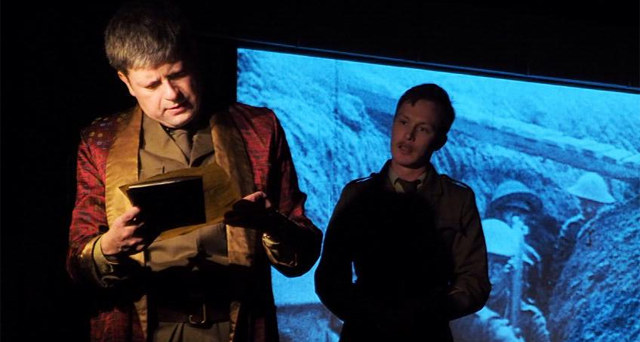
The play includes many passages by the poets, cleverly selected and contextualised to express the development of the characters, their relationship and their experience of the war. Direction by Carla Moore gives the production an emotional quality that is affecting and very sentimental. We feel the love between Sassoon and Owen, and even more so, we feel for all the soldiers who have been sent to war and the masses who have perished over the years. Moore is precise with what each scene is to achieve, and the show she creates is consistently clear in its plot trajectories and in the sentiments it wishes to convey at each juncture. Her control over performance ensures that the actors always provide appropriate nuances, with a noteworthy emphasis on speech that allows every powerful word to resonate for the audience. The use of a screen enhances the effect of sections in the play that delve into details of war, with sobering and impactful results.

Acting in the piece is sensitive and authentic. Both players show an enthusiasm for the material at hand, and their attachment to it is conveyed impressively. Roger Gimblett plays Sassoon with a stateliness that efficiently paints a picture of a man with stature and experience, giving credence to Owen’s very early admiration. Gimblett’s use of voice is outstanding, and diction is a crucial asset for a play that relies heavily on the legacy of poetry from the era. The boyish Owen is embodied by Patrick Magee who imbues beautiful spirit and purity to his work, and his understated vibrancy makes an important statement about wasted youth. Magee has excellent focus and presence that allows his role to remain in balance with his counterpart who performs with greater gravity.  Gimblett and Owen are lively entertainers who have successfully identified light and heavy sections of the play, and they deliver accordingly with performances that are captivating and surprisingly dynamic.

This review is written on the day that marks the centenary of the first World War. With the advent of information technology, we are more aware than ever, of atrocities that occur around the world, where communities are decimated in the name of religion, ethnicity, and honour. The “war to end all wars” has long been revealed to be a lie. Not About Heroes is a reminder that life in all forms is precious, and all sacrifice in war is tragic. Peace is hardest to achieve of all that is worthy, but the pursuit of it must never be surrendered.

www.sydneyoperahouse.com

Review: Four Places (Outhouse Theatre Co)

outhouseVenue: TAP Gallery (Darlinghurst NSW), Jul 29 – Aug 10, 2014
Writer: Joel Drake Johnson
Director: Nicholas Hope
Cast: Amanda Stephens Lee, Jeremy Waters, Kim Hillas, Briony Williams
Image by Richard Farland Photography

Theatre review
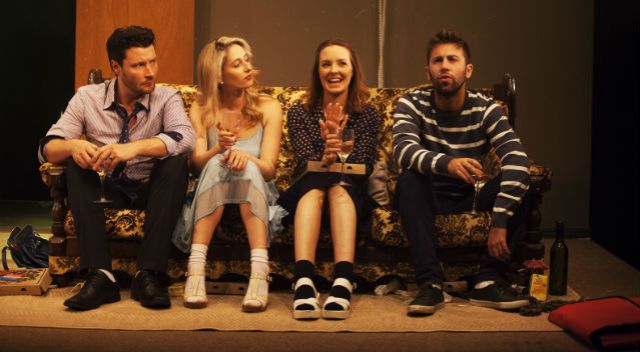
Death affects everyone, but how each of us relates to it differs. People have different expectations about how terminal illnesses should be managed, also which individuals are to be held responsible for the well-being of the dying, and certainly our ideas about the “afterlife” are informed by a wide range of religious and spiritual beliefs, or lack thereof. Joel Drake Johnson’s script explores life at its final stages for the average middle class person, with ruminations about fear, love, family and ideology.

Nicholas Hope’s direction keeps the action very subdued. Its naturalism is so thorough that we often feel like eavesdroppers, and the family that we observe are going about their business with as much mundanity as any other party of three at a casual dining spot. They talk about serious matters, but they rarely allow themselves to react too dramatically. These are not people very open with their feelings, even if one of them is a psychologist. They each have their own secrets, and they seem content with not knowing too much about each other’s. We see the mother character Peggy, wearing an over sized crucifix as a pendant, and we are tempted to associate the stifling oppressiveness with their religious and cultural background.

Peggy is played by Kim Hillas, who is believable and truthful in her interpretation of the script, but she is often too subtle. It is a rare joy to see a play with an older female as its lead character, but we long for greater drama and stronger comedy. The theatre can be a reflection of real life, but it is also storytelling, and we need embellishments in order that our empathy can be amplified and made meaningful. Amanda Stephens Lee has the unenviable task of playing Ellen, the psychologist daughter, who is also a widow still in mourning. The character is a repressed one, and the actor portrays effectively, the dread that is felt when having to manage one’s parents’ illnesses. The role of her brother is performed by Jeremy Waters, who does his best to prevent familial disquiet. We see the character’s frustrations even if his lines give little away, and Waters makes good use of each opportunity that allows some range to his work.

To connect with an audience, a story needs to locate its points of universality and give it emphasis. Four Places has themes that we can relate to, but its characters are not accessible to all. If we do not understand them, their problems become diminished. If they do not fascinate, we lose interest. Every person on a stage has a tale to share, but it is the artistic choices they make that determines how many will be able to hear them.

www.outhousetheatre.com

Review: Dark Voyager (Ensemble Theatre)

ensembleVenue: Ensemble Theatre (Kirribilli NSW), Jul 24 – Aug 30, 2014.
Playwright: John Misto
Director: Anna Crawford
Cast: Eric Beecroft, Jeanette Cronin, Belinda Giblin, Lizzie Mitchell, Kate Raison

Theatre review
More than a geographical location, Hollywood is a mystical place. It exists in the minds of many in different forms, whether glorified or castigated, and it refuses to be ignored. Its movies have touched people the world over, and its legends are at least as well known as the stories they tell. John Misto’s Dark Voyager is about screen sirens of the previous century. Their legacies may not appeal as widely as the personalities on today’s tabloids, but for those who share Misto’s fascination, the intensity of their resonances have not faded with time.

Dark Voyager is partly historical biography, and partly fiction. Through the famed rivalry between Bette Davis and Joan Crawford, Misto has created a new narrative that brings together figures from Hollywood, the U.S. government, the press and the mafia, culminating in the demise of the era’s biggest star, Marilyn Monroe. Misto’s script is funny, lively and bitchy, fashioned after the way Davis and Crawford had wished to be seen. There is a lot of glitz, glamour and joking frivolity, but the writing does surprise with moments of poignancy that emerge to offer some balance and gravitas. Monroe’s presence is artfully crafted so that the show’s comedy remains even while we witness her tragic destruction. It might be an exaggeration to label the work feminist, but it does offer its heroines strong multidimensional voices, and brings to the fore some of society’s appalling mistreatment of these women (and women in general). Ultimately, the greatest achievement of Misto’s writing is the profusion of one-liners that tickle, sting and amuse.

Anna Crawford’s intelligent direction brings out all that is joyous and dramatic in the script. Her acute awareness of character chemistry and hierarchy, as well as her flair for spacial usage, has created an enthralling production that addresses our appetite for laughter, nostalgia and flamboyant theatrics. Crawford’s efforts in creating characters that are larger than life, yet psychologically believable gives the play a seductive quality that combines a sense of idolatry with a less lofty verisimilitude. These women are both feared and revered.

The production is designed beautifully, with Anna Gardiner’s dazzling set converting the venue into a luxurious Californian home, with furniture and fixtures that are appropriate to the period and social status being explored. Everything looks exquisite, extravagant and fabulously expensive, and the greed of its inhabitants become palpable. Lighting by Matthew Marshall is suitably colourful and dynamic. Marshall’s work is sometimes sensitive and sometimes daring, but it is always just right. The tone of the show varies frequently, and the lights are crucial to these emotive and atmospheric transformations. It must also be noted that the show’s stage manager Erin Harvey does a beautiful job of keeping technical aspects flowing invisibly and without a hitch.

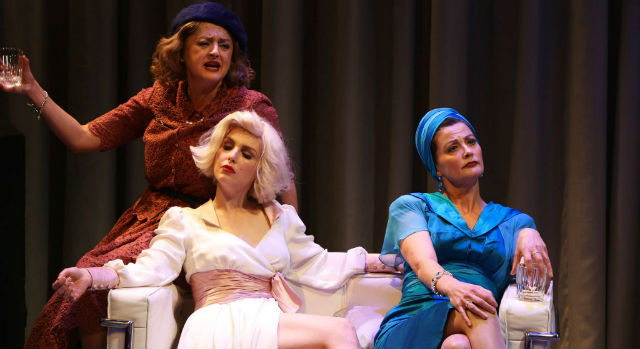
An undeniable strength of this production is the accuracy at which the movie stars are physically presented. Hair and makeup by Peggy Carter is not at all heavy handed, yet all three women are materialised before our eyes with astonishing results. It may be convenient to imagine that the actors are cast for their appearance, but their work dispels that notion comprehensively. Jeanette Cronin as Bette Davis is formidable. Her performance is spirited, hilarious and frightening. She is relied upon to move the plot in its various trajectories, and the clarity and precision at which she achieves this, shows impressive skill and intuition. The liveliness Cronin brings to this stage is combustible, and her light is blinding for the entire duration.

Joan Crawford is played by Kate Raison who leaves us dumbfounded by the incredible resemblance she manufactures. In fact, one is often caught gawking at Raison’s face, but her efforts are much more than surface. The Crawford we have here is complex and unexpectedly human. We catch intriguing glimpses into her private world that reveals interesting aspects to her sexuality, ambition, and cruelty that Raison portrays with delicious cunning. Marilyn Monroe is most remembered for her beauty and glamour, both qualities that Lizzie Mitchell replicates effortlessly, and her splendid comic timing wins over many of the audience’s biggest laughs. Imitations of Monroe’s idiosyncratic voice and gestures are commonplace, but Mitchell’s depiction of her hidden and inherent sadness is unexpected and completely heartbreaking. This is where the show finds its soul, and although fleeting and subtle, it adds a much needed dimension of gravity.

Also wonderful is Belinda Giblin who plays a despicable entertainment columnist. Giblin has the power required to represent a woman of great wealth and stature, as well as delightful comedy chops that keeps her endeared to her crowd. Eric Beecroft is visibly young, in appearance and experience, but has great conviction and exhibits a good understanding of the play’s humour. This is a captivating ensemble with polish and energy that has identified in a new script, all the opportunities for engaging storytelling and a whole lot of fun.

Misto’s writing has many references to homosexuality. In fact, it attributes the success of the film What Ever Happened To Baby Jane? (and therefore, ongoing stardom of Crawford and Davis) to its gay audience. Indeed, this is a production with distinct queer sensibilities. Its comedy and pathos comes out of the realm of gay culture, and its longstanding adoration for strong and independent women, but it is not only for gay audiences. Dark Voyager is simply a play that will speak to bold and liberated women everywhere, and of course, to the people who love them.

www.ensemble.com.au

Review: Mr Kolpert (Pantsguys)

pantsguysVenue: ATYP (Walsh Bay NSW), Jul 30 – Aug 16, 2014
Playwright: David Gieselmann (translated by David Tushingham)
Director: James Dalton
Cast: Paige Gardiner, Garth Holcombe, Claire Lovering, Tim Reuden, Edan Lacey, Tom Christophersen
Image by Gez Xavier Mansfield

Theatre review
The theatre is a gift that takes many forms. Audiences sit in darkness full of anticipation, waiting for a revelation, never really knowing what is to be unraveled. Mr Kolpert quickly assures us that it is intent on providing entertainment and laughter, but we discover very soon, that the comedy is black, and the true depth of its morbidity is not known until we arrive at the very end. Although tremendously funny, the comical work is first and foremost an absurdist one. We might be laughing from start to finish, but it is only the loudness of that reaction that disguises a greater response that occurs, in which our minds and emotions are constantly being confronted and agitated, and we struggle to grapple with our own morals and etiquette.

The play presents an omnibus of transgressions through a series of unrealistic and improbable events, and every taboo that the narrative comes into contact with, it aggressively explores, keeping us unnerved and outraged. The comedy that comes along with these controversies is the additional challenge it issues, and we are constantly questioning the appropriateness of our laughter. It makes us wonder if we are keeping polite company in this quite classy venue. Theatre is a communal event, and the meaning of laughter in this social setting can be contentious, but the extremity of what transpires on stage protects our civility. It is simply silly to assume that any of the crowd’s giggles or guffaws can ever be taken as a sign of condonation of the horrific behaviour we see. Still, we are never allowed to feel too at ease. The show is at its core, a disturbing one.

James Dalton’s marvelous direction is sensitive not only to our senses, but also to our hearts and minds. He keeps us fascinated by everything we see and hear, and always keeps our intellect and emotions engaged. His is a theatre that feels all encompassing, intensely engaging and completely stimulating. Dalton does not allow the audience to sit back and observe. This is art without passivity, and he wants us to be on tenterhooks.

Assisting with Dalton’s vision is an excellent team of designers, including composer Marty Jamieson, who also partners up with Alistair Wallace for sound design. Their work provides rich textural variation between scenes, and is often crucial in heightening the quality of irony in the work. Lighting by Benjamin Brockman establishes the production’s aesthetic sophistication, and is memorable for his adventurous sensibility. The extent to which Brockman pushes his creativity is impressive, especially with fairly limited facilities, but two moments of bloodshed are too darkly shadowed, causing momentary, and unintended ambiguity.

The team of actors is exuberant, animated and bold. The playfulness they inject is hugely important to the enjoyment of the piece, with Paige Gardiner’s performance as Edith Mole standing out as a delightful highlight. Gardiner’s remarkable and confident comic ability is showcased perfectly by a creation that is at once, wild yet nuanced. There is a fierce determination to connect, with both cast and viewers, that makes her work irresistible, and thoroughly hilarious. Equally compelling is Claire Lovering, who consistently surprises with a gentle presence that readily transforms into convincing madness. Lovering demonstrates greater subtlety than other cast members but never fails to attack with savagery at every appropriate opportunity. This production of Mr Kolpert features thoughtful and skilled entertainers who must all be commended for a brilliantly vibrant show.

David Gieselmann’s writing exposes the chaos of this thing we call life, and our ravenous need for making logic out of randomness. He talks about the abnormal that resides within everything that seems normal, thereby tempting us to dismantle our standards of morality and ethics, in order to realise their artifice, frailty and inconstancy. The show is about society’s hypocrisies as well as its requirement for order. It does not say that our lives are lies, but it does encourage us to think about the rules we live by, how they are manufactured and the svengalis who might be behind them all.

www.pantsguys.com

Review: Three Sisters (Sydney University Dramatic Society)

sudsVenue: University of Sydney Studio B (Camperdown NSW), Jul 30 – Aug 9, 2014
Director: Saro Lusty-Cavallari
Playwright: Anton Chekhov (translated by Laurence Senelick)
Cast: Alex Magowan, Chenier Moore, Henriette Tkalec, Honey Abbott, Maree Raad, Zach Beavon-Collin, Victoria Zerbst, Adam Waldman, Brendan Colnan, Ruby Brown, Christian Byers, Meg McLellan, Georgia Coverdale

Theatre review
It is hard to imagine a life without hopes and dreams. The nature of being human has so much to do with our expectations of tomorrow. Most of us think of our days on earth as a linear string of hours, and much as we are bound to the here and now, it is often the moments that follow, that propels us. Chekhov’s Three Sisters is about a dissatisfaction with the present, and the longing for a different time and place.

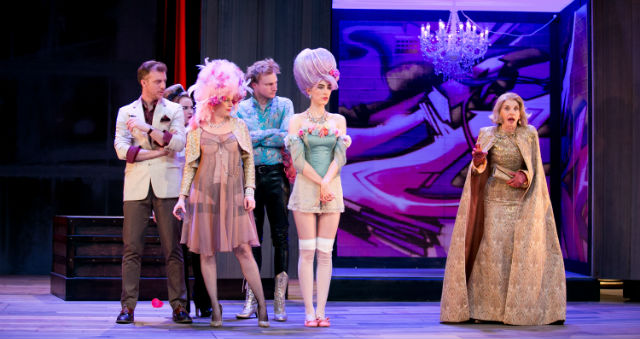
Saro Lusty-Cavallari’s direction finds beauty in the solemn and the bleak. He handles the optimism of Chekhov’s writing with youthful skepticism, and articulates it through a vision that is gentle and cool. Lusty-Cavallari enjoys conceptual expression, and the conflict between his fondness for abstraction and the writer’s realism creates interesting tensions. The narratives are not relayed with great clarity, but the manipulation of mood and atmosphere is successful. His cast is large, with thirteen young actors of varying abilities, but he features them well. There is no question that Lusty-Cavallari’s first production with professional performers will deliver impressive results; the amount of potential hastening to rupture is unmistakable.

Stronger performers of the group include Chenier Moore who plays a character more than twice his age. Moore’s connection with the script and with his cohorts feels genuine, which allows him to deliver the most engaging and polished characterisation in the production. Henriette Tkalec plays Irina with fascinating results. Tkalec is a young actor with excellent presence, and fierce conviction. Her focus gives energy to scenes, even when textual interpretations are slightly indistinct. There are several delightfully quirky characters in the production, but Adam Waldman’s is most memorable. The actor shows a real passion for the stage, and his enjoyment is infectious. The wide-eyed innocence of his portrayal is endearing, but Waldman’s work would benefit from an amplification of his character’s transformation as the plot develops.

The production is faithful to Chekhov’s artistic legacy. There are no great subversions or unnecessary deconstructions, but the manufacturing of realism is never easy. Training and skill is required of all collaborative elements in order for something that looks like daily life can become effective theatre. This production is not lacking in spirit and diligence, but its participants need more time, which they fortunately have in abundance.

www.sudsusyd.com

Review: Tartuffe (Bell Shakespeare)

bellshakespeareVenue: Sydney Opera House (Sydney NSW), Jul 26 – Aug 23, 2014
Playwright: Justin Fleming (after Molière)
Director: Peter Evans
Cast: Leon Ford, Sean O’Shea, Helen Dallimore, Geraldine Hakewill, Kate Mulvany, Charlie Garber, Tom Hobbs, Jennifer Hagan, Robert Jago, Russell Smith, Scott Witt
Images by Lisa Tomasetti

Theatre review (originally published at Auditorium Magazine)

Stories that stand the test of time contain truths that resonate across generations. They bear a universality that seems to derive from the very essence of being human, and a good retelling of those tales will always reveal to us, the nature of our being, and perhaps more importantly, the morals we should live by, however we choose to respond. Tartuffe has a central theme that does not age. Our relationship with religion as individuals and as collectives come into scathing scrutiny, and the way this resonance persists is a potent indication of the concerns we live with, and sadly, how little some things evolve. Molière’s play is now 350 years old, and what was controversial then, can still be used for contentious discussion today.

Justin Fleming’s exciting new script shows great talent and flair. It is an adaptation that feels updated and immediate, yet it preserves a classic sensibility, most notably through his use of rhymes. The original featured rhyming couplets, and Fleming’s decision not to deviate too far from it is felicitous, especially with new rhyme structures that are more varied and surprising. The play’s religious complexion is faithfully retained, but Fleming’s writing reconditions its gender dynamics to reflect modern day conventions. From this perspective, it is pleasing to observe the diminishment of sexism, even if religion’s place in the world seems to have obstinately endured over these centuries. By far the most drastic flourish is found in the overhauled ending of the piece. The change is a brave one, but its effectiveness is debatable. While it displays a quirky humour that can fit quite well with the style of Molière, the production falters at this point of “supernaturality”, not quite able to execute a vision with sufficient aplomb.

The venue is a large one, with a stage size that is challenging for any play featuring only a handful of performers in each scene. Director Peter Evans’ emphasis on authenticity in dialogue delivery is admirable, but memorable moments of the production come from performances that are more about flamboyance than nuance, and the frequently realistic level of interpretation seems to waste not just the vastness of the auditorium, but also the wildness of Molière’s concepts. As a result, performers like Scott Witt who have a greater command of physical capacities capture more of our attention (Witt also serves as Movement Director). Theatre is as much about space as it is about words. There are texts difficult to master, and likewise, there are stages that are harder to conquer. Not all characters are externalised enough, whether due to ability or creative choices, and the comedy is consequently uneven. Leon Ford as Tartuffe is neither majestic nor repulsive. The actor does have a captivating presence, but the role calls for more extravagant malevolence and a certain enigma that is never achieved. The play provides for his entrance tremendous build-up, but when he finally materialises, the Tartuffe we see does not live up to our imagined personality who is more evil and animated, and definitely less attractive.

The script is outlandish and titillating, always with an air of controversy, but what Evans puts on stage is safe by comparison. There is irreverence in content but not in its form. Bell Shakespeare is a professional theatre company doing theatre properly, and their Tartuffe is charming and polished. Expectations of a more anarchic rendering may be unrealistic, but Molière’s themes evoke heresy and inspire mischief, and without some quality of impoliteness, the play is reduced to something quite frivolous. There is social significance to this story, and due attention needs to be placed on its relevance to the community it plays for. We are after all, in the age of the Mad Monk (one of our Prime Minister’s nicknames), and we have political leaders who advocate the replacement of secular social workers in schools with chaplains. There is clearly fertile ground that can be penetrated, in order that a stronger social criticism can be made from taking on this platform.

The character of Orgon is played by Sean O’Shea, who becomes increasingly delightful as the hysteria escalates. Like many of the cast, his early scenes seem oddly subdued, but greater exuberance appears further into the piece. O’Shea has a playfulness that connects well with his audience, and establishes a good level of believability as both the master of the house and the fool. However, the mockery out of Orgon is not made strongly enough. It can be argued that the gravity of the play lies in Orgon and his mother’s irrational trust in Tartuffe, and the devastating effects that follow. The pertinence of their blind faith cannot be understated, and not giving it greater prominence seems to be missing the point altogether.

Stand out performances include Kate Mulvany’s Dorine, who is easily the most colourful and confident on stage. Mulvany’s remarkable wit is clearly a highlight, and her enthusiasm for creating theatrical magic out of every sentence is a marvel to watch. Charlier Garber’s comedy style is an excellent match for the frenetic energy of Molière’s crazed world. Garber capitalises on his extraordinary lankiness and idiosyncratic hairstyle, manufacturing an almost cartoonish character that never fails to amuse.

Also commendable are the production’s visual design aspects, especially Anna Cordingley’s work on costumes and sets. The script self-consciously mentions “Dolce, Galliano and McQueen”, indicating the family’s affluence and interest in style, and Cordingley certainly manages to impress upon us, a world of some extravagance and luxury, including an unforgettably exquisite costume for Madame Pernelle. Over-sized set pieces add a sense of wonder, and help with segmenting and shrinking stage spaces, but the unruly wheels on a very dominant chesterfield sofa need to be tamed to prevent its repeated, unintended and distracting slipping and sliding.

Bell Shakespeare’s Tartuffe is an entertaining work with committed performances and slick production values. Its level of professionalism is exceptional in an artistic landscape that tends to reserve our biggest talents for commercial musical theatre, and for productions overseas. Great stories however, are not only about entertainment and refinement. They are defined by the depth at which they move us, and as Molière’s immortality has shown, it is always the moral of the story that truly counts.

www.bellshakespeare.com.au

Review: A View Of Concrete (G.bod Theatre)

gbodtheatreVenue: King Street Theatre (Newtown NSW), Jul 22 – Aug 2, 2014
Playwright: Gareth Ellis
Director: Peter Mountford
Cast: Taryn Brine, Tim Dashwood, Matt Longman, Rebecca Martin

Theatre review
There is a side to life and human nature that is dangerous and destructive. Many of us are fortunate enough not to have to dwell too deeply, physically and mentally, inside those spaces of terror. They are on the periphery and we battle constantly and unconsciously to keep them at bay, to protect ourselves from those dark sides, believing the unthinkable to be too unbearable for our fragile and feeble existences. In A View Of Concrete, Gareth Ellis writes about that darkness, featuring four characters each with quirks so offbeat and intense, that one might prefer to term them obsessions. Their shared experiences through illicit drug use proffer a view into their compulsive indulgences, and into our own fears about impulses we might secretly harbour and repress. Ellis’ script is an energetic one, with interesting personalities that are outrageous yet realistic.

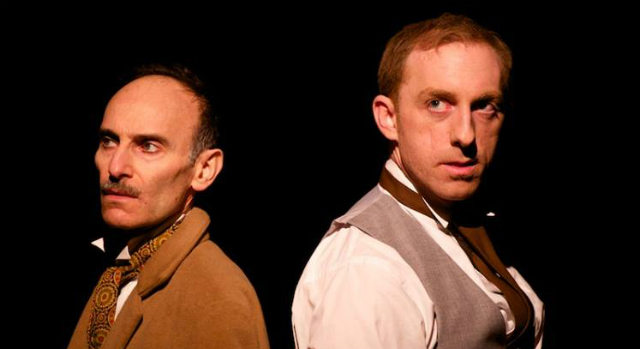
Peter Mountford’s direction of the piece introduces considerable dynamism to the stage. There is a prominent choreographic aspect to his work that aims to engage us visually, which also demands of his cast, a level of exertion to keep energies high and sustained. Actor Tim Dashwood’s proficiency with the work’s physical requirements sets him apart, delivering a performance that combines seamlessly, speech with movement, for a theatrical form that is delightfully poetic. The fluency Dashwood displays with his actorly capacities is richly entertaining and impressive.

Also captivating is Taryn Brine, brimming with sensitivity in the role of Billie. Brine’s presence is raw and palpable like an open wound, contributing effectively to the production’s aura of decrepitude. Rebecca Martin plays the treble notes in the group, using her naturally vibrant demeanour to provide volume and power to the show. Matt Longman is subdued by comparison, but like others in the cast, he is genuine on stage and the focus and commitment to his part is clear to see.

This is a team keen on experimentation, and their creative approach to performance has conceived a show that is surprising and fresh. It does not make strong emotional connections, but it is thought-provoking nonetheless. The play is rigorous in its efforts at originality, but it feels distant, even clinical at times. A View Of Concrete reveals some of modern life’s difficulties, and shows us the insidious pain that exists. Its concepts are seductive, but the form it takes is slightly alienating. We want to feel the tragedy that we see before our eyes, but that indulgence is kept elusive.

www.facebook.com/Gbodtheatre

Review: Sherlock Holmes: The Final Adventure (The Genesian Theatre)

genesianVenue: The Genesian Theatre (Sydney NSW), Jul 5 – Aug 9, 2014
Playwright: Steven Dietz (based on the original by William Gillette and Arthur Conan Doyle)
Director: Michael Heming
Cast: John Willis-Richards, John Grinston, Emma Medbury, Mark Nagle, Marty O’Neill, Tom Atkins, Rebecca Piplica, Marley Erueti

Theatre review
Steven Dietz’s 2006 adaptation has elements of intrigue, suspense, comedy, and like many retellings of iconic literary figures, ample amounts of self-references. It obviously holds greater appeal for fans of Sherlock Holmes, but it is by no means a prerequisite for its enjoyment. The plot is classically structured, with characters that are distinctly conceived, and vibrant dialogue designed to entertain and amuse.

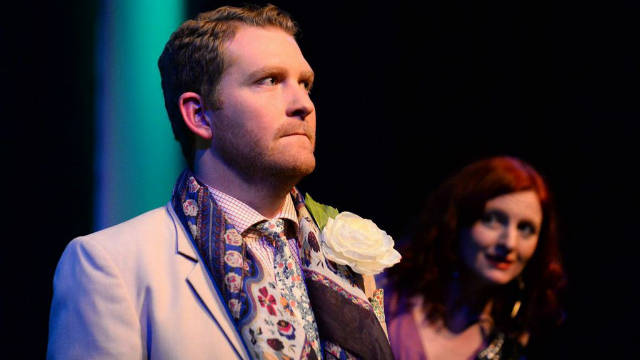
John Willis-Richards plays Holmes with delightful campness. He brings an effervescence that keeps the show lively, but needs to take time with wordier speeches so that nuances are uncovered more clearly. Mark Nagle’s very animated King of Bohemia is completely farcical. He delivers many laughs with his confident physicality and ridiculous German accent. Marley Erueti plays several supporting roles, but has an excellent stage presence that consistently draws our attention. He performs his parts with excellent conviction and wins us over with his charisma.

The production features a great deal of hammy acting, which can be a problem when it gets in the way of the narrative. There are moments when posturing and vocal embellishment obfuscate the story, leading to some degree of confusion. Design elements help immensely, especially Martin Searles’ work for costumes. His pieces contribute efficiently to the portrayals of personalities, time and space, and his attention to detail gives the production a very polished look. Searles’ talent with colour, shape and texture is a star of the show.

This might be touted as Holmes’ “final adventure”, but his popularity will no doubt see him reincarnated, revived and re-adapted for all manner of media. The mystery and wit that characterises his stories can be found in some of this production, and enthusiasts in particular would find it a charming effort.

www.genesiantheatre.com.au

Review: An Ideal Husband (Epicentre Theatre Company)

epicentreVenue: Zenith Theatre (Chatswood NSW), Jul 18 – 26, 2014
Playwright: Oscar Wilde
Director: Christine Firkin
Cast: Jessica-Belle Keogh, Emily Pollard, Hannah Pembroke, Sandy Velini, Emily McGowan, Kelly Rae Olander, James Belfrage, Benjamin Vickers, Pam Ennor, Andre Cougle

Theatre review
Politics and corruption propel the plot in An Ideal Husband. The concept of a person facing consequences from misdeeds, and the possibility of turning over a new leaf, are also discussed. The analysis of these subjects however, are not the most appealing feature of Oscar Wilde’s work. What we want is his wit. The strength of his work lies in the characters he creates, and more importantly, the way in which they communicate. Director Christine Firkin seeks to enliven much of the humour in Wilde’s text. There is a clear commitment to comedy in this production, and when scenes are effective, they are quite magical. Interpretations of Wilde’s writing rely heavily on performance. A director is not an acting coach, and it is obvious here that Firkin too, banks on the aptitude and intellectual maturity of her cast, to deliver the play’s sophisticated and challenging farce.

Benjamin Vickers’ star sparkles in the production. The role of Viscount Goring demands a balance of frivolity and acumen, which Vickers executes beautifully. He has an assured focus that reveals itself through a performance that is precise and considered, while also feeling unrestrained and alive. The playfulness he brings to the stage is thoroughly charming, and adds a crucial element of dynamism to community theatre that can often be overly serious and staid.

Lady Chiltern is played by Jessica-Belle Keogh, whose interpretations of Wilde’s words are consistently rich and vivid. Keogh is at first sight an excessively youthful Gertrude, but she proves herself to be believable and compelling. The actor does however, have a tendency to use her laughter as a device to improve comic timing when lines are sparse, which can detract from the authenticity of her characterisation. Emily Pollard is a suitably devious Mrs Cheveley. She has a keen sense for comedy, and is skillful at creating stage chemistry. Pollard has the vivacity that her role requires, but her body language can be fidgety at times, which comes across as being slightly lacking in confidence.

Firkin’s direction ensures that the show is tight, and its story is told with clarity. She keeps the performance at an energetic level by creating movement, especially during long passages of conversations. It is not a lavish production of great polish, but it is accomplished on many fronts. Idealism is a value we can all appreciate, but perfection is always elusive. It is the journey that moves us closer to it that counts, especially in making art.

www.epicentretheatre.org.au

Review: Phaedra (Lies, Lies And Propaganda)

liesliesVenue: TAP Gallery (Surry Hills NSW), Jul 17 – 26, 2014
Playwright: Euripides (based on Hippolytus)
Director: Michael Dean
Cast: Danielle Baynes, Melissa Brownlow, Sinead Curry, Cheyne Fynn, Richard Hilliar, Katrina Rautenberg, Nathaniel Scotcher, Jennifer White
Image by Sasha Cohen

Theatre review
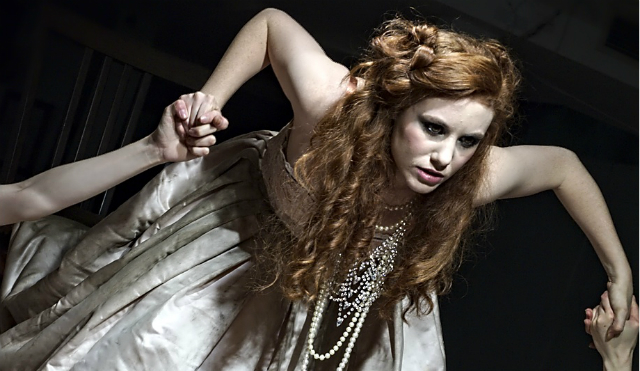
The art of making theatre requires the consideration of space and time. It needs to set itself apart from literature and recorded media like film and music. The audience’s immersive experience is not parenthetical or supplementary, it is central to the appreciation of a work. Michael Dean’s Phaedra uses space and bodies not only to tell stories, but also to enthrall, delight and fascinate our senses. By extensively exploring the possibilities of holding a captive audience, it does what no other art form can. Along with Catherine Steele’s design and Christopher Page’s lighting, we find ourselves inside a blood-soaked painting that is at once romantic and abhorrent. The four fabulous actors who make up the chorus are relentless in acknowledging our gaze, and the seductive power they wield, pulls us further into a world where tears are shed, blood is let and everyone loses their mind.

Phaedra’s story is about desire, its origins, its moralities, and its effects. She falls in love with her stepson, and all hell breaks loose. Phaedra struggles with her thoughts and emotions, and we examine the meanings of our own relationships with love and sex. The production’s director is part of the action, positioned behind two turntables, underscoring performances with old vinyl records that he distorts and scratches. The soundtrack is often discordant, attempting to place distance between us and the characters. We see Euripides’ universe, but we are also reminded of our realities; the two are pitched playfully against each other.

Danielle Baynes as Phaedra, exemplifies sensuality and beauty. She portrays longing and pain with a quiet authenticity, and executes stage directions elegantly. Baynes’ voice and physicality are disciplined and the actor is eminently watchable, but the show wants more intensity from her. Drama is the order of the day, and there is no limit to how much ostentation an actor can bring to the role. Hipploytus is played by the equally beautiful Richard Hilliar, whose presence almost overwhelms the tiny venue. The feminist subversion of his role gives him much to play with, and his choices are shrewd. His lines are flamboyant and powerful, but also primitive and offensive by today’s conventions. The need to be restrained in delivery is appropriate, and Hilliar finds a good balance, constantly shifting between subtlety and theatricality. Theseus is performed with strong emotional commitment by Katrina Rautenberg. It is interesting that her interpretation of the role does not obviously deviate from its inherent masculinity. There seems a missed opportunity for greater commentary on gender, but Rautenberg playing things straight displays effectively, her impressive focus and precision.

The queer aesthetic extends beyond the casting of Theseus. It informs many of the production’s creative decisions and the result is something that feels original and daring. Dean’s show is memorable and exciting, and adds to our cultural landscape, a voice that is not sufficiently represented. It espouses a different way of doing things, one that is thoughtful, spirited, and full of flair. It is irreverent and mischievous, but also dark and heavy. It is why we need the theatre.

www.liesliesandpropaganda.com