Siberian Hot Toddy (Siberian Hot Tododians)

toddyVenue: Bondi Pavilion Theatre (Bondi NSW), Jul 24-25
Playwright: Cait Harris with cast improvisations
Director: Cait Harris
Actors: Cait Harris, Libby Ahearn, Mark Sutton, Tiffany Hulm

Theatre review
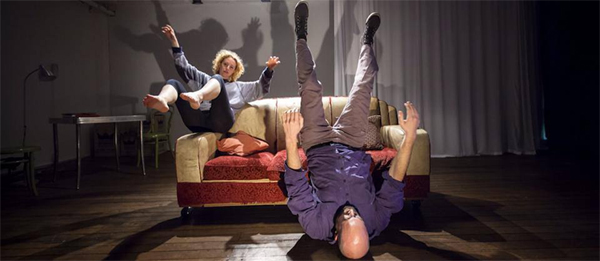
A small group of funny performers, presumably friends, come together to make people laugh. This might sound like the simplest of propositions, but not only has Cait Harris been able to have her crew commit to this project with minimal resources and get it included in the Bondi Feast festival programme, they have devised a modern absurdist comedy that is truly hilarious. It only takes a minute or two before the audience recognises the group’s style of humour, and laughter starts. Ranging from ticklish giggles to raucous guffaws, every moment of this hour-long play is met with laughter. The cast’s ability to impart their daring and mindless silliness like an infectious laughter is an unusual talent. This is probably the first time a crowd finds the curling of a rodent’s tail to create a disguise for a pig, to be so side-splittingly amusing.

Mark Sutton plays three characters, all with a casual but riveting sense of fun. Along with cast member Tiffany Hulm, the “Siberian-accented” speech is well utilised if slightly politically incorrect. The female performers all present variations of “the bimbo” with glee; it must be noted that both genders are portrayed with equal stupidity. Harris plays American Bondi girl Toosh (Fanny’s best friend) who is delightfully frivolous and also charming in her innocence. Her sense of timing creates the biggest laughs, and it is her unique sense of humour that takes this crazy little show into a space where laughter conquers indiscriminately.
www.pozible.com/project/27102

The Hansard Monologues (Seymour Centre)

hansardVenue: York Theatre, Seymour Centre (Sydney NSW), Jul 23, 26 & 27
Playwright (Verbatim): Katie Pollock, Paul Daley
Director: Tim Jones
Actors: Camilla Ah Kin, Tony Llewellyn-Jones, David Roberts

Theatre review
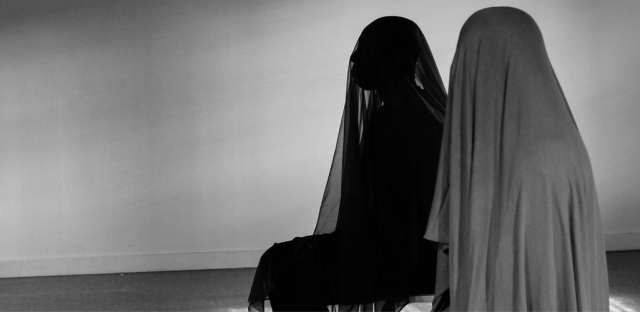
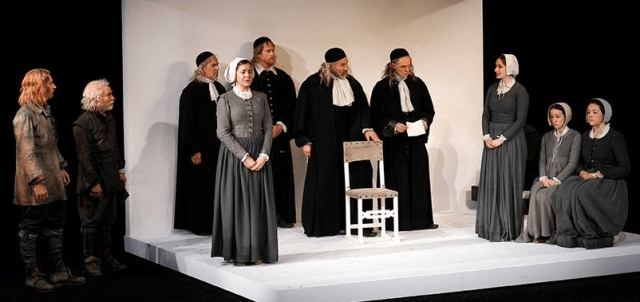
This work encapsulates the last three years of the Australian parliament in two hours, utilising its most memorable and powerful speeches to create a series of snapshots, of political and social life in contemporary history. These are important moments that have guided recent public discourse, and as such The Hansard Monologues: A Matter Of Public Importance is a theatrical work that possesses uttermost relevance to all our lives.

Performances in the piece are thoroughly interesting. The players make different choices at different times, moving from plain matter-of-fact reading of transcripts, to mimicry of recognisable voices and gestures (Llewellyn-Jones’ take on Christopher Pyne is a crowd-pleaser), and passionate renditions of moralistic arguments. With these parliamentary speeches transformed into “scripts” for actors, the text surprises with its frequent use of highly-charged, emotive language, and how it translates so readily from a political space to a theatrical one, if in fact they are all that different. The actors must be praised for having not just a good handle on the speech rhythms of each different MP, but also for their understanding of all the material, which delivers coherence and lucidity to what is essentially a montaged creation by very clever playwrights.

Hansard presents issues that affect us, its themes concern us, and its re-enactments familiar to us all. At this crucial point in time as we approach our next federal election and become more aware of our part in the democratic process, watching this production is an incredibly intense experience, with our senses so heightened and our minds so alive. The stakes are not only high, but also irrefutably real. While some of the characters may appear bizarre, this is far from fictional stuff.

www.seymourcentre.com
www.merrigong.com.au
www.casulapowerhouse.com

This Is Beautiful (The Public Studio)

The Public StudioVenue: Tower Theatre at Malthouse (Southbank VIC), Jul 19 – Aug 3, 2013
Playwright: Ming-Zhu Hii
Director: Ming-Zhu Hii
Actors: Jing-Xuan Chan, Pier Carthew, Terry Yeboah

Theatre review
Expecting experimental work in any art form to entertain is usually a lost cause, and performance art pieces are rarely crowd-pleasers. This Is Beautiful is composed of three performers spouting endless existentialist questions about the arbitrariness of life’s big meanings. There is no obvious context, and clearly no narrative for which to situate these characters and their constant inquisitions. The small amount of movement and facial expressions they produce seem to be guided by those big questions, giving the impression that the entire 50-minute piece is about one idea.

These questions are not frivolous ones, in fact, one could argue that they are fundamental and relevant to all lives. Only problem is, you would either have already thought about them a thousand times and are quite happy to leave them behind, or they are simply of no interest to you and a night at the theatre would take a lot more than three strangers’ declarations to change your mind.

A big element of this production is the video that plays throughout, which adds dimension to the activity in the space. They provide an interesting abstraction to the repetitive themes, and are visually captivating in their own right, providing variation and colour to the austerity of what is unfolding in the flesh.

It is interesting to note that the three performers are of different ethnicities, and that it takes an experimental work of this nature for this multi-cultural amalgamation to materialise onstage. They make a beautiful picture together, creating a landscape of purity and unison. It also conjures up the notion that this combination of skin colours seems to face constant resistance in mainstream Australian narrative-based storytelling, in theatre or otherwise.

www.thepublicstudio.net

The Crucible (Melbourne Theatre Company)

Melbourne Theatre CompanyVenue: Southbank Theatre (Southbank VIC), Jun 22 – Aug 3, 2013
Playwright: Arthur Miller
Director: Sam Strong
Actors: David Wenham, Brian Lipson, Sarah Ogden, Anita Hegh

Theatre review
David Wenham headlines this production of The Crucible, and predictably garners widespread attention and brings good numbers into the theatre. He is adequate in the role of John Proctor, but is subsumed by the size of the stage and hall, and also by some of the more “theatrical” in the cast. Wenham is perhaps more suited for a more naturalistic setting, and on filmic close ups, but this staging of an outlandish tale in a large auditorium seems not to be the best showcase of his talents.

There are efforts in the set and lighting design to visually shrink the stage into small rooms, but while effective in that regard, the actors performances sometimes become overly subtle for the size of this production’s audiences. Sections seem to drag on while characters have intimate exchanges that are unable to reach out beyond the first few rows. The pivotal scene towards the end of the play where the Proctors discuss their mortality lacks the dramatics and gravity necessary at such a crucial point of the tale.

Accordingly, it is the more vivid performances that shine. Brian Lipson plays Judge Thomas Danforth, and Sarah Ogden, the Proctors’ maid Mary Warren stand out and are thoroughly engaging and entertaining. In comparison, it becomes clear that they possess a style that is necessary for the language of the writing, and also for the space in which this production takes place. None of the actors are weak, but this production seem to demand a level of heightened drama that eludes many of today’s performers.

Interestingly, Arthur Miller’s text remains relevant. Its warnings of the power ascribed to the “loud minority” in our societies resonate, especially within the context of religious extremism. It also discusses the dangerous culture of “wowserism” and that too, applies easily to contemporary society. An interesting coincidence occurs with a line from Danforth,  “But witchcraft is ipso facto, on its face and by its nature, an invisible crime, is it not?”, drawing an irresistible parallel to an Australian political leader’s use of the same term “invisible” last week to describe (and diminish) carbon emissions in the debate about climate change. Great plays may age, but they no doubt hold great lessons for any generation, and it is for the theatre makers to bring forth these learnings.

www.mtc.com.au

My Life In The Nude (La Mama Theatre)

maudeVenue: La Mama Theatre (Carlton VIC), Jul 3 – 21, 2013
Devised and Performed by: Maude Davey
Director: Anni Davey

Theatre review
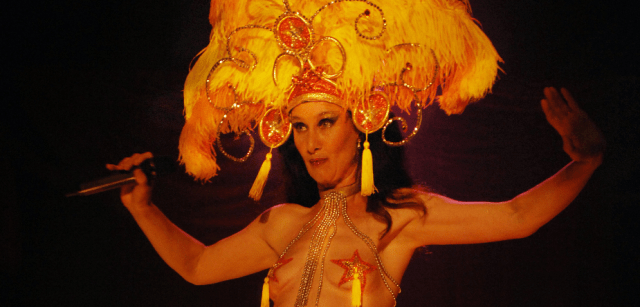
Maude Davey is a living legend in the Melbourne burlesque scene, having performed over 20 years in varying stages of nudity, combining various forms of theatrical disciplines. In this swan song My Life In The Nude, Davey takes an intimate look back at that career, presenting memories in monologue sequences, as well as performing key burlesque/cabaret pieces, almost in a “greatest hits” format. She reprises a 1991 competition winning work involving a secret strawberry, which kick started her work exploring nudity, and goes through a phenomenal repertoire, culminating in an emotional Butoh-style work about ageing, with a character reminiscent of Grizabella from the Cats musical.

Even though every sequence is meticulously choreographed and always packing a powerful political punch, tenacious in the representation of queer and feminist ideologies, it is ultimately the presence of the artist that makes the show the masterpiece that it is. Davey’s craft is honed to perfection. The audience simply has no where to run when she is onstage, lost in her charisma, her humour, her every gesture and every poignant utterance. Davey imbues each moment on stage with great reverence and generosity, and it is in that spirit of giving of her self that we find ourselves in awe and in the receiving end of a rare gift, not just of masterful showmanship but also of sheer naked humanity.

www.lamama.com.au

Say Hello First (Cupboard Love)

sayhellofirstVenue: Old Fitzroy Theatre (Woolloomooloo NSW), Jul 2 – 27, 2013
Playwright: Danielle Maas
Director: Jason Langley
Actors: Danielle Maas, Joe Kernahan

Theatre review
Not all subject matters and themes can be universal, but a performance needs to know its audience if it intends to communicate (and one would argue to keep your show in your living room should communication not be of any concern). Of course, we would like to think that there are shared fundamental truths in our human experience that connects between lives, but sometimes, one man’s meat is indeed another man’s poison. Say Hello First concerns itself entirely with romance and its implications on one’s self-image. It assumes that these themes are intrinsic and elemental, but for those who do not appreciate them quite so naturally, this play can present quite a challenge. There is no exploration into the autobiographical protagonist Danielle’s huge interest in the idea of “boyfriends” and her insistence at utilising them as mirrors into her own existence, and this is problematic for some audiences who might fail to understand this fixation. Appropriately, she is left stranded at the end of the play, bewildered by the inexplicability of it all.

From a technical perspective, design elements provide a gravitas to the production. Lighting and set are accomplished with a good level of professionalism. There is a strong reliance on projections, and those visuals are thoughtfully curated and presented. The set makes good use of the studio, establishing a space that enhances the intimate quality of the actors’ performances, and also provides an aesthetic that is delightfully whimsical (a quality the script seems to crave).

Joe Kernahan plays the objectified male through many different guises with great confidence, and brings a sense of lightness to the proceedings. Watching an actor have fun on stage is always a joy, and Kernahan certainly comes across as though there is nowhere else he would rather be. His dedication is impressive and along with his charming, spritely demeanour, would surely see him feature in more substantive work in the near future.

www.sitco.net.au

The Twelfth Dawn (Old 505 Theatre)

twelfthdawnVenue: Old 505 Theatre (Surry Hills NSW), Jul 3 – 28, 2013
Devised and Performed by: Kerri Glasscock, Gareth Boylan, Michael Pigott

Theatre review
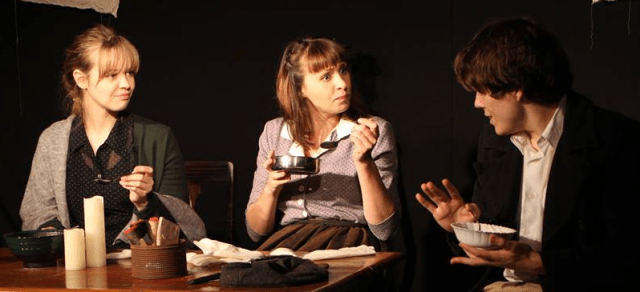
This original, unorthodox work tells a story to your heart first, before your brain is allowed to discover the logic behind the emotions. It is at times a dance performance, sometimes a surrealist exploration, and on occasion naturalism sets in when you least expect, but through some unfathomable genius, all these forms are blended together seamlessly. The Twelfth Dawn takes its audience on a journey of the senses and emotions, but removes the reliance on conventional, narrative driven storytelling. A key to the effectiveness of the work, is the empathy its players are able to elicit from the audience in spite of the lack of a story. It is a very pleasant surprise that experimental theatre can look so real and feel so emotional. Within this realm of avant-gardism, all three artists are of the highest calibre.

Michael Pigott creates a character palpable in its authenticity, relying on his extraordinary physical dexterity as well as restrained but precise facial expressions. Kerri Glasscock’s capacity at portraying intense emotions anchor the work in a place that is dark and honest. The level of fragility and vulnerability that she brings to her performance is confronting yet seductive. Gareth Boylan provides the bridge between the audience and the stage action. His timing is impeccable, jumping in and out of the world in which “the couple” inhabit, breaking tensions and moving courses.

The theatrical arts is at its best when all the actors’ facilities, beyond words and speech, are employed, and The Twelfth Dawn is a prime example of what can be achieved. It is disappointing to report that there were less than ten in the audience last night, presumably because an “important sporting event” was taking place simultaneously. It is however, incredibly fortunate that Sydney can give rise to the production and staging of a work of this quality, even if it does struggle to find a bigger audience.

www.venue505.com/theatre

Haus (Black Raven Productions)

Haus at the Tap Gallery 9th 14thVenue: TAP Gallery (Darlinghurst NSW), Jul 9 – 14, 2013
Playwright: Dimitri Armatas
Director: Dimitri Armatas
Actors: Ruth Murphy, Jorjia Gillis, Paddy Lester, Zacharie Di Ferdinando

Theatre review
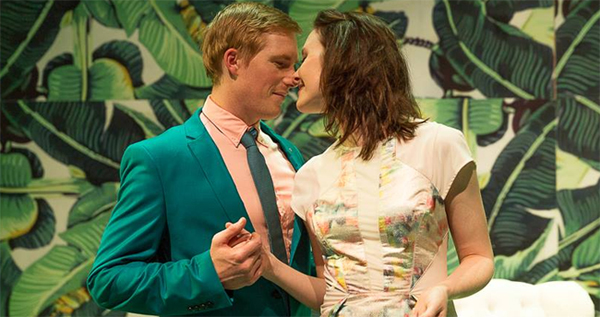
A small stage, at a small venue, telling a little tale, set in a tiny cellar, with simplicity and elegance. This is bare bones theatre, but with charming and meticulously thought out set and props. The script fits in perfectly with the space. All the action convincingly surrounds a table, content in the production’s budgetary and spacial limitations. Some effort is made with lighting to provide variation in mood and tone, but while design is effective, its realisation is unsteady. Perhaps the equipment lacks the flexibility required for its desired effects.

The story itself is a dramatic one, set in Nazi occupied Poland. The central theme of family allows some level of identification but the historic nature of the work is alienating. A good amount of tension and emotion is achieved, principally through the determination and stamina of actor Ruth Murphy, but one questions the relevance of a tale that seems to bear no contemporary parallels, and no obvious allegorical applications.  Additionally, the female characters are bewilderingly weak, and their powerlessness is discomforting and distracting.

Jorjia Gillis is miscast, but shows great potential. Although lacking in maturity, she has good presence and displays an unwavering devotion to her matronly character. Similarly, Paddy Lester shows great promise with a natural charm and has good physical agility that seems to elude most young actors. The aforementioned Murphy is a real talent, taking charge of the entire play through sheer grit and with meaningful clarity. Her thorough understanding of the play’s inner workings shows a very intelligent actor who understands not just acting, but also writing. She outshines other members of the cast at the play’s climax, and performs with such intense emotion that one is reminded of early twentieth century German Expressionism, which is completely delightful and suits perfectly the context of the work.

Director and playwright Dimitri Armatas is a brave young man with an idiosyncratic vision. Artists with original voices stand the test of time. There is no doubt that his creative facilities will flourish and the Armatas voice will reverberate for years to come.

www.facebook.com/…

Top Girls (New Theatre)

New TheatreVenue: New Theatre (Newtown NSW), Jul 9 – Aug 3, 2013
Playwright: Caryl Churchill
Director: Alice Livingstone
Actors: Sarah Aubrey, Claudia Barrie, Julia Billington, Maeve MacGregor, Ainslie McGlynn, Bishanyia Vincent, Cheryl Ward

Theatre review
Top Girls first appeared on the English stage 31 years ago in the Thatcher era. While feminism has evolved since that time, it is a concept that remains relevant, and to many, still a critically meaningful one. This landmark play is known to posit individual career successes of women as being similar to or even an extension of traditional patriarchy, thus retarding the gains of a common “sisterhood” movement. Times have changed, and Alice Livingstone presents a less critical view of that individual success, although carefully retaining the original intentions in espousing the importance of the collective, as though acknowledging that women’s choices today are all valid in their wild variances.

The surreal first act presents a group of historical women at a dinner party, all talking over one another, as if presenting monologues to very uninterested, self-absorbed listeners. This makes for difficult viewing, but establishes a context for the narrative that follows. This sequence also introduces the actors who very efficiently take over the space with tremendous confidence and in spite of the arduousness of the script, are all fascinating, convincing and importantly, very vigorously rehearsed. When the more conventional narrative begins in Act Two, these women seem to burst into life, presenting characters that are all flesh and blood where everything they say and do seems completely real. Livingstone has a knack for making every second count and every line meaningful. This is a group of actors who cherish every word, and nothing is left to waste. It is indeed an irregular occurrence at the theatre that one gets to be lost in the events unfolding, enthralled in all the action, hungering to see what is about to happen next. Julia Billington and Sarah Aubrey’s sibling rivalry, along with Claudia Barrie and Maeve MacGregor’s youthful innocence are at turns heartbreaking, and glorious.

Getting wrapped up in all the drama, however, runs the risk of distracting from the political arguments of the work. The lack of distance from the show’s magnetic characters almost encourages the audience to wallow too deeply in their individual turmoils, without an opportunity to “see the forest for the trees”. Does the enjoyment of a work like Top Girls have to muffle its subversive reverberations? Or is its agenda able to affect its viewer unconsciously? Regardless of the “big message” that this production’s audience may or may not receive, they will undoubtedly leave this theatre thoroughly sated and utterly invigorated.

www.newtheatre.org.au

The Importance Of Being Earnest (Burley Theatre)

earnestVenue: Reginald Theatre, Seymour Centre (Sydney NSW), Jul 11 – Aug 3, 2013
Playwright: Oscar Wilde
Director: Brandon Martignago
Actors: Michael Whalley, Kurt Phelan, Katie McDonald, Paige Gardiner, Andrew Benson, Tamlyn Henderson, Ana Maria Belo

Theatre review
Mason Browne has design credits for this production, and his work outshines all other components. Every visual aspect is beautiful, witty, thoughtful and sometimes quite sublime. The backdrop, costumes, furniture pieces, and even the colour palette of sweets on a cake stand, are delightful and faultless. He helps situate the play in a comfortable space between late Victorian England and modern day Sydney, which allows the show’s audience to effortlessly identify social and class mechanics which are crucial to the narrative.

Director Brandon Martignago has a flair for high camp, and his approach to comedy is dynamic and effervescent, so it is indeed these elements that he is able to extract best from Wilde’s writing. This production is best at its raucous moments, but falls down when the jokes are subtler and require more nuance. Martignago does interesting work, but needs to be more diligent in his casting. His actors all fit perfectly the physical requirements of this visually stunning show, but only half of them are able to deliver Wilde’s lines with enough complexity and skill.

Michael Whalley, Katie McDonald and Ana Maria Belo are stand outs, delivering hilariously broad comic moments, as well as clear character developments that move the plot along. Whalley is particularly strong and immensely likeable as John Worthing. His Noël Cowardesque voice is charming, and while he is usually playing the “straight” amidst the chaos, it often is his groundedness and well-timed reactions to the other players that help keep the story in the right trajectory.

Burley Theatre is an important figure on the Sydney stage. Its flamboyance and emphasis on beauty and production values are refreshing and well-received, and other groups should take heed.

www.burleytheatre.com.au