5 Questions with Charlotte Hazzard and James Raggatt

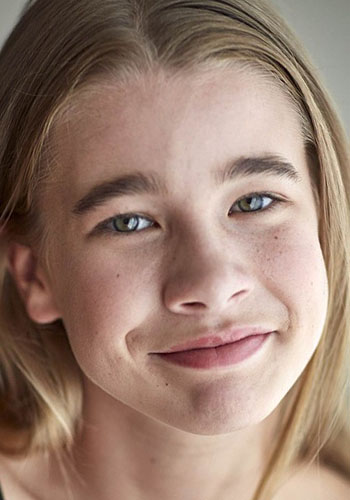
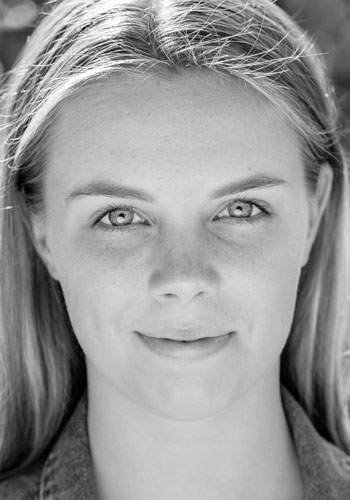
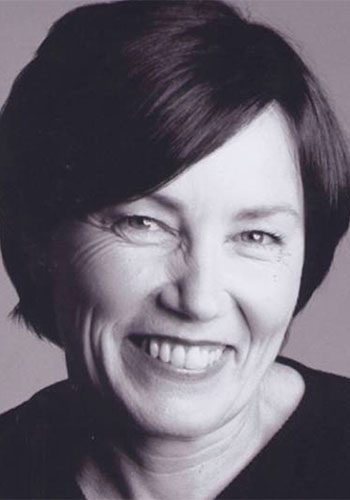
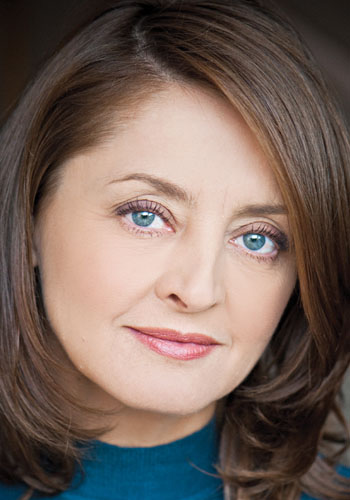
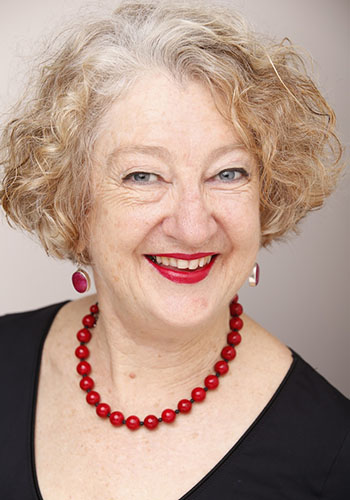
Charlotte Hazzard

Charlotte Hazzard

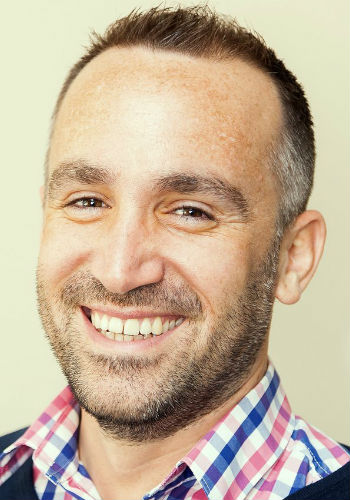
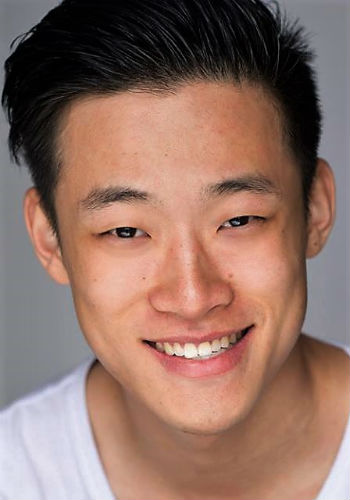
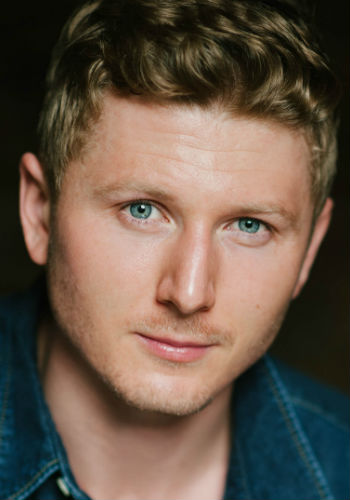
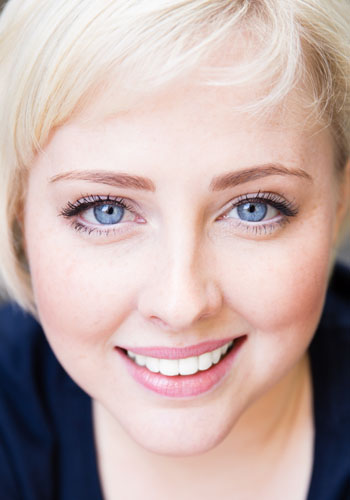
James Raggatt: What is your earliest memory of theatre that inspired you to become an actor?
Charlotte Hazzard: This is terrible, but I actually don’t have an early memory of theatre that made me want to be an actor… I have one memory of watching a production of Romeo And Juliet which involved a rap at some point, and remember thinking, this is just not right. However, I do remember watching Frances O’Connor in the film of The Importance Of Being Earnest and thinking ‘that’s what I want to do’.

If you could have been born and lived in any other period of history, which would it be and why?
Mmm tough question… Instantly I think I would want to live around the time of Henry VIII or Queen Elizabeth, that could be because I’ve always wanted to play Queen Elizabeth the First and have always been interested in the stories from that era in history… interested but equally horrified.

Being an actor often requires continuous learning and adapting. In your career so far, what project have you learnt the most from?
It’s difficult to pinpoint as each project I’ve worked on has taught me something (or many things) and forced me to learn and adapt. However, I was lucky to work on a production of War Crimes by Angela Betzien for ATYP a couple of years ago. And in my career to date, it by far it has taught me the most in terms of life / skill / challenge / craft / everything. I think mostly because it really reignited in me the power and importance of storytelling.

What’s the craziest thing you’ve ever heard of anyone doing in the name of love?
I’m sure I’ve come across some other really crazy stories… However, the only thing I can think of right now is when I was in High School a friend of mine was seeing a boy and he got her name tattooed just above his pubic region. I remember thinking at the time that was very crazy. I think it has been covered over since.

If you could have anyone in the world stalk you, who would it be?
Besides you James? I’m not too sure, maybe Beyonce. Because she is Queen B.

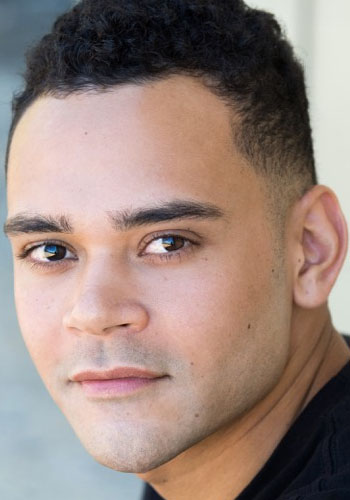
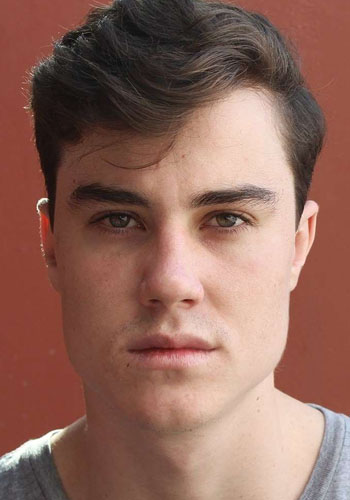
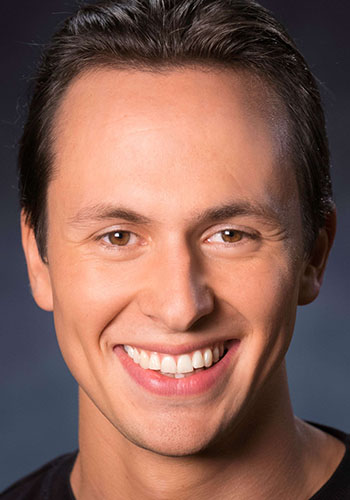
James Raggatt

James Raggatt

Charlotte Hazzard: If you weren’t an actor, and couldn’t pursue the arts, what would you be doing?
James Raggatt: I have a myriad of answers ranging from marine science to politics. But when I was a little boy I was obsessed with everything to do with trains, so I’d likely be a train driver. Legit. I’d love to be a professional traveller, write for Lonely Planet or National Geographic from bizarre global locations. I’ll stop here before I get carried away.

You can have one superpower. What is it?
I’d be ‘super-lingual’, able to speak fluently any language from anywhere in the world.

What’s the greatest gesture of love you’ve ever given or received?
Years ago I had someone write a song about me. It’s one of the sweetest memories I have. I think I still have the track somewhere…

The play focuses on observation; the act of observing and the need to be seen. What would you prefer, to be watched or do the watching?
I’m definitely an observer. I love soaking up information and learning about things and people.

Finally… From now until forever you can only have one… sweet or savoury?
Savoury all the way.

Charlotte Hazzard and James Raggatt are appearing in Blink by Phil Porter.
Dates: 9 Feb – 4 Mar, 2017
Venue: Kings Cross Theatre

5 Questions with Asha Boswarva and Ilai Swindells

Asha Boswarva

Asha Boswarva

Who are the characters you play in Intersection and how are they similar to you?
Asha Boswarva: I play Saoirse a girl who is grieving over the first death in her family. She’s unsure how to deal with the situation and is trying to escape from the claustrophobic weight of the family’s heartache. During rehearsals for Intersection, my grandfather died and my feelings of loss became very similar to my character. I realised that, I too would do anything to make a loved one happy.

What has been the weirdest/funniest bonding moment with one of your fellow cast mates?
There have been many hilarious bonding moments, some which can’t be shared ‘what happens in rehearsals, stays in rehearsals’ but recently Steffan, again who plays Stuart forgot his costume prop in our full rehearsal run. He grabbed a denim jacket not knowing it was mine and came on stage wearing a size 6 girl’s jacket. It looked like a crop top on a 6ft guy and it cracked up the whole cast.

The show is a big amalgamation of unique coming of age stories, will you share one of your most significant coming of age moments from your life?
Working on Intersection is a significant coming of age moment for me. At 15, it’s the first time I’ve been in a production with a large cast that is significantly older than me. We’re telling Australian stories that include swearing, drug and sexual references but they are genuine and could be happening around Australia on any given Friday or Saturday night.

If you could work with any artists in the world who would be at the top of your list?
Matt Damon would be top of my list. He’s written his own stories – Good Will Hunting, produced movies – Manchester By The Sea and is now directing. He does funny, serious and action and seems like a genuine guy. I also would have loved to work with Audrey Hepburn and Robin Williams both incredible actors.

What has been the most valuable thing you’ve learnt from working in an ATYP production?
Sounds simple but to listen. I’ve learnt different styles and techniques from each of the cast members and director Katrina Douglas. There’s a bit of swearing in my scene and I’ve managed to pick up a few tips on that front too. Essentially, an ATYP production is like no other. It gives young actors a chance to work as professionals.

Ilai Swindells

Ilai Swindells

Who are the characters you play in Intersection and how are they similar to you?
Ilai Swindells: I play Hassan in Intersection and in the play we watch him lose his best friend, get his heart broken and be absolutely reduced to nothing. Can’t say I’ve had my heart broken just yet but I have definitely had many low points in my life where I’ve been reduced to nothing whether that was because of a friend or a tough situation I found myself in, I can relate! Also the characters all live in this super small town and having grown up in a small town myself with not much to do, I can relate to the boredom and dangers that come with too much idle time.

What has been the weirdest/funniest bonding moment with one of your fellow cast mates?
For Australia Day this year I spent the day randomly signing up to Chatswood RSL and spending some time there with another cast mate Steffan Lazar who plays Stuart and is hilarious. We basically took advantage of the cheap RSL prices and watched people play the pokies with intense fascination.

The show is a big amalgamation of unique coming of age stories, will you share one of your most significant coming of age moments from your life?
So many come to mind and so many are not appropriate to share I bet! I think finishing school is a pretty liberating experience especially since I grew up in rural central Queensland so moving to big and better places like Sydney is little life changing in its own right.

If you could work with any artists in the world who would be at the top of your list?
Quentin Tarantino. But I hear he is only making a certain number of movies and he’s almost reached that number. So sadly I don’t see that happening…

What has been the most valuable thing you’ve learnt from working in an ATYP production?
The opportunity to work with such a large cast of young people has been a fun first for me especially one with such a broad age range has presented its own unique insights. Having not done much theatre work, ATYP has been great and made the transition from screen to stage a comfortable one and Katrina Douglas (Director) who is very much a team player and takes on board your offers which allows the process to be a team effort.

Asha Boswarva and Ilai Swindells can be seen in Intersection by the writers of ATYP’s 2016 National Studio.
Dates: 1 – 18 Feb, 2017
Venue: ATYP

5 Questions with Briallen Clarke and Emele Ugavule

Briallen Clarke

Briallen Clarke

Emele Ugavule: Australia has seen four Prime Ministers in five years, resulting in our biggest arts funding institution, the Australian Council, being ripped apart & diminished to a shadow of its former self. Forcing a number of respected performing arts hubs to shut down. What do you think the role of Australian arts practitioners are in times of political trauma?
Briallen Clarke: What I love about being an artist is that work we create can be anything we want it to be. It can escape from reality, it can be a chronicle of the times, it can be accessible, it can be challenging, it can feed our culture, it can be a catalyst for change, it can be beautiful, it can reflect nature, it can soothe the soul. The role of an arts practitioners is to strive to make work that does one, several or all of these things. What is difficult in times like these, is how we can find ways continue to do this. Whether we create art to make a statement, as a form of therapy or as an emotional release, we must continue to do it. Artists by nature in this country are dogged in their resourcefulness and creativity. Never has it been more important to be keep going because if we stop making art, they win. Our role is to keep making art no matter what.

How important is relativity in a play? Do you think that the script & its delivery must attempt to resonate with its audience’s contemporary experiences or that no matter what, people will always find a way to relate to a story in their own way?
I do believe that plays resonate with people no matter what the subject matter or central issues are that are explored. Even if all it does is stimulate discussions about how outdated the views presented are, or how unrelatable it is to a contemporary audience, it is still serving to encourage audiences to reflect on their own lives and belief systems, which is valid. Of course there isa certain potency that comes with seeing a play which directly reflects events or themes as as they are being experienced, it is engaging and thrilling. However, I don’t believe that a play loses purpose or importance as the world changes, the function it serves and the impact it has just evolves.

Why and how is A Strategic Plan relevant?
I think that is for the audience to discover and decide.

Your comedic style is very unique and magnetic. What/who have you drawn inspiration from to create Linda?
Aren’t you kind?? Linda is definitely an amalgamation of a few people I have encountered in my life. She exists in a world that is so different from my own so I did a lot of looking out to initially create this character. The more I have come to know her though, there are aspects of her personality that I can relate to for sure. The world of this play gives license to making things slightly more heightened too so it has been interesting to decide on which parts of her personality to dial up, and at what points in the story.

Can you share a moment from your process whilst working on A Strategic Plan that you loved?
Something that I have loved and that has been such joy is how much we have laughed, like really hard belly laughing. Company fits of unable to breathe, bent over, tears streaming down face type of laughter. Any actor will tell you though that this kind of laughter exists in equal parts joy and torture so it has been an aspect of the process I have both loved and struggled with (see I’m even laughing now at the thought of it!).
Emele Ugavule

Emele Ugavule

Briallen Clarke: What do you think is the best thing about being an actor?
Emele Ugavule: Oooooo. Tough. Nice. To be honest this job is incredibly rewarding in many ways, but the one thing that I think I find the most rewarding is that it allows me the privilege of being a storyteller. I come from a culture where storytelling is how we pass on our legacy, our history, our traditions. Being an actor allows me to do the same but as a vessel for other people’s stories instead of my own – so it teaches me to look at people whose lives I would otherwise never encounter, with compassion and to tell their stories with empathy yet objectivity.

You love to travel. Which destination is next on your list?
The Pacific! Particularly, Melanesia. Specifically – Vanuatu!! I need to invest more in where I’m from and I’m very passionate about Pacific visibility and stories – and Melanesia is the key to Pacific identity. I’m half Tokelauan (Polynesia) and Fijian (Melanesia) and almost all the stories of the Pacific that we see today in mainstream media (including Moana) focus on Polynesia. Melanesia is a cultural mine. It was the first part of the Pacific to be settled and yet remains one of the last cultural & linguistic mysteries to the world so I’m incredibly drawn to it.

You’re a gifted musician and lover of music. Has that been useful in your creation of Jill for A Strategic Plan?
Oh you’re so kind! I mean totally. My life is pretty much musicians these days. All my mates are musicians, my partner is a musician. So it’s a world I’m very much invested in and have spent the last few years learning to create a strong dialogue within. Music has always played a huge role in my life – it’s actually the reason I got into acting, long story bla bla, so it’s been lovely to be able to engage with my friends in conversation surrounding their world to authentically tell their story through my world.

What artists have you had the pleasure of working with that you have found particularly inspiring?
Ohhhhhhhhhhhhhhhhhhhh man! Brag town. All my mates to be honest! Ngaiire, Wallace, New Venusians, Broken Mountain to name a few. Sydney has such an incredible hub of musicians & vocalists that it doesn’t get enough credit for!! All the people I’ve worked with have either been my mates first or have become my mates as a result of us working together and they all inspire me in different ways whether it’s Ngaiire’s incomparable stage presence & vocal agility, Wallace’s flawless dance moves & lyrical flow, the 7 piece band magnetic sound & dance inducing vibes of the New Venusians, or Broken Mountain’s nostalgically poignant yet sharp drops – all of them work so very hard at their craft and care so very much about the people they work with and I find that kind of work ethic inspiring.

Any artists at the top of your wish list to work with?
Oh. Uh. I’ve never really thought about this. I just love working with musicians and have been lucky enough to be asked to work on projects with artists who I find incredibly cool and interesting. I think 2016 really presented a new shift in sound and visual aesthetic for the pop music world as a response to the political climate in America, which brought artists such as Solange, Beyonce, Alicia Keys, Common & Frank Ocean to the fore front of the GP’s consciousness. I tend to fall ‘out of love’ with artists just as quickly as I ‘fell in love’ – because should I ever meet them I don’t want to have this ‘You’re out of my league’ complex, we’re all humans and just because your career makes you more visible than me, it doesn’t make you any better than me – so there’s a lot of artists whose work I love and respect that challenges me and my work intellectually and emotionally but no one that I’m drawn to in a way that makes me think ‘I want to work with that person!’. I’ll just keep doing my own thing and if someone wants to work with me, that’s cool. If not, that’s cool too.

Briallen Clarke and Emele Ugavule can be seen in A Strategic Plan by Ross Mueller.
Dates: 27 Jan – 11 Mar, 2017
Venue: SBW Stables Theatre
5 Questions with Poppy Lynch and Joshua McElroy

Poppy Lynch

Poppy Lynch

Joshua McElroy: Do you think taking up an acting career will make you happy?
Poppy Lynch: When I was about 15 I gave up ballet dancing. Something that I had done for so long and at such a level. Up until that moment it was what I had in mind as the career for me. When I quit I had no artistic outlet and somehow found acting through school performances and drama class. And the rush I felt was unlike what I’d felt before. Cause I could now be all these characters and escape whatever teen angst I was suffering in the real world. The most important thing for me is that acting gives me happiness even when I fail. It is the one thing I’m passionate about. I don’t think those who is less than passionate should take up an acting career cause it’s such a hard and damaging business at times. So short answer is YES! And as soon as that’s not the answer I won’t bother doing it.

Why do you think the play is relevant for an Australian audience?
Right now the world is suffering a scare tactic war. People in power including our own government and media; are using fear to cement their lead. The terror groups of this time (which are a part of or surround ISIS) have become the tool for this fear tactic war. And people such as Donald Trump and our own Pauline Hanson use images and words of violence to encourage fear which is an emotion that often initiates hate. Those who are influenced fear ALL that come under the bracket of a terror threat. But this means that innocent people are also under fire. Because their beliefs or appearance somehow come under the bracket that the people in power have created. Osama The Hero is about people fearing something and going out to kill that fear with hate and violence. The clincher is that these people don’t have evidence. “You don’t need evidence for terrorists.”

What is your biggest fear?
I hate cockroaches! But that’s not the biggest fear I guess. I think being alone. I don’t mean at one specific moment I quite like doing things alone! I just mean at a later stage in life I fear losing all the people around me. Which is radical and might be far fetched but it’s often something I think about.

What do you and your character have in common?
She has been through a lot of horrible stuff. It’s hard for me to find something in common with the abuse she has copped and the life she has been given. But I think she has a high level of intrigue. She wants to be involved and I think she is observant. Those are some things I notice in me.

What is an artist’s biggest responsibility?
Oh this is a hard one. I think I like the idea that one of an artists biggest responsibilities is to confront. Because confrontation relates to exposing a certain level of truth that resonates with the audience. And I hope that that resonation would result in some sort of change being made. Osama The Hero relates to this I think. We want to confront to get the message across. That whole message about humans and how we hate what we fear and what that hate results in.

Joshua McElroy

Joshua McElroy

Poppy Lynch: When did acting become a career goal? Was there a moment or person that encouraged you to pursue it?
Joshus McElroy: I was always a very theatrical, attention seeking individual from a young age. Funnily enough Suzanne Millar who now runs bAKEHOUSE Theatre Company was the one who showed me I could turn that into performance. The moment I decided to 100% commit to the arts as a career choice was the moment I quit my Degree Of Commerce at Macquarie University.

Being a somewhat new and young artist in the business what are the main challenges (personal or career driven) that you’ve faced?
Cash. Cash is a hard to come by. Everything else is great fun.

What is the leading theme or concept in Osama The Hero? And how does that expect to appeal or interest a modern audience?
The most prevalent theme for me in the play is fear. Everyone is terrified of anyone who challenges the status quo. New ideas are deemed dangerous, the people who present them – bad. We silence, censor and label people rather than discuss ideas. Politics and the media are increasingly vicious and violent. I don’t think the audience will find it hard at all to relate.

You are stuck on a desert island. Who is the one character you’d choose to be there with?
I would probably choose Louise. Mandy is too young to be resourceful. I feel like me and Francis would kill each other before starvation or dehydration got to us. Mark is too old. Louise would have the strongest will to live out of the bunch I think.

What is something that the audience will come out of Osama The Hero with in mind? (Without ruining it too much)
Everyone will have different thoughts as they walk out of the theatre. But every time I finish reading this play two things come up for me. 1. Is there such thing as ‘good and evil or are there just mistakes and not mistakes?’. 2. Is there any situation where silencing someone is beneficial?

Poppy Lynch and Joshua McElroy can be seen in Osama The Hero by Dennis Kelly.
Dates: 21 Jan – 4 Feb, 2017
Venue: Old Fitz Theatre

5 Questions with Nisrine Amine and Wendy Strehlow

Nisrine Amine

Nisrine Amine

Wendy Strehlow: What inspired you to become a performer?
Nisrine Amine: Had it not been for my high school years at Our Lady of Mercy College Parramatta under the guidance of my Drama teacher Ms Julia Homfray, I don’t think I would have ever had the
courage to enter a career in the arts. She saw my potential and believed in me so strongly that
it subsequently made me (bring out the violins!) believe in myself. I am also inspired EVERY
SINGLE DAY by my family and friends, by the people I meet, the people I observe on the
streets (in a very discreet and non-creepy way), the stories I read, the sounds I hear. How can
we live in a world, on a planet, that is BUSTING with stories and life and heartache and
conflict and love and struggle and courage and NOT be inspired? Not be inspired to write
about it all? To share and celebrate it all? C’est impossible!

Who do you admire as an artist?
Not any one person in particular but generally speaking (and excuse my French) those who
don’t give a fuck. The ones who are so strongly compelled to be nothing but themselves, who
own their craft, who own their voice and who see artistry and creativity as being something
bigger than themselves – a duty, a responsibility. On a more practical note, I admire people
who are persistent and consistent, primarily because I can tend to be neither of those things.
Oh, and I love writer/director/producer combination people. Like Lena Dunham and Mindy
Kaling or people who turn their real life experiences into art like Benjamin Law and Josh
Thomas.

What made you join the The Leftovers Collective?
I got a random call one day from Curly whom I’d never met but who happened to be a friend
of Bali Padda (who I also hadn’t really met but we were FB mates which counts for a lot in
this day and age – Hi Bali!). Curly said that he was looking for an Arabic speaker to join the
crew and Bali had recommended me and the rest is history. I did my first show with the
Leftovers where I had to recount a Jacobean text in Arabic. I think I scared half the audience
because the Arabic language is harsh enough let alone using it to deliver a passionate speech
from the Jacobean era. Ai yai yai. It was a lot of fun though! Experimental, social,
provocative theatre isn’t something I normally gravitate to but being part of this collective
has definitely helped to cultivate my fondness of the art form.

Have you ever experienced racism in your daily life and in the arts industry?
There have been many times where I’ve visited parts of Sydney and felt a little ‘ethnic’. Like
I very much am aware of the fact that sometimes, the ratio of ‘me people’ to ‘white people’ is
1 to A LOT. Which is so so silly because for goodness sakes, I’ve been in Australia for almost
30 years (we migrated from Lebanon when I was three and a half). But in terms of direct
racism, no, never. Oh, although, I did visit Tamworth once with some cousins of mine and I
could swear that a group of girls at the pub were pointing at us. I think one of them mouthed
the words ‘Oh, they must be Sydney girls’. Maybe they just had an aversion to Sydney and
not necessarily Lebanese people. Who knows. As for racism in the arts? No. Maybe there
have been conversations and opportunities lost behind my back, but I choose to believe that
people are good and so I don’t invite that sort of treatment into my space.

Tell me the background of your first and last name.
Well, my first name comes from the Persian word ‘Nasrin’ meaning ‘wild rose’. So I’m
named after a flower which is great because one of my favourite shows is Keeping Up
Appearances and the four sisters in that are all named after flowers. A fact that makes me feel
that much closer to Hyacinth Bouquet. Not ‘Bucket’. (Only true fans of the show would get
that joke!) As for my last name, not too sure where that comes from. Somewhere in Lebanon
I imagine. My ancestor’s surnames were Maatouk so I think ‘Amine’ is an evolved version of
that. Oh, here’s a question: if my grandfather was born in Cuba to Lebanese parents, that
makes me a tiny bit Cuban, no? Am I allowed to claim that?

Wendy Strehlow

Wendy Strehlow

Nisrine Amine: You won a Logie for Best Supporting Actress in 1985 for your role of Judy Loveday in A Country Practice. Do you remember what that night was like and what you were feeling?
Wendy Strehlow: I do remember the night very well. Bill Collins and Anne Baxter gave me the Logie and
Country Practice won a swag of awards that night. I felt really proud of the show.

Having been in the industry for well over 30 years, what has been the one thing that has kept you coming back (despite the ARGHH that sometimes comes with being an actor)?
I have a passion for telling stories and I do feel like I have found my tribe. I love working
with actors and creatives and it gives me such joy to be able to do so.

What made you join the The Leftovers Collective?
I met Curly during Love’s Labours Lost by Sport for Jove and we clicked! I like the way he
thinks outside of the box and love exploring new ways of presenting Shakespeare.

Invasia is a social experiment in racism and rule playing at Hustle and Flow Bar Redfern on Australia Day. What does it mean to you to be an ‘Australian’?
My family came here from Europe and ended up in Central Queensland. I have always felt a little outside of things but to be Australian I want to be inclusive and compassionate because WE ALL CAME HERE FROM SOMEWHERE ELSE!!! This always was and always will be Aboriginal Land.

Tell us an interesting story about your name.
My last name is Strehlow, but it may have been anglicized from Stralov we think. Over the years misspelling and bad listening skills have morphed it into Strehlow.

Nisrine Amine and Wendy Strehlow can be seen in Invasia by The Leftovers Collective.
Dates: 26 Jan, 2017
Venue: Hustle & Flow Bar, Redfern

5 Questions with Jeanette Cronin and Simen Glømmen Bostad

Jeanette Cronin

Jeanette Cronin

Simen Glømmen Bostad: You have a very successful career as an actor. Did you always write as well? And how did this other side of you emerge?
Jeanette Cronin: I’ve always jotted down ideas. Scraps of paper everywhere. One day I turned one of those scraps into a story. Perhaps it was because I was older and less busy, so I started writing
things for senior chicks. I didn’t really think about that, though, I just had a little story to tell.
In I Hate You My Mother we meet four women who in some ways share the qualities of the Bean
Nighe or the Cannard Noz, the washerwomen of Irish Folklore who drown men by the riverside.

How did this interest come about?
Couldn’t tell you now. Something took me there…

What do you want the audience to be left with after watching this play?
That love is king, and if you mangle it, you mangle everything. And also the slightest glimmer of hope.

If you got your hands on one of those highly sought after time-machines, what time and place would you visit?
The Neanderthals are tempting. But then those 1930’s frocks do suit me. And there are a few famous disappearances I would like to sort out…

If you could change one thing in this world what would it be?
Everyone would have imagination. And with it, empathy.

Simen Glømmen Bostad

Simen Glømmen Bostad

Jeanette Cronin: Simen, you play five characters in I Hate You My Mother – well, four characters and a prologue. Do you have a favourite?
Simen Glømmen Bostad: Favourite? Well, there is this Dr. Carreaux, a narcissistic hypocritical new-age
psychotherapist. Just try to say it.

Is this play something you would want your mother to see?
Of course. I want my mum to see everything I do, even if it might be unpleasant or shocking to her. I think we always need to be reminded of the bad in us, not just the good.

If you had to describe I Hate You My Mother in one word, what would it be?
Radiant.

What was the last play you did in your native Norway? Is there a theatre at home that you might
describe as a sister theatre to The Fitz? We could suss about a little cultural exchange…

Last thing I did in Norway was an interpretation of Romeo And Juliet, where there were 5
actors playing Romeo and 5 actors playing Juliet. There is a really cool theatre company in Oslo called, AntiTheatre. They give Oslo a flare of something dangerous in the theatre scene. I’m a huge supporter for international collaborations. I will be able to set up a dialogue straight away if its wanted by Old Fitz.

What do you miss most about home?
Parent’s cooking and the four seasons.

Jeanette Cronin and Simen Glømmen Bostad can be seen in I Hate You My Mother by Cronin.
Dates: 24 Jan – 11 Feb, 2017
Venue: Old Fitz Theatre

5 Questions with Annie Byron and Ildiko Susany

Annie Byron

Annie Byron

Ildiko Susany: What would be one piece of advice you would give an emerging actor breaking into the industry?
Annie Byron: To thine own self be true. Train, meditate, exercise, read, forge your inner resources – you’ll need them. Pursue your passion. If the challenges start to sour your love of your craft, stop it and do something else. Persisting makes no sense if you are not being enriched by the experiences, and having fun.

How do you think things have changed for women in theatre since the time you started in the industry to now?
Well, not enough. It was astonishing to sit in those early Women In Theatre meetings last year and hear exactly the same things being said as in the Limited Life funding meetings of almost FOUR decades ago. But look! Within a year a whole Festival Fatale organised, that’s women working with women for women. Women have always supported each other. Maybe what’s changed is that companies generally take more seriously the need to be conscious of gender equity. I think we might be better organised and more articulate. I’d like to think the work of those who have gone before has made taking new steps easier. I’m not sure I can answer this question. It’s depressing that it still needs answering.

What do you think is the naughtiest part of this production of Babes In The Woods?
I think it has to be the relationship between Phyllis and Jack, with a moment of leg licking being one among numerous exquisite high points.

What is your biggest challenge in playing ‘The Dame’ (or, a woman playing a man, playing a woman)?
Before we started rehearsal, this is what I thought about most. Perhaps it says something about the level of subtlety of my performance (!) that now that we are in to it, I have kind of forgotten all about those layers, and I’m just going for a character, and for clarity of story telling. And enjoying the possibility of facial hair. There is a generous allocation of gender bending in this show, and I’m trusting it is something to be played with and enjoyed – without too much depth of thought.

If you could sing any song in this production (regardless of rights) what would it be?
“37 Babies” – the one I WILL be singing! It’s fierce and black and cheeky and political, and I adore it. Having been told repeatedly as a child that I couldn’t sing (and even instructed to mime in the school choir!) this is a major victory for me. I’m delighted that it is so steeped in the feel of Kurt Weill, and I intend to have a lot of fun with it!

Ildiko Susany

Ildiko Susany

Annie Byron: What do you experience as the things most needing to change for young women in our profession?
Ildio Susany: Gender parity. The erroneous view is that women require more training; women aren’t ready; women aren’t as talented or produce as good work as men in the industry (this is also the perception of artists of diverse backgrounds). This is completely false. We need to change this view from the outset. An example of this is that statistics show that roughly 50% of film school graduates are women and yet these women are only represented at less than 30% across all fields in the film industry. Women are in greater audience numbers than men and according to the Geena Davis Institute on Gender in Media, films with female leads made considerable more money than films with male leads. Women don’t need further training or internships – women need access to work and opportunity. Women need to be trusted for their work and skills and insights and capability in the same way that men are. Young women need to own this conversation. Be a part of Women In Theatre & Screen (WITS) and Women In Film and Television (WIFT). The industry is not a meritocracy – unconscious bias and notions of historic gender roles are still in effect today. We need to work together to change this.

Working with full commitment for little or no money, what makes being in an ‘independent’ production worthwhile?
Independent theatre is a place where artists can test their muscle, take risks and break new ground. I think this space can be the best for creating change and bringing major issues to light. I perform in independent theatre and create independent productions because I love to work, I love to be able to tell the stories that I want to tell (stories which may not be featured on the mainstage); stories which might be more inclusive and reflective of our society in terms of gender and diversity and the issues that we need to be exploring in society.

What is the best thing about being in our panto, Babes In The Woods?
The team. I’m working with some of the best artists, actors and creatives who are highly astute with excellent comic timing! It is a joy to play and improvise in this work space. I also love the themes and politics explored in this play which are centred on Australian identity and landscape.

What do you most enjoy about playing a male role?
My favourite part about playing the male role of Robbie is debunking the myths of masculinity and exploring issues of feminism, white privilege and male privilege from my perspective as a woman of colour.

Can you name 5 roles you would like to play by the time you are 60?
Lady Anne. Lady Macbeth. Eliza Schuyler Hamilton or Angelica Schuyler. Any other strong and complex female character – who might have to do some stunts or fight choreography!

Annie Byron and Ildiko Susany can be seen in Babes In The Woods by Phil Rouse (based on the good works of Tom Wright).
Dates: 13 – 21 Dec, 2016 and 6 – 21 Jan, 2017
Venue: Old Fitz Theatre

5 Questions with Nat Jobe and Clare Ellen O’Connor

Nat Jobe

Nat Jobe

Clare Ellen O’Connor: When did you first know you that you wanted to be a performer?
Nat Jobe: I think I’ve known ever since I was a kid. Growing up, we used to listen to a vinyl record of Phantom of the Opera on weekends and I was obsessed with it. We also used to watch the ridiculous tv comedy Some Mothers Do ‘Ave ‘Em which I was equally as obsessed with. Both were starring Michael Crawford. I just wanted to be him! I still want to be him! Can I be him?

Other than the stage, do you have a favourite/weird place where you like to sing? eg. the car, the bathroom, a rooftop?
I definitely love singing in my car. Loudly. Like, really loudly. Road trips are dangerous, they usually result in me needing to put myself on a few days of vocal rest.

If you could give one piece of advice to your 15 year old self what would it be?
I’d tell myself to always keep that positive, optimistic attitude because that outlook on life has always led me (and still continues to lead me) along the most amazing paths. I’d also tell myself to take of that mustard turtle-neck sweater and burn it, what was I thinking?

What has been your favourite part of the rehearsal process for Summer Rain?
I loved working with our director/choreographer, Trent Kidd, on mine and Catty Hamilton’s big number “Watch The Puddles”. Trent has created a beautiful, timeless piece of musical theatre in that number and I am loving every moment of rehearsing it.

What is the biggest similarity and the biggest difference between you and your character in Summer Rain, Clarrie Nugent?
I guess our biggest similarity is that we are both cheeky larrikins; Clarrie is a very fun, optimistic and energetic guy and I really relate to that. Our biggest difference is probably that Clarrie is the town bookie and in charge of all gambling and betting within the town. I am definitely not a gambling man, I’m way too much of a tight-ass! Haha!

Clare O'Connor

Clare O’Connor

Nat Jobe: What’s your dream role in music theatre or on film?
Clare Ellen O’Connor: Oh gosh this is so hard! I love every character I get to play and I feel like there are so many unique things to find with each character. So to pick ONE… Maybe Tracey Turnblad! From the first moment I saw Hairspray I fell in love with that character. I’ve always had a special spot for her.

What has been your most embarrassing moment on stage in your career?
Easy! I was singing on a cruise ship singing and it was my moment where all of the other girls burst into a dance break and was I supposed to come pelting down the centre of the stage to hit my big note. Except I slipped over during my strut forward and hit the deck. Literally! Tried to pass it off as a sexy slide, but it wasn’t graceful enough! The audience let out a loud “Woooahhhh!” Ah well.

Do you have any interesting pre-show rituals?
Not really, I’m a bit of a keen bean. I come in super early and get my make up done so I have time to stuff it up and start again. I am hopeless at doing my stage make up! Then just warm up my voice and go through the show with my script and my notes so I know what I’m doing!

In Summer Rain, your character, Lorna, gives birth to a little girl. How do you tackle a big life moment like this in a show? And how are you going at connecting with the creepy baby doll you’re using in rehearsals?
I have gotten so attached to that little stand-in Trump baby (it has a mass of blonde hair and kind of pink skin)! Everyone else in the cast thinks it’s the creepiest thing ever but I think she’s just beautiful! I have never thought of myself as particularly maternal so I have been shocked at how comfortable this whole pregnancy/new mother thing has felt to me! Although I guess a plastic Trump Baby is different to the real thing, just a tad.

Also the ladies in the cast who have had children have been so great sharing their pregnancy stories and sharing wisdom! I have nailed the pregnancy walk thanks to those gals!

Summer Rain is a beautiful and poignant show with some amazing moments. What’s your favourite moment in the show?
My favourite moment is probably your “Dark Handsome Chappy” number! You and Catty are hilarious and Trent Kidd’s choreography is just perfect for it! I am lapping it up in rehearsals as much as I can because I’ll be offstage in that part when we’re doing it in the season!

I also really love the character development in this show. I feel they’re quite real and being Australian, they’re ones that we can all relate to. I feel Nick Enright has very much written this as a play with music.

Nat Jobe and Clare Ellen O’Connor are appearing in Summer Rain the musical.
Dates: 15 November – 19 December, 2016
Venue: New Theatre

5 Questions with Yannick Lawry and George Zhao

Yannick Lawry

Yannick Lawry

George Zhao: Sum up the character of Screwtape in 5 words or less.
Yannick Lawry: Mad, bad, dangerous to know…

CS Lewis doesn’t pull any punches when it comes to saying what he believes about the world. Playing the character of Screwtape, what is the most confronting thing you say in your personal opinion?
I think one idea Lewis presents is that we, as human beings, are not the ones in ultimate control or our circumstances. That’s massively confronting to many of us (me included!) One line that makes me think every time I utter it is when Screwtape talks about a ‘patient’ he recently captured by distracting him all the time and the patient’s words as he arrive in Screwtape’s kingdom are: “I now see that I spent most of my life doing neither what I ought nor what I liked”. A line that often comes into my head when I’m mindlessly flicking through the news feed on my phone..

You have about 75 mins of dialogue to learn for this show. How on earth did you manage that?
Um.. well, I don’t mind the sound of my own voice so I record each letter and listen to it back again and again until it sticks. Fortunately, Lewis’s train of thoughts and arguments follow nice, logical lines so they’re easy to map out and don’t take too long to sink in!

You’ve done a heap of theatre in London and Sydney but if you could replay any of your past performances which one would it be?
One of the first roles I played in London was Hamlet. He’s such an existentially-challenged brat; but I love the journey he goes on and the range he gives an actor to play in. Being in my late-30s, I probably need to get onto it quickly if I want to give him another shot!

It’s my round, what are you drinking?
If it’s cocktail hour and your budget will stretch to it, a Negroni. Otherwise a VB is just fine, thanks!

George Zhao

George Zhao

Yannick Lawry: Sum up your show, The Screwtape Letters, for us in 5 words or less!
George Zhao: Who’s pulling the strings, then?

What are the habits of a successful actor in your opinion?
Good question! In my humble opinion, they are:
– Knowing what success means to you personally and striving to achieve it.
– Constantly improving on your skill sets and on yourself.
– Allowing yourself time to rest .
– Most importantly, you need to genuinely love to those around you. I really can’t stress enough how much of an impact that has on people!

In The Screwtape Letters, you play a demon and the human “patient” – how do you separate out the two characters when playing them so close together?
I like to flow into the characters via physicality, once i move into the character a certain way, the voice, objectives and history of that character follow.

So, you recently filmed the second season of the awesome SBS series The Family Law – any gems from behind the scenes that you can share with us?
I’m actually still in the process of filming it while I write this! I’ve been incredibly blessed to work with all the people on this production, they are all incredibly loving and willing to help those around them without a second thought, and the catering is AMAZING! As the cast, we have this set of dances which are hilarious when we all do them together. I started a dance in front of the camera during a break in the scene last week, being silly and whatnot, and as I turned around i saw that the *entire* family were behind me doing the dance as well. I’m really hoping the camera was rolling, would be hilarious to watch that back!

You’re touring this show to Melbourne and Canberra after Sydney – where (and why!) are your favourite hangouts in those cities?
Can you believe, I’ve never ever been to Melbourne. So I’m open to suggestions! And the last time I was in Canberra was when I was a kid. So this tour will be significant for me in a whole bunch of ways.

Yannick Lawry and George Zhao will be appearing in The Screwtape Letters by C.S. Lewis.
Dates: 22 Nov – 10 Dec, 2016
Venue: Seymour Centre

5 Questions with Charlotte Hazzard and Alastair Osment

Charlotte Hazzard

Charlotte Hazzard

Alastair Osment: What do you think Sydney audiences will enjoy most about Sweet Phoebe?
Charlotte Hazzard: It’s hard to pinpoint exactly what Sydney audiences will enjoy most about Gow’s play. I think the fact that it is set in Sydney will resonate with audiences. He paints such an unexpected, unpredictable and genuine picture of the private homes of others that Helen and Frazer find themselves and I think that’s thrilling – what sits indoors. That’s hopefully just one of the many.

How would you describe your character Helen in five words.
Open. Willing. Bubbling. Observant. Fire.

What made you decide to be an actor?
I was very shy when I was younger and so my mother forced me to do speech and drama classes and it quickly turned into a real passion. I was also mentored by a wonderful actress through high school and she made me really believe that I could pursue this career path.

What is your favourite role you’ve played in your career to date.
Tough… I’m going to answer this without considering this play…

Last year I worked on Angela Betzien’s War Crimes and played a character called Jade. Was my favourite because of many things cast/crew/sisterhood/everything but also the character is a total badass. She’s 16 years old and has been through hell and back- but despite all that she is the ultimate warrior. Never the victim, relentless, full of strength, life and love. I was really inspired by her.

What has been your greatest challenge with the text so far.
This has been such a wonderfully challenging play. There is a lot of white space on the page and also in the lives of the characters- there a not a lot of answers in the script but instead a lot of clues of what this pair are dealing with. With how they deal with each, their language and how they evolve through the play. Excavating and discovering these characters and their relationship with the very little purposely given has been a welcomed challenge. Michael Gow has also written without punctuation and when I first picked up the text I was like wow! What a freeing gift! but one of the other challenges, because although there is no punctuation it has been quite purposefully composed and discovery is still ongoing.

Alastair Osment

Alastair Osment

Charlotte Hazzard: Why did you decide to become an actor?
Alastair Osment: It’s the only thing I wanted to do when I left school… and to be honest it’s the only thing I was ever good at. My parents encouraged me to do a trade after high school . So after I completed my 4-year apprenticeship to become a qualified electrician I went off to WAAPA to study acting.

What has been the greatest challenge so far with this text?
This play was deliberately written without punctuation to allow the actors playing it to find the thoughts and syntax through discovery, rather than it being prescribed. That’s a great freedom… but also a massive challenge because I’ve found I’ve had to explore every ‘wrong’ way, to get to the ‘right’ way of delivery/sense.

Have you ever lost a dog?
A few times actually! Our childhood dog, Heidi, used to escape by slipping through the handrails on the upstairs veranda and jumping from the 1st floor!! Insane. We always found her again… but she kept on making those death-defying leaps.

What type of dog did you having growing up?
We had a Blue Heeler named Jude. And later we had a Fox Terrier named Heidi.

How would you describe your character Frazer in 5 words?
Passionate, Determined, Aspirational, Front-footed, Proactive.

Charlotte Hazzard and Alastair Osment are appearing in Sweet Phoebe by Michael Gow.
Dates: 1 – 12 November, 2016
Venue: Old Fitz Theatre